EP4212675B1 - Working machine comprising a stability system - Google Patents
Working machine comprising a stability system Download PDFInfo
- Publication number
- EP4212675B1 EP4212675B1 EP23151361.5A EP23151361A EP4212675B1 EP 4212675 B1 EP4212675 B1 EP 4212675B1 EP 23151361 A EP23151361 A EP 23151361A EP 4212675 B1 EP4212675 B1 EP 4212675B1
- Authority
- EP
- European Patent Office
- Prior art keywords
- working machine
- working
- speed
- control system
- movement
- Prior art date
- Legal status (The legal status is an assumption and is not a legal conclusion. Google has not performed a legal analysis and makes no representation as to the accuracy of the status listed.)
- Active
Links
Images
Classifications
-
- E—FIXED CONSTRUCTIONS
- E02—HYDRAULIC ENGINEERING; FOUNDATIONS; SOIL SHIFTING
- E02F—DREDGING; SOIL-SHIFTING
- E02F9/00—Component parts of dredgers or soil-shifting machines, not restricted to one of the kinds covered by groups E02F3/00 - E02F7/00
- E02F9/20—Drives; Control devices
- E02F9/2058—Electric or electro-mechanical or mechanical control devices of vehicle sub-units
- E02F9/2062—Control of propulsion units
-
- B—PERFORMING OPERATIONS; TRANSPORTING
- B66—HOISTING; LIFTING; HAULING
- B66F—HOISTING, LIFTING, HAULING OR PUSHING, NOT OTHERWISE PROVIDED FOR, e.g. DEVICES WHICH APPLY A LIFTING OR PUSHING FORCE DIRECTLY TO THE SURFACE OF A LOAD
- B66F17/00—Safety devices, e.g. for limiting or indicating lifting force
-
- B—PERFORMING OPERATIONS; TRANSPORTING
- B66—HOISTING; LIFTING; HAULING
- B66F—HOISTING, LIFTING, HAULING OR PUSHING, NOT OTHERWISE PROVIDED FOR, e.g. DEVICES WHICH APPLY A LIFTING OR PUSHING FORCE DIRECTLY TO THE SURFACE OF A LOAD
- B66F17/00—Safety devices, e.g. for limiting or indicating lifting force
- B66F17/003—Safety devices, e.g. for limiting or indicating lifting force for fork-lift trucks
-
- B—PERFORMING OPERATIONS; TRANSPORTING
- B66—HOISTING; LIFTING; HAULING
- B66F—HOISTING, LIFTING, HAULING OR PUSHING, NOT OTHERWISE PROVIDED FOR, e.g. DEVICES WHICH APPLY A LIFTING OR PUSHING FORCE DIRECTLY TO THE SURFACE OF A LOAD
- B66F9/00—Devices for lifting or lowering bulky or heavy goods for loading or unloading purposes
- B66F9/06—Devices for lifting or lowering bulky or heavy goods for loading or unloading purposes movable, with their loads, on wheels or the like, e.g. fork-lift trucks
- B66F9/065—Devices for lifting or lowering bulky or heavy goods for loading or unloading purposes movable, with their loads, on wheels or the like, e.g. fork-lift trucks non-masted
- B66F9/0655—Devices for lifting or lowering bulky or heavy goods for loading or unloading purposes movable, with their loads, on wheels or the like, e.g. fork-lift trucks non-masted with a telescopic boom
-
- B—PERFORMING OPERATIONS; TRANSPORTING
- B66—HOISTING; LIFTING; HAULING
- B66F—HOISTING, LIFTING, HAULING OR PUSHING, NOT OTHERWISE PROVIDED FOR, e.g. DEVICES WHICH APPLY A LIFTING OR PUSHING FORCE DIRECTLY TO THE SURFACE OF A LOAD
- B66F9/00—Devices for lifting or lowering bulky or heavy goods for loading or unloading purposes
- B66F9/06—Devices for lifting or lowering bulky or heavy goods for loading or unloading purposes movable, with their loads, on wheels or the like, e.g. fork-lift trucks
- B66F9/075—Constructional features or details
- B66F9/07509—Braking
-
- B—PERFORMING OPERATIONS; TRANSPORTING
- B66—HOISTING; LIFTING; HAULING
- B66F—HOISTING, LIFTING, HAULING OR PUSHING, NOT OTHERWISE PROVIDED FOR, e.g. DEVICES WHICH APPLY A LIFTING OR PUSHING FORCE DIRECTLY TO THE SURFACE OF A LOAD
- B66F9/00—Devices for lifting or lowering bulky or heavy goods for loading or unloading purposes
- B66F9/06—Devices for lifting or lowering bulky or heavy goods for loading or unloading purposes movable, with their loads, on wheels or the like, e.g. fork-lift trucks
- B66F9/075—Constructional features or details
- B66F9/07559—Stabilizing means
-
- B—PERFORMING OPERATIONS; TRANSPORTING
- B66—HOISTING; LIFTING; HAULING
- B66F—HOISTING, LIFTING, HAULING OR PUSHING, NOT OTHERWISE PROVIDED FOR, e.g. DEVICES WHICH APPLY A LIFTING OR PUSHING FORCE DIRECTLY TO THE SURFACE OF A LOAD
- B66F9/00—Devices for lifting or lowering bulky or heavy goods for loading or unloading purposes
- B66F9/06—Devices for lifting or lowering bulky or heavy goods for loading or unloading purposes movable, with their loads, on wheels or the like, e.g. fork-lift trucks
- B66F9/075—Constructional features or details
- B66F9/07572—Propulsion arrangements
-
- B—PERFORMING OPERATIONS; TRANSPORTING
- B66—HOISTING; LIFTING; HAULING
- B66F—HOISTING, LIFTING, HAULING OR PUSHING, NOT OTHERWISE PROVIDED FOR, e.g. DEVICES WHICH APPLY A LIFTING OR PUSHING FORCE DIRECTLY TO THE SURFACE OF A LOAD
- B66F9/00—Devices for lifting or lowering bulky or heavy goods for loading or unloading purposes
- B66F9/06—Devices for lifting or lowering bulky or heavy goods for loading or unloading purposes movable, with their loads, on wheels or the like, e.g. fork-lift trucks
- B66F9/075—Constructional features or details
- B66F9/20—Means for actuating or controlling masts, platforms, or forks
-
- E—FIXED CONSTRUCTIONS
- E02—HYDRAULIC ENGINEERING; FOUNDATIONS; SOIL SHIFTING
- E02F—DREDGING; SOIL-SHIFTING
- E02F3/00—Dredgers; Soil-shifting machines
- E02F3/04—Dredgers; Soil-shifting machines mechanically-driven
- E02F3/28—Dredgers; Soil-shifting machines mechanically-driven with digging tools mounted on a dipper- or bucket-arm, i.e. there is either one arm or a pair of arms, e.g. dippers, buckets
- E02F3/34—Dredgers; Soil-shifting machines mechanically-driven with digging tools mounted on a dipper- or bucket-arm, i.e. there is either one arm or a pair of arms, e.g. dippers, buckets with bucket-arms, i.e. a pair of arms, e.g. manufacturing processes, form, geometry, material of bucket-arms directly pivoted on the frames of tractors or self-propelled machines
- E02F3/3414—Dredgers; Soil-shifting machines mechanically-driven with digging tools mounted on a dipper- or bucket-arm, i.e. there is either one arm or a pair of arms, e.g. dippers, buckets with bucket-arms, i.e. a pair of arms, e.g. manufacturing processes, form, geometry, material of bucket-arms directly pivoted on the frames of tractors or self-propelled machines the arms being pivoted at the rear of the vehicle chassis, e.g. skid steer loader
-
- E—FIXED CONSTRUCTIONS
- E02—HYDRAULIC ENGINEERING; FOUNDATIONS; SOIL SHIFTING
- E02F—DREDGING; SOIL-SHIFTING
- E02F9/00—Component parts of dredgers or soil-shifting machines, not restricted to one of the kinds covered by groups E02F3/00 - E02F7/00
- E02F9/24—Safety devices, e.g. for preventing overload
Definitions
- the present teachings relate to a working machine.
- Off-highway vehicles or working machines are for example those used in construction industries configured to transport loads over a surface (e.g. backhoe loaders, slew excavators, telescopic handlers, forklifts, skid-steer loaders etc.). These working machines typically have a body supported by a ground-engaging propulsion structure such as front and rear wheels, or a pair of endless tracks.
- a drive arrangement including for example a transmission and a prime mover such as an internal combustion engine or electric motor, provides motive power to the ground-engaging propulsion structure.
- Working machines typically have a working arm pivotally mounted to the body of the machine, and a working implement, such as a bucket, forks or a grabber, attached to the end of the arm via a coupling device. Attachment of the working implement enables the working machine to perform a variety of tasks on a work site.
- a working implement such as a bucket, forks or a grabber
- the working machine when the working arm is moved into a position such that the location of the working machine's centre of gravity changes significantly, the working machine may become less stable. In such instances, the working machine may tip over, potentially causing injury to the operator or damage to the working machine.
- US2002075157A1 relates to an apparatus and method in which a distance from a predetermined point to the center of gravity of the load and a first portion of an articulated work machine and the distance from that predetermined point to the center of gravity of the second portion of the work machine are compared, either singly or in a combination, to a predetermined value.
- the articulation angle of the machine and weight and position of the load are combined with a vehicle weight value into a stability value and the stability value is compared to an alarm value. Should an instability condition be detected, an output signal is sent to an output device to alert the operator and/or affect the movement of the machine to prevent instability of the work machine.
- the present teachings seek to overcome, or at least mitigate the problems of the prior art.
- a working machine comprising: a body; a ground-engaging propulsion structure supporting the body; a working arm pivotally connected to the body so as to be inclinable relative to the body, wherein the working arm is configured to mount a working implement at a distal end thereof; a drive arrangement configured to provide motive power to the ground-engaging propulsion structure; and a control system configured to determine a centre of gravity of the working machine, wherein the control system is configured to control or restrict a speed of movement of the working machine in response to the determined centre of gravity.
- the centre of gravity and thus the stability of the working machine may change according to the position of the load handling apparatus relative to the body. Moreover, the working machine may become less stable when travelling at high travel speeds and when undergoing large changes in travel speed (i.e. high acceleration and deceleration). As such, by controlling or restricting a speed of movement of the working machine in response to the determined centre of gravity, the control system may help to inhibit movements that would lead to instability of the working machine (e.g. longitudinal or lateral tip over of the machine).
- the determined maximum speed may be determined such that instability of the working machine is inhibited when the working machine is moving at or below said determined maximum speed.
- instability of the working machine can be inhibited.
- the control system is configured to determine the centre of gravity of the working machine based on an angle of inclination of the working arm, and the maximum speed of movement is based on an angle of inclination of the working arm relative to the body.
- the control system may be configured such that the maximum speed of movement decreases as the angle of inclination of the working arm increases.
- the centre of gravity of the working machine may change as a function of a length of the working arm.
- basing the maximum speed on a length of the working arm may inhibit instability of the working machine.
- the control system may be configured such that the maximum speed of movement decreases as the length of the working arm increases.
- Increasing the length of the working arm may move the centre of gravity of the working machine such that the stability of the working machine is reduced.
- decreasing the maximum speed as the length of the working arm increases may inhibit instability of the working machine.
- the determined maximum rate of change of speed may be determined such that instability of the working machine is inhibited when the working machine is moving at or below said determined maximum rate of change of speed.
- instability of the working machine can be inhibited.
- the control system may be configured to determine the centre of gravity of the working machine based on an angle of inclination of the working arm, and wherein the maximum rate of change of speed of movement is based on an angle of inclination of the working arm relative to the body.
- the control system may be configured such that the maximum rate of change of speed of movement decreases as the angle of inclination of the working arm increases.
- the maximum rate of change of speed of movement may be inversely proportional to the angle of inclination of the working arm.
- Increasing the angle of the working arm may move the centre of gravity of the working machine such that the stability of the working machine is reduced.
- decreasing the determined maximum rate of change of speed as the determined angle of the working arm increases may inhibit instability of the working machine.
- the working arm may be a telescopic working arm that is extendable and retractable.
- the control system may be configured to determine the centre of gravity of the working machine based on a length of the working arm, and wherein the maximum rate of change of speed of movement is based on the length of the working arm.
- the centre of gravity of the working machine may change as a function of a length of the working arm.
- basing the maximum rate of change of speed on a length of the working arm may inhibit instability of the working machine.
- the control system may be configured such that the maximum rate of change of speed of movement decreases as the length of the working arm increases.
- Increasing the length of the working arm may move the centre of gravity of the working machine such that the stability of the working machine is reduced.
- decreasing the maximum rate of change of speed as the length of the working arm increases may inhibit instability of the working machine.
- the control system may be configured to control the drive arrangement in order to control or restrict the speed of movement of the working machine.
- control system may be able to rapidly and effectively control or restrict the speed of movement of the working machine.
- the drive arrangement may be controlled through one or more of: a rotational speed of the drive arrangement; a torque output of the drive arrangement; and/or torque within a transmission of the drive arrangement.
- control system may be able to decelerate the speed of movement of the working machine such that instability of the working machine is inhibited.
- the control system may be configured to control the braking system such that the rate of deceleration is limited to a maximum rate of deceleration based on the determined centre of gravity.
- the rate of deceleration of the working machine may increase as the applied braking force increases. Moreover, the working machine may become more unstable as the rate of deceleration increases. As such, by limiting the rate of deceleration to a maximum rate of deceleration, instability of the working machine may be inhibited.
- the control system may control the braking system such that the deceleration rate of the working machine is maintained within the limits of longitudinal stability at all times.
- the control system may be configured to determine the centre of gravity of the working machine based on an angle of inclination of the working arm, and wherein the maximum rate of deceleration is based on an angle of inclination of the working arm relative to the body.
- the centre of gravity of the working machine may change as a function of the angle of inclination of the working arm.
- basing the maximum rate of deceleration on the angle of inclination of the working arm may inhibit instability of the working machine.
- the control system may be configured such that the maximum rate of deceleration decreases as the angle of inclination of the working arm increases.
- Increasing the angle of the working arm may move the centre of gravity of the working machine such that the stability of the working machine is reduced.
- decreasing the determined maximum rate of deceleration as the determined angle of the working arm increases may inhibit instability of the working machine.
- the working arm may be a telescopic working arm that is extendable and retractable.
- the control system may be configured to determine the centre of gravity of the working machine based on a length of the working arm, and wherein the maximum rate of deceleration is based on the length of the working arm.
- the centre of gravity of the working machine may change as a function of the length of the working arm.
- basing the maximum rate of deceleration on a length of the working arm may inhibit instability of the working machine.
- the control system may be configured such that the maximum rate of deceleration decreases as the length of the working arm increases.
- Increasing the length of the working arm may move the centre of gravity of the working machine such that the stability of the working machine is reduced.
- decreasing the maximum rate of deceleration as the length of the working arm increases may inhibit instability of the working machine.
- the maximum rate of change of speed of movement of the working machine and/or the maximum rate of deceleration of the working machine may be based on a speed of travel of the working machine.
- the working machine may comprise a steering wheel and the control system is configured to control or restrict a speed of movement of the working machine based on an angular position of the steering wheel.
- Dynamic forces acting on the centre of gravity of the working machine may change as a function of the direction of travel of the working machine.
- controlling or restricting a speed of movement of the working machine based on the direction of travel of the working machine may prevent instability of the working machine.
- the working machine may comprise an inclination sensor configured to determine a lateral inclination of the working machine and/or to determine a longitudinal (fore-aft) inclination.
- the control system may be configured to control or restrict a speed of movement of the working machine based on the determined inclination of the working machine.
- the determined centre of gravity may be based on one or more of; a weight of a load carried by the working implement; a longitudinal load moment determined by the control system; or a pressure imparted to the ground engaging propulsion structure.
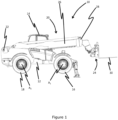
- an embodiment of the teachings includes a working machine 10.
- the working machine may be a load handling machine.
- the working machine 10 is a telescopic handler.
- the working machine 10 may be a rotating telescopic handler, an excavator, a skid-steer loader, a compact track loader, a wheel loader, a telescopic wheel loader, or a tractor, for example.
- Such working machines may be denoted as off-highway vehicles or as non-road mobile machinery.
- the working machine 10 has a ground engaging propulsion arrangement.
- the ground engaging propulsion arrangement or structure supports the body 12.
- the ground engaging propulsion structure includes a first, or front, axle A1 and a second, or rear, axle A2, each axle being coupled to a pair of wheels 16, 18.
- the ground engaging propulsion structure includes front and rear wheels.
- the ground engaging propulsion structure may include a pair of endless tracks.
- the working machine 10 includes a drive arrangement 36 configured to provide motive power to the ground engaging propulsion structure 16, 18, so as to move/drive the working machine 10 over a surface.
- the drive arrangement 36 includes a primer mover 38 and a transmission 40.
- the prime mover 38 may be an internal combustion engine, an electric motor, or may be a hybrid comprising both an internal combustion engine, an electric motor.
- the drive arrangement 36 is configured to provide motive power to the ground-engaging propulsion structure 16, 18 from the prime mover 38 via the transmission 40.
- One or both of the axles A1, A2 may be coupled to a drive arrangement (not shown) configured to provide motive power to the ground engaging propulsion structure (i.e. the axles A1, A2).
- a working arm 20 is pivotally connected to the body 12.
- the working arm 20 is inclinable relative to the body 12.
- the working arm 20 is pivotally mounted to the superstructure 15.
- the working arm 20 is connected to the body 12 by a mount 22 proximate a first end, or proximal end, of the working arm 20.
- the working arm 20 can be moved with respect to the body 12 and the movement is preferably, at least in part, rotational movement about the mount 22.
- the rotational movement is about a substantially transverse axis of the machine 10.
- Rotational movement of the working arm 20 with respect to the body 12 is, in an embodiment, achieved by use of at least one lifting actuator (not shown) coupled between the arm 20 and the body 12.
- the working arm 20 may be a telescopic arm, having a first section 26 connected to the mount 22 and a second section 28 which is telescopically fitted to the first section 26.
- the second section 28 of the working arm 20 is telescopically moveable with respect to the first section 26 such that the working arm 20 can be extended and retracted. Movement of the second section 28 with respect to the first section 26 of the working arm 20 may be achieved by use of an extension actuator (not shown), for example a double acting hydraulic linear actuator, an electric linear actuator, a telescopic extension ram, multiple extension rams, and/or a chain and pulley system.
- the working arm 20 may include a plurality of sections, for example two, three, four or more sections.
- Each arm section may be telescopically fitted to at least one other section, and an actuator may be provided therebetween.
- the working arm 20 may not be telescopic and may include a first arm pivotally mounted to the mount 22. In such arrangements, the working arm 20 may also include a second arm pivotally mounted to the first arm.
- a working implement 30 is mounted to a second, or distal, end 21 of the working arm 20.
- the working machine 10 is configured to transport loads carried by the working implement 30,
- the working implement includes a carriage or carriage assembly 24 including a pair of spaced apart forks 30 mounted thereto.
- any suitable working implement may be mounted to the working arm 20 to suit the application.
- the working implement may be a bucket, a shovel, or a basket, or may be any other suitable working implement.
- the working machine 10 includes a braking system 32 actuatable to apply a first braking force to the ground engaging propulsion structure 16, 18. It will be appreciated that the braking is configured to apply a braking force in order to decelerate the working machine 10.
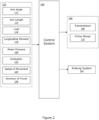
- the working machine 10 includes a control system 100, a sensor assembly 102, and a braking system 104.
- the control system 100 is configured to determine a centre of gravity of the working machine 10, and control or restrict a speed of movement of the working machine 10 in response to the determined centre of gravity.
- the control system 100 may be configured to control or restrict a speed of movement of the working machine 10 by one or more of: limiting the speed of movement of the working machine 10 to a maximum speed of movement based on the determined centre of gravity; limiting the rate of change of the speed of movement of the working machine 10 to a maximum rate of change of speed of movement; and controlling the braking system to apply a braking force to the ground engaging propulsion structure to decelerate the speed of movement of the working machine based on the determined centre of gravity. It will be appreciated that in alternative arrangements, any suitable arrangement for controlling or restricting the speed of movement of the working machine 10 may be used.
- the working machine includes a sensor assembly 102 to monitor one or more parameters associated with the working machine 10.
- the control system 100 is configured to receive one or more inputs from the sensor assembly 102 and to control or restrict a speed of movement of the working machine in response to the received inputs.
- the control system 100 is configured to determine the centre of gravity of the working machine 10 based on one or more inputs received from one or more of said sensor arrangements of the sensor assembly 102.
- the control system 100 may be configured to determine the centre of gravity of the working machine 10 based on an angle of inclination of the working arm 20.
- the sensor assembly 102 includes a first sensor 112 configured to determine an angle of inclination of the working arm 20 relative to the body 12.
- the first 112 is configured to determine an angle of inclination of the working arm 20 relative to the machine body 12 and to provide an output of the determined angle of inclination of the working arm 20 to the control system 100.
- the angle of inclination of the working arm 20 may correspond to an angle formed between the working arm 20 and a horizontal or vertical plane of the machine body 12.
- the first sensor 112 may determine the angle of inclination of the working arm 20 via any suitable means.
- the control system 100 may be configured to limit the rate of change of the speed of movement of the working machine 10 to a maximum rate of change of speed of movement based on the angle of inclination of the working arm 20 relative to the body 12.
- the control system 100 may be configured such that the maximum rate of change of speed of movement decreases as the angle of inclination of the working arm 20 increases.
- the maximum rate of change of speed of movement may be inversely proportional to the angle of inclination of the working arm 20. Increasing the angle of inclination of the working arm 20 may move the centre of gravity of the working machine 10 closer to the stability envelope for the working machine 10. Thus, decreasing the maximum rate of change of speed of movement as the determined angle of inclination of the working arm 20 increases may reduce instability of the working machine 10.
- the control system 100 may be configured to control/actuate the braking system to apply a braking force to the ground engaging propulsion 16, 18 structure to decelerate the speed of movement of the working machine 10 based on the angle of inclination of the working arm 20 relative to the body 12.
- the control system 100 may be configured such that the maximum rate of deceleration decreases as the angle of inclination of the working arm 20 increases.
- the maximum rate of deceleration may be inversely proportional to the angle of inclination of the working arm 20.
- Increasing the angle of inclination of the working arm 20 may move the centre of gravity of the working machine 10 closer to the stability envelope for the working machine 10.
- decreasing or basing the maximum rate of deceleration on the angle of inclination of the working arm 20 may reduce instability of the working machine 10.
- the sensor assembly 102 includes a second sensor 114 configured to determine a length of the telescopic arm 20. Put another way, the second sensor 114 is configured to determine the amount of extension or retraction of the telescopic working arm 20. It will be appreciated that in arrangements when the working arm 20 is not telescopic, the second sensor 114 may be omitted.
- the second sensor 114 is configured to determine a length of the working arm 20 and to provide an output of the determined length of the working arm 20 to the control system 100.
- 'length of the working arm 20' it is intended to mean the distance between the first, or proximal, end of the arm 20 proximate the mount 22 and the second, or distal, end of the arm 20.
- the length sensor arrangement 114 may determine the length of the working arm 20 via any suitable means.
- the length sensor arrangement 114 may determine the length of the working arm 20 via sensing the position(s) of the extension actuator (not shown).
- the control system 100 is configured to determine the centre of gravity of the working machine 10 based on the length of the working arm 20 determined by the length sensor arrangement 114.
- the control system 100 may be configured to limit the speed of movement of the working machine 10 to a maximum speed of movement based on the determined length of the working arm 20.
- the control system 100 may be configured such that the maximum speed of movement decreases as the length of the working arm 20 increases.
- the maximum speed of movement may be inversely proportional to the length of the working arm 20.
- the control system 100 may be configured to limit the rate of change of the speed of movement of the working machine 10 to a maximum rate of change of speed of movement based on the determined length of the working arm 20.
- the control system 100 may be configured such that the maximum rate of change of speed of movement decreases as the as the length of the working arm 20 increases.
- the maximum rate of change of speed of movement may be inversely proportional to the length of the working arm 20.
- the control system 100 may be configured to determine the centre of gravity of the working machine 10 based on a weight of a load carried by the working implement 30 determined by the load sensor arrangement 116. Put another way, the control system 100 may be configured to control or restrict a speed of movement of the working machine 10 based on a weight of a load carried by the working implement 30.
- the sensor assembly 102 may include a third sensor 116 configured to determine a weight of a load carried by the working implement 30 and to provide an output of the determined weight of the load caried by the working implement 30 to the control system 100.
- the third sensor 116 may determine a weight of a load carried by the working implement 30 via any suitable means.
- the third sensor 116 may determine a weight of a load carried by the working implement 30 via sensing a hydraulic pressure of the at least one lifting actuator. Additionally or alternatively, the third sensor 116 may determine a weight of a load carried by the working implement 30 via sensing the stresses or strains acting on the working arm 20, e.g. the third sensor 116 may include a strain gauge.
- control system 100 may be configured to: limit the speed of movement of the working machine 10 to a maximum speed of movement based on a weight of a load carried by the working implement 30; limit the rate of change of the speed of movement of the working machine 10 to a maximum rate of change of speed of movement based on a weight carried by the working implement 30; and/or control the braking system to apply a braking force to the ground engaging propulsion structure to decelerate the speed of movement of the working machine based on a weight of a load carried by the working implement 30.
- the control system 100 may be configured to determine the centre of gravity of the working machine 10 based on a longitudinal load moment indication. Put another way, the control system 100 may be configured to control or restrict a speed of movement of the working machine 10 based on a longitudinal load moment indication.
- the sensor assembly 102 includes a fourth sensor 118 configured to determine a longitudinal load moment of the working machine 10 and to provide an output of the determined longitudinal load moment to the control system 100.
- 'longitudinal load moment' it is intended to mean the resultant moment acting on the working machine 100 about an axis parallel to the first and second axles A1, A2 (i.e. a transverse axis of the working machine 100) that intersects the centre of gravity of the working machine 100.
- the longitudinal load moment is defined as positive in the clockwise direction in Figure 1 .
- the fourth sensor 118 may determine the longitudinal load moment of the working machine 10 via any suitable means.
- the fourth sensor 118 may determine the longitudinal load moment of the working machine 10 via sensing the load imparted by the working machine 10 on the rear axle A2.
- the fourth sensor 118 may be, include, or form part of, a longitudinal load moment indicator (LLMI).
- control system 100 may be configured to: limit the speed of movement of the working machine 10 to a maximum speed of movement based on a longitudinal load moment indication; limit the rate of change of the speed of movement of the working machine 10 to a maximum rate of change of speed of movement based on a longitudinal load moment indication; and/or control the braking system to apply a braking force to the ground engaging propulsion structure to decelerate the speed of movement of the working machine based on a longitudinal load moment indication.
- the control system 100 may be configured to determine the centre of gravity of the working machine 10 based on a pressure imparted onto the ground engaging propulsion structure 16, 18 (e.g. on opposing sides of the working machine 10 and/or at the front and rear of the working machine 10). Put another way, the control system 100 may be configured to control or restrict a speed of movement of the working machine 10 based on a pressure imparted onto the ground engaging propulsion structure 16, 18 (e.g. on opposing sides of the working machine 10).
- the pressure imparted onto the ground engaging structure may be a wheel or tyre pressure.
- the sensor assembly 102 may include a fifth sensor 120 configured to determine a pressure imparted onto the ground engaging propulsion structure. It will be appreciated that the fifth sensor 120 may be formed from a plurality of sensors to determine the pressure imparted on different parts (e.g. on opposing sides of the working machine 10) of the ground engaging propulsion structure 16, 18.
- the control system 100 may be configured to control the drive arrangement 106 in order to control or restrict the speed of movement of the working machine 10.
- the control system 100 may be configured to control the drive arrangement 106 in order to limit the speed of movement of the working machine 10 to a maximum speed of movement, and/or to limit the rate of change of speed of movement of the working machine 10 to a maximum rate of change of speed of movement.
- control system 100 may control or restrict the speed of movement of the working machine 10 and/or the rate of change of s speed of movement of the working machine 10 by controlling a rotational speed of the drive arrangement 106.
- the control system 100 may be configured to limit the speed of movement of the working machine 10 to a maximum speed of movement by limiting a rotational speed of the drive arrangement 106, by limiting a torque output of the drive arrangement and/or by limiting a torque with the transmission 108.
- the control system 100 may control a rotational speed of the drive arrangement 106 in order to control or restrict the speed of movement of the working machine 10.
- the rotational speed of the drive arrangement 114 may correspond to a rotational speed of the engine's crankshaft.
- the rotational speed of the drive arrangement 114 may correspond to a rotational speed of the rotor and/or output shaft of the motor.
- the control system 100 may send a signal (e.g. a TSC1 signal) to a controller of the prime mover 110 to control the rotational speed of the prime mover 110.
- the rotational speed of the drive arrangement 106 may correspond to a rotational speed of the transmission 108.
- the rotational speed of an output shaft from a gearbox of the transmission 108 may correspond to a rotational speed of the transmission 108.
- the control system 100 may send a signal to a controller of the transmission 108 to control the rotational speed of the transmission (e.g. to change a gear ratio in the gear box).
- the control system 100 may control a torque output of the drive arrangement 106 in order to control or restrict the speed of movement of the working machine 10.
- the torque output of the drive arrangement 106 may correspond to a torque of the engine's crankshaft.
- the torque output of the drive arrangement 106 may correspond to a torque of the rotor and/or output shaft of the motor.
- the control system 100 may send a signal to a controller of the prime mover 110 to control the torque output of the prime mover 110.
- the torque output of the drive arrangement 106 may correspond to a torque output of the transmission 108.
- the control system 100 may send a signal to a controller of the transmission 108 to control the torque output of the transmission (e.g. to change a gear ratio in the gear box).
- the control system 100 may control a torque within the transmission 108 of the drive arrangement 106 to control or restrict the speed of movement of the working machine 10.
- the torque within the transmission 108 may correspond to the torque of a gear shaft in a gearbox of the transmission.
- the control system 100 may send a signal to a controller of the transmission 108 to control the torque within the transmission (e.g. to change a gear ratio in the gear box).
- the control system 100 may be configured to control or restrict the speed of movement of the working machine 10 based on the lateral inclination angle and/or longitudinal inclination angle (hereinafter 'inclination') of the working machine 10.
- the sensor assembly 102 my include a sixth sensor 122 configured to determine a lateral inclination angle of the working machine 10 and/or to determine a longitudinal (i.e. fore-aft) inclination angle of the working machine 10 and to provide an output of the determined lateral and/or longitudinal inclination angle(s) of the working machine 10 to the control system 100.
- 'lateral inclination angle' it is intended to mean the angle formed between a transverse axis of the machine body 12 and the horizontal.
- 'longitudinal inclination angle' it is intended to mean the angle formed between a fore-aft axis of the machine body 12 and the horizontal.
- the inclination sensor 122 may determine the lateral and/or longitudinal inclination angle(s) of the working machine 10 via any suitable means.
- the control system 100 may be configured such that the maximum speed of movement of the working machine 10 previously discussed is based on the determined inclination of the working machine 10. The maximum speed of movement may decrease as the inclination of the working machine 10 increases. Additionally or alternatively, the control system 100 may be configured such that the maximum rate of change of speed of movement of the working machine 10 previously discussed is based on the determined inclination of the working machine 10. The maximum rate of change of speed of movement may decrease as the inclination of the working machine 10 increases. Additionally or alternatively, the control system 100 may be configured such that the maximum rate of deceleration of the working machine 10 previously discussed is based on the determined inclination of the working machine 10. The maximum rate of deceleration may decrease as the inclination of the working machine 10 increases.
- the control system 100 may be configured to control or restrict a speed of movement of the working machine 10 based on the speed of travel of the working machine 10.
- the sensor assembly 102 may include a seventh sensor 124 configured to determine a speed of travel of the working machine 10 and to provide an output of the determined speed of travel of the working machine 10 to the control system 100.
- the speed sensor arrangement 124 may determine the speed of travel of the working machine 10 via any suitable means such as determining the rotational speed of the ground engaging propulsion structure 16, 18 or the axles A1, A2, via sensing a rotational speed of the transmission 110, or via GPS.
- the control system 100 may be configured to control the maximum rate of change of speed of movement of the working machine 10 be based on the determined speed of travel of the working machine 10. For example, as the determined speed of travel increases, the maximum rate of change of speed of movement may be reduced. Additionally or alternatively, the control system 100 may be configured to control the maximum rate of deceleration based on the determined speed of travel of the working machine 10. For example, as the determined speed of travel increases, the maximum rate of deceleration may be reduced. Advantageously, this may help to inhibit longitudinal instability of the working machine 10 (e.g. longitudinal tip over).
- the control system 100 may be configured to control or restrict a speed of movement of the working machine 10 based on the direction of travel of the working machine 10.
- the sensor assembly 102 may include an eight sensor 126 configured to determine a direction of travel of the working machine 10 and to provide an output of the determined direction of travel of the working machine 10 to the control system 100.
- 'direction of travel' it is intended to mean the direction the working machine 10 is moving relative to the ground beneath the working machine 10.
- the direction of travel may correspond to whether the working machine 10 is travelling forwards, i.e. to the right in Figure 1 , or in reverse, i.e. to the left in Figure 1 . Additionally or alternatively, the direction of travel may correspond to whether the working machine is turning left or right.
- the direction sensor arrangement 126 may determine the direction of travel of the working machine 10 via any suitable means. For example, the direction sensor arrangement 126 may determine the direction of travel of the working machine 10 via sensing whether a forward or reverse gear has been selected in a gearbox of the transmission 108, via sensing an angular position of the steering wheel (not shown), and/or via GPS. Based on the centre of gravity of the working machine 10, the working machine 10 may be more stable travelling in a first direction, e.g. forwards, relative to a second direction, e.g. reverse. Thus, controlling or restricting the speed of movement of the working machine 10 based on the determined direction of travel of the working machine 10 may reduce instability of the working machine 10.
- the control system 100 may be configured such that the maximum speed of movement of the working machine 10 is based on the determined direction of travel of the working machine 10. Additionally or alternatively, the control system 100 may be configured such that the maximum rate of change of speed of movement of the working machine 10 is based on the determined direction of travel of the working machine 10. Additionally or alternatively, the control system 100 may be configured such that the maximum rate of deceleration of the working machine 10 is based on the determined direction of travel of the working machine 10.
- the maximum speed of movement may decrease as the angular position of the steering wheel increases. Additionally or alternatively, the maximum rate of change of speed of movement of the working machine 10 may decrease as the angular position of the steering wheel increases. Additionally or alternatively, the maximum rate of deceleration of the working machine 10 may decrease as the angular position of the steering wheel increases.
- the sensor assembly 102 may not include all of the first to eight sensors (i.e. angle sensor 112, length sensor 114, load sensor 116, moment sensor 118, pressure sensor 120, inclination sensor 122, speed sensor 124, and the direction sensor 126), and instead only include a single sensor or may include any combination thereof.
- the control system 100 may only control one of the drive arrangement 106 and the braking system 104.
Landscapes
- Engineering & Computer Science (AREA)
- Structural Engineering (AREA)
- Transportation (AREA)
- Mechanical Engineering (AREA)
- Civil Engineering (AREA)
- Geology (AREA)
- Life Sciences & Earth Sciences (AREA)
- General Engineering & Computer Science (AREA)
- Mining & Mineral Resources (AREA)
- Combustion & Propulsion (AREA)
- Chemical & Material Sciences (AREA)
- Operation Control Of Excavators (AREA)
- Agricultural Machines (AREA)
Description
- The present teachings relate to a working machine.
- Off-highway vehicles or working machines are for example those used in construction industries configured to transport loads over a surface (e.g. backhoe loaders, slew excavators, telescopic handlers, forklifts, skid-steer loaders etc.). These working machines typically have a body supported by a ground-engaging propulsion structure such as front and rear wheels, or a pair of endless tracks. To propel the working machine, a drive arrangement, including for example a transmission and a prime mover such as an internal combustion engine or electric motor, provides motive power to the ground-engaging propulsion structure. Working machines typically have a working arm pivotally mounted to the body of the machine, and a working implement, such as a bucket, forks or a grabber, attached to the end of the arm via a coupling device. Attachment of the working implement enables the working machine to perform a variety of tasks on a work site.
- For such working machines, when the working arm is moved into a position such that the location of the working machine's centre of gravity changes significantly, the working machine may become less stable. In such instances, the working machine may tip over, potentially causing injury to the operator or damage to the working machine.
-
US2002075157A1 relates to an apparatus and method in which a distance from a predetermined point to the center of gravity of the load and a first portion of an articulated work machine and the distance from that predetermined point to the center of gravity of the second portion of the work machine are compared, either singly or in a combination, to a predetermined value. The articulation angle of the machine and weight and position of the load are combined with a vehicle weight value into a stability value and the stability value is compared to an alarm value. Should an instability condition be detected, an output signal is sent to an output device to alert the operator and/or affect the movement of the machine to prevent instability of the work machine. - The present teachings seek to overcome, or at least mitigate the problems of the prior art.
- According to a first aspect there is provided a working machine comprising: a body; a ground-engaging propulsion structure supporting the body; a working arm pivotally connected to the body so as to be inclinable relative to the body, wherein the working arm is configured to mount a working implement at a distal end thereof; a drive arrangement configured to provide motive power to the ground-engaging propulsion structure; and a control system configured to determine a centre of gravity of the working machine, wherein the control system is configured to control or restrict a speed of movement of the working machine in response to the determined centre of gravity.
- The centre of gravity and thus the stability of the working machine may change according to the position of the load handling apparatus relative to the body. Moreover, the working machine may become less stable when travelling at high travel speeds and when undergoing large changes in travel speed (i.e. high acceleration and deceleration). As such, by controlling or restricting a speed of movement of the working machine in response to the determined centre of gravity, the control system may help to inhibit movements that would lead to instability of the working machine (e.g. longitudinal or lateral tip over of the machine).
- The control system is configured to limit the speed of movement of the working machine to a maximum speed of movement based on the determined centre of gravity.
- Advantageously, based on the determined centre of gravity of the machine, the determined maximum speed may be determined such that instability of the working machine is inhibited when the working machine is moving at or below said determined maximum speed. Thus, by preventing the working machine from moving at a speed higher than a determined maximum speed, instability of the working machine can be inhibited.
- The control system is configured to determine the centre of gravity of the working machine based on an angle of inclination of the working arm, and the maximum speed of movement is based on an angle of inclination of the working arm relative to the body.
- The centre of gravity of the working machine may change as a function of the angle of inclination of the working arm. Thus, basing the maximum speed on the angle of inclination of the working arm may inhibit instability of the working machine.
- The control system may be configured such that the maximum speed of movement decreases as the angle of inclination of the working arm increases.
- The maximum speed of movement may be inversely proportional to the angle of inclination of the working arm.
- Increasing the angle of the working arm may move the centre of gravity of the working machine such that the stability of the working machine is reduced. Thus, decreasing the maximum speed as the determined angle of the working arm increases may inhibit instability of the working machine.
- The working arm may be a telescopic working arm that is extendable and retractable. The control system may be configured to determine the centre of gravity of the working machine based on a length of the working arm, and wherein the maximum speed of movement is based on the length of the working arm.
- The centre of gravity of the working machine may change as a function of a length of the working arm. Thus, basing the maximum speed on a length of the working arm may inhibit instability of the working machine.
- The control system may be configured such that the maximum speed of movement decreases as the length of the working arm increases.
- Increasing the length of the working arm may move the centre of gravity of the working machine such that the stability of the working machine is reduced. Thus, decreasing the maximum speed as the length of the working arm increases may inhibit instability of the working machine.
- The control system may be configured to limit the rate of change of the speed of movement to a maximum rate of change of speed of movement based on the determined centre of gravity.
- Advantageously, based on the determined centre of gravity of the machine, the determined maximum rate of change of speed may be determined such that instability of the working machine is inhibited when the working machine is moving at or below said determined maximum rate of change of speed. Thus, by preventing the working machine from moving at a rate of change of speed higher than a determined maximum rate of change of speed, instability of the working machine can be inhibited.
- The control system may be configured to determine the centre of gravity of the working machine based on an angle of inclination of the working arm, and wherein the maximum rate of change of speed of movement is based on an angle of inclination of the working arm relative to the body.
- The centre of gravity of the working machine may change as a function of the angle of inclination of the working arm. Thus, basing the maximum rate of change of speed on the angle of inclination of the working arm may inhibit instability of the working machine.
- The control system may be configured such that the maximum rate of change of speed of movement decreases as the angle of inclination of the working arm increases.
- The maximum rate of change of speed of movement may be inversely proportional to the angle of inclination of the working arm.
- Increasing the angle of the working arm may move the centre of gravity of the working machine such that the stability of the working machine is reduced. Thus, decreasing the determined maximum rate of change of speed as the determined angle of the working arm increases may inhibit instability of the working machine.
- The working arm may be a telescopic working arm that is extendable and retractable. The control system may be configured to determine the centre of gravity of the working machine based on a length of the working arm, and wherein the maximum rate of change of speed of movement is based on the length of the working arm.
- The centre of gravity of the working machine may change as a function of a length of the working arm. Thus, basing the maximum rate of change of speed on a length of the working arm may inhibit instability of the working machine.
- The control system may be configured such that the maximum rate of change of speed of movement decreases as the length of the working arm increases.
- Increasing the length of the working arm may move the centre of gravity of the working machine such that the stability of the working machine is reduced. Thus, decreasing the maximum rate of change of speed as the length of the working arm increases may inhibit instability of the working machine.
- The control system may be configured to control the drive arrangement in order to control or restrict the speed of movement of the working machine.
- Advantageously, by controlling the drive arrangement, the control system may be able to rapidly and effectively control or restrict the speed of movement of the working machine.
- The drive arrangement may be controlled through one or more of: a rotational speed of the drive arrangement; a torque output of the drive arrangement; and/or torque within a transmission of the drive arrangement.
- The working machine may comprise a braking system actuatable to apply a braking force to the ground engaging propulsion structure. The control system may be configured to control the braking system to apply a braking force to the ground engaging propulsion structure to decelerate the speed of movement of the working machine based on the determined centre of gravity.
- Advantageously, by controlling the braking system based on the determined centre of gravity, the control system may be able to decelerate the speed of movement of the working machine such that instability of the working machine is inhibited.
- The control system may be configured to control the braking system such that the rate of deceleration is limited to a maximum rate of deceleration based on the determined centre of gravity.
- The rate of deceleration of the working machine may increase as the applied braking force increases. Moreover, the working machine may become more unstable as the rate of deceleration increases. As such, by limiting the rate of deceleration to a maximum rate of deceleration, instability of the working machine may be inhibited. For example, the control system may control the braking system such that the deceleration rate of the working machine is maintained within the limits of longitudinal stability at all times.
- The control system may be configured to determine the centre of gravity of the working machine based on an angle of inclination of the working arm, and wherein the maximum rate of deceleration is based on an angle of inclination of the working arm relative to the body.
- The centre of gravity of the working machine may change as a function of the angle of inclination of the working arm. Thus, basing the maximum rate of deceleration on the angle of inclination of the working arm may inhibit instability of the working machine.
- The control system may be configured such that the maximum rate of deceleration decreases as the angle of inclination of the working arm increases.
- The maximum rate of deceleration may be inversely proportional to the angle of inclination of the working arm.
- Increasing the angle of the working arm may move the centre of gravity of the working machine such that the stability of the working machine is reduced. Thus, decreasing the determined maximum rate of deceleration as the determined angle of the working arm increases may inhibit instability of the working machine.
- The working arm may be a telescopic working arm that is extendable and retractable. The control system may be configured to determine the centre of gravity of the working machine based on a length of the working arm, and wherein the maximum rate of deceleration is based on the length of the working arm.
- The centre of gravity of the working machine may change as a function of the length of the working arm. Thus, basing the maximum rate of deceleration on a length of the working arm may inhibit instability of the working machine.
- The control system may be configured such that the maximum rate of deceleration decreases as the length of the working arm increases.
- Increasing the length of the working arm may move the centre of gravity of the working machine such that the stability of the working machine is reduced. Thus, decreasing the maximum rate of deceleration as the length of the working arm increases may inhibit instability of the working machine.
- The maximum rate of change of speed of movement of the working machine and/or the maximum rate of deceleration of the working machine may be based on a speed of travel of the working machine.
- Dynamic forces acting on the centre of gravity of the working machine may change as a function of the determined speed of movement of the working machine. Thus, basing the rate of change of speed of movement of the working machine and/or rate of deceleration of the working machine on the speed of travel of the working machine may prevent instability of the working machine.
- The control system may be configured to control or restrict a speed of movement of the working machine based on a direction of travel of the working machine.
- The working machine may comprise a steering wheel and the control system is configured to control or restrict a speed of movement of the working machine based on an angular position of the steering wheel.
- Dynamic forces acting on the centre of gravity of the working machine may change as a function of the direction of travel of the working machine. Thus, controlling or restricting a speed of movement of the working machine based on the direction of travel of the working machine may prevent instability of the working machine.
- The working machine may comprise an inclination sensor configured to determine a lateral inclination of the working machine and/or to determine a longitudinal (fore-aft) inclination. The control system may be configured to control or restrict a speed of movement of the working machine based on the determined inclination of the working machine.
- The stability of the working machine may change as a function of the determined inclination of the body of the working machine. Thus, controlling or restricting a speed of movement of the working machine based on the determined inclination of the working machine may prevent instability of the working machine.
- The determined centre of gravity may be based on one or more of; a weight of a load carried by the working implement; a longitudinal load moment determined by the control system; or a pressure imparted to the ground engaging propulsion structure.
- Embodiments are now disclosed by way of example only with reference to the drawings, in which:
-
Figure 1 is a side view of a working machine according to an embodiment; and -
Figure 2 is a block diagram of components of the working machine ofFigure 1 . - Referring firstly to
Figure 1 , an embodiment of the teachings includes a workingmachine 10. The working machine may be a load handling machine. In this embodiment, the workingmachine 10 is a telescopic handler. In other embodiments the workingmachine 10 may be a rotating telescopic handler, an excavator, a skid-steer loader, a compact track loader, a wheel loader, a telescopic wheel loader, or a tractor, for example. Such working machines may be denoted as off-highway vehicles or as non-road mobile machinery. - The working
machine 10 includes amachine body 12. Themachine body 12 may include, for example, an operator'scab 14 from which an operator can operate themachine 10. Theoperator cab 14 may be mounted on thebody 12 so as to be offset from a centre of the body. Although in alternative arrangements, thecab 14 may be substantially central. In embodiments not illustrated, thebody 12 may include an undercarriage and a superstructure. The superstructure may be rotatable (e.g. about a substantially vertical axis) relative to the undercarriage. Put another way, the superstructure may be rotatable relative to the ground engaging propulsion structure. In the illustrated arrangement, theoperator cab 14 is mounted onto thebody 12. - The working
machine 10 has a ground engaging propulsion arrangement. The ground engaging propulsion arrangement or structure supports thebody 12. The ground engaging propulsion structure includes a first, or front, axle A1 and a second, or rear, axle A2, each axle being coupled to a pair ofwheels - The working
machine 10 includes a drive arrangement 36 configured to provide motive power to the ground engagingpropulsion structure machine 10 over a surface. The drive arrangement 36 includes a primer mover 38 and a transmission 40. The prime mover 38 may be an internal combustion engine, an electric motor, or may be a hybrid comprising both an internal combustion engine, an electric motor. The drive arrangement 36 is configured to provide motive power to the ground-engagingpropulsion structure - The prime mover is configured to provide motive power to the ground-engaging propulsion structure via the transmission. The transmission may include a gearbox including single gear or a plurality of gears. The working
machine 10 comprises a steering wheel (not shown) located in theoperator cab 14, which is configured to provide steering control of the ground-engaging propulsion structure (e.g. to steer the pair ofwheels 16 and/or the pair ofwheels 18.) - A working
arm 20 is pivotally connected to thebody 12. The workingarm 20 is inclinable relative to thebody 12. In the arrangement shown, the workingarm 20 is pivotally mounted to the superstructure 15. The workingarm 20 is connected to thebody 12 by amount 22 proximate a first end, or proximal end, of the workingarm 20. The workingarm 20 can be moved with respect to thebody 12 and the movement is preferably, at least in part, rotational movement about themount 22. The rotational movement is about a substantially transverse axis of themachine 10. Rotational movement of the workingarm 20 with respect to thebody 12 is, in an embodiment, achieved by use of at least one lifting actuator (not shown) coupled between thearm 20 and thebody 12. - The working
arm 20 may be a telescopic arm, having afirst section 26 connected to themount 22 and asecond section 28 which is telescopically fitted to thefirst section 26. In this embodiment, thesecond section 28 of the workingarm 20 is telescopically moveable with respect to thefirst section 26 such that the workingarm 20 can be extended and retracted. Movement of thesecond section 28 with respect to thefirst section 26 of the workingarm 20 may be achieved by use of an extension actuator (not shown), for example a double acting hydraulic linear actuator, an electric linear actuator, a telescopic extension ram, multiple extension rams, and/or a chain and pulley system. As will be appreciated, the workingarm 20 may include a plurality of sections, for example two, three, four or more sections. Each arm section may be telescopically fitted to at least one other section, and an actuator may be provided therebetween. In alternative arrangements, the workingarm 20 may not be telescopic and may include a first arm pivotally mounted to themount 22. In such arrangements, the workingarm 20 may also include a second arm pivotally mounted to the first arm. - A working implement 30 is mounted to a second, or distal, end 21 of the working
arm 20. The workingmachine 10 is configured to transport loads carried by the working implement 30, In the illustrated arrangement, the working implement includes a carriage orcarriage assembly 24 including a pair of spaced apartforks 30 mounted thereto. In alternative arrangements, it will be appreciated that any suitable working implement may be mounted to the workingarm 20 to suit the application. In such alternative arrangements, the working implement may be a bucket, a shovel, or a basket, or may be any other suitable working implement. - Although not illustrated in
Figure 1 , the workingmachine 10 includes a braking system 32 actuatable to apply a first braking force to the ground engagingpropulsion structure machine 10. - Referring now to
Figure 2 , the workingmachine 10 includes acontrol system 100, asensor assembly 102, and abraking system 104. - The
control system 100 is configured to determine a centre of gravity of the workingmachine 10, and control or restrict a speed of movement of the workingmachine 10 in response to the determined centre of gravity. - The
control system 100 may be configured to control or restrict a speed of movement of the workingmachine 10 by one or more of: limiting the speed of movement of the workingmachine 10 to a maximum speed of movement based on the determined centre of gravity; limiting the rate of change of the speed of movement of the workingmachine 10 to a maximum rate of change of speed of movement; and controlling the braking system to apply a braking force to the ground engaging propulsion structure to decelerate the speed of movement of the working machine based on the determined centre of gravity. It will be appreciated that in alternative arrangements, any suitable arrangement for controlling or restricting the speed of movement of the workingmachine 10 may be used. - The working machine includes a
sensor assembly 102 to monitor one or more parameters associated with the workingmachine 10. Thecontrol system 100 is configured to receive one or more inputs from thesensor assembly 102 and to control or restrict a speed of movement of the working machine in response to the received inputs. Thecontrol system 100 is configured to determine the centre of gravity of the workingmachine 10 based on one or more inputs received from one or more of said sensor arrangements of thesensor assembly 102. - The
control system 100 may be configured to determine the centre of gravity of the workingmachine 10 based on an angle of inclination of the workingarm 20. Thesensor assembly 102 includes afirst sensor 112 configured to determine an angle of inclination of the workingarm 20 relative to thebody 12. The first 112 is configured to determine an angle of inclination of the workingarm 20 relative to themachine body 12 and to provide an output of the determined angle of inclination of the workingarm 20 to thecontrol system 100. The angle of inclination of the workingarm 20 may correspond to an angle formed between the workingarm 20 and a horizontal or vertical plane of themachine body 12. Thefirst sensor 112 may determine the angle of inclination of the workingarm 20 via any suitable means. For example, thefirst sensor 112 may determine the angle of inclination of the workingarm 20 via sensing the position(s) of the at least one lifting actuator (not shown), or via sensing the angle of inclination of the workingarm 20 directly, e.g. thefirst sensor 112 may be a potentiometer arranged at themount 22. Thecontrol system 100 is configured to determine the centre of gravity of the workingmachine 10 based on the angle of inclination of the workingarm 20 determined by thefirst sensor 112. - The
control system 100 may be configured to limit the speed of movement of the workingmachine 10 to a maximum speed of movement based on the angle of inclination of the workingarm 20 relative to thebody 12. Thecontrol system 100 may be configured such that the maximum speed of movement decreases as the angle of inclination of the workingarm 20 increases. For example, the maximum speed of movement may be inversely proportional to the angle of inclination of the workingarm 20. Increasing the angle of inclination of the workingarm 20 may move the centre of gravity of the workingmachine 10 closer to the stability envelope for the workingmachine 10, i.e. such that the stability of the workingmachine 10 is reduced. Thus, decreasing the maximum speed of movement as the determined angle of inclination of the workingarm 20 increases may reduce instability of the workingmachine 10. - The
control system 100 may be configured to limit the rate of change of the speed of movement of the workingmachine 10 to a maximum rate of change of speed of movement based on the angle of inclination of the workingarm 20 relative to thebody 12. Thecontrol system 100 may be configured such that the maximum rate of change of speed of movement decreases as the angle of inclination of the workingarm 20 increases. For example, the maximum rate of change of speed of movement may be inversely proportional to the angle of inclination of the workingarm 20. Increasing the angle of inclination of the workingarm 20 may move the centre of gravity of the workingmachine 10 closer to the stability envelope for the workingmachine 10. Thus, decreasing the maximum rate of change of speed of movement as the determined angle of inclination of the workingarm 20 increases may reduce instability of the workingmachine 10. - The
control system 100 may be configured to control/actuate the braking system to apply a braking force to theground engaging propulsion machine 10 based on the angle of inclination of the workingarm 20 relative to thebody 12. Thecontrol system 100 may be configured such that the maximum rate of deceleration decreases as the angle of inclination of the workingarm 20 increases. For example, the maximum rate of deceleration may be inversely proportional to the angle of inclination of the workingarm 20. Increasing the angle of inclination of the workingarm 20 may move the centre of gravity of the workingmachine 10 closer to the stability envelope for the workingmachine 10. Thus, decreasing or basing the maximum rate of deceleration on the angle of inclination of the workingarm 20 may reduce instability of the workingmachine 10. - The
sensor assembly 102 includes asecond sensor 114 configured to determine a length of thetelescopic arm 20. Put another way, thesecond sensor 114 is configured to determine the amount of extension or retraction of the telescopic workingarm 20. It will be appreciated that in arrangements when the workingarm 20 is not telescopic, thesecond sensor 114 may be omitted. - The
second sensor 114 is configured to determine a length of the workingarm 20 and to provide an output of the determined length of the workingarm 20 to thecontrol system 100. By 'length of the working arm 20', it is intended to mean the distance between the first, or proximal, end of thearm 20 proximate themount 22 and the second, or distal, end of thearm 20. Thelength sensor arrangement 114 may determine the length of the workingarm 20 via any suitable means. For example, thelength sensor arrangement 114 may determine the length of the workingarm 20 via sensing the position(s) of the extension actuator (not shown). - The
control system 100 is configured to determine the centre of gravity of the workingmachine 10 based on the length of the workingarm 20 determined by thelength sensor arrangement 114. - The
control system 100 may be configured to limit the speed of movement of the workingmachine 10 to a maximum speed of movement based on the determined length of the workingarm 20. Thecontrol system 100 may be configured such that the maximum speed of movement decreases as the length of the workingarm 20 increases. For example, the maximum speed of movement may be inversely proportional to the length of the workingarm 20. - The
control system 100 may be configured to limit the rate of change of the speed of movement of the workingmachine 10 to a maximum rate of change of speed of movement based on the determined length of the workingarm 20. Thecontrol system 100 may be configured such that the maximum rate of change of speed of movement decreases as the as the length of the workingarm 20 increases. For example, the maximum rate of change of speed of movement may be inversely proportional to the length of the workingarm 20. - The
control system 100 may be configured to control/actuate the braking system to apply a braking force to theground engaging propulsion machine 10 based on the determined length of the workingarm 20. Thecontrol system 100 may be configured such that the maximum rate of deceleration decreases as the length of the workingarm 20 increases. - The
control system 100 may be configured to determine the centre of gravity of the workingmachine 10 based on a weight of a load carried by the working implement 30 determined by theload sensor arrangement 116. Put another way, thecontrol system 100 may be configured to control or restrict a speed of movement of the workingmachine 10 based on a weight of a load carried by the working implement 30. In such arrangements, thesensor assembly 102 may include athird sensor 116 configured to determine a weight of a load carried by the working implement 30 and to provide an output of the determined weight of the load caried by the working implement 30 to thecontrol system 100. Thethird sensor 116 may determine a weight of a load carried by the working implement 30 via any suitable means. For example, when the at least one lifting actuator (not shown) is a hydraulic linear actuator, thethird sensor 116 may determine a weight of a load carried by the working implement 30 via sensing a hydraulic pressure of the at least one lifting actuator. Additionally or alternatively, thethird sensor 116 may determine a weight of a load carried by the working implement 30 via sensing the stresses or strains acting on the workingarm 20, e.g. thethird sensor 116 may include a strain gauge. - It will be appreciated that in such arrangements, the
control system 100 may be configured to: limit the speed of movement of the workingmachine 10 to a maximum speed of movement based on a weight of a load carried by the working implement 30; limit the rate of change of the speed of movement of the workingmachine 10 to a maximum rate of change of speed of movement based on a weight carried by the working implement 30; and/or control the braking system to apply a braking force to the ground engaging propulsion structure to decelerate the speed of movement of the working machine based on a weight of a load carried by the working implement 30. - The
control system 100 may be configured to determine the centre of gravity of the workingmachine 10 based on a longitudinal load moment indication. Put another way, thecontrol system 100 may be configured to control or restrict a speed of movement of the workingmachine 10 based on a longitudinal load moment indication. In such arrangements, thesensor assembly 102 includes afourth sensor 118 configured to determine a longitudinal load moment of the workingmachine 10 and to provide an output of the determined longitudinal load moment to thecontrol system 100. By 'longitudinal load moment', it is intended to mean the resultant moment acting on the workingmachine 100 about an axis parallel to the first and second axles A1, A2 (i.e. a transverse axis of the working machine 100) that intersects the centre of gravity of the workingmachine 100. The longitudinal load moment is defined as positive in the clockwise direction inFigure 1 . Thefourth sensor 118 may determine the longitudinal load moment of the workingmachine 10 via any suitable means. For example, thefourth sensor 118 may determine the longitudinal load moment of the workingmachine 10 via sensing the load imparted by the workingmachine 10 on the rear axle A2. Thefourth sensor 118 may be, include, or form part of, a longitudinal load moment indicator (LLMI). - It will be appreciated that in such arrangements, the
control system 100 may be configured to: limit the speed of movement of the workingmachine 10 to a maximum speed of movement based on a longitudinal load moment indication; limit the rate of change of the speed of movement of the workingmachine 10 to a maximum rate of change of speed of movement based on a longitudinal load moment indication; and/or control the braking system to apply a braking force to the ground engaging propulsion structure to decelerate the speed of movement of the working machine based on a longitudinal load moment indication. - The
control system 100 may be configured to determine the centre of gravity of the workingmachine 10 based on a pressure imparted onto the ground engagingpropulsion structure 16, 18 (e.g. on opposing sides of the workingmachine 10 and/or at the front and rear of the working machine 10). Put another way, thecontrol system 100 may be configured to control or restrict a speed of movement of the workingmachine 10 based on a pressure imparted onto the ground engagingpropulsion structure 16, 18 (e.g. on opposing sides of the working machine 10). The pressure imparted onto the ground engaging structure may be a wheel or tyre pressure. In such arrangements, thesensor assembly 102 may include afifth sensor 120 configured to determine a pressure imparted onto the ground engaging propulsion structure. It will be appreciated that thefifth sensor 120 may be formed from a plurality of sensors to determine the pressure imparted on different parts (e.g. on opposing sides of the working machine 10) of the ground engagingpropulsion structure - The
control system 100 may be configured to control thedrive arrangement 106 in order to control or restrict the speed of movement of the workingmachine 10. For example, thecontrol system 100 may be configured to control thedrive arrangement 106 in order to limit the speed of movement of the workingmachine 10 to a maximum speed of movement, and/or to limit the rate of change of speed of movement of the workingmachine 10 to a maximum rate of change of speed of movement. - In such arrangements, the
control system 100 may control or restrict the speed of movement of the workingmachine 10 and/or the rate of change of s speed of movement of the workingmachine 10 by controlling a rotational speed of thedrive arrangement 106. Thecontrol system 100 may be configured to limit the speed of movement of the workingmachine 10 to a maximum speed of movement by limiting a rotational speed of thedrive arrangement 106, by limiting a torque output of the drive arrangement and/or by limiting a torque with thetransmission 108. - The
control system 100 may control a rotational speed of thedrive arrangement 106 in order to control or restrict the speed of movement of the workingmachine 10. In embodiments in which theprime mover 110 is an internal combustion engine, the rotational speed of thedrive arrangement 114 may correspond to a rotational speed of the engine's crankshaft. In embodiments in which theprime mover 110 is an electric motor, the rotational speed of thedrive arrangement 114 may correspond to a rotational speed of the rotor and/or output shaft of the motor. Thecontrol system 100 may send a signal (e.g. a TSC1 signal) to a controller of theprime mover 110 to control the rotational speed of theprime mover 110. Alternatively, the rotational speed of thedrive arrangement 106 may correspond to a rotational speed of thetransmission 108. For example, the rotational speed of an output shaft from a gearbox of thetransmission 108. Thecontrol system 100 may send a signal to a controller of thetransmission 108 to control the rotational speed of the transmission (e.g. to change a gear ratio in the gear box). - The
control system 100 may control a torque output of thedrive arrangement 106 in order to control or restrict the speed of movement of the workingmachine 10. In embodiments in which theprime mover 110 is an internal combustion engine, the torque output of thedrive arrangement 106 may correspond to a torque of the engine's crankshaft. In embodiments in which theprime mover 110 is an electric motor, the torque output of thedrive arrangement 106 may correspond to a torque of the rotor and/or output shaft of the motor. Thecontrol system 100 may send a signal to a controller of theprime mover 110 to control the torque output of theprime mover 110. Alternatively, the torque output of thedrive arrangement 106 may correspond to a torque output of thetransmission 108. For example, the torque of an output shaft from a gearbox of thetransmission 108. Thecontrol system 100 may send a signal to a controller of thetransmission 108 to control the torque output of the transmission (e.g. to change a gear ratio in the gear box). - The
control system 100 may control a torque within thetransmission 108 of thedrive arrangement 106 to control or restrict the speed of movement of the workingmachine 10. The torque within thetransmission 108 may correspond to the torque of a gear shaft in a gearbox of the transmission. Thecontrol system 100 may send a signal to a controller of thetransmission 108 to control the torque within the transmission (e.g. to change a gear ratio in the gear box). - The
control system 100 may be configured to control or restrict the speed of movement of the workingmachine 10 based on the lateral inclination angle and/or longitudinal inclination angle (hereinafter 'inclination') of the workingmachine 10. In such arrangements, thesensor assembly 102 my include asixth sensor 122 configured to determine a lateral inclination angle of the workingmachine 10 and/or to determine a longitudinal (i.e. fore-aft) inclination angle of the workingmachine 10 and to provide an output of the determined lateral and/or longitudinal inclination angle(s) of the workingmachine 10 to thecontrol system 100. By 'lateral inclination angle', it is intended to mean the angle formed between a transverse axis of themachine body 12 and the horizontal. By 'longitudinal inclination angle', it is intended to mean the angle formed between a fore-aft axis of themachine body 12 and the horizontal. Theinclination sensor 122 may determine the lateral and/or longitudinal inclination angle(s) of the workingmachine 10 via any suitable means. - The
control system 100 may be configured such that the maximum speed of movement of the workingmachine 10 previously discussed is based on the determined inclination of the workingmachine 10. The maximum speed of movement may decrease as the inclination of the workingmachine 10 increases. Additionally or alternatively, thecontrol system 100 may be configured such that the maximum rate of change of speed of movement of the workingmachine 10 previously discussed is based on the determined inclination of the workingmachine 10. The maximum rate of change of speed of movement may decrease as the inclination of the workingmachine 10 increases. Additionally or alternatively, thecontrol system 100 may be configured such that the maximum rate of deceleration of the workingmachine 10 previously discussed is based on the determined inclination of the workingmachine 10. The maximum rate of deceleration may decrease as the inclination of the workingmachine 10 increases. - The
control system 100 may be configured to control or restrict a speed of movement of the workingmachine 10 based on the speed of travel of the workingmachine 10. In such arrangements, thesensor assembly 102 may include aseventh sensor 124 configured to determine a speed of travel of the workingmachine 10 and to provide an output of the determined speed of travel of the workingmachine 10 to thecontrol system 100. Thespeed sensor arrangement 124 may determine the speed of travel of the workingmachine 10 via any suitable means such as determining the rotational speed of the ground engagingpropulsion structure transmission 110, or via GPS. - The
control system 100 may be configured to control the maximum rate of change of speed of movement of the workingmachine 10 be based on the determined speed of travel of the workingmachine 10. For example, as the determined speed of travel increases, the maximum rate of change of speed of movement may be reduced. Additionally or alternatively, thecontrol system 100 may be configured to control the maximum rate of deceleration based on the determined speed of travel of the workingmachine 10. For example, as the determined speed of travel increases, the maximum rate of deceleration may be reduced. Advantageously, this may help to inhibit longitudinal instability of the working machine 10 (e.g. longitudinal tip over). - The
control system 100 may be configured to control or restrict a speed of movement of the workingmachine 10 based on the direction of travel of the workingmachine 10. In such arrangements, thesensor assembly 102 may include an eightsensor 126 configured to determine a direction of travel of the workingmachine 10 and to provide an output of the determined direction of travel of the workingmachine 10 to thecontrol system 100. By 'direction of travel', it is intended to mean the direction the workingmachine 10 is moving relative to the ground beneath the workingmachine 10. The direction of travel may correspond to whether the workingmachine 10 is travelling forwards, i.e. to the right inFigure 1 , or in reverse, i.e. to the left inFigure 1 . Additionally or alternatively, the direction of travel may correspond to whether the working machine is turning left or right. Thedirection sensor arrangement 126 may determine the direction of travel of the workingmachine 10 via any suitable means. For example, thedirection sensor arrangement 126 may determine the direction of travel of the workingmachine 10 via sensing whether a forward or reverse gear has been selected in a gearbox of thetransmission 108, via sensing an angular position of the steering wheel (not shown), and/or via GPS. Based on the centre of gravity of the workingmachine 10, the workingmachine 10 may be more stable travelling in a first direction, e.g. forwards, relative to a second direction, e.g. reverse. Thus, controlling or restricting the speed of movement of the workingmachine 10 based on the determined direction of travel of the workingmachine 10 may reduce instability of the workingmachine 10. - The
control system 100 may be configured such that the maximum speed of movement of the workingmachine 10 is based on the determined direction of travel of the workingmachine 10. Additionally or alternatively, thecontrol system 100 may be configured such that the maximum rate of change of speed of movement of the workingmachine 10 is based on the determined direction of travel of the workingmachine 10. Additionally or alternatively, thecontrol system 100 may be configured such that the maximum rate of deceleration of the workingmachine 10 is based on the determined direction of travel of the workingmachine 10. - In embodiments in which the
eighth sensor 126 senses an angular position of the steering wheel (not shown), the maximum speed of movement may decrease as the angular position of the steering wheel increases. Additionally or alternatively, the maximum rate of change of speed of movement of the workingmachine 10 may decrease as the angular position of the steering wheel increases. Additionally or alternatively, the maximum rate of deceleration of the workingmachine 10 may decrease as the angular position of the steering wheel increases. - It will be appreciated that in alternative embodiments, the
sensor assembly 102 may not include all of the first to eight sensors (i.e.angle sensor 112,length sensor 114,load sensor 116,moment sensor 118,pressure sensor 120,inclination sensor 122,speed sensor 124, and the direction sensor 126), and instead only include a single sensor or may include any combination thereof. Moreover, in further alternative embodiments, thecontrol system 100 may only control one of thedrive arrangement 106 and thebraking system 104.
Claims (15)
- A working machine (10) comprising:a body (12);a ground-engaging propulsion structure supporting the body (12);a working arm (20) pivotally connected to the body (12) so as to be inclinable relative to the body (12), wherein the working arm (20) is configured to mount a working implement (30) at a distal end thereof;a drive arrangement (36) configured to provide motive power to the ground-engaging propulsion structure; anda control system (100) configured to determine a centre of gravity of the working machine (10),wherein the control system (100) is configured to control or restrict a speed of movement of the working machine (10) in response to the determined centre of gravity,characterised in thatthe control system (100) is configured to limit the speed of movement of the working machine (10) to a maximum speed of movement based on the determined centre of gravity,and in thatthe control system (100) is configured to determine the centre of gravity of the working machine (10) based on an angle of inclination of the working arm (20), andin that the maximum speed of movement is based on an angle of inclination of the working arm (20) relative to the body (12).
- The working machine (10) of claim 1, wherein the control system (100) is configured such that the maximum speed of movement decreases as the angle of inclination of the working arm (20) increases.
- The working machine (10) of claim 2, wherein the maximum speed of movement is inversely proportional to the angle of inclination of the working arm (20).
- The working machine (10) of any preceding claim, wherein the working arm (20) is a telescopic working arm that is extendable and retractable, wherein the control system (100) is configured to determine the centre of gravity of the working machine (10) based on a length of the working arm (20), and wherein the maximum speed of movement is based on the length of the working arm (20).
- The working machine (10) of claim 4, wherein the control system (100) is configured such that the maximum speed of movement decreases as the length of the working arm (20) increases.
- The working machine (10) of any preceding claim, wherein the control system (100) is configured to limit the rate of change of the speed of movement to a maximum rate of change of speed of movement based on the determined centre of gravity.
- The working machine (10) of claim 6, wherein the control system (100) is configured to determine the centre of gravity of the working machine (10) based on an angle of inclination of the working arm (20), and wherein the maximum rate of change of speed of movement is based on an angle of inclination of the working arm (20) relative to the body (12).
- The working machine (10) of claim 7, wherein the control system (100) is configured such that the maximum rate of change of speed of movement decreases as the angle of inclination of the working arm (20) increases; optionally, wherein the maximum rate of change of speed of movement is inversely proportional to the angle of inclination of the working arm (20).
- The working machine (10) of any one of claims 6 to 8, wherein the working arm (20) is a telescopic working arm that is extendable and retractable, wherein the control system (100) is configured to determine the centre of gravity of the working machine (10) based on a length of the working arm (20), and wherein the maximum rate of change of speed of movement is based on the length of the working arm (20).
- The working machine (10) of claim 9, wherein the control system (100) is configured such that the maximum rate of change of speed of movement decreases as the length of the working arm (20) increases.
- The working machine (10) of any preceding claim, comprising a braking system (104) actuatable to apply a braking force to the ground engaging propulsion structure, wherein the control system (100) is configured to control the braking system (104) to apply a braking force to the ground engaging propulsion structure to decelerate the speed of movement of the working machine (10) based on the determined centre of gravity.
- The working machine (10) of claim 11, wherein the control system (100) is configured to control the braking system (104) such that the rate of deceleration is limited to a maximum rate of deceleration based on the determined centre of gravity.
- The working machine (10) of claim 12, wherein the control system (100) is configured to determine the centre of gravity of the working machine (100) based on an angle of inclination of the working arm (20), and wherein the maximum rate of deceleration is based on an angle of inclination of the working arm (20) relative to the body (12); optionally, wherein the control system (100) is configured such that the maximum rate of deceleration decreases as the angle of inclination of the working arm (20) increases; optionally, wherein the maximum rate of deceleration is inversely proportional to the angle of inclination of the working arm (20).
- The working machine (10) of claims 12 or 13, wherein the working arm (20) is a telescopic working arm that is extendable and retractable, wherein the control system (100) is configured to determine the centre of gravity of the working machine (10) based on a length of the working arm (20), and wherein the maximum rate of deceleration is based on the length of the working arm (20); optionally, wherein the control system (100) is configured such that the maximum rate of deceleration decreases as the length of the working arm (20) increases.
- The working machine (10) of any preceding claim, wherein the determined centre of gravity is based on one or more of; a weight of a load carried by the working implement (30); a longitudinal load moment determined by the control system (100); or a pressure imparted to the ground engaging propulsion structure.
Applications Claiming Priority (1)
| Application Number | Priority Date | Filing Date | Title |
|---|---|---|---|
| GB2200511.0A GB2614737A (en) | 2022-01-17 | 2022-01-17 | A Working Machine |
Publications (3)
| Publication Number | Publication Date |
|---|---|
| EP4212675A1 EP4212675A1 (en) | 2023-07-19 |
| EP4212675B1 true EP4212675B1 (en) | 2025-02-26 |
| EP4212675C0 EP4212675C0 (en) | 2025-02-26 |
Family
ID=84942948
Family Applications (1)
| Application Number | Title | Priority Date | Filing Date |
|---|---|---|---|
| EP23151361.5A Active EP4212675B1 (en) | 2022-01-17 | 2023-01-12 | Working machine comprising a stability system |
Country Status (3)
| Country | Link |
|---|---|
| US (1) | US12344512B2 (en) |
| EP (1) | EP4212675B1 (en) |
| GB (1) | GB2614737A (en) |
Families Citing this family (3)
| Publication number | Priority date | Publication date | Assignee | Title |
|---|---|---|---|---|
| JP1751311S (en) * | 2023-01-13 | 2023-08-21 | construction machine | |
| USD1055985S1 (en) * | 2023-03-07 | 2024-12-31 | J. C. Bamford Excavators Limited | Telehandler |
| USD1100997S1 (en) * | 2024-08-20 | 2025-11-04 | Hunan Sinoboom Intelligent Equipment Co., Ltd. | Aerial work platform vehicle |
Citations (6)
| Publication number | Priority date | Publication date | Assignee | Title |
|---|---|---|---|---|
| EP0312390A1 (en) | 1987-10-15 | 1989-04-19 | J.C. Bamford Excavators Limited | Vehicle |
| EP0343839A2 (en) | 1988-05-26 | 1989-11-29 | The Raymond Corporation | Lift truck control systems |
| WO2004069568A1 (en) | 2003-02-05 | 2004-08-19 | Bosch Rexroth Ag | System for safeguarding the driving stability of an industrial truck |
| FR2868765A1 (en) | 2004-04-07 | 2005-10-14 | Linde Ag | FORKLIFT HAS BETTER STATIC / QUASI-STATIC AND DYNAMIC TILTING STABILITY |
| EP1593642A2 (en) | 2004-05-04 | 2005-11-09 | Liebherr-Werk Nenzing GmbH | Loading- and/or lifting apparatus, in particular reachloader |
| EP1698497A1 (en) | 2005-03-02 | 2006-09-06 | Manitou Bf | Tilt control device for forklift |
Family Cites Families (17)
| Publication number | Priority date | Publication date | Assignee | Title |
|---|---|---|---|---|
| US6437701B1 (en) * | 2000-12-18 | 2002-08-20 | Caterpillar Inc. | Apparatus and method for a machine stability system for an articulated work machine |
| DE10226599A1 (en) * | 2002-06-14 | 2003-12-24 | Still Wagner Gmbh & Co Kg | Method for controlling at least one movement of an industrial truck |
| JP4010408B2 (en) * | 2003-03-10 | 2007-11-21 | コマツユーティリティ株式会社 | Industrial vehicle travel control device |
| JP2008056058A (en) * | 2006-08-30 | 2008-03-13 | Mitsubishi Heavy Ind Ltd | Display device for cargo handling vehicle and hybrid cargo handling vehicle equipped with this display device |
| GB2451244B (en) * | 2007-07-21 | 2011-09-28 | Bamford Excavators Ltd | Working machine |
| US20100204891A1 (en) * | 2009-02-12 | 2010-08-12 | Cnh America Llc | Acceleration control for vehicles having a loader arm |
| US8140228B2 (en) * | 2009-03-27 | 2012-03-20 | The Raymond Corporation | System and method for dynamically maintaining the stability of a material handling vehicle having a vertical lift |
| CN101833287B (en) * | 2010-03-30 | 2012-02-22 | 三一重工股份有限公司 | Engineering machine and stability control system thereof |
| CN102906347B (en) * | 2010-05-24 | 2015-04-22 | 日立建机株式会社 | Work machine safety device |
| JP5228000B2 (en) | 2010-05-26 | 2013-07-03 | 日立建機株式会社 | Hybrid construction machine |
| DE102010023069A1 (en) * | 2010-06-08 | 2011-12-08 | Robert Bosch Gmbh | Method for determining a probability of tipping on an industrial truck |
| GB2529286B (en) * | 2013-05-20 | 2017-11-01 | Sevcon Ltd | Vehicle controller and method of controlling a vehicle |
| US9593469B2 (en) * | 2013-12-20 | 2017-03-14 | Cnh Industrial America Llc | System and method for controlling a work vehicle based on a monitored tip condition of the vehicle |
| GB2531763A (en) * | 2014-10-29 | 2016-05-04 | Bamford Excavators Ltd | Working machine |
| JP6817326B2 (en) * | 2016-04-08 | 2021-01-20 | オシュコッシュ・コーポレーション | Elevating device, equilibrium system for elevating device, vehicle and its control method |
| GB2560328B (en) * | 2017-03-07 | 2021-12-15 | Niftylift Ltd | Base unit for a vehicle |
| US11549241B2 (en) * | 2019-12-23 | 2023-01-10 | Caterpillar Paving Products Inc. | Machine slope and pitch control based on dynamic center of gravity |
-
2022
- 2022-01-17 GB GB2200511.0A patent/GB2614737A/en active Pending
-
2023
- 2023-01-12 EP EP23151361.5A patent/EP4212675B1/en active Active
- 2023-01-17 US US18/155,733 patent/US12344512B2/en active Active
Patent Citations (6)
| Publication number | Priority date | Publication date | Assignee | Title |
|---|---|---|---|---|
| EP0312390A1 (en) | 1987-10-15 | 1989-04-19 | J.C. Bamford Excavators Limited | Vehicle |
| EP0343839A2 (en) | 1988-05-26 | 1989-11-29 | The Raymond Corporation | Lift truck control systems |
| WO2004069568A1 (en) | 2003-02-05 | 2004-08-19 | Bosch Rexroth Ag | System for safeguarding the driving stability of an industrial truck |
| FR2868765A1 (en) | 2004-04-07 | 2005-10-14 | Linde Ag | FORKLIFT HAS BETTER STATIC / QUASI-STATIC AND DYNAMIC TILTING STABILITY |
| EP1593642A2 (en) | 2004-05-04 | 2005-11-09 | Liebherr-Werk Nenzing GmbH | Loading- and/or lifting apparatus, in particular reachloader |
| EP1698497A1 (en) | 2005-03-02 | 2006-09-06 | Manitou Bf | Tilt control device for forklift |
Non-Patent Citations (1)
| Title |
|---|
| ANONYMOUS: "Safe Use of Telehandlers in Construction Second Revision", GOOD PRACTICE GUIDE, STRATEGIC FORUM FOR CONSTRUCTION; PLANT SAFETY GROUP, 1 March 2015 (2015-03-01), pages 1 - 103, XP093093425, Retrieved from the Internet <URL:https://www.highwayssafetyhub.com/uploads/5/1/2/9/51294565/2d_-_guidance_on_safe_use_of_telehandlers.pdf> |
Also Published As
| Publication number | Publication date |
|---|---|
| GB2614737A (en) | 2023-07-19 |
| EP4212675C0 (en) | 2025-02-26 |
| US12344512B2 (en) | 2025-07-01 |
| US20230286791A1 (en) | 2023-09-14 |
| EP4212675A1 (en) | 2023-07-19 |
Similar Documents
| Publication | Publication Date | Title |
|---|---|---|
| EP4212675B1 (en) | Working machine comprising a stability system | |
| US20100204891A1 (en) | Acceleration control for vehicles having a loader arm | |
| US11111649B2 (en) | Working machine | |
| US9828049B2 (en) | Working machine | |
| US9592733B2 (en) | Working machine | |
| US8751117B2 (en) | Method for controlling a movement of a vehicle component | |
| CN102124165B (en) | Mobile device | |
| EP3020870B1 (en) | An undercarriage for a working machine | |
| US11155452B2 (en) | Working machine and a controller | |
| AU2018206686B2 (en) | Telehandler with cantilever boom mounting | |
| US9994105B2 (en) | Working machine | |
| EP3015604A1 (en) | An undercarriage for a working machine | |
| US20230054611A1 (en) | Working Machine | |
| EP4015441B1 (en) | A carriage assembly | |
| GB2616301A (en) | A carriage assembly | |
| SE1051259A1 (en) | Waist controlled construction machine and ways to control it |
Legal Events
| Date | Code | Title | Description |
|---|---|---|---|
| PUAI | Public reference made under article 153(3) epc to a published international application that has entered the european phase |
Free format text: ORIGINAL CODE: 0009012 |
|
| STAA | Information on the status of an ep patent application or granted ep patent |
Free format text: STATUS: REQUEST FOR EXAMINATION WAS MADE |
|
| 17P | Request for examination filed |
Effective date: 20230112 |
|
| AK | Designated contracting states |
Kind code of ref document: A1 Designated state(s): AL AT BE BG CH CY CZ DE DK EE ES FI FR GB GR HR HU IE IS IT LI LT LU LV MC ME MK MT NL NO PL PT RO RS SE SI SK SM TR |
|
| REG | Reference to a national code |
Free format text: PREVIOUS MAIN CLASS: E02F0009200000 Ref country code: DE Ref legal event code: R079 Ref document number: 602023002134 Country of ref document: DE Ipc: E02F0009240000 |
|
| GRAP | Despatch of communication of intention to grant a patent |
Free format text: ORIGINAL CODE: EPIDOSNIGR1 |
|
| RIC1 | Information provided on ipc code assigned before grant |
Ipc: B66F 17/00 20060101ALI20240808BHEP Ipc: B66F 9/065 20060101ALI20240808BHEP Ipc: E02F 9/20 20060101ALI20240808BHEP Ipc: B66C 23/88 20060101ALI20240808BHEP Ipc: E02F 3/34 20060101ALI20240808BHEP Ipc: B66F 11/04 20060101ALI20240808BHEP Ipc: B66F 9/06 20060101ALI20240808BHEP Ipc: E02F 9/24 20060101AFI20240808BHEP |
|
| STAA | Information on the status of an ep patent application or granted ep patent |
Free format text: STATUS: GRANT OF PATENT IS INTENDED |
|
| INTG | Intention to grant announced |
Effective date: 20240912 |
|
| P01 | Opt-out of the competence of the unified patent court (upc) registered |
Free format text: CASE NUMBER: APP_54424/2024 Effective date: 20241002 |
|
| GRAS | Grant fee paid |
Free format text: ORIGINAL CODE: EPIDOSNIGR3 |
|
| GRAA | (expected) grant |
Free format text: ORIGINAL CODE: 0009210 |
|
| STAA | Information on the status of an ep patent application or granted ep patent |
Free format text: STATUS: THE PATENT HAS BEEN GRANTED |
|
| AK | Designated contracting states |
Kind code of ref document: B1 Designated state(s): AL AT BE BG CH CY CZ DE DK EE ES FI FR GB GR HR HU IE IS IT LI LT LU LV MC ME MK MT NL NO PL PT RO RS SE SI SK SM TR |
|
| REG | Reference to a national code |
Ref country code: GB Ref legal event code: FG4D |
|
| REG | Reference to a national code |
Ref country code: CH Ref legal event code: EP |
|
| REG | Reference to a national code |
Ref country code: DE Ref legal event code: R096 Ref document number: 602023002134 Country of ref document: DE |
|
| REG | Reference to a national code |
Ref country code: IE Ref legal event code: FG4D |
|
| U01 | Request for unitary effect filed |
Effective date: 20250326 |
|
| U07 | Unitary effect registered |
Designated state(s): AT BE BG DE DK EE FI FR IT LT LU LV MT NL PT RO SE SI Effective date: 20250401 |
|
| P04 | Withdrawal of opt-out of the competence of the unified patent court (upc) registered |
Free format text: CASE NUMBER: APP_15216/2025 Effective date: 20250328 |
|
| PG25 | Lapsed in a contracting state [announced via postgrant information from national office to epo] |
Ref country code: RS Free format text: LAPSE BECAUSE OF FAILURE TO SUBMIT A TRANSLATION OF THE DESCRIPTION OR TO PAY THE FEE WITHIN THE PRESCRIBED TIME-LIMIT Effective date: 20250526 |
|
| PG25 | Lapsed in a contracting state [announced via postgrant information from national office to epo] |
Ref country code: PL Free format text: LAPSE BECAUSE OF FAILURE TO SUBMIT A TRANSLATION OF THE DESCRIPTION OR TO PAY THE FEE WITHIN THE PRESCRIBED TIME-LIMIT Effective date: 20250226 |
|
| PG25 | Lapsed in a contracting state [announced via postgrant information from national office to epo] |
Ref country code: ES Free format text: LAPSE BECAUSE OF FAILURE TO SUBMIT A TRANSLATION OF THE DESCRIPTION OR TO PAY THE FEE WITHIN THE PRESCRIBED TIME-LIMIT Effective date: 20250226 |
|
| PG25 | Lapsed in a contracting state [announced via postgrant information from national office to epo] |
Ref country code: NO Free format text: LAPSE BECAUSE OF FAILURE TO SUBMIT A TRANSLATION OF THE DESCRIPTION OR TO PAY THE FEE WITHIN THE PRESCRIBED TIME-LIMIT Effective date: 20250526 Ref country code: IS Free format text: LAPSE BECAUSE OF FAILURE TO SUBMIT A TRANSLATION OF THE DESCRIPTION OR TO PAY THE FEE WITHIN THE PRESCRIBED TIME-LIMIT Effective date: 20250626 |
|
| PG25 | Lapsed in a contracting state [announced via postgrant information from national office to epo] |
Ref country code: HR Free format text: LAPSE BECAUSE OF FAILURE TO SUBMIT A TRANSLATION OF THE DESCRIPTION OR TO PAY THE FEE WITHIN THE PRESCRIBED TIME-LIMIT Effective date: 20250226 |
|
| PG25 | Lapsed in a contracting state [announced via postgrant information from national office to epo] |
Ref country code: GR Free format text: LAPSE BECAUSE OF FAILURE TO SUBMIT A TRANSLATION OF THE DESCRIPTION OR TO PAY THE FEE WITHIN THE PRESCRIBED TIME-LIMIT Effective date: 20250527 |
|
| PG25 | Lapsed in a contracting state [announced via postgrant information from national office to epo] |
Ref country code: SM Free format text: LAPSE BECAUSE OF FAILURE TO SUBMIT A TRANSLATION OF THE DESCRIPTION OR TO PAY THE FEE WITHIN THE PRESCRIBED TIME-LIMIT Effective date: 20250226 |
|
| PG25 | Lapsed in a contracting state [announced via postgrant information from national office to epo] |
Ref country code: CZ Free format text: LAPSE BECAUSE OF FAILURE TO SUBMIT A TRANSLATION OF THE DESCRIPTION OR TO PAY THE FEE WITHIN THE PRESCRIBED TIME-LIMIT Effective date: 20250226 |
|
| PG25 | Lapsed in a contracting state [announced via postgrant information from national office to epo] |
Ref country code: SK Free format text: LAPSE BECAUSE OF FAILURE TO SUBMIT A TRANSLATION OF THE DESCRIPTION OR TO PAY THE FEE WITHIN THE PRESCRIBED TIME-LIMIT Effective date: 20250226 |
|
| PLBI | Opposition filed |
Free format text: ORIGINAL CODE: 0009260 |
|
| PLAX | Notice of opposition and request to file observation + time limit sent |
Free format text: ORIGINAL CODE: EPIDOSNOBS2 |