EP4212390A1 - Methods and systems for determining a state indicating whether a seat belt of a vehicle is used - Google Patents
Methods and systems for determining a state indicating whether a seat belt of a vehicle is used Download PDFInfo
- Publication number
- EP4212390A1 EP4212390A1 EP22151397.1A EP22151397A EP4212390A1 EP 4212390 A1 EP4212390 A1 EP 4212390A1 EP 22151397 A EP22151397 A EP 22151397A EP 4212390 A1 EP4212390 A1 EP 4212390A1
- Authority
- EP
- European Patent Office
- Prior art keywords
- buckle
- hand
- seat belt
- probability
- image
- Prior art date
- Legal status (The legal status is an assumption and is not a legal conclusion. Google has not performed a legal analysis and makes no representation as to the accuracy of the status listed.)
- Granted
Links
Images


Classifications
-
- G—PHYSICS
- G06—COMPUTING OR CALCULATING; COUNTING
- G06V—IMAGE OR VIDEO RECOGNITION OR UNDERSTANDING
- G06V20/00—Scenes; Scene-specific elements
- G06V20/50—Context or environment of the image
- G06V20/59—Context or environment of the image inside of a vehicle, e.g. relating to seat occupancy, driver state or inner lighting conditions
- G06V20/593—Recognising seat occupancy
-
- G—PHYSICS
- G06—COMPUTING OR CALCULATING; COUNTING
- G06V—IMAGE OR VIDEO RECOGNITION OR UNDERSTANDING
- G06V20/00—Scenes; Scene-specific elements
- G06V20/50—Context or environment of the image
- G06V20/59—Context or environment of the image inside of a vehicle, e.g. relating to seat occupancy, driver state or inner lighting conditions
-
- B—PERFORMING OPERATIONS; TRANSPORTING
- B60—VEHICLES IN GENERAL
- B60R—VEHICLES, VEHICLE FITTINGS, OR VEHICLE PARTS, NOT OTHERWISE PROVIDED FOR
- B60R22/00—Safety belts or body harnesses in vehicles
- B60R22/48—Control systems, alarms, or interlock systems, for the correct application of the belt or harness
-
- G—PHYSICS
- G06—COMPUTING OR CALCULATING; COUNTING
- G06V—IMAGE OR VIDEO RECOGNITION OR UNDERSTANDING
- G06V10/00—Arrangements for image or video recognition or understanding
- G06V10/70—Arrangements for image or video recognition or understanding using pattern recognition or machine learning
- G06V10/764—Arrangements for image or video recognition or understanding using pattern recognition or machine learning using classification, e.g. of video objects
-
- G—PHYSICS
- G06—COMPUTING OR CALCULATING; COUNTING
- G06V—IMAGE OR VIDEO RECOGNITION OR UNDERSTANDING
- G06V40/00—Recognition of biometric, human-related or animal-related patterns in image or video data
- G06V40/20—Movements or behaviour, e.g. gesture recognition
- G06V40/28—Recognition of hand or arm movements, e.g. recognition of deaf sign language
-
- B—PERFORMING OPERATIONS; TRANSPORTING
- B60—VEHICLES IN GENERAL
- B60R—VEHICLES, VEHICLE FITTINGS, OR VEHICLE PARTS, NOT OTHERWISE PROVIDED FOR
- B60R22/00—Safety belts or body harnesses in vehicles
- B60R22/48—Control systems, alarms, or interlock systems, for the correct application of the belt or harness
- B60R2022/4808—Sensing means arrangements therefor
- B60R2022/4816—Sensing means arrangements therefor for sensing locking of buckle
Definitions
- the present disclosure relates to methods and systems for determining a state indicating whether a seat belt of a vehicle is used.
- Seat belt reminder functions which are partially legally required, may consist of two elements: a sensing unit that detects that a person is present at a given seat, and a second sensing unit that detects whether the seat belt is used.
- One sensing unit that can cover both elements may be a vision sensor, for example a camera
- Cameras are getting introduced in many vehicle cabins these days. Camera sensors are used, for example, for driver state sensing, e.g. drowsiness/distraction, but can also be used for other tasks if positioned in such a way that the camera can see the relevant parts of the cabin.
- driver state sensing e.g. drowsiness/distraction
- the present disclosure provides a computer implemented method, a computer system and a non-transitory computer readable medium according to the independent claims. Exemplary embodiments are given in the subclaims, the description and the drawings.
- the present disclosure is directed at a computer implemented method for determining a state indicating whether a seat belt of a vehicle is used, the method comprising the steps: acquiring at least one image of a portion of an interior of the vehicle; determining whether the at least one image comprises a buckle receiver; if it is determined that the at least one image comprises the buckle receiver, determining the state based on the image, and otherwise performing the steps of: extracting, from the acquired image, information related to a user of the seat belt and/or information related to a buckle of the seat belt; determining a probability of a change of the state based on the extracted information; and updating the state based on the determined probability.
- the probability may be determined based on an analysis of the at least one image, for example based on a position of a hand of a user, or a trajectory of the hand of the user.
- An initial state may be pre-defined as not wearing the seat belt.
- a state cannot directly, i.e. without knowledge of a previous state, be estimated based on the image(s)
- at least a probability of change of the state may be estimated based on the image(s), for example based on information extracted from the image(s).
- a probability of an updated state may be determined.
- the information may be extracted using an image processing method, for example using a machine learning method, for example an artificial neural network.
- the extracted information may include at least one keypoint of at least one body part of the user.
- the keypoint may be coordinates, for example three dimensional coordinates, for example in a world coordinate system, of joints of the user, for example of a shoulder joint of the user or of an elbow joint of the user or of a hand of the user.
- the extracted information may include information on a position of the buckle.
- the information on the position of the buckle may include a static position or a temporal sequence of positions (in other words: a trajectory of the buckle).
- a plurality of images for example a temporal sequence of images
- the plurality of images may be subjected to the subsequent processing.
- a temporal sequence of images more information may be conveyed, and as such, the probability may be estimated more accurately.
- the state may be or may indicate a probability of whether the seat belt is used.
- the state may be "seat belt used” or “seat belt not used” or a probability distribution over these two states.
- the probability distribution may provide a probability, for example a value between 0 and 1 or between 0% and 100%, for each of "seat belt used” and “seat belt not used", wherein the probability may sum up to 1 or 100%.
- the portion of the interior of the vehicle comprises at least one of a portion near a buckle of the seat belt or a portion near a buckle receiver of the seat belt.
- the portion of the interior comprises the buckle or the buckle receiver, some parts of the image may be obstructed, so that the image does not necessarily actually include or show the buckle or buckle receiver.
- the computer implemented method may further comprise the following step : if it is determined that the at least one image does not comprise the buckle receiver, determining a trajectory of a hand of a user of the seat belt relative to the buckle; wherein the probability is determined based on the trajectory.
- the trajectory of the hand may be used to determine the probability and then to update the state, even in situations where the actual buckling or unbuckling is not visible to the camera, for example due to obstruction of portions of the buckle receiver.
- the computer implemented method may further comprise the following step: if, in a case where it is determined that the at least one image does not comprise the buckle receiver, a trajectory of the hand towards the buckle receiver is determined, setting a probability of a change of the state from "unbuckled” to "buckled” higher than a probability of a change of the state from "buckled” to "unbuckled”.
- a trajectory of the hand towards the buckle receiver may be observed both for buckling and unbuckling, usually a longer trajectory may be observed when buckling, since the hand must grab the buckle and move it all the way to the buckle receiver.
- unbuckling a shorter trajectory of the hand may be observed, for example from a rest position near the leg to the buckle receiver.
- the computer implemented method may further comprise the following step: if, in a case where it is determined that the at least one image does not comprise the buckle receiver, a trajectory of the hand away from buckle receiver is determined, setting a probability of a change of the state from "unbuckled” to "buckled” lower than a probability of a change of the state from "buckled” to "unbuckled”.
- the computer implemented method may further comprise the following step: if it is determined that the at least one image does not comprise the buckle receiver, classifying a pose of a hand of a user of the seat belt near the buckle; wherein the probability is determined based on the pose.
- the pose of the hand may be classified using any suitable classification method, for example binary classification methods, which may distinguish between two possible poses, or multiclass classification methods, which may distinguish between a plurality of possible poses.
- the possible classes may for example include a "grabbing" pose, an "open hand” pose, or a "hand holding buckle” pose.
- the computer implemented method may further comprise the following step: if, in a case where it is determined that the at least one image does not comprise the buckle receiver, a pose of the hand is classified as a grabbing pose, setting a probability of a change of the state from "unbuckled” to "buckled” higher than a probability of a change of the state from "unbuckled” to “buckled” if an open hand pose is determined as the pose of the hand.
- the computer implemented method may further comprise the following step: if it is determined that the at least one image does not comprise the buckle receiver, determining whether the buckle is located in the hand of the user; wherein the probability is determined based on whether the buckle is located in the hand of the user.
- the trajectory of the hand of the user may be used when updating the status.
- the computer implemented method may further comprise the following step: if it is determined that the at least one image does not comprise the buckle receiver, determining a gaze direction of a user of the seat belt relative to the buckle; wherein the probability is determined based on the gaze direction.
- the state comprises a probability of the seat belt of the vehicle being used.
- the present disclosure is directed at a computer system, said computer system comprising a plurality of computer hardware components configured to carry out several or all steps of the computer implemented method described herein.
- the computer system can be part of a vehicle.
- the computer system may comprise a plurality of computer hardware components (for example a processor, for example processing unit or processing network, at least one memory, for example memory unit or memory network, and at least one non-transitory data storage). It will be understood that further computer hardware components may be provided and used for carrying out steps of the computer implemented method in the computer system.
- the non-transitory data storage and/or the memory unit may comprise a computer program for instructing the computer to perform several or all steps or aspects of the computer implemented method described herein, for example using the processing unit and the at least one memory unit.
- the present disclosure is directed at a vehicle (for example a car, a bus, a truck, or a lorry) comprising the computer system as described herein and a sensor configured to acquire the image.
- a vehicle for example a car, a bus, a truck, or a lorry
- a sensor configured to acquire the image.
- the present disclosure is directed at a non-transitory computer readable medium comprising instructions for carrying out several or all steps or aspects of the computer implemented method described herein.
- the computer readable medium may be configured as: an optical medium, such as a compact disc (CD) or a digital versatile disk (DVD); a magnetic medium, such as a hard disk drive (HDD); a solid state drive (SSD); a read only memory (ROM), such as a flash memory; or the like.
- the computer readable medium may be configured as a data storage that is accessible via a data connection, such as an internet connection.
- the computer readable medium may, for example, be an online data repository or a cloud storage.
- the present disclosure is also directed at a computer program for instructing a computer to perform several or all steps or aspects of the computer implemented method described herein.
- visual detection of seatbelt usage of a mostly occluded person on the back seat of a car may be provided.
- the classification of seat belt use by vehicle occupants may be monitored using the interior sensing system by considering pre-defined criteria in the interior scene.
- Seat belt reminder functions which are partially legally required, may consist of two elements: a sensing unit that detects that a person is present at a given seat, and a second sensing unit that detects whether the seat belt is used.
- One sensing unit that can cover both elements may be a vision sensor (for example a camera).
- One or more cameras may be provided around the rear view mirror, in the central console, above the dashboard, or in the roof overhead console. These positions may be summarized as front row 'central high' positions (opposed to camera positions in the A- or B-pillars, above the 2nd or 3rd seat row, etc).
- a camera may be provided in such front row central high positions or any other suitable position.
- a probability state is kept on whether the seat belt is fastened.
- the seats can be considered mostly independently, details of various embodiments may be described for one seat only.
- the seat may be detected when a person begins to occupy the seat. This may be realized by means of face and/or body tracking or seat region based classifiers. The detection may be performed when and shortly after the door corresponding to the seat has been open, and may also cover the case that someone switches seat from another seat of the second row to the considered one.
- the seat belt When a person gets onto the seat, initially one can be certain that the seat belt is off. From that point on, it may be looked for cues that may indicate the seatbelt being buckled. An example may be that the hand, maybe holding the seat belt plug, is moved to the buckle. As such cues are observed, the probability state may be modified to reflect the probability that the seatbelt is now on given the observations.
- a similar likelihood function may be defined that relates to the likelihood of a state change for buckling or unbuckling.
- any observed cue can be associated with conditional probabilities which indicate, given the observation, what is the probability that if we were for example in unbuckled state p off at the previous time step, to either stay in p off or switch to p on , or if we were in buckled state p on to either remain in p on or switch to p off .
- conditional probabilities which indicate, given the observation, what is the probability that if we were for example in unbuckled state p off at the previous time step, to either stay in p off or switch to p on , or if we were in buckled state p on to either remain in p on or switch to p off .
- the probability state about the seat belt status may thus be updated.
- a direct observation of a seat belt part may be provided from the acquired image: If the camera has a line of sight to the buckle receiver region and can detect part of the seat belt in that region routed in front of the body of a person, this may increase the probability of seat belt worn significantly. It does not indicate whether the seat belt is worn correctly, so that some misuse cases such as shoulder belt running below an arm or lap belt behind the body, could not be distinguished if only the lower part of the seat belt is visible.
- a hand trajectory towards/ away from seat belt is determined based on the acquired image (or the acquired images):
- if moving the hand away from the buckle is determined based on the acquired image (or the acquired images):
- hand presence hand at the buckle receiver region is determined based on the acquired image (or the acquired images):
- the passenger looking towards the buckle during any of these activities may slightly increase the probability of a change happening in the above cases:
- a combination of a person (in other words; passenger) looking at the seat belt and his or her hand being in the region may further increases the overall likelihood of a seat belt state change.
- if moving a hand to the shoulder/ above the shoulder is determined based on the acquired image (or the acquired images):
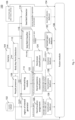
- Fig. 1 shows an illustration 100 of a system according to various embodiments.
- Car specific configuration parameters 102 may be provided.
- a camera 104 may acquire an image or a series of images.
- Vehicle state data 106 may for example include door states and/ or vehicle velocity.
- a body key point detection module 110, a people presence module 108, a region of interest generator 112, a hand tracking module 114, a seat belt classifier 116, a seat belt detector 118, a hand location assignment module 120, a hand trajectory classification module 122, a hand pose classification module 124 may be provided.
- a hand location likelihood 126, a hand trajectory likelihood 128, a hand pose likelihood 130, a seat belt region classifier likelihood 132, and a seatbelt detector likelihood 134 may be determined and provided to a fusion module 136.
- shoulder points may be provided to the region of interest generator 112, and hand points may be provided to the hand tracking module 114.
- the camera 104 may provide an image (or a plurality of images) to the people presence module 108, the body keypoint detection module 110, the seat belt classifier 116, and the seatbelt detector.
- Buckle and shoulder regions may be provided from the region of interest generator 112 to the hand location assignment module 120.
- the hand location assignment module 120 may provide hand region index, and/or a duration of hand inside a given region to the hand location likelihood (function) 126.
- the region of interest generator 112 may provide information on body regions to the seat belt classifier 116.
- the hand tracking module 114 may provide information on tracked hand position and/ or bounding boxes and/or hand velocity and/or hand acceleration to the hand trajectory classification module 122 and/or the hand pose classification module 124.
- the hand trajectory classification module 122 may provide a hand trajectory class (and optionally a corresponding confidence), for example from shoulder to buckle or from buckle to shoulder. and/ or a hand activity index (and optionally a corresponding confidence), for example stationary, moving, buckling activity, to the hand trajectory likelihood (function) 128.
- a hand trajectory class and optionally a corresponding confidence
- a hand activity index for example stationary, moving, buckling activity
- the hand pose classification module 124 may provide information on the hand pose (and optionally a corresponding confidence) to the hand pose likelihood (function) 130.
- the seat belt classifier 116 may provide a buckle status per region (and optionally a corresponding confidence) to the seat belt region classifier likelihood (function) 132.
- the seat belt detector 118 may provide pixel wise classification and/or segmentation of seat belt pixels to the seat belt detector likelihood (function) 134.
- Fig. 1 may include some or all the components shown in Fig. 1 , but may not be limited to these.
- the input data may include data from at least one camera and vehicle sensor data (e.g. door states or velocity), and some configuration parameters that may be specific to the given car model.
- vehicle sensor data e.g. door states or velocity
- the likelihoods 126, 128, 130, 132, and 134 shown in Fig. 1 are the respective likelihood functions.
- the hand location likelihood function may have the following properties:
- the hand trajectory likelihood function may have the following properties:
- the hand pose likelihood may have the following properties:
- the seat belt classifier likelihood may have the following properties:
- the seat belt detector likelihood may have the following properties:
- markers for example IR (infrared) markers
- IR infrared markers
- a combination with other sensors like the buckle sensor and the seat belt extension measurement may be provided.
- the system may be modeled by a Hidden Markov model where the described likelihood functions correspond to the observation likelihoods for a given state and the hidden states are at least seat belt on (buckled) or seat belt off (unbuckled). Additional states may be added for 'action to buckle', 'action to unbuckle', and 'unknown'.
- Fig. 2 shows a flow diagram 200 illustrating a method for determining a state indicating whether a seat belt of a vehicle is used according to various embodiments.
- At 202 at least one image of a portion of an interior of the vehicle may be acquired.
- it may be determining whether the at least one image comprises a buckle receiver. If it is determined at 204 that the at least one image include (or show or comprises) the buckle receiver, at 206, the state may be determining based on the image. Otherwise (i.e. if it is determined at 204 that the at least one image does not include the buckle receiver), at 208, information related to a user of the seat belt and/or information related to a buckle of the seat belt may be extracting from the acquired image. Furthermore, at 210, a probability of a change of the state may be determined based on the extracted information, and at 212, the state may be updated based on the determined probability.
- the extracted information may include or may be at least one keypoint of at least one body part of the user, and/or the extracted information may include or may be information on a position of the buckle.
- the portion of the interior of the vehicle may include or may be at least one of a portion near a buckle of the seat belt or a portion near a buckle receiver of the seat belt.
- a trajectory of a hand of a user of the seat belt relative to the buckle may be determined, and the probability may be determined based on the trajectory.
- a probability of a change of the state from "unbuckled” to “buckled” may be set higher than a probability of a change of the state from "buckled” to "unbuckled”.
- a probability of a change of the state from "unbuckled” to “buckled” may be set lower than a probability of a change of the state from "buckled” to "unbuckled”.
- a pose of a hand of a user of the seat belt near the buckle may be classified, and the probability may be determined based on the pose.
- a probability of a change of the state from "unbuckled” to “buckled” may be set higher than a probability of a change of the state from "unbuckled” to “buckled” if an open hand pose is determined as the pose of the hand.
- the buckle receiver if it is determined that the at least one image does not comprise the buckle receiver, it may be determined whether the buckle is located in the hand of the user, and the probability may be determined based on whether the buckle is located in the hand of the user.
- a gaze direction of a user of the seat belt relative to the buckle may be determined, and the probability may be determined based on the gaze direction.
- the gaze direction may be determined using a camera system. The position of the user's eye or eyes and/or the user's head may be determined in order to determine the gaze direction. Since the coordinates of the camera may be fixed and known related to the chassis of the car, and thus also relative to the buckle, the gaze direction of the user of the seat belt relative to the buckle may be determined.
- the state may include or may be a probability of the seat belt of the vehicle being used.
- the state may be determined based on the image.
- Fig. 3 shows a computer system 300 with a plurality of computer hardware components configured to carry out steps of a computer implemented method according to various embodiments for determining a state indicating whether a seat belt of a vehicle is used.
- the computer system 300 may include a processor 302, a memory 304, and a non-transitory data storage 306.
- An image sensor 308 (for example a camera, a time-of-flight camera, an infrared camera, a lidar sensor or a radar sensor) may be provided as part of the computer system 300 (like illustrated in Fig. 3 ), or may be provided external to the computer system 300.
- the processor 302 may carry out instructions provided in the memory 304.
- the non-transitory data storage 306 may store a computer program, including the instructions that may be transferred to the memory 304 and then executed by the processor 302.
- the image sensor 308 may be used for acquiring an image of a portion of an interior of the vehicle.
- the processor 302, the memory 304, and the non-transitory data storage 306 may be coupled with each other, e.g. via an electrical connection 310, such as e.g. a cable or a computer bus or via any other suitable electrical connection to exchange electrical signals.
- the image sensor 308 may be coupled to the computer system 300, for example via an external interface, or may be provided as parts of the computer system (in other words: internal to the computer system, for example coupled via the electrical connection 310).
- Coupled or “connection” are intended to include a direct “coupling” (for example via a physical link) or direct “connection” as well as an indirect “coupling” or indirect “connection” (for example via a logical link), respectively.
Landscapes
- Engineering & Computer Science (AREA)
- Theoretical Computer Science (AREA)
- General Physics & Mathematics (AREA)
- Multimedia (AREA)
- Physics & Mathematics (AREA)
- General Health & Medical Sciences (AREA)
- Health & Medical Sciences (AREA)
- Computer Vision & Pattern Recognition (AREA)
- Social Psychology (AREA)
- Psychiatry (AREA)
- Human Computer Interaction (AREA)
- Automation & Control Theory (AREA)
- Mechanical Engineering (AREA)
- Databases & Information Systems (AREA)
- Evolutionary Computation (AREA)
- Computing Systems (AREA)
- Medical Informatics (AREA)
- Software Systems (AREA)
- Artificial Intelligence (AREA)
- Image Analysis (AREA)
Abstract
Description
- The present disclosure relates to methods and systems for determining a state indicating whether a seat belt of a vehicle is used.
- Seat belt reminder functions, which are partially legally required, may consist of two elements: a sensing unit that detects that a person is present at a given seat, and a second sensing unit that detects whether the seat belt is used.
- In order to improve the overall system cost, replacing multiple sensing units by alternative solutions may be of high interest to many OEMs (Original Equipment Manufacturers). One sensing unit that can cover both elements may be a vision sensor, for example a camera
- Cameras are getting introduced in many vehicle cabins these days. Camera sensors are used, for example, for driver state sensing, e.g. drowsiness/distraction, but can also be used for other tasks if positioned in such a way that the camera can see the relevant parts of the cabin.
- However, it may be difficult for cameras to observe passengers under all circumstances.
- Accordingly, there is a need to provide improved methods and systems for observing the passenger.
- The present disclosure provides a computer implemented method, a computer system and a non-transitory computer readable medium according to the independent claims. Exemplary embodiments are given in the subclaims, the description and the drawings.
- In one aspect, the present disclosure is directed at a computer implemented method for determining a state indicating whether a seat belt of a vehicle is used, the method comprising the steps: acquiring at least one image of a portion of an interior of the vehicle; determining whether the at least one image comprises a buckle receiver; if it is determined that the at least one image comprises the buckle receiver, determining the state based on the image, and otherwise performing the steps of: extracting, from the acquired image, information related to a user of the seat belt and/or information related to a buckle of the seat belt; determining a probability of a change of the state based on the extracted information; and updating the state based on the determined probability. The probability may be determined based on an analysis of the at least one image, for example based on a position of a hand of a user, or a trajectory of the hand of the user.
- An initial state may be pre-defined as not wearing the seat belt.
- In other words, if a state cannot directly, i.e. without knowledge of a previous state, be estimated based on the image(s), at least a probability of change of the state may be estimated based on the image(s), for example based on information extracted from the image(s). Thus, assuming a present state, a probability of an updated state may be determined.
- According to various embodiments, the information may be extracted using an image processing method, for example using a machine learning method, for example an artificial neural network.
- According to various embodiments, the extracted information may include at least one keypoint of at least one body part of the user. For example, the keypoint may be coordinates, for example three dimensional coordinates, for example in a world coordinate system, of joints of the user, for example of a shoulder joint of the user or of an elbow joint of the user or of a hand of the user.
- According to various embodiments, the extracted information may include information on a position of the buckle. For example, the information on the position of the buckle may include a static position or a temporal sequence of positions (in other words: a trajectory of the buckle).
- According to various embodiments, a plurality of images, for example a temporal sequence of images, may be acquired and the plurality of images may be subjected to the subsequent processing. With a temporal sequence of images, more information may be conveyed, and as such, the probability may be estimated more accurately.
- The state may be or may indicate a probability of whether the seat belt is used.
- The state may be "seat belt used" or "seat belt not used" or a probability distribution over these two states. The probability distribution may provide a probability, for example a value between 0 and 1 or between 0% and 100%, for each of "seat belt used" and "seat belt not used", wherein the probability may sum up to 1 or 100%.
- According to an embodiment, the portion of the interior of the vehicle comprises at least one of a portion near a buckle of the seat belt or a portion near a buckle receiver of the seat belt. However, even if the portion of the interior comprises the buckle or the buckle receiver, some parts of the image may be obstructed, so that the image does not necessarily actually include or show the buckle or buckle receiver.
- According to an embodiment, the computer implemented method may further comprise the following step : if it is determined that the at least one image does not comprise the buckle receiver, determining a trajectory of a hand of a user of the seat belt relative to the buckle; wherein the probability is determined based on the trajectory. The trajectory of the hand may be used to determine the probability and then to update the state, even in situations where the actual buckling or unbuckling is not visible to the camera, for example due to obstruction of portions of the buckle receiver.
- According to an embodiment, the computer implemented method may further comprise the following step: if, in a case where it is determined that the at least one image does not comprise the buckle receiver, a trajectory of the hand towards the buckle receiver is determined, setting a probability of a change of the state from "unbuckled" to "buckled" higher than a probability of a change of the state from "buckled" to "unbuckled". While a trajectory of the hand towards the buckle receiver may be observed both for buckling and unbuckling, usually a longer trajectory may be observed when buckling, since the hand must grab the buckle and move it all the way to the buckle receiver. In contrast thereto, when unbuckling, a shorter trajectory of the hand may be observed, for example from a rest position near the leg to the buckle receiver.
- According to an embodiment, the computer implemented method may further comprise the following step: if, in a case where it is determined that the at least one image does not comprise the buckle receiver, a trajectory of the hand away from buckle receiver is determined, setting a probability of a change of the state from "unbuckled" to "buckled" lower than a probability of a change of the state from "buckled" to "unbuckled".
- According to an embodiment, the computer implemented method may further comprise the following step: if it is determined that the at least one image does not comprise the buckle receiver, classifying a pose of a hand of a user of the seat belt near the buckle; wherein the probability is determined based on the pose. The pose of the hand may be classified using any suitable classification method, for example binary classification methods, which may distinguish between two possible poses, or multiclass classification methods, which may distinguish between a plurality of possible poses. The possible classes may for example include a "grabbing" pose, an "open hand" pose, or a "hand holding buckle" pose.
- According to an embodiment, the computer implemented method may further comprise the following step: if, in a case where it is determined that the at least one image does not comprise the buckle receiver, a pose of the hand is classified as a grabbing pose, setting a probability of a change of the state from "unbuckled" to "buckled" higher than a probability of a change of the state from "unbuckled" to "buckled" if an open hand pose is determined as the pose of the hand.
- According to an embodiment, the computer implemented method may further comprise the following step: if it is determined that the at least one image does not comprise the buckle receiver, determining whether the buckle is located in the hand of the user; wherein the probability is determined based on whether the buckle is located in the hand of the user. In addition to the information whether the buckle is located in the hand of the user, the trajectory of the hand of the user may be used when updating the status.
- According to an embodiment, the computer implemented method may further comprise the following step: if it is determined that the at least one image does not comprise the buckle receiver, determining a gaze direction of a user of the seat belt relative to the buckle; wherein the probability is determined based on the gaze direction.
- According to an embodiment, the state comprises a probability of the seat belt of the vehicle being used.
- In another aspect, the present disclosure is directed at a computer system, said computer system comprising a plurality of computer hardware components configured to carry out several or all steps of the computer implemented method described herein. The computer system can be part of a vehicle.
- The computer system may comprise a plurality of computer hardware components (for example a processor, for example processing unit or processing network, at least one memory, for example memory unit or memory network, and at least one non-transitory data storage). It will be understood that further computer hardware components may be provided and used for carrying out steps of the computer implemented method in the computer system. The non-transitory data storage and/or the memory unit may comprise a computer program for instructing the computer to perform several or all steps or aspects of the computer implemented method described herein, for example using the processing unit and the at least one memory unit.
- In another aspect, the present disclosure is directed at a vehicle (for example a car, a bus, a truck, or a lorry) comprising the computer system as described herein and a sensor configured to acquire the image.
- In another aspect, the present disclosure is directed at a non-transitory computer readable medium comprising instructions for carrying out several or all steps or aspects of the computer implemented method described herein. The computer readable medium may be configured as: an optical medium, such as a compact disc (CD) or a digital versatile disk (DVD); a magnetic medium, such as a hard disk drive (HDD); a solid state drive (SSD); a read only memory (ROM), such as a flash memory; or the like. Furthermore, the computer readable medium may be configured as a data storage that is accessible via a data connection, such as an internet connection. The computer readable medium may, for example, be an online data repository or a cloud storage.
- The present disclosure is also directed at a computer program for instructing a computer to perform several or all steps or aspects of the computer implemented method described herein.
- With the methods and devices according to various embodiments, visual detection of seatbelt usage of a mostly occluded person on the back seat of a car may be provided.
- With the methods and devices according to various embodiments, the classification of seat belt use by vehicle occupants may be monitored using the interior sensing system by considering pre-defined criteria in the interior scene.
- Every time a direct or indirect cue (in other words: criteria) related to the seat belt state is observed, the probability distribution over "on" and "off" may be updated, as described above. In that sense, re-classification may be provided potentially at every frame with a relevant observation.
- Exemplary embodiments and functions of the present disclosure are described herein in conjunction with the following drawings, showing schematically:
- Fig. 1
- an illustration of a system according to various embodiments;
- Fig. 2
- a flow diagram illustrating a method for determining a state indicating whether a seat belt of a vehicle is used according to various embodiments; and
- Fig. 3
- a computer system with a plurality of computer hardware components configured to carry out steps of a computer implemented method for determining a state indicating whether a seat belt of a vehicle is used according to various embodiments.
- Seat belt reminder functions, which are partially legally required, may consist of two elements: a sensing unit that detects that a person is present at a given seat, and a second sensing unit that detects whether the seat belt is used.
- In order to improve the overall system cost, replacing multiple sensing units by alternative solutions may be of high interest to many OEMs. One sensing unit that can cover both elements may be a vision sensor (for example a camera).
- One or more cameras may be provided around the rear view mirror, in the central console, above the dashboard, or in the roof overhead console. These positions may be summarized as front row 'central high' positions (opposed to camera positions in the A- or B-pillars, above the 2nd or 3rd seat row, etc).
- According to various embodiments, a camera may be provided in such front row central high positions or any other suitable position.
- From the perspective of a center high camera, passengers sitting on the left or right seat of the second row may at best be partially visible. In order to detect whether the passengers are wearing a seatbelt, a very specific approach to the problem may be provided which relies heavily on partial and indirect observation.
- According to various embodiments, for the left and right seat of the second row respectively, a probability state is kept on whether the seat belt is fastened. As the seats can be considered mostly independently, details of various embodiments may be described for one seat only.
- First, it may be detected when a person begins to occupy the seat. This may be realized by means of face and/or body tracking or seat region based classifiers. The detection may be performed when and shortly after the door corresponding to the seat has been open, and may also cover the case that someone switches seat from another seat of the second row to the considered one.
- When a person gets onto the seat, initially one can be certain that the seat belt is off. From that point on, it may be looked for cues that may indicate the seatbelt being buckled. An example may be that the hand, maybe holding the seat belt plug, is moved to the buckle. As such cues are observed, the probability state may be modified to reflect the probability that the seatbelt is now on given the observations.
- For cues that directly observe the seat belt status, a likelihood value pon in the range [0, 1] that the seat belt is being worn and the inverse value poff = 1-pon indicating that it is not may be defined.
- For cues that only observe a potential state change (for example event of buckling/ unbuckling), a similar likelihood function may be defined that relates to the likelihood of a state change for buckling or unbuckling.
- Now any observed cue can be associated with conditional probabilities which indicate, given the observation, what is the probability that if we were for example in unbuckled state poff at the previous time step, to either stay in poff or switch to pon, or if we were in buckled state pon to either remain in pon or switch to poff. Using Bayes' theorem, the probability state about the seat belt status may thus be updated.
- In the following, relevant cues to observe will be described.
- For example, a direct observation of a seat belt part may be provided from the acquired image: If the camera has a line of sight to the buckle receiver region and can detect part of the seat belt in that region routed in front of the body of a person, this may increase the probability of seat belt worn significantly. It does not indicate whether the seat belt is worn correctly, so that some misuse cases such as shoulder belt running below an arm or lap belt behind the body, could not be distinguished if only the lower part of the seat belt is visible.
- According to various embodiments, if a hand trajectory towards/ away from seat belt is determined based on the acquired image (or the acquired images):
- A hand detection module (for example body key point detection module or other implementation of hand detection) may localize the position of hands in the image.
- The output of the hand detection module may be a 2D or 3D coordinate (e.g. hand center point), hand region (e.g. bounding box), or pixel-wise segmentation of the hand area.
- The hands may be assigned to persons and seats in an assignment step.
- A hand pose classification module may distinguish different postures of the hand, for example grabbing hand pose, open hand, or hand holding seat belt buckle.
- A trajectory classification module may distinguish movements from the shoulder region towards the buckle receiver, from the buckle receiver towards the shoulder region, and other trajectories based on a sequence of images.
- If the trajectory is 'towards buckle receiver', the likelihood for seat belt on may increase.
- If the trajectory is 'away from buckle receiver', the likelihood for seat belt off may increase.
- If the classified hand pose is 'grabbing hand', this may result in a higher likelihood compared to 'open hand'.
- If the seat belt plug is detected in the hand during the movement towards the buckle (hand pose 'hand holding seat belt'), this may result in an even higher likelihood for a switch from off to on. Inversely, if it is detected during the movement away from the buckle, the likelihood for a switch from on to off may be very high.
- In another variant, instead of using discrete hand poses from the classification module, the likelihood may be a function of the hand pose classification neural network's numeric outputs.
- If the seat belt plug is not visible in the hand, there may be a certain probability to switch from off to on, but also to switch from on to off, depending on the direction of the hand trajectory.
- If the seat belt plug is in the hand during the movement away from the buckle, this may result in a higher likelihood for a switch from on to off.
- If the seat belt plug is visible in the hand, this may result in a higher probability to switch from on to off.
- The relevant shoulder region may be selected by a region of interest generation model based on body key points and vehicle specific configuration data.
- According to various embodiments, if moving the hand away from the buckle is determined based on the acquired image (or the acquired images):
- First, the hand position in the image may be estimated, e.g. by locating key body points or an object detection approach that is able to detect hand regions.
- The static buckle region may be configured in a calibration step, e.g. in form of a region of interest in the image. Alternatively, the buckle may be localized by a commonly used object detection method.
- A movement away from the buckle may be expressed by an increasing relative distance of the detected hand region and the static buckle region.
- According to various embodiments, if hand presence hand at the buckle receiver region is determined based on the acquired image (or the acquired images):
- Hand trajectory classification may provide a hand activity classification (e.g. stationary, moving, buckle action, ...).
- If a hand movement is observed, this may mean that the buckle button is pressed (activity class buckle action), and this may indicate a switch from on to off.
- The likelihood for changing the buckle state may be proportional to the confidence of the activity classification for class "buckle action".
- The likelihood for changing the buckle state may be lower if the hand is stationary all the time.
- In general, every time the hand is at the buckle, there is a very small probability that the state switches from on to off or from off to on.
- According to various embodiments, (the passenger) looking towards the buckle during any of these activities may slightly increase the probability of a change happening in the above cases:
- A head detection module may localize an image region that contains a person's head.
- The detected image region may be further analyzed to estimate the head orientation (e.g. 3 rotation angles).
- The estimated head rotation parameters may be used to identify cases where the head is looking towards the seat belt buckle receiver
- A look on the seat belt may increase the likelihood of a seat belt state change.
- According to various embodiments, a combination of a person (in other words; passenger) looking at the seat belt and his or her hand being in the region may further increases the overall likelihood of a seat belt state change.
- Observation of the seat belt plug in the buckle or the seatbelt running in a reasonable location and direction may increase the confidence that the seatbelt is worn.
- According to various embodiments, if moving a hand to the shoulder/ above the shoulder is determined based on the acquired image (or the acquired images):
- If shoulder region is visible and can be detected via a body key points detection module, the shoulder region may be dynamically placed in the image relative to the detected shoulder points.
- If a body key point detection module is not available, configurable static shoulder regions may be defined.
-
Fig. 1 shows anillustration 100 of a system according to various embodiments. Carspecific configuration parameters 102 may be provided. Acamera 104 may acquire an image or a series of images.Vehicle state data 106 may for example include door states and/ or vehicle velocity. A body keypoint detection module 110, apeople presence module 108, a region ofinterest generator 112, ahand tracking module 114, aseat belt classifier 116, aseat belt detector 118, a handlocation assignment module 120, a handtrajectory classification module 122, a handpose classification module 124 may be provided. Ahand location likelihood 126, ahand trajectory likelihood 128, ahand pose likelihood 130, a seat beltregion classifier likelihood 132, and aseatbelt detector likelihood 134 may be determined and provided to afusion module 136. - In more details, shoulder points may be provided to the region of
interest generator 112, and hand points may be provided to thehand tracking module 114. - The
camera 104 may provide an image (or a plurality of images) to thepeople presence module 108, the bodykeypoint detection module 110, theseat belt classifier 116, and the seatbelt detector. - Buckle and shoulder regions may be provided from the region of
interest generator 112 to the handlocation assignment module 120. The handlocation assignment module 120 may provide hand region index, and/or a duration of hand inside a given region to the hand location likelihood (function) 126. - The region of
interest generator 112 may provide information on body regions to theseat belt classifier 116. - The
hand tracking module 114 may provide information on tracked hand position and/ or bounding boxes and/or hand velocity and/or hand acceleration to the handtrajectory classification module 122 and/or the hand poseclassification module 124. - The hand
trajectory classification module 122 may provide a hand trajectory class (and optionally a corresponding confidence), for example from shoulder to buckle or from buckle to shoulder. and/ or a hand activity index (and optionally a corresponding confidence), for example stationary, moving, buckling activity, to the hand trajectory likelihood (function) 128. - The hand pose
classification module 124 may provide information on the hand pose (and optionally a corresponding confidence) to the hand pose likelihood (function) 130. - The
seat belt classifier 116 may provide a buckle status per region (and optionally a corresponding confidence) to the seat belt region classifier likelihood (function) 132. - The
seat belt detector 118 may provide pixel wise classification and/or segmentation of seat belt pixels to the seat belt detector likelihood (function) 134. - It will be understood that the system may include some or all the components shown in
Fig. 1 , but may not be limited to these. - The input data may include data from at least one camera and vehicle sensor data (e.g. door states or velocity), and some configuration parameters that may be specific to the given car model.
- The
likelihoods Fig. 1 are the respective likelihood functions. - According to various embodiments, the hand location likelihood function may have the following properties:
- High likelihood of state change if hand is detected inside the shoulder region or buckle region for some time;
- Low likelihood if the hand is outside the regions for some time;
- The hand location likelihood function may be a function of the duration time inside the box (for example within a certain short time period for normal operation of seat belt the likelihood is highest, for shorter or longer periods the likelihood will decrease).
- The hand location likelihood function may be manually designed based on model knowledge or learned from training data.
- The hand localization likelihood may only contribute to transition events and does not provide a direct measurement of the seat belt status.
- According to various embodiments, the hand trajectory likelihood function may have the following properties:
- If an observed trajectory is similar to (observed or modeled) buckling or unbuckling motions, the respective likelihood may be high.
- Similarity may be measured in terms of the spatial trajectory as well as the speed, or may be the output of a trained regression model.
- According to various embodiments, the hand pose likelihood may have the following properties:
- If the hand pose during a potential buckling or unbuckling motion indicates that the buckle may be held, this may increase the likelihood of having observed a buckling or unbuckling activity.
- Hand poses may be discrete hand states determined by a classifier. Each hand state may be associated with a likelihood of the hand holding a buckle.
- Alternatively, a regression model may be trained to estimate the likelihood that the hand currently holds a buckle.
- According to various embodiments, the seat belt classifier likelihood may have the following properties:
- The classifier may classify an image region with respect to whether it contains the seatbelt or buckle.
- This may be particularly relevant for the region around the buckle receiver. If the seatbelt or buckle is detected inside this region, this may increase the probability for "seatbelt on" over time.
- Optionally, the buckle receiver may be classified as visible or occluded. If it is visible and no seatbelt or buckle is detected, this may increase the likelihood of "seatbelt off" over time.
- According to various embodiments, the seat belt detector likelihood may have the following properties:
- The detector may detect and localize the seatbelt and the seatbelt buckle.
- If the buckle is detected in the buckle receiver, this may increase the likelihood for "seatbelt on" over time.
- If the seatbelt is detected near the buckle receiver, this may increase the likelihood for "seatbelt on" over time.
- If the buckle and/or the seatbelt are detected in or near the hand during a potential buckling or unbuckling motion, this may increase the confidence of the output of the classification of that action.
- According to various embodiments, to simplify the detection/observation of the events and cues above, markers (for example IR (infrared) markers) may be provided on the seat belt plug and/or the seat belt itself.
- According to various embodiments, a combination with other sensors like the buckle sensor and the seat belt extension measurement may be provided.
- According to various embodiments, the system may be modeled by a Hidden Markov model where the described likelihood functions correspond to the observation likelihoods for a given state and the hidden states are at least seat belt on (buckled) or seat belt off (unbuckled). Additional states may be added for 'action to buckle', 'action to unbuckle', and 'unknown'.
-
Fig. 2 shows a flow diagram 200 illustrating a method for determining a state indicating whether a seat belt of a vehicle is used according to various embodiments. At 202, at least one image of a portion of an interior of the vehicle may be acquired. At 204, it may be determining whether the at least one image comprises a buckle receiver. If it is determined at 204 that the at least one image include (or show or comprises) the buckle receiver, at 206, the state may be determining based on the image. Otherwise (i.e. if it is determined at 204 that the at least one image does not include the buckle receiver), at 208, information related to a user of the seat belt and/or information related to a buckle of the seat belt may be extracting from the acquired image. Furthermore, at 210, a probability of a change of the state may be determined based on the extracted information, and at 212, the state may be updated based on the determined probability. - According to various embodiments, the extracted information may include or may be at least one keypoint of at least one body part of the user, and/or the extracted information may include or may be information on a position of the buckle.
- According to various embodiments, the portion of the interior of the vehicle may include or may be at least one of a portion near a buckle of the seat belt or a portion near a buckle receiver of the seat belt.
- According to various embodiments, if it is determined that the at least one image does not comprise the buckle receiver, a trajectory of a hand of a user of the seat belt relative to the buckle may be determined, and the probability may be determined based on the trajectory.
- According to various embodiments, if, in a case where it is determined that the at least one image does not comprise the buckle receiver, a trajectory of the hand towards the buckle receiver is determined, a probability of a change of the state from "unbuckled" to "buckled" may be set higher than a probability of a change of the state from "buckled" to "unbuckled".
- According to various embodiments, if, in a case where it is determined that the at least one image does not comprise the buckle receiver, a trajectory of the hand away from buckle receiver is determined, a probability of a change of the state from "unbuckled" to "buckled" may be set lower than a probability of a change of the state from "buckled" to "unbuckled".
- According to various embodiments, if it is determined that the at least one image does not comprise the buckle receiver, a pose of a hand of a user of the seat belt near the buckle may be classified, and the probability may be determined based on the pose.
- According to various embodiments, if, in a case where it is determined that the at least one image does not comprise the buckle receiver, a pose of the hand is classified as a grabbing pose, a probability of a change of the state from "unbuckled" to "buckled" may be set higher than a probability of a change of the state from "unbuckled" to "buckled" if an open hand pose is determined as the pose of the hand.
- According to various embodiments, if it is determined that the at least one image does not comprise the buckle receiver, it may be determined whether the buckle is located in the hand of the user, and the probability may be determined based on whether the buckle is located in the hand of the user.
- According to various embodiments, a gaze direction of a user of the seat belt relative to the buckle may be determined, and the probability may be determined based on the gaze direction. For example, the gaze direction may be determined using a camera system. The position of the user's eye or eyes and/or the user's head may be determined in order to determine the gaze direction. Since the coordinates of the camera may be fixed and known related to the chassis of the car, and thus also relative to the buckle, the gaze direction of the user of the seat belt relative to the buckle may be determined.
- According to various embodiments, the state may include or may be a probability of the seat belt of the vehicle being used.
- According to various embodiments, it is determined that the state can be estimated based on the image, the state may be determined based on the image.
- Each of the
steps -
Fig. 3 shows acomputer system 300 with a plurality of computer hardware components configured to carry out steps of a computer implemented method according to various embodiments for determining a state indicating whether a seat belt of a vehicle is used. Thecomputer system 300 may include aprocessor 302, amemory 304, and anon-transitory data storage 306. An image sensor 308 (for example a camera, a time-of-flight camera, an infrared camera, a lidar sensor or a radar sensor) may be provided as part of the computer system 300 (like illustrated inFig. 3 ), or may be provided external to thecomputer system 300. - The
processor 302 may carry out instructions provided in thememory 304. Thenon-transitory data storage 306 may store a computer program, including the instructions that may be transferred to thememory 304 and then executed by theprocessor 302. Theimage sensor 308 may be used for acquiring an image of a portion of an interior of the vehicle. - The
processor 302, thememory 304, and thenon-transitory data storage 306 may be coupled with each other, e.g. via anelectrical connection 310, such as e.g. a cable or a computer bus or via any other suitable electrical connection to exchange electrical signals. Theimage sensor 308 may be coupled to thecomputer system 300, for example via an external interface, or may be provided as parts of the computer system (in other words: internal to the computer system, for example coupled via the electrical connection 310). - The terms "coupling" or "connection" are intended to include a direct "coupling" (for example via a physical link) or direct "connection" as well as an indirect "coupling" or indirect "connection" (for example via a logical link), respectively.
- It will be understood that what has been described for one of the methods above may analogously hold true for the
computer system 300. -
- 100
- illustration of a system according to various embodiments
- 102
- car specific configuration parameters
- 104
- camera
- 106
- vehicle state data
- 108
- people presence module
- 110
- body key point detection module
- 112
- region of interest generator
- 114
- hand tracking module
- 116
- seat belt classifier
- 118
- seat belt detector
- 120
- hand location assignment module
- 122
- hand trajectory classification module
- 124
- hand pose classification module
- 126
- hand location likelihood
- 128
- hand trajectory likelihood
- 130
- hand pose likelihood
- 132
- seat belt region classifier likelihood
- 134
- seatbelt detector likelihood
- 136
- fusion module
- 200
- flow diagram 200 illustrating a method for determining a state indicating whether a seat belt of a vehicle is used according to various embodiments
- 202
- step of acquiring an image of a portion of an interior of the vehicle
- 204
- step of determining whether the state can be estimated based on the image
- 206
- steps of, if it is determined that the state cannot be estimated based on the image, determining a probability of a change of the state based on the acquired image and updating the state based on the determined probability
- 300
- computer system according to various embodiments
- 302
- processor
- 304
- memory
- 306
- non-transitory data storage
- 308
- image sensor
- 310
- connection
Claims (15)
- Computer implemented method for determining a state indicating whether a seat belt of a vehicle is used,
the method comprising:- acquiring (202) at least one image of a portion of an interior of the vehicle;- determining (204) whether the at least one image comprises a buckle receiver;- if it is determined that the at least one image comprises the buckle receiver, determining (206) the state based on the image, and- otherwise performing:extracting (208), from the acquired image, information related to a user of the seat belt and/or information related to a buckle of the seat belt;determining (210) a probability of a change of the state based on the extracted information; andupdating (212) the state based on the determined probability. - The computer implemented method of claim 1,
wherein the extracted information comprises at least one keypoint of at least one body part of the user. - The computer implemented method of at least one of claims 1 to 2,
wherein the extracted information comprises information on a position of the buckle. - The computer implemented method of at least one of claims 1 to 3,
wherein the portion of the interior of the vehicle comprises at least one of a portion near a buckle of the seat belt or a portion near the buckle receiver of the seat belt. - The computer implemented method of at least one of claims 1 to 4, further comprising the following step:if it is determined that the at least one image does not comprise the buckle receiver, determining a trajectory of a hand of a user of the seat belt relative to the buckle;wherein the probability is determined based on the trajectory.
- The computer implemented method of claim 5, further comprising the following step:
if, in a case where it is determined that the at least one image does not comprise the buckle receiver, a trajectory of the hand towards the buckle receiver is determined, setting a probability of a change of the state from "unbuckled" to "buckled" higher than a probability of a change of the state from "buckled" to "unbuckled". - The computer implemented method of at least one of claims 5 or 6, further comprising the following step:
if, in a case where it is determined that the at least one image does not comprise the buckle receiver, a trajectory of the hand away from buckle receiver is determined, setting a probability of a change of the state from "unbuckled" to "buckled" lower than a probability of a change of the state from "buckled" to "unbuckled". - The computer implemented method of at least one of claims 1 to 7, further comprising the following step:if it is determined that the at least one image does not comprise the buckle receiver, classifying a pose of a hand of a user of the seat belt near the buckle;wherein the probability is determined based on the pose.
- The computer implemented method of claim 8, further comprising the following step:
if, in a case where it is determined that the at least one image does not comprise the buckle receiver, a pose of the hand is classified as a grabbing pose, setting a probability of a change of the state from "unbuckled" to "buckled" higher than a probability of a change of the state from "unbuckled" to "buckled" if an open hand pose is determined as the pose of the hand. - The computer implemented method of at least one of claims 1 to 9, further comprising:if it is determined that the at least one image does not comprise the buckle receiver, determining whether the buckle is located in the hand of the user;wherein the probability is determined based on whether the buckle is located in the hand of the user.
- The computer implemented method of at least one of claims 1 to 10, further comprising:
determining a gaze direction of a user of the seat belt relative to the buckle; wherein the probability is determined based on the gaze direction. - The computer implemented method of at least one of claims 1 to 11,
wherein the state comprises a probability of the seat belt of the vehicle being used. - Computer system (300), the computer system (300) comprising a plurality of computer hardware components configured to carry out steps of the computer implemented method of at least one of claims 1 to 12.
- A vehicle comprising the computer system (300) of claim 13 and a sensor (308) configured to acquire the image.
- Non-transitory computer readable medium comprising instructions for carrying out the computer implemented method of at least one of claims 1 to 12.
Priority Applications (3)
| Application Number | Priority Date | Filing Date | Title |
|---|---|---|---|
| EP22151397.1A EP4212390B1 (en) | 2022-01-13 | 2022-01-13 | Methods and systems for determining a state indicating whether a seat belt of a vehicle is used |
| CN202211577346.9A CN116424259B (en) | 2022-01-13 | 2022-12-05 | Method and system for determining a status indicating whether a vehicle seat belt is in use |
| US18/152,580 US12694692B2 (en) | 2022-01-13 | 2023-01-10 | Methods and systems for determining a state indicating whether a seat belt of a vehicle is used |
Applications Claiming Priority (1)
| Application Number | Priority Date | Filing Date | Title |
|---|---|---|---|
| EP22151397.1A EP4212390B1 (en) | 2022-01-13 | 2022-01-13 | Methods and systems for determining a state indicating whether a seat belt of a vehicle is used |
Publications (2)
| Publication Number | Publication Date |
|---|---|
| EP4212390A1 true EP4212390A1 (en) | 2023-07-19 |
| EP4212390B1 EP4212390B1 (en) | 2026-03-04 |
Family
ID=79601896
Family Applications (1)
| Application Number | Title | Priority Date | Filing Date |
|---|---|---|---|
| EP22151397.1A Active EP4212390B1 (en) | 2022-01-13 | 2022-01-13 | Methods and systems for determining a state indicating whether a seat belt of a vehicle is used |
Country Status (3)
| Country | Link |
|---|---|
| US (1) | US12694692B2 (en) |
| EP (1) | EP4212390B1 (en) |
| CN (1) | CN116424259B (en) |
Families Citing this family (2)
| Publication number | Priority date | Publication date | Assignee | Title |
|---|---|---|---|---|
| EP4212390B1 (en) * | 2022-01-13 | 2026-03-04 | Aptiv Technologies AG | Methods and systems for determining a state indicating whether a seat belt of a vehicle is used |
| KR20240047120A (en) * | 2022-10-04 | 2024-04-12 | 현대자동차주식회사 | Methods and system for detecting misuse of seat belts |
Citations (3)
| Publication number | Priority date | Publication date | Assignee | Title |
|---|---|---|---|---|
| US20180326944A1 (en) * | 2017-05-15 | 2018-11-15 | Joyson Safety Systems Acquisition Llc | Detection and Monitoring of Occupant Seat Belt |
| US10953850B1 (en) * | 2018-04-05 | 2021-03-23 | Ambarella International Lp | Seatbelt detection using computer vision |
| US20210206344A1 (en) * | 2020-01-07 | 2021-07-08 | Aptiv Technologies Limited | Methods and Systems for Detecting Whether a Seat Belt is Used in a Vehicle |
Family Cites Families (12)
| Publication number | Priority date | Publication date | Assignee | Title |
|---|---|---|---|---|
| US20070195990A1 (en) * | 2006-02-16 | 2007-08-23 | Uri Levy | Vision-Based Seat Belt Detection System |
| US10339401B2 (en) * | 2017-11-11 | 2019-07-02 | Bendix Commercial Vehicle Systems Llc | System and methods of monitoring driver behavior for vehicular fleet management in a fleet of vehicles using driver-facing imaging device |
| US11040619B1 (en) * | 2018-04-05 | 2021-06-22 | Ambarella International Lp | Limiting car behavior based on a pre-set driver profile enabled by face recognition |
| US10956759B1 (en) * | 2018-04-05 | 2021-03-23 | Ambarella International Lp | Age detection in vehicles using computer vision |
| CN110795969B (en) * | 2018-08-02 | 2022-10-14 | 上海汽车集团股份有限公司 | Safety belt wearing identification method and device and electronic equipment |
| EP3902697A4 (en) * | 2018-12-28 | 2022-03-09 | Guardian Optical Technologies Ltd. | SYSTEMS, DEVICES, AND METHODS FOR VEHICLE ACCIDENT SUPPORT |
| WO2020165908A2 (en) * | 2019-02-17 | 2020-08-20 | Guardian Optical Technologies Ltd | System, device, and methods for detecting and obtaining information on objects in a vehicle |
| US10850702B2 (en) * | 2019-03-18 | 2020-12-01 | Pony Ai Inc. | Vehicle seat belt monitoring |
| CN110517261A (en) * | 2019-08-30 | 2019-11-29 | 上海眼控科技股份有限公司 | Seat belt status detection method, device, computer equipment and storage medium |
| US11433792B2 (en) * | 2019-09-25 | 2022-09-06 | GM Global Technology Operations LLC | System and method of activating a seat head restraint in a vehicle |
| CN113511170B (en) * | 2020-04-10 | 2022-10-25 | 采埃孚汽车科技(上海)有限公司 | System and method for enhancing safety of driver and passenger through automobile safety belt |
| EP4212390B1 (en) * | 2022-01-13 | 2026-03-04 | Aptiv Technologies AG | Methods and systems for determining a state indicating whether a seat belt of a vehicle is used |
-
2022
- 2022-01-13 EP EP22151397.1A patent/EP4212390B1/en active Active
- 2022-12-05 CN CN202211577346.9A patent/CN116424259B/en active Active
-
2023
- 2023-01-10 US US18/152,580 patent/US12694692B2/en active Active
Patent Citations (3)
| Publication number | Priority date | Publication date | Assignee | Title |
|---|---|---|---|---|
| US20180326944A1 (en) * | 2017-05-15 | 2018-11-15 | Joyson Safety Systems Acquisition Llc | Detection and Monitoring of Occupant Seat Belt |
| US10953850B1 (en) * | 2018-04-05 | 2021-03-23 | Ambarella International Lp | Seatbelt detection using computer vision |
| US20210206344A1 (en) * | 2020-01-07 | 2021-07-08 | Aptiv Technologies Limited | Methods and Systems for Detecting Whether a Seat Belt is Used in a Vehicle |
Also Published As
| Publication number | Publication date |
|---|---|
| US12694692B2 (en) | 2026-07-28 |
| CN116424259B (en) | 2025-11-28 |
| EP4212390B1 (en) | 2026-03-04 |
| CN116424259A (en) | 2023-07-14 |
| US20230222814A1 (en) | 2023-07-13 |
Similar Documents
| Publication | Publication Date | Title |
|---|---|---|
| CN113147664B (en) | Method and system for detecting whether a seat belt is used in a vehicle | |
| CN113556975B (en) | System, device and method for detecting an object in a vehicle and obtaining object information | |
| US10210451B2 (en) | Neural network applications in resource constrained environments | |
| Vora et al. | On generalizing driver gaze zone estimation using convolutional neural networks | |
| CN111415347B (en) | Method and device for detecting legacy object and vehicle | |
| EP3795441A1 (en) | Method and device for determining an estimate of the capability of a vehicle driver to take over control of a vehicle | |
| US11455810B2 (en) | Driver attention state estimation | |
| US20230222814A1 (en) | Methods and Systems for Determining a State Indicating Whether a Seat Belt of a Vehicle is Used | |
| WO2003073359A2 (en) | Method and apparatus for recognizing objects | |
| US11783636B2 (en) | System and method for detecting abnormal passenger behavior in autonomous vehicles | |
| US20070195990A1 (en) | Vision-Based Seat Belt Detection System | |
| Wang et al. | Automobile driver posture monitoring systems: A review | |
| EP4152276A1 (en) | Seat occupancy classification system for a vehicle | |
| Farmer et al. | Smart automotive airbags: Occupant classification and tracking | |
| US20250256569A1 (en) | Method and system for controlling a human-machine interface in a vehicle | |
| Jha et al. | Probabilistic estimation of the driver's gaze from head orientation and position | |
| EP4113364A1 (en) | Method for detecting presence of object in vehicle | |
| US20060030988A1 (en) | Vehicle occupant classification method and apparatus for use in a vision-based sensing system | |
| JP2024147927A (en) | Driver monitoring device, driver monitoring method and program | |
| Greer et al. | (safe) smart hands: Hand activity analysis and distraction alerts using a multi-camera framework | |
| WO2025248686A1 (en) | Action sensing device and action sensing method | |
| EP4510089A1 (en) | Physical driver condition determination for vehicle safety | |
| US20240140454A1 (en) | On-vehicle system | |
| CN121459421A (en) | Safety early warning method, device, equipment and medium for identifying child behaviors in vehicle | |
| JP2024120207A (en) | Warning Device |
Legal Events
| Date | Code | Title | Description |
|---|---|---|---|
| PUAI | Public reference made under article 153(3) epc to a published international application that has entered the european phase |
Free format text: ORIGINAL CODE: 0009012 |
|
| STAA | Information on the status of an ep patent application or granted ep patent |
Free format text: STATUS: THE APPLICATION HAS BEEN PUBLISHED |
|
| AK | Designated contracting states |
Kind code of ref document: A1 Designated state(s): AL AT BE BG CH CY CZ DE DK EE ES FI FR GB GR HR HU IE IS IT LI LT LU LV MC MK MT NL NO PL PT RO RS SE SI SK SM TR |
|
| STAA | Information on the status of an ep patent application or granted ep patent |
Free format text: STATUS: REQUEST FOR EXAMINATION WAS MADE |
|
| 17P | Request for examination filed |
Effective date: 20240119 |
|
| RBV | Designated contracting states (corrected) |
Designated state(s): AL AT BE BG CH CY CZ DE DK EE ES FI FR GB GR HR HU IE IS IT LI LT LU LV MC MK MT NL NO PL PT RO RS SE SI SK SM TR |
|
| RAP1 | Party data changed (applicant data changed or rights of an application transferred) |
Owner name: APTIV TECHNOLOGIES AG |
|
| RAP3 | Party data changed (applicant data changed or rights of an application transferred) |
Owner name: APTIV TECHNOLOGIES AG |
|
| GRAP | Despatch of communication of intention to grant a patent |
Free format text: ORIGINAL CODE: EPIDOSNIGR1 |
|
| STAA | Information on the status of an ep patent application or granted ep patent |
Free format text: STATUS: GRANT OF PATENT IS INTENDED |
|
| INTG | Intention to grant announced |
Effective date: 20251110 |
|
| P01 | Opt-out of the competence of the unified patent court (upc) registered |
Free format text: CASE NUMBER: UPC_APP_0012969_4212390/2025 Effective date: 20251112 |
|
| GRAS | Grant fee paid |
Free format text: ORIGINAL CODE: EPIDOSNIGR3 |
|
| GRAA | (expected) grant |
Free format text: ORIGINAL CODE: 0009210 |
|
| STAA | Information on the status of an ep patent application or granted ep patent |
Free format text: STATUS: THE PATENT HAS BEEN GRANTED |
|
| AK | Designated contracting states |
Kind code of ref document: B1 Designated state(s): AL AT BE BG CH CY CZ DE DK EE ES FI FR GB GR HR HU IE IS IT LI LT LU LV MC MK MT NL NO PL PT RO RS SE SI SK SM TR |
|
| REG | Reference to a national code |
Ref country code: CH Ref legal event code: F10 Free format text: ST27 STATUS EVENT CODE: U-0-0-F10-F00 (AS PROVIDED BY THE NATIONAL OFFICE) Effective date: 20260304 Ref country code: GB Ref legal event code: FG4D |
|
| REG | Reference to a national code |
Ref country code: IE Ref legal event code: FG4D |
|
| REG | Reference to a national code |
Ref country code: DE Ref legal event code: R096 Ref document number: 602022031425 Country of ref document: DE |
|
| PG25 | Lapsed in a contracting state [announced via postgrant information from national office to epo] |
Ref country code: RS Free format text: LAPSE BECAUSE OF FAILURE TO SUBMIT A TRANSLATION OF THE DESCRIPTION OR TO PAY THE FEE WITHIN THE PRESCRIBED TIME-LIMIT Effective date: 20260604 |
|
| PG25 | Lapsed in a contracting state [announced via postgrant information from national office to epo] |
Ref country code: ES Free format text: LAPSE BECAUSE OF FAILURE TO SUBMIT A TRANSLATION OF THE DESCRIPTION OR TO PAY THE FEE WITHIN THE PRESCRIBED TIME-LIMIT Effective date: 20260304 |
|
| REG | Reference to a national code |
Ref country code: NL Ref legal event code: MP Effective date: 20260304 |
|
| PG25 | Lapsed in a contracting state [announced via postgrant information from national office to epo] |
Ref country code: PL Free format text: LAPSE BECAUSE OF FAILURE TO SUBMIT A TRANSLATION OF THE DESCRIPTION OR TO PAY THE FEE WITHIN THE PRESCRIBED TIME-LIMIT Effective date: 20260304 |
|
| PG25 | Lapsed in a contracting state [announced via postgrant information from national office to epo] |
Ref country code: GR Free format text: LAPSE BECAUSE OF FAILURE TO SUBMIT A TRANSLATION OF THE DESCRIPTION OR TO PAY THE FEE WITHIN THE PRESCRIBED TIME-LIMIT Effective date: 20260605 |
|
| REG | Reference to a national code |
Ref country code: LT Ref legal event code: MG9D |
|
| PG25 | Lapsed in a contracting state [announced via postgrant information from national office to epo] |
Ref country code: LT Free format text: LAPSE BECAUSE OF FAILURE TO SUBMIT A TRANSLATION OF THE DESCRIPTION OR TO PAY THE FEE WITHIN THE PRESCRIBED TIME-LIMIT Effective date: 20260304 |
|
| PG25 | Lapsed in a contracting state [announced via postgrant information from national office to epo] |
Ref country code: NO Free format text: LAPSE BECAUSE OF FAILURE TO SUBMIT A TRANSLATION OF THE DESCRIPTION OR TO PAY THE FEE WITHIN THE PRESCRIBED TIME-LIMIT Effective date: 20260604 |
|
| PG25 | Lapsed in a contracting state [announced via postgrant information from national office to epo] |
Ref country code: FI Free format text: LAPSE BECAUSE OF FAILURE TO SUBMIT A TRANSLATION OF THE DESCRIPTION OR TO PAY THE FEE WITHIN THE PRESCRIBED TIME-LIMIT Effective date: 20260304 Ref country code: SE Free format text: LAPSE BECAUSE OF FAILURE TO SUBMIT A TRANSLATION OF THE DESCRIPTION OR TO PAY THE FEE WITHIN THE PRESCRIBED TIME-LIMIT Effective date: 20260304 |
|
| PG25 | Lapsed in a contracting state [announced via postgrant information from national office to epo] |
Ref country code: HR Free format text: LAPSE BECAUSE OF FAILURE TO SUBMIT A TRANSLATION OF THE DESCRIPTION OR TO PAY THE FEE WITHIN THE PRESCRIBED TIME-LIMIT Effective date: 20260304 |
|
| PG25 | Lapsed in a contracting state [announced via postgrant information from national office to epo] |
Ref country code: LV Free format text: LAPSE BECAUSE OF FAILURE TO SUBMIT A TRANSLATION OF THE DESCRIPTION OR TO PAY THE FEE WITHIN THE PRESCRIBED TIME-LIMIT Effective date: 20260304 |
|
| PG25 | Lapsed in a contracting state [announced via postgrant information from national office to epo] |
Ref country code: BG Free format text: LAPSE BECAUSE OF FAILURE TO SUBMIT A TRANSLATION OF THE DESCRIPTION OR TO PAY THE FEE WITHIN THE PRESCRIBED TIME-LIMIT Effective date: 20260304 |