EP4212162A1 - Lipid composition - Google Patents
Lipid composition Download PDFInfo
- Publication number
- EP4212162A1 EP4212162A1 EP21866911.7A EP21866911A EP4212162A1 EP 4212162 A1 EP4212162 A1 EP 4212162A1 EP 21866911 A EP21866911 A EP 21866911A EP 4212162 A1 EP4212162 A1 EP 4212162A1
- Authority
- EP
- European Patent Office
- Prior art keywords
- group
- lipid
- carbon atoms
- represented
- composition according
- Prior art date
- Legal status (The legal status is an assumption and is not a legal conclusion. Google has not performed a legal analysis and makes no representation as to the accuracy of the status listed.)
- Pending
Links
- 150000002632 lipids Chemical class 0.000 title claims abstract description 243
- 239000000203 mixture Substances 0.000 title claims abstract description 114
- 125000004432 carbon atom Chemical group C* 0.000 claims abstract description 150
- -1 cationic lipid Chemical class 0.000 claims abstract description 128
- 108020004707 nucleic acids Proteins 0.000 claims abstract description 85
- 102000039446 nucleic acids Human genes 0.000 claims abstract description 85
- 150000007523 nucleic acids Chemical class 0.000 claims abstract description 77
- 125000000217 alkyl group Chemical group 0.000 claims abstract description 60
- 125000001183 hydrocarbyl group Chemical group 0.000 claims abstract description 59
- 150000003839 salts Chemical class 0.000 claims abstract description 21
- 125000004435 hydrogen atom Chemical group [H]* 0.000 claims abstract description 19
- HVYWMOMLDIMFJA-DPAQBDIFSA-N cholesterol Chemical compound C1C=C2C[C@@H](O)CC[C@]2(C)[C@@H]2[C@@H]1[C@@H]1CC[C@H]([C@H](C)CCCC(C)C)[C@@]1(C)CC2 HVYWMOMLDIMFJA-DPAQBDIFSA-N 0.000 claims description 16
- 125000002887 hydroxy group Chemical group [H]O* 0.000 claims description 15
- 125000001424 substituent group Chemical group 0.000 claims description 15
- 125000003118 aryl group Chemical group 0.000 claims description 13
- 125000003178 carboxy group Chemical group [H]OC(*)=O 0.000 claims description 12
- 238000001727 in vivo Methods 0.000 claims description 12
- 229930182558 Sterol Natural products 0.000 claims description 11
- 125000003277 amino group Chemical group 0.000 claims description 11
- 125000001072 heteroaryl group Chemical group 0.000 claims description 11
- 235000003702 sterols Nutrition 0.000 claims description 11
- 239000004215 Carbon black (E152) Substances 0.000 claims description 10
- 229930195733 hydrocarbon Natural products 0.000 claims description 10
- 150000003904 phospholipids Chemical class 0.000 claims description 9
- 150000003432 sterols Chemical class 0.000 claims description 9
- 235000012000 cholesterol Nutrition 0.000 claims description 8
- 239000008194 pharmaceutical composition Substances 0.000 claims description 8
- 125000004430 oxygen atom Chemical group O* 0.000 claims description 6
- 238000011200 topical administration Methods 0.000 claims description 6
- 239000003937 drug carrier Substances 0.000 claims description 5
- 210000003169 central nervous system Anatomy 0.000 claims description 3
- 229920001223 polyethylene glycol Polymers 0.000 description 47
- 239000002245 particle Substances 0.000 description 41
- NRJAVPSFFCBXDT-HUESYALOSA-N 1,2-distearoyl-sn-glycero-3-phosphocholine Chemical compound CCCCCCCCCCCCCCCCCC(=O)OC[C@H](COP([O-])(=O)OCC[N+](C)(C)C)OC(=O)CCCCCCCCCCCCCCCCC NRJAVPSFFCBXDT-HUESYALOSA-N 0.000 description 27
- 102100032543 Phosphatidylinositol 3,4,5-trisphosphate 3-phosphatase and dual-specificity protein phosphatase PTEN Human genes 0.000 description 24
- XLYOFNOQVPJJNP-UHFFFAOYSA-N water Substances O XLYOFNOQVPJJNP-UHFFFAOYSA-N 0.000 description 23
- 238000000034 method Methods 0.000 description 22
- 210000004027 cell Anatomy 0.000 description 21
- 108020004999 messenger RNA Proteins 0.000 description 18
- 125000003342 alkenyl group Chemical group 0.000 description 16
- 230000000052 comparative effect Effects 0.000 description 16
- LFQSCWFLJHTTHZ-UHFFFAOYSA-N Ethanol Chemical compound CCO LFQSCWFLJHTTHZ-UHFFFAOYSA-N 0.000 description 13
- 239000003814 drug Substances 0.000 description 13
- 125000000304 alkynyl group Chemical group 0.000 description 12
- 125000004122 cyclic group Chemical group 0.000 description 12
- 239000002202 Polyethylene glycol Substances 0.000 description 11
- 239000006185 dispersion Substances 0.000 description 11
- 229940125904 compound 1 Drugs 0.000 description 10
- 229940079593 drug Drugs 0.000 description 10
- 238000011156 evaluation Methods 0.000 description 10
- 239000007788 liquid Substances 0.000 description 10
- IJFVSSZAOYLHEE-SSEXGKCCSA-N 1,2-dilauroyl-sn-glycero-3-phosphocholine Chemical compound CCCCCCCCCCCC(=O)OC[C@H](COP([O-])(=O)OCC[N+](C)(C)C)OC(=O)CCCCCCCCCCC IJFVSSZAOYLHEE-SSEXGKCCSA-N 0.000 description 9
- 238000000338 in vitro Methods 0.000 description 9
- CITHEXJVPOWHKC-UUWRZZSWSA-N 1,2-di-O-myristoyl-sn-glycero-3-phosphocholine Chemical compound CCCCCCCCCCCCCC(=O)OC[C@H](COP([O-])(=O)OCC[N+](C)(C)C)OC(=O)CCCCCCCCCCCCC CITHEXJVPOWHKC-UUWRZZSWSA-N 0.000 description 8
- 150000001875 compounds Chemical class 0.000 description 8
- 229960003724 dimyristoylphosphatidylcholine Drugs 0.000 description 7
- 239000002502 liposome Substances 0.000 description 7
- 239000000047 product Substances 0.000 description 7
- 238000012360 testing method Methods 0.000 description 7
- YIMATHOGWXZHFX-WCTZXXKLSA-N (2r,3r,4r,5r)-5-(hydroxymethyl)-3-(2-methoxyethoxy)oxolane-2,4-diol Chemical compound COCCO[C@H]1[C@H](O)O[C@H](CO)[C@H]1O YIMATHOGWXZHFX-WCTZXXKLSA-N 0.000 description 6
- 108091032973 (ribonucleotides)n+m Proteins 0.000 description 6
- 108091034117 Oligonucleotide Proteins 0.000 description 6
- LGJMUZUPVCAVPU-UHFFFAOYSA-N beta-Sitostanol Natural products C1CC2CC(O)CCC2(C)C2C1C1CCC(C(C)CCC(CC)C(C)C)C1(C)CC2 LGJMUZUPVCAVPU-UHFFFAOYSA-N 0.000 description 6
- 238000005538 encapsulation Methods 0.000 description 6
- 125000003827 glycol group Chemical group 0.000 description 6
- 239000003960 organic solvent Substances 0.000 description 6
- 239000000243 solution Substances 0.000 description 6
- LDGWQMRUWMSZIU-LQDDAWAPSA-M 2,3-bis[(z)-octadec-9-enoxy]propyl-trimethylazanium;chloride Chemical compound [Cl-].CCCCCCCC\C=C/CCCCCCCCOCC(C[N+](C)(C)C)OCCCCCCCC\C=C/CCCCCCCC LDGWQMRUWMSZIU-LQDDAWAPSA-M 0.000 description 5
- NJKOMDUNNDKEAI-UHFFFAOYSA-N beta-sitosterol Natural products CCC(CCC(C)C1CCC2(C)C3CC=C4CC(O)CCC4C3CCC12C)C(C)C NJKOMDUNNDKEAI-UHFFFAOYSA-N 0.000 description 5
- 238000006243 chemical reaction Methods 0.000 description 5
- 125000002704 decyl group Chemical group [H]C([H])([H])C([H])([H])C([H])([H])C([H])([H])C([H])([H])C([H])([H])C([H])([H])C([H])([H])C([H])([H])C([H])([H])* 0.000 description 5
- 125000003438 dodecyl group Chemical group [H]C([H])([H])C([H])([H])C([H])([H])C([H])([H])C([H])([H])C([H])([H])C([H])([H])C([H])([H])C([H])([H])C([H])([H])C([H])([H])C([H])([H])* 0.000 description 5
- 230000000694 effects Effects 0.000 description 5
- 238000004519 manufacturing process Methods 0.000 description 5
- 238000002156 mixing Methods 0.000 description 5
- WTJKGGKOPKCXLL-RRHRGVEJSA-N phosphatidylcholine Chemical compound CCCCCCCCCCCCCCCC(=O)OC[C@H](COP([O-])(=O)OCC[N+](C)(C)C)OC(=O)CCCCCCCC=CCCCCCCCC WTJKGGKOPKCXLL-RRHRGVEJSA-N 0.000 description 5
- 239000002504 physiological saline solution Substances 0.000 description 5
- 238000011002 quantification Methods 0.000 description 5
- KZJWDPNRJALLNS-VJSFXXLFSA-N sitosterol Chemical compound C1C=C2C[C@@H](O)CC[C@]2(C)[C@@H]2[C@@H]1[C@@H]1CC[C@H]([C@H](C)CC[C@@H](CC)C(C)C)[C@@]1(C)CC2 KZJWDPNRJALLNS-VJSFXXLFSA-N 0.000 description 5
- 229950005143 sitosterol Drugs 0.000 description 5
- 125000002948 undecyl group Chemical group [H]C([*])([H])C([H])([H])C([H])([H])C([H])([H])C([H])([H])C([H])([H])C([H])([H])C([H])([H])C([H])([H])C([H])([H])C([H])([H])[H] 0.000 description 5
- 229910019142 PO4 Inorganic materials 0.000 description 4
- 239000007984 Tris EDTA buffer Substances 0.000 description 4
- NYDLOCKCVISJKK-WRBBJXAJSA-N [3-(dimethylamino)-2-[(z)-octadec-9-enoyl]oxypropyl] (z)-octadec-9-enoate Chemical compound CCCCCCCC\C=C/CCCCCCCC(=O)OCC(CN(C)C)OC(=O)CCCCCCC\C=C/CCCCCCCC NYDLOCKCVISJKK-WRBBJXAJSA-N 0.000 description 4
- 239000000074 antisense oligonucleotide Substances 0.000 description 4
- 238000012230 antisense oligonucleotides Methods 0.000 description 4
- 239000003153 chemical reaction reagent Substances 0.000 description 4
- 230000001804 emulsifying effect Effects 0.000 description 4
- UYTPUPDQBNUYGX-UHFFFAOYSA-N guanine Chemical compound O=C1NC(N)=NC2=C1N=CN2 UYTPUPDQBNUYGX-UHFFFAOYSA-N 0.000 description 4
- 125000003187 heptyl group Chemical group [H]C([*])([H])C([H])([H])C([H])([H])C([H])([H])C([H])([H])C([H])([H])C([H])([H])[H] 0.000 description 4
- 125000004051 hexyl group Chemical group [H]C([H])([H])C([H])([H])C([H])([H])C([H])([H])C([H])([H])C([H])([H])* 0.000 description 4
- 125000001400 nonyl group Chemical group [H]C([*])([H])C([H])([H])C([H])([H])C([H])([H])C([H])([H])C([H])([H])C([H])([H])C([H])([H])C([H])([H])[H] 0.000 description 4
- 125000002347 octyl group Chemical group [H]C([*])([H])C([H])([H])C([H])([H])C([H])([H])C([H])([H])C([H])([H])C([H])([H])C([H])([H])[H] 0.000 description 4
- NBIIXXVUZAFLBC-UHFFFAOYSA-K phosphate Chemical compound [O-]P([O-])([O-])=O NBIIXXVUZAFLBC-UHFFFAOYSA-K 0.000 description 4
- 239000010452 phosphate Substances 0.000 description 4
- NLQLSVXGSXCXFE-UHFFFAOYSA-N sitosterol Natural products CC=C(/CCC(C)C1CC2C3=CCC4C(C)C(O)CCC4(C)C3CCC2(C)C1)C(C)C NLQLSVXGSXCXFE-UHFFFAOYSA-N 0.000 description 4
- 125000004079 stearyl group Chemical group [H]C([*])([H])C([H])([H])C([H])([H])C([H])([H])C([H])([H])C([H])([H])C([H])([H])C([H])([H])C([H])([H])C([H])([H])C([H])([H])C([H])([H])C([H])([H])C([H])([H])C([H])([H])C([H])([H])C([H])([H])C([H])([H])[H] 0.000 description 4
- KZJWDPNRJALLNS-VPUBHVLGSA-N (-)-beta-Sitosterol Natural products O[C@@H]1CC=2[C@@](C)([C@@H]3[C@H]([C@H]4[C@@](C)([C@H]([C@H](CC[C@@H](C(C)C)CC)C)CC4)CC3)CC=2)CC1 KZJWDPNRJALLNS-VPUBHVLGSA-N 0.000 description 3
- CSVWWLUMXNHWSU-UHFFFAOYSA-N (22E)-(24xi)-24-ethyl-5alpha-cholest-22-en-3beta-ol Natural products C1CC2CC(O)CCC2(C)C2C1C1CCC(C(C)C=CC(CC)C(C)C)C1(C)CC2 CSVWWLUMXNHWSU-UHFFFAOYSA-N 0.000 description 3
- OILXMJHPFNGGTO-UHFFFAOYSA-N (22E)-(24xi)-24-methylcholesta-5,22-dien-3beta-ol Natural products C1C=C2CC(O)CCC2(C)C2C1C1CCC(C(C)C=CC(C)C(C)C)C1(C)CC2 OILXMJHPFNGGTO-UHFFFAOYSA-N 0.000 description 3
- KLEXDBGYSOIREE-UHFFFAOYSA-N 24xi-n-propylcholesterol Natural products C1C=C2CC(O)CCC2(C)C2C1C1CCC(C(C)CCC(CCC)C(C)C)C1(C)CC2 KLEXDBGYSOIREE-UHFFFAOYSA-N 0.000 description 3
- QTBSBXVTEAMEQO-UHFFFAOYSA-N Acetic acid Chemical compound CC(O)=O QTBSBXVTEAMEQO-UHFFFAOYSA-N 0.000 description 3
- LPZCCMIISIBREI-MTFRKTCUSA-N Citrostadienol Natural products CC=C(CC[C@@H](C)[C@H]1CC[C@H]2C3=CC[C@H]4[C@H](C)[C@@H](O)CC[C@]4(C)[C@H]3CC[C@]12C)C(C)C LPZCCMIISIBREI-MTFRKTCUSA-N 0.000 description 3
- ARVGMISWLZPBCH-UHFFFAOYSA-N Dehydro-beta-sitosterol Natural products C1C(O)CCC2(C)C(CCC3(C(C(C)CCC(CC)C(C)C)CCC33)C)C3=CC=C21 ARVGMISWLZPBCH-UHFFFAOYSA-N 0.000 description 3
- SJRJJKPEHAURKC-UHFFFAOYSA-N N-Methylmorpholine Chemical compound CN1CCOCC1 SJRJJKPEHAURKC-UHFFFAOYSA-N 0.000 description 3
- MUBZPKHOEPUJKR-UHFFFAOYSA-N Oxalic acid Chemical compound OC(=O)C(O)=O MUBZPKHOEPUJKR-UHFFFAOYSA-N 0.000 description 3
- 108020004459 Small interfering RNA Proteins 0.000 description 3
- ZMANZCXQSJIPKH-UHFFFAOYSA-N Triethylamine Chemical compound CCN(CC)CC ZMANZCXQSJIPKH-UHFFFAOYSA-N 0.000 description 3
- 125000004450 alkenylene group Chemical group 0.000 description 3
- 125000002947 alkylene group Chemical group 0.000 description 3
- MJVXAPPOFPTTCA-UHFFFAOYSA-N beta-Sistosterol Natural products CCC(CCC(C)C1CCC2C3CC=C4C(C)C(O)CCC4(C)C3CCC12C)C(C)C MJVXAPPOFPTTCA-UHFFFAOYSA-N 0.000 description 3
- 125000000484 butyl group Chemical group [H]C([*])([H])C([H])([H])C([H])([H])C([H])([H])[H] 0.000 description 3
- KRKNYBCHXYNGOX-UHFFFAOYSA-N citric acid Chemical compound OC(=O)CC(O)(C(O)=O)CC(O)=O KRKNYBCHXYNGOX-UHFFFAOYSA-N 0.000 description 3
- 125000001995 cyclobutyl group Chemical group [H]C1([H])C([H])([H])C([H])(*)C1([H])[H] 0.000 description 3
- 125000000113 cyclohexyl group Chemical group [H]C1([H])C([H])([H])C([H])([H])C([H])(*)C([H])([H])C1([H])[H] 0.000 description 3
- 125000001511 cyclopentyl group Chemical group [H]C1([H])C([H])([H])C([H])([H])C([H])(*)C1([H])[H] 0.000 description 3
- 125000001559 cyclopropyl group Chemical group [H]C1([H])C([H])([H])C1([H])* 0.000 description 3
- 125000003493 decenyl group Chemical group [H]C([*])=C([H])C([H])([H])C([H])([H])C([H])([H])C([H])([H])C([H])([H])C([H])([H])C([H])([H])C([H])([H])[H] 0.000 description 3
- 125000005070 decynyl group Chemical group [H]C([H])([H])C([H])([H])C([H])([H])C([H])([H])C([H])([H])C([H])([H])C([H])([H])C([H])([H])C#C* 0.000 description 3
- 125000005066 dodecenyl group Chemical group C(=CCCCCCCCCCC)* 0.000 description 3
- RTZKZFJDLAIYFH-UHFFFAOYSA-N ether Substances CCOCC RTZKZFJDLAIYFH-UHFFFAOYSA-N 0.000 description 3
- 239000012091 fetal bovine serum Substances 0.000 description 3
- 238000002347 injection Methods 0.000 description 3
- 239000007924 injection Substances 0.000 description 3
- 238000000185 intracerebroventricular administration Methods 0.000 description 3
- 125000000959 isobutyl group Chemical group [H]C([H])([H])C([H])(C([H])([H])[H])C([H])([H])* 0.000 description 3
- 125000001449 isopropyl group Chemical group [H]C([H])([H])C([H])(*)C([H])([H])[H] 0.000 description 3
- 125000002960 margaryl group Chemical group [H]C([*])([H])C([H])([H])C([H])([H])C([H])([H])C([H])([H])C([H])([H])C([H])([H])C([H])([H])C([H])([H])C([H])([H])C([H])([H])C([H])([H])C([H])([H])C([H])([H])C([H])([H])C([H])([H])C([H])([H])[H] 0.000 description 3
- 238000005259 measurement Methods 0.000 description 3
- 239000002609 medium Substances 0.000 description 3
- 239000012528 membrane Substances 0.000 description 3
- 239000011259 mixed solution Substances 0.000 description 3
- 125000001421 myristyl group Chemical group [H]C([*])([H])C([H])([H])C([H])([H])C([H])([H])C([H])([H])C([H])([H])C([H])([H])C([H])([H])C([H])([H])C([H])([H])C([H])([H])C([H])([H])C([H])([H])C([H])([H])[H] 0.000 description 3
- 125000005064 octadecenyl group Chemical group C(=CCCCCCCCCCCCCCCCC)* 0.000 description 3
- 125000000913 palmityl group Chemical group [H]C([*])([H])C([H])([H])C([H])([H])C([H])([H])C([H])([H])C([H])([H])C([H])([H])C([H])([H])C([H])([H])C([H])([H])C([H])([H])C([H])([H])C([H])([H])C([H])([H])C([H])([H])C([H])([H])[H] 0.000 description 3
- 238000007911 parenteral administration Methods 0.000 description 3
- 125000002958 pentadecyl group Chemical group [H]C([*])([H])C([H])([H])C([H])([H])C([H])([H])C([H])([H])C([H])([H])C([H])([H])C([H])([H])C([H])([H])C([H])([H])C([H])([H])C([H])([H])C([H])([H])C([H])([H])C([H])([H])[H] 0.000 description 3
- 125000001147 pentyl group Chemical group C(CCCC)* 0.000 description 3
- 125000001436 propyl group Chemical group [H]C([*])([H])C([H])([H])C([H])([H])[H] 0.000 description 3
- 238000010839 reverse transcription Methods 0.000 description 3
- 235000015500 sitosterol Nutrition 0.000 description 3
- 239000004055 small Interfering RNA Substances 0.000 description 3
- 239000000126 substance Substances 0.000 description 3
- 239000006228 supernatant Substances 0.000 description 3
- 125000000999 tert-butyl group Chemical group [H]C([H])([H])C(*)(C([H])([H])[H])C([H])([H])[H] 0.000 description 3
- 125000005063 tetradecenyl group Chemical group C(=CCCCCCCCCCCCC)* 0.000 description 3
- 125000005040 tridecenyl group Chemical group C(=CCCCCCCCCCCC)* 0.000 description 3
- 125000002889 tridecyl group Chemical group [H]C([*])([H])C([H])([H])C([H])([H])C([H])([H])C([H])([H])C([H])([H])C([H])([H])C([H])([H])C([H])([H])C([H])([H])C([H])([H])C([H])([H])C([H])([H])[H] 0.000 description 3
- 125000005065 undecenyl group Chemical group C(=CCCCCCCCCC)* 0.000 description 3
- JQWAHKMIYCERGA-UHFFFAOYSA-N (2-nonanoyloxy-3-octadeca-9,12-dienoyloxypropoxy)-[2-(trimethylazaniumyl)ethyl]phosphinate Chemical compound CCCCCCCCC(=O)OC(COP([O-])(=O)CC[N+](C)(C)C)COC(=O)CCCCCCCC=CCC=CCCCCC JQWAHKMIYCERGA-UHFFFAOYSA-N 0.000 description 2
- KILNVBDSWZSGLL-KXQOOQHDSA-N 1,2-dihexadecanoyl-sn-glycero-3-phosphocholine Chemical compound CCCCCCCCCCCCCCCC(=O)OC[C@H](COP([O-])(=O)OCC[N+](C)(C)C)OC(=O)CCCCCCCCCCCCCCC KILNVBDSWZSGLL-KXQOOQHDSA-N 0.000 description 2
- SLKDGVPOSSLUAI-PGUFJCEWSA-N 1,2-dihexadecanoyl-sn-glycero-3-phosphoethanolamine zwitterion Chemical compound CCCCCCCCCCCCCCCC(=O)OC[C@H](COP(O)(=O)OCCN)OC(=O)CCCCCCCCCCCCCCC SLKDGVPOSSLUAI-PGUFJCEWSA-N 0.000 description 2
- LVNGJLRDBYCPGB-UHFFFAOYSA-N 1,2-distearoylphosphatidylethanolamine Chemical compound CCCCCCCCCCCCCCCCCC(=O)OCC(COP([O-])(=O)OCC[NH3+])OC(=O)CCCCCCCCCCCCCCCCC LVNGJLRDBYCPGB-UHFFFAOYSA-N 0.000 description 2
- JLPULHDHAOZNQI-ZTIMHPMXSA-N 1-hexadecanoyl-2-(9Z,12Z-octadecadienoyl)-sn-glycero-3-phosphocholine Chemical compound CCCCCCCCCCCCCCCC(=O)OC[C@H](COP([O-])(=O)OCC[N+](C)(C)C)OC(=O)CCCCCCC\C=C/C\C=C/CCCCC JLPULHDHAOZNQI-ZTIMHPMXSA-N 0.000 description 2
- PAMIQIKDUOTOBW-UHFFFAOYSA-N 1-methylpiperidine Chemical compound CN1CCCCC1 PAMIQIKDUOTOBW-UHFFFAOYSA-N 0.000 description 2
- FHQVHHIBKUMWTI-ZCXUNETKSA-N 1-palmitoyl-2-oleoyl phosphatidylethanolamine Chemical compound CCCCCCCCCCCCCCCC(=O)OCC(COP(O)(=O)OCCN)OC(=O)CCCCCCC\C=C/CCCCCCCC FHQVHHIBKUMWTI-ZCXUNETKSA-N 0.000 description 2
- NEZDNQCXEZDCBI-UHFFFAOYSA-N 2-azaniumylethyl 2,3-di(tetradecanoyloxy)propyl phosphate Chemical compound CCCCCCCCCCCCCC(=O)OCC(COP(O)(=O)OCCN)OC(=O)CCCCCCCCCCCCC NEZDNQCXEZDCBI-UHFFFAOYSA-N 0.000 description 2
- OQMZNAMGEHIHNN-UHFFFAOYSA-N 7-Dehydrostigmasterol Natural products C1C(O)CCC2(C)C(CCC3(C(C(C)C=CC(CC)C(C)C)CCC33)C)C3=CC=C21 OQMZNAMGEHIHNN-UHFFFAOYSA-N 0.000 description 2
- 229930024421 Adenine Natural products 0.000 description 2
- GFFGJBXGBJISGV-UHFFFAOYSA-N Adenine Chemical compound NC1=NC=NC2=C1N=CN2 GFFGJBXGBJISGV-UHFFFAOYSA-N 0.000 description 2
- 108020004414 DNA Proteins 0.000 description 2
- 102000053602 DNA Human genes 0.000 description 2
- KCXVZYZYPLLWCC-UHFFFAOYSA-N EDTA Chemical compound OC(=O)CN(CC(O)=O)CCN(CC(O)=O)CC(O)=O KCXVZYZYPLLWCC-UHFFFAOYSA-N 0.000 description 2
- VZCYOOQTPOCHFL-OWOJBTEDSA-N Fumaric acid Chemical compound OC(=O)\C=C\C(O)=O VZCYOOQTPOCHFL-OWOJBTEDSA-N 0.000 description 2
- 102100031181 Glyceraldehyde-3-phosphate dehydrogenase Human genes 0.000 description 2
- JZNWSCPGTDBMEW-UHFFFAOYSA-N Glycerophosphorylethanolamin Natural products NCCOP(O)(=O)OCC(O)CO JZNWSCPGTDBMEW-UHFFFAOYSA-N 0.000 description 2
- VEXZGXHMUGYJMC-UHFFFAOYSA-N Hydrochloric acid Chemical compound Cl VEXZGXHMUGYJMC-UHFFFAOYSA-N 0.000 description 2
- 241000446313 Lamella Species 0.000 description 2
- AFVFQIVMOAPDHO-UHFFFAOYSA-N Methanesulfonic acid Chemical compound CS(O)(=O)=O AFVFQIVMOAPDHO-UHFFFAOYSA-N 0.000 description 2
- YNAVUWVOSKDBBP-UHFFFAOYSA-N Morpholine Chemical group C1COCCN1 YNAVUWVOSKDBBP-UHFFFAOYSA-N 0.000 description 2
- JLTDJTHDQAWBAV-UHFFFAOYSA-N N,N-dimethylaniline Chemical compound CN(C)C1=CC=CC=C1 JLTDJTHDQAWBAV-UHFFFAOYSA-N 0.000 description 2
- 102000014160 PTEN Phosphohydrolase Human genes 0.000 description 2
- 108010011536 PTEN Phosphohydrolase Proteins 0.000 description 2
- JUJWROOIHBZHMG-UHFFFAOYSA-N Pyridine Chemical compound C1=CC=NC=C1 JUJWROOIHBZHMG-UHFFFAOYSA-N 0.000 description 2
- 241000700159 Rattus Species 0.000 description 2
- QAOWNCQODCNURD-UHFFFAOYSA-N Sulfuric acid Chemical compound OS(O)(=O)=O QAOWNCQODCNURD-UHFFFAOYSA-N 0.000 description 2
- IQFYYKKMVGJFEH-XLPZGREQSA-N Thymidine Chemical compound O=C1NC(=O)C(C)=CN1[C@@H]1O[C@H](CO)[C@@H](O)C1 IQFYYKKMVGJFEH-XLPZGREQSA-N 0.000 description 2
- DTQVDTLACAAQTR-UHFFFAOYSA-N Trifluoroacetic acid Chemical compound OC(=O)C(F)(F)F DTQVDTLACAAQTR-UHFFFAOYSA-N 0.000 description 2
- NRLNQCOGCKAESA-KWXKLSQISA-N [(6z,9z,28z,31z)-heptatriaconta-6,9,28,31-tetraen-19-yl] 4-(dimethylamino)butanoate Chemical compound CCCCC\C=C/C\C=C/CCCCCCCCC(OC(=O)CCCN(C)C)CCCCCCCC\C=C/C\C=C/CCCCC NRLNQCOGCKAESA-KWXKLSQISA-N 0.000 description 2
- SSCDRSKJTAQNNB-WVZYQCMWSA-N [3-[2-aminoethoxy(hydroxy)phosphoryl]oxy-2-[(9e,12e)-octadeca-9,12-dienoyl]oxypropyl] (9e,12e)-octadeca-9,12-dienoate Chemical compound CCCCC\C=C\C\C=C\CCCCCCCC(=O)OCC(COP(O)(=O)OCCN)OC(=O)CCCCCCC\C=C\C\C=C\CCCCC SSCDRSKJTAQNNB-WVZYQCMWSA-N 0.000 description 2
- 239000000654 additive Substances 0.000 description 2
- 125000001931 aliphatic group Chemical group 0.000 description 2
- 239000003963 antioxidant agent Substances 0.000 description 2
- 230000003078 antioxidant effect Effects 0.000 description 2
- 238000003149 assay kit Methods 0.000 description 2
- 229940076810 beta sitosterol Drugs 0.000 description 2
- 239000000872 buffer Substances 0.000 description 2
- 239000007853 buffer solution Substances 0.000 description 2
- 238000004364 calculation method Methods 0.000 description 2
- 239000013592 cell lysate Substances 0.000 description 2
- 238000005119 centrifugation Methods 0.000 description 2
- 210000003710 cerebral cortex Anatomy 0.000 description 2
- 229940125773 compound 10 Drugs 0.000 description 2
- 229940125898 compound 5 Drugs 0.000 description 2
- 239000000470 constituent Substances 0.000 description 2
- OPTASPLRGRRNAP-UHFFFAOYSA-N cytosine Chemical compound NC=1C=CNC(=O)N=1 OPTASPLRGRRNAP-UHFFFAOYSA-N 0.000 description 2
- 238000007865 diluting Methods 0.000 description 2
- MWRBNPKJOOWZPW-CLFAGFIQSA-N dioleoyl phosphatidylethanolamine Chemical compound CCCCCCCC\C=C/CCCCCCCC(=O)OCC(COP(O)(=O)OCCN)OC(=O)CCCCCCC\C=C/CCCCCCCC MWRBNPKJOOWZPW-CLFAGFIQSA-N 0.000 description 2
- 125000001495 ethyl group Chemical group [H]C([H])([H])C([H])([H])* 0.000 description 2
- 238000007429 general method Methods 0.000 description 2
- 108020004445 glyceraldehyde-3-phosphate dehydrogenase Proteins 0.000 description 2
- 239000001963 growth medium Substances 0.000 description 2
- 125000006038 hexenyl group Chemical group 0.000 description 2
- 125000005980 hexynyl group Chemical group 0.000 description 2
- ZLVXBBHTMQJRSX-VMGNSXQWSA-N jdtic Chemical compound C1([C@]2(C)CCN(C[C@@H]2C)C[C@H](C(C)C)NC(=O)[C@@H]2NCC3=CC(O)=CC=C3C2)=CC=CC(O)=C1 ZLVXBBHTMQJRSX-VMGNSXQWSA-N 0.000 description 2
- 125000005647 linker group Chemical group 0.000 description 2
- BDAGIHXWWSANSR-UHFFFAOYSA-N methanoic acid Natural products OC=O BDAGIHXWWSANSR-UHFFFAOYSA-N 0.000 description 2
- 125000002496 methyl group Chemical group [H]C([H])([H])* 0.000 description 2
- 108091070501 miRNA Proteins 0.000 description 2
- 239000002679 microRNA Substances 0.000 description 2
- 125000005187 nonenyl group Chemical group C(=CCCCCCCC)* 0.000 description 2
- 125000005071 nonynyl group Chemical group C(#CCCCCCCC)* 0.000 description 2
- 125000004365 octenyl group Chemical group C(=CCCCCCC)* 0.000 description 2
- 125000005069 octynyl group Chemical group [H]C([H])([H])C([H])([H])C([H])([H])C([H])([H])C([H])([H])C([H])([H])C#C* 0.000 description 2
- 150000008104 phosphatidylethanolamines Chemical class 0.000 description 2
- 125000003386 piperidinyl group Chemical group 0.000 description 2
- 239000002244 precipitate Substances 0.000 description 2
- 238000002360 preparation method Methods 0.000 description 2
- 238000004513 sizing Methods 0.000 description 2
- 229960005322 streptomycin Drugs 0.000 description 2
- 210000001519 tissue Anatomy 0.000 description 2
- JOXIMZWYDAKGHI-UHFFFAOYSA-N toluene-4-sulfonic acid Chemical compound CC1=CC=C(S(O)(=O)=O)C=C1 JOXIMZWYDAKGHI-UHFFFAOYSA-N 0.000 description 2
- VZCYOOQTPOCHFL-UHFFFAOYSA-N trans-butenedioic acid Natural products OC(=O)C=CC(O)=O VZCYOOQTPOCHFL-UHFFFAOYSA-N 0.000 description 2
- GETQZCLCWQTVFV-UHFFFAOYSA-N trimethylamine Chemical compound CN(C)C GETQZCLCWQTVFV-UHFFFAOYSA-N 0.000 description 2
- OSELKOCHBMDKEJ-UHFFFAOYSA-N (10R)-3c-Hydroxy-10r.13c-dimethyl-17c-((R)-1-methyl-4-isopropyl-hexen-(4c)-yl)-(8cH.9tH.14tH)-Delta5-tetradecahydro-1H-cyclopenta[a]phenanthren Natural products C1C=C2CC(O)CCC2(C)C2C1C1CCC(C(C)CCC(=CC)C(C)C)C1(C)CC2 OSELKOCHBMDKEJ-UHFFFAOYSA-N 0.000 description 1
- RQOCXCFLRBRBCS-UHFFFAOYSA-N (22E)-cholesta-5,7,22-trien-3beta-ol Natural products C1C(O)CCC2(C)C(CCC3(C(C(C)C=CCC(C)C)CCC33)C)C3=CC=C21 RQOCXCFLRBRBCS-UHFFFAOYSA-N 0.000 description 1
- BJEPYKJPYRNKOW-REOHCLBHSA-N (S)-malic acid Chemical compound OC(=O)[C@@H](O)CC(O)=O BJEPYKJPYRNKOW-REOHCLBHSA-N 0.000 description 1
- UXDBPOWEWOXJCE-DIPNUNPCSA-N 1,2-dihexadecyl-sn-glycero-3-phosphoethanolamine Chemical compound CCCCCCCCCCCCCCCCOC[C@H](COP(O)(=O)OCCN)OCCCCCCCCCCCCCCCC UXDBPOWEWOXJCE-DIPNUNPCSA-N 0.000 description 1
- PZNPLUBHRSSFHT-RRHRGVEJSA-N 1-hexadecanoyl-2-octadecanoyl-sn-glycero-3-phosphocholine Chemical compound CCCCCCCCCCCCCCCCCC(=O)O[C@@H](COP([O-])(=O)OCC[N+](C)(C)C)COC(=O)CCCCCCCCCCCCCCC PZNPLUBHRSSFHT-RRHRGVEJSA-N 0.000 description 1
- LXFQSRIDYRFTJW-UHFFFAOYSA-N 2,4,6-trimethylbenzenesulfonic acid Chemical compound CC1=CC(C)=C(S(O)(=O)=O)C(C)=C1 LXFQSRIDYRFTJW-UHFFFAOYSA-N 0.000 description 1
- RFVNOJDQRGSOEL-UHFFFAOYSA-N 2-hydroxyethyl octadecanoate Chemical compound CCCCCCCCCCCCCCCCCC(=O)OCCO RFVNOJDQRGSOEL-UHFFFAOYSA-N 0.000 description 1
- 125000003903 2-propenyl group Chemical group [H]C([*])([H])C([H])=C([H])[H] 0.000 description 1
- 125000001494 2-propynyl group Chemical group [H]C#CC([H])([H])* 0.000 description 1
- BMYNFMYTOJXKLE-UHFFFAOYSA-N 3-azaniumyl-2-hydroxypropanoate Chemical compound NCC(O)C(O)=O BMYNFMYTOJXKLE-UHFFFAOYSA-N 0.000 description 1
- OSWFIVFLDKOXQC-UHFFFAOYSA-N 4-(3-methoxyphenyl)aniline Chemical compound COC1=CC=CC(C=2C=CC(N)=CC=2)=C1 OSWFIVFLDKOXQC-UHFFFAOYSA-N 0.000 description 1
- LRSASMSXMSNRBT-UHFFFAOYSA-N 5-methylcytosine Chemical compound CC1=CNC(=O)N=C1N LRSASMSXMSNRBT-UHFFFAOYSA-N 0.000 description 1
- PESKGJQREUXSRR-UXIWKSIVSA-N 5alpha-cholestan-3-one Chemical compound C([C@@H]1CC2)C(=O)CC[C@]1(C)[C@@H]1[C@@H]2[C@@H]2CC[C@H]([C@H](C)CCCC(C)C)[C@@]2(C)CC1 PESKGJQREUXSRR-UXIWKSIVSA-N 0.000 description 1
- CQSRUKJFZKVYCY-UHFFFAOYSA-N 5alpha-isofucostan-3beta-ol Natural products C1CC2CC(O)CCC2(C)C2C1C1CCC(C(C)CCC(=CC)C(C)C)C1(C)CC2 CQSRUKJFZKVYCY-UHFFFAOYSA-N 0.000 description 1
- PESKGJQREUXSRR-UHFFFAOYSA-N 5beta-cholestanone Natural products C1CC2CC(=O)CCC2(C)C2C1C1CCC(C(C)CCCC(C)C)C1(C)CC2 PESKGJQREUXSRR-UHFFFAOYSA-N 0.000 description 1
- 206010002091 Anaesthesia Diseases 0.000 description 1
- 108020005544 Antisense RNA Proteins 0.000 description 1
- 108091003079 Bovine Serum Albumin Proteins 0.000 description 1
- OILXMJHPFNGGTO-NRHJOKMGSA-N Brassicasterol Natural products O[C@@H]1CC=2[C@@](C)([C@@H]3[C@H]([C@H]4[C@](C)([C@H]([C@@H](/C=C/[C@H](C(C)C)C)C)CC4)CC3)CC=2)CC1 OILXMJHPFNGGTO-NRHJOKMGSA-N 0.000 description 1
- OYPRJOBELJOOCE-UHFFFAOYSA-N Calcium Chemical compound [Ca] OYPRJOBELJOOCE-UHFFFAOYSA-N 0.000 description 1
- 108090000994 Catalytic RNA Proteins 0.000 description 1
- 102000053642 Catalytic RNA Human genes 0.000 description 1
- FEWJPZIEWOKRBE-JCYAYHJZSA-N Dextrotartaric acid Chemical compound OC(=O)[C@H](O)[C@@H](O)C(O)=O FEWJPZIEWOKRBE-JCYAYHJZSA-N 0.000 description 1
- BWLUMTFWVZZZND-UHFFFAOYSA-N Dibenzylamine Chemical compound C=1C=CC=CC=1CNCC1=CC=CC=C1 BWLUMTFWVZZZND-UHFFFAOYSA-N 0.000 description 1
- XBPCUCUWBYBCDP-UHFFFAOYSA-N Dicyclohexylamine Chemical compound C1CCCCC1NC1CCCCC1 XBPCUCUWBYBCDP-UHFFFAOYSA-N 0.000 description 1
- 102000002322 Egg Proteins Human genes 0.000 description 1
- 108010000912 Egg Proteins Proteins 0.000 description 1
- 102000004190 Enzymes Human genes 0.000 description 1
- 108090000790 Enzymes Proteins 0.000 description 1
- DNVPQKQSNYMLRS-NXVQYWJNSA-N Ergosterol Natural products CC(C)[C@@H](C)C=C[C@H](C)[C@H]1CC[C@H]2C3=CC=C4C[C@@H](O)CC[C@]4(C)[C@@H]3CC[C@]12C DNVPQKQSNYMLRS-NXVQYWJNSA-N 0.000 description 1
- GBBBJSKVBYJMBG-QTWVXCTBSA-N Fucosterol Natural products CC=C(CC[C@@H](C)[C@@H]1CC[C@@H]2[C@H]3C=C[C@@H]4C[C@H](O)CC[C@@]4(C)[C@@H]3CC[C@@]12C)C(C)C GBBBJSKVBYJMBG-QTWVXCTBSA-N 0.000 description 1
- 229920002527 Glycogen Polymers 0.000 description 1
- 102100036284 Hepcidin Human genes 0.000 description 1
- 101001066129 Homo sapiens Glyceraldehyde-3-phosphate dehydrogenase Proteins 0.000 description 1
- 101001021253 Homo sapiens Hepcidin Proteins 0.000 description 1
- 101001105486 Homo sapiens Proteasome subunit alpha type-7 Proteins 0.000 description 1
- DGAQECJNVWCQMB-PUAWFVPOSA-M Ilexoside XXIX Chemical compound C[C@@H]1CC[C@@]2(CC[C@@]3(C(=CC[C@H]4[C@]3(CC[C@@H]5[C@@]4(CC[C@@H](C5(C)C)OS(=O)(=O)[O-])C)C)[C@@H]2[C@]1(C)O)C)C(=O)O[C@H]6[C@@H]([C@H]([C@@H]([C@H](O6)CO)O)O)O.[Na+] DGAQECJNVWCQMB-PUAWFVPOSA-M 0.000 description 1
- OSELKOCHBMDKEJ-VRUYXKNBSA-N Isofucosterol Natural products CC=C(CC[C@@H](C)[C@H]1CC[C@@H]2[C@H]3CC=C4C[C@@H](O)CC[C@]4(C)[C@@H]3CC[C@]12C)C(C)C OSELKOCHBMDKEJ-VRUYXKNBSA-N 0.000 description 1
- CKLJMWTZIZZHCS-REOHCLBHSA-N L-aspartic acid Chemical compound OC(=O)[C@@H](N)CC(O)=O CKLJMWTZIZZHCS-REOHCLBHSA-N 0.000 description 1
- 239000000232 Lipid Bilayer Substances 0.000 description 1
- FYYHWMGAXLPEAU-UHFFFAOYSA-N Magnesium Chemical compound [Mg] FYYHWMGAXLPEAU-UHFFFAOYSA-N 0.000 description 1
- RWKUXQNLWDTSLO-GWQJGLRPSA-N N-hexadecanoylsphingosine-1-phosphocholine Chemical compound CCCCCCCCCCCCCCCC(=O)N[C@@H](COP([O-])(=O)OCC[N+](C)(C)C)[C@H](O)\C=C\CCCCCCCCCCCCC RWKUXQNLWDTSLO-GWQJGLRPSA-N 0.000 description 1
- GRYLNZFGIOXLOG-UHFFFAOYSA-N Nitric acid Chemical compound O[N+]([O-])=O GRYLNZFGIOXLOG-UHFFFAOYSA-N 0.000 description 1
- 241001662443 Phemeranthus parviflorus Species 0.000 description 1
- 101710132081 Phosphatidylinositol 3,4,5-trisphosphate 3-phosphatase and dual-specificity protein phosphatase PTEN Proteins 0.000 description 1
- 239000004698 Polyethylene Substances 0.000 description 1
- ZLMJMSJWJFRBEC-UHFFFAOYSA-N Potassium Chemical compound [K] ZLMJMSJWJFRBEC-UHFFFAOYSA-N 0.000 description 1
- OFOBLEOULBTSOW-UHFFFAOYSA-N Propanedioic acid Natural products OC(=O)CC(O)=O OFOBLEOULBTSOW-UHFFFAOYSA-N 0.000 description 1
- 102100021201 Proteasome subunit alpha type-7 Human genes 0.000 description 1
- RWRDLPDLKQPQOW-UHFFFAOYSA-N Pyrrolidine Chemical group C1CCNC1 RWRDLPDLKQPQOW-UHFFFAOYSA-N 0.000 description 1
- 102000006382 Ribonucleases Human genes 0.000 description 1
- 108010083644 Ribonucleases Proteins 0.000 description 1
- 108020004682 Single-Stranded DNA Proteins 0.000 description 1
- VMHLLURERBWHNL-UHFFFAOYSA-M Sodium acetate Chemical compound [Na+].CC([O-])=O VMHLLURERBWHNL-UHFFFAOYSA-M 0.000 description 1
- KDYFGRWQOYBRFD-UHFFFAOYSA-N Succinic acid Natural products OC(=O)CCC(O)=O KDYFGRWQOYBRFD-UHFFFAOYSA-N 0.000 description 1
- 229930006000 Sucrose Natural products 0.000 description 1
- CZMRCDWAGMRECN-UGDNZRGBSA-N Sucrose Chemical compound O[C@H]1[C@H](O)[C@@H](CO)O[C@@]1(CO)O[C@@H]1[C@H](O)[C@@H](O)[C@H](O)[C@@H](CO)O1 CZMRCDWAGMRECN-UGDNZRGBSA-N 0.000 description 1
- FEWJPZIEWOKRBE-UHFFFAOYSA-N Tartaric acid Natural products [H+].[H+].[O-]C(=O)C(O)C(O)C([O-])=O FEWJPZIEWOKRBE-UHFFFAOYSA-N 0.000 description 1
- 239000007983 Tris buffer Substances 0.000 description 1
- OILXMJHPFNGGTO-ZRUUVFCLSA-N UNPD197407 Natural products C1C=C2C[C@@H](O)CC[C@]2(C)[C@@H]2[C@@H]1[C@@H]1CC[C@H]([C@H](C)C=C[C@H](C)C(C)C)[C@@]1(C)CC2 OILXMJHPFNGGTO-ZRUUVFCLSA-N 0.000 description 1
- HZYXFRGVBOPPNZ-UHFFFAOYSA-N UNPD88870 Natural products C1C=C2CC(O)CCC2(C)C2C1C1CCC(C(C)=CCC(CC)C(C)C)C1(C)CC2 HZYXFRGVBOPPNZ-UHFFFAOYSA-N 0.000 description 1
- 125000004036 acetal group Chemical group 0.000 description 1
- 239000008351 acetate buffer Substances 0.000 description 1
- 235000011054 acetic acid Nutrition 0.000 description 1
- 239000002253 acid Substances 0.000 description 1
- 230000002378 acidificating effect Effects 0.000 description 1
- 150000007513 acids Chemical class 0.000 description 1
- 229960000643 adenine Drugs 0.000 description 1
- 229910052783 alkali metal Inorganic materials 0.000 description 1
- 150000001340 alkali metals Chemical class 0.000 description 1
- 229910052784 alkaline earth metal Inorganic materials 0.000 description 1
- 150000001342 alkaline earth metals Chemical class 0.000 description 1
- JZVFJDZBLUFKCA-FXIAWGAOSA-N alpha-Spinasterol Chemical compound C1[C@@H](O)CC[C@]2(C)[C@@H](CC[C@@]3([C@@H]([C@H](C)/C=C/[C@@H](CC)C(C)C)CC[C@H]33)C)C3=CC[C@H]21 JZVFJDZBLUFKCA-FXIAWGAOSA-N 0.000 description 1
- QYIXCDOBOSTCEI-UHFFFAOYSA-N alpha-cholestanol Natural products C1CC2CC(O)CCC2(C)C2C1C1CCC(C(C)CCCC(C)C)C1(C)CC2 QYIXCDOBOSTCEI-UHFFFAOYSA-N 0.000 description 1
- BJEPYKJPYRNKOW-UHFFFAOYSA-N alpha-hydroxysuccinic acid Natural products OC(=O)C(O)CC(O)=O BJEPYKJPYRNKOW-UHFFFAOYSA-N 0.000 description 1
- JZVFJDZBLUFKCA-UTQQLQBSSA-N alpha-spinasterol Natural products CC[C@H](C=C[C@H](C)[C@H]1CC[C@H]2C3=CC[C@@H]4C[C@@H](O)CC[C@]4(C)[C@H]3CC[C@]12C)C(C)C JZVFJDZBLUFKCA-UTQQLQBSSA-N 0.000 description 1
- 125000003368 amide group Chemical group 0.000 description 1
- 150000003863 ammonium salts Chemical class 0.000 description 1
- 230000037005 anaesthesia Effects 0.000 description 1
- 238000004458 analytical method Methods 0.000 description 1
- 125000002178 anthracenyl group Chemical group C1(=CC=CC2=CC3=CC=CC=C3C=C12)* 0.000 description 1
- 239000003125 aqueous solvent Substances 0.000 description 1
- 125000001204 arachidyl group Chemical group [H]C([*])([H])C([H])([H])C([H])([H])C([H])([H])C([H])([H])C([H])([H])C([H])([H])C([H])([H])C([H])([H])C([H])([H])C([H])([H])C([H])([H])C([H])([H])C([H])([H])C([H])([H])C([H])([H])C([H])([H])C([H])([H])C([H])([H])C([H])([H])[H] 0.000 description 1
- 235000003704 aspartic acid Nutrition 0.000 description 1
- 125000003725 azepanyl group Chemical group 0.000 description 1
- 125000002393 azetidinyl group Chemical group 0.000 description 1
- 239000002585 base Substances 0.000 description 1
- UPABQMWFWCMOFV-UHFFFAOYSA-N benethamine Chemical compound C=1C=CC=CC=1CNCCC1=CC=CC=C1 UPABQMWFWCMOFV-UHFFFAOYSA-N 0.000 description 1
- JUHORIMYRDESRB-UHFFFAOYSA-N benzathine Chemical compound C=1C=CC=CC=1CNCCNCC1=CC=CC=C1 JUHORIMYRDESRB-UHFFFAOYSA-N 0.000 description 1
- SRSXLGNVWSONIS-UHFFFAOYSA-N benzenesulfonic acid Chemical compound OS(=O)(=O)C1=CC=CC=C1 SRSXLGNVWSONIS-UHFFFAOYSA-N 0.000 description 1
- 229940092714 benzenesulfonic acid Drugs 0.000 description 1
- 125000003785 benzimidazolyl group Chemical group N1=C(NC2=C1C=CC=C2)* 0.000 description 1
- OQFSQFPPLPISGP-UHFFFAOYSA-N beta-carboxyaspartic acid Natural products OC(=O)C(N)C(C(O)=O)C(O)=O OQFSQFPPLPISGP-UHFFFAOYSA-N 0.000 description 1
- 239000003012 bilayer membrane Substances 0.000 description 1
- 230000037396 body weight Effects 0.000 description 1
- OILXMJHPFNGGTO-ZAUYPBDWSA-N brassicasterol Chemical compound C1C=C2C[C@@H](O)CC[C@]2(C)[C@@H]2[C@@H]1[C@@H]1CC[C@H]([C@H](C)/C=C/[C@H](C)C(C)C)[C@@]1(C)CC2 OILXMJHPFNGGTO-ZAUYPBDWSA-N 0.000 description 1
- 235000004420 brassicasterol Nutrition 0.000 description 1
- KDYFGRWQOYBRFD-NUQCWPJISA-N butanedioic acid Chemical compound O[14C](=O)CC[14C](O)=O KDYFGRWQOYBRFD-NUQCWPJISA-N 0.000 description 1
- 125000000480 butynyl group Chemical group [*]C#CC([H])([H])C([H])([H])[H] 0.000 description 1
- 229910052791 calcium Inorganic materials 0.000 description 1
- 239000011575 calcium Substances 0.000 description 1
- 239000002775 capsule Substances 0.000 description 1
- 150000001735 carboxylic acids Chemical class 0.000 description 1
- 125000002091 cationic group Chemical group 0.000 description 1
- 150000001768 cations Chemical class 0.000 description 1
- 239000003795 chemical substances by application Substances 0.000 description 1
- GGCLNOIGPMGLDB-GYKMGIIDSA-N cholest-5-en-3-one Chemical compound C1C=C2CC(=O)CC[C@]2(C)[C@@H]2[C@@H]1[C@@H]1CC[C@H]([C@H](C)CCCC(C)C)[C@@]1(C)CC2 GGCLNOIGPMGLDB-GYKMGIIDSA-N 0.000 description 1
- NYOXRYYXRWJDKP-UHFFFAOYSA-N cholestenone Natural products C1CC2=CC(=O)CCC2(C)C2C1C1CCC(C(C)CCCC(C)C)C1(C)CC2 NYOXRYYXRWJDKP-UHFFFAOYSA-N 0.000 description 1
- OEYIOHPDSNJKLS-UHFFFAOYSA-N choline Chemical group C[N+](C)(C)CCO OEYIOHPDSNJKLS-UHFFFAOYSA-N 0.000 description 1
- 210000000349 chromosome Anatomy 0.000 description 1
- 235000015165 citric acid Nutrition 0.000 description 1
- 230000000112 colonic effect Effects 0.000 description 1
- 239000002299 complementary DNA Substances 0.000 description 1
- 229940125782 compound 2 Drugs 0.000 description 1
- 229940126214 compound 3 Drugs 0.000 description 1
- QYIXCDOBOSTCEI-NWKZBHTNSA-N coprostanol Chemical compound C([C@H]1CC2)[C@@H](O)CC[C@]1(C)[C@@H]1[C@@H]2[C@@H]2CC[C@H]([C@H](C)CCCC(C)C)[C@@]2(C)CC1 QYIXCDOBOSTCEI-NWKZBHTNSA-N 0.000 description 1
- 238000000604 cryogenic transmission electron microscopy Methods 0.000 description 1
- 239000012228 culture supernatant Substances 0.000 description 1
- 230000009089 cytolysis Effects 0.000 description 1
- 229940104302 cytosine Drugs 0.000 description 1
- 238000006209 dephosphorylation reaction Methods 0.000 description 1
- 238000011161 development Methods 0.000 description 1
- HPNMFZURTQLUMO-UHFFFAOYSA-N diethylamine Chemical compound CCNCC HPNMFZURTQLUMO-UHFFFAOYSA-N 0.000 description 1
- 201000010099 disease Diseases 0.000 description 1
- 208000037265 diseases, disorders, signs and symptoms Diseases 0.000 description 1
- 239000002552 dosage form Substances 0.000 description 1
- 239000011363 dried mixture Substances 0.000 description 1
- 238000002296 dynamic light scattering Methods 0.000 description 1
- 235000013345 egg yolk Nutrition 0.000 description 1
- 210000002969 egg yolk Anatomy 0.000 description 1
- 238000001493 electron microscopy Methods 0.000 description 1
- 238000004945 emulsification Methods 0.000 description 1
- DNVPQKQSNYMLRS-SOWFXMKYSA-N ergosterol Chemical compound C1[C@@H](O)CC[C@]2(C)[C@H](CC[C@]3([C@H]([C@H](C)/C=C/[C@@H](C)C(C)C)CC[C@H]33)C)C3=CC=C21 DNVPQKQSNYMLRS-SOWFXMKYSA-N 0.000 description 1
- 239000003797 essential amino acid Substances 0.000 description 1
- 235000020776 essential amino acid Nutrition 0.000 description 1
- 125000004185 ester group Chemical group 0.000 description 1
- 150000002148 esters Chemical class 0.000 description 1
- 125000000816 ethylene group Chemical group [H]C([H])([*:1])C([H])([H])[*:2] 0.000 description 1
- 238000001704 evaporation Methods 0.000 description 1
- 230000008020 evaporation Effects 0.000 description 1
- 230000005284 excitation Effects 0.000 description 1
- 235000019253 formic acid Nutrition 0.000 description 1
- OSELKOCHBMDKEJ-JUGJNGJRSA-N fucosterol Chemical compound C1C=C2C[C@@H](O)CC[C@]2(C)[C@@H]2[C@@H]1[C@@H]1CC[C@H]([C@H](C)CC\C(=C/C)C(C)C)[C@@]1(C)CC2 OSELKOCHBMDKEJ-JUGJNGJRSA-N 0.000 description 1
- 239000001530 fumaric acid Substances 0.000 description 1
- 235000011087 fumaric acid Nutrition 0.000 description 1
- 230000014509 gene expression Effects 0.000 description 1
- 229940096919 glycogen Drugs 0.000 description 1
- 125000004836 hexamethylene group Chemical group [H]C([H])([*:2])C([H])([H])C([H])([H])C([H])([H])C([H])([H])C([H])([H])[*:1] 0.000 description 1
- 102000047486 human GAPDH Human genes 0.000 description 1
- 229940099578 hydrogenated soybean lecithin Drugs 0.000 description 1
- 125000004464 hydroxyphenyl group Chemical group 0.000 description 1
- 125000002883 imidazolyl group Chemical group 0.000 description 1
- 229910052500 inorganic mineral Inorganic materials 0.000 description 1
- 238000001361 intraarterial administration Methods 0.000 description 1
- 238000007918 intramuscular administration Methods 0.000 description 1
- 238000010255 intramuscular injection Methods 0.000 description 1
- 239000007927 intramuscular injection Substances 0.000 description 1
- 238000007912 intraperitoneal administration Methods 0.000 description 1
- 238000007913 intrathecal administration Methods 0.000 description 1
- 238000001990 intravenous administration Methods 0.000 description 1
- 238000010253 intravenous injection Methods 0.000 description 1
- 238000007561 laser diffraction method Methods 0.000 description 1
- 229910052749 magnesium Inorganic materials 0.000 description 1
- 239000011777 magnesium Substances 0.000 description 1
- VZCYOOQTPOCHFL-UPHRSURJSA-N maleic acid Chemical compound OC(=O)\C=C/C(O)=O VZCYOOQTPOCHFL-UPHRSURJSA-N 0.000 description 1
- 239000011976 maleic acid Substances 0.000 description 1
- 239000001630 malic acid Substances 0.000 description 1
- 235000011090 malic acid Nutrition 0.000 description 1
- 230000010534 mechanism of action Effects 0.000 description 1
- 229940098779 methanesulfonic acid Drugs 0.000 description 1
- 125000001570 methylene group Chemical group [H]C([H])([*:1])[*:2] 0.000 description 1
- 239000000693 micelle Substances 0.000 description 1
- 235000013336 milk Nutrition 0.000 description 1
- 239000008267 milk Substances 0.000 description 1
- 210000004080 milk Anatomy 0.000 description 1
- 239000011707 mineral Substances 0.000 description 1
- 238000012986 modification Methods 0.000 description 1
- 230000004048 modification Effects 0.000 description 1
- 239000002105 nanoparticle Substances 0.000 description 1
- PSZYNBSKGUBXEH-UHFFFAOYSA-N naphthalene-1-sulfonic acid Chemical compound C1=CC=C2C(S(=O)(=O)O)=CC=CC2=C1 PSZYNBSKGUBXEH-UHFFFAOYSA-N 0.000 description 1
- 125000001624 naphthyl group Chemical group 0.000 description 1
- 230000007935 neutral effect Effects 0.000 description 1
- 229910017604 nitric acid Inorganic materials 0.000 description 1
- 125000001196 nonadecyl group Chemical group [H]C([*])([H])C([H])([H])C([H])([H])C([H])([H])C([H])([H])C([H])([H])C([H])([H])C([H])([H])C([H])([H])C([H])([H])C([H])([H])C([H])([H])C([H])([H])C([H])([H])C([H])([H])C([H])([H])C([H])([H])C([H])([H])C([H])([H])[H] 0.000 description 1
- 239000002773 nucleotide Substances 0.000 description 1
- 125000003729 nucleotide group Chemical group 0.000 description 1
- 125000001117 oleyl group Chemical group [H]C([*])([H])C([H])([H])C([H])([H])C([H])([H])C([H])([H])C([H])([H])C([H])([H])C([H])([H])/C([H])=C([H])\C([H])([H])C([H])([H])C([H])([H])C([H])([H])C([H])([H])C([H])([H])C([H])([H])C([H])([H])[H] 0.000 description 1
- 230000003204 osmotic effect Effects 0.000 description 1
- 235000006408 oxalic acid Nutrition 0.000 description 1
- 125000002971 oxazolyl group Chemical group 0.000 description 1
- 125000003544 oxime group Chemical group 0.000 description 1
- 125000001312 palmitoyl group Chemical group O=C([*])C([H])([H])C([H])([H])C([H])([H])C([H])([H])C([H])([H])C([H])([H])C([H])([H])C([H])([H])C([H])([H])C([H])([H])C([H])([H])C([H])([H])C([H])([H])C([H])([H])C([H])([H])[H] 0.000 description 1
- 125000004817 pentamethylene group Chemical group [H]C([H])([*:2])C([H])([H])C([H])([H])C([H])([H])C([H])([H])[*:1] 0.000 description 1
- 125000002255 pentenyl group Chemical group C(=CCCC)* 0.000 description 1
- 125000005981 pentynyl group Chemical group 0.000 description 1
- 239000000546 pharmaceutical excipient Substances 0.000 description 1
- 239000000825 pharmaceutical preparation Substances 0.000 description 1
- 125000001792 phenanthrenyl group Chemical group C1(=CC=CC=2C3=CC=CC=C3C=CC12)* 0.000 description 1
- 125000001997 phenyl group Chemical group [H]C1=C([H])C([H])=C(*)C([H])=C1[H] 0.000 description 1
- 239000008055 phosphate buffer solution Substances 0.000 description 1
- 150000003916 phosphatidylinositol 3,4,5-trisphosphates Chemical class 0.000 description 1
- 239000006187 pill Substances 0.000 description 1
- 239000013612 plasmid Substances 0.000 description 1
- 229910052700 potassium Inorganic materials 0.000 description 1
- 239000011591 potassium Substances 0.000 description 1
- 125000001844 prenyl group Chemical group [H]C([*])([H])C([H])=C(C([H])([H])[H])C([H])([H])[H] 0.000 description 1
- 239000003755 preservative agent Substances 0.000 description 1
- 230000002335 preservative effect Effects 0.000 description 1
- MFDFERRIHVXMIY-UHFFFAOYSA-N procaine Chemical compound CCN(CC)CCOC(=O)C1=CC=C(N)C=C1 MFDFERRIHVXMIY-UHFFFAOYSA-N 0.000 description 1
- 229960004919 procaine Drugs 0.000 description 1
- 108090000623 proteins and genes Proteins 0.000 description 1
- 230000002685 pulmonary effect Effects 0.000 description 1
- 125000003226 pyrazolyl group Chemical group 0.000 description 1
- UMJSCPRVCHMLSP-UHFFFAOYSA-N pyridine Natural products COC1=CC=CN=C1 UMJSCPRVCHMLSP-UHFFFAOYSA-N 0.000 description 1
- 125000005494 pyridonyl group Chemical group 0.000 description 1
- 125000004076 pyridyl group Chemical group 0.000 description 1
- 108091092562 ribozyme Proteins 0.000 description 1
- 229920006395 saturated elastomer Polymers 0.000 description 1
- 238000000235 small-angle X-ray scattering Methods 0.000 description 1
- 229910052708 sodium Inorganic materials 0.000 description 1
- 239000011734 sodium Substances 0.000 description 1
- 239000001632 sodium acetate Substances 0.000 description 1
- 235000017281 sodium acetate Nutrition 0.000 description 1
- 239000002904 solvent Substances 0.000 description 1
- 229940083466 soybean lecithin Drugs 0.000 description 1
- GHIZCSMTYWOBQA-BZSCQJQFSA-N spinasterol Natural products CC[C@H](C=C[C@@H](C)[C@@H]1CC[C@@]2(C)C3=CC[C@@H]4C[C@H](O)CC[C@]4(C)[C@@H]3CC[C@]12C)C(C)C GHIZCSMTYWOBQA-BZSCQJQFSA-N 0.000 description 1
- 239000007921 spray Substances 0.000 description 1
- 238000001694 spray drying Methods 0.000 description 1
- 230000006641 stabilisation Effects 0.000 description 1
- 238000011105 stabilization Methods 0.000 description 1
- 239000003381 stabilizer Substances 0.000 description 1
- 239000008223 sterile water Substances 0.000 description 1
- HCXVJBMSMIARIN-PHZDYDNGSA-N stigmasterol Chemical compound C1C=C2C[C@@H](O)CC[C@]2(C)[C@@H]2[C@@H]1[C@@H]1CC[C@H]([C@H](C)/C=C/[C@@H](CC)C(C)C)[C@@]1(C)CC2 HCXVJBMSMIARIN-PHZDYDNGSA-N 0.000 description 1
- 229940032091 stigmasterol Drugs 0.000 description 1
- 235000016831 stigmasterol Nutrition 0.000 description 1
- BFDNMXAIBMJLBB-UHFFFAOYSA-N stigmasterol Natural products CCC(C=CC(C)C1CCCC2C3CC=C4CC(O)CCC4(C)C3CCC12C)C(C)C BFDNMXAIBMJLBB-UHFFFAOYSA-N 0.000 description 1
- 238000012916 structural analysis Methods 0.000 description 1
- 238000007920 subcutaneous administration Methods 0.000 description 1
- 238000010254 subcutaneous injection Methods 0.000 description 1
- 239000007929 subcutaneous injection Substances 0.000 description 1
- 125000003107 substituted aryl group Chemical group 0.000 description 1
- 239000005720 sucrose Substances 0.000 description 1
- 150000003460 sulfonic acids Chemical class 0.000 description 1
- 239000000375 suspending agent Substances 0.000 description 1
- 239000000725 suspension Substances 0.000 description 1
- 230000002195 synergetic effect Effects 0.000 description 1
- 239000006188 syrup Substances 0.000 description 1
- 235000020357 syrup Nutrition 0.000 description 1
- 239000011975 tartaric acid Substances 0.000 description 1
- 235000002906 tartaric acid Nutrition 0.000 description 1
- 125000000383 tetramethylene group Chemical group [H]C([H])([*:1])C([H])([H])C([H])([H])C([H])([H])[*:2] 0.000 description 1
- 125000000335 thiazolyl group Chemical group 0.000 description 1
- 239000002562 thickening agent Substances 0.000 description 1
- RYYWUUFWQRZTIU-UHFFFAOYSA-K thiophosphate Chemical compound [O-]P([O-])([O-])=S RYYWUUFWQRZTIU-UHFFFAOYSA-K 0.000 description 1
- IMFACGCPASFAPR-UHFFFAOYSA-N tributylamine Chemical compound CCCCN(CCCC)CCCC IMFACGCPASFAPR-UHFFFAOYSA-N 0.000 description 1
- YNJBWRMUSHSURL-UHFFFAOYSA-N trichloroacetic acid Chemical compound OC(=O)C(Cl)(Cl)Cl YNJBWRMUSHSURL-UHFFFAOYSA-N 0.000 description 1
- 125000003258 trimethylene group Chemical group [H]C([H])([*:2])C([H])([H])C([H])([H])[*:1] 0.000 description 1
- LENZDBCJOHFCAS-UHFFFAOYSA-N tris Chemical compound OCC(N)(CO)CO LENZDBCJOHFCAS-UHFFFAOYSA-N 0.000 description 1
Images


Classifications
-
- A—HUMAN NECESSITIES
- A61—MEDICAL OR VETERINARY SCIENCE; HYGIENE
- A61K—PREPARATIONS FOR MEDICAL, DENTAL OR TOILETRY PURPOSES
- A61K9/00—Medicinal preparations characterised by special physical form
- A61K9/0012—Galenical forms characterised by the site of application
- A61K9/0019—Injectable compositions; Intramuscular, intravenous, arterial, subcutaneous administration; Compositions to be administered through the skin in an invasive manner
-
- A—HUMAN NECESSITIES
- A61—MEDICAL OR VETERINARY SCIENCE; HYGIENE
- A61K—PREPARATIONS FOR MEDICAL, DENTAL OR TOILETRY PURPOSES
- A61K47/00—Medicinal preparations characterised by the non-active ingredients used, e.g. carriers or inert additives; Targeting or modifying agents chemically bound to the active ingredient
- A61K47/06—Organic compounds, e.g. natural or synthetic hydrocarbons, polyolefins, mineral oil, petrolatum or ozokerite
- A61K47/16—Organic compounds, e.g. natural or synthetic hydrocarbons, polyolefins, mineral oil, petrolatum or ozokerite containing nitrogen, e.g. nitro-, nitroso-, azo-compounds, nitriles, cyanates
- A61K47/18—Amines; Amides; Ureas; Quaternary ammonium compounds; Amino acids; Oligopeptides having up to five amino acids
-
- A—HUMAN NECESSITIES
- A61—MEDICAL OR VETERINARY SCIENCE; HYGIENE
- A61K—PREPARATIONS FOR MEDICAL, DENTAL OR TOILETRY PURPOSES
- A61K31/00—Medicinal preparations containing organic active ingredients
- A61K31/70—Carbohydrates; Sugars; Derivatives thereof
- A61K31/7088—Compounds having three or more nucleosides or nucleotides
-
- A—HUMAN NECESSITIES
- A61—MEDICAL OR VETERINARY SCIENCE; HYGIENE
- A61K—PREPARATIONS FOR MEDICAL, DENTAL OR TOILETRY PURPOSES
- A61K47/00—Medicinal preparations characterised by the non-active ingredients used, e.g. carriers or inert additives; Targeting or modifying agents chemically bound to the active ingredient
- A61K47/06—Organic compounds, e.g. natural or synthetic hydrocarbons, polyolefins, mineral oil, petrolatum or ozokerite
- A61K47/08—Organic compounds, e.g. natural or synthetic hydrocarbons, polyolefins, mineral oil, petrolatum or ozokerite containing oxygen, e.g. ethers, acetals, ketones, quinones, aldehydes, peroxides
- A61K47/10—Alcohols; Phenols; Salts thereof, e.g. glycerol; Polyethylene glycols [PEG]; Poloxamers; PEG/POE alkyl ethers
-
- A—HUMAN NECESSITIES
- A61—MEDICAL OR VETERINARY SCIENCE; HYGIENE
- A61K—PREPARATIONS FOR MEDICAL, DENTAL OR TOILETRY PURPOSES
- A61K47/00—Medicinal preparations characterised by the non-active ingredients used, e.g. carriers or inert additives; Targeting or modifying agents chemically bound to the active ingredient
- A61K47/06—Organic compounds, e.g. natural or synthetic hydrocarbons, polyolefins, mineral oil, petrolatum or ozokerite
- A61K47/08—Organic compounds, e.g. natural or synthetic hydrocarbons, polyolefins, mineral oil, petrolatum or ozokerite containing oxygen, e.g. ethers, acetals, ketones, quinones, aldehydes, peroxides
- A61K47/14—Esters of carboxylic acids, e.g. fatty acid monoglycerides, medium-chain triglycerides, parabens or PEG fatty acid esters
-
- A—HUMAN NECESSITIES
- A61—MEDICAL OR VETERINARY SCIENCE; HYGIENE
- A61K—PREPARATIONS FOR MEDICAL, DENTAL OR TOILETRY PURPOSES
- A61K47/00—Medicinal preparations characterised by the non-active ingredients used, e.g. carriers or inert additives; Targeting or modifying agents chemically bound to the active ingredient
- A61K47/06—Organic compounds, e.g. natural or synthetic hydrocarbons, polyolefins, mineral oil, petrolatum or ozokerite
- A61K47/24—Organic compounds, e.g. natural or synthetic hydrocarbons, polyolefins, mineral oil, petrolatum or ozokerite containing atoms other than carbon, hydrogen, oxygen, halogen, nitrogen or sulfur, e.g. cyclomethicone or phospholipids
-
- A—HUMAN NECESSITIES
- A61—MEDICAL OR VETERINARY SCIENCE; HYGIENE
- A61K—PREPARATIONS FOR MEDICAL, DENTAL OR TOILETRY PURPOSES
- A61K47/00—Medicinal preparations characterised by the non-active ingredients used, e.g. carriers or inert additives; Targeting or modifying agents chemically bound to the active ingredient
- A61K47/06—Organic compounds, e.g. natural or synthetic hydrocarbons, polyolefins, mineral oil, petrolatum or ozokerite
- A61K47/28—Steroids, e.g. cholesterol, bile acids or glycyrrhetinic acid
-
- A—HUMAN NECESSITIES
- A61—MEDICAL OR VETERINARY SCIENCE; HYGIENE
- A61K—PREPARATIONS FOR MEDICAL, DENTAL OR TOILETRY PURPOSES
- A61K9/00—Medicinal preparations characterised by special physical form
- A61K9/10—Dispersions; Emulsions
- A61K9/127—Synthetic bilayered vehicles, e.g. liposomes or liposomes with cholesterol as the only non-phosphatidyl surfactant
- A61K9/1271—Non-conventional liposomes, e.g. PEGylated liposomes or liposomes coated or grafted with polymers
- A61K9/1272—Non-conventional liposomes, e.g. PEGylated liposomes or liposomes coated or grafted with polymers comprising non-phosphatidyl surfactants as bilayer-forming substances, e.g. cationic lipids or non-phosphatidyl liposomes coated or grafted with polymers
-
- A—HUMAN NECESSITIES
- A61—MEDICAL OR VETERINARY SCIENCE; HYGIENE
- A61P—SPECIFIC THERAPEUTIC ACTIVITY OF CHEMICAL COMPOUNDS OR MEDICINAL PREPARATIONS
- A61P25/00—Drugs for disorders of the nervous system
-
- A—HUMAN NECESSITIES
- A61—MEDICAL OR VETERINARY SCIENCE; HYGIENE
- A61P—SPECIFIC THERAPEUTIC ACTIVITY OF CHEMICAL COMPOUNDS OR MEDICINAL PREPARATIONS
- A61P43/00—Drugs for specific purposes, not provided for in groups A61P1/00-A61P41/00
-
- C—CHEMISTRY; METALLURGY
- C12—BIOCHEMISTRY; BEER; SPIRITS; WINE; VINEGAR; MICROBIOLOGY; ENZYMOLOGY; MUTATION OR GENETIC ENGINEERING
- C12N—MICROORGANISMS OR ENZYMES; COMPOSITIONS THEREOF; PROPAGATING, PRESERVING, OR MAINTAINING MICROORGANISMS; MUTATION OR GENETIC ENGINEERING; CULTURE MEDIA
- C12N15/00—Mutation or genetic engineering; DNA or RNA concerning genetic engineering, vectors, e.g. plasmids, or their isolation, preparation or purification; Use of hosts therefor
- C12N15/09—Recombinant DNA-technology
- C12N15/11—DNA or RNA fragments; Modified forms thereof; Non-coding nucleic acids having a biological activity
- C12N15/111—General methods applicable to biologically active non-coding nucleic acids
-
- C—CHEMISTRY; METALLURGY
- C12—BIOCHEMISTRY; BEER; SPIRITS; WINE; VINEGAR; MICROBIOLOGY; ENZYMOLOGY; MUTATION OR GENETIC ENGINEERING
- C12N—MICROORGANISMS OR ENZYMES; COMPOSITIONS THEREOF; PROPAGATING, PRESERVING, OR MAINTAINING MICROORGANISMS; MUTATION OR GENETIC ENGINEERING; CULTURE MEDIA
- C12N15/00—Mutation or genetic engineering; DNA or RNA concerning genetic engineering, vectors, e.g. plasmids, or their isolation, preparation or purification; Use of hosts therefor
- C12N15/09—Recombinant DNA-technology
- C12N15/87—Introduction of foreign genetic material using processes not otherwise provided for, e.g. co-transformation
- C12N15/88—Introduction of foreign genetic material using processes not otherwise provided for, e.g. co-transformation using microencapsulation, e.g. using amphiphile liposome vesicle
-
- C—CHEMISTRY; METALLURGY
- C12—BIOCHEMISTRY; BEER; SPIRITS; WINE; VINEGAR; MICROBIOLOGY; ENZYMOLOGY; MUTATION OR GENETIC ENGINEERING
- C12N—MICROORGANISMS OR ENZYMES; COMPOSITIONS THEREOF; PROPAGATING, PRESERVING, OR MAINTAINING MICROORGANISMS; MUTATION OR GENETIC ENGINEERING; CULTURE MEDIA
- C12N15/00—Mutation or genetic engineering; DNA or RNA concerning genetic engineering, vectors, e.g. plasmids, or their isolation, preparation or purification; Use of hosts therefor
- C12N15/09—Recombinant DNA-technology
- C12N15/11—DNA or RNA fragments; Modified forms thereof; Non-coding nucleic acids having a biological activity
- C12N15/113—Non-coding nucleic acids modulating the expression of genes, e.g. antisense oligonucleotides; Antisense DNA or RNA; Triplex- forming oligonucleotides; Catalytic nucleic acids, e.g. ribozymes; Nucleic acids used in co-suppression or gene silencing
- C12N15/1137—Non-coding nucleic acids modulating the expression of genes, e.g. antisense oligonucleotides; Antisense DNA or RNA; Triplex- forming oligonucleotides; Catalytic nucleic acids, e.g. ribozymes; Nucleic acids used in co-suppression or gene silencing against enzymes
-
- C—CHEMISTRY; METALLURGY
- C12—BIOCHEMISTRY; BEER; SPIRITS; WINE; VINEGAR; MICROBIOLOGY; ENZYMOLOGY; MUTATION OR GENETIC ENGINEERING
- C12N—MICROORGANISMS OR ENZYMES; COMPOSITIONS THEREOF; PROPAGATING, PRESERVING, OR MAINTAINING MICROORGANISMS; MUTATION OR GENETIC ENGINEERING; CULTURE MEDIA
- C12N2310/00—Structure or type of the nucleic acid
- C12N2310/10—Type of nucleic acid
- C12N2310/11—Antisense
-
- C—CHEMISTRY; METALLURGY
- C12—BIOCHEMISTRY; BEER; SPIRITS; WINE; VINEGAR; MICROBIOLOGY; ENZYMOLOGY; MUTATION OR GENETIC ENGINEERING
- C12N—MICROORGANISMS OR ENZYMES; COMPOSITIONS THEREOF; PROPAGATING, PRESERVING, OR MAINTAINING MICROORGANISMS; MUTATION OR GENETIC ENGINEERING; CULTURE MEDIA
- C12N2310/00—Structure or type of the nucleic acid
- C12N2310/30—Chemical structure
- C12N2310/31—Chemical structure of the backbone
- C12N2310/315—Phosphorothioates
-
- C—CHEMISTRY; METALLURGY
- C12—BIOCHEMISTRY; BEER; SPIRITS; WINE; VINEGAR; MICROBIOLOGY; ENZYMOLOGY; MUTATION OR GENETIC ENGINEERING
- C12N—MICROORGANISMS OR ENZYMES; COMPOSITIONS THEREOF; PROPAGATING, PRESERVING, OR MAINTAINING MICROORGANISMS; MUTATION OR GENETIC ENGINEERING; CULTURE MEDIA
- C12N2310/00—Structure or type of the nucleic acid
- C12N2310/30—Chemical structure
- C12N2310/32—Chemical structure of the sugar
- C12N2310/321—2'-O-R Modification
-
- C—CHEMISTRY; METALLURGY
- C12—BIOCHEMISTRY; BEER; SPIRITS; WINE; VINEGAR; MICROBIOLOGY; ENZYMOLOGY; MUTATION OR GENETIC ENGINEERING
- C12N—MICROORGANISMS OR ENZYMES; COMPOSITIONS THEREOF; PROPAGATING, PRESERVING, OR MAINTAINING MICROORGANISMS; MUTATION OR GENETIC ENGINEERING; CULTURE MEDIA
- C12N2310/00—Structure or type of the nucleic acid
- C12N2310/30—Chemical structure
- C12N2310/33—Chemical structure of the base
- C12N2310/334—Modified C
- C12N2310/3341—5-Methylcytosine
-
- C—CHEMISTRY; METALLURGY
- C12—BIOCHEMISTRY; BEER; SPIRITS; WINE; VINEGAR; MICROBIOLOGY; ENZYMOLOGY; MUTATION OR GENETIC ENGINEERING
- C12N—MICROORGANISMS OR ENZYMES; COMPOSITIONS THEREOF; PROPAGATING, PRESERVING, OR MAINTAINING MICROORGANISMS; MUTATION OR GENETIC ENGINEERING; CULTURE MEDIA
- C12N2310/00—Structure or type of the nucleic acid
- C12N2310/30—Chemical structure
- C12N2310/34—Spatial arrangement of the modifications
- C12N2310/341—Gapmers, i.e. of the type ===---===
Definitions
- the present invention relates to a lipid composition containing a nucleic acid and a lipid.
- Nucleic acid drugs have a clear mechanism of action on diseases, have few side effects, and are expected as next-generation drugs, and nucleic acid drugs are being actively developed.
- a method of encapsulating the nucleic acid in a liposome or a lipid particle and administering the nucleic acid is known.
- the lipids lipids having a substituent such as an amino group, which turn into cations at a low pH, are used and appropriate charge is applied to the particles for the delivery of nucleic acids.
- Patent Document 1 and Patent Document 2 disclose a compound having an ester group, an acetal group, or the like as a linking group that links an aliphatic group to an amino group.
- Patent Document 3 discloses a compound having a vinyloxy group, an amide group, an oxime group, or the like as a linking group that links an aliphatic group to an amino group.
- Patent Document 4 describes lipid nanoparticles containing DLin-MC3-DMA that is a cationic lipid.
- Patent Document 5 describes cationic lipids that are useful for delivering a drug to cells and tissues.
- Patent Document 6 there are studies on a type and a composition ratio of a lipid compound to be combined in a case of producing nucleic acid-containing particles.
- Patent Document 7 describes lipid particles containing a lipid compound having a predetermined structure.
- Patent Document 8 describes a lipid having a polyethylene glycol structure.
- An object of the present invention is to provide a lipid composition capable of achieving excellent nucleic acid delivery.
- the inventors of the present invention conducted intensive studies. As a result, the inventors have accomplished the present invention by finding that a lipid composition prepared by using a lipid represented by Formula (1) and a lipid in which a hydrocarbon chain and a polyethylene glycol structure are bonded, exhibits excellent nucleic acid delivery. According to the present invention, the following inventions are provided.
- the lipid composition according to the embodiment of the present invention can achieve excellent nucleic acid delivery.
- to shows a range including numerical values described before and after “to” as a minimum value and a maximum value respectively.
- the lipid composition of the embodiment of the present invention contains a lipid represented by Formula (1) or a salt thereof, a nucleic acid, at least one non-cationic lipid, and a lipid represented by R 51 -L-(OCH 2 CH 2 ) n -O-R 52 (in the formula, R 51 represents a hydrocarbon group having 6 to 30 carbon atoms, L represents -CO- or a single bond, R 52 represents a hydrogen atom or an alkyl group having 1 to 6 carbon atoms, and n represents an integer of 10 to 150).
- R 51 represents a hydrocarbon group having 6 to 30 carbon atoms
- L represents -CO- or a single bond
- R 52 represents a hydrogen atom or an alkyl group having 1 to 6 carbon atoms
- n represents an integer of 10 to 150
- lipid represented by Formula (1) or a salt thereof is used. in the formula,
- an alkyl group, an alkenyl group, or an alkynyl group is preferable, and an alkyl group or an alkenyl group is more preferable.
- the alkyl group having 6 to 24 carbon atoms and the alkyl group having 3 to 24 carbon atoms may be linear or branched or may be chain-like or cyclic.
- the alkyl group having 6 to 24 carbon atoms is preferably an alkyl group having 6 to 20 carbon atoms, and the alkyl group having 3 to 24 carbon atoms is more preferably an alkyl group having 6 to 20 carbon atoms.
- examples thereof include a hexyl group, a heptyl group, an octyl group, a nonyl group, a decyl group, an undecyl group, a dodecyl group, a tridecyl group, a trimethyldodecyl group (preferably a 3,7,11-trimethyldodecyl group), a tetradecyl group, a pentadecyl group, a hexadecyl group, a tetramethylhexadecyl group (preferably a 3,7,11,15-tetramethylhexadecyl group), a heptadecyl group, an oct
- the alkenyl group having 6 to 24 carbon atoms and the alkenyl group having 3 to 24 carbon atoms may be linear or branched or may be chain-like or cyclic.
- the alkenyl group having 6 to 24 carbon atoms is preferably an alkenyl group having 6 to 20 carbon atoms, and the alkenyl group having 3 to 24 carbon atoms is more preferably an alkenyl group having 6 to 20 carbon atoms.
- examples thereof include a hexenyl group, a heptenyl group, an octenyl group, a nonenyl group, a decenyl group, an undecenyl group, a dodecenyl group, a dodecadienyl group, a tridecenyl group, a tetradecenyl group, a pentadecenyl group, a hexadecenyl group (preferably a (Z)-hexadec-9-enyl group), a hexadecadienyl group, a heptadecenyl group (preferably a (Z)-heptadec-8-enyl group), a heptadecadienyl group (preferably an (8Z,11Z)-heptadeca-8,11-dienyl group), an octadecenyl group (preferably a (Z)-octa
- the alkynyl group having 6 to 24 carbon atoms is preferably an alkynyl group having 6 to 20 carbon atoms, and the alkynyl group having 3 to 24 carbon atoms is more preferably an alkynyl group having 6 to 20 carbon atoms.
- examples thereof include a hexynyl group, a heptynyl group, an octynyl group, a nonynyl group, a decynyl group, an undecynyl group, a dodecynyl group, a tetradecynyl group, a pentadecynyl group, a hexadecynyl group, a heptadecynyl group, and an octadecynyl group.
- All of the above alkenyl groups preferably have one double bond or two double bonds.
- All of the above alkynyl groups preferably have one triple bond or two triple bonds.
- hydrocarbon group having 1 to 24 carbon atoms that is represented by R 21 and R 31 an alkyl group having 10 to 24 carbon atoms, an alkenyl group having 10 to 24 carbon atoms, or an alkynyl group having 10 to 24 carbon atoms is preferable.
- the alkyl group having 10 to 24 carbon atoms may be linear or branched or may be chain-like or cyclic.
- the alkyl group having 10 to 24 carbon atoms is preferably an alkyl group having 12 to 24 carbon atoms.
- examples thereof include a decyl group, an undecyl group, a dodecyl group, a tridecyl group, a trimethyldodecyl group (preferably a 3,7,11-trimethyldodecyl group), a tetradecyl group, a pentadecyl group, a hexadecyl group, a tetramethylhexadecyl group (preferably a 3,7,11,15-tetramethylhexadecyl group), a heptadecyl group, an octadecyl group, a 2-butylhexyl group, a 2-butyloctyl group, a 1-pentylhexyl group, a 2-pentylheptyl group, a 3-pentyloctyl group, a 1-hexylheptyl group, a 1-hexylnonyl group, a
- the alkenyl group having 10 to 24 carbon atoms may be linear or branched or may be chain-like or cyclic. Specifically, examples thereof include a decenyl group, an undecenyl group, a dodecenyl group, a dodecadienyl group, tridecenyl group (preferably a (Z)-tridec-8-enyl group), a tetradecenyl group (preferably a tetradec-9-enyl group), a pentadecenyl group (preferably a (Z)-pentadec-8-enyl group), a hexadecenyl group (preferably a (Z)-hexadec-9-enyl group), a hexadecadienyl group, a heptadecenyl group (preferably a (Z)-heptadec-8-enyl group), a heptadecadienyl group (preferably a
- the alkynyl group having 10 to 24 carbon atoms may be linear or branched or may be chain-like or cyclic. Specifically, examples thereof include a decynyl group, an undecynyl group, a dodecynyl group, a tetradecynyl group, a pentadecynyl group, a hexadecynyl group, a heptadecynyl group, and an octadecynyl group. All of the above alkenyl groups preferably have one double bond or two double bonds. All of the above alkynyl groups preferably have one triple bond or two triple bonds.
- an alkylene group having 1 to 18 carbon atoms or an alkenylene group having 2 to 18 carbon atoms is preferable.
- the alkylene group having 1 to 18 carbon atoms may be linear or branched or may be chain-like or cyclic.
- the number of carbon atoms in the alkylene group having 1 to 18 carbon atoms is preferably 1 to 12, more preferably 1 to 10, and still more preferably 2 to 10.
- examples thereof include a methylene group, an ethylene group, a trimethylene group, a tetramethylene group, a pentamethylene group, a hexamethylene group, a heptamethylene group, an octamethylene group, a nonamethylene group, a decamethylene group, an undecamethylene group, and a dodecamethylene group.
- the alkenylene group having 2 to 18 carbon atoms may be linear or branched or may be chain-like or cyclic.
- the number of carbon atoms in the alkenylene group having 2 to 18 carbon atoms is preferably 1 to 12, and more preferably 2 to 10.
- L 1 As a preferred range of L 1 , -O(CO)O-, -O(CO)-, or -(CO)O- is preferable and -O(CO)- or -(CO)O- is more preferable.
- L 2 As a preferred range of L 2 , -O(CO)O-, -O(CO)-, or -(CO)O- is preferable and -O(CO)- or -(CO)O- is more preferable.
- the alkyl group having 1 to 18 carbon atoms which may be substituted and which represented by R 4 , R 6 , R 9 , R 10 , R 11 , and R 12 may be linear or branched or may be chain-like or cyclic.
- the number of carbon atoms in the alkyl group having 1 to 18 carbon atoms is preferably 1 to 12.
- examples thereof include a methyl group, an ethyl group, a propyl group, an isopropyl group, a cyclopropyl group, a butyl group, an isobutyl group, a tert-butyl group, a cyclobutyl group, a pentyl group, a cyclopentyl group, a hexyl group, a cyclohexyl group, a heptyl group, an octyl group, a nonyl group, a decyl group, an undecyl group, and a dodecyl group.
- the alkyl group has a substituent
- a substituent as the substituent, a hydroxyl group, a carboxyl group, or a group represented by -O(CO)O-R 41 , -O(CO)-R 42 , -(CO)O-R 43 , or -O-R 44 is preferable, and a group represented by -O(CO)-R 42 or -(CO)O-R 43 is more preferable.
- the alkyl group having 1 to 18 carbon atoms which may be substituted and which represented by R 5 , R', and R 8 may be linear or branched or may be chain-like or cyclic.
- the number of carbon atoms in the alkyl group having 1 to 18 carbon atoms is preferably 1 to 12 and more preferably 1 to 8.
- examples thereof include a methyl group, an ethyl group, a propyl group, an isopropyl group, a cyclopropyl group, a butyl group, an isobutyl group, a tert-butyl group, a cyclobutyl group, a pentyl group, a cyclopentyl group, a hexyl group, a cyclohexyl group, a heptyl group, an octyl group, a nonyl group, a decyl group, an undecyl group, and a dodecyl group.
- the alkyl group has a substituent
- a substituent as the substituent, a hydroxyl group, a carboxyl group, or a group represented by -O(CO)O-R 41 , -O(CO)-R 42 , -(CO)O-R 43 , or -O-R 44 is preferable, and a group represented by -O(CO)-R 42 or -(CO)O-R 43 is more preferable.
- Examples of the 4- to 7-membered ring which may contain an O atom include an azetidine ring, a pyrrolidine ring, a piperidine ring, a morpholine ring, and an azepane ring.
- the 4- to 7-membered ring is preferably a 6-membered ring and is preferably a piperidine ring or a morpholine ring.
- the alkyl group having 1 to 18 carbon atoms which is represented by R 4 , R 5 , R 6 , R 7 , R 8 , R 9 , R 10 , R 11 , and R 12 and which may be substituted has a substituted or unsubstituted aryl group as a substituent
- the number of carbon atoms in the aryl group is preferably 6 to 22, more preferably 6 to 18, and still more preferably 6 to 10.
- examples of the aryl group include a phenyl group, a naphthyl group, an anthracenyl group, and a phenanthrenyl group.
- an alkyl group having 1 to 18 carbon atoms, a hydroxyl group, a carboxyl group, an amino group represented by -NR 45 R 46 , or a group represented by -O(CO)O-R 41 , -O(CO)-R 42 , -(CO)O-R 43 , or -O-R 44 is preferable, and a hydroxyl group or a carboxyl group is more preferable.
- examples of the substituted aryl group include a hydroxyphenyl group, and a carboxyphenyl group.
- the alkyl group having 1 to 18 carbon atoms which is represented by R 4 , R 5 , R 6 , R 7 , R 8 , R 9 , R 10 , R 11 , and R 12 and which may be substituted has a substituted or unsubstituted heteroaryl group as a substituent
- the number of carbon atoms in the heteroaryl group is preferably 1 to 12, and more preferably 1 to 6.
- the heteroaryl group include a pyridyl group, a pyrazolyl group, an imidazolyl group, a benzimidazolyl group, a thiazolyl group, and an oxazolyl group.
- an alkyl group having 1 to 18 carbon atoms, a hydroxyl group, a carboxyl group, an amino group represented by -NR 45 R 46 , or a group represented by -O(CO)O-R 41 , -O(CO)-R 42 , -(CO)O-R 43 , or -O-R 44 is preferable, and a hydroxyl group or a carboxyl group is more preferable.
- examples of the substituted or unsubstituted heteroaryl group include a hydroxypyridyl group, a carboxypyridyl group, and a pyridonyl group.
- hydrocarbon group having 1 to 18 carbon atoms that is represented by R 41 , R 42 , R 43 , R 44 , R 45 , and R 46 , an alkyl group having 1 to 18 carbon atoms, an alkenyl group having 2 to 18 carbon atoms, or an alkynyl group having 2 to 18 carbon atoms is preferable, and an alkyl group having 1 to 18 carbon atoms or an alkenyl group having 2 to 18 carbon atoms is more preferable.
- the alkyl group having 1 to 18 carbon atoms may be linear or branched or may be chain-like or cyclic.
- the number of carbon atoms in the alkyl group having 1 to 18 carbon atoms is preferably 3 to 18, and more preferably 5 to 18.
- examples thereof include a propyl group, an isopropyl group, a cyclopropyl group, a butyl group, an isobutyl group, a tert-butyl group, a cyclobutyl group, a pentyl group, a cyclopentyl group, a hexyl group, a cyclohexyl group, a heptyl group, an octyl group, a nonyl group, a decyl group, an undecyl group, a dodecyl group, a tridecyl group, a trimethyldodecyl group (preferably a 3,7,11-trimethyldodecyl group), a tetradecyl group, a pentadecyl group, a hexadecyl group, a heptadecyl group, and an octadecyl group.
- the alkenyl group having 2 to 18 carbon atoms may be linear or branched or may be chain-like or cyclic.
- the number of carbon atoms in the alkenyl group having 2 to 18 carbon atoms is preferably 3 to 18, and more preferably 5 to 18.
- examples thereof include an allyl group, a prenyl group, a pentenyl group, a hexenyl group, a heptenyl group, an octenyl group, a nonenyl group (preferably a (Z)-2-nonenyl group or an (E)-2-nonenyl group), a decenyl group, an undecenyl group, a dodecenyl group, a dodecadienyl group, a tridecenyl group (preferably a (Z)-tridec-8-enyl group), a tetradecenyl group (preferably a tetradec-9-enyl group), a pentadecenyl group (preferably a (Z)-pentadec-8-enyl group), a hexadecenyl group (preferably a (Z)-hexadec-9-enyl group), a hexadecen
- the alkynyl group having 2 to 18 carbon atoms may be linear or branched or may be chain-like or cyclic.
- the number of carbon atoms in the alkynyl group having 2 to 18 carbon atoms is preferably 3 to 18, and more preferably 5 to 18.
- examples thereof include a propargyl group, a butynyl group, a pentynyl group, a hexynyl group, a heptynyl group, an octynyl group, a nonynyl group, a decynyl group, an undecynyl group, a dodecynyl group, a tetradecynyl group, a pentadecynyl group, a hexadecynyl group, a heptadecynyl group, and an octadecynyl group.
- R 1 is a hydrocarbon group having 6 to 24 carbon atoms or a group represented by R 21 -L 1 -R 22 -.
- R 2 and R 3 is a hydrogen atom and the other is a hydrocarbon group having 6 to 24 carbon atoms or a group represented by R 31 -L 2 -R 32 -.
- R 2 and R 3 are each independently a hydrocarbon group having 6 to 24 carbon atoms or a group represented by R 31 -L 2 -R 32 -.
- R 4 , R 6 , R 9 , R 10 , R 11 , and R 12 are a hydrogen atom.
- R 5 is a hydrogen atom, an alkyl group having 1 to 18 carbon atoms, an alkyl group having 1 to 18 carbon atoms which may be substituted with -O(CO)-R 42 or -(CO)O-R 43 , an alkyl group having 1 to 18 carbon atoms which may be substituted with an aryl group, or an alkyl group having 1 to 18 carbon atoms which may be substituted with a hydroxyl group.
- R 5 may be linked to R 4 , R 6 , R 10 , and R 12 to form a ring which may contain an O atom.
- R 5 is an alkyl group having 1 to 18 carbon atoms, an alkyl group having 1 to 18 carbon atoms which may be substituted with -O(CO)-R 42 or -(CO)O-R 43 , an alkyl group having 1 to 12 carbon atoms which may be substituted with an aryl group, or an alkyl group having 1 to 8 carbon atoms which may be substituted with a hydroxyl group, and more preferable that R 5 is an alkyl group having 1 to 18 carbon atoms or an alkyl group having 1 to 18 carbon atoms which may be substituted with -O(CO)-R 42 or -(CO)O-R 43 .
- R 7 and R 8 are each independently a hydrogen atom, a hydrocarbon group having 1 to 18 carbon atoms, an alkyl group having 1 to 18 carbon atoms which may be substituted with -O(CO)-R 42 or -(CO)O-R 43 , an alkyl group having 1 to 8 carbon atoms which may be substituted with an aryl group, or an alkyl group having 1 to 8 carbon atoms which may be substituted with a hydroxyl group, or alternatively, R' and R 8 are linked to each other to form a 4- to 7-membered ring which may contain an O atom.
- the lipid represented by Formula (1) is a lipid represented by Formula (2).
- Formula (2) is a lipid represented by Formula (2).
- R 2 and R 3 are a group represented by R 31 -L 2 -R 32 - and the other is a hydrocarbon group having 3 to 24 carbon atoms.
- L 2 represents -O(CO)- or -(CO)O-.
- the lipid represented by Formula (1) may form a salt.
- Examples of the salt in a basic group include salts with mineral acids such as hydrochloric acid, hydrobromic acid, nitric acid, and sulfuric acid; salts with organic carboxylic acids such as formic acid, acetic acid, citric acid, oxalic acid, fumaric acid, maleic acid, succinic acid, malic acid, tartaric acid, aspartic acid, trichloroacetic acid, and trifluoroacetic acid; and salts with sulfonic acids such as methanesulfonic acid, benzenesulfonic acid, p-toluenesulfonic acid, mesitylenesulfonic acid, and naphthalenesulfonic acid.
- mineral acids such as hydrochloric acid, hydrobromic acid, nitric acid, and sulfuric acid
- salts with organic carboxylic acids such as formic acid, acetic acid, citric acid, oxalic acid, fumaric acid, maleic acid, succinic
- salts in an acidic group include salts with alkali metals such as sodium and potassium; salts with alkaline earth metals such as calcium and magnesium; ammonium salts; and salts with nitrogen-containing organic bases such as trimethylamine, triethylamine, tributylamine, pyridine, N,N-dimethylaniline, N-methylpiperidine, N-methylmorpholine, diethylamine, dicyclohexylamine, procaine, dibenzylamine, N-benzyl- ⁇ -phenethylamine, 1-ephenamine, and N,N'-dibenzylethylenediamine.
- alkali metals such as sodium and potassium
- alkaline earth metals such as calcium and magnesium
- ammonium salts and salts with nitrogen-containing organic bases
- nitrogen-containing organic bases such as trimethylamine, triethylamine, tributylamine, pyridine, N,N-dimethylaniline, N-methylpiperidine, N-methylmorph
- preferred examples of the salt include pharmacologically acceptable salts.
- Preferred specific examples of the lipid represented by Formula (1) can include Compounds 1 to 10 described below.
- Compound 1, 2, 3, 5, 6, 7, 8, 9, or 10 is preferable, and Compound 5, 6, 8, 9, or 10 is more preferable.
- the lipid represented by Formula (1) and a method for manufacturing the lipid are described in WO2019/235635A .
- the content of the lipid represented by Formula (1) or a salt thereof is preferably 20 mol% to 80 mol%, more preferably 30 mol% to 70 mol%, and still more preferably 40 mol% to 60 mol%, with respect to the total amount of the lipid.
- the lipid composition according to the embodiment of the present invention contains at least one non-cationic lipid.
- the non-cationic lipid is a lipid selected from a non-ionic lipid and a zwitterionic lipid. It is more preferable that the non-cationic lipid contains at least one non-ionic lipid and at least one zwitterionic lipid.
- non-ionic lipid sterols are preferable.
- the sterols are contained in an oil phase, the membrane fluidity can be reduced and the effect to stabilize the lipid composition can be obtained.
- the sterols are not particularly limited, and examples thereof can include cholesterol, phytosterol (sitosterol, stigmasterol, fucosterol, spinasterol, brassicasterol, and the like), ergosterol, cholestanone, cholestenone, coprostanol, cholesteryl-2'-hydroxyethyl ether, and cholesteryl-4'-hydroxybutyl ether.
- phytosterol (sitosterol) or cholesterol is preferable.
- phytosterol (sitosterol) ⁇ -sitosterol is preferably used.
- the content of the non-ionic lipid is preferably 10 mol% to 60 mol%, more preferably 15 mol% to 45 mol%, and still more preferably 20 mol% to 35 mol%, with respect to the total amount of the lipid.
- a phospholipid is preferable, and specifically, phosphatidylcholine, phosphatidylethanolamine, or sphingomyelin is preferable.
- a phospholipid having a choline group such as phosphatidylcholine is preferable.
- the zwitterionic lipid may be used either singly or in combination of a plurality of different neutral lipids.
- the phosphatidylcholine is not particularly limited, and examples thereof include soybean lecithin (SPC), hydrogenated soybean lecithin (HSPC), egg yolk lecithin (EPC), hydrogenated egg yolk lecithin (HEPC), dimyristoylphosphatidylcholine (DMPC), dipalmitoylphosphatidylcholine (DPPC), distearoylphosphatidylcholine (DSPC), dilauroylphosphatidylcholine (DLPC), and 1-palmitoyl-2-oleoylphosphatidylcholine (POPC).
- SPC soybean lecithin
- HSPC hydrogenated soybean lecithin
- EPC egg yolk lecithin
- HEPC hydrogenated egg yolk lecithin
- DMPC dimyristoylphosphatidylcholine
- DPPC dipalmitoylphosphatidylcholine
- DSPC distearoylphosphatidylcholine
- DLPC d
- DMPC dimyristoylphosphatidylcholine
- DSPC distearoylphosphatidylcholine
- DLPC dilauroylphosphatidylcholine
- DSPC distearoylphosphatidylcholine
- the phosphatidylethanolamine is not particularly limited, and examples thereof include dimyristoylphosphatidylethanolamine (DMPE), dipalmitoylphosphatidylethanolamine (DPPE), distearoylphosphatidylethanolamine (DSPE), dioleoylphosphatidylethanolamine (DOPE), dilinoleoylphosphatidylethanolamine (DLoPE), diphytanoylphosphatidylethanolamine (D(Phy)PE), 1-palmitoyl-2-oleoylphosphatidylethanolamine (POPE), ditetradecylphosphatidylethanolamine, dihexadecylphosphatidylethanolamine, dioctadecylphosphatidylethanolamine and diphytanylphosphatidylethanolamine.
- DMPE dimyristoylphosphatidylethanolamine
- DPPE dipalmitoylphosphatidylethanolamine
- DSPE distearoy
- the sphingomyelin (SM) is not particularly limited, and examples thereof include egg yolk-derived sphingomyelin, and milk-derived sphingomyelin.
- the content of the zwitterionic lipid is preferably 1 mol% or more and 30 mol% or less, more preferably 5 mol% or more and 25 mol% or less, and still more preferably 15 mol% or more and 25 mol% or less, with respect to the total amount of the lipid.
- the lipid composition according to the embodiment of the present invention contains the lipid represented by R 51 -L-(OCH 2 CH 2 ) n -O-R 52 (in the formula, R 51 represents a hydrocarbon group having 6 to 30 carbon atoms, L represents -CO- or a single bond, R 52 represents a hydrogen atom or an alkyl group having 1 to 6 carbon atoms, and n represents an integer of 10 to 150) (also referred to a lipid containing a hydrocarbon chain and a polyethylene glycol chain).
- R 51 preferably represents a hydrocarbon group having 8 to 26 carbon atoms, more preferably represents a hydrocarbon group having 10 to 22 carbon atoms, and still more preferably represents a hydrocarbon group having 14 to 20 carbon atoms.
- the hydrocarbon group represented by R 51 may be saturated or unsaturated, and may be either a linear hydrocarbon group or a branched hydrocarbon group.
- a stearyl group, a palmitoyl group, or an oleyl group is particularly preferable.
- L preferably represents -CO-.
- R 52 preferably represents a hydrogen atom.
- n represents an integer of 10 to 150, and preferably represents 15 to 80.
- the weight-average molecular weight of the polyethylene glycol chain represented by -(OCH 2 CH 2 ) n - is preferably 500 to 5,000, and more preferably 750 to 3,000.
- lipid containing the branched hydrocarbon chain and the polyethylene glycol chain are shown below.
- lipid containing a hydrocarbon chain and a polyethylene glycol chain are shown below.
- the content of the lipid containing the hydrocarbon chain and the polyethylene glycol chain is preferably 0.1 mol% to 10 mol%, more preferably 0.3 mol% to 8 mol%, and still more preferably 0.5 mol% to 5 mol%, with respect to the total amount of the lipid.
- the lipid composition according to the embodiment of the present invention contains a nucleic acid.
- the nucleic acid include a plasmid, single-stranded DNA, double-stranded DNA, small interfering RNA (siRNA), micro RNA (miRNA), mRNA, an antisense oligonucleotide (as referred to ASO), and ribozyme.
- the lipid composition may contain any of these.
- the lipid composition may contain a modified nucleic acid.
- the weight ratio of the lipid to the nucleic acid is preferably 5 to 100, more preferably 5 to 60, still more preferably 5 to 30, and particularly preferably 5 to 25.
- the method for manufacturing the lipid composition is not limited, and for example, the lipid composition can be manufactured by a method in which all of the constituent components of the lipid composition or some of oil-soluble components of the lipid composition are dissolved in an organic solvent or the like to form an oil phase, water-soluble components of the lipid composition are dissolved in water to form a water phase, and then the oil phase and the water phase are mixed together.
- a micromixer may be used for mixing, or an emulsification using an emulsifying machine such as a homogenizer, an ultrasonic emulsifying machine, a high-pressure injection emulsifying machine, or the like may be performed.
- the lipid composition can also be manufactured by a method in which a lipid-containing solution is subjected to evaporation to dryness using an evaporator under reduced pressure or subjected to spray drying using a spray drier, so that a dried mixture containing a lipid is prepared, and then the mixture is added to an aqueous solvent and further emulsified using the above-described emulsifying machine or the like.
- One example of the method for manufacturing the lipid composition is a method including
- Step (a) includes a process of dissolving the lipid components in an organic solvent (an alcohol such as ethanol, an ester, or the like).
- the total lipid concentration is not particularly limited, but is generally 1 mmol/L to 100 mmol/L, preferably 5 mmol/L to 50 mmol/L, and more preferably 10 mmol/L to 30 mmol/L.
- the water phase can be obtained by dissolving a nucleic acid (for example, siRNA, an antisense oligonucleotide, or mRNA) in water or a buffer solution. If necessary, a component such as an antioxidant can be added.
- a nucleic acid for example, siRNA, an antisense oligonucleotide, or mRNA
- a component such as an antioxidant can be added.
- the mixing ratio (volume ratio) of water phase: oil phase is preferably 5:1 to 1:1 and more preferably 4:1 to 2:1.
- the mixed solution can be diluted with water or a buffer solution (for example, phosphate buffered physiological saline (PBS)).
- a buffer solution for example, phosphate buffered physiological saline (PBS)
- the method of removing the organic solvent from the dispersion liquid of lipid composition is not particularly limited, and a general method can be used.
- the organic solvent can be removed by dialyzing the dispersion liquid with the phosphate buffered physiological saline.
- the lipid composition can be subjected to sizing if necessary.
- the method of sizing is not particularly limited, and the particle size can be reduced by using an extruder or the like.
- the lipid composition according to the embodiment of the present invention may be lipid particles.
- Lipid particles mean particles composed of a lipid, and include a composition having any structure selected from a lipid aggregate in which lipids are aggregated, a micelle, or a liposome.
- the structure of the lipid particles is not limited to these as long as the lipid particles are a composition containing a lipid.
- the liposome has a lipid bilayer structure and has a water phase in the inside, and includes a liposome which has a single bilayer membrane, and a multilamellar liposome which has multiple layers stacked together. In the present invention, any of these liposomes may be included.
- the form of the lipid composition can be checked by electron microscopy, structural analysis using X-rays, or the like.
- a method using Cryo transmission electron microscopy (CryoTEM method) it is possible to check whether or not a lipid particle is, such as a liposome, a bimolecular lipid membrane structure (lamella structure) and a structure having an inner water layer, whether or not a lipid particle has a structure having a core with a high electron density inside the particle and packed with constituent components including a lipid, and the like.
- SAXS X-ray small angle scattering
- the particle size of the particles is not particularly limited, but is preferably 10 to 1,000 nm, more preferably 30 to 500 nm, and still more preferably 50 to 250 nm.
- the particle size of the lipid particles can be measured by a general method (for example, a dynamic light scattering method, a laser diffraction method, or the like).
- a nucleic acid for example, a gene
- the lipid composition according to the embodiment of the present invention can be used as a pharmaceutical composition for introducing a nucleic acid into a cell. That is, the lipid composition according to the embodiment of the present invention can be used as a pharmaceutical composition for nucleic acid delivery in vivo.
- the lipid particles in the present invention contains a nucleic acid for a pharmaceutical use
- the lipid particles can be administered to a living body as a nucleic acid drug.
- the lipid composition according to the embodiment of the present invention can be administered to a living body singly or by being mixed with a pharmaceutically acceptable carrier (for example, a dosing medium such as physiological saline or a phosphate buffer solution). That is, the lipid composition according to the embodiment of the present invention may further contain a pharmaceutically acceptable carrier.
- the concentration of the lipid composition (lipid particles) in the mixture with a pharmaceutically acceptable carrier is not particularly limited, but can be set to 0.05% by mass to 90% by mass in general.
- other pharmaceutically acceptable additives for example, a pH adjusting buffer and an osmotic pressure adjusting agent, may be added to the nucleic acid drug containing the lipid composition according to the embodiment of the present invention.
- the route of administration when the lipid composition according to the embodiment of the present invention is administered is not particularly limited, and the lipid composition can be administered by any method.
- the administration method include oral administration and parenteral administration (intraarticular administration, intravenous administration, intraarterial administration, subcutaneous administration, intracutaneous administration, intravitreal administration, intraperitoneal administration, intramuscular administration, intravaginal administration, intravesical administration, intrathecal administration, pulmonary administration, rectal administration, colonic administration, buccal administration, nasal administration, intracisternal administration, inhalation, and the like).
- Parenteral administration is preferable.
- intravenous injection, subcutaneous injection, intracutaneous injection, or intramuscular injection is preferable.
- the administration it is preferable to deliver the nucleic acid by topical administration in vivo.
- the lipid composition according to the embodiment of the present invention can also be administered by being directly injected into the affected area.
- the area to be administrated in the case of performing topical administration in vivo is not particularly limited, and one example is administration to the central nervous system.
- the dosage form of the lipid composition according to the embodiment of the present invention is not particularly limited.
- the lipid composition according to the embodiment of the present invention can be used in the form of tablets, troches, capsules, pills, suspension, syrup, or the like by being combined with an appropriate excipient.
- pharmaceutical preparation suitable for parenteral administration can appropriately contain an antioxidant, a buffer, a bacteriostat, and additives such as an isotonic sterile injection, a suspending agent, a solubilizer, a thickener, a stabilizer, or a preservative.
- the lipid composition according to the embodiment of the present invention can retain a nucleic acid at a high encapsulation rate and thereby is extremely useful as a nucleic acid delivery carrier.
- the nucleic acid and the like can be introduced into the cells, for example, by mixing the obtained lipid composition with the nucleic acid and the like and transfecting the mixture in vitro or in vivo.
- the nucleic acid delivery carrier using the present invention is also useful as a nucleic acid delivery carrier in nucleic acid drugs. That is, the lipid composition according to the embodiment of the present invention is useful as a composition for nucleic acid delivery in vitro or in vivo (preferably in vivo).
- Phosphatase and Tensin Homolog Deleted from Chromosome 10 is an enzyme that catalyzes a dephosphorylation reaction of phosphatidylinositol 3,4,5-triphosphate, which is an inositol phospholipid.
- PTEN ASO antisense oligonucleotide nucleic acid
- small letters (a, g, and t) represent adenin, guanine, and thymidin, respectively, and (m) represents 2'-MOE modification.
- 5(m) represents 2'-MOE 5-Me cytosine
- t(m) represents 2'-MOE thymidin
- g(m) represents 2'-MOE guanine
- a(m) represents 2'-MOE adenine
- 5c represents 5-methyl-cytosine and ⁇ represents phosphorothioate.
- 2'-MOE represents 2'-O-methoxyethyl.
- the first lipid, phospholipid, cholesterol, and polyethylene glycol lipid (PEG lipid) shown in Table 1 were dissolved in ethanol at the molar ratio shown in Table 1 such that the total lipid concentration was 20 mmol/L to obtain the oil phase.
- PEG lipid polyethylene glycol lipid
- DMPC 1,2-Dimyristoyl-sn-glycero-3-phosphocholine
- DLPC 1,2-Dilauroyl-sn-glycero-3-phosphocholine
- Monostearyl PEG product name: Polyethylene Glycol Monostearate (4E.O.), FUJIFILM Wako Pure Chemical Corporation
- Monostaryl PEG also referred to mono PEG
- DMG-PEG2000 also referred to DMG-PEG
- DMG-PEG2000 The structure of DMG-PEG2000 (also referred to DMG-PEG) is shown below.
- DOTMA 1,2-di-O-octadecenyl-3-trimethylammoniumpropane (chloride salt)
- PTEN ASO 5 mg was dissolved in 1 mL of sterile water and diluted with a 10 mmol/L acetate buffer having a pH of 4 such that the nucleic acid concentration was 54.6 ⁇ mol/L, to obtain a water phase. Then the water phase and the oil phase were mixed together with a micromixer (see JP5288254B ) using a syringe pump such that the volume ratio of water phase:oil phase was 3:1, and the mixed solution was two-fold diluted with a phosphate buffered physiological saline (PBS), thereby obtaining a nucleic acid lipid particle dispersion.
- PBS phosphate buffered physiological saline
- the molar ratios of the first lipid, the phospholipid, the sterol, and the PEG lipid in the lipid composition are shown in Tables 1 and 2.
- the particle size and polydispersion index of the lipid particles were measured by 10-fold diluting the dispersion liquid of lipid particle with phosphate buffered physiological saline (PBS) using Zeta-potential & Particle size Analyzer ELS-Z2 (Otsuka Electronics Co., Ltd.). The measurement results are shown in Table 3.
- the nucleic acid concentration was quantified using a Quant-iT RiboGreen RNA Assay Kit (Thermo Fischer Scientific) according to the protocol.
- a 20 ⁇ TE buffer included in the above kit was diluted with water, thereby obtaining a 1 ⁇ TE buffer.
- TE represents Tris/EDTA (ethylenediaminetetraacetic acid).
- the dispersion liquid of lipid particles retaining nucleic acids was 10,000-fold diluted with the 1 ⁇ TE buffer.
- nucleic acid encapsulation rate of the nucleic acid lipid particles was calculated according to the following Equation.
- Nucleic acid encapsulation rate % total nucleic acid concentration ⁇ nucleic acid concentration in outer water phase / total nucleic acid concentration ⁇ 100
- the measurement of PTEN protein mRNA was performed according to the protocol of TaqMan (register trademark) Fast Advanced Cells-to-CT TM Kit (Thermo Fischer Scientific).
- TaqMan registered trademark
- FAM Fast Advanced Cells-to-CT TM Kit
- a dispersion liquid of nucleic acid lipid particles prepared to have a final concentration of 500 nmol/L as an ASO concentration Naked ASO or PBS was added.
- the culture supernatant was removed, and the mixture was washed once with PBS at 4°C.
- a lysis solution was added at 50 ⁇ L/well, and the mixture was stood still for 5 minutes at room temperature to obtain a cell lysate.
- TaqMan registered trademark
- FAM/MGB Thermo Fischer Scientific
- VIC Human GAPDH Endogenous Control
- the PTEN mRNA level of each sample was calculated by the ⁇ Ct method. Specifically, the Ct value of GAPDH is subtracted from the Ct value of PTEN to calculate the ⁇ Ct value of each sample. The average value of the ⁇ Ct values of the PBS treatment group was subtracted from the calculated ⁇ Ct value to calculate the ⁇ Ct value. For each ⁇ Ct value, a relative value with respect to the Naked ASO to be compared was taken as a PTEN mRNA relative value.
- Fig. 1 shows the results of comparison in a case where the type of the cationic lipid was changed (Examples 1 and Comparative Examples 1 to 7).
- Fig. 1 shows the test results in case of using A431 cells. A synergistic effect was confirmed in a case where the lipid represented by Formula (1) was used.
- Fig. 2 shows the results of comparison in a case where the type of the phospholipid was changed (Examples 1 and 3 to 5).
- Fig. 2 shows the test results in case of using A431 cells. High drug efficacy was confirmed in all of Examples 1 and 3 to 5.
- Fig. 3 shows the results of comparison in a case where the mol% of the PEG lipid was changed (Examples 1, 6, and 7).
- Fig. 3 shows the test results in case of using SH-SY5Y cells. High drug efficacy was confirmed in all of Examples 1, 6, and 7.
- Fig. 4 shows the results of comparison in a case where the lipid/RNA ratio was changed (Examples 1, 8, and 9).
- Fig. 4 shows the test results in case of using SH-SY5Y cells. High drug efficacy was confirmed in all of Examples 1, 8, and 9.
- Table 4 shows the results of changing the type of the cationic lipid contained in Formula (1) (Examples 10 to 16) and the results of changing the sterol (Example 17).
- Table 4 shows test results in case of using A431 cells and SH-SY5Y cells. High drug efficacy was confirmed in all of Examples 10 to 17.
- A431 cell SH-SY5Y cell Example 10 0.87 0.34
- Example 11 0.12 0.81
- Example 12 0.17 1.22
- Example 13 1.13 0.37
- Example 15 1.12 0.30
- Example 16 1.04 0.14
- Example 17 0.03 0.04
- RNAlater TM Stabilization Solution (Thermo Fischer Scientific). Buffer RLT plus (RNeasy plus mini kit, QIAGEN) was added thereto, and the tissue was disrupted using a biomasher, and then the supernatant was obtained by centrifugation (4°C, 10,000 g, 20 minutes). The supernatant was purified using a spin column (QIA shredder, QIAGEN), 70% ethanol was added thereto, and mRNA was extracted using an RNeasy spin column. The RNA concentration of the mRNA extract solution was measured with Nanodrop ND-1000 (Thermo Fischer Scientific).
- RNA-to-cDNA TM Kit a High-Capacity RNA-to-cDNA TM Kit (Thermo Fischer Scientific).
- a PCR reaction of the reverse transcription sample was performed using TaqMan Gene Expression Master Mix (Thermo Fischer Scientific), Rn00477208_m1, VIC/MGB_PL (Thermo Fischer Scientific), Rn01775763_g1, and FAM/MGB (Thermo Fischer Scientific) as reaction reagents.
- the PTEN mRNA levels of each nucleic acid lipid particle group and the Naked ASO group were calculated by the ⁇ Ct method. Specifically, the Ct value of GAPDH is subtracted from the Ct value of PTEN to calculate the ⁇ Ct value of each sample. The average value of the ⁇ Ct values of the medium group was subtracted from the calculated ⁇ Ct value to calculate the ⁇ Ct value, and the KD rate of PTEN mRNA of each sample was calculated based on the calculated ⁇ Ct.
- Fig. 5 shows the results of Example 1 and Naked ASO
- Fig. 6 shows the results of Example 15 and Naked ASO.
- the nucleic acid lipid particles in the present invention exhibited high drug efficacy as compared with Naked ASO (Comparative Example).
Landscapes
- Health & Medical Sciences (AREA)
- Life Sciences & Earth Sciences (AREA)
- Chemical & Material Sciences (AREA)
- Engineering & Computer Science (AREA)
- General Health & Medical Sciences (AREA)
- Medicinal Chemistry (AREA)
- Animal Behavior & Ethology (AREA)
- Pharmacology & Pharmacy (AREA)
- Public Health (AREA)
- Veterinary Medicine (AREA)
- Epidemiology (AREA)
- Chemical Kinetics & Catalysis (AREA)
- General Chemical & Material Sciences (AREA)
- Molecular Biology (AREA)
- Genetics & Genomics (AREA)
- Biomedical Technology (AREA)
- Oil, Petroleum & Natural Gas (AREA)
- Organic Chemistry (AREA)
- Bioinformatics & Cheminformatics (AREA)
- Biophysics (AREA)
- Biotechnology (AREA)
- Zoology (AREA)
- Wood Science & Technology (AREA)
- General Engineering & Computer Science (AREA)
- Biochemistry (AREA)
- Physics & Mathematics (AREA)
- Plant Pathology (AREA)
- Microbiology (AREA)
- Nuclear Medicine, Radiotherapy & Molecular Imaging (AREA)
- Proteomics, Peptides & Aminoacids (AREA)
- Dispersion Chemistry (AREA)
- Neurosurgery (AREA)
- Neurology (AREA)
- Dermatology (AREA)
- Pharmaceuticals Containing Other Organic And Inorganic Compounds (AREA)
- Medicinal Preparation (AREA)
- Medicines That Contain Protein Lipid Enzymes And Other Medicines (AREA)
Abstract
Description
- The present invention relates to a lipid composition containing a nucleic acid and a lipid.
- Nucleic acid drugs have a clear mechanism of action on diseases, have few side effects, and are expected as next-generation drugs, and nucleic acid drugs are being actively developed. As one technique for delivering a nucleic acid to a cell, a method of encapsulating the nucleic acid in a liposome or a lipid particle and administering the nucleic acid is known. In this technique, as the lipids, lipids having a substituent such as an amino group, which turn into cations at a low pH, are used and appropriate charge is applied to the particles for the delivery of nucleic acids.
- As a compound to be incorporated into the lipid particles,
Patent Document 1 and Patent Document 2disclose a compound having an ester group, an acetal group, or the like as a linking group that links an aliphatic group to an amino group.Patent Document 3 discloses a compound having a vinyloxy group, an amide group, an oxime group, or the like as a linking group that links an aliphatic group to an amino group.Patent Document 4 describes lipid nanoparticles containing DLin-MC3-DMA that is a cationic lipid.Patent Document 5 describes cationic lipids that are useful for delivering a drug to cells and tissues. - In
Patent Document 6, there are studies on a type and a composition ratio of a lipid compound to be combined in a case of producing nucleic acid-containing particles. - In addition,
Patent Document 7 describes lipid particles containing a lipid compound having a predetermined structure. Furthermore,Patent Document 8 describes a lipid having a polyethylene glycol structure. -
- Patent Document 1:
WO2010/054401A - Patent Document 2:
WO2010/144740A - Patent Document 3:
WO2010/054405A - Patent Document 4:
US2013-0245107A - Patent Document 5:
WO2015/095340A - Patent Document 6:
WO2009/127060A - Patent Document 7:
WO2019/235635A - Patent Document 8:
JP2019-504002A - There is a search for lipid compositions capable of functioning as a vector for delivering a nucleic acid, and development of a lipid composition capable of achieving excellent nucleic acid delivery is still desired. An object of the present invention is to provide a lipid composition capable of achieving excellent nucleic acid delivery.
- In order to achieve the above object, the inventors of the present invention conducted intensive studies. As a result, the inventors have accomplished the present invention by finding that a lipid composition prepared by using a lipid represented by Formula (1) and a lipid in which a hydrocarbon chain and a polyethylene glycol structure are bonded, exhibits excellent nucleic acid delivery. According to the present invention, the following inventions are provided.
- <1> A lipid composition containing a lipid represented by Formula (1) or a salt thereof, a nucleic acid, at least one non-cationic lipid, and a lipid represented by R51-L-(OCH2CH2)n-O-R52 (in the formula, R51 represents a hydrocarbon group having 6 to 30 carbon atoms, L represents -CO- or a single bond, R52 represents a hydrogen atom or an alkyl group having 1 to 6 carbon atoms, and n represents an integer of 10 to 150).

- R1 represents a hydrogen atom, a hydrocarbon group having 6 to 24 carbon atoms, or a group represented by R21-L1-R22-, where R21 represents a hydrocarbon group having 1 to 24 carbon atoms, L1 represents -O(CO)O-, -O(CO)-, -(CO)O-, -O-, or a group represented by the following structural formula, and
- R22 represents a divalent hydrocarbon linking group having 1 to 18 carbon atoms,
- R2 and R3 each independently represent a hydrogen atom, a hydrocarbon group having 3 to 24 carbon atoms, or a group represented by R31-L2-R32-, where R31 represents a hydrocarbon group having 1 to 24 carbon atoms, L2 represents -O(CO)O-, -O(CO)-, -(CO)O-, -O-, or a group represented by the following structural formula, and

- R32 represents a divalent hydrocarbon linking group having 1 to 18 carbon atoms,
- R4, R5, R6, R7, R8, R9, R10, R11, and R12 each independently represent a hydrogen atom or an alkyl group having 1 to 18 carbon atoms which may be substituted,
- groups in any one or more pairs among R4 and R5, R10 and R5, R5 and R12, R4 and R6, R5 and R6, R6 and R7, R6 and R10, R12 and R7, and R7 and R8 may be linked to each other to form a 4- to 7-membered ring which may contain an O atom,
- a substituent on the alkyl group having 1 to 18 carbon atoms which may be substituted is a hydroxyl group, a carboxyl group, an amino group represented by -NR45R46, a substituted or unsubstituted aryl group, a substituted or unsubstituted heteroaryl group, or a group represented by -O(CO)O-R41, -O(CO)-R42, -(CO)O-R43, or -O-R44, where R41, R42, R43, R44, R45 and R46 each independently represent a hydrocarbon group having 1 to 18 carbon atoms,
- a substituent on the substituted or unsubstituted aryl group and on the substituted or unsubstituted heteroaryl group is an alkyl group having 1 to 18 carbon atoms, a hydroxyl group, a carboxyl group, an amino group represented by -NR45R46, or a group represented by -O(CO)O-R41, -O(CO)-R42, -(CO)O-R43, or -O-R44, where R41, R42, R43, R44, R45, and R46 each independently represent a hydrocarbon group having 1 to 18 carbon atoms, and
- a, b, c, and d each independently represent an integer of 0 to 3, provided that a + b is 1 or more, and c + d is 1 or more.
- R1 represents a hydrogen atom, a hydrocarbon group having 6 to 24 carbon atoms, or a group represented by R21-L1-R22-, where R21 represents a hydrocarbon group having 1 to 24 carbon atoms, L1 represents -O(CO)O-, -O(CO)-, -(CO)O-, -O-, or a group represented by the following structural formula, and
- <2> The lipid composition described in <1>, in which the lipid represented by Formula (1) is a lipid represented by Formula (2).

- R2 and R3 are each independently a hydrocarbon group having 3 to 24 carbon atoms which contains one or more unsaturated bonds,
- R2 and R3 are each independently a group represented by R31-L2-R32-, or
- one of R2 and R3 is a group represented by R31-L2-R32-, and the other is a hydrocarbon group having 3 to 24 carbon atoms,
- where R31 represents a hydrocarbon group having 1 to 24 carbon atoms,
- L2 represents -O(CO)O-, -O(CO)-, -(CO)O-, -O-, or a group represented by the following structural formula, and

- R32 represents a divalent hydrocarbon linking group having 1 to 18 carbon atoms,
- R5 represents an alkyl group having 1 to 18 carbon atoms which may be substituted with -O(CO)-R42 or -(CO)O-R43, where R42 and R43 each independently represent a hydrocarbon group having 1 to 18 carbon atoms,
- R7 and R8 each independently represent an alkyl group having 1 to 4 carbon atoms, and
- e represents 2 or 3.
- <3> The lipid composition described in <1> or <2>, in which the content of the lipid represented by Formula (1) is 30 to 70 mol% with respect to the total amount of the lipid.
- <4> The lipid composition described in any one of <1> to <3>, in which the non-cationic lipid is a lipid selected from a non-ionic lipid and a zwitterionic lipid.
- <5> The lipid composition described in <4>, in which the non-cationic lipid includes at least one non-ionic lipid and at least one zwitterionic lipid.
- <6> The lipid composition described in <4> or <5>, in which the non-ionic lipid is sterols.
- <7> The lipid composition described in <6>, in which the sterols are phytosterol or cholesterol.
- <8> The lipid composition described in any one of <5> to <7>, in which the content of the non-ionic lipid is 10 to 60 mol% with respect to the total amount of the lipid.
- <9> The lipid composition described in <4> or <5>, in which the zwitterionic lipid is a phospholipid.
- <10> The lipid composition described in any one of <4> to <9>, in which the content of the zwitterionic lipid is 1 to 30 mol% with respect to the total amount of the lipid.
- <11> The lipid composition described in any one of <1> to <10>, in which R51 represents a hydrocarbon group having 8 to 26 carbon atoms.
- <12> The lipid composition described in any one of <1> to <11>, in which the content of the lipid represented by R51-L-(OCH2CH2)n-O-R52 is 0. 1 to 10 mol% with respect to the total amount of the lipid.
- <13> The lipid composition described in any one of <1> to <12>, in which the weight ratio of the lipid to the nucleic acid is 5 to 100.
- <14> The lipid composition described in any one of <1> to <13>, further including a pharmaceutically acceptable carrier.
- <15> The lipid composition described in <14>, in which the lipid composition is a pharmaceutical composition for introducing a nucleic acid into a cell.
- <16> The lipid composition described in <15>, in which the lipid composition is a pharmaceutical composition for nucleic acid delivery in vivo.
- <17> The lipid composition described in <16>, in which the lipid composition is a pharmaceutical composition for nucleic acid delivery in vivo by topical administration.
- <18> The lipid composition described in <17>, in which the topical administration in vivo is administration to the central nervous system.
- <19> The lipid composition described in any one of <1> to <13>, in which the lipid composition is a nucleic acid delivery carrier.
- The lipid composition according to the embodiment of the present invention can achieve excellent nucleic acid delivery.
-
-
Fig. 1 shows the comparison result of evaluations of PTEN mRNA knockdown in vitro in a case where the type of a cationic lipid is changed. -
Fig. 2 shows the comparison result of evaluations of PTEN mRNA knockdown in vitro in a case where the type of a phospholipid is changed. -
Fig. 3 shows the comparison result of evaluations of PTEN mRNA knockdown in vitro in a case where the mol% of a PEG lipid is changed. -
Fig. 4 shows the comparison result of evaluations of PTEN mRNA knockdown in vitro in a case where the lipid/RNA ratio is changed. -
Fig. 5 shows the results of evaluation of PTEN mRNA knockdown in an intracerebroventricular administration. -
Fig. 6 shows the results of evaluation of PTEN mRNA knockdown in an intracerebroventricular administration. - Hereinafter, the present invention will be specifically described.
- In the present specification, "to" shows a range including numerical values described before and after "to" as a minimum value and a maximum value respectively.
- The lipid composition of the embodiment of the present invention contains a lipid represented by Formula (1) or a salt thereof, a nucleic acid, at least one non-cationic lipid, and a lipid represented by R51-L-(OCH2CH2)n-O-R52 (in the formula, R51 represents a hydrocarbon group having 6 to 30 carbon atoms, L represents -CO- or a single bond, R52 represents a hydrogen atom or an alkyl group having 1 to 6 carbon atoms, and n represents an integer of 10 to 150). The fact that by using the lipid represented by Formula (1) or a salt thereof in combination with the lipid represented by R51-L-(OCH2CH2)n-O-R52, the effect of introduction of a nucleic acid into a cell can be effectively exhibited, that is, the excellent nucleic acid delivery can be achieved, is a finding found for the first time in the present invention. In a case where DLin-MC3-DMA is used instead of the lipid represented by Formula (1) or a salt thereof, or a polyethylene glycol lipid other than the lipid represented by R51-L-(OCH2CH2)n-O-R52 is used, the effect of the present invention is not achieved. In the present invention, an unexpected effect can be achieved by using the above-described two types of specific lipids in combination.
- In the present invention, a lipid represented by Formula (1) or a salt thereof is used.

- X represents -NR1- or -O-,
- R1 represents a hydrogen atom, a hydrocarbon group having 6 to 24 carbon atoms, or a group represented by R21-L1-R22-, where R21 represents a hydrocarbon group having 1 to 24 carbon atoms, L1 represents -O(CO)O-, -O(CO)-, -(CO)O-, -O-, or a group represented by the following structural formula, and

- R22 represents a divalent hydrocarbon linking group having 1 to 18 carbon atoms,
- R2 and R3 each independently represent a hydrogen atom, a hydrocarbon group having 3 to 24 carbon atoms, or a group represented by R31-L2-R32-, where R31 represents a hydrocarbon group having 1 to 24 carbon atoms, L2 represents -O(CO)O-, -O(CO)-, -(CO)O-, -O-, or a group represented by the following structural formula, and

- R32 represents a divalent hydrocarbon linking group having 1 to 18 carbon atoms,
- R4, R5, R6, R7, R8, R9, R10, R11, and R12 each independently represent a hydrogen atom or an alkyl group having 1 to 18 carbon atoms which may be substituted,
- groups in any one or more pairs among R4 and R5, R10 and R5, R5 and R12, R4 and R6, R5 and R6, R6 and R7, R6 and R10, R12 and R7, and R7 and R8 may be linked to each other to form a 4- to 7-membered ring which may contain an O atom,
- a substituent on the alkyl group having 1 to 18 carbon atoms which may be substituted is a hydroxyl group, a carboxyl group, an amino group represented by -NR45R46, a substituted or unsubstituted aryl group, a substituted or unsubstituted heteroaryl group, or a group represented by -O(CO)O-R41, -O(CO)-R42, -(CO)O-R43, or -O-R44, where R41, R42, R43, R44, R45 and R46 each independently represent a hydrocarbon group having 1 to 18 carbon atoms,
- a substituent on the substituted or unsubstituted aryl group and on the substituted or unsubstituted heteroaryl group is an alkyl group having 1 to 18 carbon atoms, a hydroxyl group, a carboxyl group, an amino group represented by -NR45R46, or a group represented by -O(CO)O-R41, -O(CO)-R42, -(CO)O-R43, or -O-R44, where R41, R42, R43, R44, R45, and R46 each independently represent a hydrocarbon group having 1 to 18 carbon atoms, and
- a, b, c, and d each independently represent an integer of 0 to 3, provided that a + b is 1 or more, and c + d is 1 or more.
- As the hydrocarbon group having 6 to 24 carbon atoms that is represented by R1 and the hydrocarbon group having 3 to 24 carbon atoms that is represented by R2 and R3, an alkyl group, an alkenyl group, or an alkynyl group is preferable, and an alkyl group or an alkenyl group is more preferable. The alkyl group having 6 to 24 carbon atoms and the alkyl group having 3 to 24 carbon atoms may be linear or branched or may be chain-like or cyclic. The alkyl group having 6 to 24 carbon atoms is preferably an alkyl group having 6 to 20 carbon atoms, and the alkyl group having 3 to 24 carbon atoms is more preferably an alkyl group having 6 to 20 carbon atoms. Specifically, examples thereof include a hexyl group, a heptyl group, an octyl group, a nonyl group, a decyl group, an undecyl group, a dodecyl group, a tridecyl group, a trimethyldodecyl group (preferably a 3,7,11-trimethyldodecyl group), a tetradecyl group, a pentadecyl group, a hexadecyl group, a tetramethylhexadecyl group (preferably a 3,7,11,15-tetramethylhexadecyl group), a heptadecyl group, an octadecyl group, a nonadecyl group, and an icosyl group. The alkenyl group having 6 to 24 carbon atoms and the alkenyl group having 3 to 24 carbon atoms may be linear or branched or may be chain-like or cyclic. The alkenyl group having 6 to 24 carbon atoms is preferably an alkenyl group having 6 to 20 carbon atoms, and the alkenyl group having 3 to 24 carbon atoms is more preferably an alkenyl group having 6 to 20 carbon atoms. Specifically, examples thereof include a hexenyl group, a heptenyl group, an octenyl group, a nonenyl group, a decenyl group, an undecenyl group, a dodecenyl group, a dodecadienyl group, a tridecenyl group, a tetradecenyl group, a pentadecenyl group, a hexadecenyl group (preferably a (Z)-hexadec-9-enyl group), a hexadecadienyl group, a heptadecenyl group (preferably a (Z)-heptadec-8-enyl group), a heptadecadienyl group (preferably an (8Z,11Z)-heptadeca-8,11-dienyl group), an octadecenyl group (preferably a (Z)-octadec-9-enyl group), an octadecadienyl group (preferably a (9Z,12Z)-octadeca-9,12-dienyl group), a nonadecenyl group, an icosenyl group (preferably a (Z)-icos-11-enyl group), and an icosadienyl group (preferably an (11Z,14Z)-icosa-11,14-dienyl group). The alkynyl group having 6 to 24 carbon atoms is preferably an alkynyl group having 6 to 20 carbon atoms, and the alkynyl group having 3 to 24 carbon atoms is more preferably an alkynyl group having 6 to 20 carbon atoms. Specifically, examples thereof include a hexynyl group, a heptynyl group, an octynyl group, a nonynyl group, a decynyl group, an undecynyl group, a dodecynyl group, a tetradecynyl group, a pentadecynyl group, a hexadecynyl group, a heptadecynyl group, and an octadecynyl group. All of the above alkenyl groups preferably have one double bond or two double bonds. All of the above alkynyl groups preferably have one triple bond or two triple bonds.
- As hydrocarbon group having 1 to 24 carbon atoms that is represented by R21 and R31, an alkyl group having 10 to 24 carbon atoms, an alkenyl group having 10 to 24 carbon atoms, or an alkynyl group having 10 to 24 carbon atoms is preferable. The alkyl group having 10 to 24 carbon atoms may be linear or branched or may be chain-like or cyclic. The alkyl group having 10 to 24 carbon atoms is preferably an alkyl group having 12 to 24 carbon atoms. Specifically, examples thereof include a decyl group, an undecyl group, a dodecyl group, a tridecyl group, a trimethyldodecyl group (preferably a 3,7,11-trimethyldodecyl group), a tetradecyl group, a pentadecyl group, a hexadecyl group, a tetramethylhexadecyl group (preferably a 3,7,11,15-tetramethylhexadecyl group), a heptadecyl group, an octadecyl group, a 2-butylhexyl group, a 2-butyloctyl group, a 1-pentylhexyl group, a 2-pentylheptyl group, a 3-pentyloctyl group, a 1-hexylheptyl group, a 1-hexylnonyl group, a 2-hexyloctyl group, a 2-hexyldecyl group, a 3-hexylnonyl group, a 1-heptyloctyl group, a 2-heptylnonyl group, a 2-heptylundecyl group, a 3-heptyldecyl group, a 1-octylnonyl group, a 2-octyldecyl group, a 2-octyldodecyl group, a 3-octylundecyl group, a 2-nonylundecyl group, a 3-nonyldodecyl group, a 2-decyldodecyl group, a 2-decyltetradecyl group, a 3-decyltridecyl group, and a 2-(4,4-dimethylpentan-2-yl)-5,7,7-trimethyloctyl group. The alkenyl group having 10 to 24 carbon atoms may be linear or branched or may be chain-like or cyclic. Specifically, examples thereof include a decenyl group, an undecenyl group, a dodecenyl group, a dodecadienyl group, tridecenyl group (preferably a (Z)-tridec-8-enyl group), a tetradecenyl group (preferably a tetradec-9-enyl group), a pentadecenyl group (preferably a (Z)-pentadec-8-enyl group), a hexadecenyl group (preferably a (Z)-hexadec-9-enyl group), a hexadecadienyl group, a heptadecenyl group (preferably a (Z)-heptadec-8-enyl group), a heptadecadienyl group (preferably a (8Z,11Z)-heptadeca-8,11-dienyl group), an octadecenyl group (preferably a (Z)-octadec-9-enyl group), and an octadecadienyl group (preferably a (9Z,12Z)-octadeca-9,12-dienyl group). The alkynyl group having 10 to 24 carbon atoms may be linear or branched or may be chain-like or cyclic. Specifically, examples thereof include a decynyl group, an undecynyl group, a dodecynyl group, a tetradecynyl group, a pentadecynyl group, a hexadecynyl group, a heptadecynyl group, and an octadecynyl group. All of the above alkenyl groups preferably have one double bond or two double bonds. All of the above alkynyl groups preferably have one triple bond or two triple bonds.
- As the divalent hydrocarbon linking group having 1 to 18 carbon atoms that is represented by R22 and R32, an alkylene group having 1 to 18 carbon atoms or an alkenylene group having 2 to 18 carbon atoms is preferable. The alkylene group having 1 to 18 carbon atoms may be linear or branched or may be chain-like or cyclic. The number of carbon atoms in the alkylene group having 1 to 18 carbon atoms is preferably 1 to 12, more preferably 1 to 10, and still more preferably 2 to 10. Specifically, examples thereof include a methylene group, an ethylene group, a trimethylene group, a tetramethylene group, a pentamethylene group, a hexamethylene group, a heptamethylene group, an octamethylene group, a nonamethylene group, a decamethylene group, an undecamethylene group, and a dodecamethylene group. The alkenylene group having 2 to 18 carbon atoms may be linear or branched or may be chain-like or cyclic. The number of carbon atoms in the alkenylene group having 2 to 18 carbon atoms is preferably 1 to 12, and more preferably 2 to 10.
- As a preferred range of L1, -O(CO)O-, -O(CO)-, or -(CO)O- is preferable and -O(CO)- or -(CO)O- is more preferable.
- As a preferred range of L2, -O(CO)O-, -O(CO)-, or -(CO)O- is preferable and -O(CO)- or -(CO)O- is more preferable.
- The alkyl group having 1 to 18 carbon atoms which may be substituted and which represented by R4, R6, R9, R10, R11, and R12 may be linear or branched or may be chain-like or cyclic. The number of carbon atoms in the alkyl group having 1 to 18 carbon atoms is preferably 1 to 12. Specifically, examples thereof include a methyl group, an ethyl group, a propyl group, an isopropyl group, a cyclopropyl group, a butyl group, an isobutyl group, a tert-butyl group, a cyclobutyl group, a pentyl group, a cyclopentyl group, a hexyl group, a cyclohexyl group, a heptyl group, an octyl group, a nonyl group, a decyl group, an undecyl group, and a dodecyl group. In a case where the alkyl group has a substituent, as the substituent, a hydroxyl group, a carboxyl group, or a group represented by -O(CO)O-R41, -O(CO)-R42, -(CO)O-R43, or -O-R44 is preferable, and a group represented by -O(CO)-R42 or -(CO)O-R43 is more preferable.
- The alkyl group having 1 to 18 carbon atoms which may be substituted and which represented by R5, R', and R8 may be linear or branched or may be chain-like or cyclic. The number of carbon atoms in the alkyl group having 1 to 18 carbon atoms is preferably 1 to 12 and more preferably 1 to 8. Specifically, examples thereof include a methyl group, an ethyl group, a propyl group, an isopropyl group, a cyclopropyl group, a butyl group, an isobutyl group, a tert-butyl group, a cyclobutyl group, a pentyl group, a cyclopentyl group, a hexyl group, a cyclohexyl group, a heptyl group, an octyl group, a nonyl group, a decyl group, an undecyl group, and a dodecyl group. In a case where the alkyl group has a substituent, as the substituent, a hydroxyl group, a carboxyl group, or a group represented by -O(CO)O-R41, -O(CO)-R42, -(CO)O-R43, or -O-R44 is preferable, and a group represented by -O(CO)-R42 or -(CO)O-R43 is more preferable.
- Examples of the 4- to 7-membered ring which may contain an O atom include an azetidine ring, a pyrrolidine ring, a piperidine ring, a morpholine ring, and an azepane ring. The 4- to 7-membered ring is preferably a 6-membered ring and is preferably a piperidine ring or a morpholine ring.
- In a case where the alkyl group having 1 to 18 carbon atoms which is represented by R4, R5, R6, R7, R8, R9, R10, R11, and R12 and which may be substituted has a substituted or unsubstituted aryl group as a substituent, the number of carbon atoms in the aryl group is preferably 6 to 22, more preferably 6 to 18, and still more preferably 6 to 10. Specifically, examples of the aryl group include a phenyl group, a naphthyl group, an anthracenyl group, and a phenanthrenyl group. As the substituent on the aryl group, an alkyl group having 1 to 18 carbon atoms, a hydroxyl group, a carboxyl group, an amino group represented by -NR45R46, or a group represented by -O(CO)O-R41, -O(CO)-R42, -(CO)O-R43, or -O-R44 is preferable, and a hydroxyl group or a carboxyl group is more preferable. Specifically, examples of the substituted aryl group include a hydroxyphenyl group, and a carboxyphenyl group.
- In a case where the alkyl group having 1 to 18 carbon atoms which is represented by R4, R5, R6, R7, R8, R9, R10, R11, and R12 and which may be substituted has a substituted or unsubstituted heteroaryl group as a substituent, the number of carbon atoms in the heteroaryl group is preferably 1 to 12, and more preferably 1 to 6. Specifically, examples of the heteroaryl group include a pyridyl group, a pyrazolyl group, an imidazolyl group, a benzimidazolyl group, a thiazolyl group, and an oxazolyl group. As the substituent on the heteroaryl group, an alkyl group having 1 to 18 carbon atoms, a hydroxyl group, a carboxyl group, an amino group represented by -NR45R46, or a group represented by -O(CO)O-R41, -O(CO)-R42, -(CO)O-R43, or -O-R44 is preferable, and a hydroxyl group or a carboxyl group is more preferable. Specifically, examples of the substituted or unsubstituted heteroaryl group include a hydroxypyridyl group, a carboxypyridyl group, and a pyridonyl group.
- As hydrocarbon group having 1 to 18 carbon atoms that is represented by R41, R42, R43, R44, R45, and R46, an alkyl group having 1 to 18 carbon atoms, an alkenyl group having 2 to 18 carbon atoms, or an alkynyl group having 2 to 18 carbon atoms is preferable, and an alkyl group having 1 to 18 carbon atoms or an alkenyl group having 2 to 18 carbon atoms is more preferable. The alkyl group having 1 to 18 carbon atoms may be linear or branched or may be chain-like or cyclic. The number of carbon atoms in the alkyl group having 1 to 18 carbon atoms is preferably 3 to 18, and more preferably 5 to 18. Specifically, examples thereof include a propyl group, an isopropyl group, a cyclopropyl group, a butyl group, an isobutyl group, a tert-butyl group, a cyclobutyl group, a pentyl group, a cyclopentyl group, a hexyl group, a cyclohexyl group, a heptyl group, an octyl group, a nonyl group, a decyl group, an undecyl group, a dodecyl group, a tridecyl group, a trimethyldodecyl group (preferably a 3,7,11-trimethyldodecyl group), a tetradecyl group, a pentadecyl group, a hexadecyl group, a heptadecyl group, and an octadecyl group. The alkenyl group having 2 to 18 carbon atoms may be linear or branched or may be chain-like or cyclic. The number of carbon atoms in the alkenyl group having 2 to 18 carbon atoms is preferably 3 to 18, and more preferably 5 to 18. Specifically, examples thereof include an allyl group, a prenyl group, a pentenyl group, a hexenyl group, a heptenyl group, an octenyl group, a nonenyl group (preferably a (Z)-2-nonenyl group or an (E)-2-nonenyl group), a decenyl group, an undecenyl group, a dodecenyl group, a dodecadienyl group, a tridecenyl group (preferably a (Z)-tridec-8-enyl group), a tetradecenyl group (preferably a tetradec-9-enyl group), a pentadecenyl group (preferably a (Z)-pentadec-8-enyl group), a hexadecenyl group (preferably a (Z)-hexadec-9-enyl group), a hexadecadienyl group, a heptadecenyl group (preferably a (Z)-heptadec-8-enyl group), a heptadecadienyl group (preferably a (8Z,11Z)-heptadeca-8,11-dienyl group), an octadecenyl group (preferably a (Z)-octadec-9-enyl group), and an octadecadienyl group (preferably a (9Z,12Z)-octadeca-9,12-dienyl group). The alkynyl group having 2 to 18 carbon atoms may be linear or branched or may be chain-like or cyclic. The number of carbon atoms in the alkynyl group having 2 to 18 carbon atoms is preferably 3 to 18, and more preferably 5 to 18. Specifically, examples thereof include a propargyl group, a butynyl group, a pentynyl group, a hexynyl group, a heptynyl group, an octynyl group, a nonynyl group, a decynyl group, an undecynyl group, a dodecynyl group, a tetradecynyl group, a pentadecynyl group, a hexadecynyl group, a heptadecynyl group, and an octadecynyl group.
- In a case where X represents -NR1-, it is preferable that R1 is a hydrocarbon group having 6 to 24 carbon atoms or a group represented by R21-L1-R22-. In this case, it is preferable that one of R2 and R3 is a hydrogen atom and the other is a hydrocarbon group having 6 to 24 carbon atoms or a group represented by R31-L2-R32-.
- In a case where X represents -O-, it is preferable that R2 and R3 are each independently a hydrocarbon group having 6 to 24 carbon atoms or a group represented by R31-L2-R32-.
- It is preferable that R4, R6, R9, R10, R11, and R12 are a hydrogen atom.
- It is preferable that R5 is a hydrogen atom, an alkyl group having 1 to 18 carbon atoms, an alkyl group having 1 to 18 carbon atoms which may be substituted with -O(CO)-R42 or -(CO)O-R43, an alkyl group having 1 to 18 carbon atoms which may be substituted with an aryl group, or an alkyl group having 1 to 18 carbon atoms which may be substituted with a hydroxyl group. In a case where R5 is an alkyl group, R5 may be linked to R4, R6, R10, and R12 to form a ring which may contain an O atom. Particularly, it is preferable that R5 is an alkyl group having 1 to 18 carbon atoms, an alkyl group having 1 to 18 carbon atoms which may be substituted with -O(CO)-R42 or -(CO)O-R43, an alkyl group having 1 to 12 carbon atoms which may be substituted with an aryl group, or an alkyl group having 1 to 8 carbon atoms which may be substituted with a hydroxyl group, and more preferable that R5 is an alkyl group having 1 to 18 carbon atoms or an alkyl group having 1 to 18 carbon atoms which may be substituted with -O(CO)-R42 or -(CO)O-R43.
- It is preferable that R7 and R8 are each independently a hydrogen atom, a hydrocarbon group having 1 to 18 carbon atoms, an alkyl group having 1 to 18 carbon atoms which may be substituted with -O(CO)-R42 or -(CO)O-R43, an alkyl group having 1 to 8 carbon atoms which may be substituted with an aryl group, or an alkyl group having 1 to 8 carbon atoms which may be substituted with a hydroxyl group, or alternatively, R' and R8 are linked to each other to form a 4- to 7-membered ring which may contain an O atom.
- R5 is not linked to R7 or R8 and does not form a ring with R7 or R8.
- a + b is preferably 1 or 2, and more preferably 1. c + d is preferably 1 or 2, and more preferably 1.
- In a preferred embodiment, the lipid represented by Formula (1) is a lipid represented by Formula (2).

- R2 and R3 are each independently a hydrocarbon group having 3 to 24 carbon atoms which contains one or more unsaturated bonds,
- R2 and R3 are each independently a group represented by R31-L2-R32-, or
- one of R2 and R3 is a group represented by R31-L2-R32-, and the other is a hydrocarbon group having 3 to 24 carbon atoms,
- where R31 represents a hydrocarbon group having 1 to 24 carbon atoms,
- L2 represents -O(CO)O-, -O(CO)-, -(CO)O-, -O-, or a group represented by the following structural formula, and

- R32 represents a divalent hydrocarbon linking group having 1 to 18 carbon atoms,
- R5 represents an alkyl group having 1 to 18 carbon atoms which may be substituted with -O(CO)-R42 or -(CO)O-R43, where R42 and R43 each independently represent a hydrocarbon group having 1 to 18 carbon atoms,
- R7 and R8 each independently represent an alkyl group having 1 to 4 carbon atoms, and
- e represents 2 or 3.
- In Formula (2), it is preferable that one of R2 and R3 is a group represented by R31-L2-R32- and the other is a hydrocarbon group having 3 to 24 carbon atoms. In Formula (2), it is preferable that L2 represents -O(CO)- or -(CO)O-.
- The lipid represented by Formula (1) may form a salt.
- Examples of the salt in a basic group include salts with mineral acids such as hydrochloric acid, hydrobromic acid, nitric acid, and sulfuric acid; salts with organic carboxylic acids such as formic acid, acetic acid, citric acid, oxalic acid, fumaric acid, maleic acid, succinic acid, malic acid, tartaric acid, aspartic acid, trichloroacetic acid, and trifluoroacetic acid; and salts with sulfonic acids such as methanesulfonic acid, benzenesulfonic acid, p-toluenesulfonic acid, mesitylenesulfonic acid, and naphthalenesulfonic acid.
- Examples of the salt in an acidic group include salts with alkali metals such as sodium and potassium; salts with alkaline earth metals such as calcium and magnesium; ammonium salts; and salts with nitrogen-containing organic bases such as trimethylamine, triethylamine, tributylamine, pyridine, N,N-dimethylaniline, N-methylpiperidine, N-methylmorpholine, diethylamine, dicyclohexylamine, procaine, dibenzylamine, N-benzyl-β-phenethylamine, 1-ephenamine, and N,N'-dibenzylethylenediamine.
- Among the above salts, preferred examples of the salt include pharmacologically acceptable salts.
- Preferred specific examples of the lipid represented by Formula (1) can include
Compounds 1 to 10 described below.


- Among the above,
Compound Compound - The lipid represented by Formula (1) and a method for manufacturing the lipid are described in
WO2019/235635A . - In the lipid composition according to the embodiment of the present invention, the content of the lipid represented by Formula (1) or a salt thereof is preferably 20 mol% to 80 mol%, more preferably 30 mol% to 70 mol%, and still more preferably 40 mol% to 60 mol%, with respect to the total amount of the lipid.
- The lipid composition according to the embodiment of the present invention contains at least one non-cationic lipid.
- It is preferable that the non-cationic lipid is a lipid selected from a non-ionic lipid and a zwitterionic lipid. It is more preferable that the non-cationic lipid contains at least one non-ionic lipid and at least one zwitterionic lipid.
- As the non-ionic lipid, sterols are preferable. As the sterols are contained in an oil phase, the membrane fluidity can be reduced and the effect to stabilize the lipid composition can be obtained.
- The sterols are not particularly limited, and examples thereof can include cholesterol, phytosterol (sitosterol, stigmasterol, fucosterol, spinasterol, brassicasterol, and the like), ergosterol, cholestanone, cholestenone, coprostanol, cholesteryl-2'-hydroxyethyl ether, and cholesteryl-4'-hydroxybutyl ether. Among these, phytosterol (sitosterol) or cholesterol is preferable. Among phytosterol (sitosterol), β-sitosterol is preferably used.
- In the present invention, the content of the non-ionic lipid is preferably 10 mol% to 60 mol%, more preferably 15 mol% to 45 mol%, and still more preferably 20 mol% to 35 mol%, with respect to the total amount of the lipid.
- As the zwitterionic lipid, a phospholipid is preferable, and specifically, phosphatidylcholine, phosphatidylethanolamine, or sphingomyelin is preferable. As the phospholipid, a phospholipid having a choline group such as phosphatidylcholine is preferable. The zwitterionic lipid may be used either singly or in combination of a plurality of different neutral lipids.
- The phosphatidylcholine is not particularly limited, and examples thereof include soybean lecithin (SPC), hydrogenated soybean lecithin (HSPC), egg yolk lecithin (EPC), hydrogenated egg yolk lecithin (HEPC), dimyristoylphosphatidylcholine (DMPC), dipalmitoylphosphatidylcholine (DPPC), distearoylphosphatidylcholine (DSPC), dilauroylphosphatidylcholine (DLPC), and 1-palmitoyl-2-oleoylphosphatidylcholine (POPC). Among them, dimyristoylphosphatidylcholine (DMPC), distearoylphosphatidylcholine (DSPC), and dilauroylphosphatidylcholine (DLPC) are preferable, and distearoylphosphatidylcholine (DSPC) is particularly preferable.
- The phosphatidylethanolamine is not particularly limited, and examples thereof include dimyristoylphosphatidylethanolamine (DMPE), dipalmitoylphosphatidylethanolamine (DPPE), distearoylphosphatidylethanolamine (DSPE), dioleoylphosphatidylethanolamine (DOPE), dilinoleoylphosphatidylethanolamine (DLoPE), diphytanoylphosphatidylethanolamine (D(Phy)PE), 1-palmitoyl-2-oleoylphosphatidylethanolamine (POPE), ditetradecylphosphatidylethanolamine, dihexadecylphosphatidylethanolamine, dioctadecylphosphatidylethanolamine and diphytanylphosphatidylethanolamine.
- The sphingomyelin (SM) is not particularly limited, and examples thereof include egg yolk-derived sphingomyelin, and milk-derived sphingomyelin.
- In the lipid composition according to the embodiment of the present invention, the content of the zwitterionic lipid is preferably 1 mol% or more and 30 mol% or less, more preferably 5 mol% or more and 25 mol% or less, and still more preferably 15 mol% or more and 25 mol% or less, with respect to the total amount of the lipid.
- The lipid composition according to the embodiment of the present invention contains the lipid represented by R51-L-(OCH2CH2)n-O-R52 (in the formula, R51 represents a hydrocarbon group having 6 to 30 carbon atoms, L represents -CO- or a single bond, R52 represents a hydrogen atom or an alkyl group having 1 to 6 carbon atoms, and n represents an integer of 10 to 150) (also referred to a lipid containing a hydrocarbon chain and a polyethylene glycol chain).
- R51 preferably represents a hydrocarbon group having 8 to 26 carbon atoms, more preferably represents a hydrocarbon group having 10 to 22 carbon atoms, and still more preferably represents a hydrocarbon group having 14 to 20 carbon atoms. The hydrocarbon group represented by R51 may be saturated or unsaturated, and may be either a linear hydrocarbon group or a branched hydrocarbon group. As the linear hydrocarbon group, a stearyl group, a palmitoyl group, or an oleyl group is particularly preferable.
- L preferably represents -CO-.
- R52 preferably represents a hydrogen atom.
- n represents an integer of 10 to 150, and preferably represents 15 to 80. The weight-average molecular weight of the polyethylene glycol chain represented by -(OCH2CH2)n- is preferably 500 to 5,000, and more preferably 750 to 3,000.
- In addition, specific examples of the lipid containing the branched hydrocarbon chain and the polyethylene glycol chain are shown below.


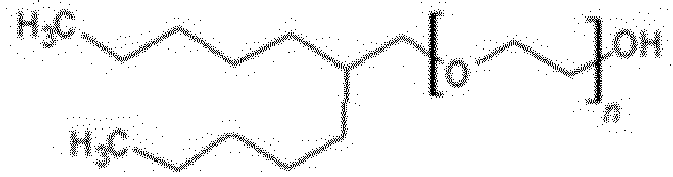
- Particularly preferred specific examples of the lipid containing a hydrocarbon chain and a polyethylene glycol chain are shown below.
- Polyoxyethylene stearyl ether C18H35OCH2CH2(OCH2CH2)n-1OH

- In the lipid composition according to the embodiment of the present invention, the content of the lipid containing the hydrocarbon chain and the polyethylene glycol chain is preferably 0.1 mol% to 10 mol%, more preferably 0.3 mol% to 8 mol%, and still more preferably 0.5 mol% to 5 mol%, with respect to the total amount of the lipid.
- The lipid composition according to the embodiment of the present invention contains a nucleic acid. Examples of the nucleic acid include a plasmid, single-stranded DNA, double-stranded DNA, small interfering RNA (siRNA), micro RNA (miRNA), mRNA, an antisense oligonucleotide (as referred to ASO), and ribozyme. The lipid composition may contain any of these. In addition, the lipid composition may contain a modified nucleic acid.
- In the lipid composition according to the embodiment of the present invention, in a case where the nucleic acid is an antisense oligonucleotide, the weight ratio of the lipid to the nucleic acid is preferably 5 to 100, more preferably 5 to 60, still more preferably 5 to 30, and particularly preferably 5 to 25.
- The method for manufacturing the lipid composition according to the embodiment of the present invention will be described.
- The method for manufacturing the lipid composition is not limited, and for example, the lipid composition can be manufactured by a method in which all of the constituent components of the lipid composition or some of oil-soluble components of the lipid composition are dissolved in an organic solvent or the like to form an oil phase, water-soluble components of the lipid composition are dissolved in water to form a water phase, and then the oil phase and the water phase are mixed together. A micromixer may be used for mixing, or an emulsification using an emulsifying machine such as a homogenizer, an ultrasonic emulsifying machine, a high-pressure injection emulsifying machine, or the like may be performed.
- Alternatively, the lipid composition can also be manufactured by a method in which a lipid-containing solution is subjected to evaporation to dryness using an evaporator under reduced pressure or subjected to spray drying using a spray drier, so that a dried mixture containing a lipid is prepared, and then the mixture is added to an aqueous solvent and further emulsified using the above-described emulsifying machine or the like.
- One example of the method for manufacturing the lipid composition is a method including
- Step (a) of dissolving the lipid components in an organic solvent to obtain an oil phase;
- Step (b) of mixing the oil phase obtained in Step (a) with a water phase containing a nucleic acid;
- Step (c) of diluting the mixed solution containing the oil phase and the water phase obtained in Step (b) to obtain a dispersion liquid of lipid composition containing the nucleic acid; and
- Step (d) of removing the organic solvent from the dispersion liquid of lipid composition obtained in Step (c).
- Step (a) includes a process of dissolving the lipid components in an organic solvent (an alcohol such as ethanol, an ester, or the like). The total lipid concentration is not particularly limited, but is generally 1 mmol/L to 100 mmol/L, preferably 5 mmol/L to 50 mmol/L, and more preferably 10 mmol/L to 30 mmol/L.
- In Step (b), the water phase can be obtained by dissolving a nucleic acid (for example, siRNA, an antisense oligonucleotide, or mRNA) in water or a buffer solution. If necessary, a component such as an antioxidant can be added. The mixing ratio (volume ratio) of water phase: oil phase is preferably 5:1 to 1:1 and more preferably 4:1 to 2:1.
- In Step (c), the mixed solution can be diluted with water or a buffer solution (for example, phosphate buffered physiological saline (PBS)).
- In Step (d), the method of removing the organic solvent from the dispersion liquid of lipid composition is not particularly limited, and a general method can be used. For example, the organic solvent can be removed by dialyzing the dispersion liquid with the phosphate buffered physiological saline.
- The lipid composition can be subjected to sizing if necessary. The method of sizing is not particularly limited, and the particle size can be reduced by using an extruder or the like.
- The lipid composition according to the embodiment of the present invention may be lipid particles. Lipid particles mean particles composed of a lipid, and include a composition having any structure selected from a lipid aggregate in which lipids are aggregated, a micelle, or a liposome. The structure of the lipid particles is not limited to these as long as the lipid particles are a composition containing a lipid. The liposome has a lipid bilayer structure and has a water phase in the inside, and includes a liposome which has a single bilayer membrane, and a multilamellar liposome which has multiple layers stacked together. In the present invention, any of these liposomes may be included.
- The form of the lipid composition can be checked by electron microscopy, structural analysis using X-rays, or the like. For example, by a method using Cryo transmission electron microscopy (CryoTEM method), it is possible to check whether or not a lipid particle is, such as a liposome, a bimolecular lipid membrane structure (lamella structure) and a structure having an inner water layer, whether or not a lipid particle has a structure having a core with a high electron density inside the particle and packed with constituent components including a lipid, and the like. The X-ray small angle scattering (SAXS) analysis also makes it possible to check whether or not a lipid particle has a bimolecular lipid membrane structure (lamella structure).
- In the case where the lipid composition according to the embodiment of the present invention is particles, the particle size of the particles is not particularly limited, but is preferably 10 to 1,000 nm, more preferably 30 to 500 nm, and still more preferably 50 to 250 nm. The particle size of the lipid particles can be measured by a general method (for example, a dynamic light scattering method, a laser diffraction method, or the like).
- As one example for utilizing the lipid particles in the present invention, a nucleic acid (for example, a gene) can be introduced into a cell by introducing the lipid particles containing the nucleic acid into the cell. That is, the lipid composition according to the embodiment of the present invention can be used as a pharmaceutical composition for introducing a nucleic acid into a cell. That is, the lipid composition according to the embodiment of the present invention can be used as a pharmaceutical composition for nucleic acid delivery in vivo.
- In addition, in a case where the lipid particles in the present invention contains a nucleic acid for a pharmaceutical use, the lipid particles can be administered to a living body as a nucleic acid drug. In a case where the lipid composition in the present invention is used as a nucleic acid drug, the lipid composition according to the embodiment of the present invention can be administered to a living body singly or by being mixed with a pharmaceutically acceptable carrier (for example, a dosing medium such as physiological saline or a phosphate buffer solution). That is, the lipid composition according to the embodiment of the present invention may further contain a pharmaceutically acceptable carrier.
- The concentration of the lipid composition (lipid particles) in the mixture with a pharmaceutically acceptable carrier is not particularly limited, but can be set to 0.05% by mass to 90% by mass in general. In addition, other pharmaceutically acceptable additives, for example, a pH adjusting buffer and an osmotic pressure adjusting agent, may be added to the nucleic acid drug containing the lipid composition according to the embodiment of the present invention.
- The route of administration when the lipid composition according to the embodiment of the present invention is administered is not particularly limited, and the lipid composition can be administered by any method. Examples of the administration method include oral administration and parenteral administration (intraarticular administration, intravenous administration, intraarterial administration, subcutaneous administration, intracutaneous administration, intravitreal administration, intraperitoneal administration, intramuscular administration, intravaginal administration, intravesical administration, intrathecal administration, pulmonary administration, rectal administration, colonic administration, buccal administration, nasal administration, intracisternal administration, inhalation, and the like). Parenteral administration is preferable. As the administration method, intravenous injection, subcutaneous injection, intracutaneous injection, or intramuscular injection is preferable. As for the administration, it is preferable to deliver the nucleic acid by topical administration in vivo. The lipid composition according to the embodiment of the present invention can also be administered by being directly injected into the affected area. In addition, the area to be administrated in the case of performing topical administration in vivo is not particularly limited, and one example is administration to the central nervous system.
- The dosage form of the lipid composition according to the embodiment of the present invention is not particularly limited. In a case of performing oral administration, the lipid composition according to the embodiment of the present invention can be used in the form of tablets, troches, capsules, pills, suspension, syrup, or the like by being combined with an appropriate excipient. In addition, pharmaceutical preparation suitable for parenteral administration can appropriately contain an antioxidant, a buffer, a bacteriostat, and additives such as an isotonic sterile injection, a suspending agent, a solubilizer, a thickener, a stabilizer, or a preservative.
- The lipid composition according to the embodiment of the present invention can retain a nucleic acid at a high encapsulation rate and thereby is extremely useful as a nucleic acid delivery carrier. According to the nucleic acid delivery carrier using the present invention, the nucleic acid and the like can be introduced into the cells, for example, by mixing the obtained lipid composition with the nucleic acid and the like and transfecting the mixture in vitro or in vivo. In addition, the nucleic acid delivery carrier using the present invention is also useful as a nucleic acid delivery carrier in nucleic acid drugs. That is, the lipid composition according to the embodiment of the present invention is useful as a composition for nucleic acid delivery in vitro or in vivo (preferably in vivo).
- Next, the present invention will be described based on examples, but the present invention is not limited thereto.
- Phosphatase and Tensin Homolog Deleted from Chromosome 10 (PTEN) is an enzyme that catalyzes a dephosphorylation reaction of
phosphatidylinositol - An antisense oligonucleotide nucleic acid (PTEN ASO) for a PTEN protein was purchased from Hokkaido System Science Co., Ltd. PTEN ASO is an oligonucleotide consisting of 20 bases, in which nucleotides are connected by a phosphodiester bond, and the sequence of which is described below.
- 5(m)^t(m)^g(m)^5(m)^t(m)^a^g^5c^5c^t^5c^t^g^g^a^t(m)^t(m)^t(m)^g(m)^a(m)
- Here, small letters (a, g, and t) represent adenin, guanine, and thymidin, respectively, and (m) represents 2'-MOE modification.
- 5(m) represents 2'-MOE 5-Me cytosine, t(m) represents 2'-MOE thymidin, g(m) represents 2'-MOE guanine, a(m) represents 2'-MOE adenine, 5c represents 5-methyl-cytosine and ^ represents phosphorothioate.
- 2'-MOE represents 2'-O-methoxyethyl.
- The first lipid, phospholipid, cholesterol, and polyethylene glycol lipid (PEG lipid) shown in Table 1 were dissolved in ethanol at the molar ratio shown in Table 1 such that the total lipid concentration was 20 mmol/L to obtain the oil phase.
- 1,2-Distearoyl-sn-glycero-3-phosphocholine (DSPC, product name: COATSOME MC-8080, NOF corporation)
- 1,2-Dimyristoyl-sn-glycero-3-phosphocholine (DMPC, product name: COATSOME MC-4040, NOF corporation)
- 1,2-Dilauroyl-sn-glycero-3-phosphocholine (DLPC, product name: 12:0 PC (DLPC), Avanti polar lipids)
- Egg sphingomyelin (SM, product name: COATSOME NM-10, NOF corporation) Cholesterol (Product name: Cholesterol HP, Nippon Seika Co., Ltd.)
- Monostearyl PEG (product name: Polyethylene Glycol Monostearate (4E.O.), FUJIFILM Wako Pure Chemical Corporation)
- 1,2-Dimyristoyl-rac-glycero-3-methoxypolyethyleneglycol (DMG-PEG2000, product name: SUNBRIGHT (register trademark) GM-020, NOF corporation)
- The structure of Monostaryl PEG (also referred to mono PEG) is shown below.

- The structure of DMG-PEG2000 (also referred to DMG-PEG) is shown below.

- The structures of Dlin-MC3-DMA, DOTMA, and DODAP are shown below.

- DOTMA : 1,2-di-O-octadecenyl-3-trimethylammoniumpropane (chloride salt)

- D O D A Y : 1,2-dioleoyloxy-3-dimethylaminopropane

- 5 mg of PTEN ASO was dissolved in 1 mL of sterile water and diluted with a 10 mmol/L acetate buffer having a pH of 4 such that the nucleic acid concentration was 54.6 µmol/L, to obtain a water phase. Then the water phase and the oil phase were mixed together with a micromixer (see
JP5288254B - The molar ratios of the first lipid, the phospholipid, the sterol, and the PEG lipid in the lipid composition are shown in Tables 1 and 2.
- The mass ratio of the nucleic acid to the total lipids at the time of mixing is also shown in Tables 1 and 2.
[Table 1] First lipid Phospholipid PEG lipid Composition ratio of lipids (mol%) Mass ratio of nucleic acid to total lipids First lipid Phospholipid Sterol PEG lipid Cholesterol Example 1 Compound 1 DSPC monostearyl PEG 50 20 28.5 1.5 11.8 Example 2 Compound 2 DSPC monostearyl PEG 50 20 28.5 1.5 11.8 Example 3 Compound 1 DMPC monostearyl PEG 50 20 28.5 1.5 11.8 Example 4 Compound 1 DLPC monostearyl PEG 50 20 28.5 1.5 11.8 Example 5 Compound 1 SM monostearyl PEG 50 20 28.5 1.5 11.8 Example 6 Compound 1 DSPC monostearyl PEG 50 20 27 3 11.8 Example 7 Compound 1 DSPC monostearyl PEG 50 20 25.5 4.5 11.8 Example 8 Compound 1 DMPC monostearyl PEG 50 20 28.5 1.5 20.2 Example 9 Compound 1 DLPC monostearyl PEG 50 20 28.5 1.5 51.7 Example 10 Compound 5 DSPC monostearyl PEG 50 20 28.5 1.5 12.7 Example 11 Compound 6 DSPC monostearyl PEG 50 20 28.5 1.5 12.7 Example 12 Compound 3 DSPC monostearyl PEG 50 20 28.5 1.5 12.7 Example 13 Compound 7 DSPC monostearyl PEG 50 20 28.5 1.5 12.7 Example 14 Compound 8 DSPC monostearyl PEG 50 20 28.5 1.5 12.7 Example 15 Compound 9 DSPC monostearyl PEG 50 20 28.5 1.5 12.7 Example 16 Compound 10 DSPC monostearyl PEG 50 20 28.5 1.5 12.7 Comparative Example 1 Compound 1 DSPC DMG-PEG 50 20 28.5 1.5 11.8 Comparative Example 2 Dlin-MC3-DM A DSPC DMG-PEG 50 20 28.5 1.5 11.8 Comparative Example 3 DOTMA DSPC DMG-PEG 50 20 28.5 1.5 11.8 Comparative Example 4 DODAP DSPC DMG-PEG 50 20 28.5 1.5 11.8 Comparative Example 5 Dlin-MC3-DM A DSPC monostearyl PEG 50 20 28.5 1.5 11.8 Comparative Example 6 DOTMA DSPC monostearyl PEG 50 20 28.5 1.5 11.8 Comparative Example 7 DODAP DSPC monostearyl PEG 50 20 28.5 1.5 11.8 [Table 2] First lipid Phospholipid PEG lipid Composition ratio of lipids (mol%) Mass ratio of nucleic acid to total lipids First lipid Phospholipid Sterol PEG lipid β-Sitosterol Example 17 Compound 10 DSPC monostearyl PEG 50 10 38.5 1.5 12.7 - The particle size and polydispersion index of the lipid particles were measured by 10-fold diluting the dispersion liquid of lipid particle with phosphate buffered physiological saline (PBS) using Zeta-potential & Particle size Analyzer ELS-Z2 (Otsuka Electronics Co., Ltd.). The measurement results are shown in Table 3.
- 30 µL of 3 mol/L aqueous sodium acetate solution and 9 µL of glycogen were added to 60 µL of the lipid particles retaining nucleic acids, and then 1.5 mL of ethanol was added thereto, so that only the nucleic acids were precipitated while the lipid was dissolved. Then, the supernatant was removed by centrifugation. The precipitates were air-dried for 15 minutes or longer, then water was added thereto to redissolve the precipitates, and the concentration thereof was measured using Nanodrop ND1000 (Thermo Fischer Scientific), thereby quantifying the total nucleic acid concentration.
- The nucleic acid concentration was quantified using a Quant-iT RiboGreen RNA Assay Kit (Thermo Fischer Scientific) according to the protocol. First, a 20× TE buffer included in the above kit was diluted with water, thereby obtaining a 1× TE buffer. TE represents Tris/EDTA (ethylenediaminetetraacetic acid). In order to quantify only the nucleic acid in the outer water phase, the dispersion liquid of lipid particles retaining nucleic acids was 10,000-fold diluted with the 1× TE buffer.
- 100 µL of the 10,000-fold diluted dispersion liquid of lipid particles was put in a 96-well plate, then 100 µL of a RiboGreen reagent (reagent included in the Quanti-iT Ribogreen RNA Assay Kit described above) 2,000-fold diluted with the 1× TE buffer was added to a sample, and fluorescence (excitation wavelength: 485 nm, fluorescence wavelength: 535 nm) was measured using a plate reader Infinite F200 (TECAN), thereby quantifying the nucleic acid concentration in the outer water phase.
- By using the quantification results of the total nucleic acid concentration and the nucleic acid concentration in the outer water phase that were obtained through the above steps, the nucleic acid encapsulation rate of the nucleic acid lipid particles was calculated according to the following Equation.

- The calculation results are shown in Table 3.
[Table 3] Cumulant particle size (nm) Polydispersion index Encapsulation rate (%) Example 1 77.7 0.087 90% Example 2 83.6 0.166 86% Example 3 85 0.175 86% Example 4 85.7 0.164 93% Example 5 96.5 0.174 68% Example 6 68.7 0.192 60% Example 7 62.6 0.191 51% Example 8 64.6 0.179 85% Example 9 64.2 0.166 86% Example 10 72.1 0.049 98% Example 11 60.4 0.067 98% Example 12 58.6 0.041 98% Example 13 81.6 0.040 98% Example 14 92.7 0.038 >98% Example 15 76.4 0.044 >98% Example 16 72.1 0.049 98% Example 17 96.6 0.082 62% Comparative Example 1 61.4 0.188 71% Comparative Example 2 75.4 0.122 76% Comparative Example 3 100.2 0.137 89% Comparative Example 4 69.1 0.077 90% Comparative Example 5 104.5 0.109 92% Comparative Example 6 260.4 0.146 82% Comparative Example 7 98.5 0.023 96% - In an in vitro test using A431 cells (American Type Culture Collection), E-MEM (gibco), fetal bovine serum (FBS, gibco), Penicillin-streptomycin (gibco), and non-essential amino acid (NEAA, FUJIFII,M Wako Pure Chemical Corporation) were mixed at a ratio of 88:10:1:1 and the mixture was used as a culture medium.
- In an in vitro test using SH-SY5Y cells (American Type Culture Collection), E-MEM (gibco), Ham's F12 (gibco), FBS (gibco), Penicillin-streptomycin (gibco), and NEAA (FUJIFILM Wako Pure Chemical Corporation) were mixed at a ratio of 41.5:41.5:15:1:1 and the mixture was used as a culture medium.
- The measurement of PTEN protein mRNA was performed according to the protocol of TaqMan (register trademark) Fast Advanced Cells-to-CT™ Kit (Thermo Fischer Scientific). To A431 cells or SH-SY5Y cells, a dispersion liquid of nucleic acid lipid particles prepared to have a final concentration of 500 nmol/L as an ASO concentration, Naked ASO or PBS was added. After exposure for 24 hours under the control of 37°C and 5% CO2, the culture supernatant was removed, and the mixture was washed once with PBS at 4°C. After removing the PBS, a lysis solution was added at 50 µL/well, and the mixture was stood still for 5 minutes at room temperature to obtain a cell lysate. For the cell lysate, TaqMan (register trademark) Fast Advanced Cells-to-CT™ Kit (Thermo Fischer scientific), and Hs02621230_s1, FAM/MGB (Thermo Fischer Scientific) and Human GAPDH Endogenous Control (VIC (register trademark)/MGB, Thermo Fischer Scientific) as a PCR reaction reagent were used to perform reverse transcription and PCR reaction.
- The PTEN mRNA level of each sample was calculated by the ΔΔCt method. Specifically, the Ct value of GAPDH is subtracted from the Ct value of PTEN to calculate the ΔCt value of each sample. The average value of the ΔCt values of the PBS treatment group was subtracted from the calculated ΔCt value to calculate the ΔΔCt value. For each ΔΔCt value, a relative value with respect to the Naked ASO to be compared was taken as a PTEN mRNA relative value.
-
Fig. 1 shows the results of comparison in a case where the type of the cationic lipid was changed (Examples 1 and Comparative Examples 1 to 7).Fig. 1 shows the test results in case of using A431 cells. A synergistic effect was confirmed in a case where the lipid represented by Formula (1) was used. -
Fig. 2 shows the results of comparison in a case where the type of the phospholipid was changed (Examples 1 and 3 to 5).Fig. 2 shows the test results in case of using A431 cells. High drug efficacy was confirmed in all of Examples 1 and 3 to 5. -
Fig. 3 shows the results of comparison in a case where the mol% of the PEG lipid was changed (Examples 1, 6, and 7).Fig. 3 shows the test results in case of using SH-SY5Y cells. High drug efficacy was confirmed in all of Examples 1, 6, and 7. -
Fig. 4 shows the results of comparison in a case where the lipid/RNA ratio was changed (Examples 1, 8, and 9).Fig. 4 shows the test results in case of using SH-SY5Y cells. High drug efficacy was confirmed in all of Examples 1, 8, and 9. - Furthermore, Table 4 shows the results of changing the type of the cationic lipid contained in Formula (1) (Examples 10 to 16) and the results of changing the sterol (Example 17). Table 4 shows test results in case of using A431 cells and SH-SY5Y cells. High drug efficacy was confirmed in all of Examples 10 to 17.
[Table 4] A431 cell SH-SY5Y cell Example 10 0.87 0.34 Example 11 0.12 0.81 Example 12 0.17 1.22 Example 13 1.13 0.37 Example 14 0.86 0.36 Example 15 1.12 0.30 Example 16 1.04 0.14 Example 17 0.03 0.04 - Crl:CD(SD) rats (Charles River Laboratories Japan, Inc.) were allocated to groups (n = 8) based on a body-weight stratified randomization. The dispersion liquid of the nucleic acid lipid particles of Example 1, the dispersion liquid of the nucleic acid lipid particles of Example 15, or 10 µL of Naked ASO was administered intracerebroventricularly at an ASO amount of 100 µg/Head. In addition, the same volume of a 10% sucrose solution was administered intracerebroventricularly as a control (medium group).
- 14 days after administration, the rats were euthanized under anesthesia to collect the cerebral cortex. The obtained cerebral cortex was immersed in an RNAlater™ Stabilization Solution (Thermo Fischer Scientific). Buffer RLT plus (RNeasy plus mini kit, QIAGEN) was added thereto, and the tissue was disrupted using a biomasher, and then the supernatant was obtained by centrifugation (4°C, 10,000 g, 20 minutes). The supernatant was purified using a spin column (QIA shredder, QIAGEN), 70% ethanol was added thereto, and mRNA was extracted using an RNeasy spin column. The RNA concentration of the mRNA extract solution was measured with Nanodrop ND-1000 (Thermo Fischer Scientific).
- Each sample was diluted with RNase free water to ensure that the RNA concentrations were equal, and then a reverse transcription reaction (37°C., 30 minutes) was performed using a High-Capacity RNA-to-cDNA™ Kit (Thermo Fischer Scientific). A PCR reaction of the reverse transcription sample was performed using TaqMan Gene Expression Master Mix (Thermo Fischer Scientific), Rn00477208_m1, VIC/MGB_PL (Thermo Fischer Scientific), Rn01775763_g1, and FAM/MGB (Thermo Fischer Scientific) as reaction reagents.
- The PTEN mRNA levels of each nucleic acid lipid particle group and the Naked ASO group were calculated by the ΔΔCt method. Specifically, the Ct value of GAPDH is subtracted from the Ct value of PTEN to calculate the ΔCt value of each sample. The average value of the ΔCt values of the medium group was subtracted from the calculated ΔCt value to calculate the ΔΔCt value, and the KD rate of PTEN mRNA of each sample was calculated based on the calculated ΔΔCt.
Fig. 5 shows the results of Example 1 and Naked ASO, andFig. 6 shows the results of Example 15 and Naked ASO. The nucleic acid lipid particles in the present invention exhibited high drug efficacy as compared with Naked ASO (Comparative Example).
Claims (19)
- A lipid composition comprising:a lipid represented by Formula (1) or a salt thereof;a nucleic acid;at least one non-cationic lipid; anda lipid represented by R51-L-(OCH2CH2)n-O-R52 (in the formula, R51 represents a hydrocarbon group having 6 to 30 carbon atoms, L represents -CO- or a single bond, R52 represents a hydrogen atom or an alkyl group having 1 to 6 carbon atoms, and n represents an integer of 10 to 150),
 in the formula, X represents -NR1- or -O-,R1 represents a hydrogen atom, a hydrocarbon group having 6 to 24 carbon atoms, or a group represented by R21-L1-R22-, where R21 represents a hydrocarbon group having 1 to 24 carbon atoms, L1 represents -O(CO)O-, -O(CO)-, -(CO)O-, -O-, or a group represented by the following structural formula, and
 R22 represents a divalent hydrocarbon linking group having 1 to 18 carbon atoms,R2 and R3 each independently represent a hydrogen atom, a hydrocarbon group having 3 to 24 carbon atoms, or a group represented by R31-L2-R32-, where R31 represents a hydrocarbon group having 1 to 24 carbon atoms, L2 represents -O(CO)O-, -O(CO)-, -(CO)O-, -O-, or a group represented by the following structural formula, and
 R32 represents a divalent hydrocarbon linking group having 1 to 18 carbon atoms,R4, R5, R6, R7, R8, R9, R10, R11, and R12 each independently represent a hydrogen atom or an alkyl group having 1 to 18 carbon atoms which may be substituted,groups in any one or more pairs among R4 and R5, R10 and R5, R5 and R12, R4 and R6, R5 and R6, R6 and R7, R6 and R10, R12 and R7, and R7 and R8 may be linked to each other to form a 4- to 7-membered ring which may contain an O atom,a substituent on the alkyl group having 1 to 18 carbon atoms which may be substituted is a hydroxyl group, a carboxyl group, an amino group represented by -NR45R46, a substituted or unsubstituted aryl group, a substituted or unsubstituted heteroaryl group, or a group represented by -O(CO)O-R41, -O(CO)-R42, -(CO)O-R43, or -O-R44, where R41, R42, R43, R44, R45 and R46 each independently represent a hydrocarbon group having 1 to 18 carbon atoms,a substituent on the substituted or unsubstituted aryl group and on the substituted or unsubstituted heteroaryl group is an alkyl group having 1 to 18 carbon atoms, a hydroxyl group, a carboxyl group, an amino group represented by -NR45R46, or a group represented by -O(CO)O-R41, -O(CO)-R42, -(CO)O-R43, or -O-R44, where R41, R42, R43, R44, R45, and R46 each independently represent a hydrocarbon group having 1 to 18 carbon atoms, anda, b, c, and d each independently represent an integer of 0 to 3, provided that a + b is 1 or more, and c + d is 1 or more.
 - The lipid composition according to claim 1, wherein the lipid represented by Formula (1) is a lipid represented by Formula (2),
 R2 and R3 are each independently a hydrocarbon group having 3 to 24 carbon atoms which contains one or more unsaturated bonds,R2 and R3 are each independently a group represented by R31-L2-R32-, orone of R2 and R3 is a group represented by R31-L2-R32-, and the other is a hydrocarbon group having 3 to 24 carbon atoms,where R31 represents a hydrocarbon group having 1 to 24 carbon atoms,L2 represents -O(CO)O-, -O(CO)-, -(CO)O-, -O-, or a group represented by the following structural formula, and
 R32 represents a divalent hydrocarbon linking group having 1 to 18 carbon atoms,R5 represents an alkyl group having 1 to 18 carbon atoms which may be substituted with -O(CO)-R42 or -(CO)O-R43, where R42 and R43 each independently represent a hydrocarbon group having 1 to 18 carbon atoms,R7 and R8 each independently represent an alkyl group having 1 to 4 carbon atoms, ande represents 2 or 3.
 - The lipid composition according to claim 1 or 2,
wherein a content of the lipid represented by Formula (1) is 30 to 70 mol% with respect to a total amount of the lipid. - The lipid composition according to any one of claims 1 to 3,
wherein the non-cationic lipid is a lipid selected from a non-ionic lipid and a zwitterionic lipid. - The lipid composition according to claim 4,
wherein the non-cationic lipid includes at least one non-ionic lipid and at least one zwitterionic lipid. - The lipid composition according to claim 4 or 5,
wherein the non-ionic lipid is sterols. - The lipid composition according to claim 6,
wherein the sterols are phytosterol or cholesterol. - The lipid composition according to any one of claims 5 to 7,
wherein a content of the non-ionic lipid is 10 to 60 mol% with respect to a total amount of the lipid. - The lipid composition according to claim 4 or 5,
wherein the zwitterionic lipid is a phospholipid. - The lipid composition according to any one of claims 4 to 9,
wherein a content of the zwitterionic lipid is 1 to 30 mol% with respect to a total amount of the lipid. - The lipid composition according to any one of claims 1 to 10,
wherein R51 represents a hydrocarbon group having 8 to 26 carbon atoms. - The lipid composition according to any one of claims 1 to 11,
wherein a content of the lipid represented by R51-L-(OCH2CH2)n-O-R52 is 0.1 to 10 mol% with respect to a total amount of the lipid. - The lipid composition according to any one of claims 1 to 12,
wherein a weight ratio of the lipid to the nucleic acid is 5 to 100. - The lipid composition according to any one of claims 1 to 13, further comprising a pharmaceutically acceptable carrier.
- The lipid composition according to claim 14,
wherein the lipid composition is a pharmaceutical composition for introducing a nucleic acid into a cell. - The lipid composition according to claim 15,
wherein the lipid composition is a pharmaceutical composition for nucleic acid delivery in vivo. - The lipid composition according to claim 16,
wherein the lipid composition is a pharmaceutical composition for nucleic acid delivery in vivo by topical administration. - The lipid composition according to claim 17,
wherein the topical administration in vivo is administration to a central nervous system. - The lipid composition according to any one of claims 1 to 13,
wherein the lipid composition is a nucleic acid delivery carrier.
Applications Claiming Priority (2)
| Application Number | Priority Date | Filing Date | Title |
|---|---|---|---|
| JP2020153509 | 2020-09-14 | ||
| PCT/JP2021/033635 WO2022054955A1 (en) | 2020-09-14 | 2021-09-14 | Lipid composition |
Publications (2)
| Publication Number | Publication Date |
|---|---|
| EP4212162A1 true EP4212162A1 (en) | 2023-07-19 |
| EP4212162A4 EP4212162A4 (en) | 2024-02-28 |
Family
ID=80631690
Family Applications (1)
| Application Number | Title | Priority Date | Filing Date |
|---|---|---|---|
| EP21866911.7A Pending EP4212162A4 (en) | 2020-09-14 | 2021-09-14 | Lipid composition |
Country Status (5)
| Country | Link |
|---|---|
| US (1) | US20230210993A1 (en) |
| EP (1) | EP4212162A4 (en) |
| JP (1) | JP7518909B2 (en) |
| CN (1) | CN116056728A (en) |
| WO (1) | WO2022054955A1 (en) |
Families Citing this family (5)
| Publication number | Priority date | Publication date | Assignee | Title |
|---|---|---|---|---|
| EP4059505B1 (en) * | 2019-11-15 | 2024-02-21 | FUJIFILM Corporation | Lipid composition |
| US12565510B2 (en) | 2021-06-10 | 2026-03-03 | Nippon Fine Chemical Co., Ltd. | Phospholipid |
| AU2023316579A1 (en) | 2022-07-29 | 2025-02-13 | Fujifilm Corporation | COMPOSITIONS AND METHODS FOR INHIBITING EXPRESSION OF THE SIGNAL REGULATORY PROTEIN ALPHA (SIRPα) GENE |
| WO2025244134A1 (en) * | 2024-05-24 | 2025-11-27 | Fujifilm Corporation | Method to deliver a payload to cells, and lipid composition |
| WO2025244135A1 (en) * | 2024-05-24 | 2025-11-27 | Fujifilm Corporation | Lipid composition and method to deliver payload to extracellular matrix producing cells |
Family Cites Families (12)
| Publication number | Priority date | Publication date | Assignee | Title |
|---|---|---|---|---|
| EP1842585A4 (en) * | 2005-01-28 | 2013-05-29 | Kyowa Hakko Kirin Co Ltd | PROCESS FOR PRODUCING A FINE PARTICLE WHOSE SURFACE IS MODIFIED BY A WATER SOLUBLE SUBSTANCE |
| FR2885813B1 (en) * | 2005-05-19 | 2008-01-11 | Oreal | VECTORIZATION OF DSRNA BY CATIONIC PARTICLES AND THEIR USE ON SKIN MODEL. |
| JP5094041B2 (en) * | 2006-05-10 | 2012-12-12 | 旭化成ケミカルズ株式会社 | Liposomes and liposome preparations |
| CA2721333C (en) | 2008-04-15 | 2020-12-01 | Protiva Biotherapeutics, Inc. | Novel lipid formulations for nucleic acid delivery |
| JP5288254B2 (en) | 2008-10-17 | 2013-09-11 | 株式会社ニコン | Lens system |
| CN111808084A (en) | 2008-11-10 | 2020-10-23 | 阿布特斯生物制药公司 | Novel lipids and compositions for delivery of therapeutic agents |
| KR101766408B1 (en) | 2009-06-10 | 2017-08-10 | 알닐람 파마슈티칼스 인코포레이티드 | Improved lipid formulation |
| CA3018046A1 (en) | 2011-12-16 | 2013-06-20 | Moderna Therapeutics, Inc. | Modified nucleoside, nucleotide, and nucleic acid compositions |
| EP3083556B1 (en) | 2013-12-19 | 2019-12-25 | Novartis AG | Lipids and lipid compositions for the delivery of active agents |
| PL3386484T3 (en) | 2015-12-10 | 2022-07-25 | Modernatx, Inc. | Compositions and methods for delivery of therapeutic agents |
| KR102591743B1 (en) * | 2018-06-08 | 2023-10-19 | 후지필름 가부시키가이샤 | Compound or its salt and lipid particles |
| WO2020246581A1 (en) * | 2019-06-07 | 2020-12-10 | 富士フイルム株式会社 | Lipid composition |
-
2021
- 2021-09-14 JP JP2022548380A patent/JP7518909B2/en active Active
- 2021-09-14 CN CN202180062862.5A patent/CN116056728A/en active Pending
- 2021-09-14 EP EP21866911.7A patent/EP4212162A4/en active Pending
- 2021-09-14 WO PCT/JP2021/033635 patent/WO2022054955A1/en not_active Ceased
-
2023
- 2023-03-13 US US18/182,733 patent/US20230210993A1/en active Pending
Also Published As
| Publication number | Publication date |
|---|---|
| EP4212162A4 (en) | 2024-02-28 |
| JPWO2022054955A1 (en) | 2022-03-17 |
| WO2022054955A1 (en) | 2022-03-17 |
| JP7518909B2 (en) | 2024-07-18 |
| CN116056728A (en) | 2023-05-02 |
| US20230210993A1 (en) | 2023-07-06 |
Similar Documents
| Publication | Publication Date | Title |
|---|---|---|
| EP4212162A1 (en) | Lipid composition | |
| EP3357491B1 (en) | Pharmaceutical composition for delivering an anionic drug | |
| EP2377517B1 (en) | Pharmaceutical composition containing an anionic drug, and a production method therefor | |
| EP4332086B1 (en) | Compound or salt thereof, lipid particles, and pharmaceutical composition | |
| EP3170503B1 (en) | Lipid particles and nucleic acid delivery carrier | |
| US20250319037A1 (en) | Methods of delivering therapeutic agents, and lipid compositions | |
| EP4342496A1 (en) | Lipid nanoparticles | |
| US20250011361A1 (en) | Compound and lipid composition | |
| JP2015007021A (en) | Lipid particle, nucleic acid delivery carrier, composition for producing nucleic acid delivery carrier, lipid particle production method and gene introduction method | |
| AU2024217077A1 (en) | Multi-functional lipid nanoparticles and uses thereof | |
| EP3170504B1 (en) | Method for producing lipid particle and nucleic acid delivery carrier comprising lipid particle | |
| EP4494644A1 (en) | Lipid composition | |
| JP2024093644A (en) | Lipid Composition | |
| JP2024093643A (en) | Lipid Composition | |
| EP4527380A1 (en) | Lipid nanoparticles | |
| US20250241858A1 (en) | Method of delivery of dna or rna cargo using unshielded lipid nanoparticles and compositions thereof | |
| JP4919397B2 (en) | Composition for introducing nucleic acid | |
| JP6495995B2 (en) | Lipid particles and nucleic acid delivery carriers | |
| WO2025061874A1 (en) | Novel lipid nanoparticles | |
| WO2023141562A1 (en) | Phosphate membrane nanodiscs conjugated to therapeutic agents and medical uses thereof | |
| CN120943786A (en) | Lipid compounds, their nanoparticles and applications | |
| CN121517362A (en) | Cationic lipid compounds, their nanoparticles and applications | |
| CN106074388A (en) | A kind of liposome and application thereof |
Legal Events
| Date | Code | Title | Description |
|---|---|---|---|
| STAA | Information on the status of an ep patent application or granted ep patent |
Free format text: STATUS: THE INTERNATIONAL PUBLICATION HAS BEEN MADE |
|
| PUAI | Public reference made under article 153(3) epc to a published international application that has entered the european phase |
Free format text: ORIGINAL CODE: 0009012 |
|
| STAA | Information on the status of an ep patent application or granted ep patent |
Free format text: STATUS: REQUEST FOR EXAMINATION WAS MADE |
|
| 17P | Request for examination filed |
Effective date: 20230313 |
|
| AK | Designated contracting states |
Kind code of ref document: A1 Designated state(s): AL AT BE BG CH CY CZ DE DK EE ES FI FR GB GR HR HU IE IS IT LI LT LU LV MC MK MT NL NO PL PT RO RS SE SI SK SM TR |
|
| DAV | Request for validation of the european patent (deleted) | ||
| DAX | Request for extension of the european patent (deleted) | ||
| A4 | Supplementary search report drawn up and despatched |
Effective date: 20240125 |
|
| RIC1 | Information provided on ipc code assigned before grant |
Ipc: C12N 15/11 20060101ALI20240119BHEP Ipc: C12N 15/88 20060101ALI20240119BHEP Ipc: A61P 43/00 20060101ALI20240119BHEP Ipc: A61P 25/00 20060101ALI20240119BHEP Ipc: A61K 48/00 20060101ALI20240119BHEP Ipc: A61K 47/28 20060101ALI20240119BHEP Ipc: A61K 47/24 20060101ALI20240119BHEP Ipc: A61K 47/18 20170101ALI20240119BHEP Ipc: A61K 47/10 20170101ALI20240119BHEP Ipc: A61K 47/14 20170101ALI20240119BHEP Ipc: A61K 9/127 20060101ALI20240119BHEP Ipc: A61K 9/00 20060101ALI20240119BHEP Ipc: A61K 31/7088 20060101AFI20240119BHEP |