EP4210053A1 - Application program control method and apparatus, electronic device, and storage medium - Google Patents
Application program control method and apparatus, electronic device, and storage medium Download PDFInfo
- Publication number
- EP4210053A1 EP4210053A1 EP22734741.6A EP22734741A EP4210053A1 EP 4210053 A1 EP4210053 A1 EP 4210053A1 EP 22734741 A EP22734741 A EP 22734741A EP 4210053 A1 EP4210053 A1 EP 4210053A1
- Authority
- EP
- European Patent Office
- Prior art keywords
- native
- application
- sub
- calling
- instruction
- Prior art date
- Legal status (The legal status is an assumption and is not a legal conclusion. Google has not performed a legal analysis and makes no representation as to the accuracy of the status listed.)
- Granted
Links
Images



Classifications
-
- H—ELECTRICITY
- H04—ELECTRIC COMMUNICATION TECHNIQUE
- H04L—TRANSMISSION OF DIGITAL INFORMATION, e.g. TELEGRAPHIC COMMUNICATION
- H04L67/00—Network arrangements or protocols for supporting network services or applications
- H04L67/01—Protocols
- H04L67/10—Protocols in which an application is distributed across nodes in the network
-
- H—ELECTRICITY
- H04—ELECTRIC COMMUNICATION TECHNIQUE
- H04L—TRANSMISSION OF DIGITAL INFORMATION, e.g. TELEGRAPHIC COMMUNICATION
- H04L67/00—Network arrangements or protocols for supporting network services or applications
- H04L67/01—Protocols
- H04L67/02—Protocols based on web technology, e.g. hypertext transfer protocol [HTTP]
-
- G—PHYSICS
- G11—INFORMATION STORAGE
- G11B—INFORMATION STORAGE BASED ON RELATIVE MOVEMENT BETWEEN RECORD CARRIER AND TRANSDUCER
- G11B27/00—Editing; Indexing; Addressing; Timing or synchronising; Monitoring; Measuring tape travel
- G11B27/02—Editing, e.g. varying the order of information signals recorded on, or reproduced from, record carriers
- G11B27/031—Electronic editing of digitised analogue information signals, e.g. audio or video signals
- G11B27/034—Electronic editing of digitised analogue information signals, e.g. audio or video signals on discs
-
- G—PHYSICS
- G06—COMPUTING OR CALCULATING; COUNTING
- G06F—ELECTRIC DIGITAL DATA PROCESSING
- G06F9/00—Arrangements for program control, e.g. control units
- G06F9/06—Arrangements for program control, e.g. control units using stored programs, i.e. using an internal store of processing equipment to receive or retain programs
- G06F9/44—Arrangements for executing specific programs
- G06F9/448—Execution paradigms, e.g. implementations of programming paradigms
- G06F9/4488—Object-oriented
- G06F9/449—Object-oriented method invocation or resolution
-
- G—PHYSICS
- G06—COMPUTING OR CALCULATING; COUNTING
- G06F—ELECTRIC DIGITAL DATA PROCESSING
- G06F9/00—Arrangements for program control, e.g. control units
- G06F9/06—Arrangements for program control, e.g. control units using stored programs, i.e. using an internal store of processing equipment to receive or retain programs
- G06F9/46—Multiprogramming arrangements
- G06F9/54—Interprogram communication
- G06F9/541—Interprogram communication via adapters, e.g. between incompatible applications
-
- G—PHYSICS
- G11—INFORMATION STORAGE
- G11B—INFORMATION STORAGE BASED ON RELATIVE MOVEMENT BETWEEN RECORD CARRIER AND TRANSDUCER
- G11B27/00—Editing; Indexing; Addressing; Timing or synchronising; Monitoring; Measuring tape travel
- G11B27/10—Indexing; Addressing; Timing or synchronising; Measuring tape travel
- G11B27/102—Programmed access in sequence to addressed parts of tracks of operating record carriers
- G11B27/105—Programmed access in sequence to addressed parts of tracks of operating record carriers of operating discs
-
- H—ELECTRICITY
- H04—ELECTRIC COMMUNICATION TECHNIQUE
- H04L—TRANSMISSION OF DIGITAL INFORMATION, e.g. TELEGRAPHIC COMMUNICATION
- H04L67/00—Network arrangements or protocols for supporting network services or applications
- H04L67/01—Protocols
- H04L67/12—Protocols specially adapted for proprietary or special-purpose networking environments, e.g. medical networks, sensor networks, networks in vehicles or remote metering networks
Definitions
- This disclosure relates to the field of computer technologies, and in particular, to an application control method and apparatus, an electronic device, and a storage medium.
- sub-applications as light applications have become an important form of mobile Internet applications, for example, users can handle various services or perform social activities and the like through the sub-applications based on native applications.
- the native applications can be social applications like instant messaging software, tool applications like picture modification software and office software, audio-video entertainment applications like short video software and game software, content publishing applications like third-party consumption comment software, content information applications like browsers and news software, and system applications like vehicle-mounted applications.
- the sub-applications can be used without downloading and installing and cannot occupy the storage space of the electronic device, and therefore the sub-applications are widely accepted by the users.
- the audio and video capability of the sub-applications can only be realized through a third-party audio and video editing library.
- introducing of the third-party audio and video editing library into the webpage side will cause large volume of a front-end application package, and the sub-applications generally limit the volume of the package.
- An embodiment of this disclosure provides an application control method and apparatus, an electronic device, and a storage medium, aiming at providing multimedia content editing capability for sub-applications without increasing the volume of an application package.
- Embodiments of this disclosure provide an electronic device, including a processor and a memory, the memory storing program code, the program code, when executed by the processor, causing the processor to perform the operations of any one of the foregoing application control methods.
- An embodiment of this disclosure provides a computer program product or a computer program.
- the computer program product or the computer program includes computer instructions, and the computer instructions are stored in a computer-readable storage medium.
- a processor of a computer device reads the computer instructions from the computer-readable storage medium and executes the computer instructions to cause the computer device to perform the operations of any one of the foregoing application control methods.
- An embodiment of this disclosure provides a computer-readable storage medium, including program code, the program code, when run on an electronic device, being configured to cause the electronic device to perform the operations of any one of the foregoing application control methods.
- the embodiments of this disclosure provide an application control method and apparatus, an electronic device, and a storage medium.
- the object creation instruction is transmitted to the native application, and the object calling instruction is transmitted to the native object after determining that the native object is created by the native application, wherein the native object is an object used for performing operation on the multimedia content, and therefore the operation on the target multimedia content can be achieved by calling the native object and executing corresponding function codes.
- the sub-application can gain the basic multimedia content editing capability without depending on a third-party operation function library such as a third-party audio and video editing library, and the package volume of the sub-application cannot be increased.
- Native application the native application, also called as a "main application” refers to an application program which may be directly operated in the operating system. And the native application, opposite to a network application, may be installed on a terminal device and can use hardware functions of the terminal device (such as a loudspeaker, an acceleration sensor and a camera).
- the native application can be downloaded from an application market.
- a sub-application and the native application in the embodiment of this disclosure have a nested or embedded or integrated relationship, and the sub-application is nested or embedded or integrated in the native application.
- Sub-application refers to an application developed based on a framework of the native application, and has an own life cycle and a basic interface. And the sub-application is also called as a "mini program".
- a user can determine the sub-application through an URL address in the native application after installing and running the native application, instead of downloading and installing the sub-application from the application market. For example, in the native application, the user scans a two-dimensional code of the sub-application to determine the URL address of the sub-application from the two-dimensional code and then downloads from this address to determine the sub-application; or, the user directly searches the sub-application in the native application, determines the URL address and downloads it from this address.
- the sub-application is a mini program running based on the native application and can bear specific functions under the native application.
- red packets can be added for a video through the mini program; for example, in the native application "Meitu”, basic picture editing can be performed through the mini program; and for another example, in the native application "DianPing", the video can be uploaded for publishing an evaluation through the mini program.
- DOM Document Object Model: it is a standard programming interface for processing an extensible markup language. On a webpage, objects of an organization page (or document) are organized in a tree structure to be used for representing a standard model of the objects in the document, and the standard model is called DOM.
- Objects and classes are variables with reference types of classes.
- the classes and the objects are the most basic concepts in the object-oriented programming technology.
- the objects with the same attribute are called classes.
- Native Object the native object, also called as a local object or an internal object, refers to a data structure dynamically created in the running process of the native application, and the data structure includes elements such as a class name, a method name and parameters.
- the dictionary is a data structure for storing data in a key-value pair mode, for example, name-telephone number, namely, the corresponding telephone number can be found through the name, the name is the key, and the telephone number is the value.
- the key in the dictionary is an index of the value in the dictionary.
- the basis of the Dictionary class is the Array class
- the Array in JS is an array and is also a dictionary.
- the native application can store all created native objects based on the global data dictionary so as to keep the calling of the sub-application to the native object.
- Plug-in is a program compiled by Application Interfaces (API) conforming to a certain specification.
- API Application Interfaces
- the plug-in the embodiment of this disclosure is mainly an audio and video plug-in provided on a native application side, and the plug-ins contain a large number of APIs through which the sub-applications can be flexibly combined and design audio and video editing capability with rich functions.
- Same-layer rendering it refers to that a native component is directly rendered to a WebView (webpage view) level through a certain technical means, at the moment, the native component layer does not exist, and the native component is directly mounted to a Web View node.
- the playing interface of the target multimedia content is displayed in the sub-application page of the sub-application, and in the rendering process, the playing interface and the sub-application page are determined through same-layer rendering.
- the audio and video capability of the sub-applications can only be realized through a third-party audio and video editing library.
- the mini program carries a third-party audio and video editing library, i.e., an Ffmpeg (Fast Forward Mpeg, an open source computer program) or a WebRTC (Web Real-Time Communication) library, to communicate with the operating system, specifically with webview and webkit, so that the sub-applications are able to realize the audio and video editing capability.
- Other sub-applications also have similar processing ways.
- introducing of the third-party audio and video editing library into the sub-applications on the webpage side will cause large volume of a front-end application package, while the sub-applications generally limit the volume of the package.
- the embodiment of this disclosure provides the application control method and apparatus, the electronic device, and the storage medium. Specifically, in response to performing the operation on the target multimedia content through the sub-application, the object creation instruction is transmitted to the native application, and the object calling instruction is transmitted to the native object after determining that the native object is created by the native application, wherein the native object is an object used for performing operation on the multimedia content, and therefore the operation on the target multimedia content can be achieved by calling the native object and according to the execution effect. Due to the fact that the capacity of a native application is combined in the embodiment of this disclosure, through the interaction between the sub-application and the native application, the sub-application has very perfect audio and video editing capability, including basic audio and video editing capability.
- the third-party audio and video editing library does not need to be introduced into the sub-application, and no package volume increment exists, so that the sub-application has the same good performance as the native application; and compared with the prior art, the sub-application has a smaller package volume, and thus the audio and video application is easier to realize and implement.
- FIG. 2 is a schematic diagram of an application scenario according to an embodiment of this disclosure.
- the diagram of the application scenario includes two terminal devices 210 and a server 220.
- the terminal device 210 may communicate with the server 220 by using a communication network.
- the communication network is a wired network or a wireless network.
- the terminal device 210 and the server 220 may be directly or indirectly connected in a wired or wireless communication manner. This is not limited in this disclosure.
- a terminal device 210 is an electronic device used by a user, and the electronic device can be computing devices such as a personal computer, a mobile phone, a tablet personal computer, a laptop, an electronic book reader and a smart home which have certain computing power and run with instant messaging software and websites or social software and websites.
- the foregoing server 220 may be an independent physical server, or may be a server cluster or a distributed system formed by a plurality of physical servers, or may be a cloud server that provides a basic cloud computing service such as a cloud service, a cloud database, cloud computing, a cloud function, cloud storage, a network service, cloud communication, a middleware service, a domain name service, a security service, a content delivery network (CDN), big data, and an artificial intelligence platform.
- a basic cloud computing service such as a cloud service, a cloud database, cloud computing, a cloud function, cloud storage, a network service, cloud communication, a middleware service, a domain name service, a security service, a content delivery network (CDN), big data, and an artificial intelligence platform.
- a basic cloud computing service such as a cloud service, a cloud database, cloud computing, a cloud function, cloud storage, a network service, cloud communication, a middleware service, a domain name service, a security service, a content delivery network (C
- Each terminal device 210 can be provided with the native application with multimedia content editing capability, for example, a native application with audio and video editing capability, and a native application with image animation editing capability; and the sub-application is nested in the native application.
- multimedia content editing capability for example, a native application with audio and video editing capability, and a native application with image animation editing capability; and the sub-application is nested in the native application.
- the embodiment of this disclosure is mainly illustrated by taking audio and video editing as an example, and the basic audio and video editing capability in the sub-application can be used on various products with audio and video editing requirements. Based on this capacity, the sub-application can realize the functions of: audio and video clipping, speed change, special effects, templates, red packet effects and the like.
- Audio and video entertainment applications like adding red packets to published videos through a short video software mini program, enabling the user to get the red packet while browsing the short videos, and providing special effects in response to the user recording the short videos
- game software through which the user can play games while live broadcasting and the like through the mini program
- tool applications such as picture modification software through which the user can perform basic picture editing through the mini program
- office software which can provide the template for the user through the mini program
- content publishing applications such as third-party consumption comment software through which the user can upload video and publish evaluation by the mini program
- content information applications such as a browser through which the user can carry out audio and video clipping, speed change and the like by a webpage mini program
- social class applications such as instant messaging software through which the user can browse audios and videos by the mini program.
- the mini program listed in the embodiment of this disclosure not only can be nested on the listed terminal APP, but also can be transferred to the Internet automobile, so that one-stop service from travel to life is provided for the user, and a series service scene before getting on the automobile, during driving and after getting off the automobile is realized.
- the native application can be a system application, such as a vehicle-mounted application, the user can achieve the functions of audio and video clipping, speed changing, special effects, templates, red packet effects and the like through the vehicle-mounted mini program; and based on achievement of the audio and video editing capability, various intelligent services from travel to life can be provided for the user around a vehicle scene.
- the application control method in the embodiment of this disclosure combines the JS interaction technology of the WebView, WebView same-layer rendering, a sub-application plug-in mode and an internal memory management mechanism.
- FIG. 3 is the flow schematic diagram of the first type of application control method in the embodiment of this disclosure, the method is performed by the electronic device, for example, the terminal device 210 in the FIG. 2 .
- the method is applied to the sub-application, and the specific implementation flow is as follows: S30: Run the native application and the sub-application nested in the native application in the electronic device.
- the native application is used as the main application, and the sub-application is nested in the native application.
- S31 Transmit an object creation instruction to the native application in response to the sub-application detecting an operation request for target multimedia content, the object creation instruction including parameter information corresponding to a native object to be created and enabling the native application to create the native object according to the parameter information, and the native object being used for performing operation on the target multimedia content in the sub-application.
- the operation on the multimedia content includes various editing controls, and can be divided into a plurality of control types, such as clipping, speed change, coding and decoding, sticker, special effect addition and template loading.
- the native object herein refers to a native object for performing a specific type of control on the multimedia content, for example, in response to clipping the target multimedia content, it is needed to create a type of native object A for performing clipping control on the multimedia content; and in response to performing speed change on the target multimedia content, it is needed to create a type of native object B for performing speed change control on the multimedia content, etc.
- the parameter information in the instruction specifically refers to the object type, the object class name and the like, and the parameter information may indicate the type of control (e.g. editing) performed on the multimedia content by using the native object; and different controls correspond to different audio and video editing capabilities.
- the corresponding class name is "TAVClip"
- the corresponding class name is "TAVPlayer”.
- the native application After receiving the object creation instruction transmitted by the sub-application, the native application will create a native object according to the parameter information corresponding to the native object to be created in the object creation instruction, and allocate an internal memory to the native object.
- the capability of the native application is combined, the native API is directly exposed, thus the mini program has the basic audio and video editing capability, the package volume is not increased, and the rendering performance is improved.
- the native application is capable of analyzing the parameter information in the instruction in response to creating the native object according to the parameter information corresponding to the native object to be created in the object creation instruction, and selecting a target API needed to be called for creating the native object from a pre-configured API set according to the analyzed parameter information; and calling the target API to create the native object.
- APIs in the API set are APIs associated with the audio and video editing capability of the sub-application.
- the API set in the embodiment of this disclosure mainly refers to an API list, and the list can include the six listed APIs.
- the class name in parameter information in response to clipping the target multimedia content through the mini program, can be "TAVClip", and a corresponding target API is the API to be clipped; and in response to coding and decoding the audio and video through the mini program, the class name in the parameter information can be "TAVPlayer", the corresponding target API is the API to be clipped.
- API related to the audio and video editing capability provided by the native application listed in the embodiment of this disclosure is only illustrated, and in fact, any API related to the audio and video editing capability is suitable for the embodiment of this disclosure and is not specifically limited.
- the native object created through interaction of the mini program and the native application has the following problem that if the native object is created, but is not held, the internal memory will be released by the system. The object cannot be found in response to the mini program transmitting a message next time.
- an object storage method based on a global data dictionary is provided in the embodiment of this disclosure.
- the global data dictionary is used for storing the created objects, and as long as the objects created by the mini program are stored in the global dictionary, reference is kept.
- S32 Transmit an object calling instruction to the native application in response to determining that the native object is created by the native application, so as to enable the native application to call the native object and execute a function code of the native object.
- the sub-application is capable of transmitting a JS message containing the object calling instruction to the native application, analyzing the internal memory address and the class name by the native application according to the JS message, then calling the native object, executing the function code of the native object, performing corresponding processing, and returning an execution result to the sub-application.
- the plug-in the native application is capable of automatically distributing to the target API used for calling the native object to realize simple expansion of a large number of APIs during distribution and improve the audio and video editing control efficiency.
- the plug-in the native application specifically refers to plug-ins related to audio and video editing capability, such as coding and decoding, clipping, speed change, stickers, special effects and templates, which are all related to audio and video editing.
- S33 Receive an execution result returned by the native application, and perform corresponding operation on the target multimedia content in the sub-application according to the execution result.
- the target multimedia content is a video file A
- the sub-application in response to adjusting the playing speed of the video file A to be 2 times of the speed, the sub-application is capable of performing speed-multiplied playing on the video file A according to the execution result returned by the native application.
- the sub-application and the native application interact through a browser component in an underlying operating system.
- the underlying function of the operating system is effectively utilized, so that the efficiency of data transmission between the sub-application and the native application is higher, and the package volume of the sub-application cannot be increased.
- FIG. 4 is the schematic diagram of the interaction flow between the mini program and the native application in the embodiment of this disclosure, and Fig. 4 includes a mini program 410, an operating system 420 and a native application 430.
- the mini program 410 is capable of receiving the operation request of the user on the target multimedia content 411 and giving a response.
- the browser component includes a Web View 421 and a Webkit 422.
- the WebView 421 is a control for displaying a web page based on the Webkit 422.
- an application code of the mini program 410 is loaded to the WebView 421 to run, and at the moment, the mini program 410 will transmit the object creation instruction to the native application 430 through the Webkit 422 according to the received operation request.
- the object creation instruction is transmitted in a form of a JS message.
- the native application 430 is capable of analyzing the parameter information in the object creation instruction according to the received JS message, judging which target API is called according to the analyzed parameter information, and then creating the native object. That is, the native objects are in one-to-one correspondence with the parameter information.
- the created native object can be any one of a name of coding and decoding 431, a name of clipping 432, a name of speed change 433, a name of sticker 434, a name of special effect 435 and a name of template 436.
- the object information of the native object is returned to the mini program 410 through the Webkit 422, and the object information includes the internal memory address and the class name. Therefore, the mini program 410 is capable of determining that the native object is created by the native application 430 after receiving the object information, and then transmitting the object calling instruction to the native application 430 through the Webkit 422.
- the native application 430 is capable of calling the previously created native object such as a native object with the name of coding and decoding 431 after receiving the object calling instruction, and executing the function code corresponding to the native object.
- the function code refers to a code required for performing corresponding operation on the target multimedia content, and is indicated through a method name in a data structure of the native object.
- the processed data is determined as the execution result.
- the operation request is to clip the video
- the execution result is the duration of the clipped segment.
- the native application 430 is capable of transmitting the execution result to the mini program 410 through the Webkit 422.
- the mini program 410 directly performs operation on the target multimedia content according to the received execution result, for example, displaying the clipped segment. Therefore, the interaction between the mini program 410 and the native application 430 is achieved.
- an object is created, and the name of the object is TAVObject (audio and video object).
- TAVObject audio and video object
- Interface 2 object releasing interface.
- Interface 3 object calling interface. func tav_sendMsgToObject(object:TAVObject,methodName:String,param: Param).
- the function name of the interface is tav_sendMsgToObject, object represents the object to be called, TAVObject is the name of the object to be called, methodName: String represents that the method name is also of a character string type; and param represents a parameter.
- the mini program can call various audio and video interfaces of the native layer, and the basic communication between the mini program and the native layer can be met.
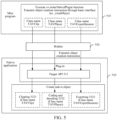
- FIG. 5 is the schematic diagram of creating the native object by the plug-in of the native application according to the instruction transmitted by the mini program in the embodiment of this disclosure.
- the upper half part of the figure refers to the form that a mini program 510 transmits out the object creation instruction.
- the mini program 510 transmits out the object creation instruction by executing a specific function, such as the function xx.inokeNativePlugin, it is used for indicating to call the plug-in in the native application (called as a native plug-in for short) so as to create a native object.
- Specific codes are as follows:
- the abovementioned code represents that the object creation instruction is transmitted through a basic interface tav _creatObject of the mini program 510, and the instruction indicates that the class name of the native object is TAVClip and is used for clipping audios and videos; the method name is resource.
- the mini program 510 transmits the object creation instruction to a native application 530 through a Webkit 520. Then, the native application 530 distributes the className, the methodName and the param to a corresponding target API 531, and creates a native object with the corresponding class name.
- the target API 531 is TAVClip (audio and video clipping), the name of the created native object is clipping 5321, and the class name is TAVClip;
- the target API 531 is TAVPlayer (audio and video coding and decoding), the name of the created native object is coding and decoding 5322, and the class name is TAVPlayer;
- the target API 531 is TAVExportSession (audio and video export), the name of the created native object is export 5323, and the class name is TAVExportSession.
- the audio and video editing API is provided by the native application, so that the generated texture pictures are all in the native application. And the mini program and the native application communicate through the JS message, thus the texture data cannot be transmitted.
- the mini program in the embodiment of this disclosure provides a same-layer rendering technology. That is, the playing interface of the target multimedia content is displayed in the sub-application page of the sub-application, and the playing interface and the sub-application page are determined through same-layer rendering.
- the core principle of same-layer rendering is to put the view of the native layer into the view level in the WebView, and the view of the native layer can be treated as an html (HyperText Markup Language) tag.
- html HyperText Markup Language
- the DOM elements can be used for creating the native view according to the tag during rendering the WebView, and the same-layer rendering is to find an appropriate position in the views and then insert the view of the native layer.
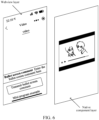
- FIG. 6 is the interface level schematic diagram of skipping introducing same-layer rendering, the non-native component is located on the WebView layer, and the native component is located on the other higher level.
- the non-native component layer renders the mini program page, namely the sub-application page.
- the native component layer renders the playing interface of the target multimedia content.
- the same-layer rendering provided in the embodiment of this disclosure refers to directly rendering the native component to the WebView layer through a certain technical means, at the moment, the native component layer does not exist, and the native component is directly mounted on the WebView node.
- the mini program can almost use the native component rendered on the same layer like using a non-native component.
- the interface level after the same-layer rendering is enabled is shown in FIG. 7 .
- the picture rendered by the native application is directly rendered to the native view and then nested into the mini program. Therefore, the sub-application page and the playing interface of the target multimedia content are determined through same-layer rendering.
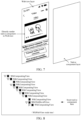
- FIG. 8 is the schematic diagram of the WKWebView node tree in the embodiment of this disclosure.
- the WKWebView is used for rendering and displaying the webpage and can be configured in a user-defined manner.
- the WKWebView is used for rendering in a layered manner, a CompositingLayer generated by a Webkit kernel is rendered into a WKCompositingView which is a native view of a client, and the kernel renders a plurality of DOM nodes to a synthesis layer, therefore, there is no one-to-one mapping relationship between the synthesis layer and the DOM nodes.
- the WKWebView In response to setting the attributes of the Cascading Style Sheets (CSS) of the DOM node as overflow: scroll, the WKWebView will generate a WKChildScrollView for the DOM node, there is a mapping relationship between the WKChildScrollView and the DOM node, and it is a subclass of a native UIScrollView, that is, scroll in the WebView is actually borne by a real native scroll component, so that the WebView scroll brings a smoother experience.
- CSS Cascading Style Sheets
- the same-layer rendering of the mini program is also realized based on the WK sub-scroll view.
- the native component is mounted on the WK sub-scroll view node to serve as the sub-view of the WK sub-scroll view node, or, the native component is inserted into the WK sub-scroll view node to realize same-layer rendering; in this way, the layer problem of the native component is solved, meanwhile, the native component has richer display and interaction capacity; and in response to the mini program rendering the playing interface, the native component on the same layer can be directly used, thus the rendering processing complexity is reduced, and the rendering processing efficiency is improved.
- step S32 includes:
- the native object is created through the native application and then is called by the sub-application, so that very perfect audio and video basic capability is provided for the sub-application, meanwhile, no package volume increment exists, and the sub-application can have the same performance as the native application.
- an instance object can be dynamically determined as long as the internal memory address and the class name of the object are provided.
- the address of the internal memory allocated to the native object, the class name of the native object and other information are taken as the object information, and the internal memory address and the class name are provided in the data structure of the object returned by the mini program, wherein the internal memory address refers to the address of the internal memory allocated to the native object by the native application, and the class name refers to the type of the native object.
- the internal memory address and the class name are treated as object data, added to the object calling instruction and transmitted back to the native layer of the native application, and the native layer dynamically creates the object instance through the pointer, thus the calling of the native object is achieved; and a method indicated in the native object data structure is executed, namely, the function code is executed.
- the specific process is that: in response to the mini program calling the native object, the content address and the class name are added into the object calling instruction, and the object calling instruction is transmitted to the native application; after the native application receives the object calling instruction containing the content address and the class name, the internal memory allocated to the native object is determined according to the internal memory address, and the type of the native object is determined according to the class name; and after the internal memory allocated to the native object is indexed through the pointer, the native object is called according to the type of the native object.
- the mode of adding the content address and the class name into the object calling instruction is on the basis that the native object always exists in the system internal memory and has a certain reference relationship, so that the native object can be dynamically determined by representing the reference relationship through the content address and the class name, and the processing efficiency of determining the object during interacting between the mini program and the native application is improved.
- FIG. 9 is the schematic diagram of storing the native object by the native application in the embodiment of this disclosure.
- the object creation instruction is transmitted to a native application 920; and after the native application 920 receives the instruction, a native object 921 with the name of clipping and the class name of TAVClip is created in a temporary internal memory. And then, the internal memory of the native object 921 is moved to a resident internal memory (namely object is stored in the global data dictionary), so that the mini program 910 can access the object.
- object information of the native object of the native application 920 is returned to the mini program 910, and the object information specifically includes an identifier (object ID) and a className (object class name).
- the identifier and the className are added to the object calling instruction, and the object calling instruction is transmitted to a method transponder 922 of the native application 920.
- the object calling instruction includes the identifier and the className, wherein the identifier is 0x3df3459, representing that the internal memory address of the native object is 0x3df3459, and the className is Clip.
- the internal memory position will be found according to the identifier based on the method transponder 922, the type will be determined according to the className, then the internal memory 921 allocated to the native object will be indexed through the pointer, and finally, the method of the native object will be called according to the type of the native object, namely the function code of the native object is executed.
- the instance object can be dynamically determined as long as the internal memory address and the class name of the native object are provided, so that the problem that the object cannot be found due to the fact that the object attribute determined through the get method is not in the dictionary is solved.
- the mini program can transmit the object release instruction for the native object to the native application after completing the operation on the target multimedia content. After receiving the object release instruction for the native object, the native application releases the internal memory allocated to the native object before.
- the mini program can release the object resource by calling the release message.
- the target multimedia content is a video file A; after the video file A is clipped, namely, the editing control on the target multimedia content is finished, at the moment, the release message that is the object release instruction for the native object TAVClip can be transmitted to the native application, wherein the instruction can include the internal memory address, the class name, the object id and other information of the native object; and after the native application receives the release message, the internal memory previously allocated to the native object can be released through a corresponding API.
- plug-in destruction can be carried out, and the native layer can automatically clean all related native objects.
- the object release instruction for the native object used for the editing control can be transmitted to the native application, and the native object releases the corresponding internal memory to avoid internal memory overflow, so that enough continuous internal memory space is provided for subsequent use.
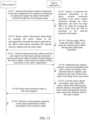
- FIG. 10 is the flow schematic diagram of the second type of application control method in the embodiment of this disclosure, the method is performed by the electronic device, such as the terminal device 210 in FIG. 2 , and is applied to the native application.
- the specific implementation flow is as follows:
- the method further includes: returning object information determined by creating the native object to the sub-application, determining that the native object is created by the native application through the sub-application during receiving the object information, and transmitting the object calling instruction according to the object information.
- creating the native object according to the parameter information corresponding to the native object to be created in the object creation instruction specifically includes:
- the API associated with the audio and video editing capability of the sub-application is called through the native application to create the native object, so that the sub-application has certain audio and video editing capability, the third-party audio and video editing library is prevented from being added into the sub-application, for example, an FFmpeg or WebRTC library is carried in the mini program, and from this perspective, the package volume of the sub-application with the audio and video editing capability is reduced.
- the object information includes the internal memory address and the class name; the object calling instruction carries the internal memory address and the class name; the internal memory address refers to the address of the internal memory allocated by the native application for the native object, and the class name refers to the type of the native object.
- the method further includes: storing the native object by the global data dictionary so as to keep the calling of the sub-application to the native object.
- Storage is carried out through the global data dictionary, so that the native object can be stored in the internal memory all the time, it can be guaranteed that the sub-application can access the native object, and then the basic audio and video editing capability can be determined.
- the method further includes:
- the object release instruction being transmitted by the sub-application after the sub-application completes the operation for target multimedia content.
- FIG. 11 is the interaction time sequence diagram of the application control method.
- the method includes the following specific implementation processes:
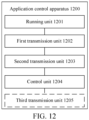
- FIG. 12 is the schematic diagram of the composition structure of the first type of application control apparatus 1200 in the embodiment of this disclosure, the apparatus is applied to the sub-application and includes:
- the second transmission unit 1203 is specifically configured to perform the functions of:
- the object information includes the internal memory address and class name
- the second transmission unit 1203 is specifically configured to perform the functions of: adding the internal memory address and the class name into the object calling instruction during calling the native object; transmitting the object calling instruction to the native application; determining the internal memory allocated to the native object by the native application according to the internal memory address, and determining the type of the native object according to the class name; indexing the internal memory allocated to the native object through the pointer; and calling the native object according to the type of the native object.
- the playing interface of the target multimedia content is displayed in the sub-application page of the sub-application, and the playing interface corresponding to the target multimedia content and the sub-application page are determined through same-layer rendering.
- the apparatus further includes: a third transmission unit 1205 for transmitting the object release instruction for the native object to the native application after the sub-application completes the operation on the target multimedia content so as to enable the native application to release the internal memory allocated to the native object.
- the sub-application and the native application interact through the browser component.
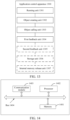
- FIG. 13 is the structural schematic diagram of an application program control apparatus 1300 provided by the embodiment of this disclosure, the apparatus is applied to the native application and can include:
- the apparatus further includes: a second feedback unit 1305 for returning object information determined by creating the native object to the sub-application, determining that the native object is created by the native application through the sub-application during receiving the object information, and transmitting the object calling instruction according to the object information after the native object is created by the object creating unit 1302 and before the object calling unit 1303 receives the object calling instruction transmitted by the sub-application.
- a second feedback unit 1305 for returning object information determined by creating the native object to the sub-application, determining that the native object is created by the native application through the sub-application during receiving the object information, and transmitting the object calling instruction according to the object information after the native object is created by the object creating unit 1302 and before the object calling unit 1303 receives the object calling instruction transmitted by the sub-application.
- the object creating unit 1302 is specifically configured to perform the functions of:
- the object information includes the internal memory address and the class name;
- the object calling instruction carries the internal memory address and the class name; and the object calling unit 1303 is specifically configured to perform the functions of:
- the apparatus further includes: a storage unit 1306 for storing the native object by the global data dictionary so as to keep the calling of the sub-application to the native object after creating the native object through the object creating unit 1302 according to the parameter information corresponding to the native object to be created in the object creation instruction.
- the apparatus further includes: an internal memory release unit 1307 for releasing the internal memory allocated to the native object after receiving the object release instruction for the native object transmitted by the sub-application, the object release instruction being transmitted by the sub-application after completing the operation on the target multimedia content.
- the foregoing components are respectively described as various modules (or units) divided according to functions.
- the function of the various modules (or units) may be implemented in a same piece of or multiple pieces of software or hardware.
- aspects of this disclosure may be implemented as systems, methods, or computer program products. Therefore, the aspects of this disclosure may be specifically embodied in the following forms: hardware only implementations, software only implementations (including firmware, micro code, etc.), or implementations with a combination of software and hardware, which are collectively referred to as "circuit", “module”, or “system” herein.
- the electronic device can be used for transfer control of resource objects.
- the electronic device can be a server, such as a server 220 shown in FIG. 2 , and can also be a terminal device, such as the terminal device 210 shown in FIG. 2 .
- the structure of the electronic device can be shown in FIG. 14 , and the electronic device includes a memory 1401, a communication module 1403 and one or more processors 1402.
- the memory 1401 is configured to store a computer program executed by the processor 1402.
- the memory 1401 may mainly include a program storage area and a data storage area.
- the program storage area may store an operating system, a program required for running an instant messaging function, and the like.
- the storage data area is configured to store various instant messaging information, operation instruction sets and the like.
- the memory 1401 may be a volatile memory such as a random-access memory (RAM); the memory 1401 may be a non-volatile memory such as a read-only memory, a flash memory, a hard disk drive (HDD) or a solid-state drive (SSD); or the memory 1401 is any other medium that can be used to carry or store expected program code that has an instruction or data structure form, and that can be accessed by a computer, but is not limited thereto.
- the memory 1401 may be a combination of the foregoing memories.
- the processor 1402 may include one or more central processing units (CPUs), or may be a digital processing unit, or the like.
- the processor 1402 is configured to invoke the computer program stored in the memory 1401, to perform the foregoing application control method.
- the communications module 1403 is configured to communicate with a terminal device and a server.
- a specific connection medium between the memory 1401, the communication module 1403, and the processor 1402 is not limited.
- the memory 1401 and the processor 1402 are connected to each other through a bus 1404.
- the bus 1404 is represented by using a bold line in FIG. 14 .
- a manner of connection between other components is only schematically described, but is not used as a limitation.
- the bus 1404 may be classified into an address bus, a data bus, a control bus, and the like.
- the bus in FIG. 14 is represented by using only one bold line, but this does not indicate that there is only one bus or one type of bus.
- the memory 1401 stores a computer storage medium.
- the computer storage medium stores a computer-executable instruction.
- the computer-executable instruction is used for implementing the application control method according to the embodiments of this disclosure.
- the processor 1402 is configured to execute the application control method, as shown in FIG. 3 or FIG. 10 .
- each aspect of the application control method provided in this disclosure may be further implemented in a form of a program product including program code.
- the program product is run on a computer device, the program code is used to enable the computer device to perform steps of the application control method according to the various exemplary implementations of this disclosure described above in the specification.
- the computer device can perform the steps shown in FIG. 3 or FIG. 10 .
- the program product may adopt one readable medium or any combination of readable media.
- the readable medium may be a computer-readable signal medium or a computer-readable storage medium.
- the readable storage medium may be, for example, but is not limited to, an electric, magnetic, optical, electromagnetic, infrared, or semi-conductive system, apparatus, or device, or any combination thereof.
- the readable storage medium include an electrical connection having one or more wires, a portable disk, a hard disk, a random access memory (RAM), a read-only memory (ROM), an erasable programmable read only memory (EPROM or a flash memory), an optical fiber, a portable compact disk read-only memory (CD-ROM), an optical storage device, a magnetic storage device, or any suitable combination thereof.
- RAM random access memory
- ROM read-only memory
- EPROM or a flash memory erasable programmable read only memory
- CD-ROM compact disk read-only memory
- magnetic storage device or any suitable combination thereof.
- the program product according to an implementation of this disclosure may use a CD-ROM, include program code, and may be run on a computing apparatus.
- the program product of this disclosure is not limited to this.
- the readable storage medium may be any tangible medium including or storing a program, and the program may be used by or in combination with a command execution system, an apparatus, or a device.
- the readable signal medium may include a data signal propagated in baseband or propagated as a part of a carrier, and readable program code is carried therein.
- the propagated data signal may be in a plurality of forms, including but not limited to, an electromagnetic signal, an optical signal, or any appropriate combination thereof.
- the readable signal medium may alternatively be any readable medium other than the readable storage medium.
- the readable medium may be configured to transmit, propagate, or transmit a program used by or used in combination with a command execution system, an apparatus, or a device.
- the program code included in the readable medium may be transmitted by using any appropriate medium, including but not limited to, a wireless medium, a wired medium, an optical cable, radio frequency (RF) or the like, or any appropriate combination thereof.
- a wireless medium including but not limited to, a wireless medium, a wired medium, an optical cable, radio frequency (RF) or the like, or any appropriate combination thereof.
- RF radio frequency
- the storage medium includes: any medium that can store program code, such as a removable storage device, a read-only memory (ROM), a random access memory (RAM), a magnetic disk, or an optical disc.
- the integrated module in the embodiments of this disclosure when the integrated module in the embodiments of this disclosure is implemented in the form of a software function module and sold or used as an independent product, the integrated module may be stored in a computer readable storage medium.
- the computer software product is stored in a storage medium and includes several instructions for instructing a computer device (which may be a personal computer, a server, a network device, or the like) to perform all or some of the methods described in the embodiments of this disclosure.
- the storage medium includes: any medium that can store program code, such as a mobile storage device, a ROM, a magnetic disk, or an optical disc.
Landscapes
- Engineering & Computer Science (AREA)
- Software Systems (AREA)
- Theoretical Computer Science (AREA)
- Computer Networks & Wireless Communication (AREA)
- Signal Processing (AREA)
- General Physics & Mathematics (AREA)
- General Engineering & Computer Science (AREA)
- Physics & Mathematics (AREA)
- Multimedia (AREA)
- Medical Informatics (AREA)
- General Health & Medical Sciences (AREA)
- Computing Systems (AREA)
- Health & Medical Sciences (AREA)
- Stored Programmes (AREA)
Abstract
Description
- This disclosure claims priority to
Chinese Patent Application No. 202110000662.9, entitled "EDITING CONTROL METHOD AND APPARATUS FOR MULTIMEDIA CONTENT, ELECTRONIC DEVICE, AND STORAGE MEDIUM" and filed with the China National Intellectual Property Administration on January 4, 2021 - This disclosure relates to the field of computer technologies, and in particular, to an application control method and apparatus, an electronic device, and a storage medium.
- With the development of communication technology and the popularization of intelligent terminals, sub-applications as light applications have become an important form of mobile Internet applications, for example, users can handle various services or perform social activities and the like through the sub-applications based on native applications. The native applications can be social applications like instant messaging software, tool applications like picture modification software and office software, audio-video entertainment applications like short video software and game software, content publishing applications like third-party consumption comment software, content information applications like browsers and news software, and system applications like vehicle-mounted applications. The sub-applications can be used without downloading and installing and cannot occupy the storage space of the electronic device, and therefore the sub-applications are widely accepted by the users.
- In related technologies, the audio and video capability of the sub-applications can only be realized through a third-party audio and video editing library. However, introducing of the third-party audio and video editing library into the webpage side will cause large volume of a front-end application package, and the sub-applications generally limit the volume of the package.
- An embodiment of this disclosure provides an application control method and apparatus, an electronic device, and a storage medium, aiming at providing multimedia content editing capability for sub-applications without increasing the volume of an application package.
- A first type of application control method provided by the embodiment of this disclosure is performed by the electronic device and includes:
- running a native application and a sub-application nested in the native application in the electronic device;
- transmitting an object creation instruction to the native application in response to the sub-application detecting an operation request for a target multimedia content, the object creation instruction including parameter information corresponding to a native object to be created and enabling the native application to create the native object according to the parameter information, and the native object being used for performing operation on the target multimedia content in the sub-application;
- transmitting the object calling instruction to the native application in response to determining that the native object is created by the native application, so as to enable the native application to call the native object and execute a function code of the native object; and
- receiving an execution result returned by the native application, and performing operation on the target multimedia content according to the execution result.
- A second type of application control method provided by the embodiment of this disclosure is performed by the electronic device and includes:
- running the native application and the sub-application nested in the native application in the electronic device;
- creating the native object according to the parameter information corresponding to the native object to be created in the object creation instruction after receiving the object creation instruction transmitted by the sub-application, the object creation instruction being transmitted in response to the sub-application detecting the operation request for the target multimedia content, and the native object being used for performing operation on the target multimedia content in the sub-application;
- calling the native object after receiving the object calling instruction transmitted by the sub-application, and executing the function code of the native object, the object calling instruction being transmitted during the sub-application determines that the native object is created by the native application; and
- returning the execution result to the sub-application, and performing operation on the target multimedia content through the sub-application according to the execution result.
- A first type of application control apparatus provided by the embodiment of this disclosure includes:
- a running unit for running the native application and the sub-application nested in the native application in the electronic device;
- a first transmission unit for transmitting the object creation instruction to the native application in response to the sub-application detecting the operation request for the target multimedia content, the object creation instruction including the parameter information corresponding to the native object to be created and enabling the native application to create the native object according to the parameter information, and the native object being used for performing operation on the target multimedia content in the sub-application;
- a second transmission unit for transmitting the object calling instruction to the native application in response to determining that the native object is created by the native application, so as to enable the native application to call the native object and execute the function code of the native object; and
- a control unit for receiving an execution result returned by the native application, and performing operation on the target multimedia content according to the execution result.
- A second type of application control apparatus provided by the embodiment of this disclosure includes:
- a running unit for running the native application and the sub-application nested in the native application in the electronic device;
- an object creating unit for creating the native object according to the parameter information corresponding to the native object to be created in the object creation instruction after receiving the object creation instruction transmitted by the sub-application, the object creation instruction being transmitted in response to the sub-application detecting the operation request for the target multimedia content, and the native object being used for performing operation on the target multimedia content in the sub-application;
- an object calling unit for calling the native object after receiving the object calling instruction transmitted by the sub-application, and executing the function code of the native object, the object calling instruction being transmitted during the sub-application determines that the native object is created by the native application; and
- a first feedback unit for returning the execution result to the sub-application, and performing operation on the target multimedia content through the sub-application according to the execution result.
- Embodiments of this disclosure provide an electronic device, including a processor and a memory, the memory storing program code, the program code, when executed by the processor, causing the processor to perform the operations of any one of the foregoing application control methods.
- An embodiment of this disclosure provides a computer program product or a computer program. The computer program product or the computer program includes computer instructions, and the computer instructions are stored in a computer-readable storage medium. A processor of a computer device reads the computer instructions from the computer-readable storage medium and executes the computer instructions to cause the computer device to perform the operations of any one of the foregoing application control methods.
- An embodiment of this disclosure provides a computer-readable storage medium, including program code, the program code, when run on an electronic device, being configured to cause the electronic device to perform the operations of any one of the foregoing application control methods.
- The embodiments of this disclosure provide an application control method and apparatus, an electronic device, and a storage medium. Specifically, in response to performing the operation on the target multimedia content through the sub-application, the object creation instruction is transmitted to the native application, and the object calling instruction is transmitted to the native object after determining that the native object is created by the native application, wherein the native object is an object used for performing operation on the multimedia content, and therefore the operation on the target multimedia content can be achieved by calling the native object and executing corresponding function codes. Due to the fact that the capacity of a native application is combined in the embodiment of this disclosure, through the interaction between the sub-application and the native application, the sub-application can gain the basic multimedia content editing capability without depending on a third-party operation function library such as a third-party audio and video editing library, and the package volume of the sub-application cannot be increased.
- Other features and advantages of this disclosure will be described in the subsequent specification, and partially become apparent from the specification, or be understood by implementing this disclosure. Objectives and other advantages of this disclosure may be implemented and determined by using structures particularly mentioned in the specification, the claims, and the accompanying drawings.
- The accompanying drawings described herein are used for providing a further understanding of this disclosure, and form part of this disclosure. Exemplary embodiments of this disclosure and descriptions thereof are used for explaining this disclosure, and do not constitute any inappropriate limitation to this disclosure. In FIGS:
-
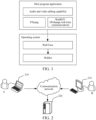
FIG. 1 is a schematic diagram of introducing a third-party audio and video editing library into a mini program in related art; -
FIG. 2 is a selectable schematic diagram of an application scene in an embodiment of this disclosure; -
FIG. 3 is a flow schematic diagram of a first type of application control method in an embodiment of this disclosure; -
FIG. 4 is a schematic diagram of an interaction flow between a mini program and a native application in an embodiment of this disclosure; -
FIG. 5 is a schematic diagram of creating a native object by a plug-in of a native application according to an instruction transmitted by a mini program in an embodiment of this disclosure; -
FIG. 6 is an interface level schematic diagram of skipping introducing same-layer rendering in an embodiment of this disclosure; -
FIG. 7 is an interface level schematic diagram of introducing same-layer rendering in an embodiment of this disclosure; -
FIG. 8 is a schematic diagram of a WKWebView node tree in an embodiment of this disclosure; -
FIG. 9 is a schematic diagram of storing a native object by a native application in an embodiment of this disclosure; -
FIG. 10 is a flow schematic diagram of a second type of application control method in an embodiment of this disclosure; -
FIG. 11 is a flow schematic diagram of selectable interaction realization time sequence in an embodiment of this disclosure; -
FIG. 12 is a schematic diagram of a composition structure of a first type of application control apparatus in an embodiment of this disclosure; -
FIG. 13 is a schematic diagram of a composition structure of a second type of application control apparatus in an embodiment of this disclosure; and -
FIG. 14 is a schematic diagram of a composition structure of hardware of an electronic device according to an embodiment of this disclosure; - To make the objectives, technical solutions, and advantages of the embodiments of this disclosure clearer, the technical solutions in this disclosure will be clearly and completely described in the following with reference to the accompanying drawings in the embodiments of this disclosure. Apparently, the described embodiments are merely a part rather than all of the embodiments of the technical solutions of this disclosure. All other embodiments determined by a person of ordinary skill in the art based on the embodiments recorded in the document of this disclosure without creative efforts shall fall within the protection scope of the technical solutions of this disclosure.
- The following describes some concepts involved in the embodiments of this disclosure.
- Native application: the native application, also called as a "main application" refers to an application program which may be directly operated in the operating system. And the native application, opposite to a network application, may be installed on a terminal device and can use hardware functions of the terminal device (such as a loudspeaker, an acceleration sensor and a camera). The native application can be downloaded from an application market. A sub-application and the native application in the embodiment of this disclosure have a nested or embedded or integrated relationship, and the sub-application is nested or embedded or integrated in the native application.
- Sub-application: the sub-application refers to an application developed based on a framework of the native application, and has an own life cycle and a basic interface. And the sub-application is also called as a "mini program". A user can determine the sub-application through an URL address in the native application after installing and running the native application, instead of downloading and installing the sub-application from the application market. For example, in the native application, the user scans a two-dimensional code of the sub-application to determine the URL address of the sub-application from the two-dimensional code and then downloads from this address to determine the sub-application; or, the user directly searches the sub-application in the native application, determines the URL address and downloads it from this address. For example, the sub-application is a mini program running based on the native application and can bear specific functions under the native application. For example, in the native application "Wesee" , red packets can be added for a video through the mini program; for example, in the native application "Meitu", basic picture editing can be performed through the mini program; and for another example, in the native application "DianPing", the video can be uploaded for publishing an evaluation through the mini program.
- DOM (Document Object Model): it is a standard programming interface for processing an extensible markup language. On a webpage, objects of an organization page (or document) are organized in a tree structure to be used for representing a standard model of the objects in the document, and the standard model is called DOM.
- Objects and classes: the objects are variables with reference types of classes. The classes and the objects are the most basic concepts in the object-oriented programming technology. The objects with the same attribute are called classes.
- Native Object: the native object, also called as a local object or an internal object, refers to a data structure dynamically created in the running process of the native application, and the data structure includes elements such as a class name, a method name and parameters.
- Dictionary: the dictionary is a data structure for storing data in a key-value pair mode, for example, name-telephone number, namely, the corresponding telephone number can be found through the name, the name is the key, and the telephone number is the value. The key in the dictionary is an index of the value in the dictionary. For JavaScript, the basis of the Dictionary class is the Array class, and the Array in JS is an array and is also a dictionary. In the embodiment of this disclosure, the native application can store all created native objects based on the global data dictionary so as to keep the calling of the sub-application to the native object.
- Plug-in: the plug-in is a program compiled by Application Interfaces (API) conforming to a certain specification. The plug-in the embodiment of this disclosure is mainly an audio and video plug-in provided on a native application side, and the plug-ins contain a large number of APIs through which the sub-applications can be flexibly combined and design audio and video editing capability with rich functions.
- Same-layer rendering: it refers to that a native component is directly rendered to a WebView (webpage view) level through a certain technical means, at the moment, the native component layer does not exist, and the native component is directly mounted to a Web View node. In the embodiment of this disclosure, the playing interface of the target multimedia content is displayed in the sub-application page of the sub-application, and in the rendering process, the playing interface and the sub-application page are determined through same-layer rendering.
- The design idea of the embodiment of the application is briefly introduced as follows:
With the continuous development of communication technology and the popularization of computer technology, various applications (APPs) enter the daily life of people, and the sub-application serves as a program which can be used immediately only by scanning a two-dimensional code or searching, instead of downloading and installing from the application market. The sub-application has the characteristics of no need of installation and uninstallation, capability of being cleared after being used and no occupation of a mobile phone internal memory, and is widely concerned by all walks of life. At present, sub-applications of APPs are developed in various industries in order to facilitate popularization and seize user flow, and the playing of audio and video in the sub-applications gradually becomes a demand urgently realized by people. - In related art, the audio and video capability of the sub-applications (also mini programs) can only be realized through a third-party audio and video editing library. For example, as shown in
FIG. 1 , the mini program carries a third-party audio and video editing library, i.e., an Ffmpeg (Fast Forward Mpeg, an open source computer program) or a WebRTC (Web Real-Time Communication) library, to communicate with the operating system, specifically with webview and webkit, so that the sub-applications are able to realize the audio and video editing capability. Other sub-applications also have similar processing ways. However, introducing of the third-party audio and video editing library into the sub-applications on the webpage side will cause large volume of a front-end application package, while the sub-applications generally limit the volume of the package. - Therefore, the embodiment of this disclosure provides the application control method and apparatus, the electronic device, and the storage medium. Specifically, in response to performing the operation on the target multimedia content through the sub-application, the object creation instruction is transmitted to the native application, and the object calling instruction is transmitted to the native object after determining that the native object is created by the native application, wherein the native object is an object used for performing operation on the multimedia content, and therefore the operation on the target multimedia content can be achieved by calling the native object and according to the execution effect. Due to the fact that the capacity of a native application is combined in the embodiment of this disclosure, through the interaction between the sub-application and the native application, the sub-application has very perfect audio and video editing capability, including basic audio and video editing capability. Moreover, in the embodiment of this disclosure, the third-party audio and video editing library does not need to be introduced into the sub-application, and no package volume increment exists, so that the sub-application has the same good performance as the native application; and compared with the prior art, the sub-application has a smaller package volume, and thus the audio and video application is easier to realize and implement.
- The following describes the exemplary embodiments of the application with reference to the accompanying drawings of the specification. It is to be understood that the exemplary embodiments described herein are merely used for illustrating and explaining this disclosure, but are not intended to limit this disclosure. In addition, the embodiments of this disclosure and features in the embodiments may be mutually combined in response to no conflict.
-
FIG. 2 is a schematic diagram of an application scenario according to an embodiment of this disclosure. The diagram of the application scenario includes twoterminal devices 210 and aserver 220. Theterminal device 210 may communicate with theserver 220 by using a communication network. - In an implementation, the communication network is a wired network or a wireless network. The
terminal device 210 and theserver 220 may be directly or indirectly connected in a wired or wireless communication manner. This is not limited in this disclosure. - In the embodiment of this disclosure, a
terminal device 210 is an electronic device used by a user, and the electronic device can be computing devices such as a personal computer, a mobile phone, a tablet personal computer, a laptop, an electronic book reader and a smart home which have certain computing power and run with instant messaging software and websites or social software and websites. The foregoingserver 220 may be an independent physical server, or may be a server cluster or a distributed system formed by a plurality of physical servers, or may be a cloud server that provides a basic cloud computing service such as a cloud service, a cloud database, cloud computing, a cloud function, cloud storage, a network service, cloud communication, a middleware service, a domain name service, a security service, a content delivery network (CDN), big data, and an artificial intelligence platform. - Each
terminal device 210 can be provided with the native application with multimedia content editing capability, for example, a native application with audio and video editing capability, and a native application with image animation editing capability; and the sub-application is nested in the native application. - The embodiment of this disclosure is mainly illustrated by taking audio and video editing as an example, and the basic audio and video editing capability in the sub-application can be used on various products with audio and video editing requirements. Based on this capacity, the sub-application can realize the functions of: audio and video clipping, speed change, special effects, templates, red packet effects and the like. Common products capable of realizing the audio and video editing capability in the sub-application include: audio and video entertainment applications like adding red packets to published videos through a short video software mini program, enabling the user to get the red packet while browsing the short videos, and providing special effects in response to the user recording the short videos, game software through which the user can play games while live broadcasting and the like through the mini program, tool applications such as picture modification software through which the user can perform basic picture editing through the mini program, office software which can provide the template for the user through the mini program, content publishing applications such as third-party consumption comment software through which the user can upload video and publish evaluation by the mini program, content information applications such as a browser through which the user can carry out audio and video clipping, speed change and the like by a webpage mini program, and social class applications such as instant messaging software through which the user can browse audios and videos by the mini program.
- In addition, the mini program listed in the embodiment of this disclosure not only can be nested on the listed terminal APP, but also can be transferred to the Internet automobile, so that one-stop service from travel to life is provided for the user, and a series service scene before getting on the automobile, during driving and after getting off the automobile is realized. Correspondingly, the native application can be a system application, such as a vehicle-mounted application, the user can achieve the functions of audio and video clipping, speed changing, special effects, templates, red packet effects and the like through the vehicle-mounted mini program; and based on achievement of the audio and video editing capability, various intelligent services from travel to life can be provided for the user around a vehicle scene.
- Compared with the prior technologies, the application control method in the embodiment of this disclosure combines the JS interaction technology of the WebView, WebView same-layer rendering, a sub-application plug-in mode and an internal memory management mechanism.
- An editing control method in the embodiment of this disclosure is introduced in detail as follows by mainly taking the sub-application serving as the mini program as an example and in conjunction with the accompanying drawings:
FIG. 3 is the flow schematic diagram of the first type of application control method in the embodiment of this disclosure, the method is performed by the electronic device, for example, theterminal device 210 in theFIG. 2 . The method is applied to the sub-application, and the specific implementation flow is as follows:
S30: Run the native application and the sub-application nested in the native application in the electronic device. - In the embodiment of this disclosure, the native application is used as the main application, and the sub-application is nested in the native application.
- S31: Transmit an object creation instruction to the native application in response to the sub-application detecting an operation request for target multimedia content, the object creation instruction including parameter information corresponding to a native object to be created and enabling the native application to create the native object according to the parameter information, and the native object being used for performing operation on the target multimedia content in the sub-application.
- In the embodiment of this disclosure, the operation on the multimedia content includes various editing controls, and can be divided into a plurality of control types, such as clipping, speed change, coding and decoding, sticker, special effect addition and template loading. The native object herein refers to a native object for performing a specific type of control on the multimedia content, for example, in response to clipping the target multimedia content, it is needed to create a type of native object A for performing clipping control on the multimedia content; and in response to performing speed change on the target multimedia content, it is needed to create a type of native object B for performing speed change control on the multimedia content, etc.
- In response to performing editing control on the target multimedia content through the mini program, it is needed to transmit the object creation instruction to the native application, the parameter information in the instruction specifically refers to the object type, the object class name and the like, and the parameter information may indicate the type of control (e.g. editing) performed on the multimedia content by using the native object; and different controls correspond to different audio and video editing capabilities. For example, in response to clipping the audio and video, the corresponding class name is "TAVClip", and in response to coding and decoding the audio and video, the corresponding class name is "TAVPlayer".
- After receiving the object creation instruction transmitted by the sub-application, the native application will create a native object according to the parameter information corresponding to the native object to be created in the object creation instruction, and allocate an internal memory to the native object.
- In addition, in response to utilizing the basic API provided by the webpage end to realize the audio and video editing capability of the mini program, it is difficult to realize part of the capability or the performance is poor due to the fact that the API of the webpage end on audio and video processing is not perfect enough. According to the embodiment of this disclosure, the capability of the native application is combined, the native API is directly exposed, thus the mini program has the basic audio and video editing capability, the package volume is not increased, and the rendering performance is improved.
- In some embodiments, on the native application side, the native application is capable of analyzing the parameter information in the instruction in response to creating the native object according to the parameter information corresponding to the native object to be created in the object creation instruction, and selecting a target API needed to be called for creating the native object from a pre-configured API set according to the analyzed parameter information; and calling the target API to create the native object. APIs in the API set are APIs associated with the audio and video editing capability of the sub-application. The API set in the embodiment of this disclosure mainly refers to an API list, and the list can include the six listed APIs.
- For example, in response to clipping the target multimedia content through the mini program, the class name in parameter information can be "TAVClip", and a corresponding target API is the API to be clipped; and in response to coding and decoding the audio and video through the mini program, the class name in the parameter information can be "TAVPlayer", the corresponding target API is the API to be clipped.
- It is to be noted that the API related to the audio and video editing capability provided by the native application listed in the embodiment of this disclosure is only illustrated, and in fact, any API related to the audio and video editing capability is suitable for the embodiment of this disclosure and is not specifically limited.
- According to the native object internal memory management mechanism, the native object created through interaction of the mini program and the native application has the following problem that if the native object is created, but is not held, the internal memory will be released by the system. The object cannot be found in response to the mini program transmitting a message next time. In order to solve this problem, an object storage method based on a global data dictionary is provided in the embodiment of this disclosure.
- In the native layer, the global data dictionary is used for storing the created objects, and as long as the objects created by the mini program are stored in the global dictionary, reference is kept.
- S32: Transmit an object calling instruction to the native application in response to determining that the native object is created by the native application, so as to enable the native application to call the native object and execute a function code of the native object.
- According to the embodiment of this disclosure, the sub-application is capable of transmitting a JS message containing the object calling instruction to the native application, analyzing the internal memory address and the class name by the native application according to the JS message, then calling the native object, executing the function code of the native object, performing corresponding processing, and returning an execution result to the sub-application.
- Specifically, after receiving the JS message, the plug-in the native application is capable of automatically distributing to the target API used for calling the native object to realize simple expansion of a large number of APIs during distribution and improve the audio and video editing control efficiency. It is to be noted that the plug-in the native application specifically refers to plug-ins related to audio and video editing capability, such as coding and decoding, clipping, speed change, stickers, special effects and templates, which are all related to audio and video editing.
- S33: Receive an execution result returned by the native application, and perform corresponding operation on the target multimedia content in the sub-application according to the execution result.
- For example, the target multimedia content is a video file A, and in response to adjusting the playing speed of the video file A to be 2 times of the speed, the sub-application is capable of performing speed-multiplied playing on the video file A according to the execution result returned by the native application.
- According to the embodiment of this disclosure, the sub-application and the native application interact through a browser component in an underlying operating system. In this way, the underlying function of the operating system is effectively utilized, so that the efficiency of data transmission between the sub-application and the native application is higher, and the package volume of the sub-application cannot be increased.
- By taking the sub-application serving as the mini program as an example,
FIG. 4 is the schematic diagram of the interaction flow between the mini program and the native application in the embodiment of this disclosure, andFig. 4 includes amini program 410, anoperating system 420 and anative application 430. Themini program 410 is capable of receiving the operation request of the user on thetarget multimedia content 411 and giving a response. In theoperating system 420, the browser component includes aWeb View 421 and aWebkit 422. TheWebView 421 is a control for displaying a web page based on theWebkit 422. - For example, in response to the user tapping to open a certain webpage and performs operation on the
target multimedia content 411 on the webpage through themini program 410, an application code of themini program 410 is loaded to theWebView 421 to run, and at the moment, themini program 410 will transmit the object creation instruction to thenative application 430 through theWebkit 422 according to the received operation request. Specifically, the object creation instruction is transmitted in a form of a JS message. - The
native application 430 is capable of analyzing the parameter information in the object creation instruction according to the received JS message, judging which target API is called according to the analyzed parameter information, and then creating the native object. That is, the native objects are in one-to-one correspondence with the parameter information. For example, according to the class name included in the parameter information, the created native object can be any one of a name of coding anddecoding 431, a name of clipping 432, a name ofspeed change 433, a name ofsticker 434, a name ofspecial effect 435 and a name oftemplate 436. - After creating the native object by the
native application 430, the object information of the native object is returned to themini program 410 through theWebkit 422, and the object information includes the internal memory address and the class name. Therefore, themini program 410 is capable of determining that the native object is created by thenative application 430 after receiving the object information, and then transmitting the object calling instruction to thenative application 430 through theWebkit 422. - The
native application 430 is capable of calling the previously created native object such as a native object with the name of coding anddecoding 431 after receiving the object calling instruction, and executing the function code corresponding to the native object. The function code refers to a code required for performing corresponding operation on the target multimedia content, and is indicated through a method name in a data structure of the native object. - After the
native application 430 executes the function code corresponding to the native object, the processed data is determined as the execution result. For example, the operation request is to clip the video, and then the execution result is the duration of the clipped segment. - Finally, the
native application 430 is capable of transmitting the execution result to themini program 410 through theWebkit 422. Themini program 410 directly performs operation on the target multimedia content according to the received execution result, for example, displaying the clipped segment. Therefore, the interaction between themini program 410 and thenative application 430 is achieved. - In the embodiment of this disclosure, three basic interfaces are provided for the mini program based on the interaction process shown in
FIG. 4 : an object creating interface, an object releasing interface and an object calling interface, and the specific configuration is as follows: - Interface 1: object creating interface.
- func tav_creatObj ect(className: String,methodName: String,param:Param)->
- (object:TA VObject);
- func represents the abbreviation of the function, the function name of the interface is tav_creatObject, className represents the class name, and className:String represents that the class name is of a character string type; methodName represents the method name, and methodName:String represents that the method name is also of a character string type; and param represents the parameter and can specifically include a name (a parameter name) and a value.
- For example, an object is created, and the name of the object is TAVObject (audio and video object).
- Interface 2: object releasing interface.
- func tav_raleaseObject(object:TAVObject);
- The function name of the interface is tav_raleaseObject.
- Interface 3: object calling interface.
func tav_sendMsgToObject(object:TAVObject,methodName:String,param: Param). - The function name of the interface is tav_sendMsgToObject, object represents the object to be called, TAVObject is the name of the object to be called, methodName: String represents that the method name is also of a character string type; and param represents a parameter.
- In the embodiment of this disclosure, through the three basic interfaces and different parameters, the mini program can call various audio and video interfaces of the native layer, and the basic communication between the mini program and the native layer can be met.
-
FIG. 5 is the schematic diagram of creating the native object by the plug-in of the native application according to the instruction transmitted by the mini program in the embodiment of this disclosure. The upper half part of the figure refers to the form that amini program 510 transmits out the object creation instruction. Specifically, themini program 510 transmits out the object creation instruction by executing a specific function, such as the function xx.inokeNativePlugin, it is used for indicating to call the plug-in in the native application (called as a native plug-in for short) so as to create a native object. Specific codes are as follows:
              xx.inokeNativePlugin ({ /call native plug-in
              api_name:"tav_creatObject", /interface name: tav_creatObject (audio video_create
 object)
              data: { /data
              "className":"TAVClip", /class name: TAVClip (audio and video clipping)
              "methodName":"resource","param": {"resource": resource} /method name:
 resource (resource) , parameter {resource: resource}
              },
              Success: {}, /success
              fail: { } /fail
              })
- S321: determining that the native object is created by the native application during receiving the object information of the native object returned by the native application; and
- S322: transmitting the object calling instruction to the native application according to the object information.
- S100: running the native application and the sub-application nested in the native application in the electronic device.
- S 101: creating the native object according to the parameter information corresponding to the native object to be created in the object creation instruction after receiving the object creation instruction transmitted by the sub-application, the object creation instruction being transmitted in response to the sub-application detecting the operation request for the target multimedia content, and the native object being used for performing operation on the target multimedia content in the sub-application;
- S102: calling the native object after receiving the object calling instruction transmitted by the sub-application, and executing the function code of the native object, the object calling instruction being transmitted during the sub-application determines that the native object is created by the native application; and
- S 103: returning the execution result to the sub-application, and performing operation on the target multimedia content through the sub-application according to the execution result.
returning object information determined by creating the native object to the sub-application, determining that the native object is created by the native application through the sub-application during receiving the object information, and transmitting the object calling instruction according to the object information.
- analyzing the parameter information in the object creation instruction, and selecting a target API to be called to create the native object from a pre-configured API set, APIs in the API set being APIs associated with the audio and video editing capability of the sub-application; and
- calling the target API to create the native object.
- calling the native object after receiving the object calling instruction transmitted by the sub-application specifically includes:
- determining the internal memory allocated to the native object according to the internal memory address, and determining the type of the native object according to the class name; and
- indexing the internal memory allocated to the native object through the pointer, and calling the native object according to the type of the native object.
storing the native object by the global data dictionary so as to keep the calling of the sub-application to the native object.
- S1101: transmitting the object creation instruction to the native application through the mini program in response to detecting the operation request for target multimedia content through the mini program page;
- S1102: analyzing to determine the parameter information in the object creation instruction according to the object creation instruction through the native application, and selecting the target API to be called for creating the native object from the API set according to the analyzed parameter information;
- S1103: calling the target API to create the native object through the native application, and storing the created native object through the global data dictionary;
- S1104: returning object information determined by creating the native object to the sub-application through the native application, the object information including the internal memory address and the class name;
- S1105: adding the internal memory address and the class name into the object calling instruction through the mini program during calling the native object, and transmitting the object calling instruction to the native application;
- S1106: determining the internal memory resources allocated to the native object through the native application according to the internal memory address, and determining the type of the native object according to the class name;
- S 1107: calling the native object according to the type of the native object after indexing the internal memory allocated for the native object through the pointer, and executing the function code of the native object to carry out corresponding data processing on the target multimedia content;
- S1108: returning the execution result to the mini program through the native application; and
- S 1109: performing operation on the target multimedia content according to the execution result through the mini program.
- a
running unit 1201 for running the native application and the sub-application nested in the native application in the electronic device; - a
first transmission unit 1202 for transmitting the object creation instruction to the native application in response to the sub-application detecting the operation request for target multimedia content, the object creation instruction including parameter information corresponding to the native object to be created and enabling the native application to create the native object according to the parameter information, and the native object being used for performing operation on the target multimedia content in the sub-application; - a
second transmission unit 1203 for transmitting the object calling instruction to the native application in response to determining that the native object is created by the native application, so as to enable the native application to call the native object and execute the function code of the native object; and - a
control unit 1204 for receiving the execution result returned by the native application, and performing operation on the target multimedia content according to the execution result.
- determining that the native object is created by the native application during receiving the object information of the native object returned by the native application; and
- transmitting the object calling instruction to the native application according to the object information.
adding the internal memory address and the class name into the object calling instruction during calling the native object; transmitting the object calling instruction to the native application; determining the internal memory allocated to the native object by the native application according to the internal memory address, and determining the type of the native object according to the class name; indexing the internal memory allocated to the native object through the pointer; and calling the native object according to the type of the native object.
a
- a
running unit 1301 for running the native application and the sub-application nested in the native application in the electronic device; - an
object creating unit 1302 for creating the native object according to the parameter information corresponding to the native object to be created in the object creation instruction after receiving the object creation instruction transmitted by the sub-application, the object creation instruction being transmitted in response to the sub-application detecting the operation request for the target multimedia content, and the native object being used for performing operation on the target multimedia content in the sub-application; - an
object calling unit 1303 for calling the native object after receiving the object calling instruction transmitted by the sub-application, and executing the function code of the native object, the object calling instruction being transmitted during the sub-application determines that the native object is created by the native application; - a
first feedback unit 1304 for returning the execution result to the sub-application, and performing operation on the target multimedia content through the sub-application according to the execution result.
a
- analyzing the parameter information in the object creation instruction, and selecting a target API to be called to create the native object from a pre-configured API set, APIs in the API set being APIs associated with the audio and video editing capability of the sub-application; and
- calling the target API to create the native object.
- determining the internal memory allocated to the native object according to the internal memory address, and determining the type of the native object according to the class name; and
- indexing the internal memory allocated to the native object through the pointer, and calling the native object according to the type of the native object.
a
an internal
Claims (24)
- An application control method, performed by an electronic device, the method comprising:running a native application and a sub-application nested in the native application in the electronic device;transmitting an object creation instruction to the native application in response to the sub-application detecting an operation request for a target multimedia content, the object creation instruction comprising parameter information corresponding to a native object to be created and enabling the native application to create the native object according to the parameter information, and the native object being used for performing operation on the target multimedia content in the sub-application;transmitting the object calling instruction to the native application in response to determining that the native object is created by the native application, so as to enable the native application to call the native object and execute a function code of the native object; andreceiving an execution result returned by the native application, and performing operation on the target multimedia content in the sub-application according to the execution result.
- The method according to claim 1, wherein transmitting the object calling instruction to the native application in response to determining that the native object is created by the native application comprises:determining that the native object is created by the native application during receiving the object information of the native object returned by the native application; andtransmitting the object calling instruction to the native application according to the object information.
- The method according to claim 2, wherein the object information comprises an internal memory address and a class name; and
transmitting the object calling instruction to the native application according to the object information comprises:
adding the internal memory address and the class name into the object calling instruction during calling the native object; transmitting the object calling instruction to the native application; determining an internal memory allocated to the native object by the native application according to the internal memory address, and determining the type of the native object according to the class name; indexing the internal memory allocated to the native object through a pointer; and calling the native object according to the type of the native object. - The method according to claim 1, wherein a playing interface of the target multimedia content is displayed in a sub-application page of the sub-application, and the playing interface and the sub-application page are determined through same-layer rendering.
- The method according to claim 1, further comprising:
transmitting an object release instruction for the native object to the native application after the sub-application completes the operation on the target multimedia content so as to enable the native application to release the internal memory allocated to the native object. - The method according to any one of claims 1-5, wherein the sub-application and the native application interact through a browser component.
- An application control method, performed by an electronic device, the method comprising:running the native application and the sub-application nested in the native application in the electronic device;creating the native object according to the parameter information corresponding to the native object to be created in the object creation instruction after receiving the object creation instruction transmitted by the sub-application, the object creation instruction being transmitted in response to the sub-application detecting the operation request for the target multimedia content, and the native object being used for performing operation on the target multimedia content in the sub-application;calling the native object after receiving the object calling instruction transmitted by the sub-application, and executing a function code of the native object, the object calling instruction being transmitted during the sub-application determines that the native object is created by the native application; andreturning the execution result to the sub-application, and performing operation on the target multimedia content through the sub-application according to the execution result.
- The method according to claim 7, wherein after creating the native object and before receiving the object calling instruction transmitted by the sub-application, the method further comprises:
returning object information determined by creating the native object to the sub-application, determining that the native object is created by the native application through the sub-application during receiving the object information, and transmitting the object calling instruction according to the object information. - The method according to claim 7, wherein creating the native object according to the parameter information corresponding to the native object to be created in the object creation instruction comprises:analyzing the parameter information, and selecting a target application programming interface, API, to be called to create the native object from a pre-configured API set, APIs in the API set being APIs associated with the audio and video editing capability of the sub-application; andcalling the target API to create the native object.
- The method according to claim 8, wherein the object information comprises the internal memory address and the class name; the object calling instruction carries the internal memory address and the class name;
calling the native object after receiving the object calling instruction transmitted by the sub-application comprises:determining the internal memory allocated to the native object according to the internal memory address, and determining the type of the native object according to the class name; andindexing the internal memory allocated to the native object through the pointer, and calling the native object according to the type of the native object. - The method according to any one of claims 7-10, wherein after creating the native object, the method further comprises:
storing the native object by a global data dictionary so as to keep the calling of the sub-application to the native object. - An application control apparatus, comprising:a running unit for running the native application and the sub-application nested in the native application in the electronic device;a first transmission unit for transmitting the object creation instruction to the native application in response to the sub-application detecting the operation request for the target multimedia content, the object creation instruction comprising the parameter information corresponding to the native object to be created and enabling the native application to create the native object according to the parameter information, and the native object being used for performing operation on the target multimedia content in the sub-application;a second transmission unit for transmitting the object calling instruction to the native application in response to determining that the native object is created by the native application, so as to enable the native application to call the native object and execute the function code of the native object; anda control unit for receiving an execution result returned by the native application, and performing operation on the target multimedia content in the sub-application according to the execution result.
- The apparatus according to claim 12, wherein the second transmission unit is specifically configured to perform the functions of determining that the native object is created by the native application during receiving the object information of the native object returned by the native application; and transmitting the object calling instruction to the native application according to the object information.
- The apparatus according to claim 13, wherein the object information comprises the internal memory address and class name; and the second transmission unit is specifically configured to perform the functions of adding the internal memory address and the class name into the object calling instruction during calling the native object; transmitting the object calling instruction to the native application; determining the internal memory allocated to the native object by the native application according to the internal memory address, and determining the type of the native object according to the class name; indexing the internal memory allocated to the native object through a pointer; and calling the native object according to the type of the native object.
- The apparatus according to claim 12, wherein the playing interface of the target multimedia content is displayed in the sub-application page of the sub-application, and the playing interface and the sub-application page are determined through same-layer rendering.
- The apparatus according to any one of claims 12-15, further comprising:
a third transmission unit for transmitting the object release instruction for the native object to the native application after the sub-application completes the operation on the target multimedia content so as to enable the native application to release the internal memory allocated to the native object. - An application control apparatus, comprising:a running unit for running the native application and the sub-application nested in the native application in the electronic device;an object creating unit for creating the native object according to the parameter information corresponding to the native object to be created in the object creation instruction after receiving the object creation instruction transmitted by the sub-application, the object creation instruction being transmitted in response to the sub-application detecting the operation request for the target multimedia content, and the native object being used for performing operation on the target multimedia content in the sub-application;an object calling unit for calling the native object after receiving the object calling instruction transmitted by the sub-application, and executing the function code of the native object, the object calling instruction being transmitted during the sub-application determines that the native object is created by the native application; anda first feedback unit for returning the execution result to the sub-application, and performing operation on the target multimedia content through the sub-application according to the execution result.
- The apparatus according to claim 17, further comprising:
a second feedback unit for returning the object information determined by creating the native object to the sub-application, determining that the native object is created by the native application through the sub-application during receiving the object information, and transmitting the object calling instruction according to the object information after the native object is created by the object creating unit and before the object calling unit receives the object calling instruction transmitted by the sub-application. - The apparatus according to claim 17, wherein the object creating unit is specifically configured to perform the functions of analyzing the parameter information, and selecting the target application programming interface, API, to be called to create the native object from the pre-configured API set, APIs in the API set being APIs associated with the audio and video editing capability of the sub-application; and calling the target API to create the native object.
- The apparatus according to claim 18, wherein the object information comprises the internal memory address and the class name; the object calling instruction carries the internal memory address and the class name; and the object calling unit is specifically configured to perform the functions of determining the internal memory allocated to the native object according to the internal memory address, and determining the type of the native object according to the class name; and indexing the internal memory allocated to the native object through the pointer, and calling the native object according to the type of the native object.
- The apparatus according to any one of claims 17-20, further comprising:
a storage unit for storing the native object by the global data dictionary so as to keep the calling of the sub-application to the native object after creating the native object according to the parameter information corresponding to the native object to be created in the object creation instruction. - The apparatus according to any one of claims 17-20, further comprising:
an internal memory release unit for releasing the internal memory allocated to the native object after receiving the object release instruction for the native object transmitted by the sub-application, the object release instruction being transmitted by the sub-application after completing the operation on the target multimedia content. - An electronic device, comprising a processor and a memory, the memory storing program code, the program code, when executed by the processor, causing the processor to perform the operations in the method according to any one of claims 1 to 6, or the operations in the method according to any one of claims 7 to 11.
- A computer-readable storage medium, comprising program code, the program code, when run on an electronic device, being configured to cause the electronic device to perform the operations in the method according to any one of claims 1 to 6, or the operations in the method according to any one of claims 7 to 11.
Applications Claiming Priority (2)
| Application Number | Priority Date | Filing Date | Title |
|---|---|---|---|
| CN202110000662.9A CN112331235B (en) | 2021-01-04 | 2021-01-04 | Multimedia content editing control method and device, electronic equipment and storage medium |
| PCT/CN2022/070027 WO2022144016A1 (en) | 2021-01-04 | 2022-01-04 | Application program control method and apparatus, electronic device, and storage medium |
Publications (3)
| Publication Number | Publication Date |
|---|---|
| EP4210053A1 true EP4210053A1 (en) | 2023-07-12 |
| EP4210053A4 EP4210053A4 (en) | 2024-03-06 |
| EP4210053B1 EP4210053B1 (en) | 2025-06-25 |
Family
ID=74302410
Family Applications (1)
| Application Number | Title | Priority Date | Filing Date |
|---|---|---|---|
| EP22734741.6A Active EP4210053B1 (en) | 2021-01-04 | 2022-01-04 | Application program control method and apparatus, electronic device, and storage medium |
Country Status (4)
| Country | Link |
|---|---|
| US (2) | US11722555B2 (en) |
| EP (1) | EP4210053B1 (en) |
| CN (1) | CN112331235B (en) |
| WO (1) | WO2022144016A1 (en) |
Families Citing this family (8)
| Publication number | Priority date | Publication date | Assignee | Title |
|---|---|---|---|---|
| CN112331235B (en) * | 2021-01-04 | 2021-04-06 | 腾讯科技(深圳)有限公司 | Multimedia content editing control method and device, electronic equipment and storage medium |
| CN113204393B (en) * | 2021-04-25 | 2024-08-27 | 随锐科技集团股份有限公司 | Message processing method for interaction between native and JS |
| CN113470701B (en) * | 2021-06-30 | 2022-07-01 | 深圳万兴软件有限公司 | Audio and video editing method and device, computer equipment and storage medium |
| CN113791988B (en) * | 2021-11-17 | 2022-02-18 | 畅捷通信息技术股份有限公司 | A rendering method, device and storage medium for reducing the volume of a small program package |
| CN116775164A (en) * | 2022-03-08 | 2023-09-19 | 腾讯科技(深圳)有限公司 | Sub-application running method, device, electronic device and readable storage medium |
| CN114885207B (en) * | 2022-03-21 | 2024-04-19 | 青岛海尔科技有限公司 | Multimedia file rendering method and device, storage medium and electronic device |
| CN119883229B (en) * | 2024-07-23 | 2025-10-28 | 福州市勘测院有限公司 | Construction method of meta-universe application |
| CN119402703A (en) * | 2024-12-31 | 2025-02-07 | 北森云计算有限公司 | Online education video recording and editing method and system |
Family Cites Families (26)
| Publication number | Priority date | Publication date | Assignee | Title |
|---|---|---|---|---|
| US6401109B1 (en) * | 1996-11-18 | 2002-06-04 | International Business Machines Corp. | Virtual socket for JAVA interprocess communication |
| US6324685B1 (en) * | 1998-03-18 | 2001-11-27 | Becomm Corporation | Applet server that provides applets in various forms |
| US7136857B2 (en) * | 2000-09-01 | 2006-11-14 | Op40, Inc. | Server system and method for distributing and scheduling modules to be executed on different tiers of a network |
| US20030154266A1 (en) * | 2000-09-01 | 2003-08-14 | Mark Bobick | Server system and method for discovering digital assets in enterprise information systems |
| GB0222420D0 (en) * | 2002-09-27 | 2002-11-06 | Ibm | Optimized corba software method invocation |
| US8266201B2 (en) * | 2010-03-29 | 2012-09-11 | The Aerospace Corporation | System and method for distributing processing of a single-process application having first and second objects in a network having local and remote processes |
| US9170808B2 (en) * | 2013-11-07 | 2015-10-27 | Sap Se | Dynamic containerization |
| US9875121B2 (en) * | 2014-09-17 | 2018-01-23 | International Business Machines Corporation | API server |
| CN104636139B (en) * | 2015-01-26 | 2018-05-15 | 北京邮电大学 | One kind visualizes cross-platform mobile application exploitation and generation system |
| US9497606B1 (en) * | 2016-03-24 | 2016-11-15 | Peerless Network, Inc. | Native dialer fall-back |
| CN106502736B (en) * | 2016-10-18 | 2018-04-06 | 腾讯科技(深圳)有限公司 | Applied program processing method and device |
| CN108108205B (en) * | 2016-11-25 | 2019-07-05 | 腾讯科技(深圳)有限公司 | Application page surface treatment method and apparatus |
| CN108255546B (en) * | 2016-12-29 | 2021-09-24 | 腾讯科技(北京)有限公司 | A method and device for realizing data loading animation |
| CN106873871B (en) * | 2017-01-06 | 2018-09-11 | 腾讯科技(深圳)有限公司 | Page screenshot method and apparatus |
| US10997242B2 (en) * | 2017-02-14 | 2021-05-04 | Brian Arthur Sherman | System for creating data-connected applications |
| EP4462253A3 (en) * | 2017-09-29 | 2025-01-29 | Apple Inc. | Computer-generated reality platform |
| CN108228894B (en) * | 2018-02-05 | 2023-07-04 | 腾讯科技(深圳)有限公司 | Method, device and terminal for checking recently used files |
| CN109032691B (en) * | 2018-06-25 | 2020-12-15 | 腾讯科技(深圳)有限公司 | Applet running method and device and storage medium |
| CN109548018B (en) * | 2019-01-11 | 2021-11-23 | 腾讯科技(深圳)有限公司 | Wireless network access method, device, equipment and system |
| CN110401878A (en) * | 2019-07-08 | 2019-11-01 | 天脉聚源(杭州)传媒科技有限公司 | A kind of video clipping method, system and storage medium |
| CN111208997A (en) * | 2019-12-30 | 2020-05-29 | 广东飞企互联科技股份有限公司 | Dynamic image-text adding component based on WeChat applet and implementation method thereof |
| CN111367635B (en) * | 2020-02-28 | 2023-04-25 | 北京百度网讯科技有限公司 | Application interface implementation method, device, equipment and medium in host platform layer |
| CN113760362B (en) * | 2020-06-03 | 2025-06-13 | 腾讯科技(深圳)有限公司 | Application program migration method, device, equipment and medium |
| CN112169320B (en) * | 2020-09-23 | 2023-10-10 | 腾讯科技(深圳)有限公司 | Methods, devices, equipment and storage media for launching and archiving applications |
| CN112331235B (en) * | 2021-01-04 | 2021-04-06 | 腾讯科技(深圳)有限公司 | Multimedia content editing control method and device, electronic equipment and storage medium |
| US11647052B2 (en) * | 2021-04-22 | 2023-05-09 | Netskope, Inc. | Synthetic request injection to retrieve expired metadata for cloud policy enforcement |
-
2021
- 2021-01-04 CN CN202110000662.9A patent/CN112331235B/en active Active
-
2022
- 2022-01-04 WO PCT/CN2022/070027 patent/WO2022144016A1/en not_active Ceased
- 2022-01-04 EP EP22734741.6A patent/EP4210053B1/en active Active
- 2022-10-26 US US17/974,454 patent/US11722555B2/en active Active
-
2023
- 2023-06-20 US US18/212,090 patent/US11909812B2/en active Active
Also Published As
| Publication number | Publication date |
|---|---|
| US20230336619A1 (en) | 2023-10-19 |
| CN112331235A (en) | 2021-02-05 |
| EP4210053A4 (en) | 2024-03-06 |
| US11722555B2 (en) | 2023-08-08 |
| US20230059097A1 (en) | 2023-02-23 |
| CN112331235B (en) | 2021-04-06 |
| WO2022144016A1 (en) | 2022-07-07 |
| US11909812B2 (en) | 2024-02-20 |
| EP4210053B1 (en) | 2025-06-25 |
Similar Documents
| Publication | Publication Date | Title |
|---|---|---|
| EP4210053A1 (en) | Application program control method and apparatus, electronic device, and storage medium | |
| CN111026491B (en) | Interface display method, device, electronic equipment, server and storage medium | |
| US11706331B2 (en) | Information processing method and apparatus, storage medium, and electronic device | |
| EP4021000B1 (en) | Video playback method, device, apparatus, and storage medium | |
| JP7100154B2 (en) | Processor core scheduling method, equipment, terminals and storage media | |
| CN104765617A (en) | Stream application function interface distributing method and system realized on basis of HTML5 | |
| US20140208326A1 (en) | File presenting method and apparatus for a smart terminal | |
| EP4080507A1 (en) | Method and apparatus for editing object, electronic device and storage medium | |
| CN105072461A (en) | A data processing method and device | |
| CN106230977B (en) | A kind of client functionality loading method, system, client and server-side | |
| US9614900B1 (en) | Multi-process architecture for a split browser | |
| JP2025521266A (en) | Media content processing method, device and electronic device | |
| CN111078325B (en) | Application program running method and device, electronic equipment and storage medium | |
| CN111327941B (en) | Offline video playing method, device, equipment and medium | |
| CN115175002B (en) | Video playing method and device | |
| CN110865760A (en) | Electronic equipment operation method and device, electronic equipment and storage medium | |
| CN111008050A (en) | Page task execution method, device, terminal and storage medium | |
| CN111104183B (en) | Application running method, device, electronic device and storage medium | |
| CN117435363A (en) | Inter-process communication methods, systems, devices, electronic devices and media | |
| HK40038311A (en) | Method and apparatus for editing and controlling multimedia content, electronic device and storage medium | |
| HK40038311B (en) | Method and apparatus for editing and controlling multimedia content, electronic device and storage medium | |
| CN113144606A (en) | Skill triggering method of virtual object and related equipment | |
| CN111580872A (en) | Application program running method and device, electronic equipment and readable storage medium | |
| CN108462902A (en) | A kind of media file read method and device, multimedia play system | |
| CN120714243A (en) | Game processing methods, devices, products, equipment and media |
Legal Events
| Date | Code | Title | Description |
|---|---|---|---|
| STAA | Information on the status of an ep patent application or granted ep patent |
Free format text: STATUS: THE INTERNATIONAL PUBLICATION HAS BEEN MADE |
|
| PUAI | Public reference made under article 153(3) epc to a published international application that has entered the european phase |
Free format text: ORIGINAL CODE: 0009012 |
|
| STAA | Information on the status of an ep patent application or granted ep patent |
Free format text: STATUS: REQUEST FOR EXAMINATION WAS MADE |
|
| 17P | Request for examination filed |
Effective date: 20230405 |
|
| AK | Designated contracting states |
Kind code of ref document: A1 Designated state(s): AL AT BE BG CH CY CZ DE DK EE ES FI FR GB GR HR HU IE IS IT LI LT LU LV MC MK MT NL NO PL PT RO RS SE SI SK SM TR |
|
| A4 | Supplementary search report drawn up and despatched |
Effective date: 20240207 |
|
| RIC1 | Information provided on ipc code assigned before grant |
Ipc: H04L 67/12 20220101ALI20240201BHEP Ipc: H04L 67/02 20220101ALI20240201BHEP Ipc: G06F 9/54 20060101ALI20240201BHEP Ipc: G06F 9/448 20180101ALI20240201BHEP Ipc: G11B 27/10 20060101ALI20240201BHEP Ipc: G11B 27/034 20060101AFI20240201BHEP |
|
| DAV | Request for validation of the european patent (deleted) | ||
| DAX | Request for extension of the european patent (deleted) | ||
| GRAP | Despatch of communication of intention to grant a patent |
Free format text: ORIGINAL CODE: EPIDOSNIGR1 |
|
| STAA | Information on the status of an ep patent application or granted ep patent |
Free format text: STATUS: GRANT OF PATENT IS INTENDED |
|
| INTG | Intention to grant announced |
Effective date: 20250124 |
|
| GRAS | Grant fee paid |
Free format text: ORIGINAL CODE: EPIDOSNIGR3 |
|
| GRAA | (expected) grant |
Free format text: ORIGINAL CODE: 0009210 |
|
| STAA | Information on the status of an ep patent application or granted ep patent |
Free format text: STATUS: THE PATENT HAS BEEN GRANTED |
|
| AK | Designated contracting states |
Kind code of ref document: B1 Designated state(s): AL AT BE BG CH CY CZ DE DK EE ES FI FR GB GR HR HU IE IS IT LI LT LU LV MC MK MT NL NO PL PT RO RS SE SI SK SM TR |
|
| REG | Reference to a national code |
Ref country code: GB Ref legal event code: FG4D |
|
| REG | Reference to a national code |
Ref country code: CH Ref legal event code: EP |
|
| REG | Reference to a national code |
Ref country code: CH Ref legal event code: EP |
|
| REG | Reference to a national code |
Ref country code: IE Ref legal event code: FG4D |
|
| REG | Reference to a national code |
Ref country code: DE Ref legal event code: R096 Ref document number: 602022016502 Country of ref document: DE |
|
| PG25 | Lapsed in a contracting state [announced via postgrant information from national office to epo] |
Ref country code: FI Free format text: LAPSE BECAUSE OF FAILURE TO SUBMIT A TRANSLATION OF THE DESCRIPTION OR TO PAY THE FEE WITHIN THE PRESCRIBED TIME-LIMIT Effective date: 20250625 |
|
| REG | Reference to a national code |
Ref country code: LT Ref legal event code: MG9D |
|
| PG25 | Lapsed in a contracting state [announced via postgrant information from national office to epo] |
Ref country code: NO Free format text: LAPSE BECAUSE OF FAILURE TO SUBMIT A TRANSLATION OF THE DESCRIPTION OR TO PAY THE FEE WITHIN THE PRESCRIBED TIME-LIMIT Effective date: 20250925 Ref country code: GR Free format text: LAPSE BECAUSE OF FAILURE TO SUBMIT A TRANSLATION OF THE DESCRIPTION OR TO PAY THE FEE WITHIN THE PRESCRIBED TIME-LIMIT Effective date: 20250926 |
|
| PG25 | Lapsed in a contracting state [announced via postgrant information from national office to epo] |
Ref country code: BG Free format text: LAPSE BECAUSE OF FAILURE TO SUBMIT A TRANSLATION OF THE DESCRIPTION OR TO PAY THE FEE WITHIN THE PRESCRIBED TIME-LIMIT Effective date: 20250625 |
|
| PG25 | Lapsed in a contracting state [announced via postgrant information from national office to epo] |
Ref country code: HR Free format text: LAPSE BECAUSE OF FAILURE TO SUBMIT A TRANSLATION OF THE DESCRIPTION OR TO PAY THE FEE WITHIN THE PRESCRIBED TIME-LIMIT Effective date: 20250625 |
|
| PG25 | Lapsed in a contracting state [announced via postgrant information from national office to epo] |
Ref country code: RS Free format text: LAPSE BECAUSE OF FAILURE TO SUBMIT A TRANSLATION OF THE DESCRIPTION OR TO PAY THE FEE WITHIN THE PRESCRIBED TIME-LIMIT Effective date: 20250925 |
|
| PG25 | Lapsed in a contracting state [announced via postgrant information from national office to epo] |
Ref country code: LV Free format text: LAPSE BECAUSE OF FAILURE TO SUBMIT A TRANSLATION OF THE DESCRIPTION OR TO PAY THE FEE WITHIN THE PRESCRIBED TIME-LIMIT Effective date: 20250625 |
|
| REG | Reference to a national code |
Ref country code: NL Ref legal event code: MP Effective date: 20250625 |
|
| PG25 | Lapsed in a contracting state [announced via postgrant information from national office to epo] |
Ref country code: NL Free format text: LAPSE BECAUSE OF FAILURE TO SUBMIT A TRANSLATION OF THE DESCRIPTION OR TO PAY THE FEE WITHIN THE PRESCRIBED TIME-LIMIT Effective date: 20250625 |
|
| PG25 | Lapsed in a contracting state [announced via postgrant information from national office to epo] |
Ref country code: PT Free format text: LAPSE BECAUSE OF FAILURE TO SUBMIT A TRANSLATION OF THE DESCRIPTION OR TO PAY THE FEE WITHIN THE PRESCRIBED TIME-LIMIT Effective date: 20251027 |
|
| REG | Reference to a national code |
Ref country code: AT Ref legal event code: MK05 Ref document number: 1807428 Country of ref document: AT Kind code of ref document: T Effective date: 20250625 |
|
| PG25 | Lapsed in a contracting state [announced via postgrant information from national office to epo] |
Ref country code: IS Free format text: LAPSE BECAUSE OF FAILURE TO SUBMIT A TRANSLATION OF THE DESCRIPTION OR TO PAY THE FEE WITHIN THE PRESCRIBED TIME-LIMIT Effective date: 20251025 |
|
| PG25 | Lapsed in a contracting state [announced via postgrant information from national office to epo] |
Ref country code: AT Free format text: LAPSE BECAUSE OF FAILURE TO SUBMIT A TRANSLATION OF THE DESCRIPTION OR TO PAY THE FEE WITHIN THE PRESCRIBED TIME-LIMIT Effective date: 20250625 Ref country code: SM Free format text: LAPSE BECAUSE OF FAILURE TO SUBMIT A TRANSLATION OF THE DESCRIPTION OR TO PAY THE FEE WITHIN THE PRESCRIBED TIME-LIMIT Effective date: 20250625 |
|
| PG25 | Lapsed in a contracting state [announced via postgrant information from national office to epo] |
Ref country code: CZ Free format text: LAPSE BECAUSE OF FAILURE TO SUBMIT A TRANSLATION OF THE DESCRIPTION OR TO PAY THE FEE WITHIN THE PRESCRIBED TIME-LIMIT Effective date: 20250625 |
|
| PG25 | Lapsed in a contracting state [announced via postgrant information from national office to epo] |
Ref country code: PL Free format text: LAPSE BECAUSE OF FAILURE TO SUBMIT A TRANSLATION OF THE DESCRIPTION OR TO PAY THE FEE WITHIN THE PRESCRIBED TIME-LIMIT Effective date: 20250625 |
|
| PG25 | Lapsed in a contracting state [announced via postgrant information from national office to epo] |
Ref country code: EE Free format text: LAPSE BECAUSE OF FAILURE TO SUBMIT A TRANSLATION OF THE DESCRIPTION OR TO PAY THE FEE WITHIN THE PRESCRIBED TIME-LIMIT Effective date: 20250625 |
|
| PG25 | Lapsed in a contracting state [announced via postgrant information from national office to epo] |
Ref country code: SK Free format text: LAPSE BECAUSE OF FAILURE TO SUBMIT A TRANSLATION OF THE DESCRIPTION OR TO PAY THE FEE WITHIN THE PRESCRIBED TIME-LIMIT Effective date: 20250625 |
|
| PG25 | Lapsed in a contracting state [announced via postgrant information from national office to epo] |
Ref country code: ES Free format text: LAPSE BECAUSE OF FAILURE TO SUBMIT A TRANSLATION OF THE DESCRIPTION OR TO PAY THE FEE WITHIN THE PRESCRIBED TIME-LIMIT Effective date: 20250625 |
|
| PG25 | Lapsed in a contracting state [announced via postgrant information from national office to epo] |
Ref country code: DK Free format text: LAPSE BECAUSE OF FAILURE TO SUBMIT A TRANSLATION OF THE DESCRIPTION OR TO PAY THE FEE WITHIN THE PRESCRIBED TIME-LIMIT Effective date: 20250625 |
|
| PGFP | Annual fee paid to national office [announced via postgrant information from national office to epo] |
Ref country code: DE Payment date: 20260120 Year of fee payment: 5 |
|
| PG25 | Lapsed in a contracting state [announced via postgrant information from national office to epo] |
Ref country code: IT Free format text: LAPSE BECAUSE OF FAILURE TO SUBMIT A TRANSLATION OF THE DESCRIPTION OR TO PAY THE FEE WITHIN THE PRESCRIBED TIME-LIMIT Effective date: 20250625 |
|
| PLBE | No opposition filed within time limit |
Free format text: ORIGINAL CODE: 0009261 |
|
| STAA | Information on the status of an ep patent application or granted ep patent |
Free format text: STATUS: NO OPPOSITION FILED WITHIN TIME LIMIT |