EP4209932A1 - Information processing system, information processing method, and computer program - Google Patents
Information processing system, information processing method, and computer program Download PDFInfo
- Publication number
- EP4209932A1 EP4209932A1 EP20952441.2A EP20952441A EP4209932A1 EP 4209932 A1 EP4209932 A1 EP 4209932A1 EP 20952441 A EP20952441 A EP 20952441A EP 4209932 A1 EP4209932 A1 EP 4209932A1
- Authority
- EP
- European Patent Office
- Prior art keywords
- indicator
- information processing
- confidence
- classes
- processing system
- Prior art date
- Legal status (The legal status is an assumption and is not a legal conclusion. Google has not performed a legal analysis and makes no representation as to the accuracy of the status listed.)
- Pending
Links
Images







Classifications
-
- G—PHYSICS
- G06—COMPUTING OR CALCULATING; COUNTING
- G06V—IMAGE OR VIDEO RECOGNITION OR UNDERSTANDING
- G06V10/00—Arrangements for image or video recognition or understanding
- G06V10/70—Arrangements for image or video recognition or understanding using pattern recognition or machine learning
- G06V10/764—Arrangements for image or video recognition or understanding using pattern recognition or machine learning using classification, e.g. of video objects
-
- G—PHYSICS
- G06—COMPUTING OR CALCULATING; COUNTING
- G06V—IMAGE OR VIDEO RECOGNITION OR UNDERSTANDING
- G06V40/00—Recognition of biometric, human-related or animal-related patterns in image or video data
- G06V40/10—Human or animal bodies, e.g. vehicle occupants or pedestrians; Body parts, e.g. hands
- G06V40/16—Human faces, e.g. facial parts, sketches or expressions
- G06V40/172—Classification, e.g. identification
-
- G—PHYSICS
- G06—COMPUTING OR CALCULATING; COUNTING
- G06F—ELECTRIC DIGITAL DATA PROCESSING
- G06F16/00—Information retrieval; Database structures therefor; File system structures therefor
- G06F16/50—Information retrieval; Database structures therefor; File system structures therefor of still image data
- G06F16/55—Clustering; Classification
-
- G—PHYSICS
- G06—COMPUTING OR CALCULATING; COUNTING
- G06F—ELECTRIC DIGITAL DATA PROCESSING
- G06F18/00—Pattern recognition
- G06F18/20—Analysing
- G06F18/24—Classification techniques
- G06F18/241—Classification techniques relating to the classification model, e.g. parametric or non-parametric approaches
- G06F18/2415—Classification techniques relating to the classification model, e.g. parametric or non-parametric approaches based on parametric or probabilistic models, e.g. based on likelihood ratio or false acceptance rate versus a false rejection rate
-
- G—PHYSICS
- G06—COMPUTING OR CALCULATING; COUNTING
- G06T—IMAGE DATA PROCESSING OR GENERATION, IN GENERAL
- G06T7/00—Image analysis
- G06T7/0002—Inspection of images, e.g. flaw detection
-
- G—PHYSICS
- G06—COMPUTING OR CALCULATING; COUNTING
- G06V—IMAGE OR VIDEO RECOGNITION OR UNDERSTANDING
- G06V10/00—Arrangements for image or video recognition or understanding
- G06V10/40—Extraction of image or video features
- G06V10/62—Extraction of image or video features relating to a temporal dimension, e.g. time-based feature extraction; Pattern tracking
-
- G—PHYSICS
- G06—COMPUTING OR CALCULATING; COUNTING
- G06V—IMAGE OR VIDEO RECOGNITION OR UNDERSTANDING
- G06V10/00—Arrangements for image or video recognition or understanding
- G06V10/70—Arrangements for image or video recognition or understanding using pattern recognition or machine learning
- G06V10/72—Data preparation, e.g. statistical preprocessing of image or video features
-
- G—PHYSICS
- G06—COMPUTING OR CALCULATING; COUNTING
- G06V—IMAGE OR VIDEO RECOGNITION OR UNDERSTANDING
- G06V10/00—Arrangements for image or video recognition or understanding
- G06V10/98—Detection or correction of errors, e.g. by rescanning the pattern or by human intervention; Evaluation of the quality of the acquired patterns
- G06V10/993—Evaluation of the quality of the acquired pattern
-
- G—PHYSICS
- G06—COMPUTING OR CALCULATING; COUNTING
- G06V—IMAGE OR VIDEO RECOGNITION OR UNDERSTANDING
- G06V30/00—Character recognition; Recognising digital ink; Document-oriented image-based pattern recognition
- G06V30/10—Character recognition
- G06V30/19—Recognition using electronic means
- G06V30/191—Design or setup of recognition systems or techniques; Extraction of features in feature space; Clustering techniques; Blind source separation
- G06V30/19173—Classification techniques
-
- G—PHYSICS
- G06—COMPUTING OR CALCULATING; COUNTING
- G06V—IMAGE OR VIDEO RECOGNITION OR UNDERSTANDING
- G06V40/00—Recognition of biometric, human-related or animal-related patterns in image or video data
- G06V40/40—Spoof detection, e.g. liveness detection
-
- G—PHYSICS
- G06—COMPUTING OR CALCULATING; COUNTING
- G06T—IMAGE DATA PROCESSING OR GENERATION, IN GENERAL
- G06T2207/00—Indexing scheme for image analysis or image enhancement
- G06T2207/30—Subject of image; Context of image processing
- G06T2207/30168—Image quality inspection
Definitions
- the present disclosure relates to a technical field of an information processing system, an information processing method, and a computer program that process information related to, for example, biometric authentication.
- Patent Reference 1 discloses a technique that selects any one of "target detected”, “target not detected”, and “indeterminant” by using SPRT.
- Patent Reference 2 discloses a technique that identifies which a plurality of inputted time-series data belong to, registered oneself or another object.
- LLR log likelihood ratio
- the present disclosure improves the related techniques described above.
- An information processing system includes: an acquisition unit configured to sequentially acquire a plurality of elements included in sequential data; a first calculation unit configured to calculate, for each of the plurality of elements, a first indicator indicating which one of a plurality of classes the element belongs to; a weight calculation unit configured to calculate, for each of the plurality of elements, a weight according to a confidence related to calculation of the first indicator; a second calculation unit configured to calculate, based on the first indicators each weighted with the weight, a second indicator indicating which one of the plurality of classes the sequential data belongs to; and a classification unit configured to classify the sequential data as any one of the plurality of classes, based on the second indicator.
- An information processing method includes: sequentially acquiring a plurality of elements included in sequential data; calculating, for each of the plurality of elements, a first indicator indicating which one of a plurality of classes the element belongs to; calculating, for each of the plurality of elements, a weight according to a confidence related to calculation of the first indicator; calculating, based on the first indicators each weighted with the weight, a second indicator indicating which one of the plurality of classes the sequential data belongs to; and classifying the sequential data as any one of the plurality of classes, based on the second indicator.
- a computer program allows a computer to: sequentially acquire a plurality of elements included in sequential data; calculate, for each of the plurality of elements, a first indicator indicating which one of a plurality of classes the element belongs to; calculate, for each of the plurality of elements, a weight according to a confidence related to calculation of the first indicator; calculate, based on the first indicators each weighted with the weight, a second indicator indicating which one of the plurality of classes the sequential data belongs to; and classify the sequential data as any one of the plurality of classes, based on the second indicator.
- FIGS. 1 to 3 An information processing system according to a first embodiment is described with reference to FIGS. 1 to 3 .
- FIG. 1 is a block diagram showing the hardware configuration of the information processing system according to the first embodiment.
- the information processing system 10 includes a processor 11, a RAM (Random Access Memory) 12, a ROM (Read Only Memory) 13, and a storage device 14.
- the information processing system 10 may further include an input device 15 and an output device 16.
- the processor 11, the RAM 12, the ROM 13, the storage device 14, the input device 15, and the output device 16 are connected to each other through a data bus 17.
- the processor 11 reads a computer program.
- the processor 11 is configured to read the computer program stored in at least one of the RAM 12, the ROM 13, and the storage device 14.
- the processor 11 may read the computer program stored in a computer-readable recording medium, by using an undepicted recording media reader.
- the processor 11 may acquire (that is, may read) the computer program, via a network interface, from an undepicted device disposed outside of the information processing system 10.
- the processor 11 controls the RAM 12, the storage device 14, the input device 15, and the output device 16 by executing the read computer program.
- a functional block for classifying sequential data is implemented in the processor 11.
- processor 11 one of a CPU (Central Processing Unit), a GPU (Graphics Processing Unit), an FPGA (field-programmable gate array), a DSP (Demand-Side platform), and an ASIC (Application Specific Integrated Circuit) may be used, or two or more thereof may be used in parallel.
- CPU Central Processing Unit
- GPU Graphics Processing Unit
- FPGA field-programmable gate array
- DSP Demand-Side platform
- ASIC Application Specific Integrated Circuit
- the RAM 12 transitorily stores the computer program to be executed by the processor 11.
- the RAM 12 transitorily stores data transitorily used by the processor 11 when the processor 11 executes the computer program.
- the RAM 12 may be, for example, a D-RAM (Dynamic RAM).
- the ROM 13 stores the computer program to be executed by the processor 11.
- the ROM 13 may store other fixed data.
- the ROM 13 may be, for example, a P-ROM (Programmable ROM).
- the storage device 14 stores data that the information processing system 10 retains for a long time.
- the storage device 14 may operate as a transitory storage device for the processor 11.
- the storage device 14 may include at least one of, for example, a hard disk device, a magneto-optical device, an SSD (Solid State Drive), and a disk array device.
- the input device 15 is a device that receives an input instruction from a user of the information processing system 10.
- the input device 15 may include at least one of, for example, a keyboard, a mouse, and a touch panel.
- the output device 16 is a device that outputs information related to the information processing system 10 to the outside.
- the output device 16 may be a display device (for example, a display) capable of displaying the information related to the information processing system 10.
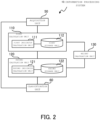
- FIG. 2 is a block diagram showing the functional configuration of the information processing system according to the first embodiment.
- the information processing system 10 includes, as processing blocks for implementing functions of the information processing system 10, an acquisition unit 50, a first calculation unit 110, a second calculation unit 120, a weight calculation unit 130, and a classification unit 60.
- each of the acquisition unit 50, the first calculation unit 110, the second calculation unit 120, the weight calculation unit 130, and the classification unit 60 may be implemented by the above-described processor 11 (see FIG. 1 ).
- the acquisition unit 50 is configured to be able to sequentially acquire a plurality of elements included in sequential data. For example, the acquisition unit 50 acquires the plurality of elements one by one.
- the acquisition unit 50 may acquire the data directly from an arbitrary data acquisition device (for example, a camera or the like), or may read the data acquired in advance by a data acquisition device and stored in a storage or the like. A configuration is made such that each element of the sequential data acquired by the acquisition unit 50 is outputted to the first calculation unit 110.
- the first calculation unit 110 includes a first indicator calculation unit 111 and a first storage unit 112.
- the first indicator calculation unit 111 is configured to be able to calculate a first indicator for an element acquired by the acquisition unit 50, by using the acquired element and a past first indicator.
- the "first indicator” here refers to an indicator indicating which one of a plurality of classes an element of the sequential data belongs to. Specific examples of the first indicator and a specific calculation method are described in detail in other embodiments, which will be described later.
- the first storage unit 112 is configured to be able to store a past first indicator calculated by the first indicator calculation unit 111, or a past element acquired by the acquisition unit 50. Information stored in the first storage unit 112 is configured to be able to be read by the first indicator calculation unit 111.
- the first indicator calculation unit 111 may calculate a first indicator for an acquired element by reading the stored past first indicator. In contrast, when the first storage unit 112 stores an element acquired in the past, the first indicator calculation unit 111 may calculate a first indicator for an acquired element by calculating a past first indicator from the stored past element.
- a “class” may be one relating to "true” or “false” of an event of an object, or may be one relating to "presence” or "absence” of a specific attribute of an object.
- a class may be one relating to "positive” or "negative” of a state of an object.
- a class may indicate whether a face of a person is real (true) or is disguised (masquerade) with a mask or the like (false).
- a class may indicate whether a person wears any accessory (presence) or does not (absence).
- a class may be one relating to whether a person is in a good health condition (positive) or in a bad health condition (negative).
- the classes are not limited to the above-described examples.
- the second calculation unit 120 includes a second indicator calculation unit 121 and a second storage unit 122.
- the second indicator calculation unit 121 is configured to be able to calculate a second indicator for an acquired element, by using a first indicator calculated by the first calculation unit 110 and a past second indicator.
- the "second indicator” here refers to an indicator indicating which one of the plurality of classes the sequential data belongs to.
- the second indicator calculated by the second calculation unit 120 is a value weighted with a weight calculated by the weight calculation unit 130. Specific examples of the second indicator and a specific calculation method are described in detail in the other embodiments described later.
- the second storage unit 122 is configured to be able to store a past second indicator calculated by the second indicator calculation unit 121. Information stored in the second storage unit 122 is configured to be able to be read by the second indicator calculation unit 121.
- the second indicator calculation unit 121 may calculate the second indicator for the acquired element by reading the past second indicator stored in the second storage unit 122.
- the weight calculation unit 130 is configured to be able to calculate a weight used when a second indicator is calculated.
- the "weight” here is a value for adjusting a degree of influence that a first indicator used to calculate a second indicator and a past second indicator exert on the new second indicator to be calculated, and is calculated according to a confidence of an acquired element. For example, the weight is calculated as a value of a real number. The weight may be calculated in binary as to be "1" or "0".
- the "confidence" is a degree of confidence related to the calculation of the first indicator. For example, an element for which an appropriate first indicator is calculated has a high confidence, and an element for which an inappropriate first indicator is calculated has a low confidence.
- the weight calculation unit 130 may weight an element of the sequential data at a timing when the element is acquired by the acquisition unit 50.
- the weight calculation unit 130 may weight an acquired element or a first indicator at a timing when the acquired element or the first indicator is stored in the first storage unit 112, or a timing when the acquired element or the first indicator is read from the first storage unit 112.
- the weight calculation unit 130 may weight a second indicator at a timing when the second indicator is stored in the second storage unit 122, or a timing when the second indicator is read from the second storage unit 122.
- the classification unit 60 classifies the sequential data as any one of the plurality of classes, based on the second indicator calculated by the second calculation unit 120.
- the plurality of classes may be preset, and only two classes, or three or more classes, may be set. A specific classification scheme based on the second indicator is described in detail in the other embodiments described later.
- the classification unit 60 may include a function of instructing the acquisition unit 50 to further acquire an element when it cannot be determined which class the sequential data is classified as based on the second indicator.
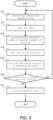
- FIG. 3 is a flowchart showing the flow of the operation of the information processing system according to the first embodiment.
- the acquisition unit 50 acquires one element from sequential data (step S11).
- the acquisition unit 50 outputs the acquired element of the sequential data to the first calculation unit 110.
- the first indicator calculation unit 111 in the first calculation unit 110 reads past data from the first storage unit 112 (step S12).
- the past data may be a result of the process executed by the first indicator calculation unit 111 for an element acquired immediately prior to (in other words, a first indicator calculated for an element immediately prior to) the element acquired by the acquisition unit 50 for a current time.
- the past data may be the element itself acquired immediately prior to the element acquired by acquisition unit 50 for a current time.
- the first indicator calculation unit 111 calculates a new first indicator (that is, a first indicator for the element acquired by the acquisition unit 50 for the current time), based on the element acquired by the acquisition unit 50 and the past data read from the first storage unit 112 (step S13).
- the first indicator calculation unit 111 outputs the calculated first indicator to the second calculation unit 120.
- the first indicator calculation unit 111 may store the calculated first indicator in the first storage unit 112.
- the second indicator calculation unit 121 in the second calculation unit 120 reads a past second indicator from the second storage unit 122 (step S14).
- the past second indicator may be a result of the process executed by the second indicator calculation unit 121 for the element acquired immediately prior to (in other words, a second indicator calculated for the element immediately prior to) the element acquired by the acquisition unit 50 for the current time.
- the second indicator calculation unit 121 calculates a new second indicator (that is, a second indicator for the element acquired by the acquisition unit 50 for the current time), based on the first indicator calculated by the first calculation unit 110 and the past second indicator read from the second storage unit 122 (step S15).
- the second indicator calculation unit 121 calculates the new second indicator by performing weighting with a weight calculated by the weight calculation unit 130.
- the second indicator calculation unit 121 outputs the calculated second indicator to the classification unit 60.
- the second indicator calculation unit 121 may store the calculated second indicator in the second storage unit 122.
- the classification unit 60 determines whether or not the sequential data can be classified as any one of the plurality of classes by using the second indicator calculated by the second calculation unit 120 (step S16). Note that specific content of the process of determination is described in detail in the other embodiments described later.
- the information processing system 10 according to the first embodiment starts the processes again from step S 11. Specifically, the information processing system 10 according to the first embodiment repeats the similar processes for an element of the sequential data following the element acquired for the current time.
- step S16 when it is determined that the sequential data can be classified as any one of the plurality of classes by using the second indicator (step S16: YES), the classification unit 60 classifies the sequential data as any one of the plurality of classes based on the second indicator (step S17). In the latter case, the series of processes is terminated.
- sequential data is classified as any one of a plurality of classes by using a first indicator and a second indicator calculated from each element included in the sequential data.
- the second indicator used in classification is calculated from the first indicator that is weighted with a weight calculated according to a confidence of each element.
- influence of each element included in the sequential data on a classification result can be given bias. For example, for an element with a higher confidence, influence of the element on a classification result can be made greater by applying a larger weight to a corresponding first indicator, while for an element with a lower confidence, influence of the element on a classification result can be reduced by applying a smaller weight to a corresponding first indicator.
- the sequential data can be classified more appropriately than in cases where weighting is not performed.
- the classification process in the information processing system 10 according to the first embodiment is more effective when correlation between elements of sequential data is stronger. If an algorithm is used that does not take correlation between elements of sequential data into consideration, classification is performed on an assumption that there is no correlation between elements, even for sequential data in which elements have strong correlation. In contrast, since the classification process in the information processing system 10 according to the first embodiment takes correlation between elements of sequential data into consideration, classification accuracy can be enhanced for sequential data in which elements have strong correlation.
- One of specific examples of sequential data in which elements have strong correlation is time-series data such as video data or audio data.
- time-series data such as video data or audio data.
- the classification process in the information processing system 10 according to the first embodiment is further more effective in processing of time-series data.
- other specific examples of sequential data in which elements have strong correlation include a tree topology, a flowchart, and the like.
- FIGS. 4a , 4b to 6 An information processing system 10 according to a second embodiment is described with reference to FIGS. 4a , 4b to 6 .
- the second embodiment is to describe specific examples of the confidence described in the first embodiment, and a system configuration and operation may be similar to those of the first embodiment (see FIGS. 1 to 3 ). Accordingly, in the following, a description of part overlapping with the first embodiment is omitted as appropriate.
- a description is progressed based on the premise that sequential data is acquired as time-series image data.
- FIGS. 4a, 4b are a diagram (version 1) showing examples of image data processed by the information processing system according to the second embodiment.
- the confidence of each element included in sequential data may be set based on the degree of clarity of image data. For example, for image data with a high degree of clarity as shown in FIG. 4a , a high confidence may be set. On the other hand, for image data with a low degree of clarity as shown in FIG. 4b , a low confidence may be set.
- the confidence may be a value calculated from a parameter indicating a degree of absence of out-of-focus part in a region of interest (a region including an imaging target) and/or a degree of absence of blur of the imaging target, in terms of the degree of clarity of image data.
- the weight calculation unit 130 can easily calculate the confidence by substituting values or a value of the first parameter, the second parameter, and/or the third parameter into the degree-of-clarity-based calculation formula.
- the first to third parameters are referred to as the "degree-of-clarity indicators", or simply the "degree of clarity", of image data.
- the degree of clarity of image data may be acquired together with the image data by the acquisition unit 50, or may be acquired by being estimated from the image data.
- the calculation unit 130 may the depth of field of a camera that captures an image and a face
- the confidence may be set based on whether or not the degree of clarity of image data is equal to or more than a predetermined threshold value.
- the weight calculation unit 130 may set the confidence "high” when the degree of clarity of image data is equal to or more than the predetermined threshold value, and may set the confidence "low” when the degree of clarity of image data is less than the predetermined threshold value.
- the weight calculation unit 130 may set a plurality of predetermined threshold values related to the degree of clarity.
- the weight calculation unit 130 may set the confidence "high”; when the degree of clarity of image data is less than the first threshold value and is equal to or more than a second threshold value, the weight calculation unit 130 may set the confidence "middle”; and when the degree of clarity of image data is less than the second threshold value, the weight calculation unit 130 may set the confidence "low”.
- FIGS. 5a, 5b are a diagram (version 2) showing examples of image data processed by the information processing system according to the second embodiment.
- the weight calculation unit 130 may set the confidence of each element included in sequential data, based on a degree of closeness of an imaging target in image data (more specifically, a degree of shortness of a distance between a camera capturing the image data and the imaging target). For example, for image data in which the distance to an imaging target (here, a person) is short as shown in FIG. 5a , the weight calculation unit 130 may set a high confidence. On the other hand, for image data in which the distance to an imaging target is less short as shown in FIG. 5b , the weight calculation unit 130 may set a low confidence.
- the confidence may be a value calculated from a parameter indicating a distance to an imaging target in image data.
- the weight calculation unit 130 can easily calculate the confidence from the distance to an imaging target.
- the distance to an imaging target in image data may be acquired together with the image data, or may be acquired by being estimated from the image data.
- the distance to an imaging target may be calculated, for example, from a size of the imaging target in the image (for example, a proportion of the entire image covered by the imaging target), or the like.
- the distance to an imaging target may be measured by using a range sensor.
- the confidence may be set based on whether or not the distance to an imaging target in image data is less than a predetermined threshold value.
- the weight calculation unit 130 may set the confidence "high", and when the distance to an imaging target is equal to or more than the predetermined threshold value, the weight calculation unit 130 may set the confidence "low".
- the weight calculation unit 130 may set a plurality of predetermined threshold values related to the distance.
- the weight calculation unit 130 may set the confidence "high”; when the distance to an imaging target is equal to or more than the first threshold value and is less than a second threshold value, the weight calculation unit 130 may set the confidence "middle”; and when the distance to an imaging target is equal to or more than the second threshold value, the weight calculation unit 130 may set the confidence "low”.
- FIG. 6 is a diagram (version 3) showing an example of image data processed by the information processing system according to the second embodiment.
- the confidence of each element included in sequential data may be set based on a timing of acquiring image data.
- time-series image data is acquired in which a person that is an imaging target gradually comes closer to a camera.
- a low confidence may be set.
- a high confidence may be set.
- a criterion to determine a beginning frame is not limited.
- the beginning frame may be a frame in which a face of the person is detected for the first time, or may be a frame in which the person is detected for the first time by a human detection sensor.
- the confidence may be a value calculated from a parameter indicating where image data of interest is positioned in term of order of acquisition. For example, if a calculation formula is prepared that yields a lower value as the acquisition timing is earlier, the weight calculation unit 130 can easily calculate the confidence from the timing of acquiring image data.
- the parameter indicating the timing of acquiring image data may be the number of frames before the image data as in the example shown in FIG. 6 , or may be a parameter indicating a clock time at which the image data is acquired.
- the acquisition timing here may correspond to a timing when image data is captured, or may correspond to a timing when image data is acquired by the acquisition unit 50.
- the confidence may be set based on whether or not the timing of acquiring image data is equal to or more than a predetermined threshold value.
- the weight calculation unit 130 may set the confidence "high", and when the timing of acquiring image data is less than the predetermined threshold value, the weight calculation unit 130 may set the confidence "low".
- a plurality of predetermined threshold values related to acquisition timing may be set.
- the weight calculation unit 130 may set the confidence "high”; when the timing of acquiring image data is less than the first threshold value and is equal to or more than a second threshold value, the weight calculation unit 130 may set the confidence "middle”; and when the timing of acquiring image data is less than the second threshold value, the weight calculation unit 130 may set the confidence "low”.
- quality and nature of image data greatly change with different acquisition timings.
- influence of each image data on classification can be reduced. For example, by performing weighting with a weight according to the confidence, influence of image data acquired at a later timing (that is, with a higher confidence) on classification can be made greater. On the other hand, influence of image data acquired at an earlier timing (that is, with a lower confidence) on classification can be made smaller.
- a lower confidence may be set on image data acquired at a later timing, and a higher confidence may be set on image data acquired at an earlier timing.
- the latter example can be applied to a case where time-series image data is acquired in which an imaging target goes farther away from a camera, or the like.
- the confidence is set according to different acquisition timings, appropriate weighting is performed, so that sequential data can be appropriately classified.
- FIGS. 7a, 7b and FIGS. 8a, 8b An information processing system 10 according to a third embodiment is described with reference to FIGS. 7a, 7b and FIGS. 8a, 8b .
- the third embodiment is to describe specific examples of the confidence as in the second embodiment, and a system configuration and operation may be similar to those of the first embodiment (see FIGS. 1 to 3 ). Accordingly, in the following, a description of part overlapping with the first embodiment is omitted as appropriate.
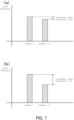
- FIGS. 7a, 7b show examples of the difference between first indicators calculated by the information processing system according to the third embodiment.
- the confidence of each acquired element is set based on the difference between first indicators calculated by the first calculation unit 110. Specifically, the confidence of an n-th acquired element n and/or the confidence of an (n + 1)-th acquired element (n + 1) is set, based on the difference between a first indicator calculated for the n-th acquired element n and a first indicator calculated for the (n + 1)-th acquired element (n + 1). The difference between first indicators is calculated as the difference between first indicators for two consecutively acquired elements as described above.
- the confidence of each element included in sequential data is set such that the smaller the difference between first indicators is, the higher confidence the element has. For example, when the difference between the first indicator calculated for the element n and the first indicator calculated for the element (n + 1) is small as shown in FIG. 7a , a high confidence may be set. When the difference between the first indicator calculated for the element n and the first indicator calculated for the element (n + 1) is large as shown in FIG. 7b , a low confidence may be set.
- the confidence may be a value calculated from a value of the difference between first indicators. For example, if a calculation formula is prepared that yields a higher value as the difference between first indicators is smaller, the confidence can be easily calculated from the difference between first indicators.
- the confidence may be set based on whether or not the difference between first indicators is less than a predetermined threshold value.
- the weight calculation unit 130 may set the confidence "high", and when the difference between first indicators is equal to or more than the predetermined threshold value, the weight calculation unit 130 may set the confidence "low”.
- the weight calculation unit 130 may set a plurality of predetermined threshold values related to the difference between first indicators.
- the weight calculation unit 130 may set the confidence "high”; when the difference between first indicators is equal to or more than the first threshold value and is less than a second threshold value, the weight calculation unit 130 may set the confidence "middle”; and when the difference between first indicators is equal to or more than the second threshold value, the weight calculation unit 130 may set the confidence "low”.
- FIGS. 8a, 8b show examples of the volatility of the first indicator calculated by the information processing system according to the third embodiment.
- the confidence of each acquired element is set based on the volatility of the first indicator calculated by the first calculation unit 110. Specifically, at least one of the degrees of reliability of an n-th acquired element n, an (n + 1)-th acquired element (n + 1), an (n + 2)-th acquired element (n + 2), and an (n + 3)-th acquired element (n + 3) is set based on a size of fluctuations among a first indicator calculated for the n-th acquired element n, a first indicator calculated for the (n + 1)-th acquired element (n + 1), a first indicator calculated for the (n + 2)-th acquired element (n + 2), and a first indicator calculated for the (n + 3)-th acquired element (n + 3).
- the confidence of each element included in sequential data is set such that the smaller the volatility of the first indicator is, the higher confidence the element has. For example, when the volatility among the first indicators calculated for the elements n, (n + 1), (n + 2), and (n + 3) is small as shown in FIG. 8a , a high confidence may be set. When the volatility among the first indicators calculated for the elements n, (n + 1), (n + 2), and (n + 3) is large as shown in FIG. 8b , a low confidence may be set.
- the confidence may be a value calculated from a value indicating the volatility of the first indicator. For example, if a calculation formula is prepared that yields a higher value as the volatility of the first indicator is smaller, the confidence can be easily calculated from the volatility of the first indicator. Note that since the value indicating the volatility of the first indicator can be calculated by adopting an existing scheme as appropriate, a specific description here is omitted.
- the confidence may be set based on whether or not the volatility of the first indicator is less than a predetermined threshold value.
- the weight calculation unit 130 may set the confidence "high", and when the volatility of the first indicator is equal to or more than the predetermined threshold value, the weight calculation unit 130 may set the confidence "low”.
- the weight calculation unit 130 may set a plurality of predetermined threshold values related to the volatility of the first indicator.
- the weight calculation unit 130 may set the confidence "high”; when the volatility of the first indicator is equal to or more than the first threshold value and is less than a second threshold value, the weight calculation unit 130 may set the confidence "middle”; and when the volatility of the first indicator is equal to or more than the second threshold value, the weight calculation unit 130 may set the confidence "low”.
- the volatility of the first indicator When the volatility of the first indicator is large, it is conceivable that a great difference occurs between each element. In such a case, it is likely that at least one of such a plurality of elements is an element unsuitable for use in calculation of the first indicator.
- influence of each element on classification can be reduced. For example, by performing weighting with a weight according to the confidence, influence of an element with smaller first-indicator volatility on classification can be made greater. On the other hand, influence of an element with larger first-indicator volatility on classification can be made smaller.
- the confidence is set according to the volatility of the first indicator, appropriate weighting is performed, so that sequential data can be appropriately classified.
- FIG. 9 An information processing system 20 according to a fourth embodiment is described with reference to FIG. 9 .
- the fourth embodiment is different from the above-described first to third embodiments in part of the configuration, and a hardware configuration, as well as operation of the system as a whole as described above, may be similar to those of the first embodiment (see FIGS. 1 and 3 ). Accordingly, in the following, the part different from the above-described first to third embodiments is described in detail, and a description of other overlapping part is omitted as appropriate.
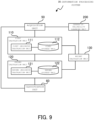
- FIG. 9 is a block diagram showing the function configuration of the information processing system according to the fourth embodiment. Note that in FIG. 9 , elements similar to the constitutional elements shown in FIG. 2 are denoted by the same reference numbers as in FIG. 2 .
- the information processing system 20 according to the fourth embodiment includes, as processing blocks for implementing functions of the information processing system 20, an acquisition unit 50, a first calculation unit 110, a second calculation unit 120, a weight calculation unit 130, a classification unit 60, and a degree-of-reliability learning unit 200.
- the information processing system 20 according to the fourth embodiment further includes the degree-of-reliability learning unit 200, in addition to the components in the first embodiment (see FIG. 2 ).
- the degree-of-reliability learning unit 200 may be implemented by the above-described processor 11 (see FIG. 1 ).
- the degree-of-reliability learning unit 200 is configured to be able to execute machine learning related to the confidence of each element included in sequential data.
- the degree-of-reliability learning unit 200 includes a neural network and optimizes, through learning, a model that determines the confidence of each element included in sequential data.
- the degree-of-reliability learning unit 200 executes machine learning by using, for training data, for example, pairs of an element and a confidence of the element.
- the degree-of-reliability learning unit 200 determines the confidence of each element acquired by the acquisition unit 50, by using a result of the machine learning.
- the degree-of-reliability learning unit 200 acquires information on an acquired element from the acquisition unit 50, and determines the confidence of the element by using the learning result.
- the confidence determined by the degree-of-reliability learning unit 200 is outputted to, for example, the weight calculation unit 130 and is used to calculate a weight.
- the confidence determined by the degree-of-reliability learning unit 200 may be stored in the first storage unit 112 or the like in association with the element acquired by the acquisition unit 50.
- the degree-of-reliability learning unit 200 can also use a confidence between elements included in the sequential data, instead of the confidence of an element alone. In such a case, the confidence between elements may represent a degree of a probability that the elements are consecutive.
- the confidence of each element included in sequential data is determined by the degree-of-reliability learning unit 200. Accordingly, the confidence of each element included in sequential data can be easily determined, and consequently, an appropriate weight can be calculated.
- FIGS. 10 to 12 An information processing system 10 according to a fifth embodiment is described with reference to FIGS. 10 to 12 .
- the fifth embodiment is different from the above-described first to fourth embodiments in part of the configuration and operation, and, for example, a hardware configuration may be similar to that of the first embodiment (see FIG. 1 ). Accordingly, in the following, the part different from the above-described first to fourth embodiments is described in detail, and a description of other overlapping part is omitted as appropriate.
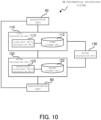
- FIG. 10 is a block diagram showing the functional configuration of the information processing system according to the fifth embodiment. Note that in FIG. 10 , elements similar to the constitutional elements shown in FIG. 2 are denoted by the same reference numbers as in FIG. 2 .
- the information processing system 10 includes, as processing blocks for implementing functions of the information processing system 10, an acquisition unit 50, a first calculation unit 110, a second calculation unit 120, a weight calculation unit 130, and a classification unit 60.
- the information processing system 10 according to the fifth embodiment includes a likelihood ratio calculation unit 113 and a consolidated likelihood ratio calculation unit 123, in place of the first indicator calculation unit 111 and the second indicator calculation unit 121 in the first embodiment, respectively.
- each of the likelihood ratio calculation unit 113 and the consolidated likelihood ratio calculation unit 123 may be implemented by the above-described processor 11 (see FIG. 1 ).
- the likelihood ratio calculation unit 113 is configured to be able to calculate a likelihood ratio as the first indicator.
- the likelihood ratio calculation unit 113 calculates the likelihood ratio, based on an acquired element and past data.
- the likelihood ratio is a value indicating a likelihood that each of a plurality of elements belongs to a class of a plurality of classes. In the following, a specific example of the likelihood ratio is described.
- N elements included in sequential data are x 1 , ..., xrr, and that a plurality of classes are R, F.
- 2-class classification in which the number of classes is two, is assumed in the present example.
- a result of calculating a probability that an element x i belongs to the class R, without taking past data into consideration is represented by p(R
- a result of calculating a probability that the element x i belongs to the class F, without taking past data into consideration is represented by p(F
- a likelihood ratio between the probabilities is expressed as in a following expression (1). [Expression 1] p R
- the likelihood ratio in the expression (1) indicates a ratio between likelihoods that are the probability that the element x i belongs to the class R and the probability that the element x i belongs to the class F. For example, when the likelihood ratio exceeds one, the element x i may be classified as the class R, rather than the class F, because p(R
- the likelihood ratio calculation unit 113 can perform calculation by taking a plurality of elements (that is, relevance between an inputted element and past data) into consideration as described above.
- a likelihood ratio calculated by taking two elements x i , x i-1 into consideration is expressed as in a following expression (2). [Expression 2] p R
- the consolidated likelihood ratio calculation unit 123 is configured to be able to calculate a consolidated likelihood ratio as the second indicator.
- the consolidated likelihood ratio calculation unit 123 calculates the consolidated likelihood ratio by using a likelihood ratio calculated by the likelihood ratio calculation unit 113 and a past consolidated likelihood ratio.
- the consolidated likelihood ratio is a value indicating a likelihood that sequential data belongs to a class of a plurality of classes. In the following, a specific example of the consolidated likelihood ratio is described. Note that a case of 2-class classification, in which the number of classes is two, is described, similarly to the description of the likelihood ratio given above.
- N elements When N elements are inputted at a point of time of calculating a consolidated likelihood ratio, the N elements are denoted by x 1 , ..., xrr.
- a probability that the entire sequential data belongs to the class R is represented by p(xi, ..., x N
- a probability that the entire sequential data belongs to the class F is represented by p(x 1 , ..., x N
- a likelihood ratio between the probabilities is expressed by a following expression (3).
- the expression (3) is referred to as a consolidated likelihood ratio. [Expression 3] p x 1 , ... , x N
- the assumption that each element is independent of each other does not hold true in many cases because, as described above, the likelihood ratio and the consolidated likelihood ratio are calculated by taking two or more elements into consideration in the present embodiment. Accordingly, breaking-down into terms for each individual elements as in the expression (4) is impossible, and the consolidated likelihood ratio is calculated by using different calculation expressions, depending on the number of elements between which relevance is taken into consideration.
- the consolidated likelihood ratio can be calculated by using a following expression (5).
- x i , x i ⁇ 1 ⁇ ⁇ i 2 N ⁇ 1 log p R
- the consolidated likelihood ratio calculation unit 123 calculates the consolidated likelihood ratio by performing weighting with a weight according to the confidence of each element.
- weights are denoted by ⁇ i 1 and ⁇ i 2
- the consolidated likelihood ratio on the right side of the expression (5) can be expressed as in an expression (6).
- ⁇ i 2 N ⁇ i 1 ⁇ log p R
- x i , x i ⁇ 1 ⁇ ⁇ i 2 N ⁇ 1 ⁇ i 2 ⁇ log p R
- the expression (6) shows an example in a case of 2-class classification in which a likelihood ratio between the classes R and F is calculated
- the number of classes may be three or more.
- an extended expression (6) can be used that is extended such that consolidated likelihood ratios between a k-th class and all the other classes than the k-th class of the M classes can be calculated.
- One of examples of such extension is an expression using a maximum likelihood among likelihoods for all the other classes than the k-th class, like a following expression (7).
- Another example is an expression using a sum of likelihoods for all the other classes than the k-th class, like a following expression (8).
- ⁇ i 2 N ⁇ i 1 ⁇ log p x i , x i ⁇ 1
- C j ⁇ ⁇ i 2 N ⁇ 1 ⁇ i 2 ⁇ log p x i
- a method of calculating the consolidated likelihood ratio in a case where the number of classes is three or more is not limited to those described above. Moreover, although the cases where two elements are taken into consideration are illustrated in the expressions (6) to (8), three or more elements may be taken into consideration.
- FIG. 11 is a flowchart showing the flow of the operation of the information processing system according to the fifth embodiment.
- the acquisition unit 50 acquires one element from sequential data (step S21).
- the acquisition unit 50 outputs the acquired element of the sequential data to the first calculation unit 110.
- the likelihood ratio calculation unit 113 in the first calculation unit 110 reads past data from the first storage unit 112 (step S22).
- the past data may be a result of the process executed by the likelihood ratio calculation unit 113 for an element acquired immediately prior to (in other words, a likelihood ratio calculated for an element immediately prior to) the element acquired by the acquisition unit 50 for a current time.
- the past data may be the element itself acquired immediately prior to the element acquired by acquisition unit 50 for a current time.
- the likelihood ratio calculation unit 113 calculates a new likelihood ratio (that is, a likelihood ratio for the element acquired by the acquisition unit 50 for the current time), based on the element acquired by the acquisition unit 50 and the past data read from the first storage unit 112 (step S23).
- the likelihood ratio calculation unit 113 outputs the calculated likelihood ratio to the second calculation unit 120.
- the likelihood ratio calculation unit 113 may store the calculated likelihood ratio in the first storage unit 112.
- the consolidated likelihood ratio calculation unit 123 in the second calculation unit 120 reads a past consolidated likelihood ratio from the second storage unit 122 (step S24).
- the past consolidated likelihood ratio may be a result of the process executed by the consolidated likelihood ratio calculation unit 123 for the element acquired immediately prior to (in other words, a consolidated likelihood ratio calculated for the element immediately prior to) the element acquired by the acquisition unit 50 for the current time.
- the consolidated likelihood ratio calculation unit 123 calculates a new consolidated likelihood ratio (that is, a consolidated likelihood ratio for the element acquired by the acquisition unit 50 for the current time), based on the likelihood ratio calculated by the likelihood ratio calculation unit 113 and the past consolidated likelihood ratio read from the second storage unit 122 (step S25).
- the consolidated likelihood ratio calculation unit 123 calculates the new consolidated likelihood ratio by performing weighting with a weight calculated by the weight calculation unit 130 (see the above-described expression (6) and the like).
- the consolidated likelihood ratio calculation unit 123 outputs the calculated consolidated likelihood ratio to the classification unit 60.
- the consolidated likelihood ratio calculation unit 123 may store the calculated consolidated likelihood ratio in the second storage unit 122.
- the classification unit 60 determines whether or not a threshold value for any one class is crossed by the consolidated likelihood ratio calculated by the consolidated likelihood ratio calculation unit 123 (step S26).
- the threshold value here is preset as a threshold value for determining which one of the plurality of classes the sequential data belongs to. Accordingly, a threshold value is set with respect to each of the plurality of classes. In the following, a description is further progressed by giving a specific example.
- the classification process by the classification unit 60 is assumed to be 2-class classification into the class R or the class F, and the threshold values used for determination of the classes R and F are denoted by T 1 , T 2 , respectively.
- the consolidated likelihood ratio is denoted by L.
- L the consolidated likelihood ratio
- the classification unit 60 classifies the sequential data as the class R (step S27).
- L > T 2 step S26: YES
- the classification unit 60 classifies the sequential data as the class F (step S27).
- step S26 NO
- the classification unit 60 determines that the sequential data cannot be classified, and the acquisition unit 50 acquires a next element.
- the process can be continued, while updating the consolidated likelihood ratio, until the consolidated likelihood ratio crosses the threshold value of any one class (that is, until the sequential data can be classified as any one class).
- M threshold values may be prepared, and the classification process can be performed by comparing each of M consolidated likelihood ratios with each of the M threshold values.
- the classification unit 60 may classify the sequential data as a class, the threshold value for which is first crossed by the consolidated likelihood ratio.
- the classification unit 60 determines that the sequential data cannot be classified, and the acquisition unit 50 acquires a next element.
- classification schemes are given for illustrative purposes, and schemes are not limited thereto.
- a procedure may be modified such that when the number of inputted elements is larger than a predetermined value (a maximum number of elements), sequential data is forcefully classified as any one class and then the processes are terminated even if the threshold value of any class is not crossed by the consolidated likelihood ratio.
- a predetermined value a maximum number of elements
- FIG. 12 is a graph showing the example of classification by the information processing system according to the fifth embodiment.
- the information processing system 10 according to the fifth embodiment is for classification into a real face and a fake face, as shown in FIG. 12 .
- the information processing system 10 according to the fifth embodiment is to classify face information inputted as sequential data, as a real-face class or a fake-face class.
- consolidated likelihood ratios indicated by a line A reach a threshold value +T corresponding to real face relatively early on. Accordingly, it can be determined that sequential data corresponding to the line A is on a real face that is easy to determine.
- Consolidated likelihood ratios indicated by a line B reach the threshold value +T corresponding to real face in a little later stage than the consolidated likelihood ratios indicated by the line A. Accordingly, it can be determined that sequential data corresponding to the line B is on a real face that is difficult to determine.
- consolidated likelihood ratios indicated by a line C ultimately reach a threshold value -T corresponding to fake face. Accordingly, it can be determined that sequential data corresponding to the line C is on a fake face.
- consolidated likelihood ratios indicated by a line D result in a timeout, without reaching any of the threshold value +T corresponding to real face and the threshold value -T corresponding to fake face (that is, a predetermined time period has passed since the processes were started).
- the processes may be terminated without the sequential data being classified as any of the classes.
- the information processing system 10 may output information indicating that the sequential data is indeterminable.
- the threshold values +T and -T may be different values.
- “+T” and “-T” may be set as values, absolute values of which are different from each other.
- the threshold value +T is set larger than the threshold value -T, it can be made easier to determine that sequential data is on a real face and, on the other hand, it can be made more difficult to determine that sequential data is on a fake face.
- the threshold value +T is set smaller than the threshold value -T, it can be made more difficult to determine that sequential data is on a real face and, on the other hand, it can be made easier to determine that sequential data is on a fake face.
- a likelihood ratio and a consolidated likelihood ratio are calculated from each element included in sequential data, and the sequential data is classified as any one of a plurality of classes.
- the likelihood ratio is a value indicating a likelihood that each of the plurality of elements belongs to a class of the plurality of classes. Accordingly, if the likelihood ratio is used for the first indicator, the second indicator (that is, the consolidated likelihood ratio) can be appropriately calculated.
- the consolidated likelihood ratio is a value indicating a likelihood that the sequential data belongs to a class of the plurality of classes. Accordingly, if the consolidated likelihood ratio is used for the second indicator, the sequential data can be appropriately classified into the plurality of classes.
- the consolidated likelihood ratio is calculated in a state where a weight is applied with respect to each element. Accordingly, occurrence of failure as described above can be effectively restrained.
- FIG. 13 An individual identification system according to a sixth embodiment is described with reference to FIG. 13 .
- the sixth embodiment is to describe an example of application of the information processing system according to any of the above-described first to fifth embodiments, and, for example, a hardware configuration may be similar to that of the first embodiment (see FIG. 1 ). Accordingly, in the following, part different from the first to fifth embodiments is described in detail, and a description of other overlapping part is omitted as appropriate.
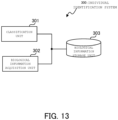
- FIG. 13 is a block diagram showing the functional configuration of the individual identification system according to the sixth embodiment.
- the individual identification system 300 is configured as a system that identifies an individual, for example, by matching biological information on an identification target, such as a face image, a fingerprint image, or an iris image, against preregistered biological information.
- the individual identification system 300 may include a device for acquiring biological information (for example, a camera or the like) and operate on a stand-alone basis, or may identify an individual by acquiring biological information from another device in the individual identification system.
- the individual identification system 300 may be configured with a plurality of devices that are communicationally connected to each other.
- the individual identification system 300 may be configured as an authentication apparatus for a face recognition gate.
- the individual identification system 300 may be configured as an intelligent camera.
- the intelligent camera here is an IP (Internet Protocol) camera or a network camera that internally includes an analysis function, and is also referred to as a smart camera in some cases.
- IP Internet Protocol
- the individual identification system 300 includes, as processing blocks for implementing functions of the individual identification system 300, a classification unit 301, a biological information acquisition unit 302, and a biological information storage unit 303.
- the classification unit 301 includes the information processing system 10 according to any one of the embodiments described above.
- the information processing system 10 for the classification device 301, the information processing system 10 according to the first embodiment is used.
- the classification unit 310 acquires sequential data including biological information as elements.
- the classification unit 301 classifies the inputted sequential data as any one of a plurality of predetermined classes, while referring to information stored in the biological information storage unit 303.
- the plurality of classes here may be, for example, classes each indicating that the inputted sequential data matches any one of registered persons.
- the plurality of classes may include a class indicating that impersonation exists in the inputted sequential data, and a class indicating that no impersonation exists in the inputted sequential data.
- the biological information acquisition unit 302 is a device that acquires biological information.
- the biological information acquisition unit 302 may include, for example, a digital camera capable of shooting a video. Note that in identification of biological information, there are some cases where a feature for use in matching is extracted from an image or the like acquired by the biological information acquisition unit 302. Such a feature extraction process may be executed by the classification unit 301, may be executed by the biological information acquisition unit 302 when biological information is acquired, or may be executed by another device. In the following, an image or the like itself acquired by the biological information acquisition unit 302, and a feature extracted from the image or the like are collectively referred to as biological information in some cases.
- the biological information storage unit 303 is configured to be able to record each information piece such as biological information used in the individual identification system 300.
- the biological information acquired by the biological information acquisition unit 302 may be stored in the biological information storage unit 303.
- the information stored in the biological information storage unit 303 may be stored in a state to be readable by the classification unit 301 when necessary.
- information related to a result of the classification by the classification unit 301 may also be stored in the biological information storage unit 303.
- a scheme that uses a non-living individual such as a face photograph or a dummy face of an individual.
- Schemes of detecting such impersonation include a scheme in which a plurality of images are captured and it is determined that an individual is not a living one when a difference between the plurality of images is small.
- the classification unit 301 in the present embodiment receives, as inputs, time-series images of an authentication target as sequential data, and classifies the sequential data as one of classes indicating presence and absence of impersonation, by using a difference between images for a feature.
- impersonation can be detected based on which one of the classes the sequential data is classified as.
- FIG. 14 An information processing system 10 according to a seventh embodiment is described with reference to FIG. 14 .
- the seventh embodiment is to show a basic configuration of the information processing systems according to the above-described first to fifth embodiments, and a configuration and operation of the information processing system 10 according to the seventh embodiment may be similar to those of each embodiment described already. Accordingly, in the following, part different from the first to fifth embodiments is described in detail, and a description of other overlapping part is omitted as appropriate.
- FIG. 14 is a block diagram showing the functional configuration of the information processing system according to the seventh embodiment. Note that in FIG. 14 , elements similar to the constitutional elements shown in FIG. 2 are denoted by the same reference numbers as in FIG. 2 .
- the information processing system 10 includes, as processing blocks for implementing functions of the information processing system 10, an acquisition unit 50, a first calculation unit 110, a second calculation unit 120, a weight calculation unit 130, and a classification unit 60.
- the acquisition unit 50 is configured to be able to sequentially acquire a plurality of elements included in sequential data.
- the first calculation unit 110 is configured to be able to calculate, for each of the plurality of elements included in the sequential data, a first indicator indicating which one of a plurality of classes the element belongs to.
- the weight calculation unit 130 is configured to be able to calculate a weight according to a confidence related to calculation of the first indicator.
- the second calculation unit 120 is configured to be able to calculate, based on the first indicators each weighted with the weight calculated by the weight calculation unit 130, a second indicator indicating which one of the plurality of classes the sequential data belongs to.
- the classification unit 60 is configured to be able to classify the sequential data as any one of the plurality of classes, based on the second indicator calculated by the second calculation unit 120.
- the sequential data is classified as any one of a plurality of classes.
- the second indicator used in classification is weighed with weights each calculated according to a confidence of each element. As a result, the sequential data can be more appropriately classified than in cases where weighting is not performed.
- An information processing system described in Supplementary Note 1 is an information processing system including: an acquisition unit configured to sequentially acquire a plurality of elements included in sequential data; a first calculation unit configured to calculate, for each of the plurality of elements, a first indicator indicating which one of a plurality of classes the element belongs to; a weight calculation unit configured to calculate, for each of the plurality of elements, a weight according to a confidence related to calculation of the first indicator; a second calculation unit configured to calculate, based on the first indicators each weighted with the weight, a second indicator indicating which one of the plurality of classes the sequential data belongs to; and a classification unit configured to classify the sequential data as any one of the plurality of classes, based on the second indicator.
- An information processing system described in Supplementary Note 2 is the information processing system described in Supplementary Note 1, wherein the sequential data is image data, and the weight calculation unit is configured to calculate the weight by using, for the confidence, a level of a degree of clarity of the image data, a degree of shortness of a distance between an acquisition unit acquiring the image data and an imaging target, or a timing of acquiring the image data.
- An information processing system described in Supplementary Note 3 is the information processing system described in Supplementary Note 1, wherein the weight calculation unit is configured to calculate the weight by using, for the confidence, a degree of smallness of a difference between the first indicators calculated for two consecutively acquired elements, or a degree of smallness of volatility among the first indicators calculated for a predetermined number of consecutively acquired elements, among the plurality of elements.
- An information processing system described in Supplementary Note 4 is the information processing system described in any one of Supplementary Notes 1 to 3, further comprising a learning unit configured to execute machine learning related to the confidence by using training data associated with the confidence, and to determine the confidence of each of the plurality of elements, based on a result of the machine learning.
- An information processing system described in Supplementary Note 5 is the information processing system described in any one of Supplementary Notes 1 to 4, wherein the first indicator includes a likelihood ratio indicating a likelihood that each of the plurality of elements belongs to a certain class of the plurality of classes.
- An information processing system described in Supplementary Note 6 is the information processing system described in any one of Supplementary Notes 1 to 5, wherein the second indicator includes a likelihood ratio indicating a likelihood that the sequential data belongs to a certain class of the plurality of classes.
- An information processing system described in Supplementary Note 7 is the information processing system described in any one of Supplementary Notes 1 to 6, wherein when a predetermined threshold value for any one class is crossed by the second indicator, the classification unit is configured to classify the sequential data as the class, the predetermined threshold value for which is crossed by the second indicator.
- An information processing system described in Supplementary Note 8 is the information processing system described in any one of Supplementary Notes 1 to 7, wherein when a predetermined threshold value for any of the classes is not crossed by the second indicator, the classification unit is configured not to classify the sequential data as any of the classes, and the acquisition unit is configured to further acquire an element.
- An information processing method described in Supplementary Note 9 is a detection method including: sequentially acquiring a plurality of elements included in sequential data; calculating, for each of the plurality of elements, a first indicator indicating which one of a plurality of classes the element belongs to; calculating, for each of the plurality of elements, a weight according to a confidence related to calculation of the first indicator; calculating, based on the first indicators each weighted with the weight, a second indicator indicating which one of the plurality of classes the sequential data belongs to; and classifying the sequential data as any one of the plurality of classes, based on the second indicator.
- a computer program described in Supplementary Note 10 is a computer program that allows a computer to: sequentially acquire a plurality of elements included in sequential data; calculate, for each of the plurality of elements, a first indicator indicating which one of a plurality of classes the element belongs to; calculate, for each of the plurality of elements, a weight according to a confidence related to calculation of the first indicator; calculate, based on the first indicators each weighted with the weight, a second indicator indicating which one of the plurality of classes the sequential data belongs to; and classify the sequential data as any one of the plurality of classes, based on the second indicator.
- a recording medium described in Supplementary Note 11 is a recording medium on which the computer program described in Supplementary Note 10 is recorded.
Landscapes
- Engineering & Computer Science (AREA)
- Theoretical Computer Science (AREA)
- Physics & Mathematics (AREA)
- General Physics & Mathematics (AREA)
- Multimedia (AREA)
- Computer Vision & Pattern Recognition (AREA)
- Databases & Information Systems (AREA)
- Health & Medical Sciences (AREA)
- Evolutionary Computation (AREA)
- Artificial Intelligence (AREA)
- General Health & Medical Sciences (AREA)
- Software Systems (AREA)
- Medical Informatics (AREA)
- Computing Systems (AREA)
- Quality & Reliability (AREA)
- Data Mining & Analysis (AREA)
- Human Computer Interaction (AREA)
- General Engineering & Computer Science (AREA)
- Probability & Statistics with Applications (AREA)
- Oral & Maxillofacial Surgery (AREA)
- Life Sciences & Earth Sciences (AREA)
- Bioinformatics & Cheminformatics (AREA)
- Bioinformatics & Computational Biology (AREA)
- Evolutionary Biology (AREA)
- Information Retrieval, Db Structures And Fs Structures Therefor (AREA)
- Image Analysis (AREA)
Abstract
Description
- The present disclosure relates to a technical field of an information processing system, an information processing method, and a computer program that process information related to, for example, biometric authentication.
- As a system of this type, there is known a system that uses sequential probability ratio test (SPRT). For example,
Patent Reference 1 discloses a technique that selects any one of "target detected", "target not detected", and "indeterminant" by using SPRT.Patent Reference 2 discloses a technique that identifies which a plurality of inputted time-series data belong to, registered oneself or another object. In the patent references, a log likelihood ratio (LLR) for the whole series is used. -
-
Patent Reference 1
Japanese Patent Laid-Open No. 2017-040616 A -
Patent Reference 2
Japanese Patent No. 5061382 B - The present disclosure improves the related techniques described above.
- An information processing system according to an example aspect of the present invention includes: an acquisition unit configured to sequentially acquire a plurality of elements included in sequential data; a first calculation unit configured to calculate, for each of the plurality of elements, a first indicator indicating which one of a plurality of classes the element belongs to; a weight calculation unit configured to calculate, for each of the plurality of elements, a weight according to a confidence related to calculation of the first indicator; a second calculation unit configured to calculate, based on the first indicators each weighted with the weight, a second indicator indicating which one of the plurality of classes the sequential data belongs to; and a classification unit configured to classify the sequential data as any one of the plurality of classes, based on the second indicator.
- An information processing method according to an example aspect of the present invention includes: sequentially acquiring a plurality of elements included in sequential data; calculating, for each of the plurality of elements, a first indicator indicating which one of a plurality of classes the element belongs to; calculating, for each of the plurality of elements, a weight according to a confidence related to calculation of the first indicator; calculating, based on the first indicators each weighted with the weight, a second indicator indicating which one of the plurality of classes the sequential data belongs to; and classifying the sequential data as any one of the plurality of classes, based on the second indicator.
- A computer program according to an example aspect of the present invention allows a computer to: sequentially acquire a plurality of elements included in sequential data; calculate, for each of the plurality of elements, a first indicator indicating which one of a plurality of classes the element belongs to; calculate, for each of the plurality of elements, a weight according to a confidence related to calculation of the first indicator; calculate, based on the first indicators each weighted with the weight, a second indicator indicating which one of the plurality of classes the sequential data belongs to; and classify the sequential data as any one of the plurality of classes, based on the second indicator.
-
- [
FIG. 1] FIG. 1 is a block diagram showing a hardware configuration of an information processing system according to a first embodiment. - [
FIG. 2] FIG. 2 is a block diagram showing a functional configuration of the information processing system according to the first embodiment. - [
FIG. 3] FIG. 3 is a flowchart showing a flow of operation of the information processing system according to the first embodiment. - [
FIG. 4] FIG. 4 is a diagram (version 1) showing examples of image data processed by an information processing system according to a second embodiment. - [
FIG. 5] FIG. 5 is a diagram (version 2) showing examples of image data processed by the information processing system according to the second embodiment. - [
FIG. 6] FIG. 6 is a diagram (version 3) showing an example of image data processed by the information processing system according to the second embodiment. - [
FIG. 7] FIG. 7 shows examples of a difference between first indicators calculated by an information processing system according to a third embodiment. - [
FIG. 8] FIG. 8 shows examples of volatility of the first indicator calculated by the information processing system according to the third embodiment. - [
FIG. 9] FIG. 9 is a block diagram showing a functional configuration of an information processing system according to a fourth embodiment. - [
FIG. 10] FIG. 10 is a block diagram showing a functional configuration of an information processing system according to a fifth embodiment. - [
FIG. 11] FIG. 11 is a flowchart showing a flow of operation of the information processing system according to the fifth embodiment. - [
FIG. 12] FIG. 12 is a graph showing an example of classification by the information processing system according to the fifth embodiment. - [
FIG. 13] FIG. 13 is a block diagram showing a functional configuration of an individual identification system according to a sixth embodiment. - [
FIG. 14] FIG. 14 is a block diagram showing a functional configuration of an information processing system according to a seventh embodiment. - Hereinafter, embodiments of an information processing system, an information processing method, and a computer program will be described with reference to drawings.
- An information processing system according to a first embodiment is described with reference to
FIGS. 1 to 3 . - First, a hardware configuration of the information processing system according to the first embodiment is described with reference to
FIG. 1. FIG. 1 is a block diagram showing the hardware configuration of the information processing system according to the first embodiment. - As shown in
FIG. 1 , theinformation processing system 10 according to the first embodiment includes aprocessor 11, a RAM (Random Access Memory) 12, a ROM (Read Only Memory) 13, and astorage device 14. Theinformation processing system 10 may further include aninput device 15 and anoutput device 16. Theprocessor 11, theRAM 12, theROM 13, thestorage device 14, theinput device 15, and theoutput device 16 are connected to each other through adata bus 17. - The
processor 11 reads a computer program. For example, theprocessor 11 is configured to read the computer program stored in at least one of theRAM 12, theROM 13, and thestorage device 14. Alternatively, theprocessor 11 may read the computer program stored in a computer-readable recording medium, by using an undepicted recording media reader. Theprocessor 11 may acquire (that is, may read) the computer program, via a network interface, from an undepicted device disposed outside of theinformation processing system 10. Theprocessor 11 controls theRAM 12, thestorage device 14, theinput device 15, and theoutput device 16 by executing the read computer program. In the present embodiment in particular, when theprocessor 11 executes the read computer program, a functional block for classifying sequential data is implemented in theprocessor 11. Moreover, for theprocessor 11, one of a CPU (Central Processing Unit), a GPU (Graphics Processing Unit), an FPGA (field-programmable gate array), a DSP (Demand-Side platform), and an ASIC (Application Specific Integrated Circuit) may be used, or two or more thereof may be used in parallel. - The
RAM 12 transitorily stores the computer program to be executed by theprocessor 11. TheRAM 12 transitorily stores data transitorily used by theprocessor 11 when theprocessor 11 executes the computer program. TheRAM 12 may be, for example, a D-RAM (Dynamic RAM). - The
ROM 13 stores the computer program to be executed by theprocessor 11. TheROM 13 may store other fixed data. TheROM 13 may be, for example, a P-ROM (Programmable ROM). - The
storage device 14 stores data that theinformation processing system 10 retains for a long time. Thestorage device 14 may operate as a transitory storage device for theprocessor 11. Thestorage device 14 may include at least one of, for example, a hard disk device, a magneto-optical device, an SSD (Solid State Drive), and a disk array device. - The
input device 15 is a device that receives an input instruction from a user of theinformation processing system 10. Theinput device 15 may include at least one of, for example, a keyboard, a mouse, and a touch panel. - The
output device 16 is a device that outputs information related to theinformation processing system 10 to the outside. For example, theoutput device 16 may be a display device (for example, a display) capable of displaying the information related to theinformation processing system 10. - Next, a functional configuration of the
information processing system 10 according to the first embodiment is described with reference toFIG. 2. FIG. 2 is a block diagram showing the functional configuration of the information processing system according to the first embodiment. - As shown in
FIG. 2 , theinformation processing system 10 according to the first embodiment includes, as processing blocks for implementing functions of theinformation processing system 10, anacquisition unit 50, afirst calculation unit 110, asecond calculation unit 120, aweight calculation unit 130, and aclassification unit 60. Note that each of theacquisition unit 50, thefirst calculation unit 110, thesecond calculation unit 120, theweight calculation unit 130, and theclassification unit 60 may be implemented by the above-described processor 11 (seeFIG. 1 ). - The
acquisition unit 50 is configured to be able to sequentially acquire a plurality of elements included in sequential data. For example, theacquisition unit 50 acquires the plurality of elements one by one. Theacquisition unit 50 may acquire the data directly from an arbitrary data acquisition device (for example, a camera or the like), or may read the data acquired in advance by a data acquisition device and stored in a storage or the like. A configuration is made such that each element of the sequential data acquired by theacquisition unit 50 is outputted to thefirst calculation unit 110. - The
first calculation unit 110 includes a firstindicator calculation unit 111 and afirst storage unit 112. The firstindicator calculation unit 111 is configured to be able to calculate a first indicator for an element acquired by theacquisition unit 50, by using the acquired element and a past first indicator. The "first indicator" here refers to an indicator indicating which one of a plurality of classes an element of the sequential data belongs to. Specific examples of the first indicator and a specific calculation method are described in detail in other embodiments, which will be described later. Thefirst storage unit 112 is configured to be able to store a past first indicator calculated by the firstindicator calculation unit 111, or a past element acquired by theacquisition unit 50. Information stored in thefirst storage unit 112 is configured to be able to be read by the firstindicator calculation unit 111. When thefirst storage unit 112 stores a past first indicator, the firstindicator calculation unit 111 may calculate a first indicator for an acquired element by reading the stored past first indicator. In contrast, when thefirst storage unit 112 stores an element acquired in the past, the firstindicator calculation unit 111 may calculate a first indicator for an acquired element by calculating a past first indicator from the stored past element. A "class" may be one relating to "true" or "false" of an event of an object, or may be one relating to "presence" or "absence" of a specific attribute of an object. A class may be one relating to "positive" or "negative" of a state of an object. For example, a class may indicate whether a face of a person is real (true) or is disguised (masquerade) with a mask or the like (false). In another example, a class may indicate whether a person wears any accessory (presence) or does not (absence). In still another example, a class may be one relating to whether a person is in a good health condition (positive) or in a bad health condition (negative). However, the classes are not limited to the above-described examples. - The
second calculation unit 120 includes a secondindicator calculation unit 121 and asecond storage unit 122. The secondindicator calculation unit 121 is configured to be able to calculate a second indicator for an acquired element, by using a first indicator calculated by thefirst calculation unit 110 and a past second indicator. The "second indicator" here refers to an indicator indicating which one of the plurality of classes the sequential data belongs to. The second indicator calculated by thesecond calculation unit 120 is a value weighted with a weight calculated by theweight calculation unit 130. Specific examples of the second indicator and a specific calculation method are described in detail in the other embodiments described later. Thesecond storage unit 122 is configured to be able to store a past second indicator calculated by the secondindicator calculation unit 121. Information stored in thesecond storage unit 122 is configured to be able to be read by the secondindicator calculation unit 121. The secondindicator calculation unit 121 may calculate the second indicator for the acquired element by reading the past second indicator stored in thesecond storage unit 122. - The
weight calculation unit 130 is configured to be able to calculate a weight used when a second indicator is calculated. The "weight" here is a value for adjusting a degree of influence that a first indicator used to calculate a second indicator and a past second indicator exert on the new second indicator to be calculated, and is calculated according to a confidence of an acquired element. For example, the weight is calculated as a value of a real number. The weight may be calculated in binary as to be "1" or "0". The "confidence" is a degree of confidence related to the calculation of the first indicator. For example, an element for which an appropriate first indicator is calculated has a high confidence, and an element for which an inappropriate first indicator is calculated has a low confidence. Specific examples of the confidence and a specific setting method are described in the other embodiments described later. Note that although the weight calculated by theweight calculation unit 130 is applied (that is, weighting is performed) when a second indicator is calculated, a timing of weighting is not particularly limited, and all required is that a second indicator ultimately calculated (more specifically, a second indicator used in classification by the classification unit 60) is weighted. Accordingly, theweight calculation unit 130 may weight an element of the sequential data at a timing when the element is acquired by theacquisition unit 50. Alternatively, theweight calculation unit 130 may weight an acquired element or a first indicator at a timing when the acquired element or the first indicator is stored in thefirst storage unit 112, or a timing when the acquired element or the first indicator is read from thefirst storage unit 112. Further alternatively, theweight calculation unit 130 may weight a second indicator at a timing when the second indicator is stored in thesecond storage unit 122, or a timing when the second indicator is read from thesecond storage unit 122. - The
classification unit 60 classifies the sequential data as any one of the plurality of classes, based on the second indicator calculated by thesecond calculation unit 120. Note that the plurality of classes may be preset, and only two classes, or three or more classes, may be set. A specific classification scheme based on the second indicator is described in detail in the other embodiments described later. Theclassification unit 60 may include a function of instructing theacquisition unit 50 to further acquire an element when it cannot be determined which class the sequential data is classified as based on the second indicator. - Next, a flow of operation of the
information processing system 10 according to the first embodiment is described with reference toFIG. 3. FIG. 3 is a flowchart showing the flow of the operation of the information processing system according to the first embodiment. - As shown in
FIG. 3 , in theinformation processing system 10 according to the first embodiment, first, theacquisition unit 50 acquires one element from sequential data (step S11). Theacquisition unit 50 outputs the acquired element of the sequential data to thefirst calculation unit 110. - Subsequently, the first
indicator calculation unit 111 in thefirst calculation unit 110 reads past data from the first storage unit 112 (step S12). For example, the past data may be a result of the process executed by the firstindicator calculation unit 111 for an element acquired immediately prior to (in other words, a first indicator calculated for an element immediately prior to) the element acquired by theacquisition unit 50 for a current time. Alternatively, the past data may be the element itself acquired immediately prior to the element acquired byacquisition unit 50 for a current time. - Subsequently, the first
indicator calculation unit 111 calculates a new first indicator (that is, a first indicator for the element acquired by theacquisition unit 50 for the current time), based on the element acquired by theacquisition unit 50 and the past data read from the first storage unit 112 (step S13). The firstindicator calculation unit 111 outputs the calculated first indicator to thesecond calculation unit 120. The firstindicator calculation unit 111 may store the calculated first indicator in thefirst storage unit 112. - Subsequently, the second
indicator calculation unit 121 in thesecond calculation unit 120 reads a past second indicator from the second storage unit 122 (step S14). For example, the past second indicator may be a result of the process executed by the secondindicator calculation unit 121 for the element acquired immediately prior to (in other words, a second indicator calculated for the element immediately prior to) the element acquired by theacquisition unit 50 for the current time. - Subsequently, the second
indicator calculation unit 121 calculates a new second indicator (that is, a second indicator for the element acquired by theacquisition unit 50 for the current time), based on the first indicator calculated by thefirst calculation unit 110 and the past second indicator read from the second storage unit 122 (step S15). Here in particular, the secondindicator calculation unit 121 calculates the new second indicator by performing weighting with a weight calculated by theweight calculation unit 130. The secondindicator calculation unit 121 outputs the calculated second indicator to theclassification unit 60. The secondindicator calculation unit 121 may store the calculated second indicator in thesecond storage unit 122. - Subsequently, the
classification unit 60 determines whether or not the sequential data can be classified as any one of the plurality of classes by using the second indicator calculated by the second calculation unit 120 (step S16). Note that specific content of the process of determination is described in detail in the other embodiments described later. When it is determined that the sequential data cannot be classified as any of the plurality of classes by using the second indicator (step S16: NO), theinformation processing system 10 according to the first embodiment starts the processes again fromstep S 11. Specifically, theinformation processing system 10 according to the first embodiment repeats the similar processes for an element of the sequential data following the element acquired for the current time. In contrast, when it is determined that the sequential data can be classified as any one of the plurality of classes by using the second indicator (step S16: YES), theclassification unit 60 classifies the sequential data as any one of the plurality of classes based on the second indicator (step S17). In the latter case, the series of processes is terminated. - Next, technical effects achieved by the
information processing system 10 according to the first embodiment are described. - In the
information processing system 10 according to the first embodiment, sequential data is classified as any one of a plurality of classes by using a first indicator and a second indicator calculated from each element included in the sequential data. In the first embodiment in particular, the second indicator used in classification is calculated from the first indicator that is weighted with a weight calculated according to a confidence of each element. In other words, influence of each element included in the sequential data on a classification result can be given bias. For example, for an element with a higher confidence, influence of the element on a classification result can be made greater by applying a larger weight to a corresponding first indicator, while for an element with a lower confidence, influence of the element on a classification result can be reduced by applying a smaller weight to a corresponding first indicator. As a result, the sequential data can be classified more appropriately than in cases where weighting is not performed. - The classification process in the
information processing system 10 according to the first embodiment is more effective when correlation between elements of sequential data is stronger. If an algorithm is used that does not take correlation between elements of sequential data into consideration, classification is performed on an assumption that there is no correlation between elements, even for sequential data in which elements have strong correlation. In contrast, since the classification process in theinformation processing system 10 according to the first embodiment takes correlation between elements of sequential data into consideration, classification accuracy can be enhanced for sequential data in which elements have strong correlation. - One of specific examples of sequential data in which elements have strong correlation is time-series data such as video data or audio data. The reason is that for example, in video data, a frame and a following frame generally have similar features in many cases. Accordingly, the classification process in the
information processing system 10 according to the first embodiment is further more effective in processing of time-series data. Alternatively, other specific examples of sequential data in which elements have strong correlation include a tree topology, a flowchart, and the like. - An
information processing system 10 according to a second embodiment is described with reference toFIGS. 4a ,4b to 6 . The second embodiment is to describe specific examples of the confidence described in the first embodiment, and a system configuration and operation may be similar to those of the first embodiment (seeFIGS. 1 to 3 ). Accordingly, in the following, a description of part overlapping with the first embodiment is omitted as appropriate. In the second embodiment, a description is progressed based on the premise that sequential data is acquired as time-series image data. - First, the confidence based on a degree of clarity of an image is described with reference to
FIGS. 4a, 4b. FIGS. 4a, 4b are a diagram (version 1) showing examples of image data processed by the information processing system according to the second embodiment. - As shown in
FIGS. 4a, 4b , in theinformation processing system 10 according to the second embodiment, the confidence of each element included in sequential data may be set based on the degree of clarity of image data. For example, for image data with a high degree of clarity as shown inFIG. 4a , a high confidence may be set. On the other hand, for image data with a low degree of clarity as shown inFIG. 4b , a low confidence may be set. - More specifically, the confidence may be a value calculated from a parameter indicating a degree of absence of out-of-focus part in a region of interest (a region including an imaging target) and/or a degree of absence of blur of the imaging target, in terms of the degree of clarity of image data. For example, if a calculation formula is prepared that includes a degree of clarity represented by a first parameter indicating a relationship between a depth of field of image data and a position of an imaging target, a second parameter indicating a relationship between a speed of movement of the imaging target and a shutter speed, and/or a third parameter indicating darkness of the imaging target, the
weight calculation unit 130 can easily calculate the confidence by substituting values or a value of the first parameter, the second parameter, and/or the third parameter into the degree-of-clarity-based calculation formula. Hereinafter, the first to third parameters are referred to as the "degree-of-clarity indicators", or simply the "degree of clarity", of image data. The degree of clarity of image data may be acquired together with the image data by theacquisition unit 50, or may be acquired by being estimated from the image data. Alternatively, instead of the degree of clarity of image data, thecalculation unit 130 may the depth of field of a camera that captures an image and a face - Alternatively, the confidence may be set based on whether or not the degree of clarity of image data is equal to or more than a predetermined threshold value. In such a case, the
weight calculation unit 130 may set the confidence "high" when the degree of clarity of image data is equal to or more than the predetermined threshold value, and may set the confidence "low" when the degree of clarity of image data is less than the predetermined threshold value. Theweight calculation unit 130 may set a plurality of predetermined threshold values related to the degree of clarity. For example, when the degree of clarity of image data is equal to or more than a first threshold value, theweight calculation unit 130 may set the confidence "high"; when the degree of clarity of image data is less than the first threshold value and is equal to or more than a second threshold value, theweight calculation unit 130 may set the confidence "middle"; and when the degree of clarity of image data is less than the second threshold value, theweight calculation unit 130 may set the confidence "low". - When the degree of clarity of image data is low, it is difficult to correctly identify an imaging target appearing in the image. Accordingly, if such image data exerts great influence on classification, there is a possibility that appropriate classification cannot be performed. However, if a configuration is made such that the confidence is set according to a level of the degree of clarity of image data, influence of each image data on classification can be reduced. For example, by performing weighting with a weight according to the confidence, influence of image data with a higher degree of clarity (that is, with a higher confidence) on classification can be made greater. On the other hand, influence of image data with a lower degree of clarity (that is, with a lower confidence) on classification can be made smaller. As described above, if the confidence is set according to the degree of clarity of image data, appropriate weighting is performed, so that sequential data can be appropriately classified.
- Next, the confidence based on a distance to a target is described with reference to
FIGS. 5a, 5b. FIGS. 5a, 5b are a diagram (version 2) showing examples of image data processed by the information processing system according to the second embodiment. - As shown in
FIGS. 5a, 5b , in theinformation processing system 10 according to the second embodiment, theweight calculation unit 130 may set the confidence of each element included in sequential data, based on a degree of closeness of an imaging target in image data (more specifically, a degree of shortness of a distance between a camera capturing the image data and the imaging target). For example, for image data in which the distance to an imaging target (here, a person) is short as shown inFIG. 5a , theweight calculation unit 130 may set a high confidence. On the other hand, for image data in which the distance to an imaging target is less short as shown inFIG. 5b , theweight calculation unit 130 may set a low confidence. - More specifically, the confidence may be a value calculated from a parameter indicating a distance to an imaging target in image data. For example, if a calculation formula is prepared that yields a higher value as the distance to an imaging target is shorter, the
weight calculation unit 130 can easily calculate the confidence from the distance to an imaging target. The distance to an imaging target in image data may be acquired together with the image data, or may be acquired by being estimated from the image data. The distance to an imaging target may be calculated, for example, from a size of the imaging target in the image (for example, a proportion of the entire image covered by the imaging target), or the like. Alternatively, the distance to an imaging target may be measured by using a range sensor. - Alternatively, the confidence may be set based on whether or not the distance to an imaging target in image data is less than a predetermined threshold value. In such a case, when the distance to an imaging target is less than the predetermined threshold value, the
weight calculation unit 130 may set the confidence "high", and when the distance to an imaging target is equal to or more than the predetermined threshold value, theweight calculation unit 130 may set the confidence "low". Theweight calculation unit 130 may set a plurality of predetermined threshold values related to the distance. For example, when the distance to an imaging target is less than a first threshold value, theweight calculation unit 130 may set the confidence "high"; when the distance to an imaging target is equal to or more than the first threshold value and is less than a second threshold value, theweight calculation unit 130 may set the confidence "middle"; and when the distance to an imaging target is equal to or more than the second threshold value, theweight calculation unit 130 may set the confidence "low". - When the distance to an imaging target in image data is long, it is difficult to correctly identify the imaging target appearing in the image. Accordingly, if such image data exerts great influence on classification, there is a possibility that appropriate classification cannot be performed. However, if a configuration is made such that the confidence is set according to the degree of shortness of the distance to an imaging target in image data, influence of each image data on classification can be reduced. For example, by performing weighting with a weight according to the confidence, influence of image data with a shorter distance (that is, with a higher confidence) on classification can be made greater. On the other hand, influence of image data with a longer distance (that is, with a lower confidence) on classification can be made smaller. As described above, if the confidence is set according to the distance to an imaging target in image data, appropriate weighting is performed, so that sequential data can be appropriately classified.
- Next, the confidence based on a timing of acquiring an image is described with reference to
FIG. 6. FIG. 6 is a diagram (version 3) showing an example of image data processed by the information processing system according to the second embodiment. - As shown in
FIG. 6 , in theinformation processing system 10 according to the second embodiment, the confidence of each element included in sequential data may be set based on a timing of acquiring image data. For example, in the example shown inFIG. 6 , time-series image data is acquired in which a person that is an imaging target gradually comes closer to a camera. In such a case, in image data of a first few frames, it is difficult to correctly identify the imaging target because the imaging target in the image is small. Accordingly, for the image data of the first few frames, a low confidence may be set. On the other hand, for image data of the following frames, a high confidence may be set. Here, a criterion to determine a beginning frame is not limited. For example, in the time-series image data, the beginning frame may be a frame in which a face of the person is detected for the first time, or may be a frame in which the person is detected for the first time by a human detection sensor. - More specifically, the confidence may be a value calculated from a parameter indicating where image data of interest is positioned in term of order of acquisition. For example, if a calculation formula is prepared that yields a lower value as the acquisition timing is earlier, the
weight calculation unit 130 can easily calculate the confidence from the timing of acquiring image data. For example, the parameter indicating the timing of acquiring image data may be the number of frames before the image data as in the example shown inFIG. 6 , or may be a parameter indicating a clock time at which the image data is acquired. Moreover, the acquisition timing here may correspond to a timing when image data is captured, or may correspond to a timing when image data is acquired by theacquisition unit 50. - Alternatively, the confidence may be set based on whether or not the timing of acquiring image data is equal to or more than a predetermined threshold value. In such a case, when the timing of acquiring image data is equal to or more than the predetermined threshold value, the
weight calculation unit 130 may set the confidence "high", and when the timing of acquiring image data is less than the predetermined threshold value, theweight calculation unit 130 may set the confidence "low". A plurality of predetermined threshold values related to acquisition timing may be set. For example, when the timing of acquiring image data is equal to or more than a first threshold value, theweight calculation unit 130 may set the confidence "high"; when the timing of acquiring image data is less than the first threshold value and is equal to or more than a second threshold value, theweight calculation unit 130 may set the confidence "middle"; and when the timing of acquiring image data is less than the second threshold value, theweight calculation unit 130 may set the confidence "low". - In some cases, quality and nature of image data (for example, a way in which an imaging target appears, or the like) greatly change with different acquisition timings. In such a case, if a configuration is made such that the confidence is set according to the timing of acquiring image data, influence of each image data on classification can be reduced. For example, by performing weighting with a weight according to the confidence, influence of image data acquired at a later timing (that is, with a higher confidence) on classification can be made greater. On the other hand, influence of image data acquired at an earlier timing (that is, with a lower confidence) on classification can be made smaller. Note that conversely to the example described above, a lower confidence may be set on image data acquired at a later timing, and a higher confidence may be set on image data acquired at an earlier timing. The latter example can be applied to a case where time-series image data is acquired in which an imaging target goes farther away from a camera, or the like. As described above, if the confidence is set according to different acquisition timings, appropriate weighting is performed, so that sequential data can be appropriately classified.
- An
information processing system 10 according to a third embodiment is described with reference toFIGS. 7a, 7b andFIGS. 8a, 8b . The third embodiment is to describe specific examples of the confidence as in the second embodiment, and a system configuration and operation may be similar to those of the first embodiment (seeFIGS. 1 to 3 ). Accordingly, in the following, a description of part overlapping with the first embodiment is omitted as appropriate. - First, the confidence based on a difference between first indicators is described with reference to
FIGS. 7a, 7b. FIGS. 7a, 7b show examples of the difference between first indicators calculated by the information processing system according to the third embodiment. - As shown in
FIGS. 7a, 7b , in theinformation processing system 10 according to the third embodiment, the confidence of each acquired element is set based on the difference between first indicators calculated by thefirst calculation unit 110. Specifically, the confidence of an n-th acquired element n and/or the confidence of an (n + 1)-th acquired element (n + 1) is set, based on the difference between a first indicator calculated for the n-th acquired element n and a first indicator calculated for the (n + 1)-th acquired element (n + 1). The difference between first indicators is calculated as the difference between first indicators for two consecutively acquired elements as described above. - The confidence of each element included in sequential data is set such that the smaller the difference between first indicators is, the higher confidence the element has. For example, when the difference between the first indicator calculated for the element n and the first indicator calculated for the element (n + 1) is small as shown in
FIG. 7a , a high confidence may be set. When the difference between the first indicator calculated for the element n and the first indicator calculated for the element (n + 1) is large as shown inFIG. 7b , a low confidence may be set. - More specifically, the confidence may be a value calculated from a value of the difference between first indicators. For example, if a calculation formula is prepared that yields a higher value as the difference between first indicators is smaller, the confidence can be easily calculated from the difference between first indicators.
- Alternatively, the confidence may be set based on whether or not the difference between first indicators is less than a predetermined threshold value. In such a case, when the difference between first indicators is less than the predetermined threshold value, the
weight calculation unit 130 may set the confidence "high", and when the difference between first indicators is equal to or more than the predetermined threshold value, theweight calculation unit 130 may set the confidence "low". Theweight calculation unit 130 may set a plurality of predetermined threshold values related to the difference between first indicators. For example, when the difference between first indicators is less than a first threshold value, theweight calculation unit 130 may set the confidence "high"; when the difference between first indicators is equal to or more than the first threshold value and is less than a second threshold value, theweight calculation unit 130 may set the confidence "middle"; and when the difference between first indicators is equal to or more than the second threshold value, theweight calculation unit 130 may set the confidence "low". - When the difference between first indicators is large, it is conceivable that a great difference occurs between two consecutive elements. In such a case, it is likely that one of the two elements is an element unsuitable for use in calculation of the first indicator. However, if a configuration is made such that the confidence is set according to the difference between first indicators, influence of each element on classification can be reduced. For example, by performing weighting with a weight according to the confidence, influence of an element with a smaller first-indicator difference on classification can be made greater. On the other hand, influence of an element with a larger first-indicator difference on classification can be made smaller. As described above, if the confidence is set according to the difference between first indicators, appropriate weighting is performed, so that sequential data can be appropriately classified.
- Next, the confidence based on volatility of the first indicator is described with reference to
FIGS. 8a, 8b. FIGS. 8a, 8b show examples of the volatility of the first indicator calculated by the information processing system according to the third embodiment. - As shown in
FIGS. 8a, 8b , in theinformation processing system 10 according to the third embodiment, the confidence of each acquired element is set based on the volatility of the first indicator calculated by thefirst calculation unit 110. Specifically, at least one of the degrees of reliability of an n-th acquired element n, an (n + 1)-th acquired element (n + 1), an (n + 2)-th acquired element (n + 2), and an (n + 3)-th acquired element (n + 3) is set based on a size of fluctuations among a first indicator calculated for the n-th acquired element n, a first indicator calculated for the (n + 1)-th acquired element (n + 1), a first indicator calculated for the (n + 2)-th acquired element (n + 2), and a first indicator calculated for the (n + 3)-th acquired element (n + 3). - The confidence of each element included in sequential data is set such that the smaller the volatility of the first indicator is, the higher confidence the element has. For example, when the volatility among the first indicators calculated for the elements n, (n + 1), (n + 2), and (n + 3) is small as shown in
FIG. 8a , a high confidence may be set. When the volatility among the first indicators calculated for the elements n, (n + 1), (n + 2), and (n + 3) is large as shown inFIG. 8b , a low confidence may be set. - More specifically, the confidence may be a value calculated from a value indicating the volatility of the first indicator. For example, if a calculation formula is prepared that yields a higher value as the volatility of the first indicator is smaller, the confidence can be easily calculated from the volatility of the first indicator. Note that since the value indicating the volatility of the first indicator can be calculated by adopting an existing scheme as appropriate, a specific description here is omitted.
- Alternatively, the confidence may be set based on whether or not the volatility of the first indicator is less than a predetermined threshold value. In such a case, when the volatility of the first indicator is less than the predetermined threshold value, the
weight calculation unit 130 may set the confidence "high", and when the volatility of the first indicator is equal to or more than the predetermined threshold value, theweight calculation unit 130 may set the confidence "low". Theweight calculation unit 130 may set a plurality of predetermined threshold values related to the volatility of the first indicator. For example, when the volatility of the first indicator is less than a first threshold value, theweight calculation unit 130 may set the confidence "high"; when the volatility of the first indicator is equal to or more than the first threshold value and is less than a second threshold value, theweight calculation unit 130 may set the confidence "middle"; and when the volatility of the first indicator is equal to or more than the second threshold value, theweight calculation unit 130 may set the confidence "low". - When the volatility of the first indicator is large, it is conceivable that a great difference occurs between each element. In such a case, it is likely that at least one of such a plurality of elements is an element unsuitable for use in calculation of the first indicator. However, if a configuration is made such that the confidence is set according to the volatility of the first indicator, influence of each element on classification can be reduced. For example, by performing weighting with a weight according to the confidence, influence of an element with smaller first-indicator volatility on classification can be made greater. On the other hand, influence of an element with larger first-indicator volatility on classification can be made smaller. As described above, if the confidence is set according to the volatility of the first indicator, appropriate weighting is performed, so that sequential data can be appropriately classified.
- An
information processing system 20 according to a fourth embodiment is described with reference toFIG. 9 . Note that the fourth embodiment is different from the above-described first to third embodiments in part of the configuration, and a hardware configuration, as well as operation of the system as a whole as described above, may be similar to those of the first embodiment (seeFIGS. 1 and3 ). Accordingly, in the following, the part different from the above-described first to third embodiments is described in detail, and a description of other overlapping part is omitted as appropriate. - First, a functional configuration of the
information processing system 20 according to the fourth embodiment is described with reference toFIG. 9. FIG. 9 is a block diagram showing the function configuration of the information processing system according to the fourth embodiment. Note that inFIG. 9 , elements similar to the constitutional elements shown inFIG. 2 are denoted by the same reference numbers as inFIG. 2 . - As shown in
FIG. 9 , theinformation processing system 20 according to the fourth embodiment includes, as processing blocks for implementing functions of theinformation processing system 20, anacquisition unit 50, afirst calculation unit 110, asecond calculation unit 120, aweight calculation unit 130, aclassification unit 60, and a degree-of-reliability learning unit 200. In other words, theinformation processing system 20 according to the fourth embodiment further includes the degree-of-reliability learning unit 200, in addition to the components in the first embodiment (seeFIG. 2 ). Note that the degree-of-reliability learning unit 200 may be implemented by the above-described processor 11 (seeFIG. 1 ). - The degree-of-
reliability learning unit 200 is configured to be able to execute machine learning related to the confidence of each element included in sequential data. For example, the degree-of-reliability learning unit 200 includes a neural network and optimizes, through learning, a model that determines the confidence of each element included in sequential data. The degree-of-reliability learning unit 200 executes machine learning by using, for training data, for example, pairs of an element and a confidence of the element. The degree-of-reliability learning unit 200 determines the confidence of each element acquired by theacquisition unit 50, by using a result of the machine learning. For example, the degree-of-reliability learning unit 200 acquires information on an acquired element from theacquisition unit 50, and determines the confidence of the element by using the learning result. The confidence determined by the degree-of-reliability learning unit 200 is outputted to, for example, theweight calculation unit 130 and is used to calculate a weight. Alternatively, the confidence determined by the degree-of-reliability learning unit 200 may be stored in thefirst storage unit 112 or the like in association with the element acquired by theacquisition unit 50. Alternatively, the degree-of-reliability learning unit 200 can also use a confidence between elements included in the sequential data, instead of the confidence of an element alone. In such a case, the confidence between elements may represent a degree of a probability that the elements are consecutive. - Next, technical effects achieved by the
information processing system 20 according to the fourth embodiment are described. - In the
information processing system 20 according to the fourth embodiment, the confidence of each element included in sequential data is determined by the degree-of-reliability learning unit 200. Accordingly, the confidence of each element included in sequential data can be easily determined, and consequently, an appropriate weight can be calculated. - An
information processing system 10 according to a fifth embodiment is described with reference toFIGS. 10 to 12 . The fifth embodiment is different from the above-described first to fourth embodiments in part of the configuration and operation, and, for example, a hardware configuration may be similar to that of the first embodiment (seeFIG. 1 ). Accordingly, in the following, the part different from the above-described first to fourth embodiments is described in detail, and a description of other overlapping part is omitted as appropriate. - First, a functional configuration of the
information processing system 10 according to the fifth embodiment is described with reference toFIG. 10. FIG. 10 is a block diagram showing the functional configuration of the information processing system according to the fifth embodiment. Note that inFIG. 10 , elements similar to the constitutional elements shown inFIG. 2 are denoted by the same reference numbers as inFIG. 2 . - As shown in
FIG. 10 , theinformation processing system 10 according to the fifth embodiment includes, as processing blocks for implementing functions of theinformation processing system 10, anacquisition unit 50, afirst calculation unit 110, asecond calculation unit 120, aweight calculation unit 130, and aclassification unit 60. Theinformation processing system 10 according to the fifth embodiment includes a likelihoodratio calculation unit 113 and a consolidated likelihoodratio calculation unit 123, in place of the firstindicator calculation unit 111 and the secondindicator calculation unit 121 in the first embodiment, respectively. Note that each of the likelihoodratio calculation unit 113 and the consolidated likelihoodratio calculation unit 123 may be implemented by the above-described processor 11 (seeFIG. 1 ). - The likelihood
ratio calculation unit 113 is configured to be able to calculate a likelihood ratio as the first indicator. The likelihoodratio calculation unit 113 calculates the likelihood ratio, based on an acquired element and past data. The likelihood ratio is a value indicating a likelihood that each of a plurality of elements belongs to a class of a plurality of classes. In the following, a specific example of the likelihood ratio is described. - It is assumed that N elements included in sequential data are x1, ..., xrr, and that a plurality of classes are R, F. In other words, for simplicity, 2-class classification, in which the number of classes is two, is assumed in the present example. Here, a result of calculating a probability that an element xi belongs to the class R, without taking past data into consideration, is represented by p(R|xi). Moreover, a result of calculating a probability that the element xi belongs to the class F, without taking past data into consideration, is represented by p(F|xi). At the time, a likelihood ratio between the probabilities is expressed as in a following expression (1).
[Expression 1]
- The likelihood ratio in the expression (1) indicates a ratio between likelihoods that are the probability that the element xi belongs to the class R and the probability that the element xi belongs to the class F. For example, when the likelihood ratio exceeds one, the element xi may be classified as the class R, rather than the class F, because p(R|xi) > p(F|xi). As described above, the likelihood ratio in the expression (1) functions as an indicator indicating which one of the class R and the class F an inputted element belongs to.
- The likelihood
ratio calculation unit 113 can perform calculation by taking a plurality of elements (that is, relevance between an inputted element and past data) into consideration as described above. In such a case, for example, a likelihood ratio calculated by taking two elements xi, xi-1 into consideration is expressed as in a following expression (2).
[Expression 2]
- The consolidated likelihood
ratio calculation unit 123 is configured to be able to calculate a consolidated likelihood ratio as the second indicator. The consolidated likelihoodratio calculation unit 123 calculates the consolidated likelihood ratio by using a likelihood ratio calculated by the likelihoodratio calculation unit 113 and a past consolidated likelihood ratio. The consolidated likelihood ratio is a value indicating a likelihood that sequential data belongs to a class of a plurality of classes. In the following, a specific example of the consolidated likelihood ratio is described. Note that a case of 2-class classification, in which the number of classes is two, is described, similarly to the description of the likelihood ratio given above. - When N elements are inputted at a point of time of calculating a consolidated likelihood ratio, the N elements are denoted by x1, ..., xrr. Here, a probability that the entire sequential data belongs to the class R is represented by p(xi, ..., xN|R). Moreover, a probability that the entire sequential data belongs to the class F is represented by p(x1, ..., xN|F). In such a case, a likelihood ratio between the probabilities is expressed by a following expression (3). The expression (3) is referred to as a consolidated likelihood ratio.
[Expression 3]
- When it is assumed that each element of the sequential data is independent of each other, the consolidated likelihood ratio can be calculated by being broken down into terms for the individual elements as in a following expression (4).
[Expression 4]
- In the expression (4), although a logarithm of the likelihood ratio is used for breaking-down into a sum of the terms for the individual elements to simplify the calculation, such formulation is not essential. Note that in the following, the term "likelihood ratio" or "consolidated likelihood ratio" is also used for such a logarithmic likelihood ratio in some cases. Moreover, although presentation of a base of the logarithm is omitted, the base may take an arbitrary value.
- However, the assumption that each element is independent of each other does not hold true in many cases because, as described above, the likelihood ratio and the consolidated likelihood ratio are calculated by taking two or more elements into consideration in the present embodiment. Accordingly, breaking-down into terms for each individual elements as in the expression (4) is impossible, and the consolidated likelihood ratio is calculated by using different calculation expressions, depending on the number of elements between which relevance is taken into consideration.
- For example, when two elements, namely, an element and an immediately preceding element, are taken into consideration, the consolidated likelihood ratio can be calculated by using a following expression (5).
[Expression 5]
- Moreover, the consolidated likelihood
ratio calculation unit 123 according to the present embodiment calculates the consolidated likelihood ratio by performing weighting with a weight according to the confidence of each element. Here, assuming that weights are denoted by δi 1 and δi 2, the consolidated likelihood ratio on the right side of the expression (5) can be expressed as in an expression (6).
[Expression 6]
- Although the expression (6) shows an example in a case of 2-class classification in which a likelihood ratio between the classes R and F is calculated, the number of classes may be three or more. For example, when the number of classes is M, an extended expression (6) can be used that is extended such that consolidated likelihood ratios between a k-th class and all the other classes than the k-th class of the M classes can be calculated. One of examples of such extension is an expression using a maximum likelihood among likelihoods for all the other classes than the k-th class, like a following expression (7).
[Expression 7]
- Another example is an expression using a sum of likelihoods for all the other classes than the k-th class, like a following expression (8).
[Expression 8]
- Note that a method of calculating the consolidated likelihood ratio in a case where the number of classes is three or more is not limited to those described above. Moreover, although the cases where two elements are taken into consideration are illustrated in the expressions (6) to (8), three or more elements may be taken into consideration.
- Next, a flow of operation of the
information processing system 10 according to the fifth embodiment is described with reference toFIG. 11. FIG. 11 is a flowchart showing the flow of the operation of the information processing system according to the fifth embodiment. - As shown in
FIG. 11 , in theinformation processing system 10 according to the fifth embodiment, theacquisition unit 50 acquires one element from sequential data (step S21). Theacquisition unit 50 outputs the acquired element of the sequential data to thefirst calculation unit 110. - Subsequently, the likelihood
ratio calculation unit 113 in thefirst calculation unit 110 reads past data from the first storage unit 112 (step S22). For example, the past data may be a result of the process executed by the likelihoodratio calculation unit 113 for an element acquired immediately prior to (in other words, a likelihood ratio calculated for an element immediately prior to) the element acquired by theacquisition unit 50 for a current time. Alternatively, the past data may be the element itself acquired immediately prior to the element acquired byacquisition unit 50 for a current time. - Subsequently, the likelihood
ratio calculation unit 113 calculates a new likelihood ratio (that is, a likelihood ratio for the element acquired by theacquisition unit 50 for the current time), based on the element acquired by theacquisition unit 50 and the past data read from the first storage unit 112 (step S23). The likelihoodratio calculation unit 113 outputs the calculated likelihood ratio to thesecond calculation unit 120. The likelihoodratio calculation unit 113 may store the calculated likelihood ratio in thefirst storage unit 112. - Subsequently, the consolidated likelihood
ratio calculation unit 123 in thesecond calculation unit 120 reads a past consolidated likelihood ratio from the second storage unit 122 (step S24). For example, the past consolidated likelihood ratio may be a result of the process executed by the consolidated likelihoodratio calculation unit 123 for the element acquired immediately prior to (in other words, a consolidated likelihood ratio calculated for the element immediately prior to) the element acquired by theacquisition unit 50 for the current time. - Subsequently, the consolidated likelihood
ratio calculation unit 123 calculates a new consolidated likelihood ratio (that is, a consolidated likelihood ratio for the element acquired by theacquisition unit 50 for the current time), based on the likelihood ratio calculated by the likelihoodratio calculation unit 113 and the past consolidated likelihood ratio read from the second storage unit 122 (step S25). Here in particular, the consolidated likelihoodratio calculation unit 123 calculates the new consolidated likelihood ratio by performing weighting with a weight calculated by the weight calculation unit 130 (see the above-described expression (6) and the like). The consolidated likelihoodratio calculation unit 123 outputs the calculated consolidated likelihood ratio to theclassification unit 60. The consolidated likelihoodratio calculation unit 123 may store the calculated consolidated likelihood ratio in thesecond storage unit 122. - Subsequently, the
classification unit 60 determines whether or not a threshold value for any one class is crossed by the consolidated likelihood ratio calculated by the consolidated likelihood ratio calculation unit 123 (step S26). The threshold value here is preset as a threshold value for determining which one of the plurality of classes the sequential data belongs to. Accordingly, a threshold value is set with respect to each of the plurality of classes. In the following, a description is further progressed by giving a specific example. - The classification process by the
classification unit 60 is assumed to be 2-class classification into the class R or the class F, and the threshold values used for determination of the classes R and F are denoted by T1, T2, respectively. Moreover, the consolidated likelihood ratio is denoted by L. In such a case, when L < T1 (step S26: YES), theclassification unit 60 classifies the sequential data as the class R (step S27). When L > T2 (step S26: YES), theclassification unit 60 classifies the sequential data as the class F (step S27). With the configuration thus made, it can be appropriately determined which class the sequential data belongs to, by comparing the consolidated likelihood ratio with the threshold value of each class. When T1 ≤ L and L ≤ T2 (step S26: NO), theclassification unit 60 determines that the sequential data cannot be classified, and theacquisition unit 50 acquires a next element. With the configuration thus made, since the consolidated likelihood ratio can be calculated by taking a further acquired element into consideration, the process can be continued, while updating the consolidated likelihood ratio, until the consolidated likelihood ratio crosses the threshold value of any one class (that is, until the sequential data can be classified as any one class). - Note that in a case of classification into M types of classes, M threshold values may be prepared, and the classification process can be performed by comparing each of M consolidated likelihood ratios with each of the M threshold values. At the time, the
classification unit 60 may classify the sequential data as a class, the threshold value for which is first crossed by the consolidated likelihood ratio. When the consolidated likelihood ratio does not cross any threshold value, theclassification unit 60 determines that the sequential data cannot be classified, and theacquisition unit 50 acquires a next element. - The above-described classification schemes are given for illustrative purposes, and schemes are not limited thereto. For example, a procedure may be modified such that when the number of inputted elements is larger than a predetermined value (a maximum number of elements), sequential data is forcefully classified as any one class and then the processes are terminated even if the threshold value of any class is not crossed by the consolidated likelihood ratio. Thus, a situation can be prevented in which the calculation takes a too long time. In the present example, it is preferable to make determination criteria mutually exclusive so that the sequential data is assuredly classified as any one of the classes.
- Next, a specific example of classification by the
information processing system 10 according to the fifth embodiment is described with reference toFIG. 12. FIG. 12 is a graph showing the example of classification by the information processing system according to the fifth embodiment. - It is assumed that the
information processing system 10 according to the fifth embodiment is for classification into a real face and a fake face, as shown inFIG. 12 . In other words, theinformation processing system 10 according to the fifth embodiment is to classify face information inputted as sequential data, as a real-face class or a fake-face class. - First, consolidated likelihood ratios indicated by a line A reach a threshold value +T corresponding to real face relatively early on. Accordingly, it can be determined that sequential data corresponding to the line A is on a real face that is easy to determine. Consolidated likelihood ratios indicated by a line B reach the threshold value +T corresponding to real face in a little later stage than the consolidated likelihood ratios indicated by the line A. Accordingly, it can be determined that sequential data corresponding to the line B is on a real face that is difficult to determine. On the other hand, consolidated likelihood ratios indicated by a line C ultimately reach a threshold value -T corresponding to fake face. Accordingly, it can be determined that sequential data corresponding to the line C is on a fake face. Note that consolidated likelihood ratios indicated by a line D result in a timeout, without reaching any of the threshold value +T corresponding to real face and the threshold value -T corresponding to fake face (that is, a predetermined time period has passed since the processes were started). For such sequential data, the processes may be terminated without the sequential data being classified as any of the classes. In such a case, the
information processing system 10 according to the fifth embodiment may output information indicating that the sequential data is indeterminable. - Note that the threshold values +T and -T may be different values. In other words, "+T" and "-T" may be set as values, absolute values of which are different from each other. For example, if the threshold value +T is set larger than the threshold value -T, it can be made easier to determine that sequential data is on a real face and, on the other hand, it can be made more difficult to determine that sequential data is on a fake face. Conversely, if the threshold value +T is set smaller than the threshold value -T, it can be made more difficult to determine that sequential data is on a real face and, on the other hand, it can be made easier to determine that sequential data is on a fake face.
- Next, technical effects achieved by the
information processing system 10 according to the fifth embodiment are described. - In the
information processing system 10 according to the fifth embodiment, a likelihood ratio and a consolidated likelihood ratio are calculated from each element included in sequential data, and the sequential data is classified as any one of a plurality of classes. As described already, the likelihood ratio is a value indicating a likelihood that each of the plurality of elements belongs to a class of the plurality of classes. Accordingly, if the likelihood ratio is used for the first indicator, the second indicator (that is, the consolidated likelihood ratio) can be appropriately calculated. The consolidated likelihood ratio is a value indicating a likelihood that the sequential data belongs to a class of the plurality of classes. Accordingly, if the consolidated likelihood ratio is used for the second indicator, the sequential data can be appropriately classified into the plurality of classes. - Note that when the consolidated likelihood ratio is used, inclusion of inappropriate partial data can cause unexpected failure. Specifically, since all elements in a sequence are taken into consideration, the inappropriate partial data is also taken into consideration, and consequently problems may occur, such as deterioration in classification accuracy and delayed classification time. However, in the present embodiment, the consolidated likelihood ratio is calculated in a state where a weight is applied with respect to each element. Accordingly, occurrence of failure as described above can be effectively restrained.
- An individual identification system according to a sixth embodiment is described with reference to
FIG. 13 . Note that the sixth embodiment is to describe an example of application of the information processing system according to any of the above-described first to fifth embodiments, and, for example, a hardware configuration may be similar to that of the first embodiment (seeFIG. 1 ). Accordingly, in the following, part different from the first to fifth embodiments is described in detail, and a description of other overlapping part is omitted as appropriate. - First, a functional configuration of the
individual identification system 300 according to the sixth embodiment is described with reference toFIG. 13. FIG. 13 is a block diagram showing the functional configuration of the individual identification system according to the sixth embodiment. - In
FIG. 13 , theindividual identification system 300 according to the sixth embodiment is configured as a system that identifies an individual, for example, by matching biological information on an identification target, such as a face image, a fingerprint image, or an iris image, against preregistered biological information. Theindividual identification system 300 may include a device for acquiring biological information (for example, a camera or the like) and operate on a stand-alone basis, or may identify an individual by acquiring biological information from another device in the individual identification system. Theindividual identification system 300 may be configured with a plurality of devices that are communicationally connected to each other. - For example, the
individual identification system 300 may be configured as an authentication apparatus for a face recognition gate. Alternatively, theindividual identification system 300 may be configured as an intelligent camera. The intelligent camera here is an IP (Internet Protocol) camera or a network camera that internally includes an analysis function, and is also referred to as a smart camera in some cases. - The
individual identification system 300 according to the sixth embodiment includes, as processing blocks for implementing functions of theindividual identification system 300, aclassification unit 301, a biologicalinformation acquisition unit 302, and a biologicalinformation storage unit 303. - The
classification unit 301 includes theinformation processing system 10 according to any one of the embodiments described above. For theclassification device 301, theinformation processing system 10 according to the first embodiment is used. The classification unit 310 acquires sequential data including biological information as elements. Theclassification unit 301 classifies the inputted sequential data as any one of a plurality of predetermined classes, while referring to information stored in the biologicalinformation storage unit 303. The plurality of classes here may be, for example, classes each indicating that the inputted sequential data matches any one of registered persons. Alternatively, the plurality of classes may include a class indicating that impersonation exists in the inputted sequential data, and a class indicating that no impersonation exists in the inputted sequential data. - The biological
information acquisition unit 302 is a device that acquires biological information. The biologicalinformation acquisition unit 302 may include, for example, a digital camera capable of shooting a video. Note that in identification of biological information, there are some cases where a feature for use in matching is extracted from an image or the like acquired by the biologicalinformation acquisition unit 302. Such a feature extraction process may be executed by theclassification unit 301, may be executed by the biologicalinformation acquisition unit 302 when biological information is acquired, or may be executed by another device. In the following, an image or the like itself acquired by the biologicalinformation acquisition unit 302, and a feature extracted from the image or the like are collectively referred to as biological information in some cases. - The biological
information storage unit 303 is configured to be able to record each information piece such as biological information used in theindividual identification system 300. For example, the biological information acquired by the biologicalinformation acquisition unit 302 may be stored in the biologicalinformation storage unit 303. The information stored in the biologicalinformation storage unit 303 may be stored in a state to be readable by theclassification unit 301 when necessary. Moreover, information related to a result of the classification by theclassification unit 301 may also be stored in the biologicalinformation storage unit 303. - Next, an example of operation of the
individual identification system 300 according to the sixth embodiment is described. In the following, an example is described in which theindividual identification system 300 detects impersonation. - As one of impersonation schemes in biometric authentication such as face recognition, there is known a scheme that uses a non-living individual such as a face photograph or a dummy face of an individual. Schemes of detecting such impersonation include a scheme in which a plurality of images are captured and it is determined that an individual is not a living one when a difference between the plurality of images is small. The
classification unit 301 in the present embodiment receives, as inputs, time-series images of an authentication target as sequential data, and classifies the sequential data as one of classes indicating presence and absence of impersonation, by using a difference between images for a feature. Thus, impersonation can be detected based on which one of the classes the sequential data is classified as. In such a scheme, changes over time of the images included in the inputted time-series data are very small, and correlation between the images is strong, in many cases. Accordingly, when classification for detecting impersonation is performed, it is effective to use the classification process by theinformation processing system 10 according to any of the above-described first to fifth embodiments in which classification accuracy hardly deteriorates with respect to sequential data in which elements have strong correlation. - An
information processing system 10 according to a seventh embodiment is described with reference toFIG. 14 . Note that the seventh embodiment is to show a basic configuration of the information processing systems according to the above-described first to fifth embodiments, and a configuration and operation of theinformation processing system 10 according to the seventh embodiment may be similar to those of each embodiment described already. Accordingly, in the following, part different from the first to fifth embodiments is described in detail, and a description of other overlapping part is omitted as appropriate. - First, a functional configuration of the
information processing system 10 according to the seventh embodiment is described with reference toFIG. 14. FIG. 14 is a block diagram showing the functional configuration of the information processing system according to the seventh embodiment. Note that inFIG. 14 , elements similar to the constitutional elements shown inFIG. 2 are denoted by the same reference numbers as inFIG. 2 . - As shown in
FIG. 14 , theinformation processing system 10 according to the seventh embodiment includes, as processing blocks for implementing functions of theinformation processing system 10, anacquisition unit 50, afirst calculation unit 110, asecond calculation unit 120, aweight calculation unit 130, and aclassification unit 60. - The
acquisition unit 50 is configured to be able to sequentially acquire a plurality of elements included in sequential data. Thefirst calculation unit 110 is configured to be able to calculate, for each of the plurality of elements included in the sequential data, a first indicator indicating which one of a plurality of classes the element belongs to. Theweight calculation unit 130 is configured to be able to calculate a weight according to a confidence related to calculation of the first indicator. Thesecond calculation unit 120 is configured to be able to calculate, based on the first indicators each weighted with the weight calculated by theweight calculation unit 130, a second indicator indicating which one of the plurality of classes the sequential data belongs to. Theclassification unit 60 is configured to be able to classify the sequential data as any one of the plurality of classes, based on the second indicator calculated by thesecond calculation unit 120. - Next, technical effects achieved by the
information processing system 10 according to the seventh embodiment are described. - In the
information processing system 10 according to the seventh embodiment, by using the first indicator and the second indicator calculated from each element included in sequential data, the sequential data is classified as any one of a plurality of classes. In the seventh embodiment in particular, the second indicator used in classification is weighed with weights each calculated according to a confidence of each element. As a result, the sequential data can be more appropriately classified than in cases where weighting is not performed. - The above-described embodiments can also be further described as, but are not limited to, the following supplements.
- An information processing system described in
Supplementary Note 1 is an information processing system including: an acquisition unit configured to sequentially acquire a plurality of elements included in sequential data; a first calculation unit configured to calculate, for each of the plurality of elements, a first indicator indicating which one of a plurality of classes the element belongs to; a weight calculation unit configured to calculate, for each of the plurality of elements, a weight according to a confidence related to calculation of the first indicator; a second calculation unit configured to calculate, based on the first indicators each weighted with the weight, a second indicator indicating which one of the plurality of classes the sequential data belongs to; and a classification unit configured to classify the sequential data as any one of the plurality of classes, based on the second indicator. - An information processing system described in
Supplementary Note 2 is the information processing system described inSupplementary Note 1, wherein the sequential data is image data, and the weight calculation unit is configured to calculate the weight by using, for the confidence, a level of a degree of clarity of the image data, a degree of shortness of a distance between an acquisition unit acquiring the image data and an imaging target, or a timing of acquiring the image data. - An information processing system described in
Supplementary Note 3 is the information processing system described inSupplementary Note 1, wherein the weight calculation unit is configured to calculate the weight by using, for the confidence, a degree of smallness of a difference between the first indicators calculated for two consecutively acquired elements, or a degree of smallness of volatility among the first indicators calculated for a predetermined number of consecutively acquired elements, among the plurality of elements. - An information processing system described in Supplementary Note 4 is the information processing system described in any one of
Supplementary Notes 1 to 3, further comprising a learning unit configured to execute machine learning related to the confidence by using training data associated with the confidence, and to determine the confidence of each of the plurality of elements, based on a result of the machine learning. - An information processing system described in Supplementary Note 5 is the information processing system described in any one of
Supplementary Notes 1 to 4, wherein the first indicator includes a likelihood ratio indicating a likelihood that each of the plurality of elements belongs to a certain class of the plurality of classes. - An information processing system described in Supplementary Note 6 is the information processing system described in any one of
Supplementary Notes 1 to 5, wherein the second indicator includes a likelihood ratio indicating a likelihood that the sequential data belongs to a certain class of the plurality of classes. - An information processing system described in Supplementary Note 7 is the information processing system described in any one of
Supplementary Notes 1 to 6, wherein when a predetermined threshold value for any one class is crossed by the second indicator, the classification unit is configured to classify the sequential data as the class, the predetermined threshold value for which is crossed by the second indicator. - An information processing system described in Supplementary Note 8 is the information processing system described in any one of
Supplementary Notes 1 to 7, wherein when a predetermined threshold value for any of the classes is not crossed by the second indicator, the classification unit is configured not to classify the sequential data as any of the classes, and the acquisition unit is configured to further acquire an element. - An information processing method described in Supplementary Note 9 is a detection method including: sequentially acquiring a plurality of elements included in sequential data; calculating, for each of the plurality of elements, a first indicator indicating which one of a plurality of classes the element belongs to; calculating, for each of the plurality of elements, a weight according to a confidence related to calculation of the first indicator; calculating, based on the first indicators each weighted with the weight, a second indicator indicating which one of the plurality of classes the sequential data belongs to; and classifying the sequential data as any one of the plurality of classes, based on the second indicator.
- A computer program described in
Supplementary Note 10 is a computer program that allows a computer to: sequentially acquire a plurality of elements included in sequential data; calculate, for each of the plurality of elements, a first indicator indicating which one of a plurality of classes the element belongs to; calculate, for each of the plurality of elements, a weight according to a confidence related to calculation of the first indicator; calculate, based on the first indicators each weighted with the weight, a second indicator indicating which one of the plurality of classes the sequential data belongs to; and classify the sequential data as any one of the plurality of classes, based on the second indicator. - A recording medium described in
Supplementary Note 11 is a recording medium on which the computer program described inSupplementary Note 10 is recorded. - Changes can be made to the present disclosure as appropriate within a scope that does not conflict with the gist or the principle of the invention that can be read from the claims and the specification in its entirety, and an information processing system, an information processing method, and a computer program with such changes are also incorporated within the technical idea of the present disclosure.
-
- 10, 20
- Information processing system
- 11
- Processor
- 50
- Acquisition unit
- 110
- First calculation unit
- 111
- First indicator calculation unit
- 112
- First storage unit
- 113
- Likelihood ratio calculation unit
- 120
- Second calculation unit
- 121
- Second indicator calculation unit
- 122
- Second storage unit
- 123
- Consolidated likelihood ratio calculation unit
- 130
- Weight calculation unit
- 200
- Degree-of-reliability learning unit
- 300
- Individual identification system
- 301
- Classification unit
- 302
- Biological information acquisition unit
- 303
- Biological information storage unit
Claims (10)
- An information processing system comprising:an acquisition unit configured to sequentially acquire a plurality of elements included in sequential data;a first calculation unit configured to calculate, for each of the plurality of elements, a first indicator indicating which one of a plurality of classes the element belongs to;a weight calculation unit configured to calculate, for each of the plurality of elements, a weight according to a confidence related to calculation of the first indicator;a second calculation unit configured to calculate, based on the first indicators each weighted with the weight, a second indicator indicating which one of the plurality of classes the sequential data belongs to; anda classification unit configured to classify the sequential data as any one of the plurality of classes, based on the second indicator.
- The information processing system according to claim 1, whereinthe sequential data is image data, andthe weight calculation unit is configured to calculate the weight by using, for the confidence, a level of a degree of clarity of the image data, a degree of shortness of a distance between an acquisition unit acquiring the image data and an imaging target, or a timing of acquiring the image data.
- The information processing system according to claim 1, wherein the weight calculation unit is configured to calculate the weight by using, for the confidence, a degree of smallness of a difference between the first indicators calculated for two consecutively acquired elements, or a degree of smallness of volatility among the first indicators calculated for a predetermined number of consecutively acquired elements, among the plurality of elements.
- The information processing system according to any one of claims 1 to 4, further comprising a learning unit configured to execute machine learning related to the confidence by using training data associated with the confidence, and to determine the confidence of each of the plurality of elements, based on a result of the machine learning.
- The information processing system according to any one of claims 1 to 4, wherein the first indicator includes a likelihood ratio indicating a likelihood that each of the plurality of elements belongs to a certain class of the plurality of classes.
- The information processing system according to any one of claims 1 to 5, wherein the second indicator includes a likelihood ratio indicating a likelihood that the sequential data belongs to a certain class of the plurality of classes.
- The information processing system according to any one of claims 1 to 6, wherein when a predetermined threshold value for any one class is crossed by the second indicator, the classification unit is configured to classify the sequential data as the class, the predetermined threshold value for which is crossed by the second indicator.
- The information processing system according to any one of claims 1 to 7, wherein when a predetermined threshold value for any of the classes is not crossed by the second indicator,the classification unit is configured not to classify the sequential data as any of the classes, andthe acquisition unit is configured to further acquire an element.
- An information processing method comprising:sequentially acquiring a plurality of elements included in sequential data;calculating, for each of the plurality of elements, a first indicator indicating which one of a plurality of classes the element belongs to;calculating, for each of the plurality of elements, a weight according to a confidence related to calculation of the first indicator;calculating, based on the first indicators each weighted with the weight, a second indicator indicating which one of the plurality of classes the sequential data belongs to; andclassifying the sequential data as any one of the plurality of classes, based on the second indicator.
- A computer program causing a computer to operate to:sequentially acquire a plurality of elements included in sequential data;calculate, for each of the plurality of elements, a first indicator indicating which one of a plurality of classes the element belongs to;calculate, for each of the plurality of elements, a weight according to a confidence related to calculation of the first indicator;calculate, based on the first indicators each weighted with the weight, a second indicator indicating which one of the plurality of classes the sequential data belongs to; andclassify the sequential data as any one of the plurality of classes, based on the second indicator.
Applications Claiming Priority (1)
| Application Number | Priority Date | Filing Date | Title |
|---|---|---|---|
| PCT/JP2020/033474 WO2022049704A1 (en) | 2020-09-03 | 2020-09-03 | Information processing system, information processing method, and computer program |
Publications (2)
| Publication Number | Publication Date |
|---|---|
| EP4209932A1 true EP4209932A1 (en) | 2023-07-12 |
| EP4209932A4 EP4209932A4 (en) | 2023-09-13 |
Family
ID=80491903
Family Applications (1)
| Application Number | Title | Priority Date | Filing Date |
|---|---|---|---|
| EP20952441.2A Pending EP4209932A4 (en) | 2020-09-03 | 2020-09-03 | INFORMATION PROCESSING SYSTEM, INFORMATION PROCESSING METHOD AND COMPUTER PROGRAM |
Country Status (4)
| Country | Link |
|---|---|
| US (1) | US12087035B2 (en) |
| EP (1) | EP4209932A4 (en) |
| JP (1) | JP7509212B2 (en) |
| WO (1) | WO2022049704A1 (en) |
Families Citing this family (2)
| Publication number | Priority date | Publication date | Assignee | Title |
|---|---|---|---|---|
| US11947633B2 (en) * | 2020-11-30 | 2024-04-02 | Yahoo Assets Llc | Oversampling for imbalanced test data |
| WO2024189833A1 (en) * | 2023-03-15 | 2024-09-19 | 日本電気株式会社 | Information processing device, information processing method, and information processing program |
Family Cites Families (13)
| Publication number | Priority date | Publication date | Assignee | Title |
|---|---|---|---|---|
| US7444325B2 (en) * | 2005-01-14 | 2008-10-28 | Im2, Inc. | Method and system for information extraction |
| JP5061382B2 (en) | 2008-03-31 | 2012-10-31 | Kddi株式会社 | Time-series data identification device and person meta information addition device for moving images |
| JP5787845B2 (en) * | 2012-08-24 | 2015-09-30 | 株式会社東芝 | Image recognition apparatus, method, and program |
| JP6470144B2 (en) | 2015-08-21 | 2019-02-13 | 株式会社東芝 | Target detection apparatus, target detection method, and target detection program |
| US20170109448A1 (en) * | 2015-10-18 | 2017-04-20 | James Joseph Adamy | System and method for enhanced user matching based on multiple data sources |
| WO2017070920A1 (en) * | 2015-10-30 | 2017-05-04 | Microsoft Technology Licensing, Llc | Spoofed face detection |
| JP6486850B2 (en) * | 2016-02-29 | 2019-03-20 | 株式会社東芝 | Signal detection apparatus, signal detection method, and signal detection program |
| US10147200B2 (en) * | 2017-03-21 | 2018-12-04 | Axis Ab | Quality measurement weighting of image objects |
| EP3853763A1 (en) * | 2018-09-20 | 2021-07-28 | Aivf Ltd | Image feature detection |
| US11475358B2 (en) * | 2019-07-31 | 2022-10-18 | GE Precision Healthcare LLC | Annotation pipeline for machine learning algorithm training and optimization |
| JP2021051573A (en) * | 2019-09-25 | 2021-04-01 | キヤノン株式会社 | Image processing apparatus, and method of controlling image processing apparatus |
| KR102830978B1 (en) * | 2020-01-03 | 2025-07-08 | 엘지전자 주식회사 | User verification |
| JP7354063B2 (en) * | 2020-05-14 | 2023-10-02 | 株式会社東芝 | Classification systems, programs and learning systems |
-
2020
- 2020-09-03 WO PCT/JP2020/033474 patent/WO2022049704A1/en not_active Ceased
- 2020-09-03 US US17/640,183 patent/US12087035B2/en active Active
- 2020-09-03 EP EP20952441.2A patent/EP4209932A4/en active Pending
- 2020-09-03 JP JP2022546802A patent/JP7509212B2/en active Active
Also Published As
| Publication number | Publication date |
|---|---|
| EP4209932A4 (en) | 2023-09-13 |
| WO2022049704A1 (en) | 2022-03-10 |
| JP7509212B2 (en) | 2024-07-02 |
| JPWO2022049704A1 (en) | 2022-03-10 |
| US12087035B2 (en) | 2024-09-10 |
| US20220415018A1 (en) | 2022-12-29 |
Similar Documents
| Publication | Publication Date | Title |
|---|---|---|
| EP3690806B1 (en) | Authentication device, authentication system, authentication method, and program | |
| KR101725651B1 (en) | Identification apparatus and method for controlling identification apparatus | |
| EP3951620A1 (en) | Information processing device, personal identification device, information processing method, and storage medium | |
| US8693791B2 (en) | Object detection apparatus and object detection method | |
| EP4354322A1 (en) | Information processing device, information processing method, medical image identification device, and non-transitory computer-readable medium in which program is stored | |
| EP4209932A1 (en) | Information processing system, information processing method, and computer program | |
| JP2021516824A (en) | Methods, systems and programs for crowd level estimation | |
| JP6613687B2 (en) | Image processing apparatus, image processing method, and program | |
| JP6950504B2 (en) | Abnormal candidate extraction program, abnormal candidate extraction method and abnormal candidate extraction device | |
| US20220067480A1 (en) | Recognizer training device, recognition device, data processing system, data processing method, and storage medium | |
| US7643674B2 (en) | Classification methods, classifier determination methods, classifiers, classifier determination devices, and articles of manufacture | |
| JP6797854B2 (en) | Information processing device and information processing method | |
| JP7598796B2 (en) | Object detection device, object detection method, and object detection program | |
| EP2793102A2 (en) | Information processing device | |
| EP4120188A1 (en) | Accessibility determination device, accessibility determination method, and program | |
| CN110163032B (en) | Face detection method and device | |
| JP7730685B2 (en) | Identification device, identification method, learning method, program, model and data structure | |
| JP7323235B2 (en) | Image tracking device, image tracking method, and program | |
| US12437574B2 (en) | Threshold calculation system, threshold calculation method, and computer program | |
| CN114612844A (en) | Smoking detection method and device, electronic equipment and storage medium | |
| WO2022079841A1 (en) | Group specifying device, group specifying method, and computer-readable recording medium | |
| US20260087779A1 (en) | Information processing apparatus, information processing method, and non-transitory recording medium | |
| CN111931677A (en) | Face detection method and device and face expression detection method and device | |
| CN105989339B (en) | Method and apparatus for detecting target | |
| US20260087777A1 (en) | Information processing apparatus, information processing method, and non-transitory recording medium |
Legal Events
| Date | Code | Title | Description |
|---|---|---|---|
| STAA | Information on the status of an ep patent application or granted ep patent |
Free format text: STATUS: THE INTERNATIONAL PUBLICATION HAS BEEN MADE |
|
| PUAI | Public reference made under article 153(3) epc to a published international application that has entered the european phase |
Free format text: ORIGINAL CODE: 0009012 |
|
| STAA | Information on the status of an ep patent application or granted ep patent |
Free format text: STATUS: REQUEST FOR EXAMINATION WAS MADE |
|
| 17P | Request for examination filed |
Effective date: 20230303 |
|
| AK | Designated contracting states |
Kind code of ref document: A1 Designated state(s): AL AT BE BG CH CY CZ DE DK EE ES FI FR GB GR HR HU IE IS IT LI LT LU LV MC MK MT NL NO PL PT RO RS SE SI SK SM TR |
|
| A4 | Supplementary search report drawn up and despatched |
Effective date: 20230811 |
|
| RIC1 | Information provided on ipc code assigned before grant |
Ipc: G06F 16/55 20190101ALI20230807BHEP Ipc: G06V 40/40 20220101ALI20230807BHEP Ipc: G06V 40/16 20220101ALI20230807BHEP Ipc: G06V 10/62 20220101ALI20230807BHEP Ipc: G06F 18/2415 20230101ALI20230807BHEP Ipc: G06V 10/98 20220101ALI20230807BHEP Ipc: G06V 10/764 20220101ALI20230807BHEP Ipc: G06T 7/00 20170101ALI20230807BHEP Ipc: G06F 16/906 20190101AFI20230807BHEP |
|
| DAV | Request for validation of the european patent (deleted) | ||
| DAX | Request for extension of the european patent (deleted) | ||
| STAA | Information on the status of an ep patent application or granted ep patent |
Free format text: STATUS: EXAMINATION IS IN PROGRESS |
|
| 17Q | First examination report despatched |
Effective date: 20250423 |