EP4209494B1 - Ring-modified proline short peptide compound and use thereof - Google Patents
Ring-modified proline short peptide compound and use thereof Download PDFInfo
- Publication number
- EP4209494B1 EP4209494B1 EP22787664.6A EP22787664A EP4209494B1 EP 4209494 B1 EP4209494 B1 EP 4209494B1 EP 22787664 A EP22787664 A EP 22787664A EP 4209494 B1 EP4209494 B1 EP 4209494B1
- Authority
- EP
- European Patent Office
- Prior art keywords
- compound
- added
- mmol
- reaction mixture
- hours
- Prior art date
- Legal status (The legal status is an assumption and is not a legal conclusion. Google has not performed a legal analysis and makes no representation as to the accuracy of the status listed.)
- Active
Links
Images




Classifications
-
- C—CHEMISTRY; METALLURGY
- C07—ORGANIC CHEMISTRY
- C07D—HETEROCYCLIC COMPOUNDS
- C07D471/00—Heterocyclic compounds containing nitrogen atoms as the only ring hetero atoms in the condensed system, at least one ring being a six-membered ring with one nitrogen atom, not provided for by groups C07D451/00 - C07D463/00
- C07D471/02—Heterocyclic compounds containing nitrogen atoms as the only ring hetero atoms in the condensed system, at least one ring being a six-membered ring with one nitrogen atom, not provided for by groups C07D451/00 - C07D463/00 in which the condensed system contains two hetero rings
- C07D471/04—Ortho-condensed systems
-
- A—HUMAN NECESSITIES
- A61—MEDICAL OR VETERINARY SCIENCE; HYGIENE
- A61K—PREPARATIONS FOR MEDICAL, DENTAL OR TOILETRY PURPOSES
- A61K31/00—Medicinal preparations containing organic active ingredients
- A61K31/33—Heterocyclic compounds
- A61K31/395—Heterocyclic compounds having nitrogen as a ring hetero atom, e.g. guanethidine or rifamycins
- A61K31/40—Heterocyclic compounds having nitrogen as a ring hetero atom, e.g. guanethidine or rifamycins having five-membered rings with one nitrogen as the only ring hetero atom, e.g. sulpiride, succinimide, tolmetin, buflomedil
- A61K31/403—Heterocyclic compounds having nitrogen as a ring hetero atom, e.g. guanethidine or rifamycins having five-membered rings with one nitrogen as the only ring hetero atom, e.g. sulpiride, succinimide, tolmetin, buflomedil condensed with carbocyclic rings, e.g. carbazole
-
- A—HUMAN NECESSITIES
- A61—MEDICAL OR VETERINARY SCIENCE; HYGIENE
- A61K—PREPARATIONS FOR MEDICAL, DENTAL OR TOILETRY PURPOSES
- A61K31/00—Medicinal preparations containing organic active ingredients
- A61K31/33—Heterocyclic compounds
- A61K31/395—Heterocyclic compounds having nitrogen as a ring hetero atom, e.g. guanethidine or rifamycins
- A61K31/40—Heterocyclic compounds having nitrogen as a ring hetero atom, e.g. guanethidine or rifamycins having five-membered rings with one nitrogen as the only ring hetero atom, e.g. sulpiride, succinimide, tolmetin, buflomedil
- A61K31/407—Heterocyclic compounds having nitrogen as a ring hetero atom, e.g. guanethidine or rifamycins having five-membered rings with one nitrogen as the only ring hetero atom, e.g. sulpiride, succinimide, tolmetin, buflomedil condensed with other heterocyclic ring systems, e.g. ketorolac, physostigmine
-
- A—HUMAN NECESSITIES
- A61—MEDICAL OR VETERINARY SCIENCE; HYGIENE
- A61K—PREPARATIONS FOR MEDICAL, DENTAL OR TOILETRY PURPOSES
- A61K31/00—Medicinal preparations containing organic active ingredients
- A61K31/33—Heterocyclic compounds
- A61K31/395—Heterocyclic compounds having nitrogen as a ring hetero atom, e.g. guanethidine or rifamycins
- A61K31/41—Heterocyclic compounds having nitrogen as a ring hetero atom, e.g. guanethidine or rifamycins having five-membered rings with two or more ring hetero atoms, at least one of which being nitrogen, e.g. tetrazole
- A61K31/425—Thiazoles
- A61K31/427—Thiazoles not condensed and containing further heterocyclic rings
-
- A—HUMAN NECESSITIES
- A61—MEDICAL OR VETERINARY SCIENCE; HYGIENE
- A61K—PREPARATIONS FOR MEDICAL, DENTAL OR TOILETRY PURPOSES
- A61K31/00—Medicinal preparations containing organic active ingredients
- A61K31/33—Heterocyclic compounds
- A61K31/395—Heterocyclic compounds having nitrogen as a ring hetero atom, e.g. guanethidine or rifamycins
- A61K31/435—Heterocyclic compounds having nitrogen as a ring hetero atom, e.g. guanethidine or rifamycins having six-membered rings with one nitrogen as the only ring hetero atom
- A61K31/4353—Heterocyclic compounds having nitrogen as a ring hetero atom, e.g. guanethidine or rifamycins having six-membered rings with one nitrogen as the only ring hetero atom ortho- or peri-condensed with heterocyclic ring systems
- A61K31/437—Heterocyclic compounds having nitrogen as a ring hetero atom, e.g. guanethidine or rifamycins having six-membered rings with one nitrogen as the only ring hetero atom ortho- or peri-condensed with heterocyclic ring systems the heterocyclic ring system containing a five-membered ring having nitrogen as a ring hetero atom, e.g. indolizine, beta-carboline
-
- A—HUMAN NECESSITIES
- A61—MEDICAL OR VETERINARY SCIENCE; HYGIENE
- A61K—PREPARATIONS FOR MEDICAL, DENTAL OR TOILETRY PURPOSES
- A61K31/00—Medicinal preparations containing organic active ingredients
- A61K31/33—Heterocyclic compounds
- A61K31/395—Heterocyclic compounds having nitrogen as a ring hetero atom, e.g. guanethidine or rifamycins
- A61K31/435—Heterocyclic compounds having nitrogen as a ring hetero atom, e.g. guanethidine or rifamycins having six-membered rings with one nitrogen as the only ring hetero atom
- A61K31/439—Heterocyclic compounds having nitrogen as a ring hetero atom, e.g. guanethidine or rifamycins having six-membered rings with one nitrogen as the only ring hetero atom the ring forming part of a bridged ring system, e.g. quinuclidine
-
- A—HUMAN NECESSITIES
- A61—MEDICAL OR VETERINARY SCIENCE; HYGIENE
- A61P—SPECIFIC THERAPEUTIC ACTIVITY OF CHEMICAL COMPOUNDS OR MEDICINAL PREPARATIONS
- A61P31/00—Antiinfectives, i.e. antibiotics, antiseptics, chemotherapeutics
- A61P31/12—Antivirals
- A61P31/14—Antivirals for RNA viruses
-
- C—CHEMISTRY; METALLURGY
- C07—ORGANIC CHEMISTRY
- C07D—HETEROCYCLIC COMPOUNDS
- C07D401/00—Heterocyclic compounds containing two or more hetero rings, having nitrogen atoms as the only ring hetero atoms, at least one ring being a six-membered ring with only one nitrogen atom
- C07D401/02—Heterocyclic compounds containing two or more hetero rings, having nitrogen atoms as the only ring hetero atoms, at least one ring being a six-membered ring with only one nitrogen atom containing two hetero rings
- C07D401/12—Heterocyclic compounds containing two or more hetero rings, having nitrogen atoms as the only ring hetero atoms, at least one ring being a six-membered ring with only one nitrogen atom containing two hetero rings linked by a chain containing hetero atoms as chain links
-
- C—CHEMISTRY; METALLURGY
- C07—ORGANIC CHEMISTRY
- C07D—HETEROCYCLIC COMPOUNDS
- C07D403/00—Heterocyclic compounds containing two or more hetero rings, having nitrogen atoms as the only ring hetero atoms, not provided for by group C07D401/00
- C07D403/02—Heterocyclic compounds containing two or more hetero rings, having nitrogen atoms as the only ring hetero atoms, not provided for by group C07D401/00 containing two hetero rings
- C07D403/12—Heterocyclic compounds containing two or more hetero rings, having nitrogen atoms as the only ring hetero atoms, not provided for by group C07D401/00 containing two hetero rings linked by a chain containing hetero atoms as chain links
-
- C—CHEMISTRY; METALLURGY
- C07—ORGANIC CHEMISTRY
- C07D—HETEROCYCLIC COMPOUNDS
- C07D471/00—Heterocyclic compounds containing nitrogen atoms as the only ring hetero atoms in the condensed system, at least one ring being a six-membered ring with one nitrogen atom, not provided for by groups C07D451/00 - C07D463/00
- C07D471/02—Heterocyclic compounds containing nitrogen atoms as the only ring hetero atoms in the condensed system, at least one ring being a six-membered ring with one nitrogen atom, not provided for by groups C07D451/00 - C07D463/00 in which the condensed system contains two hetero rings
- C07D471/08—Bridged systems
-
- C—CHEMISTRY; METALLURGY
- C07—ORGANIC CHEMISTRY
- C07D—HETEROCYCLIC COMPOUNDS
- C07D487/00—Heterocyclic compounds containing nitrogen atoms as the only ring hetero atoms in the condensed system, not provided for by groups C07D451/00 - C07D477/00
- C07D487/02—Heterocyclic compounds containing nitrogen atoms as the only ring hetero atoms in the condensed system, not provided for by groups C07D451/00 - C07D477/00 in which the condensed system contains two hetero rings
- C07D487/04—Ortho-condensed systems
-
- C—CHEMISTRY; METALLURGY
- C07—ORGANIC CHEMISTRY
- C07D—HETEROCYCLIC COMPOUNDS
- C07D491/00—Heterocyclic compounds containing in the condensed ring system both one or more rings having oxygen atoms as the only ring hetero atoms and one or more rings having nitrogen atoms as the only ring hetero atoms, not provided for by groups C07D451/00 - C07D459/00, C07D463/00, C07D477/00 or C07D489/00
- C07D491/02—Heterocyclic compounds containing in the condensed ring system both one or more rings having oxygen atoms as the only ring hetero atoms and one or more rings having nitrogen atoms as the only ring hetero atoms, not provided for by groups C07D451/00 - C07D459/00, C07D463/00, C07D477/00 or C07D489/00 in which the condensed system contains two hetero rings
- C07D491/04—Ortho-condensed systems
- C07D491/044—Ortho-condensed systems with only one oxygen atom as ring hetero atom in the oxygen-containing ring
- C07D491/048—Ortho-condensed systems with only one oxygen atom as ring hetero atom in the oxygen-containing ring the oxygen-containing ring being five-membered
-
- C—CHEMISTRY; METALLURGY
- C07—ORGANIC CHEMISTRY
- C07D—HETEROCYCLIC COMPOUNDS
- C07D495/00—Heterocyclic compounds containing in the condensed system at least one hetero ring having sulfur atoms as the only ring hetero atoms
- C07D495/02—Heterocyclic compounds containing in the condensed system at least one hetero ring having sulfur atoms as the only ring hetero atoms in which the condensed system contains two hetero rings
- C07D495/04—Ortho-condensed systems
-
- C—CHEMISTRY; METALLURGY
- C07—ORGANIC CHEMISTRY
- C07D—HETEROCYCLIC COMPOUNDS
- C07D495/00—Heterocyclic compounds containing in the condensed system at least one hetero ring having sulfur atoms as the only ring hetero atoms
- C07D495/02—Heterocyclic compounds containing in the condensed system at least one hetero ring having sulfur atoms as the only ring hetero atoms in which the condensed system contains two hetero rings
- C07D495/08—Bridged systems
-
- C—CHEMISTRY; METALLURGY
- C07—ORGANIC CHEMISTRY
- C07D—HETEROCYCLIC COMPOUNDS
- C07D498/00—Heterocyclic compounds containing in the condensed system at least one hetero ring having nitrogen and oxygen atoms as the only ring hetero atoms
- C07D498/02—Heterocyclic compounds containing in the condensed system at least one hetero ring having nitrogen and oxygen atoms as the only ring hetero atoms in which the condensed system contains two hetero rings
- C07D498/08—Bridged systems
-
- C—CHEMISTRY; METALLURGY
- C07—ORGANIC CHEMISTRY
- C07D—HETEROCYCLIC COMPOUNDS
- C07D517/00—Heterocyclic compounds containing in the condensed system at least one hetero ring having selenium, tellurium, or halogen atoms as ring hetero atoms
- C07D517/02—Heterocyclic compounds containing in the condensed system at least one hetero ring having selenium, tellurium, or halogen atoms as ring hetero atoms in which the condensed system contains two hetero rings
- C07D517/08—Bridged systems
-
- C—CHEMISTRY; METALLURGY
- C07—ORGANIC CHEMISTRY
- C07K—PEPTIDES
- C07K1/00—General methods for the preparation of peptides, i.e. processes for the organic chemical preparation of peptides or proteins of any length
- C07K1/003—General methods for the preparation of peptides, i.e. processes for the organic chemical preparation of peptides or proteins of any length by transforming the C-terminal amino acid to amides
-
- C—CHEMISTRY; METALLURGY
- C07—ORGANIC CHEMISTRY
- C07K—PEPTIDES
- C07K5/00—Peptides containing up to four amino acids in a fully defined sequence; Derivatives thereof
- C07K5/04—Peptides containing up to four amino acids in a fully defined sequence; Derivatives thereof containing only normal peptide links
- C07K5/06—Dipeptides
- C07K5/06008—Dipeptides with the first amino acid being neutral
- C07K5/06017—Dipeptides with the first amino acid being neutral and aliphatic
- C07K5/06034—Dipeptides with the first amino acid being neutral and aliphatic the side chain containing 2 to 4 carbon atoms
-
- C—CHEMISTRY; METALLURGY
- C07—ORGANIC CHEMISTRY
- C07K—PEPTIDES
- C07K5/00—Peptides containing up to four amino acids in a fully defined sequence; Derivatives thereof
- C07K5/04—Peptides containing up to four amino acids in a fully defined sequence; Derivatives thereof containing only normal peptide links
- C07K5/06—Dipeptides
- C07K5/06008—Dipeptides with the first amino acid being neutral
- C07K5/06017—Dipeptides with the first amino acid being neutral and aliphatic
- C07K5/06034—Dipeptides with the first amino acid being neutral and aliphatic the side chain containing 2 to 4 carbon atoms
- C07K5/06043—Leu-amino acid
-
- C—CHEMISTRY; METALLURGY
- C07—ORGANIC CHEMISTRY
- C07K—PEPTIDES
- C07K5/00—Peptides containing up to four amino acids in a fully defined sequence; Derivatives thereof
- C07K5/04—Peptides containing up to four amino acids in a fully defined sequence; Derivatives thereof containing only normal peptide links
- C07K5/06—Dipeptides
- C07K5/06008—Dipeptides with the first amino acid being neutral
- C07K5/06017—Dipeptides with the first amino acid being neutral and aliphatic
- C07K5/0606—Dipeptides with the first amino acid being neutral and aliphatic the side chain containing heteroatoms not provided for by C07K5/06086 - C07K5/06139, e.g. Ser, Met, Cys, Thr
-
- C—CHEMISTRY; METALLURGY
- C07—ORGANIC CHEMISTRY
- C07K—PEPTIDES
- C07K5/00—Peptides containing up to four amino acids in a fully defined sequence; Derivatives thereof
- C07K5/04—Peptides containing up to four amino acids in a fully defined sequence; Derivatives thereof containing only normal peptide links
- C07K5/06—Dipeptides
- C07K5/06008—Dipeptides with the first amino acid being neutral
- C07K5/06078—Dipeptides with the first amino acid being neutral and aromatic or cycloaliphatic
-
- C—CHEMISTRY; METALLURGY
- C07—ORGANIC CHEMISTRY
- C07K—PEPTIDES
- C07K5/00—Peptides containing up to four amino acids in a fully defined sequence; Derivatives thereof
- C07K5/04—Peptides containing up to four amino acids in a fully defined sequence; Derivatives thereof containing only normal peptide links
- C07K5/06—Dipeptides
- C07K5/06139—Dipeptides with the first amino acid being heterocyclic
-
- A—HUMAN NECESSITIES
- A61—MEDICAL OR VETERINARY SCIENCE; HYGIENE
- A61K—PREPARATIONS FOR MEDICAL, DENTAL OR TOILETRY PURPOSES
- A61K38/00—Medicinal preparations containing peptides
Definitions
- the present disclosure relates to the technical field of medical chemistry, in particular to a ring-modified proline short peptide compound and a use thereof.
- coronaviruses that can infect humans, namely HCoV-229E, HCoV-OC43, HCoV-NL63, HCoV-HKU1, SARS-CoV (SARS), MERS-CoV (MERS) and COVID-19 which is first discovered in December 2019, and COVID-19 is changing from Alpha, Beta to Delta... and then to Omicron, and is still spreading rapidly and changing constantly.
- human ushered in the third year of COVID-19 pandemic with the cumulative number of confirmed cases exceeding 500 million and the cumulative number of deaths exceeding 6 million, and with the number of confirmed cases of COVID-19 exceeding 1 million in about 50 countries.
- SARS-CoV-2 is a single positive-strand RNA virus and has high homology with SARS-CoV and MERS-CoV.
- the genetic material RNA After the virus infects and enters the host cell, with the help of the host cell, the genetic material RNA first translates and expresses two polyprotein precursors (ppla and pplab), and the polyprotein precursors undergo intramolecular cleavage under the action of 3CL protease and PL protease to produce multiple unstructured proteins. Because 3CL protease is responsible for the cleavage of at least 11 sites, the 3CL protease is also called main protease (Mpro).
- Mpro main protease
- Unstructured proteins are involved in the production of virus subgene RNA and four structural proteins (E protein, M protein, S protein and N protein), thus completing the reproduction and release of virus offspring; 3CL protease belongs to cysteine protease, and the active form of 3CL protease is homodimer. 3CL protease is relatively conservative in coronavirus, and the substrates of 3CL protease from different coronaviruses have common characteristics. Because there is no protease homologous to 3CL protease in human body, 3CL protease has become one of the ideal targets against coronavirus.
- WO 2021/250648A1 discloses nitrile-containing antiviral compounds, and specifically discloses compounds of formula (I"), pharmaceutical compositions comprising the compounds, methods of treating coronavirus infection such as COVID-19.
- R 1 and R 2 can form together with the N atom a pyrrolydine or piperidine ring, eventually substituted by one to four R 2a .
- WO 2022/020242A1 discloses functionalized peptides as antiviral agents, and specifically discloses compounds of formula (I), and pharmaceutically acceptable salts thereof, which inhibit coronavirus replication activity.
- WO 2018/042343A2 discloses compounds that inhibit 3C and 3CL proteases and methods of use thereof, and specifically discloses a compound of formula I.
- the present disclosure provides a compound represented by formula (X) or a pharmaceutically acceptable salt thereof, wherein,
- the present disclosure also provides a compound represented by formulas (X-1) and (X-2) or a pharmaceutically acceptable salt thereof, wherein,
- the present disclosure also provides a compound represented by formula (IV) or a pharmaceutically acceptable salt thereof, wherein,
- the R 1 is selected from F, Cl, Br, I, methyl, OH, CN, CH 3 O-, CH 3 S-, CH 3 S(O)-, CH 3 SO 2 -, CH 3 NH-, CH 3 CONH-, CH 3 SO 2 NH-, CH 3 OCH 2 CH 2 O-, CH 3 (OCH 2 CH 2 ) 2 O-, CH 3 (OCH 2 CH 2 ) 4 O-, HOCH 2 CH 2 O-, H(OCH 2 CH 2 ) 2 O- and H(OCH 2 CH 2 ) 4 O-, and the other variables are as defined herein.
- the ring A is selected from C 5-9 cycloalkyl, 5- to 8-membered heterocycloalkyl, adamantyl and phenyl, and the other variables are as defined herein.
- the ring A is selected from and the other variables are as defined herein.
- the structural moiety is selected from and the other variables are as defined herein.
- the R a is selected from H and methyl, and the other variables are as defined herein.
- the structural moiety is selected from and the other variables are as defined herein.
- the structural moiety is selected from and the other variables are as defined herein.
- the present disclosure also provides the compound or the pharmaceutically acceptable salt thereof, and the compound is selected from: wherein, R 1 , R a , n, X and ring A are as defined herein.
- the present disclosure also provides the compound or the pharmaceutically acceptable salt thereof, and the compound is selected from: wherein, R 1 , R a , n, X and ring A are as defined herein.
- the present disclosure provides a compound represented by formula (VIII) or a pharmaceutically acceptable salt thereof, wherein,
- the compound is selected from a structure represented by formula (VIII-1), wherein,
- the R a is each independently selected from H, F and CH 3 , and the other variables are as defined herein.
- the structural moiety is selected from and the other variables are as defined herein.
- the structural moiety is selected from and the other variables are as defined herein.
- the R b is each independently selected from H, F, methyl, ethyl, isopropyl, cyclopropyl and cyclobutyl, and the other variables are as defined herein.
- the structural moiety is selected from and the other variables are as defined herein.
- the structural moiety is selected from
- the R 1 is each independently selected from halogen, C 1-3 alkyl, C 1-3 alkoxy, C 1-3 haloalkyl and C 1-3 haloalkoxy, and the other variables are as defined herein.
- the R 1 is each independently selected from F, Cl and methyl, and the other variables are as defined herein.
- the ring A is selected from C 3-10 cycloalkyl and phenyl, and the other variables are as defined herein.
- the ring A is selected from cyclohexyl, spiro[3.3]heptyl, bicyclo[2.2.2]octyl, adamantyl and phenyl, and the other variables are as defined herein.
- the ring A is selected from and the other variables are as defined herein.
- the structural moiety is selected from and the other variables are as defined herein.
- the R 5 is selected from -CF 3 , -OCH 3 , and the other variables are as defined herein.
- the present disclosure provides a compound represented by the following formula or a pharmaceutically acceptable salt thereof, and the compound is selected from: wherein,
- the R 1 is selected from F, Cl, Br, I, methyl, OH, CN, CH 3 O-, CH 3 S-, CH 3 S(O)-, CH 3 SO 2 -, CH 3 NH-, CH 3 CONH-, CH 3 SO 2 NH-, CH 3 OCH 2 CH 2 O-, CH 3 (OCH 2 CH 2 ) 2 O-, CH 3 (OCH 2 CH 2 ) 4 O-, HOCH 2 CH 2 O-, H(OCH 2 CH 2 ) 2 O- and H(OCH 2 CH 2 ) 4 O-, and the other variables are as defined herein.
- the ring A is selected from C 5-9 cycloalkyl, 5- to 8-membered heterocycloalkyl, adamantyl and phenyl, and the other variables are as defined herein.
- the ring A is selected from and the other variables are as defined herein.
- the structural moiety is selected from and the other variables are as defined herein.
- the R a is selected from H and methyl, and the other variables are as defined herein.
- the structural moiety is selected from and the other variables are as defined herein.
- the structural moiety is selected from and the other variables are as defined herein.
- the present disclosure provides a compound represented by the following formula or a pharmaceutically acceptable salt thereof, and the compound is selected from: wherein,
- the present disclosure provides a compound represented by the following formula or a pharmaceutically acceptable salt thereof, and the compound is selected from: wherein,
- the R 1 is selected from F, Cl, Br, I, methyl, OH, CN, CH 3 O-, CH 3 S-, CH 3 S(O)-, CH 3 SO 2 -, CH 3 NH-, CH 3 CONH-, CH 3 SO 2 NH-, CH 3 OCH 2 CH 2 O-, CH 3 (OCH 2 CH 2 ) 2 O-, CH 3 (OCH 2 CH 2 ) 4 O-, HOCHzCHzO-, H(OCH 2 CH 2 ) 2 O- and H(OCH 2 CH 2 ) 4 O-, and the other variables are as defined herein.
- the R 1 is selected from F and methyl, and the other variables are as defined herein.
- the ring A is selected from C 5-9 cycloalkyl, 5- to 8-membered heterocycloalkyl, adamantyl and phenyl, and the other variables are as defined herein.
- the ring A is selected from and the other variables are as defined herein.
- the ring A is selected from C 5-9 cycloalkyl, 5- to 8-membered heterocycloalkyl and phenyl, and the other variables are as defined herein.
- the structural moiety is selected from and the other variables are as defined herein.
- the ring A is selected from and the other variables are as defined herein.
- the structural moiety is selected from and the other variables are as defined herein.
- the R a is selected from H and methyl, and the other variables are as defined herein.
- the structural moiety is selected from and the other variables are as defined herein.
- the structural moiety is and the other variables are as defined herein.
- the present disclosure also provides the compound or the pharmaceutically acceptable salt thereof, and the compound is selected from: wherein, R 1 , n and ring A are as defined herein.
- the present disclosure provides a compound represented by the following formula or a pharmaceutically acceptable salt thereof, and the compound is selected from:
- the present disclosure also provides a pharmaceutical composition, comprising the compound or the pharmaceutically acceptable salt thereof. Further, the pharmaceutical composition can also comprise a pharmaceutically acceptable excipient.
- the present disclosure also provides a use of the compound or the pharmaceutically acceptable salt thereof, or the pharmaceutical composition in the manufacture of a medicament for the treatment of a disease related to 3CL protease.
- the disease related to 3CL protease is coronavirus infection.
- the coronavirus infection is infection with COVID-19.
- the compounds of the present disclosure have good in vitro anti-novel coronavirus Mpro protease activity; good in vitro anti-coronavirus activity at the cellular level, and have no cytotoxicity; and have good pharmacokinetic properties. After the compound of the present disclosure is used in combination with Ritonavir, the exposure is nearly 20 times higher than that of a single drug, and there is a higher exposure in the lung of rats.
- references to methods of treatment in the subsequent paragraphs of this description are to be interpreted as references to the compounds, pharmaceutical compositions and medicaments of the present invention for use in method of treatment of the human (or animal) body by therapy (or diagnosis).
- pharmaceutically acceptable is used herein in terms of those compounds, materials, compositions, and/or dosage forms, which are suitable for use in contact with human and animal tissues within the scope of reliable medical judgment, with no excessive toxicity, irritation, an allergic reaction or other problems or complications, commensurate with a reasonable benefit/risk ratio.
- pharmaceutically acceptable salt refers to a salt of the compound of the present disclosure that is prepared by reacting the compound having a specific substituent of the present disclosure with a relatively non-toxic acid or base.
- a base addition salt may be obtained by bringing the neutral form of the compound into contact with a sufficient amount of base in a pure solution or a suitable inert solvent.
- the pharmaceutically acceptable base addition salt includes a salt of sodium, potassium, calcium, ammonium, organic amine or magnesium, or similar salts.
- an acid addition salt may be obtained by bringing the neutral form of the compound into contact with a sufficient amount of acid in a pure solution or a suitable inert solvent.
- the pharmaceutically acceptable acid addition salt include an inorganic acid salt, wherein the inorganic acid includes, for example, hydrochloric acid, hydrobromic acid, nitric acid, carbonic acid, bicarbonate, phosphoric acid, monohydrogen phosphate, dihydrogen phosphate, sulfuric acid, hydrogen sulfate, hydroiodic acid, phosphorous acid, and the like; and an organic acid salt, wherein the organic acid includes, for example, acetic acid, propionic acid, isobutyric acid, maleic acid, malonic acid, benzoic acid, succinic acid, suberic acid, fumaric acid, lactic acid, mandelic acid, phthalic acid, benzenesulfonic acid, p-toluenesulfonic acid, citric acid
- the pharmaceutically acceptable salt of the present disclosure can be prepared from the parent compound that contains an acidic or basic moiety by conventional chemical method.
- such salt can be prepared by reacting the free acid or base form of the compound with a stoichiometric amount of an appropriate base or acid in water or an organic solvent or a mixture thereof.
- the "pharmaceutically acceptable excipient” refer to inert substances which are administered together with the active ingredient and are beneficial to the administration of the active ingredient, including but not limited to any glidant, sweetener, diluent, preservative, dye/colorant, flavor enhancer, surfactant, wetting agent, dispersant, disintegrant, suspending agent and stabilizer which are acceptable for human or animals (such as livestock) and licensed by the State Food and Drug Administration.
- treatment is a method for obtaining beneficial or desired results, including clinical results.
- beneficial or desired clinical results may include, but are not limited to: reduction in tumor progression, reduction in tumor size, reduction in tumor growth rate, reduction in tumor invasion and metastatic potential, alleviation or amelioration of one or more symptoms or conditions, reduction in disease degree, stable (i.e., not worsening) disease state, prevention of disease spread, delay or slowing of disease progression, amelioration or palliation of disease state, and remission (whether partial or total), whether detectable or undetectable.
- Treatment or “treating” can also mean prolonging survival as compared to expected survival if not receiving treatment.
- pharmaceutical composition refers to a mixture of one or more compounds of the present disclosure or the salts thereof and a pharmaceutically acceptable excipient.
- the purpose of the pharmaceutical composition is to facilitate administration of the compound of the present disclosure to an organism.
- the therapeutic dose of the compound of the present disclosure can be determined according to, for example, the specific use of the treatment, the mode of administration of the compound, the health and state of the patient, and the judgment of the prescribing physician.
- the ratio or concentration of the compounds of the present disclosure in the pharmaceutical composition may not be fixed, depending on various factors, including dose, chemical properties (e.g., hydrophobicity) and route of administration.
- treatment means administering a compound or formulation described herein to ameliorate or eliminate a disease or one or more symptoms related to the disease, and includes:
- terapéuticaally effective amount means an amount of the compound of the present disclosure that (i) treats a particular disease, condition or disorder, (ii) alleviates, ameliorates, or eliminates one or more symptoms of the particular disease, condition or disorder, or (iii) prevents or delays the onset of one or more symptoms of the particular disease, condition, or disorder described herein.
- the amount of the compound of the present disclosure that constitutes a “therapeutically effective amount” varies depending on the compound, the disease state and its severity, the mode of administration, and the age of the mammal to be treated, but can be routinely determined by those skilled in the art according to their own knowledge and the present disclosure.
- references throughout this specification to "in some embodiments” or “in an embodiment” or “in another embodiment” or “in certain embodiments” means that specific reference elements, structures or features related to the embodiment is included in at least one embodiment.
- appearances of the phrases “in some embodiments” or “in an embodiment” or “in another embodiment” or “in certain embodiments” in various places throughout the specification are not necessarily all referring to the same embodiment.
- specific elements, structures or features may be combined in one or more embodiments in any suitable manner.
- the compounds of the present disclosure may exist in specific geometric or stereoisomeric forms.
- the present disclosure contemplates all such compounds, including cis and trans isomers, (-)- and (+)-enantiomers, ( R )- and ( S )-enantiomers, diastereoisomers, ( D )-isomers, ( L )-isomers, and racemic and other mixtures thereof, such as enantiomers or diastereomeric enriched mixtures, all of which are within the scope of the present disclosure.
- Additional asymmetric carbon atoms may be present in substituents such as alkyl. All these isomers and their mixtures are included within the scope of the present disclosure.
- enantiomer or “optical isomer” refers to stereoisomers that are mirror images of each other.
- is-trans isomer or “geometric isomer” is caused by the inability to rotate freely of double bonds or single bonds of ring-forming carbon atoms.
- diastereomer refers to a stereoisomer in which a molecule has two or more chiral centers and the relationship between the molecules is not mirror images.
- the absolute configuration of a stereogenic center is represented by a wedged solid bond ( ) and a wedged dashed bond ( )
- the relative configuration of a stereogenic center is represented by a straight solid bond ( ) and a straight dashed bond ( )
- a wave line ( ) is used to represent a *wedged solid bond ( ) or a wedged dashed bond ( )
- the wave line ( ) is used to represent a straight solid bond ( ) or a straight dashed bond ( ).
- substituted means one or more than one hydrogen atom(s) on a specific atom are substituted with the substituent, including deuterium and hydrogen variables, as long as the valence of the specific atom is normal and the substituted compound is stable.
- it means two hydrogen atoms are substituted.
- Positions on an aromatic ring cannot be substituted with a ketone.
- optionally substituted means an atom can be substituted with a substituent or not, unless otherwise specified, the type and number of the substituent may be arbitrary as long as being chemically achievable.
- variable such as R
- the definition of the variable at each occurrence is independent.
- the group can be optionally substituted with up to two R, wherein the definition of R at each occurrence is independent.
- a combination of the substituent and/or the variant thereof is allowed only when the combination results in a stable compound.
- linking group When the number of a linking group is 0, such as -(CRR) 0 -, it means that the linking group is a single bond.
- one of the variables When one of the variables is selected from a single bond, it means that the two groups linked by the single bond are connected directly. For example, when L in A-L-Z represents a single bond, the structure of A-L-Z is actually A-Z.
- substituent When a substituent is vacant, it means that the substituent does not exist, for example, when X is vacant in A-X, the structure of A-X is actually A.
- substituent does not indicate by which atom it is linked to the group to be substituted, such substituent can be bonded by any atom thereof.
- pyridyl acts as a substituent, it can be linked to the group to be substituted by any carbon atom on the pyridine ring.
- the direction for linking is arbitrary, for example, the linking group L contained in is -M-W-, then - M-W- can link ring A and ring B to form in the direction same as left-to-right reading order, and form in the direction contrary to left-to-right reading order.
- a combination of the linking groups, substituents and/or variables thereof is allowed only when such combination can result in a stable compound.
- any one or more sites of the group can be linked to other groups through chemical bonds.
- the linking site of the chemical bond is not positioned, and there is H atom at the linkable site, then the number of H atom at the site will decrease correspondingly with the number of chemical bond linking thereto so as to meet the corresponding valence.
- the chemical bond between the site and other groups can be represented by a straight solid bond ( ), a straight dashed bond ( ) or a wavy line
- the straight solid bond in - OCH 3 means that it is linked to other groups through the oxygen atom in the group
- the straight dashed bonds in means that it is linked to other groups through the two ends of nitrogen atom in the group
- the wave lines in means that the phenyl group is linked to other groups through carbon atoms at position 1 and position 2.
- the terms “enriched in one isomer”, “enriched in isomers”, “enriched in one enantiomer” or “enriched in enantiomers” refer to the content of one of the isomers or enantiomers is less than 100%, and the content of the isomer or enantiomer is greater than or equal to 60%, or greater than or equal to 70%, or greater than or equal to 80%, or greater than or equal to 90%, or greater than or equal to 95%, or greater than or equal to 96%, or greater than or equal to 97%, or greater than or equal to 98%, or greater than or equal to 99%, or greater than or equal to 99.5%, or greater than or equal to 99.6%, or greater than or equal to 99.7%, or greater than or equal to 99.8%, or greater than or equal to 99.9%.
- the term “isomer excess” or “enantiomeric excess” refers to the difference between the relative percentages of two isomers or two enantiomers. For example, if the content of one isomer or enantiomer is 90%, and the content of the other isomer or enantiomer is 10%, the isomer or enantiomer excess (ee value) is 80%.
- C 1-3 alkyl refers to a linear or branched saturated hydrocarbon group consisting of 1 to 3 carbon atoms.
- the C 1-3 alkyl includes C 1-2 and C 2-3 alkyl and the like; it can be monovalent (such as methyl), divalent (such as methylene) or multivalent (such as methine).
- Examples of C 1-3 alkyl include, but are not limited to, methyl (Me), ethyl (Et), propyl (including n-propyl and isopropyl) and the like.
- C 1-3 haloalkyl refers to monohaloalkyl and polyhaloalkyl containing 1 to 3 carbon atoms.
- the C 1-3 haloalkyl includes C 1-2 , C 2-3 , C 3 , C 2 and C 1 haloalkyl and the like.
- Examples of C 1-3 haloalkyl include, but are not limited to, trifluoromethyl, trichloromethyl, 2,2,2-trifluoroethyl, pentafluoroethyl, pentachloroethyl, 3-bromopropyl and the like.
- C 1-3 alkoxy refers to an alkyl group containing 1 to 3 carbon atoms that are connected to the rest of the molecule through an oxygen atom.
- the C 1-3 alkoxy includes C 1-2 , C 2-3 , C 3 and C 2 alkoxy and the like.
- Examples of C 1-3 alkoxy include, but are not limited to, methoxy, ethoxy, propoxy (including n-propoxy and isopropoxy) and the like.
- C 1-3 haloalkoxy refers to monohaloalkoxy and polyhaloalkoxy containing 1 to 3 carbon atoms.
- the C 1-3 haloalkyl includes C 1-2 , C 2-3 , C 3 , C 2 and C 1 haloalkoxy and the like.
- Examples of C 1-3 haloalkyl include, but are not limited to, trifluoromethoxy, trichloromethoxy, 2,2,2-trifluoroethoxy, pentafluoroethoxy, pentachloroethoxy, 3-bromopropoxy and the like.
- the number of atoms in a ring is usually defined as the number of ring members, for example, "5- to 7-membered ring” refers to a “ring” in which 5-7 atoms are arranged around.
- C n-n+m or C n- C n+m includes any specific case of n to n+m carbons, for example, C 1-12 includes C 1 , C 2 , C 3 , C 4 , C 5 , C 6 , C 7 , C 8 , C 9 , C 10 , C 11 , and C 12 , and any range from n to n+m is also included, for example C 1-12 includes C 1-3 , C 1-6 , C 1-9 , C 3-6 , C 3-9 , C 3-12 , C 6-9 , C 6-12 and C 9-12 and the like; similarly, n-membered to n+m-membered means that the number of atoms on the ring is from n to n+m, for example, 3- to 12-membered ring includes 3-membered ring, 4-membered ring, 5-membered ring, 6-membered ring, 7-membered ring, 8-membered ring,
- C 3-10 cycloalkyl refers to a saturated cyclic hydrocarbon group consisting of 3 to 10 carbon atoms, including monocyclic, bicyclic and tricyclic systems, wherein the bicyclic and tricyclic systems include spiro ring, fused ring and bridged ring.
- the C 3-10 cycloalkyl includes C 3-8 , C 3-6 , C 3-5 , C 4-10 , C 4-8 , C 4-6 , C 4-5 , C 5-8 or C 5-6 cycloalkyl and the like; it can be monovalent, divalent or multivalent.
- C 3-10 cycloalkyl examples include, but are not limited to, cyclopropyl, cyclobutyl, cyclopentyl, cyclohexyl, cycloheptyl, norbomanyl, [2.2.2]dicyclooctyl and the like.
- C 5-8 cycloalkyl refers to a saturated cyclic hydrocarbon group consisting of 5 to 8 carbon atoms, including monocyclic and bicyclic systems, wherein the bicyclic systems include spiro ring, fused ring and bridged ring.
- the C 5-8 cycloalkyl includes C 5-6 , C 5-7 , C 5-8 , C 6-8 cycloalkyl and the like. It can be monovalent, divalent or multivalent. Examples of C 5-8 cycloalkyl include, but are not limited to, cyclopentyl, cyclohexyl, cycloheptyl, norbomanyl, [2.2.2]dicyclooctyl and the like.
- C 4-8 cycloalkyl refers to a saturated cyclic hydrocarbon group consisting of 4 to 8 carbon atoms, including monocyclic and bicyclic systems, wherein the bicyclic systems include spiro ring, fused ring and bridged ring.
- the C 4-8 cycloalkyl includes C 4-7 , C 4-6 , C 4-5 , C 5-8 or C 5-6 cycloalkyl and the like. It can be monovalent, divalent or multivalent.
- C 4-8 cycloalkyl examples include, but are not limited to, cyclobutyl, cyclopentyl, cyclohexyl, cycloheptyl, norbomanyl, [2.2.2]dicyclooctyl and the like.
- C 3-6 cycloalkyl refers to a saturated cyclic hydrocarbon group consisting of 3 to 6 carbon atoms, which is a monocyclic and bicyclic system, and the C 3-6 cycloalkyl includes C 3-5 , C 4-5 and C 5-6 cycloalkyl and the like; it can be monovalent, divalent or multivalent.
- Examples of C 3-6 cycloalkyl include, but are not limited to, cyclopropyl, cyclobutyl, cyclopentyl, cyclohexyl and the like.
- C 5-8 cycloalkenyl refers to a partially unsaturated cyclic hydrocarbon group consisting of 5 to 8 carbon atoms containing at least one carbon-carbon double bond, including monocyclic and bicyclic systems, wherein the bicyclic systems include spiro ring, fused ring and bridged ring and any ring in this system is non-aromatic.
- the C 5-8 cycloalkenyl includes C 5-6 , C 5-7 , C 6-8 or C 7-8 cycloalkenyl and the like. It can be monovalent, divalent or multivalent. Examples of C 5-8 cycloalkenyl include, but are not limited to, cyclopentenyl, cyclopentadienyl, cyclohexenyl, cyclohexadienyl and the like.
- the term "3- to 10-membered heterocycloalkyl" by itself or in combination with other terms refers to a saturated cyclic group consisting of 3 to 10 ring atoms, wherein 1, 2, 3 or 4 ring atoms are heteroatoms independently selected from O, S and N, and the rest are carbon atoms, wherein nitrogen atoms are optionally quaternized, and nitrogen and sulfur heteroatoms can be optionally oxidized (i.e., NO and S(O) p , p is 1 or 2). It includes monocyclic, bicyclic and tricyclic systems, wherein the bicyclic and tricyclic systems include spiro ring, fused ring and bridged ring.
- a heteroatom may occupy the connection position of the heterocycloalkyl with the rest of the molecule.
- the 3- to 10-membered heterocycloalkyl includes 3- to 8-membered, 3- to 6-membered, 3- to 5-membered, 4- to 6-membered, 5- to 6-membered, 4-membered, 5-membered, and 6-membered heterocycloalkyl and the like.
- 3- to 10-membered heterocycloalkyl include, but are not limited to, azetidinyl, oxetanyl, thietanyl, pyrrolidinyl, pyrazolidinyl, imidazolidinyl, tetrahydrothienyl (including tetrahydrothiophen-2-yl and tetrahydrothiophen-3-yl and the like), tetrahydrofuranyl (including tetrahydrofuran-2-yl and the like), tetrahydropyranyl, piperidinyl (including 1-piperidinyl, 2-piperidinyl and 3-piperidinyl and the like), piperazinyl (including 1-piperazinyl and 2-piperazinyl and the like), morpholinyl (including 3-morpholinyl and 4-morpholinyl and the like), dioxinyl, dithianyl, isoxazolidinyl, isothiazolidinyl,
- the term "3- to 8-membered heterocycloalkyl" by itself or in combination with other terms refers to a saturated cyclic group consisting of 3 to 8 ring atoms, wherein 1, 2, 3 or 4 ring atoms are heteroatoms independently selected from O, S and N, and the rest are carbon atoms, wherein nitrogen atoms are optionally quaternized, and nitrogen and sulfur heteroatoms can be optionally oxidized (i.e., NO and S(O) p , p is 1 or 2). It includes monocyclic and bicyclic systems, wherein the bicyclic systems include spiro ring, fused ring and bridged ring.
- a heteroatom may occupy the connection position of the heterocycloalkyl with the rest of the molecule.
- the 3- to 8-membered heterocycloalkyl includes 3- to 6-membered, 3- to 5-membered, 4- to 6-membered, 5- to 6-membered, 4-membered, 5-membered and 6-membered heterocycloalkyl and the like.
- 3- to 8-membered heterocycloalkyl examples include, but are not limited to, azetidinyl, oxetanyl, thietanyl, pyrrolidinyl, pyrazolidinyl, imidazolidinyl, tetrahydrothienyl (including tetrahydrothiophen-2-yl and tetrahydrothiophen-3-yl and the like), tetrahydrofuranyl (including tetrahydrofuran-2-yl and the like), tetrahydropyranyl, piperidinyl (including 1-piperidinyl, 2-piperidinyl and 3-piperidinyl and the like), piperazinyl (including 1-piperazinyl and 2-piperazinyl and the like), morpholinyl (including 3-morpholinyl and 4-morpholinyl and the like), dioxinyl, dithianyl, isoxazolidinyl, isothiazolidiny
- the term "5- to 8-membered heterocycloalkyl" by itself or in combination with other terms refers to a saturated cyclic group consisting of 5 to 8 ring atoms, wherein 1, 2, 3 or 4 ring atoms are heteroatoms independently selected from O, S and N, and the rest are carbon atoms, wherein nitrogen atoms are optionally quaternized, and nitrogen and sulfur heteroatoms can be optionally oxidized (i.e., NO and S(O) p , p is 1 or 2). It includes monocyclic and bicyclic systems, wherein the bicyclic systems include spiro ring, fused ring and bridged ring.
- a heteroatom may occupy the connection position of the heterocycloalkyl with the rest of the molecule.
- the 5- to 8-membered heterocycloalkyl includes 5- to 6-membered, 5- to 7-membered, 6- to 8-membered and 7- to 8-membered heterocycloalkyl and the like.
- Examples of 5- to 8-membered heterocycloalkyl include, but are not limited to, pyrrolidinyl, pyrazolidinyl, imidazolidinyl, tetrahydrothienyl (including tetrahydrothiophen-2-yl and tetrahydrothiophen-3-yl and the like), tetrahydrofuranyl (including tetrahydrofuran-2-yl and the like), tetrahydropyranyl, piperidinyl (including 1-piperidinyl, 2-piperidinyl and 3-piperidinyl and the like), piperazinyl (including 1-piperazinyl and 2-piperazinyl and the like), morpholinyl (including 3-morpholinyl and 4-morpholinyl and the like), dioxinyl, dithianyl, isoxazolidinyl, isothiazolidinyl, 1,2-oxazinyl, 1,2-thiazinyl, hexa
- the term "5- to 6-membered heterocycloalkyl" by itself or in combination with other terms refers to a saturated cyclic group consisting of 5 to 6 ring atoms, wherein 1, 2, 3 or 4 ring atoms are heteroatoms independently selected from O, S, N, P and Se, and the rest are carbon atoms, wherein nitrogen atoms are optionally quaternized, and nitrogen, sulfur and phosphorous heteroatoms can be optionally oxidized (i.e., NO, S(O) p and P(O) p , p is 1 or 2). It includes monocyclic and bicyclic systems, wherein the bicyclic systems include spiro ring, fused ring and bridged ring.
- a heteroatom may occupy the connection position of the heterocycloalkyl with the rest of the molecule.
- the 5- to 6-membered heterocycloalkyl includes 5-membered, and 6-membered heterocycloalkyl and the like.
- Examples of 5- to 6-membered heterocycloalkyl include, but are not limited to, pyrrolidinyl, pyrazolidinyl, imidazolidinyl, tetrahydrothienyl (including tetrahydrothiophen-2-yl and tetrahydrothiophen-3-yl and the like), tetrahydrofuranyl (including tetrahydrofuran-2-yl and the like), tetrahydropyranyl, piperidinyl (including 1-piperidinyl, 2-piperidinyl and 3-piperidinyl and the like), piperazinyl (including 1-piperazinyl and 2-piperazinyl and the like), morpholinyl (including 3-morpholinyl and 4-morpholinyl and the like), dioxinyl, dithianyl, isoxazolidinyl, isothiazolidinyl, 1,2-oxazinyl, 1,2-thiazinyl or hexahydr
- C 6-10 aromatic ring and “C 6-10 aryl” in the present disclosure can be used interchangeably, and the term “C 6-10 aromatic ring” or “C 6-10 aryl” means a cyclic hydrocarbon group with a conjugated n electron system consisting of 6 to 10 carbon atoms, which can be a monocyclic, fused bicyclic or fused tricyclic system, wherein each ring is aromatic. It can be monovalent, divalent or multivalent, and C 6-10 aryl includes C 6-9 , C 9 , C 10 and C 6 aryl and the like. Examples of C 6-10 aryl include, but are not limited to, phenyl, naphthyl (including 1-naphthyl and 2-naphthyl and the like).
- the terms “5- to 10-membered heteroaromatic ring “ and “5- to 10-membered heteroaryl” can be used interchangeably in the present disclosure, and the term “5- to 10-membered heteroaryl” means a cyclic group with a conjugated ⁇ electron system consisting of 5 to 10 ring atoms, of which 1, 2, 3 or 4 ring atoms are heteroatoms independently selected from O, S, N, P or Se, and the rest are carbon atoms. It can be a monocyclic, fused bicyclic or fused tricyclic system, wherein each ring is aromatic.
- nitrogen and sulfur heteroatoms can be optionally oxidized (i.e., NO, S(O) p and P(O) p , p is 1 or 2).
- the 5- to 10-membered heteroaryl can be attached to the rest of the molecule through a heteroatom or a carbon atom.
- the 5- to 10-membered heteroaryl includes 5- to 8-membered, 5- to 7-membered, 5- to 6-membered, 5-membered and 6-membered heteroaryl and the like.
- Examples of the 5- to 10-membered heteroaryl include, but are not limited to, pyrrolyl (including N -pyrrolyl, 2-pyrrolyl and 3-pyrrolyl and the like), pyrazolyl (including 2-pyrazolyl and 3-pyrazolyl and the like), imidazolyl (including N -imidazolyl, 2-imidazolyl, 4-imidazolyl and 5-imidazolyl and the like), oxazolyl (including 2-oxazolyl, 4-oxazolyl and 5-oxazolyl and the like), triazolyl (1 H -1,2,3-triazolyl, 2 H -1,2,3-triazolyl, 1 H -1,2,4-triazolyl and 4 H -1,2,4-triazolyl and the like), tetrazolyl, isoxazolyl (3-isoxazolyl, 4-isoxazolyl and 5-isoxazolyl and the like), thiazolyl (including 2-thi
- halo or halogen by itself or as a part of another substituent refers to fluorine, chlorine, bromine or iodine atom.
- Optically active ( R )- and ( S )-isomers, or D and L isomers can be prepared using chiral synthesis or chiral reagents or other conventional techniques. If one kind of enantiomer of certain compound of the present disclosure is to be obtained, the pure desired enantiomer can be obtained by asymmetric synthesis or derivative action of chiral auxiliary followed by separating the resulting diastereomeric mixture and cleaving the auxiliary group.
- the compound when the molecule contains a basic functional group (such as amino) or an acidic functional group (such as carboxyl), the compound reacts with an appropriate optically active acid or base to form a salt of the diastereoisomer which is then subjected to diastereomeric resolution through the conventional method in the art to give the pure enantiomer.
- the enantiomer and the diastereoisomer are generally isolated through chromatography which uses a chiral stationary phase and optionally combines with a chemical derivative method (such as carbamate generated from amine).
- the compound of the present disclosure may contain an unnatural proportion of atomic isotope at one or more than one atom(s) that constitute the compound.
- the compound can be radiolabeled with a radioactive isotope, such as tritium ( 3 H), iodine-125 ( 125 I) or C-14 ( 14 C).
- deuterated drugs can be formed by replacing hydrogen with deuterium, the bond formed by deuterium and carbon is stronger than that of ordinary hydrogen and carbon, compared with non-deuterated drugs, deuterated drugs have the advantages of reduced toxic and side effects, increased drug stability, enhanced efficacy, extended biological half-life of drugs and the like. All isotopic variations of the compound of the present disclosure, whether radioactive or not, are encompassed within the scope of the present disclosure.
- the compounds of the present disclosure can be prepared by a variety of synthetic methods known to those skilled in the art, including the specific embodiments listed below, the embodiments formed by their combination with other chemical synthesis methods, and equivalent alternatives known to those skilled in the art, preferred implementations include but are not limited to the embodiments of the present disclosure.
- the structure of the compounds of the present disclosure can be confirmed by conventional methods known to those skilled in the art, and if the present disclosure involves an absolute configuration of a compound, then the absolute configuration can be confirmed by means of conventional techniques in the art.
- the absolute configuration can be confirmed by collecting diffraction intensity data from the cultured single crystal using a Bruker D8 venture diffractometer with CuK ⁇ radiation as the light source and scanning mode: ⁇ / ⁇ scan, and after collecting the relevant data, the crystal structure can be further analyzed by direct method (Shelxs97).
- the solvents used in the present disclosure are commercially available.
- ACN stands for acetonitrile
- Boc stands for tert -butoxycarbonyl
- PE stands for petroleum ether
- EA or EtOAc stands for ethyl acetate
- Pre-HPLC stands for high performance liquid chromatography preparative column; °C stands for Celsius
- DCM stands for dichloromethane
- TEBBE reagent stands for a hydrocarbyl titanocene, bis(cyclopentadienyl)- ⁇ -chloro(dimethylaluminum)- ⁇ -methylenetitanium, CAS: 67719-69-1 .
- the compounds of the present disclosure are named according to the conventional naming principles in the art or by ChemDraw ® software, and the commercially available compounds use the supplier catalog names.
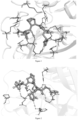
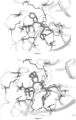
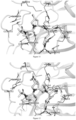
- the molecular docking process was carried out by using GlideSP [1] in Maestro (Schrödinger version 2017-2) and the default options.
- the cocrystal structure with the PDB ID code of 6 WTT was selected as the docking template.
- hydrogen atoms were added using the protein preparation wizard module of Maestro [2] and the OPLS3 force field was used.
- 3D structures were generated, and the energy minimization was performed by LigPrep [3] .
- a 30 ⁇ docking grid was generated using the ligand centroids from the 7BV2 crystal structure. The ligands were then removed and embodiment compounds were placed during molecular docking.
- Step 1 Synthesis of compound BB -1-2
- reaction mixture was poured into 5% citric acid solution to separate the phases, then the aqueous phase was extracted with ethyl acetate (50 mL ⁇ 2), and the organic phase was dried over anhydrous sodium sulfate, filtered, and concentrated under reduced pressure to obtain a crude product.
- Lithium hydroxide monohydrate (148.66 mg, 3.54 mmol) was added to a solution of compound 1-4 (0.72 g, 1.77 mmol) in tetrahydrofuran (10 mL) and water (5 mL), and the reaction mixture was reacted at 20°C for 16 hours.
- the reaction mixture was added with 50 mL of 5% citric acid aqueous solution, and 50 mL of ethyl acetate was added to separate the phases, then the organic phase was dried over anhydrous sodium sulfate, filtered and concentrated under reduced pressure to obtain a crude product.
- Compound 1-5 was obtained.
- hydrochloride of compound BB-1 (412.75 mg, 1.99 mmol), N , N -diisopropylethylamine (642.23 mg, 4.97 mmol, 865.54 ⁇ L), 1-hydroxybenzotriazole (268.58 mg, 1.99 mmol) and hydrochloride of 1-(3-dimethylaminopropyl)-3-acetaldehyde (381.04 mg, 1.99 mmol) were added to a solution of compound 1-5 (0.65 g, 1.66 mmol) in butanone (10 mL), and the reaction mixture was reacted at 20°C for 16 hours.
- reaction mixture was quenched with 20 mL of water, and ethyl acetate (20 mL ⁇ 2) was added for extraction, then the organic phase was washed with 5% citric acid (20 mL ⁇ 1), dried over anhydrous sodium sulfate, filtered and concentrated under reduced pressure to obtain a crude product.
- the crude product was separated by preparative HPLC (column type: Phenomenex C18 75*30 mm*3 ⁇ m; mobile phase: [H 2 O (NH 4 HCO 3 )-ACN]; ACN%: 20%-60%, 8 min) to obtain compound 1 .
- Boc-L-cyclohexylglycine 0.5 g, 2.61 mmol
- N , N -diisopropylethylamine (1.01 g, 7.83 mmol)
- 2-(7-azabenzotriazol-1-yl)- N , N , N , N -tetramethyluronium hexafluorophosphate (1.49 g, 3.92 mmol) were added to a solution of hydrochloride of compound 1-3 (671.62 mg, 2.61 mmol) in N , N- dimethylformamide (5 mL), and the reaction mixture was reacted at 20°C for 16 hours.
- reaction mixture was poured into 5% citric acid solution to separate the phases, then the aqueous phase was extracted with ethyl acetate (50 mL ⁇ 2), and the organic phase was dried over anhydrous sodium sulfate, filtered, and concentrated under reduced pressure to obtain a crude product.
- Lithium hydroxide monohydrate (212.72 mg, 5.07 mmol) was added to a solution of compound 2-1 (1 g, 2.53 mmol) in tetrahydrofuran (10 mL) and water (5 mL), and the reaction mixture was reacted at 20°C for 16 hours.
- the reaction mixture was added with 50 mL of 5% citric acid aqueous solution, and 50 mL of ethyl acetate was added to separate the phases, and the organic phase was dried over anhydrous sodium sulfate, filtered and concentrated to obtain a crude product.
- Compound 2-2 was obtained.
- hydrochloride of compound BB-1 (438.81 mg, 2.11 mmol), N , N -diisopropylethylamine (682.77 mg, 5.28 mmol, 920.18 ⁇ L), 1-hydroxybenzotriazole (285.53 mg, 2.11 mmol), hydrochloride of 1-(3-dimethylaminopropyl)-3-acetaldehyde (405.09 mg, 2.11 mmol) were added to a solution of compound 2-2 (0.65 g, 1.66 mmol) in butanone (10 mL), and the reaction mixture was reacted at 20°C for 16 hours.
- reaction system was added with ethyl acetate (50 mL), and added with 3% citric acid solution (25 mL) and saturated brine (25 mL) in turn for extraction to separate the organic phase, and the organic phase was dried over anhydrous sodium sulfate, filtered, and concentrated.
- the reaction system was added with dichloromethane (60 mL) and 3% citric acid (30 mL) for extraction to separate the organic phase, and the organic phase was washed with saturated brine (30 mL ⁇ 2) to neutral to separate the organic phase, and the organic phase was dried over anhydrous sodium sulfate, filtered and evaporated to dryness by rotary evaporation.
- Trifluoroacetate of compound 3-5 (900 mg, 1.85 mmol) was dissolved in tetrahydrofuran (10 mL), then pyridine (1.47 g, 18.53 mmol, 1.50 mL) and trifluoroacetic anhydride (973.13 mg, 4.63 mmol, 644.46 ⁇ L) were added thereto at 0°C, and the temperature was slowly raised to 20°C, then the reaction mixture was stirred for 16 hours.
- reaction system was added with dichloromethane (50 mL) and 3% citric acid (25 mL) for extraction to separate the organic phase, and the organic phase was extracted with saturated brine (25 mL) to separate the organic phase, and the organic phase was dried over anhydrous sodium sulfate, filtered, and the crude product was separated by preparative HPLC to obtain compound 3 .
- reaction mixture was added with water (10 mL), extracted twice with ethyl acetate (20 mL), then the organic phases were combined, washed twice with 5% citric acid (15 mL), and washed four times with brine (10 mL), then dried over anhydrous sodium sulfate, filtered, and evaporated to dryness by rotary evaporation.
- Trifluoroacetate of compound 4-11 (136 mg, 295.92 ⁇ mol) was dissolved in tetrahydrofuran (1.4 mL), cooled to 0°C, then pyridine (79.10 mg, 2.07 mmol) and trifluoroacetic anhydride (210.03 mg, 1.18 mmol) were added thereto. The reaction was raised to room temperature of 20°C and stirred for 16 hours. The reaction mixture was extracted twice with water (10 mL) and extracted twice with dichloromethane (10 mL), and the organic phases were combined and washed twice with 3% citric acid (10 mL), and washed twice with saturated brine (10 mL), dried over anhydrous sodium sulfate, filtered and concentrated.
- reaction system was concentrated under reduced pressure, then methyl tert -butyl ether (60 mL) and saturated sodium bicarbonate solution (30 mL ⁇ 2) were added thereto, stirred for 10 minutes, extracted to separate the organic phase, and the organic phase was dried over anhydrous sodium sulfate, and concentrated under reduced pressure.
- the reaction system was added with saturated sodium thiosulfate solution (10 mL) and stirred for 10 minutes to quench, and saturated brine (20 mL) and ethyl acetate (60 mL ⁇ 2) were added for extraction to separate the organic phase.
- saturated brine (20 mL) and ethyl acetate (60 mL ⁇ 2) were added for extraction to separate the organic phase.
- a small amount of sample solution was taken, and the pH was adjusted with 3% citric acid to less than 8, and after starch potassium iodide test paper showed negative results, the mixture was dried over anhydrous sodium sulfate and concentrated at 30°C under reduced pressure.
- the reaction system was added with ethyl acetate (60 mL) and 3% citric acid solution (30 mL) for extraction to separate the organic phase, and the organic phase was extracted with saturated brine (30 mL) to separate the organic phase, and the organic phase was dried over anhydrous sodium sulfate, concentrated under reduced pressure.
- reaction system was added with ethyl acetate (50 mL) and 3% citric acid (25 mL) for extraction to separate the organic phase, and the organic phase was extracted with saturated brine (25 mL) to separate the organic phase, and the organic phase was dried over anhydrous sodium sulfate and concentrated under reduced pressure.
- Trifluoroacetate of compound 5-12 (80 mg) was dissolved in dichloromethane (1 mL), then pyridine (150.12 mg, 1.90 mmol, 153.18 ⁇ L) and trifluoroacetic anhydride (99.65 mg, 474.46 ⁇ mol, 65.99 ⁇ L) were added thereto at 0°C, and the reaction mixture was slowly raised to 20°C and reacted for 2 hours.
- the reaction system was added with 3% citric acid solution (30 mL) and dichloromethane (60 mL ⁇ 2) for extraction to separate the organic phase, and the organic phase was washed with saturated brine (60 mL) until neutral, and concentrated under reduced pressure.
- compound 6-4 (20 g, 60.38 mmol) was dissolved in acetonitrile (50 mL), and 1,8-diazabicyclo[5.4.0]undec-7-ene (11.03 g, 72.45 mmol, 10.92 mL) was added thereto, and the reaction mixture was stirred for 0.5 hours, then a solution of compound 6-5 (6.65 g, 60.38 mmol) in acetonitrile (20 mL) was added thereto and the reaction mixture was stirred for 16 hours.
- the crude product was separated by SFC analysis method: column type: Chiralpak AD-3, 150 ⁇ 4.6 mm I.D., 3 ⁇ m, mobile phase: A: COz, B: EtOH (0.1% IPAm, v/v), gradient: timeA% B%, 0.0-0.5min, B% from 10% to 50%, maintained for 4.5 min, 4.5-5.0 min, B% from 50% to 10%, flow rate: 2.5 mL/min, column temperature: 35°C, ABPR: 2000 psi.
- the retention time of compound 6A was 1.97 minutes, and the retention time of compound 6 was 2.28 minutes.
- the crude product was separated by SFC (column type: DAICEL CHIRALPAK AD (250 mm*30 mm, 10 ⁇ m); mobile phase: [0.1% NH 3 H 2 O-EtOH]%: 16%-16%, 10 min) to obtain compound 6 .
- Step 8 Synthesis of compound 7-9
- Trifluoroacetate of compound 7-11 (120 mg, 268.11 ⁇ mol) was dissolved in methanol (2 mL), then triethylamine (162.78 mg, 1.61 mmol) and methyl trifluoroacetate (343.32 mg, 2.68 mmol) were added thereto. The reaction was heated to 38°C and stirred for 16 hours.
- reaction system was added with ethyl acetate (60 mL), washed with saturated sodium bicarbonate solution (30 mL) and saturated brine (30 mL) in turn to separate the organic phase, and the organic phase was dried over anhydrous sodium sulfate, filtered, and concentrated.
- reaction system was added with ethyl acetate (50 mL) and 3% citric acid (25 mL) for extraction to separate the organic phase, and the organic phase was extracted with saturated brine (25 mL) to separate the organic phase, and the organic phase was dried over anhydrous sodium sulfate, and concentrated under reduce pressure.
- Trifluoroacetate of compound 8-7 (180 mg, 427.01 ⁇ mol) was dissolved in methanol (2 mL), then triethylamine (172.84 mg, 1.71 mmol, 237.74 ⁇ L) and methyl trifluoroacetate (546.79 mg, 4.27 mmol, 430.54 ⁇ L) were added thereto and the reaction mixture was reacted for 3 hours at 38°C.
- the reaction system was concentrated under reduced pressure, then dissolved with water (10 mL) and ethyl acetate (30 mL ⁇ 2).
- reaction mixture was added with water (15 mL), extracted twice with ethyl acetate (30 mL), and the organic phases were combined, washed twice with 5% citric acid (30 mL), and washed four times with brine (20 mL), dried over anhydrous sodium sulfate, filtered, and evaporated to dryness by rotary evaporation.
- reaction mixture was added with water (15 mL), extracted twice with ethyl acetate (30 mL), and the organic phases were combined, washed twice with 5% citric acid (30 mL), and washed four times with brine (20 mL), dried over anhydrous sodium sulfate, filtered, and evaporated to dryness by rotary evaporation.
- Trifluoroacetate of compound 9-8 (300 mg, 595.70 ⁇ mol) was dissolved in methanol (6 mL), then triethylamine (241.12 mg, 2.38 mmol) and methyl trifluoroacetate (762.79 mg, 5.96 mmol) were added thereto. The reaction was heated to 38°C and stirred for 16 hours. The reaction mixture was dried directly and dissolved by adding water (10 mL) and ethyl acetate (10 mL), and the pH of the solution was adjusted to acidic by adding 5% citric acid (10 mL).
- reaction mixture was added with water (15 mL), extracted twice with ethyl acetate (30 mL), and the organic phases were combined, washed twice with 5% citric acid (30 mL) and washed four times with brine (20 mL), dried over anhydrous sodium sulfate, filtered and evaporated to dryness by rotary evaporation.
- Trifluoroacetate of compound 10-7 (145 mg, 326.95 ⁇ mol) was dissolved in methanol (3.2 mL), and then triethylamine (132.34 mg, 1.31 mmol) and methyl trifluoroacetate (418.66 mg, 3.27 mmol) were added thereto. The reaction was heated to 38°C and stirred for 16 hours. The reaction mixture was directly evaporated to dryness by rotary evaporation, dissolved with water (10 mL) and ethyl acetate (10 mL), and the pH of the solution was adjusted to acidic by adding 5% citric acid (10 mL).
- reaction mixture was added with water (15 mL), extracted twice with ethyl acetate (60 mL), and the organic phases were combined, washed twice with 5% citric acid (30 mL), and washed four times with saturated brine (20 mL), dried over anhydrous sodium sulfate, filtered, and evaporated to dryness by rotary evaporation.
- N Boc-L- tert -leucine (0.21 g, 1.10 mmol)
- N,N diisopropylethylamine (426.49 mg, 3.30 mmol, 574.79 ⁇ L)
- 2-(7-azobenzotriazol-1-yl)- N,N,N,N -tetramethyluronium hexafluorophosphate (627.38 mg, 1.65 mmol) were added to a solution of hydrochloride of compound 1-3 (305.30 mg, 1.32 mmol) in N,N -dimethylformamide (2 mL), and the reaction mixture was reacted at 20°C for 16 hours.
- reaction mixture was poured into 5% citric acid solution to separate the phases, and the aqueous phase was extracted with ethyl acetate (20 mL*2), and the organic phase was dried over anhydrous sodium sulfate, filtered, and concentrated under reduced pressure to obtain a crude product.
- Lithium hydroxide monohydrate (51.25 mg, 1.22 mmol) was added to a solution of compound 15-1 (0.3 g, 814.19 ⁇ mol) in tetrahydrofuran (2 mL) and water (1 mL), and the reaction mixture was reacted at 20°C for 16 hours.
- the reaction mixture was added with 20 mL of 5% citric acid aqueous solution, and added with 20 mL of ethyl acetate to separate the phases, and the organic phase was dried over anhydrous sodium sulfate, filtered and concentrated to obtain a crude product.
- Compound 15-2 was obtained.
- reaction mixture was quenched with 20 mL of water, extracted with ethyl acetate (20 mL*2), and the organic phase was washed with 5% citric acid (20 mL*1), dried over anhydrous sodium sulfate, filtered, and concentrated under reduced pressure to obtain a crude product.
- the crude product was separated by pre-HPLC (column type: Waters Xbridge BEH C18 100*25 mm*5 ⁇ m; mobile phase: [H 2 O (NH 4 HCO 3 )-ACN]; ACN%: 20%-50%, 10 min) to obtain compound 15 .
- Trifluoroacetate of compound 16-5 (240 mg, 448.13 ⁇ mol) was added to tetrahydrofuran (3 mL), cooled to 0°C, then pyridine (212.68 mg, 2.69 mmol) was added thereto, and trifluoroacetic anhydride (235.30 mg, 1.12 mmol) was added dropwise thereto, and the reaction was gradually warmed to 20°C and stirred for 1 hour.
- the reaction mixture was washed with ethyl acetate (50 mL), water (10 mL), 3% citric acid (20 mL*2) and saturated sodium chloride solution (10 mL), and the organic phase was dried over anhydrous sodium sulfate, filtered and concentrated under reduced pressure.
- the compound was dissolved in DMSO, and diluted in a 3-fold gradient with Echo655 according to the concentration requirements to 10 concentration points, and duplicate tests were set at each concentration, and the diluted solution was added to a 384-well plate.
- Mpro protein and substrate were diluted with test buffer (100 mM NaCl, 20 mM Tris-HCl, 1 mM EDTA), and Mpro protein was added to the 384-well test plate, incubated with the compound for 30 min at room temperature, and then the substrate was added thereto, and the test concentration of Mpro protein was 25 nM, and the test concentration of substrate was 25 ⁇ M.
- Table 4 Names and brands of reagents and consumables Name of reagent and consumable Brand 1 MEM medium Sigma 2 L-Glutamine Gibco 3 Non-essential amino acid Gibco 4 Double antibody (Penicillin-Streptomycin Solution) HyClone 5 Fetal bovine serum (FBS) ExCell 6 Phosphate buffered saline (DPBS) Corning 7 0.25% Trypsin Gibco 8 CellTiter Glo cell activity assay kit Promega 9 Remdesivir MCE 10 96-well plate Grenier
- MRC5 cells and coronavirus HCoV OC43 were purchased from ATCC.
- MRC5 cells were cultured in MEM (Sigma) medium supplemented with 10% fetal bovine serum (Excell), 1% double antibody (Hyclone), 1% L-glutamine (Gibco) and 1% non-essential amino acids (Gibco).
- MEM (Sigma) medium supplemented with 5% fetal bovine serum (Excell), 1% double antibody (Hyclone), 1% L-glutamine (Gibco) and 1% non-essential amino acid (Gibco) was used as the experimental culture medium.
- Virus test methods used in this study Virus (strain) Cell Compound treatment time (day)/endpoint method Control compound Detection reagent HCoV OC43, 100TCID 50 /well 20,000 MRC5 cells/well 5/CPE Remdesivir CellTiter Glo.
- Cells were inoculated into a 96 microwell plate at a certain density (Table 6) and cultured overnight in an incubator at 5% CO 2 and 37°C. On the second day, the compound was added after doubling dilution (8 concentration points, duplicate wells), with 50 ⁇ L per well. Then the diluted virus was added to the cells at 100 TCID 50 per well, 50 ⁇ L per well.
- Cell control (cell without compound treatment or virus infection), virus control (cell infected with virus without compound treatment) and culture medium control (only culture medium) were set. The final volume of the culture medium in this experiment was 200 ⁇ L, and the final concentration of DMSO in the culture medium was 0.5%.
- Cells were cultured in a 5% CO 2 , 33°C incubator for 5 days. Cell viability was detected using the cell viability assay kit CellTiter Glo (Promega). Cytotoxicity experiments were performed under the same conditions as antiviral experiments, but without virus infection.
- the antiviral activity and cytotoxicity of the compound were represented by the inhibition rate (%) and cell viability (%) of the compound on the cytopathic effect caused by the virus at different concentrations, respectively.
- Cell viability (%) (reading value of test well - average value of culture medium control) / (average value of cell control - average value of culture medium control) ⁇ 100
- Nuclear viruses were obtained from African green monkey kidney (Vero) cells from the American Type Culture Collection (ATCC), Cat. No. CCL-81. Cells were cultured in Dulbecco's Modified Eagle's Medium (DMEM, WelGene) supplemented with 10% fetal bovine serum (Gibco) and 1% double antibody (Gibco). DMEM medium supplemented with 2% fetal bovine serum (Gibco) and 1% double antibody (Gibco) was used as the experimental culture medium.
- DMEM Dulbecco's Modified Eagle's Medium
- Novel coronavirus ⁇ CoV/KOR/KCDC03/2020 strain was provided by Korea Centers for Disease Control and Prevention (KCDC), Serial No. NCCP43326.
- the Vero cells were diluted to 480,000 cells per mL with experimental culture medium.
- the diluted cells were added to a 384-well cell test plate with 25 ⁇ L and 12,000 cells per well using an automatic liquid separator. Cells were cultured overnight in a 5% CO 2 and 37°C incubator.
- Columbus software was used to quantitatively analyze the total number of cells (the number of cells stained by Hoechst) and the number of cells infected by the new coronavirus (the number of cells labeled with Alexa Fluor 488) in the images read by the high-content imaging analyzer. The ratio of infected cells and the total number of cells were used to analyze the antiviral activity and cytotoxicity of the compounds.
- Inhibition rate (%) 100 - (ratio of infected cells in test wells - average ratio of infected cells in cell control wells) / (average ratio of infected cells in control wells without compound treatment - average ratio of infected cells in cell control wells) ⁇ 100
- Cell viability (%) total number of cells in test wells / average total number of cells in control wells without compound treatment ⁇ 100
- mice C57BL/6J male mice were selected as test animals, and LC/MS/MS method was used to quantitatively measure the plasma concentration of the test compound 11 at different time points after oral administration and injection in mice, so as to evaluate the pharmacokinetic characteristics of the test drug in mice.
- test compound dissolved in 30% PEG400+70% normal saline was administered to mice (overnight fasting, 6-8 weeks old) by intragastric administration.
- 25 ⁇ L of blood was collected at 0.083, 0.25, 0.5, 1, 2, 4, 8, 12 and 24 hours after administration, respectively, and placed in commercial anticoagulation tubes pre-added with EDTA-K2, centrifuged at 4°C, 3200 g for 10 min to obtain plasma, and after the plasma sample was treated, the plasma concentration was determined by LC-MS/MS method.
- mice C57BL/6J male mice were selected as test animals, and the LC/MS/MS method was used to quantitatively measure the plasma concentrations of mice in combination with Ritonavir at different time points, so as to evaluate the pharmacokinetic characteristics of the test drug in mice.
Landscapes
- Chemical & Material Sciences (AREA)
- Organic Chemistry (AREA)
- Health & Medical Sciences (AREA)
- Life Sciences & Earth Sciences (AREA)
- General Health & Medical Sciences (AREA)
- Medicinal Chemistry (AREA)
- Molecular Biology (AREA)
- Pharmacology & Pharmacy (AREA)
- Veterinary Medicine (AREA)
- Public Health (AREA)
- Animal Behavior & Ethology (AREA)
- Genetics & Genomics (AREA)
- Proteomics, Peptides & Aminoacids (AREA)
- Biophysics (AREA)
- Biochemistry (AREA)
- Virology (AREA)
- Epidemiology (AREA)
- Communicable Diseases (AREA)
- Nuclear Medicine, Radiotherapy & Molecular Imaging (AREA)
- Oncology (AREA)
- Chemical Kinetics & Catalysis (AREA)
- General Chemical & Material Sciences (AREA)
- Analytical Chemistry (AREA)
- Pharmaceuticals Containing Other Organic And Inorganic Compounds (AREA)
- Peptides Or Proteins (AREA)
- Medicines That Contain Protein Lipid Enzymes And Other Medicines (AREA)
- Nitrogen Condensed Heterocyclic Rings (AREA)
- Plural Heterocyclic Compounds (AREA)
- Heterocyclic Carbon Compounds Containing A Hetero Ring Having Oxygen Or Sulfur (AREA)
Description
- The present disclosure relates to the technical field of medical chemistry, in particular to a ring-modified proline short peptide compound and a use thereof.
- At present, there are seven kinds of coronaviruses that can infect humans, namely HCoV-229E, HCoV-OC43, HCoV-NL63, HCoV-HKU1, SARS-CoV (SARS), MERS-CoV (MERS) and COVID-19 which is first discovered in December 2019, and COVID-19 is changing from Alpha, Beta to Delta... and then to Omicron, and is still spreading rapidly and changing constantly. In 2022, human ushered in the third year of COVID-19 pandemic, with the cumulative number of confirmed cases exceeding 500 million and the cumulative number of deaths exceeding 6 million, and with the number of confirmed cases of COVID-19 exceeding 1 million in about 50 countries. The transmission mode of epidemiology, spreading trend and pandemic level far exceed those of H1N1 influenza A in 2009. SARS-CoV-2 is a single positive-strand RNA virus and has high homology with SARS-CoV and MERS-CoV. After the virus infects and enters the host cell, with the help of the host cell, the genetic material RNA first translates and expresses two polyprotein precursors (ppla and pplab), and the polyprotein precursors undergo intramolecular cleavage under the action of 3CL protease and PL protease to produce multiple unstructured proteins. Because 3CL protease is responsible for the cleavage of at least 11 sites, the 3CL protease is also called main protease (Mpro). Unstructured proteins are involved in the production of virus subgene RNA and four structural proteins (E protein, M protein, S protein and N protein), thus completing the reproduction and release of virus offspring; 3CL protease belongs to cysteine protease, and the active form of 3CL protease is homodimer. 3CL protease is relatively conservative in coronavirus, and the substrates of 3CL protease from different coronaviruses have common characteristics. Because there is no protease homologous to 3CL protease in human body, 3CL protease has become one of the ideal targets against coronavirus.
-
WO 2021/250648A1 discloses nitrile-containing antiviral compounds, and specifically discloses compounds of formula (I"), pharmaceutical compositions comprising the compounds, methods of treating coronavirus infection such as COVID-19. In formula (I"), R1 and R2 can form together with the N atom a pyrrolydine or piperidine ring, eventually substituted by one to four R2a.
-
WO 2022/020242A1 discloses functionalized peptides as antiviral agents, and specifically discloses compounds of formula (I), and pharmaceutically acceptable salts thereof, which inhibit coronavirus replication activity.
-
WO 2018/042343A2 discloses compounds that inhibit 3C and 3CL proteases and methods of use thereof, and specifically discloses a compound of formula I.
- Literature "Pfizer unveils its oral SARS-CoV-2 inhibitor", XP055976884, discloses a known anti-COVID-19 compound PF-07321332 from Pfizer of the formula:

- The present disclosure provides a compound represented by formula (X) or a pharmaceutically acceptable salt thereof,

- G is selected from

- ring A is selected from C3-10 cycloalkyl, 3- to 10-membered heterocycloalkyl, C6-10 aryl and 5- to 10-membered heteroaryl;
- R1 is each independently selected from halogen, OR11, CN, CH3S(O)m-, -NH(R12), C1-3 alkyl and C1-3 haloalkyl;
- R11 is selected from H, C1-3 alkyl, C1-3 haloalkyl, CH3(OCH2CH2)p- and H(OCH2CH2)q-;
- R12 is selected from C1-3 alkyl, C1-3 haloalkyl, CH3CO- and CH3SO2-;
- m is selected from 0, 1 and 2;
- p and q are selected from 1, 2, 3, 4, 5 and 6;
- n is selected from 0, 1, 2, 3 and 4;
- X is selected from -CH(R3)- and -CH2CH2-, and the -CH2CH2- is optionally substituted by 1, 2, 3 or 4 R;
- R is each independently selected from halogen, OH, NH2, CN, C1-3 alkyl and C1-3 haloalkyl;
- R3 is each independently selected from H, C1-3 alkyl, C1-3 alkoxy, C1-3 haloalkyl, C1-3 haloalkoxy, C6-10 aryl and 5- to 10-membered heteroaryl, and the C6-10 aryl and 5- to 10-membered heteroaryl are optionally substituted by 1, 2 or 3 R31;
- R2 and R4 together with the atoms to which they are attached form C5-8 cycloalkyl, and the C3-8 cycloalkyl is optionally and independently substituted by 1 or 2 Ra;
- Ra is each independently selected from H, halogen, C1-3 alkyl, C1-3 alkoxy, C1-3 haloalkoxy, C3-6 cycloalkyl, C6-10 aryl and 5- to 10-membered heteroaryl, and the C3-6 cycloalkyl, C6-10 aryl and 5- to 10-membered heteroaryl are optionally substituted by 1, 2 or 3 R41;
- R31 and R41 are each independently selected from halogen, OH, NH2, CN, C1-3 alkyl, C1-3 alkoxy, C1-3 haloalkyl and C1-3 haloalkoxy;
- R5 is selected from C1-3 alkyl, C1-3 haloalkyl, C1-3 alkoxy, C1-3 haloalkoxy, -CH2-R6 and-CH2-OR6;
- R6 is selected from phenyl, and the phenyl is optionally substituted by 1, 2 or 3 R61;
- R61 is selected from halogen, C1-3 alkyl, C1-3 haloalkyl, C1-3 alkoxy and C1-3 haloalkoxy.
- The present disclosure also provides a compound represented by formulas (X-1) and (X-2) or a pharmaceutically acceptable salt thereof,

- Rb is each independently selected from H, halogen, C1-3 alkyl, C1-3 alkoxy, C1-3 haloalkoxy and C3-6 cycloalkyl;
- or, two Rb on adjacent carbon atoms or the same carbon atom together with the atoms to which they are attached form cyclopropyl or cyclobutyl;
- t is selected from 1 and 2;
- R1, R5, n and ring A are as defined herein.
- The present disclosure also provides a compound represented by formula (IV) or a pharmaceutically acceptable salt thereof,

- ring A is selected from C3-10 cycloalkyl, 3- to 10-membered heterocycloalkyl, C6-10 aryl and 5- to 10-membered heteroaryl;
- R1 is each independently selected from halogen, OR11, CN, CH3S(O)m-, -NH(R12), C1-3 alkyl and C1-3 haloalkyl;
- R11 is selected from H, C1-3 alkyl, C1-3 haloalkyl, CH3(OCH2CH2)p- and H(OCH2CH2)q-;
- R12 is selected from C1-3 alkyl, C1-3 haloalkyl, CH3CO- and CH3SO2-;
- m is selected from 0, 1 and 2;
- p and q are selected from 1, 2, 3, 4, 5 and 6;
- n is selected from 0, 1, 2, 3 and 4;
- X is selected from -CH(R3)- and -CH2CH2-, and the -CH2CH2- is optionally substituted by 1, 2, 3 or4R;
- R is each independently selected from halogen, OH, NH2, CN, C1-3 alkyl and C1-3 haloalkyl;
- R3 is each independently selected from H, C1-3 alkyl, C1-3 alkoxy, C1-3 haloalkyl, C1-3 haloalkoxy, C6-10 aryl and 5- to 10-membered heteroaryl, and the C6-10 aryl and 5- to 10-membered heteroaryl are optionally substituted by 1, 2 or 3 R31;
- R2 and R4 together with the atoms to which they are attached form C5-8 cycloalkyl, and the C5-8 cycloalkyl is optionally substituted by 1 or 2 Ra;
- Ra is each independently selected from H, halogen, C1-3 alkyl, C1-3 alkoxy, C1-3 haloalkoxy, C6-10 aryl and 5- to 10-membered heteroaryl, and the C6-10 aryl and 5- to 10-membered heteroaryl are optionally substituted by 1, 2 or 3 R41;
- R31 and R41 are each independently selected from halogen, OH, NH2, CN, C1-3 alkyl, C1-3 alkoxy, C1-3 haloalkyl and C1-3 haloalkoxy;
- the "heterocycloalkyl" and "heteroaryl" contain 1, 2 or 3 heteroatoms or heteroatom groups independently selected from O, S, SO2, N, P and Se.
- In some embodiments of the present disclosure, the R1 is selected from F, Cl, Br, I, methyl, OH, CN, CH3O-, CH3S-, CH3S(O)-, CH3SO2-, CH3NH-, CH3CONH-, CH3SO2NH-, CH3OCH2CH2O-, CH3(OCH2CH2)2O-, CH3(OCH2CH2)4O-, HOCH2CH2O-, H(OCH2CH2)2O- and H(OCH2CH2)4O-, and the other variables are as defined herein.
- In some embodiments of the present disclosure, the ring A is selected from C5-9 cycloalkyl, 5- to 8-membered heterocycloalkyl, adamantyl and phenyl, and the other variables are as defined herein.
- In some embodiments of the present disclosure, the ring A is selected from


- In some embodiments of the present disclosure, the structural moiety


- In some embodiments of the present disclosure, the Ra is selected from H and methyl, and the other variables are as defined herein.
- In some embodiments of the present disclosure, the structural moiety


- In some embodiments of the present disclosure, the structural moiety


- The present disclosure also provides the compound or the pharmaceutically acceptable salt thereof, and the compound is selected from:

- The present disclosure also provides the compound or the pharmaceutically acceptable salt thereof, and the compound is selected from:

- The present disclosure provides a compound represented by formula (VIII) or a pharmaceutically acceptable salt thereof,

- X is selected from -CH(R3)- and -CH2CH2-, and the -CH2CH2- is optionally substituted by 1, 2, 3 or4R;
- R is each independently selected from halogen, OH, NH2, CN, C1-3 alkyl and C1-3 haloalkyl;
- R3 is each independently selected from H, C1-3 alkyl, C1-3 alkoxy, C1-3 haloalkyl, C1-3 haloalkoxy, C6-10 aryl and 5- to 10-membered heteroaryl, and the C6-10 aryl and 5- to 10-membered heteroaryl are optionally substituted by 1, 2 or 3 R31;
- R2 and R4 together with the atoms to which they are attached form C3-8 cycloalkyl, and the C5-8 cycloalkyl is optionally and independently substituted by 1 or 2 Ra;
- Ra is each independently selected from H, halogen, C1-3 alkyl, C1-3 alkoxy, C1-3 haloalkoxy, C6-10 aryl and 5- to 10-membered heteroaryl, and the C6-10 aryl and 5- to 10-membered heteroaryl are optionally substituted by 1, 2 or 3 R41;
- R31 and R41 are each independently selected from halogen, OH, NH2, CN, C1-3 alkyl, C1-3 alkoxy, C1-3 haloalkyl and C1-3 haloalkoxy;
- the "heterocycloalkyl" and "heteroaryl" contain 1, 2 or 3 heteroatoms or heteroatom groups independently selected from O, S, SOz, N, P and Se.
- In some embodiments of the present disclosure, the compound is selected from a structure represented by formula (VIII-1),

- R2 and R4 together with the atoms to which they are attached form C5-8 cycloalkyl, and the C5-8 cycloalkyl is optionally substituted by 1 or 2 Ra;
- Ra is as defined herein.
- In some embodiments of the present disclosure, the Ra is each independently selected from H, F and CH3, and the other variables are as defined herein.
- In some embodiments of the present disclosure, the structural moiety


- In some embodiments of the present disclosure, the structural moiety

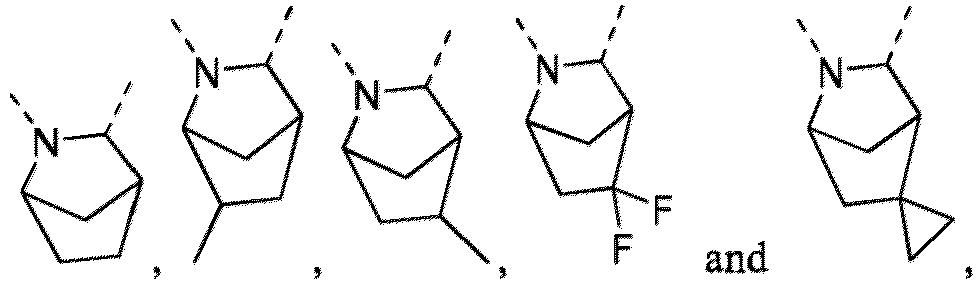
- In some embodiments of the present disclosure, the Rb is each independently selected from H, F, methyl, ethyl, isopropyl, cyclopropyl and cyclobutyl, and the other variables are as defined herein.
- In some embodiments of the present disclosure, the structural moiety


- In some embodiments of the present disclosure, the structural moiety


- In some embodiments of the present disclosure, the R1 is each independently selected from halogen, C1-3 alkyl, C1-3 alkoxy, C1-3 haloalkyl and C1-3 haloalkoxy, and the other variables are as defined herein.
- In some embodiments of the present disclosure, the R1 is each independently selected from F, Cl and methyl, and the other variables are as defined herein.
- In some embodiments of the present disclosure, the ring A is selected from C3-10 cycloalkyl and phenyl, and the other variables are as defined herein.
- In some embodiments of the present disclosure, the ring A is selected from cyclohexyl, spiro[3.3]heptyl, bicyclo[2.2.2]octyl, adamantyl and phenyl, and the other variables are as defined herein.
- In some embodiments of the present disclosure, the ring A is selected from


- In some embodiments of the present disclosure, the structural moiety
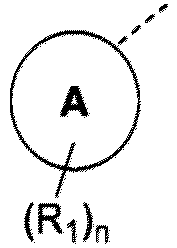

- In some embodiments of the present disclosure, the R5 is selected from -CF3, -OCH3,

- The present disclosure provides a compound represented by the following formula or a pharmaceutically acceptable salt thereof, and the compound is selected from:

- ring A is selected from C3-10 cycloalkyl, 3- to 10-membered heterocycloalkyl, C6-10 aryl and 5- to 10-membered heteroaryl;
- R1 is each independently selected from halogen, OR11, CN, CH3S(O)m-, -NH(R12), C1-3 alkyl and C1-3 haloalkyl;
- R11 is selected from H, C1-3 alkyl, C1-3 haloalkyl, CH3(OCH2CH2)p- and H(OCH2CH2)q-;
- R12 is selected from C1-3 alkyl, C1-3 haloalkyl, CH3CO- and CH3SO2-;
- m is selected from 0, 1 and 2;
- p and q are selected from 1, 2, 3, 4, 5 and 6;
- n is selected from 0, 1, 2, 3 and 4;
- X is selected from -CH(R3)- and -CH2CH2-, and the -CH2CH2- is optionally substituted by 1, 2, 3 or 4 R;
- R is each independently selected from halogen, OH, NH2, CN, C1-3 alkyl and C1-3 haloalkyl;
- R3 is each independently selected from H, C1-3 alkyl, C1-3 alkoxy, C1-3 haloalkyl, C1-3 haloalkoxy, C6-10 aryl and 5- to 10-membered heteroaryl, and the C6-10 aryl and 5- to 10-membered heteroaryl are optionally substituted by 1, 2 or 3 R31;
- R2 and R4 together with the atoms to which they are attached form C5-8 cycloalkyl, and the C5-8 cycloalkyl is optionally substituted by 1 or 2 Ra;
- Ra is each independently selected from H, halogen, C1-3 alkyl, C1-3 alkoxy, C1-3 haloalkoxy, C6-10 aryl and 5- to 10-membered heteroaryl, and the C6-10 aryl and 5- to 10-membered heteroaryl are optionally substituted by 1, 2 or 3 R41;
- R31 and R41 are each independently selected from halogen, OH, NH2, CN, C1-3 alkyl, C1-3 alkoxy, C1-3 haloalkyl and C1-3 haloalkoxy;
- the "heterocycloalkyl" and "heteroaryl" contain 1, 2 or 3 heteroatoms or heteroatom groups independently selected from O, S, SOz, N, P and Se.
- In some embodiments of the present disclosure, the R1 is selected from F, Cl, Br, I, methyl, OH, CN, CH3O-, CH3S-, CH3S(O)-, CH3SO2-, CH3NH-, CH3CONH-, CH3SO2NH-, CH3OCH2CH2O-, CH3(OCH2CH2)2O-, CH3(OCH2CH2)4O-, HOCH2CH2O-, H(OCH2CH2)2O- and H(OCH2CH2)4O-, and the other variables are as defined herein.
- In some embodiments of the present disclosure, the ring A is selected from C5-9 cycloalkyl, 5- to 8-membered heterocycloalkyl, adamantyl and phenyl, and the other variables are as defined herein.
- In some embodiments of the present disclosure, the ring A is selected from


- In some embodiments of the present disclosure, the structural moiety


- In some embodiments of the present disclosure, the Ra is selected from H and methyl, and the other variables are as defined herein.
- In some embodiments of the present disclosure, the structural moiety

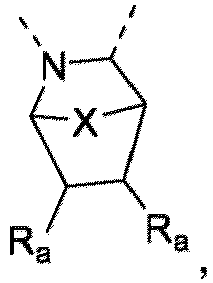
- In some embodiments of the present disclosure, the structural moiety


- The present disclosure provides a compound represented by the following formula or a pharmaceutically acceptable salt thereof, and the compound is selected from:

- ring A is selected from C3-10 cycloalkyl, 3- to 10-membered heterocycloalkyl and phenyl;
- R1 is each independently selected from halogen and C1-3 alkyl, and the C1-3 alkyl is optionally substituted by 1, 2 or 3 F;
- n is selected from 0, 1, 2, 3 and 4;
- R3 is H, R2 and R4 together with the carbon atoms to which they are attached form C5-8 cycloalkyl, and the C5-8 cycloalkyl is optionally substituted by 1 or 2 Ra;
- Ra is each independently selected from H and C1-3 alkyl;
- the "heterocycloalkyl" contains 1, 2 or 3 heteroatoms independently selected from O, S, N, P and Se;
- the carbon atom with "*" is a chiral carbon atom, which exists in a form of (R) or (S) single enantiomer or in a form rich in one enantiomer.
- The present disclosure provides a compound represented by the following formula or a pharmaceutically acceptable salt thereof, and the compound is selected from:

- ring A is selected from C3-10 cycloalkyl, 3- to 10-membered heterocycloalkyl and phenyl;
- R1 is each independently selected from halogen, OR11, CN, CH3S(O)m-, NHR12 and C1-3 alkyl, and the C1-3 alkyl is optionally substituted by 1, 2 or 3 F;
- R11 is selected from H, C1-3 alkyl, CH3(OCH2CH2)p- and H(OCH2CH2)q-, and the C1-3 alkyl is optionally substituted by 1, 2 or 3 halogens;
- R12 is selected from C1-3 alkyl, CH3CO- and CH3SO2-, and the C1-3 alkyl is optionally substituted by 1, 2 or 3 halogens;
- m is selected from 0, 1 and 2;
- p and q are selected from 1, 2, 3, 4, 5 and 6;
- n is selected from 0, 1, 2, 3 and 4;
- R3 is H, R2 and R4 together with the carbon atoms to which they are attached form C5-8 cycloalkyl, and the C5-8 cycloalkyl is optionally substituted by 1 or 2 Ra;
- Ra is each independently selected from H and C1-3 alkyl;
- the "heterocycloalkyl" contains 1, 2 or 3 heteroatoms or heteroatom groups independently selected from O, S, SO2, N, P and Se;
- the carbon atom with "*" is a chiral carbon atom, which exists in a form of (R) or (S) single enantiomer or in a form rich in one enantiomer.
- In some embodiments of the present disclosure, the R1 is selected from F, Cl, Br, I, methyl, OH, CN, CH3O-, CH3S-, CH3S(O)-, CH3SO2-, CH3NH-, CH3CONH-, CH3SO2NH-, CH3OCH2CH2O-, CH3(OCH2CH2)2O-, CH3(OCH2CH2)4O-, HOCHzCHzO-, H(OCH2CH2)2O- and H(OCH2CH2)4O-, and the other variables are as defined herein.
- In some embodiments of the present disclosure, the R1 is selected from F and methyl, and the other variables are as defined herein.
- In some embodiments of the present disclosure, the ring A is selected from C5-9 cycloalkyl, 5- to 8-membered heterocycloalkyl, adamantyl and phenyl, and the other variables are as defined herein.
- In some embodiments of the present disclosure, the ring A is selected from


- In some embodiments of the present disclosure, the ring A is selected from C5-9 cycloalkyl, 5- to 8-membered heterocycloalkyl and phenyl, and the other variables are as defined herein.
- In some embodiments of the present disclosure, the structural moiety


- In some embodiments of the present disclosure, the ring A is selected from


- In some embodiments of the present disclosure, the structural moiety


- In some embodiments of the present disclosure, the Ra is selected from H and methyl, and the other variables are as defined herein.
- In some embodiments of the present disclosure, the structural moiety


- In some embodiments of the present disclosure, the structural moiety

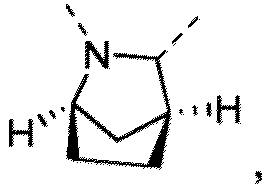
- The present disclosure also provides the compound or the pharmaceutically acceptable salt thereof, and the compound is selected from:

- Other embodiments of the present disclosure are derived from any combination of above variables.
- The present disclosure provides a compound represented by the following formula or a pharmaceutically acceptable salt thereof, and the compound is selected from:







- The present disclosure also provides a pharmaceutical composition, comprising the compound or the pharmaceutically acceptable salt thereof. Further, the pharmaceutical composition can also comprise a pharmaceutically acceptable excipient.
- The present disclosure also provides a use of the compound or the pharmaceutically acceptable salt thereof, or the pharmaceutical composition in the manufacture of a medicament for the treatment of a disease related to 3CL protease.
- In some embodiments of the present disclosure, the disease related to 3CL protease is coronavirus infection.
- In some embodiments of the present disclosure, the coronavirus infection is infection with COVID-19.
- The compounds of the present disclosure have good in vitro anti-novel coronavirus Mpro protease activity; good in vitro anti-coronavirus activity at the cellular level, and have no cytotoxicity; and have good pharmacokinetic properties. After the compound of the present disclosure is used in combination with Ritonavir, the exposure is nearly 20 times higher than that of a single drug, and there is a higher exposure in the lung of rats.
-
-
Figure 1 . The binding mode pattern of compound 15 and 6WTT protein; -
Figure 2 . the binding mode pattern ofcompound 16 and 6WTT protein; -
Figure 3 . the binding mode pattern of compound 17 and 6WTT protein; -
Figure 4 . the binding mode pattern ofcompound 18 and 6WTT protein; -
Figure 5 . the binding mode pattern ofcompound 19 and 6WTT protein; -
Figure 6 . the binding mode pattern of compound 20 and 6WTT protein; -
Figure 7 . the binding mode pattern of compound 21 and 6WTT protein; -
Figure 8 . the binding mode pattern ofcompound 22 and 6WTT protein; -
Figure 9 . the binding mode pattern of compound 23 and 6WTT protein; -
Figure 10 . the binding mode pattern of compound 24 and 6WTT protein; -
Figure 11 . the binding mode pattern of compound 25 and 6WTT protein; -
Figure 12 . the binding mode pattern of compound 26 and 6WTT protein; -
Figure 13 . the binding mode pattern of compound 27 and 6WTT protein. - Unless otherwise specified, the following terms and phrases when used herein have the following meanings. A specific term or phrase should not be considered indefinite or unclear in the absence of a particular definition, but should be understood in the ordinary sense. When a trade name appears herein, it is intended to refer to its corresponding commodity or active ingredient thereof.
- Any references to methods of treatment in the subsequent paragraphs of this description are to be interpreted as references to the compounds, pharmaceutical compositions and medicaments of the present invention for use in method of treatment of the human (or animal) body by therapy (or diagnosis).
- The term "pharmaceutically acceptable" is used herein in terms of those compounds, materials, compositions, and/or dosage forms, which are suitable for use in contact with human and animal tissues within the scope of reliable medical judgment, with no excessive toxicity, irritation, an allergic reaction or other problems or complications, commensurate with a reasonable benefit/risk ratio.
- The term "pharmaceutically acceptable salt" refers to a salt of the compound of the present disclosure that is prepared by reacting the compound having a specific substituent of the present disclosure with a relatively non-toxic acid or base. When the compound of the present disclosure contains a relatively acidic functional group, a base addition salt may be obtained by bringing the neutral form of the compound into contact with a sufficient amount of base in a pure solution or a suitable inert solvent. The pharmaceutically acceptable base addition salt includes a salt of sodium, potassium, calcium, ammonium, organic amine or magnesium, or similar salts. When the compound of the present disclosure contains a relatively basic functional group, an acid addition salt may be obtained by bringing the neutral form of the compound into contact with a sufficient amount of acid in a pure solution or a suitable inert solvent. Examples of the pharmaceutically acceptable acid addition salt include an inorganic acid salt, wherein the inorganic acid includes, for example, hydrochloric acid, hydrobromic acid, nitric acid, carbonic acid, bicarbonate, phosphoric acid, monohydrogen phosphate, dihydrogen phosphate, sulfuric acid, hydrogen sulfate, hydroiodic acid, phosphorous acid, and the like; and an organic acid salt, wherein the organic acid includes, for example, acetic acid, propionic acid, isobutyric acid, maleic acid, malonic acid, benzoic acid, succinic acid, suberic acid, fumaric acid, lactic acid, mandelic acid, phthalic acid, benzenesulfonic acid, p-toluenesulfonic acid, citric acid, tartaric acid, and methanesulfonic acid, and the like; and salts of amino acid (such as arginine and the like), and a salt of an organic acid such as glucuronic acid and the like. Certain specific compounds of the present disclosure contain both basic and acidic functional groups, thus can be converted to any base or acid addition salt.
- The pharmaceutically acceptable salt of the present disclosure can be prepared from the parent compound that contains an acidic or basic moiety by conventional chemical method. Generally, such salt can be prepared by reacting the free acid or base form of the compound with a stoichiometric amount of an appropriate base or acid in water or an organic solvent or a mixture thereof.
- The "pharmaceutically acceptable excipient" refer to inert substances which are administered together with the active ingredient and are beneficial to the administration of the active ingredient, including but not limited to any glidant, sweetener, diluent, preservative, dye/colorant, flavor enhancer, surfactant, wetting agent, dispersant, disintegrant, suspending agent and stabilizer which are acceptable for human or animals (such as livestock) and licensed by the State Food and Drug Administration.
- As used herein and as familiar in the art, "treatment" or "treating" is a method for obtaining beneficial or desired results, including clinical results. Beneficial or desired clinical results may include, but are not limited to: reduction in tumor progression, reduction in tumor size, reduction in tumor growth rate, reduction in tumor invasion and metastatic potential, alleviation or amelioration of one or more symptoms or conditions, reduction in disease degree, stable (i.e., not worsening) disease state, prevention of disease spread, delay or slowing of disease progression, amelioration or palliation of disease state, and remission (whether partial or total), whether detectable or undetectable. "Treatment" or "treating" can also mean prolonging survival as compared to expected survival if not receiving treatment.
- The term "pharmaceutical composition" refers to a mixture of one or more compounds of the present disclosure or the salts thereof and a pharmaceutically acceptable excipient. The purpose of the pharmaceutical composition is to facilitate administration of the compound of the present disclosure to an organism.
- The therapeutic dose of the compound of the present disclosure can be determined according to, for example, the specific use of the treatment, the mode of administration of the compound, the health and state of the patient, and the judgment of the prescribing physician. The ratio or concentration of the compounds of the present disclosure in the pharmaceutical composition may not be fixed, depending on various factors, including dose, chemical properties (e.g., hydrophobicity) and route of administration.
- The term "treatment" means administering a compound or formulation described herein to ameliorate or eliminate a disease or one or more symptoms related to the disease, and includes:
- (i) inhibition of a disease or disease state, that is, arrest of its development;
- (ii) alleviation of a disease or disease state, even if the disease or disease state subsides.
- The term "therapeutically effective amount" means an amount of the compound of the present disclosure that (i) treats a particular disease, condition or disorder, (ii) alleviates, ameliorates, or eliminates one or more symptoms of the particular disease, condition or disorder, or (iii) prevents or delays the onset of one or more symptoms of the particular disease, condition, or disorder described herein. The amount of the compound of the present disclosure that constitutes a "therapeutically effective amount" varies depending on the compound, the disease state and its severity, the mode of administration, and the age of the mammal to be treated, but can be routinely determined by those skilled in the art according to their own knowledge and the present disclosure.
- Unless otherwise required in the present disclosure, throughout the specification and the following claims, the word "comprise" and variations thereof such as "comprises" and "comprising" should be interpreted in an open and inclusive sense, that is, "include, but not limited to".
- References throughout this specification to "in some embodiments" or "in an embodiment" or "in another embodiment" or "in certain embodiments" means that specific reference elements, structures or features related to the embodiment is included in at least one embodiment. Thus, appearances of the phrases "in some embodiments" or "in an embodiment" or "in another embodiment" or "in certain embodiments" in various places throughout the specification are not necessarily all referring to the same embodiment. Furthermore, specific elements, structures or features may be combined in one or more embodiments in any suitable manner.
- The compounds of the present disclosure may exist in specific geometric or stereoisomeric forms. The present disclosure contemplates all such compounds, including cis and trans isomers, (-)- and (+)-enantiomers, (R)- and (S)-enantiomers, diastereoisomers, (D)-isomers, (L)-isomers, and racemic and other mixtures thereof, such as enantiomers or diastereomeric enriched mixtures, all of which are within the scope of the present disclosure. Additional asymmetric carbon atoms may be present in substituents such as alkyl. All these isomers and their mixtures are included within the scope of the present disclosure.
- Unless otherwise specified, the term "enantiomer" or "optical isomer" refers to stereoisomers that are mirror images of each other.
- Unless otherwise specified, the term "c|is-trans isomer" or "geometric isomer" is caused by the inability to rotate freely of double bonds or single bonds of ring-forming carbon atoms.
- Unless otherwise specified, the term "diastereomer" refers to a stereoisomer in which a molecule has two or more chiral centers and the relationship between the molecules is not mirror images.
- Unless otherwise specified, "(+)" refers to dextrorotation, "(-)" refers to levorotation, and or "(±)" refers to racemization.
- Unless otherwise specified, the absolute configuration of a stereogenic center is represented by a wedged solid bond () and a wedged dashed bond (
 ), and the relative configuration of a stereogenic center is represented by a straight solid bond (
 ) and a straight dashed bond (
 ), a wave line (
 ) is used to represent a *wedged solid bond (
 ) or a wedged dashed bond (
 ), or the wave line (
 ) is used to represent a straight solid bond (
 ) or a straight dashed bond (
 ).
).
- The term "optional" or "optionally" means that the subsequent event or condition may occur but not requisite, that the term includes the instance in which the event or condition occurs and the instance in which the event or condition does not occur.
- The term "substituted" means one or more than one hydrogen atom(s) on a specific atom are substituted with the substituent, including deuterium and hydrogen variables, as long as the valence of the specific atom is normal and the substituted compound is stable. When the substituent is an oxygen (i.e., =O), it means two hydrogen atoms are substituted. Positions on an aromatic ring cannot be substituted with a ketone. The term "optionally substituted" means an atom can be substituted with a substituent or not, unless otherwise specified, the type and number of the substituent may be arbitrary as long as being chemically achievable.
- When any variable (such as R) occurs in the constitution or structure of the compound more than once, the definition of the variable at each occurrence is independent. Thus, for example, if a group is substituted with 0-2 R, the group can be optionally substituted with up to two R, wherein the definition of R at each occurrence is independent. Moreover, a combination of the substituent and/or the variant thereof is allowed only when the combination results in a stable compound.
- When the number of a linking group is 0, such as -(CRR)0-, it means that the linking group is a single bond.
- When one of the variables is selected from a single bond, it means that the two groups linked by the single bond are connected directly. For example, when L in A-L-Z represents a single bond, the structure of A-L-Z is actually A-Z.
- When a substituent is vacant, it means that the substituent does not exist, for example, when X is vacant in A-X, the structure of A-X is actually A. When the enumerative substituent does not indicate by which atom it is linked to the group to be substituted, such substituent can be bonded by any atom thereof. For example, when pyridyl acts as a substituent, it can be linked to the group to be substituted by any carbon atom on the pyridine ring.
- When the enumerative linking group does not indicate the direction for linking, the direction for linking is arbitrary, for example, the linking group L contained in


- Unless otherwise specified, when a group has one or more linkable sites, any one or more sites of the group can be linked to other groups through chemical bonds. When the linking site of the chemical bond is not positioned, and there is H atom at the linkable site, then the number of H atom at the site will decrease correspondingly with the number of chemical bond linking thereto so as to meet the corresponding valence. The chemical bond between the site and other groups can be represented by a straight solid bond (), a straight dashed bond (
 ) or a wavy line


position 1 andposition 2. - Unless otherwise specified, the terms "enriched in one isomer", "enriched in isomers", "enriched in one enantiomer" or "enriched in enantiomers" refer to the content of one of the isomers or enantiomers is less than 100%, and the content of the isomer or enantiomer is greater than or equal to 60%, or greater than or equal to 70%, or greater than or equal to 80%, or greater than or equal to 90%, or greater than or equal to 95%, or greater than or equal to 96%, or greater than or equal to 97%, or greater than or equal to 98%, or greater than or equal to 99%, or greater than or equal to 99.5%, or greater than or equal to 99.6%, or greater than or equal to 99.7%, or greater than or equal to 99.8%, or greater than or equal to 99.9%.
- Unless otherwise specified, the term "isomer excess" or "enantiomeric excess" refers to the difference between the relative percentages of two isomers or two enantiomers. For example, if the content of one isomer or enantiomer is 90%, and the content of the other isomer or enantiomer is 10%, the isomer or enantiomer excess (ee value) is 80%.
- Unless otherwise specified, the term "C1-3 alkyl" refers to a linear or branched saturated hydrocarbon group consisting of 1 to 3 carbon atoms. The C1-3 alkyl includes C1-2 and C2-3 alkyl and the like; it can be monovalent (such as methyl), divalent (such as methylene) or multivalent (such as methine). Examples of C1-3 alkyl include, but are not limited to, methyl (Me), ethyl (Et), propyl (including n-propyl and isopropyl) and the like.
- Unless otherwise specified, the term "C1-3 haloalkyl" refers to monohaloalkyl and polyhaloalkyl containing 1 to 3 carbon atoms. The C1-3 haloalkyl includes C1-2, C2-3, C3, C2 and C1 haloalkyl and the like. Examples of C1-3 haloalkyl include, but are not limited to, trifluoromethyl, trichloromethyl, 2,2,2-trifluoroethyl, pentafluoroethyl, pentachloroethyl, 3-bromopropyl and the like.
- Unless otherwise specified, the term "C1-3 alkoxy" refers to an alkyl group containing 1 to 3 carbon atoms that are connected to the rest of the molecule through an oxygen atom. The C1-3 alkoxy includes C1-2, C2-3, C3 and C2 alkoxy and the like. Examples of C1-3 alkoxy include, but are not limited to, methoxy, ethoxy, propoxy (including n-propoxy and isopropoxy) and the like.
- Unless otherwise specified, the term "C1-3 haloalkoxy" refers to monohaloalkoxy and polyhaloalkoxy containing 1 to 3 carbon atoms. The C1-3 haloalkyl includes C1-2, C2-3, C3, C2 and C1 haloalkoxy and the like. Examples of C1-3 haloalkyl include, but are not limited to, trifluoromethoxy, trichloromethoxy, 2,2,2-trifluoroethoxy, pentafluoroethoxy, pentachloroethoxy, 3-bromopropoxy and the like.
- Unless otherwise specified, the number of atoms in a ring is usually defined as the number of ring members, for example, "5- to 7-membered ring" refers to a "ring" in which 5-7 atoms are arranged around.
- Unless otherwise specified, Cn-n+m or Cn-Cn+m includes any specific case of n to n+m carbons, for example, C1-12 includes C1, C2, C3, C4, C5, C6, C7, C8, C9, C10, C11, and C12, and any range from n to n+m is also included, for example C1-12 includes C1-3, C1-6, C1-9, C3-6, C3-9, C3-12, C6-9, C6-12 and C9-12 and the like; similarly, n-membered to n+m-membered means that the number of atoms on the ring is from n to n+m, for example, 3- to 12-membered ring includes 3-membered ring, 4-membered ring, 5-membered ring, 6-membered ring, 7-membered ring, 8-membered ring, 9-membered ring, 10-membered ring, 11-membered ring, and 12-membered ring, and any range from n to n+m is also included, for example, 3- to 12-membered ring includes 3- to 6-membered ring, 3- to 9-membered ring, 5- to 6-membered ring, 5- to 7-membered ring, 6- to 7-membered ring, 6- to 8-membered ring, and 6- to 10-membered ring and the like.
- Unless otherwise specified, "C3-10 cycloalkyl" refers to a saturated cyclic hydrocarbon group consisting of 3 to 10 carbon atoms, including monocyclic, bicyclic and tricyclic systems, wherein the bicyclic and tricyclic systems include spiro ring, fused ring and bridged ring. The C3-10 cycloalkyl includes C3-8, C3-6, C3-5, C4-10, C4-8, C4-6, C4-5, C5-8 or C5-6 cycloalkyl and the like; it can be monovalent, divalent or multivalent. Examples of C3-10 cycloalkyl include, but are not limited to, cyclopropyl, cyclobutyl, cyclopentyl, cyclohexyl, cycloheptyl, norbomanyl, [2.2.2]dicyclooctyl and the like.
- Unless otherwise specified, "C5-8 cycloalkyl" refers to a saturated cyclic hydrocarbon group consisting of 5 to 8 carbon atoms, including monocyclic and bicyclic systems, wherein the bicyclic systems include spiro ring, fused ring and bridged ring. The C5-8 cycloalkyl includes C5-6, C5-7, C5-8, C6-8 cycloalkyl and the like. It can be monovalent, divalent or multivalent. Examples of C5-8 cycloalkyl include, but are not limited to, cyclopentyl, cyclohexyl, cycloheptyl, norbomanyl, [2.2.2]dicyclooctyl and the like.
- Unless otherwise specified, "C4-8 cycloalkyl" refers to a saturated cyclic hydrocarbon group consisting of 4 to 8 carbon atoms, including monocyclic and bicyclic systems, wherein the bicyclic systems include spiro ring, fused ring and bridged ring. The C4-8 cycloalkyl includes C4-7, C4-6, C4-5, C5-8 or C5-6 cycloalkyl and the like. It can be monovalent, divalent or multivalent. Examples of C4-8 cycloalkyl include, but are not limited to, cyclobutyl, cyclopentyl, cyclohexyl, cycloheptyl, norbomanyl, [2.2.2]dicyclooctyl and the like.
- Unless otherwise specified, "C3-6 cycloalkyl" refers to a saturated cyclic hydrocarbon group consisting of 3 to 6 carbon atoms, which is a monocyclic and bicyclic system, and the C3-6 cycloalkyl includes C3-5, C4-5 and C5-6 cycloalkyl and the like; it can be monovalent, divalent or multivalent. Examples of C3-6 cycloalkyl include, but are not limited to, cyclopropyl, cyclobutyl, cyclopentyl, cyclohexyl and the like.
- Unless otherwise specified, "C5-8 cycloalkenyl" refers to a partially unsaturated cyclic hydrocarbon group consisting of 5 to 8 carbon atoms containing at least one carbon-carbon double bond, including monocyclic and bicyclic systems, wherein the bicyclic systems include spiro ring, fused ring and bridged ring and any ring in this system is non-aromatic. The C5-8 cycloalkenyl includes C5-6, C5-7, C6-8 or C7-8 cycloalkenyl and the like. It can be monovalent, divalent or multivalent. Examples of C5-8 cycloalkenyl include, but are not limited to, cyclopentenyl, cyclopentadienyl, cyclohexenyl, cyclohexadienyl and the like.
- Unless otherwise specified, the term "3- to 10-membered heterocycloalkyl" by itself or in combination with other terms refers to a saturated cyclic group consisting of 3 to 10 ring atoms, wherein 1, 2, 3 or 4 ring atoms are heteroatoms independently selected from O, S and N, and the rest are carbon atoms, wherein nitrogen atoms are optionally quaternized, and nitrogen and sulfur heteroatoms can be optionally oxidized (i.e., NO and S(O)p, p is 1 or 2). It includes monocyclic, bicyclic and tricyclic systems, wherein the bicyclic and tricyclic systems include spiro ring, fused ring and bridged ring. In addition, with regard to the "3- to 10-membered heterocycloalkyl", a heteroatom may occupy the connection position of the heterocycloalkyl with the rest of the molecule. The 3- to 10-membered heterocycloalkyl includes 3- to 8-membered, 3- to 6-membered, 3- to 5-membered, 4- to 6-membered, 5- to 6-membered, 4-membered, 5-membered, and 6-membered heterocycloalkyl and the like. Examples of 3- to 10-membered heterocycloalkyl include, but are not limited to, azetidinyl, oxetanyl, thietanyl, pyrrolidinyl, pyrazolidinyl, imidazolidinyl, tetrahydrothienyl (including tetrahydrothiophen-2-yl and tetrahydrothiophen-3-yl and the like), tetrahydrofuranyl (including tetrahydrofuran-2-yl and the like), tetrahydropyranyl, piperidinyl (including 1-piperidinyl, 2-piperidinyl and 3-piperidinyl and the like), piperazinyl (including 1-piperazinyl and 2-piperazinyl and the like), morpholinyl (including 3-morpholinyl and 4-morpholinyl and the like), dioxinyl, dithianyl, isoxazolidinyl, isothiazolidinyl, 1,2-oxazinyl, 1,2-thiazinyl, hexahydropyridazinyl, homopiperazinyl, homopiperidinyl or dioxacycloheptyl and the like.
- Unless otherwise specified, the term "3- to 8-membered heterocycloalkyl" by itself or in combination with other terms refers to a saturated cyclic group consisting of 3 to 8 ring atoms, wherein 1, 2, 3 or 4 ring atoms are heteroatoms independently selected from O, S and N, and the rest are carbon atoms, wherein nitrogen atoms are optionally quaternized, and nitrogen and sulfur heteroatoms can be optionally oxidized (i.e., NO and S(O)p, p is 1 or 2). It includes monocyclic and bicyclic systems, wherein the bicyclic systems include spiro ring, fused ring and bridged ring. In addition, with regard to the "3- to 8-membered heterocycloalkyl", a heteroatom may occupy the connection position of the heterocycloalkyl with the rest of the molecule. The 3- to 8-membered heterocycloalkyl includes 3- to 6-membered, 3- to 5-membered, 4- to 6-membered, 5- to 6-membered, 4-membered, 5-membered and 6-membered heterocycloalkyl and the like. Examples of 3- to 8-membered heterocycloalkyl include, but are not limited to, azetidinyl, oxetanyl, thietanyl, pyrrolidinyl, pyrazolidinyl, imidazolidinyl, tetrahydrothienyl (including tetrahydrothiophen-2-yl and tetrahydrothiophen-3-yl and the like), tetrahydrofuranyl (including tetrahydrofuran-2-yl and the like), tetrahydropyranyl, piperidinyl (including 1-piperidinyl, 2-piperidinyl and 3-piperidinyl and the like), piperazinyl (including 1-piperazinyl and 2-piperazinyl and the like), morpholinyl (including 3-morpholinyl and 4-morpholinyl and the like), dioxinyl, dithianyl, isoxazolidinyl, isothiazolidinyl, 1,2-oxazinyl, 1,2-thiazinyl, hexahydropyridazinyl, homopiperazinyl, homopiperidinyl or dioxacycloheptyl and the like.
- Unless otherwise specified, the term "5- to 8-membered heterocycloalkyl" by itself or in combination with other terms refers to a saturated cyclic group consisting of 5 to 8 ring atoms, wherein 1, 2, 3 or 4 ring atoms are heteroatoms independently selected from O, S and N, and the rest are carbon atoms, wherein nitrogen atoms are optionally quaternized, and nitrogen and sulfur heteroatoms can be optionally oxidized (i.e., NO and S(O)p, p is 1 or 2). It includes monocyclic and bicyclic systems, wherein the bicyclic systems include spiro ring, fused ring and bridged ring. In addition, with regard to the "5- to 8-membered heterocycloalkyl", a heteroatom may occupy the connection position of the heterocycloalkyl with the rest of the molecule. The 5- to 8-membered heterocycloalkyl includes 5- to 6-membered, 5- to 7-membered, 6- to 8-membered and 7- to 8-membered heterocycloalkyl and the like. Examples of 5- to 8-membered heterocycloalkyl include, but are not limited to, pyrrolidinyl, pyrazolidinyl, imidazolidinyl, tetrahydrothienyl (including tetrahydrothiophen-2-yl and tetrahydrothiophen-3-yl and the like), tetrahydrofuranyl (including tetrahydrofuran-2-yl and the like), tetrahydropyranyl, piperidinyl (including 1-piperidinyl, 2-piperidinyl and 3-piperidinyl and the like), piperazinyl (including 1-piperazinyl and 2-piperazinyl and the like), morpholinyl (including 3-morpholinyl and 4-morpholinyl and the like), dioxinyl, dithianyl, isoxazolidinyl, isothiazolidinyl, 1,2-oxazinyl, 1,2-thiazinyl, hexahydropyridazinyl, homopiperazinyl, homopiperidinyl or dioxacycloheptyl and the like.
- Unless otherwise specified, the term "5- to 6-membered heterocycloalkyl" by itself or in combination with other terms refers to a saturated cyclic group consisting of 5 to 6 ring atoms, wherein 1, 2, 3 or 4 ring atoms are heteroatoms independently selected from O, S, N, P and Se, and the rest are carbon atoms, wherein nitrogen atoms are optionally quaternized, and nitrogen, sulfur and phosphorous heteroatoms can be optionally oxidized (i.e., NO, S(O)p and P(O)p, p is 1 or 2). It includes monocyclic and bicyclic systems, wherein the bicyclic systems include spiro ring, fused ring and bridged ring. In addition, with regard to the "5- to 6-membered heterocycloalkyl", a heteroatom may occupy the connection position of the heterocycloalkyl with the rest of the molecule. The 5- to 6-membered heterocycloalkyl includes 5-membered, and 6-membered heterocycloalkyl and the like. Examples of 5- to 6-membered heterocycloalkyl include, but are not limited to, pyrrolidinyl, pyrazolidinyl, imidazolidinyl, tetrahydrothienyl (including tetrahydrothiophen-2-yl and tetrahydrothiophen-3-yl and the like), tetrahydrofuranyl (including tetrahydrofuran-2-yl and the like), tetrahydropyranyl, piperidinyl (including 1-piperidinyl, 2-piperidinyl and 3-piperidinyl and the like), piperazinyl (including 1-piperazinyl and 2-piperazinyl and the like), morpholinyl (including 3-morpholinyl and 4-morpholinyl and the like), dioxinyl, dithianyl, isoxazolidinyl, isothiazolidinyl, 1,2-oxazinyl, 1,2-thiazinyl or hexahydropyridazinyl and the like.
- Unless otherwise specified, the terms "C6-10 aromatic ring" and "C6-10 aryl" in the present disclosure can be used interchangeably, and the term "C6-10 aromatic ring" or "C6-10 aryl" means a cyclic hydrocarbon group with a conjugated n electron system consisting of 6 to 10 carbon atoms, which can be a monocyclic, fused bicyclic or fused tricyclic system, wherein each ring is aromatic. It can be monovalent, divalent or multivalent, and C6-10 aryl includes C6-9, C9, C10 and C6 aryl and the like. Examples of C6-10 aryl include, but are not limited to, phenyl, naphthyl (including 1-naphthyl and 2-naphthyl and the like).
- Unless otherwise specified, the terms "5- to 10-membered heteroaromatic ring " and "5- to 10-membered heteroaryl" can be used interchangeably in the present disclosure, and the term "5- to 10-membered heteroaryl" means a cyclic group with a conjugated π electron system consisting of 5 to 10 ring atoms, of which 1, 2, 3 or 4 ring atoms are heteroatoms independently selected from O, S, N, P or Se, and the rest are carbon atoms. It can be a monocyclic, fused bicyclic or fused tricyclic system, wherein each ring is aromatic. Where nitrogen atoms are optionally quaternized, and nitrogen and sulfur heteroatoms can be optionally oxidized (i.e., NO, S(O)p and P(O)p, p is 1 or 2). The 5- to 10-membered heteroaryl can be attached to the rest of the molecule through a heteroatom or a carbon atom. The 5- to 10-membered heteroaryl includes 5- to 8-membered, 5- to 7-membered, 5- to 6-membered, 5-membered and 6-membered heteroaryl and the like. Examples of the 5- to 10-membered heteroaryl include, but are not limited to, pyrrolyl (including N-pyrrolyl, 2-pyrrolyl and 3-pyrrolyl and the like), pyrazolyl (including 2-pyrazolyl and 3-pyrazolyl and the like), imidazolyl (including N-imidazolyl, 2-imidazolyl, 4-imidazolyl and 5-imidazolyl and the like), oxazolyl (including 2-oxazolyl, 4-oxazolyl and 5-oxazolyl and the like), triazolyl (1H-1,2,3-triazolyl, 2H-1,2,3-triazolyl, 1H-1,2,4-triazolyl and 4H-1,2,4-triazolyl and the like), tetrazolyl, isoxazolyl (3-isoxazolyl, 4-isoxazolyl and 5-isoxazolyl and the like), thiazolyl (including 2-thiazolyl , 4-thiazolyl and 5-thiazolyl and the like), furyl (including 2-furyl and 3-furyl and the like), thienyl (including 2-thienyl and 3-thienyl and the like), pyridyl (including 2-pyridyl, 3-pyridyl and 4-pyridyl and the like), pyrazinyl, pyrimidinyl (including 2-pyrimidinyl and 4-pyrimidinyl and the like), benzothiazolyl (including 5-benzothiazolyl and the like), purinyl, benzimidazolyl (including 2-benzimidazolyl and the like), benzoxazolyl, indolyl (including 5-indolyl and the like), isoquinolyl (including 1-isoquinolyl and 5-isoquinolinyl and the like), quinoxalinyl (including 2-quinoxalinyl and 5-quinoxalinyl and the like) or quinolyl (including 3-quinolyl and 6-quinolyl and the like) .
- Unless otherwise specified, the term "halo" or "halogen" by itself or as a part of another substituent refers to fluorine, chlorine, bromine or iodine atom.
- Optically active (R)- and (S)-isomers, or D and L isomers can be prepared using chiral synthesis or chiral reagents or other conventional techniques. If one kind of enantiomer of certain compound of the present disclosure is to be obtained, the pure desired enantiomer can be obtained by asymmetric synthesis or derivative action of chiral auxiliary followed by separating the resulting diastereomeric mixture and cleaving the auxiliary group. Alternatively, when the molecule contains a basic functional group (such as amino) or an acidic functional group (such as carboxyl), the compound reacts with an appropriate optically active acid or base to form a salt of the diastereoisomer which is then subjected to diastereomeric resolution through the conventional method in the art to give the pure enantiomer. In addition, the enantiomer and the diastereoisomer are generally isolated through chromatography which uses a chiral stationary phase and optionally combines with a chemical derivative method (such as carbamate generated from amine).
- The compound of the present disclosure may contain an unnatural proportion of atomic isotope at one or more than one atom(s) that constitute the compound. For example, the compound can be radiolabeled with a radioactive isotope, such as tritium (3H), iodine-125 (125I) or C-14 (14C). For another example, deuterated drugs can be formed by replacing hydrogen with deuterium, the bond formed by deuterium and carbon is stronger than that of ordinary hydrogen and carbon, compared with non-deuterated drugs, deuterated drugs have the advantages of reduced toxic and side effects, increased drug stability, enhanced efficacy, extended biological half-life of drugs and the like. All isotopic variations of the compound of the present disclosure, whether radioactive or not, are encompassed within the scope of the present disclosure.
- The compounds of the present disclosure can be prepared by a variety of synthetic methods known to those skilled in the art, including the specific embodiments listed below, the embodiments formed by their combination with other chemical synthesis methods, and equivalent alternatives known to those skilled in the art, preferred implementations include but are not limited to the embodiments of the present disclosure.
- The structure of the compounds of the present disclosure can be confirmed by conventional methods known to those skilled in the art, and if the present disclosure involves an absolute configuration of a compound, then the absolute configuration can be confirmed by means of conventional techniques in the art. For example, in the case of single crystal X-ray diffraction (SXRD), the absolute configuration can be confirmed by collecting diffraction intensity data from the cultured single crystal using a Bruker D8 venture diffractometer with CuKα radiation as the light source and scanning mode: ϕ/ω scan, and after collecting the relevant data, the crystal structure can be further analyzed by direct method (Shelxs97).
- The solvents used in the present disclosure are commercially available.
- The following abbreviations are used in the present disclosure:
- ACN stands for acetonitrile; Boc stands for tert-butoxycarbonyl; PE stands for petroleum ether; EA or EtOAc stands for ethyl acetate; Pre-HPLC stands for high performance liquid chromatography preparative column; °C stands for Celsius; DCM stands for dichloromethane; TEBBE reagent stands for a hydrocarbyl titanocene, bis(cyclopentadienyl)-µ-chloro(dimethylaluminum)-µ-methylenetitanium, CAS: 67719-69-1.
- The compounds of the present disclosure are named according to the conventional naming principles in the art or by ChemDraw® software, and the commercially available compounds use the supplier catalog names.
- The following
Calculation embodiment 1 andEmbodiment 16 are not according to the invention and are present for illustration. -


- The molecular docking process was carried out by using GlideSP[1] in Maestro (Schrödinger version 2017-2) and the default options. The cocrystal structure with the PDB ID code of 6 WTT was selected as the docking template. For the preparation of protein, hydrogen atoms were added using the protein preparation wizard module of Maestro[2] and the OPLS3 force field was used. For the preparation of ligands, 3D structures were generated, and the energy minimization was performed by LigPrep[3]. A 30 Å docking grid was generated using the ligand centroids from the 7BV2 crystal structure. The ligands were then removed and embodiment compounds were placed during molecular docking. The type of interaction between protein receptor and ligand was analyzed, and then the reasonable docking conformation was selected and saved according to the calculated docking score and globalStrain values. The simulation results of compounds 15-27 binding to 6WTT protein are shown in
Figures 1 to 13 . - [1] Glide, Schrödinger, LLC, New York, NY, 2017.
- [2] Maestro, Schrödinger, LLC, New York, NY, 2017.
- [3] LigPrep, Schrödinger, LLC, New York, NY, 2017.
- Conclusion: The compounds of the present disclosure have a good combination with 6WTT protein.
-

-

- Compound BB-1-1 (11 g, 38.42 mmol) was added to ammonia methanol solution (7 M, 54.88 mL), and the tube was sealed, and then the reaction was gradually heated to 50°C and stirred continuously for 16 hours. The reaction mixture was concentrated under reduced pressure, and dissolved with an appropriate amount of DCM then concentrated again. The residue was not purified to obtain compound BB-1-2. 1H NMR (400 MHz, CDCl3) δ = 7.23 - 7.07 (m, 1H), 6.57 - 6.36 (m, 1H), 6.12 - 5.96 (m, 1H), 5.95 - 5.82 (m, 1H), 4.44 - 4.28 (m, 1H), 3.46 - 3.23 (m, 2H), 2.60 - 2.49 (m, 1H), 2.46 - 2.29 (m, 1H), 2.15 - 2.00 (m, 1H), 1.96 - 1.78 (m, 2H), 1.55 - 1.37 (m, 9H).
- Compound BB-1-2 (2 g, 7.37 mmol) was added to ethyl acetate (10 mL), and 4M ethyl acetate solution (20 mL) of hydrogen chloride was added thereto, and then the reaction was stirred continuously at 20°C for 3 hours. The reaction mixture was filtered to obtain a white solid, which was quickly transferred to a flask (highly susceptible to moisture absorption), and concentrated under reduced pressure. Hydrochloride of compound BB-1 was obtained. 1H NMR (400 MHz, CD3OD) δ = 4.06 - 3.99 (m, 1H), 3.69 - 3.60 (m, 2H), 3.44 - 3.37 (m, 2H), 2.83 - 2.70 (m, 1H), 2.48 - 2.37 (m, 1H), 2.11 - 2.02 (m, 2H), 1.94 - 1.81 (m, 1H), 1.65 - 1.55 (m, 2H).
- At 0°C, toluene (4 mL), (trimethylsilyl)diazomethane (2 M, 1.66 mL) were added to a solution of compound 1-1 (400.00 mg, 1.66 mmol) in methanol (2 mL), and the reaction mixture was reacted at 20°C for 16 hours. The reaction mixture was concentrated under reduced pressure to obtain a crude product. The crude product was separated by silica gel column chromatography (petroleum ether/ethyl acetate = 10:1) to obtain compound 1-2. 1H NMR (400 MHz, CDCl3) δ = 4.39 - 4.20 (m, 1H), 3.87 - 3.68 (m, 4H), 2.74 - 2.62 (m, 1H), 1.98 - 1.87 (m, 1H), 1.83 - 1.61 (m, 3H), 1.56 - 1.49 (m, 1H), 1.48 - 1.36 (m, 9H), 1.30 - 1.21 (m, 1H).
- Ethyl acetate hydrochloride (4 M, 5 mL) was added to a reaction flask with compound 1-2 (0.28 g, 1.10 mmol) and the reaction mixture was reacted at 20°C for 2 hours. The reaction mixture was concentrated under reduced pressure to obtain a crude product. Hydrochloride of compound 1-3 was obtained. 1H NMR (400 MHz, CD3OD) δ = 4.21 - 4.07 (m, 2H), 3.94 - 3.79 (m, 3H), 3.03 - 2.91 (m, 1H), 2.04 - 2.03 (m, 1H), 2.05 - 2.00 (m, 1H), 1.93 - 1.80 (m, 3H), 1.73 (s, 2H).
- At 0°C, (S)-2-((tert-butoxycarbonyl)amino)-2-(4-fluorophenyl)acetic acid (0.5 g, 1.86 mmol), N,N-diisopropylethylamine (719.95 mg, 5.57 mmol) and 2-(7-azabenzotriazol-1-yl)-N,N,N,N-tetramethyluronium hexafluorophosphate (1.06 g, 2.79 mmol) were added to a solution of hydrochloride of compound 1-3 (427.06 mg, 2.23 mmol) in N,N-dimethylformamide (5 mL), and the reaction mixture was reacted at 20°C for 16 hours. The reaction mixture was poured into 5% citric acid solution to separate the phases, then the aqueous phase was extracted with ethyl acetate (50 mL×2), and the organic phase was dried over anhydrous sodium sulfate, filtered, and concentrated under reduced pressure to obtain a crude product. The crude product was separated by silica gel column chromatography (petroleum ether/ethyl acetate=3:1) to obtain compound 1-4. 1H NMR (400 MHz, CDCl3) δ = 7.60 - 7.33 (m, 2H), 7.16 - 6.93 (m, 2H), 5.77 (br d, J = 7.9 Hz, 1H), 5.50 - 5.36 (m, 1H), 3.87 - 3.68 (m, 3H), 2.81 - 2.59 (m, 1H), 1.88 - 1.68 (m, 3H), 1.60 (s, 1H), 1.48 - 1.39 (m, 9H), 1.34 - 1.19 (m, 4H).
- Lithium hydroxide monohydrate (148.66 mg, 3.54 mmol) was added to a solution of compound 1-4 (0.72 g, 1.77 mmol) in tetrahydrofuran (10 mL) and water (5 mL), and the reaction mixture was reacted at 20°C for 16 hours. The reaction mixture was added with 50 mL of 5% citric acid aqueous solution, and 50 mL of ethyl acetate was added to separate the phases, then the organic phase was dried over anhydrous sodium sulfate, filtered and concentrated under reduced pressure to obtain a crude product. Compound 1-5 was obtained. 1H NMR (400 MHz, CDCl3) δ = 7.52 - 7.34 (m, 2H), 7.13 - 7.01 (m, 2H), 5.99 (br d, J = 7.3 Hz, 1H), 5.55 - 5.36 (m, 1H), 4.45 - 4.18 (m, 1H), 4.08 - 3.98 (m, 1H), 3.06 - 2.87 (m, 1H), 2.01 - 1.72 (m, 3H), 1.69 - 1.52 (m, 1H), 1.47 - 1.37 (m, 10H), 1.27 (br t, J = 7.1 Hz, 1H).
- At 0°C, hydrochloride of compound BB-1 (412.75 mg, 1.99 mmol), N,N-diisopropylethylamine (642.23 mg, 4.97 mmol, 865.54 µL), 1-hydroxybenzotriazole (268.58 mg, 1.99 mmol) and hydrochloride of 1-(3-dimethylaminopropyl)-3-acetaldehyde (381.04 mg, 1.99 mmol) were added to a solution of compound 1-5 (0.65 g, 1.66 mmol) in butanone (10 mL), and the reaction mixture was reacted at 20°C for 16 hours. The reaction mixture was poured into 20 mL of water, and a mixed solution of dichloromethane and methanol (volume ratio of 5:1) (50 mL×2) was added for extraction, and the organic phase was washed with 5% citric acid solution (50 mL×1) and washed with water (50 mL×1), then the organic phase was dried over anhydrous sodium sulfate, filtered, and concentrated under reduced pressure to obtain a crude product. The crude product was separated by silica gel column chromatography (dichloromethane/methanol = 15:1) to obtain compound 1-6. 1H NMR (400 MHz, DMSO-d 6) δ = 8.52 - 7.98 (m, 1H), 7.71 - 7.58 (m, 1H), 7.54 - 7.39 (m, 2H), 7.29 - 7.08 (m, 3H), 7.03 (br s, 1H), 5.46 (br d, J = 8.5 Hz, 1H), 4.50 - 4.18 (m, 1H), 4.13 (br s, 1H), 3.51 (br s, 1H), 3.15 - 3.05 (m, 1H), 2.61 - 2.46 (m, 5H), 2.37 - 1.84 (m, 3H), 1.82 - 1.49 (m, 5H), 1.45 - 1.28 (m, 9H), 1.25 - 1.16 (m, 1H).
- At 0°C, trifluoroacetic acid (1 mL) was added to a solution of compound 1-6 (0.3 g, 515.41 µmol) in dichloromethane (3 mL), and the reaction mixture was reacted at 20°C for 2 hours. The reaction mixture was concentrated under reduced pressure to obtain a crude product. Trifluoroacetate of compound 1-7 was obtained.
- At 0°C, pyridine (492.38 mg, 6.22 mmol, 502.43 µL) and trifluoroacetic anhydride (272.37 mg, 1.30 mmol, 180.38 µL) were added to a solution of trifluoroacetate of compound 1-7 (0.25 g, 518.73 µmol) in tetrahydrofuran (2 mL), and the reaction mixture was reacted at 20°C for 2 hours. The reaction mixture was quenched with 20 mL of water, and ethyl acetate (20 mL× 2) was added for extraction, then the organic phase was washed with 5% citric acid (20 mL×1), dried over anhydrous sodium sulfate, filtered and concentrated under reduced pressure to obtain a crude product. The crude product was separated by preparative HPLC (column type: Phenomenex C18 75*30 mm*3 µm; mobile phase: [H2O (NH4HCO3)-ACN]; ACN%: 20%-60%, 8 min) to obtain
compound 1. 1H NMR (400 MHz, DMSO-d 6) δ = 9.42 - 9.07 (m, 1H), 8.33 - 7.97 (m, 1H), 6.97 - 6.83 (m, 1H), 6.78 - 6.61 (m, 2H), 6.46 - 6.34 (m, 2H), 4.95 - 4.82 (m, 1H), 4.28 - 4.02 (m, 1H), 3.28 - 3.15 (m, 1H), 3.06 - 2.98 (m, 1H), 2.40 - 2.16 (m, 2H), 1.58 - 1.50 (m, 1H), 1.41 - 1.16 (m, 2H), 1.04 - 0.81 (m, 6H), 0.64 - 0.47 (m, 1H), 0.41 (br d, J = 9.3 Hz, 1H). -

-

- At 0°C, Boc-L-cyclohexylglycine (0.5 g, 2.61 mmol), N,N-diisopropylethylamine (1.01 g, 7.83 mmol), 2-(7-azabenzotriazol-1-yl)-N,N,N,N-tetramethyluronium hexafluorophosphate (1.49 g, 3.92 mmol) were added to a solution of hydrochloride of compound 1-3 (671.62 mg, 2.61 mmol) in N,N-dimethylformamide (5 mL), and the reaction mixture was reacted at 20°C for 16 hours. The reaction mixture was poured into 5% citric acid solution to separate the phases, then the aqueous phase was extracted with ethyl acetate (50 mL×2), and the organic phase was dried over anhydrous sodium sulfate, filtered, and concentrated under reduced pressure to obtain a crude product. The crude product was separated by silica gel column chromatography (petroleum ether/ethyl acetate = 3:1) to obtain compound 2-1. 1H NMR (400 MHz, CDCl3) δ = 5.16 (br d, J = 9.4 Hz, 1H), 4.48 - 4.34 (m, 1H), 4.32 - 4.23 (m, 1H), 4.08 - 4.00 (m, 1H), 3.71 (s, 3H), 2.77 - 2.69 (m, 1H), 2.05 - 1.99 (m, 1H), 1.91 - 1.62 (m, 11H), 1.45 - 1.41 (m, 9H), 1.23 - 1.03 (m, 4H).
- Lithium hydroxide monohydrate (212.72 mg, 5.07 mmol) was added to a solution of compound 2-1 (1 g, 2.53 mmol) in tetrahydrofuran (10 mL) and water (5 mL), and the reaction mixture was reacted at 20°C for 16 hours. The reaction mixture was added with 50 mL of 5% citric acid aqueous solution, and 50 mL of ethyl acetate was added to separate the phases, and the organic phase was dried over anhydrous sodium sulfate, filtered and concentrated to obtain a crude product. Compound 2-2 was obtained. 1H NMR (400 MHz, CDCl3) δ = 5.17 (br d, J = 9.7 Hz, 1H), 4.39 (br s, 1H), 4.35 - 4.24 (m, 1H), 4.16 - 4.11 (m, 1H), 3.04 - 2.93 (m, 1H), 1.96 (br d, J = 10.3 Hz, 1H), 1.87 - 1.53 (m, 11H), 1.44 (s, 9H), 1.19 - 0.95 (m, 4H).
- At 0°C, hydrochloride of compound BB-1 (438.81 mg, 2.11 mmol), N,N-diisopropylethylamine (682.77 mg, 5.28 mmol, 920.18 µL), 1-hydroxybenzotriazole (285.53 mg, 2.11 mmol), hydrochloride of 1-(3-dimethylaminopropyl)-3-acetaldehyde (405.09 mg, 2.11 mmol) were added to a solution of compound 2-2 (0.65 g, 1.66 mmol) in butanone (10 mL), and the reaction mixture was reacted at 20°C for 16 hours. The reaction mixture was poured into 20 mL of water, and extracted with a mixed solution of dichloromethane and methanol (dichloromethane: methanol = 10:1, 50 mL×2), and the organic phase was dried over anhydrous sodium sulfate, filtered and concentrated to obtain a crude product. The crude product was separated by silica gel column chromatography (dichloromethane: methanol = 20:1) to obtain compound 2-3. 1H NMR (400 MHz, DMSO-d 6) δ = 8.08 (br d, J = 8.4 Hz, 1H), 7.75 - 7.55 (m, 1H), 7.32 - 7.18 (m, 1H), 7.08 - 6.94 (m, 1H), 6.87 - 6.64 (m, 1H), 4.42 - 4.31 (m, 1H), 4.20 (ddd, J = 3.8, 8.2, 11.6 Hz, 1H), 4.11 - 4.00 (m, 3H), 3.14 - 2.96 (m, 2H), 2.55 (br s, 1H), 2.42 - 2.32 (m, 1H), 2.21 - 2.09 (m, 1H), 2.04 - 1.95 (m, 1H), 1.93 - 1.81 (m, 1H), 1.78 - 1.49 (m, 11H), 1.40 - 1.24 (m, 11H), 1.14 - 0.86 (m, 5H).
- At 0°C, trifluoroacetic acid (5 mL) was added to a solution of compound 2-3 (0.86 g, 1.61 mmol) in dichloromethane (15 mL), and the reaction mixture was reacted at 20°C for 2 hours. The reaction mixture was concentrated under reduced pressure to obtain a crude product. Trifluoroacetate of compound 2-4 was obtained.
- At 0°C, pyridine (1.41 g, 17.87 mmol) and trifluoroacetic anhydride (782.03 mg, 3.72 mmol) were added to a solution of trifluoroacetate of compound 2-4 (0.7 g, 1.49 mmol) in tetrahydrofuran (10 mL), and the reaction mixture was reacted at 20°C for 2 hours. The reaction mixture was added with 20 mL of water for quenching, and ethyl acetate (20 mL× 2) was added for extraction, then the organic phase was washed with 5% citric acid (20 mL× 1), dried over anhydrous sodium sulfate, filtered and concentrated under reduced pressure to obtain a crude product. The crude product was separated by preparative HPLC (column type: Phenomenex C18 75*30 mm*3 µm; mobile phase: [H2O (NH4HCO3)-ACN]; ACN%: 25%-65%,8 min) to obtain
compound 2. 1H NMR (400 MHz, DMSO-d 6) δ = 9.67 (br d, J = 7.2 Hz, 1H), 8.90 - 8.74 (m, 1H), 7.76 - 7.60 (m, 1H), 5.05 - 4.88 (m, 1H), 4.56 - 4.46 (m, 1H), 4.45 - 4.29 (m, 1H), 3.75 (s, 1H), 3.18 - 3.02 (m, 2H), 2.46 - 2.38 (m, 1H), 2.16 - 2.04 (m, 3H), 1.87 - 1.59 (m, 11H), 1.39 - 1.26 (m, 2H), 1.16 - 0.95 (m, 5H). -

-

- Compound 3-1 (1 g, 3.23 mmol) was dissolved in N,N-dimethylformamide (10 mL), and <9-(7-azabenzotriazol-1-yl)-N,N,N,N-tetramethyluronium hexafluorophosphate (1.84 g, 4.85 mmol) was added thereto. The reaction was stirred at 20°C for 0.5 hours, then diisopropylethylamine (2.09 g, 16.16 mmol) and hydrochloride of compound 1-3 (601.92 mg, 3.88 mmol) were added and the reaction mixture was reacted at 20°C for 16 hours. The reaction system was added with ethyl acetate (50 mL), and added with 3% citric acid solution (25 mL) and saturated brine (25 mL) in turn for extraction to separate the organic phase, and the organic phase was dried over anhydrous sodium sulfate, filtered, and concentrated. The residue was purified by silica gel column chromatography (petroleum ether: ethyl acetate=1:0 to 10:1) to obtain compound 3-2. 1H NMR (400MHz, CD3OD) δ = 6.27 (br d, J=9.6 Hz, 1H), 4.62 (br s, 1H), 4.19 (d, J=9.6 Hz, 1H), 3.99 (s, 1H), 3.74 - 3.68 (m, 3H), 2.71 (br s, 1H), 1.92 - 1.49 (m, 21H), 1.44 (s, 9H).
- Compound 3-2 (1.2 g, 2.69 mmol) was dissolved in tetrahydrofuran (9 mL) and water (4 mL), and lithium hydroxide monohydrate (225.52 mg, 5.37 mmol) was added thereto, and the reaction mixture was stirred at 20°C for 16 hours. The reaction system was added with ethyl acetate (60 mL) and 3% citric acid (30 mL) for extraction to separate the organic phase, and the organic phase was washed with saturated brine (30 mL×2) to neutral, dried over anhydrous sodium sulfate, filtered, and concentrated. Compound 3-3 was obtained. 1H NMR (400MHz, CD3OD) δ = 4.60 (br s, 1H), 4.22 - 4.15 (m, 1H), 3.95 (s, 1H), 2.74 (br s, 1H), 2.05 - 1.94 (m, 6H), 1.87 - 1.61 (m, 15H), 1.46 - 1.40 (m, 9H).
- Compound 3-3 (1.1 g, 2.54 mmol) was dissolved in 2-butanone (12 mL), then 1-hydroxybenzotriazole (343.62 mg, 2.54 mmol) and hydrochloride of 1-(3-dimethylaminopropyl)-3-ethylcarbodiimide (585.01 mg, 3.05 mmol) were added thereto, and the reaction mixture was stirred at 20°C for 0.5 hours. Then diisopropylethylamine (1.64 g, 12.72 mmol) and hydrochloride of compound BB-1 (580.89 mg, 2.80 mmol) were added thereto, and the reaction mixture was stirred continuously at 20 °C for 16 hours. The reaction system was added with dichloromethane (60 mL) and 3% citric acid (30 mL) for extraction to separate the organic phase, and the organic phase was washed with saturated brine (30 mL×2) to neutral to separate the organic phase, and the organic phase was dried over anhydrous sodium sulfate, filtered and evaporated to dryness by rotary evaporation. The residue was purified by silica gel column chromatography (dichloromethane: methanol = 1:0 to 10:1) to obtain compound 3-4. 1H NMR (400MHz, CD3OD) δ = 4.58 (br s, 1H), 4.51 - 4.41 (m, 1H), 4.20 (s, 1H), 3.95 (s, 1H), 3.36 - 3.30 (m, 2H), 2.72 (br s, 1H), 2.69 - 2.59 (m, 1H), 2.43 - 2.30 (m, 1H), 2.22 (br d, J=9.8 Hz, 1H), 2.15 - 2.07 (m, 1H), 1.97 (br s, 4H), 1.77 - 1.61 (m, 18H), 1.44 (s, 9H).
- Compound 3-4 (1.1 g, 1.88 mmol) was dissolved in dichloromethane (20 mL), and trifluoroacetic acid (5 mL) was added thereto, and the reaction mixture was stirred at 20°C for 1 hour, and the reaction system was directly evaporated to dryness by an oil pump, added with a small amount of dichloromethane and evaporated by rotary evaporation, and the above steps were repeated until the shape of the product was a white foam. Trifluoroacetate of compound 3-5 was obtained. 1H NMR (400MHz, CD3OD) δ = 4.55 (s, 1H), 4.49 (dd, J=3.6, 11.9 Hz, 1H), 4.02 (s, 1H), 3.85 (s, 1H), 3.30 - 3.19 (m, 2H), 2.77 (br s, 1H), 2.72 - 2.63 (m, 1H), 2.45 - 2.31 (m, 1H), 2.23 (br d, J=10.0 Hz, 1H), 2.17 - 2.10 (m, 1H), 2.04 (br s, 4H), 1.94 - 1.67 (m, 21H). [M+1]+ = 486.3.
- Trifluoroacetate of compound 3-5 (900 mg, 1.85 mmol) was dissolved in tetrahydrofuran (10 mL), then pyridine (1.47 g, 18.53 mmol, 1.50 mL) and trifluoroacetic anhydride (973.13 mg, 4.63 mmol, 644.46 µL) were added thereto at 0°C, and the temperature was slowly raised to 20°C, then the reaction mixture was stirred for 16 hours. The reaction system was added with dichloromethane (50 mL) and 3% citric acid (25 mL) for extraction to separate the organic phase, and the organic phase was extracted with saturated brine (25 mL) to separate the organic phase, and the organic phase was dried over anhydrous sodium sulfate, filtered, and the crude product was separated by preparative HPLC to obtain
compound 3. 1H NMR (400 MHz, CD3OD) δ = 5.06 (dd, J=4.7, 11.3 Hz, 1H), 4.66 (s, 1H), 4.61 (s, 1H), 3.87 (s, 1H), 3.32 - 3.18 (m, 2H), 2.73 - 2.63 (m, 2H), 2.39 - 2.27 (m, 3H), 2.01 (br s, 4H), 1.84 (br s, 2H), 1.81 (br s, 2H), 1.77 - 1.65 (m, 11H), 1.63 - 1.41 (m, 3H). -

-

- Compound 4-1 (2.74 g, 17.76 mmol) was dissolved in tetrahydrofuran (27.4 mL), and the reaction system was replaced with nitrogen for three times, cooled to 0°C, then a solution of borane in tetrahydrofuran (35.52 mL, 1 M) was slowly added dropwise thereto. The reaction was stirred at 20°C for 16 hours, added with sodium hydroxide solution (80 mL, 1M) at 0°C, extracted twice with methyl tert-butyl ether (100 mL), and the organic phases were combined and washed with 10% citric acid (80 mL×2) and saturated brine (80 mL), dried over anhydrous sodium sulfate, filtered and concentrated. Compound 4-2 was obtained. 1H NMR (400 MHz, CDCl3) δ ppm 3.19 (s, 2 H) 1.50 - 1.59 (m, 7 H) 1.29 - 1.38 (m, 6 H).
- Compound 4-2 (2.26 g, 16.09 mmol) was dissolved in dichloromethane (67.8 mL), and Dess-Martin periodinane (10.24 g, 24.14 mmol) was added to the reaction system. The reaction was stirred at 20°C for 16 hours. The reaction mixture was added with sodium thiosulfate (50 mL) and saturated sodium bicarbonate solution (70 mL), and extracted twice with dichloromethane (100 mL). The combined organic phases were dried over anhydrous sodium sulfate, filtered, and concentrated. Compound 4-3 was obtained. 1H NMR (400 MHz, CDCl3) δ ppm 9.41 (s, 1 H) 1.60 (s, 13 H).
- Compound 4-3 (1.97 g, 14.25 mmol) was dissolved in methanol (137.9 mL), and compound R-phenylglycinol (2.35 g, 17.10 mmol) was added to the reaction system, and the reaction mixture was stirred at 20°C for 2 hours. The reaction mixture was cooled to 0°C, added with trimethylsilyl cyanide (9.90 g, 99.78 mmol), and stirred at 50°C for 16 hours. The reaction mixture was directly evaporated to dryness by rotary evaporation. The residue was purified by silica gel column chromatography (petroleum ether: ethyl acetate = 10:1) to obtain compound 4-4. 1H NMR (400 MHz, CDCl3) δ ppm 7.28 - 7.39 (m, 5 H) 4.06 (dd, J=9.10, 4.06 Hz, 1 H) 3.80 (dd, J=10.96, 3.95 Hz, 1 H) 3.58 (t, J=9.98 Hz, 1 H) 2.89 (s, 1 H) 1.56 - 1.65 (m, 13 H).
- Compound 4-4 (1.42 g, 4.99 mmol) was dissolved in hydrochloric acid (28.4 mL) and glacial acetic acid (7.1 mL), and the reaction was stirred at 80°C for 16 hours. The reaction mixture was cooled to 0°C to precipitate the solid, and filtered. Hydrochloride of compound 4-5 was obtained. [M+1]+ = 303.2.
- Hydrochloride of compound 4-5 (2.24 g, 7.38 mmol) was dissolved in methanol (112 mL) and glacial acetic acid (22.4 mL), then 20% wet palladium hydroxide (0.448 g, 638.02 µmol) was added thereto. 50 psi hydrogen was introduced to the reaction system, and the reaction mixture was heated to 50°C and stirred for 18 hours. The reaction mixture was filtrated and directly evaporated to dryness by rotary evaporation, and slurried with methyl tert-butyl ether (40 mL), and filtered. Hydrochloride of compound 4-6 was obtained. 1H NMR (400 MHz, CD3OD) δ ppm 3.53 (s, 1 H) 1.47 - 1.71 (m, 13 H) 3.53 (s, 1 H).
- Hydrochloride of compound 4-6 (50 mg, 272.86 µmol) was dissolved in 1,4- dioxane (0.375 mL) and water (1 mL), then anhydrous sodium carbonate (115.68 mg, 1.09 mmol) and di-tert-butyl dicarbonate (119.10 mg, 545.71 µmol) were added thereto, and the reaction was stirred at 20°C for 16 hours. The reaction mixture was added with water (5 mL) and 5% citric acid (10 mL), and extracted twice with ethyl acetate (20 mL), and the organic phases were combined, washed with saturated brine (20 mL), dried over anhydrous sodium sulfate, filtered and evaporated to dryness by rotary evaporation. Compound 4-7 was obtained. 1H NMR (400 MHz, CDCl3) δ ppm 4.98 (br d, J=8.63 Hz, 1 H) 3.97 - 4.05 (m, 1 H) 1.43 - 1.62 (m, 22 H).
- Compound 4-7 (250 mg, 882.26 µmol) was dissolved in N,N-dimethylformamide (2.5 mL), then 1-hydroxybenzotriazole (357.64 mg, 2.65 mmol) and hydrochloride of 1-(3-dimethylaminopropyl)-3-ethylcarbodiimide (338.26 mg, 1.76 mmol) were added thereto, and the reaction mixture was stirred at 20°C for 0.5 hours, then N,N-diisopropylethylamine (342.08 mg, 2.65 mmol) and hydrochloride of compound 1-3 (136.92 mg, 882.26 µmol) were added thereto, and the reaction was stirred at 20°C for 16 hours. The reaction mixture was added with water (10 mL), extracted twice with ethyl acetate (20 mL), then the organic phases were combined, washed twice with 5% citric acid (15 mL), and washed four times with brine (10 mL), then dried over anhydrous sodium sulfate, filtered, and evaporated to dryness by rotary evaporation. The residue was purified by column chromatography (petroleum ether: ethyl acetate=8:1) to obtain compound 4-8. 1H NMR (400 MHz, CDCl3) δ ppm 5.20 (br d, J=9.63 Hz, 1 H) 4.48 - 4.54 (m, 1 H) 4.22 - 4.30 (m, 1 H) 4.02 - 4.11 (m, 1 H) 3.76 (s, 3 H) 2.76 (br s, 1 H) 2.05 (br d, J=10.38 Hz, 1 H) 1.68 - 1.84 (m, 4 H) 1.60 (s, 13 H) 1.46 (s, 9 H).
- Compound 4-8 (300 mg, 713.37 µmol) was dissolved in tetrahydrofuran (3 mL) and water (1 mL), then lithium hydroxide monohydrate (59.87 mg, 1.43 mmol) was added thereto and the reaction mixture was stirred at 20°C for 16 hours. The reaction mixture was added with water (10 mL) and 5% citric acid (15 mL), extracted twice with ethyl acetate (15 mL). The organic phases were combined, washed with saturated brine (15 mL), dried over anhydrous sodium sulfate, filtered, and evaporated to dryness by rotary evaporation. Compound 4-9 was obtained without purification. 1H NMR (400 MHz, CDCl3) δ ppm 5.07 - 5.17 (m, 1 H) 4.42 - 4.47 (m, 1 H) 4.26 (br d, J=9.88 Hz, 1 H) 4.17 (s, 1 H) 3.07 (br s, 1 H) 1.70 - 1.98 (m, 5 H) 1.46 - 1.67 (m, 13 H).
- Compound 4-9 (266 mg, 654.36 µmol) was dissolved in 2-butanone, then 1-hydroxybenzotriazole (88.42mg, 654.34 µmol) and hydrochloride of 1-(3-dimethylaminopropyl)-3-ethylcarbodiimide (150.53 mg, 785.21 µmol) were added thereto, and the reaction mixture was stirred at 20°C for 0.5 hours, and N,N-diisopropylethylamine (338.28 mg, 2.62 mmol) and hydrochloride compound BB-1 (134.42 mg, 785.21 µmol) were added thereto, and the reaction was stirred at 20°C for 16 hours. The reaction mixture was added with water (10 mL), extracted twice with dichloromethane (20 mL), and the organic phases were combined and washed twice with 5% citric acid (15 mL), washed twice with brine (10 mL), and then dried over anhydrous sodium sulfate, filtered, and evaporated to dryness by rotary evaporation. The residue was purified by column chromatography (dichloromethane: methanol =20:1) to obtain compound 4-10. [M+1]+ = 560.4.
- Compound 4-10 (166 mg, 296.59 µmol) was dissolved in dichloromethane (1.8 mL) and trifluoroacetic acid (0.6 mL), and the reaction was stirred at 20°C for 2 hours. The reaction was directly evaporated to dryness by an oil pump, added with a small amount of dichloromethane and evaporated by rotary evaporation, and the above steps were repeated until the shape of the product was a light yellow foam. Trifluoroacetate of compound 4-11 was obtained. [M+1]+ = 460.4.
- Trifluoroacetate of compound 4-11 (136 mg, 295.92 µmol) was dissolved in tetrahydrofuran (1.4 mL), cooled to 0°C, then pyridine (79.10 mg, 2.07 mmol) and trifluoroacetic anhydride (210.03 mg, 1.18 mmol) were added thereto. The reaction was raised to room temperature of 20°C and stirred for 16 hours. The reaction mixture was extracted twice with water (10 mL) and extracted twice with dichloromethane (10 mL), and the organic phases were combined and washed twice with 3% citric acid (10 mL), and washed twice with saturated brine (10 mL), dried over anhydrous sodium sulfate, filtered and concentrated. The crude product was separated by preparative HPLC (column type: C18-2 100*30 mm*5 µm; mobile phase: [H2O (NH4HCO3)-ACN]; ACN%: 30%-50%, 20 min) to obtain
compound 4. 1H NMR (400 MHz, CDCl3) δ = 9.39 - 8.06 (m, 1H), 7.14 - 6.89 (m, 1H), 6.10 - 5.81 (m, 1H), 4.99 - 4.69 (m, 1H), 4.63 - 4.39 (m, 1H), 4.03 - 3.86 (m, 1H), 3.48 - 3.26 (m, 2H), 2.98 - 2.79 (m, 1H), 2.61 - 1.17 (m, 25H). -

-

- Compound 5-1 (5 g, 54.32 mmol) was dissolved in methanol (50 mL), and refluxed at 70°C for 48 hours. The reaction system was concentrated under reduced pressure to obtain a crude product of the target product. The crude product with high purity was directly used in the next reaction to obtain compound 5-2. 1H NMR (400 MHz, CDCl3) δ = 4.81 (s, 1H), 3.77 (s, 3H), 3.43 (s, 3H).
- Compound 5-2 was dissolved in toluene (3 mL), cooled to 0°C, and compound (R)-(+)-phenethylamine (1.5 g, 12.38 mmol, 1.60 mL) was slowly added dropwise thereto, and the reaction mixture was stirred at 20°C for 1 hour. The reaction system was added with ethyl acetate (60 mL) and saturated brine (30 mL) for extraction to separate the organic phase, and the organic phase was dried over anhydrous sodium sulfate and evaporated to dryness by rotary evaporation to obtain a crude product. The crude product was purified by silica gel column chromatography (petroleum ether: ethyl acetate=1:0 to 5:1) to obtain target compound 5-3. 1H NMR (400 MHz, CDCl3) δ = 7.95 - 7.56 (m, 1H), 7.31 - 7.17 (m, 5H), 4.71 - 4.40 (m, 1H), 3.95 - 3.71 (m, 3H), 1.67 - 1.51 (m, 3H).
- Compound 5-3 (0.5 g, 2.61 mmol) was dissolved in 2,2,2-trifluoroethanol (5 mL), and trifluoroacetic acid (313.04 mg, 2.75 mmol, 203.28 µL) was added thereto, cooled to -10°C, stirred for 1 hour, and the temperature was controlled to -10°C, and cyclopentadiene (207.40 mg, 3.14 mmol) was slowly added dropwise thereto, and the reaction mixture was stirred continuously for 0.5 hours. The reaction system was concentrated under reduced pressure, then methyl tert-butyl ether (60 mL) and saturated sodium bicarbonate solution (30 mL×2) were added thereto, stirred for 10 minutes, extracted to separate the organic phase, and the organic phase was dried over anhydrous sodium sulfate, and concentrated under reduced pressure. The residue was purified by silica gel column chromatography (petroleum ether: ethyl acetate=1:0 to 5:1) to obtain compound 5-4. 1H NMR (400 MHz, CDCl3) δ = 7.34 - 7.18 (m, 5H), 6.59 - 6.41 (m, 1H), 6.31 (dd, J = 1.6, 5.6 Hz, 1H), 4.35 (brd, J = 1.3 Hz, 1H), 3.39 (s, 3H), 3.18 - 3.03 (m, 1H), 2.95 (br s, 1H), 2.33 - 2.22 (m, 1H), 2.14 (br d, J = 8.4 Hz, 1H), 1.54 - 1.41 (m, 4H). [M+1]+=258.2.
- Compound 5-4 (100.00 mg, 388.61 µmol) was dissolved in tetrahydrofuran (1.25 mL), cooled to -70°C, and borane tetrahydrofuran complex (1 M, 427.47 µL) was slowly added dropwise thereto and the reaction mixture was slowly raised to 20°C and stirred for 1 hour. The reaction mixture was cooled to 0°C, and 10% sodium hydroxide aqueous solution (0.55 mL) and 30% hydrogen peroxide (220.28 mg, 1.94 mmol, 186.68 µL) solution were added thereto, then the temperature was slowly raised to 20°C, and the reaction mixture was stirred for 1 hour. The reaction system was added with saturated sodium thiosulfate solution (10 mL) and stirred for 10 minutes to quench, and saturated brine (20 mL) and ethyl acetate (60 mL×2) were added for extraction to separate the organic phase. A small amount of sample solution was taken, and the pH was adjusted with 3% citric acid to less than 8, and after starch potassium iodide test paper showed negative results, the mixture was dried over anhydrous sodium sulfate and concentrated at 30°C under reduced pressure. The residue was purified by silica gel column chromatography (petroleum ether: ethyl acetate=1:0 to 5:1) to obtain compound 5-5. 1H NMR (400 MHz, CDCl3) δ = 7.30 - 7.13 (m, 5H), 3.93 (br d, J = 6.5 Hz, 1H), 3.78 (br s, 1H), 3.70 - 3.54 (m, 1H), 3.39 - 3.32 (m, 1H), 3.31 - 3.24 (m, 3H), 2.49 - 2.40 (m, 1H), 2.26 (s, 1H), 2.09 - 2.00 (m, 1H), 1.72 (br d, J = 10.1 Hz, 1H), 1.46 (br d, J = 6.5 Hz, 1H), 1.41 - 1.33 (m, 3H). [M+1]+=276.1.
- Compound 5-5 (800 mg, 2.91 mmol) was dissolved in acetonitrile (10 mL), and 2-iodoxybenzoic acid (976.31 mg, 3.49 mmol) was added thereto and the reaction mixture was reacted at 75°C for 1 hour. The reaction system was dried over anhydrous sodium sulfate, filtered, and the filter cake was washed with acetonitrile (10 mL), and the filtrates were combined and concentrated to obtain compound 5-6. [M+1]+ =274.0.
- Compound 5-6 was dissolved in tetrahydrofuran (20 mL) and cooled to 0°C, and under nitrogen atmosphere, 0.5 M toluene solution of bis(cyclopentadienyl)-µ-chloro(dimethylaluminum)-µ-methylenetitanium (0.5 M, 4.02 mL) was slowly added dropwise thereto, and the temperature was slowly raised to 20°C, and the reaction mixture was stirred for 2.5 hours. The temperature was lowered to 0°C, and saturated sodium bicarbonate solution (1 mL) was added to the reaction system for quenching, then methyl tert-butyl ether (10 mL) was added thereto, and anhydrous sodium sulfate was added to dry, and the mixture was concentrated under reduced pressure. The residue was purified by silica gel column chromatography (petroleum ether: ethyl acetate=1:0 to 10:1) to obtain compound 5-7. 1H NMR (400 MHz, CDCl3) δ = 7.28 - 7.09 (m, 5H), 4.92 (br s, 1H), 4.71 (s, 1H), 3.81 (s, 1H), 3.48 (q, J = 6.5 Hz, 1H), 3.28 - 3.15 (m, 3H), 2.76 - 2.69 (m, 2H), 2.65 (br d, J = 16.8 Hz, 1H), 2.21 (br d, J = 9.8 Hz, 1H), 2.08 - 1.95 (m, 1H), 1.43 (d, J = 9.8 Hz, 1H), 1.31 (d, J = 6.5 Hz, 3H). [M+1]+=272.0.
- Compound 5-7 (310 mg, 1.14 mmol) was dissolved in ethanol (5 mL), and 12 M of hydrochloric acid (285.61 µL) and wet palladium on carbon (1 g, palladium content of 10%) were added thereto, and the reaction mixture was reacted under a hydrogen balloon atmosphere at 15 psi and 20°C for 16 hours. The reaction system was filtered through diatomite and the filtrate was evaporated to dryness by rotary evaporation to obtain hydrochloride of compound 5-8. 1H NMR (400 MHz, CD3OD) δ = 4.17 - 4.00 (m, 1H), 3.88 - 3.81 (m, 3H), 3.74 - 3.41 (m, 1H), 2.55 - 2.20 (m, 1H), 2.17 - 1.99 (m, 1H), 1.96 - 1.71 (m, 3H), 1.36 - 1.23 (m, 2H), 1.18 - 1.01 (m, 3H). [M+1]+=170.0.
- Compound 1-b (311.63 mg, 1.35 mmol) was dissolved in N,N-dimethylformamide (3 mL), then O-(7-azabenzotriazol-1-yl)-N,N,N,N-tetramethyluronium hexafluorophosphate (640.38 mg, 1.68 mmol) and diisopropylethylamine (725.55 mg, 5.61 mmol, 977.83 µL) were added thereto, and the reaction mixture was stirred for 30 minutes, then hydrochloride of compound 5-8 (190 mg, 1.12 mmol) was added thereto, and the reaction mixture was stirred continuously at 20°C for 2.5 hours. The reaction system was added with ethyl acetate (60 mL) and 3% citric acid solution (30 mL) for extraction to separate the organic phase, and the organic phase was extracted with saturated brine (30 mL) to separate the organic phase, and the organic phase was dried over anhydrous sodium sulfate, concentrated under reduced pressure. The residue was purified by silica gel column chromatography (PE: EA=1:0 to 10:1) to obtain compound 5-9. 1H NMR (400 MHz, CDCl3) δ = 6.62 - 6.36 (m, 1H), 5.26 - 5.12 (m, 1H), 4.68 - 4.63 (m, 1H), 4.34 - 4.26 (m, 1H), 3.74 - 3.63 (m, 3H), 2.30 - 2.18 (m, 1H), 2.11 - 2.02 (m, 1H), 1.62 - 1.52 (m, 4H), 1.50 (br s, 3H), 1.13 - 1.07 (m, 9H), 1.05 (br s, 9H). [M+1]+=383.3.
- Compound 5-9 (0.2 g, 522.89 µmol) was dissolved in tetrahydrofuran (1.5 mL) and water (0.5 mL), and lithium hydroxide monohydrate (43.88 mg, 1.05 mmol) was added thereto, and the reaction mixture was reacted at 20°C for 16 hours. The reaction system was added with dichloromethane (60 mL) and 3% citric acid (30 mL) for extraction to separate the organic phase, and the organic phase was added with saturated brine (30 mL) for extraction to separate the organic phase, and the organic phase was dried over anhydrous sodium sulfate, and concentrated under reduced pressure to obtain compound 5-10. [M+1]+ =369.3.
- Compound 5-10 (190 mg, 515.65 µmol) was dissolved in N,N-dimethylformamide (2 mL), then 1-hydroxybenzotriazole (69.67 mg, 515.65 µmol) and hydrochloride of 1-(3-dimethylaminopropyl)-3-ethylcarbodiimide (118.62 mg, 618.78 µmol) were added thereto, and the reaction mixture was stirred for 30 minutes, then diisopropylethylamine (333.21 mg, 2.58 mmol, 449.07 µL) and hydrochloride of compound BB-1 (128.49 mg, 618.78 µmol) were added thereto, and the reaction mixture was reacted at 20°C for 2 hours. The reaction system was added with ethyl acetate (50 mL) and 3% citric acid (25 mL) for extraction to separate the organic phase, and the organic phase was extracted with saturated brine (25 mL) to separate the organic phase, and the organic phase was dried over anhydrous sodium sulfate and concentrated under reduced pressure. The residue was purified by silica gel column chromatography (dichloromethane: methanol = 1:0 to 30:1) to obtain compound 5-11. [M+1]+=522.4.
- Compound 5-11 was dissolved in dichloromethane (1 mL), then trifluoroacetic acid (0.3 mL) was added thereto, and the reaction mixture was reacted at 20°C for 1 hour. The reaction system was concentrated under reduced pressure to obtain trifluoroacetate of compound 5-12. [M+1]+=422.3.
- Trifluoroacetate of compound 5-12 (80 mg) was dissolved in dichloromethane (1 mL), then pyridine (150.12 mg, 1.90 mmol, 153.18 µL) and trifluoroacetic anhydride (99.65 mg, 474.46 µmol, 65.99 µL) were added thereto at 0°C, and the reaction mixture was slowly raised to 20°C and reacted for 2 hours. The reaction system was added with 3% citric acid solution (30 mL) and dichloromethane (60 mL×2) for extraction to separate the organic phase, and the organic phase was washed with saturated brine (60 mL) until neutral, and concentrated under reduced pressure. The residue was purified by silica gel column chromatography (dichloromethane: methanol=10:1), and then purified by preparative high performance liquid chromatography (column type: Phenomenex Luna 80*30 mm*3 µm; mobile phase: [water (hydrochloric acid)-acetonitrile]; acetonitrile%: 20%-40%, 8 min) to obtain compound 5. 1H NMR (400 MHz, CDCl3) δ = 9.55 - 8.15 (m, 1H), 7.21 - 7.02 (m, 1H), 6.63 - 5.95 (m, 1H), 4.66 (br d, J= 6.0 Hz, 5H), 3.72 - 3.31 (m, 2H), 2.33 - 1.33 (m, 9H), 1.19 - 1.02 (m, 12H). [M+1]+=500.3.
-
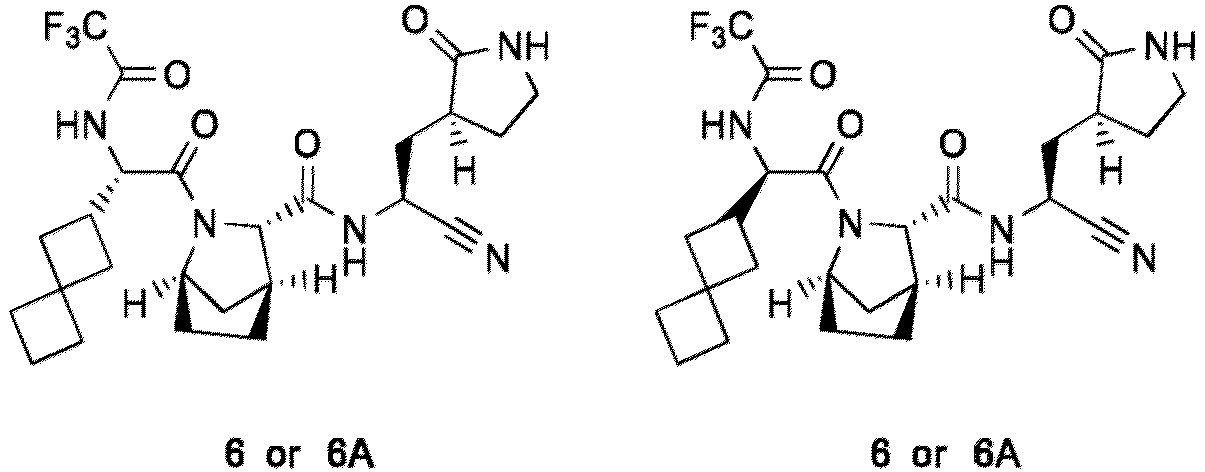
-

- Compound 6-1 (30 g, 198.46 mmol) and glyoxylic acid (18.27 g, 198.46 mmol, 3.68 mL) were dissolved in anhydrous toluene (300 mL), and the reaction mixture was stirred at 40°C for 3 hours. The reaction mixture was filtered and concentrated to obtain compound 6-2. [M+1]+ = 226.2.
- Compound 6-2 was dissolved in anhydrous methanol (420 mL), and sulfuric acid (18.73 g, 190.94 mmol, 10.18 mL) was added thereto, and the reaction mixture was stirred at 20°C for 48 hours. The reaction mixture was added with methyl tert-butyl ether (300 mL) and water (150 mL) for extraction, and the organic phases were combined, dried over anhydrous sodium sulfate, filtered and concentrated to obtain a crude product of the target product. The crude product was purified by silica gel column chromatography (petroleum ether: ethyl acetate = 2:1) to obtain compound 6-3. 1H NMR (400 MHz, DMSO-d 6) δ = 8.52 - 8.46 (m, 1H), 7.40 - 7.30 (m, 6H), 5.08 (s, 2H), 3.68 - 3.64 (m, 3H), 3.26 (s, 3H).
- Compound 6-3 (26 g, 102.67 mmol) was dissolved in sulfuric acid (10.07 g, 102.67 mmol, 5.47 mL), and the mixture was added to anhydrous toluene (260 mL), heated to 70°C. Phosphorus trichloride (49.35 mg, 359.33 µmol) was slowly added dropwise thereto, and the reaction mixture was stirred continuously at 75°C for 16 hours. Then, the reaction mixture was concentrated under reduced pressure, and added with anhydrous toluene (200 mL) for dilution, and then evaporated by rotary evaporation under reduced pressure, which was repeated for three times. Finally, anhydrous toluene (200 mL) was added, and trimethyl phosphite (15.29 g, 123.20 mmol, 14.56 mL) was slowly added dropwise to the concentrated solution at 75°C, and then heated to 90°C and reacted for 1.5 hours. The reaction mixture was poured into saturated sodium bicarbonate aqueous solution (360 mL) for quenching, added with ethyl acetate (360 mL) to separate the phases, and the organic phase was concentrated under reduced pressure to obtain a crude product. The crude product was purified by silica gel column chromatography (petroleum ether: ethyl acetate = 2:1) to obtain compound 6-4. 1H NMR (400 MHz, DMSO-d 6) δ = 7.41 - 7.30 (m, 5H), 5.09 - 5.07 (m, 2H), 4.89 - 4.83 (m, 1H), 3.73 - 3.63 (m, 9H).
- At 20°C, compound 6-4 (20 g, 60.38 mmol) was dissolved in acetonitrile (50 mL), and 1,8-diazabicyclo[5.4.0]undec-7-ene (11.03 g, 72.45 mmol, 10.92 mL) was added thereto, and the reaction mixture was stirred for 0.5 hours, then a solution of compound 6-5 (6.65 g, 60.38 mmol) in acetonitrile (20 mL) was added thereto and the reaction mixture was stirred for 16 hours. Ethyl acetate (40 mL) and water (40 mL) were added to the reaction mixture to separate the phases, and the organic phases were combined and evaporated by rotary evaporation under reduced pressure to obtain a crude product. The crude product was purified by silica gel column chromatography (petroleum ether: ethyl acetate = 2:1) to obtain compound 6-6. 1H NMR (400 MHz, CDCl3) δ = 7.41 - 7.30 (m, 5H), 6.12 (br s, 1H), 5.13 (s, 2H), 3.77 - 3.71 (m, 3H), 3.11 (s, 2H), 2.87 - 2.81 (m, 2H), 2.10 (br s, 4H), 1.89 - 1.79 (m, 2H).
- Compound 6-6 (11 g, 34.88 mmol) was dissolved in anhydrous methanol (5 mL), and 10% wet palladium/carbon (2.20 g, 7.33 mol) was added thereto, then 15 psi hydrogen was introduced, and the reaction mixture was stirred at 30°C for 18 hours. The reaction mixture was filtered through diatomite, and then concentrated under reduced pressure to obtain a crude product. The crude product was not further purified. Hydrochloride of compound 6-7 was obtained. 1H NMR (400 MHz, DMSO-d 6) δ = 3.60 - 3.57 (m, 3H), 3.32 (s, 2H), 3.17 - 3.12 (m, 1H), 1.98 - 1.73 (m, 11H).
- Compound 6-7 (6 g, 32.74 mmol) was added to a solution of water (30 mL) and anhydrous tetrahydrofuran (30 mL), then potassium carbonate (13.58 g, 98.23 mmol) and Boc anhydride (21.44 g, 98.23 mmol, 22.57 mL) were added thereto, and the reaction mixture was stirred at 20°C for 16 hours. The reaction mixture was added with 5% citric acid (15 mL), and then added with water (40 mL), extracted with ethyl acetate (40 mL) to separate the phases. The aqueous phase was extracted with ethyl acetate (30 mL), then the organic phases were combined, washed with saturated brine (30 mL), dried over anhydrous sodium sulfate and concentrated under reduced pressure. The residue was purified by column chromatography (petroleum ether: ethyl acetate=5:1) to obtain compound 6-8. 1H NMR (400 MHz, DMSO-d 6) δ = 3.84 - 3.83 (m, 1H), 3.57 - 3.52 (m, 1H), 1.99 - 1.91 (m, 12H), 1.87 - 1.76 (m, 11H).
- Compound 6-8 (0.8 g, 2.82 mmol) was dissolved in a solution of anhydrous tetrahydrofuran (6 mL) and water (2 mL), and lithium hydroxide monohydrate (236.95 mg, 5.65 mmol) was added to the reaction mixture, then the reaction mixture was stirred at 20°C for 16 hours. The reaction mixture was added with ethyl acetate (5 mL), washed with water (5 mL), then the aqueous phase was added with 5% citric acid (15 mL) and then added with water (5 mL), and extracted with ethyl acetate (5 mL×2). The organic phases were combined, washed with saturated brine (15 mL), dried over anhydrous sodium sulfate, and concentrated under reduced pressure. The crude product was not further purified to obtain compound 6-9. [M+1]+ = 270.34.
- Compound 6-9 (3 g, 11.14 mmol) was added to N,N-dimethylformamide (30 mL), then 1-hydroxybenzotriazole (6.02 g, 44.55 mmol) and hydrochloride of 1-(3-dimethylaminopropyl)-3-ethylcarbodiimide (5.80 g, 44.90 mmol, 7.82 mL) were added thereto, and the reaction was stirred at 20°C for 0.5 hours, then N,N-diisopropylethylamine (6.41 g, 33.42 mmol) and hydrochloride of compound 1-3 (2.13 g, 13.76 mmol) were added thereto, and the reaction mixture was stirred at 20°C for 20 hours. The reaction mixture was added with 5% citric acid (15 mL), then added with water (40 mL), and extracted with ethyl acetate (40 mL). Then the aqueous phase was extracted with ethyl acetate (30 mL), and the organic phases were combined, washed with saturated brine (30 mL), dried over anhydrous sodium sulfate and concentrated under reduced pressure. The residue was purified by column chromatography (petroleum ether: ethyl acetate=1:1) to obtain compound 6-10. [M+1]+ = 406.25.
- Compound 6-10 (300.00 mg, 737.98 µmol) was added to a mixture of anhydrous tetrahydrofuran (2.5 mL) and water (1 mL), and then lithium hydroxide monohydrate (61.94 mg, 1.48 mmol) was added to the reaction system, and the reaction mixture was stirred at 20°C for 16 hours. The reaction mixture was added with ethyl acetate (10 mL), washed with water (10 mL), then the aqueous phase was added with 5% citric acid (2 mL), extracted with ethyl acetate (10 mL×2). The organic phases were combined, washed with saturated brine (10 mL), dried over anhydrous sodium sulfate and concentrated under reduced pressure. Compound 6-11 was obtained from the crude product without further purification. [M+1]+ = 392.23.
- Compound 6-11 (300.00 mg, 764.35 µmol) was added to 2-butanone (6 mL), then 1-hydroxybenzotriazole (103.28 mg, 764.35 µmol) and hydrochloride of 1-(3-dimethylaminopropyl)-3-ethylcarbodiimide (175.83 mg, 917.23 µmol) were added thereto, and the reaction mixture was stirred at 20°C for 0.5 hours. N,N-Diisopropylethylamine (263.43 mg, 2.04 mmol, 355.03 µL) and hydrochloride of compound BB-1 (158.72 mg, 764.35 µmol) were added to the reaction system and the reaction mixture was stirred at 20°C for 16 hours. The reaction mixture was added with 5% citric acid (5 mL), then added with water (10 mL), and extracted with ethyl acetate (10 mL×2). The aqueous phase was extracted with ethyl acetate (10 mL), and the organic phases were combined, washed with saturated brine (5 mL), dried over anhydrous sodium sulfate and concentrated under reduced pressure. The residue was purified by column chromatography (dichloromethane: anhydrous methanol = 10:1) to obtain compound 6-12. [M+1]+ =545.32.
- Compound 6-12 (0.1 g, 183.26 µmol) was dissolved in dichloromethane (1 mL), then trifluoroacetic acid (41.79 mg, 366.52 µmol, 27.14 µL) was added thereto, and the reaction mixture was stirred at 20°C for 1 hour. The reaction mixture was then evaporated to dryness by rotary evaporation, added with dichloromethane and concentrated under reduced pressure, and the above steps were repeated for three times, then the concentrated solid was dissolved in anhydrous methanol (5 mL). Methyl trifluoroacetate (1.44 g, 11.22 mmol, 1.13 mL) was added to the reaction system, and triethylamine (681.33 mg, 6.73 mmol, 937.17 µL) was added thereto. The reaction mixture was stirred at 38°C for 12 hours. The reaction mixture was directly concentrated under reduced pressure, and purified by column chromatography (petroleum ether: ethyl acetate = 1:1) to obtain compound 6-13. [M+1]+ =541.25.
- Compound 6-13 (0.1 g, 184.65 µmol) was dissolved in dichloromethane (1 mL), then methyl N-(triethylammoniosulfonyl)carbamate (110.01 mg, 461.63 µmol) was added thereto, and the reaction mixture was stirred at 25°C for 16 hours, then dichloromethane (10 mL) was added to the reaction mixture, and saturated sodium bicarbonate solution (5 mL) was added thereto for extraction to separate the phases, and the organic phase was added with saturated brine (5 mL) to separate the phases, and then the organic phase was dried over sodium sulfate and concentrated under reduced pressure to obtain a crude product, and the crude product was separated by preparative HPLC (column type: C18 100*30 mm*10 µm; mobile phase: [H2O (NH4HCO3)-ACN]; ACN%: 40%-60%, 8 min) to obtain a crude product. The crude product was separated by SFC analysis method: column type: Chiralpak AD-3, 150×4.6 mm I.D., 3 µm, mobile phase: A: COz, B: EtOH (0.1% IPAm, v/v), gradient: timeA% B%, 0.0-0.5min, B% from 10% to 50%, maintained for 4.5 min, 4.5-5.0 min, B% from 50% to 10%, flow rate: 2.5 mL/min, column temperature: 35°C, ABPR: 2000 psi. The retention time of compound 6A was 1.97 minutes, and the retention time of compound 6 was 2.28 minutes. The crude product was separated by SFC (column type: DAICEL CHIRALPAK AD (250 mm*30 mm, 10 µm); mobile phase: [0.1% NH3H2O-EtOH]%: 16%-16%, 10 min) to obtain compound 6. 1H NMR (400 MHz, CDCl3) δ = 7.22 - 7.17 (m, 1H), 4.88 - 4.79 (m, 1H), 4.75 - 4.67 (m, 1H), 4.38 - 4.33 (m, 1H), 3.53 - 3.32 (m, 2H), 2.93 - 2.84 (m, 1H), 2.71 - 2.58 (m, 1H), 2.33 - 2.05 (m, 3H), 2.04 - 1.74 (m, 16H), 1.72 - 1.60 (m, 2H), 1.57 - 1.41 (m, 3H).
-


- Compound 7-1 (5 g, 35.16 mmol) was dissolved in tetrahydrofuran (50 mL), and the reaction system was replaced with nitrogen for three times, cooled to 0°C, and a solution of borane in tetrahydrofuran (70.33 mL, 1 M) was slowly added dropwise thereto. The reaction was stirred for 16 hours at 20°C. Sodium hydroxide solution (80 mL, 1 M) was added to the reaction at 0°C, extracted twice with methyl tert-butyl ether (100 mL), and the organic phases were combined and washed with 10% citric acid (80 mL×2) and saturated brine (80 mL), dried over anhydrous sodium sulfate, filtered and concentrated. Compound 7-2 was obtained. 1H NMR (400 MHz, CDCl3) δ ppm 3.28 (s, 2 H) 1.22 - 1.46 (m, 10 H) 0.85 - 0.87 (m, 3 H).
- Compound 7-2 (4 g, 31.20 mmol) was dissolved in acetonitrile (40 mL), and 2-iodobenzoic acid (13.10 g, 46.80 mmol) was added to the reaction system. The reaction was stirred at 50°C for 16 hours. The reaction system was filtered and the filtrate was used directly in the next reaction without purification to obtain a solution of compound 7-3 in acetonitrile.
- The solution of compound 7-3 (4 g, 31.37 mmol) in acetonitrile was dissolved in methanol (60 mL), and the compound R-phenylglycinol (5.22 g, 38.04 mmol) was added to the reaction system, and the reaction mixture was stirred at 20°C for 2 hours. The reaction system was cooled to 0°C, and trimethylsilyl cyanide (22.01 g, 221.88 mmol) was added thereto, and the reaction mixture was stirred at 50°C for 16 hours. The reaction mixture was directly evaporated to dryness by rotary evaporation. The residue was purified by silica gel column chromatography (petroleum ether: ethyl acetate = 3:1) to obtain compound 7-4. [M+1]+ = 273.3. 1H NMR (400 MHz, CDCl3) δ = 7.42 - 7.29 (m, 5H), 4.17 - 4.01 (m, 1H), 3.99 - 3.68 (m, 2H), 3.58 - 3.39 (m, 1H), 1.60 - 1.16 (m, 10H), 1.10 - 1.04 (m, 3H).
- Compound 7-4 (5 g, 18.36 mmol) was dissolved in methanol (50 mL) and dichloromethane (50 mL), cooled to 0°C, and lead tetraacetate (13.56 g, 27.53 mmol) was added thereto, and the reaction was stirred at 0°C for 15 minutes. The reaction mixture was poured into saturated sodium bicarbonate solution (45 mL), extracted three times with dichloromethane (45 mL). The organic phase was dried over anhydrous sodium sulfate, filtered, and concentrated under reduced pressure to obtain a crude product. Compound 7-5 was obtained. [M+1]+ = 241.2.
- Compound 7-5 (3 g, 12.48 mmol) was dissolved in 6M hydrochloric acid (300 mL), heated to 100°C, and the reaction mixture was stirred for 24 hours. The reaction system was extracted three times with chloroform (300 mL), and the aqueous phase was taken and concentrated under reduced pressure. Hydrochloride of compound 7-6 was obtained. 1H NMR (400 MHz, CD3OD) δ = 4.47 (s, 1H), 1.66 - 1.42 (m, 10H), 1.22 - 1.14 (m, 3H).
- Hydrochloride of compound 7-6 (1 g, 5.84 mmol) was dissolved in tetrahydrofuran (10 mL) and water (10 mL), then anhydrous potassium carbonate (2.42 g, 17.52 mmol) and di-tert-butyl dicarbonate (2.55 g, 11.68 mmol) were added thereto, and the reaction was stirred at 20°C for 16 hours. The pH of reaction mixture was adjusted to 3 with 1 M KHSO4, and the mixture was extracted four times with dichloromethane (40 mL), then the organic phase was dried over anhydrous sodium sulfate, filtered, and concentrated under reduced pressure. Compound 7-7 was obtained. [M-1]- = 270.3.
- Compound 7-7 (350 mg, 1.29 mmol) was dissolved in N,N-dimethylformamide (4 mL), and 2-(7-azabenzotriazol-1-yl)-N,N,N',N'-tetramethyluronium hexafluorophosphate (735.65 mg, 1.93 mmol) was added thereto, and the reaction mixture was stirred at 20°C for 0.5 hours. N,N-Diisopropylethylamine (833.51 mg, 6.45 mmol) and hydrochloride of compound 1-3 (260.23 mg, 1.68 mmol) were added thereto, then the reaction was stirred at 20°C for 16 hours. The reaction mixture was added with water (10 mL), extracted twice with ethyl acetate (20 mL), and the organic phases were combined, washed twice with 5% citric acid (15 mL), and washed four times with brine (10 mL), dried over anhydrous sodium sulfate, filtered, and evaporated to dryness by rotary evaporation. The residue was purified by column chromatography (petroleum ether: ethyl acetate=5:1) to obtain compound 7-8. [M+1]+ = 409.4.
- Compound 7-8 (120 mg, 293.74 µmol) was dissolved in tetrahydrofuran (6 mL), methanol (2 mL) and water (2 mL), then lithium hydroxide monohydrate (36.98 mg, 881.21 µmol) was added thereto and the reaction mixture was stirred at 20°C for 16 hours. The reaction mixture was added with 3% citric acid (20 mL), extracted twice with ethyl acetate (20 mL), and the organic phases were combined, washed with saturated brine (20 mL), dried over anhydrous sodium sulfate, filtered and evaporated to dryness by rotary evaporation to obtain compound 7-9. [M+1]+ = 391.3.
- Compound 7-9 (30 mg, 76.04 µmol) was dissolved in N,N-dimethylformamide (2 mL), then 1-hydroxybenzotriazole (10.28 mg, 76.04 µmol) and hydrochloride of 1-(3-dimethylaminopropyl)-3-ethylcarbodiimide (17.49 mg, 91.25 µmol) were added thereto, and the reaction mixture was stirred at 20°C for 0.5 hours. N,N-Diisopropylethylamine (39.31 mg, 304.18 µmol) and hydrochloride of compound BB-1 (19.53 mg, 114.07 µmol) were added thereto, then the reaction was stirred at 20°C for 16 hours. The reaction mixture was added with water (10 mL), extracted twice with dichloromethane (20 mL), and the organic phases were combined and washed twice with 5% citric acid (15 mL) and washed twice with brine (10 mL), then dried over anhydrous sodium sulfate, filtered, and evaporated to dryness by rotary evaporation. The residue was purified by column chromatography (dichloromethane: methanol =20:1) to obtain compound 7-10. [M+1]+ = 548.4.
- Compound 7-10 (150 mg, 273.88 µmol) was dissolved in dichloromethane (3 mL) and trifluoroacetic acid (1 mL), and the reaction was stirred at 20°C for 2 hours. The reaction was directly evaporated to dryness by rotary evaporation by an oil pump, added with dichloromethane and evaporated by rotary evaporation, and the above steps were repeated. Trifluoroacetate of compound 7-11 was obtained.
- Trifluoroacetate of compound 7-11 (120 mg, 268.11 µmol) was dissolved in methanol (2 mL), then triethylamine (162.78 mg, 1.61 mmol) and methyl trifluoroacetate (343.32 mg, 2.68 mmol) were added thereto. The reaction was heated to 38°C and stirred for 16 hours. The reaction system was directly concentrated under reduced pressure, then dissolved in water (10 mL) and ethyl acetate (20 mL), and the pH was adjusted to acidic with 3% citric acid (10 mL), then the mixture was extracted for three times with ethyl acetate (20 mL), and then washed twice with saturated brine (10 mL), dried over anhydrous sodium sulfate, filtered, and concentrated. Compound 7-12 was obtained. [M+1]+ = 544.3.
- Compound 7-12 (130 mg, 239.16 µmol) was dissolved in dichloromethane (4 mL), then tetrahydrofuran (0.4 mL) and Burgess reagent (142.48 mg, 597.89 µmol) were added thereto and the reaction mixture was stirred at 25°C for 2 hours. The reaction system was added with dichloromethane (10 mL), washed with saturated sodium bicarbonate (5 mL) and then washed with saturated brine (5 mL) to obtain the organic phase, and the organic phase was dried over anhydrous sodium sulfate, filtered and concentrated under reduced pressure. The crude product was separated by preparative HPLC (column type: C18 100*30 mm* 10 µm; mobile phase: [water (NH4HCO3)-ACN]; ACN %: 35%-55%, 8 min) to obtain compound 7. 1H NMR (400 MHz, CDCl3) δ = 4.92 - 4.81 (m, 1H), 4.78 - 4.63 (m, 1H), 4.60 (br s, 1H), 3.50 - 3.34 (m, 2H), 2.93 - 2.79 (m, 1H), 2.30 (br s, 2H), 2.10 (br s, 2H), 1.94 - 1.86 (m, 1H), 1.75 (br s, 2H), 1.71 - 1.60 (m, 4H), 1.33 (br d, J = 16.5 Hz, 10H), 1.30 - 1.17 (m, 1H), 1.16 - 0.96 (m, 3H).
-

-

- Compound 5-6 (2 g, 7.32 mmol) was dissolved in tetrahydrofuran (20 mL), and the reaction system was replaced with nitrogen for three times, cooled to -70°C, then lithium diisopropylamide (2 M, 7.32 mL) was slowly added dropwise thereto, and the reaction mixture was reacted for 1 hour. Subsequently, at - 70°C, methyl iodide (2.60 g, 73.17 mmol, 4.56 mL) was slowly added dropwise, slowly raised to 20°C, and the reaction was continued for 1 hour. Under nitrogen atmosphere, the reaction system was slowly added dropwise with saturated ammonium chloride solution (100 mL) for quenching the reaction, then extracted twice with ethyl acetate (200 mL), and the organic phases were combined, dried over anhydrous sodium sulfate, filtered, concentrated. The residue was purified by silica gel column chromatography (petroleum ether: ethyl acetate=1:0 to 10:1) to obtain compound 8-1. 1H NMR (400 MHz, CDCl3) δ = 7.34 - 7.27 (m, 3H), 7.26 - 7.18 (m, 2H), 3.87 - 3.77 (m, 1H), 3.67 - 3.59 (m, 1H), 3.25 (s, 3H), 2.96 (s, 1H), 2.67 - 2.64 (m, 1H), 2.64 - 2.55 (m, 2H), 1.94 (d, J = 10.7 Hz, 1H), 1.43 (d, J = 6.5 Hz, 3H), 1.14 - 1.09 (m, 3H).
- Compound 8-1 (600 mg, 2.09 mmol) was dissolved in N,N-dimethylformamide (6 mL), then p-toluenesulfonyl hydrazide (466.62 mg, 2.51 mmol) and trifluoromethanesulfonic acid (36.69 mg, 239.58 µmol, 21.58 µL) were added thereto, heated to 100°C, then sodium cyanoborohydride (393.65 mg, 6.26 mmol) was added, and the reaction mixture was reacted for 2 hours. The reaction system was added with ethyl acetate (60 mL), washed with saturated sodium bicarbonate solution (30 mL) and saturated brine (30 mL) in turn to separate the organic phase, and the organic phase was dried over anhydrous sodium sulfate, filtered, and concentrated. The residue was purified by silica gel column chromatography (petroleum ether: ethyl acetate=1:0 to 10:1) to obtain compound 8-2. 1H NMR (400 MHz, CDCl3) δ = 7.37 - 7.29 (m, 2H), 7.25 (br d, J = 7.1 Hz, 3H), 3.67 - 3.50 (m, 1H), 3.48 - 3.34 (m, 1H), 3.32 - 3.15 (m, 3H), 2.51 (s, 1H), 2.35 - 2.23 (m, 2H), 2.02 - 1.94 (m, 1H), 1.70 - 1.61 (m, 1H), 1.46 - 1.41 (m, 1H), 1.36 (d, J = 6.5 Hz, 3H), 1.18 - 1.10 (m, 1H), 0.96 (d, J = 7.1 Hz, 3H).
- Compound 8-2 (150 mg, 548.71 µmol) was dissolved in ethanol (4 mL), then 12 M hydrochloric acid (137.18 µL) and wet palladium on carbon (0.5 g, palladium content of 10%) were added thereto, and the reaction mixture was reacted under a hydrogen balloon atmosphere at 15 psi and 20°C for 16 hours. The reaction system was filtered through diatomite and evaporated to dryness by rotary evaporation to obtain hydrochloride of compound 8-3. [M+1]+=170.1.
- Compound 1-b (114.81 mg, 496.39 µmol) was dissolved in N,N-dimethylformamide (2 mL), then O-(7-azabenzotriazol-1-yl)-N,N,N,N-tetramethyluronium hexafluorophosphate (235.93 mg, 620.49 µmol) and diisopropylethylamine (267.31 mg, 2.07 mmol, 360.26 µL) were added thereto, and the reaction mixture was stirred for 30 min, then hydrochloride of compound 8-3 (70 mg) was added thereto, and the reaction mixture was stirred continuously at 20°C for 2.5 hours. The reaction system was added with ethyl acetate (40 mL), then extracted with 3% citric acid solution (30 mL) and saturated sodium bicarbonate solution (20 mL) in turn to separate the organic phase, and extracted with saturated brine (20 mL) to separate the organic phase, and the organic phase was dried over anhydrous sodium sulfate and concentrated under reduced pressure to obtain compound 8-4. [M+1]+=383.3.
- Compound 8-4 (125 mg, 326.80 µmol) was dissolved in a mixed solvent of tetrahydrofuran (3 mL), water (1 mL) and methanol (1 mL), and lithium hydroxide monohydrate (41.14 mg, 980.41 µmol) was added thereto, and the reaction mixture was reacted at 30°C for 16 hours. The reaction system was added with dichloromethane (40 mL) and 3% citric acid (20 mL) for extraction to separate the organic phase. Then, saturated brine (20 mL) was added for extraction to separate the organic phase, and the organic phase was dried over anhydrous sodium sulfate, and concentrated under reduced pressure to obtain compound 8-5. [M+1]+=369.3.
- Compound 8-5 (115 mg, 312.10 µmol) was dissolved in N,N-dimethylformamide (2 mL), then 1-hydroxybenzotriazole (50.61 mg, 374.53 µmol) and hydrochloride of 1-(3-dimethylaminopropyl)-3-ethylcarbodiimide (89.75 mg, 468.16 µmol) were added thereto, stirred for 30 min, then diisopropylethylamine (161.35 mg, 1.25 mmol, 217.45 µL) and hydrochloride of BB-1 (64.12 mg, 374.53 µmol) were added thereto and the reaction mixture was reacted at 20°C for 2 hours. The reaction system was added with ethyl acetate (50 mL) and 3% citric acid (25 mL) for extraction to separate the organic phase, and the organic phase was extracted with saturated brine (25 mL) to separate the organic phase, and the organic phase was dried over anhydrous sodium sulfate, and concentrated under reduce pressure. The residue was purified by silica gel chromatography (dichloromethane: methanol = 1:0 to 30:1) to obtain compound 8-6. [M+1]+=522.4.
- Compound 8-6 (240 mg, 460.08 µmol, 1 eq) was dissolved in dichloromethane (1 mL), then trifluoroacetic acid (0.3 mL) was added thereto, and the reaction mixture was reacted at 20°C for 1 hour. The reaction system was directly concentrated under reduced pressure to obtain trifluoroacetate of compound 8-7. [M+1]+=422.3.
- Trifluoroacetate of compound 8-7 (180 mg, 427.01 µmol) was dissolved in methanol (2 mL), then triethylamine (172.84 mg, 1.71 mmol, 237.74 µL) and methyl trifluoroacetate (546.79 mg, 4.27 mmol, 430.54 µL) were added thereto and the reaction mixture was reacted for 3 hours at 38°C. The reaction system was concentrated under reduced pressure, then dissolved with water (10 mL) and ethyl acetate (30 mL×2). The pH was adjusted to acidic with 3% citric acid (5 mL), and the mixture was extracted to separate the organic phase, and the organic phase was washed with saturated brine (15 mL), dried and concentrated to obtain compound 8-8. [M+1]+=518.3.
- Compound 8-8 (200 mg, 386.44 µmol) was dissolved in dichloromethane (2 mL), and Burgess reagent (230.23 mg, 966.11 µmol) was added thereto, and the reaction mixture was stirred at 25°C for 16 hours. 1H NMR (400 MHz, CD3OD) δ = 5.07 - 4.99 (m, 2H), 4.79 - 4.71 (m, 1H), 4.29 - 4.18 (m, 1H), 3.83 - 3.74 (m, 1H), 3.28 - 3.23 (m, 1H), 2.76 - 2.65 (m, 1H), 2.63 - 2.57 (m, 1H), 2.38 - 2.26 (m, 2H), 2.19 - 2.10 (m, 1H), 2.02 - 1.95 (m, 1H), 1.90 - 1.75 (m, 3H), 1.67 - 1.60 (m, 1H), 1.33 - 1.26 (m, 1H), 1.15 - 1.04 (m, 9H), 0.99 (d, J = 7.1 Hz, 3H). [M+1]+=500.3.
-

-

- Compound 9-1 (2 g, 6.15 mmol) was dissolved in methanol (8 mL) and toluene (24 mL), and cooled to 0°C, and a solution of (trimethylsilyl)diazomethane (6.15 mL, 2 M) in n-hexane was slowly added dropwise thereto. The reaction was stirred for 16 hours at 20°C. The reaction mixture was directly evaporated to dryness by rotary evaporation, and then purified by column chromatography (petroleum ether: ethyl acetate = 3:1) to obtain compound 9-2. 1H NMR (400 MHz, CDCl3) δ = 5.15 - 5.07 (m, 1H), 3.74 (s, 3H), 2.25 (br s, 1H), 1.72 - 1.41 (m, 23H). [M-99]+ = 240.2.
- Compound 9-2 (100 mg, 294.62 µmol) was dissolved in dichloromethane (1 mL), cooled to 0°C, and diethylaminosulfur trifluoride (94.98 mg, 589.23 µmol) was added to the reaction system. The reaction was stirred at 20°C for 16 hours. The reaction mixture was slowly added to saturated sodium bicarbonate solution (20 mL) at 0°C, and extracted twice with dichloromethane (20 mL). The combined organic phases were dried over anhydrous sodium sulfate, filtered, and concentrated to obtain compound 9-3. 1H NMR (400 MHz, CDCl3) δ = 5.20 - 4.99 (m, 1H), 3.75 (s, 3H), 2.32 (br s, 1H), 1.88 - 1.43 (m, 23H). [M-55]+ =286.1.
- Compound 9-3 (700 mg, 2.05 mmol) was dissolved in tetrahydrofuran (7 mL), water (2.3 mL) and methanol (2.3 mL), then lithium hydroxide monohydrate (430.19 mg, 10.25 mmol) was added thereto and the reaction mixture was stirred at 20°C for 16 hours. The reaction mixture was added with water (10 mL) and 5% citric acid (15 mL), extracted twice with ethyl acetate (15 mL), and the organic phases were combined, washed with saturated brine (15 mL), dried over anhydrous sodium sulfate, filtered and evaporated to dryness by rotary evaporation. Compound 9-4 was obtained without purification. 1H NMR (400 MHz, CDCl3) δ = 5.31 (s, 1H), 5.10 (br d, J = 9.5 Hz, 1H), 4.20 - 4.09 (m, 1H), 2.34 (br s, 1H), 1.90 - 1.75 (m, 7H), 1.58 (br s, 5H), 1.46 (s, 9H). [M-55]+ = 272.2.
- Compound 9-4 (776 mg, 2.37 mmol) was dissolved in N,N-dimethylformamide (8 mL), then 1-hydroxybenzotriazole (960.83 mg, 7.11 mmol) and hydrochloride of 1-(3-dimethylaminopropyl)-3-ethylcarbodiimide (908.77 mg, 4.74 mmol) were added thereto, and the reaction mixture was stirred at 20°C for 0.5 hours. N,N-Diisopropylethylamine (919.02 mg, 7.11 mmol) and hydrochloride of compound 1-3 (367.85 mg, 2.37 mmol) were added thereto, and the reaction was stirred at 20°C for 16 hours. The reaction mixture was added with water (15 mL), extracted twice with ethyl acetate (30 mL), and the organic phases were combined, washed twice with 5% citric acid (30 mL), and washed four times with brine (20 mL), dried over anhydrous sodium sulfate, filtered, and evaporated to dryness by rotary evaporation. The residue was purified by column chromatography (petroleum ether: ethyl acetate=8:1) to obtain compound 9-5. 1H NMR (400 MHz, CDCl3) δ = 5.32 - 5.21 (m, 1H), 4.49 (br s, 1H), 4.32 (br d, J = 9.8 Hz, 1H), 4.07 (s, 1H), 3.73 (s, 3H), 2.75 (br s, 1H), 2.33 (br s, 1H), 1.89 - 1.53 (m, 18H), 1.44 (s, 9H). [M+1]+ = 465.3.
- Compound 9-5 (740 mg, 1.59 mmol) was dissolved in tetrahydrofuran (7.4 mL), water (2.47 mL) and methanol (2.47 mL), then lithium hydroxide monohydrate (200.51 mg, 4.78 mmol) was added thereto and the reaction mixture was stirred at 20°C for 16 hours. The reaction mixture was added with water (20 mL) and 5% citric acid (25 mL), extracted twice with ethyl acetate (40 mL), and the organic phases were combined, washed with saturated brine (40 mL), dried over anhydrous sodium sulfate, filtered and evaporated to dryness by rotary evaporation. Compound 9-6 was obtained without purification. 1H NMR (400 MHz, CDCl3) δ = 5.30 (br d, J = 9.8 Hz, 1H), 4.48 (br s, 1H), 4.36 (br d, J = 9.9 Hz, 1H), 4.14 (s, 1H), 2.97 (br s, 1H), 2.31 (br s, 1H), 2.01 - 1.50 (m, 19H), 1.44 (s, 9H). [M-55]+ = 395.2.
- Compound 9-6 (710 mg, 1.58 mmol) was dissolved in 2-butanone (7 mL), then 1-hydroxybenzotriazole (255.52mg, 1.89 mmol) and hydrochloride of 1-(3-dimethylaminopropyl)-3-ethylcarbodiimide (453.14 mg, 2.36 mmol) were added thereto, and the reaction mixture was stirred at 20°C for 0.5 hours. N,N-diisopropylethylamine (814.67 mg, 6.30 mmol) and hydrochloride of compound BB-1 (323.74 mg, 1.89 mmol) were added thereto and the reaction was stirred at 20°C for 16 hours. The reaction mixture was added with water (15 mL), extracted twice with ethyl acetate (30 mL), and the organic phases were combined, washed twice with 5% citric acid (30 mL), and washed four times with brine (20 mL), dried over anhydrous sodium sulfate, filtered, and evaporated to dryness by rotary evaporation. The residue was purified by column chromatography (dichloromethane: methanol =20:1) to obtain compound 9-7. 1H NMR (400 MHz, CDCl3) δ = 7.96 (br d, J= 6.3 Hz, 1H), 5.83 - 5.74 (m, 1H), 5.57 - 5.44 (m, 1H), 5.25 (br d, J = 9.9 Hz, 1H), 4.54 - 4.48 (m, 1H), 4.37 (br d, J = 9.9 Hz, 1H), 4.05 - 3.97 (m, 1H), 3.43 - 3.27 (m, 2H), 2.95 - 2.76 (m, 1H), 2.60 - 1.30 (m, 34H). [M+1]+ = 604.4.
- Compound 9-7 (760 mg, 1.26 mmol) was dissolved in dichloromethane (7.6 mL) and trifluoroacetic acid (2.7 mL), and the reaction was stirred at 20°C for 2 hours. The reaction was directly evaporated to dryness by rotary evaporation by an oil pump, added with dichloromethane and evaporated by rotary evaporation, and the above steps were repeated. Trifluoroacetate of compound 9-8 was obtained. [M+1]+ = 504.4.
- Trifluoroacetate of compound 9-8 (300 mg, 595.70 µmol) was dissolved in methanol (6 mL), then triethylamine (241.12 mg, 2.38 mmol) and methyl trifluoroacetate (762.79 mg, 5.96 mmol) were added thereto. The reaction was heated to 38°C and stirred for 16 hours. The reaction mixture was dried directly and dissolved by adding water (10 mL) and ethyl acetate (10 mL), and the pH of the solution was adjusted to acidic by adding 5% citric acid (10 mL). The phases were separated, extracted twice with ethyl acetate (10 mL), and the organic phases were combined and washed twice with saturated brine (10 mL), dried over anhydrous sodium sulfate, filtered, and concentrated to obtain compound 9-9 without purification. [M+1]+ = 600.3.
- Compound 9-9 was dissolved in dichloromethane (2.8 mL), and then Burgess reagent (278.20 mg, 1.17 mmol) was added thereto. The reaction was heated to 25°C and stirred for 2 hours. The reaction mixture was added with sodium bicarbonate solution (10 mL) and saturated brine (5 mL), extracted twice with dichloromethane (15 mL), and the organic phases were combined, dried over anhydrous sodium sulfate, filtered, and concentrated. The crude product was separated by preparative HPLC (column type: C18 100*30 mm*10 µm; mobile phase: [water (NH4HCO3)-ACN]; ACN%: 35%-55%, 8 min) to obtain compound 9. 1H NMR (400 MHz, CDCl3) δ = 9.50 - 8.17 (m, 1H), 7.12- 6.93 (m, 1H), 5.92 - 5.73 (m, 1H), 4.95 - 4.77 (m, 1H), 4.72 - 4.57 (m, 1H), 4.46 (s, 1H), 3.97 - 3.86 (m, 1H), 3.38 (br dd, J= 4.0, 8.9 Hz, 1H), 2.87 - 2.78 (m, 1H), 2.63 - 1.22 (m, 26H). [M+1]+ = 582.3.
-

-

- Compound 5-5 (3 g, 10.90 mmol) was dissolved in ethanol (80 mL), then hydrochloric acid (1.19 g, 32.69 mmol) and wet palladium on carbon (15 g, 10.68 mmol) were added thereto. The reaction was stirred at 20°C for 16 hours. The reaction mixture was filtered through diatomite and directly evaporated to dryness by rotary evaporation to obtain a crude product of hydrochloride of compound 10-1. [M+1]+ = 172.0.
- Compound 1-b (1.87 g, 10.90 mmol) was dissolved in N,N-dimethylformamide (20 mL), then O-(7-azabenzotriazol-1-yl)-N,N,N,N-tetramethyluronium hexafluorophosphate (4.78 g, 12.58 mmol) and diisopropylethylamine (4.34 g, 33.55 mmol) were added thereto, after stirring for 30 min, hydrochloride of compound 10-1 (190 mg, 1.12 mmol) was added thereto. The reaction was stirred at 20°C for 16 hours. The reaction mixture was added with water (15 mL), extracted twice with ethyl acetate (60 mL), and the organic phases were combined, washed twice with 5% citric acid (30 mL) and washed four times with brine (20 mL), dried over anhydrous sodium sulfate, filtered and evaporated to dryness by rotary evaporation. The residue was purified by column chromatography (petroleum ether: ethyl acetate= 3:1) to obtain compound 10-2. 1H NMR (400 MHz, CDCl3) δ = 5.28 - 5.16 (m, 1H), 4.50 (br s, 1H), 4.28 (d, J = 9.8 Hz, 1H), 3.92 (s, 1H), 3.74 (s, 3H), 2.81 (s, 1H), 2.67 (s, 1H), 2.17 (br dd, J = 6.1, 12.7 Hz, 1H), 1.99 - 1.93 (m, 1H), 1.90 - 1.84 (m, 1H), 1.59 (br d, J = 13.3 Hz, 2H), 1.43 (s, 9H), 1.04 (s, 9H). [M+1]+ =385.2.
- Compound 10-2 (500 mg, 1.30 mmol) was dissolved in acetonitrile (7.5 mL), then 2-iodobenzoic acid (976.31 mg, 3.49 mmol) was added thereto, and the reaction mixture was stirred at 60°C for 16 hours. The reaction mixture was filtered through diatomite and evaporated to dryness by rotary evaporation. Compound 10-3 was obtained without purification. [M-55]+ = 327.1.
- Compound 10-3 (480 mg, 1.26 mmol) was dissolved in dichloromethane (4.8 mL), cooled to 0°C, and diethylaminosulfur trifluoride (1.01 g, 6.28 mmol) was added thereto, and the reaction mixture was stirred at 20°C for 16 hours. The reaction mixture was slowly added to saturated sodium bicarbonate solution (20 mL) at 0°C, extracted twice with dichloromethane (20 mL), and the combined organic phases were dried over anhydrous sodium sulfate, filtered, and concentrated. Compound 10-4 was obtained without purification. [M-100]+ = 304.0.
- Compound 10-4 (475 mg, 1.17 mmol) was dissolved in tetrahydrofuran (5.5 mL), water (1.84 mL) and methanol (1.84 mL), then lithium hydroxide monohydrate (147.84 mg, 3.52 mmol) was added thereto and the reaction mixture was stirred at 20°C for 16 hours. The reaction mixture was added with water (20 mL) and 5% citric acid (25 mL), extracted twice with ethyl acetate (40 mL), and the organic phases were combined and washed with saturated brine (40 mL), dried over anhydrous sodium sulfate, filtered, and evaporated to dryness by rotary evaporation. Compound 10-5 was obtained without purification. 1H NMR (400 MHz, CDCl3) δ = 5.18 (br d, J = 9.8 Hz, 1H), 4.65 - 4.53 (m, 2H), 4.31 (d, J = 9.9 Hz, 1H), 3.33 (br d, J = 7.3 Hz, 1H), 2.55 - 2.41 (m, 1H), 2.33 - 2.07 (m, 3H), 1.45 (s, 9H), 1.03 (s, 9H). [M-55]+ = 335.1.
- Compound 10-5 (200 mg, 512.27 µmol) was dissolved in 2-butanone (2 mL), then 1-hydroxybenzotriazole (83.06 mg, 614.72 µmol) and hydrochloride of 1-(3-dimethylaminopropyl)-3-ethylcarbodiimide (264.83 mg, 2.05 mmol) were added thereto, and the reaction mixture was stirred at 20°C for 0.5 hours. N,N-Diisopropylethylamine (264.83 mg, 2.05 mmol) and hydrochloride of compound BB-1 (105.24 mg) were added thereto, then the reaction was stirred at 20°C for 16 hours. The reaction mixture was added with water (15 mL), extracted twice with ethyl acetate (30 mL), and the organic phases were combined, washed twice with 5% citric acid (30 mL) and washed four times with brine (20 mL), dried over anhydrous sodium sulfate, filtered and evaporated to dryness by rotary evaporation. The residue was purified by column chromatography (dichloromethane: methanol =20:1) to obtain compound 10-6. 1H NMR (400 MHz, CDCl3) δ = 8.19 (br d, J = 6.8 Hz, 1H), 5.78 (br s, 1H), 5.49 (br s, 1H), 5.19 (br d, J = 10.0 Hz, 1H), 4.61 (br s, 1H), 4.44 (s, 1H), 4.34 (d, J = 10.3 Hz, 1H), 3.38 (br d, J = 6.5 Hz, 2H), 3.10 (br d, J = 6.5 Hz, 1H), 2.32 - 2.20 (m, 3H), 2.02 - 1.82 (m, 6H), 1.44 (s, 9H), 1.05 (s, 9H). [M+1]+ = 544.3.
- Compound 10-6 (180 mg, 331.12 µmol) was dissolved in dichloromethane (2 mL) and trifluoroacetic acid (0.7 mL), and the reaction was stirred at 20°C for 2 hours. The reaction was directly dried by an oil pump, added with a small amount of dichloromethane and dried, and the above steps were repeated until the shape of the product was a light yellow foam. Trifluoroacetate of compound 10-7 was obtained. [M+1]+ = 444.3.
- Trifluoroacetate of compound 10-7 (145 mg, 326.95 µmol) was dissolved in methanol (3.2 mL), and then triethylamine (132.34 mg, 1.31 mmol) and methyl trifluoroacetate (418.66 mg, 3.27 mmol) were added thereto. The reaction was heated to 38°C and stirred for 16 hours. The reaction mixture was directly evaporated to dryness by rotary evaporation, dissolved with water (10 mL) and ethyl acetate (10 mL), and the pH of the solution was adjusted to acidic by adding 5% citric acid (10 mL). The phases were separated, extracted twice with ethyl acetate (10 mL), and the organic phases were combined and washed twice with saturated brine (10 mL) by 3, dried over anhydrous sodium sulfate, filtered, concentrated to obtain compound 10-8 without purification. [M+1]+ = 540.3.
- Compound 10-8 (170 mg, 315.11 µmol) was dissolved in dichloromethane (2.8 mL), and then Burgess reagent (187.73 mg, 787.77 µmol) was added thereto. The reaction was heated to 25°C and stirred for 2 hours. The reaction mixture was added with sodium bicarbonate solution (10 mL) and saturated brine (5 mL), extracted twice with dichloromethane (15 mL), and the organic phases were combined, dried over anhydrous sodium sulfate, filtered and concentrated. The crude product was separated by preparative HPLC (column type: C18 100*30 mm*10 µm; mobile phase: [H2O (NH4HCO3)-ACN]; ACN%: 35%-55%, 8 min) to obtain compound 10. 1H NMR (400 MHz, CDCl3) δ = 9.79 - 8.65 (m, 1H), 7.18 - 7.01 (m, 1H), 6.34 - 6.20 (m, 1H), 4.64 - 4.58 (m, 2H), 4.45 - 4.37 (m, 1H), 3.44 - 3.30 (m, 3H), 3.12 - 3.05 (m, 1H), 2.63 - 2.47 (m, 3H), 2.40 - 2.12 (m, 6H), 1.06 (s, 9H). [M+1]+ = 522.3.
-

-

- Compound 10-3 (0.7 g, 1.83 mmol) was dissolved in tetrahydrofuran (14 mL), and TEBBE reagent (0.5 M, 14.64 mL) was added thereto at 0°C. The reaction mixture was stirred at 0°C for 1 hour then heated to 15°C and stirred continuously for 3 hours. The reaction mixture was slowly poured into saturated sodium bicarbonate solution (50 mL), filtered through diatomite, extracted with ethyl acetate (30 mL×3), and washed with saturated brine (30 mL×2). The residue was purified by column chromatography (petroleum ether: ethyl acetate= 5:1) to obtain compound 11-1. [M+1]+ = 381.1.
- Under nitrogen atmosphere, diethyl zinc (1 M, 13.14 mL) was slowly added to 1,2-dichloroethane (80 mL) at 0°C. After stirring for 0.25 hours, the reaction mixture was slowly added with diiodomethane (7.04 g, 26.28 mmol, 2.12 mL) at 0°C, and stirred for 0.25 hours. Trifluoroacetic acid (149.84 mg, 1.31 mmol, 97.30 µL) was slowly added to the reaction system, stirred continuously for 0.5 hours. A solution of compound 11-1 (0.5 g, 1.31 mmol) in 1,2-dichloroethane (5 mL) was added to the reaction system, heated to 20°C and stirred continuously for 12 hours. The reaction was quenched with saturated sodium bicarbonate solution (200 mL), extracted with dichloromethane (100 mL), dried over anhydrous sodium sulfate, filtered and concentrated. The crude product was purified by preparative HPLC (column type: Phenomenex luna C18 80*40 mm*3 µm; mobile phase: [H2O (HCl)-acetonitrile]; acetonitrile%: 1%-30%,7 min) to obtain compound 11-2. [M+1]+ = 295.2.
- Compound 11-2 (0.1 g, 339.69 µmol) was dissolved in 1,4-dioxane (3 mL), and then a solution of potassium carbonate (187.79 mg, 1.36 mmol) and di-tert-butyl dicarbonate (111.20 mg, 509.53 µmol, 117.06 µL) in water (1 mL) was added thereto, and the reaction was stirred at 15°C for 12 hours. The reaction mixture was poured into water (30 mL), extracted with ethyl acetate (20 mL×3), dried over anhydrous sodium sulfate, filtered, and concentrated. The residue was purified by column chromatography (petroleum ether: ethyl acetate = 5:1) to obtain compound 11-3. [M+1]+ = 395.2.
- Compound 11-3 (88.13 mg, 223.40 µmol) was dissolved in tetrahydrofuran (2 mL) and methanol (0.6 mL), and lithium hydroxide monohydrate (28.12 mg, 670.21 µmol) dissolved in water (0.6 mL) was added thereto. The reaction was stirred at 15°C for 2 hours. The pH was adjusted to 5 with 3% citric acid, and the mixture was extracted with ethyl acetate (20 mL×3), dried over anhydrous sodium sulfate, filtered and concentrated to obtain compound 11-4. [M+1]+ = 381.3.
- Compound 11-4 (0.056 g, 148.79 µmol) was dissolved in N,N-dimethylformamide (2 mL), then O-(7-azabenzotriazol-1-yl)-N,N,N,N-tetramethyluronium hexafluorophosphate (84.86 mg, 223.18 µmol) was added to the reaction system, and the reaction was stirred at 15°C for 0.5 hours. Then diisopropylethylamine (76.92 mg, 595.16 µmol, 103.67 µL) was added to the reaction mixture, and a solution of hydrochloride of compound BB-1 (43.26 mg, 208.31 µmol) dissolved in N,N-dimethylformamide (0.5 mL) was added to the reaction system, and the reaction was stirred at 15°C for 12 hours. The reaction was diluted with water (20 mL), extracted with ethyl acetate (20 mL×3), and the organic phase was washed with 3% citric acid (20 mL), washed with saturated sodium chloride (20 mL), dried over anhydrous sodium sulfate, filtered, and concentrated to obtain compound 11-5. [M+1]+ = 534.4.
- Compound 11-5 (0.02 g, 37.48 µmol) was dissolved in dichloromethane (2 mL), and trifluoroacetic acid (141.02 mg, 1.24 mmol, 91.57 µL) was added to the reaction system. The reaction mixture was stirred at 15°C for 1 hour. The reaction was directly quenched with sodium bicarbonate solution (10 mL), extracted with dichloromethane (5 mL×5), and the organic phases were combined, dried over anhydrous sodium sulfate, filtered, and concentrated to obtain compound 11-6. [M+1]+ = 434.2.
- Compound 11-6 (0.03 g, 69.20 µmol) was dissolved in dichloromethane (1 mL), and trifluoroacetic anhydride (58.13 mg, 276.79 µmol, 38.50 µL) was added to the reaction system. The reaction mixture was stirred at 15°C for 1 hour. The reaction was directly quenched with sodium bicarbonate solution (10 mL), extracted with dichloromethane (5 mL×5), and the organic phases were combined, dried over anhydrous sodium sulfate, filtered, and concentrated. The crude product was separated by preparative HPLC (column type: Waters Xbridge BEH C18 100*30 mm*10 µm; mobile phase: [H2O (NH4HCO3)-acetonitrile]; acetonitrile%: 10%-50%, 8 min) to obtain compound 11. [M+1]+ = 512.2.
-
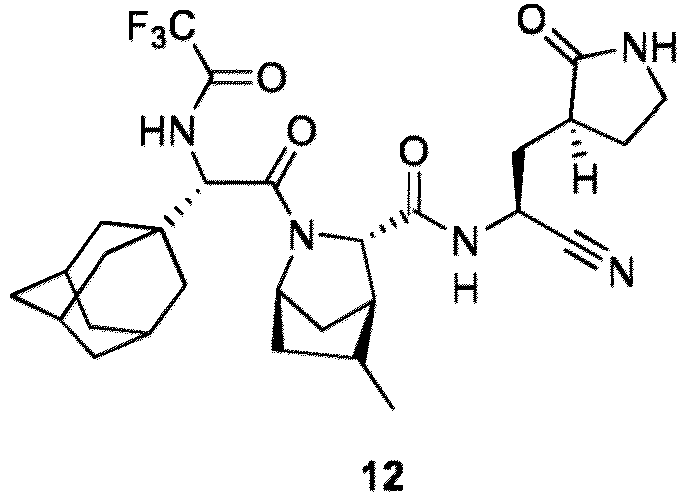
-

- Compound 12-1 (2.36 g, 7.64 mmol) was dissolved in N,N-dimethylformamide (17 mL), then O-(7-azabenzotriazol-1-yl)-N,N,N,N-tetramethyluronium hexafluorophosphate (4.36 g, 11.46 mmol) and diisopropylethylamine (3.95 g, 30.55 mmol) were added thereto, after stirring for 30 min, hydrochloride of compound 10-1 (1.7 g, 8.19 mmol) was added thereto, and the reaction was stirred at 15°C for 1 hour. The reaction mixture was added with water (15 mL), extracted twice with ethyl acetate (60 mL), and the organic phases were combined, washed twice with 5% citric acid (30 mL), and washed four times with saturated brine (20 mL), dried over anhydrous sodium sulfate, filtered, and evaporated to dryness by rotary evaporation. The residue was purified by column chromatography (petroleum ether: ethyl acetate= 1:1) to obtain compound 12-2. 1H NMR (400 MHz, CDCl3) δ = 5.22 (br d, J=9.76 Hz, 1 H), 4.50 - 4.62 (m, 1 H), 4.09 - 4.18 (m, 2 H), 3.74 (br s, 3 H), 1.93 - 2.04 (m, 4 H), 1.87 (br d, J=9.88 Hz, 1H), 1.53 - 1.77 (m, 15 H), 1.39 - 1.46 (m, 9 H), 1.27 (t, J=7.13 Hz, 2 H). [M+1]+ =463.58.
- Compound 12-2 (3 g, 6.49 mmol) was dissolved in acetonitrile (45 mL), and 2-iodobenzoic acid (3.63 g, 12.97 mmol) was added thereto, and the reaction mixture was reacted at 60°C for 16 hours. The reaction mixture was filtered through diatomite, and evaporated to dryness by rotary evaporation under reduced pressure. Compound 12-3 was obtained. [M+1]+ = 461.56.
- Compound 12-3 (4 g, 8.69 mmol) was dissolved in tetrahydrofuran (80 mL), cooled to 0 °C, and diethylaminosulfur trifluoride (10.24 g, 34.74 mmol) was added thereto, and the reaction mixture was reacted at 15°C for 3 hours. The reaction mixture was slowly added to saturated sodium bicarbonate solution (100 mL), and extracted three times with ethyl acetate (50 mL), and the combined organic phases were dried over anhydrous sodium sulfate, filtered, and concentrated under reduced pressure. Compound 12-4 was obtained. 1H NMR (400 MHz, CDCl3) δ = 5.227 - 5.251 (br d, J=9.6 Hz, 2 H), 4.862 (br s, 1 H), 4.636 (br s, 1 H), 4.191 - 4.215 (m, 2 H), 3.768 (br s, 3 H), 3.117 (br s, 1 H), 2.369 (br s, 2 H), 2.115 (t, J=14.4 Hz, 1 H), 2.010 - 2.046 (br s, 3 H), 1.618 - 1.701 (m, 13 H), 1.432 (br s, 9 H). [M+1]+ = 459.59.
- Compound 12-4 (1.90 g, 4.14 mmol) was dissolved in methanol (191 mL), added to another single-necked flask containing a solution of wet palladium on carbon (9.55 g, palladium content of 5%) in methanol, and the reaction system was replaced with a hydrogen balloon for three times, and the reaction mixture was reacted at 15°C and 15 Psi for 2 hours. The reaction mixture was filtered through diatomite, and evaporated to dryness by rotary evaporation under reduced pressure. Compound 12-5 was obtained. [M+1]+ = 461.60.
- Compound 12-5 (1.8 g, 3.91 mmol) was dissolved in tetrahydrofuran (40 mL) and methanol (13 mL), then cooled to 0°C, and lithium hydroxide monohydrate (983.94 mg, 23.46 mmol) was added thereto, and the reaction mixture was reacted at 15°C for 40 hours. The reaction mixture was added with water (30 mL), and the pH was adjusted to 4 to 5 with 5% citric acid (20 mL), then the mixture was extracted twice with ethyl acetate (50 mL), and the organic phases were combined, washed twice with saturated sodium chloride (30 mL), dried over anhydrous sodium sulfate, filtered, and evaporated to dryness by rotary evaporation. Compound 12-6 was obtained without purification. 1H NMR (400 MHz, DMSO-d 6) δ = 1.424 (br s, 9 H) 1.594 - 1.655 (m, 14 H) 1.846 (br s, 8 H) 2.030 (br s, 1 H) 2.540 - 2.548 (m, 1 H) 3.240 - 3.367 (br d, J=50.8 Hz, 1 H) 3.633 - 3.668 (m, 1 H) 3.777 - 3.823 (m, 1 H) 4.446 (br s, 1 H) 6.309 - 6.332 (br d, J=9.2, 1 H). [M+1]+ = 447.58.
- Compound 12-6 (1.3 g, 2.91 mmol) was dissolved in N,N-dimethylformamide (12 mL), then 1-hydroxybenzotriazole (472.01 mg, 3.49 mmol), 1-(3-dimethylaminopropyl)-3-ethylcarbodiimide (837.07 mg, 4.37 mmol) were added thereto, and the reaction was stirred at 15°C for 30 min. Hydrochloride of compound BB-1 (747.27 mg, 4.37 mmol) and diisopropylethylamine (1.50 g, 11.64 mmol) were added thereto, and the reaction mixture was reacted at 15°C for 2 hours. The reaction mixture was added with water (50 mL), extracted twice with ethyl acetate (50 mL), and the organic phases were combined, washed twice with 5% citric acid (30 mL) and washed twice with saturated brine (20 mL), dried over anhydrous sodium sulfate, filtered and evaporated to dryness by rotary evaporation. The residue was purified by column chromatography (dichloromethane: methanol = 20:1) to obtain compound 12-7. 1H NMR (400 MHz, CDCl3) δ = 7.730 - 7.748 (br d, J=7.2 Hz, 1 H), 6.162 (br s, 1 H) 7.270 (br s, 1 H), 5.569 (br d, 1 H), 5.288 (br s, 1 H), 4.510 - 4.567 (m, 1 H), 4.430 (br d, 1 H), 4.331 (br d, 1 H), 4.183 - 4.208 (br d, J=10 Hz, 1 H), 3.322 - 3.360 (t, J=7.6 Hz, 2 H), 2.658 - 2.666 (m, 1 H), 2.459 (m, 2 H), 2.017 - 2.076 (m, 1 H), 1.990 (m, 8 H), 1.602 - 1.780 (m, 13 H), 1.424 (m, 9 H), 1.046 (br s, 1 H), 0.976 - 1.029 (br d, J=21.2 Hz, 3 H). [M+1]+ = 600.76.
- Compound 12-7 (920.00 mg, 1.53 mmol) was dissolved in dichloromethane (18.4 mL), then trifluoroacetic acid (7.89 g, 69.22 mmol) was added thereto, and the reaction mixture was reacted at 15°C for 1 hour. The reaction mixture was directly evaporated to dryness by rotary evaporation. Compound 12-8 was obtained. [M+1]+ = 500.64.
- Compound 12-8 (420.00 mg, 840.60 µmol) was dissolved in methanol (8.4 mL), then triethylamine (510.36 mg, 5.04 mmol) was added thereto, and methyl trifluoroacetate (1.29 g, 10.09 mmol) was added thereto, and the reaction mixture was heated to 38°C and stirred for 16 hours. The reaction mixture was concentrated under reduced pressure, added with ethyl acetate (50 mL) and water (20 mL). The pH of the reaction mixture was adjusted to acidic by adding 3% citric acid, and the mixture was extracted three times by adding ethyl acetate (30 mL), and the organic phases were combined, washed with saturated sodium chloride solution (30 mL), dried over anhydrous sodium sulfate, filtered, and concentrated. The residue was purified by column chromatography (dichloromethane: methanol =10:1) to obtain compound 12-9. 1H NMR (400 MHz, CDCl3) δ = 7.819 - 7.832 (br d, J=5.2 Hz, 1 H), 7.006 - 7.176 (m, 2 H), 5.636 - 5.947 (m, 3 H), 4.343 (br s, 3 H), 3.339 - 3.477 (m, 3 H), 2.666 (br s, 1 H), 2.487 -2.503 (m, 3 H), 2.161 - 2.186 (m, 3 H), 2.000-2.020 (br d, J=8 Hz, 4 H), 1.856 - 1.878 (m, 2 H), 1.567 - 1.652 (m, 10 H), 1.003 - 1.061 (m, 5 H). [M+1]+ =596.65.
- Compound 12-9 (390.00 mg, 654.74 µmol) was dissolved in dichloromethane (7.8 mL) and tetrahydrofuran (0.78 mL), cooled to 0°C, then Burgess reagent (390.07 mg, 1.64 mmol) was added thereto, and the reaction mixture was reacted at 15°C for 1 hour. The reaction mixture was added with water (30 mL), extracted twice with ethyl acetate (30 mL), and the organic phases were combined, added with sodium bicarbonate solution (30 mL) and stirred for 20 min, washed with saturated brine (30 mL), dried over anhydrous sodium sulfate, filtered, and concentrated. The crude product was separated by preparative HPLC (column type: C18 100*30 mm*10 µm; mobile phase: [H2O (NH4HCO3)-acetonitrile]; acetonitrile%: 35%-55%, 8 min) to obtain compound 12. 1H NMR (400 MHz, CDCl3) δ = 8.23 (br d, J=7.00 Hz, 1 H), 6.89 - 7.04 (m, 1 H), 5.77 - 5.86 (m, 1 H), 4.94 (br d, J=9.44, 6.91 Hz, 1 H), 4.51 (br d, J=9.26 Hz, 1 H), 4.40 (br s, 1 H), 4.22 - 4.35 (m, 1 H), 3.05 - 3.81 (m, 3 H), 2.71 (br d, J=3.63 Hz, 1 H), 2.39 - 2.66 (m, 2 H), 2.12 - 2.34 (m, 3 H), 1.79 - 2.09 (m, 6H), 1.61 - 1.73 (m, 11 H), 1.43 (m, 1 H), 1.17 (br d, J=6.88 Hz, 1 H), 0.98 - 1.14 (m, 3 H). [M+1]+ =578.64.
-

-

- Compound 13-1 (100.50 mg, 669.25 µmol) was dissolved in N,N-dimethylformamide (25 mL), then O-(7-azabenzotriazol-1-yl)-N,N,N,N-tetramethyluronium hexafluorophosphate (293.62 mg, 772.21 µmol) and N,N-diisopropylethylamine (266.14 mg, 2.06 mmol, 358.67 µL) were added thereto, and the reaction mixture was stirred for 0.5 hours. Trifluoroacetate of compound 3-5 (0.25 g) was added thereto, and the reaction mixture was stirred at 20°C for 16 hours. The reaction mixture was extracted by adding with water (15 mL) and ethyl acetate (30 mL× 2), and the organic phases were combined, washed with 5% citric acid (10 mL) and brine (20 mL×4), dried over anhydrous sodium sulfate, filtered, and evaporated to dryness by rotary evaporation. The residue was purified by column chromatography (dichloromethane: methanol =5:1) to obtain compound 13-2. [M+1]+ = 618.7.
- Compound 13-2 (0.2 g, 323.74 µmol) was dissolved in dichloromethane (6 mL) and tetrahydrofuran (0.6 mL), and Burgess reagent (115.73 mg, 485.61 µmol) was added thereto, and the reaction mixture was reacted at 15°C for 1 hour. The reaction mixture was washed with saturated sodium bicarbonate (5 mL), extracted with dichloromethane (10 mL), washed with saturated brine solution (10 mL), dried over anhydrous sodium sulfate, filtered, and concentrated under reduced pressure. The crude product was separated by preparative HPLC (column type: Waters Xbridge Prep OBD C18 150*40 mm*10 µm; mobile phase: [water (NH4HCO3)-acetonitrile]; acetonitrile%: 35%-65%, 8 min), and the fraction was concentrated under reduced pressure to obtain compound 13. [M+1]+ = 600.7. 1H NMR (400 MHz, CDCl3) δ = 8.16 (d, J = 7.5 Hz, 1H), 7.18 (s, 4H), 4.98 (q, J = 7.9 Hz, 1H), 4.62 - 4.43 (m, 2H), 3.98 (s, 1H), 3.69 - 3.48 (m, 3H), 3.43 - 3.27 (m, 2H), 2.37 - 2.34 (m, 3H), 1.88 - 1.36 (m, 27H).
-

-

- Compound 14-1 (36.44 mg, 214.16 µmol) was dissolved in N,N-dimethylformamide (10 mL), then O-(7-azabenzotriazol-1-yl)-N,N,N,N-tetramethyluronium hexafluorophosphate (93.96 mg, 247.11 µmol) and 7V,7V-diisopropylethylamine (85.17 mg, 658.95 µmol, 114.78 µL) were added thereto, and the reaction mixture was stirred for 0.5 hours, and trifluoroacetate of compound 3-5 (0.08 g) was added thereto, and the reaction mixture was stirred at 20°C for 16 hours. The reaction mixture was added with water (15 mL), extracted with ethyl acetate (30 mL× 2), and the organic phases were combined, washed with 5% citric acid (10 mL) and brine (20 mL×4), dried over anhydrous sodium sulfate, filtered, and evaporated to dryness by rotary evaporation. The residue was purified by column chromatography (dichloromethane: methanol =5:1) to obtain compound 14-2. [M+1]+ = 638.7.
- Compound 14-2 (0.1 g, 156.80 µmol) was dissolved in dichloromethane (3 mL) and tetrahydrofuran (0.3 mL), and Burgess reagent (56.05 mg, 235.21 µmol) was added thereto, and the reaction mixture was reacted at 15°C for 1 hour. The reaction mixture was washed with saturated sodium bicarbonate (5 mL), extracted with dichloromethane (10 mL), washed with saturated brine solution (10 mL), dried over anhydrous sodium sulfate, filtered, and concentrated under reduced pressure. The crude product was separated by preparative HPLC (column type: Waters Xbridge Prep OBD C18 150*40 mm*10 µm; mobile phase: [water (NH4HCO3)-acetonitrile]; acetonitrile%: 20%-70%, 8 min), and the fraction was concentrated under reduced pressure to obtain compound 14. [M+1]+ = 620.7. 1H NMR (400 MHz, CDCl3) δ = 8.23 (br d, J = 7.5 Hz, 1H), 7.03 - 7.03 (m, 1H), 7.21 - 6.85 (m, 3H), 5.00 (q, J = 7.8 Hz, 1H), 4.69 - 4.40 (m, 3H), 4.04 - 3.94 (m, 1H), 3.45 - 3.26 (m, 2H), 2.95 - 2.79 (m, 1H), 2.66 - 1.24 (m, 23H).
-

-

- At 0°C, N Boc-L-tert-leucine (0.21 g, 1.10 mmol), N,N diisopropylethylamine (426.49 mg, 3.30 mmol, 574.79 µL), 2-(7-azobenzotriazol-1-yl)-N,N,N,N-tetramethyluronium hexafluorophosphate (627.38 mg, 1.65 mmol) were added to a solution of hydrochloride of compound 1-3 (305.30 mg, 1.32 mmol) in N,N-dimethylformamide (2 mL), and the reaction mixture was reacted at 20°C for 16 hours. The reaction mixture was poured into 5% citric acid solution to separate the phases, and the aqueous phase was extracted with ethyl acetate (20 mL*2), and the organic phase was dried over anhydrous sodium sulfate, filtered, and concentrated under reduced pressure to obtain a crude product. The crude product was separated by silica gel column chromatography (petroleum ether/ethyl acetate = 3:1) to obtain compound 15-1. 1H NMR (400 MHz, CDCl3) δ = 5.21 (br d, J = 9.6 Hz, 1H), 4.48 - 4.37 (m, 1H), 4.30 - 4.21 (m, 1H), 4.01 - 3.95 (m, 1H), 3.68 - 3.60 (m, 3H), 2.73 - 2.61 (m, 1H), 1.97 - 1.87 (m, 1H), 1.79 - 1.56 (m, 4H), 1.39 - 1.33 (m, 10H), 0.97 (s, 9H).
- Lithium hydroxide monohydrate (51.25 mg, 1.22 mmol) was added to a solution of compound 15-1 (0.3 g, 814.19 µmol) in tetrahydrofuran (2 mL) and water (1 mL), and the reaction mixture was reacted at 20°C for 16 hours. The reaction mixture was added with 20 mL of 5% citric acid aqueous solution, and added with 20 mL of ethyl acetate to separate the phases, and the organic phase was dried over anhydrous sodium sulfate, filtered and concentrated to obtain a crude product. Compound 15-2 was obtained. 1H NMR (400 MHz, CDCl3) δ = 5.24 (d, J = 9.9 Hz, 1H), 4.51 - 4.45 (m, 1H), 4.41 - 4.33 (m, 1H), 4.18 - 4.15 (m, 1H), 3.06 - 2.99 (m, 1H), 1.99 - 1.89 (m, 1H), 1.85 - 1.75 (m, 3H), 1.59 - 1.49 (m, 2H), 1.46 - 1.42 (m, 9H), 1.05 - 1.01 (m, 9H).
- At 0°C, compound 15-2 (0.28g, -methylimidazole (291.87 mg, 3.55 mmol), N,N,N,N-tetramethylchloroformamidinium hexafluorophosphate (265.98 mg, 947.97 µmol) were reacted at 20°C for 16 hours. Hydrochloride of compound BB-1 (196.85 mg, 947.97 µmol) was added to N,N-dimethylformamide (3 mL) solution of 789.98 µmol), and the reaction mixture was poured into 20 mL of water by N. A mixed solution of dichloromethane and methanol (volume ratio of 10:1) was added for extraction (20 mL*2), and the organic phase was washed with 5% citric acid solution (20 mL*1), dried over anhydrous sodium sulfate, filtered, and concentrated under reduced pressure to obtain a crude product. The crude product was separated by silica gel column chromatography (dichloromethane/methanol = 20:1) to obtain compound 15-3. 1H NMR (400 MHz, CDCl3) δ = 4.71 - 4.23 (m, 3H), 3.97 (br s, 1H), 3.35 (br d, J = 7.1 Hz, 2H), 2.83 - 2.74 (m, 1H), 2.61 - 2.31 (m, 2H), 2.09 (br s, 1H), 2.04 - 1.92 (m, 2H), 1.88 - 1.64 (m, 4H), 1.57 - 1.34 (m, 11H), 1.11 - 0.89 (m, 9H).
- At 0°C, trifluoroacetic acid (2 mL) was added to a solution of compound 15-3 (0.2 g, 393.99 µmol) in dichloromethane (6 mL), and the reaction mixture was reacted at 20°C for 2 hours. The reaction mixture was concentrated under reduced pressure to obtain trifluoroacetate of compound 15-4.
- At 0°C, pyridine (187.07 mg, 2.37 mmol, 190.89 µL), trifluoroacetic anhydride (206.97 mg, 985.43 µmol, 137.07 µL) were added to a solution of trifluoroacetate of compound 15-4 (0.175 g, 394.17 µmol) in tetrahydrofuran (2 mL), and the reaction mixture was reacted at 20°C for 4 hours. The reaction mixture was quenched with 20 mL of water, extracted with ethyl acetate (20 mL*2), and the organic phase was washed with 5% citric acid (20 mL*1), dried over anhydrous sodium sulfate, filtered, and concentrated under reduced pressure to obtain a crude product. The crude product was separated by pre-HPLC (column type: Waters Xbridge BEH C18 100*25 mm*5 µm; mobile phase: [H2O (NH4HCO3)-ACN]; ACN%: 20%-50%, 10 min) to obtain compound 15. 1H NMR (400 MHz, CDCl3) δ = 9.43 - 8.31 (m, 1H), 7.11 - 6.95 (m, 1H), 5.93 - 5.71 (m, 1H), 4.92 - 4.76 (m, 1H), 4.72 - 4.62 (m, 1H), 4.55 - 4.44 (m, 1H), 4.01 - 3.89 (m, 1H), 3.48 - 3.30 (m, 2H), 2.88 - 2.78 (m, 1H), 2.62 - 2.38 (m, 2H), 2.34 - 2.15 (m, 2H), 2.04 - 1.75 (m, 4H), 1.71 - 1.58 (m, 3H), 1.57 - 1.41 (m, 2H), 1.07 - 0.92 (m, 9H).
-

-

- Hydrochloride of compound 16-1 (949.93 mg, 4.32 mmol) was added to N,N-dimethylformamide (10 mL), then 2-(7-azabenzotriazol-1-yl)-N,N,N,N-tetramethyluronium hexafluorophosphate (1.97 g, 5.19 mmol) was added thereto and the reaction was stirred for 0.5 hours, then diisopropylethylamine (1.40 g, 10.81 mmol) and N-Boc-L-tert-leucine (1 g, 4.32 mmol) were added thereto, and the reaction was stirred at 20°C for 16 hours. The reaction mixture was washed with methyl tert-butyl ether (50 mL), water (20 mL), 3% citric acid (20 mL*2) and saturated sodium chloride solution (20 mL), and the organic phase was dried over anhydrous sodium sulfate, filtered and concentrated under reduced pressure. The residue was purified by silica gel column chromatography (petroleum ether: ethyl acetate = 3:1) to obtain compound 16-2. 1H NMR (400 MHz, CDCl3) δ = 5.27 - 5.18 (m, 1H), 4.36 (d, J = 4.1 Hz, 1H), 4.33 - 4.28 (m, 1H), 4.23 - 4.13 (m, 2H), 3.89 - 3.80 (m, 1H), 3.79 - 3.70 (m, 1H), 2.77 - 2.61 (m, 2H), 1.98 - 1.82 (m, 2H), 1.80 - 1.70 (m, 1H), 1.69 - 1.60 (m, 2H), 1.54 - 1.47 (m, 1H), 1.46 - 1.41 (m, 9H), 1.29 - 1.25 (m, 3H), 1.06 - 1.00 (m, 9H).
- Compound 16-2 (0.2 g, 504.39 µmol) was added to tetrahydrofuran (3 mL), and a solution of lithium hydroxide monohydrate (63.50 mg, 1.51 mmol) in water (1.5 mL) was added thereto, and the reaction was stirred at 20°C for 16 hours. The crude product was neutralized with 3% citric acid solution (20 mL), extracted with ethyl acetate (30 mL), and the organic phase was washed with saturated sodium chloride solution (10 mL), dried over anhydrous sodium sulfate, filtered and concentrated under reduced pressure. Compound 16-3 was obtained without purification. 1H NMR (400 MHz, CD3OD) δ = 4.32 - 4.25 (m, 2H), 3.90 - 3.81 (m, 2H), 2.85 - 2.67 (m, 2H), 2.01 - 1.86 (m, 2H), 1.79 - 1.50 (m, 5H), 1.44 (s, 9H), 1.06 - 1.00 (m, 9H).
- Compound 16-3 (0.35 g, 949.88 µmol), hydrochloride of compound BB-1 (197.25 mg, 949.88 µmol) were added to N,N-dimethylformamide (4 mL), cooled to 0°C, then 1-methylimidazole (272.95 mg, 3.32 mmol) and N,N,N,N-tetramethylchloroformamidinium hexafluorophosphate (399.78 mg, 1.42 mmol) were added thereto, and the reaction was gradually warmed to 20°C and stirred for 16 hours. The reaction mixture was washed with ethyl acetate (50 mL), water (20 mL), 3% citric acid (20 mL*2) and saturated sodium chloride solution (20 mL), and the organic phase was dried over anhydrous sodium sulfate, filtered and concentrated under reduced pressure. The residue was purified by silica gel column chromatography (dichloromethane: methanol = 20:1) to obtain compound 16-4. 1H NMR (400 MHz, CDCl3) δ = 8.15 - 7.87 (m, 1H), 7.24 - 7.14 (m, 1H), 6.19 - 5.95 (m, 1H), 5.81 - 5.55 (m, 1H), 5.44 - 5.24 (m, 1H), 4.51 - 3.72 (m, 5H), 3.49 - 3.27 (m, 2H), 2.86 - 2.64 (m, 2H), 2.55 - 2.26 (m, 2H), 1.97 - 1.75 (m, 5H), 1.73 - 1.55 (m, 3H), 1.51 - 1.36 (m, 10H), 1.06 - 0.90 (m, 9H).
- Compound 16-4 (0.31 g, 594.27 µmol) was added to dichloromethane (3 mL), and trifluoroacetic acid (1 mL) was added thereto, and the reaction was stirred at 20°C for 2 hours. The reaction mixture was concentrated under reduced pressure. Trifluoroacetate of compound 16-5 was obtained. [M+1]+ = 422.30
- Trifluoroacetate of compound 16-5 (240 mg, 448.13 µmol) was added to tetrahydrofuran (3 mL), cooled to 0°C, then pyridine (212.68 mg, 2.69 mmol) was added thereto, and trifluoroacetic anhydride (235.30 mg, 1.12 mmol) was added dropwise thereto, and the reaction was gradually warmed to 20°C and stirred for 1 hour. The reaction mixture was washed with ethyl acetate (50 mL), water (10 mL), 3% citric acid (20 mL*2) and saturated sodium chloride solution (10 mL), and the organic phase was dried over anhydrous sodium sulfate, filtered and concentrated under reduced pressure. The residue was purified by silica gel column chromatography (dichloromethane: methanol= 20:1) to obtain compound 9. 1H NMR (400 MHz, DMSO-d6) δ = 8.74 - 8.25 (m, 2H), 7.30 - 7.12 (m, 1H), 4.99 - 4.83 (m, 1H), 4.60 - 4.47 (m, 1H), 4.21 - 4.14 (m, 1H), 3.92 - 3.82 (m, 1H), 3.65 - 3.57 (m, 1H), 3.25 - 3.09 (m, 2H), 2.80 - 2.70 (m, 1H), 2.62 - 2.54 (m, 1H), 2.46 - 2.38 (m, 1H), 2.28 - 2.14 (m, 2H), 1.94 - 1.55 (m, 7H), 1.47 - 1.36 (m, 1H), 1.02 (s, 9H).
-
Table 1 Names and brands of reagents and consumables Name of reagent and consumable Brand 1 Tris Sigma 2 EDTA Sigma 3 NaCl Sigma 4 384 well plate Perkin Elmer 5 Dimethyl sulfoxide (DMSO) Sigma 6 Substrate (Dabcyl-KTSAVLQSGFRKM-(Edans)) GenScript 7 SARS-CoV-2 Mpro WuXi AppTec 8 GC376 TargetMol -
Table 2 Instruments and brands Instrument Brand 1 SpectraMax M2e microplate reader Molecular Devices 2 Echo 655 liquid workstation Labcyte 3 Tabletop high-speed centrifuge Eppendorf - The compound was dissolved in DMSO, and diluted in a 3-fold gradient with Echo655 according to the concentration requirements to 10 concentration points, and duplicate tests were set at each concentration, and the diluted solution was added to a 384-well plate. Mpro protein and substrate were diluted with test buffer (100 mM NaCl, 20 mM Tris-HCl, 1 mM EDTA), and Mpro protein was added to the 384-well test plate, incubated with the compound for 30 min at room temperature, and then the substrate was added thereto, and the test concentration of Mpro protein was 25 nM, and the test concentration of substrate was 25 µM. After incubating for 60 minutes in a 30°C constant temperature incubator, the fluorescence signal value of Ex/Em=340nm/490nm was detected by microplate reader. At the same time, the background well containing the substrate and compound but not containing Mpro protein was detected as control.
-
- 1) The inhibition rate was calculated using the following formula:

- #HPE: 100% inhibition control, containing 25 nM Mpro protein + 25 µM substrate + 1 µM GC376
- ZPE: No-inhibition control, containing 25 nM Mpro protein + 25 µM substrate, not containing compound
- Compound: Test compound well, containing 25 nM Mpro protein + 25 µM substrate + compound
- BG: Background control well, containing 25 µM substrate + compound, not containing Mpro protein
- 2) Log (agonist) vs. response -- variable slope nonlinear fitting analysis was carried out on the inhibition rate data (inhibition rate%) of the compound by using GraphPad Prism software, and the IC50 value of the compound was obtained.
-
Table 4 Names and brands of reagents and consumables Name of reagent and consumable Brand 1 MEM medium Sigma 2 L- Glutamine Gibco 3 Non-essential amino acid Gibco 4 Double antibody (Penicillin-Streptomycin Solution) HyClone 5 Fetal bovine serum (FBS) ExCell 6 Phosphate buffered saline (DPBS) Corning 7 0.25% Trypsin Gibco 8 CellTiter Glo cell activity assay kit Promega 9 Remdesivir MCE 10 96-well plate Grenier -
Table 5 Instruments and brands Instrument Brand 1 Microplate reader BioTek 2 Cell counter Beckman 3 CO2 incubator Thermo - MRC5 cells were cultured in MEM (Sigma) medium supplemented with 10% fetal bovine serum (Excell), 1% double antibody (Hyclone), 1% L-glutamine (Gibco) and 1% non-essential amino acids (Gibco). MEM (Sigma) medium supplemented with 5% fetal bovine serum (Excell), 1% double antibody (Hyclone), 1% L-glutamine (Gibco) and 1% non-essential amino acid (Gibco) was used as the experimental culture medium.
-
Table 6 Virus test methods used in this study Virus (strain) Cell Compound treatment time (day)/endpoint method Control compound Detection reagent HCoV OC43, 100TCID50/well 20,000 MRC5 cells/well 5/CPE Remdesivir CellTiter Glo. - Cells were inoculated into a 96 microwell plate at a certain density (Table 6) and cultured overnight in an incubator at 5% CO2 and 37°C. On the second day, the compound was added after doubling dilution (8 concentration points, duplicate wells), with 50 µL per well. Then the diluted virus was added to the cells at 100 TCID50 per well, 50 µL per well. Cell control (cell without compound treatment or virus infection), virus control (cell infected with virus without compound treatment) and culture medium control (only culture medium) were set. The final volume of the culture medium in this experiment was 200 µL, and the final concentration of DMSO in the culture medium was 0.5%. Cells were cultured in a 5% CO2, 33°C incubator for 5 days. Cell viability was detected using the cell viability assay kit CellTiter Glo (Promega). Cytotoxicity experiments were performed under the same conditions as antiviral experiments, but without virus infection.
- The antiviral activity and cytotoxicity of the compound were represented by the inhibition rate (%) and cell viability (%) of the compound on the cytopathic effect caused by the virus at different concentrations, respectively. The calculation formula is as follows:
Inhibition rate (%) = (reading value of test well - average value of virus control) / (average value of cell control - average value of virus control) × 100 Cell viability (%) = (reading value of test well - average value of culture medium control) / (average value of cell control - average value of culture medium control) × 100 - GraphPad Prism was used to perform nonlinear fitting analysis on the inhibition rate and cell viability of the compound, and the half effective concentration (EC50) and half cytotoxic concentration (CC50) of the compound were calculated.
Table 7: Evaluation of anti-coronavirus activity of compounds in vitro by cytopathic model Compound number EC50 (nM) CC50 (nM) 2 697 > 10000 3 62 > 10000 4 141 > 10000 5 205 > 10000 11 3.5 > 10000 15 191 > 10000 16 83 > 10000 Conclusion: The compounds of the present disclosure have good in vitro anti-coronavirus activity at the cellular level, and have no cytotoxicity. - Nuclear viruses were obtained from African green monkey kidney (Vero) cells from the American Type Culture Collection (ATCC), Cat. No. CCL-81. Cells were cultured in Dulbecco's Modified Eagle's Medium (DMEM, WelGene) supplemented with 10% fetal bovine serum (Gibco) and 1% double antibody (Gibco). DMEM medium supplemented with 2% fetal bovine serum (Gibco) and 1% double antibody (Gibco) was used as the experimental culture medium.
- Novel coronavirus βCoV/KOR/KCDC03/2020 strain was provided by Korea Centers for Disease Control and Prevention (KCDC), Serial No. NCCP43326.
- After the Vero cells were digested by trypsin, the Vero cells were diluted to 480,000 cells per mL with experimental culture medium. The diluted cells were added to a 384-well cell test plate with 25 µL and 12,000 cells per well using an automatic liquid separator. Cells were cultured overnight in a 5% CO2 and 37°C incubator.
- On the second day, the compound and CP-100356 were diluted with DMSO, and the diluted compound was added to the test cell wells using a liquid workstation. Then, 25 µL of SARS-CoV-2 virus diluted with the experimental culture medium was added to each well, with MOI=0.0125. Cell control (cells without compound treatment or virus infection) and no compound treatment control (cell infected with virus without compound treatment with 0.5% DMSO), and CP-100356 control (cell infected with virus, treated with 2 µM CP-100356) were set. The final volume of cell culture medium in each well was 50 µL. Cells were cultured in a 5% CO2 and 37°C incubator for 24 hours.
-
- (1) After 24 hours of virus infection, 17 µL of 16% paraformaldehyde was added to each well. Then the virus was left at room temperature for 30 minutes;
- (2) the supernatant was aspirated and the plate was washed twice with DPBS;
- (3) 25 µL of 0.25% Tritonx-100 was added to each well and left at room temperature for 20 minutes;
- (4) 0.25% TritonX-100 was aspirated, and DPBS was used to wash the plate twice;
- (5) 25 µL of diluted primary antibody (1:3000-fold diluted) was added to each well and incubated at 37°C for 1 hour;
- (6) the primary antibody was aspirated and DPBS was used to wash the plate twice;
- (7) 25 µL of diluted secondary antibody Alexa Fluor 488-labeled sheep anti-rabbit IgG (1:2000-fold dilution) and 2.5 µg/mL (1:4000-fold dilution) of Hoechst 33342 were added to each well and incubated for 1 hour at 37°C;
- (8) the secondary antibody and Hoechst were aspirated, and the plate was washed twice with DPBS;
- (9) high-content imaging analyzer Operetta was used to read the plate, and the instrument was set as: 488/405 emission, 20 × objective, 5 fields of view per well.
- Columbus software was used to quantitatively analyze the total number of cells (the number of cells stained by Hoechst) and the number of cells infected by the new coronavirus (the number of cells labeled with Alexa Fluor 488) in the images read by the high-content imaging analyzer. The ratio of infected cells and the total number of cells were used to analyze the antiviral activity and cytotoxicity of the compounds. The calculation formula is as follows:
Inhibition rate (%) = 100 - (ratio of infected cells in test wells - average ratio of infected cells in cell control wells) / (average ratio of infected cells in control wells without compound treatment - average ratio of infected cells in cell control wells) × 100 Cell viability (%) = total number of cells in test wells / average total number of cells in control wells without compound treatment × 100 -
XLfit 4 software was used for nonlinear fitting analysis of the inhibitory activity and cell viability of the compounds, and the IC50 and CC50 values of the compounds were calculated. The fitting method was "Sigmoidal dose-response". The calculation formula of IC50 and CC50 is: Y = Bottom + (Top Bottom)/(1 + (IC50/X)Hillslope).Table 8: Evaluation of anti-coronavirus activity of compounds in vitro by wild-type novel coronavirus Compound number EC50 (nM) CC50 (nM) 3 35 > 5000 4 30 > 5000 5 20 > 5000 9 19 > 5000 11 3.5 > 5000 Conclusion: The compounds of the present disclosure have good anti-novel coronavirus activity in vitro. - In this study, C57BL/6J male mice were selected as test animals, and LC/MS/MS method was used to quantitatively measure the plasma concentration of the test compound 11 at different time points after oral administration and injection in mice, so as to evaluate the pharmacokinetic characteristics of the test drug in mice.
- The test compound dissolved in 30% PEG400+70% normal saline was administered to mice (overnight fasting, 6-8 weeks old) by intragastric administration. 25 µL of blood was collected at 0.083, 0.25, 0.5, 1, 2, 4, 8, 12 and 24 hours after administration, respectively, and placed in commercial anticoagulation tubes pre-added with EDTA-K2, centrifuged at 4°C, 3200 g for 10 min to obtain plasma, and after the plasma sample was treated, the plasma concentration was determined by LC-MS/MS method.
Table 9: Pharmacokinetic parameters of compound 11 in mice PK parameter i.v.@ 3mpk p.o.@ 10 mpk Cmax (nM) NA 1855 Tmax (h) NA 0.25 T1/2 (h) 0.2 NA Vdss (L/kg) 0.9 NA CL(mL/min/kg) 68.5 NA AUC0-last(nM·h) 1447 1519 NA means not present;
Conclusion: The compounds of the present disclosure are cleared quickly in mice, resulting in low exposure of the compounds, and about 30% bioavailability for oral absorption. - In this study, C57BL/6J male mice were selected as test animals, and the LC/MS/MS method was used to quantitatively measure the plasma concentrations of mice in combination with Ritonavir at different time points, so as to evaluate the pharmacokinetic characteristics of the test drug in mice.
- Firstly, 10 mpk of Ritonavir was administered to mice by intragastric administration at -12 h and 0 h, and then the test compound was dissolved in 30% PEG400+70% normal saline solution and administered to mice by intragastric administration (overnight fasting, 6 to 8 weeks old). 25 µL of blood was collected at 0.083, 0.25, 0.5, 1, 2, 4, 8, 12 and 24 hours after administration to animals, placed in a commercial anticoagulant tube pre-added with EDTA-K2, and centrifuged at 4°C, 3200 g for 10 min to obtain plasma. After the plasma samples were treated, the plasma concentration was determined by LC-MS/MS method.
Table 10: Pharmacokinetic parameters of compound 11 in combination with Ritonavir in mice PK parameter p.o.@ 10 mpk Cmax (nM) 10090 Tmax (h) 0.5 AUC0-last(nM·h) 28683 Conclusion: After the compound of the present disclosure is used in combination with Ritonavir, the exposure is increased by nearly 20 times compared with single drug. - In this study, SD male rats were selected as test animals, and the drug concentrations of test compounds in plasma and lungs of rats at different time points were quantitatively measured by LC/MS/MS method to evaluate the pharmacokinetic characteristics of test drugs in rats.
- Firstly, 10 mpk of Ritonavir was administered to rats by intragastric administration at -12 h and 0 h, and 30 mpk of the test compound was dissolved in 10% Solutol + 30% PEG 400 + 2% Tween 80+H2O 58% solution and administered to rats by intragastric administration (overnight fasting). 40 µL of blood was collected from the saphenous vein of rats at 0.25, 1 and 6 hours after administration, placed in an anticoagulant tube added with EDTA-K2, centrifuged at 4°C, 3200 g for 10 min to obtain plasma, and some animals were killed at 0.25, 1 and 6 hours respectively to collect lung tissue. After the plasma samples were treated, the plasma concentration was determined by LC-MS/MS method.
Table 11 Pharmacokinetic parameters of compound 11 in rats Tissue concentration and ratio at each time point Lung/plasma (nM) Ratio 0.25 h 15800/2860 5.5/1 1 h 18450/5490 3.2/1 6h 7850/4875 1.6/1 AUC(0-6 h) (h.nmol/L) 76840/29371 2.6/1 [0582] Conclusion: After the compound of the present disclosure is used in combination with Ritonavir, there is higher exposure in the lungs in rats.
| Compound number | IC50 (nM) |
| 2 | 249 |
| 3 | 21 |
| 4 | 53 |
| 5 | 35 |
| 6 | 135 |
| 7 | 62 |
| 9 | 25 |
| 10 | 17 |
| 11 | 5.4 |
| 12 | 17 |
| 13 | 75 |
| 14 | 119 |
| 15 | 94 |
| 16 | 43 |
| Conclusion: The compounds of the present disclosure have good anti-novel coronavirus Mpro protease activity in vitro. |
Claims (14)
- A compound represented by formula (X) or a pharmaceutically acceptable salt thereof,
 G is selected from
 ring A is selected from C3-10 cycloalkyl, 3- to 10-membered heterocycloalkyl, C6-10 aryl and 5- to 10-membered heteroaryl;R1 is each independently selected from halogen, OR11, CN, CH3S(O)m-, -NH(R12), C1-3 alkyl and C1-3 haloalkyl;R11 is selected from H, C1-3 alkyl, C1-3 haloalkyl, CH3(OCH2CH2)p- and H(OCH2CH2)q-;R12 is selected from C1-3 alkyl, C1-3 haloalkyl, CH3CO- and CH3SO2-;m is selected from 0, 1 and 2;p and q are selected from 1, 2, 3, 4, 5 and 6;n is selected from 0, 1, 2, 3 and 4;X is selected from -CH(R3)- and -CH2CH2-, and the -CH2CH2- is optionally substituted by 1, 2, 3 or 4 R;R is each independently selected from halogen, OH, NH2, CN, C1-3 alkyl and C1-3 haloalkyl;R3 is each independently selected from H, C1-3 alkyl, C1-3 alkoxy, C1-3 haloalkyl, C1-3 haloalkoxy, C6-10 aryl and 5- to 10-membered heteroaryl, and the C6-10 aryl and 5- to 10-membered heteroaryl are optionally substituted by 1, 2 or 3 R31;R2 and R4 together with the atoms to which they are attached form C5-8 cycloalkyl, and the C5-8 cycloalkyl is optionally and independently substituted by 1 or 2 Ra;Ra is each independently selected from H, halogen, C1-3 alkyl, C1-3 alkoxy, C1-3 haloalkoxy, C3-6 cycloalkyl, C6-10 aryl and 5- to 10-membered heteroaryl, and the C3-6 cycloalkyl, C6-10 aryl and 5- to 10-membered heteroaryl are optionally substituted by 1, 2 or 3 R41;R31 and R41 are each independently selected from halogen, OH, NH2, CN, C1-3 alkyl, C1-3 alkoxy, C1-3 haloalkyl and C1-3 haloalkoxy;R5 is selected from C1-3 alkyl, C1-3 haloalkyl, C1-3 alkoxy, C1-3 haloalkoxy, -CH2-R6 and -CH2-O-R6;R6 is selected from phenyl, and the phenyl is optionally substituted by 1, 2 or 3 R61;R61 is selected from halogen, C1-3 alkyl, C1-3 haloalkyl, C1-3 alkoxy and C1-3 haloalkoxy.
 - The compound or the pharmaceutically acceptable salt thereof according to claim 1, wherein the compound is selected from structures represented by formulas (X-1) and (X-2),
 Rb is each independently selected from H, halogen, C1-3 alkyl, C1-3 alkoxy, C1-3 haloalkoxy and C3-6 cycloalkyl;or, two Rb on adjacent carbon atoms or the same carbon atom together with the atoms to which they are attached form cyclopropyl;t is selected from 1 and 2;R1, R5, n and ring A are as defined in claim 1.
 - The compound or the pharmaceutically acceptable salt thereof according to claim 2, wherein, Rb is each independently selected from H, F, methyl, ethyl, isopropyl and cyclopropyl.
- The compound or the pharmaceutically acceptable salt thereof according to claim 2, wherein, the structural moiety


- The compound or the pharmaceutically acceptable salt thereof according to claim 4, wherein, the structural moiety


- The compound or the pharmaceutically acceptable salt thereof according to claim 1 or 2, wherein, R1 is each independently selected from halogen, C1-3 alkyl, C1-3 alkoxy, C1-3 haloalkyl and C1-3 haloalkoxy;and/or, ring A is selected from C5-10 cycloalkyl and phenyl;and/or, R5 is selected from -CF3, -OCH3,

- The compound or the pharmaceutically acceptable salt thereof according to claim 1 or 2, wherein, R1 is each independently selected from F, Cl and methyl;
and/or, ring A is selected from cyclohexyl, spiro[3.3]heptyl, bicyclo[2.2.2]octyl, adamantyl and phenyl, preferably, ring A is selected from
- The compound or the pharmaceutically acceptable salt thereof according to claim 1 or 2, wherein, the structural moiety


- The compound or the pharmaceutically acceptable salt thereof according to any one of claims 1 to 8, and the compound is selected from




- A pharmaceutical composition, comprising the compound or the pharmaceutically acceptable salt thereof according to any one of claims 1 to 9; further, the pharmaceutical composition can also comprise a pharmaceutically acceptable excipient.
- The compound or the pharmaceutically acceptable salt thereof according to any one of claims 1-9 for use in the treatment of coronavirus infection.
- The compound or the pharmaceutically acceptable salt thereof for use according to claim 11, wherein the coronavirus infection is infection with COVID-19.
- The pharmaceutical composition according to claim 10 for use in the treatment of coronavirus infection.
- The pharmaceutical composition for use according to claim 13, wherein the coronavirus infection is infection with COVID-19.
Priority Applications (4)
| Application Number | Priority Date | Filing Date | Title |
|---|---|---|---|
| EP24195442.9A EP4438122A3 (en) | 2021-04-16 | 2022-04-18 | Ring-modified proline short peptide compound and use thereof |
| HRP20241482TT HRP20241482T1 (en) | 2021-04-16 | 2022-04-18 | A SHORT PROLINE PEPTIDE COMPOUND WITH A MODIFIED RING AND ITS USE |
| RS20241305A RS66213B1 (en) | 2021-04-16 | 2022-04-18 | Ring-modified proline short peptide compound and use thereof |
| SM20240474T SMT202400474T1 (en) | 2021-04-16 | 2022-04-18 | MODIFIED RING-PROLINE SHORT PEPTIDE COMPOUND AND ITS USE |
Applications Claiming Priority (14)
| Application Number | Priority Date | Filing Date | Title |
|---|---|---|---|
| CN202110413867 | 2021-04-16 | ||
| CN202110517743 | 2021-05-12 | ||
| CN202110637580 | 2021-06-08 | ||
| CN202110659242 | 2021-06-11 | ||
| CN202110879570 | 2021-07-30 | ||
| CN202111040878 | 2021-09-06 | ||
| CN202111088812 | 2021-09-16 | ||
| CN202111307043 | 2021-11-05 | ||
| CN202111343012 | 2021-11-12 | ||
| CN202111433962 | 2021-11-29 | ||
| CN202111567163 | 2021-12-20 | ||
| CN202210029887 | 2022-01-12 | ||
| CN202210170046 | 2022-02-23 | ||
| PCT/CN2022/087511 WO2022218442A1 (en) | 2021-04-16 | 2022-04-18 | Ring-modified proline short peptide compound and use thereof |
Related Child Applications (2)
| Application Number | Title | Priority Date | Filing Date |
|---|---|---|---|
| EP24195442.9A Division EP4438122A3 (en) | 2021-04-16 | 2022-04-18 | Ring-modified proline short peptide compound and use thereof |
| EP24195442.9A Division-Into EP4438122A3 (en) | 2021-04-16 | 2022-04-18 | Ring-modified proline short peptide compound and use thereof |
Publications (4)
| Publication Number | Publication Date |
|---|---|
| EP4209494A1 EP4209494A1 (en) | 2023-07-12 |
| EP4209494A4 EP4209494A4 (en) | 2023-10-04 |
| EP4209494C0 EP4209494C0 (en) | 2024-10-09 |
| EP4209494B1 true EP4209494B1 (en) | 2024-10-09 |
Family
ID=83640162
Family Applications (2)
| Application Number | Title | Priority Date | Filing Date |
|---|---|---|---|
| EP22787664.6A Active EP4209494B1 (en) | 2021-04-16 | 2022-04-18 | Ring-modified proline short peptide compound and use thereof |
| EP24195442.9A Pending EP4438122A3 (en) | 2021-04-16 | 2022-04-18 | Ring-modified proline short peptide compound and use thereof |
Family Applications After (1)
| Application Number | Title | Priority Date | Filing Date |
|---|---|---|---|
| EP24195442.9A Pending EP4438122A3 (en) | 2021-04-16 | 2022-04-18 | Ring-modified proline short peptide compound and use thereof |
Country Status (19)
| Country | Link |
|---|---|
| US (2) | US12116367B2 (en) |
| EP (2) | EP4209494B1 (en) |
| JP (2) | JP7469562B2 (en) |
| KR (2) | KR20240124438A (en) |
| CN (3) | CN115698012B (en) |
| AU (1) | AU2022258377B2 (en) |
| CA (1) | CA3201360C (en) |
| CO (1) | CO2023015419A2 (en) |
| ES (1) | ES2999271T3 (en) |
| HR (1) | HRP20241482T1 (en) |
| HU (1) | HUE068871T2 (en) |
| IL (1) | IL307443A (en) |
| MX (1) | MX2023012178A (en) |
| MY (1) | MY200435A (en) |
| PL (1) | PL4209494T3 (en) |
| RS (1) | RS66213B1 (en) |
| SM (1) | SMT202400474T1 (en) |
| WO (1) | WO2022218442A1 (en) |
| ZA (2) | ZA202305166B (en) |
Families Citing this family (15)
| Publication number | Priority date | Publication date | Assignee | Title |
|---|---|---|---|---|
| SMT202500351T1 (en) * | 2020-07-20 | 2025-11-10 | Enanta Pharm Inc | Functionalized peptides containing two pyrrolidine rings as anticoronavirus agents |
| KR20230124583A (en) | 2020-11-23 | 2023-08-25 | 이난타 파마슈티칼스, 인코포레이티드 | Novel spiropyrrolidine-derived antiviral agent |
| US12540141B2 (en) | 2020-11-23 | 2026-02-03 | Enanta Pharmaceuticals, Inc. | Spiropyrrolidine derived antiviral agents |
| US12398147B2 (en) | 2021-05-11 | 2025-08-26 | Enanta Pharmaceuticals, Inc. | Macrocyclic spiropyrrolidine derived antiviral agents |
| EP4352042A4 (en) * | 2021-05-28 | 2025-07-16 | Purdue Research Foundation | Compounds for the treatment of SARS |
| CA3224494A1 (en) | 2021-07-09 | 2023-01-12 | Koen Vandyck | Anti-viral compounds |
| US12479854B2 (en) | 2021-07-29 | 2025-11-25 | Enanta Pharmaceuticals, Inc. | Spiropyrrolidine derived antiviral agents |
| WO2023043816A1 (en) | 2021-09-17 | 2023-03-23 | Aligos Therapeutics, Inc. | Anti-viral compounds for treating coronavirus, picornavirus, and norovirus infections |
| WO2023088418A1 (en) * | 2021-11-20 | 2023-05-25 | Fochon Biosciences, Ltd. | Compounds as sars-cov-2 inhibitors |
| WO2023107417A1 (en) | 2021-12-08 | 2023-06-15 | Enanta Pharmaceuticals, Inc. | Heterocyclic antiviral agents |
| US12145942B2 (en) | 2022-04-05 | 2024-11-19 | Enanta Pharmaceuticals, Inc. | Spiropyrrolidine derived antiviral agents |
| KR20250084965A (en) * | 2022-10-14 | 2025-06-11 | 푸지엔 에이키링크 바이오테크놀로지 컴퍼니 리미티드 | Crystalline form of cyano-substituted polypeptide compound and method for preparing same |
| WO2024083099A1 (en) * | 2022-10-18 | 2024-04-25 | 福建广生中霖生物科技有限公司 | Drug intermediate and preparation method therefor |
| WO2025209519A1 (en) * | 2024-04-03 | 2025-10-09 | 福建广生中霖生物科技有限公司 | Pharmaceutical composition, preparation method therefor, and use thereof |
| WO2025218702A1 (en) * | 2024-04-17 | 2025-10-23 | 福建广生中霖生物科技有限公司 | Salt and crystal form of pharmaceutical intermediate, and preparation method therefor and use thereof |
Family Cites Families (17)
| Publication number | Priority date | Publication date | Assignee | Title |
|---|---|---|---|---|
| MXPA03000627A (en) * | 2000-07-21 | 2004-07-30 | Schering Corp | Novel peptides as ns3-serine protease inhibitors of hepatitis c virus. |
| WO2005113580A1 (en) | 2004-05-21 | 2005-12-01 | Pfizer Inc. | Anticoronviral compounds and compositions, their pharmaceutical uses and materials for their synthesis |
| US9365612B2 (en) * | 2010-01-29 | 2016-06-14 | United States Of America As Represented By The Secretary, Department Of Health And Human Services | Caspase inhibitors |
| WO2013111158A2 (en) * | 2012-01-03 | 2013-08-01 | Msn Laboratories Limited | Process for the preparation of dpp-iv inhibitor |
| PL227285B1 (en) * | 2014-10-02 | 2017-11-30 | Politechnika Wroclawska | Application of peptide derivatives of 1-aminalkyl phosphonic acid esters as inhibitors of NS3/4A protease expressed by human virus of viral hepatitis type C (HCV) |
| TW201817714A (en) * | 2016-08-30 | 2018-05-16 | 英商葛蘭素史密斯克藍智慧財產權有限公司 | Compounds that inhibit 3C and 3CL proteases and methods of use thereof |
| CN116236580B (en) * | 2020-02-21 | 2024-05-24 | 中国科学院上海药物研究所 | Application of old drugs such as Auranofin and their combination in combating single positive strand RNA viruses |
| WO2021207409A2 (en) * | 2020-04-08 | 2021-10-14 | Arizona Board Of Regents On Behalf Of The University Of Arizona | Small molecule inhibitors of sars-cov-2 viral replication and uses thereof |
| US11124497B1 (en) * | 2020-04-17 | 2021-09-21 | Pardes Biosciences, Inc. | Inhibitors of cysteine proteases and methods of use thereof |
| AU2021286560A1 (en) * | 2020-06-09 | 2023-02-02 | Pardes Biosciences, Inc. | Inhibitors of cysteine proteases and methods of use thereof |
| IL298324A (en) * | 2020-06-10 | 2023-01-01 | Aligos Therapeutics Inc | Antiviral compounds for the treatment of coronavirus, picornavirus and novovirus infections |
| SMT202500351T1 (en) * | 2020-07-20 | 2025-11-10 | Enanta Pharm Inc | Functionalized peptides containing two pyrrolidine rings as anticoronavirus agents |
| WO2022020711A1 (en) * | 2020-07-24 | 2022-01-27 | The Texas A&M University System | Sars-cov-2 main protease inhibitors |
| CN115960088B (en) * | 2020-07-31 | 2024-07-26 | 四川大学 | A novel coronavirus main protease inhibitor and its preparation method and use |
| US11351149B2 (en) * | 2020-09-03 | 2022-06-07 | Pfizer Inc. | Nitrile-containing antiviral compounds |
| WO2023043816A1 (en) | 2021-09-17 | 2023-03-23 | Aligos Therapeutics, Inc. | Anti-viral compounds for treating coronavirus, picornavirus, and norovirus infections |
| CN115385983A (en) * | 2022-01-11 | 2022-11-25 | 嘉兴安谛康生物科技有限公司 | Azabicyclo compound, preparation method, pharmaceutical composition and application thereof |
-
2022
- 2022-04-18 RS RS20241305A patent/RS66213B1/en unknown
- 2022-04-18 EP EP22787664.6A patent/EP4209494B1/en active Active
- 2022-04-18 SM SM20240474T patent/SMT202400474T1/en unknown
- 2022-04-18 HR HRP20241482TT patent/HRP20241482T1/en unknown
- 2022-04-18 MY MYPI2023001736A patent/MY200435A/en unknown
- 2022-04-18 ES ES22787664T patent/ES2999271T3/en active Active
- 2022-04-18 CN CN202280005041.2A patent/CN115698012B/en active Active
- 2022-04-18 PL PL22787664.6T patent/PL4209494T3/en unknown
- 2022-04-18 KR KR1020247026663A patent/KR20240124438A/en active Pending
- 2022-04-18 JP JP2023518312A patent/JP7469562B2/en active Active
- 2022-04-18 WO PCT/CN2022/087511 patent/WO2022218442A1/en not_active Ceased
- 2022-04-18 AU AU2022258377A patent/AU2022258377B2/en active Active
- 2022-04-18 CA CA3201360A patent/CA3201360C/en active Active
- 2022-04-18 EP EP24195442.9A patent/EP4438122A3/en active Pending
- 2022-04-18 KR KR1020237018146A patent/KR102695128B1/en active Active
- 2022-04-18 HU HUE22787664A patent/HUE068871T2/en unknown
- 2022-04-18 CN CN202410386257.9A patent/CN118255834A/en active Pending
- 2022-04-18 MX MX2023012178A patent/MX2023012178A/en unknown
- 2022-04-18 IL IL307443A patent/IL307443A/en unknown
- 2022-04-18 CN CN202310972706.3A patent/CN117003813B/en active Active
-
2023
- 2023-04-25 US US18/306,236 patent/US12116367B2/en active Active
- 2023-05-10 ZA ZA2023/05166A patent/ZA202305166B/en unknown
- 2023-11-15 CO CONC2023/0015419A patent/CO2023015419A2/en unknown
-
2024
- 2024-02-22 ZA ZA2024/01567A patent/ZA202401567B/en unknown
- 2024-04-03 JP JP2024060338A patent/JP2024084806A/en active Pending
- 2024-08-07 US US18/796,363 patent/US20240391920A1/en active Pending
Also Published As
Similar Documents
| Publication | Publication Date | Title |
|---|---|---|
| EP4209494A1 (en) | Ring-modified proline short peptide compound and use thereof | |
| TWI899502B (en) | Glutarimide compounds and applications thereof | |
| EP3950688B1 (en) | Nitrogen-containing spiro derivative as ret inhibitor | |
| CN109415387B (en) | Arginase inhibitors and therapeutic uses thereof | |
| KR102634308B1 (en) | Pyrrolopyrimidine compound | |
| JP7735531B2 (en) | Ketoamide derivatives and their uses | |
| CN102118969A (en) | Histamine H4Diaminopyridine, diaminopyrimidine, and diaminopyridazine modulators of receptors | |
| EP4406953A1 (en) | 2,6-piperidinedione compound and application thereof | |
| WO2014146494A1 (en) | Β-aminocarbonyl compound, preparation method, pharmaceutical composition and use thereof | |
| CN110590839B (en) | Levatinib derivative and preparation method and application thereof | |
| US20240158373A1 (en) | Ring-modified proline short peptide compound and use thereof | |
| EA047028B1 (en) | COMPOUND, REPRESENTING A SHORT PEPTIDE BASED ON PROLINE WITH A MODIFIED RING, AND ITS APPLICATION | |
| HK40087327A (en) | Ring-modified proline short peptide compound and use thereof | |
| HK40087327B (en) | Ring-modified proline short peptide compound and use thereof | |
| BR112023006761B1 (en) | RING-MODIFIED SHORT PROLINE PEPTIDE COMPOUNDS, PHARMACEUTICAL COMPOSITION AND USE THEREOF | |
| CN116332960A (en) | A kind of pyridazine compound, its pharmaceutical composition and application | |
| HK40103466B (en) | Ring-modified proline short peptide compound and use thereof | |
| HK40103466A (en) | Ring-modified proline short peptide compound and use thereof | |
| WO2023241414A1 (en) | Pyridazine compound, pharmaceutical composition thereof and application thereof | |
| CN116554166A (en) | A kind of pyridazinopyridone compound, its pharmaceutical composition and application |
Legal Events
| Date | Code | Title | Description |
|---|---|---|---|
| REG | Reference to a national code |
Ref country code: HR Ref legal event code: TUEP Ref document number: P20241482T Country of ref document: HR |
|
| STAA | Information on the status of an ep patent application or granted ep patent |
Free format text: STATUS: THE INTERNATIONAL PUBLICATION HAS BEEN MADE |
|
| PUAI | Public reference made under article 153(3) epc to a published international application that has entered the european phase |
Free format text: ORIGINAL CODE: 0009012 |
|
| STAA | Information on the status of an ep patent application or granted ep patent |
Free format text: STATUS: REQUEST FOR EXAMINATION WAS MADE |
|
| 17P | Request for examination filed |
Effective date: 20230323 |
|
| AK | Designated contracting states |
Kind code of ref document: A1 Designated state(s): AL AT BE BG CH CY CZ DE DK EE ES FI FR GB GR HR HU IE IS IT LI LT LU LV MC MK MT NL NO PL PT RO RS SE SI SK SM TR |
|
| A4 | Supplementary search report drawn up and despatched |
Effective date: 20230901 |
|
| RIC1 | Information provided on ipc code assigned before grant |
Ipc: A61P 31/14 20060101ALI20230828BHEP Ipc: A61K 31/437 20060101ALI20230828BHEP Ipc: A61K 31/403 20060101ALI20230828BHEP Ipc: C07D 401/12 20060101ALI20230828BHEP Ipc: C07D 403/12 20060101ALI20230828BHEP Ipc: C07D 209/02 20060101ALI20230828BHEP Ipc: C07D 209/18 20060101ALI20230828BHEP Ipc: C07D 487/06 20060101AFI20230828BHEP |
|
| GRAP | Despatch of communication of intention to grant a patent |
Free format text: ORIGINAL CODE: EPIDOSNIGR1 |
|
| STAA | Information on the status of an ep patent application or granted ep patent |
Free format text: STATUS: GRANT OF PATENT IS INTENDED |
|
| INTG | Intention to grant announced |
Effective date: 20240426 |
|
| DAV | Request for validation of the european patent (deleted) | ||
| DAX | Request for extension of the european patent (deleted) | ||
| GRAS | Grant fee paid |
Free format text: ORIGINAL CODE: EPIDOSNIGR3 |
|
| GRAA | (expected) grant |
Free format text: ORIGINAL CODE: 0009210 |
|
| STAA | Information on the status of an ep patent application or granted ep patent |
Free format text: STATUS: THE PATENT HAS BEEN GRANTED |
|
| AK | Designated contracting states |
Kind code of ref document: B1 Designated state(s): AL AT BE BG CH CY CZ DE DK EE ES FI FR GB GR HR HU IE IS IT LI LT LU LV MC MK MT NL NO PL PT RO RS SE SI SK SM TR |
|
| REG | Reference to a national code |
Ref country code: CH Ref legal event code: EP |
|
| REG | Reference to a national code |
Ref country code: DE Ref legal event code: R096 Ref document number: 602022006734 Country of ref document: DE |
|
| REG | Reference to a national code |
Ref country code: IE Ref legal event code: FG4D |
|
| U01 | Request for unitary effect filed |
Effective date: 20241105 |
|
| U07 | Unitary effect registered |
Designated state(s): AT BE BG DE DK EE FI FR IT LT LU LV MT NL PT RO SE SI Effective date: 20241114 |
|
| REG | Reference to a national code |
Ref country code: GR Ref legal event code: EP Ref document number: 20240402625 Country of ref document: GR Effective date: 20241209 |
|
| REG | Reference to a national code |
Ref country code: HR Ref legal event code: T1PR Ref document number: P20241482 Country of ref document: HR |
|
| REG | Reference to a national code |
Ref country code: HU Ref legal event code: AG4A Ref document number: E068871 Country of ref document: HU |
|
| REG | Reference to a national code |
Ref country code: SK Ref legal event code: T3 Ref document number: E 45482 Country of ref document: SK |
|
| REG | Reference to a national code |
Ref country code: ES Ref legal event code: FG2A Ref document number: 2999271 Country of ref document: ES Kind code of ref document: T3 Effective date: 20250225 |
|
| PGFP | Annual fee paid to national office [announced via postgrant information from national office to epo] |
Ref country code: HR Payment date: 20250324 Year of fee payment: 4 |
|
| REG | Reference to a national code |
Ref country code: HR Ref legal event code: ODRP Ref document number: P20241482 Country of ref document: HR Payment date: 20250324 Year of fee payment: 4 |
|
| PGFP | Annual fee paid to national office [announced via postgrant information from national office to epo] |
Ref country code: RS Payment date: 20250320 Year of fee payment: 4 |
|
| U20 | Renewal fee for the european patent with unitary effect paid |
Year of fee payment: 4 Effective date: 20250325 |
|
| PGFP | Annual fee paid to national office [announced via postgrant information from national office to epo] |
Ref country code: SM Payment date: 20250418 Year of fee payment: 4 |
|
| PGFP | Annual fee paid to national office [announced via postgrant information from national office to epo] |
Ref country code: ES Payment date: 20250512 Year of fee payment: 4 |
|
| PGFP | Annual fee paid to national office [announced via postgrant information from national office to epo] |
Ref country code: HU Payment date: 20250320 Year of fee payment: 4 |
|
| PGFP | Annual fee paid to national office [announced via postgrant information from national office to epo] |
Ref country code: AL Payment date: 20250425 Year of fee payment: 4 |
|
| PGFP | Annual fee paid to national office [announced via postgrant information from national office to epo] |
Ref country code: CH Payment date: 20250501 Year of fee payment: 4 |
|
| PGFP | Annual fee paid to national office [announced via postgrant information from national office to epo] |
Ref country code: TR Payment date: 20250409 Year of fee payment: 4 |
|
| PLBE | No opposition filed within time limit |
Free format text: ORIGINAL CODE: 0009261 |
|
| STAA | Information on the status of an ep patent application or granted ep patent |
Free format text: STATUS: NO OPPOSITION FILED WITHIN TIME LIMIT |
|
| 26N | No opposition filed |
Effective date: 20250710 |
|
| PGFP | Annual fee paid to national office [announced via postgrant information from national office to epo] |
Ref country code: CY Payment date: 20250319 Year of fee payment: 4 |
|
| PGFP | Annual fee paid to national office [announced via postgrant information from national office to epo] |
Ref country code: MC Payment date: 20260326 Year of fee payment: 5 |
|
| PGFP | Annual fee paid to national office [announced via postgrant information from national office to epo] |
Ref country code: NO Payment date: 20260330 Year of fee payment: 5 Ref country code: IE Payment date: 20260323 Year of fee payment: 5 |
|
| PGFP | Annual fee paid to national office [announced via postgrant information from national office to epo] |
Ref country code: IS Payment date: 20260323 Year of fee payment: 5 |
|
| PGFP | Annual fee paid to national office [announced via postgrant information from national office to epo] |
Ref country code: CZ Payment date: 20260325 Year of fee payment: 5 |
|
| PGFP | Annual fee paid to national office [announced via postgrant information from national office to epo] |
Ref country code: GR Payment date: 20260320 Year of fee payment: 5 Ref country code: PL Payment date: 20260319 Year of fee payment: 5 |
|
| REG | Reference to a national code |
Ref country code: HR Ref legal event code: ODRP Ref document number: P20241482 Country of ref document: HR Payment date: 20260324 Year of fee payment: 5 |
|
| PGFP | Annual fee paid to national office [announced via postgrant information from national office to epo] |
Ref country code: SK Payment date: 20260326 Year of fee payment: 5 |
|
| U20 | Renewal fee for the european patent with unitary effect paid |
Year of fee payment: 5 Effective date: 20260326 |
|
| REG | Reference to a national code |
Ref country code: CH Ref legal event code: U11 Free format text: ST27 STATUS EVENT CODE: U-0-0-U10-U11 (AS PROVIDED BY THE NATIONAL OFFICE) Effective date: 20260504 |
|
| PGFP | Annual fee paid to national office [announced via postgrant information from national office to epo] |
Ref country code: MK Payment date: 20260323 Year of fee payment: 5 |