EP4209368B1 - Heatsink for power electronics cooling - Google Patents
Heatsink for power electronics cooling Download PDFInfo
- Publication number
- EP4209368B1 EP4209368B1 EP23150518.1A EP23150518A EP4209368B1 EP 4209368 B1 EP4209368 B1 EP 4209368B1 EP 23150518 A EP23150518 A EP 23150518A EP 4209368 B1 EP4209368 B1 EP 4209368B1
- Authority
- EP
- European Patent Office
- Prior art keywords
- heat sink
- suction tube
- mounting plate
- power electronic
- refrigeration unit
- Prior art date
- Legal status (The legal status is an assumption and is not a legal conclusion. Google has not performed a legal analysis and makes no representation as to the accuracy of the status listed.)
- Active
Links
Images



Classifications
-
- B—PERFORMING OPERATIONS; TRANSPORTING
- B60—VEHICLES IN GENERAL
- B60H—ARRANGEMENTS OF HEATING, COOLING, VENTILATING OR OTHER AIR-TREATING DEVICES SPECIALLY ADAPTED FOR PASSENGER OR GOODS SPACES OF VEHICLES
- B60H1/00—Heating, cooling or ventilating devices
- B60H1/32—Cooling devices
- B60H1/3204—Cooling devices using compression
- B60H1/3232—Cooling devices using compression particularly adapted for load transporting vehicles
-
- H—ELECTRICITY
- H05—ELECTRIC TECHNIQUES NOT OTHERWISE PROVIDED FOR
- H05K—PRINTED CIRCUITS; CASINGS OR CONSTRUCTIONAL DETAILS OF ELECTRIC APPARATUS; MANUFACTURE OF ASSEMBLAGES OF ELECTRICAL COMPONENTS
- H05K7/00—Constructional details common to different types of electric apparatus
- H05K7/20—Modifications to facilitate cooling, ventilating, or heating
- H05K7/2089—Modifications to facilitate cooling, ventilating, or heating for power electronics, e.g. for inverters for controlling motor
- H05K7/20936—Liquid coolant with phase change
-
- B—PERFORMING OPERATIONS; TRANSPORTING
- B60—VEHICLES IN GENERAL
- B60H—ARRANGEMENTS OF HEATING, COOLING, VENTILATING OR OTHER AIR-TREATING DEVICES SPECIALLY ADAPTED FOR PASSENGER OR GOODS SPACES OF VEHICLES
- B60H1/00—Heating, cooling or ventilating devices
- B60H1/00271—HVAC devices specially adapted for particular vehicle parts or components and being connected to the vehicle HVAC unit
-
- B—PERFORMING OPERATIONS; TRANSPORTING
- B60—VEHICLES IN GENERAL
- B60H—ARRANGEMENTS OF HEATING, COOLING, VENTILATING OR OTHER AIR-TREATING DEVICES SPECIALLY ADAPTED FOR PASSENGER OR GOODS SPACES OF VEHICLES
- B60H1/00—Heating, cooling or ventilating devices
- B60H1/32—Cooling devices
- B60H1/3204—Cooling devices using compression
- B60H1/3223—Cooling devices using compression characterised by the arrangement or type of the compressor
-
- H—ELECTRICITY
- H02—GENERATION; CONVERSION OR DISTRIBUTION OF ELECTRIC POWER
- H02K—DYNAMO-ELECTRIC MACHINES
- H02K9/00—Arrangements for cooling or ventilating
- H02K9/22—Arrangements for cooling or ventilating by solid heat conducting material embedded in, or arranged in contact with, the stator or rotor, e.g. heat bridges
- H02K9/227—Heat sinks
-
- H—ELECTRICITY
- H05—ELECTRIC TECHNIQUES NOT OTHERWISE PROVIDED FOR
- H05K—PRINTED CIRCUITS; CASINGS OR CONSTRUCTIONAL DETAILS OF ELECTRIC APPARATUS; MANUFACTURE OF ASSEMBLAGES OF ELECTRICAL COMPONENTS
- H05K7/00—Constructional details common to different types of electric apparatus
- H05K7/20—Modifications to facilitate cooling, ventilating, or heating
- H05K7/2089—Modifications to facilitate cooling, ventilating, or heating for power electronics, e.g. for inverters for controlling motor
- H05K7/209—Heat transfer by conduction from internal heat source to heat radiating structure
-
- H—ELECTRICITY
- H05—ELECTRIC TECHNIQUES NOT OTHERWISE PROVIDED FOR
- H05K—PRINTED CIRCUITS; CASINGS OR CONSTRUCTIONAL DETAILS OF ELECTRIC APPARATUS; MANUFACTURE OF ASSEMBLAGES OF ELECTRICAL COMPONENTS
- H05K7/00—Constructional details common to different types of electric apparatus
- H05K7/20—Modifications to facilitate cooling, ventilating, or heating
- H05K7/2089—Modifications to facilitate cooling, ventilating, or heating for power electronics, e.g. for inverters for controlling motor
- H05K7/20945—Thermal management, e.g. inverter temperature control
-
- B—PERFORMING OPERATIONS; TRANSPORTING
- B60—VEHICLES IN GENERAL
- B60H—ARRANGEMENTS OF HEATING, COOLING, VENTILATING OR OTHER AIR-TREATING DEVICES SPECIALLY ADAPTED FOR PASSENGER OR GOODS SPACES OF VEHICLES
- B60H1/00—Heating, cooling or ventilating devices
- B60H1/00271—HVAC devices specially adapted for particular vehicle parts or components and being connected to the vehicle HVAC unit
- B60H2001/00307—Component temperature regulation using a liquid flow
-
- H—ELECTRICITY
- H05—ELECTRIC TECHNIQUES NOT OTHERWISE PROVIDED FOR
- H05K—PRINTED CIRCUITS; CASINGS OR CONSTRUCTIONAL DETAILS OF ELECTRIC APPARATUS; MANUFACTURE OF ASSEMBLAGES OF ELECTRICAL COMPONENTS
- H05K7/00—Constructional details common to different types of electric apparatus
- H05K7/20—Modifications to facilitate cooling, ventilating, or heating
- H05K7/20845—Modifications to facilitate cooling, ventilating, or heating for automotive electronic casings
- H05K7/20881—Liquid coolant with phase change
Definitions
- Power electronic devices such as motor drives can generate waste heat during operation based on the efficiency of the device. Additionally, when the power electronic devices heat up beyond some upper temperature limit, their efficiency can degrade. When configured into a refrigeration system, effective thermal integration of these devices can be an important aspect to the system's overall efficiency and reliability. Accordingly, there is a need to provide effective cooling to these power electronic devices.
- US 2009/090113 A1 discloses a system, compressor, and method that cools an electronics module with a low-pressure refrigerant.
- the system, compressor, and method utilize a temperature sensor that detects a temperature of the low-pressure refrigerant and communicates with the electronics module. Based on the temperature detected by the temperature sensor, the electronics module controls a liquid dry out point of the refrigerant that is used to cool the electronics module.
- a refrigeration unit according to claim 1 is provided.
- a transport refrigeration system having a refrigeration unit according to any of claims 1 to 5 is provided.
- a method of cooling a power electronic device during operation of a refrigeration unit according to claim 7 is provided.
- the transport refrigeration system 20 is shown as a trailer system.
- the transport refrigeration system 20 includes a trailer or container 22 being towed or otherwise transported by a tractor 24 including an operator's compartment or cab 26 and also including prime mover (not shown), such as an engine or HVDC battery pack, which acts as the drivetrain system of the transport refrigeration system 20.
- a refrigeration unit 30 is configured to maintain cargo located within the container 22 at a selected temperature by cooling the cargo space of the container 22.
- the refrigeration unit 30 may be mounted at the front wall 28 of the container 22. Together, the refrigeration unit 30 and the cargo container 22 may form a refrigerated container system. It should be appreciated by those of skill in the art that embodiments described herein may be applied to any transport refrigeration system such as, for example shipping containers that are shipped by rail, sea (via a watercraft), or any other suitable container, without use of a tractor 24.
- the refrigeration unit 30 is divided into two sections, a condenser section 30a and an evaporator section 30b.
- the condenser section 30a may be disposed generally forward of a front wall of the container 22 and is arranged in fluid communication with the ambient atmosphere external to the container 22 and the refrigeration unit 30 to exchange air and heat therewith.
- the evaporator section 30b is not in fluid communication with the ambient atmosphere to control temperature within the container 22.
- the refrigeration unit 30 includes a compressor 32, a condenser coil 34, an expansion device 36, and an evaporator coil 38 fluidly connected to one another to form a closed loop system.
- a fluid R such as a refrigerant, for example, is configured to flow from the compressor 32 to the condenser coil 34, expansion device 36, and evaporator coil 38 in series.
- a condenser fan 40 such as driven by a condenser motor (not shown) is configured to move a flow of air across an exterior of the condenser coil 34
- an evaporator fan 42 such as driven by an evaporator motor (not shown) may be used to drive a flow of fluid (air) across an exterior of the evaporator coil 38 and into the portion of the container 22 in which the cargo is located.
- At least one power electronic device 50 (see FIG. 3 ) associated with the compressor 32 may be mounted within the condenser section 30a, such as near or adjacent to the compressor 32, for example.
- the term "power electronic device” as used herein can refer to any electronic component which can provide a controlled output power by modulating and/or converting a supplied input power (e.g., a variable frequency drive, power rectifier, power converter, and the like).
- Such a power electronic device 50 can be used to control the speed of a compressor and/or the speed of the fan of a refrigeration system based on various predetermined system conditions.
- at least one power electronic device 50 may be mounted to a vertically oriented first surface 52 of a mounting plate 54.
- a power electronic device 50 is mounted to a surface having a non-vertical orientation, such as a horizontal surface for example, are also within the scope of the disclosure.
- the reliability and life of the one or more power electronic devices 50 can depend upon precluding such electrical components from operating at high temperatures and/or precluding their exposure to thermal shock.
- the electrical components inside the power electronic devices 50 generate a waste heat.
- the refrigeration unit 30 includes a heat sink 60 configured to remove heat from the power electronic devices 50.
- the heat sink 60 may be formed from any suitable thermally conductive material, such as aluminum or copper for example.
- the heat sink 60 is formed via an extrusion process.
- the heat sink 60 may include an insulative material (not shown) arranged over all or at least a portion of an exterior surface thereof.
- a first end 62 of the heat sink 60 is mechanically and thermally coupled to a second, opposite surface 56 of the mounting plate 54, such as the surface opposite the surface 52 to which the power electronic devices 50 are connected.
- a second, opposite surface 56 of the mounting plate 54 such as the surface opposite the surface 52 to which the power electronic devices 50 are connected.
- the heat sink 60 is illustrated as extending substantially orthogonal to the surface 56 of the mounting plate 54, embodiments where all or a portion of the heat sink 60 extends at another angle are also contemplated herein.
- the first end 62 of the heat sink 60 is mounted in overlapping arrangement with the surface 56 of the mounting plate 54.
- at least a portion of the first end 62 of the heat sink 60 is receivable within at least one recess or groove (not shown) formed in the surface 56 of the mounting plate 54.
- a material such as thermal grease for example, may be arranged at the interface between the heat sink 60 and the mounting plate 54 to facilitate heat transfer away from the mounting plate 54 to the heat sink 60, and therefore away from the power electronic devices 50.
- the mounting plate 54 is described as a plate, it should be understood that in an embodiment, the mounting plate may be a housing having an internal flow path for a cooling fluid such that the mounting plate functions as a heat exchanger.
- the heat sink 60 is configured to transfer heat from the power electronic devices 50 via the mounting plate 54 to another component within the condenser section 30a. As best shown in FIGS. 4A-5B , a clearance 58 is defined between the compressor 32 and the surface 56 of the mounting plate 54.
- a conduit 64 also referred to herein as the "suction tube", fluidly connecting the suction inlet 66 of the compressor 32 with an upstream component, such as an outlet of the evaporator coil 38 for example, is arranged at least partially within the clearance 58.
- the heat sink 60 is mechanically and thermally coupled to a portion of the suction tube 64.
- the temperature of the suction tube 64 (which may be considered equivalent to the temperature of the refrigerant within the suction tube 64) is much lower than the operating temperature of the one or more power electronic devices 50. Accordingly, a heat sink 60 arranged in thermal communication with both the mounting plate 54 and the suction tube 64 will facilitate enhanced cooling of the power electronic devices 50.
- the heat sink 60 is coupled to a linear section 67 of the suction tube 64.
- the linear section 67 of the suction tube 64 may be vertically oriented (as shown), or alternatively, may arranged parallel to or at an angle to the surface 56 of the mounting plate 54.
- a height of the heat sink 60, measured parallel to the axis of the linear section 67 of the suction tube 64 to which the heat sink 60 is coupled, may be substantially equal to, or may be less than the length of the corresponding linear section 67 of the suction tube 64.
- the suction tube 64 includes a single linear section 67 arranged within the clearance 58.
- a suction tube 64 having a tortuous path including a plurality of linear sections arranged within the clearance 58 is also contemplated herein.
- the heat sink 60 may be configured to couple to at least one linear section of the plurality of linear sections 67 of the suction tube 64 depending on the desired heat dissipation. Accordingly, the configuration of the suction tube 64 within the clearance 58 and/or the total surface area over which the heat sink 60 is arranged in contact with the suction tube 64 may be selected based on the temperature demands of the power electronic devices 50 of a specific application.
- the second end 68 of the heat sink 60 is connected to the suction tube 64.
- the second end 68 of the heat sink 60 includes a flange 70 having a recess or groove 72 complementary to a contour of a portion of the suction tube 64.
- a mounting bracket 74 having a similar flange 76 and a recess 78 for receiving a portion of the suction tube 64 therein may be connectable with the flange 70 of the heat sink 60, such as via a plurality of fasteners for example, to affix the heat sink 60 to the suction tube 64.
- the second end 68 of the heat sink 60 is shown in the illustrated, non-limiting embodiments as being coupled to the suction tube 64, it should be understood that embodiments where the suction tube 64 is arranged at another location relative to the heat sink 60, such as at a central portion of the heat sink 60 for example, are also contemplated herein.
- a width of the heat sink 60 at the first end 62, measured in plane perpendicular to the length of the heat sink 60, is substantially larger than a width of the heat sink 60 at the second end 68 thereof.
- the heat sink 60 may be formed having a generally solid body, as shown in FIGS. 4A and 4B .
- the heat sink 60 may have one or more openings 80 formed therein to reduce the total material and weight of the heat sink 60, while maintaining the necessary heat transfer from the mounting plate to the suction tube 64.
- the openings 80 formed in the heat sink 60 may extend along one or more of the length and width of the heat sink 60.
- the body of the heat sink 60 may have a finned configuration.
- the first end 62 of the heat sink 60 is not a continuous surface, but rather is defined by the ends of a plurality of fins, at least one of which is in contact with the mounting plate 54.
- a heat sink 60 as described herein will enhance the cooling of the power electronic devices of the refrigeration unit, thereby improving component performance, reliability, and life.
- transferring the waste heat from the power electronics devices to the refrigerant in the suction tube 64 may also extend the range of ambient operation of the refrigeration unit 30.
Landscapes
- Engineering & Computer Science (AREA)
- Microelectronics & Electronic Packaging (AREA)
- Physics & Mathematics (AREA)
- Thermal Sciences (AREA)
- Mechanical Engineering (AREA)
- Power Engineering (AREA)
- Cooling Or The Like Of Electrical Apparatus (AREA)
Description
- The invention relates to refrigeration systems, and more particularly to cooling power electronics of a refrigeration system.
- Power electronic devices such as motor drives can generate waste heat during operation based on the efficiency of the device. Additionally, when the power electronic devices heat up beyond some upper temperature limit, their efficiency can degrade. When configured into a refrigeration system, effective thermal integration of these devices can be an important aspect to the system's overall efficiency and reliability. Accordingly, there is a need to provide effective cooling to these power electronic devices.
-
US 2009/090113 A1 discloses a system, compressor, and method that cools an electronics module with a low-pressure refrigerant. The system, compressor, and method utilize a temperature sensor that detects a temperature of the low-pressure refrigerant and communicates with the electronics module. Based on the temperature detected by the temperature sensor, the electronics module controls a liquid dry out point of the refrigerant that is used to cool the electronics module. - According to a first aspect of the invention, a refrigeration unit according to claim 1 is provided.
- According to a second aspect of the invention, a transport refrigeration system having a refrigeration unit according to any of claims 1 to 5 is provided.
- According to a third aspect of the invention, a method of cooling a power electronic device during operation of a refrigeration unit according to claim 7 is provided.
- The following descriptions as provided by way of example only, and should not be considered limiting in any way. With reference to the accompanying drawings, like elements are numbered alike:
-
FIG. 1 is a schematic illustration of an exemplary transport refrigeration system; -
FIG. 2 is a schematic illustration of an exemplary basic refrigeration circuit of a refrigeration unit; -
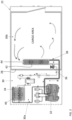
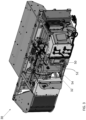
FIG. 3 is a perspective view of a portion of a refrigeration unit; -
FIG. 4A is a side view of a portion of a refrigeration unit including an exemplary heat sink; -
FIG. 4B is a plan view of the heat sink shown inFIG. 4A ; -
FIG. 5A is a side view of a portion of a refrigeration unit including an exemplary heat sink; and -
FIG. 5B is a plan view of the heat sink shown inFIG. 5A . - A detailed description of one or more embodiments of the disclosed apparatus and method are presented herein by way of exemplification and not limitation with reference to the Figures.
- With reference now to
FIGS. 1 and2 , an exemplarytransport refrigeration system 20 is illustrated. In the illustrated, non-limiting embodiment, thetransport refrigeration system 20 is shown as a trailer system. As shown, thetransport refrigeration system 20 includes a trailer orcontainer 22 being towed or otherwise transported by atractor 24 including an operator's compartment orcab 26 and also including prime mover (not shown), such as an engine or HVDC battery pack, which acts as the drivetrain system of thetransport refrigeration system 20. Arefrigeration unit 30 is configured to maintain cargo located within thecontainer 22 at a selected temperature by cooling the cargo space of thecontainer 22. As shown, therefrigeration unit 30 may be mounted at thefront wall 28 of thecontainer 22. Together, therefrigeration unit 30 and thecargo container 22 may form a refrigerated container system. It should be appreciated by those of skill in the art that embodiments described herein may be applied to any transport refrigeration system such as, for example shipping containers that are shipped by rail, sea (via a watercraft), or any other suitable container, without use of atractor 24. - With reference to
FIG. 2 , a basic refrigeration circuit of therefrigeration unit 30 is shown. Therefrigeration unit 30 is divided into two sections, acondenser section 30a and anevaporator section 30b. Thecondenser section 30a may be disposed generally forward of a front wall of thecontainer 22 and is arranged in fluid communication with the ambient atmosphere external to thecontainer 22 and therefrigeration unit 30 to exchange air and heat therewith. Theevaporator section 30b is not in fluid communication with the ambient atmosphere to control temperature within thecontainer 22. Therefrigeration unit 30 includes acompressor 32, acondenser coil 34, anexpansion device 36, and anevaporator coil 38 fluidly connected to one another to form a closed loop system. A fluid R, such as a refrigerant, for example, is configured to flow from thecompressor 32 to thecondenser coil 34,expansion device 36, andevaporator coil 38 in series. Acondenser fan 40, such as driven by a condenser motor (not shown) is configured to move a flow of air across an exterior of thecondenser coil 34, and anevaporator fan 42, such as driven by an evaporator motor (not shown), may be used to drive a flow of fluid (air) across an exterior of theevaporator coil 38 and into the portion of thecontainer 22 in which the cargo is located. - At least one power electronic device 50 (see
FIG. 3 ) associated with thecompressor 32 may be mounted within thecondenser section 30a, such as near or adjacent to thecompressor 32, for example. It should be understood that the term "power electronic device" as used herein can refer to any electronic component which can provide a controlled output power by modulating and/or converting a supplied input power (e.g., a variable frequency drive, power rectifier, power converter, and the like). Such a powerelectronic device 50 can be used to control the speed of a compressor and/or the speed of the fan of a refrigeration system based on various predetermined system conditions. As shown, at least one powerelectronic device 50 may be mounted to a vertically orientedfirst surface 52 of amounting plate 54. However, embodiments where a powerelectronic device 50 is mounted to a surface having a non-vertical orientation, such as a horizontal surface for example, are also within the scope of the disclosure. - The reliability and life of the one or more power
electronic devices 50 can depend upon precluding such electrical components from operating at high temperatures and/or precluding their exposure to thermal shock. During operation of therefrigeration unit 30, the electrical components inside the powerelectronic devices 50 generate a waste heat. In an embodiment, to maintain the powerelectronic devices 50 at a suitable temperature, therefrigeration unit 30 includes aheat sink 60 configured to remove heat from the powerelectronic devices 50. Theheat sink 60 may be formed from any suitable thermally conductive material, such as aluminum or copper for example. In an embodiment, theheat sink 60 is formed via an extrusion process. Further, theheat sink 60 may include an insulative material (not shown) arranged over all or at least a portion of an exterior surface thereof. - As shown, a
first end 62 of theheat sink 60 is mechanically and thermally coupled to a second,opposite surface 56 of themounting plate 54, such as the surface opposite thesurface 52 to which the powerelectronic devices 50 are connected. Although theheat sink 60 is illustrated as extending substantially orthogonal to thesurface 56 of themounting plate 54, embodiments where all or a portion of theheat sink 60 extends at another angle are also contemplated herein. - In an embodiment, the
first end 62 of theheat sink 60 is mounted in overlapping arrangement with thesurface 56 of themounting plate 54. However, in other embodiments, at least a portion of thefirst end 62 of theheat sink 60 is receivable within at least one recess or groove (not shown) formed in thesurface 56 of themounting plate 54. Further, a material, such as thermal grease for example, may be arranged at the interface between theheat sink 60 and themounting plate 54 to facilitate heat transfer away from themounting plate 54 to theheat sink 60, and therefore away from the powerelectronic devices 50. Although themounting plate 54 is described as a plate, it should be understood that in an embodiment, the mounting plate may be a housing having an internal flow path for a cooling fluid such that the mounting plate functions as a heat exchanger. - In an embodiment, the
heat sink 60 is configured to transfer heat from the powerelectronic devices 50 via themounting plate 54 to another component within thecondenser section 30a. As best shown inFIGS. 4A-5B , aclearance 58 is defined between thecompressor 32 and thesurface 56 of themounting plate 54. Aconduit 64, also referred to herein as the "suction tube", fluidly connecting thesuction inlet 66 of thecompressor 32 with an upstream component, such as an outlet of theevaporator coil 38 for example, is arranged at least partially within theclearance 58. In the illustrated, non-limiting embodiment, theheat sink 60 is mechanically and thermally coupled to a portion of thesuction tube 64. During operation of therefrigeration unit 30, the temperature of the suction tube 64 (which may be considered equivalent to the temperature of the refrigerant within the suction tube 64) is much lower than the operating temperature of the one or more powerelectronic devices 50. Accordingly, aheat sink 60 arranged in thermal communication with both the mountingplate 54 and thesuction tube 64 will facilitate enhanced cooling of the powerelectronic devices 50. - In the illustrated, non-limiting embodiment, the
heat sink 60 is coupled to alinear section 67 of thesuction tube 64. Thelinear section 67 of thesuction tube 64 may be vertically oriented (as shown), or alternatively, may arranged parallel to or at an angle to thesurface 56 of the mountingplate 54. A height of theheat sink 60, measured parallel to the axis of thelinear section 67 of thesuction tube 64 to which theheat sink 60 is coupled, may be substantially equal to, or may be less than the length of the correspondinglinear section 67 of thesuction tube 64. As shown, thesuction tube 64 includes a singlelinear section 67 arranged within theclearance 58. However, it should be understood that asuction tube 64 having a tortuous path including a plurality of linear sections arranged within theclearance 58 is also contemplated herein. In such embodiments, theheat sink 60 may be configured to couple to at least one linear section of the plurality oflinear sections 67 of thesuction tube 64 depending on the desired heat dissipation. Accordingly, the configuration of thesuction tube 64 within theclearance 58 and/or the total surface area over which theheat sink 60 is arranged in contact with thesuction tube 64 may be selected based on the temperature demands of the powerelectronic devices 50 of a specific application. - As shown, the
second end 68 of theheat sink 60 is connected to thesuction tube 64. In an embodiment, thesecond end 68 of theheat sink 60 includes aflange 70 having a recess or groove 72 complementary to a contour of a portion of thesuction tube 64. A mountingbracket 74 having asimilar flange 76 and arecess 78 for receiving a portion of thesuction tube 64 therein may be connectable with theflange 70 of theheat sink 60, such as via a plurality of fasteners for example, to affix theheat sink 60 to thesuction tube 64. Although thesecond end 68 of theheat sink 60 is shown in the illustrated, non-limiting embodiments as being coupled to thesuction tube 64, it should be understood that embodiments where thesuction tube 64 is arranged at another location relative to theheat sink 60, such as at a central portion of theheat sink 60 for example, are also contemplated herein. - In an embodiment, a width of the
heat sink 60 at thefirst end 62, measured in plane perpendicular to the length of theheat sink 60, is substantially larger than a width of theheat sink 60 at thesecond end 68 thereof. Theheat sink 60 may be formed having a generally solid body, as shown inFIGS. 4A and4B . However, in other embodiments, theheat sink 60 may have one ormore openings 80 formed therein to reduce the total material and weight of theheat sink 60, while maintaining the necessary heat transfer from the mounting plate to thesuction tube 64. Theopenings 80 formed in theheat sink 60 may extend along one or more of the length and width of theheat sink 60. As a result of theopenings 80, the body of theheat sink 60 may have a finned configuration. For example, in the illustrated, non-limiting embodiment ofFIGS. 5A and5B , thefirst end 62 of theheat sink 60 is not a continuous surface, but rather is defined by the ends of a plurality of fins, at least one of which is in contact with the mountingplate 54. - Inclusion of a
heat sink 60 as described herein will enhance the cooling of the power electronic devices of the refrigeration unit, thereby improving component performance, reliability, and life. In addition, transferring the waste heat from the power electronics devices to the refrigerant in thesuction tube 64 may also extend the range of ambient operation of therefrigeration unit 30. - The term "about" is intended to include the degree of error associated with measurement of the particular quantity based upon the equipment available at the time of filing the application.
- The terminology used herein is for the purpose of describing particular embodiments only and is not intended to be limiting of the present disclosure. As used herein, the singular forms "a", "an" and "the" are intended to include the plural forms as well, unless the context clearly indicates otherwise. It will be further understood that the terms "comprises" and/or "comprising," when used in this specification, specify the presence of stated features, integers, steps, operations, elements, and/or components, but do not preclude the presence or addition of one or more other features, integers, steps, operations, element components, and/or groups thereof.
- While the invention has been described with reference to an exemplary embodiment or embodiments, it will be understood by those skilled in the art that various changes may be made without departing from the scope of the invention, which is defined by the claims. In addition, many modifications may be made to adapt a particular situation or material to the teachings of the invention without departing from the scope thereof. Therefore, it is intended that the invention not be limited to the particular embodiment disclosed, but that the invention will include all embodiments falling within the scope of the claims.
Claims (9)
- A refrigeration unit (30) comprising:a refrigeration circuit including a compressor and a suction tube (64) connected to an inlet of the compressor;a mounting plate (54) having a first surface (52) and a second, opposite surface (56), a clearance being defined between the compressor and the second surface, wherein a portion of the suction tube is arranged within the clearance;a power electronics device (50) thermally coupled to the first surface (52) of the mounting plate;a heat sink (60) having a first end (62) thermally and mechanically coupled to the second surface (56) of the mounting plate and having a second end (68) thermally and mechanically coupled to the portion of the suction tube (64) arranged within the clearance, wherein the heat sink is configured to transfer waste heat from the mounting plate to the suction tube.
- The refrigeration unit of claim 1, wherein the suction tube includes at least one linear section and the heat sink is thermally coupled to the at least one linear section, optionally wherein the at least one linear section is oriented parallel to the mounting plate, and/or wherein the at least one linear section is vertically oriented.
- The refrigeration unit of claim 1 or 2, wherein the suction tube includes a plurality of linear sections (67) and the heat sink is thermally coupled to at least one of the plurality of linear sections.
- The refrigeration unit of any preceding claim, wherein the surface of the mounting plate has at least one recess (72) formed therein and the first end of the heat sink is arranged within the at least one recess.
- The refrigeration unit of any preceding claim, wherein the heat sink further comprises a body having at least one opening (80) formed therein.
- A transport refrigeration system (20) comprising a refrigeration unit according to any preceding claim.
- A method of cooling a power electronic device (50) during operation of a refrigeration unit (30), the method comprising:circulating refrigerant (R) through a refrigeration circuit, the refrigeration circuit including a compressor and a suction tube (64) connected to an inlet (66) of the compressor and a power electronics device (50) thermally coupled to a first surface (52) of a mounting plate, wherein a clearance is defined between the compressor and a second, opposite surface (56) of the mounting plate, and a portion of the suction tube is arranged within the clearance; andtransferring waste heat from the power electronic device to a portion of the refrigeration circuit to cool the power electronic device via a heat sink, the heat sink having a first end (62) thermally and mechanically coupled to the second surface (56) of the mounting plate and having a second end (68) thermally and mechanically coupled to the portion of the suction tube arranged within the clearance.
- The method of claim 7, wherein transferring waste heat from the power electronic device to the portion of the refrigeration circuit further comprises:transferring the waste heat from the power electronic device to the mounting plate (54);transferring the waste heat from the mounting plate to the heat sink (60); andtransferring the waste heat from the heat sink to the suction tube.
- The method of claim 7 or 8, wherein the suction tube further comprises at least one linear section (67), the waste heat from the from the power electronic device being transferred to the at least one linear section.
Applications Claiming Priority (1)
| Application Number | Priority Date | Filing Date | Title |
|---|---|---|---|
| US202263296954P | 2022-01-06 | 2022-01-06 |
Publications (2)
| Publication Number | Publication Date |
|---|---|
| EP4209368A1 EP4209368A1 (en) | 2023-07-12 |
| EP4209368B1 true EP4209368B1 (en) | 2025-02-26 |
Family
ID=85036139
Family Applications (1)
| Application Number | Title | Priority Date | Filing Date |
|---|---|---|---|
| EP23150518.1A Active EP4209368B1 (en) | 2022-01-06 | 2023-01-05 | Heatsink for power electronics cooling |
Country Status (3)
| Country | Link |
|---|---|
| US (1) | US12526968B2 (en) |
| EP (1) | EP4209368B1 (en) |
| CN (1) | CN116406129A (en) |
Family Cites Families (32)
| Publication number | Priority date | Publication date | Assignee | Title |
|---|---|---|---|---|
| US5471850A (en) * | 1993-07-09 | 1995-12-05 | Acurex Corporation | Refrigeration system and method for very large scale integrated circuits |
| US6116040A (en) | 1999-03-15 | 2000-09-12 | Carrier Corporation | Apparatus for cooling the power electronics of a refrigeration compressor drive |
| DE10009521A1 (en) * | 2000-02-29 | 2001-08-30 | Mannesmann Sachs Ag | Electrical system has parts of electrical component(s) and/or controler(s) to be cooled connected into conditioning system coolant circuit with e.g. compressor, condenser, evaporator |
| US6560980B2 (en) * | 2000-04-10 | 2003-05-13 | Thermo King Corporation | Method and apparatus for controlling evaporator and condenser fans in a refrigeration system |
| US6397618B1 (en) | 2001-05-30 | 2002-06-04 | International Business Machines Corporation | Cooling system with auxiliary thermal buffer unit for cooling an electronics module |
| US6543246B2 (en) | 2001-07-24 | 2003-04-08 | Kryotech, Inc. | Integrated circuit cooling apparatus |
| US6526768B2 (en) | 2001-07-24 | 2003-03-04 | Kryotech, Inc. | Apparatus and method for controlling the temperature of an integrated circuit device |
| US6687122B2 (en) | 2001-08-30 | 2004-02-03 | Sun Microsystems, Inc. | Multiple compressor refrigeration heat sink module for cooling electronic components |
| KR100464046B1 (en) | 2002-03-14 | 2005-01-03 | 엘지전자 주식회사 | Apparatus for cooling central processing unit in computer |
| US6741469B1 (en) | 2003-02-07 | 2004-05-25 | Sun Microsystems, Inc. | Refrigeration cooling assisted MEMS-based micro-channel cooling system |
| US7342787B1 (en) | 2004-09-15 | 2008-03-11 | Sun Microsystems, Inc. | Integrated circuit cooling apparatus and method |
| JP4315141B2 (en) | 2005-09-09 | 2009-08-19 | セイコーエプソン株式会社 | Electronic component temperature control device and handler device |
| EP2146151B1 (en) | 2007-04-09 | 2018-10-17 | Panasonic Corporation | Electrical component box and air conditioner having same |
| US8950206B2 (en) * | 2007-10-05 | 2015-02-10 | Emerson Climate Technologies, Inc. | Compressor assembly having electronics cooling system and method |
| KR20120042343A (en) | 2010-10-25 | 2012-05-03 | 학교법인 두원학원 | Refrigeration structure of inverter for a vehicle |
| US9429151B2 (en) | 2011-05-17 | 2016-08-30 | Carrier Corporation | Variable frequency drive heat sink assembly |
| CN103732993B (en) | 2011-07-07 | 2016-08-17 | 东芝开利株式会社 | Outdoor unit of refrigeration cycle plant |
| EP2781380B1 (en) * | 2011-11-16 | 2017-08-02 | Toyota Jidosha Kabushiki Kaisha | Device for cooling electrical apparatus |
| US9032753B2 (en) | 2012-03-22 | 2015-05-19 | Trane International Inc. | Electronics cooling using lubricant return for a shell-and-tube style evaporator |
| US8950201B2 (en) * | 2012-03-30 | 2015-02-10 | Trane International Inc. | System and method for cooling power electronics using heat sinks |
| US8947873B2 (en) * | 2012-11-26 | 2015-02-03 | International Business Machines Corporation | Immersion-cooled and conduction-cooled electronic system |
| WO2014116760A1 (en) | 2013-01-23 | 2014-07-31 | Trane International Inc. | Variable frequency drive operation to avoid overheating |
| CN103162475B (en) | 2013-03-22 | 2015-04-15 | 青岛海信日立空调系统有限公司 | Heat dissipation circulating system of air conditioner |
| JP6222012B2 (en) | 2014-08-29 | 2017-11-01 | 株式会社デンソー | Electronic component cooling structure and electric compressor |
| WO2017175345A1 (en) | 2016-04-07 | 2017-10-12 | 三菱電機株式会社 | Air conditioning device |
| CN106016505B (en) | 2016-06-12 | 2019-05-31 | 青岛海尔空调器有限总公司 | Air conditioner circuit board cooling device |
| JP2018004210A (en) | 2016-07-07 | 2018-01-11 | ダイキン工業株式会社 | Heat transfer unit of freezer |
| US10508841B2 (en) | 2016-09-15 | 2019-12-17 | Trane International Inc. | Cooling circuit for a variable frequency drive |
| CN109341172B (en) | 2018-09-27 | 2021-10-01 | 上海浩爽实业有限公司 | Dual circuit transport refrigeration unit |
| FR3086888B1 (en) | 2018-10-09 | 2020-12-11 | Renault Sas | COOLING SYSTEM OF A MOTOR VEHICLE COMPUTER USING THE REFRIGERATING FLUID FROM THE VEHICLE'S AIR CONDITIONING SYSTEM |
| WO2021022192A1 (en) | 2019-08-01 | 2021-02-04 | Danfoss A/S | Power electronics cooling arrangement |
| US11516944B1 (en) * | 2021-08-03 | 2022-11-29 | Baidu Usa Llc | Server rack cooling system |
-
2023
- 2023-01-05 CN CN202310010990.6A patent/CN116406129A/en active Pending
- 2023-01-05 EP EP23150518.1A patent/EP4209368B1/en active Active
- 2023-01-05 US US18/150,458 patent/US12526968B2/en active Active
Also Published As
| Publication number | Publication date |
|---|---|
| CN116406129A (en) | 2023-07-07 |
| EP4209368A1 (en) | 2023-07-12 |
| US20230217634A1 (en) | 2023-07-06 |
| US12526968B2 (en) | 2026-01-13 |
Similar Documents
| Publication | Publication Date | Title |
|---|---|---|
| EP2710868B1 (en) | Variable frequency drive heat sink assembly | |
| EP3690350B1 (en) | Heat-recovery-enhanced refrigeration system | |
| EP2677261B1 (en) | Two-phase cooling system for electronic components | |
| US20050213306A1 (en) | Environmental control method and apparatus for electronic device enclosures | |
| EP3943321A1 (en) | Integrated heating and cooling system and method for transportation refrigeration unit | |
| US20120210730A1 (en) | Method and Apparatus for Cooling a Vehicle Component | |
| EP3557964B1 (en) | Electronics cooling module | |
| CN109416205B (en) | Hot gas bypass for battery pack cold start | |
| US11309597B2 (en) | Battery temperature control | |
| US20100101242A1 (en) | System and method for cooling air conditioning system electronics | |
| JP7785528B2 (en) | Refrigerated container | |
| CN113725516A (en) | System for cooling a battery of a motor vehicle and motor vehicle | |
| CN101553699B (en) | Compressor power control | |
| EP4209368B1 (en) | Heatsink for power electronics cooling | |
| EP3925806B1 (en) | Integrated cooling system and method for transportation refrigeration unit | |
| US20240381595A1 (en) | Power electronics cooling loop for refrigerant compressor | |
| JP2017083107A (en) | Sealed loop circulating liquid cooling device and electronic equipment | |
| EP4175434A1 (en) | Combined liquid and air cooled power electronics assembly | |
| JP2000323910A (en) | Cooling structure of antenna device | |
| CN120076934A (en) | Method for regulating the two-stage cycle of a heat pump | |
| EP4234290B1 (en) | Transport refrigeration system powered by a fuel cell | |
| EP4171185B1 (en) | Seal for thermal interface material of power electronics modules | |
| CN120792441A (en) | Cooling system for variable frequency drives associated with transport refrigeration units | |
| WO2010050873A1 (en) | A system in a network node for regulating temperature of electronic equipment |
Legal Events
| Date | Code | Title | Description |
|---|---|---|---|
| PUAI | Public reference made under article 153(3) epc to a published international application that has entered the european phase |
Free format text: ORIGINAL CODE: 0009012 |
|
| STAA | Information on the status of an ep patent application or granted ep patent |
Free format text: STATUS: THE APPLICATION HAS BEEN PUBLISHED |
|
| AK | Designated contracting states |
Kind code of ref document: A1 Designated state(s): AL AT BE BG CH CY CZ DE DK EE ES FI FR GB GR HR HU IE IS IT LI LT LU LV MC ME MK MT NL NO PL PT RO RS SE SI SK SM TR |
|
| STAA | Information on the status of an ep patent application or granted ep patent |
Free format text: STATUS: REQUEST FOR EXAMINATION WAS MADE |
|
| 17P | Request for examination filed |
Effective date: 20240112 |
|
| RBV | Designated contracting states (corrected) |
Designated state(s): AL AT BE BG CH CY CZ DE DK EE ES FI FR GB GR HR HU IE IS IT LI LT LU LV MC ME MK MT NL NO PL PT RO RS SE SI SK SM TR |
|
| GRAP | Despatch of communication of intention to grant a patent |
Free format text: ORIGINAL CODE: EPIDOSNIGR1 |
|
| STAA | Information on the status of an ep patent application or granted ep patent |
Free format text: STATUS: GRANT OF PATENT IS INTENDED |
|
| INTG | Intention to grant announced |
Effective date: 20240920 |
|
| GRAS | Grant fee paid |
Free format text: ORIGINAL CODE: EPIDOSNIGR3 |
|
| GRAA | (expected) grant |
Free format text: ORIGINAL CODE: 0009210 |
|
| STAA | Information on the status of an ep patent application or granted ep patent |
Free format text: STATUS: THE PATENT HAS BEEN GRANTED |
|
| AK | Designated contracting states |
Kind code of ref document: B1 Designated state(s): AL AT BE BG CH CY CZ DE DK EE ES FI FR GB GR HR HU IE IS IT LI LT LU LV MC ME MK MT NL NO PL PT RO RS SE SI SK SM TR |
|
| REG | Reference to a national code |
Ref country code: GB Ref legal event code: FG4D |
|
| REG | Reference to a national code |
Ref country code: CH Ref legal event code: EP |
|
| REG | Reference to a national code |
Ref country code: NL Ref legal event code: FP |
|
| REG | Reference to a national code |
Ref country code: DE Ref legal event code: R096 Ref document number: 602023002133 Country of ref document: DE |
|
| REG | Reference to a national code |
Ref country code: IE Ref legal event code: FG4D |
|
| PG25 | Lapsed in a contracting state [announced via postgrant information from national office to epo] |
Ref country code: RS Free format text: LAPSE BECAUSE OF FAILURE TO SUBMIT A TRANSLATION OF THE DESCRIPTION OR TO PAY THE FEE WITHIN THE PRESCRIBED TIME-LIMIT Effective date: 20250526 |
|
| PG25 | Lapsed in a contracting state [announced via postgrant information from national office to epo] |
Ref country code: FI Free format text: LAPSE BECAUSE OF FAILURE TO SUBMIT A TRANSLATION OF THE DESCRIPTION OR TO PAY THE FEE WITHIN THE PRESCRIBED TIME-LIMIT Effective date: 20250226 |
|
| PG25 | Lapsed in a contracting state [announced via postgrant information from national office to epo] |
Ref country code: PL Free format text: LAPSE BECAUSE OF FAILURE TO SUBMIT A TRANSLATION OF THE DESCRIPTION OR TO PAY THE FEE WITHIN THE PRESCRIBED TIME-LIMIT Effective date: 20250226 |
|
| PG25 | Lapsed in a contracting state [announced via postgrant information from national office to epo] |
Ref country code: ES Free format text: LAPSE BECAUSE OF FAILURE TO SUBMIT A TRANSLATION OF THE DESCRIPTION OR TO PAY THE FEE WITHIN THE PRESCRIBED TIME-LIMIT Effective date: 20250226 |
|
| REG | Reference to a national code |
Ref country code: LT Ref legal event code: MG9D |
|
| PG25 | Lapsed in a contracting state [announced via postgrant information from national office to epo] |
Ref country code: IS Free format text: LAPSE BECAUSE OF FAILURE TO SUBMIT A TRANSLATION OF THE DESCRIPTION OR TO PAY THE FEE WITHIN THE PRESCRIBED TIME-LIMIT Effective date: 20250626 Ref country code: NO Free format text: LAPSE BECAUSE OF FAILURE TO SUBMIT A TRANSLATION OF THE DESCRIPTION OR TO PAY THE FEE WITHIN THE PRESCRIBED TIME-LIMIT Effective date: 20250526 |
|
| PG25 | Lapsed in a contracting state [announced via postgrant information from national office to epo] |
Ref country code: HR Free format text: LAPSE BECAUSE OF FAILURE TO SUBMIT A TRANSLATION OF THE DESCRIPTION OR TO PAY THE FEE WITHIN THE PRESCRIBED TIME-LIMIT Effective date: 20250226 |
|
| PG25 | Lapsed in a contracting state [announced via postgrant information from national office to epo] |
Ref country code: PT Free format text: LAPSE BECAUSE OF FAILURE TO SUBMIT A TRANSLATION OF THE DESCRIPTION OR TO PAY THE FEE WITHIN THE PRESCRIBED TIME-LIMIT Effective date: 20250626 Ref country code: LV Free format text: LAPSE BECAUSE OF FAILURE TO SUBMIT A TRANSLATION OF THE DESCRIPTION OR TO PAY THE FEE WITHIN THE PRESCRIBED TIME-LIMIT Effective date: 20250226 |
|
| PG25 | Lapsed in a contracting state [announced via postgrant information from national office to epo] |
Ref country code: GR Free format text: LAPSE BECAUSE OF FAILURE TO SUBMIT A TRANSLATION OF THE DESCRIPTION OR TO PAY THE FEE WITHIN THE PRESCRIBED TIME-LIMIT Effective date: 20250527 Ref country code: BG Free format text: LAPSE BECAUSE OF FAILURE TO SUBMIT A TRANSLATION OF THE DESCRIPTION OR TO PAY THE FEE WITHIN THE PRESCRIBED TIME-LIMIT Effective date: 20250226 |
|
| REG | Reference to a national code |
Ref country code: AT Ref legal event code: MK05 Ref document number: 1770308 Country of ref document: AT Kind code of ref document: T Effective date: 20250226 |
|
| PG25 | Lapsed in a contracting state [announced via postgrant information from national office to epo] |
Ref country code: SE Free format text: LAPSE BECAUSE OF FAILURE TO SUBMIT A TRANSLATION OF THE DESCRIPTION OR TO PAY THE FEE WITHIN THE PRESCRIBED TIME-LIMIT Effective date: 20250226 |
|
| PG25 | Lapsed in a contracting state [announced via postgrant information from national office to epo] |
Ref country code: SM Free format text: LAPSE BECAUSE OF FAILURE TO SUBMIT A TRANSLATION OF THE DESCRIPTION OR TO PAY THE FEE WITHIN THE PRESCRIBED TIME-LIMIT Effective date: 20250226 |
|
| PG25 | Lapsed in a contracting state [announced via postgrant information from national office to epo] |
Ref country code: DK Free format text: LAPSE BECAUSE OF FAILURE TO SUBMIT A TRANSLATION OF THE DESCRIPTION OR TO PAY THE FEE WITHIN THE PRESCRIBED TIME-LIMIT Effective date: 20250226 |
|
| PG25 | Lapsed in a contracting state [announced via postgrant information from national office to epo] |
Ref country code: IT Free format text: LAPSE BECAUSE OF FAILURE TO SUBMIT A TRANSLATION OF THE DESCRIPTION OR TO PAY THE FEE WITHIN THE PRESCRIBED TIME-LIMIT Effective date: 20250226 |
|
| PG25 | Lapsed in a contracting state [announced via postgrant information from national office to epo] |
Ref country code: AT Free format text: LAPSE BECAUSE OF FAILURE TO SUBMIT A TRANSLATION OF THE DESCRIPTION OR TO PAY THE FEE WITHIN THE PRESCRIBED TIME-LIMIT Effective date: 20250226 |
|
| PG25 | Lapsed in a contracting state [announced via postgrant information from national office to epo] |
Ref country code: CZ Free format text: LAPSE BECAUSE OF FAILURE TO SUBMIT A TRANSLATION OF THE DESCRIPTION OR TO PAY THE FEE WITHIN THE PRESCRIBED TIME-LIMIT Effective date: 20250226 Ref country code: EE Free format text: LAPSE BECAUSE OF FAILURE TO SUBMIT A TRANSLATION OF THE DESCRIPTION OR TO PAY THE FEE WITHIN THE PRESCRIBED TIME-LIMIT Effective date: 20250226 |
|
| PG25 | Lapsed in a contracting state [announced via postgrant information from national office to epo] |
Ref country code: RO Free format text: LAPSE BECAUSE OF FAILURE TO SUBMIT A TRANSLATION OF THE DESCRIPTION OR TO PAY THE FEE WITHIN THE PRESCRIBED TIME-LIMIT Effective date: 20250226 |
|
| PG25 | Lapsed in a contracting state [announced via postgrant information from national office to epo] |
Ref country code: SK Free format text: LAPSE BECAUSE OF FAILURE TO SUBMIT A TRANSLATION OF THE DESCRIPTION OR TO PAY THE FEE WITHIN THE PRESCRIBED TIME-LIMIT Effective date: 20250226 |
|
| REG | Reference to a national code |
Ref country code: DE Ref legal event code: R097 Ref document number: 602023002133 Country of ref document: DE |
|
| PLBE | No opposition filed within time limit |
Free format text: ORIGINAL CODE: 0009261 |
|
| STAA | Information on the status of an ep patent application or granted ep patent |
Free format text: STATUS: NO OPPOSITION FILED WITHIN TIME LIMIT |
|
| PGFP | Annual fee paid to national office [announced via postgrant information from national office to epo] |
Ref country code: FR Payment date: 20251217 Year of fee payment: 4 |
|
| 26N | No opposition filed |
Effective date: 20251127 |
|
| PGFP | Annual fee paid to national office [announced via postgrant information from national office to epo] |
Ref country code: DE Payment date: 20251217 Year of fee payment: 4 |