EP4207762A1 - Point cloud encoding/decoding method and device based on two-dimensional regularization plane projection - Google Patents
Point cloud encoding/decoding method and device based on two-dimensional regularization plane projection Download PDFInfo
- Publication number
- EP4207762A1 EP4207762A1 EP22749246.9A EP22749246A EP4207762A1 EP 4207762 A1 EP4207762 A1 EP 4207762A1 EP 22749246 A EP22749246 A EP 22749246A EP 4207762 A1 EP4207762 A1 EP 4207762A1
- Authority
- EP
- European Patent Office
- Prior art keywords
- dimensional
- point cloud
- depth information
- encoding
- regularization
- Prior art date
- Legal status (The legal status is an assumption and is not a legal conclusion. Google has not performed a legal analysis and makes no representation as to the accuracy of the status listed.)
- Pending
Links
Images


Classifications
-
- H—ELECTRICITY
- H04—ELECTRIC COMMUNICATION TECHNIQUE
- H04N—PICTORIAL COMMUNICATION, e.g. TELEVISION
- H04N19/00—Methods or arrangements for coding, decoding, compressing or decompressing digital video signals
- H04N19/42—Methods or arrangements for coding, decoding, compressing or decompressing digital video signals characterised by implementation details or hardware specially adapted for video compression or decompression, e.g. dedicated software implementation
- H04N19/43—Hardware specially adapted for motion estimation or compensation
-
- G—PHYSICS
- G06—COMPUTING OR CALCULATING; COUNTING
- G06T—IMAGE DATA PROCESSING OR GENERATION, IN GENERAL
- G06T9/00—Image coding
- G06T9/001—Model-based coding, e.g. wire frame
-
- G—PHYSICS
- G06—COMPUTING OR CALCULATING; COUNTING
- G06T—IMAGE DATA PROCESSING OR GENERATION, IN GENERAL
- G06T9/00—Image coding
- G06T9/004—Predictors, e.g. intraframe, interframe coding
-
- H—ELECTRICITY
- H04—ELECTRIC COMMUNICATION TECHNIQUE
- H04N—PICTORIAL COMMUNICATION, e.g. TELEVISION
- H04N19/00—Methods or arrangements for coding, decoding, compressing or decompressing digital video signals
- H04N19/10—Methods or arrangements for coding, decoding, compressing or decompressing digital video signals using adaptive coding
- H04N19/102—Methods or arrangements for coding, decoding, compressing or decompressing digital video signals using adaptive coding characterised by the element, parameter or selection affected or controlled by the adaptive coding
- H04N19/124—Quantisation
-
- H—ELECTRICITY
- H04—ELECTRIC COMMUNICATION TECHNIQUE
- H04N—PICTORIAL COMMUNICATION, e.g. TELEVISION
- H04N19/00—Methods or arrangements for coding, decoding, compressing or decompressing digital video signals
- H04N19/10—Methods or arrangements for coding, decoding, compressing or decompressing digital video signals using adaptive coding
- H04N19/102—Methods or arrangements for coding, decoding, compressing or decompressing digital video signals using adaptive coding characterised by the element, parameter or selection affected or controlled by the adaptive coding
- H04N19/129—Scanning of coding units, e.g. zig-zag scan of transform coefficients or flexible macroblock ordering [FMO]
-
- H—ELECTRICITY
- H04—ELECTRIC COMMUNICATION TECHNIQUE
- H04N—PICTORIAL COMMUNICATION, e.g. TELEVISION
- H04N19/00—Methods or arrangements for coding, decoding, compressing or decompressing digital video signals
- H04N19/10—Methods or arrangements for coding, decoding, compressing or decompressing digital video signals using adaptive coding
- H04N19/134—Methods or arrangements for coding, decoding, compressing or decompressing digital video signals using adaptive coding characterised by the element, parameter or criterion affecting or controlling the adaptive coding
- H04N19/136—Incoming video signal characteristics or properties
-
- H—ELECTRICITY
- H04—ELECTRIC COMMUNICATION TECHNIQUE
- H04N—PICTORIAL COMMUNICATION, e.g. TELEVISION
- H04N19/00—Methods or arrangements for coding, decoding, compressing or decompressing digital video signals
- H04N19/10—Methods or arrangements for coding, decoding, compressing or decompressing digital video signals using adaptive coding
- H04N19/134—Methods or arrangements for coding, decoding, compressing or decompressing digital video signals using adaptive coding characterised by the element, parameter or criterion affecting or controlling the adaptive coding
- H04N19/157—Assigned coding mode, i.e. the coding mode being predefined or preselected to be further used for selection of another element or parameter
- H04N19/159—Prediction type, e.g. intra-frame, inter-frame or bidirectional frame prediction
-
- H—ELECTRICITY
- H04—ELECTRIC COMMUNICATION TECHNIQUE
- H04N—PICTORIAL COMMUNICATION, e.g. TELEVISION
- H04N19/00—Methods or arrangements for coding, decoding, compressing or decompressing digital video signals
- H04N19/10—Methods or arrangements for coding, decoding, compressing or decompressing digital video signals using adaptive coding
- H04N19/169—Methods or arrangements for coding, decoding, compressing or decompressing digital video signals using adaptive coding characterised by the coding unit, i.e. the structural portion or semantic portion of the video signal being the object or the subject of the adaptive coding
- H04N19/182—Methods or arrangements for coding, decoding, compressing or decompressing digital video signals using adaptive coding characterised by the coding unit, i.e. the structural portion or semantic portion of the video signal being the object or the subject of the adaptive coding the unit being a pixel
-
- H—ELECTRICITY
- H04—ELECTRIC COMMUNICATION TECHNIQUE
- H04N—PICTORIAL COMMUNICATION, e.g. TELEVISION
- H04N19/00—Methods or arrangements for coding, decoding, compressing or decompressing digital video signals
- H04N19/50—Methods or arrangements for coding, decoding, compressing or decompressing digital video signals using predictive coding
- H04N19/597—Methods or arrangements for coding, decoding, compressing or decompressing digital video signals using predictive coding specially adapted for multi-view video sequence encoding
-
- H—ELECTRICITY
- H04—ELECTRIC COMMUNICATION TECHNIQUE
- H04N—PICTORIAL COMMUNICATION, e.g. TELEVISION
- H04N9/00—Details of colour television systems
- H04N9/12—Picture reproducers
- H04N9/31—Projection devices for colour picture display, e.g. using electronic spatial light modulators [ESLM]
- H04N9/3179—Video signal processing therefor
Definitions
- the present invention relates to technical field of encoding and decoding, and specifically, to a point cloud encoding and decoding method and device based on a two-dimensional regularization plane projection.
- the three-dimensional point cloud has become a new generation of immersive multimedia after audio, image, and video, and is widely applied to virtual reality, augmented reality, automated driving, environmental modeling, and the like.
- the three-dimensional point cloud usually has a relatively large amount of data, which is not conducive to the transmission and storage of point cloud data. Therefore, it is of great significance to study an efficient point cloud encoding and decoding technology.
- G-PCC Geometry-based Point Cloud Compression
- the geometry information and attribute information of the point cloud are encoded separately.
- the G-PCC geometric encoding and decoding may be divided into octree-based geometric encoding and decoding and prediction tree-based geometric encoding and decoding.
- Octree-based geometric encoding and decoding At an encoder side, firstly, the geometry information of the point cloud is preprocessed, which includes the coordinate conversion and voxelization process of the point cloud. Subsequently, tree division (octree/quadtree/binary tree) is continuously performed on a bounding box in which the point cloud is located in the order of breadth-first traversal. Finally, the placeholder code of each node is encoded, and the quantity of points included in each leaf node is encoded, to generate a binary code stream. At a decoder side, firstly, the placeholder code of each node is continuously obtained by parsing in the order of breadth-first traversal.
- Prediction tree-based geometric encoding and decoding At the encoder side, firstly, an inputted point cloud is sorted. Subsequently, a prediction tree structure is established. By classifying each point to a laser scanner to which the point belongs, the prediction tree structure is established according to different laser scanners. Subsequently, each node in the prediction tree is traversed, geometry information of the nodes is predicted by selecting different prediction modes to obtain predicted residuals, the predicted residuals are quantized by using a quantization parameter. Finally, the prediction tree structure, the quantization parameter, the predicted residuals of the geometry information of the nodes, and the like are encoded to generate a binary code stream.
- the code stream is analyzed; then the prediction tree structure is reconstructed; subsequently the predicted residuals are dequantized based on the predicted residual of the geometry information of each node obtained by parsing and the quantization parameter; and finally reconstructed geometry information of each node is restored. That is, reconstruction of point cloud geometry information is completed.
- a point cloud encoding method based on a two-dimensional regularization plane projection is provided, including:
- the encoding the plurality of pieces of two-dimensional image information to obtain code stream information includes: encoding the depth information map to obtain a depth information code stream.
- the encoding the depth information map to obtain a depth information code stream includes:
- the method before the encoding the depth information map, the method further includes: traversing the depth information map in a preset order, and performing, in a case that a current pixel is an empty pixel, depth information filling on the empty pixel.
- the performing prediction on a pixel in the depth information map based on a placeholder information map to obtain a predicted residual includes: traversing pixels in the depth information map in a specific scanning order; and determining whether a current pixel is non-empty according to the placeholder information map, and predicting depth information of a current non-empty pixel by using the reconstructed depth information of encoded non-empty pixels, to obtain the predicted residual.
- Another embodiment of the present invention further provides a point cloud encoding device based on a two-dimensional regularization plane projection, including:
- Still another embodiment of the present invention further provides a point cloud decoding method based on a two-dimensional regularization plane projection, including:
- the reconstructing a plurality of pieces of two-dimensional image information according to the parsed data includes: reconstructing, according to predicted residuals of a depth information map in the parsed data, the depth information map to obtain a reconstructed depth information map.
- Still another embodiment of the present invention further provides a point cloud decoding device based on a two-dimensional regularization plane projection, including:
- FIG. 1 is a schematic diagram of a point cloud encoding method based on a two-dimensional regularization plane projection according to an embodiment of the present invention, which includes: S1: Acquire original point cloud data.
- the original point cloud data usually includes a group of three-dimensional space points, and each space point records its geometric position information and additional attribute information such as color, reflectivity, and normal.
- the geometric position information of the point cloud is generally expressed based on a Cartesian coordinate system, that is, expressed by using the coordinates x, y, and z of points.
- the original point cloud data may be acquired through 3D scanning devices such as a lidar, and may alternatively be acquired based on public datasets provided by various platforms. In this embodiment, it is assumed that the geometric position information of the acquired original point cloud data is expressed based on the Cartesian coordinate system. It should be noted that the representation method of the geometric position information of the original point cloud data is not limited to Cartesian coordinates.
- preprocessing such as voxelization processing may further be performed on the original point cloud data, to facilitate subsequent encoding.
- the two-dimensional projection plane structure is initialized.
- the regularization parameters are usually finely measured by the manufacturer and provided to consumers as one of the necessary data, such as an acquisition range of a lidar, a sampling angular resolution ⁇ ⁇ or the quantity of sampling points of the horizontal azimuth angle, a distance correction factor of each laser scanner, offset information V o and H o of the laser scanner in the vertical direction and the horizontal direction, and offset information ⁇ 0 and ⁇ of the laser scanner along the pitch angle and the horizontal azimuth angle.
- the regularization parameters are not limited to the parameters given above. Given calibration parameters of the lidar may be used as the regularization parameters, or the regularization parameters may be obtained in manners such as optimizing estimation and data fitting in a case that the calibration parameters of the lidar are not given.
- the two-dimensional regularization projection plane structure of the point cloud is a data structure including M rows and N columns of pixels, and points in the three-dimensional point cloud correspond to the pixels in the data structure after projection.
- a pixel ( i,j ) in the data structure may be associated with a cylindrical coordinate component ( ⁇ , ⁇ ).
- FIG. 2 is a schematic diagram of a correspondence between cylindrical coordinates of points and pixels in a two-dimensional projection plane according to an embodiment of the present invention.
- the resolution of the two-dimensional regularization projection plane may be obtained by using the regularization parameters.
- the resolution of the two-dimensional regularization projection plane is M ⁇ N
- the quantity of laser scanners in the regularization parameters may be used to initialize M
- the sampling angle resolution ⁇ ⁇ of the horizontal azimuth angle or the quantity of sampling points of the laser scanner
- the following formula may be used, and finally the initialization of the two-dimensional projection plane structure can be completed, to obtain a plane structure including M ⁇ N pixels.
- a mapping relationship between the original point cloud data and the two-dimensional projection plane structure is determined, so as to project the original point cloud data onto the two-dimensional projection plane structure.
- the point cloud originally distributed disorderly in the Cartesian coordinate system is mapped onto the evenly distributed two-dimensional regularization projection plane structure.
- a corresponding pixel is determined in the two-dimensional projection plane structure. For example, a pixel with the shortest spatial distance from a projection position of the point in the two-dimensional plane may be selected as the corresponding pixel of the point.
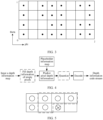
- FIG. 3 is a schematic diagram of a two-dimensional projection plane structure of a point cloud according to an embodiment of the present invention. Each point in the original point cloud data is mapped to a corresponding pixel in the structure.
- a plurality of points in the point cloud may correspond to the same pixel in the two-dimensional projection plane structure.
- these space points may be chosen to be projected to different pixels during projection. For example, during projection of a certain point, if the pixel corresponding to the point already has a corresponding point, the point is projected to an empty pixel adjacent to the pixel.
- the quantity of corresponding points in each pixel should be additionally encoded, and information of each corresponding point in the pixel is encoded according to the quantity of points.
- the plurality of pieces of two-dimensional image information include a depth information map.
- the depth information map is used to represent a distance between a corresponding point of each occupied pixel in the two-dimensional regularization projection plane structure and a coordinate origin.
- S4 Encode the plurality of pieces of two-dimensional image information to obtain code stream information.
- the encoding the plurality of pieces of two-dimensional image information to obtain code stream information includes: encoding the depth information map to obtain a depth information code stream. Specifically, prediction first needs to be performed on the depth information map, to obtain a predicted residual of depth information, and then the predicted residual is encoded.
- prediction may be performed on a pixel in the depth information map by using a placeholder information map and reconstructed depth information of encoded pixels to obtain a predicted residual. Subsequently, the residual is encoded, to obtain a depth information code stream.
- the placeholder information map is used to identify whether each pixel in the two-dimensional regularization projection plane structure is occupied, that is, whether each pixel corresponds to a point in the point cloud. If each pixel is occupied, the pixel is referred to as being non-empty; otherwise, the pixel is referred to as being empty. For example, 0 and 1 may be used for representation, where 1 indicates that the current pixel is occupied; and 0 indicates that the current pixel is not occupied, which may be directly obtained based on the two-dimensional projection plane structure of the point cloud.
- FIG. 4 is an encoding block diagram of a depth information map according to an embodiment of the present invention, which specifically includes:
- the empty pixels are not occupied, there is no point corresponding to this type of pixels in the point cloud, so that the pixels have no corresponding depth information. In this case, whether to fill depth information of the empty pixels may be selected. By adding depth information for the empty pixel, it will be more convenient to perform pixel depth information prediction or to convert and compress the depth information map by using video/image encoding and decoding methods.
- the depth information map is traversed in a preset order, for example, a Z-shaped order.
- the placeholder information map is used to determine whether the current pixel is an empty pixel, and then depth information filling is performed on each empty pixel.
- the pixels before the empty pixel already have depth information, so that linear fitting may be performed on the depth information of the pixels in the adjacent region of the current empty pixel by using the following formula, to obtain depth information of the current pixel, and the depth information is used as the depth information R _ cur to be filled to the current empty pixel.
- FIG. 5 is a schematic diagram of filling of depth information of empty pixels according to an embodiment of the present invention, where ⁇ represents the current empty pixel, and O represents the pixels that can be used for reference in the adjacent region of the current pixel.
- the depth information of the current pixel Before the depth information of pixels is encoded, the depth information of the current pixel needs to be predicted.
- the depth information of the current pixel may be predicted by using the placeholder information map and the reconstructed depth information of the encoded pixels.
- the prediction method that can be used is, for example, averaging the depth information of the processed pixels in the adjacent region of the current pixel as a predicted value of the depth information of the current pixel.
- the pixels in the depth information map may be traversed in a certain scanning order, for example, Z-shaped scanning. Subsequently, whether the current pixel is non-empty is determined according to the placeholder information map, and then the depth information of each non-empty pixel is predicted.
- FIG. 6 is a schematic prediction diagram of depth information of pixels according to an embodiment of the present invention, where ⁇ represents the current non-empty pixel, and O represents the pixels that can be used for reference in the adjacent region of the current pixel.
- a predicted value R_pred of the depth information of the current pixel may be obtained through interpolation by using the depth information of the pixels in the adjacent region of the current pixel, that is, the dashed box in FIG. 6 .
- a placeholder information map is used for assisting in prediction of the depth information map, thereby improving the encoding efficiency.
- a conventional encoding method may alternatively be used to perform prediction on a pixel in the depth information map directly according to reconstructed depth information of encoded pixels to obtain a predicted residual.
- an optimal prediction mode may alternatively be selected from a plurality of preset prediction modes through a rate-distortion optimization model to perform prediction on a pixel in the depth information map to obtain a predicted residual.
- six prediction modes may be set as follows:
- An optimal mode is selected for prediction through a rate-distortion model to obtain the predicted residual.
- the predicted residual needs to be encoded. It should be noted that when lossy encoding is performed on the depth information map, the predicted residual of the depth information need to be quantized before encoding. When lossless encoding is performed on the depth information map, the predicted residual does not need to be quantized.
- this embodiment is implemented in a context-based entropy encoding manner.
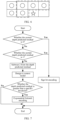
- the entropy encoding process shown in FIG. 7 may be used to encode the predicted residual.
- the specific encoding process is as follows:
- the depth information map may alternatively be encoded through image/video compression.
- Encoding solutions that can be used herein include, but not limited to: JPEG, JPEG2000, HEIF, H.264 ⁇ AVC, H.265 ⁇ HEVC, and the like.
- other information maps obtained according to the two-dimensional projection plane structure such as a placeholder information map, a projection residual information map, a coordinate conversion error information map, and an attribute information map, may further be encoded to obtain corresponding code stream information.
- a point cloud in a three-dimensional space is projected to a corresponding two-dimensional regularization projection plane structure, and regularization correction is performed on the point cloud in a vertical direction and a horizontal direction, to obtain a strong correlation representation of the point cloud on the two-dimensional projection plane structure, so that sparsity in a three-dimensional representation structure is avoided, and the spatial correlation of the point cloud is better reflected; and when a depth information map and other two-dimensional image information obtained for the two-dimensional regularization projection plane structure are encoded subsequently, the spatial correlation of the point cloud can be greatly utilized, and the spatial redundancy is reduced, thereby further improving the encoding efficiency of the point cloud.
- FIG. 8 is a schematic structural diagram of a point cloud encoding device based on a two-dimensional regularization plane projection according to an embodiment of the present invention, which includes:
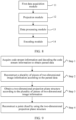
- FIG. 9 is a schematic diagram of a point cloud decoding method based on a two-dimensional regularization plane projection according to an embodiment of the present invention, the method includes: Step 1: Acquire code stream information and decoding the code stream information to obtain parsed data.
- a decoder side acquires compressed code stream information, and uses an existing entropy decoding technology corresponding to the technology used at an encoder side to perform corresponding decoding on the code stream information to obtain the parsed data.
- the encoder side quantizes the predicted residual of the depth information, the predicted residual obtained by parsing needs to be dequantized herein.
- Step 2 Reconstruct a plurality of pieces of two-dimensional image information according to the parsed data.
- Step 2 may include the following steps. reconstructing, according to predicted residuals of a depth information map in the parsed data, the depth information map to obtain a reconstructed depth information map.
- the plurality of pieces of two-dimensional image information may include a depth information map, that is, the depth information map is encoded
- the code stream information at the decoder side correspondingly includes a depth information code stream.
- the parsed data obtained by decoding the code stream information includes a predicted residual of the depth information.
- the encoder side traverses the pixels in the depth information map in a certain scanning order and encodes the depth information of non-empty pixels therein, predicted residuals of the pixel depth information obtained by the decoder side is also in this order, and the decoder side may obtain the resolution of the depth information map by using regularization parameters. For details, reference may be made to the part of initializing the two-dimensional projection plane structure in S2 in Embodiment 1. Therefore, the decoder side can know a position of a pixel currently to be reconstructed in the two-dimensional map according to the resolution of the depth information map and the placeholder information map.
- FIG. 10 is a decoding block diagram of a depth information map according to an embodiment of the present invention. If the encoder side fills depth information of empty pixels, the decoder side similarly uses the placeholder information map and the reconstructed depth information of encoded pixels to perform linear fitting and filling on the depth information of the current empty pixel. In addition, the depth information of the pixel currently to be reconstructed is predicted according to the placeholder information map and the reconstructed depth information of the encoded pixels, which is consistent with the prediction method on the encoder side.
- the predicted value of the depth information of the pixel currently to be reconstructed is obtained through interpolation by using the depth information of pixels in the adjacent region of the pixel currently to be reconstructed, and then the depth information of the current pixel is reconstructed according to the obtained predicted value and the parsed predicted residual. After the depth information of all pixels is reconstructed, a reconstructed depth information map is obtained.
- Step 3 Obtain a two-dimensional projection plane structure according to the plurality of pieces of two-dimensional image information.
- the depth information of each non-empty pixel in the two-dimensional projection plane structure can be known, to obtain a reconstructed two-dimensional projection plane structure.
- Step 4 Reconstruct a point cloud by using the two-dimensional projection plane structure.
- the depth information of each non-empty pixel can be known. If the current pixel ( i,j ) is non-empty, and it is known that the depth information thereof is r , other information such as coordinate conversion error information is used to reconstruct a space point ( x , y , z ) corresponding to the pixel.
- the corresponding position of the current pixel is ( i,j ) may be expressed as ( ⁇ j ,i ), then the current pixel may be inversely projected back to the Cartesian coordinate system by using regularization parameters and the following formula, to obtain the corresponding Cartesian coordinate ( xl, yl, zl ):
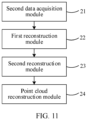
- FIG. 11 is a schematic structural diagram of a point cloud decoding device based on a two-dimensional regularization plane projection according to an embodiment of the present invention, which includes:
- the decoding device provided in this embodiment can implement the decoding method in Embodiment 3, and the detailed process is not described herein again.
Landscapes
- Engineering & Computer Science (AREA)
- Multimedia (AREA)
- Signal Processing (AREA)
- Physics & Mathematics (AREA)
- General Physics & Mathematics (AREA)
- Theoretical Computer Science (AREA)
- Image Processing (AREA)
- Processing Or Creating Images (AREA)
- Image Generation (AREA)
Abstract
Description
- This application claims priority to
Chinese Patent Application No. 202110171905.5, filed with the China National Intellectual Property Administration on February 08, 2021 - The present invention relates to technical field of encoding and decoding, and specifically, to a point cloud encoding and decoding method and device based on a two-dimensional regularization plane projection.
- With the improvement of hardware processing capabilities and the rapid development of computer vision, the three-dimensional point cloud has become a new generation of immersive multimedia after audio, image, and video, and is widely applied to virtual reality, augmented reality, automated driving, environmental modeling, and the like. However, the three-dimensional point cloud usually has a relatively large amount of data, which is not conducive to the transmission and storage of point cloud data. Therefore, it is of great significance to study an efficient point cloud encoding and decoding technology.
- In the existing geometry-based point cloud compression (G-PCC, Geometry-based Point Cloud Compression) encoding framework, the geometry information and attribute information of the point cloud are encoded separately. At present, the G-PCC geometric encoding and decoding may be divided into octree-based geometric encoding and decoding and prediction tree-based geometric encoding and decoding.
- Octree-based geometric encoding and decoding: At an encoder side, firstly, the geometry information of the point cloud is preprocessed, which includes the coordinate conversion and voxelization process of the point cloud. Subsequently, tree division (octree/quadtree/binary tree) is continuously performed on a bounding box in which the point cloud is located in the order of breadth-first traversal. Finally, the placeholder code of each node is encoded, and the quantity of points included in each leaf node is encoded, to generate a binary code stream. At a decoder side, firstly, the placeholder code of each node is continuously obtained by parsing in the order of breadth-first traversal. Subsequently, tree division is continuously performed in sequence, and the division stops until a unit cube of 1 x1x1 is obtained through division. Finally, the quantity of points included in each leaf node is obtained by parsing, and finally reconstructed point cloud geometry information is obtained.
- Prediction tree-based geometric encoding and decoding: At the encoder side, firstly, an inputted point cloud is sorted. Subsequently, a prediction tree structure is established. By classifying each point to a laser scanner to which the point belongs, the prediction tree structure is established according to different laser scanners. Subsequently, each node in the prediction tree is traversed, geometry information of the nodes is predicted by selecting different prediction modes to obtain predicted residuals, the predicted residuals are quantized by using a quantization parameter. Finally, the prediction tree structure, the quantization parameter, the predicted residuals of the geometry information of the nodes, and the like are encoded to generate a binary code stream. At the decoder side, firstly, the code stream is analyzed; then the prediction tree structure is reconstructed; subsequently the predicted residuals are dequantized based on the predicted residual of the geometry information of each node obtained by parsing and the quantization parameter; and finally reconstructed geometry information of each node is restored. That is, reconstruction of point cloud geometry information is completed.
- However, due to relatively strong spatial sparsity of the point cloud, for the point cloud encoding technology using an octree structure, this structure will lead to a relatively large proportion of empty nodes obtained by division, and the spatial correlation of the point cloud cannot be fully reflected, which is not conducive to point cloud prediction and entropy encoding. In the prediction tree-based point cloud encoding and decoding technology, some parameters of the lidar device are used to establish a tree structure, and the tree structure is used for predictive encoding based on this. However, the tree structure does not fully reflect the spatial correlation of the point cloud, which is not conducive to point cloud prediction and entropy encoding. Therefore, both of the foregoing two point cloud encoding and decoding technologies have the problem of insufficiently high encoding efficiency.
- To resolve the foregoing problem in the existing technologies, the present invention provides a point cloud encoding and decoding method and device based on a two-dimensional regularization plane projection. The technical problem to be resolved in the present invention is implemented by the following technical solutions:
A point cloud encoding method based on a two-dimensional regularization plane projection is provided, including: - acquiring original point cloud data;
- performing two-dimensional regularization plane projection on the original point cloud data to obtain a two-dimensional projection plane structure;
- obtaining a plurality of pieces of two-dimensional image information according to the two-dimensional projection plane structure; and
- encoding the plurality of pieces of two-dimensional image information to obtain code stream information.
- In an embodiment of the present invention, the plurality of pieces of two-dimensional image information include a depth information map.
- In an embodiment of the present invention, the encoding the plurality of pieces of two-dimensional image information to obtain code stream information includes:
encoding the depth information map to obtain a depth information code stream. - In an embodiment of the present invention, the encoding the depth information map to obtain a depth information code stream includes:
- performing prediction on a pixel in the depth information map based on a placeholder information map to obtain a predicted residual; or
- performing prediction on a pixel in the depth information map based on reconstructed depth information of encoded pixels to obtain a predicted residual; and
- encoding the predicted residual to obtain the depth information code stream.
- In an embodiment of the present invention, before the encoding the depth information map, the method further includes:
traversing the depth information map in a preset order, and performing, in a case that a current pixel is an empty pixel, depth information filling on the empty pixel. - In an embodiment of the present invention, the performing prediction on a pixel in the depth information map based on a placeholder information map to obtain a predicted residual includes: traversing pixels in the depth information map in a specific scanning order; and
determining whether a current pixel is non-empty according to the placeholder information map, and predicting depth information of a current non-empty pixel by using the reconstructed depth information of encoded non-empty pixels, to obtain the predicted residual. - Another embodiment of the present invention further provides a point cloud encoding device based on a two-dimensional regularization plane projection, including:
- a first data acquisition module, configured to acquire original point cloud data;
- a projection module, configured to perform two-dimensional regularization plane projection on the original point cloud data to obtain a two-dimensional projection plane structure;
- a data processing module, configured to obtain a plurality of pieces of two-dimensional image information according to the two-dimensional projection plane structure; and an encoding module, configured to encode the plurality of pieces of two-dimensional image information to obtain code stream information.
- Still another embodiment of the present invention further provides a point cloud decoding method based on a two-dimensional regularization plane projection, including:
- acquiring code stream information and decoding the code stream information to obtain parsed data;
- reconstructing a plurality of pieces of two-dimensional image information according to the parsed data;
- obtaining a two-dimensional projection plane structure according to the plurality of pieces of two-dimensional image information; and
- reconstructing a point cloud by using the two-dimensional projection plane structure.
- In an embodiment of the present invention, the reconstructing a plurality of pieces of two-dimensional image information according to the parsed data includes:
reconstructing, according to predicted residuals of a depth information map in the parsed data, the depth information map to obtain a reconstructed depth information map. - Still another embodiment of the present invention further provides a point cloud decoding device based on a two-dimensional regularization plane projection, including:
- a second data acquisition module, configured to acquire code stream information and decode the code stream information to obtain parsed data;
- a first reconstruction module, configured to reconstruct a plurality of pieces of two-dimensional image information according to the parsed data;
- a second reconstruction module, configured to obtain a two-dimensional projection plane structure according to the plurality of pieces of two-dimensional image information; and
- a point cloud reconstruction module, configured to reconstruct a point cloud by using the two-dimensional projection plane structure.
- Beneficial effects of the present invention are as follows:
- 1. According to the present invention, a point cloud in a three-dimensional space is projected to a corresponding two-dimensional regularization projection plane structure, and regularization correction is performed on the point cloud in a vertical direction and a horizontal direction, to obtain a strong correlation representation of the point cloud on the two-dimensional projection plane structure, so that sparsity in a three-dimensional representation structure is avoided, and the spatial correlation of the point cloud is better reflected; and when a plurality of pieces of two-dimensional image information obtained for the two-dimensional regularization projection plane structure are encoded subsequently, the spatial correlation of the point cloud can be greatly utilized, and the spatial redundancy is reduced, thereby further improving the encoding efficiency of the point cloud.
- 2. According to the present invention, a placeholder information map is used for assisting in encoding the depth information map, so that the encoding efficiency is improved.
- 3. According to the present invention, a depth information map may further be used for assisting in encoding other two-dimensional maps, to improve the encoding efficiency.
- The following further describes the present invention in detail with reference to the accompanying drawings and the embodiments.
-
-
FIG. 1 is a schematic diagram of a point cloud encoding method based on a two-dimensional regularization plane projection according to an embodiment of the present invention; -
FIG. 2 is a schematic diagram of a correspondence between cylindrical coordinates of points and pixels in a two-dimensional projection plane according to an embodiment of the present invention; -
FIG. 3 is a schematic diagram of a two-dimensional projection plane structure of a point cloud according to an embodiment of the present invention; -
FIG. 4 is an encoding block diagram of a depth information map according to an embodiment of the present invention; -
FIG. 5 is a schematic diagram of filling of depth information of empty pixels according to an embodiment of the present invention; -
FIG. 6 is a schematic prediction diagram of depth information of pixels according to an embodiment of the present invention; -
FIG. 7 is a flowchart of entropy encoding of a predicted residual of depth information according to an embodiment of the present invention; -
FIG. 8 is a schematic structural diagram of a point cloud encoding device based on a two-dimensional regularization plane projection according to an embodiment of the present invention; -
FIG. 9 is a schematic diagram of a point cloud decoding method based on a two-dimensional regularization plane projection according to an embodiment of the present invention; -
FIG. 10 is a decoding block diagram of a depth information map according to an embodiment of the present invention; and -
FIG. 11 is a schematic structural diagram of a point cloud decoding device based on a two-dimensional regularization plane projection according to an embodiment of the present invention. - The present invention is further described in detail below with reference to specific embodiments, but the implementations of the present invention are not limited thereto.
-
FIG. 1 is a schematic diagram of a point cloud encoding method based on a two-dimensional regularization plane projection according to an embodiment of the present invention, which includes:
S1: Acquire original point cloud data. - Specifically, the original point cloud data usually includes a group of three-dimensional space points, and each space point records its geometric position information and additional attribute information such as color, reflectivity, and normal. The geometric position information of the point cloud is generally expressed based on a Cartesian coordinate system, that is, expressed by using the coordinates x, y, and z of points. The original point cloud data may be acquired through 3D scanning devices such as a lidar, and may alternatively be acquired based on public datasets provided by various platforms. In this embodiment, it is assumed that the geometric position information of the acquired original point cloud data is expressed based on the Cartesian coordinate system. It should be noted that the representation method of the geometric position information of the original point cloud data is not limited to Cartesian coordinates.
- S2: Perform two-dimensional regularization plane projection on the original point cloud data to obtain a two-dimensional projection plane structure.
- Specifically, in this embodiment, before two-dimensional regularization plane projection is performed on the original point cloud, preprocessing such as voxelization processing may further be performed on the original point cloud data, to facilitate subsequent encoding.
- First, the two-dimensional projection plane structure is initialized.
- Initialization of the two-dimensional regularization projection plane structure of the point cloud requires the use of regularization parameters. The regularization parameters are usually finely measured by the manufacturer and provided to consumers as one of the necessary data, such as an acquisition range of a lidar, a sampling angular resolution Δϕ or the quantity of sampling points of the horizontal azimuth angle, a distance correction factor of each laser scanner, offset information Vo and Ho of the laser scanner in the vertical direction and the horizontal direction, and offset information θ 0 and α of the laser scanner along the pitch angle and the horizontal azimuth angle.
- It should be noted that the regularization parameters are not limited to the parameters given above. Given calibration parameters of the lidar may be used as the regularization parameters, or the regularization parameters may be obtained in manners such as optimizing estimation and data fitting in a case that the calibration parameters of the lidar are not given.
- The two-dimensional regularization projection plane structure of the point cloud is a data structure including M rows and N columns of pixels, and points in the three-dimensional point cloud correspond to the pixels in the data structure after projection. In addition, a pixel (i,j) in the data structure may be associated with a cylindrical coordinate component (θ,φ). For example, the pixel (i,j) corresponding to a cylindrical coordinate (r,θ,φ) may be found by using the following formula.


- Specifically,
FIG. 2 is a schematic diagram of a correspondence between cylindrical coordinates of points and pixels in a two-dimensional projection plane according to an embodiment of the present invention. - It should be noted that the correspondence of pixels herein is not limited to cylindrical coordinates. Further, the resolution of the two-dimensional regularization projection plane may be obtained by using the regularization parameters. For example, it is assumed that the resolution of the two-dimensional regularization projection plane is M × N, then the quantity of laser scanners in the regularization parameters may be used to initialize M, and the sampling angle resolution Δϕ of the horizontal azimuth angle (or the quantity of sampling points of the laser scanner) is used to initialize N. For example, the following formula may be used, and finally the initialization of the two-dimensional projection plane structure can be completed, to obtain a plane structure including M × N pixels.


- In addition, a mapping relationship between the original point cloud data and the two-dimensional projection plane structure is determined, so as to project the original point cloud data onto the two-dimensional projection plane structure.
- In this part, by determining the position of the original point cloud in the two-dimensional projection plane structure point by point, and the point cloud originally distributed disorderly in the Cartesian coordinate system is mapped onto the evenly distributed two-dimensional regularization projection plane structure. Specifically, for each point in the original point cloud, a corresponding pixel is determined in the two-dimensional projection plane structure. For example, a pixel with the shortest spatial distance from a projection position of the point in the two-dimensional plane may be selected as the corresponding pixel of the point.
- If a cylindrical coordinate system is used for two-dimensional projection, the specific process of determining pixels corresponding to the original point cloud is as follows:
- a. A cylindrical coordinate component r of a current point in the original point cloud data is determined, and specifically, the following formula is used for calculation:

- b. A search region of the current point in the two-dimensional projection plane structure is determined. Specifically, the entire two-dimensional projection plane structure may be directly selected as the search region. Further, to reduce the amount of calculation, the pitch angle θ and azimuth angle φ of the cylindrical coordinate component of the current point may further be used to determine the search region of the corresponding pixel in the two-dimensional projection plane structure, to reduce the search region.
- c. After the search region is determined, for each pixel (i,j) in the search region, the regularization parameters, that is, the calibration parameters θ 0, Vo, Ho , and α of the ith laser scanner of the lidar, are used to calculate the position (xl,yl,zl) of the current pixel in the Cartesian coordinate system, where the specific calculation formula is as follows:


- d. After the position (xl,yl,zl) of the current pixel in the Cartesian coordinate system is obtained, a spatial distance between the position and the current point (x,y,z) is calculated and used as an error Err, that is:

- e. After all the pixels in the search region have been traversed, the corresponding pixel (i,j) of the current point in the two-dimensional projection plane structure can be determined.
- When the foregoing operations have been completed for all the points in the original point cloud, the two-dimensional regularization plane projection of the point cloud is completed. Specifically,
-
FIG. 3 is a schematic diagram of a two-dimensional projection plane structure of a point cloud according to an embodiment of the present invention. Each point in the original point cloud data is mapped to a corresponding pixel in the structure. - It should be noted that during the two-dimensional regularization plane projection of the point cloud, a plurality of points in the point cloud may correspond to the same pixel in the two-dimensional projection plane structure. To avoid this situation, these space points may be chosen to be projected to different pixels during projection. For example, during projection of a certain point, if the pixel corresponding to the point already has a corresponding point, the point is projected to an empty pixel adjacent to the pixel. In addition, if a plurality of points in the point cloud have been projected to the same pixel in the two-dimensional projection plane structure, during encoding based on the two-dimensional projection plane structure, the quantity of corresponding points in each pixel should be additionally encoded, and information of each corresponding point in the pixel is encoded according to the quantity of points.
- S3: Obtain a plurality of pieces of two-dimensional image information according to the two-dimensional projection plane structure.
- In this embodiment, the plurality of pieces of two-dimensional image information include a depth information map.
- Specifically, the depth information map is used to represent a distance between a corresponding point of each occupied pixel in the two-dimensional regularization projection plane structure and a coordinate origin. For example, the cylindrical coordinate component r of the point corresponding to the pixel may be used as a depth of the pixel. It is assumed that the Cartesian coordinate of the point corresponding to the pixel is (x,y,z), then the cylindrical coordinate component r of the point, that is, the depth of the pixel, may be obtained by using the formula

- S4: Encode the plurality of pieces of two-dimensional image information to obtain code stream information.
- Correspondingly, the encoding the plurality of pieces of two-dimensional image information to obtain code stream information includes: encoding the depth information map to obtain a depth information code stream. Specifically, prediction first needs to be performed on the depth information map, to obtain a predicted residual of depth information, and then the predicted residual is encoded.
- In this embodiment, prediction may be performed on a pixel in the depth information map by using a placeholder information map and reconstructed depth information of encoded pixels to obtain a predicted residual. Subsequently, the residual is encoded, to obtain a depth information code stream. The placeholder information map is used to identify whether each pixel in the two-dimensional regularization projection plane structure is occupied, that is, whether each pixel corresponds to a point in the point cloud. If each pixel is occupied, the pixel is referred to as being non-empty; otherwise, the pixel is referred to as being empty. For example, 0 and 1 may be used for representation, where 1 indicates that the current pixel is occupied; and 0 indicates that the current pixel is not occupied, which may be directly obtained based on the two-dimensional projection plane structure of the point cloud.
-
FIG. 4 is an encoding block diagram of a depth information map according to an embodiment of the present invention, which specifically includes: - Further, because the empty pixels are not occupied, there is no point corresponding to this type of pixels in the point cloud, so that the pixels have no corresponding depth information. In this case, whether to fill depth information of the empty pixels may be selected. By adding depth information for the empty pixel, it will be more convenient to perform pixel depth information prediction or to convert and compress the depth information map by using video/image encoding and decoding methods.
- Specifically, the depth information map is traversed in a preset order, for example, a Z-shaped order. The placeholder information map is used to determine whether the current pixel is an empty pixel, and then depth information filling is performed on each empty pixel. During traversing to the current empty pixel, the pixels before the empty pixel already have depth information, so that linear fitting may be performed on the depth information of the pixels in the adjacent region of the current empty pixel by using the following formula, to obtain depth information of the current pixel, and the depth information is used as the depth information R_cur to be filled to the current empty pixel.

FIG. 5 is a schematic diagram of filling of depth information of empty pixels according to an embodiment of the present invention, where ⊗ represents the current empty pixel, and O represents the pixels that can be used for reference in the adjacent region of the current pixel. - Before the depth information of pixels is encoded, the depth information of the current pixel needs to be predicted. The depth information of the current pixel may be predicted by using the placeholder information map and the reconstructed depth information of the encoded pixels.
- The prediction method that can be used is, for example, averaging the depth information of the processed pixels in the adjacent region of the current pixel as a predicted value of the depth information of the current pixel.
- Specifically, the pixels in the depth information map may be traversed in a certain scanning order, for example, Z-shaped scanning. Subsequently, whether the current pixel is non-empty is determined according to the placeholder information map, and then the depth information of each non-empty pixel is predicted.
FIG. 6 is a schematic prediction diagram of depth information of pixels according to an embodiment of the present invention, where ☆ represents the current non-empty pixel, and O represents the pixels that can be used for reference in the adjacent region of the current pixel. - During prediction on the depth information of the current pixel, a predicted value R_pred of the depth information of the current pixel may be obtained through interpolation by using the depth information of the pixels in the adjacent region of the current pixel, that is, the dashed box in
FIG. 6 . The calculation formula of the predicted value is as follows:
- According to the present invention, during encoding of the depth information, a placeholder information map is used for assisting in prediction of the depth information map, thereby improving the encoding efficiency.
- In another embodiment of the present invention, a conventional encoding method may alternatively be used to perform prediction on a pixel in the depth information map directly according to reconstructed depth information of encoded pixels to obtain a predicted residual.
- In addition, an optimal prediction mode may alternatively be selected from a plurality of preset prediction modes through a rate-distortion optimization model to perform prediction on a pixel in the depth information map to obtain a predicted residual.
- For example, six prediction modes may be set as follows:
- Mode0: Direct mode, skip prediction and directly perform compression;
- Model : To-the-left prediction, use a pixel on the left as a reference pixel;
- Mode2: Upward prediction, use a pixel above as a reference pixel;
- Mode3; Upper left prediction, use a pixel on the upper left as a reference pixel;
- Mode4: Upper right prediction, use a pixel on the upper right as a reference pixel;
- Mode5: Use pixels on the left, above, on the upper left, and on the upper right as reference pixels.
- An optimal mode is selected for prediction through a rate-distortion model to obtain the predicted residual.
- After prediction of the depth information is completed, the predicted residual needs to be encoded. It should be noted that when lossy encoding is performed on the depth information map, the predicted residual of the depth information need to be quantized before encoding. When lossless encoding is performed on the depth information map, the predicted residual does not need to be quantized.
- Specifically, this embodiment is implemented in a context-based entropy encoding manner. For example, the entropy encoding process shown in
FIG. 7 may be used to encode the predicted residual. The specific encoding process is as follows: - a. first determine whether the predicted residual of the depth information of the current pixel is 0, and if the predicted residual is 0, encode the 0 identifier, and skip performing subsequent encoding;
- b. otherwise, determine whether the predicted residual of the depth information of the current pixel is 1, if the predicted residual is 1, encode the 1 identifier, and skip performing subsequent encoding;
- c. otherwise, subtract 2 from the current predicted residual value, and then determine whether the predicted residual is greater than a specific threshold; and if the predicted residual is less than the specific threshold, design a context model for the current predicted residual; otherwise, perform encoding in the following manner:
- designing context for predicted residual information of a part of which the predicted residual is less than the threshold for encoding; and
- performing exponential Golomb encoding on the predicted residual information of a part of which the predicted residual is greater than the threshold.
- So far, encoding of the depth information map is completed.
- In addition, in another embodiment of the present invention, if the depth information map is filled, the depth information map may alternatively be encoded through image/video compression. Encoding solutions that can be used herein include, but not limited to: JPEG, JPEG2000, HEIF, H.264\AVC, H.265\HEVC, and the like.
- In another embodiment of the present invention, other information maps obtained according to the two-dimensional projection plane structure, such as a placeholder information map, a projection residual information map, a coordinate conversion error information map, and an attribute information map, may further be encoded to obtain corresponding code stream information. According to the present invention, a point cloud in a three-dimensional space is projected to a corresponding two-dimensional regularization projection plane structure, and regularization correction is performed on the point cloud in a vertical direction and a horizontal direction, to obtain a strong correlation representation of the point cloud on the two-dimensional projection plane structure, so that sparsity in a three-dimensional representation structure is avoided, and the spatial correlation of the point cloud is better reflected; and when a depth information map and other two-dimensional image information obtained for the two-dimensional regularization projection plane structure are encoded subsequently, the spatial correlation of the point cloud can be greatly utilized, and the spatial redundancy is reduced, thereby further improving the encoding efficiency of the point cloud.
- Based on
Embodiment 1, this embodiment provides a point cloud encoding device based on a two-dimensional regularization plane projection.FIG. 8 is a schematic structural diagram of a point cloud encoding device based on a two-dimensional regularization plane projection according to an embodiment of the present invention, which includes: - a first
data acquisition module 11, configured to acquire original point cloud data; - a
projection module 12, configured to perform two-dimensional regularization plane projection on the original point cloud data to obtain a two-dimensional projection plane structure; - a
data processing module 13, configured to obtain a plurality of pieces of two-dimensional image information according to the two-dimensional projection plane structure; and anencoding module 14, configured to encode the plurality of pieces of two-dimensional image information to obtain code stream information. - The encoding device provided in this embodiment can implement the encoding method described in
Embodiment 1, and the detailed process is not described herein again. -
FIG. 9 is a schematic diagram of a point cloud decoding method based on a two-dimensional regularization plane projection according to an embodiment of the present invention, the method includes:
Step 1: Acquire code stream information and decoding the code stream information to obtain parsed data. - A decoder side acquires compressed code stream information, and uses an existing entropy decoding technology corresponding to the technology used at an encoder side to perform corresponding decoding on the code stream information to obtain the parsed data.
- The specific decoding process is as follows:
- a. first parse whether the predicted residual of the depth information of the current pixel is 0, if the predicted residual is 0, the predicted residual of the current pixel is 0, and skip performing subsequent decoding;
- b. otherwise, parse whether the predicted residual of the depth information of the current pixel is 1, if the predicted residual is 1, the predicted residual of the current pixel is 1, and skip performing subsequent decoding;
- c. otherwise, design a corresponding context model for the current predicted residual for decoding, then determine whether the predicted residual obtained by parsing is greater than a specific threshold, and if the predicted residual is less than the specific threshold, skip performing subsequent decoding; otherwise, decode the predicted residual value of a part of which a predicted residual is greater than the threshold in an exponential Golomb decoding manner. Finally, 2 is added to the predicted residual value as the final predicted residual of the depth information obtained by parsing.
- It should be noted that, if the encoder side quantizes the predicted residual of the depth information, the predicted residual obtained by parsing needs to be dequantized herein.
- Step 2: Reconstruct a plurality of pieces of two-dimensional image information according to the parsed data.
- In this embodiment,
Step 2 may include the following steps.
reconstructing, according to predicted residuals of a depth information map in the parsed data, the depth information map to obtain a reconstructed depth information map. - Specifically, because at the encoder side, the plurality of pieces of two-dimensional image information may include a depth information map, that is, the depth information map is encoded, the code stream information at the decoder side correspondingly includes a depth information code stream. More specifically, the parsed data obtained by decoding the code stream information includes a predicted residual of the depth information.
- Because in
Embodiment 1, the encoder side traverses the pixels in the depth information map in a certain scanning order and encodes the depth information of non-empty pixels therein, predicted residuals of the pixel depth information obtained by the decoder side is also in this order, and the decoder side may obtain the resolution of the depth information map by using regularization parameters. For details, reference may be made to the part of initializing the two-dimensional projection plane structure in S2 inEmbodiment 1. Therefore, the decoder side can know a position of a pixel currently to be reconstructed in the two-dimensional map according to the resolution of the depth information map and the placeholder information map. -
FIG. 10 is a decoding block diagram of a depth information map according to an embodiment of the present invention. If the encoder side fills depth information of empty pixels, the decoder side similarly uses the placeholder information map and the reconstructed depth information of encoded pixels to perform linear fitting and filling on the depth information of the current empty pixel. In addition, the depth information of the pixel currently to be reconstructed is predicted according to the placeholder information map and the reconstructed depth information of the encoded pixels, which is consistent with the prediction method on the encoder side. The predicted value of the depth information of the pixel currently to be reconstructed is obtained through interpolation by using the depth information of pixels in the adjacent region of the pixel currently to be reconstructed, and then the depth information of the current pixel is reconstructed according to the obtained predicted value and the parsed predicted residual. After the depth information of all pixels is reconstructed, a reconstructed depth information map is obtained. - Step 3: Obtain a two-dimensional projection plane structure according to the plurality of pieces of two-dimensional image information.
- Because the resolution of the two-dimensional projection plane structure is consistent with that of the depth information map, and the depth information map has been reconstructed, the depth information of each non-empty pixel in the two-dimensional projection plane structure can be known, to obtain a reconstructed two-dimensional projection plane structure.
- Step 4: Reconstruct a point cloud by using the two-dimensional projection plane structure.
- By traversing the pixels in the reconstructed two-dimensional projection plane structure in a certain scanning order, the depth information of each non-empty pixel can be known. If the current pixel (i,j) is non-empty, and it is known that the depth information thereof is r, other information such as coordinate conversion error information is used to reconstruct a space point (x,y,z) corresponding to the pixel. Specifically, the corresponding position of the current pixel is (i,j) may be expressed as (φj,i), then the current pixel may be inversely projected back to the Cartesian coordinate system by using regularization parameters and the following formula, to obtain the corresponding Cartesian coordinate (xl, yl, zl):


- Subsequently, other information, for example, the coordinate conversion error information ( Δx,Δy,Δz), is used to reconstruct the space point (x, y, z) corresponding to the current pixel, that is, (x,y,z) = (xl,yl,zl) + (Δx,Δy,Δz). Finally, a corresponding space point can be reconstructed for each non-empty pixel in the two-dimensional projection structure according to the foregoing calculation, to obtain the reconstructed point cloud.
- Based on
Embodiment 3, this embodiment provides a point cloud decoding device based on a two-dimensional regularization plane projection.FIG. 11 is a schematic structural diagram of a point cloud decoding device based on a two-dimensional regularization plane projection according to an embodiment of the present invention, which includes: - a second
data acquisition module 21, configured to acquire code stream information and decode the code stream information to obtain parsed data; - a
first reconstruction module 22, configured to reconstruct a plurality of pieces of two-dimensional image information according to the parsed data; - a
second reconstruction module 23, configured to obtain a two-dimensional projection plane structure according to the plurality of pieces of two-dimensional image information; and a pointcloud reconstruction module 24, configured to reconstruct a point cloud by using the two-dimensional projection plane structure. - The decoding device provided in this embodiment can implement the decoding method in
Embodiment 3, and the detailed process is not described herein again. - The foregoing contents are detailed descriptions of the present invention with reference to specific exemplary embodiments, and it should not be considered that the specific implementation of the present invention is limited to these descriptions. A person of ordinary skill in the art, to which the present invention belongs, may further make several simple deductions or replacements without departing from the concept of the present invention, and such deductions or replacements should all be considered as falling within the protection scope of the present invention.
Claims (10)
- A point cloud encoding method based on a two-dimensional regularization plane projection, comprising:acquiring original point cloud data;performing two-dimensional regularization plane projection on the original point cloud data to obtain a two-dimensional projection plane structure;obtaining a plurality of pieces of two-dimensional image information according to the two-dimensional projection plane structure; andencoding the plurality of pieces of two-dimensional image information to obtain code stream information.
- The point cloud encoding method based on a two-dimensional regularization plane projection according to claim 1, wherein the plurality of pieces of two-dimensional image information comprise a depth information map.
- The point cloud encoding method based on a two-dimensional regularization plane projection according to claim 2, wherein the encoding the plurality of pieces of two-dimensional image information to obtain code stream information comprises:
encoding the depth information map to obtain a depth information code stream. - The point cloud encoding method based on a two-dimensional regularization plane projection according to claim 3, wherein the encoding the depth information map to obtain a depth information code stream comprises:performing prediction on a pixel in the depth information map based on a placeholder information map to obtain a predicted residual; orperforming prediction on a pixel in the depth information map based on reconstructed depth information of encoded pixels to obtain a predicted residual; andencoding the predicted residual to obtain the depth information code stream.
- The point cloud encoding method based on a two-dimensional regularization plane projection according to claim 4, wherein before the encoding the depth information map, the method further comprises:
traversing the depth information map in a preset order, and performing, in a case that a current pixel is an empty pixel, depth information filling on the empty pixel. - The point cloud encoding method based on a two-dimensional regularization plane projection according to claim 4, wherein the performing prediction on a pixel in the depth information map based on a placeholder information map to obtain a predicted residual comprises:traversing pixels in the depth information map in a specific scanning order; anddetermining whether a current pixel is non-empty according to the placeholder information map, and predicting depth information of a current non-empty pixel by using the reconstructed depth information of encoded non-empty pixels, to obtain the predicted residual.
- A point cloud encoding device based on a two-dimensional regularization plane projection, comprising:a first data acquisition module (11), configured to acquire original point cloud data;a projection module (12), configured to perform two-dimensional regularization plane projection on the original point cloud data to obtain a two-dimensional projection plane structure;a data processing module (13), configured to obtain a plurality of pieces of two-dimensional image information according to the two-dimensional projection plane structure; andan encoding module (14), configured to encode the plurality of pieces of two-dimensional image information to obtain code stream information.
- Apoint cloud decoding method based on a two-dimensional regularization plane projection, comprising:acquiring code stream information and decoding the code stream information to obtain parsed data;reconstructing a plurality of pieces of two-dimensional image information according to the parsed data;obtaining a two-dimensional projection plane structure according to the plurality of pieces of two-dimensional image information; andreconstructing a point cloud by using the two-dimensional projection plane structure.
- The point cloud decoding method based on a two-dimensional regularization plane projection according to claim 8, wherein the reconstructing a plurality of pieces of two-dimensional image information according to the parsed data comprises:
reconstructing, according to predicted residuals of a depth information map in the parsed data, the depth information map to obtain a reconstructed depth information map. - A point cloud decoding device based on a two-dimensional regularization plane projection, comprising:a second data acquisition module (21), configured to acquire code stream information and decode the code stream information to obtain parsed data;a first reconstruction module (22), configured to reconstruct a plurality of pieces of two-dimensional image information according to the parsed data;a second reconstruction module (23), configured to obtain a two-dimensional projection plane structure according to the plurality of pieces of two-dimensional image information; anda point cloud reconstruction module (24), configured to reconstruct a point cloud by using the two-dimensional projection plane structure.
Applications Claiming Priority (2)
| Application Number | Priority Date | Filing Date | Title |
|---|---|---|---|
| CN202110171905.5A CN114915792B (en) | 2021-02-08 | 2021-02-08 | Point cloud encoding and decoding method and device based on two-dimensional regularized plane projection |
| PCT/CN2022/075409 WO2022166967A1 (en) | 2021-02-08 | 2022-02-07 | Point cloud encoding/decoding method and device based on two-dimensional regularization plane projection |
Publications (2)
| Publication Number | Publication Date |
|---|---|
| EP4207762A1 true EP4207762A1 (en) | 2023-07-05 |
| EP4207762A4 EP4207762A4 (en) | 2024-04-17 |
Family
ID=82742017
Family Applications (1)
| Application Number | Title | Priority Date | Filing Date |
|---|---|---|---|
| EP22749246.9A Pending EP4207762A4 (en) | 2021-02-08 | 2022-02-07 | METHOD AND DEVICE FOR POINT CLOUD ENCODING/DECODING BASED ON TWO-DIMENSIONAL REGULARIZATION PLANE PROJECTION |
Country Status (4)
| Country | Link |
|---|---|
| US (2) | US12513330B2 (en) |
| EP (1) | EP4207762A4 (en) |
| CN (3) | CN118433402A (en) |
| WO (1) | WO2022166967A1 (en) |
Families Citing this family (3)
| Publication number | Priority date | Publication date | Assignee | Title |
|---|---|---|---|---|
| CN114915794B (en) * | 2021-02-08 | 2023-11-14 | 荣耀终端有限公司 | Point cloud coding and decoding method and device based on two-dimensional regularized plane projection |
| CN119365894A (en) * | 2022-09-29 | 2025-01-24 | Oppo广东移动通信有限公司 | Coding and decoding method, code stream, encoder, decoder and storage medium |
| CN119254937B (en) * | 2024-12-06 | 2025-03-18 | 杭州海康机器人股份有限公司 | Image processing method and device and electronic equipment |
Family Cites Families (18)
| Publication number | Priority date | Publication date | Assignee | Title |
|---|---|---|---|---|
| US20030198290A1 (en) * | 2002-04-19 | 2003-10-23 | Dynamic Digital Depth Pty.Ltd. | Image encoding system |
| EP3741118A1 (en) * | 2018-01-19 | 2020-11-25 | InterDigital VC Holdings, Inc. | Processing a point cloud |
| EP3759925A4 (en) * | 2018-03-01 | 2021-11-10 | Nokia Technologies Oy | An apparatus, a method and a computer program for volumetric video |
| EP3614672A1 (en) * | 2018-08-23 | 2020-02-26 | InterDigital VC Holdings, Inc. | A method and apparatus for encoding/decoding a point cloud representing a 3d object |
| EP3554082A1 (en) * | 2018-04-11 | 2019-10-16 | InterDigital VC Holdings, Inc. | A method and device for coding the geometry of a point cloud |
| CA3096819A1 (en) * | 2018-04-11 | 2019-10-17 | Interdigital Vc Holdings, Inc. | A method and apparatus for encoding/decoding a point cloud representing a 3d object |
| WO2019199726A1 (en) * | 2018-04-11 | 2019-10-17 | Interdigital Vc Holdings, Inc. | A method for encoding depth values of a set of 3d points once orthogonally projected into at least one image region of a projection plane |
| CN110708529B (en) * | 2018-07-09 | 2020-08-14 | 上海交通大学 | Dynamic point cloud projection compression method, system, device and medium |
| US20200296401A1 (en) * | 2019-03-15 | 2020-09-17 | Mediatek Inc. | Method and Apparatus of Patch Segmentation for Video-based Point Cloud Coding |
| US10929995B2 (en) * | 2019-06-24 | 2021-02-23 | Great Wall Motor Company Limited | Method and apparatus for predicting depth completion error-map for high-confidence dense point-cloud |
| CN114915793B (en) * | 2021-02-08 | 2024-04-30 | 荣耀终端有限公司 | Point cloud encoding and decoding method and device based on two-dimensional regularized plane projection |
| CN114913252B (en) * | 2021-02-08 | 2025-08-15 | 荣耀终端股份有限公司 | Preprocessing method of point cloud data and point cloud geometric coding and decoding method and device |
| CN114915790B (en) * | 2021-02-08 | 2024-04-12 | 荣耀终端有限公司 | Two-dimensional regularized plane projection and encoding and decoding method for large-scale point clouds |
| CN118433400A (en) * | 2021-02-08 | 2024-08-02 | 荣耀终端有限公司 | Point cloud encoding and decoding method and device based on two-dimensional regularized plane projection |
| CN114915796B (en) * | 2021-02-08 | 2023-12-15 | 荣耀终端有限公司 | Point cloud coding and decoding method and device based on two-dimensional regularized plane projection |
| CN114915794B (en) * | 2021-02-08 | 2023-11-14 | 荣耀终端有限公司 | Point cloud coding and decoding method and device based on two-dimensional regularized plane projection |
| CN114915791B (en) * | 2021-02-08 | 2023-10-20 | 荣耀终端有限公司 | Point cloud sequence encoding and decoding method and device based on two-dimensional regularized plane projection |
| CN118540455A (en) * | 2021-05-26 | 2024-08-23 | 荣耀终端有限公司 | A method and device for two-dimensional regularized plane projection of point cloud |
-
2021
- 2021-02-08 CN CN202410472062.6A patent/CN118433402A/en active Pending
- 2021-02-08 CN CN202110171905.5A patent/CN114915792B/en active Active
- 2021-02-08 CN CN202410467510.3A patent/CN118433401A/en active Pending
-
2022
- 2022-02-07 EP EP22749246.9A patent/EP4207762A4/en active Pending
- 2022-02-07 US US18/032,414 patent/US12513330B2/en active Active
- 2022-02-07 WO PCT/CN2022/075409 patent/WO2022166967A1/en not_active Ceased
-
2025
- 2025-12-10 US US19/414,956 patent/US20260113484A1/en active Pending
Also Published As
| Publication number | Publication date |
|---|---|
| US20260113484A1 (en) | 2026-04-23 |
| WO2022166967A1 (en) | 2022-08-11 |
| EP4207762A4 (en) | 2024-04-17 |
| CN114915792A (en) | 2022-08-16 |
| US20230396800A1 (en) | 2023-12-07 |
| US12513330B2 (en) | 2025-12-30 |
| CN114915792B (en) | 2024-05-07 |
| CN118433401A (en) | 2024-08-02 |
| CN118433402A (en) | 2024-08-02 |
Similar Documents
| Publication | Publication Date | Title |
|---|---|---|
| US12488505B2 (en) | Point cloud encoding and decoding method and device based on two-dimensional regularization plane projection | |
| EP4240017A1 (en) | Point cloud encoding and decoding method and device based on two-dimensional regularization plane projection | |
| US20260113484A1 (en) | Point cloud encoding and decoding method and device based on two-dimensional regularization plane projection | |
| EP4250734A1 (en) | Large-scale point cloud-oriented two-dimensional regular plane projection and encoding and decoding method | |
| EP4236322A1 (en) | Point cloud encoding/decoding method and device based on two-dimensional regularized plane projection | |
| US12593073B2 (en) | Point cloud encoding and decoding method and device based on two-dimensional regularization plane projection |
Legal Events
| Date | Code | Title | Description |
|---|---|---|---|
| STAA | Information on the status of an ep patent application or granted ep patent |
Free format text: STATUS: THE INTERNATIONAL PUBLICATION HAS BEEN MADE |
|
| PUAI | Public reference made under article 153(3) epc to a published international application that has entered the european phase |
Free format text: ORIGINAL CODE: 0009012 |
|
| STAA | Information on the status of an ep patent application or granted ep patent |
Free format text: STATUS: REQUEST FOR EXAMINATION WAS MADE |
|
| 17P | Request for examination filed |
Effective date: 20230330 |
|
| AK | Designated contracting states |
Kind code of ref document: A1 Designated state(s): AL AT BE BG CH CY CZ DE DK EE ES FI FR GB GR HR HU IE IS IT LI LT LU LV MC MK MT NL NO PL PT RO RS SE SI SK SM TR |
|
| REG | Reference to a national code |
Ref country code: DE Ref legal event code: R079 Free format text: PREVIOUS MAIN CLASS: H04N0019460000 Ipc: H04N0019597000 |
|
| A4 | Supplementary search report drawn up and despatched |
Effective date: 20240318 |
|
| RIC1 | Information provided on ipc code assigned before grant |
Ipc: G06T 9/00 20060101ALI20240312BHEP Ipc: H04N 19/597 20140101AFI20240312BHEP |
|
| DAV | Request for validation of the european patent (deleted) | ||
| DAX | Request for extension of the european patent (deleted) | ||
| STAA | Information on the status of an ep patent application or granted ep patent |
Free format text: STATUS: EXAMINATION IS IN PROGRESS |
|
| 17Q | First examination report despatched |
Effective date: 20240927 |
|
| GRAP | Despatch of communication of intention to grant a patent |
Free format text: ORIGINAL CODE: EPIDOSNIGR1 |
|
| STAA | Information on the status of an ep patent application or granted ep patent |
Free format text: STATUS: GRANT OF PATENT IS INTENDED |
|
| INTG | Intention to grant announced |
Effective date: 20260305 |