EP4207392A1 - Electrode plate, manufacturing method, secondary battery and production device - Google Patents
Electrode plate, manufacturing method, secondary battery and production device Download PDFInfo
- Publication number
- EP4207392A1 EP4207392A1 EP21888096.1A EP21888096A EP4207392A1 EP 4207392 A1 EP4207392 A1 EP 4207392A1 EP 21888096 A EP21888096 A EP 21888096A EP 4207392 A1 EP4207392 A1 EP 4207392A1
- Authority
- EP
- European Patent Office
- Prior art keywords
- electrode plate
- blank region
- active material
- current collector
- region
- Prior art date
- Legal status (The legal status is an assumption and is not a legal conclusion. Google has not performed a legal analysis and makes no representation as to the accuracy of the status listed.)
- Pending
Links
Images

Classifications
-
- H—ELECTRICITY
- H01—ELECTRIC ELEMENTS
- H01M—PROCESSES OR MEANS, e.g. BATTERIES, FOR THE DIRECT CONVERSION OF CHEMICAL ENERGY INTO ELECTRICAL ENERGY
- H01M4/00—Electrodes
- H01M4/02—Electrodes composed of, or comprising, active material
- H01M4/04—Processes of manufacture in general
- H01M4/0402—Methods of deposition of the material
- H01M4/0404—Methods of deposition of the material by coating on electrode collectors
-
- H—ELECTRICITY
- H01—ELECTRIC ELEMENTS
- H01M—PROCESSES OR MEANS, e.g. BATTERIES, FOR THE DIRECT CONVERSION OF CHEMICAL ENERGY INTO ELECTRICAL ENERGY
- H01M10/00—Secondary cells; Manufacture thereof
- H01M10/04—Construction or manufacture in general
-
- H—ELECTRICITY
- H01—ELECTRIC ELEMENTS
- H01M—PROCESSES OR MEANS, e.g. BATTERIES, FOR THE DIRECT CONVERSION OF CHEMICAL ENERGY INTO ELECTRICAL ENERGY
- H01M10/00—Secondary cells; Manufacture thereof
- H01M10/04—Construction or manufacture in general
- H01M10/0404—Machines for assembling batteries
-
- H—ELECTRICITY
- H01—ELECTRIC ELEMENTS
- H01M—PROCESSES OR MEANS, e.g. BATTERIES, FOR THE DIRECT CONVERSION OF CHEMICAL ENERGY INTO ELECTRICAL ENERGY
- H01M10/00—Secondary cells; Manufacture thereof
- H01M10/04—Construction or manufacture in general
- H01M10/0431—Cells with wound or folded electrodes
-
- H—ELECTRICITY
- H01—ELECTRIC ELEMENTS
- H01M—PROCESSES OR MEANS, e.g. BATTERIES, FOR THE DIRECT CONVERSION OF CHEMICAL ENERGY INTO ELECTRICAL ENERGY
- H01M10/00—Secondary cells; Manufacture thereof
- H01M10/05—Accumulators with non-aqueous electrolyte
- H01M10/052—Li-accumulators
- H01M10/0525—Rocking-chair batteries, i.e. batteries with lithium insertion or intercalation in both electrodes; Lithium-ion batteries
-
- H—ELECTRICITY
- H01—ELECTRIC ELEMENTS
- H01M—PROCESSES OR MEANS, e.g. BATTERIES, FOR THE DIRECT CONVERSION OF CHEMICAL ENERGY INTO ELECTRICAL ENERGY
- H01M4/00—Electrodes
- H01M4/02—Electrodes composed of, or comprising, active material
- H01M4/64—Carriers or collectors
- H01M4/66—Selection of materials
- H01M4/665—Composites
- H01M4/667—Composites in the form of layers, e.g. coatings
-
- H—ELECTRICITY
- H01—ELECTRIC ELEMENTS
- H01M—PROCESSES OR MEANS, e.g. BATTERIES, FOR THE DIRECT CONVERSION OF CHEMICAL ENERGY INTO ELECTRICAL ENERGY
- H01M4/00—Electrodes
- H01M4/02—Electrodes composed of, or comprising, active material
- H01M4/64—Carriers or collectors
- H01M4/70—Carriers or collectors characterised by shape or form
-
- H—ELECTRICITY
- H01—ELECTRIC ELEMENTS
- H01M—PROCESSES OR MEANS, e.g. BATTERIES, FOR THE DIRECT CONVERSION OF CHEMICAL ENERGY INTO ELECTRICAL ENERGY
- H01M50/00—Constructional details or processes of manufacture of the non-active parts of electrochemical cells other than fuel cells, e.g. hybrid cells
- H01M50/50—Current conducting connections for cells or batteries
- H01M50/531—Electrode connections inside a battery casing
-
- H—ELECTRICITY
- H01—ELECTRIC ELEMENTS
- H01M—PROCESSES OR MEANS, e.g. BATTERIES, FOR THE DIRECT CONVERSION OF CHEMICAL ENERGY INTO ELECTRICAL ENERGY
- H01M50/00—Constructional details or processes of manufacture of the non-active parts of electrochemical cells other than fuel cells, e.g. hybrid cells
- H01M50/50—Current conducting connections for cells or batteries
- H01M50/531—Electrode connections inside a battery casing
- H01M50/533—Electrode connections inside a battery casing characterised by the shape of the leads or tabs
-
- H—ELECTRICITY
- H01—ELECTRIC ELEMENTS
- H01M—PROCESSES OR MEANS, e.g. BATTERIES, FOR THE DIRECT CONVERSION OF CHEMICAL ENERGY INTO ELECTRICAL ENERGY
- H01M50/00—Constructional details or processes of manufacture of the non-active parts of electrochemical cells other than fuel cells, e.g. hybrid cells
- H01M50/50—Current conducting connections for cells or batteries
- H01M50/531—Electrode connections inside a battery casing
- H01M50/534—Electrode connections inside a battery casing characterised by the material of the leads or tabs
-
- H—ELECTRICITY
- H01—ELECTRIC ELEMENTS
- H01M—PROCESSES OR MEANS, e.g. BATTERIES, FOR THE DIRECT CONVERSION OF CHEMICAL ENERGY INTO ELECTRICAL ENERGY
- H01M50/00—Constructional details or processes of manufacture of the non-active parts of electrochemical cells other than fuel cells, e.g. hybrid cells
- H01M50/50—Current conducting connections for cells or batteries
- H01M50/531—Electrode connections inside a battery casing
- H01M50/536—Electrode connections inside a battery casing characterised by the method of fixing the leads to the electrodes, e.g. by welding
-
- H—ELECTRICITY
- H01—ELECTRIC ELEMENTS
- H01M—PROCESSES OR MEANS, e.g. BATTERIES, FOR THE DIRECT CONVERSION OF CHEMICAL ENERGY INTO ELECTRICAL ENERGY
- H01M50/00—Constructional details or processes of manufacture of the non-active parts of electrochemical cells other than fuel cells, e.g. hybrid cells
- H01M50/50—Current conducting connections for cells or batteries
- H01M50/531—Electrode connections inside a battery casing
- H01M50/538—Connection of several leads or tabs of wound or folded electrode stacks
-
- H—ELECTRICITY
- H01—ELECTRIC ELEMENTS
- H01M—PROCESSES OR MEANS, e.g. BATTERIES, FOR THE DIRECT CONVERSION OF CHEMICAL ENERGY INTO ELECTRICAL ENERGY
- H01M50/00—Constructional details or processes of manufacture of the non-active parts of electrochemical cells other than fuel cells, e.g. hybrid cells
- H01M50/50—Current conducting connections for cells or batteries
- H01M50/531—Electrode connections inside a battery casing
- H01M50/54—Connection of several leads or tabs of plate-like electrode stacks, e.g. electrode pole straps or bridges
-
- Y—GENERAL TAGGING OF NEW TECHNOLOGICAL DEVELOPMENTS; GENERAL TAGGING OF CROSS-SECTIONAL TECHNOLOGIES SPANNING OVER SEVERAL SECTIONS OF THE IPC; TECHNICAL SUBJECTS COVERED BY FORMER USPC CROSS-REFERENCE ART COLLECTIONS [XRACs] AND DIGESTS
- Y02—TECHNOLOGIES OR APPLICATIONS FOR MITIGATION OR ADAPTATION AGAINST CLIMATE CHANGE
- Y02E—REDUCTION OF GREENHOUSE GAS [GHG] EMISSIONS, RELATED TO ENERGY GENERATION, TRANSMISSION OR DISTRIBUTION
- Y02E60/00—Enabling technologies; Technologies with a potential or indirect contribution to GHG emissions mitigation
- Y02E60/10—Energy storage using batteries
-
- Y—GENERAL TAGGING OF NEW TECHNOLOGICAL DEVELOPMENTS; GENERAL TAGGING OF CROSS-SECTIONAL TECHNOLOGIES SPANNING OVER SEVERAL SECTIONS OF THE IPC; TECHNICAL SUBJECTS COVERED BY FORMER USPC CROSS-REFERENCE ART COLLECTIONS [XRACs] AND DIGESTS
- Y02—TECHNOLOGIES OR APPLICATIONS FOR MITIGATION OR ADAPTATION AGAINST CLIMATE CHANGE
- Y02P—CLIMATE CHANGE MITIGATION TECHNOLOGIES IN THE PRODUCTION OR PROCESSING OF GOODS
- Y02P70/00—Climate change mitigation technologies in the production process for final industrial or consumer products
- Y02P70/50—Manufacturing or production processes characterised by the final manufactured product
Definitions
- the present application relates to the field of rechargeable battery technology, for example, an electrode plate, a manufacturing method, a rechargeable battery, and a production device.
- a rechargeable battery is also referred to as a storage battery and refers to a battery that can continue to be used by activating an active substance through charging after the battery is discharged.
- the rechargeable battery utilizes the reversibility of a chemical reaction, that is, after the chemical reaction is converted into electrical energy, chemical system can recover by using the electrical energy and then convert the chemical reaction into the electrical energy, so it is called a rechargeable battery.
- the main rechargeable batteries in the market are nickel-hydrogen batteries, nickel-cadmium batteries, lead-acid (or lead storage) batteries, lithium-ion batteries, and polymer lithium-ion batteries.
- a lithium-ion battery is formed by winding or superposing a basic unit structure consisting of a positive electrode/a separator/a negative electrode.
- a chemical reaction occurs between the positive electrode and the negative electrode, and a current is generated; the current is collected and exported by current collectors in the positive electrode and the negative electrode; and the separator is responsible for separating the positive electrode and the negative electrode, thereby avoiding a short circuit caused by contact between the positive electrode and negative electrode.
- a technician disposes a metal conductor layer on two sides of a polymer support to form a composite current collector.
- This composite current collector can reduce breakage and piercing probability.
- the polymer in the middle of the composite current collector has a high resistance, conductor layers on two sides are insulated from each other, and thus it is difficult to export currents together.
- application No. CN102856558A discloses a current collector and a non-aqueous rechargeable battery.
- the current collector and the non-aqueous rechargeable battery have a folded region formed by folding more than twice the end of a multilayer structure in the same direction, and the multilayer structure is formed by clamping an insulating layer via conductive layers. In the folded region, the conductive layers clamping the insulating layer are electrically connected, so that the inner surfaces of the end portions of the current collector within the folded region are separated or partially contacted.
- the preceding related technical solutions has the following defects: Firstly, in the manufacturing process of the current collector, it is necessary to cut a long strip-shaped current collector raw material into several individual current collector raw materials and then roll up the individual current collector raw materials by 360 degrees for welding. In this manner, since it is necessary to perform manufacturing on the strip-shaped current collector raw material after cutting, it is not conducive to streamlined continuous manufacturing; secondly, it is necessary to weld roll-up portions during processing, and however, since the roll-up portions are curled up, and then the roll-up portions cannot fit against a welded position well, causing welding is weak, and the welding effect is poor; and finally, since the thickness of a conductor layer is small, and the two thin layers of metal are welded, it is difficult to ensure the welding strength, and the reliability is poor.
- the present application provides an electrode plate.
- the electrode plate can improve the safety of a rechargeable battery using the electrode plate and facilitate automatic continuous production.
- a current collector includes an insulating layer, a first conductor layer disposed on a first side of the insulating layer, a second conductor layer disposed on a second side of the insulating layer, a first blank region, a first active material coating layer, a second blank region, a second active material coating layer, a folded region, and a conductive connector.
- the first blank region and the first active material coating layer are disposed on the side of the first conductor layer away from the insulating layer.
- the first blank region and the first active material coating layer are disposed side by side and adjacent to each other.
- the second blank region and the second active material coating layer are disposed on the side of the second conductor layer away from the insulating layer.
- the second blank region and the second active material coating layer are disposed side by side and adjacent to each other.
- the folded region is disposed in the first blank region.
- the second blank region partially covers the first blank region.
- Part of the conductive connector overlaps the folded region.
- a first end of the conductive connector extends out of the folded region to connect the first blank region.
- a second end of the conductive connector is located in the folded region to connect the second blank region.
- the conductive connector is configured to be electrically connected to the first blank region and the second blank region.
- the present application also provides a manufacturing method of an electrode plate.
- the electrode plate includes a current collector, a first blank region, a second blank region, a folded region, and a conductive connection.
- the current collector includes a first conductor layer and a second conductor layer. The method includes the steps below.
- An active material is disposed on a partial region of the first conductor layer to form the first active material coating layer and the first blank region.
- the first active material coating layer and the first blank region are disposed side by side and adjacent to each other.
- the active material is disposed on a partial region of the second conductor layer to form the second active material coating layer and the second blank region.
- the second active material coating layer and the second blank region are disposed side by side and adjacent to each other.
- Part of the first blank region of the current collector is folded so that the folded region of the current collector is formed in the first blank region.
- the first end of the conductive connector is connected to the first blank region.
- the second end of the conductive connector is connected to the folded second blank region.
- the present application also provides a rechargeable battery using the electrode plate.
- the rechargeable battery includes a positive electrode plate, a separator, and a negative electrode plate which are bonded in sequence, and also includes an electrolyte.
- At least one of the positive electrode plate or the negative electrode plate uses the preceding electrode plate.
- the present application also provides a production device for producing an electrode plate.
- the device is configured to produce the preceding electrode plate.
- the electrode plate includes the conductive connector.
- the device includes a discharge roller, a forming mechanism, a folding mechanism, an attachment conductive connector mechanism, an ultrasonic welding apparatus, and a take-up roller.
- the discharge roller is configured to place a roll-shaped electrode plate.
- a feeding mechanism is disposed between the discharge roller and the take-up roller.
- the feeding mechanism is configured to convert the roll-shaped electrode plate into a strip-shaped electrode plate and feed the strip-shaped electrode plate to the take-up roller.
- the forming mechanism is configured to form a foldable cut in the strip-shaped electrode plate.
- the folding mechanism is configured to fold the strip-shaped electrode plate at the cut.
- the attachment conductive connector mechanism is configured to attach the conductive connector to the strip-shaped electrode plate.
- the ultrasonic welding apparatus is configured to ultrasonically weld the conductive connector to the strip-shaped electrode plate.
- an electrode plate includes a current collector 1.
- the current collector 1 includes an insulating layer 11, and a first conductor layer 12 and a second conductor layer 13 disposed on two sides of the insulating layer 11 respectively.
- the first conductor layer 12 is connected to the second conductor layer 13 so that the current on the current collector 1 is leaded out.
- a first blank region 2 and a first active material coating layer 21 are disposed on the side of the first conductor layer 12 away from the insulating layer.
- the first blank region 2 and the first active material coating layer 21 are disposed side by side and adjacent to each other.
- a second blank region 3 and a second active material coating layer 31 are disposed on the side of the second conductor layer 13 away from the insulating layer.
- the second blank region 3 and the second active material coating layer 31 are disposed side by side and adjacent to each other.
- the insulating layer 11 is made of one or more constituent materials of polyester, polyethylene, polypropylene, and polyarylsulfone. In this embodiment, the insulating layer 11 may be made of, but is not limited to, polyester.
- Each of the first active material coating layer 21 and the second active material coating layer 31 is coated with an active material.
- the current collector 1 is folded by 180 degrees to form a folded region 4.
- the second blank region 3 at the folded region 4 covers the first blank region 2.
- a conductive connector 5 is disposed in the folded region 4. An end of the conductive connector 5 extends out of the folded region 4 to connect the first blank region 2, and the other end is located in the folded region 4 to connect the second blank region 3, so that a current is exported or imported from the current collector 1.
- the conductive connector 5 may use, but is not limited to, a tab.
- the connection mode between the conductive connector 5 and the first blank region 2 and the second blank region 3 may use, but is not limited to, ultrasonic welding.
- the folding region 4 is strip-shaped, that is, two parallel tangents in the vertical direction are cut on the current collector 1, and then the strip-shaped cut portion is folded vertically.
- the current collector 1 does not need to be completely cut during production, but may be partially cut and then folded. In this manner, for the production process of a production line, continuous production is enabled.
- the connection is more stable, and the connection stability is higher.
- an electrode plate differs from embodiment one in that the cut strip is L-shaped, and the folding region 4 is folded transversely.
- an electrode plate differs from embodiment one in that the cut strip is an oblique line in the vertical direction, and the folding region 4 is folded obliquely.
- a manufacturing method of an electrode plate includes the steps below.
- Step one An active material is disposed on a partial region of the first conductor layer 12 of the current collector 1 to form the first active material coating layer 21 and the first blank region 2.
- the first blank region 2 and the first active material coating layer 21 are disposed side by side and adjacent to each other.
- An active material is disposed on a partial region of the second conductor layer 13 to form the second active material coating layer 31 and the second blank region 3.
- the second blank region 3 and the second active material coating layer 31 are disposed side by side and adjacent to each other.
- Step two Part of the first blank region 2 of the current collector 1 is folded so that the current collector 1 forms the folded region 4 in the first blank region 2.
- Step three An first end of the conductive connector 5 is connected to the first blank region 2. A second end of the conductive connector is connected to the folded second blank region 3.
- the manufacturing method may be implemented in the steps below.
- step one active materials are disposed on first conductor layers on multiple current collectors at intervals to form multiple first active material coating layers 21.
- One first blank region 2 is formed between every two adjacent first active material coating layers 21.
- Active materials are disposed on second conductor layers on the multiple current collectors at intervals to form multiple second active material coating layers 31.
- One second blank region 3 is formed between every two adjacent second active material coating layers 31 (as shown in FIG. 7, FIG. 7 is a diagram illustrating a continuous structure of electrode plates according to the present application).
- One current collector 1, one first blank region 2, one first active material coating layer 21, one second blank region 3, one second active material coating layer 31 form a semi-finished current collector.
- Multiple semi-finished current collectors are connected end to end to form a continuous semi-finished current collector.
- the end-to-end strip-shaped continuous current collector 1 including several semi-finished active material coating layers and semi-finished blank regions is mass-produced.
- step two the first blank region 2 of each semi-finished current collector in the continuous semi-finished current collector is partially cut.
- Each first blank region is folded by a folding apparatus so that each semi-finished current collector forms a folded region 4 in the first blank region 2.
- step three the conductive connector 5 of each semi-finished current collector is placed in the folded region 4.
- a first end of the conductive connector 5 is welded to the first blank region 2.
- a second end of the conductive connector is welded to the folded second blank region 3.
- One semi-finished current collector and one conductive connector form one semi-finished electrode plate.
- Multiple semi-finished electrode plates are connected end to end to form a continuous semi-finished electrode plate.
- Newly added step four The continuous semi-finished electrode plate is cut into individual electrode plates.
- the continuous semi-finished electrode plate may be wound together with a separator 7 to form a dry cell and then be cut.
- step three the folding apparatus uses a mechanical arm to turn over the first blank region.
- the folding apparatus is rotationally driven by a stepping motor.
- the stepping motor drives the mechanical arm to turn over 180 degrees, thereby folding the current collector 1 to form the folded region 4.
- the current collector 1 needs to be cut down for curl welding.
- the processing step of this embodiment the entire long strip-shaped semi-finished product is automatically processed based on the automated production line in the related art. After the processing, the semi-finished product is cut into individual electrode plates according to use requirements.
- a rechargeable battery using the electrode plate includes a positive electrode plate 6, a separator 7, and a negative electrode plate 8 that are bonded in sequence, and the rechargeable battery also includes an electrolyte. At least one of the positive electrode plate 6 or the negative electrode plate 8 uses the electrode plate in embodiment one.
- the material of the first conductor layer and the material of the second conductor layer each are aluminium or aluminium alloy.
- the material of the first conductor layer and the material of the second conductor layer each are copper or copper alloy.
- a production device of the electrode plate produces the electrode plate in this embodiment of the present application.
- the electrode plate includes the conductive connector.
- the production device includes a discharge roller 9, a forming mechanism 10, a folding mechanism 101, an attachment conductive connector mechanism 102, an ultrasonic welding apparatus 103, and a take-up roller 91 placed in sequence.
- a user may place the roll-shaped electrode plate raw material on the discharge roller 9.
- a feeding mechanism 92 disposed between the discharge roller 9 and the take-up roller 91 discharges the roll-shaped electrode plate raw material, processes the raw material, and finally feeds the raw material to the take-up roller 91.
- the feeding mechanism 92 may use, but is not limited to, a belt driven by a drive motor for conveying.
- the forming mechanism 10 may use, but is not limited to, an automatic control cutting device for partially cutting the strip-shaped electrode plate raw material at intervals.
- the folding mechanism 101 may use, but is not limited to, a stepping motor to drive a mechanical arm to fold the electrode plate raw material at a cut position.
- the attachment conductive connector mechanism 102 may use, but is not limited to, a cylinder to push the conductive connector 5, and a photoelectric induction conveyor belt continuously conveys the conductive connector 5 to the end of the piston rod of the cylinder, so that the conductive connector 5 is attached to the strip-shaped electrode plate material.
- the ultrasonic welding apparatus 103 may use, but is not limited to, an ultrasonic welding device to ultrasonically weld the conductive connector 5 to the strip-shaped electrode plate raw material.
- the user places the roll-shaped electrode plate raw material on the discharge roller 9, continuously conveys the electrode plate raw material by the feeding mechanism 92, partially cuts the strip-shaped electrode plate by the forming mechanism 10 at intervals, folds the cutting portion by the folding mechanism 101, attaches the conductive connector 5 by the attachment conductive connector 5 mechanism at the folded portion, then welds the conductive connector 5 to the electrode plate by the ultrasonic welding apparatus 103, and rolls the processed strip-shaped electrode plate by the take-up roller 91.
- each device selected is a general standard component or a component known to those skilled in the art, and the structure and principle of each device are known to those skilled in the art through a technical manual or through a conventional experimental method.
- the folding angle is smaller than the folding angle in the existing art, there are fewer production processes, and the requirements for processing apparatuses are low.
- the folding angle is only 180 degrees, so that the folding angle of a processing apparatus is more easily controlled, the processing difficulty is reduced, and the production process reliability is improved.
- the long strip-shaped current collector may be rolled into a roll to cooperate with a subsequent continuous and automatic rolling process of the dry cell, so that the electrode plate and the dry cell can be continuously produced during the processing and manufacturing process, thereby improving production automation.
- the conductive connector has a relatively great thickness and is welded to a relatively thin conductor layer, so that the welding reliability can be improved.
- a special device automatically produces the current collector in a production line, so that the production efficiency is improved, and the labor cost is reduced.
Landscapes
- Chemical & Material Sciences (AREA)
- Chemical Kinetics & Catalysis (AREA)
- Electrochemistry (AREA)
- General Chemical & Material Sciences (AREA)
- Engineering & Computer Science (AREA)
- Manufacturing & Machinery (AREA)
- Materials Engineering (AREA)
- Composite Materials (AREA)
- Connection Of Batteries Or Terminals (AREA)
- Battery Electrode And Active Subsutance (AREA)
Abstract
Description
- This application claims priority to
Chinese Patent Application No. 202011221856.3 filed with the China National Intellectual Property Administration (CNIPA) on Nov. 5, 2020 - The present application relates to the field of rechargeable battery technology, for example, an electrode plate, a manufacturing method, a rechargeable battery, and a production device.
- A rechargeable battery is also referred to as a storage battery and refers to a battery that can continue to be used by activating an active substance through charging after the battery is discharged.
- The rechargeable battery utilizes the reversibility of a chemical reaction, that is, after the chemical reaction is converted into electrical energy, chemical system can recover by using the electrical energy and then convert the chemical reaction into the electrical energy, so it is called a rechargeable battery. The main rechargeable batteries in the market are nickel-hydrogen batteries, nickel-cadmium batteries, lead-acid (or lead storage) batteries, lithium-ion batteries, and polymer lithium-ion batteries.
- A lithium-ion battery is formed by winding or superposing a basic unit structure consisting of a positive electrode/a separator/a negative electrode. A chemical reaction occurs between the positive electrode and the negative electrode, and a current is generated; the current is collected and exported by current collectors in the positive electrode and the negative electrode; and the separator is responsible for separating the positive electrode and the negative electrode, thereby avoiding a short circuit caused by contact between the positive electrode and negative electrode. When a battery is crushed and deformed on impact, the battery breaks, a conventional metal current collector easily pierces the separator and then causes a short circuit inside the battery and causes combustion and explosion. To improve the safety of a battery, a technician disposes a metal conductor layer on two sides of a polymer support to form a composite current collector. This composite current collector can reduce breakage and piercing probability. However, since the polymer in the middle of the composite current collector has a high resistance, conductor layers on two sides are insulated from each other, and thus it is difficult to export currents together.
- In the related art, application No.
CN102856558A discloses a current collector and a non-aqueous rechargeable battery. The current collector and the non-aqueous rechargeable battery have a folded region formed by folding more than twice the end of a multilayer structure in the same direction, and the multilayer structure is formed by clamping an insulating layer via conductive layers. In the folded region, the conductive layers clamping the insulating layer are electrically connected, so that the inner surfaces of the end portions of the current collector within the folded region are separated or partially contacted. - The preceding related technical solutions has the following defects: Firstly, in the manufacturing process of the current collector, it is necessary to cut a long strip-shaped current collector raw material into several individual current collector raw materials and then roll up the individual current collector raw materials by 360 degrees for welding. In this manner, since it is necessary to perform manufacturing on the strip-shaped current collector raw material after cutting, it is not conducive to streamlined continuous manufacturing; secondly, it is necessary to weld roll-up portions during processing, and however, since the roll-up portions are curled up, and then the roll-up portions cannot fit against a welded position well, causing welding is weak, and the welding effect is poor; and finally, since the thickness of a conductor layer is small, and the two thin layers of metal are welded, it is difficult to ensure the welding strength, and the reliability is poor.
- The following is a summary of the subject matter described in detail herein. This summary is not intended to limit the scope of the claims.
- The present application provides an electrode plate. The electrode plate can improve the safety of a rechargeable battery using the electrode plate and facilitate automatic continuous production.
- The present application provides an electrode plate. A current collector includes an insulating layer, a first conductor layer disposed on a first side of the insulating layer, a second conductor layer disposed on a second side of the insulating layer, a first blank region, a first active material coating layer, a second blank region, a second active material coating layer, a folded region, and a conductive connector.
- The first blank region and the first active material coating layer are disposed on the side of the first conductor layer away from the insulating layer. The first blank region and the first active material coating layer are disposed side by side and adjacent to each other.
- The second blank region and the second active material coating layer are disposed on the side of the second conductor layer away from the insulating layer. The second blank region and the second active material coating layer are disposed side by side and adjacent to each other.
- The folded region is disposed in the first blank region. When the current collector is folded, the second blank region partially covers the first blank region.
- Part of the conductive connector overlaps the folded region. A first end of the conductive connector extends out of the folded region to connect the first blank region. A second end of the conductive connector is located in the folded region to connect the second blank region. The conductive connector is configured to be electrically connected to the first blank region and the second blank region.
- In another aspect, the present application also provides a manufacturing method of an electrode plate. The electrode plate includes a current collector, a first blank region, a second blank region, a folded region, and a conductive connection. The current collector includes a first conductor layer and a second conductor layer. The method includes the steps below.
- An active material is disposed on a partial region of the first conductor layer to form the first active material coating layer and the first blank region. The first active material coating layer and the first blank region are disposed side by side and adjacent to each other. The active material is disposed on a partial region of the second conductor layer to form the second active material coating layer and the second blank region. The second active material coating layer and the second blank region are disposed side by side and adjacent to each other.
- Part of the first blank region of the current collector is folded so that the folded region of the current collector is formed in the first blank region.
- The first end of the conductive connector is connected to the first blank region. The second end of the conductive connector is connected to the folded second blank region.
- In a third aspect, the present application also provides a rechargeable battery using the electrode plate. The rechargeable battery includes a positive electrode plate, a separator, and a negative electrode plate which are bonded in sequence, and also includes an electrolyte.
- At least one of the positive electrode plate or the negative electrode plate uses the preceding electrode plate.
- In a fourth aspect, the present application also provides a production device for producing an electrode plate. The device is configured to produce the preceding electrode plate. The electrode plate includes the conductive connector. The device includes a discharge roller, a forming mechanism, a folding mechanism, an attachment conductive connector mechanism, an ultrasonic welding apparatus, and a take-up roller.
- The discharge roller is configured to place a roll-shaped electrode plate.
- A feeding mechanism is disposed between the discharge roller and the take-up roller. The feeding mechanism is configured to convert the roll-shaped electrode plate into a strip-shaped electrode plate and feed the strip-shaped electrode plate to the take-up roller.
- The forming mechanism is configured to form a foldable cut in the strip-shaped electrode plate.
- The folding mechanism is configured to fold the strip-shaped electrode plate at the cut.
- The attachment conductive connector mechanism is configured to attach the conductive connector to the strip-shaped electrode plate.
- The ultrasonic welding apparatus is configured to ultrasonically weld the conductive connector to the strip-shaped electrode plate.
- Other aspects can be understood after the drawings and the detailed description are read and understood.
- The drawings used in description of the example embodiments or the related art are briefly described below. The drawings described below illustrate part of embodiments of the present application, and those of ordinary skill in the art may obtain other drawings based on these drawings on the premise that no creative work is done.
-
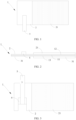
FIG. 1 is a diagram illustrating the structure of an electrode plate according to the present application. -
FIG. 2 is a side view of an electrode plate according to the present application. -
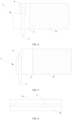
FIG. 3 is a diagram illustrating the structure of an electrode plate according to embodiment one of the present application. -
FIG. 4 is a diagram illustrating the structure of an electrode plate according to embodiment two of the present application. -
FIG. 5 is a diagram illustrating the structure of an electrode plate according to embodiment three of the present application. -
FIG. 6 is a diagram illustrating the structure of a rechargeable battery according to embodiment five of the present application. -
FIG. 7 is a diagram illustrating a continuous structure of electrode plates according to the present application. -
FIG. 8 is a diagram illustrating the structure of a production device according to the present application. -
- 1
- current collector
- 11
- insulating layer
- 12
- first conductor layer
- 13
- second conductor layer
- 2
- first blank region
- 21
- first active material coating layer
- 3
- second blank region
- 31
- second active material coating layer
- 4
- folded region
- 5
- conductive connector
- 6
- positive electrode plate
- 7
- separator
- 8
- negative electrode plate
- 9
- discharge roller
- 91
- take-up roller
- 92
- feeding mechanism
- 10
- forming mechanism
- 101
- folding mechanism
- 102
- attachment conductive connector
- 103
- ultrasonic welding apparatus
- Technical solutions of the present application are described clearly and completely in conjunction with drawings. Apparently, the embodiments described are part, not all, of the embodiments of the present application. Based on the embodiments of the present application, all other embodiments obtained by those of ordinary skill in the art without creative work are within the scope of the present application.
- As shown in
FIGS. 1 and 2 , an electrode plate includes acurrent collector 1. Thecurrent collector 1 includes an insulatinglayer 11, and afirst conductor layer 12 and asecond conductor layer 13 disposed on two sides of the insulatinglayer 11 respectively. Thefirst conductor layer 12 is connected to thesecond conductor layer 13 so that the current on thecurrent collector 1 is leaded out. A firstblank region 2 and a first activematerial coating layer 21 are disposed on the side of thefirst conductor layer 12 away from the insulating layer. The firstblank region 2 and the first activematerial coating layer 21 are disposed side by side and adjacent to each other. A secondblank region 3 and a second activematerial coating layer 31 are disposed on the side of thesecond conductor layer 13 away from the insulating layer. The secondblank region 3 and the second activematerial coating layer 31 are disposed side by side and adjacent to each other. The insulatinglayer 11 is made of one or more constituent materials of polyester, polyethylene, polypropylene, and polyarylsulfone. In this embodiment, the insulatinglayer 11 may be made of, but is not limited to, polyester. Each of the first activematerial coating layer 21 and the second activematerial coating layer 31 is coated with an active material. - To electrically connect the first
blank region 2 and the secondblank region 3, in the firstblank region 2, thecurrent collector 1 is folded by 180 degrees to form a foldedregion 4. At the same time, the secondblank region 3 at the foldedregion 4 covers the firstblank region 2. Aconductive connector 5 is disposed in the foldedregion 4. An end of theconductive connector 5 extends out of the foldedregion 4 to connect the firstblank region 2, and the other end is located in the foldedregion 4 to connect the secondblank region 3, so that a current is exported or imported from thecurrent collector 1. In this embodiment, theconductive connector 5 may use, but is not limited to, a tab. The connection mode between theconductive connector 5 and the firstblank region 2 and the secondblank region 3 may use, but is not limited to, ultrasonic welding. - In this embodiment, as shown in
FIG. 3 , thefolding region 4 is strip-shaped, that is, two parallel tangents in the vertical direction are cut on thecurrent collector 1, and then the strip-shaped cut portion is folded vertically. - Referring to the continuous strip-shaped
current collector 1 ofFIGS. 2 and 3 , through the foldedregion 4, thecurrent collector 1 does not need to be completely cut during production, but may be partially cut and then folded. In this manner, for the production process of a production line, continuous production is enabled. By the method for welding theconductive connector 5 to connect the firstblank region 2 and the secondblank region 3, the connection is more stable, and the connection stability is higher. - As shown in
FIG. 4 , an electrode plate differs from embodiment one in that the cut strip is L-shaped, and thefolding region 4 is folded transversely. - As shown in
FIG. 5 , an electrode plate differs from embodiment one in that the cut strip is an oblique line in the vertical direction, and thefolding region 4 is folded obliquely. - A manufacturing method of an electrode plate includes the steps below.
- Step one: An active material is disposed on a partial region of the
first conductor layer 12 of thecurrent collector 1 to form the first activematerial coating layer 21 and the firstblank region 2. The firstblank region 2 and the first activematerial coating layer 21 are disposed side by side and adjacent to each other. An active material is disposed on a partial region of thesecond conductor layer 13 to form the second activematerial coating layer 31 and the secondblank region 3. The secondblank region 3 and the second activematerial coating layer 31 are disposed side by side and adjacent to each other. - Step two: Part of the first
blank region 2 of thecurrent collector 1 is folded so that thecurrent collector 1 forms the foldedregion 4 in the firstblank region 2. - Step three: An first end of the
conductive connector 5 is connected to the firstblank region 2. A second end of the conductive connector is connected to the folded secondblank region 3. - To be able to implement the streamlined automatic production of a production device, the manufacturing method may be implemented in the steps below.
- In step one, active materials are disposed on first conductor layers on multiple current collectors at intervals to form multiple first active material coating layers 21. One first
blank region 2 is formed between every two adjacent first active material coating layers 21. Active materials are disposed on second conductor layers on the multiple current collectors at intervals to form multiple second active material coating layers 31. One secondblank region 3 is formed between every two adjacent second active material coating layers 31 (as shown inFIG. 7, FIG. 7 is a diagram illustrating a continuous structure of electrode plates according to the present application). Onecurrent collector 1, one firstblank region 2, one first activematerial coating layer 21, one secondblank region 3, one second activematerial coating layer 31 form a semi-finished current collector. Multiple semi-finished current collectors are connected end to end to form a continuous semi-finished current collector. The end-to-end strip-shaped continuouscurrent collector 1 including several semi-finished active material coating layers and semi-finished blank regions is mass-produced. - In step two, the first
blank region 2 of each semi-finished current collector in the continuous semi-finished current collector is partially cut. Each first blank region is folded by a folding apparatus so that each semi-finished current collector forms a foldedregion 4 in the firstblank region 2. - In step three, the
conductive connector 5 of each semi-finished current collector is placed in the foldedregion 4. A first end of theconductive connector 5 is welded to the firstblank region 2. A second end of the conductive connector is welded to the folded secondblank region 3. One semi-finished current collector and one conductive connector form one semi-finished electrode plate. Multiple semi-finished electrode plates are connected end to end to form a continuous semi-finished electrode plate. - Newly added step four: The continuous semi-finished electrode plate is cut into individual electrode plates. Alternatively, the continuous semi-finished electrode plate may be wound together with a
separator 7 to form a dry cell and then be cut. - In step three, the folding apparatus uses a mechanical arm to turn over the first blank region. The folding apparatus is rotationally driven by a stepping motor. The stepping motor drives the mechanical arm to turn over 180 degrees, thereby folding the
current collector 1 to form the foldedregion 4. - In the existing art, the
current collector 1 needs to be cut down for curl welding. However, by the processing step of this embodiment, the entire long strip-shaped semi-finished product is automatically processed based on the automated production line in the related art. After the processing, the semi-finished product is cut into individual electrode plates according to use requirements. - As shown in
FIG. 6 , a rechargeable battery using the electrode plate includes apositive electrode plate 6, aseparator 7, and anegative electrode plate 8 that are bonded in sequence, and the rechargeable battery also includes an electrolyte. At least one of thepositive electrode plate 6 or thenegative electrode plate 8 uses the electrode plate in embodiment one. - For example, when the electrode plate in embodiment one is used as the
positive electrode plate 6, the material of the first conductor layer and the material of the second conductor layer each are aluminium or aluminium alloy. When the electrode plate in embodiment one is used as thenegative electrode plate 8, the material of the first conductor layer and the material of the second conductor layer each are copper or copper alloy. - As shown in
FIG. 8 , a production device of the electrode plate produces the electrode plate in this embodiment of the present application. The electrode plate includes the conductive connector. The production device includes adischarge roller 9, a formingmechanism 10, afolding mechanism 101, an attachmentconductive connector mechanism 102, anultrasonic welding apparatus 103, and a take-uproller 91 placed in sequence. A user may place the roll-shaped electrode plate raw material on thedischarge roller 9. Afeeding mechanism 92 disposed between thedischarge roller 9 and the take-uproller 91 discharges the roll-shaped electrode plate raw material, processes the raw material, and finally feeds the raw material to the take-uproller 91. Thefeeding mechanism 92 may use, but is not limited to, a belt driven by a drive motor for conveying. - In this embodiment, the forming
mechanism 10 may use, but is not limited to, an automatic control cutting device for partially cutting the strip-shaped electrode plate raw material at intervals. - In this embodiment, the
folding mechanism 101 may use, but is not limited to, a stepping motor to drive a mechanical arm to fold the electrode plate raw material at a cut position. The attachmentconductive connector mechanism 102 may use, but is not limited to, a cylinder to push theconductive connector 5, and a photoelectric induction conveyor belt continuously conveys theconductive connector 5 to the end of the piston rod of the cylinder, so that theconductive connector 5 is attached to the strip-shaped electrode plate material. - In this embodiment, the
ultrasonic welding apparatus 103 may use, but is not limited to, an ultrasonic welding device to ultrasonically weld theconductive connector 5 to the strip-shaped electrode plate raw material. - The user places the roll-shaped electrode plate raw material on the
discharge roller 9, continuously conveys the electrode plate raw material by thefeeding mechanism 92, partially cuts the strip-shaped electrode plate by the formingmechanism 10 at intervals, folds the cutting portion by thefolding mechanism 101, attaches theconductive connector 5 by the attachmentconductive connector 5 mechanism at the folded portion, then welds theconductive connector 5 to the electrode plate by theultrasonic welding apparatus 103, and rolls the processed strip-shaped electrode plate by the take-uproller 91. - In the present application, each device selected is a general standard component or a component known to those skilled in the art, and the structure and principle of each device are known to those skilled in the art through a technical manual or through a conventional experimental method.
- In embodiments of this application, unless otherwise expressly specified and limited, terms like "mounted", "connected to each other", "connected" are to be construed in a broad sense, for example, as permanently connected, detachably connected or integratedly connected; mechanically connected or electrically connected; directly connected or indirectly connected via an intermediate medium; or internally connected between two elements. For those of ordinary skill in the art, specific meanings of the preceding terms in the present application may be construed according to specific circumstances.
- With the inspiration of the preceding ideal embodiment according to the present application, through the preceding description content, the related staff may make various changes and modifications without departing from the scope of the technical idea of the present application. The technical scope of the present application is not limited to the content of the description, but must be determined according to the scope of the claims.
- In the present application, through the structure of folding 180 degrees and welding the conductive connector, the folding angle is smaller than the folding angle in the existing art, there are fewer production processes, and the requirements for processing apparatuses are low. At the same time, in the process of processing, the folding angle is only 180 degrees, so that the folding angle of a processing apparatus is more easily controlled, the processing difficulty is reduced, and the production process reliability is improved. During processing, only the long strip-shaped current collector needs to be partially cut without being cut down. The long strip-shaped current collector may be rolled into a roll to cooperate with a subsequent continuous and automatic rolling process of the dry cell, so that the electrode plate and the dry cell can be continuously produced during the processing and manufacturing process, thereby improving production automation. Two ends of the conductive connector are welded to the first blank region and the second blank region respectively, so that a first conductor and a second conductor can be electrically connected and export or import a current, and the connection stability between the first conductor layer and the second conductor layer can be improved. The conductive connector has a relatively great thickness and is welded to a relatively thin conductor layer, so that the welding reliability can be improved. A special device automatically produces the current collector in a production line, so that the production efficiency is improved, and the labor cost is reduced.
Claims (12)
- An electrode plate, comprising:a current collector (1), wherein the current collector (1) comprises an insulating layer (11), a first conductor layer (12) disposed on a first side of the insulating layer (11), and a second conductor layer (13) disposed on a second side of the insulating layer (11);a first blank region (2) and a first active material coating layer (21) disposed on a side of the first conductor layer (12) away from the insulating layer (11), wherein the first blank region (2) and the first active material coating layer (21) are disposed side by side and adjacent to each other; anda second blank region (3) and a second active material coating layer (31) disposed on a side of the second conductor layer (13) away from the insulating layer (11), wherein the second blank region (3) and the second active material coating layer (31) are disposed side by side and adjacent to each other;a folded region (4) disposed in the first blank region (2), wherein when the current collector (1) is folded, the second blank region (3) partially covers the first blank region (2); anda conductive connector (5), wherein part of the conductive connector (5) overlaps the folded region (4), a first end of the conductive connector (5) extends out of the folded region (4) to connect the first blank region (2), a second end of the conductive connector (5) is located in the folded region (4) to connect the second blank region (3), and the conductive connector (5) is configured to be electrically connected to the first blank region (2) and the second blank region (3).
- The electrode plate according to claim 1, wherein the insulating layer (11) is made of at least one of polyester, polyethylene, polypropylene, or polyarylsulfone.
- The electrode plate according to claim 1, wherein the conductive connector (5) is connected to the first blank region (2) and the second blank region (3) by ultrasonic welding respectively.
- The electrode plate according to claim 1, wherein a folding angle of the current collector (1) is 180 degrees.
- The electrode plate according to claim 1, wherein the conductive connector (5) is a tab.
- A manufacturing method of an electrode plate, wherein the electrode plate comprises a current collector (1), a first blank region (2), a second blank region (3), a folded region (4), and a conductive connection (5), and the current collector (1) comprises a first conductor layer (12) and a second conductor layer (13), the method comprising:disposing an active material on a partial region of the first conductor layer (12) to form a first active material coating layer (21) and the first blank region (2), wherein the first blank region (2) and the first active material coating layer (21) are disposed side by side and adjacent to each other; and disposing the active material on a partial region of the second conductor layer (13) to form a second active material coating layer (31) and the second blank region (3), wherein the second blank region (3) and the second active material coating layer (31) are disposed side by side and adjacent to each other;folding part of the first blank region (2) of the current collector (1) so that a folded region (4) of the current collector (1) is formed in the first blank region (2); andconnecting a first end of the conductive connector (5) to the first blank region (2) and connecting a second end of the conductive connector (5) to the folded second blank region (3).
- The method according to claim 6, wherein
disposing the active material on the first conductor layer (12) to form the first active material coating layer (21), wherein the first blank region (2) and the first active material coating layer (21) are disposed side by side and adjacent to each other, and disposing the active material on the second conductor layer (13) to form the second active material coating layer (31), wherein the second blank region (3) and the second active material coating layer (31) are disposed side by side and adjacent to each other comprise:disposing the active material on first conductor layers (12) on a plurality of current collectors (1) at intervals to form a plurality of first active material coating layers (21), wherein one first blank region (2) is formed between every two adjacent first active material coating layers (21) of the plurality of first active material coating layers (21), disposing the active material on second conductor layers (13) on the plurality of current collectors (1) at intervals to form a plurality of second active material coating layers (31), wherein one second blank region (3) is formed between every two adjacent second active material coating layers (31) of the plurality of second active material coating layers (31), one of the plurality of current collectors (1), one first blank region (2), one of the plurality of first active material coating layers (21), one second blank region (3), one of the second active material coating layers (31) form a semi-finished current collector, and a plurality of semi-finished current collectors are connected end to end to form a continuous semi-finished current collector;folding the part of the first blank region (2) of the current collector (1) so that the current collector (1) forms the folded region (4) in the first blank region (2) comprises: partially cutting a first blank region (2) of each semi-finished current collector of the continuous semi-finished current collector and folding the each first blank region (2) by a folding apparatus so that the each semi-finished current collector forms a folded region (4) in the first blank region (2);connecting the first end of the conductive connector (5) to the first blank region (2) and connecting the second end of the conductive connector (5) to the folded second blank region (3) comprise: placing a conductive connector (5) of the each semi-finished current collector in the folded region (4), welding a first end of the conductive connector (5) of the each semi-finished current collector to the first blank region (2), and welding a second end of the conductive connector (5) of the each semi-finished current collector to a folded second blank region (3) of the each semi-finished current collector, wherein one of the plurality of semi-finished current collectors and one of conductive connectors (5) form one semi-finished electrode plate, and a plurality of semi-finished electrode plates are connected end to end to form a continuous semi-finished electrode plate; andthe method further comprises: cutting the continuous semi-finished electrode plate into individual electrode plates. - The method according to claim 7, wherein the folding apparatus uses a mechanical arm to turn over the first blank region (2), and the folding apparatus is rotationally driven by a stepping motor.
- A rechargeable battery, comprising:a positive electrode plate (6), a separator (7), and a negative electrode plate (8) which are bonded in sequence, and further comprising an electrolyte, whereinat least one of the positive electrode plate (6) or the negative electrode plate (8) uses the electrode plate according to any one of claims 1 to 5.
- The rechargeable battery according to claim 7, wherein
the positive electrode plate (6) comprises the current collector (1), the current collector (1) comprises the insulating layer (11), the first conductor layer (12), and the second conductor layer (13), and in a case where the electrode plate according to any one of claims 1 to 5 is used as the positive electrode plate (8), each of a material of the first conductor layer (12) and a material of the second conductor layer (13) is aluminium or aluminium alloy. - The rechargeable battery according to claim 9, wherein
the negative electrode plate (8) comprises the current collector (1), the current collector (1) comprises the insulating layer (11), the first conductor layer (12), and the second conductor layer (13), and in a case where the electrode plate according to any one of claims 1 to 5 is used as the negative electrode plate (8), each of a material of the first conductor layer (12) and a material of the second conductor layer (13) is copper or copper alloy. - A production device, the device being configured to produce the electrode plate according to any one of claims 1 to 5, wherein the electrode plate comprises the conductive connector (5), and the device comprises:a discharge roller (9), a forming mechanism (10), a folding mechanism (101), an attachment conductive connector mechanism (102), an ultrasonic welding apparatus (103), and a take-up roller (91), whereinthe discharge roller (9) is configured to place a roll-shaped electrode plate;a feeding mechanism (92) is disposed between the discharge roller (9) and the take-up roller (91), and the feeding mechanism is configured to convert the roll-shaped electrode plate into a strip-shaped electrode plate and feed the strip-shaped electrode plate to the take-up roller (91);the forming mechanism (10) is configured to form a foldable cut in the strip-shaped electrode plate;the folding mechanism (101) is configured to fold the strip-shaped electrode plate at the cut;the attachment conductive connector mechanism (102) is configured to attach the conductive connector (5) to the strip-shaped electrode plate; andthe ultrasonic welding apparatus (103) is configured to ultrasonically weld the conductive connector (5) to the strip-shaped electrode plate.
Applications Claiming Priority (2)
| Application Number | Priority Date | Filing Date | Title |
|---|---|---|---|
| CN202011221856.3A CN112289970B (en) | 2020-11-05 | 2020-11-05 | A pole piece, a process flow, a secondary battery using the pole piece, and a production device |
| PCT/CN2021/092597 WO2022095392A1 (en) | 2020-11-05 | 2021-05-10 | Electrode plate, manufacturing method, secondary battery and production device |
Publications (2)
| Publication Number | Publication Date |
|---|---|
| EP4207392A1 true EP4207392A1 (en) | 2023-07-05 |
| EP4207392A4 EP4207392A4 (en) | 2025-06-25 |
Family
ID=74350618
Family Applications (1)
| Application Number | Title | Priority Date | Filing Date |
|---|---|---|---|
| EP21888096.1A Pending EP4207392A4 (en) | 2020-11-05 | 2021-05-10 | ELECTRODE PLATE, MANUFACTURING METHOD, SECONDARY BATTERY AND PRODUCTION DEVICE |
Country Status (4)
| Country | Link |
|---|---|
| US (1) | US20230378478A1 (en) |
| EP (1) | EP4207392A4 (en) |
| CN (1) | CN112289970B (en) |
| WO (1) | WO2022095392A1 (en) |
Families Citing this family (9)
| Publication number | Priority date | Publication date | Assignee | Title |
|---|---|---|---|---|
| CN112289970B (en) * | 2020-11-05 | 2025-04-11 | 江苏卓高新材料科技有限公司 | A pole piece, a process flow, a secondary battery using the pole piece, and a production device |
| CN115995562A (en) * | 2021-10-20 | 2023-04-21 | 华为技术有限公司 | First electrode sheet, bare cell, battery and electronic equipment |
| CN114361385B (en) * | 2021-12-31 | 2024-05-14 | 东莞新能源科技有限公司 | Battery and electronic equipment |
| WO2023123501A1 (en) * | 2021-12-31 | 2023-07-06 | 宁德新能源科技有限公司 | Battery and electronic device |
| EP4459691A4 (en) * | 2021-12-31 | 2025-09-10 | Dongguan Amperex Tech Ltd | BATTERY AND ELECTRONIC DEVICE |
| CN114843519A (en) * | 2022-05-26 | 2022-08-02 | 东莞锂威能源科技有限公司 | Current collector, positive plate, negative plate, laminated battery cell, battery and preparation method |
| CN117438532A (en) * | 2022-07-20 | 2024-01-23 | 华为技术有限公司 | Continuous electrode sheets, bare cells, batteries and electronic equipment |
| WO2024031353A1 (en) * | 2022-08-09 | 2024-02-15 | 宁德时代新能源科技股份有限公司 | Electrode sheet, electrode assembly, battery cell, battery and electric device |
| CN218602691U (en) * | 2022-11-09 | 2023-03-10 | 珠海冠宇电池股份有限公司 | Pole piece and battery |
Family Cites Families (11)
| Publication number | Priority date | Publication date | Assignee | Title |
|---|---|---|---|---|
| JP4798967B2 (en) * | 2004-06-14 | 2011-10-19 | パナソニック株式会社 | Electrochemical element |
| JP5353032B2 (en) * | 2007-07-11 | 2013-11-27 | 日産自動車株式会社 | Stacked battery |
| JP5693982B2 (en) * | 2011-01-25 | 2015-04-01 | シャープ株式会社 | Non-aqueous secondary battery |
| JP2013016321A (en) * | 2011-07-01 | 2013-01-24 | Sharp Corp | Collector and nonaqueous secondary battery |
| JP2013062385A (en) * | 2011-09-14 | 2013-04-04 | Aisin Seiki Co Ltd | Connection member |
| CN205543117U (en) * | 2016-01-20 | 2016-08-31 | 宁德新能源科技有限公司 | Coiling formula secondary cell |
| CN107768676A (en) * | 2017-09-05 | 2018-03-06 | 东莞市迈科新能源有限公司 | A kind of lithium ion battery and pole piece thereof |
| CN110611116A (en) * | 2019-09-26 | 2019-12-24 | 广东微电新能源有限公司 | An electrode sheet for a battery core and a cylindrical or button battery |
| CN210805919U (en) * | 2019-10-16 | 2020-06-19 | 宁德时代新能源科技股份有限公司 | Secondary battery and electrode member thereof, battery module, and device using secondary battery |
| CN214068752U (en) * | 2020-11-05 | 2021-08-27 | 江苏卓高新材料科技有限公司 | Pole piece, secondary battery applying pole piece and production equipment |
| CN112289970B (en) * | 2020-11-05 | 2025-04-11 | 江苏卓高新材料科技有限公司 | A pole piece, a process flow, a secondary battery using the pole piece, and a production device |
-
2020
- 2020-11-05 CN CN202011221856.3A patent/CN112289970B/en active Active
-
2021
- 2021-05-10 WO PCT/CN2021/092597 patent/WO2022095392A1/en not_active Ceased
- 2021-05-10 US US18/248,696 patent/US20230378478A1/en active Pending
- 2021-05-10 EP EP21888096.1A patent/EP4207392A4/en active Pending
Also Published As
| Publication number | Publication date |
|---|---|
| CN112289970B (en) | 2025-04-11 |
| EP4207392A4 (en) | 2025-06-25 |
| WO2022095392A1 (en) | 2022-05-12 |
| CN112289970A (en) | 2021-01-29 |
| US20230378478A1 (en) | 2023-11-23 |
Similar Documents
| Publication | Publication Date | Title |
|---|---|---|
| EP4207392A1 (en) | Electrode plate, manufacturing method, secondary battery and production device | |
| JP4018388B2 (en) | Multiple superposition electrochemical cell and manufacturing method thereof | |
| JP4018387B2 (en) | Superposition electrochemical cell and manufacturing method thereof | |
| EP2187466B1 (en) | Nonaqueous electrolyte battery, cutter and method of manufacturing electrode | |
| KR100405873B1 (en) | Laser Sealed Battery | |
| US8067112B2 (en) | Stacked lithium secondary battery and its fabrication utilizing a folded configuration | |
| CN103891024B (en) | Cell provided with spiral electrode, and method for manufacturing same | |
| EP2869385B1 (en) | Electrode assembly, fabricating method of the electrode assembly, and electrochemial cell containing the electrode assembly | |
| CN214068752U (en) | Pole piece, secondary battery applying pole piece and production equipment | |
| CA3191830A1 (en) | Tabless energy storage devices and methods of manufacturing thereof | |
| US20140186671A1 (en) | Secondary cell | |
| EP2757625B1 (en) | Method for manufacturing electrode assembly and electrochemical device | |
| CN112563579B (en) | High-safety high-capacity lithium ion battery lamination cell and preparation method thereof | |
| JP2005277064A (en) | Electrode and method for manufacturing the same and method for manufacturing electrochemical device and electrochemical device | |
| JP2013051035A (en) | Manufacturing method of electrode for battery, and electrode for battery | |
| CN218333918U (en) | Cutting device, electrode assembly, battery cell, processing device thereof, battery pack containing same, and vehicle | |
| CN218333850U (en) | Cutting device, electrode assembly, battery cell, processing device thereof, battery pack containing same, and vehicle | |
| JP2000260478A (en) | Non-aqueous secondary battery | |
| JP4562304B2 (en) | Method for producing non-aqueous secondary battery | |
| CN103490089A (en) | Electrode subassembly, preparation method thereof and lithium secondary battery | |
| JP2003272597A (en) | Sealed battery | |
| JP2009181812A (en) | Winding type battery and manufacturing method thereof | |
| JP2010244865A (en) | Laminated battery | |
| CN104011908B (en) | Method for producing electrode and method for producing non-aqueous electrolyte battery | |
| JP2002298827A (en) | Nonaqueous secondary battery |
Legal Events
| Date | Code | Title | Description |
|---|---|---|---|
| STAA | Information on the status of an ep patent application or granted ep patent |
Free format text: STATUS: THE INTERNATIONAL PUBLICATION HAS BEEN MADE |
|
| PUAI | Public reference made under article 153(3) epc to a published international application that has entered the european phase |
Free format text: ORIGINAL CODE: 0009012 |
|
| STAA | Information on the status of an ep patent application or granted ep patent |
Free format text: STATUS: REQUEST FOR EXAMINATION WAS MADE |
|
| 17P | Request for examination filed |
Effective date: 20230330 |
|
| AK | Designated contracting states |
Kind code of ref document: A1 Designated state(s): AL AT BE BG CH CY CZ DE DK EE ES FI FR GB GR HR HU IE IS IT LI LT LU LV MC MK MT NL NO PL PT RO RS SE SI SK SM TR |
|
| DAV | Request for validation of the european patent (deleted) | ||
| DAX | Request for extension of the european patent (deleted) | ||
| A4 | Supplementary search report drawn up and despatched |
Effective date: 20250528 |
|
| RIC1 | Information provided on ipc code assigned before grant |
Ipc: H01M 50/533 20210101ALI20250522BHEP Ipc: H01M 10/04 20060101ALI20250522BHEP Ipc: H01M 4/70 20060101ALI20250522BHEP Ipc: H01M 4/66 20060101AFI20250522BHEP |