EP4207361B1 - Negative electrode sheet, secondary battery, battery module, battery pack, and electric device - Google Patents
Negative electrode sheet, secondary battery, battery module, battery pack, and electric device Download PDFInfo
- Publication number
- EP4207361B1 EP4207361B1 EP21939977.1A EP21939977A EP4207361B1 EP 4207361 B1 EP4207361 B1 EP 4207361B1 EP 21939977 A EP21939977 A EP 21939977A EP 4207361 B1 EP4207361 B1 EP 4207361B1
- Authority
- EP
- European Patent Office
- Prior art keywords
- active material
- negative electrode
- battery
- material layer
- electrode plate
- Prior art date
- Legal status (The legal status is an assumption and is not a legal conclusion. Google has not performed a legal analysis and makes no representation as to the accuracy of the status listed.)
- Active
Links
Images


Classifications
-
- H—ELECTRICITY
- H01—ELECTRIC ELEMENTS
- H01M—PROCESSES OR MEANS, e.g. BATTERIES, FOR THE DIRECT CONVERSION OF CHEMICAL ENERGY INTO ELECTRICAL ENERGY
- H01M4/00—Electrodes
- H01M4/02—Electrodes composed of, or comprising, active material
- H01M4/36—Selection of substances as active materials, active masses, active liquids
- H01M4/362—Composites
- H01M4/366—Composites as layered products
-
- H—ELECTRICITY
- H01—ELECTRIC ELEMENTS
- H01M—PROCESSES OR MEANS, e.g. BATTERIES, FOR THE DIRECT CONVERSION OF CHEMICAL ENERGY INTO ELECTRICAL ENERGY
- H01M10/00—Secondary cells; Manufacture thereof
- H01M10/05—Accumulators with non-aqueous electrolyte
- H01M10/052—Li-accumulators
-
- H—ELECTRICITY
- H01—ELECTRIC ELEMENTS
- H01M—PROCESSES OR MEANS, e.g. BATTERIES, FOR THE DIRECT CONVERSION OF CHEMICAL ENERGY INTO ELECTRICAL ENERGY
- H01M10/00—Secondary cells; Manufacture thereof
- H01M10/05—Accumulators with non-aqueous electrolyte
- H01M10/052—Li-accumulators
- H01M10/0525—Rocking-chair batteries, i.e. batteries with lithium insertion or intercalation in both electrodes; Lithium-ion batteries
-
- H—ELECTRICITY
- H01—ELECTRIC ELEMENTS
- H01M—PROCESSES OR MEANS, e.g. BATTERIES, FOR THE DIRECT CONVERSION OF CHEMICAL ENERGY INTO ELECTRICAL ENERGY
- H01M4/00—Electrodes
- H01M4/02—Electrodes composed of, or comprising, active material
-
- H—ELECTRICITY
- H01—ELECTRIC ELEMENTS
- H01M—PROCESSES OR MEANS, e.g. BATTERIES, FOR THE DIRECT CONVERSION OF CHEMICAL ENERGY INTO ELECTRICAL ENERGY
- H01M4/00—Electrodes
- H01M4/02—Electrodes composed of, or comprising, active material
- H01M4/13—Electrodes for accumulators with non-aqueous electrolyte, e.g. for lithium-accumulators; Processes of manufacture thereof
-
- H—ELECTRICITY
- H01—ELECTRIC ELEMENTS
- H01M—PROCESSES OR MEANS, e.g. BATTERIES, FOR THE DIRECT CONVERSION OF CHEMICAL ENERGY INTO ELECTRICAL ENERGY
- H01M4/00—Electrodes
- H01M4/02—Electrodes composed of, or comprising, active material
- H01M4/13—Electrodes for accumulators with non-aqueous electrolyte, e.g. for lithium-accumulators; Processes of manufacture thereof
- H01M4/133—Electrodes based on carbonaceous material, e.g. graphite-intercalation compounds or CFx
-
- H—ELECTRICITY
- H01—ELECTRIC ELEMENTS
- H01M—PROCESSES OR MEANS, e.g. BATTERIES, FOR THE DIRECT CONVERSION OF CHEMICAL ENERGY INTO ELECTRICAL ENERGY
- H01M4/00—Electrodes
- H01M4/02—Electrodes composed of, or comprising, active material
- H01M4/13—Electrodes for accumulators with non-aqueous electrolyte, e.g. for lithium-accumulators; Processes of manufacture thereof
- H01M4/139—Processes of manufacture
- H01M4/1393—Processes of manufacture of electrodes based on carbonaceous material, e.g. graphite-intercalation compounds or CFx
-
- H—ELECTRICITY
- H01—ELECTRIC ELEMENTS
- H01M—PROCESSES OR MEANS, e.g. BATTERIES, FOR THE DIRECT CONVERSION OF CHEMICAL ENERGY INTO ELECTRICAL ENERGY
- H01M4/00—Electrodes
- H01M4/02—Electrodes composed of, or comprising, active material
- H01M4/36—Selection of substances as active materials, active masses, active liquids
-
- H—ELECTRICITY
- H01—ELECTRIC ELEMENTS
- H01M—PROCESSES OR MEANS, e.g. BATTERIES, FOR THE DIRECT CONVERSION OF CHEMICAL ENERGY INTO ELECTRICAL ENERGY
- H01M4/00—Electrodes
- H01M4/02—Electrodes composed of, or comprising, active material
- H01M4/36—Selection of substances as active materials, active masses, active liquids
- H01M4/362—Composites
- H01M4/364—Composites as mixtures
-
- H—ELECTRICITY
- H01—ELECTRIC ELEMENTS
- H01M—PROCESSES OR MEANS, e.g. BATTERIES, FOR THE DIRECT CONVERSION OF CHEMICAL ENERGY INTO ELECTRICAL ENERGY
- H01M4/00—Electrodes
- H01M4/02—Electrodes composed of, or comprising, active material
- H01M4/36—Selection of substances as active materials, active masses, active liquids
- H01M4/58—Selection of substances as active materials, active masses, active liquids of inorganic compounds other than oxides or hydroxides, e.g. sulfides, selenides, tellurides, halogenides or LiCoFy; of polyanionic structures, e.g. phosphates, silicates or borates
- H01M4/583—Carbonaceous material, e.g. graphite-intercalation compounds or CFx
-
- H—ELECTRICITY
- H01—ELECTRIC ELEMENTS
- H01M—PROCESSES OR MEANS, e.g. BATTERIES, FOR THE DIRECT CONVERSION OF CHEMICAL ENERGY INTO ELECTRICAL ENERGY
- H01M4/00—Electrodes
- H01M4/02—Electrodes composed of, or comprising, active material
- H01M4/36—Selection of substances as active materials, active masses, active liquids
- H01M4/58—Selection of substances as active materials, active masses, active liquids of inorganic compounds other than oxides or hydroxides, e.g. sulfides, selenides, tellurides, halogenides or LiCoFy; of polyanionic structures, e.g. phosphates, silicates or borates
- H01M4/583—Carbonaceous material, e.g. graphite-intercalation compounds or CFx
- H01M4/587—Carbonaceous material, e.g. graphite-intercalation compounds or CFx for inserting or intercalating light metals
-
- H—ELECTRICITY
- H01—ELECTRIC ELEMENTS
- H01M—PROCESSES OR MEANS, e.g. BATTERIES, FOR THE DIRECT CONVERSION OF CHEMICAL ENERGY INTO ELECTRICAL ENERGY
- H01M4/00—Electrodes
- H01M4/02—Electrodes composed of, or comprising, active material
- H01M4/64—Carriers or collectors
- H01M4/66—Selection of materials
- H01M4/663—Selection of materials containing carbon or carbonaceous materials as conductive part, e.g. graphite, carbon fibres
-
- H—ELECTRICITY
- H01—ELECTRIC ELEMENTS
- H01M—PROCESSES OR MEANS, e.g. BATTERIES, FOR THE DIRECT CONVERSION OF CHEMICAL ENERGY INTO ELECTRICAL ENERGY
- H01M4/00—Electrodes
- H01M4/02—Electrodes composed of, or comprising, active material
- H01M2004/021—Physical characteristics, e.g. porosity, surface area
-
- H—ELECTRICITY
- H01—ELECTRIC ELEMENTS
- H01M—PROCESSES OR MEANS, e.g. BATTERIES, FOR THE DIRECT CONVERSION OF CHEMICAL ENERGY INTO ELECTRICAL ENERGY
- H01M4/00—Electrodes
- H01M4/02—Electrodes composed of, or comprising, active material
- H01M2004/026—Electrodes composed of, or comprising, active material characterised by the polarity
- H01M2004/027—Negative electrodes
-
- H—ELECTRICITY
- H01—ELECTRIC ELEMENTS
- H01M—PROCESSES OR MEANS, e.g. BATTERIES, FOR THE DIRECT CONVERSION OF CHEMICAL ENERGY INTO ELECTRICAL ENERGY
- H01M2220/00—Batteries for particular applications
- H01M2220/20—Batteries in motive systems, e.g. vehicle, ship, plane
-
- Y—GENERAL TAGGING OF NEW TECHNOLOGICAL DEVELOPMENTS; GENERAL TAGGING OF CROSS-SECTIONAL TECHNOLOGIES SPANNING OVER SEVERAL SECTIONS OF THE IPC; TECHNICAL SUBJECTS COVERED BY FORMER USPC CROSS-REFERENCE ART COLLECTIONS [XRACs] AND DIGESTS
- Y02—TECHNOLOGIES OR APPLICATIONS FOR MITIGATION OR ADAPTATION AGAINST CLIMATE CHANGE
- Y02E—REDUCTION OF GREENHOUSE GAS [GHG] EMISSIONS, RELATED TO ENERGY GENERATION, TRANSMISSION OR DISTRIBUTION
- Y02E60/00—Enabling technologies; Technologies with a potential or indirect contribution to GHG emissions mitigation
- Y02E60/10—Energy storage using batteries
Definitions
- This application relates to the technical field of lithium batteries, and in particular, to a negative electrode plate, a secondary battery, a battery module, a battery pack, and an electric apparatus.
- lithium-ion batteries are being applied to increasingly extensive fields.
- lithium-ion batteries are extensively applied in storage power systems such as hydropower, thermal power, wind power, and solar power stations, and many fields such as electric tools, electric bicycles, electric motorcycles, electric cars, military equipment, and aerospace.
- storage power systems such as hydropower, thermal power, wind power, and solar power stations
- many fields such as electric tools, electric bicycles, electric motorcycles, electric cars, military equipment, and aerospace.
- traction batteries should have both high energy density and good charge-discharge characteristics.
- a negative electrode is one of most critical components of a lithium-ion battery whose design directly affects performance of the battery, especially charge-related characteristics of the battery. How a battery having both desirable energy density and kinetic performance can be obtained by optimizing the design of the negative electrode plate is currently a common challenge in the industry.
- CN 112 735 836 A a negative pole piece of a lithium ion capacitor is known.
- WO 2021/109133 A1 discloses a secondary battery.
- CN 103 633 293 A a lithium ion battery negative electrode is known.
- CN 113 097 446 A discloses a a negative electrode for a non-aqueous electrolyte secondary battery.
- An objective of this application is to provide a negative electrode plate to meet an existing requirement.
- This application further provides a secondary battery, and a battery
- An objective of this application is to provide a negative electrode plate to meet an existing requirement.
- This application further provides a secondary battery, and a battery module, battery pack, and electric apparatus using such negative electrode plate.
- the inventors of this application have found that by using two or more active material layers in a negative electrode and adjusting a relationship between layer spacings and that between coating weights of the active material layers, it is possible to obtain a battery negative electrode having both higher energy density and better charge-discharge kinetic performance.
- a first aspect of this application provides a negative electrode plate, including a negative electrode current collector and active material layers disposed on at least one surface of the negative electrode current collector, where the active material layers include a first active material layer and a second active material layer disposed on a surface of the first active material layer, the first active material layer includes a first active material, the second active material layer includes a second active material, and the active material layers satisfy ⁇ CW 2 ⁇ CW 1 , where
- the inventors of this application have found that when two active material layers are applied on one side of the current collector of the negative electrode plate with the active material layer spacing of the second active material layer larger than the active material layer spacing of the first active material layer, during migration of lithium ions from a positive electrode to the negative electrode, because of the large spacing of the surface material layer, impedance to intercalation of lithium ions is low so that lithium ions can be quickly intercalated into the surface active material.
- a larger spacing of the negative active material layer means a lower capacity of the material, a heavier coating weight of the second active material layer has greater impact on the overall extractable capacity of the negative electrode plate. Taking the extractable capacity of the negative electrode plate and the charging window both into account, this application defines the coating weight of the second active material layer.
- a larger active material layer spacing of the second active material layer represents a stronger charging capability and a lower capacity, and correspondingly, just a small coating weight is enough to achieve a good charging level.
- the active material layer spacing of the second active material layer is smaller, its charging capability becomes weaker, and the capacity is higher.
- the electrode plate in order that the electrode plate has relatively good charge performance on the whole, a proportion of the coating weight of the second active material layer to a total coating weight of the electrode plate should be increased.
- the inventors of this application have unexpectedly found that, with a structure with two active material layers used, the first active material layer having a small active material layer spacing and a high capacity makes the electrode plate and the battery have relatively high energy density; and the second active material layer having a large active material layer spacing allows a lower impedance to lithium intercalation on the surface of the negative electrode, avioding deposition of lithium ions on the surface of the negative electrode plate during high-rate charging, and increasing the battery charging window. Therefore, the negative electrode of the battery whose active material layers satisfy the foregoing relationships has both desirable energy density and charge-discharge kinetic performance.
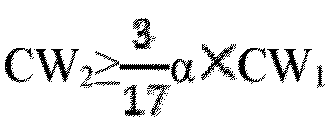
- the active material layers satisfy CW 2 ⁇ 3 17 ⁇ ⁇ CW 1 .
- the inventors further define the relationship between coating weights and that between layer spacings of the first active material layer and the second active material layer based on an actual test results. When these relationships are satisfied, both rate performance and energy density of the negative electrode plate and the battery can be improved properly.
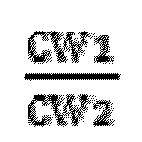
- CW1 CW2 is inversely proportional to d1 ⁇ Da50 d2 ⁇ Db50 , and 0.2 ⁇ CW2 CW2 + CW1 ⁇ 0.45 , where
- the coating weights of the active material layers are adjusted, so that the electrode plate and the battery has both fast charge performance and high energy density.
- the volume median particle size Da50 of the first active material and the volume median particle size Db50 of the second active material satisfy 0.2 ⁇ Db50 Ds50 ⁇ 0.8 .
- the kinetic performance is further improved, and processability is facilitated when a coating amount of the second layer is small.
- the layer spacing d 1 corresponding to the d002 peak of the first active material is within a range of 0.335-0.3362 nm
- the layer spacing d 2 corresponding to the d002 peak of the second active material is within a range of 0.3356-0.38 nm.
- the volume median particle size Da50 of the first active material is within a range of 8-20 ⁇ m
- the volume median particle size Db50 of the second active material is within a range of 4-12 ⁇ m.
- the mass per unit area CW 1 of the first active material layer disposed on the negative electrode current collector is within a range of 80-200 g/m 2
- the mass per unit area CW 2 of the second active material layer disposed on the negative electrode current collector is within a range of 10-110 g/m 2 .
- the first active material is a natural graphite or artificial graphite material
- the second active material is an artificial graphite material
- soft carbon or hard carbon is contained in the first active layer and/or the second active layer.
- a second aspect of this application provides a secondary battery, where the secondary battery includes the negative electrode plate according to the first aspect of this application.
- a third aspect of this application provides a battery module, where the battery module includes the secondary battery according to the second aspect of this application.
- a fourth aspect of this application provides a battery pack, where the battery pack includes one of the secondary battery according to the second aspect of this application and the battery module according to the third aspect of this application.
- a fifth aspect of this application provides an electric apparatus, where the electric apparatus includes at least one of the secondary battery according to the second aspect of this application, the battery module according to the third aspect of this application, and the battery pack according to the fourth aspect of this application.
- the battery module, the battery pack, and the electric apparatus in this application include the secondary battery provided in this application, and therefore have at least the same advantages as the secondary battery.
- Ranges disclosed in this application are defined in a form of lower and upper limits, where given ranges are defined by selecting lower and upper limits and the selected lower and upper limits define boundaries of special ranges. Ranges defined in this method may or may not be inclusive of end values, and any combinations may be used, that is, any lower limit may be combined with any upper limit to form a range. For example, if ranges of 60-120 and 80-110 are provided for a specific parameter, it is understood that ranges of 60-110 and 80-120 can also be envisioned. In addition, if low limit values of a range are given as 1 and 2, and upper limit values of the range are given as 3, 4, and 5, the following ranges can all be envisioned: 1-3, 1-4, 1-5, 2-3, 2-4, and 2-5.
- a value range of "a-b” is a short representation of any combination of real numbers between a and b, where both a and b are real numbers.
- a value range of "0-5" means that all real numbers within the range of "0-5" are listed herein, and "0-5" is just a short representation of a combination of these values.
- a parameter is expressed as an integer greater than or equal to 2, this is equivalent to disclosure that the parameter is an integer such as 2, 3, 4, 5, 6, 7, 8, 9, 10, 11, or 12.
- a method includes steps (a) and (b), which indicates that the method may include steps (a) and (b) performed in sequence, or may include steps (b) and (a) performed in sequence.
- steps (b) and (a) performed in sequence may include steps (b) and (a) performed in sequence.
- steps (c) indicates that step (c) may be added to the method in any order.
- the method may include steps (a), (b), and (c), or steps (a), (c), and (b), or steps (c), (a), and (b), or the like.
- the term "or” is inclusive.
- the phrase “A or B” means “A, B, or both A and B”. More specifically, any one of the following conditions satisfies the condition "A or B”: A is true (or present) and B is false (or not present); A is false (or not present) and B is true (or present); or both A and B are true (or present).
- a secondary battery also referred to as a rechargeable battery or a storage battery, is a battery whose active material can be activated for continuous use through charging after the battery is discharged.
- the secondary battery includes a positive electrode plate, a negative electrode plate, a separator, and an electrolyte.
- active ions such as lithium ions
- the separator is disposed between the positive electrode plate and the negative electrode plate to mainly prevent short circuit between the positive electrode and the negative electrode and to allow active ions to pass through.
- the electrolyte is between the positive electrode plate and the negative electrode plate to conduct the active ions.
- a negative electrode is one of most critical components of a lithium-ion battery. Design of the negative electrode directly affects performance of the battery, and especially charge-related characteristics of the battery. How a battery having both desirable energy density and kinetic performance can be obtained by optimizing the design of the negative electrode plate is currently a common challenge in the industry.
- the negative electrode plate in this application uses two or more active material layers, and by adjusting a relationship between layer spacings and that between coating weights of the active material layers, the negative electrode plate can have both relatively high energy density and good charge-discharge kinetic performance.
- the negative electrode plate in this application includes a negative electrode current collector and active material layers disposed on at least one surface of the negative electrode current collector, where the active material layers include a first active material layer and a second active material layer disposed on a surface of the first active material layer, the first active material layer includes a first active material, the second active material layer includes a second active material, and the active material layers satisfy ⁇ CW 2 ⁇ CW 1 , where
- a larger spacing of the negative active material layer means a lower capacity of the material, a heavier coating weight of the second active material layer has greater impact on the overall extractable capacity of the negative electrode plate. Taking both the extractable capacity of the negative electrode plate and the charging window into account, this application defines the coating weight of the second active material layer.
- a larger active material layer spacing of the second active material layer represents a stronger charging capability and a lower capacity, and correspondingly, just a small coating weight is enough to achieve a good charging level.
- the active material layer spacing of the second active material layer is smaller, its charging capability becomes weaker, and the capacity is higher.
- the electrode plate in order that the electrode plate has relatively good charge performance on the whole, a proportion of the coating weight of the second active material layer to a total coating weight of the electrode plate should be increased.
- the inventors of this application have unexpectedly found that, with a structure with two active material layers used, the first active material layer having a small active material layer spacing and a high capacity makes the electrode plate and the battery have relatively high energy density; and the second active material layer having a large active material layer spacing allows a lower impedance to lithium intercalation on the surface of the negative electrode, avioding deposition of lithium ions on the surface of the negative electrode plate during high-rate charging, and increasing the battery charging window. Therefore, the negative electrode of the battery whose active material layers satisfy the foregoing relationships has both desirable energy density and charge-discharge kinetic performance.
- the active material layers satisfy CW 2 ⁇ 3 17 ⁇ ⁇ CW 1 .
- the weight of the second active material layer is adjusted based on the layer spacing and the weight of the first active material layer. On the whole, to enable the negative electrode plate to have both high energy density and good kinetic performance, the coating weight of the second active material layer should satisfy CW 2 ⁇ 3 17 ⁇ ⁇ CW 1 .
- the inventors of this application have found that, when the coating weight of the active material layer on the negative electrode plate is smaller and the active material layer spacing is larger, internal resistance of the electrode plate and the battery is lower, and charge-discharge performance is better, but a smaller weight and larger spacing of the active material layer causes energy density of the battery to decrease under the same battery capacity due to the use of more auxiliary materials such as foil and more materials.
- the inventors further define the relationship between coating weights and that between layer spacings of the first active material layer and the second active material layer based on an actual test results. When these relationships are satisfied, both rate performance and energy density of the negative electrode plate and the battery can be improved properly.
- CW1 CW2 is inversely proportional to d1 ⁇ Da50 d2 ⁇ Db50 , and 0.2 ⁇ CW2 CW2 + CW1 ⁇ 0.45 , where
- the electrode plate and the battery has both good fast charge performance and high energy density.
- the volume median particle size Da50 of the first active material and the volume median particle size Db50 of the second active material satisfy 0.2 ⁇ Db50 Da50 ⁇ 0.8 .
- the kinetic performance is further improved, and processability is facilitated when a coating amount of the second layer is small.
- the layer spacing d l corresponding to the d002 peak of the first active material is within a range of 0.335-0.3362 nm
- the layer spacing d 2 corresponding to the d002 peak of the second active material is within a range of 0.3356-0.38 nm.
- the volume median particle size Da50 of the first active material is within a range of 8-20 ⁇ m
- the volume median particle size Db50 of the second active material is within a range of 4-12 ⁇ m.
- the mass per unit area CW 1 of the first active material layer disposed on the negative electrode current collector is within a range of 80-200 g/m 2
- the mass per unit area CW 2 of the second active material layer disposed on the negative electrode current collector is within a range of 10-110 g/m 2 .
- the volume median particle size D50 of materials has a meaning known in the art, and can be measured by using a method and an instrument known in the art. For example, it may be measured by using a laser particle size analyzer (for example, Mastersizer 2000E made by Malvern Panalytical in the UK) in accordance with GB/T 19077-2016 Particle Size Analysis-Laser Diffraction Methods.
- a laser particle size analyzer for example, Mastersizer 2000E made by Malvern Panalytical in the UK
- GB/T 19077-2016 Particle Size Analysis-Laser Diffraction Methods for example, Mastersizer 2000E made by Malvern Panalytical in the UK
- the negative electrode plate further includes a conductive agent and a binder.
- a conductive agent is one or more of superconducting carbon, carbon black (for example, acetylene black or Ketjen black), carbon dots, carbon nanotube, graphene, and carbon nanofiber.
- the binder may include one or more of styrene-butadiene rubber (SBR), water soluble unsaturated resin SR-1B, waterborne acrylic resin (for example, polyacrylic acid PAA, polymethylacrylic acid PMAA, and sodium polyacrylate PAAS), polyacrylamide (PAM), polyvinyl alcohol (PVA), sodium alginate (SA), and carboxymethyl chitosan (CMCS).
- SBR styrene-butadiene rubber
- SR-1B waterborne acrylic resin
- PAA polyacrylic acid PAA, polymethylacrylic acid PMAA, and sodium polyacrylate PAAS
- PAM polyacrylamide
- PVA polyvinyl alcohol
- SA sodium alginate
- CMCS carboxymethyl chitosan
- Types of other optional additives may be the same or different.
- the other optional additives may include a thickener (for example, sodium carboxymethyl cellulose CMC-Na) and a PTC thermistor material.
- the negative electrode current collector may use a metal foil or a composite current collector.
- a metal foil a copper foil may be used.
- the composite current collector may include a polymer material matrix and a metal material layer formed on at least one surface of the polymer material matrix.
- a metal material may be selected from one or more of copper, copper alloy, nickel, nickel alloy, titanium, titanium alloy, silver, and silver alloy.
- the polymer material matrix may be selected from polypropylene (PP), polyethylene terephthalate (PET), polybutylene terephthalate (PBT), polystyrene (PS), or polyethylene (PE).
- the active material layer is disposed on at least one surface of the negative electrode current collector.
- the negative electrode current collector has two opposite surfaces in its thickness direction, and the active material layer is disposed on either or both of the two opposite surfaces of the negative electrode current collector.
- FIG. 1 shows a negative electrode current collector with active material layers on its surface, where two surfaces of the negative electrode current collector shown in FIG. 1 both have a first active material layer and a second active material layer.
- the negative electrode plate 10 in this application may also have other embodiments.
- the negative electrode plate 10 includes a negative electrode current collector 11, a first active material layer 121 disposed on one side of the negative electrode current collector, and a second active material layer 122 disposed on the first active material layer 121.
- the negative electrode plate in this application does not exclude additional functional layers other than the negative electrode film layer.
- the negative electrode plate in this application may further include a conductive primer layer (which is, for example, formed by a conductive agent and a binder) disposed between the negative electrode current collector and the second negative electrode film layer.
- the negative electrode plate in this application further includes a protection layer covering a surface of the first negative electrode film layer.
- a preparation method of the negative electrode plate of this application may include the following steps:
- Coating amounts of the first active material layer and a second active material layer respectively satisfy CW 1 and CW 2 .
- the slurry A includes the first active material and one or more of a conductive agent, a binder, and a thickener.
- the slurry B includes the second active material and one or more of a conductive agent, a binder, and a thickener.
- the secondary battery includes a positive electrode plate.
- the positive electrode plate usually includes a positive electrode current collector and a positive electrode film layer disposed on at least one surface of the positive electrode current collector and including a positive electrode active material.
- the positive electrode current collector has two opposite surfaces in its thickness direction, and the positive electrode film layer is disposed on either or both of the two opposite surfaces of the positive electrode current collector.
- the positive electrode film layer includes a positive electrode active material
- the positive electrode active material may be a known positive electrode active material for secondary batteries in the art.
- the positive electrode active material may include one or more of lithium transition metal oxide, olivine-structured lithium-containing phosphate, and respective modified compounds thereof.
- the lithium transition metal oxide may include but are not limited to one or more of lithium cobalt oxide, lithium nickel oxide, lithium manganese oxide, lithium nickel cobalt oxide, lithium manganese cobalt oxide, lithium nickel manganese oxide, lithium nickel cobalt manganese oxide, lithium nickel cobalt aluminum oxide, and their modified compounds.
- Examples of the olivine-structured lithium-containing phosphate may include but are not limited to one or more of lithium iron phosphate, a composite material of lithium iron phosphate and carbon, lithium manganese phosphate, a composite material of lithium manganese phosphate and carbon, lithium manganese iron phosphate, a composite material of lithium manganese iron phosphate and carbon, and their respective modified compounds.
- This application is not limited to these materials, and other conventionally well-known materials that can be used as a positive electrode active material for secondary batteries may also be used.
- One of these positive electrode active materials may be used alone, or two or more of them may be used in combination.
- the modified compounds of the positive electrode active materials may be obtained by making a doping modification, a surface coating modification, or both a doping modification and a surface coating modification to the positive electrode active materials.
- the positive electrode film layer usually includes the positive electrode active material and optionally, a binder, and optionally, a conductive agent.
- the positive electrode film layer is usually formed by applying a positive electrode slurry onto the positive electrode current collector, followed by drying and cold-pressing.
- the positive electrode slurry is usually formed by dispersing the positive electrode active material and optionally, the conductive agent, and optionally, the binder and any other component in a solvent and stirring them evenly.
- the solvent may be but is not limited to N-methylpyrrolidone (NMP).
- the binder for the positive electrode film layer may include one or more of polyvinylidene fluoride (PVDF), polytetrafluoroethylene (PTFE), vinylidene fluoride-tetrafluoroethylene-propylene terpolymer, vinylidene fluoride-hexafluoropropylene-tetrafluoroethylene terpolymer, tetrafluoroethylene-hexafluoropropylene copolymer, and fluorine-containing acrylic resin.
- the conductive agent for the positive electrode film layer may include one or more of superconducting carbon, acetylene black, carbon black, Ketjen black, carbon dots, carbon nanotubes, graphene, and carbon nanofiber.
- composition or parameters of the positive electrode film layer described in this application are all the composition or parameter ranges of a single-side film layer of the positive electrode current collector.
- the composition or parameters of the positive electrode film layer on any one of the surfaces satisfies this application, that is, being considered to fall within the protection scope of this application.
- the electrolyte is a liquid electrolyte.
- the electrolyte includes an electrolyte salt and a solvent.
- a type of the electrolyte salt is not specifically limited, and may be selected based on an actual requirement.
- the electrolyte salt may be selected from one or more of LiPF 6 (lithium hexafluorophosphate), LiBF 4 (lithium tetrafluoroborate), LiClO 4 (lithium perchlorate), LiAsF 6 (lithium hexafluoroarsenate), LiFSI (lithium bis(fluorosulfonyl)imide), LiTFSI (lithium bistrifluoromethanesulfonimide), LiTFS (lithium trifluoromethanesulfonate), LiDFOB (lithium difluoro(oxalato)borate), LiBOB (lithium dioxalate borate), LiPO 2 F 2 (lithium difluorophosphate), LiDFOP (lithium difluoro(dioxalato)phosphate), and LiTFOP (lithium tetrafluoro
- a type of the solvent is not specifically limited, and may be selected based on an actual requirement.
- the solvent may be selected from one or more of ethylene carbonate (EC), propylene carbonate (PC), ethyl methyl carbonate (EMC), diethyl carbonate (DEC), dimethyl carbonate (DMC), dipropyl carbonate (DPC), methyl propyl carbonate (MPC), ethyl propyl carbonate (EPC), butylene carbonate (BC), fluoroethylene carbonate (FEC), methyl formate (MF), methyl acetate (MA), ethyl acetate (EA), propyl acetate (PA), methyl propionate (MP), ethyl propionate (EP), propyl propionate (PP), methyl butyrate (MB), ethyl butyrate (EB), 1,4-butyrolactone (GBL), sulfolane (SF), methyl sulfonyl methane
- EC
- the solvent is a non-aqueous solvent.
- a secondary battery using a liquid electrolyte and some secondary batteries using solid electrolytes further include a separator.
- the separator is disposed between the positive electrode plate and the negative electrode plate to provide separation.
- the separator is not limited to any specific type in this application, and may be any commonly known porous separator with good chemical stability and mechanical stability.
- a material of the separator may be selected from one or more of a glass fiber, non-woven, polyethylene, polypropylene polyethylene, and poly (vinylidene difluoride).
- the separator may be a single-layer thin film or a multilayer composite thin film. When the separator is a multilayer composite thin film, each layer may be made of the same or different materials.
- the positive electrode plate, the negative electrode plate, and the separator may be made into an electrode assembly through a winding process or a lamination process.
- the secondary battery may include an outer package.
- the outer package may be used for packaging the electrode assembly and the electrolyte.
- the outer package of the secondary battery may be a hard shell, for example, a hard plastic shell, an aluminum shell, or a steel shell.
- the outer package of the secondary battery may alternatively be a soft package, for example, a soft bag.
- a material of the soft package may be plastic, for example, one or more of polypropylene (PP), polybutylene terephthalate (PBT), polybutylene succinate (PBS), and the like.
- FIG. 2 shows a secondary battery 5 with a rectangular structure as an example.
- the secondary battery may be assembled into a battery module.
- the battery module may include a plurality of secondary batteries and a specific quantity may be adjusted based on application and capacity of the battery module.
- FIG. 4 shows a battery module 4 as an example.
- a plurality of secondary batteries 5 may be sequentially arranged in a length direction of the battery module 4.
- the secondary batteries may alternatively be arranged in any other manner.
- the plurality of secondary batteries 5 may be fastened using fasteners.
- the battery module 4 may further include a housing with an accommodating space, and the plurality of secondary batteries 5 are accommodated in the accommodating space.
- the battery module may be further assembled into a battery pack, and a quantity of battery modules included in the battery pack may be adjusted based on application and capacity of the battery pack.
- FIG. 5 and FIG. 6 show a battery pack 1 as an example.
- the battery pack 1 may include a battery box and a plurality of battery modules 4 disposed in the battery box.
- the battery box includes an upper box body 2 and a lower box body 3.
- the upper box body 2 is configured to cover the lower box body 3 to form an enclosed space for accommodating the battery modules 4.
- the plurality of battery modules 4 may be arranged in the battery box in any manner.
- An embodiment of this application further provides an electric apparatus.
- the electric apparatus includes at least one of the secondary battery, the battery module, and the battery pack provided in this application.
- the secondary battery, the battery module, or the battery pack may be used as a power source for the electric apparatus, or an energy storage unit of the electric apparatus.
- the electric apparatus may be, but is not limited to, a mobile device (for example, a mobile phone or a notebook computer), an electric vehicle (for example, a battery electric vehicle, a hybrid electric vehicle, a plug-in hybrid electric vehicle, an electric bicycle, an electric scooter, an electric golf vehicle, or an electric truck), an electric train, a ship, a satellite, an energy storage system, and the like.
- the secondary battery, the battery module, or the battery pack may be selected for the electric apparatus based on requirements for using the apparatus.
- FIG. 7 shows an electric apparatus as an example.
- the electric apparatus is a full electric vehicle, a hybrid electric vehicle, a plug-in hybrid electric vehicle, or the like.
- a battery pack or a battery module may be used.
- the electric apparatus may be a mobile phone, a tablet computer, a notebook computer, or the like.
- the electric apparatus is usually required to be light and thin, and the secondary battery may be used as a power source.
- Lithium-ion batteries including the negative electrode plate in this application in Examples 1 to 9 were prepared according to the following method.
- Coating amounts of the first active material layer and the second active material layer respectively satisfied CW 1 and CW 2 .
- a positive electrode active material LiFePO 4 , a conductive agent acetylene black, and a binder polyvinylidene fluoride (PVDF) were mixed at a mass ratio of 96:2:2.
- a solvent N-methylpyrrolidone (NMP) was added. Then the resulting mixture was stirred evenly by a vacuum mixer to obtain a positive electrode slurry.
- the positive electrode slurry was evenly applied on an aluminum foil of the positive electrode current collector. The aluminum foil was dried at room temperature and then continued to be dried in an oven. Then cold-pressing and slitting were performed to obtain a positive electrode plate.
- Ethylene carbonate (EC), ethyl methyl carbonate (EMC), and diethyl carbonate (DEC) were mixed at a volume ratio of 1:1:1 to obtain an organic solvent, and then a fully dried lithium salt LiPF 6 was evenly dissolved in the organic solvent to obtain an electrolyte whose concentration was 1 mol/L.
- a polyethylene film was used as a separator.
- the positive electrode plate, the separator, and the negative electrode plate were sequentially stacked so that the separator was located between the positive electrode plate and the negative electrode plate to provide separation. Then the resulting stack was wound to obtain an electrode assembly. The electrode assembly was placed into an outer package and dried. Then an electrolyte was injected, and processes such as vacuum packaging, standing, formation, and shaping were performed to obtain a secondary battery.
- a method for preparing secondary batteries of Comparative Examples 1 to 3 is the same as that of Examples 1 to 13, except for a process of preparing the negative electrode plate. Details are given in Table 1.
- the charge time desribed in this application is a time for constant charging at 25°C to 85% SOC using a lithium precipitation window rate.
- the secondary batteries obtained by using two active material layers in the negative electrode and adjusting the relationship between layer spacings and that between coating weights of the active material layers have both higher energy density and better charge-discharge kinetic performance.
- the negative electrode materials prepared by using the method of the present invention all satisfy that the charge time is less than or equal to 75 minutes and that 0.3C energy density is greater than or equal to 170 Wh/kg.
- Comparative Examples 1 to 3 do not conform to the relationship between layer spacings and that between coating weights of active material layers as defined in this application. Specifically, in comparison between Comparative Example 1 and Example 1 of this application, the second active material in Comparative Example 1 uses hard carbon with a larger layer spacing, and its capacity density is much lower than that in Example 1 of this application. In other words, when the active material layer spacing of the second active material layer is larger, a charging capability is stronger, but the capacity is lower, and obviously, energy density and charge-discharge kinetic performance cannot be both guaranteed. In comparison with Example 1, in Comparative Example 2, the relative factor ⁇ of layer spacings is not within the range defined in this application (1 ⁇ 1.12), and therefore energy density and charge-discharge kinetic performance cannot be both guaranteed. In comparison with Example 1, Comparative Example 3 has a single layer of coating, showing that given a same coating amount, a single layer of coating is unable to guarantee both energy density and charge-discharge kinetic performance.
- Example 5 In comparison with Examples 1 to 3, CW 2 /(CW 2 +CW 1 ) in Example 5 is beyond the range defined in this application, and as a result, energy density cannot be guaranteed although charge-discharge kinetic performance is good; whereas, CW 2 /(CW 2 +CW 1 ) in Example 4 is beyond the range defined in this application, and as a result, charge-discharge kinetic performance cannot although energy density is good.
- Example 6 and Example 7 Db50/Da50 in Example 8 and that in Example 9 are beyond the ranged defined in this application, and as a result, energy density and charge-discharge kinetic performance cannot be both guaranteed.
Landscapes
- Chemical & Material Sciences (AREA)
- Chemical Kinetics & Catalysis (AREA)
- Electrochemistry (AREA)
- General Chemical & Material Sciences (AREA)
- Engineering & Computer Science (AREA)
- Composite Materials (AREA)
- Materials Engineering (AREA)
- Manufacturing & Machinery (AREA)
- Inorganic Chemistry (AREA)
- Battery Electrode And Active Subsutance (AREA)
- Secondary Cells (AREA)
Description
- This application relates to the technical field of lithium batteries, and in particular, to a negative electrode plate, a secondary battery, a battery module, a battery pack, and an electric apparatus.
- In recent years, lithium-ion batteries are being applied to increasingly extensive fields. For example, lithium-ion batteries are extensively applied in storage power systems such as hydropower, thermal power, wind power, and solar power stations, and many fields such as electric tools, electric bicycles, electric motorcycles, electric cars, military equipment, and aerospace. Currently, the extensive application of lithium-ion batteries poses higher requirements on comprehensive performance of batteries. More application scenarios require that traction batteries should have both high energy density and good charge-discharge characteristics. A negative electrode is one of most critical components of a lithium-ion battery whose design directly affects performance of the battery, especially charge-related characteristics of the battery. How a battery having both desirable energy density and kinetic performance can be obtained by optimizing the design of the negative electrode plate is currently a common challenge in the industry. From the prior art document
CN 112 735 836 A , a negative pole piece of a lithium ion capacitor is known.WO 2021/109133 A1 discloses a secondary battery. FromCN 103 633 293 A , a lithium ion battery negative electrode is known.CN 113 097 446 A discloses a a negative electrode for a non-aqueous electrolyte secondary battery. - An objective of this application is to provide a negative electrode plate to meet an existing requirement. This application further provides a secondary battery, and a battery
- An objective of this application is to provide a negative electrode plate to meet an existing requirement. This application further provides a secondary battery, and a battery module, battery pack, and electric apparatus using such negative electrode plate. The inventors of this application have found that by using two or more active material layers in a negative electrode and adjusting a relationship between layer spacings and that between coating weights of the active material layers, it is possible to obtain a battery negative electrode having both higher energy density and better charge-discharge kinetic performance.
- To achieve the foregoing objective, a first aspect of this application provides a negative electrode plate, including a negative electrode current collector and active material layers disposed on at least one surface of the negative electrode current collector, where the active material layers include a first active material layer and a second active material layer disposed on a surface of the first active material layer, the first active material layer includes a first active material, the second active material layer includes a second active material, and the active material layers satisfy α×CW2≤CW1, where
- α is a relative factor of layer spacings, where

- d1 is a layer spacing corresponding to a d002 peak of the first active material, in units of nm;
- d2 is a layer spacing corresponding to a d002 peak of the second active material, in units of nm;
- CW1 is mass per unit area of the first active material layer disposed on the negative electrode current collector, in units of g/m2; and
- CW2 is mass per unit area of the second active material layer disposed on the negative electrode current collector, in units of g/m2.
- Therefore, by using two or more active material layers in a negative electrode and adjusting a relationship between layer spacings and that between coating weights of the active material layers, it is possible to obtain a battery negative electrode having both higher energy density and better charge-discharge kinetic performance. More specifically, the inventors of this application have found that when two active material layers are applied on one side of the current collector of the negative electrode plate with the active material layer spacing of the second active material layer larger than the active material layer spacing of the first active material layer, during migration of lithium ions from a positive electrode to the negative electrode, because of the large spacing of the surface material layer, impedance to intercalation of lithium ions is low so that lithium ions can be quickly intercalated into the surface active material. Therefore, precipitation of lithium ions on the surface of the negative electrode plate due to an excessive charging rate is avoided. Because a larger spacing of the negative active material layer means a lower capacity of the material, a heavier coating weight of the second active material layer has greater impact on the overall extractable capacity of the negative electrode plate. Taking the extractable capacity of the negative electrode plate and the charging window both into account, this application defines the coating weight of the second active material layer. A larger active material layer spacing of the second active material layer represents a stronger charging capability and a lower capacity, and correspondingly, just a small coating weight is enough to achieve a good charging level. When the active material layer spacing of the second active material layer is smaller, its charging capability becomes weaker, and the capacity is higher. In this case, in order that the electrode plate has relatively good charge performance on the whole, a proportion of the coating weight of the second active material layer to a total coating weight of the electrode plate should be increased. The inventors of this application have unexpectedly found that, with a structure with two active material layers used, the first active material layer having a small active material layer spacing and a high capacity makes the electrode plate and the battery have relatively high energy density; and the second active material layer having a large active material layer spacing allows a lower impedance to lithium intercalation on the surface of the negative electrode, avioding deposition of lithium ions on the surface of the negative electrode plate during high-rate charging, and increasing the battery charging window. Therefore, the negative electrode of the battery whose active material layers satisfy the foregoing relationships has both desirable energy density and charge-discharge kinetic performance.
- In any one of the embodiments of this application, the active material layers satisfy

- To take both the energy density and charge performance of the battery into account, avoiding overdesign of one performance causing inadaquete design of the other, the inventors further define the relationship between coating weights and that between layer spacings of the first active material layer and the second active material layer based on an actual test results. When these relationships are satisfied, both rate performance and energy density of the negative electrode plate and the battery can be improved properly.
- In any one of the embodiments of this application,


- Da50 is a volume median particle size of the first active material, in units of µm; and
- Db50 is a volume median particle size of the second active material, in units of µm.
- Based on the layer spacing and particle size of each active material layer, the coating weights of the active material layers are adjusted, so that the electrode plate and the battery has both fast charge performance and high energy density.
- In any one of the embodiments of this application, the volume median particle size Da50 of the first active material and the volume median particle size Db50 of the second active material satisfy

- By specifying a relative relationship between the particle sizes of the active materials in the two active material layers, the kinetic performance is further improved, and processability is facilitated when a coating amount of the second layer is small.
- In any one of the embodiments of this application, the layer spacing d1 corresponding to the d002 peak of the first active material is within a range of 0.335-0.3362 nm, and the layer spacing d2 corresponding to the d002 peak of the second active material is within a range of 0.3356-0.38 nm.
- In any one of the embodiments of this application, the volume median particle size Da50 of the first active material is within a range of 8-20 µm, and the volume median particle size Db50 of the second active material is within a range of 4-12 µm.
- In any one of the embodiments of this application, the mass per unit area CW1 of the first active material layer disposed on the negative electrode current collector is within a range of 80-200 g/m2, and the mass per unit area CW2 of the second active material layer disposed on the negative electrode current collector is within a range of 10-110 g/m2.
- In any one of the embodiments of this application, the first active material is a natural graphite or artificial graphite material, and/or the second active material is an artificial graphite material.
- In any one of the embodiments, soft carbon or hard carbon is contained in the first active layer and/or the second active layer.
- A second aspect of this application provides a secondary battery, where the secondary battery includes the negative electrode plate according to the first aspect of this application.
- A third aspect of this application provides a battery module, where the battery module includes the secondary battery according to the second aspect of this application.
- A fourth aspect of this application provides a battery pack, where the battery pack includes one of the secondary battery according to the second aspect of this application and the battery module according to the third aspect of this application.
- A fifth aspect of this application provides an electric apparatus, where the electric apparatus includes at least one of the secondary battery according to the second aspect of this application, the battery module according to the third aspect of this application, and the battery pack according to the fourth aspect of this application.
- The battery module, the battery pack, and the electric apparatus in this application include the secondary battery provided in this application, and therefore have at least the same advantages as the secondary battery.
- To describe the technical solutions in the embodiments of this application more clearly, the following briefly describes the accompanying drawings required in the embodiments of this application. Apparently, the accompanying drawings in the following description show merely some embodiments of this application, and a person of ordinary skill in the art may still derive other drawings from these accompanying drawings without creative efforts.
-
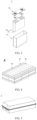
FIG. 1 is a schematic diagram of an embodiment of a negative electrode plate according to this application; -
FIG. 2 is a schematic diagram of an embodiment of a secondary battery according to this application; -
FIG. 3 is a schematic exploded view of an embodiment of a secondary battery according to this application; -
FIG. 4 is a schematic diagram of an embodiment of a battery module according to this application; -
FIG. 5 is a schematic diagram of an embodiment of a battery pack according to this application; -
FIG. 6 is an exploded view ofFIG. 5 ; and -
FIG. 7 is a schematic diagram of an embodiment of an electric apparatus using a secondary battery as a power source according to this application. - The accompanying drawings are not necessarily drawn to scale. Reference signs in the accompanying drawings are described as follows:
- 1. battery pack;
- 2. upper box body;
- 3. lower box body;
- 4. battery module;
- 5. secondary battery;
- 51. housing;
- 52. electrode assembly; and
- 53. cover plate.
- A negative electrode plate, a secondary battery, a battery module, a battery pack, and an electric apparatus in this application are described below in detail with reference to the accompanying drawings as appropriate. However, unnecessary detailed descriptions are omitted in some cases. For example, well-known matters are not described in detail and substantially identical structures are not repeatedly described. This is to prevent the following description from becoming unnecessarily long and to facilitate ease of understanding by a person skilled in the art. In addition, the accompanying drawings and the following description are provided to help a person skilled in the art fully understand this application, and are not intended to limit the subject matter described in the claims.
- "Ranges" disclosed in this application are defined in a form of lower and upper limits, where given ranges are defined by selecting lower and upper limits and the selected lower and upper limits define boundaries of special ranges. Ranges defined in this method may or may not be inclusive of end values, and any combinations may be used, that is, any lower limit may be combined with any upper limit to form a range. For example, if ranges of 60-120 and 80-110 are provided for a specific parameter, it is understood that ranges of 60-110 and 80-120 can also be envisioned. In addition, if low limit values of a range are given as 1 and 2, and upper limit values of the range are given as 3, 4, and 5, the following ranges can all be envisioned: 1-3, 1-4, 1-5, 2-3, 2-4, and 2-5. In this application, unless otherwise specified, a value range of "a-b" is a short representation of any combination of real numbers between a and b, where both a and b are real numbers. For example, a value range of "0-5" means that all real numbers within the range of "0-5" are listed herein, and "0-5" is just a short representation of a combination of these values. In addition, when a parameter is expressed as an integer greater than or equal to 2, this is equivalent to disclosure that the parameter is an integer such as 2, 3, 4, 5, 6, 7, 8, 9, 10, 11, or 12.
- Unless otherwise specified, all the embodiments and optional embodiments of this application can be mutually combined to form new technical solutions.
- Unless otherwise specified, all the technical features and optional technical features of this application can be mutually combined to form a new technical solution.
- Unless otherwise specified, all the steps in this application can be performed sequentially or randomly, and preferably, performed sequentially. For example, a method includes steps (a) and (b), which indicates that the method may include steps (a) and (b) performed in sequence, or may include steps (b) and (a) performed in sequence. For example, that the method may further include step (c) indicates that step (c) may be added to the method in any order. For example, the method may include steps (a), (b), and (c), or steps (a), (c), and (b), or steps (c), (a), and (b), or the like.
- Unless otherwise specified, "include" and "contain" mentioned in this application are inclusive or exclusive. For example, terms "include" and "contain" can mean that other unlisted components may also be included or contained, or only listed components may be included or contained.
- Unless otherwise specified, in this application, the term "or" is inclusive. For example, the phrase "A or B" means "A, B, or both A and B". More specifically, any one of the following conditions satisfies the condition "A or B": A is true (or present) and B is false (or not present); A is false (or not present) and B is true (or present); or both A and B are true (or present).
- A secondary battery, also referred to as a rechargeable battery or a storage battery, is a battery whose active material can be activated for continuous use through charging after the battery is discharged.
- Usually, the secondary battery includes a positive electrode plate, a negative electrode plate, a separator, and an electrolyte. During charging and discharging of the secondary battery, active ions (such as lithium ions) are intercalated and deintercalated back and forth between the positive electrode plate and the negative electrode plate. The separator is disposed between the positive electrode plate and the negative electrode plate to mainly prevent short circuit between the positive electrode and the negative electrode and to allow active ions to pass through. The electrolyte is between the positive electrode plate and the negative electrode plate to conduct the active ions.
- A negative electrode is one of most critical components of a lithium-ion battery. Design of the negative electrode directly affects performance of the battery, and especially charge-related characteristics of the battery. How a battery having both desirable energy density and kinetic performance can be obtained by optimizing the design of the negative electrode plate is currently a common challenge in the industry.
- To resolve the foregoing problem, the inventor has performed plenty of research and provided a negative electrode plate. The negative electrode plate in this application uses two or more active material layers, and by adjusting a relationship between layer spacings and that between coating weights of the active material layers, the negative electrode plate can have both relatively high energy density and good charge-discharge kinetic performance.
- The negative electrode plate in this application includes a negative electrode current collector and active material layers disposed on at least one surface of the negative electrode current collector, where the active material layers include a first active material layer and a second active material layer disposed on a surface of the first active material layer, the first active material layer includes a first active material, the second active material layer includes a second active material, and the active material layers satisfy α×CW2≤CW1, where
- α is a relative factor of layer spacings, where

- d1 is a layer spacing corresponding to a d002 peak of the first active material, in units of nm;
- d2 is a layer spacing corresponding to a d002 peak of the second active material, in units of nm;
- CW1 is mass per unit area of the first active material layer disposed on the negative electrode current collector, in units of g/m2, and if the first active material layer and the second active material layer are disposed on both sides of the negative electrode current collector, the mass should be mass of the first active material layers on the two sides; and
- CW2 is mass per unit area of the second active material layer disposed on the negative electrode current collector, in units of g/m2, and if the first active material layer and the second active material layer are disposed on both sides of the negative electrode current collector, the mass should be mass of the second active material layers on the two sides.
- Therefore, in this application, by using two or more active material layers in a negative electrode and adjusting a relationship between layer spacings and that between coating weights of the active material layers, it is possible to obtain a negative electrode of a battery with both higher energy density and better charge-discharge kinetic performance. More specifically, the inventors of this application have found that when two active material layers are applied on one side of the current collector of the negative electrode plate with the active material layer spacing of the second active material layer larger than the active material layer spacing of the first active material layer, during migration of lithium ions from a positive electrode to the negative electrode, because of the large spacing of the surface material layer, impedance to intercalation of lithium ions is low so that lithium ions can be quickly intercalated into the surface active material. Therefore, precipitation of lithium ions on the surface of the negative electrode plate due to an excessive charging rate is avoided. Because a larger spacing of the negative active material layer means a lower capacity of the material, a heavier coating weight of the second active material layer has greater impact on the overall extractable capacity of the negative electrode plate. Taking both the extractable capacity of the negative electrode plate and the charging window into account, this application defines the coating weight of the second active material layer. A larger active material layer spacing of the second active material layer represents a stronger charging capability and a lower capacity, and correspondingly, just a small coating weight is enough to achieve a good charging level. When the active material layer spacing of the second active material layer is smaller, its charging capability becomes weaker, and the capacity is higher. In this case, in order that the electrode plate has relatively good charge performance on the whole, a proportion of the coating weight of the second active material layer to a total coating weight of the electrode plate should be increased. The inventors of this application have unexpectedly found that, with a structure with two active material layers used, the first active material layer having a small active material layer spacing and a high capacity makes the electrode plate and the battery have relatively high energy density; and the second active material layer having a large active material layer spacing allows a lower impedance to lithium intercalation on the surface of the negative electrode, avioding deposition of lithium ions on the surface of the negative electrode plate during high-rate charging, and increasing the battery charging window. Therefore, the negative electrode of the battery whose active material layers satisfy the foregoing relationships has both desirable energy density and charge-discharge kinetic performance.
- In some embodiments, the active material layers satisfy

- The weight of the second active material layer is adjusted based on the layer spacing and the weight of the first active material layer. On the whole, to enable the negative electrode plate to have both high energy density and good kinetic performance, the coating weight of the second active material layer should satisfy
- The inventors of this application have found that, when the coating weight of the active material layer on the negative electrode plate is smaller and the active material layer spacing is larger, internal resistance of the electrode plate and the battery is lower, and charge-discharge performance is better, but a smaller weight and larger spacing of the active material layer causes energy density of the battery to decrease under the same battery capacity due to the use of more auxiliary materials such as foil and more materials. To take both the energy density and charge performance of the battery into account, avoiding overdesign of one performance causing inadaquete design of the other, the inventors further define the relationship between coating weights and that between layer spacings of the first active material layer and the second active material layer based on an actual test results. When these relationships are satisfied, both rate performance and energy density of the negative electrode plate and the battery can be improved properly.
- In some embodiments,


- Da50 is a volume median particle size of the first active material, in units of µm; and
- Db50 is a volume median particle size of the second active material, in units of µm.
- Based on the layer spacing and particle size of each of the active material layers, when the coating weights of the active material layers and the active material particle sizes of the active material layers are adjusted to satisfy that


- In some embodiments, the volume median particle size Da50 of the first active material and the volume median particle size Db50 of the second active material satisfy

- By specifying a relative relationship between the particle sizes of the active materials in the two active material layers, the kinetic performance is further improved, and processability is facilitated when a coating amount of the second layer is small.
- In some embodiments, the layer spacing dl corresponding to the d002 peak of the first active material is within a range of 0.335-0.3362 nm, and the layer spacing d2 corresponding to the d002 peak of the second active material is within a range of 0.3356-0.38 nm.
- In some embodiments, the volume median particle size Da50 of the first active material is within a range of 8-20 µm, and the volume median particle size Db50 of the second active material is within a range of 4-12 µm.
- In some embodiments, the mass per unit area CW1 of the first active material layer disposed on the negative electrode current collector is within a range of 80-200 g/m2, and the mass per unit area CW2 of the second active material layer disposed on the negative electrode current collector is within a range of 10-110 g/m2.
- In this application, the volume median particle size D50 of materials has a meaning known in the art, and can be measured by using a method and an instrument known in the art. For example, it may be measured by using a laser particle size analyzer (for example, Mastersizer 2000E made by Malvern Panalytical in the UK) in accordance with
GB/T 19077-2016 - In some embodiments, the negative electrode plate further includes a conductive agent and a binder. Types and contents of the agents are not specifically limited and may be selected based on an actual requirement. For example, the conductive agent is one or more of superconducting carbon, carbon black (for example, acetylene black or Ketjen black), carbon dots, carbon nanotube, graphene, and carbon nanofiber. The binder may include one or more of styrene-butadiene rubber (SBR), water soluble unsaturated resin SR-1B, waterborne acrylic resin (for example, polyacrylic acid PAA, polymethylacrylic acid PMAA, and sodium polyacrylate PAAS), polyacrylamide (PAM), polyvinyl alcohol (PVA), sodium alginate (SA), and carboxymethyl chitosan (CMCS). Types of other optional additives may be the same or different. For example, the other optional additives may include a thickener (for example, sodium carboxymethyl cellulose CMC-Na) and a PTC thermistor material.
- In the negative electrode plate in this application, the negative electrode current collector may use a metal foil or a composite current collector. As an example of the metal foil, a copper foil may be used. The composite current collector may include a polymer material matrix and a metal material layer formed on at least one surface of the polymer material matrix. For example, a metal material may be selected from one or more of copper, copper alloy, nickel, nickel alloy, titanium, titanium alloy, silver, and silver alloy. For example, the polymer material matrix may be selected from polypropylene (PP), polyethylene terephthalate (PET), polybutylene terephthalate (PBT), polystyrene (PS), or polyethylene (PE).
- In some embodiments, the active material layer is disposed on at least one surface of the negative electrode current collector. For example, the negative electrode current collector has two opposite surfaces in its thickness direction, and the active material layer is disposed on either or both of the two opposite surfaces of the negative electrode current collector.
-
FIG. 1 shows a negative electrode current collector with active material layers on its surface, where two surfaces of the negative electrode current collector shown inFIG. 1 both have a first active material layer and a second active material layer. - Certainly, a negative electrode plate 10 in this application may also have other embodiments. For example, the negative electrode plate 10 includes a negative electrode current collector 11, a first active material layer 121 disposed on one side of the negative electrode current collector, and a second active material layer 122 disposed on the first active material layer 121.
- In addition, the negative electrode plate in this application does not exclude additional functional layers other than the negative electrode film layer. For example, in some embodiments, the negative electrode plate in this application may further include a conductive primer layer (which is, for example, formed by a conductive agent and a binder) disposed between the negative electrode current collector and the second negative electrode film layer. In some other embodiments, the negative electrode plate in this application further includes a protection layer covering a surface of the first negative electrode film layer.
- In some embodiments, a preparation method of the negative electrode plate of this application may include the following steps:
- 1. Prepare a slurry A containing a first active material and a slurry B containing a second active material separately.
- 2. Calulate CW1 and CW2 based on a layer spacing of the first active material and a layer spacing of the second active material.
- 3. Apply the slurry A on a current collector and dry it to obtain an electrode plate A coated with a first active material layer.
- 4. Apply the slurry B on the surface of the electrode plate A and dry it, and then perform cold-pressed and slitting to obtain the negative electrode plate described in this application.
- Coating amounts of the first active material layer and a second active material layer respectively satisfy CW1 and CW2.
- In some embodiments, the slurry A includes the first active material and one or more of a conductive agent, a binder, and a thickener.
- In some embodiments, the slurry B includes the second active material and one or more of a conductive agent, a binder, and a thickener.
- For a specific method for preparing a negative electrode, reference may be made to a specific embodiment provided in this application. Details are not described herein.
- The secondary battery includes a positive electrode plate. The positive electrode plate usually includes a positive electrode current collector and a positive electrode film layer disposed on at least one surface of the positive electrode current collector and including a positive electrode active material. For example, the positive electrode current collector has two opposite surfaces in its thickness direction, and the positive electrode film layer is disposed on either or both of the two opposite surfaces of the positive electrode current collector.
- In the positive electrode plate in this application, the positive electrode current collector may use a metal foil or a composite current collector. As an example of the metal foil, an aluminum foil may be used as the positive electrode current collector. The composite current collector may include a polymer material matrix and a metal material layer formed on at least one surface of the polymer material matrix. For example, a metal material may be selected from one or more of aluminum, aluminum alloy, nickel, nickel alloy, titanium, titanium alloy, silver, and silver alloy. For example, the polymer material matrix may be selected from polypropylene (PP), polyethylene terephthalate (PET), polybutylene terephthalate (PBT), polystyrene (PS), or polyethylene (PE).
- In the positive electrode plate in this application, the positive electrode film layer includes a positive electrode active material, and the positive electrode active material may be a known positive electrode active material for secondary batteries in the art. For example, the positive electrode active material may include one or more of lithium transition metal oxide, olivine-structured lithium-containing phosphate, and respective modified compounds thereof. Examples of the lithium transition metal oxide may include but are not limited to one or more of lithium cobalt oxide, lithium nickel oxide, lithium manganese oxide, lithium nickel cobalt oxide, lithium manganese cobalt oxide, lithium nickel manganese oxide, lithium nickel cobalt manganese oxide, lithium nickel cobalt aluminum oxide, and their modified compounds. Examples of the olivine-structured lithium-containing phosphate may include but are not limited to one or more of lithium iron phosphate, a composite material of lithium iron phosphate and carbon, lithium manganese phosphate, a composite material of lithium manganese phosphate and carbon, lithium manganese iron phosphate, a composite material of lithium manganese iron phosphate and carbon, and their respective modified compounds. This application is not limited to these materials, and other conventionally well-known materials that can be used as a positive electrode active material for secondary batteries may also be used. One of these positive electrode active materials may be used alone, or two or more of them may be used in combination.
- In the positive electrode plate in this application, the modified compounds of the positive electrode active materials may be obtained by making a doping modification, a surface coating modification, or both a doping modification and a surface coating modification to the positive electrode active materials.
- In the positive electrode plate in this application, the positive electrode film layer usually includes the positive electrode active material and optionally, a binder, and optionally, a conductive agent. The positive electrode film layer is usually formed by applying a positive electrode slurry onto the positive electrode current collector, followed by drying and cold-pressing. The positive electrode slurry is usually formed by dispersing the positive electrode active material and optionally, the conductive agent, and optionally, the binder and any other component in a solvent and stirring them evenly. The solvent may be but is not limited to N-methylpyrrolidone (NMP). For example, the binder for the positive electrode film layer may include one or more of polyvinylidene fluoride (PVDF), polytetrafluoroethylene (PTFE), vinylidene fluoride-tetrafluoroethylene-propylene terpolymer, vinylidene fluoride-hexafluoropropylene-tetrafluoroethylene terpolymer, tetrafluoroethylene-hexafluoropropylene copolymer, and fluorine-containing acrylic resin. For example, the conductive agent for the positive electrode film layer may include one or more of superconducting carbon, acetylene black, carbon black, Ketjen black, carbon dots, carbon nanotubes, graphene, and carbon nanofiber. It should be noted that the composition or parameters of the positive electrode film layer described in this application are all the composition or parameter ranges of a single-side film layer of the positive electrode current collector. When the positive electrode film layer is disposed on two opposite surfaces of the positive electrode current collector, the composition or parameters of the positive electrode film layer on any one of the surfaces satisfies this application, that is, being considered to fall within the protection scope of this application.
- An electrolyte conducts active ions between the positive electrode plate and the negative electrode plate. For the secondary battery in this application, there is no specific limitation on a type of the electrolyte, and the electrolyte may be selected based on a requirement. For example, the electrolyte may be selected from at least one of a solid electrolyte and a liquid electrolyte (that is, a liquid electrolyte).
- In some embodiments, the electrolyte is a liquid electrolyte. The electrolyte includes an electrolyte salt and a solvent.
- In some embodiments, a type of the electrolyte salt is not specifically limited, and may be selected based on an actual requirement. For example, the electrolyte salt may be selected from one or more of LiPF6 (lithium hexafluorophosphate), LiBF4 (lithium tetrafluoroborate), LiClO4 (lithium perchlorate), LiAsF6 (lithium hexafluoroarsenate), LiFSI (lithium bis(fluorosulfonyl)imide), LiTFSI (lithium bistrifluoromethanesulfonimide), LiTFS (lithium trifluoromethanesulfonate), LiDFOB (lithium difluoro(oxalato)borate), LiBOB (lithium dioxalate borate), LiPO2F2 (lithium difluorophosphate), LiDFOP (lithium difluoro(dioxalato)phosphate), and LiTFOP (lithium tetrafluoro oxalato phosphate). In some embodiments, a type of the solvent is not specifically limited, and may be selected based on an actual requirement. For example, the solvent may be selected from one or more of ethylene carbonate (EC), propylene carbonate (PC), ethyl methyl carbonate (EMC), diethyl carbonate (DEC), dimethyl carbonate (DMC), dipropyl carbonate (DPC), methyl propyl carbonate (MPC), ethyl propyl carbonate (EPC), butylene carbonate (BC), fluoroethylene carbonate (FEC), methyl formate (MF), methyl acetate (MA), ethyl acetate (EA), propyl acetate (PA), methyl propionate (MP), ethyl propionate (EP), propyl propionate (PP), methyl butyrate (MB), ethyl butyrate (EB), 1,4-butyrolactone (GBL), sulfolane (SF), methyl sulfonyl methane (MSM), methyl ethyl sulfone (EMS), and diethyl sulfone (ESE).
- In some embodiments, optionally, the solvent is a non-aqueous solvent.
- In some embodiments, optionally, the electrolyte further includes an additive. For example, the additive may include a negative electrode film-forming additive, or may include a positive electrode film-forming additive, or may include an additive capable of improving some performance of the battery, for example, an additive for improving overcharge performance of the battery, an additive for improving high-temperature performance of the battery, or an additive for improving low-temperature performance of the battery.
- A secondary battery using a liquid electrolyte and some secondary batteries using solid electrolytes further include a separator. The separator is disposed between the positive electrode plate and the negative electrode plate to provide separation. The separator is not limited to any specific type in this application, and may be any commonly known porous separator with good chemical stability and mechanical stability. In some embodiments, a material of the separator may be selected from one or more of a glass fiber, non-woven, polyethylene, polypropylene polyethylene, and poly (vinylidene difluoride). The separator may be a single-layer thin film or a multilayer composite thin film. When the separator is a multilayer composite thin film, each layer may be made of the same or different materials.
- In some embodiments, the positive electrode plate, the negative electrode plate, and the separator may be made into an electrode assembly through a winding process or a lamination process.
- In some embodiments, the secondary battery may include an outer package. The outer package may be used for packaging the electrode assembly and the electrolyte.
- In some embodiments, the outer package of the secondary battery may be a hard shell, for example, a hard plastic shell, an aluminum shell, or a steel shell. The outer package of the secondary battery may alternatively be a soft package, for example, a soft bag. A material of the soft package may be plastic, for example, one or more of polypropylene (PP), polybutylene terephthalate (PBT), polybutylene succinate (PBS), and the like.
- This application does not impose special limitations on a shape of the secondary battery, and the secondary battery may be cylindrical, rectangular, or of any other shape.
FIG. 2 shows asecondary battery 5 with a rectangular structure as an example. - In some embodiments, referring to
FIG. 3 , the outer package may include ahousing 51 and acover plate 53. Thehousing 51 may include a base plate and a side plate connected onto the base plate, and the base plate and the side plate enclose an accommodating cavity. Thehousing 51 has an opening connected to the accommodating cavity, and thecover plate 53 is configured to cover the opening to seal the accommodating cavity. A positive electrode plate, a negative electrode plate, and a separator may be made into anelectrode assembly 52 through a winding process or a lamination process. Theelectrode assembly 52 is packaged in the accommodating cavity. The electrolyte infiltrates into theelectrode assembly 52. There may be one ormore electrode assemblies 52 in thesecondary battery 5, and the quantity may be adjusted based on a requirement. - In some embodiments, the secondary battery may be assembled into a battery module. The battery module may include a plurality of secondary batteries and a specific quantity may be adjusted based on application and capacity of the battery module.
-
FIG. 4 shows abattery module 4 as an example. Referring toFIG. 4 , in thebattery module 4, a plurality ofsecondary batteries 5 may be sequentially arranged in a length direction of thebattery module 4. Certainly, the secondary batteries may alternatively be arranged in any other manner. Further, the plurality ofsecondary batteries 5 may be fastened using fasteners. - Optionally, the
battery module 4 may further include a housing with an accommodating space, and the plurality ofsecondary batteries 5 are accommodated in the accommodating space. - In some embodiments, the battery module may be further assembled into a battery pack, and a quantity of battery modules included in the battery pack may be adjusted based on application and capacity of the battery pack.
-
FIG. 5 andFIG. 6 show abattery pack 1 as an example. Referring toFIG. 5 andFIG. 6 , thebattery pack 1 may include a battery box and a plurality ofbattery modules 4 disposed in the battery box. The battery box includes anupper box body 2 and alower box body 3. Theupper box body 2 is configured to cover thelower box body 3 to form an enclosed space for accommodating thebattery modules 4. The plurality ofbattery modules 4 may be arranged in the battery box in any manner. - An embodiment of this application further provides an electric apparatus. The electric apparatus includes at least one of the secondary battery, the battery module, and the battery pack provided in this application. The secondary battery, the battery module, or the battery pack may be used as a power source for the electric apparatus, or an energy storage unit of the electric apparatus. The electric apparatus may be, but is not limited to, a mobile device (for example, a mobile phone or a notebook computer), an electric vehicle (for example, a battery electric vehicle, a hybrid electric vehicle, a plug-in hybrid electric vehicle, an electric bicycle, an electric scooter, an electric golf vehicle, or an electric truck), an electric train, a ship, a satellite, an energy storage system, and the like.
- The secondary battery, the battery module, or the battery pack may be selected for the electric apparatus based on requirements for using the apparatus.
-
FIG. 7 shows an electric apparatus as an example. The electric apparatus is a full electric vehicle, a hybrid electric vehicle, a plug-in hybrid electric vehicle, or the like. To satisfy a requirement of the electric apparatus for high power and high energy density, a battery pack or a battery module may be used. - In another example, the electric apparatus may be a mobile phone, a tablet computer, a notebook computer, or the like. The electric apparatus is usually required to be light and thin, and the secondary battery may be used as a power source.
- Examples below more specifically describe the content disclosed in this application, and these examples are merely used for explanatory description. Unless otherwise stated, all parts, percentages, and ratios reported in the following examples are based on weight, all reagents used in the examples, the first active material, and the second active material are commercially available or synthesized in a conventional manner. All instruments used in the examples are commercially available.
- Lithium-ion batteries including the negative electrode plate in this application in Examples 1 to 9 were prepared according to the following method.
-
- 1. According to Table 1, a first active material of a first active material layer, a conductive agent Super-P, a binder SBR, and a thickener CMC were mixed at a mass ratio of 96:1:2:1, and then fully stirred and evenly mixed in a deionized aqueous solvent system, to obtain a slurry A.
- 2. According to Table 1, a second active material of a second active material layer, a conductive agent Super-P, a binder SBR, and a thickener CMC were mixed at a mass ratio of 96:1:2:1, and then fully stirred and evenly mixed in a deionized aqueous solvent system, to obtain a slurry B.
- 3. According to Table 1, a Cu foil was coated with the slurry A and dried, to obtain an electrode plate A coated with the first active material layer.
- 4. According to Table 1, a surface of the electrode plate A was coated with the slurry B and dried, and then the electrode plate A was cold-pressed and slit, to obtain a negative electrode plate having two active material layers.
- Coating amounts of the first active material layer and the second active material layer respectively satisfied CW1 and CW2.
- A positive electrode active material LiFePO4, a conductive agent acetylene black, and a binder polyvinylidene fluoride (PVDF) were mixed at a mass ratio of 96:2:2. A solvent N-methylpyrrolidone (NMP) was added. Then the resulting mixture was stirred evenly by a vacuum mixer to obtain a positive electrode slurry. The positive electrode slurry was evenly applied on an aluminum foil of the positive electrode current collector. The aluminum foil was dried at room temperature and then continued to be dried in an oven. Then cold-pressing and slitting were performed to obtain a positive electrode plate.
- A polyethylene film was used as a separator.
- The positive electrode plate, the separator, and the negative electrode plate were sequentially stacked so that the separator was located between the positive electrode plate and the negative electrode plate to provide separation. Then the resulting stack was wound to obtain an electrode assembly. The electrode assembly was placed into an outer package and dried. Then an electrolyte was injected, and processes such as vacuum packaging, standing, formation, and shaping were performed to obtain a secondary battery.
- A method for preparing secondary batteries of Comparative Examples 1 to 3 is the same as that of Examples 1 to 13, except for a process of preparing the negative electrode plate. Details are given in Table 1.
- Energy density: At 25°C, the lithium-ion battery was charged to 4.2V with a constant current of 1C, then charged with a constant voltage of 4.2V until the current was less than 0.05C, and then discharged to 2.8V at 0.1C to obtain discharge energy Q. Mass of the battery was measured as M. Energy density=Q/M.
- Charge time: The charge time desribed in this application is a time for constant charging at 25°C to 85% SOC using a lithium precipitation window rate.


- In this application, by using two or more active material layers in a negative electrode and adjusting a relationship between layer spacings and that between coating weights of the active material layers, it is possible to obtain a negative electrode of a battery with both higher energy density and better charge-discharge kinetic performance.
- According to Table 1, from the comparison between Examples 1 to 9 and Comparative Examples 1 to 3, it can be seen that the secondary batteries obtained by using two active material layers in the negative electrode and adjusting the relationship between layer spacings and that between coating weights of the active material layers have both higher energy density and better charge-discharge kinetic performance. In short, the negative electrode materials prepared by using the method of the present invention all satisfy that the charge time is less than or equal to 75 minutes and that 0.3C energy density is greater than or equal to 170 Wh/kg.
- Comparative Examples 1 to 3 do not conform to the relationship between layer spacings and that between coating weights of active material layers as defined in this application. Specifically, in comparison between Comparative Example 1 and Example 1 of this application, the second active material in Comparative Example 1 uses hard carbon with a larger layer spacing, and its capacity density is much lower than that in Example 1 of this application. In other words, when the active material layer spacing of the second active material layer is larger, a charging capability is stronger, but the capacity is lower, and obviously, energy density and charge-discharge kinetic performance cannot be both guaranteed. In comparison with Example 1, in Comparative Example 2, the relative factor α of layer spacings is not within the range defined in this application (1≤α≤1.12), and therefore energy density and charge-discharge kinetic performance cannot be both guaranteed. In comparison with Example 1, Comparative Example 3 has a single layer of coating, showing that given a same coating amount, a single layer of coating is unable to guarantee both energy density and charge-discharge kinetic performance.
- Further, in comparison with Examples 1 to 3, CW2/(CW2+CW1) in Example 5 is beyond the range defined in this application, and as a result, energy density cannot be guaranteed although charge-discharge kinetic performance is good; whereas, CW2/(CW2+CW1) in Example 4 is beyond the range defined in this application, and as a result, charge-discharge kinetic performance cannot although energy density is good.
- Further, in comparison with Example 1, Example 6, and Example 7, Db50/Da50 in Example 8 and that in Example 9 are beyond the ranged defined in this application, and as a result, energy density and charge-discharge kinetic performance cannot be both guaranteed.
Claims (9)
- A negative electrode plate, comprising a negative electrode current collector and active material layers disposed on at least one surface of the negative electrode current collector, wherein the active material layers comprise a first active material layer and a second active material layer disposed on a surface of the first active material layer, wherein the first active material layer is arranged between the negative electrode current collector and the second active material layer, the first active material layer comprises a first active material, the second active material layer comprises a second active material, and the active material layers satisfy α × CW2 ≤ CW1, whereinα is a relative factor of layer spacings, wherein
 d1 is a layer spacing corresponding to a d002 peak of the first active material, in units of nm;d2 is a layer spacing corresponding to a d002 peak of the second active material, in units of nm;CW1 is mass per unit area of the first active material layer disposed on the negative electrode current collector, in units of g/m2; andCW2 is mass per unit area of the second active material layer disposed on the negative electrode current collector, in units of g/m2, whereinthe layer spacing d1 corresponding to the d002 peak of the first active material is within a range of 0.335-0.3362 nm, and the layer spacing d2 corresponding to the d002 peak of the second active material is within a range of 0.3356-0.38 nm, andwherein the mass per unit area CW1 of the first active material layer disposed on the negative electrode current collector is within a range of 80-200 g/m2, and the mass per unit area CW2 of the second active material layer disposed on the negative electrode current collector is within a range of 10-110 g/m2, whereinthe first active material is a natural graphite material or an artificial graphite material.
 - The negative electrode plate according to claim 1, wherein the active material layers satisfy

- The negative electrode plate according to claim 1, wherein the volume median particle size Da50, measured according to the description, of the first active material and the volume median particle size Db50, measured according to the description, of the second active material satisfy 0.2 ≤

- The negative electrode plate according to claim 2 or 3, wherein the volume median particle size Da50, measured according to the description, of the first active material is within a range of 8-20 µm, and the volume median particle size Db50, measured according to the description, of the second active material is within a range of 4-12 µm.
- The negative electrode plate according to any one of claims 1 to 4, wherein
soft carbon or hard carbon is contained in the first active layer and/or the second active layer. - A secondary battery (5), wherein the secondary battery (5) comprises the negative electrode plate according to any one of claims 1 to 5.
- A battery module (4) comprising the secondary battery (5) according to claim 6.
- A battery pack (1) comprising the secondary battery (5) according to claim 6 or the battery module (4) according to claim 7.
- An electric apparatus comprising at least one of the secondary battery (5) according to claim 6, the battery module (4) according to claim 7, and the battery pack (1) according to claim 8.
Applications Claiming Priority (1)
| Application Number | Priority Date | Filing Date | Title |
|---|---|---|---|
| PCT/CN2021/129506 WO2023082039A1 (en) | 2021-11-09 | 2021-11-09 | Negative electrode sheet, secondary battery, battery module, battery pack, and electric device |
Publications (3)
| Publication Number | Publication Date |
|---|---|
| EP4207361A1 EP4207361A1 (en) | 2023-07-05 |
| EP4207361A4 EP4207361A4 (en) | 2023-08-02 |
| EP4207361B1 true EP4207361B1 (en) | 2024-10-09 |
Family
ID=86228509
Family Applications (1)
| Application Number | Title | Priority Date | Filing Date |
|---|---|---|---|
| EP21939977.1A Active EP4207361B1 (en) | 2021-11-09 | 2021-11-09 | Negative electrode sheet, secondary battery, battery module, battery pack, and electric device |
Country Status (6)
| Country | Link |
|---|---|
| US (1) | US20230146812A1 (en) |
| EP (1) | EP4207361B1 (en) |
| JP (1) | JP7674463B2 (en) |
| KR (1) | KR102880137B1 (en) |
| CN (1) | CN116670861A (en) |
| WO (1) | WO2023082039A1 (en) |
Families Citing this family (2)
| Publication number | Priority date | Publication date | Assignee | Title |
|---|---|---|---|---|
| CN114744149B (en) * | 2022-06-10 | 2022-08-30 | 宁德新能源科技有限公司 | Negative pole piece, battery core and battery |
| CN118738266B (en) * | 2024-06-03 | 2025-09-16 | 比亚迪股份有限公司 | Negative plate, preparation method thereof, battery and electric equipment |
Family Cites Families (16)
| Publication number | Priority date | Publication date | Assignee | Title |
|---|---|---|---|---|
| JP3456771B2 (en) * | 1994-11-14 | 2003-10-14 | 松下電器産業株式会社 | Non-aqueous electrolyte secondary battery |
| EP1083618B1 (en) * | 1998-05-20 | 2013-04-03 | KRI Inc. | Nonaqueous secondary cell |
| JP2008059999A (en) | 2006-09-01 | 2008-03-13 | Sony Corp | Negative electrode and nonaqueous electrolyte secondary battery using the same |
| JP2012015051A (en) | 2010-07-05 | 2012-01-19 | Hitachi Vehicle Energy Ltd | Lithium ion secondary battery and negative electrode for lithium ion secondary battery |
| JP2013149403A (en) * | 2012-01-18 | 2013-08-01 | Hitachi Ltd | Lithium ion secondary battery negative electrode, lithium ion secondary battery electrode using the same, and manufacturing method thereof |
| KR101560471B1 (en) * | 2013-01-25 | 2015-10-15 | 주식회사 엘지화학 | Anode for lithium secondary battery and lithium secondary battery comprising the same |
| CN103633293B (en) * | 2013-11-08 | 2017-02-15 | 鲍添增 | Lithium ion battery negative electrode piece using hard carbon and soft carbon as active materials and lithium ion battery |
| US10446837B2 (en) * | 2015-02-26 | 2019-10-15 | Shin-Etsu Chemical Co., Ltd. | Negative electrode active material for non-aqueous electrolyte secondary battery, negative electrode for non-aqueous electrolyte secondary battery, non-aqueous electrolyte secondary battery, and method of producing negative electrode material for a non-aqueous electrolyte secondary battery |
| JP7010795B2 (en) | 2018-09-25 | 2022-01-26 | 本田技研工業株式会社 | A negative electrode for a lithium ion secondary battery and a lithium ion secondary battery using the negative electrode for the lithium ion secondary battery. |
| CN113328099B (en) * | 2018-10-31 | 2022-07-19 | 宁德时代新能源科技股份有限公司 | A kind of negative pole piece and secondary battery |
| CN111490253B (en) * | 2019-01-29 | 2021-12-10 | 宁德时代新能源科技股份有限公司 | Negative pole piece and lithium ion secondary battery thereof |
| ES2926653T3 (en) * | 2019-12-06 | 2022-10-27 | Contemporary Amperex Technology Co Ltd | Secondary battery and apparatus including the secondary battery |
| JP7358228B2 (en) * | 2019-12-23 | 2023-10-10 | パナソニックホールディングス株式会社 | Negative electrode for non-aqueous electrolyte secondary batteries and non-aqueous electrolyte secondary batteries |
| CN112467079A (en) * | 2020-12-03 | 2021-03-09 | 珠海冠宇电池股份有限公司 | Silicon-containing negative plate and lithium ion battery comprising same |
| CN112735836A (en) * | 2020-12-25 | 2021-04-30 | 上海奥威科技开发有限公司 | Lithium ion capacitor negative pole piece, lithium ion capacitor and preparation method thereof |
| CN113437252A (en) * | 2021-06-21 | 2021-09-24 | 宁德新能源科技有限公司 | Negative electrode, electrochemical device including the same, and electronic device |
-
2021
- 2021-11-09 KR KR1020237001017A patent/KR102880137B1/en active Active
- 2021-11-09 CN CN202180088578.5A patent/CN116670861A/en active Pending
- 2021-11-09 JP JP2023501362A patent/JP7674463B2/en active Active
- 2021-11-09 EP EP21939977.1A patent/EP4207361B1/en active Active
- 2021-11-09 WO PCT/CN2021/129506 patent/WO2023082039A1/en not_active Ceased
-
2022
- 2022-12-21 US US18/069,989 patent/US20230146812A1/en active Pending
Also Published As
| Publication number | Publication date |
|---|---|
| KR20230070442A (en) | 2023-05-23 |
| EP4207361A4 (en) | 2023-08-02 |
| EP4207361A1 (en) | 2023-07-05 |
| JP2023552027A (en) | 2023-12-14 |
| JP7674463B2 (en) | 2025-05-09 |
| CN116670861A (en) | 2023-08-29 |
| WO2023082039A1 (en) | 2023-05-19 |
| KR102880137B1 (en) | 2025-11-04 |
| US20230146812A1 (en) | 2023-05-11 |
Similar Documents
| Publication | Publication Date | Title |
|---|---|---|
| US11804590B2 (en) | Secondary battery, preparation method thereof, and battery module, battery pack, and apparatus containing secondary battery | |
| EP4379836A1 (en) | Positive electrode active material composition, aqueous positive electrode slurry, positive electrode sheet, secondary battery, and electric device | |
| EP4333117A1 (en) | Positive electrode active material and preparation method therefor, lithium-ion battery comprising same, battery module, battery pack, and electric apparatus | |
| EP4246609A1 (en) | Negative electrode plate and preparation method therefor, secondary battery, battery module, battery pack and power-consuming apparatus | |
| US20260018685A1 (en) | Electrode sheet, battery cell, battery, and electric device | |
| US20250046800A1 (en) | Negative electrode plate, method for preparing the same, secondary battery, battery module, battery pack and electrical device | |
| KR102768734B1 (en) | Electrode assembly, secondary battery, battery module, battery pack and power consuming device | |
| US12418047B2 (en) | Electrolyte, secondary battery, battery module, battery pack, and power consuming device | |
| US20250105278A1 (en) | Lithium ion battery with improved electrolyte solution viscosity and cb value and power consuming device | |
| US20230146812A1 (en) | Negative electrode plate, secondary battery, battery module, battery pack, and electric apparatus | |
| WO2026056261A1 (en) | Secondary battery and preparation method therefor, positive electrode lithium supplementing agent, positive electrode sheet and electric device | |
| US20240194889A1 (en) | Negative electrode plate and preparation method therefor, secondary battery, battery module, battery pack and power consuming devic | |
| EP4421916A1 (en) | Lithium-ion secondary battery, battery module, battery pack, and electric apparatus | |
| EP4693686A1 (en) | Separator and preparation method therefor, battery, and electric device | |
| EP4641687A1 (en) | Positive electrode active material, positive electrode sheet, secondary battery, and electric device | |
| EP3940841B1 (en) | Secondary battery and device comprising the secondary battery | |
| US20260024822A1 (en) | Secondary battery and electric apparatus | |
| CN121123277A (en) | Conductive agent, negative electrode sheet, secondary battery and electrical device | |
| EP4539185A1 (en) | Secondary battery, manufacturing method therefor, and electrical apparatus | |
| CN119816950A (en) | Negative electrode sheet, secondary battery and electric device containing the same | |
| CN119585901A (en) | Pre-lithiation electrode material and preparation method thereof, secondary battery and electrical device | |
| CN117501502A (en) | Electrolyte, secondary battery, battery module, battery pack and electricity utilization device | |
| US12160003B2 (en) | Electrode assembly and secondary battery comprising the same, battery module, battery pack and electrical device | |
| EP4629313A1 (en) | Negative electrode sheet, secondary battery and electrical apparatus | |
| EP4618217A1 (en) | Battery cell, battery, and electric device |
Legal Events
| Date | Code | Title | Description |
|---|---|---|---|
| STAA | Information on the status of an ep patent application or granted ep patent |
Free format text: STATUS: UNKNOWN |
|
| STAA | Information on the status of an ep patent application or granted ep patent |
Free format text: STATUS: THE INTERNATIONAL PUBLICATION HAS BEEN MADE |
|
| PUAI | Public reference made under article 153(3) epc to a published international application that has entered the european phase |
Free format text: ORIGINAL CODE: 0009012 |
|
| STAA | Information on the status of an ep patent application or granted ep patent |
Free format text: STATUS: REQUEST FOR EXAMINATION WAS MADE |
|
| 17P | Request for examination filed |
Effective date: 20221114 |
|
| AK | Designated contracting states |
Kind code of ref document: A1 Designated state(s): AL AT BE BG CH CY CZ DE DK EE ES FI FR GB GR HR HU IE IS IT LI LT LU LV MC MK MT NL NO PL PT RO RS SE SI SK SM TR |
|
| A4 | Supplementary search report drawn up and despatched |
Effective date: 20230704 |
|
| RIC1 | Information provided on ipc code assigned before grant |
Ipc: H01M 4/02 20060101ALI20230628BHEP Ipc: H01M 4/36 20060101ALI20230628BHEP Ipc: H01M 4/1393 20100101ALI20230628BHEP Ipc: H01M 10/0525 20100101ALI20230628BHEP Ipc: H01M 4/587 20100101ALI20230628BHEP Ipc: H01M 4/133 20100101AFI20230628BHEP |
|
| STAA | Information on the status of an ep patent application or granted ep patent |
Free format text: STATUS: EXAMINATION IS IN PROGRESS |
|
| 17Q | First examination report despatched |
Effective date: 20231127 |
|
| REG | Reference to a national code |
Ref legal event code: R079 Ipc: H01M0004130000 Ref country code: DE Ref legal event code: R079 Ref document number: 602021020185 Country of ref document: DE Free format text: PREVIOUS MAIN CLASS: H01M0004133000 Ipc: H01M0004130000 |
|
| GRAP | Despatch of communication of intention to grant a patent |
Free format text: ORIGINAL CODE: EPIDOSNIGR1 |
|
| STAA | Information on the status of an ep patent application or granted ep patent |
Free format text: STATUS: GRANT OF PATENT IS INTENDED |
|
| RIC1 | Information provided on ipc code assigned before grant |
Ipc: H01M 4/02 20060101ALI20240514BHEP Ipc: H01M 10/0525 20100101ALI20240514BHEP Ipc: H01M 4/587 20100101ALI20240514BHEP Ipc: H01M 4/1393 20100101ALI20240514BHEP Ipc: H01M 4/133 20100101ALI20240514BHEP Ipc: H01M 4/36 20060101ALI20240514BHEP Ipc: H01M 10/052 20100101ALI20240514BHEP Ipc: H01M 4/66 20060101ALI20240514BHEP Ipc: H01M 4/583 20100101ALI20240514BHEP Ipc: H01M 4/13 20100101AFI20240514BHEP |
|
| INTG | Intention to grant announced |
Effective date: 20240603 |
|
| GRAJ | Information related to disapproval of communication of intention to grant by the applicant or resumption of examination proceedings by the epo deleted |
Free format text: ORIGINAL CODE: EPIDOSDIGR1 |
|
| STAA | Information on the status of an ep patent application or granted ep patent |
Free format text: STATUS: EXAMINATION IS IN PROGRESS |
|
| GRAP | Despatch of communication of intention to grant a patent |
Free format text: ORIGINAL CODE: EPIDOSNIGR1 |
|
| STAA | Information on the status of an ep patent application or granted ep patent |
Free format text: STATUS: GRANT OF PATENT IS INTENDED |
|
| INTC | Intention to grant announced (deleted) | ||
| GRAS | Grant fee paid |
Free format text: ORIGINAL CODE: EPIDOSNIGR3 |
|
| INTG | Intention to grant announced |
Effective date: 20240801 |
|
| GRAA | (expected) grant |
Free format text: ORIGINAL CODE: 0009210 |
|
| STAA | Information on the status of an ep patent application or granted ep patent |
Free format text: STATUS: THE PATENT HAS BEEN GRANTED |
|
| RAP1 | Party data changed (applicant data changed or rights of an application transferred) |
Owner name: CONTEMPORARY AMPEREX TECHNOLOGY(HONG KONG) LIMITED |
|
| AK | Designated contracting states |
Kind code of ref document: B1 Designated state(s): AL AT BE BG CH CY CZ DE DK EE ES FI FR GB GR HR HU IE IS IT LI LT LU LV MC MK MT NL NO PL PT RO RS SE SI SK SM TR |
|
| DAV | Request for validation of the european patent (deleted) | ||
| DAX | Request for extension of the european patent (deleted) | ||
| REG | Reference to a national code |
Ref country code: CH Ref legal event code: EP |
|
| REG | Reference to a national code |
Ref country code: DE Ref legal event code: R096 Ref document number: 602021020185 Country of ref document: DE |
|
| REG | Reference to a national code |
Ref country code: IE Ref legal event code: FG4D |
|
| REG | Reference to a national code |
Ref country code: LT Ref legal event code: MG9D |
|
| REG | Reference to a national code |
Ref country code: NL Ref legal event code: MP Effective date: 20241009 |
|
| P01 | Opt-out of the competence of the unified patent court (upc) registered |
Free format text: CASE NUMBER: APP_1291/2025 Effective date: 20250109 |
|
| REG | Reference to a national code |
Ref country code: AT Ref legal event code: MK05 Ref document number: 1731576 Country of ref document: AT Kind code of ref document: T Effective date: 20241009 |
|
| PG25 | Lapsed in a contracting state [announced via postgrant information from national office to epo] |
Ref country code: NL Free format text: LAPSE BECAUSE OF FAILURE TO SUBMIT A TRANSLATION OF THE DESCRIPTION OR TO PAY THE FEE WITHIN THE PRESCRIBED TIME-LIMIT Effective date: 20241009 |
|
| PG25 | Lapsed in a contracting state [announced via postgrant information from national office to epo] |
Ref country code: NL Free format text: LAPSE BECAUSE OF FAILURE TO SUBMIT A TRANSLATION OF THE DESCRIPTION OR TO PAY THE FEE WITHIN THE PRESCRIBED TIME-LIMIT Effective date: 20241009 |
|
| PG25 | Lapsed in a contracting state [announced via postgrant information from national office to epo] |
Ref country code: HR Free format text: LAPSE BECAUSE OF FAILURE TO SUBMIT A TRANSLATION OF THE DESCRIPTION OR TO PAY THE FEE WITHIN THE PRESCRIBED TIME-LIMIT Effective date: 20241009 Ref country code: IS Free format text: LAPSE BECAUSE OF FAILURE TO SUBMIT A TRANSLATION OF THE DESCRIPTION OR TO PAY THE FEE WITHIN THE PRESCRIBED TIME-LIMIT Effective date: 20250209 Ref country code: PT Free format text: LAPSE BECAUSE OF FAILURE TO SUBMIT A TRANSLATION OF THE DESCRIPTION OR TO PAY THE FEE WITHIN THE PRESCRIBED TIME-LIMIT Effective date: 20250210 |
|
| PG25 | Lapsed in a contracting state [announced via postgrant information from national office to epo] |
Ref country code: FI Free format text: LAPSE BECAUSE OF FAILURE TO SUBMIT A TRANSLATION OF THE DESCRIPTION OR TO PAY THE FEE WITHIN THE PRESCRIBED TIME-LIMIT Effective date: 20241009 |
|
| PG25 | Lapsed in a contracting state [announced via postgrant information from national office to epo] |
Ref country code: BG Free format text: LAPSE BECAUSE OF FAILURE TO SUBMIT A TRANSLATION OF THE DESCRIPTION OR TO PAY THE FEE WITHIN THE PRESCRIBED TIME-LIMIT Effective date: 20241009 |
|
| PG25 | Lapsed in a contracting state [announced via postgrant information from national office to epo] |
Ref country code: ES Free format text: LAPSE BECAUSE OF FAILURE TO SUBMIT A TRANSLATION OF THE DESCRIPTION OR TO PAY THE FEE WITHIN THE PRESCRIBED TIME-LIMIT Effective date: 20241009 |
|
| PG25 | Lapsed in a contracting state [announced via postgrant information from national office to epo] |
Ref country code: NO Free format text: LAPSE BECAUSE OF FAILURE TO SUBMIT A TRANSLATION OF THE DESCRIPTION OR TO PAY THE FEE WITHIN THE PRESCRIBED TIME-LIMIT Effective date: 20250109 |
|
| PG25 | Lapsed in a contracting state [announced via postgrant information from national office to epo] |
Ref country code: LV Free format text: LAPSE BECAUSE OF FAILURE TO SUBMIT A TRANSLATION OF THE DESCRIPTION OR TO PAY THE FEE WITHIN THE PRESCRIBED TIME-LIMIT Effective date: 20241009 Ref country code: GR Free format text: LAPSE BECAUSE OF FAILURE TO SUBMIT A TRANSLATION OF THE DESCRIPTION OR TO PAY THE FEE WITHIN THE PRESCRIBED TIME-LIMIT Effective date: 20250110 Ref country code: AT Free format text: LAPSE BECAUSE OF FAILURE TO SUBMIT A TRANSLATION OF THE DESCRIPTION OR TO PAY THE FEE WITHIN THE PRESCRIBED TIME-LIMIT Effective date: 20241009 |
|
| PG25 | Lapsed in a contracting state [announced via postgrant information from national office to epo] |
Ref country code: PL Free format text: LAPSE BECAUSE OF FAILURE TO SUBMIT A TRANSLATION OF THE DESCRIPTION OR TO PAY THE FEE WITHIN THE PRESCRIBED TIME-LIMIT Effective date: 20241009 |
|
| PG25 | Lapsed in a contracting state [announced via postgrant information from national office to epo] |
Ref country code: RS Free format text: LAPSE BECAUSE OF FAILURE TO SUBMIT A TRANSLATION OF THE DESCRIPTION OR TO PAY THE FEE WITHIN THE PRESCRIBED TIME-LIMIT Effective date: 20250109 |
|
| REG | Reference to a national code |
Ref country code: CH Ref legal event code: PL |
|
| PG25 | Lapsed in a contracting state [announced via postgrant information from national office to epo] |
Ref country code: SM Free format text: LAPSE BECAUSE OF FAILURE TO SUBMIT A TRANSLATION OF THE DESCRIPTION OR TO PAY THE FEE WITHIN THE PRESCRIBED TIME-LIMIT Effective date: 20241009 |
|
| PG25 | Lapsed in a contracting state [announced via postgrant information from national office to epo] |
Ref country code: MC Free format text: LAPSE BECAUSE OF FAILURE TO SUBMIT A TRANSLATION OF THE DESCRIPTION OR TO PAY THE FEE WITHIN THE PRESCRIBED TIME-LIMIT Effective date: 20241009 |
|
| PG25 | Lapsed in a contracting state [announced via postgrant information from national office to epo] |
Ref country code: DK Free format text: LAPSE BECAUSE OF FAILURE TO SUBMIT A TRANSLATION OF THE DESCRIPTION OR TO PAY THE FEE WITHIN THE PRESCRIBED TIME-LIMIT Effective date: 20241009 |
|
| REG | Reference to a national code |
Ref country code: DE Ref legal event code: R097 Ref document number: 602021020185 Country of ref document: DE |
|
| PG25 | Lapsed in a contracting state [announced via postgrant information from national office to epo] |
Ref country code: LU Free format text: LAPSE BECAUSE OF NON-PAYMENT OF DUE FEES Effective date: 20241109 |
|
| REG | Reference to a national code |
Ref country code: CH Ref legal event code: PL |
|
| PG25 | Lapsed in a contracting state [announced via postgrant information from national office to epo] |
Ref country code: EE Free format text: LAPSE BECAUSE OF FAILURE TO SUBMIT A TRANSLATION OF THE DESCRIPTION OR TO PAY THE FEE WITHIN THE PRESCRIBED TIME-LIMIT Effective date: 20241009 |
|
| PG25 | Lapsed in a contracting state [announced via postgrant information from national office to epo] |
Ref country code: CH Free format text: LAPSE BECAUSE OF NON-PAYMENT OF DUE FEES Effective date: 20241130 |
|
| PG25 | Lapsed in a contracting state [announced via postgrant information from national office to epo] |
Ref country code: RO Free format text: LAPSE BECAUSE OF FAILURE TO SUBMIT A TRANSLATION OF THE DESCRIPTION OR TO PAY THE FEE WITHIN THE PRESCRIBED TIME-LIMIT Effective date: 20241009 |
|
| PG25 | Lapsed in a contracting state [announced via postgrant information from national office to epo] |
Ref country code: SK Free format text: LAPSE BECAUSE OF FAILURE TO SUBMIT A TRANSLATION OF THE DESCRIPTION OR TO PAY THE FEE WITHIN THE PRESCRIBED TIME-LIMIT Effective date: 20241009 |
|
| PG25 | Lapsed in a contracting state [announced via postgrant information from national office to epo] |
Ref country code: CZ Free format text: LAPSE BECAUSE OF FAILURE TO SUBMIT A TRANSLATION OF THE DESCRIPTION OR TO PAY THE FEE WITHIN THE PRESCRIBED TIME-LIMIT Effective date: 20241009 |
|
| PG25 | Lapsed in a contracting state [announced via postgrant information from national office to epo] |
Ref country code: IT Free format text: LAPSE BECAUSE OF FAILURE TO SUBMIT A TRANSLATION OF THE DESCRIPTION OR TO PAY THE FEE WITHIN THE PRESCRIBED TIME-LIMIT Effective date: 20241009 |
|
| PLBE | No opposition filed within time limit |
Free format text: ORIGINAL CODE: 0009261 |
|
| STAA | Information on the status of an ep patent application or granted ep patent |
Free format text: STATUS: NO OPPOSITION FILED WITHIN TIME LIMIT |
|
| REG | Reference to a national code |
Ref country code: BE Ref legal event code: MM Effective date: 20241130 |
|
| PG25 | Lapsed in a contracting state [announced via postgrant information from national office to epo] |
Ref country code: SE Free format text: LAPSE BECAUSE OF FAILURE TO SUBMIT A TRANSLATION OF THE DESCRIPTION OR TO PAY THE FEE WITHIN THE PRESCRIBED TIME-LIMIT Effective date: 20241009 |
|
| 26N | No opposition filed |
Effective date: 20250710 |
|
| PG25 | Lapsed in a contracting state [announced via postgrant information from national office to epo] |
Ref country code: BE Free format text: LAPSE BECAUSE OF NON-PAYMENT OF DUE FEES Effective date: 20241130 |
|
| PG25 | Lapsed in a contracting state [announced via postgrant information from national office to epo] |
Ref country code: IE Free format text: LAPSE BECAUSE OF NON-PAYMENT OF DUE FEES Effective date: 20241109 |
|
| PGFP | Annual fee paid to national office [announced via postgrant information from national office to epo] |
Ref country code: DE Payment date: 20251124 Year of fee payment: 5 |
|
| PGFP | Annual fee paid to national office [announced via postgrant information from national office to epo] |
Ref country code: GB Payment date: 20251126 Year of fee payment: 5 |
|
| PGFP | Annual fee paid to national office [announced via postgrant information from national office to epo] |
Ref country code: FR Payment date: 20251128 Year of fee payment: 5 |
|
| PG25 | Lapsed in a contracting state [announced via postgrant information from national office to epo] |
Ref country code: HU Free format text: LAPSE BECAUSE OF FAILURE TO SUBMIT A TRANSLATION OF THE DESCRIPTION OR TO PAY THE FEE WITHIN THE PRESCRIBED TIME-LIMIT; INVALID AB INITIO Effective date: 20211109 |
|
| PG25 | Lapsed in a contracting state [announced via postgrant information from national office to epo] |
Ref country code: CY Free format text: LAPSE BECAUSE OF FAILURE TO SUBMIT A TRANSLATION OF THE DESCRIPTION OR TO PAY THE FEE WITHIN THE PRESCRIBED TIME-LIMIT; INVALID AB INITIO Effective date: 20211109 |