EP4206632A1 - Temperature measurement value processing device, heat generation body detection device, temperature measurement value processing method, and program - Google Patents
Temperature measurement value processing device, heat generation body detection device, temperature measurement value processing method, and program Download PDFInfo
- Publication number
- EP4206632A1 EP4206632A1 EP21910048.4A EP21910048A EP4206632A1 EP 4206632 A1 EP4206632 A1 EP 4206632A1 EP 21910048 A EP21910048 A EP 21910048A EP 4206632 A1 EP4206632 A1 EP 4206632A1
- Authority
- EP
- European Patent Office
- Prior art keywords
- temperature
- measurement values
- standard deviation
- value
- threshold value
- Prior art date
- Legal status (The legal status is an assumption and is not a legal conclusion. Google has not performed a legal analysis and makes no representation as to the accuracy of the status listed.)
- Pending
Links
Images




Classifications
-
- G—PHYSICS
- G01—MEASURING; TESTING
- G01J—MEASUREMENT OF INTENSITY, VELOCITY, SPECTRAL CONTENT, POLARISATION, PHASE OR PULSE CHARACTERISTICS OF INFRARED, VISIBLE OR ULTRAVIOLET LIGHT; COLORIMETRY; RADIATION PYROMETRY
- G01J5/00—Radiation pyrometry, e.g. infrared or optical thermometry
- G01J5/0022—Radiation pyrometry, e.g. infrared or optical thermometry for sensing the radiation of moving bodies
- G01J5/0025—Living bodies
-
- G—PHYSICS
- G01—MEASURING; TESTING
- G01J—MEASUREMENT OF INTENSITY, VELOCITY, SPECTRAL CONTENT, POLARISATION, PHASE OR PULSE CHARACTERISTICS OF INFRARED, VISIBLE OR ULTRAVIOLET LIGHT; COLORIMETRY; RADIATION PYROMETRY
- G01J5/00—Radiation pyrometry, e.g. infrared or optical thermometry
- G01J5/02—Constructional details
- G01J5/026—Control of working procedures of a pyrometer, other than calibration; Bandwidth calculation; Gain control
-
- G—PHYSICS
- G01—MEASURING; TESTING
- G01J—MEASUREMENT OF INTENSITY, VELOCITY, SPECTRAL CONTENT, POLARISATION, PHASE OR PULSE CHARACTERISTICS OF INFRARED, VISIBLE OR ULTRAVIOLET LIGHT; COLORIMETRY; RADIATION PYROMETRY
- G01J5/00—Radiation pyrometry, e.g. infrared or optical thermometry
- G01J5/48—Thermography; Techniques using wholly visual means
-
- G—PHYSICS
- G01—MEASURING; TESTING
- G01J—MEASUREMENT OF INTENSITY, VELOCITY, SPECTRAL CONTENT, POLARISATION, PHASE OR PULSE CHARACTERISTICS OF INFRARED, VISIBLE OR ULTRAVIOLET LIGHT; COLORIMETRY; RADIATION PYROMETRY
- G01J5/00—Radiation pyrometry, e.g. infrared or optical thermometry
- G01J5/80—Calibration
-
- G—PHYSICS
- G01—MEASURING; TESTING
- G01J—MEASUREMENT OF INTENSITY, VELOCITY, SPECTRAL CONTENT, POLARISATION, PHASE OR PULSE CHARACTERISTICS OF INFRARED, VISIBLE OR ULTRAVIOLET LIGHT; COLORIMETRY; RADIATION PYROMETRY
- G01J5/00—Radiation pyrometry, e.g. infrared or optical thermometry
- G01J2005/0077—Imaging
-
- G—PHYSICS
- G01—MEASURING; TESTING
- G01J—MEASUREMENT OF INTENSITY, VELOCITY, SPECTRAL CONTENT, POLARISATION, PHASE OR PULSE CHARACTERISTICS OF INFRARED, VISIBLE OR ULTRAVIOLET LIGHT; COLORIMETRY; RADIATION PYROMETRY
- G01J5/00—Radiation pyrometry, e.g. infrared or optical thermometry
- G01J5/10—Radiation pyrometry, e.g. infrared or optical thermometry using electric radiation detectors
- G01J5/12—Radiation pyrometry, e.g. infrared or optical thermometry using electric radiation detectors using thermoelectric elements, e.g. thermocouples
- G01J2005/123—Thermoelectric array
Definitions
- the present disclosure relates to a temperature measurement value processing device, a heat generation body detection device, a temperature measurement value processing method, and a program.
- PTL 1 describes an example of a device that detects a heat source, based on two-dimensional data output from an infrared detection device having two-dimensionally disposed infrared detection elements.
- a background temperature of a detection space is calculated based on the two-dimensional data output in time series from the infrared detection device, and data that is equal to or higher than a threshold value set in advance from the background temperature is extracted as the heat source.
- the threshold value is set in advance to a value of 1.5 times the dark field noise of the infrared detection device, in a case where the background temperature approaches the temperature of the heat source such that a temperature difference is less than the threshold value, there is a problem that it cannot be determined to be the heat source.
- the present disclosure has been made to solve the above problem, and has an object to provide a temperature measurement value processing device, a heat generation body detection device, a temperature measurement value processing method, and a program, in which it is possible to improve robustness against a change in background temperature.
- a temperature measurement value processing device includes: an acquisition unit that acquires a plurality of measurement values indicating a radiation temperature distribution in a predetermined detection range from a temperature sensor; a standard deviation calculation unit that calculates a standard deviation of the plurality of measurement values; a background temperature calculation unit that calculates a background temperature of the detection range, based on the plurality of measurement values; a threshold value calculation unit that calculates a threshold value by multiplying the standard deviation by a predetermined coefficient; a determination unit that determines whether or not the plurality of measurement values are included in a numerical value range, based on the background temperature and the threshold value; and an output unit that outputs a determination result of the determination unit.
- a heat generation body detection device includes: a temperature sensor that outputs a plurality of measurement values indicating a radiation temperature distribution in a predetermined detection range; and a temperature measurement value processing device, in which the temperature measurement value processing device includes an acquisition unit that acquires the plurality of measurement values from the temperature sensor, a standard deviation calculation unit that calculates a standard deviation of the plurality of measurement values, a background temperature calculation unit that calculates a background temperature of the detection range, based on the plurality of measurement values, a threshold value calculation unit that calculates a threshold value by multiplying the standard deviation by a predetermined coefficient, a determination unit that determines whether or not the plurality of measurement values are included in a numerical value range, based on the background temperature and the threshold value, and an output unit that outputs a determination result of the determination unit.
- a temperature measurement value processing method includes: a step of acquiring a plurality of measurement values indicating a radiation temperature distribution in a predetermined detection range from a temperature sensor; a step of calculating a standard deviation of the plurality of measurement values; a step of calculating a background temperature of the detection range, based on the plurality of measurement values; a step of calculating a threshold value by multiplying the standard deviation by a predetermined coefficient; a step of determining whether or not the plurality of measurement values are included in a numerical value range, based on the background temperature and the threshold value; and a step of outputting a result of the determination.
- a program causes a computer to execute: a step of acquiring a plurality of measurement values indicating a radiation temperature distribution in a predetermined detection range from a temperature sensor; a step of calculating a standard deviation of the plurality of measurement values; a step of calculating a background temperature of the detection range, based on the plurality of measurement values; a step of calculating a threshold value by multiplying the standard deviation by a predetermined coefficient; a step of determining whether or not the plurality of measurement values are included in a numerical value range, based on the background temperature and the threshold value; and a step of outputting a result of the determination.
- the temperature measurement value processing device the heat generation body detection device, the temperature measurement value processing method, and the program of the present disclosure, it is possible to improve robustness against a change in background temperature.
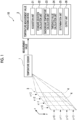
- Fig. 1 is a block diagram showing a configuration example of the heat generation body detection device according to an embodiment of the present disclosure.
- Fig. 2 is a flowchart showing a first operation example of a temperature measurement value processing device 2 shown Fig. 1 .
- Figs. 3 to 5 are schematic diagrams for explaining the first operation example of the temperature measurement value processing device 2 shown in Fig. 1 .
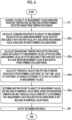
- Fig. 6 is a flowchart showing a second operation example of the temperature measurement value processing device 2 shown in Fig. 1 .
- Figs 7 to 9 are schematic diagrams for explaining the second operation example of the temperature measurement value processing device 2 shown in Fig. 1 .
- identical or corresponding configurations are denoted by the same reference numerals and the description thereof will be omitted as appropriate.
- a heat generation body detection device 10 includes a temperature sensor 1 and the temperature measurement value processing device 2.
- the temperature sensor 1 is a sensor unit that includes an infrared detection element such as a thermopile array sensor, for example, an optical system, a circuit for processing an output signal of the infrared detection element, and the like, and repeatedly outputs a plurality of measurement values T(x, y) (°C) indicating a radiation temperature distribution in a detection range 3 in time series.
- x and y are a lateral (horizontal) coordinate value and a longitudinal (vertical) coordinate value of the partial region 4.
- the detection range 3 may be set outdoors. However, in this example, the detection range 3 is assumed to be set indoors.
- the measurement value T(x, y) is a two-dimensional array, and is a signal representing a thermal image in which a temperature is set to be a pixel value and an element number is set to be a pixel coordinate value.
- the two-dimensional array is also referred to as an image as appropriate.
- the temperature measurement value processing device 2 is a device that determines whether or not a heat generation body such as a human body is present in each partial region 4, based on the measurement value T(x, y) output from the temperature sensor 1, and outputs a determination result.
- the temperature measurement value processing device 2 is configured using a computer and a peripheral circuit, a peripheral device, or the like of the computer, and includes an acquisition unit 21, a standard deviation calculation unit 22, a background temperature calculation unit 23, a threshold value calculation unit 24, a determination unit 25, and an output unit 26, as functional configurations configured by a combination of hardware such as the computer and software such as a program that is executed by the computer.
- the present embodiment will be described by taking as an example a case where the heat generation body to be detected is a human body. However, the heat generation body to be detected is not limited to the human body.
- the acquisition unit 21 repeatedly acquires a plurality of measurement values T(x, y) indicating a radiation temperature distribution in the detection range 3 from the temperature sensor 1 at a predetermined period, for example.
- the standard deviation calculation unit 22 calculates a standard deviation ⁇ (°C) of the plurality of measurement values T(x, y). At that time, the standard deviation calculation unit 22 calculates an average temperature (average value) Tave (°C) of the plurality of measurement values (x, y).
- the background temperature calculation unit 23 calculates a background temperature Tb (°C) of the detection range 3 (a room in which the detection range 3 is set), based on the plurality of measurement values T(x, y).
- the standard deviation calculation unit 22 and the background temperature calculation unit 23 may calculate the standard deviation ⁇ (and the average temperature Tave) and the background temperature Tb. For example, in a case where a high-temperature heat source such as a heater is present in the room, since some of the plurality of measurement values T(x, y) indicate high temperatures, the temperature distribution in the room may not be accurately measured.
- the standard deviation calculation unit 22 can calculate the average temperature Tave and the standard deviation ⁇ , and the background temperature calculation unit 23 can calculate the background temperature Tb.
- the threshold value calculation unit 24 calculates a threshold value Shuman (°C) by multiplying the standard deviation ⁇ by a predetermined coefficient K.
- the coefficient K is a real number constant set in advance.
- the coefficient K can be determined based on an experiment, simulation, or the like.
- the determination unit 25 determines whether or not the plurality of measurement values T(x, y) are included in a numerical value range, based on the background temperature Tb and the threshold value Shuman.
- the numerical value range in the determination unit 25 can be set to be, for example, a "range equal to or greater than Tb+Shuman".
- the determination unit 25 can determine that the measurement value T(x, y) included in the exclusion range is not included in the numerical value range (determines that it is not a human body), in a case where the standard deviation calculation unit 22 and the background temperature calculation unit 23 perform exclusion or replacement of the measurement value T(x, y) included in the exclusion range when calculating the standard deviation ⁇ and the background temperature Tb.
- the threshold value calculation unit 24 may change the value of the coefficient K by which the standard deviation ⁇ is multiplied, according to the states of the plurality of measurement values T(x, y). For example, in a case where there is a measurement value T(x, y) (temperature cell) equal to or higher than a certain exclusion threshold value (for example, 35°C), the threshold value calculation unit 24 can change the threshold value Shuman by changing the value of the coefficient K. For example, in a case where there is a high-temperature heat source such as a heater, since infrared rays are emitted into the room, an indoor temperature may be estimated to be high. In that case, since the temperature difference between the background temperature and the human body temperature becomes small, the coefficient (a constant of proportionality) by which the standard deviation ⁇ is multiplied is changed such that the threshold value Shuman for human body determination is reduced.
- T(x, y) temperature cell
- a certain exclusion threshold value for example, 35°C
- the threshold value calculation unit 24 can change
- the output unit 26 outputs the determination result (human body image H(x, y)) of the determination unit 25.
- the temperature measurement value processing device 2 of the present embodiment can be configured integrally with, for example, the temperature sensor 1 (for example, configured in a form in which it is included in a processing circuit in the temperature sensor 1), and in this case, the output unit 26 can output the determination result of the determination unit 25 to the outside, for example, as a serial signal in a predetermined format.
- the temperature measurement value processing device 2 can be configured in a form in which it is included in a controller such as an air conditioner, and in this case, the output unit 26 can output the determination result in a form in which data is delivered to another program module or the like that is executed by the controller.
- a first operation example of the temperature measurement value processing device 2 shown in Fig. 1 will be described with reference to Figs. 2 to 5 .
- the processing shown in Fig. 2 is repeatedly executed, for example, at a predetermined period.
- the acquisition unit 21 acquires a plurality of measurement values T(x, y) indicating the radiation temperature distribution in the detection range 3 from the temperature sensor 1 (step S1).
- the acquisition unit 21 acquires the measurement value T(x, y) shown in Fig. 3.
- Fig. 3 schematically shows the value of each element of the measurement value T(x, y).
- the standard deviation calculation unit 22 calculates the average temperature Tave and the standard deviation ⁇ of the plurality of measurement values T(x, y) (step S2).
- the average temperature Tave is 25.9°C
- the standard deviation ⁇ is 1.95°C.
- the background temperature calculation unit 23 calculates the background temperature Tb of the detection range 3, based on the plurality of measurement values T(x, y) (step S3).
- the threshold value calculation unit 24 calculates the threshold value Shuman by multiplying the standard deviation ⁇ by the predetermined coefficient K (step S4).
- the determination unit 25 determines whether or not the plurality of measurement values T(x, y) are included in the numerical value range, based on the background temperature Tb and the threshold value Shuman (step S5).
- Fig. 4 schematically shows the calculation result of the differential temperature image Tdiff(x, y).
- the output unit 26 outputs the determination result (the human body image H(x, y)) (step S6).
- the threshold value Shuman for the human body determination is changed according to the temperature distribution in the room, it is possible to provide a heat generation body detection technique (human body detection technique) that is robust against a change in indoor environment or the like, compared to a case where the threshold value Shuman is a constant.
- the second operation example is an operation example in a case where a high-temperature heat source such as a heater is present in the room.
- the processing shown in Fig. 6 is repeatedly executed, for example, at a predetermined period.
- the acquisition unit 21 acquires a plurality of measurement values T(x, y) indicating the radiation temperature distribution in the detection range 3 from the temperature sensor 1 (step S1).
- the acquisition unit 21 acquires the measurement value T(x, y) shown in Fig. 7.
- FIG. 7 schematically shows the value of each element of the measurement value T(x, y).
- the values of other elements are 25°C.
- the standard deviation calculation unit 22 calculates the standard deviation ⁇ of the plurality of measurement values T(x, y) (step S2a).
- Tmin 25°C
- the average temperature Tave is 25.9°C
- the standard deviation ⁇ is 1.95°C.
- the background temperature calculation unit 23 calculates the background temperature Tb of the detection range 3, based on the plurality of measurement values T(x, y) (step S3a).
- the threshold value calculation unit 24 calculates the threshold value Shuman by multiplying the standard deviation ⁇ by a predetermined coefficient K (step S4a). However, in step S4a, the threshold value calculation unit 24 changes the value of the coefficient K according to the states of the plurality of measurement values.
- an exclusion threshold value for example, 35°C
- the output unit 26 outputs the determination result (the human body image H(x, y)) (step S6).
- the human body in addition to the effect of the first operation example, even in a case where a high-temperature heat source such as a heater is present in the room, the human body can be detected correctly.
- Fig. 10 is a schematic block diagram showing the configuration of a computer according to at least one embodiment.
- a computer 90 includes a processor 91, a main memory 92, a storage 93, and an interface 94.
- the temperature measurement value processing device described above is mounted in the computer 90. Then, the operation of each processing unit described above is stored in the storage 93 in the form of a program.
- the processor 91 reads out the program from the storage 93, develops it in the main memory 92, and executes the above processing according to the program. Further, the processor 91 secures a storage area corresponding to each storage unit described above in the main memory 92 according to the program.
- the program may be a program for realizing a part of the functions that are exhibited by the computer 90.
- the program may function in combination with another program already stored in the storage or in combination with another program installed in another device.
- the computer may include a custom Large Scale Integrated Circuit (LSI) such as a Programmable Logic Device (PLD), in addition to or instead of the above configuration.
- LSI Large Scale Integrated Circuit
- PLD Programmable Array Logic
- GAL Generic Array Logic
- CPLD Complex Programmable Logic Device
- FPGA Field Programmable Gate Array
- a part or all of the functions that are realized by the processor may be realized by the integrated circuit.
- the storage 93 Hard Disk Drive (HDD), Solid State Drive (SSD), a magnetic disk, a magneto-optical disk, Compact Disc Read Only Memory (CD-ROM), Digital Versatile Disc Read Only Memory (DVD-ROM), a semiconductor memory, or the like can be given.
- the storage 93 may be an internal medium directly connected to the bus of the computer 90, or an external medium connected to the computer 90 through an interface 94 or communication line. Further, in a case where this program is distributed to the computer 90 via a communication line, the computer 90 receiving the distribution may develop the program in the main memory 92 and execute the above processing.
- the storage 93 is a non-transitory and tangible storage medium.
- the temperature measurement value processing device 2 described in the embodiment of the present disclosure is understood as follows, for example.
Landscapes
- Physics & Mathematics (AREA)
- General Physics & Mathematics (AREA)
- Spectroscopy & Molecular Physics (AREA)
- Radiation Pyrometers (AREA)
- Geophysics And Detection Of Objects (AREA)
- Measuring Temperature Or Quantity Of Heat (AREA)
Abstract
Description
- The present disclosure relates to a temperature measurement value processing device, a heat generation body detection device, a temperature measurement value processing method, and a program. This application claims the right of priority based on
Japanese Patent Application No. 2020-211639 filed with the Japan Patent Office on December 21, 2020 -
PTL 1 describes an example of a device that detects a heat source, based on two-dimensional data output from an infrared detection device having two-dimensionally disposed infrared detection elements. In the device described inPTL 1, a background temperature of a detection space is calculated based on the two-dimensional data output in time series from the infrared detection device, and data that is equal to or higher than a threshold value set in advance from the background temperature is extracted as the heat source. - [PTL 1]
Japanese Unexamined Patent Application Publication No. 2012-225694 - However, in the device described in
PTL 1, since the threshold value is set in advance to a value of 1.5 times the dark field noise of the infrared detection device, in a case where the background temperature approaches the temperature of the heat source such that a temperature difference is less than the threshold value, there is a problem that it cannot be determined to be the heat source. - The present disclosure has been made to solve the above problem, and has an object to provide a temperature measurement value processing device, a heat generation body detection device, a temperature measurement value processing method, and a program, in which it is possible to improve robustness against a change in background temperature.
- In order to solve the above problem, a temperature measurement value processing device according to the present disclosure includes: an acquisition unit that acquires a plurality of measurement values indicating a radiation temperature distribution in a predetermined detection range from a temperature sensor; a standard deviation calculation unit that calculates a standard deviation of the plurality of measurement values; a background temperature calculation unit that calculates a background temperature of the detection range, based on the plurality of measurement values; a threshold value calculation unit that calculates a threshold value by multiplying the standard deviation by a predetermined coefficient; a determination unit that determines whether or not the plurality of measurement values are included in a numerical value range, based on the background temperature and the threshold value; and an output unit that outputs a determination result of the determination unit.
- A heat generation body detection device according to the present disclosure includes: a temperature sensor that outputs a plurality of measurement values indicating a radiation temperature distribution in a predetermined detection range; and a temperature measurement value processing device, in which the temperature measurement value processing device includes an acquisition unit that acquires the plurality of measurement values from the temperature sensor, a standard deviation calculation unit that calculates a standard deviation of the plurality of measurement values, a background temperature calculation unit that calculates a background temperature of the detection range, based on the plurality of measurement values, a threshold value calculation unit that calculates a threshold value by multiplying the standard deviation by a predetermined coefficient, a determination unit that determines whether or not the plurality of measurement values are included in a numerical value range, based on the background temperature and the threshold value, and an output unit that outputs a determination result of the determination unit.
- A temperature measurement value processing method according to the present disclosure includes: a step of acquiring a plurality of measurement values indicating a radiation temperature distribution in a predetermined detection range from a temperature sensor; a step of calculating a standard deviation of the plurality of measurement values; a step of calculating a background temperature of the detection range, based on the plurality of measurement values; a step of calculating a threshold value by multiplying the standard deviation by a predetermined coefficient; a step of determining whether or not the plurality of measurement values are included in a numerical value range, based on the background temperature and the threshold value; and a step of outputting a result of the determination.
- A program according to the present disclosure causes a computer to execute: a step of acquiring a plurality of measurement values indicating a radiation temperature distribution in a predetermined detection range from a temperature sensor; a step of calculating a standard deviation of the plurality of measurement values; a step of calculating a background temperature of the detection range, based on the plurality of measurement values; a step of calculating a threshold value by multiplying the standard deviation by a predetermined coefficient; a step of determining whether or not the plurality of measurement values are included in a numerical value range, based on the background temperature and the threshold value; and a step of outputting a result of the determination. Advantageous Effects of Invention
- According to the temperature measurement value processing device, the heat generation body detection device, the temperature measurement value processing method, and the program of the present disclosure, it is possible to improve robustness against a change in background temperature.
-
-
Fig. 1 is a block diagram showing a configuration example of a heat generation body detection device according to an embodiment of the present disclosure. -
Fig. 2 is a flowchart showing a first operation example of a temperature measurementvalue processing device 2 shown inFig. 1 . -
Fig. 3 is a schematic diagram for explaining the first operation example of the temperature measurementvalue processing device 2 shown inFig. 1 . -
Fig. 4 is a schematic diagram for explaining the first operation example of the temperature measurementvalue processing device 2 shown inFig. 1 . -
Fig. 5 is a schematic diagram for explaining the first operation example of the temperature measurementvalue processing device 2 shown inFig. 1 . -
Fig. 6 is a flowchart showing a second operation example of the temperature measurementvalue processing device 2 shown inFig. 1 . -
Fig. 7 is a schematic diagram for explaining the second operation example of the temperature measurementvalue processing device 2 shown inFig. 1 . -
Fig. 8 is a schematic diagram for explaining the second operation example of the temperature measurementvalue processing device 2 shown inFig. 1 . -
Fig. 9 is a schematic diagram for explaining the second operation example of the temperature measurementvalue processing device 2 shown inFig. 1 . -
Fig. 10 is a schematic block diagram showing the configuration of a computer according to an embodiment of the present disclosure. - Hereinafter, a temperature measurement value processing device, a heat generation body detection device, a temperature measurement value processing method, and a program according to an embodiment of the present disclosure will be described with reference to the drawings.
Fig. 1 is a block diagram showing a configuration example of the heat generation body detection device according to an embodiment of the present disclosure.Fig. 2 is a flowchart showing a first operation example of a temperature measurementvalue processing device 2 shownFig. 1 .Figs. 3 to 5 are schematic diagrams for explaining the first operation example of the temperature measurementvalue processing device 2 shown inFig. 1 .Fig. 6 is a flowchart showing a second operation example of the temperature measurementvalue processing device 2 shown inFig. 1 .Figs 7 to 9 are schematic diagrams for explaining the second operation example of the temperature measurementvalue processing device 2 shown inFig. 1 . In each drawing, identical or corresponding configurations are denoted by the same reference numerals and the description thereof will be omitted as appropriate. - As shown in
Fig. 1 , a heat generationbody detection device 10 includes atemperature sensor 1 and the temperature measurementvalue processing device 2. - The
temperature sensor 1 is a sensor unit that includes an infrared detection element such as a thermopile array sensor, for example, an optical system, a circuit for processing an output signal of the infrared detection element, and the like, and repeatedly outputs a plurality of measurement values T(x, y) (°C) indicating a radiation temperature distribution in adetection range 3 in time series. In the example shown inFig. 1 , thetemperature sensor 1 measures a radiation temperature for each of 16 partial regions (or temperature cells) 4 obtained by dividing thedetection range 3 into four regions vertically and four regions horizontally, and outputs a measurement value T(x, y) (x = 0, 1, 2, and 3, and y = 0, 1, 2, and 3) of the radiation temperature. Here, x and y are a lateral (horizontal) coordinate value and a longitudinal (vertical) coordinate value of thepartial region 4. Thedetection range 3 may be set outdoors. However, in this example, thedetection range 3 is assumed to be set indoors. Further, the measurement value T(x, y) is a two-dimensional array, and is a signal representing a thermal image in which a temperature is set to be a pixel value and an element number is set to be a pixel coordinate value. In the following, the two-dimensional array is also referred to as an image as appropriate. - The temperature measurement
value processing device 2 is a device that determines whether or not a heat generation body such as a human body is present in eachpartial region 4, based on the measurement value T(x, y) output from thetemperature sensor 1, and outputs a determination result. The temperature measurementvalue processing device 2 is configured using a computer and a peripheral circuit, a peripheral device, or the like of the computer, and includes anacquisition unit 21, a standarddeviation calculation unit 22, a backgroundtemperature calculation unit 23, a thresholdvalue calculation unit 24, adetermination unit 25, and anoutput unit 26, as functional configurations configured by a combination of hardware such as the computer and software such as a program that is executed by the computer. In the following, the present embodiment will be described by taking as an example a case where the heat generation body to be detected is a human body. However, the heat generation body to be detected is not limited to the human body. - The
acquisition unit 21 repeatedly acquires a plurality of measurement values T(x, y) indicating a radiation temperature distribution in thedetection range 3 from thetemperature sensor 1 at a predetermined period, for example. - The standard
deviation calculation unit 22 calculates a standard deviation σ (°C) of the plurality of measurement values T(x, y). At that time, the standarddeviation calculation unit 22 calculates an average temperature (average value) Tave (°C) of the plurality of measurement values (x, y). - The background
temperature calculation unit 23 calculates a background temperature Tb (°C) of the detection range 3 (a room in which thedetection range 3 is set), based on the plurality of measurement values T(x, y). The background temperature Tb corresponds to, for example, the temperature or the like of a wall or a floor, and can be set to be the average temperature Tave (°C), the lowest temperature Tmin (= min T(x, y)) (°C), Tmin=Tave-3σ obtained using the standard deviation σ of the temperature distribution when assuming that the temperature distribution in the entire room is a normal distribution, or the like. - In a case where the measurement value T(x, y) is included in a predetermined exclusion range (for example, a range equal to higher than a certain temperature, a range equal to lower than a certain temperature, or the like), after excluding the measurement value T(x, y) or after replacing it with another value, the standard
deviation calculation unit 22 and the backgroundtemperature calculation unit 23 may calculate the standard deviation σ (and the average temperature Tave) and the background temperature Tb. For example, in a case where a high-temperature heat source such as a heater is present in the room, since some of the plurality of measurement values T(x, y) indicate high temperatures, the temperature distribution in the room may not be accurately measured. In such a case, when the measurement value T(x, y) is a value in a predetermined exclusion range (for example, 35°C or higher), after the measurement value T(x, y) is excluded from, for example, a calculation target or is replaced with the lowest temperature Tmin, the standarddeviation calculation unit 22 can calculate the average temperature Tave and the standard deviation σ, and the backgroundtemperature calculation unit 23 can calculate the background temperature Tb. - The threshold
value calculation unit 24 calculates a threshold value Shuman (°C) by multiplying the standard deviation σ by a predetermined coefficient K. The thresholdvalue calculation unit 24 calculates the threshold value Shuman by using an expression Shuman = K·σ. Here, the coefficient K is a real number constant set in advance. The coefficient K can be determined based on an experiment, simulation, or the like. Further, thedetermination unit 25 determines whether or not the plurality of measurement values T(x, y) are included in a numerical value range, based on the background temperature Tb and the threshold value Shuman. - The numerical value range in the
determination unit 25 can be set to be, for example, a "range equal to or greater than Tb+Shuman". Alternatively, for example, the threshold value Shuman can be set to be two values of a lower limit threshold value Shuman1 (= K1·σ) and an upper limit threshold value Shuman2 (= K2·σ), and the numerical value range can be set to be a "range of Tb+Shuman1 or more and Tb+Shuman2 or less". - The
determination unit 25 can normalize the background temperature Tb as 0°C, for example, by creating a differential temperature image Tdiff(x, y) = T(x, y) - Tb(°C) obtained by subtracting the background temperature Tb from the measurement value T(x, y), when performing a determination, and when being equal to or higher than the threshold value Shuman for a human body determination, it is determined to be a human body, and the human body image H(x, y) having the same number of arrays as the output of thetemperature sensor 1 is binarized to determine whether it is a human body, and stored as a determination result. In this case, thedetermination unit 25 determines whether or not it is a human body, by the following expression.

- Here, H(x, y)=1 indicates that it is determined to be a human body, and H(x, y)=0 indicates that it is determined not to be a human body.
- The
determination unit 25 can determine that the measurement value T(x, y) included in the exclusion range is not included in the numerical value range (determines that it is not a human body), in a case where the standarddeviation calculation unit 22 and the backgroundtemperature calculation unit 23 perform exclusion or replacement of the measurement value T(x, y) included in the exclusion range when calculating the standard deviation σ and the background temperature Tb. - Further, the threshold
value calculation unit 24 may change the value of the coefficient K by which the standard deviation σ is multiplied, according to the states of the plurality of measurement values T(x, y). For example, in a case where there is a measurement value T(x, y) (temperature cell) equal to or higher than a certain exclusion threshold value (for example, 35°C), the thresholdvalue calculation unit 24 can change the threshold value Shuman by changing the value of the coefficient K. For example, in a case where there is a high-temperature heat source such as a heater, since infrared rays are emitted into the room, an indoor temperature may be estimated to be high. In that case, since the temperature difference between the background temperature and the human body temperature becomes small, the coefficient (a constant of proportionality) by which the standard deviation σ is multiplied is changed such that the threshold value Shuman for human body determination is reduced. - The
output unit 26 outputs the determination result (human body image H(x, y)) of thedetermination unit 25. The temperature measurementvalue processing device 2 of the present embodiment can be configured integrally with, for example, the temperature sensor 1 (for example, configured in a form in which it is included in a processing circuit in the temperature sensor 1), and in this case, theoutput unit 26 can output the determination result of thedetermination unit 25 to the outside, for example, as a serial signal in a predetermined format. Alternatively, the temperature measurementvalue processing device 2 can be configured in a form in which it is included in a controller such as an air conditioner, and in this case, theoutput unit 26 can output the determination result in a form in which data is delivered to another program module or the like that is executed by the controller. - Next, a first operation example of the temperature measurement
value processing device 2 shown inFig. 1 will be described with reference toFigs. 2 to 5 . The processing shown inFig. 2 is repeatedly executed, for example, at a predetermined period. When the processing shown inFig. 2 is started, first, theacquisition unit 21 acquires a plurality of measurement values T(x, y) indicating the radiation temperature distribution in thedetection range 3 from the temperature sensor 1 (step S1). In this example, it is assumed that theacquisition unit 21 acquires the measurement value T(x, y) shown inFig. 3. Fig. 3 schematically shows the value of each element of the measurement value T(x, y). In the example shown inFig. 3 , the values of three elements of x = 2 and y = 1, 2, and 3 are 30°C, and the values of other elements are 25°C. - Next, the standard
deviation calculation unit 22 calculates the average temperature Tave and the standard deviation σ of the plurality of measurement values T(x, y) (step S2). In the example shown inFig. 3 , the average temperature Tave is 25.9°C, and the standard deviation σ is 1.95°C. - Next, the background
temperature calculation unit 23 calculates the background temperature Tb of thedetection range 3, based on the plurality of measurement values T(x, y) (step S3). In this example, the backgroundtemperature calculation unit 23 calculates the background temperature Tb by an expression Tb = Tave-3σ (= 20.1°C). - Next, the threshold
value calculation unit 24 calculates the threshold value Shuman by multiplying the standard deviation σ by the predetermined coefficient K (step S4). In this example, it is assumed that the thresholdvalue calculation unit 24 calculates one threshold value by using the expression Shuman = K·σ. With respect to the coefficient K, in the case of an indoor space, when the background temperature is set to be Tb = Tave - 3σ, a value in the range of approximately 3.5 to 4.5 (in the range of approximately 0.5 to 1.5 when Tb = Tave) is a value suitable for the detection of the human body. In this example, K = 4 (Shuman = 7.1°C) is described. - Next, the
determination unit 25 determines whether or not the plurality of measurement values T(x, y) are included in the numerical value range, based on the background temperature Tb and the threshold value Shuman (step S5). In this example, thedetermination unit 25 first calculates a differential temperature image Tdiff(x, y) (= T(x, y) - Tb).Fig. 4 schematically shows the calculation result of the differential temperature image Tdiff(x, y). Then, thedetermination unit 25 compares each element of the differential temperature image Tdiff(x, y) with the threshold value Shuman (= 7.1), and calculates the human body image H(x, y) indicating the determination result by using the relationship H(x, y) = 1 when Tdiff(x, y) ≥ Shuman, and the relationship H(x, y) = 0 when Tdiff(x, y) < Shuman.Fig. 5 schematically shows the calculation result of the human body image H(x, y). In the example shown inFig. 5 , it is determined that three elements of x = 2 and y = 1, 2, and 3 are the human body. - Next, the
output unit 26 outputs the determination result (the human body image H(x, y)) (step S6). - According to the first operation example, since the threshold value Shuman for the human body determination is changed according to the temperature distribution in the room, it is possible to provide a heat generation body detection technique (human body detection technique) that is robust against a change in indoor environment or the like, compared to a case where the threshold value Shuman is a constant.
- Next, a second operation example of the temperature measurement
value processing device 2 shown inFig. 1 will be described with reference toFigs. 6 to 9 . The second operation example is an operation example in a case where a high-temperature heat source such as a heater is present in the room. The processing shown inFig. 6 is repeatedly executed, for example, at a predetermined period. When the processing shown inFig. 6 is started, first, theacquisition unit 21 acquires a plurality of measurement values T(x, y) indicating the radiation temperature distribution in thedetection range 3 from the temperature sensor 1 (step S1). In this example, it is assumed that theacquisition unit 21 acquires the measurement value T(x, y) shown inFig. 7. Fig. 7 schematically shows the value of each element of the measurement value T(x, y). In the example shown inFig.7 , the values of three elements of x = 2 and y = 1, 2, and 3 are 30°C, the values of two elements of x = 0 and y = 1 and 2 are 35°C, and the values of other elements are 25°C. - Next, in a case where the measurement value T(x, y) is included in a predetermined exclusion range, after excluding the measurement value T(x, y) or after replacing it with another value, the standard
deviation calculation unit 22 calculates the standard deviation σ of the plurality of measurement values T(x, y) (step S2a). In this example, in a case where the exclusion range is set to be a "range of 35°C or higher" and the measurement value T(x, y) is included in the exclusion range, replacement with the lowest temperature Tmin (= 25°C) is performed. In the case of the example shown inFig. 7 , the average temperature Tave and the standard deviation σ are calculated after the values of two elements of x = 0 and y = 1 and 2 are replaced from 35°C to 25°C. In the case of the example shown inFig. 7 , the average temperature Tave is 25.9°C, and the standard deviation σ is 1.95°C. - Next, in a case where the measurement value T(x, y) is included in a predetermined exclusion range, after excluding the measurement value T(x, y) or after replacing it with another value, the background
temperature calculation unit 23 calculates the background temperature Tb of thedetection range 3, based on the plurality of measurement values T(x, y) (step S3a). In this example, the backgroundtemperature calculation unit 23 calculates the background temperature Tb by using the expression Tb = Tave - 3σ (= 20.1°C), based on the average temperature Tave and the standard deviation σ calculated after the standarddeviation calculation unit 22 replaces the temperatures of the twopartial regions 4 from 35°C to 25°C. - Next, the threshold
value calculation unit 24 calculates the threshold value Shuman by multiplying the standard deviation σ by a predetermined coefficient K (step S4a). However, in step S4a, the thresholdvalue calculation unit 24 changes the value of the coefficient K according to the states of the plurality of measurement values. In this example, the thresholdvalue calculation unit 24 determines whether or not there is a measurement value T(x, y) equal to or greater than an exclusion threshold value (for example, 35°C), and when it is determined that there is a measurement value (x, y) equal to or greater than the exclusion threshold value, the thresholdvalue calculation unit 24 changes the coefficient K = 4 (Shuman = 7.1°C) when there is no measurement value (x, y) equal to or greater than the exclusion threshold value, to the coefficient K = 3.5 (Shuman = 6.8°C) when there is a measurement value (x, y) equal to or greater than the exclusion threshold value. - Next, the
determination unit 25 determines whether or not the plurality of measurement values T(x, y) are included in the numerical value range, based on the background temperature Tb and the threshold value Shuman (step S5a). However, in step S5a, thedetermination unit 25 determines that the measurement value T(x, y) included in the exclusion range used in steps S2a and S3a is not included in the numerical value range based on the background temperature Tb and the threshold value Shuman. In this example, thedetermination unit 25 first calculates a differential temperature image Tdiff(x, y) (= T(x, y) - Tb).Fig. 8 schematically shows the calculation result of the differential temperature image Tdiff(x, y). Then, thedetermination unit 25 compares each element of the differential temperature image Tdiff (x, y) with the threshold value Shuman (= 6.8), and calculates the human body image H(x, y) indicating the determination result, by using the relationship H(x, y) = 1 when Tdiff(x, y) ≥ Shuman and the relationship H(x, y) = 0 when Tdiff(x, y) < Shuman. At that time, thedetermination unit 25 determines that two measurement values T(x, y) of x = 0 and y = 1 and 2 included in the exclusion range "range of 35°C or higher" are not included in the numerical value range based on the background temperature Tb and the threshold value Shuman, and sets the value of each element of the corresponding human body image H(x, y) to "0".Fig. 9 schematically shows the calculation result of the human body image H(x, y). In the example shown inFig. 9 , it is determined that three elements of x = 2 and y = 1, 2, and 3 are the human body. - Next, the
output unit 26 outputs the determination result (the human body image H(x, y)) (step S6). - According to the second operation example, in addition to the effect of the first operation example, even in a case where a high-temperature heat source such as a heater is present in the room, the human body can be detected correctly.
- The embodiment of the present disclosure has been described in detail above with reference to the drawings. However, the specific configuration is not limited to the embodiment, and a design change or the like within a scope which does not depart from the gist of the present disclosure is also included. For example, instead of the standard deviation, another index indicating variation of a sample may be used.
-
Fig. 10 is a schematic block diagram showing the configuration of a computer according to at least one embodiment. - A
computer 90 includes aprocessor 91, amain memory 92, astorage 93, and aninterface 94. - The temperature measurement value processing device described above is mounted in the
computer 90. Then, the operation of each processing unit described above is stored in thestorage 93 in the form of a program. Theprocessor 91 reads out the program from thestorage 93, develops it in themain memory 92, and executes the above processing according to the program. Further, theprocessor 91 secures a storage area corresponding to each storage unit described above in themain memory 92 according to the program. - The program may be a program for realizing a part of the functions that are exhibited by the
computer 90. For example, the program may function in combination with another program already stored in the storage or in combination with another program installed in another device. In another embodiment, the computer may include a custom Large Scale Integrated Circuit (LSI) such as a Programmable Logic Device (PLD), in addition to or instead of the above configuration. As an example of PLD, Programmable Array Logic (PAL), Generic Array Logic (GAL), Complex Programmable Logic Device (CPLD), Field Programmable Gate Array (FPGA), or the like can be given. In this case, a part or all of the functions that are realized by the processor may be realized by the integrated circuit. - As an example of the
storage 93, Hard Disk Drive (HDD), Solid State Drive (SSD), a magnetic disk, a magneto-optical disk, Compact Disc Read Only Memory (CD-ROM), Digital Versatile Disc Read Only Memory (DVD-ROM), a semiconductor memory, or the like can be given. Thestorage 93 may be an internal medium directly connected to the bus of thecomputer 90, or an external medium connected to thecomputer 90 through aninterface 94 or communication line. Further, in a case where this program is distributed to thecomputer 90 via a communication line, thecomputer 90 receiving the distribution may develop the program in themain memory 92 and execute the above processing. In at least one embodiment, thestorage 93 is a non-transitory and tangible storage medium. - The temperature measurement
value processing device 2 described in the embodiment of the present disclosure is understood as follows, for example. -
- (1) A temperature measurement
value processing device 2 according to a first aspect includes: theacquisition unit 21 that acquires a plurality of measurement values indicating a radiation temperature distribution in apredetermined detection range 3 from thetemperature sensor 1; the standarddeviation calculation unit 22 that calculates a standard deviation σ of the plurality of measurement values; the backgroundtemperature calculation unit 23 that calculates the background temperature Tb of thedetection range 3, based on the plurality of measurement values; the thresholdvalue calculation unit 24 that calculates the threshold value Shuman by multiplying the standard deviation σ by a predetermined coefficient K; thedetermination unit 25 that determines whether or not the plurality of measurement values are included in a numerical value range, based on the background temperature Tb and the threshold value Shuman; and theoutput unit 26 that outputs a determination result of thedetermination unit 25. According to this aspect and the following each aspect, since the threshold value Shuman for a determination of the heat generation body such as a human body is changed according to the temperature distribution, it is possible to provide a heat generation body detection technique that is robust against a change in indoor environment or the like, compared to a case where the threshold value Shuman is a constant. - (2) In a temperature measurement
value processing device 2 according to a second aspect, in the temperature measurementvalue processing device 2 of (1), in a case where the measurement value is included in a predetermined exclusion range, after excluding the measurement value or after replacing it with another value, the standarddeviation calculation unit 22 calculates the standard deviation σ, and the backgroundtemperature calculation unit 23 calculates the background temperature Tb. According to this configuration, even in a case where a high-temperature heat source such as a heater is present, the temperature distribution can be correctly measured, and the value of the threshold value Shuman can be appropriately set. - (3) In a temperature measurement
value processing device 2 according to a third aspect, in the temperature measurementvalue processing device 2 of (2), thedetermination unit 25 determines that the measurement value included in the exclusion range is not included in the numerical value range. - (4) In a temperature measurement
value processing device 2 according to a fourth aspect, in the temperature measurementvalue processing device 2 of (1) to (3), the thresholdvalue calculation unit 24 changes a value of the coefficient according to states of the plurality of measurement values. According to this configuration, the value of the threshold value Shuman can be appropriately set. - (5) In a temperature measurement
value processing device 2 according to a fifth aspect, in the temperature measurementvalue processing device 2 of (1) to (4), the coefficient K is set to a value suitable for detection of a human body. - According to each aspect of the present invention, it is possible to improve robustness against a change in background temperature.
-
- 1: temperature sensor
- 2: temperature measurement value processing device
- 3: detection range
- 10: heat generation body detection device
- 21: acquisition unit
- 22: standard deviation calculation unit
- 23: background temperature calculation unit
- 24: threshold value calculation unit
- 25: determination unit
- 26: output unit
Claims (8)
- A temperature measurement value processing device comprising:an acquisition unit that acquires a plurality of measurement values indicating a radiation temperature distribution in a predetermined detection range from a temperature sensor;a standard deviation calculation unit that calculates a standard deviation of the plurality of measurement values;a background temperature calculation unit that calculates a background temperature of the detection range, based on the plurality of measurement values;a threshold value calculation unit that calculates a threshold value by multiplying the standard deviation by a predetermined coefficient;a determination unit that determines whether or not the plurality of measurement values are included in a numerical value range, based on the background temperature and the threshold value; andan output unit that outputs a determination result of the determination unit.
- The temperature measurement value processing device according to claim 1, wherein in a case where the measurement value is included in a predetermined exclusion range,after excluding the measurement value or after replacing the measurement value with another value,the standard deviation calculation unit calculates the standard deviation, andthe background temperature calculation unit calculates the background temperature.
- The temperature measurement value processing device according to claim 2, wherein the determination unit determines that the measurement value included in the exclusion range is not included in the numerical value range.
- The temperature measurement value processing device according to any one of claims 1 to 3, wherein the threshold value calculation unit changes a value of the coefficient according to states of the plurality of measurement values.
- The temperature measurement value processing device according to any one of claims 1 to 4, wherein the coefficient is set to a value suitable for detection of a human body.
- A heat generation body detection device comprising:a temperature sensor that outputs a plurality of measurement values indicating a radiation temperature distribution in a predetermined detection range; anda temperature measurement value processing device,wherein the temperature measurement value processing device includesan acquisition unit that acquires the plurality of measurement values from the temperature sensor,a standard deviation calculation unit that calculates a standard deviation of the plurality of measurement values,a background temperature calculation unit that calculates a background temperature of the detection range, based on the plurality of measurement values,a threshold value calculation unit that calculates a threshold value by multiplying the standard deviation by a predetermined coefficient, a determination unit that determines whether or not the plurality of measurement values are included in a numerical value range, based on the background temperature and the threshold value, andan output unit that outputs a determination result of the determination unit.
- A temperature measurement value processing method comprising:a step of acquiring a plurality of measurement values indicating a radiation temperature distribution in a predetermined detection range from a temperature sensor;a step of calculating a standard deviation of the plurality of measurement values;a step of calculating a background temperature of the detection range, based on the plurality of measurement values;a step of calculating a threshold value by multiplying the standard deviation by a predetermined coefficient;a step of determining whether or not the plurality of measurement values are included in a numerical value range, based on the background temperature and the threshold value; anda step of outputting a result of the determination.
- A program that causes a computer to execute:a step of acquiring a plurality of measurement values indicating a radiation temperature distribution in a predetermined detection range from a temperature sensor;a step of calculating a standard deviation of the plurality of measurement values;a step of calculating a background temperature of the detection range, based on the plurality of measurement values;a step of calculating a threshold value by multiplying the standard deviation by a predetermined coefficient;a step of determining whether or not the plurality of measurement values are included in a numerical value range, based on the background temperature and the threshold value; anda step of outputting a result of the determination.
Applications Claiming Priority (2)
| Application Number | Priority Date | Filing Date | Title |
|---|---|---|---|
| JP2020211639A JP7573434B2 (en) | 2020-12-21 | 2020-12-21 | Temperature measurement value processing device, heat generating element detection device, temperature measurement value processing method and program |
| PCT/JP2021/042113 WO2022137895A1 (en) | 2020-12-21 | 2021-11-16 | Temperature measurement value processing device, heat generation body detection device, temperature measurement value processing method, and program |
Publications (2)
| Publication Number | Publication Date |
|---|---|
| EP4206632A1 true EP4206632A1 (en) | 2023-07-05 |
| EP4206632A4 EP4206632A4 (en) | 2024-04-03 |
Family
ID=82159010
Family Applications (1)
| Application Number | Title | Priority Date | Filing Date |
|---|---|---|---|
| EP21910048.4A Pending EP4206632A4 (en) | 2020-12-21 | 2021-11-16 | DEVICE FOR PROCESSING TEMPERATURE MEASUREMENTS, DEVICE FOR DETECTING HEAT-GENERATING BODIES, METHOD FOR PROCESSING TEMPERATURE MEASUREMENTS AND PROGRAM |
Country Status (4)
| Country | Link |
|---|---|
| EP (1) | EP4206632A4 (en) |
| JP (1) | JP7573434B2 (en) |
| AU (1) | AU2021406419B2 (en) |
| WO (1) | WO2022137895A1 (en) |
Cited By (1)
| Publication number | Priority date | Publication date | Assignee | Title |
|---|---|---|---|---|
| CN118999801A (en) * | 2024-08-12 | 2024-11-22 | 国网黑龙江省电力有限公司电力科学研究院 | Temperature correction method of thermal infrared imager |
Families Citing this family (1)
| Publication number | Priority date | Publication date | Assignee | Title |
|---|---|---|---|---|
| US12575739B2 (en) * | 2021-09-21 | 2026-03-17 | Apple Inc. | Distributed sensor network for measurement of biometric parameter |
Family Cites Families (11)
| Publication number | Priority date | Publication date | Assignee | Title |
|---|---|---|---|---|
| JP3225993B2 (en) * | 1994-04-20 | 2001-11-05 | 株式会社日立製作所 | Human body detecting device and air conditioner using the same |
| JP2001108758A (en) * | 1999-10-06 | 2001-04-20 | Matsushita Electric Ind Co Ltd | Person detection device |
| JP2012225694A (en) * | 2011-04-18 | 2012-11-15 | Nippon Ceramic Co Ltd | Method for detecting moving heat source |
| JP2012251924A (en) * | 2011-06-06 | 2012-12-20 | Toshiba Corp | Ranging method and arrival time calculation method |
| KR101437999B1 (en) * | 2012-10-24 | 2014-09-04 | 계명대학교 산학협력단 | A method for detecting human using cs-lbp based on luminance saliency map and random forests in thermal images |
| US10302499B2 (en) * | 2014-10-24 | 2019-05-28 | Google Llc | Adaptive threshold manipulation for movement detecting sensors |
| US20160161339A1 (en) * | 2014-12-05 | 2016-06-09 | Intel Corporation | Human motion detection |
| JP6077702B2 (en) * | 2015-05-22 | 2017-02-08 | 東海旅客鉄道株式会社 | Railway vehicle type determination system, railway vehicle type determination method |
| JP6425821B2 (en) * | 2015-08-20 | 2018-11-21 | 三菱電機株式会社 | Air conditioner |
| JP2017058213A (en) * | 2015-09-15 | 2017-03-23 | 株式会社リコー | Information processing apparatus, information processing system, and program |
| CN112101090B (en) * | 2020-07-28 | 2023-05-16 | 四川虹美智能科技有限公司 | Human body detection method and device |
-
2020
- 2020-12-21 JP JP2020211639A patent/JP7573434B2/en active Active
-
2021
- 2021-11-16 AU AU2021406419A patent/AU2021406419B2/en active Active
- 2021-11-16 WO PCT/JP2021/042113 patent/WO2022137895A1/en not_active Ceased
- 2021-11-16 EP EP21910048.4A patent/EP4206632A4/en active Pending
Cited By (1)
| Publication number | Priority date | Publication date | Assignee | Title |
|---|---|---|---|---|
| CN118999801A (en) * | 2024-08-12 | 2024-11-22 | 国网黑龙江省电力有限公司电力科学研究院 | Temperature correction method of thermal infrared imager |
Also Published As
| Publication number | Publication date |
|---|---|
| JP7573434B2 (en) | 2024-10-25 |
| EP4206632A4 (en) | 2024-04-03 |
| JP2022098225A (en) | 2022-07-01 |
| AU2021406419A1 (en) | 2023-05-04 |
| AU2021406419A9 (en) | 2024-08-08 |
| WO2022137895A1 (en) | 2022-06-30 |
| AU2021406419B2 (en) | 2024-07-25 |
Similar Documents
| Publication | Publication Date | Title |
|---|---|---|
| US10318830B2 (en) | Passenger counting device, system, method and program | |
| US11037334B2 (en) | Image display device, image display method, and program | |
| JP2006053024A (en) | Temperature correction processing device | |
| EP3035393B1 (en) | Solar power generation inspection system and solar power generation inspection method | |
| AU2021406419B2 (en) | Temperature measurement value processing device, heat generation body detection device, temperature measurement value processing method, and program | |
| US20190029628A1 (en) | X-ray detector, x-ray ct device, x-ray detection method, and x-ray detection program | |
| CN112789567A (en) | Temperature threshold determination device, temperature abnormality determination system, temperature threshold determination method, and program | |
| CN112182067B (en) | Individual height prediction method, individual height prediction device, electronic equipment and storage medium | |
| EP3923563B1 (en) | Infrared imaging device and infrared imaging program | |
| KR101727471B1 (en) | Smart counter for human body using | |
| CN112683405A (en) | Temperature detection method, system and storage medium | |
| JP6223897B2 (en) | Abnormality detection device and abnormality detection system | |
| US12222300B2 (en) | Radiographic inspection method, radiographic inspection apparatus, radiographic inspection system, and radiographic inspection program | |
| CN114427913B (en) | Temperature measurement method and device, electronic equipment and storage medium | |
| US9449251B2 (en) | Image processing apparatus, image processing method, and medium | |
| TWI869638B (en) | Normal range determination system, normal range determination method, and normal range determination program product | |
| JP7435071B2 (en) | Diagnostic equipment, diagnostic methods and programs | |
| JP7850987B2 (en) | Human detection system, human detection method, and program | |
| KR20230077237A (en) | Apparatus and method for detecting errors in IoT sensors | |
| JP7758060B2 (en) | Tire inspection support device, method, and program | |
| ES3009589T3 (en) | Computer-implemented method of analysing data from measured values of characteristics of objects in samples | |
| JP7641934B2 (en) | Wide-area flooding estimation device, wide-area flooding estimation method, and wide-area flooding estimation program | |
| US20250237530A1 (en) | Estimation method, program, and estimation system | |
| US20240192681A1 (en) | Vehicle management system and vehicle | |
| JP7456873B2 (en) | Image processing device and image processing program |
Legal Events
| Date | Code | Title | Description |
|---|---|---|---|
| STAA | Information on the status of an ep patent application or granted ep patent |
Free format text: STATUS: THE INTERNATIONAL PUBLICATION HAS BEEN MADE |
|
| PUAI | Public reference made under article 153(3) epc to a published international application that has entered the european phase |
Free format text: ORIGINAL CODE: 0009012 |
|
| STAA | Information on the status of an ep patent application or granted ep patent |
Free format text: STATUS: REQUEST FOR EXAMINATION WAS MADE |
|
| 17P | Request for examination filed |
Effective date: 20230330 |
|
| AK | Designated contracting states |
Kind code of ref document: A1 Designated state(s): AL AT BE BG CH CY CZ DE DK EE ES FI FR GB GR HR HU IE IS IT LI LT LU LV MC MK MT NL NO PL PT RO RS SE SI SK SM TR |
|
| REG | Reference to a national code |
Ref country code: DE Ref legal event code: R079 Free format text: PREVIOUS MAIN CLASS: G01J0005480000 Ipc: G01J0005000000 |
|
| DAV | Request for validation of the european patent (deleted) | ||
| DAX | Request for extension of the european patent (deleted) | ||
| A4 | Supplementary search report drawn up and despatched |
Effective date: 20240306 |
|
| RIC1 | Information provided on ipc code assigned before grant |
Ipc: G01V 8/20 20060101ALI20240229BHEP Ipc: G01V 8/10 20060101ALI20240229BHEP Ipc: G01J 5/80 20220101ALI20240229BHEP Ipc: G01J 5/48 20220101ALI20240229BHEP Ipc: G01J 5/12 20060101ALI20240229BHEP Ipc: G01J 5/02 20220101ALI20240229BHEP Ipc: G01J 5/00 20220101AFI20240229BHEP |
|
| STAA | Information on the status of an ep patent application or granted ep patent |
Free format text: STATUS: EXAMINATION IS IN PROGRESS |
|
| 17Q | First examination report despatched |
Effective date: 20251103 |