EP4206256A1 - N-type conjugated polymer blend, and preparation method therefor and use thereof - Google Patents
N-type conjugated polymer blend, and preparation method therefor and use thereof Download PDFInfo
- Publication number
- EP4206256A1 EP4206256A1 EP21957733.5A EP21957733A EP4206256A1 EP 4206256 A1 EP4206256 A1 EP 4206256A1 EP 21957733 A EP21957733 A EP 21957733A EP 4206256 A1 EP4206256 A1 EP 4206256A1
- Authority
- EP
- European Patent Office
- Prior art keywords
- conjugated polymer
- type conjugated
- counterion
- solvent
- type
- Prior art date
- Legal status (The legal status is an assumption and is not a legal conclusion. Google has not performed a legal analysis and makes no representation as to the accuracy of the status listed.)
- Pending
Links
Images


Classifications
-
- C—CHEMISTRY; METALLURGY
- C08—ORGANIC MACROMOLECULAR COMPOUNDS; THEIR PREPARATION OR CHEMICAL WORKING-UP; COMPOSITIONS BASED THEREON
- C08F—MACROMOLECULAR COMPOUNDS OBTAINED BY REACTIONS ONLY INVOLVING CARBON-TO-CARBON UNSATURATED BONDS
- C08F136/00—Homopolymers of compounds having one or more unsaturated aliphatic radicals, at least one having two or more carbon-to-carbon double bonds
- C08F136/02—Homopolymers of compounds having one or more unsaturated aliphatic radicals, at least one having two or more carbon-to-carbon double bonds the radical having only two carbon-to-carbon double bonds
- C08F136/04—Homopolymers of compounds having one or more unsaturated aliphatic radicals, at least one having two or more carbon-to-carbon double bonds the radical having only two carbon-to-carbon double bonds conjugated
- C08F136/14—Homopolymers of compounds having one or more unsaturated aliphatic radicals, at least one having two or more carbon-to-carbon double bonds the radical having only two carbon-to-carbon double bonds conjugated containing elements other than carbon and hydrogen
-
- C—CHEMISTRY; METALLURGY
- C08—ORGANIC MACROMOLECULAR COMPOUNDS; THEIR PREPARATION OR CHEMICAL WORKING-UP; COMPOSITIONS BASED THEREON
- C08G—MACROMOLECULAR COMPOUNDS OBTAINED OTHERWISE THAN BY REACTIONS ONLY INVOLVING UNSATURATED CARBON-TO-CARBON BONDS
- C08G61/00—Macromolecular compounds obtained by reactions forming a carbon-to-carbon link in the main chain of the macromolecule
- C08G61/12—Macromolecular compounds containing atoms other than carbon in the main chain of the macromolecule
-
- C—CHEMISTRY; METALLURGY
- C08—ORGANIC MACROMOLECULAR COMPOUNDS; THEIR PREPARATION OR CHEMICAL WORKING-UP; COMPOSITIONS BASED THEREON
- C08L—COMPOSITIONS OF MACROMOLECULAR COMPOUNDS
- C08L65/00—Compositions of macromolecular compounds obtained by reactions forming a carbon-to-carbon link in the main chain; Compositions of derivatives of such polymers
-
- C—CHEMISTRY; METALLURGY
- C09—DYES; PAINTS; POLISHES; NATURAL RESINS; ADHESIVES; COMPOSITIONS NOT OTHERWISE PROVIDED FOR; APPLICATIONS OF MATERIALS NOT OTHERWISE PROVIDED FOR
- C09D—COATING COMPOSITIONS, e.g. PAINTS, VARNISHES OR LACQUERS; FILLING PASTES; CHEMICAL PAINT OR INK REMOVERS; INKS; CORRECTING FLUIDS; WOODSTAINS; PASTES OR SOLIDS FOR COLOURING OR PRINTING; USE OF MATERIALS THEREFOR
- C09D165/00—Coating compositions based on macromolecular compounds obtained by reactions forming a carbon-to-carbon link in the main chain; Coating compositions based on derivatives of such polymers
-
- H—ELECTRICITY
- H01—ELECTRIC ELEMENTS
- H01B—CABLES; CONDUCTORS; INSULATORS; SELECTION OF MATERIALS FOR THEIR CONDUCTIVE, INSULATING OR DIELECTRIC PROPERTIES
- H01B1/00—Conductors or conductive bodies characterised by the conductive materials; Selection of materials as conductors
- H01B1/06—Conductors or conductive bodies characterised by the conductive materials; Selection of materials as conductors mainly consisting of other non-metallic substances
- H01B1/12—Conductors or conductive bodies characterised by the conductive materials; Selection of materials as conductors mainly consisting of other non-metallic substances organic substances
- H01B1/124—Intrinsically conductive polymers
- H01B1/128—Intrinsically conductive polymers comprising six-membered aromatic rings in the main chain, e.g. polyanilines, polyphenylenes
-
- H—ELECTRICITY
- H10—SEMICONDUCTOR DEVICES; ELECTRIC SOLID-STATE DEVICES NOT OTHERWISE PROVIDED FOR
- H10K—ORGANIC ELECTRIC SOLID-STATE DEVICES
- H10K85/00—Organic materials used in the body or electrodes of devices covered by this subclass
- H10K85/10—Organic polymers or oligomers
- H10K85/111—Organic polymers or oligomers comprising aromatic, heteroaromatic, or aryl chains, e.g. polyaniline, polyphenylene or polyphenylene vinylene
-
- H—ELECTRICITY
- H10—SEMICONDUCTOR DEVICES; ELECTRIC SOLID-STATE DEVICES NOT OTHERWISE PROVIDED FOR
- H10K—ORGANIC ELECTRIC SOLID-STATE DEVICES
- H10K85/00—Organic materials used in the body or electrodes of devices covered by this subclass
- H10K85/10—Organic polymers or oligomers
- H10K85/111—Organic polymers or oligomers comprising aromatic, heteroaromatic, or aryl chains, e.g. polyaniline, polyphenylene or polyphenylene vinylene
- H10K85/113—Heteroaromatic compounds comprising sulfur or selene, e.g. polythiophene
-
- H—ELECTRICITY
- H10—SEMICONDUCTOR DEVICES; ELECTRIC SOLID-STATE DEVICES NOT OTHERWISE PROVIDED FOR
- H10K—ORGANIC ELECTRIC SOLID-STATE DEVICES
- H10K85/00—Organic materials used in the body or electrodes of devices covered by this subclass
- H10K85/10—Organic polymers or oligomers
- H10K85/151—Copolymers
-
- C—CHEMISTRY; METALLURGY
- C07—ORGANIC CHEMISTRY
- C07D—HETEROCYCLIC COMPOUNDS
- C07D493/00—Heterocyclic compounds containing oxygen atoms as the only ring hetero atoms in the condensed system
- C07D493/02—Heterocyclic compounds containing oxygen atoms as the only ring hetero atoms in the condensed system in which the condensed system contains two hetero rings
- C07D493/04—Ortho-condensed systems
-
- C—CHEMISTRY; METALLURGY
- C07—ORGANIC CHEMISTRY
- C07D—HETEROCYCLIC COMPOUNDS
- C07D495/00—Heterocyclic compounds containing in the condensed system at least one hetero ring having sulfur atoms as the only ring hetero atoms
- C07D495/02—Heterocyclic compounds containing in the condensed system at least one hetero ring having sulfur atoms as the only ring hetero atoms in which the condensed system contains two hetero rings
- C07D495/04—Ortho-condensed systems
-
- C—CHEMISTRY; METALLURGY
- C07—ORGANIC CHEMISTRY
- C07D—HETEROCYCLIC COMPOUNDS
- C07D519/00—Heterocyclic compounds containing more than one system of two or more relevant hetero rings condensed among themselves or condensed with a common carbocyclic ring system not provided for in groups C07D453/00 or C07D455/00
-
- C—CHEMISTRY; METALLURGY
- C08—ORGANIC MACROMOLECULAR COMPOUNDS; THEIR PREPARATION OR CHEMICAL WORKING-UP; COMPOSITIONS BASED THEREON
- C08G—MACROMOLECULAR COMPOUNDS OBTAINED OTHERWISE THAN BY REACTIONS ONLY INVOLVING UNSATURATED CARBON-TO-CARBON BONDS
- C08G2261/00—Macromolecular compounds obtained by reactions forming a carbon-to-carbon link in the main chain of the macromolecule
- C08G2261/30—Monomer units or repeat units incorporating structural elements in the main chain
- C08G2261/32—Monomer units or repeat units incorporating structural elements in the main chain incorporating heteroaromatic structural elements in the main chain
- C08G2261/324—Monomer units or repeat units incorporating structural elements in the main chain incorporating heteroaromatic structural elements in the main chain condensed
-
- C—CHEMISTRY; METALLURGY
- C08—ORGANIC MACROMOLECULAR COMPOUNDS; THEIR PREPARATION OR CHEMICAL WORKING-UP; COMPOSITIONS BASED THEREON
- C08G—MACROMOLECULAR COMPOUNDS OBTAINED OTHERWISE THAN BY REACTIONS ONLY INVOLVING UNSATURATED CARBON-TO-CARBON BONDS
- C08G2261/00—Macromolecular compounds obtained by reactions forming a carbon-to-carbon link in the main chain of the macromolecule
- C08G2261/30—Monomer units or repeat units incorporating structural elements in the main chain
- C08G2261/32—Monomer units or repeat units incorporating structural elements in the main chain incorporating heteroaromatic structural elements in the main chain
- C08G2261/324—Monomer units or repeat units incorporating structural elements in the main chain incorporating heteroaromatic structural elements in the main chain condensed
- C08G2261/3242—Monomer units or repeat units incorporating structural elements in the main chain incorporating heteroaromatic structural elements in the main chain condensed containing one or more oxygen atoms as the only heteroatom, e.g. benzofuran
-
- C—CHEMISTRY; METALLURGY
- C08—ORGANIC MACROMOLECULAR COMPOUNDS; THEIR PREPARATION OR CHEMICAL WORKING-UP; COMPOSITIONS BASED THEREON
- C08G—MACROMOLECULAR COMPOUNDS OBTAINED OTHERWISE THAN BY REACTIONS ONLY INVOLVING UNSATURATED CARBON-TO-CARBON BONDS
- C08G2261/00—Macromolecular compounds obtained by reactions forming a carbon-to-carbon link in the main chain of the macromolecule
- C08G2261/30—Monomer units or repeat units incorporating structural elements in the main chain
- C08G2261/33—Monomer units or repeat units incorporating structural elements in the main chain incorporating non-aromatic structural elements in the main chain
- C08G2261/334—Monomer units or repeat units incorporating structural elements in the main chain incorporating non-aromatic structural elements in the main chain containing heteroatoms
-
- C—CHEMISTRY; METALLURGY
- C08—ORGANIC MACROMOLECULAR COMPOUNDS; THEIR PREPARATION OR CHEMICAL WORKING-UP; COMPOSITIONS BASED THEREON
- C08G—MACROMOLECULAR COMPOUNDS OBTAINED OTHERWISE THAN BY REACTIONS ONLY INVOLVING UNSATURATED CARBON-TO-CARBON BONDS
- C08G2261/00—Macromolecular compounds obtained by reactions forming a carbon-to-carbon link in the main chain of the macromolecule
- C08G2261/30—Monomer units or repeat units incorporating structural elements in the main chain
- C08G2261/34—Monomer units or repeat units incorporating structural elements in the main chain incorporating partially-aromatic structural elements in the main chain
- C08G2261/344—Monomer units or repeat units incorporating structural elements in the main chain incorporating partially-aromatic structural elements in the main chain containing heteroatoms
-
- C—CHEMISTRY; METALLURGY
- C08—ORGANIC MACROMOLECULAR COMPOUNDS; THEIR PREPARATION OR CHEMICAL WORKING-UP; COMPOSITIONS BASED THEREON
- C08G—MACROMOLECULAR COMPOUNDS OBTAINED OTHERWISE THAN BY REACTIONS ONLY INVOLVING UNSATURATED CARBON-TO-CARBON BONDS
- C08G2261/00—Macromolecular compounds obtained by reactions forming a carbon-to-carbon link in the main chain of the macromolecule
- C08G2261/40—Polymerisation processes
- C08G2261/42—Non-organometallic coupling reactions, e.g. Gilch-type or Wessling-Zimmermann type
-
- C—CHEMISTRY; METALLURGY
- C08—ORGANIC MACROMOLECULAR COMPOUNDS; THEIR PREPARATION OR CHEMICAL WORKING-UP; COMPOSITIONS BASED THEREON
- C08G—MACROMOLECULAR COMPOUNDS OBTAINED OTHERWISE THAN BY REACTIONS ONLY INVOLVING UNSATURATED CARBON-TO-CARBON BONDS
- C08G2261/00—Macromolecular compounds obtained by reactions forming a carbon-to-carbon link in the main chain of the macromolecule
- C08G2261/90—Applications
- C08G2261/91—Photovoltaic applications
-
- C—CHEMISTRY; METALLURGY
- C08—ORGANIC MACROMOLECULAR COMPOUNDS; THEIR PREPARATION OR CHEMICAL WORKING-UP; COMPOSITIONS BASED THEREON
- C08G—MACROMOLECULAR COMPOUNDS OBTAINED OTHERWISE THAN BY REACTIONS ONLY INVOLVING UNSATURATED CARBON-TO-CARBON BONDS
- C08G2261/00—Macromolecular compounds obtained by reactions forming a carbon-to-carbon link in the main chain of the macromolecule
- C08G2261/90—Applications
- C08G2261/92—TFT applications
-
- C—CHEMISTRY; METALLURGY
- C08—ORGANIC MACROMOLECULAR COMPOUNDS; THEIR PREPARATION OR CHEMICAL WORKING-UP; COMPOSITIONS BASED THEREON
- C08G—MACROMOLECULAR COMPOUNDS OBTAINED OTHERWISE THAN BY REACTIONS ONLY INVOLVING UNSATURATED CARBON-TO-CARBON BONDS
- C08G2261/00—Macromolecular compounds obtained by reactions forming a carbon-to-carbon link in the main chain of the macromolecule
- C08G2261/90—Applications
- C08G2261/95—Use in organic luminescent diodes
-
- H—ELECTRICITY
- H10—SEMICONDUCTOR DEVICES; ELECTRIC SOLID-STATE DEVICES NOT OTHERWISE PROVIDED FOR
- H10K—ORGANIC ELECTRIC SOLID-STATE DEVICES
- H10K10/00—Organic devices specially adapted for rectifying, amplifying, oscillating or switching; Organic capacitors or resistors having potential barriers
- H10K10/40—Organic transistors
- H10K10/46—Field-effect transistors, e.g. organic thin-film transistors [OTFT]
- H10K10/462—Insulated gate field-effect transistors [IGFETs]
- H10K10/484—Insulated gate field-effect transistors [IGFETs] characterised by the channel regions
-
- Y—GENERAL TAGGING OF NEW TECHNOLOGICAL DEVELOPMENTS; GENERAL TAGGING OF CROSS-SECTIONAL TECHNOLOGIES SPANNING OVER SEVERAL SECTIONS OF THE IPC; TECHNICAL SUBJECTS COVERED BY FORMER USPC CROSS-REFERENCE ART COLLECTIONS [XRACs] AND DIGESTS
- Y02—TECHNOLOGIES OR APPLICATIONS FOR MITIGATION OR ADAPTATION AGAINST CLIMATE CHANGE
- Y02E—REDUCTION OF GREENHOUSE GAS [GHG] EMISSIONS, RELATED TO ENERGY GENERATION, TRANSMISSION OR DISTRIBUTION
- Y02E10/00—Energy generation through renewable energy sources
- Y02E10/50—Photovoltaic [PV] energy
- Y02E10/549—Organic PV cells
Definitions
- the present invention belongs to the technical field of organic semiconductor materials, and specifically relates to an n-type conjugated polymer blend, a method for preparing the same and application.
- the structure of a conjugated polymer contains a conjugated system consisting of an off-domain ⁇ -electron and thus exhibits unique properties of a semiconductor or a conductor. Since the advent of conductive polyacetylene has allowed the boundary between the insulating and conducting properties of a plastic to be broken, an organic conjugated polymer has shown the prospect for a wide range of applications in an electronic device. At present, the conjugated polymer has achieved a series of impressive results in an organic solar cell (OSC), an organic light emitting diodes (OLED), an organic field effect transistor (OFET), and organic thermoelectric (OTE).
- OSC organic solar cell
- OLED organic light emitting diodes
- OFET organic field effect transistor
- OTE organic thermoelectric
- the literature Toward High Performance n-Type Thermoelectric Materials by Rational Modification of BDPPV Backbones. J. Am. Chem. Soc. 2015, 137, 6979 ) reported a benzodifurandione-based polymer BDPPV, which was optimized with a dopant to achieve conductivity up to 14 S/cm.
- the literature High Conductivity and Electron-Transfer Validation in an n-Type Fluoride-Anion-Doped Polymer for Thermoelectrics in Air. Adv. Mater.
- thermoelectric material 2017, 29, 1606928
- tetrabutylammonium fluoride doped with a benzodifurandione -based polymer reported the use of tetrabutylammonium fluoride doped with a benzodifurandione -based polymer to obtain an n-type thermoelectric material with good air stability.
- the literature Rigid Coplanar Polymers for Stable n-Type Polymer Thermoelectrics. Angew. Chem. Int. Ed. 2019, 58, 11390
- condensation reaction and polymerization of acid catalyzed aldol reported the use of condensation reaction and polymerization of acid catalyzed aldol to obtain a polymer LPPV with air stability and high conductivity while avoiding the use of a precious metal catalyst.
- the literature A thermally activated and highly miscible dopant for n-type organic thermoelectrics. Nat. Commun.
- n-type conjugated polymers are currently prepared by first constructing a polymer backbone and then doping with an additional dopant (e.g., N-DMBI) to obtain high conductivity, which is a long, unstable and costly process.
- an additional dopant e.g., N-DMBI
- an objective of the present invention is to provide an n-type conjugated polymer containing a counterion modified by different counterions and a method for preparing the same.
- the raw materials used in the method of the present invention are aromatic diketones with an active methylene, and polymerized in the presence of an oxidant and/or an ion-exchange adjuvant to directly obtain the n-type conjugated polymers containing the counterion.
- the described reaction does not require precious metal catalysis, is insensitive to a reaction atmosphere and is a simple and inexpensive process suitable for a commercial application.
- the n-type conjugated polymer containing the counterion obtained by the method of the present invention has good solubility in a general organic solvent and can be processed in solution. Meanwhile, this n-type conjugated polymer containing the counterion can be applied to an organic optoelectronic device to achieve excellent optoelectronic effects.
- aromatic ring refers to a ring-like structure possessing a conjugated planar ring system in which an interatomic bonding is covered by an off-domain ⁇ -electron cloud, such as benzene ring and derivatives thereof.
- aromatic heterocycle ring refers to a ring structure that possesses a conjugated planar ring system in which an interatomic bonding is covered by the off-domain ⁇ -electron cloud, and in which atoms forming the ring contain at least one heteroatom (e.g., N, O, S, etc.) in addition to a carbon atom, such as thiophene, furan, and pyrrole.
- heteroatom e.g., N, O, S, etc.
- fused aromatic ring refers to a structure that has a conjugated planar ring system in which an interatomic bonding is fused by two or more aromatic rings (i.e., share ring edges) covered by the off-domain ⁇ -electron cloud, such as naphthalene, anthracene and derivatives thereof.
- fused aromatic heterocycle ring refers to a structure having a conjugated planar ring system in which an interatomic bonding is covered by the off-domain ⁇ -electron cloud and in which at least one ring contains at least one heteroatom (e.g. N, O, and S) in addition to the carbon atom, such as quinoline, indole and derivatives thereof.
- heteroatom e.g. N, O, and S
- An n-type conjugated polymer blend includes an n-type conjugated polymer containing a counterion, and/or an n-type conjugated polymer.
- the enol-transformed form described is the result of the interaction between the raw material (III) and other substances (such as a polar solvent, an acid or a base).
- a product prepared from the raw material (III) is a blend containing both an n-type conjugated polymer in an ionic state (with a structural formula (I)) and a neutral n-type conjugated polymer (with a structural formula (II)).
- a dynamic interconversion is provided between the n-type conjugated polymer containing the counterion and the n-type conjugated polymer. This is mainly due to the following resonance transition in the n-type conjugated polymer blend when free positive hydrogen ions are present in a system.
- the system containing the n-type conjugated polymer in the ionic state can be transformed into a blend of the following resonance, i.e., the dynamic interconversion is provided between the n-type conjugated polymer containing the counterion and the n-type conjugated polymer, with a ratio of the amount of substance of the n-type conjugated polymer containing the counterion to the amount of substance of n-type conjugated polymer being 0.1-10.
- n-type conjugated polymer containing the counterion and the n-type conjugated polymer can further be self-assembled by interaction into the following supramolecule.
- a supramolecular structure can facilitate intra/intermolecular charge transfer to form the n-type conjugated polymer blend with ultra-high conductivity.
- the n-type conjugated polymer containing the counterion has multiple resonance forms.
- the contents of the present invention are expressed in a first resonance form.
- a structure of a conjugated portion M of a structure of the n-type conjugated polymer containing the counterion is selected from the following structures:
- the dashed line (---) in the aromatic ring in an optional object of the structure of M above indicates the mutual fusing of an adjacent five-membered ring or four-membered ring here,
- the structure of the counterion portion Y of the structure of the n-type conjugated polymer is selected from one of the following structures: Na + , K + , Mg 2+ , Ca 2+ , Ba 2+ , Al 3+ , Fe 2+ , Fe 3+ , Zn 2+ , Cu 2+ and Ag + ; or is selected from one of an amine-salt-type cationic surfactant, a quaternary-ammonium-salt-type cationic surfactant, a heterocycl-type cationic surfactant, a sulfonium salt, iodine, and other salt compounds.
- the structure of the n-type conjugated polymer containing the counterion is selected from one of the following structures: or
- Another objective of the present invention is to provide a method for preparing the above-mentioned n-type conjugated polymer containing a counterion:
- the method for preparing the described n-type conjugated polymer containing the counterion and/or the n-type conjugated polymer can be achieved either by direct addition of an ion-exchange additive to a reaction substance as described above, or by first preparing one of the n-type conjugated polymer containing the counterion and/or the n-type conjugated polymer and then obtaining the other n-type conjugated polymer containing the counterion and/or the n-type conjugated polymer in the form of post-ion exchange.
- the oxidant is selected from one or more of an organic oxidant and an inorganic oxidant.
- the oxidant is selected from one or more of oxygen, peroxide, metal halide, persulfate, perborate, subhaloate, halogenite, a quinones compound, and a benzylhydroperoxide compound.
- the above oxidants may be, but not limited to, one of the oxygen, hydrogen peroxide, sodium peroxide, potassium peroxide, calcium peroxide, zinc peroxide, copper peroxide, ferric nitrate, zinc nitrate, nickel nitrate, aluminum nitrate, magnesium nitrate, ammonium nitrate, ferric fluoride, ferric chloride, ferric bromide, ferric iodide, sodium perchlorate, potassium perchlorate, sodium perbromide, potassium perbromide, sodium periodate, potassium periodate, potassium perchlorate, sodium perchlorate, potassium perbromide, sodium perbromide, magnesium perchlorate, sodium persulfate, potassium persulfate, magnesium persulfate, zinc persulfate, ferric persulfate, copper persulfate, calcium persulfate, potassium perborate, zinc perborate, magnesium perborate, calcium perborate, sodium hypofluorate, potassium hypo
- the solvent is selected from a solvent 1 or a solvent 2, or a mixture of a solvent 1 and a solvent 2.
- the solvent 1 is selected from a mixture of one or more of water, a nitrile solvent, an aromatic solvent, an alicyclic hydrocarbon solvent, an alicyclic hydrocarbon solvent, a halogenated hydrocarbon solvent, an alcohol solvent, an ether solvent, an ester solvent, a sulfone solvent, a ketone solvent, an amide solvent.
- the solvent 2 is a deuterated solvent of the solvent 1.
- the above solvent 1, preferably a polar solvent common in the art may be, but not limited to, one of tetrahydrofuran, methyltetrahydrofuran, methylene chloride, chloroform, ethyl acetate, propyl acetate, butyl acetate, ethyl propionate, propyl propionate, butyl propionate, methyl methacrylate, ethyl methacrylate, propyl methacrylate, toluene, xylene, trimethylbenzene, chlorobenzene, dichlorobenzene, trichlorobenzene, methanol ethanol, ethanol, propanol, ethylene glycol, isobutanol, propylene glycol, acetonitrile, formic acid, acetic acid, propionic acid, trifluoroacetic acid, dimethylformamide, dimethylacetamide, dimethyl sulfoxide, dimethylacetamide,
- the above solvent 2 is a deuterated solvent corresponding to the above solvent 1.
- the solvent 2 may be, but not limited to, deuterated chloroform, deuterated chlorobenzene, deuterated ethanol, etc.
- the solvent is selected from the solvent 1.
- the contents of the present invention are expressed in terms of a blend containing the n-type conjugated polymer in an ionic state (having structural formula (I)), and a neutral n-type conjugated polymer (having structural formula (II)).
- Another objective of the present invention is to provide application of the above-mentioned n-type conjugated polymer blend containing the counterion in an organic optoelectronic device.
- Embodiment 1 a method for preparing an n-type conjugated polymer blend
- Formula I and Formula II could be interconverted by resonance as described above, and m/(n1+n2) was about 0.86.
- the test method for a ratio was obtained by fitting using an X-ray photoelectron energy spectrum (the same applies hereinafter).
- a test was performed by gel permeation chromatography with DMSO as a mobile phase.
- Fig. 1 showed an absorption spectrogram of a product in Embodiment 1 in a thin film state with an absorption edge over 2400 nm, illustrating the presence of polarons in the polymer and proving the presence of negative charges in a mixture system that could move freely in a conjugated backbone.
- Fig. 2 showed a graph of a gel permeation chromatography test of a product in Embodiment 1, illustrating the production of the polymer and a supramolecular compound.
- Fig. 3 showed the X-ray photoelectron energy spectrum of a product in Embodiment 1.
- Fig. 3 (a) showed an XPS spectrum of an element of oxygen (oxygen 1s peak) and Fig. 3 (b) showed a total spectrum. Therefore, a semi-quantitative ratio between different peaks of an element of oxygen in Fig. 3(a)-(b) could be used to calculate the relationship between m as well as n1 and n2. Therefore, with this method, the relative contents of Formula I and Formula II can be determined.
- the resulting product of the n-type conjugated polymer blend was a mixture of Formula (I), Formula (II), Formula (III) and Formula (IV).
- the resulting product was insoluble in an organic solvent due to coupling of a ferric ion.
- a solid was characterized.
- n3 +n4+n5+n6+n7+n8+n9 n1+n2.
- a DMSO solution of 40 ⁇ L of a product obtained in Embodiment 1 (concentration of 15 mg/mL) was added dropwise onto a 10 mm ⁇ 10 mm glass substrate, and dried to obtain a film.
- the film was immersed in an aqueous solution of saturated NaCl for 12 h, then washed with deionized water and dried to obtain a film of ion exchange product of the n-type conjugated polymer blend, which was directly performed with subsequent characterization.
- n3 +n4+n5+n6+n7+n8+n9 n1+n2.
- a resulting crude product was then washed with tetrahydrofuran, dissolved in 20 mL of DMSO, and filtered using a 0.45 ⁇ m pore size of a polytetrafluoroethylene filter head.
- Formula I and Formula II could be interconverted by resonance as described above, and m/(n1+n2) was about 0.62.
- a film was prepared on a glass substrate using a spin-coating film formation method. After the film was dried under vacuum, the conductivity of the film was measured using a four-foot probe method.
- Fig. 4 showed a schematic diagram of a four-probe conductivity test of a product of Embodiment 1. The specific steps were as follows: A quartz glass sheet was washed with acetone, a micron-level semiconductor special detergent, deionized water and isopropyl alcohol as a cleaning solvent in ultrasonic cleaner in turn. The surface of the quartz glass sheet was dried with nitrogen gas after washing, and was dried with an infrared lamp. The quartz glass sheet was then placed in a constant temperature oven for backup. Before use, the glass sheet was bombarded with plasma in a plasma etcher for 10 min.
- Embodiment 1 prepared above was spin-coated at a high speed (the mass concentration of the conjugated polymer solution was 15 mg/ml), and the thickness of a monitored film was simultaneously measured realistically with a step meter.
- voltage and current curves were tested using a four-foot probe conductivity tester.
- a test schematic diagram was shown in Fig. 4 .
- a voltage V and a current I were shown in Fig. 5(a)-(b) .
- Powder of products obtained in Embodiment 2 and Embodiment 4 was prepared as a thin film with a diameter of 15 mm and a thickness of 1 mm using a press method.
- the conductivity of the film was measured using the four-foot probe method.
- the n-type conjugated polymer blend prepared by the present invention had high conductivity.
- the regulation of the conductivity could be achieved by different counterions.
- the n-type conjugated polymer blend of Embodiment 1 was illustrated as follows: the n-type conjugated polymer blend prepared by the present invention could resonate hydrogen protons and negative charges on a backbone.
- the hydrogen protons were bound between molecules, thus weakening binding to the negative charges, allowing the negative charges to move freely on a conjugated backbone and achieving high n-type conductivity.
- thermoelectric test was performed on an n-type conjugated polymer blend obtained in an embodiment.
- thermoelectric figure of merit S 2 ⁇ T / ⁇ ;
- thermoelectric properties of the organic material where S represents a Seebeck coefficient.
- ⁇ represents conductivity.
- ⁇ represents thermal conductivity, and T represents a temperature at which a device operates.
- thermoelectric properties taking as an example the n-type conjugated polymer blend prepared above, a sample preparation process was the same as the one used in Test Example 1 to test the Seebeck coefficient and characterize thermoelectric properties.
- Fig. 5(a) showed a diagram of a trend of the thermal voltage difference of a product in Embodiment 2
- Fig. 5(b) showed a fitted diagram of a trend of the thermal voltage difference of a product in Embodiment 2 with temperature.
- a corresponding temperature difference electric potential was tested with the change in temperature difference between the two ends of the device to measure the Seebeck coefficient.
- the polymer of the embodiment of the present invention exhibited the Seebeck effect of the product at a weak temperature difference and generated the temperature difference electric potential of more than 30 ⁇ V/K.
- Fig. 6 showed the conductivity-Seebeck coefficient-power factor performance graph for the product of Embodiment 1.
- the n-type conjugated polymer blend obtained in Embodiment 1 was tested for an organic electrochemical transistor device.
- the organic electrochemical transistor device was shown in Fig. 7 .
- the manufacturing process of the above organic electrochemical transistor was as follows: First, a glass base was washed with acetone and isopropyl alcohol in turn, and then the surface of the glass base was blown with nitrogen gas to be dried. A layer of Cr/Au (10 nm/100 nm) substrate was deposited on a glass substrate using a sputtering method to build a source electrode and a drain electrode.
- the surface of the substrate was passivated and spin-coated with a DMSO solution of the n-type conjugated polymer in Embodiment 1 as an active layer material in the organic electrochemical transistor, and baked at a temperature of 100°C for 10 min under nitrogen, with a film thickness of about 70 nm and a trench area of 1 mm ⁇ 1mm.
- the performance of the organic electrochemical transistor was characterized in air using an Ag/AgCl electrode as a gate electrode, a 0.1 M NaCl solution as an electrolyte, and Keithley 4200 to record a voltage Vgs between the source electrode and the gate electrode and a current Ids between the drain electrode and the gate electrode.
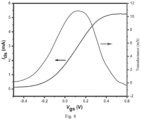
- the tested performance of the above organic electrochemical transistor device was shown in Fig. 8 .
- the organic electrochemical transistor device based on the n-type conjugated polymer blend had a good electrochemical response with a transconductivity close to 11 mS, and had important application prospects in the field of organic biosensing.
- n-type conjugated polymer blend of the present invention had a wide range of promising applications as a highly conductive material in an organic optoelectronic device.
Landscapes
- Chemical & Material Sciences (AREA)
- Organic Chemistry (AREA)
- Chemical Kinetics & Catalysis (AREA)
- Materials Engineering (AREA)
- Engineering & Computer Science (AREA)
- Medicinal Chemistry (AREA)
- Polymers & Plastics (AREA)
- Health & Medical Sciences (AREA)
- Physics & Mathematics (AREA)
- Spectroscopy & Molecular Physics (AREA)
- Life Sciences & Earth Sciences (AREA)
- Wood Science & Technology (AREA)
- Polyoxymethylene Polymers And Polymers With Carbon-To-Carbon Bonds (AREA)
- Electroluminescent Light Sources (AREA)
Abstract
Description
- The present invention belongs to the technical field of organic semiconductor materials, and specifically relates to an n-type conjugated polymer blend, a method for preparing the same and application.
- The structure of a conjugated polymer contains a conjugated system consisting of an off-domain π-electron and thus exhibits unique properties of a semiconductor or a conductor. Since the advent of conductive polyacetylene has allowed the boundary between the insulating and conducting properties of a plastic to be broken, an organic conjugated polymer has shown the prospect for a wide range of applications in an electronic device. At present, the conjugated polymer has achieved a series of impressive results in an organic solar cell (OSC), an organic light emitting diodes (OLED), an organic field effect transistor (OFET), and organic thermoelectric (OTE).
- High conductivity, as an important indicator of the performance of an organic conductive polymer, has been the subject of extensive research by scientists. In the quest to obtain highly conductive organic materials, a variety of structures have been developed, such as polyaniline, polythiophene, and polypyrrole. One of the most representative materials, that is,
poly 3,4-ethylenedioxythiophene: polystyrene sulfonate acid (PEDOT:PSS), as one of the materials that have been commercially applied, has achieved great success in the electronic device due to high conductivity and printable processing, with an annual output value of more than 10 billion yuan. - Although very great progress has been made in the conjugated polymer, the current high-performance conductive materials all exhibit p-type transport properties, and the performance of an n-type conductive material still lags far behind, especially an organic n-type conjugated polymer with high conductivity, which lacks a corresponding synthetic strategy. The development of an n-type organic semiconductor material with high conductivity, simple synthesis, low costs, and solution processability is currently a hot research topic due to the limitation of the low electron mobility, poor air stability, and the need for a long insulating alkyl chain of the n-type organic semiconductor material for solution processing.
- The literature (Toward High Performance n-Type Thermoelectric Materials by Rational Modification of BDPPV Backbones. J. Am. Chem. Soc. 2015, 137, 6979) reported a benzodifurandione-based polymer BDPPV, which was optimized with a dopant to achieve conductivity up to 14 S/cm. The literature (High Conductivity and Electron-Transfer Validation in an n-Type Fluoride-Anion-Doped Polymer for Thermoelectrics in Air. Adv. Mater. 2017, 29, 1606928) reported the use of tetrabutylammonium fluoride doped with a benzodifurandione -based polymer to obtain an n-type thermoelectric material with good air stability. In addition, the literature (Rigid Coplanar Polymers for Stable n-Type Polymer Thermoelectrics. Angew. Chem. Int. Ed. 2019, 58, 11390) reported the use of condensation reaction and polymerization of acid catalyzed aldol to obtain a polymer LPPV with air stability and high conductivity while avoiding the use of a precious metal catalyst. The literature (A thermally activated and highly miscible dopant for n-type organic thermoelectrics. Nat. Commun. 2020, 11, 3292.) reported the enhancement of the conductivity of the n-type conjugated polymer by constructing a new dopant to improve the dopant-polymer backbone compatibility, but the highest value still did not exceed 50 S/cm. The literature (Persistent conjugated backbone and disordered lamellar packing impart polymers with efficient n-doping and high conductivities. Adv. Mater. 2021, 33, 200546. 33, 2005946.) reported that the n-type conjugated polymer with conductivity close to 100 S/cm were obtained by synergistic modulation of polymer planarity and dopant compatibility. At present, although the conductivity of the n-type conjugated polymer is further improved by the adjustment of the polymer and the dopant, there is still a big gap compared with the performance of a p-type conjugated polymer over 1000 S/cm. Most of n-type conductive conjugated polymers are currently prepared by first constructing a polymer backbone and then doping with an additional dopant (e.g., N-DMBI) to obtain high conductivity, which is a long, unstable and costly process.
- In summary, there is an urgent need to develop an n-type highly conductive conjugated polymer with a simple structure, easy synthesis, low costs and solution processability, to synthesize the n-type highly conductive conjugated polymer directly by an applicable commercial preparation method, to apply the n-type highly conductive conjugated polymer in an organic photovoltaic field, and to achieve the desired photovoltaic effect.
- To overcome the shortcomings and deficiencies of the prior art, an objective of the present invention is to provide an n-type conjugated polymer containing a counterion modified by different counterions and a method for preparing the same. The raw materials used in the method of the present invention are aromatic diketones with an active methylene, and polymerized in the presence of an oxidant and/or an ion-exchange adjuvant to directly obtain the n-type conjugated polymers containing the counterion. The described reaction does not require precious metal catalysis, is insensitive to a reaction atmosphere and is a simple and inexpensive process suitable for a commercial application. The n-type conjugated polymer containing the counterion obtained by the method of the present invention has good solubility in a general organic solvent and can be processed in solution. Meanwhile, this n-type conjugated polymer containing the counterion can be applied to an organic optoelectronic device to achieve excellent optoelectronic effects.
- The term "aromatic ring" of the present invention refers to a ring-like structure possessing a conjugated planar ring system in which an interatomic bonding is covered by an off-domain π-electron cloud, such as benzene ring and derivatives thereof.
- The term "aromatic heterocycle ring" of the present invention refers to a ring structure that possesses a conjugated planar ring system in which an interatomic bonding is covered by the off-domain π-electron cloud, and in which atoms forming the ring contain at least one heteroatom (e.g., N, O, S, etc.) in addition to a carbon atom, such as thiophene, furan, and pyrrole.
- The term "fused aromatic ring" of the present invention refers to a structure that has a conjugated planar ring system in which an interatomic bonding is fused by two or more aromatic rings (i.e., share ring edges) covered by the off-domain π-electron cloud, such as naphthalene, anthracene and derivatives thereof.
- The term "fused aromatic heterocycle ring" of the present invention refers to a structure having a conjugated planar ring system in which an interatomic bonding is covered by the off-domain π-electron cloud and in which at least one ring contains at least one heteroatom (e.g. N, O, and S) in addition to the carbon atom, such as quinoline, indole and derivatives thereof.
- The objective of the present invention is achieved by the following technical solutions: An n-type conjugated polymer blend includes an n-type conjugated polymer containing a counterion, and/or an n-type conjugated polymer.
wherein, - the n-type conjugated polymer containing the counterion includes one or
more polymerization units 1, - the
polymerization unit 1 has the following structure (I):
- the n-type conjugated polymer includes one or
more polymerization units 2, - the
polymerization unit 2 has the following structure (II):
- in each of the
polymerization unit 1 or thepolymerization unit 2, - X is independently selected from O, S, Se, Te or N-R1;
- the R1 is selected from one or more of a hydrogen atom, alkyl, alkylidene, an alkyl derivative, and an alkylidene derivative;
- one or more carbons on the alkyl derivative or the alkylidene derivative are substituted with one or more of an oxygen atom, amino, sulfonyl, carbonyl, aryl, alkenyl, alkynyl, ester, cyano, and nitro;
and/or - one or more hydrogens on the alkyl derivative or the alkylidene derivative are substituted with one or more of halogen, hydroxyl, the amino, carboxyl, the cyano, the nitro, the aryl, alkylene, and alkyne;
- where m, n and k are positive integers;
- the M is a conjugated portion of a structure of the n-type conjugated polymer containing
- the counterion or the n-type conjugated polymer, and a structure of the M is selected from one of aromatic ring, aromatic heterocycle, fused aromatic ring, fused aromatic heterocycle;
- the Y is a counterion in the structure of the n-type conjugated polymer containing the counterion or the n-type conjugated polymer, and the counterion is selected from one of an organic cation or an inorganic cation;
- the n-type conjugated polymer blend is prepared from a raw material (III), and the raw material (III) has the following structure:


- The enol-transformed form described is the result of the interaction between the raw material (III) and other substances (such as a polar solvent, an acid or a base).
- In the technical solution of the present invention, a product prepared from the raw material (III) is a blend containing both an n-type conjugated polymer in an ionic state (with a structural formula (I)) and a neutral n-type conjugated polymer (with a structural formula (II)). A dynamic interconversion is provided between the n-type conjugated polymer containing the counterion and the n-type conjugated polymer. This is mainly due to the following resonance transition in the n-type conjugated polymer blend when free positive hydrogen ions are present in a system.

- Further, to illustrate when Y is a hydrogen positive ion, the system containing the n-type conjugated polymer in the ionic state can be transformed into a blend of the following resonance, i.e., the dynamic interconversion is provided between the n-type conjugated polymer containing the counterion and the n-type conjugated polymer, with a ratio of the amount of substance of the n-type conjugated polymer containing the counterion to the amount of substance of n-type conjugated polymer being 0.1-10.

- Further, the n-type conjugated polymer containing the counterion and the n-type conjugated polymer can further be self-assembled by interaction into the following supramolecule. A supramolecular structure can facilitate intra/intermolecular charge transfer to form the n-type conjugated polymer blend with ultra-high conductivity.

- Further, the n-type conjugated polymer containing the counterion has multiple resonance forms. As an example, when the M is a benzene ring structure and the number of negative charges in a backbone is 1 (m=1), the following resonance forms are included but not limited to:

- For convenience, the contents of the present invention are expressed in a first resonance form.
- Further, a structure of a conjugated portion M of a structure of the n-type conjugated polymer containing the counterion is selected from the following structures:


- wherein the X2-X4 are independently selected from O, S, Se, Te or N-R6;
- R2-R6 is independently selected from one or more of the hydrogen atom, the hydroxyl, the nitro, the halogen, the cyano, the nitro, the alkyl, the alkyl derivative, the alkylidene, and the alkylidene derivative;
- One or more carbons on the alkyl derivative or the alkylidene derivative are substituted with one or more of the oxygen atom, the amino, the sulfonyl, the carbonyl, the aryl, the alkenyl, the alkynyl, the ester, the cyano, and the nitro;
and/or
One or more hydrogens on the alkyl derivative or the alkylidene derivative are substituted with one or more of the halogen, the hydroxyl, the amino, the carboxyl, the cyano, the nitro, the aryl, the alkylene, and the alkyne. - The dashed line (---) in the aromatic ring in an optional object of the structure of M above indicates the mutual fusing of an adjacent five-membered ring or four-membered ring here,
- i.e., a shared ring edge. For example, when the structure of M is expressed as, the actual structure of the polymerization unit of the n-type conjugated polymer containing the counterion represented by the M is:


- Further, the structure of the counterion portion Y of the structure of the n-type conjugated polymer is selected from one of the following structures:

or is selected from one of an amine-salt-type cationic surfactant, a quaternary-ammonium-salt-type cationic surfactant, a heterocycl-type cationic surfactant, a sulfonium salt, iodine, and other salt compounds. - Further, (1) when the n-type conjugated polymer containing the counterion is a homopolymer, the structure of the n-type conjugated polymer containing the counterion is selected from one of the following structures:


- (2) when the n-type conjugated polymer containing the counterion is a copolymer,
the structure of each of thepolymerization unit 1 of the n-type conjugated polymer containing the counterion is independently selected from the following structures:

- the R1 is selected from one or more of a hydrogen atom, alkyl, alkylidene, an alkyl derivative, and an alkylidene derivative;
- One or more carbons on the alkyl derivative or the alkylidene derivative are substituted with one or more of the oxygen atom, the amino, the sulfonyl, the carbonyl, the aryl, the alkenyl, the alkynyl, the ester, the cyano, and the nitro;
and/or - One or more hydrogens on the alkyl derivative or the alkylidene derivative are substituted with one or more of the halogen, the hydroxyl, the amino, the carboxyl, the cyano, the nitro, the aryl, the alkylene, and the alkyne.
- where m, n and k are positive integers;
- the M is the conjugated portion of the structure of the n-type conjugated polymer containing the counterion, and the structure of the M is selected from one of an the aromatic ring, the aromatic heterocycle, the fused aromatic ring, and the fused aromatic heterocycle;
- the Y is the counterion portion of the n-type conjugated polymer containing the counterion, and the counterion is selected from one of an organic cation and an inorganic cation. Further, (1) when the n-type conjugated polymer is the homopolymer, the structure of the n-type conjugated polymer is selected from one of the following structures:


- (2) when the n-type conjugated polymer is the copolymer,
a structure of each of thepolymerization unit 2 of the n-type conjugated polymer is independently selected from the following structures:

- Another objective of the present invention is to provide a method for preparing the above-mentioned n-type conjugated polymer containing a counterion:
- (1) when the n-type conjugated polymer containing the counterion and/or the n-type conjugated polymer is a homopolymer, a method of preparing an n-type conjugated polymer blend includes the following steps of:
mixing a raw material (III) and an oxidant and/or an ion exchange adjuvant in a solvent and heating to obtain a homopolymer;
or - (2) when the n-type conjugated polymer containing the counterion and/or the n-type conjugated polymer is a copolymer, the method of preparing the n-type conjugated polymer blend includes the following steps of:
mixing two or more of the raw materials (III), and the oxidant and/or the ion exchange adjuvant in the solvent and heating to obtain the copolymer; - The method for preparing the described n-type conjugated polymer containing the counterion and/or the n-type conjugated polymer can be achieved either by direct addition of an ion-exchange additive to a reaction substance as described above, or by first preparing one of the n-type conjugated polymer containing the counterion and/or the n-type conjugated polymer and then obtaining the other n-type conjugated polymer containing the counterion and/or the n-type conjugated polymer in the form of post-ion exchange.
- Further, the oxidant is selected from one or more of an organic oxidant and an inorganic oxidant.
- Further, the oxidant is selected from one or more of oxygen, peroxide, metal halide, persulfate, perborate, subhaloate, halogenite, a quinones compound, and a benzylhydroperoxide compound.
- Specifically, the above oxidants may be, but not limited to, one of the oxygen, hydrogen peroxide, sodium peroxide, potassium peroxide, calcium peroxide, zinc peroxide, copper peroxide, ferric nitrate, zinc nitrate, nickel nitrate, aluminum nitrate, magnesium nitrate, ammonium nitrate, ferric fluoride, ferric chloride, ferric bromide, ferric iodide, sodium perchlorate, potassium perchlorate, sodium perbromide, potassium perbromide, sodium periodate, potassium periodate, potassium perchlorate, sodium perchlorate, potassium perbromide, sodium perbromide, magnesium perchlorate, sodium persulfate, potassium persulfate, magnesium persulfate, zinc persulfate, ferric persulfate, copper persulfate, calcium persulfate, potassium perborate, zinc perborate, magnesium perborate, calcium perborate, sodium hypofluorate, potassium hypofluorate, sodium hypochlorite, potassium hypochlorite, ferric hypochlorite, copper hypochlorite, sodium hypobromite, potassium hypobromite, sodium hypoiodite, potassium hypoiodite, sodium chlorite, potassium chlorite, ferric chlorite, sodium bromite, potassium bromite, sodium iodite, potassium iodite, benzoquinone and derivatives thereof, naphthoquinone and derivatives thereof, anthraquinone and derivatives thereof, phenanthrenequinone and derivatives thereof, benzylhydroperoxide and derivatives thereof; and a mixture of two or more of any of the above substances mixed in any ratio.
- Further, the solvent is selected from a solvent 1 or a solvent 2, or a mixture of a solvent 1 and a solvent 2.
- The solvent 1 is selected from a mixture of one or more of water, a nitrile solvent, an aromatic solvent, an alicyclic hydrocarbon solvent, an alicyclic hydrocarbon solvent, a halogenated hydrocarbon solvent, an alcohol solvent, an ether solvent, an ester solvent, a sulfone solvent, a ketone solvent, an amide solvent.
the solvent 2 is a deuterated solvent of the solvent 1. - Specifically, the
above solvent 1, preferably a polar solvent common in the art, may be, but not limited to, one of tetrahydrofuran, methyltetrahydrofuran, methylene chloride, chloroform, ethyl acetate, propyl acetate, butyl acetate, ethyl propionate, propyl propionate, butyl propionate, methyl methacrylate, ethyl methacrylate, propyl methacrylate, toluene, xylene, trimethylbenzene, chlorobenzene, dichlorobenzene, trichlorobenzene, methanol ethanol, ethanol, propanol, ethylene glycol, isobutanol, propylene glycol, acetonitrile, formic acid, acetic acid, propionic acid, trifluoroacetic acid, dimethylformamide, dimethylacetamide, dimethyl sulfoxide, dimethylacetamide, acetone, butanone, cyclohexanone, methyl butanone, methyl ether, ethyl ether, propyl ether, pyridine, phenol, N-methylpyrrolidone, ethylene glycol monomethyl ether, triethylene glycol monomethyl ether, triethylamine, tetramethylethylenediamine, trioctylamine, aniline, and hexamethylphosphoramide, and a mixture of two or more of any of the above substances mixed in any ratio. - Specifically, the
above solvent 2 is a deuterated solvent corresponding to theabove solvent 1. For example, the solvent 2 may be, but not limited to, deuterated chloroform, deuterated chlorobenzene, deuterated ethanol, etc. - Preferably, the solvent is selected from the solvent 1.
- For convenience, the contents of the present invention are expressed in terms of a blend containing the n-type conjugated polymer in an ionic state (having structural formula (I)), and a neutral n-type conjugated polymer (having structural formula (II)).
- Another objective of the present invention is to provide application of the above-mentioned n-type conjugated polymer blend containing the counterion in an organic optoelectronic device.
- The beneficial effects of the present invention are as follows:
- 1. The raw material of the n-type conjugated polymer blend obtained by the present invention is an aromatic diketone with an active methylene, which is obtained directly by polymerization reaction in the presence of an oxidant. The reaction does not require precious metal catalysis and is insensitive to a reaction atmosphere, which makes a process simple and inexpensive for large-scale commercial applications. The resulting product has excellent solubility and is suitable for use in a solution-processed organic optoelectronic device.
- 2. The n-type conjugated polymer blend obtained by the present invention can be self-assembled by in situ reaction and resonance transformation to form an n-type conductive material with strong aggregation and conductivity up to more than 2000 S/cm.
- 3. The resulting n-type conjugated polymer blend of the present invention can be used as a thermoelectric material to obtain a power factor close to 100 µWm-1K-2 in an air environment without the use of an additional dopant.
- 4. The resulting n-type conjugated polymer blend of the present invention allows for systematic regulation of the n-type conjugated polymer in terms of thermoelectric power by the regulation of different counterions.
-
-
Fig. 1 shows an absorption spectrogram of a product inEmbodiment 1 in a thin film state. -
Fig. 2 shows a graph of a gel permeation chromatography test of a product inEmbodiment 1. -
Fig. 3 shows an X-ray photoelectron energy spectrum of a product inEmbodiment 1,Fig. 3 (a) shows an XPS spectrum of an element of oxygen (oxygen 1s peak) andFig. 3 (b) shows a total spectrum. -
Fig. 4 shows a schematic diagram of a four-probe conductivity test of a product in Test Example 1. -
Fig. 5 shows a graph of voltage versus current data for a four-probe conductivity test of a product inEmbodiment 1 of Test Example 1,Fig. 5 (a) shows a graph of current measurements in a four-probe, andFig. 5 (b) shows a graph of voltage measurements in a four-probe. -
Fig. 6 shows a graph of a Seebeck coefficient test for a product inEmbodiment 1. -
Fig. 7 shows a schematic diagram of an organic electrochemical transistor device. -
Fig. 8 shows a trans-conductivity test diagram of a product inEmbodiment 1 in an organic electrochemical transistor device. - In order to illustrate the technical solutions of the present invention more clearly, the following embodiments are given. Unless otherwise stated, raw materials, reactions and post-processing means in the embodiments are common raw materials on market and technical means well known to a person skilled in the art.
- As one of the raw materials in this embodiment of the invention, 3,7-dihydrobenzo[1,2-b:4,5-b'] difuran-2,6-dione, was prepared according to the literature (A BDOPV-Based Donor-Acceptor Polymer for High-Performance n-Type and Oxygen-Doped Ambipolar Field-Effect Transistors. Adv. Mater. 2013, 25(45), 6589).
- An oxidant in the embodiment was duroquinone, coenzyme Q10 or ferric trichloride, which was purchased from Shanghai Bide Pharmaceutical Technology Co. Ltd. Embodiment 1: a method for preparing an n-type conjugated polymer blend

- 3,7-dihydrobenzo [1,2-b:4,5-b'] difuran-2,6-dione (1 mmol), and an oxidant of duroquinone (1.5 mmol), were dissolved in 2 ml of dimethyl sulfoxide (DMSO), degassed under vacuum, and protected by filling with nitrogen. The above mixture solution was stirred in a nitrogen atmosphere at a temperature of 100°C for 4 h. A resulting crude product was then diluted to approximately 10 mg/ml with DMSO and filtered using a polytetrafluoroethylene filter head with 0.45 µm of a pore size. A resulting filtrate was concentrated using a rotary evaporator and dialyzed in a DMSO solution for 7 days using a dialysis bag (a cut-off molecular weight = 10 kDa) to obtain the product of the n-type conjugated polymer blend. Where Formula I and Formula II could be interconverted by resonance as described above, and m/(n1+n2) was about 0.86. The test method for a ratio was obtained by fitting using an X-ray photoelectron energy spectrum (the same applies hereinafter). A test was performed by gel permeation chromatography with DMSO as a mobile phase. The molecular weight Mn=428.2 kDa and PDI=1.22.
-
Fig. 1 showed an absorption spectrogram of a product inEmbodiment 1 in a thin film state with an absorption edge over 2400 nm, illustrating the presence of polarons in the polymer and proving the presence of negative charges in a mixture system that could move freely in a conjugated backbone.Fig. 2 showed a graph of a gel permeation chromatography test of a product inEmbodiment 1, illustrating the production of the polymer and a supramolecular compound. -
Fig. 3 showed the X-ray photoelectron energy spectrum of a product inEmbodiment 1.Fig. 3 (a) showed an XPS spectrum of an element of oxygen (oxygen 1s peak) andFig. 3 (b) showed a total spectrum. Therefore, a semi-quantitative ratio between different peaks of an element of oxygen inFig. 3(a)-(b) could be used to calculate the relationship between m as well as n1 and n2. Therefore, with this method, the relative contents of Formula I and Formula II can be determined. -

- 3,7-dihydrobenzo [1,2-b:4,5-b'] difuran-2,6-dione (1 mmol), and an oxidant of ferric trichloride (2 mmol) were dissolved in 2 ml of N, N-dimethylformamide (DMF), degassed under vacuum, and protected by filling with nitrogen. The above mixture solution was stirred in a nitrogen atmosphere at a temperature of 100°C for 2 h. The resulting product of the n-type conjugated polymer blend was gradually precipitated out from a reaction system, cooled to a room temperature and then added with 50 mL of ethanol. After thorough stirring, the product was filtered and washed with deionized water, ethanol and tetrahydrofuran. The resulting product of the n-type conjugated polymer blend was a mixture of Formula (I), Formula (II), Formula (III) and Formula (IV). The resulting product was insoluble in an organic solvent due to coupling of a ferric ion. A solid was characterized.
- Where, 2(k1+k3)+3(k2+k5)+(k4+k6)=m1+m2+m3+m4+m5+m6.
and (k4+k6):(k1+k3):(k2+k5) was approximately 8:1:0.2.
(m1+m2+m3+m4+m5+m6):(n1+n2+n3+n4+n5+n6+n7) was about 0.9. -

- (1) Benzodithiophene (23 mmol) was dissolved in anhydrous tetrahydrofuran (300 ml), then cooled down to a temperature of -78°C, slowly added into n-butyllithium (2.5 M of a hexane solution, 25.8 ml, 64.4 mmol) within 90 min, stirred for 3 h at a temperature of -78°C, then warmed up to 0°C, added with tri-n-butyl borate (60 mmol), stirred for 1 h, then gradually warmed up to the room temperature of 25°C and continuously stirred for 8 h. A solution was concentrated to 200 ml using a rotary evaporator, added with 200 ml of 0.5 M of hydrochloric acid and filtered to obtain a crude product. A product was precipitated out from the crude product using tetrahydrofuran/hexane, washed with ice-toluene and dried to obtain a solid (yield = 61%) for a next step of reaction.
- (2) The solid (7.5 mmol) from the previous step was dissolved in tetrahydrofuran (100 ml), added with 2.5 ml of an aqueous hydrogen peroxide solution (30 wt%) at a temperature of 0°C, and stirred for 6 h at a room temperature. After the solvent was removed using the rotary evaporator, the product was purified using a silica gel packed chromatographic column (200-300 mesh) with ethyl acetate: petroleum ether = 4:1 as an eluent. An obtained solid was washed with hexane and methanol to obtain 3,7-dihydrobenzo[1,2-b:4,5-b'] dithiophene-2,6-dione (yield = 53%). 1HNMR(CDCl3, 500MHz) δppm : 7.31 (s, 2H), 3.98 (s, 4H).
- (3) 3,7-dihydrobenzo [1,2-b:4,5-b'] dithiophene-2,6-dione (1 mmol), and duroquinone (2 mmol) were dissolved in 2 ml of DMSO, degassed under vacuum and protected by filling with nitrogen. The solution was stirred for 10 h under the nitrogen atmosphere at a temperature of 120°C, diluted to about 10 mg/ml and filtered using a 0.45 µm pore size of a polytetrafluoroethylene filter head. The solution was concentrated using the rotary evaporator and dialyzed in the DMSO solution using a dialysis bag (a cut-off molecular weight = 10 kDa) for 3 days to obtain the product of the n-type conjugated polymer blend. The resulting product of the n-type conjugated polymer blend was a mixture of Formula (I) and Formula (II). Formula I and Formula II could be interconverted by resonance as described above, and m/(n1+n2) was about 0.42. A test was performed by gel permeation chromatography with DMSO as a mobile phase. The molecular weight Mn=12 kDa and PDI=1.31.
-

- 20 mL of a DMSO solution of the product obtained in Embodiment 1 (a concentration of 15 mg/mL) was diluted with 20 mL of DMSO, added with 2 g of tetrabutylammonium bromide, and stirred at a room temperature for 14 days. A part of an ion exchange product was gradually precipitated out during a reaction. 50 mL of ethanol was added to a reaction system, which was stirred thoroughly and filtered. A resulting powder was washed with the ethanol and tetrahydrofuran.
- Where k1+k2+k3+k4=m1+m2+m3+m4=m.
- n3 +n4+n5+n6+n7+n8+n9=n1+n2.
- (k2+k4)/(k1+k3) was about 0.2.
-

- A DMSO solution of 40 µL of a product obtained in Embodiment 1 (concentration of 15 mg/mL) was added dropwise onto a 10 mm × 10 mm glass substrate, and dried to obtain a film. The film was immersed in an aqueous solution of saturated NaCl for 12 h, then washed with deionized water and dried to obtain a film of ion exchange product of the n-type conjugated polymer blend, which was directly performed with subsequent characterization.
- Where k1+k2+k3+k4=m1+m2+m3+m4=m.
- n3 +n4+n5+n6+n7+n8+n9=n1+n2.
- (k2+k4)/(k1+k3) was about 0.04.
-

- Under the protection of nitrogen, 3,7-dihydrobenzo [1,2-b:4,5-b'] difuran-2,6-dione (1 mmol) was dissolved in 5 mL of trichloromethane, added with 2 mmol of triethylamine, and stirred at a room temperature. After the solution turned dark green, an oxidant of duroquinone (1.5 mmol) was added. The above mixture solution was stirred in a nitrogen atmosphere at a temperature of 100°C for 24 h and filtered to obtain a crude product. A resulting crude product was then washed with tetrahydrofuran, dissolved in 20 mL of DMSO, and filtered using a 0.45 µm pore size of a polytetrafluoroethylene filter head. A resulting filtrate was dialyzed in a DMSO solution using a dialysis bag (a cut-off molecular weight = 10 kDa) for 7 days to obtain the product of the n-type conjugated polymer blend. Formula I and Formula II could be interconverted by resonance as described above, and m/(n1+n2) was about 0.62. A test was performed by gel permeation chromatography with DMSO as a mobile phase. The molecular weight Mn=1 1 kDa and PDI=1.72.
- With a DMSO solution of an n-type conjugated polymer blend obtained in
Embodiment 1, a film was prepared on a glass substrate using a spin-coating film formation method. After the film was dried under vacuum, the conductivity of the film was measured using a four-foot probe method.Fig. 4 showed a schematic diagram of a four-probe conductivity test of a product ofEmbodiment 1. The specific steps were as follows:
A quartz glass sheet was washed with acetone, a micron-level semiconductor special detergent, deionized water and isopropyl alcohol as a cleaning solvent in ultrasonic cleaner in turn. The surface of the quartz glass sheet was dried with nitrogen gas after washing, and was dried with an infrared lamp. The quartz glass sheet was then placed in a constant temperature oven for backup. Before use, the glass sheet was bombarded with plasma in a plasma etcher for 10 min. - After the preparation of the glass sheet was finished, the glass sheet was placed on a heating table, heated at a temperature of 110°C and transferred to a rotary gelatinometer (KW-4A). The product of
Embodiment 1 prepared above was spin-coated at a high speed (the mass concentration of the conjugated polymer solution was 15 mg/ml), and the thickness of a monitored film was simultaneously measured realistically with a step meter. After film formation was completed, voltage and current curves were tested using a four-foot probe conductivity tester. A test schematic diagram was shown inFig. 4 . A voltage V and a current I were shown inFig. 5(a)-(b) . The conductivity σ was calculated using a film thickness d and a correction factor, with a calculated formula as:
- Powder of products obtained in
Embodiment 2 andEmbodiment 4 was prepared as a thin film with a diameter of 15 mm and a thickness of 1 mm using a press method. The conductivity of the film was measured using the four-foot probe method. - The conductivity of the film of the product obtained after ion exchange in
Embodiment 5 was directly measured using a four-foot probe method with the following results.Table 1: Conductivity Tests of Products of Embodiment 1,Embodiment 2,Embodiment 4 and Embodiment 5n-type Conjugated Polymer Blend Conductivity (S/cm) Embodiment 12150 Embodiment 2942 Embodiment 41720 Embodiment 52408 - As can be seen from Table 1, the n-type conjugated polymer blend prepared by the present invention had high conductivity. The regulation of the conductivity could be achieved by different counterions.
- Here, the n-type conjugated polymer blend of
Embodiment 1 was illustrated as follows: the n-type conjugated polymer blend prepared by the present invention could resonate hydrogen protons and negative charges on a backbone. In addition, in a solid state, due to the formation of a supramolecular interaction, the hydrogen protons were bound between molecules, thus weakening binding to the negative charges, allowing the negative charges to move freely on a conjugated backbone and achieving high n-type conductivity. - A thermoelectric test was performed on an n-type conjugated polymer blend obtained in an embodiment.
- The thermoelectric properties of a material were commonly described by the thermoelectric figure of merit (ZT), which was given by the following formula:

- Where S represents a Seebeck coefficient. σ represents conductivity. κ represents thermal conductivity, and T represents a temperature at which a device operates. The thermal conductivity of an organic material was much lower than that of an inorganic material, so a power factor (PF) was commonly used to describe the thermoelectric properties of the organic material, where PF=S2σ.
- In this test example, taking as an example the n-type conjugated polymer blend prepared above, a sample preparation process was the same as the one used in Test Example 1 to test the Seebeck coefficient and characterize thermoelectric properties.
- The two ends of a device were placed in a temperature gradient field.
Fig. 5(a) showed a diagram of a trend of the thermal voltage difference of a product inEmbodiment 2, andFig. 5(b) showed a fitted diagram of a trend of the thermal voltage difference of a product inEmbodiment 2 with temperature. A corresponding temperature difference electric potential was tested with the change in temperature difference between the two ends of the device to measure the Seebeck coefficient. As seen onFigs. 5(a)-(b) , the polymer of the embodiment of the present invention exhibited the Seebeck effect of the product at a weak temperature difference and generated the temperature difference electric potential of more than 30 µV/K. -
Fig. 6 showed the conductivity-Seebeck coefficient-power factor performance graph for the product ofEmbodiment 1. The power factor was obtained from PF=S2σ. From the above tests, it can be obtained that the power factor was close to 100µWm-1K-2 at a room temperature, and was at a higher level among the n-type conjugated polymer in the prior art. - Relevant data were shown in Table 2.
Table 2. Seebeck Coefficients of n-type Conjugated Polymer Blends of Embodiment 1,Embodiment 2 and Embodiment 4n-type Conjugated Polymer Blend Seebeck Coefficient (µV/K) Power Factor (µWm-1K-2) Embodiment 1 -19.09 92.9 Embodiment 2 -28.67 77.4 Embodiment 4 -23.59 95.7 - The n-type conjugated polymer blend obtained in
Embodiment 1 was tested for an organic electrochemical transistor device. The organic electrochemical transistor device was shown inFig. 7 . - The manufacturing process of the above organic electrochemical transistor was as follows: First, a glass base was washed with acetone and isopropyl alcohol in turn, and then the surface of the glass base was blown with nitrogen gas to be dried. A layer of Cr/Au (10 nm/100 nm) substrate was deposited on a glass substrate using a sputtering method to build a source electrode and a drain electrode. The surface of the substrate was passivated and spin-coated with a DMSO solution of the n-type conjugated polymer in
Embodiment 1 as an active layer material in the organic electrochemical transistor, and baked at a temperature of 100°C for 10 min under nitrogen, with a film thickness of about 70 nm and a trench area of 1 mm × 1mm. The performance of the organic electrochemical transistor was characterized in air using an Ag/AgCl electrode as a gate electrode, a 0.1 M NaCl solution as an electrolyte, and Keithley 4200 to record a voltage Vgs between the source electrode and the gate electrode and a current Ids between the drain electrode and the gate electrode. - The tested performance of the above organic electrochemical transistor device was shown in
Fig. 8 . The organic electrochemical transistor device based on the n-type conjugated polymer blend had a good electrochemical response with a transconductivity close to 11 mS, and had important application prospects in the field of organic biosensing. - The above test examples illustrated that the n-type conjugated polymer blend of the present invention had a wide range of promising applications as a highly conductive material in an organic optoelectronic device.
- It is obvious to a person skilled in the art that the present invention not limited to the details of the exemplary embodiments described above, and that the present invention can be realized in other specific forms without departing from the spirit or basic features of the present invention. Therefore, the embodiments should be regarded as exemplary and non-limiting from any standpoint. The scope of the present invention is defined by the appended claims rather than the above description. It is therefore intended that all variations falling within the meaning and scope of equivalent elements of claims be encompassed by the present invention.
- In addition, it should be understood that although this specification is described in terms of embodiments, not each embodiment only includes an independent technical solution. This description in the specification is only for the sake of clarity. A person skilled in the art should take the specification as a whole. The technical solutions in each embodiment can also be appropriately combined to form other implementations that can be understood by a person skilled in the art.
Claims (13)
- An n-type conjugated polymer blend, comprising an n-type conjugated polymer containing a counterion, and/or an n-type conjugated polymer,
wherein,the n-type conjugated polymer containing the counterion comprises one or more polymerization units 1,the polymerization unit 1 has the following structure (I): the n-type conjugated polymer comprises one or more polymerization units 2, the polymerization unit 2 has the following structure (II):
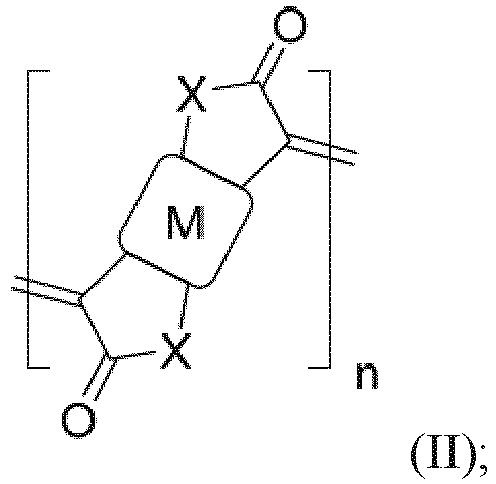 in each of the polymerization unit 1 or the polymerization unit 2,X is independently selected from O, S, Se, Te or N-R1;the R1 is selected from one or more of a hydrogen atom, alkyl, alkylidene, an alkyl derivative, and an alkylidene derivative;one or more carbons on the alkyl derivative or the alkylidene derivative are substituted with one or more of an oxygen atom, amino, sulfonyl, carbonyl, aryl, alkenyl, alkynyl, ester, cyano, and nitro.
and/orone or more hydrogens on the alkyl derivative or alkylidene derivative are substituted with one or more of halogen, hydroxyl, the amino, carboxyl, the cyano, the nitro, the aryl, alkylene, and alkyne;where m, n and k are positive integers;the M is a conjugated portion of a structure of the n-type conjugated polymer containing the counterion or the n-type conjugated polymer, and a structure of the M is selected from one of aromatic ring, aromatic heterocycle, fused aromatic ring, fused aromatic heterocycle;the Y is a counterion in the structure of the n-type conjugated polymer containing the counterion or the n-type conjugated polymer, and the counterion is selected from one of an organic cation or an inorganic cation;the n-type conjugated polymer blend is prepared from a raw material (III), and the raw material (III) has the following structure:

- The n-type conjugated polymer blend according to Claim 1, wherein a structure of a conjugated portion M of the structure of the n-type conjugated polymer containing the counterion or the n-type conjugated polymer is independently selected from the following structures of


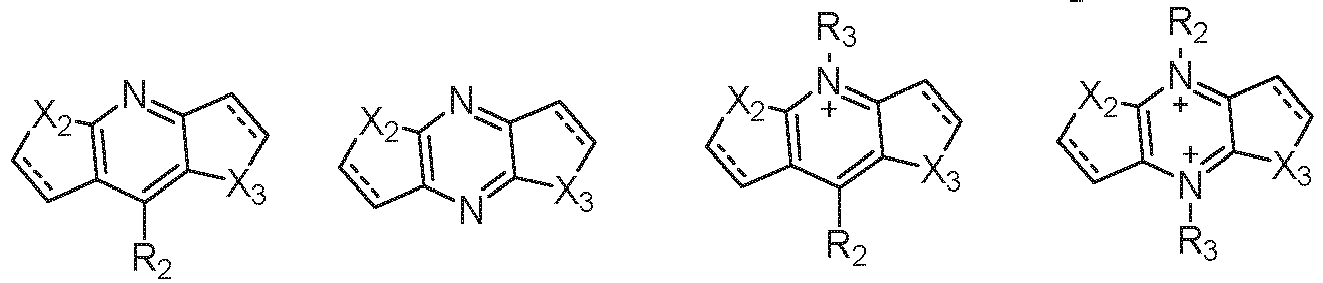

 wherein the X2-X4 are independently selected from O, S, Se, Te or N-R6;R2-R6 is independently selected from one or more of the hydrogen atom, the hydroxyl, the nitro, the halogen, the cyano, the nitro, the alkyl, the alkyl derivative, the alkylidene, and the alkylidene derivative;one or more carbons on the alkyl derivative or the alkylidene derivative are substituted with one or more of the oxygen atom, the amino, the sulfonyl, the carbonyl, the aryl, the alkenyl, the alkynyl, the ester, the cyano, and the nitro;
and/orone or more hydrogens on the alkyl derivative or the alkylidene derivative are substituted with one or more of the halogen, the hydroxyl, the amino, the carboxyl, the cyano, the nitro, the aryl, the alkylene, and the alkyne. - The n-type conjugated polymer blend according to Claim 1, wherein a structure of a counterion Y of the structure of the n-type conjugated polymer containing the counterion is selected from one of the following structures:
 Na+, K+, Mg2+, Ca2+, Ba2+, A13+, Fe2+, Fe3+, Zn2+, Cu2+ and Ag+;or is selected from one of an amine-salt-type cationic surfactant, a quaternary-ammonium-salt-type cationic surfactant, a heterocycle-type cationic surfactant, a sulfonium salt, iodine, and other salt compounds.
 - The n-type conjugated polymer blend according to Claim 1, wherein(1) when the n-type conjugated polymer containing the counterion is a homopolymer, the structure of the n-type conjugated polymer containing the counterion is selected from one of the following structures:

 (2) when the n-type conjugated polymer containing the counterion is a copolymer,
the structure of each of the polymerization unit 1 of the n-type conjugated polymer containing the counterion is independently selected from the following structures:
 the R1 is selected from one or more of a hydrogen atom, alkyl, alkylidene, an alkyl derivative, and an alkylidene derivative;one or more carbons on the alkyl derivative or the alkylidene derivative are substituted with one or more of the oxygen atom, the amino, the sulfonyl, the carbonyl, the aryl, the alkenyl, the alkynyl, the ester, the cyano, and the nitro;
and/orone or more hydrogens on the alkyl derivative or alkylidene derivative are substituted with one or more of the halogen, the hydroxyl, the amino, the carboxyl, the cyano, the nitro, the aryl, the alkylene, and the alkyne;where m, n and k are positive integers;the M is the conjugated portion of the structure of the n-type conjugated polymer containing the counterion, and the structure of the M is selected from one of an the aromatic ring, the aromatic heterocycle, the fused aromatic ring, the fused aromatic heterocycle;the Y is the counterion portion of the n-type conjugated polymer containing the counterion, and the counterion is selected from one of an organic cation and an inorganic cation. - The n-type conjugated polymer blend according to Claim 1, wherein(1) when the n-type conjugated polymer is the homopolymer, the structure of the n-type conjugated polymer is selected from one of the following structures:

 (2) when the n-type conjugated polymer is the copolymer,a structure of each of the polymerization unit 2 of the n-type conjugated polymer is independently selected from the following structures:
 the n1-n5 are independently positive integers.
 - The n-type conjugated polymer blend according to Claim 1, wherein a dynamic interconversion is provided between the n-type conjugated polymer containing the counterion and the n-type conjugated polymer.
- The n-type conjugated polymer blend according to Claim 6, wherein a ratio of an amount of substance of the n-type conjugated polymer containing the counterion to an amount of substance of the n-type conjugated polymer is 0.1-10.
- A method for preparing the n-type conjugated polymer blend according to Claim 1, wherein(1) when the n-type conjugated polymer containing a counterion and/or the n-type conjugated polymer is a homopolymer, the method of preparing the n-type conjugated polymer blend comprises the following steps of:
mixing a raw material (III) and an oxidant and/or an ion exchange adjuvant in a solvent and heating to obtain the homopolymer;
or(2) when the n-type conjugated polymer containing the counterion and/or the n-type conjugated polymer is a copolymer, the method of preparing the n-type conjugated polymer blend comprises the following steps of:
mixing two or more of the raw materials (III), and the oxidant and/or the ion exchange adjuvant in the solvent and heating to obtain the copolymer. - The method for preparing the n-type conjugated polymer blend according to Claim 8, wherein the oxidant is selected from one or more of an organic type oxidant and an inorganic type oxidant.
- The method for preparing the n-type conjugated polymer blend according to Claim 8, wherein the oxidant is selected from one or more of oxygen, peroxide, metal halide, persulfate, perborate, subhaloate, halogenite, a quinones compound, and a benzylhydroperoxide compound.
- The method for preparing the n-type conjugated polymer blend according to Claim 8, wherein the ion exchange adjuvant is selected from one or more of an inorganic salt containing a cation, and an organic salt containing a cation.
- The method for preparing the n-type conjugated polymer blend according to Claim 8, wherein the solvent is selected from a solvent 1 or a solvent 2, or a mixture of the solvent 1 and the solvent 2.the solvent 1 is selected from one or more of water, a nitrile solvent, an aromatic solvent, an alicyclic hydrocarbon solvent, an alicyclic hydrocarbon solvent, a halogenated hydrocarbon solvent, an alcohol solvent, an ether solvent, an ester solvent, a sulfone solvent, a ketone solvent, and an amide solvent;the solvent 2 is a deuterated solvent of the solvent 1.
- Application of the n-type conjugated polymer blend of Claim 1 in an organic optoelectronic device.
Applications Claiming Priority (2)
| Application Number | Priority Date | Filing Date | Title |
|---|---|---|---|
| CN202111177652.9A CN115960338B (en) | 2021-10-09 | 2021-10-09 | A kind of n-type conjugated polymer blend and its preparation method and application |
| PCT/CN2021/124545 WO2023056662A1 (en) | 2021-10-09 | 2021-10-19 | N-type conjugated polymer blend, and preparation method therefor and use thereof |
Publications (2)
| Publication Number | Publication Date |
|---|---|
| EP4206256A1 true EP4206256A1 (en) | 2023-07-05 |
| EP4206256A4 EP4206256A4 (en) | 2025-03-12 |
Family
ID=85803863
Family Applications (1)
| Application Number | Title | Priority Date | Filing Date |
|---|---|---|---|
| EP21957733.5A Pending EP4206256A4 (en) | 2021-10-09 | 2021-10-19 | Conjugated N-type polymer blend and production process therefor and use thereof |
Country Status (5)
| Country | Link |
|---|---|
| US (1) | US20230312785A1 (en) |
| EP (1) | EP4206256A4 (en) |
| JP (1) | JP7587778B2 (en) |
| CN (1) | CN115960338B (en) |
| WO (1) | WO2023056662A1 (en) |
Cited By (1)
| Publication number | Priority date | Publication date | Assignee | Title |
|---|---|---|---|---|
| WO2025008459A1 (en) * | 2023-07-05 | 2025-01-09 | Lyris Technology Ltd | Compositions for facilitating selectively filtering of incident light |
Families Citing this family (9)
| Publication number | Priority date | Publication date | Assignee | Title |
|---|---|---|---|---|
| KR102240669B1 (en) * | 2019-05-08 | 2021-04-16 | (주)플렉솔루션 | Organic electrochemical transistor device and method for preparing the same |
| EP4247905B1 (en) * | 2020-11-20 | 2024-12-04 | N-Ink AB | N-type conductive composition comprising a rigid conjugated polymer |
| CN115490835B (en) * | 2021-06-18 | 2024-06-18 | 华南理工大学 | N-type conjugated polymer and its preparation method and application |
| US12476020B2 (en) * | 2022-10-26 | 2025-11-18 | Purdue Research Foundation | Methods of making n-doped transparent organic conductors and conductors made therefrom |
| US12164209B2 (en) | 2022-11-02 | 2024-12-10 | Ambilight Inc | Electrochromic devices having n-doped conductive polymer as transparent conducting layer, ion storage layer, and/or electrochromic layer |
| WO2024235468A1 (en) * | 2023-05-17 | 2024-11-21 | N-Ink Ab | A one-step method for obtaining an ink comprising an n-type conducting polymer |
| CN117701108B (en) * | 2023-12-15 | 2024-05-14 | 云南领克新型材料有限公司 | Antistatic powder coating and preparation method and application thereof |
| CN117866483B (en) * | 2023-12-25 | 2025-10-17 | 华南理工大学 | Electronic transmission type conductive ink containing benzodifuran diketone substance |
| CN119241819B (en) * | 2024-10-23 | 2025-04-22 | 聚镕光电(广州)新材料科技有限公司 | N-type conductive polymer and large-scale preparation method thereof |
Family Cites Families (17)
| Publication number | Priority date | Publication date | Assignee | Title |
|---|---|---|---|---|
| DE3804523A1 (en) * | 1988-02-13 | 1989-08-24 | Hoechst Ag | ELECTRICALLY CONDUCTING POLYMERS WITH IMPROVED SOLUBILITY |
| US8519077B2 (en) * | 2008-08-12 | 2013-08-27 | The University Of Akron | N-type conjugated compounds containing diborylene units, methods of making, and a device comprising the compound |
| WO2011028827A2 (en) * | 2009-09-04 | 2011-03-10 | Plextronics, Inc. | Organic electronic devices and polymers, including photovoltaic cells and diketone-based polymers |
| GB2494607B (en) * | 2010-07-09 | 2018-05-02 | Merck Patent Gmbh | Semiconducting polymers |
| WO2012071641A1 (en) * | 2010-11-30 | 2012-06-07 | National Research Council Of Canada | Functionalized semiconducting polymers for use in organic photovoltaic devices |
| WO2012109747A1 (en) * | 2011-02-14 | 2012-08-23 | University Of Waterloo | Organic semiconducting compounds and devices generated therefrom |
| WO2012156022A1 (en) * | 2011-05-16 | 2012-11-22 | Merck Patent Gmbh | Conjugated polymers |
| US9949720B2 (en) * | 2011-10-21 | 2018-04-24 | C. R. Bard, Inc. | Systems and methods for ultrasound-based medical device assessment |
| CN103804271B (en) * | 2012-11-06 | 2016-08-10 | 北京大学 | Isoindigo green grass or young crops compounds containing electron withdraw group and preparation thereof and application |
| US20150295179A1 (en) * | 2012-11-09 | 2015-10-15 | Yuning Li | Monomeric, oligomeric and polymeric semiconductors containing fused rings and their devices |
| CN103833991B (en) * | 2014-02-26 | 2016-07-06 | 中国科学院化学研究所 | A kind of two-dimentional conjugated polymer replaced containing sulfur, its preparation method and application thereof |
| CN104045819A (en) * | 2014-05-21 | 2014-09-17 | 合肥工业大学 | Ultralow-band gap donor-receptor conjugated polymer and preparation method thereof |
| TWI717468B (en) * | 2016-02-29 | 2021-02-01 | 南韓商Clap股份有限公司 | Semiconducting polymer |
| CN106977701A (en) * | 2017-03-21 | 2017-07-25 | 华南理工大学 | The n-type water alcohol solubility conjugated polymer of the ring of imidodicarbonic diamide containing benzo and its application in organic/polymer light electrical part |
| CN110862517A (en) * | 2018-08-28 | 2020-03-06 | 北京大学 | Rigid conjugated polymer based on benzodifurandione and derivatives thereof, preparation and application thereof |
| CN109776767B (en) * | 2018-12-29 | 2021-08-10 | 华南理工大学 | Conjugated polymer containing difluoronaphthothiophene diketone electron-withdrawing unit and synthetic method and application thereof |
| FR3091530A1 (en) * | 2019-01-09 | 2020-07-10 | Université De Pau Et Des Pays De L'adour | FORBIDDEN VERY LOW BAND POLYMERS |
-
2021
- 2021-10-09 CN CN202111177652.9A patent/CN115960338B/en active Active
- 2021-10-19 WO PCT/CN2021/124545 patent/WO2023056662A1/en not_active Ceased
- 2021-10-19 EP EP21957733.5A patent/EP4206256A4/en active Pending
- 2021-10-19 JP JP2023526377A patent/JP7587778B2/en active Active
-
2023
- 2023-04-17 US US18/301,378 patent/US20230312785A1/en active Pending
Cited By (1)
| Publication number | Priority date | Publication date | Assignee | Title |
|---|---|---|---|---|
| WO2025008459A1 (en) * | 2023-07-05 | 2025-01-09 | Lyris Technology Ltd | Compositions for facilitating selectively filtering of incident light |
Also Published As
| Publication number | Publication date |
|---|---|
| JP2023550698A (en) | 2023-12-05 |
| CN115960338A (en) | 2023-04-14 |
| JP7587778B2 (en) | 2024-11-21 |
| US20230312785A1 (en) | 2023-10-05 |
| EP4206256A4 (en) | 2025-03-12 |
| CN115960338B (en) | 2024-07-05 |
| WO2023056662A1 (en) | 2023-04-13 |
Similar Documents
| Publication | Publication Date | Title |
|---|---|---|
| US20230312785A1 (en) | N-type conjugated polymers and blends, and method for preparing the same and application | |
| CN115490835B (en) | N-type conjugated polymer and its preparation method and application | |
| Tang et al. | Significant improvement of photovoltaic performance by embedding thiophene in solution-processed star-shaped TPA-DPP backbone | |
| CN114181229B (en) | Organic micromolecular photovoltaic material based on benzopyrazine donor cores, and preparation method and application thereof | |
| Zhou et al. | Enhancing the photovoltaic performance of triphenylamine based star-shaped molecules by tuning the moiety sequence of their arms in organic solar cells | |
| Li et al. | Donor–acceptor copolymers containing quinacridone and benzothiadiazole for thin film transistors | |
| Li et al. | Efficient chemical structure and device engineering for achieving difluorinated 2, 2′-bithiophene-based small molecular organic solar cells with 9.0% efficiency | |
| Zhou et al. | Improved photovoltaic performance of star-shaped molecules with a triphenylamine core by tuning the substituted position of the carbazolyl unit at the terminal | |
| Yang et al. | Star-shaped chromophores based on a benzodithiophene fused truxene core for solution processed organic solar cells | |
| Zhang et al. | Synthesis, characterization, and semiconducting properties of π-conjugated polymers containing hydrogen-bonded bis-pyridine-thieno [3, 2-b] thiophene moieties | |
| Sathiyan et al. | Synthesis and studies of carbazole-based donor polymer for organic solar cell applications | |
| Zhao et al. | Isatin-derived non-fullerene acceptors towards high open circuit voltage solar cells | |
| Li et al. | Cyano-Functionalized Thienylthiazole Imide-Based n-Type Polymers for High-Performance Organic Electronics | |
| Zhao et al. | Isatylidene malononitrile derived acceptors for fullerene free organic solar cells | |
| JPWO2012176820A1 (en) | Fused heterocyclic compounds and polymers thereof | |
| Hong et al. | A novel small molecule based on dithienophosphole oxide for bulk heterojunction solar cells without pre-or post-treatments | |
| CN116621858A (en) | A kind of asymmetric phenyl substituted quinoxaline derivative acceptor material and its preparation method and application | |
| Li et al. | Adjusting the photovoltaic performance of big fused ring-based small molecules by tailoring with different modifications | |
| Simón Marqués et al. | Indeno [1, 2-b] thiophene End-capped Perylene Diimide: Should the 1, 6-Regioisomers be systematically considered as a byproduct? | |
| Liu et al. | n-Type semiconducting polymers based on an bithiophene imide-bridged isoindigo for organic field-effect transistors | |
| Wei et al. | Effect of backbone structure on the thermoelectric performance of indacenodithiophene-based conjugated polymers | |
| Knall et al. | Synthesis of a tetrazine–quaterthiophene copolymer and its optical, structural and photovoltaic properties | |
| Zhan et al. | Organic donor materials based on bis (arylene ethynylene) s for bulk heterojunction organic solar cells with high Voc values | |
| Song et al. | Solution-processed interlayer of n-type small molecules for organic photovoltaic devices: Enhancement of the fill factor due to ordered orientation | |
| CN108467401B (en) | Organic photoelectric compound and the preparation method and application thereof containing alkylthio thiophene ethenylidene thienyl |
Legal Events
| Date | Code | Title | Description |
|---|---|---|---|
| STAA | Information on the status of an ep patent application or granted ep patent |
Free format text: STATUS: UNKNOWN |
|
| STAA | Information on the status of an ep patent application or granted ep patent |
Free format text: STATUS: THE INTERNATIONAL PUBLICATION HAS BEEN MADE |
|
| PUAI | Public reference made under article 153(3) epc to a published international application that has entered the european phase |
Free format text: ORIGINAL CODE: 0009012 |
|
| STAA | Information on the status of an ep patent application or granted ep patent |
Free format text: STATUS: REQUEST FOR EXAMINATION WAS MADE |
|
| 17P | Request for examination filed |
Effective date: 20230331 |
|
| AK | Designated contracting states |
Kind code of ref document: A1 Designated state(s): AL AT BE BG CH CY CZ DE DK EE ES FI FR GB GR HR HU IE IS IT LI LT LU LV MC MK MT NL NO PL PT RO RS SE SI SK SM TR |
|
| DAV | Request for validation of the european patent (deleted) | ||
| DAX | Request for extension of the european patent (deleted) | ||
| A4 | Supplementary search report drawn up and despatched |
Effective date: 20250206 |
|
| RIC1 | Information provided on ipc code assigned before grant |
Ipc: H10K 30/00 20230101ALI20250131BHEP Ipc: C09K 11/06 20060101ALI20250131BHEP Ipc: C09D 165/00 20060101ALI20250131BHEP Ipc: C07D 519/00 20060101ALI20250131BHEP Ipc: C08L 65/00 20060101ALI20250131BHEP Ipc: C08G 61/12 20060101AFI20250131BHEP |
|
| STAA | Information on the status of an ep patent application or granted ep patent |
Free format text: STATUS: EXAMINATION IS IN PROGRESS |
|
| 17Q | First examination report despatched |
Effective date: 20260128 |