EP4205834A1 - Carbon stable isotope enrichment method - Google Patents
Carbon stable isotope enrichment method Download PDFInfo
- Publication number
- EP4205834A1 EP4205834A1 EP21861242.2A EP21861242A EP4205834A1 EP 4205834 A1 EP4205834 A1 EP 4205834A1 EP 21861242 A EP21861242 A EP 21861242A EP 4205834 A1 EP4205834 A1 EP 4205834A1
- Authority
- EP
- European Patent Office
- Prior art keywords
- stable isotope
- carbon
- distillation
- isotope
- carbon tetrafluoride
- Prior art date
- Legal status (The legal status is an assumption and is not a legal conclusion. Google has not performed a legal analysis and makes no representation as to the accuracy of the status listed.)
- Withdrawn
Links
Images

Classifications
-
- B—PERFORMING OPERATIONS; TRANSPORTING
- B01—PHYSICAL OR CHEMICAL PROCESSES OR APPARATUS IN GENERAL
- B01D—SEPARATION
- B01D59/00—Separation of different isotopes of the same chemical element
- B01D59/02—Separation by phase transition
- B01D59/04—Separation by phase transition by distillation
-
- C—CHEMISTRY; METALLURGY
- C01—INORGANIC CHEMISTRY
- C01B—NON-METALLIC ELEMENTS; COMPOUNDS THEREOF; METALLOIDS OR COMPOUNDS THEREOF NOT COVERED BY SUBCLASS C01C
- C01B32/00—Carbon; Compounds thereof
- C01B32/05—Preparation or purification of carbon not covered by groups C01B32/15, C01B32/20, C01B32/25, C01B32/30
-
- C—CHEMISTRY; METALLURGY
- C07—ORGANIC CHEMISTRY
- C07C—ACYCLIC OR CARBOCYCLIC COMPOUNDS
- C07C17/00—Preparation of halogenated hydrocarbons
- C07C17/38—Separation; Purification; Stabilisation; Use of additives
- C07C17/383—Separation; Purification; Stabilisation; Use of additives by distillation
-
- F—MECHANICAL ENGINEERING; LIGHTING; HEATING; WEAPONS; BLASTING
- F25—REFRIGERATION OR COOLING; COMBINED HEATING AND REFRIGERATION SYSTEMS; HEAT PUMP SYSTEMS; MANUFACTURE OR STORAGE OF ICE; LIQUEFACTION SOLIDIFICATION OF GASES
- F25J—LIQUEFACTION, SOLIDIFICATION OR SEPARATION OF GASES OR GASEOUS OR LIQUEFIED GASEOUS MIXTURES BY PRESSURE AND COLD TREATMENT OR BY BRINGING THEM INTO THE SUPERCRITICAL STATE
- F25J3/00—Processes or apparatus for separating the constituents of gaseous or liquefied gaseous mixtures involving the use of liquefaction or solidification
- F25J3/08—Separating gaseous impurities from gases or gaseous mixtures or from liquefied gases or liquefied gaseous mixtures
-
- F—MECHANICAL ENGINEERING; LIGHTING; HEATING; WEAPONS; BLASTING
- F25—REFRIGERATION OR COOLING; COMBINED HEATING AND REFRIGERATION SYSTEMS; HEAT PUMP SYSTEMS; MANUFACTURE OR STORAGE OF ICE; LIQUEFACTION SOLIDIFICATION OF GASES
- F25J—LIQUEFACTION, SOLIDIFICATION OR SEPARATION OF GASES OR GASEOUS OR LIQUEFIED GASEOUS MIXTURES BY PRESSURE AND COLD TREATMENT OR BY BRINGING THEM INTO THE SUPERCRITICAL STATE
- F25J2215/00—Processes characterised by the type or other details of the product stream
- F25J2215/14—Carbon monoxide
-
- F—MECHANICAL ENGINEERING; LIGHTING; HEATING; WEAPONS; BLASTING
- F25—REFRIGERATION OR COOLING; COMBINED HEATING AND REFRIGERATION SYSTEMS; HEAT PUMP SYSTEMS; MANUFACTURE OR STORAGE OF ICE; LIQUEFACTION SOLIDIFICATION OF GASES
- F25J—LIQUEFACTION, SOLIDIFICATION OR SEPARATION OF GASES OR GASEOUS OR LIQUEFIED GASEOUS MIXTURES BY PRESSURE AND COLD TREATMENT OR BY BRINGING THEM INTO THE SUPERCRITICAL STATE
- F25J2220/00—Processes or apparatus involving steps for the removal of impurities
- F25J2220/90—Separating isotopes of a component, e.g. H2, O2
Definitions
- the present invention relates to a carbon stable isotope enrichment method.
- Carbon stable isotopes are currently mainly used as tracers and the like in the fields of natural science and medicine. Moreover, in recent years, the demand for 13 C as a raw material for urea breath tests is increasing. A urea breath test is used to confirm infection with Helicobacter pylori, which is the cause of gastric cancer. When 13 C is used as a raw material for urea breath tests, it is required that the concentration of 13 C is as high as 99% or more.
- a distillation cascade process is known as a separation and enrichment method for stable isotopes.
- a distillation cascade process is a process in which a plurality of distillation columns are connected in a cascade manner, and specific components enriched in each distillation column are supplied into adjacent distillation columns for further enrichment.
- Patent Document 1 a method of enriching carbon monoxide including stable isotope ( 13 CO) containing 13 C by using the distillation cascade process for carbon monoxide distillation is known.
- Carbon has two types of stable isotope, 12 C and 13 C, and the abundance percentage in nature is 98.9% and 1.1%, respectively.
- oxygen has three types of stable isotope, 16 O, 17 O and 18 O, and the abundance percentage in nature is 99.76 %, 0.04 %, and 0.20 %, respectively.
- carbon monoxide including a stable isotope: 12 C 16 O, 12 C 17 O, 12 C 18 O, 13 C 16 O, 13 C 17 O and 13 C 18 O.
- Carbon monoxide distillation employs a method of enriching 13 C 16 O and 13 C 18 O among molecules containing stable isotope 13 C in a distillation column at the end of a distillation cascade process.
- Non-Patent Document 1 a technique combining isotope scrambling in addition to the distillation cascade process has been used.
- Isotopic scrambling is an exchange reaction that randomly rearranges the atoms constituting a compound.
- a part of the 12 C 18 O enriched in the distillation cascade process is first converted to 13 C 18 O by isotope scrambling ( 13 C 16 O + 12 C 18 O ⁇ 12 C 16 O + 13 C 18 O), to obtain enriched products improved in the concentration of 13 C 18 O.
- the enrichment is then returned into the distillation column and further enriched in a distillation cascade process to enrich 13 C 16 O and 13 C 18 O in higher yields.
- carbon monoxide enriched with a total of 99% or more of 13 C 16 O and 13 C 18 O can be obtained.
- Patent Document 1 Japanese Unexamined Patent Application, First Publication No. 2018-164884
- Non-Patent Document 1 B. B. McInteer, "Separation Science and Technology", 15th Edition, (3), 1980, p 491-508
- isotope scrambling is an essential process for enrichment of 13 C to a high concentration of 99% or more.
- equipment costs such as devices for performing isotope scrambling (isotope scrambler, isotope-enriched gas lead-out line, isotope-enriched gas return line) are required.
- the present invention has been made in view of the above problems, and an object of the present invention is to provide a carbon stable isotope enrichment method that does not require safety measures against combustibility and toxicity and that enables high-concentration 13 C enrichment without isotope scrambling.
- the present invention employs the following configurations.
- carbon stable isotope enrichment method of the present invention carbon stable isotope can be enriched to a high concentration without requiring safety measures against flammability and toxicity and without performing isotope scrambling.
- FIG. 1 is a system diagram showing a main part of an enrichment apparatus for a carbon stable isotope applicable to the carbon stable isotope enrichment method according to the embodiment of the present invention.
- the carbon stable isotope enrichment apparatus 100 of the present embodiment includes a distillation column group in which a plurality of distillation columns are cascaded, a plurality of condensers 20, a plurality of reboilers 21, a raw material feed line 30, and a product line 31.
- n-th distillation column an n-th distillation column from the upstream end of the group of distillation columns will be referred to as the n-th distillation column.
- the first to n-th distillation columns 1 to n are cascade-connected in order of column number.
- the first to n-th distillation columns 1 to n distill cooled carbon tetrafluoride at cryogenic temperatures.
- carbon tetrafluoride containing a carbon stable isotope with high vapor pressure are enriched on the column top side
- carbon tetrafluoride containing a carbon stable isotope with low vapor pressure are enriched on the column bottom side.
- the first distillation column 1 to which the raw material is supplied has the largest distillation load and therefore has the largest column diameter.
- the distillation load gradually decreases from the first distillation column 1 toward the end (column diameter decreases).
- One condenser 20 is provided with each distillation column (first to n-th distillation columns 1 to n).
- the condenser 20 is provided with a circulation line 32 of which ends are connected to different positions on the top of each distillation column.
- the condenser 20 has a function of liquefying gas that has arisen in the distillation column by exchanging heat and causing it to descend again in the distillation column.
- One reboiler 21 is provided with each distillation column.
- the reboiler 21 is provided in a circulation line 33 of which ends are connected to different positions on the bottom of each distillation column.
- the reboiler 21 has a function of vaporizing liquid that has descended in the distillation column by exchanging heat and causing it to ascend again in the distillation column.
- the raw material feed line 30 is connected to the middle portion of the first distillation column 1.
- the raw material feed line 30 is a line for supplying high-purity carbon tetrafluoride (raw material carbon tetrafluoride) to the middle portion of the first distillation column 1.
- the raw material feed line 30 is provided with a valve.
- the middle portion of the distillation column refers to positions other than the top and bottom of the distillation column.
- High purity means that the purity of carbon tetrafluoride is 99.999% or higher.
- the high-purity carbon tetrafluoride supplied from the raw material feed line 30 contains two types of molecules containing a stable isotope shown in Table 1 below.
- the abundance percentage of each molecule containing as stable isotope is generally similar to the natural abundance percentage shown in Table 1.
- Table 1 Molecule containing stable isotope Molecular weight Natural abundance percentage [%] 12 CF 4 88 98.9 13 CF 4 89 1.1
- the product line 31 is a line for leading out enriched 13 CF 4 as a product from the n-th distillation column n. One end of the product line 31 is connected to the n-th distillation column n.
- the 13 CF 4 product is carbon tetrafluoride containing highly enriched (for example, 99% or greater) 13 CF 4 .
- Carbon tetrafluoride is distilled in the carbon stable isotope enrichment apparatus 100 described above. Since carbon tetrafluoride has two kinds of molecules containing a stable isotope ( 12 CF 4 and 13 CF 4 ), 13 CF 4 with a high concentration of 99% or more can be obtained without isotope scrambling. As a result, equipment costs such as an isotope scrambler are not required, and the carbon stable isotope can be enriched to a high concentration of 99% or more in a small number of steps.
- carbon tetrafluoride is inert and non-toxic, so safety measures are not required when installing a plant that performs carbon tetrafluoride distillation. Therefore, equipment costs can be greatly reduced.
- the resulting 13 CF 4 product is useful as a tracer in the medical field.
- FIG. 1 a carbon stable isotope enrichment method according to an embodiment of the present invention will be described with reference to FIG. 1 .
- the carbon stable isotope enrichment apparatus 100 shown in FIG. 1 is used to enrich 13 CF 4 .
- the carbon stable isotope enrichment method of this embodiment includes a distillation step.
- high-purity carbon tetrafluoride (a raw material carbon tetrafluoride containing a plurality of types of carbon tetrafluoride containing a stable isotope) is supplied into the first distillation column, and distilled in the distillation column group (first to n-th distillation columns 1 to n) to enrich carbon tetrafluoride containing a stable isotope 13 C.
- the carbon stable isotope enrichment method of this embodiment uses carbon tetrafluoride as a raw material containing carbon a stable isotope.
- the high-purity carbon tetrafluoride supplied from the raw material feed line 30 contains two types of molecules containing a stable isotope shown in Table 1 above. Also, the abundance percentage of each molecule containing a stable isotope is generally similar to the natural abundance percentage shown in Table 1.
- the concentration of each molecule containing a stable isotope is uniform in all the distillation columns (first to n-th distillation columns 1 to n). Then, over time, 13 CF 4 is enriched in the n-th distillation column n. Finally, 13 CF 4 enriched to a high concentration of 99% or more is led out from the n-th distillation column n through the product line 31.
- carbon tetrafluoride is used as a raw material containing a carbon stable isotope and distilled. Since carbon tetrafluoride has two kinds of molecules containing a stable isotope ( 12 CF 4 and 13 CF 4 ), 13 CF 4 with a high concentration of 99% or more can be obtained without isotope scrambling. As a result, since equipment such as an isotope scrambler is unnecessary, equipment costs can be reduced. In addition, carbon stable isotope can be enriched to a high concentration of 99% or more in a small number of steps.
- the resulting 13 CF 4 product is useful as a tracer in the medical field.
- the distillation column may be a packed column packed with regular packings, a packed column packed with random packings, or a plate column.
- the condenser 20 and reboiler 21 above are not essential components for each distillation column, and may not be provided if the gas ascends sufficiently due to the pressure difference between the front and rear distillation columns, the pump, the blower, and the like.
- Example 1 enrichment of 13 CF 4 was performed using the enrichment apparatus 200 for carbon tetrafluoride containing a stable isotope shown in FIG. 2 .
- the basic configuration of the enrichment apparatus 200 for carbon tetrafluoride containing a stable isotope is the same as the carbon stable isotope enrichment apparatus 100.
- the group of distillation columns is made of 14 distillation columns, and distillation columns 1 to 14 are packed columns packed with regular packings.
- the composition of the high-purity carbon tetrafluoride supplied was as shown in Table 1 above.
- the feed rate of high-purity carbon tetrafluoride was 20 Nm 3 /h.
- Liquid carbon tetrafluoride was used as a cold source for the condensers 20, and the liquefied carbon tetrafluoride was supplied to each condenser 20 from the liquefied carbon tetrafluoride supply line 34.
- Gas carbon tetrafluoride was used as a heat source for the reboiler 21, and gas carbon tetrafluoride was supplied to each reboiler 21 from the gas carbon tetrafluoride supply line 35.
- Table 2 shows the abundance percentage of the molecules containing as stable isotope in the 13 CF 4 product led out from the 14th distillation column 14 when the apparatus is stable (during steady operation).
- Comparative Example 1 13 CO was enriched using an enrichment apparatus 300 for carbon monoxide containing a stable isotope shown in FIG. 3 .
- the enrichment apparatus 300 for carbon monoxide containing a stable isotope has the same structure as that of the enrichment apparatus 200 for carbon tetrafluoride containing a stable isotope, except that the enrichment apparatus 300 for carbon monoxide containing a stable isotope includes ten distillation columns, and is equipped with an isotope scrambler 22, an isotope-enriched gas lead-out line 36, and an isotope-enriched gas return line 37.
- the isotope enriched-gas lead-out line 36 has one end connected to the middle portion of the seventh distillation column 7 and the other end connected to the isotope scrambler 22 to lead out some or all of the carbon monoxide, and supply into the isotope scrambler 22.
- the isotope exchange reaction between 13 C 16 O and 12 C 18 O 13 C 16 O + 12 C 18 O ⁇ 12 C 16 O + 13 C 18 O
- the isotope enriched-gas return line 37 returns the enriched-product in which the concentration of 13 C 18 O is further increased by the isotope exchange reaction to the seventh distillation column 7.
- the composition of the high-purity carbon monoxide supplied was as shown in Table 3.
- the feed rate of high-purity carbon monoxide was 20 Nm 3 /h.
- Liquid nitrogen was used as a cold source for the condensers 20, and the liquefied nitrogen was supplied into each condenser 20 from the liquefied nitrogen supply line 34.
- Gas nitrogen was used as the heat source for the reboiler 21, and the gas nitrogen was supplied into each reboiler 21 from the gas nitrogen supply line 35.
- Table 4 shows the abundance percentage of the molecules containing a stable isotope in the 13 CO product led out from the tenth distillation column 10 when the apparatus is stable (during steady operation).
- Example 1 13 C could be enriched to a high concentration of 99% or more without isotope scrambling.
- 13 CF 4 which is inert and non-toxic, was used, no safety measures were required. Therefore, in Example 1, compared with Comparative Example 1, the equipment cost could be greatly reduced.
- Example 1 the power required to operate the apparatus was almost the same as in Comparative Example 1, so the carbon stable isotope could be enriched to a high concentration of 99% or more at a lower cost than in Comparative Example 1.
Landscapes
- Chemical & Material Sciences (AREA)
- Organic Chemistry (AREA)
- Inorganic Chemistry (AREA)
- Chemical Kinetics & Catalysis (AREA)
- Engineering & Computer Science (AREA)
- Physics & Mathematics (AREA)
- Mechanical Engineering (AREA)
- Thermal Sciences (AREA)
- General Engineering & Computer Science (AREA)
- Organic Low-Molecular-Weight Compounds And Preparation Thereof (AREA)
Abstract
Description
- The present invention relates to a carbon stable isotope enrichment method.
- Carbon stable isotopes (13C) are currently mainly used as tracers and the like in the fields of natural science and medicine. Moreover, in recent years, the demand for 13C as a raw material for urea breath tests is increasing. A urea breath test is used to confirm infection with Helicobacter pylori, which is the cause of gastric cancer. When 13C is used as a raw material for urea breath tests, it is required that the concentration of 13C is as high as 99% or more.
- A distillation cascade process is known as a separation and enrichment method for stable isotopes. A distillation cascade process is a process in which a plurality of distillation columns are connected in a cascade manner, and specific components enriched in each distillation column are supplied into adjacent distillation columns for further enrichment.
- As a method of enriching 13C, a method of enriching carbon monoxide including stable isotope (13CO) containing 13C by using the distillation cascade process for carbon monoxide distillation is known (Patent Document 1).
- Carbon has two types of stable isotope, 12C and 13C, and the abundance percentage in nature is 98.9% and 1.1%, respectively. On the other hand, oxygen has three types of stable isotope, 16O, 17O and 18O, and the abundance percentage in nature is 99.76 %, 0.04 %, and 0.20 %, respectively. Thus, there are six types of carbon monoxide including a stable isotope: 12C16O, 12C17O, 12C18O, 13C16O, 13C17O and 13C18O.
- Carbon monoxide distillation employs a method of enriching 13C16O and 13C18O among molecules containing stable isotope 13C in a distillation column at the end of a distillation cascade process.
- However, in the carbon monoxide distillation, since 12C18O is also enriched at the same time, 13C enrichment is inhibited, and 13C16O and 13C18O could not be enriched to a high concentration of 99% or more in total.
- In order to solve the problems above, a technique combining isotope scrambling in addition to the distillation cascade process has been used (Non-Patent Document 1). Isotopic scrambling is an exchange reaction that randomly rearranges the atoms constituting a compound.
- In this technique, a part of the 12C18O enriched in the distillation cascade process is first converted to 13C18O by isotope scrambling (13C16O + 12C18O → 12C16O + 13C18O), to obtain enriched products improved in the concentration of 13C18O. The enrichment is then returned into the distillation column and further enriched in a distillation cascade process to enrich 13C16O and 13C18O in higher yields. By this technique, carbon monoxide enriched with a total of 99% or more of 13C16O and 13C18O can be obtained.
- Patent Document 1:
Japanese Unexamined Patent Application, First Publication No. 2018-164884 - Non-Patent Document 1: B. B. McInteer, "Separation Science and Technology", 15th Edition, (3), 1980, p 491-508
- As described above, in carbon monoxide distillation, isotope scrambling is an essential process for enrichment of 13C to a high concentration of 99% or more. As a result, the process becomes complicated, and equipment costs such as devices for performing isotope scrambling (isotope scrambler, isotope-enriched gas lead-out line, isotope-enriched gas return line) are required.
- In addition, carbon monoxide is combustible and toxic. Therefore, when installing a plant for carbon monoxide distillation, safety measures such as the use of explosion-proof equipment, the installation of an external vacuum chamber for preventing gas leakage, and the installation of alarms are costly.
- The present invention has been made in view of the above problems, and an object of the present invention is to provide a carbon stable isotope enrichment method that does not require safety measures against combustibility and toxicity and that enables high-concentration 13C enrichment without isotope scrambling.
- In order to achieve the object above, the present invention employs the following configurations.
- [1] A carbon stable isotope enrichment method including a distillation step of distilling raw material carbon tetrafluoride containing multiple types of carbon tetrafluoride containing a stable isotope in a distillation column group in which multiple distillation columns are cascaded, and enriching carbon tetrafluoride containing a stable isotope 13C.
- According to the carbon stable isotope enrichment method of the present invention, carbon stable isotope can be enriched to a high concentration without requiring safety measures against flammability and toxicity and without performing isotope scrambling.
-
- [
FIG. 1] FIG. 1 is a system diagram showing a main part of an enrichment apparatus for a carbon stable isotope applicable to a carbon stable isotope enrichment method according to an embodiment of the present invention. - [
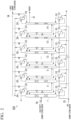
FIG. 2] FIG. 2 is a system diagram showing a main part of an enrichment apparatus for carbon tetrafluoride containing a stable isotope used in Example 1. - [
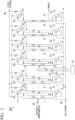
FIG. 3] FIG. 3 is a system diagram showing a main part of an enrichment apparatus for carbon monoxide containing a stable isotope used in Comparative Example 1. - Hereinafter, the present invention will be described in detail by showing embodiments with reference to the accompanying drawings.
- In addition, in figures used in the following explanation, in order to make the features easier to understand, the characteristic portions may be enlarged for convenience, and the dimensional ratios of each component may not necessarily be the same as the actual ones.
-
FIG. 1 is a system diagram showing a main part of an enrichment apparatus for a carbon stable isotope applicable to the carbon stable isotope enrichment method according to the embodiment of the present invention. - The carbon stable
isotope enrichment apparatus 100 of the present embodiment includes a distillation column group in which a plurality of distillation columns are cascaded, a plurality ofcondensers 20, a plurality ofreboilers 21, a rawmaterial feed line 30, and aproduct line 31. - Hereinafter, an n-th distillation column from the upstream end of the group of distillation columns will be referred to as the n-th distillation column.
- In
FIG. 1 , due to space limitations, among the first to n-th distillation columns 1 to n, thefirst distillation column 1 to which the raw material high-purity carbon tetrafluoride is supplied, and the n-th distillation column are only shown. - The first to n-
th distillation columns 1 to n are cascade-connected in order of column number. - The first to n-
th distillation columns 1 to n distill cooled carbon tetrafluoride at cryogenic temperatures. As a result, carbon tetrafluoride containing a carbon stable isotope with high vapor pressure are enriched on the column top side, and carbon tetrafluoride containing a carbon stable isotope with low vapor pressure are enriched on the column bottom side. - Among the first to n-
th distillation columns 1 to n, thefirst distillation column 1 to which the raw material is supplied has the largest distillation load and therefore has the largest column diameter. The distillation load gradually decreases from thefirst distillation column 1 toward the end (column diameter decreases). - One
condenser 20 is provided with each distillation column (first to n-th distillation columns 1 to n). - The
condenser 20 is provided with acirculation line 32 of which ends are connected to different positions on the top of each distillation column. Thecondenser 20 has a function of liquefying gas that has arisen in the distillation column by exchanging heat and causing it to descend again in the distillation column. - One
reboiler 21 is provided with each distillation column. - The
reboiler 21 is provided in acirculation line 33 of which ends are connected to different positions on the bottom of each distillation column. Thereboiler 21 has a function of vaporizing liquid that has descended in the distillation column by exchanging heat and causing it to ascend again in the distillation column. - One end of the raw
material feed line 30 is connected to the middle portion of thefirst distillation column 1. The rawmaterial feed line 30 is a line for supplying high-purity carbon tetrafluoride (raw material carbon tetrafluoride) to the middle portion of thefirst distillation column 1. The rawmaterial feed line 30 is provided with a valve. - The middle portion of the distillation column refers to positions other than the top and bottom of the distillation column.
- "High purity" means that the purity of carbon tetrafluoride is 99.999% or higher.
- The high-purity carbon tetrafluoride supplied from the raw
material feed line 30 contains two types of molecules containing a stable isotope shown in Table 1 below. The abundance percentage of each molecule containing as stable isotope is generally similar to the natural abundance percentage shown in Table 1.[Table 1] Molecule containing stable isotope Molecular weight Natural abundance percentage [%] 12CF4 88 98.9 13CF4 89 1.1 - The
product line 31 is a line for leading out enriched 13CF4 as a product from the n-th distillation column n. One end of theproduct line 31 is connected to the n-th distillation column n. The 13CF4 product is carbon tetrafluoride containing highly enriched (for example, 99% or greater) 13CF4. - Carbon tetrafluoride is distilled in the carbon stable
isotope enrichment apparatus 100 described above. Since carbon tetrafluoride has two kinds of molecules containing a stable isotope (12CF4 and 13CF4), 13CF4 with a high concentration of 99% or more can be obtained without isotope scrambling. As a result, equipment costs such as an isotope scrambler are not required, and the carbon stable isotope can be enriched to a high concentration of 99% or more in a small number of steps. - In addition, carbon tetrafluoride is inert and non-toxic, so safety measures are not required when installing a plant that performs carbon tetrafluoride distillation. Therefore, equipment costs can be greatly reduced.
- Furthermore, the resulting 13CF4 product is useful as a tracer in the medical field.
- Next, a carbon stable isotope enrichment method according to an embodiment of the present invention will be described with reference to
FIG. 1 . In this embodiment, the carbon stableisotope enrichment apparatus 100 shown inFIG. 1 is used to enrich 13CF4. - The carbon stable isotope enrichment method of this embodiment includes a distillation step.
- In the distillation step, high-purity carbon tetrafluoride (a raw material carbon tetrafluoride containing a plurality of types of carbon tetrafluoride containing a stable isotope) is supplied into the first distillation column, and distilled in the distillation column group (first to n-
th distillation columns 1 to n) to enrich carbon tetrafluoride containing a stable isotope 13C. - The carbon stable isotope enrichment method of this embodiment uses carbon tetrafluoride as a raw material containing carbon a stable isotope.
- The high-purity carbon tetrafluoride supplied from the raw
material feed line 30 contains two types of molecules containing a stable isotope shown in Table 1 above. Also, the abundance percentage of each molecule containing a stable isotope is generally similar to the natural abundance percentage shown in Table 1. - Immediately after starting the distillation step (immediately after operating each distillation column), the concentration of each molecule containing a stable isotope is uniform in all the distillation columns (first to n-
th distillation columns 1 to n). Then, over time, 13CF4 is enriched in the n-th distillation column n. Finally, 13CF4 enriched to a high concentration of 99% or more is led out from the n-th distillation column n through theproduct line 31. - In the carbon stable isotope enrichment method described above, carbon tetrafluoride is used as a raw material containing a carbon stable isotope and distilled. Since carbon tetrafluoride has two kinds of molecules containing a stable isotope (12CF4 and 13CF4), 13CF4 with a high concentration of 99% or more can be obtained without isotope scrambling. As a result, since equipment such as an isotope scrambler is unnecessary, equipment costs can be reduced. In addition, carbon stable isotope can be enriched to a high concentration of 99% or more in a small number of steps.
- In addition, since carbon tetrafluoride is inert and non-toxic, no safety precautions are required when setting up a plant for carbon tetrafluoride distillation. Therefore, the cost can be greatly reduced.
- In addition, the resulting 13CF4 product is useful as a tracer in the medical field.
- Although one example of the carbon stable isotope enrichment method and the carbon stable isotope enrichment apparatus of the present invention has been described above by showing embodiments, the present invention is not limited to these embodiments. Each configuration and combination thereof in the embodiments above are examples, and addition, omission, replacement, and other modifications of the configuration are possible without departing from the scope of the present invention.
- For example, the distillation column may be a packed column packed with regular packings, a packed column packed with random packings, or a plate column.
- The
condenser 20 andreboiler 21 above are not essential components for each distillation column, and may not be provided if the gas ascends sufficiently due to the pressure difference between the front and rear distillation columns, the pump, the blower, and the like. - The present invention will be described in detail below with reference to Examples, but the present invention is not limited thereto.
- In Example 1, enrichment of 13CF4 was performed using the
enrichment apparatus 200 for carbon tetrafluoride containing a stable isotope shown inFIG. 2 . - The basic configuration of the
enrichment apparatus 200 for carbon tetrafluoride containing a stable isotope is the same as the carbon stableisotope enrichment apparatus 100. The group of distillation columns is made of 14 distillation columns, anddistillation columns 1 to 14 are packed columns packed with regular packings. - The composition of the high-purity carbon tetrafluoride supplied (raw material carbon tetrafluoride) was as shown in Table 1 above. The feed rate of high-purity carbon tetrafluoride was 20 Nm3/h.
- Liquid carbon tetrafluoride was used as a cold source for the
condensers 20, and the liquefied carbon tetrafluoride was supplied to eachcondenser 20 from the liquefied carbontetrafluoride supply line 34. Gas carbon tetrafluoride was used as a heat source for thereboiler 21, and gas carbon tetrafluoride was supplied to each reboiler 21 from the gas carbontetrafluoride supply line 35. - Table 2 shows the abundance percentage of the molecules containing as stable isotope in the 13CF4 product led out from the
14th distillation column 14 when the apparatus is stable (during steady operation). - In addition, the power required to operate the apparatus was 480 kW.
[Table 2] Molecule containing stable isotope Molecular weight Abundance percentage [%] Carbon isotope Abundance percentage [%] 12CF4 88 0.3 12C 0.3 13CF4 89 99.7 13C 99.7 - In Comparative Example 1, 13CO was enriched using an
enrichment apparatus 300 for carbon monoxide containing a stable isotope shown inFIG. 3 . - The
enrichment apparatus 300 for carbon monoxide containing a stable isotope has the same structure as that of theenrichment apparatus 200 for carbon tetrafluoride containing a stable isotope, except that theenrichment apparatus 300 for carbon monoxide containing a stable isotope includes ten distillation columns, and is equipped with anisotope scrambler 22, an isotope-enriched gas lead-out line 36, and an isotope-enrichedgas return line 37. - The isotope enriched-gas lead-
out line 36 has one end connected to the middle portion of the seventh distillation column 7 and the other end connected to theisotope scrambler 22 to lead out some or all of the carbon monoxide, and supply into theisotope scrambler 22. In theisotope scrambler 22, the isotope exchange reaction between 13C16O and 12C18O (13C16O + 12C18O → 12C16O + 13C18O) yields an enriched-product with a higher concentration of 13C18O. The isotope enriched-gas return line 37 returns the enriched-product in which the concentration of 13C18O is further increased by the isotope exchange reaction to the seventh distillation column 7. - The composition of the high-purity carbon monoxide supplied (raw material carbon monoxide) was as shown in Table 3. The feed rate of high-purity carbon monoxide was 20 Nm3/h.
- Liquid nitrogen was used as a cold source for the
condensers 20, and the liquefied nitrogen was supplied into eachcondenser 20 from the liquefiednitrogen supply line 34. Gas nitrogen was used as the heat source for thereboiler 21, and the gas nitrogen was supplied into each reboiler 21 from the gasnitrogen supply line 35. - Simultaneously with the operation of the apparatus, leading out of carbon monoxide from the seventh distillation column 7, isotope scrambling in the
isotope scrambler 22, and return of the enriched-product from theisotope scrambler 22 into the seventh distillation column 7 are performed.[Table 3] Stable isotope molecule Molecular weight Natural abundance percentage [%] 12C16O 28 98.6617 12C17O 29 0.0366 13C16O 29 1.0973 13C17O 30 0.0004 12C18O 30 0.2018 13C18O 31 0.0022 - Table 4 shows the abundance percentage of the molecules containing a stable isotope in the 13CO product led out from the
tenth distillation column 10 when the apparatus is stable (during steady operation). - In addition, the power required to operate the apparatus was 450 kW.
[Table 4] Molecule containing stable isotope Molecular weight Abundance percentage[%] 12C16O 28 0.04 12C17O 29 0 13C16O 29 97.11 13C17O 30 0.15 12C18O 30 0.26 13C18O 31 2.44 Stable isotope Atomic weight Abundance percentage[%] 12C 12 0.3 13C 13 99.7 - In Example 1, 13C could be enriched to a high concentration of 99% or more without isotope scrambling. In addition, in Example 1, since 13CF4, which is inert and non-toxic, was used, no safety measures were required. Therefore, in Example 1, compared with Comparative Example 1, the equipment cost could be greatly reduced.
- Furthermore, in Example 1, the power required to operate the apparatus was almost the same as in Comparative Example 1, so the carbon stable isotope could be enriched to a high concentration of 99% or more at a lower cost than in Comparative Example 1.
- The present invention can be used as a carbon stable isotope enrichment method for enriching carbon tetrafluoride (13CF4) containing a stable isotope, which exist very rarely in nature by using a distillation apparatus for distilling a cryogenic fluid, wherein the distillation apparatus includes a group of distillation columns in which a plurality of distillation columns are cascaded.
-
- 1 to n
- distillation column
- 20
- condenser
- 21
- reboiler
- 22
- isotope scrambler
- 30
- raw material feed line
- 31
- product line
- 32
- circulation line
- 33
- circulation line
- 34
- supply line (liquefied carbon tetrafluoride supply line, liquefied nitrogen supply line)
- 35
- supply line (gas carbon tetrafluoride supply line, gas nitrogen supply line)
- 36
- isotope enriched-gas lead-out line
- 37
- isotope enriched-gas return line
- 100
- carbon stable isotope enrichment apparatus
- 200
- enrichment apparatus for carbon tetrafluoride containing a stable isotope apparatus
- 300
- carbon monoxide stable isotope enrichment apparatus
Claims (1)
- A carbon stable isotope enrichment method including a distillation step of distilling raw material carbon tetrafluoride containing multiple types of carbon tetrafluoride containing a stable isotope in a distillation column group in which multiple distillation columns are cascaded, and enriching carbon tetrafluoride containing a stable isotope 13C.
Applications Claiming Priority (2)
| Application Number | Priority Date | Filing Date | Title |
|---|---|---|---|
| JP2020142320A JP7026178B1 (en) | 2020-08-26 | 2020-08-26 | Carbon stable isotope enrichment method |
| PCT/JP2021/029675 WO2022044814A1 (en) | 2020-08-26 | 2021-08-11 | Carbon stable isotope enrichment method |
Publications (2)
| Publication Number | Publication Date |
|---|---|
| EP4205834A1 true EP4205834A1 (en) | 2023-07-05 |
| EP4205834A4 EP4205834A4 (en) | 2024-09-25 |
Family
ID=80353221
Family Applications (1)
| Application Number | Title | Priority Date | Filing Date |
|---|---|---|---|
| EP21861242.2A Withdrawn EP4205834A4 (en) | 2020-08-26 | 2021-08-11 | PROCESS FOR ENRICHMENT OF CARBON-STABLE ISOTOPES |
Country Status (5)
| Country | Link |
|---|---|
| US (1) | US20230302407A1 (en) |
| EP (1) | EP4205834A4 (en) |
| JP (1) | JP7026178B1 (en) |
| CN (1) | CN116096694A (en) |
| WO (1) | WO2022044814A1 (en) |
Families Citing this family (3)
| Publication number | Priority date | Publication date | Assignee | Title |
|---|---|---|---|---|
| CN116139696A (en) * | 2022-12-05 | 2023-05-23 | 中国原子能科学研究院 | Carbon isotope's rectification system |
| CN116251472A (en) * | 2022-12-05 | 2023-06-13 | 中国原子能科学研究院 | A carbon isotope rectification system |
| DK182014B1 (en) * | 2023-10-24 | 2025-05-27 | Copenhagen Atomics As | Method and apparatus for isotopic lithium separation |
Family Cites Families (10)
| Publication number | Priority date | Publication date | Assignee | Title |
|---|---|---|---|---|
| US5085748A (en) * | 1989-01-24 | 1992-02-04 | Nippon Steel Chemical Co., Ltd. | Process for enriching carbon 13 |
| JPH06134261A (en) * | 1992-10-30 | 1994-05-17 | Tokyo Gas Co Ltd | Distillation apparatus and method for separating two substances having close saturated vapor pressures |
| KR20040104494A (en) * | 2002-03-08 | 2004-12-10 | 도쿄 가스 가부시키가이샤 | A separation method and separation apparatus of isotopes from gaseous substances |
| JP5026774B2 (en) * | 2006-11-28 | 2012-09-19 | 大陽日酸株式会社 | Distillation equipment |
| JP2011161383A (en) * | 2010-02-10 | 2011-08-25 | Taiyo Nippon Sanso Corp | Method and apparatus for concentrating oxygen containing heavy component of oxygen isotope |
| JP5132822B1 (en) * | 2012-03-27 | 2013-01-30 | 大陽日酸株式会社 | Distillation equipment |
| JP6172684B2 (en) | 2015-01-20 | 2017-08-02 | 大陽日酸株式会社 | Oxygen isotope enrichment method |
| JP6606522B2 (en) | 2017-03-28 | 2019-11-13 | 大陽日酸株式会社 | Carbon monoxide stable isotope enrichment apparatus and carbon monoxide stable isotope enrichment method |
| JP6889644B2 (en) * | 2017-09-27 | 2021-06-18 | 大陽日酸株式会社 | Oxygen isotope substitution method and oxygen isotope substitution device |
| CN108404668B (en) | 2018-04-19 | 2019-12-10 | 清华大学 | method for preparing high-abundance carbon-13 isotope by using carbon tetrafluoride as medium |
-
2020
- 2020-08-26 JP JP2020142320A patent/JP7026178B1/en not_active Expired - Fee Related
-
2021
- 2021-08-11 CN CN202180051828.8A patent/CN116096694A/en active Pending
- 2021-08-11 EP EP21861242.2A patent/EP4205834A4/en not_active Withdrawn
- 2021-08-11 US US18/020,135 patent/US20230302407A1/en not_active Abandoned
- 2021-08-11 WO PCT/JP2021/029675 patent/WO2022044814A1/en not_active Ceased
Also Published As
| Publication number | Publication date |
|---|---|
| JP2022038037A (en) | 2022-03-10 |
| CN116096694A (en) | 2023-05-09 |
| EP4205834A4 (en) | 2024-09-25 |
| JP7026178B1 (en) | 2022-02-25 |
| WO2022044814A1 (en) | 2022-03-03 |
| US20230302407A1 (en) | 2023-09-28 |
Similar Documents
| Publication | Publication Date | Title |
|---|---|---|
| US20230302407A1 (en) | Carbon stable isotope enrichment method | |
| JP6606522B2 (en) | Carbon monoxide stable isotope enrichment apparatus and carbon monoxide stable isotope enrichment method | |
| US4353871A (en) | Hydrogen isotope separation | |
| AU659685B2 (en) | Improved cryogenic distillation process for the production of oxygen and nitrogen | |
| US9895662B2 (en) | Method for enriching oxygen isotope | |
| EP0173168A2 (en) | Process to produce ultrahigh purity oxygen | |
| EP1997551B1 (en) | Method for concentration of heavy nitrogen isotope | |
| EP0589646A1 (en) | Distillation process for the production of carbon monoxide-free nitrogen | |
| KR102048024B1 (en) | Appratus and method for purifying the nitrogen dioxide using the nitric acid production process | |
| DE69912229T2 (en) | Cryogenic air separation process | |
| CN116670070A (en) | Stable isotope enrichment device and stable isotope enrichment method | |
| US4525186A (en) | Method for producing isotopically enriched helium-4 and use of same as nuclear reactor coolant | |
| EP0387872A2 (en) | Cryogenic rectification process for producing ultra high purity nitrogen | |
| TW241330B (en) | Pumped liquid oxygen method and apparatus | |
| US4762542A (en) | Process for the recovery of argon | |
| CN115243784B (en) | Stable isotope enrichment methods | |
| EP0301515A2 (en) | Process and apparatus to produce ultra high purity oxygen from a gaseous feed | |
| EP4245403A1 (en) | Stable isotope concentrating device | |
| JPH0345883A (en) | Improved nitrogen generator | |
| JP6913772B2 (en) | Stable isotope concentrator | |
| US6843973B2 (en) | Krypton and xenon recovery system | |
| US3399967A (en) | Method for production of deuterated methanes and heavy water | |
| JP7551455B2 (en) | Stable isotope enrichment device and method for enriching stable isotopes | |
| KR102729734B1 (en) | Method for producing nitrogen monoxide and nitrogen monoxide produced by the method | |
| Agrawal | Production of ultrahigh-purity oxygen: A distillation method for the coproduction of the heavy key component stream free of heavier impurities |
Legal Events
| Date | Code | Title | Description |
|---|---|---|---|
| STAA | Information on the status of an ep patent application or granted ep patent |
Free format text: STATUS: THE INTERNATIONAL PUBLICATION HAS BEEN MADE |
|
| PUAI | Public reference made under article 153(3) epc to a published international application that has entered the european phase |
Free format text: ORIGINAL CODE: 0009012 |
|
| STAA | Information on the status of an ep patent application or granted ep patent |
Free format text: STATUS: REQUEST FOR EXAMINATION WAS MADE |
|
| 17P | Request for examination filed |
Effective date: 20230203 |
|
| AK | Designated contracting states |
Kind code of ref document: A1 Designated state(s): AL AT BE BG CH CY CZ DE DK EE ES FI FR GB GR HR HU IE IS IT LI LT LU LV MC MK MT NL NO PL PT RO RS SE SI SK SM TR |
|
| DAV | Request for validation of the european patent (deleted) | ||
| DAX | Request for extension of the european patent (deleted) | ||
| A4 | Supplementary search report drawn up and despatched |
Effective date: 20240827 |
|
| RIC1 | Information provided on ipc code assigned before grant |
Ipc: F25J 3/08 20060101ALI20240821BHEP Ipc: C07C 17/383 20060101ALI20240821BHEP Ipc: C07C 19/08 20060101ALI20240821BHEP Ipc: C01B 32/05 20170101ALI20240821BHEP Ipc: B01D 59/04 20060101AFI20240821BHEP |
|
| STAA | Information on the status of an ep patent application or granted ep patent |
Free format text: STATUS: THE APPLICATION IS DEEMED TO BE WITHDRAWN |
|
| 18D | Application deemed to be withdrawn |
Effective date: 20250314 |