EP4205829A1 - Web-film filter formed of aliphatic polyester fiber for purifying air, and method for producing same - Google Patents
Web-film filter formed of aliphatic polyester fiber for purifying air, and method for producing same Download PDFInfo
- Publication number
- EP4205829A1 EP4205829A1 EP21861972.4A EP21861972A EP4205829A1 EP 4205829 A1 EP4205829 A1 EP 4205829A1 EP 21861972 A EP21861972 A EP 21861972A EP 4205829 A1 EP4205829 A1 EP 4205829A1
- Authority
- EP
- European Patent Office
- Prior art keywords
- web
- chitosan
- film
- air purification
- aqueous solution
- Prior art date
- Legal status (The legal status is an assumption and is not a legal conclusion. Google has not performed a legal analysis and makes no representation as to the accuracy of the status listed.)
- Pending
Links
- 229920003232 aliphatic polyester Polymers 0.000 title claims abstract description 27
- 239000000835 fiber Substances 0.000 title abstract description 24
- 238000004519 manufacturing process Methods 0.000 title description 2
- 229920001661 Chitosan Polymers 0.000 claims abstract description 191
- 239000011248 coating agent Substances 0.000 claims abstract description 46
- 238000000576 coating method Methods 0.000 claims abstract description 46
- 238000004887 air purification Methods 0.000 claims abstract description 44
- 238000000034 method Methods 0.000 claims abstract description 25
- 239000007864 aqueous solution Substances 0.000 claims description 102
- 239000000243 solution Substances 0.000 claims description 70
- QTBSBXVTEAMEQO-UHFFFAOYSA-N Acetic acid Chemical compound CC(O)=O QTBSBXVTEAMEQO-UHFFFAOYSA-N 0.000 claims description 45
- 238000006640 acetylation reaction Methods 0.000 claims description 32
- XLYOFNOQVPJJNP-UHFFFAOYSA-N water Substances O XLYOFNOQVPJJNP-UHFFFAOYSA-N 0.000 claims description 31
- 229920001410 Microfiber Polymers 0.000 claims description 26
- 230000021736 acetylation Effects 0.000 claims description 26
- 239000003658 microfiber Substances 0.000 claims description 26
- -1 polybutylene succinate Polymers 0.000 claims description 26
- 239000002105 nanoparticle Substances 0.000 claims description 17
- 229920000642 polymer Polymers 0.000 claims description 15
- 238000001523 electrospinning Methods 0.000 claims description 14
- 238000003756 stirring Methods 0.000 claims description 14
- 229920002101 Chitin Polymers 0.000 claims description 12
- 239000003637 basic solution Substances 0.000 claims description 12
- 229920001748 polybutylene Polymers 0.000 claims description 9
- 238000005406 washing Methods 0.000 claims description 9
- 239000002253 acid Substances 0.000 claims description 7
- 239000000203 mixture Substances 0.000 claims description 7
- 229920000954 Polyglycolide Polymers 0.000 claims description 6
- 239000012046 mixed solvent Substances 0.000 claims description 6
- 239000003960 organic solvent Substances 0.000 claims description 6
- 239000004633 polyglycolic acid Substances 0.000 claims description 6
- 239000000843 powder Substances 0.000 claims description 6
- 239000002904 solvent Substances 0.000 claims description 6
- RQFQJYYMBWVMQG-IXDPLRRUSA-N chitotriose Chemical compound O[C@@H]1[C@@H](N)[C@H](O)O[C@H](CO)[C@H]1O[C@H]1[C@H](N)[C@@H](O)[C@H](O[C@H]2[C@@H]([C@@H](O)[C@H](O)[C@@H](CO)O2)N)[C@@H](CO)O1 RQFQJYYMBWVMQG-IXDPLRRUSA-N 0.000 claims description 5
- 229920002961 polybutylene succinate Polymers 0.000 claims description 5
- 239000004631 polybutylene succinate Substances 0.000 claims description 5
- 239000012345 acetylating agent Substances 0.000 claims description 4
- 239000000376 reactant Substances 0.000 claims description 4
- 229920000331 Polyhydroxybutyrate Polymers 0.000 claims description 3
- 239000006185 dispersion Substances 0.000 claims description 3
- 230000003301 hydrolyzing effect Effects 0.000 claims description 3
- 239000005015 poly(hydroxybutyrate) Substances 0.000 claims description 3
- 229920000747 poly(lactic acid) Polymers 0.000 claims description 3
- 229920000921 polyethylene adipate Polymers 0.000 claims description 3
- 239000004626 polylactic acid Substances 0.000 claims description 3
- 229940070710 valerate Drugs 0.000 claims description 3
- 229920002292 Nylon 6 Polymers 0.000 claims description 2
- 239000005022 packaging material Substances 0.000 claims 2
- 239000013618 particulate matter Substances 0.000 abstract description 52
- 239000002699 waste material Substances 0.000 abstract description 5
- 239000010408 film Substances 0.000 description 110
- HEMHJVSKTPXQMS-UHFFFAOYSA-M Sodium hydroxide Chemical compound [OH-].[Na+] HEMHJVSKTPXQMS-UHFFFAOYSA-M 0.000 description 39
- 230000000704 physical effect Effects 0.000 description 29
- 238000002360 preparation method Methods 0.000 description 27
- 238000001179 sorption measurement Methods 0.000 description 24
- 230000000052 comparative effect Effects 0.000 description 16
- OKKJLVBELUTLKV-UHFFFAOYSA-N Methanol Chemical compound OC OKKJLVBELUTLKV-UHFFFAOYSA-N 0.000 description 15
- VEXZGXHMUGYJMC-UHFFFAOYSA-N Hydrochloric acid Chemical compound Cl VEXZGXHMUGYJMC-UHFFFAOYSA-N 0.000 description 14
- 241000700605 Viruses Species 0.000 description 14
- 239000000428 dust Substances 0.000 description 14
- 235000011054 acetic acid Nutrition 0.000 description 13
- 238000009987 spinning Methods 0.000 description 12
- LFQSCWFLJHTTHZ-UHFFFAOYSA-N Ethanol Chemical compound CCO LFQSCWFLJHTTHZ-UHFFFAOYSA-N 0.000 description 11
- 230000000694 effects Effects 0.000 description 9
- 239000012153 distilled water Substances 0.000 description 7
- 239000002245 particle Substances 0.000 description 7
- HEDRZPFGACZZDS-UHFFFAOYSA-N Chloroform Chemical compound ClC(Cl)Cl HEDRZPFGACZZDS-UHFFFAOYSA-N 0.000 description 6
- 238000000502 dialysis Methods 0.000 description 6
- 238000002474 experimental method Methods 0.000 description 6
- 229920000139 polyethylene terephthalate Polymers 0.000 description 6
- 239000005020 polyethylene terephthalate Substances 0.000 description 6
- 230000008859 change Effects 0.000 description 5
- 238000000354 decomposition reaction Methods 0.000 description 5
- 229910052751 metal Inorganic materials 0.000 description 5
- 239000002184 metal Substances 0.000 description 5
- 102000004190 Enzymes Human genes 0.000 description 4
- 108090000790 Enzymes Proteins 0.000 description 4
- 238000011156 evaluation Methods 0.000 description 4
- 230000003472 neutralizing effect Effects 0.000 description 4
- 239000000047 product Substances 0.000 description 4
- 239000002689 soil Substances 0.000 description 4
- 238000004448 titration Methods 0.000 description 4
- 239000000654 additive Substances 0.000 description 3
- 239000002585 base Substances 0.000 description 3
- 238000002149 energy-dispersive X-ray emission spectroscopy Methods 0.000 description 3
- 238000005470 impregnation Methods 0.000 description 3
- BASFCYQUMIYNBI-UHFFFAOYSA-N platinum Chemical compound [Pt] BASFCYQUMIYNBI-UHFFFAOYSA-N 0.000 description 3
- 239000011148 porous material Substances 0.000 description 3
- 230000009467 reduction Effects 0.000 description 3
- 239000007787 solid Substances 0.000 description 3
- CIWBSHSKHKDKBQ-JLAZNSOCSA-N Ascorbic acid Chemical compound OC[C@H](O)[C@H]1OC(=O)C(O)=C1O CIWBSHSKHKDKBQ-JLAZNSOCSA-N 0.000 description 2
- IJGRMHOSHXDMSA-UHFFFAOYSA-N Atomic nitrogen Chemical compound N#N IJGRMHOSHXDMSA-UHFFFAOYSA-N 0.000 description 2
- 241000588724 Escherichia coli Species 0.000 description 2
- 241000702315 Escherichia virus phiX174 Species 0.000 description 2
- 239000004367 Lipase Substances 0.000 description 2
- 102000004882 Lipase Human genes 0.000 description 2
- 108090001060 Lipase Proteins 0.000 description 2
- 239000004743 Polypropylene Substances 0.000 description 2
- 241000223258 Thermomyces lanuginosus Species 0.000 description 2
- 229910052782 aluminium Inorganic materials 0.000 description 2
- XAGFODPZIPBFFR-UHFFFAOYSA-N aluminium Chemical compound [Al] XAGFODPZIPBFFR-UHFFFAOYSA-N 0.000 description 2
- 125000003277 amino group Chemical group 0.000 description 2
- 238000006065 biodegradation reaction Methods 0.000 description 2
- 239000002361 compost Substances 0.000 description 2
- XBDQKXXYIPTUBI-UHFFFAOYSA-N dimethylselenoniopropionate Natural products CCC(O)=O XBDQKXXYIPTUBI-UHFFFAOYSA-N 0.000 description 2
- 201000010099 disease Diseases 0.000 description 2
- 208000037265 diseases, disorders, signs and symptoms Diseases 0.000 description 2
- 230000005611 electricity Effects 0.000 description 2
- 238000003912 environmental pollution Methods 0.000 description 2
- 238000001914 filtration Methods 0.000 description 2
- 230000007062 hydrolysis Effects 0.000 description 2
- 238000006460 hydrolysis reaction Methods 0.000 description 2
- 238000007654 immersion Methods 0.000 description 2
- JVTAAEKCZFNVCJ-UHFFFAOYSA-N lactic acid Chemical compound CC(O)C(O)=O JVTAAEKCZFNVCJ-UHFFFAOYSA-N 0.000 description 2
- 235000019421 lipase Nutrition 0.000 description 2
- BDAGIHXWWSANSR-UHFFFAOYSA-N methanoic acid Natural products OC=O BDAGIHXWWSANSR-UHFFFAOYSA-N 0.000 description 2
- 229920001155 polypropylene Polymers 0.000 description 2
- 230000008569 process Effects 0.000 description 2
- 150000003839 salts Chemical class 0.000 description 2
- 238000007873 sieving Methods 0.000 description 2
- 230000003068 static effect Effects 0.000 description 2
- 239000008399 tap water Substances 0.000 description 2
- 235000020679 tap water Nutrition 0.000 description 2
- OSWFIVFLDKOXQC-UHFFFAOYSA-N 4-(3-methoxyphenyl)aniline Chemical compound COC1=CC=CC(C=2C=CC(N)=CC=2)=C1 OSWFIVFLDKOXQC-UHFFFAOYSA-N 0.000 description 1
- 241000711573 Coronaviridae Species 0.000 description 1
- FEWJPZIEWOKRBE-JCYAYHJZSA-N Dextrotartaric acid Chemical compound OC(=O)[C@H](O)[C@@H](O)C(O)=O FEWJPZIEWOKRBE-JCYAYHJZSA-N 0.000 description 1
- 206010028980 Neoplasm Diseases 0.000 description 1
- 206010057190 Respiratory tract infections Diseases 0.000 description 1
- FEWJPZIEWOKRBE-UHFFFAOYSA-N Tartaric acid Natural products [H+].[H+].[O-]C(=O)C(O)C(O)C([O-])=O FEWJPZIEWOKRBE-UHFFFAOYSA-N 0.000 description 1
- 230000000397 acetylating effect Effects 0.000 description 1
- 239000000853 adhesive Substances 0.000 description 1
- 230000001070 adhesive effect Effects 0.000 description 1
- 239000000443 aerosol Substances 0.000 description 1
- 238000003915 air pollution Methods 0.000 description 1
- QGZKDVFQNNGYKY-UHFFFAOYSA-O ammonium group Chemical group [NH4+] QGZKDVFQNNGYKY-UHFFFAOYSA-O 0.000 description 1
- 230000000844 anti-bacterial effect Effects 0.000 description 1
- 235000010323 ascorbic acid Nutrition 0.000 description 1
- 239000011668 ascorbic acid Substances 0.000 description 1
- 229960005070 ascorbic acid Drugs 0.000 description 1
- 238000004364 calculation method Methods 0.000 description 1
- 201000011510 cancer Diseases 0.000 description 1
- 230000000711 cancerogenic effect Effects 0.000 description 1
- 231100000357 carcinogen Toxicity 0.000 description 1
- 239000003183 carcinogenic agent Substances 0.000 description 1
- 230000015271 coagulation Effects 0.000 description 1
- 238000005345 coagulation Methods 0.000 description 1
- 239000011247 coating layer Substances 0.000 description 1
- 239000013065 commercial product Substances 0.000 description 1
- 238000012790 confirmation Methods 0.000 description 1
- 239000000470 constituent Substances 0.000 description 1
- 230000003247 decreasing effect Effects 0.000 description 1
- 230000000249 desinfective effect Effects 0.000 description 1
- 238000011161 development Methods 0.000 description 1
- 238000010586 diagram Methods 0.000 description 1
- 230000007613 environmental effect Effects 0.000 description 1
- 230000007717 exclusion Effects 0.000 description 1
- 238000000445 field-emission scanning electron microscopy Methods 0.000 description 1
- 239000010419 fine particle Substances 0.000 description 1
- 235000019253 formic acid Nutrition 0.000 description 1
- 239000011521 glass Substances 0.000 description 1
- 235000011167 hydrochloric acid Nutrition 0.000 description 1
- 239000004310 lactic acid Substances 0.000 description 1
- 235000014655 lactic acid Nutrition 0.000 description 1
- 239000005001 laminate film Substances 0.000 description 1
- 239000010410 layer Substances 0.000 description 1
- 239000007788 liquid Substances 0.000 description 1
- 238000013507 mapping Methods 0.000 description 1
- 238000005259 measurement Methods 0.000 description 1
- 238000002074 melt spinning Methods 0.000 description 1
- 238000002156 mixing Methods 0.000 description 1
- 230000004048 modification Effects 0.000 description 1
- 238000012986 modification Methods 0.000 description 1
- 239000002121 nanofiber Substances 0.000 description 1
- 229910052757 nitrogen Inorganic materials 0.000 description 1
- 150000007524 organic acids Chemical class 0.000 description 1
- 230000035699 permeability Effects 0.000 description 1
- 239000008055 phosphate buffer solution Substances 0.000 description 1
- 229910052697 platinum Inorganic materials 0.000 description 1
- 229920005594 polymer fiber Polymers 0.000 description 1
- 239000002861 polymer material Substances 0.000 description 1
- 230000002265 prevention Effects 0.000 description 1
- 235000019260 propionic acid Nutrition 0.000 description 1
- IUVKMZGDUIUOCP-BTNSXGMBSA-N quinbolone Chemical compound O([C@H]1CC[C@H]2[C@H]3[C@@H]([C@]4(C=CC(=O)C=C4CC3)C)CC[C@@]21C)C1=CCCC1 IUVKMZGDUIUOCP-BTNSXGMBSA-N 0.000 description 1
- 239000002994 raw material Substances 0.000 description 1
- 238000011160 research Methods 0.000 description 1
- 208000023504 respiratory system disease Diseases 0.000 description 1
- 239000007921 spray Substances 0.000 description 1
- KDYFGRWQOYBRFD-UHFFFAOYSA-L succinate(2-) Chemical compound [O-]C(=O)CCC([O-])=O KDYFGRWQOYBRFD-UHFFFAOYSA-L 0.000 description 1
- 235000002906 tartaric acid Nutrition 0.000 description 1
- 239000011975 tartaric acid Substances 0.000 description 1
- 239000010409 thin film Substances 0.000 description 1
- 230000004584 weight gain Effects 0.000 description 1
- 235000019786 weight gain Nutrition 0.000 description 1
Images

Classifications
-
- A—HUMAN NECESSITIES
- A62—LIFE-SAVING; FIRE-FIGHTING
- A62B—DEVICES, APPARATUS OR METHODS FOR LIFE-SAVING
- A62B23/00—Filters for breathing-protection purposes
- A62B23/02—Filters for breathing-protection purposes for respirators
-
- A—HUMAN NECESSITIES
- A62—LIFE-SAVING; FIRE-FIGHTING
- A62B—DEVICES, APPARATUS OR METHODS FOR LIFE-SAVING
- A62B23/00—Filters for breathing-protection purposes
- A62B23/02—Filters for breathing-protection purposes for respirators
- A62B23/025—Filters for breathing-protection purposes for respirators the filter having substantially the shape of a mask
-
- B—PERFORMING OPERATIONS; TRANSPORTING
- B01—PHYSICAL OR CHEMICAL PROCESSES OR APPARATUS IN GENERAL
- B01D—SEPARATION
- B01D39/00—Filtering material for liquid or gaseous fluids
- B01D39/14—Other self-supporting filtering material ; Other filtering material
- B01D39/16—Other self-supporting filtering material ; Other filtering material of organic material, e.g. synthetic fibres
- B01D39/1607—Other self-supporting filtering material ; Other filtering material of organic material, e.g. synthetic fibres the material being fibrous
- B01D39/1623—Other self-supporting filtering material ; Other filtering material of organic material, e.g. synthetic fibres the material being fibrous of synthetic origin
-
- B—PERFORMING OPERATIONS; TRANSPORTING
- B01—PHYSICAL OR CHEMICAL PROCESSES OR APPARATUS IN GENERAL
- B01D—SEPARATION
- B01D39/00—Filtering material for liquid or gaseous fluids
- B01D39/14—Other self-supporting filtering material ; Other filtering material
- B01D39/16—Other self-supporting filtering material ; Other filtering material of organic material, e.g. synthetic fibres
- B01D39/1692—Other shaped material, e.g. perforated or porous sheets
-
- B—PERFORMING OPERATIONS; TRANSPORTING
- B01—PHYSICAL OR CHEMICAL PROCESSES OR APPARATUS IN GENERAL
- B01D—SEPARATION
- B01D46/00—Filters or filtering processes specially modified for separating dispersed particles from gases or vapours
-
- B—PERFORMING OPERATIONS; TRANSPORTING
- B01—PHYSICAL OR CHEMICAL PROCESSES OR APPARATUS IN GENERAL
- B01D—SEPARATION
- B01D46/00—Filters or filtering processes specially modified for separating dispersed particles from gases or vapours
- B01D46/0001—Making filtering elements
-
- B—PERFORMING OPERATIONS; TRANSPORTING
- B01—PHYSICAL OR CHEMICAL PROCESSES OR APPARATUS IN GENERAL
- B01D—SEPARATION
- B01D53/00—Separation of gases or vapours; Recovering vapours of volatile solvents from gases; Chemical or biological purification of waste gases, e.g. engine exhaust gases, smoke, fumes, flue gases, aerosols
- B01D53/34—Chemical or biological purification of waste gases
- B01D53/46—Removing components of defined structure
- B01D53/72—Organic compounds not provided for in groups B01D53/48 - B01D53/70, e.g. hydrocarbons
-
- B—PERFORMING OPERATIONS; TRANSPORTING
- B01—PHYSICAL OR CHEMICAL PROCESSES OR APPARATUS IN GENERAL
- B01D—SEPARATION
- B01D53/00—Separation of gases or vapours; Recovering vapours of volatile solvents from gases; Chemical or biological purification of waste gases, e.g. engine exhaust gases, smoke, fumes, flue gases, aerosols
- B01D53/34—Chemical or biological purification of waste gases
- B01D53/74—General processes for purification of waste gases; Apparatus or devices specially adapted therefor
- B01D53/81—Solid phase processes
- B01D53/82—Solid phase processes with stationary reactants
-
- A—HUMAN NECESSITIES
- A41—WEARING APPAREL
- A41D—OUTERWEAR; PROTECTIVE GARMENTS; ACCESSORIES
- A41D13/00—Professional, industrial or sporting protective garments, e.g. surgeons' gowns or garments protecting against blows or punches
- A41D13/05—Professional, industrial or sporting protective garments, e.g. surgeons' gowns or garments protecting against blows or punches protecting only a particular body part
- A41D13/11—Protective face masks, e.g. for surgical use, or for use in foul atmospheres
-
- B—PERFORMING OPERATIONS; TRANSPORTING
- B01—PHYSICAL OR CHEMICAL PROCESSES OR APPARATUS IN GENERAL
- B01D—SEPARATION
- B01D2239/00—Aspects relating to filtering material for liquid or gaseous fluids
- B01D2239/02—Types of fibres, filaments or particles, self-supporting or supported materials
- B01D2239/0258—Types of fibres, filaments or particles, self-supporting or supported materials comprising nanoparticles
-
- B—PERFORMING OPERATIONS; TRANSPORTING
- B01—PHYSICAL OR CHEMICAL PROCESSES OR APPARATUS IN GENERAL
- B01D—SEPARATION
- B01D2239/00—Aspects relating to filtering material for liquid or gaseous fluids
- B01D2239/02—Types of fibres, filaments or particles, self-supporting or supported materials
- B01D2239/0266—Types of fibres, filaments or particles, self-supporting or supported materials comprising biodegradable or bio-soluble polymers
-
- B—PERFORMING OPERATIONS; TRANSPORTING
- B01—PHYSICAL OR CHEMICAL PROCESSES OR APPARATUS IN GENERAL
- B01D—SEPARATION
- B01D2239/00—Aspects relating to filtering material for liquid or gaseous fluids
- B01D2239/04—Additives and treatments of the filtering material
- B01D2239/0464—Impregnants
-
- B—PERFORMING OPERATIONS; TRANSPORTING
- B01—PHYSICAL OR CHEMICAL PROCESSES OR APPARATUS IN GENERAL
- B01D—SEPARATION
- B01D2239/00—Aspects relating to filtering material for liquid or gaseous fluids
- B01D2239/04—Additives and treatments of the filtering material
- B01D2239/0471—Surface coating material
-
- B—PERFORMING OPERATIONS; TRANSPORTING
- B01—PHYSICAL OR CHEMICAL PROCESSES OR APPARATUS IN GENERAL
- B01D—SEPARATION
- B01D2239/00—Aspects relating to filtering material for liquid or gaseous fluids
- B01D2239/06—Filter cloth, e.g. knitted, woven non-woven; self-supported material
- B01D2239/0604—Arrangement of the fibres in the filtering material
- B01D2239/0631—Electro-spun
-
- B—PERFORMING OPERATIONS; TRANSPORTING
- B01—PHYSICAL OR CHEMICAL PROCESSES OR APPARATUS IN GENERAL
- B01D—SEPARATION
- B01D2239/00—Aspects relating to filtering material for liquid or gaseous fluids
- B01D2239/10—Filtering material manufacturing
-
- B—PERFORMING OPERATIONS; TRANSPORTING
- B01—PHYSICAL OR CHEMICAL PROCESSES OR APPARATUS IN GENERAL
- B01D—SEPARATION
- B01D2239/00—Aspects relating to filtering material for liquid or gaseous fluids
- B01D2239/12—Special parameters characterising the filtering material
- B01D2239/1233—Fibre diameter
-
- B—PERFORMING OPERATIONS; TRANSPORTING
- B01—PHYSICAL OR CHEMICAL PROCESSES OR APPARATUS IN GENERAL
- B01D—SEPARATION
- B01D2253/00—Adsorbents used in seperation treatment of gases and vapours
- B01D2253/20—Organic adsorbents
- B01D2253/202—Polymeric adsorbents
-
- B—PERFORMING OPERATIONS; TRANSPORTING
- B01—PHYSICAL OR CHEMICAL PROCESSES OR APPARATUS IN GENERAL
- B01D—SEPARATION
- B01D2257/00—Components to be removed
- B01D2257/91—Bacteria; Microorganisms
-
- B—PERFORMING OPERATIONS; TRANSPORTING
- B01—PHYSICAL OR CHEMICAL PROCESSES OR APPARATUS IN GENERAL
- B01D—SEPARATION
- B01D2258/00—Sources of waste gases
- B01D2258/06—Polluted air
-
- Y—GENERAL TAGGING OF NEW TECHNOLOGICAL DEVELOPMENTS; GENERAL TAGGING OF CROSS-SECTIONAL TECHNOLOGIES SPANNING OVER SEVERAL SECTIONS OF THE IPC; TECHNICAL SUBJECTS COVERED BY FORMER USPC CROSS-REFERENCE ART COLLECTIONS [XRACs] AND DIGESTS
- Y02—TECHNOLOGIES OR APPLICATIONS FOR MITIGATION OR ADAPTATION AGAINST CLIMATE CHANGE
- Y02A—TECHNOLOGIES FOR ADAPTATION TO CLIMATE CHANGE
- Y02A50/00—TECHNOLOGIES FOR ADAPTATION TO CLIMATE CHANGE in human health protection, e.g. against extreme weather
- Y02A50/20—Air quality improvement or preservation, e.g. vehicle emission control or emission reduction by using catalytic converters
- Y02A50/2351—Atmospheric particulate matter [PM], e.g. carbon smoke microparticles, smog, aerosol particles, dust
Definitions
- the present invention relates to a web-film filter for air purification including an aliphatic polyester fiber and a method of producing the same.
- PM Particulate matter
- PM2.5 Particulate matter having a diameter of 2.5 um or less
- PM10 Particulate matter having a diameter of 10 ⁇ m or less
- Group I carcinogen by the International Agency for Research on Cancer.
- face masks used by an individual is growing day by day.
- a filter composed of fibers is a filter having a high air permeability and is used in various air filtration fields.
- Two PM filter modes are applied to a general fiber type filter, which are physical sieving and electrostatic adsorption.
- Physical sieving is a method of filtering by size difference between particles and pores, and for removing very fine particles, nanofibers are densely built up to form very fine pores, which causes a respiratory disorder due to high pressure drop.
- Electrostatic adsorption is possible since PM is composed of generally charged particles and aerosols.
- high voltage is applied to a polymer material filter to impart electrostatic properties, but there is a risk of reduced adsorption ability of particulate matter since electrostatic force is lost only by high humidity.
- Waste from an old filter should be buried or incinerated, and development of a high functional biodegradable mask filter for solving the problem of overflowing demand and waste is highly demanded.
- An object of the present invention is to provide a filter for air purification having a high particulate matter removal efficiency, using a web-film including a biodegradable aliphatic polyester-based fiber, as a method of alleviating the burden of waste of an old filter for air purification.
- an object of the present invention is to provide a filter for air purification having a less reduced particulate matter removal efficiency even in high moisture and humidity by coating a fiber surface with chitosan.
- Another object of the present invention is to provide a filter for air purification which is degradable to cause less environmental pollution and has an excellent virus adsorption effect.
- a web-film filter for air purification includes an aliphatic polyester microfiber coated with chitosan.
- the chitosan may be any one or more selected from chitosan nanoparticles and nanowhiskers.
- the filter may be obtained by coating or impregnating a web-film including an aliphatic polyester microfiber with an aqueous solution of pH 2 to 6 including any one or more selected from chitosan nanoparticles and nanowhiskers.
- the microfiber may have a diameter of 50 nm to 50 ⁇ m.
- the chitosan may be acetylated chitosan.
- the acetylated chitosan may have a degree of acetylation of 90% or less.
- the web-film filter for air purification may have a PM10 removal efficiency of 70% or more at a wind speed of 1 m/s.
- the web-film filter for air purification may have a PM2.5 removal efficiency of 60% or more at a wind speed of 1 m/s.
- the web-film filter for air purification may have a PM10 removal quality factor of 0.05 Pa -1 or more at a wind speed of 1 m/s.
- the web-film filter for air purification may have a PM2.5 removal quality factor of 0.04 Pa -1 or more at a wind speed of 1 m/s.
- the aliphatic polyester may be any one or a mixture of two or more selected from the group consisting of polyhydroxybutyrate (PHP), polyhydroxybutyrate-co-valerate (PHBV), polycaprolactane, polybutylene succinate, polybutylene succinate-co-adipate, polyglycolic acid (PGA), polylactide or polylactic acid (PLA), polybutylene oxalate, polyethylene adipate, polyparadioxanone, polymorpholinebione, polybutylene adipate-co-terephthalate, polybutylene adipate-co-furanoate, polydioxipane-2-one, and the like.
- PGP polyhydroxybutyrate
- PHBV polyhydroxybutyrate-co-valerate
- PDA polycaprolactane
- polybutylene succinate polybutylene succinate-co-adipate
- PGA polyglycolic acid
- PLA polylactide or polylactic acid
- a face mask product uses the web-film filter according to the exemplary embodiment.
- an air cleaner uses the web-film filter according to the exemplary embodiment.
- a method of producing a web-film filter for air purification includes:
- the chitosan aqueous solution may be prepared by including:
- the chitosan may be any one or more selected from chitosan nanoparticles and nanowhiskers.
- the chitosan aqueous solution may be prepared by including:
- the acetylated chitosan may have a degree of acetylation of 90% or less.
- the filter for air purification according to an exemplary embodiment of the present invention has an excellent particulate matter removal efficiency, and in the case of the web-film filter of microfiber coated with chitosan, provides a more improved particulate matter removal efficiency.
- the present invention may be useful as a filter for air purification. More specifically, the present invention may be applied to a face mask, a filter for an air cleaner, and the like, but is not limited thereto.
- a "microfiber” refers to a fiber having a diameter of tens of micrometers or less, more specifically, for example, 100 ⁇ m or less.
- the inventors of the present invention found that a biodegradable aliphatic polyester is used to produce a web-film filter, which is coated with chitosan, thereby providing a new web-film filter for air purification which has a more improved adsorption removal efficiency and has little reduction in fine dust removal efficiency by moisture and humidity even under the high humidity conditions and the conditions being in direct contact with water, and thus, completed the present invention.
- the filter produced by the method of the present invention has an excellent fine dust adsorption removal efficiency and an excellent fine dust adsorption removal efficiency even under the high humidity conditions and the conditions of being in direct contact with water.
- the web-film filter for air purification includes an aliphatic polyester microfiber coated with chitosan.
- the chitosan may be any one or more selected from chitosan nanoparticles and nanowhiskers.
- the chitosan nanoparticles may have an average particle diameter of 5 nm to 500 nm
- the nanowhiskers may have an average diameter of 5 nm to 500 nm and an aspect ratio (long axis/ short axis) of 2 to 100, but the present invention is not limited thereto.
- the average particle diameter and the average length may be measured by observation with a scanning electron microscope (SEM).
- chitosan in coating of chitosan, coating or impregnation with an aqueous solution of pH 2 to 6 including any one or more selected from chitosan nanoparticles and nanowhiskers is performed. Accordingly, the surface of the aliphatic polyester microfiber may be coated.
- the surface as such effects of having an excellent fine dust adsorption removal efficiency and having an excellent fine dust adsorption removal efficiency even under the high humidity conditions or under the conditions of being in direct contact with water may be provided, as compared with the case of spinning after mixing with chitosan in fiber spinning.
- a filter allowing virus adsorption may be provided.
- the chitosan may be acetylated chitosan. More specifically, the acetylated chitosan may have a degree of acetylation of 90% or less, more specifically a degree of acetylation of 70% or less.
- the chitosan coating may be coating or impregnation with an aqueous solution of pH 2 to 6 including acetylated chitosan having a degree of acetylation of 90% or less. Accordingly, the surface of the aliphatic polyester microfiber may be coated.
- the aliphatic polyester microfiber may be produced by electrospinning of a polymer solution in which an aliphatic polyester and a solvent are mixed.
- the microfiber may be produced by a method of solution spinning or melt spinning in addition to the electrospinning.
- the microfiber may have a diameter of 50 nm to 50 ⁇ m, more preferably 100 nm to 40 ⁇ m, and within the range, it may be appropriate for being applied to the web-film filter for air purification.
- the aliphatic polyester is not limited as long as it is biodegradable, but specifically, for example, may be any one or a mixture of two or more selected from the group consisting of polyhydroxybutyrate (PHP), polyhydroxybutyrate-co-valerate (PHBV), polycaprolactam, polybutylene succinate, polybutylene succinate-co-adipate, polyglycolic acid (PGA), polylactide or polylactic acid (PLA), polybutylene oxalate, polyethylene adipate, polyparadioxanone, polymorpholinebione, polybutylene adipate-co-terephthalate, polybutylene adipate-co-furanoate, polydioxipane-2-one, and the like. More preferably, the aliphatic polyester may be polybutylene succinate and may have a number average molecular weight of 20 to 200 kg/mol, but is not limited thereto.
- Any solvent may be used without limitation as long as it may dissolve the aliphatic polyester and allows electrospinning.
- a mixed solvent of chloroform and alcohol may be used, and more specifically, for example, a mixed solvent in which chloroform and ethanol are mixed at a weight ratio of 5 to 15:1 may be used.
- the web-film filter for air purification may satisfy the physical properties of a PM10 removal efficiency of 70% or more, preferably 80% or more, and more preferably 85% or more at a wind speed of 1 m/s. More specifically, the physical properties of 70 to 98% may be satisfied, but the present invention is not limited thereto.
- the PM10 removal efficiency after being coated with chitosan was more improved as compared with the PM10 removal efficiency when not coated with chitosan. That is, the PM10 removal efficiency after being coated with chitosan was increased as compared with the PM10 removal efficiency when not coated with chitosan by 2% or more, more specifically 2 to 10%.
- the physical properties of a PM2.5 removal efficiency of 60% or more, preferably 70% or more, and more preferably 75% or more at a wind speed of 1 m/s may be satisfied. More specifically, the physical properties of 60 to 95% may be satisfied, but the present invention is not limited thereto.
- the PM2.5 removal efficiency after being coated with chitosan was more improved as compared with the PM2.5 removal efficiency when not coated with chitosan. That is, the PM 2.5 removal efficiency after being coated with chitosan was increased as compared with the PM2.5 removal efficiency when not coated with chitosan by 3% or more, more specifically 3 to 15%.
- the web-film filter for air purification may have a PM10 removal quality factor of 0.05 Pa -1 or more, preferably 0.06 Pa -1 or more, and more specifically 0.05 to 0.15 Pa -1 at a wind speed of 1 m/s.
- the PM2.5 removal quality factor may be 0.04 Pa -1 or more, preferably 0.45 Pa -1 or more, and more specifically 0.04 to 0.12 Pa -1 at a wind speed of 1 m/s.
- the web-film filter for air purification shows an excellent particulate matter adsorption removal efficiency as described above, and also has a virus adsorption effect, it may be applied to various fields as a filter for air purification. Specifically, for example, it may be applied to a face mask product, a filter for an air cleaner, or the like, but is not limited thereto.
- the method of producing a web-film filter for air purification includes:
- the polymer solution may have a solid content of the aliphatic polyester of 5 to 20 wt%, more preferably 10 to 15 wt%. Within the range, electrospinning is stably performed without causing breaks, and it is advantageous for spinning microfiber having excellent fine dust adsorption efficiency, which is thus preferred, but the present invention is not necessarily limited thereto.
- the electrospinning is not limited as long as it is a common electrospinning, but specifically, for example, the electrospinning may be performed so that the microfiber has a diameter in a range of 50 nm to 50 ⁇ m, more preferably 100 nm to 40 ⁇ m.
- the electrospinning may be performed by passing the polymer solution prepared above through a metal nozzle of 16 to 32 gauge by a syringe pump at a speed of 0.1 to 20 mL/h, and applying a voltage of 5 to 60 kV by a power supply.
- a distance between a nozzle tip and a grounded collector electrode may be maintained at 10 to 50 cm.
- the collector electrode may be formed of a round metal plate, specifically, an aluminum plate having a diameter of 5 to 30 cm.
- a web-film may be produced by spinning for 1 to 10 minutes.
- the chitosan aqueous solution may be an aqueous solution of pH 2 to 6 including any one or more selected from chitosan nanoparticles and nanowhiskers.
- a method of preparing the chitosan aqueous solution including any one or more selected from chitosan nanoparticles and nanowhiskers may be performed by using a known method to prepare chitosan nanoparticles and nanowhiskers, which are then prepared as an aqueous solution of pH 2 to 6.
- the method may include a) hydrolyzing chitosan or ⁇ -chitin powder in an acid solution; b) stirring the hydrolyzed chitin and a basic solution and then washing the solution; and c) preparing the obtained chitosan as an aqueous solution of pH 2 to 6.
- any acid solution may be used without limitation as long as it may usually hydrolyze chitosan or ⁇ -chitin powder, and specifically, for example, an organic acid may be used, and more specifically, an aqueous solution of hydrochloric acid, lactic acid, acetic acid, propionic acid, formic acid, ascorbic acid, tartaric acid, and the like may be used.
- the hydrolysis may be performed at 100 to 150°C for 1 to 10 hours, and when the hydrolysis is completed, it is preferred to wash the film with distilled water to sufficiently remove the acid solution.
- step b) hydrolyzed chitin is stirred in a basic solution, in which as the basic solution, sodium hydroxide and the like may be used, but the present invention is not limited thereto.
- the stirring step may be performed at a temperature of 50 to 100°C for 1 to 20 hours, and after stirring, it is preferred to wash the film with distilled water to sufficiently remove the basic solution.
- step c) titration is performed again with the acid solution to neutralize the pH, dialysis is performed to remove a residual base, and finally, the prepared chitosan is prepared as an aqueous solution, more specifically a chitosan aqueous solution of 0.05 to 0.5 wt% and an acid solution is used to adjust the pH to 2 to 6.
- a range of pH 2 to 6 of the chitosan aqueous solution better fine dust adsorption efficiency may be achieved, and a virus adsorption effect may be achieved, which is thus preferred.
- the chitosan may be specifically, any one or more selected from chitosan nanoparticles and nanowhiskers.
- the chitosan nanoparticles may have an average particle diameter of 5 nm to 500 nm
- the nanowhiskers may have an average diameter of 5 nm to 500 nm and an aspect ratio (long axis/ short axis) of 2 to 100, but the present invention is not limited thereto.
- the average particle diameter and the average length may be measured by observation with a scanning electron microscope (SEM).
- chitosan aqueous solution may be the chitosan aqueous solution as it is, or an aqueous solution of pH 2 to 6 including acetylated chitosan.
- a method of preparing the chitosan aqueous solution including acetylated chitosan may be obtaining acetylated chitosan by an acetylation method of known chitosan and preparing the acetylated chitosan as an aqueous solution of pH 2 to 6.
- chitosan or chitosan oligosaccharide is used as a raw material, which may be reacted with an acetylating agent to obtain acetylated chitosan.
- the acetylated chitosan has a degree of acetylation of preferably 90% or less, and more preferably 70% or less. Within the range, a better fine dust adsorption efficiency may be achieved and a virus adsorption effect may be achieved, which is thus preferred.
- the chitosan aqueous solution may be prepared by including i) adding any one or more acetylating agents selected from acetic acid and anhydrous acetic acid to a dispersion in which chitosan or chitosan oligosaccharide is in a state of being dispersed in water or a mixed solvent of water and an organic solvent to perform an acetylation reaction; ii) stirring an acetylated reactant and a basic solution and then washing the solution; and iii) preparing the obtained acetylated chitosan as an aqueous solution of pH 2 to 6.
- step i) as the organic solvent, for example, alcohol, more specifically, ethanol, methanol, and the like may be used, but the present invention is not limited thereto. More specifically, in the acetylation reaction, stirring may be performed at room temperature for 10 minutes to 2 hours.
- step ii) as the basic solution, though not limited thereto, a sodium hydroxide and the like may be used.
- the aqueous solution may have, though not limited thereto, a solid content of 0.01 to 1 wt%.
- Another exemplary embodiment of the method of preparing a chitosan aqueous solution including acetylated chitosan may include a) dissolving chitosan or chitosan oligosaccharide in an acetic acid aqueous solution to prepare a chitosan solution and then adding a mixture of anhydrous acetic acid with an organic solvent to the chitosan solution to perform an acetylation reaction; b) stirring the acetylated reactant and a basic solution and then washing the solution; and c) preparing the obtained acetylated chitosan as an aqueous solution of pH 2 to 6.
- step a) as the organic solvent, for example, alcohol, more specifically, ethanol, methanol, and the like may be used, but the present invention is not limited thereto. More specifically, in the acetylation reaction, stirring may be performed at room temperature for 10 minutes to 2 hours.
- step b as the basic solution, though not limited thereto, a sodium hydroxide and the like may be used.
- the aqueous solution may have, though not limited thereto, a solid content of 0.01 to 1 wt%.
- the step of coating or impregnating the web-film with the chitosan aqueous solution may be performed by a common coating or impregnation method, and thus, is not limited. More preferably, the web-film may be immersed in the chitosan aqueous solution at room temperature, more specifically at 20 to 25°C to be sufficiently immersed, and then the film may be dried until the chitosan aqueous solution is dried.
- the shape and pore size of an aliphatic polyester microfiber forming a web-film were observed using a scanning electron microscope (FE-SEM, MIRA3, Tescan Co.).
- FE-SEM scanning electron microscope
- MIRA3, Tescan Co. a scanning electron microscope
- the film was plasma-coated at 15 mA for 90 minutes in a vacuum state to form a platinum (Pt) thin film having a thickness of about 7 nm on the surface of the fiber. 5 spots in an area of the web-film of 3 ⁇ 3 cm 2 were photographed to calculate an average diameter of 100 stands of fiber.
- Web-film basis weight (weight per web-film unit area, g/m 2 ):
- a basis weight was used as a concept of a thickness and a constituent fiber density.
- a weight of a PET frame was measured with an electronic scale. Then, after trapping the microfiber in the frame, a weight gain was calculated. A weight increase was divided by a real area of the web-film trapped in a circle to determine the basis weight. The process was repeated a total of 5 times to calculate an average value of the basis weight.
- PM filter experimental device was manufactured as shown in FIG. 1 .
- PM occurred by burning a piece of paper having a diameter of 5 mm in a closed particulate matter chamber, and the number of burning pieces of paper was adjusted to control a particulate matter generation amount.
- PM which had occurred in the chamber was flowed to a filter efficiency measuring cylinder at a wind speed of about 1 m/s through an air compressor, and a particulate matter amount was repeatedly measured 10 times, respectively, with a particle counter (DT-9881M, CEM Instrument Co., China) to calculate the removal efficiency (%).
- the relative humidity was 15%.
- a flow meter was used in the particulate matter removal efficiency experimental device to measure a pressure drop using a flow meter (DT-8920, CEM Instrument Co., China). After mounting the microfiber filter, the air compressor was used to pass air at a wind speed of 1 m/s. Here, a difference in air pressure between both sides of the filter was measured 10 times to determine an average pressure drop. Particulate matter did not occur.
- QF quality factor
- a web-film coated with the chitosan of the example, and a commercial mask of the comparative example were immersed in tap water for 10 minutes, and then dried for 24 hours or more. Thereafter, the particulate matter removal efficiency experiment was performed.
- the relative humidity of the particulate matter occurrence chamber was set at 90% RH or more using a humidifier.
- a particulate matter amount depending on the presence/absence of the filter was repeatedly measured 10 times, respectively, to calculate a removal efficiency (%).
- Removal efficiency reduced amount Re 1 ⁇ Re 2
- Re 1 is a PM removal efficiency of a filter in its initial state which is not immersed in water at a wind speed of 1 m/s
- Re 2 is a PM removal efficiency of a filter which is immersed in water for 10 minutes and then dried for 24 hours at a wind speed of 1 m/s.
- An average hydrodynamic diameter the average hydrodynamic diameter was obtained from an aqueous solution in which the average diameter of chitosan nanoparticles: 0.1 wt% are dispersed using a Zetasizer (Nano ZS, Malvern).
- Dried chitosan (50 mg) to be measured was stirred with 0.01 M HCl aqueous solution (15 ml) for one day to completely cationize an amine functional group of chitosan.
- a 0.025 M NaOH aqueous solution was added when the pH value of a pH meter (Orion star A211, Thermo Scientific) was 11.0, while neutralizing the solution at a rate of 0.05 ml/min using a syringe pump (Legato 200, kdScientific), and a conductivity was measured with a conductivity meter (912 Conductometer, Metrohm).
- %DA A degree of acetylation
- ⁇ -chitin powder was stirred in 150 mL of 3M HCl solution at 120°C for 3 hours to perform hydrolyzation and the solution was washed with distilled water to sufficiently remove HCl.
- 3 g of hydrolyzed chitin was stirred in 100 mL of a 30% NaOH solution at 80°C for 6 hours, and then the solution was washed with distilled water to sufficiently remove NaOH. Thereafter, titration was performed with HCl to neutralize pH and dialysis was performed to remove a residual salt. Finally, a 0.2 wt% aqueous solution was prepared with the prepared chitosan and the pH of the solution was adjusted to 4 with 0.1 M HCl. An average hydrodynamic diameter measured with the Zetasizer was 130 nm.
- Chitosan having a degree of acetylation of 25% was prepared as a 0.2 wt% aqueous solution by purchasing a commercial product having a molecular weight in terms of viscosity of 50,000 to 190,000 from Sigma-Aldrich, and the pH of the solution was adjusted to 4 with 0.1 M HCl.
- Chitosan having a degree of acetylation of 50% was prepared as a chitosan solution by dissolving the chitosan having a degree of acetylation of 25% (0.5 g) of Preparation Example 3 in 25 ml of a 0.1 M acetic acid aqueous solution, adding a mixture of 0.05 ml of anhydrous acetic acid and the same amount of methanol to the chitosan solution, stirring the solution at room temperature for 1 hour to form a 2 wt% aqueous solution, and then neutralizing the solution with 2.5 mL of 1 M NaOH aqueous solution. After removing unreacted additives by dialysis, the pH of the solution was adjusted to 4 with 0.1 M HCl to finally prepare a 0.2 wt% of a chitosan aqueous solution.
- Chitosan having a degree of acetylation of 75% was prepared as a chitosan solution by dissolving the chitosan having a degree of acetylation of 25% (0.5 g) of Preparation Example 3 in 25 ml of a 0.1 M acetic acid aqueous solution, adding a mixture of 0.5 ml of anhydrous acetic acid and the same amount of methanol to the chitosan solution, stirring the solution at room temperature for 1 hour to form a 2 wt% chitosan aqueous solution, and then neutralizing the solution with 2.5 mL of 1 M NaOH solution. After removing unreacted additives by dialysis, the pH of the solution was adjusted to 4 with 0.1 M HCl to finally prepare a 0.2 wt% of a chitosan aqueous solution.
- Chitosan having a degree of acetylation of 90% was prepared as a chitosan solution by dissolving the chitosan having a degree of acetylation of 25% (0.5 g) in 25 ml of a 0.1 M acetic acid aqueous solution, adding a mixture of 2 ml of anhydrous acetic acid and the same amount of methanol to the chitosan solution, stirring the solution at room temperature for 1 hour to form a 2 wt% chitosan aqueous solution, and then neutralizing the solution with 2.5 mL of 1 M NaOH solution. After removing unreacted additives by dialysis, the pH of the solution was adjusted to 4 with 0.1 M HCl to finally prepare a 0.2 wt% of a chitosan aqueous solution.
- Polybutylene succinate (PBS, number average molecular weight of 60 Kg/mol, 1.2 g) was dissolved in a mixed solvent of chloroform and ethanol (8.8 g, a mass ratio of 9:1) to prepare a 12 wt% of polymer solution.
- the polymer solution was electrospun to produce a web-film.
- the electrospinning conditions were as follows: the solution was passed through a 25 gauge metal nozzle by a syringe pump (EP120, NanoNC Co., Republic of Korea) at a speed of 4 mL/h. A voltage of 7.5 kV was applied to the tip by a power supply (B130, KSC Co., Republic of Korea). A distance between a nozzle tip and a water-bath-grounded collector electrode was maintained at 20 cm.
- the collector electrode was formed of a round aluminum plate having a diameter of 8 cm and a glass petri dish having a diameter of 20 cm. A metal plate was immersed in tap water at a depth of 1.5 cm.
- the solution was spun for 2 minutes to obtain a web-film of 2.0 g/m 2 .
- a fiber diameter was 2.25 um on average.
- the electrospun fiber was trapped on the surface of a coagulation bath, transferred to a polyethylene terephthalate rectangular frame having a thickness of 100 ⁇ m, and dried at room temperature, and a web-film was peeled off from the rectangular frame.
- the produced web-film was immersed in the chitosan aqueous solution prepared in Preparation Example 1, sufficiently adsorbed at room temperature, and then dried for 24 hours.
- the spinning process was performed in the same manner as in Example 1, except that the concentration of PBS was 11 wt% and the metal nozzle had 26 gauge.
- the solution was spun for 5 minutes to obtain a web-film of 2.5 g/m 2 .
- a fiber diameter was 0.51 um on average.
- the produced web-film was immersed in the chitosan aqueous solution prepared in Preparation Example 1, sufficiently adsorbed at room temperature, and then dried for 24 hours.
- a web-film of 5.2 g/m 2 was obtained in the same manner as in Example 1, except that the spinning process was performed for 5 minutes.
- a fiber diameter was 2.25 um on average.
- the produced web-film was immersed in the chitosan aqueous solution prepared in Preparation Example 1, sufficiently adsorbed at room temperature, and then dried for 24 hours.
- a web-film of 4.8 g/m 2 was obtained in the same manner as in Example 2, except that the spinning process was performed for 10 minutes.
- a fiber diameter was 0.51 um on average.
- the produced web-film was immersed in the chitosan aqueous solution prepared in Preparation Example 1, sufficiently adsorbed at room temperature, and then dried for 24 hours.
- Example 1 The spinning process of Example 1 was performed for 2 minutes to obtain a web-film of 2.0 g/m 2 , and spinning was performed for 5 minutes by the spinning process of Example 2 to produce a laminate film on which a web-film of 2.5 g/m 2 was laminated.
- a web-film was obtained in the same manner as in Example 1.
- the produced web-film was immersed in the chitosan aqueous solution prepared in Preparation Example 2, sufficiently adsorbed at room temperature, and then dried for 24 hours.
- a web-film was obtained in the same manner as in Example 1.
- the produced web-film was immersed in the chitosan aqueous solution having a degree of acetylation of 25%, prepared in Preparation Example 3, sufficiently adsorbed at room temperature, and then dried for 24 hours.
- a web-film was obtained in the same manner as in Example 1.
- the produced web-film was immersed in the chitosan aqueous solution having a degree of acetylation of 50%, prepared in Preparation Example 4, sufficiently adsorbed at room temperature, and then dried for 24 hours.
- a web-film was obtained in the same manner as in Example 1.
- the produced web-film was immersed in the chitosan aqueous solution having a degree of acetylation of 75%, prepared in Preparation Example 5, sufficiently adsorbed at room temperature, and then dried for 24 hours.
- a web-film was obtained in the same manner as in Example 1.
- the produced web-film was immersed in the chitosan aqueous solution having a degree of acetylation of 90%, prepared in Preparation Example 6, sufficiently adsorbed at room temperature, and then dried for 24 hours.
- the process was performed in the same manner as in Example 1, except that a polyethylene terephthalate web-film having a basis weight of 2.5 g/m 2 and an average fiber diameter of 0.53 um was used instead of a polybutyl succinate web-film.
- a KR94 grade commercial mask made of polypropylene (PP) which adsorbs particulate matter in an electrostatic manner was prepared.
- An average thickness of a filter except a mask outer layer was measured as 207.2 ⁇ m.
- a web-film was produced by electrospinning the polymer solution in the same manner as in Example 1, except that 0.012 g of the chitosan nanoparticles (average diameter of 200 nm) were added in the preparation of the polymer solution. In addition, the film was not coated with the chitosan aqueous solution.
- Example 5 Before coating 64.6 78.8 0.094 0.141 5.1 5.1 11 After coating 78.8 86.3 0.103 0.133 0.5 0.5 15
- Example 2 Before coating 80.1 89.6 0.073 0.103 6.1 7.5 22 After coating 87.7 94.6 0.091 0.127 1 1 23
- Example 3 Before coating 77.6 88.5 0.048 0.070 8.1 9.2 31 After coating 87.8 93.4 0.054 0.070 0.5 0.5 39
- Example 4 Before coating 86.8 93.6 0.043 0.058 7 8 47 After coating 90.8 96.0 0.045 0.060 0.5 0.8 53
- Example 5 Before coating 87.5 93.8 0.067 0.090 8.1 9.2 31 After coating 93.5 97.4 0.074 0.098 1 1 37
- Example 6 Before coating 64.6 78.8 0.094 0.141 7.6 6.7 11 After coating 68.2 81.2 0.082 0.119 0.6 0.6 14
- Example 7 Before coating 64.6 78.8 0.094 0.141 5.1 5.1
- microfibers having various thicknesses were able to be stably produced by adjusting the concentration of the polymer solution and the nozzle size.
- Comparative Example 1 the nano-web produced by polyethylene terephthalate had a high particulate matter removal efficiency, but when exposed to moisture, had a greatly reduced fine dust removal efficiency by up to about 30%.
- Comparative Example 2 it was confirmed that the conventional electrostatic adsorption type mask was used, and the particulate matter removal efficiency was high, but static electricity was removed after being directly exposed to moisture, and thus, the particulate matter removal efficiency was greatly reduced.
- Comparative Example 2 it was confirmed that a degree of fine dust adsorption was greatly decreased unlike the examples, by chitosan coating. This is due to the fact that the static electricity of Comparative Example 2 was rapidly reduced from the start of immersion in the chitosan aqueous solution, and then the fine dust adsorption efficiency was rapidly reduced.
- a Web-film (26.5 mg) produced in Example 1 was evaluated for decomposition in a phosphate buffer solution having a molar concentration of 0.1 containing a lipase from thermomyces lanuginosus enzyme (0.2 mg/ml) at a temperature of 50°C. Photographs over time were taken and mass changes were measured each time. For decomposition evaluation in soil, the web-film was buried in compost soil at a temperature of 50°C and a relative humidity of 30% and photographs of change over time were taken every week. It was confirmed that under enzyme decomposition conditions and under the soil decomposition conditions, complete biodegradability was confirmed within 7 hours and 4 weeks, respectively (see FIG. 2 ).
- the web-film of which the surface was coated with chitosan may provide antibacterial activity in addition to biodegradability. It was also confirmed by an electron microscope that viruses were attached by electrostatic force by an amine group.
Landscapes
- Chemical & Material Sciences (AREA)
- Chemical Kinetics & Catalysis (AREA)
- Engineering & Computer Science (AREA)
- Health & Medical Sciences (AREA)
- Environmental & Geological Engineering (AREA)
- General Chemical & Material Sciences (AREA)
- Analytical Chemistry (AREA)
- Oil, Petroleum & Natural Gas (AREA)
- Biomedical Technology (AREA)
- General Health & Medical Sciences (AREA)
- Business, Economics & Management (AREA)
- Emergency Management (AREA)
- Filtering Materials (AREA)
- Nonwoven Fabrics (AREA)
Abstract
Description
- The present invention relates to a web-film filter for air purification including an aliphatic polyester fiber and a method of producing the same.
- Recently, due to the unprecedented spread of the coronavirus diseases (COVID-19), a demand for face masks is increased and a shortage of supply and demand is occurring around the world. The demand is for essential daily use products for protecting all individuals from respiratory infections, ranging from high efficiency N95 labeled masks for medical professionals to masks for the public. In addition, in order to prevent secondary exposure of an infected mask, it is recommended by the authorized government agencies for disease control and prevention to discard disposable masks after use or to limitedly consider reuse of the masks after thoroughly disinfecting the masks with a UV light sterilizer. For this reason, a rapid increase in disposable mask waste is already in progress, which causes an environmental pollution problem.
- Particulate matter (PM) is also a big issue of air pollution. PM is classified into PM2.5 (particulate matter having a diameter of 2.5 um or less), PM10 (particulate matter having a diameter of 10 µm or less), and the like depending on the size, and in particular, since PM2.5 is highly likely to penetrate into the human body, it is designated as Group I carcinogen by the International Agency for Research on Cancer. As the means for protection against the threats, the importance of face masks used by an individual is growing day by day.
- A filter composed of fibers is a filter having a high air permeability and is used in various air filtration fields. Two PM filter modes are applied to a general fiber type filter, which are physical sieving and electrostatic adsorption. Physical sieving is a method of filtering by size difference between particles and pores, and for removing very fine particles, nanofibers are densely built up to form very fine pores, which causes a respiratory disorder due to high pressure drop. Electrostatic adsorption is possible since PM is composed of generally charged particles and aerosols. In order to implement the function, high voltage is applied to a polymer material filter to impart electrostatic properties, but there is a risk of reduced adsorption ability of particulate matter since electrostatic force is lost only by high humidity.
- Waste from an old filter should be buried or incinerated, and development of a high functional biodegradable mask filter for solving the problem of overflowing demand and waste is highly demanded.
- An object of the present invention is to provide a filter for air purification having a high particulate matter removal efficiency, using a web-film including a biodegradable aliphatic polyester-based fiber, as a method of alleviating the burden of waste of an old filter for air purification.
- More specifically, an object of the present invention is to provide a filter for air purification having a less reduced particulate matter removal efficiency even in high moisture and humidity by coating a fiber surface with chitosan.
- Another object of the present invention is to provide a filter for air purification which is degradable to cause less environmental pollution and has an excellent virus adsorption effect.
- In one general aspect, a web-film filter for air purification includes an aliphatic polyester microfiber coated with chitosan.
- In an exemplary embodiment, the chitosan may be any one or more selected from chitosan nanoparticles and nanowhiskers.
- In an exemplary embodiment, the filter may be obtained by coating or impregnating a web-film including an aliphatic polyester microfiber with an aqueous solution of
pH 2 to 6 including any one or more selected from chitosan nanoparticles and nanowhiskers. - In an exemplary embodiment, the microfiber may have a diameter of 50 nm to 50 µm.
- In an exemplary embodiment, the chitosan may be acetylated chitosan.
- In an exemplary embodiment, the acetylated chitosan may have a degree of acetylation of 90% or less.
- In an exemplary embodiment, the web-film filter for air purification may have a PM10 removal efficiency of 70% or more at a wind speed of 1 m/s.
- In an exemplary embodiment, the web-film filter for air purification may have a PM2.5 removal efficiency of 60% or more at a wind speed of 1 m/s.
- In an exemplary embodiment, the web-film filter for air purification may have a PM10 removal quality factor of 0.05 Pa-1 or more at a wind speed of 1 m/s.
- In an exemplary embodiment, the web-film filter for air purification may have a PM2.5 removal quality factor of 0.04 Pa-1 or more at a wind speed of 1 m/s.
- In an exemplary embodiment, the aliphatic polyester may be any one or a mixture of two or more selected from the group consisting of polyhydroxybutyrate (PHP), polyhydroxybutyrate-co-valerate (PHBV), polycaprolactane, polybutylene succinate, polybutylene succinate-co-adipate, polyglycolic acid (PGA), polylactide or polylactic acid (PLA), polybutylene oxalate, polyethylene adipate, polyparadioxanone, polymorpholinebione, polybutylene adipate-co-terephthalate, polybutylene adipate-co-furanoate, polydioxipane-2-one, and the like.
- In an exemplary embodiment, when the filter is immersed in water for 10 minutes and then dried for 24 hours, and the PM10 removal efficiency and the PM2.5 removal efficiency are measured in a chamber having a relative humidity of 90% RH, a removal efficiency reduced amount according to the following
Equation 1 may be 3% or less:

wherein Re1 is a PM removal efficiency of a filter in its initial state which is not immersed in water at a wind speed of 1 m/s, and Re2 is a PM removal efficiency of a filter which is immersed in water for 10 minutes and then dried for 24 hours at a wind speed of 1 m/s. - In another general aspect, a face mask product uses the web-film filter according to the exemplary embodiment.
- In another general aspect, an air cleaner uses the web-film filter according to the exemplary embodiment.
- In still another general aspect, a method of producing a web-film filter for air purification includes:
- a) electrospinning a polymer solution including an aliphatic polyester and a solvent to produce a web-film; and
- b) coating or impregnating the web-film with a chitosan aqueous solution.
- In an exemplary embodiment, the chitosan aqueous solution
may be prepared by including: - hydrolyzing chitosan or α-chitin powder in an acid solution;
- stirring the hydrolyzed chitin and a basic solution and then washing the solution; and
- preparing the obtained chitosan as an aqueous solution of
pH 2 to 6. - In an exemplary embodiment, the chitosan may be any one or more selected from chitosan nanoparticles and nanowhiskers.
- In an exemplary embodiment, the chitosan aqueous solution
may be prepared by including: - adding any one or more acetylating agents selected from acetic acid and anhydrous acetic acid to a dispersion in which chitosan or chitosan oligosaccharide is in a state of being dispersed in water or a mixed solvent of water and an organic solvent to perform an acetylation reaction;
- stirring an acetylated reactant and a basic solution and then washing the solution; and
- preparing the obtained acetylated chitosan as an aqueous solution of
pH 2 to 6. - In an exemplary embodiment, the acetylated chitosan may have a degree of acetylation of 90% or less.
- The filter for air purification according to an exemplary embodiment of the present invention has an excellent particulate matter removal efficiency, and in the case of the web-film filter of microfiber coated with chitosan, provides a more improved particulate matter removal efficiency.
- In addition, even under the conditions of high moisture and direct contact with water, there is little reduction in fine dust removal efficiency by moisture and humidity, and excellent particulate matter removal efficiency is provided.
- In addition, even in a low pressure drop, a high level of particulate matter removal efficiency is provided.
- In addition, since biodegradation is allowed, an environmental problem may be solved, and since a virus adsorption effect is achieved, the present invention may be useful as a filter for air purification. More specifically, the present invention may be applied to a face mask, a filter for an air cleaner, and the like, but is not limited thereto.
-
-
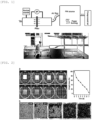
FIG. 1 is a schematic diagram of a particulate matter filter experimental chamber. -
FIG. 2 is photographs showing biodegradation evaluation of a web-film produced in Example 1, in which (a) photographs of a film change over an enzyme decomposition time (Enzyme:Lipase from thermomyces lanuginosus) and a graph of a corresponding weight change, and (b) photographs of a film change over a buried time in compost soil. -
FIG. 3 is photographs of a surface of a web-film produced in Example 2 observed by a scanning electron microscope, after an Escherichia coli bacteriophage Phi X174 virus spray liquid was filtered through the web-film (a), and photographs showing a virus adsorption change after washing the web-film of Example 2 and general polymer PET (b, c). - Hereinafter, the present invention will be described in more detail. However, the following specific examples or exemplary embodiments are only a reference for describing the present invention in detail, and the present invention is not limited thereto, and may be implemented in various forms.
- In addition, unless otherwise defined, all technical terms and scientific terms have the same meanings as those commonly understood by one of those skilled in the art to which the present invention pertains. The terms used herein are only for effectively describing a certain specific example, and are not intended to limit the present invention.
- In addition, the singular form used in the specification and claims appended thereto may be intended to also include a plural form, unless otherwise indicated in the context.
- In addition, unless particularly described to the contrary, "comprising" any elements will be understood to imply further inclusion of other elements rather than the exclusion of any other elements.
- In the present invention, a "microfiber" refers to a fiber having a diameter of tens of micrometers or less, more specifically, for example, 100 µm or less.
- The inventors of the present invention found that a biodegradable aliphatic polyester is used to produce a web-film filter, which is coated with chitosan, thereby providing a new web-film filter for air purification which has a more improved adsorption removal efficiency and has little reduction in fine dust removal efficiency by moisture and humidity even under the high humidity conditions and the conditions being in direct contact with water, and thus, completed the present invention.
- In addition, as compared with the case using a fiber produced by spinning an aliphatic polyester alone or using a fiber spun in a state in which chitosan is mixed with an aliphatic polyester, it was confirmed that the filter produced by the method of the present invention has an excellent fine dust adsorption removal efficiency and an excellent fine dust adsorption removal efficiency even under the high humidity conditions and the conditions of being in direct contact with water.
- First, an exemplary embodiment of the web-film filter for air purification of the present invention will be described.
- The web-film filter for air purification according to an exemplary embodiment of the present invention includes an aliphatic polyester microfiber coated with chitosan.
- In an exemplary embodiment, the chitosan may be any one or more selected from chitosan nanoparticles and nanowhiskers. Though not limited thereto, the chitosan nanoparticles may have an average particle diameter of 5 nm to 500 nm, and the nanowhiskers may have an average diameter of 5 nm to 500 nm and an aspect ratio (long axis/ short axis) of 2 to 100, but the present invention is not limited thereto. The average particle diameter and the average length may be measured by observation with a scanning electron microscope (SEM).
- More specifically, in coating of chitosan, coating or impregnation with an aqueous solution of
pH 2 to 6 including any one or more selected from chitosan nanoparticles and nanowhiskers is performed. Accordingly, the surface of the aliphatic polyester microfiber may be coated. By coating the surface as such, effects of having an excellent fine dust adsorption removal efficiency and having an excellent fine dust adsorption removal efficiency even under the high humidity conditions or under the conditions of being in direct contact with water may be provided, as compared with the case of spinning after mixing with chitosan in fiber spinning. In addition, a filter allowing virus adsorption may be provided. - In another exemplary embodiment, the chitosan may be acetylated chitosan. More specifically, the acetylated chitosan may have a degree of acetylation of 90% or less, more specifically a degree of acetylation of 70% or less.
- The chitosan coating may be coating or impregnation with an aqueous solution of
pH 2 to 6 including acetylated chitosan having a degree of acetylation of 90% or less. Accordingly, the surface of the aliphatic polyester microfiber may be coated. - In an exemplary embodiment of the present invention, the aliphatic polyester microfiber may be produced by electrospinning of a polymer solution in which an aliphatic polyester and a solvent are mixed.
- Though not limited thereto, the microfiber may be produced by a method of solution spinning or melt spinning in addition to the electrospinning.
- Though not limited thereto, the microfiber may have a diameter of 50 nm to 50 µm, more preferably 100 nm to 40 µm, and within the range, it may be appropriate for being applied to the web-film filter for air purification.
- The aliphatic polyester is not limited as long as it is biodegradable, but specifically, for example, may be any one or a mixture of two or more selected from the group consisting of polyhydroxybutyrate (PHP), polyhydroxybutyrate-co-valerate (PHBV), polycaprolactam, polybutylene succinate, polybutylene succinate-co-adipate, polyglycolic acid (PGA), polylactide or polylactic acid (PLA), polybutylene oxalate, polyethylene adipate, polyparadioxanone, polymorpholinebione, polybutylene adipate-co-terephthalate, polybutylene adipate-co-furanoate, polydioxipane-2-one, and the like. More preferably, the aliphatic polyester may be polybutylene succinate and may have a number average molecular weight of 20 to 200 kg/mol, but is not limited thereto.
- Any solvent may be used without limitation as long as it may dissolve the aliphatic polyester and allows electrospinning. Specifically, for example, a mixed solvent of chloroform and alcohol may be used, and more specifically, for example, a mixed solvent in which chloroform and ethanol are mixed at a weight ratio of 5 to 15:1 may be used.
- The electrospinning will be described in more detail in the production method described later.
- The web-film filter for air purification according to an exemplary embodiment of the present invention may satisfy the physical properties of a PM10 removal efficiency of 70% or more, preferably 80% or more, and more preferably 85% or more at a wind speed of 1 m/s. More specifically, the physical properties of 70 to 98% may be satisfied, but the present invention is not limited thereto. In addition, it was confirmed that the PM10 removal efficiency after being coated with chitosan was more improved as compared with the PM10 removal efficiency when not coated with chitosan. That is, the PM10 removal efficiency after being coated with chitosan was increased as compared with the PM10 removal efficiency when not coated with chitosan by 2% or more, more specifically 2 to 10%.
- In addition, the physical properties of a PM2.5 removal efficiency of 60% or more, preferably 70% or more, and more preferably 75% or more at a wind speed of 1 m/s may be satisfied. More specifically, the physical properties of 60 to 95% may be satisfied, but the present invention is not limited thereto. In addition, it was confirmed that the PM2.5 removal efficiency after being coated with chitosan was more improved as compared with the PM2.5 removal efficiency when not coated with chitosan. That is, the PM 2.5 removal efficiency after being coated with chitosan was increased as compared with the PM2.5 removal efficiency when not coated with chitosan by 3% or more, more specifically 3 to 15%.
- The web-film filter for air purification according to an exemplary embodiment of the present invention may have a PM10 removal quality factor of 0.05 Pa-1 or more, preferably 0.06 Pa-1 or more, and more specifically 0.05 to 0.15 Pa-1 at a wind speed of 1 m/s. In addition, the PM2.5 removal quality factor may be 0.04 Pa-1 or more, preferably 0.45 Pa-1 or more, and more specifically 0.04 to 0.12 Pa-1 at a wind speed of 1 m/s.
- When the web-film filter for air purification according to an exemplary embodiment of the present invention is immersed in water for 10 minutes and then dried for 24 hours, and the PM10 removal efficiency and the PM2.5 removal efficiency are measured in a chamber having a relative humidity of 90% RH, the removal efficiency reduced amount according to the following
Equation 1 may be 3% or less, and more preferably 2% or less:

wherein Re1 is a PM removal efficiency of a filter in its initial state which is not immersed in water at a wind speed of 1 m/s, and Re2 is a PM removal efficiency of a filter which is immersed in water for 10 minutes and then dried for 24 hours at a wind speed of 1 m/s. - Since the web-film filter for air purification according to an exemplary embodiment of the present invention shows an excellent particulate matter adsorption removal efficiency as described above, and also has a virus adsorption effect, it may be applied to various fields as a filter for air purification. Specifically, for example, it may be applied to a face mask product, a filter for an air cleaner, or the like, but is not limited thereto.
- Next, an exemplary embodiment of the method of producing a web-film filter for air purification of the present invention will be described.
- The method of producing a web-film filter for air purification according to an exemplary embodiment of the present invention
includes: - a) electrospinning a polymer solution including an aliphatic polyester and a solvent to produce a web-film; and
- b) coating or impregnating the web-film with a chitosan aqueous solution.
- In step a), since the aliphatic polyester and the solvent are as described above, the redundant description thereof will be omitted. The polymer solution may have a solid content of the aliphatic polyester of 5 to 20 wt%, more preferably 10 to 15 wt%. Within the range, electrospinning is stably performed without causing breaks, and it is advantageous for spinning microfiber having excellent fine dust adsorption efficiency, which is thus preferred, but the present invention is not necessarily limited thereto.
- The electrospinning is not limited as long as it is a common electrospinning, but specifically, for example, the electrospinning may be performed so that the microfiber has a diameter in a range of 50 nm to 50 µm, more preferably 100 nm to 40 µm.
- More specifically, for example, the electrospinning may be performed by passing the polymer solution prepared above through a metal nozzle of 16 to 32 gauge by a syringe pump at a speed of 0.1 to 20 mL/h, and applying a voltage of 5 to 60 kV by a power supply. Here, a distance between a nozzle tip and a grounded collector electrode may be maintained at 10 to 50 cm. The collector electrode may be formed of a round metal plate, specifically, an aluminum plate having a diameter of 5 to 30 cm. A web-film may be produced by spinning for 1 to 10 minutes.
- Next, a step of coating or impregnating the web-film produced above with a chitosan aqueous solution is performed.
- Here, as an exemplary embodiment, the chitosan aqueous solution may be an aqueous solution of
pH 2 to 6 including any one or more selected from chitosan nanoparticles and nanowhiskers. - More specifically, a method of preparing the chitosan aqueous solution including any one or more selected from chitosan nanoparticles and nanowhiskers may be performed by using a known method to prepare chitosan nanoparticles and nanowhiskers, which are then prepared as an aqueous solution of
pH 2 to 6. - More specifically, for example, though not limited thereto, the method may include a) hydrolyzing chitosan or α-chitin powder in an acid solution; b) stirring the hydrolyzed chitin and a basic solution and then washing the solution; and c) preparing the obtained chitosan as an aqueous solution of
pH 2 to 6. - In step a), any acid solution may be used without limitation as long as it may usually hydrolyze chitosan or α-chitin powder, and specifically, for example, an organic acid may be used, and more specifically, an aqueous solution of hydrochloric acid, lactic acid, acetic acid, propionic acid, formic acid, ascorbic acid, tartaric acid, and the like may be used. The hydrolysis may be performed at 100 to 150°C for 1 to 10 hours, and when the hydrolysis is completed, it is preferred to wash the film with distilled water to sufficiently remove the acid solution.
- Next, in step b), hydrolyzed chitin is stirred in a basic solution, in which as the basic solution, sodium hydroxide and the like may be used, but the present invention is not limited thereto. The stirring step may be performed at a temperature of 50 to 100°C for 1 to 20 hours, and after stirring, it is preferred to wash the film with distilled water to sufficiently remove the basic solution.
- Next, in step c), titration is performed again with the acid solution to neutralize the pH, dialysis is performed to remove a residual base, and finally, the prepared chitosan is prepared as an aqueous solution, more specifically a chitosan aqueous solution of 0.05 to 0.5 wt% and an acid solution is used to adjust the pH to 2 to 6. Here, in a range of
pH 2 to 6 of the chitosan aqueous solution, better fine dust adsorption efficiency may be achieved, and a virus adsorption effect may be achieved, which is thus preferred. - The chitosan may be specifically, any one or more selected from chitosan nanoparticles and nanowhiskers. Though not limited thereto, the chitosan nanoparticles may have an average particle diameter of 5 nm to 500 nm, and the nanowhiskers may have an average diameter of 5 nm to 500 nm and an aspect ratio (long axis/ short axis) of 2 to 100, but the present invention is not limited thereto. The average particle diameter and the average length may be measured by observation with a scanning electron microscope (SEM).
- Another exemplary embodiment of the chitosan aqueous solution may be the chitosan aqueous solution as it is, or an aqueous solution of
pH 2 to 6 including acetylated chitosan. - More specifically, a method of preparing the chitosan aqueous solution including acetylated chitosan may be obtaining acetylated chitosan by an acetylation method of known chitosan and preparing the acetylated chitosan as an aqueous solution of
pH 2 to 6. In the method of acetylating chitosan, chitosan or chitosan oligosaccharide is used as a raw material, which may be reacted with an acetylating agent to obtain acetylated chitosan. The acetylated chitosan has a degree of acetylation of preferably 90% or less, and more preferably 70% or less. Within the range, a better fine dust adsorption efficiency may be achieved and a virus adsorption effect may be achieved, which is thus preferred. - More specifically, for example, though not limited thereto, the chitosan aqueous solution may be prepared by including i) adding any one or more acetylating agents selected from acetic acid and anhydrous acetic acid to a dispersion in which chitosan or chitosan oligosaccharide is in a state of being dispersed in water or a mixed solvent of water and an organic solvent to perform an acetylation reaction; ii) stirring an acetylated reactant and a basic solution and then washing the solution; and iii) preparing the obtained acetylated chitosan as an aqueous solution of
pH 2 to 6. - In step i), as the organic solvent, for example, alcohol, more specifically, ethanol, methanol, and the like may be used, but the present invention is not limited thereto. More specifically, in the acetylation reaction, stirring may be performed at room temperature for 10 minutes to 2 hours.
- In step ii), as the basic solution, though not limited thereto, a sodium hydroxide and the like may be used.
- Next, in step iii), the aqueous solution may have, though not limited thereto, a solid content of 0.01 to 1 wt%.
- Another exemplary embodiment of the method of preparing a chitosan aqueous solution including acetylated chitosan may include a) dissolving chitosan or chitosan oligosaccharide in an acetic acid aqueous solution to prepare a chitosan solution and then adding a mixture of anhydrous acetic acid with an organic solvent to the chitosan solution to perform an acetylation reaction; b) stirring the acetylated reactant and a basic solution and then washing the solution; and c) preparing the obtained acetylated chitosan as an aqueous solution of
pH 2 to 6. - In step a), as the organic solvent, for example, alcohol, more specifically, ethanol, methanol, and the like may be used, but the present invention is not limited thereto. More specifically, in the acetylation reaction, stirring may be performed at room temperature for 10 minutes to 2 hours.
- In step b), as the basic solution, though not limited thereto, a sodium hydroxide and the like may be used.
- Next, in step c), the aqueous solution may have, though not limited thereto, a solid content of 0.01 to 1 wt%.
- The step of coating or impregnating the web-film with the chitosan aqueous solution may be performed by a common coating or impregnation method, and thus, is not limited. More preferably, the web-film may be immersed in the chitosan aqueous solution at room temperature, more specifically at 20 to 25°C to be sufficiently immersed, and then the film may be dried until the chitosan aqueous solution is dried.
- Hereinafter, the present invention will be described in more detail with reference to the Examples and Comparative Examples. However, the following Examples and Comparative Examples are only an example for describing the present invention in more detail, and do not limit the present invention in any way.
- The shape and pore size of an aliphatic polyester microfiber forming a web-film were observed using a scanning electron microscope (FE-SEM, MIRA3, Tescan Co.). For observing a nonconductive polymer fiber, the film was plasma-coated at 15 mA for 90 minutes in a vacuum state to form a platinum (Pt) thin film having a thickness of about 7 nm on the surface of the fiber. 5 spots in an area of the web-film of 3×3 cm2 were photographed to calculate an average diameter of 100 stands of fiber.
- Energy dispersive spectroscopy (EDS, Noran System7, Thermo Fisher Scientific Inc.) was used to examine each of the web-film which was not coated with chitosan and the coated web-film. By detecting a nitrogen (N) element forming chitosan, it was confirmed whether a chitosan coating layer was formed on the surface of the fiber and also coating uniformity was confirmed.
- Since a web-film in which microfiber is non-uniformly trapped has an uneven thickness, a basis weight was used as a concept of a thickness and a constituent fiber density. Before trapping the microfiber, a weight of a PET frame was measured with an electronic scale. Then, after trapping the microfiber in the frame, a weight gain was calculated. A weight increase was divided by a real area of the web-film trapped in a circle to determine the basis weight. The process was repeated a total of 5 times to calculate an average value of the basis weight.
- A particulate matter (PM) filter experimental device was manufactured as shown in
FIG. 1 . PM occurred by burning a piece of paper having a diameter of 5 mm in a closed particulate matter chamber, and the number of burning pieces of paper was adjusted to control a particulate matter generation amount. PM which had occurred in the chamber was flowed to a filter efficiency measuring cylinder at a wind speed of about 1 m/s through an air compressor, and a particulate matter amount was repeatedly measured 10 times, respectively, with a particle counter (DT-9881M, CEM Instrument Co., China) to calculate the removal efficiency (%). The relative humidity was 15%. - For evaluating an intake resistance of a filter, a flow meter was used in the particulate matter removal efficiency experimental device to measure a pressure drop using a flow meter (DT-8920, CEM Instrument Co., China). After mounting the microfiber filter, the air compressor was used to pass air at a wind speed of 1 m/s. Here, a difference in air pressure between both sides of the filter was measured 10 times to determine an average pressure drop. Particulate matter did not occur.
- The particulate matter removal efficiency and the pressure drop are the most important performance index of a dust-proof filter, and a filter having high removal efficiency and low pressure drop is evaluated as a good quality filter. This may be quantified using a quality factor (QF) and is calculated by the following Equation:

wherein E% denotes a particulate matter removal efficiency and ΔP denotes a pressure drop. Both the removal efficiency and the pressure drop are variable of QF, but it is known that influence of the pressure drop is relatively dominant. Therefore, it is recommended to use it as a performance comparison element of similar grade filters rather than filters having completely different characteristics. - For evaluating continuance of a particulate matter electrostatic adsorption effect of chitosan, a water/high humidity exposure experiment was performed.
- A web-film coated with the chitosan of the example, and a commercial mask of the comparative example were immersed in tap water for 10 minutes, and then dried for 24 hours or more. Thereafter, the particulate matter removal efficiency experiment was performed. Here, the relative humidity of the particulate matter occurrence chamber was set at 90% RH or more using a humidifier. A particulate matter amount depending on the presence/absence of the filter was repeatedly measured 10 times, respectively, to calculate a removal efficiency (%).
- In addition, the measured removal efficiency was used to calculate a removal efficiency reduced amount from the following equation:

wherein Re1 is a PM removal efficiency of a filter in its initial state which is not immersed in water at a wind speed of 1 m/s, and Re2 is a PM removal efficiency of a filter which is immersed in water for 10 minutes and then dried for 24 hours at a wind speed of 1 m/s. - 8. An average hydrodynamic diameter: the average hydrodynamic diameter was obtained from an aqueous solution in which the average diameter of chitosan nanoparticles: 0.1 wt% are dispersed using a Zetasizer (Nano ZS, Malvern).
- Dried chitosan (50 mg) to be measured was stirred with 0.01 M HCl aqueous solution (15 ml) for one day to completely cationize an amine functional group of chitosan. To the solution, a 0.025 M NaOH aqueous solution was added when the pH value of a pH meter (Orion star A211, Thermo Scientific) was 11.0, while neutralizing the solution at a rate of 0.05 ml/min using a syringe pump (Legato 200, kdScientific), and a conductivity was measured with a conductivity meter (912 Conductometer, Metrohm).
- A degree of acetylation (%DA) was determined from the following equation:

- [base]: a concentration (mol/L) of the NaOH aqueous solution
- V2-V1: a volume (mL) of the NaOH aqueous solution required to neutralize an ammonium functional group (between conductivity inflection points)
- 161: a molar mass (g/mol) of a chitosan repeating unit
- m: dry mass of the sample (mg)
- 5 g of α-chitin powder was stirred in 150 mL of 3M HCl solution at 120°C for 3 hours to perform hydrolyzation and the solution was washed with distilled water to sufficiently remove HCl. 3 g of hydrolyzed chitin was stirred in 100 mL of a 30% NaOH solution at 80°C for 6 hours, and then the solution was washed with distilled water to sufficiently remove NaOH. Thereafter, titration was performed with HCl to neutralize pH and dialysis was performed to remove a residual salt. Finally, a 0.2 wt% aqueous solution was prepared with the prepared chitosan and the pH of the solution was adjusted to 4 with 0.1 M HCl. An average hydrodynamic diameter measured with the Zetasizer was 130 nm.
- 5 g of α-chitin powder was stirred in 150 mL of 3M HCl solution at 120°C for 3 hours to perform hydrolyzation and the solution was washed with distilled water to sufficiently remove HCl. 3 g of hydrolyzed chitin was stirred in 100 mL of a 30% NaOH solution at 80°C for 6 hours, and then the solution was washed with distilled water to sufficiently remove NaOH. Thereafter, titration was performed with HCl to neutralize pH and dialysis was performed to remove a residual salt. Finally, a 0.2 wt% aqueous solution was prepared with the prepared chitosan and the final pH of the solution was adjusted to 7. An average hydrodynamic diameter measured with the Zetasizer was 10 µm.
- Chitosan having a degree of acetylation of 25% was prepared as a 0.2 wt% aqueous solution by purchasing a commercial product having a molecular weight in terms of viscosity of 50,000 to 190,000 from Sigma-Aldrich, and the pH of the solution was adjusted to 4 with 0.1 M HCl.
- Chitosan having a degree of acetylation of 50% was prepared as a chitosan solution by dissolving the chitosan having a degree of acetylation of 25% (0.5 g) of Preparation Example 3 in 25 ml of a 0.1 M acetic acid aqueous solution, adding a mixture of 0.05 ml of anhydrous acetic acid and the same amount of methanol to the chitosan solution, stirring the solution at room temperature for 1 hour to form a 2 wt% aqueous solution, and then neutralizing the solution with 2.5 mL of 1 M NaOH aqueous solution. After removing unreacted additives by dialysis, the pH of the solution was adjusted to 4 with 0.1 M HCl to finally prepare a 0.2 wt% of a chitosan aqueous solution.
- Chitosan having a degree of acetylation of 75% was prepared as a chitosan solution by dissolving the chitosan having a degree of acetylation of 25% (0.5 g) of Preparation Example 3 in 25 ml of a 0.1 M acetic acid aqueous solution, adding a mixture of 0.5 ml of anhydrous acetic acid and the same amount of methanol to the chitosan solution, stirring the solution at room temperature for 1 hour to form a 2 wt% chitosan aqueous solution, and then neutralizing the solution with 2.5 mL of 1 M NaOH solution. After removing unreacted additives by dialysis, the pH of the solution was adjusted to 4 with 0.1 M HCl to finally prepare a 0.2 wt% of a chitosan aqueous solution.
- Chitosan having a degree of acetylation of 90% was prepared as a chitosan solution by dissolving the chitosan having a degree of acetylation of 25% (0.5 g) in 25 ml of a 0.1 M acetic acid aqueous solution, adding a mixture of 2 ml of anhydrous acetic acid and the same amount of methanol to the chitosan solution, stirring the solution at room temperature for 1 hour to form a 2 wt% chitosan aqueous solution, and then neutralizing the solution with 2.5 mL of 1 M NaOH solution. After removing unreacted additives by dialysis, the pH of the solution was adjusted to 4 with 0.1 M HCl to finally prepare a 0.2 wt% of a chitosan aqueous solution.
- Polybutylene succinate (PBS, number average molecular weight of 60 Kg/mol, 1.2 g) was dissolved in a mixed solvent of chloroform and ethanol (8.8 g, a mass ratio of 9:1) to prepare a 12 wt% of polymer solution.
- The polymer solution was electrospun to produce a web-film.
- The electrospinning conditions were as follows: the solution was passed through a 25 gauge metal nozzle by a syringe pump (EP120, NanoNC Co., Republic of Korea) at a speed of 4 mL/h. A voltage of 7.5 kV was applied to the tip by a power supply (B130, KSC Co., Republic of Korea). A distance between a nozzle tip and a water-bath-grounded collector electrode was maintained at 20 cm. The collector electrode was formed of a round aluminum plate having a diameter of 8 cm and a glass petri dish having a diameter of 20 cm. A metal plate was immersed in tap water at a depth of 1.5 cm.
- The solution was spun for 2 minutes to obtain a web-film of 2.0 g/m2. A fiber diameter was 2.25 um on average. The electrospun fiber was trapped on the surface of a coagulation bath, transferred to a polyethylene terephthalate rectangular frame having a thickness of 100 µm, and dried at room temperature, and a web-film was peeled off from the rectangular frame.
- The produced web-film was immersed in the chitosan aqueous solution prepared in Preparation Example 1, sufficiently adsorbed at room temperature, and then dried for 24 hours.
- The physical properties of the web-film before being coated with the chitosan aqueous solution and the physical properties of the web-film after being coated with the chitosan aqueous solution were measured and are shown in the following Table 1.
- The spinning process was performed in the same manner as in Example 1, except that the concentration of PBS was 11 wt% and the metal nozzle had 26 gauge.
- The solution was spun for 5 minutes to obtain a web-film of 2.5 g/m2. A fiber diameter was 0.51 um on average.
- The produced web-film was immersed in the chitosan aqueous solution prepared in Preparation Example 1, sufficiently adsorbed at room temperature, and then dried for 24 hours.
- The physical properties of the web-film before being coated with the chitosan aqueous solution and the physical properties of the web-film after being coated with the chitosan aqueous solution were measured and are shown in the following Table 1.
- A web-film of 5.2 g/m2 was obtained in the same manner as in Example 1, except that the spinning process was performed for 5 minutes. A fiber diameter was 2.25 um on average.
- The produced web-film was immersed in the chitosan aqueous solution prepared in Preparation Example 1, sufficiently adsorbed at room temperature, and then dried for 24 hours.
- The physical properties of the web-film before being coated with the chitosan aqueous solution and the physical properties of the web-film after being coated with the chitosan aqueous solution were measured and are shown in the following Table 1.
- A web-film of 4.8 g/m2 was obtained in the same manner as in Example 2, except that the spinning process was performed for 10 minutes. A fiber diameter was 0.51 um on average.
- The produced web-film was immersed in the chitosan aqueous solution prepared in Preparation Example 1, sufficiently adsorbed at room temperature, and then dried for 24 hours.
- The physical properties of the web-film before being coated with the chitosan aqueous solution and the physical properties of the web-film after being coated with the chitosan aqueous solution were measured and are shown in the following Table 1.
- The spinning process of Example 1 was performed for 2 minutes to obtain a web-film of 2.0 g/m2, and spinning was performed for 5 minutes by the spinning process of Example 2 to produce a laminate film on which a web-film of 2.5 g/m2 was laminated.
- Finally, the produced web-film was immersed in the chitosan solution prepared in Preparation Example 1, sufficiently adsorbed at room temperature, and then dried for 24 hours.
- The physical properties of the web-film before being coated with the chitosan aqueous solution and the physical properties of the web-film after being coated with the chitosan aqueous solution were measured and are shown in the following Table 1.
- A web-film was obtained in the same manner as in Example 1.
- The produced web-film was immersed in the chitosan aqueous solution prepared in Preparation Example 2, sufficiently adsorbed at room temperature, and then dried for 24 hours.
- The physical properties of the web-film before being coated with the chitosan aqueous solution and the physical properties of the web-film after being coated with the chitosan aqueous solution were measured and are shown in the following Table 1.
- A web-film was obtained in the same manner as in Example 1.
- The produced web-film was immersed in the chitosan aqueous solution having a degree of acetylation of 25%, prepared in Preparation Example 3, sufficiently adsorbed at room temperature, and then dried for 24 hours.
- The physical properties of the web-film before being coated with the chitosan aqueous solution and the physical properties of the web-film after being coated with the chitosan aqueous solution were measured and are shown in the following Table 1.
- A web-film was obtained in the same manner as in Example 1.
- The produced web-film was immersed in the chitosan aqueous solution having a degree of acetylation of 50%, prepared in Preparation Example 4, sufficiently adsorbed at room temperature, and then dried for 24 hours.
- The physical properties of the web-film before being coated with the chitosan aqueous solution and the physical properties of the web-film after being coated with the chitosan aqueous solution were measured and are shown in the following Table 1.
- A web-film was obtained in the same manner as in Example 1.
- The produced web-film was immersed in the chitosan aqueous solution having a degree of acetylation of 75%, prepared in Preparation Example 5, sufficiently adsorbed at room temperature, and then dried for 24 hours.
- The physical properties of the web-film before being coated with the chitosan aqueous solution and the physical properties of the web-film after being coated with the chitosan aqueous solution were measured and are shown in the following Table 1.
- A web-film was obtained in the same manner as in Example 1.
- The produced web-film was immersed in the chitosan aqueous solution having a degree of acetylation of 90%, prepared in Preparation Example 6, sufficiently adsorbed at room temperature, and then dried for 24 hours.
- The physical properties of the web-film before being coated with the chitosan aqueous solution and the physical properties of the web-film after being coated with the chitosan aqueous solution were measured and are shown in the following Table 1.
- The process was performed in the same manner as in Example 1, except that a polyethylene terephthalate web-film having a basis weight of 2.5 g/m2 and an average fiber diameter of 0.53 um was used instead of a polybutyl succinate web-film.
- Finally, the produced web-film was immersed in the chitosan solution prepared in Preparation Example 1, sufficiently adsorbed at room temperature, and then dried for 24 hours.
- The physical properties of the web-film before being coated with the chitosan aqueous solution and the physical properties of the web-film after being coated with the chitosan aqueous solution were measured and are shown in the following Table 1.
- A KR94 grade commercial mask (PRODUCT LAB) made of polypropylene (PP) which adsorbs particulate matter in an electrostatic manner was prepared. An average thickness of a filter except a mask outer layer was measured as 207.2 µm.
- Finally, the produced web-film was immersed in the chitosan solution prepared in Preparation Example 1, sufficiently adsorbed at room temperature, and then dried for 24 hours.
- The physical properties of the web-film before being coated with the chitosan aqueous solution and the physical properties of the web-film after being coated with the chitosan aqueous solution were measured and are shown in the following Table 1.
- A web-film was produced by electrospinning the polymer solution in the same manner as in Example 1, except that 0.012 g of the chitosan nanoparticles (average diameter of 200 nm) were added in the preparation of the polymer solution. In addition, the film was not coated with the chitosan aqueous solution.
- The physical properties of the thus-prepared web-film were measured, and are shown in the following Table 1.
[Table 1] Particulate matter removal efficiency (%) Quality factor (Pa-1) Particulate matter removal efficiency reduced amount (%) after exposure to moisture Pressure drop (Pa) (PM2.5) (PM10) (PM2. 5) (PM10) (PM2. 5) (PM10) Example 1 Before coating 64.6 78.8 0.094 0.141 5.1 5.1 11 After coating 78.8 86.3 0.103 0.133 0.5 0.5 15 Example 2 Before coating 80.1 89.6 0.073 0.103 6.1 7.5 22 After coating 87.7 94.6 0.091 0.127 1 1 23 Example 3 Before coating 77.6 88.5 0.048 0.070 8.1 9.2 31 After coating 87.8 93.4 0.054 0.070 0.5 0.5 39 Example 4 Before coating 86.8 93.6 0.043 0.058 7 8 47 After coating 90.8 96.0 0.045 0.060 0.5 0.8 53 Example 5 Before coating 87.5 93.8 0.067 0.090 8.1 9.2 31 After coating 93.5 97.4 0.074 0.098 1 1 37 Example 6 Before coating 64.6 78.8 0.094 0.141 7.6 6.7 11 After coating 68.2 81.2 0.082 0.119 0.6 0.6 14 Example 7 Before coating 64.6 78.8 0.094 0.141 5.1 5.1 11 After coating 78.1 85.6 0.089 0.114 0.3 0.3 17 Example 8 Before coating 64.6 78.8 0.094 0.141 5.1 5.1 11 After coating 77.7 85.1 0.083 0.106 0.5 0.5 18 Example 9 Before coating 64.6 78.8 0.094 0.141 5.1 5.1 11 After coating 75.9 83.8 0.075 0.096 1.1 1.2 19 Example 10 Before coating 64.6 78.8 0.094 0.141 5.1 5.1 11 After coating 73.0 80.1 0.060 0.073 1.2 1.3 22 Comparative Example 1 Before coating 84.6 85.8 0.074 0.078 35.5 34.5 25 After coating 85.7 85.9 0.078 0.078 26.0 25.0 25 Comparative Example 2 Before coating 98.6 98.6 0.122 0.122 23.6 23.2 35 After coating 79.6 79.7 0.045 0.045 22.5 22.3 35 Comparative Example 3 60.8 74.7 0.072 0.106 20.1 20.5 13 - As shown in Table 1, microfibers having various thicknesses were able to be stably produced by adjusting the concentration of the polymer solution and the nozzle size.
- In addition, as a result of confirming presence or absence of chitosan coating by scanning electron microscope energy dispersive X-ray analysis (EDX) mapping, it was confirmed that the surface of microfiber was effectively coated with chitosan by coating the chitosan aqueous solution immersion.
- It was also possible to efficiently remove particulate matter with the web-film of microfiber having no chitosan coating. A PM10 removal efficiency of 70% or more and a PM2.5 removal efficiency of 60% or more were achieved at a wind speed of 1 m/s. However, the web-film of microfiber coated with chitosan showed more improved microfiber removal efficiency. It was confirmed that by coating chitosan on the surface, the PM10 removal efficiency was increased by 2% or more as compared with that before being coated with chitosan and the PM2.5 removal efficiency was increased by 3% or more as compared with that before being coated with chitosan, at a wind speed of 1 m/s.
- In addition, removal efficiency was hardly reduced by moisture/humidity due to the endogenous electrostatic effect. By coating chitosan on the surface, the PM removal efficiency reduction of 3% or less was achieved at a wind speed of 1 m/s after exposure to the moisture (water/high humidity) conditions as compared with that before exposure to moisture (water/high humidity).
- In Comparative Example 1, the nano-web produced by polyethylene terephthalate had a high particulate matter removal efficiency, but when exposed to moisture, had a greatly reduced fine dust removal efficiency by up to about 30%.
- In addition, in Comparative Example 1, it was confirmed that when the chitosan aqueous solution was coated, the fine dust removal efficiency was not greatly increased, and even after being in contact with moisture, the fine dust removal efficiency was reduced by about 25%.
- In Comparative Example 2, it was confirmed that the conventional electrostatic adsorption type mask was used, and the particulate matter removal efficiency was high, but static electricity was removed after being directly exposed to moisture, and thus, the particulate matter removal efficiency was greatly reduced. In particular, in Comparative Example 2, it was confirmed that a degree of fine dust adsorption was greatly decreased unlike the examples, by chitosan coating. This is due to the fact that the static electricity of Comparative Example 2 was rapidly reduced from the start of immersion in the chitosan aqueous solution, and then the fine dust adsorption efficiency was rapidly reduced.
- In addition, when the chitosan nanoparticles were mixed in the polymer solution and the solution was spun as in Comparative Example 3, it was confirmed that the particulate matter removal efficiency was reduced by 20% or more.
- A Web-film (26.5 mg) produced in Example 1 was evaluated for decomposition in a phosphate buffer solution having a molar concentration of 0.1 containing a lipase from thermomyces lanuginosus enzyme (0.2 mg/ml) at a temperature of 50°C. Photographs over time were taken and mass changes were measured each time. For decomposition evaluation in soil, the web-film was buried in compost soil at a temperature of 50°C and a relative humidity of 30% and photographs of change over time were taken every week. It was confirmed that under enzyme decomposition conditions and under the soil decomposition conditions, complete biodegradability was confirmed within 7 hours and 4 weeks, respectively (see
FIG. 2 ). - 0.5 ml of Escherichia coli bacteriophage Phi X174 (American Type Culture Collection (ATCC, VA, USA)) virus solution was added to a 0.5 mL tube and the solution was diluted 10 times with distilled water. Thereafter, in the experiment in which a virus solution was sprayed on the particulate matter filter experiment chamber and then flowed with compressed air, the web-film, produced in Example 2, was used as a filter.
- It was confirmed that the web-film of which the surface was coated with chitosan may provide antibacterial activity in addition to biodegradability. It was also confirmed by an electron microscope that viruses were attached by electrostatic force by an amine group.
- It was also confirmed that the viruses which penetrated through a filter may be removed by chitosan, and the adhesive strength was good so that the viruses were attached to fiber even after washing the filter. As a comparative experiment, on the polymer PET surface having no chitosan, most of the viruses were washed away (see
FIG. 3 ) . - Hereinabove, although the present invention has been described by specific matters, limited exemplary embodiments, and drawings, they have been provided only for assisting the entire understanding of the present invention, and the present invention is not limited to the exemplary embodiments, and various modifications and changes may be made by those skilled in the art to which the present invention pertains from the description.
- Therefore, the spirit of the present invention should not be limited to the above-described exemplary embodiments, and the following claims as well as all modified equally or equivalently to the claims are intended to fall within the scope and spirit of the invention.
Claims (19)
- A web-film filter for air purification in which a web-film including an aliphatic polyester microfiber is coated or impregnated with an aqueous solution of pH 2 to 6 including chitosan.
- The web-film filter for air purification of claim 1, wherein the chitosan is any one or more selected from chitosan nanoparticles and nanowhiskers.
- The web-film filter for air purification of claim 1, wherein the filter is obtained by coating or impregnating the web-film including an aliphatic polyester microfiber with the aqueous solution of pH 2 to 6 including any one or more selected from chitosan nanoparticles and nanowhiskers.
- The web-film filter for air purification of claim 1, wherein the microfiber has a diameter of 50 nm to 50 um.
- The web-film filter for air purification of claim 1, wherein the chitosan is acetylated chitosan.
- The web-film filter for air purification of claim 5, wherein the acetylated chitosan has a degree of acetylation of 90% or less.
- The web-film filter for air purification of claim 1, wherein a PM10 removal efficiency is 70% or more at a wind speed of 1 m/s.
- The web-film filter for air purification of claim 1, wherein a PM2.5 removal efficiency is 60% or more at a wind speed of 1 m/s.
- The web-film filter for air purification of claim 1, wherein a PM10 removal quality factor is 0.05 Pa-1 or more at a wind speed of 1 m/s.
- The web-film filter for air purification of claim 1, wherein a PM2.5 removal quality factor is 0.04 Pa-1 or more at a wind speed of 1 m/s.
- The web-film filter for air purification of claim 1, wherein the aliphatic polyester is any one or a mixture of two or more selected from the group consisting of polyhydroxybutyrate (PHP), polyhydroxybutyrate-co-valerate (PHBV), polycaprolactam, polybutylene succinate, polybutylene succinate-co-adipate, polyglycolic acid (PGA), polylactide or polylactic acid (PLA), polybutylene oxalate, polyethylene adipate, polyparadioxanone, polymorpholinebione, polybutylene adipate-co-terephthalate, polybutylene adipate-co-furanoate, and polydioxipane-2-one.
- The web-film filter for air purification of claim 1, wherein when the filter is immersed in water for 10 minutes and then dried for 24 hours, and the PM10 removal efficiency and the PM2.5 removal efficiency are measured in a chamber having a relative humidity of 90% RH, a removal efficiency reduced amount according to the following Equation 1 is 3% or less:

wherein Re1 is a PM removal efficiency of a filter in its initial state which is not immersed in water at a wind speed of 1 m/s, and Re2 is a PM removal efficiency of a filter which is immersed in water for 10 minutes and then dried for 24 hours at a wind speed of 1 m/s. - A face mask product using the web-film filter of any one of claims 1 to 12.
- An air cleaner using the web-film filter of any one of claims 1 to 12.
- A method of producing a web-film filter for air purification, the method comprising:a) electrospinning a polymer solution including an aliphatic polyester and a solvent to produce a web-film; andb) coating or impregnating the web-film with a chitosan aqueous solution of pH 2 to 6 including chitosan.
- The method of producing a web-film filter for air purification of claim 15, wherein the chitosan aqueous solution is prepared by including:hydrolyzing chitosan or α-chitin powder in an acid solution;stirring the hydrolyzed chitin and a basic solution and then washing the solution; andpreparing the obtained chitosan as an aqueous solution of pH 2 to 6.
- The method of producing a web-film filter for air purification of claim 16, wherein the chitosan is any one or more selected from chitosan nanoparticles and nanowhiskers.
- The method of producing a web-film filter for air purification of claim 15, wherein the chitosan aqueous solution is prepared by including:adding any one or more acetylating agents selected from acetic acid and anhydrous acetic acid to a dispersion in which chitosan or chitosan oligosaccharide is in a state of being dispersed in water or a mixed solvent of water and an organic solvent to perform an acetylation reaction;stirring an acetylated reactant and a basic solution and then washing the solution; andpreparing the obtained acetylated chitosan as an aqueous solution of pH 2 to 6.
- The method of producing a web-film filter for air purification of claim 18, wherein the acetylated chitosan has a degree of acetylation of 90% or less.
Applications Claiming Priority (3)
| Application Number | Priority Date | Filing Date | Title |
|---|---|---|---|
| KR20200107257 | 2020-08-25 | ||
| KR1020210109334A KR102766521B1 (en) | 2020-08-25 | 2021-08-19 | Air-purifying web-film filter made of aliphatic polyester fiber and its manufacturing method |
| PCT/KR2021/011068 WO2022045675A1 (en) | 2020-08-25 | 2021-08-20 | Web-film filter formed of aliphatic polyester fiber for purifying air, and method for producing same |
Publications (2)
| Publication Number | Publication Date |
|---|---|
| EP4205829A1 true EP4205829A1 (en) | 2023-07-05 |
| EP4205829A4 EP4205829A4 (en) | 2024-10-02 |
Family
ID=80353590
Family Applications (1)
| Application Number | Title | Priority Date | Filing Date |
|---|---|---|---|
| EP21861972.4A Pending EP4205829A4 (en) | 2020-08-25 | 2021-08-20 | ALIPHATIC POLYESTER FIBER WEB FILM FILTER FOR AIR PURIFICATION AND METHOD FOR MANUFACTURING THE SAME |
Country Status (2)
| Country | Link |
|---|---|
| EP (1) | EP4205829A4 (en) |
| WO (1) | WO2022045675A1 (en) |
Families Citing this family (2)
| Publication number | Priority date | Publication date | Assignee | Title |
|---|---|---|---|---|
| CA3248968A1 (en) * | 2022-04-08 | 2023-10-12 | Mativ Luxembourg | Apertured polymer sheets incorporating nanoparticles |
| WO2023196618A1 (en) * | 2022-04-08 | 2023-10-12 | Delstar Technologies, Inc. | Mechanical and electrostatic filter media |
Family Cites Families (8)
| Publication number | Priority date | Publication date | Assignee | Title |
|---|---|---|---|---|
| KR19980076412A (en) * | 1997-04-09 | 1998-11-16 | 김공수 | Chitosan, chitin or oligosaccharides thereof for use as antifungal and antibacterial agents |
| KR100315334B1 (en) * | 1998-05-27 | 2002-08-09 | 한국생산기술연구원 | Process for the preparation of anti-bacterial filter using chitosan |
| KR100451399B1 (en) * | 2001-11-02 | 2004-10-06 | 주식회사 건풍바이오 | The acetylation method of chitosan |
| WO2009095816A1 (en) * | 2008-01-31 | 2009-08-06 | The Procter & Gamble Company | Acetylation of chitosan |
| KR101321493B1 (en) * | 2011-08-16 | 2013-10-28 | 한국화학연구원 | Air filter which having superior effective to filtration of super fine particle and sterilization |
| CN104815483B (en) * | 2015-04-20 | 2017-03-01 | 上海洁晟环保科技有限公司 | Composite antibacterial air filting material, preparation method and applications |
| JP2018001063A (en) * | 2016-06-28 | 2018-01-11 | Jnc株式会社 | Filter medium and manufacturing method of the same |
| CN109721740B (en) * | 2017-10-27 | 2022-03-15 | 武汉大学 | Method for continuously preparing chitin/chitosan solution with different deacetylation degrees |
-
2021
- 2021-08-20 EP EP21861972.4A patent/EP4205829A4/en active Pending
- 2021-08-20 WO PCT/KR2021/011068 patent/WO2022045675A1/en not_active Ceased
Also Published As
| Publication number | Publication date |
|---|---|
| EP4205829A4 (en) | 2024-10-02 |
| WO2022045675A1 (en) | 2022-03-03 |
Similar Documents
| Publication | Publication Date | Title |
|---|---|---|
| Lv et al. | Ecofriendly electrospun membranes loaded with visible-light-responding nanoparticles for multifunctional usages: highly efficient air filtration, dye scavenging, and bactericidal activity | |
| de Mesquita et al. | Biobased nanocomposites from layer-by-layer assembly of cellulose nanowhiskers with chitosan | |
| Liang et al. | Self-charging, breathable, and antibacterial poly (lactic acid) nanofibrous air filters by surface engineering of ultrasmall electroactive nanohybrids | |
| Rujitanaroj et al. | Wound-dressing materials with antibacterial activity from electrospun gelatin fiber mats containing silver nanoparticles | |
| He et al. | Preparation of aminoalkyl‐grafted bacterial cellulose membranes with improved antimicrobial properties for biomedical applications | |
| Kadam et al. | Electrospun polyacrylonitrile/β-cyclodextrin composite membranes for simultaneous air filtration and adsorption of volatile organic compounds | |
| Ignatova et al. | Electrospun nano-fibre mats with antibacterial properties from quaternised chitosan and poly (vinyl alcohol) | |
| Son et al. | Preparation of ultrafine oxidized cellulose mats via electrospinning | |
| Nada et al. | The synthesis and characterization of zinc-containing electrospun chitosan/gelatin derivatives with antibacterial properties | |
| CN112921502A (en) | Antibacterial and antiviral melt-blown fabric and preparation method thereof | |
| JP2009041117A (en) | Polysaccharide nanofiber | |
| Ullah et al. | Functionalized bacterial cellulose microparticles for drug delivery in biomedical applications | |
| Liu et al. | Superhydrophobic and highly moisture-resistant PVA@ EC composite membrane for air purification | |
| Makowski et al. | Multifunctional polylactide nonwovens with 3D network of multiwall carbon nanotubes | |
| Yang et al. | Antibacterial, efficient and sustainable CS/PVA/GA electrospun nanofiber membrane for air filtration | |
| Cui et al. | Controllable growth of hydroxyapatite on electrospun poly (dl-lactide) fibers grafted with chitosan as potential tissue engineering scaffolds | |
| Wong et al. | Electrospun polystyrene and acid-treated cellulose nanocrystals with intense pulsed light treatment for N95-equivalent filters | |
| Cooper et al. | Electrospinning of chitosan derivative nanofibers with structural stability in an aqueous environment | |
| Dehghan et al. | Production of nanofibers containing magnesium oxide nanoparticles for the purpose of bioaerosol removal | |
| Hazarika et al. | Functionalized poly (lactic acid) based nano-fabric for anti-viral applications | |
| Oraby et al. | Electrospinning of gelatin functionalized with silver nanoparticles for nanofiber fabrication | |
| EP2701515B1 (en) | Method of immobilization of silver nanoparticles on solid substrates | |
| Yue et al. | Green continuous electrospinning to fabricate multiscale chitosan nanofibers by regulating of polyvinyl alcohol for mask filter applications | |
| KR102766521B1 (en) | Air-purifying web-film filter made of aliphatic polyester fiber and its manufacturing method | |
| EP3885032A1 (en) | Smart filters with improved properties in filtration and antibacterial efficiency applicable in fluids |
Legal Events
| Date | Code | Title | Description |
|---|---|---|---|
| STAA | Information on the status of an ep patent application or granted ep patent |
Free format text: STATUS: THE INTERNATIONAL PUBLICATION HAS BEEN MADE |
|
| PUAI | Public reference made under article 153(3) epc to a published international application that has entered the european phase |
Free format text: ORIGINAL CODE: 0009012 |
|
| STAA | Information on the status of an ep patent application or granted ep patent |
Free format text: STATUS: REQUEST FOR EXAMINATION WAS MADE |
|
| 17P | Request for examination filed |
Effective date: 20230222 |
|
| AK | Designated contracting states |
Kind code of ref document: A1 Designated state(s): AL AT BE BG CH CY CZ DE DK EE ES FI FR GB GR HR HU IE IS IT LI LT LU LV MC MK MT NL NO PL PT RO RS SE SI SK SM TR |
|
| DAV | Request for validation of the european patent (deleted) | ||
| DAX | Request for extension of the european patent (deleted) | ||
| A4 | Supplementary search report drawn up and despatched |
Effective date: 20240829 |
|
| RIC1 | Information provided on ipc code assigned before grant |
Ipc: A41D 13/11 20060101ALI20240823BHEP Ipc: A62B 23/02 20060101ALI20240823BHEP Ipc: B01D 46/00 20220101ALI20240823BHEP Ipc: B01D 39/16 20060101AFI20240823BHEP |