EP4202798A1 - Training data generation program, training data generation method, and training data generation device - Google Patents
Training data generation program, training data generation method, and training data generation device Download PDFInfo
- Publication number
- EP4202798A1 EP4202798A1 EP20950350.7A EP20950350A EP4202798A1 EP 4202798 A1 EP4202798 A1 EP 4202798A1 EP 20950350 A EP20950350 A EP 20950350A EP 4202798 A1 EP4202798 A1 EP 4202798A1
- Authority
- EP
- European Patent Office
- Prior art keywords
- training data
- data
- pieces
- value
- model
- Prior art date
- Legal status (The legal status is an assumption and is not a legal conclusion. Google has not performed a legal analysis and makes no representation as to the accuracy of the status listed.)
- Withdrawn
Links
Images







Classifications
-
- G—PHYSICS
- G06—COMPUTING OR CALCULATING; COUNTING
- G06N—COMPUTING ARRANGEMENTS BASED ON SPECIFIC COMPUTATIONAL MODELS
- G06N3/00—Computing arrangements based on biological models
- G06N3/02—Neural networks
- G06N3/04—Architecture, e.g. interconnection topology
- G06N3/045—Combinations of networks
-
- G—PHYSICS
- G06—COMPUTING OR CALCULATING; COUNTING
- G06N—COMPUTING ARRANGEMENTS BASED ON SPECIFIC COMPUTATIONAL MODELS
- G06N20/00—Machine learning
- G06N20/20—Ensemble learning
-
- G—PHYSICS
- G06—COMPUTING OR CALCULATING; COUNTING
- G06N—COMPUTING ARRANGEMENTS BASED ON SPECIFIC COMPUTATIONAL MODELS
- G06N20/00—Machine learning
-
- G—PHYSICS
- G06—COMPUTING OR CALCULATING; COUNTING
- G06F—ELECTRIC DIGITAL DATA PROCESSING
- G06F40/00—Handling natural language data
- G06F40/30—Semantic analysis
-
- G—PHYSICS
- G06—COMPUTING OR CALCULATING; COUNTING
- G06F—ELECTRIC DIGITAL DATA PROCESSING
- G06F40/00—Handling natural language data
- G06F40/40—Processing or translation of natural language
Definitions
- the embodiments according to the present invention relate to a training data generation program, a training data generation method, and a training data generation device.
- a machine learning model with a machine learning technology is utilized for conversion processing from a discrete series (original language) into another discrete series (translation target language).
- new words and new meanings of existing words increase due to word changes (concept drift), and tendency of input data and tendency of an output for the input change. Therefore, the machine learning model is retrained in order to maintain an output quality.
- retraining in a case where old training data is included in training data for retraining, a retraining effect is lowered.
- meaning (translation) of the same word changes, if retraining is performed in a state where both of a case of old meaning and a case of new meaning coexist in retraining data, it is difficult to train word translation well. Therefore, it is required to remove a training case, of which a retraining effect is lowered, from training data for retraining.
- a learning quality estimation device can calculate a quality score using a forward-direction learned model for a training pair that includes an input and an output of a discrete series that may include an error in a correspondence relationship and remove erroneous data in training data used for machine learning such as natural language processing.
- Patent Document 1 Japanese Laid-open Patent Publication No. 2019-149030 .
- an object is to provide a training data generation program, a training data generation method, and a training data generation device that can assist to improve an effect of machine learning.
- a training data generation program causes a computer to execute processing of acquiring a first value, processing of acquiring a second value, comparing processing, and generating processing.
- the processing of acquiring the first value acquires the first value by inputting first data included in a plurality of pieces of first training data to a first model that is generated through machine learning based on the plurality of pieces of first training data.
- the processing of acquiring the second value acquires the second value by inputting the first data and second data included in a plurality of pieces of second training data to a second model that is generated through machine learning based on the plurality of pieces of first training data and the plurality of pieces of second training data.
- the comparing processing compares the first value with the second value.
- the generating processing generates a plurality of pieces of third training data that does not include at least a part of the first data, based on the plurality of pieces of first training data and the plurality of pieces of second training data, according to a comparison result.
- FIG. 1 is an explanatory diagram for explaining an outline of an embodiment. As illustrated in FIG. 1 , the present embodiment copes with concept drift or the like, generates retraining data of a model through machine learning in order to maintain an output quality, excludes a case where an effect of retraining is lowered, and generates training data for retraining as a final result.
- a model to be retrained a model used for conversion processing from a discrete series (original language) to another discrete series (translation target language) is exemplified.
- a model to which the present embodiment is applied be a model to be retrained in response to a change, and the model is not limited to a model used for such natural language processing.
- it may be applied to retraining of a model in a recommendation system using a model that uses a feature amount of a customer as an input and outputs a recommended product (product category) for the customer.
- first training data D1 is training data relating to an old case before change.
- Second training data D2 is training data related to a new case (change in meaning of word or way of speaking, new word (unregistered word such as new product name)) after changes due to the concept drift or the like.
- Each case includes an input to a model and an output to be a correct answer.
- the first training data D1 includes a case 001 of which an input is “I like AAAA (fruit name)! and an output is "AAAA is my favorite” and a case 002 of which an input is “I love BBBB (company name)! and an output is "I am a BBBB believer”.
- the second training data D2 includes a case 003 of which an input is “I like AAAA (company name)! and an output is "I like products of AAAA company” and a case 004 of which an input is "I love CCCC (new product name)! and an output is "I like CCCC very much!.
- the case 003 is a case indicating a change in meaning with respect to the case 001 ("AAAA (fruit) ⁇ AAAA (company name)".
- both inputs are "I like AAAA”.
- the output of the case 001 is "AAAA is my favorite”
- the output of the case 003 is "I like products of AAAA company”.
- the case 004 is a case indicating a newly appeared word (unregistered word) "CCCC (new product name)".
- a first model M1 is generated by performing machine learning with the first training data D1 (S1).
- the first training data D1 is input to the generated first model M1, and generation scores (score related to output of first model M1) of the cases 001 and 002 in the first training data D1 are calculated (S2).
- a second model M2 is generated by performing machine learning with the first training data D1 and the second training data D2 (S3).
- the first training data D1 and the second training data D2 are input to the generated second model M2, and generation scores (score related to output of second model M2) of the cases 001 to 004 are calculated (S4).
- the generation score in S2 is compared with the generation score in S4, and training data that does not include a case that is determined to be contradictory among the old cases of the first training data D1 is generated based on training data obtained by adding the second training data D2 to the first training data D1.
- the generation scores of the cases 002 and 004 in S4 are high, and the generation score of the case 001 is lower than S2, it is determined that the case 001 among the old cases is contradictory (S5).
- training data that does not include the case 001 among the old cases is generated.
- the deleted case 001 is a case (noise) that lowers an output quality
- machine learning is performed by deleting the case 001 from the training data obtained by adding the second training data D2 to the first training data D1, and a third model M3 is generated (S6).
- the cases 002 to 004 are input to the generated third model M3, and generation scores (score related to output of third model M3) of the cases 002 to 004 are calculated (S7).
- a generation score of a non-contradictory case is almost unchanged, and even if the generation score is fluctuated, it can be assumed that the fluctuation is a slight decrease (effect of decrease in training data scale).
- the deleted case 001 is a case (noise) that lowers the output quality. Based on this confirmation, in the present embodiment, it is determined that the case 001 should be deleted (S8).
- retraining data obtained by deleting the case 001 from the training data that is obtained by adding the second training data D2 to the first training data D1 is determined (cases 002 to 004).
- the generation scores of the first model M1 and the second model M2 it is possible to accurately remove the case (noise) that lowers the output quality and generate training data that is expected to improve a retraining effect.
- the generation score of the third model M3 it is possible to generate training data for retraining after identifying that the case to be removed is a case that lowers the output quality.
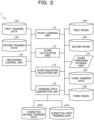
- FIG. 2 is a block diagram illustrating a functional configuration example of an information processing device according to a first embodiment.
- an information processing device 1 includes a processing control unit 10, a model learning unit 11, a score calculation unit 12, a score evaluation calculation unit 13, a score temporary storage unit 14, and a training data generation unit 15.
- a personal computer (PC) or the like can be applied to this information processing device 1.
- the processing control unit 10 is a processing unit that controls execution of processing of generating retraining data.
- the model learning unit 11 is a processing unit that generates a model by executing processing related to known machine learning. Specifically, the model learning unit 11 performs machine learning of a model (optimization of parameter) so as to generate an output sequence from an input sequence of training data of which an input and an output are paired.
- the model learning unit 11 generates a first model M1 by performing training using first training data D1. Furthermore, the model learning unit 11 generates a second model M2 by performing training using second training data D2 that includes the first training data D1. Furthermore, the model learning unit 11 generates a third model M3 by performing training using third training data D3.
- the first training data D1 is training data, in which an input (for example, original language) and an output (for example, translation target language) of a discrete series of a natural language are paired, for generating a model related to translation that is operated by an automatic translation system.
- the second training data D2 is training data that includes a new case after changes caused by concept drift or the like, in addition to the first training data D1.
- the third training data D3 is training data that is newly created as training data that does not include a case that is determined to be contradictory among old cases, based on the first training data D1 and the second training data D2.
- the score calculation unit 12 is a processing unit that, when the model generated through machine learning is applied to each input of the training data and each corresponding output is generated, calculates a score related to the output. For the calculation of this score, for example, a known calculation method as in Japanese Laid-open Patent Publication No. 2019-149030 or the like is used.
- the score calculation unit 12 stores the calculated score in the score temporary storage unit 14 after assigning identification information (for example, ID) for each training data (case).
- the score calculation unit 12 inputs the first training data D1 to the first model M1, calculates a generation score of each input case, and stores the generation score in the score temporary storage unit 14. Furthermore, the score calculation unit 12 inputs the second training data D2 to the second model M2, calculates a generation score of each input case, and stores the generation score in the score temporary storage unit 14. Furthermore, the score calculation unit 12 inputs the third training data D3 to the third model M3, calculates a generation score of each input case, and stores the generation score in the score temporary storage unit 14.
- the score evaluation calculation unit 13 is a processing unit that compares the generation scores stored in the score temporary storage unit 14, evaluates a change in the generation score, and detects a case to be deleted from the training data. For example, the score evaluation calculation unit 13 compares the generation score of the second model M2 with the generation score of the first model M1 and detects a contradictory case from among the old cases.
- the score temporary storage unit 14 is a processing unit that temporarily stores the generation score calculated by the score calculation unit 12 in a memory or the like. Specifically, the score temporary storage unit 14 associates a generation source model with the training data (case) and stores the generation score.
- the training data generation unit 15 is a processing unit that deletes a case designated as the case to be deleted based on the detection result of the score evaluation calculation unit 13 in the training data of the second training data D2 that includes the first training data D1 and generates the third training data D3. Furthermore, the training data generation unit 15 confirms that the deleted case is a case that lowers the output quality of the model by using the generation score of the third model M3, and then, generates training data for retraining (corrected first training data D11 and corrected second training data D21) as a final result.
- the corrected second training data D21 is an output of the confirmed third training data D3 as a processing result.
- the corrected first training data D11 is data obtained by extracting only training data included in the first training data D1, from the third training data D3.
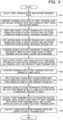
- FIG. 3 is a flowchart illustrating an operation example of the information processing device 1 according to the first embodiment. As illustrated in FIG. 3 , when processing starts, the processing control unit 10 receives inputs of the first training data D1 and the second training data D2 (S10).
- the model learning unit 11 performs training with each of the first training data D1 and the second training data D2 and generates the first model M1 and the second model M2 (S11). Specifically, the model learning unit 11 generates the first model M1 by performing training using the first training data D1. Furthermore, the model learning unit 11 generates the second model M2 by performing training using the second training data D2.
- the score calculation unit 12 applies the first model M1 to the first training data D1, calculates a generation score of an output of each case included in the first training data D1, and stores the generation score in the score temporary storage unit 14 (S12).
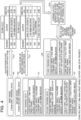
- FIG. 4 is an explanatory diagram for explaining an outline of processing of the information processing device according to the first embodiment.
- the score calculation unit 12 calculates the generation score of each case included in the first training data D1 with the first model M1 in S12. As a result, for example, a generation score 0.99 is obtained for a case 001 with a number 001. Furthermore, for a case 002 with a number 002, a generation score 0.96 is obtained.
- the score calculation unit 12 applies the second model M2 to the second training data D2, calculates a generation score of an output of each case included in the second training data D2, and stores the generation score in the score temporary storage unit 14 (S13).
- the generation score of each case (case 001 to case 004) included in the second training data D2 is obtained.
- a generation score 0.60 is obtained for the case 001 with the number 001.
- a generation score 0.91 is obtained for the case 002 with the number 002.
- a generation score 0.56 is obtained for a case 003 with a number 003.
- a generation score 0.88 is obtained for a case 004 with a number 004.
- FIG. 5 is an explanatory diagram for explaining an example of score calculation.
- a score for a result (output) obtained by inputting each case to the first model M1, the second model M2, the third model M3, or the like may be used.
- the score evaluation calculation unit 13 compares the generation scores in S12 and S13 in the score temporary storage unit 14 and detects an input/output pair (case) of the first training data D1 of which the score decreases in S13 (S14). As a result, as illustrated in FIG. 4 , the score evaluation calculation unit 13 detects that the generation score of the case 001 in the first training data D1 has deteriorated as 0.89 ⁇ 0.60 (S14).
- the training data generation unit 15 deletes the input/output pair (case) detected in S14 from the first training data D1 and the second training data D2 and generates the third training data D3 by synthesizing deleted new training data (S15). Specifically, as illustrated in FIG. 4 , the training data generation unit 15 deletes the case 001, in which the deterioration in the generation score is detected in S14, from the second training data D2 and creates the third training data D3. In other words, the third training data D3 is obtained by deleting the case 001 from the second training data D2.
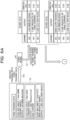
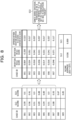
- FIGs. 6A and 6B are explanatory diagrams for explaining an outline of processing of the information processing device according to the first embodiment. As illustrated in FIG. 6A , the model learning unit 11 generates the third model M3 through machine learning using the cases 002 to 004 included in the third training data D3 in S16.
- the score calculation unit 12 applies the third model M3 to each input of the third training data D3, calculates a generation score of each output corresponding to the input, and stores the generation score in the score temporary storage unit 14 (S17). Specifically, as illustrated in FIG. 6A , the score calculation unit 12 calculates the generation scores of the respective cases (cases 002 to 004) included in the third training data D3 with the third model M3 in S17. As a result, for example, a generation score 0.89 is obtained for the case 002 with the number 002. Furthermore, a generation score 0.82 is obtained for the case 003 with the number 003. Furthermore, a generation score 0.87 is obtained for the case 004 with the number 004.
- the score evaluation calculation unit 13 compares the generation scores in S17 and S13 in the score temporary storage unit 14, and proceeds the processing to next S19 in a case where the score of the case where the generation score is low in S13 is improved in S17 (S18).
- the score evaluation calculation unit 13 compares in S18 the generation scores in S17 and S13 and verifies appropriateness indicating whether or not the generation score in the result in S17 is deteriorated.
- the training data generation unit 15 outputs the third training data D3 as corrected second training data D21, and extracts only a certain part of the first training data D1 from the third training data D3 and outputs the extracted part as corrected first training data D11.
- the training data generation unit 15 outputs the corrected second training data D21 and the corrected first training data D11 as final results of training data for retraining (S20) and ends the processing.
- the score evaluation calculation unit 13 determines in S18 that S17 is not deteriorated and the case 001 should be deleted. Based on this determination result, the training data generation unit 15 outputs the corrected second training data D21 and the corrected first training data D11 from which the case 001 is deleted (S19a).
- the score evaluation calculation unit 13 determines in S18 that S17 is deteriorated and the deletion of the case 001 is cancelled. Based on this determination result, the training data generation unit 15 outputs the corrected first training data D11 and the corrected second training data D21 that are returned to the first training data D1 and the second training data D2 that are similar to those at the time of input (S19b).
- training data (third training data D3) that is expected to improve a retraining effect can be generated. Furthermore, in the first embodiment, it is possible to generate the training data for retraining (corrected first and second training data D11 and D21) after identifying that the case to be removed is a case that lowers the output quality, for the third training data D3.
- a second embodiment is different from the first embodiment in that statistics amounts (deviation and average value of score) of the generation scores in S12 and S13 in the score temporary storage unit 14 are compared so as to obtain training data (case) to be deleted.
- FIG. 7 is a flowchart illustrating an operation example of an information processing device 1 according to the second embodiment.
- a score evaluation calculation unit 13 receives inputs of the generation score of the first training data D1 with the first model M1 (S12) and the generation score of the second training data D2 with the second model M2 (S13) (S30).
- the score evaluation calculation unit 13 acquires a statistics amount of only an old training data portion (part excluding new training data) of the generation scores of the first training data D1 and the second training data D2 (S31).
- the statistics amount acquired here is an average value of the generation scores of the first training data D1 or the second training data D2 and a deviation between the generation scores of the respective pieces of training data (difference between generation score and average value).
- the score evaluation calculation unit 13 assumes training data that satisfies such conditions as a deletion target. Specifically, the score evaluation calculation unit 13 compares the deviation in S13 with the deviation in S12, and in a case where an absolute value of a difference between the deviations of the pieces of training data (case) is larger than a negative specific threshold, the score evaluation calculation unit 13 assumes the training data (case) as a deletion target (S32). Next, the score evaluation calculation unit 13 outputs the case to be deleted in the second training data D2 to a training data generation unit 15 (S33). As a result, the training data generation unit 15 deletes the case from the second training data D2 based on the output from the score evaluation calculation unit 13 and generates third training data D3.
- FIG. 8 is an explanatory diagram for explaining an outline of processing of the information processing device 1 according to the second embodiment.
- case IDs 001 to 007 correspond to old training data (first training data D1).
- case IDs 008 and 009 correspond to new training data (additional part for first training data D1 in second training data D2).
- the score evaluation calculation unit 13 acquires statistics amounts (deviation of score and score average) for the old training data portions (case IDs 001 to 007) of the generation scores of the first training data D1 and the second training data D2. Next, the score evaluation calculation unit 13 compares a deviation difference with a negative threshold (for example, -0.1) and determines the case ID 001 that satisfies the conditions as a deletion target.
- a negative threshold for example, -0.1
- this threshold may be designated by a user in advance. Furthermore, the threshold may be automatically set according to a negative value of a standard deviation of the score in S13 or negative values of the average in S13 and the score difference in S12.
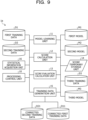
- FIG. 9 is a block diagram illustrating a functional configuration example of an information processing device according to a third embodiment. As illustrated in FIG. 9 , an information processing device 1a is different from the information processing device 1 described above in that the information processing device 1a includes a statistical information acquisition unit 16.
- the statistical information acquisition unit 16 is a processing unit that acquires statistical information (statistical information of words in present embodiment) of a plurality of cases included in first training data D1 and a plurality of cases included in second training data D2. Specifically, the statistical information acquisition unit 16 acquires an appearance frequency of the case and a co-occurrence frequency of mutual cases, for each case (word) included in the first training data D1 and the second training data D2.
- a score evaluation calculation unit 13 determines training data corresponding to a case (old case included in first training data D1) of which statistical information satisfies a specific condition as exclusion (deletion) target, based on the statistical information acquired by the statistical information acquisition unit 16. In this way, a case of a word change (concept drift) or the like is specified based on the statistical information, and the case may be assumed as a deletion target.
- the score evaluation calculation unit 13 assumes a case of the training data including the word to be excluded as assuming that the case has a word change (concept drift). Similarly, in a case where co-occurrence frequencies of a word in inputs or outputs of cases in the new and old pieces of training data change, the score evaluation calculation unit 13 assumes a case including the word to be excluded as assuming that the case has a word change (concept drift).
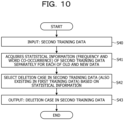
- FIG. 10 is a flowchart illustrating an operation example of the information processing device 1a according to the third embodiment.
- the statistical information acquisition unit 16 receives an input of the second training data D2 (S40).
- the statistical information acquisition unit 16 acquires statistical information (appearance frequency of word and co-occurrence frequency of words) of the second training data D2 separately for each of the old and the new training data (S41).
- the score evaluation calculation unit 13 selects a deletion case in the second training data D2 that satisfies the condition described above, based on the statistical information acquired by the statistical information acquisition unit 16 (S42). Note that the score evaluation calculation unit 13 similarly selects a deletion case that exists in the first training data D1.
- the score evaluation calculation unit 13 outputs the deletion case in the second training data D2 to a training data generation unit 15 (S43).
- the training data generation unit 15 deletes the case from the second training data D2 based on the output from the score evaluation calculation unit 13 and generates third training data D3.
- FIG. 11 is an explanatory diagram for explaining an example of the second training data D2.
- a co-occurrence frequency of an input "AAAA (fruit name)” and an output "favorite” is high
- a co-occurrence frequency of "AAAA (company name)” and "favorite” in new data is low. Therefore, a case with an ID 001 in the old data is a deletion case.
- a change in the co-occurrence frequency is determined, for example, based on comparison with a co-occurrence frequency threshold (SD) that is preset.
- SD co-occurrence frequency threshold
- FIG. 12 is a block diagram illustrating a functional configuration example of an information processing device according to a fourth embodiment. As illustrated in FIG. 12 , an information processing device 1b is different from the information processing device 1 described above in that the information processing device 1b includes a similarity calculation unit 17.
- the similarity calculation unit 17 is a processing unit that compares a plurality of cases (input or output) included in second training data D2 with each other and acquires a similarity thereof. This similarity is acquired by applying a known method such as a method for calculating a similarity of a structure tree of data (sentence) or a method for calculating a similarity of a sentence through vector synthesis of constituent words in the sentence that is an extension of word2vec.
- a known method such as a method for calculating a similarity of a structure tree of data (sentence) or a method for calculating a similarity of a sentence through vector synthesis of constituent words in the sentence that is an extension of word2vec.
- a score evaluation calculation unit 13 determines training data corresponding to a case (old case included in first training data D1) of which a similarity satisfies a specific condition as an exclusion (deletion) target, based on the similarity acquired by the similarity calculation unit 17. For example, the score evaluation calculation unit 13 determines cases (old case included in first training data D1) of which inputs (or output) are similar (equal to or more than specific similarity) and outputs (or input) are not similar as deletion cases. In this way, a case that has a word change (concept drift) is specified based on the similarity, and the case may be assumed as a deletion target.
- FIG. 13 is a flowchart illustrating an operation example of the information processing device 1b according to the fourth embodiment.
- the similarity calculation unit 17 receives an input of the second training data D2 (S50).
- the similarity calculation unit 17 calculates a similarity between new (old) inputs for each of new and old data of the second training data D2.
- the similarity calculation unit 17 calculates a similarity between new and old outputs (S51).
- the score evaluation calculation unit 13 selects a deletion case in the second training data D2 that satisfies the condition described above, based on information regarding the similarity calculated by the similarity calculation unit 17 (S52). Note that the score evaluation calculation unit 13 similarly selects a deletion case that exists in the first training data D1.
- the score evaluation calculation unit 13 outputs the deletion case in the second training data D2 to a training data generation unit 15 (S53).
- the training data generation unit 15 deletes the case from the second training data D2 based on the output from the score evaluation calculation unit 13 and generates third training data D3.
- the similarity is determined based on comparison with a preset threshold. For example, in a case where the similarity between one of the inputs and outputs is equal to or more than a similarity threshold (SS) and another similarity is equal to or less than a difference threshold (SI), the case is assumed as a deletion case.
- SS similarity threshold
- SI difference threshold
- a fifth embodiment is different from the first embodiment in that the statistics amounts (deviation and average value of score) of the generation scores in S13 and S17 in the score temporary storage unit 14 are compared so as to confirm appropriateness of third training data D3.
- FIG. 14 is a flowchart illustrating an operation example of an information processing device 1 according to the fifth embodiment.
- a score evaluation calculation unit 13 receives inputs of the generation score of the second training data D2 with the second model M2 (S13) and the generation score of the third training data D3 with the third model M3 (S17) (S60).
- the score evaluation calculation unit 13 acquires a statistics amount of a score of only data existing in both of the second training data D2 and the third training data D3 (S61).
- the statistics amount acquired here is an average value of the generation score of the second training data D2 or the third training data D3 and a deviation between the generation scores of the respective pieces of training data (difference between generation score and average value).
- the score evaluation calculation unit 13 acknowledges the appropriateness of the third training data D3 because training data that satisfies such conditions does not exist in the third training data D3. Specifically, the score evaluation calculation unit 13 compares the deviation in S17 with the deviation in S13, and in a case where there is no data of which an absolute value of a difference in the deviations of the training data (case) is larger than a negative specific threshold, the score evaluation calculation unit 13 acknowledges the appropriateness of the third training data D3 (S62).
- the score evaluation calculation unit 13 outputs a determination result of the appropriateness of the third training data D3 to a training data generation unit 15 (S63).
- the training data generation unit 15 outputs corrected first training data D11 and corrected second training data D21 based on the third training data D3 that is acknowledged to have the appropriateness. Note that, in a case where there is no appropriateness, the training data generation unit 15 outputs corrected first training data D11 and corrected second training data D21 that are similar to inputs.
- FIG. 15 is an explanatory diagram for explaining an outline of processing of the information processing device 1 according to the fifth embodiment.
- case IDs 002 to 009 correspond to data existing in both of the second training data D2 and the third training data D3.
- the score evaluation calculation unit 13 acquires statistics amounts (deviation of score and score average) of the case IDs 002 to 009 existing in both of the second training data D2 and the third training data D3. Next, the score evaluation calculation unit 13 compares a deviation difference with a negative threshold (for example, -0.1) and confirms whether or not there is a case that satisfies a condition. In the illustrated example, since there is no data (case) that exceeds the threshold of -0.1, appropriateness of data (third training data D3) in S17 is acknowledged.
- a negative threshold for example, -0.1
- FIG. 16 is a block diagram illustrating a functional configuration example of an information processing device according to a sixth embodiment. As illustrated in FIG. 16 , an information processing device 1c is different from the information processing device 1 described above in that the information processing device 1c includes a re-execution processing unit 18.
- the re-execution processing unit 18 is a processing unit that sets corrected first training data D11 generated by a training data generation unit 15 as first training data D1 and corrected second training data D21 as second training data D2, and re-executes generation of the corrected first training data D11 and the corrected second training data D21 again.
- FIG. 17 is a flowchart illustrating an operation example of the information processing device 1c according to the sixth embodiment.
- a processing control unit 10 receives inputs of the first training data D1 and the second training data D2 (S70).
- the processing control unit 10 executes the processing in S11 to S19 described above, based on the received first training data D1 and second training data D2 (S71).
- the processing control unit 10 obtains outputs of the corrected second training data D21 and the corrected first training data D11 (S72).
- the re-execution processing unit 18 determines whether or not the corrected second training data D21 and the corrected first training data D11 are output and both pieces of data are respectively the same as the first training data D1 and the second training data D2 (S73).
- the re-execution processing unit 18 respectively replaces the corrected second training data D21 and the corrected first training data D11 with the second training data D2 and the first training data D1 (S74) and returns the processing to S70. Note that, in a case where both pieces of data are the same as the first training data D1 and the second training data D2 (S73: No), the re-execution processing unit 18 ends the processing.
- the corrected first training data D11 generated by the training data generation unit 15 is not the same as the first training data D1 and the corrected second training data D21 is not the same as the second training data D2
- the corrected first training data D11 and the corrected second training data D21 are respectively replaced with the first training data D1 and the second training data D2.
- generation of the corrected first training data D11 and the corrected second training data D21 is performed again. In this way, by repeating the generation of the corrected first training data D11 and the corrected second training data D21, training data for retraining that is accurately converged can be obtained.
- FIG. 18 is a block diagram illustrating a functional configuration example of an information processing device according to a seventh embodiment.
- an information processing device 1d is different from the information processing device 1 described above in that the information processing device 1d includes an AI system relearning control unit 20, a second training data generation unit 21, an AI system execution unit 22, and an AI system execution model 23.
- the AI system relearning control unit 20 is a processing unit that controls relearning of an AI system such as an automatic translation system. Specifically, the AI system relearning control unit 20 inputs first training data D1 and second training data D2 to a processing control unit 10 at a specific timing (preset update timing of system) and obtains corrected second training data D21 and corrected first training data D11. Next, the AI system relearning control unit 20 retrains the AI system execution model 23 using the obtained corrected second training data D21.
- the second training data generation unit 21 is a processing unit that generates the second training data D2. Specifically, the second training data generation unit 21 collects input and output data at the time of an operation of an Al system, compares the collected data with the first training data D1, and obtains newly collected data (new case). Next, the second training data generation unit 21 synthesizes the newly collected data (input and output) with the first training data D1 and generates the second training data D2.
- the AI system execution unit 22 is an operation unit of the AI system, and applies data, input to the AI system, to the AI system execution model 23 and provides an output obtained from the AI system execution model 23.
- the AI system execution model 23 is a machine learning model with a machine learning technology, used to provide an output for the input of the Al system.
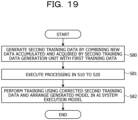
- FIG. 19 is a flowchart illustrating an operation example of the information processing device according to the seventh embodiment. As illustrated in FIG. 19 , when processing starts, new data accumulated and acquired by the second training data generation unit 21 is combined with the first training data D1 so as to generate the second training data D2 (S80).
- the AI system relearning control unit 20 inputs the generated second training data D2 to the processing control unit 10 together with the first training data D1 and executes the processing in S10 to S20 (S81).
- the AI system relearning control unit 20 performs machine learning using the corrected second training data D21 obtained through the processing in S81 and arranges the generated model in the AI system execution model 23 (S82).
- the corrected second training data D21 is generated at a specific timing, and the AI system execution model 23 may be updated through retraining based on the generated corrected second training data D21.
- the AI system execution model 23 may be updated through retraining based on the generated corrected second training data D21.
- each of the illustrated components in each of the devices does not necessarily have to be physically configured as illustrated in the drawings.
- specific modes of distribution and integration of the devices are not limited to those illustrated, and all or a part of the devices may be configured by being functionally or physically distributed and integrated in an optional unit depending on various loads, use situations, and the like.
- all or optional part of various processing functions of the model learning unit 11, the score calculation unit 12, the score evaluation calculation unit 13, the score temporary storage unit 14, the training data generation unit 15, and the statistical information acquisition unit 16 executed by the processing control unit 10 of the information processing device 1 may be executed on a CPU (or microcomputer such as MPU or micro controller unit (MCU)). Furthermore, it is needless to say that all or an optional part of various processing functions may be executed on a program analyzed and executed by a CPU (or microcomputer such as MPU or MCU) or on hardware by wired logic. Furthermore, various processing functions executed with the information processing device 1 may be executed by a plurality of computers in cooperation through cloud computing.
- FIG. 20 is a block diagram illustrating an example of a computer configuration.
- a computer 200 includes a CPU 201 that executes various types of arithmetic processing, an input device 202 that receives data input, a monitor 203, and a speaker 204. Furthermore, the computer 200 includes a medium reading device 205 that reads a program or the like from a storage medium, an interface device 206 to be connected to various devices, and a communication device 207 to be connected to and communicate with an external device in a wired or wireless manner. Furthermore, the information processing device 1 includes a RAM 208 that temporarily stores various types of information, and a hard disk device 209. Furthermore, each of the units (201 to 209) in the computer 200 is connected to a bus 210.
- the hard disk device 209 stores a program 211 used to execute various types of processing of the functional configurations described in the above embodiments (for example, processing control unit 10, model learning unit 11, score calculation unit 12, score evaluation calculation unit 13, score temporary storage unit 14, training data generation unit 15, statistical information acquisition unit 16, similarity calculation unit 17, re-execution processing unit 18, AI system relearning control unit 20, second training data generation unit 21, and Al system execution unit 22). Furthermore, the hard disk device 209 stores various types of data 212 that the program 211 refers to.
- the input device 202 receives, for example, an input of operation information from an operator.
- the monitor 203 displays, for example, various screens operated by the operator.
- the interface device 206 is connected to, for example, a printing device or the like.
- the communication device 207 is connected to a communication network such as a local area network (LAN), and exchanges various types of information with an external device via the communication network.
- LAN local area network
- the CPU 201 reads the program 211 stored in the hard disk device 209 and develops the program 211 in the RAM 208, and executes the program 211 so as to execute various types of processing regarding the functional configurations described above (for example, processing control unit 10, model learning unit 11, score calculation unit 12, score evaluation calculation unit 13, score temporary storage unit 14, training data generation unit 15, statistical information acquisition unit 16, similarity calculation unit 17, re-execution processing unit 18, AI system relearning control unit 20, second training data generation unit 21, and Al system execution unit 22).
- the CPU 201 is an example of a control unit.
- the program 211 does not have to be stored in the hard disk device 209.
- the program 211 stored in a storage medium readable by the computer 200 may be read and executed.
- the storage medium readable by the computer 200 corresponds to a portable recording medium such as a CD-ROM, a DVD disk, or a universal serial bus (USB) memory, a semiconductor memory such as a flash memory, a hard disk drive, or the like.
- the program 211 may be stored in a device connected to a public line, the Internet, a LAN, or the like, and the computer 200 may read the program 211 from the device to execute the program 211.
- Patent Document 1 Japanese Laid-open Patent Publication No. 2019-149030
Landscapes
- Engineering & Computer Science (AREA)
- Theoretical Computer Science (AREA)
- Software Systems (AREA)
- Physics & Mathematics (AREA)
- Artificial Intelligence (AREA)
- General Engineering & Computer Science (AREA)
- Data Mining & Analysis (AREA)
- Evolutionary Computation (AREA)
- Mathematical Physics (AREA)
- General Physics & Mathematics (AREA)
- Computing Systems (AREA)
- Computer Vision & Pattern Recognition (AREA)
- Medical Informatics (AREA)
- Biomedical Technology (AREA)
- Molecular Biology (AREA)
- General Health & Medical Sciences (AREA)
- Computational Linguistics (AREA)
- Biophysics (AREA)
- Life Sciences & Earth Sciences (AREA)
- Health & Medical Sciences (AREA)
- Information Retrieval, Db Structures And Fs Structures Therefor (AREA)
- Management, Administration, Business Operations System, And Electronic Commerce (AREA)
- Complex Calculations (AREA)
Abstract
Description
- The embodiments according to the present invention relate to a training data generation program, a training data generation method, and a training data generation device.
- Typically, in natural language processing of an automatic translation system or the like, a machine learning model with a machine learning technology is utilized for conversion processing from a discrete series (original language) into another discrete series (translation target language). In the natural language processing, new words and new meanings of existing words increase due to word changes (concept drift), and tendency of input data and tendency of an output for the input change. Therefore, the machine learning model is retrained in order to maintain an output quality.
- In retraining, in a case where old training data is included in training data for retraining, a retraining effect is lowered. For example, in a case where meaning (translation) of the same word changes, if retraining is performed in a state where both of a case of old meaning and a case of new meaning coexist in retraining data, it is difficult to train word translation well. Therefore, it is required to remove a training case, of which a retraining effect is lowered, from training data for retraining.
- As related art for removing this training case, a learning quality estimation device has been known that can calculate a quality score using a forward-direction learned model for a training pair that includes an input and an output of a discrete series that may include an error in a correspondence relationship and remove erroneous data in training data used for machine learning such as natural language processing.
- Examples of the related art include [Patent Document 1]
Japanese Laid-open Patent Publication No. 2019-149030 - However, with the related art described above, there is a problem in that it may be difficult to detect an inappropriate training case from old data included in retraining data. For example, in a case where there is less new additional data caused by a change of a word or the like in retraining, it is difficult to identify an inappropriate training case with a quality score of one machine learning model. Therefore, there is a case where an inappropriate training case is mixed in the training data for retraining, and there is a case where it is not possible to expect to improve a training effect.
- In one aspect, an object is to provide a training data generation program, a training data generation method, and a training data generation device that can assist to improve an effect of machine learning.
- In one idea, a training data generation program causes a computer to execute processing of acquiring a first value, processing of acquiring a second value, comparing processing, and generating processing. The processing of acquiring the first value acquires the first value by inputting first data included in a plurality of pieces of first training data to a first model that is generated through machine learning based on the plurality of pieces of first training data. The processing of acquiring the second value acquires the second value by inputting the first data and second data included in a plurality of pieces of second training data to a second model that is generated through machine learning based on the plurality of pieces of first training data and the plurality of pieces of second training data. The comparing processing compares the first value with the second value. The generating processing generates a plurality of pieces of third training data that does not include at least a part of the first data, based on the plurality of pieces of first training data and the plurality of pieces of second training data, according to a comparison result.
- It is possible to assist to improve an effect of machine learning.
-
-
FIG. 1 is an explanatory diagram for explaining an outline of an embodiment. -
FIG. 2 is a block diagram illustrating a functional configuration example of an information processing device according to a first embodiment. -
FIG. 3 is a flowchart illustrating an operation example of the information processing device according to the first embodiment. -
FIG. 4 is an explanatory diagram for explaining an outline of processing of the information processing device according to the first embodiment. -
FIG. 5 is an explanatory diagram for explaining an example of score calculation. -
FIG. 6A is an explanatory diagram for explaining an outline of the processing of the information processing device according to the first embodiment. -
FIG. 6B is an explanatory diagram for explaining the outline of the processing of the information processing device according to the first embodiment. -
FIG. 7 is a flowchart illustrating an operation example of an information processing device according to a second embodiment. -
FIG. 8 is an explanatory diagram for explaining an outline of processing of the information processing device according to the second embodiment. -
FIG. 9 is a block diagram illustrating a functional configuration example of an information processing device according to a third embodiment. -
FIG. 10 is a flowchart illustrating an operation example of the information processing device according to the third embodiment. -
FIG. 11 is an explanatory diagram for explaining an example of second training data. -
FIG. 12 is a block diagram illustrating a functional configuration example of an information processing device according to a fourth embodiment. -
FIG. 13 is a flowchart illustrating an operation example of the information processing device according to the fourth embodiment. -
FIG. 14 is a flowchart illustrating an operation example of an information processing device according to a fifth embodiment. -
FIG. 15 is an explanatory diagram for explaining an outline of processing of the information processing device according to the fifth embodiment. -
FIG. 16 is a block diagram illustrating a functional configuration example of an information processing device according to a sixth embodiment. -
FIG. 17 is a flowchart illustrating an operation example of the information processing device according to the sixth embodiment. -
FIG. 18 is a block diagram illustrating a functional configuration example of an information processing device according to a seventh embodiment. -
FIG. 19 is a flowchart illustrating an operation example of the information processing device according to the seventh embodiment. -
FIG. 20 is a block diagram illustrating an example of a computer configuration. - Hereinafter, a training data generation program, a training data generation method, and a training data generation device according to embodiments will be described with reference to the drawings. Configurations having the same functions in the embodiments are denoted by the same reference signs, and redundant description will be omitted. Note that the training data generation program, the training data generation method, and the training data generation device to be described in the following embodiments are merely examples, and do not limit the embodiments. Furthermore, the following embodiments may be appropriately combined unless otherwise contradicted.
-
FIG. 1 is an explanatory diagram for explaining an outline of an embodiment. As illustrated inFIG. 1 , the present embodiment copes with concept drift or the like, generates retraining data of a model through machine learning in order to maintain an output quality, excludes a case where an effect of retraining is lowered, and generates training data for retraining as a final result. - Note that, in the present embodiment, as a model to be retrained, a model used for conversion processing from a discrete series (original language) to another discrete series (translation target language) is exemplified. However, it is sufficient that a model to which the present embodiment is applied be a model to be retrained in response to a change, and the model is not limited to a model used for such natural language processing. For example, it may be applied to retraining of a model in a recommendation system using a model that uses a feature amount of a customer as an input and outputs a recommended product (product category) for the customer.
- As illustrated in
FIG. 1 , first training data D1 is training data relating to an old case before change. Second training data D2 is training data related to a new case (change in meaning of word or way of speaking, new word (unregistered word such as new product name)) after changes due to the concept drift or the like. Each case includes an input to a model and an output to be a correct answer. - For example, the first training data D1 includes a
case 001 of which an input is "I like AAAA (fruit name)!" and an output is "AAAA is my favorite" and acase 002 of which an input is "I love BBBB (company name)!" and an output is "I am a BBBB believer". Furthermore, the second training data D2 includes acase 003 of which an input is "I like AAAA (company name)!" and an output is "I like products of AAAA company" and acase 004 of which an input is "I love CCCC (new product name)!" and an output is "I like CCCC very much!". - Here, in the second training data D2, the
case 003 is a case indicating a change in meaning with respect to the case 001 ("AAAA (fruit) → AAAA (company name)". In other words, both inputs are "I like AAAA". However, the output of thecase 001 is "AAAA is my favorite", and the output of thecase 003 is "I like products of AAAA company". Furthermore, thecase 004 is a case indicating a newly appeared word (unregistered word) "CCCC (new product name)". - In a case where training is performed with the new and old cases (
case 001 to case 004) described above at the time of retraining, since thecase 002 has only the old case, training can be performed if the new and old cases coexist. Similarly, since thecase 004 has only the new case, training can be performed if the new and old cases coexist. On the other hand, since thecases cases case 001 and thecase 003 coexist, it is not possible to train both of the cases. In other words, in a case where thecase 001 and thecase 003 coexist, a retraining effect is lowered. - Therefore, in the present embodiment, a first model M1 is generated by performing machine learning with the first training data D1 (S1). Next, in the present embodiment, the first training data D1 is input to the generated first model M1, and generation scores (score related to output of first model M1) of the
cases - Next, in the present embodiment, a second model M2 is generated by performing machine learning with the first training data D1 and the second training data D2 (S3). Next, in the present embodiment, the first training data D1 and the second training data D2 are input to the generated second model M2, and generation scores (score related to output of second model M2) of the
cases 001 to 004 are calculated (S4). - In a case where generation scores of a new and old cases are calculated using the second model M2 that is trained with the new and old cases, if there is a contradictory case among the new and old cases, a generation score related to an output of the contradictory case is lowered. Furthermore, a generation score related to an output of a non-contradictory case can be maintained at a high level.
- Therefore, in the present embodiment, the generation score in S2 is compared with the generation score in S4, and training data that does not include a case that is determined to be contradictory among the old cases of the first training data D1 is generated based on training data obtained by adding the second training data D2 to the first training data D1. Specifically, in the present embodiment, the generation scores of the
cases case 001 is lower than S2, it is determined that thecase 001 among the old cases is contradictory (S5). As a result, based on the training data obtained by adding the second training data D2 to the first training data D1, training data that does not include thecase 001 among the old cases is generated. - Next, in the present embodiment, in order to confirm that the deleted
case 001 is a case (noise) that lowers an output quality, machine learning is performed by deleting thecase 001 from the training data obtained by adding the second training data D2 to the first training data D1, and a third model M3 is generated (S6). Next, in the present embodiment, thecases 002 to 004 are input to the generated third model M3, and generation scores (score related to output of third model M3) of thecases 002 to 004 are calculated (S7). Here, a generation score of a non-contradictory case is almost unchanged, and even if the generation score is fluctuated, it can be assumed that the fluctuation is a slight decrease (effect of decrease in training data scale). - Next, in the present embodiment, in a case where the generation score of the
case 003 in S7 is higher than the generation score in S4 and the generation scores of thecases case 001 is a case (noise) that lowers the output quality. Based on this confirmation, in the present embodiment, it is determined that thecase 001 should be deleted (S8). - Therefore, in the present embodiment, retraining data obtained by deleting the
case 001 from the training data that is obtained by adding the second training data D2 to the first training data D1 is determined (cases 002 to 004). In this way, in the present embodiment, by using the generation scores of the first model M1 and the second model M2, it is possible to accurately remove the case (noise) that lowers the output quality and generate training data that is expected to improve a retraining effect. Furthermore, in the present embodiment, by using the generation score of the third model M3, it is possible to generate training data for retraining after identifying that the case to be removed is a case that lowers the output quality. -
FIG. 2 is a block diagram illustrating a functional configuration example of an information processing device according to a first embodiment. As illustrated inFIG. 2 , aninformation processing device 1 includes aprocessing control unit 10, amodel learning unit 11, ascore calculation unit 12, a scoreevaluation calculation unit 13, a scoretemporary storage unit 14, and a trainingdata generation unit 15. For example, a personal computer (PC) or the like can be applied to thisinformation processing device 1. - The
processing control unit 10 is a processing unit that controls execution of processing of generating retraining data. - The
model learning unit 11 is a processing unit that generates a model by executing processing related to known machine learning. Specifically, themodel learning unit 11 performs machine learning of a model (optimization of parameter) so as to generate an output sequence from an input sequence of training data of which an input and an output are paired. - For example, the
model learning unit 11 generates a first model M1 by performing training using first training data D1. Furthermore, themodel learning unit 11 generates a second model M2 by performing training using second training data D2 that includes the first training data D1. Furthermore, themodel learning unit 11 generates a third model M3 by performing training using third training data D3. - Here, the first training data D1 is training data, in which an input (for example, original language) and an output (for example, translation target language) of a discrete series of a natural language are paired, for generating a model related to translation that is operated by an automatic translation system. The second training data D2 is training data that includes a new case after changes caused by concept drift or the like, in addition to the first training data D1. The third training data D3 is training data that is newly created as training data that does not include a case that is determined to be contradictory among old cases, based on the first training data D1 and the second training data D2.
- The
score calculation unit 12 is a processing unit that, when the model generated through machine learning is applied to each input of the training data and each corresponding output is generated, calculates a score related to the output. For the calculation of this score, for example, a known calculation method as inJapanese Laid-open Patent Publication No. 2019-149030 score calculation unit 12 stores the calculated score in the scoretemporary storage unit 14 after assigning identification information (for example, ID) for each training data (case). - For example, the
score calculation unit 12 inputs the first training data D1 to the first model M1, calculates a generation score of each input case, and stores the generation score in the scoretemporary storage unit 14. Furthermore, thescore calculation unit 12 inputs the second training data D2 to the second model M2, calculates a generation score of each input case, and stores the generation score in the scoretemporary storage unit 14. Furthermore, thescore calculation unit 12 inputs the third training data D3 to the third model M3, calculates a generation score of each input case, and stores the generation score in the scoretemporary storage unit 14. - The score
evaluation calculation unit 13 is a processing unit that compares the generation scores stored in the scoretemporary storage unit 14, evaluates a change in the generation score, and detects a case to be deleted from the training data. For example, the scoreevaluation calculation unit 13 compares the generation score of the second model M2 with the generation score of the first model M1 and detects a contradictory case from among the old cases. - The score
temporary storage unit 14 is a processing unit that temporarily stores the generation score calculated by thescore calculation unit 12 in a memory or the like. Specifically, the scoretemporary storage unit 14 associates a generation source model with the training data (case) and stores the generation score. - The training
data generation unit 15 is a processing unit that deletes a case designated as the case to be deleted based on the detection result of the scoreevaluation calculation unit 13 in the training data of the second training data D2 that includes the first training data D1 and generates the third training data D3. Furthermore, the trainingdata generation unit 15 confirms that the deleted case is a case that lowers the output quality of the model by using the generation score of the third model M3, and then, generates training data for retraining (corrected first training data D11 and corrected second training data D21) as a final result. - The corrected second training data D21 is an output of the confirmed third training data D3 as a processing result. The corrected first training data D11 is data obtained by extracting only training data included in the first training data D1, from the third training data D3.
-
FIG. 3 is a flowchart illustrating an operation example of theinformation processing device 1 according to the first embodiment. As illustrated inFIG. 3 , when processing starts, theprocessing control unit 10 receives inputs of the first training data D1 and the second training data D2 (S10). - Next, the
model learning unit 11 performs training with each of the first training data D1 and the second training data D2 and generates the first model M1 and the second model M2 (S11). Specifically, themodel learning unit 11 generates the first model M1 by performing training using the first training data D1. Furthermore, themodel learning unit 11 generates the second model M2 by performing training using the second training data D2. - Next, the
score calculation unit 12 applies the first model M1 to the first training data D1, calculates a generation score of an output of each case included in the first training data D1, and stores the generation score in the score temporary storage unit 14 (S12). -
FIG. 4 is an explanatory diagram for explaining an outline of processing of the information processing device according to the first embodiment. As illustrated inFIG. 4 , thescore calculation unit 12 calculates the generation score of each case included in the first training data D1 with the first model M1 in S12. As a result, for example, a generation score 0.99 is obtained for acase 001 with anumber 001. Furthermore, for acase 002 with anumber 002, a generation score 0.96 is obtained. - Next, the
score calculation unit 12 applies the second model M2 to the second training data D2, calculates a generation score of an output of each case included in the second training data D2, and stores the generation score in the score temporary storage unit 14 (S13). For example, as illustrated inFIG. 4 , in S13, the generation score of each case (case 001 to case 004) included in the second training data D2 is obtained. For example, a generation score 0.60 is obtained for thecase 001 with thenumber 001. Furthermore, a generation score 0.91 is obtained for thecase 002 with thenumber 002. Furthermore, a generation score 0.56 is obtained for acase 003 with anumber 003. Furthermore, a generation score 0.88 is obtained for acase 004 with anumber 004. -
FIG. 5 is an explanatory diagram for explaining an example of score calculation. As illustrated inFIG. 5 , for score calculation of the generation score by thescore calculation unit 12, a score for a result (output) obtained by inputting each case to the first model M1, the second model M2, the third model M3, or the like may be used. Furthermore, as another method of the score calculation by thescore calculation unit 12, an entire rank of a correct answer output may be calculated as Score = - log (n / N) while assuming that N = the total number of possible outputs and n = a rank of a correct answer output. Moreover, thescore calculation unit 12 may weight a score of a correct answer output with an entire rank while assuming that Score = - log (n / N * s) and s = a score of a correct answer output. - Returning to
FIG. 3 , following to S13, the scoreevaluation calculation unit 13 compares the generation scores in S12 and S13 in the scoretemporary storage unit 14 and detects an input/output pair (case) of the first training data D1 of which the score decreases in S13 (S14). As a result, as illustrated inFIG. 4 , the scoreevaluation calculation unit 13 detects that the generation score of thecase 001 in the first training data D1 has deteriorated as 0.89 → 0.60 (S14). - Next, the training
data generation unit 15 deletes the input/output pair (case) detected in S14 from the first training data D1 and the second training data D2 and generates the third training data D3 by synthesizing deleted new training data (S15). Specifically, as illustrated inFIG. 4 , the trainingdata generation unit 15 deletes thecase 001, in which the deterioration in the generation score is detected in S14, from the second training data D2 and creates the third training data D3. In other words, the third training data D3 is obtained by deleting thecase 001 from the second training data D2. - Next, the
model learning unit 11 generates the third model M3 by performing training using the third training data D3 (S16).FIGs. 6A and6B are explanatory diagrams for explaining an outline of processing of the information processing device according to the first embodiment. As illustrated inFIG. 6A , themodel learning unit 11 generates the third model M3 through machine learning using thecases 002 to 004 included in the third training data D3 in S16. - Next, the
score calculation unit 12 applies the third model M3 to each input of the third training data D3, calculates a generation score of each output corresponding to the input, and stores the generation score in the score temporary storage unit 14 (S17). Specifically, as illustrated inFIG. 6A , thescore calculation unit 12 calculates the generation scores of the respective cases (cases 002 to 004) included in the third training data D3 with the third model M3 in S17. As a result, for example, a generation score 0.89 is obtained for thecase 002 with thenumber 002. Furthermore, a generation score 0.82 is obtained for thecase 003 with thenumber 003. Furthermore, a generation score 0.87 is obtained for thecase 004 with thenumber 004. - Next, the score
evaluation calculation unit 13 compares the generation scores in S17 and S13 in the scoretemporary storage unit 14, and proceeds the processing to next S19 in a case where the score of the case where the generation score is low in S13 is improved in S17 (S18). - Specifically, as illustrated in
FIG. 6B , the scoreevaluation calculation unit 13 compares in S18 the generation scores in S17 and S13 and verifies appropriateness indicating whether or not the generation score in the result in S17 is deteriorated. - In S19, the training
data generation unit 15 outputs the third training data D3 as corrected second training data D21, and extracts only a certain part of the first training data D1 from the third training data D3 and outputs the extracted part as corrected first training data D11. Next, the trainingdata generation unit 15 outputs the corrected second training data D21 and the corrected first training data D11 as final results of training data for retraining (S20) and ends the processing. - For example, as illustrated in
FIG. 6B , in a case where the generation score of thecase 003 in S17 is higher than that in S13 and the generation scores of thecases evaluation calculation unit 13 determines in S18 that S17 is not deteriorated and thecase 001 should be deleted. Based on this determination result, the trainingdata generation unit 15 outputs the corrected second training data D21 and the corrected first training data D11 from which thecase 001 is deleted (S19a). - Furthermore, as illustrated in
FIG. 6B , in a case where the generation scores of thecases evaluation calculation unit 13 determines in S18 that S17 is deteriorated and the deletion of thecase 001 is cancelled. Based on this determination result, the trainingdata generation unit 15 outputs the corrected first training data D11 and the corrected second training data D21 that are returned to the first training data D1 and the second training data D2 that are similar to those at the time of input (S19b). - In this way, in the first embodiment, training data (third training data D3) that is expected to improve a retraining effect can be generated. Furthermore, in the first embodiment, it is possible to generate the training data for retraining (corrected first and second training data D11 and D21) after identifying that the case to be removed is a case that lowers the output quality, for the third training data D3.
- A second embodiment is different from the first embodiment in that statistics amounts (deviation and average value of score) of the generation scores in S12 and S13 in the score
temporary storage unit 14 are compared so as to obtain training data (case) to be deleted. -
FIG. 7 is a flowchart illustrating an operation example of aninformation processing device 1 according to the second embodiment. As illustrated inFIG. 7 , when processing starts, a scoreevaluation calculation unit 13 receives inputs of the generation score of the first training data D1 with the first model M1 (S12) and the generation score of the second training data D2 with the second model M2 (S13) (S30). - Next, the score
evaluation calculation unit 13 acquires a statistics amount of only an old training data portion (part excluding new training data) of the generation scores of the first training data D1 and the second training data D2 (S31). The statistics amount acquired here is an average value of the generation scores of the first training data D1 or the second training data D2 and a deviation between the generation scores of the respective pieces of training data (difference between generation score and average value). - Next, in a case where the generation score is deteriorated, a difference in the deviation is a negative number. Therefore, the score
evaluation calculation unit 13 assumes training data that satisfies such conditions as a deletion target. Specifically, the scoreevaluation calculation unit 13 compares the deviation in S13 with the deviation in S12, and in a case where an absolute value of a difference between the deviations of the pieces of training data (case) is larger than a negative specific threshold, the scoreevaluation calculation unit 13 assumes the training data (case) as a deletion target (S32). Next, the scoreevaluation calculation unit 13 outputs the case to be deleted in the second training data D2 to a training data generation unit 15 (S33). As a result, the trainingdata generation unit 15 deletes the case from the second training data D2 based on the output from the scoreevaluation calculation unit 13 and generates third training data D3. -
FIG. 8 is an explanatory diagram for explaining an outline of processing of theinformation processing device 1 according to the second embodiment. InFIG. 8 ,case IDs 001 to 007 correspond to old training data (first training data D1). Furthermore,case IDs - As illustrated in
FIG. 8 , the scoreevaluation calculation unit 13 acquires statistics amounts (deviation of score and score average) for the old training data portions (case IDs 001 to 007) of the generation scores of the first training data D1 and the second training data D2. Next, the scoreevaluation calculation unit 13 compares a deviation difference with a negative threshold (for example, -0.1) and determines thecase ID 001 that satisfies the conditions as a deletion target. - Note that this threshold may be designated by a user in advance. Furthermore, the threshold may be automatically set according to a negative value of a standard deviation of the score in S13 or negative values of the average in S13 and the score difference in S12.
- In this way, in the second embodiment, by comparing the generation scores using the statistics amounts, it is possible to robustly determine a deletion target case with respect to a noise included in the generation score.
-
FIG. 9 is a block diagram illustrating a functional configuration example of an information processing device according to a third embodiment. As illustrated inFIG. 9 , aninformation processing device 1a is different from theinformation processing device 1 described above in that theinformation processing device 1a includes a statisticalinformation acquisition unit 16. - The statistical
information acquisition unit 16 is a processing unit that acquires statistical information (statistical information of words in present embodiment) of a plurality of cases included in first training data D1 and a plurality of cases included in second training data D2. Specifically, the statisticalinformation acquisition unit 16 acquires an appearance frequency of the case and a co-occurrence frequency of mutual cases, for each case (word) included in the first training data D1 and the second training data D2. - A score
evaluation calculation unit 13 determines training data corresponding to a case (old case included in first training data D1) of which statistical information satisfies a specific condition as exclusion (deletion) target, based on the statistical information acquired by the statisticalinformation acquisition unit 16. In this way, a case of a word change (concept drift) or the like is specified based on the statistical information, and the case may be assumed as a deletion target. - For example, in a case where appearance frequencies of a word in inputs or outputs in the new and old pieces of training data largely change, the score
evaluation calculation unit 13 assumes a case of the training data including the word to be excluded as assuming that the case has a word change (concept drift). Similarly, in a case where co-occurrence frequencies of a word in inputs or outputs of cases in the new and old pieces of training data change, the scoreevaluation calculation unit 13 assumes a case including the word to be excluded as assuming that the case has a word change (concept drift). -
FIG. 10 is a flowchart illustrating an operation example of theinformation processing device 1a according to the third embodiment. As illustrated inFIG. 10 , when processing starts, the statisticalinformation acquisition unit 16 receives an input of the second training data D2 (S40). Next, the statisticalinformation acquisition unit 16 acquires statistical information (appearance frequency of word and co-occurrence frequency of words) of the second training data D2 separately for each of the old and the new training data (S41). - Next, the score
evaluation calculation unit 13 selects a deletion case in the second training data D2 that satisfies the condition described above, based on the statistical information acquired by the statistical information acquisition unit 16 (S42). Note that the scoreevaluation calculation unit 13 similarly selects a deletion case that exists in the first training data D1. - Next, the score
evaluation calculation unit 13 outputs the deletion case in the second training data D2 to a training data generation unit 15 (S43). As a result, the trainingdata generation unit 15 deletes the case from the second training data D2 based on the output from the scoreevaluation calculation unit 13 and generates third training data D3. -
FIG. 11 is an explanatory diagram for explaining an example of the second training data D2. As illustrated inFIG. 11 , in old data, although a co-occurrence frequency of an input "AAAA (fruit name)" and an output "favorite" is high, a co-occurrence frequency of "AAAA (company name)" and "favorite" in new data is low. Therefore, a case with anID 001 in the old data is a deletion case. Note that a change in the co-occurrence frequency is determined, for example, based on comparison with a co-occurrence frequency threshold (SD) that is preset. -
FIG. 12 is a block diagram illustrating a functional configuration example of an information processing device according to a fourth embodiment. As illustrated inFIG. 12 , aninformation processing device 1b is different from theinformation processing device 1 described above in that theinformation processing device 1b includes a similarity calculation unit 17. - The similarity calculation unit 17 is a processing unit that compares a plurality of cases (input or output) included in second training data D2 with each other and acquires a similarity thereof. This similarity is acquired by applying a known method such as a method for calculating a similarity of a structure tree of data (sentence) or a method for calculating a similarity of a sentence through vector synthesis of constituent words in the sentence that is an extension of word2vec.
- A score
evaluation calculation unit 13 determines training data corresponding to a case (old case included in first training data D1) of which a similarity satisfies a specific condition as an exclusion (deletion) target, based on the similarity acquired by the similarity calculation unit 17. For example, the scoreevaluation calculation unit 13 determines cases (old case included in first training data D1) of which inputs (or output) are similar (equal to or more than specific similarity) and outputs (or input) are not similar as deletion cases. In this way, a case that has a word change (concept drift) is specified based on the similarity, and the case may be assumed as a deletion target. -
FIG. 13 is a flowchart illustrating an operation example of theinformation processing device 1b according to the fourth embodiment. As illustrated inFIG. 13 , when processing starts, the similarity calculation unit 17 receives an input of the second training data D2 (S50). Next, the similarity calculation unit 17 calculates a similarity between new (old) inputs for each of new and old data of the second training data D2. Furthermore, the similarity calculation unit 17 calculates a similarity between new and old outputs (S51). - Next, the score
evaluation calculation unit 13 selects a deletion case in the second training data D2 that satisfies the condition described above, based on information regarding the similarity calculated by the similarity calculation unit 17 (S52). Note that the scoreevaluation calculation unit 13 similarly selects a deletion case that exists in the first training data D1. - Next, the score
evaluation calculation unit 13 outputs the deletion case in the second training data D2 to a training data generation unit 15 (S53). As a result, the trainingdata generation unit 15 deletes the case from the second training data D2 based on the output from the scoreevaluation calculation unit 13 and generates third training data D3. - For example, in the example of the second training data D2 in
FIG. 11 , since inputs of both of a case with anID 001 in the old data and a case with anID 003 in the new data are "I like AAAA", a similarity between the inputs is equal to or more than the specific value. On the other hand, since an output of the case with theID 001 is "AAAA is my favorite" and an output of the case with theID 003 is "I like products of AAAA company", a similarity between the outputs is low (equal to or less than specific value). Therefore, the case with theID 001 is a deletion target. - Note that the similarity is determined based on comparison with a preset threshold. For example, in a case where the similarity between one of the inputs and outputs is equal to or more than a similarity threshold (SS) and another similarity is equal to or less than a difference threshold (SI), the case is assumed as a deletion case.
- A fifth embodiment is different from the first embodiment in that the statistics amounts (deviation and average value of score) of the generation scores in S13 and S17 in the score
temporary storage unit 14 are compared so as to confirm appropriateness of third training data D3. -
FIG. 14 is a flowchart illustrating an operation example of aninformation processing device 1 according to the fifth embodiment. As illustrated inFIG. 14 , when processing starts, a scoreevaluation calculation unit 13 receives inputs of the generation score of the second training data D2 with the second model M2 (S13) and the generation score of the third training data D3 with the third model M3 (S17) (S60). - Next, the score
evaluation calculation unit 13 acquires a statistics amount of a score of only data existing in both of the second training data D2 and the third training data D3 (S61). The statistics amount acquired here is an average value of the generation score of the second training data D2 or the third training data D3 and a deviation between the generation scores of the respective pieces of training data (difference between generation score and average value). - Next, in a case where the generation score is deteriorated, a difference in the deviation is a negative number. Therefore, the score
evaluation calculation unit 13 acknowledges the appropriateness of the third training data D3 because training data that satisfies such conditions does not exist in the third training data D3. Specifically, the scoreevaluation calculation unit 13 compares the deviation in S17 with the deviation in S13, and in a case where there is no data of which an absolute value of a difference in the deviations of the training data (case) is larger than a negative specific threshold, the scoreevaluation calculation unit 13 acknowledges the appropriateness of the third training data D3 (S62). - Next, the score
evaluation calculation unit 13 outputs a determination result of the appropriateness of the third training data D3 to a training data generation unit 15 (S63). As a result, the trainingdata generation unit 15 outputs corrected first training data D11 and corrected second training data D21 based on the third training data D3 that is acknowledged to have the appropriateness. Note that, in a case where there is no appropriateness, the trainingdata generation unit 15 outputs corrected first training data D11 and corrected second training data D21 that are similar to inputs. -
FIG. 15 is an explanatory diagram for explaining an outline of processing of theinformation processing device 1 according to the fifth embodiment. InFIG. 15 ,case IDs 002 to 009 correspond to data existing in both of the second training data D2 and the third training data D3. - As illustrated in
FIG. 15 , the scoreevaluation calculation unit 13 acquires statistics amounts (deviation of score and score average) of thecase IDs 002 to 009 existing in both of the second training data D2 and the third training data D3. Next, the scoreevaluation calculation unit 13 compares a deviation difference with a negative threshold (for example, -0.1) and confirms whether or not there is a case that satisfies a condition. In the illustrated example, since there is no data (case) that exceeds the threshold of -0.1, appropriateness of data (third training data D3) in S17 is acknowledged. - In this way, in the fifth embodiment, by comparing the generation scores using the statistics amounts, it is possible to robustly determine the appropriateness of the third training data D3 with respect to a noise included in the generation score.
-
FIG. 16 is a block diagram illustrating a functional configuration example of an information processing device according to a sixth embodiment. As illustrated inFIG. 16 , aninformation processing device 1c is different from theinformation processing device 1 described above in that theinformation processing device 1c includes are-execution processing unit 18. - The
re-execution processing unit 18 is a processing unit that sets corrected first training data D11 generated by a trainingdata generation unit 15 as first training data D1 and corrected second training data D21 as second training data D2, and re-executes generation of the corrected first training data D11 and the corrected second training data D21 again. -
FIG. 17 is a flowchart illustrating an operation example of theinformation processing device 1c according to the sixth embodiment. As illustrated inFIG. 17 , when processing starts, aprocessing control unit 10 receives inputs of the first training data D1 and the second training data D2 (S70). Next, theprocessing control unit 10 executes the processing in S11 to S19 described above, based on the received first training data D1 and second training data D2 (S71). As a result, theprocessing control unit 10 obtains outputs of the corrected second training data D21 and the corrected first training data D11 (S72). - Next, the
re-execution processing unit 18 determines whether or not the corrected second training data D21 and the corrected first training data D11 are output and both pieces of data are respectively the same as the first training data D1 and the second training data D2 (S73). - In a case where both pieces of data are not the same as the first training data D1 and the second training data D2 (S73: Yes), the
re-execution processing unit 18 respectively replaces the corrected second training data D21 and the corrected first training data D11 with the second training data D2 and the first training data D1 (S74) and returns the processing to S70. Note that, in a case where both pieces of data are the same as the first training data D1 and the second training data D2 (S73: No), there-execution processing unit 18 ends the processing. - In this way, in the sixth embodiment, in a case where the corrected first training data D11 generated by the training
data generation unit 15 is not the same as the first training data D1 and the corrected second training data D21 is not the same as the second training data D2, the corrected first training data D11 and the corrected second training data D21 are respectively replaced with the first training data D1 and the second training data D2. Next, based on the replaced first training data D1 and second training data D2, generation of the corrected first training data D11 and the corrected second training data D21 is performed again. In this way, by repeating the generation of the corrected first training data D11 and the corrected second training data D21, training data for retraining that is accurately converged can be obtained. -
FIG. 18 is a block diagram illustrating a functional configuration example of an information processing device according to a seventh embodiment. As illustrated inFIG. 18 , aninformation processing device 1d is different from theinformation processing device 1 described above in that theinformation processing device 1d includes an AI system relearningcontrol unit 20, a second trainingdata generation unit 21, an AIsystem execution unit 22, and an AIsystem execution model 23. - The AI system relearning
control unit 20 is a processing unit that controls relearning of an AI system such as an automatic translation system. Specifically, the AI system relearningcontrol unit 20 inputs first training data D1 and second training data D2 to aprocessing control unit 10 at a specific timing (preset update timing of system) and obtains corrected second training data D21 and corrected first training data D11. Next, the AI system relearningcontrol unit 20 retrains the AIsystem execution model 23 using the obtained corrected second training data D21. - The second training
data generation unit 21 is a processing unit that generates the second training data D2. Specifically, the second trainingdata generation unit 21 collects input and output data at the time of an operation of an Al system, compares the collected data with the first training data D1, and obtains newly collected data (new case). Next, the second trainingdata generation unit 21 synthesizes the newly collected data (input and output) with the first training data D1 and generates the second training data D2. - The AI
system execution unit 22 is an operation unit of the AI system, and applies data, input to the AI system, to the AIsystem execution model 23 and provides an output obtained from the AIsystem execution model 23. - The AI
system execution model 23 is a machine learning model with a machine learning technology, used to provide an output for the input of the Al system. -
FIG. 19 is a flowchart illustrating an operation example of the information processing device according to the seventh embodiment. As illustrated inFIG. 19 , when processing starts, new data accumulated and acquired by the second trainingdata generation unit 21 is combined with the first training data D1 so as to generate the second training data D2 (S80). - Next, the AI system relearning
control unit 20 inputs the generated second training data D2 to theprocessing control unit 10 together with the first training data D1 and executes the processing in S10 to S20 (S81). Next, the AI system relearningcontrol unit 20 performs machine learning using the corrected second training data D21 obtained through the processing in S81 and arranges the generated model in the AI system execution model 23 (S82). - In this way, in the seventh embodiment, the corrected second training data D21 is generated at a specific timing, and the AI
system execution model 23 may be updated through retraining based on the generated corrected second training data D21. As a result, for example, it is possible to automatically update a model in an automatic translation system to a model that copes with a word change (concept drift). - Note that each of the illustrated components in each of the devices does not necessarily have to be physically configured as illustrated in the drawings. In other words, specific modes of distribution and integration of the devices are not limited to those illustrated, and all or a part of the devices may be configured by being functionally or physically distributed and integrated in an optional unit depending on various loads, use situations, and the like.
- Furthermore, all or optional part of various processing functions of the
model learning unit 11, thescore calculation unit 12, the scoreevaluation calculation unit 13, the scoretemporary storage unit 14, the trainingdata generation unit 15, and the statisticalinformation acquisition unit 16 executed by theprocessing control unit 10 of theinformation processing device 1 may be executed on a CPU (or microcomputer such as MPU or micro controller unit (MCU)). Furthermore, it is needless to say that all or an optional part of various processing functions may be executed on a program analyzed and executed by a CPU (or microcomputer such as MPU or MCU) or on hardware by wired logic. Furthermore, various processing functions executed with theinformation processing device 1 may be executed by a plurality of computers in cooperation through cloud computing. - Meanwhile, various types of processing described in the embodiments described above may be implemented by executing a program prepared beforehand on a computer. Thus, hereinafter, an example of a computer configuration (hardware) that executes a program having functions similar to the functions of the embodiments described above will be described.
FIG. 20 is a block diagram illustrating an example of a computer configuration. - As illustrated in
FIG. 20 , acomputer 200 includes aCPU 201 that executes various types of arithmetic processing, aninput device 202 that receives data input, amonitor 203, and aspeaker 204. Furthermore, thecomputer 200 includes amedium reading device 205 that reads a program or the like from a storage medium, aninterface device 206 to be connected to various devices, and acommunication device 207 to be connected to and communicate with an external device in a wired or wireless manner. Furthermore, theinformation processing device 1 includes aRAM 208 that temporarily stores various types of information, and ahard disk device 209. Furthermore, each of the units (201 to 209) in thecomputer 200 is connected to abus 210. - The
hard disk device 209 stores aprogram 211 used to execute various types of processing of the functional configurations described in the above embodiments (for example,processing control unit 10,model learning unit 11,score calculation unit 12, scoreevaluation calculation unit 13, scoretemporary storage unit 14, trainingdata generation unit 15, statisticalinformation acquisition unit 16, similarity calculation unit 17,re-execution processing unit 18, AI system relearningcontrol unit 20, second trainingdata generation unit 21, and Al system execution unit 22). Furthermore, thehard disk device 209 stores various types of data 212 that theprogram 211 refers to. Theinput device 202 receives, for example, an input of operation information from an operator. Themonitor 203 displays, for example, various screens operated by the operator. Theinterface device 206 is connected to, for example, a printing device or the like. Thecommunication device 207 is connected to a communication network such as a local area network (LAN), and exchanges various types of information with an external device via the communication network. - The
CPU 201 reads theprogram 211 stored in thehard disk device 209 and develops theprogram 211 in theRAM 208, and executes theprogram 211 so as to execute various types of processing regarding the functional configurations described above (for example,processing control unit 10,model learning unit 11,score calculation unit 12, scoreevaluation calculation unit 13, scoretemporary storage unit 14, trainingdata generation unit 15, statisticalinformation acquisition unit 16, similarity calculation unit 17,re-execution processing unit 18, AI system relearningcontrol unit 20, second trainingdata generation unit 21, and Al system execution unit 22). In other words, theCPU 201 is an example of a control unit. Note that theprogram 211 does not have to be stored in thehard disk device 209. For example, theprogram 211 stored in a storage medium readable by thecomputer 200 may be read and executed. For example, the storage medium readable by thecomputer 200 corresponds to a portable recording medium such as a CD-ROM, a DVD disk, or a universal serial bus (USB) memory, a semiconductor memory such as a flash memory, a hard disk drive, or the like. Furthermore, theprogram 211 may be stored in a device connected to a public line, the Internet, a LAN, or the like, and thecomputer 200 may read theprogram 211 from the device to execute theprogram 211. - Patent Document 1:
Japanese Laid-open Patent Publication No. 2019-149030 -
- 1, 1a to 1dinformation processing device
- 10processing control unit
- 11model learning unit
- 12score calculation unit
- 13score evaluation calculation unit
- 14score temporary storage unit
- 15training data generation unit
- 16statistical information acquisition unit
- 17similarity calculation unit
- 18re-execution processing unit
- 20AI system relearning control unit
- 21second training data generation unit
- 22AI system execution unit
- 23AI system execution model
- 200computer
- 201CPU
- 202input device
- 203monitor
- 204speaker
- 205medium reading device
- 206interface device
- 207communication device
- 208RAM
- 209hard disk device
- 210bus
- 211program
- 212various types of data
- D1first training data
- D2second training data
- D3third training data
- D11corrected first training data
- D21corrected second training data
- M1first model
- M2second model
- M3third model
Claims (21)
- A training data generation program for causing a computer to execute processing comprising:acquiring a first value by inputting first data included in a plurality of pieces of first training data to a first model that is generated through machine learning based on the plurality of pieces of first training data;acquiring a second value by inputting the first data and second data included in a plurality of pieces of second training data to a second model that is generated through machine learning based on the plurality of pieces of first training data and the plurality of pieces of second training data;comparing the first value with the second value; andgenerating a plurality of pieces of third training data that does not include at least a part of the first data, based on the plurality of pieces of first training data and the plurality of pieces of second training data, according to a result of the comparison.
- The training data generation program according to claim 1, whereinthe comparing processing includes processing of comparing a first deviation for an average of the first value and a second deviation for an average of the second value, andat least a part of the first data is training data that includes the first data of which a difference between the first deviation and the second deviation satisfies a specific condition.
- The training data generation program according to claim 1, for causing the computer to execute processing further comprising:acquiring statistical information of each event that corresponds to the first data included in the plurality of pieces of first training data and each event that corresponds to the second data included in the plurality of pieces of second training data, whereinat least a part of the first data is training data that includes the first data that corresponds to a case of which the acquired statistical information satisfies a specific condition.
- The training data generation program according to claim 1, for causing the computer to execute processing further comprising:calculating a similarity between the first data and the second data, whereinat least a part of the first data is training data that includes the first data of which the calculated similarity satisfies a specific condition.
- The training data generation program according to claim 1, for causing the computer to execute processing further comprising:acquiring a third value by inputting third data included in the plurality of pieces of third training data to a third model that is generated through machine learning based on the plurality of pieces of the generated third training data;comparing the third value with the second value; anddetermining whether or not the third data is suitable as training data according to a result of the comparison.
- The training data generation program according to claim 1, for causing the computer to execute processing further comparing:
re-executing the processing of acquiring the second value, the comparing processing, and the generating processing while assuming that the plurality of pieces of the generated third training data is the plurality of pieces of second training data. - The training data generation program according to claim 1, for causing the computer to execute processing further comprising:
applying a model generated through machine learning based on the plurality of pieces of the generated third training data to a model that is operated by a system. - A training data generation method implemented by a computer, the training data generation method comprising:acquiring a first value by inputting first data included in a plurality of pieces of first training data to a first model that is generated through machine learning based on the plurality of pieces of first training data;acquiring a second value by inputting the first data and second data included in a plurality of pieces of second training data to a second model that is generated through machine learning based on the plurality of pieces of first training data and the plurality of pieces of second training data;comparing the first value with the second value; andgenerating a plurality of pieces of third training data that does not include at least a part of the first data, based on the plurality of pieces of first training data and the plurality of pieces of second training data, according to a result of the comparison.
- The training data generation method according to claim 8, whereinthe comparing processing includes processing of comparing a first deviation for an average of the first value and a second deviation for an average of the second value, andat least a part of the first data is training data that includes the first data of which a difference between the first deviation and the second deviation satisfies a specific condition.
- The training data generation method according to claim 8, the method further comprising:acquiring statistical information of each event that corresponds to the first data included in the plurality of pieces of first training data and each event that corresponds to the second data included in the plurality of pieces of second training data, whereinat least a part of the first data is training data that includes the first data that corresponds to a case of which the acquired statistical information satisfies a specific condition.
- The training data generation method according to claim 8, the method further comprising:calculating a similarity between the first data and the second data, whereinat least a part of the first data is training data that includes the first data of which the calculated similarity satisfies a specific condition.
- The training data generation method according to claim 8, the method further comprising:acquiring a third value by inputting third data included in the plurality of pieces of third training data to a third model that is generated through machine learning based on the plurality of pieces of the generated third training data;comparing the third value with the second value; anddetermining whether or not the third data is suitable as training data according to a result of the comparison.
- The training data generation method according to claim 8, the method further comparing:
re-executing the processing of acquiring the second value, the comparing processing, and the generating processing while assuming that the plurality of pieces of the generated third training data is the plurality of pieces of second training data. - The training data generation method according to claim 8, the method further comprising:
applying a model generated through machine learning based on the plurality of pieces of the generated third training data to a model that is operated by a system. - A training data generation apparatus comprising:
a control unit configured to perform processing including:acquiring a first value by inputting first data included in a plurality of pieces of first training data to a first model that is generated through machine learning based on the plurality of pieces of first training data;acquiring a second value by inputting the first data and second data included in a plurality of pieces of second training data to a second model that is generated through machine learning based on the plurality of pieces of first training data and the plurality of pieces of second training data;comparing the first value with the second value; andgenerating a plurality of pieces of third training data that does not include at least a part of the first data, based on the plurality of pieces of first training data and the plurality of pieces of second training data, according to a result of the comparison. - The training data generation apparatus according to claim 15, whereinthe comparing processing includes processing of comparing a first deviation for an average of the first value and a second deviation for an average of the second value, andat least a part of the first data is training data that includes the first data of which a difference between the first deviation and the second deviation satisfies a specific condition.
- The training data generation apparatus according to claim 15, the processing further comprising:acquiring statistical information of each event that corresponds to the first data included in the plurality of pieces of first training data and each event that corresponds to the second data included in the plurality of pieces of second training data, whereinat least a part of the first data is training data that includes the first data that corresponds to a case of which the acquired statistical information satisfies a specific condition.
- The training data generation apparatus according to claim 15, the processing further comprising:calculating a similarity between the first data and the second data, whereinat least a part of the first data is training data that includes the first data of which the calculated similarity satisfies a specific condition.
- The training data generation apparatus according to claim 15, the processing further comprising:acquiring a third value by inputting third data included in the plurality of pieces of third training data to a third model that is generated through machine learning based on the plurality of pieces of the generated third training data;comparing the third value with the second value; anddetermining whether or not the third data is suitable as training data according to a result of the comparison.
- The training data generation apparatus according to claim 15, the processing further comparing:
re-executing the processing of acquiring the second value, the comparing processing, and the generating processing while assuming that the plurality of pieces of the generated third training data is the plurality of pieces of second training data. - The training data generation apparatus according to claim 15, the processing further comprising:
applying a model generated through machine learning based on the plurality of pieces of the generated third training data to a model that is operated by a system.
Applications Claiming Priority (1)
| Application Number | Priority Date | Filing Date | Title |
|---|---|---|---|
| PCT/JP2020/031713 WO2022038785A1 (en) | 2020-08-21 | 2020-08-21 | Training data generation program, training data generation method, and training data generation device |
Publications (2)
| Publication Number | Publication Date |
|---|---|
| EP4202798A1 true EP4202798A1 (en) | 2023-06-28 |
| EP4202798A4 EP4202798A4 (en) | 2023-08-30 |
Family
ID=80322887
Family Applications (1)
| Application Number | Title | Priority Date | Filing Date |
|---|---|---|---|
| EP20950350.7A Withdrawn EP4202798A4 (en) | 2020-08-21 | 2020-08-21 | Training data generation program, training data generation method, and training data generation device |
Country Status (5)
| Country | Link |
|---|---|
| US (1) | US20230186176A1 (en) |
| EP (1) | EP4202798A4 (en) |
| JP (1) | JP7444265B2 (en) |
| CN (1) | CN115956248A (en) |
| WO (1) | WO2022038785A1 (en) |
Families Citing this family (3)
| Publication number | Priority date | Publication date | Assignee | Title |
|---|---|---|---|---|
| WO2025158625A1 (en) * | 2024-01-25 | 2025-07-31 | 日本電気株式会社 | Information processing device, information processing method, and program |
| US20250265421A1 (en) * | 2024-02-19 | 2025-08-21 | International Business Machines Corporation | Identification of symbol drift in written discourse |
| WO2025234001A1 (en) * | 2024-05-07 | 2025-11-13 | Ntt株式会社 | Training device and training method |
Family Cites Families (4)
| Publication number | Priority date | Publication date | Assignee | Title |
|---|---|---|---|---|
| CN109327421A (en) * | 2017-08-01 | 2019-02-12 | 阿里巴巴集团控股有限公司 | Data encryption, machine learning model training method, device and electronic device |
| JP6969443B2 (en) | 2018-02-27 | 2021-11-24 | 日本電信電話株式会社 | Learning quality estimators, methods, and programs |
| US20200285994A1 (en) * | 2018-07-30 | 2020-09-10 | Rakuten, Inc. | Determination system, determination method and program |
| CN109472318B (en) * | 2018-11-27 | 2021-06-04 | 创新先进技术有限公司 | Method and device for selecting features for constructed machine learning model |
-
2020
- 2020-08-21 CN CN202080103196.0A patent/CN115956248A/en active Pending
- 2020-08-21 WO PCT/JP2020/031713 patent/WO2022038785A1/en not_active Ceased
- 2020-08-21 EP EP20950350.7A patent/EP4202798A4/en not_active Withdrawn
- 2020-08-21 JP JP2022543256A patent/JP7444265B2/en active Active
-
2023
- 2023-02-07 US US18/165,478 patent/US20230186176A1/en active Pending
Also Published As
| Publication number | Publication date |
|---|---|
| WO2022038785A1 (en) | 2022-02-24 |
| US20230186176A1 (en) | 2023-06-15 |
| EP4202798A4 (en) | 2023-08-30 |
| JPWO2022038785A1 (en) | 2022-02-24 |
| CN115956248A (en) | 2023-04-11 |
| JP7444265B2 (en) | 2024-03-06 |
Similar Documents
| Publication | Publication Date | Title |
|---|---|---|
| US20230186176A1 (en) | Training data generation program, training data generation method, and training data generation device | |
| US10311146B2 (en) | Machine translation method for performing translation between languages | |
| JP6585654B2 (en) | Determination apparatus, analysis system, determination method, and determination program | |
| CN101996232B (en) | Information processing apparatus, method for processing information, and program | |
| US12026467B2 (en) | Automated learning based executable chatbot | |
| US11481663B2 (en) | Information extraction support device, information extraction support method and computer program product | |
| US20190095428A1 (en) | Information processing apparatus, dialogue processing method, and dialogue system | |
| US10984247B2 (en) | Accurate correction of errors in text data based on learning via a neural network | |
| US11068524B2 (en) | Computer-readable recording medium recording analysis program, information processing apparatus, and analysis method | |
| JP4521459B2 (en) | Document classification apparatus, document classification method, and program | |
| US20200160149A1 (en) | Knowledge completion method and information processing apparatus | |
| JP6824795B2 (en) | Correction device, correction method and correction program | |
| US20220366317A1 (en) | Systems and methods for field extraction from unlabeled data | |
| US20190354533A1 (en) | Information processing device, information processing method, and non-transitory computer-readable recording medium | |
| JP2019012457A (en) | Information processing device, information processing method, and program | |
| US11144724B2 (en) | Clustering of words with multiple meanings based on generating vectors for each meaning | |
| CN112151021B (en) | Language model training method, speech recognition method, device and electronic equipment | |
| CN117493595A (en) | Image search methods, devices, equipment and media based on large models | |
| US20200193329A1 (en) | Learning method and learning apparatus | |
| CN119150991A (en) | Knowledge question-answering method and device based on large model and intelligent body | |
| US20230213897A1 (en) | Information processing device, information processing method, and computer program product | |
| CN115270802B (en) | Question sentence processing method, electronic equipment and storage medium | |
| US11595341B2 (en) | Non-transitory computer-readable recording medium, estimation method, and information processing device | |
| JP2024089449A (en) | Search device and search method | |
| US12019666B2 (en) | Abstract generation apparatus, abstract generation method and program |
Legal Events
| Date | Code | Title | Description |
|---|---|---|---|
| STAA | Information on the status of an ep patent application or granted ep patent |
Free format text: STATUS: THE INTERNATIONAL PUBLICATION HAS BEEN MADE |
|
| PUAI | Public reference made under article 153(3) epc to a published international application that has entered the european phase |
Free format text: ORIGINAL CODE: 0009012 |
|
| STAA | Information on the status of an ep patent application or granted ep patent |
Free format text: STATUS: REQUEST FOR EXAMINATION WAS MADE |
|
| 17P | Request for examination filed |
Effective date: 20230206 |
|
| AK | Designated contracting states |
Kind code of ref document: A1 Designated state(s): AL AT BE BG CH CY CZ DE DK EE ES FI FR GB GR HR HU IE IS IT LI LT LU LV MC MK MT NL NO PL PT RO RS SE SI SK SM TR |
|
| A4 | Supplementary search report drawn up and despatched |
Effective date: 20230802 |
|
| RIC1 | Information provided on ipc code assigned before grant |
Ipc: G06N 3/045 20230101ALI20230727BHEP Ipc: G06N 20/00 20190101AFI20230727BHEP |
|
| DAV | Request for validation of the european patent (deleted) | ||
| DAX | Request for extension of the european patent (deleted) | ||
| STAA | Information on the status of an ep patent application or granted ep patent |
Free format text: STATUS: EXAMINATION IS IN PROGRESS |
|
| 17Q | First examination report despatched |
Effective date: 20240111 |
|
| STAA | Information on the status of an ep patent application or granted ep patent |
Free format text: STATUS: THE APPLICATION HAS BEEN WITHDRAWN |
|
| 18W | Application withdrawn |
Effective date: 20240306 |