EP4201436A1 - A polyurethane foam for use in a wound pad - Google Patents
A polyurethane foam for use in a wound pad Download PDFInfo
- Publication number
- EP4201436A1 EP4201436A1 EP21216926.2A EP21216926A EP4201436A1 EP 4201436 A1 EP4201436 A1 EP 4201436A1 EP 21216926 A EP21216926 A EP 21216926A EP 4201436 A1 EP4201436 A1 EP 4201436A1
- Authority
- EP
- European Patent Office
- Prior art keywords
- polyurethane foam
- wound
- wound pad
- silver
- antimicrobial
- Prior art date
- Legal status (The legal status is an assumption and is not a legal conclusion. Google has not performed a legal analysis and makes no representation as to the accuracy of the status listed.)
- Granted
Links
Images

Classifications
-
- A—HUMAN NECESSITIES
- A61—MEDICAL OR VETERINARY SCIENCE; HYGIENE
- A61L—METHODS OR APPARATUS FOR STERILISING MATERIALS OR OBJECTS IN GENERAL; DISINFECTION, STERILISATION OR DEODORISATION OF AIR; CHEMICAL ASPECTS OF BANDAGES, DRESSINGS, ABSORBENT PADS OR SURGICAL ARTICLES; MATERIALS FOR BANDAGES, DRESSINGS, ABSORBENT PADS OR SURGICAL ARTICLES
- A61L15/00—Chemical aspects of, or use of materials for, bandages, dressings or absorbent pads
- A61L15/16—Bandages, dressings or absorbent pads for physiological fluids such as urine or blood, e.g. sanitary towels, tampons
- A61L15/18—Bandages, dressings or absorbent pads for physiological fluids such as urine or blood, e.g. sanitary towels, tampons containing inorganic materials
-
- A—HUMAN NECESSITIES
- A61—MEDICAL OR VETERINARY SCIENCE; HYGIENE
- A61L—METHODS OR APPARATUS FOR STERILISING MATERIALS OR OBJECTS IN GENERAL; DISINFECTION, STERILISATION OR DEODORISATION OF AIR; CHEMICAL ASPECTS OF BANDAGES, DRESSINGS, ABSORBENT PADS OR SURGICAL ARTICLES; MATERIALS FOR BANDAGES, DRESSINGS, ABSORBENT PADS OR SURGICAL ARTICLES
- A61L15/00—Chemical aspects of, or use of materials for, bandages, dressings or absorbent pads
- A61L15/16—Bandages, dressings or absorbent pads for physiological fluids such as urine or blood, e.g. sanitary towels, tampons
- A61L15/22—Bandages, dressings or absorbent pads for physiological fluids such as urine or blood, e.g. sanitary towels, tampons containing macromolecular materials
- A61L15/26—Macromolecular compounds obtained otherwise than by reactions only involving carbon-to-carbon unsaturated bonds; Derivatives thereof
-
- A—HUMAN NECESSITIES
- A61—MEDICAL OR VETERINARY SCIENCE; HYGIENE
- A61L—METHODS OR APPARATUS FOR STERILISING MATERIALS OR OBJECTS IN GENERAL; DISINFECTION, STERILISATION OR DEODORISATION OF AIR; CHEMICAL ASPECTS OF BANDAGES, DRESSINGS, ABSORBENT PADS OR SURGICAL ARTICLES; MATERIALS FOR BANDAGES, DRESSINGS, ABSORBENT PADS OR SURGICAL ARTICLES
- A61L15/00—Chemical aspects of, or use of materials for, bandages, dressings or absorbent pads
- A61L15/16—Bandages, dressings or absorbent pads for physiological fluids such as urine or blood, e.g. sanitary towels, tampons
- A61L15/42—Use of materials characterised by their function or physical properties
- A61L15/425—Porous materials, e.g. foams or sponges
-
- A—HUMAN NECESSITIES
- A61—MEDICAL OR VETERINARY SCIENCE; HYGIENE
- A61L—METHODS OR APPARATUS FOR STERILISING MATERIALS OR OBJECTS IN GENERAL; DISINFECTION, STERILISATION OR DEODORISATION OF AIR; CHEMICAL ASPECTS OF BANDAGES, DRESSINGS, ABSORBENT PADS OR SURGICAL ARTICLES; MATERIALS FOR BANDAGES, DRESSINGS, ABSORBENT PADS OR SURGICAL ARTICLES
- A61L15/00—Chemical aspects of, or use of materials for, bandages, dressings or absorbent pads
- A61L15/16—Bandages, dressings or absorbent pads for physiological fluids such as urine or blood, e.g. sanitary towels, tampons
- A61L15/42—Use of materials characterised by their function or physical properties
- A61L15/46—Deodorants or malodour counteractants, e.g. to inhibit the formation of ammonia or bacteria
Definitions
- the present disclosure generally relates to a polyurethane foam for use as a wound pad or wound pad layer, wherein the polyurethane foam comprises an antimicrobial salt.
- the present disclosure also relates to a wound pad and a wound dressing comprising the polyurethane foam, a method for manufacturing a wound pad or wound pad layer and to a method for manufacturing a wound dressing.
- Infection is a common problem in chronic and surgical wounds.
- a surgical site or an open wound is a suitable environment for bacteria to accommodate and colonize.
- a bacterial infection in the wound or at the skin surrounding the wound may disrupt the normal wound healing process and result in chronic, non-healing wounds.
- antimicrobial agents are often used to eliminate or reduce the infection of the wound.
- various types of antimicrobial dressings have been developed. Examples of antimicrobial agents that have been explored for use in wound dressings include conventional antiseptics, antibiotics, antimicrobial peptides, or metallic agents with antimicrobial properties.
- Antimicrobial agents may be provided as antimicrobial salts, wherein the positively charged cations of the salts, in contact with liquid, may bind to the negatively charged cell walls of bacteria and disrupt the cell walls.
- antimicrobial salts examples include e.g. chlorhexidine salts and silver salts. Such antimicrobial salts may be incorporated into the dressing structure or provided as coatings on a skin-facing surface of the dressing.
- Dressings comprising silver salts in various forms are known from e.g. EP 3 191 039A1 , EP 3 191 144B1 and WO 2008/104276 .
- silver is a well-recognized antimicrobial in wound care
- the use of silver is also associated with environmental concerns since silver is a heavy metal with toxic properties.
- silver is typically associated with high costs.
- antimicrobial salts particularly when incorporated into the dressing structure, e.g. into the wound pad of the dressing, is securing proper release of the antimicrobial from the dressing.
- high amounts of antimicrobial salts are required for accomplishing the release of a relatively small amount of the antimicrobial salt. Accordingly, a significant amount of the antimicrobial salt remains within the dressing structure, e.g. in the wound pad, and is not released therefrom.
- an efficient use of the antimicrobial must be balanced against its antimicrobial activity.
- a polyurethane foam for use as a wound pad or a wound pad layer, wherein the polyurethane foam comprises at least one antimicrobial salt, and wherein the polyurethane foam further comprises sodium sulfate.
- the present disclosure is based on the realization that the incorporation of sodium sulfate into the polyurethane foam enhances the release of the antimicrobial cations present in the foam. Without wishing to be bound by theory, it is believed that sodium sulfate acts as a "catalyst" and promotes the release of the antimicrobial cations from the polyurethane foam. The inventors have surprisingly found that even when the amount of antimicrobial salt is significantly reduced in the polyurethane foam, an enhanced release of antimicrobial is observed when the salt is combined with sodium sulfate.
- a polyurethane foam of the present disclosure provides an improved release of antimicrobial to the wound site.
- the amount of the active agent; i.e. the antimicrobial salt present in the polyurethane foam may thus be considerably reduced and yet yield the same or even improved results. Consequently, a polyurethane foam according to the present disclosure is considered as being both environmentally sound and cost efficient.
- sodium is a simple, non-toxic and common cation
- sodium sulfate is regarded as a non-expensive compound.
- the solubility of the sodium sulfate is higher than the solubility of the antimicrobial salt.
- the sodium sulfate dissolves faster than the antimicrobial salt in contact with liquid, e.g. blood or other body fluids.
- the higher solubility of the sodium sulfate may trigger the release of positively charged cations from the polyurethane foam.
- the antimicrobial salt may be any salt that can inhibit and/or kill bacteria or other microorganisms commonly encountered in an infected wound.
- the antimicrobial salt may be a silver salt, a chlorhexidine salt or a polyhexamethylene biguanide (PHMB) salt.
- PHMB polyhexamethylene biguanide
- the antimicrobial salt is a silver salt.
- the polyurethane foam of the present disclosure is greatly favored by the incorporation of sodium sulfate when a silver salt is utilized as the antimicrobial salt.
- silver may remain in the wound dressing structure, such that the remaining bound silver will be wasted and discarded before the silver ions have been released.
- the sodium sulfate of the polyurethane foam promotes the release of silver ions at a consistent level throughout the duration of use and secures an efficient utilization of the antimicrobial silver.
- the silver salt may be any pharmaceutically acceptable silver salt that remains stable during sterilization of the wound pad or wound dressing incorporating the wound pad.
- the silver salt may be silver sulfate, silver citrate, silver acetate, silver carbonate, silver lactate and silver phosphate, or a mixture of such salts.
- the silver salt is silver sulfate.
- Silver sulfate can kill a wide range of microorganisms commonly present in an infected wound. Furthermore, an improved release of silver is observed when the silver salt is silver sulfate.
- the amount of silver in the polyurethane foam is from 0.4 to 2.4 % by weight, preferably from 0.7 to 1.5 % by weight.
- This range is beneficial to secure sufficient killing of infectious bacteria at the wound site. Furthermore, this range secures that the wound pad or wound pad layer will release a significant proportion of silver during use of the wound dressing and prevents unnecessary amounts of silver remaining in the wound pad or wound pad layer, when discarded.
- the amount of sodium sulfate in the polyurethane foam is from 0.2 to 3.0 % by weight, preferably from 0.6 to 2.0 % by weight.
- the incorporation of sodium sulfate in an amount of from 0.2 to 3.0 % by weight, preferably from 0.6 to 2.0 % by weight yields a foam being soft, conformable and drapable. If too much sodium sulfate is incorporated in the polyurethane foam, the properties of the foam may be impaired. The pores of the polyurethane foam may become denser and more compacted, which may impair the fluid handling capacity of the wound pad. This is particularly the case when the polyurethane foam is incorporated in a wound dressing, and an adhesive skin contact layer is coated directly onto the polyurethane foam forming the wound pad or wound pad layer.
- a wound pad comprising a polyurethane foam as described hereinbefore.
- the wound pad may consist of the polyurethane foam as described hereinbefore.
- the wound pad may comprise a wound pad layer comprising the polyurethane foam and one or more additional pad-forming layer(s).
- the wound pad may comprise a liquid spreading or distribution layer, one or more absorbent layers, e.g. one or more superabsorbent layer(s) etc.
- a wound dressing comprising a backing layer, an adhesive skin contact layer and a wound pad as described hereinbefore, wherein the wound pad is arranged between the backing layer and the adhesive skin contact layer.
- the adhesive skin contact layer comprises a second antimicrobial compound, wherein the second antimicrobial compound is integrated in the adhesive skin contact layer and/or is provided as a coating on the adhesive skin contact layer.
- the second antimicrobial compound may be an antimicrobial salt or any other compound having an antimicrobial effect. Accordingly, the antimicrobial effect can be boosted and tailored to meet the demands of a variety of wounds. For example, the release of the second antimicrobial compound from the adhesive skin contact layer may be slower or quicker than the release of the antimicrobial salt from the wound pad depending on the specific wound care situation.
- a wound pad or wound pad layer comprising:
- the foam obtained by the method is a hydrophilic polyurethane foam.
- the hydrophilic polyurethane foam is porous and comprises a plurality of pores, capable of handling large amounts of liquid.
- the polyurethane prepolymer is an isocyanate-terminated polyether having a functionality of more than 2.
- the antimicrobial salt is a silver salt, preferably silver sulfate.
- a wound dressing comprising:
- a sixth aspect there is provided the use of sodium sulfate to promote the release of silver from a wound pad comprising a polyurethane foam and at least one silver salt, preferably silver sulfate.
- the wound dressing 100 comprises a polyurethane foam.
- the polyurethane foam comprises at least one antimicrobial salt, wherein the polyurethane foam further comprises sodium sulfate.
- the polyurethane foam is preferably a hydrophilic polyurethane foam. Accordingly, the hydrophilic polyurethane foam is also absorbent.
- An infected wound typically exudes large amounts of exudate, and the wound pad must be capable of properly handling such exudate.
- the polyurethane foam is porous and may comprise pores having an average pore size in the range of from 30 and 1000 ⁇ m.
- the antimicrobial salt may be any salt that can prevent and/or kill bacteria or other microorganisms commonly encountered in an infected wound.
- the antimicrobial salt may be selected from a silver salt, a chlorhexidine salt or a polyhexamethylene biguanide (PHMB) salt.
- PHMB polyhexamethylene biguanide
- the antimicrobial salt is a silver salt.
- suitable silver salts include silver sulfate, silver citrate, silver acetate, silver carbonate, silver lactate and silver phospate or a mixture of these salts.
- Sodium sulfate is particularly useful in conjunction with a silver salt due to the well known challenges of securing release of silver from the dressing, as well as the demands posed on the environment utilizing silver.
- the concentration of the antimicrobial salt in the polyurethane foam may be from 0.2 to 2.5 mg/cm 2 , e.g. from 0.4 to 1.4 mg/cm 2 .
- the amount of silver in the polyurethane foam may be from 0.4 to 2.4 % by weight, e.g. from 0.6 to 1.8 % by weight, e.g. from 0.7 to 1.5 % by weight.
- this range is suitable for securing an antimicrobial effect and for providing an appropriate balance between a sufficient release of antimicrobial (e.g. silver) while also preventing unnecessary amounts of antimicrobial (e.g. silver) remaining in the wound pad when discarded.
- antimicrobial e.g. silver
- the amount of sodium sulfate in the polyurethane foam is from 0.2 to 3.0 % by weight, e.g. from 0.6 to 2.0 % by weight.
- the concentration of sodium sulfate in the polyurethan foam may be from 0.1 to 1.0 mg/cm 2 , preferably from 0.2 to 0.7 mg/cm 2 .
- the foam is soft and conformable and has an optimized liquid handling.
- the solubility of the sodium sulfate is preferably higher than the solubility of the antimicrobial salt.
- the “solubility” refers to the solubility in water.
- the solubility may be measured at 25°C.
- the sodium sulfate dissolves faster than the antimicrobial salt in contact with liquid, e.g. blood or other body fluids.
- the higher solubility of the sodium sulfate may trigger the release of positively charged cations from the polyurethane foam.
- the solubility of the sodium sulfate may be at least 8 times, e.g. at least 15 times, e.g. at least 30 times higher than the solubility of the antimicrobial salt, measured in water at a temperature of 25°C.
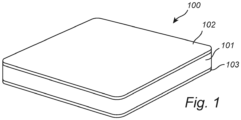
- the dressing 100 schematically illustrated in figure 1 comprises a backing layer 102, an adhesive skin contact layer 103 and a wound pad 101 comprising the polyurethane foam as described herein before, wherein the wound pad 101 is arranged between the backing layer and the adhesive skin contact layer.
- the wound pad 101 has an first, skin-facing surface facing the adhesive skin contact layer 103 and a second, opposing surface facing the backing layer 102.
- the wound pad 101 consists of the polyurethane foam as described hereinbefore. It is, however conceivable that the wound pad comprises one or more additional pad-forming layer(s).
- the wound pad may comprise one ore more wound pad layers comprising the polyurethane foam.
- the thickness of the wound pad or wound pad layer comprising the polyurethane foam may be from 2 to 10 mm, e.g. from 3 to 6 mm, measured in dry conditions.
- the wound pad is co-extensive with the backing layer 102 and the adhesive skin contact layer 103. Accordingly, the wound pad has the same surface area as the backing layer 102 and the adhesive skin contact layer.
- the backing layer 102 is the outermost layer of the dressing.
- the backing layer may e.g. comprise polyurethane, polyethylene or polypropylene.
- the backing layer comprises a polyurethane film.
- the backing layer may comprise a polyurethane film having a thickness of from 10 ⁇ m to 50 ⁇ m, e.g. from 15 to 30 ⁇ m.
- the backing layer 102 may be partly or fully attached to the wound pad, e.g. by means of an adhesive or by heat lamination. In the embodiment illustrated in figure 1 , the backing layer is typically heat laminated onto the wound pad 101
- the adhesive skin contact layer 103 is configured to detachably adhere the dressing to a dermal surface.
- the adhesive skin contact layer 103 is configured to contact the skin or the wound of a wearer.
- the adhesive skin contact layer may comprise a silicone based adhesive, e.g. a silicone gel coating.
- a silicone based adhesive is gentle to the skin and allows for a non-traumatic removal of the dressing from the skin or the wound of a patient.
- the silicone based adhesive skin contact layer may comprise one or more sub-layers
- the adhesive skin contact layer is typically provided as a coating on the second (bottom) surface of the wound pad.
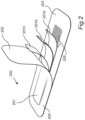
- the wound dressing 200 comprises a backing layer 202, an adhesive skin contact layer 203 and a wound pad 201 arranged between the backing layer 202 and the adhesive skin contact layer 203.
- the backing layer 202 and the adhesive skin contact layer 203 are configured to extend beyond the contour of the wound pad 201 to form a border portion 204.
- the wound pad 201 has a surface area that is smaller than the surface area of the backing layer 202 and the adhesive skin contact layer 203.
- the wound pad 201 may, as illustrated in figure 2 comprise more than one pad-forming layers.
- the wound pad comprises two or more layers having different properties.
- the pad-forming layers may be laminated or adhesively attached.
- the wound pad may comprise the polyurethane foam as described hereinbefore and a superabsorbent layer and/or a liquid distribution layer.
- the wound pad illustrated in figure 2 comprises a first absorbent layer 201a, a liquid distributing layer 201b and a second absorbent layer 201c.
- the polyurethane foam as described hereinbefore may form the first 201a and/or the second 201b absorbent layer of the wound pad.
- the first absorbent layer 201a is a foam layer comprising the polyurethane foam.
- the second absorbent layer 201c may be a superabsorbent layer; i.e. a layer comprising a superabsorbent material.
- the superabsorbent layer has the capacity to absorb large amounts of wound exudate.
- the superabsorbent material may be in the form of particles, fibers, flakes or similar.
- the superabsorbent material may comprise superabsorbent polymers (SAP) or superabsorbent fibers (SAF).
- the liquid distributing layer 201b may comprise any material having the ability to distribute the exudate in an efficient manner.
- the liquid distributing layer 201b may comprise a nonwoven material.
- a nonwoven imparts an appropriately balanced rigidity to the layer and to the dressing as such. It may also efficiently distribute and spread liquid absorbed by the first absorbent layer, e.g. the polyurethane foam, such that it can be evaporated through the backing layer 202 over a large surface.
- the nonwoven may comprise viscose, polyester or blends thereof.
- the wound pad layers 201a-c can be joined by adhesion, lamination, using e.g. pressure and heat.
- the wound pad construction illustrated in figure 2 and described hereinbefore prevents accumulation of body liquids close to the skin, and improves the liquid handling of the dressing. Most wounds will contain some exudate, but the level of exudate may vary. In a chronic wound, the exudate production may be very large due to the ongoing inflammation.
- a wound dressing having the construction as explained above is suited for handling large amounts of exudate, and prevents maceration of the skin surrounding the wound.
- the wound dressing is not limited to the construction illustrated in figure 2 .
- the absorbent pad may comprise additional layers, such as liquid transport layers, various combinations of foam and nonwoven layers laminated together.
- the backing layer 202 of the wound dressing illustrated in figure 2 may be the same as the backing layer 102 of the wound dressing illustrated in figure 1 ; i.e. it may comprise polyurethane, polyethylene or polypropylene. In the embodiment illustrated in figure 2 , the backing layer is typically adhesively attached to the adhesive skin contact layer 203. The backing layer 202 may be fully or partially adhesively attached to the wound pad 201.
- the adhesive skin contact layer 203 may be similar to the adhesive skin contact layer described with reference the adhesive skin contact layer 103 in figure 1 ; i.e. it may comprise a silicone based adhesive.
- the adhesive skin contact layer of the wound dressing 200 of figure 2 typically comprises a silicone based adhesive and a sub-layer.
- the sub-layer may be a polymeric film, and the silicone based adhesive may be coated onto the polymeric film.
- the adhesive skin contact layer 203 may be a laminate comprising at least one polymeric film and an adhesive silicone gel layer.
- the polymeric film simplifies the manufacturing process, and provides stability and integrity to the silicone based skin contact layer.
- the polymeric film is preferably a breathable film and may comprise e.g. polyethylene, polyamide, polyester or polyurethane.
- the polymeric film comprises polyurethane.
- the thickness of the polyurethane film may be from 15 to 100 ⁇ m, e.g. from 20 to 80 ⁇ m, preferably from 20 to 60 ⁇ m.
- suitable silicone gels for use in the adhesive skin contact layer include the two component RTV systems, such as SilGel 612 (Wacker Chemie AG) mentioned herein, as well as NuSil silicone elastomers.
- the adhesive may comprise a soft silicone gel having a softness (penetration) of from 8 to 22 mm, e.g. from 12 to 17 mm, as measured by a method based on ASTM D 937 and DIN 51580, the method being described in European Patent Application No 14194054.4 .
- the thickness of the adhesive skin contact layer is typically at least 20 ⁇ m.
- the thickness of the adhesive skin contact layer may be from 50 to 200 ⁇ m.
- the adhesive skin contact layer comprises a plurality of perforations 205.
- the perforations 205 improve the transfer of wound exudate into the dressing.
- the perforations 205 typically extend through the polymeric film and the silicone gel coating.
- the adhesive skin contact layer 203 comprises a plurality of perforations 205 in the area underlying the absorbent pad 201 but is void of perforations in the area forming the border portion 204.
- the lack of perforations in the border portion of the dressing is beneficial to improve the adhesion at the border portion 204 of the dressing and thereby improve the stay-on ability of the dressing.
- the adhesive skin contact layer (103, 203) may comprise a second antimicrobial compound, wherein the second antimicrobial compound is integrated in the adhesive skin contact layer and/or is provided as a coating on the adhesive skin contact layer.
- the second antimicrobial compound may be an antimicrobial salt as described hereinbefore or a different antimicrobial compound.
- the coating may be a continuous or discontinuous coating on the adhesive skin contact layer.
- spray coating may be used to apply such an antimicrobial coating.
- the antimicrobial coating comprising the second antimicrobial compound is typically provided on the non-perforated parts of the adhesive skin contact layer 203.
- the antimicrobial coating may be soluble in an aqueous medium. Accordingly, the coating dissolves in contact with wound exudate such that a relatively quick antimicrobial effect can be realized.
- the wound pad comprises a plurality of pad-forming layers, to incorporate an additional antimicrobial compound into one or more of such pad-forming layers.
- the second antimicrobial compound of the adhesive skin contact layer improves the antimicrobial effect of the dressing.
- a method for manufacturing a wound pad or a wound pad layer is schematically outlined. The method comprises:
- the method of the present disclosure allows for the sodium sulfate and the antimicrobial salt to be distributed substantially homogenously in the polyurethane foam. This way, the antimicrobial salt becomes integrated into the foam and bound within the cell walls of the foam.
- the resulting polyurethane foam is hydrophilic and absorbent and capable of handling large amounts of wound exudate.
- a part of the antimicrobial salt may be dissolved in the water phase and a part may be dispersed in the water phase.
- the surfactant utilized is typically a non-ionic surfactant.
- the surfactant improves the water-wicking properties of the polyurethane foam.
- the non-ionic surfactant may be an oxypropylene-oxyethylene block copolymer.
- the polyurethane pre-polymer is typically hydrophilic.
- the polyurethane pre-polymer is an isocyanate-terminated polyether, preferably with a functionality of more than 2.
- a diisocyanate-terminated polyether may be used.
- the diisocyanate-terminated polyethers may be based on hexamethylene diisocyanate (HDI), toluene diisocyanate (TDI) or methylene diphenyl diisocyanate (MDI).
- HDI hexamethylene diisocyanate
- TDI toluene diisocyanate
- MDI methylene diphenyl diisocyanate
- carbon dioxide is formed as a by-product. Carbon dioxide may act as a blowing agent in the foaming process.
- amines may be generated during the reaction, which may act as catalysts during the foaming process.
- reaction mixture is subsequently transferred to a mould or a continuous web, whereby a polyurethane foam is obtained (step 303).
- the mould or web may be lined with a casting paper before the mixture is added.
- the casting paper may be removed before the drying step.
- step 303 the reaction mixture is cured and the polymerization reaction is terminated.
- the casting paper may then be removed.
- the polyurethane foam is then dried (step 304).
- the step of drying is not limited to a particular drying method.
- the polyurethane foam may be heated, e.g. to a temperature of about 100 to 150°C during at least 5 minutes.
- the polyurethane foam is preferably dried to a moisture content of at most 10 % (wt), preferably at most 8 % (wt), most preferably at most 5 % (wt).
- the polyurethane foam forming the wound pad or wound pad layer may then be rolled on plastic cores with a paper in-between the layers and packaged before incorporation in a wound dressing.
- the wound pad may be cut into shape by techniques known in the art.
- the antimicrobial salt is preferably a silver salt, e.g. silver sulfate.
- the water phase of step a) may comprise from 0.3 to 4.0 % by weight, e.g. from 0.5 to 2.5 % by weight, e.g. from 0.7 to 2.0 % by weight of the antimicrobial salt.
- the water phase of step a) may comprise from 0.2 to 3.0 % by weight, e.g. from 0.5 to 2.5 % by weight, e.g. from 0.7 to 2.0 % by weight of silver sulfate.
- the water phase may comprise from 0.1 to 3.0 % by weight, e.g. 0.3 to 2.5 % by weight, e.g. from 0.4 to 2.0 % by weight, e.g. from 0.6 to 1.6% by weight of sodium sulfate.
- the inventors have found that the above specified ranges are suitable for providing an improved release of antimicrobial, e.g. silver, from the final wound pad comprising the polyurethane foam.
- the polyurethane prepolymer may be added to the water phase in a dispensing and mixing equipment, e.g. in an amount of from 30 to 60 % by weight.
- a method for manufacturing a wound dressing 100 comprising:
- the backing layer forms the top layer of the wound dressing.
- the adhesive skin contact layer forms the bottom layer of the wound dressing.
- the wound pad may comprise one or more wound pad layers comprising the polyurethane foam.
- the wound pad may comprise additional pad-forming layers.
- the additional pad-forming layers may attached to the wound pad layer comprising the polyurethane foam by any means, e.g. by adhesion or lamination.
- the backing layer may be adhesively attached to the wound pad.
- the backing layer may be heat laminated onto the wound pad.
- the adhesive skin contact layer may be coated onto the wound pad by techniques well known in the art.
- the adhesive skin contact layer comprises an adhesive coating (e.g. a silicone gel coating) on a polymeric film.
- the adhesive skin contact layer is typically adhesively attached to the wound pad.
- the present disclosure relates to the use of sodium sulfate to promote the release of silver from a wound pad comprising a polyurethane foam and at least one silver salt, preferably silver sulfate.
- the foams were punched into samples having a diameter of 31 mm. 2 ml of Simulated Wound Fluid (SWF) was added to the samples, which were then incubated at 35°C ⁇ 2 and 90% RH for 24 hours. The liquid was squeezed out by placing the sample in disposable syringe and 100 ul of this liquid was collected in centrifuge tubes for silver analysis.
- SWF Simulated Wound Fluid
- the silver amount in the SWF was determined using inductively coupled plasma - optical emission spectroscopy (ICP-OES) in axial mode.
- ICP-OES inductively coupled plasma - optical emission spectroscopy
- a matrix-matched calibration curve was constructed as a five-point calibration curve in the concentrations of 1, 7, 50, 300 and 2000 mg/l, where the levels were based on the sample volume of 100 ⁇ l. Both the calibration curve, the blank and the samples were diluted with a solution of hydrochloric acid and nitric acid in order to dissolve any bound silver. Yttrium was added as internal standard (IS).
- Table 1 Amount of silver released from the wound dressing % by weight sodium sulfate in the polyurethane foam Released silver (mg/l) 0 95 0.65 104 1.3 134 1.95 173
Landscapes
- Health & Medical Sciences (AREA)
- Chemical & Material Sciences (AREA)
- Epidemiology (AREA)
- Hematology (AREA)
- Engineering & Computer Science (AREA)
- Materials Engineering (AREA)
- Life Sciences & Earth Sciences (AREA)
- Animal Behavior & Ethology (AREA)
- General Health & Medical Sciences (AREA)
- Public Health (AREA)
- Veterinary Medicine (AREA)
- Dispersion Chemistry (AREA)
- Inorganic Chemistry (AREA)
- Chemical Kinetics & Catalysis (AREA)
- Materials For Medical Uses (AREA)
Abstract
Description
- The present disclosure generally relates to a polyurethane foam for use as a wound pad or wound pad layer, wherein the polyurethane foam comprises an antimicrobial salt. The present disclosure also relates to a wound pad and a wound dressing comprising the polyurethane foam, a method for manufacturing a wound pad or wound pad layer and to a method for manufacturing a wound dressing.
- Infection is a common problem in chronic and surgical wounds. A surgical site or an open wound is a suitable environment for bacteria to accommodate and colonize. A bacterial infection in the wound or at the skin surrounding the wound may disrupt the normal wound healing process and result in chronic, non-healing wounds.
- In wound treatment, antimicrobial agents are often used to eliminate or reduce the infection of the wound. To that end, various types of antimicrobial dressings have been developed. Examples of antimicrobial agents that have been explored for use in wound dressings include conventional antiseptics, antibiotics, antimicrobial peptides, or metallic agents with antimicrobial properties.
- Antimicrobial agents may be provided as antimicrobial salts, wherein the positively charged cations of the salts, in contact with liquid, may bind to the negatively charged cell walls of bacteria and disrupt the cell walls.
- Examples of antimicrobial salts include e.g. chlorhexidine salts and silver salts. Such antimicrobial salts may be incorporated into the dressing structure or provided as coatings on a skin-facing surface of the dressing. Dressings comprising silver salts in various forms are known from e.g.
EP 3 191 039A1 ,EP 3 191 144B1 andWO 2008/104276 . - While silver is a well-recognized antimicrobial in wound care, the use of silver is also associated with environmental concerns since silver is a heavy metal with toxic properties. Furthermore, silver is typically associated with high costs.
- Another challenge with antimicrobial salts, particularly when incorporated into the dressing structure, e.g. into the wound pad of the dressing, is securing proper release of the antimicrobial from the dressing. Typically, high amounts of antimicrobial salts are required for accomplishing the release of a relatively small amount of the antimicrobial salt. Accordingly, a significant amount of the antimicrobial salt remains within the dressing structure, e.g. in the wound pad, and is not released therefrom.
- In consideration of the environmental burden of a discarded dressing comprising significant amounts of antimicrobial agents, e.g. silver, an efficient use of the antimicrobial must be balanced against its antimicrobial activity.
- In view of this, there is a need to alleviate the above-mentioned drawbacks and to provide an antimicrobial wound care product which allows for an improved release of the antimicrobial from the wound care product, and wherein the wound care product is cost-efficient and poses less demands on the environment.
- In view of the above mentioned problems, it is an object of the present disclosure to provide improvements with respect to providing an antimicrobial wound care product being less expensive to produce and which provides for an improved release of the antimicrobial agent.
- According to a first aspect, there is provided a polyurethane foam for use as a wound pad or a wound pad layer, wherein the polyurethane foam comprises at least one antimicrobial salt, and wherein the polyurethane foam further comprises sodium sulfate.
- The present disclosure is based on the realization that the incorporation of sodium sulfate into the polyurethane foam enhances the release of the antimicrobial cations present in the foam. Without wishing to be bound by theory, it is believed that sodium sulfate acts as a "catalyst" and promotes the release of the antimicrobial cations from the polyurethane foam. The inventors have surprisingly found that even when the amount of antimicrobial salt is significantly reduced in the polyurethane foam, an enhanced release of antimicrobial is observed when the salt is combined with sodium sulfate.
- Accordingly, a polyurethane foam of the present disclosure provides an improved release of antimicrobial to the wound site. The amount of the active agent; i.e. the antimicrobial salt present in the polyurethane foam may thus be considerably reduced and yet yield the same or even improved results. Consequently, a polyurethane foam according to the present disclosure is considered as being both environmentally sound and cost efficient.
- Furthermore, the incorporation of sodium sulfate yields a softer, more conformable and more drapable foam structure.
- Also, sodium is a simple, non-toxic and common cation, and sodium sulfate is regarded as a non-expensive compound.
- In exemplary embodiments, the solubility of the sodium sulfate is higher than the solubility of the antimicrobial salt.
- Accordingly, the sodium sulfate dissolves faster than the antimicrobial salt in contact with liquid, e.g. blood or other body fluids. The higher solubility of the sodium sulfate may trigger the release of positively charged cations from the polyurethane foam.
- The antimicrobial salt may be any salt that can inhibit and/or kill bacteria or other microorganisms commonly encountered in an infected wound.
- For example, the antimicrobial salt may be a silver salt, a chlorhexidine salt or a polyhexamethylene biguanide (PHMB) salt.
- In exemplary embodiments, the antimicrobial salt is a silver salt.
- With silver containing wound pads, there is typically a delicate balance between the desire to utilize as low amounts of silver as possible in the wound pad (due to environmental concerns) but amounts high enough to trigger the release of silver from the wound pad. Releasing silver from the wound pad is a challenge. Accordingly, the polyurethane foam of the present disclosure is greatly favored by the incorporation of sodium sulfate when a silver salt is utilized as the antimicrobial salt.
- If the silver is not released from the polyurethane foam, which forms a wound pad or a wound pad layer, silver may remain in the wound dressing structure, such that the remaining bound silver will be wasted and discarded before the silver ions have been released.
- The sodium sulfate of the polyurethane foam promotes the release of silver ions at a consistent level throughout the duration of use and secures an efficient utilization of the antimicrobial silver.
- The silver salt may be any pharmaceutically acceptable silver salt that remains stable during sterilization of the wound pad or wound dressing incorporating the wound pad.
- For example, the silver salt may be silver sulfate, silver citrate, silver acetate, silver carbonate, silver lactate and silver phosphate, or a mixture of such salts.
- In contact with liquid; i.e. blood or body fluids exuded by a wound, positively charged silver ions are released to the wound surface, which can promote wound healing and prevent infection at the wound site.
- Preferably, the silver salt is silver sulfate.
- Silver sulfate can kill a wide range of microorganisms commonly present in an infected wound. Furthermore, an improved release of silver is observed when the silver salt is silver sulfate.
- In embodiments, the amount of silver in the polyurethane foam is from 0.4 to 2.4 % by weight, preferably from 0.7 to 1.5 % by weight.
- This range is beneficial to secure sufficient killing of infectious bacteria at the wound site. Furthermore, this range secures that the wound pad or wound pad layer will release a significant proportion of silver during use of the wound dressing and prevents unnecessary amounts of silver remaining in the wound pad or wound pad layer, when discarded.
- In embodiments, the amount of sodium sulfate in the polyurethane foam is from 0.2 to 3.0 % by weight, preferably from 0.6 to 2.0 % by weight.
- These ranges are beneficial to promote the release of the antimicrobial agent; i.e. the antimicrobial cations.
- Furthermore, the incorporation of sodium sulfate in an amount of from 0.2 to 3.0 % by weight, preferably from 0.6 to 2.0 % by weight yields a foam being soft, conformable and drapable. If too much sodium sulfate is incorporated in the polyurethane foam, the properties of the foam may be impaired. The pores of the polyurethane foam may become denser and more compacted, which may impair the fluid handling capacity of the wound pad. This is particularly the case when the polyurethane foam is incorporated in a wound dressing, and an adhesive skin contact layer is coated directly onto the polyurethane foam forming the wound pad or wound pad layer.
- According to a second aspect, there is provided a wound pad comprising a polyurethane foam as described hereinbefore.
- The wound pad may consist of the polyurethane foam as described hereinbefore. Alternatively, the wound pad may comprise a wound pad layer comprising the polyurethane foam and one or more additional pad-forming layer(s). For example, the wound pad may comprise a liquid spreading or distribution layer, one or more absorbent layers, e.g. one or more superabsorbent layer(s) etc.
- According to a third aspect, there is provided a wound dressing comprising a backing layer, an adhesive skin contact layer and a wound pad as described hereinbefore, wherein the wound pad is arranged between the backing layer and the adhesive skin contact layer.
- The features of the first aspect apply mutatis mutandis to the second and third aspects of the present disclosure.
- In exemplary embodiments, the adhesive skin contact layer comprises a second antimicrobial compound, wherein the second antimicrobial compound is integrated in the adhesive skin contact layer and/or is provided as a coating on the adhesive skin contact layer.
- The second antimicrobial compound may be an antimicrobial salt or any other compound having an antimicrobial effect. Accordingly, the antimicrobial effect can be boosted and tailored to meet the demands of a variety of wounds. For example, the release of the second antimicrobial compound from the adhesive skin contact layer may be slower or quicker than the release of the antimicrobial salt from the wound pad depending on the specific wound care situation.
- According to a fourth aspect, there is provided a method for manufacturing a wound pad or wound pad layer comprising:
- a) providing a water phase comprising an antimicrobial salt and at least one surfactant;
- b) mixing the water phase with a polyurethane pre-polymer,
- c) transferring the mixture obtained in step b) to a mould or a continuous web to form a polyurethane foam; and
- d) drying the polyurethane foam to form a wound pad or wound pad layer,
- The foam obtained by the method is a hydrophilic polyurethane foam. The hydrophilic polyurethane foam is porous and comprises a plurality of pores, capable of handling large amounts of liquid.
- In exemplary embodiments, the polyurethane prepolymer is an isocyanate-terminated polyether having a functionality of more than 2.
- In exemplary embodiments, the antimicrobial salt is a silver salt, preferably silver sulfate.
- According to a fifth aspect, there is provided a method for manufacturing a wound dressing comprising:
- providing a wound pad comprising a polyurethane foam as described hereinbefore or manufactured as described hereinbefore, wherein the wound pad has a first, skin-facing surface and a second, opposing surface,
- applying an adhesive skin contact layer to the first, skin-facing surface of the wound pad
- applying a backing layer to the second, opposing surface of the wound pad.
- According to a sixth aspect, there is provided the use of sodium sulfate to promote the release of silver from a wound pad comprising a polyurethane foam and at least one silver salt, preferably silver sulfate.
- Further features of, and advantages with, the present disclosure will become apparent when studying the appended claims and the following description. The skilled addressee realizes that different features of the present disclosure may be combined to create embodiments other than those described in the following, without departing from the scope of the present disclosure.
- The various aspects of the present disclosure, including its particular features and advantages, will be readily understood from the following detailed description and the accompanying drawings, in which:
-
Figure 1 illustrates a schematic perspective view of a wound dressing comprising a polyurethane foam according to an exemplary embodiment of the present disclosure. -
Figure 2 illustrates a schematic perspective view of a wound dressing according to another exemplary embodiment of the present disclosure. -
Figure 3 schematically outlines the steps of forming a wound pad or wound pad layer according to the method of the present disclosure. - The present disclosure will now be described more fully hereinafter with reference to the accompanying drawings, in which currently preferred embodiments of the present disclosure are shown. The present disclosure may, however, be embodied in many different forms and should not be construed as limited to the embodiments set forth herein; rather, these embodiments are provided for thoroughness and completeness, and fully convey the scope of the present disclosure to the skilled person.
- With reference to
figure 1 , a wound dressing 100 is conceptually illustrated. The wound dressing 100 comprises a polyurethane foam. The polyurethane foam comprises at least one antimicrobial salt, wherein the polyurethane foam further comprises sodium sulfate. - The polyurethane foam is preferably a hydrophilic polyurethane foam. Accordingly, the hydrophilic polyurethane foam is also absorbent. An infected wound typically exudes large amounts of exudate, and the wound pad must be capable of properly handling such exudate.
- The polyurethane foam is porous and may comprise pores having an average pore size in the range of from 30 and 1000 µm.
- The antimicrobial salt may be any salt that can prevent and/or kill bacteria or other microorganisms commonly encountered in an infected wound.
- For example, the antimicrobial salt may be selected from a silver salt, a chlorhexidine salt or a polyhexamethylene biguanide (PHMB) salt.
- In exemplary embodiments, the antimicrobial salt is a silver salt.
- Examples of suitable silver salts include silver sulfate, silver citrate, silver acetate, silver carbonate, silver lactate and silver phospate or a mixture of these salts.
- Sodium sulfate is particularly useful in conjunction with a silver salt due to the well known challenges of securing release of silver from the dressing, as well as the demands posed on the environment utilizing silver.
- The concentration of the antimicrobial salt in the polyurethane foam may be from 0.2 to 2.5 mg/cm2, e.g. from 0.4 to 1.4 mg/cm2.
- If the antimicrobial salt is a silver salt, the amount of silver in the polyurethane foam may be from 0.4 to 2.4 % by weight, e.g. from 0.6 to 1.8 % by weight, e.g. from 0.7 to 1.5 % by weight.
- As mentioned hereinbefore, this range is suitable for securing an antimicrobial effect and for providing an appropriate balance between a sufficient release of antimicrobial (e.g. silver) while also preventing unnecessary amounts of antimicrobial (e.g. silver) remaining in the wound pad when discarded.
- In embodiments, the amount of sodium sulfate in the polyurethane foam is from 0.2 to 3.0 % by weight, e.g. from 0.6 to 2.0 % by weight.
- The concentration of sodium sulfate in the polyurethan foam may be from 0.1 to 1.0 mg/cm2, preferably from 0.2 to 0.7 mg/cm2.
- These ranges are beneficial to trigger the release of the antimicrobial, even when the antimicrobial is present in low amounts in the polyurethane foam.
- Furthermore, the foam is soft and conformable and has an optimized liquid handling.
- To trigger release of silver ions, the solubility of the sodium sulfate is preferably higher than the solubility of the antimicrobial salt.
- The "solubility" refers to the solubility in water. The solubility may be measured at 25°C.
- The sodium sulfate dissolves faster than the antimicrobial salt in contact with liquid, e.g. blood or other body fluids. The higher solubility of the sodium sulfate may trigger the release of positively charged cations from the polyurethane foam.
- For example, the solubility of the sodium sulfate may be at least 8 times, e.g. at least 15 times, e.g. at least 30 times higher than the solubility of the antimicrobial salt, measured in water at a temperature of 25°C.
- The dressing 100 schematically illustrated in
figure 1 comprises abacking layer 102, an adhesiveskin contact layer 103 and awound pad 101 comprising the polyurethane foam as described herein before, wherein thewound pad 101 is arranged between the backing layer and the adhesive skin contact layer. - The
wound pad 101 has an first, skin-facing surface facing the adhesiveskin contact layer 103 and a second, opposing surface facing thebacking layer 102. - In the embodiment illustrated in
figure 1 , thewound pad 101 consists of the polyurethane foam as described hereinbefore. It is, however conceivable that the wound pad comprises one or more additional pad-forming layer(s). For example, the wound pad may comprise one ore more wound pad layers comprising the polyurethane foam. - The thickness of the wound pad or wound pad layer comprising the polyurethane foam may be from 2 to 10 mm, e.g. from 3 to 6 mm, measured in dry conditions.
- In the embodiment illustrated in
figure 1 , the wound pad is co-extensive with thebacking layer 102 and the adhesiveskin contact layer 103. Accordingly, the wound pad has the same surface area as thebacking layer 102 and the adhesive skin contact layer. - The
backing layer 102 is the outermost layer of the dressing. The backing layer may e.g. comprise polyurethane, polyethylene or polypropylene. Typically, the backing layer comprises a polyurethane film. For example, the backing layer may comprise a polyurethane film having a thickness of from 10 µm to 50 µm, e.g. from 15 to 30 µm. Thebacking layer 102 may be partly or fully attached to the wound pad, e.g. by means of an adhesive or by heat lamination. In the embodiment illustrated infigure 1 , the backing layer is typically heat laminated onto thewound pad 101 - The adhesive
skin contact layer 103 is configured to detachably adhere the dressing to a dermal surface. In other words, the adhesiveskin contact layer 103 is configured to contact the skin or the wound of a wearer. - The adhesive skin contact layer may comprise a silicone based adhesive, e.g. a silicone gel coating. A silicone based adhesive is gentle to the skin and allows for a non-traumatic removal of the dressing from the skin or the wound of a patient. The silicone based adhesive skin contact layer may comprise one or more sub-layers
- When the polyurethane foam is the wound pad layer in contact with the underlying adhesive skin contact layer, the adhesive skin contact layer is typically provided as a coating on the second (bottom) surface of the wound pad.
- In
figure 2 , a so called "bordered wound dressing" is illustrated. The wound dressing 200 comprises abacking layer 202, an adhesiveskin contact layer 203 and awound pad 201 arranged between thebacking layer 202 and the adhesiveskin contact layer 203. Thebacking layer 202 and the adhesiveskin contact layer 203 are configured to extend beyond the contour of thewound pad 201 to form aborder portion 204. - In the wound dressing 200 illustrated in
figure 2 , thewound pad 201 has a surface area that is smaller than the surface area of thebacking layer 202 and the adhesiveskin contact layer 203. - The
wound pad 201 may, as illustrated infigure 2 comprise more than one pad-forming layers. In exemplary embodiments, the wound pad comprises two or more layers having different properties. The pad-forming layers may be laminated or adhesively attached. - For example, the wound pad may comprise the polyurethane foam as described hereinbefore and a superabsorbent layer and/or a liquid distribution layer.
- The wound pad illustrated in
figure 2 comprises a firstabsorbent layer 201a, aliquid distributing layer 201b and a secondabsorbent layer 201c. - The polyurethane foam as described hereinbefore may form the first 201a and/or the second 201b absorbent layer of the wound pad.
- In exemplary embodiments, the first
absorbent layer 201a is a foam layer comprising the polyurethane foam. - The second
absorbent layer 201c may be a superabsorbent layer; i.e. a layer comprising a superabsorbent material. The superabsorbent layer has the capacity to absorb large amounts of wound exudate. The superabsorbent material may be in the form of particles, fibers, flakes or similar. For example, the superabsorbent material may comprise superabsorbent polymers (SAP) or superabsorbent fibers (SAF). - The liquid distributing
layer 201b may comprise any material having the ability to distribute the exudate in an efficient manner. For example, theliquid distributing layer 201b may comprise a nonwoven material. A nonwoven imparts an appropriately balanced rigidity to the layer and to the dressing as such. It may also efficiently distribute and spread liquid absorbed by the first absorbent layer, e.g. the polyurethane foam, such that it can be evaporated through thebacking layer 202 over a large surface. For example, the nonwoven may comprise viscose, polyester or blends thereof. - The
wound pad layers 201a-c can be joined by adhesion, lamination, using e.g. pressure and heat. - The wound pad construction illustrated in
figure 2 and described hereinbefore prevents accumulation of body liquids close to the skin, and improves the liquid handling of the dressing. Most wounds will contain some exudate, but the level of exudate may vary. In a chronic wound, the exudate production may be very large due to the ongoing inflammation. A wound dressing having the construction as explained above is suited for handling large amounts of exudate, and prevents maceration of the skin surrounding the wound. - The wound dressing is not limited to the construction illustrated in
figure 2 . - For example, the absorbent pad may comprise additional layers, such as liquid transport layers, various combinations of foam and nonwoven layers laminated together.
- The
backing layer 202 of the wound dressing illustrated infigure 2 may be the same as thebacking layer 102 of the wound dressing illustrated infigure 1 ; i.e. it may comprise polyurethane, polyethylene or polypropylene. In the embodiment illustrated infigure 2 , the backing layer is typically adhesively attached to the adhesiveskin contact layer 203. Thebacking layer 202 may be fully or partially adhesively attached to thewound pad 201. - The adhesive
skin contact layer 203 may be similar to the adhesive skin contact layer described with reference the adhesiveskin contact layer 103 infigure 1 ; i.e. it may comprise a silicone based adhesive. - The adhesive skin contact layer of the wound dressing 200 of
figure 2 typically comprises a silicone based adhesive and a sub-layer. The sub-layer may be a polymeric film, and the silicone based adhesive may be coated onto the polymeric film. - Accordingly, the adhesive
skin contact layer 203 may be a laminate comprising at least one polymeric film and an adhesive silicone gel layer. - The polymeric film simplifies the manufacturing process, and provides stability and integrity to the silicone based skin contact layer.
- The polymeric film is preferably a breathable film and may comprise e.g. polyethylene, polyamide, polyester or polyurethane. Preferably, the polymeric film comprises polyurethane. The thickness of the polyurethane film may be from 15 to 100 µm, e.g. from 20 to 80 µm, preferably from 20 to 60 µm.
- Examples of suitable silicone gels for use in the adhesive skin contact layer (103, 203) include the two component RTV systems, such as SilGel 612 (Wacker Chemie AG) mentioned herein, as well as NuSil silicone elastomers. In embodiments of the invention the adhesive may comprise a soft silicone gel having a softness (penetration) of from 8 to 22 mm, e.g. from 12 to 17 mm, as measured by a method based on ASTM D 937 and DIN 51580, the method being described in
European Patent Application No 14194054.4 - In exemplary embodiments, the adhesive skin contact layer comprises a plurality of
perforations 205. - The
perforations 205 improve the transfer of wound exudate into the dressing. Theperforations 205 typically extend through the polymeric film and the silicone gel coating. - In
figure 2 , the adhesiveskin contact layer 203 comprises a plurality ofperforations 205 in the area underlying theabsorbent pad 201 but is void of perforations in the area forming theborder portion 204. The lack of perforations in the border portion of the dressing is beneficial to improve the adhesion at theborder portion 204 of the dressing and thereby improve the stay-on ability of the dressing. - It is beneficial to have an even distribution of adhesive over the surface of the
pad 201 in order to keep the dressing in place during use. - In exemplary embodiments, the adhesive skin contact layer (103, 203) may comprise a second antimicrobial compound, wherein the second antimicrobial compound is integrated in the adhesive skin contact layer and/or is provided as a coating on the adhesive skin contact layer.
- The second antimicrobial compound may be an antimicrobial salt as described hereinbefore or a different antimicrobial compound.
- When the second antimicrobial compound is provided as an antimicrobial coating, the coating may be a continuous or discontinuous coating on the adhesive skin contact layer. For example, spray coating may be used to apply such an antimicrobial coating. The antimicrobial coating comprising the second antimicrobial compound is typically provided on the non-perforated parts of the adhesive
skin contact layer 203. The antimicrobial coating may be soluble in an aqueous medium. Accordingly, the coating dissolves in contact with wound exudate such that a relatively quick antimicrobial effect can be realized. - It is also conceivable, in embodiments where the wound pad comprises a plurality of pad-forming layers, to incorporate an additional antimicrobial compound into one or more of such pad-forming layers.
- The second antimicrobial compound of the adhesive skin contact layer improves the antimicrobial effect of the dressing.
- According to another aspect, and with reference to
figure 3 , a method for manufacturing a wound pad or a wound pad layer is schematically outlined. The method comprises: - a) providing a water phase comprising an antimicrobial salt and at least one surfactant (step 301)
- b) mixing the water phase with a polyurethane pre-polymer (step 302),
- c) transferring the mixture obtained in step b) to a mould or a continuous web to form a polyurethane foam (step 303), and
- d) drying the polyurethane foam to form a wound pad or a wound pad layer (step 304), wherein the water phase in step a) further comprises sodium sulfate.
- The method of the present disclosure allows for the sodium sulfate and the antimicrobial salt to be distributed substantially homogenously in the polyurethane foam. This way, the antimicrobial salt becomes integrated into the foam and bound within the cell walls of the foam. The resulting polyurethane foam is hydrophilic and absorbent and capable of handling large amounts of wound exudate.
- In step a), a part of the antimicrobial salt may be dissolved in the water phase and a part may be dispersed in the water phase.
- The surfactant utilized is typically a non-ionic surfactant. The surfactant improves the water-wicking properties of the polyurethane foam. For example, the non-ionic surfactant may be an oxypropylene-oxyethylene block copolymer.
- The polyurethane pre-polymer is typically hydrophilic.
- In exemplary embodiments, the polyurethane pre-polymer is an isocyanate-terminated polyether, preferably with a functionality of more than 2. For example, a diisocyanate-terminated polyether may be used.
- The diisocyanate-terminated polyethers may be based on hexamethylene diisocyanate (HDI), toluene diisocyanate (TDI) or methylene diphenyl diisocyanate (MDI).
- During the reaction between the water and the polyurethane prepolymer, carbon dioxide is formed as a by-product. Carbon dioxide may act as a blowing agent in the foaming process.
- Furthermore, amines may be generated during the reaction, which may act as catalysts during the foaming process.
- The reaction mixture is subsequently transferred to a mould or a continuous web, whereby a polyurethane foam is obtained (step 303).
- The mould or web may be lined with a casting paper before the mixture is added. The casting paper may be removed before the drying step.
- During this step (step 303), the reaction mixture is cured and the polymerization reaction is terminated. The casting paper may then be removed.
- The polyurethane foam is then dried (step 304). The step of drying is not limited to a particular drying method. For example, the polyurethane foam may be heated, e.g. to a temperature of about 100 to 150°C during at least 5 minutes. The polyurethane foam is preferably dried to a moisture content of at most 10 % (wt), preferably at most 8 % (wt), most preferably at most 5 % (wt).
- The polyurethane foam forming the wound pad or wound pad layer may then be rolled on plastic cores with a paper in-between the layers and packaged before incorporation in a wound dressing. The wound pad may be cut into shape by techniques known in the art.
- As mentioned hereinbefore, the antimicrobial salt is preferably a silver salt, e.g. silver sulfate.
- The water phase of step a) may comprise from 0.3 to 4.0 % by weight, e.g. from 0.5 to 2.5 % by weight, e.g. from 0.7 to 2.0 % by weight of the antimicrobial salt.
- If the antimicrobial salt is a silver salt, e.g. silver sulfate, the water phase of step a) may comprise from 0.2 to 3.0 % by weight, e.g. from 0.5 to 2.5 % by weight, e.g. from 0.7 to 2.0 % by weight of silver sulfate.
- Even small amounts of the antimicrobial salt can be utilized to yield and improved release of antimicrobial from the final foam structure
- The water phase may comprise from 0.1 to 3.0 % by weight, e.g. 0.3 to 2.5 % by weight, e.g. from 0.4 to 2.0 % by weight, e.g. from 0.6 to 1.6% by weight of sodium sulfate.
- Even small amounts of sodium sulfate in the water phase can promote and trigger the release of antimicrobial from the foam structure.
- The inventors have found that the above specified ranges are suitable for providing an improved release of antimicrobial, e.g. silver, from the final wound pad comprising the polyurethane foam.
- The polyurethane prepolymer may be added to the water phase in a dispensing and mixing equipment, e.g. in an amount of from 30 to 60 % by weight.
- According to another aspect, there is provided a method for manufacturing a wound dressing 100 comprising:
- providing a
wound pad 101 comprising a polyurethane foam as described hereinbefore or manufactured as described hereinbefore, wherein the wound pad has a first, skin-facing surface and a second, opposing surface, - applying an adhesive
skin contact layer 103 to the first, skin-facing surface of the wound pad - applying a
backing layer 102 to the second, opposing surface of the wound pad. - The backing layer forms the top layer of the wound dressing. The adhesive skin contact layer forms the bottom layer of the wound dressing.
- As mentioned hereinbefore, the wound pad may comprise one or more wound pad layers comprising the polyurethane foam. Alternatively, or additionally, the wound pad may comprise additional pad-forming layers.
- The additional pad-forming layers, where present, may attached to the wound pad layer comprising the polyurethane foam by any means, e.g. by adhesion or lamination.
- The backing layer may be adhesively attached to the wound pad. Alternatively, the backing layer may be heat laminated onto the wound pad.
- The adhesive skin contact layer may be coated onto the wound pad by techniques well known in the art. Alternatively, the adhesive skin contact layer comprises an adhesive coating (e.g. a silicone gel coating) on a polymeric film. In such embodiments, the adhesive skin contact layer is typically adhesively attached to the wound pad.
- According to another aspect, the present disclosure relates to the use of sodium sulfate to promote the release of silver from a wound pad comprising a polyurethane foam and at least one silver salt, preferably silver sulfate.
- Five silver containing polyurethane foam samples, with different levels of sodium sulfate ranging from 0-1.2%, were evaluated. The thickness of the polyurethane foam layer was about 5 mm. In each of the samples tested, the amount of silver was 0.8% by weight.
- To determine the silver release in a silver containing polyurethane foam, the foams were punched into samples having a diameter of 31 mm. 2 ml of Simulated Wound Fluid (SWF) was added to the samples, which were then incubated at 35°C ± 2 and 90% RH for 24 hours. The liquid was squeezed out by placing the sample in disposable syringe and 100 ul of this liquid was collected in centrifuge tubes for silver analysis.
- The silver amount in the SWF was determined using inductively coupled plasma - optical emission spectroscopy (ICP-OES) in axial mode. A matrix-matched calibration curve was constructed as a five-point calibration curve in the concentrations of 1, 7, 50, 300 and 2000 mg/l, where the levels were based on the sample volume of 100 µl. Both the calibration curve, the blank and the samples were diluted with a solution of hydrochloric acid and nitric acid in order to dissolve any bound silver. Yttrium was added as internal standard (IS).
- The results are illustrated in table 1 below, which show that the addition of sodium sulfate yielded an increase in silver release from the wound dressings.
Table 1: Amount of silver released from the wound dressing % by weight sodium sulfate in the polyurethane foam Released silver (mg/l) 0 95 0.65 104 1.3 134 1.95 173 - In addition, a polyurethane foam, identical in construction as the samples described hereinbefore was used as a reference. The only difference was that this sample contained 2.5 % by weight of silver. The amount of released silver was 83 mg/l for this sample.
- These results clearly demonstrate that the incorporation of sodium sulfate significantly enhances the release of silver from the polyurethane foam.
- Terms, definitions and embodiments of all aspects of the present disclosure apply mutatis mutandis to the other aspects of the present disclosure.
- Even though the present disclosure has been described with reference to specific exemplifying embodiments thereof, many different alterations, modifications and the like will become apparent for those skilled in the art.
- Variations to the disclosed embodiments can be understood and effected by the skilled addressee in practicing the present disclosure, from a study of the drawings, the disclosure, and the appended claims. Furthermore, in the claims, the word "comprising" does not exclude other elements or steps, and the indefinite article "a" or "an" does not exclude a plurality.
Claims (14)
- A polyurethane foam for use as a wound pad or a wound pad layer, wherein said polyurethane foam comprises at least one antimicrobial salt, characterized in that said polyurethane foam further comprises sodium sulfate.
- The polyurethane foam according to claim 1, wherein the solubility of said sodium sulfate is higher than solubility of said antimicrobial salt.
- The polyurethane foam according to claim 1 or claim 2, wherein said antimicrobial salt is a silver salt.
- The polyurethane foam according to claim 3, wherein said silver salt is silver sulfate.
- The polyurethane foam according to claim 3 or claim 4, wherein the amount of silver in said polyurethane foam is from 0.4 to 2.4 % by weight, preferably from 0.7 to 1.5 % by weight.
- The polyurethane foam according to any one of the preceding claims, wherein the amount of sodium sulfate in said polyurethane foam is from 0.2 to 3.0 % by weight, preferably from 0.6 to 2.0 % by weight.
- A wound pad (101, 201) comprising a polyurethane foam according to any one of claims 1-6.
- A wound dressing (100, 200) comprising a backing layer (102, 202), an adhesive skin contact layer (103, 203) and a wound pad (101, 201) according to claim 7, wherein said wound pad (101, 201) is arranged between said backing layer (102, 202) and said adhesive skin contact layer (103, 203).
- The wound dressing (100, 200) according to claim 8, wherein said adhesive skin contact layer (103, 203) comprises a second antimicrobial compound, wherein said second antimicrobial compound is integrated in said adhesive skin contact layer (103, 203) and/or is provided as a coating on said adhesive skin contact layer (103, 203).
- A method for manufacturing a wound pad or wound pad layer comprising:a) providing a water phase comprising an antimicrobial salt and at least one surfactant,b) mixing the water phase with a polyurethane pre-polymer,c) transferring the mixture obtained in step b) to a mould or a continuous web to form a polyurethane foam; andd) drying the polyurethane foam to form a wound pad or wound pad layer,characterized in that said water phase in said step a) further comprises sodium sulfate.
- The method according to claim 10, wherein said polyurethane polymer is an isocyanate-terminated polyether having a functionality of more than 2.
- The method according to claim 10 or claim 11, wherein said antimicrobial salt is a silver salt, preferably silver sulfate.
- A method for manufacturing a wound dressing (100, 200) comprising:- providing a wound pad comprising a polyurethane foam according to any one of claims 1-8 or manufactured according to any one of claims 10-12, wherein said wound pad has a first, skin-facing surface and a second, opposing surface,- applying an adhesive skin contact layer (103, 203) to said first, skin-facing surface of said wound pad,- applying a backing layer (102, 202) to said second, opposing surface of said wound pad.
- Use of sodium sulfate to promote the release of silver from a wound pad (101, 201) comprising a polyurethane foam and at least one silver salt, preferably silver sulfate.
Priority Applications (7)
| Application Number | Priority Date | Filing Date | Title |
|---|---|---|---|
| EP21216926.2A EP4201436B1 (en) | 2021-12-22 | 2021-12-22 | A polyurethane foam for use in a wound pad |
| ES21216926T ES2994583T3 (en) | 2021-12-22 | 2021-12-22 | A polyurethane foam for use in a wound pad |
| PCT/EP2022/084009 WO2023117354A1 (en) | 2021-12-22 | 2022-12-01 | A polyurethane foam for use in a wound pad |
| US18/722,000 US20240415999A1 (en) | 2021-12-22 | 2022-12-01 | A polyurethane foam for use in a wound pad |
| CN202280083265.5A CN118401260A (en) | 2021-12-22 | 2022-12-01 | Polyurethane foam for wound pads |
| AU2022417822A AU2022417822A1 (en) | 2021-12-22 | 2022-12-01 | A polyurethane foam for use in a wound pad |
| CA3240758A CA3240758A1 (en) | 2021-12-22 | 2022-12-01 | A polyurethane foam for use in a wound pad |
Applications Claiming Priority (1)
| Application Number | Priority Date | Filing Date | Title |
|---|---|---|---|
| EP21216926.2A EP4201436B1 (en) | 2021-12-22 | 2021-12-22 | A polyurethane foam for use in a wound pad |
Publications (3)
| Publication Number | Publication Date |
|---|---|
| EP4201436A1 true EP4201436A1 (en) | 2023-06-28 |
| EP4201436B1 EP4201436B1 (en) | 2024-05-01 |
| EP4201436C0 EP4201436C0 (en) | 2024-05-01 |
Family
ID=79024567
Family Applications (1)
| Application Number | Title | Priority Date | Filing Date |
|---|---|---|---|
| EP21216926.2A Active EP4201436B1 (en) | 2021-12-22 | 2021-12-22 | A polyurethane foam for use in a wound pad |
Country Status (7)
| Country | Link |
|---|---|
| US (1) | US20240415999A1 (en) |
| EP (1) | EP4201436B1 (en) |
| CN (1) | CN118401260A (en) |
| AU (1) | AU2022417822A1 (en) |
| CA (1) | CA3240758A1 (en) |
| ES (1) | ES2994583T3 (en) |
| WO (1) | WO2023117354A1 (en) |
Cited By (1)
| Publication number | Priority date | Publication date | Assignee | Title |
|---|---|---|---|---|
| WO2025008418A1 (en) * | 2023-07-05 | 2025-01-09 | T.J.Smith And Nephew,Limited | Negative pressure wound therapy devices and methods |
Families Citing this family (1)
| Publication number | Priority date | Publication date | Assignee | Title |
|---|---|---|---|---|
| USD854170S1 (en) * | 2017-10-16 | 2019-07-16 | Mölnlycke Health Care Ab | Wound dressing |
Citations (3)
| Publication number | Priority date | Publication date | Assignee | Title |
|---|---|---|---|---|
| WO2008104276A1 (en) | 2007-03-01 | 2008-09-04 | Mölnlycke Health Care Ab | Silver-containing foam structure |
| EP3191039A1 (en) | 2014-09-11 | 2017-07-19 | Mölnlycke Health Care AB | Medical dressing |
| EP3191144B1 (en) | 2014-09-11 | 2019-07-31 | Mölnlycke Health Care AB | Medical dressing |
-
2021
- 2021-12-22 ES ES21216926T patent/ES2994583T3/en active Active
- 2021-12-22 EP EP21216926.2A patent/EP4201436B1/en active Active
-
2022
- 2022-12-01 US US18/722,000 patent/US20240415999A1/en active Pending
- 2022-12-01 CA CA3240758A patent/CA3240758A1/en active Pending
- 2022-12-01 WO PCT/EP2022/084009 patent/WO2023117354A1/en not_active Ceased
- 2022-12-01 CN CN202280083265.5A patent/CN118401260A/en active Pending
- 2022-12-01 AU AU2022417822A patent/AU2022417822A1/en active Pending
Patent Citations (3)
| Publication number | Priority date | Publication date | Assignee | Title |
|---|---|---|---|---|
| WO2008104276A1 (en) | 2007-03-01 | 2008-09-04 | Mölnlycke Health Care Ab | Silver-containing foam structure |
| EP3191039A1 (en) | 2014-09-11 | 2017-07-19 | Mölnlycke Health Care AB | Medical dressing |
| EP3191144B1 (en) | 2014-09-11 | 2019-07-31 | Mölnlycke Health Care AB | Medical dressing |
Cited By (1)
| Publication number | Priority date | Publication date | Assignee | Title |
|---|---|---|---|---|
| WO2025008418A1 (en) * | 2023-07-05 | 2025-01-09 | T.J.Smith And Nephew,Limited | Negative pressure wound therapy devices and methods |
Also Published As
| Publication number | Publication date |
|---|---|
| CA3240758A1 (en) | 2023-06-29 |
| EP4201436B1 (en) | 2024-05-01 |
| US20240415999A1 (en) | 2024-12-19 |
| CN118401260A (en) | 2024-07-26 |
| EP4201436C0 (en) | 2024-05-01 |
| WO2023117354A1 (en) | 2023-06-29 |
| AU2022417822A1 (en) | 2024-06-20 |
| ES2994583T3 (en) | 2025-01-27 |
Similar Documents
| Publication | Publication Date | Title |
|---|---|---|
| JP7242181B2 (en) | medical bandage | |
| CA2678034C (en) | Silver-containing foam structure | |
| AU2015314267B2 (en) | Medical dressing | |
| AU2008347285B2 (en) | Improved reduced pressure dressing coated with biomolecules | |
| WO2007120616A2 (en) | Wound dressings with anti-microbial and zinc-containing agents | |
| WO2003066116A1 (en) | Multi-layer dressing as a drug delivery system | |
| EP3177244B2 (en) | Wound dressing | |
| EP3177245B1 (en) | Wound dressing | |
| US20240415999A1 (en) | A polyurethane foam for use in a wound pad | |
| WO2007033679A2 (en) | Bevelled foam | |
| EP4326352B1 (en) | A wound care product comprising an antimicrobial coating | |
| CA2496439C (en) | Medical pad, and method for making and using | |
| EP1488815A1 (en) | Antimicrobially effective medical dressings and methods for their preparation |
Legal Events
| Date | Code | Title | Description |
|---|---|---|---|
| PUAI | Public reference made under article 153(3) epc to a published international application that has entered the european phase |
Free format text: ORIGINAL CODE: 0009012 |
|
| STAA | Information on the status of an ep patent application or granted ep patent |
Free format text: STATUS: THE APPLICATION HAS BEEN PUBLISHED |
|
| AK | Designated contracting states |
Kind code of ref document: A1 Designated state(s): AL AT BE BG CH CY CZ DE DK EE ES FI FR GB GR HR HU IE IS IT LI LT LU LV MC MK MT NL NO PL PT RO RS SE SI SK SM TR |
|
| STAA | Information on the status of an ep patent application or granted ep patent |
Free format text: STATUS: REQUEST FOR EXAMINATION WAS MADE |
|
| 17P | Request for examination filed |
Effective date: 20230912 |
|
| RBV | Designated contracting states (corrected) |
Designated state(s): AL AT BE BG CH CY CZ DE DK EE ES FI FR GB GR HR HU IE IS IT LI LT LU LV MC MK MT NL NO PL PT RO RS SE SI SK SM TR |
|
| GRAP | Despatch of communication of intention to grant a patent |
Free format text: ORIGINAL CODE: EPIDOSNIGR1 |
|
| STAA | Information on the status of an ep patent application or granted ep patent |
Free format text: STATUS: GRANT OF PATENT IS INTENDED |
|
| INTG | Intention to grant announced |
Effective date: 20231204 |
|
| GRAS | Grant fee paid |
Free format text: ORIGINAL CODE: EPIDOSNIGR3 |
|
| GRAA | (expected) grant |
Free format text: ORIGINAL CODE: 0009210 |
|
| STAA | Information on the status of an ep patent application or granted ep patent |
Free format text: STATUS: THE PATENT HAS BEEN GRANTED |
|
| AK | Designated contracting states |
Kind code of ref document: B1 Designated state(s): AL AT BE BG CH CY CZ DE DK EE ES FI FR GB GR HR HU IE IS IT LI LT LU LV MC MK MT NL NO PL PT RO RS SE SI SK SM TR |
|
| REG | Reference to a national code |
Ref country code: GB Ref legal event code: FG4D |
|
| REG | Reference to a national code |
Ref country code: CH Ref legal event code: EP |
|
| REG | Reference to a national code |
Ref country code: IE Ref legal event code: FG4D |
|
| REG | Reference to a national code |
Ref country code: DE Ref legal event code: R096 Ref document number: 602021012644 Country of ref document: DE |
|
| U01 | Request for unitary effect filed |
Effective date: 20240516 |
|
| U07 | Unitary effect registered |
Designated state(s): AT BE BG DE DK EE FI FR IT LT LU LV MT NL PT SE SI Effective date: 20240528 |
|
| PG25 | Lapsed in a contracting state [announced via postgrant information from national office to epo] |
Ref country code: IS Free format text: LAPSE BECAUSE OF FAILURE TO SUBMIT A TRANSLATION OF THE DESCRIPTION OR TO PAY THE FEE WITHIN THE PRESCRIBED TIME-LIMIT Effective date: 20240901 |
|
| PG25 | Lapsed in a contracting state [announced via postgrant information from national office to epo] |
Ref country code: HR Free format text: LAPSE BECAUSE OF FAILURE TO SUBMIT A TRANSLATION OF THE DESCRIPTION OR TO PAY THE FEE WITHIN THE PRESCRIBED TIME-LIMIT Effective date: 20240501 |
|
| PG25 | Lapsed in a contracting state [announced via postgrant information from national office to epo] |
Ref country code: GR Free format text: LAPSE BECAUSE OF FAILURE TO SUBMIT A TRANSLATION OF THE DESCRIPTION OR TO PAY THE FEE WITHIN THE PRESCRIBED TIME-LIMIT Effective date: 20240802 |
|
| PG25 | Lapsed in a contracting state [announced via postgrant information from national office to epo] |
Ref country code: PL Free format text: LAPSE BECAUSE OF FAILURE TO SUBMIT A TRANSLATION OF THE DESCRIPTION OR TO PAY THE FEE WITHIN THE PRESCRIBED TIME-LIMIT Effective date: 20240501 |
|
| PG25 | Lapsed in a contracting state [announced via postgrant information from national office to epo] |
Ref country code: PL Free format text: LAPSE BECAUSE OF FAILURE TO SUBMIT A TRANSLATION OF THE DESCRIPTION OR TO PAY THE FEE WITHIN THE PRESCRIBED TIME-LIMIT Effective date: 20240501 Ref country code: NO Free format text: LAPSE BECAUSE OF FAILURE TO SUBMIT A TRANSLATION OF THE DESCRIPTION OR TO PAY THE FEE WITHIN THE PRESCRIBED TIME-LIMIT Effective date: 20240801 Ref country code: IS Free format text: LAPSE BECAUSE OF FAILURE TO SUBMIT A TRANSLATION OF THE DESCRIPTION OR TO PAY THE FEE WITHIN THE PRESCRIBED TIME-LIMIT Effective date: 20240901 Ref country code: HR Free format text: LAPSE BECAUSE OF FAILURE TO SUBMIT A TRANSLATION OF THE DESCRIPTION OR TO PAY THE FEE WITHIN THE PRESCRIBED TIME-LIMIT Effective date: 20240501 Ref country code: GR Free format text: LAPSE BECAUSE OF FAILURE TO SUBMIT A TRANSLATION OF THE DESCRIPTION OR TO PAY THE FEE WITHIN THE PRESCRIBED TIME-LIMIT Effective date: 20240802 Ref country code: RS Free format text: LAPSE BECAUSE OF FAILURE TO SUBMIT A TRANSLATION OF THE DESCRIPTION OR TO PAY THE FEE WITHIN THE PRESCRIBED TIME-LIMIT Effective date: 20240801 |
|
| PG25 | Lapsed in a contracting state [announced via postgrant information from national office to epo] |
Ref country code: CZ Free format text: LAPSE BECAUSE OF FAILURE TO SUBMIT A TRANSLATION OF THE DESCRIPTION OR TO PAY THE FEE WITHIN THE PRESCRIBED TIME-LIMIT Effective date: 20240501 |
|
| PG25 | Lapsed in a contracting state [announced via postgrant information from national office to epo] |
Ref country code: RO Free format text: LAPSE BECAUSE OF FAILURE TO SUBMIT A TRANSLATION OF THE DESCRIPTION OR TO PAY THE FEE WITHIN THE PRESCRIBED TIME-LIMIT Effective date: 20240501 Ref country code: SK Free format text: LAPSE BECAUSE OF FAILURE TO SUBMIT A TRANSLATION OF THE DESCRIPTION OR TO PAY THE FEE WITHIN THE PRESCRIBED TIME-LIMIT Effective date: 20240501 |
|
| REG | Reference to a national code |
Ref country code: ES Ref legal event code: FG2A Ref document number: 2994583 Country of ref document: ES Kind code of ref document: T3 Effective date: 20250127 |
|
| PG25 | Lapsed in a contracting state [announced via postgrant information from national office to epo] |
Ref country code: SM Free format text: LAPSE BECAUSE OF FAILURE TO SUBMIT A TRANSLATION OF THE DESCRIPTION OR TO PAY THE FEE WITHIN THE PRESCRIBED TIME-LIMIT Effective date: 20240501 |
|
| U20 | Renewal fee for the european patent with unitary effect paid |
Year of fee payment: 4 Effective date: 20241225 |
|
| PG25 | Lapsed in a contracting state [announced via postgrant information from national office to epo] |
Ref country code: SM Free format text: LAPSE BECAUSE OF FAILURE TO SUBMIT A TRANSLATION OF THE DESCRIPTION OR TO PAY THE FEE WITHIN THE PRESCRIBED TIME-LIMIT Effective date: 20240501 Ref country code: SK Free format text: LAPSE BECAUSE OF FAILURE TO SUBMIT A TRANSLATION OF THE DESCRIPTION OR TO PAY THE FEE WITHIN THE PRESCRIBED TIME-LIMIT Effective date: 20240501 Ref country code: RO Free format text: LAPSE BECAUSE OF FAILURE TO SUBMIT A TRANSLATION OF THE DESCRIPTION OR TO PAY THE FEE WITHIN THE PRESCRIBED TIME-LIMIT Effective date: 20240501 Ref country code: CZ Free format text: LAPSE BECAUSE OF FAILURE TO SUBMIT A TRANSLATION OF THE DESCRIPTION OR TO PAY THE FEE WITHIN THE PRESCRIBED TIME-LIMIT Effective date: 20240501 |
|
| REG | Reference to a national code |
Ref country code: DE Ref legal event code: R097 Ref document number: 602021012644 Country of ref document: DE |
|
| PLBE | No opposition filed within time limit |
Free format text: ORIGINAL CODE: 0009261 |
|
| STAA | Information on the status of an ep patent application or granted ep patent |
Free format text: STATUS: NO OPPOSITION FILED WITHIN TIME LIMIT |
|
| 26N | No opposition filed |
Effective date: 20250204 |
|
| PG25 | Lapsed in a contracting state [announced via postgrant information from national office to epo] |
Ref country code: MC Free format text: LAPSE BECAUSE OF FAILURE TO SUBMIT A TRANSLATION OF THE DESCRIPTION OR TO PAY THE FEE WITHIN THE PRESCRIBED TIME-LIMIT Effective date: 20240501 |
|
| REG | Reference to a national code |
Ref country code: CH Ref legal event code: PL |
|
| PG25 | Lapsed in a contracting state [announced via postgrant information from national office to epo] |
Ref country code: CH Free format text: LAPSE BECAUSE OF NON-PAYMENT OF DUE FEES Effective date: 20241231 |
|
| PG25 | Lapsed in a contracting state [announced via postgrant information from national office to epo] |
Ref country code: IE Free format text: LAPSE BECAUSE OF NON-PAYMENT OF DUE FEES Effective date: 20241222 |
|
| PGFP | Annual fee paid to national office [announced via postgrant information from national office to epo] |
Ref country code: GB Payment date: 20251223 Year of fee payment: 5 |
|
| U20 | Renewal fee for the european patent with unitary effect paid |
Year of fee payment: 5 Effective date: 20251223 |
|
| PGFP | Annual fee paid to national office [announced via postgrant information from national office to epo] |
Ref country code: ES Payment date: 20260122 Year of fee payment: 5 |