EP4199159A1 - Redox mediator encapsulation - Google Patents
Redox mediator encapsulation Download PDFInfo
- Publication number
- EP4199159A1 EP4199159A1 EP21306821.6A EP21306821A EP4199159A1 EP 4199159 A1 EP4199159 A1 EP 4199159A1 EP 21306821 A EP21306821 A EP 21306821A EP 4199159 A1 EP4199159 A1 EP 4199159A1
- Authority
- EP
- European Patent Office
- Prior art keywords
- redox mediator
- mediator
- mesoporous carbon
- redox
- kb600jd
- Prior art date
- Legal status (The legal status is an assumption and is not a legal conclusion. Google has not performed a legal analysis and makes no representation as to the accuracy of the status listed.)
- Withdrawn
Links
- 238000005538 encapsulation Methods 0.000 title claims abstract description 5
- 238000000034 method Methods 0.000 claims abstract description 24
- 239000007772 electrode material Substances 0.000 claims abstract description 9
- VNWKTOKETHGBQD-UHFFFAOYSA-N methane Chemical compound C VNWKTOKETHGBQD-UHFFFAOYSA-N 0.000 claims description 43
- 239000002114 nanocomposite Substances 0.000 claims description 22
- OKTJSMMVPCPJKN-UHFFFAOYSA-N Carbon Chemical compound [C] OKTJSMMVPCPJKN-UHFFFAOYSA-N 0.000 claims description 18
- 238000002844 melting Methods 0.000 claims description 17
- 239000000203 mixture Substances 0.000 claims description 15
- 239000000446 fuel Substances 0.000 claims description 11
- 230000008018 melting Effects 0.000 claims description 11
- 238000009835 boiling Methods 0.000 claims description 8
- 238000009792 diffusion process Methods 0.000 claims description 5
- 230000002255 enzymatic effect Effects 0.000 claims description 5
- 238000009834 vaporization Methods 0.000 claims description 5
- 239000006229 carbon black Substances 0.000 claims description 4
- 150000004053 quinones Chemical class 0.000 claims description 4
- 230000008016 vaporization Effects 0.000 claims description 4
- 238000002156 mixing Methods 0.000 claims description 3
- 108090000790 Enzymes Proteins 0.000 description 25
- 102000004190 Enzymes Human genes 0.000 description 25
- 229940088598 enzyme Drugs 0.000 description 25
- 230000003197 catalytic effect Effects 0.000 description 20
- YYVYAPXYZVYDHN-UHFFFAOYSA-N 9,10-phenanthroquinone Chemical compound C1=CC=C2C(=O)C(=O)C3=CC=CC=C3C2=C1 YYVYAPXYZVYDHN-UHFFFAOYSA-N 0.000 description 10
- 102220618927 Leiomodin-2_F64D_mutation Human genes 0.000 description 10
- 229910052799 carbon Inorganic materials 0.000 description 9
- 238000002484 cyclic voltammetry Methods 0.000 description 9
- 238000009472 formulation Methods 0.000 description 9
- 239000000758 substrate Substances 0.000 description 9
- 230000003993 interaction Effects 0.000 description 8
- 239000000243 solution Substances 0.000 description 7
- 230000004913 activation Effects 0.000 description 6
- 239000011148 porous material Substances 0.000 description 6
- 102000004169 proteins and genes Human genes 0.000 description 6
- 108090000623 proteins and genes Proteins 0.000 description 6
- XLYOFNOQVPJJNP-UHFFFAOYSA-N water Substances O XLYOFNOQVPJJNP-UHFFFAOYSA-N 0.000 description 6
- 108010015776 Glucose oxidase Proteins 0.000 description 5
- 239000004366 Glucose oxidase Substances 0.000 description 5
- 239000002551 biofuel Substances 0.000 description 5
- KTWOOEGAPBSYNW-UHFFFAOYSA-N ferrocene Chemical compound [Fe+2].C=1C=C[CH-]C=1.C=1C=C[CH-]C=1 KTWOOEGAPBSYNW-UHFFFAOYSA-N 0.000 description 5
- 229940116332 glucose oxidase Drugs 0.000 description 5
- 235000019420 glucose oxidase Nutrition 0.000 description 5
- 230000027756 respiratory electron transport chain Effects 0.000 description 5
- WQZGKKKJIJFFOK-GASJEMHNSA-N Glucose Natural products OC[C@H]1OC(O)[C@H](O)[C@@H](O)[C@@H]1O WQZGKKKJIJFFOK-GASJEMHNSA-N 0.000 description 4
- 230000000694 effects Effects 0.000 description 4
- 239000008103 glucose Substances 0.000 description 4
- 230000007613 environmental effect Effects 0.000 description 3
- 238000010438 heat treatment Methods 0.000 description 3
- 239000007788 liquid Substances 0.000 description 3
- 239000000463 material Substances 0.000 description 3
- 229920006395 saturated elastomer Polymers 0.000 description 3
- 239000002002 slurry Substances 0.000 description 3
- RBTBFTRPCNLSDE-UHFFFAOYSA-N 3,7-bis(dimethylamino)phenothiazin-5-ium Chemical compound C1=CC(N(C)C)=CC2=[S+]C3=CC(N(C)C)=CC=C3N=C21 RBTBFTRPCNLSDE-UHFFFAOYSA-N 0.000 description 2
- 239000011230 binding agent Substances 0.000 description 2
- 238000006555 catalytic reaction Methods 0.000 description 2
- 238000006243 chemical reaction Methods 0.000 description 2
- 238000001816 cooling Methods 0.000 description 2
- 125000004122 cyclic group Chemical group 0.000 description 2
- 230000003247 decreasing effect Effects 0.000 description 2
- 239000006185 dispersion Substances 0.000 description 2
- 238000001035 drying Methods 0.000 description 2
- 238000002848 electrochemical method Methods 0.000 description 2
- 238000011068 loading method Methods 0.000 description 2
- 230000001404 mediated effect Effects 0.000 description 2
- 239000000155 melt Substances 0.000 description 2
- 229910052751 metal Inorganic materials 0.000 description 2
- 239000002184 metal Substances 0.000 description 2
- 150000001247 metal acetylides Chemical class 0.000 description 2
- 229960000907 methylthioninium chloride Drugs 0.000 description 2
- 238000012544 monitoring process Methods 0.000 description 2
- 230000003647 oxidation Effects 0.000 description 2
- 238000007254 oxidation reaction Methods 0.000 description 2
- 239000002245 particle Substances 0.000 description 2
- 229920000642 polymer Polymers 0.000 description 2
- 238000002360 preparation method Methods 0.000 description 2
- 150000004059 quinone derivatives Chemical class 0.000 description 2
- 239000000523 sample Substances 0.000 description 2
- 238000007711 solidification Methods 0.000 description 2
- 230000008023 solidification Effects 0.000 description 2
- 230000006641 stabilisation Effects 0.000 description 2
- 238000011105 stabilization Methods 0.000 description 2
- 239000000126 substance Substances 0.000 description 2
- 229950003937 tolonium Drugs 0.000 description 2
- HNONEKILPDHFOL-UHFFFAOYSA-M tolonium chloride Chemical compound [Cl-].C1=C(C)C(N)=CC2=[S+]C3=CC(N(C)C)=CC=C3N=C21 HNONEKILPDHFOL-UHFFFAOYSA-M 0.000 description 2
- 238000012546 transfer Methods 0.000 description 2
- WECIKJKLCDCIMY-UHFFFAOYSA-N 2-chloro-n-(2-cyanoethyl)acetamide Chemical compound ClCC(=O)NCCC#N WECIKJKLCDCIMY-UHFFFAOYSA-N 0.000 description 1
- 108010006591 Apoenzymes Proteins 0.000 description 1
- 241000228245 Aspergillus niger Species 0.000 description 1
- 238000004438 BET method Methods 0.000 description 1
- 229920002134 Carboxymethyl cellulose Polymers 0.000 description 1
- 102220575187 Egl nine homolog 1_F82A_mutation Human genes 0.000 description 1
- YPZRHBJKEMOYQH-UYBVJOGSSA-L FADH2(2-) Chemical compound C1=NC2=C(N)N=CN=C2N1[C@@H]([C@H](O)[C@@H]1O)O[C@@H]1COP([O-])(=O)OP([O-])(=O)OC[C@@H](O)[C@@H](O)[C@@H](O)CN1C(NC(=O)NC2=O)=C2NC2=C1C=C(C)C(C)=C2 YPZRHBJKEMOYQH-UYBVJOGSSA-L 0.000 description 1
- 102220476699 Interleukin-1 receptor-associated kinase 3_F83A_mutation Human genes 0.000 description 1
- HBBGRARXTFLTSG-UHFFFAOYSA-N Lithium ion Chemical compound [Li+] HBBGRARXTFLTSG-UHFFFAOYSA-N 0.000 description 1
- ZLMJMSJWJFRBEC-UHFFFAOYSA-N Potassium Chemical compound [K] ZLMJMSJWJFRBEC-UHFFFAOYSA-N 0.000 description 1
- 102220534806 Protein quaking_F81A_mutation Human genes 0.000 description 1
- 229910021607 Silver chloride Inorganic materials 0.000 description 1
- 229920002125 Sokalan® Polymers 0.000 description 1
- NINIDFKCEFEMDL-UHFFFAOYSA-N Sulfur Chemical compound [S] NINIDFKCEFEMDL-UHFFFAOYSA-N 0.000 description 1
- 239000007864 aqueous solution Substances 0.000 description 1
- QVGXLLKOCUKJST-UHFFFAOYSA-N atomic oxygen Chemical compound [O] QVGXLLKOCUKJST-UHFFFAOYSA-N 0.000 description 1
- PGWTYMLATMNCCZ-UHFFFAOYSA-M azure A Chemical compound [Cl-].C1=CC(N)=CC2=[S+]C3=CC(N(C)C)=CC=C3N=C21 PGWTYMLATMNCCZ-UHFFFAOYSA-M 0.000 description 1
- 230000001580 bacterial effect Effects 0.000 description 1
- WQZGKKKJIJFFOK-VFUOTHLCSA-N beta-D-glucose Chemical compound OC[C@H]1O[C@@H](O)[C@H](O)[C@@H](O)[C@@H]1O WQZGKKKJIJFFOK-VFUOTHLCSA-N 0.000 description 1
- 239000013060 biological fluid Substances 0.000 description 1
- 230000015572 biosynthetic process Effects 0.000 description 1
- 239000003738 black carbon Substances 0.000 description 1
- 239000002041 carbon nanotube Substances 0.000 description 1
- 229910021393 carbon nanotube Inorganic materials 0.000 description 1
- 239000007833 carbon precursor Substances 0.000 description 1
- 239000003575 carbonaceous material Substances 0.000 description 1
- 239000001768 carboxy methyl cellulose Substances 0.000 description 1
- 235000010948 carboxy methyl cellulose Nutrition 0.000 description 1
- 239000008112 carboxymethyl-cellulose Substances 0.000 description 1
- 238000005266 casting Methods 0.000 description 1
- 230000015556 catabolic process Effects 0.000 description 1
- 210000004534 cecum Anatomy 0.000 description 1
- 239000003245 coal Substances 0.000 description 1
- 239000011248 coating agent Substances 0.000 description 1
- 238000000576 coating method Methods 0.000 description 1
- 230000002596 correlated effect Effects 0.000 description 1
- ZXJXZNDDNMQXFV-UHFFFAOYSA-M crystal violet Chemical compound [Cl-].C1=CC(N(C)C)=CC=C1[C+](C=1C=CC(=CC=1)N(C)C)C1=CC=C(N(C)C)C=C1 ZXJXZNDDNMQXFV-UHFFFAOYSA-M 0.000 description 1
- 238000006731 degradation reaction Methods 0.000 description 1
- 230000001419 dependent effect Effects 0.000 description 1
- 230000008021 deposition Effects 0.000 description 1
- 238000011161 development Methods 0.000 description 1
- 238000005516 engineering process Methods 0.000 description 1
- 238000007824 enzymatic assay Methods 0.000 description 1
- 238000005530 etching Methods 0.000 description 1
- 230000001747 exhibiting effect Effects 0.000 description 1
- 238000011049 filling Methods 0.000 description 1
- 239000007789 gas Substances 0.000 description 1
- PCHJSUWPFVWCPO-UHFFFAOYSA-N gold Chemical compound [Au] PCHJSUWPFVWCPO-UHFFFAOYSA-N 0.000 description 1
- 239000010931 gold Substances 0.000 description 1
- 229910052737 gold Inorganic materials 0.000 description 1
- 229910021389 graphene Inorganic materials 0.000 description 1
- 229910052736 halogen Inorganic materials 0.000 description 1
- 150000002367 halogens Chemical class 0.000 description 1
- 230000010354 integration Effects 0.000 description 1
- DCYOBGZUOMKFPA-UHFFFAOYSA-N iron(2+);iron(3+);octadecacyanide Chemical compound [Fe+2].[Fe+2].[Fe+2].[Fe+3].[Fe+3].[Fe+3].[Fe+3].N#[C-].N#[C-].N#[C-].N#[C-].N#[C-].N#[C-].N#[C-].N#[C-].N#[C-].N#[C-].N#[C-].N#[C-].N#[C-].N#[C-].N#[C-].N#[C-].N#[C-].N#[C-] DCYOBGZUOMKFPA-UHFFFAOYSA-N 0.000 description 1
- 229920005610 lignin Polymers 0.000 description 1
- 229910001416 lithium ion Inorganic materials 0.000 description 1
- 238000005259 measurement Methods 0.000 description 1
- 229910021645 metal ion Inorganic materials 0.000 description 1
- YYGBVRCTHASBKD-UHFFFAOYSA-M methylene green Chemical compound [Cl-].C1=CC(N(C)C)=C([N+]([O-])=O)C2=[S+]C3=CC(N(C)C)=CC=C3N=C21 YYGBVRCTHASBKD-UHFFFAOYSA-M 0.000 description 1
- 230000000813 microbial effect Effects 0.000 description 1
- 239000002808 molecular sieve Substances 0.000 description 1
- 239000002121 nanofiber Substances 0.000 description 1
- 239000002105 nanoparticle Substances 0.000 description 1
- 239000003960 organic solvent Substances 0.000 description 1
- 150000002907 osmium Chemical class 0.000 description 1
- 229910052762 osmium Inorganic materials 0.000 description 1
- SYQBFIAQOQZEGI-UHFFFAOYSA-N osmium atom Chemical compound [Os] SYQBFIAQOQZEGI-UHFFFAOYSA-N 0.000 description 1
- 229910052760 oxygen Inorganic materials 0.000 description 1
- 239000001301 oxygen Substances 0.000 description 1
- FIKAKWIAUPDISJ-UHFFFAOYSA-L paraquat dichloride Chemical compound [Cl-].[Cl-].C1=C[N+](C)=CC=C1C1=CC=[N+](C)C=C1 FIKAKWIAUPDISJ-UHFFFAOYSA-L 0.000 description 1
- 239000013500 performance material Substances 0.000 description 1
- -1 phenanthrenequinone-carbon Chemical compound 0.000 description 1
- 150000002988 phenazines Chemical class 0.000 description 1
- BASFCYQUMIYNBI-UHFFFAOYSA-N platinum Chemical compound [Pt] BASFCYQUMIYNBI-UHFFFAOYSA-N 0.000 description 1
- 239000004584 polyacrylic acid Substances 0.000 description 1
- 229910052700 potassium Inorganic materials 0.000 description 1
- 239000011591 potassium Substances 0.000 description 1
- 238000007639 printing Methods 0.000 description 1
- 229960003351 prussian blue Drugs 0.000 description 1
- 239000013225 prussian blue Substances 0.000 description 1
- 238000000197 pyrolysis Methods 0.000 description 1
- 230000002441 reversible effect Effects 0.000 description 1
- HKZLPVFGJNLROG-UHFFFAOYSA-M silver monochloride Chemical compound [Cl-].[Ag+] HKZLPVFGJNLROG-UHFFFAOYSA-M 0.000 description 1
- URGAHOPLAPQHLN-UHFFFAOYSA-N sodium aluminosilicate Chemical compound [Na+].[Al+3].[O-][Si]([O-])=O.[O-][Si]([O-])=O URGAHOPLAPQHLN-UHFFFAOYSA-N 0.000 description 1
- 239000007787 solid Substances 0.000 description 1
- 241000894007 species Species 0.000 description 1
- 229910052717 sulfur Inorganic materials 0.000 description 1
- 239000011593 sulfur Substances 0.000 description 1
- 239000000725 suspension Substances 0.000 description 1
- 238000003786 synthesis reaction Methods 0.000 description 1
- 238000012360 testing method Methods 0.000 description 1
- 238000007669 thermal treatment Methods 0.000 description 1
- ANRHNWWPFJCPAZ-UHFFFAOYSA-M thionine Chemical compound [Cl-].C1=CC(N)=CC2=[S+]C3=CC(N)=CC=C3N=C21 ANRHNWWPFJCPAZ-UHFFFAOYSA-M 0.000 description 1
- 238000001075 voltammogram Methods 0.000 description 1
- 229920003169 water-soluble polymer Polymers 0.000 description 1
Images







Classifications
-
- H—ELECTRICITY
- H01—ELECTRIC ELEMENTS
- H01M—PROCESSES OR MEANS, e.g. BATTERIES, FOR THE DIRECT CONVERSION OF CHEMICAL ENERGY INTO ELECTRICAL ENERGY
- H01M4/00—Electrodes
- H01M4/86—Inert electrodes with catalytic activity, e.g. for fuel cells
- H01M4/90—Selection of catalytic material
- H01M4/9075—Catalytic material supported on carriers, e.g. powder carriers
- H01M4/9083—Catalytic material supported on carriers, e.g. powder carriers on carbon or graphite
-
- H—ELECTRICITY
- H01—ELECTRIC ELEMENTS
- H01M—PROCESSES OR MEANS, e.g. BATTERIES, FOR THE DIRECT CONVERSION OF CHEMICAL ENERGY INTO ELECTRICAL ENERGY
- H01M8/00—Fuel cells; Manufacture thereof
- H01M8/16—Biochemical fuel cells, i.e. cells in which microorganisms function as catalysts
-
- C—CHEMISTRY; METALLURGY
- C12—BIOCHEMISTRY; BEER; SPIRITS; WINE; VINEGAR; MICROBIOLOGY; ENZYMOLOGY; MUTATION OR GENETIC ENGINEERING
- C12N—MICROORGANISMS OR ENZYMES; COMPOSITIONS THEREOF; PROPAGATING, PRESERVING, OR MAINTAINING MICROORGANISMS; MUTATION OR GENETIC ENGINEERING; CULTURE MEDIA
- C12N11/00—Carrier-bound or immobilised enzymes; Carrier-bound or immobilised microbial cells; Preparation thereof
- C12N11/02—Enzymes or microbial cells immobilised on or in an organic carrier
-
- C—CHEMISTRY; METALLURGY
- C12—BIOCHEMISTRY; BEER; SPIRITS; WINE; VINEGAR; MICROBIOLOGY; ENZYMOLOGY; MUTATION OR GENETIC ENGINEERING
- C12N—MICROORGANISMS OR ENZYMES; COMPOSITIONS THEREOF; PROPAGATING, PRESERVING, OR MAINTAINING MICROORGANISMS; MUTATION OR GENETIC ENGINEERING; CULTURE MEDIA
- C12N9/00—Enzymes; Proenzymes; Compositions thereof; Processes for preparing, activating, inhibiting, separating or purifying enzymes
- C12N9/0004—Oxidoreductases (1.)
-
- H—ELECTRICITY
- H01—ELECTRIC ELEMENTS
- H01M—PROCESSES OR MEANS, e.g. BATTERIES, FOR THE DIRECT CONVERSION OF CHEMICAL ENERGY INTO ELECTRICAL ENERGY
- H01M4/00—Electrodes
- H01M4/86—Inert electrodes with catalytic activity, e.g. for fuel cells
- H01M4/8605—Porous electrodes
-
- H—ELECTRICITY
- H01—ELECTRIC ELEMENTS
- H01M—PROCESSES OR MEANS, e.g. BATTERIES, FOR THE DIRECT CONVERSION OF CHEMICAL ENERGY INTO ELECTRICAL ENERGY
- H01M4/00—Electrodes
- H01M4/86—Inert electrodes with catalytic activity, e.g. for fuel cells
- H01M4/8663—Selection of inactive substances as ingredients for catalytic active masses, e.g. binders, fillers
-
- H—ELECTRICITY
- H01—ELECTRIC ELEMENTS
- H01M—PROCESSES OR MEANS, e.g. BATTERIES, FOR THE DIRECT CONVERSION OF CHEMICAL ENERGY INTO ELECTRICAL ENERGY
- H01M4/00—Electrodes
- H01M4/86—Inert electrodes with catalytic activity, e.g. for fuel cells
- H01M4/8663—Selection of inactive substances as ingredients for catalytic active masses, e.g. binders, fillers
- H01M4/8668—Binders
-
- H—ELECTRICITY
- H01—ELECTRIC ELEMENTS
- H01M—PROCESSES OR MEANS, e.g. BATTERIES, FOR THE DIRECT CONVERSION OF CHEMICAL ENERGY INTO ELECTRICAL ENERGY
- H01M4/00—Electrodes
- H01M4/86—Inert electrodes with catalytic activity, e.g. for fuel cells
- H01M4/88—Processes of manufacture
- H01M4/8825—Methods for deposition of the catalytic active composition
- H01M4/8828—Coating with slurry or ink
-
- H—ELECTRICITY
- H01—ELECTRIC ELEMENTS
- H01M—PROCESSES OR MEANS, e.g. BATTERIES, FOR THE DIRECT CONVERSION OF CHEMICAL ENERGY INTO ELECTRICAL ENERGY
- H01M4/00—Electrodes
- H01M4/86—Inert electrodes with catalytic activity, e.g. for fuel cells
- H01M4/90—Selection of catalytic material
- H01M4/9008—Organic or organo-metallic compounds
-
- H—ELECTRICITY
- H01—ELECTRIC ELEMENTS
- H01M—PROCESSES OR MEANS, e.g. BATTERIES, FOR THE DIRECT CONVERSION OF CHEMICAL ENERGY INTO ELECTRICAL ENERGY
- H01M4/00—Electrodes
- H01M4/86—Inert electrodes with catalytic activity, e.g. for fuel cells
- H01M2004/8678—Inert electrodes with catalytic activity, e.g. for fuel cells characterised by the polarity
- H01M2004/8684—Negative electrodes
-
- H—ELECTRICITY
- H01—ELECTRIC ELEMENTS
- H01M—PROCESSES OR MEANS, e.g. BATTERIES, FOR THE DIRECT CONVERSION OF CHEMICAL ENERGY INTO ELECTRICAL ENERGY
- H01M4/00—Electrodes
- H01M4/86—Inert electrodes with catalytic activity, e.g. for fuel cells
- H01M2004/8678—Inert electrodes with catalytic activity, e.g. for fuel cells characterised by the polarity
- H01M2004/8689—Positive electrodes
-
- Y—GENERAL TAGGING OF NEW TECHNOLOGICAL DEVELOPMENTS; GENERAL TAGGING OF CROSS-SECTIONAL TECHNOLOGIES SPANNING OVER SEVERAL SECTIONS OF THE IPC; TECHNICAL SUBJECTS COVERED BY FORMER USPC CROSS-REFERENCE ART COLLECTIONS [XRACs] AND DIGESTS
- Y02—TECHNOLOGIES OR APPLICATIONS FOR MITIGATION OR ADAPTATION AGAINST CLIMATE CHANGE
- Y02E—REDUCTION OF GREENHOUSE GAS [GHG] EMISSIONS, RELATED TO ENERGY GENERATION, TRANSMISSION OR DISTRIBUTION
- Y02E60/00—Enabling technologies; Technologies with a potential or indirect contribution to GHG emissions mitigation
- Y02E60/30—Hydrogen technology
- Y02E60/50—Fuel cells
Definitions
- the present invention relates to a method for the encapsulation of a redox mediator, and the use of such encapsulated redox mediator as electrode materials.
- references in square brackets ([ ]) refer to the list of references at the end of the text.
- Biofuel cells offer an attractive means to provide eco-friendly and sustainable power to electronic devices, particularly for small portable devices for applications such as healthcare, environmental monitoring, bio-defense, etc.
- enzyme-based fuel cells can operate using substrates that are abundant in the biological fluids and environmental effluent (i.e., glucose and oxygen) whilst exhibiting power densities that are often superior to microbial fuel cells, they offer an attractive proposition to augment or self-power miniaturized wearable or implantable devices [1,2,3].
- paper-based devices are gaining popularity as propositions for these types of applications owing to their low mass, small form factor and flexibility, allowing them to conform to a range of different surfaces.
- the core of this technology is based on a couple a of redox enzymes that ensure the catalysis of the fuels.
- Redox enzymes have a protein structure (apoenzyme) comprising an active redox cofactor capable of transferring electrons from the substrate to the co-substrate.
- apoenzyme protein structure
- the redox protein is capable of exchanging these electrons with the electrode, then replacing the substrate or co-substrate, this is called a direct electronic transfer (DET) process ( Figure 1 ).
- the electron transfer mode (DET or MET) is very often inherent in the biomolecule used and in the electrode material.
- the redox probe To be a suitable candidate as a redox mediator, the redox probe must therefore meet several criteria :
- the glucose oxidase (GOx) was initially widely used in the field of biotechnology, in particular biosensors. In a few years, it has taken its place in the topic of glucose O 2 biofuel cells. Indeed, it was quickly demonstrated that it is possible to perform an anodic electrode with this enzyme using different electrode materials (carbon nanotubes, nanoparticles, graphene, nanofibers). However, to date it is still difficult to obtain a DET with this enzyme due to its size and its hardly accessible FAD / FADH2 active site.
- the mediation usually takes place with both species (enzyme and mediator) in aqueous solution.
- phenanthrenequinone PQ, Figure 3
- PQ phenanthrenequinone
- Figure 3 the use of phenanthrenequinone as a redox mediator for anodic reaction is limited by a very low solubility of this molecule in water. Even in solution, the mediation signal is lost after a few hours due to the diffusion of the mediator far from the enzyme and/or the electrode surface.
- the integration of this molecule in a water-based formulation is also problematic to print directly on a paper substrate. On the one hand its insolubility does not allow to obtain a good dispersion and on the other hand, in this configuration, most of the amount of PQ diffuses in the paper when printing and is lost for mediation with the enzyme.
- the Inventors solved the technical problem by entrapping a redox mediator in a mesoporous carbon structure by a melt diffusion vaporization strategy defined herein [8,9,10] to provide a redox mediator/mesoporous carbon nanocomposite. This allows to increase the enzyme/mediator ratio, to extend the lifetime of bio-anodes thanks to slow release of the mediator, and avoid using organic solvents.
- This innovation makes it possible to integrate an insoluble redox mediator into a mesoporous carbon structure to provide a redox mediator/mesoporous carbon nanocomposite. These nanocomposites are then used as electrode materials for the realization of bio-anode seat of glucose oxidation.
- the realization of this material goes through a heat treatment during which the mediator is brought beyond its melting point (T melting ) in the presence of mesoporous carbon.
- T melting melting
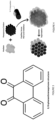
- the process can be divided into two phases. First, the redox mediator reaches its melting point, and starts to fill the spaces form by mesopores in the carbon structure. Secondly, a thin layer of redox mediator is created on the available surfaces through a p-p interaction and the excess of mediator is vaporized ( Figure 4 ).
- the mediator's redox signal lasts for a longer time compared to formulating it as a solution in immobilization solutions. This afterglow makes it possible to observe a catalytic current over a period greater than the state of the art.
- An object of the present invention is therefore a method for preparing a redox mediator/mesoporous carbon nanocomposite, said method comprising the encapsulation of a redox mediator, preferably an insoluble redox mediator (e.g . having a solubility in water of about 3.60e-05M) in a mesoporous carbon structure by a melt diffusion vaporization strategy.
- a redox mediator preferably an insoluble redox mediator (e.g . having a solubility in water of about 3.60e-05M) in a mesoporous carbon structure by a melt diffusion vaporization strategy.
- mesoporous carbon refers to a material having pores in the range of 2-50 nm, according to the IUPAC classification of porosity.
- Traditional porous carbon materials including activated carbons and carbon molecular sieves, are commonly synthesized using a pyrolysis process with appropriate carbon precursors such as coal, polymers, and carbides, with activation through potassium hydroxide2 or selective etching of metal ions in carbides by halogen gases [11].
- the main manufacturers are : Kuraray, BASF, Cabot Norit, Jacobi, Carbons Ingevity Corporation, Dow Corning, Wacker Chemicals, Shin-Etsu, Momentive Performance Materials, Honeywell International, Axens, CECA (Arkema), Zeolyst, Fujian Yuanli Active Carbon, Gelest, ADA-ES, Haycarb, Clariant, CHALCO, Huber.
- melt diffusion vaporization strategy means different weight ratio mixture of a redox mediator (e.g . PQ) and mesoporous carbon heated in air (e.g . at about 240°C for PQ) for 3 h between the melting point (T melting ) and boiling point (T boiling ) of the redox mediator ( i.e. between 200°C and 360°C for PQ).
- a redox mediator e.g . PQ
- mesoporous carbon heated in air e.g . at about 240°C for PQ
- the method comprises the following steps:
- step b) the redox mediator filled the spaces form by mesopores in the carbon structure and formed a thin layer on the available surfaces of the mesoporous carbon through a p-p interaction.
- the temperature of step b) can be evaluated as follows: ((T boiling -T melting )/4) + T melting .
- the redox mediator is an insoluble redox mediator, for example selected from the group consisting of quinones (such as 9,10-phenanthrenequinone (PQ), Naphtoquinone, 1-10 phenanthroline-5,6dione), ferrocene, viologens (such as methyl viologen), azines (such as methylene blue, methylene green, azur A, toluidine blue, and thionine).
- quinones such as 9,10-phenanthrenequinone (PQ), Naphtoquinone, 1-10 phenanthroline-5,6dione
- ferrocene ferrocene
- viologens such as methyl viologen
- azines such as methylene blue, methylene green, azur A, toluidine blue, and thionine.
- the mesoporous carbon is chosen from the group consisting of carbon black (KB600JD, CAS number:1333-86-4 ), CNovel TM products (e.g . MJ(4)150, MJ(4)010 and MH) from Toyo Tanso.
- Another object of the present invention is also a redox mediator/mesoporous carbon nanocomposite obtainable by a method of the present invention.
- Another object of the present invention is the use of a redox mediator/mesoporous carbon nanocomposite of the present invention as an electrode material, in particular a bio-anode.
- Such redox mediator/mesoporous carbon nanocomposite can then be used into a fuel cell such as, for example, an enzymatic biofuel cell, an bacterial fuel cell or an organic lithium ion battery or even a sulfur based battery, and said fuel cell into a device such as, for example, an electronic device, in particular for small portable device for applications such as healthcare, environmental monitoring, biodefense, etc...
- a fuel cell such as, for example, an enzymatic biofuel cell, an bacterial fuel cell or an organic lithium ion battery or even a sulfur based battery
- a device such as, for example, an electronic device, in particular for small portable device for applications such as healthcare, environmental monitoring, biodefense, etc...
- Another object of the present invention is therefore a biodegradable enzymatic fuel cell comprising a redox mediator/mesoporous carbon nanocomposite of the present invention, and also a device comprising said biodegradable enzymatic fuel cell.
- EXAMPLE 1 PREPARATION OF A REDOX MEDIATOR / MESOPOROUS CARBON NANOCOMPOSITE
- a 9,10-phenanthrenequinone (PQ) / mesoporous carbon (carbon black (KB600JD)) nanocomposite was prepared by following a melt-diffusion-vaporization strategy.
- the process temperature was set to be between the melting and the boiling point of the mediator.
- a two elevated temperature decreased the efficiency and induced a loss of material in a vapor form.
- redox mediators e.g . ferrocene
- ferrocene can be charged in the same way as long as their degradation temperature is higher than their melting and boiling temperatures.
- a weight ratio mixture of PQ and mesoporous carbon (1:1) was heated in air at 240°C for 3 h between the melting point (200°C) and boiling point (360°C) of PQ.
- the melted PQ was imbibed into the pores by capillary forces.
- the PQ adsorbed on the surface of the carbon pores remained after heating owing to the p-p interaction between the PQ and the mesoporous carbon, whereas the PQ residue without the p-p interaction evaporated and was eliminated with the air flow because of the high vapor pressure of the PS. Therefore, after cooling, the solidification of PQ formed PQ-confined in carbons particles with the intimate contact between them.
- EXAMPLE 2 RESULTS USING A REDOX MEDIATOR / MESOPOROUS CARBON NANOCOMPOSITE
- electrodes were fabricated by coating a slurry comprising the nanocomposite directly on a paper substrate.
- Slurry was made by mixing the redox mediator/mesoporous carbon nanocomposite or mesoporous carbon alone with a polymeric binder in water.
- the binder could be carboxymethyl cellulose, polyvinylether or polyacrylic acid (water soluble polymers).
- the slurry contained 3% of redox mediator/mesoporous carbon nanocomposite or 3% of the mesoporous carbon alone, 0.3% of polymer, 1% of Gox enzyme and 95.7% of water.
- the dispersion was coated on the substrate with a doctor blade in order to get a homogeneous layer that constituted the electrode after drying at 40°C.
- the catalytic current was evaluated at 0.2V in each voltammograms.
- Figure 5A represented the activity of bioanodes with fresh electrodes (at cycle 2). Cyclic voltammograms showed the redox response of electrodes containing PQ or not. Presented cyclic voltammograms were at steady-state operation (scan for 2 mV.s-1). Performance metrics were as follows:
- Figure 5B represented the activity of bioanodes with aged electrodes (at cycle 92). Cyclic voltammograms showed the redox response of electrodes containing PQ or not. Presented cyclic voltammograms were at steady-state operation (scan for 2 mV.s-1). Performance metrics were as follows:
- Figure 6 represented cyclic voltammograms showing the redox response of electrodes containing different PQ/KB ratio. Presented cyclic voltammograms were at steady-state operation (scan for 2 mV.s-1). Performance metrics were as follows:
- EXAMPLE 3 REDOX SIGNAL PERSISTANCE OF A REDOX MEDIATOR / MESOPOROUS CARBON NANOCOMPOSITE
- the mediator signal as well as the catalytic current stabilized after a few hours of operation for both mediator concentrations.
- the F62D formulation which had a KB/PQ ratio of 1, showed a higher catalytic current on the first cycles than the F64D formulation (KB/PQ of 0.66). From 50 cycles, both formulations showed an identical catalytic current.
- Bucky paper (BP) electrodes are considered as reference according to the state of the art.
- the mediators were deposited by drop casting directly on the surface of the carbon electrode. After drying, a solution containing the enzymes (glucose oxidase from Aspergillus niger, Sigma Aldrich) was also deposited by the same method and dried.
- the suspension used in said BP reference contained 0.25 mM of PQ and corresponded to a dry deposit of about 4.16 ⁇ g/cm 2 .
- the enzyme solution used was concentrated to 15.625 mg/ml which corresponded to a dry deposit of about 1.25 mg/cm 2 .
- the enzyme to mediator ratio was then 300.
- the F62D formulation was composed of 3 % of KB carbon functionalized with PQ (1:1) and 1 % of enzyme. In this case, after deposition, an amount of enzyme of about 1 mg/cm 2 and an amount of PQ of about 1.5 mg/cm 2 were obtained.
- the enzyme to mediator ratio was then 0.66.
- the enzyme to mediator ratio was 1.
- Figures 8A functionalized mesoporous carbon with 2 ratios with Bucky paper electrodes at a comparable enzyme loading were compared.
- Figures 8A showed catalytic response of fresh electrodes.
- Presented cyclic voltammograms were at steady-state operation (scan for 2 mV.s-1). Performance metrics were as follows:
- the electrodes made by drop cast on the bucky paper did not have growth or stabilization phases.
- the catalytic signal decreased steadily.
Landscapes
- Chemical & Material Sciences (AREA)
- Chemical Kinetics & Catalysis (AREA)
- General Chemical & Material Sciences (AREA)
- Electrochemistry (AREA)
- Engineering & Computer Science (AREA)
- Life Sciences & Earth Sciences (AREA)
- Health & Medical Sciences (AREA)
- Manufacturing & Machinery (AREA)
- Microbiology (AREA)
- Biochemistry (AREA)
- Organic Chemistry (AREA)
- Genetics & Genomics (AREA)
- Bioinformatics & Cheminformatics (AREA)
- Zoology (AREA)
- Wood Science & Technology (AREA)
- Materials Engineering (AREA)
- Sustainable Energy (AREA)
- Sustainable Development (AREA)
- Biotechnology (AREA)
- Biomedical Technology (AREA)
- General Engineering & Computer Science (AREA)
- General Health & Medical Sciences (AREA)
- Medicinal Chemistry (AREA)
- Molecular Biology (AREA)
- Inert Electrodes (AREA)
- Inks, Pencil-Leads, Or Crayons (AREA)
- Developing Agents For Electrophotography (AREA)
- Immobilizing And Processing Of Enzymes And Microorganisms (AREA)
Abstract
The present invention concerns a method for the encapsulation of a redox mediator, and the use of such encapsulated redox mediator as electrode materials.
Description
- The present invention relates to a method for the encapsulation of a redox mediator, and the use of such encapsulated redox mediator as electrode materials.
- In the description below, references in square brackets ([ ]) refer to the list of references at the end of the text.
- Biological fuel cells (Biofuel cells) offer an attractive means to provide eco-friendly and sustainable power to electronic devices, particularly for small portable devices for applications such as healthcare, environmental monitoring, bio-defense, etc. Given that enzyme-based fuel cells can operate using substrates that are abundant in the biological fluids and environmental effluent (i.e., glucose and oxygen) whilst exhibiting power densities that are often superior to microbial fuel cells, they offer an attractive proposition to augment or self-power miniaturized wearable or implantable devices [1,2,3]. Furthermore, paper-based devices are gaining popularity as propositions for these types of applications owing to their low mass, small form factor and flexibility, allowing them to conform to a range of different surfaces.
- The core of this technology is based on a couple a of redox enzymes that ensure the catalysis of the fuels. Redox enzymes have a protein structure (apoenzyme) comprising an active redox cofactor capable of transferring electrons from the substrate to the co-substrate. In the case where the redox protein is capable of exchanging these electrons with the electrode, then replacing the substrate or co-substrate, this is called a direct electronic transfer (DET) process (
Figure 1 ). - This phenomenon has been known for over 30 years and observed for many proteins, however, it is not always possible to observe this DET. Indeed, depending on the redox proteins studied and depending on the electrode material, direct electronic exchange is not always favored. In order to be able to observe the bio electrocatalytic phenomenon, it is then necessary to add a redox molecule (often of low molecular weight) which will act as an electronic transporter. This is mediated electron transfer (TEM) and the molecule used as a "shuttle" is commonly called a redox mediator (
Figure 1 ). - The electron transfer mode (DET or MET) is very often inherent in the biomolecule used and in the electrode material.
- There is a very wide variety of redox mediators commonly used in the development of biofuel cells. Among the best known, we find metal complexes (osmium complexes, ferrocene), derivatives of quinones, azines or viologen types.
- To be a suitable candidate as a redox mediator, the redox probe must therefore meet several criteria :
- The potential of this mediator must thermodynamically favor the Biocatalysis reaction. That is to say that its potential must be higher than that of the enzyme at the anode, and conversely, lower than that of the enzyme at the cathode. (
Figure 2 ). - Its redox system must be reversible.
- The enzyme / mediator electronic transfer must be efficient to allow good electro-catalysis.
- The chemical structure of the redox probe must respect a certain size in order to be able to "access" the active site of the enzyme, which is buried in the protein structure in order to be able to perform its role of mediator between the enzyme and the electrode.
- The glucose oxidase (GOx) was initially widely used in the field of biotechnology, in particular biosensors. In a few years, it has taken its place in the topic of glucose O2 biofuel cells. Indeed, it was quickly demonstrated that it is possible to perform an anodic electrode with this enzyme using different electrode materials (carbon nanotubes, nanoparticles, graphene, nanofibers). However, to date it is still difficult to obtain a DET with this enzyme due to its size and its hardly accessible FAD / FADH2 active site.
- Given the difficulty of obtaining a DET with GOx without modifying the protein, much work has focused on electron transfer using a redox mediator since the late 1980s. There is a very wide variety of redox mediators commonly used in the elaboration of biofuel cells. Among the best known, we find metal complexes (complexes osmium, ferrocene), derivatives of quinones, azines or viologen types.
- The mediation usually takes place with both species (enzyme and mediator) in aqueous solution.
- In previous studies, ferrocene and derivatives [4], ferro/ferricyanides [5], and quinone derivatives [6] have found application as redox mediators. Other known mediators include methylene blue, Prussian blue, phenazines, methyl violet, and toluidine blue [7]. However there is usually a problem with such mediators : their insolubility.
- For example, the use of phenanthrenequinone (PQ,
Figure 3 ) as a redox mediator for anodic reaction is limited by a very low solubility of this molecule in water. Even in solution, the mediation signal is lost after a few hours due to the diffusion of the mediator far from the enzyme and/or the electrode surface. The integration of this molecule in a water-based formulation is also problematic to print directly on a paper substrate. On the one hand its insolubility does not allow to obtain a good dispersion and on the other hand, in this configuration, most of the amount of PQ diffuses in the paper when printing and is lost for mediation with the enzyme. - Thus there is still a need to provide a novel redox mediator system, that does not have the prior art disadvantages of the prior art redox mediators due to their insolubility.
- Therefore the Inventors solved the technical problem by entrapping a redox mediator in a mesoporous carbon structure by a melt diffusion vaporization strategy defined herein [8,9,10] to provide a redox mediator/mesoporous carbon nanocomposite. This allows to increase the enzyme/mediator ratio, to extend the lifetime of bio-anodes thanks to slow release of the mediator, and avoid using organic solvents.
- This innovation makes it possible to integrate an insoluble redox mediator into a mesoporous carbon structure to provide a redox mediator/mesoporous carbon nanocomposite. These nanocomposites are then used as electrode materials for the realization of bio-anode seat of glucose oxidation. The realization of this material goes through a heat treatment during which the mediator is brought beyond its melting point (Tmelting) in the presence of mesoporous carbon. The process can be divided into two phases. First, the redox mediator reaches its melting point, and starts to fill the spaces form by mesopores in the carbon structure. Secondly, a thin layer of redox mediator is created on the available surfaces through a p-p interaction and the excess of mediator is vaporized (
Figure 4 ). - Depending on the size of the mesopores and the specific surface area of the carbon, a greater or lesser amount of mediator can be integrated into the structure. Advantageously, the mediator's redox signal lasts for a longer time compared to formulating it as a solution in immobilization solutions. This afterglow makes it possible to observe a catalytic current over a period greater than the state of the art.
- An object of the present invention is therefore a method for preparing a redox mediator/mesoporous carbon nanocomposite, said method comprising the encapsulation of a redox mediator, preferably an insoluble redox mediator (e.g. having a solubility in water of about 3.60e-05M) in a mesoporous carbon structure by a melt diffusion vaporization strategy.
- For the purposes of the present invention, "mesoporous carbon" refers to a material having pores in the range of 2-50 nm, according to the IUPAC classification of porosity. Traditional porous carbon materials, including activated carbons and carbon molecular sieves, are commonly synthesized using a pyrolysis process with appropriate carbon precursors such as coal, polymers, and carbides, with activation through potassium hydroxide2 or selective etching of metal ions in carbides by halogen gases [11]. The main manufacturers are : Kuraray, BASF, Cabot Norit, Jacobi, Carbons Ingevity Corporation, Dow Corning, Wacker Chemicals, Shin-Etsu, Momentive Performance Materials, Honeywell International, Axens, CECA (Arkema), Zeolyst, Fujian Yuanli Active Carbon, Gelest, ADA-ES, Haycarb, Clariant, CHALCO, Huber.
- For the purposes of the present invention, "melt diffusion vaporization strategy" means different weight ratio mixture of a redox mediator (e.g. PQ) and mesoporous carbon heated in air (e.g. at about 240°C for PQ) for 3 h between the melting point (Tmelting) and boiling point (Tboiling) of the redox mediator (i.e. between 200°C and 360°C for PQ). The melted redox mediator was imbibed into the pores by capillary forces. However, only the redox mediator adsorbed on the surface of the carbon pores remained after heating owing to the p-p interaction between the redox mediator and the mesoporous carbon, whereas the redox mediator residue without the p-p interaction evaporated and was eliminated with the air flow because of the high vapor pressure of the redox mediator. Therefore, after cooling, the solidification of redox mediator formed redox mediator-confined in carbons particles with the intimate contact between them.
- According to a particular embodiment of the method of the present invention, the method comprises the following steps:
- a) mixing a redox mediator with a mesoporous carbon to obtain a mixture ;
- b) applying a temperature between the melting and boiling point of the redox mediator to the mixture from step a) ; the excess of redox mediator being vaporized ; and
- c) recovering the redox mediator/mesoporous carbon nanocomposite.
- The Inventors have unexpectedly observed that during step b) the redox mediator filled the spaces form by mesopores in the carbon structure and formed a thin layer on the available surfaces of the mesoporous carbon through a p-p interaction.
- According to a particular embodiment of the method of the present invention, the temperature of step b) can be evaluated as follows: ((Tboiling-Tmelting)/4) + Tmelting.
- According to a particular embodiment of the method of the present invention, the redox mediator is an insoluble redox mediator, for example selected from the group consisting of quinones (such as 9,10-phenanthrenequinone (PQ), Naphtoquinone, 1-10 phenanthroline-5,6dione), ferrocene, viologens (such as methyl viologen), azines (such as methylene blue, methylene green, azur A, toluidine blue, and thionine).
- According to a particular embodiment of the method of the present invention, the mesoporous carbon is chosen from the group consisting of carbon black (KB600JD, CAS number:1333-86-4), CNovel™ products (e.g. MJ(4)150, MJ(4)010 and MH) from Toyo Tanso.
- Another object of the present invention is also a redox mediator/mesoporous carbon nanocomposite obtainable by a method of the present invention.
- Another object of the present invention is the use of a redox mediator/mesoporous carbon nanocomposite of the present invention as an electrode material, in particular a bio-anode.
- Such redox mediator/mesoporous carbon nanocomposite can then be used into a fuel cell such as, for example, an enzymatic biofuel cell, an bacterial fuel cell or an organic lithium ion battery or even a sulfur based battery, and said fuel cell into a device such as, for example, an electronic device, in particular for small portable device for applications such as healthcare, environmental monitoring, biodefense, etc...
- Another object of the present invention is therefore a biodegradable enzymatic fuel cell comprising a redox mediator/mesoporous carbon nanocomposite of the present invention, and also a device comprising said biodegradable enzymatic fuel cell.
-
-
Figure 1 represents a schematic illustration of a simple arrangement for (A) direct electron transfer (DET) and (B) mediated electron transfer (MET), between the active site of an electrochemically-active enzyme and a solid electrode, during the oxidation of a substrate. -
Figure 2 represents the potential windows of redox-mediators. -
Figure 3 represents 9,10-phenanthrenequinone structure. -
Figure 4 represents thermal treatment. -
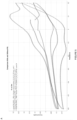
Figure 5 represents the cyclic voltammograms showing the redox response of (A) fresh electrodes at cycle 2 (B) aged electrodes atcycle 92. (squares) anode with PQ in KB600JD (circles) anode without PQ in KB600JD (triangles) anode without PQ in KB600JD but saturated PQ in the activation liquid. -
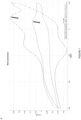
Figure 6 represents the cyclic voltagramms showing the redox response of electrodes containing different PQ/KB600JD ratios. (crosses) anode with 20% PQ in KB600JD (circles) anode with 70% PQ in KB600JD (squares) anode with 120% PQ in KB600JD. -
Figure 7 represents cyclic voltamperometry (A) between 1 and 20 cycles (B) between 20 and 50 cycles (C) after 50 cycles. -
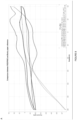
Figure 8 represents cyclic voltammograms showing the redox response of electrodes F62D / F64D with Bucky Paper (BP) reference at (A) cycle 2 (B)cycle 20. (circles) F64D (crosses) BP (triangles) F62D - A 9,10-phenanthrenequinone (PQ) / mesoporous carbon (carbon black (KB600JD)) nanocomposite was prepared by following a melt-diffusion-vaporization strategy. The process temperature was set to be between the melting and the boiling point of the mediator. Experimentally, a two elevated temperature decreased the efficiency and induced a loss of material in a vapor form.
PROPERTY OF PQ EXPERIMENTAL AVERAGE Melting point (°C) 209 Boiling point°(C) 360 Water solubility (mol/L) 3.62e-5 - First carbon black (KB600JD) and 9,10-phenanthrenequinone (1 g of each for 1:1 ratio) were ground together manually at lab scale or with a 3D mixer for larger amounts, pelletized manually at lab scale or with an hydraulic press for larger amounts, and then heated in an oven, at 240°C, for 3 hours in air. When the 9,10-phenanthrenequinone reached its melting point, it started to fill the spaces form by mesopores in the KB600JD carbon structure. Then, a thin layer of 9,10-phenanthrenequinone was created on the available surfaces (measurement of the specific surface area by BET method (m2/g)) of the KB600JD carbon structure through a p-p interaction, and the excess of mediator was vaporized.
- Other redox mediators (e.g. ferrocene) can be charged in the same way as long as their degradation temperature is higher than their melting and boiling temperatures.
- Four different carbons have been evaluated and loaded with the same ratio of 9,10-phenanthrenequinone (PQ).
- A weight ratio mixture of PQ and mesoporous carbon (1:1) was heated in air at 240°C for 3 h between the melting point (200°C) and boiling point (360°C) of PQ. The melted PQ was imbibed into the pores by capillary forces. However, only the PQ adsorbed on the surface of the carbon pores remained after heating owing to the p-p interaction between the PQ and the mesoporous carbon, whereas the PQ residue without the p-p interaction evaporated and was eliminated with the air flow because of the high vapor pressure of the PS. Therefore, after cooling, the solidification of PQ formed PQ-confined in carbons particles with the intimate contact between them.
Mesoporous carbon references MJ(4)150-00 KB600JD MJ(4)010-00 MH-00 BET (m2/g) 270 1270 1240 1417 Mesopores size (nm) 150 8 10 4 Total pore volume (ml/g) 0.35 1.23 2.10 1.67 - The same protocole as above described was applied but by weight comparison between initial and post-treatment.
Mesoporous carbon references MJ(4)150-00 KB600JD MJ(4)010-00 MH-00 Mass loss at 240°C 12% 6% 5% 3% Mass loss at 250°C 33% NA NA NA Mass loss at 300°C 45% NA NA NA - Mass loss of 9,10-phenanthrenequinone (PQ) in mesoporous carbons seems to be correlated with the surface area. The less the surface was, the most of the PQ was lost. In the same way, if the temperature was too elevated or far from the melting point, mass loss increased sharply and most of the mediator was lost and escaped from the structure in the form of vapors.
- In order to test the redox mediator/mesoporous carbon nanocomposite in a bio anode configuration, electrodes were fabricated by coating a slurry comprising the nanocomposite directly on a paper substrate.
- Slurry was made by mixing the redox mediator/mesoporous carbon nanocomposite or mesoporous carbon alone with a polymeric binder in water. The binder could be carboxymethyl cellulose, polyvinylalcool or polyacrylic acid (water soluble polymers). The slurry contained 3% of redox mediator/mesoporous carbon nanocomposite or 3% of the mesoporous carbon alone, 0.3% of polymer, 1% of Gox enzyme and 95.7% of water. The dispersion was coated on the substrate with a doctor blade in order to get a homogeneous layer that constituted the electrode after drying at 40°C.
- The electrochemical characterization was made with a potentiostat in 3 electrodes configuration: Working electrode=bioanode, Counter electrode=platinum wire, and Ag/AgCl reference electrode. The catalytic current was evaluated at 0.2V in each voltammograms.
- The results were represented in
Figures 5A and5B . -
Figure 5A represented the activity of bioanodes with fresh electrodes (at cycle 2). Cyclic voltammograms showed the redox response of electrodes containing PQ or not. Presented cyclic voltammograms were at steady-state operation (scan for 2 mV.s-1). Performance metrics were as follows: - Circles: Anode with 0% of PQ in KB600JD → Catalytic Peak current at
cycle 2 = 0.22mA - Squares: Anode with PQ in KB600JD →Catalytic Peak current at
cycle 2 = 0.27mA - Triangles: Anode with 0% of PQ in KB600JD but saturated PQ in the activation liquid (3.6*10-5M) → Catalytic Peak current at
cycle 2 = 0.11mA. - The results showed that mesoporous containing PQ exhibits a higher catalytic activity than mesoporous without PQ or PQ directly in the activation solution.
-
Figure 5B represented the activity of bioanodes with aged electrodes (at cycle 92). Cyclic voltammograms showed the redox response of electrodes containing PQ or not. Presented cyclic voltammograms were at steady-state operation (scan for 2 mV.s-1). Performance metrics were as follows: - Circles: Anode with 0% of PQ in KB600JD. Mediator Peak current at
cycle 92 = 0.1 mA. - Squares: Anode with PQ in KB600JD. Mediator Peak current at
cycle 92 = 0.15mA. - Triangles: Anode with 0% of PQ in KB600JD but saturated PQ in the activation liquid (3.6*10-5M). Mediator Peak current at
cycle 92 = 0.10mA. - The results showed that mesoporous containing PQ still exhibited a higher catalytic activity than mesoporous without PQ or PQ directly in the activation solution after 33h operation time.
- Several carbon-to-mediator ratios have also been performed to assess the effect of partial/complete filling of the carbon structure.
- The same preparations than above were prepared but with different ratio of PQ and KB600JD as follows:
Formulations F81A F64D F82A F62D F83A PQ/carbon KB600JD 0.20 0.50 0.70 1.00 1.20 - The electrochemical characterization was made as above described.
- The results were represented in
Figure 6 . -
Figure 6 represented cyclic voltammograms showing the redox response of electrodes containing different PQ/KB ratio. Presented cyclic voltammograms were at steady-state operation (scan for 2 mV.s-1). Performance metrics were as follows: - Crosses: Anode with 20% of PQ in KB600JD → Mediator Peak current at
cycle 9 = 0.12mA - Circles: Anode with 70% of PQ in KB600JD →Mediator Peak current at
cycle 9 = 0.18mA - Squares: Anode with 120% of PQ in KB600JD → Mediator Peak current at
cycle 9 = 0.20mA - As expected, a higher concentration of PQ exhibited a higher current response from the mediator.
- The same protocol as above described was carried out, but in this case, the evolution of both catalytic current and mediator current was followed for both formulations F64D and F62D as above defined.
- Between cycles 1 and 20: decrease

The results were represented inFigure 7A . - Between

cycles 20 and 50: increase
The results were represented inFigure 7B . - After cycle 50: stabilization

The results were represented inFigure 7C . - Advantageously, the mediator signal as well as the catalytic current stabilized after a few hours of operation for both mediator concentrations. Moreover, the F62D formulation, which had a KB/PQ ratio of 1, showed a higher catalytic current on the first cycles than the F64D formulation (KB/PQ of 0.66). From 50 cycles, both formulations showed an identical catalytic current.
- Bucky paper (BP) electrodes are considered as reference according to the state of the art.
- Classically, the mediators were deposited by drop casting directly on the surface of the carbon electrode. After drying, a solution containing the enzymes (glucose oxidase from Aspergillus niger, Sigma Aldrich) was also deposited by the same method and dried. The suspension used in said BP reference contained 0.25 mM of PQ and corresponded to a dry deposit of about 4.16 µg/cm2.
- The enzyme solution used was concentrated to 15.625 mg/ml which corresponded to a dry deposit of about 1.25 mg/cm2.
- The enzyme to mediator ratio was then 300.
- The F62D formulation was composed of 3 % of KB carbon functionalized with PQ (1:1) and 1 % of enzyme. In this case, after deposition, an amount of enzyme of about 1 mg/cm2 and an amount of PQ of about 1.5 mg/cm2 were obtained.
- The enzyme to mediator ratio was then 0.66.
- For the F64D formulation, the enzyme to mediator ratio was 1.
- The results were represented in
Figures 8A and8B . - In
Figures 8A , functionalized mesoporous carbon with 2 ratios with Bucky paper electrodes at a comparable enzyme loading were compared.Figures 8A showed catalytic response of fresh electrodes. Presented cyclic voltammograms were at steady-state operation (scan for 2 mV.s-1). Performance metrics were as follows: - F64D (ratio 0.66) : Catalytic
current cycle# 2 = 0.07mA - F62D (ratio 1) : Catalytic
current cycle# 2 = 0.27mA - Anode Bucky paper (ratio 300) : Catalytic
current cycle# 2 = 0.07mA - In
Figure 8B , we compare functionalized mesoporous carbon with 2 ratios with Bucky paper electrodes at a comparable enzyme loading were compared.Figures 8B showed catalytic response of aged electrodes (7 hours of activity). Performance metrics were as follows: - F64D (ratio 0.66) : Catalytic
current cycle# 20 = 0.09mA - F62D (ratio 1) : Catalytic
current cycle# 20 = 0.17mA - Anode Bucky paper (ratio 300) : Catalytic
current cycle# 20 = 0.05mA - Unlike printed anodes, the electrodes made by drop cast on the bucky paper did not have growth or stabilization phases. The catalytic signal decreased steadily.
-
- [1] P. Atanassov, M. Y. EI-Naggar, S. Cosnier and U. Schröder, ChemElectroChem, (2014) 1, 1702-1704
- [2] E. Katz and K. MacVittie, Energy Environ. Sci., (2013) 6, 2791
- [3] S. Cosnier, A. J. Gross, A. Le Goff and M. Holzinger, J. Power Sources, (2016) 325, 252-263
- [4] A. Jdrzak, T. R
 bi's, L. Klapiszewski, J. Zdarta, G. Milczarek, T. Jesionowski, Carbon paste electrode based on functional GOx/silica-lignin system to prepare an amperometric glucose biosensor, Sens. Actuators B Chem. 256 (2018) 176-185, httpS://doi.org/10.1016/j.snb.2017.10.079.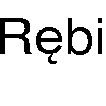
- [5] D. Sun, P. Li, Q. Liu, T. Liu, M. Gu, G.-L. Wang, Versatile enzymatic assays by switching on the fluorescence of gold nanoclusters, Anal. Chim. Acta 1095 (2020) 219-225, https://doi.org/10.1016/j.aca.2019.10.035
- [6] T. Tamaki, T. Ito, T. Yamaguchi, Immobilization of hydroquinone through a spacer to polymer grafted on carbon black for a high-surface-area biofuel cell electrode, J. Phys. Chem. B 111 (34) (2007) 10312-10319, https://doi.org/10.1021/jp074334n10.1021/jp074334n.s001
- [7] G. Rocchitta, A. Spanu, S. Babudieri, G. Latte, G. Madeddu, G. Galleri, S. Nuvoli, P. Bagella, M.I. Demartis, V. Fiore, R. Manetti, P.A. Serra, Enzyme biosensors for biomedical applications: strategies for safeguarding analytical performances in biological fluids, Sensors 16 (2016) 780, https://doi.org/10.3390/s16060780 .
- [8] C. Tian, J. Wu, Z. Ma, B. Li, X. Zhang, X. Zu, X. Xiang, S. Li, A melt-diffusion strategy for tunable sulfur loading on CC@MoS2 for lithium-sulfur batteries, Energy reports (2020) 6;supl.7,172-180
- [9] M-S. Kwon, A. Choi, Y. Park, J.y. Cheon, H. Kang, Y.N. Jo, Y-J. Kim, S.Y. Hong, S.H. Joo, C. Yang, K.T. Lee, Synthesis of ordered mesoporous phenanthrenequinone-carbon via p-p interaction-dependent vapor pressure for rechargeable batteries, Scientific reports (2014) 10;4:7404, doi: 10.1038/srep07404
- [10] Patent
10,971,733 - [11] A. Eftekhari, Z. Fan, Ordered mesoporous carbon and its applications for electrochemical energy storage and conversion, Mater. Chem. Front. (2017) 1, 1001-1027
Claims (10)
- Method for preparing a redox mediator/mesoporous carbon nanocomposite, said method comprising the encapsulation of a redox mediator into a mesoporous carbon structure by melt diffusion vaporization strategy.
- Method according to claim 1, said method comprising the following steps:a) mixing a redox mediator with a mesoporous carbon to obtain a mixture ;b) applying a temperature between the melting and boiling point of the redox mediator to the mixture from step a) ; the excess of redox mediator being vaporized ; andc)recovering the redox mediator/mesoporous carbon nanocomposite.
- Method according to claim 2, wherein the temperature of step b) is determined as follows: ((Tboiling-Tmelting)/4) + Tmelting.
- Method according to any one of claim 1 to 3, wherein the redox mediator is an insoluble redox mediator.
Method according to claim 4, wherein the insoluble redox mediator is chosen from the group consisting of quinones, ferrocen, viologens, and azines. - Method according to any one of claims 1 to 5, wherein the mesoporous carbon is carbon black (KB600JD, CAS number:1333-86-4).
- Redox mediator/mesoporous carbon nanocomposite obtainable par a method according to any one of claims 1 to 6.
- Use of a redox mediator/mesoporous carbon nanocomposite as defined in claim 7, as an electrode material.
- Use according to claim 8, wherein the electrode material is a bio-anode.
- Biodegradable enzymatic fuel cell comprising a redox mediator/mesoporous carbon nanocomposite as defined in claim 7.
- Device comprising a biodegradable enzymatic fuel cell as defined in claim 10.
Priority Applications (7)
| Application Number | Priority Date | Filing Date | Title |
|---|---|---|---|
| EP21306821.6A EP4199159A1 (en) | 2021-12-17 | 2021-12-17 | Redox mediator encapsulation |
| CN202280081972.0A CN118525392A (en) | 2021-12-17 | 2022-12-14 | Redox mediator encapsulation |
| KR1020247022154A KR20240122800A (en) | 2021-12-17 | 2022-12-14 | Encapsulation of redox mediators |
| JP2024536426A JP2024545815A (en) | 2021-12-17 | 2022-12-14 | Encapsulation of redox mediators |
| PCT/EP2022/085838 WO2023111010A1 (en) | 2021-12-17 | 2022-12-14 | Redox mediator encapsulation |
| US18/718,758 US20250046826A1 (en) | 2021-12-17 | 2022-12-14 | Redox mediator encapsulation |
| EP22838728.8A EP4449525A1 (en) | 2021-12-17 | 2022-12-14 | Redox mediator encapsulation |
Applications Claiming Priority (1)
| Application Number | Priority Date | Filing Date | Title |
|---|---|---|---|
| EP21306821.6A EP4199159A1 (en) | 2021-12-17 | 2021-12-17 | Redox mediator encapsulation |
Publications (1)
| Publication Number | Publication Date |
|---|---|
| EP4199159A1 true EP4199159A1 (en) | 2023-06-21 |
Family
ID=80034804
Family Applications (2)
| Application Number | Title | Priority Date | Filing Date |
|---|---|---|---|
| EP21306821.6A Withdrawn EP4199159A1 (en) | 2021-12-17 | 2021-12-17 | Redox mediator encapsulation |
| EP22838728.8A Pending EP4449525A1 (en) | 2021-12-17 | 2022-12-14 | Redox mediator encapsulation |
Family Applications After (1)
| Application Number | Title | Priority Date | Filing Date |
|---|---|---|---|
| EP22838728.8A Pending EP4449525A1 (en) | 2021-12-17 | 2022-12-14 | Redox mediator encapsulation |
Country Status (6)
| Country | Link |
|---|---|
| US (1) | US20250046826A1 (en) |
| EP (2) | EP4199159A1 (en) |
| JP (1) | JP2024545815A (en) |
| KR (1) | KR20240122800A (en) |
| CN (1) | CN118525392A (en) |
| WO (1) | WO2023111010A1 (en) |
Families Citing this family (2)
| Publication number | Priority date | Publication date | Assignee | Title |
|---|---|---|---|---|
| WO2026053856A1 (en) * | 2024-09-06 | 2026-03-12 | 株式会社レゾナック | Electrode ink, method for producing same, and method for producing electrode |
| WO2026053859A1 (en) * | 2024-09-06 | 2026-03-12 | 株式会社レゾナック | Electrode ink, method for producing same, and method for producing electrode |
Citations (1)
| Publication number | Priority date | Publication date | Assignee | Title |
|---|---|---|---|---|
| US10971733B2 (en) | 2017-01-26 | 2021-04-06 | Drexel University | Rapid sulfur melt diffusion into carbon host for making electrodes |
Family Cites Families (1)
| Publication number | Priority date | Publication date | Assignee | Title |
|---|---|---|---|---|
| JP2019002738A (en) * | 2017-06-13 | 2019-01-10 | アークレイ株式会社 | Biosensor and measurement method using the same |
-
2021
- 2021-12-17 EP EP21306821.6A patent/EP4199159A1/en not_active Withdrawn
-
2022
- 2022-12-14 WO PCT/EP2022/085838 patent/WO2023111010A1/en not_active Ceased
- 2022-12-14 KR KR1020247022154A patent/KR20240122800A/en active Pending
- 2022-12-14 US US18/718,758 patent/US20250046826A1/en active Pending
- 2022-12-14 JP JP2024536426A patent/JP2024545815A/en active Pending
- 2022-12-14 CN CN202280081972.0A patent/CN118525392A/en active Pending
- 2022-12-14 EP EP22838728.8A patent/EP4449525A1/en active Pending
Patent Citations (1)
| Publication number | Priority date | Publication date | Assignee | Title |
|---|---|---|---|---|
| US10971733B2 (en) | 2017-01-26 | 2021-04-06 | Drexel University | Rapid sulfur melt diffusion into carbon host for making electrodes |
Non-Patent Citations (13)
| Title |
|---|
| A. EFTEKHARIZ. FAN: "Ordered mesoporous carbon and its applications for electrochemical energy storage and conversion", MATER. CHEM. FRONT., vol. 1, 2017, pages 1001 - 1027 |
| A. JEDRZAKT. REB'SL. KLAPISZEWSKIJ. ZDARTAG. MILCZAREKT. JESIONOWSKI: "Carbon paste electrode based on functional GOx/silica-lignin system to prepare an amperometric glucose biosensor, Sens", ACTUATORS B CHEM., vol. 256, 2018, pages 176 - 185, XP085262047, Retrieved from the Internet <URL:httDs://doi.org/10.1016/i.snb.2017.10.079> DOI: 10.1016/j.snb.2017.10.079 |
| C. TIANJ. WUZ. MAB. LIX. ZHANGX. ZUX. XIANGS. LI: "A melt-diffusion strategy for tunable sulfur loading on CC@MoS2 for lithium-sulfur batteries", ENERGY REPORTS, vol. 7, 2020, pages 172 - 180 |
| CAS , no. 1333-86-4 |
| D. SUNP. LIQ. LIUT. LIUM. GUG.-L. WANG: "Versatile enzymatic assays by switching on the fluorescence of gold nanoclusters", ANAL. CHIM. ACTA, vol. 1095, 2020, pages 219 - 225, Retrieved from the Internet <URL:https://doi.org/10.1016/j.aca.2019.10.035> |
| E. KATZK. MACVITTIE, ENERGY ENVIRON. SCI., vol. 6, 2013, pages 2791 |
| G. ROCCHITTA, A. SPANUS. BABUDIERIG. LATTEG. MADEDDUG. GALLERIS. NUVOLIP. BAGELLAM.I. DEMARTISV. FIORER. MANETTI: "Enzyme biosensors for biomedical applications: strategies for safeguarding analytical performances in biological fluids", SENSORS, vol. 16, 2016, pages 780, Retrieved from the Internet <URL:https://doi.orq/10.3390/s16060780> |
| HOLZINGER MICHAEL ET AL: "Carbon nanotube/enzyme biofuel cells", ELECTROCHIMICA ACTA, vol. 82, 3 March 2012 (2012-03-03), pages 179 - 190, XP028939099, ISSN: 0013-4686, DOI: 10.1016/J.ELECTACTA.2011.12.135 * |
| KWON MI-SOOK ET AL: "Synthesis of Ordered Mesoporous Phenanthrenequinone-Carbon via [pi]-[pi] Interaction-Dependent Vapor Pressure for Rechargeable Batteries", SCIENTIFIC REPORTS, vol. 4, no. 1, 10 December 2014 (2014-12-10), XP055932740, DOI: 10.1038/srep07404 * |
| M-S. KWONA. CHOIY. PARKJ.Y. CHEONH. KANGY.N. JOY-J. KIMS.Y. HONGS.H. JOOC. YANG: "Synthesis of ordered mesoporous phenanthrenequinone-carbon via p-p interaction-dependent vapor pressure for rechargeable batteries", SCIENTIFIC REPORTS, vol. 10, no. 4, 2014, pages 7404 |
| P. ATANASSOVM. Y. EL-NAGGARS. COSNIERU. SCHRODER, CHEMELECTROCHEM, vol. 1, 2014, pages 1702 - 1704 |
| S. COSNIERA. J. GROSSA. LE GOFFM. HOLZINGER, J. POWER SOURCES, vol. 325, 2016, pages 252 - 263 |
| T. TAMAKIT. ITOT. YAMAGUCHI: "Immobilization of hydroquinone through a spacer to polymer grafted on carbon black for a high-surface-area biofuel cell electrode", J. PHYS. CHEM. B, vol. 111, no. 34, 2007, pages 10312 - 10319, Retrieved from the Internet <URL:https://doi.org/10.1021/jp074334n10.1021/jp074334n.s001> |
Also Published As
| Publication number | Publication date |
|---|---|
| US20250046826A1 (en) | 2025-02-06 |
| CN118525392A (en) | 2024-08-20 |
| WO2023111010A4 (en) | 2023-08-10 |
| EP4449525A1 (en) | 2024-10-23 |
| WO2023111010A1 (en) | 2023-06-22 |
| KR20240122800A (en) | 2024-08-13 |
| JP2024545815A (en) | 2024-12-12 |
Similar Documents
| Publication | Publication Date | Title |
|---|---|---|
| Xiao et al. | Nanocomposites: from fabrications to electrochemical bioapplications | |
| US9912000B2 (en) | Fuel cell, manufacturing method thereof, electronic apparatus, enzyme-immobilized electrode, manufacturing method thereof, water-repellent agent, and enzyme immobilizing material | |
| Periasamy et al. | Preparation and characterization of bismuth oxide nanoparticles-multiwalled carbon nanotube composite for the development of horseradish peroxidase based H2O2 biosensor | |
| US20250046826A1 (en) | Redox mediator encapsulation | |
| Liu et al. | A biofuel cell with enhanced power output by grape juice | |
| Çakıroğlu et al. | Photosystem II as a chemiluminescence-induced photosensitizer for photoelectrochemical biofuel cell-type biosensing system | |
| Song et al. | Biochar-supported Fe3C nanoparticles with enhanced interfacial contact as high-performance binder-free anode material for microbial fuel cells | |
| Le Comte et al. | Determination of the quinone-loading of a modified carbon powder-based electrode for electrochemical capacitor | |
| Shen et al. | Two-dimensional graphene paper supported flexible enzymatic fuel cells | |
| Yamashita et al. | Electrochemical comparative study of riboflavin, FMN and FAD immobilized on the silica gel modified with zirconium oxide | |
| Liu et al. | Flower-like MoS2 modified reduced graphene oxide nanocomposite: synthesis and application for lithium-ion batteries and mediator-free biosensor | |
| Sanchez et al. | A novel microbial fuel cell electrode design: prototyping a self-standing one-step bacteria-encapsulating bioanode with electrospinning | |
| Che et al. | Amperometric glucose biosensor based on Prussian blue–multiwall carbon nanotubes composite and hollow PtCo nanochains | |
| CN113571812B (en) | A biophotoelectrochemical cell based on photo/chemical integrated energy conversion | |
| Devasenathipathy et al. | Enzymatic glucose biosensor based on bismuth nanoribbons electrochemically deposited on reduced graphene oxide. | |
| US9356297B1 (en) | Facile fabrication of scalable, hierarchically structured polymer-carbon architectures for bioelectrodes | |
| Lee et al. | Membraneless enzymatic biofuel cells using three-dimensional graphite felt electrodes | |
| Babaei et al. | Electrochemical investigations on a third generation biosensor for determination of hydrogen peroxide based on immobilization of myoglobin on a novel platinum nanoparticle/carbon nanotube/ionic liquid/nafion composite | |
| Üstündağ et al. | Determination of Dopamine in the Presence of Ascorbic Acid on Digitonin-Doped Coal Tar Pitch Carbonaceous Electrode. | |
| CN117352759A (en) | Electrochemical preparation method of ternary PtCoMn alloy catalyst and membrane electrode prepared by electrochemical preparation method | |
| JP2024545815A5 (en) | ||
| Liu et al. | Enhanced direct electron transfer of glucose oxidase based on a protic ionic liquid modified electrode and its biosensing application | |
| JP2012028181A (en) | Enzyme electrode and fuel cell having the same | |
| HK40111715A (en) | Redox mediator encapsulation | |
| Keerthi et al. | Nature-powered bio-cathodes: Synergistic effects of laccase immobilization and green nanoparticles on enhanced PGEs for sustainable biofuel cells |
Legal Events
| Date | Code | Title | Description |
|---|---|---|---|
| PUAI | Public reference made under article 153(3) epc to a published international application that has entered the european phase |
Free format text: ORIGINAL CODE: 0009012 |
|
| STAA | Information on the status of an ep patent application or granted ep patent |
Free format text: STATUS: THE APPLICATION HAS BEEN PUBLISHED |
|
| AK | Designated contracting states |
Kind code of ref document: A1 Designated state(s): AL AT BE BG CH CY CZ DE DK EE ES FI FR GB GR HR HU IE IS IT LI LT LU LV MC MK MT NL NO PL PT RO RS SE SI SK SM TR |
|
| STAA | Information on the status of an ep patent application or granted ep patent |
Free format text: STATUS: THE APPLICATION IS DEEMED TO BE WITHDRAWN |
|
| 18D | Application deemed to be withdrawn |
Effective date: 20231222 |