EP4198841A1 - Detection device, learning device, detection method, learning method, detection program, and learning program - Google Patents
Detection device, learning device, detection method, learning method, detection program, and learning program Download PDFInfo
- Publication number
- EP4198841A1 EP4198841A1 EP20954194.5A EP20954194A EP4198841A1 EP 4198841 A1 EP4198841 A1 EP 4198841A1 EP 20954194 A EP20954194 A EP 20954194A EP 4198841 A1 EP4198841 A1 EP 4198841A1
- Authority
- EP
- European Patent Office
- Prior art keywords
- packet
- detection
- fixed
- learning
- length vector
- Prior art date
- Legal status (The legal status is an assumption and is not a legal conclusion. Google has not performed a legal analysis and makes no representation as to the accuracy of the status listed.)
- Granted
Links
Images




Classifications
-
- G—PHYSICS
- G06—COMPUTING OR CALCULATING; COUNTING
- G06F—ELECTRIC DIGITAL DATA PROCESSING
- G06F40/00—Handling natural language data
- G06F40/40—Processing or translation of natural language
-
- G—PHYSICS
- G06—COMPUTING OR CALCULATING; COUNTING
- G06N—COMPUTING ARRANGEMENTS BASED ON SPECIFIC COMPUTATIONAL MODELS
- G06N20/00—Machine learning
-
- G—PHYSICS
- G06—COMPUTING OR CALCULATING; COUNTING
- G06N—COMPUTING ARRANGEMENTS BASED ON SPECIFIC COMPUTATIONAL MODELS
- G06N3/00—Computing arrangements based on biological models
- G06N3/02—Neural networks
- G06N3/04—Architecture, e.g. interconnection topology
- G06N3/045—Combinations of networks
- G06N3/0455—Auto-encoder networks; Encoder-decoder networks
-
- G—PHYSICS
- G06—COMPUTING OR CALCULATING; COUNTING
- G06N—COMPUTING ARRANGEMENTS BASED ON SPECIFIC COMPUTATIONAL MODELS
- G06N3/00—Computing arrangements based on biological models
- G06N3/02—Neural networks
- G06N3/04—Architecture, e.g. interconnection topology
- G06N3/047—Probabilistic or stochastic networks
-
- G—PHYSICS
- G06—COMPUTING OR CALCULATING; COUNTING
- G06N—COMPUTING ARRANGEMENTS BASED ON SPECIFIC COMPUTATIONAL MODELS
- G06N3/00—Computing arrangements based on biological models
- G06N3/02—Neural networks
- G06N3/04—Architecture, e.g. interconnection topology
- G06N3/0475—Generative networks
-
- G—PHYSICS
- G06—COMPUTING OR CALCULATING; COUNTING
- G06N—COMPUTING ARRANGEMENTS BASED ON SPECIFIC COMPUTATIONAL MODELS
- G06N3/00—Computing arrangements based on biological models
- G06N3/02—Neural networks
- G06N3/08—Learning methods
- G06N3/088—Non-supervised learning, e.g. competitive learning
-
- H—ELECTRICITY
- H04—ELECTRIC COMMUNICATION TECHNIQUE
- H04L—TRANSMISSION OF DIGITAL INFORMATION, e.g. TELEGRAPHIC COMMUNICATION
- H04L63/00—Network architectures or network communication protocols for network security
- H04L63/14—Network architectures or network communication protocols for network security for detecting or protecting against malicious traffic
- H04L63/1408—Network architectures or network communication protocols for network security for detecting or protecting against malicious traffic by monitoring network traffic
- H04L63/1416—Event detection, e.g. attack signature detection
-
- H—ELECTRICITY
- H04—ELECTRIC COMMUNICATION TECHNIQUE
- H04L—TRANSMISSION OF DIGITAL INFORMATION, e.g. TELEGRAPHIC COMMUNICATION
- H04L63/00—Network architectures or network communication protocols for network security
- H04L63/14—Network architectures or network communication protocols for network security for detecting or protecting against malicious traffic
- H04L63/1408—Network architectures or network communication protocols for network security for detecting or protecting against malicious traffic by monitoring network traffic
- H04L63/1425—Traffic logging, e.g. anomaly detection
-
- H—ELECTRICITY
- H04—ELECTRIC COMMUNICATION TECHNIQUE
- H04L—TRANSMISSION OF DIGITAL INFORMATION, e.g. TELEGRAPHIC COMMUNICATION
- H04L63/00—Network architectures or network communication protocols for network security
- H04L63/14—Network architectures or network communication protocols for network security for detecting or protecting against malicious traffic
- H04L63/1441—Countermeasures against malicious traffic
Definitions
- the present invention relates to a detection device, a learning device, a detection method, a learning method, a detection program, and a learning program.
- O-IDS Operational Technology-Intrusion Detection System
- the present invention has been made in view of the above, and an object thereof is to provide a detection device, a learning device, a detection method, a learning method, a detection program, and a learning program capable of detecting an abnormality occurring in the content of a packet without depending on a communication protocol.
- a detection device includes: a first conversion unit that converts one packet to be detected into one fixed-length vector by using natural language processing technology; and a first detection unit that detects presence or absence of an abnormality in the packet to be detected based on the fixed-length vector converted by the first conversion unit using a detection model.
- a learning device includes: a second conversion unit that converts one packet in a normal state into one fixed-length vector by using natural language processing technology; a second detection unit that detects presence or absence of an abnormality in the packet in the normal state based on the fixed-length vector converted by the second conversion unit using a detection model; and a learning control unit that causes the detection model to learn a pattern of the fixed-length vector corresponding to the packet in the normal state.
- one packet is encoded into one fixed-length vector by regarding each protocol as different languages and applying a technology of natural language processing. Then, in the present embodiment, a normal pattern of the encoded vector is extracted, and a vector different from the normal pattern is detected to detect an abnormality. Accordingly, in the present invention, it is possible to detect an abnormality occurring in contents of a packet without depending on a communication protocol.
- Fig. 1 is a diagram illustrating an example of a configuration of a detection system according to an embodiment.
- a detection system 1 includes a learning device 10 and a detection device 20.
- the learning device 10 and the detection device 20 are connected via, for example, a network or the like.
- the learning device 10 and the detection device 20 are connected to an external device via, for example, a network or the like.
- the learning device 10 causes the detection model to learn the pattern of the fixed-length vector corresponding to the packet in the normal state based on one fixed-length vector obtained by converting one packet in the normal state, which is the learning target data, using natural language processing technology.
- the detection device 20 converts a packet to be detected into a fixed-length vector by using natural language processing technology, and detects presence or absence of an abnormality in the packet to be detected based on the converted fixed-length vector using a detection model learned in the learning device 10.
- Fig. 2 is a diagram illustrating an example of the configuration of the learning device 10 illustrated in Fig. 1 .
- the learning device 10 includes an input unit 11, an output unit 12, a communication unit 13, a storage unit 14, and a control unit 15.
- Fig. 3 is a diagram for explaining a flow of learning processing executed by the learning device 10 illustrated in Fig. 2 .
- the input unit 11 is an input interface that receives various operations from an operator of the learning device 10.
- the input unit 11 includes a touch panel, a voice input device, and an input device such as a keyboard and a mouse.
- the output unit 12 is realized by a display device such as a liquid crystal display, a printing device such as a printer, an information communication device, or the like.
- the communication unit 13 includes a communication interface that transmits and receives various types of information to and from another device connected via a network or the like.
- the communication unit 13 is realized by a network interface card (NIC) or the like, and performs communication between another device and the control unit 15 (described later) via an electric telecommunication line such as a local area network (LAN) or the Internet.
- NIC network interface card
- the communication unit 13 receives a packet in a normal state as learning target data via the network and outputs the packet to the control unit 15.
- the communication unit 13 outputs the learned detection model and the parameters of the encoder that have learned the conversion rule into the fixed-length vector to the detection device 20 via the network.
- the storage unit 14 is a storage device such as a hard disk drive (HDD), a solid state drive (SSD), or an optical disc. Note that the storage unit 14 may be a semiconductor memory capable of rewriting data, such as a random access memory (RAM), a flash memory, or a nonvolatile static random access memory (NVSRAM).
- the storage unit 14 stores an operating system (OS) and various programs executed by the learning device 10. Furthermore, the storage unit 14 stores various types of information used for executing the program.
- the control unit 15 controls the entire learning device 10.
- the control unit 15 includes, for example, an electronic circuit such as a central processing unit (CPU) or a micro processing unit (MPU), or an integrated circuit such as an application specific integrated circuit (ASIC) or a field programmable gate array (FPGA).
- the control unit 15 includes an internal memory for storing programs and control data defining various processing procedures, and executes each processing using the internal memory.
- the control unit 15 functions as various processing units by various programs operating.
- the control unit 15 includes a processing unit 150 and a learning control unit 154.
- the processing unit 150 encodes a packet in a normal state, which is learning target data, and performs processing of detecting the presence or absence of abnormality of the packet by using the detection model after encoding.
- the processing unit 150 includes a collection unit 151, an encoding unit 152 (second conversion unit), and a detection unit 153 (second detection unit).
- the learning control unit 154 causes the detection model to learn the pattern of the fixed-length vector corresponding to the packet in the normal state.
- the learning control unit 154 causes the encoding unit 152 to learn a packet conversion rule by using a packet in a normal state.
- the collection unit 151 collects packets to be learned.
- the collection unit 151 acquires a plurality of packets (variable lengths) in a normal state as packets to be learned ((1) in Fig. 3 ).
- the encoding unit 152 converts one packet in a normal state into one fixed-length vector by using natural language processing technology.
- the learning control unit 154 causes the encoding unit 152 to learn a rule for converting one packet into one fixed-length vector by using a packet in a normal state. That is, under the control of the learning control unit 154, the encoding unit 152 learns a rule for converting one packet into one fixed-length vector by using a packet in a normal state.
- the learning control unit 154 causes the encoding unit 152 to learn a frequent pattern of the arrangement of the internal byte sequences in a packet in a normal state ((2) in Fig. 3 ). In other words, under the control of the learning control unit 154, the encoding unit 152 learns the frequent pattern of the arrangement of the internal byte sequences in the packet in the normal state.
- the encoding unit 152 regards one packet as one sentence and learns a rule for conversion into one fixed-length vector by using a Pre-training Model of a natural language processing system such as Word2Vec (refer to Reference Literature 1), Doc2Vec (refer to Reference Literature 2), or ELMo (refer to Reference Literature 3). Note that the learning method differs depending on the algorithm adopted in the encoding unit 152.
- auxiliary task such as Skip-Gram or CBOW.
- Skip-Gram is a task of predicting a surrounding word from a certain word.
- CBOW is a task of predicting a word at the center from a surrounding word. Since the sentence is a collection of words, the distributed representation of the sentence can be indirectly acquired by regarding the average of all the words in the document as the vector of the document.
- Fig. 4 is a diagram illustrating an example of document learning.
- An object of Word2Vec is to obtain a good intermediate representation by solving the task of "predict surrounding word from target word". For example, in a case of learning a document "I like an apple.”, in Procedure 1, “I” is focused on, and “like” is predicted. In Procedure 2, “like” is focused on, and “I” and “an” are predicted. In Procedure 3, “an” is focused on, and “like” and “apple” are predicted. Then, in Procedure 4, "apple” is focused on, “an” is predicted.
- a distributed representation of a document can be directly obtained through learning of auxiliary tasks according to each model.
- the packet is represented in a hexadecimal format, divided for every 1 byte, and position information (such as what numbered byte of the packet) is added according to the Pre-training Model to be used.
- the encoding unit 152 converts each packet into a fixed-length vector reflecting the feature of each packet by using the Pre-training Model of the natural language processing system ((3) in Fig. 3 ).
- the detection unit 153 detects the presence or absence of abnormality of the packet in the normal state based on the fixed-length vector converted by the encoding unit 152 using the detection model.
- the learning control unit 154 causes the detection model to learn the pattern of the fixed-length vector corresponding to the packet in the normal state.
- the detection unit 153 uses, as a detection model, an abnormality detection model based on unsupervised learning such as variational auto encoder (VAE), auto encoder (AE), or local outlier factor (LoF).
- VAE variational auto encoder
- AE auto encoder
- LoF local outlier factor
- the detection unit 153 acquires the abnormality degree (the occurrence frequency of an abnormal packet) with respect to the fixed-length vector converted by encoding unit 152 using the detection model, whereby learning the abnormality degree is performed based on the fixed-length vector corresponding to the packet in the normal state ((4) in Fig. 3 ).
- the detection unit 153 acquires, for example, an anomaly score as an abnormality degree using the detection model ((5) in Fig. 3 ).
- the learning control unit 154 adjusts the parameters of the detection model so that the abnormality degree acquired by the detection unit 153 is minimized.
- the learning device 10 outputs, to the detection device 20, a rule for converting one packet in the encoding unit 152 into one fixed-length vector, which has been learned according to the control of the learning control unit 154, a detection model such as VAE adjusted by the learning control unit 154, and parameters thereof.
- Fig. 5 is a diagram illustrating an example of the configuration of the detection device 20 illustrated in Fig. 1 .
- the detection device 20 includes an input unit 21, an output unit 22, a communication unit 23, a storage unit 24, and a control unit 25.
- Fig. 6 is a diagram for explaining a flow of detection processing executed by the detection device 20 illustrated in Fig. 5 .
- the input unit 21 is an input interface that receives various operations from an operator of the detection device 20, and includes a touch panel, a voice input device, and an input device such as a keyboard and a mouse.
- the output unit 22 is realized by a display device such as a liquid crystal display, a printing device such as a printer, information communication device, or the like.
- the communication unit 23 is a communication interface that transmits and receives various types of information to and from another device connected via a network or the like, and performs communication between another device and the control unit 25 (described later) via an electric telecommunication line such as an NIC or the Internet.
- the communication unit 23 receives a packet to be detected via the network and outputs the packet to the control unit 25.
- the communication unit 23 outputs the presence or absence of abnormality in the packet to be detected to the detection device 20 via the network.
- the storage unit 24 is a storage device such as an HDD, an SSD, or an optical disc. Note that the storage unit 24 may be a semiconductor memory capable of rewriting data, such as a RAM, a flash memory, or an NVSRAM.
- the storage unit 24 stores an OS and various programs executed by the detection device 20. Furthermore, the storage unit 24 stores various types of information used for executing the program.
- the control unit 25 controls the entire detection device 20.
- the control unit 25 is, for example, an electronic circuit such as a CPU or an MPU, or an integrated circuit such as an ASIC or an FPGA. Further, the control unit 25 includes an internal memory for storing programs and control data defining various processing procedures, and executes each processing using the internal memory. Furthermore, the control unit 25 functions as various processing units by various programs operating.
- the control unit 25 includes a collection unit 251, an encoding unit 252 (first conversion unit), and a detection unit 253 (first detection unit).
- the collection unit 251 collects packets to be detected.
- the collection unit 251 acquires a plurality of variable-length packets as packets to be detected ((1) in Fig. 6 ).
- the encoding unit 252 converts one packet to be detected into one fixed-length vector by using natural language processing technology.
- the encoding unit 152 regards one packet as one sentence and converts the packet into one fixed-length vector by using a Pre-training Model of a natural language processing system such as Word2Vec, Doc2Vec, or ELMo.
- the encoding unit 252 converts one packet to be detected into one fixed-length vector by using the rule for converting one packet into one fixed-length vector output from the learning device 10. In this manner, the encoding unit 152 converts each variable-length packet into a fixed-length vector reflecting the feature of each packet by using the Pre-training Model of the natural language processing system ((2) in Fig. 6 ).
- the detection unit 253 detects the presence or absence of abnormality of the packet to be detected based on the fixed-length vector converted by the encoding unit 252 using the detection model.
- the detection unit 253 detects the abnormality of the packet to be detected when a pattern of the fixed-length vector converted by the encoding unit 252 is different from a pattern of the fixed-length vector corresponding to a packet in a normal state.
- the detection unit 253 uses an abnormality detection model based on unsupervised learning such as VAE, AE, or LoF, in which parameters have been adjusted by learning processing in the learning device 10.
- the detection unit 253 acquires an abnormality degree (for example, an anomaly score) with respect to the fixed-length vector converted by the encoding unit 252 by using the detection model ((3) in Fig. 6 ). Then, when the anomaly score exceeds a predetermined threshold value, the detection unit 253 detects an abnormality of the packet to be detected and generates an alert ((4) in Fig. 6 ).
- the threshold value is set according to, for example, required detection accuracy, resources of the detection device 20, and the like.
- FIG. 7 is a flowchart illustrating a processing procedure of a learning method according to the embodiment.
- the collection unit 151 collects packets (variable length) to be learned (step S1). Subsequently, under the control of the learning control unit 154, the encoding unit 152 learns a rule for converting one packet into one fixed-length vector by using a packet in a normal state (step S2) .
- the encoding unit 152 converts each packet to be learned into a fixed-length vector by using natural language processing technology (step S3). Then, under the control of the learning control unit 154, the detection unit 153 causes the detection model to learn the pattern of the fixed-length vector corresponding to the packet in the normal state (step S4). Then, the learning device 10 outputs, to the detection device 20, a rule for converting one packet into one fixed-length vector, a detection model such as VAE adjusted by the learning control unit 154, and parameters thereof, and ends the learning processing.
- a detection model such as VAE adjusted by the learning control unit 154
- FIG. 8 is a flowchart illustrating a processing procedure of a detection method according to the embodiment.
- the detection device 20 collects packets (variable length) to be detected (step S11).
- the encoding unit 252 converts one packet to be detected into one fixed-length vector by using natural language processing technology (step S12).
- the detection unit 253 acquires an anomaly score with respect to the fixed-length vector converted by the encoding unit 252 by using the detection model (step S13). The detection unit 253 determines whether the acquired anomaly score exceeds a predetermined threshold value (step S14).
- step S14: Yes When the anomaly score exceeds a predetermined threshold value (step S14: Yes), the detection unit 253 detects an abnormality of the packet to be detected and generates an alert (step S15). When the anomaly score is equal to or less than the predetermined threshold value (step S14: No), the detection device 20 ends the detection processing with respect to the packet to be detected.
- FIG. 9 is a view illustrating an outline of the control system in which the evaluation experiment has been performed.
- the PLC controls the speed of a belt conveyor C and ON/OFF of the pushers installed at the four corners using the Modbus/TCP protocol based on information from the object sensors installed at the four corners of the belt conveyor C.
- the speed of the belt conveyor C can also be manually changed from the control panel of the belt conveyor in the virtual environment.
- the speed of the belt conveyor is monitored by the PLC, and is circulated at a constant speed (normal system).
- a certain speed abnormal system
- an emergency stop command is issued from the PLC to the entire system.
- a normal system packet and an abnormal system packet in a case where the speed is manually set to an abnormal value are collected, and an experiment of checking whether or not a packet generated in a case of the abnormal system can be detected was performed.
- Fig. 10 is a diagram illustrating the result of the evaluation experiment. As a result of the evaluation experiment, two receiver operating characteristic (ROC) curves are shown. (1) of Fig. 10 is a result for the packet transmitted from the PLC, and (2) of Fig. 10 is a result for the packet received by the PLC. In both transmission and reception, the area under the curve (AUC), which is the area under the ROC curve, exceeds 0.95. Therefore, the detection method according to the present embodiment can detect the occurrence of the abnormality well, and shows a good result.
- AUC area under the curve
- the technology of the natural language processing is applied to the vector of the packet, and the abnormality detection by the unsupervised learning applicable to any packet is proposed.
- one packet (variable length) is encoded into one fixed-length vector by regarding each protocol as different languages and applying a technology of natural language processing.
- the fixed-length vector can be expected to be a vector reflecting the feature of the packet.
- a normal pattern of the encoded vector is extracted, and a vector different from the normal pattern is detected to detect an abnormality.
- a packet of a control system protocol usually includes a control command and a plurality of parameters.
- the present embodiment it is possible to detect an abnormality in a packet of any protocol with high accuracy in consideration of the content of the packet. That is, according to the present embodiment, by using natural language processing technology such as Word2Vec or ELMo in combination with an unsupervised abnormality detection technology such as VAE or LOF, an abnormality detection system that detects an abnormality occurring in the content of a packet without depending on a communication protocol is realized.
- natural language processing technology such as Word2Vec or ELMo
- VAE or LOF unsupervised abnormality detection technology
- the detection method according to the present embodiment can be applied to an abnormality detection system of an IoT device.
- a network sensor is arranged in the IoT network, and packet capture is performed.
- the learning device 10 learns the encoding unit 152 and the detection unit 153 by using the captured packet.
- the packet acquired by the network sensor is input to the detection device 20.
- the encoding unit 252 encodes a packet into a fixed-length vector, and then the detection unit 253 calculates an anomaly score for each packet.
- the detection unit 253 determines whether or not the packet to be evaluated is similar to the packet acquired at the time of learning (that is, whether or not the packet is a normal packet) by using the anomaly score.
- each component of each device that has been illustrated is functionally conceptual, and is not necessarily physically configured as illustrated. That is, a specific form of distribution and integration of each device is not limited to the illustrated form. All or some of the components may be functionally or physically distributed and integrated in an arbitrary unit according to various loads, usage conditions, and the like. Furthermore, all or any part of each processing function performed in each apparatus can be realized by a CPU and a program analyzed and executed by the CPU, or can be realized as hardware by wired logic.
- all or some of pieces of processing described as being automatically performed may be manually performed, or all or some of pieces of processing described as being manually performed may be automatically performed by a known method.
- the processing procedure, the control procedure, the specific name, and the information including various data and parameters that are illustrated in the document and the drawings can be freely changed unless otherwise specified.
- FIG. 11 is a diagram illustrating an example of a computer in which the learning device 10 and the detection device 20 are implemented by executing a program.
- a computer 1000 includes, for example, a memory 1010 and a CPU 1020. Further, the computer 1000 also includes a hard disk drive interface 1030, a disk drive interface 1040, a serial port interface 1050, a video adapter 1060, and a network interface 1070. These units are connected to each other by a bus 1080.
- the memory 1010 includes a ROM 1011 and a RAM 1012.
- the ROM 1011 stores, for example, a boot program such as a basic input output system (BIOS).
- BIOS basic input output system
- the hard disk drive interface 1030 is connected to a hard disk drive 1090.
- the disk drive interface 1040 is connected to a disk drive 1100.
- a removable storage medium such as a magnetic disk or an optical disc is inserted into the disk drive 1100.
- the serial port interface 1050 is connected to, for example, a mouse 1110 and a keyboard 1120.
- the video adapter 1060 is connected to, for example, a display 1130.
- the hard disk drive 1090 stores, for example, an operating system (OS) 1091, an application program 1092, a program module 1093, and program data 1094. That is, the program that defines each processing of the learning device 10 and the detection device 20 is implemented as the program module 1093 in which a code executable by the computer is described.
- the program module 1093 is stored in, for example, the hard disk drive 1090.
- the program module 1093 for executing processing similar to the functional configuration of the learning device 10 and the detection device 20 is stored in the hard disk drive 1090.
- the hard disk drive 1090 may be replaced with a solid state drive (SSD).
- setting data used in the processing of the above-described embodiment is stored, for example, in the memory 1010 or the hard disk drive 1090 as the program data 1094.
- the CPU 1020 reads the program module 1093 and the program data 1094 stored in the memory 1010 or the hard disk drive 1090 to the RAM 1012, and executes the program module 1093 and the program data 1094 as necessary.
- program module 1093 and the program data 1094 are not limited to being stored in the hard disk drive 1090, and may be stored in, for example, a detachable storage medium and read by the CPU 1020 via the disk drive 1100 or the like.
- the program module 1093 and the program data 1094 may be stored in another computer connected via a network (LAN, wide area network (WAN), or the like). Then, the program module 1093 and the program data 1094 may be read by the CPU 1020 from another computer via the network interface 1070.
- LAN local area network
- WAN wide area network
Landscapes
- Engineering & Computer Science (AREA)
- Theoretical Computer Science (AREA)
- Physics & Mathematics (AREA)
- General Engineering & Computer Science (AREA)
- Computing Systems (AREA)
- Software Systems (AREA)
- Artificial Intelligence (AREA)
- General Physics & Mathematics (AREA)
- Computer Security & Cryptography (AREA)
- Evolutionary Computation (AREA)
- Data Mining & Analysis (AREA)
- Mathematical Physics (AREA)
- Computational Linguistics (AREA)
- General Health & Medical Sciences (AREA)
- Health & Medical Sciences (AREA)
- Molecular Biology (AREA)
- Biophysics (AREA)
- Biomedical Technology (AREA)
- Life Sciences & Earth Sciences (AREA)
- Signal Processing (AREA)
- Computer Networks & Wireless Communication (AREA)
- Computer Hardware Design (AREA)
- Medical Informatics (AREA)
- Computer Vision & Pattern Recognition (AREA)
- Audiology, Speech & Language Pathology (AREA)
- Probability & Statistics with Applications (AREA)
- Data Exchanges In Wide-Area Networks (AREA)
- Testing And Monitoring For Control Systems (AREA)
- Image Analysis (AREA)
- Electrophonic Musical Instruments (AREA)
- Fire Alarms (AREA)
- Measurement Of Velocity Or Position Using Acoustic Or Ultrasonic Waves (AREA)
Abstract
Description
- The present invention relates to a detection device, a learning device, a detection method, a learning method, a detection program, and a learning program.
- Abnormality detection systems and intrusion detection systems (OT-IDS: Operational Technology-Intrusion Detection System) for communication used in industrial and building system network control systems have attracted attention.
- In the communication of the control system, for example, even if the set value of a temperature changes by one digit, there is a risk of causing a serious accident. Therefore, it is necessary to detect an unauthorized rewriting of 1 byte of the communication content (payload) without this being overlooked. Therefore, in abnormality detection systems for industrial and building system network control systems, detailed analysis of contents of a payload is essential.
-
- Non Patent Literature 1: Wireshark, [retrieved on August 3, 2020], Internet <URL:https://www.wireshark.org/download.html>
- Non Patent Literature 2: zeek, [retrieved on August 3, 2020], Internet <URL:http://www.3gpp.org/ftp//Specs/archive/29_series/29.16 5/29165-f60.zip>
- However, various communication protocols are used in industrial and building networks, and some original protocols of which specifications are not disclosed may be used. Therefore, there are many cases where analysis using prior knowledge such as a frame format and a parser of a communication packet of the technology of the related art is not successful.
- The present invention has been made in view of the above, and an object thereof is to provide a detection device, a learning device, a detection method, a learning method, a detection program, and a learning program capable of detecting an abnormality occurring in the content of a packet without depending on a communication protocol.
- In order to solve the above problem and achieve the object, a detection device according to the present invention includes: a first conversion unit that converts one packet to be detected into one fixed-length vector by using natural language processing technology; and a first detection unit that detects presence or absence of an abnormality in the packet to be detected based on the fixed-length vector converted by the first conversion unit using a detection model.
- In addition, a learning device according to the present invention includes: a second conversion unit that converts one packet in a normal state into one fixed-length vector by using natural language processing technology; a second detection unit that detects presence or absence of an abnormality in the packet in the normal state based on the fixed-length vector converted by the second conversion unit using a detection model; and a learning control unit that causes the detection model to learn a pattern of the fixed-length vector corresponding to the packet in the normal state.
- According to the present invention, it is possible to detect an abnormality occurring in contents of a packet without depending on a communication protocol.
-
-
Fig. 1 is a diagram illustrating an example of a configuration of a detection system according to an embodiment. -
Fig. 2 is a diagram illustrating an example of a configuration of a learning device illustrated inFig. 1 . -
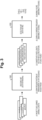
Fig. 3 is a diagram for explaining a flow of learning processing executed by the learning device illustrated inFig. 2 . -
Fig. 4 is a diagram illustrating an example of document learning. -
Fig. 5 is a diagram illustrating an example of a configuration of a detection device illustrated inFig. 1 . -
Fig. 6 is a diagram for explaining a flow of detection processing executed by the detection device illustrated inFig. 5 . -
Fig. 7 is a flowchart illustrating a processing procedure of a learning method according to the embodiment. -
Fig. 8 is a flowchart illustrating a processing procedure of a detection method according to the embodiment. -
Fig. 9 is a view illustrating an outline of a control system in which an evaluation experiment has been performed. -
Fig. 10 is a diagram illustrating a result of an evaluation experiment. -
Fig. 11 is a diagram illustrating an example of a computer in which the learning device and the detection device are realized by executing a program. - Hereinafter, an embodiment of the present invention will be described in detail with reference to the drawings. Note that the present invention is not limited by this embodiment. In the description of the drawings, the same parts will be given the same reference numerals.
- Next, an embodiment of the present invention will be described. In the present embodiment, one packet is encoded into one fixed-length vector by regarding each protocol as different languages and applying a technology of natural language processing. Then, in the present embodiment, a normal pattern of the encoded vector is extracted, and a vector different from the normal pattern is detected to detect an abnormality. Accordingly, in the present invention, it is possible to detect an abnormality occurring in contents of a packet without depending on a communication protocol.
-
Fig. 1 is a diagram illustrating an example of a configuration of a detection system according to an embodiment. As illustrated inFig. 1 , adetection system 1 according to the embodiment includes a learning device 10 and adetection device 20. The learning device 10 and thedetection device 20 are connected via, for example, a network or the like. Furthermore, the learning device 10 and thedetection device 20 are connected to an external device via, for example, a network or the like. - The learning device 10 causes the detection model to learn the pattern of the fixed-length vector corresponding to the packet in the normal state based on one fixed-length vector obtained by converting one packet in the normal state, which is the learning target data, using natural language processing technology.
- In addition, the
detection device 20 converts a packet to be detected into a fixed-length vector by using natural language processing technology, and detects presence or absence of an abnormality in the packet to be detected based on the converted fixed-length vector using a detection model learned in the learning device 10. - Next, the configuration of the learning device 10 will be described.
Fig. 2 is a diagram illustrating an example of the configuration of the learning device 10 illustrated inFig. 1 . As illustrated inFig. 2 , the learning device 10 includes an input unit 11, an output unit 12, a communication unit 13, a storage unit 14, and a control unit 15. Furthermore,Fig. 3 is a diagram for explaining a flow of learning processing executed by the learning device 10 illustrated inFig. 2 . - The input unit 11 is an input interface that receives various operations from an operator of the learning device 10. For example, the input unit 11 includes a touch panel, a voice input device, and an input device such as a keyboard and a mouse.
- The output unit 12 is realized by a display device such as a liquid crystal display, a printing device such as a printer, an information communication device, or the like.
- The communication unit 13 includes a communication interface that transmits and receives various types of information to and from another device connected via a network or the like. For example, the communication unit 13 is realized by a network interface card (NIC) or the like, and performs communication between another device and the control unit 15 (described later) via an electric telecommunication line such as a local area network (LAN) or the Internet. For example, the communication unit 13 receives a packet in a normal state as learning target data via the network and outputs the packet to the control unit 15. Furthermore, the communication unit 13 outputs the learned detection model and the parameters of the encoder that have learned the conversion rule into the fixed-length vector to the
detection device 20 via the network. - The storage unit 14 is a storage device such as a hard disk drive (HDD), a solid state drive (SSD), or an optical disc. Note that the storage unit 14 may be a semiconductor memory capable of rewriting data, such as a random access memory (RAM), a flash memory, or a nonvolatile static random access memory (NVSRAM). The storage unit 14 stores an operating system (OS) and various programs executed by the learning device 10. Furthermore, the storage unit 14 stores various types of information used for executing the program.
- The control unit 15 controls the entire learning device 10. Note that the control unit 15 includes, for example, an electronic circuit such as a central processing unit (CPU) or a micro processing unit (MPU), or an integrated circuit such as an application specific integrated circuit (ASIC) or a field programmable gate array (FPGA). Further, the control unit 15 includes an internal memory for storing programs and control data defining various processing procedures, and executes each processing using the internal memory. Furthermore, the control unit 15 functions as various processing units by various programs operating. The control unit 15 includes a
processing unit 150 and a learning control unit 154. - The
processing unit 150 encodes a packet in a normal state, which is learning target data, and performs processing of detecting the presence or absence of abnormality of the packet by using the detection model after encoding. Theprocessing unit 150 includes a collection unit 151, an encoding unit 152 (second conversion unit), and a detection unit 153 (second detection unit). - The learning control unit 154 causes the detection model to learn the pattern of the fixed-length vector corresponding to the packet in the normal state. The learning control unit 154 causes the
encoding unit 152 to learn a packet conversion rule by using a packet in a normal state. - The collection unit 151 collects packets to be learned. The collection unit 151 acquires a plurality of packets (variable lengths) in a normal state as packets to be learned ((1) in
Fig. 3 ). - The
encoding unit 152 converts one packet in a normal state into one fixed-length vector by using natural language processing technology. The learning control unit 154 causes theencoding unit 152 to learn a rule for converting one packet into one fixed-length vector by using a packet in a normal state. That is, under the control of the learning control unit 154, theencoding unit 152 learns a rule for converting one packet into one fixed-length vector by using a packet in a normal state. The learning control unit 154 causes theencoding unit 152 to learn a frequent pattern of the arrangement of the internal byte sequences in a packet in a normal state ((2) inFig. 3 ). In other words, under the control of the learning control unit 154, theencoding unit 152 learns the frequent pattern of the arrangement of the internal byte sequences in the packet in the normal state. - The
encoding unit 152 regards one packet as one sentence and learns a rule for conversion into one fixed-length vector by using a Pre-training Model of a natural language processing system such as Word2Vec (refer to Reference Literature 1), Doc2Vec (refer to Reference Literature 2), or ELMo (refer to Reference Literature 3). Note that the learning method differs depending on the algorithm adopted in theencoding unit 152. - Reference Literature 1: Tomas Mikolov, Kai Chen, Greg Corrado, and Jeffrey Dean, "Efficient Estimation of Word Representations in Vector Space", [retrieved on September 8, 2020], Internet <URL:https://arxiv.org/abs/1301.3781>
- Reference Literature 2: Quoc V. Le, and Tomas Mikolov, "Distributed Representations of Sentences and Documents", [retrieved on September 8, 2020], Internet <URL:https://arxiv.org/abs/1405.4053>
- Reference Literature 3: Matthew E. Peters, Mark Neumann, Mohit Iyyer, Matt Gardner, Christopher Clark, Kenton Lee,, and Luke Zettlemoyer, "Deep contextualized word representations", [retrieved on September 8, 2020], Internet <URL:https://arxiv.org/abs/1802.05365>
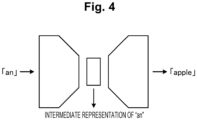
- For example, in the Word2Vec, distributed representation of a word is learned through learning of an auxiliary task such as Skip-Gram or CBOW. Skip-Gram is a task of predicting a surrounding word from a certain word. In addition, CBOW is a task of predicting a word at the center from a surrounding word. Since the sentence is a collection of words, the distributed representation of the sentence can be indirectly acquired by regarding the average of all the words in the document as the vector of the document.
-
Fig. 4 is a diagram illustrating an example of document learning. An object of Word2Vec (Skip-Gram) is to obtain a good intermediate representation by solving the task of "predict surrounding word from target word". For example, in a case of learning a document "I like an apple.", inProcedure 1, "I" is focused on, and "like" is predicted. InProcedure 2, "like" is focused on, and "I" and "an" are predicted. InProcedure 3, "an" is focused on, and "like" and "apple" are predicted. Then, inProcedure 4, "apple" is focused on, "an" is predicted. - In a model such as Doc2Vec or ELMo, a distributed representation of a document can be directly obtained through learning of auxiliary tasks according to each model. At this time, in preprocessing such as word separation necessary for learning of the Pre-training Model, the packet is represented in a hexadecimal format, divided for every 1 byte, and position information (such as what numbered byte of the packet) is added according to the Pre-training Model to be used.
- Then, the
encoding unit 152 converts each packet into a fixed-length vector reflecting the feature of each packet by using the Pre-training Model of the natural language processing system ((3) inFig. 3 ). - The
detection unit 153 detects the presence or absence of abnormality of the packet in the normal state based on the fixed-length vector converted by theencoding unit 152 using the detection model. The learning control unit 154 causes the detection model to learn the pattern of the fixed-length vector corresponding to the packet in the normal state. - The
detection unit 153 uses, as a detection model, an abnormality detection model based on unsupervised learning such as variational auto encoder (VAE), auto encoder (AE), or local outlier factor (LoF). For example, in VAE, after learning a probability density of a normal communication packet, communication with a low probability density is detected as an abnormality. Therefore, it is sufficient to know only a normal communication packet, and abnormality detection can be performed without learning all malicious data. - The
detection unit 153 acquires the abnormality degree (the occurrence frequency of an abnormal packet) with respect to the fixed-length vector converted by encodingunit 152 using the detection model, whereby learning the abnormality degree is performed based on the fixed-length vector corresponding to the packet in the normal state ((4) inFig. 3 ). Thedetection unit 153 acquires, for example, an anomaly score as an abnormality degree using the detection model ((5) inFig. 3 ). The learning control unit 154 adjusts the parameters of the detection model so that the abnormality degree acquired by thedetection unit 153 is minimized. - The learning device 10 outputs, to the
detection device 20, a rule for converting one packet in theencoding unit 152 into one fixed-length vector, which has been learned according to the control of the learning control unit 154, a detection model such as VAE adjusted by the learning control unit 154, and parameters thereof. - Next, the configuration of the
detection device 20 will be described.Fig. 5 is a diagram illustrating an example of the configuration of thedetection device 20 illustrated inFig. 1 . As illustrated inFig. 5 , thedetection device 20 includes an input unit 21, an output unit 22, a communication unit 23, a storage unit 24, and acontrol unit 25.Fig. 6 is a diagram for explaining a flow of detection processing executed by thedetection device 20 illustrated inFig. 5 . - The input unit 21 is an input interface that receives various operations from an operator of the
detection device 20, and includes a touch panel, a voice input device, and an input device such as a keyboard and a mouse. - The output unit 22 is realized by a display device such as a liquid crystal display, a printing device such as a printer, information communication device, or the like.
- The communication unit 23 is a communication interface that transmits and receives various types of information to and from another device connected via a network or the like, and performs communication between another device and the control unit 25 (described later) via an electric telecommunication line such as an NIC or the Internet. For example, the communication unit 23 receives a packet to be detected via the network and outputs the packet to the
control unit 25. Furthermore, the communication unit 23 outputs the presence or absence of abnormality in the packet to be detected to thedetection device 20 via the network. - The storage unit 24 is a storage device such as an HDD, an SSD, or an optical disc. Note that the storage unit 24 may be a semiconductor memory capable of rewriting data, such as a RAM, a flash memory, or an NVSRAM. The storage unit 24 stores an OS and various programs executed by the
detection device 20. Furthermore, the storage unit 24 stores various types of information used for executing the program. - The
control unit 25 controls theentire detection device 20. Thecontrol unit 25 is, for example, an electronic circuit such as a CPU or an MPU, or an integrated circuit such as an ASIC or an FPGA. Further, thecontrol unit 25 includes an internal memory for storing programs and control data defining various processing procedures, and executes each processing using the internal memory. Furthermore, thecontrol unit 25 functions as various processing units by various programs operating. Thecontrol unit 25 includes acollection unit 251, an encoding unit 252 (first conversion unit), and a detection unit 253 (first detection unit). - The
collection unit 251 collects packets to be detected. Thecollection unit 251 acquires a plurality of variable-length packets as packets to be detected ((1) inFig. 6 ). - The
encoding unit 252 converts one packet to be detected into one fixed-length vector by using natural language processing technology. Theencoding unit 152 regards one packet as one sentence and converts the packet into one fixed-length vector by using a Pre-training Model of a natural language processing system such as Word2Vec, Doc2Vec, or ELMo. Theencoding unit 252 converts one packet to be detected into one fixed-length vector by using the rule for converting one packet into one fixed-length vector output from the learning device 10. In this manner, theencoding unit 152 converts each variable-length packet into a fixed-length vector reflecting the feature of each packet by using the Pre-training Model of the natural language processing system ((2) inFig. 6 ). - The
detection unit 253 detects the presence or absence of abnormality of the packet to be detected based on the fixed-length vector converted by theencoding unit 252 using the detection model. Thedetection unit 253 detects the abnormality of the packet to be detected when a pattern of the fixed-length vector converted by theencoding unit 252 is different from a pattern of the fixed-length vector corresponding to a packet in a normal state. - The
detection unit 253 uses an abnormality detection model based on unsupervised learning such as VAE, AE, or LoF, in which parameters have been adjusted by learning processing in the learning device 10. Thedetection unit 253 acquires an abnormality degree (for example, an anomaly score) with respect to the fixed-length vector converted by theencoding unit 252 by using the detection model ((3) inFig. 6 ). Then, when the anomaly score exceeds a predetermined threshold value, thedetection unit 253 detects an abnormality of the packet to be detected and generates an alert ((4) inFig. 6 ). The threshold value is set according to, for example, required detection accuracy, resources of thedetection device 20, and the like. - Next, learning processing according to the embodiment will be described.
Fig. 7 is a flowchart illustrating a processing procedure of a learning method according to the embodiment. - As illustrated in
Fig. 7 , in the learning device 10, the collection unit 151 collects packets (variable length) to be learned (step S1). Subsequently, under the control of the learning control unit 154, theencoding unit 152 learns a rule for converting one packet into one fixed-length vector by using a packet in a normal state (step S2) . - The
encoding unit 152 converts each packet to be learned into a fixed-length vector by using natural language processing technology (step S3). Then, under the control of the learning control unit 154, thedetection unit 153 causes the detection model to learn the pattern of the fixed-length vector corresponding to the packet in the normal state (step S4). Then, the learning device 10 outputs, to thedetection device 20, a rule for converting one packet into one fixed-length vector, a detection model such as VAE adjusted by the learning control unit 154, and parameters thereof, and ends the learning processing. - Next, detection processing according to the embodiment will be described.
Fig. 8 is a flowchart illustrating a processing procedure of a detection method according to the embodiment. - As illustrated in
Fig. 8 , thedetection device 20 collects packets (variable length) to be detected (step S11). Theencoding unit 252 converts one packet to be detected into one fixed-length vector by using natural language processing technology (step S12). - Then, the
detection unit 253 acquires an anomaly score with respect to the fixed-length vector converted by theencoding unit 252 by using the detection model (step S13). Thedetection unit 253 determines whether the acquired anomaly score exceeds a predetermined threshold value (step S14). - When the anomaly score exceeds a predetermined threshold value (step S14: Yes), the
detection unit 253 detects an abnormality of the packet to be detected and generates an alert (step S15). When the anomaly score is equal to or less than the predetermined threshold value (step S14: No), thedetection device 20 ends the detection processing with respect to the packet to be detected. - An evaluation experiment for evaluating detection performance was performed by applying the detection processing of the present embodiment. In the evaluation experiment, a simple control system for controlling a belt conveyor or the like installed in a square using a programmable logic controller (PLC) was constructed using a virtual environment. Factory.io and Codesys were used as the virtual environment.
Fig. 9 is a view illustrating an outline of the control system in which the evaluation experiment has been performed. - The PLC controls the speed of a belt conveyor C and ON/OFF of the pushers installed at the four corners using the Modbus/TCP protocol based on information from the object sensors installed at the four corners of the belt conveyor C. The speed of the belt conveyor C can also be manually changed from the control panel of the belt conveyor in the virtual environment.
- The speed of the belt conveyor is monitored by the PLC, and is circulated at a constant speed (normal system). When the speed of the belt conveyor exceeds a certain speed (abnormal system), an emergency stop command is issued from the PLC to the entire system. In such a system, a normal system packet and an abnormal system packet in a case where the speed is manually set to an abnormal value are collected, and an experiment of checking whether or not a packet generated in a case of the abnormal system can be detected was performed.
-
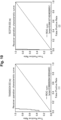
Fig. 10 is a diagram illustrating the result of the evaluation experiment. As a result of the evaluation experiment, two receiver operating characteristic (ROC) curves are shown. (1) ofFig. 10 is a result for the packet transmitted from the PLC, and (2) ofFig. 10 is a result for the packet received by the PLC. In both transmission and reception, the area under the curve (AUC), which is the area under the ROC curve, exceeds 0.95. Therefore, the detection method according to the present embodiment can detect the occurrence of the abnormality well, and shows a good result. - As described above, in the embodiment, the technology of the natural language processing is applied to the vector of the packet, and the abnormality detection by the unsupervised learning applicable to any packet is proposed.
- In the present embodiment, one packet (variable length) is encoded into one fixed-length vector by regarding each protocol as different languages and applying a technology of natural language processing. The fixed-length vector can be expected to be a vector reflecting the feature of the packet. After this, a normal pattern of the encoded vector is extracted, and a vector different from the normal pattern is detected to detect an abnormality. A packet of a control system protocol usually includes a control command and a plurality of parameters. In the present embodiment, it is possible to extract a pattern of a command, a parameter, or the like at a normal time from a binary in a packet and learn an abstracted normal state by using natural language processing technology.
- As a result, according to the present embodiment, it is possible to detect an abnormality in a packet of any protocol with high accuracy in consideration of the content of the packet. That is, according to the present embodiment, by using natural language processing technology such as Word2Vec or ELMo in combination with an unsupervised abnormality detection technology such as VAE or LOF, an abnormality detection system that detects an abnormality occurring in the content of a packet without depending on a communication protocol is realized.
- The detection method according to the present embodiment can be applied to an abnormality detection system of an IoT device.
- A network sensor is arranged in the IoT network, and packet capture is performed. The learning device 10 learns the
encoding unit 152 and thedetection unit 153 by using the captured packet. - After the learning is completed, the packet acquired by the network sensor is input to the
detection device 20. In thedetection device 20, theencoding unit 252 encodes a packet into a fixed-length vector, and then thedetection unit 253 calculates an anomaly score for each packet. Thedetection unit 253 determines whether or not the packet to be evaluated is similar to the packet acquired at the time of learning (that is, whether or not the packet is a normal packet) by using the anomaly score. - Each component of each device that has been illustrated is functionally conceptual, and is not necessarily physically configured as illustrated. That is, a specific form of distribution and integration of each device is not limited to the illustrated form. All or some of the components may be functionally or physically distributed and integrated in an arbitrary unit according to various loads, usage conditions, and the like. Furthermore, all or any part of each processing function performed in each apparatus can be realized by a CPU and a program analyzed and executed by the CPU, or can be realized as hardware by wired logic.
- Further, among pieces of processing described in the present embodiment, all or some of pieces of processing described as being automatically performed may be manually performed, or all or some of pieces of processing described as being manually performed may be automatically performed by a known method. In addition, the processing procedure, the control procedure, the specific name, and the information including various data and parameters that are illustrated in the document and the drawings can be freely changed unless otherwise specified.
-
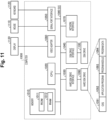
Fig. 11 is a diagram illustrating an example of a computer in which the learning device 10 and thedetection device 20 are implemented by executing a program. Acomputer 1000 includes, for example, amemory 1010 and aCPU 1020. Further, thecomputer 1000 also includes a harddisk drive interface 1030, adisk drive interface 1040, aserial port interface 1050, avideo adapter 1060, and anetwork interface 1070. These units are connected to each other by a bus 1080. - The
memory 1010 includes aROM 1011 and aRAM 1012. TheROM 1011 stores, for example, a boot program such as a basic input output system (BIOS). The harddisk drive interface 1030 is connected to ahard disk drive 1090. Thedisk drive interface 1040 is connected to adisk drive 1100. For example, a removable storage medium such as a magnetic disk or an optical disc is inserted into thedisk drive 1100. Theserial port interface 1050 is connected to, for example, a mouse 1110 and akeyboard 1120. Thevideo adapter 1060 is connected to, for example, adisplay 1130. - The
hard disk drive 1090 stores, for example, an operating system (OS) 1091, anapplication program 1092, aprogram module 1093, andprogram data 1094. That is, the program that defines each processing of the learning device 10 and thedetection device 20 is implemented as theprogram module 1093 in which a code executable by the computer is described. Theprogram module 1093 is stored in, for example, thehard disk drive 1090. For example, theprogram module 1093 for executing processing similar to the functional configuration of the learning device 10 and thedetection device 20 is stored in thehard disk drive 1090. Note that thehard disk drive 1090 may be replaced with a solid state drive (SSD). - Furthermore, setting data used in the processing of the above-described embodiment is stored, for example, in the
memory 1010 or thehard disk drive 1090 as theprogram data 1094. Then, theCPU 1020 reads theprogram module 1093 and theprogram data 1094 stored in thememory 1010 or thehard disk drive 1090 to theRAM 1012, and executes theprogram module 1093 and theprogram data 1094 as necessary. - Note that the
program module 1093 and theprogram data 1094 are not limited to being stored in thehard disk drive 1090, and may be stored in, for example, a detachable storage medium and read by theCPU 1020 via thedisk drive 1100 or the like. Alternatively, theprogram module 1093 and theprogram data 1094 may be stored in another computer connected via a network (LAN, wide area network (WAN), or the like). Then, theprogram module 1093 and theprogram data 1094 may be read by theCPU 1020 from another computer via thenetwork interface 1070. - Although the embodiments to which the invention made by the present inventor is applied have been described above, the present invention is not limited by the description and drawings constituting a part of the disclosure of the present invention according to the present embodiments. In other words, other embodiments, examples, operation techniques, and the like made by those skilled in the art and the like on the basis of the present embodiments are all included in the scope of the present invention.
-
- 1
- Detection system
- 10
- Learning device
- 11, 21
- Input unit
- 12, 22
- Output unit
- 13, 23
- Communication unit
- 14, 24
- Storage unit
- 15, 25
- Control unit
- 20
- Detection device
- 150
- Processing unit
- 151, 251
- Collection unit
- 152, 252
- Encoding unit
- 153, 253
- Detection unit
- 154
- Learning control unit
Claims (11)
- A detection device comprising:a first conversion unit that converts one packet to be detected into one fixed-length vector by using natural language processing technology; anda first detection unit that detects presence or absence of an abnormality in the packet to be detected based on the fixed-length vector converted by the first conversion unit using a detection model.
- The detection device according to claim 1, wherein
the first detection unit detects the abnormality of the packet to be detected when a pattern of the fixed-length vector converted by the first conversion unit is different from a pattern of a fixed-length vector corresponding to a packet in a normal state. - The detection device according to claim 1 or 2, wherein
the first detection unit acquires an abnormality degree with respect to the fixed-length vector converted by the first conversion unit, and detects an abnormality of the packet to be detected when the abnormality degree exceeds a predetermined threshold value. - A learning device comprising:a second conversion unit that converts one packet in a normal state into one fixed-length vector by using natural language processing technology;a second detection unit that detects presence or absence of an abnormality in the packet in the normal state based on the fixed-length vector converted by the second conversion unit using a detection model; anda learning control unit that causes the detection model to learn a pattern of the fixed-length vector corresponding to the packet in the normal state.
- The learning device according to claim 4, whereinthe second detection unit acquires an abnormality degree with respect to the fixed-length vector converted by the second conversion unit, andthe learning control unit adjusts parameters of the detection model such that the abnormality degree acquired by the second detection unit is minimized.
- The learning device according to claim 4 or 5, wherein
the learning control unit causes the second conversion unit to learn a rule for converting one packet into one fixed-length vector using the packet in the normal state. - The learning device according to claim 6, wherein
the learning control unit causes the second conversion unit to learn a frequent pattern of arrangement of internal byte sequences in the packet in the normal state. - A detection method executed by a detection device, the method comprising:a first conversion step of converting one packet to be detected into one fixed-length vector by using natural language processing technology; anda first detection step of detecting presence or absence of an abnormality in the packet to be detected based on the fixed-length vector converted in the first conversion process using a detection model.
- A learning method executed by a learning device, the method comprising:a second conversion step of converting one packet in a normal state into one fixed-length vector by using natural language processing technology;a second detection step of detecting presence or absence of an abnormality in the packet in the normal state based on the fixed-length vector converted in the second conversion process using a detection model; anda learning step of causing the detection model to learn a pattern of the fixed-length vector corresponding to the packet in the normal state.
- A detection program that causes a computer to execute:a first conversion step of converting one packet to be detected into one fixed-length vector by using natural language processing technology; anda first detection step of detecting presence or absence of an abnormality in the packet to be detected based on the fixed-length vector converted in the first conversion step using a detection model.
- A learning program that causes a computer to execute:a second conversion step of converting one packet in a normal state into one fixed-length vector by using natural language processing technology;a second detection step of detecting presence or absence of an abnormality in the packet in the normal state based on the fixed-length vector converted in the second conversion step using a detection model; anda learning step of causing the detection model to learn a pattern of the fixed-length vector corresponding to the packet in the normal state.
Applications Claiming Priority (1)
| Application Number | Priority Date | Filing Date | Title |
|---|---|---|---|
| PCT/JP2020/035631 WO2022059209A1 (en) | 2020-09-18 | 2020-09-18 | Detection device, learning device, detection method, learning method, detection program, and learning program |
Publications (3)
| Publication Number | Publication Date |
|---|---|
| EP4198841A1 true EP4198841A1 (en) | 2023-06-21 |
| EP4198841A4 EP4198841A4 (en) | 2024-05-01 |
| EP4198841B1 EP4198841B1 (en) | 2026-02-18 |
Family
ID=80776768
Family Applications (1)
| Application Number | Title | Priority Date | Filing Date |
|---|---|---|---|
| EP20954194.5A Active EP4198841B1 (en) | 2020-09-18 | 2020-09-18 | Detection device, learning device, detection method, learning method, detection program, and learning program |
Country Status (6)
| Country | Link |
|---|---|
| US (1) | US12493750B2 (en) |
| EP (1) | EP4198841B1 (en) |
| JP (1) | JP7533596B2 (en) |
| CN (1) | CN116194932B (en) |
| AU (2) | AU2020468291A1 (en) |
| WO (1) | WO2022059209A1 (en) |
Family Cites Families (10)
| Publication number | Priority date | Publication date | Assignee | Title |
|---|---|---|---|---|
| JP6545728B2 (en) * | 2017-01-11 | 2019-07-17 | 株式会社東芝 | ABNORMALITY DETECTING APPARATUS, ABNORMALITY DETECTING METHOD, AND ABNORMALITY DETECTING PROGRAM |
| JP7082533B2 (en) * | 2017-12-15 | 2022-06-08 | パナソニック インテレクチュアル プロパティ コーポレーション オブ アメリカ | Anomaly detection method and anomaly detection device |
| US10785244B2 (en) * | 2017-12-15 | 2020-09-22 | Panasonic Intellectual Property Corporation Of America | Anomaly detection method, learning method, anomaly detection device, and learning device |
| CN108200015A (en) * | 2017-12-18 | 2018-06-22 | 北京天融信网络安全技术有限公司 | The construction method and equipment of a kind of method for detecting abnormal flow, disaggregated model |
| US10678899B2 (en) * | 2018-05-24 | 2020-06-09 | Nice Ltd. | System and method for performing voice biometrics analysis |
| JP7091872B2 (en) | 2018-06-21 | 2022-06-28 | 日本電信電話株式会社 | Detection device and detection method |
| AU2018247212B2 (en) * | 2018-10-09 | 2025-06-05 | Penten Pty Ltd | Methods and systems for honeyfile creation, deployment and management |
| US11106789B2 (en) * | 2019-03-05 | 2021-08-31 | Microsoft Technology Licensing, Llc | Dynamic cybersecurity detection of sequence anomalies |
| CN110377977A (en) * | 2019-06-28 | 2019-10-25 | 南方电网科学研究院有限责任公司 | Sensitive information leakage detection method, device and storage medium |
| CN111144470B (en) | 2019-12-20 | 2022-12-16 | 中国科学院信息工程研究所 | Unknown network flow identification method and system based on deep self-encoder |
-
2020
- 2020-09-18 EP EP20954194.5A patent/EP4198841B1/en active Active
- 2020-09-18 JP JP2022550325A patent/JP7533596B2/en active Active
- 2020-09-18 AU AU2020468291A patent/AU2020468291A1/en not_active Abandoned
- 2020-09-18 WO PCT/JP2020/035631 patent/WO2022059209A1/en not_active Ceased
- 2020-09-18 CN CN202080105301.4A patent/CN116194932B/en active Active
- 2020-09-18 US US18/025,916 patent/US12493750B2/en active Active
-
2024
- 2024-08-26 AU AU2024216361A patent/AU2024216361B2/en active Active
Also Published As
| Publication number | Publication date |
|---|---|
| US12493750B2 (en) | 2025-12-09 |
| EP4198841B1 (en) | 2026-02-18 |
| AU2020468291A1 (en) | 2023-04-13 |
| CN116194932B (en) | 2026-01-13 |
| JPWO2022059209A1 (en) | 2022-03-24 |
| CN116194932A (en) | 2023-05-30 |
| US20230334262A1 (en) | 2023-10-19 |
| WO2022059209A1 (en) | 2022-03-24 |
| AU2024216361B2 (en) | 2026-03-05 |
| AU2024216361A1 (en) | 2024-09-12 |
| JP7533596B2 (en) | 2024-08-14 |
| EP4198841A4 (en) | 2024-05-01 |
Similar Documents
| Publication | Publication Date | Title |
|---|---|---|
| US20210344578A1 (en) | Method and system for classifying a protocol message in a data communication network | |
| US11481495B2 (en) | Anomalous behavior detection in processor based systems | |
| US11108809B2 (en) | System and method for analyzing binary code for malware classification using artificial neural network techniques | |
| US8850582B2 (en) | Security monitoring system and security monitoring method | |
| EP3515037A1 (en) | Dynamic concurrent learning method to neutralize cyber attacks and faults for industrial asset monitoring nodes | |
| KR102001813B1 (en) | Apparatus and method for detecting abnormal behavior of nonstandard protocol payload using deep neural network algorithm | |
| WO2021021422A1 (en) | Model structure extraction for analyzing unstructured text data | |
| CN109074453A (en) | Invasion detecting device, intrusion detection method and intrusion detection program | |
| WO2022115419A1 (en) | Method of detecting an anomaly in a system | |
| CN114616743A (en) | Network attack detection for networked power system devices | |
| US12493750B2 (en) | Detecting apparatus, training apparatus, detecting method, training method, detecting program, and training program | |
| Zaslavski et al. | Time series processing-based malicious activity detection in SCADA systems | |
| US20240267398A1 (en) | Detection device, detection method, and detection program | |
| US12457065B2 (en) | Anomaly detection device, anomaly detection method, and anomaly detection program | |
| EP4325385B1 (en) | Estimation device, estimation method, and estimation program | |
| JP7568975B2 (en) | Estimation device, estimation method, and program | |
| Khan et al. | Cyber-Attack Monitoring and Detection using Machine Learning Techniques | |
| WO2024241596A1 (en) | Detection device, detection method, and detection program | |
| KR20260041240A (en) | Method for generating and visualizing topology based on multi-industrial internet of things terminal protocol search performed by security breach detection device, and apparatus thereof | |
| Costante et al. | Role Inference+ Anomaly Detection= Situational Awareness in BACnet Networks | |
| Skudlarek et al. | Anomaly detection using time index differences of identical symbols with and without training data | |
| WO2022259330A1 (en) | Estimation device, estimation method, and estimation program |
Legal Events
| Date | Code | Title | Description |
|---|---|---|---|
| STAA | Information on the status of an ep patent application or granted ep patent |
Free format text: STATUS: THE INTERNATIONAL PUBLICATION HAS BEEN MADE |
|
| PUAI | Public reference made under article 153(3) epc to a published international application that has entered the european phase |
Free format text: ORIGINAL CODE: 0009012 |
|
| STAA | Information on the status of an ep patent application or granted ep patent |
Free format text: STATUS: REQUEST FOR EXAMINATION WAS MADE |
|
| 17P | Request for examination filed |
Effective date: 20230314 |
|
| AK | Designated contracting states |
Kind code of ref document: A1 Designated state(s): AL AT BE BG CH CY CZ DE DK EE ES FI FR GB GR HR HU IE IS IT LI LT LU LV MC MK MT NL NO PL PT RO RS SE SI SK SM TR |
|
| DAV | Request for validation of the european patent (deleted) | ||
| DAX | Request for extension of the european patent (deleted) | ||
| REG | Reference to a national code |
Ref country code: DE Ref legal event code: R079 Free format text: PREVIOUS MAIN CLASS: G06N0020000000 Ipc: H04L0009400000 Ref document number: 602020067331 Country of ref document: DE |
|
| A4 | Supplementary search report drawn up and despatched |
Effective date: 20240404 |
|
| RIC1 | Information provided on ipc code assigned before grant |
Ipc: G06N 3/088 20230101ALI20240327BHEP Ipc: G06N 3/0475 20230101ALI20240327BHEP Ipc: G06N 3/047 20230101ALI20240327BHEP Ipc: G06N 3/0455 20230101ALI20240327BHEP Ipc: G06N 20/00 20190101ALI20240327BHEP Ipc: H04L 9/40 20220101AFI20240327BHEP |
|
| STAA | Information on the status of an ep patent application or granted ep patent |
Free format text: STATUS: EXAMINATION IS IN PROGRESS |
|
| 17Q | First examination report despatched |
Effective date: 20250130 |
|
| RAP3 | Party data changed (applicant data changed or rights of an application transferred) |
Owner name: NTT, INC. |
|
| GRAP | Despatch of communication of intention to grant a patent |
Free format text: ORIGINAL CODE: EPIDOSNIGR1 |
|
| STAA | Information on the status of an ep patent application or granted ep patent |
Free format text: STATUS: GRANT OF PATENT IS INTENDED |
|
| INTG | Intention to grant announced |
Effective date: 20251006 |
|
| GRAS | Grant fee paid |
Free format text: ORIGINAL CODE: EPIDOSNIGR3 |
|
| GRAA | (expected) grant |
Free format text: ORIGINAL CODE: 0009210 |
|
| STAA | Information on the status of an ep patent application or granted ep patent |
Free format text: STATUS: THE PATENT HAS BEEN GRANTED |
|
| AK | Designated contracting states |
Kind code of ref document: B1 Designated state(s): AL AT BE BG CH CY CZ DE DK EE ES FI FR GB GR HR HU IE IS IT LI LT LU LV MC MK MT NL NO PL PT RO RS SE SI SK SM TR |
|
| REG | Reference to a national code |
Ref country code: CH Ref legal event code: F10 Free format text: ST27 STATUS EVENT CODE: U-0-0-F10-F00 (AS PROVIDED BY THE NATIONAL OFFICE) Effective date: 20260218 Ref country code: GB Ref legal event code: FG4D |
|
| REG | Reference to a national code |
Ref country code: IE Ref legal event code: FG4D |
|
| REG | Reference to a national code |
Ref country code: DE Ref legal event code: R096 Ref document number: 602020067331 Country of ref document: DE |
|
| REG | Reference to a national code |
Ref country code: NL Ref legal event code: MP Effective date: 20260218 |
|
| PG25 | Lapsed in a contracting state [announced via postgrant information from national office to epo] |
Ref country code: RS Free format text: LAPSE BECAUSE OF FAILURE TO SUBMIT A TRANSLATION OF THE DESCRIPTION OR TO PAY THE FEE WITHIN THE PRESCRIBED TIME-LIMIT Effective date: 20260518 |
|
| PG25 | Lapsed in a contracting state [announced via postgrant information from national office to epo] |
Ref country code: ES Free format text: LAPSE BECAUSE OF FAILURE TO SUBMIT A TRANSLATION OF THE DESCRIPTION OR TO PAY THE FEE WITHIN THE PRESCRIBED TIME-LIMIT Effective date: 20260218 |
|
| PG25 | Lapsed in a contracting state [announced via postgrant information from national office to epo] |
Ref country code: PL Free format text: LAPSE BECAUSE OF FAILURE TO SUBMIT A TRANSLATION OF THE DESCRIPTION OR TO PAY THE FEE WITHIN THE PRESCRIBED TIME-LIMIT Effective date: 20260218 |
|
| PG25 | Lapsed in a contracting state [announced via postgrant information from national office to epo] |
Ref country code: GR Free format text: LAPSE BECAUSE OF FAILURE TO SUBMIT A TRANSLATION OF THE DESCRIPTION OR TO PAY THE FEE WITHIN THE PRESCRIBED TIME-LIMIT Effective date: 20260519 |
|
| REG | Reference to a national code |
Ref country code: LT Ref legal event code: MG9D |
|
| PG25 | Lapsed in a contracting state [announced via postgrant information from national office to epo] |
Ref country code: LT Free format text: LAPSE BECAUSE OF FAILURE TO SUBMIT A TRANSLATION OF THE DESCRIPTION OR TO PAY THE FEE WITHIN THE PRESCRIBED TIME-LIMIT Effective date: 20260218 |
|
| PG25 | Lapsed in a contracting state [announced via postgrant information from national office to epo] |
Ref country code: NO Free format text: LAPSE BECAUSE OF FAILURE TO SUBMIT A TRANSLATION OF THE DESCRIPTION OR TO PAY THE FEE WITHIN THE PRESCRIBED TIME-LIMIT Effective date: 20260518 |
|
| PG25 | Lapsed in a contracting state [announced via postgrant information from national office to epo] |
Ref country code: FI Free format text: LAPSE BECAUSE OF FAILURE TO SUBMIT A TRANSLATION OF THE DESCRIPTION OR TO PAY THE FEE WITHIN THE PRESCRIBED TIME-LIMIT Effective date: 20260218 Ref country code: SE Free format text: LAPSE BECAUSE OF FAILURE TO SUBMIT A TRANSLATION OF THE DESCRIPTION OR TO PAY THE FEE WITHIN THE PRESCRIBED TIME-LIMIT Effective date: 20260218 Ref country code: AT Free format text: LAPSE BECAUSE OF FAILURE TO SUBMIT A TRANSLATION OF THE DESCRIPTION OR TO PAY THE FEE WITHIN THE PRESCRIBED TIME-LIMIT Effective date: 20260218 |
|
| REG | Reference to a national code |
Ref country code: AT Ref legal event code: MK05 Ref document number: 1889424 Country of ref document: AT Kind code of ref document: T Effective date: 20260218 |
|
| PG25 | Lapsed in a contracting state [announced via postgrant information from national office to epo] |
Ref country code: HR Free format text: LAPSE BECAUSE OF FAILURE TO SUBMIT A TRANSLATION OF THE DESCRIPTION OR TO PAY THE FEE WITHIN THE PRESCRIBED TIME-LIMIT Effective date: 20260218 |
|
| PG25 | Lapsed in a contracting state [announced via postgrant information from national office to epo] |
Ref country code: PT Free format text: LAPSE BECAUSE OF FAILURE TO SUBMIT A TRANSLATION OF THE DESCRIPTION OR TO PAY THE FEE WITHIN THE PRESCRIBED TIME-LIMIT Effective date: 20260618 Ref country code: IS Free format text: LAPSE BECAUSE OF FAILURE TO SUBMIT A TRANSLATION OF THE DESCRIPTION OR TO PAY THE FEE WITHIN THE PRESCRIBED TIME-LIMIT Effective date: 20260618 |
|
| PG25 | Lapsed in a contracting state [announced via postgrant information from national office to epo] |
Ref country code: NL Free format text: LAPSE BECAUSE OF FAILURE TO SUBMIT A TRANSLATION OF THE DESCRIPTION OR TO PAY THE FEE WITHIN THE PRESCRIBED TIME-LIMIT Effective date: 20260218 |
|
| PG25 | Lapsed in a contracting state [announced via postgrant information from national office to epo] |
Ref country code: LV Free format text: LAPSE BECAUSE OF FAILURE TO SUBMIT A TRANSLATION OF THE DESCRIPTION OR TO PAY THE FEE WITHIN THE PRESCRIBED TIME-LIMIT Effective date: 20260218 |
|
| PG25 | Lapsed in a contracting state [announced via postgrant information from national office to epo] |
Ref country code: BG Free format text: LAPSE BECAUSE OF FAILURE TO SUBMIT A TRANSLATION OF THE DESCRIPTION OR TO PAY THE FEE WITHIN THE PRESCRIBED TIME-LIMIT Effective date: 20260218 |