EP4196702B1 - Separable component assembly having reduced seal stiction - Google Patents
Separable component assembly having reduced seal stiction Download PDFInfo
- Publication number
- EP4196702B1 EP4196702B1 EP21740381.5A EP21740381A EP4196702B1 EP 4196702 B1 EP4196702 B1 EP 4196702B1 EP 21740381 A EP21740381 A EP 21740381A EP 4196702 B1 EP4196702 B1 EP 4196702B1
- Authority
- EP
- European Patent Office
- Prior art keywords
- interface
- seal
- interface surface
- discontinuity
- component
- Prior art date
- Legal status (The legal status is an assumption and is not a legal conclusion. Google has not performed a legal analysis and makes no representation as to the accuracy of the status listed.)
- Active
Links
Images
Classifications
-
- F—MECHANICAL ENGINEERING; LIGHTING; HEATING; WEAPONS; BLASTING
- F16—ENGINEERING ELEMENTS AND UNITS; GENERAL MEASURES FOR PRODUCING AND MAINTAINING EFFECTIVE FUNCTIONING OF MACHINES OR INSTALLATIONS; THERMAL INSULATION IN GENERAL
- F16J—PISTONS; CYLINDERS; SEALINGS
- F16J15/00—Sealings
- F16J15/02—Sealings between relatively-stationary surfaces
- F16J15/021—Sealings between relatively-stationary surfaces with elastic packing
- F16J15/022—Sealings between relatively-stationary surfaces with elastic packing characterised by structure or material
-
- B—PERFORMING OPERATIONS; TRANSPORTING
- B23—MACHINE TOOLS; METAL-WORKING NOT OTHERWISE PROVIDED FOR
- B23P—METAL-WORKING NOT OTHERWISE PROVIDED FOR; COMBINED OPERATIONS; UNIVERSAL MACHINE TOOLS
- B23P19/00—Machines for simply fitting together or separating metal parts or objects, or metal and non-metal parts, whether or not involving some deformation; Tools or devices therefor so far as not provided for in other classes
- B23P19/04—Machines for simply fitting together or separating metal parts or objects, or metal and non-metal parts, whether or not involving some deformation; Tools or devices therefor so far as not provided for in other classes for assembling or disassembling parts
-
- F—MECHANICAL ENGINEERING; LIGHTING; HEATING; WEAPONS; BLASTING
- F16—ENGINEERING ELEMENTS AND UNITS; GENERAL MEASURES FOR PRODUCING AND MAINTAINING EFFECTIVE FUNCTIONING OF MACHINES OR INSTALLATIONS; THERMAL INSULATION IN GENERAL
- F16B—DEVICES FOR FASTENING OR SECURING CONSTRUCTIONAL ELEMENTS OR MACHINE PARTS TOGETHER, e.g. NAILS, BOLTS, CIRCLIPS, CLAMPS, CLIPS OR WEDGES; JOINTS OR JOINTING
- F16B43/00—Washers or equivalent devices; Other devices for supporting bolt-heads or nuts
- F16B43/001—Washers or equivalent devices; Other devices for supporting bolt-heads or nuts for sealing or insulation
-
- F—MECHANICAL ENGINEERING; LIGHTING; HEATING; WEAPONS; BLASTING
- F16—ENGINEERING ELEMENTS AND UNITS; GENERAL MEASURES FOR PRODUCING AND MAINTAINING EFFECTIVE FUNCTIONING OF MACHINES OR INSTALLATIONS; THERMAL INSULATION IN GENERAL
- F16J—PISTONS; CYLINDERS; SEALINGS
- F16J15/00—Sealings
- F16J15/02—Sealings between relatively-stationary surfaces
- F16J15/06—Sealings between relatively-stationary surfaces with solid packing compressed between sealing surfaces
- F16J15/062—Sealings between relatively-stationary surfaces with solid packing compressed between sealing surfaces characterised by the geometry of the seat
-
- F—MECHANICAL ENGINEERING; LIGHTING; HEATING; WEAPONS; BLASTING
- F16—ENGINEERING ELEMENTS AND UNITS; GENERAL MEASURES FOR PRODUCING AND MAINTAINING EFFECTIVE FUNCTIONING OF MACHINES OR INSTALLATIONS; THERMAL INSULATION IN GENERAL
- F16J—PISTONS; CYLINDERS; SEALINGS
- F16J15/00—Sealings
- F16J15/02—Sealings between relatively-stationary surfaces
- F16J15/06—Sealings between relatively-stationary surfaces with solid packing compressed between sealing surfaces
- F16J15/064—Sealings between relatively-stationary surfaces with solid packing compressed between sealing surfaces the packing combining the sealing function with other functions
-
- F—MECHANICAL ENGINEERING; LIGHTING; HEATING; WEAPONS; BLASTING
- F16—ENGINEERING ELEMENTS AND UNITS; GENERAL MEASURES FOR PRODUCING AND MAINTAINING EFFECTIVE FUNCTIONING OF MACHINES OR INSTALLATIONS; THERMAL INSULATION IN GENERAL
- F16J—PISTONS; CYLINDERS; SEALINGS
- F16J15/00—Sealings
- F16J15/02—Sealings between relatively-stationary surfaces
- F16J15/06—Sealings between relatively-stationary surfaces with solid packing compressed between sealing surfaces
- F16J15/08—Sealings between relatively-stationary surfaces with solid packing compressed between sealing surfaces with exclusively metal packing
- F16J15/0818—Flat gaskets
-
- F—MECHANICAL ENGINEERING; LIGHTING; HEATING; WEAPONS; BLASTING
- F16—ENGINEERING ELEMENTS AND UNITS; GENERAL MEASURES FOR PRODUCING AND MAINTAINING EFFECTIVE FUNCTIONING OF MACHINES OR INSTALLATIONS; THERMAL INSULATION IN GENERAL
- F16J—PISTONS; CYLINDERS; SEALINGS
- F16J15/00—Sealings
- F16J15/02—Sealings between relatively-stationary surfaces
- F16J15/06—Sealings between relatively-stationary surfaces with solid packing compressed between sealing surfaces
- F16J15/10—Sealings between relatively-stationary surfaces with solid packing compressed between sealing surfaces with non-metallic packing
- F16J15/104—Sealings between relatively-stationary surfaces with solid packing compressed between sealing surfaces with non-metallic packing characterised by structure
-
- F—MECHANICAL ENGINEERING; LIGHTING; HEATING; WEAPONS; BLASTING
- F16—ENGINEERING ELEMENTS AND UNITS; GENERAL MEASURES FOR PRODUCING AND MAINTAINING EFFECTIVE FUNCTIONING OF MACHINES OR INSTALLATIONS; THERMAL INSULATION IN GENERAL
- F16J—PISTONS; CYLINDERS; SEALINGS
- F16J15/00—Sealings
- F16J15/16—Sealings between relatively-moving surfaces
- F16J15/32—Sealings between relatively-moving surfaces with elastic sealings, e.g. O-rings
- F16J15/3284—Sealings between relatively-moving surfaces with elastic sealings, e.g. O-rings characterised by their structure; Selection of materials
-
- F—MECHANICAL ENGINEERING; LIGHTING; HEATING; WEAPONS; BLASTING
- F02—COMBUSTION ENGINES; HOT-GAS OR COMBUSTION-PRODUCT ENGINE PLANTS
- F02K—JET-PROPULSION PLANTS
- F02K9/00—Rocket-engine plants, i.e. plants carrying both fuel and oxidant therefor; Control thereof
- F02K9/08—Rocket-engine plants, i.e. plants carrying both fuel and oxidant therefor; Control thereof using solid propellants
- F02K9/32—Constructional parts; Details not otherwise provided for
- F02K9/34—Casings; Combustion chambers; Liners thereof
- F02K9/343—Joints, connections, seals therefor
-
- F—MECHANICAL ENGINEERING; LIGHTING; HEATING; WEAPONS; BLASTING
- F16—ENGINEERING ELEMENTS AND UNITS; GENERAL MEASURES FOR PRODUCING AND MAINTAINING EFFECTIVE FUNCTIONING OF MACHINES OR INSTALLATIONS; THERMAL INSULATION IN GENERAL
- F16B—DEVICES FOR FASTENING OR SECURING CONSTRUCTIONAL ELEMENTS OR MACHINE PARTS TOGETHER, e.g. NAILS, BOLTS, CIRCLIPS, CLAMPS, CLIPS OR WEDGES; JOINTS OR JOINTING
- F16B41/00—Measures against loss of bolts, nuts, or pins; Measures against unauthorised operation of bolts, nuts or pins
- F16B41/002—Measures against loss of bolts, nuts or pins
Definitions
- Elastomer seals, gaskets, O-rings, etc. are utilized in component couplings found in various types of hardware, typically under compressive stress. Such component couplings may remain static or motionless for long periods of time (e.g., years or decades) prior to separation.
- One such example is a first rocket stage mated and sealed to a second rocket stage, where the first stage is intended to separate from the second stage during use.
- US 2008/000289 A discloses a seal ring having rounded-corner rectangular shape in cross-section is mounted in a recessed groove formed in ring configuration in a pressure-contact surface of a seal jig such that major axis of the seal ring is oriented perpendicular to the pressure-contact surface and the seal ring is projected out the pressure-contact surface by about 15-35% of length of the major axis to be compressively deformable in the direction of the major axis, and stoppers formed of low thermal conductivity resin are disposed on the pressure-contact surface, the peripheral portion of the opening of an article being tested is brought into pressure-contact with the seal ring in a manner such that the stoppers are interposed therebetween and that the compressively deformed seal ring provides an adequate sealing effect to seal the opening, whereby testing may be conducted without bringing the article being tested into contact with the seal jig.
- DE102017214704B4 describes a joint structure comprising: two joint members; a drive mechanism that drives the two joint members to rotate about a predetermined axis relative to each other; two sealing members that form a seal between the two joint members at positions that double the outside of a lubricant storage part in the drive mechanism surround; and a pressure applying means that makes the air pressure in a space between the two sealing elements higher than the pressure of the outside air, the sealing element being formed on the outside from an elastic material and having a cutting area at at least one circumferential position, the cutting area being inclined with respect to the radial direction, and wherein the outer sealing element is attached to a fixed part of the drive mechanism by tightening a fastener.
- the present disclosure provides a separable component assembly comprising: a first component having a first interface portion; a second component coupled to the first component, the second component having a second interface portion; and a seal disposed between the first and second interface portions, the seal having a first interface surface associated with the first interface portion, a second interface surface in contact with the second interface portion, and a peel initiator defining a discontinuity in a portion of the second interface surface, wherein, upon separation of the first and second components from one another, the discontinuity creates a stress concentration in the second interface surface that initiates peeling of the second interface surface away from the second interface portion.
- the present disclosure provides a method for facilitating separation of two components from one another, the method comprising: obtaining a first component having a first interface portion; obtaining a second component coupleable to the first component, the second component having a second interface portion; disposing a seal between the first and second interface portions, the seal having a first interface surface associated with the first interface portion, and a second interface surface in contact with the second interface portion; and facilitating separation of the second interface surface from the second interface portion upon separation of the first and second components from one another, wherein a discontinuity in a portion of the second interface surface creates a stress concentration in the second interface
- the term “substantially” refers to the complete or nearly complete extent or degree of an action, characteristic, property, state, structure, item, or result.
- an object that is “substantially” enclosed would mean that the object is either completely enclosed or nearly completely enclosed.
- the exact allowable degree of deviation from absolute completeness may in some cases depend on the specific context. However, generally speaking the nearness of completion will be so as to have the same overall result as if absolute and total completion were obtained.
- the use of “substantially” is equally applicable when used in a negative connotation to refer to the complete or near complete lack of an action, characteristic, property, state, structure, item, or result.
- adjacent refers to the proximity of two structures or elements. Particularly, elements that are identified as being “adjacent” may be either abutting or connected. Such elements may also be near or close to each other without necessarily contacting each other. The exact degree of proximity may in some cases depend on the specific context.
- some existing component couplings may remain static or motionless for long periods of time (e.g., years or decades). Compressive stress over time can cause existing seals, gaskets, or O-rings to form a "bond" with one or more of the coupled components.
- the "bond" or stiction resists or retards this separation of coupled components, which can be problematic in meeting requirements such as the coupled components separating within a specified time period or with a specified minimum separation speed.
- a separable component assembly that reduces the force required to overcome such bonding or stiction between a seal and mating component.
- the separable component assembly can include a first component having a first interface portion.
- the separable component assembly can also include a second component coupled to the first component.
- the second component can have a second interface portion.
- the separable component assembly can include a seal disposed between the first and second interface portions.
- the seal can have a first interface surface associated with the first interface portion.
- the seal can also have a second interface surface in contact with the second interface portion.
- the seal can have at least one peel initiator defining one or more discontinuities in a portion of the second interface surfaces so as to facilitate the reduction in the amount of stiction or the stiction phenomenon between the first and second components.
- the discontinuity can create a stress concentration in the second interface surface that initiates peeling of the second interface surface away from the second interface portion.
- the seal with the peel initiators defining one or more discontinuities can facilitate the first and second coupled components separating within a specified time period or with a specified minimum separation speed.
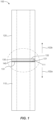
- the separable component assembly 100 can include a first component 110.
- the separable component assembly 100 can also include a second component 120 coupled to the first component 110.
- the first and second components 110, 120 may be hollow and cylindrical but are not limited to this configuration.
- the first component 110 can be a first rocket stage and the second component 120 can be a second rocket stage.
- the first and second components can comprise other structural members designed and configured to be joined or otherwise coupled together.
- the first component 110 can have a first interface portion 111
- the second component 120 can have a second interface portion 121.
- the separable component assembly 100 can include a seal 130 disposed between the first and second interface portions 111, 121.
- the seal 130 can have similar geometry and profile as the first and second components 110, 120, however the seal 130 can have any suitable geometry or configuration for a given application.
- the seal 130 can be a gasket, an O-ring, or any other suitable type or configuration of a seal between the first and second components 110, 120.
- the seal 130 can be constructed of any suitable material, such as an elastomeric material.
- the seal 130 can have a first interface surface 131 associated with the first interface portion 111 of the first component 110.
- the seal 130 can also have a second interface surface 132 in contact with the second interface portion 121 of the second component 120.
- the seal 130 may be bonded (e.g., with an adhesive 140) to the first component 110 to prevent the seal 130 from dislocating when the first and second components 110, 120 separate.
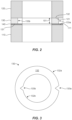
- the seal 130 can have one or more peel initiators 133a, 133b, as shown in the cross-sectional view of FIG. 2 and the top view of the seal 130 in FIG. 3 .
- one or both of the peel initiators 133a, 133b can extend through a thickness 101 ( FIG. 2 ) of the seal 130 (i.e., the seal thickness configured to be oriented axially between the first and second components 110, 120).
- the seal 130 can have any suitable cross-section, such as a polygon shape (e.g., a rectangle, a trapezoid, a triangle, pentagon, a hexagon, an octagon, etc.), a curved shape (e.g., a circle, an oval, an ellipse, etc.), a curvilinear shape, etc.
- a thickness of the seal can comprise a thickness of any suitable cross-sectional shape.
- a thickness of the seal comprises at least one of a rectangular cross-section ( FIG. 4A ) or a circular cross-section ( FIG. 4B ).
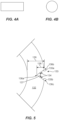
- the peel initiator 133 can define a discontinuity 134 in a portion of the second interface surface 132.
- the discontinuity 134 can be a recess, a cut, a notch, etc. formed in the profile of the second interface surface 132 that creates a discontinuous surface or profile.
- the discontinuity 134 can break or interrupt an otherwise uniform surface 132 and therefore disrupt the static friction present between the uniform surface 132 and either of the first and second components 110, 120.
- the discontinuity 134 can create a stress concentration (e.g., at singularities or "corners" 136a-c of the discontinuity 134) in the second interface surface 132 that initiates peeling of the second interface surface 132 away from the second interface portion 121.
- the peel initiator 133 can include any shape or geometry that can introduce a stress concentration.
- the discontinuity 134 can comprise a profile defined at least partially by two lines 135a, 135b intersecting at a point 136a that creates the stress concentration.
- the two lines 135a, 135b can be at any suitable angle 137 relative to one another.
- the angle 137 can be greater than or equal to about 5 degrees and less than or equal to about 150 degrees.
- a depth 138 of the discontinuity 134 can be greater than or equal to about 3% of a width 139 of the second interface surface 132 and less than or equal to about 90% of the width 139 of the second interface surface 132.
- a discontinuity can be of any suitable shape, geometry, or configuration.
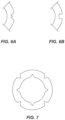
- the discontinuity 134 can comprise at least one of a V-shape ( FIG. 3 ), a U-shape ( FIG. 6A ), or a W-shape (e.g., a sawtooth profile) ( FIG. 6B ) (i.e., any one of these or any combination of these).
- a seal can include any suitable number of peel initiators as described herein.
- the peel initiator 133a is located on one side 132a of the second interface surface 132 and the peel initiator 133b is located on another side 132b of the second interface surface 132 opposite the first side 132a.
- the peel initiators 133a, 133b can be formed along an edge of the seal 130.
- the seal 130 can comprise a ring configuration, and the side 132a is proximate an inner diameter of the ring configuration and the side 132b is proximate an outer diameter of the ring configuration.
- peel initiators can be configured and arranged about a seal to achieve a desired stiction reducing or releasing effect from an interfacing component.
- a seal can be disposed between two adjacent components (e.g., first and second stages) of a rocket or missile that are intended to separate from one another.
- the seal is under compressive stress in the direction of the central axis of the rocket.
- the two adjacent components e.g., first and second stages
- the seal may be bonded (e.g., with an adhesive) to one of the two components to prevent it from dislocating when the two adjacent rocket components separate.
- the separation must be accomplished very quickly to ensure proper operation and flight of the rocket. Separation of the seal from the mating rocket component that is it not bonded to the seal may be retarded or prevented due to stiction of the seal to this rocket component.
- the magnitude of stiction may be reduced by one or more discontinuities as described herein. These discontinuities function to initiate peeling of the seal from the interfacing component and can therefore reduce the force necessary to separate the seal from the interfacing rocket component. Thus, the discontinuities can reduce the amount of force required to separate the first and second stages, which can ensure proper separation and operation of the rocket.
- a method for facilitating separation of two components from one another.
- the method can comprise obtaining a first component having a first interface portion.
- the method can also comprise obtaining a second component coupleable to the first component, the second component having a second interface portion.
- the method can further comprise disposing a seal between the first and second interface portions, the seal having a first interface surface associated with the first interface portion, and a second interface surface in contact with the second interface portion.
- the method can comprise facilitating separation of the second interface surface from the second interface portion upon separation of the first and second components from one another, wherein a discontinuity in a portion of the second interface surface creates a stress concentration in the second interface surface that initiates peeling of the second interface surface away from the second interface portion.
- the discontinuity comprises a profile defined at least partially by two lines intersecting at a point that creates the stress concentration. In a specific aspect of the method, an angle between the two lines is greater than or equal to about 5 degrees and less than or equal to about 150 degrees. In one aspect of the method, the discontinuity comprises at least one of a V-shape, a U-shape, or a W-shape.
Landscapes
- Engineering & Computer Science (AREA)
- General Engineering & Computer Science (AREA)
- Mechanical Engineering (AREA)
- Physics & Mathematics (AREA)
- Geometry (AREA)
- Gasket Seals (AREA)
- Sealing Devices (AREA)
- Sealing Material Composition (AREA)
- Liquid Crystal (AREA)
Description
- Elastomer seals, gaskets, O-rings, etc. are utilized in component couplings found in various types of hardware, typically under compressive stress. Such component couplings may remain static or motionless for long periods of time (e.g., years or decades) prior to separation. One such example is a first rocket stage mated and sealed to a second rocket stage, where the first stage is intended to separate from the second stage during use.
-
US 2008/000289 A discloses a seal ring having rounded-corner rectangular shape in cross-section is mounted in a recessed groove formed in ring configuration in a pressure-contact surface of a seal jig such that major axis of the seal ring is oriented perpendicular to the pressure-contact surface and the seal ring is projected out the pressure-contact surface by about 15-35% of length of the major axis to be compressively deformable in the direction of the major axis, and stoppers formed of low thermal conductivity resin are disposed on the pressure-contact surface, the peripheral portion of the opening of an article being tested is brought into pressure-contact with the seal ring in a manner such that the stoppers are interposed therebetween and that the compressively deformed seal ring provides an adequate sealing effect to seal the opening, whereby testing may be conducted without bringing the article being tested into contact with the seal jig. -
DE102017214704B4 describes a joint structure comprising: two joint members; a drive mechanism that drives the two joint members to rotate about a predetermined axis relative to each other; two sealing members that form a seal between the two joint members at positions that double the outside of a lubricant storage part in the drive mechanism surround; and a pressure applying means that makes the air pressure in a space between the two sealing elements higher than the pressure of the outside air, the sealing element being formed on the outside from an elastic material and having a cutting area at at least one circumferential position, the cutting area being inclined with respect to the radial direction, and wherein the outer sealing element is attached to a fixed part of the drive mechanism by tightening a fastener. - In a first aspect, the present disclosure provides a separable component assembly comprising: a first component having a first interface portion; a second component coupled to the first component, the second component having a second interface portion; and a seal disposed between the first and second interface portions, the seal having a first interface surface associated with the first interface portion, a second interface surface in contact with the second interface portion, and a peel initiator defining a discontinuity in a portion of the second interface surface, wherein, upon separation of the first and second components from one another, the discontinuity creates a stress concentration in the second interface surface that initiates peeling of the second interface surface away from the second interface portion.
- In a second aspect, the present disclosure provides a method for facilitating separation of two components from one another, the method comprising: obtaining a first component having a first interface portion; obtaining a second component coupleable to the first component, the second component having a second interface portion; disposing a seal between the first and second interface portions, the seal having a first interface surface associated with the first interface portion, and a second interface surface in contact with the second interface portion; and facilitating separation of the second interface surface from the second interface portion upon separation of the first and second components from one another, wherein a discontinuity in a portion of the second interface surface creates a stress concentration in the second interface
- surface that initiates peeling of the second interface surface away from the second interface portion.
- Features and advantages of the invention will be apparent from the detailed description which follows, taken in conjunction with the accompanying drawings, which together illustrate, by way of example, features of the invention; and, wherein:
-
FIG. 1 is an illustration of a separable component assembly in accordance with an example of the present disclosure. -
FIG. 2 is a detailed cross-sectional view of the separable component assembly ofFIG. 1 , in accordance with an example of the present disclosure. -
FIG. 3 is an illustration of a seal in accordance with an example of the present disclosure. -
FIGS. 4A and 4B illustrate seal cross-sectional shapes in accordance with examples of the present disclosure. -
FIG. 5 is an illustration of a peel initiator in accordance with an example of the present disclosure. -
FIGS. 6A and 6B illustrate peel initiator shapes in accordance with examples of the present disclosure. -
FIG. 7 is an illustration of a seal in accordance with an example of the present disclosure. - Reference will now be made to the exemplary embodiments illustrated, and specific language will be used herein to describe the same. It will nevertheless be understood that no limitation of the scope of the invention is thereby intended.
- As used herein, the term "substantially" refers to the complete or nearly complete extent or degree of an action, characteristic, property, state, structure, item, or result. For example, an object that is "substantially" enclosed would mean that the object is either completely enclosed or nearly completely enclosed. The exact allowable degree of deviation from absolute completeness may in some cases depend on the specific context. However, generally speaking the nearness of completion will be so as to have the same overall result as if absolute and total completion were obtained. The use of "substantially" is equally applicable when used in a negative connotation to refer to the complete or near complete lack of an action, characteristic, property, state, structure, item, or result.
- As used herein, "adjacent" refers to the proximity of two structures or elements. Particularly, elements that are identified as being "adjacent" may be either abutting or connected. Such elements may also be near or close to each other without necessarily contacting each other. The exact degree of proximity may in some cases depend on the specific context.
- An initial overview of the inventive concepts are provided below and then specific examples are described in further detail later. This initial summary is intended to aid readers in understanding the examples more quickly, but is not intended to identify key features or essential features of the examples, nor is it intended to limit the scope of the claimed subject matter.
- As noted above, some existing component couplings (e.g., first and second rocket stages) may remain static or motionless for long periods of time (e.g., years or decades). Compressive stress over time can cause existing seals, gaskets, or O-rings to form a "bond" with one or more of the coupled components. When separation of the coupling is required, often rapidly or instantaneously, the "bond" or stiction resists or retards this separation of coupled components, which can be problematic in meeting requirements such as the coupled components separating within a specified time period or with a specified minimum separation speed.
- Accordingly, a separable component assembly is disclosed that reduces the force required to overcome such bonding or stiction between a seal and mating component. The separable component assembly can include a first component having a first interface portion. The separable component assembly can also include a second component coupled to the first component. The second component can have a second interface portion. In addition, the separable component assembly can include a seal disposed between the first and second interface portions. The seal can have a first interface surface associated with the first interface portion. The seal can also have a second interface surface in contact with the second interface portion. Additionally, the seal can have at least one peel initiator defining one or more discontinuities in a portion of the second interface surfaces so as to facilitate the reduction in the amount of stiction or the stiction phenomenon between the first and second components. Upon separation of the first and second components from one another, the discontinuity can create a stress concentration in the second interface surface that initiates peeling of the second interface surface away from the second interface portion. Advantageously, the seal with the peel initiators defining one or more discontinuities can facilitate the first and second coupled components separating within a specified time period or with a specified minimum separation speed.
- To further describe the present technology, examples are now provided with reference to the figures. With reference to
FIG. 1 , one example of aseparable component assembly 100 is illustrated. A detailed cross-sectional view of theseparable component assembly 100 is shown inFIG. 2 . Theseparable component assembly 100 can include afirst component 110. Theseparable component assembly 100 can also include asecond component 120 coupled to thefirst component 110. The first andsecond components first component 110 can be a first rocket stage and thesecond component 120 can be a second rocket stage. However, this is not intended to be limiting in any way, as the first and second components can comprise other structural members designed and configured to be joined or otherwise coupled together. - The
first component 110 can have afirst interface portion 111, and thesecond component 120 can have asecond interface portion 121. Theseparable component assembly 100 can include aseal 130 disposed between the first andsecond interface portions seal 130 can have similar geometry and profile as the first andsecond components seal 130 can have any suitable geometry or configuration for a given application. In some examples, theseal 130 can be a gasket, an O-ring, or any other suitable type or configuration of a seal between the first andsecond components seal 130 can be constructed of any suitable material, such as an elastomeric material. Theseal 130 can have afirst interface surface 131 associated with thefirst interface portion 111 of thefirst component 110. Theseal 130 can also have asecond interface surface 132 in contact with thesecond interface portion 121 of thesecond component 120. In some examples, theseal 130 may be bonded (e.g., with an adhesive 140) to thefirst component 110 to prevent theseal 130 from dislocating when the first andsecond components - In addition, the
seal 130 can have one ormore peel initiators FIG. 2 and the top view of theseal 130 inFIG. 3 . In one aspect, one or both of thepeel initiators FIG. 2 ) of the seal 130 (i.e., the seal thickness configured to be oriented axially between the first andsecond components 110, 120). Theseal 130 can have any suitable cross-section, such as a polygon shape (e.g., a rectangle, a trapezoid, a triangle, pentagon, a hexagon, an octagon, etc.), a curved shape (e.g., a circle, an oval, an ellipse, etc.), a curvilinear shape, etc. Thus, a thickness of the seal can comprise a thickness of any suitable cross-sectional shape. In one aspect, a thickness of the seal comprises at least one of a rectangular cross-section (FIG. 4A ) or a circular cross-section (FIG. 4B ). - As illustrated in a
representative peel initiator 133 shown inFIG. 5 , thepeel initiator 133 can define adiscontinuity 134 in a portion of thesecond interface surface 132. Thediscontinuity 134 can be a recess, a cut, a notch, etc. formed in the profile of thesecond interface surface 132 that creates a discontinuous surface or profile. In other words, thediscontinuity 134 can break or interrupt an otherwiseuniform surface 132 and therefore disrupt the static friction present between theuniform surface 132 and either of the first andsecond components second components directions FIG. 1 ), thediscontinuity 134 can create a stress concentration (e.g., at singularities or "corners" 136a-c of the discontinuity 134) in thesecond interface surface 132 that initiates peeling of thesecond interface surface 132 away from thesecond interface portion 121. - The
peel initiator 133 can include any shape or geometry that can introduce a stress concentration. In one example, thediscontinuity 134 can comprise a profile defined at least partially by twolines point 136a that creates the stress concentration. The twolines suitable angle 137 relative to one another. In one aspect, theangle 137 can be greater than or equal to about 5 degrees and less than or equal to about 150 degrees. In another aspect, adepth 138 of thediscontinuity 134 can be greater than or equal to about 3% of awidth 139 of thesecond interface surface 132 and less than or equal to about 90% of thewidth 139 of thesecond interface surface 132. A discontinuity can be of any suitable shape, geometry, or configuration. In one aspect, thediscontinuity 134 can comprise at least one of a V-shape (FIG. 3 ), a U-shape (FIG. 6A ), or a W-shape (e.g., a sawtooth profile) (FIG. 6B ) (i.e., any one of these or any combination of these). - As shown in
FIGS. 3 and7 , a seal can include any suitable number of peel initiators as described herein. In the context of theFIG. 3 example (but also applicable to theFIG. 7 example), thepeel initiator 133a is located on oneside 132a of thesecond interface surface 132 and thepeel initiator 133b is located on anotherside 132b of thesecond interface surface 132 opposite thefirst side 132a. In other words, thepeel initiators seal 130. In one aspect, theseal 130 can comprise a ring configuration, and theside 132a is proximate an inner diameter of the ring configuration and theside 132b is proximate an outer diameter of the ring configuration. Thus, peel initiators can be configured and arranged about a seal to achieve a desired stiction reducing or releasing effect from an interfacing component. - In a specific example, a seal can be disposed between two adjacent components (e.g., first and second stages) of a rocket or missile that are intended to separate from one another. In this configuration, the seal is under compressive stress in the direction of the central axis of the rocket. During flight, the two adjacent components (e.g., first and second stages) are designed to separate. The seal may be bonded (e.g., with an adhesive) to one of the two components to prevent it from dislocating when the two adjacent rocket components separate. Typically, the separation must be accomplished very quickly to ensure proper operation and flight of the rocket. Separation of the seal from the mating rocket component that is it not bonded to the seal may be retarded or prevented due to stiction of the seal to this rocket component. The magnitude of stiction may be reduced by one or more discontinuities as described herein. These discontinuities function to initiate peeling of the seal from the interfacing component and can therefore reduce the force necessary to separate the seal from the interfacing rocket component. Thus, the discontinuities can reduce the amount of force required to separate the first and second stages, which can ensure proper separation and operation of the rocket.
- In accordance with one embodiment of the present invention, a method is disclosed for facilitating separation of two components from one another. The method can comprise obtaining a first component having a first interface portion. The method can also comprise obtaining a second component coupleable to the first component, the second component having a second interface portion. The method can further comprise disposing a seal between the first and second interface portions, the seal having a first interface surface associated with the first interface portion, and a second interface surface in contact with the second interface portion. Additionally, the method can comprise facilitating separation of the second interface surface from the second interface portion upon separation of the first and second components from one another, wherein a discontinuity in a portion of the second interface surface creates a stress concentration in the second interface surface that initiates peeling of the second interface surface away from the second interface portion. it is noted that no specific order is required in this method, though generally in one embodiment, these method steps can be carried out sequentially.
- In one aspect of the method, the discontinuity comprises a profile defined at least partially by two lines intersecting at a point that creates the stress concentration. In a specific aspect of the method, an angle between the two lines is greater than or equal to about 5 degrees and less than or equal to about 150 degrees. In one aspect of the method, the discontinuity comprises at least one of a V-shape, a U-shape, or a W-shape.
- Reference was made to the examples illustrated in the drawings and specific language was used herein to describe the same. It will nevertheless be understood that no limitation of the scope of the technology is thereby intended. Alterations and further modifications of the features illustrated herein and additional applications of the examples as illustrated herein are to be considered within the scope of the description.
- Although the disclosure may not expressly disclose that some embodiments or features described herein may be combined with other embodiments or features described herein, this disclosure should be read to describe any such combinations that would be practicable by one of ordinary skill in the art. The user of "or" in this disclosure should be understood to mean non-exclusive or, i.e., "and/or," unless otherwise indicated herein.
- Furthermore, the described features, structures, or characteristics may be combined in any suitable manner in one or more examples. In the preceding description, numerous specific details were provided, such as examples of various configurations to provide a thorough understanding of examples of the described technology. It will be recognized, however, that the technology may be practiced without one or more of the specific details, or with other methods, components, devices, etc. In other instances, well-known structures or operations are not shown or described in detail to avoid obscuring aspects of the technology.
- Although the subject matter has been described in language specific to structural features and/or operations, it is to be understood that the subject matter defined in the appended claims is not necessarily limited to the specific features and operations described above. Rather, the specific features and acts described above are disclosed as example forms of implementing the claims. Numerous modifications and alternative arrangements may be devised without departing from the scope of the described technology as defined by the claims.
Claims (15)
- A separable component assembly (100) comprising:a first component (110) having a first interface portion (111);a second component (120) coupled to the first component, the second component having a second interface portion (121); anda seal (130) disposed between the first and second interface portions, the seal having a first interface surface (131) associated with the first interface portion, a second interface surface (132) in contact with the second interface portion,characterised by a peel initiator (133a, 133b) defining a discontinuity (134) in a portion of the second interface surface,wherein, upon separation of the first and second components from one another, the discontinuity creates a stress concentration in the second interface surface that initiates peeling of the second interface surface away from the second interface portion.
- The separable component assembly of claim 1, wherein the discontinuity comprises a profile defined at least partially by two lines (135a, 135b) intersecting at a point (136a) that creates the stress concentration.
- The separable component assembly of claim 2, wherein an angle (137) between the two lines is greater than or equal to about 5 degrees and less than or equal to about 150 degrees.
- The separable component assembly of claim 1, wherein a depth (138) of the discontinuity is greater than or equal to about 3% of a width (139) of the second interface surface and less than or equal to about 90% of the width of the second interface surface.
- The separable component assembly of claim 1, wherein the discontinuity comprises at least one of a V-shape, a U-shape, or a W-shape.
- The separable component assembly of claim 1, wherein the peel initiator extends through a thickness of the seal.
- The separable component assembly of claim 1, wherein a thickness of the seal comprises at least one of a rectangular cross-section or a circular cross-section.
- The separable component assembly of claim 1, wherein the peel initiator is one of a plurality of peel initiators, each defining a discontinuity in a portion of the second interface surface, and each discontinuity operable to create a stress concentration.
- The separable component assembly of claim 8, wherein a first of the plurality of peel initiators (133a) is located on a first side of the second interface surface and a second of the plurality of peel initiators (133b) is located on a second side of the second interface surface opposite the first side.
- The separable component assembly of claim 9, wherein the seal comprises a ring configuration, and the first side is proximate an inner diameter of the ring configuration and the second side is proximate an outer diameter of the ring configuration.
- The separable component assembly of claim 1, wherein the peel initiator is formed along an edge of the seal.
- A method for facilitating separation of two components from one another, the method comprising:obtaining a first component (110) having a first interface portion (111);obtaining a second component (120) coupleable to the first component, the second component having a second interface portion (121);disposing a seal (130) between the first and second interface portions, the seal having a first interface surface (131) associated with the first interface portion, and a second interface surface (132) in contact with the second interface portion; andfacilitating separation of the second interface surface from the second interface portion upon separation of the first and second components from one another, wherein a discontinuity (134) in a portion of the second interface surface creates a stress concentration in the second interface surface that initiates peeling of the second interface surface away from the second interface portion.
- The method of claim 12, wherein the discontinuity comprises a profile defined at least partially by two lines (135a, 135b) intersecting at a point (136a) that creates the stress concentration.
- The method of claim 13, wherein an angle between the two lines is greater than or equal to about 5 degrees and less than or equal to about 150 degrees.
- The method of claim 12, wherein the discontinuity comprises at least one of a V-shape, a U-shape, or a W-shape.
Applications Claiming Priority (2)
| Application Number | Priority Date | Filing Date | Title |
|---|---|---|---|
| US16/995,737 US11253963B1 (en) | 2020-08-17 | 2020-08-17 | Separable component assembly having reduced seal stiction |
| PCT/US2021/037940 WO2022039826A1 (en) | 2020-08-17 | 2021-06-17 | Separable component assembly having reduced seal stiction |
Publications (2)
| Publication Number | Publication Date |
|---|---|
| EP4196702A1 EP4196702A1 (en) | 2023-06-21 |
| EP4196702B1 true EP4196702B1 (en) | 2025-01-01 |
Family
ID=76859802
Family Applications (1)
| Application Number | Title | Priority Date | Filing Date |
|---|---|---|---|
| EP21740381.5A Active EP4196702B1 (en) | 2020-08-17 | 2021-06-17 | Separable component assembly having reduced seal stiction |
Country Status (5)
| Country | Link |
|---|---|
| US (1) | US11253963B1 (en) |
| EP (1) | EP4196702B1 (en) |
| AU (1) | AU2021326673A1 (en) |
| CA (1) | CA3189436A1 (en) |
| WO (1) | WO2022039826A1 (en) |
Families Citing this family (1)
| Publication number | Priority date | Publication date | Assignee | Title |
|---|---|---|---|---|
| US11761537B2 (en) * | 2020-08-24 | 2023-09-19 | Valmet Ab | Gasket for sealing a drive shaft of a pulp washer |
Citations (2)
| Publication number | Priority date | Publication date | Assignee | Title |
|---|---|---|---|---|
| US20080000289A1 (en) * | 2004-02-20 | 2008-01-03 | Cosmo Instruments Co., Ltd. | Seal Member for Use With Leakage Testing Apparatus, Seal Ring for Use With Leakage Testing Apparatus, and Seal Jig for Use With Leakage Testing Apparatus |
| DE102017214704B4 (en) * | 2016-08-31 | 2020-08-06 | Fanuc Corporation | Joint structure and robot |
Family Cites Families (48)
| Publication number | Priority date | Publication date | Assignee | Title |
|---|---|---|---|---|
| US1437646A (en) * | 1919-12-26 | 1922-12-05 | Glacier Refrigerating Machine | Packing ring |
| US2795444A (en) * | 1954-03-15 | 1957-06-11 | Rohr Aircraft Corp | Sealing washer |
| US3270502A (en) * | 1964-09-30 | 1966-09-06 | Atlantic Res Corp | Gas-generating devices |
| BE794101A (en) | 1972-01-17 | 1973-05-16 | Hagmann Foster M | MULTIPLE SEALING FOR PIPE JOINTS |
| US4223897A (en) | 1978-11-06 | 1980-09-23 | Dana Corporation | Anti-stick, non-liquid absorbing gasket |
| DE8807010U1 (en) * | 1987-06-16 | 1988-10-13 | Hörmansdörfer, Gerd, 3167 Burgdorf | Sealing connection |
| US4867460A (en) | 1987-12-31 | 1989-09-19 | Westinghouse Electric Corp. | Hydraulic jack seal assembly |
| JP3282121B2 (en) * | 1994-09-20 | 2002-05-13 | 矢崎総業株式会社 | Structure for holding O-rings for sealing of connectors directly attached to equipment |
| US5509670A (en) * | 1994-10-28 | 1996-04-23 | The Texacone Company | Packing member with reduced friction |
| US6296907B1 (en) | 1996-05-31 | 2001-10-02 | Wacker Silicones Corporation | Coating for silicone gaskets to reduce coefficient of friction |
| US6859577B2 (en) | 2001-06-25 | 2005-02-22 | Analog Devices Inc. | Self assembled micro anti-stiction structure |
| US20030062718A1 (en) | 2001-09-28 | 2003-04-03 | Central Sprinkler Corporation | Ferrous pipe couplings and prelubricated coupling gaskets |
| US6876046B2 (en) | 2002-02-07 | 2005-04-05 | Superconductor Technologies, Inc. | Stiction alleviation using passivation layer patterning |
| DE20321639U1 (en) | 2003-06-03 | 2008-09-18 | Carl Freudenberg Kg | Mounting protection ring |
| US6930367B2 (en) | 2003-10-31 | 2005-08-16 | Robert Bosch Gmbh | Anti-stiction technique for thin film and wafer-bonded encapsulated microelectromechanical systems |
| WO2005052414A2 (en) | 2003-11-25 | 2005-06-09 | Garlock Sealing Technologies, Llc | Corrugated gasket core with profiled surface |
| US7692839B2 (en) | 2004-09-27 | 2010-04-06 | Qualcomm Mems Technologies, Inc. | System and method of providing MEMS device with anti-stiction coating |
| US7309902B2 (en) | 2004-11-26 | 2007-12-18 | Hewlett-Packard Development Company, L.P. | Microelectronic device with anti-stiction coating |
| US20060237463A1 (en) * | 2005-04-21 | 2006-10-26 | Tony Riviezzo | Component seal for plastic tanks |
| US7797082B2 (en) | 2005-10-13 | 2010-09-14 | Honeywell International Inc. | Apparatus and method for stiction compensation in a process control system |
| US7468830B2 (en) | 2006-06-28 | 2008-12-23 | Spatial Photonics, Inc. | In SITU application of anti-stiction materials to micro devices |
| US7628072B2 (en) | 2006-07-19 | 2009-12-08 | Freescale Semiconductor, Inc. | MEMS device and method of reducing stiction in a MEMS device |
| ES2431669T3 (en) | 2006-09-15 | 2013-11-27 | Becton, Dickinson & Company | Medical components that have coated surfaces that have low friction and methods to reduce adhesion |
| WO2009012479A1 (en) | 2007-07-19 | 2009-01-22 | Swagelok Company | Coated seals |
| KR100964970B1 (en) | 2007-08-17 | 2010-06-21 | 한국전자통신연구원 | Flotation device for preventing sticking of 3D MEMs microstructure |
| US8120155B2 (en) | 2008-07-31 | 2012-02-21 | Texas Instruments Incorporated | Reduced stiction and mechanical memory in MEMS devices |
| US20100181652A1 (en) | 2009-01-16 | 2010-07-22 | Honeywell International Inc. | Systems and methods for stiction reduction in mems devices |
| US8739690B2 (en) * | 2009-12-23 | 2014-06-03 | Seb S.A. | Pressure cooker gasket having a flexible skirt provided with notches |
| DE102010007010B4 (en) | 2010-02-05 | 2011-09-01 | Aktiebolaget Skf | Wear bushing |
| USD687932S1 (en) | 2010-05-04 | 2013-08-13 | Victaulic Company | Kinked O-ring |
| JP5393890B2 (en) | 2010-07-08 | 2014-01-22 | 内山工業株式会社 | Rubber gasket and seal structure using the same |
| KR20130006962A (en) | 2011-06-28 | 2013-01-18 | 시게이트 테크놀로지 인터내셔날 | Hard disk drive |
| US8777112B2 (en) * | 2011-09-15 | 2014-07-15 | Tagstar Systems Gmbh | RFID gasket structure |
| US8940586B2 (en) | 2011-11-23 | 2015-01-27 | Taiwan Semiconductor Manufacturing Co., Ltd. | Mechanism for MEMS bump side wall angle improvement |
| WO2013096119A1 (en) | 2011-12-21 | 2013-06-27 | Aktiebolaget Skf | Pumping seal with aligned spring |
| US9201236B2 (en) | 2012-11-27 | 2015-12-01 | Pixtronix, Inc. | Display apparatus with stiction reduction features |
| US8948706B2 (en) | 2012-12-06 | 2015-02-03 | Google Technology Holdings LLC | Stiction reduction for MEMS devices |
| US8895339B2 (en) | 2012-12-18 | 2014-11-25 | Freescale Semiconductor, Inc. | Reducing MEMS stiction by introduction of a carbon barrier |
| US9290380B2 (en) | 2012-12-18 | 2016-03-22 | Freescale Semiconductor, Inc. | Reducing MEMS stiction by deposition of nanoclusters |
| US20140264655A1 (en) | 2013-03-13 | 2014-09-18 | Invensense, Inc. | Surface roughening to reduce adhesion in an integrated mems device |
| US9169929B2 (en) | 2013-03-15 | 2015-10-27 | Little Engine, LLC | Conformal wear-resistant seal |
| US9136165B2 (en) | 2013-06-04 | 2015-09-15 | Invensense, Inc. | Methods for stiction reduction in MEMS sensors |
| USD731036S1 (en) | 2013-11-19 | 2015-06-02 | Jung Woo Metal Ind. Co., Ltd. | O-ring for pipe connection |
| WO2016081428A1 (en) | 2014-11-18 | 2016-05-26 | Britt Engineering, Inc. | O-ring seal system for metal, thermoplastic and fiber reinforced plastic flanges |
| US9550664B2 (en) | 2014-12-18 | 2017-01-24 | Nxp Usa, Inc. | Reducing MEMS stiction by increasing surface roughness |
| US10208862B2 (en) | 2015-01-13 | 2019-02-19 | General Electric Company | Seal ring for hydrogen cooled generator |
| US20170003499A1 (en) | 2015-07-02 | 2017-01-05 | Pixtronix, Inc. | Silane modified fluid for mems stiction reduction |
| US10302200B2 (en) | 2017-05-16 | 2019-05-28 | Kalsi Engineering, Inc. | Seal for bi-directional rotation and pressure |
-
2020
- 2020-08-17 US US16/995,737 patent/US11253963B1/en active Active
-
2021
- 2021-06-17 CA CA3189436A patent/CA3189436A1/en active Pending
- 2021-06-17 WO PCT/US2021/037940 patent/WO2022039826A1/en not_active Ceased
- 2021-06-17 EP EP21740381.5A patent/EP4196702B1/en active Active
- 2021-06-17 AU AU2021326673A patent/AU2021326673A1/en active Pending
Patent Citations (2)
| Publication number | Priority date | Publication date | Assignee | Title |
|---|---|---|---|---|
| US20080000289A1 (en) * | 2004-02-20 | 2008-01-03 | Cosmo Instruments Co., Ltd. | Seal Member for Use With Leakage Testing Apparatus, Seal Ring for Use With Leakage Testing Apparatus, and Seal Jig for Use With Leakage Testing Apparatus |
| DE102017214704B4 (en) * | 2016-08-31 | 2020-08-06 | Fanuc Corporation | Joint structure and robot |
Also Published As
| Publication number | Publication date |
|---|---|
| WO2022039826A1 (en) | 2022-02-24 |
| CA3189436A1 (en) | 2022-02-24 |
| AU2021326673A1 (en) | 2023-03-16 |
| US20220048147A1 (en) | 2022-02-17 |
| EP4196702A1 (en) | 2023-06-21 |
| US11253963B1 (en) | 2022-02-22 |
Similar Documents
| Publication | Publication Date | Title |
|---|---|---|
| US2795444A (en) | Sealing washer | |
| KR102604479B1 (en) | Ultra-seal gasket for joining high purity fluid pathways | |
| JP2002147664A (en) | Pipe connector | |
| EP1582799B1 (en) | Pipe joint | |
| EP2361341B1 (en) | Bi-directional wellhead seal | |
| JPS6344963B2 (en) | ||
| JP5328677B2 (en) | Diaphragm coupling | |
| KR20030011300A (en) | Resilient elastomer and metal retainer gasket for sealing between curved surfaces | |
| EP4196702B1 (en) | Separable component assembly having reduced seal stiction | |
| JP2017514087A5 (en) | ||
| JP2003185021A (en) | Shallow s-shaped metallic seal | |
| US20150192161A1 (en) | Blind rivet and sealing structure using same | |
| US4469354A (en) | Breakaway duct coupling | |
| CN110050518A (en) | seals for half seals | |
| KR20180112824A (en) | Ferrule for conduit fitting | |
| KR102341427B1 (en) | Grip ring of space divide, and pipe connecting device using the same | |
| KR102272416B1 (en) | Pipe connector and Pipe having the same | |
| JPS6117791A (en) | Coupler | |
| CN105626657A (en) | Rivet nut | |
| WO2022182560A1 (en) | Ring seal compatible with multiple port types | |
| US12129884B2 (en) | Scored spacer element serving to obtain a spacer washer positioned between parts of an assembly, and method for assembling at least two parts using at least one such scored spacer element | |
| KR200252222Y1 (en) | Pipe end sealing bush | |
| CN114483745B (en) | Single-sided fasteners | |
| US12618471B2 (en) | Ring seal compatible with multiple port types | |
| JP2020139516A (en) | Leakage prevention device for flange joints |
Legal Events
| Date | Code | Title | Description |
|---|---|---|---|
| STAA | Information on the status of an ep patent application or granted ep patent |
Free format text: STATUS: UNKNOWN |
|
| STAA | Information on the status of an ep patent application or granted ep patent |
Free format text: STATUS: THE INTERNATIONAL PUBLICATION HAS BEEN MADE |
|
| PUAI | Public reference made under article 153(3) epc to a published international application that has entered the european phase |
Free format text: ORIGINAL CODE: 0009012 |
|
| STAA | Information on the status of an ep patent application or granted ep patent |
Free format text: STATUS: REQUEST FOR EXAMINATION WAS MADE |
|
| 17P | Request for examination filed |
Effective date: 20230313 |
|
| AK | Designated contracting states |
Kind code of ref document: A1 Designated state(s): AL AT BE BG CH CY CZ DE DK EE ES FI FR GB GR HR HU IE IS IT LI LT LU LV MC MK MT NL NO PL PT RO RS SE SI SK SM TR |
|
| STAA | Information on the status of an ep patent application or granted ep patent |
Free format text: STATUS: EXAMINATION IS IN PROGRESS |
|
| 17Q | First examination report despatched |
Effective date: 20230928 |
|
| DAV | Request for validation of the european patent (deleted) | ||
| DAX | Request for extension of the european patent (deleted) | ||
| REG | Reference to a national code |
Ref country code: DE Ref legal event code: R079 Ipc: F16B0041000000 Ref country code: DE Ref legal event code: R079 Ref document number: 602021024281 Country of ref document: DE Free format text: PREVIOUS MAIN CLASS: F16J0015020000 Ipc: F16B0041000000 |
|
| GRAP | Despatch of communication of intention to grant a patent |
Free format text: ORIGINAL CODE: EPIDOSNIGR1 |
|
| STAA | Information on the status of an ep patent application or granted ep patent |
Free format text: STATUS: GRANT OF PATENT IS INTENDED |
|
| RIC1 | Information provided on ipc code assigned before grant |
Ipc: F16J 15/08 20060101ALI20240903BHEP Ipc: F16J 15/3284 20160101ALI20240903BHEP Ipc: F16J 15/10 20060101ALI20240903BHEP Ipc: F16J 15/02 20060101ALI20240903BHEP Ipc: F16J 15/06 20060101ALI20240903BHEP Ipc: F16B 43/00 20060101ALI20240903BHEP Ipc: F16B 41/00 20060101AFI20240903BHEP |
|
| INTG | Intention to grant announced |
Effective date: 20240911 |
|
| GRAS | Grant fee paid |
Free format text: ORIGINAL CODE: EPIDOSNIGR3 |
|
| GRAA | (expected) grant |
Free format text: ORIGINAL CODE: 0009210 |
|
| STAA | Information on the status of an ep patent application or granted ep patent |
Free format text: STATUS: THE PATENT HAS BEEN GRANTED |
|
| AK | Designated contracting states |
Kind code of ref document: B1 Designated state(s): AL AT BE BG CH CY CZ DE DK EE ES FI FR GB GR HR HU IE IS IT LI LT LU LV MC MK MT NL NO PL PT RO RS SE SI SK SM TR |
|
| REG | Reference to a national code |
Ref country code: GB Ref legal event code: FG4D |
|
| REG | Reference to a national code |
Ref country code: DE Ref legal event code: R096 Ref document number: 602021024281 Country of ref document: DE |
|
| REG | Reference to a national code |
Ref country code: CH Ref legal event code: EP |
|
| REG | Reference to a national code |
Ref country code: IE Ref legal event code: FG4D |
|
| REG | Reference to a national code |
Ref country code: LT Ref legal event code: MG9D |
|
| REG | Reference to a national code |
Ref country code: NL Ref legal event code: MP Effective date: 20250101 |
|
| REG | Reference to a national code |
Ref country code: AT Ref legal event code: MK05 Ref document number: 1756527 Country of ref document: AT Kind code of ref document: T Effective date: 20250101 |
|
| PG25 | Lapsed in a contracting state [announced via postgrant information from national office to epo] |
Ref country code: NL Free format text: LAPSE BECAUSE OF FAILURE TO SUBMIT A TRANSLATION OF THE DESCRIPTION OR TO PAY THE FEE WITHIN THE PRESCRIBED TIME-LIMIT Effective date: 20250101 |
|
| PG25 | Lapsed in a contracting state [announced via postgrant information from national office to epo] |
Ref country code: FI Free format text: LAPSE BECAUSE OF FAILURE TO SUBMIT A TRANSLATION OF THE DESCRIPTION OR TO PAY THE FEE WITHIN THE PRESCRIBED TIME-LIMIT Effective date: 20250101 |
|
| PG25 | Lapsed in a contracting state [announced via postgrant information from national office to epo] |
Ref country code: PL Free format text: LAPSE BECAUSE OF FAILURE TO SUBMIT A TRANSLATION OF THE DESCRIPTION OR TO PAY THE FEE WITHIN THE PRESCRIBED TIME-LIMIT Effective date: 20250101 |
|
| PGFP | Annual fee paid to national office [announced via postgrant information from national office to epo] |
Ref country code: DE Payment date: 20250520 Year of fee payment: 5 |
|
| PG25 | Lapsed in a contracting state [announced via postgrant information from national office to epo] |
Ref country code: ES Free format text: LAPSE BECAUSE OF FAILURE TO SUBMIT A TRANSLATION OF THE DESCRIPTION OR TO PAY THE FEE WITHIN THE PRESCRIBED TIME-LIMIT Effective date: 20250101 |
|
| PGFP | Annual fee paid to national office [announced via postgrant information from national office to epo] |
Ref country code: GB Payment date: 20250520 Year of fee payment: 5 |
|
| PG25 | Lapsed in a contracting state [announced via postgrant information from national office to epo] |
Ref country code: IS Free format text: LAPSE BECAUSE OF FAILURE TO SUBMIT A TRANSLATION OF THE DESCRIPTION OR TO PAY THE FEE WITHIN THE PRESCRIBED TIME-LIMIT Effective date: 20250501 Ref country code: NO Free format text: LAPSE BECAUSE OF FAILURE TO SUBMIT A TRANSLATION OF THE DESCRIPTION OR TO PAY THE FEE WITHIN THE PRESCRIBED TIME-LIMIT Effective date: 20250401 |
|
| PG25 | Lapsed in a contracting state [announced via postgrant information from national office to epo] |
Ref country code: HR Free format text: LAPSE BECAUSE OF FAILURE TO SUBMIT A TRANSLATION OF THE DESCRIPTION OR TO PAY THE FEE WITHIN THE PRESCRIBED TIME-LIMIT Effective date: 20250101 |
|
| PG25 | Lapsed in a contracting state [announced via postgrant information from national office to epo] |
Ref country code: PT Free format text: LAPSE BECAUSE OF FAILURE TO SUBMIT A TRANSLATION OF THE DESCRIPTION OR TO PAY THE FEE WITHIN THE PRESCRIBED TIME-LIMIT Effective date: 20250502 Ref country code: LV Free format text: LAPSE BECAUSE OF FAILURE TO SUBMIT A TRANSLATION OF THE DESCRIPTION OR TO PAY THE FEE WITHIN THE PRESCRIBED TIME-LIMIT Effective date: 20250101 |
|
| PGFP | Annual fee paid to national office [announced via postgrant information from national office to epo] |
Ref country code: FR Payment date: 20250520 Year of fee payment: 5 |
|
| PG25 | Lapsed in a contracting state [announced via postgrant information from national office to epo] |
Ref country code: BG Free format text: LAPSE BECAUSE OF FAILURE TO SUBMIT A TRANSLATION OF THE DESCRIPTION OR TO PAY THE FEE WITHIN THE PRESCRIBED TIME-LIMIT Effective date: 20250101 Ref country code: GR Free format text: LAPSE BECAUSE OF FAILURE TO SUBMIT A TRANSLATION OF THE DESCRIPTION OR TO PAY THE FEE WITHIN THE PRESCRIBED TIME-LIMIT Effective date: 20250402 |
|
| PG25 | Lapsed in a contracting state [announced via postgrant information from national office to epo] |
Ref country code: AT Free format text: LAPSE BECAUSE OF FAILURE TO SUBMIT A TRANSLATION OF THE DESCRIPTION OR TO PAY THE FEE WITHIN THE PRESCRIBED TIME-LIMIT Effective date: 20250101 |
|
| PG25 | Lapsed in a contracting state [announced via postgrant information from national office to epo] |
Ref country code: CZ Free format text: LAPSE BECAUSE OF FAILURE TO SUBMIT A TRANSLATION OF THE DESCRIPTION OR TO PAY THE FEE WITHIN THE PRESCRIBED TIME-LIMIT Effective date: 20250101 |
|
| PG25 | Lapsed in a contracting state [announced via postgrant information from national office to epo] |
Ref country code: SE Free format text: LAPSE BECAUSE OF FAILURE TO SUBMIT A TRANSLATION OF THE DESCRIPTION OR TO PAY THE FEE WITHIN THE PRESCRIBED TIME-LIMIT Effective date: 20250101 |
|
| REG | Reference to a national code |
Ref country code: DE Ref legal event code: R097 Ref document number: 602021024281 Country of ref document: DE |
|
| PG25 | Lapsed in a contracting state [announced via postgrant information from national office to epo] |
Ref country code: SM Free format text: LAPSE BECAUSE OF FAILURE TO SUBMIT A TRANSLATION OF THE DESCRIPTION OR TO PAY THE FEE WITHIN THE PRESCRIBED TIME-LIMIT Effective date: 20250101 |
|
| PG25 | Lapsed in a contracting state [announced via postgrant information from national office to epo] |
Ref country code: DK Free format text: LAPSE BECAUSE OF FAILURE TO SUBMIT A TRANSLATION OF THE DESCRIPTION OR TO PAY THE FEE WITHIN THE PRESCRIBED TIME-LIMIT Effective date: 20250101 |
|
| PG25 | Lapsed in a contracting state [announced via postgrant information from national office to epo] |
Ref country code: IT Free format text: LAPSE BECAUSE OF FAILURE TO SUBMIT A TRANSLATION OF THE DESCRIPTION OR TO PAY THE FEE WITHIN THE PRESCRIBED TIME-LIMIT Effective date: 20250101 |
|
| PG25 | Lapsed in a contracting state [announced via postgrant information from national office to epo] |
Ref country code: EE Free format text: LAPSE BECAUSE OF FAILURE TO SUBMIT A TRANSLATION OF THE DESCRIPTION OR TO PAY THE FEE WITHIN THE PRESCRIBED TIME-LIMIT Effective date: 20250101 |
|
| PG25 | Lapsed in a contracting state [announced via postgrant information from national office to epo] |
Ref country code: RO Free format text: LAPSE BECAUSE OF FAILURE TO SUBMIT A TRANSLATION OF THE DESCRIPTION OR TO PAY THE FEE WITHIN THE PRESCRIBED TIME-LIMIT Effective date: 20250101 |
|
| PG25 | Lapsed in a contracting state [announced via postgrant information from national office to epo] |
Ref country code: SK Free format text: LAPSE BECAUSE OF FAILURE TO SUBMIT A TRANSLATION OF THE DESCRIPTION OR TO PAY THE FEE WITHIN THE PRESCRIBED TIME-LIMIT Effective date: 20250101 |
|
| PLBE | No opposition filed within time limit |
Free format text: ORIGINAL CODE: 0009261 |
|
| STAA | Information on the status of an ep patent application or granted ep patent |
Free format text: STATUS: NO OPPOSITION FILED WITHIN TIME LIMIT |
|
| REG | Reference to a national code |
Ref country code: CH Ref legal event code: L10 Free format text: ST27 STATUS EVENT CODE: U-0-0-L10-L00 (AS PROVIDED BY THE NATIONAL OFFICE) Effective date: 20251112 |
|
| 26N | No opposition filed |
Effective date: 20251002 |
|
| REG | Reference to a national code |
Ref country code: CH Ref legal event code: H13 Free format text: ST27 STATUS EVENT CODE: U-0-0-H10-H13 (AS PROVIDED BY THE NATIONAL OFFICE) Effective date: 20260127 |
|
| PG25 | Lapsed in a contracting state [announced via postgrant information from national office to epo] |
Ref country code: MC Free format text: LAPSE BECAUSE OF FAILURE TO SUBMIT A TRANSLATION OF THE DESCRIPTION OR TO PAY THE FEE WITHIN THE PRESCRIBED TIME-LIMIT Effective date: 20250101 |
|
| PG25 | Lapsed in a contracting state [announced via postgrant information from national office to epo] |
Ref country code: LU Free format text: LAPSE BECAUSE OF NON-PAYMENT OF DUE FEES Effective date: 20250617 |
|
| REG | Reference to a national code |
Ref country code: BE Ref legal event code: MM Effective date: 20250630 |
|
| PG25 | Lapsed in a contracting state [announced via postgrant information from national office to epo] |
Ref country code: IE Free format text: LAPSE BECAUSE OF NON-PAYMENT OF DUE FEES Effective date: 20250617 |
|
| PG25 | Lapsed in a contracting state [announced via postgrant information from national office to epo] |
Ref country code: BE Free format text: LAPSE BECAUSE OF NON-PAYMENT OF DUE FEES Effective date: 20250630 |
|
| PG25 | Lapsed in a contracting state [announced via postgrant information from national office to epo] |
Ref country code: CH Free format text: LAPSE BECAUSE OF NON-PAYMENT OF DUE FEES Effective date: 20250630 |