EP4195833A1 - Information transmission method and apparatus, terminal, and network side device - Google Patents
Information transmission method and apparatus, terminal, and network side device Download PDFInfo
- Publication number
- EP4195833A1 EP4195833A1 EP21854520.0A EP21854520A EP4195833A1 EP 4195833 A1 EP4195833 A1 EP 4195833A1 EP 21854520 A EP21854520 A EP 21854520A EP 4195833 A1 EP4195833 A1 EP 4195833A1
- Authority
- EP
- European Patent Office
- Prior art keywords
- multimedia broadcast
- broadcast service
- information transmission
- rrc
- message
- Prior art date
- Legal status (The legal status is an assumption and is not a legal conclusion. Google has not performed a legal analysis and makes no representation as to the accuracy of the status listed.)
- Pending
Links
Images



Classifications
-
- H—ELECTRICITY
- H04—ELECTRIC COMMUNICATION TECHNIQUE
- H04W—WIRELESS COMMUNICATION NETWORKS
- H04W72/00—Local resource management
- H04W72/30—Resource management for broadcast services
-
- H—ELECTRICITY
- H04—ELECTRIC COMMUNICATION TECHNIQUE
- H04W—WIRELESS COMMUNICATION NETWORKS
- H04W72/00—Local resource management
- H04W72/20—Control channels or signalling for resource management
- H04W72/23—Control channels or signalling for resource management in the downlink direction of a wireless link, i.e. towards a terminal
-
- H—ELECTRICITY
- H04—ELECTRIC COMMUNICATION TECHNIQUE
- H04W—WIRELESS COMMUNICATION NETWORKS
- H04W76/00—Connection management
- H04W76/20—Manipulation of established connections
-
- H—ELECTRICITY
- H04—ELECTRIC COMMUNICATION TECHNIQUE
- H04L—TRANSMISSION OF DIGITAL INFORMATION, e.g. TELEGRAPHIC COMMUNICATION
- H04L5/00—Arrangements affording multiple use of the transmission path
- H04L5/003—Arrangements for allocating sub-channels of the transmission path
- H04L5/0053—Allocation of signalling, i.e. of overhead other than pilot signals
-
- H—ELECTRICITY
- H04—ELECTRIC COMMUNICATION TECHNIQUE
- H04W—WIRELESS COMMUNICATION NETWORKS
- H04W12/00—Security arrangements; Authentication; Protecting privacy or anonymity
- H04W12/08—Access security
-
- H—ELECTRICITY
- H04—ELECTRIC COMMUNICATION TECHNIQUE
- H04W—WIRELESS COMMUNICATION NETWORKS
- H04W4/00—Services specially adapted for wireless communication networks; Facilities therefor
- H04W4/06—Selective distribution of broadcast services, e.g. multimedia broadcast multicast service [MBMS]; Services to user groups; One-way selective calling services
-
- H—ELECTRICITY
- H04—ELECTRIC COMMUNICATION TECHNIQUE
- H04W—WIRELESS COMMUNICATION NETWORKS
- H04W4/00—Services specially adapted for wireless communication networks; Facilities therefor
- H04W4/12—Messaging; Mailboxes; Announcements
- H04W4/14—Short messaging services, e.g. short message services [SMS] or unstructured supplementary service data [USSD]
-
- H—ELECTRICITY
- H04—ELECTRIC COMMUNICATION TECHNIQUE
- H04W—WIRELESS COMMUNICATION NETWORKS
- H04W76/00—Connection management
- H04W76/30—Connection release
-
- H—ELECTRICITY
- H04—ELECTRIC COMMUNICATION TECHNIQUE
- H04L—TRANSMISSION OF DIGITAL INFORMATION, e.g. TELEGRAPHIC COMMUNICATION
- H04L5/00—Arrangements affording multiple use of the transmission path
- H04L5/0091—Signalling for the administration of the divided path, e.g. signalling of configuration information
-
- H—ELECTRICITY
- H04—ELECTRIC COMMUNICATION TECHNIQUE
- H04W—WIRELESS COMMUNICATION NETWORKS
- H04W72/00—Local resource management
- H04W72/20—Control channels or signalling for resource management
- H04W72/23—Control channels or signalling for resource management in the downlink direction of a wireless link, i.e. towards a terminal
- H04W72/231—Control channels or signalling for resource management in the downlink direction of a wireless link, i.e. towards a terminal the control data signalling from the layers above the physical layer, e.g. RRC or MAC-CE signalling
-
- Y—GENERAL TAGGING OF NEW TECHNOLOGICAL DEVELOPMENTS; GENERAL TAGGING OF CROSS-SECTIONAL TECHNOLOGIES SPANNING OVER SEVERAL SECTIONS OF THE IPC; TECHNICAL SUBJECTS COVERED BY FORMER USPC CROSS-REFERENCE ART COLLECTIONS [XRACs] AND DIGESTS
- Y02—TECHNOLOGIES OR APPLICATIONS FOR MITIGATION OR ADAPTATION AGAINST CLIMATE CHANGE
- Y02D—CLIMATE CHANGE MITIGATION TECHNOLOGIES IN INFORMATION AND COMMUNICATION TECHNOLOGIES [ICT], I.E. INFORMATION AND COMMUNICATION TECHNOLOGIES AIMING AT THE REDUCTION OF THEIR OWN ENERGY USE
- Y02D30/00—Reducing energy consumption in communication networks
- Y02D30/70—Reducing energy consumption in communication networks in wireless communication networks
Definitions
- the present invention relates to the field of communication technologies, and in particular, to an information transmission method and apparatus, a terminal, and a network side device.
- a long term evolution (Long Term Evolution, LTE) multimedia broadcast multicast service (Multimedia Broadcast Multicast Service, MBMS) is in a multicast transmission mode on a radio access network (Radio Access Network, RAN) side.
- Configuration information of a multimedia broadcast service (Multimedia Broadcast Service, MBS) in new radio (New Radio, NR) is sent through a multicast control channel (Multicast Control Channel, MCCH) or a single cell multicast control channel (Single Cell Multicast Control Channel, SC-MCCH).
- the MCCH and the SC-MCCH are sent periodically.
- a UE may only need to monitor whether the configuration information changes, and does not need to obtain the configuration information. In this case, network resources are wasted.
- a purpose of embodiments of this application is to provide an information transmission method and apparatus, a terminal, and a network side device, which can solve a problem that signaling overheads and energy consumption are high because configuration of an MBS service is periodically sent by an MCCH and an SC-MCCH in the related art.
- an information transmission method is provided, and applied to a terminal.
- the method includes: obtaining configuration information of a multimedia broadcast service through radio resource control RRC signaling.
- an information transmission apparatus is provided, and applied to a terminal.
- the apparatus includes: a first obtaining module, configured to obtain configuration information of a multimedia broadcast service through radio resource control RRC signaling.
- an information transmission method is provided, and applied to a network side device.
- the method includes: sending configuration information of a multimedia broadcast service through radio resource control RRC signaling.
- an information transmission apparatus is provided, and applied to a network side device.
- the apparatus includes: a first sending module, configured to send configuration information of a multimedia broadcast service through radio resource control RRC signaling.
- a terminal including a processor, a memory, and a program or an instruction stored in the memory and executable by the processor, the program or instruction, when executed by the processor, implementing steps of the method according to the first aspect.
- a network side device including a processor, a memory, and a program or an instruction stored in the memory and executable by the processor, the program or instruction, when executed by the processor, implementing steps of the method according to the third aspect.
- a readable storage medium storing a program or an instruction, the program or instruction, when executed by a processor, implementing steps of the method according to the first aspect, or steps of the method according to the third aspect.
- a chip including a processor and a communication interface, the communication interface being coupled to the processor, and the processor being configured to run a program or an instruction of a network side device to implement the method according to the first aspect, or the method according to the third aspect.
- configuration information of an MBS service is sent to a UE through dedicated RRC signaling, and a change in a configuration of the MBS service is indicated through a short message mechanism or the like.
- the dedicated RRC signaling is sent as needed by each terminal, thereby reducing signaling overheads and energy consumption in certain cases.
- first and second in the specification and the claims of this application are intended to distinguish between similar objects, but are not used for describing a specific sequence or a chronological order. It is to be understood that the data used in such a way is interchangeable in proper circumstances, so that the embodiments of this application can be implemented in other sequences than the sequence illustrated or described herein.
- objects distinguished by “first” and “second” are usually of one type, and a quantity of the objects is not limited.
- a first object may be one or more than one.
- “and/or” in the specification and claims represents at least one of connected objects. The character “/" generally indicates an "or" relationship between the associated objects.
- LTE-Advanced LTE-Advanced
- LTE-A LTE-Advanced
- LTE-A long term evolution
- technologies described in the embodiments of this application are not limited to an LTE-Advanced (LTE-Advanced, LTE-A) system of long term evolution (Long Term Evolution, LTE)/LTE, but may further be used in other wireless communication systems, such as code division multiple access (Code Division Multiple Access, CDMA), time division multiple access (Time Division Multiple Access, TDMA), frequency division multiple access (Frequency Division Multiple Access, FDMA), orthogonal frequency division multiple access (Orthogonal Frequency Division Multiple Access, OFDMA), single-carrier frequency-division multiple access (Single-carrier Frequency-Division Multiple Access, SC-FMA) and other systems.
- code division multiple access Code Division Multiple Access, CDMA
- time division multiple access Time Division Multiple Access, TDMA
- frequency division multiple access Frequency Division Multiple Access, FDMA
- OFDMA Orthogon
- system and “network” in the embodiments of this application are often used interchangeably, and the described technologies may be used for not only the foregoing systems and radio technologies, but also other systems and radio technologies.
- NR New Radio
- the following description describes a new radio (New Radio, NR) system for a purpose of example, and an NR term is used in many parts of the following description.
- NR 6 th generation
- 6G 6 th Generation
- FIG. 1 is a block diagram of a wireless communication system to which an embodiment of this application is applicable.
- the wireless communication system includes a terminal 11 and a network side device 12.
- the terminal 11 may also be referred to as a terminal device or user equipment (User Equipment, UE).
- UE User Equipment
- the terminal 11 may be a terminal-side device such as a mobile phone, a tablet personal computer (Tablet Personal Computer), a laptop computer (Laptop Computer) or a notebook computer, a personal digital assistant (Personal Digital Assistant, PDA), a palmtop computer, a netbook, an ultra-mobile personal computer (ultra-mobile personal computer, UMPC), a mobile Internet device (Mobile Internet Device, MID), a wearable device (Wearable Device) or vehicle user equipment (Vehicle User Equipment, VUE), pedestrian user equipment (Pedestrian User Equipment, PUE), and the like.
- the wearable device includes: a bracelet, a headphone, glasses, and the like. It needs to be noted that, the embodiments of this application do not limit a specific type of the terminal 11.
- the network side device 12 may be a base station or a core network.
- the base station may be referred to as node B, evolved node B, access point, base transceiver station (Base Transceiver Station, BTS), radio base station, radio transceiver, basic service set (Basic Service Set, BSS), extended service set (Extended Service Set, ESS), node B, evolved node B (eNB), home node B, home evolved node B, WLAN access point, WiFi node, transmitting receiving point (Transmitting Receiving Point, TRP), or some another suitable term in the described art.
- the base station is not limited to a specific technical term. It needs to be noted that, in the embodiments of this application, only a base station in the NR system is used as an example, but a specific type of the base station is not limited.
- Sending methods of a multimedia broadcast multicast service include the following two methods:
- TMGI Temporal Mobile Group Identity
- SAI Service Area Identity
- SAI(s) of a current frequency and an adjacent frequency are provided in a system information block (SIB) 15. If one or more values in SAI(s) of a certain frequency are the same as SAI(s) in the USD, UE considers that the frequency can provide the MBMS service. It is worth noting that both an MBMS cell and a non-MBMS cell can provide the SIB 15 as long as the cell is a primary cell (Primary cell, Pcell).
- Primary cell Primary cell
- a SIB20 provides information for obtaining the SC-MCCH.
- the information is control information of the SC-PTM in the SC-MCCH, and provides scheduling information of all MBMS services in a current cell and a support situation of each MBMS service supported by the current cell of a neighboring cell.
- the SIB 15 can only be provided by the MBMS cell, and the cell is a primary cell (Primary cell, Pcell).
- the UE can perform SC-PTM reception, and the UE is receiving or interested in receiving the MBMS service, and can receive the MBMS service only when residing on a frequency providing the MBMS service, the UE can regard the frequency as a highest priority during an MBMS session.
- an information transmission method is provided, and applied to a terminal.
- the method includes: Step 201. Obtain configuration information of a multimedia broadcast service through radio resource control RRC signaling.
- the configuration information of the multimedia broadcast service MBS includes at least one of:
- the information related to MBS scheduling may specifically be scheduling information of the MBS service.
- the information related to the service continuity of the MBS is all information related to the service continuity, such as a multimedia broadcast service situation (such as SAI of LTE) supported by a current frequency or an adjacent frequency, a multimedia broadcast service situation (such as TMGI of LTE) supported by a current cell, and the like.
- configuration information of an MBS service is sent through RRC signaling.
- the RRC signaling is sent as needed by each terminal, thereby reducing signaling overheads and energy consumption in certain cases.
- the step of obtaining configuration information of a multimedia broadcast service through radio resource control RRC signaling includes:
- the RRC connection establishment process corresponds to idle UE (idle UE)
- the RRC connection resume process corresponds to inactive UE (inactive UE)
- the RRC connection re-establishment process corresponds to RRC connected UE (RRC Connected UE).
- the UE obtains the configuration information of the MBS service by initiating the RRC connection establishment process, the RRC connection resume process, or the RRC connection re-establishment process.
- a triggering condition of the RRC connection event includes at least one of:
- the UE has an MBS capability; the UE is interested in the MBS; the UE is receiving the MBS; and configuration of the MBS is updated.
- a cause value in the RRC connection event is a cause value already defined or a newly set cause value
- the cause value already defined is applicable to MBS configuration.
- the newly set cause value is a cause value different from the cause value already defined.
- the newly set cause value is a cause value that is different from the cause value already defined and can be used for MBS configuration.
- a value of a defined establishment cause (establishmentCause), a value of a defined resume cause (resumeCause), or a value of a defined re-establishment cause (reestablishmentCause) may be: mo-Data, mo-Signaling, and the like.
- a value of a newly set establishment cause (establishmentCause), a value of a newly set resume cause (resumeCause), or a value of a newly set re-establishment cause (reestablishmentCause) may be MBS Configuration, and the like.
- unified access control in the RRC connection establishment process or the RRC connection resume process includes at least one of:
- the access value includes at least one of a value of an access category or a value of an access identity.
- the access value includes at least one of a value of an access category (Access category) and a value of an access identity (Access identity(ies)), and the newly set access value is an access value different from the defined access value.
- an Access category of the defined access value is 7 and an Access identity of the defined access value is 0, and an Access category of the newly set access value is 11 and an Access identity of the newly set access value is 6.
- the RRC signaling includes at least one of:
- the configuration information of the MBS can be obtained through the RRC setup message sent by the network side.
- the configuration information of the MBS can be obtained through the RRC reject message sent by the network side.
- the terminal when the terminal sends an RRC resume request to the network side, the network side sends an RRC resume message to the terminal, and the terminal sends an RRC resume complete message to the network side, the terminal can obtain the configuration information of the MBS through the RRC resume message sent by the network side.
- the network side responds to the RRC connection re-establishment and sends an RRC connection re-establishment message, and an RRC connection is re-established between the terminal and the network side; or, as shown in FIG. 7 , when the network side responds to the RRC connection re-establishment and sends the RRC setup message, and an RRC connection is established between the terminal and the network side, the configuration information of the MBS can be obtained through the RRC connection re-establishment message or the RRC setup message.
- the information transmission method further includes: obtaining an indication message, where the indication message is used for indicating whether the configuration information of the multimedia broadcast service changes.
- the indication message is a short message, and a first bit or a second bit in the short message is used for indicating whether the configuration information changes, where the first bit is at least one bit that has been used in the short message, and the second bit is at least one bit that has not been used in the short message; or the indication message is downlink control information scrambled by a first radio network temporary identity RNTI, and the first RNTI is an RNTI different from an already defined RNTI.
- whether the configuration information of the MBS service changes is indicated through one or more of first to third bits that have already been used in the short message, or through one or more of fourth to eighth bits that have not been used in the short message, or through DCI scrambled by a new RNTI, such as an X-RNTI.
- the short message (Short Message) is transmitted through a PDCCH scrambled by a P-RNTI and is in a DCI format 1_0. Bit 1 is a most significant bit.
- a first bit is a system information modification indication. If the first bit is set to 1, it indicates that contents of a broadcast control channel (Broadcast Control Channel, BCCH) are modified except SIB6, SIB7, and SIB8; a second bit is an earthquake and tsunami warning system (Earthquake and Tsunami Warning System, Etws) and commercial mobile alert system (Commercial Mobile Alert System, Cmas) indication. If the second bit is set to 1, it indicates an ETWS primary notification, and/or an ETWS secondary notification, and/or a CMAS notification; a third bit is a stopping paging monitoring indication.
- BCCH Broadcast Control Channel
- Etws earthquake and tsunami warning system
- Cmas Commercial mobile alert system
- the third bit is set to 1, it indicates that in this Paging Occasion (PO), monitoring of a PDCCH occasion for transmitting a Paging message is stopped; and fourth to eighth bits are not used in this specification release and should be ignored if received by UE.
- all UE monitors a PDCCH addressed by a P-PNTI, and determines whether system information is modified, whether to stop monitoring paging, and the like according to values of each bit in DCI.
- a terminal to which the first RNTI is applicable includes at least one of:
- configuration information of an MBS service is sent to a UE through dedicated RRC signaling, and a change in a configuration of the MBS service is indicated through a short message mechanism or the like.
- the dedicated RRC signaling is sent as needed by each terminal, thereby reducing signaling overheads and energy consumption in certain cases.
- the embodiments of this application further provide an information transmission method, applied to a network side device, the method including: Step 801. Send configuration information of a multimedia broadcast service through radio resource control RRC signaling.
- the configuration information of the multimedia broadcast service MBS includes at least one of:
- the information related to MBS scheduling may specifically be scheduling information of the MBS service.
- the information related to the service continuity of the MBS is all information related to the service continuity, such as a multimedia broadcast service situation (such as SAI of LTE) supported by a current frequency or an adjacent frequency, a multimedia broadcast service situation (such as TMGI of LTE) supported by a current cell, and the like.
- configuration information of an MBS service is sent to a UE through dedicated RRC signaling. Compared with the periodic transmission of the MCCH and the SC-MCCH, the dedicated RRC signaling is sent as needed by each terminal, thereby reducing signaling overheads and energy consumption in certain cases.
- the configuration information of the multimedia broadcast service includes at least one of:
- the RRC signaling includes at least one of:
- the information transmission method further includes: sending an indication message, where the indication message is used for indicating whether the configuration information of the multimedia broadcast service changes.
- the indication message is a short message, and a first bit or a second bit in the short message is used for indicating whether the configuration information changes, where the first bit is at least one bit that has been used in the short message, and the second bit is at least one bit that has not been used in the short message; or the indication message is downlink control information scrambled by a first radio network temporary identity RNTI, and the first RNTI is an RNTI different from an already defined RNTI.
- a terminal to which the first RNTI is applicable includes at least one of:
- configuration information of an MBS service is sent to a UE through dedicated RRC signaling, and a change in a configuration of the MBS service is indicated through a short message mechanism or the like.
- the dedicated RRC signaling is sent as needed by each terminal, thereby reducing signaling overheads and energy consumption in certain cases.
- the information transmission method provided in the embodiments of this application may be performed by an information transmission apparatus applied to a terminal or a control module included in the information transmission apparatus and configured to perform the information transmission method.
- the information transmission apparatus applied to the terminal provided in the embodiments of this application is described by using an example in which the information transmission method is performed by the information transmission apparatus.
- an information transmission apparatus 900 is further provided, and applied to a terminal.
- the apparatus includes: a first obtaining module 901, configured to obtain configuration information of a multimedia broadcast service through radio resource control RRC signaling.
- configuration information of an MBS service is sent to a UE through dedicated RRC signaling.
- the dedicated RRC signaling is sent as needed by each terminal, thereby reducing signaling overheads and energy consumption in certain cases.
- the configuration information of the multimedia broadcast service includes at least one of:
- the first obtaining module includes:
- a triggering condition of the RRC connection event includes at least one of:
- a cause value in the RRC connection event is a cause value already defined or a newly set cause value
- unified access control UAC in the RRC connection establishment process or the RRC connection resume process includes at least one of:
- the RRC signaling includes at least one of:
- the information transmission apparatus provided in the embodiments of this application further includes: a second obtaining module, configured to obtain an indication message, where the indication message is used for indicating whether the configuration information of the multimedia broadcast service changes.
- the indication message is a short message, and a first bit or a second bit in the short message is used for indicating whether the configuration information changes, where the first bit is at least one bit that has been used in the short message, and the second bit is at least one bit that has not been used in the short message; or the indication message is downlink control information scrambled by a first radio network temporary identity RNTI, and the first RNTI is an RNTI different from an already defined RNTI.
- a terminal to which the first RNTI is applicable includes at least one of:
- configuration information of an MBS service is sent to a UE through dedicated RRC signaling, and a change in a configuration of the MBS service is indicated through a short message mechanism or the like.
- the dedicated RRC signaling is sent as needed by each terminal, thereby reducing signaling overheads and energy consumption in certain cases.
- the information transmission apparatus in the embodiments of this application may be an apparatus, or a component, an integrated circuit, or a chip in a terminal.
- the apparatus may be a mobile terminal or a non-mobile terminal.
- the mobile terminal may include, but is not limited to, types of the terminal 11 listed above, and the non-mobile terminal may be a server, a network attached storage (Network Attached Storage, NAS), a personal computer (personal computer, PC), a television (television, TV), an automated teller machine, or a self-service machine. This is not specifically limited in the embodiments of this application.
- the information transmission apparatus in the embodiments of this application may be an apparatus with an operating system.
- the operating system may be an Android (Android) operating system, or may be an ios operating system or other possible operating systems, which is not specifically limited in the embodiments of this application.
- the information transmission apparatus provided in the embodiments of this application can implement each process implemented by a method embodiment of FIG. 1 to FIG. 7 and achieve the same technical effect. To avoid repetition, details are not described herein again.
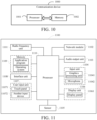
- the embodiments of this application further provide a communication device 1000, including a processor 1001, a memory 1002, and a program or an instruction stored in the memory 1002 and executable on the processor 1001.
- a communication device 1000 including a processor 1001, a memory 1002, and a program or an instruction stored in the memory 1002 and executable on the processor 1001.
- the communication device 1000 is a terminal
- the program or instruction is executed by the processor 1001 to implement processes of the foregoing embodiments of the information transmission method applied to the terminal, and the same technical effect can be achieved.
- the communication device 1000 is a network side device
- the program or instruction is executed by the processor 1001 to implement processes of the foregoing embodiments of the information transmission method applied to the network device, and the same technical effect can be achieved. To avoid repetition, details are not described herein again.
- FIG. 11 is a schematic structural diagram of hardware of a terminal implementing an embodiment of this application.
- the terminal 1100 includes, but is not limited to: components such as a radio frequency unit 1101, a network module 1102, an audio output unit 1103, an input unit 1104, a sensor 1105, a display unit 11011, a user input unit 1107, an interface unit 1108, a memory 1109, and a processor 1110.
- components such as a radio frequency unit 1101, a network module 1102, an audio output unit 1103, an input unit 1104, a sensor 1105, a display unit 11011, a user input unit 1107, an interface unit 1108, a memory 1109, and a processor 1110.
- the terminal 1100 may further include a power supply (such as a battery) for supplying power to the components.
- the power supply may logically connect to the processor 1110 by using a power supply management system, thereby implementing functions such as charging, discharging, and power consumption management, by using the power supply management system.
- a terminal structure shown in FIG. 6 does not constitute a limitation to the terminal, and the terminal may include more or fewer components than those shown in the figure, or some components may be combined, or a different component deployment may be used. Details are not described herein again.
- the input unit 1104 may include a graphics processing unit (Graphics Processing Unit, GPU) 11041 and a microphone 11042, and the graphics processing unit 11041 processes image data of a still picture or a video obtained by an image capture apparatus (such as a camera) in a video capture mode or an image capture mode.
- the display unit 1106 may include a display panel 11061.
- the display panel 11061 may be configured by using a liquid crystal display, an organic light-emitting diode, or the like.
- the user input unit 1107 includes a touch panel 11071 and another input device 11072.
- the touch panel 11071 is also referred to as a touch screen.
- the touch panel 11071 may include two parts: a touch detection apparatus and a touch controller.
- the another input device 11072 may include, but is not limited to, a physical keyboard, a functional key (for example, a volume control key or a switch key), a track ball, a mouse, and a joystick, and details will not be described herein again.
- a functional key for example, a volume control key or a switch key
- a track ball for example, a mouse, and a joystick
- the radio frequency unit 1101 is configured to receive downlink data from a network side device and transmit the downlink data to the processor 1110 for processing; and send uplink data to the network side device.
- the radio frequency unit 1101 includes, but is not limited to, an antenna, at least one amplifier, a transceiver, a coupler, a low noise amplifier, a duplexer, and the like.
- the memory 1109 may be configured to store a software program or instruction and various data.
- the memory 1109 may mainly include a program or instruction storage area and a data storage area.
- the program or instruction storage area may store an operating system, an application program or instruction required by at least one function (for example, a sound playback function and an image display function), and the like.
- the memory 1109 may include a high-speed random access memory and may also include a non-volatile memory.
- the non-volatile memory may be a read-only memory (Read-Only Memory, ROM), a programmable read-only memory (Programmable ROM, PROM), an erasable programmable read-only memory (Erasable PROM, EPROM), an electrically erasable programmable read-only memory (Electrically EPROM, EEPROM), or a flash memory.
- the memory 1109 may include, for example, at least one magnetic disk memory device, a flash memory device, or other non-volatile solid-state memory devices.
- the processor 1110 may include one or more processing units.
- the processor 1110 may integrate an application processor and a modem processor, where the application processor mainly processes an operating system, a user interface, an application program or instruction, and the like, and the modem processor mainly processes wireless communication, such as a baseband processor. It may be understood that the modem processor may alternatively not be integrated into the processor 1110.
- the processor 1110 is configured to obtain configuration information of a multimedia broadcast service through radio resource control RRC signaling.
- configuration information of an MBS service is sent to a UE through dedicated RRC signaling.
- the dedicated RRC signaling is sent as needed by each terminal, thereby reducing signaling overheads and energy consumption in certain cases.
- the configuration information of the multimedia broadcast service includes at least one of:
- the processor 1110 is also configured to trigger an RRC connection event
- a triggering condition of the RRC connection event includes at least one of:
- a cause value in the RRC connection event is a cause value already defined or a newly set cause value
- unified access control UAC in the RRC connection establishment process or the RRC connection resume process includes at least one of:
- the RRC signaling includes at least one of:
- the processor 1110 is further configured to: obtain an indication message, where the indication message is used for indicating whether the configuration information of the multimedia broadcast service changes.
- the indication message is a short message, and a first bit or a second bit in the short message is used for indicating whether the configuration information changes, where the first bit is at least one bit that has been used in the short message, and the second bit is at least one bit that has not been used in the short message; or the indication message is downlink control information scrambled by a first radio network temporary identity RNTI, and the first RNTI is an RNTI different from an already defined RNTI.
- a terminal to which the first RNTI is applicable includes at least one of:
- configuration information of an MBS service is sent to a UE through dedicated RRC signaling, and a change in a configuration of the MBS service is indicated through a short message mechanism or the like.
- the dedicated RRC signaling is sent as needed by each terminal, thereby reducing signaling overheads and energy consumption in certain cases.
- the information transmission method provided in the embodiments of this application may be performed by an information transmission apparatus or a control module included in the information transmission apparatus and configured to perform the information transmission method.
- the information transmission apparatus provided in the embodiments of this application is described by using an example in which the information transmission method is performed by the information transmission apparatus.
- the embodiments of this application further provide an information transmission apparatus 1200, applied to a network side device, the apparatus including: a first sending module 1201, configured to send configuration information of a multimedia broadcast service through radio resource control RRC signaling.
- the configuration information of the multimedia broadcast service includes at least one of:
- the RRC signaling includes at least one of:
- the information transmission apparatus provided in the embodiments of this application further includes: a second sending module, configured to send an indication message, where the indication message is used for indicating whether the configuration information of the multimedia broadcast service changes.
- the indication message is a short message, and a first bit or a second bit in the short message is used for indicating whether the configuration information changes, where the first bit is at least one bit that has been used in the short message, and the second bit is at least one bit that has not been used in the short message; or the indication message is downlink control information scrambled by a first radio network temporary identity RNTI, and the first RNTI is an RNTI different from an already defined RNTI.
- a terminal to which the first RNTI is applicable includes at least one of:
- the embodiments of this application further provide a network side device.
- the network device 1300 includes: an antenna 1301, a radio frequency apparatus 1302, and a baseband apparatus 1303.
- the antenna 1301 is connected to the radio frequency apparatus 1302.
- the radio frequency apparatus 1302 receives information through the antenna 1301, and sends the received information to the baseband apparatus 1303 for processing.
- the baseband apparatus 1303 processes to-be-send information, and sends the information to the radio frequency apparatus 1302.
- the radio frequency apparatus 1302 processes the received information and sends the information through the antenna 1301.
- the frequency band processing apparatus may be located in the baseband apparatus 1303.
- the method performed by the network side device in the foregoing embodiments may be implemented in the baseband apparatus 1303, and the baseband apparatus 1303 includes a processor 1304 and a memory 1305.
- the baseband apparatus 1303 may include, for example, at least one baseband plate.
- a plurality of chips are disposed on the baseband plate. As shown in FIG. 13 , one of the plurality of chips is, for example, the processor 1304, and is connected to the memory 1305, to invoke a program in the memory 1305 to perform operations of the network device in the foregoing method embodiments.
- the baseband apparatus 1303 may further include a network interface 1306, configured to exchange information with the radio frequency apparatus 1302.
- the interface is, for example, a common public radio interface (common public radio interface, CPRI).
- the network side device provided in the embodiments of the present invention further includes: an instruction or program stored in the memory 1305 and executable on the processor 1304.
- the processor 1304 invokes the instruction or program in the memory 1305 to perform the method performed by each module shown in FIG. 12 and achieve the same technical effect. To avoid repetition, details are not described herein again.
- the embodiments of this application further provide a readable storage medium storing therein a program or an instruction.
- the program or instruction is executed by a processor to implement the processes of the embodiments of the information transmission method, and the same technical effects can be achieved. To avoid repetition, details are not described herein again.
- the processor is a processor in the terminal in the foregoing embodiments.
- the readable storage medium includes a computer-readable storage medium, for example, a computer read-only memory (Read-Only Memory, ROM), a random access memory (Random Access Memory, RAM), a magnetic disk, or an optical disc.
- the embodiments of this application further provide a chip, including a processor and a communication interface.
- the communication interface is coupled to the processor, and the processor is configured to run a program or an instruction of a network side device to implement processes of the embodiments of the information transmission method, and the same technical effect can be achieved. To avoid repetition, details are not described herein again.
- the chip mentioned in the embodiments of this application may also be referred to as a system-level chip, a system chip, a chip system, a system on chip, or the like.
- the embodiments of this application further provide a computer program product stored in a non-volatile readable storage medium.
- the computer program product is executed by at least one processor to implement processes of the foregoing embodiments of the information transmission method, and the same technical effect can be achieved. To avoid repetition, details are not described herein again.
- the method according to the foregoing embodiments may be implemented through software and a necessary general hardware platform, and certainly, may also be implemented by hardware, but in many cases, the former manner is a better implementation.
- the technical solutions of this application essentially, or the part contributing to the prior art may be implemented in a form of a software product.
- the computer software product is stored in a storage medium (for example, a ROM/RAM, a magnetic disk, or an optical disc), and includes several instructions for instructing a terminal (which may be a mobile phone, a computer, a server, an air conditioner, a network device, or the like) to perform the methods according to the embodiments of this application.
Landscapes
- Engineering & Computer Science (AREA)
- Signal Processing (AREA)
- Computer Networks & Wireless Communication (AREA)
- Multimedia (AREA)
- Computer Security & Cryptography (AREA)
- Mobile Radio Communication Systems (AREA)
Abstract
Description
- This application claims the priority of
Chinese Patent Application No. 202010787339.6 filed in China on August 6, 2020 - The present invention relates to the field of communication technologies, and in particular, to an information transmission method and apparatus, a terminal, and a network side device.
- A long term evolution (Long Term Evolution, LTE) multimedia broadcast multicast service (Multimedia Broadcast Multicast Service, MBMS) is in a multicast transmission mode on a radio access network (Radio Access Network, RAN) side. Configuration information of a multimedia broadcast service (Multimedia Broadcast Service, MBS) in new radio (New Radio, NR) is sent through a multicast control channel (Multicast Control Channel, MCCH) or a single cell multicast control channel (Single Cell Multicast Control Channel, SC-MCCH). The MCCH and the SC-MCCH are sent periodically. In some cases, a UE may only need to monitor whether the configuration information changes, and does not need to obtain the configuration information. In this case, network resources are wasted.
- A purpose of embodiments of this application is to provide an information transmission method and apparatus, a terminal, and a network side device, which can solve a problem that signaling overheads and energy consumption are high because configuration of an MBS service is periodically sent by an MCCH and an SC-MCCH in the related art.
- To resolve the foregoing technical problems, this application is implemented as follows:
- According to a first aspect, an information transmission method is provided, and applied to a terminal. The method includes:
obtaining configuration information of a multimedia broadcast service through radio resource control RRC signaling. - According to a second aspect, an information transmission apparatus is provided, and applied to a terminal. The apparatus includes:
a first obtaining module, configured to obtain configuration information of a multimedia broadcast service through radio resource control RRC signaling. - According to a third aspect, an information transmission method is provided, and applied to a network side device. The method includes:
sending configuration information of a multimedia broadcast service through radio resource control RRC signaling. - According to a fourth aspect, an information transmission apparatus is provided, and applied to a network side device. The apparatus includes:
a first sending module, configured to send configuration information of a multimedia broadcast service through radio resource control RRC signaling. - According to a fifth aspect, a terminal is provided, the terminal including a processor, a memory, and a program or an instruction stored in the memory and executable by the processor, the program or instruction, when executed by the processor, implementing steps of the method according to the first aspect.
- According to a sixth aspect, a network side device is provided, the network side device including a processor, a memory, and a program or an instruction stored in the memory and executable by the processor, the program or instruction, when executed by the processor, implementing steps of the method according to the third aspect.
- According to a seventh aspect, a readable storage medium is provided, storing a program or an instruction, the program or instruction, when executed by a processor, implementing steps of the method according to the first aspect, or steps of the method according to the third aspect.
- According to an eighth aspect, a chip is provided, including a processor and a communication interface, the communication interface being coupled to the processor, and the processor being configured to run a program or an instruction of a network side device to implement the method according to the first aspect, or the method according to the third aspect.
- In the embodiments of this application, configuration information of an MBS service is sent to a UE through dedicated RRC signaling, and a change in a configuration of the MBS service is indicated through a short message mechanism or the like. Compared with the periodic transmission of the MCCH and the SC-MCCH, the dedicated RRC signaling is sent as needed by each terminal, thereby reducing signaling overheads and energy consumption in certain cases.
-
-
FIG. 1 is a structural diagram of a network system to which an embodiment of this application is applicable. -
FIG. 2 is a schematic flowchart of an information transmission method applied to a terminal according to an embodiment of this application. -
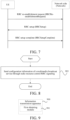
FIG. 3 is a schematic diagram of an RRC connection establishment process according to an embodiment of this application. -
FIG. 4 is another schematic diagram of an RRC connection establishment process according to an embodiment of this application. -
FIG. 5 is a schematic diagram of an RRC connection resume process according to an embodiment of this application. -
FIG. 6 is a schematic diagram of an RRC connection re-establishment process according to an embodiment of this application. -
FIG. 7 is another schematic diagram of an RRC connection re-establishment process according to an embodiment of this application. -
FIG. 8 is a schematic flowchart of an information transmission method applied to a network side device according to an embodiment of this application. -
FIG. 9 is a schematic diagram of modules of an information transmission apparatus applied to a terminal according to an embodiment of this application. -
FIG. 10 is a structural block diagram of a communication device according to an embodiment of this application. -
FIG. 11 is a structural block diagram of a terminal according to an embodiment of this application. -
FIG. 12 is a schematic diagram of modules of an information transmission apparatus applied to a network side device according to an embodiment of this application. -
FIG. 13 is a structural block diagram of a network side device according to an embodiment of this application. - The following clearly and completely describes the technical solutions in the embodiments of this application with reference to the accompanying drawings in the embodiments of this application. Apparently, the described embodiments are some rather than all of the embodiments of this application. All other embodiments obtained by a person of ordinary skill in the art based on the embodiments of this application without creative efforts shall fall within the protection scope of this application.
- The terms such as "first" and "second" in the specification and the claims of this application are intended to distinguish between similar objects, but are not used for describing a specific sequence or a chronological order. It is to be understood that the data used in such a way is interchangeable in proper circumstances, so that the embodiments of this application can be implemented in other sequences than the sequence illustrated or described herein. In addition, objects distinguished by "first" and "second" are usually of one type, and a quantity of the objects is not limited. For example, a first object may be one or more than one. In addition, "and/or" in the specification and claims represents at least one of connected objects. The character "/" generally indicates an "or" relationship between the associated objects.
- It is worth noting that technologies described in the embodiments of this application are not limited to an LTE-Advanced (LTE-Advanced, LTE-A) system of long term evolution (Long Term Evolution, LTE)/LTE, but may further be used in other wireless communication systems, such as code division multiple access (Code Division Multiple Access, CDMA), time division multiple access (Time Division Multiple Access, TDMA), frequency division multiple access (Frequency Division Multiple Access, FDMA), orthogonal frequency division multiple access (Orthogonal Frequency Division Multiple Access, OFDMA), single-carrier frequency-division multiple access (Single-carrier Frequency-Division Multiple Access, SC-FMA) and other systems. The terms "system" and "network" in the embodiments of this application are often used interchangeably, and the described technologies may be used for not only the foregoing systems and radio technologies, but also other systems and radio technologies. However, the following description describes a new radio (New Radio, NR) system for a purpose of example, and an NR term is used in many parts of the following description. These technologies are also applicable to an application other than an NR system application, such as a 6th generation (6th Generation, 6G) communication system.
-
FIG. 1 is a block diagram of a wireless communication system to which an embodiment of this application is applicable. The wireless communication system includes aterminal 11 and anetwork side device 12. Theterminal 11 may also be referred to as a terminal device or user equipment (User Equipment, UE). Theterminal 11 may be a terminal-side device such as a mobile phone, a tablet personal computer (Tablet Personal Computer), a laptop computer (Laptop Computer) or a notebook computer, a personal digital assistant (Personal Digital Assistant, PDA), a palmtop computer, a netbook, an ultra-mobile personal computer (ultra-mobile personal computer, UMPC), a mobile Internet device (Mobile Internet Device, MID), a wearable device (Wearable Device) or vehicle user equipment (Vehicle User Equipment, VUE), pedestrian user equipment (Pedestrian User Equipment, PUE), and the like. The wearable device includes: a bracelet, a headphone, glasses, and the like. It needs to be noted that, the embodiments of this application do not limit a specific type of theterminal 11. Thenetwork side device 12 may be a base station or a core network. The base station may be referred to as node B, evolved node B, access point, base transceiver station (Base Transceiver Station, BTS), radio base station, radio transceiver, basic service set (Basic Service Set, BSS), extended service set (Extended Service Set, ESS), node B, evolved node B (eNB), home node B, home evolved node B, WLAN access point, WiFi node, transmitting receiving point (Transmitting Receiving Point, TRP), or some another suitable term in the described art. As long as the same technical effect is achieved, the base station is not limited to a specific technical term. It needs to be noted that, in the embodiments of this application, only a base station in the NR system is used as an example, but a specific type of the base station is not limited. - In order to enable those skilled in the art to better understand the embodiments of this application, the following descriptions are given first.
- Sending methods of a multimedia broadcast multicast service (MBMS) include the following two methods:
- MBMS sending method 1: Send through a physical multicast channel (Physical Multicast Channel, PMCH) in an MBMS single frequency network (Multimedia Broadcast multicast service Single Frequency Network) subframe. A control channel is sent through system information (e.g. SIB 13) and a multicast control channel (Multicast Control Channel, MCCH), and data is sent through a multicast traffic channel (Multicast Traffic Channel, MTCH).
- MBMS sending method 2: Single cell point to multipoint (Single Cell Point To Multipoint, SC-PTM):
Send through a physical downlink shared channel (Physical Downlink Shared Channel, PDSCH) scheduled by a physical downlink control channel (Physical Downlink Control Channel, PDCCH). Control information is sent through system information (e.g. SIB20) and a single cell multicast control channel (Single Cell Multicast Control Channel, SC-MCCH), and data is sent through a single cell multicast traffic channel (Single Cell Multicast Traffic Channel, SC-MTCH). The SC-MCCH is sent through a PDSCH scheduled by a single cell radio network temporary identity (Single Cell Radio Network Temporary Identity, SC-RNTI) PDCCH, and the SC-MTCH is sent through a PDSCH scheduled by a group radio network temporary identity (Group Radio Network Temporary Identity, G-RNTI) PDCCH. - User service description (User Service Description, USD): Before the MBMS service starts, a network informs UE of the USD. In the USD, an application/service layer provides temporary mobile group identity (Temporary Mobile Group Identity. TMGI), session start and end time, frequency, and MBMS service area identity (Service Area Identity, SAI) belonging to an MBMS service area for each service.
- SAI(s) of a current frequency and an adjacent frequency are provided in a system information block (SIB) 15. If one or more values in SAI(s) of a certain frequency are the same as SAI(s) in the USD, UE considers that the frequency can provide the MBMS service. It is worth noting that both an MBMS cell and a non-MBMS cell can provide the SIB 15 as long as the cell is a primary cell (Primary cell, Pcell).
- A SIB20 provides information for obtaining the SC-MCCH. The information is control information of the SC-PTM in the SC-MCCH, and provides scheduling information of all MBMS services in a current cell and a support situation of each MBMS service supported by the current cell of a neighboring cell. It is worth noting that the SIB 15 can only be provided by the MBMS cell, and the cell is a primary cell (Primary cell, Pcell).
- If the UE can perform SC-PTM reception, and the UE is receiving or interested in receiving the MBMS service, and can receive the MBMS service only when residing on a frequency providing the MBMS service, the UE can regard the frequency as a highest priority during an MBMS session.
- The following describes the information transmission method provided in the embodiments of this application in detail through specific embodiments and application scenarios thereof with reference to the accompanying drawings.
- As shown in
FIG. 2 , according to an embodiment of this application, an information transmission method is provided, and applied to a terminal. The method includes:
Step 201. Obtain configuration information of a multimedia broadcast service through radio resource control RRC signaling. - Optionally, the configuration information of the multimedia broadcast service MBS includes at least one of:
- information related to multimedia broadcast service MBS scheduling; or
- information related to service continuity of the multimedia broadcast service MBS.
- The information related to MBS scheduling may specifically be scheduling information of the MBS service. The information related to the service continuity of the MBS is all information related to the service continuity, such as a multimedia broadcast service situation (such as SAI of LTE) supported by a current frequency or an adjacent frequency, a multimedia broadcast service situation (such as TMGI of LTE) supported by a current cell, and the like.
- In the embodiments of this application, configuration information of an MBS service is sent through RRC signaling. Compared with the periodic transmission of the MCCH and the SC-MCCH, the RRC signaling is sent as needed by each terminal, thereby reducing signaling overheads and energy consumption in certain cases.
- Optionally, the step of obtaining configuration information of a multimedia broadcast service through radio resource control RRC signaling includes:
- initiating an RRC connection event; and
- obtaining the configuration information of the multimedia broadcast service through the RRC signaling in the RRC connection event;
- where the RRC connection event includes:
an RRC connection establishment process, or an RRC connection resume process, or an RRC connection re-establishment process. - It needs to be noted that, the RRC connection establishment process (RRC connection establishment) corresponds to idle UE (idle UE), the RRC connection resume process (RRC connection resume) corresponds to inactive UE (inactive UE), and the RRC connection re-establishment process (RRC connection re-establishment) corresponds to RRC connected UE (RRC Connected UE).
- In the embodiments of this application, the UE obtains the configuration information of the MBS service by initiating the RRC connection establishment process, the RRC connection resume process, or the RRC connection re-establishment process.
- Optionally, a triggering condition of the RRC connection event includes at least one of:
- the terminal has a multimedia broadcast service capability;
- the terminal is interested in the multimedia broadcast service;
- the terminal is receiving the multimedia broadcast service; or
- a configuration of the multimedia broadcast service is updated.
- Whether the RRC connection establishment process, the RRC connection resume process, or the RRC connection re-establishment process is triggered, at least one of the following is met: the UE has an MBS capability; the UE is interested in the MBS; the UE is receiving the MBS; and configuration of the MBS is updated.
- Optionally, a cause value in the RRC connection event is a cause value already defined or a newly set cause value;
- The cause value already defined is applicable to MBS configuration. The newly set cause value is a cause value different from the cause value already defined.
- the cause value in the RRC connection event includes at least one of:
- a value of an establishment cause during the RRC connection establishment process;
- a value of a resume cause during the RRC connection resume process; or
- a value of a re-establishment cause during the RRC connection re-establishment process. The value of the establishment cause (establishmentCause) is used for indicating an establishment cause in an RRC setup request; the value of the resume cause (resumeCause) is used for indicating a resume cause in an RRC resume request; and the value of the re-establishment cause (reestablishmentCause) is used for indicating a re-establishment cause in an RRC re-establishment request.
- Optionally, the newly set cause value is a cause value that is different from the cause value already defined and can be used for MBS configuration.
- For example, a value of a defined establishment cause (establishmentCause), a value of a defined resume cause (resumeCause), or a value of a defined re-establishment cause (reestablishmentCause) may be: mo-Data, mo-Signaling, and the like. A value of a newly set establishment cause (establishmentCause), a value of a newly set resume cause (resumeCause), or a value of a newly set re-establishment cause (reestablishmentCause) may be MBS Configuration, and the like.
- Optionally, unified access control (Unified Access Control, UAC) in the RRC connection establishment process or the RRC connection resume process includes at least one of:
- an access attempt is directly allowed without performing a UAC check;
- a defined access value, where the defined access value is applicable to a case of MBS configuration; and
- a newly set access value, where the newly set access value is an access value different from the defined access value, and the newly set access value is applicable to a case of MBS configuration.
- The access value includes at least one of a value of an access category or a value of an access identity.
- The access value includes at least one of a value of an access category (Access category) and a value of an access identity (Access identity(ies)), and the newly set access value is an access value different from the defined access value. Specifically, for example, an Access category of the defined access value is 7 and an Access identity of the defined access value is 0, and an Access category of the newly set access value is 11 and an Access identity of the newly set access value is 6.
- Optionally, the RRC signaling includes at least one of:
- an RRC reject message (RRCReject message);
- an RRC re-establishment message (RRCReestablishment message);
- an RRC setup message (RRCSetup message);
- an RRC resume message (RRCResume message); or
- an RRC release message (RRCRelease message).
- For example, as shown in
FIG. 3 , in the RRC connection establishment process, when a terminal sends an RRC setup request to a network side, the network side sends an RRC setup message to the terminal, and the terminal sends an RRC setup complete message to the network side, the configuration information of the MBS can be obtained through the RRC setup message sent by the network side. - As shown in
FIG. 4 , in the RRC connection establishment process, when the terminal sends an RRC connection establishment request to the network side, and the network side sends an RRC reject message to the terminal, the configuration information of the MBS can be obtained through the RRC reject message sent by the network side. - As shown in
FIG. 5 , in the RRC connection resume process, when the terminal sends an RRC resume request to the network side, the network side sends an RRC resume message to the terminal, and the terminal sends an RRC resume complete message to the network side, the terminal can obtain the configuration information of the MBS through the RRC resume message sent by the network side. - In the RRC connection re-establishment process, as shown in
FIG. 6 , when the terminal sends an RRC connection re-establishment request to the network side, the network side responds to the RRC connection re-establishment and sends an RRC connection re-establishment message, and an RRC connection is re-established between the terminal and the network side; or, as shown inFIG. 7 , when the network side responds to the RRC connection re-establishment and sends the RRC setup message, and an RRC connection is established between the terminal and the network side, the configuration information of the MBS can be obtained through the RRC connection re-establishment message or the RRC setup message. - Optionally, the information transmission method according to the embodiments of this application further includes:
obtaining an indication message, where the indication message is used for indicating whether the configuration information of the multimedia broadcast service changes. - Further optionally, the indication message is a short message, and a first bit or a second bit in the short message is used for indicating whether the configuration information changes, where the first bit is at least one bit that has been used in the short message, and the second bit is at least one bit that has not been used in the short message; or
the indication message is downlink control information scrambled by a first radio network temporary identity RNTI, and the first RNTI is an RNTI different from an already defined RNTI. - For example, whether the configuration information of the MBS service changes is indicated through one or more of first to third bits that have already been used in the short message, or through one or more of fourth to eighth bits that have not been used in the short message, or through DCI scrambled by a new RNTI, such as an X-RNTI.
- The short message (Short Message) is transmitted through a PDCCH scrambled by a P-RNTI and is in a DCI format 1_0. Bit 1 is a most significant bit.
- In the short message, a first bit is a system information modification indication. If the first bit is set to 1, it indicates that contents of a broadcast control channel (Broadcast Control Channel, BCCH) are modified except SIB6, SIB7, and SIB8; a second bit is an earthquake and tsunami warning system (Earthquake and Tsunami Warning System, Etws) and commercial mobile alert system (Commercial Mobile Alert System, Cmas) indication. If the second bit is set to 1, it indicates an ETWS primary notification, and/or an ETWS secondary notification, and/or a CMAS notification; a third bit is a stopping paging monitoring indication. If the third bit is set to 1, it indicates that in this Paging Occasion (PO), monitoring of a PDCCH occasion for transmitting a Paging message is stopped; and fourth to eighth bits are not used in this specification release and should be ignored if received by UE. In addition, all UE monitors a PDCCH addressed by a P-PNTI, and determines whether system information is modified, whether to stop monitoring paging, and the like according to values of each bit in DCI.
- Optionally, a terminal to which the first RNTI is applicable includes at least one of:
- a terminal having a multimedia broadcast service capability;
- a terminal interested in the multimedia broadcast service; or
- all terminals.
- In the embodiments of this application, configuration information of an MBS service is sent to a UE through dedicated RRC signaling, and a change in a configuration of the MBS service is indicated through a short message mechanism or the like. Compared with the periodic transmission of the MCCH and the SC-MCCH, the dedicated RRC signaling is sent as needed by each terminal, thereby reducing signaling overheads and energy consumption in certain cases.
- As shown in
FIG. 8 , the embodiments of this application further provide an information transmission method, applied to a network side device, the method including:
Step 801. Send configuration information of a multimedia broadcast service through radio resource control RRC signaling. - Optionally, the configuration information of the multimedia broadcast service MBS includes at least one of:
- information related to multimedia broadcast service MBS scheduling; or
- information related to service continuity of the multimedia broadcast service MBS.
- The information related to MBS scheduling may specifically be scheduling information of the MBS service. The information related to the service continuity of the MBS is all information related to the service continuity, such as a multimedia broadcast service situation (such as SAI of LTE) supported by a current frequency or an adjacent frequency, a multimedia broadcast service situation (such as TMGI of LTE) supported by a current cell, and the like. In the embodiments of this application, configuration information of an MBS service is sent to a UE through dedicated RRC signaling. Compared with the periodic transmission of the MCCH and the SC-MCCH, the dedicated RRC signaling is sent as needed by each terminal, thereby reducing signaling overheads and energy consumption in certain cases.
- Optionally, the configuration information of the multimedia broadcast service includes at least one of:
- information related to multimedia broadcast service scheduling; or
- information related to service continuity of the multimedia broadcast service.
- Optionally, the RRC signaling includes at least one of:
- an RRC reject message (RRCReject message);
- an RRC re-establishment message (RRCReestablishment message);
- an RRC setup message (RRCSetup message);
- an RRC resume message (RRCResume message); or
- an RRC release message (RRCRelease message).
- Optionally, the information transmission method according to the embodiments of this application further includes:
sending an indication message, where the indication message is used for indicating whether the configuration information of the multimedia broadcast service changes. - Optionally, the indication message is a short message, and a first bit or a second bit in the short message is used for indicating whether the configuration information changes, where the first bit is at least one bit that has been used in the short message, and the second bit is at least one bit that has not been used in the short message; or
the indication message is downlink control information scrambled by a first radio network temporary identity RNTI, and the first RNTI is an RNTI different from an already defined RNTI. - Optionally, a terminal to which the first RNTI is applicable includes at least one of:
- a terminal having a multimedia broadcast service capability;
- a terminal interested in the multimedia broadcast service; or
- all terminals.
- It needs to be noted that, the indication message is described in detail in embodiments of a terminal side. Details are not repeated herein.
- In the embodiments of this application, configuration information of an MBS service is sent to a UE through dedicated RRC signaling, and a change in a configuration of the MBS service is indicated through a short message mechanism or the like. Compared with the periodic transmission of the MCCH and the SC-MCCH, the dedicated RRC signaling is sent as needed by each terminal, thereby reducing signaling overheads and energy consumption in certain cases.
- It needs to be noted that, the information transmission method provided in the embodiments of this application may be performed by an information transmission apparatus applied to a terminal or a control module included in the information transmission apparatus and configured to perform the information transmission method. In the embodiments of this application, the information transmission apparatus applied to the terminal provided in the embodiments of this application is described by using an example in which the information transmission method is performed by the information transmission apparatus.
- As shown in
FIG. 9 , according to an embodiment of this application, aninformation transmission apparatus 900 is further provided, and applied to a terminal. The apparatus includes:
a first obtainingmodule 901, configured to obtain configuration information of a multimedia broadcast service through radio resource control RRC signaling. - In the embodiments of this application, configuration information of an MBS service is sent to a UE through dedicated RRC signaling. Compared with the periodic transmission of the MCCH and the SC-MCCH, the dedicated RRC signaling is sent as needed by each terminal, thereby reducing signaling overheads and energy consumption in certain cases.
- According to the information transmission apparatus provided in the embodiments of this application, the configuration information of the multimedia broadcast service includes at least one of:
- information related to multimedia broadcast service scheduling; or
- information related to service continuity of the multimedia broadcast service.
- According to the information transmission apparatus provided in the embodiments of this application, the first obtaining module includes:
- a triggering submodule, configured to trigger an RRC connection event; and
- an obtaining submodule, configured to obtain the configuration information of the multimedia broadcast service through the RRC signaling in the RRC connection event,
- where the RRC connection event includes:
an RRC connection establishment process, or an RRC connection resume process, or an RRC connection re-establishment process. - According to the information transmission apparatus provided in the embodiments of this application, a triggering condition of the RRC connection event includes at least one of:
- the terminal has a multimedia broadcast service capability;
- the terminal is interested in the multimedia broadcast service;
- the terminal is receiving the multimedia broadcast service; or
- a configuration of the multimedia broadcast service is updated.
- According to the information transmission apparatus provided in the embodiments of this application, a cause value in the RRC connection event is a cause value already defined or a newly set cause value,
- the newly set cause value is a cause value different from the cause value already defined; and
- the cause value in the RRC connection event includes at least one of:
- a value of an establishment cause during the RRC connection establishment process;
- a value of a resume cause during the RRC connection resume process; or
- a value of a re-establishment cause during the RRC connection re-establishment process.
- According to the information transmission apparatus provided in the embodiments of this application, unified access control UAC in the RRC connection establishment process or the RRC connection resume process includes at least one of:
- an access attempt is directly allowed without performing a UAC check;
- a defined access value; or
- a newly set access value, where the newly set access value is an access value different from the defined access value, and
- the access value includes at least one of a value of an access category or a value of an access identity.
- According to the information transmission apparatus provided in the embodiments of this application, the RRC signaling includes at least one of:
- an RRC reject message;
- an RRC re-establishment message;
- an RRC setup message;
- an RRC resume message; or
- an RRC release message.
- The information transmission apparatus provided in the embodiments of this application further includes:
a second obtaining module, configured to obtain an indication message, where the indication message is used for indicating whether the configuration information of the multimedia broadcast service changes. - According to the information transmission apparatus provided in the embodiments of this application, the indication message is a short message, and a first bit or a second bit in the short message is used for indicating whether the configuration information changes, where the first bit is at least one bit that has been used in the short message, and the second bit is at least one bit that has not been used in the short message; or
the indication message is downlink control information scrambled by a first radio network temporary identity RNTI, and the first RNTI is an RNTI different from an already defined RNTI. - According to the information transmission apparatus provided in the embodiments of this application, a terminal to which the first RNTI is applicable includes at least one of:
- a terminal having a multimedia broadcast service capability;
- a terminal interested in the multimedia broadcast service; or
- all terminals.
- According to the information transmission apparatus provided in the embodiments of this application, configuration information of an MBS service is sent to a UE through dedicated RRC signaling, and a change in a configuration of the MBS service is indicated through a short message mechanism or the like. Compared with the periodic transmission of the MCCH and the SC-MCCH, the dedicated RRC signaling is sent as needed by each terminal, thereby reducing signaling overheads and energy consumption in certain cases.
- The information transmission apparatus in the embodiments of this application may be an apparatus, or a component, an integrated circuit, or a chip in a terminal. The apparatus may be a mobile terminal or a non-mobile terminal. Exemplarily, the mobile terminal may include, but is not limited to, types of the terminal 11 listed above, and the non-mobile terminal may be a server, a network attached storage (Network Attached Storage, NAS), a personal computer (personal computer, PC), a television (television, TV), an automated teller machine, or a self-service machine. This is not specifically limited in the embodiments of this application.
- The information transmission apparatus in the embodiments of this application may be an apparatus with an operating system. The operating system may be an Android (Android) operating system, or may be an ios operating system or other possible operating systems, which is not specifically limited in the embodiments of this application.
- The information transmission apparatus provided in the embodiments of this application can implement each process implemented by a method embodiment of
FIG. 1 to FIG. 7 and achieve the same technical effect. To avoid repetition, details are not described herein again. - Optionally, as shown in
FIG. 10 , the embodiments of this application further provide acommunication device 1000, including aprocessor 1001, amemory 1002, and a program or an instruction stored in thememory 1002 and executable on theprocessor 1001. For example, when thecommunication device 1000 is a terminal, the program or instruction is executed by theprocessor 1001 to implement processes of the foregoing embodiments of the information transmission method applied to the terminal, and the same technical effect can be achieved. When thecommunication device 1000 is a network side device, the program or instruction is executed by theprocessor 1001 to implement processes of the foregoing embodiments of the information transmission method applied to the network device, and the same technical effect can be achieved. To avoid repetition, details are not described herein again. -
FIG. 11 is a schematic structural diagram of hardware of a terminal implementing an embodiment of this application. - The terminal 1100 includes, but is not limited to: components such as a
radio frequency unit 1101, anetwork module 1102, anaudio output unit 1103, aninput unit 1104, asensor 1105, a display unit 11011, auser input unit 1107, aninterface unit 1108, amemory 1109, and aprocessor 1110. - Those skilled in the art may understand that the terminal 1100 may further include a power supply (such as a battery) for supplying power to the components. The power supply may logically connect to the
processor 1110 by using a power supply management system, thereby implementing functions such as charging, discharging, and power consumption management, by using the power supply management system. A terminal structure shown inFIG. 6 does not constitute a limitation to the terminal, and the terminal may include more or fewer components than those shown in the figure, or some components may be combined, or a different component deployment may be used. Details are not described herein again. - It should be understood that in the embodiments of this application, the
input unit 1104 may include a graphics processing unit (Graphics Processing Unit, GPU) 11041 and amicrophone 11042, and thegraphics processing unit 11041 processes image data of a still picture or a video obtained by an image capture apparatus (such as a camera) in a video capture mode or an image capture mode. Thedisplay unit 1106 may include adisplay panel 11061. Thedisplay panel 11061 may be configured by using a liquid crystal display, an organic light-emitting diode, or the like. Theuser input unit 1107 includes atouch panel 11071 and anotherinput device 11072. Thetouch panel 11071 is also referred to as a touch screen. Thetouch panel 11071 may include two parts: a touch detection apparatus and a touch controller. The anotherinput device 11072 may include, but is not limited to, a physical keyboard, a functional key (for example, a volume control key or a switch key), a track ball, a mouse, and a joystick, and details will not be described herein again. - In the embodiments of this application, the
radio frequency unit 1101 is configured to receive downlink data from a network side device and transmit the downlink data to theprocessor 1110 for processing; and send uplink data to the network side device. Generally, theradio frequency unit 1101 includes, but is not limited to, an antenna, at least one amplifier, a transceiver, a coupler, a low noise amplifier, a duplexer, and the like. - The
memory 1109 may be configured to store a software program or instruction and various data. Thememory 1109 may mainly include a program or instruction storage area and a data storage area. The program or instruction storage area may store an operating system, an application program or instruction required by at least one function (for example, a sound playback function and an image display function), and the like. In addition, thememory 1109 may include a high-speed random access memory and may also include a non-volatile memory. The non-volatile memory may be a read-only memory (Read-Only Memory, ROM), a programmable read-only memory (Programmable ROM, PROM), an erasable programmable read-only memory (Erasable PROM, EPROM), an electrically erasable programmable read-only memory (Electrically EPROM, EEPROM), or a flash memory. Thememory 1109 may include, for example, at least one magnetic disk memory device, a flash memory device, or other non-volatile solid-state memory devices. - Optionally, the
processor 1110 may include one or more processing units. Optionally, theprocessor 1110 may integrate an application processor and a modem processor, where the application processor mainly processes an operating system, a user interface, an application program or instruction, and the like, and the modem processor mainly processes wireless communication, such as a baseband processor. It may be understood that the modem processor may alternatively not be integrated into theprocessor 1110. - The
processor 1110 is configured to obtain configuration information of a multimedia broadcast service through radio resource control RRC signaling. - According to the terminal provided in the embodiments of this application, configuration information of an MBS service is sent to a UE through dedicated RRC signaling. Compared with the periodic transmission of the MCCH and the SC-MCCH, the dedicated RRC signaling is sent as needed by each terminal, thereby reducing signaling overheads and energy consumption in certain cases.
- The configuration information of the multimedia broadcast service includes at least one of:
- information related to multimedia broadcast service scheduling; or
- information related to service continuity of the multimedia broadcast service.
- Optionally, the
processor 1110 is also configured to trigger an RRC connection event; and - obtain the configuration information of the multimedia broadcast service through the RRC signaling in the RRC connection event;
- where the RRC connection event includes:
- an RRC connection establishment process, or an RRC connection resume process, or an RRC connection re-establishment process.
- Optionally, a triggering condition of the RRC connection event includes at least one of:
- the terminal has a multimedia broadcast service capability;
- the terminal is interested in the multimedia broadcast service;
- the terminal is receiving the multimedia broadcast service; or
- a configuration of the multimedia broadcast service is updated.
- Optionally, a cause value in the RRC connection event is a cause value already defined or a newly set cause value;
- the newly set cause value is a cause value different from the cause value already defined; and
- the cause value in the RRC connection event includes at least one of:
- a value of an establishment cause during the RRC connection establishment process;
- a value of a resume cause during the RRC connection resume process; or
- a value of a re-establishment cause during the RRC connection re-establishment process.
- Optionally, unified access control UAC in the RRC connection establishment process or the RRC connection resume process includes at least one of:
- an access attempt is directly allowed without performing a UAC check;
- a defined access value; or
- a newly set access value, where the newly set access value is an access value different from the defined access value, and
- the access value includes at least one of a value of an access category or a value of an access identity.
- Optionally, the RRC signaling includes at least one of:
- an RRC reject message;
- an RRC re-establishment message;
- an RRC setup message;
- an RRC resume message; or
- an RRC release message.
- Optionally, the
processor 1110 is further configured to:
obtain an indication message, where the indication message is used for indicating whether the configuration information of the multimedia broadcast service changes. - Optionally, the indication message is a short message, and a first bit or a second bit in the short message is used for indicating whether the configuration information changes, where the first bit is at least one bit that has been used in the short message, and the second bit is at least one bit that has not been used in the short message; or
the indication message is downlink control information scrambled by a first radio network temporary identity RNTI, and the first RNTI is an RNTI different from an already defined RNTI. - Optionally, a terminal to which the first RNTI is applicable includes at least one of:
- a terminal having a multimedia broadcast service capability;
- a terminal interested in the multimedia broadcast service; or
- all terminals.
- According to the terminal provided in the embodiments of this application, configuration information of an MBS service is sent to a UE through dedicated RRC signaling, and a change in a configuration of the MBS service is indicated through a short message mechanism or the like. Compared with the periodic transmission of the MCCH and the SC-MCCH, the dedicated RRC signaling is sent as needed by each terminal, thereby reducing signaling overheads and energy consumption in certain cases.
- It needs to be noted that, the information transmission method provided in the embodiments of this application may be performed by an information transmission apparatus or a control module included in the information transmission apparatus and configured to perform the information transmission method. In the embodiments of this application, the information transmission apparatus provided in the embodiments of this application is described by using an example in which the information transmission method is performed by the information transmission apparatus.
- As shown in
FIG. 12 , the embodiments of this application further provide aninformation transmission apparatus 1200, applied to a network side device, the apparatus including:
afirst sending module 1201, configured to send configuration information of a multimedia broadcast service through radio resource control RRC signaling. - According to the information transmission apparatus provided in the embodiments of this application, the configuration information of the multimedia broadcast service includes at least one of:
- information related to multimedia broadcast service scheduling; or
- information related to service continuity of the multimedia broadcast service.
- According to the information transmission apparatus provided in the embodiments of this application, the RRC signaling includes at least one of:
- an RRC reject message;
- an RRC re-establishment message;
- an RRC setup message;
- an RRC resume message; or
- an RRC release message.
- The information transmission apparatus provided in the embodiments of this application further includes:
a second sending module, configured to send an indication message, where the indication message is used for indicating whether the configuration information of the multimedia broadcast service changes. - According to the information transmission apparatus provided in the embodiments of this application, the indication message is a short message, and a first bit or a second bit in the short message is used for indicating whether the configuration information changes, where the first bit is at least one bit that has been used in the short message, and the second bit is at least one bit that has not been used in the short message; or
the indication message is downlink control information scrambled by a first radio network temporary identity RNTI, and the first RNTI is an RNTI different from an already defined RNTI. - According to the information transmission apparatus provided in the embodiments of this application, a terminal to which the first RNTI is applicable includes at least one of:
- a terminal having a multimedia broadcast service capability;
- a terminal interested in the multimedia broadcast service; or
- all terminals.
- Specifically, the embodiments of this application further provide a network side device. As shown in
FIG. 13 , thenetwork device 1300 includes: anantenna 1301, aradio frequency apparatus 1302, and abaseband apparatus 1303. Theantenna 1301 is connected to theradio frequency apparatus 1302. In an uplink direction, theradio frequency apparatus 1302 receives information through theantenna 1301, and sends the received information to thebaseband apparatus 1303 for processing. In a downlink direction, thebaseband apparatus 1303 processes to-be-send information, and sends the information to theradio frequency apparatus 1302. Theradio frequency apparatus 1302 processes the received information and sends the information through theantenna 1301. - The frequency band processing apparatus may be located in the
baseband apparatus 1303. The method performed by the network side device in the foregoing embodiments may be implemented in thebaseband apparatus 1303, and thebaseband apparatus 1303 includes aprocessor 1304 and amemory 1305. - The
baseband apparatus 1303 may include, for example, at least one baseband plate. A plurality of chips are disposed on the baseband plate. As shown inFIG. 13 , one of the plurality of chips is, for example, theprocessor 1304, and is connected to thememory 1305, to invoke a program in thememory 1305 to perform operations of the network device in the foregoing method embodiments. - The
baseband apparatus 1303 may further include anetwork interface 1306, configured to exchange information with theradio frequency apparatus 1302. The interface is, for example, a common public radio interface (common public radio interface, CPRI). - Specifically, the network side device provided in the embodiments of the present invention further includes: an instruction or program stored in the
memory 1305 and executable on theprocessor 1304. Theprocessor 1304 invokes the instruction or program in thememory 1305 to perform the method performed by each module shown inFIG. 12 and achieve the same technical effect. To avoid repetition, details are not described herein again. - The embodiments of this application further provide a readable storage medium storing therein a program or an instruction. The program or instruction is executed by a processor to implement the processes of the embodiments of the information transmission method, and the same technical effects can be achieved. To avoid repetition, details are not described herein again.
- The processor is a processor in the terminal in the foregoing embodiments. The readable storage medium includes a computer-readable storage medium, for example, a computer read-only memory (Read-Only Memory, ROM), a random access memory (Random Access Memory, RAM), a magnetic disk, or an optical disc.
- The embodiments of this application further provide a chip, including a processor and a communication interface. The communication interface is coupled to the processor, and the processor is configured to run a program or an instruction of a network side device to implement processes of the embodiments of the information transmission method, and the same technical effect can be achieved. To avoid repetition, details are not described herein again.
- It should be noted that, the chip mentioned in the embodiments of this application may also be referred to as a system-level chip, a system chip, a chip system, a system on chip, or the like.
- The embodiments of this application further provide a computer program product stored in a non-volatile readable storage medium. The computer program product is executed by at least one processor to implement processes of the foregoing embodiments of the information transmission method, and the same technical effect can be achieved. To avoid repetition, details are not described herein again.
- It needs to be noted that, terms "include", "comprise", and any variants thereof are intended to cover a non-exclusive inclusion. Therefore, in the context of a process, method, object, or apparatus that includes a series of elements, the process, method, object, or apparatus not only includes such elements, but also includes other elements not specified expressly, or may include inherent elements of the process, method, object, or apparatus. Without more limitations, elements defined by a sentence "including one" does not exclude that there are still other same elements in the process, method, object, or apparatus. Furthermore, it should be noted that a scope of the methods and apparatus in the embodiments of this application is not limited to performing the functions in the order shown or discussed, but may also include performing the functions in a substantially simultaneous manner or in the reverse order depending on the functions involved. For example, the methods described may be performed in an order different from that described, and various steps may also be added, omitted, or combined. In addition, features described with reference to some examples may be combined in other examples.
- Through the descriptions of the foregoing implementations, a person skilled in the art may clearly understand that the method according to the foregoing embodiments may be implemented through software and a necessary general hardware platform, and certainly, may also be implemented by hardware, but in many cases, the former manner is a better implementation. Based on such an understanding, the technical solutions of this application essentially, or the part contributing to the prior art may be implemented in a form of a software product. The computer software product is stored in a storage medium (for example, a ROM/RAM, a magnetic disk, or an optical disc), and includes several instructions for instructing a terminal (which may be a mobile phone, a computer, a server, an air conditioner, a network device, or the like) to perform the methods according to the embodiments of this application.
- Although the embodiments of this application have been described above with reference to the accompanying drawings, this application is not limited to the specific implementations described above, and the specific implementations described above are merely exemplary and not limitative. A person of ordinary skill in the art may make various variations under the teaching of this application without departing from the spirit of this application and the protection scope of the claims, and such variations shall all fall within the protection scope of this application.
Claims (39)
- An information transmission method, applied to a terminal, the method comprising:
obtaining configuration information of a multimedia broadcast service through radio resource control RRC signaling. - The information transmission method according to claim 1, wherein the configuration information of the multimedia broadcast service comprises at least one of:information related to multimedia broadcast service scheduling; orinformation related to service continuity of the multimedia broadcast service.
- The information transmission method according to claim 1, wherein the obtaining configuration information of a multimedia broadcast service through radio resource control RRC signaling comprises:initiating an RRC connection event; andobtaining the configuration information of the multimedia broadcast service through the RRC signaling in the RRC connection event;wherein the RRC connection event comprises:
an RRC connection establishment process, or an RRC connection resume process, or an RRC connection re-establishment process. - The information transmission method according to claim 3, wherein a triggering condition of the RRC connection event comprises at least one of:the terminal has a multimedia broadcast service capability;the terminal is interested in the multimedia broadcast service;the terminal is receiving the multimedia broadcast service; ora configuration of the multimedia broadcast service is updated.
- The information transmission method according to claim 3, whereina cause value in the RRC connection event is a cause value already defined or a newly set cause value;the newly set cause value is a cause value different from the cause value already defined; andthe cause value in the RRC connection event comprises at least one of:a value of an establishment cause during the RRC connection establishment process;a value of a resume cause during the RRC connection resume process; ora value of a re-establishment cause during the RRC connection re-establishment process.
- The information transmission method according to claim 3, wherein unified access control UAC in the RRC connection establishment process or the RRC connection resume process comprises at least one of:an access attempt is directly allowed without performing a UAC check;a defined access value; ora newly set access value, wherein the newly set access value is an access value different from the defined access value, andthe access value comprises at least one of a value of an access category or a value of an access identity.
- The information transmission method according to claim 1, wherein the RRC signaling comprises at least one of:an RRC reject message;an RRC re-establishment message;an RRC setup message;an RRC resume message; oran RRC release message.
- The information transmission method according to claim 1, further comprising:
obtaining an indication message, wherein the indication message is used for indicating whether the configuration information of the multimedia broadcast service changes. - The information transmission method according to claim 8, wherein the indication message is a short message, and a first bit or a second bit in the short message is used for indicating whether the configuration information changes, wherein the first bit is at least one bit that has been used in the short message, and the second bit is at least one bit that has not been used in the short message; or
the indication message is downlink control information scrambled by a first radio network temporary identity RNTI, and the first RNTI is an RNTI different from an already defined RNTI. - The information transmission method according to claim 9, wherein a terminal to which the first RNTI is applicable comprises at least one of:a terminal having a multimedia broadcast service capability;a terminal interested in the multimedia broadcast service; orall terminals.
- An information transmission method, applied to a network side device, the method comprising:
sending configuration information of a multimedia broadcast service through radio resource control RRC signaling. - The information transmission method according to claim 11, wherein the configuration information of the multimedia broadcast service comprises at least one of:information related to multimedia broadcast service scheduling; orinformation related to service continuity of the multimedia broadcast service.
- The information transmission method according to claim 11, wherein the RRC signaling comprises at least one of:an RRC reject message;an RRC re-establishment message;an RRC setup message;an RRC resume message; oran RRC release message.
- The information transmission method according to claim 11, further comprising:
sending an indication message, wherein the indication message is used for indicating whether the configuration information of the multimedia broadcast service changes. - The information transmission method according to claim 14, wherein the indication message is a short message, and a first bit or a second bit in the short message is used for indicating whether the configuration information changes, wherein the first bit is at least one bit that has been used in the short message, and the second bit is at least one bit that has not been used in the short message; or
the indication message is downlink control information scrambled by a first radio network temporary identity RNTI, and the first RNTI is an RNTI different from an already defined RNTI. - The information transmission method according to claim 15, wherein a terminal to which the first RNTI is applicable comprises at least one of:a terminal having a multimedia broadcast service capability;a terminal interested in the multimedia broadcast service; orall terminals.
- An information transmission apparatus, applied to a terminal, the apparatus comprising:
a first obtaining module, configured to obtain configuration information of a multimedia broadcast service through radio resource control RRC signaling. - The information transmission apparatus according to claim 17, wherein the configuration information of the multimedia broadcast service comprises at least one of:information related to multimedia broadcast service scheduling; orinformation related to service continuity of the multimedia broadcast service.
- The information transmission apparatus according to claim 17, wherein the first obtaining module comprises:a triggering submodule, configured to trigger an RRC connection event; andan obtaining submodule, configured to obtain the configuration information of the multimedia broadcast service through the RRC signaling in the RRC connection event,wherein the RRC connection event comprises:
an RRC connection establishment process, or an RRC connection resume process, or an RRC connection re-establishment process. - The information transmission apparatus according to claim 19, wherein a triggering condition of the RRC connection event comprises at least one of:the terminal has a multimedia broadcast service capability;the terminal is interested in the multimedia broadcast service;the terminal is receiving the multimedia broadcast service; ora configuration of the multimedia broadcast service is updated.
- The information transmission apparatus according to claim 19, wherein a cause value in the RRC connection event is a cause value already defined or a newly set cause value;the newly set cause value is a cause value different from the cause value already defined; andthe cause value in the RRC connection event comprises at least one of:a value of an establishment cause during the RRC connection establishment process;a value of a resume cause during the RRC connection resume process; ora value of a re-establishment cause during the RRC connection re-establishment process.
- The information transmission apparatus according to claim 19, wherein unified access control UAC in the RRC connection establishment process or the RRC connection resume process comprises at least one of:an access attempt is directly allowed without performing a UAC check;a defined access value; ora newly set access value, wherein the newly set access value is an access value different from the defined access value, andthe access value comprises at least one of a value of an access category or a value of an access identity.
- The information transmission apparatus according to claim 17, wherein the RRC signaling comprises at least one of:an RRC reject message;an RRC re-establishment message;an RRC setup message;an RRC resume message; oran RRC release message.
- The information transmission apparatus according to claim 17, further comprising:
a second obtaining module, configured to obtain an indication message, wherein the indication message is used for indicating whether the configuration information of the multimedia broadcast service changes. - The information transmission apparatus according to claim 24, wherein the indication message is a short message, and a first bit or a second bit in the short message is used for indicating whether the configuration information changes, wherein the first bit is at least one bit that has been used in the short message, and the second bit is at least one bit that has not been used in the short message; or
the indication message is downlink control information scrambled by a first radio network temporary identity RNTI, and the first RNTI is an RNTI different from an already defined RNTI. - The information transmission apparatus according to claim 25, wherein a terminal to which the first RNTI is applicable comprises at least one of:a terminal having a multimedia broadcast service capability;a terminal interested in the multimedia broadcast service; orall terminals.
- A terminal, comprising a processor, a memory, and a program or an instruction stored in the memory and executable by the processor, the program or instruction, when executed by the processor, implementing steps of the information transmission method according to any one of claims 1 to 10.
- An information transmission apparatus, applied to a network side device, the apparatus comprising:
a first sending module, configured to send configuration information of a multimedia broadcast service through radio resource control RRC signaling. - The information transmission apparatus according to claim 28, wherein the configuration information of the multimedia broadcast service comprises at least one of:information related to multimedia broadcast service scheduling; orinformation related to service continuity of the multimedia broadcast service.
- The information transmission apparatus according to claim 28, wherein the RRC signaling comprises at least one of:an RRC reject message;an RRC re-establishment message;an RRC setup message;an RRC resume message; oran RRC release message.
- The information transmission apparatus according to claim 28, further comprising:
a second sending module, configured to send an indication message, wherein the indication message is used for indicating whether the configuration information of the multimedia broadcast service changes. - The information transmission apparatus according to claim 31, wherein the indication message is a short message, and a first bit or a second bit in the short message is used for indicating whether the configuration information changes, wherein the first bit is at least one bit that has been used in the short message, and the second bit is at least one bit that has not been used in the short message; or
the indication message is downlink control information scrambled by a first radio network temporary identity RNTI, and the first RNTI is an RNTI different from an already defined RNTI. - The information transmission apparatus according to claim 32, wherein a terminal to which the first RNTI is applicable comprises at least one of:a terminal having a multimedia broadcast service capability;a terminal interested in the multimedia broadcast service; orall terminals.
- A network side device, comprising a processor, a memory, and a program or an instruction stored in the memory and executable by the processor, the program or instruction, when executed by the processor, implementing steps of the information transmission method according to any one of claims 11 to 16.
- A readable storage medium, storing a program or an instruction, the program or instruction, when executed by a processor, implementing steps of the information transmission method according to any one of claims 1 to 10, or steps of the information transmission method according to any one of claims 11 to 16.
- A chip, comprising a processor and a communication interface, the communication interface being coupled to the processor, and the processor being configured to run a program or an instruction to implement the information transmission method according to any one of claims 1 to 16.
- A computer program product, stored in a non-volatile readable storage medium, the computer program product, when executed by at least one processor, implementing the information transmission method according to any one of claims 1 to 16.
- A terminal, configured to perform steps of the information transmission method according to any one of claims 1 to 10.
- A network side device, configured to perform steps of the information transmission method according to any one of claims 11 to 16.
Applications Claiming Priority (2)
| Application Number | Priority Date | Filing Date | Title |
|---|---|---|---|
| CN202010787339.6A CN114071741B (en) | 2020-08-06 | 2020-08-06 | Information transmission method, device, terminal and network side equipment |
| PCT/CN2021/110908 WO2022028539A1 (en) | 2020-08-06 | 2021-08-05 | Information transmission method and apparatus, terminal, and network side device |
Publications (2)
| Publication Number | Publication Date |
|---|---|
| EP4195833A1 true EP4195833A1 (en) | 2023-06-14 |
| EP4195833A4 EP4195833A4 (en) | 2024-02-07 |
Family
ID=80117037
Family Applications (1)
| Application Number | Title | Priority Date | Filing Date |
|---|---|---|---|
| EP21854520.0A Pending EP4195833A4 (en) | 2020-08-06 | 2021-08-05 | INFORMATION TRANSMISSION METHOD AND APPARATUS, TERMINAL AND NETWORK SIDE DEVICE |
Country Status (5)
| Country | Link |
|---|---|
| US (1) | US20230189381A1 (en) |
| EP (1) | EP4195833A4 (en) |
| JP (2) | JP7506823B2 (en) |
| CN (1) | CN114071741B (en) |
| WO (1) | WO2022028539A1 (en) |
Families Citing this family (4)
| Publication number | Priority date | Publication date | Assignee | Title |
|---|---|---|---|---|
| CN116980837A (en) * | 2022-04-22 | 2023-10-31 | 大唐移动通信设备有限公司 | Multicast configuration information acquisition method, device, terminal and network side equipment |
| WO2023226056A1 (en) * | 2022-05-27 | 2023-11-30 | 北京小米移动软件有限公司 | Update configuration receiving and sending methods and apparatuses, communication apparatus, and storage medium |
| CN118057982A (en) * | 2022-09-20 | 2024-05-21 | 北京小米移动软件有限公司 | Information receiving, information sending method and device, and storage medium |
| WO2024096048A1 (en) * | 2022-11-02 | 2024-05-10 | 京セラ株式会社 | Communication method |
Family Cites Families (66)
| Publication number | Priority date | Publication date | Assignee | Title |
|---|---|---|---|---|
| US7970423B2 (en) * | 2002-11-08 | 2011-06-28 | Nokia Corporation | Context linking scheme |
| KR100594101B1 (en) * | 2003-01-20 | 2006-06-30 | 삼성전자주식회사 | System and method for supporting multimedia broadcast/multicast service in non tracking area |
| KR100947741B1 (en) * | 2003-05-09 | 2010-03-17 | 엘지전자 주식회사 | How to set up RRC connection in mobile communication system |
| KR100937419B1 (en) * | 2003-10-02 | 2010-01-18 | 엘지전자 주식회사 | Method of connecting broadcast or multicast service between network elements in mobile communication system |
| US8891427B2 (en) * | 2009-04-24 | 2014-11-18 | Telefonaktiebolaget Lm Ericsson (Publ) | Method and a system for providing MBMS counting |
| WO2011020027A1 (en) * | 2009-08-14 | 2011-02-17 | Interdigital Patent Holdings, Inc. | Mcch notification scheduling and contents |
| US8515475B2 (en) | 2010-03-17 | 2013-08-20 | Htc Corporation | Apparatuses and methods for handling network initiated connection release procedures |
| KR20110104905A (en) * | 2010-03-17 | 2011-09-23 | 한국전자통신연구원 | Method and apparatus for managing multicast and broadcast service resources |
| WO2012134213A2 (en) * | 2011-03-31 | 2012-10-04 | 엘지전자 주식회사 | Method for transmitting/receiving message for receiving broadcasting service reception in wireless communication system and apparatus for same |
| CN102938878B (en) | 2011-08-15 | 2016-03-23 | 上海贝尔股份有限公司 | The MBMS information notice method of neighbor cell and corresponding equipment |
| JP2014532339A (en) * | 2011-09-30 | 2014-12-04 | 富士通株式会社 | Method for realizing multimedia broadcast multicast service, home base station, and user apparatus |
| EP2787786B1 (en) * | 2011-10-10 | 2018-07-18 | Samsung Electronics Co., Ltd | Method and device for a random access of a secondary cell in a mobile communication system using Carrier Aggregation |
| US9510252B2 (en) * | 2012-04-24 | 2016-11-29 | Lg Electronics Inc. | Method and apparatus for selecting cell in wireless communication system |
| WO2014126423A1 (en) * | 2013-02-14 | 2014-08-21 | 엘지전자 주식회사 | Method for reporting mbms information in wireless communication system and device for supporting same |
| CN105191177B (en) * | 2013-04-01 | 2018-09-11 | Lg电子株式会社 | The multimedia broadcast/multicast service method and apparatus communicated for the device in wireless communication system to device D2D |
| WO2014166071A1 (en) * | 2013-04-09 | 2014-10-16 | 华为技术有限公司 | Data transmission method, device and system |
| US9769792B2 (en) * | 2013-04-22 | 2017-09-19 | Nokia Solutions And Networks Oy | Incoming call |
| CN105052195A (en) * | 2014-01-17 | 2015-11-11 | 华为技术有限公司 | User equipment, network equipment and log minimization drive test measurement method |
| WO2015115459A1 (en) * | 2014-01-31 | 2015-08-06 | 京セラ株式会社 | Mbms measurement control method and user terminal |
| WO2015137730A1 (en) * | 2014-03-13 | 2015-09-17 | Lg Electronics Inc. | Method and apparatus for transmitting multimedia broadcast supplement for public warning system in wireless communication system |
| CN106416352B (en) * | 2014-05-16 | 2019-11-05 | Lg电子株式会社 | The method and apparatus of the MBMS measurement availability of record are indicated in wireless communication system |
| KR102241827B1 (en) * | 2014-05-16 | 2021-04-19 | 삼성전자 주식회사 | Method and apparatus for transmitting/receiving signal in mobilre communication system supporting a plurality of carriers |
| US10264514B2 (en) * | 2014-07-28 | 2019-04-16 | Lg Electronics Inc. | Method for access control in wireless communication system and apparatus supporting same |
| US20170310718A1 (en) * | 2014-10-27 | 2017-10-26 | Lg Electronics Inc. | Method and apparatus for providing service continuity in mbsfn service boundary area |
| US10327111B2 (en) * | 2014-10-30 | 2019-06-18 | Lg Electronics Inc. | MBMS operation method performed by terminal in wireless communication system and terminal using same |
| CN105992158B (en) * | 2015-02-13 | 2020-09-08 | 中兴通讯股份有限公司 | Scheduling method and device for single-cell Multimedia Broadcast Multicast Service (MBMS) |
| EP3955641B1 (en) * | 2015-04-07 | 2023-06-07 | BlackBerry Limited | Switching between network based and relay based operation for mission critical voice call |
| US10505650B2 (en) * | 2015-04-27 | 2019-12-10 | Kyocera Corporation | Radio terminal and network apparatus |
| WO2017028504A1 (en) * | 2015-08-14 | 2017-02-23 | 华为技术有限公司 | Multicast service reading and sending method and relevant device |
| BR112018072673A2 (en) * | 2016-05-06 | 2019-02-19 | Huawei Technologies Co., Ltd. | multicast service receipt method, multicast service submission method, device, and system |
| US10742468B2 (en) * | 2016-07-07 | 2020-08-11 | Lg Electronics Inc. | Method and apparatus for transceiving a signal in a wireless communication system supporting zone-based communication |
| US11019601B2 (en) * | 2016-07-26 | 2021-05-25 | Lg Electronics Inc. | Method and device for receiving MBMS control information through beam |
| US10299083B2 (en) * | 2016-07-31 | 2019-05-21 | Lg Electronics Inc. | Method for providing continuity of MBMS service and device supporting the same |
| US10728812B2 (en) * | 2016-08-11 | 2020-07-28 | Lg Electronics Inc. | Method and apparatus for supporting MBMS service continuity |
| EP3487193B1 (en) * | 2016-08-12 | 2020-05-27 | Huawei Technologies Co., Ltd. | Service transmission method and wireless communication device |
| WO2018032469A1 (en) * | 2016-08-18 | 2018-02-22 | Qualcomm Incorporated | Techniques and apparatuses for sc-ptm configuration in handover signaling for service continuity |
| US11032673B2 (en) * | 2016-08-30 | 2021-06-08 | Kyocera Corporation | Radio terminal and base station |
| US10986690B2 (en) * | 2016-11-11 | 2021-04-20 | Lg Electronics Inc. | Method and apparatus for configuring RRC connection establishment cause for relay terminal in idle state in wireless communication system |
| US10716039B2 (en) * | 2016-12-02 | 2020-07-14 | Ofinno, Llc | Handover procedure for a UE with V2X services |
| US10856306B2 (en) * | 2016-12-02 | 2020-12-01 | Ofinno, Llc | UE context retrieve for V2X services |
| CN110546967B (en) * | 2017-03-09 | 2021-10-01 | Lg电子株式会社 | Method and apparatus for receiving MBMS service based on beam |
| KR102356027B1 (en) * | 2017-03-24 | 2022-01-26 | 삼성전자 주식회사 | A method and apparatus for reporting a measurement result by a terminal transmitting and receiving data using a first radio access technology and a second radio access technology |
| WO2019160376A1 (en) * | 2018-02-18 | 2019-08-22 | 엘지전자 주식회사 | Method for signal transmission and reception by smf in wireless communication system and device therefor |
| US20200413241A1 (en) * | 2018-02-19 | 2020-12-31 | Lg Electronics Inc. | Method for terminal setting update in wireless communication system and apparatus therefor |
| CN110505672B (en) * | 2018-05-17 | 2020-12-15 | 华为技术有限公司 | Access control method, communication device, and base station |
| US20190386771A1 (en) * | 2018-06-13 | 2019-12-19 | Qualcomm Incorporated | Channel state information measurement and feedback for transmission mode switching |
| US10805969B2 (en) * | 2018-11-29 | 2020-10-13 | Octasic Inc | Method for determining location of user equipment (UE) using portable pseudo base station in LTE |
| US12328781B2 (en) * | 2019-02-13 | 2025-06-10 | Telefonaktiebolaget Lm Ericsson (Publ) | Master node, a secondary node, a user equipment and methods therein for handling of a secondary cell group (SCG) |
| CN113678527A (en) * | 2019-02-14 | 2021-11-19 | 苹果公司 | Method for simultaneously supporting scheduling resource selection mode and UE autonomous resource selection mode of NR V2X side link and switching between them |
| US12262303B2 (en) * | 2019-04-30 | 2025-03-25 | Google Llc | Applying access control in a communication device |
| CN114342421A (en) * | 2019-09-18 | 2022-04-12 | Oppo广东移动通信有限公司 | A service data transmission method and device, and terminal equipment |
| US11627502B2 (en) * | 2019-12-16 | 2023-04-11 | Qualcomm Incorporated | Measurements for multicast/broadcast service continuity |
| EP4079003B1 (en) * | 2019-12-20 | 2025-09-03 | InterDigital Patent Holdings, Inc. | Methods, apparatus, and systems for resource allocation for multimedia broadcast multicast service (mbms) in wireless systems |
| CN114982321B (en) * | 2020-01-10 | 2025-10-03 | 夏普株式会社 | Method and user equipment for multicast/broadcast service data reception |
| PL4089961T3 (en) * | 2020-01-13 | 2025-09-29 | Guangdong Oppo Mobile Telecommunications Corp., Ltd. | Wireless communication method, terminal device and system |
| US11564065B2 (en) * | 2020-02-13 | 2023-01-24 | Qualcomm Incorporated | Multimedia broadcast multicast service signaling and backward compatibility |
| WO2021161265A1 (en) * | 2020-02-13 | 2021-08-19 | Telefonaktiebolaget Lm Ericsson (Publ) | Method for broadcast and index generation in ue |
| CN113453337B (en) * | 2020-03-27 | 2023-06-27 | 维沃移动通信有限公司 | Broadcast multicast service transmission method, broadcast multicast service transmission indication method and equipment |
| TWI781560B (en) * | 2020-03-27 | 2022-10-21 | 香港商鴻穎創新有限公司 | User equipment and method for multicast/broadcast service |
| CN115474259B (en) * | 2020-04-09 | 2025-12-12 | 中兴通讯股份有限公司 | Configuring access control parameters in wireless communication |
| WO2021207932A1 (en) * | 2020-04-14 | 2021-10-21 | 华为技术有限公司 | Data transmission method and apparatus |
| US12108308B2 (en) * | 2020-06-11 | 2024-10-01 | Qualcomm Incorporated | User equipment assistance information for multicast and broadcast services |
| US11671902B2 (en) * | 2020-06-25 | 2023-06-06 | Qualcomm Incorporated | Apparatus and methods for new radio broadcast and multicast access control |
| WO2022003058A1 (en) * | 2020-06-30 | 2022-01-06 | Telefonaktiebolaget Lm Ericsson (Publ) | Continuity of multicast and broadcast services for user equipments in mobility |
| CN116250257B (en) * | 2020-07-30 | 2026-05-12 | 华为技术有限公司 | Communication method, device and system |
| CN116114370A (en) * | 2020-08-05 | 2023-05-12 | 交互数字专利控股公司 | Method and apparatus for link management and restoration of side link relay |
-
2020
- 2020-08-06 CN CN202010787339.6A patent/CN114071741B/en active Active
-
2021
- 2021-08-05 WO PCT/CN2021/110908 patent/WO2022028539A1/en not_active Ceased
- 2021-08-05 EP EP21854520.0A patent/EP4195833A4/en active Pending
- 2021-08-05 JP JP2023507447A patent/JP7506823B2/en active Active
-
2023
- 2023-02-02 US US18/105,138 patent/US20230189381A1/en active Pending
-
2024
- 2024-05-27 JP JP2024085454A patent/JP7703079B2/en active Active
Also Published As
| Publication number | Publication date |
|---|---|
| JP2024105717A (en) | 2024-08-06 |
| US20230189381A1 (en) | 2023-06-15 |
| JP7703079B2 (en) | 2025-07-04 |
| CN114071741A (en) | 2022-02-18 |
| EP4195833A4 (en) | 2024-02-07 |
| JP2023536198A (en) | 2023-08-23 |
| JP7506823B2 (en) | 2024-06-26 |
| CN114071741B (en) | 2025-07-15 |
| WO2022028539A1 (en) | 2022-02-10 |
Similar Documents
| Publication | Publication Date | Title |
|---|---|---|
| US20230189083A1 (en) | Information Transmission Method and Apparatus, Terminal and Network Device | |
| US20230189381A1 (en) | Information transmission method and apparatus, terminal, and network side device | |
| US20230164876A1 (en) | Discontinuous Reception Processing Method and Apparatus, Terminal, and Network-Side Device | |
| US20130237177A1 (en) | Method of managing reception of natural disaster warning notification messages for a wireless communication system and related communication device | |
| CN114080045B (en) | Data transmission processing method, resource configuration method and related equipment | |
| US20240155464A1 (en) | Information acquisition method, information sending method, related device, and readable storage medium | |
| US20230262654A1 (en) | Paging message receiving method, paging configuration method, terminal, and network side device | |
| CN113950005B (en) | Service receiving method, terminal and network side equipment | |
| CN115152286B (en) | Communication method and device, user equipment, network equipment and storage medium | |
| US12598659B2 (en) | Method for establishing connected state, terminal, core network function, and access network device | |
| US20230232295A1 (en) | Method for changing working area, terminal, and network-side device | |
| CN114554558B (en) | Message sending method, device and terminal | |
| CN116471676A (en) | Service transmission method, device, terminal and network side equipment | |
| KR102816281B1 (en) | Transmission method, device, apparatus and readable storage medium | |
| US12635008B2 (en) | Radio resource control connection method and apparatus, and terminal | |
| US20230300910A1 (en) | Radio resource control connection method and apparatus, and terminal | |
| CN114374937A (en) | Service change notification method, terminal and network side equipment | |
| US20230156550A1 (en) | Connection establishment method and device | |
| EP4277306A1 (en) | Data transmission method and apparatus and network side device |
Legal Events
| Date | Code | Title | Description |
|---|---|---|---|
| STAA | Information on the status of an ep patent application or granted ep patent |
Free format text: STATUS: THE INTERNATIONAL PUBLICATION HAS BEEN MADE |
|
| PUAI | Public reference made under article 153(3) epc to a published international application that has entered the european phase |
Free format text: ORIGINAL CODE: 0009012 |
|
| STAA | Information on the status of an ep patent application or granted ep patent |
Free format text: STATUS: REQUEST FOR EXAMINATION WAS MADE |
|
| 17P | Request for examination filed |
Effective date: 20230215 |
|
| AK | Designated contracting states |
Kind code of ref document: A1 Designated state(s): AL AT BE BG CH CY CZ DE DK EE ES FI FR GB GR HR HU IE IS IT LI LT LU LV MC MK MT NL NO PL PT RO RS SE SI SK SM TR |
|
| DAV | Request for validation of the european patent (deleted) | ||
| DAX | Request for extension of the european patent (deleted) | ||
| REG | Reference to a national code |
Ref country code: DE Ref legal event code: R079 Free format text: PREVIOUS MAIN CLASS: H04W0072040000 Ipc: H04W0004060000 |
|
| A4 | Supplementary search report drawn up and despatched |
Effective date: 20240108 |
|
| RIC1 | Information provided on ipc code assigned before grant |
Ipc: H04W 72/231 20230101ALN20240102BHEP Ipc: H04L 5/00 20060101ALN20240102BHEP Ipc: H04W 72/30 20230101ALI20240102BHEP Ipc: H04W 12/08 20210101ALI20240102BHEP Ipc: H04W 4/06 20090101AFI20240102BHEP |
|
| STAA | Information on the status of an ep patent application or granted ep patent |
Free format text: STATUS: EXAMINATION IS IN PROGRESS |
|
| 17Q | First examination report despatched |
Effective date: 20260202 |