EP4195319A1 - Swelling-inhibited silicon-carbon composite anode material with increased capacitance, method for preparing the same, and battery having the same - Google Patents
Swelling-inhibited silicon-carbon composite anode material with increased capacitance, method for preparing the same, and battery having the same Download PDFInfo
- Publication number
- EP4195319A1 EP4195319A1 EP22174189.5A EP22174189A EP4195319A1 EP 4195319 A1 EP4195319 A1 EP 4195319A1 EP 22174189 A EP22174189 A EP 22174189A EP 4195319 A1 EP4195319 A1 EP 4195319A1
- Authority
- EP
- European Patent Office
- Prior art keywords
- carbon
- silicon
- nano
- composite anode
- anode material
- Prior art date
- Legal status (The legal status is an assumption and is not a legal conclusion. Google has not performed a legal analysis and makes no representation as to the accuracy of the status listed.)
- Pending
Links
Images




Classifications
-
- H—ELECTRICITY
- H01—ELECTRIC ELEMENTS
- H01M—PROCESSES OR MEANS, e.g. BATTERIES, FOR THE DIRECT CONVERSION OF CHEMICAL ENERGY INTO ELECTRICAL ENERGY
- H01M4/00—Electrodes
- H01M4/02—Electrodes composed of, or comprising, active material
- H01M4/13—Electrodes for accumulators with non-aqueous electrolyte, e.g. for lithium-accumulators; Processes of manufacture thereof
- H01M4/139—Processes of manufacture
- H01M4/1393—Processes of manufacture of electrodes based on carbonaceous material, e.g. graphite-intercalation compounds or CFx
-
- H—ELECTRICITY
- H01—ELECTRIC ELEMENTS
- H01M—PROCESSES OR MEANS, e.g. BATTERIES, FOR THE DIRECT CONVERSION OF CHEMICAL ENERGY INTO ELECTRICAL ENERGY
- H01M4/00—Electrodes
- H01M4/02—Electrodes composed of, or comprising, active material
- H01M4/36—Selection of substances as active materials, active masses, active liquids
- H01M4/362—Composites
- H01M4/366—Composites as layered products
-
- B—PERFORMING OPERATIONS; TRANSPORTING
- B82—NANOTECHNOLOGY
- B82Y—SPECIFIC USES OR APPLICATIONS OF NANOSTRUCTURES; MEASUREMENT OR ANALYSIS OF NANOSTRUCTURES; MANUFACTURE OR TREATMENT OF NANOSTRUCTURES
- B82Y30/00—Nanotechnology for materials or surface science, e.g. nanocomposites
-
- B—PERFORMING OPERATIONS; TRANSPORTING
- B82—NANOTECHNOLOGY
- B82Y—SPECIFIC USES OR APPLICATIONS OF NANOSTRUCTURES; MEASUREMENT OR ANALYSIS OF NANOSTRUCTURES; MANUFACTURE OR TREATMENT OF NANOSTRUCTURES
- B82Y40/00—Manufacture or treatment of nanostructures
-
- H—ELECTRICITY
- H01—ELECTRIC ELEMENTS
- H01M—PROCESSES OR MEANS, e.g. BATTERIES, FOR THE DIRECT CONVERSION OF CHEMICAL ENERGY INTO ELECTRICAL ENERGY
- H01M10/00—Secondary cells; Manufacture thereof
- H01M10/05—Accumulators with non-aqueous electrolyte
- H01M10/052—Li-accumulators
- H01M10/0525—Rocking-chair batteries, i.e. batteries with lithium insertion or intercalation in both electrodes; Lithium-ion batteries
-
- H—ELECTRICITY
- H01—ELECTRIC ELEMENTS
- H01M—PROCESSES OR MEANS, e.g. BATTERIES, FOR THE DIRECT CONVERSION OF CHEMICAL ENERGY INTO ELECTRICAL ENERGY
- H01M4/00—Electrodes
- H01M4/02—Electrodes composed of, or comprising, active material
- H01M4/04—Processes of manufacture in general
- H01M4/0471—Processes of manufacture in general involving thermal treatment, e.g. firing, sintering, backing particulate active material, thermal decomposition, pyrolysis
-
- H—ELECTRICITY
- H01—ELECTRIC ELEMENTS
- H01M—PROCESSES OR MEANS, e.g. BATTERIES, FOR THE DIRECT CONVERSION OF CHEMICAL ENERGY INTO ELECTRICAL ENERGY
- H01M4/00—Electrodes
- H01M4/02—Electrodes composed of, or comprising, active material
- H01M4/13—Electrodes for accumulators with non-aqueous electrolyte, e.g. for lithium-accumulators; Processes of manufacture thereof
- H01M4/139—Processes of manufacture
- H01M4/1395—Processes of manufacture of electrodes based on metals, Si or alloys
-
- H—ELECTRICITY
- H01—ELECTRIC ELEMENTS
- H01M—PROCESSES OR MEANS, e.g. BATTERIES, FOR THE DIRECT CONVERSION OF CHEMICAL ENERGY INTO ELECTRICAL ENERGY
- H01M4/00—Electrodes
- H01M4/02—Electrodes composed of, or comprising, active material
- H01M4/36—Selection of substances as active materials, active masses, active liquids
- H01M4/38—Selection of substances as active materials, active masses, active liquids of elements or alloys
- H01M4/386—Silicon or alloys based on silicon
-
- H—ELECTRICITY
- H01—ELECTRIC ELEMENTS
- H01M—PROCESSES OR MEANS, e.g. BATTERIES, FOR THE DIRECT CONVERSION OF CHEMICAL ENERGY INTO ELECTRICAL ENERGY
- H01M4/00—Electrodes
- H01M4/02—Electrodes composed of, or comprising, active material
- H01M4/36—Selection of substances as active materials, active masses, active liquids
- H01M4/58—Selection of substances as active materials, active masses, active liquids of inorganic compounds other than oxides or hydroxides, e.g. sulfides, selenides, tellurides, halogenides or LiCoFy; of polyanionic structures, e.g. phosphates, silicates or borates
- H01M4/583—Carbonaceous material, e.g. graphite-intercalation compounds or CFx
-
- H—ELECTRICITY
- H01—ELECTRIC ELEMENTS
- H01M—PROCESSES OR MEANS, e.g. BATTERIES, FOR THE DIRECT CONVERSION OF CHEMICAL ENERGY INTO ELECTRICAL ENERGY
- H01M4/00—Electrodes
- H01M4/02—Electrodes composed of, or comprising, active material
- H01M4/62—Selection of inactive substances as ingredients for active masses, e.g. binders, fillers
- H01M4/624—Electric conductive fillers
- H01M4/625—Carbon or graphite
-
- H—ELECTRICITY
- H01—ELECTRIC ELEMENTS
- H01M—PROCESSES OR MEANS, e.g. BATTERIES, FOR THE DIRECT CONVERSION OF CHEMICAL ENERGY INTO ELECTRICAL ENERGY
- H01M4/00—Electrodes
- H01M4/02—Electrodes composed of, or comprising, active material
- H01M2004/026—Electrodes composed of, or comprising, active material characterised by the polarity
- H01M2004/027—Negative electrodes
-
- Y—GENERAL TAGGING OF NEW TECHNOLOGICAL DEVELOPMENTS; GENERAL TAGGING OF CROSS-SECTIONAL TECHNOLOGIES SPANNING OVER SEVERAL SECTIONS OF THE IPC; TECHNICAL SUBJECTS COVERED BY FORMER USPC CROSS-REFERENCE ART COLLECTIONS [XRACs] AND DIGESTS
- Y02—TECHNOLOGIES OR APPLICATIONS FOR MITIGATION OR ADAPTATION AGAINST CLIMATE CHANGE
- Y02E—REDUCTION OF GREENHOUSE GAS [GHG] EMISSIONS, RELATED TO ENERGY GENERATION, TRANSMISSION OR DISTRIBUTION
- Y02E60/00—Enabling technologies; Technologies with a potential or indirect contribution to GHG emissions mitigation
- Y02E60/10—Energy storage using batteries
Definitions
- the subject matter herein generally relates to batteries, and more particularly, to a silicon-carbon composite anode material, a method for preparing the silicon-carbon composite anode material, and a battery comprising the silicon-carbon composite anode material.
- Silicon is used as an anode material, and due to its advantages over graphite of low cost, being environmentally friendly, with a high specific capacity (4200 mAh g -1 ), a high voltage platform, and no lithium deposition on its surfaces during charging.
- the silicon material may swell considerably (-300%) during lithiation and shrink sharply during delithiation.
- volume effect also called volume effect
- SEI solid electrolyte interface
- the silicon material is usually oxidized to form a silicon oxide shell, which may inhibit swelling of the silicon material.
- the conductivity of silicon oxide is low, which may slow down the transfer of charge.
- the cycling performance is impacted by lithium-ion consumption.
- the present application proposes a method of preparing a silicon-carbon composite anode material, so as to prepare an oxide-free and swelling-inhibited silicon-carbon composite anode material with increased capacitance.
- An embodiment of the present disclosure provides a method of preparing a silicon-carbon composite anode material, including:
- the silicon material is nanocrystallized in a protective environment, and then grounded with the first carbon source and the macromolecular polymer.
- the primary nano-silicon material, the first carbon source, and the macromolecular polymer undergo the self-assembly due to the hydrophilic and hydrophobic properties of the macromolecular polymer, thereby forming the carbon buffer layer (composed of the first carbon source) which inhibits swelling.
- the second carbon source is added to cover the carbon buffer layer, and the carbon conductive layer formed by the second carbon source enables the transfer of charge to improve capacitance.
- the granulation and sintering steps are performed to obtain the silicon-carbon composite anode material.
- the silicon-carbon composite anode material has a high specific capacity (>1600 mAh ⁇ g -1 ).
- the silicon-carbon composite anode material of the present application is completely free of oxide or almost free of oxide (of silicon oxide especially), for example, containing no more than 0.1wt% of oxides based on the mass of the silicon-carbon composite anode material.
- the first carbon source includes at least one of asphalt, graphite, and graphene.
- the first carbon source has a layered structure, which can form a carbon buffer layer for wrapping the primary nano-silicon material therein.
- the first carbon source inhibits swelling of the primary nano-silicon material and reduces the volume effect.
- the second carbon source includes at least one of carbon black, carbon nanotube, and carbon nanofiber.
- the second carbon source can form a carbon conductive layer for wrapping the carbon buffer layer.
- the second carbon source has a higher conductivity than the first carbon source, and the carbon conductive layer can provide transfer of charge to improve capacitance.
- the inert gas includes at least one of argon (Ar), nitrogen (N2), and helium (He).
- the inert gas can provide an oxygen-free environment, prevent the nano-silicon from being oxidized, and render the prepared silicon-carbon composite anode material free of SiO x , which is beneficial to improve electrochemical performance of the silicon-carbon composite anode material and reduce the volume effect.
- the solvent includes at least one of diethylene glycol (DEG), polyethylene glycol (PEG), propylene glycol (PG), and dimethyl sulfoxide (DMSO).
- DEG diethylene glycol
- PEG polyethylene glycol
- PG propylene glycol
- DMSO dimethyl sulfoxide
- the macromolecular polymer is an amphiphilic polymer having both a hydrophobic group and a hydrophilic group.
- the macromolecular polymer includes at least one of N-allyl-(2-ethylxanthyl) propionamide (NAPA), and dimethylformamide (DMF).
- NAPA N-allyl-(2-ethylxanthyl) propionamide
- DMF dimethylformamide
- the hydrophilicity and hydrophobicity as different characteristics between the primary nano-silicon material and the carbon substrate (the first carbon source and the second carbon source can be collectively referred to as the carbon substrate) are improved by the macromolecular polymer with a hydrophilic group at one end and a hydrophobic group at the other end.
- the carbon substrate, the macromolecular polymer, and the primary nano-silicon material can be bonded together to form a layered structure.
- the reducing gas includes a mixture of nitrogen and hydrogen. Sintering in the reducing gas can remove excess functional groups on the surface and increase the compactness and integrity of the carbon substrate. The reducing gas can also prevent the nano-silicon core from being oxidized.
- a particle size of the primary nano-silicon material is 10 nm to 50 nm, beneficial for the subsequent self-assembly and coating processes, and a final silicon-carbon composite anode material with a suitable particle size is prepared, which is suitable for the pulping process of the current secondary battery.
- a particle size of the spherical precursor after granulation is 5 ⁇ m to 10 ⁇ m.
- the spherical precursor is suitable for the pulping process of the secondary battery, and avoids agglomeration in the following sintering process.
- the present application further provides a silicon-carbon composite anode material, which is prepared by the above-mentioned preparation method.
- the silicon-carbon composite anode material includes a nano-silicon core, a carbon buffer layer covering the nano-silicon core, and a carbon conductive layer covering the carbon buffer layer.
- the nano-silicon core improves the diffusion rate of lithium ions, and the carbon buffer layer and the carbon conductive layer coated on the nano-silicon core can prevent the nano-silicon core from directly contact with the electrolyte.
- a stable SEI film is formed on the surface of the silicon-carbon composite anode material, which can greatly improve the cyclic performance of the material.
- the silicon-carbon composite anode material is an oxide-free material, has the carbon buffer layer composed of a first carbon source, which can effectively reduce the volume effect.
- the carbon conductive layer can enable the transfer of charge to increase capacitance.
- the present application further provides a battery, including a cathode electrode, an anode electrode, and a separator.
- the anode electrode includes the silicon-carbon composite anode material.
- the carbon buffer layer of the silicon-carbon composite anode material inhibits swelling, and the carbon conductive layer can enable transfer of charge to increase capacitance and improve the electrochemical performances of the silicon-carbon composite anode material.
- the preparation process for silicon-carbon composite anode is simple, easy to control and suitable for industrial production.
- an embodiment of the present disclosure provides a method of preparing a silicon-carbon composite anode material, the method comprises the following steps: S1: in a protective environment, nanocrystallizing a silicon material to obtain a primary nano-silicon material.
- the protective environment is an environment under vacuum, or the protective environment is obtained by introducing an inert gas or solvent.
- the silicon material may be the silicon material having a particle size greater than 10 ⁇ m (semiconductor grade).
- the nanocrystallization includes, but is not limited to, mechanical processing, mechanical ball milling, etc.
- the mechanical ball milling can be dry milling or wet milling.
- the primary nano-silicon material can also be prepared by chemical deposition method or physical vapor deposition method, in an alkane atmosphere such as CH 4 during the deposition process to form a carbon coating on the primary nano-silicon material.
- the carbon coating is further sintered to form a carbonization layer on the primary nano-silicon material.
- these deposition methods have high cost and are not suitable for large-scale industrial production.
- the inert gas includes at least one of argon (Ar), nitrogen (N2), and helium (He).
- the inert gas can provide an oxygen-free environment, prevent the nano-silicon from being oxidized, and render the prepared silicon-carbon composite anode material free of SiO x , which is beneficial to improve electrochemical performance of the silicon-carbon composite anode material and reduce the volume effect.
- the solvent may be diethylene glycol (DEG), polyethylene glycol (PEG), propylene glycol (PG), dimethyl sulfoxide (DMSO), or a combination thereof.
- DEG diethylene glycol
- PEG polyethylene glycol
- PG propylene glycol
- DMSO dimethyl sulfoxide
- a particle size of the primary nano-silicon material is 10 nm to 50 nm, beneficial for the subsequent self-assembly and coating processes, and a final silicon-carbon composite anode material with a suitable particle size is prepared, which is suitable for the pulping process of the current secondary battery.
- the macromolecular polymer is an amphiphilic polymer having both a hydrophobic group and a hydrophilic group.
- the macromolecular polymer can be N-allyl-(2-ethylxanthyl) propionamide (NAPA), dimethylformamide (DMF), or a combination thereof.
- NAPA N-allyl-(2-ethylxanthyl) propionamide
- DMF dimethylformamide
- the macromolecular polymer is a medium containing amino groups and hydroxyl groups.
- the hydrophilicity and hydrophobicity as different characteristics between the primary nano-silicon material and the carbon substrate are improved by the macromolecular polymer with a hydrophilic group at one end and a hydrophobic group at the other end.
- the hydrophilic group at one end of a macromolecular polymer 12 can bond with a primary nano-silicon material 11, and the hydrophobic group on the other end of the macromolecular polymer 12 can bond with a carbon substrate 13, so that the primary nano-silicon material 11 is firmly coated on the carbon substrate 13, and will tend to not agglomerate with other primary nano-silicon material 11.
- the carbon substrate 13, the macromolecular polymer 12, and the primary nano-silicon material 11 can thus be bonded together to form a layered structure.
- the self-assembly may be carried out by mechanical machining, electrical discharge machining, or mechanical ball milling.
- the mechanical ball milling can be dry milling or wet milling.
- the first carbon source includes at least one of asphalt, graphite, and graphene.
- the first carbon source has a layered structure, which can form a carbon buffer layer for wrapping the primary nano-silicon material therein.
- the first carbon source inhibits swelling of the primary nano-silicon material and reduces the volume effect.
- particle escape can cause an exothermic reaction, and the first carbon source diffuses heat to avoid agglomeration and prevent the primary nano-silicon material from being oxidized due to the exothermic phenomenon.
- the second carbon source includes at least one of carbon black, carbon nanotube, and carbon nanofiber.
- the second carbon source can form a carbon conductive layer for wrapping the carbon buffer layer.
- the second carbon source has a higher conductivity than the first carbon source, and the carbon conductive layer can provide transfer of charge to improve capacitance.
- the second carbon source can also diffuse heat to avoid agglomeration and prevent the nano-silicon from being oxidized.
- a particle size of the spherical precursor after granulation can range from 5 ⁇ m to 10 ⁇ m.
- the spherical precursor is suitable for the pulping process of the secondary battery, and avoids agglomeration in the following sintering process.
- S4 sintering the spherical precursor in a reducing gas or a vacuum environment to obtain the silicon-carbon composite anode material, the sintering temperature is from 800 °C to 1200 °C.
- the reducing gas includes a mixture of nitrogen and hydrogen. Sintering in the reducing gas can remove excess functional groups on the surface and increase the compactness and integrity of the carbon substrate. The reducing gas can also prevent the nano-silicon core from being oxidized.
- a silicon-carbon composite anode material 100 includes a nano-silicon core 10, a carbon buffer layer 30 wrapping the nano-silicon core 10, and a carbon conductive layer 50 wrapping the carbon buffer layer 30.
- the nano-silicon core 10 improves the diffusion rate of lithium ions, and the carbon buffer layer 30 and the carbon conductive layer 50 coated on the nano-silicon core 10 can prevent the nano-silicon core 10 from directly contact with the electrolyte.
- a stable SEI film is formed on the surface of the silicon-carbon composite anode material 100, which can greatly improve the cycling performance of the material.
- the silicon-carbon composite anode material 100 is an oxide-free material, and has the carbon buffer layer 30 including a first carbon source, which can effectively inhibit the volume effect.
- the carbon conductive layer 50 can improve the charge transfer to increase capacitance.
- the silicon-carbon composite anode material of the present application is completely free of oxide or almost free of oxide (of silicon oxide especially), for example, containing no more than 0.1wt% of oxides based on the mass of the silicon-carbon composite anode material.
- the present application further provides a battery 200, including a cathode electrode 201, an anode electrode 203, and a separator 205.
- the anode electrode 203 includes the silicon-carbon composite anode material 100.
- the battery 200 may be a secondary battery, such as, but is not limited to, a lithium-ion secondary battery, a sodium-ion battery, and the like.
- the silicon material is nanocrystallized in a protective environment, and then ground with the first carbon source and the macromolecular polymer.
- the primary nano-silicon material, the first carbon source, and the macromolecular polymer undergo the self-assembly due to the hydrophilic and hydrophobic properties of the macromolecular polymer, thereby forming the carbon buffer layer (composed of the first carbon source) which inhibits swelling.
- the second carbon source is added to cover the carbon buffer layer, and the carbon conductive layer formed by the second carbon source enables the charge transfer resistance to improve capacitance.
- the granulation and sintering steps are performed to obtain the silicon-carbon composite anode material.
- the silicon-carbon composite anode material has a high specific capacity (>1600 mAh ⁇ g -1 ).
- S1 Silicon material (semiconductor grade, ⁇ 10 ⁇ m) and diethylene glycol (solvent) were added into a horizontal type grinding machine with a speed of 2400 rpm to 3000 rpm for mechanical processing to obtain a primary nano-silicon material with a particle size distribution between 10 nm to 50 nm.
- N-allyl-(2-ethylxanthate) propionamide (macromolecular polymer, the mass is 5% of the mass of the silicon material) and graphite (first carbon source, the mass is 5%-10% of the mass of the silicon material) were added to the primary nano-silicon material for grinding to make the N-allyl-(2-ethylxanthate) propionamide, the graphite, and the primary nano-silicon material stack and self-assemble in an orderly manner. Then carbon nanotube (the second carbon source, the mass is 1-5% of the mass of the silicon material) was added for grinding to obtain a secondary nano-silicon material with a layered structure.
- first carbon source the mass is 5%-10% of the mass of the silicon material
- the temperature difference between the core grinding temperature and the temperature of the slurry outlet should not exceed 5°C. In this way, the oxidation of the nano-silicon by excess heat is prevented.
- the secondary nano-silicon material was spray drying to obtain a precursor with a particle size of 5 ⁇ m to 10 ⁇ m.
- S4 The precursor was put into a sintering furnace containing a mixture of nitrogen and hydrogen (the volume percentage of hydrogen is 3%) to be heated at 800 degrees Celsius to 1200 degrees Celsius for 12 hours to obtain a silicon-carbon composite anode material, wherein the flow rate of the mixture of nitrogen and hydrogen is 2L/min.
- Comparative Example 1 The difference between Comparative Example 1 and Example 1 is only that in step S4, the reducing gas in Comparative Example 1 is nitrogen. The remaining conditions are the same as those in Example 1, which will not be repeated here.
- FIG. 5 shows that the silicon-carbon composite anode material prepared in Example 1 has characteristic peaks of Si (Cubic, Fd-3m(227)) and C (Hexagonal, p63/mmc(194)) but no silicon oxide, indicating that the silicon-carbon composite anode material prepared in Example 1 does not exist silicon oxide (SiO x ).
- the silicon-carbon composite anode material prepared in Comparative Example 1 shows characteristic peaks of SiO, indicating that a small amount of nano-silicon was oxidized.
- the protective effect of the nitrogenhydrogen blend is better than that of nitrogen.
- FIG. 6 The SEM image of the silicon-carbon composite anode material prepared in Example 1 is shown in FIG. 6.
- FIG. 6 demonstrates that the particle surface of the silicon-carbon composite anode material prepared in Example 1 is smooth, indicating the formation of an efficient carbon layer.
- Sample 1 Three samples from Example 1 were selected, these being designated as Sample 1, Sample 2, and Sample 3.
- the three samples were dissolved in water with a conductive agent (conductive carbon black, Super P) and a binder (styrene-butadiene rubber, SBR) in a mass ratio of 88:1:11 (silicon-carbon composite anode material: Super P: SBR) to obtain a mixture formulated into a slurry with a solid content of 50%.
- the slurry was coated on a copper foil and vacuum-dried to obtain an anode electrode.
- a ternary cathode electrode, electrolyte with a lithium salt concentration of 1 mol/L (composition of LiPF 6 /EC+DMC+EMC), and a separator (Celgard2400) were stacked and assembled for 5Ah pouch cell by conventional production process.
- the cells assembled from Sample 1 is referred to as Battery 1
- the cells assembled from Sample 2 is referred to as Battery 2
- the cells assembled from Sample 3 is referred to as Battery 3.
- the Battery 1, Battery 2, and Battery 3 were subjected to the following performance tests.
- Lithiation capacity test of the cathode electrode the current density is 0.1C, the voltage drops to 2.0V, and the gram capacity of anode electrode is converted to obtain the Lithiation capacity.
- Efficiency Delithiation capacity / Lithiation capacity ⁇ 100%
- Table 1 reveals that the battery assembled with the silicon-carbon composite anode material prepared by the method of the present application has high capacity and efficiency, indicating that the silicon-carbon composite anode material prepared by the present application does inhibit the volume swelling and improves the electrical conductivity and capacitance.
- the carbon buffer layer of the silicon-carbon composite anode material inhibits swelling, and the carbon conductive layer can enable transfer of charge to increase capacitance and improve the electrochemical performances of the silicon-carbon composite anode material.
- the preparation process for silicon-carbon composite anode is simple, easy to control and suitable for industrial production.
Landscapes
- Chemical & Material Sciences (AREA)
- Engineering & Computer Science (AREA)
- Chemical Kinetics & Catalysis (AREA)
- Electrochemistry (AREA)
- General Chemical & Material Sciences (AREA)
- Composite Materials (AREA)
- Manufacturing & Machinery (AREA)
- Materials Engineering (AREA)
- Nanotechnology (AREA)
- Inorganic Chemistry (AREA)
- Physics & Mathematics (AREA)
- Condensed Matter Physics & Semiconductors (AREA)
- General Physics & Mathematics (AREA)
- Crystallography & Structural Chemistry (AREA)
- Silicon Compounds (AREA)
- Battery Electrode And Active Subsutance (AREA)
Abstract
A method for preparing a swelling-inhibited silicon-carbon composite anode material (100) with increased capacitance includes nanocrystallization of a silicon material to obtain a primary nano-silicon material in a protective environment, self-assembling the primary nano-silicon material with a first carbon source and a macromolecular polymer, and then adding a second carbon source for the self-assembly to obtain a secondary nano-silicon material with a layered structure. The method further includes granulating the secondary nano-silicon material to obtain a precursor, and sintering the precursor to obtain the silicon-carbon composite anode material. The method is simple and easy to control, and is tailored to industrial production. A battery (200) with the silicon-carbon composite anode material (100) on an anode electrode (203) is also disclosed.
Description
- The subject matter herein generally relates to batteries, and more particularly, to a silicon-carbon composite anode material, a method for preparing the silicon-carbon composite anode material, and a battery comprising the silicon-carbon composite anode material.
- Silicon is used as an anode material, and due to its advantages over graphite of low cost, being environmentally friendly, with a high specific capacity (4200 mAh g-1), a high voltage platform, and no lithium deposition on its surfaces during charging. However, the silicon material may swell considerably (-300%) during lithiation and shrink sharply during delithiation. These repeated and severe volume changes (also called volume effect) may cause cracking and powderization of the silicon material, resulting in structural collapse and loss of electrical contact between the anode material and a current collector, reducing the cycling ability and stability of a battery. Furthermore, because of the volume effect, it is difficult for the silicon material to form a stable solid electrolyte interface (SEI) in the electrolyte. With surface destruction of the structure, new silicon is exposed on the surface to continuously form an SEI film, which may aggravate corrosion of the silicon material and reduction in capacitance.
- Thus, the silicon material is usually oxidized to form a silicon oxide shell, which may inhibit swelling of the silicon material. However, the conductivity of silicon oxide is low, which may slow down the transfer of charge. In addition, the cycling performance is impacted by lithium-ion consumption.
- In view of this, the present application proposes a method of preparing a silicon-carbon composite anode material, so as to prepare an oxide-free and swelling-inhibited silicon-carbon composite anode material with increased capacitance.
- In addition, it is also necessary to propose a battery including the silicon-carbon composite anode material.
- An embodiment of the present disclosure provides a method of preparing a silicon-carbon composite anode material, including:
- in a protective environment, nanocrystallizing a silicon material to obtain a primary nano-silicon material, wherein the protective environment is a vacuum environment, or the protective environment is obtained by introduction of an inert gas or a solvent;
- self-assembling the primary nano-silicon material with a first carbon source and a macromolecular polymer in the protective environment, and then adding a second carbon source for the self-assembly to obtain a secondary nano-silicon material having a layered structure;
- granulating the secondary nano-silicon material to obtain a spherical precursor; and
- sintering the spherical precursor in a reducing gas or a vacuum environment under a temperature of 800 degrees Celsius (°C) to 1200 degrees Celsius (°C) to obtain the silicon-carbon composite anode material.
- In the present application, the silicon material is nanocrystallized in a protective environment, and then grounded with the first carbon source and the macromolecular polymer. The primary nano-silicon material, the first carbon source, and the macromolecular polymer undergo the self-assembly due to the hydrophilic and hydrophobic properties of the macromolecular polymer, thereby forming the carbon buffer layer (composed of the first carbon source) which inhibits swelling. Then, the second carbon source is added to cover the carbon buffer layer, and the carbon conductive layer formed by the second carbon source enables the transfer of charge to improve capacitance. After the self-assembly, the granulation and sintering steps are performed to obtain the silicon-carbon composite anode material. The silicon-carbon composite anode material has a high specific capacity (>1600 mAh·g-1).
- The silicon-carbon composite anode material of the present application is completely free of oxide or almost free of oxide (of silicon oxide especially), for example, containing no more than 0.1wt% of oxides based on the mass of the silicon-carbon composite anode material.
- According to an embodiment, the first carbon source includes at least one of asphalt, graphite, and graphene. The first carbon source has a layered structure, which can form a carbon buffer layer for wrapping the primary nano-silicon material therein. Thus, the first carbon source inhibits swelling of the primary nano-silicon material and reduces the volume effect.
- According to an embodiment, the second carbon source includes at least one of carbon black, carbon nanotube, and carbon nanofiber. The second carbon source can form a carbon conductive layer for wrapping the carbon buffer layer. The second carbon source has a higher conductivity than the first carbon source, and the carbon conductive layer can provide transfer of charge to improve capacitance.
- According to an embodiment, the inert gas includes at least one of argon (Ar), nitrogen (N2), and helium (He). The inert gas can provide an oxygen-free environment, prevent the nano-silicon from being oxidized, and render the prepared silicon-carbon composite anode material free of SiOx, which is beneficial to improve electrochemical performance of the silicon-carbon composite anode material and reduce the volume effect.
- According to an embodiment, the solvent includes at least one of diethylene glycol (DEG), polyethylene glycol (PEG), propylene glycol (PG), and dimethyl sulfoxide (DMSO). The above solvents can prevent the nano-silicon from being oxidized, so that the prepared silicon-carbon composite anode material is free of SiOx, which is beneficial to improve the electrochemical performance of the silicon-carbon composite anode material and reduce the volume effect.
- According to an embodiment, the macromolecular polymer is an amphiphilic polymer having both a hydrophobic group and a hydrophilic group.
- According to an embodiment, the macromolecular polymer includes at least one of N-allyl-(2-ethylxanthyl) propionamide (NAPA), and dimethylformamide (DMF). The hydrophilicity and hydrophobicity as different characteristics between the primary nano-silicon material and the carbon substrate (the first carbon source and the second carbon source can be collectively referred to as the carbon substrate) are improved by the macromolecular polymer with a hydrophilic group at one end and a hydrophobic group at the other end. Thus, the carbon substrate, the macromolecular polymer, and the primary nano-silicon material can be bonded together to form a layered structure.
- According to an embodiment, the reducing gas includes a mixture of nitrogen and hydrogen. Sintering in the reducing gas can remove excess functional groups on the surface and increase the compactness and integrity of the carbon substrate. The reducing gas can also prevent the nano-silicon core from being oxidized.
- According to an embodiment, a particle size of the primary nano-silicon material is 10 nm to 50 nm, beneficial for the subsequent self-assembly and coating processes, and a final silicon-carbon composite anode material with a suitable particle size is prepared, which is suitable for the pulping process of the current secondary battery.
- According to an embodiment, a particle size of the spherical precursor after granulation is 5 µm to 10 µm. As such, the spherical precursor is suitable for the pulping process of the secondary battery, and avoids agglomeration in the following sintering process.
- The present application further provides a silicon-carbon composite anode material, which is prepared by the above-mentioned preparation method. The silicon-carbon composite anode material includes a nano-silicon core, a carbon buffer layer covering the nano-silicon core, and a carbon conductive layer covering the carbon buffer layer. The nano-silicon core improves the diffusion rate of lithium ions, and the carbon buffer layer and the carbon conductive layer coated on the nano-silicon core can prevent the nano-silicon core from directly contact with the electrolyte. A stable SEI film is formed on the surface of the silicon-carbon composite anode material, which can greatly improve the cyclic performance of the material. In addition, the silicon-carbon composite anode material is an oxide-free material, has the carbon buffer layer composed of a first carbon source, which can effectively reduce the volume effect. The carbon conductive layer can enable the transfer of charge to increase capacitance.
- The present application further provides a battery, including a cathode electrode, an anode electrode, and a separator. The anode electrode includes the silicon-carbon composite anode material.
- In the present disclosure, during the charge-discharge cycle, no irreversible oxides are generated, so that lithium-ion consumption is reduced, thus improving efficiency. The carbon buffer layer of the silicon-carbon composite anode material inhibits swelling, and the carbon conductive layer can enable transfer of charge to increase capacitance and improve the electrochemical performances of the silicon-carbon composite anode material. The preparation process for silicon-carbon composite anode is simple, easy to control and suitable for industrial production.
- Implementations of the present disclosure will now be described, by way of embodiments only, with reference to the attached figures.
-
FIG. 1 is a flowchart of a method for preparing a silicon-carbon composite anode material according to an embodiment of the present disclosure. -
FIG. 2 is a diagrammatic view showing a self-assembly process of a homogenous carbon substrate, a macromolecular polymer, and a primary nano-silicon material according to an embodiment of the present disclosure. -
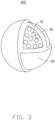
FIG. 3 is a diagrammatic view of a silicon-carbon composite anode material according to an embodiment of the present disclosure. -
FIG. 4 is a diagrammatic view of a battery with the silicon-carbon composite anode material according to an embodiment of the present disclosure. -
FIG.5 is an XRD (X-Ray diffraction) pattern of the silicon-carbon composite anode materials prepared in Example 1 and Comparative Example 1. -
FIG. 6 is an SEM (scanning electron microscope) image of the silicon-carbon composite anode material prepared in Example 1. - Unless otherwise defined, all technical and scientific terms used herein have the same meaning as commonly understood by persons skill in the art. The terms used herein are only for the purpose of describing specific embodiments, and not intended to limit the embodiments of the present application.
- In this application, descriptions such as "first", "second" etc. are only used for description purposes and should not be understood as indicating or implying their relative importance or implying the number of indicated technical features. Thus, a feature defined as "first" and "second" may expressly or implicitly include at least one of that features. In the description of the present application, "plurality" means more than one unless expressly and specifically defined otherwise.
- Some embodiments of the present application will be described in detail below with reference to the drawings. The following embodiments and features of the embodiments may be combined with each other in the absence of conflict.
- Referring to
FIG. 1 , an embodiment of the present disclosure provides a method of preparing a silicon-carbon composite anode material, the method comprises the following steps:
S1: in a protective environment, nanocrystallizing a silicon material to obtain a primary nano-silicon material. The protective environment is an environment under vacuum, or the protective environment is obtained by introducing an inert gas or solvent. - In some embodiments, the silicon material may be the silicon material having a particle size greater than 10 µm (semiconductor grade). The nanocrystallization includes, but is not limited to, mechanical processing, mechanical ball milling, etc. The mechanical ball milling can be dry milling or wet milling. The primary nano-silicon material can also be prepared by chemical deposition method or physical vapor deposition method, in an alkane atmosphere such as CH4 during the deposition process to form a carbon coating on the primary nano-silicon material. The carbon coating is further sintered to form a carbonization layer on the primary nano-silicon material. However, these deposition methods have high cost and are not suitable for large-scale industrial production.
- In some embodiments, the inert gas includes at least one of argon (Ar), nitrogen (N2), and helium (He). The inert gas can provide an oxygen-free environment, prevent the nano-silicon from being oxidized, and render the prepared silicon-carbon composite anode material free of SiOx, which is beneficial to improve electrochemical performance of the silicon-carbon composite anode material and reduce the volume effect.
- In some embodiments, the solvent may be diethylene glycol (DEG), polyethylene glycol (PEG), propylene glycol (PG), dimethyl sulfoxide (DMSO), or a combination thereof. The above solvents can prevent the nano-silicon from being oxidized, so that the prepared silicon-carbon composite anode material is free of SiOx, which is beneficial to improve the electrochemical performance of the silicon-carbon composite anode material and reduce the volume effect.
- In some embodiments, a particle size of the primary nano-silicon material is 10 nm to 50 nm, beneficial for the subsequent self-assembly and coating processes, and a final silicon-carbon composite anode material with a suitable particle size is prepared, which is suitable for the pulping process of the current secondary battery.
- S2: in the protective environment, self-assembling the primary nano-silicon material with a first carbon source and a macromolecular polymer, and then adding a second carbon source for self-assembly to obtain a secondary nano-silicon material with a layered structure.
- In some embodiments, the macromolecular polymer is an amphiphilic polymer having both a hydrophobic group and a hydrophilic group. The macromolecular polymer can be N-allyl-(2-ethylxanthyl) propionamide (NAPA), dimethylformamide (DMF), or a combination thereof. The macromolecular polymer is a medium containing amino groups and hydroxyl groups. The hydrophilicity and hydrophobicity as different characteristics between the primary nano-silicon material and the carbon substrate (the first carbon source and the second carbon source can be collectively referred to as the carbon substrate) are improved by the macromolecular polymer with a hydrophilic group at one end and a hydrophobic group at the other end.
- Specifically, referring to
FIG. 2 , the hydrophilic group at one end of amacromolecular polymer 12 can bond with a primary nano-silicon material 11, and the hydrophobic group on the other end of themacromolecular polymer 12 can bond with acarbon substrate 13, so that the primary nano-silicon material 11 is firmly coated on thecarbon substrate 13, and will tend to not agglomerate with other primary nano-silicon material 11. Thecarbon substrate 13, themacromolecular polymer 12, and the primary nano-silicon material 11 can thus be bonded together to form a layered structure. - Furthermore, the self-assembly may be carried out by mechanical machining, electrical discharge machining, or mechanical ball milling. The mechanical ball milling can be dry milling or wet milling.
- In some embodiments, the first carbon source includes at least one of asphalt, graphite, and graphene. The first carbon source has a layered structure, which can form a carbon buffer layer for wrapping the primary nano-silicon material therein. Thus, the first carbon source inhibits swelling of the primary nano-silicon material and reduces the volume effect. In addition, during the self-assembly, particle escape can cause an exothermic reaction, and the first carbon source diffuses heat to avoid agglomeration and prevent the primary nano-silicon material from being oxidized due to the exothermic phenomenon.
- In some embodiments, the second carbon source includes at least one of carbon black, carbon nanotube, and carbon nanofiber. The second carbon source can form a carbon conductive layer for wrapping the carbon buffer layer. The second carbon source has a higher conductivity than the first carbon source, and the carbon conductive layer can provide transfer of charge to improve capacitance. Moreover, during the self-assembly, the second carbon source can also diffuse heat to avoid agglomeration and prevent the nano-silicon from being oxidized.
- S3: in the protective environment, granulating the secondary nano-silicon material to obtain a spherical precursor.
- Furthermore, a particle size of the spherical precursor after granulation can range from 5 µm to 10 µm. As such, the spherical precursor is suitable for the pulping process of the secondary battery, and avoids agglomeration in the following sintering process.
- S4: sintering the spherical precursor in a reducing gas or a vacuum environment to obtain the silicon-carbon composite anode material, the sintering temperature is from 800 °C to 1200 °C.
- In some embodiments, the reducing gas includes a mixture of nitrogen and hydrogen. Sintering in the reducing gas can remove excess functional groups on the surface and increase the compactness and integrity of the carbon substrate. The reducing gas can also prevent the nano-silicon core from being oxidized.
- It can be understood that the numbering of the above steps is intended to describe the specific preparation method, but not to limit the sequence of the steps.
- The present application further provides a silicon-carbon composite anode material, which is prepared by the above-mentioned preparation method. Referring to
FIG. 3 , a silicon-carboncomposite anode material 100 includes a nano-silicon core 10, acarbon buffer layer 30 wrapping the nano-silicon core 10, and acarbon conductive layer 50 wrapping thecarbon buffer layer 30. The nano-silicon core 10 improves the diffusion rate of lithium ions, and thecarbon buffer layer 30 and thecarbon conductive layer 50 coated on the nano-silicon core 10 can prevent the nano-silicon core 10 from directly contact with the electrolyte. A stable SEI film is formed on the surface of the silicon-carboncomposite anode material 100, which can greatly improve the cycling performance of the material. In addition, the silicon-carboncomposite anode material 100 is an oxide-free material, and has thecarbon buffer layer 30 including a first carbon source, which can effectively inhibit the volume effect. Thecarbon conductive layer 50 can improve the charge transfer to increase capacitance. - The silicon-carbon composite anode material of the present application is completely free of oxide or almost free of oxide (of silicon oxide especially), for example, containing no more than 0.1wt% of oxides based on the mass of the silicon-carbon composite anode material.
- Referring to
FIG. 4 , the present application further provides abattery 200, including acathode electrode 201, ananode electrode 203, and aseparator 205. Theanode electrode 203 includes the silicon-carboncomposite anode material 100. Thebattery 200 may be a secondary battery, such as, but is not limited to, a lithium-ion secondary battery, a sodium-ion battery, and the like. - In the present application, the silicon material is nanocrystallized in a protective environment, and then ground with the first carbon source and the macromolecular polymer. The primary nano-silicon material, the first carbon source, and the macromolecular polymer undergo the self-assembly due to the hydrophilic and hydrophobic properties of the macromolecular polymer, thereby forming the carbon buffer layer (composed of the first carbon source) which inhibits swelling. Then, the second carbon source is added to cover the carbon buffer layer, and the carbon conductive layer formed by the second carbon source enables the charge transfer resistance to improve capacitance. After the self-assembly, the granulation and sintering steps are performed to obtain the silicon-carbon composite anode material. The silicon-carbon composite anode material has a high specific capacity (>1600 mAh·g-1).
- S1: Silicon material (semiconductor grade, ≥ 10 µm) and diethylene glycol (solvent) were added into a horizontal type grinding machine with a speed of 2400 rpm to 3000 rpm for mechanical processing to obtain a primary nano-silicon material with a particle size distribution between 10 nm to 50 nm.
- S2: N-allyl-(2-ethylxanthate) propionamide (macromolecular polymer, the mass is 5% of the mass of the silicon material) and graphite (first carbon source, the mass is 5%-10% of the mass of the silicon material) were added to the primary nano-silicon material for grinding to make the N-allyl-(2-ethylxanthate) propionamide, the graphite, and the primary nano-silicon material stack and self-assemble in an orderly manner. Then carbon nanotube (the second carbon source, the mass is 1-5% of the mass of the silicon material) was added for grinding to obtain a secondary nano-silicon material with a layered structure.
- In the grinding machine, the temperature difference between the core grinding temperature and the temperature of the slurry outlet should not exceed 5°C. In this way, the oxidation of the nano-silicon by excess heat is prevented.
- S3: The secondary nano-silicon material was spray drying to obtain a precursor with a particle size of 5 µm to 10 µm.
- S4: The precursor was put into a sintering furnace containing a mixture of nitrogen and hydrogen (the volume percentage of hydrogen is 3%) to be heated at 800 degrees Celsius to 1200 degrees Celsius for 12 hours to obtain a silicon-carbon composite anode material, wherein the flow rate of the mixture of nitrogen and hydrogen is 2L/min.
- The difference between Comparative Example 1 and Example 1 is only that in step S4, the reducing gas in Comparative Example 1 is nitrogen. The remaining conditions are the same as those in Example 1, which will not be repeated here.
- The XRD pattern of the silicon-carbon composite anode materials prepared in Example 1 and Comparative Example 1 are shown in
FIG. 5. FIG. 5 shows that the silicon-carbon composite anode material prepared in Example 1 has characteristic peaks of Si (Cubic, Fd-3m(227)) and C (Hexagonal, p63/mmc(194)) but no silicon oxide, indicating that the silicon-carbon composite anode material prepared in Example 1 does not exist silicon oxide (SiOx). In contrast, the silicon-carbon composite anode material prepared in Comparative Example 1 shows characteristic peaks of SiO, indicating that a small amount of nano-silicon was oxidized. As a result, the protective effect of the nitrogenhydrogen blend is better than that of nitrogen. - The SEM image of the silicon-carbon composite anode material prepared in Example 1 is shown in
FIG. 6. FIG. 6 demonstrates that the particle surface of the silicon-carbon composite anode material prepared in Example 1 is smooth, indicating the formation of an efficient carbon layer. - Three samples from Example 1 were selected, these being designated as Sample 1, Sample 2, and Sample 3. The three samples were dissolved in water with a conductive agent (conductive carbon black, Super P) and a binder (styrene-butadiene rubber, SBR) in a mass ratio of 88:1:11 (silicon-carbon composite anode material: Super P: SBR) to obtain a mixture formulated into a slurry with a solid content of 50%. The slurry was coated on a copper foil and vacuum-dried to obtain an anode electrode. Then, a ternary cathode electrode, electrolyte with a lithium salt concentration of 1 mol/L (composition of LiPF6/EC+DMC+EMC), and a separator (Celgard2400) were stacked and assembled for 5Ah pouch cell by conventional production process. The cells assembled from Sample 1 is referred to as Battery 1, the cells assembled from Sample 2 is referred to as Battery 2, and the cells assembled from Sample 3 is referred to as Battery 3. The Battery 1, Battery 2, and Battery 3 were subjected to the following performance tests.
- Delithiation capacity test of the cathode electrode: the current density is 0.1C, the voltage rises to 4.2V, and the gram capacity of anode electrode is converted according to the following formula (1), to obtain the Delithiation capacity.

- Lithiation capacity test of the cathode electrode: the current density is 0.1C, the voltage drops to 2.0V, and the gram capacity of anode electrode is converted to obtain the Lithiation capacity.

- The results of the above tests are shown in Table 1.
Table 1 Delithiation capacity (mAh·g-1) Lithiation capacity (mAh·g-1) Efficiency (%) Battery 1 1580 1790 88.3 Battery 2 1587 1800 88.2 Battery 3 1536 1780 86.3 - Table 1 reveals that the battery assembled with the silicon-carbon composite anode material prepared by the method of the present application has high capacity and efficiency, indicating that the silicon-carbon composite anode material prepared by the present application does inhibit the volume swelling and improves the electrical conductivity and capacitance.
- In the present disclosure, during the charge-discharge cycle, no irreversible oxides are generated, so that lithium-ion consumption is reduced, thus improving efficiency. The carbon buffer layer of the silicon-carbon composite anode material inhibits swelling, and the carbon conductive layer can enable transfer of charge to increase capacitance and improve the electrochemical performances of the silicon-carbon composite anode material. The preparation process for silicon-carbon composite anode is simple, easy to control and suitable for industrial production.
- The above descriptions are some specific embodiments of the present application, but the actual application process is not to be limited only to these embodiments. For those of ordinary skill in the art, other modifications and changes made according to the technical concept of the present application should all belong to the protection scope of the present application.
Claims (15)
- A method of preparing a silicon-carbon composite anode material, comprising:nanocrystallizing a silicon material in a protective environment to obtain a primary nano-silicon material (11), wherein the protective environment is a vacuum environment, or the protective environment is obtained by introduction of an inert gas or a solvent;self-assembling the primary nano-silicon material (11) with a first carbon source and a macromolecular polymer (12) in the protective environment, and then adding a second carbon source for the self-assembly to obtain a secondary nano-silicon material having a layered structure;granulating the secondary nano-silicon material to obtain a spherical precursor; andsintering the spherical precursor in a reducing gas or a vacuum environment under a temperature of 800 °C to 1200 °C to obtain the silicon-carbon composite anode material.
- The method of claim 1, characterized in that, the first carbon source comprises at least one of asphalt, graphite, and graphene.
- The method of claim 1 or 2, characterized in that, the second carbon source comprises at least one of carbon black, carbon nanotube, and carbon nanofiber.
- The method of any one of claims 1 to 3, characterized in that, the macromolecular polymer (12) has a hydrophobic group and a hydrophilic group, and the macromolecular polymer (12) comprises at least one of N-allyl-(2-ethylxanthyl) propionamide and dimethylformamide.
- The method of any one of claims 1 to 4, characterized in that, the inert gas comprises at least one of argon, nitrogen, and helium.
- The method of any one of claims 1 to 5, characterized in that, the solvent comprises at least one of diethylene glycol, polyethylene glycol, propylene glycol, and dimethyl sulfoxide.
- The method of any one of claims 1 to 6, characterized in that, the reducing gas comprises a mixture of nitrogen and hydrogen.
- The method of any one of claims 1 to 7, characterized in that, a particle size of the primary nano-silicon material (11) is 10 nm to 50 nm.
- The method of any one of claims 1 to 8, characterized in that, a particle size of the spherical precursor is 5 µm to 10 µm.
- A silicon-carbon composite anode material (100), comprising:a nano-silicon core (10);a carbon buffer layer (30) covering the nano-silicon core (10); anda carbon conductive layer (50) covering the carbon buffer layer (30).
- The silicon-carbon composite anode material (100) of claim 10, characterized in that, the carbon buffer layer (30) comprises a first carbon source, and the first carbon source comprises at least one of asphalt, graphite, and graphene.
- The silicon-carbon composite anode material (100) of claim 10 or 11, characterized in that, the carbon conductive layer (50) comprises a second carbon source, and the second carbon source comprises at least one of carbon black, carbon nanotube, and carbon nanofiber.
- A battery (200), comprising:an anode electrode (203);a cathode electrode (201); anda separator (205),wherein the anode electrode (203) comprises a silicon-carbon composite anode material (100), and the silicon-carbon composite anode material (100) comprises:a nano-silicon core (10);a carbon buffer layer (30) covering the nano-silicon core (10); anda carbon conductive layer (50) covering the carbon buffer layer (30).
- The battery (200) of claim 13, characterized in that, the carbon buffer layer (30) comprises a first carbon source, and the first carbon source comprises at least one of asphalt, graphite, and graphene.
- The battery (200) of claim 13 or 14, characterized in that, the carbon conductive layer (50) comprises a second carbon source, and the second carbon source comprises at least one of carbon black, carbon nanotube, and carbon nanofiber.
Applications Claiming Priority (1)
| Application Number | Priority Date | Filing Date | Title |
|---|---|---|---|
| CN202111509999.9A CN116259725B (en) | 2021-12-10 | 2021-12-10 | Silicon-carbon composite anode materials, their preparation methods and applications |
Publications (1)
| Publication Number | Publication Date |
|---|---|
| EP4195319A1 true EP4195319A1 (en) | 2023-06-14 |
Family
ID=81748765
Family Applications (1)
| Application Number | Title | Priority Date | Filing Date |
|---|---|---|---|
| EP22174189.5A Pending EP4195319A1 (en) | 2021-12-10 | 2022-05-18 | Swelling-inhibited silicon-carbon composite anode material with increased capacitance, method for preparing the same, and battery having the same |
Country Status (3)
| Country | Link |
|---|---|
| US (1) | US20230187613A1 (en) |
| EP (1) | EP4195319A1 (en) |
| CN (1) | CN116259725B (en) |
Cited By (1)
| Publication number | Priority date | Publication date | Assignee | Title |
|---|---|---|---|---|
| CN119786577A (en) * | 2024-12-31 | 2025-04-08 | 惠州亿纬锂能股份有限公司 | Silicon-carbon-graphite negative electrode active material, negative electrode material and application thereof |
Families Citing this family (2)
| Publication number | Priority date | Publication date | Assignee | Title |
|---|---|---|---|---|
| CN119481022A (en) * | 2023-08-09 | 2025-02-18 | 鸿海精密工业股份有限公司 | Silicon-carbon composite negative electrode material containing lithium-rich long-chain composite salt and preparation method thereof |
| CN121225665B (en) * | 2025-12-02 | 2026-02-24 | 湖南双富新材料科技有限公司 | Ferromanganese precursor, preparation method thereof and positive electrode material |
Citations (5)
| Publication number | Priority date | Publication date | Assignee | Title |
|---|---|---|---|---|
| CN106129411A (en) * | 2016-09-19 | 2016-11-16 | 深圳市贝特瑞新能源材料股份有限公司 | A kind of hollow silicon based composites, preparation method and comprise the lithium ion battery of this composite |
| CN107293696A (en) * | 2017-08-13 | 2017-10-24 | 苏州思创源博电子科技有限公司 | A kind of preparation method of compound manganese lithium anode material |
| US20180375094A1 (en) * | 2015-12-31 | 2018-12-27 | Shenzhen Btr New Energy Materials Inc. | Composite silicon negative electrode material, preparation method and use |
| CN109449385A (en) * | 2018-09-26 | 2019-03-08 | 桑顿新能源科技有限公司 | Carbon-coated unformed silicon/graphene composite negative pole and preparation method thereof and lithium ion battery |
| CN111755669A (en) * | 2019-03-27 | 2020-10-09 | 贝特瑞新材料集团股份有限公司 | A kind of composite material, its preparation method and use |
Family Cites Families (16)
| Publication number | Priority date | Publication date | Assignee | Title |
|---|---|---|---|---|
| US7851209B2 (en) * | 2003-04-03 | 2010-12-14 | Kimberly-Clark Worldwide, Inc. | Reduction of the hook effect in assay devices |
| CN103094533B (en) * | 2012-11-26 | 2015-05-20 | 中南大学 | Multi-core core-shell-structure silicon carbon composite negative pole material and preparation method thereof |
| KR101939270B1 (en) * | 2012-12-27 | 2019-01-16 | 삼성전자주식회사 | Electro active material for secondary battery, conductive composition for secondary battery, cathode material, cathode structure and secondary battery comprising the same, and fabricating methods thereof |
| CN103682287B (en) * | 2013-12-19 | 2016-09-14 | 深圳市贝特瑞新能源材料股份有限公司 | A kind of silicon-based composite anode material for Li-ion battery, preparation method and battery |
| KR101724196B1 (en) * | 2014-05-09 | 2017-04-06 | 주식회사 엘지화학 | Graphene-wrapped porous silicon-carbon composite and preparation method thereof |
| DE102015224373A1 (en) * | 2015-12-04 | 2017-06-08 | Robert Bosch Gmbh | Silicon particles with artificial SEI |
| DE102016224039A1 (en) * | 2016-12-02 | 2018-06-07 | Robert Bosch Gmbh | Anode active material particles with artificial SEI layer by means of graft-to-polymerization |
| CN109802120A (en) * | 2019-01-24 | 2019-05-24 | 广东凯金新能源科技股份有限公司 | A kind of Si-C composite material and its preparation method |
| CN110707314B (en) * | 2019-11-21 | 2021-09-21 | 陕西煤业化工技术研究院有限责任公司 | Silicon-carbon composite lithium ion battery cathode material and preparation method thereof |
| CN112952048A (en) * | 2019-12-10 | 2021-06-11 | 恒大新能源技术(深圳)有限公司 | Silicon-carbon composite negative electrode material, preparation method thereof, electrode and secondary battery |
| US20230006204A1 (en) * | 2019-12-13 | 2023-01-05 | Sicona Battery Technologies Pty Ltd | Anode for lithium-ion battery and method of fabricating same |
| CN111162254A (en) * | 2019-12-27 | 2020-05-15 | 银隆新能源股份有限公司 | Preparation method of silicon carbon composite anode material |
| CN112366301B (en) * | 2020-11-11 | 2022-08-26 | 博尔特新材料(银川)有限公司 | Silicon/silicon oxide/carbon composite negative electrode material for lithium ion battery and preparation method thereof |
| CN113462109A (en) * | 2021-07-02 | 2021-10-01 | 科迈特新材料有限公司 | Graphene-based plastic additive and preparation method thereof |
| CN113603892A (en) * | 2021-07-27 | 2021-11-05 | 深圳市宇鑫龙贸易有限公司 | Elastic polymer binder applied to silicon electrode of ion battery and preparation method thereof |
| CN117096292A (en) * | 2022-05-13 | 2023-11-21 | 鸿海精密工业股份有限公司 | Element doped silicon-carbon composite anode material and preparation method thereof |
-
2021
- 2021-12-10 CN CN202111509999.9A patent/CN116259725B/en active Active
-
2022
- 2022-04-28 US US17/731,395 patent/US20230187613A1/en active Pending
- 2022-05-18 EP EP22174189.5A patent/EP4195319A1/en active Pending
Patent Citations (5)
| Publication number | Priority date | Publication date | Assignee | Title |
|---|---|---|---|---|
| US20180375094A1 (en) * | 2015-12-31 | 2018-12-27 | Shenzhen Btr New Energy Materials Inc. | Composite silicon negative electrode material, preparation method and use |
| CN106129411A (en) * | 2016-09-19 | 2016-11-16 | 深圳市贝特瑞新能源材料股份有限公司 | A kind of hollow silicon based composites, preparation method and comprise the lithium ion battery of this composite |
| CN107293696A (en) * | 2017-08-13 | 2017-10-24 | 苏州思创源博电子科技有限公司 | A kind of preparation method of compound manganese lithium anode material |
| CN109449385A (en) * | 2018-09-26 | 2019-03-08 | 桑顿新能源科技有限公司 | Carbon-coated unformed silicon/graphene composite negative pole and preparation method thereof and lithium ion battery |
| CN111755669A (en) * | 2019-03-27 | 2020-10-09 | 贝特瑞新材料集团股份有限公司 | A kind of composite material, its preparation method and use |
Cited By (1)
| Publication number | Priority date | Publication date | Assignee | Title |
|---|---|---|---|---|
| CN119786577A (en) * | 2024-12-31 | 2025-04-08 | 惠州亿纬锂能股份有限公司 | Silicon-carbon-graphite negative electrode active material, negative electrode material and application thereof |
Also Published As
| Publication number | Publication date |
|---|---|
| CN116259725B (en) | 2026-03-24 |
| US20230187613A1 (en) | 2023-06-15 |
| CN116259725A (en) | 2023-06-13 |
Similar Documents
| Publication | Publication Date | Title |
|---|---|---|
| US8906557B2 (en) | Anode active material and method of preparing the same | |
| KR102510890B1 (en) | Composite Anode, and the lithium secondary battery comprising the same | |
| US8562869B2 (en) | Porous anode active material, method of preparing the same, and anode and lithium battery employing the same | |
| CN101165948B (en) | Anode active material, method of preparing the same, and anode and lithium battery containing the material | |
| EP3429000A1 (en) | Modified positive active material and preparation method therefor, and electrochemical energy storage device | |
| US20230369565A1 (en) | Element-doped silicon-carbon composite negative electrode material and preparation method thereof | |
| EP3614462A1 (en) | Negative electrode plate and secondary battery | |
| KR101006212B1 (en) | Manufacturing method of negative electrode for nonaqueous secondary battery, nonaqueous secondary battery, negative electrode for nonaqueous secondary battery and electronic device using nonaqueous secondary battery | |
| KR101375326B1 (en) | Composite anode active material, method of preparing the same, anode and lithium battery containing the material | |
| KR20130109785A (en) | Composite electrode active material, electrode and lithium battery containing the same, and preparation method thereof | |
| EP4060767A1 (en) | Negative electrode material, electrochemical device including same, and electronic device | |
| US20230378445A1 (en) | Anode active material for secondary battery and lithium secondary battery including the same | |
| EP4195319A1 (en) | Swelling-inhibited silicon-carbon composite anode material with increased capacitance, method for preparing the same, and battery having the same | |
| EP4170753A1 (en) | Negative electrode material and preparation method therefor, and lithium ion battery | |
| CN101297420B (en) | High-capacity electrode active materials for secondary batteries | |
| CN117293287A (en) | Cathode materials and electrochemical devices and electronic devices containing the materials | |
| EP4020617A1 (en) | Negative electrode material, and electrochemical device and electronic device comprising same | |
| CN118248860A (en) | Hard carbon coated silver-silicon doped graphite composite material and preparation method and application thereof | |
| EP4135062A1 (en) | Anode for secondary battery and secondary battery including the same | |
| EP4645436A1 (en) | Negative electrode sheet and preparation method therefor, lithium ion battery, and electric vehicle | |
| TWI805123B (en) | Silicon-carbon coated composite anode material and its preparation method and application | |
| US12620584B2 (en) | Negative electrode material, preparation method thereof, and lithium ion battery | |
| US20260066302A1 (en) | Cathode for secondary battery and lithium secondary battery including the same | |
| EP4507014A1 (en) | Negative electrode material, negative electrode plate and preparation method therefor, and lithium ion battery and preparation method therefor | |
| EP4012803B1 (en) | Negative electrode material, electrochemical device comprising same, and electronic device |
Legal Events
| Date | Code | Title | Description |
|---|---|---|---|
| PUAI | Public reference made under article 153(3) epc to a published international application that has entered the european phase |
Free format text: ORIGINAL CODE: 0009012 |
|
| STAA | Information on the status of an ep patent application or granted ep patent |
Free format text: STATUS: REQUEST FOR EXAMINATION WAS MADE |
|
| 17P | Request for examination filed |
Effective date: 20230323 |
|
| AK | Designated contracting states |
Kind code of ref document: A1 Designated state(s): AL AT BE BG CH CY CZ DE DK EE ES FI FR GB GR HR HU IE IS IT LI LT LU LV MC MK MT NL NO PL PT RO RS SE SI SK SM TR |