EP4195076A1 - Mechanisms to specify an allowed amount of change for digital media - Google Patents
Mechanisms to specify an allowed amount of change for digital media Download PDFInfo
- Publication number
- EP4195076A1 EP4195076A1 EP22200738.7A EP22200738A EP4195076A1 EP 4195076 A1 EP4195076 A1 EP 4195076A1 EP 22200738 A EP22200738 A EP 22200738A EP 4195076 A1 EP4195076 A1 EP 4195076A1
- Authority
- EP
- European Patent Office
- Prior art keywords
- digital content
- rules
- original digital
- modified
- original
- Prior art date
- Legal status (The legal status is an assumption and is not a legal conclusion. Google has not performed a legal analysis and makes no representation as to the accuracy of the status listed.)
- Granted
Links
Images




Classifications
-
- G—PHYSICS
- G06—COMPUTING OR CALCULATING; COUNTING
- G06F—ELECTRIC DIGITAL DATA PROCESSING
- G06F21/00—Security arrangements for protecting computers, components thereof, programs or data against unauthorised activity
- G06F21/10—Protecting distributed programs or content, e.g. vending or licensing of copyrighted material ; Digital rights management [DRM]
- G06F21/12—Protecting executable software
-
- H—ELECTRICITY
- H04—ELECTRIC COMMUNICATION TECHNIQUE
- H04L—TRANSMISSION OF DIGITAL INFORMATION, e.g. TELEGRAPHIC COMMUNICATION
- H04L9/00—Cryptographic mechanisms or cryptographic arrangements for secret or secure communications; Network security protocols
- H04L9/32—Cryptographic mechanisms or cryptographic arrangements for secret or secure communications; Network security protocols including means for verifying the identity or authority of a user of the system or for message authentication, e.g. authorization, entity authentication, data integrity or data verification, non-repudiation, key authentication or verification of credentials
- H04L9/3236—Cryptographic mechanisms or cryptographic arrangements for secret or secure communications; Network security protocols including means for verifying the identity or authority of a user of the system or for message authentication, e.g. authorization, entity authentication, data integrity or data verification, non-repudiation, key authentication or verification of credentials using cryptographic hash functions
- H04L9/3239—Cryptographic mechanisms or cryptographic arrangements for secret or secure communications; Network security protocols including means for verifying the identity or authority of a user of the system or for message authentication, e.g. authorization, entity authentication, data integrity or data verification, non-repudiation, key authentication or verification of credentials using cryptographic hash functions involving non-keyed hash functions, e.g. modification detection codes [MDCs], MD5, SHA or RIPEMD
-
- G—PHYSICS
- G06—COMPUTING OR CALCULATING; COUNTING
- G06F—ELECTRIC DIGITAL DATA PROCESSING
- G06F21/00—Security arrangements for protecting computers, components thereof, programs or data against unauthorised activity
- G06F21/10—Protecting distributed programs or content, e.g. vending or licensing of copyrighted material ; Digital rights management [DRM]
-
- G—PHYSICS
- G06—COMPUTING OR CALCULATING; COUNTING
- G06F—ELECTRIC DIGITAL DATA PROCESSING
- G06F21/00—Security arrangements for protecting computers, components thereof, programs or data against unauthorised activity
- G06F21/60—Protecting data
- G06F21/602—Providing cryptographic facilities or services
-
- H—ELECTRICITY
- H04—ELECTRIC COMMUNICATION TECHNIQUE
- H04L—TRANSMISSION OF DIGITAL INFORMATION, e.g. TELEGRAPHIC COMMUNICATION
- H04L65/00—Network arrangements, protocols or services for supporting real-time applications in data packet communication
- H04L65/60—Network streaming of media packets
- H04L65/75—Media network packet handling
-
- H—ELECTRICITY
- H04—ELECTRIC COMMUNICATION TECHNIQUE
- H04L—TRANSMISSION OF DIGITAL INFORMATION, e.g. TELEGRAPHIC COMMUNICATION
- H04L9/00—Cryptographic mechanisms or cryptographic arrangements for secret or secure communications; Network security protocols
- H04L9/32—Cryptographic mechanisms or cryptographic arrangements for secret or secure communications; Network security protocols including means for verifying the identity or authority of a user of the system or for message authentication, e.g. authorization, entity authentication, data integrity or data verification, non-repudiation, key authentication or verification of credentials
- H04L9/3236—Cryptographic mechanisms or cryptographic arrangements for secret or secure communications; Network security protocols including means for verifying the identity or authority of a user of the system or for message authentication, e.g. authorization, entity authentication, data integrity or data verification, non-repudiation, key authentication or verification of credentials using cryptographic hash functions
-
- H—ELECTRICITY
- H04—ELECTRIC COMMUNICATION TECHNIQUE
- H04L—TRANSMISSION OF DIGITAL INFORMATION, e.g. TELEGRAPHIC COMMUNICATION
- H04L9/00—Cryptographic mechanisms or cryptographic arrangements for secret or secure communications; Network security protocols
- H04L9/32—Cryptographic mechanisms or cryptographic arrangements for secret or secure communications; Network security protocols including means for verifying the identity or authority of a user of the system or for message authentication, e.g. authorization, entity authentication, data integrity or data verification, non-repudiation, key authentication or verification of credentials
- H04L9/3263—Cryptographic mechanisms or cryptographic arrangements for secret or secure communications; Network security protocols including means for verifying the identity or authority of a user of the system or for message authentication, e.g. authorization, entity authentication, data integrity or data verification, non-repudiation, key authentication or verification of credentials involving certificates, e.g. public key certificate [PKC] or attribute certificate [AC]; Public key infrastructure [PKI] arrangements
-
- H—ELECTRICITY
- H04—ELECTRIC COMMUNICATION TECHNIQUE
- H04L—TRANSMISSION OF DIGITAL INFORMATION, e.g. TELEGRAPHIC COMMUNICATION
- H04L9/00—Cryptographic mechanisms or cryptographic arrangements for secret or secure communications; Network security protocols
- H04L9/50—Cryptographic mechanisms or cryptographic arrangements for secret or secure communications; Network security protocols using hash chains, e.g. blockchains or hash trees
-
- H—ELECTRICITY
- H04—ELECTRIC COMMUNICATION TECHNIQUE
- H04L—TRANSMISSION OF DIGITAL INFORMATION, e.g. TELEGRAPHIC COMMUNICATION
- H04L2209/00—Additional information or applications relating to cryptographic mechanisms or cryptographic arrangements for secret or secure communication H04L9/00
- H04L2209/60—Digital content management, e.g. content distribution
- H04L2209/603—Digital right managament [DRM]
Definitions
- Digital media creators commonly publish their work on the Internet. In some cases, creators may permit a work to be used as a base for a new project and modified by others. In some situations, the original creator may want to restrict how much and what changes can be made to the original work. This may be especially important as deepfake technologies become more commonly used. It may also be valuable when software licenses or other intellectual property rights are considered.
- references in the specification to "one embodiment,” “an embodiment,” “an illustrative embodiment,” etc., indicate that the embodiment described may include a particular feature, structure, or characteristic, but every embodiment may or may not necessarily include that particular feature, structure, or characteristic. Moreover, such phrases are not necessarily referring to the same embodiment. Further, when a particular feature, structure, or characteristic is described in connection with an embodiment, it is submitted that it is within the knowledge of one skilled in the art to effect such feature, structure, or characteristic in connection with other embodiments whether or not explicitly described.
- items included in a list in the form of "at least one A, B, and C” can mean (A); (B); (C); (A and B); (A and C); (B and C); or (A, B, and C).
- items listed in the form of "at least one of A, B, or C” can mean (A); (B); (C); (A and B); (A and C); (B and C); or (A, B, and C).
- the disclosed embodiments may be implemented, in some cases, in hardware, firmware, software, or any combination thereof.
- the disclosed embodiments may also be implemented as instructions carried by or stored on a transitory or non-transitory machine-readable (e.g., computer-readable) storage medium, which may be read and executed by one or more processors.
- a machine-readable storage medium may be embodied as any storage device, mechanism, or other physical structure for storing or transmitting information in a form readable by a machine (e.g., a volatile or non-volatile memory, a media disc, or other media device).
- some structural or method features may be shown in specific arrangements and/or orderings. However, it should be appreciated that such specific arrangements and/or orderings may not be required.
- digital media creators commonly publish their work on the Internet.
- creators may permit a work to be used as a base for a new project and modified by others.
- the original creator may want to restrict how much and what changes can be made to the original work. This may be especially important as deepfake technologies become more commonly used. It may also be valuable when software licenses or other intellectual property rights are considered.
- licensing schemes that allow modifications typically do not define precisely what and how a licensed work may be changed. For example, it is not typically possible to define a license to protect only a part of the artwork. Nor is it possible to programmatically determine if the license is violated or is no longer in effect because of a large number of changes (e.g., when GPL license does not hold anymore, and code may be used without GPL restrictions.
- an author may create a set of rules defining, e.g., what, how and by whom an original digital content can be changed.
- the rules may be embedded in a digital certificate created by, for example, the digital content author or owner.
- the certificate may comprise detailed licensing information and could be part of the digital content (i.e., it may "travel" with it) or could be available to get from some other sources like one or more Internet websites.
- the certificate may also be distributed using blockchain technology, etc. Further, one or more protocols for verification and/ or attestation to determine whether changes done to the original content are compliant with the license may be implemented.
- Fig. 1 is a simplified schematic diagram of a data processing environment 100 in which mechanisms to specify an allowed amount of change for digital media may be implemented, according to embodiments.
- the environment 100 comprises one or more computing devices such as a hand-held device 110, a laptop device 115, or a workstation 120 that may be communicatively coupled to one or more backend systems (e.g., servers) 140, 145 by a communication network 135.
- the one or more computing devices 110, 115, 120 and/or backend systems 140, 145 may be used to generate original digital media content, e.g., photographs, videos, animation, software, audio/music, or the like.
- the content may be stored on the one or more backend systems and presented for use on one or more computing devices 110, 115, 120.
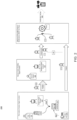
- Fig. 2 is a simplified schematic diagram of data flows in an environment in which mechanisms to specify an allowed amount of change for digital media may be implemented, according to embodiments, and with reference to Figs. 3-5 , which are flowcharts illustrating operations in a method to specify an allowed amount of change for digital media may be implemented, according to embodiments.
- the various components of the environment 100 may be implemented by software-defined process that execute on a general-purpose processor, such as the system depicted in Fig. 6 .
- the various components may be implemented in a configurable processing device such as a field programmable gate array (FPGA) or reduced to hard-wired circuitry
- FPGA field programmable gate array
- a first author 210 may create an original digital content 214.
- the original content may be received in a computing device such as any of the computing devices 110, 115, 120 or the backend systems 140, 145 depicted in Fig. 1 .
- the original digital content may comprise a digital artwork such as one or more photographs, videos, animation, musical pieces, software, or the like.
- a hash of the original digital content 214 is generated.
- a set of rules are created for modification of the digital content created by the first author.
- the rules may be implemented in the form of a computer-readable syntax which may enable the first author, or an agent or representative thereof, to define rules that specify an allowed amount of change that may be made to the original digital content 214.
- the rules define a maximum amount of change which may be implemented in a modified copy of the original digital content.
- the change may be measured and/or defined, for example, using a hamming distance or a percentage of vertices in a three-dimensional object that are moved and/or added and/or removed, a percentage of pixel that are changed, an amount of color range changes, a number of changes in the source code (e.g., number of different lines of code) of a computer program, a number of different bytes in a compiled code and/or bytecode, or a number of pitch and/or note and/or tone changes in a song, or the like.
- the rules may define a minimum amount of change which may be implemented in a modified copy of the original digital content.
- the change may be measured and/or defined, for example, using a hamming distance or a percentage of vertices in a three-dimensional object that are moved and/or added and/or removed, a percentage of pixel that are changed, an amount of color range changes, a number of changes in the source code (e.g., number of different lines of code) of a computer program, a number of different bytes in a compiled code and/or bytecode, or a number of pitch and/or note and/or tone changes in a song, or the like.
- this measurement may be used to identify when GPL license is no longer applicable and code could be used without GPL requirements (i.e., no need to publish sources, etc.).
- the rules may identify areas of the original digital content 214 which may or may not be changed.
- the areas may be defined three-dimensional objects (e.g., cubes, spheres, other shapes, etc.) for three-dimensional models, and polygons for images and movies and animations, frame ranges for movies and animations, portion of computer programs, song, etc.).
- the rules may define who is permitted to modify the original digital content 214 and who is not permitted to modify the original digital content.
- the rules may identify geographic regions or corporate organizations in which modifications are not permitted.
- the rules may specify that only non-profit organizations are to be permitted to modify the original digital content 214.
- the rules may define whether, when, and in what ways, the original digital content 214 may be extended and/or incorporated into other content.
- the rules may allow or prohibit the addition of a soundtrack to the original digital content 214, or may allow only a defined percentage or defined parts of the original digital content to be incorporated into other content.
- One or more rules may also define times at which changes may be made to the content. For example, the change can be done after specific date, or before specific date, or within some time window, or outside some time window
- the rules may define what types of tools may or may not be used to modify the original digital content 214.
- the rules may specify what types of hardware and/or software may be used to modify the original digital content 214.
- rules may be bound to an external event such as a smart contract.
- the rules may limit a length of a chain of derivative works that may be made by modifying the original digital content 214.
- a reference that provides access to the rules generated in operation 320 and the hash generated in operation 315 may be embedded into a digital certificate 218.
- the reference may include a copy of the rules created in operation 320.
- the reference may comprise a pointer or other reference to a location of the rules.
- the rules may contain only information that a specific machine language (ML) algorithm with some specific data model must pass the check.
- a pointer to the ML algorithm and data model may be provided in rules.
- the rules may be entirely ML algorithm and/or data, or rules may contain info which ML algorithm and/or data must be used. In both cases links to ML algorithm and/or data may be provided.
- the digital certificate 218 may be signed using a cryptographic signature scheme with a private key 220.
- the original digital content 214 and the digital certificate 218 are published, e.g., by posting them on a website.
- the operations depicted in Fig. 2 enable the first author to package a set of rules which may be expressed in the form of a computer-readable syntax along with an original digital content 214.
- the rules and the hash of the original digital content 214 may be digitally signed by the original work author.
- the certificate may be attached to the original digital content 214 together with a license, may replace the license, or be a part of the license. It may also be available for download from a website or be available through blockchain technology or interactive protocol with an apprising entity 240.
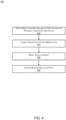
- a second author 230 may, at operation 410, obtain a copy of the original digital content 214 created by the first author 210, and may optionally obtain a copy of the certificate 218 published with the original digital content.
- the second author 230 may optionally consult the rules for content modification, and at operation 420 the second author 230 may modify the original digital content 214 obtained in operation 410 to create a modified digital content 232.
- the second author 230 may verify that all constraints imposed by the rules are satisfied before publishing the modified digital content 232. Online and/or local/offline tools may be used to perform this verification.
- the modified digital content may be published, e.g., by posting them on a website.
- an apprising entity 240 may initiate operations to determine whether the modifications to the original digital content 214 implemented by the second author 230 to generate the modified digital content 232 were permissible with the rules established by the first author 210.
- the apprising entity 240 receives the original digital content 214, a signed certificate 218, and a modified digital content 232 based on the original digital content 214.
- the apprising entity 240 may be instantiated as a website that receives the both the original digital content 214 and the modified digital content 232.
- the apprising entity 240 may be instantiated as a tool (e.g., a bot) that crawls the Internet to examine digital content, or an application that may be installed on a computing device such as any of the computing devices 110, 115, 120 or the backend systems 140, 145.
- the apprising entity 240 verifies the certificate 218, including the signature, to ensure that the certification 218 is valid.
- the apprising entity 240 extracts the rules defined in operation 320 from the signed certificate 218.
- the apprising entity 240 applies the rules to the modified digital content to generate a set of verification results.
- a set of tools may be used to verify whether the modified digital content 232 complies with the rules defined in the certificate.
- tools may include algorithms such as the calculation of a hamming distance to define the difference between the original digital content 214 and the modified digital content 232.
- Other tools may include artificial intelligence (AI) and/or machine language (ML) algorithms and models.
- AI artificial intelligence
- ML machine language
- the hash of the model may be stored in the certificate along with rule) and a reference to a place from which it can be obtained (e.g., website, ledger, etc.).
- operation 520 may be implemented in a secure processing environment (e.g., a trusted execution environment (TEE)).
- TEE trusted execution environment
- the verification results may be stored in a computer-readable memory in association with an identifier of the signed certificate 218 or the certificate itself.
- the apprising entity 240 may maintain a file or database that identifies the certificate 218 and/or the original digital work 214 and an identifier of the modified digital content 232.
- the apprising entity 240 may present the verification results 250 to the second author 230 of the modified digital content 232.
- the second author 230 may be notified that one or more modifications to the original digital content were inconsistent with the rules established in operation 320.
- the second author 230 may be given an opportunity to make further modifications to the original digital content 214 to bring the modified digital content 232 into compliance with the rules established in operation 320. This process may be repeated until the modified digital content 232 complies with the rules established in operation 320.
- the apprising entity 240 may provide an alert to the first author 210 of the original digital content 214.
- the alert may comprise the verification results and an identifier of the second author 232 who produced the modified digital content.
- the first author 210 may then choose whether to take a corrective action against the second author 230.
- the verification results may be provided to a third party such as a licensing authority, which may take appropriate corrective action.
- the operations depicted in Fig. 5 enable an apprising device to evaluate the modified digital content 232 to determine whether it complies with the rules defined by the first author 210 of the original digital content 214, and to present verification results thereof to the interested parties.
- the apprising entity 240 may be accessed and/or used by entities other than the first author 210 or the second author 230.
- Fig. 6 is a block diagram illustrating a computing architecture which may be adapted to implement a secure address translation service using a permission table (e.g., HPT 135 or HPT 260) and based on a context of a requesting device in accordance with some examples.
- the embodiments may include a computing architecture supporting one or more of (i) verification of access permissions for a translated request prior to allowing a memory operation to proceed; (ii) prefetching of page permission entries of an HPT responsive to a translation request; and (iii) facilitating dynamic building of the HPT page permissions by system software as described above.
- the computing architecture 600 may comprise or be implemented as part of an electronic device.
- the computing architecture 600 may be representative, for example, of a computer system that implements one or more components of the operating environments described above.
- computing architecture 600 may be representative of one or more portions or components in support of a secure address translation service that implements one or more techniques described herein.
- a component can be, but is not limited to being, a process running on a processor, a processor, a hard disk drive or solid state drive (SSD), multiple storage drives (of optical and/or magnetic storage medium), an object, an executable, a thread of execution, a program, and/or a computer.
- SSD solid state drive
- an application running on a server and the server can be a component.
- One or more components can reside within a process and/or thread of execution, and a component can be localized on one computer and/or distributed between two or more computers. Further, components may be communicatively coupled to each other by various types of communications media to coordinate operations. The coordination may involve the unidirectional or bi-directional exchange of information. For instance, the components may communicate information in the form of signals communicated over the communications media. The information can be implemented as signals allocated to various signal lines. In such allocations, each message is a signal. Further embodiments, however, may alternatively employ data messages. Such data messages may be sent across various connections. Exemplary connections include parallel interfaces, serial interfaces, and bus interfaces.
- the computing architecture 600 includes various common computing elements, such as one or more processors, multi-core processors, co-processors, memory units, chipsets, controllers, peripherals, interfaces, oscillators, timing devices, video cards, audio cards, multimedia input/output (I/O) components, power supplies, and so forth.
- processors multi-core processors
- co-processors memory units
- chipsets controllers
- peripherals peripherals
- oscillators oscillators
- timing devices video cards, audio cards, multimedia input/output (I/O) components, power supplies, and so forth.
- the embodiments are not limited to implementation by the computing architecture 600.
- the computing architecture 600 includes one or more processors 602 and one or more graphics processors 608, and may be a single processor desktop system, a multiprocessor workstation system, or a server system having a large number of processors 602 or processor cores 607.
- the system 600 is a processing platform incorporated within a system-on-a-chip (SoC or SOC) integrated circuit for use in mobile, handheld, or embedded devices.
- SoC system-on-a-chip
- An embodiment of system 600 can include, or be incorporated within, a server-based gaming platform, a game console, including a game and media console, a mobile gaming console, a handheld game console, or an online game console.
- system 600 is a mobile phone, smart phone, tablet computing device or mobile Internet device.
- Data processing system 600 can also include, couple with, or be integrated within a wearable device, such as a smart watch wearable device, smart eyewear device, augmented reality device, or virtual reality device.
- data processing system 600 is a television or set top box device having one or more processors 602 and a graphical interface generated by one or more graphics processors 608.
- the one or more processors 602 each include one or more processor cores 607 to process instructions which, when executed, perform operations for system and user software.
- each of the one or more processor cores 607 is configured to process a specific instruction set 614.
- instruction set 609 may facilitate Complex Instruction Set Computing (CISC), Reduced Instruction Set Computing (RISC), or computing via a Very Long Instruction Word (VLIW).
- Multiple processor cores 607 may each process a different instruction set 609, which may include instructions to facilitate the emulation of other instruction sets.
- Processor core 607 may also include other processing devices, such a Digital Signal Processor (DSP).
- DSP Digital Signal Processor
- the processor 602 includes cache memory 604. Depending on the architecture, the processor 602 can have a single internal cache or multiple levels of internal cache. In some embodiments, the cache memory is shared among various components of the processor 602. In some embodiments, the processor 602 also uses an external cache (e.g., a Level-3 (L3) cache or Last Level Cache (LLC)) (not shown), which may be shared among processor cores 607 using known cache coherency techniques.
- L3 cache Level-3
- LLC Last Level Cache
- a register file 606 is additionally included in processor 602 which may include different types of registers for storing different types of data (e.g., integer registers, floating point registers, status registers, and an instruction pointer register). Some registers may be general-purpose registers, while other registers may be specific to the design of the processor 602.
- one or more processor(s) 602 are coupled with one or more interface bus(es) 610 to transmit communication signals such as address, data, or control signals between processor 602 and other components in the system.
- the interface bus 610 can be a processor bus, such as a version of the Direct Media Interface (DMI) bus.
- processor buses are not limited to the DMI bus, and may include one or more Peripheral Component Interconnect buses (e.g., PCI, PCI Express), memory buses, or other types of interface buses.
- the processor(s) 602 include an integrated memory controller 616 and a platform controller hub 630.
- the memory controller 616 facilitates communication between a memory device and other components of the system 600, while the platform controller hub (PCH) 630 provides connections to I/O devices via a local I/O bus.
- PCH platform controller hub
- Memory device 620 can be a dynamic random-access memory (DRAM) device, a static random-access memory (SRAM) device, flash memory device, phase-change memory device, or some other memory device having suitable performance to serve as process memory.
- the memory device 620 can operate as system memory for the system 600, to store data 622 and instructions 621 for use when the one or more processors 602 execute an application or process.
- Memory controller hub 616 also couples with an optional external graphics processor 612, which may communicate with the one or more graphics processors 608 in processors 602 to perform graphics and media operations.
- a display device 611 can connect to the processor(s) 602.
- the display device 611 can be one or more of an internal display device, as in a mobile electronic device or a laptop device or an external display device attached via a display interface (e.g., DisplayPort, etc.).
- the display device 611 can be a head mounted display (HMD) such as a stereoscopic display device for use in virtual reality (VR) applications or augmented reality (AR) applications.
- HMD head mounted display
- the platform controller hub 630 enables peripherals to connect to memory device 620 and processor 602 via a high-speed I/O bus.
- the I/O peripherals include, but are not limited to, an audio controller 646, a network controller 634, a firmware interface 628, a wireless transceiver 626, touch sensors 625, a data storage device 624 (e.g., hard disk drive, flash memory, etc.).
- the data storage device 624 can connect via a storage interface (e.g., SATA) or via a peripheral bus, such as a Peripheral Component Interconnect bus (e.g., PCI, PCI Express).
- the touch sensors 625 can include touch screen sensors, pressure sensors, or fingerprint sensors.
- the wireless transceiver 626 can be a Wi-Fi transceiver, a Bluetooth transceiver, or a mobile network transceiver such as a 3G, 4G, Long Term Evolution (LTE), or 5G transceiver.
- the firmware interface 628 enables communication with system firmware, and can be, for example, a unified extensible firmware interface (UEFI).
- the network controller 634 can enable a network connection to a wired network.
- a high-performance network controller (not shown) couples with the interface bus 610.
- the audio controller 646, in one embodiment, is a multichannel high definition audio controller.
- the system 600 includes an optional legacy I/O controller 640 for coupling legacy (e.g., Personal System 2 (PS/2)) devices to the system.
- legacy e.g., Personal System 2 (PS/2)
- the platform controller hub 630 can also connect to one or more Universal Serial Bus (USB) controllers 642 connect input devices, such as keyboard and mouse 643 combinations, a camera 644, or other USB input devices.
- USB Universal Serial Bus
- Example 1 is method comprising generating an original digital content, generating a first set of rules pertaining to permissible changes to the original digital content, generating a cryptographically signed certificate comprising a reference that provides access to the first set of rules and a hash of the original digital content; and publishing the original digital content and the associated cryptographically signed certificate.
- Example 2 includes the subject matter of Example 1, wherein the first set of rules comprises at least one of a maximum amount of permissible change for at least one object in the original digital content; a minimum amount of permissible change for at least one object in the original digital content; an identifier of one or more portions of the original digital content that cannot be modified; one or more rules regulating who can modify the original digital content; one or more rules regulating who cannot modify the original digital content; one or more rules regulating which tools may be used to modify the original digital content; or one or more rules defining whether the original digital content may be extended or modified.
- the first set of rules comprises at least one of a maximum amount of permissible change for at least one object in the original digital content; a minimum amount of permissible change for at least one object in the original digital content; an identifier of one or more portions of the original digital content that cannot be modified; one or more rules regulating who can modify the original digital content; one or more rules regulating who cannot modify the original digital content; one or more rules regulating which tools may be used
- Example 3 includes the subject matter of Examples 1-2, wherein the first set of rules comprises one or more rules binding the first set of rules to a smart contract.
- Example 4 includes the subject matter of Examples 1-3, wherein the first set of rules comprises one or more rules limiting a length of a chain of derivative works.
- Example 5 includes the subject matter of Examples 1-4, further comprising receiving, in an apprising entity, the original digital content, the cryptographically signed certificate, and a modified digital content derived from the original digital content; extracting, from the signed certificate, the first set of rules pertaining to permissible changes to the original digital content; applying the first set of rules to the modified digital content to generate a set of verification results; and storing the set of verification results in a computer-readable memory in association with an identifier of the signed certificate.
- Example 6 includes the subject matter of Examples 1-5, further comprising presenting the verification results to an author of the modified content derived from the original content.
- Example 7 includes the subject matter of Examples 1-6, further comprising providing an alert to an author of the original digital content.
- Example 8 is an apparatus, comprising processing circuitry to generate an original digital content; generate a first set of rules pertaining to permissible changes to the original digital content; generate a cryptographically signed certificate comprising a reference that provides access to the first set of rules and a hash of the original digital content; and publish the original digital content and the associated cryptographically signed certificate.
- Example 9 includes the subject matter of Example 8, wherein the first set of rules comprises at least one of a maximum amount of permissible change for at least one object in the original digital content; a minimum amount of permissible change for at least one object in the original digital content; an identifier of one or more portions of the original digital content that cannot be modified; one or more rules regulating who can modify the original digital content; one or more rules regulating who cannot modify the original digital content; one or more rules regulating which tools may be used to modify the original digital content; or one or more rules defining whether the original digital content may be extended or modified.
- Example 10 includes the subject matter of Examples 8-9, wherein the first set of rules comprises one or more rules binding the first set of rules to a smart contract.
- Example 11 includes the subject matter of Examples 8-10, wherein the first set of rules comprises one or more rules limiting a length of a chain of derivative works.
- Example 12 includes the subject matter of Examples 8-11, further comprising instructions which, when executed by the processor, cause the processor to receive, in an apprising entity, the original digital content, the cryptographically signed certificate, and a modified digital content derived from the original digital content; extract, from the signed certificate, the first set of rules pertaining to permissible changes to the original digital content; apply the first set of rules to the modified digital content to generate a set of verification results; and store the set of verification results in a computer-readable memory in association with an identifier of the signed certificate.
- Example 13 includes the subject matter of Examples 8-12, the computer readable memory comprising instructions which, when executed by the processor, cause the processor to presenting the verification results to an author of the modified content derived from the original content.
- Example 14 includes the subject matter of Examples 8-13, the computer readable memory comprising instructions which, when executed by the processor, cause the processor to provide an alert to an author of the original digital content.
- Example 15 is one or more computer-readable storage media comprising instructions stored thereon that, in response to being executed, cause a computing device to generate an original digital content; generate a first set of rules pertaining to permissible changes to the original digital content; generate a cryptographically signed certificate comprising a reference that provides access to the first set of rules and a hash of the original digital content; and publish the original digital content and the associated cryptographically signed certificate.
- Example 16 includes the subject matter of Examples 13-15, wherein the first set of rules comprises at least one of a maximum amount of permissible change for at least one object in the original digital content; a minimum amount of permissible change for at least one object in the original digital content; an identifier of one or more portions of the original digital content that cannot be modified; one or more rules regulating who can modify the original digital content; one or more rules regulating who cannot modify the original digital content; one or more rules regulating which tools may be used to modify the original digital content; or one or more rules defining whether the original digital content may be extended or modified.
- the first set of rules comprises at least one of a maximum amount of permissible change for at least one object in the original digital content; a minimum amount of permissible change for at least one object in the original digital content; an identifier of one or more portions of the original digital content that cannot be modified; one or more rules regulating who can modify the original digital content; one or more rules regulating who cannot modify the original digital content; one or more rules regulating which tools may
- Example 17 includes the subject matter of Examples 15-16, wherein the first set of rules comprises one or more rules binding the first set of rules to a smart contract.
- Example 18 includes the subject matter of Examples 15-17, wherein the first set of rules comprises one or more rules limiting a length of a chain of derivative works.
- Example 19 includes the subject matter of Examples 15-18, further comprising instructions stored thereon that, in response to being executed, cause the computing device to receive, in an apprising entity, the original digital content, the cryptographically signed certificate, and a modified digital content derived from the original digital content; extract, from the signed certificate, the first set of rules pertaining to permissible changes to the original digital content; apply the first set of rules to the modified digital content to generate a set of verification results; and store the set of verification results in a computer-readable memory in association with an identifier of the signed certificate.
- Example 20 includes the subject matter of Examples 15-19, further comprising instructions stored thereon that, in response to being executed, cause the computing device to present the verification results to an author of the modified content derived from the original content.
- Example 21 includes the subject matter of Examples 15-20, further comprising instructions stored thereon that, in response to being executed, cause the computing device to provide an alert to an author of the original digital content.
- Various embodiments may include various processes. These processes may be performed by hardware components or may be embodied in computer program or machine-executable instructions, which may be used to cause a general-purpose or special-purpose processor or logic circuits programmed with the instructions to perform the processes. Alternatively, the processes may be performed by a combination of hardware and software.
- Portions of various embodiments may be provided as a computer program product, which may include a computer-readable medium having stored thereon computer program instructions, which may be used to program a computer (or other electronic devices) for execution by one or more processors to perform a process according to certain embodiments.
- the computer-readable medium may include, but is not limited to, magnetic disks, optical disks, read-only memory (ROM), random access memory (RAM), erasable programmable read-only memory (EPROM), electrically-erasable programmable read-only memory (EEPROM), magnetic or optical cards, flash memory, or other type of computer-readable medium suitable for storing electronic instructions.
- embodiments may also be downloaded as a computer program product, wherein the program may be transferred from a remote computer to a requesting computer.
- element A may be directly coupled to element B or be indirectly coupled through, for example, element C.
- a component, feature, structure, process, or characteristic A “causes” a component, feature, structure, process, or characteristic B, it means that "A” is at least a partial cause of "B” but that there may also be at least one other component, feature, structure, process, or characteristic that assists in causing "B.”
- the specification indicates that a component, feature, structure, process, or characteristic "may”, “might”, or “could” be included, that particular component, feature, structure, process, or characteristic is not required to be included. If the specification or claim refers to "a” or “an” element, this does not mean there is only one of the described elements.
- An embodiment is an implementation or example.
- Reference in the specification to "an embodiment,” “one embodiment,” “some embodiments,” or “other embodiments” means that a particular feature, structure, or characteristic described in connection with the embodiments is included in at least some embodiments, but not necessarily all embodiments.
- the various appearances of "an embodiment,” “one embodiment,” or “some embodiments” are not necessarily all referring to the same embodiments.
- various features are sometimes grouped together in a single embodiment, figure, or description thereof for the purpose of streamlining the disclosure and aiding in the understanding of one or more of the various novel aspects. This method of disclosure, however, is not to be interpreted as reflecting an intention that the claimed embodiments requires more features than are expressly recited in each claim. Rather, as the following claims reflect, novel aspects lie in less than all features of a single foregoing disclosed embodiment. Thus, the claims are hereby expressly incorporated into this description, with each claim standing on its own as a separate embodiment.
Landscapes
- Engineering & Computer Science (AREA)
- Computer Security & Cryptography (AREA)
- Theoretical Computer Science (AREA)
- Computer Networks & Wireless Communication (AREA)
- Signal Processing (AREA)
- Software Systems (AREA)
- Multimedia (AREA)
- Physics & Mathematics (AREA)
- Computer Hardware Design (AREA)
- General Engineering & Computer Science (AREA)
- General Physics & Mathematics (AREA)
- Technology Law (AREA)
- Health & Medical Sciences (AREA)
- Bioethics (AREA)
- General Health & Medical Sciences (AREA)
- Information Retrieval, Db Structures And Fs Structures Therefor (AREA)
- Storage Device Security (AREA)
- Management, Administration, Business Operations System, And Electronic Commerce (AREA)
Abstract
Description
- Digital media creators commonly publish their work on the Internet. In some cases, creators may permit a work to be used as a base for a new project and modified by others. In some situations, the original creator may want to restrict how much and what changes can be made to the original work. This may be especially important as deepfake technologies become more commonly used. It may also be valuable when software licenses or other intellectual property rights are considered.
- The concepts described herein are illustrated by way of example and not by way of limitation in the accompanying figures. For simplicity and clarity of illustration, elements illustrated in the figures are not necessarily drawn to scale. Where considered appropriate, reference labels have been repeated among the figures to indicate corresponding or analogous elements.
-
Fig. 1 is a simplified schematic diagram of a data processing environment in which mechanisms to specify an allowed amount of change for digital media may be implemented, according to embodiments. -
Fig. 2 is a simplified schematic diagram of data flows in an environment in which mechanisms to specify an allowed amount of change for digital media may be implemented, according to embodiments. -
Fig. 3 is a simplified is a simplified flow diagram of operations in a method to specify an allowed amount of change for digital media, according to embodiments. -
Fig. 4 is a simplified is a simplified flow diagram of operations in a method to specify an allowed amount of change for digital media, according to embodiments. -
Fig. 5 is a simplified is a simplified flow diagram of operations in a method to specify an allowed amount of change for digital media, according to embodiments. -
Fig. 6 is a block diagram illustrating a computing architecture which may be adapted to provide a method for specify an allowed amount of change for digital media according to an embodiment. - While the concepts of the present disclosure are susceptible to various modifications and alternative forms, specific embodiments thereof have been shown by way of example in the drawings and will be described herein in detail. It should be understood, however, that there is no intent to limit the concepts of the present disclosure to the particular forms disclosed, but on the contrary, the intention is to cover all modifications, equivalents, and alternatives consistent with the present disclosure and the appended claims.
- References in the specification to "one embodiment," "an embodiment," "an illustrative embodiment," etc., indicate that the embodiment described may include a particular feature, structure, or characteristic, but every embodiment may or may not necessarily include that particular feature, structure, or characteristic. Moreover, such phrases are not necessarily referring to the same embodiment. Further, when a particular feature, structure, or characteristic is described in connection with an embodiment, it is submitted that it is within the knowledge of one skilled in the art to effect such feature, structure, or characteristic in connection with other embodiments whether or not explicitly described. Additionally, it should be appreciated that items included in a list in the form of "at least one A, B, and C" can mean (A); (B); (C); (A and B); (A and C); (B and C); or (A, B, and C). Similarly, items listed in the form of "at least one of A, B, or C" can mean (A); (B); (C); (A and B); (A and C); (B and C); or (A, B, and C).
- The disclosed embodiments may be implemented, in some cases, in hardware, firmware, software, or any combination thereof. The disclosed embodiments may also be implemented as instructions carried by or stored on a transitory or non-transitory machine-readable (e.g., computer-readable) storage medium, which may be read and executed by one or more processors. A machine-readable storage medium may be embodied as any storage device, mechanism, or other physical structure for storing or transmitting information in a form readable by a machine (e.g., a volatile or non-volatile memory, a media disc, or other media device).
In the drawings, some structural or method features may be shown in specific arrangements and/or orderings. However, it should be appreciated that such specific arrangements and/or orderings may not be required. Rather, in some embodiments, such features may be arranged in a different manner and/or order than shown in the illustrative figures. Additionally, the inclusion of a structural or method feature in a particular figure is not meant to imply that such feature is required in all embodiments and, in some embodiments, may not be included or may be combined with other features. - As described above, digital media creators commonly publish their work on the Internet. In some cases, creators may permit a work to be used as a base for a new project and modified by others. In some situations, the original creator may want to restrict how much and what changes can be made to the original work. This may be especially important as deepfake technologies become more commonly used. It may also be valuable when software licenses or other intellectual property rights are considered.
- Existing techniques are based on licensing digital content in its entirety. When author of digital content publishes it, the author may adopt a licensing scheme such as a version of the General Public License (GPL), Creative Commons or more restrictive (sometimes proprietary licenses). Those types of licenses allow or prohibit modifications to an entire work. Similarly, nonfungible token (NFT) technology works operates on an entire work.
- Further, licensing schemes that allow modifications typically do not define precisely what and how a licensed work may be changed. For example, it is not typically possible to define a license to protect only a part of the artwork. Nor is it possible to programmatically determine if the license is violated or is no longer in effect because of a large number of changes (e.g., when GPL license does not hold anymore, and code may be used without GPL restrictions.
- To address these and other issues, described herein are systems and methods to specify an allowed amount of change for digital media. In some examples an author may create a set of rules defining, e.g., what, how and by whom an original digital content can be changed. The rules may be embedded in a digital certificate created by, for example, the digital content author or owner. The certificate may comprise detailed licensing information and could be part of the digital content (i.e., it may "travel" with it) or could be available to get from some other sources like one or more Internet websites. The certificate may also be distributed using blockchain technology, etc. Further, one or more protocols for verification and/ or attestation to determine whether changes done to the original content are compliant with the license may be implemented.
-
Fig. 1 is a simplified schematic diagram of adata processing environment 100 in which mechanisms to specify an allowed amount of change for digital media may be implemented, according to embodiments. Referring toFig. 1 , in some embodiments theenvironment 100 comprises one or more computing devices such as a hand-helddevice 110, alaptop device 115, or aworkstation 120 that may be communicatively coupled to one or more backend systems (e.g., servers) 140, 145 by acommunication network 135. In some examples the one ormore computing devices backend systems more computing devices - Various aspects of systems and methods to specify an allowed amount of change for digital media will be explained with reference to
Fig. 2 , which is a simplified schematic diagram of data flows in an environment in which mechanisms to specify an allowed amount of change for digital media may be implemented, according to embodiments, and with reference toFigs. 3-5 , which are flowcharts illustrating operations in a method to specify an allowed amount of change for digital media may be implemented, according to embodiments. In some examples the various components of theenvironment 100 may be implemented by software-defined process that execute on a general-purpose processor, such as the system depicted inFig. 6 . In other examples the various components may be implemented in a configurable processing device such as a field programmable gate array (FPGA) or reduced to hard-wired circuitry - Referring first to
Figs. 2-3 in some examples afirst author 210 may create an originaldigital content 214. Atoperation 310 the original content may be received in a computing device such as any of thecomputing devices backend systems Fig. 1 . In some examples the original digital content may comprise a digital artwork such as one or more photographs, videos, animation, musical pieces, software, or the like. At operation 315 a hash of the originaldigital content 214 is generated. - At operation 320 a set of rules are created for modification of the digital content created by the first author. In some examples the rules may be implemented in the form of a computer-readable syntax which may enable the first author, or an agent or representative thereof, to define rules that specify an allowed amount of change that may be made to the original
digital content 214. In some examples the rules define a maximum amount of change which may be implemented in a modified copy of the original digital content. The change may be measured and/or defined, for example, using a hamming distance or a percentage of vertices in a three-dimensional object that are moved and/or added and/or removed, a percentage of pixel that are changed, an amount of color range changes, a number of changes in the source code (e.g., number of different lines of code) of a computer program, a number of different bytes in a compiled code and/or bytecode, or a number of pitch and/or note and/or tone changes in a song, or the like. - In other examples the rules may define a minimum amount of change which may be implemented in a modified copy of the original digital content. Again, the change may be measured and/or defined, for example, using a hamming distance or a percentage of vertices in a three-dimensional object that are moved and/or added and/or removed, a percentage of pixel that are changed, an amount of color range changes, a number of changes in the source code (e.g., number of different lines of code) of a computer program, a number of different bytes in a compiled code and/or bytecode, or a number of pitch and/or note and/or tone changes in a song, or the like. In some examples this measurement may be used to identify when GPL license is no longer applicable and code could be used without GPL requirements (i.e., no need to publish sources, etc.).
- In other examples the rules may identify areas of the original
digital content 214 which may or may not be changed. For example, the areas may be defined three-dimensional objects (e.g., cubes, spheres, other shapes, etc.) for three-dimensional models, and polygons for images and movies and animations, frame ranges for movies and animations, portion of computer programs, song, etc.). - In other examples the rules may define who is permitted to modify the original
digital content 214 and who is not permitted to modify the original digital content. For example, the rules may identify geographic regions or corporate organizations in which modifications are not permitted. Alternatively, or in addition, the rules may specify that only non-profit organizations are to be permitted to modify the originaldigital content 214. - In other examples the rules may define whether, when, and in what ways, the original
digital content 214 may be extended and/or incorporated into other content. For example, the rules may allow or prohibit the addition of a soundtrack to the originaldigital content 214, or may allow only a defined percentage or defined parts of the original digital content to be incorporated into other content. One or more rules may also define times at which changes may be made to the content. For example, the change can be done after specific date, or before specific date, or within some time window, or outside some time window - In other examples the rules may define what types of tools may or may not be used to modify the original
digital content 214. For example, the rules may specify what types of hardware and/or software may be used to modify the originaldigital content 214. - In other examples the rules may be bound to an external event such as a smart contract.
- In other examples the rules may limit a length of a chain of derivative works that may be made by modifying the original
digital content 214. - At operation 325 a reference that provides access to the rules generated in
operation 320 and the hash generated inoperation 315 may be embedded into adigital certificate 218. In some examples, the reference may include a copy of the rules created inoperation 320. In other examples the reference may comprise a pointer or other reference to a location of the rules. For example, if the rules are in the form of a machine learning algorithm with a data model which may be large in size, it may be efficient to store a hash of the rules in the certificate along with the reference to the location the rules and the data model can be downloaded from. Alternatively, or in addition, the rules may contain only information that a specific machine language (ML) algorithm with some specific data model must pass the check. In that case, a pointer to the ML algorithm and data model may be provided in rules. In other words the rules may be entirely ML algorithm and/or data, or rules may contain info which ML algorithm and/or data must be used. In both cases links to ML algorithm and/or data may be provided. - At
operation 330 thedigital certificate 218 may be signed using a cryptographic signature scheme with a private key 220. Atoperation 335 the originaldigital content 214 and thedigital certificate 218 are published, e.g., by posting them on a website. - Thus, the operations depicted in
Fig. 2 enable the first author to package a set of rules which may be expressed in the form of a computer-readable syntax along with an originaldigital content 214. The rules and the hash of the originaldigital content 214 may be digitally signed by the original work author. The certificate may be attached to the originaldigital content 214 together with a license, may replace the license, or be a part of the license. It may also be available for download from a website or be available through blockchain technology or interactive protocol with an apprisingentity 240. - Referring to
Fig. 2 andFig. 4 , once the originaldigital content 214 is published asecond author 230 may, atoperation 410, obtain a copy of the originaldigital content 214 created by thefirst author 210, and may optionally obtain a copy of thecertificate 218 published with the original digital content. Atoperation 415 thesecond author 230 may optionally consult the rules for content modification, and atoperation 420 thesecond author 230 may modify the originaldigital content 214 obtained inoperation 410 to create a modifieddigital content 232. In some examples thesecond author 230 may verify that all constraints imposed by the rules are satisfied before publishing the modifieddigital content 232. Online and/or local/offline tools may be used to perform this verification. Atoperation 425 the modified digital content may be published, e.g., by posting them on a website. - Referring to
Fig. 2 andFig. 5 , once the modifieddigital content 232 is published anapprising entity 240 may initiate operations to determine whether the modifications to the originaldigital content 214 implemented by thesecond author 230 to generate the modifieddigital content 232 were permissible with the rules established by thefirst author 210. Referring toFig. 5 , atoperation 505 the apprisingentity 240 receives the originaldigital content 214, a signedcertificate 218, and a modifieddigital content 232 based on the originaldigital content 214. In some examples the apprisingentity 240 may be instantiated as a website that receives the both the originaldigital content 214 and the modifieddigital content 232. In other examples the apprisingentity 240 may be instantiated as a tool (e.g., a bot) that crawls the Internet to examine digital content, or an application that may be installed on a computing device such as any of thecomputing devices backend systems operation 510 the apprisingentity 240 verifies thecertificate 218, including the signature, to ensure that thecertification 218 is valid. - At
operation 515 the apprisingentity 240 extracts the rules defined inoperation 320 from the signedcertificate 218. Atoperation 520 the apprisingentity 240 applies the rules to the modified digital content to generate a set of verification results. In some examples, a set of tools may be used to verify whether the modifieddigital content 232 complies with the rules defined in the certificate. Examples of tools may include algorithms such as the calculation of a hamming distance to define the difference between the originaldigital content 214 and the modifieddigital content 232. Other tools may include artificial intelligence (AI) and/or machine language (ML) algorithms and models. For example, the hash of the model may be stored in the certificate along with rule) and a reference to a place from which it can be obtained (e.g., website, ledger, etc.). For example, if a specific AI classifier (identified by its hash) returns that there is a cat on the image, the rule passes. In other examples verification may be implemented using external events such as smart contracts and/or distributed ledger technology. For example, as long as the smart contract is valid, the rule is valid too and passes. In other examples verification may be based on local software, remote verification using a protocol or manual verification. Aremote apprising entity 240 may also be elected using a protocol. In other examples the use of ledger and/or blockchain as a source of verification information (source of certificates with rules) may be implemented. Further, digital content editing tools may be also extended to support verification or to act on rules violation (i.e., edits may be rejected if they are against the rules in the certificate). In someexamples operation 520 may be implemented in a secure processing environment (e.g., a trusted execution environment (TEE)). - At
operation 525 the verification results may be stored in a computer-readable memory in association with an identifier of the signedcertificate 218 or the certificate itself. For example, the apprisingentity 240 may maintain a file or database that identifies thecertificate 218 and/or the originaldigital work 214 and an identifier of the modifieddigital content 232. - At
operation 530 the apprisingentity 240 may present the verification results 250 to thesecond author 230 of the modifieddigital content 232. For example, thesecond author 230 may be notified that one or more modifications to the original digital content were inconsistent with the rules established inoperation 320. Thesecond author 230 may be given an opportunity to make further modifications to the originaldigital content 214 to bring the modifieddigital content 232 into compliance with the rules established inoperation 320. This process may be repeated until the modifieddigital content 232 complies with the rules established inoperation 320. - At
operation 535 the apprisingentity 240 may provide an alert to thefirst author 210 of the originaldigital content 214. In some examples the alert may comprise the verification results and an identifier of thesecond author 232 who produced the modified digital content. Thefirst author 210 may then choose whether to take a corrective action against thesecond author 230. Alternatively, or in addition, the verification results may be provided to a third party such as a licensing authority, which may take appropriate corrective action. - Thus, the operations depicted in
Fig. 5 enable an apprising device to evaluate the modifieddigital content 232 to determine whether it complies with the rules defined by thefirst author 210 of the originaldigital content 214, and to present verification results thereof to the interested parties. In some examples the apprisingentity 240 may be accessed and/or used by entities other than thefirst author 210 or thesecond author 230. -
Fig. 6 is a block diagram illustrating a computing architecture which may be adapted to implement a secure address translation service using a permission table (e.g.,HPT 135 or HPT 260) and based on a context of a requesting device in accordance with some examples. The embodiments may include a computing architecture supporting one or more of (i) verification of access permissions for a translated request prior to allowing a memory operation to proceed; (ii) prefetching of page permission entries of an HPT responsive to a translation request; and (iii) facilitating dynamic building of the HPT page permissions by system software as described above. - In various embodiments, the
computing architecture 600 may comprise or be implemented as part of an electronic device. In some embodiments, thecomputing architecture 600 may be representative, for example, of a computer system that implements one or more components of the operating environments described above. In some embodiments,computing architecture 600 may be representative of one or more portions or components in support of a secure address translation service that implements one or more techniques described herein. - As used in this application, the terms "system" and "component" and "module" are intended to refer to a computer-related entity, either hardware, a combination of hardware and software, software, or software in execution, examples of which are provided by the
exemplary computing architecture 600. For example, a component can be, but is not limited to being, a process running on a processor, a processor, a hard disk drive or solid state drive (SSD), multiple storage drives (of optical and/or magnetic storage medium), an object, an executable, a thread of execution, a program, and/or a computer. By way of illustration, both an application running on a server and the server can be a component. One or more components can reside within a process and/or thread of execution, and a component can be localized on one computer and/or distributed between two or more computers. Further, components may be communicatively coupled to each other by various types of communications media to coordinate operations. The coordination may involve the unidirectional or bi-directional exchange of information. For instance, the components may communicate information in the form of signals communicated over the communications media. The information can be implemented as signals allocated to various signal lines. In such allocations, each message is a signal. Further embodiments, however, may alternatively employ data messages. Such data messages may be sent across various connections. Exemplary connections include parallel interfaces, serial interfaces, and bus interfaces. - The
computing architecture 600 includes various common computing elements, such as one or more processors, multi-core processors, co-processors, memory units, chipsets, controllers, peripherals, interfaces, oscillators, timing devices, video cards, audio cards, multimedia input/output (I/O) components, power supplies, and so forth. The embodiments, however, are not limited to implementation by thecomputing architecture 600. - As shown in
Fig. 6 , thecomputing architecture 600 includes one ormore processors 602 and one ormore graphics processors 608, and may be a single processor desktop system, a multiprocessor workstation system, or a server system having a large number ofprocessors 602 or processor cores 607. In on embodiment, thesystem 600 is a processing platform incorporated within a system-on-a-chip (SoC or SOC) integrated circuit for use in mobile, handheld, or embedded devices. - An embodiment of
system 600 can include, or be incorporated within, a server-based gaming platform, a game console, including a game and media console, a mobile gaming console, a handheld game console, or an online game console. In someembodiments system 600 is a mobile phone, smart phone, tablet computing device or mobile Internet device.Data processing system 600 can also include, couple with, or be integrated within a wearable device, such as a smart watch wearable device, smart eyewear device, augmented reality device, or virtual reality device. In some embodiments,data processing system 600 is a television or set top box device having one ormore processors 602 and a graphical interface generated by one ormore graphics processors 608. - In some embodiments, the one or
more processors 602 each include one or more processor cores 607 to process instructions which, when executed, perform operations for system and user software. In some embodiments, each of the one or more processor cores 607 is configured to process a specific instruction set 614. In some embodiments,instruction set 609 may facilitate Complex Instruction Set Computing (CISC), Reduced Instruction Set Computing (RISC), or computing via a Very Long Instruction Word (VLIW). Multiple processor cores 607 may each process adifferent instruction set 609, which may include instructions to facilitate the emulation of other instruction sets. Processor core 607 may also include other processing devices, such a Digital Signal Processor (DSP). - In some embodiments, the
processor 602 includescache memory 604. Depending on the architecture, theprocessor 602 can have a single internal cache or multiple levels of internal cache. In some embodiments, the cache memory is shared among various components of theprocessor 602. In some embodiments, theprocessor 602 also uses an external cache (e.g., a Level-3 (L3) cache or Last Level Cache (LLC)) (not shown), which may be shared among processor cores 607 using known cache coherency techniques. Aregister file 606 is additionally included inprocessor 602 which may include different types of registers for storing different types of data (e.g., integer registers, floating point registers, status registers, and an instruction pointer register). Some registers may be general-purpose registers, while other registers may be specific to the design of theprocessor 602. - In some embodiments, one or more processor(s) 602 are coupled with one or more interface bus(es) 610 to transmit communication signals such as address, data, or control signals between
processor 602 and other components in the system. The interface bus 610, in one embodiment, can be a processor bus, such as a version of the Direct Media Interface (DMI) bus. However, processor buses are not limited to the DMI bus, and may include one or more Peripheral Component Interconnect buses (e.g., PCI, PCI Express), memory buses, or other types of interface buses. In one embodiment the processor(s) 602 include anintegrated memory controller 616 and aplatform controller hub 630. Thememory controller 616 facilitates communication between a memory device and other components of thesystem 600, while the platform controller hub (PCH) 630 provides connections to I/O devices via a local I/O bus. -
Memory device 620 can be a dynamic random-access memory (DRAM) device, a static random-access memory (SRAM) device, flash memory device, phase-change memory device, or some other memory device having suitable performance to serve as process memory. In one embodiment thememory device 620 can operate as system memory for thesystem 600, to storedata 622 andinstructions 621 for use when the one ormore processors 602 execute an application or process.Memory controller hub 616 also couples with an optionalexternal graphics processor 612, which may communicate with the one ormore graphics processors 608 inprocessors 602 to perform graphics and media operations. In some embodiments adisplay device 611 can connect to the processor(s) 602. Thedisplay device 611 can be one or more of an internal display device, as in a mobile electronic device or a laptop device or an external display device attached via a display interface (e.g., DisplayPort, etc.). In one embodiment thedisplay device 611 can be a head mounted display (HMD) such as a stereoscopic display device for use in virtual reality (VR) applications or augmented reality (AR) applications. - In some embodiments the
platform controller hub 630 enables peripherals to connect tomemory device 620 andprocessor 602 via a high-speed I/O bus. The I/O peripherals include, but are not limited to, anaudio controller 646, anetwork controller 634, afirmware interface 628, awireless transceiver 626,touch sensors 625, a data storage device 624 (e.g., hard disk drive, flash memory, etc.). Thedata storage device 624 can connect via a storage interface (e.g., SATA) or via a peripheral bus, such as a Peripheral Component Interconnect bus (e.g., PCI, PCI Express). Thetouch sensors 625 can include touch screen sensors, pressure sensors, or fingerprint sensors. Thewireless transceiver 626 can be a Wi-Fi transceiver, a Bluetooth transceiver, or a mobile network transceiver such as a 3G, 4G, Long Term Evolution (LTE), or 5G transceiver. Thefirmware interface 628 enables communication with system firmware, and can be, for example, a unified extensible firmware interface (UEFI). Thenetwork controller 634 can enable a network connection to a wired network. In some embodiments, a high-performance network controller (not shown) couples with the interface bus 610. Theaudio controller 646, in one embodiment, is a multichannel high definition audio controller. In one embodiment thesystem 600 includes an optional legacy I/O controller 640 for coupling legacy (e.g., Personal System 2 (PS/2)) devices to the system. Theplatform controller hub 630 can also connect to one or more Universal Serial Bus (USB) controllers 642 connect input devices, such as keyboard and mouse 643 combinations, acamera 644, or other USB input devices. - The following clauses and/or examples pertain to further embodiments or examples. Specifics in the examples may be used anywhere in one or more embodiments. The various features of the different embodiments or examples may be variously combined with some features included and others excluded to suit a variety of different applications. Examples may include subject matter such as a method, means for performing acts of the method, at least one machine-readable medium including instructions that, when performed by a machine cause the machine to perform acts of the method, or of an apparatus or system for facilitating hybrid communication according to embodiments and examples described herein.
- Example 1 is method comprising generating an original digital content, generating a first set of rules pertaining to permissible changes to the original digital content, generating a cryptographically signed certificate comprising a reference that provides access to the first set of rules and a hash of the original digital content; and publishing the original digital content and the associated cryptographically signed certificate.
- Example 2 includes the subject matter of Example 1, wherein the first set of rules comprises at least one of a maximum amount of permissible change for at least one object in the original digital content; a minimum amount of permissible change for at least one object in the original digital content; an identifier of one or more portions of the original digital content that cannot be modified; one or more rules regulating who can modify the original digital content; one or more rules regulating who cannot modify the original digital content; one or more rules regulating which tools may be used to modify the original digital content; or one or more rules defining whether the original digital content may be extended or modified.
- Example 3 includes the subject matter of Examples 1-2, wherein the first set of rules comprises one or more rules binding the first set of rules to a smart contract.
- Example 4 includes the subject matter of Examples 1-3, wherein the first set of rules comprises one or more rules limiting a length of a chain of derivative works.
- Example 5 includes the subject matter of Examples 1-4, further comprising receiving, in an apprising entity, the original digital content, the cryptographically signed certificate, and a modified digital content derived from the original digital content; extracting, from the signed certificate, the first set of rules pertaining to permissible changes to the original digital content; applying the first set of rules to the modified digital content to generate a set of verification results; and storing the set of verification results in a computer-readable memory in association with an identifier of the signed certificate.
- Example 6 includes the subject matter of Examples 1-5, further comprising presenting the verification results to an author of the modified content derived from the original content.
- Example 7 includes the subject matter of Examples 1-6, further comprising providing an alert to an author of the original digital content.
- Example 8 is an apparatus, comprising processing circuitry to generate an original digital content; generate a first set of rules pertaining to permissible changes to the original digital content; generate a cryptographically signed certificate comprising a reference that provides access to the first set of rules and a hash of the original digital content; and publish the original digital content and the associated cryptographically signed certificate.
- Example 9 includes the subject matter of Example 8, wherein the first set of rules comprises at least one of a maximum amount of permissible change for at least one object in the original digital content; a minimum amount of permissible change for at least one object in the original digital content; an identifier of one or more portions of the original digital content that cannot be modified; one or more rules regulating who can modify the original digital content; one or more rules regulating who cannot modify the original digital content; one or more rules regulating which tools may be used to modify the original digital content; or one or more rules defining whether the original digital content may be extended or modified.
- Example 10 includes the subject matter of Examples 8-9, wherein the first set of rules comprises one or more rules binding the first set of rules to a smart contract.
- Example 11 includes the subject matter of Examples 8-10, wherein the first set of rules comprises one or more rules limiting a length of a chain of derivative works.
- Example 12 includes the subject matter of Examples 8-11, further comprising instructions which, when executed by the processor, cause the processor to receive, in an apprising entity, the original digital content, the cryptographically signed certificate, and a modified digital content derived from the original digital content; extract, from the signed certificate, the first set of rules pertaining to permissible changes to the original digital content; apply the first set of rules to the modified digital content to generate a set of verification results; and store the set of verification results in a computer-readable memory in association with an identifier of the signed certificate.
- Example 13 includes the subject matter of Examples 8-12, the computer readable memory comprising instructions which, when executed by the processor, cause the processor to presenting the verification results to an author of the modified content derived from the original content.
- Example 14 includes the subject matter of Examples 8-13, the computer readable memory comprising instructions which, when executed by the processor, cause the processor to provide an alert to an author of the original digital content.
- Example 15 is one or more computer-readable storage media comprising instructions stored thereon that, in response to being executed, cause a computing device to generate an original digital content; generate a first set of rules pertaining to permissible changes to the original digital content; generate a cryptographically signed certificate comprising a reference that provides access to the first set of rules and a hash of the original digital content; and publish the original digital content and the associated cryptographically signed certificate.
- Example 16 includes the subject matter of Examples 13-15, wherein the first set of rules comprises at least one of a maximum amount of permissible change for at least one object in the original digital content; a minimum amount of permissible change for at least one object in the original digital content; an identifier of one or more portions of the original digital content that cannot be modified; one or more rules regulating who can modify the original digital content; one or more rules regulating who cannot modify the original digital content; one or more rules regulating which tools may be used to modify the original digital content; or one or more rules defining whether the original digital content may be extended or modified.
- Example 17 includes the subject matter of Examples 15-16, wherein the first set of rules comprises one or more rules binding the first set of rules to a smart contract.
- Example 18 includes the subject matter of Examples 15-17, wherein the first set of rules comprises one or more rules limiting a length of a chain of derivative works.
- Example 19 includes the subject matter of Examples 15-18, further comprising instructions stored thereon that, in response to being executed, cause the computing device to receive, in an apprising entity, the original digital content, the cryptographically signed certificate, and a modified digital content derived from the original digital content; extract, from the signed certificate, the first set of rules pertaining to permissible changes to the original digital content; apply the first set of rules to the modified digital content to generate a set of verification results; and store the set of verification results in a computer-readable memory in association with an identifier of the signed certificate.
- Example 20 includes the subject matter of Examples 15-19, further comprising instructions stored thereon that, in response to being executed, cause the computing device to present the verification results to an author of the modified content derived from the original content.
- Example 21 includes the subject matter of Examples 15-20, further comprising instructions stored thereon that, in response to being executed, cause the computing device to provide an alert to an author of the original digital content.
- In the description above, for the purposes of explanation, numerous specific details are set forth in order to provide a thorough understanding of the described embodiments. It will be apparent, however, to one skilled in the art that embodiments may be practiced without some of these specific details. In other instances, well-known structures and devices are shown in block diagram form. There may be intermediate structure between illustrated components. The components described or illustrated herein may have additional inputs or outputs that are not illustrated or described.
- Various embodiments may include various processes. These processes may be performed by hardware components or may be embodied in computer program or machine-executable instructions, which may be used to cause a general-purpose or special-purpose processor or logic circuits programmed with the instructions to perform the processes. Alternatively, the processes may be performed by a combination of hardware and software.
- Portions of various embodiments may be provided as a computer program product, which may include a computer-readable medium having stored thereon computer program instructions, which may be used to program a computer (or other electronic devices) for execution by one or more processors to perform a process according to certain embodiments. The computer-readable medium may include, but is not limited to, magnetic disks, optical disks, read-only memory (ROM), random access memory (RAM), erasable programmable read-only memory (EPROM), electrically-erasable programmable read-only memory (EEPROM), magnetic or optical cards, flash memory, or other type of computer-readable medium suitable for storing electronic instructions. Moreover, embodiments may also be downloaded as a computer program product, wherein the program may be transferred from a remote computer to a requesting computer.
- Many of the methods are described in their most basic form, but processes can be added to or deleted from any of the methods and information can be added or subtracted from any of the described messages without departing from the basic scope of the present embodiments. It will be apparent to those skilled in the art that many further modifications and adaptations can be made. The particular embodiments are not provided to limit the concept but to illustrate it. The scope of the embodiments is not to be determined by the specific examples provided above but only by the claims below.
- If it is said that an element "A" is coupled to or with element "B," element A may be directly coupled to element B or be indirectly coupled through, for example, element C. When the specification or claims state that a component, feature, structure, process, or characteristic A "causes" a component, feature, structure, process, or characteristic B, it means that "A" is at least a partial cause of "B" but that there may also be at least one other component, feature, structure, process, or characteristic that assists in causing "B." If the specification indicates that a component, feature, structure, process, or characteristic "may", "might", or "could" be included, that particular component, feature, structure, process, or characteristic is not required to be included. If the specification or claim refers to "a" or "an" element, this does not mean there is only one of the described elements.
- An embodiment is an implementation or example. Reference in the specification to "an embodiment," "one embodiment," "some embodiments," or "other embodiments" means that a particular feature, structure, or characteristic described in connection with the embodiments is included in at least some embodiments, but not necessarily all embodiments. The various appearances of "an embodiment," "one embodiment," or "some embodiments" are not necessarily all referring to the same embodiments. It should be appreciated that in the foregoing description of exemplary embodiments, various features are sometimes grouped together in a single embodiment, figure, or description thereof for the purpose of streamlining the disclosure and aiding in the understanding of one or more of the various novel aspects. This method of disclosure, however, is not to be interpreted as reflecting an intention that the claimed embodiments requires more features than are expressly recited in each claim. Rather, as the following claims reflect, novel aspects lie in less than all features of a single foregoing disclosed embodiment. Thus, the claims are hereby expressly incorporated into this description, with each claim standing on its own as a separate embodiment.
Claims (14)
- A processor-implemented method, comprising:generating an original digital content;generating a first set of rules pertaining to permissible changes to the original digital content;generating a cryptographically signed certificate comprising a reference that provides access to the first set of rules and a hash of the original digital content; andpublishing the original digital content and the associated cryptographically signed certificate.
- The method of claim 1, wherein the first set of rules comprises at least one of:a maximum amount of permissible change for at least one object in the original digital content;a minimum amount of permissible change for at least one object in the original digital content;an identifier of one or more portions of the original digital content that cannot be modified;one or more rules regulating who can modify the original digital content;one or more rules regulating who cannot modify the original digital content;one or more rules regulating which tools may be used to modify the original digital content; orone or more rules defining whether the original digital content may be extended or modified.
- The method of any one of claims 1-2, wherein the first set of rules comprises: one or more rules binding the first set of rules to a smart contract.
- The method of any one of claims 1-3, wherein the first set of rules comprises: one or more rules limiting a length of a chain of derivative works.
- The method of any one of claims 1-4, further comprising:receiving, in an apprising entity, the original digital content, the cryptographically signed certificate, and a modified digital content derived from the original digital content;extracting, from the signed certificate, the first set of rules pertaining to permissible changes to the original digital content;applying the first set of rules to the modified digital content to generate a set of verification results; andstoring the set of verification results in a computer-readable memory in association with an identifier of the signed certificate.
- The method of any one of claims 1-5, further comprising:
presenting the verification results to an author of the modified content derived from the original content. - The method of any one of claims 1-6, further comprising:
providing an alert to an author of the original digital content. - An apparatus, comprising processing circuitry to:generate an original digital content;generate a first set of rules pertaining to permissible changes to the original digital content;generate a cryptographically signed certificate comprising a reference that provides access to the first set of rules and a hash of the original digital content; andpublish the original digital content and the associated cryptographically signed certificate.
- The apparatus of claim 8, wherein the first set of rules comprises at least one of:a maximum amount of permissible change for at least one object in the original digital content;a minimum amount of permissible change for at least one object in the original digital content;an identifier of one or more portions of the original digital content that cannot be modified;one or more rules regulating who can modify the original digital content;one or more rules regulating who cannot modify the original digital content;one or more rules regulating which tools may be used to modify the original digital content; orone or more rules defining whether the original digital content may be extended or modified.
- The apparatus of any one of claims 8-9, wherein the first set of rules comprises: one or more rules binding the first set of rules to a smart contract.
- The apparatus of any one of claims 8-10, wherein the first set of rules comprises: one or more rules limiting a length of a chain of derivative works.
- The apparatus of any one of claims 8-11, further comprising processor circuitry to:receive, in an apprising entity, the original digital content, the cryptographically signed certificate, and a modified digital content derived from the original digital content;extract, from the signed certificate, the first set of rules pertaining to permissible changes to the original digital content;apply the first set of rules to the modified digital content to generate a set of verification results; andstore the set of verification results in a computer-readable memory in association with an identifier of the signed certificate.
- The apparatus of any one of claims 8-12, further comprising processing circuitry to:
present the verification results to an author of the modified content derived from the original content. - The apparatus of any one of claims 8-13, further comprising processing circuitry to:
providing an alert to an author of the original digital content
Applications Claiming Priority (1)
| Application Number | Priority Date | Filing Date | Title |
|---|---|---|---|
| US17/548,577 US20220103365A1 (en) | 2021-12-12 | 2021-12-12 | Mechanisms to specify an allowed amount of change for digital media |
Publications (2)
| Publication Number | Publication Date |
|---|---|
| EP4195076A1 true EP4195076A1 (en) | 2023-06-14 |
| EP4195076B1 EP4195076B1 (en) | 2025-04-02 |
Family
ID=80821561
Family Applications (1)
| Application Number | Title | Priority Date | Filing Date |
|---|---|---|---|
| EP22200738.7A Active EP4195076B1 (en) | 2021-12-12 | 2022-10-11 | Mechanisms to specify an allowed amount of change for digital media |
Country Status (3)
| Country | Link |
|---|---|
| US (1) | US20220103365A1 (en) |
| EP (1) | EP4195076B1 (en) |
| CN (1) | CN116257821A (en) |
Families Citing this family (2)
| Publication number | Priority date | Publication date | Assignee | Title |
|---|---|---|---|---|
| US11741177B2 (en) * | 2021-03-03 | 2023-08-29 | International Business Machines Corporation | Entity validation of a content originator |
| US12443686B1 (en) | 2024-03-26 | 2025-10-14 | Bank Of America Corporation | Spurious less data authentication by method mesh engineering using digital GenAI with proof of digital manipulation (PODM) |
Citations (2)
| Publication number | Priority date | Publication date | Assignee | Title |
|---|---|---|---|---|
| US20150074700A1 (en) * | 2013-09-10 | 2015-03-12 | TiVo Inc.. | Method and apparatus for creating and sharing customized multimedia segments |
| US20180068091A1 (en) * | 2016-09-06 | 2018-03-08 | Intel Corporation | Blockchain-Based Shadow Images to Facilitate Copyright Protection of Digital Content |
Family Cites Families (2)
| Publication number | Priority date | Publication date | Assignee | Title |
|---|---|---|---|---|
| AU7593601A (en) * | 2000-07-14 | 2002-01-30 | Atabok Inc | Controlling and managing digital assets |
| KR102297425B1 (en) * | 2019-04-10 | 2021-09-02 | 주식회사 비클립 | method of distributing digital content by the amount of issuance, server performing the method, and computer program |
-
2021
- 2021-12-12 US US17/548,577 patent/US20220103365A1/en not_active Abandoned
-
2022
- 2022-10-11 EP EP22200738.7A patent/EP4195076B1/en active Active
- 2022-11-07 CN CN202211383133.2A patent/CN116257821A/en active Pending
Patent Citations (2)
| Publication number | Priority date | Publication date | Assignee | Title |
|---|---|---|---|---|
| US20150074700A1 (en) * | 2013-09-10 | 2015-03-12 | TiVo Inc.. | Method and apparatus for creating and sharing customized multimedia segments |
| US20180068091A1 (en) * | 2016-09-06 | 2018-03-08 | Intel Corporation | Blockchain-Based Shadow Images to Facilitate Copyright Protection of Digital Content |
Non-Patent Citations (1)
| Title |
|---|
| "The Digital Property Rights Language - Version 2.00", INTERNET CITATION, 13 November 1998 (1998-11-13), pages 1 - 70, XP002485110, Retrieved from the Internet <URL:http://xml.coverpages.org/DPRLmanual-XML2.html> [retrieved on 20080618] * |
Also Published As
| Publication number | Publication date |
|---|---|
| US20220103365A1 (en) | 2022-03-31 |
| EP4195076B1 (en) | 2025-04-02 |
| CN116257821A (en) | 2023-06-13 |
Similar Documents
| Publication | Publication Date | Title |
|---|---|---|
| US20220222364A1 (en) | Non-Fungible Token Content Items, Access Controls, and Discovery | |
| US20220237265A1 (en) | Method and system for providing limited distribution of a digital media file | |
| US20210216612A1 (en) | Blockchain digital rights management streaming library | |
| US12284286B2 (en) | Integrity protected command buffer execution | |
| US20230333824A1 (en) | Attestation of operations by tool chains | |
| US11604889B2 (en) | Efficient and secure sharing of large data repositories | |
| EP4195076B1 (en) | Mechanisms to specify an allowed amount of change for digital media | |
| US20230394470A1 (en) | Generating and managing tokenized assets utilizing blockchain minting and a digital passport | |
| CN113544674B (en) | Secure Execution Client Owner Control for Secure Interface Controls | |
| US20220269820A1 (en) | Artificial intelligence based data redaction of documents | |
| JP6410932B2 (en) | Embedded cloud analytics | |
| CN116243959A (en) | Implementation of Large-Scale Object Versioning and Consistency | |
| US12450592B2 (en) | Generating and managing tokenized assets utilizing blockchain minting and a digital passport | |
| US20180247032A1 (en) | Dynamic network construction | |
| CN118133326B (en) | Data encryption transmission system based on chip | |
| US12223079B2 (en) | Provisioning federated computation on distributed private data | |
| CN115017108B (en) | Method and apparatus for rapidly generating large files on an encrypted file system | |
| WO2023235642A1 (en) | Generating and managing tokenized assets utilizing blockchain minting and a digital passport | |
| KR20140126017A (en) | cloud computing based cad system and method | |
| EP4195081A1 (en) | Securing sensitive data in memory | |
| US20240113857A1 (en) | Encrypted processing unit emulated with homomorphic encryption circuits | |
| US12094019B1 (en) | Electronic asset management | |
| US20250350445A1 (en) | Enforcement of Immutable System Properties | |
| Jarvis et al. | Revisiting virtual reality training using modern head mounted display and game engines | |
| CN120910922A (en) | Chip supporting data encryption transmission and data encryption transmission method |
Legal Events
| Date | Code | Title | Description |
|---|---|---|---|
| PUAI | Public reference made under article 153(3) epc to a published international application that has entered the european phase |
Free format text: ORIGINAL CODE: 0009012 |
|
| STAA | Information on the status of an ep patent application or granted ep patent |
Free format text: STATUS: THE APPLICATION HAS BEEN PUBLISHED |
|
| AK | Designated contracting states |
Kind code of ref document: A1 Designated state(s): AL AT BE BG CH CY CZ DE DK EE ES FI FR GB GR HR HU IE IS IT LI LT LU LV MC ME MK MT NL NO PL PT RO RS SE SI SK SM TR |
|
| STAA | Information on the status of an ep patent application or granted ep patent |
Free format text: STATUS: REQUEST FOR EXAMINATION WAS MADE |
|
| 17P | Request for examination filed |
Effective date: 20231124 |
|
| RBV | Designated contracting states (corrected) |
Designated state(s): AL AT BE BG CH CY CZ DE DK EE ES FI FR GB GR HR HU IE IS IT LI LT LU LV MC ME MK MT NL NO PL PT RO RS SE SI SK SM TR |
|
| GRAP | Despatch of communication of intention to grant a patent |
Free format text: ORIGINAL CODE: EPIDOSNIGR1 |
|
| STAA | Information on the status of an ep patent application or granted ep patent |
Free format text: STATUS: GRANT OF PATENT IS INTENDED |
|
| INTG | Intention to grant announced |
Effective date: 20241118 |
|
| GRAS | Grant fee paid |
Free format text: ORIGINAL CODE: EPIDOSNIGR3 |
|
| GRAA | (expected) grant |
Free format text: ORIGINAL CODE: 0009210 |
|
| STAA | Information on the status of an ep patent application or granted ep patent |
Free format text: STATUS: THE PATENT HAS BEEN GRANTED |
|
| AK | Designated contracting states |
Kind code of ref document: B1 Designated state(s): AL AT BE BG CH CY CZ DE DK EE ES FI FR GB GR HR HU IE IS IT LI LT LU LV MC ME MK MT NL NO PL PT RO RS SE SI SK SM TR |
|
| REG | Reference to a national code |
Ref country code: GB Ref legal event code: FG4D |
|
| REG | Reference to a national code |
Ref country code: CH Ref legal event code: EP |
|
| P01 | Opt-out of the competence of the unified patent court (upc) registered |
Free format text: CASE NUMBER: APP_13662/2025 Effective date: 20250319 |
|
| REG | Reference to a national code |
Ref country code: IE Ref legal event code: FG4D |
|
| REG | Reference to a national code |
Ref country code: DE Ref legal event code: R096 Ref document number: 602022012513 Country of ref document: DE |
|
| REG | Reference to a national code |
Ref country code: NL Ref legal event code: FP |
|
| REG | Reference to a national code |
Ref country code: AT Ref legal event code: MK05 Ref document number: 1781960 Country of ref document: AT Kind code of ref document: T Effective date: 20250402 |
|
| PG25 | Lapsed in a contracting state [announced via postgrant information from national office to epo] |
Ref country code: FI Free format text: LAPSE BECAUSE OF FAILURE TO SUBMIT A TRANSLATION OF THE DESCRIPTION OR TO PAY THE FEE WITHIN THE PRESCRIBED TIME-LIMIT Effective date: 20250402 Ref country code: ES Free format text: LAPSE BECAUSE OF FAILURE TO SUBMIT A TRANSLATION OF THE DESCRIPTION OR TO PAY THE FEE WITHIN THE PRESCRIBED TIME-LIMIT Effective date: 20250402 Ref country code: PT Free format text: LAPSE BECAUSE OF FAILURE TO SUBMIT A TRANSLATION OF THE DESCRIPTION OR TO PAY THE FEE WITHIN THE PRESCRIBED TIME-LIMIT Effective date: 20250804 |
|
| REG | Reference to a national code |
Ref country code: LT Ref legal event code: MG9D |
|
| PG25 | Lapsed in a contracting state [announced via postgrant information from national office to epo] |
Ref country code: GR Free format text: LAPSE BECAUSE OF FAILURE TO SUBMIT A TRANSLATION OF THE DESCRIPTION OR TO PAY THE FEE WITHIN THE PRESCRIBED TIME-LIMIT Effective date: 20250703 Ref country code: NO Free format text: LAPSE BECAUSE OF FAILURE TO SUBMIT A TRANSLATION OF THE DESCRIPTION OR TO PAY THE FEE WITHIN THE PRESCRIBED TIME-LIMIT Effective date: 20250702 |
|
| PG25 | Lapsed in a contracting state [announced via postgrant information from national office to epo] |
Ref country code: PL Free format text: LAPSE BECAUSE OF FAILURE TO SUBMIT A TRANSLATION OF THE DESCRIPTION OR TO PAY THE FEE WITHIN THE PRESCRIBED TIME-LIMIT Effective date: 20250402 |
|
| PGFP | Annual fee paid to national office [announced via postgrant information from national office to epo] |
Ref country code: NL Payment date: 20250924 Year of fee payment: 4 |
|
| PG25 | Lapsed in a contracting state [announced via postgrant information from national office to epo] |
Ref country code: BG Free format text: LAPSE BECAUSE OF FAILURE TO SUBMIT A TRANSLATION OF THE DESCRIPTION OR TO PAY THE FEE WITHIN THE PRESCRIBED TIME-LIMIT Effective date: 20250402 |
|
| PG25 | Lapsed in a contracting state [announced via postgrant information from national office to epo] |
Ref country code: HR Free format text: LAPSE BECAUSE OF FAILURE TO SUBMIT A TRANSLATION OF THE DESCRIPTION OR TO PAY THE FEE WITHIN THE PRESCRIBED TIME-LIMIT Effective date: 20250402 |
|
| PG25 | Lapsed in a contracting state [announced via postgrant information from national office to epo] |
Ref country code: AT Free format text: LAPSE BECAUSE OF FAILURE TO SUBMIT A TRANSLATION OF THE DESCRIPTION OR TO PAY THE FEE WITHIN THE PRESCRIBED TIME-LIMIT Effective date: 20250402 |
|
| PGFP | Annual fee paid to national office [announced via postgrant information from national office to epo] |
Ref country code: FR Payment date: 20250922 Year of fee payment: 4 |
|
| PG25 | Lapsed in a contracting state [announced via postgrant information from national office to epo] |
Ref country code: RS Free format text: LAPSE BECAUSE OF FAILURE TO SUBMIT A TRANSLATION OF THE DESCRIPTION OR TO PAY THE FEE WITHIN THE PRESCRIBED TIME-LIMIT Effective date: 20250702 |
|
| PG25 | Lapsed in a contracting state [announced via postgrant information from national office to epo] |
Ref country code: IS Free format text: LAPSE BECAUSE OF FAILURE TO SUBMIT A TRANSLATION OF THE DESCRIPTION OR TO PAY THE FEE WITHIN THE PRESCRIBED TIME-LIMIT Effective date: 20250802 |
|
| PG25 | Lapsed in a contracting state [announced via postgrant information from national office to epo] |
Ref country code: LV Free format text: LAPSE BECAUSE OF FAILURE TO SUBMIT A TRANSLATION OF THE DESCRIPTION OR TO PAY THE FEE WITHIN THE PRESCRIBED TIME-LIMIT Effective date: 20250402 |
|
| REG | Reference to a national code |
Ref country code: DE Ref legal event code: R097 Ref document number: 602022012513 Country of ref document: DE |
|
| PGFP | Annual fee paid to national office [announced via postgrant information from national office to epo] |
Ref country code: DE Payment date: 20250916 Year of fee payment: 4 |
|
| PG25 | Lapsed in a contracting state [announced via postgrant information from national office to epo] |
Ref country code: DK Free format text: LAPSE BECAUSE OF FAILURE TO SUBMIT A TRANSLATION OF THE DESCRIPTION OR TO PAY THE FEE WITHIN THE PRESCRIBED TIME-LIMIT Effective date: 20250402 Ref country code: SM Free format text: LAPSE BECAUSE OF FAILURE TO SUBMIT A TRANSLATION OF THE DESCRIPTION OR TO PAY THE FEE WITHIN THE PRESCRIBED TIME-LIMIT Effective date: 20250402 |
|
| PG25 | Lapsed in a contracting state [announced via postgrant information from national office to epo] |
Ref country code: CZ Free format text: LAPSE BECAUSE OF FAILURE TO SUBMIT A TRANSLATION OF THE DESCRIPTION OR TO PAY THE FEE WITHIN THE PRESCRIBED TIME-LIMIT Effective date: 20250402 |
|
| PG25 | Lapsed in a contracting state [announced via postgrant information from national office to epo] |
Ref country code: EE Free format text: LAPSE BECAUSE OF FAILURE TO SUBMIT A TRANSLATION OF THE DESCRIPTION OR TO PAY THE FEE WITHIN THE PRESCRIBED TIME-LIMIT Effective date: 20250402 |
|
| PG25 | Lapsed in a contracting state [announced via postgrant information from national office to epo] |
Ref country code: SK Free format text: LAPSE BECAUSE OF FAILURE TO SUBMIT A TRANSLATION OF THE DESCRIPTION OR TO PAY THE FEE WITHIN THE PRESCRIBED TIME-LIMIT Effective date: 20250402 |
|
| PG25 | Lapsed in a contracting state [announced via postgrant information from national office to epo] |
Ref country code: IT Free format text: LAPSE BECAUSE OF FAILURE TO SUBMIT A TRANSLATION OF THE DESCRIPTION OR TO PAY THE FEE WITHIN THE PRESCRIBED TIME-LIMIT Effective date: 20250402 |
|
| PLBE | No opposition filed within time limit |
Free format text: ORIGINAL CODE: 0009261 |
|
| STAA | Information on the status of an ep patent application or granted ep patent |
Free format text: STATUS: NO OPPOSITION FILED WITHIN TIME LIMIT |
|
| REG | Reference to a national code |
Ref country code: CH Ref legal event code: L10 Free format text: ST27 STATUS EVENT CODE: U-0-0-L10-L00 (AS PROVIDED BY THE NATIONAL OFFICE) Effective date: 20260211 |
|
| PG25 | Lapsed in a contracting state [announced via postgrant information from national office to epo] |
Ref country code: RO Free format text: LAPSE BECAUSE OF FAILURE TO SUBMIT A TRANSLATION OF THE DESCRIPTION OR TO PAY THE FEE WITHIN THE PRESCRIBED TIME-LIMIT Effective date: 20250402 |
|
| 26N | No opposition filed |
Effective date: 20260105 |