EP4194286B1 - A vehicle arrangement and method for braking - Google Patents
A vehicle arrangement and method for braking Download PDFInfo
- Publication number
- EP4194286B1 EP4194286B1 EP21212847.4A EP21212847A EP4194286B1 EP 4194286 B1 EP4194286 B1 EP 4194286B1 EP 21212847 A EP21212847 A EP 21212847A EP 4194286 B1 EP4194286 B1 EP 4194286B1
- Authority
- EP
- European Patent Office
- Prior art keywords
- compressor
- shaft
- braking
- mass flow
- flow rate
- Prior art date
- Legal status (The legal status is an assumption and is not a legal conclusion. Google has not performed a legal analysis and makes no representation as to the accuracy of the status listed.)
- Active
Links
Images




Classifications
-
- B—PERFORMING OPERATIONS; TRANSPORTING
- B60—VEHICLES IN GENERAL
- B60T—VEHICLE BRAKE CONTROL SYSTEMS OR PARTS THEREOF; BRAKE CONTROL SYSTEMS OR PARTS THEREOF, IN GENERAL; ARRANGEMENT OF BRAKING ELEMENTS ON VEHICLES IN GENERAL; PORTABLE DEVICES FOR PREVENTING UNWANTED MOVEMENT OF VEHICLES; VEHICLE MODIFICATIONS TO FACILITATE COOLING OF BRAKES
- B60T1/00—Arrangements of braking elements, i.e. of those parts where braking effect occurs specially for vehicles
- B60T1/02—Arrangements of braking elements, i.e. of those parts where braking effect occurs specially for vehicles acting by retarding wheels
- B60T1/10—Arrangements of braking elements, i.e. of those parts where braking effect occurs specially for vehicles acting by retarding wheels by utilising wheel movement for accumulating energy, e.g. driving air compressors
-
- B—PERFORMING OPERATIONS; TRANSPORTING
- B60—VEHICLES IN GENERAL
- B60T—VEHICLE BRAKE CONTROL SYSTEMS OR PARTS THEREOF; BRAKE CONTROL SYSTEMS OR PARTS THEREOF, IN GENERAL; ARRANGEMENT OF BRAKING ELEMENTS ON VEHICLES IN GENERAL; PORTABLE DEVICES FOR PREVENTING UNWANTED MOVEMENT OF VEHICLES; VEHICLE MODIFICATIONS TO FACILITATE COOLING OF BRAKES
- B60T8/00—Arrangements for adjusting wheel-braking force to meet varying vehicular or ground-surface conditions, e.g. limiting or varying distribution of braking force
- B60T8/32—Arrangements for adjusting wheel-braking force to meet varying vehicular or ground-surface conditions, e.g. limiting or varying distribution of braking force responsive to a speed condition, e.g. acceleration or deceleration
- B60T8/321—Arrangements for adjusting wheel-braking force to meet varying vehicular or ground-surface conditions, e.g. limiting or varying distribution of braking force responsive to a speed condition, e.g. acceleration or deceleration deceleration
- B60T8/323—Systems specially adapted for tractor-trailer combinations
-
- B—PERFORMING OPERATIONS; TRANSPORTING
- B60—VEHICLES IN GENERAL
- B60L—PROPULSION OF ELECTRICALLY-PROPELLED VEHICLES; SUPPLYING ELECTRIC POWER FOR AUXILIARY EQUIPMENT OF ELECTRICALLY-PROPELLED VEHICLES; ELECTRODYNAMIC BRAKE SYSTEMS FOR VEHICLES IN GENERAL; MAGNETIC SUSPENSION OR LEVITATION FOR VEHICLES; MONITORING OPERATING VARIABLES OF ELECTRICALLY-PROPELLED VEHICLES; ELECTRIC SAFETY DEVICES FOR ELECTRICALLY-PROPELLED VEHICLES
- B60L7/00—Electrodynamic brake systems for vehicles in general
- B60L7/24—Electrodynamic brake systems for vehicles in general with additional mechanical or electromagnetic braking
- B60L7/26—Controlling the braking effect
-
- B—PERFORMING OPERATIONS; TRANSPORTING
- B60—VEHICLES IN GENERAL
- B60T—VEHICLE BRAKE CONTROL SYSTEMS OR PARTS THEREOF; BRAKE CONTROL SYSTEMS OR PARTS THEREOF, IN GENERAL; ARRANGEMENT OF BRAKING ELEMENTS ON VEHICLES IN GENERAL; PORTABLE DEVICES FOR PREVENTING UNWANTED MOVEMENT OF VEHICLES; VEHICLE MODIFICATIONS TO FACILITATE COOLING OF BRAKES
- B60T1/00—Arrangements of braking elements, i.e. of those parts where braking effect occurs specially for vehicles
- B60T1/02—Arrangements of braking elements, i.e. of those parts where braking effect occurs specially for vehicles acting by retarding wheels
- B60T1/06—Arrangements of braking elements, i.e. of those parts where braking effect occurs specially for vehicles acting by retarding wheels acting otherwise than on tread, e.g. employing rim, drum, disc, or transmission or on double wheels
- B60T1/062—Arrangements of braking elements, i.e. of those parts where braking effect occurs specially for vehicles acting by retarding wheels acting otherwise than on tread, e.g. employing rim, drum, disc, or transmission or on double wheels acting on transmission parts
-
- B—PERFORMING OPERATIONS; TRANSPORTING
- B60—VEHICLES IN GENERAL
- B60T—VEHICLE BRAKE CONTROL SYSTEMS OR PARTS THEREOF; BRAKE CONTROL SYSTEMS OR PARTS THEREOF, IN GENERAL; ARRANGEMENT OF BRAKING ELEMENTS ON VEHICLES IN GENERAL; PORTABLE DEVICES FOR PREVENTING UNWANTED MOVEMENT OF VEHICLES; VEHICLE MODIFICATIONS TO FACILITATE COOLING OF BRAKES
- B60T10/00—Control or regulation for continuous braking making use of fluid or powdered medium, e.g. for use when descending a long slope
-
- B—PERFORMING OPERATIONS; TRANSPORTING
- B60—VEHICLES IN GENERAL
- B60T—VEHICLE BRAKE CONTROL SYSTEMS OR PARTS THEREOF; BRAKE CONTROL SYSTEMS OR PARTS THEREOF, IN GENERAL; ARRANGEMENT OF BRAKING ELEMENTS ON VEHICLES IN GENERAL; PORTABLE DEVICES FOR PREVENTING UNWANTED MOVEMENT OF VEHICLES; VEHICLE MODIFICATIONS TO FACILITATE COOLING OF BRAKES
- B60T7/00—Brake-action initiating means
- B60T7/12—Brake-action initiating means for automatic initiation; for initiation not subject to will of driver or passenger
- B60T7/20—Brake-action initiating means for automatic initiation; for initiation not subject to will of driver or passenger specially for trailers, e.g. in case of uncoupling of or overrunning by trailer
-
- B—PERFORMING OPERATIONS; TRANSPORTING
- B60—VEHICLES IN GENERAL
- B60T—VEHICLE BRAKE CONTROL SYSTEMS OR PARTS THEREOF; BRAKE CONTROL SYSTEMS OR PARTS THEREOF, IN GENERAL; ARRANGEMENT OF BRAKING ELEMENTS ON VEHICLES IN GENERAL; PORTABLE DEVICES FOR PREVENTING UNWANTED MOVEMENT OF VEHICLES; VEHICLE MODIFICATIONS TO FACILITATE COOLING OF BRAKES
- B60T8/00—Arrangements for adjusting wheel-braking force to meet varying vehicular or ground-surface conditions, e.g. limiting or varying distribution of braking force
- B60T8/17—Using electrical or electronic regulation means to control braking
- B60T8/1701—Braking or traction control means specially adapted for particular types of vehicles
- B60T8/1708—Braking or traction control means specially adapted for particular types of vehicles for lorries or tractor-trailer combinations
-
- B—PERFORMING OPERATIONS; TRANSPORTING
- B60—VEHICLES IN GENERAL
- B60L—PROPULSION OF ELECTRICALLY-PROPELLED VEHICLES; SUPPLYING ELECTRIC POWER FOR AUXILIARY EQUIPMENT OF ELECTRICALLY-PROPELLED VEHICLES; ELECTRODYNAMIC BRAKE SYSTEMS FOR VEHICLES IN GENERAL; MAGNETIC SUSPENSION OR LEVITATION FOR VEHICLES; MONITORING OPERATING VARIABLES OF ELECTRICALLY-PROPELLED VEHICLES; ELECTRIC SAFETY DEVICES FOR ELECTRICALLY-PROPELLED VEHICLES
- B60L2200/00—Type of vehicles
- B60L2200/36—Vehicles designed to transport cargo, e.g. trucks
Definitions
- the invention relates to a vehicle arrangement for braking comprising at least a first electric motor.
- the invention further relates to a method for controlling a vehicle arrangement for braking, to a method for braking a motor shaft, to a control unit, a vehicle, a computer program and to a computer readable medium.
- the invention can be applied in heavy-duty vehicles, such as trucks, buses and construction equipment, as well as lighter vehicles such as passenger cars.
- heavy-duty vehicles such as trucks, buses and construction equipment
- lighter vehicles such as passenger cars.
- the invention will be described with respect to a truck, the invention is not restricted to this particular vehicle, but may also be used in other vehicles such as passenger cars.
- electrical vehicles such as vehicles comprising one or more electrical motors e.g. using batteries and/or fuel cell systems for propulsion
- retarders or resistors for dissipating energy while braking and/or to use any batteries for storing such energy.
- Known devices for dissipating braking energy are various types of retarders and/or resistors, which may be arranged for example to retard the drive shaft of a vehicle.
- US 10 221 781 B1 relates to a hybrid electric vehicle including a combustion engine, electric machine, turbocharger, and turbo lag reduction assembly that includes an auxiliary compressor and pressure tank, which are coupled to a clutch driven by a driveshaft powered by vehicle wheel rotation.
- a controller engages the clutch in response to a braking signal, until the auxiliary compressor recharges the pressure tank.
- the controller also disengages the clutch in response to one of termination of the braking signal and the pressure tank being recharged with compressed air.
- the controller responds to an engine torque demand signal and discharges compressed air from the pressure tank to an intake manifold of the engine. Further, the controller may discharge a volume of compressed air from the pressure tank to the intake manifold of the engine, until a turbo charge limit signal is received that indicates the turbocharger reached an operating speed.
- EP 1 270 900 A1 relates to an engine comprising an compressor, and combustor, and an expander.
- the compressor compresses the ambient air.
- the combustor burns the compressed air, and produces exhaust gas.
- the expander receives the exhaust gases from the compressor, and expands the exhaust gases.
- the compressor may be a gerotor compressor or a piston compressor having variable-dead-volume control.
- the expander may be a gerotor expander or a piston expander having variable-dead-volume control.
- an engine comprises a piston compressor, a combustor, a piston expander, and a pressure tank.
- the piston compressor compresses ambient air.
- the combustor burns the compressed air, and produces exhaust gases.
- the piston expander receives the exhaust gases from the combustor, and expands the exhaust gases.
- the pressure tank receives and stores the compressed air from the compressor.
- a gerotor compressor or a gerotor expander comprises an inner gerotor, and an outer gerotor. The inner gerotor and the outer gerotor are driven so that they do not touch.
- the gerotors may be cantilevered or non-cantilevered.
- Retarders and resistors often utilise the cooling fluid of a cooling system of the vehicle for dissipating the braking energy.
- the use of retarders and/or resistors for dissipating braking energy may imply that the cooling system of the vehicle needs to be dimensioned to take care of this energy, resulting in relatively large demands e.g. for radiator area and fan performance in a cooling system.
- the braking system to provide the braking shall be engaged for use already before reaching a braking situation, such as before the vehicle reaches a downhill slope.
- the object of the invention is to provide an alternative or an improvement in view of one or more of the above-mentioned needs.
- At least one of the objects is achieved by a method according to claim 1.
- a vehicle arrangement for braking comprising at least a first electric motor comprising a first shaft being arranged to be mechanically connected to a drive shaft of the vehicle via a gear box, and a braking compressor comprising a compressor shaft being arranged to be mechanically connected to the first shaft of the first electric motor via a compressor clutch, such that the first shaft drives the compressor shaft.
- the first shaft is connected to the gearbox via a first motor clutch and a first gearbox shaft.
- the vehicle arrangement further comprises mass flow rate controlling means arranged for controlling the air mass flow rate through the braking compressor.
- the two clutches i.e. the first motor clutch and the compressor clutch
- the first motor clutch and the compressor clutch may both be engaged, such that energy may be transmitted from the drive shaft via the gearbox to the first gearbox shaft, via the first motor clutch to the first shaft.
- energy may be transmitted via the compressor clutch to the compressor shaft so as to drive the braking compressor.
- the braking compressor utilises the energy to compress air.
- the braking compressor When the compressor clutch is engaged, the braking compressor will rotate with a compressor speed determined by the speed of the first shaft and any gearing provided between the first shaft and the compressor. As such, the compressor shaft may be subject to substantial torque. Furthermore, to enable mechanical engagement from the drive shaft via the gearbox and the first gearbox shaft, to the first shaft and further to the braking compressor, the torques involved in each mechanical connection need to be controlled.
- the provision of the first motor clutch and the compressor clutch provides for a first range of measures for handling the torques, by selectively engaging and disengaging the clutches.
- the arrangement comprises mass flow rate controlling means arranged for controlling the air mass flow rate through the braking compressor.
- mass flow rate controlling means arranged for controlling the air mass flow rate through the braking compressor.
- the provision of the first motor clutch, and the compressor clutch in combination with the mass flow rate controlling means provides for a vehicle arrangement which may be controlled for providing braking as will be further described in the below.
- the compressor shaft is arranged to be mechanically connected to the first shaft via one or more gears providing a gear ratio between the first shaft and the compressor shaft.
- one or more gears means that the speed of the compressor shaft may be considerably increased as compared to the speed of the first shaft.
- a higher speed of the compressor shaft implies higher torque from the braking compressor.
- the mass flow rate controlling means arranged for controlling the air mass flow rate through the braking compressor may be used so as to control also these relatively high torques.
- the gear ratio may be at least 3, such as at be least 4, such as at least 6.
- the gear ratio may be between 3 to 9, such as between 4 to 8.
- the gear ratio may be a fixed gear ratio.
- the gear ratio is not adjustable.
- the mass flow rate controlling means may provide for control of the mass flow rate to at least a plurality of selectable mass flow rates in a range between a minimum mass flow rate and a maximum mass flow rate.
- the mass flow rate controlling means may provide for continuous control of the mass flow rate between a minimum mass flow rate and a maximum mass flow rate.
- the mass flow rate controlling means comprises a means for controlling the air inflow into the braking compressor.
- controlling the air inflow it is possible to adapt the air flow rate so as to achieve the desired control of the compressor torque.
- the mass flow rate controlling means comprises a throttle valve arranged to control the air inflow to the compressor.
- the throttle valve may enable continuous control of the air inflow between a fully closed and a fully open position of the throttle valve.
- the vehicle arrangement may further comprise a braking resistor.
- a braking resistor may be arranged in addition to the braking compressor so as to dissipate further braking energy from the drive shaft in a braking situation.
- the vehicle arrangement may comprise a braking resistor dissipating electric energy from the retarding electrical motors.
- the braking resistor may be arranged to be cooled by an exhaust from the braking compressor.
- the braking energy used by the braking compressor to compress air may be used to further promote efficient dissipation of energy in a braking situation, by the compressed air from the exhaust of the compressor being used for cooling a braking resistor.
- the arrangement may comprise a second electric motor comprising a second shaft, being arranged to be mechanically connected to a drive shaft of the vehicle via a gear box.
- this second electric motor may be used for propelling or braking the vehicle by the second shaft being connected to the gear box while the first shaft is disengaged from the gear box by the first motor clutch being disengaged.
- the arrangement may comprise additional electric motors, for example the vehicle arrangement may comprise three or four electric motors.
- the first electric motor is connected to a battery.
- the vehicle arrangement comprises a plurality of electric motors, such as two, three or four electric motors, all of the two, three or four electric motors may be connected to a battery.
- the method according to the second aspect of the invention may be used for limiting the compressor torque and thus the braking power received from the compressor during braking.
- the mass flow rate of the compressor is controlled so as to maintain the compressor torque on the compressor shaft below a predetermined maximum torque limit, such that the compressor and/or gearing do not risk excessive wear and/or breakage e.g. at a gear shift.
- the method may be used for controlling the compressor torque of a braking compressor and comprise:
- the compressor torque request may be derived from a braking torque request or a braking power request required for the braking of a vehicle.
- the brake torque request implies a compressor torque request which is higher than the predetermined maximum torque limit
- other braking means of the vehicle may be applied to achieve sufficient braking.
- the compressor torque request may be derived from an exhaust temperature request to provide a desired temperature of the exhaust air from the compressor.
- the method of the third aspect of the invention is not limited for use with the second aspect or the first aspect of the invention.
- the features and advantages of the third aspect are, as will be understood by the following description, advantageously applicable to the second and/or first aspect of the invention.
- controlling the mass flow rate comprises controlling the mass flow rate to one out of at least a plurality of selectable mass flow rates in a range between a minimum mass flow rate and a maximum mass flow rate.
- controlling the mass flow rate comprises continuously controlling the mass flow rate between a minimum mass flow rate and a maximum mass flow rate.
- the method further comprises controlling the mass flow rate by controlling the air intake to the compressor.
- controlling the air intake i.e. the inflow of air, it is possible to adapt the mass flow rate so as to achieve the desired control of the compressor torque.
- the method comprises controlling the air intake to the compressor by controlling a throttle valve arranged upstream the compressor.
- a throttle valve may enable continuous control of the air intake between a fully closed and a fully open position of the throttle valve.
- the information indicative of the compressor torque comprises information indicative of the compressor power as a function of the compressor speed and the mass flow rate through the compressor.
- a mapping of compressor power as a function of compressor speed and mass flow rate through the compressor may be used to provide the information indicative of the compressor torque.
- such a mapping may be a mapping of compressor power as a function of compressor speed and air intake to the compressor, such as compressor power as a function of compressor speed and diameter of an air intake orifice to the compressor.
- the information indicative of the compressor speed comprises information of the rotating speed of the motor shaft.
- the compressor may optionally be mechanically connected to the shaft via a gear arrangement providing gear ratio between the shaft and the compressor.
- the gear ratio may be at least 3, such as at least 4, such as at least 6.
- the gear ratio may be from 3 to 9, such as from 4 to 8.
- the information indicative of the compressor speed comprises information of the gear ratio arrangement.
- a vehicle according to claim 15 As such, there is provided a vehicle comprising the vehicle arrangement according the first aspect of the invention.
- a computer program comprising program code means for performing the method of the invention, when the program is run on the control unit of the fourth aspect.
- a computer readable medium carrying a computer program comprising program code means for performing the method of the second and/or third aspect of the invention, when the program product is run on a control unit.
- Fig. 1 depicts a side view of a vehicle 1000 according to an example embodiment of the invention.
- the vehicle 1000 is here a truck, more specifically a heavy-duty truck for towing one or more trailers (not shown). Even though a heavy-duty truck 1000 is shown it shall be noted that the invention is not limited to this type of vehicle but may be used for any other type of vehicle, such as a bus, construction equipment, e.g. a wheel loader and an excavator, and a passenger car. The invention is also applicable for other applications not relating to vehicles as long as one electric motor or a plurality of electric motors is utilized.
- the vehicle 1000 comprises a vehicle arrangement 1.
- the vehicle arrangement 1 comprises one or more electric motors (not shown in Fig. 1 ) which are used for creating a propulsion force to the vehicle 1000.
- the vehicle 1000 further comprises a control unit 100 according to an example embodiment of the invention.
- the control unit 100 is thus used for operating the vehicle arrangement 1.
- an on-board control unit 100 is shown, it shall be understood that the control unit 100 could also be a remote-control unit 100, i.e., an off-board control unit, or a combination of an on-board and off-board control unit.
- the control unit 100 may be configured to control the vehicle arrangement 1 by issuing control signals and by receiving status information relating to the vehicle arrangement 1.
- the control unit 100 is an electronic control unit and may comprise processing circuitry which is adapted to run a computer program as disclosed herein.
- the control unit 100 may comprise hardware and/or software for performing the method according to the invention.
- the control unit 100 may be denoted a computer.
- the control unit 100 may be constituted by one or more separate sub-control units.
- the control unit 100 may communicate by use of wired and/or wireless communication means.
- Fig. 2 depicts a schematic illustration of a vehicle arrangement 1 according to an example embodiment of the invention, wherein the vehicle arrangement 1 is arranged for propulsion of a vehicle, such as the vehicle 1000 as shown in fig. 1 .
- the vehicle arrangement 1 comprises at least one electric motor, optionally a plurality of electric motors.
- the vehicle arrangement 1 may comprise a first electric motor 10 and a second electric motor 20.
- three, four our more electric motors may be comprised in the vehicle arrangement 1.
- the one or more electric motors 10, 20 may for example be connected to an electrical storage system, such as a system comprising one or more batteries and/or to a fuel cell system.
- an electrical storage system such as a system comprising one or more batteries and/or to a fuel cell system.
- Each electric motor 10, 20 comprises a shaft 12, 22 being mechanically connected to a gear box 50, which is in turn connected to the driving shaft 55 of the vehicle 1000 for transmitting power from one or more of the electric motors 10, 20 to a traction system of the vehicle 1, for example to the traction wheels of the vehicle 1000.
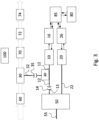
- the vehicle arrangement 1 may, as in Fig. 2 , comprise a first electric motor 10 having a first shaft 12, and a second electric motor 20 having a second shaft 22.
- the first shaft 12 is connected to the gearbox 50 via a first motor clutch 14 and a first gearbox shaft 13.
- a braking compressor 30 is arranged to be mechanically connected to the first shaft 12 via a compressor clutch 35, such that when the compressor clutch 35 is engaged, the first shaft 12 drives the compressor shaft 32.
- the braking compressor 30 may be used in a braking situation of the vehicle 1 for dissipating energy transmitted from the drive shaft 55 via the gearbox 50, the first gearbox shaft 13, and the first shaft 12 to the braking compressor 30.
- the braking compressor 30 will utilise the energy to compress air, which compressed air may be used for various purposes in the vehicle 1000 such as e.g. cooling.
- the compressor shaft 32 may, as illustrated in Fig. 2 , be arranged to be mechanically connected to the first shaft 12 via one or more gears 40 providing a gear ratio between the first shaft 12 and the compressor shaft 32.
- such a gear ratio may be a fixed gear ratio.
- the gear ratio may be in the range from 6 to 8, such as 8. Accordingly, by the gear ratio, a rotation speed of the first shaft 12 may result in a higher rotation speed of the compressor shaft.
- the braking compressor 30 will experience high compressor speeds (i.e. rotation speed of the compressor) and may also be subject to abrupt changes in compressor speed.
- the motor shaft speed (i.e. rotation speed of the shaft) will vary as a function of the vehicle speed and the gearing applied in the gear box. As such, the speed of the first shaft 12 and the second shaft 22 of the first and second electric motors 10, 20, will vary at different vehicle speeds and at different gearing in the gear box 50.
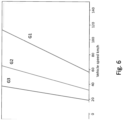
- Fig. 6 is an example diagram for illustrating the speed of the compressor shaft 32 of the braking compressor 30 when the compressor clutch 35 is engaged to the first shaft 12 with a gearing 40 providing a gear ratio. It will be understood, that due to the gear ratio of the gearing 40 between the first shaft 12 and the compressor shaft 32, the speed of the compressor shaft 32 may be considerably higher than the speed of the first shaft 12. For example, compressor speeds may be in the range of 20 000 to 60 000 rpm.
- the diagram illustrates schematically the speed of the compressor shaft 32 at different vehicle speeds and at different gearing (G1, G2, G3) in the gearbox 50
- Increasing speeds of the compressor shaft 32 implies increased power developed by the braking compressor 30, and also an increased torque provided via the shaft and to the one or more gears 40.
- the presently proposed vehicle arrangement 1 and methods utilise control of the first motor clutch 14 and the compressor clutch 35 to partly alleviate this problem.
- the vehicle arrangement 1 comprises a mass flow rate controlling means 60 arranged for controlling the air mass flow rate through the braking compressor 30.
- a mass flow rate controlling means 60 By provision of the mass flow rate controlling means 60, it is possible to control the power of the braking compressor 30, and thus the torque developed by the compressor 30, at different speeds of the compressor shaft 32.
- the mass flow rate controlling means 60 enables maintaining the compressor torque, ie. the torque on the compressor shaft 32 below a predetermined maximum torque limit.
- the mass flow rate controlling means 60 may, as illustrated in Fig. 2 , be a means for controlling the air inflow into the braking compressor 30. Control of the air inflow enables accurate control.
- the mass flow rate controlling means 60 may be a throttle valve 60 arranged to control the air inflow to the braking compressor 30.
- a throttle valve 60 is an example of a valve which may enable continuous control of the air intake and thus the mass flow rate between a minimum mass flow rate and a maximum mass flow rate.
- Fig. 7 illustrates an example of compressor power (which is proportional to the torque) developed by an example compressor at four different compressor speeds, and as a function of the orifice diameter of a throttle intake valve to the compressor.
- Fig. 8 by diminishing the orifice diameter of the throttle intake valve, i.e. diminishing the mass flow rate of the compressor, the power and thus the torque may be reduced.
- the orifice diameter of the throttle intake valve may be reduced.
- Fig. 8 illustrates an example of a mapping of corrected mass flow rate versus pressure ratio of a compressor.
- the mass flow rate has been varied by controlling the air intake to the compressor using a throttle valve with controllable orifice diameter, at different compressor speeds.
- Fig. 8 illustrates how compressor operating points moves in the map when the throttling is applied. As seen, the operating points imply that the compressor pumping limit may be avoided.
- the vehicle arrangement 1 described herein may comprise one or more additional braking elements for dissipating braking energy, which braking elements may compensate for the limitation in the braking provided by the compressor.
- the vehicle arrangement 1 may comprise one or more sensors to sense the air pressure in the air intake to the compressor 30 downstream the mass flow control means 60. As such, information from the sensor may be used to derive the compressor torque.
- the mass flow control means 60 may be adjusted so as to obtain a desired compressor torque by controlling the control means 60 towards a desired air pressure signal from the one or more sensors.
- the vehicle arrangement 1 may, as illustrated in Fig 2 , further comprise a flow restrictor 70 arranged downstream the braking compressor 30.
- the flow restrictor 70 may be controllable as already known in the art. As such, the flow restrictor 70 may have an impact on the mass flow rate through the compressor 30. However, it is believed that the primary regulation of the mass flow rate may advantageously be made by controlling the air intake to the compressor 30.
- Fig. 3 illustrates a second example of a braking arrangement 1.
- the braking arrangement 1 comprises all of the features of the braking arrangement 1 as illustrated in Fig. 2 , to which additional elements are added as examples.
- the vehicle arrangement 1 may further comprise a braking resistor 72.
- a braking resistor 72 may be arranged in addition to the braking compressor 30 so as to dissipate further braking energy from the drive shaft 55 in a braking situation.
- such additional braking elements for example a braking resistor 72 may be arranged to be cooled by an exhaust from the braking compressor 30.
- the braking energy used by the braking compressor to compress air may be used to further promote efficient dissipation of energy in a braking situation, by the compressed air from the exhaust of the compressor being used for cooling a braking resistor.
- the braking arrangement 1 may further, as illustrated in fig. 1 comprise one or more batteries 80.
- the one or more electric motors may be driven by any arrangement for providing electrical energy, such as one or more batteries and/or fuel cell systems.
- a vehicle not using batteries to provide the propulsion of the vehicle may comprise one or more batteries to store energy useful for other purposes.
- a battery 80 may be used to store energy from the drive shaft 55, using e.g. resistors and/or retarders arranged for this purpose.
- the braking arrangement 1 may further comprise a first traction inverter 16 for the first electric motor 10, and a second traction inverter 26 for the second electric motor 20.
- the braking arrangement may further comprise a junction box 85 in communication with the first and second traction inverters 16, 26.
- the junction box 85 is in this example further in communication with a battery 80.
- the braking resistor 72 may be air cooled via an air cooled resistor element arranged downstream the braking compressor 30, such as downstream the flow restrictor 70. Further, the vehicle arrangement 1 may comprise a muffler 74, for example as illustrated in Fig. 3 , arranged downstream the braking resistor 72 comprising the air cooled resistor element. The braking resistor 72 may be electrically connected to any electric system in the vehicle, such as to suitable components of the braking arrangement 1.
- Fig. 1 is a flowchart illustrating a method for controlling a vehicle arrangement 1 for, such as the vehicle arrangement 1 described in relation to Fig. 2 or Fig. 3 .
- the method comprises the steps of:
- the detecting of an upcoming braking situation may be made based on one or more of the following inputs: present or predicted geographical data, such as GPS (Global Positioning System) data, present or predicted topographical data, present or predicted environmental conditions, e.g. weather conditions, such as ambient temperature and/or wind conditions, gross weight of the vehicle, route of the vehicle, the set or predicted speed of the vehicle, present or predicted traffic conditions.
- GPS Global Positioning System
- present or predicted topographical data present or predicted environmental conditions, e.g. weather conditions, such as ambient temperature and/or wind conditions, gross weight of the vehicle, route of the vehicle, the set or predicted speed of the vehicle, present or predicted traffic conditions.
- the method comprises the step of, when the compressor clutch 35 is engaged: synchronizing the speed of the first shaft 12 of the first electric motor 10 with a speed of the first gearbox shaft 13 while controlling a mass flow rate of the compressor 30 so as to maintain a compressor torque on the compressor shaft below a predetermined maximum torque limit; S40.
- the method allows for the first shaft 12 to obtain a speed being synchronised with the speed of the first gearbox shaft 13, with the braking compressor 30 in mechanical engagement with the first shaft 12.
- the method allows for the braking compressor 30 to be in an applied state when the first motor clutch 14 is engaged, and the first shaft 12 having a speed synchronised with the first gearbox shaft 13, is connected to the first gearbox shaft 13.
- the braking compressor 30 may be applied in mechanical connection with the drive shaft 55 in a manner which enables engagement without sudden jerks or excessive torques applied to the mechanical connection.
- the synchronisation enables use of relatively simple clutch devices to form the first motor clutch 14, such as a claw clutch.
- the method allows for the braking compressor to be applied in mechanical connection with the drive shaft 55 already before an upcoming braking situation, as is required by certain safety regulations.
- the step of engaging the first motor clutch 14 may be made prior to arriving at the upcoming braking situation.
- the vehicle arrangement 1 further comprises a second electric motor 20 comprising a second shaft 22
- the method steps as described in the above may be performed with the second shaft 22 being engaged to the gearbox 50.
- the vehicle may be propelled using the second electric motor 20, while the method as described in the above is performed.
- the method may comprise the step of, before engaging the first motor clutch 14, controlling a mass flow rate of the braking compressor so as to maintain a compressor torque on the compressor shaft 32 below a predetermined engagement torque limit when engaging the first motor clutch 14.
- a predetermined engagement torque limit may for example be a minimum torque as available using the mass flow control means at the relevant compressor speed.
- the braking compressor 30 may provide a minimum torque, i.e. a minimum power. From this state, once the braking situation is present, the mass flow may for example be continuously increased so as to increase braking power in view of the demands of the current braking situation.
- the mass flow rate may be controlled so as to always maintain a compressor torque on the compressor shaft 32 below a predetermined maximum torque limit when the compressor clutch 35 is engaged. As such, it may be ensured that the mechanical connections between the compressor 30 and the first shaft 12 are not overloaded.
- the predetermined maximum torque limit may be set in view of the requirements of the components of the mechanical connections of the vehicle arrangement, so as to spare the mechanical connections from excessive wear or from the risk of breaking.
- Such mechanical connectors may be e.g. the compressor clutch 35 and/or the one or more gears 40 between the compressor 30 and the first shaft 12.
- the method may for example involve the step of controlling a mass flow rate of the compressor so as to maintain a compressor torque on the compressor shaft 32 below a predetermined maximum torque limit during the entire duration of the braking situation.
- the step of controlling the mass flow rate of the compressor may be performed by a method comprising the steps of
- this method may be used for braking a motor shaft of an electric motor arranged to be operatively mechanically connected to a drive shaft 55 in any vehicle arrangement 1 of a vehicle 1000, wherein the vehicle arrangement 1 comprises a braking compressor 30 comprising a compressor shaft 32 being mechanically connected to the motor shaft 12.
- Fig. 5 is a flow chart illustrating an embodiment of such a method for braking a motor shaft.
- the method for braking a motor shaft may thus be used with the features as described in the above.
- the method may comprise controlling the mass flow rate to one out of at least a plurality of selectable mass flow rates in a range between a minimum mass flow rate and a maximum mass flow rate.
- the method comprises controlling the mass flow rate comprises continuously controlling the mass flow rate between a minimum mass flow rate and a maximum mass flow rate.
- the method further comprises controlling the mass flow rate by controlling the air intake to the compressor.
- controlling the air inflow it is possible to adapt the mass flow rate so as to achieve the desired control of the compressor torque.
- the method may hence comprise controlling the air intake to the compressor by controlling a throttle valve arranged upstream the compressor 30.
- the information indicative of the compressor torque comprises information indicative of the compressor power as a function of the compressor speed and the mass flow rate through the compressor.
- a mapping of compressor power as a function of compressor speed and mass flow rate through the compressor may be used to provide the information indicative of the compressor torque.
- the information indicative of the compressor speed comprises information of the rotating speed of the motor shaft.
- the compressor may optionally be mechanically connected to the shaft 12 via a gear arrangement 40 providing gear ratio between the shaft 12 and the compressor 70.
- the gear ratio may be at least 3, such as at least 4, such as at least 6.
- the gear ratio may be 3 to 9, such as 4 to 8.
- the information indicative of the compressor speed comprises information of the gear ratio arrangement.
Landscapes
- Engineering & Computer Science (AREA)
- Transportation (AREA)
- Mechanical Engineering (AREA)
- Physics & Mathematics (AREA)
- Electromagnetism (AREA)
- Power Engineering (AREA)
- Chemical & Material Sciences (AREA)
- Combustion & Propulsion (AREA)
- Valves And Accessory Devices For Braking Systems (AREA)
- Electric Propulsion And Braking For Vehicles (AREA)
Description
- The invention relates to a vehicle arrangement for braking comprising at least a first electric motor. The invention further relates to a method for controlling a vehicle arrangement for braking, to a method for braking a motor shaft, to a control unit, a vehicle, a computer program and to a computer readable medium.
- The invention can be applied in heavy-duty vehicles, such as trucks, buses and construction equipment, as well as lighter vehicles such as passenger cars. Although the invention will be described with respect to a truck, the invention is not restricted to this particular vehicle, but may also be used in other vehicles such as passenger cars.
- In vehicles such as in heavy-duty vehicles there is a general need for braking involving dissipation of energy for example to complement friction braking in braking situations requiring prolonged and/or heavy braking.
- In electrical vehicles such as vehicles comprising one or more electrical motors e.g. using batteries and/or fuel cell systems for propulsion, it is known to use different types of retarders or resistors for dissipating energy while braking and/or to use any batteries for storing such energy.
- However, in braking situations when a relatively high brake power is required for substantial periods of time, it may be that the battery's limits for storing energy is reached before the end of the braking situation. Accordingly, the braking capacity using the battery for energy storage is limited.
- As such, there is a need to provide alternative or complementary solutions for dissipating energy during braking of a vehicle, so as to replace and/or complement the storing of braking energy in the battery of an electric vehicle.
- Known devices for dissipating braking energy are various types of retarders and/or resistors, which may be arranged for example to retard the drive shaft of a vehicle.
- According to its abstract,
US 10 221 781 B1 - According to its abstract,
EP 1 270 900 A1 - Retarders and resistors often utilise the cooling fluid of a cooling system of the vehicle for dissipating the braking energy. As such, the use of retarders and/or resistors for dissipating braking energy may imply that the cooling system of the vehicle needs to be dimensioned to take care of this energy, resulting in relatively large demands e.g. for radiator area and fan performance in a cooling system.
- As such, there is a need to provide alternative or complementary solutions for dissipating braking energy which does not necessarily utilise the cooling system for dissipating braking energy.
- Further, there is a requirement for heavy vehicles that the braking system to provide the braking shall be engaged for use already before reaching a braking situation, such as before the vehicle reaches a downhill slope.
- As such, there is a need to provide alternative or complementary solutions for dissipating braking energy during braking which enables engagement of the braking system before reaching a braking situation.
- Further, there is a general requirement to provide smooth and secure braking, and to limit wear or risk of breakage of the components involved.
- As such, there is a need to provide alternative or complementary solutions for dissipating energy during braking which are advantageous in view of wear, risk of breakage of components, and/or in view of providing smooth and secure braking.
- The object of the invention is to provide an alternative or an improvement in view of one or more of the above-mentioned needs.
- According to a first aspect of the invention, at least one of the objects is achieved by a method according to
claim 1. - Thus, there is provided a vehicle arrangement for braking comprising at least a first electric motor comprising a first shaft being arranged to be mechanically connected to a drive shaft of the vehicle via a gear box, and a braking compressor comprising a compressor shaft being arranged to be mechanically connected to the first shaft of the first electric motor via a compressor clutch, such that the first shaft drives the compressor shaft.
- The first shaft is connected to the gearbox via a first motor clutch and a first gearbox shaft. The vehicle arrangement further comprises mass flow rate controlling means arranged for controlling the air mass flow rate through the braking compressor.
- As such, there is provided an arrangement in which the two clutches, i.e. the first motor clutch and the compressor clutch, allows for selectable engagement or disengagement of the first shaft to the first gearbox shaft, and of the braking compressor to the first shaft. As such, during braking of the vehicle, the first motor clutch and the compressor clutch may both be engaged, such that energy may be transmitted from the drive shaft via the gearbox to the first gearbox shaft, via the first motor clutch to the first shaft. From the first shaft, energy may be transmitted via the compressor clutch to the compressor shaft so as to drive the braking compressor. The braking compressor utilises the energy to compress air.
- When the compressor clutch is engaged, the braking compressor will rotate with a compressor speed determined by the speed of the first shaft and any gearing provided between the first shaft and the compressor. As such, the compressor shaft may be subject to substantial torque. Furthermore, to enable mechanical engagement from the drive shaft via the gearbox and the first gearbox shaft, to the first shaft and further to the braking compressor, the torques involved in each mechanical connection need to be controlled.
- The provision of the first motor clutch and the compressor clutch provides for a first range of measures for handling the torques, by selectively engaging and disengaging the clutches.
- Further, as mentioned in the above, the arrangement comprises mass flow rate controlling means arranged for controlling the air mass flow rate through the braking compressor. By controlling the mass flow rate through the braking compressor, the compressor power and hence the torque on the compressor shaft may be controlled for a specific compressor speed. This control provides for a second range of measures for handling the torques.
- Thus, the provision of the first motor clutch, and the compressor clutch in combination with the mass flow rate controlling means provides for a vehicle arrangement which may be controlled for providing braking as will be further described in the below.
- Optionally, the compressor shaft is arranged to be mechanically connected to the first shaft via one or more gears providing a gear ratio between the first shaft and the compressor shaft.
- The provision of one or more gears means that the speed of the compressor shaft may be considerably increased as compared to the speed of the first shaft. A higher speed of the compressor shaft implies higher torque from the braking compressor. As will be further described in the below, the mass flow rate controlling means arranged for controlling the air mass flow rate through the braking compressor may be used so as to control also these relatively high torques.
- For example, the gear ratio may be at least 3, such as at be least 4, such as at least 6. For example, the gear ratio may be between 3 to 9, such as between 4 to 8.
- For example, the gear ratio may be a fixed gear ratio. In other words, the gear ratio is not adjustable.
- The mass flow rate controlling means may provide for control of the mass flow rate to at least a plurality of selectable mass flow rates in a range between a minimum mass flow rate and a maximum mass flow rate.
- The mass flow rate controlling means may provide for continuous control of the mass flow rate between a minimum mass flow rate and a maximum mass flow rate.
- Optionally, the mass flow rate controlling means comprises a means for controlling the air inflow into the braking compressor. By controlling the air inflow it is possible to adapt the air flow rate so as to achieve the desired control of the compressor torque.
- Optionally, the mass flow rate controlling means comprises a throttle valve arranged to control the air inflow to the compressor.
- The throttle valve may enable continuous control of the air inflow between a fully closed and a fully open position of the throttle valve.
- Optionally, the vehicle arrangement may further comprise a braking resistor. Such a braking resistor may be arranged in addition to the braking compressor so as to dissipate further braking energy from the drive shaft in a braking situation.
- For example, the vehicle arrangement may comprise a braking resistor dissipating electric energy from the retarding electrical motors.
- Optionally, the braking resistor may be arranged to be cooled by an exhaust from the braking compressor. As such, the braking energy used by the braking compressor to compress air may be used to further promote efficient dissipation of energy in a braking situation, by the compressed air from the exhaust of the compressor being used for cooling a braking resistor.
- Optionally, the arrangement may comprise a second electric motor comprising a second shaft, being arranged to be mechanically connected to a drive shaft of the vehicle via a gear box. When the arrangement comprises a second electric motor, this second electric motor may be used for propelling or braking the vehicle by the second shaft being connected to the gear box while the first shaft is disengaged from the gear box by the first motor clutch being disengaged.
- Further, the arrangement may comprise additional electric motors, for example the vehicle arrangement may comprise three or four electric motors.
- Optionally, the first electric motor is connected to a battery. Optionally, when the vehicle arrangement comprises a plurality of electric motors, such as two, three or four electric motors, all of the two, three or four electric motors may be connected to a battery.
- In a second aspect of the invention, there is provided a method according to claim 9. As such there is provided a method for braking a motor shaft of an electric motor arranged to be operatively mechanically connected to a drive shaft in a vehicle arrangement of a vehicle, the vehicle arrangement comprising a compressor comprising a compressor shaft being mechanically connected to the motor shaft, the method comprising:
- using information indicative of the compressor speed of the compressor, and
- using information indicative of the compressor torque as a function of the compressor speed and of a mass flow rate through the compressor, and
- controlling the mass flow rate of the compressor so as to maintain a compressor torque on the compressor shaft no greater than predetermined maximum torque limit.
- As such, the method according to the second aspect of the invention may be used for limiting the compressor torque and thus the braking power received from the compressor during braking. For example, if a gear change takes place during braking, this means that the motor shaft speed and hence the compressor torque may increase or decrease swiftly. In accordance with the method according to the third aspect, the mass flow rate of the compressor is controlled so as to maintain the compressor torque on the compressor shaft below a predetermined maximum torque limit, such that the compressor and/or gearing do not risk excessive wear and/or breakage e.g. at a gear shift.
- As such, the method may be used for controlling the compressor torque of a braking compressor and comprise:
- receiving a compressor torque request; and
- using information indicative of the compressor speed of the compressor, and
- using information indicative of the compressor torque as a function of the compressor speed and of a mass flow rate through the compressor;
- when the compressor torque request is lower than the predetermined maximum torque limit,
- controlling the mass flow rate of the compressor such that the compressor torque fulfils said compressor torque request
or - when the compressor torque request is higher than or equal to the predetermined maximum torque limit
- controlling the mass flow rate of the compressor such that the compressor torque is at said predetermined maximum torque limit.
- Optionally, the compressor torque request may be derived from a braking torque request or a braking power request required for the braking of a vehicle.
- Thus, when the brake torque request implies a compressor torque request which is higher than the predetermined maximum torque limit, other braking means of the vehicle may be applied to achieve sufficient braking.
- Optionally, the compressor torque request may be derived from an exhaust temperature request to provide a desired temperature of the exhaust air from the compressor.
- The method of the third aspect of the invention is not limited for use with the second aspect or the first aspect of the invention. However, the features and advantages of the third aspect are, as will be understood by the following description, advantageously applicable to the second and/or first aspect of the invention.
- Optionally, controlling the mass flow rate comprises controlling the mass flow rate to one out of at least a plurality of selectable mass flow rates in a range between a minimum mass flow rate and a maximum mass flow rate.
- Optionally, controlling the mass flow rate comprises continuously controlling the mass flow rate between a minimum mass flow rate and a maximum mass flow rate.
- Optionally, the method further comprises controlling the mass flow rate by controlling the air intake to the compressor. By controlling the air intake, i.e. the inflow of air, it is possible to adapt the mass flow rate so as to achieve the desired control of the compressor torque.
- Optionally, the method comprises controlling the air intake to the compressor by controlling a throttle valve arranged upstream the compressor.
- As such, a throttle valve may enable continuous control of the air intake between a fully closed and a fully open position of the throttle valve.
- Optionally, the information indicative of the compressor torque comprises information indicative of the compressor power as a function of the compressor speed and the mass flow rate through the compressor. As such, e.g. a mapping of compressor power as a function of compressor speed and mass flow rate through the compressor may be used to provide the information indicative of the compressor torque. For example, such a mapping may be a mapping of compressor power as a function of compressor speed and air intake to the compressor, such as compressor power as a function of compressor speed and diameter of an air intake orifice to the compressor.
- Optionally, the information indicative of the compressor speed comprises information of the rotating speed of the motor shaft.
- The compressor may optionally be mechanically connected to the shaft via a gear arrangement providing gear ratio between the shaft and the compressor. For example, the gear ratio may be at least 3, such as at least 4, such as at least 6. For example, the gear ratio may be from 3 to 9, such as from 4 to 8.
- As such, optionally the information indicative of the compressor speed comprises information of the gear ratio arrangement.
- In a third aspect of the invention, there is provided a vehicle according to claim 15. As such, there is provided a vehicle comprising the vehicle arrangement according the first aspect of the invention.
- In a fourth aspect of the invention there is provided a computer program according to
claim 16. As such, there is provided a computer program comprising program code means for performing the method of the invention, when the program is run on the control unit of the fourth aspect. - In a fifth aspect of the invention there is provided a computer readable medium according to claim 17.
- As such, there is provided a computer readable medium carrying a computer program comprising program code means for performing the method of the second and/or third aspect of the invention, when the program product is run on a control unit.
- Advantages and effects of the third, fourth and fifth aspects of the invention are largely analogous to the advantages and effects of the first, second aspects of the invention.
- Further advantages and advantageous features of the invention are disclosed in the following description and in the dependent claims.
- With reference to the appended drawings, below follows a more detailed description of embodiments of the invention cited as examples.
- In the drawings:
-
Fig. 1 is a side view of a vehicle according to an example embodiment of the invention, -
Fig. 2 is a schematic view of vehicle arrangement for braking, according to an example embodiment of the first aspect of the invention, -
Fig. 3 is a schematic view of a vehicle arrangement for braking, according to another example embodiment of the first aspect of the invention, -
Fig. 4 is a flowchart of a method according to an example embodiment of a second aspect of the invention, -
Fig. 5 is a flowchart of a method according to an example embedment of a third aspect of the invention, which may be used with the second aspect, -
Fig. 6 is an example diagram of the speed of a braking compressor at different vehicle speeds and different gears, -
Fig. 7 is an example diagram of the compressor power at different compressor speeds as a result of varying diameter of an air throttle intake, -
Fig. 8 is a map over the pressure ratio vs the corrected mass flow rate of an example braking compressor. -
Fig. 1 depicts a side view of avehicle 1000 according to an example embodiment of the invention. Thevehicle 1000 is here a truck, more specifically a heavy-duty truck for towing one or more trailers (not shown). Even though a heavy-duty truck 1000 is shown it shall be noted that the invention is not limited to this type of vehicle but may be used for any other type of vehicle, such as a bus, construction equipment, e.g. a wheel loader and an excavator, and a passenger car. The invention is also applicable for other applications not relating to vehicles as long as one electric motor or a plurality of electric motors is utilized. - The
vehicle 1000 comprises avehicle arrangement 1. Thevehicle arrangement 1 comprises one or more electric motors (not shown inFig. 1 ) which are used for creating a propulsion force to thevehicle 1000. - The
vehicle 1000 further comprises acontrol unit 100 according to an example embodiment of the invention. Thecontrol unit 100 is thus used for operating thevehicle arrangement 1. Even though an on-board control unit 100 is shown, it shall be understood that thecontrol unit 100 could also be a remote-control unit 100, i.e., an off-board control unit, or a combination of an on-board and off-board control unit. Thecontrol unit 100 may be configured to control thevehicle arrangement 1 by issuing control signals and by receiving status information relating to thevehicle arrangement 1. - The
control unit 100 is an electronic control unit and may comprise processing circuitry which is adapted to run a computer program as disclosed herein. Thecontrol unit 100 may comprise hardware and/or software for performing the method according to the invention. In an embodiment thecontrol unit 100 may be denoted a computer. Thecontrol unit 100 may be constituted by one or more separate sub-control units. In addition, thecontrol unit 100 may communicate by use of wired and/or wireless communication means. -
Fig. 2 depicts a schematic illustration of avehicle arrangement 1 according to an example embodiment of the invention, wherein thevehicle arrangement 1 is arranged for propulsion of a vehicle, such as thevehicle 1000 as shown infig. 1 . - The
vehicle arrangement 1 comprises at least one electric motor, optionally a plurality of electric motors. For example, and as illustrated inFig. 2 , thevehicle arrangement 1 may comprise a firstelectric motor 10 and a secondelectric motor 20. However, it is envisaged that three, four our more electric motors may be comprised in thevehicle arrangement 1. - The one or more
electric motors - Each
electric motor shaft gear box 50, which is in turn connected to the drivingshaft 55 of thevehicle 1000 for transmitting power from one or more of theelectric motors vehicle 1, for example to the traction wheels of thevehicle 1000. - Thus, the
vehicle arrangement 1 may, as inFig. 2 , comprise a firstelectric motor 10 having afirst shaft 12, and a secondelectric motor 20 having asecond shaft 22. Thefirst shaft 12 is connected to thegearbox 50 via afirst motor clutch 14 and afirst gearbox shaft 13. Further, abraking compressor 30 is arranged to be mechanically connected to thefirst shaft 12 via acompressor clutch 35, such that when thecompressor clutch 35 is engaged, thefirst shaft 12 drives thecompressor shaft 32. As such, when thefirst motor clutch 14 and thecompressor clutch 35 are both engaged, thebraking compressor 30 may be used in a braking situation of thevehicle 1 for dissipating energy transmitted from thedrive shaft 55 via thegearbox 50, thefirst gearbox shaft 13, and thefirst shaft 12 to thebraking compressor 30. Thebraking compressor 30 will utilise the energy to compress air, which compressed air may be used for various purposes in thevehicle 1000 such as e.g. cooling. - The
compressor shaft 32 may, as illustrated inFig. 2 , be arranged to be mechanically connected to thefirst shaft 12 via one ormore gears 40 providing a gear ratio between thefirst shaft 12 and thecompressor shaft 32. - Generally, such a gear ratio may be a fixed gear ratio. For example, the gear ratio may be in the range from 6 to 8, such as 8. Accordingly, by the gear ratio, a rotation speed of the
first shaft 12 may result in a higher rotation speed of the compressor shaft. - In a vehicle arrangement comprising a
braking compressor 30 being mechanically connected to thegearbox 50, such as in theexample arrangement 1 ofFig. 2 , thebraking compressor 30 will experience high compressor speeds (i.e. rotation speed of the compressor) and may also be subject to abrupt changes in compressor speed. - The motor shaft speed (i.e. rotation speed of the shaft) will vary as a function of the vehicle speed and the gearing applied in the gear box. As such, the speed of the
first shaft 12 and thesecond shaft 22 of the first and secondelectric motors gear box 50. -
Fig. 6 is an example diagram for illustrating the speed of thecompressor shaft 32 of thebraking compressor 30 when thecompressor clutch 35 is engaged to thefirst shaft 12 with agearing 40 providing a gear ratio. It will be understood, that due to the gear ratio of thegearing 40 between thefirst shaft 12 and thecompressor shaft 32, the speed of thecompressor shaft 32 may be considerably higher than the speed of thefirst shaft 12. For example, compressor speeds may be in the range of 20 000 to 60 000 rpm. The diagram illustrates schematically the speed of thecompressor shaft 32 at different vehicle speeds and at different gearing (G1, G2, G3) in thegearbox 50 - Increasing speeds of the
compressor shaft 32 implies increased power developed by thebraking compressor 30, and also an increased torque provided via the shaft and to the one or more gears 40. - In prior art arrangements, there is accordingly a risk that the high torque implies that the mechanical components involved in the connection between the
first gearbox shaft 13, thefirst shaft 12 and thecompressor shaft 32, such as the one ormore gears 40, are overloaded resulting in swift wear or in breakage of the mechanical components. - As will be further described in the below, the presently proposed
vehicle arrangement 1 and methods utilise control of thefirst motor clutch 14 and thecompressor clutch 35 to partly alleviate this problem. - In addition, the
vehicle arrangement 1 comprises a mass flow rate controlling means 60 arranged for controlling the air mass flow rate through thebraking compressor 30. By provision of the mass flow rate controlling means 60, it is possible to control the power of thebraking compressor 30, and thus the torque developed by thecompressor 30, at different speeds of thecompressor shaft 32. Thus, the mass flow rate controlling means 60 enables maintaining the compressor torque, ie. the torque on thecompressor shaft 32 below a predetermined maximum torque limit. - The mass flow rate controlling means 60 may, as illustrated in
Fig. 2 , be a means for controlling the air inflow into thebraking compressor 30. Control of the air inflow enables accurate control. - For example, the mass flow rate controlling means 60 may be a
throttle valve 60 arranged to control the air inflow to thebraking compressor 30. Athrottle valve 60 is an example of a valve which may enable continuous control of the air intake and thus the mass flow rate between a minimum mass flow rate and a maximum mass flow rate. -
Fig. 7 illustrates an example of compressor power (which is proportional to the torque) developed by an example compressor at four different compressor speeds, and as a function of the orifice diameter of a throttle intake valve to the compressor. As seen inFig. 8 , by diminishing the orifice diameter of the throttle intake valve, i.e. diminishing the mass flow rate of the compressor, the power and thus the torque may be reduced. As such, to maintain the compressor torque below a predetermined torque limit when the compressor speed is increased as a result of an increase in the speed of the first shaft, the orifice diameter of the throttle intake valve may be reduced. -
Fig. 8 illustrates an example of a mapping of corrected mass flow rate versus pressure ratio of a compressor. In this example, the mass flow rate has been varied by controlling the air intake to the compressor using a throttle valve with controllable orifice diameter, at different compressor speeds.Fig. 8 illustrates how compressor operating points moves in the map when the throttling is applied. As seen, the operating points imply that the compressor pumping limit may be avoided. - By controlling the compressor torque to remain under a predetermined maximum torque value, the power developed by the
braking compressor 30 and thus the amount of braking energy from thedrive shaft 55 used by the braking compressor will also be limited. It is envisaged that thevehicle arrangement 1 described herein may comprise one or more additional braking elements for dissipating braking energy, which braking elements may compensate for the limitation in the braking provided by the compressor. - For example, the
vehicle arrangement 1 may comprise one or more sensors to sense the air pressure in the air intake to thecompressor 30 downstream the mass flow control means 60. As such, information from the sensor may be used to derive the compressor torque. The mass flow control means 60 may be adjusted so as to obtain a desired compressor torque by controlling the control means 60 towards a desired air pressure signal from the one or more sensors. - The
vehicle arrangement 1 may, as illustrated inFig 2 , further comprise aflow restrictor 70 arranged downstream thebraking compressor 30. The flow restrictor 70 may be controllable as already known in the art. As such, theflow restrictor 70 may have an impact on the mass flow rate through thecompressor 30. However, it is believed that the primary regulation of the mass flow rate may advantageously be made by controlling the air intake to thecompressor 30. -
Fig. 3 illustrates a second example of abraking arrangement 1. Thebraking arrangement 1 comprises all of the features of thebraking arrangement 1 as illustrated inFig. 2 , to which additional elements are added as examples. - For example, and as in the example arrangement illustrated in
Fig. 3 , thevehicle arrangement 1 may further comprise abraking resistor 72. Such abraking resistor 72 may be arranged in addition to thebraking compressor 30 so as to dissipate further braking energy from thedrive shaft 55 in a braking situation. - Optionally, such additional braking elements, for example a
braking resistor 72 may be arranged to be cooled by an exhaust from thebraking compressor 30. As such, the braking energy used by the braking compressor to compress air may be used to further promote efficient dissipation of energy in a braking situation, by the compressed air from the exhaust of the compressor being used for cooling a braking resistor. - The
braking arrangement 1 may further, as illustrated infig. 1 comprise one ormore batteries 80. - As mentioned in the above, the one or more electric motors may be driven by any arrangement for providing electrical energy, such as one or more batteries and/or fuel cell systems. Also a vehicle not using batteries to provide the propulsion of the vehicle, may comprise one or more batteries to store energy useful for other purposes.
- In a braking situation, a
battery 80 may be used to store energy from thedrive shaft 55, using e.g. resistors and/or retarders arranged for this purpose. - The
braking arrangement 1 may further comprise afirst traction inverter 16 for the firstelectric motor 10, and asecond traction inverter 26 for the secondelectric motor 20. The braking arrangement may further comprise ajunction box 85 in communication with the first andsecond traction inverters junction box 85 is in this example further in communication with abattery 80. - The
braking resistor 72 may be air cooled via an air cooled resistor element arranged downstream thebraking compressor 30, such as downstream theflow restrictor 70. Further, thevehicle arrangement 1 may comprise amuffler 74, for example as illustrated inFig. 3 , arranged downstream thebraking resistor 72 comprising the air cooled resistor element. Thebraking resistor 72 may be electrically connected to any electric system in the vehicle, such as to suitable components of thebraking arrangement 1. -
Fig. 1 is a flowchart illustrating a method for controlling avehicle arrangement 1 for, such as thevehicle arrangement 1 described in relation toFig. 2 orFig. 3 . - The method comprises the steps of:
- detecting an upcoming or present braking situation S10;
- ensuring that the
first motor clutch 14 is disengaged S20 - ensuring that the
compressor clutch 35 is engaged S30 - synchronizing the speed of the
first shaft 12 of the firstelectric motor 10 with a speed of thefirst gearbox shaft 13 while controlling a mass flow rate of thecompressor 30 so as to maintain a compressor torque on the compressor shaft below a predetermined maximum torque limit S40 ; and - engaging the
first motor clutch 14 S50 such that thefirst shaft 12 is coupled to thegear box 50 via thegearbox shaft 13 and thegearbox 50, and thebraking compressor 30 is coupled to thefirst shaft 12 via the one or more gears 40. - As such, the detecting of an upcoming braking situation may be made based on one or more of the following inputs: present or predicted geographical data, such as GPS (Global Positioning System) data, present or predicted topographical data, present or predicted environmental conditions, e.g. weather conditions, such as ambient temperature and/or wind conditions, gross weight of the vehicle, route of the vehicle, the set or predicted speed of the vehicle, present or predicted traffic conditions.
- The method comprises the step of, when the
compressor clutch 35 is engaged: synchronizing the speed of thefirst shaft 12 of the firstelectric motor 10 with a speed of thefirst gearbox shaft 13 while controlling a mass flow rate of thecompressor 30 so as to maintain a compressor torque on the compressor shaft below a predetermined maximum torque limit; S40. Thus, the method allows for thefirst shaft 12 to obtain a speed being synchronised with the speed of thefirst gearbox shaft 13, with thebraking compressor 30 in mechanical engagement with thefirst shaft 12. Thus, the method allows for thebraking compressor 30 to be in an applied state when thefirst motor clutch 14 is engaged, and thefirst shaft 12 having a speed synchronised with thefirst gearbox shaft 13, is connected to thefirst gearbox shaft 13. Thus, thebraking compressor 30 may be applied in mechanical connection with thedrive shaft 55 in a manner which enables engagement without sudden jerks or excessive torques applied to the mechanical connection. - Also, the synchronisation enables use of relatively simple clutch devices to form the
first motor clutch 14, such as a claw clutch. - Further, the method allows for the braking compressor to be applied in mechanical connection with the
drive shaft 55 already before an upcoming braking situation, as is required by certain safety regulations. - As such, when the method comprises detecting an upcoming braking situation, the step of engaging the
first motor clutch 14 may be made prior to arriving at the upcoming braking situation. - When the
vehicle arrangement 1 further comprises a secondelectric motor 20 comprising asecond shaft 22, the method steps as described in the above may be performed with thesecond shaft 22 being engaged to thegearbox 50. As such, the vehicle may be propelled using the secondelectric motor 20, while the method as described in the above is performed. - The method may comprise the step of, before engaging the
first motor clutch 14, controlling a mass flow rate of the braking compressor so as to maintain a compressor torque on thecompressor shaft 32 below a predetermined engagement torque limit when engaging thefirst motor clutch 14. Such a predetermined engagement torque limit may for example be a minimum torque as available using the mass flow control means at the relevant compressor speed. Thus, at engagement of thefirst motor clutch 14, thebraking compressor 30 may provide a minimum torque, i.e. a minimum power. From this state, once the braking situation is present, the mass flow may for example be continuously increased so as to increase braking power in view of the demands of the current braking situation. - The mass flow rate may be controlled so as to always maintain a compressor torque on the
compressor shaft 32 below a predetermined maximum torque limit when thecompressor clutch 35 is engaged. As such, it may be ensured that the mechanical connections between thecompressor 30 and thefirst shaft 12 are not overloaded. As mentioned in the above, the predetermined maximum torque limit may be set in view of the requirements of the components of the mechanical connections of the vehicle arrangement, so as to spare the mechanical connections from excessive wear or from the risk of breaking. Such mechanical connectors may be e.g. thecompressor clutch 35 and/or the one ormore gears 40 between thecompressor 30 and thefirst shaft 12. - Thus, the method may for example involve the step of controlling a mass flow rate of the compressor so as to maintain a compressor torque on the
compressor shaft 32 below a predetermined maximum torque limit during the entire duration of the braking situation. - The step of controlling the mass flow rate of the compressor may be performed by a method comprising the steps of
- using information indicative of the compressor speed of the
braking compressor 30 S100, and - using information indicative of the compressor torque as a function of the compressor speed and of a mass flow rate through the
compressor 30 S200, and - controlling the mass flow rate of the
braking compressor 30 so as to maintain a compressor torque on thecompressor shaft 32 below a predetermined maximum torque limit S300. - As such, this method may be used for braking a motor shaft of an electric motor arranged to be operatively mechanically connected to a
drive shaft 55 in anyvehicle arrangement 1 of avehicle 1000, wherein thevehicle arrangement 1 comprises abraking compressor 30 comprising acompressor shaft 32 being mechanically connected to themotor shaft 12. -
Fig. 5 is a flow chart illustrating an embodiment of such a method for braking a motor shaft. - When used in combination with the arrangements or methods as described in
Figs. 2 to 4 , this implies that the motor shaft is thefirst shaft 12. - The method for braking a motor shaft may thus be used with the features as described in the above. For example, the method may comprise controlling the mass flow rate to one out of at least a plurality of selectable mass flow rates in a range between a minimum mass flow rate and a maximum mass flow rate. For example, the method comprises controlling the mass flow rate comprises continuously controlling the mass flow rate between a minimum mass flow rate and a maximum mass flow rate.
- Optionally, the method further comprises controlling the mass flow rate by controlling the air intake to the compressor. By controlling the air inflow it is possible to adapt the mass flow rate so as to achieve the desired control of the compressor torque. The method may hence comprise controlling the air intake to the compressor by controlling a throttle valve arranged upstream the
compressor 30. - Optionally, the information indicative of the compressor torque comprises information indicative of the compressor power as a function of the compressor speed and the mass flow rate through the compressor. As such, e.g. a mapping of compressor power as a function of compressor speed and mass flow rate through the compressor may be used to provide the information indicative of the compressor torque.
- Optionally, the information indicative of the compressor speed comprises information of the rotating speed of the motor shaft.
- The compressor may optionally be mechanically connected to the
shaft 12 via agear arrangement 40 providing gear ratio between theshaft 12 and thecompressor 70. For example, the gear ratio may be at least 3, such as at least 4, such as at least 6. For example, the gear ratio may be 3 to 9, such as 4 to 8. - As such, optionally the information indicative of the compressor speed comprises information of the gear ratio arrangement.
- It is to be understood that the present invention is not limited to the embodiments described above and illustrated in the drawings; rather, the skilled person will recognize that many changes and modifications may be made within the scope of the appended claims. For example, although the drawings depict embodiments comprising two electric motors, it will be understood from the above description that several aspects and features of the invention are applicable also to embodiments comprising only one electric motor, or to embodiments comprising more than one electric motor, such as three, four or five electric motors.
Claims (17)
- A vehicle arrangement for braking comprisingat least a first electric motor (10) comprising a first shaft (12) being arranged to be mechanically connected to a drive shaft (55) of said vehicle (1) via a gear box (50), and
a braking compressor (30) comprising a compressor shaft (32) being arranged to be mechanically connected to said first shaft (12) of said first electric motor (10) via a compressor clutch (35), such that said first shaft (12) drives said compressor shaft (32),characterized in that said first shaft (12) is connected to said gearbox (50) via a first motor clutch (14) and a first gearbox shaft (13), said arrangement further comprising
a mass flow rate controlling means (60) arranged for controlling the air mass flow rate through said compressor (30). - The vehicle arrangement according to claim 1, wherein said compressor shaft (32) is arranged to be mechanically connected to said first shaft (12) via one or more gears (40) providing a gear ratio between said first shaft (12) and said compressor shaft (32).
- The vehicle arrangement according to claim 2, wherein said gear ratio is at least 4, preferably at least 6.
- The vehicle arrangement according to any one of the preceding claims, wherein said mass flow rate controlling means (60) comprises a throttle valve (60) arranged to control the air inflow to said braking compressor (30).
- The vehicle arrangement according to any one of the preceding claims, further comprising a braking resistor (72).
- The vehicle arrangement according to claim 5, wherein said braking resistor (72) is arranged to be cooled by an exhaust from said braking compressor (30).
- The vehicle arrangement according to any one of the preceding claims, wherein said arrangement comprises a second electric motor (20) comprising a second shaft (22), being arranged to be mechanically connected to a drive shaft (55) of said vehicle (1) via a gear box (50),
- The vehicle arrangement according to any one of the preceding claims, wherein said first electric motor (10) is connected to a battery (80), and, when dependent on claim 7, wherein said second electric motor (20) is connected to a battery (80).
- Method for braking a motor shaft (12) of an electric motor (10) arranged to be operatively mechanically connected to a drive shaft (55) in a vehicle arrangement of a vehicle (1), the vehicle arrangement comprising a braking compressor (30) comprising a compressor shaft (32) being mechanically connected to said motor shaft (12), the method comprising:- using information indicative of the compressor speed of said braking compressor (30), and- using information indicative of the compressor torque as a function of the compressor speed and of a mass flow rate through said braking compressor (30), and- controlling the mass flow rate of the braking compressor (30) so as to maintain a compressor torque on said compressor shaft (32) no greater than a predetermined maximum torque limit.
- Method for controlling the compressor torque of a braking compressor using the method according to claim 9, and comprising:- receiving a compressor torque request; andusing information indicative of the compressor speed of the compressor, andusing information indicative of the compressor torque as a function of the compressor speed and of a mass flow rate through the compressor;- when the compressor torque request is lower than the predetermined maximum torque limit,- controlling the mass flow rate of the compressor such that the compressor torque fulfils said compressor torque request
or- when the compressor torque request is higher than or equal to the predetermined maximum torque limit- controlling the mass flow rate of the compressor such that the compressor torque is at said predetermined maximum torque limit. - The method according to claim 9 or 10, further comprising controlling said mass flow rate by controlling the air intake to said braking compressor (30).
- The method according to claim 11, comprising controlling said air intake to said braking compressor (30) by controlling a throttle valve arranged upstream said braking compressor (30)
- The method according to any one of the claims 9 to 12, wherein said information indicative of the compressor torque comprises information indicative of the compressor power as a function of said compressor speed and said mass flow rate through said braking compressor (30).
- The method according to any one of the claims 9 to 13, wherein said information indicative of the compressor speed comprises information of the rotating speed of said motor shaft (12).
- A vehicle comprising the vehicle arrangement (1) according to any one of the claims 1 to 8.
- A computer program comprising program code means for performing the method of any of claims 9 to 14, when said program is run on a control unit (100) for operating a vehicle arrangement comprising a compressor (100) comprising a compressor shaft (32) being mechanically connected to a first motor shaft (12) in a vehicle arrangement (100).
- A computer readable medium carrying a computer program comprising program code means for performing the method of any of claims 9 to 14, when said program product is run on a control unit (100) for operating a vehicle arrangement comprising a compressor (100) comprising a compressor shaft (32) being mechanically connected to a first motor shaft (12) in a vehicle arrangement (100).
Priority Applications (3)
| Application Number | Priority Date | Filing Date | Title |
|---|---|---|---|
| EP21212847.4A EP4194286B1 (en) | 2021-12-07 | 2021-12-07 | A vehicle arrangement and method for braking |
| US17/978,405 US12491771B2 (en) | 2021-12-07 | 2022-11-01 | Vehicle arrangement and method for braking |
| CN202211376528.XA CN116238459A (en) | 2021-12-07 | 2022-11-04 | Vehicle arrangement and method for braking |
Applications Claiming Priority (1)
| Application Number | Priority Date | Filing Date | Title |
|---|---|---|---|
| EP21212847.4A EP4194286B1 (en) | 2021-12-07 | 2021-12-07 | A vehicle arrangement and method for braking |
Publications (3)
| Publication Number | Publication Date |
|---|---|
| EP4194286A1 EP4194286A1 (en) | 2023-06-14 |
| EP4194286B1 true EP4194286B1 (en) | 2025-04-02 |
| EP4194286C0 EP4194286C0 (en) | 2025-04-02 |
Family
ID=78827540
Family Applications (1)
| Application Number | Title | Priority Date | Filing Date |
|---|---|---|---|
| EP21212847.4A Active EP4194286B1 (en) | 2021-12-07 | 2021-12-07 | A vehicle arrangement and method for braking |
Country Status (3)
| Country | Link |
|---|---|
| US (1) | US12491771B2 (en) |
| EP (1) | EP4194286B1 (en) |
| CN (1) | CN116238459A (en) |
Family Cites Families (5)
| Publication number | Priority date | Publication date | Assignee | Title |
|---|---|---|---|---|
| EP1270899B1 (en) * | 1998-07-31 | 2004-03-31 | TEXAS A&M UNIVERSITY SYSTEM | Non-cantilevered gerotor compressor and gerotor expander |
| US20120201657A1 (en) | 2011-02-08 | 2012-08-09 | Icr Turbine Engine Corporation | Gas turbine engine braking method |
| ITUB20153870A1 (en) * | 2015-09-24 | 2017-03-24 | Cnh Ind Italia Spa | Method and apparatus for controlling the braking of a vehicle. |
| US10221781B1 (en) * | 2017-10-12 | 2019-03-05 | Ford Global Technologies, Llc | Hybrid vehicle with turbo lag reduction apparatus |
| DE102019200921A1 (en) | 2019-01-25 | 2020-07-30 | Robert Bosch Gmbh | Method for braking a vehicle |
-
2021
- 2021-12-07 EP EP21212847.4A patent/EP4194286B1/en active Active
-
2022
- 2022-11-01 US US17/978,405 patent/US12491771B2/en active Active
- 2022-11-04 CN CN202211376528.XA patent/CN116238459A/en active Pending
Also Published As
| Publication number | Publication date |
|---|---|
| US20230173927A1 (en) | 2023-06-08 |
| CN116238459A (en) | 2023-06-09 |
| EP4194286C0 (en) | 2025-04-02 |
| EP4194286A1 (en) | 2023-06-14 |
| US12491771B2 (en) | 2025-12-09 |
Similar Documents
| Publication | Publication Date | Title |
|---|---|---|
| US10330030B2 (en) | Hybrid system comprising a supercharging system and method for operation | |
| EP2371646B1 (en) | Apparatus for hybrid drive torque control | |
| EP2928745B1 (en) | Hybrid electric vehicle control system and method | |
| US12151561B2 (en) | Systems and methods for plug-in electric vehicle accessory recharging during battery charge | |
| EP2971640B1 (en) | Adaptive state of charge regulation and control of variable speed hybrid electric supercharger assembly for efficient vehicle operation | |
| CN114274943B (en) | Optimized regenerative braking for hybrid electric vehicle powertrain configuration | |
| EP2049357B1 (en) | Power management system for a vehicle, method for managing vehicle power and method for installing a vehicle power management system | |
| US10800398B2 (en) | Hybrid vehicle | |
| CN108367668B (en) | Transmission systems for electrification of commercial vehicle powertrains | |
| US20070163819A1 (en) | Hybrid drive system and method of installing same | |
| CN104787035A (en) | Vehicle | |
| US8672806B2 (en) | Method for determining a starting speed in a motor vehicle | |
| EP3166832B1 (en) | Control of an internal combustion engine in a vehicle | |
| US10710586B2 (en) | Systems and methods for idle coasting management | |
| US10746291B2 (en) | Engine torque and torque converter bypass clutch slip control during vehicle launch | |
| JP2003511996A (en) | Hybrid vehicle control method | |
| CN105579312A (en) | Dual clutch powertrain architecture | |
| US20030205930A1 (en) | High idle creep control by brake-by-wire braking | |
| EP4194286B1 (en) | A vehicle arrangement and method for braking | |
| CN100515815C (en) | Electric vehicle air conditioner motor drive system and control method for the system | |
| EP2953806B1 (en) | A method for improving startability of a vehicle | |
| US20170159593A1 (en) | Control of preparatory measures in a vehicle | |
| JP6859222B2 (en) | Braking force control device for hybrid vehicles | |
| JP2016175500A (en) | Hybrid vehicle and control method thereof | |
| US7458916B2 (en) | Control method and device for the propulsion motor unit of a motor vehicle driven by an internal combustion engine |
Legal Events
| Date | Code | Title | Description |
|---|---|---|---|
| PUAI | Public reference made under article 153(3) epc to a published international application that has entered the european phase |
Free format text: ORIGINAL CODE: 0009012 |
|
| STAA | Information on the status of an ep patent application or granted ep patent |
Free format text: STATUS: THE APPLICATION HAS BEEN PUBLISHED |
|
| AK | Designated contracting states |
Kind code of ref document: A1 Designated state(s): AL AT BE BG CH CY CZ DE DK EE ES FI FR GB GR HR HU IE IS IT LI LT LU LV MC MK MT NL NO PL PT RO RS SE SI SK SM TR |
|
| STAA | Information on the status of an ep patent application or granted ep patent |
Free format text: STATUS: REQUEST FOR EXAMINATION WAS MADE |
|
| 17P | Request for examination filed |
Effective date: 20231129 |
|
| RBV | Designated contracting states (corrected) |
Designated state(s): AL AT BE BG CH CY CZ DE DK EE ES FI FR GB GR HR HU IE IS IT LI LT LU LV MC MK MT NL NO PL PT RO RS SE SI SK SM TR |
|
| GRAP | Despatch of communication of intention to grant a patent |
Free format text: ORIGINAL CODE: EPIDOSNIGR1 |
|
| STAA | Information on the status of an ep patent application or granted ep patent |
Free format text: STATUS: GRANT OF PATENT IS INTENDED |
|
| INTG | Intention to grant announced |
Effective date: 20241106 |
|
| GRAS | Grant fee paid |
Free format text: ORIGINAL CODE: EPIDOSNIGR3 |
|
| GRAA | (expected) grant |
Free format text: ORIGINAL CODE: 0009210 |
|
| STAA | Information on the status of an ep patent application or granted ep patent |
Free format text: STATUS: THE PATENT HAS BEEN GRANTED |
|
| AK | Designated contracting states |
Kind code of ref document: B1 Designated state(s): AL AT BE BG CH CY CZ DE DK EE ES FI FR GB GR HR HU IE IS IT LI LT LU LV MC MK MT NL NO PL PT RO RS SE SI SK SM TR |
|
| REG | Reference to a national code |
Ref country code: GB Ref legal event code: FG4D |
|
| REG | Reference to a national code |
Ref country code: CH Ref legal event code: EP |
|
| REG | Reference to a national code |
Ref country code: DE Ref legal event code: R096 Ref document number: 602021028463 Country of ref document: DE |
|
| REG | Reference to a national code |
Ref country code: IE Ref legal event code: FG4D |
|
| U01 | Request for unitary effect filed |
Effective date: 20250423 |
|
| U07 | Unitary effect registered |
Designated state(s): AT BE BG DE DK EE FI FR IT LT LU LV MT NL PT RO SE SI Effective date: 20250430 |
|
| PG25 | Lapsed in a contracting state [announced via postgrant information from national office to epo] |
Ref country code: ES Free format text: LAPSE BECAUSE OF FAILURE TO SUBMIT A TRANSLATION OF THE DESCRIPTION OR TO PAY THE FEE WITHIN THE PRESCRIBED TIME-LIMIT Effective date: 20250402 |
|
| PG25 | Lapsed in a contracting state [announced via postgrant information from national office to epo] |
Ref country code: GR Free format text: LAPSE BECAUSE OF FAILURE TO SUBMIT A TRANSLATION OF THE DESCRIPTION OR TO PAY THE FEE WITHIN THE PRESCRIBED TIME-LIMIT Effective date: 20250703 Ref country code: NO Free format text: LAPSE BECAUSE OF FAILURE TO SUBMIT A TRANSLATION OF THE DESCRIPTION OR TO PAY THE FEE WITHIN THE PRESCRIBED TIME-LIMIT Effective date: 20250702 |
|
| PG25 | Lapsed in a contracting state [announced via postgrant information from national office to epo] |
Ref country code: PL Free format text: LAPSE BECAUSE OF FAILURE TO SUBMIT A TRANSLATION OF THE DESCRIPTION OR TO PAY THE FEE WITHIN THE PRESCRIBED TIME-LIMIT Effective date: 20250402 |
|
| PG25 | Lapsed in a contracting state [announced via postgrant information from national office to epo] |
Ref country code: HR Free format text: LAPSE BECAUSE OF FAILURE TO SUBMIT A TRANSLATION OF THE DESCRIPTION OR TO PAY THE FEE WITHIN THE PRESCRIBED TIME-LIMIT Effective date: 20250402 |
|
| PG25 | Lapsed in a contracting state [announced via postgrant information from national office to epo] |
Ref country code: RS Free format text: LAPSE BECAUSE OF FAILURE TO SUBMIT A TRANSLATION OF THE DESCRIPTION OR TO PAY THE FEE WITHIN THE PRESCRIBED TIME-LIMIT Effective date: 20250702 |
|
| PG25 | Lapsed in a contracting state [announced via postgrant information from national office to epo] |
Ref country code: IS Free format text: LAPSE BECAUSE OF FAILURE TO SUBMIT A TRANSLATION OF THE DESCRIPTION OR TO PAY THE FEE WITHIN THE PRESCRIBED TIME-LIMIT Effective date: 20250802 |
|
| PG25 | Lapsed in a contracting state [announced via postgrant information from national office to epo] |
Ref country code: SM Free format text: LAPSE BECAUSE OF FAILURE TO SUBMIT A TRANSLATION OF THE DESCRIPTION OR TO PAY THE FEE WITHIN THE PRESCRIBED TIME-LIMIT Effective date: 20250402 |
|
| PG25 | Lapsed in a contracting state [announced via postgrant information from national office to epo] |
Ref country code: CZ Free format text: LAPSE BECAUSE OF FAILURE TO SUBMIT A TRANSLATION OF THE DESCRIPTION OR TO PAY THE FEE WITHIN THE PRESCRIBED TIME-LIMIT Effective date: 20250402 |
|
| PG25 | Lapsed in a contracting state [announced via postgrant information from national office to epo] |
Ref country code: SK Free format text: LAPSE BECAUSE OF FAILURE TO SUBMIT A TRANSLATION OF THE DESCRIPTION OR TO PAY THE FEE WITHIN THE PRESCRIBED TIME-LIMIT Effective date: 20250402 |
|
| U20 | Renewal fee for the european patent with unitary effect paid |
Year of fee payment: 5 Effective date: 20251223 |
|
| PLBE | No opposition filed within time limit |
Free format text: ORIGINAL CODE: 0009261 |
|
| STAA | Information on the status of an ep patent application or granted ep patent |
Free format text: STATUS: NO OPPOSITION FILED WITHIN TIME LIMIT |
|
| REG | Reference to a national code |
Ref country code: CH Ref legal event code: L10 Free format text: ST27 STATUS EVENT CODE: U-0-0-L10-L00 (AS PROVIDED BY THE NATIONAL OFFICE) Effective date: 20260211 |
|
| 26N | No opposition filed |
Effective date: 20260105 |