EP4194051A1 - Implant arrangement enabling virtual programming of an implant - Google Patents
Implant arrangement enabling virtual programming of an implant Download PDFInfo
- Publication number
- EP4194051A1 EP4194051A1 EP21213074.4A EP21213074A EP4194051A1 EP 4194051 A1 EP4194051 A1 EP 4194051A1 EP 21213074 A EP21213074 A EP 21213074A EP 4194051 A1 EP4194051 A1 EP 4194051A1
- Authority
- EP
- European Patent Office
- Prior art keywords
- data
- implantable medical
- medical device
- active implantable
- implant arrangement
- Prior art date
- Legal status (The legal status is an assumption and is not a legal conclusion. Google has not performed a legal analysis and makes no representation as to the accuracy of the status listed.)
- Granted
Links
Images

Classifications
-
- A—HUMAN NECESSITIES
- A61—MEDICAL OR VETERINARY SCIENCE; HYGIENE
- A61N—ELECTROTHERAPY; MAGNETOTHERAPY; RADIATION THERAPY; ULTRASOUND THERAPY
- A61N1/00—Electrotherapy; Circuits therefor
- A61N1/18—Applying electric currents by contact electrodes
- A61N1/32—Applying electric currents by contact electrodes alternating or intermittent currents
- A61N1/36—Applying electric currents by contact electrodes alternating or intermittent currents for stimulation
- A61N1/372—Arrangements in connection with the implantation of stimulators
- A61N1/37211—Means for communicating with stimulators
- A61N1/37252—Details of algorithms or data aspects of communication system, e.g. handshaking, transmitting specific data or segmenting data
- A61N1/37254—Pacemaker or defibrillator security, e.g. to prevent or inhibit programming alterations by hackers or unauthorised individuals
Definitions
- the data transfer interface is configured to allow exclusively a data transfer away from the active implantable medical device (i.e., out of the active implantable medical device), but not towards the active implantable medical device.
- the active implantable medical device is a device chosen from the group consisting of a cardiac rhythm monitor (loop monitor), a vital data monitor, an implantable pulse generator (IPG), an implantable cardioverter/defibrillator (ICD), a cardiac resynchronization device (CRT-P), a cardiac resynchronization device with the defibrillator (CRT-D), a glucose monitor, and a neurostimulator.
- a cardiac rhythm monitor (loop monitor)
- IPG implantable pulse generator
- ICD implantable cardioverter/defibrillator
- CRT-P cardiac resynchronization device
- CRT-D cardiac resynchronization device with the defibrillator
- glucose monitor a glucose monitor
- neurostimulator a neurostimulator
- a particularly appropriate vital data monitor is a monitor that monitors an intracardiac electrogram, an electrocardiogram, a breathing of the patient, a temperature of the patient, a coughing of the patient, an electroencephalogram of the patient, a blood pressure, a pulmonary artery pressure, a physical patient activity and/or other data that reflects the vitality of the patient.
- the active implantable medical device is a cardiac rhythm monitor comprising an automatic implantation recognition function.
- an automatic implantation recognition function enables the active implantable medical device to automatically detect its implantation (e.g., by an impedance measurement).
- the active implantable medical device is configured to automatically activate the sensing of the at least one diagnostic parameter and the transfer of the sensed data to the remote data-monitoring device upon successful implantation recognition.
- the active implantable medical device will not waste any energy in attempts of measuring the at least one diagnostic parameter (which cannot be measured prior to implantation of the active implantable medical device). Rather, the relevant sensing and data transferring functionality will only be activated upon implantation of the active implantable medical device.
- the automatic implantation recognition facilitates handling of the active implantable medical device and reduces the risk of an incorrect operation (e.g., forgetting a manual activation of the data sensing and data transferring functions).
- the active implantable medical device comprises a data storage (or memory device) for storing the sensed data prior to transferring it to the remote data-monitoring device.
- a data storage can store the sensed data for a pre-defineable period of time, e.g., for one day, prior to starting a data transfer.
- the energy required for the data transmission can be further optimized since in some embodiments the most power will be consumed for establishing a connection between the data transfer interface and (directly or indirectly) the remote data-monitoring device, wherein the data transfer itself requires considerably less power than establishing a connection.
- the diagnostic parameter is chosen from the group consisting of an intracardiac electrogram (EGM), an electrocardiogram (ECG), an electroencephalogram (EEG), a pressure curve, a breathing curve, an activity curve, and a temperature curve.
- EMM intracardiac electrogram
- ECG electrocardiogram
- EEG electroencephalogram
- a pressure curve a breathing curve
- an activity curve a temperature curve.
- the at least one configuration parameter serves for modulating a sensing threshold of the at least one diagnostic parameter in the data received from the active implantable medical device. While the data is, according to an embodiment, sensed with the lowest possible threshold, such sensing threshold can then be set to a higher value in order to only evaluate highly relevant physiologic events, i.e., events that have exceeded a higher sensing threshold. Of course, the configuration parameter can be adjusted once again to lower the sensing threshold afterwards since all relevant information is present in the sensed data. The configuration parameter merely serves for allowing a more focused data evaluation that is tailored to the specific needs of the physician or medical staff performing the data analysis or evaluation.
- the at least one configuration parameter can be chosen from a predefined or predefineable set of configuration parameters.
- the configuration parameter is assigned to a type of diagnostics to be applied to a patient to whom the active implantable medical device is implanted.
- a physician can choose a specific type of diagnostics to be applied to the patient. This choice can be made on a graphical user interface of the implant arrangement.
- This type of diagnostics is connected to one configuration parameter or a set of configuration parameters from the predefined set of configuration parameters. Then, these specific configuration parameters that are linked to the diagnostics to be applied will be automatically applied onto the data obtained by the remote data-monitoring device. Then, the data will be evaluated in a manner which is particularly appropriate for the underlying diagnostics. Consequently, the result of this data analysis is also tailored to the applied diagnostics and will thus be of high physiologic relevance for the underlying question.
- a set of configuration parameters can be defined for syncope diagnostics and a different set of configuration parameters can be defined for atrial fibrillation diagnostics.
- different sets of configuration parameters can be defined for different types of other specific diagnostics, either cardiac diagnostics or other diagnostics. Then, by simply choosing the diagnostics to be applied to the patient, the assigned set of configuration parameters will be applied onto the data and will deliver the relevant result for this type of diagnostics. At the same time, this result may not be that relevant for another type of diagnostics. However, if the other type of diagnostics is performed using a different set of configuration parameters, once again a relevant result for this other type of diagnostics will be delivered.
- This method represents a virtual programming of the active implantable medical device without physically altering the state of the active implantable medical device. Rather, the method is purely based on the manipulation of the data already obtained by the active implantable medical device and by analyzing and evaluating this data according to the specific needs of the underlying question.
- the data transfer interface does not allow receiving data sent to the active implantable medical device.
- the whole active implantable medical device does not allow receiving any data sent to the active implantable medical device.
- the sensed diagnostic data are then transferred via a mobile connection 125 to a cloud-based remote monitoring system 130.
- a physician 150 can get access 145 via a regular personal computer 140 and a secured data connection 135 between the cloud-based remote monitoring system 130 and the personal computer 140.
- Securing the BLE connection 115 and the mobile connection 125 thus requires additional effort and thus represents a potential cyber security risk and/or an availability risk that may limit the lifetime of the cardiac rhythm monitor 110 (e.g., in case of a discontinuation of operating system updates by the smartphone manufacturer or the operating system manufacturer).
- FIG. 3 shows an embodiment of an implant arrangement according to the presently claimed invention.
- a cardiac rhythm monitor 310 is connected via a BLE connection 315 with a smartphone 320 of a patient.
- This BLE connection 315 is established via a data transfer interface of the cardiac rhythm monitor 310.
- the smartphone 320 of the patient is typically located in relative proximity to the cardiac rhythm monitor 310 so that the BLE connection 315 only needs to bridge a rather short distance.
- the smartphone 320 then further transfers the data received from the cardiac rhythm monitor 310 via a mobile connection 325 to a cloud-based remote monitoring system 330 serving as remote data-monitoring device.
- This cloud-based remote monitoring system 330 is connected via a secured data connection 335 with a personal computer 340 of a physician 350 who can gain access 345 to the data presented on the personal computer 340.
- the physician 350 desires to manipulate settings on the cardiac rhythm monitor 310, this will only be allowed in a virtual manner by manipulating the data provided to the cloud-based remote monitoring system 330 with the help of a configurable data post-processing device 360 forming part of the cloud-based remote monitoring system 330.
- the desired manipulations will only affect the sensed and already transferred data, not the settings of the cardiac rhythm monitor 310 itself. Consequently, it is no longer required to take care of additionally securing the BLE connection 315 and/or the mobile connection 325.
- These connections will not be used for transferring data towards the cardiac rhythm monitor 310, but only for transferring data away from the cardiac rhythm monitor 310 towards the cloud-based remote monitoring system 330.
- the cardiac rhythm monitor 310 is also equipped with an automatic implantation recognition.
- This automatic implantation recognition enables an automatic activation of all diagnostic and data transfer functions of the cardiac rhythm monitor 310 after a successful recognition of an implantation of the cardiac rhythm monitor 310.
- the cardiac rhythm monitor 310 only comprises a data transfer interface for establishing the BLE connection 315 to the smartphone 320 of the patient. It does, however, not comprise any further data transfer interface so that it is physically impossible to influence the behavior of the cardiac rhythm monitor 310 with an external device. Consequently, the cardiac rhythm monitor 310 provides a high cyber security and completely avoids the risk of any cyber-attacks through an external network onto the cardiac rhythm monitor 310.
- Fig. 4 exemplarily shows a diagnostic parameter that can be amended via virtual programming.
- a post-processing function is applied onto data representing this diagnostic parameter, wherein a configuration parameter is used for changing the effect of the post-processing function on the data relating to the diagnostic parameter. Consequently, different methods of applying sensing thresholds are possible that allow an appropriate cardiac rhythm detection.
- This virtual programming shown in Fig. 4 is exemplarily applied to data provided by the cardiac rhythm monitor 310 shown in Fig. 3 .
- This cardiac rhythm monitor 310 is operated in the most sensitive setting "Sense short intervals" 440.
- An intracardiac electrogram (EGM or IEGM) recorded with this setting is transferred by the cardiac rhythm monitor 310 via the BLE connection 315, the smartphone 320 of the patient and the mobile connection 325 to the cloud-based remote monitoring system 330.
- EGM intracardiac electrogram
- the setting "Sense after large premature ventricular contractions (PVCs)" 420 may be applied in which a different course of modifications of the sensing threshold is applied.
- the setting "Sense small PVCs" 430 can be applied in which a lower sensing threshold is provided for detecting smaller cardiac signals.
- the setting "Sense short intervals" 440 by which the data is originally recorded, may also be applied.
- a significantly lower sensing threshold and faster sensing threshold decrease is implemented than in case of the standard evaluation 410.
- a cardiac rhythm monitor may be virtually applied to the recorded EGM data, but virtually any other settings.
- the virtual programming is - as already extensively outlined above - not limited to cardiac rhythm monitors, but can be applied on all data sensed by any active implantable medical device.
- a second step 520 data on the at least one diagnostic parameter sensed by the sensing unit is transferred to a remote data-monitoring device.
- the remote data-monitoring device applies at least one post-processing function on the data received from the active implantable medical device. As a result, post-processed data is obtained.
- a sixth step 560 an effect of the post-processing function on the data received from the active implantable medical device is altered by the at least one configuration parameter.
Landscapes
- Health & Medical Sciences (AREA)
- Life Sciences & Earth Sciences (AREA)
- Biophysics (AREA)
- Heart & Thoracic Surgery (AREA)
- Engineering & Computer Science (AREA)
- Biomedical Technology (AREA)
- Nuclear Medicine, Radiotherapy & Molecular Imaging (AREA)
- Radiology & Medical Imaging (AREA)
- Animal Behavior & Ethology (AREA)
- General Health & Medical Sciences (AREA)
- Public Health (AREA)
- Veterinary Medicine (AREA)
- Measuring And Recording Apparatus For Diagnosis (AREA)
Abstract
Description
- The present invention relates to an implant arrangement according to the preamble of claim 1 and to a method of post-processing data on at least one diagnostic parameter of a human or animal patient with an implant arrangement according to the preamble of claim 14.
- The remote access of devices is generally desirable. However, in case of implantable medical devices, particular care must be taken in order to avoid any unauthorized access to the implantable medical device in order to guarantee safe functioning of the implantable medical device.
- There are implantable cardiac rhythm monitors on the market that can be at least partially re-programmed via a Bluetooth Low Energy (BLE) data channel from a remote location.
- Such reprogramming results in an amendment of programming settings in the implantable medical device. Therefore, a data transfer track from a remote monitoring system to the implantable medical device to be re-programmed needs to be secured in a particularly elaborate manner. The most demanding difficulty is the communication track between the implantable medical device and an external patient communicator such as a common smartphone. Particularly secured communication protocols are necessary for a safe data transmission. These communication protocols need to be updated in case of discovering a potential cyber security weakness. Consequently, such systems that allow a remote access to an implantable medical device require continuous and long-lasting maintenance.
- It is an object of the present invention to provide an implant arrangement that comprises an implantable medical device having a diagnostic function, wherein the data gathered by this implantable medical device can be analyzed in many different ways to address different medical questions, while the risk of an unauthorized access to the implantable medical device (such as by a cyber-attack) is significantly reduced or even completely avoided.
- This object is achieved with an implant arrangement having the features of claim 1. Such an implant arrangement comprises an active implantable medical device and a remote data-monitoring device.
- The term "active implantable medical device" is well known to a person skilled in the art. An "active medical device" is typically defined to be any medical device relying for its functioning on a source of electrical energy or any source of power other than that directly generated by the human body or gravity.
- An "active implantable medical device" is typically defined to be any active medical device which is intended to be totally or partially introduced, surgically or medically, into the human body or by medical intervention into a natural orifice, and which is intended to remain after the procedure.
- Further details on active implantable medical devices can be found, e.g., in the consolidated text of the Council Directive 90/385/EEC of 20 June 1990 on the approximation of the laws of the Member States relating to active implantable medical devices with subsequent amendments in the version published on 11 October 2007. The consolidated text of this Council Directive is freely accessible under the following link: https://eur-lex.europa.eu/legal-content/EN/TXT/?uri=CELEX:01990L03 85-20071011
- The active implantable medical device comprises a sensing unit for sensing at least one diagnostic parameter of a human or animal patient once the device is implanted into the body of the patient. The active implantable medical device further comprises a data transfer interface for transferring data on the at least one diagnostic parameter sensed by the sensing unit to the remote data-monitoring device.
- The remote data-monitoring device is configured to apply least one post-processing function on the data received from the active implantable medical device. Furthermore, the remote data-monitoring device is configured to allow an adjustment of at least one configuration parameter of the post-processing function. This adjustment takes place dependent on a user input received by the remote data-monitoring device. Thus, the user can actively adjust the at least one configuration parameter by an input.
- The at least one configuration parameter alters an effect of the post-processing function on the data received from the active implantable medical device.
- Thus, the presently claimed implant arrangement does not require a remote access to the active implantable medical device in order to achieve a physical reprogramming of the active implantable medical device. Rather, the presently claimed implant arrangement allows a virtual reprogramming of the active implantable medical device, namely, by adjusting the post-processing function used for analyzing the data obtained by the active implantable medical device and transferred to the remote data-monitoring device.
- Due to this virtual programming of the active implantable medical device, no access to the active implantable medical device itself is necessary. Rather, by virtually manipulating the data transferred from the active implantable medical device to the remote data-monitoring device, only an access to the remote data-monitoring device is necessary. Such an access, however, can be granted with a much lower cyber security level since any manipulations performed on the data being present on the remote data-monitoring device will not have an impact on the functionality of the active implantable medical device. Thus, even if an unauthorized access to the remote data-monitoring device would be successful, this would have no impact on the functionality and safety of the active implantable medical device itself.
- Consequently, the active implantable medical device of the presently claimed implant arrangement does not require a communication unit to an external device that is secured in a particularly elaborate manner. Rather, the standard levels of cyber security can be applied to the active implantable medical device. This facilitates manufacturing of the active implantable medical device and reduces costs and maintenance work. Furthermore, the lifetime of such an active implantable medical device is increased since it will no longer depend on the continued support of a specific data communication protocol or interface.
- In an embodiment, the sensing unit is configured to sense the at least one diagnostic parameter with the lowest possible sensing threshold. Thus, the sensing unit senses the diagnostic parameter with the highest sensitivity. In doing so, the amount of sensed data is increased with respect to sensing modes in which a higher sensing threshold is applied. This results in an increased data volume to be handled by the active implantable medical device. However, the internal data handling of the active implantable medical device does not require a significant amount of energy. Furthermore, the energy demand of the data transfer interface is also not significantly increased in case of transmitting a higher amount of data. To give an example, a data transfer according to the Bluetooth Low Energy (BLE) standard requires the most energy for establishing a connection. The data transfer itself does not require a significant amount of energy. Therefore, the approach taken in this embodiment, namely, gathering as many data as possible, does not negatively influence the lifetime of the active implantable medical device in a significant way since its energy consumption is not significantly increased.
- In an embodiment, the data transfer interface (which can also be denoted as data communication unit) serves for directly or indirectly transferring data to the remote data-monitoring device in a wireless manner. All standard data transmission protocols or specifications are appropriate for at least a section of such a wireless data communication. Examples of standard data transmission protocols or specifications are the Medical Device Radiocommunications Service (MICS), the Bluetooth Low Energy (BLE) protocol and the Zigbee specification.
- In an embodiment, the data transfer interface is configured to allow exclusively a data transfer away from the active implantable medical device (i.e., out of the active implantable medical device), but not towards the active implantable medical device. By such a one-way configuration of the data transfer interface, any cyber-attacks directed to the active implantable medical device and addressing the data transfer interface are efficiently circumvented.
- In some instances, it may be desired to allow an access to the active implantable medical device by a programming device addressing not the data transfer interface, but a separate programming data transfer interface using different communication protocols and a different authentication than the data transfer interface. In such a case, it is still possible to adjust physical settings of the active implantable medical device by the programming device located nearby the active implantable medical device.
- In an embodiment, the whole active implantable medical device is configured to allow exclusively a data transfer away from the active implantable medical device, but not towards the active implantable medical device. In this embodiment, also an access by a programming device to the settings of the active implantable medical device is not possible. This embodiment is particularly appropriate in case of a purely diagnostic implant that can, consequently, be operated in a particularly secure manner.
- A possible way of implementing the precedingly explained embodiment is a design of the active implantable medical device in which the data transfer interface is the only data transfer interface of the active implantable medical device. Therefore, this design is implemented in an embodiment of the implant arrangement.
- In an embodiment, the patient is able to receive data from the implantable medical device with an app on a smartphone (via the data transfer interface). In an embodiment, the patient can furthermore use the smartphone to further transfer the data to the remote data-monitoring device. Even if a physician manipulates the data on the remote data-monitoring device, neither the patient nor the physician will be able to adjust a function of the active implantable medical device by the data connection via the smartphone. Rather, any manipulation will only take place on the level of the data obtained by the sensing unit of the active implantable medical device.
- It is apparent from the precedingly explained embodiment that no direct communication between the data transfer interface and the remote data-monitoring device is necessary in order to achieve a data transfer from the implantable medical device to the remote data-monitoring device. Rather, an indirect data communication between the data transfer interface and the remote data-monitoring device, e.g., via a smartphone, a Wi-Fi device, a mesh device (such as an mesh router or a mesh gateway) or any other wireless data communication device particularly suited for mediating a data communication between the data transfer interface and the remote data-monitoring device (i.e., a wireless communication mediating device), can be established in an embodiment. For this purpose, the distance between the wireless communication mediating device and the data transfer interface may be significantly shorter than a distance between the wireless communication mediating device and the remote data-monitoring device.
- In an embodiment, the active implantable medical device is a device chosen from the group consisting of a cardiac rhythm monitor (loop monitor), a vital data monitor, an implantable pulse generator (IPG), an implantable cardioverter/defibrillator (ICD), a cardiac resynchronization device (CRT-P), a cardiac resynchronization device with the defibrillator (CRT-D), a glucose monitor, and a neurostimulator. A particularly appropriate vital data monitor is a monitor that monitors an intracardiac electrogram, an electrocardiogram, a breathing of the patient, a temperature of the patient, a coughing of the patient, an electroencephalogram of the patient, a blood pressure, a pulmonary artery pressure, a physical patient activity and/or other data that reflects the vitality of the patient.
- In an embodiment, the active implantable medical device is a cardiac rhythm monitor comprising an automatic implantation recognition function. Such an automatic implantation recognition function enables the active implantable medical device to automatically detect its implantation (e.g., by an impedance measurement). In this embodiment, the active implantable medical device is configured to automatically activate the sensing of the at least one diagnostic parameter and the transfer of the sensed data to the remote data-monitoring device upon successful implantation recognition. Thus, as long as the active implantable medical device is not implanted, it will not waste any energy in attempts of measuring the at least one diagnostic parameter (which cannot be measured prior to implantation of the active implantable medical device). Rather, the relevant sensing and data transferring functionality will only be activated upon implantation of the active implantable medical device. This optimizes the power consumption of the active implantable medical device. Furthermore, the automatic implantation recognition facilitates handling of the active implantable medical device and reduces the risk of an incorrect operation (e.g., forgetting a manual activation of the data sensing and data transferring functions).
- In an embodiment, the active implantable medical device comprises a data storage (or memory device) for storing the sensed data prior to transferring it to the remote data-monitoring device. Such a data storage can store the sensed data for a pre-defineable period of time, e.g., for one day, prior to starting a data transfer. In doing so, the energy required for the data transmission can be further optimized since in some embodiments the most power will be consumed for establishing a connection between the data transfer interface and (directly or indirectly) the remote data-monitoring device, wherein the data transfer itself requires considerably less power than establishing a connection.
- In an embodiment, the data storage (memory unit) is a static random access memory (RAM) or a flash memory device. These types of storage devices require only very few energy for proper functioning and safely storing data until it is transferred by the data transfer interface.
- In an embodiment, the diagnostic parameter is chosen from the group consisting of an intracardiac electrogram (EGM), an electrocardiogram (ECG), an electroencephalogram (EEG), a pressure curve, a breathing curve, an activity curve, and a temperature curve. These diagnostic parameters are particularly appropriate to evaluate specific physiologic or organic function of the human or animal patient.
- In an embodiment, the at least one configuration parameter serves for modulating the sensitivity of detection of the at least one diagnostic parameter in the data received from the active implantable medical device. Alternatively or additionally, the at least one configuration parameter serves for modulating a specificity of detection of the at least one diagnostic parameter in the data received from the active implantable medical device. Thus, by amending the configuration parameter, it is possible to adjust the sensitivity and/or the specificity according to the needs, e.g., according to the medical question underlying the data evaluation. While prior art techniques teach to adjust the physical settings within the active implantable medical device, the presently claimed implant arrangement enables a purely virtual reprogramming of the active implantable medical device by manipulating the already obtained data and thus by post-measuring activities.
- In an embodiment, the at least one configuration parameter serves for modulating a continuous evaluation of a physiologic curve representing the at least one diagnostic parameter. Appropriate examples for such a physiologic curve are an EGM, an ECG, an EEG, a pressure curve, a breathing curve, an activity curve and/or a temperature curve. Basically any physiologic parameter that is monitored over time so as to obtain a course of this physiologic parameter is appropriate to represent the physiologic curve. When an EGM or ECG is continuously evaluated, in particular P waves and R waves are detected within the EGM or ECG curve. Amending the at least one configuration parameter then serves for modulating the parameters of P-wave and R-wave detection within the EGM or ECG curve. This enables a very fine-tuned evaluation of the already obtained data and thus a very effective extraction of physiologic information contained in the obtained data.
- In an embodiment, the at least one configuration parameter serves for modulating a sensing threshold of the at least one diagnostic parameter in the data received from the active implantable medical device. While the data is, according to an embodiment, sensed with the lowest possible threshold, such sensing threshold can then be set to a higher value in order to only evaluate highly relevant physiologic events, i.e., events that have exceeded a higher sensing threshold. Of course, the configuration parameter can be adjusted once again to lower the sensing threshold afterwards since all relevant information is present in the sensed data. The configuration parameter merely serves for allowing a more focused data evaluation that is tailored to the specific needs of the physician or medical staff performing the data analysis or evaluation.
- In an embodiment, the at least one configuration parameter can be chosen from a predefined or predefineable set of configuration parameters. In this context, the configuration parameter is assigned to a type of diagnostics to be applied to a patient to whom the active implantable medical device is implanted. To give an example, a physician can choose a specific type of diagnostics to be applied to the patient. This choice can be made on a graphical user interface of the implant arrangement. This type of diagnostics is connected to one configuration parameter or a set of configuration parameters from the predefined set of configuration parameters. Then, these specific configuration parameters that are linked to the diagnostics to be applied will be automatically applied onto the data obtained by the remote data-monitoring device. Then, the data will be evaluated in a manner which is particularly appropriate for the underlying diagnostics. Consequently, the result of this data analysis is also tailored to the applied diagnostics and will thus be of high physiologic relevance for the underlying question.
- To give some more specific examples for this embodiment, a set of configuration parameters can be defined for syncope diagnostics and a different set of configuration parameters can be defined for atrial fibrillation diagnostics. Furthermore, different sets of configuration parameters can be defined for different types of other specific diagnostics, either cardiac diagnostics or other diagnostics. Then, by simply choosing the diagnostics to be applied to the patient, the assigned set of configuration parameters will be applied onto the data and will deliver the relevant result for this type of diagnostics. At the same time, this result may not be that relevant for another type of diagnostics. However, if the other type of diagnostics is performed using a different set of configuration parameters, once again a relevant result for this other type of diagnostics will be delivered.
- In an aspect, the present invention relates to a method of post-processing data on at least one diagnostic parameter of a human or animal patient. This method is performed on or with an implant arrangement, in particular an implant arrangement according to the preceding explanations. The method comprises the steps explained in the following.
- In a first step, at least one diagnostic parameter of a human or animal patient is sensed with a sensing unit of an active implantable medical device. This active implantable medical device forms part of the implant arrangement.
- In another method step, data on the at least one diagnostic parameter sensed by the sensing unit is transferred to a remote data-monitoring device. This remote data-monitoring device also forms part of the implant arrangement. The data transfer is achieved via a data transfer interface of the active implantable medical device.
- In a further method step, the remote data-monitoring device applies at least one post-processing function on the data received from the active implantable medical device. As a result, post-processed data is obtained.
- In a further method step, a user input is received by the remote data-monitoring device.
- This user input serves in another method step for adjusting at least one configuration parameter of the post-processing function. Depending on the received user input, different adjustments of the at least one configuration parameter will be applied.
- In a further method step, an effect of the post-processing function on the data received from the active implantable medical device is altered by the at least one configuration parameter. This effect can be, e.g., a sensitivity of detection, a specificity of detection and/or a kind of evaluation of a continuous signal comprising recurring signal features (like an EGM or ECG).
- This method represents a virtual programming of the active implantable medical device without physically altering the state of the active implantable medical device. Rather, the method is purely based on the manipulation of the data already obtained by the active implantable medical device and by analyzing and evaluating this data according to the specific needs of the underlying question.
- In an embodiment, the data transfer interface does not allow receiving data sent to the active implantable medical device. In a further embodiment of the method, the whole active implantable medical device does not allow receiving any data sent to the active implantable medical device. These embodiments significantly increase the cyber security of the implant arrangement used for carrying out the method. Reference is made in this respect also to the explanations given above with respect to cyber security aspects of the presently claimed implant arrangement.
- All embodiments of the implant arrangement can be combined in any desired manner and can be transferred either individually or in any arbitrary combination to the method. Likewise, all embodiments of the method can be combined in any desired manner and can be transferred either individually or in any arbitrary combination to the implant arrangement.
- Further details of aspects of the present invention will be explained referring to exemplary embodiments and accompanying Figures. In the Figures:
- Fig. 1
- shows an first implant arrangement known from prior art;
- Fig. 2
- shows a second implant arrangement also known from prior art;
- Fig. 3
- shows an embodiment of a novel implant arrangement;
- Fig. 4
- is a schematic depiction of an example of a virtual programming of an active implantable medical device; and
- Fig. 5
- is a schematic flowchart of an embodiment of a method of post-processing data.
-
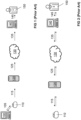
Fig. 1 shows an implant arrangement known from prior art comprising a cardiac rhythm monitor 110 that gathers diagnostic data from a human patient and transfers this data via a Bluetooth Low Energy (BLE)connection 115 to asmartphone 120 of the patient. The BLE connection serves only for transferring data from the cardiac rhythm monitor 110 to thesmartphone 120, not in the opposite direction. A manipulation of settings of the cardiac rhythm monitor 110 via thisBLE connection 115 is impossible. Consequently, the requirements with respect to cyber security of theBLE connection 115 are relatively low and securing thisBLE connection 115 with BLE standard methods is possible. - The sensed diagnostic data are then transferred via a
mobile connection 125 to a cloud-basedremote monitoring system 130. Aphysician 150 can getaccess 145 via a regularpersonal computer 140 and asecured data connection 135 between the cloud-basedremote monitoring system 130 and thepersonal computer 140. - In this prior art example, the data is only evaluated by the
physician 150 without making it possible for thephysician 150 to take any influence on the data stored in theremote monitoring system 130. - If any parameters for detecting the diagnostic data within the cardiac rhythm monitor 110 are to be changed, a
regular programming device 100 is used that communicates with the cardiac rhythm monitor 110 via a securedbidirectional connection 105. This requires the presence of the patient carrying thecardiac rhythm monitor 110. Remote access to the cardiac rhythm monitor 110 via theBLE connection 115, themobile connection 125 and/or thesecured data connection 135 is not possible in this example. -
Fig. 2 shows another implant arrangement known from prior art that allows a remote access via the previously mentioned connections. In this and all following Figures, similar elements will be denoted with the same numeral reference. - In the prior art example shown in
Fig. 2 , thephysician 150 can adjust settings of the cardiac rhythm monitor 110 from his or herpersonal computer 140 via thesecured data connection 135, themobile connection 125 and theBLE connection 115. Thus, all these connections enable a bidirectional data transfer and thus enable thephysician 150 to amend the diagnostic functions of thecardiac rhythm monitor 110. - In this context, it is rather simple to keep the
secured data connection 135 between thepersonal computer 140 and the cloud-basedremote monitoring system 130 up-to-date since both thepersonal computer 140 and the cloud-basedremote monitoring system 130 are typically professionally administered and maintained. - However, securing the
mobile connection 125 between the cloud-basedremote monitoring system 130 and thesmartphone 120 of the patient is much more sophisticated. Thismobile connection 125 depends on the software status of thesmartphone 120 of the patient. Updates of the software of thesmartphone 120 lie within the responsibility of the patient and depend on patches provided by the operating system manufacturer. The same holds true for theBLE connection 115 between thesmartphone 120 and thecardiac rhythm monitor 110. - Securing the
BLE connection 115 and themobile connection 125 thus requires additional effort and thus represents a potential cyber security risk and/or an availability risk that may limit the lifetime of the cardiac rhythm monitor 110 (e.g., in case of a discontinuation of operating system updates by the smartphone manufacturer or the operating system manufacturer). -
Fig. 3 shows an embodiment of an implant arrangement according to the presently claimed invention. A cardiac rhythm monitor 310 is connected via aBLE connection 315 with asmartphone 320 of a patient. ThisBLE connection 315 is established via a data transfer interface of thecardiac rhythm monitor 310. Thesmartphone 320 of the patient is typically located in relative proximity to the cardiac rhythm monitor 310 so that theBLE connection 315 only needs to bridge a rather short distance. - The
smartphone 320 then further transfers the data received from the cardiac rhythm monitor 310 via amobile connection 325 to a cloud-basedremote monitoring system 330 serving as remote data-monitoring device. This cloud-basedremote monitoring system 330 is connected via asecured data connection 335 with apersonal computer 340 of aphysician 350 who can gainaccess 345 to the data presented on thepersonal computer 340. - If the
physician 350 desires to manipulate settings on thecardiac rhythm monitor 310, this will only be allowed in a virtual manner by manipulating the data provided to the cloud-basedremote monitoring system 330 with the help of a configurabledata post-processing device 360 forming part of the cloud-basedremote monitoring system 330. Thus, the desired manipulations will only affect the sensed and already transferred data, not the settings of the cardiac rhythm monitor 310 itself. Consequently, it is no longer required to take care of additionally securing theBLE connection 315 and/or themobile connection 325. These connections will not be used for transferring data towards thecardiac rhythm monitor 310, but only for transferring data away from the cardiac rhythm monitor 310 towards the cloud-basedremote monitoring system 330. - The cardiac rhythm monitor 310 is configured such that its diagnostic parameters are designed for maximum sensitivity for all relevant monitoring applications like monitoring of a syncope, an atrial fibrillation monitoring, monitoring of a cryptogenic stroke, and/or monitoring of palpitations. In addition, the length of EGM or ECG recordings as well as memory and data transfer capacities are also designed to cover all physiological relevant monitoring applications.
- The cardiac rhythm monitor 310 is also equipped with an automatic implantation recognition. This automatic implantation recognition enables an automatic activation of all diagnostic and data transfer functions of the cardiac rhythm monitor 310 after a successful recognition of an implantation of the
cardiac rhythm monitor 310. Thus, no programming device is necessary for such activation. Therefore, the cardiac rhythm monitor 310 only comprises a data transfer interface for establishing theBLE connection 315 to thesmartphone 320 of the patient. It does, however, not comprise any further data transfer interface so that it is physically impossible to influence the behavior of the cardiac rhythm monitor 310 with an external device. Consequently, the cardiac rhythm monitor 310 provides a high cyber security and completely avoids the risk of any cyber-attacks through an external network onto thecardiac rhythm monitor 310. -
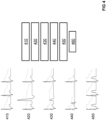
Fig. 4 exemplarily shows a diagnostic parameter that can be amended via virtual programming. For this purpose, a post-processing function is applied onto data representing this diagnostic parameter, wherein a configuration parameter is used for changing the effect of the post-processing function on the data relating to the diagnostic parameter. Consequently, different methods of applying sensing thresholds are possible that allow an appropriate cardiac rhythm detection. - This virtual programming shown in
Fig. 4 is exemplarily applied to data provided by the cardiac rhythm monitor 310 shown inFig. 3 . This cardiac rhythm monitor 310 is operated in the most sensitive setting "Sense short intervals" 440. An intracardiac electrogram (EGM or IEGM) recorded with this setting is transferred by the cardiac rhythm monitor 310 via theBLE connection 315, thesmartphone 320 of the patient and themobile connection 325 to the cloud-basedremote monitoring system 330. Depending on the virtual programming applied within the cloud-basedremote monitoring system 330, different kinds of evaluation of the EGM is made possible. - To give some specific examples, a
standard evaluation 410 may be applied featuring standard settings of increasing and decreasing sensing thresholds over a whole QRS complex in the EGM. - Alternatively, the setting "Sense after large premature ventricular contractions (PVCs)" 420 may be applied in which a different course of modifications of the sensing threshold is applied.
- Alternatively, the setting "Sense small PVCs" 430 can be applied in which a lower sensing threshold is provided for detecting smaller cardiac signals.
- Alternatively, the setting "Sense short intervals" 440, by which the data is originally recorded, may also be applied. Here, a significantly lower sensing threshold and faster sensing threshold decrease is implemented than in case of the
standard evaluation 410. - Alternatively, the setting "T wave suppression" 450 may be applied in which the sensing threshold is chosen such high that T waves will no longer be detected in the EGM.
- After having chosen one or more settings for evaluating the recorded EGM data, the user may choose to close the evaluation window on a graphical user interface by clicking on a
close button 460. - Obviously, not only the exemplarily explained settings of a cardiac rhythm monitor may be virtually applied to the recorded EGM data, but virtually any other settings. The virtual programming is - as already extensively outlined above - not limited to cardiac rhythm monitors, but can be applied on all data sensed by any active implantable medical device.
-
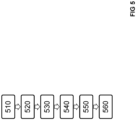
Fig. 5 schematically shows an embodiment of a method of post-processing data on at least one diagnostic parameter of a human or animal patient. - In a
first step 510, at least one diagnostic parameter of a human or animal patient is sensed with a sensing unit of an active implantable medical device. - In a
second step 520, data on the at least one diagnostic parameter sensed by the sensing unit is transferred to a remote data-monitoring device. - In a
third step 530, the remote data-monitoring device applies at least one post-processing function on the data received from the active implantable medical device. As a result, post-processed data is obtained. - In a
fourth step 540, a user input is received by the remote data-monitoring device. - This user input serves in
fifth step 550 for adjusting at least one configuration parameter of the post-processing function. - In a
sixth step 560, an effect of the post-processing function on the data received from the active implantable medical device is altered by the at least one configuration parameter.
Claims (15)
- An implant arrangement comprising an active implantable medical device (310) and a remote data-monitoring device (330),the active implantable medical device (310) comprising a sensing unit for sensing at least one diagnostic parameter of a human or animal patient and a data transfer interface for transferring data on the at least one diagnostic parameter sensed by the sensing unit to the remote data-monitoring device (330),wherein the remote data-monitoring device (330) is configured to apply at least one post-processing function on the data received from the active implantable medical device (310),wherein the remote data-monitoring device (330) is further configured to allow an adjustment of at least one configuration parameter of the post-processing function in dependence on a user input received by the remote data-monitoring device (330),wherein the at least one configuration parameter alters an effect of the post-processing function on the data received from the active implantable medical device (310).
- The implant arrangement according to claim 1, wherein the sensing unit is configured to sense the at least one diagnostic parameter with the lowest possible sensing threshold.
- The implant arrangement according to claim 1 or 2, wherein the data transfer interface is configured to allow exclusively a data transfer away from the active implantable medical device (310), but not towards the active implantable medical device (310).
- The implant arrangement according to any of the preceding claims, wherein the active implantable medical device (310) is configured to allow exclusively a data transfer away from the active implantable medical device (310), but not towards the active implantable medical device (310).
- The implant arrangement according to any of the preceding claims, wherein the data transfer interface is the only data transfer interface of the active implantable medical device (310).
- The implant arrangement according to any of the preceding claims, wherein the active implantable medical device (310) is a device chosen from the group consisting of a cardiac rhythm monitor, a vital data monitor, an implantable pulse generator, an implantable cardioverter/defibrillator, a cardiac resynchronization device, a cardiac resynchronization device with a defibrillator, a glucose monitor, and a neurostimulator.
- The implant arrangement according to any of the preceding claims, wherein the active implantable medical device (310) is a cardiac rhythm monitor comprising an automatic implantation recognition function, wherein the active implantable medical device (310) is configured to automatically activate sensing the at least one diagnostic parameter and transferring the sensed data to the remote data-monitoring device (330) upon successful implantation recognition.
- The implant arrangement according to any of the preceding claims, wherein the active implantable medical device (310) comprises a data storage for storing the sensed data prior to transferring it to the remote data-monitoring device (330).
- The implant arrangement according to any of the preceding claims, wherein the diagnostic parameter is chosen from the group consisting of an electrocardiogram, an electroencephalogram, a pressure curve, a breathing curve, an activity curve, and a temperature curve.
- The implant arrangement according to any of the preceding claims, wherein the at least one configuration parameter serves for modulating at least one of a sensitivity of detection of the at least one diagnostic parameter in the data received from the active implantable medical device (310) and a specificity of detection of the at least one diagnostic parameter in the data received from the active implantable medical device (310).
- The implant arrangement according to any of the preceding claims, wherein the at least one configuration parameter serves for modulating a continuous evaluation of a physiologic curve representing the at least one diagnostic parameter.
- The implant arrangement according to any of the preceding claims, wherein the at least one configuration parameter serves for modulating a sensing threshold of the at least one diagnostic parameter in the data received from the active implantable medical device (310).
- The implant arrangement according to any of the preceding claims, wherein the at least one configuration parameter can be chosen from a predefined set of configuration parameters and is assigned to a type of diagnostics to be applied to a patient to whom the active implantable medical device (310) is implanted.
- A method of post-processing data on at least one diagnostic parameter of a human or animal patient with an implant arrangement, in particular an implant arrangement according to any of the preceding claims, the method comprising the steps of:a) sensing (510) at least one diagnostic parameter of a human or animal patient with a sensing unit of an active implantable medical device (310);b) transferring (520) data on the at least one diagnostic parameter sensed by the sensing unit to a remote data-monitoring device (330) via a data transfer interface of the active implantable medical device;c) applying (530), with the remote data-monitoring device (330), at least one post-processing function on the data received from the active implantable medical device (310), thus obtaining post-processed data;d) receiving (540), by the remote data-monitoring device (330), a user input;e) adjusting (550) at least one configuration parameter of the post-processing function in dependence on the received user input; andf) altering (560), by the at least one configuration parameter, an effect of the post-processing function on the data received from the active implantable medical device (310).
- The method of claim 14, wherein the data transfer interface does not allow receiving data sent to the active implantable medical device (310).
Priority Applications (3)
| Application Number | Priority Date | Filing Date | Title |
|---|---|---|---|
| EP21213074.4A EP4194051B1 (en) | 2021-12-08 | 2021-12-08 | Implant arrangement enabling virtual programming of an implant |
| US18/710,896 US20250009249A1 (en) | 2021-11-24 | 2022-11-14 | Implant Arrangement Enabling Virtual Programming of an Implant |
| PCT/EP2022/081714 WO2023094189A1 (en) | 2021-11-24 | 2022-11-14 | Implant arrangement enabling virtual programming of an implant |
Applications Claiming Priority (1)
| Application Number | Priority Date | Filing Date | Title |
|---|---|---|---|
| EP21213074.4A EP4194051B1 (en) | 2021-12-08 | 2021-12-08 | Implant arrangement enabling virtual programming of an implant |
Publications (2)
| Publication Number | Publication Date |
|---|---|
| EP4194051A1 true EP4194051A1 (en) | 2023-06-14 |
| EP4194051B1 EP4194051B1 (en) | 2024-07-10 |
Family
ID=78825108
Family Applications (1)
| Application Number | Title | Priority Date | Filing Date |
|---|---|---|---|
| EP21213074.4A Active EP4194051B1 (en) | 2021-11-24 | 2021-12-08 | Implant arrangement enabling virtual programming of an implant |
Country Status (1)
| Country | Link |
|---|---|
| EP (1) | EP4194051B1 (en) |
Citations (6)
| Publication number | Priority date | Publication date | Assignee | Title |
|---|---|---|---|---|
| US6564104B2 (en) * | 1999-12-24 | 2003-05-13 | Medtronic, Inc. | Dynamic bandwidth monitor and adjuster for remote communications with a medical device |
| US20090281598A1 (en) * | 2004-06-18 | 2009-11-12 | Haubrich Gregory J | Conditional requirements for remote medical device programming |
| US20120101544A1 (en) * | 2010-10-22 | 2012-04-26 | Pacesetter, Inc. | Non-programming activation device for switching modes of an implantable medical device and methods for same |
| US20200030618A1 (en) * | 2018-07-27 | 2020-01-30 | Medtronic, Inc. | Patient-intermediated therapy management |
| US20200398062A1 (en) * | 2019-06-21 | 2020-12-24 | Advanced Neuromodulation Systems, Inc. | System, method and architecture for facilitating remote patient care |
| US11083372B2 (en) * | 2016-01-08 | 2021-08-10 | Cardiac Pacemakers, Inc. | Syncing multiple sources of physiological data |
-
2021
- 2021-12-08 EP EP21213074.4A patent/EP4194051B1/en active Active
Patent Citations (6)
| Publication number | Priority date | Publication date | Assignee | Title |
|---|---|---|---|---|
| US6564104B2 (en) * | 1999-12-24 | 2003-05-13 | Medtronic, Inc. | Dynamic bandwidth monitor and adjuster for remote communications with a medical device |
| US20090281598A1 (en) * | 2004-06-18 | 2009-11-12 | Haubrich Gregory J | Conditional requirements for remote medical device programming |
| US20120101544A1 (en) * | 2010-10-22 | 2012-04-26 | Pacesetter, Inc. | Non-programming activation device for switching modes of an implantable medical device and methods for same |
| US11083372B2 (en) * | 2016-01-08 | 2021-08-10 | Cardiac Pacemakers, Inc. | Syncing multiple sources of physiological data |
| US20200030618A1 (en) * | 2018-07-27 | 2020-01-30 | Medtronic, Inc. | Patient-intermediated therapy management |
| US20200398062A1 (en) * | 2019-06-21 | 2020-12-24 | Advanced Neuromodulation Systems, Inc. | System, method and architecture for facilitating remote patient care |
Also Published As
| Publication number | Publication date |
|---|---|
| EP4194051B1 (en) | 2024-07-10 |
Similar Documents
| Publication | Publication Date | Title |
|---|---|---|
| US11896831B2 (en) | Implantable medical device and method for managing advertising and scanning schedules | |
| JP6716754B2 (en) | System with implantable monitor and programmer and method for configuring storage or transmission or detection | |
| US8175715B1 (en) | Frequency agile telemetry system for implantable medical device | |
| US20200344825A1 (en) | Managing dynamic connection intervals for implantable and external devices | |
| US7684861B2 (en) | Implantable cardiac monitor upgradeable to pacemaker or cardiac resynchronization device | |
| EP1505816B1 (en) | Data feedback loop for medical therapy adjustment | |
| US8073542B2 (en) | Method for secure reprogramming of clinically relevant parameters as part of remote programming of an electronic implant | |
| US8115640B2 (en) | Implantable medical device alert management | |
| EP1584349A1 (en) | Hierarchical data storage and analysis system for implantable medical devices | |
| US20080183245A1 (en) | Telemetry of external physiological sensor data and implantable medical device data to a central processing system | |
| Ploux et al. | Optimizing implantable cardioverter-defibrillator remote monitoring: a practical guide | |
| US20110319723A1 (en) | System for Characterizing Chronic Physiological Data | |
| US20070073346A1 (en) | Telemetry of combined endocavitary atrial and ventricular signals | |
| US20250009249A1 (en) | Implant Arrangement Enabling Virtual Programming of an Implant | |
| EP4194051B1 (en) | Implant arrangement enabling virtual programming of an implant | |
| US8391975B2 (en) | Telemetry of combined endocavitary atrial and ventricular signals | |
| US8838241B1 (en) | Neurostimulation controlled by assessment of cardiovascular risk | |
| WO2026083174A1 (en) | Emergency alerting for detection of cardiac pacing lead dislodgement |
Legal Events
| Date | Code | Title | Description |
|---|---|---|---|
| PUAI | Public reference made under article 153(3) epc to a published international application that has entered the european phase |
Free format text: ORIGINAL CODE: 0009012 |
|
| STAA | Information on the status of an ep patent application or granted ep patent |
Free format text: STATUS: THE APPLICATION HAS BEEN PUBLISHED |
|
| AK | Designated contracting states |
Kind code of ref document: A1 Designated state(s): AL AT BE BG CH CY CZ DE DK EE ES FI FR GB GR HR HU IE IS IT LI LT LU LV MC MK MT NL NO PL PT RO RS SE SI SK SM TR |
|
| STAA | Information on the status of an ep patent application or granted ep patent |
Free format text: STATUS: REQUEST FOR EXAMINATION WAS MADE |
|
| 17P | Request for examination filed |
Effective date: 20231120 |
|
| RBV | Designated contracting states (corrected) |
Designated state(s): AL AT BE BG CH CY CZ DE DK EE ES FI FR GB GR HR HU IE IS IT LI LT LU LV MC MK MT NL NO PL PT RO RS SE SI SK SM TR |
|
| GRAP | Despatch of communication of intention to grant a patent |
Free format text: ORIGINAL CODE: EPIDOSNIGR1 |
|
| STAA | Information on the status of an ep patent application or granted ep patent |
Free format text: STATUS: GRANT OF PATENT IS INTENDED |
|
| RIC1 | Information provided on ipc code assigned before grant |
Ipc: A61N 1/372 20060101AFI20240127BHEP |
|
| INTG | Intention to grant announced |
Effective date: 20240213 |
|
| GRAS | Grant fee paid |
Free format text: ORIGINAL CODE: EPIDOSNIGR3 |
|
| GRAA | (expected) grant |
Free format text: ORIGINAL CODE: 0009210 |
|
| STAA | Information on the status of an ep patent application or granted ep patent |
Free format text: STATUS: THE PATENT HAS BEEN GRANTED |
|
| AK | Designated contracting states |
Kind code of ref document: B1 Designated state(s): AL AT BE BG CH CY CZ DE DK EE ES FI FR GB GR HR HU IE IS IT LI LT LU LV MC MK MT NL NO PL PT RO RS SE SI SK SM TR |
|
| REG | Reference to a national code |
Ref country code: CH Ref legal event code: EP |
|
| REG | Reference to a national code |
Ref country code: DE Ref legal event code: R096 Ref document number: 602021015419 Country of ref document: DE |
|
| P01 | Opt-out of the competence of the unified patent court (upc) registered |
Free format text: CASE NUMBER: APP_43229/2024 Effective date: 20240724 |
|
| REG | Reference to a national code |
Ref country code: LT Ref legal event code: MG9D |
|
| REG | Reference to a national code |
Ref country code: NL Ref legal event code: MP Effective date: 20240710 |
|
| PG25 | Lapsed in a contracting state [announced via postgrant information from national office to epo] |
Ref country code: PT Free format text: LAPSE BECAUSE OF FAILURE TO SUBMIT A TRANSLATION OF THE DESCRIPTION OR TO PAY THE FEE WITHIN THE PRESCRIBED TIME-LIMIT Effective date: 20241111 |
|
| REG | Reference to a national code |
Ref country code: AT Ref legal event code: MK05 Ref document number: 1701530 Country of ref document: AT Kind code of ref document: T Effective date: 20240710 |
|
| PG25 | Lapsed in a contracting state [announced via postgrant information from national office to epo] |
Ref country code: NL Free format text: LAPSE BECAUSE OF FAILURE TO SUBMIT A TRANSLATION OF THE DESCRIPTION OR TO PAY THE FEE WITHIN THE PRESCRIBED TIME-LIMIT Effective date: 20240710 |
|
| PG25 | Lapsed in a contracting state [announced via postgrant information from national office to epo] |
Ref country code: PT Free format text: LAPSE BECAUSE OF FAILURE TO SUBMIT A TRANSLATION OF THE DESCRIPTION OR TO PAY THE FEE WITHIN THE PRESCRIBED TIME-LIMIT Effective date: 20241111 Ref country code: NL Free format text: LAPSE BECAUSE OF FAILURE TO SUBMIT A TRANSLATION OF THE DESCRIPTION OR TO PAY THE FEE WITHIN THE PRESCRIBED TIME-LIMIT Effective date: 20240710 |
|
| PG25 | Lapsed in a contracting state [announced via postgrant information from national office to epo] |
Ref country code: NO Free format text: LAPSE BECAUSE OF FAILURE TO SUBMIT A TRANSLATION OF THE DESCRIPTION OR TO PAY THE FEE WITHIN THE PRESCRIBED TIME-LIMIT Effective date: 20241010 |
|
| PG25 | Lapsed in a contracting state [announced via postgrant information from national office to epo] |
Ref country code: FI Free format text: LAPSE BECAUSE OF FAILURE TO SUBMIT A TRANSLATION OF THE DESCRIPTION OR TO PAY THE FEE WITHIN THE PRESCRIBED TIME-LIMIT Effective date: 20240710 Ref country code: GR Free format text: LAPSE BECAUSE OF FAILURE TO SUBMIT A TRANSLATION OF THE DESCRIPTION OR TO PAY THE FEE WITHIN THE PRESCRIBED TIME-LIMIT Effective date: 20241011 Ref country code: PL Free format text: LAPSE BECAUSE OF FAILURE TO SUBMIT A TRANSLATION OF THE DESCRIPTION OR TO PAY THE FEE WITHIN THE PRESCRIBED TIME-LIMIT Effective date: 20240710 |
|
| PG25 | Lapsed in a contracting state [announced via postgrant information from national office to epo] |
Ref country code: BG Free format text: LAPSE BECAUSE OF FAILURE TO SUBMIT A TRANSLATION OF THE DESCRIPTION OR TO PAY THE FEE WITHIN THE PRESCRIBED TIME-LIMIT Effective date: 20240710 |
|
| PG25 | Lapsed in a contracting state [announced via postgrant information from national office to epo] |
Ref country code: LV Free format text: LAPSE BECAUSE OF FAILURE TO SUBMIT A TRANSLATION OF THE DESCRIPTION OR TO PAY THE FEE WITHIN THE PRESCRIBED TIME-LIMIT Effective date: 20240710 |
|
| PG25 | Lapsed in a contracting state [announced via postgrant information from national office to epo] |
Ref country code: AT Free format text: LAPSE BECAUSE OF FAILURE TO SUBMIT A TRANSLATION OF THE DESCRIPTION OR TO PAY THE FEE WITHIN THE PRESCRIBED TIME-LIMIT Effective date: 20240710 Ref country code: IS Free format text: LAPSE BECAUSE OF FAILURE TO SUBMIT A TRANSLATION OF THE DESCRIPTION OR TO PAY THE FEE WITHIN THE PRESCRIBED TIME-LIMIT Effective date: 20241110 |
|
| PG25 | Lapsed in a contracting state [announced via postgrant information from national office to epo] |
Ref country code: HR Free format text: LAPSE BECAUSE OF FAILURE TO SUBMIT A TRANSLATION OF THE DESCRIPTION OR TO PAY THE FEE WITHIN THE PRESCRIBED TIME-LIMIT Effective date: 20240710 |
|
| PG25 | Lapsed in a contracting state [announced via postgrant information from national office to epo] |
Ref country code: ES Free format text: LAPSE BECAUSE OF FAILURE TO SUBMIT A TRANSLATION OF THE DESCRIPTION OR TO PAY THE FEE WITHIN THE PRESCRIBED TIME-LIMIT Effective date: 20240710 Ref country code: RS Free format text: LAPSE BECAUSE OF FAILURE TO SUBMIT A TRANSLATION OF THE DESCRIPTION OR TO PAY THE FEE WITHIN THE PRESCRIBED TIME-LIMIT Effective date: 20241010 |
|
| PG25 | Lapsed in a contracting state [announced via postgrant information from national office to epo] |
Ref country code: RS Free format text: LAPSE BECAUSE OF FAILURE TO SUBMIT A TRANSLATION OF THE DESCRIPTION OR TO PAY THE FEE WITHIN THE PRESCRIBED TIME-LIMIT Effective date: 20241010 Ref country code: PL Free format text: LAPSE BECAUSE OF FAILURE TO SUBMIT A TRANSLATION OF THE DESCRIPTION OR TO PAY THE FEE WITHIN THE PRESCRIBED TIME-LIMIT Effective date: 20240710 Ref country code: NO Free format text: LAPSE BECAUSE OF FAILURE TO SUBMIT A TRANSLATION OF THE DESCRIPTION OR TO PAY THE FEE WITHIN THE PRESCRIBED TIME-LIMIT Effective date: 20241010 Ref country code: LV Free format text: LAPSE BECAUSE OF FAILURE TO SUBMIT A TRANSLATION OF THE DESCRIPTION OR TO PAY THE FEE WITHIN THE PRESCRIBED TIME-LIMIT Effective date: 20240710 Ref country code: IS Free format text: LAPSE BECAUSE OF FAILURE TO SUBMIT A TRANSLATION OF THE DESCRIPTION OR TO PAY THE FEE WITHIN THE PRESCRIBED TIME-LIMIT Effective date: 20241110 Ref country code: HR Free format text: LAPSE BECAUSE OF FAILURE TO SUBMIT A TRANSLATION OF THE DESCRIPTION OR TO PAY THE FEE WITHIN THE PRESCRIBED TIME-LIMIT Effective date: 20240710 Ref country code: GR Free format text: LAPSE BECAUSE OF FAILURE TO SUBMIT A TRANSLATION OF THE DESCRIPTION OR TO PAY THE FEE WITHIN THE PRESCRIBED TIME-LIMIT Effective date: 20241011 Ref country code: FI Free format text: LAPSE BECAUSE OF FAILURE TO SUBMIT A TRANSLATION OF THE DESCRIPTION OR TO PAY THE FEE WITHIN THE PRESCRIBED TIME-LIMIT Effective date: 20240710 Ref country code: ES Free format text: LAPSE BECAUSE OF FAILURE TO SUBMIT A TRANSLATION OF THE DESCRIPTION OR TO PAY THE FEE WITHIN THE PRESCRIBED TIME-LIMIT Effective date: 20240710 Ref country code: BG Free format text: LAPSE BECAUSE OF FAILURE TO SUBMIT A TRANSLATION OF THE DESCRIPTION OR TO PAY THE FEE WITHIN THE PRESCRIBED TIME-LIMIT Effective date: 20240710 Ref country code: AT Free format text: LAPSE BECAUSE OF FAILURE TO SUBMIT A TRANSLATION OF THE DESCRIPTION OR TO PAY THE FEE WITHIN THE PRESCRIBED TIME-LIMIT Effective date: 20240710 |
|
| REG | Reference to a national code |
Ref country code: DE Ref legal event code: R097 Ref document number: 602021015419 Country of ref document: DE |
|
| PG25 | Lapsed in a contracting state [announced via postgrant information from national office to epo] |
Ref country code: DK Free format text: LAPSE BECAUSE OF FAILURE TO SUBMIT A TRANSLATION OF THE DESCRIPTION OR TO PAY THE FEE WITHIN THE PRESCRIBED TIME-LIMIT Effective date: 20240710 Ref country code: SM Free format text: LAPSE BECAUSE OF FAILURE TO SUBMIT A TRANSLATION OF THE DESCRIPTION OR TO PAY THE FEE WITHIN THE PRESCRIBED TIME-LIMIT Effective date: 20240710 Ref country code: RO Free format text: LAPSE BECAUSE OF FAILURE TO SUBMIT A TRANSLATION OF THE DESCRIPTION OR TO PAY THE FEE WITHIN THE PRESCRIBED TIME-LIMIT Effective date: 20240710 |
|
| PG25 | Lapsed in a contracting state [announced via postgrant information from national office to epo] |
Ref country code: EE Free format text: LAPSE BECAUSE OF FAILURE TO SUBMIT A TRANSLATION OF THE DESCRIPTION OR TO PAY THE FEE WITHIN THE PRESCRIBED TIME-LIMIT Effective date: 20240710 |
|
| PG25 | Lapsed in a contracting state [announced via postgrant information from national office to epo] |
Ref country code: CZ Free format text: LAPSE BECAUSE OF FAILURE TO SUBMIT A TRANSLATION OF THE DESCRIPTION OR TO PAY THE FEE WITHIN THE PRESCRIBED TIME-LIMIT Effective date: 20240710 |
|
| PG25 | Lapsed in a contracting state [announced via postgrant information from national office to epo] |
Ref country code: IT Free format text: LAPSE BECAUSE OF FAILURE TO SUBMIT A TRANSLATION OF THE DESCRIPTION OR TO PAY THE FEE WITHIN THE PRESCRIBED TIME-LIMIT Effective date: 20240710 Ref country code: SK Free format text: LAPSE BECAUSE OF FAILURE TO SUBMIT A TRANSLATION OF THE DESCRIPTION OR TO PAY THE FEE WITHIN THE PRESCRIBED TIME-LIMIT Effective date: 20240710 |
|
| PLBE | No opposition filed within time limit |
Free format text: ORIGINAL CODE: 0009261 |
|
| STAA | Information on the status of an ep patent application or granted ep patent |
Free format text: STATUS: NO OPPOSITION FILED WITHIN TIME LIMIT |
|
| 26N | No opposition filed |
Effective date: 20250411 |
|
| PG25 | Lapsed in a contracting state [announced via postgrant information from national office to epo] |
Ref country code: MC Free format text: LAPSE BECAUSE OF FAILURE TO SUBMIT A TRANSLATION OF THE DESCRIPTION OR TO PAY THE FEE WITHIN THE PRESCRIBED TIME-LIMIT Effective date: 20240710 |
|
| PG25 | Lapsed in a contracting state [announced via postgrant information from national office to epo] |
Ref country code: LU Free format text: LAPSE BECAUSE OF NON-PAYMENT OF DUE FEES Effective date: 20241208 |
|
| PG25 | Lapsed in a contracting state [announced via postgrant information from national office to epo] |
Ref country code: SE Free format text: LAPSE BECAUSE OF FAILURE TO SUBMIT A TRANSLATION OF THE DESCRIPTION OR TO PAY THE FEE WITHIN THE PRESCRIBED TIME-LIMIT Effective date: 20240710 |
|
| REG | Reference to a national code |
Ref country code: BE Ref legal event code: MM Effective date: 20241231 |
|
| PG25 | Lapsed in a contracting state [announced via postgrant information from national office to epo] |
Ref country code: BE Free format text: LAPSE BECAUSE OF NON-PAYMENT OF DUE FEES Effective date: 20241231 |
|
| PG25 | Lapsed in a contracting state [announced via postgrant information from national office to epo] |
Ref country code: FR Free format text: LAPSE BECAUSE OF NON-PAYMENT OF DUE FEES Effective date: 20241231 |
|
| REG | Reference to a national code |
Ref country code: CH Ref legal event code: U11 Free format text: ST27 STATUS EVENT CODE: U-0-0-U10-U11 (AS PROVIDED BY THE NATIONAL OFFICE) Effective date: 20260101 |
|
| PGFP | Annual fee paid to national office [announced via postgrant information from national office to epo] |
Ref country code: IE Payment date: 20251218 Year of fee payment: 5 |
|
| PGFP | Annual fee paid to national office [announced via postgrant information from national office to epo] |
Ref country code: DE Payment date: 20251222 Year of fee payment: 5 |
|
| PGFP | Annual fee paid to national office [announced via postgrant information from national office to epo] |
Ref country code: CH Payment date: 20260101 Year of fee payment: 5 |
|
| PG25 | Lapsed in a contracting state [announced via postgrant information from national office to epo] |
Ref country code: CY Free format text: LAPSE BECAUSE OF FAILURE TO SUBMIT A TRANSLATION OF THE DESCRIPTION OR TO PAY THE FEE WITHIN THE PRESCRIBED TIME-LIMIT Effective date: 20240710 |
|
| PG25 | Lapsed in a contracting state [announced via postgrant information from national office to epo] |
Ref country code: TR Free format text: LAPSE BECAUSE OF FAILURE TO SUBMIT A TRANSLATION OF THE DESCRIPTION OR TO PAY THE FEE WITHIN THE PRESCRIBED TIME-LIMIT Effective date: 20240710 |
|
| PG25 | Lapsed in a contracting state [announced via postgrant information from national office to epo] |
Ref country code: HU Free format text: LAPSE BECAUSE OF FAILURE TO SUBMIT A TRANSLATION OF THE DESCRIPTION OR TO PAY THE FEE WITHIN THE PRESCRIBED TIME-LIMIT; INVALID AB INITIO Effective date: 20211208 |
|
| PG25 | Lapsed in a contracting state [announced via postgrant information from national office to epo] |
Ref country code: SI Free format text: LAPSE BECAUSE OF FAILURE TO SUBMIT A TRANSLATION OF THE DESCRIPTION OR TO PAY THE FEE WITHIN THE PRESCRIBED TIME-LIMIT Effective date: 20240710 |
|
| PG25 | Lapsed in a contracting state [announced via postgrant information from national office to epo] |
Ref country code: LT Free format text: LAPSE BECAUSE OF FAILURE TO SUBMIT A TRANSLATION OF THE DESCRIPTION OR TO PAY THE FEE WITHIN THE PRESCRIBED TIME-LIMIT Effective date: 20240710 |