EP4188768B1 - Fahrassistenzsystem und fahrassistenzverfahren für ein fahrzeug - Google Patents
Fahrassistenzsystem und fahrassistenzverfahren für ein fahrzeug Download PDFInfo
- Publication number
- EP4188768B1 EP4188768B1 EP21749613.2A EP21749613A EP4188768B1 EP 4188768 B1 EP4188768 B1 EP 4188768B1 EP 21749613 A EP21749613 A EP 21749613A EP 4188768 B1 EP4188768 B1 EP 4188768B1
- Authority
- EP
- European Patent Office
- Prior art keywords
- control unit
- vehicle
- driving assistance
- assistance system
- action
- Prior art date
- Legal status (The legal status is an assumption and is not a legal conclusion. Google has not performed a legal analysis and makes no representation as to the accuracy of the status listed.)
- Active
Links
Images


Classifications
-
- B—PERFORMING OPERATIONS; TRANSPORTING
- B60—VEHICLES IN GENERAL
- B60W—CONJOINT CONTROL OF VEHICLE SUB-UNITS OF DIFFERENT TYPE OR DIFFERENT FUNCTION; CONTROL SYSTEMS SPECIALLY ADAPTED FOR HYBRID VEHICLES; ROAD VEHICLE DRIVE CONTROL SYSTEMS FOR PURPOSES NOT RELATED TO THE CONTROL OF A PARTICULAR SUB-UNIT
- B60W60/00—Drive control systems specially adapted for autonomous road vehicles
- B60W60/001—Planning or execution of driving tasks
- B60W60/0015—Planning or execution of driving tasks specially adapted for safety
- B60W60/0018—Planning or execution of driving tasks specially adapted for safety by employing degraded modes, e.g. reducing speed, in response to suboptimal conditions
-
- B—PERFORMING OPERATIONS; TRANSPORTING
- B60—VEHICLES IN GENERAL
- B60W—CONJOINT CONTROL OF VEHICLE SUB-UNITS OF DIFFERENT TYPE OR DIFFERENT FUNCTION; CONTROL SYSTEMS SPECIALLY ADAPTED FOR HYBRID VEHICLES; ROAD VEHICLE DRIVE CONTROL SYSTEMS FOR PURPOSES NOT RELATED TO THE CONTROL OF A PARTICULAR SUB-UNIT
- B60W30/00—Purposes of road vehicle drive control systems not related to the control of a particular sub-unit, e.g. of systems using conjoint control of vehicle sub-units
- B60W30/18—Propelling the vehicle
- B60W30/18009—Propelling the vehicle related to particular drive situations
- B60W30/18145—Cornering
-
- B—PERFORMING OPERATIONS; TRANSPORTING
- B60—VEHICLES IN GENERAL
- B60W—CONJOINT CONTROL OF VEHICLE SUB-UNITS OF DIFFERENT TYPE OR DIFFERENT FUNCTION; CONTROL SYSTEMS SPECIALLY ADAPTED FOR HYBRID VEHICLES; ROAD VEHICLE DRIVE CONTROL SYSTEMS FOR PURPOSES NOT RELATED TO THE CONTROL OF A PARTICULAR SUB-UNIT
- B60W50/00—Details of control systems for road vehicle drive control not related to the control of a particular sub-unit, e.g. process diagnostic or vehicle driver interfaces
- B60W50/02—Ensuring safety in case of control system failures, e.g. by diagnosing, circumventing or fixing failures
- B60W50/0205—Diagnosing or detecting failures; Failure detection models
-
- B—PERFORMING OPERATIONS; TRANSPORTING
- B60—VEHICLES IN GENERAL
- B60W—CONJOINT CONTROL OF VEHICLE SUB-UNITS OF DIFFERENT TYPE OR DIFFERENT FUNCTION; CONTROL SYSTEMS SPECIALLY ADAPTED FOR HYBRID VEHICLES; ROAD VEHICLE DRIVE CONTROL SYSTEMS FOR PURPOSES NOT RELATED TO THE CONTROL OF A PARTICULAR SUB-UNIT
- B60W50/00—Details of control systems for road vehicle drive control not related to the control of a particular sub-unit, e.g. process diagnostic or vehicle driver interfaces
- B60W50/02—Ensuring safety in case of control system failures, e.g. by diagnosing, circumventing or fixing failures
- B60W50/029—Adapting to failures or work around with other constraints, e.g. circumvention by avoiding use of failed parts
-
- B—PERFORMING OPERATIONS; TRANSPORTING
- B60—VEHICLES IN GENERAL
- B60W—CONJOINT CONTROL OF VEHICLE SUB-UNITS OF DIFFERENT TYPE OR DIFFERENT FUNCTION; CONTROL SYSTEMS SPECIALLY ADAPTED FOR HYBRID VEHICLES; ROAD VEHICLE DRIVE CONTROL SYSTEMS FOR PURPOSES NOT RELATED TO THE CONTROL OF A PARTICULAR SUB-UNIT
- B60W50/00—Details of control systems for road vehicle drive control not related to the control of a particular sub-unit, e.g. process diagnostic or vehicle driver interfaces
- B60W50/08—Interaction between the driver and the control system
- B60W50/14—Means for informing the driver, warning the driver or prompting a driver intervention
-
- B—PERFORMING OPERATIONS; TRANSPORTING
- B60—VEHICLES IN GENERAL
- B60W—CONJOINT CONTROL OF VEHICLE SUB-UNITS OF DIFFERENT TYPE OR DIFFERENT FUNCTION; CONTROL SYSTEMS SPECIALLY ADAPTED FOR HYBRID VEHICLES; ROAD VEHICLE DRIVE CONTROL SYSTEMS FOR PURPOSES NOT RELATED TO THE CONTROL OF A PARTICULAR SUB-UNIT
- B60W60/00—Drive control systems specially adapted for autonomous road vehicles
- B60W60/001—Planning or execution of driving tasks
- B60W60/0015—Planning or execution of driving tasks specially adapted for safety
- B60W60/0018—Planning or execution of driving tasks specially adapted for safety by employing degraded modes, e.g. reducing speed, in response to suboptimal conditions
- B60W60/00186—Planning or execution of driving tasks specially adapted for safety by employing degraded modes, e.g. reducing speed, in response to suboptimal conditions related to the vehicle
-
- B—PERFORMING OPERATIONS; TRANSPORTING
- B62—LAND VEHICLES FOR TRAVELLING OTHERWISE THAN ON RAILS
- B62D—MOTOR VEHICLES; TRAILERS
- B62D15/00—Steering not otherwise provided for
- B62D15/02—Steering position indicators ; Steering position determination; Steering aids
- B62D15/025—Active steering aids, e.g. helping the driver by actively influencing the steering system after environment evaluation
-
- B—PERFORMING OPERATIONS; TRANSPORTING
- B60—VEHICLES IN GENERAL
- B60W—CONJOINT CONTROL OF VEHICLE SUB-UNITS OF DIFFERENT TYPE OR DIFFERENT FUNCTION; CONTROL SYSTEMS SPECIALLY ADAPTED FOR HYBRID VEHICLES; ROAD VEHICLE DRIVE CONTROL SYSTEMS FOR PURPOSES NOT RELATED TO THE CONTROL OF A PARTICULAR SUB-UNIT
- B60W50/00—Details of control systems for road vehicle drive control not related to the control of a particular sub-unit, e.g. process diagnostic or vehicle driver interfaces
- B60W2050/0001—Details of the control system
- B60W2050/0002—Automatic control, details of type of controller or control system architecture
- B60W2050/0004—In digital systems, e.g. discrete-time systems involving sampling
- B60W2050/0006—Digital architecture hierarchy
-
- B—PERFORMING OPERATIONS; TRANSPORTING
- B60—VEHICLES IN GENERAL
- B60W—CONJOINT CONTROL OF VEHICLE SUB-UNITS OF DIFFERENT TYPE OR DIFFERENT FUNCTION; CONTROL SYSTEMS SPECIALLY ADAPTED FOR HYBRID VEHICLES; ROAD VEHICLE DRIVE CONTROL SYSTEMS FOR PURPOSES NOT RELATED TO THE CONTROL OF A PARTICULAR SUB-UNIT
- B60W50/00—Details of control systems for road vehicle drive control not related to the control of a particular sub-unit, e.g. process diagnostic or vehicle driver interfaces
- B60W2050/0001—Details of the control system
- B60W2050/0002—Automatic control, details of type of controller or control system architecture
- B60W2050/0008—Feedback, closed loop systems or details of feedback error signal
-
- B—PERFORMING OPERATIONS; TRANSPORTING
- B60—VEHICLES IN GENERAL
- B60W—CONJOINT CONTROL OF VEHICLE SUB-UNITS OF DIFFERENT TYPE OR DIFFERENT FUNCTION; CONTROL SYSTEMS SPECIALLY ADAPTED FOR HYBRID VEHICLES; ROAD VEHICLE DRIVE CONTROL SYSTEMS FOR PURPOSES NOT RELATED TO THE CONTROL OF A PARTICULAR SUB-UNIT
- B60W50/00—Details of control systems for road vehicle drive control not related to the control of a particular sub-unit, e.g. process diagnostic or vehicle driver interfaces
- B60W50/02—Ensuring safety in case of control system failures, e.g. by diagnosing, circumventing or fixing failures
- B60W50/0205—Diagnosing or detecting failures; Failure detection models
- B60W2050/021—Means for detecting failure or malfunction
-
- B—PERFORMING OPERATIONS; TRANSPORTING
- B60—VEHICLES IN GENERAL
- B60W—CONJOINT CONTROL OF VEHICLE SUB-UNITS OF DIFFERENT TYPE OR DIFFERENT FUNCTION; CONTROL SYSTEMS SPECIALLY ADAPTED FOR HYBRID VEHICLES; ROAD VEHICLE DRIVE CONTROL SYSTEMS FOR PURPOSES NOT RELATED TO THE CONTROL OF A PARTICULAR SUB-UNIT
- B60W50/00—Details of control systems for road vehicle drive control not related to the control of a particular sub-unit, e.g. process diagnostic or vehicle driver interfaces
- B60W50/02—Ensuring safety in case of control system failures, e.g. by diagnosing, circumventing or fixing failures
- B60W50/029—Adapting to failures or work around with other constraints, e.g. circumvention by avoiding use of failed parts
- B60W2050/0292—Fail-safe or redundant systems, e.g. limp-home or backup systems
-
- B—PERFORMING OPERATIONS; TRANSPORTING
- B60—VEHICLES IN GENERAL
- B60W—CONJOINT CONTROL OF VEHICLE SUB-UNITS OF DIFFERENT TYPE OR DIFFERENT FUNCTION; CONTROL SYSTEMS SPECIALLY ADAPTED FOR HYBRID VEHICLES; ROAD VEHICLE DRIVE CONTROL SYSTEMS FOR PURPOSES NOT RELATED TO THE CONTROL OF A PARTICULAR SUB-UNIT
- B60W50/00—Details of control systems for road vehicle drive control not related to the control of a particular sub-unit, e.g. process diagnostic or vehicle driver interfaces
- B60W50/08—Interaction between the driver and the control system
- B60W50/14—Means for informing the driver, warning the driver or prompting a driver intervention
- B60W2050/143—Alarm means
-
- B—PERFORMING OPERATIONS; TRANSPORTING
- B60—VEHICLES IN GENERAL
- B60W—CONJOINT CONTROL OF VEHICLE SUB-UNITS OF DIFFERENT TYPE OR DIFFERENT FUNCTION; CONTROL SYSTEMS SPECIALLY ADAPTED FOR HYBRID VEHICLES; ROAD VEHICLE DRIVE CONTROL SYSTEMS FOR PURPOSES NOT RELATED TO THE CONTROL OF A PARTICULAR SUB-UNIT
- B60W2520/00—Input parameters relating to overall vehicle dynamics
- B60W2520/04—Vehicle stop
-
- B—PERFORMING OPERATIONS; TRANSPORTING
- B60—VEHICLES IN GENERAL
- B60W—CONJOINT CONTROL OF VEHICLE SUB-UNITS OF DIFFERENT TYPE OR DIFFERENT FUNCTION; CONTROL SYSTEMS SPECIALLY ADAPTED FOR HYBRID VEHICLES; ROAD VEHICLE DRIVE CONTROL SYSTEMS FOR PURPOSES NOT RELATED TO THE CONTROL OF A PARTICULAR SUB-UNIT
- B60W2552/00—Input parameters relating to infrastructure
- B60W2552/30—Road curve radius
-
- B—PERFORMING OPERATIONS; TRANSPORTING
- B60—VEHICLES IN GENERAL
- B60W—CONJOINT CONTROL OF VEHICLE SUB-UNITS OF DIFFERENT TYPE OR DIFFERENT FUNCTION; CONTROL SYSTEMS SPECIALLY ADAPTED FOR HYBRID VEHICLES; ROAD VEHICLE DRIVE CONTROL SYSTEMS FOR PURPOSES NOT RELATED TO THE CONTROL OF A PARTICULAR SUB-UNIT
- B60W2710/00—Output or target parameters relating to a particular sub-units
- B60W2710/20—Steering systems
-
- B—PERFORMING OPERATIONS; TRANSPORTING
- B60—VEHICLES IN GENERAL
- B60Y—INDEXING SCHEME RELATING TO ASPECTS CROSS-CUTTING VEHICLE TECHNOLOGY
- B60Y2300/00—Purposes or special features of road vehicle drive control systems
- B60Y2300/18—Propelling the vehicle
- B60Y2300/18008—Propelling the vehicle related to particular drive situations
- B60Y2300/1815—Cornering
Definitions
- the present invention relates to a driver assistance system for a vehicle, a vehicle with such a driver assistance system, a driver assistance method for a vehicle and a storage medium for carrying out the driver assistance method.
- the present invention relates in particular to a step-by-step plausibility check of controllers for driver assistance systems in vehicles.
- Automated driving can be achieved with various levels of automation. Examples of levels of automation are assisted, partially automated, highly automated or fully automated driving. These levels of automation were defined by the Federal Highway Research Institute (BASt) (see BASt publication “Research compact", issue 11/2012 ). For example, vehicles with Level 4 are fully autonomous in city traffic.
- BASt Federal Highway Research Institute
- the driver assistance system for automated driving uses sensors that perceive the environment on a visual basis, both in the area visible to humans and invisible to them.
- the sensors can be, for example, a camera, a radar and/or a LiDAR. In addition to highly accurate maps, these are the main signal sources for driver assistance systems for automated driving.
- a higher-level controller of the driver assistance system can issue an expectation or instruction to a lower-level controller of the driver assistance system. It is trusted that the lower-level controller only returns correct values or carries out correct actions. However, this may be insufficient if a high level of safety integrity is required and can also lead to dangerous situations in road traffic.
- US 2019/283768 A1 describes a control system for autonomous control of a vehicle.
- the control system comprises an environmental sensor system, a first control unit, an actuator control and a control monitoring unit.
- the first control unit uses environmental data from the environmental sensor system and current vehicle parameters to determine Control commands for the actuator control.
- the control monitoring unit checks the first control unit at regular intervals.
- EP 3 473 512 A1 discloses a functional module for a driver assistance system of a vehicle, for controlling a function of an aggregate of the vehicle, with a main functional unit, which is set up to generate and provide a functional parameter set with at least one functional parameter for controlling the function of the aggregate, and a testing and auxiliary functional unit.
- the testing and auxiliary functional unit is set up to test the functional parameter set of the main functional unit and, depending on a result of the testing, in a normal operating mode to output the functional parameter set of the main functional unit for controlling the function of the aggregate and in an auxiliary operating mode to generate an auxiliary parameter set with at least one auxiliary parameter and to output it for controlling the function of the aggregate.
- EN 10 2015 001971 A1 describes a method for monitoring a driver assistance system designed for vehicle guidance, wherein the driver assistance system determines at least one vehicle guidance command as a function of environmental parameters detected by means of environmental detection means assigned to the vehicle and/or as a function of vehicle condition parameters detected by means of vehicle condition detection means assigned to the vehicle. A plausibility of the at least one vehicle guidance command is monitored by comparison with a predetermined plausible limit value.
- a driver assistance system for a vehicle, in particular a motor vehicle, is specified.
- the driver assistance system comprises a first control unit and a second control unit, wherein the second control unit is configured to receive instructions for executing an action from the first control unit; and at least one first sensor unit that is assigned to the first control unit, wherein the second control unit is configured to execute the action and to transmit information relating to the execution of the action to the first control unit, and wherein the first control unit is configured to check the plausibility of the information received from the second control unit based on sensor data from the at least one first sensor unit.
- the first control unit uses its own sensor data to check whether the information provided by the second control unit for carrying out the action is plausible or not.
- the second control unit can inform the first control unit that a calculated radius of curvature matches a driven radius of curvature.
- the first control unit checks this information. If the first control unit comes to the conclusion that the information provided by the second control unit does not match the sensor data and is therefore not plausible, the first control unit can initiate suitable measures.
- a measure can be, for example, an emergency stop and/or a warning to a driver. This can improve the safety integrity of the driver assistance system.
- the information provided by the second control unit can be suitable for describing the execution of the action.
- the information provided by the second control unit can, for example, indicate that the action was carried out as instructed.
- the information provided by the second control unit can include data and/or values relating to the action carried out, which can be checked by the first control unit.
- the data and/or values relating to the action carried out can, for example, indicate a specific and/or set radius of curvature of a cornering.
- the control units are set up to control actions, components, etc. and are often used in vehicles.
- the first control unit can be set up to determine a position of the vehicle on a road and to control the second control unit based on this.
- the second control unit can be set up to set a radius of curvature for cornering.
- the second control unit can in particular control the steering of the vehicle via corresponding actuators.
- first control unit and the second control unit are not limited to this example and may be other control units of a vehicle that interact with each other to perform actions, for example in the context of automated driving.
- the first control unit and the second control unit can each comprise at least one processor unit.
- the at least one processor unit of the control unit is a programmable arithmetic unit, i.e. a machine or an electronic circuit that controls other elements according to transmitted commands and thereby drives an algorithm (process).
- the first control unit and the second control unit can be implemented in a common software and/or hardware module. Alternatively, the first control unit and the second control unit can each be implemented in separate software and/or hardware modules.
- plausibility check refers to a check of data and/or information by the first control unit and/or second control unit to determine whether or not this data and/or information is plausible, i.e. acceptable, plausible and comprehensible. If the data and/or information is plausible, the result is a positive plausibility check. However, if the data and/or information is not plausible, the result is a negative plausibility check.
- the first control unit is superior to the second control unit.
- the term "superior" means that the first control unit transmits instructions to the second control unit, and in particular the instructions for carrying out the action.
- the second control unit carries out what the first control unit specifies and provides feedback to the first control unit.
- the instructions for performing an action include setting a radius of curvature for cornering.
- the "action” that is or should be performed by the second control unit is setting the radius of curvature.
- the present invention is not limited to this and the action can be any other action that is to be carried out or is carried out, for example, in the context of automated driving.
- the driver assistance system preferably comprises at least one second sensor unit which is assigned to the second control unit.
- the at least one second sensor unit can be different from the at least one first sensor unit.
- the at least one first sensor unit and the at least one second sensor unit can comprise or be different sensor types.
- the at least one first sensor unit and the at least one second sensor unit are selected from the group comprising, or consisting of, at least one LiDAR system, at least one radar system, at least one camera, at least one ultrasound system, at least one laser scanner, at least one GPS sensor and at least one inertial sensor or acceleration sensor.
- the vehicle preferably comprises an environmental sensor system.
- the environmental sensor system can comprise at least one LiDAR system and/or at least one radar system and/or at least one camera and/or at least one ultrasound system and/or at least one laser scanner.
- the environmental sensor system can provide environmental data (also referred to as "environmental data") that depicts an area surrounding the vehicle.
- the at least one first sensor unit is a sensor unit of the environmental sensor system of the vehicle, such as at least one camera. Additionally or alternatively, the at least one second sensor unit can be an inertial sensor or acceleration sensor.
- the second control unit is configured to check the plausibility of the execution of the action based on sensor data from the at least one second sensor unit.
- the second control unit can further be configured to generate the information relating to the execution of the action based on a result of the plausibility check carried out by the second control unit.
- a first stage of plausibility check can thus be carried out by the second control unit, and a subsequent second stage of plausibility check can be carried out by the first control unit.
- a high level of safety integrity can thus be provided for the driver assistance system.
- the driver assistance system is set up to initiate a driving maneuver, and in particular an emergency stop, if the plausibility check carried out by the first control unit is negative.
- the negative plausibility check indicates that the information from the second control unit is not trustworthy and potentially incorrect.
- the emergency stop can prevent the vehicle and other road users from being endangered.
- the emergency stop is a driving maneuver in which the vehicle carries out an autonomous or automated emergency stop maneuver to bring the vehicle to an emergency stop, for example on the hard shoulder.
- an autonomous emergency stop maneuver the longitudinal and lateral guidance of the vehicle takes place automatically.
- the driver assistance system therefore takes over the vehicle guidance until the vehicle is brought to a standstill.
- the driver assistance system controls, for example, the drive, the transmission, the hydraulic service brake and the steering.
- information can be issued to the driver of the vehicle if the plausibility check carried out by the first control unit is negative.
- the information can, for example, indicate that a driving function for automated driving has been switched off and the driver should take control of the vehicle.
- a vehicle in particular a motor vehicle, is specified.
- the vehicle comprises the driver assistance system according to the embodiments of the present invention.
- vehicle includes cars, trucks, buses, mobile homes, motorcycles, etc. that are used to transport people, goods, etc.
- the term includes motor vehicles for the transport of people.
- the driver assistance system is set up for automated driving of the vehicle.
- automated driving in the context of this document can be understood as driving with automated longitudinal or lateral guidance or autonomous driving with automated longitudinal and lateral guidance.
- Automated driving can, for example, involve driving on the motorway for a longer period of time or a time-limited Driving in the context of parking or maneuvering.
- automated driving includes automated driving with any degree of automation. Examples of levels of automation are assisted, partially automated, highly automated or fully automated driving. These levels of automation were defined by the Federal Highway Research Institute (BASt) (see BASt publication "Research compact", issue 11/2012 ).
- assisted driving the driver continuously carries out longitudinal or lateral guidance, while the system takes over the other function within certain limits.
- TAF partially automated driving
- the system takes over longitudinal and lateral guidance for a certain period of time and/or in specific situations, whereby the driver must constantly monitor the system, as with assisted driving.
- highly automated driving HAF
- the system takes over longitudinal and lateral guidance for a certain period of time without the driver having to constantly monitor the system; however, the driver must be able to take over vehicle control within a certain period of time.
- VAF fully automated driving
- VAF the system can automatically handle driving in all situations for a specific application; for this application, a driver is no longer required.
- SAE levels 1 to 4 of the SAE J3016 standard correspond to SAE levels 1 to 4 of the SAE J3016 standard (SAE - Society of Automotive Engineering).
- highly automated driving corresponds to level 3 of the SAE J3016 standard.
- SAE J3016 also provides for SAE level 5 as the highest level of automation, which is not included in the BASt definition.
- SAE level 5 corresponds to driverless driving, in which the system can automatically handle all situations like a human driver throughout the entire journey; a driver is generally no longer required.
- a driving assistance method for a vehicle in particular a motor vehicle
- the driving assistance method comprises a transmission, by a first control unit, of instructions for carrying out an action to a second control unit; an execution of the action by the second control unit; a transmission, by the second control unit, of information relating to the execution of the action to the first control unit; and a plausibility check, by the first control unit, of the received information based on sensor data from at least one first sensor unit that is assigned to the first control unit.
- the driving assistance procedure can implement the aspects of the driving assistance system described in this document.
- SW software program
- the SW program can be set up to be executed on one or more processors and to thereby carry out the driver assistance method described in this document.
- a storage medium is specified.
- the storage medium can comprise a software program which is designed to be executed on one or more processors and to thereby carry out the driver assistance method for a vehicle described in this document.
- a software with program code for carrying out the driver assistance method when the software runs on one or more software-controlled devices is specified.
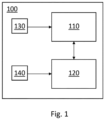
- Figure 1 schematically shows a driver assistance system 100 for a vehicle according to embodiments of the present invention.
- the driver assistance system 100 comprises a first control unit 110 and a second control unit 120, wherein the second control unit 120 is configured to receive instructions from the first control unit 110 for executing an action; and at least one first sensor unit 130 that is assigned to the first control unit 110, wherein the second control unit 120 is configured to execute the action and to transmit information relating to the execution of the action to the first control unit 110, and wherein the first control unit 110 is configured to check the plausibility of the information received from the second control unit 120 based on sensor data from the at least one first sensor unit 130.
- the driver assistance system 100 comprises at least one second sensor unit 140, which is assigned to the second control unit 120.
- the at least one second sensor unit 140 can be different from the at least one first sensor unit 130.
- the at least one first sensor unit 130 and the at least one second sensor unit 140 can comprise or be different sensor types.
- the at least one first sensor unit 130 is a sensor unit of the environmental sensor system of the vehicle 10, such as a camera.
- the at least one second sensor unit 140 can be an inertial sensor or acceleration sensor.
- the first control unit 110 and the second control unit 120 are connected to each other by a bidirectional communication link.
- the first control unit 110 and the second control unit 120 can exchange data via the bidirectional communication link, in particular with respect to the instructions for carrying out an action and the information relating to carrying out the action.
- the bidirectional communication link can be a wired communication link or a wireless communication link.
- the driver assistance system 100 thus comprises at least two control units (also referred to as “controllers”), wherein one control unit is superior to the other control unit, and wherein a step-by-step plausibility check takes place.
- the higher-level control unit requests certain activities from the lower-level control unit.
- the lower-level control unit then indicates whether the control unit considers that no errors occurred in determining/executing the action(s). This can be a first level of plausibility check carried out by the lower-level control unit.
- the higher-level control unit receives the relevant information from the lower-level control unit, a new plausibility check is carried out by the higher-level control unit.
- the process e.g. automated driving
- the lower-level control unit is not trusted and the process (e.g. automated driving) is aborted according to predefined safety mechanisms.
- the vehicle can be stopped in an emergency.
- control of the vehicle can be handed back to the driver from the driver assistance system.
- the plausibility check is carried out based on different sensors.
- the subordinate control unit can check the plausibility using an inertial sensor
- the higher-level control unit can check the plausibility using an optical sensor.
- the highest-ranking control unit can be the one that knows and/or can determine the absolute position of the vehicle on the road.
- the higher-ranking control unit requests the lower-ranking control unit to set a curvature, for example in order to negotiate a curve.
- the subordinate control unit then checks, for example using inertial sensors, whether the calculated radius of curvature corresponds to the actual radius of curvature.
- the higher-level control unit uses optical sensors, for example, to check the absolute position to see whether the radius of curvature set by the lower-level control unit matches the radius of curvature actually achieved.
- automated driving may be aborted.
- This abort may include or be an emergency stop of the vehicle, a warning to the driver, a transfer of vehicle control to the driver, etc.
- FIG. 2 schematically shows a vehicle 10 with a driver assistance system 100 for automated driving according to embodiments of the present invention.
- the vehicle 10 includes the driver assistance system 100 for automated driving.
- the longitudinal and/or transverse guidance of the vehicle 10 is automatic.
- the driver assistance system 100 therefore takes over the vehicle guidance.
- the driver assistance system 100 controls the drive 20, the transmission 22, the (for example hydraulic) service brake 24 and the steering 26 via Figure 2 intermediate units of the vehicle not shown 10.
- the vehicle can comprise at least one environmental sensor 12 that is set up to record environmental data that indicate the vehicle environment.
- the at least one environmental sensor 12 can comprise, for example, one or more LiDAR systems, one or more radar systems, one or more laser scanners and/or one or more cameras.
- Figure 3 schematically shows a flow chart of a driver assistance method 300 for a vehicle, in particular a motor vehicle, according to embodiments of the present invention.
- the driver assistance method 300 can be implemented by appropriate software that can be executed by one or more processors (e.g., a CPU).
- processors e.g., a CPU
- the driver assistance method 300 comprises, in block 310, a transmission by a first control unit of instructions for carrying out an action to a second control unit; in block 320, an execution of the action by the second control unit; in block 330, a transmission by the second control unit of information relating to the execution of the action to the first control unit; and in block 340, a plausibility check by the first control unit of the received information based on sensor data from at least one first sensor unit that is assigned to the first control unit.
- the first control unit uses its own sensor data to check whether the information provided by the second control unit for carrying out the action is plausible or not.
- the second control unit can inform the first control unit that a calculated radius of curvature matches a driven radius of curvature.
- the first control unit checks this information. If the first control unit comes to the conclusion that the information provided by the second control unit does not match the sensor data and is therefore not plausible, the first control unit can initiate suitable measures.
- a measure can be, for example, an emergency stop and/or a warning to a driver. This can improve the safety integrity of the driver assistance system.
Landscapes
- Engineering & Computer Science (AREA)
- Automation & Control Theory (AREA)
- Transportation (AREA)
- Mechanical Engineering (AREA)
- Human Computer Interaction (AREA)
- Chemical & Material Sciences (AREA)
- Combustion & Propulsion (AREA)
- Traffic Control Systems (AREA)
- Control Of Driving Devices And Active Controlling Of Vehicle (AREA)
Description
- Die vorliegende Erfindung betrifft ein Fahrassistenzsystem für ein Fahrzeug, ein Fahrzeug mit einem solchen Fahrassistenzsystem, ein Fahrassistenzverfahren für ein Fahrzeug und ein Speichermedium zum Ausführen des Fahrassistenzverfahrens. Die vorliegende Erfindung betrifft insbesondere eine stufenweise Plausibilisierung von Reglern für Fahrassistenzsysteme in Fahrzeugen.
- Fahrassistenzsysteme zum automatisierten Fahren gewinnen stetig an Bedeutung. Das automatisierte Fahren kann mit verschiedenen Automatisierungsgraden erfolgen. Beispielhafte Automatisierungsgrade sind ein assistiertes, teilautomatisiertes, hochautomatisiertes oder vollautomatisiertes Fahren. Diese Automatisierungsgrade wurden von der Bundesanstalt für Straßenwesen (BASt) definiert (siehe BASt-Publikation "Forschung kompakt", Ausgabe 11/2012). Beispielsweise sind die Fahrzeuge mit Level 4 vollautonom im Stadtbetrieb unterwegs.
- Das Fahrassistenzsystem zum automatisierten Fahren verwendet Sensoren, die die Umgebung auf visueller Basis wahrnehmen, sowohl im für den Menschen sichtbaren als auch unsichtbaren Bereich. Die Sensoren können zum Beispiel eine Kamera, ein Radar und/oder ein LiDAR sein. Diese sind neben hochgenauen Karten die hauptsächlichen Signalquellen für Fahrassistenzsysteme zum automatisierten Fahren.
- Für das automatisierte Fahren kann ein übergeordneter Regler des Fahrassistenzsystems eine Erwartung bzw. Instruktion an einen untergeordneten Regler des Fahrassistenzsystems ausgegeben. Dabei wird darauf vertraut, dass der untergeordnete Regler nur richtige Werte zurückgibt bzw. korrekte Aktionen ausführt. Dies kann bei einer geforderten hohen Sicherheitsintegrität jedoch unzureichend sein und kann zudem zu Gefahrensituationen im Straßenverkehr führen.
-
US 2019/283768 A1 beschreibt ein Steuersystem für eine autonome Steuerung eines Fahrzeugs. Das Steuersystem umfasst ein Umweltsensorsystem, ein erstes Steuergerät, eine Aktuatorsteuerung und eine Steuerüberwachungseinheit. Das erste Steuergerät ermittelt mit Umgebungsdaten des Umweltsensorsystems und mit aktuellen Fahrzeugparametern Steuerbefehle für die Aktuatorsteuerung. Die Steuerüberwachungseinheit überprüft das erste Steuergerät in regelmäßigen Intervallen. -
EP 3 473 512 A1 offenbart ein Funktionsmodul für ein Fahrassistenzsystem eines Fahrzeugs, zur Steuerung einer Funktion eines Aggregats des Fahrzeugs, mit einer Hauptfunktionseinheit, welche eingerichtet ist, einen Funktionsparametersatz mit mindestens einem Funktionsparameter für eine Steuerung der Funktion des Aggregats zu erzeugen und bereitzustellen, und einer Prüf- und Hilfsfunktionseinheit. Die Prüf- und Hilfsfunktionseinheit ist eingerichtet, um den Funktionsparametersatz der Hauptfunktionseinheit zu prüfen und in Abhängigkeit von einem Ergebnis des Prüfens in einem Normalbetriebsmodus den Funktionsparametersatz der Hauptfunktionseinheit zur Steuerung der Funktion des Aggregats auszugeben und in einem Hilfsbetriebsmodus einen Hilfsparametersatz mit mindestens einem Hilfsparameter zu erzeugen und zur Steuerung der Funktion des Aggregats auszugeben. -
DE 10 2015 001971 A1 beschreibt ein Verfahren zur Überwachung eines zur Fahrzeugführung ausgebildeten Fahrerassistenzsystems, wobei das Fahrerassistenzsystem wenigstens einen Fahrzeugführungsbefehl in Abhängigkeit von mittels dem Fahrzeug zugeordneten Umfelderfassungsmitteln erfassten Umfeldparametern und/oder in Abhängigkeit von mittels dem Fahrzeug zugeordneten Fahrzeugzustandserfassungsmitteln erfassten Fahrzeugzustandsparametern ermittelt. Eine Plausibilität des wenigstens einen Fahrzeugführungsbefehls wird durch Vergleich mit einem vorgegebenen plausiblen Grenzwert überwacht. - Es ist eine Aufgabe der vorliegenden Erfindung, ein Fahrassistenzsystem für ein Fahrzeug, ein Fahrzeug mit einem solchen Fahrassistenzsystem, ein Fahrassistenzverfahren für ein Fahrzeug und ein Speichermedium zum Ausführen des Fahrassistenzverfahrens anzugeben, die eine Zuverlässigkeit des Fahrassistenzsystems verbessern können. Insbesondere ist es eine Aufgabe der vorliegenden Erfindung, eine Sicherheitsintegrität des Fahrassistenzsystems zu verbessern.
- Diese Aufgabe wird durch den Gegenstand der unabhängigen Ansprüche gelöst. Vorteilhafte Ausgestaltungen sind in den Unteransprüchen angegeben.
- Gemäß einem unabhängigen Aspekt der vorliegenden Erfindung ist ein Fahrassistenzsystem für ein Fahrzeug, insbesondere Kraftfahrzeug, angegeben. Das Fahrassistenzsystem umfasst eine erste Regeleinheit und eine zweite Regeleinheit, wobei die zweite Regeleinheit eingerichtet ist, um von der ersten Regeleinheit Instruktionen zum Ausführen einer Aktion zu empfangen; und wenigstens eine erste Sensoreinheit, die der ersten Regeleinheit zugeordnet ist, wobei die zweite Regeleinheit eingerichtet ist, um die Aktion auszuführen und Informationen in Bezug auf das Ausführen der Aktion an die erste Regeleinheit zu übermitteln, und wobei die erste Regeleinheit eingerichtet ist, um die von der zweiten Regeleinheit empfangenen Informationen basierend auf Sensordaten der wenigstens einen ersten Sensoreinheit zu plausibilisieren.
- Erfindungsgemäß überprüft die erste Regeleinheit mittels ihrer eigenen Sensordaten, ob die von der zweiten Regeleinheit bereitgestellten Informationen zum Ausführen der Aktion plausibel sind oder nicht. Beispielsweise kann die zweite Regeleinheit der ersten Regeleinheit mitteilen, dass ein berechneter Krümmungsradius mit einem gefahrenen Krümmungsradius übereinstimmt. Die erste Regeleinheit überprüft diese Information. Wenn die erste Regeleinheit zu dem Schluss kommt, dass die von der zweiten Regeleinheit bereitgestellten Informationen nicht mit den Sensordaten übereinstimmen und daher nicht plausibel sind, kann die erste Regeleinheit geeignete Maßnahmen veranlassen. Eine solche Maßnahme kann zum Beispiel ein Nothalt und/oder eine Warnung an einen Fahrer sein. Hierdurch kann eine Sicherheitsintegrität des Fahrassistenzsystems verbessert werden.
- Die von der zweiten Regeleinheit bereitgestellten Informationen können dabei geeignet sein, um das Ausführen der Aktion zu beschreiben. Die von der zweiten Regeleinheit bereitgestellten Informationen können zum Beispiel angeben, dass die Aktion weisungsgemäß ausgeführt wurde. Ergänzend oder alternativ können die von der zweiten Regeleinheit bereitgestellten Informationen Daten und/oder Werte in Bezug auf die ausgeführte Aktion umfassen, die durch die erste Regeleinheit überprüfbar sind. Die Daten und/oder Werte in Bezug auf die ausgeführte Aktion können zum Beispiel einen bestimmten und/oder eingestellten Krümmungsradius einer Kurvenfahrt angeben.
- Die Regeleinheiten sind zur Steuerung von Aktionen, Komponenten etc. eingerichtet und werden vielfach in Fahrzeugen eingesetzt. Beispielsweise kann die erste Regeleinheit eingerichtet sein, um eine Position des Fahrzeugs auf einer Fahrbahn zu ermitteln und basierend darauf die zweite Regeleinheit anzusteuern. Die zweite Regeleinheit kann in diesem Beispiel für ein Einstellen eines Krümmungsradius für eine Kurvenfahrt eingerichtet sein. Hierzu kann die zweite Regeleinheit insbesondere die Lenkung des Fahrzeugs über entsprechende Aktoren steuern.
- Die erste Regeleinheit und die zweite Regeleinheit sind jedoch nicht auf dieses Beispiel beschränkt und können andere Regeleinheiten eines Fahrzeuges sein, die miteinander interagieren, um Aktionen zum Beispiel im Rahmen eines automatisierten Fahrens auszuführen.
- Die erste Regeleinheit und die zweiten Regeleinheit können jeweils wenigstens eine Prozessoreinheit umfassen. Die wenigstens eine Prozessoreinheit der Regeleinheit ist ein programmierbares Rechenwerk, also eine Maschine oder eine elektronische Schaltung, die gemäß übergebenen Befehlen andere Elemente steuert und dabei einen Algorithmus (Prozess) vorantreibt.
- Die erste Regeleinheit und die zweite Regeleinheit können in einem gemeinsamen Software- und/oder Hardware-Modul realisiert sein. Alternativ dazu können die erste Regeleinheit und die zweite Regeleinheit jeweils in getrennten Software- und/oder Hardware-Modulen realisiert sein.
- Der Begriff "Plausibilisierung" bezieht sich auf eine Überprüfung von Daten und/oder Informationen durch die erste Regeleinheit und/oder zweite Regeleinheit dahingehend, ob diese Daten und/oder Informationen plausibel, also annehmbar, einleuchtend und nachvollziehbar sind oder nicht. Wenn die Daten und/oder Informationen plausibel sind, ist das Ergebnis eine positive Plausibilisierung. Wenn die Daten und/oder Informationen jedoch nicht plausibel sind, ist das Ergebnis eine negative Plausibilisierung.
- Vorzugsweise ist die erste Regeleinheit der zweiten Regeleinheit übergeordnet. Der Begriff "übergeordnet" bedeutet dabei, dass die erste Regeleinheit der zweiten Regeleinheit Instruktionen übermittelt, und insbesondere die Instruktionen zum Ausführen der Aktion. Anders gesagt führt die zweite Regeleinheit aus, was die erste Regeleinheit vorgibt, und gibt ein Feedback an die erste Regeleinheit.
- Vorzugsweise umfassen die Instruktionen zum Ausführen einer Aktion ein Einstellen eines Krümmungsradius für eine Kurvenfahrt. Anders gesagt ist die "Aktion", die durch die zweite Regeleinheit durchgeführt wird bzw. werden soll, das Einstellen des Krümmungsradius. Die vorliegende Erfindung ist jedoch nicht hierauf begrenzt und die Aktion kann jede andere Aktion sein, die zum Beispiel im Rahmen des automatisierten Fahrens ausgeführt werden soll bzw. ausgeführt wird.
- Vorzugsweise umfasst das Fahrassistenzsystem wenigstens eine zweite Sensoreinheit, die der zweiten Regeleinheit zugeordnet ist. Die wenigstens eine zweite Sensoreinheit kann von der wenigstens einen ersten Sensoreinheit verschieden sein. Insbesondere können die wenigstens eine erste Sensoreinheit und die wenigstens eine zweite Sensoreinheit verschiedene Sensortypen umfassen oder sein.
- Vorzugsweise sind die wenigstens eine erste Sensoreinheit und die wenigstens eine zweite Sensoreinheit aus der Gruppe ausgewählt, die wenigstens ein LiDAR-System, wenigstens ein Radar-System, wenigstens eine Kamera, wenigstens ein Ultraschall-System, wenigstens einen Laserscanner, wenigstens einen GPS-Sensor und wenigstens einen Inertialsensor bzw. Beschleunigungssensor umfasst, oder die daraus besteht.
- Vorzugsweise umfasst das Fahrzeug eine Umgebungssensorik. Die Umgebungssensorik kann wenigstens ein LiDAR-System und/oder wenigstens ein Radar-System und/oder wenigstens eine Kamera und/oder wenigstens ein Ultraschall-System und/oder wenigstens einen Laserscanner umfassen. Die Umgebungssensorik kann Umfelddaten (auch als "Umgebungsdaten" bezeichnet) bereitstellen, die einen Umgebungsbereich des Fahrzeugs abbilden.
- In einigen Ausführungsformen ist die wenigstens eine erste Sensoreinheit eine Sensoreinheit der Umgebungssensorik des Fahrzeugs, wie zum Beispiel wenigstens eine Kamera. Ergänzend oder alternativ kann die wenigstens eine zweite Sensoreinheit ein Inertialsensor bzw. Beschleunigungssensor sein.
- Vorzugsweise ist die zweite Regeleinheit eingerichtet, um das Ausführen der Aktion basierend auf Sensordaten der wenigstens einen zweiten Sensoreinheit zu plausibilisieren. Die zweite Regeleinheit kann weiter eingerichtet sein, um die Informationen in Bezug auf das Ausführen der Aktion basierend auf einem Ergebnis der durch die zweite Regeleinheit durchgeführten Plausibilisierung zu erzeugen. Damit kann eine erste Stufe der Plausibilisierung durch die zweite Regeleinheit erfolgen, und eine anschließende zweite Stufe der Plausibilisierung kann durch die erste Regeleinheit erfolgen. Somit kann eine hohe Sicherheitsintegrität für das Fahrassistenzsystem bereitgestellt werden.
- Vorzugsweise ist das Fahrassistenzsystem eingerichtet, um ein Fahrmanöver, und insbesondere einen Nothalt, zu veranlassen, wenn die durch die erste Regeleinheit durchgeführte Plausibilisierung negativ ist. Die negative Plausibilisierung gibt dabei an, dass die Informationen der zweiten Regeleinheit nicht vertrauenswürdig und potentiell falsch sind. Durch den Nothalt kann eine Gefährdung des Fahrzeugs und von anderen Verkehrsteilnehmern vermieden werden.
- Der Nothalt ist ein Fahrmanöver, bei dem das Fahrzeug ein autonomes oder automatisiertes Nothaltefahrmanöver zum Nothalten des Fahrzeugs, beispielsweise auf der Standspur, durchführt. Bei einem solchen autonomen Nothaltefahrmanöver erfolgt die Längs- und Querführung des Fahrzeugs automatisch. Das Fahrerassistenzsystem übernimmt also die Fahrzeugführung, bis das Fahrzeug zum Stillstand gebracht wird. Hierzu steuert das Fahrerassistenzsystem beispielsweise den Antrieb, das Getriebe, die hydraulische Betriebsbremse und die Lenkung.
- Ergänzend oder alternativ kann eine Information, und insbesondere eine Warnung, an den Fahrer des Fahrzeugs ausgegeben werden, wenn die durch die erste Regeleinheit durchgeführte Plausibilisierung negativ ist. Die Information kann zum Beispiel angeben, dass eine Fahrfunktion zum automatisierten Fahren abgeschaltet wurde und der Fahrer die Kontrolle über das Fahrzeug übernehmen soll.
- Gemäß einem weiteren unabhängigen Aspekt der vorliegenden Erfindung ist ein Fahrzeug, insbesondere Kraftfahrzeug, angegeben. Das Fahrzeug umfasst das Fahrassistenzsystem gemäß den Ausführungsformen der vorliegenden Erfindung.
- Der Begriff Fahrzeug umfasst PKW, LKW, Busse, Wohnmobile, Krafträder, etc., die der Beförderung von Personen, Gütern, etc. dienen. Insbesondere umfasst der Begriff Kraftfahrzeuge zur Personenbeförderung.
- Vorzugsweise ist das Fahrassistenzsystem zum automatisierten Fahren des Fahrzeugs eingerichtet.
- Unter dem Begriff "automatisiertes Fahren" kann im Rahmen des Dokuments ein Fahren mit automatisierter Längs- oder Querführung oder ein autonomes Fahren mit automatisierter Längs- und Querführung verstanden werden. Bei dem automatisierten Fahren kann es sich beispielsweise um ein zeitlich längeres Fahren auf der Autobahn oder um ein zeitlich begrenztes Fahren im Rahmen des Einparkens oder Rangierens handeln. Der Begriff "automatisiertes Fahren" umfasst ein automatisiertes Fahren mit einem beliebigen Automatisierungsgrad. Beispielhafte Automatisierungsgrade sind ein assistiertes, teilautomatisiertes, hochautomatisiertes oder vollautomatisiertes Fahren. Diese Automatisierungsgrade wurden von der Bundesanstalt für Straßenwesen (BASt) definiert (siehe BASt-Publikation "Forschung kompakt", Ausgabe 11/2012).
- Beim assistierten Fahren führt der Fahrer dauerhaft die Längs- oder Querführung aus, während das System die jeweils andere Funktion in gewissen Grenzen übernimmt. Beim teilautomatisierten Fahren (TAF) übernimmt das System die Längs- und Querführung für einen gewissen Zeitraum und/oder in spezifischen Situationen, wobei der Fahrer das System wie beim assistierten Fahren dauerhaft überwachen muss. Beim hochautomatisierten Fahren (HAF) übernimmt das System die Längs- und Querführung für einen gewissen Zeitraum, ohne dass der Fahrer das System dauerhaft überwachen muss; der Fahrer muss aber in einer gewissen Zeit in der Lage sein, die Fahrzeugführung zu übernehmen. Beim vollautomatisierten Fahren (VAF) kann das System für einen spezifischen Anwendungsfall das Fahren in allen Situationen automatisch bewältigen; für diesen Anwendungsfall ist kein Fahrer mehr erforderlich.
- Die vorstehend genannten vier Automatisierungsgrade entsprechen den SAE-Level 1 bis 4 der Norm SAE J3016 (SAE - Society of Automotive Engineering). Beispielsweise entspricht das hochautomatisierte Fahren (HAF) Level 3 der Norm SAE J3016. Ferner ist in der SAE J3016 noch der SAE-Level 5 als höchster Automatisierungsgrad vorgesehen, der in der Definition der BASt nicht enthalten ist. Der SAE-Level 5 entspricht einem fahrerlosen Fahren, bei dem das System während der ganzen Fahrt alle Situationen wie ein menschlicher Fahrer automatisch bewältigen kann; ein Fahrer ist generell nicht mehr erforderlich.
- Gemäß einem weiteren unabhängigen Aspekt der vorliegenden Erfindung ist ein Fahrassistenzverfahren für ein Fahrzeug, insbesondere ein Kraftfahrzeug, angegeben. Das Fahrassistenzverfahren umfasst ein Übermitteln, durch eine erste Regeleinheit, von Instruktionen zum Ausführen einer Aktion an eine zweite Regeleinheit; ein Ausführen der Aktion durch die zweite Regeleinheit; ein Übermitteln, durch die zweite Regeleinheit, von Informationen in Bezug auf das Ausführen der Aktion an die erste Regeleinheit; und ein Plausibilisieren, durch die erste Regeleinheit, der empfangenen Informationen basierend auf Sensordaten wenigstens einer ersten Sensoreinheit, die der ersten Regeleinheit zugeordnet ist.
- Das Fahrassistenzverfahren kann die Aspekte des in diesem Dokument beschriebenen Fahrassistenzsystems implementieren.
- Gemäß einem weiteren unabhängigen Aspekt der vorliegenden Erfindung ist ein Software (SW) Programm angegeben. Das SW Programm kann eingerichtet werden, um auf einem oder mehreren Prozessoren ausgeführt zu werden, und um dadurch das in diesem Dokument beschriebene Fahrassistenzverfahren auszuführen.
- Gemäß einem weiteren unabhängigen Aspekt der vorliegenden Erfindung ist ein Speichermedium angegeben. Das Speichermedium kann ein SW Programm umfassen, welches eingerichtet ist, um auf einem oder mehreren Prozessoren ausgeführt zu werden, und um dadurch das in diesem Dokument beschriebene Fahrassistenzverfahren für ein Fahrzeug auszuführen.
- Gemäß einem weiteren unabhängigen Aspekt der vorliegenden Erfindung ist eine Software mit Programmcode zur Durchführung des Fahrassistenzverfahrens, wenn die Software auf einer oder mehreren softwaregesteuerten Einrichtungen abläuft, angegeben.
- Ausführungsbeispiele der Erfindung sind in den Figuren dargestellt und werden im Folgenden näher beschrieben. Es zeigen:
-
Figur 1 schematisch ein Fahrassistenzsystem für ein Fahrzeug gemäß Ausführungsformen der vorliegenden Erfindung, -
Figur 2 schematisch ein Fahrzeug mit einem Fahrassistenzsystem zum automatisierten Fahren gemäß Ausführungsformen der vorliegenden Erfindung, undFigur 3 ein Flussdiagram eines Fahrassistenzverfahrens für ein Fahrzeug gemäß - Im Folgenden werden, sofern nicht anders vermerkt, für gleiche und gleichwirkende Elemente gleiche Bezugszeichen verwendet.
-
Figur 1 zeigt schematisch ein Fahrassistenzsystem 100 für ein Fahrzeug gemäß Ausführungsformen der vorliegenden Erfindung. - Das Fahrassistenzsystem 100 umfasst eine erste Regeleinheit 110 und eine zweite Regeleinheit 120, wobei die zweite Regeleinheit 120 eingerichtet ist, um von der ersten Regeleinheit 110 Instruktionen zum Ausführen einer Aktion zu empfangen; und wenigstens eine erste Sensoreinheit 130, die der ersten Regeleinheit 110 zugeordnet ist, wobei die zweite Regeleinheit 120 eingerichtet ist, um die Aktion auszuführen und Informationen in Bezug auf das Ausführen der Aktion an die erste Regeleinheit 110 zu übermitteln, und wobei die erste Regeleinheit 110 eingerichtet ist, um die von der zweiten Regeleinheit 120 empfangenen Informationen basierend auf Sensordaten der wenigstens einen ersten Sensoreinheit 130 zu plausibilisieren.
- In einigen Ausführungsformen umfasst das Fahrassistenzsystem 100 wenigstens eine zweite Sensoreinheit 140, die der zweiten Regeleinheit 120 zugeordnet ist. Die wenigstens eine zweite Sensoreinheit 140 kann von der wenigstens einen ersten Sensoreinheit 130 verschieden sein. Insbesondere können die wenigstens eine erste Sensoreinheit 130 und die wenigstens eine zweite Sensoreinheit 140 verschiedene Sensortypen umfassen oder sein.
- Beispielsweise ist die wenigstens eine erste Sensoreinheit 130 eine Sensoreinheit der Umgebungssensorik des Fahrzeugs 10, wie zum Beispiel eine Kamera. Ergänzend oder alternativ kann die wenigstens eine zweite Sensoreinheit 140 ein Inertialsensor bzw. Beschleunigungssensor sein.
- Typischerweise sind die erste Regeleinheit 110 und die zweite Regeleinheit 120 durch eine bidirektionale Kommunikationsverbindung miteinander verbunden. Die erste Regeleinheit 110 und die zweite Regeleinheit 120 können über die bidirektionale Kommunikationsverbindung Daten austauschen, insbesondere in Bezug auf die Instruktionen zum Ausführen einer Aktion und die Informationen in Bezug auf das Ausführen der Aktion. Die bidirektionale Kommunikationsverbindung kann eine drahtgebundene Kommunikationsverbindung oder eine drahtlose Kommunikationsverbindung sein.
- Das erfindungsgemäße Fahrassistenzsystem 100 umfasst also wenigstens zwei Regeleinheiten (auch als "Regler" bezeichnet), wobei eine Regeleinheit der anderen Regeleinheit übergeordnet ist, und wobei eine stufenweise Plausibilisierung erfolgt.
- Insbesondere fordert die übergeordnete Regeleinheit von der untergeordneten Regeleinheit bestimmte Aktivitäten. Die untergeordnete Regeleinheit gibt anschließend an, ob die Regeleinheit der Auffassung ist, dass keine Fehler bei der Ermittlung/Ausführung der Aktion(en) aufgetreten sind. Dies kann eine erste Stufe der Plausibilisierung sein, die durch die untergeordnete Regeleinheit durchgeführt wird.
- Wenn die übergeordnete Regeleinheit die entsprechenden Informationen von der untergeordneten Regeleinheit erhält, wird eine erneute Plausibilisierung durch die übergeordnete Regeleinheit durchgeführt. Nur für den Fall, dass beide Regeleinheiten den Vorgang positiv plausibilisieren, wird der Vorgang (z.B. ein automatisiertes Fahren) auch durchgeführt bzw. weitergeführt.
- Sollte die übergeordnete Regeleinheit jedoch nicht positiv plausibilisieren, dann wird der untergeordneten Regeleinheit nicht vertraut und der Vorgang (z.B. das automatisierte Fahren) wird nach vorab definierten Sicherheitsmechanismen abgebrochen. Insbesondere kann ein Nothalt des Fahrzeugs erfolgen. Alternativ kann die Kontrolle des Fahrzeugs vom Fahrassistenzsystem zurück an den Fahrer übergeben werden.
- Vorteilhafterweise erfolgt die Plausibilisierung basierend auf unterschiedlicher Sensorik. Beispielsweise kann die untergeordnete Regeleinheit über eine Inertialsensorik plausibilisieren, und die übergeordnete Regeleinheit kann über eine optische Sensorik plausibilisieren.
- Eine beispielhafte detaillierte Umsetzung des oben erläuterten allgemeinen Prinzips ist im Folgenden beschrieben.
- Für Fahrerassistenzsysteme mit zwei oder mehr interagierenden Regeleinheiten kann die höchstgestellte Regeleinheit diejenige sein, welche die absolute Position des Fahrzeugs auf der Fahrbahn kennt und/oder ermitteln kann. Die übergeordnete Regeleinheit fordert von der untergeordneten Regeleinheit an, dass diese eine Krümmung einstellt, um beispielsweise eine Kurve zu durchfahren.
- Die untergeordnete Regeleinheit überprüft dann zum Beispiel mittels Inertialsensoren, ob der berechnete Krümmungsradius mit dem tatsächlich gefahrenen Krümmungsradius übereinstimmt.
- Die übergeordnete Regeleinheit überprüft anschließend beispielsweise mittels optischer Sensoren anhand der absoluten Position, ob der von der untergeordneten Regeleinheit eingestellte Krümmungsradius mit dem tatsächlich gefahrenen Krümmungsradius übereinstimmt.
- Für den Fall, dass die Krümmungsradien nicht übereinstimmen, kann ein Abbruch des automatisierten Fahrens erfolgen. Dieser Abbruch kann beispielsweise einen Nothalt des Fahrzeugs, eine Warnung an den Fahrer, eine Übergabe der Fahrzeugkontrolle an den Fahrer etc. umfassen oder sein.
-
Figur 2 zeigt schematisch ein Fahrzeug 10 mit einem Fahrassistenzsystem 100 zum automatisierten Fahren gemäß Ausführungsformen der vorliegenden Erfindung. - Das Fahrzeug 10 umfasst das Fahrassistenzsystem 100 zum automatisierten Fahren. Beim automatisierten Fahren erfolgt die Längs- und/oder Querführung des Fahrzeugs 10 automatisch. Das Fahrassistenzsystem 100 übernimmt also die Fahrzeugführung. Hierzu steuert das Fahrassistenzsystem 100 den Antrieb 20, das Getriebe 22, die (zum Beispiel hydraulische) Betriebsbremse 24 und die Lenkung 26 über in
Figur 2 nicht dargestellte Zwischeneinheiten des Fahrzeugs 10. - Zur Planung und Durchführung des automatisierten Fahrens werden Umfeldinformationen einer Umfeldsensorik, die das Fahrzeugumfeld beobachtet, vom Fahrerassistenzsystem 100 entgegengenommen. Insbesondere kann das Fahrzeug wenigstens einen Umgebungssensor 12 umfassen, der zur Aufnahme von Umgebungsdaten, die das Fahrzeugumfeld angeben, eingerichtet ist. Der wenigstens eine Umgebungssensor 12 kann beispielsweise ein oder mehrere LiDAR-Systeme, ein oder mehrere Radar-Systeme, einen oder mehrere Laserscanner und/oder eine oder mehrere Kameras umfassen.
-
Figur 3 zeigt schematisch ein Flussdiagramm eines Fahrassistenzverfahrens 300 für ein Fahrzeug, insbesondere ein Kraftfahrzeug, gemäß Ausführungsformen der vorliegenden Erfindung. - Das Fahrassistenzverfahren 300 kann durch eine entsprechende Software implementiert werden, die durch einen oder mehrere Prozessoren (z.B. eine CPU) ausführbar ist.
- Das Fahrassistenzverfahren 300 umfasst im Block 310 ein Übermitteln, durch eine erste Regeleinheit, von Instruktionen zum Ausführen einer Aktion an eine zweite Regeleinheit; im Block 320 ein Ausführen der Aktion durch die zweite Regeleinheit; im Block 330 ein Übermitteln, durch die zweite Regeleinheit, von Informationen in Bezug auf das Ausführen der Aktion an die erste Regeleinheit; und im Block 340 ein Plausibilisieren, durch die erste Regeleinheit, der empfangenen Informationen basierend auf Sensordaten wenigstens einer ersten Sensoreinheit, die der ersten Regeleinheit zugeordnet ist.
- Erfindungsgemäß überprüft die erste Regeleinheit mittels ihrer eigenen Sensordaten, ob die von der zweiten Regeleinheit bereitgestellten Informationen zum Ausführen der Aktion plausibel sind oder nicht. Beispielsweise kann die zweite Regeleinheit der ersten Regeleinheit mitteilen, dass ein berechneter Krümmungsradius mit einem gefahrenen Krümmungsradius übereinstimmt. Die erste Regeleinheit überprüft diese Information. Wenn die erste Regeleinheit zu dem Schluss kommt, dass die von der zweiten Regeleinheit bereitgestellten Informationen nicht mit den Sensordaten übereinstimmen und daher nicht plausibel sind, kann die erste Regeleinheit geeignete Maßnahmen veranlassen. Eine solche Maßnahme kann zum Beispiel ein Nothalt und/oder eine Warnung an einen Fahrer sein. Hierdurch kann eine Sicherheitsintegrität des Fahrassistenzsystems verbessert werden.
- Obwohl die Erfindung im Detail durch bevorzugte Ausführungsbeispiele näher illustriert und erläutert wurde, so ist die Erfindung nicht durch die offenbarten Beispiele eingeschränkt und andere Variationen können vom Fachmann hieraus abgeleitet werden, ohne den Schutzumfang der Erfindung, gemäß den beigefügten Ansprüchen, zu verlassen. Es ist daher klar, dass eine Vielzahl von Variationsmöglichkeiten existiert. Es ist ebenfalls klar, dass beispielhaft genannte Ausführungsformen wirklich nur Beispiele darstellen, die nicht in irgendeiner Weise als Begrenzung etwa des Schutzbereichs, der Anwendungsmöglichkeiten oder der Konfiguration der Erfindung aufzufassen sind. Vielmehr versetzen die vorhergehende Beschreibung und die Figurenbeschreibung den Fachmann in die Lage, die beispielhaften Ausführungsformen konkret umzusetzen, wobei der Fachmann in Kenntnis des offenbarten Erfindungsgedankens vielfältige Änderungen beispielsweise hinsichtlich der Funktion oder der Anordnung einzelner, in einer beispielhaften Ausführungsform genannter Elemente vornehmen kann, ohne den Schutzbereich zu verlassen, der durch die Ansprüche definiert wird.
Claims (10)
- Fahrassistenzsystem (100) für ein Fahrzeug (10), umfassend:eine erste Regeleinheit (110) und eine zweite Regeleinheit (120), wobei die zweite Regeleinheit (120) eingerichtet ist, um von der ersten Regeleinheit (110) Instruktionen zum Ausführen einer Aktion zu empfangen; undwenigstens eine erste Sensoreinheit (130), die der ersten Regeleinheit (110) zugeordnet ist,wobei die zweite Regeleinheit (120) eingerichtet ist, um die Aktion auszuführen,dadurch gekennzeichnet, dass die zweite Regeleinheit (120) ferner eingerichtet ist, um Informationen in Bezug auf das Ausführen der Aktion an die erste Regeleinheit (110) zu übermitteln, und dass die erste Regeleinheit (110) eingerichtet ist, um die von der zweiten Regeleinheit (120) empfangenen Informationen basierend auf Sensordaten der wenigstens einen ersten Sensoreinheit (130) zu plausibilisieren.
- Das Fahrassistenzsystem (100) nach Anspruch 1, wobei die erste Regeleinheit (110) der zweiten Regeleinheit (120) übergeordnet ist.
- Das Fahrassistenzsystem (100) nach Anspruch 1 oder 2, weiter umfassend wenigstens eine zweite Sensoreinheit (140), die der zweiten Regeleinheit (120) zugeordnet ist, insbesondere wobei die wenigstens eine zweite Sensoreinheit (140) von der wenigstens einen ersten Sensoreinheit (130) verschieden ist.
- Das Fahrassistenzsystem (100) nach Anspruch 3, wobei die zweite Regeleinheit (120) eingerichtet ist, um das Ausführen der Aktion basierend auf Sensordaten der wenigstens einen zweiten Sensoreinheit (140) zu plausibilisieren, und wobei die zweite Regeleinheit (120) weiter eingerichtet ist, um die Informationen in Bezug auf das Ausführen der Aktion basierend auf einem Ergebnis der durch die zweite Regeleinheit (120) durchgeführten Plausibilisierung zu erzeugen.
- Das Fahrassistenzsystem (100) nach einem der Ansprüche 1 bis 4, wobei das Fahrassistenzsystem (100) eingerichtet ist, um ein Fahrmanöver, und insbesondere einen Nothalt, zu veranlassen, wenn die durch die erste Regeleinheit (110) durchgeführte Plausibilisierung negativ ist.
- Das Fahrassistenzsystem (100) nach einem der Ansprüche 1 bis 5, wobei die Instruktionen zum Ausführen einer Aktion ein Einstellen eines Krümmungsradius für eine Kurvenfahrt betreffen.
- Das Fahrassistenzsystem (100) nach einem der Ansprüche 1 bis 6, wobei das Fahrassistenzsystem (100) zum automatisierten Fahren eingerichtet ist.
- Fahrzeug (10), insbesondere Kraftfahrzeug, umfassend das Fahrassistenzsystem (100) nach einem der Ansprüche 1 bis 7.
- Fahrassistenzverfahren (300) für ein Fahrzeug, umfassend:Übermitteln (310), durch eine erste Regeleinheit, von Instruktionen zum Ausführen einer Aktion an eine zweite Regeleinheit;Ausführen (320) der Aktion durch die zweite Regeleinheit;dadurch gekennzeichnet, dass das Fahrassistenzverfahren (300) weiter umfasst:Übermitteln (330), durch die zweite Regeleinheit, von Informationen in Bezug auf das Ausführen der Aktion an die erste Regeleinheit; undPlausibilisieren (340), durch die erste Regeleinheit, der empfangenen Informationen basierend auf Sensordaten wenigstens einer ersten Sensoreinheit, die der ersten Regeleinheit zugeordnet ist.
- Speichermedium, umfassend ein Software-Programm, das eingerichtet ist, um auf einem oder mehreren Prozessoren ausgeführt zu werden, und um dadurch das Fahrassistenzverfahren (400) gemäß Anspruch 9 auszuführen.
Applications Claiming Priority (2)
| Application Number | Priority Date | Filing Date | Title |
|---|---|---|---|
| DE102020120301.2A DE102020120301A1 (de) | 2020-07-31 | 2020-07-31 | Fahrassistenzsystem und Fahrassistenzverfahren für ein Fahrzeug |
| PCT/EP2021/070933 WO2022023306A1 (de) | 2020-07-31 | 2021-07-27 | Fahrassistenzsystem und fahrassistenzverfahren für ein fahrzeug |
Publications (2)
| Publication Number | Publication Date |
|---|---|
| EP4188768A1 EP4188768A1 (de) | 2023-06-07 |
| EP4188768B1 true EP4188768B1 (de) | 2024-08-21 |
Family
ID=77180022
Family Applications (1)
| Application Number | Title | Priority Date | Filing Date |
|---|---|---|---|
| EP21749613.2A Active EP4188768B1 (de) | 2020-07-31 | 2021-07-27 | Fahrassistenzsystem und fahrassistenzverfahren für ein fahrzeug |
Country Status (7)
| Country | Link |
|---|---|
| US (1) | US12485925B2 (de) |
| EP (1) | EP4188768B1 (de) |
| JP (1) | JP7762193B2 (de) |
| KR (1) | KR102916950B1 (de) |
| CN (1) | CN116056967A (de) |
| DE (1) | DE102020120301A1 (de) |
| WO (1) | WO2022023306A1 (de) |
Family Cites Families (20)
| Publication number | Priority date | Publication date | Assignee | Title |
|---|---|---|---|---|
| DE102005005995A1 (de) * | 2004-02-23 | 2006-06-22 | Continental Teves Ag & Co. Ohg | Verfahren und Vorrichtung zum Überwachen von Signalverarbeitungseinheiten für Sensoren |
| DE102007050232B4 (de) * | 2007-10-20 | 2024-05-02 | Deutsches Zentrum für Luft- und Raumfahrt e.V. | Handhabungsroboter und Verfahren zur Steuerung eines Handhabungsroboters |
| DE102010021591B4 (de) | 2010-05-26 | 2024-02-01 | Audi Ag | Verfahren zur Steuerung des Betriebs eines vollautomatischen, zur unabhängigen Fahrzeugführung ausgebildeten Fahrerassistenzsystems eines Kraftfahrzeugs und Kraftfahrzeug |
| US10207719B2 (en) * | 2010-07-19 | 2019-02-19 | Nxp Usa, Inc. | Use of multiple internal sensors for measurements validation |
| US8521468B2 (en) * | 2010-08-25 | 2013-08-27 | GM Global Technology Operations LLC | Diagnostic method for use with a vehicle dynamic control system (VDCS) |
| US9874609B2 (en) * | 2010-09-24 | 2018-01-23 | Infineon Technologies Ag | Sensor self-diagnostics using multiple signal paths |
| US10145882B2 (en) * | 2010-09-24 | 2018-12-04 | Infineon Technologies Ag | Sensor self-diagnostics using multiple signal paths |
| DE112013001449T5 (de) * | 2012-03-14 | 2015-01-22 | E-Aam Driveline Systems Ab | Fahrzeug-Integritäts- und Qualitätskontrollmechanismus in mehreren Ebenen |
| JP5813547B2 (ja) | 2012-03-23 | 2015-11-17 | 株式会社デンソー | 車両挙動制御システム |
| DE102013003216A1 (de) | 2013-02-27 | 2013-09-05 | Daimler Ag | Verfahren zur Bestimmung einer Fahrspur zur Lenkungsregelung eines automatisiert gesteuerten Fahrzeuges |
| DE102015001971A1 (de) | 2015-02-19 | 2016-08-25 | Iav Gmbh Ingenieurgesellschaft Auto Und Verkehr | Verfahren und Überwachungsvorrichtung zur Überwachung von Fahrerassistenzsystemen |
| JP6950223B2 (ja) * | 2017-03-24 | 2021-10-13 | 株式会社デンソー | 制御装置 |
| DE102017218643A1 (de) * | 2017-10-19 | 2019-04-25 | Volkswagen Aktiengesellschaft | Funktionsmodul, Steuereinheit für ein Betriebsassistenzsystem und Arbeitsvorrichtung |
| WO2019116459A1 (ja) | 2017-12-13 | 2019-06-20 | 本田技研工業株式会社 | 車両並びにその制御システム及び制御方法 |
| DE102018002156A1 (de) * | 2018-03-16 | 2019-09-19 | Trw Automotive Gmbh | Ein verbessertes Steuerungssystem und ein verbessertes Steuerungsverfahren für das autonome Steuern eines Kraftfahrzeugs |
| DE102018111077A1 (de) * | 2018-05-08 | 2019-11-14 | Claas Selbstfahrende Erntemaschinen Gmbh | Mähdrescher sowie Verfahren zum Betreiben eines Mähdreschers |
| JP2020079064A (ja) | 2018-11-14 | 2020-05-28 | トヨタ自動車株式会社 | 自動運転システム |
| JP7092004B2 (ja) | 2018-11-14 | 2022-06-28 | トヨタ自動車株式会社 | 自動運転システム |
| EP3709106B1 (de) * | 2019-03-11 | 2021-01-06 | Sick Ag | Absichern einer maschine |
| US11076262B2 (en) * | 2019-05-03 | 2021-07-27 | Blackberry Limited | Method and system for vehicle location tracking using V2X communication |
-
2020
- 2020-07-31 DE DE102020120301.2A patent/DE102020120301A1/de active Pending
-
2021
- 2021-07-27 WO PCT/EP2021/070933 patent/WO2022023306A1/de not_active Ceased
- 2021-07-27 JP JP2023505444A patent/JP7762193B2/ja active Active
- 2021-07-27 EP EP21749613.2A patent/EP4188768B1/de active Active
- 2021-07-27 KR KR1020237001310A patent/KR102916950B1/ko active Active
- 2021-07-27 CN CN202180058667.5A patent/CN116056967A/zh active Pending
- 2021-07-27 US US18/018,644 patent/US12485925B2/en active Active
Also Published As
| Publication number | Publication date |
|---|---|
| US12485925B2 (en) | 2025-12-02 |
| US20240034359A1 (en) | 2024-02-01 |
| JP7762193B2 (ja) | 2025-10-29 |
| KR102916950B1 (ko) | 2026-01-26 |
| DE102020120301A1 (de) | 2022-02-03 |
| EP4188768A1 (de) | 2023-06-07 |
| JP2023536443A (ja) | 2023-08-25 |
| CN116056967A (zh) | 2023-05-02 |
| KR20230023768A (ko) | 2023-02-17 |
| WO2022023306A1 (de) | 2022-02-03 |
Similar Documents
| Publication | Publication Date | Title |
|---|---|---|
| DE102020106679B4 (de) | Lenksystem und verfahren zum bereitstellen eines betriebsartübergangs für ein fahrzeug | |
| EP2898383B1 (de) | Verfahren und vorrichtung zum betreiben eines kraftfahrzeugs in einem automatisierten fahrbetrieb bei systemausfall | |
| EP2766235B1 (de) | Fahrzeug und verfahren zum steuern eines fahrzeugs | |
| WO2016142030A1 (de) | Verfahren und vorrichtung zum betreiben eines fahrzeugs | |
| EP2788225B1 (de) | Kommunikationseinrichtung für ein kraftfahrzeug | |
| DE102011085345A1 (de) | Fahrzeugdynamiksteuerplattform zwischen Anwendung und gesteuertem Objekt | |
| DE102021129193A1 (de) | Fahrzeugsteuersystem mit Schnittstelleneinheit | |
| DE102011005844A1 (de) | Automatische Steuerung eines Fahrzeugs | |
| DE102019134258A1 (de) | Verfahren zum Steuern einer Fahrfunktion eines Fahrzeugs | |
| EP4320021B1 (de) | Verfahren zum betrieb eines assistenzsystems sowie assistenzsystem | |
| DE102020112822A1 (de) | Fahrassistenzsystem zum automatisierten Fahren eines Fahrzeugs, Fahrzeug mit demselben und Fahrassistenzverfahren zum automatisierten Fahren eines Fahrzeugs | |
| DE102014221007A1 (de) | Vorrichtung und Verfahren zum Betreiben eines Fahrzeugs | |
| WO2023057126A1 (de) | Prozessorsystem für ein fahrzeug und verfahren zum überwachen eines prozesszustands nach einem remote-software-update | |
| DE102017109175A1 (de) | Steuereinrichtung, Fahrerassistenzsystem, Kraftfahrzeug und Verfahren zum Steuern einer Fahrerassistenzfunktion | |
| DE102022204291A1 (de) | Verfahren zum Betreiben eines Steer-by-Wire-Lenksystems und Steer-by-Wire-Lenksystem | |
| DE102017209720A1 (de) | Vorrichtung und Verfahren zum pilotierten Fahren eines Kraftfahrzeugs | |
| DE102015209217B3 (de) | Verfahren und System zum Bereitstellen einer Trajektorie zur Vermeidung einer Fahrzeugkollision | |
| EP4188768B1 (de) | Fahrassistenzsystem und fahrassistenzverfahren für ein fahrzeug | |
| DE102021110308B4 (de) | Zahnstangenkraftbeobachter-Fahrzeugdiagnose eines elektronischen Servolenksystems | |
| EP4161818B1 (de) | Verfahren und fahrerassistenzsystem zur einparkassistenz für ein kraftfahrzeug | |
| DE102020106283B3 (de) | Kraftfahrzeug und Verfahren zum Betrieb eines Kraftfahrzeugs | |
| DE102021214088A1 (de) | Lenkungssystem für ein autonom fahrbares Kraftfahrzeug und Verfahren zum Betreiben eines Lenkungssystems | |
| DE102021100426A1 (de) | Verfahren, Vorrichtung sowie ein Computerprogramm zum Betreiben eines Fahrzeugs | |
| DE102021105882A1 (de) | Vorrichtung zur automatisierten Querführung eines Kraftfahrzeugs | |
| EP4530158A1 (de) | Steer-by-wire-lenksystem, kraftfahrzeug und verfahren zum bestimmen eines absoluten lenkwinkels |
Legal Events
| Date | Code | Title | Description |
|---|---|---|---|
| STAA | Information on the status of an ep patent application or granted ep patent |
Free format text: STATUS: UNKNOWN |
|
| STAA | Information on the status of an ep patent application or granted ep patent |
Free format text: STATUS: THE INTERNATIONAL PUBLICATION HAS BEEN MADE |
|
| PUAI | Public reference made under article 153(3) epc to a published international application that has entered the european phase |
Free format text: ORIGINAL CODE: 0009012 |
|
| STAA | Information on the status of an ep patent application or granted ep patent |
Free format text: STATUS: REQUEST FOR EXAMINATION WAS MADE |
|
| 17P | Request for examination filed |
Effective date: 20230216 |
|
| AK | Designated contracting states |
Kind code of ref document: A1 Designated state(s): AL AT BE BG CH CY CZ DE DK EE ES FI FR GB GR HR HU IE IS IT LI LT LU LV MC MK MT NL NO PL PT RO RS SE SI SK SM TR |
|
| P01 | Opt-out of the competence of the unified patent court (upc) registered |
Effective date: 20230719 |
|
| DAV | Request for validation of the european patent (deleted) | ||
| DAX | Request for extension of the european patent (deleted) | ||
| GRAP | Despatch of communication of intention to grant a patent |
Free format text: ORIGINAL CODE: EPIDOSNIGR1 |
|
| STAA | Information on the status of an ep patent application or granted ep patent |
Free format text: STATUS: GRANT OF PATENT IS INTENDED |
|
| INTG | Intention to grant announced |
Effective date: 20240221 |
|
| GRAS | Grant fee paid |
Free format text: ORIGINAL CODE: EPIDOSNIGR3 |
|
| GRAA | (expected) grant |
Free format text: ORIGINAL CODE: 0009210 |
|
| STAA | Information on the status of an ep patent application or granted ep patent |
Free format text: STATUS: THE PATENT HAS BEEN GRANTED |
|
| AK | Designated contracting states |
Kind code of ref document: B1 Designated state(s): AL AT BE BG CH CY CZ DE DK EE ES FI FR GB GR HR HU IE IS IT LI LT LU LV MC MK MT NL NO PL PT RO RS SE SI SK SM TR |
|
| REG | Reference to a national code |
Ref country code: GB Ref legal event code: FG4D Free format text: NOT ENGLISH |
|
| REG | Reference to a national code |
Ref country code: CH Ref legal event code: EP |
|
| REG | Reference to a national code |
Ref country code: DE Ref legal event code: R096 Ref document number: 502021004879 Country of ref document: DE |
|
| REG | Reference to a national code |
Ref country code: IE Ref legal event code: FG4D Free format text: LANGUAGE OF EP DOCUMENT: GERMAN |
|
| REG | Reference to a national code |
Ref country code: LT Ref legal event code: MG9D |
|
| REG | Reference to a national code |
Ref country code: NL Ref legal event code: MP Effective date: 20240821 |
|
| PG25 | Lapsed in a contracting state [announced via postgrant information from national office to epo] |
Ref country code: NO Free format text: LAPSE BECAUSE OF FAILURE TO SUBMIT A TRANSLATION OF THE DESCRIPTION OR TO PAY THE FEE WITHIN THE PRESCRIBED TIME-LIMIT Effective date: 20241121 |
|
| PG25 | Lapsed in a contracting state [announced via postgrant information from national office to epo] |
Ref country code: NL Free format text: LAPSE BECAUSE OF FAILURE TO SUBMIT A TRANSLATION OF THE DESCRIPTION OR TO PAY THE FEE WITHIN THE PRESCRIBED TIME-LIMIT Effective date: 20240821 Ref country code: FI Free format text: LAPSE BECAUSE OF FAILURE TO SUBMIT A TRANSLATION OF THE DESCRIPTION OR TO PAY THE FEE WITHIN THE PRESCRIBED TIME-LIMIT Effective date: 20240821 Ref country code: GR Free format text: LAPSE BECAUSE OF FAILURE TO SUBMIT A TRANSLATION OF THE DESCRIPTION OR TO PAY THE FEE WITHIN THE PRESCRIBED TIME-LIMIT Effective date: 20241122 Ref country code: PT Free format text: LAPSE BECAUSE OF FAILURE TO SUBMIT A TRANSLATION OF THE DESCRIPTION OR TO PAY THE FEE WITHIN THE PRESCRIBED TIME-LIMIT Effective date: 20241223 Ref country code: PL Free format text: LAPSE BECAUSE OF FAILURE TO SUBMIT A TRANSLATION OF THE DESCRIPTION OR TO PAY THE FEE WITHIN THE PRESCRIBED TIME-LIMIT Effective date: 20240821 |
|
| PG25 | Lapsed in a contracting state [announced via postgrant information from national office to epo] |
Ref country code: BG Free format text: LAPSE BECAUSE OF FAILURE TO SUBMIT A TRANSLATION OF THE DESCRIPTION OR TO PAY THE FEE WITHIN THE PRESCRIBED TIME-LIMIT Effective date: 20240821 |
|
| PG25 | Lapsed in a contracting state [announced via postgrant information from national office to epo] |
Ref country code: LV Free format text: LAPSE BECAUSE OF FAILURE TO SUBMIT A TRANSLATION OF THE DESCRIPTION OR TO PAY THE FEE WITHIN THE PRESCRIBED TIME-LIMIT Effective date: 20240821 |
|
| PG25 | Lapsed in a contracting state [announced via postgrant information from national office to epo] |
Ref country code: IS Free format text: LAPSE BECAUSE OF FAILURE TO SUBMIT A TRANSLATION OF THE DESCRIPTION OR TO PAY THE FEE WITHIN THE PRESCRIBED TIME-LIMIT Effective date: 20241221 |
|
| PG25 | Lapsed in a contracting state [announced via postgrant information from national office to epo] |
Ref country code: HR Free format text: LAPSE BECAUSE OF FAILURE TO SUBMIT A TRANSLATION OF THE DESCRIPTION OR TO PAY THE FEE WITHIN THE PRESCRIBED TIME-LIMIT Effective date: 20240821 |
|
| PG25 | Lapsed in a contracting state [announced via postgrant information from national office to epo] |
Ref country code: RS Free format text: LAPSE BECAUSE OF FAILURE TO SUBMIT A TRANSLATION OF THE DESCRIPTION OR TO PAY THE FEE WITHIN THE PRESCRIBED TIME-LIMIT Effective date: 20241121 Ref country code: ES Free format text: LAPSE BECAUSE OF FAILURE TO SUBMIT A TRANSLATION OF THE DESCRIPTION OR TO PAY THE FEE WITHIN THE PRESCRIBED TIME-LIMIT Effective date: 20240821 |
|
| PG25 | Lapsed in a contracting state [announced via postgrant information from national office to epo] |
Ref country code: RS Free format text: LAPSE BECAUSE OF FAILURE TO SUBMIT A TRANSLATION OF THE DESCRIPTION OR TO PAY THE FEE WITHIN THE PRESCRIBED TIME-LIMIT Effective date: 20241121 Ref country code: PT Free format text: LAPSE BECAUSE OF FAILURE TO SUBMIT A TRANSLATION OF THE DESCRIPTION OR TO PAY THE FEE WITHIN THE PRESCRIBED TIME-LIMIT Effective date: 20241223 Ref country code: PL Free format text: LAPSE BECAUSE OF FAILURE TO SUBMIT A TRANSLATION OF THE DESCRIPTION OR TO PAY THE FEE WITHIN THE PRESCRIBED TIME-LIMIT Effective date: 20240821 Ref country code: NO Free format text: LAPSE BECAUSE OF FAILURE TO SUBMIT A TRANSLATION OF THE DESCRIPTION OR TO PAY THE FEE WITHIN THE PRESCRIBED TIME-LIMIT Effective date: 20241121 Ref country code: NL Free format text: LAPSE BECAUSE OF FAILURE TO SUBMIT A TRANSLATION OF THE DESCRIPTION OR TO PAY THE FEE WITHIN THE PRESCRIBED TIME-LIMIT Effective date: 20240821 Ref country code: LV Free format text: LAPSE BECAUSE OF FAILURE TO SUBMIT A TRANSLATION OF THE DESCRIPTION OR TO PAY THE FEE WITHIN THE PRESCRIBED TIME-LIMIT Effective date: 20240821 Ref country code: IS Free format text: LAPSE BECAUSE OF FAILURE TO SUBMIT A TRANSLATION OF THE DESCRIPTION OR TO PAY THE FEE WITHIN THE PRESCRIBED TIME-LIMIT Effective date: 20241221 Ref country code: HR Free format text: LAPSE BECAUSE OF FAILURE TO SUBMIT A TRANSLATION OF THE DESCRIPTION OR TO PAY THE FEE WITHIN THE PRESCRIBED TIME-LIMIT Effective date: 20240821 Ref country code: GR Free format text: LAPSE BECAUSE OF FAILURE TO SUBMIT A TRANSLATION OF THE DESCRIPTION OR TO PAY THE FEE WITHIN THE PRESCRIBED TIME-LIMIT Effective date: 20241122 Ref country code: FI Free format text: LAPSE BECAUSE OF FAILURE TO SUBMIT A TRANSLATION OF THE DESCRIPTION OR TO PAY THE FEE WITHIN THE PRESCRIBED TIME-LIMIT Effective date: 20240821 Ref country code: ES Free format text: LAPSE BECAUSE OF FAILURE TO SUBMIT A TRANSLATION OF THE DESCRIPTION OR TO PAY THE FEE WITHIN THE PRESCRIBED TIME-LIMIT Effective date: 20240821 Ref country code: BG Free format text: LAPSE BECAUSE OF FAILURE TO SUBMIT A TRANSLATION OF THE DESCRIPTION OR TO PAY THE FEE WITHIN THE PRESCRIBED TIME-LIMIT Effective date: 20240821 |
|
| PG25 | Lapsed in a contracting state [announced via postgrant information from national office to epo] |
Ref country code: RO Free format text: LAPSE BECAUSE OF FAILURE TO SUBMIT A TRANSLATION OF THE DESCRIPTION OR TO PAY THE FEE WITHIN THE PRESCRIBED TIME-LIMIT Effective date: 20240821 Ref country code: SM Free format text: LAPSE BECAUSE OF FAILURE TO SUBMIT A TRANSLATION OF THE DESCRIPTION OR TO PAY THE FEE WITHIN THE PRESCRIBED TIME-LIMIT Effective date: 20240821 Ref country code: DK Free format text: LAPSE BECAUSE OF FAILURE TO SUBMIT A TRANSLATION OF THE DESCRIPTION OR TO PAY THE FEE WITHIN THE PRESCRIBED TIME-LIMIT Effective date: 20240821 |
|
| PG25 | Lapsed in a contracting state [announced via postgrant information from national office to epo] |
Ref country code: EE Free format text: LAPSE BECAUSE OF FAILURE TO SUBMIT A TRANSLATION OF THE DESCRIPTION OR TO PAY THE FEE WITHIN THE PRESCRIBED TIME-LIMIT Effective date: 20240821 |
|
| PG25 | Lapsed in a contracting state [announced via postgrant information from national office to epo] |
Ref country code: CZ Free format text: LAPSE BECAUSE OF FAILURE TO SUBMIT A TRANSLATION OF THE DESCRIPTION OR TO PAY THE FEE WITHIN THE PRESCRIBED TIME-LIMIT Effective date: 20240821 |
|
| PG25 | Lapsed in a contracting state [announced via postgrant information from national office to epo] |
Ref country code: SK Free format text: LAPSE BECAUSE OF FAILURE TO SUBMIT A TRANSLATION OF THE DESCRIPTION OR TO PAY THE FEE WITHIN THE PRESCRIBED TIME-LIMIT Effective date: 20240821 |
|
| REG | Reference to a national code |
Ref country code: DE Ref legal event code: R097 Ref document number: 502021004879 Country of ref document: DE |
|
| PLBE | No opposition filed within time limit |
Free format text: ORIGINAL CODE: 0009261 |
|
| STAA | Information on the status of an ep patent application or granted ep patent |
Free format text: STATUS: NO OPPOSITION FILED WITHIN TIME LIMIT |
|
| 26N | No opposition filed |
Effective date: 20250522 |
|
| PG25 | Lapsed in a contracting state [announced via postgrant information from national office to epo] |
Ref country code: SE Free format text: LAPSE BECAUSE OF FAILURE TO SUBMIT A TRANSLATION OF THE DESCRIPTION OR TO PAY THE FEE WITHIN THE PRESCRIBED TIME-LIMIT Effective date: 20240821 |
|
| PGFP | Annual fee paid to national office [announced via postgrant information from national office to epo] |
Ref country code: DE Payment date: 20250702 Year of fee payment: 5 |
|
| PGFP | Annual fee paid to national office [announced via postgrant information from national office to epo] |
Ref country code: IT Payment date: 20250731 Year of fee payment: 5 |
|
| PGFP | Annual fee paid to national office [announced via postgrant information from national office to epo] |
Ref country code: GB Payment date: 20250717 Year of fee payment: 5 |
|
| PGFP | Annual fee paid to national office [announced via postgrant information from national office to epo] |
Ref country code: AT Payment date: 20251020 Year of fee payment: 5 Ref country code: FR Payment date: 20250723 Year of fee payment: 5 |
|
| REG | Reference to a national code |
Ref country code: CH Ref legal event code: H13 Free format text: ST27 STATUS EVENT CODE: U-0-0-H10-H13 (AS PROVIDED BY THE NATIONAL OFFICE) Effective date: 20260224 |
|
| PG25 | Lapsed in a contracting state [announced via postgrant information from national office to epo] |
Ref country code: LU Free format text: LAPSE BECAUSE OF NON-PAYMENT OF DUE FEES Effective date: 20250727 |
|
| REG | Reference to a national code |
Ref country code: BE Ref legal event code: MM Effective date: 20250731 |
|
| PG25 | Lapsed in a contracting state [announced via postgrant information from national office to epo] |
Ref country code: BE Free format text: LAPSE BECAUSE OF NON-PAYMENT OF DUE FEES Effective date: 20250731 |
|
| PG25 | Lapsed in a contracting state [announced via postgrant information from national office to epo] |
Ref country code: CH Free format text: LAPSE BECAUSE OF NON-PAYMENT OF DUE FEES Effective date: 20250731 |