EP4187809A1 - Satellite communication system and method for managing radio resource of non-terrestrial network - Google Patents
Satellite communication system and method for managing radio resource of non-terrestrial network Download PDFInfo
- Publication number
- EP4187809A1 EP4187809A1 EP21216289.5A EP21216289A EP4187809A1 EP 4187809 A1 EP4187809 A1 EP 4187809A1 EP 21216289 A EP21216289 A EP 21216289A EP 4187809 A1 EP4187809 A1 EP 4187809A1
- Authority
- EP
- European Patent Office
- Prior art keywords
- resource scheduling
- scheduling assignment
- satellite
- service area
- priority
- Prior art date
- Legal status (The legal status is an assumption and is not a legal conclusion. Google has not performed a legal analysis and makes no representation as to the accuracy of the status listed.)
- Pending
Links
Images






Classifications
-
- H—ELECTRICITY
- H04—ELECTRIC COMMUNICATION TECHNIQUE
- H04B—TRANSMISSION
- H04B7/00—Radio transmission systems, i.e. using radiation field
- H04B7/14—Relay systems
- H04B7/15—Active relay systems
- H04B7/185—Space-based or airborne stations; Stations for satellite systems
- H04B7/1851—Systems using a satellite or space-based relay
- H04B7/18513—Transmission in a satellite or space-based system
-
- H—ELECTRICITY
- H04—ELECTRIC COMMUNICATION TECHNIQUE
- H04B—TRANSMISSION
- H04B7/00—Radio transmission systems, i.e. using radiation field
- H04B7/14—Relay systems
- H04B7/15—Active relay systems
- H04B7/185—Space-based or airborne stations; Stations for satellite systems
- H04B7/1851—Systems using a satellite or space-based relay
-
- H—ELECTRICITY
- H04—ELECTRIC COMMUNICATION TECHNIQUE
- H04B—TRANSMISSION
- H04B7/00—Radio transmission systems, i.e. using radiation field
- H04B7/14—Relay systems
- H04B7/15—Active relay systems
- H04B7/185—Space-based or airborne stations; Stations for satellite systems
- H04B7/18521—Systems of inter linked satellites, i.e. inter satellite service
-
- H—ELECTRICITY
- H04—ELECTRIC COMMUNICATION TECHNIQUE
- H04B—TRANSMISSION
- H04B7/00—Radio transmission systems, i.e. using radiation field
- H04B7/14—Relay systems
- H04B7/15—Active relay systems
- H04B7/185—Space-based or airborne stations; Stations for satellite systems
- H04B7/1851—Systems using a satellite or space-based relay
- H04B7/18517—Transmission equipment in earth stations
-
- H—ELECTRICITY
- H04—ELECTRIC COMMUNICATION TECHNIQUE
- H04B—TRANSMISSION
- H04B7/00—Radio transmission systems, i.e. using radiation field
- H04B7/14—Relay systems
- H04B7/15—Active relay systems
- H04B7/185—Space-based or airborne stations; Stations for satellite systems
- H04B7/1853—Satellite systems for providing telephony service to a mobile station, i.e. mobile satellite service
- H04B7/18539—Arrangements for managing radio, resources, i.e. for establishing or releasing a connection
-
- H—ELECTRICITY
- H04—ELECTRIC COMMUNICATION TECHNIQUE
- H04W—WIRELESS COMMUNICATION NETWORKS
- H04W72/00—Local resource management
- H04W72/12—Wireless traffic scheduling
- H04W72/1263—Mapping of traffic onto schedule, e.g. scheduled allocation or multiplexing of flows
-
- H—ELECTRICITY
- H04—ELECTRIC COMMUNICATION TECHNIQUE
- H04W—WIRELESS COMMUNICATION NETWORKS
- H04W72/00—Local resource management
- H04W72/50—Allocation or scheduling criteria for wireless resources
- H04W72/56—Allocation or scheduling criteria for wireless resources based on priority criteria
-
- H—ELECTRICITY
- H04—ELECTRIC COMMUNICATION TECHNIQUE
- H04W—WIRELESS COMMUNICATION NETWORKS
- H04W84/00—Network topologies
- H04W84/02—Hierarchically pre-organised networks, e.g. paging networks, cellular networks, WLAN [Wireless Local Area Network] or WLL [Wireless Local Loop]
- H04W84/04—Large scale networks; Deep hierarchical networks
- H04W84/06—Airborne or Satellite Networks
Definitions
- the disclosure relates to a method for managing radio resources, and particularly relates to a satellite, ground station, satellite communication system and method for managing radio resources of non-terrestrial networks.
- the non-terrestrial network (NTN) family includes high altitude platform (HAP), low altitude platform (LAP), low earth orbit (LEO) satellite, very low earth orbit (vLEO) satellite, medium earth orbit (MEO) satellite, and geosynchronous equatorial orbit (GEO) satellite, among which LEO (or vLEO) satellite has a speed that can reach as high as 7.4 km/s.
- HAP high altitude platform
- LAP low altitude platform
- LAP low earth orbit
- vLEO very low earth orbit
- MEO medium earth orbit
- GEO geosynchronous equatorial orbit
- FIG. 1 shows a schematic diagram of LEO satellites and ground stations.
- LEO satellite 2 can receive signals from a ground station 1, and forward the received signals to a ground station 3.
- the ground station 1 (or ground station 3) and LEO satellite 2 can perform data transmission through the L2 layer or the physical layer.
- the LEO satellite 2 can provide services in a transparent mode or a regenerative mode.
- the LEO satellite 2 in the transparent mode can amplify the received signal and forward the amplified signal to the ground station 3.
- the LEO satellite 2 in regenerative mode can perform network management or network resource assignment to achieve complex quality of service (QoS) network service requirements.
- QoS quality of service
- the LEO satellite 2 can perform down-converting on the signal received from the ground station 1 to convert the signal to an intermediate frequency.
- the LEO satellite 2 can perform demodulation on the received signal to convert the signal to a baseband.
- the LEO satellite 2 After performing signal processing on the baseband signal, the LEO satellite 2 can modulate the processed signal to the downlink carrier, and perform up-converting on the signal and amplify the signal. Then, the LEO satellite 2 can forward the signal to the ground station 3.
- a constellation formed by multiple LEO satellites is required.
- a constellation is a group of satellites that work together as a system.
- Multiple LEO satellites can form a constellation based on object parameters such as orbit, inclination, or altitude, or can form a constellation based on software parameters such as the type of service provided by the satellite or satellite identifier.
- LEO satellite can install a payload that includes a radio resource scheduler.
- the radio resource scheduler can assign radio resources for all devices in the coverage of the service link beam or feeder link beam.
- Radio resources may include space domain/frequency domain/code domain resources, link adaptation scheme or beam information, etc.
- the link adaptation scheme can be associated with modulation, channel coding, transmission power, reference signal or retransmission scheme, and the retransmission scheme is, for example, number/resources of transmission repetitions or number/resources of retransmission.
- the computing power of the radio resource scheduler is limited. In the condition of limited time, the above work will bring a heavy burden to the radio resource scheduler.
- FIG. 2 shows a schematic diagram of a LEO satellite in motion.
- the LEO satellite 2 can move from service area A to service area B in just 9 minutes. Therefore, the radio resource scheduler needs to complete the radio resource scheduling within 9 minutes.
- the power of the LEO satellite 2 can provide a support up to 1800 watts, of which at least 1200 watts are provided to the radio frequency module, at least 45 watts are provided to the payload computer, and at least 300 watts are provided to the BB (Baseband) module and the L2 module.
- BB Baseband
- ordinary communication work needs to consume 1545 watts of power.
- the power consumption of the LEO satellite 2 may rise to nearly 1800 watts. In this case, it is very difficult for the LEO satellite 2 to complete the radio resource scheduling within 9 minutes.
- the disclosure provides a satellite, ground station, satellite communication system and method for managing radio resources of non-terrestrial networks, which can efficiently perform radio resource scheduling.
- the method for managing radio resources of a non-terrestrial network is adapted for satellites, and the method includes: receiving a first resource scheduling assignment from a second satellite in response to entering a service area of the non-terrestrial network; and accessing radio resources according to the first resource scheduling assignment.
- the step of receiving the first resource scheduling assignment from the second satellite in response to entering the service area of the non-terrestrial network includes: receiving the first resource scheduling assignment from the second satellite through the ground station.
- the step of receiving the first resource scheduling assignment from the second satellite in response to entering the service area of the non-terrestrial network includes: detecting whether the inter-satellite link (ISL) is present; and receiving the first resource scheduling assignment directly from the second satellite in response to the presence of the ISL.
- ISL inter-satellite link
- the step of receiving the first resource scheduling assignment from the second satellite in response to entering the service area of the non-terrestrial network further includes: detecting whether the ISL is present; and receiving the first resource scheduling assignment through the ground station in response to the absence of the ISL.
- the method further includes: transmitting the second resource scheduling assignment to the third satellite in response to leaving the service area.
- the method further includes: determining the second resource scheduling assignment according to the first resource scheduling assignment.
- the step of transmitting the second resource scheduling assignment to the third satellite in response to leaving the service area includes: detecting whether the ISL is present; and directly transmitting the second resource scheduling assignment to the third satellite in response to the presence of the ISL.
- the step of transmitting the second resource scheduling assignment to the third satellite in response to leaving the service area further includes: transmitting the second resource scheduling assignment to the third satellite through the ground station in response to the absence of the ISL.
- the step of accessing radio resources according to the first resource scheduling assignment includes: determining the first priority of the first resource scheduling assignment and at least one priority of the at least one resource scheduling assignment; and selecting the first resource scheduling assignment to access the radio resource in response to the first priority being higher than the at least one priority.
- the first priority is associated with at least one of the following: satellite specifications, measurement results of service quality, radio resource scheduling in the time domain, radio resource scheduling in the frequency domain, or radio resource scheduling in the space domain.
- the method further includes: measuring network parameters corresponding to the service area; and generating at least one resource scheduling assignment according to the network parameters.
- the first resource scheduling assignment includes at least one of the following: radio resource scheduling, traffic scheduling, or service resource control.
- the method for managing radio resources of a non-terrestrial network is adaptable for a ground station, and the method includes: receiving a first resource scheduling assignment from a first satellite which leaves a service area of the non-terrestrial network; and transmitting the second resource scheduling assignment to the second satellite which enters the service area according to the first resource scheduling assignment.
- the second resource scheduling assignment is the same as the first resource scheduling assignment
- the step of transmitting the second resource scheduling assignment to the second satellite which enters the service area according to the first resource scheduling assignment includes: determining the first priority of the second resource scheduling assignment and at least one priority of the at least one resource scheduling assignment; and selecting to transmit the second resource scheduling assignment to the second satellite in response to the first priority being higher than the at least one priority.
- the second resource scheduling assignment is different from the first resource scheduling assignment
- the step of transmitting the second resource scheduling assignment to the second satellite which enters the service area according to the first resource scheduling assignment includes: determining a first priority of the second resource scheduling assignment and at least one priority of the at least one resource scheduling assignment, and the at least one resource scheduling assignment includes the first resource scheduling assignment; and selecting to transmit the second resource scheduling assignment to the second satellite in response to the first priority being higher than the at least one priority.
- the first priority is associated with at least one of the following: satellite specifications, measurement results of service quality, radio resource scheduling in the time domain, radio resource scheduling in the frequency domain, or radio resource scheduling in the space domain.
- the method further includes: measuring network parameters corresponding to the service area; and generating the at least one resource scheduling assignment according to the network parameters.
- the second resource scheduling assignment includes at least one of the following: radio resource scheduling, traffic scheduling, or service resource control.
- the method for managing radio resources of a non-terrestrial network is adaptable for a satellite communication system, and the satellite communication system includes a first satellite and a second satellite, and the method includes: transmitting the first resource scheduling assignment by the first satellite when leaving the service area of the non-terrestrial network; receiving the second resource scheduling assignment corresponding to the first resource scheduling assignment when the second satellite enters the service area; and accessing radio resources by the second satellite according to the second resource scheduling assignment.
- the step of receiving the second resource scheduling assignment corresponding to the first resource scheduling assignment by the second satellite when entering the service area includes: detecting whether the ISL is present by the second satellite; and receiving the second resource scheduling assignment directly from the first satellite by the second satellite in response to the presence of the ISL, and the second resource scheduling assignment is the same as the first resource scheduling assignment.
- the step of receiving the second resource scheduling assignment corresponding to the first resource scheduling assignment by the second satellite when entering the service area further includes: receiving the second resource scheduling assignment from the ground station by the second satellite in response to the absence of the ISL.
- the step of accessing radio resources by the second satellite according to the second resource scheduling assignment includes: determining, by the second satellite, the first priority of the second resource scheduling assignment and the at least one priority of the at least one resource scheduling assignment; and selecting, by the second satellite, the second resource scheduling assignment to access the radio resources in response to the first priority being higher than the at least one priority.
- the first priority is associated with at least one of the following: satellite specifications, measurement results of service quality, radio resource scheduling in the time domain, radio resource scheduling in the frequency domain, or radio resource scheduling in the space domain.
- the method further includes: measuring network parameters of the service area by the second satellite; and generating at least one resource scheduling assignment by the second satellite according to the network parameters.
- the method further includes: receiving a first resource scheduling assignment from the first satellite by the ground station; and transmitting the second resource scheduling assignment to the second satellite by the ground station in response to receiving the first resource scheduling assignment.
- the second resource scheduling assignment is the same as the first resource scheduling assignment
- the step of transmitting the second resource scheduling assignment to the second satellite by the ground station in response to receiving the first resource scheduling assignment includes: determining, by the ground station, the first priority of the second resource scheduling assignment and the at least one priority of the at least one resource scheduling assignment; and selecting, by the ground station, to transmit the second resource scheduling assignment to the second satellite in response to the first priority being higher than at least one priority.
- the second resource scheduling assignment is different from the first resource scheduling assignment
- the step of transmitting, by the ground station, the second resource scheduling assignment to the second satellite in response to receiving the first resource scheduling assignment includes determining, by the ground station, the first priority of the second resource scheduling assignment and the at least one priority of the at least one resource scheduling assignment, and the at least one resource scheduling assignment includes the first resource scheduling assignment; and selecting, by the ground station, to transmit the second resource scheduling assignment to the second satellite in response to the first priority being higher than at least one priority.
- the method further includes: measuring network parameters of the service area by the ground station; and generating the at least one resource scheduling assignment by the ground station according to the network parameters.
- the second resource scheduling assignment includes at least one of the following: radio resource scheduling, traffic scheduling, or service resource control.
- a satellite for managing radio resources of a non-terrestrial network includes a transceiver and a processor.
- the processor is coupled to the transceiver, and the processor is configured to perform: receiving a first resource scheduling assignment from a second satellite through the transceiver in response to entering a service area of the non-terrestrial network; and accessing radio resources through the transceiver according to the first resource scheduling assignment.
- a ground station for managing radio resources of a non-terrestrial network includes a transceiver and a processor.
- the processor is coupled to the transceiver, and the processor is configured to perform: receiving, through the transceiver, the first resource scheduling assignment from the first satellite which leaves the service area of the non-terrestrial network; and transmitting, through the transceiver, the second resource scheduling assignment to the second satellite which enters the service area according to the first resource scheduling assignment.
- a satellite communication system for managing radio resources of a non-terrestrial network includes a first satellite and a second satellite.
- the first satellite transmits the first resource scheduling assignment when leaving the service area of the non-terrestrial network.
- the second satellite is communicatively connected to the first satellite, and the second satellite receives a second resource scheduling assignment corresponding to the first resource scheduling assignment when entering the service area, and accesses radio resources according to the second resource scheduling assignment.
- the satellite communication system of the disclosure can transmit the resource scheduling assignment of the satellite that is about to leave the service area to another satellite that is about to enter the service area. Satellites entering the service area late can access radio resources according to the existing resource scheduling assignment. In this way, the computational burden of the satellite can be reduced and the operating efficiency of the satellite can be improved.
- Satellites in the satellite communication system can obtain resource scheduling assignment from other satellites or ground stations.
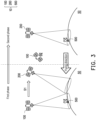
- FIG. 3 is a schematic diagram of a satellite communication system 10 according to an embodiment of the disclosure.
- the satellite communication system 10 may include a satellite 100 and a satellite 200.
- the satellite communication system 10 may further include a ground station 500.
- the ground station 500 can be communicatively connected to the satellite 100 or the satellite 200.
- the satellite 100 can be communicatively connected to the satellite 200.
- the satellite 100 and the satellite 200 may have similar hardware specifications or software functions. Accordingly, the satellite 100 and the satellite 200 can perform the same kind of work.
- the satellite 100 and the satellite 200 may also have the same operating environment. For example, the satellite 100 and the satellite 200 may belong to the same constellation system.
- the satellite 100 and the satellite 200 may have similar altitudes.
- the weather condition of the service area of the satellite 100 may be similar to the weather condition of the service area of the satellite 200.
- the satellite 100 or the satellite 200 can detect orbit information, and determine whether the satellite is about to enter or leave the service area 50 based on the orbit information.
- the satellite 100 is about to leave the service area 50 corresponding to a non-terrestrial network or the ground station 500, and the satellite 200 is about to enter the service area 50.
- the satellite 100 detects the presence of an inter-satellite link (ISL) between the satellite 100 and the satellite 200, the satellite 100 can directly transmit the resource scheduling assignment S1 to the satellite 200 through the ISL, and the resource scheduling assignment S1 may include radio resource scheduling, traffic scheduling, service resource control, or reference signals.
- the satellite 100 has left the service area 50 and the satellite 200 has entered the service area 50.
- the satellite 200 can access radio resources according to the resource scheduling assignment S1 received from the satellite 100 to communicate with the ground station 500 and provide services for the service area 50.
- the satellite communication system 10 may also use the ground station 500 as a relay to transmit resource scheduling assignment for the satellite 100 and the satellite 200.
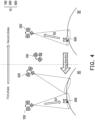
- FIG. 4 is a schematic diagram of a satellite communication system 10 according to another embodiment of the disclosure.
- the satellite 100 is about to leave the service area 50 corresponding to the non-terrestrial network or the ground station 500, and the satellite 200 is about to enter the service area 50.
- the satellite 100 can transmit the resource scheduling assignment S1 to the ground station 500.
- the satellite 100 has left the service area 50 and the satellite 200 has entered the service area 50.
- the ground station 500 can transmit the resource scheduling assignment S2 to the satellite 200 according to the resource scheduling assignment S1, and the resource scheduling assignment S2 and the resource scheduling assignment S1 can be the same or different.
- the resource scheduling assignment S2 may include radio resource scheduling, traffic scheduling, service resource control, or reference signals.
- the ground station 500 can determine the resource scheduling assignment S2 according to factors such as the type of application service provided by the satellite 200 or the resources required by the satellite 200.
- the satellite 200 can access radio resources according to the resource scheduling assignment S2 received from the ground station 500 to communicate with the ground station 500 and provide services for the service area 50.
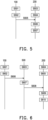
- FIG. 5 is a signaling diagram of a satellite communication system according to an embodiment of the disclosure, and steps S501 to S505 may correspond to the first phase of FIG. 3 , and steps S506 to S507 may correspond to the second phase of FIG. 3 .
- step S501 the satellite 100 is leaving the service area 50 of the non-terrestrial network.
- step S502 the satellite 100 may prepare the resource scheduling assignment S1.
- the satellite 200 is entering the service area 50 of the non-terrestrial network.
- the satellite 200 can generate an original resource scheduling assignment according to its own computing power, and access radio resources according to the original resource scheduling assignment.
- the satellite 200 may prestore one or more preset resource scheduling assignments, and may select one preset resource scheduling assignment as the original resource scheduling assignment after entering the service area 50.
- the satellite 200 can measure network parameters corresponding to the service area 50, and generate the original resource scheduling assignment based on the network parameters.
- the network parameters can be associated with the weather condition of the service area 50 or the quality of the reference signal, etc., the disclosure is not limited thereto.
- the satellite 200 can select the original resource scheduling assignment from multiple preset resource scheduling assignments according to the priority. Specifically, the satellite 200 may select a preset resource scheduling assignment with the highest priority from multiple preset resource scheduling as the original resource scheduling assignment.
- the priority of resource scheduling assignment may be associated with satellite specifications, measurement results of service quality, radio resource scheduling in the time domain, radio resource scheduling in the frequency domain, or radio resource scheduling in the space domain, and the disclosure is not limited thereto.
- the satellite 100 may transmit the resource scheduling assignment S1 to the satellite 200 in response to leaving the service area 50 of the non-terrestrial network.
- the satellite 200 can receive the resource scheduling assignment S1 from the satellite 100 in response to entering the service area 50 of the non-terrestrial network.
- the satellite 100 or the satellite 200 can detect the ISL, and transmit/receive resource scheduling assignment S1 through the ISL in response to detecting the ISL.
- the ISL may include an ISL control channel and an ISL shared channel.
- the satellite 200 can compare the performance of the original resource scheduling assignment and the resource scheduling assignment S1, and select a resource scheduling assignment with better performance as the selected resource scheduling assignment from the original resource scheduling assignment and the resource scheduling assignment S1.
- the selected resource scheduling assignment can be the same or different from the resource scheduling assignment S1.
- the satellite 200 can use the resource scheduling assignment S1 as a reference to generate the selected resource scheduling assignment according to its own computing power. In other words, the satellite 200 can derive the selected resource scheduling assignment from the resource scheduling assignment S1.
- the satellite 200 can select the selected resource scheduling assignment from the original resource scheduling assignment and the resource scheduling assignment S1 according to the priority. Specifically, if the priority of the original resource scheduling assignment is higher than the priority of the resource scheduling assignment S1, the satellite 200 can select the original resource scheduling assignment as the selected resource scheduling assignment. If the priority of the resource scheduling assignment S1 is higher than the priority of the original resource scheduling assignment, the satellite 200 can select the resource scheduling assignment S1 as the selected resource scheduling assignment.
- the satellite 200 can access radio resources according to the selected resource scheduling assignment.
- the satellite 200 can transmit the selected resource scheduling assignment to other satellites that are about to enter the service area 50 to assist other satellites in accessing the radio resources of the service area 50.
- FIG. 6 is a signaling diagram of a satellite communication system according to another embodiment of the disclosure. Steps S601 to S607 may correspond to the first phase of FIG. 4 , and steps S608 to S610 may correspond to the second phase of FIG. 4 .
- the satellite 200 can receive resource scheduling assignments from the satellite 100 through the ground station 500.
- step S601 the satellite 100 is leaving the service area 50 of the non-terrestrial network.
- the satellite 100 may prepare the resource scheduling assignment S1.
- step S603 the ground station 500 can sense that the satellite 200 enters the service area 50. The ground station 500 can start to prepare the resource scheduling assignment to be transmitted to the satellite 200 after sensing that the satellite 200 enters the service area 50.
- step S604 the satellite 200 is entering the service area 50 of the non-terrestrial network.
- step S605 the satellite 200 can generate an original resource scheduling assignment according to its own computing power, and access radio resources according to the original resource scheduling assignment.
- the satellite 100 can transmit the resource scheduling assignment S1 to the ground station 500 in response to leaving the service area 50 of the non-terrestrial network, thereby transmitting the resource scheduling assignment S2 to the satellite 200 through the ground station 500.
- the resource scheduling assignment S2 can be the same as or different from the resource scheduling assignment S1.
- the satellite 100 can detect the ISL, and can transmit resource scheduling assignment S1 to the ground station 500 in response to not detecting the ISL, thereby attempting to forward the resource scheduling assignment S1 to the satellite 200 through the ground station 500.
- the satellite 100 may communicate with the ground station 500 through a ground station uplink, and the ground station uplink may include a physical uplink shared channel or a data plane message.
- the ground station 500 may receive the resource scheduling assignment S1 from the satellite 100 leaving the service area 50 of the non-terrestrial network.
- the ground station 500 may select the resource scheduling assignment S2 from multiple resource scheduling assignments according to the priority, and the multiple resource scheduling assignments may include resource scheduling assignment S1 from the satellite 100.
- the ground station 500 can pre-store or instantly generate at least one resource scheduling assignment.
- the ground station 500 can select the resource scheduling assignment with the highest priority as the resource scheduling assignment S2 from the at least one resource scheduling assignment.
- the ground station 500 may store the resource scheduling assignment corresponding to the specific satellite as the at least one resource scheduling assignment.
- the ground station 500 can measure the network parameters of the service area 50, and generate the at least one resource scheduling assignment according to the network parameters.
- the network parameters can be associated with the weather condition of the service area 50 or the quality of the reference signal, and the disclosure is not limited thereto.
- the resource scheduling assignment S1 and the resource scheduling assignment S2 may be the same. For example, if the resource scheduling assignment S1 has the highest priority among the at least one resource scheduling assignment, the ground station 500 can set the resource scheduling assignment S2 as the resource scheduling assignment S1. On the other hand, the resource scheduling assignment S1 and the resource scheduling assignment S2 can be different. For example, if the resource scheduling assignment with the highest priority among the at least one resource scheduling assignment is not the resource scheduling assignment S1 but other specific resource scheduling assignment, the ground station 500 can set the resource scheduling assignment S2 as the specific resource scheduling assignment.
- the ground station 500 can determine the resource scheduling assignment S2 according to factors such as satellite specifications, measurement results of service quality, radio resource scheduling in the time domain, radio resource scheduling in the frequency domain, or radio resource scheduling in the space domain. For example, if the satellite 100 and the satellite 200 have similar satellite specifications, the ground station 500 can determine that the resource scheduling assignment S1 from the satellite 100 can be applied to the resource scheduling assignment S2. Accordingly, the ground station 500 can set the resource scheduling assignment S2 as the resource scheduling assignment S1.
- the ground station 500 may transmit the resource scheduling assignment S2 to the satellite 200 entering the service area 50 according to the resource scheduling assignment S1.
- the satellite 200 can receive the resource scheduling assignment S2 from the ground station 500 in response to entering the service area 50 of the non-terrestrial network.
- the satellite 200 can detect the ISL, and can receive the resource scheduling assignment S2 from the ground station 500 in response to not detecting the ISL.
- the satellite 200 can communicate with the ground station 500 through a ground station uplink, and the ground station uplink may include a physical uplink shared channel or data plane message.
- the ground station 500 may transmit the resource scheduling assignment S2 to the satellite 200 in response to the satellite 200 entering the service area 50 not performing as expected, so as to improve the resource utilization efficiency of the satellite 200. For example, if the ground station 500 detects that the service quality of the satellite 200 is poor, the ground station 500 can transmit the resource scheduling assignment S2 to the satellite 200.
- the satellite 200 may compare the performance of the original resource scheduling assignment and the resource scheduling assignment S2, and select a resource scheduling assignment with better performance as the selected resource scheduling assignment from the original resource scheduling assignment and the resource scheduling assignment S2.
- the selected resource scheduling assignment can be the same as or different from the resource scheduling assignment S2.
- the satellite 200 can use the resource scheduling assignment S2 as a reference to generate the selected resource scheduling assignment according to its own computing power. In other words, the satellite 200 can derive the selected resource scheduling assignment from the resource scheduling assignment S2.
- the satellite 200 can select the selected resource scheduling assignment from the original resource scheduling assignment and the resource scheduling assignment S2 according to the priority. Specifically, if the priority of the original resource scheduling assignment is higher than the priority of the resource scheduling assignment S2, the satellite 200 can select the original resource scheduling assignment as the selected resource scheduling assignment. If the priority of the resource scheduling assignment S2 is higher than the priority of the original resource scheduling assignment, the satellite 200 can select the resource scheduling assignment S2 as the selected resource scheduling assignment.
- the satellite 200 can access radio resources according to the selected resource scheduling assignment.
- the satellite 200 can transmit the selected resource scheduling assignment to other satellites that are about to enter the service area 50 to assist other satellites in accessing the radio resources of the service area 50.
- FIG. 7 is a flowchart of the satellite 200 entering the service area 50 according to an embodiment of the disclosure.
- the satellite 200 can detect orbit information.
- the satellite 200 can determine whether the satellite has entered the service area 50 of the non-terrestrial network according to the orbit information. If the satellite 200 has entered the service area 50, step S703 is performed. If the satellite 200 does not enter the service area 50, step S701 is performed again.
- the satellite 200 can detect whether an ISL between the satellite 200 and the satellite 100 is present. If the ISL is present, step S704 is performed. If the ISL is not present, step S705 is performed.
- the satellite 200 can receive the resource scheduling assignments from the satellite 100 through the ISL.
- step S705 the satellite 200 may receive the resource scheduling assignment from the ground station 500.
- step S706 the satellite 200 may determine whether the resource scheduling assignment is successfully received. If the satellite 200 has received the resource scheduling assignment, step S707 is performed. If the satellite 200 does not receive the resource scheduling assignment, step S703 is performed again.
- step S707 the satellite 200 can select the selected resource scheduling assignment from the at least one resource scheduling assignment.
- step S708 the satellite 200 can access the non-terrestrial network according to the selected resource scheduling assignment.
- FIG. 8 is a flowchart of the satellite 100 leaving the service area 50 according to an embodiment of the disclosure.
- the satellite 100 can access the non-terrestrial network corresponding to the service area 50, and can detect orbit information.
- the satellite 100 can determine whether the satellite has left the service area 50 according to the orbit information. If the satellite 100 has left the service area 50, step S803 is performed. If the satellite 100 has not left the service area 50, step S801 is performed again.
- the satellite 100 may prepare a resource scheduling assignment for the satellite 200 which enters the service area 50.
- the satellite 100 can detect whether the ISL between the satellite 100 and the satellite 200 is present. If the ISL is present, step S805 is performed.
- step S806 is performed.
- the satellite 100 can directly transmit the resource scheduling assignment to the satellite 200.
- the satellite 200 can transmit the resource scheduling assignment to the ground station 500, so as to transmit the resource scheduling assignment to the satellite 200 through the ground station 500. It should be noted that the resource scheduling assignment transmitted by the ground station 500 to the satellite 200 may be different from the resource scheduling assignment transmitted by the satellite 100 to the ground station 500.
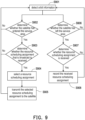
- FIG. 9 is a flowchart of the ground station 500 according to an embodiment of the disclosure.
- the ground station 500 can detect orbit information.
- the ground station 500 can determine whether the satellite 200 has entered the service area 50 of the non-terrestrial network based on the orbit information. If the satellite 200 has entered the service area 50, step S903 is performed. If the satellite 200 has not entered the service area 50, step S901 is performed again.
- the ground station 500 can determine whether the resource scheduling assignment broadcast by the satellite 100 is received. If the ground station 500 receives the resource scheduling assignment, step S904 is performed. If the ground station 500 does not receive the resource scheduling assignment, step S901 is performed again.
- step S904 the ground station 500 can select a resource scheduling assignment from the multiple resource scheduling assignments.
- step S905, the ground station 500 may transmit the selected resource scheduling assignment to the satellite 200.
- step S906 the ground station 500 can determine whether the satellite 100 has left the service area 50 of the non-terrestrial network based on the orbit information. If the satellite 100 has left the service area 50, step S907 is performed. If the satellite 100 does not leave the service area 50, step S901 is performed again.
- step S907 the ground station 500 can determine whether the resource scheduling assignment from the satellite 100 is received. If the ground station 500 receives the resource scheduling assignment, step S908 is performed. If the ground station 500 does not receive the resource scheduling assignment, step S901 is performed again.
- step S908 the ground station 500 may record the received resource scheduling assignment.
- FIG. 10 is a schematic diagram of obtaining multiple resource scheduling assignments from the ground station 500 according to an embodiment of the disclosure.
- the ground station 500 can record the resource scheduling assignment corresponding to the satellite successfully connected to the ground station.
- the resource scheduling assignment can include the resource scheduling assignment S31 from the satellite 301, the resource scheduling assignment S32 from the satellite 302, the resource scheduling assignment S33 from the satellite 303, the resource scheduling assignment S34 from the satellite 304, and the resource scheduling assignment S1 from the satellite 100.
- the communication device can report information related to service quality to the satellite.
- the information related to service quality may include the number of packets in the buffer of the communication device, latency requirement, reliability requirement, date rate requirement or packet arrival period and other parameters.
- the ground station 500 can record the resource scheduling assignment and satellite specifications of the satellite, and can test the recorded resource scheduling assignment by other satellites with similar specifications.
- the ground station 500 can select the resource scheduling assignment S2 that enables the satellite 200 to have better performance from the recorded resource scheduling assignments (i.e., resource scheduling assignments S31, S32, S33, S34, and S1). For example, if compared to the resource scheduling assignments S31, S32, S33, and S34, the resource scheduling assignment S1 can enable the satellite 200 to have better service quality, then the ground station 500 can set the resource scheduling assignment S2 to the resource scheduling assignment S1.
- the ground station 500 can transmit the selected resource scheduling assignment S2 to the satellite 200.
- FIG. 11 is a signaling diagram of the satellite communication system 10 of FIG. 10 according to an embodiment of the disclosure.
- the satellite communication system 10 further includes satellites 301, 302, 303, and 304, the steps S1101 and S1102 corresponding to the satellite 100 are also adaptable for the satellites 301, 302, 303, and 304.
- the satellite 100 can be served by the ground station 500.
- the satellite 100 may prepare a resource scheduling assignment.
- the ground station 500 may perform radio resource allocation.
- the ground station 500 may record the resource scheduling assignment.
- the satellite 200 may perform radio resource acquirement.
- the satellite 200 can be served by the ground station 500.
- the satellite 100 can transmit the resource scheduling assignment to the ground station 500.
- the ground station 500 can receive resource scheduling assignment.
- the ground station 500 can compare and test the allocated radio resource scheduling and the received resource scheduling assignment.
- the ground station 500 can select a better scheduling from the allocated radio resource scheduling and the received resource scheduling assignment. Assuming that the better scheduling is the received resource scheduling assignment, in step S1111, the ground station 500 can transmit the resource scheduling assignment to the satellite 200.
- the satellite 200 can compare the original radio resource scheduling with the received resource scheduling assignment.
- the satellite 200 can select a better scheduling from the original radio resource scheduling and the received resource scheduling assignment.
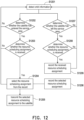
- FIG. 12 is a flowchart of the ground station 500 of FIG. 10 according to an embodiment of the disclosure. Since the process performed by the satellite 100 in FIG. 10 is the same as that of FIG. 7 and the process performed by the satellite 200 is the same as that of FIG. 8 , no repetition is incorporated herein.
- the ground station 500 can detect orbit information.
- the ground station 500 can determine whether the satellite 200 has entered the service area 50 of the non-terrestrial network. If the satellite 200 has entered the service area 50, step S1203 is performed. If the satellite 200 has not entered the service area 50, step S1201 is performed again. In step S1203, the ground station 500 can determine whether the resource scheduling assignment from the satellite 100 is received.
- step S1204 is performed. If the ground station 500 does not receive the resource scheduling assignment, step S1201 is performed again. In step S1204, the ground station 500 can select the resource scheduling assignment from the record. In step S1205, the ground station 500 may transmit the selected resource scheduling assignment to the satellite 200. In step S1206, the ground station 500 may record the selected resource scheduling assignment for use by satellites with similar specifications. In step S1207, the ground station 500 can determine whether the satellite 100 has left the service area 50. If the satellite 100 has left the service area 50, step S1208 is performed. If the satellite 100 does not leave the service area 50, step S1201 is performed again. In step S1208, the ground station 500 can determine whether the resource scheduling assignment from the satellite 100 is received. If the ground station 500 receives the resource scheduling assignment, step S1209 is performed. If the ground station 500 does not receive the resource scheduling assignment, step S1201 is performed again. In step S1209, the ground station 500 may record the received resource scheduling assignment.
- FIG. 13 is a schematic diagram of the satellite 100 according to an embodiment of the disclosure.
- the satellite 100 may include a processor 110, a storage medium 120, and a transceiver 130.
- the processor 110 is, for example, a central processing unit (CPU), or other programmable general-purpose or special-purpose micro control unit (MCU), microprocessor, or digital signal processor (DSP), programmable controller, application specific integrated circuit (ASIC), graphics processing unit (GPU), image signal processor (ISP), image processing unit (IPU), arithmetic logic unit (ALU), complex programmable logic device (CPLD), field programmable gate array (FPGA) or other similar components or a combination of the above components.
- the processor 110 may be coupled to the storage medium 120 and the transceiver 130, and access and execute multiple modules and various application programs stored in the storage medium 120.
- the storage medium 120 is, for example, any type of fixed or removable random access memory (RAM), read-only memory (ROM), flash memory, hard disk drive (HDD), solid state drive (SSD) or similar components or a combination of the above components, and configured to store multiple modules or various application programs that can be executed by the processor 110.
- the storage medium 120 can record resource scheduling assignments.
- the transceiver 130 transmits and receives signals in a wireless or wired manner.
- the transceiver 130 may also perform operations such as low noise amplification, impedance matching, frequency mixing, up or down frequency conversion, filtering, amplification, and the like.
- the satellite 100 can communicate with the satellite 200 or the ground station 500 through the transceiver 130.
- FIG. 14 is a schematic diagram of a satellite 200 according to an embodiment of the disclosure.
- the satellite 200 may include a processor 210, a storage medium 220, and a transceiver 230.
- the processor 210 is, for example, a central processing unit (CPU), or other programmable general-purpose or special-purpose micro control unit (MCU), microprocessor, or digital signal processor (DSP), programmable controller, application specific integrated circuit (ASIC), graphics processing unit (GPU), image signal processor (ISP), image processing unit (IPU), arithmetic logic unit (ALU), complex programmable logic device (CPLD), field programmable gate array (FPGA) or other similar components or a combination of the above components.
- the processor 210 may be coupled to the storage medium 220 and the transceiver 230, and access and execute multiple modules and various application programs stored in the storage medium 220.
- the storage medium 220 is, for example, any type of fixed or removable random access memory (RAM), read-only memory (ROM), flash memory, hard disk drive (HDD), solid state drive (SSD) or similar components or a combination of the above components, and configured to store multiple modules or various application programs that can be executed by the processor 210.
- the storage medium 220 can record resource scheduling assignments.
- the transceiver 230 transmits and receives signals in a wireless or wired manner.
- the transceiver 230 may also perform operations such as low noise amplification, impedance matching, frequency mixing, up or down frequency conversion, filtering, amplification, and the like.
- the satellite 200 can communicate with the satellite 100 or the ground station 500 through the transceiver 230.
- FIG. 15 is a schematic diagram of a ground station 500 according to an embodiment of the disclosure.
- the ground station 500 may include a processor 510, a storage medium 520, and a transceiver 530.
- the processor 510 is, for example, a central processing unit (CPU), or other programmable general-purpose or special-purpose micro control unit (MCU), microprocessor, or digital signal processor (DSP), programmable controller, application specific integrated circuit (ASIC), graphics processing unit (GPU), image signal processor (ISP), image processing unit (IPU), arithmetic logic unit (ALU), complex programmable logic device (CPLD), field programmable gate array (FPGA) or other similar components or a combination of the above components.
- the processor 510 may be coupled to the storage medium 520 and the transceiver 530, and access and execute multiple modules and various application programs stored in the storage medium 520.
- the storage medium 520 is, for example, any type of fixed or removable random access memory (RAM), read-only memory (ROM), flash memory, hard disk drive (HDD), solid state drive (SSD) or similar components or a combination of the above components, and configured to store multiple modules or various application programs that can be executed by the processor 510.
- the storage medium 520 can record resource scheduling assignments.
- the transceiver 530 transmits and receives signals in a wireless or wired manner.
- the transceiver 530 may also perform operations such as low noise amplification, impedance matching, frequency mixing, up or down frequency conversion, filtering, amplification, and the like.
- the ground station 500 can communicate with the satellite 100 or the satellite 200 through the transceiver 530.
- FIG. 16 is a flowchart of a method for managing radio resources of a non-terrestrial network according to an embodiment of the disclosure.
- the method can be implemented by the satellite 100 or the satellite 200.
- the first resource scheduling assignment is received from the second satellite in response to entering the service area of the non-terrestrial network.
- radio resources are accessed according to the first resource scheduling assignment.
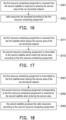
- FIG. 17 is a flowchart of a method for managing radio resources of a non-terrestrial network according to another embodiment of the disclosure.
- the method can be implemented by the ground station 500.
- the first resource scheduling assignment is received from the first satellite which leaves the service area of the non-terrestrial network.
- the second resource scheduling assignment is transmitted to the second satellite which enters the service area according to the first resource scheduling assignment.
- FIG. 18 is a flowchart of a method for managing radio resources of a non-terrestrial network according to another embodiment of the disclosure.
- the method can be implemented by the satellite communication system 10, and the satellite communication system 10 can at least include a first satellite and a second satellite.
- the first resource scheduling assignment is transmitted by the first satellite when the first satellite leaves the service area of the non-terrestrial network.
- the second resource scheduling assignment corresponding to the first resource scheduling assignment is received by the second satellite when the second satellite enters the service area.
- the second satellite accesses the radio resources according to the second resource scheduling assignment.
- the satellite communication system of the disclosure can transmit the resource scheduling assignment of the satellite that is about to leave the service area to another satellite that is about to enter the service area.
- the satellite communication system can use ground station as a relay to forward resource scheduling assignment for two satellites. If the ILS is present, the satellite communication system can also directly transmit the resource scheduling assignment through the ISL.
- the ground station can record the resource scheduling assignment of satellites that perform well.
- the satellite communication system can reduce the computational burden of the satellite through forwarding the resource scheduling assignment, and can make the radio resources be used more efficiently.
Landscapes
- Engineering & Computer Science (AREA)
- Computer Networks & Wireless Communication (AREA)
- Signal Processing (AREA)
- Physics & Mathematics (AREA)
- Astronomy & Astrophysics (AREA)
- Aviation & Aerospace Engineering (AREA)
- General Physics & Mathematics (AREA)
- Mobile Radio Communication Systems (AREA)
- Radio Relay Systems (AREA)
Abstract
A satellite communication system and a method for managing radio resource of a non-terrestrial network are provided. The method includes: transmitting, by a first satellite, a first resource scheduling assignment when leaving a service area of the non-terrestrial network; receiving, by a second satellite, a second resource scheduling assignment corresponding to the first scheduling assignment when entering the service area; and accessing, by the second satellite, the radio resource according to the second resource scheduling assignment.
Description
- The disclosure relates to a method for managing radio resources, and particularly relates to a satellite, ground station, satellite communication system and method for managing radio resources of non-terrestrial networks.
- The non-terrestrial network (NTN) family includes high altitude platform (HAP), low altitude platform (LAP), low earth orbit (LEO) satellite, very low earth orbit (vLEO) satellite, medium earth orbit (MEO) satellite, and geosynchronous equatorial orbit (GEO) satellite, among which LEO (or vLEO) satellite has a speed that can reach as high as 7.4 km/s.
- LEO satellite can be used to forward data between ground stations.
FIG. 1 shows a schematic diagram of LEO satellites and ground stations. LEOsatellite 2 can receive signals from aground station 1, and forward the received signals to aground station 3. The ground station 1 (or ground station 3) and LEOsatellite 2 can perform data transmission through the L2 layer or the physical layer. - The LEO
satellite 2 can provide services in a transparent mode or a regenerative mode. The LEOsatellite 2 in the transparent mode can amplify the received signal and forward the amplified signal to theground station 3. The LEOsatellite 2 in regenerative mode can perform network management or network resource assignment to achieve complex quality of service (QoS) network service requirements. For example, the LEOsatellite 2 can perform down-converting on the signal received from theground station 1 to convert the signal to an intermediate frequency. Then, the LEOsatellite 2 can perform demodulation on the received signal to convert the signal to a baseband. After performing signal processing on the baseband signal, the LEOsatellite 2 can modulate the processed signal to the downlink carrier, and perform up-converting on the signal and amplify the signal. Then, the LEOsatellite 2 can forward the signal to theground station 3. - In order to provide seamless services for ground station of the LEO network, a constellation formed by multiple LEO satellites is required. A constellation is a group of satellites that work together as a system. Multiple LEO satellites can form a constellation based on object parameters such as orbit, inclination, or altitude, or can form a constellation based on software parameters such as the type of service provided by the satellite or satellite identifier.
- In order to perform radio resource assignment for multiple satellites, LEO satellite can install a payload that includes a radio resource scheduler. The radio resource scheduler can assign radio resources for all devices in the coverage of the service link beam or feeder link beam. Radio resources may include space domain/frequency domain/code domain resources, link adaptation scheme or beam information, etc. The link adaptation scheme can be associated with modulation, channel coding, transmission power, reference signal or retransmission scheme, and the retransmission scheme is, for example, number/resources of transmission repetitions or number/resources of retransmission. However, the computing power of the radio resource scheduler is limited. In the condition of limited time, the above work will bring a heavy burden to the radio resource scheduler.
FIG. 2 shows a schematic diagram of a LEO satellite in motion. The LEOsatellite 2 can move from service area A to service area B in just 9 minutes. Therefore, the radio resource scheduler needs to complete the radio resource scheduling within 9 minutes. The power of the LEOsatellite 2 can provide a support up to 1800 watts, of which at least 1200 watts are provided to the radio frequency module, at least 45 watts are provided to the payload computer, and at least 300 watts are provided to the BB (Baseband) module and the L2 module. In other words, ordinary communication work needs to consume 1545 watts of power. When fully loaded, the power consumption of the LEOsatellite 2 may rise to nearly 1800 watts. In this case, it is very difficult for the LEOsatellite 2 to complete the radio resource scheduling within 9 minutes. - Accordingly, how to provide an efficient radio resource scheduling method is one of the goals that practitioners in the art are committed to achieve.
- The disclosure provides a satellite, ground station, satellite communication system and method for managing radio resources of non-terrestrial networks, which can efficiently perform radio resource scheduling.
- In the disclosure, the method for managing radio resources of a non-terrestrial network is adapted for satellites, and the method includes: receiving a first resource scheduling assignment from a second satellite in response to entering a service area of the non-terrestrial network; and accessing radio resources according to the first resource scheduling assignment.
- In an embodiment of the disclosure, the step of receiving the first resource scheduling assignment from the second satellite in response to entering the service area of the non-terrestrial network includes: receiving the first resource scheduling assignment from the second satellite through the ground station.
- In an embodiment of the disclosure, the step of receiving the first resource scheduling assignment from the second satellite in response to entering the service area of the non-terrestrial network includes: detecting whether the inter-satellite link (ISL) is present; and receiving the first resource scheduling assignment directly from the second satellite in response to the presence of the ISL.
- In an embodiment of the disclosure, the step of receiving the first resource scheduling assignment from the second satellite in response to entering the service area of the non-terrestrial network further includes: detecting whether the ISL is present; and receiving the first resource scheduling assignment through the ground station in response to the absence of the ISL.
- In an embodiment of the disclosure, the method further includes: transmitting the second resource scheduling assignment to the third satellite in response to leaving the service area.
- In an embodiment of the disclosure, the method further includes: determining the second resource scheduling assignment according to the first resource scheduling assignment.
- In an embodiment of the disclosure, the step of transmitting the second resource scheduling assignment to the third satellite in response to leaving the service area includes: detecting whether the ISL is present; and directly transmitting the second resource scheduling assignment to the third satellite in response to the presence of the ISL.
- In an embodiment of the disclosure, the step of transmitting the second resource scheduling assignment to the third satellite in response to leaving the service area further includes: transmitting the second resource scheduling assignment to the third satellite through the ground station in response to the absence of the ISL.
- In an embodiment of the disclosure, the step of accessing radio resources according to the first resource scheduling assignment includes: determining the first priority of the first resource scheduling assignment and at least one priority of the at least one resource scheduling assignment; and selecting the first resource scheduling assignment to access the radio resource in response to the first priority being higher than the at least one priority.
- In an embodiment of the disclosure, the first priority is associated with at least one of the following: satellite specifications, measurement results of service quality, radio resource scheduling in the time domain, radio resource scheduling in the frequency domain, or radio resource scheduling in the space domain.
- In an embodiment of the disclosure, the method further includes: measuring network parameters corresponding to the service area; and generating at least one resource scheduling assignment according to the network parameters.
- In an embodiment of the disclosure, the first resource scheduling assignment includes at least one of the following: radio resource scheduling, traffic scheduling, or service resource control.
- In the disclosure, the method for managing radio resources of a non-terrestrial network is adaptable for a ground station, and the method includes: receiving a first resource scheduling assignment from a first satellite which leaves a service area of the non-terrestrial network; and transmitting the second resource scheduling assignment to the second satellite which enters the service area according to the first resource scheduling assignment.
- In an embodiment of the disclosure, the second resource scheduling assignment is the same as the first resource scheduling assignment, and the step of transmitting the second resource scheduling assignment to the second satellite which enters the service area according to the first resource scheduling assignment includes: determining the first priority of the second resource scheduling assignment and at least one priority of the at least one resource scheduling assignment; and selecting to transmit the second resource scheduling assignment to the second satellite in response to the first priority being higher than the at least one priority.
- In an embodiment of the disclosure, the second resource scheduling assignment is different from the first resource scheduling assignment, and the step of transmitting the second resource scheduling assignment to the second satellite which enters the service area according to the first resource scheduling assignment includes: determining a first priority of the second resource scheduling assignment and at least one priority of the at least one resource scheduling assignment, and the at least one resource scheduling assignment includes the first resource scheduling assignment; and selecting to transmit the second resource scheduling assignment to the second satellite in response to the first priority being higher than the at least one priority.
- In an embodiment of the disclosure, the first priority is associated with at least one of the following: satellite specifications, measurement results of service quality, radio resource scheduling in the time domain, radio resource scheduling in the frequency domain, or radio resource scheduling in the space domain.
- In an embodiment of the disclosure, the method further includes: measuring network parameters corresponding to the service area; and generating the at least one resource scheduling assignment according to the network parameters.
- In an embodiment of the disclosure, the second resource scheduling assignment includes at least one of the following: radio resource scheduling, traffic scheduling, or service resource control.
- In the disclosure, the method for managing radio resources of a non-terrestrial network is adaptable for a satellite communication system, and the satellite communication system includes a first satellite and a second satellite, and the method includes: transmitting the first resource scheduling assignment by the first satellite when leaving the service area of the non-terrestrial network; receiving the second resource scheduling assignment corresponding to the first resource scheduling assignment when the second satellite enters the service area; and accessing radio resources by the second satellite according to the second resource scheduling assignment.
- In an embodiment of the disclosure, the step of receiving the second resource scheduling assignment corresponding to the first resource scheduling assignment by the second satellite when entering the service area includes: detecting whether the ISL is present by the second satellite; and receiving the second resource scheduling assignment directly from the first satellite by the second satellite in response to the presence of the ISL, and the second resource scheduling assignment is the same as the first resource scheduling assignment.
- In an embodiment of the disclosure, the step of receiving the second resource scheduling assignment corresponding to the first resource scheduling assignment by the second satellite when entering the service area further includes: receiving the second resource scheduling assignment from the ground station by the second satellite in response to the absence of the ISL.
- In an embodiment of the disclosure, the step of accessing radio resources by the second satellite according to the second resource scheduling assignment includes: determining, by the second satellite, the first priority of the second resource scheduling assignment and the at least one priority of the at least one resource scheduling assignment; and selecting, by the second satellite, the second resource scheduling assignment to access the radio resources in response to the first priority being higher than the at least one priority.
- In an embodiment of the disclosure, the first priority is associated with at least one of the following: satellite specifications, measurement results of service quality, radio resource scheduling in the time domain, radio resource scheduling in the frequency domain, or radio resource scheduling in the space domain.
- In an embodiment of the disclosure, the method further includes: measuring network parameters of the service area by the second satellite; and generating at least one resource scheduling assignment by the second satellite according to the network parameters.
- In an embodiment of the disclosure, the method further includes: receiving a first resource scheduling assignment from the first satellite by the ground station; and transmitting the second resource scheduling assignment to the second satellite by the ground station in response to receiving the first resource scheduling assignment.
- In an embodiment of the disclosure, the second resource scheduling assignment is the same as the first resource scheduling assignment, and the step of transmitting the second resource scheduling assignment to the second satellite by the ground station in response to receiving the first resource scheduling assignment includes: determining, by the ground station, the first priority of the second resource scheduling assignment and the at least one priority of the at least one resource scheduling assignment; and selecting, by the ground station, to transmit the second resource scheduling assignment to the second satellite in response to the first priority being higher than at least one priority.
- In an embodiment of the disclosure, the second resource scheduling assignment is different from the first resource scheduling assignment, and the step of transmitting, by the ground station, the second resource scheduling assignment to the second satellite in response to receiving the first resource scheduling assignment includes determining, by the ground station, the first priority of the second resource scheduling assignment and the at least one priority of the at least one resource scheduling assignment, and the at least one resource scheduling assignment includes the first resource scheduling assignment; and selecting, by the ground station, to transmit the second resource scheduling assignment to the second satellite in response to the first priority being higher than at least one priority.
- In an embodiment of the disclosure, the method further includes: measuring network parameters of the service area by the ground station; and generating the at least one resource scheduling assignment by the ground station according to the network parameters.
- In an embodiment of the disclosure, the second resource scheduling assignment includes at least one of the following: radio resource scheduling, traffic scheduling, or service resource control.
- In the disclosure, a satellite for managing radio resources of a non-terrestrial network includes a transceiver and a processor. The processor is coupled to the transceiver, and the processor is configured to perform: receiving a first resource scheduling assignment from a second satellite through the transceiver in response to entering a service area of the non-terrestrial network; and accessing radio resources through the transceiver according to the first resource scheduling assignment.
- In the disclosure, a ground station for managing radio resources of a non-terrestrial network includes a transceiver and a processor. The processor is coupled to the transceiver, and the processor is configured to perform: receiving, through the transceiver, the first resource scheduling assignment from the first satellite which leaves the service area of the non-terrestrial network; and transmitting, through the transceiver, the second resource scheduling assignment to the second satellite which enters the service area according to the first resource scheduling assignment.
- In the disclosure, a satellite communication system for managing radio resources of a non-terrestrial network includes a first satellite and a second satellite. The first satellite transmits the first resource scheduling assignment when leaving the service area of the non-terrestrial network. The second satellite is communicatively connected to the first satellite, and the second satellite receives a second resource scheduling assignment corresponding to the first resource scheduling assignment when entering the service area, and accesses radio resources according to the second resource scheduling assignment.
- Based on the above, the satellite communication system of the disclosure can transmit the resource scheduling assignment of the satellite that is about to leave the service area to another satellite that is about to enter the service area. Satellites entering the service area late can access radio resources according to the existing resource scheduling assignment. In this way, the computational burden of the satellite can be reduced and the operating efficiency of the satellite can be improved.
-
-
FIG. 1 is a schematic diagram of a LEO satellite and a ground station. -
FIG. 2 is a schematic diagram of a LEO satellite in motion. -
FIG. 3 is a schematic diagram of a satellite communication system according to an embodiment of the disclosure. -
FIG. 4 is a schematic diagram of a satellite communication system according to another embodiment of the disclosure. -
FIG. 5 is a signaling diagram of a satellite communication system according to an embodiment of the disclosure. -
FIG. 6 is a signaling diagram of a satellite communication system according to another embodiment of the disclosure. -
FIG. 7 is a flowchart of a satellite entering a service area according to an embodiment of the disclosure. -
FIG. 8 is a flowchart of a satellite leaving a service area according to an embodiment of the disclosure. -
FIG. 9 is a flowchart of a ground station according to an embodiment of the disclosure. -
FIG. 10 is a schematic diagram of obtaining multiple resource scheduling assignments by a ground station according to an embodiment of the disclosure. -
FIG. 11 is a signaling diagram of the satellite communication system ofFIG. 10 according to an embodiment of the disclosure. -
FIG. 12 is a flowchart of the ground station inFIG. 10 according to an embodiment of the disclosure. -
FIG. 13 is a schematic diagram of a satellite according to an embodiment of the disclosure. -
FIG. 14 is a schematic diagram of a satellite according to an embodiment of the disclosure. -
FIG. 15 is a schematic diagram of a ground station according to an embodiment of the disclosure. -
FIG. 16 is a flowchart of a method for managing radio resources of a non-terrestrial network according to an embodiment of the disclosure. -
FIG. 17 is a flowchart of a method for managing radio resources of a non-terrestrial network according to another embodiment of the disclosure. -
FIG. 18 is a flowchart of a method for managing radio resources of a non-terrestrial network according to another embodiment of the disclosure. - In order to reduce the computational burden of various satellites in the constellation system and efficiently use radio resources, this disclosure provides a satellite communication system. Satellites in the satellite communication system can obtain resource scheduling assignment from other satellites or ground stations.
-
FIG. 3 is a schematic diagram of asatellite communication system 10 according to an embodiment of the disclosure. Thesatellite communication system 10 may include asatellite 100 and asatellite 200. In an embodiment, thesatellite communication system 10 may further include aground station 500. Theground station 500 can be communicatively connected to thesatellite 100 or thesatellite 200. In an embodiment, thesatellite 100 can be communicatively connected to thesatellite 200. Thesatellite 100 and thesatellite 200 may have similar hardware specifications or software functions. Accordingly, thesatellite 100 and thesatellite 200 can perform the same kind of work. Thesatellite 100 and thesatellite 200 may also have the same operating environment. For example, thesatellite 100 and thesatellite 200 may belong to the same constellation system. Thesatellite 100 and thesatellite 200 may have similar altitudes. The weather condition of the service area of thesatellite 100 may be similar to the weather condition of the service area of thesatellite 200. - The
satellite 100 or thesatellite 200 can detect orbit information, and determine whether the satellite is about to enter or leave theservice area 50 based on the orbit information. - During the first phase, the
satellite 100 is about to leave theservice area 50 corresponding to a non-terrestrial network or theground station 500, and thesatellite 200 is about to enter theservice area 50. If thesatellite 100 detects the presence of an inter-satellite link (ISL) between thesatellite 100 and thesatellite 200, thesatellite 100 can directly transmit the resource scheduling assignment S1 to thesatellite 200 through the ISL, and the resource scheduling assignment S1 may include radio resource scheduling, traffic scheduling, service resource control, or reference signals. Then, during the second phase, thesatellite 100 has left theservice area 50 and thesatellite 200 has entered theservice area 50. Thesatellite 200 can access radio resources according to the resource scheduling assignment S1 received from thesatellite 100 to communicate with theground station 500 and provide services for theservice area 50. - The
satellite communication system 10 may also use theground station 500 as a relay to transmit resource scheduling assignment for thesatellite 100 and thesatellite 200.FIG. 4 is a schematic diagram of asatellite communication system 10 according to another embodiment of the disclosure. During the first phase, thesatellite 100 is about to leave theservice area 50 corresponding to the non-terrestrial network or theground station 500, and thesatellite 200 is about to enter theservice area 50. Thesatellite 100 can transmit the resource scheduling assignment S1 to theground station 500. Then, during the second phase, thesatellite 100 has left theservice area 50 and thesatellite 200 has entered theservice area 50. Theground station 500 can transmit the resource scheduling assignment S2 to thesatellite 200 according to the resource scheduling assignment S1, and the resource scheduling assignment S2 and the resource scheduling assignment S1 can be the same or different. The resource scheduling assignment S2 may include radio resource scheduling, traffic scheduling, service resource control, or reference signals. Theground station 500 can determine the resource scheduling assignment S2 according to factors such as the type of application service provided by thesatellite 200 or the resources required by thesatellite 200. Thesatellite 200 can access radio resources according to the resource scheduling assignment S2 received from theground station 500 to communicate with theground station 500 and provide services for theservice area 50. -
FIG. 5 is a signaling diagram of a satellite communication system according to an embodiment of the disclosure, and steps S501 to S505 may correspond to the first phase ofFIG. 3 , and steps S506 to S507 may correspond to the second phase ofFIG. 3 . In step S501, thesatellite 100 is leaving theservice area 50 of the non-terrestrial network. In step S502, thesatellite 100 may prepare the resource scheduling assignment S1. - In step S503, the
satellite 200 is entering theservice area 50 of the non-terrestrial network. In step S504, thesatellite 200 can generate an original resource scheduling assignment according to its own computing power, and access radio resources according to the original resource scheduling assignment. For example, thesatellite 200 may prestore one or more preset resource scheduling assignments, and may select one preset resource scheduling assignment as the original resource scheduling assignment after entering theservice area 50. In another example, thesatellite 200 can measure network parameters corresponding to theservice area 50, and generate the original resource scheduling assignment based on the network parameters. The network parameters can be associated with the weather condition of theservice area 50 or the quality of the reference signal, etc., the disclosure is not limited thereto. - In an embodiment, the
satellite 200 can select the original resource scheduling assignment from multiple preset resource scheduling assignments according to the priority. Specifically, thesatellite 200 may select a preset resource scheduling assignment with the highest priority from multiple preset resource scheduling as the original resource scheduling assignment. The priority of resource scheduling assignment may be associated with satellite specifications, measurement results of service quality, radio resource scheduling in the time domain, radio resource scheduling in the frequency domain, or radio resource scheduling in the space domain, and the disclosure is not limited thereto. - In step S505, the
satellite 100 may transmit the resource scheduling assignment S1 to thesatellite 200 in response to leaving theservice area 50 of the non-terrestrial network. Thesatellite 200 can receive the resource scheduling assignment S1 from thesatellite 100 in response to entering theservice area 50 of the non-terrestrial network. In an embodiment, thesatellite 100 or thesatellite 200 can detect the ISL, and transmit/receive resource scheduling assignment S1 through the ISL in response to detecting the ISL. The ISL may include an ISL control channel and an ISL shared channel. - In step S506, the
satellite 200 can compare the performance of the original resource scheduling assignment and the resource scheduling assignment S1, and select a resource scheduling assignment with better performance as the selected resource scheduling assignment from the original resource scheduling assignment and the resource scheduling assignment S1. The selected resource scheduling assignment can be the same or different from the resource scheduling assignment S1. In an embodiment, thesatellite 200 can use the resource scheduling assignment S1 as a reference to generate the selected resource scheduling assignment according to its own computing power. In other words, thesatellite 200 can derive the selected resource scheduling assignment from the resource scheduling assignment S1. - In an embodiment, the
satellite 200 can select the selected resource scheduling assignment from the original resource scheduling assignment and the resource scheduling assignment S1 according to the priority. Specifically, if the priority of the original resource scheduling assignment is higher than the priority of the resource scheduling assignment S1, thesatellite 200 can select the original resource scheduling assignment as the selected resource scheduling assignment. If the priority of the resource scheduling assignment S1 is higher than the priority of the original resource scheduling assignment, thesatellite 200 can select the resource scheduling assignment S1 as the selected resource scheduling assignment. - In step S507, the
satellite 200 can access radio resources according to the selected resource scheduling assignment. When thesatellite 200 is about to leave theservice area 50, thesatellite 200 can transmit the selected resource scheduling assignment to other satellites that are about to enter theservice area 50 to assist other satellites in accessing the radio resources of theservice area 50. -
FIG. 6 is a signaling diagram of a satellite communication system according to another embodiment of the disclosure. Steps S601 to S607 may correspond to the first phase ofFIG. 4 , and steps S608 to S610 may correspond to the second phase ofFIG. 4 . In this embodiment, thesatellite 200 can receive resource scheduling assignments from thesatellite 100 through theground station 500. - In step S601, the
satellite 100 is leaving theservice area 50 of the non-terrestrial network. In step S602, thesatellite 100 may prepare the resource scheduling assignment S1. In step S603, theground station 500 can sense that thesatellite 200 enters theservice area 50. Theground station 500 can start to prepare the resource scheduling assignment to be transmitted to thesatellite 200 after sensing that thesatellite 200 enters theservice area 50. - In step S604, the
satellite 200 is entering theservice area 50 of the non-terrestrial network. In step S605, thesatellite 200 can generate an original resource scheduling assignment according to its own computing power, and access radio resources according to the original resource scheduling assignment. - In step S606, the
satellite 100 can transmit the resource scheduling assignment S1 to theground station 500 in response to leaving theservice area 50 of the non-terrestrial network, thereby transmitting the resource scheduling assignment S2 to thesatellite 200 through theground station 500. The resource scheduling assignment S2 can be the same as or different from the resource scheduling assignment S1. In an embodiment, thesatellite 100 can detect the ISL, and can transmit resource scheduling assignment S1 to theground station 500 in response to not detecting the ISL, thereby attempting to forward the resource scheduling assignment S1 to thesatellite 200 through theground station 500. Thesatellite 100 may communicate with theground station 500 through a ground station uplink, and the ground station uplink may include a physical uplink shared channel or a data plane message. - In step S607, the
ground station 500 may receive the resource scheduling assignment S1 from thesatellite 100 leaving theservice area 50 of the non-terrestrial network. - In an embodiment, the
ground station 500 may select the resource scheduling assignment S2 from multiple resource scheduling assignments according to the priority, and the multiple resource scheduling assignments may include resource scheduling assignment S1 from thesatellite 100. Specifically, theground station 500 can pre-store or instantly generate at least one resource scheduling assignment. Theground station 500 can select the resource scheduling assignment with the highest priority as the resource scheduling assignment S2 from the at least one resource scheduling assignment. - In an embodiment, if a specific satellite is successfully connected to the
ground station 500, theground station 500 may store the resource scheduling assignment corresponding to the specific satellite as the at least one resource scheduling assignment. - In an embodiment, the
ground station 500 can measure the network parameters of theservice area 50, and generate the at least one resource scheduling assignment according to the network parameters. The network parameters can be associated with the weather condition of theservice area 50 or the quality of the reference signal, and the disclosure is not limited thereto. - The resource scheduling assignment S1 and the resource scheduling assignment S2 may be the same. For example, if the resource scheduling assignment S1 has the highest priority among the at least one resource scheduling assignment, the
ground station 500 can set the resource scheduling assignment S2 as the resource scheduling assignment S1. On the other hand, the resource scheduling assignment S1 and the resource scheduling assignment S2 can be different. For example, if the resource scheduling assignment with the highest priority among the at least one resource scheduling assignment is not the resource scheduling assignment S1 but other specific resource scheduling assignment, theground station 500 can set the resource scheduling assignment S2 as the specific resource scheduling assignment. - In an embodiment, the
ground station 500 can determine the resource scheduling assignment S2 according to factors such as satellite specifications, measurement results of service quality, radio resource scheduling in the time domain, radio resource scheduling in the frequency domain, or radio resource scheduling in the space domain. For example, if thesatellite 100 and thesatellite 200 have similar satellite specifications, theground station 500 can determine that the resource scheduling assignment S1 from thesatellite 100 can be applied to the resource scheduling assignment S2. Accordingly, theground station 500 can set the resource scheduling assignment S2 as the resource scheduling assignment S1. - In step S608, the
ground station 500 may transmit the resource scheduling assignment S2 to thesatellite 200 entering theservice area 50 according to the resource scheduling assignment S1. Thesatellite 200 can receive the resource scheduling assignment S2 from theground station 500 in response to entering theservice area 50 of the non-terrestrial network. In an embodiment, thesatellite 200 can detect the ISL, and can receive the resource scheduling assignment S2 from theground station 500 in response to not detecting the ISL. Thesatellite 200 can communicate with theground station 500 through a ground station uplink, and the ground station uplink may include a physical uplink shared channel or data plane message. - In an embodiment, the
ground station 500 may transmit the resource scheduling assignment S2 to thesatellite 200 in response to thesatellite 200 entering theservice area 50 not performing as expected, so as to improve the resource utilization efficiency of thesatellite 200. For example, if theground station 500 detects that the service quality of thesatellite 200 is poor, theground station 500 can transmit the resource scheduling assignment S2 to thesatellite 200. - In step S609, the
satellite 200 may compare the performance of the original resource scheduling assignment and the resource scheduling assignment S2, and select a resource scheduling assignment with better performance as the selected resource scheduling assignment from the original resource scheduling assignment and the resource scheduling assignment S2. The selected resource scheduling assignment can be the same as or different from the resource scheduling assignment S2. In an embodiment, thesatellite 200 can use the resource scheduling assignment S2 as a reference to generate the selected resource scheduling assignment according to its own computing power. In other words, thesatellite 200 can derive the selected resource scheduling assignment from the resource scheduling assignment S2. - In an embodiment, the
satellite 200 can select the selected resource scheduling assignment from the original resource scheduling assignment and the resource scheduling assignment S2 according to the priority. Specifically, if the priority of the original resource scheduling assignment is higher than the priority of the resource scheduling assignment S2, thesatellite 200 can select the original resource scheduling assignment as the selected resource scheduling assignment. If the priority of the resource scheduling assignment S2 is higher than the priority of the original resource scheduling assignment, thesatellite 200 can select the resource scheduling assignment S2 as the selected resource scheduling assignment. - In step S610, the
satellite 200 can access radio resources according to the selected resource scheduling assignment. When thesatellite 200 is about to leave theservice area 50, thesatellite 200 can transmit the selected resource scheduling assignment to other satellites that are about to enter theservice area 50 to assist other satellites in accessing the radio resources of theservice area 50. -
FIG. 7 is a flowchart of thesatellite 200 entering theservice area 50 according to an embodiment of the disclosure. In step S701, thesatellite 200 can detect orbit information. In step S702, thesatellite 200 can determine whether the satellite has entered theservice area 50 of the non-terrestrial network according to the orbit information. If thesatellite 200 has entered theservice area 50, step S703 is performed. If thesatellite 200 does not enter theservice area 50, step S701 is performed again. In step S703, thesatellite 200 can detect whether an ISL between thesatellite 200 and thesatellite 100 is present. If the ISL is present, step S704 is performed. If the ISL is not present, step S705 is performed. In step S704, thesatellite 200 can receive the resource scheduling assignments from thesatellite 100 through the ISL. In step S705, thesatellite 200 may receive the resource scheduling assignment from theground station 500. In step S706, thesatellite 200 may determine whether the resource scheduling assignment is successfully received. If thesatellite 200 has received the resource scheduling assignment, step S707 is performed. If thesatellite 200 does not receive the resource scheduling assignment, step S703 is performed again. In step S707, thesatellite 200 can select the selected resource scheduling assignment from the at least one resource scheduling assignment. In step S708, thesatellite 200 can access the non-terrestrial network according to the selected resource scheduling assignment. -
FIG. 8 is a flowchart of thesatellite 100 leaving theservice area 50 according to an embodiment of the disclosure. In step S801, thesatellite 100 can access the non-terrestrial network corresponding to theservice area 50, and can detect orbit information. In step S802, thesatellite 100 can determine whether the satellite has left theservice area 50 according to the orbit information. If thesatellite 100 has left theservice area 50, step S803 is performed. If thesatellite 100 has not left theservice area 50, step S801 is performed again. In step S803, thesatellite 100 may prepare a resource scheduling assignment for thesatellite 200 which enters theservice area 50. In step S804, thesatellite 100 can detect whether the ISL between thesatellite 100 and thesatellite 200 is present. If the ISL is present, step S805 is performed. If the ISL is not present, step S806 is performed. In step S805, thesatellite 100 can directly transmit the resource scheduling assignment to thesatellite 200. In step S806, thesatellite 200 can transmit the resource scheduling assignment to theground station 500, so as to transmit the resource scheduling assignment to thesatellite 200 through theground station 500. It should be noted that the resource scheduling assignment transmitted by theground station 500 to thesatellite 200 may be different from the resource scheduling assignment transmitted by thesatellite 100 to theground station 500. -
FIG. 9 is a flowchart of theground station 500 according to an embodiment of the disclosure. In step S901, theground station 500 can detect orbit information. In step S902, theground station 500 can determine whether thesatellite 200 has entered theservice area 50 of the non-terrestrial network based on the orbit information. If thesatellite 200 has entered theservice area 50, step S903 is performed. If thesatellite 200 has not entered theservice area 50, step S901 is performed again. In step S903, theground station 500 can determine whether the resource scheduling assignment broadcast by thesatellite 100 is received. If theground station 500 receives the resource scheduling assignment, step S904 is performed. If theground station 500 does not receive the resource scheduling assignment, step S901 is performed again. In step S904, theground station 500 can select a resource scheduling assignment from the multiple resource scheduling assignments. In step S905, theground station 500 may transmit the selected resource scheduling assignment to thesatellite 200. In step S906, theground station 500 can determine whether thesatellite 100 has left theservice area 50 of the non-terrestrial network based on the orbit information. If thesatellite 100 has left theservice area 50, step S907 is performed. If thesatellite 100 does not leave theservice area 50, step S901 is performed again. In step S907, theground station 500 can determine whether the resource scheduling assignment from thesatellite 100 is received. If theground station 500 receives the resource scheduling assignment, step S908 is performed. If theground station 500 does not receive the resource scheduling assignment, step S901 is performed again. In step S908, theground station 500 may record the received resource scheduling assignment. -
FIG. 10 is a schematic diagram of obtaining multiple resource scheduling assignments from theground station 500 according to an embodiment of the disclosure. During the first phase, theground station 500 can record the resource scheduling assignment corresponding to the satellite successfully connected to the ground station. The resource scheduling assignment can include the resource scheduling assignment S31 from thesatellite 301, the resource scheduling assignment S32 from thesatellite 302, the resource scheduling assignment S33 from thesatellite 303, the resource scheduling assignment S34 from thesatellite 304, and the resource scheduling assignment S1 from thesatellite 100. - Specifically, when a local communication device communicates with a satellite, the communication device can report information related to service quality to the satellite. The information related to service quality may include the number of packets in the buffer of the communication device, latency requirement, reliability requirement, date rate requirement or packet arrival period and other parameters. When the
ground station 500 provides services for the satellite, theground station 500 can record the resource scheduling assignment and satellite specifications of the satellite, and can test the recorded resource scheduling assignment by other satellites with similar specifications. - During the second phase, when the
ground station 500 detects that thesatellite 200 enters theservice area 50, theground station 500 can select the resource scheduling assignment S2 that enables thesatellite 200 to have better performance from the recorded resource scheduling assignments (i.e., resource scheduling assignments S31, S32, S33, S34, and S1). For example, if compared to the resource scheduling assignments S31, S32, S33, and S34, the resource scheduling assignment S1 can enable thesatellite 200 to have better service quality, then theground station 500 can set the resource scheduling assignment S2 to the resource scheduling assignment S1. - During the third phase, the
ground station 500 can transmit the selected resource scheduling assignment S2 to thesatellite 200. -
FIG. 11 is a signaling diagram of thesatellite communication system 10 ofFIG. 10 according to an embodiment of the disclosure. If thesatellite communication system 10 further includessatellites satellite 100 are also adaptable for thesatellites satellite 100 can be served by theground station 500. In step S1102, thesatellite 100 may prepare a resource scheduling assignment. In step S1103, theground station 500 may perform radio resource allocation. In step S1104, theground station 500 may record the resource scheduling assignment. In step S1105, thesatellite 200 may perform radio resource acquirement. In step S1106, thesatellite 200 can be served by theground station 500. In step S1107, thesatellite 100 can transmit the resource scheduling assignment to theground station 500. In step S1108, theground station 500 can receive resource scheduling assignment. In step S1109, theground station 500 can compare and test the allocated radio resource scheduling and the received resource scheduling assignment. In step S1110, theground station 500 can select a better scheduling from the allocated radio resource scheduling and the received resource scheduling assignment. Assuming that the better scheduling is the received resource scheduling assignment, in step S1111, theground station 500 can transmit the resource scheduling assignment to thesatellite 200. In step S1112, thesatellite 200 can compare the original radio resource scheduling with the received resource scheduling assignment. In step S1113, thesatellite 200 can select a better scheduling from the original radio resource scheduling and the received resource scheduling assignment. -
FIG. 12 is a flowchart of theground station 500 ofFIG. 10 according to an embodiment of the disclosure. Since the process performed by thesatellite 100 inFIG. 10 is the same as that ofFIG. 7 and the process performed by thesatellite 200 is the same as that ofFIG. 8 , no repetition is incorporated herein. In step S1201, theground station 500 can detect orbit information. In step S1202, theground station 500 can determine whether thesatellite 200 has entered theservice area 50 of the non-terrestrial network. If thesatellite 200 has entered theservice area 50, step S1203 is performed. If thesatellite 200 has not entered theservice area 50, step S1201 is performed again. In step S1203, theground station 500 can determine whether the resource scheduling assignment from thesatellite 100 is received. If theground station 500 receives the resource scheduling assignment, step S1204 is performed. If theground station 500 does not receive the resource scheduling assignment, step S1201 is performed again. In step S1204, theground station 500 can select the resource scheduling assignment from the record. In step S1205, theground station 500 may transmit the selected resource scheduling assignment to thesatellite 200. In step S1206, theground station 500 may record the selected resource scheduling assignment for use by satellites with similar specifications. In step S1207, theground station 500 can determine whether thesatellite 100 has left theservice area 50. If thesatellite 100 has left theservice area 50, step S1208 is performed. If thesatellite 100 does not leave theservice area 50, step S1201 is performed again. In step S1208, theground station 500 can determine whether the resource scheduling assignment from thesatellite 100 is received. If theground station 500 receives the resource scheduling assignment, step S1209 is performed. If theground station 500 does not receive the resource scheduling assignment, step S1201 is performed again. In step S1209, theground station 500 may record the received resource scheduling assignment. -
FIG. 13 is a schematic diagram of thesatellite 100 according to an embodiment of the disclosure. Thesatellite 100 may include aprocessor 110, astorage medium 120, and atransceiver 130. Theprocessor 110 is, for example, a central processing unit (CPU), or other programmable general-purpose or special-purpose micro control unit (MCU), microprocessor, or digital signal processor (DSP), programmable controller, application specific integrated circuit (ASIC), graphics processing unit (GPU), image signal processor (ISP), image processing unit (IPU), arithmetic logic unit (ALU), complex programmable logic device (CPLD), field programmable gate array (FPGA) or other similar components or a combination of the above components. Theprocessor 110 may be coupled to thestorage medium 120 and thetransceiver 130, and access and execute multiple modules and various application programs stored in thestorage medium 120. - The
storage medium 120 is, for example, any type of fixed or removable random access memory (RAM), read-only memory (ROM), flash memory, hard disk drive (HDD), solid state drive (SSD) or similar components or a combination of the above components, and configured to store multiple modules or various application programs that can be executed by theprocessor 110. In this embodiment, thestorage medium 120 can record resource scheduling assignments. - The
transceiver 130 transmits and receives signals in a wireless or wired manner. Thetransceiver 130 may also perform operations such as low noise amplification, impedance matching, frequency mixing, up or down frequency conversion, filtering, amplification, and the like. Thesatellite 100 can communicate with thesatellite 200 or theground station 500 through thetransceiver 130. -
FIG. 14 is a schematic diagram of asatellite 200 according to an embodiment of the disclosure. Thesatellite 200 may include aprocessor 210, astorage medium 220, and atransceiver 230. Theprocessor 210 is, for example, a central processing unit (CPU), or other programmable general-purpose or special-purpose micro control unit (MCU), microprocessor, or digital signal processor (DSP), programmable controller, application specific integrated circuit (ASIC), graphics processing unit (GPU), image signal processor (ISP), image processing unit (IPU), arithmetic logic unit (ALU), complex programmable logic device (CPLD), field programmable gate array (FPGA) or other similar components or a combination of the above components. Theprocessor 210 may be coupled to thestorage medium 220 and thetransceiver 230, and access and execute multiple modules and various application programs stored in thestorage medium 220. - The
storage medium 220 is, for example, any type of fixed or removable random access memory (RAM), read-only memory (ROM), flash memory, hard disk drive (HDD), solid state drive (SSD) or similar components or a combination of the above components, and configured to store multiple modules or various application programs that can be executed by theprocessor 210. In this embodiment, thestorage medium 220 can record resource scheduling assignments. - The
transceiver 230 transmits and receives signals in a wireless or wired manner. Thetransceiver 230 may also perform operations such as low noise amplification, impedance matching, frequency mixing, up or down frequency conversion, filtering, amplification, and the like. Thesatellite 200 can communicate with thesatellite 100 or theground station 500 through thetransceiver 230. -
FIG. 15 is a schematic diagram of aground station 500 according to an embodiment of the disclosure. Theground station 500 may include aprocessor 510, astorage medium 520, and atransceiver 530. Theprocessor 510 is, for example, a central processing unit (CPU), or other programmable general-purpose or special-purpose micro control unit (MCU), microprocessor, or digital signal processor (DSP), programmable controller, application specific integrated circuit (ASIC), graphics processing unit (GPU), image signal processor (ISP), image processing unit (IPU), arithmetic logic unit (ALU), complex programmable logic device (CPLD), field programmable gate array (FPGA) or other similar components or a combination of the above components. Theprocessor 510 may be coupled to thestorage medium 520 and thetransceiver 530, and access and execute multiple modules and various application programs stored in thestorage medium 520. - The
storage medium 520 is, for example, any type of fixed or removable random access memory (RAM), read-only memory (ROM), flash memory, hard disk drive (HDD), solid state drive (SSD) or similar components or a combination of the above components, and configured to store multiple modules or various application programs that can be executed by theprocessor 510. In this embodiment, thestorage medium 520 can record resource scheduling assignments. - The
transceiver 530 transmits and receives signals in a wireless or wired manner. Thetransceiver 530 may also perform operations such as low noise amplification, impedance matching, frequency mixing, up or down frequency conversion, filtering, amplification, and the like. Theground station 500 can communicate with thesatellite 100 or thesatellite 200 through thetransceiver 530. -
FIG. 16 is a flowchart of a method for managing radio resources of a non-terrestrial network according to an embodiment of the disclosure. The method can be implemented by thesatellite 100 or thesatellite 200. In step S161, the first resource scheduling assignment is received from the second satellite in response to entering the service area of the non-terrestrial network. In step S162, radio resources are accessed according to the first resource scheduling assignment. -
FIG. 17 is a flowchart of a method for managing radio resources of a non-terrestrial network according to another embodiment of the disclosure. The method can be implemented by theground station 500. In step S171, the first resource scheduling assignment is received from the first satellite which leaves the service area of the non-terrestrial network. In step S172, the second resource scheduling assignment is transmitted to the second satellite which enters the service area according to the first resource scheduling assignment. -
FIG. 18 is a flowchart of a method for managing radio resources of a non-terrestrial network according to another embodiment of the disclosure. The method can be implemented by thesatellite communication system 10, and thesatellite communication system 10 can at least include a first satellite and a second satellite. In step S181, the first resource scheduling assignment is transmitted by the first satellite when the first satellite leaves the service area of the non-terrestrial network. In step S182, the second resource scheduling assignment corresponding to the first resource scheduling assignment is received by the second satellite when the second satellite enters the service area. In step S183, the second satellite accesses the radio resources according to the second resource scheduling assignment. - In summary, the satellite communication system of the disclosure can transmit the resource scheduling assignment of the satellite that is about to leave the service area to another satellite that is about to enter the service area. When the specifications and operating environments of the two satellites are similar, the satellite that enters the service area late can also achieve good performance based on the existing resource scheduling assignment. The satellite communication system can use ground station as a relay to forward resource scheduling assignment for two satellites. If the ILS is present, the satellite communication system can also directly transmit the resource scheduling assignment through the ISL. On the other hand, the ground station can record the resource scheduling assignment of satellites that perform well. When a satellite with similar specification enters the service area, the ground station can transmit the resource scheduling assignment to the satellite to improve the performance of the satellite. Accordingly, the satellite communication system can reduce the computational burden of the satellite through forwarding the resource scheduling assignment, and can make the radio resources be used more efficiently.
Claims (32)
- A method for managing radio resources of a non-terrestrial network, adaptable for satellites (100, 200), wherein the method comprises:receiving a first resource scheduling assignment (S1, S2) from a second satellite (100, 200) in response to entering a service area (50) of the non-terrestrial network; andaccessing the radio resources according to the first resource scheduling assignment (S1, S2).
- The method according to claim 1, wherein the step of receiving the first resource scheduling assignment (S1, S2) from the second satellite (100, 200) in response to entering the service area (50) of the non-terrestrial network comprises:
receiving the first resource scheduling assignment (S1, S2) from the second satellite (100, 200) through a ground station (500). - The method according to claim 1, wherein the step of receiving the first resource scheduling assignment (S1, S2) from the second satellite (100, 200) in response to entering the service area (50) of the non-terrestrial network comprises:detecting whether an inter-satellite link (ISL) is present; andreceiving the first resource scheduling assignment (S1, S2) directly from the second satellite (100, 200) in response to a presence of the ISL.
- The method according to claim 2, wherein the step of receiving the first resource scheduling assignment (S1, S2) from the second satellite (100, 200) in response to entering the service area (50) of the non-terrestrial network further comprises:detecting whether an ISL is present; andreceiving the first resource scheduling assignment (S1, S2) through the ground station (500) in response to an absence of the ISL.
- The method according to claim 1, further comprising: transmitting a second resource scheduling assignment (S1, S2) to a third satellite (100, 200) in response to leaving the service area (50).
- The method according to claim 5, further comprising:
determining the second resource scheduling assignment (S1, S2) according to the first resource scheduling assignment (S1, S2). - The method according to claim 5, wherein the step of transmitting the second resource scheduling assignment (S1, S2) to the third satellite (100, 200) in response to leaving the service area (50) comprises:detecting whether an ISL is present; andtransmitting the second resource scheduling assignment (S1, S2) directly to the third satellite (100, 200) in response to a presence of the ISL.
- The method according to claim 7, wherein the step of transmitting the second resource scheduling assignment (S1, S2) to the third satellite (100, 200) in response to leaving the service area (50) further comprises:
transmitting the second resource scheduling assignment (S1, S2) to the third satellite (100, 200) through a ground station (500) in response to an absence of the ISL. - The method according to claim 1, wherein the step of accessing the radio resources according to the first resource scheduling assignment (S1, S2) comprises:determining a first priority of the first resource scheduling assignment (S1, S2) and at least one priority of at least one resource scheduling assignment (S1, S2); andselecting the first resource scheduling assignment (S1, S2) to access the radio resources in response to the first priority being higher than the at least one priority.
- The method according to claim 9, wherein the first priority is associated with at least one of the following:
satellite specifications, measurement results of service quality, radio resource scheduling in a time domain, radio resource scheduling in a frequency domain, or radio resource scheduling in a space domain. - The method according to claim 9, further comprising:measuring network parameters corresponding to the service area (50); andgenerating the at least one resource scheduling assignment (S1, S2) according to the network parameters.
- The method according to claim 1, wherein the first resource scheduling assignment (S1, S2) comprises at least one of the following: radio resource scheduling, traffic scheduling, or service resource control.
- A method for managing radio resources of a non-terrestrial network, adaptable for a ground station (500), wherein the method comprises:receiving a first resource scheduling assignment (S1) from a first satellite (100) which leaves a service area (50) of the non-terrestrial network; andtransmitting a second resource scheduling assignment (S2) to a second satellite (200) which enters the service area (50) according to the first resource scheduling assignment (S1).
- The method according to claim 13, wherein the second resource scheduling assignment (S2) is the same as the first resource scheduling assignment (S1), and the step of transmitting the second resource scheduling assignment (S2) to the second satellite (200) which enters the service area (50) according to the first resource scheduling assignment (S1) comprises:determining a first priority of the second resource scheduling assignment (S2) and at least one priority of at least one resource scheduling assignment (S1, S2); andselecting to transmit the second resource scheduling assignment (S2) to the second satellite (200) in response to the first priority being higher than the at least one priority.
- The method according to claim 13, wherein the second resource scheduling assignment (S2) is different from the first resource scheduling assignment (S1), and the step of transmitting the second resource scheduling assignment (S2) to the second satellite (200) which enters the service area (50) according to the first resource scheduling assignment (S1) comprises:determining a first priority of the second resource scheduling assignment (S2) and at least one priority of the at least one resource scheduling assignment (S1, S2), wherein the at least one resource scheduling assignment (S1, S2) comprises the first resource scheduling assignment (S1); andselecting to transmit the second resource scheduling assignment (S2) to the second satellite (200) in response to the first priority being higher than the at least one priority.
- The method according to claim 14, wherein the first priority is associated with at least one of the following:
satellite specifications, measurement results of service quality, radio resource scheduling in a time domain, radio resource scheduling in a frequency domain, or radio resource scheduling in a space domain. - The method according to claim 14, further comprising:measuring network parameters corresponding to the service area (50); andgenerating the at least one resource scheduling assignment (S1, S2) according to the network parameters.
- The method according to claim 13, wherein the second resource scheduling assignment (S2) comprises at least one of the following: radio resource scheduling, traffic scheduling, or service resource control.
- A method for managing radio resources of a non-terrestrial network, adaptable for a satellite communication system (10), wherein the satellite communication system (10) comprises a first satellite (100) and a second satellite (200), and the method comprises:transmitting a first resource scheduling assignment (S1) by the first satellite (100) when leaving a service area (50) of the non-terrestrial network;receiving a second resource scheduling assignment (S1, S2) corresponding to the first resource scheduling assignment (S1) when the second satellite (200) enters the service area (50); andaccessing the radio resources by the second satellite (200) according to the second resource scheduling assignment (S1, S2).
- The method according to claim 19, wherein the step of receiving the second resource scheduling assignment (S1, S2) corresponding to the first resource scheduling assignment (S1) by the second satellite (200) when entering the service area (50) comprises:detecting whether an ISL is present by the second satellite (200); andreceiving the second resource scheduling assignment (S1, S2) directly from the first satellite (100) by the second satellite (200) in response to a presence of the ISL, wherein the second resource scheduling assignment (S1, S2) is the same as the first resource scheduling assignment (S1).
- The method according to claim 20, wherein the step of receiving the second resource scheduling assignment (S1, S2) corresponding to the first resource scheduling assignment (S1) by the second satellite (200) when entering the service area (50) further comprises:
receiving the second resource scheduling assignment (S1, S2) from a ground station (500) by the second satellite (200) in response to an absence of the ISL. - The method according to claim 19, wherein the step of accessing the radio resources by the second satellite (200) according to the second resource scheduling assignment (S1, S2) comprises:determining, by the second satellite (200), a first priority of the second resource scheduling assignment (S1, S2) and at least one priority of at least one resource scheduling assignment (S1, S2); andselecting, by the second satellite (200), the second resource scheduling assignment (S1, S2) to access the radio resources in response to the first priority being higher than the at least one priority.
- The method according to claim 22, wherein the first priority is associated with at least one of the following:satellite specifications, measurement results of service quality, radio resource scheduling in a time domain, radio resource scheduling in a frequency domain, or radio resource scheduling in a space domain.
- The method according to claim 22, further comprising:measuring network parameters of the service area (50) by the second satellite (200); andgenerating the at least one resource scheduling assignment (S1, S2) by the second satellite (200) according to the network parameters.
- The method according to claim 19, further comprising:receiving the first resource scheduling assignment (S1) from the first satellite (100) by a ground station (500); andtransmitting the second resource scheduling assignment (S1, S2) to the second satellite (200) by the ground station (500) in response to receiving the first resource scheduling assignment (S1).
- The method according to claim 25, wherein the second resource scheduling assignment (S1, S2) is the same as the first resource scheduling assignment (S1), and the step of transmitting the second resource scheduling assignment (S1, S2) to the second satellite (200) by the ground station (500) in response to receiving the first resource scheduling assignment (S1) comprises:determining, by the ground station (500), a first priority of the second resource scheduling assignment (S1, S2) and at least one priority of at least one resource scheduling assignment (S1, S2); andselecting, by the ground station (500), to transmit the second resource scheduling assignment (S1, S2) to the second satellite (200) in response to the first priority being higher than the at least one priority.
- The method according to claim 25, wherein the second resource scheduling assignment (S1, S2) is different from the first resource scheduling assignment (S1), and the step of transmitting, by the ground station (500), the second resource scheduling assignment (S1, S2) to the second satellite (200) in response to receiving the first resource scheduling assignment (S1) comprises:determining, by the ground station (500), a first priority of the second resource scheduling assignment (S1, S2) and at least one priority of at least one resource scheduling assignment (S1, S2), wherein the at least one resource scheduling assignment (S1, S2) comprises the first resource scheduling assignment (S1); andselecting, by the ground station (500), to transmit the second resource scheduling assignment (S1, S2) to the second satellite (200) in response to the first priority being higher than the at least one priority.
- The method according to claim 26, further comprising:measuring network parameters of the service area (50) by the ground station (500); andgenerating the at least one resource scheduling assignment (S1, S2) by the ground station (500) according to the network parameters.
- The method according to claim 19, wherein the second resource scheduling assignment (S1, S2) comprises at least one of the following: radio resource scheduling, traffic scheduling, or service resource control.
- A satellite (100, 200) for managing radio resources of a non-terrestrial network, comprising:a transceiver (130, 230); anda processor (110, 210), coupled to the transceiver (130, 230), wherein the processor (110, 210) is configured to:receive a first resource scheduling assignment (S1, S2) from a second satellite (100, 200) through the transceiver (130, 230) in response to entering a service area (50) of the non-terrestrial network; andaccess the radio resources through the transceiver (130, 230) according to the first resource scheduling assignment (S1, S2).
- A ground station (500) for managing radio resources of a non-terrestrial network, comprising:a transceiver (530); anda processor (510), coupled to the transceiver (530), wherein the processor (510) is configured to:receive, through the transceiver (530), a first resource scheduling assignment (S1) from a first satellite (100) which leaves a service area (50) of the non-terrestrial network; andtransmit, through the transceiver (530), a second resource scheduling assignment (S2) to a second satellite (200) which enters the service area (50) according to the first resource scheduling assignment (S1).
- A satellite communication system (10) for managing radio resources of a non-terrestrial network, comprising:a first satellite (100), transmitting a first resource scheduling assignment (S1) when leaving a service area (50) of the non-terrestrial network; anda second satellite (200), communicatively connected to the first satellite (100), wherein the second satellite (200) receives a second resource scheduling assignment (S1, S2) corresponding to the first resource scheduling assignment (S1) when entering the service area (50), and accesses the radio resources according to the second resource scheduling assignment (S1, S2).
Applications Claiming Priority (1)
| Application Number | Priority Date | Filing Date | Title |
|---|---|---|---|
| TW110144568A TWI828014B (en) | 2021-11-30 | 2021-11-30 | Satellite communication system and method for managing radio resource of non-terrestrial network |
Publications (1)
| Publication Number | Publication Date |
|---|---|
| EP4187809A1 true EP4187809A1 (en) | 2023-05-31 |
Family
ID=78957823
Family Applications (1)
| Application Number | Title | Priority Date | Filing Date |
|---|---|---|---|
| EP21216289.5A Pending EP4187809A1 (en) | 2021-11-30 | 2021-12-21 | Satellite communication system and method for managing radio resource of non-terrestrial network |
Country Status (4)
| Country | Link |
|---|---|
| US (1) | US12184395B2 (en) |
| EP (1) | EP4187809A1 (en) |
| CN (1) | CN116208219B (en) |
| TW (1) | TWI828014B (en) |
Citations (8)
| Publication number | Priority date | Publication date | Assignee | Title |
|---|---|---|---|---|
| RU2108672C1 (en) * | 1992-07-06 | 1998-04-10 | Моторолла Инк., Корпорация штата Делавэр, Соединенные Штаты Америки | Communication system using spectrum onto spherical surface |
| JP2001025050A (en) * | 1999-07-08 | 2001-01-26 | Nec Corp | Handover processing method, system therefor and recording medium recording handover processing program |
| US6512920B1 (en) * | 1999-05-06 | 2003-01-28 | Nec Corporation | Satellite communications system and handover processing method |
| US20200014460A1 (en) * | 2018-07-03 | 2020-01-09 | Asia Satellite Telecommunications Company Limited | High throughput satellites and methods of operating high throughput satellites for relaying data between low earth orbit satellites to endpoints |
| WO2020244563A1 (en) * | 2019-06-06 | 2020-12-10 | 华为技术有限公司 | Method and apparatus for switching |
| US20210092640A1 (en) * | 2019-09-23 | 2021-03-25 | Hughes Network Systems, Llc | Next generation global satellite system with mega-constellations |
| KR20210056392A (en) * | 2018-09-06 | 2021-05-18 | 링크 글로벌, 인크. | Infrastructure and management of cellular core networks and radio access networks in space |
| US11115114B2 (en) * | 2017-08-01 | 2021-09-07 | Viasat, Inc. | Handover of a mobile terminal in a multi-beam satellite based on network conditions |
Family Cites Families (17)
| Publication number | Priority date | Publication date | Assignee | Title |
|---|---|---|---|---|
| US20020077099A1 (en) * | 2000-12-18 | 2002-06-20 | Space Systems/Loral, Inc. | Method and system for providing satellite communications |
| KR102868497B1 (en) | 2018-02-14 | 2025-10-02 | 인터디지탈 패튼 홀딩스, 인크 | Random access in non-terrestrial networks |
| KR102484056B1 (en) | 2018-09-28 | 2023-01-02 | 지티이 코포레이션 | Tracking area update and paging method for non-terrestrial satellite networks |
| EP3963747A1 (en) | 2019-05-01 | 2022-03-09 | Telefonaktiebolaget LM Ericsson (publ) | Non-terrestrial single frequency network |
| CN112399541B (en) * | 2019-08-16 | 2022-08-09 | 华为技术有限公司 | Uplink power control method and device suitable for non-ground network |
| US11277197B2 (en) | 2019-08-21 | 2022-03-15 | Dish Wireless L.L.C. | Non-terrestrial network satellite beam switching |
| WO2021042007A1 (en) | 2019-08-30 | 2021-03-04 | Qualcomm Incorporated | Handover in non-terrestrial networks |
| US11356171B2 (en) | 2019-09-05 | 2022-06-07 | Qualcomm Incorporated | Medium access control-control element delay for non-terrestrial network |
| WO2021058111A1 (en) * | 2019-09-27 | 2021-04-01 | Nokia Solutions And Networks Oy | Method, arrangement, and computer program product for inter-satellite links to reuse the resources of feeder and service links |
| US11985662B2 (en) | 2019-10-04 | 2024-05-14 | FG Innovation Company Limited | Method and apparatus for transmission timing enhancement for different numerologies in NTN |
| US11546052B2 (en) | 2019-10-18 | 2023-01-03 | Qualcomm Incorporated | Beam configuration and parameter management for non-terrestrial networks |
| US11696106B2 (en) | 2019-11-07 | 2023-07-04 | Qualcomm Incorporated | Configuration of fixed tracking areas and fixed cells for a 5G satellite rat |
| US11617136B2 (en) | 2020-01-10 | 2023-03-28 | Qualcomm Incorporated | Non-terrestrial network power control based on HARQ retransmission on or off |
| US11336364B1 (en) * | 2020-04-13 | 2022-05-17 | Amazon Technologies, Inc. | System for low-latency satellite communication handover |
| CN112532298B (en) * | 2020-11-17 | 2024-06-14 | 南京融星智联信息技术有限公司 | Wireless resource scheduling method and architecture system based on low orbit constellation satellite communication |
| EP4002719A1 (en) * | 2020-11-20 | 2022-05-25 | Mitsubishi Electric R&D Centre Europe B.V. | Assistance for rach procedure in non-terrestrial networks |
| WO2022120830A1 (en) * | 2020-12-11 | 2022-06-16 | 北京小米移动软件有限公司 | Data transmission method and apparatus, and storage medium |
-
2021
- 2021-11-30 TW TW110144568A patent/TWI828014B/en active
- 2021-12-21 EP EP21216289.5A patent/EP4187809A1/en active Pending
- 2021-12-21 CN CN202111569689.6A patent/CN116208219B/en active Active
- 2021-12-27 US US17/562,030 patent/US12184395B2/en active Active
Patent Citations (10)
| Publication number | Priority date | Publication date | Assignee | Title |
|---|---|---|---|---|
| RU2108672C1 (en) * | 1992-07-06 | 1998-04-10 | Моторолла Инк., Корпорация штата Делавэр, Соединенные Штаты Америки | Communication system using spectrum onto spherical surface |
| US6512920B1 (en) * | 1999-05-06 | 2003-01-28 | Nec Corporation | Satellite communications system and handover processing method |
| JP2001025050A (en) * | 1999-07-08 | 2001-01-26 | Nec Corp | Handover processing method, system therefor and recording medium recording handover processing program |
| US11115114B2 (en) * | 2017-08-01 | 2021-09-07 | Viasat, Inc. | Handover of a mobile terminal in a multi-beam satellite based on network conditions |
| US20200014460A1 (en) * | 2018-07-03 | 2020-01-09 | Asia Satellite Telecommunications Company Limited | High throughput satellites and methods of operating high throughput satellites for relaying data between low earth orbit satellites to endpoints |
| US10998965B2 (en) * | 2018-07-03 | 2021-05-04 | Asia Satellite Telecommunications Company Limited | High throughput satellites and methods of operating high throughput satellites for relaying data between low earth orbit satellites to endpoints |
| KR20210056392A (en) * | 2018-09-06 | 2021-05-18 | 링크 글로벌, 인크. | Infrastructure and management of cellular core networks and radio access networks in space |
| WO2020244563A1 (en) * | 2019-06-06 | 2020-12-10 | 华为技术有限公司 | Method and apparatus for switching |
| US20220095179A1 (en) * | 2019-06-06 | 2022-03-24 | Huawei Technologies Co., Ltd. | Handover Method And Apparatus |
| US20210092640A1 (en) * | 2019-09-23 | 2021-03-25 | Hughes Network Systems, Llc | Next generation global satellite system with mega-constellations |
Also Published As
| Publication number | Publication date |
|---|---|
| TWI828014B (en) | 2024-01-01 |
| US12184395B2 (en) | 2024-12-31 |
| CN116208219B (en) | 2025-02-18 |
| US20230170987A1 (en) | 2023-06-01 |
| CN116208219A (en) | 2023-06-02 |
| TW202324955A (en) | 2023-06-16 |
Similar Documents
| Publication | Publication Date | Title |
|---|---|---|
| US12143222B2 (en) | Method and device for transmitting and receiving wireless signal in wireless communication system | |
| US20230308172A1 (en) | Apparatus and method of wireless communication | |
| EP4280501A2 (en) | Method for terminal to evaluate validity of harq process and device for same in wireless communication system | |
| CN106685513A (en) | Configuration method and device for time slots in space information network | |
| US20230141338A1 (en) | Methods, ue and base station of communication | |
| CN113225796A (en) | Power control method and device | |
| US20220022166A1 (en) | Information sending method and receiving method, information sending apparatus and receiving apparatus, and storage medium | |
| WO2020093324A1 (en) | Control information sending method, receiving method and apparatus, and storage medium | |
| US12363700B2 (en) | Systems and methods for communications in non-terrestrial networks | |
| TWI828014B (en) | Satellite communication system and method for managing radio resource of non-terrestrial network | |
| JP2023125202A (en) | In-vehicle device, communication method, and in-vehicle device program | |
| WO2022053843A1 (en) | Apparatus and method of communication | |
| JP7852825B2 (en) | Terminals and communication methods | |
| CN117676806B (en) | Satellite-based positioning method, positioning system and communication device | |
| CN120729397B (en) | Data transmission method and device and related equipment | |
| CN116491209A (en) | Method, apparatus and computer-readable medium for selecting type of random access procedure | |
| JP7841072B2 (en) | Base stations, communication systems, and communication methods | |
| CN121864151B (en) | Method and system for regulating and controlling satellite signals and resources through integration | |
| EP4568205A1 (en) | Communication method and apparatus | |
| JP2025157082A (en) | Terminal and communication method | |
| CN120377976A (en) | Satellite communication method and related device | |
| WO2026100656A1 (en) | Terminal and communication method | |
| WO2025232706A1 (en) | Timing advance reporting method, device, apparatus and medium | |
| WO2026028269A1 (en) | Terminal and communication method | |
| JP2026032080A (en) | Base station and communication method |
Legal Events
| Date | Code | Title | Description |
|---|---|---|---|
| PUAI | Public reference made under article 153(3) epc to a published international application that has entered the european phase |
Free format text: ORIGINAL CODE: 0009012 |
|
| STAA | Information on the status of an ep patent application or granted ep patent |
Free format text: STATUS: REQUEST FOR EXAMINATION WAS MADE |
|
| 17P | Request for examination filed |
Effective date: 20230210 |
|
| AK | Designated contracting states |
Kind code of ref document: A1 Designated state(s): AL AT BE BG CH CY CZ DE DK EE ES FI FR GB GR HR HU IE IS IT LI LT LU LV MC MK MT NL NO PL PT RO RS SE SI SK SM TR |
|
| STAA | Information on the status of an ep patent application or granted ep patent |
Free format text: STATUS: EXAMINATION IS IN PROGRESS |
|
| 17Q | First examination report despatched |
Effective date: 20250326 |