EP4187378A1 - Application interface switching method and apparatus, and terminal and storage medium - Google Patents
Application interface switching method and apparatus, and terminal and storage medium Download PDFInfo
- Publication number
- EP4187378A1 EP4187378A1 EP21845357.9A EP21845357A EP4187378A1 EP 4187378 A1 EP4187378 A1 EP 4187378A1 EP 21845357 A EP21845357 A EP 21845357A EP 4187378 A1 EP4187378 A1 EP 4187378A1
- Authority
- EP
- European Patent Office
- Prior art keywords
- interface
- application
- target
- display mode
- switching
- Prior art date
- Legal status (The legal status is an assumption and is not a legal conclusion. Google has not performed a legal analysis and makes no representation as to the accuracy of the status listed.)
- Pending
Links
Images



Classifications
-
- G—PHYSICS
- G06—COMPUTING OR CALCULATING; COUNTING
- G06F—ELECTRIC DIGITAL DATA PROCESSING
- G06F3/00—Input arrangements for transferring data to be processed into a form capable of being handled by the computer; Output arrangements for transferring data from processing unit to output unit, e.g. interface arrangements
- G06F3/01—Input arrangements or combined input and output arrangements for interaction between user and computer
- G06F3/048—Interaction techniques based on graphical user interfaces [GUI]
- G06F3/0484—Interaction techniques based on graphical user interfaces [GUI] for the control of specific functions or operations, e.g. selecting or manipulating an object, an image or a displayed text element, setting a parameter value or selecting a range
- G06F3/04842—Selection of displayed objects or displayed text elements
-
- G—PHYSICS
- G06—COMPUTING OR CALCULATING; COUNTING
- G06F—ELECTRIC DIGITAL DATA PROCESSING
- G06F9/00—Arrangements for program control, e.g. control units
- G06F9/06—Arrangements for program control, e.g. control units using stored programs, i.e. using an internal store of processing equipment to receive or retain programs
- G06F9/44—Arrangements for executing specific programs
- G06F9/451—Execution arrangements for user interfaces
-
- G—PHYSICS
- G06—COMPUTING OR CALCULATING; COUNTING
- G06F—ELECTRIC DIGITAL DATA PROCESSING
- G06F3/00—Input arrangements for transferring data to be processed into a form capable of being handled by the computer; Output arrangements for transferring data from processing unit to output unit, e.g. interface arrangements
- G06F3/01—Input arrangements or combined input and output arrangements for interaction between user and computer
- G06F3/048—Interaction techniques based on graphical user interfaces [GUI]
- G06F3/0487—Interaction techniques based on graphical user interfaces [GUI] using specific features provided by the input device, e.g. functions controlled by the rotation of a mouse with dual sensing arrangements, or of the nature of the input device, e.g. tap gestures based on pressure sensed by a digitiser
- G06F3/0488—Interaction techniques based on graphical user interfaces [GUI] using specific features provided by the input device, e.g. functions controlled by the rotation of a mouse with dual sensing arrangements, or of the nature of the input device, e.g. tap gestures based on pressure sensed by a digitiser using a touch-screen or digitiser, e.g. input of commands through traced gestures
-
- G—PHYSICS
- G06—COMPUTING OR CALCULATING; COUNTING
- G06F—ELECTRIC DIGITAL DATA PROCESSING
- G06F3/00—Input arrangements for transferring data to be processed into a form capable of being handled by the computer; Output arrangements for transferring data from processing unit to output unit, e.g. interface arrangements
- G06F3/01—Input arrangements or combined input and output arrangements for interaction between user and computer
- G06F3/048—Interaction techniques based on graphical user interfaces [GUI]
- G06F3/0481—Interaction techniques based on graphical user interfaces [GUI] based on specific properties of the displayed interaction object or a metaphor-based environment, e.g. interaction with desktop elements like windows or icons, or assisted by a cursor's changing behaviour or appearance
-
- G—PHYSICS
- G06—COMPUTING OR CALCULATING; COUNTING
- G06F—ELECTRIC DIGITAL DATA PROCESSING
- G06F3/00—Input arrangements for transferring data to be processed into a form capable of being handled by the computer; Output arrangements for transferring data from processing unit to output unit, e.g. interface arrangements
- G06F3/01—Input arrangements or combined input and output arrangements for interaction between user and computer
- G06F3/048—Interaction techniques based on graphical user interfaces [GUI]
- G06F3/0481—Interaction techniques based on graphical user interfaces [GUI] based on specific properties of the displayed interaction object or a metaphor-based environment, e.g. interaction with desktop elements like windows or icons, or assisted by a cursor's changing behaviour or appearance
- G06F3/0482—Interaction with lists of selectable items, e.g. menus
-
- G—PHYSICS
- G06—COMPUTING OR CALCULATING; COUNTING
- G06F—ELECTRIC DIGITAL DATA PROCESSING
- G06F3/00—Input arrangements for transferring data to be processed into a form capable of being handled by the computer; Output arrangements for transferring data from processing unit to output unit, e.g. interface arrangements
- G06F3/01—Input arrangements or combined input and output arrangements for interaction between user and computer
- G06F3/048—Interaction techniques based on graphical user interfaces [GUI]
- G06F3/0484—Interaction techniques based on graphical user interfaces [GUI] for the control of specific functions or operations, e.g. selecting or manipulating an object, an image or a displayed text element, setting a parameter value or selecting a range
-
- G—PHYSICS
- G06—COMPUTING OR CALCULATING; COUNTING
- G06F—ELECTRIC DIGITAL DATA PROCESSING
- G06F3/00—Input arrangements for transferring data to be processed into a form capable of being handled by the computer; Output arrangements for transferring data from processing unit to output unit, e.g. interface arrangements
- G06F3/01—Input arrangements or combined input and output arrangements for interaction between user and computer
- G06F3/048—Interaction techniques based on graphical user interfaces [GUI]
- G06F3/0487—Interaction techniques based on graphical user interfaces [GUI] using specific features provided by the input device, e.g. functions controlled by the rotation of a mouse with dual sensing arrangements, or of the nature of the input device, e.g. tap gestures based on pressure sensed by a digitiser
- G06F3/0488—Interaction techniques based on graphical user interfaces [GUI] using specific features provided by the input device, e.g. functions controlled by the rotation of a mouse with dual sensing arrangements, or of the nature of the input device, e.g. tap gestures based on pressure sensed by a digitiser using a touch-screen or digitiser, e.g. input of commands through traced gestures
- G06F3/04886—Interaction techniques based on graphical user interfaces [GUI] using specific features provided by the input device, e.g. functions controlled by the rotation of a mouse with dual sensing arrangements, or of the nature of the input device, e.g. tap gestures based on pressure sensed by a digitiser using a touch-screen or digitiser, e.g. input of commands through traced gestures by partitioning the display area of the touch-screen or the surface of the digitising tablet into independently controllable areas, e.g. virtual keyboards or menus
-
- G—PHYSICS
- G06—COMPUTING OR CALCULATING; COUNTING
- G06F—ELECTRIC DIGITAL DATA PROCESSING
- G06F2203/00—Indexing scheme relating to G06F3/00 - G06F3/048
- G06F2203/048—Indexing scheme relating to G06F3/048
- G06F2203/04803—Split screen, i.e. subdividing the display area or the window area into separate subareas
Definitions
- This application relates to the field of terminal technology, and in particular to a method and an apparatus for application-interface switching, a terminal, and a storage medium.
- the user first uses a ride-hailing application to order a vehicle, and while waiting for the vehicle to arrive, the user switches to browse a news application.
- the news application is in the foreground, while the ride-hailing application is switched to the background.
- the user wants to check a specific location of the vehicle, the user needs to switch the ride-hailing application to the foreground and switch the news application to the background again.
- Implementations of the disclosure provide a method and apparatus for application-interface switching, a terminal, and a storage medium.
- the technical solution is as follows.
- a method for application-interface switching includes the following.
- a first application-interface is displayed in a first display mode.
- An interface-switching operation for the first application-interface is received, where the interface-switching operation indicates switching a display mode of an application-interface.
- the second application-interface is displayed in a second display mode, in response to the interface-switching operation, the second application-interface is displayed in the first display mode and the first application-interface is displayed in the second display mode, where an application-interface displayed in the first display mode has a smaller size than an application-interface displayed in the second display mode.
- an apparatus for application-interface switching in implementations of the disclosure.
- the apparatus includes a display module, an operation-receiving module, and a switching module.
- the display module is configured to display a first application-interface in a first display mode.
- the operation-receiving module is configured to receive an interface-switching operation for the first application-interface, where the interface-switching operation indicates switching a display mode of an application-interface.
- the switching module is configured to: if a second application-interface is displayed in a second display mode, in response to the interface-switching operation, display the second application-interface in the first display mode and display the first application-interface in the second display mode, wherein an application-interface displayed in the first display mode has a smaller size than an application-interface displayed in the second display mode.
- a terminal in implementations of the disclosure.
- the terminal includes a processor and a memory storing at least one instruction, where the at least one instruction is configured to be executed by the processor to carry out the method of the above aspect.
- a computer-readable storage medium in implementations of the disclosure.
- the computer-readable storage medium stores at least one instruction, where the at least one instruction is configured to be executed by a processor to carry out the method of the above aspect.
- a computer program product or a computer program in implementations of the disclosure.
- the computer program product or the computer program includes computer instructions stored in a computer-readable storage medium.
- a processor of a computer device reads the computer instructions from the computer-readable storage medium and processes the computer instructions to cause a computer device to carry out the method of the above aspect.
- First-type floating window a type of floating window for displaying an application-interface.
- the application-interface displayed in the first-type floating window is a downscaled application-interface, in which all interface elements of the application-interface are contained.
- a core interface element(s) is displayed in the first-type floating window, where the core interface element is pre-configured by the application.
- a terminal downscales a ride-hailing interface displayed in full screen, so as to display the downscaled ride-hailing interface in the first-type floating window.
- the terminal extracts a recording time and a recording control (that is, core interface elements) in a recording-interface, so as to display only the recording time and the recording control in the first-type floating window.
- the first-type floating window is only used for displaying the application-interface, and cannot respond to an in-application (in-app) operation(s) on the displayed application-interface.
- the first-type floating window in addition to displaying the application-interface, can also respond to the in-app operations. For example, when the first-type floating window displays the core interface element of the application-interface, a touch operation for the core interface element can be responded.
- the first-type floating window may be displayed on a system main interface, an upper layer of a full-screen application-interface, or an upper layer of a split-screen application-interface. Two or more first-type floating windows can be displayed at the same time.
- the first-type floating window can be moved or scaled, that is, a user can adjust a display location or a display size of the first-type floating window as needed.
- Second-type floating window a type of floating window for displaying an application-interface. Compared to the first-type floating window, the second-type floating window has a larger default size.
- the second-type floating window can also respond to the in-app operations on the displayed application-interface. For example, when the second-type floating window displays a news-reading interface of a news application, the user may slide up or down the news-reading interface through a sliding operation. When the second-type floating window displays a recording interface of a recording application, the user may control a recording process by clicking a recording control in the recording interface.
- the application-interface displayed in the second-type floating window is a downscaled application-interface.
- the second-type floating window may be displayed on a system main interface, an upper layer of a full-screen application-interface, or an upper layer of a split-screen application-interface. Two or more second-type floating windows can be displayed at the same time. In implementations of the disclosure, the first-type floating window and the second-type floating window can be displayed at the same time. In addition, the second-type floating window can be moved or scaled, that is, the user may adjust a display location or a display size of the second-type floating window as needed.
- switching between multiple applications are achieved through a multitask-switching function.
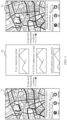
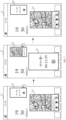
- the user first uses a ride-hailing application to order a vehicle, and at this time the terminal displays a ride-hailing interface 11 in full screen.
- the user switches the ride-hailing application to the background and opens a news application to read news, and at this time the terminal displays a news-reading interface 12 in full screen.
- the user When reading news, if the user wants to check a current location of the vehicle, the user needs to switch the news application to the background and switch the ride-hailing application to the foreground through the multitask-switching function (switching between the foreground and the background may be achieved through a multitask interface), and at this time the terminal displays the ride-hailing interface 11 in full screen again.
- the multitask-switching function switching between the foreground and the background may be achieved through a multitask interface
- Implementations of the disclosure provide a method for application-interface switching.
- the terminal may display a first application-interface with a switching requirement in a first display mode.
- the user can view simultaneously application information in the first application-interface.
- the user may perform an interface-switching operation on the first application-interface to trigger the terminal to switch between display modes of the first and second application-interfaces, so as to display the first application-interface in a region with a larger size, which is convenient for the user to operate on the first application-interface.
- the user may perform an interface-switching operation on the second application-interface to switch again display modes of the first and second application-interfaces. As such, the applications can be switched efficiently.
- the method for application-interface switching provided in the implementation of the disclosure can be used for a terminal with a touch screen.
- the terminal may be a smart phone, a tablet computer, a digital player, a smart wearable device, or a personal computer, etc., which are not limited in implementations of the disclosure.
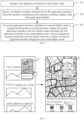
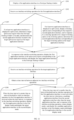
- FIG. 2 is a flowchart of a method for application-interface switching provided in one example implementation of the disclosure.
- the method may include the following.
- Step 201 a first application-interface is displayed in a first display mode.
- the first display mode is a display mode other than a full-screen mode, such as a floating-window mode, a split-screen mode, etc.
- the first application-interface is a real-time application-interface. That is, changes of interface elements in the application will be displayed in the first application-interface in real time. For example, if the first application-interface is a navigation interface, during movement of a navigation object, a display location of the navigation object in a map in the navigation interface will change in real time.
- the terminal displays a ride-hailing interface of a ride-hailing application in a first-type floating window 31.
- a display location and a display size of the first application-interface may be adjusted as needed.
- the user can change the display location of the first application-interface by dragging the first application-interface, and can change the display size of the first application-interface by stretching an interface edge of the first application-interface.
- Step 202 an interface-switching operation for the first application-interface is received, where the interface-switching operation indicates switching a display mode of an application-interface.
- the interface-switching operation may be a preset touch operation such as a single-click operation, a double-click operation, a press operation, a long-press operation, etc.
- the interface-switching operation may be a preset gesture operation.
- the interface-switching operation may be a trigger operation for an interface-switching control corresponding to the first application-interface.
- the type of the interface-switching operation is not limited in implementations of the disclosure.
- the interface-switching operation triggers switching the display mode of the first application-interface. After switching the display mode, the first application-interface has a larger size than before.
- the terminal determines that an interface-switching operation is received.
- Step 203 if a second application-interface is displayed in a second display mode, in response to the interface-switching operation, the second application-interface is displayed in the first display mode and the first application-interface is displayed in the second display mode, where an application-interface displayed in the first display mode has a smaller size than an application-interface displayed in the second display mode.
- the terminal after receiving the interface-switching operation, the terminal checks existence of the second application-interface displayed in the second display mode. If there is the second application-interface displayed in the second display mode, the display mode of the second application-interface and the display mode of the first application-interface are switched. At this point, the second application-interface displayed in the second display mode is in the foreground. That is, before and after switching the display modes, the first and second application-interfaces are displayed at the same time, and the second application-interface has a larger size than the first application-interface.
- the second application-interface needs to support the first display mode, and the first application-interface needs to support the second display mode, which will not be repeated herein.
- the terminal when receiving the double-clicking operation on the ride-hailing interface, determines the news-reading interface displayed in full screen as the second application-interface, and then displays the news-reading interface in the first-type floating window 31 and displays the ride-hailing interface in full screen.
- the user can switch between application-interfaces through a simple interface-switching operation.
- the efficiency of application switching can be improved, and at the same time the problem that the application process being switched may be closed and thus require restart in related arts can be avoided.
- the terminal if there is no second application-interface displayed in the second display mode, the terminal will not respond to the interface-switching operation. For example, if the first application-interface is in the system main interface, that is, no other application is displayed in the foreground, the terminal does not respond to the interface-switching operation. Optionally, if other application-interfaces displayed in the foreground do not support the first display mode, or the first application-interface does not support the second display mode corresponding to the application displayed in the foreground, the terminal will not respond to the interface-switching operation.
- the terminal if there is no second application-interface displayed in the second display mode, the terminal responses in a manner other than switching the display mode. For example, if the first application-interface is in the system main interface, that is, no other application is displayed in the foreground, the terminal will display the first application-interface in full screen according to the interface-switching operation.
- the terminal will display prompt information to indicate to the user under which cases the interface switching can be done through the interface-switching operation.
- the user may trigger the terminal to switch between display modes of the first and the second application-interfaces by performing the interface-switching operation on the first application-interface. In this way, the user can continue to view contents of the second application-interface while viewing the first application-interface in a larger display region, which helps to improve the efficiency of switching between applications in a multi-application usage scenario.
- the second application-interface is displayed in the second display mode
- the second application-interface in response to the interface-switching operation, is displayed in the first display mode and the first application-interface is displayed in the second display mode as follows.
- a target application-interface is determined from the at least one second application-interface.
- the target application-interface is displayed in the first display mode and the first application-interface is displayed in the second display mode.
- the first display mode is a first floating-window mode
- the second display mode includes at least one of a full-screen mode, a second floating-window mode, or a split-screen mode.
- the first floating-window mode an application-interface is displayed in a first-type floating window
- the second floating-window mode an application-interface is displayed in a second-type floating window, where the first-type floating window has a size smaller than the second-type floating window.
- the second display mode is the full-screen mode.
- the target application-interface is determined from the at least one second application-interface as follows. A second application-interface displayed in full screen is determined as the target application-interface.
- the second application-interface is displayed in the first display mode and the first application-interface is displayed in the second display mode as follows.
- the first application-interface is displayed in full screen and the target application-interface is displayed in the first-type floating window.
- the second display mode is the second floating-window mode.
- the target application-interface is determined from the at least one second application-interface as follows. A latest usage moment of an application in each second-type floating window is obtained. A second-type floating window corresponding to a latest usage moment closest to a current time is determined as a target second-type floating window. The second application-interface displayed in the target second-type floating window is determined as the target application-interface.
- a switching option corresponding to each second-type floating window is displayed.
- the second-type floating window corresponding to the target switching option is determined as a target second-type floating window.
- the second application-interface displayed in the target second-type floating window is determined as the target application-interface.
- the second application-interface is displayed in the first display mode and the first application-interface is displayed in the second display mode as follows.
- the first application-interface is displayed in the target second-type floating window and the target application-interface is displayed in the first-type floating window.
- the second display mode comprises the full-screen mode and the second floating-window mode.
- the target application-interface is determined from the at least one second application-interface as follows.
- the second application-interface displayed in full screen is determined as the target application-interface.
- a switching option corresponding to each second application-interface is displayed, and in response to a selecting operation for a target switching option in the switching options, the second application-interface corresponding to the target switching option is determined as the target application-interface.
- the second application-interface is displayed in the first display mode and the first application-interface is displayed in the second display mode as follows.
- the target application-interface being the second application-interface displayed in full screen
- the first application-interface is displayed in full screen and the target application-interface is displayed in the first-type floating window.
- the target application-interface being the second application-interface displayed in the second floating-window mode
- the first application-interface is displayed in the second-type floating window and the target application-interface is displayed in the first-type floating window.
- the second display mode is the split-screen mode.
- the target application-interface is determined from the at least one second application-interface as follows.
- a target split-screen region where the first-type floating window is located is determined.
- the second application-interface located in the target split-screen region is determined as the target application-interface.
- a switching option corresponding to each second application-interface is displayed, and in response to a selecting operation for a target switching option in the switching options, the second application-interface corresponding to the target switching option is determined as the target application-interface.
- the second application-interface is displayed in the first display mode and the first application-interface is displayed in the second display mode as follows.
- the first application-interface is displayed in a split-screen region corresponding to the target application-interface and the target application-interface is displayed in the first-type floating window.
- the method further includes the following.
- An interface-switching operation for the target application-interface is received.
- the first application-interface is displayed in the first display mode and the target application-interface is displayed in the second display mode, if there is no second application-interface other than the target application-interface.
- the method further includes the following. If there is a second application-interface other than the target application-interface, a time interval between two adjacent interface-switching operations is obtained. When the time interval is greater than an interval threshold or when an interface operation for the first application-interface is received within the time interval, in response to the interface-switching operation, the first application-interface is displayed in the first display mode and the target application-interface is displayed in the second display mode.
- a candidate application-interface is determined from the second application-interface other than the target application-interface, and in response to the interface-switching operation, the display modes are restored, and the candidate application-interface displayed in the first display mode and the first application-interface is displayed in the second display mode.
- the terminal determines a target application-interface from the at least one second application-interface. Then in response to the interface-switching operation, the terminal displays the target application-interface in the first display mode and displays the first application-interface in the second display mode, thus achieve switching of the display mode.
- the first display mode of the first application-interface is a first floating-window mode
- the first application-interface is displayed in the first-type floating window.
- an application-interface displayed in a full-screen mode, a second floating-window mode, or a split-screen mode can be regarded as the second application-interface that satisfies an interface-switching condition.
- the application-interface is displayed in a second-type floating window, where the first-type floating window has a smaller size than the second-type floating window.
- the second application-interface displayed in the terminal may include at least one of:
- FIG. 4 is a flowchart of a method for application-interface switching provided in another example implementation of the disclosure.
- the method may include the following.
- Step 401 a first application-interface is displayed in a first-type floating window.
- Step 402 an interface-switching operation for the first application-interface is received.
- steps 401 and 402 For implementations of steps 401 and 402, reference may be made to steps 201 and 202, which will not be repeated herein.
- Step 403 if a second application-interface is displayed in full screen, the second application-interface is determined as a target application-interface.
- the terminal When the first application-interface is displayed, if there is a full-screen application (that is, an application corresponding to the second application-interface), the terminal will determine the second application-interface as the target application-interface that satisfies the interface-switching condition, and then switch the display modes of the first application-interface and the second application-interface.
- a full-screen application that is, an application corresponding to the second application-interface
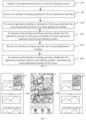
- the terminal displays a ride-hailing interface of a ride-hailing application in a first-type floating window 51, and at the same time displays a news-reading interface of a news application in full screen.
- the terminal determines the news-reading interface as the target application-interface.
- Step 404 in response to the interface-switching operation, the first application-interface is displayed in full screen and the target application-interface is displayed in the first-type floating window.
- the terminal When switching the display modes of the first application-interface and the target application-interface, the terminal displays the first application-interface in full screen, and displays the target application-interface in the first-type floating window. After switching the display modes, the user can perform an in-app operation on the first application-interface displayed in full screen, and at the same time can view contents of the target application-interface in the first-type floating window.
- the terminal after receiving the double-click operation on the first-type floating window 51, the terminal displays the ride-hailing interface in full screen, and display the news-reading interface in the first-type floating window 51.
- the user may need to switch interfaces again so as to continue an in-app operation on the target application-interface.
- the user may perform an interface-switching operation on the target application-interface in the first display mode, to trigger another switching of the application-interface.
- the terminal when receiving a double-click operation on the news-reading interface in the first-type floating window 51, the terminal determines that the display modes of the ride-hailing interface and the news-reading interface need to be switched again.
- Step 406 in response to the interface-switching operation, the first application-interface is displayed in the first-type floating window, and the target application-interface is displayed in full screen.
- the terminal determines that the interface-switching operation is intended to switch the display modes of the first application-interface and the target application-interface.
- the terminal displays the first application-interface on the first-type floating window, and displays the target application-interface in full screen.
- the terminal after receiving the double-click operation on the first-type floating window 51, the terminal redisplays the ride-hailing interface in the first-type floating window 51, and redisplays the news-reading interface in full screen.
- the user can toggle between the display modes of the full-screen application and the application in the first-type floating window, which improves the efficiency of switching between applications.
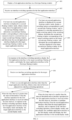
- FIG. 6 is a flowchart of a method for application-interface switching provided in another example implementation of the disclosure.
- the method may include the following.
- Step 601 a first application-interface is displayed in a first-type floating window.
- Step 602 an interface-switching operation for the first application-interface is received.
- steps 601 and 602 For implementations of steps 601 and 602, reference may be made to steps 201 and 202, which will not be repeated herein.
- Step 603 if at least one second application-interface is displayed in a second floating-window mode, a latest usage moment of an application in each second-type floating window is obtained.
- a second-type floating window corresponding to a latest usage moment closest to a current time is determined as a target second-type floating window.
- the second application-interface displayed in the target second-type floating window is determined as the target application-interface.
- the terminal determines that there is a second application-interface that satisfies the interface-switching condition. Further, if there is one second-type floating window, the terminal determines the second application-interface displayed in the second-type floating window as the target application-interface, and if there are at least two second-type floating windows, according to a preset interface-switching logic, the terminal determines the target application-interface from the second application-interfaces displayed in the at least two second-type floating windows.
- a first-type floating window 72 and a second-type floating window 73 are displayed over a system main interface 71, where a recording interface of a recording application is displayed in the first-type floating window 72, and a ride-hailing interface of a ride-hailing application is displayed in the second-type floating window 73.
- the terminal determines the ride-hailing interface as the target application-interface.
- the current time is 10:00:00. If there are two second-type floating windows displayed over the system main interface, and the latest usage moments of the corresponding applications are 9:59:50 and 9:58:00, the terminal determines the floating-window application with the latest usage moment 9:59:50 as the target application (the application-interface corresponding to the target application is the target application-interface).
- Step 604 if at least one second application-interface is displayed in a second-type floating window, a switching option corresponding to each second-type floating window is displayed, and in response to a selecting operation for a target switching option in the switching options, the second-type floating window corresponding to the target switching option is determined as the target second-type floating window, and the second application-interface displayed in the target second-type floating window is determined as the target application-interface.
- the terminal displays a switching option(s) each corresponding to a second-type floating window (i.e., each second application-interface).
- the switching option may be displayed at an edge of the first-type floating window.
- the switching option may be in the form of a control such as a button. The form and position of the displayed switching option are not limited in implementations of the disclosure.
- the terminal when receiving a selecting operation for the target switching option in the at least one switching option, determines the second-type floating window corresponding to the target switching option as the target second-type floating window.
- a first-type floating window 82, a second-type floating window 83, and a second-type floating window 84 are displayed over a system main interface 81, where a recording interface of a recording application is displayed in the first-type floating window 82, a ride-hailing interface of a ride-hailing application is displayed in the second-type floating window 83, and a navigation interface of a navigation application is displayed in the second-type floating window 84.
- the terminal displays a first switching option 85 corresponding to the navigation application and a second switching option 86 corresponding to the ride-hailing application on the left side of the first-type floating window 82. Further, when receiving a click operation on the second switching option 86, the terminal determines the ride-hailing application as the target application.
- the terminal may also determine the target application according to a historical application-switching record between the first application (the application to which the first application-interface corresponds) and each second application (the second application to which the second application-interface corresponds).
- a second application with the highest frequency of switching with the first application in the historical application-switching record is determined as the target application.
- a second application associated with the first application is determined as the target application.
- the target application-interface is determined based on the target application.
- Step 605 in response to the interface-switching operation, the first application-interface is displayed in the target second-type floating window, and the target application-interface is displayed in the first-type floating window.
- Step 606 an interface-switching operation for the target application-interface is received.
- step 606 reference may be made to step 405 above, which will not be repeated herein.
- the interface-switching operation on the first-type floating windows may also instruct to switch to the display mode of another second-type floating window. Therefore, when there are at least two second-type floating windows, after receiving the switching operation for the first-type floating window, the terminal needs to further determine an intention of the interface-switching operation.
- Step 607 if there is a second application-interface other than the target application-interface, a time interval between two adjacent interface-switching operations is obtained.
- the terminal may determine the time interval between two adjacent interface-switching operations, and then determine the actual intention of the interface-switching operation according to the length of the time interval and the user operation on the first application-interface within the time interval.
- the terminal records the time of the interface-switching operation.
- the terminal determines the time interval from the last interface-switching operation.
- the terminal detects whether the time interval is greater than an interval threshold, and detects whether an interface operation on the first application-interface is received within the time interval. If the time interval is greater than the interval threshold, or an interface operation on the first application-interface is received within the time interval, proceeds to the following step 608. If the time interval is less than the interval threshold, and no operation for the first application-interface is received within the time interval, proceeds to the following step 609.
- the terminal determines that the interface-switching operation received this time is intended for restoring the display modes of the first application-interface and the target application-interface, so the terminal redisplays the first application-interface in the first-type floating window and redisplays the target application-interface in the second-type floating window.
- the interval threshold may be 5s, 10s, 15s, etc., which is not limited herein.
- a first-type floating window 82, a second-type floating window 83, and a second-type floating window 84 are displayed over a system main interface 81, where a recording interface of a recording application is displayed in the first-type floating window 82, a ride-hailing interface of a ride-hailing application is displayed in the second-type floating window 83, and a navigation interface of a navigation application is displayed in the second-type floating window 84.
- the terminal determines the ride-hailing application as the target application, and then displays the ride-hailing application in the first-type floating window 82 and displays the recording interface in the second-type floating window 83.
- Step 609 when the time interval is smaller than the interval threshold and no interface operation for the first application-interface is received within the time interval, a candidate application-interface is determined from the second application-interface other than the target application-interface, and in response to the interface-switching operation, display modes are restored, and then the candidate application-interface is displayed in the first display mode and the first application-interface is displayed in the second display mode.
- the terminal determines that the interface-switching operation received this time is for triggering to switch again the display mode.
- the terminal determines the candidate application-interface from the second application-interface other than the target application-interface, and restores to the original display modes (which can be realized by canceling the response to the last interface-switching operation). Thereafter, the terminal displays the first application-interface in the second-type floating window corresponding to the candidate application-interface, and displays the candidate application-interface in the first-type floating window.
- the terminal determines to restore the original display modes or switch the display modes again according to the time interval and the interface operation on the first application within the time interval, which further improves the accuracy of the interface switching.
- FIG. 10 is a flowchart of a method for application-interface switching provided in another example implementation of the disclosure.
- the method may include the following.
- Step 1001 a first application-interface is displayed in a first-type floating window.
- Step 1002 an interface-switching operation for the first application-interface is received.
- steps 1001 and 1002 For implementations of the steps 1001 and 1002, reference may be made to steps 201 and 202, which will not be repeated herein.
- Step 1003 if a second application-interface is displayed in full screen and at least one second application-interface is displayed in a second-type floating window, the second application-interface display in full screen is determined as a target application-interface.
- the terminal determines the full-screen application as a default application for interface-switching with the application in the first-type floating window. Therefore, when the full-screen application and the at least one application displayed in the second-type floating window are displayed, the terminal preferentially determines the full-screen application as the target application.
- the terminal may also determine the application displayed in the second-type floating window as the default application for interface switching with the application in the first-type floating window.
- the terminal preferentially determines the target application from the applications displayed in the second-type floating windows (for the method of determining the target application, reference may be made to the above).
- Step 1004 if the second application-interface is displayed in full screen and the at least one second application-interface is displayed in the second-type floating window, switching options each corresponding to the respective second application-interface are displayed, and in response to a selecting operation for a target switching option in the switching options, the second application-interface corresponding to the target switching option is determined as the target application-interface.
- the terminal displays the switching options each corresponding to the respective application.
- the switching options may be displayed at an edge of the first-type floating window, and the switching options may be in the form of a control such as a button.
- the form and position of the displayed switching options are not limited in implementations of the disclosure.
- the terminal when receiving the selecting operation for the target switching option in the at least one switching option, determines the application corresponding to the target switching option as the target application.
- the target application may be a full-screen application or a floating window application.
- the terminal may also determine the target application according to a historical application-switching record between the first application and each second application.
- the second application with the highest frequency of switching with the first application in the historical application-switching record is determined as the target application.
- the second application associated with the first application is determined as the target application.
- the target application-interface is determined based on the target application.
- the manner of determining the target application is not limited herein.
- Step 1005 in response to the target application-interface being the second application-interface displayed in full screen, the first application-interface is displayed in full screen, and the target application-interface is displayed in the first-type floating window.
- the terminal When the determined target application is the full-screen application, the terminal displays the first application-interface in full screen, and displays the target application-interface in the first-type floating window.
- the manner of switching display modes may refer to FIG. 5 .
- Step 1006 in response to the target application-interface being the second application-interface displayed in the second-type floating window, the first application-interface is displayed in the second-type floating window, and the target application-interface is displayed in the first-type floating window.
- the terminal displays the first application-interface in the second-type floating window, and displays the target application-interface in the first-type floating window.
- the manner of switching display modes may refer to FIG. 7 .
- Step 1007 an interface-switching operation for the target application-interface is received.
- step 1007 reference may be made to the step 405 above, which will not be repeated herein.
- the interface-switching operation on the target application-interface may be intended for restore the original display modes or switching with another second application-interface, so that the terminal needs to further determine the intention of the interface-switching operation.
- Step 1008 a time interval between two adjacent interface-switching operations is obtained.
- step 1007 For implementations of step 1007, reference may be made to step 607 above, which will not be repeated herein.
- Step 1009 when the time interval is greater than an interval threshold or when an interface operation for the first application-interface is received within the time interval, in response to the interface-switching operation, the first application-interface is displayed in the first display mode and the target application-interface is displayed in the second display mode.
- Step 1010 when the time interval is smaller than the interval threshold and no interface operation for the first application-interface is received within the time interval, a candidate application-interface is determined from the second application-interface other than the target application-interface, and in response to the interface-switching operation, display modes are restored, and then the candidate application-interface is displayed in the first display mode and the first application-interface is displayed in the second display mode.
- the terminal cancels the response for the last interface-switching operation, and switches between the display modes of the first application-interface and the candidate application-interface.
- the terminal displays a full-screen application 1101, a first-type floating window 1102, and a second-type floating window 1103, where the full-screen application 1101 is a ride-hailing application, a recording interface of a recording application is displayed in the first-type floating window 1102, and a navigation interface of the navigation application is displayed in the second-type floating window 1103.
- the terminal determines the full-screen application 1101 as the target application, thereby displaying the ride-hailing interface in the first-type floating window 1102 and displaying the recording interface in full-screen.
- the terminal cancels the last interface-switching operation, and displays the recording interface in the second-type floating window 1103 and displays the navigation interface in the first-type floating window 1102.
- FIG. 12 is a flowchart of a method for application-interface switching provided in another example implementation of the disclosure.
- the method may include the following.
- Step 1201 a first application-interface is displayed in a first-type floating window.
- Step 1202 an interface-switching operation for the first application-interface is received.
- steps 1201 and 1202 For implementations of steps 1201 and 1202, reference may be made to steps 201 and 202, which will not be repeated herein.
- Step 1203 if at least two application-interfaces is displayed in split screen, a target split-screen region where the first-type floating window is located is determined, and the second application-interface located in the target split-screen region is determined as the target application-interface.
- the terminal obtains a current display region of the first-type floating window, so as to determine the target split-screen region where the first-type floating window is located according to the current display region and the range of each split-screen region, and then determine the second application-interface located in the target split-screen region as the target application.
- An intersection of the first-type floating window and the target split-screen region is larger than an intersection of the first-type floating window and each of other split-screen regions.
- the terminal determines a split-screen region other than the split-screen region where the first-type floating window is located as the target split-screen region.
- the terminal displays a first split-screen application 1301 and a second split-screen application 1302 in split screen, and displays a recording application in the first-type floating window 1303.
- the first split-screen application 1301 is a ride-hailing application
- the second split-screen application 1302 is a news-reading application.
- the terminal determines the split-screen region corresponding to the second split-screen application 1302 as the target split-screen region, so as to avoid blocking the recording interface after subsequent interface switching.
- Step 1204 if at least two application-interfaces is displayed in split screen, switching options each corresponding to the respective second application-interface is displayed, and in response to a selecting operation for a target switching option in the switching options, the second application-interface corresponding to the target switching option is determined as the target application-interface.
- the terminal displays switching options each corresponding to a split-screen application (corresponding to the second application-interface).
- the switching options may be displayed at an edge of the first-type floating window, and the switching options may be in the form of a control such as a button.
- the form and position of the displayed switching option are not limited in implementations of the disclosure.
- the terminal when receiving a selecting operation for the target switching option in the at least one switching option, determines the split-screen application corresponding to the target switching option as the target application.
- the second application-interface corresponding to the target application is the target application-interface.
- the terminal may also determine the split-screen region with the largest size as the target split-screen region according to the sizes of the split-screen regions.
- the terminal may also determine the target application according to a historical application-switching record between the first application and each split-screen application.
- the split-screen application with the highest frequency of switching with the first application in the historical application-switching record is determined as the target application.
- the split-screen application associated with the first application is determined as the target application.
- the split-screen application most recently-used may be determined as the target application.
- the manner of determining the target application is not limited herein.
- Step 1205 in response to the interface-switching operation, the first application-interface is displayed in the split-screen region corresponding to the target application-interface and the target application-interface is displayed in the first-type floating window.
- the terminal displays the recording interface in the original split-screen region corresponding to the second split-screen application 1302, and displays the news-reading interface in the first-type floating window 1303.
- the first application exemplarily supports to be displayed in split screen. If the first application cannot be displayed in split screen, the terminal will not respond to the interface-switching operation.
- Step 1206 an interface-switching operation for the target application-interface is received.
- Step 1207 a time interval between two adjacent interface-switching operations is obtained.
- the terminal since there are at least two split-screen applications, the terminal needs to further determine an intention of the interface-switching operation.
- Step 1208 when the time interval is greater than an interval threshold or when an interface operation for the first application-interface is received within the time interval, in response to the interface-switching operation, the first application-interface is displayed in the first display mode and the target application-interface is displayed in the second display mode.
- the terminal redisplays the first application-interface in the first-type floating window, and redisplays the target application-interface in the original split-screen region of the target application-interface.
- Step 1209 when the time interval is smaller than the interval threshold and no interface operation for the first application-interface is received within the time interval, a candidate application-interface is determined from the second application-interface other than the target application-interface, and in response to the interface-switching operation, display modes are restored, and the candidate application-interface is displayed in the first display mode and the first application-interface is displayed in the second display mode.
- the terminal cancels the last response to the interface-switching operation, displays the first application-interface in the split-screen region corresponding to the candidate application-interface, and displays the candidate application-interface in the first-type floating window.
- the terminal achieves interface switching with reference to the above principles, which will not be repeated herein.
- FIG. 14 is a schematic block diagram of an apparatus for application-interface switching provided in one implementation of the disclosure.
- the apparatus can be implemented as all or a part of a terminal through software, hardware or a combination thereof.
- the apparatus includes a display module 1401, an operation-receiving module 1402, and a switching module 1403.
- the display module 1401 is configured to display a first application-interface in a first display mode.
- the operation-receiving module 1402 is configured to receive an interface-switching operation for the first application-interface, where the interface-switching operation indicates switching a display mode of an application-interface.
- the switching module 1403 is configured to: if a second application-interface is displayed in a second display mode, in response to the interface-switching operation, display the second application-interface in the first display mode and display the first application-interface in the second display mode, where an application-interface displayed in the first display mode has a smaller size than an application-interface displayed in the second display mode.
- the switching module 1403 includes an application-determining unit and a switching unit.
- the application-determining unit is configured to determine, if at least one second application-interface is displayed in the second display mode, a target application-interface from the at least one second application-interface.
- the switching unit configured to display the target application-interface in the first display mode and display the first application-interface in the second display mode, in response to the interface-switching operation.
- the first display mode is a first floating-window mode
- the second display mode includes at least one of a full-screen mode, a second floating-window mode, or a split-screen mode.
- the first floating-window mode an application-interface is displayed in a first-type floating window
- the second floating-window mode an application-interface is displayed in a second-type floating window, where the first-type floating window has a size smaller than the second-type floating window.
- the second display mode is the full-screen mode.
- the application-determining unit is configured to determine a second application-interface displayed in full screen as the target application-interface.
- the switching unit is configured to display the first application-interface in full screen and display the target application-interface in the first-type floating window.
- the second display mode is the second floating-window mode.
- the application-determining unit is configured to: obtain a latest usage moment of an application in each second-type floating window; determine a second-type floating window corresponding to a latest usage moment closest to a current time as a target second-type floating window; and determine the second application-interface displayed in the target second-type floating window as the target application-interface.
- the application-determining unit is configured to: display a switching option corresponding to each second-type floating window; in response to a selecting operation for a target switching option in at least one switching option, determine the second-type floating window corresponding to the target switching option as a target second-type floating window; and determine the second application-interface displayed in the target second-type floating window as the target application-interface.
- the switching unit is configured to: display the first application-interface in the target second-type floating window and display the target application-interface in the first-type floating window.
- the second display mode comprises the full-screen mode and the second floating-window mode.
- the application-determining unit is configured to: determine the second application-interface displayed in full screen as the target application-interface; or display a switching option corresponding to each second application-interface, and in response to a selecting operation for a target switching option in the switching options, determine the second application-interface corresponding to the target switching option as the target application-interface.
- the switching unit is configured to: in response to the target application-interface being the second application-interface displayed in full screen, display the first application-interface in full screen and displaying the target application-interface in the first-type floating window; and in response to the target application-interface being the second application-interface displayed in the second floating-window mode, display the first application-interface in the second-type floating window and display the target application-interface in the first-type floating window.
- the second display mode is the split-screen mode.
- the application-determining unit is configured to: determine a target split-screen region where the first-type floating window is located; and determine the second application-interface located in the target split-screen region as the target application-interface.
- the application-determining unit is configured to: display a switching option corresponding to each second-type floating window; in response to a selecting operation for a target switching option in at least one switching option, determine the second-type floating window corresponding to the target switching option as a target second-type floating window; and determine the second application-interface displayed in the target second-type floating window as the target application-interface.
- the switching unit is configured to display the first application-interface in the target second-type floating window and display the target application-interface in the first-type floating window.
- the operation-receiving module 1402 is configured to receive an interface-switching operation for the target application-interface.
- the apparatus further comprises a restoring module configured to in response to the interface-switching operation, display the first application-interface in the first display mode and display the target application-interface in the second display mode, if there is no second application-interface other than the target application-interface.
- the apparatus further includes an interval-obtaining module configured to obtain a time interval between adjacent two interface-switching operations if there is a second application-interface other than the target application-interface.
- the restoring module is further configured to when the time interval is greater than an interval threshold or when an interface operation for the first application-interface is received within the time interval, in response to the interface-switching operation, display the first application-interface in the first display mode and display the target application-interface in the second display mode.
- the switching module 1403 is further configured to when the time interval is smaller than the interval threshold and no interface operation for the first application-interface is received within the time interval, determining a candidate application-interface from the second application-interface other than the target application-interface, and in response to the interface-switching operation, restore the display modes, and display the candidate application-interface in the first display mode and display the first application-interface in the second display mode.
- the user may trigger the terminal to switch the display modes of the first and second application-interfaces, by performing the interface-switching operation on the first application-interface, so that the user can continue to view content of the second application-interface while viewing the first application-interface in a larger display region, which helps to improve the efficiency of switching between applications in a multi-application usage scenario.
- FIG. 15 is a schematic block diagram of a terminal provided in one implementation of the disclosure.
- the terminal in this disclosure may include one or more of the following components: a processor 1510 and a memory 1520.
- the processor 1510 may include one or more processing cores.
- the processor 1510 uses various interfaces and lines to connect various parts in the terminal, and executes various functions of the terminal and processes data by running or executing instructions, programs, code sets or instruction sets stored in the memory 1520 and calling data stored in the memory 1520.
- the processor 1510 may employ at least one hardware form of a digital signal processing (DSP), a field-programmable gate array (FPGA), and a programmable logic array (PLA).
- DSP digital signal processing
- FPGA field-programmable gate array
- PDA programmable logic array
- the processor 1510 may integrate one or more of a central processing unit (CPU), a graphics processing unit (GPU), a neural-network processing unit (NPU), a modem, and the like.
- the CPU mainly handles the operating system, user interface, and applications.
- the GPU is used to render and draw the content that needs to be displayed on the touch screen.
- the NPU is used to implement artificial intelligence (AI) functions.
- the modem is used to process wireless communication. It can be understood that, the above-mentioned modem may not be integrated into the processor 1510, and can be implemented by a single chip.
- the memory 1520 may include a random access memory (RAM), or may include a read-only memory (ROM). Optionally, the memory 1520 includes a non-transitory computer-readable storage medium.
- the memory 1520 may be used to store instructions, programs, codes, sets of codes, or sets of instructions.
- the memory 1520 may include a stored-program area and a stored-data area, where the stored-program area may store instructions for implementing an operating system, instructions for at least one function (such as a touch function, a sound playback function, an image playback function, etc.), instructions for implementing the various method implementations, and the like.
- the storage-data area may store data (such as audio data, phone book) and the like created according to the use of the terminal.
- the terminal in implementations of the disclosure further includes a display screen 1530.
- the display screen 1530 is used for image display, which may be a full screen, a special-shaped screen, a curved screen, a folding screen, or a double-sided screen, which is not limited herein.
- the display screen 1530 may also have a touch function, and the user may perform touch operations on elements in the interface with a finger or a stylus.
- the structure of the terminal illustrated in the drawings does not constitute a limitation on the terminal, and the terminal may include more or less components than illustrated, or combine certain components, or have a different component arrangement.
- the terminal also includes components such as a radio frequency (RF) circuit, an input unit, a sensor, an audio circuit, a speaker, a microphone, and a power supply, which will not be repeated herein.
- RF radio frequency
- a computer-readable storage medium is further provided in implementations of the disclosure.
- the computer-readable storage medium stores at least one instruction, where the at least one instruction is configured to be executed by a processor to carry out the method of the above aspect.
- a computer program product or a computer program is further provided in implementations of the disclosure.
- the computer program product or the computer program includes computer instructions stored in a computer-readable storage medium.
- a processor of a computer device reads the computer instructions from the computer-readable storage medium and processes the computer instructions to cause a computer device to carry out the method of the above aspect.
- the functions described in implementations of the disclosure may be implemented by hardware, software, firmware, or any combination thereof.
- the functions may be stored on or transmitted over as one or more instructions or code on a computer-readable medium.
- the computer-readable medium includes both a computer storage medium and communication medium including any medium that facilitates transfer of a computer program from one place to another.
- a storage medium can be any available medium that can be accessed by a general purpose or special purpose computer.
Landscapes
- Engineering & Computer Science (AREA)
- Theoretical Computer Science (AREA)
- General Engineering & Computer Science (AREA)
- Human Computer Interaction (AREA)
- Physics & Mathematics (AREA)
- General Physics & Mathematics (AREA)
- Software Systems (AREA)
- User Interface Of Digital Computer (AREA)
- Digital Computer Display Output (AREA)
Abstract
Description
- This application claims priority to
Chinese Patent Application No. 202010719533.0, filed July 23, 2020 - This application relates to the field of terminal technology, and in particular to a method and an apparatus for application-interface switching, a terminal, and a storage medium.
- With the development of terminal technologies, more and more applications are installed in terminals. When using the applications, a user usually needs to switch between the applications.
- For example, the user first uses a ride-hailing application to order a vehicle, and while waiting for the vehicle to arrive, the user switches to browse a news application. During browsing, the news application is in the foreground, while the ride-hailing application is switched to the background. When the user wants to check a specific location of the vehicle, the user needs to switch the ride-hailing application to the foreground and switch the news application to the background again.
- Implementations of the disclosure provide a method and apparatus for application-interface switching, a terminal, and a storage medium. The technical solution is as follows.
- In one aspect, a method for application-interface switching is provided in implementations of the disclosure. The method includes the following. A first application-interface is displayed in a first display mode. An interface-switching operation for the first application-interface is received, where the interface-switching operation indicates switching a display mode of an application-interface. When a second application-interface is displayed in a second display mode, in response to the interface-switching operation, the second application-interface is displayed in the first display mode and the first application-interface is displayed in the second display mode, where an application-interface displayed in the first display mode has a smaller size than an application-interface displayed in the second display mode.
- In another aspect, an apparatus for application-interface switching is provided in implementations of the disclosure. The apparatus includes a display module, an operation-receiving module, and a switching module. The display module is configured to display a first application-interface in a first display mode. The operation-receiving module is configured to receive an interface-switching operation for the first application-interface, where the interface-switching operation indicates switching a display mode of an application-interface. The switching module is configured to: if a second application-interface is displayed in a second display mode, in response to the interface-switching operation, display the second application-interface in the first display mode and display the first application-interface in the second display mode, wherein an application-interface displayed in the first display mode has a smaller size than an application-interface displayed in the second display mode.
- In another aspect, a terminal is provided in implementations of the disclosure. The terminal includes a processor and a memory storing at least one instruction, where the at least one instruction is configured to be executed by the processor to carry out the method of the above aspect.
- In another aspect, a computer-readable storage medium is provided in implementations of the disclosure. The computer-readable storage medium stores at least one instruction, where the at least one instruction is configured to be executed by a processor to carry out the method of the above aspect.
- In another aspect, a computer program product or a computer program is provided in implementations of the disclosure. The computer program product or the computer program includes computer instructions stored in a computer-readable storage medium. A processor of a computer device reads the computer instructions from the computer-readable storage medium and processes the computer instructions to cause a computer device to carry out the method of the above aspect.
-
-
FIG. 1 is a schematic diagram illustrating interfaces during application switching in related arts. -
FIG. 2 is a flowchart of a method for application-interface switching provided in one example implementation of the disclosure. -
FIG. 3 is a schematic diagram illustrating interfaces during application-interface switching in another example implementation of the disclosure. -
FIG. 4 is a flowchart of a method for application-interface switching provided in another example implementation of the disclosure. -
FIG. 5 is a schematic diagram illustrating interfaces during application-interface switching in another example implementation of the method for application-interface switching illustrated inFIG. 4 . -
FIG. 6 is a flowchart of a method for application-interface switching provided in another example implementation of the disclosure. -
FIG. 7 to FIG. 9 are schematic diagrams illustrating interfaces during application-interface switching in example implementations of the method for application-interface switching illustrated inFIG. 4 . -
FIG. 10 is a flowchart of a method for application-interface switching provided in another example implementation of the disclosure. -
FIG. 11 is a schematic diagram illustrating interfaces during application-interface switching in another example implementation of the method for application-interface switching illustrated inFIG. 10 . -
FIG. 12 is a flowchart of a method for application-interface switching provided in another example implementation of the disclosure. -
FIG. 13 is a schematic diagram illustrating interfaces during application-interface switching in another example implementation of the method for application-interface switching illustrated inFIG. 12 . -
FIG. 14 is a schematic block diagram of an apparatus for application-interface switching provided in one implementation of the disclosure. -
FIG. 15 is a schematic block diagram of a terminal provided in one implementation of the disclosure. - In order to make the objectives, technical solutions and advantages of the disclosure clearer, implementations of the disclosure will be further described in detail below with reference to the accompanying drawings.
- As used herein, the term "a plurality" refers to two or more. The term "and/or" describes an association relationship of the associated objects and means that there can be three kinds of relationships, for example, A and/or B can mean that A exists alone, A and B exist at the same time, and B exists alone. The character "j" generally indicates that the associated objects are an "or" relationship.
- For ease of understanding, terms involved in the implementations of the disclosure will be described first.
- First-type floating window: a type of floating window for displaying an application-interface. Optionally, the application-interface displayed in the first-type floating window is a downscaled application-interface, in which all interface elements of the application-interface are contained. Optionally, a core interface element(s) is displayed in the first-type floating window, where the core interface element is pre-configured by the application.
- For example, for a ride-hailing application, a terminal downscales a ride-hailing interface displayed in full screen, so as to display the downscaled ride-hailing interface in the first-type floating window. For a recording application, the terminal extracts a recording time and a recording control (that is, core interface elements) in a recording-interface, so as to display only the recording time and the recording control in the first-type floating window.
- Since this type of floating window generally has a small default size, in some possible implementations, the first-type floating window is only used for displaying the application-interface, and cannot respond to an in-application (in-app) operation(s) on the displayed application-interface. In other possible implementations, in addition to displaying the application-interface, the first-type floating window can also respond to the in-app operations. For example, when the first-type floating window displays the core interface element of the application-interface, a touch operation for the core interface element can be responded.
- In some implementations, the first-type floating window may be displayed on a system main interface, an upper layer of a full-screen application-interface, or an upper layer of a split-screen application-interface. Two or more first-type floating windows can be displayed at the same time. In addition, the first-type floating window can be moved or scaled, that is, a user can adjust a display location or a display size of the first-type floating window as needed.
- Second-type floating window: a type of floating window for displaying an application-interface. Compared to the first-type floating window, the second-type floating window has a larger default size. Optionally, in addition to displaying the application-interface, the second-type floating window can also respond to the in-app operations on the displayed application-interface. For example, when the second-type floating window displays a news-reading interface of a news application, the user may slide up or down the news-reading interface through a sliding operation. When the second-type floating window displays a recording interface of a recording application, the user may control a recording process by clicking a recording control in the recording interface. Optionally, the application-interface displayed in the second-type floating window is a downscaled application-interface.
- In some implementations, the second-type floating window may be displayed on a system main interface, an upper layer of a full-screen application-interface, or an upper layer of a split-screen application-interface. Two or more second-type floating windows can be displayed at the same time. In implementations of the disclosure, the first-type floating window and the second-type floating window can be displayed at the same time. In addition, the second-type floating window can be moved or scaled, that is, the user may adjust a display location or a display size of the second-type floating window as needed.
- In related arts, switching between multiple applications are achieved through a multitask-switching function. For example, as illustrated in
FIG. 1 , the user first uses a ride-hailing application to order a vehicle, and at this time the terminal displays a ride-hailinginterface 11 in full screen. When waiting for the vehicle to arrive, the user switches the ride-hailing application to the background and opens a news application to read news, and at this time the terminal displays a news-readinginterface 12 in full screen. When reading news, if the user wants to check a current location of the vehicle, the user needs to switch the news application to the background and switch the ride-hailing application to the foreground through the multitask-switching function (switching between the foreground and the background may be achieved through a multitask interface), and at this time the terminal displays the ride-hailinginterface 11 in full screen again. - Apparently, when switching between applications are achieved in the above manner, since the terminal can only display the application-interface of a single application in full screen at a time, the user cannot view application information in application-interfaces before and after the switching at the same time. Therefore, it is necessary to frequently switch between foreground and background applications, causing a low application-switching efficiency.
- Implementations of the disclosure provide a method for application-interface switching. With this method, the terminal may display a first application-interface with a switching requirement in a first display mode. When operates on a second application-interface (displayed in a second display mode), the user can view simultaneously application information in the first application-interface. If the user needs to perform in-app operation on the first application-interface, the user may perform an interface-switching operation on the first application-interface to trigger the terminal to switch between display modes of the first and second application-interfaces, so as to display the first application-interface in a region with a larger size, which is convenient for the user to operate on the first application-interface. Meanwhile, since the second application-interface is displayed in the first display mode, after operations on the first application-interface are completed, the user may perform an interface-switching operation on the second application-interface to switch again display modes of the first and second application-interfaces. As such, the applications can be switched efficiently.
- The method for application-interface switching provided in the implementation of the disclosure can be used for a terminal with a touch screen. The terminal may be a smart phone, a tablet computer, a digital player, a smart wearable device, or a personal computer, etc., which are not limited in implementations of the disclosure.
- Referring to
FIG. 2, FIG. 2 is a flowchart of a method for application-interface switching provided in one example implementation of the disclosure. The method may include the following. -
Step 201, a first application-interface is displayed in a first display mode. - In some implementations, the first display mode is a display mode other than a full-screen mode, such as a floating-window mode, a split-screen mode, etc.
- In implementations of the disclosure, the first application-interface is a real-time application-interface. That is, changes of interface elements in the application will be displayed in the first application-interface in real time. For example, if the first application-interface is a navigation interface, during movement of a navigation object, a display location of the navigation object in a map in the navigation interface will change in real time.
- Exemplarily, as illustrated in
FIG. 3 , the terminal displays a ride-hailing interface of a ride-hailing application in a first-type floating window 31. - It should be noted that, a display location and a display size of the first application-interface may be adjusted as needed. For example, the user can change the display location of the first application-interface by dragging the first application-interface, and can change the display size of the first application-interface by stretching an interface edge of the first application-interface.
-
Step 202, an interface-switching operation for the first application-interface is received, where the interface-switching operation indicates switching a display mode of an application-interface. - Optionally, the interface-switching operation may be a preset touch operation such as a single-click operation, a double-click operation, a press operation, a long-press operation, etc. Optionally, the interface-switching operation may be a preset gesture operation. Optionally, the interface-switching operation may be a trigger operation for an interface-switching control corresponding to the first application-interface. The type of the interface-switching operation is not limited in implementations of the disclosure.
- In implementations of the disclosure, the interface-switching operation triggers switching the display mode of the first application-interface. After switching the display mode, the first application-interface has a larger size than before.
- Exemplarily, as illustrated in
FIG. 3 , when a double-click operation on the ride-hailing interface in the first-type floating window 31 is received, the terminal determines that an interface-switching operation is received. -
Step 203, if a second application-interface is displayed in a second display mode, in response to the interface-switching operation, the second application-interface is displayed in the first display mode and the first application-interface is displayed in the second display mode, where an application-interface displayed in the first display mode has a smaller size than an application-interface displayed in the second display mode. - In a possible implementation, after receiving the interface-switching operation, the terminal checks existence of the second application-interface displayed in the second display mode. If there is the second application-interface displayed in the second display mode, the display mode of the second application-interface and the display mode of the first application-interface are switched. At this point, the second application-interface displayed in the second display mode is in the foreground. That is, before and after switching the display modes, the first and second application-interfaces are displayed at the same time, and the second application-interface has a larger size than the first application-interface.
- The second application-interface needs to support the first display mode, and the first application-interface needs to support the second display mode, which will not be repeated herein.
- Regarding the manner of switching the first application-interface and the second application-interface, in some implementations, the terminal obtains an original display region of the second application-interface, so as to display the first application-interface in the original display region of the second application-interface, and displays the second application-interface in an original display region of the first application-interface.
- Exemplarily, as illustrated in
FIG. 3 , when receiving the double-clicking operation on the ride-hailing interface, the terminal determines the news-reading interface displayed in full screen as the second application-interface, and then displays the news-reading interface in the first-type floating window 31 and displays the ride-hailing interface in full screen. - As can be seen, with the solution provided in implementations of the disclosure, the user can switch between application-interfaces through a simple interface-switching operation. In this way, the efficiency of application switching can be improved, and at the same time the problem that the application process being switched may be closed and thus require restart in related arts can be avoided.
- In a possible implementation, if there is no second application-interface displayed in the second display mode, the terminal will not respond to the interface-switching operation. For example, if the first application-interface is in the system main interface, that is, no other application is displayed in the foreground, the terminal does not respond to the interface-switching operation. Optionally, if other application-interfaces displayed in the foreground do not support the first display mode, or the first application-interface does not support the second display mode corresponding to the application displayed in the foreground, the terminal will not respond to the interface-switching operation.
- In other possible implementations, if there is no second application-interface displayed in the second display mode, the terminal responses in a manner other than switching the display mode. For example, if the first application-interface is in the system main interface, that is, no other application is displayed in the foreground, the terminal will display the first application-interface in full screen according to the interface-switching operation.
- Optionally, if there is no second application-interface displayed in the second display mode, the terminal will display prompt information to indicate to the user under which cases the interface switching can be done through the interface-switching operation.
- In summary, in implementations of the disclosure, when the first application-interface is displayed, if there is the second application-interface displayed in a different display mode from the first application-interface exists and having a larger size than the first application-interface, the user may trigger the terminal to switch between display modes of the first and the second application-interfaces by performing the interface-switching operation on the first application-interface. In this way, the user can continue to view contents of the second application-interface while viewing the first application-interface in a larger display region, which helps to improve the efficiency of switching between applications in a multi-application usage scenario.
- Optionally, if the second application-interface is displayed in the second display mode, in response to the interface-switching operation, the second application-interface is displayed in the first display mode and the first application-interface is displayed in the second display mode as follows.
- If at least one second application-interface is displayed in the second display mode, a target application-interface is determined from the at least one second application-interface. In response to the interface-switching operation, the target application-interface is displayed in the first display mode and the first application-interface is displayed in the second display mode.
- Optionally, the first display mode is a first floating-window mode, and the second display mode includes at least one of a full-screen mode, a second floating-window mode, or a split-screen mode. In the first floating-window mode, an application-interface is displayed in a first-type floating window, and in the second floating-window mode, an application-interface is displayed in a second-type floating window, where the first-type floating window has a size smaller than the second-type floating window.
- Optionally, the second display mode is the full-screen mode.
- The target application-interface is determined from the at least one second application-interface as follows. A second application-interface displayed in full screen is determined as the target application-interface.
- The second application-interface is displayed in the first display mode and the first application-interface is displayed in the second display mode as follows. The first application-interface is displayed in full screen and the target application-interface is displayed in the first-type floating window.
- Optionally, the second display mode is the second floating-window mode.
- The target application-interface is determined from the at least one second application-interface as follows. A latest usage moment of an application in each second-type floating window is obtained. A second-type floating window corresponding to a latest usage moment closest to a current time is determined as a target second-type floating window. The second application-interface displayed in the target second-type floating window is determined as the target application-interface.
- Alternatively, a switching option corresponding to each second-type floating window is displayed. In response to a selecting operation for a target switching option in at least one switching option, the second-type floating window corresponding to the target switching option is determined as a target second-type floating window. The second application-interface displayed in the target second-type floating window is determined as the target application-interface.
- The second application-interface is displayed in the first display mode and the first application-interface is displayed in the second display mode as follows. The first application-interface is displayed in the target second-type floating window and the target application-interface is displayed in the first-type floating window.
- Optionally, the second display mode comprises the full-screen mode and the second floating-window mode.
- The target application-interface is determined from the at least one second application-interface as follows. The second application-interface displayed in full screen is determined as the target application-interface. A switching option corresponding to each second application-interface is displayed, and in response to a selecting operation for a target switching option in the switching options, the second application-interface corresponding to the target switching option is determined as the target application-interface.
- The second application-interface is displayed in the first display mode and the first application-interface is displayed in the second display mode as follows. In response to the target application-interface being the second application-interface displayed in full screen, the first application-interface is displayed in full screen and the target application-interface is displayed in the first-type floating window. In response to the target application-interface being the second application-interface displayed in the second floating-window mode, the first application-interface is displayed in the second-type floating window and the target application-interface is displayed in the first-type floating window.
- Optionally, the second display mode is the split-screen mode.
- The target application-interface is determined from the at least one second application-interface as follows. A target split-screen region where the first-type floating window is located is determined. The second application-interface located in the target split-screen region is determined as the target application-interface. Alternatively, a switching option corresponding to each second application-interface is displayed, and in response to a selecting operation for a target switching option in the switching options, the second application-interface corresponding to the target switching option is determined as the target application-interface.
- The second application-interface is displayed in the first display mode and the first application-interface is displayed in the second display mode as follows. The first application-interface is displayed in a split-screen region corresponding to the target application-interface and the target application-interface is displayed in the first-type floating window.
- Optionally, after displaying the target application-interface in the first display mode and displaying the first application-interface in the second display mode, the method further includes the following. An interface-switching operation for the target application-interface is received. In response to the interface-switching operation, the first application-interface is displayed in the first display mode and the target application-interface is displayed in the second display mode, if there is no second application-interface other than the target application-interface.
- Optionally, after receiving the interface-switching operation for the target application-interface, the method further includes the following. If there is a second application-interface other than the target application-interface, a time interval between two adjacent interface-switching operations is obtained. When the time interval is greater than an interval threshold or when an interface operation for the first application-interface is received within the time interval, in response to the interface-switching operation, the first application-interface is displayed in the first display mode and the target application-interface is displayed in the second display mode. When the time interval is smaller than the interval threshold and no interface operation for the first application-interface is received within the time interval, a candidate application-interface is determined from the second application-interface other than the target application-interface, and in response to the interface-switching operation, the display modes are restored, and the candidate application-interface displayed in the first display mode and the first application-interface is displayed in the second display mode.
- In a possible implementation, when the first application-interface is displayed, if at least one second application-interface is displayed in the second display mode, the terminal determines a target application-interface from the at least one second application-interface. Then in response to the interface-switching operation, the terminal displays the target application-interface in the first display mode and displays the first application-interface in the second display mode, thus achieve switching of the display mode.
- Optionally, when the first display mode of the first application-interface is a first floating-window mode, the first application-interface is displayed in the first-type floating window. Correspondingly, an application-interface displayed in a full-screen mode, a second floating-window mode, or a split-screen mode can be regarded as the second application-interface that satisfies an interface-switching condition. For the second floating-window mode, the application-interface is displayed in a second-type floating window, where the first-type floating window has a smaller size than the second-type floating window.
- In some implementations, the second application-interface displayed in the terminal may include at least one of:
- 1. a full-screen application-interface;
- 2. at least one floating-window application-interface (displayed in the second-type floating window);
- 3. a full-screen application-interface and at least one floating-window application-interface; or
- 4. at least two split-screen application-interfaces.
- In the following, a process of determining a target application-interface and switching the display mode will be described for the above cases by way of examples.
- Referring to
FIG. 4, FIG. 4 is a flowchart of a method for application-interface switching provided in another example implementation of the disclosure. The method may include the following. -
Step 401, a first application-interface is displayed in a first-type floating window. -
Step 402, an interface-switching operation for the first application-interface is received. - For implementations of
steps steps -
Step 403, if a second application-interface is displayed in full screen, the second application-interface is determined as a target application-interface. - When the first application-interface is displayed, if there is a full-screen application (that is, an application corresponding to the second application-interface), the terminal will determine the second application-interface as the target application-interface that satisfies the interface-switching condition, and then switch the display modes of the first application-interface and the second application-interface.
- Exemplarily, as illustrated in
FIG. 5 , the terminal displays a ride-hailing interface of a ride-hailing application in a first-type floating window 51, and at the same time displays a news-reading interface of a news application in full screen. When receiving a double-click operation for the ride-hailing interface, the terminal determines the news-reading interface as the target application-interface. -
Step 404, in response to the interface-switching operation, the first application-interface is displayed in full screen and the target application-interface is displayed in the first-type floating window. - When switching the display modes of the first application-interface and the target application-interface, the terminal displays the first application-interface in full screen, and displays the target application-interface in the first-type floating window. After switching the display modes, the user can perform an in-app operation on the first application-interface displayed in full screen, and at the same time can view contents of the target application-interface in the first-type floating window.
- Exemplarily, as illustrated in
FIG. 5 , after receiving the double-click operation on the first-type floating window 51, the terminal displays the ride-hailing interface in full screen, and display the news-reading interface in the first-type floating window 51. -
Step 405, an interface-switching operation for the target application-interface is received. - After the user completes viewing the first application-interface or completes the in-app operation on the first application-interface, the user may need to switch interfaces again so as to continue an in-app operation on the target application-interface. In this case, the user may perform an interface-switching operation on the target application-interface in the first display mode, to trigger another switching of the application-interface.
- Exemplarily, as illustrated in
FIG. 5 , when receiving a double-click operation on the news-reading interface in the first-type floating window 51, the terminal determines that the display modes of the ride-hailing interface and the news-reading interface need to be switched again. -
Step 406, in response to the interface-switching operation, the first application-interface is displayed in the first-type floating window, and the target application-interface is displayed in full screen. - Since there is no other second application-interface than the target application-interface, the terminal determines that the interface-switching operation is intended to switch the display modes of the first application-interface and the target application-interface. Thus the terminal displays the first application-interface on the first-type floating window, and displays the target application-interface in full screen.
- Exemplarily, as illustrated in
FIG. 5 , after receiving the double-click operation on the first-type floating window 51, the terminal redisplays the ride-hailing interface in the first-type floating window 51, and redisplays the news-reading interface in full screen. - Through the interface-switching operation on the first-type floating window, the user can toggle between the display modes of the full-screen application and the application in the first-type floating window, which improves the efficiency of switching between applications.
- Referring to
FIG. 6, FIG. 6 is a flowchart of a method for application-interface switching provided in another example implementation of the disclosure. The method may include the following. -
Step 601, a first application-interface is displayed in a first-type floating window. -
Step 602, an interface-switching operation for the first application-interface is received. - For implementations of
steps steps -
Step 603, if at least one second application-interface is displayed in a second floating-window mode, a latest usage moment of an application in each second-type floating window is obtained. A second-type floating window corresponding to a latest usage moment closest to a current time is determined as a target second-type floating window. The second application-interface displayed in the target second-type floating window is determined as the target application-interface. - In a possible implementation, if at least one second-type floating window is displayed while the first-type floating window is displayed, the terminal determines that there is a second application-interface that satisfies the interface-switching condition. Further, if there is one second-type floating window, the terminal determines the second application-interface displayed in the second-type floating window as the target application-interface, and if there are at least two second-type floating windows, according to a preset interface-switching logic, the terminal determines the target application-interface from the second application-interfaces displayed in the at least two second-type floating windows.
- Exemplarily, as illustrated in
FIG. 7 , a first-type floating window 72 and a second-type floating window 73 are displayed over a systemmain interface 71, where a recording interface of a recording application is displayed in the first-type floating window 72, and a ride-hailing interface of a ride-hailing application is displayed in the second-type floating window 73. When receiving a double-click operation on the first-type floating window 72, the terminal determines the ride-hailing interface as the target application-interface. - In a possible implementation, since the user usually switches between two recently-used applications, when there are at least two second-type floating windows, the terminal obtains latest usage moments of the applications corresponding to respective second-type floating windows, and determines a time interval between each of the latest usage moments and the current time. A second-type floating window corresponding to the minimum time interval will be determined as a target second-type floating window, and the second application-interface displayed in the target second-type floating window will be determined as the target application-interface. The latest usage moment of the application in each second-type floating window may be obtained from a task stack, which is not limited in implementations of the disclosure.
- In an example, the current time is 10:00:00. If there are two second-type floating windows displayed over the system main interface, and the latest usage moments of the corresponding applications are 9:59:50 and 9:58:00, the terminal determines the floating-window application with the latest usage moment 9:59:50 as the target application (the application-interface corresponding to the target application is the target application-interface).
-
Step 604, if at least one second application-interface is displayed in a second-type floating window, a switching option corresponding to each second-type floating window is displayed, and in response to a selecting operation for a target switching option in the switching options, the second-type floating window corresponding to the target switching option is determined as the target second-type floating window, and the second application-interface displayed in the target second-type floating window is determined as the target application-interface. - In addition to determining the target application-interface based on the latest usage moments, in order to further improve an accuracy of application switching, in a possible implementation, when the interface-switching operation is received and at least one second-type floating window is displayed, the terminal displays a switching option(s) each corresponding to a second-type floating window (i.e., each second application-interface). The switching option may be displayed at an edge of the first-type floating window. The switching option may be in the form of a control such as a button. The form and position of the displayed switching option are not limited in implementations of the disclosure.
- Correspondingly, when receiving a selecting operation for the target switching option in the at least one switching option, the terminal determines the second-type floating window corresponding to the target switching option as the target second-type floating window.
- Exemplarily, as illustrated in
FIG. 8 , a first-type floating window 82, a second-type floating window 83, and a second-type floating window 84 are displayed over a systemmain interface 81, where a recording interface of a recording application is displayed in the first-type floating window 82, a ride-hailing interface of a ride-hailing application is displayed in the second-type floating window 83, and a navigation interface of a navigation application is displayed in the second-type floating window 84. When receiving a double-click operation on the first-type floating window 82, the terminal displays afirst switching option 85 corresponding to the navigation application and asecond switching option 86 corresponding to the ride-hailing application on the left side of the first-type floating window 82. Further, when receiving a click operation on thesecond switching option 86, the terminal determines the ride-hailing application as the target application. - In addition to the above two manners of determining the target application, in other possible implementations, the terminal may also determine the target application according to a historical application-switching record between the first application (the application to which the first application-interface corresponds) and each second application (the second application to which the second application-interface corresponds). A second application with the highest frequency of switching with the first application in the historical application-switching record is determined as the target application. Optionally, a second application associated with the first application is determined as the target application. Then the target application-interface is determined based on the target application. The manners of determining the target application are not limited herein.
-
Step 605, in response to the interface-switching operation, the first application-interface is displayed in the target second-type floating window, and the target application-interface is displayed in the first-type floating window. - Further, the terminal displays the first application-interface in the target second-type floating window, and displays the target application-interface in the first-type floating window. It should be noted that in this implementation, the first application-interface exemplarily can be displayed in the second-type floating window. If the first application-interface cannot be displayed in the second-type floating window, the terminal will not respond to the interface-switching operation.
- Exemplarily, as illustrated in
FIG. 7 , according to the interface switching operation, the terminal displays the recording interface in the second-type floating window 73 and displays the ride-hailing interface in the first-type floating window 72. As illustrated inFIG. 8 , according to the selecting operation of the switching option, the terminal displays the recording interface in the second-type floating window 83 and displays the ride-hailing interface in the first-type floating window 82. -
Step 606, an interface-switching operation for the target application-interface is received. - For implementations of
step 606, reference may be made to step 405 above, which will not be repeated herein. - If there is only one second-type floating window, the terminal will switch again the display modes of the first application-interface and the target application-interface. Exemplarily, as illustrated in
FIG. 7 , when receiving a double-click operation on the first-type floating window 72 again, the terminal determines that the display modes of the ride-hailing interface and the recording interface need to be switched again, so that the terminal redisplays the recording interface in the first-type floating window 72, and redisplays the ride-hailing interface in the second-type floating window 73. - If there are at least two second-type floating windows, in addition to instructing to switch back to the original display modes, the interface-switching operation on the first-type floating windows may also instruct to switch to the display mode of another second-type floating window. Therefore, when there are at least two second-type floating windows, after receiving the switching operation for the first-type floating window, the terminal needs to further determine an intention of the interface-switching operation.
-
Step 607, if there is a second application-interface other than the target application-interface, a time interval between two adjacent interface-switching operations is obtained. - Generally, when the display mode matches user expectations, the user will perform in-app operations on the first application-interface, or switch the display mode again after maintaining the current display mode for a period of time. When the display mode does not match the user expectations, the user will not perform in-app operations on the application-interface, and will switch the display mode again in a short time. Therefore, in a possible implementation, the terminal may determine the time interval between two adjacent interface-switching operations, and then determine the actual intention of the interface-switching operation according to the length of the time interval and the user operation on the first application-interface within the time interval.
- Optionally, each time an interface-switching operation is received, the terminal records the time of the interface-switching operation. When receiving the interface-switching operation again, the terminal determines the time interval from the last interface-switching operation. The terminal detects whether the time interval is greater than an interval threshold, and detects whether an interface operation on the first application-interface is received within the time interval. If the time interval is greater than the interval threshold, or an interface operation on the first application-interface is received within the time interval, proceeds to the following
step 608. If the time interval is less than the interval threshold, and no operation for the first application-interface is received within the time interval, proceeds to the followingstep 609. -
Step 608, when the time interval is greater than the interval threshold or when the interface operation for the first application-interface is received within the time interval, in response to the interface-switching operation, the first application-interface is displayed in the first display mode and the target application-interface is displayed in the second display mode. - When the time interval is greater than the interval threshold, or when the interface operation on the first application-interface is received within the time interval, it indicates that the last interface-switching matches the user expectation. Therefore, the terminal determines that the interface-switching operation received this time is intended for restoring the display modes of the first application-interface and the target application-interface, so the terminal redisplays the first application-interface in the first-type floating window and redisplays the target application-interface in the second-type floating window.
- For example, the interval threshold may be 5s, 10s, 15s, etc., which is not limited herein.
- Exemplarily, as illustrated in
FIG. 9 , a first-type floating window 82, a second-type floating window 83, and a second-type floating window 84 are displayed over a systemmain interface 81, where a recording interface of a recording application is displayed in the first-type floating window 82, a ride-hailing interface of a ride-hailing application is displayed in the second-type floating window 83, and a navigation interface of a navigation application is displayed in the second-type floating window 84. When receiving a double-click operation on the first-type floating window 82, the terminal determines the ride-hailing application as the target application, and then displays the ride-hailing application in the first-type floating window 82 and displays the recording interface in the second-type floating window 83. After interface switching, the user clicks a recording-pause control in the recording interface, and double-clicks again the first-type floating window 82. Since the interface operation is performed on the recording application (i.e., the first application) between two adjacent interface-switching operations, according to the interface switching operation received this time, the terminal redisplays the recording interface in the first-type floating window 82 and redisplays the ride-hailing interface of the ride-hailing application in the second-type floating window 83 again. -
Step 609, when the time interval is smaller than the interval threshold and no interface operation for the first application-interface is received within the time interval, a candidate application-interface is determined from the second application-interface other than the target application-interface, and in response to the interface-switching operation, display modes are restored, and then the candidate application-interface is displayed in the first display mode and the first application-interface is displayed in the second display mode. - When the time interval is less than the interval threshold and no interface operation for the first application-interface is received within the time interval (that is, interface-switching operation for the first-type floating window are continuously received), it indicates that the last interface switching does not match the user expectations, so the terminal determines that the interface-switching operation received this time is for triggering to switch again the display mode.
- In a possible implementation, the terminal determines the candidate application-interface from the second application-interface other than the target application-interface, and restores to the original display modes (which can be realized by canceling the response to the last interface-switching operation). Thereafter, the terminal displays the first application-interface in the second-type floating window corresponding to the candidate application-interface, and displays the candidate application-interface in the first-type floating window.
- Exemplarily, as illustrated in
FIG. 9 , when the user double-clicks the first-type floating window 82 continuously in a short time, it indicates that last adjustment of the display modes by the terminal does not match expectations, so that the display modes are restored, and the navigation interface is displayed in the first-type floating window 82, and the recording interface is displayed in the second-type floating window 84. - In this implementation, when the first application-interface is displayed in the first-type floating window and at least two second-type floating windows are displayed, if the interface-switching operation for the first-type floating window is received, according to the latest usage moments of the second-type floating windows or according to the switching options corresponding to the second-type floating windows, the target second-type floating window is determined for switching the display mode, which helps to improve the accuracy of interface switching. When the interface-switching operations are continuously received, the terminal determines to restore the original display modes or switch the display modes again according to the time interval and the interface operation on the first application within the time interval, which further improves the accuracy of the interface switching.
- Referring to
FIG. 10, FIG. 10 is a flowchart of a method for application-interface switching provided in another example implementation of the disclosure. The method may include the following. -
Step 1001, a first application-interface is displayed in a first-type floating window. -
Step 1002, an interface-switching operation for the first application-interface is received. - For implementations of the
steps steps -
Step 1003, if a second application-interface is displayed in full screen and at least one second application-interface is displayed in a second-type floating window, the second application-interface display in full screen is determined as a target application-interface. - In a possible implementation, the terminal determines the full-screen application as a default application for interface-switching with the application in the first-type floating window. Therefore, when the full-screen application and the at least one application displayed in the second-type floating window are displayed, the terminal preferentially determines the full-screen application as the target application.
- In other possible implementations, the terminal may also determine the application displayed in the second-type floating window as the default application for interface switching with the application in the first-type floating window. Correspondingly, the terminal preferentially determines the target application from the applications displayed in the second-type floating windows (for the method of determining the target application, reference may be made to the above).
-
Step 1004, if the second application-interface is displayed in full screen and the at least one second application-interface is displayed in the second-type floating window, switching options each corresponding to the respective second application-interface are displayed, and in response to a selecting operation for a target switching option in the switching options, the second application-interface corresponding to the target switching option is determined as the target application-interface. - In order to further improve an accuracy of application-switching, in another possible implementation, when the interface-switching operation is received, and the full-screen application and at least one floating window application are displayed, the terminal displays the switching options each corresponding to the respective application. The switching options may be displayed at an edge of the first-type floating window, and the switching options may be in the form of a control such as a button. The form and position of the displayed switching options are not limited in implementations of the disclosure.
- Correspondingly, when receiving the selecting operation for the target switching option in the at least one switching option, the terminal determines the application corresponding to the target switching option as the target application. The target application may be a full-screen application or a floating window application.
- In addition to determining the target application through the above two manners, in other possible implementations, the terminal may also determine the target application according to a historical application-switching record between the first application and each second application. The second application with the highest frequency of switching with the first application in the historical application-switching record is determined as the target application. Optionally, the second application associated with the first application is determined as the target application. Then the target application-interface is determined based on the target application. The manner of determining the target application is not limited herein.
-
Step 1005, in response to the target application-interface being the second application-interface displayed in full screen, the first application-interface is displayed in full screen, and the target application-interface is displayed in the first-type floating window. - When the determined target application is the full-screen application, the terminal displays the first application-interface in full screen, and displays the target application-interface in the first-type floating window. The manner of switching display modes may refer to
FIG. 5 . -
Step 1006, in response to the target application-interface being the second application-interface displayed in the second-type floating window, the first application-interface is displayed in the second-type floating window, and the target application-interface is displayed in the first-type floating window. - When the determined target application is the floating-window application, the terminal displays the first application-interface in the second-type floating window, and displays the target application-interface in the first-type floating window. The manner of switching display modes may refer to
FIG. 7 . -
Step 1007, an interface-switching operation for the target application-interface is received. - For implementations of
step 1007, reference may be made to thestep 405 above, which will not be repeated herein. - Since there are at least two switchable second application-interfaces (that is, application interfaces of the full screen application and the at least one floating-window application), the interface-switching operation on the target application-interface may be intended for restore the original display modes or switching with another second application-interface, so that the terminal needs to further determine the intention of the interface-switching operation.
-
Step 1008, a time interval between two adjacent interface-switching operations is obtained. - For implementations of
step 1007, reference may be made to step 607 above, which will not be repeated herein. -
Step 1009, when the time interval is greater than an interval threshold or when an interface operation for the first application-interface is received within the time interval, in response to the interface-switching operation, the first application-interface is displayed in the first display mode and the target application-interface is displayed in the second display mode. - Similarly to the
step 608 above, the terminal redisplays the first application-interface in the first-type floating window, and redisplays the target application-interface in the second-type floating window. When the target application-interface is a full-screen application-interface, the terminal redisplays the target application-interface in full screen, and when the target application-interface is a floating-window application-interface, the terminal redisplays the target application-interface in the second-type floating window. -
Step 1010, when the time interval is smaller than the interval threshold and no interface operation for the first application-interface is received within the time interval, a candidate application-interface is determined from the second application-interface other than the target application-interface, and in response to the interface-switching operation, display modes are restored, and then the candidate application-interface is displayed in the first display mode and the first application-interface is displayed in the second display mode. - Similarly to the
step 609 above, the terminal cancels the response for the last interface-switching operation, and switches between the display modes of the first application-interface and the candidate application-interface. - In an example, as illustrated in
FIG. 11 , the terminal displays a full-screen application 1101, a first-type floating window 1102, and a second-type floating window 1103, where the full-screen application 1101 is a ride-hailing application, a recording interface of a recording application is displayed in the first-type floating window 1102, and a navigation interface of the navigation application is displayed in the second-type floating window 1103. When receiving a double-click operation on the first-type floating window 1102, the terminal determines the full-screen application 1101 as the target application, thereby displaying the ride-hailing interface in the first-type floating window 1102 and displaying the recording interface in full-screen. Since the user expects to display the recording application in the second-type floating window 1103, the user double-clicks the first-type floating window 1102 again. After receiving the interface switching operation, the terminal cancels the last interface-switching operation, and displays the recording interface in the second-type floating window 1103 and displays the navigation interface in the first-type floating window 1102. - Referring to
FIG. 12, FIG. 12 is a flowchart of a method for application-interface switching provided in another example implementation of the disclosure. The method may include the following. -
Step 1201, a first application-interface is displayed in a first-type floating window. -
Step 1202, an interface-switching operation for the first application-interface is received. - For implementations of
steps steps -
Step 1203, if at least two application-interfaces is displayed in split screen, a target split-screen region where the first-type floating window is located is determined, and the second application-interface located in the target split-screen region is determined as the target application-interface. - Usually, when a split-screen function is enabled, the user usually moves the floating window to a split-screen region with low concern, so as to avoid the floating window from blocking a split-screen region with high concern. Therefore, in a possible implementation, when at least two split-screen applications and a first-type floating window are displayed, and the interface-switching operation for the first-type floating window is received, the terminal obtains a current display region of the first-type floating window, so as to determine the target split-screen region where the first-type floating window is located according to the current display region and the range of each split-screen region, and then determine the second application-interface located in the target split-screen region as the target application. An intersection of the first-type floating window and the target split-screen region is larger than an intersection of the first-type floating window and each of other split-screen regions.
- In another possible implementation, in order to prevent the first-type floating window from obscuring the first application-interface after interface switching, the terminal determines a split-screen region other than the split-screen region where the first-type floating window is located as the target split-screen region.
- Exemplarily, as illustrated in
FIG. 13 , the terminal displays a first split-screen application 1301 and a second split-screen application 1302 in split screen, and displays a recording application in the first-type floating window 1303. The first split-screen application 1301 is a ride-hailing application, and the second split-screen application 1302 is a news-reading application. When receiving a double-click operation on the first-type floating window 1303, since the first-type floating window 1303 is displayed in the split-screen region corresponding to the first split-screen application 1301, the terminal determines the split-screen region corresponding to the second split-screen application 1302 as the target split-screen region, so as to avoid blocking the recording interface after subsequent interface switching. -
Step 1204, if at least two application-interfaces is displayed in split screen, switching options each corresponding to the respective second application-interface is displayed, and in response to a selecting operation for a target switching option in the switching options, the second application-interface corresponding to the target switching option is determined as the target application-interface. - In order to further improve an accuracy of application-switching, in another possible implementation, when the interface-switching operation is received and the at least two split-screen applications are displayed, the terminal displays switching options each corresponding to a split-screen application (corresponding to the second application-interface). The switching options may be displayed at an edge of the first-type floating window, and the switching options may be in the form of a control such as a button. The form and position of the displayed switching option are not limited in implementations of the disclosure.
- Correspondingly, when receiving a selecting operation for the target switching option in the at least one switching option, the terminal determines the split-screen application corresponding to the target switching option as the target application. Correspondingly, the second application-interface corresponding to the target application is the target application-interface.
- In addition to the above manners, the terminal may also determine the split-screen region with the largest size as the target split-screen region according to the sizes of the split-screen regions. The terminal may also determine the target application according to a historical application-switching record between the first application and each split-screen application. The split-screen application with the highest frequency of switching with the first application in the historical application-switching record is determined as the target application. Optionally, the split-screen application associated with the first application is determined as the target application. Optionally, according to a latest usage moment of each split-screen application, the split-screen application most recently-used may be determined as the target application. The manner of determining the target application is not limited herein.
-
Step 1205, in response to the interface-switching operation, the first application-interface is displayed in the split-screen region corresponding to the target application-interface and the target application-interface is displayed in the first-type floating window. - Exemplarily, as illustrated in
FIG. 13 , the terminal displays the recording interface in the original split-screen region corresponding to the second split-screen application 1302, and displays the news-reading interface in the first-type floating window 1303. - It should be noted that, in this implementation, the first application exemplarily supports to be displayed in split screen. If the first application cannot be displayed in split screen, the terminal will not respond to the interface-switching operation.
-
Step 1206, an interface-switching operation for the target application-interface is received. -
Step 1207, a time interval between two adjacent interface-switching operations is obtained. - Similar to the foregoing implementations, since there are at least two split-screen applications, the terminal needs to further determine an intention of the interface-switching operation.
-
Step 1208, when the time interval is greater than an interval threshold or when an interface operation for the first application-interface is received within the time interval, in response to the interface-switching operation, the first application-interface is displayed in the first display mode and the target application-interface is displayed in the second display mode. - Similar to the above implementations, when the interface-switching operation is intended to restore the original display modes, the terminal redisplays the first application-interface in the first-type floating window, and redisplays the target application-interface in the original split-screen region of the target application-interface.
-
Step 1209, when the time interval is smaller than the interval threshold and no interface operation for the first application-interface is received within the time interval, a candidate application-interface is determined from the second application-interface other than the target application-interface, and in response to the interface-switching operation, display modes are restored, and the candidate application-interface is displayed in the first display mode and the first application-interface is displayed in the second display mode. - Similar to the above implementations, when the interface-switching operation is intended to reselect a split-screen application for switching, the terminal cancels the last response to the interface-switching operation, displays the first application-interface in the split-screen region corresponding to the candidate application-interface, and displays the candidate application-interface in the first-type floating window.
- It should be noted that the above-mentioned implementations only take the above four cases as examples. In other possible cases (such as displaying at least two split-screen applications and at least one floating-window application), the terminal achieves interface switching with reference to the above principles, which will not be repeated herein.
- Referring to
FIG. 14, FIG. 14 is a schematic block diagram of an apparatus for application-interface switching provided in one implementation of the disclosure. The apparatus can be implemented as all or a part of a terminal through software, hardware or a combination thereof. The apparatus includes adisplay module 1401, an operation-receivingmodule 1402, and aswitching module 1403. - The
display module 1401 is configured to display a first application-interface in a first display mode. - The operation-receiving
module 1402 is configured to receive an interface-switching operation for the first application-interface, where the interface-switching operation indicates switching a display mode of an application-interface. - The
switching module 1403 is configured to: if a second application-interface is displayed in a second display mode, in response to the interface-switching operation, display the second application-interface in the first display mode and display the first application-interface in the second display mode, where an application-interface displayed in the first display mode has a smaller size than an application-interface displayed in the second display mode. - Optionally, the
switching module 1403 includes an application-determining unit and a switching unit. The application-determining unit is configured to determine, if at least one second application-interface is displayed in the second display mode, a target application-interface from the at least one second application-interface. The switching unit configured to display the target application-interface in the first display mode and display the first application-interface in the second display mode, in response to the interface-switching operation. - Optionally, the first display mode is a first floating-window mode, and the second display mode includes at least one of a full-screen mode, a second floating-window mode, or a split-screen mode. In the first floating-window mode, an application-interface is displayed in a first-type floating window, and in the second floating-window mode, an application-interface is displayed in a second-type floating window, where the first-type floating window has a size smaller than the second-type floating window.
- Optionally, the second display mode is the full-screen mode. The application-determining unit is configured to determine a second application-interface displayed in full screen as the target application-interface. The switching unit is configured to display the first application-interface in full screen and display the target application-interface in the first-type floating window.
- Optionally, the second display mode is the second floating-window mode. The application-determining unit is configured to: obtain a latest usage moment of an application in each second-type floating window; determine a second-type floating window corresponding to a latest usage moment closest to a current time as a target second-type floating window; and determine the second application-interface displayed in the target second-type floating window as the target application-interface. Or the application-determining unit is configured to: display a switching option corresponding to each second-type floating window; in response to a selecting operation for a target switching option in at least one switching option, determine the second-type floating window corresponding to the target switching option as a target second-type floating window; and determine the second application-interface displayed in the target second-type floating window as the target application-interface. The switching unit is configured to: display the first application-interface in the target second-type floating window and display the target application-interface in the first-type floating window.
- Optionally, the second display mode comprises the full-screen mode and the second floating-window mode. The application-determining unit is configured to: determine the second application-interface displayed in full screen as the target application-interface; or display a switching option corresponding to each second application-interface, and in response to a selecting operation for a target switching option in the switching options, determine the second application-interface corresponding to the target switching option as the target application-interface. The switching unit is configured to: in response to the target application-interface being the second application-interface displayed in full screen, display the first application-interface in full screen and displaying the target application-interface in the first-type floating window; and in response to the target application-interface being the second application-interface displayed in the second floating-window mode, display the first application-interface in the second-type floating window and display the target application-interface in the first-type floating window.
- Optionally, the second display mode is the split-screen mode. The application-determining unit is configured to: determine a target split-screen region where the first-type floating window is located; and determine the second application-interface located in the target split-screen region as the target application-interface. Or the application-determining unit is configured to: display a switching option corresponding to each second-type floating window; in response to a selecting operation for a target switching option in at least one switching option, determine the second-type floating window corresponding to the target switching option as a target second-type floating window; and determine the second application-interface displayed in the target second-type floating window as the target application-interface. The switching unit is configured to display the first application-interface in the target second-type floating window and display the target application-interface in the first-type floating window.
- Optionally, the operation-receiving
module 1402 is configured to receive an interface-switching operation for the target application-interface. The apparatus further comprises a restoring module configured to in response to the interface-switching operation, display the first application-interface in the first display mode and display the target application-interface in the second display mode, if there is no second application-interface other than the target application-interface. - Optionally, the apparatus further includes an interval-obtaining module configured to obtain a time interval between adjacent two interface-switching operations if there is a second application-interface other than the target application-interface. The restoring module is further configured to when the time interval is greater than an interval threshold or when an interface operation for the first application-interface is received within the time interval, in response to the interface-switching operation, display the first application-interface in the first display mode and display the target application-interface in the second display mode. The
switching module 1403 is further configured to when the time interval is smaller than the interval threshold and no interface operation for the first application-interface is received within the time interval, determining a candidate application-interface from the second application-interface other than the target application-interface, and in response to the interface-switching operation, restore the display modes, and display the candidate application-interface in the first display mode and display the first application-interface in the second display mode. - In summary, in implementations of the disclosure, when a first application-interface is displayed, if there is a second application-interface with a larger size and displayed in a different display mode from the first application-interface, the user may trigger the terminal to switch the display modes of the first and second application-interfaces, by performing the interface-switching operation on the first application-interface, so that the user can continue to view content of the second application-interface while viewing the first application-interface in a larger display region, which helps to improve the efficiency of switching between applications in a multi-application usage scenario.
- Referring to
FIG. 15, FIG. 15 is a schematic block diagram of a terminal provided in one implementation of the disclosure. The terminal in this disclosure may include one or more of the following components: aprocessor 1510 and amemory 1520. - The
processor 1510 may include one or more processing cores. Theprocessor 1510 uses various interfaces and lines to connect various parts in the terminal, and executes various functions of the terminal and processes data by running or executing instructions, programs, code sets or instruction sets stored in thememory 1520 and calling data stored in thememory 1520. Optionally, theprocessor 1510 may employ at least one hardware form of a digital signal processing (DSP), a field-programmable gate array (FPGA), and a programmable logic array (PLA). Theprocessor 1510 may integrate one or more of a central processing unit (CPU), a graphics processing unit (GPU), a neural-network processing unit (NPU), a modem, and the like. The CPU mainly handles the operating system, user interface, and applications. The GPU is used to render and draw the content that needs to be displayed on the touch screen. The NPU is used to implement artificial intelligence (AI) functions. The modem is used to process wireless communication. It can be understood that, the above-mentioned modem may not be integrated into theprocessor 1510, and can be implemented by a single chip. - The
memory 1520 may include a random access memory (RAM), or may include a read-only memory (ROM). Optionally, thememory 1520 includes a non-transitory computer-readable storage medium. Thememory 1520 may be used to store instructions, programs, codes, sets of codes, or sets of instructions. Thememory 1520 may include a stored-program area and a stored-data area, where the stored-program area may store instructions for implementing an operating system, instructions for at least one function (such as a touch function, a sound playback function, an image playback function, etc.), instructions for implementing the various method implementations, and the like. The storage-data area may store data (such as audio data, phone book) and the like created according to the use of the terminal. - The terminal in implementations of the disclosure further includes a
display screen 1530. Thedisplay screen 1530 is used for image display, which may be a full screen, a special-shaped screen, a curved screen, a folding screen, or a double-sided screen, which is not limited herein. In addition, thedisplay screen 1530 may also have a touch function, and the user may perform touch operations on elements in the interface with a finger or a stylus. - In addition, those skilled in the art can understand that the structure of the terminal illustrated in the drawings does not constitute a limitation on the terminal, and the terminal may include more or less components than illustrated, or combine certain components, or have a different component arrangement. For example, the terminal also includes components such as a radio frequency (RF) circuit, an input unit, a sensor, an audio circuit, a speaker, a microphone, and a power supply, which will not be repeated herein.
- A computer-readable storage medium is further provided in implementations of the disclosure. The computer-readable storage medium stores at least one instruction, where the at least one instruction is configured to be executed by a processor to carry out the method of the above aspect.
- A computer program product or a computer program is further provided in implementations of the disclosure. The computer program product or the computer program includes computer instructions stored in a computer-readable storage medium. A processor of a computer device reads the computer instructions from the computer-readable storage medium and processes the computer instructions to cause a computer device to carry out the method of the above aspect.
- Those skilled in the art should realize that, in one or more of the above examples, the functions described in implementations of the disclosure may be implemented by hardware, software, firmware, or any combination thereof. When implemented in software, the functions may be stored on or transmitted over as one or more instructions or code on a computer-readable medium. The computer-readable medium includes both a computer storage medium and communication medium including any medium that facilitates transfer of a computer program from one place to another. A storage medium can be any available medium that can be accessed by a general purpose or special purpose computer.
- The above descriptions are only optional implementations of the disclosure, and are not intended to limit the present disclosure. Any modifications, equivalent replacements, improvements, etc. made within the spirit and principles of the present disclosure shall be included in the protection range of the present disclosure.
Claims (20)
- A method for application-interface switching, comprising:displaying a first application-interface in a first display mode;receiving an interface-switching operation for the first application-interface, the interface-switching operation indicating switching a display mode of an application-interface; andif a second application-interface is displayed in a second display mode, in response to the interface-switching operation, displaying the second application-interface in the first display mode and displaying the first application-interface in the second display mode, wherein an application-interface displayed in the first display mode has a smaller size than an application-interface displayed in the second display mode.
- The method of claim 1, wherein if the second application-interface is displayed in the second display mode, in response to the interface-switching operation, displaying the second application-interface in the first display mode and displaying the first application-interface in the second display mode comprises:if at least one second application-interface is displayed in the second display mode, determining a target application-interface from the at least one second application-interface; andin response to the interface-switching operation, displaying the target application-interface in the first display mode and displaying the first application-interface in the second display mode.
- The method of claim 2, wherein the first display mode is a first floating-window mode, and the second display mode comprises at least one of a full-screen mode, a second floating-window mode, or a split-screen mode, wherein
in the first floating-window mode, an application-interface is displayed in a first-type floating window, and in the second floating-window mode, an application-interface is displayed in a second-type floating window, wherein the first-type floating window has a size smaller than the second-type floating window. - The method of claim 3, wherein the second display mode is the full-screen mode, anddetermining the target application-interface from the at least one second application-interface comprises:
determining a second application-interface displayed in full screen as the target application-interface; anddisplaying the second application-interface in the first display mode and displaying the first application-interface in the second display mode comprises:
displaying the first application-interface in full screen and displaying the target application-interface in the first-type floating window. - The method of claim 3, wherein the second display mode is the second floating-window mode, anddetermining the target application-interface from the at least one second application-interface comprises:obtaining a latest usage moment of an application in each second-type floating window;determining a second-type floating window corresponding to a latest usage moment closest to a current time as a target second-type floating window; anddetermining the second application-interface displayed in the target second-type floating window as the target application-interface;
ordisplaying a switching option corresponding to each second-type floating window;in response to a selecting operation for a target switching option in at least one switching option, determining a second-type floating window corresponding to the target switching option as a target second-type floating window; anddetermining the second application-interface displayed in the target second-type floating window as the target application-interface; anddisplaying the second application-interface in the first display mode and displaying the first application-interface in the second display mode comprises:
displaying the first application-interface in the target second-type floating window and displaying the target application-interface in the first-type floating window. - The method of claim 3, wherein the second display mode comprises the full-screen mode and the second floating-window mode, anddetermining the target application-interface from the at least one second application-interface comprises:determining the second application-interface displayed in full screen as the target application-interface; ordisplaying a switching option corresponding to each second application-interface, and in response to a selecting operation for a target switching option in the switching options, determining the second application-interface corresponding to the target switching option as the target application-interface; anddisplaying the second application-interface in the first display mode and displaying the first application-interface in the second display mode comprises:in response to the target application-interface being the second application-interface displayed in full screen, displaying the first application-interface in full screen and displaying the target application-interface in the first-type floating window; andin response to the target application-interface being the second application-interface displayed in the second floating-window mode, displaying the first application-interface in the second-type floating window and displaying the target application-interface in the first-type floating window.
- The method of claim 3, wherein the second display mode is the split-screen mode, anddetermining the target application-interface from the at least one second application-interface comprises:determining a target split-screen region where the first-type floating window is located; anddetermining the second application-interface located in the target split-screen region as the target application-interface;
ordisplaying a switching option corresponding to each second application-interface, and in response to a selecting operation for a target switching option in the switching options, determining the second application-interface corresponding to the target switching option as the target application-interface; anddisplaying the second application-interface in the first display mode and displaying the first application-interface in the second display mode comprises:
displaying the first application-interface in a split-screen region corresponding to the target application-interface and displaying the target application-interface in the first-type floating window. - The method of any of claims 2-7, wherein after displaying the target application-interface in the first display mode and displaying the first application-interface in the second display mode, the method further comprises:receiving an interface-switching operation for the target application-interface; andin response to the interface-switching operation, displaying the first application-interface in the first display mode and displaying the target application-interface in the second display mode, if there is no second application-interface other than the target application-interface.
- The method of claim 8, wherein after receiving the interface-switching operation for the target application-interface, the method further comprises:if there is a second application-interface other than the target application-interface, obtaining a time interval between adjacent two interface-switching operations;when the time interval is greater than an interval threshold or when an interface operation for the first application-interface is received within the time interval, in response to the interface-switching operation, displaying the first application-interface in the first display mode and displaying the target application-interface in the second display mode; andwhen the time interval is smaller than the interval threshold and no interface operation for the first application-interface is received within the time interval, determining a candidate application-interface from the second application-interface other than the target application-interface, and in response to the interface-switching operation, restoring the display modes, and displaying the candidate application-interface in the first display mode and displaying the first application-interface in the second display mode.
- An apparatus for application-interface switching, comprising:a display module configured to display a first application-interface in a first display mode;an operation-receiving module configured to receive an interface-switching operation for the first application-interface, the interface-switching operation indicating switching a display mode of an application-interface; anda switching module configured to if a second application-interface is displayed in a second display mode, in response to the interface-switching operation, display the second application-interface in the first display mode and display the first application-interface in the second display mode, wherein an application-interface displayed in the first display mode has a smaller size than an application-interface displayed in the second display mode.
- The apparatus of claim 10, wherein the switching module comprises:an application-determining unit configured to determine, if at least one second application-interface is displayed in the second display mode, a target application-interface from the at least one second application-interface; anda switching unit configured to display the target application-interface in the first display mode and display the first application-interface in the second display mode, in response to the interface-switching operation.
- The apparatus of claim 11, wherein the first display mode is a first floating-window mode, and the second display mode comprises at least one of a full-screen mode, a second floating-window mode, or a split-screen mode, wherein
in the first floating-window mode, an application-interface is displayed in a first-type floating window, and in the second floating-window mode, an application-interface is displayed in a second-type floating window, wherein the first-type floating window has a size smaller than the second-type floating window. - The apparatus of claim 12, wherein the second display mode is the full-screen mode, andthe application-determining unit is configured to determine a second application-interface displayed in full screen as the target application-interface; andthe switching unit is configured to display the first application-interface in full screen and display the target application-interface in the first-type floating window.
- The apparatus of claim 12, wherein the second display mode is the second floating-window mode, andthe application-determining unit is configured to:obtain a latest usage moment of an application in each second-type floating window;determine a second-type floating window corresponding to a latest usage moment closest to a current time as a target second-type floating window; anddetermine the second application-interface displayed in the target second-type floating window as the target application-interface;
ordisplay a switching option corresponding to each second-type floating window;in response to a selecting operation for a target switching option in at least one switching option, determine the second-type floating window corresponding to the target switching option as a target second-type floating window; anddetermine the second application-interface displayed in the target second-type floating window as the target application-interface; andthe switching unit is configured to:
display the first application-interface in the target second-type floating window and display the target application-interface in the first-type floating window. - The apparatus of claim 12, wherein the second display mode comprises the full-screen mode and the second floating-window mode, andthe application-determining unit is configured to:determine the second application-interface displayed in full screen as the target application-interface; ordisplay a switching option corresponding to each second application-interface, and in response to a selecting operation for a target switching option in the switching options, determine the second application-interface corresponding to the target switching option as the target application-interface; andthe switching unit is configured to:in response to the target application-interface being the second application-interface displayed in full screen, display the first application-interface in full screen and displaying the target application-interface in the first-type floating window; andin response to the target application-interface being the second application-interface displayed in the second floating-window mode, display the first application-interface in the second-type floating window and display the target application-interface in the first-type floating window.
- The apparatus of claim 12, wherein the second display mode is the split-screen mode, andthe application-determining unit is configured to:determine a target split-screen region where the first-type floating window is located; anddetermine the second application-interface located in the target split-screen region as the target application-interface;
ordisplay a switching option corresponding to each second application-interface, and in response to a selecting operation for a target switching option in the switching options, determine the second application-interface corresponding to the target switching option as the target application-interface; andthe switching unit is configured to:
display the first application-interface in a split-screen region corresponding to the target application-interface and display the target application-interface in the first-type floating window. - The apparatus of any of claims 11-16, wherein after displaying the target application-interface in the first display mode and displaying the first application-interface in the second display mode, the method further comprises:
a restoring module configured to in response to the interface-switching operation, display the first application-interface in the first display mode and display the target application-interface in the second display mode, if there is no second application-interface other than the target application-interface. - The apparatus of claim 17, further comprising:an interval-obtaining module configured to obtain a time interval between adjacent two interface-switching operations if there is a second application-interface other than the target application-interface; whereinthe restoring module is further configured to when the time interval is greater than an interval threshold or when an interface operation for the first application-interface is received within the time interval, in response to the interface-switching operation, display the first application-interface in the first display mode and display the target application-interface in the second display mode; andthe switching module is further configured to when the time interval is smaller than the interval threshold and no interface operation for the first application-interface is received within the time interval, determine a candidate application-interface from the second application-interface other than the target application-interface, and in response to the interface-switching operation, restore the display modes, and display the candidate application-interface in the first display mode and display the first application-interface in the second display mode.
- A terminal, comprising a processor and a memory storing at least one instruction, wherein the at least one instruction is configured to be executed by the processor to carry out the method of any of claims 1-9.
- A computer-readable storage medium storing at least one instruction, wherein the at least one instruction is configured to be executed by a processor to carry out the method of any of claims 1-9.
Applications Claiming Priority (2)
| Application Number | Priority Date | Filing Date | Title |
|---|---|---|---|
| CN202010719533.0A CN111782332B (en) | 2020-07-23 | 2020-07-23 | Application interface switching method, device, terminal and storage medium |
| PCT/CN2021/098160 WO2022017013A1 (en) | 2020-07-23 | 2021-06-03 | Application interface switching method and apparatus, and terminal and storage medium |
Publications (2)
| Publication Number | Publication Date |
|---|---|
| EP4187378A1 true EP4187378A1 (en) | 2023-05-31 |
| EP4187378A4 EP4187378A4 (en) | 2024-01-10 |
Family
ID=72764858
Family Applications (1)
| Application Number | Title | Priority Date | Filing Date |
|---|---|---|---|
| EP21845357.9A Pending EP4187378A4 (en) | 2020-07-23 | 2021-06-03 | METHOD AND DEVICE FOR SWITCHING AN APPLICATION INTERFACE AS WELL AS TERMINAL AND STORAGE MEDIUM |
Country Status (5)
| Country | Link |
|---|---|
| US (3) | US12293064B2 (en) |
| EP (1) | EP4187378A4 (en) |
| JP (1) | JP7536173B2 (en) |
| CN (1) | CN111782332B (en) |
| WO (1) | WO2022017013A1 (en) |
Families Citing this family (17)
| Publication number | Priority date | Publication date | Assignee | Title |
|---|---|---|---|---|
| CN111399720A (en) * | 2020-03-24 | 2020-07-10 | 北京小米移动软件有限公司 | A method, device and storage medium for displaying application interface |
| CN111782332B (en) * | 2020-07-23 | 2025-01-07 | Oppo广东移动通信有限公司 | Application interface switching method, device, terminal and storage medium |
| US20240045579A1 (en) * | 2020-12-22 | 2024-02-08 | Apple Inc. | Systems and methods for launching and replacing applications |
| CN114942802B (en) * | 2021-02-07 | 2025-02-18 | Oppo广东移动通信有限公司 | Application switching method, device, terminal and storage medium |
| EP4295314A4 (en) | 2021-02-08 | 2025-04-16 | Sightful Computers Ltd | AUGMENTED REALITY CONTENT SHARING |
| EP4288856A4 (en) | 2021-02-08 | 2025-02-12 | Sightful Computers Ltd | EXTENDED REALITY FOR PRODUCTIVITY |
| JP7665161B2 (en) | 2021-02-08 | 2025-04-21 | サイトフル コンピューターズ リミテッド | User Interaction in Extended Reality |
| CN115237313A (en) * | 2021-04-30 | 2022-10-25 | 华为技术有限公司 | Display method and apparatus thereof |
| WO2023009580A2 (en) | 2021-07-28 | 2023-02-02 | Multinarity Ltd | Using an extended reality appliance for productivity |
| CN118625967B (en) * | 2021-11-30 | 2025-10-31 | 荣耀终端股份有限公司 | Split screen display method and device |
| US12175614B2 (en) | 2022-01-25 | 2024-12-24 | Sightful Computers Ltd | Recording the complete physical and extended reality environments of a user |
| WO2023146837A2 (en) * | 2022-01-25 | 2023-08-03 | Sightful Computers Ltd | Extended reality for collaboration |
| US11948263B1 (en) | 2023-03-14 | 2024-04-02 | Sightful Computers Ltd | Recording the complete physical and extended reality environments of a user |
| US12380238B2 (en) * | 2022-01-25 | 2025-08-05 | Sightful Computers Ltd | Dual mode presentation of user interface elements |
| CN114911383B (en) * | 2022-06-02 | 2024-10-11 | 亿咖通(湖北)技术有限公司 | Window display method and vehicle-mounted terminal |
| CN117270748A (en) * | 2022-06-14 | 2023-12-22 | Oppo广东移动通信有限公司 | Interface operation method, device and electronic equipment |
| EP4595015A1 (en) | 2022-09-30 | 2025-08-06 | Sightful Computers Ltd | Adaptive extended reality content presentation in multiple physical environments |
Family Cites Families (14)
| Publication number | Priority date | Publication date | Assignee | Title |
|---|---|---|---|---|
| JPH04333917A (en) * | 1991-05-09 | 1992-11-20 | Sony Corp | Window controller |
| JP2002175141A (en) | 2000-12-08 | 2002-06-21 | Tech Res & Dev Inst Of Japan Def Agency | Multiple information integrated display processing method |
| JP4819715B2 (en) | 2007-02-28 | 2011-11-24 | 株式会社エヌ・ティ・ティ・ドコモ | Information processing apparatus and program |
| KR20150132918A (en) * | 2014-05-19 | 2015-11-27 | 엘지전자 주식회사 | Display device and method for controlling the same |
| CN106537319A (en) * | 2016-10-31 | 2017-03-22 | 北京小米移动软件有限公司 | Split-screen display method and device |
| CN107037949B (en) * | 2017-03-29 | 2020-11-27 | 北京小米移动软件有限公司 | A split-screen display method and device |
| CN107368361B (en) | 2017-06-26 | 2019-08-20 | 中广热点云科技有限公司 | A kind of application program for mobile terminal switching method and system |
| CN107256129A (en) * | 2017-07-20 | 2017-10-17 | 广东欧珀移动通信有限公司 | Method and device for switching applications in split-screen mode and related equipment |
| CN108540647A (en) * | 2018-03-12 | 2018-09-14 | 广东欧珀移动通信有限公司 | user interface display method, device, terminal and storage medium |
| CN110531910A (en) * | 2018-05-24 | 2019-12-03 | 上海掌门科技有限公司 | Method and device for displaying an interface |
| CN108920240B (en) * | 2018-06-29 | 2021-11-12 | Oppo(重庆)智能科技有限公司 | User interface display method, device, terminal and storage medium |
| CN109271223A (en) | 2018-09-05 | 2019-01-25 | Oppo广东移动通信有限公司 | Windows switching method, device, terminal and computer readable storage medium |
| CN109445572B (en) * | 2018-09-10 | 2023-12-08 | 华为技术有限公司 | Method, graphical user interface and terminal for quickly calling up a small window in a full-screen video |
| CN111782332B (en) * | 2020-07-23 | 2025-01-07 | Oppo广东移动通信有限公司 | Application interface switching method, device, terminal and storage medium |
-
2020
- 2020-07-23 CN CN202010719533.0A patent/CN111782332B/en active Active
-
2021
- 2021-06-03 EP EP21845357.9A patent/EP4187378A4/en active Pending
- 2021-06-03 WO PCT/CN2021/098160 patent/WO2022017013A1/en not_active Ceased
- 2021-06-03 JP JP2023503197A patent/JP7536173B2/en active Active
-
2022
- 2022-12-21 US US18/069,724 patent/US12293064B2/en active Active
-
2025
- 2025-04-03 US US19/170,053 patent/US20250231673A1/en active Pending
- 2025-04-03 US US19/170,051 patent/US20250231672A1/en active Pending
Also Published As
| Publication number | Publication date |
|---|---|
| US20250231672A1 (en) | 2025-07-17 |
| US20250231673A1 (en) | 2025-07-17 |
| US20230127743A1 (en) | 2023-04-27 |
| WO2022017013A1 (en) | 2022-01-27 |
| EP4187378A4 (en) | 2024-01-10 |
| CN111782332B (en) | 2025-01-07 |
| US12293064B2 (en) | 2025-05-06 |
| JP2023534305A (en) | 2023-08-08 |
| CN111782332A (en) | 2020-10-16 |
| JP7536173B2 (en) | 2024-08-19 |
Similar Documents
| Publication | Publication Date | Title |
|---|---|---|
| US12293064B2 (en) | Method for display-mode switching, terminal, and storage medium | |
| US11868586B2 (en) | Floating window user interface display method and apparatus, device, and storage medium | |
| US10990278B2 (en) | Method and device for controlling information flow display panel, terminal apparatus, and storage medium | |
| US20230153274A1 (en) | File sharing method and apparatus, terminal, and storage medium | |
| WO2023010903A1 (en) | Desktop management method for terminal device, and terminal device | |
| CN105549819A (en) | Method and device for displaying background application information | |
| CN112148181A (en) | Menu display method, device, electronic device and storage medium | |
| CN115357173A (en) | Screen control method and device and electronic equipment | |
| US20210208740A1 (en) | Method, Mobile Terminal, and Non-Transitory Computer-Readable Storage Medium for Controlling Displaying Direction | |
| WO2022194211A1 (en) | Image processing method and apparatus, electronic device and readable storage medium | |
| CN107153546B (en) | Video playing method and mobile device | |
| KR101729103B1 (en) | Mobile terminal and control method thereof | |
| WO2022247557A1 (en) | Content sharing method and apparatus, and terminal and storage medium | |
| US20230328173A1 (en) | Application interface cropping method and electronic device | |
| KR20130116976A (en) | Mobile terminal and method for controlling thereof | |
| US11954311B2 (en) | Information processing method, electronic device and storage medium for enhanced object management in a multi-tasking environment | |
| CN111638828A (en) | Interface display method and device | |
| CN111092971A (en) | Display method and device for displaying | |
| CN112083840A (en) | Method, device, terminal and storage medium for controlling electronic equipment | |
| KR101818113B1 (en) | Mobile terminal and method for turning pages thereof | |
| CN112214297A (en) | Application switching method and electronic equipment | |
| US20260056652A1 (en) | Resource integration method, electronic device, and storage medium | |
| US20250110602A1 (en) | Interface operation method and apparatus, electronic device, and storage medium | |
| CN111857506B (en) | Control method of mobile terminal, mobile terminal and computer storage medium | |
| CN118838567A (en) | Content display method, device, electronic equipment and storage medium |
Legal Events
| Date | Code | Title | Description |
|---|---|---|---|
| STAA | Information on the status of an ep patent application or granted ep patent |
Free format text: STATUS: THE INTERNATIONAL PUBLICATION HAS BEEN MADE |
|
| PUAI | Public reference made under article 153(3) epc to a published international application that has entered the european phase |
Free format text: ORIGINAL CODE: 0009012 |
|
| STAA | Information on the status of an ep patent application or granted ep patent |
Free format text: STATUS: REQUEST FOR EXAMINATION WAS MADE |
|
| 17P | Request for examination filed |
Effective date: 20221229 |
|
| AK | Designated contracting states |
Kind code of ref document: A1 Designated state(s): AL AT BE BG CH CY CZ DE DK EE ES FI FR GB GR HR HU IE IS IT LI LT LU LV MC MK MT NL NO PL PT RO RS SE SI SK SM TR |
|
| DAV | Request for validation of the european patent (deleted) | ||
| DAX | Request for extension of the european patent (deleted) | ||
| A4 | Supplementary search report drawn up and despatched |
Effective date: 20231207 |
|
| RIC1 | Information provided on ipc code assigned before grant |
Ipc: G06F 3/04886 20220101ALI20231201BHEP Ipc: G06F 3/0488 20220101ALI20231201BHEP Ipc: G06F 3/0482 20130101ALI20231201BHEP Ipc: G06F 9/451 20180101AFI20231201BHEP |