EP4186865A1 - A method for manufacturing a crystalline oxidic compound - Google Patents
A method for manufacturing a crystalline oxidic compound Download PDFInfo
- Publication number
- EP4186865A1 EP4186865A1 EP21210780.9A EP21210780A EP4186865A1 EP 4186865 A1 EP4186865 A1 EP 4186865A1 EP 21210780 A EP21210780 A EP 21210780A EP 4186865 A1 EP4186865 A1 EP 4186865A1
- Authority
- EP
- European Patent Office
- Prior art keywords
- crystalline
- solution
- oxidic compound
- crystalline oxidic
- alkaline metal
- Prior art date
- Legal status (The legal status is an assumption and is not a legal conclusion. Google has not performed a legal analysis and makes no representation as to the accuracy of the status listed.)
- Pending
Links
- 150000001875 compounds Chemical class 0.000 title claims abstract description 75
- 238000000034 method Methods 0.000 title claims abstract description 74
- 238000004519 manufacturing process Methods 0.000 title claims abstract description 31
- 229910052751 metal Inorganic materials 0.000 claims abstract description 61
- 239000002184 metal Substances 0.000 claims abstract description 61
- 239000000758 substrate Substances 0.000 claims abstract description 46
- MHAJPDPJQMAIIY-UHFFFAOYSA-N Hydrogen peroxide Chemical compound OO MHAJPDPJQMAIIY-UHFFFAOYSA-N 0.000 claims abstract description 37
- 239000000203 mixture Substances 0.000 claims abstract description 23
- VEXZGXHMUGYJMC-UHFFFAOYSA-N Hydrochloric acid Chemical compound Cl VEXZGXHMUGYJMC-UHFFFAOYSA-N 0.000 claims abstract description 22
- 238000000576 coating method Methods 0.000 claims abstract description 21
- 239000002253 acid Substances 0.000 claims abstract description 18
- 239000000463 material Substances 0.000 claims abstract description 16
- 239000003960 organic solvent Substances 0.000 claims abstract description 16
- GRYLNZFGIOXLOG-UHFFFAOYSA-N Nitric acid Chemical compound O[N+]([O-])=O GRYLNZFGIOXLOG-UHFFFAOYSA-N 0.000 claims abstract description 14
- 229910017604 nitric acid Inorganic materials 0.000 claims abstract description 14
- 239000011248 coating agent Substances 0.000 claims abstract description 13
- 238000001035 drying Methods 0.000 claims abstract description 12
- 239000007772 electrode material Substances 0.000 claims abstract description 6
- 238000002156 mixing Methods 0.000 claims abstract description 5
- 239000000843 powder Substances 0.000 claims abstract description 5
- 239000000243 solution Substances 0.000 claims description 38
- 239000000126 substance Substances 0.000 claims description 20
- 229910052744 lithium Inorganic materials 0.000 claims description 8
- LFQSCWFLJHTTHZ-UHFFFAOYSA-N Ethanol Chemical compound CCO LFQSCWFLJHTTHZ-UHFFFAOYSA-N 0.000 claims description 7
- 229910052758 niobium Inorganic materials 0.000 claims description 7
- 239000007864 aqueous solution Substances 0.000 claims description 6
- RTZKZFJDLAIYFH-UHFFFAOYSA-N Diethyl ether Chemical compound CCOCC RTZKZFJDLAIYFH-UHFFFAOYSA-N 0.000 claims description 4
- 229910052708 sodium Inorganic materials 0.000 claims description 4
- 229910052735 hafnium Inorganic materials 0.000 claims description 3
- 150000002576 ketones Chemical class 0.000 claims description 3
- 229910052719 titanium Inorganic materials 0.000 claims description 3
- 229910052720 vanadium Inorganic materials 0.000 claims 1
- 229910052726 zirconium Inorganic materials 0.000 claims 1
- 238000009792 diffusion process Methods 0.000 abstract description 6
- 230000006866 deterioration Effects 0.000 abstract description 3
- 230000003993 interaction Effects 0.000 abstract description 3
- 239000010955 niobium Substances 0.000 description 28
- 229910003327 LiNbO3 Inorganic materials 0.000 description 17
- 239000006182 cathode active material Substances 0.000 description 11
- GQYHUHYESMUTHG-UHFFFAOYSA-N lithium niobate Chemical compound [Li+].[O-][Nb](=O)=O GQYHUHYESMUTHG-UHFFFAOYSA-N 0.000 description 11
- 230000011514 reflex Effects 0.000 description 11
- 238000002441 X-ray diffraction Methods 0.000 description 10
- 239000011247 coating layer Substances 0.000 description 10
- -1 sulfuric acid Chemical class 0.000 description 10
- WHXSMMKQMYFTQS-UHFFFAOYSA-N Lithium Chemical compound [Li] WHXSMMKQMYFTQS-UHFFFAOYSA-N 0.000 description 7
- 239000003792 electrolyte Substances 0.000 description 7
- 229910013648 LiNb3O8 Inorganic materials 0.000 description 6
- 238000000231 atomic layer deposition Methods 0.000 description 6
- 238000006243 chemical reaction Methods 0.000 description 6
- GUCVJGMIXFAOAE-UHFFFAOYSA-N niobium atom Chemical compound [Nb] GUCVJGMIXFAOAE-UHFFFAOYSA-N 0.000 description 6
- 239000011734 sodium Substances 0.000 description 6
- QTBSBXVTEAMEQO-UHFFFAOYSA-N Acetic acid Chemical compound CC(O)=O QTBSBXVTEAMEQO-UHFFFAOYSA-N 0.000 description 5
- 229920002799 BoPET Polymers 0.000 description 5
- QVGXLLKOCUKJST-UHFFFAOYSA-N atomic oxygen Chemical compound [O] QVGXLLKOCUKJST-UHFFFAOYSA-N 0.000 description 5
- 229910052760 oxygen Inorganic materials 0.000 description 5
- 239000001301 oxygen Substances 0.000 description 5
- 230000002708 enhancing effect Effects 0.000 description 4
- 150000002500 ions Chemical class 0.000 description 4
- 230000010399 physical interaction Effects 0.000 description 4
- 239000010936 titanium Substances 0.000 description 4
- DGAQECJNVWCQMB-PUAWFVPOSA-M Ilexoside XXIX Chemical compound C[C@@H]1CC[C@@]2(CC[C@@]3(C(=CC[C@H]4[C@]3(CC[C@@H]5[C@@]4(CC[C@@H](C5(C)C)OS(=O)(=O)[O-])C)C)[C@@H]2[C@]1(C)O)C)C(=O)O[C@H]6[C@@H]([C@H]([C@@H]([C@H](O6)CO)O)O)O.[Na+] DGAQECJNVWCQMB-PUAWFVPOSA-M 0.000 description 3
- 229910002099 LiNi0.5Mn1.5O4 Inorganic materials 0.000 description 3
- OKKJLVBELUTLKV-UHFFFAOYSA-N Methanol Chemical compound OC OKKJLVBELUTLKV-UHFFFAOYSA-N 0.000 description 3
- 239000005041 Mylar™ Substances 0.000 description 3
- 230000003213 activating effect Effects 0.000 description 3
- 239000003795 chemical substances by application Substances 0.000 description 3
- 239000013078 crystal Substances 0.000 description 3
- 230000001351 cycling effect Effects 0.000 description 3
- 238000000151 deposition Methods 0.000 description 3
- 230000001965 increasing effect Effects 0.000 description 3
- NBTOZLQBSIZIKS-UHFFFAOYSA-N methoxide Chemical compound [O-]C NBTOZLQBSIZIKS-UHFFFAOYSA-N 0.000 description 3
- 230000000737 periodic effect Effects 0.000 description 3
- OGHBATFHNDZKSO-UHFFFAOYSA-N propan-2-olate Chemical compound CC(C)[O-] OGHBATFHNDZKSO-UHFFFAOYSA-N 0.000 description 3
- 238000003980 solgel method Methods 0.000 description 3
- 229910052566 spinel group Inorganic materials 0.000 description 3
- KFZMGEQAYNKOFK-UHFFFAOYSA-N Isopropanol Chemical compound CC(C)O KFZMGEQAYNKOFK-UHFFFAOYSA-N 0.000 description 2
- 229910032387 LiCoO2 Inorganic materials 0.000 description 2
- ZLMJMSJWJFRBEC-UHFFFAOYSA-N Potassium Chemical compound [K] ZLMJMSJWJFRBEC-UHFFFAOYSA-N 0.000 description 2
- QAOWNCQODCNURD-UHFFFAOYSA-N Sulfuric acid Chemical compound OS(O)(=O)=O QAOWNCQODCNURD-UHFFFAOYSA-N 0.000 description 2
- RTAQQCXQSZGOHL-UHFFFAOYSA-N Titanium Chemical compound [Ti] RTAQQCXQSZGOHL-UHFFFAOYSA-N 0.000 description 2
- 229960000583 acetic acid Drugs 0.000 description 2
- YRKCREAYFQTBPV-UHFFFAOYSA-N acetylacetone Chemical compound CC(=O)CC(C)=O YRKCREAYFQTBPV-UHFFFAOYSA-N 0.000 description 2
- 239000011149 active material Substances 0.000 description 2
- 239000010406 cathode material Substances 0.000 description 2
- 229910052729 chemical element Inorganic materials 0.000 description 2
- 239000011651 chromium Substances 0.000 description 2
- 230000001419 dependent effect Effects 0.000 description 2
- 238000005137 deposition process Methods 0.000 description 2
- 230000014509 gene expression Effects 0.000 description 2
- VBJZVLUMGGDVMO-UHFFFAOYSA-N hafnium atom Chemical compound [Hf] VBJZVLUMGGDVMO-UHFFFAOYSA-N 0.000 description 2
- 239000010410 layer Substances 0.000 description 2
- AZVCGYPLLBEUNV-UHFFFAOYSA-N lithium;ethanolate Chemical compound [Li+].CC[O-] AZVCGYPLLBEUNV-UHFFFAOYSA-N 0.000 description 2
- 229920005615 natural polymer Polymers 0.000 description 2
- 229920001721 polyimide Polymers 0.000 description 2
- 229910052700 potassium Inorganic materials 0.000 description 2
- 239000011591 potassium Substances 0.000 description 2
- BDERNNFJNOPAEC-UHFFFAOYSA-N propan-1-ol Chemical compound CCCO BDERNNFJNOPAEC-UHFFFAOYSA-N 0.000 description 2
- VSZWPYCFIRKVQL-UHFFFAOYSA-N selanylidenegallium;selenium Chemical compound [Se].[Se]=[Ga].[Se]=[Ga] VSZWPYCFIRKVQL-UHFFFAOYSA-N 0.000 description 2
- 239000007787 solid Substances 0.000 description 2
- 229910052596 spinel Inorganic materials 0.000 description 2
- 239000011029 spinel Substances 0.000 description 2
- 229920001059 synthetic polymer Polymers 0.000 description 2
- 229910052715 tantalum Inorganic materials 0.000 description 2
- GUVRBAGPIYLISA-UHFFFAOYSA-N tantalum atom Chemical compound [Ta] GUVRBAGPIYLISA-UHFFFAOYSA-N 0.000 description 2
- LEONUFNNVUYDNQ-UHFFFAOYSA-N vanadium atom Chemical compound [V] LEONUFNNVUYDNQ-UHFFFAOYSA-N 0.000 description 2
- XLYOFNOQVPJJNP-UHFFFAOYSA-N water Substances O XLYOFNOQVPJJNP-UHFFFAOYSA-N 0.000 description 2
- VYZAMTAEIAYCRO-UHFFFAOYSA-N Chromium Chemical compound [Cr] VYZAMTAEIAYCRO-UHFFFAOYSA-N 0.000 description 1
- 229910003405 Li10GeP2S12 Inorganic materials 0.000 description 1
- 229910011322 LiNi0.6Mn0.2Co0.2O2 Inorganic materials 0.000 description 1
- 229910015965 LiNi0.8Mn0.1Co0.1O2 Inorganic materials 0.000 description 1
- 229910002097 Lithium manganese(III,IV) oxide Inorganic materials 0.000 description 1
- 239000004642 Polyimide Substances 0.000 description 1
- 150000007513 acids Chemical class 0.000 description 1
- 230000002411 adverse Effects 0.000 description 1
- 150000001298 alcohols Chemical class 0.000 description 1
- 229910052782 aluminium Inorganic materials 0.000 description 1
- XAGFODPZIPBFFR-UHFFFAOYSA-N aluminium Chemical compound [Al] XAGFODPZIPBFFR-UHFFFAOYSA-N 0.000 description 1
- 150000001450 anions Chemical class 0.000 description 1
- 238000000137 annealing Methods 0.000 description 1
- 150000007514 bases Chemical class 0.000 description 1
- 230000015572 biosynthetic process Effects 0.000 description 1
- 229910052792 caesium Inorganic materials 0.000 description 1
- TVFDJXOCXUVLDH-UHFFFAOYSA-N caesium atom Chemical compound [Cs] TVFDJXOCXUVLDH-UHFFFAOYSA-N 0.000 description 1
- 230000015556 catabolic process Effects 0.000 description 1
- 229910052804 chromium Inorganic materials 0.000 description 1
- 238000002425 crystallisation Methods 0.000 description 1
- 230000008025 crystallization Effects 0.000 description 1
- 230000003247 decreasing effect Effects 0.000 description 1
- 238000006731 degradation reaction Methods 0.000 description 1
- 230000008021 deposition Effects 0.000 description 1
- 238000007323 disproportionation reaction Methods 0.000 description 1
- 238000010494 dissociation reaction Methods 0.000 description 1
- 230000005593 dissociations Effects 0.000 description 1
- 230000000694 effects Effects 0.000 description 1
- HHFAWKCIHAUFRX-UHFFFAOYSA-N ethoxide Chemical compound CC[O-] HHFAWKCIHAUFRX-UHFFFAOYSA-N 0.000 description 1
- 238000002474 experimental method Methods 0.000 description 1
- 239000002360 explosive Substances 0.000 description 1
- 229910052730 francium Inorganic materials 0.000 description 1
- KLMCZVJOEAUDNE-UHFFFAOYSA-N francium atom Chemical compound [Fr] KLMCZVJOEAUDNE-UHFFFAOYSA-N 0.000 description 1
- 239000012362 glacial acetic acid Substances 0.000 description 1
- IXCSERBJSXMMFS-UHFFFAOYSA-N hcl hcl Chemical compound Cl.Cl IXCSERBJSXMMFS-UHFFFAOYSA-N 0.000 description 1
- AMGQUBHHOARCQH-UHFFFAOYSA-N indium;oxotin Chemical compound [In].[Sn]=O AMGQUBHHOARCQH-UHFFFAOYSA-N 0.000 description 1
- 230000001939 inductive effect Effects 0.000 description 1
- 239000007788 liquid Substances 0.000 description 1
- 239000011244 liquid electrolyte Substances 0.000 description 1
- 230000014759 maintenance of location Effects 0.000 description 1
- 229910021645 metal ion Inorganic materials 0.000 description 1
- 239000002086 nanomaterial Substances 0.000 description 1
- ZTILUDNICMILKJ-UHFFFAOYSA-N niobium(v) ethoxide Chemical compound CCO[Nb](OCC)(OCC)(OCC)OCC ZTILUDNICMILKJ-UHFFFAOYSA-N 0.000 description 1
- 239000002245 particle Substances 0.000 description 1
- 229920003223 poly(pyromellitimide-1,4-diphenyl ether) Polymers 0.000 description 1
- 229920000728 polyester Polymers 0.000 description 1
- 229920006267 polyester film Polymers 0.000 description 1
- 229920000642 polymer Polymers 0.000 description 1
- 238000002360 preparation method Methods 0.000 description 1
- 239000011541 reaction mixture Substances 0.000 description 1
- 229910052701 rubidium Inorganic materials 0.000 description 1
- IGLNJRXAVVLDKE-UHFFFAOYSA-N rubidium atom Chemical compound [Rb] IGLNJRXAVVLDKE-UHFFFAOYSA-N 0.000 description 1
- 238000013341 scale-up Methods 0.000 description 1
- 238000003746 solid phase reaction Methods 0.000 description 1
- 238000010671 solid-state reaction Methods 0.000 description 1
- 239000002904 solvent Substances 0.000 description 1
- 238000003786 synthesis reaction Methods 0.000 description 1
- 238000007669 thermal treatment Methods 0.000 description 1
- WFKWXMTUELFFGS-UHFFFAOYSA-N tungsten Chemical compound [W] WFKWXMTUELFFGS-UHFFFAOYSA-N 0.000 description 1
- 229910052721 tungsten Inorganic materials 0.000 description 1
- 239000010937 tungsten Substances 0.000 description 1
Images

Classifications
-
- C—CHEMISTRY; METALLURGY
- C01—INORGANIC CHEMISTRY
- C01G—COMPOUNDS CONTAINING METALS NOT COVERED BY SUBCLASSES C01D OR C01F
- C01G33/00—Compounds of niobium
-
- C—CHEMISTRY; METALLURGY
- C01—INORGANIC CHEMISTRY
- C01G—COMPOUNDS CONTAINING METALS NOT COVERED BY SUBCLASSES C01D OR C01F
- C01G23/00—Compounds of titanium
- C01G23/003—Titanates
-
- C—CHEMISTRY; METALLURGY
- C01—INORGANIC CHEMISTRY
- C01G—COMPOUNDS CONTAINING METALS NOT COVERED BY SUBCLASSES C01D OR C01F
- C01G25/00—Compounds of zirconium
-
- C—CHEMISTRY; METALLURGY
- C01—INORGANIC CHEMISTRY
- C01G—COMPOUNDS CONTAINING METALS NOT COVERED BY SUBCLASSES C01D OR C01F
- C01G27/00—Compounds of hafnium
-
- C—CHEMISTRY; METALLURGY
- C01—INORGANIC CHEMISTRY
- C01G—COMPOUNDS CONTAINING METALS NOT COVERED BY SUBCLASSES C01D OR C01F
- C01G31/00—Compounds of vanadium
-
- C—CHEMISTRY; METALLURGY
- C01—INORGANIC CHEMISTRY
- C01G—COMPOUNDS CONTAINING METALS NOT COVERED BY SUBCLASSES C01D OR C01F
- C01G35/00—Compounds of tantalum
-
- Y—GENERAL TAGGING OF NEW TECHNOLOGICAL DEVELOPMENTS; GENERAL TAGGING OF CROSS-SECTIONAL TECHNOLOGIES SPANNING OVER SEVERAL SECTIONS OF THE IPC; TECHNICAL SUBJECTS COVERED BY FORMER USPC CROSS-REFERENCE ART COLLECTIONS [XRACs] AND DIGESTS
- Y02—TECHNOLOGIES OR APPLICATIONS FOR MITIGATION OR ADAPTATION AGAINST CLIMATE CHANGE
- Y02E—REDUCTION OF GREENHOUSE GAS [GHG] EMISSIONS, RELATED TO ENERGY GENERATION, TRANSMISSION OR DISTRIBUTION
- Y02E60/00—Enabling technologies; Technologies with a potential or indirect contribution to GHG emissions mitigation
- Y02E60/10—Energy storage using batteries
Definitions
- the present invention relates to a method for manufacturing a crystalline oxidic compound comprising an alkaline metal and a valve metal, to a crystalline oxidic compound as obtained by the method, and to its use, in particular as a ferroelectric material; as a coating material for electrode materials in batteries, specifically in solid-state batteries; or in digital printing, especially on a polymeric substrate.
- Crystalline oxidic compounds which comprise an alkaline metal, such as Li, and a valve metal, such as Nb, are known as coating materials.
- a coating layer which comprises crystalline lithium niobate (LiNbO 3 ) can be used for protecting a cathode active material from adverse effects resulting from a direct contact with an adjacent electrolyte, thereby enhancing a stability of the cathode active material.
- the deposition of the crystalline LiNbO 3 coating layer can be accompanied by a diffusion of an amount of Nb ions into a surface of active material, or vice versa, of elements from the active materials into the lattice of the LiNbO 3 coating layer.
- the diffusion may improve a cycling retention of batteries that use organic liquid electrolytes, the diffusion can also be responsible for a capacity degradation of the cathode active material.
- LiNbO 3 can be manufactured by using a further deposition process, especially atomic layer deposition (ALD), as disclosed by ⁇ streng, E.; S ⁇ nsteby, H. H.; Sajavaara, T.; Nilsen, O.; Fjellv ⁇ g, H., Atomic layer deposition of ferroelectric LiNbO3, J. Mater. Chem. C, 2013, 1, 4283-4290 .
- ALD atomic layer deposition
- ALD atomic layer deposition
- ALD atomic layer deposition
- ALD atomic layer deposition
- the objective refers to a manufacturing method for such kinds of crystalline oxidic compounds which operates at a low ambient working temperature, especially below 200 °C, to allow a direct manufacturing of this kind of crystalline oxidic compounds without interaction with a substrate and/or on a substrate which is not capable of tolerating higher temperatures during the manufacturing of such kinds of crystalline oxidic compounds without deformation and/or deterioration.
- the manufacturing method should be capable of providing such kinds of crystalline oxidic compounds which may be homogeneous and stable and may remain in permanent and tight contact with a selected substrate, in particular as a coating material or in digital printing.
- the present invention relates to a method for manufacturing a crystalline oxidic compound comprising an alkaline metal and a valve metal. Accordingly, this method comprises the following steps a) to c):
- the indicated steps a) to c) may, preferably, be performed in the given order, commencing with step a), continuing with step b), and finishing with step c). However, any or all of the indicated steps may be performed concurrently at least in part and/or be repeated several times. Further steps, whether described herein or not, can, in addition, also be performed in relationship with the present method.
- the term “manufacturing” refers to producing a particular substance, independent of the amount of the substance being produced by this method and independent whether the substance is produced in a manual manner or in an automatic fashion, in a single preparation, batch-wise or in an continuous manner.
- the term “compound” refers to a type of substance which comprises at least two individual components, specifically at least two different kinds of atoms or ions selected from the periodic table of chemical elements.
- the term “oxidic compound” refers to a particular kind of compound which comprises oxygen as one of the chemical elements.
- the oxidic compound LiNbO 3 comprises lithium, niobium, and oxygen; however, various further examples are known.
- the oxidic compound to be produced by the present manufacturing method comprises both, firstly, an alkaline metal and, secondly, a valve metal.
- alkaline metal refers to a group 1 element of the periodic table apart from francium (Fr), i.e. lithium (Li), sodium (Na), potassium (K), rubidium (Rb), and cesium (Cs), wherein lithium (Li), sodium (Na), and potassium (K) are preferred, wherein lithium (Li) and sodium (Na) are more preferred, wherein lithium (Li) is particularly preferred.
- valve metal refers to an element of the periodic table selected from the group consisting of niobium (Nb), titanium (Ti), tantalum (Ta), zirconium (Zr), hafnium (Hf), and vanadium (V), aluminum (Al), chromium (Cr), tungsten (W), wherein niobium (Nb), titanium (Ti), tantalum (Ta), zirconium (Zr), hafnium (Hf), and vanadium (V) are preferred, wherein niobium (Nb) is particularly preferred.
- the oxidic compound LiNbO 3 comprises the alkaline metal lithium and the valve metal niobium apart from oxygen; however, various further examples are known.
- the term "crystalline oxidic compound” refers to a substance which is present in form of at least one type of crystals.
- the term “crystalline” refers to state of the substance in which the at least one individual component, specifically at least one kind of atom or ion, is arranged in a far-reaching ordered structure, whereby a crystal lattice extending in at least one spatial direction is generated.
- the presence of a crystalline state can be demonstrated by an appearance of typical diffraction reflexes in an x-ray diffractometric pattern, often abbreviated to "XRD pattern”.
- no diffraction reflexes can be determined in an XRD pattern for a substance assuming an amorphous state, in which the at least two individual components, specifically the at least two different kinds of atoms or ions, are arranged not more than in a near-reaching ordered structure, if any.
- the crystalline oxidic compound may be a single-phase crystalline oxidic compound or may comprise at least two individual phases of the crystalline oxidic compound.
- phase refers to a particular type of crystalline structure having a definite composition of one or more individual components.
- the oxidic compound which comprises lithium, niobium, and oxygen can assume a first phase denoted as LiNbO 3 but also a second phase denoted as LiNb 3 O 8 ; further examples are known.
- the manufacturing method as presented herein can, in principle, be configured to produce either phase or a mixture thereof.
- an alcoholate of an alkaline metal and an alcoholate of a valve metal are mixed in a composition of an oxygenated organic solvent and hydrogen peroxide at room temperature.
- mixing or any grammatical variation thereof refers to a process of bringing at least two individual substances close together, especially to induce between the at least two individual substances a physical interaction, specifically a solution of at least one substance in at least one further substance, and/or a chemical reaction, specifically for producing at least one further substance.
- both a physical interaction and a chemical reaction are induced during step a).
- the term "alcoholate” refers to a basic compound having a sum formula of C n H 2n+1 O to which the corresponding metal is added.
- the alcoholate can be selected from an ethoxide, a methoxide or an isopropoxide; however further types of alcoholates are also feasible.
- the alcoholate of the alkaline metal and the alcoholate of the valve metal may, preferably, be mixed in a molar ratio for Li:Nb of 2.00:1.00 to 0.50:1:00, more preferred of 1.50:1.00 to 0.75:1.00, in particular of 1.25:1.00 to 0.80: 1.00; however using a different molar ratio for Li:Nb may also be feasible.
- the molar ratio for Li:Nb can, preferably, be adjusted for obtaining at least one particular crystalline phase or a mixture of different crystalline phases of the desired crystalline oxidic compound.
- using different types of alcoholate allows solving the corresponding metal ion in an oxygenated organic solvent or a composition comprising at least one oxygenated organic solvent.
- oxygenated organic solvent refers to an organic solvent which comprises oxygen in chemically bound form.
- the oxygenated organic solvent may be selected from at least one of an alcohol, a ketone, or an ether, wherein the alcohol may, preferably, be ethanol, methanol, isopropanol, and n-propanol, while the ketone may, preferably, be acetylacetone.
- the alcohol may, preferably, be ethanol, methanol, isopropanol, and n-propanol
- the ketone may, preferably, be acetylacetone.
- a further kind of oxygenated organic solvent specifically a further kind of alcohols, may also be feasible.
- the composition which is used in step a) as a solvent for both types of alcoholates, further, comprises hydrogen peroxide as an activating agent.
- activating agent refers to a type of substance which is suitable for inducing or enhancing a particular reaction.
- an aqueous solution comprising 10 to 50 molar %, more preferred 25 to 40 molar %, in particular 30 molar %, of hydrogen peroxide may be used for this purpose; however a different concentration of hydrogen peroxide in the solution may also be feasible.
- the composition which is provided at step a) may, preferably, comprise the oxygenated organic solvent and the hydrogen peroxide in a volume ratio of 5:1 to 0.2:1, more preferred of 2:1 to 0.5 to 1, in particular 1:1; however a different ratio may also be feasible.
- an acid is added to the mixture of the alcoholate of the alkaline metal and the alcoholate of the valve metal in the composition of the oxygenated organic solvent and the hydrogen peroxide.
- the term “adding” or any grammatical variation thereof refers to a process of introducing a further substance into an already existing mixture.
- the acid is a strong acid.
- strong acid refers to an acid having a high tendency to dissociate into a proton and a corresponding anion, specifically having a pK s value below 0.
- the term “acid dissociation constant”, abbreviated to "pK s value” constitutes a quantitative measure of the strength of an acid in solution.
- the strong acid is selected from nitric acid and/or hydrochloric acid, while other strong acids, such as sulfuric acid, seem to be less suited for the method according to the present invention.
- a solution which already comprises the desired oxidic compound, is obtained.
- the solution may be a clear solution, thereby indicating that it may only comprise at least one phase of the desired oxidic compound in a soluble form.
- step c) the solution, which already comprises the desired oxidic compound, is dried at an elevated temperature.
- drying or any grammatical variation thereof refers to a process of removing a liquid component from a mixture, especially by applying a thermal treatment to the mixture.
- a powder which comprises the at least one crystalline oxidic compound comprising the alkaline metal and the valve metal, is obtained in this manner.
- both steps a) and b), i.e. the mixing of the alcoholate of the alkaline metal and the alcoholate of the valve metal in the composition of the oxygenated organic solvent and hydrogen peroxide as well as the adding of the strong acid thereto, is performed at room temperature.
- room temperature refers to a temperature of 5 °C to 40 °C, preferably of 10 °C to 30 °C, more preferred of 15 °C to 25 °C, in particular of 20 °C, which is prevailing during steps a) and b) while the corresponding physical interactions and chemical reactions are performed.
- step b) may be performed in a subsequent manner with respect to step a), i.e. after step a) has been completed.
- step c) is performed at an elevated temperature, wherein the elevated temperature is of 50 °C to 150 °C, preferably of 60 °C to 120 °C, more preferred of 75 °C to 100 °C, in particular of 80 °C to 90° C.
- step c) may be performed in a subsequent manner with respect to step b), i.e. after step b) has been completed.
- steps a) and b) can be performed at room temperature while the elevated temperature may only operate on the solution for a purpose of drying, thereby leaving the physical interactions and the chemical reactions which are executed during steps a) and b) undisturbed.
- the whole manufacturing of the desired crystalline oxidic compounds operates - in contrast to the prior art methods - at a low ambient working temperature, especially below 200 °C.
- this kind of crystalline oxidic compounds can be manufactured without interaction with a substrate that may be in contact with the solution or with any other substance used for producing the solution, accordingly.
- the term "substrate” refers to any kind of material having a surface on which the solution can be deposited to generate the crystalline oxidic compound.
- the substrate may be selected from a solid body, in particular an electrode material in a battery, especially a cathode active material, or a polymeric substrate.
- the substrate may, preferably, be selected from a powdery substance having a plurality of particles, which can be coated by drying the solution at an elevated temperature according to step c).
- the low ambient working temperature does not influence a structure of the substrate and diffusion of elements from the substrate into crystalline oxidic compound can be avoided.
- the crystalline oxidic compound can be deposited on a substrate in a coating process, whereby a coating layer deposited on the substrate can be obtained.
- the coating layer may only be configured to protect the substrate, whose properties may remain undisturbed by the coating layer.
- the crystalline oxidic compound can be deposited on the substrate in a fashion that the surface of the substrates will, thereby, be activated, firstly, and, subsequently or concurrently, be coated.
- the alternative embodiment may facilitate achieving more stable coatings, especially owing to an increased contact between the coating and the substrate.
- the crystalline oxidic compounds can, in a preferred embodiment, be manufactured on a substrate, which may, especially due to increased reactiveness and/or instability at higher temperatures, not be capable of tolerating higher temperatures, especially of 200 °C or above, without deformation and/or deterioration during a manufacturing process. Consequently, the method as proposed herein may allow depositing at least one crystalline oxidic compound as a coating on a further range of substrates.
- the substrate may, especially, be or comprise a polymeric semiconducting substrate, however, a further polymeric material, such as a natural polymer or a synthetic polymer, can also be coated by using the method as proposed herein.
- the solution may be applied to selective sites on a surface of a substrate by using a printing device.
- applying or any grammatical variation thereof refers to a process of placing a portion of a substance to a surface of a substrate, which can also be considered as a type of "printing process".
- printing device refers to an apparatus which is configured to place the portion of the substance to the surface of the substrate, thereby exerting digital printing.
- the solution can be considered as a type of ink, such that a type of ink jet may be used for digital printing.
- applying the solution to the surface of the substrate may, especially, be performed prior to step c), in particular during step b) or, preferably, after step b), or during step c).
- a pattern of the crystalline oxidic may be formed on the selective sites on the surface of the substrate after drying the solution at step c).
- the term "pattern" refers to a particular arrangement of the crystalline oxidic compounds on the selective sites on the surface of the substrate, especially obtained by performing the digital printing process by using an appropriate printing device.
- the present invention relates to a crystalline oxidic compound which may be obtained by the method for manufacturing the crystalline oxidic compound comprising an alkaline metal and a valve metal as described elsewhere herein.
- the present invention relates to a use of a crystalline oxidic compound as obtained by the method for manufacturing the crystalline oxidic compound comprising an alkaline metal and a valve metal as described elsewhere herein.
- this crystalline oxidic compound can be used as a ferroelectric material; as a coating material for electrode materials in batteries, specifically in solid-state batteries; or in digital printing, especially on a polymeric substrate.
- ferroelectric materials Some of the crystalline oxidic compounds which can be manufactured by using the method according to the present invention, such as lithium niobate, are known as ferroelectric materials. Particularly owing to the low ambient working temperatures, the method as proposed herein may facilitate integrating an element comprising a ferroelectric crystalline oxidic compound with at least one element selected from a semiconducting element, an electro-optical element or an acousto-optical element, preferably by placing at least two of these elements on the same substrate.
- the present method may contribute to solving a major drawback with respect to utilizing cathode materials as a result from a low interfacial stability between a cathode active material and an adjacent electrolyte.
- a presence of Mn 3+ ions in the spinels may lead to the observed low interfacial stability, resulting in a considerably short cycling life of an electrochemical cell comprising high-voltage spinels.
- Due to a disproportionation reaction of the Mn 3+ ions the Mn 2+ ions as obtained in this manner may dissolve into an adjacent electrolyte, thereby accelerating a capacity fade of the electrochemical cell.
- Such types of instabilities between the cathode active material and the adjacent electrolytes may also occur in solid-state batteries.
- an electrochemical performance of the cathode active materials can be considerably improved by protecting the surface of the cathode active material by depositing a coating layer thereon which comprises the crystalline oxidic compound, such as lithium niobate, being manufactured according to the method as proposed herein.
- the terms “have”, “comprise” or “include” or any arbitrary grammatical variations thereof are used in a non-exclusive way. Thus, these terms may refer to both a situation in which, besides the feature introduced by these terms, no further features are present in the entity described in this context and to a situation in which one or more further features are present.
- the expressions “A has B”, “A comprises B” and “A includes B” may both refer to a situation in which, besides B, no other element is present in A (i.e. a situation in which A solely and exclusively consists of B) and to a situation in which, besides B, one or more further elements are present in entity A, such as element C, elements C and D or even further elements.
- the terms “preferably”, “more preferably”, “particularly”, “more particularly”, or similar terms are used in conjunction with optional features, without restricting alternative possibilities.
- features introduced by these terms are optional features and are not intended to restrict the scope of the claims in any way.
- the invention may, as the skilled person will recognize, be performed by using alternative features.
- features introduced by "in an embodiment of the invention” or similar expressions are intended to be optional features, without any restriction regarding alternative embodiments of the invention, without any restrictions regarding the scope of the invention and without any restriction regarding the possibility of combining the features introduced in this way with other features of the invention.
- Lithium ethoxide (LiOEt) and niobium ethoxide (Nb(OEt) 5 ) in a molar ratio for Li:Nb of 1.15:1.00 have been mixed according to method step a) in a composition of absolute ethanol (HOEt) and an aqueous solution comprising 30 molar % of hydrogen peroxide (H 2 O 2 ) at room temperature.
- HOEt absolute ethanol
- H 2 O 2 hydrogen peroxide
- the clear and unhydrolized yellowish solution was dried at 80 °C by using a drying cabinet having a fan for providing air circulation in accordance with method step c) immediately after both components had been dissolved, for which approx. 10 min have been required.
- the respective XRD pattern of the sample LN-1 indicates no diffraction reflexes and, thus, demonstrates an appearance of an amorphous state.
- the desired crystalline oxidic lithium niobate compound could not be synthesized at ambient working temperature by using the above-indicated prior art method.
- the desired crystalline oxidic lithium niobate compound could be obtained at higher working temperature above 400 °C, specifically at 450 °C or above. Consequently, this observation is in agreement with the present invention since the sample LN-1 was manufactured by omitting method step b), i.e. no acid was added to the clear solution at room temperature.
- the samples LN-2 and LN-4 were synthesized in accordance with the method as proposed herein. Accordingly, during method step b) a small quantity of concentrated nitric acid (HNO 3 ), specifically an aqueous solution comprising 65 molar % of HNO 3 , was added to the clear and unhydrolized yellowish solution as obtained by step a) for the sample LN-2, while a small quantity of concentrated hydrochloric acid (HCl), specifically an aqueous solution comprising 35 molar % of HCl, was added to the clear and unhydrolized yellowish solution as obtained by step a) for the sample LN-4.
- HNO 3 concentrated nitric acid
- HCl concentrated hydrochloric acid
- sample LN-5 was synthesized in a similar fashion as the samples LN-2 and LN-4, wherein, however, a small quantity of glacial acetic acid was added to the clear and unhydrolized yellowish solution as obtained by step a) similar to step b).
- the respective XRD pattern of the sample LN-5 also indicates no diffraction reflexes and, thus, demonstrates an appearance of an amorphous state.
- the desired crystalline oxidic lithium niobate compound could not be synthesized by using an acetic acid instead of nitric acid (HNO 3 ) or hydrochloric acid (HCl).
- sample LN-3 was synthesized in a similar fashion as the sample LN-2, wherein, however, an amount of water (H 2 O) was used instead of the same amount of the aqueous solution comprising 30 molar % of hydrogen peroxide (H 2 O 2 ) as used in the manufacturing of the sample LN-2.
- the respective XRD pattern of the sample LN-3 also indicates no diffraction reflexes and, thus, demonstrates an appearance of an amorphous state.
- the desired crystalline oxidic lithium niobate compound could not be synthesized by replacing hydrogen peroxide (H 2 O 2 ) by water (H 2 O).
- providing hydrogen peroxide (H 2 O 2 ) during method step a) is required for the method as disclosed herein.
- Li methoxide or Li isopropoxide in combination with Nb methoxide or Nb isopropoxide in presence of hydrogen peroxide (H 2 O 2 ) and at least one of nitric acid (HNO 3 ) or hydrochloric acid (HCl) at a temperature of 50 °C to below 200 °C may also result in the desired crystalline Li/Nb oxides.
- Figure 2 illustrates XRD patterns for a number of further samples, which have been manufactured similar to the sample LN-2 in accordance with the method of the present invention, wherein, however, the further samples differ from each other by a different molar ratio for Li:Nb of 0.9:1.0, 1.0:1.0, 1.1:1.0 and 1.15:1.0.
- each of these further samples indicate diffraction reflexes known for two different phases of lithium niobate and, thus, demonstrate an appearance of both crystalline oxidic lithium niobate compounds.
- the diffraction reflex denoted by an asterisk (*) is known for the phase LiNb 3 O 8
- the other diffraction reflexes are typical for the phase LiNbO 3 .
- a quantity of the phase LiNb 3 O 8 within the oxidic lithium niobate crystals can be estimated.
- the quantity of the phase LiNb 3 O 8 can be estimated to approx. 32%, while using a Li:Nb molar ratio of 1.0:1.0 and 1.1:1.0 results in a decreased quantity of the phase LiNb 3 O 8 of 14%, whereas the smallest quantity ( ⁇ 6%) of the phase LiNb 3 O 8 could be observed by using a Li:Nb molar ratio of 1.15:1.0, which corresponds to an excess of Li versus Nb of approx. 15 %.
- the molar ratio for Li:Nb can, preferably, be used for adjusting quantities of at least one particular crystalline phase within a mixture of different crystalline phases of the desired crystalline oxidic compound.
- the crystalline oxidic compounds as proposed herein can be used as coating layers on cathode active materials in solid-state batteries.
- the solution as obtained by step b) was, prior to drying at 80°C according to step c), used for coating of various cathode active materials, specifically of LiNi 0.5 Mn 1.5 O 4 , LiNi 0.6 Mn 0.2 Co 0.2 O 2 , and LiNi 0.8 Mn 0.1 Co 0.1 O 2 .
- polymeric substrates could be coated with crystalline oxidic lithium niobate compounds.
- polymeric substrates the following materials have been used, i.e. biaxially-oriented polyethylene terephthalate (BoPET), available as “Mylar”; an indium tin oxide (ITO) coated polyester film, also denoted as “PE-ITO”; and a polyimide film, available as "Kapton”.
- PoPET biaxially-oriented polyethylene terephthalate
- ITO indium tin oxide
- PE-ITO polyimide film
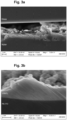
- Figure 3 illustrates scanning electron microscope (SEM) images for Li/Nb oxides placed on a Mylar surface ( Fig. 3a ) or a PE-ITO surface ( Fig. 3b ), respectively.
- the person skilled in the art can reasonably assume that further types of natural polymers or synthetic polymers, in particular polyesters or polyimides, especially polymers having semiconducting properties, can be coated or printed by the method as disclosed herein.
- a portion of the solution can be placed to the surface of the substrate, thereby exerting digital printing.
- the solution can be considered as a type of ink that can be used in a type of ink jet for digital printing.
Landscapes
- Chemical & Material Sciences (AREA)
- Organic Chemistry (AREA)
- Inorganic Chemistry (AREA)
- Life Sciences & Earth Sciences (AREA)
- Environmental & Geological Engineering (AREA)
- General Life Sciences & Earth Sciences (AREA)
- Geology (AREA)
- Battery Electrode And Active Subsutance (AREA)
Abstract
a) mixing an alcoholate of an alkaline metal and an alcoholate of a valve metal in a composition of an oxygenated organic solvent and hydrogen peroxide at room temperature;
b) adding an acid selected from at least one of nitric acid or hydrochloric acid at room temperature, whereby a solution is obtained;
c) drying the solution at an elevated temperature of 50 °C to 150 °C, whereby a powder comprising the at least one crystalline oxidic compound comprising the alkaline metal and the valve metal is obtained.
Description
- The present invention relates to a method for manufacturing a crystalline oxidic compound comprising an alkaline metal and a valve metal, to a crystalline oxidic compound as obtained by the method, and to its use, in particular as a ferroelectric material; as a coating material for electrode materials in batteries, specifically in solid-state batteries; or in digital printing, especially on a polymeric substrate.
- Crystalline oxidic compounds which comprise an alkaline metal, such as Li, and a valve metal, such as Nb, are known as coating materials. By way of example, a coating layer which comprises crystalline lithium niobate (LiNbO3) can be used for protecting a cathode active material from adverse effects resulting from a direct contact with an adjacent electrolyte, thereby enhancing a stability of the cathode active material.
- Various methods for manufacturing such kinds of crystalline oxidic compounds are also known, preferably selected from solid state reactions and sol-gel methods; as disclosed in Zhang, Z.-J.; Chou, S.-L.; Gu, Q.-F.; Liu, H.-K.; Li, H.-J.; Ozawa, K.; Wang, J.-Z., Enhancing the high rate capability and cycling stability of LiMn2O4 by coating of solid-state electrolyte LiNbO3, ACS Appl. Mater. ; Sun, W.; Xie, M.; Shi, X.; Zhang, L., Study of new phases grown on LiNbO3 coated LiCoO2 cathode material with an enhanced electrochemical performance, Materials Research Bulletin, 2015, 61, 287-291; or Kim, H.; Byun, D.; Chang, W.; Jung, H.-G.; Choi, W., A nano-LiNbO3 coating layer and diffusion-induced surface control towards high-performance 5 V spinel cathodes for rechargeable batteries, J. Mater. Chem. A 2017, 5, 25077-25089.
- Mereacre, V.; Stüble, P.; Ghamlouche A.; and Binder, J. R.; Enhancing the Stability of LiNi0.5Mn1.5O4 by Coating with LiNbO3 Solid-State Electrolyte: Novel Chemically Activated Coating Process versus Sol-Gel Method, Nanomaterials 2021, 11, 548, describe a fabrication of LiNbO3-coated LiNi0.5Mn1.5O4 spinel by applying two different kinds of methods, i.e. using hydrogen peroxide as activating agent and a sol-gel method.
- These state-of-the-art solutions require high temperatures of approx. 350 °C to 900°C to obtain the crystalline LiNbO3 coating layer. As documented by Sun, X.; Hori, S.; Li, Y.; Yamada, Y.; Suzuki, K.; Hirayama, M.; Kanno, R., Annealing-Induced Evolution at the LiCoO2/LiNbO3 Interface and its Functions in All-Solid-State Batteries with a Li10GeP2S12 Electrolyte, J. Mater. Chem. A 2021, 9, 4117-4125, by using high annealing temperatures the deposition of the crystalline LiNbO3 coating layer can be accompanied by a diffusion of an amount of Nb ions into a surface of active material, or vice versa, of elements from the active materials into the lattice of the LiNbO3 coating layer. Although the diffusion may improve a cycling retention of batteries that use organic liquid electrolytes, the diffusion can also be responsible for a capacity degradation of the cathode active material.
- Alternatively, LiNbO3 can be manufactured by using a further deposition process, especially atomic layer deposition (ALD), as disclosed by Østreng, E.; Sønsteby, H. H.; Sajavaara, T.; Nilsen, O.; Fjellvåg, H., Atomic layer deposition of ferroelectric LiNbO3, J. Mater. Chem. C, 2013, 1, 4283-4290. Although ALD allows obtaining very thin and homogeneous layers, ALD is rather sophisticated and comprehensive to scale up. In addition, ALD requires high temperatures not only for the deposition process (at approx. 235 °C) but also for the crystallization of the deposited LiNbO3 layer (at approx. 650 °C).
- It is therefore an objective of the present invention to provide a method for manufacturing a crystalline oxidic compound comprising an alkaline metal and a valve metal, a crystalline oxidic compound as obtained by the method, and its use, which at least partially overcome the above-mentioned problems of the state of the art.
- It is a particular objective of the present invention to provide a straightforward and reliable method for manufacturing such kinds of crystalline oxidic compounds which does not require any complex arrangement. More particular, the objective refers to a manufacturing method for such kinds of crystalline oxidic compounds which operates at a low ambient working temperature, especially below 200 °C, to allow a direct manufacturing of this kind of crystalline oxidic compounds without interaction with a substrate and/or on a substrate which is not capable of tolerating higher temperatures during the manufacturing of such kinds of crystalline oxidic compounds without deformation and/or deterioration.
- Further, the manufacturing method should be capable of providing such kinds of crystalline oxidic compounds which may be homogeneous and stable and may remain in permanent and tight contact with a selected substrate, in particular as a coating material or in digital printing.
- This problem is solved by a method for manufacturing a crystalline oxidic compound comprising an alkaline metal and a valve metal, a crystalline oxidic compound as obtained by the method, and its use having the features of the independent claims. Preferred embodiments, which might be implemented in an isolated fashion or in any arbitrary combination, are listed in the dependent claims.
- In a first aspect, the present invention relates to a method for manufacturing a crystalline oxidic compound comprising an alkaline metal and a valve metal. Accordingly, this method comprises the following steps a) to c):
- a) mixing an alcoholate of an alkaline metal and an alcoholate of a valve metal in a composition of an oxygenated organic solvent and hydrogen peroxide at room temperature;
- b) adding an acid selected from at least one of nitric acid or hydrochloric acid at room temperature, whereby a solution is obtained;
- c) drying the solution at an elevated temperature of 50 °C to 150 °C, whereby a powder comprising the at least one crystalline oxidic compound comprising the alkaline metal and the valve metal is obtained.
- Herein, the indicated steps a) to c) may, preferably, be performed in the given order, commencing with step a), continuing with step b), and finishing with step c). However, any or all of the indicated steps may be performed concurrently at least in part and/or be repeated several times. Further steps, whether described herein or not, can, in addition, also be performed in relationship with the present method.
- As generally used, the term "manufacturing" refers to producing a particular substance, independent of the amount of the substance being produced by this method and independent whether the substance is produced in a manual manner or in an automatic fashion, in a single preparation, batch-wise or in an continuous manner.
- As further generally used, the term "compound" refers to a type of substance which comprises at least two individual components, specifically at least two different kinds of atoms or ions selected from the periodic table of chemical elements. Further, the term "oxidic compound" refers to a particular kind of compound which comprises oxygen as one of the chemical elements. By way of example, the oxidic compound LiNbO3 comprises lithium, niobium, and oxygen; however, various further examples are known.
- In accordance with the present invention, the oxidic compound to be produced by the present manufacturing method comprises both, firstly, an alkaline metal and, secondly, a valve metal. As used herein, the term "alkaline metal" refers to a
group 1 element of the periodic table apart from francium (Fr), i.e. lithium (Li), sodium (Na), potassium (K), rubidium (Rb), and cesium (Cs), wherein lithium (Li), sodium (Na), and potassium (K) are preferred, wherein lithium (Li) and sodium (Na) are more preferred, wherein lithium (Li) is particularly preferred. As further used herein, the term "valve metal" refers to an element of the periodic table selected from the group consisting of niobium (Nb), titanium (Ti), tantalum (Ta), zirconium (Zr), hafnium (Hf), and vanadium (V), aluminum (Al), chromium (Cr), tungsten (W), wherein niobium (Nb), titanium (Ti), tantalum (Ta), zirconium (Zr), hafnium (Hf), and vanadium (V) are preferred, wherein niobium (Nb) is particularly preferred. By way of example, the oxidic compound LiNbO3 comprises the alkaline metal lithium and the valve metal niobium apart from oxygen; however, various further examples are known. - As further generally used, the term "crystalline oxidic compound" refers to a substance which is present in form of at least one type of crystals. As generally used, the term "crystalline" refers to state of the substance in which the at least one individual component, specifically at least one kind of atom or ion, is arranged in a far-reaching ordered structure, whereby a crystal lattice extending in at least one spatial direction is generated. Herein, the presence of a crystalline state can be demonstrated by an appearance of typical diffraction reflexes in an x-ray diffractometric pattern, often abbreviated to "XRD pattern". In contrast hereto, no diffraction reflexes can be determined in an XRD pattern for a substance assuming an amorphous state, in which the at least two individual components, specifically the at least two different kinds of atoms or ions, are arranged not more than in a near-reaching ordered structure, if any.
- In general, the crystalline oxidic compound may be a single-phase crystalline oxidic compound or may comprise at least two individual phases of the crystalline oxidic compound. As generally used, the term "phase" refers to a particular type of crystalline structure having a definite composition of one or more individual components. By way of example, the oxidic compound which comprises lithium, niobium, and oxygen can assume a first phase denoted as LiNbO3 but also a second phase denoted as LiNb3O8; further examples are known. The manufacturing method as presented herein can, in principle, be configured to produce either phase or a mixture thereof.
- According to step a), an alcoholate of an alkaline metal and an alcoholate of a valve metal are mixed in a composition of an oxygenated organic solvent and hydrogen peroxide at room temperature. As generally used, the term "mixing" or any grammatical variation thereof refers to a process of bringing at least two individual substances close together, especially to induce between the at least two individual substances a physical interaction, specifically a solution of at least one substance in at least one further substance, and/or a chemical reaction, specifically for producing at least one further substance. According to the present invention, both a physical interaction and a chemical reaction are induced during step a).
- As generally used, the term "alcoholate" refers to a basic compound having a sum formula of CnH2n+1O to which the corresponding metal is added. Preferably, the alcoholate can be selected from an ethoxide, a methoxide or an isopropoxide; however further types of alcoholates are also feasible. Herein, the alcoholate of the alkaline metal and the alcoholate of the valve metal may, preferably, be mixed in a molar ratio for Li:Nb of 2.00:1.00 to 0.50:1:00, more preferred of 1.50:1.00 to 0.75:1.00, in particular of 1.25:1.00 to 0.80: 1.00; however using a different molar ratio for Li:Nb may also be feasible. Herein, the molar ratio for Li:Nb can, preferably, be adjusted for obtaining at least one particular crystalline phase or a mixture of different crystalline phases of the desired crystalline oxidic compound. As an advantage, using different types of alcoholate allows solving the corresponding metal ion in an oxygenated organic solvent or a composition comprising at least one oxygenated organic solvent. As further generally used, the term "oxygenated organic solvent" refers to an organic solvent which comprises oxygen in chemically bound form. In particular, the oxygenated organic solvent may be selected from at least one of an alcohol, a ketone, or an ether, wherein the alcohol may, preferably, be ethanol, methanol, isopropanol, and n-propanol, while the ketone may, preferably, be acetylacetone. However, a further kind of oxygenated organic solvent, specifically a further kind of alcohols, may also be feasible.
- In addition, the composition, which is used in step a) as a solvent for both types of alcoholates, further, comprises hydrogen peroxide as an activating agent. As generally used, the term "activating agent" refers to a type of substance which is suitable for inducing or enhancing a particular reaction. Preferably, an aqueous solution comprising 10 to 50 molar %, more preferred 25 to 40 molar %, in particular 30 molar %, of hydrogen peroxide may be used for this purpose; however a different concentration of hydrogen peroxide in the solution may also be feasible. Specifically, the composition which is provided at step a) may, preferably, comprise the oxygenated organic solvent and the hydrogen peroxide in a volume ratio of 5:1 to 0.2:1, more preferred of 2:1 to 0.5 to 1, in particular 1:1; however a different ratio may also be feasible.
- According to step b), an acid is added to the mixture of the alcoholate of the alkaline metal and the alcoholate of the valve metal in the composition of the oxygenated organic solvent and the hydrogen peroxide. As generally used, the term "adding" or any grammatical variation thereof refers to a process of introducing a further substance into an already existing mixture. According to the present invention, the acid is a strong acid. As used herein, the term "strong acid" refers to an acid having a high tendency to dissociate into a proton and a corresponding anion, specifically having a pKs value below 0. As generally used, the term "acid dissociation constant", abbreviated to "pKs value", constitutes a quantitative measure of the strength of an acid in solution. In particular, the strong acid is selected from nitric acid and/or hydrochloric acid, while other strong acids, such as sulfuric acid, seem to be less suited for the method according to the present invention.
- Preferably, only a small amount of 0.1 vol. % to 10 vol. %, more preferred of 0.2 vol. % to 5 vol. %, in particular of 0.5 vol. % to 2 vol. %, of the strong acid is added to the mixture of both types of alcoholates in the composition of the oxygenated organic solvent and the hydrogen peroxide at step b). As result thereof, a solution, which already comprises the desired oxidic compound, is obtained. In a preferred embodiment, the solution may be a clear solution, thereby indicating that it may only comprise at least one phase of the desired oxidic compound in a soluble form.
- According to step c), the solution, which already comprises the desired oxidic compound, is dried at an elevated temperature. As generally used, the term "drying" or any grammatical variation thereof refers to a process of removing a liquid component from a mixture, especially by applying a thermal treatment to the mixture. As a result, a powder, which comprises the at least one crystalline oxidic compound comprising the alkaline metal and the valve metal, is obtained in this manner.
- According to the present invention, both steps a) and b), i.e. the mixing of the alcoholate of the alkaline metal and the alcoholate of the valve metal in the composition of the oxygenated organic solvent and hydrogen peroxide as well as the adding of the strong acid thereto, is performed at room temperature. As used herein, the term "room temperature" refers to a temperature of 5 °C to 40 °C, preferably of 10 °C to 30 °C, more preferred of 15 °C to 25 °C, in particular of 20 °C, which is prevailing during steps a) and b) while the corresponding physical interactions and chemical reactions are performed.
- As preferred, step b) may be performed in a subsequent manner with respect to step a), i.e. after step a) has been completed. However, in an alternative embodiment, it may also be feasible to commence with step b) prior to a completion of step a), i.e. steps a) and b) may be performed in a partially concurrent manner. In this fashion, the adding of the strong acid can be distributed over a longer period of time without increasing the overall time required for performing the method.
- Further according to the present invention, step c) is performed at an elevated temperature, wherein the elevated temperature is of 50 °C to 150 °C, preferably of 60 °C to 120 °C, more preferred of 75 °C to 100 °C, in particular of 80 °C to 90° C.
- As preferred, step c) may be performed in a subsequent manner with respect to step b), i.e. after step b) has been completed. In this fashion, steps a) and b) can be performed at room temperature while the elevated temperature may only operate on the solution for a purpose of drying, thereby leaving the physical interactions and the chemical reactions which are executed during steps a) and b) undisturbed.
- Summarizing, the whole manufacturing of the desired crystalline oxidic compounds operates - in contrast to the prior art methods - at a low ambient working temperature, especially below 200 °C. As a result, this kind of crystalline oxidic compounds can be manufactured without interaction with a substrate that may be in contact with the solution or with any other substance used for producing the solution, accordingly. As used herein, the term "substrate" refers to any kind of material having a surface on which the solution can be deposited to generate the crystalline oxidic compound. Preferably, the substrate may be selected from a solid body, in particular an electrode material in a battery, especially a cathode active material, or a polymeric substrate. As an alternative, the substrate may, preferably, be selected from a powdery substance having a plurality of particles, which can be coated by drying the solution at an elevated temperature according to step c).
- In general, the low ambient working temperature does not influence a structure of the substrate and diffusion of elements from the substrate into crystalline oxidic compound can be avoided. As a result, the crystalline oxidic compound can be deposited on a substrate in a coating process, whereby a coating layer deposited on the substrate can be obtained. In a first embodiment, the coating layer may only be configured to protect the substrate, whose properties may remain undisturbed by the coating layer. In an alternative embodiment, the crystalline oxidic compound can be deposited on the substrate in a fashion that the surface of the substrates will, thereby, be activated, firstly, and, subsequently or concurrently, be coated. Herein, the alternative embodiment may facilitate achieving more stable coatings, especially owing to an increased contact between the coating and the substrate.
- Further, the crystalline oxidic compounds can, in a preferred embodiment, be manufactured on a substrate, which may, especially due to increased reactiveness and/or instability at higher temperatures, not be capable of tolerating higher temperatures, especially of 200 °C or above, without deformation and/or deterioration during a manufacturing process. Consequently, the method as proposed herein may allow depositing at least one crystalline oxidic compound as a coating on a further range of substrates. Herein the substrate may, especially, be or comprise a polymeric semiconducting substrate, however, a further polymeric material, such as a natural polymer or a synthetic polymer, can also be coated by using the method as proposed herein.
- In a particular embodiment, the solution may be applied to selective sites on a surface of a substrate by using a printing device. As used herein, the term "applying" or any grammatical variation thereof refers to a process of placing a portion of a substance to a surface of a substrate, which can also be considered as a type of "printing process". As generally used, the term "printing device" refers to an apparatus which is configured to place the portion of the substance to the surface of the substrate, thereby exerting digital printing. In particular, the solution can be considered as a type of ink, such that a type of ink jet may be used for digital printing.
- In this particular embodiment, applying the solution to the surface of the substrate may, especially, be performed prior to step c), in particular during step b) or, preferably, after step b), or during step c). As a result, a pattern of the crystalline oxidic may be formed on the selective sites on the surface of the substrate after drying the solution at step c). As used herein, the term "pattern" refers to a particular arrangement of the crystalline oxidic compounds on the selective sites on the surface of the substrate, especially obtained by performing the digital printing process by using an appropriate printing device.
- In a further aspect, the present invention relates to a crystalline oxidic compound which may be obtained by the method for manufacturing the crystalline oxidic compound comprising an alkaline metal and a valve metal as described elsewhere herein.
- For further details concerning the crystalline oxidic compound, reference may be made to the description of the method for manufacturing the crystalline oxidic compound comprising an alkaline metal and a valve metal.
- In a further aspect, the present invention relates to a use of a crystalline oxidic compound as obtained by the method for manufacturing the crystalline oxidic compound comprising an alkaline metal and a valve metal as described elsewhere herein. In particular, this crystalline oxidic compound can be used as a ferroelectric material; as a coating material for electrode materials in batteries, specifically in solid-state batteries; or in digital printing, especially on a polymeric substrate.
- Some of the crystalline oxidic compounds which can be manufactured by using the method according to the present invention, such as lithium niobate, are known as ferroelectric materials. Particularly owing to the low ambient working temperatures, the method as proposed herein may facilitate integrating an element comprising a ferroelectric crystalline oxidic compound with at least one element selected from a semiconducting element, an electro-optical element or an acousto-optical element, preferably by placing at least two of these elements on the same substrate.
- Further, the present method may contribute to solving a major drawback with respect to utilizing cathode materials as a result from a low interfacial stability between a cathode active material and an adjacent electrolyte. For example in high-voltage spinels, a presence of Mn3+ ions in the spinels may lead to the observed low interfacial stability, resulting in a considerably short cycling life of an electrochemical cell comprising high-voltage spinels. Due to a disproportionation reaction of the Mn3+ ions, the Mn2+ ions as obtained in this manner may dissolve into an adjacent electrolyte, thereby accelerating a capacity fade of the electrochemical cell. Such types of instabilities between the cathode active material and the adjacent electrolytes may also occur in solid-state batteries. However, an electrochemical performance of the cathode active materials can be considerably improved by protecting the surface of the cathode active material by depositing a coating layer thereon which comprises the crystalline oxidic compound, such as lithium niobate, being manufactured according to the method as proposed herein.
- For further details concerning the use of the crystalline oxidic compound, reference may be made to the description of the method for manufacturing the crystalline oxidic compound comprising an alkaline metal and a valve metal.
- The method according to the present invention as well as the crystalline oxidic compounds obtained by this method provide various advantages compared to the prior art, in particular:
- (i) the crystalline oxidic compounds are obtainable at a low ambient working temperature, especially below 200 °C;
- (ii) the method as proposed herein is reliable, can be performed in a straightforward fashion and does not require any complex arrangement;
- (iii) the components used during the method are soluble in the same medium, thereby contributing to obtain crystalline oxidic compounds, which can, preferably, be used as a homogeneous coating;
- (iv) using the solution during a coating process on substrates may contribute to obtaining more homogeneous and stable coatings on the substrate;
- (v) the coating process can be used on a variety of different substrates, specifically on solid bodies, in particular electrode materials in batteries, especially cathode active materials, or polymeric substrates; or powdery substances;
- (vi) especially owing to the composition of the reaction mixture during the coating process, the surface of the subtrate is, initially, activated and, subsequently, coated, thereby contribuing to more stable coatings and an improved contact to the substrate.
- As used herein, the terms "have", "comprise" or "include" or any arbitrary grammatical variations thereof are used in a non-exclusive way. Thus, these terms may refer to both a situation in which, besides the feature introduced by these terms, no further features are present in the entity described in this context and to a situation in which one or more further features are present. As an example, the expressions "A has B", "A comprises B" and "A includes B" may both refer to a situation in which, besides B, no other element is present in A (i.e. a situation in which A solely and exclusively consists of B) and to a situation in which, besides B, one or more further elements are present in entity A, such as element C, elements C and D or even further elements.
- As further used herein, the terms "preferably", "more preferably", "particularly", "more particularly", or similar terms are used in conjunction with optional features, without restricting alternative possibilities. Thus, features introduced by these terms are optional features and are not intended to restrict the scope of the claims in any way. The invention may, as the skilled person will recognize, be performed by using alternative features. Similarly, features introduced by "in an embodiment of the invention" or similar expressions are intended to be optional features, without any restriction regarding alternative embodiments of the invention, without any restrictions regarding the scope of the invention and without any restriction regarding the possibility of combining the features introduced in this way with other features of the invention.
- Further optional features and embodiments of the invention are disclosed in more detail in the subsequent description of preferred embodiments, preferably in conjunction with the dependent claims. Therein, the respective optional features may be implemented in an isolated fashion as well as in any arbitrary feasible combination, as the skilled person will realize. It is emphasized here that the scope of the invention is not restricted by the preferred embodiments.
- In the Figures:
- Figure 1
- illustrates a comparison of XRD patterns of samples (LN-2 and LN -4) as manufactured by the method according to the present invention and of other samples (LN-1, LN-3, and LN-5) as manufactured by a prior art method for comparison; and
- Figure 2
- illustrates further XRD patterns for further samples manufactured similar to the sample LN-2 in accordance with the present invention and differing from each other by a different molar ratio for Li:Nb; and
- Figure 3
- illustrates scanning electron microscope (SEM) images for Li/Nb oxides attached to a Mylar surface (
Fig. 3a ) and a PE-ITO surface (Fig. 3b ). - Especially for comparison between the method according to the present invention and other prior art methods for manufacturing a crystalline oxidic compounds, a number of samples denoted as LN-1, LN-2, LN-3, LN-4, and LN-5, each of which comprises lithium niobate, has been synthesized. As illustrated in
Figure 1 , it has, subsequently, been investigated by recording a respective XRD pattern of each sample whether a crystalline structure may occur in each sample or not. - For manufacturing the sample LN-1, the following steps have been performed. Lithium ethoxide (LiOEt) and niobium ethoxide (Nb(OEt)5) in a molar ratio for Li:Nb of 1.15:1.00 have been mixed according to method step a) in a composition of absolute ethanol (HOEt) and an aqueous solution comprising 30 molar % of hydrogen peroxide (H2O2) at room temperature. As result, a clear and unhydrolized yellowish solution was obtained. Thereafter, the clear and unhydrolized yellowish solution was dried at 80 °C by using a drying cabinet having a fan for providing air circulation in accordance with method step c) immediately after both components had been dissolved, for which approx. 10 min have been required.
- As illustrated in
Figure 1 , the respective XRD pattern of the sample LN-1 indicates no diffraction reflexes and, thus, demonstrates an appearance of an amorphous state. As a result, the desired crystalline oxidic lithium niobate compound could not be synthesized at ambient working temperature by using the above-indicated prior art method. As demonstrated in further experiments (not depicted here), at higher working temperature above 400 °C, specifically at 450 °C or above, the desired crystalline oxidic lithium niobate compound could be obtained. Consequently, this observation is in agreement with the present invention since the sample LN-1 was manufactured by omitting method step b), i.e. no acid was added to the clear solution at room temperature. - Further, the samples LN-2 and LN-4 were synthesized in accordance with the method as proposed herein. Accordingly, during method step b) a small quantity of concentrated nitric acid (HNO3), specifically an aqueous solution comprising 65 molar % of HNO3, was added to the clear and unhydrolized yellowish solution as obtained by step a) for the sample LN-2, while a small quantity of concentrated hydrochloric acid (HCl), specifically an aqueous solution comprising 35 molar % of HCl, was added to the clear and unhydrolized yellowish solution as obtained by step a) for the sample LN-4.
- As further illustrated in
Figure 1 , the respective XRD patterns of both samples LN-2 and LN-4 indicate diffraction reflexes known for lithium niobate and, thus, demonstrate an occurrence of the desired crystalline oxidic lithium niobate compound which could be synthesized by using the method according to the present invention. As a result, this observation indicated that performing method step b) by using an acid selected from at least one of nitric acid or hydrochloric acid at room temperature is required for the method as disclosed herein. As can further be deduced fromFigure 1 , the diffraction reflexes for lithium niobate are, however, much more pronounced for the sample LN-2 compared to the sample LN-4, thus, indicating that using nitric acid may be preferred to using hydrochloric acid in this particularly example of manufacturing lithium niobate. However, for further examples, different observations are expected. - Further, the sample LN-5 was synthesized in a similar fashion as the samples LN-2 and LN-4, wherein, however, a small quantity of glacial acetic acid was added to the clear and unhydrolized yellowish solution as obtained by step a) similar to step b). However, as further illustrated in
Figure 1 , the respective XRD pattern of the sample LN-5 also indicates no diffraction reflexes and, thus, demonstrates an appearance of an amorphous state. As a result, the desired crystalline oxidic lithium niobate compound could not be synthesized by using an acetic acid instead of nitric acid (HNO3) or hydrochloric acid (HCl). - Finally, the sample LN-3 was synthesized in a similar fashion as the sample LN-2, wherein, however, an amount of water (H2O) was used instead of the same amount of the aqueous solution comprising 30 molar % of hydrogen peroxide (H2O2) as used in the manufacturing of the sample LN-2. As further illustrated in
Figure 1 , the respective XRD pattern of the sample LN-3 also indicates no diffraction reflexes and, thus, demonstrates an appearance of an amorphous state. As a result, the desired crystalline oxidic lithium niobate compound could not be synthesized by replacing hydrogen peroxide (H2O2) by water (H2O). Apparently, providing hydrogen peroxide (H2O2) during method step a) is required for the method as disclosed herein. - Further, the person skilled in the art can reasonably assume that using Li methoxide or Li isopropoxide in combination with Nb methoxide or Nb isopropoxide in presence of hydrogen peroxide (H2O2) and at least one of nitric acid (HNO3) or hydrochloric acid (HCl) at a temperature of 50 °C to below 200 °C may also result in the desired crystalline Li/Nb oxides.
- Further,
Figure 2 illustrates XRD patterns for a number of further samples, which have been manufactured similar to the sample LN-2 in accordance with the method of the present invention, wherein, however, the further samples differ from each other by a different molar ratio for Li:Nb of 0.9:1.0, 1.0:1.0, 1.1:1.0 and 1.15:1.0. - As depicted in
Figure 2 , each of these further samples indicate diffraction reflexes known for two different phases of lithium niobate and, thus, demonstrate an appearance of both crystalline oxidic lithium niobate compounds. Herein, the diffraction reflex denoted by an asterisk (*) is known for the phase LiNb3O8, while the other diffraction reflexes are typical for the phase LiNbO3. - From determining an intensity of the diffraction reflex denoted by an asterisk (*), a quantity of the phase LiNb3O8 within the oxidic lithium niobate crystals can be estimated. Using a Li:Nb molar ratio of 0.9: 1.0, the quantity of the phase LiNb3O8 can be estimated to approx. 32%, while using a Li:Nb molar ratio of 1.0:1.0 and 1.1:1.0 results in a decreased quantity of the phase LiNb3O8 of 14%, whereas the smallest quantity (∼ 6%) of the phase LiNb3O8 could be observed by using a Li:Nb molar ratio of 1.15:1.0, which corresponds to an excess of Li versus Nb of approx. 15 %. As a result, the molar ratio for Li:Nb can, preferably, be used for adjusting quantities of at least one particular crystalline phase within a mixture of different crystalline phases of the desired crystalline oxidic compound.
- In particular, the crystalline oxidic compounds as proposed herein can be used as coating layers on cathode active materials in solid-state batteries. For this purpose, the solution as obtained by step b) was, prior to drying at 80°C according to step c), used for coating of various cathode active materials, specifically of LiNi0.5Mn1.5O4, LiNi0.6Mn0.2Co0.2O2, and LiNi0.8Mn0.1Co0.1O2.
- Further, various polymeric substrates could be coated with crystalline oxidic lithium niobate compounds. As polymeric substrates, the following materials have been used, i.e. biaxially-oriented polyethylene terephthalate (BoPET), available as "Mylar"; an indium tin oxide (ITO) coated polyester film, also denoted as "PE-ITO"; and a polyimide film, available as "Kapton".
Figure 3 illustrates scanning electron microscope (SEM) images for Li/Nb oxides placed on a Mylar surface (Fig. 3a ) or a PE-ITO surface (Fig. 3b ), respectively. As an alternative, the person skilled in the art can reasonably assume that further types of natural polymers or synthetic polymers, in particular polyesters or polyimides, especially polymers having semiconducting properties, can be coated or printed by the method as disclosed herein. As described above in more detail, a portion of the solution can be placed to the surface of the substrate, thereby exerting digital printing. In this respect, the solution can be considered as a type of ink that can be used in a type of ink jet for digital printing. - Although no problems have occurred so far during performing the method according to the present invention, nevertheless, it is strictly advised to handle the mixtures as used in the proposed method with care. Especially, performing a synthesis, in which large quantities of HNO3 and H2O2 are used, may cause explosive reactions.
Claims (15)
- A method for manufacturing a crystalline oxidic compound comprising an alkaline metal and a valve metal, wherein the method comprises the following steps:a) mixing an alcoholate of an alkaline metal and an alcoholate of a valve metal in a composition of an oxygenated organic solvent and hydrogen peroxide at room temperature;b) adding an acid selected from at least one of nitric acid or hydrochloric acid at room temperature, whereby a solution is obtained;c) drying the solution at an elevated temperature of 50 °C to 150 °C, whereby a powder comprising the at least one crystalline oxidic compound comprising the alkaline metal and the valve metal is obtained.
- The method according to the preceding claim, wherein the alkaline metal is selected from at least one of Li, Na, or K.
- The method according to any one of the preceding claims, wherein the valve metal is selected from at least one of Nb, Ti, V, Zr, Hf, or Ta.
- The method according to any one of the preceding claims, wherein the alcoholate of the alkaline metal and the alcoholate of the valve metal are mixed at step a) in a Li:Nb molar ratio of 1.50:1.00 to 0.75:1.00.
- The method according to any one of the preceding claims, wherein the oxygenated organic solvent provided at step a) is selected from at least one of an alcohol, a ketone, or an ether.
- The method according to any one of the preceding claims, wherein the hydrogen peroxide provided at step a) is an aqueous solution comprising 10 to 50 molar % of the hydrogen peroxide.
- The method according to any one of the preceding claims, wherein the composition provided at step a) comprises the oxygenated organic solvent and the hydrogen peroxide in a volume ratio of 5:1 to 0.2:1.
- The method according to any one of the preceding claims, wherein an amount of the acid of 0.1 vol. % to 10 vol. % is added at step b).
- The method according to any one of the preceding claims, wherein the solution as obtained at step b) is a clear solution.
- The method according to any one of the preceding claims, wherein the elevated temperature for drying the solution at step c) is of 75 °C to 100 °C.
- The method according to any one of the preceding claims, wherein the solution is applied to a surface of a substrate during step b) or after step b), wherein after drying the solution at step c) the crystalline oxidic compound is formed on the surface of the substrate.
- The method according to any one of the preceding claims, wherein the solution is applied to selective sites on a surface of a substrate during step b) or after step b) by using a printing device, wherein after drying the solution at step c) a pattern of the crystalline oxidic compound is formed on the selective sites on the surface of the substrate.
- The method according to any one of the preceding claims, wherein the powder obtained at step c) comprises the crystalline oxidic compound in a single-phase crystalline oxidic compound or at least two individual phases of the crystalline oxidic compound.
- A crystalline oxidic compound comprising an alkaline metal and a valve metal as obtained by the method according to any one of the preceding claims.
- A use of the crystalline oxidic compound comprising an alkaline metal and a valve metal according to the preceding claim as a ferroelectric material; as a coating material for electrode materials in batteries, specifically in solid-state batteries, or for powdery substances; or in digital printing, especially on polymeric substrates.
Priority Applications (1)
| Application Number | Priority Date | Filing Date | Title |
|---|---|---|---|
| EP21210780.9A EP4186865A1 (en) | 2021-11-26 | 2021-11-26 | A method for manufacturing a crystalline oxidic compound |
Applications Claiming Priority (1)
| Application Number | Priority Date | Filing Date | Title |
|---|---|---|---|
| EP21210780.9A EP4186865A1 (en) | 2021-11-26 | 2021-11-26 | A method for manufacturing a crystalline oxidic compound |
Publications (1)
| Publication Number | Publication Date |
|---|---|
| EP4186865A1 true EP4186865A1 (en) | 2023-05-31 |
Family
ID=78806361
Family Applications (1)
| Application Number | Title | Priority Date | Filing Date |
|---|---|---|---|
| EP21210780.9A Pending EP4186865A1 (en) | 2021-11-26 | 2021-11-26 | A method for manufacturing a crystalline oxidic compound |
Country Status (1)
| Country | Link |
|---|---|
| EP (1) | EP4186865A1 (en) |
-
2021
- 2021-11-26 EP EP21210780.9A patent/EP4186865A1/en active Pending
Non-Patent Citations (10)
| Title |
|---|
| CHEN X M ED - MATHEW XAVIER ET AL: "CRYSTALLIZATION CHARACTERISTICS OF LINBO3 DERIVED FROM SOL-GEL", JOURNAL OF MATERIALS SCIENCE: MATERIALS IN ELECTRONICS, CHAPMAN AND HALL, LONDON, GB, vol. 7, no. 1, 1 February 1996 (1996-02-01), pages 51 - 54, XP000548271, ISSN: 0957-4522 * |
| KIM, HBYUN, D.CHANG, W.JUNG, H.-G.CHOI, W.: "A nano-LiNb0 coating layer and diffusion-induced surface control towards high-performance 5 V spinel cathodes for rechargeable batteries", J. MATER. CHEM. A, vol. 5, 2017, pages 25077 - 25089, XP055644556, DOI: 10.1039/C7TA07898F |
| MEREACRE VALERIU ET AL: "Enhancing the Stability of LiNi0.5Mn1.5O4 by Coating with LiNbO3 Solid-State Electrolyte: Novel Chemically Activated Coating Process versus Sol-Gel Method", NANOMATERIALS, vol. 11, no. 2, 22 February 2021 (2021-02-22), pages 548, XP055918151, DOI: 10.3390/nano11020548 * |
| MEREACRE VALERIU ET AL: "Strong-Acid-Catalyzed Formation of Crystalline LiNbO 3 at Low Ambient Temperatures", INORGANIC CHEMISTRY, 29 April 2022 (2022-04-29), Easton , US, XP055918189, ISSN: 0020-1669, Retrieved from the Internet <URL:https://pubs.acs.org/doi/pdf/10.1021/acs.inorgchem.2c00457> DOI: 10.1021/acs.inorgchem.2c00457 * |
| MEREACRE, V.; STUBLE, P.; GHAMLOUCHE A.; AND BINDER, J. R.: "LiNio..5Mni..50 by Coating with LiNb0 Solid-State Electrolyte: Novel Chemically Activated Coating Process versus Sol-Gel Method", NANOMATERIALS, vol. 11, 2021, pages 548 |
| NYMAN MAY ET AL: "Comparison of Aqueous and Non-aqueous Soft-Chemical Syntheses of Lithium Niobate and Lithium Tantalate Powders", CRYSTAL GROWTH & DESIGN, vol. 9, no. 2, 4 February 2009 (2009-02-04), US, pages 1036 - 1040, XP055918173, ISSN: 1528-7483, DOI: 10.1021/cg800849y * |
| OSTRENG, E.SONSTEBY, H. H.SAJAVAARA, T.NILSEN, O.FJELLVAG, H.: "Atomic layer deposition of ferroelectric LiNb0", J. MATER. CHEM. C, vol. 1, 2013, pages 4283 - 4290 |
| SUN, W.XIE, M.SHI, X.ZHANG, L.: "Study of new phases grown on LiNb0 coated LiCo0 cathode material with an enhanced electrochemical performance", MATERIALS RESEARCH BULLETIN, vol. 61, 2015, pages 287 - 291 |
| SUN, X.HORI, SLI, Y.YAMADA, Y.SUZUKI, K.HIRAYAMA, M.KANNO, R.: "Annealing-Induced Evolution at the LiCo0 /LiNb03 Interface and its Functions in All-Solid-State Batteries with a LiioGeP Si Electrolyte", J. MATER. CHEM. A, vol. 9, 2021, pages 4117 - 4125 |
| ZHANG, Z.-J.; CHOU, S.-L.; GU, Q.-F.; LIU, H.-K.; LI, H.-J.; OZAWA, K.; WANG, J.-Z.: "Enhancing the high rate capability and cycling stability of LiMn 0 by coating of solid-state electrolyte LiNb0", ACS APPL. MATER. INTERFACES, vol. 6, 2014, pages 2215 - 22165 |
Similar Documents
| Publication | Publication Date | Title |
|---|---|---|
| US11807944B2 (en) | Lithium lanthanum zirconate thin films | |
| CN109904424B (en) | Method for one-step surface coating and gradient doping integrated double-modification of LNMO (Low noise Metal oxide) positive electrode material | |
| Zhang et al. | Insights into the enhanced structural and thermal stabilities of Nb-substituted lithium-rich layered oxide cathodes | |
| CN109888226B (en) | A kind of battery cathode coating structure material with pinning effect and preparation method thereof | |
| KR101886514B1 (en) | Manufacturing method of electrode active material having core-shell structure for all-solid cell | |
| EP3560607A1 (en) | Method for preparing cathode active material for secondary battery and apparatus for preparing cathode active material for secondary battery | |
| WO2024060550A1 (en) | Ternary positive electrode material and preparation method therefor, and lithium ion battery | |
| Chen et al. | Ultrahigh capacity retention of a Li2ZrO3-coated Ni-rich LiNi0. 8Co0. 1Mn0. 1O2 cathode material through covalent interfacial engineering | |
| US20130244099A1 (en) | Solid lithium ion conducting electrolytes and methods of preparation | |
| KR101039320B1 (en) | Manufacturing method of lithium tungsten oxide coating material and manufacturing method of electrochromic device using same | |
| Ji et al. | Hydroxylation mechanism of phase regulation of nanocrystal BaTiO3 synthesized by a hydrothermal method | |
| CN113745497B (en) | Gradient doping and surface modification method for single crystal high nickel lithium ion battery anode material | |
| Ghanty et al. | Improvement of the electrochemical characteristics of lithium and manganese rich layered cathode materials: effect of surface coating | |
| KR20170003877A (en) | Oxide based solid electrolyte and method for forming the same | |
| EP2784027A1 (en) | LiCoO2 film-forming precursor solution and method of forming LiCoO2 film using the same | |
| CN115101727A (en) | Three-phase composite coated lithium-rich manganese-based positive electrode material and preparation method and application thereof | |
| Han et al. | Fabrication in a Single Synthetic Step of Electrochemically Active LiMO2 (M= Ni and Co) Thin-Film Electrodes Using Soft Solution Processing at 20− 200° C | |
| CN109338465B (en) | A kind of perovskite single crystal material and its preparation method and application | |
| Shin et al. | First-Principles Calculations, Electrochemical and X-ray Absorption Studies of Li-Ni-PO4 Surface-Treated x Li2MnO3·(1− x) LiMO2 (M= Mn, Ni, Co) Electrodes for Li-Ion Batteries | |
| Sahana et al. | The effect of titanium on the lithium intercalation capacity of V2O5 thin films | |
| JP7576557B2 (en) | Solution containing lithium, niobium complex, and hydrazine, method for producing same, and method for producing active material for lithium secondary battery | |
| Jayanth-Babu et al. | Influence of annealing temperature on microstructural and electrochemical properties of rf-sputtered LiMn2O4 film cathodes | |
| Zhang et al. | Integrating a ferroelectric interface with a well-tuned electronic structure in lithium-rich layered oxide cathodes for enhanced lithium storage | |
| Mereacre et al. | Strong-acid-catalyzed formation of crystalline LiNbO3 at low ambient temperatures | |
| Maurin et al. | La (Sr, Pb) MnO3 thin films through solution techniques |
Legal Events
| Date | Code | Title | Description |
|---|---|---|---|
| PUAI | Public reference made under article 153(3) epc to a published international application that has entered the european phase |
Free format text: ORIGINAL CODE: 0009012 |
|
| STAA | Information on the status of an ep patent application or granted ep patent |
Free format text: STATUS: THE APPLICATION HAS BEEN PUBLISHED |
|
| AK | Designated contracting states |
Kind code of ref document: A1 Designated state(s): AL AT BE BG CH CY CZ DE DK EE ES FI FR GB GR HR HU IE IS IT LI LT LU LV MC MK MT NL NO PL PT RO RS SE SI SK SM TR |
|
| STAA | Information on the status of an ep patent application or granted ep patent |
Free format text: STATUS: REQUEST FOR EXAMINATION WAS MADE |
|
| 17P | Request for examination filed |
Effective date: 20231128 |
|
| RBV | Designated contracting states (corrected) |
Designated state(s): AL AT BE BG CH CY CZ DE DK EE ES FI FR GB GR HR HU IE IS IT LI LT LU LV MC MK MT NL NO PL PT RO RS SE SI SK SM TR |
|
| RAP3 | Party data changed (applicant data changed or rights of an application transferred) |
Owner name: KARLSRUHER INSTITUT FUER TECHNOLOGIE |