EP4184427A1 - Noise reduction convolution auto-encoding device and noise reduction convolution auto-encoding method - Google Patents
Noise reduction convolution auto-encoding device and noise reduction convolution auto-encoding method Download PDFInfo
- Publication number
- EP4184427A1 EP4184427A1 EP22152880.5A EP22152880A EP4184427A1 EP 4184427 A1 EP4184427 A1 EP 4184427A1 EP 22152880 A EP22152880 A EP 22152880A EP 4184427 A1 EP4184427 A1 EP 4184427A1
- Authority
- EP
- European Patent Office
- Prior art keywords
- encoding
- convolutional
- stride
- noise reduction
- auto
- Prior art date
- Legal status (The legal status is an assumption and is not a legal conclusion. Google has not performed a legal analysis and makes no representation as to the accuracy of the status listed.)
- Granted
Links
Images





Classifications
-
- G—PHYSICS
- G06—COMPUTING OR CALCULATING; COUNTING
- G06T—IMAGE DATA PROCESSING OR GENERATION, IN GENERAL
- G06T5/00—Image enhancement or restoration
- G06T5/70—Denoising; Smoothing
-
- G—PHYSICS
- G06—COMPUTING OR CALCULATING; COUNTING
- G06N—COMPUTING ARRANGEMENTS BASED ON SPECIFIC COMPUTATIONAL MODELS
- G06N3/00—Computing arrangements based on biological models
- G06N3/02—Neural networks
- G06N3/04—Architecture, e.g. interconnection topology
-
- G—PHYSICS
- G06—COMPUTING OR CALCULATING; COUNTING
- G06T—IMAGE DATA PROCESSING OR GENERATION, IN GENERAL
- G06T3/00—Geometric image transformations in the plane of the image
- G06T3/40—Scaling of whole images or parts thereof, e.g. expanding or contracting
-
- G—PHYSICS
- G06—COMPUTING OR CALCULATING; COUNTING
- G06T—IMAGE DATA PROCESSING OR GENERATION, IN GENERAL
- G06T5/00—Image enhancement or restoration
- G06T5/60—Image enhancement or restoration using machine learning, e.g. neural networks
-
- G—PHYSICS
- G06—COMPUTING OR CALCULATING; COUNTING
- G06T—IMAGE DATA PROCESSING OR GENERATION, IN GENERAL
- G06T2207/00—Indexing scheme for image analysis or image enhancement
- G06T2207/20—Special algorithmic details
- G06T2207/20081—Training; Learning
-
- G—PHYSICS
- G06—COMPUTING OR CALCULATING; COUNTING
- G06T—IMAGE DATA PROCESSING OR GENERATION, IN GENERAL
- G06T2207/00—Indexing scheme for image analysis or image enhancement
- G06T2207/20—Special algorithmic details
- G06T2207/20084—Artificial neural networks [ANN]
Definitions
- Taiwan Patent Application No. 110142692 filed on November 17, 2021 , the disclosure of which is hereby incorporated by reference herein in its entirety.
- the present invention relates to an image noise reduction device, and in particular to a noise reduction convolutional auto-encoding device and a noise reduction convolutional auto-encoding method.
- RED-Net Residual Encoder-Decoder Networks
- sssssssencoder model architecture has become one of the problems to be solved in the field, wherein the model only needs a few training iterations before it can remove multiple types of image distortion and achieve the same level as the current technology- not just for a single type of noise or blurry distortion.
- the present invention provides a noise reduction convolutional auto-encoding device.
- the noise reduction convolutional auto-encoding device includes a processor and a storage device.
- the processor is configured to access a noise reduction convolutional auto-encoding model stored in the storage device, in order to execute the noise reduction convolutional auto-encoding model.
- the processor executes the following operations.
- a distorted image is received and then input into the noise reduction convolutional auto-encoding model.
- an image feature of the distorted image is transferred to a first deconvolution layer through skip-connection.
- a plurality of multi-stride encoding convolutional layers are performed for the distortion image to reduce a dimension, and then a same-dimensional encoding convolutional layer is performed.
- the corresponding multi-stride encoding convolutional layers and same-dimensional encoding convolutional layers are upgraded.
- the first deconvolution layer inputs the result of up-scaled dimension to the same-dimensional decoding convolutional layer of a balanced channel.
- a reconstructed image is output by the same-dimensional decoding convolutional layer of the balanced channel.
- the present invention provides a noise reduction convolutional auto-encoding method.
- the noise reduction convolutional auto-encoding method includes the following operations.
- a distorted image is received and input into a noise reduction convolutional auto-encoding model.
- an image feature of the distorted image is transferred to a first deconvolution layer through skip-connection.
- a plurality of multi-stride encoding convolutional layers are performed for the distortion image to reduce a dimension.
- a same-dimensional encoding convolutional layer is performed.
- the corresponding multi-stride encoding convolutional layers and same-dimensional encoding convolutional layers are upgraded.
- the first deconvolution layer inputs the result of up-scaled dimension to the same-dimensional decoding convolutional layer of a balanced channel.
- a reconstructed image is output by the same-dimensional decoding convolutional layer of the balanced channel.
- the noise reduction convolutional auto-encoding device and the noise reduction convolutional auto-encoding method described in the present invention can simultaneously denoise or eliminate blurring of different types of distorted images, and the noise reduction convolutional auto-encoding device has a simple structure, only needing to be trained once. By using skip-connection to transfer image features to the deconvolution layer, it aids in deconvolution to restore a better, clearer image. Using multi-stride encoding convolutional layers and multi-stride decoding convolutional layers to increase and decrease the dimensionality of the image can achieve better denoising performance.
- adding the same-dimensional encoding convolutional layer and same-dimensional decoding convolutional layer after multi-stride encoding convolutional layers and multi-stride decoding convolutional layers can prevent the blocking effect.
- the blocking effect is caused by multi-stride encoding convolutional layers and multi-stride decoding convolutional layers. The blocking effect can affect the restored feature image. Then, performing the feature extraction again can reduce the noise transmitted by skip-connection.
- the noise reduction convolutional auto-encoding device and the noise reduction convolutional auto-encoding method design a loss function by combining the mean square error and structural similarity index measurement to update the weights.
- the weights can adapt to different distortions.
- the foregoing experimental results show that the noise reduction convolutional auto-encoding device used for noise reduction not only achieves the same results as the known technology in reducing Gaussian noise, but can also reduce speckle noise and salt and pepper noise at the same time.
- the noise reduction convolutional auto-encoding device and noise reduction convolutional auto-encoding method have excellent performance.
- the noise reduction convolutional auto-encoding device is used to eliminate blur. It can eliminate Gaussian blur and motion blur at the same time with the same performance as other documents.
- the noise reduction convolutional auto-encoding device and the noise reduction convolutional auto-encoding method combine a noise reduction convolutional auto-encoding model with a deep convolutional neural network (VGG-16), the application of the noise reduction convolutional auto-encoding device can significantly improve the accuracy of the convolutional network's recognition of distorted images, and prove that a single noise reduction convolutional auto-encoding model only needs to be trained once to be able to reconstruct images from a variety of different types of distortion.
- FIG. 1 is a block diagram of a noise reduction convolutional auto-encoding device 100 in accordance with one embodiment of the present disclosure.
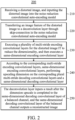
- FIG. 2 is a flowchart of a noise reduction convolutional auto-encoding method 200 in accordance with one embodiment of the present disclosure.
- noise reduction convolutional auto-encoding method 200 can be implemented by the noise reduction convolutional auto-encoding device 100.
- the noise reduction convolutional auto-encoding device 100 can be a desktop computer, a mobile phone, or a virtual machine built on a host operation system.
- the function of the noise reduction convolutional auto-encoding device 100 can be implemented by a hardware circuit, chip, firmware, or software.
- the noise reduction convolutional auto-encoding device 100 includes a processor 10 and a storage device 20. In one embodiment, the noise reduction convolutional auto-encoding device 100 further includes a display.
- the processor 10 can be a microcontroller, a microprocessor, a digital signal processor, or an application specific integrated circuit (ASIC), or a logic circuit to implement it.
- ASIC application specific integrated circuit
- the storage device 20 can be implemented by a read-only memory, a flash memory, a floppy disk, a hard disk, a compact disk, a flash drive, a magnetic tape, a network accessible database, or a storage medium having the same function by those skilled in the art.
- the processor 10 is configured to access programs stored in the storage device 20 to implement the noise reduction convolutional auto-encoding method 200.
- a noise reduction convolutional coding model 30 generated by the noise reduction convolutional auto-encoding device 100 can be implemented by hardware, software, or firmware.
- the noise reduction convolutional coding model 30 implements its functions by software or firmware, and is stored in the storage device 20.
- the noise reduction convolutional auto-encoding device 100 accesses the noise reduction convolutional coding model 30 stored in the storage device 20 through the processor 10 to realize the function of the noise reduction convolutional auto-encoding device 100.
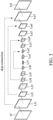
- FIG. 3 is a schematic diagram illustrating a noise reduction convolutional auto-encoding method in accordance with one embodiment of the present disclosure.
- step 210 the processor 10 receives a distorted image IT, and inputs the distorted image IT into the noise reduction convolutional auto-encoding model 30.
- step 220 the processor 10 transfers an image feature of the distorted image to a deconvolution layer Lu7 through skip-connection in the noise reduction convolutional auto-encoding model 30.
- the architecture of the noise reduction convolutional auto-encoding model 30 can be divided into two parts: dimensionality reduction operation and dimensionality upscaling operation.
- the distorted image IT input into the noise reduction convolutional auto-encoding model 30, and the dimensionality reduction is firstly performed.
- the dimensionality reduction operation involves sequentially executing the convolutional layers Ll1-Ll7, capturing the image features of the distorted image IT. Then, perform the dimension upscaling operation.
- the dimension upscaling operation includes the sequential execution of the convolutional layers Lu1-Lu7. Finally, a convolution is performed after the convolution layer Lu7, and then the reconstructed image OT is outputted.
- skip-connection refers to transferring the result of the dimensionality reduction operation in the convolutional layers L11-L17 during the dimensionality reduction operation to the corresponding convolutional layers Lu1-Lu7 of the dimensional upscaling computing layer during the dimensionality upscaling operation.
- the convolutional layer Ll1 skip-connection to the convolutional layer Lu7
- the convolutional layer L12 skip-connection to the convolutional layer Lu6
- each multi-stride encoding convolutional layer and same-dimensional encoding convolutional layer in noise reduction convolutional auto-encoding model 30 outputs their respective images features, and the respective image features are connected to the corresponding multi-stride decoding convolutional layers and same-dimensional decoding convolutional layers through skip-connection.
- the image features transmitted to these multi-stride decoding convolutional layers or same-dimensional decoding convolutional layers are used as reference features during decoding.
- the application of skip-connection can transmit the image features calculated by the dimensionality reduction of each layer to the corresponding convolutional layer in the dimensionality upscaling process.
- step 230 the processor 10 executes a plurality of multi-stride encoding convolutional layers for the distorted image IT to reduce the dimensionality, and then executes a same-dimensional encoding convolutional layer.
- the processor 10 executes a plurality of multi-stride encoding convolutional layers Ll1-Ll2 for the distorted image IT to reduce dimensionality (referring to the dimensionality reduction operation relationship between the data of the convolutional layer Ll1 and L12, the same hereinafter). Then the same-dimensional encoding convolutional layer Ll2-Ll3 is executed (referring to the same-dimensional operation relationship between the data of the convolutional layer L12 and L13, the same hereinafter). Then, a plurality of multi-stride encoding convolutional layers L13-L14 is executed to reduce the dimensionality, and then the same-dimensional encoding convolutional layer Ll4-Ll5 is executed. Then, a plurality of multi-stride encoding convolutional layers Ll5-Ll6, Ll6-Ll7 are performed to reduce the dimensionality.
- the convolutional layers L17 and Lu1 can be regarded as the turning layers of dimensionality upscaling and dimensionality reduction in this architecture.
- the multi-stride encoding convolutional layers are the convolutional layers L12, L14, L16, and L17.
- the same-dimensional encoding convolutional layers are the convolutional layer L13 and L15.
- the convolutional layer Ll1 is the initial single-stride convolutional layer with the same dimension. It can be seen that there will be one or more multi-stride encoding convolutional layers before one or more same-dimensional encoding convolutional layers will be performed.
- the processor 10 sequentially sorts the last multi-stride encoding convolutional layers of these multi-stride encoding convolutional layers, and the image features outputted by the last multi-stride encoding convolutional layers are input to the same-dimensional encoding convolutional layer to avoid blocking effect.
- the blocking effect is a visual defect. The main reason for this effect is that the blocking artifacts caused by the block-based codec make the coding of adjacent blocks in the image are similar, and the visual effect looks like a mosaic.
- multi-stride encoding convolutional layers are used to define the amount of kernel pixel shift when performing convolution operations.
- the amount of kernel pixel shift defined by the multi-stride encoding convolutional layers for convolution operation is higher, the higher the dimensionality reduction effect, the fewer the captured image features, and the more obvious the captured image features.
- step 240 according to the corresponding multi-stride encoding convolutional layers, same-dimensional encoding convolutional layers, the processor 10 performs upscaling dimension on the corresponding plural multi-stride decoding convolutional layers and a same-dimensional decoding convolutional layer.
- the multi-stride encoding convolutional layers are a plurality of 2 stride encoding convolutional layers
- the amount of kernel pixel shift of the convolution operation is 2 when upscaling the dimension.
- the multi-stride decoding convolutional layers are the convolutional layers Lu1, Lu3, Lu5, and Lu7.
- the same-dimensional decoding convolutional layers are the convolutional layer Lu2, Lu4, and Lu6. It can be seen that there will be one or more multi-stride decoding convolutional layers first, and then one or more same-dimensional decoding convolutional layers will be performed.
- the number of dimensionality reduction is the same as the number of dimensionality upscaling.
- the convolutional layer used for decoding can be referred to as a deconvolution layer.
- step 250 the deconvolution layer Lu7 inputs a result after the dimension upscale is completed to the same-dimensional decoding convolutional layer of a balanced channel, and the same-dimensional decoding convolutional layer of the balanced channel outputs a reconstructed image OT.
- the deconvolution layer Lu7 refers to the image feature from the convolutional layer Ll1 for the result after the dimension upscale is completed, and then enters the same-dimensional decoding convolutional layer (not shown) of the balanced channel.
- the same-dimensional decoding convolutional layer of the balanced channel is used to output the reconstructed image OT with the three primary colors of color light.
- the same-dimensional encoding convolutional layer is regarded as a 1 stride encoding convolutional layer.
- the 1-stride encoding convolutional layer is arranged after a plurality of dimensionality reduction operations.
- the same-dimensional decoding convolutional layer is regarded as a 1-stride decoding convolutional layer for feature extraction and removal of noise carried in the process of transmitting the distorted image through skip-connection.
- the 1-stride decoding convolutional layer is arranged after a plurality of dimensionality upscaling operations.
- the processor 10 regards the 1-stride encoding convolutional layer executed y times after executing a plurality of x-stride encoding convolutional layers as a dimensionality reduction operation unit.
- the dimensionality reduction operation is completed by repeatedly executing the dimensionality reduction operation unit N times.
- the processor 10 regards the 1-stride decoding convolutional layer y times after executing a plurality of x-stride decoding convolutional layers as an upscaling operation unit.
- the upscaling operation is completed by repeatedly executing the upscaling operation unit N times.
- N and y are positive integers, and x is a positive integer greater than 2.
- the encoder used for dimensionality reduction operations there are a total of 7 convolutional layers in the process of dimensionality reduction operations, 3 same-dimensional encoding convolutional layers (64, 128, 256) for performing feature extraction, and 4 multi-stride encoding convolutional layers for performing four downsampling and feature extraction.
- 64 represents the number of convolution kernels used.
- the two-dimensional size of the convolution kernel is 3 ⁇ 3, and 64 represents the depth of the convolution layer (using several convolution kernels), so 3 ⁇ 3 ⁇ 64 is generally used to represent the convolution layer.
- the meaning of 128 and 256 means that 128 convolution kernels and 256 convolution kernels are used, respectively.
- Each dimensionality reduction feature map will be passed to the corresponding transposed convolutional layer (i.e., multi-stride decoding convolutional layers) through skip connections. Therefore, in the decoder used for the upscaling operation, there are provided corresponding four transposed convolutional layers (i.e., multi-stride decoding convolutional layers).
- the processor 10 executes a 1-stride encoding convolutional layer, which can be used for feature extraction and remove noise transmitted by skip-connection.
- the noise reduction convolutional auto-encoding model 30 is used to restore a variety of distorted images (such as distorted image IT) to generate a reconstructed image OT.
- the distorted image IT is, for example, a Gaussian noise image, a Gaussian blur image, a motion blur image, a speckle noise image, and/or a salt and pepper noise image.
- noise reduction convolutional auto-encoding model 30 uses batch normalization after each convolutional layer to reduce overfitting and gradient vanishing.
- LeakyReLU is used as the activation function to reduce the appearance of dead neurons.
- convolutional layers and transposed convolutional layers controlled by strides are used to replace traditional max-pooling and upsampling.
- the up-and-down dimension of the image can be used to obtain better distortion removal performance.
- Adding a convolutional layer (i.e., same-dimensional decoding convolutional layer) after each transposed convolutional layer of the decoder (i.e., multi-stride decoding convolutional layers) is to prevent transposed convolutional layers (i.e., multi-stride decoding convolutional layers) from causing the blocking effect that affects the restored feature map.
- feature extraction is performed to reduce the noise transmitted by skip-connections.
- the training samples used by the noise reduction convolutional auto-encoding model 30 in the training stage include: multiple Gaussian noise images, multiple Gaussian blur images, multiple motion blur images, multiple speckle noise images, and multiple salt and pepper noise images.
- the noise reduction convolutional auto-encoding model 30 is used in the application stage to receive and restore multiple Gaussian noise images, multiple Gaussian blur images, multiple motion blur images, multiple speckle noise images, and multiple salt and pepper noise images to generate a reconstructed image.
- noise reduction convolutional auto-encoding model 30 is used in the training stage to combine mean-square error (MSE) and structural similarity index measurement (SSIM) to design a loss function, to update the weights or converge, and input images with different distortion types into noise reduction convolutional auto-encoding model 30 for training.
- MSE mean-square error
- SSIM structural similarity index measurement
- MSE mean-square error
- SSIM structural similarity index measurement
- the direction of the gradient update can be affected by structural similarity index measurement and mean-square error at the same time, so that the reconstructed picture is closer to human vision and maintains a smaller numerical error with the original picture, which can handle various distortions.
- the processor 10 normalizes the distorted image IT and finds that the loss of SSIM drops faster than the loss of MSE, which means that the contribution of SSIM is greater than MSE in each epoch, and the value ratio is about 2:1.
- the value here is only an example and is not limited thereto.
- the noise reduction convolutional auto-encoding model 30 can also use peak signal-to-noise ratio (PSNR), structural similarity index (SSIM index), objective average score of the human eye, or other algorithms to design the loss function in the training stage.
- PSNR peak signal-to-noise ratio
- SSIM index structural similarity index
- objective average score of the human eye or other algorithms to design the loss function in the training stage.
- the design of the loss function is not limited thereto.
- FIGS. 4A to 4E are schematic diagrams illustrating different distortion types in accordance with one embodiment of the present disclosure.
- the larger ⁇ the more noise, and the larger the SNR, the less distortion.
- FIG. 4A is the Guassian noise image
- the first horizontal row is the original image
- the second row is the distorted image input to noise reduction convolutional auto-encoding model 30
- the third row is the noise image output by the noise reduction convolutional auto-encoding model 30.
- FIG. 4B is the speckle noise image
- the first row is the original image
- the second row is the distorted image input to noise reduction convolutional auto-encoding model 30
- the third row is the noise image output by the noise reduction convolutional auto-encoding model 30.
- FIG. 4C is the salt and pepper noise image
- the first horizontal row is the original image
- the second row is the distorted image input to noise reduction convolutional auto-encoding model 30
- the third row is the noise image output by the noise reduction convolutional auto-encoding model 30.
- FIG. 4D is motion blur image
- the first horizontal row is the original image
- the second row is the distorted image input to noise reduction convolutional auto-encoding model 30
- the third row is the noise image output by the noise reduction convolutional auto-encoding model 30.
- FIG. 4E is a Gaussian blur image he first horizontal row is the original image, the second row is the distorted image input to noise reduction convolutional auto-encoding model 30, the third row is the noise image output by the noise reduction convolutional auto-encoding model 30.
- noise reduction convolutional auto-encoding model 30 can output noise reduction and restored reconstructed images.
- three data sets Set5, Set12, and BSD68 are used to objectively compare the performance of the noise reduction convolutional auto-encoding model 30 with other technologies that specifically remove a single noise (Gaussian noise).
- the noise reduction convolutional auto-encoding model 30 can handle Gaussian noise image, Gaussian blur image, motion blur image, speckle noise image, and salt and pepper noise image.
- Salt and pepper noise and speckle noise compare the output of the noise reduction convolutional auto-encoding model 30 with BM3D [1] and DnCNN [2], both are only designed to remove Gaussian noise, and their source code can be obtained online for simulation.
- Salt and pepper noise and speckle noise are also evaluated at three different levels.
- Salt and pepper noise: SNR ⁇ 0.95, 0.90, 0.80 ⁇
- speckle noise: ⁇ ⁇ 0.1, 0.2, 0.3 ⁇ , the results are shown in Table 2 and Table 3, respectively.
- the noise reduction convolutional auto-encoding model 30 can handle Gaussian noise image, Gaussian blur image, motion blur image, speckle noise image, and salt and pepper noise image.
- noise reduction convolutional auto-encoding model 30 can use a single model to remove three types of distortion at the same time. From Table 1 to Table 3, it can be seen that noise reduction convolutional auto-encoding model 30 achieves the same level of performance in removing Gaussian noise as the known technology. Moreover, it also significantly improves the ability to remove other types of distortion such as salt and pepper noise and speckle noise. It can simultaneously reduce speckle noise and salt and pepper noise, and has excellent performance, which is better than other technologies that specifically remove single noise (Gaussian noise).
- noise reduction convolutional auto-encoding model 30 also shows the visualization results in the CBSD68 data set. Through a single model, all types and levels of noise can be removed.
- the noise reduction convolutional auto-encoding model 30 can be used in combination with the deep convolutional neural network VGG-16.
- the noise reduction convolutional auto-encoding model 30 is combined with the deep convolutional neural network VGG-16. It means that the distorted image will go through the noise reduction convolutional auto-encoding model before entering the deep convolutional neural network (DCNN) for classification.
- the calculation framework for training and inference is shown in FIGS. 5A-5B .
- FIG. 5A is a schematic diagram of the noise reduction convolutional auto-encoding model 30 and VGG-16 in the training stage according to an embodiment of the present invention.
- the noise reduction convolutional auto-encoding model 30 and the deep convolutional neural network VGG-16 are trained separately in the training stage. More specifically, in the training stage, the distorted image is input to the noise reduction convolutional auto-encoding model 30, and the original image (the undistorted image) is input to the deep convolutional neural network VGG-16.
- FIG. 5B is a schematic diagram of the noise reduction convolutional auto-encoding model 30 and VGG-16 in the testing stage in accordance with one embodiment of the present disclosure.
- the distorted image is input to noise reduction convolutional auto-encoding model 30.
- the noise reduction convolutional auto-encoding model 30 inputs the output reconstructed image to the deep convolutional neural network VGG-16 to output a classification result.
- the processor 10 compares the combined result of the noise reduction convolutional auto-encoding model 30 and the VGG-16 with the classification accuracy of the original VGG-16 model under various types and levels of the distorted image.
- the processor 10 tests 5 increasing levels of corresponding types of noise and blur distortion (Gaussian noise image, Gaussian blur image, motion blur image, speckle noise image, and salt and pepper noise image).
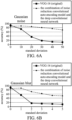
- FIGS. 6A to 6E are schematic diagrams illustrating the comparison of the results of the noise reduction convolutional auto-encoding model 30 and VGG-16 combined with the classification accuracy of the original VGG-16 model in various types and levels of the distorted image according to an embodiment of the present invention. It can be seen from FIGS. 6A to 6E that the classification accuracy of the combination of the noise reduction convolutional auto-encoding model 30 and the deep convolutional neural network VGG-16 is much higher than that of only the deep convolutional neural network VGG-16.
- the noise reduction convolutional auto-encoding model 30 can simultaneously remove noise and blurring with 5 different distortion types for small-size images (CIFAR-10/100).
- the method of the present invention may exist in the form of code.
- the program code can be included in physical media, such as floppy disks, CDs, hard disks, or any other machine-readable (such as computer-readable) storage media, or computer program products that are not limited to external forms.
- a machine such as a computer
- the machine becomes a device for participating in the present invention.
- the code can also be transmitted through some transmission media, such as wire or cable, optical fiber, or any transmission type.
- the code When the code is received, loaded and executed by a machine, such as a computer, the machine becomes used to participate in this Invented device.
- the program code combined with the processing unit provides a unique device that operates similar to the application of a specific logic circuit.
- the noise reduction convolutional auto-encoding device and the noise reduction convolutional auto-encoding method described in present invention can simultaneously denoise or eliminate blurring of different types of distorted images, and the noise reduction convolutional auto-encoding device has a simple structure, only need to train once. By using skip-connection to transfer image features to the deconvolution layer, it helps deconvolution to restore a better, clearer image. Using multi-stride encoding convolutional layers and multi-stride decoding convolutional layers to increase/decrease the dimensionality of the image can achieve better denoising performance.
- adding the same-dimensional encoding convolutional layer/same-dimensional decoding convolutional layer after multi-stride encoding convolutional layers/multi-stride decoding convolutional layers can prevent blocking effect caused by multi-stride encoding convolutional layers/multi-stride decoding convolutional layers, due to the blocking effect will affect the restored feature image. Then, performing the feature extraction again can reduce the noise transmitted by skip-connection.
- noise reduction convolutional auto-encoding device and noise reduction convolutional auto-encoding method design a loss function by combining the mean square error and structural similarity index measurement to update the weights.
- the weights can adapt to different distortions.
- the foregoing experimental results show that the noise reduction convolutional auto-encoding device used for noise reduction not only achieves the same level as the known technology in reducing Gaussian noise, but can also reduce noise for speckle noise and salt and pepper noise at the same time,.
- the noise reduction convolutional auto-encoding device and noise reduction convolutional auto-encoding method have excellent performance.
- the noise reduction convolutional auto-encoding device is also a noise reduction convolutional auto-encoding device used to eliminate blur. It can eliminate Gaussian blur and motion blur at the same time with the same performance as other documents.
- noise reduction convolutional auto-encoding device and noise reduction convolutional auto-encoding method combine noise reduction convolutional auto-encoding model and deep convolutional neural network (VGG-16), the application of the noise reduction convolutional auto-encoding device can significantly improve the accuracy of convolutional network recognition of distorted images, and proved that a single noise reduction convolutional auto-encoding model only needs to be trained once, so as to achieve the effect of reconstructing images from a variety of different types of distortion images.
Landscapes
- Engineering & Computer Science (AREA)
- Physics & Mathematics (AREA)
- Theoretical Computer Science (AREA)
- General Physics & Mathematics (AREA)
- General Health & Medical Sciences (AREA)
- General Engineering & Computer Science (AREA)
- Biophysics (AREA)
- Computational Linguistics (AREA)
- Data Mining & Analysis (AREA)
- Evolutionary Computation (AREA)
- Artificial Intelligence (AREA)
- Molecular Biology (AREA)
- Computing Systems (AREA)
- Biomedical Technology (AREA)
- Life Sciences & Earth Sciences (AREA)
- Mathematical Physics (AREA)
- Software Systems (AREA)
- Health & Medical Sciences (AREA)
- Image Processing (AREA)
- Compression, Expansion, Code Conversion, And Decoders (AREA)
- Reduction Or Emphasis Of Bandwidth Of Signals (AREA)
- Error Detection And Correction (AREA)
Abstract
Description
- The present application is based on, and claims priority from,
Taiwan Patent Application No. 110142692, filed on November 17, 2021 - The present invention relates to an image noise reduction device, and in particular to a noise reduction convolutional auto-encoding device and a noise reduction convolutional auto-encoding method.
- Due to the vigorous development of deep learning, more and more documents use deep learning methods for image denoising. In the early days, Viren Jain and H. Sebastian Seung were pioneers in proposing the use of convolutional neural networks as image denoising architecture, and provided performance comparable to traditional image processing methods, but the structure was too simple. More recent technologies include Residual Encoder-Decoder Networks ("RED-Net"). However, RED-Net also has the disadvantage that it needs to use a very deep network to train to improve the denoising performance, resulting in the need for a lot of calculations.
- In addition, most methods that use deep learning methods to remove noise or deblurring need to modify or retrain the model architecture according to different types of distortion, and after the model is trained, only a single type of distortion can be processed. However, in the real world, it is impossible to determine what kind of distortion will appear in the input picture, and the types of distortion are random and diverse.
- sssssssencoder model architecture has become one of the problems to be solved in the field, wherein the model only needs a few training iterations before it can remove multiple types of image distortion and achieve the same level as the current technology- not just for a single type of noise or blurry distortion.
- The present invention provides a noise reduction convolutional auto-encoding device. The noise reduction convolutional auto-encoding device includes a processor and a storage device. The processor is configured to access a noise reduction convolutional auto-encoding model stored in the storage device, in order to execute the noise reduction convolutional auto-encoding model. The processor executes the following operations. A distorted image is received and then input into the noise reduction convolutional auto-encoding model. In the noise reduction convolutional auto-encoding model, an image feature of the distorted image is transferred to a first deconvolution layer through skip-connection. A plurality of multi-stride encoding convolutional layers are performed for the distortion image to reduce a dimension, and then a same-dimensional encoding convolutional layer is performed. according to the corresponding multi-stride encoding convolutional layers and same-dimensional encoding convolutional layers, the corresponding a plurality of decoding multi-stride convolutional layers and a same-dimensional decoding convolutional layers are upgraded. The first deconvolution layer inputs the result of up-scaled dimension to the same-dimensional decoding convolutional layer of a balanced channel. A reconstructed image is output by the same-dimensional decoding convolutional layer of the balanced channel.
- The present invention provides a noise reduction convolutional auto-encoding method. The noise reduction convolutional auto-encoding method includes the following operations. A distorted image is received and input into a noise reduction convolutional auto-encoding model. In the noise reduction convolutional auto-encoding model, an image feature of the distorted image is transferred to a first deconvolution layer through skip-connection. A plurality of multi-stride encoding convolutional layers are performed for the distortion image to reduce a dimension. A same-dimensional encoding convolutional layer is performed. According to the corresponding multi-stride encoding convolutional layers and same-dimensional encoding convolutional layers, the corresponding a plurality of decoding multi-stride convolutional layers and a same-dimensional decoding convolutional layers are upgraded. The first deconvolution layer inputs the result of up-scaled dimension to the same-dimensional decoding convolutional layer of a balanced channel. A reconstructed image is output by the same-dimensional decoding convolutional layer of the balanced channel.
- The noise reduction convolutional auto-encoding device and the noise reduction convolutional auto-encoding method described in the present invention can simultaneously denoise or eliminate blurring of different types of distorted images, and the noise reduction convolutional auto-encoding device has a simple structure, only needing to be trained once. By using skip-connection to transfer image features to the deconvolution layer, it aids in deconvolution to restore a better, clearer image. Using multi-stride encoding convolutional layers and multi-stride decoding convolutional layers to increase and decrease the dimensionality of the image can achieve better denoising performance. Moreover, adding the same-dimensional encoding convolutional layer and same-dimensional decoding convolutional layer after multi-stride encoding convolutional layers and multi-stride decoding convolutional layers can prevent the blocking effect. The blocking effect is caused by multi-stride encoding convolutional layers and multi-stride decoding convolutional layers. The blocking effect can affect the restored feature image. Then, performing the feature extraction again can reduce the noise transmitted by skip-connection.
- In addition, the noise reduction convolutional auto-encoding device and the noise reduction convolutional auto-encoding method design a loss function by combining the mean square error and structural similarity index measurement to update the weights. When finally performing collaborative training on pictures with different distortion types, the weights can adapt to different distortions. The foregoing experimental results show that the noise reduction convolutional auto-encoding device used for noise reduction not only achieves the same results as the known technology in reducing Gaussian noise, but can also reduce speckle noise and salt and pepper noise at the same time. Moreover, the noise reduction convolutional auto-encoding device and noise reduction convolutional auto-encoding method have excellent performance. The noise reduction convolutional auto-encoding device is used to eliminate blur. It can eliminate Gaussian blur and motion blur at the same time with the same performance as other documents.
- In addition, though the noise reduction convolutional auto-encoding device and the noise reduction convolutional auto-encoding method combine a noise reduction convolutional auto-encoding model with a deep convolutional neural network (VGG-16), the application of the noise reduction convolutional auto-encoding device can significantly improve the accuracy of the convolutional network's recognition of distorted images, and prove that a single noise reduction convolutional auto-encoding model only needs to be trained once to be able to reconstruct images from a variety of different types of distortion.
-
-
FIG. 1 is a block diagram of a noise reduction convolutional auto-encoding device in accordance with one embodiment of the present disclosure; -
FIG. 2 is a flowchart of a noise reduction convolutional auto-encoding method in accordance with one embodiment of the present disclosure; -
FIG. 3 is a schematic diagram illustrating a noise reduction convolutional auto-encoding method in accordance with one embodiment of the present disclosure; -
FIGS. 4A-4E are schematic diagrams illustrating different distortion types in accordance with one embodiment of the present disclosure; -
FIG. 5A is a schematic diagram of the noise reduction convolutional auto-encoding model and VGG-16 in the training stage according to an embodiment of the present invention; -
FIG. 5B is a schematic diagram of the noise reduction convolutional auto-encoding model and VGG-16 in the testing stage in accordance with one embodiment of the present disclosure; -
FIGS. 6A-6E are schematic diagrams illustrating the comparison of the results of the noise reduction convolutional auto-encoding model and VGG-16 combined with the classification accuracy of the original VGG-16 model in various types and levels of the distorted image according to an embodiment of the present invention. - The following description is of the best-contemplated mode of carrying out the invention. This description is made for the purpose of illustrating the general principles of the invention and should not be taken in a limiting sense. The scope of the invention is best determined by reference to the appended claims.
- The present invention will be described with respect to particular embodiments and with reference to certain drawings, but the invention is not limited thereto and is only limited by the claims. It will be further understood that the terms "comprises," "comprising," "comprises" and/or "including," when used herein, specify the presence of stated features, integers, steps, operations, elements, and/or components, but do not preclude the presence or addition of one or more other features, integers, steps, operations, elements, components, and/or groups thereof.
- Use of ordinal terms such as "first", "second", "third", etc., in the claims to modify a claim element does not by itself connote any priority, precedence, or order of one claim element over another or the temporal order in which acts of a method are performed, but are used merely as labels to distinguish one claim element having a certain name from another element having the same name (but for use of the ordinal term) to distinguish the claim elements.
- Please refer to
FIGS. 1-2 ,FIG. 1 is a block diagram of a noise reduction convolutional auto-encodingdevice 100 in accordance with one embodiment of the present disclosure.FIG. 2 is a flowchart of a noise reduction convolutional auto-encoding method 200 in accordance with one embodiment of the present disclosure. In one embodiment, noise reduction convolutional auto-encoding method 200 can be implemented by the noise reduction convolutional auto-encodingdevice 100. - As shown in
FIG. 1 , the noise reduction convolutional auto-encodingdevice 100 can be a desktop computer, a mobile phone, or a virtual machine built on a host operation system. - In one embodiment, the function of the noise reduction convolutional auto-encoding
device 100 can be implemented by a hardware circuit, chip, firmware, or software. - In one embodiment, the noise reduction convolutional auto-encoding
device 100 includes aprocessor 10 and astorage device 20. In one embodiment, the noise reduction convolutional auto-encodingdevice 100 further includes a display. - In one embodiment, the
processor 10 can be a microcontroller, a microprocessor, a digital signal processor, or an application specific integrated circuit (ASIC), or a logic circuit to implement it. - In one embodiment, the
storage device 20 can be implemented by a read-only memory, a flash memory, a floppy disk, a hard disk, a compact disk, a flash drive, a magnetic tape, a network accessible database, or a storage medium having the same function by those skilled in the art. - In one embodiment, the
processor 10 is configured to access programs stored in thestorage device 20 to implement the noise reduction convolutional auto-encoding method 200. - In one embodiment, a noise reduction
convolutional coding model 30 generated by the noise reduction convolutional auto-encodingdevice 100 can be implemented by hardware, software, or firmware. - In one embodiment, the noise reduction
convolutional coding model 30 implements its functions by software or firmware, and is stored in thestorage device 20. The noise reduction convolutional auto-encodingdevice 100 accesses the noise reductionconvolutional coding model 30 stored in thestorage device 20 through theprocessor 10 to realize the function of the noise reduction convolutional auto-encodingdevice 100. - Please refer to
FIGS. 2 to 3 together.FIG. 3 is a schematic diagram illustrating a noise reduction convolutional auto-encoding method in accordance with one embodiment of the present disclosure. - In
step 210, theprocessor 10 receives a distorted image IT, and inputs the distorted image IT into the noise reduction convolutional auto-encoding model 30. - In
step 220, theprocessor 10 transfers an image feature of the distorted image to a deconvolution layer Lu7 through skip-connection in the noise reduction convolutional auto-encoding model 30. - As shown in
FIG. 3 , the architecture of the noise reduction convolutional auto-encoding model 30 can be divided into two parts: dimensionality reduction operation and dimensionality upscaling operation. The distorted image IT input into the noise reduction convolutional auto-encoding model 30, and the dimensionality reduction is firstly performed. The dimensionality reduction operation involves sequentially executing the convolutional layers Ll1-Ll7, capturing the image features of the distorted image IT. Then, perform the dimension upscaling operation. The dimension upscaling operation includes the sequential execution of the convolutional layers Lu1-Lu7. Finally, a convolution is performed after the convolution layer Lu7, and then the reconstructed image OT is outputted. - In one embodiment, skip-connection refers to transferring the result of the dimensionality reduction operation in the convolutional layers L11-L17 during the dimensionality reduction operation to the corresponding convolutional layers Lu1-Lu7 of the dimensional upscaling computing layer during the dimensionality upscaling operation. For example, as shown in
FIG. 3 , the convolutional layer Ll1 skip-connection to the convolutional layer Lu7, the convolutional layer L12 skip-connection to the convolutional layer Lu6, the convolutional layer L14 skip-connection to the convolutional layer Lu4, and the convolutional layer L16 skip-connection to the convolutional layer Lu2. - In one embodiment, after distorted image IT inputs into the noise reduction convolutional auto-
encoding model 30, each multi-stride encoding convolutional layer and same-dimensional encoding convolutional layer in noise reduction convolutional auto-encoding model 30 outputs their respective images features, and the respective image features are connected to the corresponding multi-stride decoding convolutional layers and same-dimensional decoding convolutional layers through skip-connection. - In one embodiment, the image features transmitted to these multi-stride decoding convolutional layers or same-dimensional decoding convolutional layers are used as reference features during decoding.
- Therefore, the application of skip-connection can transmit the image features calculated by the dimensionality reduction of each layer to the corresponding convolutional layer in the dimensionality upscaling process.
- In
step 230, theprocessor 10 executes a plurality of multi-stride encoding convolutional layers for the distorted image IT to reduce the dimensionality, and then executes a same-dimensional encoding convolutional layer. - In one embodiment, as shown in
FIG. 3 , theprocessor 10 executes a plurality of multi-stride encoding convolutional layers Ll1-Ll2 for the distorted image IT to reduce dimensionality (referring to the dimensionality reduction operation relationship between the data of the convolutional layer Ll1 and L12, the same hereinafter). Then the same-dimensional encoding convolutional layer Ll2-Ll3 is executed (referring to the same-dimensional operation relationship between the data of the convolutional layer L12 and L13, the same hereinafter). Then, a plurality of multi-stride encoding convolutional layers L13-L14 is executed to reduce the dimensionality, and then the same-dimensional encoding convolutional layer Ll4-Ll5 is executed. Then, a plurality of multi-stride encoding convolutional layers Ll5-Ll6, Ll6-Ll7 are performed to reduce the dimensionality. - In one embodiment, the convolutional layers L17 and Lu1 can be regarded as the turning layers of dimensionality upscaling and dimensionality reduction in this architecture.
- In other words, in the example in
FIG. 3 , the multi-stride encoding convolutional layers are the convolutional layers L12, L14, L16, and L17. The same-dimensional encoding convolutional layers are the convolutional layer L13 and L15. The convolutional layer Ll1 is the initial single-stride convolutional layer with the same dimension. It can be seen that there will be one or more multi-stride encoding convolutional layers before one or more same-dimensional encoding convolutional layers will be performed. - In one embodiment, after these multi-stride encoding convolutional layers are continuously sorted, the
processor 10 sequentially sorts the last multi-stride encoding convolutional layers of these multi-stride encoding convolutional layers, and the image features outputted by the last multi-stride encoding convolutional layers are input to the same-dimensional encoding convolutional layer to avoid blocking effect. The blocking effect is a visual defect. The main reason for this effect is that the blocking artifacts caused by the block-based codec make the coding of adjacent blocks in the image are similar, and the visual effect looks like a mosaic. - In one embodiment, multi-stride encoding convolutional layers are used to define the amount of kernel pixel shift when performing convolution operations.
- In one embodiment, when the amount of kernel pixel shift defined by the multi-stride encoding convolutional layers for convolution operation is higher, the higher the dimensionality reduction effect, the fewer the captured image features, and the more obvious the captured image features.
- In
step 240, according to the corresponding multi-stride encoding convolutional layers, same-dimensional encoding convolutional layers, theprocessor 10 performs upscaling dimension on the corresponding plural multi-stride decoding convolutional layers and a same-dimensional decoding convolutional layer. - In one embodiment, when the multi-stride encoding convolutional layers are a plurality of 2 stride encoding convolutional layers, it means that the amount of kernel pixel shift of the convolution operation is 2 when reducing the dimension. Corresponding to these multi-stride encoding convolutional layers, when these multi-stride decoding convolutional layers are a plurality of 2 stride encoding convolutional layers, it means that the amount of kernel pixel shift of the convolution operation is 2 when upscaling the dimension.
- In the example in
FIG. 3 , the multi-stride decoding convolutional layers are the convolutional layers Lu1, Lu3, Lu5, and Lu7. The same-dimensional decoding convolutional layers are the convolutional layer Lu2, Lu4, and Lu6. It can be seen that there will be one or more multi-stride decoding convolutional layers first, and then one or more same-dimensional decoding convolutional layers will be performed. - In one embodiment, the number of dimensionality reduction is the same as the number of dimensionality upscaling.
- In one embodiment, the convolutional layer used for decoding can be referred to as a deconvolution layer.
- In
step 250, the deconvolution layer Lu7 inputs a result after the dimension upscale is completed to the same-dimensional decoding convolutional layer of a balanced channel, and the same-dimensional decoding convolutional layer of the balanced channel outputs a reconstructed image OT. - In one embodiment, the deconvolution layer Lu7 refers to the image feature from the convolutional layer Ll1 for the result after the dimension upscale is completed, and then enters the same-dimensional decoding convolutional layer (not shown) of the balanced channel. The same-dimensional decoding convolutional layer of the balanced channel is used to output the reconstructed image OT with the three primary colors of color light.
- In one embodiment, the same-dimensional encoding convolutional layer is regarded as a 1 stride encoding convolutional layer. The 1-stride encoding convolutional layer is arranged after a plurality of dimensionality reduction operations. The same-dimensional decoding convolutional layer is regarded as a 1-stride decoding convolutional layer for feature extraction and removal of noise carried in the process of transmitting the distorted image through skip-connection. The 1-stride decoding convolutional layer is arranged after a plurality of dimensionality upscaling operations.
- In an embodiment, the
processor 10 regards the 1-stride encoding convolutional layer executed y times after executing a plurality of x-stride encoding convolutional layers as a dimensionality reduction operation unit. The dimensionality reduction operation is completed by repeatedly executing the dimensionality reduction operation unit N times. Theprocessor 10 regards the 1-stride decoding convolutional layer y times after executing a plurality of x-stride decoding convolutional layers as an upscaling operation unit. The upscaling operation is completed by repeatedly executing the upscaling operation unit N times. N and y are positive integers, and x is a positive integer greater than 2. - In one embodiment, as in the example in
FIG. 3 , in the encoder used for dimensionality reduction operations, there are a total of 7 convolutional layers in the process of dimensionality reduction operations, 3 same-dimensional encoding convolutional layers (64, 128, 256) for performing feature extraction, and 4 multi-stride encoding convolutional layers for performing four downsampling and feature extraction. In the feature extraction of the same-dimensional encoding convolutional layer (64, 128, 256), take 64 as an example, 64 represents the number of convolution kernels used. The two-dimensional size of the convolution kernel is 3∗3, and 64 represents the depth of the convolution layer (using several convolution kernels), so 3∗3∗64 is generally used to represent the convolution layer. The meaning of 128 and 256 means that 128 convolution kernels and 256 convolution kernels are used, respectively. - Each dimensionality reduction feature map will be passed to the corresponding transposed convolutional layer (i.e., multi-stride decoding convolutional layers) through skip connections. Therefore, in the decoder used for the upscaling operation, there are provided corresponding four transposed convolutional layers (i.e., multi-stride decoding convolutional layers).
- Since the amount of kernel pixel shift (step) defined by these multi-stride encoding convolutional layers for convolution operations is higher, the dimensionality reduction effect is higher, and the captured image features are more obvious (for example, when the resolution of the distorted image is large enough, a step of 3 or more can be used). Therefore, through multi-stride decoding of the convolutional layer, obvious image features can be captured faster, and the number of layers for dimensionality reduction operations can be greatly reduced, which can reduce the calculation time required for the noise reduction convolutional auto-
encoding model 30 in the training stage. Moreover it can at least achieve the accuracy equivalent to or better than the traditional one-stride encoding convolutional layer to train the model. In addition, theprocessor 10 executes a 1-stride encoding convolutional layer, which can be used for feature extraction and remove noise transmitted by skip-connection. - In one embodiment, the noise reduction convolutional auto-
encoding model 30 is used to restore a variety of distorted images (such as distorted image IT) to generate a reconstructed image OT. In one embodiment, the distorted image IT is, for example, a Gaussian noise image, a Gaussian blur image, a motion blur image, a speckle noise image, and/or a salt and pepper noise image. - In one embodiment, noise reduction convolutional auto-
encoding model 30 uses batch normalization after each convolutional layer to reduce overfitting and gradient vanishing. LeakyReLU is used as the activation function to reduce the appearance of dead neurons. - In one embodiment, in the architecture of the noise reduction convolutional auto-
encoding model 30, convolutional layers and transposed convolutional layers controlled by strides (i.e., multi-stride decoding convolutional layers) are used to replace traditional max-pooling and upsampling. The up-and-down dimension of the image can be used to obtain better distortion removal performance. Adding a convolutional layer (i.e., same-dimensional decoding convolutional layer) after each transposed convolutional layer of the decoder (i.e., multi-stride decoding convolutional layers) is to prevent transposed convolutional layers (i.e., multi-stride decoding convolutional layers) from causing the blocking effect that affects the restored feature map. Moreover, feature extraction is performed to reduce the noise transmitted by skip-connections. - In one embodiment, the training samples used by the noise reduction convolutional auto-
encoding model 30 in the training stage include: multiple Gaussian noise images, multiple Gaussian blur images, multiple motion blur images, multiple speckle noise images, and multiple salt and pepper noise images. - In one embodiment, the noise reduction convolutional auto-
encoding model 30 is used in the application stage to receive and restore multiple Gaussian noise images, multiple Gaussian blur images, multiple motion blur images, multiple speckle noise images, and multiple salt and pepper noise images to generate a reconstructed image. - In one embodiment, noise reduction convolutional auto-
encoding model 30 is used in the training stage to combine mean-square error (MSE) and structural similarity index measurement (SSIM) to design a loss function, to update the weights or converge, and input images with different distortion types into noise reduction convolutional auto-encoding model 30 for training. - In one embodiment, in order to adapt the noise reduction convolutional auto-
encoding model 30 to different types of distortion patterns, combine mean-square error (MSE) and structural similarity index measurement (SSIM) are used as the loss function to train the model. The direction of the gradient update can be affected by structural similarity index measurement and mean-square error at the same time, so that the reconstructed picture is closer to human vision and maintains a smaller numerical error with the original picture, which can handle various distortions. Combined loss function formula:
encoding model 30, theprocessor 10 normalizes the distorted image IT and finds that the loss of SSIM drops faster than the loss of MSE, which means that the contribution of SSIM is greater than MSE in each epoch, and the value ratio is about 2:1. - Therefore, the
processor 10 sets α=0.33 and β=0.66 to balance the contributions of SSIM and MSE. The value here is only an example and is not limited thereto. - In one embodiment, the noise reduction convolutional auto-
encoding model 30 can also use peak signal-to-noise ratio (PSNR), structural similarity index (SSIM index), objective average score of the human eye, or other algorithms to design the loss function in the training stage. The design of the loss function is not limited thereto. - Please refer to
FIGS. 4A to 4E. FIGS. 4A to 4E are schematic diagrams illustrating different distortion types in accordance with one embodiment of the present disclosure. InFIGS 4A to 4E , the larger σ, the more noise, and the larger the SNR, the less distortion. -
FIG. 4A is the Guassian noise image, the first horizontal row is the original image, the second row is the distorted image input to noise reduction convolutional auto-encoding model 30, and the third row is the noise image output by the noise reduction convolutional auto-encoding model 30. -
FIG. 4B is the speckle noise image, and the first row is the original image, the second row is the distorted image input to noise reduction convolutional auto-encoding model 30, and the third row is the noise image output by the noise reduction convolutional auto-encoding model 30. -
FIG. 4C is the salt and pepper noise image, the first horizontal row is the original image, the second row is the distorted image input to noise reduction convolutional auto-encoding model 30, and the third row is the noise image output by the noise reduction convolutional auto-encoding model 30. -
FIG. 4D is motion blur image, the first horizontal row is the original image, the second row is the distorted image input to noise reduction convolutional auto-encoding model 30, the third row is the noise image output by the noise reduction convolutional auto-encoding model 30. -
FIG. 4E is a Gaussian blur image he first horizontal row is the original image, the second row is the distorted image input to noise reduction convolutional auto-encoding model 30, the third row is the noise image output by the noise reduction convolutional auto-encoding model 30. - It can be seen from
FIGS. 4A to 4E above that after inputting distorted images with different distortion types into noise reduction convolutional auto-encoding model 30, noise reduction convolutional auto-encoding model 30 can output noise reduction and restored reconstructed images. - In one embodiment, three data sets Set5, Set12, and BSD68 are used to objectively compare the performance of the noise reduction convolutional auto-
encoding model 30 with other technologies that specifically remove a single noise (Gaussian noise). - For Gaussian noise, three different levels of tests are performed, σ = {15, 25, 30}, and the results of the denoising report of Gaussian noise under the same test conditions are cited in the document [3], and BM3D [1], DnCNN-B [2] and FC-AIDE [3] perform performance comparison, and the results are shown in Table 1.
Table 1 data set noise level BM3D [1](PSNR /SSIM) DnCNN-B [2](PSNR/S SIM) FC-AIDE [3](PSNR/ SSIM) noise reduction convoluti on al auto-encoding model 30(PSNR /SSIM) Set 5σ = 15 29.64 / 0.8983 28.76 / 0.9364 30.69 / 0.9514 31.14 / 0.8890 σ = 25 26.47 / 0.8983 26.14 / 0.8948 27.83 / 0.9182 29.84 / 0.8324 σ = 30 25.32 / 0.8764 25.15 / 0.8735 26.80 / 0.9030 29.45 / 0.8156 Set 12 σ = 15 32.15 / 0.8856 32.50 / 0.8899 32.91 / 0.8995 32.48 / 0.9121 σ = 25 29.67 / 0.8327 30.15 / 0.8435 30.51 / 0.8545 30.74 / 0.8549 σ = 30 28.74 / 0.8085 29.30 / 0.8233 29.63 / 0.8353 29.94 / 0.8287 BSD 68 σ = 15 31.07 / 0.8717 31.40 / 0.8804 31.71 / 0.8897 31.68 / 0.8633 σ = 25 28.56 / 0.8013 28.99 / 0.8132 29.26 / 0.8267 29.68 / 0.8286 σ = 30 27.74 / 0.7727 28.17 / 0.7847 28.44 / 0.7995 28.84 / 0.8063 - BM3D [1], DnCNN-B [2] and FC-AIDE [3] only process the Gaussian noise image and output the PSNR/SSIM value. The noise reduction convolutional auto-
encoding model 30 can handle Gaussian noise image, Gaussian blur image, motion blur image, speckle noise image, and salt and pepper noise image. - The document [1] is "K. Dabov, A. Foi, V. Katkovnik, and K. Egiazarian. Image denoising by sparse 3-d transform-domain collaborative filtering. IEEE Trans. Image Processing, 16(8)): 2080-2095, 2007".
- The document [2] is "K. Zhang, W. Zuo, Y. Chen, D. Meng, and L. Zhang. Beyond a Gaussian denoiser: Residual learning of deep CNN for image denoising. IEEE Trans. Image Processing, 26(7):3142 - 3155, 2017".
- The document [3] is "S. Cha and T. Moon, "Fully convolutional pixel adaptive image denoiser," in Proc. IEEE Int. Conf. Comput. Vis., Seoul, South Korea, Oct. 2019, pp. 4160-4169" .
- For salt and pepper noise and speckle noise, compare the output of the noise reduction convolutional auto-
encoding model 30 with BM3D [1] and DnCNN [2], both are only designed to remove Gaussian noise, and their source code can be obtained online for simulation. Salt and pepper noise and speckle noise are also evaluated at three different levels. Salt and pepper noise: SNR = {0.95, 0.90, 0.80}, speckle noise: σ = {0.1, 0.2, 0.3}, the results are shown in Table 2 and Table 3, respectively.Table 2 dataset noise level BM3D [1](PSNR/S SIM) DnCNN [2](PSNR/SS IM) noise reduction convolutional auto-encoding model 30(PSNR/SSI M) Set 5 SNR = 0.95 24.84 / 0.6305 19.68 / 0.5585 31.95 / 0.9097 SNR = 0.90 22.46 / 0.5164 16.49 / 0.3665 31.03 / 0.9036 SNR = 0.80 16.86 / 0.2641 13.30 / 0.2121 30.10 / 0.8567 Set 12 SNR = 0.95 25.32 / 0.6591 20.86 / 0.6110 33.60 / 0.9507 SNR = 0.90 23.67 / 0.5689 17.42 / 0.4041 32.24 / 0.9419 SNR = 0.80 17.96 / 0.2816 14.03 / 0.2347 30.73 / 0.8864 BSD 68 SNR = 0.95 23.80 / 0.5723 20.06 / 0.5616 32.72 / 0.9302 SNR = 0.90 22.10 / 0.4858 16.92 / 0.3743 31.07 / 0.9013 SNR = 0.80 17.19 / 0.2727 13.73 / 0.2201 30.93 / 0.8802 Table 3 dataset noise level BM3D [1](PSN R/SSIM) DnCNN [2](PSNR/ SSIM) noise reduction convolutional auto-encoding model 30(PSNR/SSIM) Set 5 σ = 0.1 29.15 / 0.8295 30.99 / 0.9211 32.47 / 0.8939 σ = 0.2 28.28 / 0.7970 26.91 / 0.8124 31.37 / 0.8591 σ = 0.3 25.29 / 0.6645 20.96 / 0.6624 30.76 / 0.8313 Set 12 σ = 0.1 28.38 / 0.8221 30.32 / 0.9152 33.39 / 0.9356 σ = 0.2 27.85 / 0.7861 26.23 / 0.8041 32.57 / 0.9013 σ = 0.3 24.77 / 0.6343 19.75 / 0.5743 31.53 / 0.8693 BSD 68 σ = 0.1 25.05 / 0.6966 28.65 / 0.8715 33.19 / 0.8997 σ = 0.2 24.89 / 0.6875 26.48 / 0.8245 31.43 / 0.8631 σ = 0.3 24.18 / 0.6207 21.22 / 0.6605 30.64 / 0.8354 - BM3D [1] and DnCNN [2] in Table 2 and Table 3 can only remove Gaussian noise and output the PSNR/SSIM value. The noise reduction convolutional auto-
encoding model 30 can handle Gaussian noise image, Gaussian blur image, motion blur image, speckle noise image, and salt and pepper noise image. - Experiments show that noise reduction convolutional auto-
encoding model 30 can use a single model to remove three types of distortion at the same time. From Table 1 to Table 3, it can be seen that noise reduction convolutional auto-encoding model 30 achieves the same level of performance in removing Gaussian noise as the known technology. Moreover, it also significantly improves the ability to remove other types of distortion such as salt and pepper noise and speckle noise. It can simultaneously reduce speckle noise and salt and pepper noise, and has excellent performance, which is better than other technologies that specifically remove single noise (Gaussian noise). - In
FIGS. 4A-4C , noise reduction convolutional auto-encoding model 30 also shows the visualization results in the CBSD68 data set. Through a single model, all types and levels of noise can be removed. - In one embodiment, the noise reduction convolutional auto-
encoding model 30 can be used in combination with the deep convolutional neural network VGG-16. In order to verify the effectiveness of the auto-encoder in improving the accuracy of image recognition, the noise reduction convolutional auto-encoding model 30 is combined with the deep convolutional neural network VGG-16. It means that the distorted image will go through the noise reduction convolutional auto-encoding model before entering the deep convolutional neural network (DCNN) for classification. The calculation framework for training and inference is shown inFIGS. 5A-5B . -
FIG. 5A is a schematic diagram of the noise reduction convolutional auto-encoding model 30 and VGG-16 in the training stage according to an embodiment of the present invention. InFIG. 5A , the noise reduction convolutional auto-encoding model 30 and the deep convolutional neural network VGG-16 are trained separately in the training stage. More specifically, in the training stage, the distorted image is input to the noise reduction convolutional auto-encoding model 30, and the original image (the undistorted image) is input to the deep convolutional neural network VGG-16. -
FIG. 5B is a schematic diagram of the noise reduction convolutional auto-encoding model 30 and VGG-16 in the testing stage in accordance with one embodiment of the present disclosure. InFIG. 5B , the distorted image is input to noise reduction convolutional auto-encoding model 30. The noise reduction convolutional auto-encoding model 30 inputs the output reconstructed image to the deep convolutional neural network VGG-16 to output a classification result. - In one embodiment, the
processor 10 compares the combined result of the noise reduction convolutional auto-encoding model 30 and the VGG-16 with the classification accuracy of the original VGG-16 model under various types and levels of the distorted image. Taking the data set CIFAR-10 as an example, theprocessor 10tests 5 increasing levels of corresponding types of noise and blur distortion (Gaussian noise image, Gaussian blur image, motion blur image, speckle noise image, and salt and pepper noise image). As shown inFIGS. 6A to 6E, FIGS. 6A to 6E are schematic diagrams illustrating the comparison of the results of the noise reduction convolutional auto-encoding model 30 and VGG-16 combined with the classification accuracy of the original VGG-16 model in various types and levels of the distorted image according to an embodiment of the present invention. It can be seen fromFIGS. 6A to 6E that the classification accuracy of the combination of the noise reduction convolutional auto-encoding model 30 and the deep convolutional neural network VGG-16 is much higher than that of only the deep convolutional neural network VGG-16. - Experiments show that the combined noise reduction convolutional auto-
encoding model 30 and VGG-16 have significantly higher accuracy rates in five different types and levels of distortion than the original VGG-16 model, and it only needs to be trained once. The noise reduction convolutional auto-encoding model 30 can simultaneously remove noise and blurring with 5 different distortion types for small-size images (CIFAR-10/100). - The method of the present invention, or a specific type or part thereof, may exist in the form of code. The program code can be included in physical media, such as floppy disks, CDs, hard disks, or any other machine-readable (such as computer-readable) storage media, or computer program products that are not limited to external forms. When the program code is loaded and executed by a machine, such as a computer, the machine becomes a device for participating in the present invention. The code can also be transmitted through some transmission media, such as wire or cable, optical fiber, or any transmission type. When the code is received, loaded and executed by a machine, such as a computer, the machine becomes used to participate in this Invented device. When implemented in the same-dimensional purpose processing unit, the program code combined with the processing unit provides a unique device that operates similar to the application of a specific logic circuit.
- The noise reduction convolutional auto-encoding device and the noise reduction convolutional auto-encoding method described in present invention can simultaneously denoise or eliminate blurring of different types of distorted images, and the noise reduction convolutional auto-encoding device has a simple structure, only need to train once. By using skip-connection to transfer image features to the deconvolution layer, it helps deconvolution to restore a better, clearer image. Using multi-stride encoding convolutional layers and multi-stride decoding convolutional layers to increase/decrease the dimensionality of the image can achieve better denoising performance. Moreover, adding the same-dimensional encoding convolutional layer/same-dimensional decoding convolutional layer after multi-stride encoding convolutional layers/multi-stride decoding convolutional layers can prevent blocking effect caused by multi-stride encoding convolutional layers/multi-stride decoding convolutional layers, due to the blocking effect will affect the restored feature image. Then, performing the feature extraction again can reduce the noise transmitted by skip-connection.
- In addition, noise reduction convolutional auto-encoding device and noise reduction convolutional auto-encoding method design a loss function by combining the mean square error and structural similarity index measurement to update the weights. When finally performing collaborative training on pictures with different distortion types, the weights can adapt to different distortions. The foregoing experimental results show that the noise reduction convolutional auto-encoding device used for noise reduction not only achieves the same level as the known technology in reducing Gaussian noise, but can also reduce noise for speckle noise and salt and pepper noise at the same time,. Moreover, the noise reduction convolutional auto-encoding device and noise reduction convolutional auto-encoding method have excellent performance. The noise reduction convolutional auto-encoding device is also a noise reduction convolutional auto-encoding device used to eliminate blur. It can eliminate Gaussian blur and motion blur at the same time with the same performance as other documents.
- In addition, through noise reduction convolutional auto-encoding device and noise reduction convolutional auto-encoding method combine noise reduction convolutional auto-encoding model and deep convolutional neural network (VGG-16), the application of the noise reduction convolutional auto-encoding device can significantly improve the accuracy of convolutional network recognition of distorted images, and proved that a single noise reduction convolutional auto-encoding model only needs to be trained once, so as to achieve the effect of reconstructing images from a variety of different types of distortion images.
- The previous description of the disclosure is provided to enable any person skilled in the art to make or use the disclosure. Various modifications to the disclosure will be readily apparent to those skilled in the art, and the generic principles defined herein can be applied to other variations without departing from the scope of the disclosure. Thus, the disclosure is not intended to be limited to the examples and designs described herein, but are to be accorded the widest scope consistent with the principles and novel features disclosed herein.
Claims (14)
- A noise reduction convolutional auto-encoding device, comprising:a processor; anda storage device, wherein the processor is configured to access a noise reduction convolutional auto-encoding model stored in the storage device to execute the noise reduction convolutional auto-encoding model, wherein the processor executes:receiving a distorted image, and inputting the distorted image into the noise reduction convolutional auto-encoding model;in the noise reduction convolutional auto-encoding model, an image feature of the distorted image is transferred to a first deconvolution layer through skip-connection;performing a plurality of multi-stride encoding convolutional layers for the distortion image to reduce a dimension, and then performing a same-dimensional encoding convolutional layer;according to the corresponding multi-stride encoding convolutional layers and same-dimensional encoding convolutional layers, the corresponding a plurality of decoding multi-stride convolutional layers and a same-dimensional decoding convolutional layers are upgraded; andinputting a result of up-scaled dimension to the same-dimensional decoding convolutional layer of a balanced channel using the first deconvolution layer, and outputting a reconstructed image via the same-dimensional decoding convolutional layer of the balanced channel.
- The noise reduction convolutional auto-encoding device as claimed in claim 1, wherein after the distorted image is input to the noise reduction convolutional auto-encoding model, each of the multi-stride encoding convolutional layers and the same-dimensional encoding convolutional layer in the noise reduction convolutional auto-encoding model respectively outputs the image feature, and transmits each image feature to the corresponding multi-stride decoding convolutional layers and the same-dimensional decoding convolutional layer through skip-connection.
- The noise reduction convolutional auto-encoding device as claimed in claim 1 or 2, wherein the image feature transmitted to the multi-stride decoding convolutional layers or the same-dimensional decoding convolutional layer is used as a reference feature during decoding.
- The noise reduction convolutional auto-encoding device as claimed in one of the preceding claims, wherein the multi-stride encoding convolutional layers are used to define an amount of kernel pixel shift when performing convolution operations.
- The noise reduction convolutional auto-encoding device as claimed in claim 4, wherein when the multi-stride encoding convolutional layers are a plurality of 2 stride encoding convolutional layers, it means that the amount of kernel pixel shift of the convolution operation is 2 when reducing the dimension;
corresponding to the multi-stride encoding convolutional layers, when the multi-stride decoding convolutional layers are a plurality of 2 stride encoding convolutional layers, it means that the amount of kernel pixel shift of the convolution operation is 2 when upscaling the dimension. - The noise reduction convolutional auto-encoding device as claimed in claim 4 or 5, wherein when the amount of kernel pixel shift defined by the multi-stride encoding convolutional layers for convolution operation is higher, the higher the dimensionality reduction effect, the fewer the captured image features, and the more obvious the captured image features.
- The noise reduction convolutional auto-encoding device as claimed in of the preceding claims, wherein after the multi-stride encoding convolutional layers are continuously sorted, the processor sequentially sorts the last multi-stride encoding convolutional layers of the multi-stride encoding convolutional layers, and inputs the output image features to the same-dimensional encoding convolutional layer to avoid blocking effects.
- A noise reduction convolutional auto-encoding method, comprising:receiving a distorted image, and inputting the distorted image into a noise reduction convolutional auto-encoding model;in the noise reduction convolutional auto-encoding model, an image feature of the distorted image is transferred to a first deconvolution layer through skip-connection;performing a plurality of multi-stride encoding convolutional layers for the distortion image to reduce a dimension, and then performing a same-dimensional encoding convolutional layer;according to the corresponding multi-stride encoding convolutional layers and same-dimensional encoding convolutional layers, the corresponding a plurality of decoding multi-stride convolutional layers and a same-dimensional decoding convolutional layers are upgraded; andinputting the result of up-scaled dimension to the same-dimensional decoding convolutional layer of a balanced channel using the first deconvolution layer, and outputting a reconstructed image using the same-dimensional decoding convolutional layer of the balanced channel.
- The noise reduction convolutional auto-encoding method as claimed in claim 8, wherein after the distorted image is input to the noise reduction convolutional auto-encoding model, each of the multi-stride encoding convolutional layers and the same-dimensional encoding convolutional layer in the noise reduction convolutional auto-encoding model respectively outputs the image feature, and transmits each image feature to the corresponding multi-stride decoding convolutional layers and the same-dimensional decoding convolutional layer through skip-connection.
- The noise reduction convolutional auto-encoding method as claimed in claim 8 or 9, wherein the image feature transmitted to the multi-stride decoding convolutional layers or the same-dimensional decoding convolutional layer is used as a reference feature during decoding.
- The noise reduction convolutional auto-encoding method as claimed in of the claim 8-10, wherein the multi-stride encoding convolutional layers are used to define the amount of kernel pixel shift when performing convolution operations.
- The noise reduction convolutional auto-encoding method as claimed in of the claim 8-11, wherein when the multi-stride encoding convolutional layers are a plurality of 2 stride encoding convolutional layers, it means that the amount of kernel pixel shift of the convolution operation is 2 when reducing the dimension;
corresponding to the multi-stride encoding convolutional layers, when the multi-stride decoding convolutional layers are a plurality of 2 stride encoding convolutional layers, it means that the amount of kernel pixel shift of the convolution operation is 2 when upscaling the dimension. - The noise reduction convolutional auto-encoding method as claimed in claim 11, wherein when the amount of kernel pixel shift defined by the multi-stride encoding convolutional layers for convolution operation is higher, the higher the dimensionality reduction effect, the fewer the captured image features, and the more obvious the captured image features.
- The noise reduction convolutional auto-encoding method as claimed in of the claim 8-13 wherein after the multi-stride encoding convolutional layers are continuously sorted, the noise reduction convolutional auto-encoding method further comprises:
sequentially sorting the last multi-stride encoding convolutional layers of the multi-stride encoding convolutional layers, and inputting the output image features to the same-dimensional encoding convolutional layer to avoid blocking effects.
Applications Claiming Priority (1)
| Application Number | Priority Date | Filing Date | Title |
|---|---|---|---|
| TW110142692A TWI796837B (en) | 2021-11-17 | 2021-11-17 | Noise reduction convolution auto-encoding device and noise reduction convolution self-encoding method |
Publications (2)
| Publication Number | Publication Date |
|---|---|
| EP4184427A1 true EP4184427A1 (en) | 2023-05-24 |
| EP4184427B1 EP4184427B1 (en) | 2025-06-18 |
Family
ID=80001378
Family Applications (1)
| Application Number | Title | Priority Date | Filing Date |
|---|---|---|---|
| EP22152880.5A Active EP4184427B1 (en) | 2021-11-17 | 2022-01-24 | Noise reduction convolution auto-encoding device and noise reduction convolution auto-encoding method |
Country Status (3)
| Country | Link |
|---|---|
| US (1) | US12131444B2 (en) |
| EP (1) | EP4184427B1 (en) |
| TW (1) | TWI796837B (en) |
Families Citing this family (1)
| Publication number | Priority date | Publication date | Assignee | Title |
|---|---|---|---|---|
| US12299848B2 (en) * | 2021-05-31 | 2025-05-13 | Kla Corporation | Deep learning image denoising for semiconductor-based applications |
Citations (1)
| Publication number | Priority date | Publication date | Assignee | Title |
|---|---|---|---|---|
| WO2020165196A1 (en) * | 2019-02-14 | 2020-08-20 | Carl Zeiss Meditec Ag | System for oct image translation, ophthalmic image denoising, and neural network therefor |
Family Cites Families (6)
| Publication number | Priority date | Publication date | Assignee | Title |
|---|---|---|---|---|
| US10475165B2 (en) * | 2017-04-06 | 2019-11-12 | Disney Enterprises, Inc. | Kernel-predicting convolutional neural networks for denoising |
| US11517197B2 (en) * | 2017-10-06 | 2022-12-06 | Canon Medical Systems Corporation | Apparatus and method for medical image reconstruction using deep learning for computed tomography (CT) image noise and artifacts reduction |
| CN108664953B (en) * | 2018-05-23 | 2021-06-08 | 清华大学 | An Image Feature Extraction Method Based on Convolutional Autoencoder Model |
| EP4404111A3 (en) * | 2018-07-30 | 2024-10-23 | Memorial Sloan Kettering Cancer Center | Multi-modal, multi-resolution deep learning neural networks for segmentation, outcomes prediction and longitudinal response monitoring to immunotherapy and radiotherapy |
| TWI881980B (en) * | 2019-06-12 | 2025-05-01 | 南韓商三星電子股份有限公司 | Method and system for compression |
| CN112464005B (en) * | 2020-11-26 | 2021-12-03 | 大连理工大学 | Depth-enhanced image clustering method |
-
2021
- 2021-11-17 TW TW110142692A patent/TWI796837B/en active
-
2022
- 2022-01-13 US US17/574,707 patent/US12131444B2/en active Active
- 2022-01-24 EP EP22152880.5A patent/EP4184427B1/en active Active
Patent Citations (1)
| Publication number | Priority date | Publication date | Assignee | Title |
|---|---|---|---|---|
| WO2020165196A1 (en) * | 2019-02-14 | 2020-08-20 | Carl Zeiss Meditec Ag | System for oct image translation, ophthalmic image denoising, and neural network therefor |
Non-Patent Citations (9)
| Title |
|---|
| DING LIU ET AL: "Connecting Image Denoising and High-Level Vision Tasks via Deep Learning", ARXIV.ORG, CORNELL UNIVERSITY LIBRARY, 201 OLIN LIBRARY CORNELL UNIVERSITY ITHACA, NY 14853, 6 September 2018 (2018-09-06), XP080914172 * |
| DONG LIAN-FENG ET AL: "Learning Deep Representations Using Convolutional Auto-Encoders with Symmetric Skip Connections", 2018 IEEE INTERNATIONAL CONFERENCE ON ACOUSTICS, SPEECH AND SIGNAL PROCESSING (ICASSP), IEEE, 15 April 2018 (2018-04-15), pages 3006 - 3010, XP033401404, DOI: 10.1109/ICASSP.2018.8462085 * |
| K. DABOVA. FOIV. KATKOVNIKK. EGIAZARIAN: "Image denoising by sparse 3-d transform-domain collaborative filtering", IEEE TRANS. IMAGE PROCESSING, vol. 16, no. 8, 2007, pages 2080 - 2095 |
| K. ZHANGW. ZUOY. CHEND. MENGL. ZHANG: "Beyond a Gaussian denoiser: Residual learning of deep CNN for image denoising", IEEE TRANS. IMAGE PROCESSING, vol. 26, no. 7, 2017, pages 3142 - 3155 |
| PENG YALI ET AL: "Dilated Residual Networks with Symmetric Skip Connection for image denoising", NEUROCOMPUTING, vol. 345, 2019, pages 67 - 76, XP085677054, ISSN: 0925-2312, DOI: 10.1016/J.NEUCOM.2018.12.075 * |
| PENG YAN-TSUNG ET AL: "Image Impulse Noise Removal Using Cascaded Filtering Based on Overlapped Adaptive Gaussian Smoothing and Convolutional Refinement Networks", IEEE OPEN JOURNAL OF THE COMPUTER SOCIETY, IEEE, vol. 2, 6 October 2021 (2021-10-06), pages 382 - 392, XP011886559, DOI: 10.1109/OJCS.2021.3117738 * |
| S. CHAT. MOON: "Fully convolutional pixel adaptive image denoiser", PROC. IEEE INT. CONF. COMPUT. VIS., SEOUL, SOUTH KOREA, October 2019 (2019-10-01), pages 4160 - 4169 |
| UDDIN A F M SHAHAB ET AL: "A Perceptually Inspired New Blind Image Denoising Method Using $L_{1}$ and Perceptual Loss", IEEE ACCESS, vol. 7, 24 July 2019 (2019-07-24), pages 90538 - 90549, XP011735949, DOI: 10.1109/ACCESS.2019.2926848 * |
| ZHAO GUOPING ET AL: "A deep cascade of neural networks for image inpainting, deblurring and denoising", MULTIMEDIA TOOLS AND APPLICATIONS, KLUWER ACADEMIC PUBLISHERS, BOSTON, US, vol. 77, no. 22, 3 November 2017 (2017-11-03), pages 29589 - 29604, XP036609516, ISSN: 1380-7501, [retrieved on 20171103], DOI: 10.1007/S11042-017-5320-7 * |
Also Published As
| Publication number | Publication date |
|---|---|
| US20230153951A1 (en) | 2023-05-18 |
| TWI796837B (en) | 2023-03-21 |
| US12131444B2 (en) | 2024-10-29 |
| TW202322045A (en) | 2023-06-01 |
| EP4184427B1 (en) | 2025-06-18 |
Similar Documents
| Publication | Publication Date | Title |
|---|---|---|
| Ren et al. | Multiscale structure guided diffusion for image deblurring | |
| Chen et al. | Masked image training for generalizable deep image denoising | |
| Abdelhamed et al. | Ntire 2019 challenge on real image denoising: Methods and results | |
| Zhang et al. | Image restoration: From sparse and low-rank priors to deep priors [lecture notes] | |
| Dong et al. | Image deblurring and super-resolution by adaptive sparse domain selection and adaptive regularization | |
| CN117575915B (en) | Image super-resolution reconstruction method, terminal device and storage medium | |
| US20230153950A1 (en) | Noise reduction convolution auto-encoding device and noise reduction convolution auto-encoding method | |
| Ancuti et al. | Ntire 2023 hr nonhomogeneous dehazing challenge report | |
| CN114219722A (en) | Low-illumination image enhancement method by utilizing time-frequency domain hierarchical processing | |
| US20230385643A1 (en) | Generating neural networks tailored to optimize specific medical image properties using novel loss functions | |
| CN115018717B (en) | An improved Retinex-Net low-light and dark vision image enhancement method | |
| Luo et al. | Deep wavelet network with domain adaptation for single image demoireing | |
| CN116091357A (en) | Low-light image enhancement method for fusion of depth convolution attention and multi-scale features | |
| Guan et al. | Srdgan: learning the noise prior for super resolution with dual generative adversarial networks | |
| Zou et al. | 3D filtering by block matching and convolutional neural network for image denoising | |
| Yu et al. | A generative adversarial network with multi-scale convolution and dilated convolution res-network for OCT retinal image despeckling | |
| Yang et al. | X‐Ray Breast Images Denoising Method Based on the Convolutional Autoencoder | |
| Shi et al. | LCA-net: A context-aware lightweight network for low-illumination image enhancement | |
| Wang et al. | Complementary advantages: Exploiting cross-field frequency correlation for nir-assisted image denoising | |
| Zhou et al. | Multi-scale network toward real-world image denoising | |
| US12131444B2 (en) | Noise reduction convolution auto-encoding device and noise reduction convolution auto-encoding method | |
| Peng et al. | MND-GAN: A research on image deblurring algorithm based on generative adversarial network | |
| Tian et al. | Retinal fundus image superresolution generated by optical coherence tomography based on a realistic mixed attention GAN | |
| CN114119377A (en) | Image processing method and device | |
| CN116342414A (en) | CT Image Noise Reduction Method and System Based on Similar Block Learning |
Legal Events
| Date | Code | Title | Description |
|---|---|---|---|
| PUAI | Public reference made under article 153(3) epc to a published international application that has entered the european phase |
Free format text: ORIGINAL CODE: 0009012 |
|
| STAA | Information on the status of an ep patent application or granted ep patent |
Free format text: STATUS: REQUEST FOR EXAMINATION WAS MADE |
|
| 17P | Request for examination filed |
Effective date: 20221125 |
|
| AK | Designated contracting states |
Kind code of ref document: A1 Designated state(s): AL AT BE BG CH CY CZ DE DK EE ES FI FR GB GR HR HU IE IS IT LI LT LU LV MC MK MT NL NO PL PT RO RS SE SI SK SM TR |
|
| REG | Reference to a national code |
Ref country code: DE Ref legal event code: R079 Free format text: PREVIOUS MAIN CLASS: G06T0005000000 Ipc: G06T0005600000 Ref country code: DE Ref legal event code: R079 Ref document number: 602022015949 Country of ref document: DE Free format text: PREVIOUS MAIN CLASS: G06T0005000000 Ipc: G06T0005600000 |
|
| GRAP | Despatch of communication of intention to grant a patent |
Free format text: ORIGINAL CODE: EPIDOSNIGR1 |
|
| STAA | Information on the status of an ep patent application or granted ep patent |
Free format text: STATUS: GRANT OF PATENT IS INTENDED |
|
| RIC1 | Information provided on ipc code assigned before grant |
Ipc: G06T 5/70 20240101ALI20250102BHEP Ipc: G06T 5/60 20240101AFI20250102BHEP |
|
| INTG | Intention to grant announced |
Effective date: 20250123 |
|
| RAP3 | Party data changed (applicant data changed or rights of an application transferred) |
Owner name: ACER INCORPORATED |
|
| GRAS | Grant fee paid |
Free format text: ORIGINAL CODE: EPIDOSNIGR3 |
|
| GRAA | (expected) grant |
Free format text: ORIGINAL CODE: 0009210 |
|
| STAA | Information on the status of an ep patent application or granted ep patent |
Free format text: STATUS: THE PATENT HAS BEEN GRANTED |
|
| AK | Designated contracting states |
Kind code of ref document: B1 Designated state(s): AL AT BE BG CH CY CZ DE DK EE ES FI FR GB GR HR HU IE IS IT LI LT LU LV MC MK MT NL NO PL PT RO RS SE SI SK SM TR |
|
| REG | Reference to a national code |
Ref country code: GB Ref legal event code: FG4D |
|
| REG | Reference to a national code |
Ref country code: CH Ref legal event code: EP |
|
| REG | Reference to a national code |
Ref country code: DE Ref legal event code: R096 Ref document number: 602022015949 Country of ref document: DE |
|
| REG | Reference to a national code |
Ref country code: CH Ref legal event code: EP |
|
| REG | Reference to a national code |
Ref country code: IE Ref legal event code: FG4D |
|
| P01 | Opt-out of the competence of the unified patent court (upc) registered |
Free format text: CASE NUMBER: UPC_APP_3406_4184427/2025 Effective date: 20250814 |
|
| PG25 | Lapsed in a contracting state [announced via postgrant information from national office to epo] |
Ref country code: FI Free format text: LAPSE BECAUSE OF FAILURE TO SUBMIT A TRANSLATION OF THE DESCRIPTION OR TO PAY THE FEE WITHIN THE PRESCRIBED TIME-LIMIT Effective date: 20250618 |
|
| REG | Reference to a national code |
Ref country code: LT Ref legal event code: MG9D |
|
| PG25 | Lapsed in a contracting state [announced via postgrant information from national office to epo] |
Ref country code: NO Free format text: LAPSE BECAUSE OF FAILURE TO SUBMIT A TRANSLATION OF THE DESCRIPTION OR TO PAY THE FEE WITHIN THE PRESCRIBED TIME-LIMIT Effective date: 20250918 Ref country code: GR Free format text: LAPSE BECAUSE OF FAILURE TO SUBMIT A TRANSLATION OF THE DESCRIPTION OR TO PAY THE FEE WITHIN THE PRESCRIBED TIME-LIMIT Effective date: 20250919 |
|
| PG25 | Lapsed in a contracting state [announced via postgrant information from national office to epo] |
Ref country code: BG Free format text: LAPSE BECAUSE OF FAILURE TO SUBMIT A TRANSLATION OF THE DESCRIPTION OR TO PAY THE FEE WITHIN THE PRESCRIBED TIME-LIMIT Effective date: 20250618 |
|
| PG25 | Lapsed in a contracting state [announced via postgrant information from national office to epo] |
Ref country code: HR Free format text: LAPSE BECAUSE OF FAILURE TO SUBMIT A TRANSLATION OF THE DESCRIPTION OR TO PAY THE FEE WITHIN THE PRESCRIBED TIME-LIMIT Effective date: 20250618 |
|
| PG25 | Lapsed in a contracting state [announced via postgrant information from national office to epo] |
Ref country code: RS Free format text: LAPSE BECAUSE OF FAILURE TO SUBMIT A TRANSLATION OF THE DESCRIPTION OR TO PAY THE FEE WITHIN THE PRESCRIBED TIME-LIMIT Effective date: 20250918 |
|
| REG | Reference to a national code |
Ref country code: NL Ref legal event code: MP Effective date: 20250618 |
|
| PG25 | Lapsed in a contracting state [announced via postgrant information from national office to epo] |
Ref country code: LV Free format text: LAPSE BECAUSE OF FAILURE TO SUBMIT A TRANSLATION OF THE DESCRIPTION OR TO PAY THE FEE WITHIN THE PRESCRIBED TIME-LIMIT Effective date: 20250618 |
|
| PG25 | Lapsed in a contracting state [announced via postgrant information from national office to epo] |
Ref country code: NL Free format text: LAPSE BECAUSE OF FAILURE TO SUBMIT A TRANSLATION OF THE DESCRIPTION OR TO PAY THE FEE WITHIN THE PRESCRIBED TIME-LIMIT Effective date: 20250618 |
|
| PG25 | Lapsed in a contracting state [announced via postgrant information from national office to epo] |
Ref country code: PT Free format text: LAPSE BECAUSE OF FAILURE TO SUBMIT A TRANSLATION OF THE DESCRIPTION OR TO PAY THE FEE WITHIN THE PRESCRIBED TIME-LIMIT Effective date: 20251020 |
|
| REG | Reference to a national code |
Ref country code: AT Ref legal event code: MK05 Ref document number: 1804912 Country of ref document: AT Kind code of ref document: T Effective date: 20250618 |
|
| PG25 | Lapsed in a contracting state [announced via postgrant information from national office to epo] |
Ref country code: IS Free format text: LAPSE BECAUSE OF FAILURE TO SUBMIT A TRANSLATION OF THE DESCRIPTION OR TO PAY THE FEE WITHIN THE PRESCRIBED TIME-LIMIT Effective date: 20251018 |
|
| PGFP | Annual fee paid to national office [announced via postgrant information from national office to epo] |
Ref country code: GB Payment date: 20251211 Year of fee payment: 5 |
|
| PG25 | Lapsed in a contracting state [announced via postgrant information from national office to epo] |
Ref country code: AT Free format text: LAPSE BECAUSE OF FAILURE TO SUBMIT A TRANSLATION OF THE DESCRIPTION OR TO PAY THE FEE WITHIN THE PRESCRIBED TIME-LIMIT Effective date: 20250618 Ref country code: SM Free format text: LAPSE BECAUSE OF FAILURE TO SUBMIT A TRANSLATION OF THE DESCRIPTION OR TO PAY THE FEE WITHIN THE PRESCRIBED TIME-LIMIT Effective date: 20250618 |
|
| PGFP | Annual fee paid to national office [announced via postgrant information from national office to epo] |
Ref country code: FR Payment date: 20251222 Year of fee payment: 5 |
|
| PG25 | Lapsed in a contracting state [announced via postgrant information from national office to epo] |
Ref country code: CZ Free format text: LAPSE BECAUSE OF FAILURE TO SUBMIT A TRANSLATION OF THE DESCRIPTION OR TO PAY THE FEE WITHIN THE PRESCRIBED TIME-LIMIT Effective date: 20250618 |
|
| PG25 | Lapsed in a contracting state [announced via postgrant information from national office to epo] |
Ref country code: PL Free format text: LAPSE BECAUSE OF FAILURE TO SUBMIT A TRANSLATION OF THE DESCRIPTION OR TO PAY THE FEE WITHIN THE PRESCRIBED TIME-LIMIT Effective date: 20250618 |
|
| PG25 | Lapsed in a contracting state [announced via postgrant information from national office to epo] |
Ref country code: EE Free format text: LAPSE BECAUSE OF FAILURE TO SUBMIT A TRANSLATION OF THE DESCRIPTION OR TO PAY THE FEE WITHIN THE PRESCRIBED TIME-LIMIT Effective date: 20250618 |
|
| PG25 | Lapsed in a contracting state [announced via postgrant information from national office to epo] |
Ref country code: SK Free format text: LAPSE BECAUSE OF FAILURE TO SUBMIT A TRANSLATION OF THE DESCRIPTION OR TO PAY THE FEE WITHIN THE PRESCRIBED TIME-LIMIT Effective date: 20250618 |
|
| PG25 | Lapsed in a contracting state [announced via postgrant information from national office to epo] |
Ref country code: ES Free format text: LAPSE BECAUSE OF FAILURE TO SUBMIT A TRANSLATION OF THE DESCRIPTION OR TO PAY THE FEE WITHIN THE PRESCRIBED TIME-LIMIT Effective date: 20250618 |
|
| REG | Reference to a national code |
Ref country code: DE Ref legal event code: R097 Ref document number: 602022015949 Country of ref document: DE |
|
| PG25 | Lapsed in a contracting state [announced via postgrant information from national office to epo] |
Ref country code: DK Free format text: LAPSE BECAUSE OF FAILURE TO SUBMIT A TRANSLATION OF THE DESCRIPTION OR TO PAY THE FEE WITHIN THE PRESCRIBED TIME-LIMIT Effective date: 20250618 |
|
| PGFP | Annual fee paid to national office [announced via postgrant information from national office to epo] |
Ref country code: DE Payment date: 20251216 Year of fee payment: 5 |
|
| PG25 | Lapsed in a contracting state [announced via postgrant information from national office to epo] |
Ref country code: IT Free format text: LAPSE BECAUSE OF FAILURE TO SUBMIT A TRANSLATION OF THE DESCRIPTION OR TO PAY THE FEE WITHIN THE PRESCRIBED TIME-LIMIT Effective date: 20250618 |
|
| PLBE | No opposition filed within time limit |
Free format text: ORIGINAL CODE: 0009261 |
|
| STAA | Information on the status of an ep patent application or granted ep patent |
Free format text: STATUS: NO OPPOSITION FILED WITHIN TIME LIMIT |
|
| REG | Reference to a national code |
Ref country code: CH Ref legal event code: L10 Free format text: ST27 STATUS EVENT CODE: U-0-0-L10-L00 (AS PROVIDED BY THE NATIONAL OFFICE) Effective date: 20260430 |
|
| 26N | No opposition filed |
Effective date: 20260319 |
|
| PG25 | Lapsed in a contracting state [announced via postgrant information from national office to epo] |
Ref country code: LT Free format text: LAPSE BECAUSE OF FAILURE TO SUBMIT A TRANSLATION OF THE DESCRIPTION OR TO PAY THE FEE WITHIN THE PRESCRIBED TIME-LIMIT Effective date: 20250618 |
|
| PG25 | Lapsed in a contracting state [announced via postgrant information from national office to epo] |
Ref country code: SE Free format text: LAPSE BECAUSE OF FAILURE TO SUBMIT A TRANSLATION OF THE DESCRIPTION OR TO PAY THE FEE WITHIN THE PRESCRIBED TIME-LIMIT Effective date: 20250618 |