EP4184343A1 - Information processing system, information processing method and information processing program - Google Patents
Information processing system, information processing method and information processing program Download PDFInfo
- Publication number
- EP4184343A1 EP4184343A1 EP22203332.6A EP22203332A EP4184343A1 EP 4184343 A1 EP4184343 A1 EP 4184343A1 EP 22203332 A EP22203332 A EP 22203332A EP 4184343 A1 EP4184343 A1 EP 4184343A1
- Authority
- EP
- European Patent Office
- Prior art keywords
- data
- transmission
- topic
- information processing
- identification information
- Prior art date
- Legal status (The legal status is an assumption and is not a legal conclusion. Google has not performed a legal analysis and makes no representation as to the accuracy of the status listed.)
- Pending
Links
Images






Classifications
-
- G—PHYSICS
- G06—COMPUTING OR CALCULATING; COUNTING
- G06F—ELECTRIC DIGITAL DATA PROCESSING
- G06F9/00—Arrangements for program control, e.g. control units
- G06F9/06—Arrangements for program control, e.g. control units using stored programs, i.e. using an internal store of processing equipment to receive or retain programs
- G06F9/46—Multiprogramming arrangements
- G06F9/50—Allocation of resources, e.g. of the central processing unit [CPU]
- G06F9/5005—Allocation of resources, e.g. of the central processing unit [CPU] to service a request
- G06F9/5027—Allocation of resources, e.g. of the central processing unit [CPU] to service a request the resource being a machine, e.g. CPUs, Servers, Terminals
-
- G—PHYSICS
- G06—COMPUTING OR CALCULATING; COUNTING
- G06F—ELECTRIC DIGITAL DATA PROCESSING
- G06F16/00—Information retrieval; Database structures therefor; File system structures therefor
- G06F16/20—Information retrieval; Database structures therefor; File system structures therefor of structured data, e.g. relational data
- G06F16/25—Integrating or interfacing systems involving database management systems
-
- G—PHYSICS
- G06—COMPUTING OR CALCULATING; COUNTING
- G06F—ELECTRIC DIGITAL DATA PROCESSING
- G06F16/00—Information retrieval; Database structures therefor; File system structures therefor
- G06F16/20—Information retrieval; Database structures therefor; File system structures therefor of structured data, e.g. relational data
- G06F16/23—Updating
- G06F16/2365—Ensuring data consistency and integrity
-
- G—PHYSICS
- G06—COMPUTING OR CALCULATING; COUNTING
- G06F—ELECTRIC DIGITAL DATA PROCESSING
- G06F16/00—Information retrieval; Database structures therefor; File system structures therefor
- G06F16/20—Information retrieval; Database structures therefor; File system structures therefor of structured data, e.g. relational data
- G06F16/23—Updating
- G06F16/2379—Updates performed during online database operations; commit processing
-
- G—PHYSICS
- G06—COMPUTING OR CALCULATING; COUNTING
- G06F—ELECTRIC DIGITAL DATA PROCESSING
- G06F16/00—Information retrieval; Database structures therefor; File system structures therefor
- G06F16/20—Information retrieval; Database structures therefor; File system structures therefor of structured data, e.g. relational data
- G06F16/21—Design, administration or maintenance of databases
-
- G—PHYSICS
- G06—COMPUTING OR CALCULATING; COUNTING
- G06F—ELECTRIC DIGITAL DATA PROCESSING
- G06F16/00—Information retrieval; Database structures therefor; File system structures therefor
- G06F16/20—Information retrieval; Database structures therefor; File system structures therefor of structured data, e.g. relational data
- G06F16/22—Indexing; Data structures therefor; Storage structures
- G06F16/221—Column-oriented storage; Management thereof
-
- G—PHYSICS
- G06—COMPUTING OR CALCULATING; COUNTING
- G06F—ELECTRIC DIGITAL DATA PROCESSING
- G06F16/00—Information retrieval; Database structures therefor; File system structures therefor
- G06F16/20—Information retrieval; Database structures therefor; File system structures therefor of structured data, e.g. relational data
- G06F16/22—Indexing; Data structures therefor; Storage structures
- G06F16/2228—Indexing structures
-
- G—PHYSICS
- G06—COMPUTING OR CALCULATING; COUNTING
- G06F—ELECTRIC DIGITAL DATA PROCESSING
- G06F16/00—Information retrieval; Database structures therefor; File system structures therefor
- G06F16/20—Information retrieval; Database structures therefor; File system structures therefor of structured data, e.g. relational data
- G06F16/22—Indexing; Data structures therefor; Storage structures
- G06F16/2282—Tablespace storage structures; Management thereof
-
- G—PHYSICS
- G06—COMPUTING OR CALCULATING; COUNTING
- G06F—ELECTRIC DIGITAL DATA PROCESSING
- G06F16/00—Information retrieval; Database structures therefor; File system structures therefor
- G06F16/20—Information retrieval; Database structures therefor; File system structures therefor of structured data, e.g. relational data
- G06F16/27—Replication, distribution or synchronisation of data between databases or within a distributed database system; Distributed database system architectures therefor
-
- G—PHYSICS
- G06—COMPUTING OR CALCULATING; COUNTING
- G06F—ELECTRIC DIGITAL DATA PROCESSING
- G06F16/00—Information retrieval; Database structures therefor; File system structures therefor
- G06F16/20—Information retrieval; Database structures therefor; File system structures therefor of structured data, e.g. relational data
- G06F16/28—Databases characterised by their database models, e.g. relational or object models
- G06F16/284—Relational databases
Definitions
- the present invention relates to an information processing system, an information processing method, and an information processing program related to data collection.
- Japanese National Patent Publication No. 2020-503784 discloses a device including a composite object in an IoT network.
- Japanese Patent Laying-Open No. 2019-133610 discloses a data orchestration platform management method in a network communication environment including a plurality of data sources.
- Japanese National Patent Publication No. 2017-516213 discloses a configuration in which more advanced search engine optimization is added to current resource directory functionality that will provide a most efficient search result to an IoT or M2M device.
- One object of the present invention is to provide a technique for efficiently collecting and storing data and facilitating data utilization.
- An information processing system includes: a transmission unit configured to transmit transmission data including data including one or more values and identification information associated with the one or more values and a topic indicating an attribute of the data; a database configured to store data for each topic; and a data management unit configured to specify a storage destination of data based on the topic included in the transmission data and stores the data included in the transmission data in the specified storage destination of the data.
- the data management unit stores one or more values included in the data included in the transmission data in association with the identification information already stored in the database.
- the data management unit may newly generate the storage destination of data associated with the topic. According to this configuration, even in the case where the transmission data including the new topic is generated, the inside of the database can be automatically expanded, so that the database is not required to be reconfigured, and a flexibly expandable database can be implemented.
- the data management unit may add a new record in order to store the value associated with the identification information. According to this configuration, when the transmission data including the value associated with new identification information is generated, the value associated with the new identification information can be reliably stored in the database.
- the data management unit may add a new column in order to store the value of the data name. According to this configuration, even when a plurality of values associated with the same identification information exist, an area where each value is stored can be flexibly secured.
- the data management unit may execute a predetermined operation on a plurality of values associated with the same identification information and add a new value. According to this configuration, more useful information can be generated by executing an arbitrary operation on the values individually collected by the collection unit.
- the data management unit may determine whether same topic as the topic set in the transmission unit already exists in the database. According to this configuration, when a transmission unit is newly added, a possibility that the already used topic is erroneously set can be reduced.
- the data management unit may determine whether same data name as the data name of the one or more values included in the transmission data transmitted by the transmission unit already exists in the database. According to this configuration, when a transmission unit is newly added, the possibility that the already used data name is erroneously set can be reduced.
- the topics may be described in a hierarchical structure. According to this configuration, the topic can be described in association with the configuration of the production site that is the data collection target.
- the data management unit may execute totalization processing designated by the totalization request on a plurality of values associated with a topic designated by the totalization request. According to this configuration, the totalization result for a plurality of values related to a specific topic can be easily acquired.
- the totalization request may include a description using a wildcard for designating a target topic. According to this configuration, even when each of the target topics cannot be specified, the totalization processing can be executed when at least a part of the common attribute is specified.
- the data management unit may execute the totalization processing according to the received totalization request. According to this configuration, the processing result can be acquired every time the totalization request is transmitted.
- An information processing method includes: managing a database configured to store data for each topic; transmitting transmission data including data including one or more values and identification information associated with the one or more values and a topic indicating an attribute of the data; specifying a storage destination of data based on the topic included in the transmission data; and storing the data included in the transmission data in the specified storage destination of the data.
- the storing includes storing one or more values included in the data included in the transmission data in association with the identification information already stored in the database when a value associated with same identification information as the identification information included in the transmission data is already stored in the database.
- An information processing program causing a computer to execute: managing a database configured to store data for each topic; specifying a storage destination of data based on a topic included in transmission data in response to the transmission data including data including one or more values and identification information associated with the one or more values and the topic indicating an attribute of the data; and storing the data included in the transmission data in the specified storage destination of the data.
- the storing includes storing one or more values included in the data included in the transmission data in association with the identification information already stored in the database when a value associated with same identification information as the identification information included in the transmission data is already stored in the database.
- Figs. 1A and 1B are schematic diagrams illustrating an application example of an information processing system 1 according to the embodiment.
- information processing system 1 includes a server device 100 that receives transmission data 50 from a data transmission module 250.
- Server device 100 includes a data management module 152 and a database 160.
- Transmission data 50 transmitted by data transmission module 250 includes data 54 and a topic 52 indicating an attribute of data 54.
- Data 54 included in transmission data 50 includes one or more values 58 and an ID 56 that is identification information associated with the one or more values 58.
- ID 56 is identification information specifying data 54.
- the "topic" means arbitrary information indicating the attribute of the data, and is appropriately set according to a target collecting the data.
- the topic can be set in any unit of data desired to be managed. For example, a process name in which the data is collected, a place (factory name or floor name) in which the data is collected, a device in which the data is collected, a work type in which the data is collected, and the like can be set as the topic.
- Database 160 stores one or more tables 162 for each topic 52. That is, database 160 is configured to store data for each topic.
- Fig. 1 illustrates an example in which two tables 162 to which "TP1" and "TP2" are respectively assigned as topics 52 are stored in database 160.
- Data management module 152 specifies a storage destination (table 162) of data 54 based on topic 52 included in transmission data 50, and stores data 54 included in transmission data 50 in the specified storage destination of the data.
- data 54 is configured to store two values of "start time” and "end time” as data names. However, in data 54 of Fig. 1A , only the value of "start time” is stored, and the value of "end time” is not stored (for example, null is stored). On the other hand, only the value of "end time” is stored in data 54 of Fig. 1B , and the value of "start time” is not stored (for example, null is stored).
- Data 54 in Figs. 1A and 1B includes the same ID 56 (for example, "001").
- data management module 152 specifies table 162 to which "TP1" is assigned based on topic 52 of transmission data 50. Then, data management module 152 newly generates an entry of "001" that is ID 56 included in transmission data 50, and stores value 58 of "start time” included in transmission data 50 in the entry.
- table 162 to which "TP1" is assigned is specified based on topic 52 of transmission data 50.
- data management module 152 does not generate a new entry, but stores value 58 of "end time” included in transmission data 50 in the existing entry of "001" in the entry.
- data management module 152 stores one or more values 58 included in data 54 included in transmission data 50 in association with identification information (ID 56) already stored in database 160.
- Information processing system 1 of the embodiment mainly collects the data from a production site, but a target collecting the data is not particularly limited.
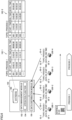
- Fig. 2 is a schematic diagram illustrating an overall configuration example of information processing system 1 of the embodiment.
- information processing system 1 includes a server device 100, one or more transmission devices 200-1, 200-2, 200-3, 200-4, 200-5, 200-6,... (hereinafter, also collectively referred to as a "transmission device 200"), and information processing devices 300-1, 300-2,... (hereinafter, also collectively referred to as an "information processing device 300").
- Server device 100 stores the data transmitted from transmission device 200 through a network 2 and executes required information processing. In addition, server device 100 provides the stored data in response to a totalization request from information processing device 300 or the like.
- Each of transmission devices 200 collects predetermined data from the production site or the like, and transmits the data to server device 100.
- the timing at which transmission device 200 transmits data to server device 100 can be arbitrarily determined.
- each of transmission devices 200 is disposed in any process, and transmits data collected from workpiece 10 passing through each process to server device 100.
- Information processing device 300 accesses the server device 100 through network 4 and provides arbitrary data.
- Fig. 3 is a block diagram illustrating a hardware configuration example of server device 100 of information processing system 1 according to the embodiment.
- server device 100 includes one or more processors 102 such as a central processing unit (CPU) and a micro-processing unit (MPU), a main memory 104, an optical drive 106, a storage 110, network controllers 120, 122, a universal serial bus (USB) controller 124, an input unit 126, and a display 128. These components are connected to each other through a bus 108.
- processors 102 such as a central processing unit (CPU) and a micro-processing unit (MPU), a main memory 104, an optical drive 106, a storage 110, network controllers 120, 122, a universal serial bus (USB) controller 124, an input unit 126, and a display 128.
- processors 102 such as a central processing unit (CPU) and a micro-processing unit (MPU), a main memory 104, an optical drive 106
- Processor 102 reads various programs stored in storage 110, develops the programs in main memory 104, and executes the programs, thereby implementing required processing in server device 100.
- storage 110 includes one or more nonvolatile storage devices such as a hard disk drive (HDD) or a flash solid state drive (SSD).
- Storage 110 typically stores an operating system (OS) 112 and an information processing program 114 implementing various processes described later. Required programs other than the program in Fig. 3 may be stored in storage 110.
- OS operating system
- information processing program 114 implementing various processes described later.
- Required programs other than the program in Fig. 3 may be stored in storage 110.
- Database 160 configured by the data collected from transmission device 200 may be implemented using a storage area of storage 110.
- Server device 100 may include optical drive 106.
- Optical drive 106 reads a computer-readable program from a recording medium 107 (for example, an optical recording medium such as a digital versatile disc (DVD)) that non-transiently stores the program, and stores the program in storage 110 or the like.
- a recording medium 107 for example, an optical recording medium such as a digital versatile disc (DVD)
- DVD digital versatile disc
- Various programs executed by server device 100 may be installed through computer-readable recording medium 107, and may be installed by being downloaded from an arbitrary server on the network.
- Network controller 120 controls data exchange with transmission device 200 and the like through network 2.
- Network controller 122 controls data exchange with information processing device 300 and the like through network 4.
- USB controller 124 controls data exchange with an external device (for example, a support device) through USB connection.
- Input unit 126 is configured of a touch panel, a mouse, a keyboard, and the like, and receives a user operation.
- Display 128 is configured of a display, various indicators, and the like, and outputs a processing result and the like from processor 102.
- processor 102 executing the program
- a part or all of provided processing may be implemented using a dedicated hardware circuit (for example, an application specific integrated circuit (ASIC) and a field-programmable gate array (FPGA)).
- ASIC application specific integrated circuit
- FPGA field-programmable gate array
- server device 100 may be executed using cloud computing on the network.
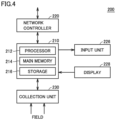
- Fig. 4 is a block diagram illustrating a hardware configuration example of transmission device 200 of information processing system 1 according to the embodiment.
- transmission device 200 includes a processing circuit 210, a network controller 220, an input unit 226, a display 228, and a collection unit 230.
- Processing circuit 210 includes a processor 212 such as a CPU or an MPU, a main memory 214, and a storage 216 such as a flash memory.
- processor 212 reads various programs stored in storage 216, develops the programs in main memory 214, and executes the programs, thereby implementing required processing in transmission device 200.
- Network controller 220 controls data exchange with server device 100 and the like through network 2.
- Input unit 226 is configured of a touch panel, a mouse, a keyboard, and the like, and receives a user operation.
- Display 228 is configured of a display, various indicators, and the like, and outputs a processing result and the like from processor 102.
- a touch panel display in which input unit 226 and display 228 are integrated may be adopted, or input unit 226 and display 228 may be omitted.
- Collection unit 230 includes an arbitrary configuration collecting the data.
- collection unit 230 can include an optical device that optically reads a two-dimensional or three-dimensional code applied to the workpiece or the like or an interface circuit that collects the data from an arbitrary measurement device.
- a main part of transmission device 200 may be implemented using hardware (for example, an industrial personal computer based on a general-purpose personal computer) according to a general-purpose architecture.
- transmission device 200 may be implemented not by a single device but by cooperation of a plurality of devices.
- transmission device 200 may be implemented by adding a communication interface generating and transmitting the transmission data to an existing sensor or a controller.
- a function corresponding to transmission device 200 may be implemented as software executed by an arbitrary device. In this case, it may be implemented by adding software corresponding to transmission device 200 in addition to the software executed by the existing device.
- Information processing device 300 of information processing system 1 of the embodiment is configured of a general personal computer or the like.
- a general personal computer is known, so that a detailed description thereof will not be given.
- Fig. 5 is a schematic diagram illustrating a functional configuration example implementing collection processing of information processing system 1 of the embodiment.
- server device 100 includes a data distribution module 150, a data management module 152, and a database 160.
- Transmission device 200 includes a data transmission module 250.
- Information processing device 300 includes a data acquisition module 350.
- Data transmission module 250 of transmission device 200 corresponds to a transmission unit, and collects and transmits data.
- the data transmitted by data transmission module 250 is referred to as "transmission data 50".
- Transmission data 50 includes topic 52 that indicates the attribute of stored data 54.
- Data 54 stored in transmission data 50 includes one or more values 58 and ID 56 associated with the one or more values 58.
- ID 56 is the identification information specifying data 54.
- Data distribution module 150 of server device 100 specifies topic 52 included in transmission data 50 received from data transmission module 250, and transfers transmission data 50 to data management module 152 and/or data acquisition module 350 that subscribes to specified topic 52.
- the distribution destination of transmission data 50 may be a plurality of modules.
- Data distribution module 150 may transfer all of received transmission data 50 to data management module 152.
- Data acquisition module 350 of information processing device 300 notifies data distribution module 150 of the topic of the subscription target specified by the user. In addition, data acquisition module 350 notifies data distribution module 150 of the topic of the data desired to be acquired from among the stored data. In response to the notification, data distribution module 150 sends the data corresponding to the specified topic to data acquisition module 350.
- the data management module 152 of the server device 100 stores the corresponding data 54 in database 160 based on the topic 52 included in transmission data 50 received from data distribution module 150. In this manner, data management module 152 specifies the storage destination of the data based on topic 52 included in transmission data 50, and stores data 54 included in transmission data 50 in the specified storage destination of the data.
- Data management module 152 may search the data stored in database 160 in response to the totalization request from data distribution module 150.
- data management module 152 may be responsible for updating (including addition and deletion) the data structure of database 160 as described later. Furthermore, data management module 152 may perform an arbitrary operation on data 54 included in transmission data 50.
- Database 160 is configured to store data for each topic. More specifically, database 160 stores one or more tables 162 for each topic 52. Each table 162 stores an ID 164 and one or more values 166 in association with each other.
- the topic is not limited to a single value as described above, but a hierarchical structure may be adopted.
- “relative notation” and/or “absolute notation” may be introduced.
- the “relative notation” indicates a route from an arbitrary reference, and may be a notation that does not start with “/” such as "line3/process5".
- the "absolute notation” indicates a route that can be uniquely specified in the target system, and for example, notation starting with “/” such as “/factory2/line3/process5" may be used.
- the head part (for example, "/factory2/") of the absolute notation can be referred to as a global topic
- the subsequent part for example, "line3/process5"
- the relative notation can also be considered as the local topic without the global topic.
- Fig. 6 is a schematic diagram illustrating an example of information processing system 1 of the embodiment.
- Fig. 6 illustrates an example in which workpiece 10 is processed in processes 1 and 2.
- Information processing system 1 collects the start time and the end time of processing on workpiece 10 in process 1 and process 2.
- workpiece 10 is conveyed by a conveyor or the like in the order of process 1 and process 2, and processing such as machining and assembly are performed in each process.
- a two-dimensional code 12 indicating an ID (001, 002, 003,%) specifying workpiece 10 is assigned to workpiece 10.
- Transmission device 200 optically reads two-dimensional code 12 to acquire the ID of workpiece 10, and also acquires the time when the ID is acquired. Transmission device 200 is disposed at a processing start point or a processing end point of any process. Accordingly, transmission device 200 can transmit the start time or the end time of the processing on workpiece 10 to server device 100 in each process. That is, data 54 of transmission data 50 transmitted by transmission device 200 includes the ID of workpiece 10 and the start time or the end time.
- transmission device 200-1 is disposed at the processing start point of process 1
- transmission device 200-2 is disposed at the processing end point of process 1.
- transmission device 200-3 is disposed at the processing start point of process 2
- transmission device 200-4 is disposed at the processing end point of process 2.
- each of transmission devices 200 optically reads two-dimensional code 12 assigned to workpiece 10, and transmits the time at which two-dimensional code 12 is optically read to server device 100.
- each of transmission devices 200 includes information specifying the disposed process in transmission data 50 as topic 52.
- transmission device 200-1 when workpiece 10 passes (when the processing on workpiece 10 in process 1 is started), transmission device 200-1 generates the ID of workpiece 10 obtained by optically reading two-dimensional code 12 assigned to workpiece 10 and the start time that is the time when the ID of workpiece 10 is read as data 54-1. Then, transmission device 200-1 adds "process 1" to data 54-1 as topic 52-1 to generate transmission data 50-1, and transmits transmission data 50-1 to server device 100.
- server device 100 When receiving transmission data 50-1 from transmission device 200-1, server device 100 (data management module 152) specifies table 162-1 corresponding to "process 1" that is the value of topic 52-1 included in transmission data 50-1, and stores data 54-1 (the ID and the start time) included in transmission data 50-1. At this time, because a record to which ID 164 having the same value as "001" that is the value of the ID of data 54-1 is assigned does not exist, server device 100 adds the new record.
- server device 100 (data management module 152) adds the new record in order to store the value associated with ID 56.
- transmission device 200-2 when workpiece 10 passes (when the processing on workpiece 10 in process 1 ends), transmission device 200-2 generates the ID of workpiece 10 obtained by optically reading two-dimensional code 12 assigned to workpiece 10 and the end time that is the time when the ID of workpiece 10 is read as data 54-2. Then, transmission device 200-2 adds "process 1" to data 54-2 as topic 52-2 to generate transmission data 50-2, and transmits transmission data 50-2 to server device 100.
- server device 100 When receiving transmission data 50-2 from transmission device 200-2, server device 100 (data management module 152) specifies table 162-1 corresponding to "process 1" that is the value of topic 52-2 included in transmission data 50-2, and stores data 54-2 (the ID and the end time) included in transmission data 50-2. At this time, because the record to which ID 164 having the same value as "001" that is the value of the ID of data 54-1 is assigned already exists, server device 100 stores the end time in the existing record.
- server device 100 calculates the difference between the start time and the end time as a work time for the record in which both the start time and the end time are stored. Then, server device 100 stores the calculated work time in the corresponding record.
- Operation function 154 of data management module 152 is in charge of the processing of calculating the work time from the start time and the end time for each of workpieces 10.
- the calculation of the work time by operation function 154 may be any one as long as the corresponding start time and end time become complete.
- the work time may be calculated immediately after the start time and the end time become complete, or the record in which the start time and the end time become complete may be extracted from the records included in table 162 every predetermined period, and the work time may be calculated for the extracted record.
- transmission device 200-3 When workpiece 10 passes (when the processing on workpiece 10 in process 2 is started), transmission device 200-3 generates the ID of workpiece 10 obtained by optically reading two-dimensional code 12 assigned to workpiece 10 and the start time that is the time when the ID of workpiece 10 is read as data 54 -3. Then, transmission device 200-3 adds "process 2" to data 54 -3 as topic 52-3 to generate transmission data 50-3, and transmits transmission data 50-3 to server device 100.
- transmission device 200-4 when workpiece 10 passes (when the processing on workpiece 10 in process 2 ends), transmission device 200-4 generates the ID of workpiece 10 obtained by optically reading two-dimensional code 12 assigned to workpiece 10 and the end time that is the time when the ID of workpiece 10 is read as data 54 -4. Then, transmission device 200-4 adds "process 2" to data 54-4 as topic 52-4 to generate transmission data 50-4, and transmits transmission data 50-4 to server device 100.
- server device 100 When receiving transmission data 50-3 and transmission data 50-4 from transmission device 200-3 and transmission device 200-4, respectively, server device 100 (data management module 152) specifies table 162-2 corresponding to "process 2" and stores data 54 -2 and data 54 -4 included in transmission data 50-3, 50-4. In addition, server device 100 (operation function 154 of data management module 152) also calculates the difference between the start time and the end time as the work time for transmission data 50-3 and transmission data 50-4.
- operation function 154 of data management module 152 executes the predetermined operation for a plurality of values (for example, "start time” and “end time”) associated with the same ID, and adds a new value (for example, "work time”).
- Fig. 7 is a schematic diagram illustrating an example of a temporal change generated in a data structure of database 160 in information processing system 1 of Fig. 6 .
- Fig. 7 illustrates the example of a temporal change generated in the data structure of database 160 when the same workpiece 10 is sequentially processed in process 1 and process 2.
- Transmission data 50-1 includes information about "process 1" as topic 52-1.
- the table corresponding to "process 1" does not exist, so that data management module 152 of server device 100 generates a new table. More specifically, data management module 152 generates the table to which "process 1" is assigned based on topic 52-1 included in transmission data 50-1 ((1) in Fig. 7 ). A column storing the ID that is essential information may be initially set in the generated table.
- data management module 152 of server device 100 newly generates the table associated with the topic.
- data management module 152 stores the value of the ID and the value of the start time included in transmission data 50-1 in the target record ((3) in Fig. 7 ).
- server device 100 receives transmission data 50-2, the column corresponding to the "end time" that is the data name included in transmission data 50-2 does not exist, so that data management module 152 adds the new column ((4) in Fig. 7 ).
- data management module 152 specifies the record corresponding to the value of the ID included in transmission data 50-2 and stores the value of the end time included in transmission data 50-2 in the target record. Furthermore, data management module 152 calculates the working time from the value of the start time and the value of the end time. Because the column corresponding to "working time", data management module 152 adds the new column. Finally, data management module 152 stores the calculated working time value in the target record ((5) in Fig. 7 ).
- server device 100 executes the same processing as described above.
- Transmission data 50-3 includes information about "process 2" as topic 52-3.
- Data management module 152 of server device 100 generates the table to which "process 2" is assigned based on topic 52-3 included in transmission data 50-3 ((6) in Fig. 7 ). Subsequently, the column corresponding to the "start time” that is the data name included in transmission data 50-3 does not exist, so that data management module 152 adds the new column ((7) in Fig. 7 ). Then, data management module 152 stores the value of the ID and the value of the start time included in transmission data 50-3 in the target record ((8) in Fig. 7 ).
- server device 100 receives transmission data 50-4, the column corresponding to the "end time" that is the data name included in transmission data 50-4 does not exist, so that data management module 152 adds the new column ((9) in Fig. 7 ).
- data management module 152 specifies the record corresponding to the value of the ID included in transmission data 50-4, and stores the value of the end time included in transmission data 50-4 in the target record. Furthermore, data management module 152 calculates the work time from the value of the start time and the value of the end time. The column corresponding to "work time", so that data management module 152 adds the new column. Finally, data management module 152 stores the calculated work time value in the target record ((10) in Fig. 7 ).
- Data management module 152 of server device 100 executes the above-described processing each time transmission data 50 is received.
- the generation of the new table and/or the addition of the new column are executed only when transmission data 50 including new topic 52 is received.
- Fig. 8 is a flowchart illustrating a processing procedure executed by server device 100 related to the collection processing of information processing system 1 of the embodiment.
- processor 102 of server device 100 executes information processing program 114 to implement each step in Fig. 8 .
- server device 100 manages database 160 configured to store data for each topic (step S100). Then, server device 100 determines whether transmission data 50 is received from any one of transmission devices 200 (step S102). That is, server device 100 determines whether transmission device 200 transmits transmission data 50 to server device 100. When transmission data 50 is not received (NO in step S102), the processing in step S102 is repeated.
- server device 100 determines whether table 162 corresponding to topic 52 included in received transmission data 50 exists (step S104).
- server device 100 When table 162 corresponding to topic 52 included in received transmission data 50 does not exist (NO in step S104), server device 100 generates new table 162 corresponding to topic 52 included in received transmission data 50 (step S106).
- server device 100 specifies the storage destination of the data based on topic 52 included in transmission data 50.
- server device 100 determines whether a record to which ID 164 having the same value as ID 56 included in received transmission data 50 is assigned exists (step S108).
- server device 100 When the record to which ID 164 having the same value as ID 56 included in received transmission data 50 is assigned does not exist (NO in step S108), server device 100 generates the record to which ID 56 included in received transmission data 50 is assigned as ID 164 (step S110).
- server device 100 specifies the data name (start time and/or end time) of data 54 included in received transmission data 50 (step S112). Then, server device 100 determines whether the specified data name exists in table 162 of the storage destination (step S 114).
- server device 100 adds the new column corresponding to the data name that does not exist (step S116).
- server device 100 stores value 58 included in data 54 included in received transmission data 50 in the corresponding column of the record to which ID 164 having the same value as ID 56 is assigned (step S118). In this manner, server device 100 stores data 54 included in transmission data 50 in the storage destination of the specified data. At this time, when the value associated with the same ID 56 as ID 164 included in transmission data 50 is already stored in database 160, server device 100 stores one or more values 58 included in data 54 included in transmission data 50 in association with ID 164 already stored in database 160.
- server device 100 determines whether the start time and the end time become complete in the record to which ID 164 having the same value as ID 56 is assigned (step S120). In the record to which ID 164 having the same value as ID 56 is assigned, when the start time and the end time become complete (YES in step S120), server device 100 calculates the work time from the start time and the end time (step S122).
- step S122 In the record to which ID 164 having the same value as ID 56 is assigned, when the start time and the end time do not become complete (NO in step S 120), the processing in step S122 is skipped.
- the time (work time) required for the work on workpiece 10 can be collected.
- Workpieces 10 are sequentially processed, the start time, so that the end time, and the work time can be used as the data analyzing an average value, variation, or the like of the work time required for each process by accumulating the start time, the end time, and the work time for all workpieces 10.
- different transmission devices 200 transmit the data (the start time and the end time) about the same workpiece 10 to server device 100 at different timings. Even in the case where a plurality of temporally distributed data are transmitted as described above, the required data can be aggregated for each workpiece 10 using topic 52 and ID 56.
- information processing system 1 of the embodiment collects the data from the plurality of transmission devices 200 based on the topic.
- the plurality of types of data are sequentially collected for the same ID. Accordingly, management of the topic and data name specified when transmission device 200 transmits the data is required.
- the topic and the data name are set in data transmission module 250 of transmission device 200.
- the same topic 52 (process 1" in the example of Fig. 6 ) and ID (in the example of Fig. 6 , the value read from two-dimensional code 12 assigned to workpiece 10) are set for transmission device 200-1 and transmission device 200-2, "start time” is set as the data name for transmission device 200-1, and "end time” is set as the data name for transmission device 200-1, thereby implementing the data aggregation and operation in server device 100.
- the system in which the plurality of transmission devices 200 transmit the data independently is adopted, there is a possibility that the same topic is unintentionally set among the plurality of transmission devices 200 that should not be associated with each other. Accordingly, when the topic is set, preferably the presence or absence of duplication or the like is checked. Similarly, when the data name is set, preferably the presence or absence of duplication or the like is checked.
- data transmission module 250 inquires server device 100 whether the topic and/or the data name to be set is already used by another data transmission module 250.
- a setting error or the like can be prevented by notifying the user.
- Fig. 9 is a schematic diagram illustrating management processing of information processing system 1 of the embodiment.
- data management module 152 of server device 100 has a registration management function 156.
- Registration management function 156 of data management module 152 includes a setting table 170 recording the topic and/or the data name set in transmission device 200.
- the topic and/or the data name are/is set in transmission device 200 that is the transmission source of transmission data 50, registration management function 156 of data management module 152 registers the setting content in setting table 170.
- data transmission module 250-1 of transmission device 200-1 provides the user with an interface accepting the setting of the topic and/or the data name.
- Fig. 9 illustrates an example of a setting window 260.
- the user inputs the value (for example, "process 1") of the topic desired to be set in an input window 262 of setting window 260.
- data transmission module 250-1 of transmission device 200-1 transmits the content set by the user to server device 100.
- Registration management function 156 of data management module 152 registers the setting contents from data transmission module 250-1 of transmission device 200-1 in setting table 170. In this manner, registration management function 156 of data management module 152 manages the topic and/or the data name transmitted from transmission device 200-1, so that the inquiry about the presence or absence of the duplication or the like can be responded to.
- Fig. 9 illustrates setting window 260 setting the topic, and setting window 260 may set the data name.
- data transmission module 250-1 of transmission device 200-1 presents setting window 260 to the user, and the user inputs the value (for example, "process 1") of the topic desired to be set in input window 262 of setting window 260. Then, data transmission module 250-2 of transmission device 200-2 transmits the content set by the user to server device 100.
- Registration management function 156 of data management module 152 refers to setting table 170 to determine whether the same content as the setting content is registered from data transmission module 250-2 of transmission device 200-2. Registration management function 156 of data management module 152 responds to data transmission module 250-2 of transmission device 200-2 whether the same content as the setting content from the data transmission module 250-2 is registered.
- data transmission module 250-2 of transmission device 200-2 notifies the fact. For example, a notification window 264 notifying that the setting content is already registered may be displayed.
- registration management function 156 of data management module 152 determines whether the same topic as the topic set in data transmission module 250 (transmission device 200) already exists in database 160.
- registration management function 156 of data management module 152 may determine whether the same data name as the data name of one or more values 58 included in transmission data 50 transmitted by data transmission module 250 (transmission device 200) already exists in database 160.
- An error in setting of the topic and/or the data name and the like can be prevented by implementing such the management function.
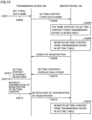
- Fig. 10 is a sequence diagram illustrating a processing procedure related to the management processing of information processing system 1 of the embodiment.
- transmission device 200 when receiving the setting for the topic and/or the data name from the user (sequence SQ200), transmits the received setting content to server device 100 (registration management function 156 of data management module 152) (sequence SQ202).
- Server device 100 refers to setting table 170 to determine whether the same content as the setting content from transmission device 200 is registered (sequence SQ204). When the same content as the setting content from transmission device 200 is not registered, server device 100 registers the setting content from transmission device 200 in setting table 170 (sequence SQ206), and notifies transmission device 200 of registration completion (sequence SQ208).
- server device 100 When the same content as the setting content from transmission device 200 is registered, server device 100 notifies transmission device 200 that the setting content overlaps each other (sequence SQ210). Transmission device 200 notifies the user that the setting content is already registered (sequence SQ212).
- transmission device 200 When the user instructs to continue registration of the setting content (sequence SQ214), transmission device 200 notifies server device 100 of the continuation of the registration (sequence SQ216). In accordance with the notification of the continuation of the registration from transmission device 200, server device 100 registers the setting content from transmission device 200 in setting table 170 (sequence SQ218).
- KPIs key performance indicators
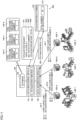
- Fig. 11 is a schematic diagram illustrating totalization processing of information processing system 1 of the embodiment.
- Fig. 11 illustrates an example in which the defective number of each line is collected as data associated with a subtopic, and the total number of defectives of the entire line is designated as a parent topic for totalization. The case where three lines of "line 1", “line 2", “line 3" exist on "floor 2" is illustrated as an example.
- a programmable logic controller that controls each line functions as transmission devices 200-5, 200-6, 200-7.
- PLC programmable logic controller
- Each of transmission devices 200-5, 200-6, 200-7 counts the number of defectives generated in line 54 in charge, and transmits transmission data 50-5, 50-6, 50-7 including the counted number of defectives as data 54-5, 54-6, 54-7 to server device 100.
- Topic 52-5, 52-6, 52-7 included in transmission data 50-5, 50-6, 50-7 designates a target floor and line in a hierarchical structure. More specifically, topic 52-5 of transmission data 50-5 is "floor2/line1", topic 52-6 of transmission data 50-6 is “floor2/line2”, and topic 52-7 of transmission data 50-7 is "floor2/line3".
- Database 160 of server device 100 stores tables 162-3, 162-4, 162-5 corresponding to respective topics 52.
- tables 162-3, 162-4, 162-5 "floor2/line1", “floor2/line2”, and “floor2/line3" are assigned as topics, respectively.
- Data management module 152 stores transmission data 50-5, 50-6, 50-7 received from transmission device 200-5, 200-6, 200-7 in table 162 corresponding to topic 52.
- the value of the number of defectives included in data 54 is stored in the column of a "defective number".
- Data management module 152 of server device 100 has a totalization function 158.
- Totalization function 158 of data management module 152 searches and totalizes the data stored in one or more tables 162 in response to a totalization request 184.
- totalization function 158 extracts the target data based on the hierarchical structure of the topics, and executes specified totalization processing on the extracted data to generate a totalization result.
- information processing device 300 transmits totalization request 184 to server device 100.
- Information processing device 300 may display a setting window setting the content of totalization request 184.
- totalization request 184 includes a topic 1841, a key 1842, and a totalization method 1843.
- Totalization request 184 may include a description using the wildcard designating the target topic.
- the "defective number” is designated for key 1842, and “total” is designated for totalization method 1843.
- Totalization function 158 of data management module 152 extracts the table matched with "floor 2/+” that is designated topic 1841 among tables 162 stored in database 160. That is, "floor 2/+” means all tables 162 to which the topics starting with "floor” are assigned, so that tables 162-3, 162-4, 162-5 are extracted as the target.
- totalization function 158 of data management module 152 extracts values stored in the column of the "defective number" that is designated key 1842 from extracted table 162.
- totalization function 158 of data management module 152 calculates a sum of the extracted values according to "total" that is designated totalization method 1843. Then, totalization function 158 of data management module 152 responds to information processing device 300 with the calculated total number of defectives as the totalization result. Information processing device 300 displays a result window 370 including totalization result 372.
- totalization function 158 of data management module 152 executes the totalization processing designated by totalization request 184 for the plurality of values associated with topic 1841 designated by totalization request 184 in response to totalization request 184.
- topic 52 of the hierarchical structure the totalization processing can be easily realized for a plurality of data sources (for example, a line).
- Server device 100 may execute the totalization processing in response to the reception of totalization request 184. That is, when receiving totalization request 184, totalization function 158 of data management module 152 may execute the totalization processing according to received totalization request 184.
- totalization function 158 of data management module 152 may periodically execute predetermined totalization processing, and store the obtained totalization result in a table assigned with another topic. For example, by totalizing the data for one day by nighttime batch processing, the totalization processing each time totalization request 184 is received is not required to be executed, the processing load can be reduced, and the response of the totalization result can be speeded up.
- Fig. 12 is a flowchart illustrating a processing procedure executed by server device 100 related to the totalization processing of information processing system 1 of the embodiment.
- processor 102 of server device 100 executes information processing program 114 to implement each step in Fig. 12 .
- server device 100 determines whether totalization request 184 is received (step S300). When totalization request 184 is not received (NO in step S300), the processing in step S300 is repeated.
- server device 100 When totalization request 184 is received (YES in step S300), server device 100 extracts target table 162 based on topic 1841 included in totalization request 184 (step S302). Then, server device 100 extracts the value stored in the column designated by key 1842 included in totalization request 184 among the extracted one or plurality of tables 162 (step S304). Furthermore, server device 100 executes totalization processing on the extracted values according to totalization method 1843 included in totalization request 184 to generate the totalization result (step S306). Then, server device 100 responds to the transmission source of totalization request 184 with the generated totalization result (step S308).
- the generated data is also spatially and temporally distributed.
- the data related to each other is required to be aggregated and processing such as totalization is also required.
- the information processing system of the embodiment can efficiently collect the data acquired from the production site using the topic and the ID.
- the change of the production resource can be flexibly responded to by appropriately setting or appropriately changing the topic and the ID.
Landscapes
- Engineering & Computer Science (AREA)
- Theoretical Computer Science (AREA)
- Databases & Information Systems (AREA)
- Physics & Mathematics (AREA)
- General Engineering & Computer Science (AREA)
- General Physics & Mathematics (AREA)
- Data Mining & Analysis (AREA)
- Software Systems (AREA)
- Computing Systems (AREA)
- Computer Security & Cryptography (AREA)
- Information Retrieval, Db Structures And Fs Structures Therefor (AREA)
- Health & Medical Sciences (AREA)
- General Health & Medical Sciences (AREA)
- Medical Informatics (AREA)
- Computer Networks & Wireless Communication (AREA)
- Signal Processing (AREA)
- Two-Way Televisions, Distribution Of Moving Picture Or The Like (AREA)
- Management Or Editing Of Information On Record Carriers (AREA)
Abstract
An information processing system (1) includes: a transmission unit (200, 250) configured to transmit transmission data (50) including data (54) including one or more values (58) and identification information (56) associated with the one or more values and a topic (52) indicating an attribute of the data; a database (160, 162) configured to store data for each topic; and a data management unit (152) configured to specify a storage destination of data based on the topic included in the transmission data and stores the data included in the transmission data in the specified storage destination of the data. When a value associated with same identification information as the identification information included in the transmission data is already stored in the database, the data management unit stores one or more values included in the data included in the transmission data in association with the identification information already stored in the database.
Description
- The present invention relates to an information processing system, an information processing method, and an information processing program related to data collection.
- Along with progress of information communication technology, efforts to collect and utilize various data have been made.
- For example,
Japanese National Patent Publication No. 2020-503784 Japanese Patent Laying-Open No. 2019-133610 - In addition, as a technique for searching collected data,
Japanese National Patent Publication No. 2017-516213 - At a production site and the like, efforts to collect and utilize various data have been made. In the production site and the like, related data is required to be associated for each workpiece and/or each process. In order to implement such the data association, common identification information is required to be assigned to the associated data. Problems such as an increase in an amount of data to be stored and an increase in analysis processing load may be generated by assigning the common identification information to each data.
- One object of the present invention is to provide a technique for efficiently collecting and storing data and facilitating data utilization.
- An information processing system according to one example of the present invention includes: a transmission unit configured to transmit transmission data including data including one or more values and identification information associated with the one or more values and a topic indicating an attribute of the data; a database configured to store data for each topic; and a data management unit configured to specify a storage destination of data based on the topic included in the transmission data and stores the data included in the transmission data in the specified storage destination of the data. When a value associated with same identification information as the identification information included in the transmission data is already stored in the database, the data management unit stores one or more values included in the data included in the transmission data in association with the identification information already stored in the database.
- According to this configuration, even when a plurality of transmission data including the same topic and the same identification information are transmitted, one or more values included in each transmission data are stored in the database in association with the same topic and the same identification information. Thus, even when the plurality of transmission data are transmitted at different timings, the data included in each transmission data can be efficiently collected and stored. In addition, because items and the like can be automatically added to the database based on the transmission data, the structure of the database is not required to be explicitly changed.
- When a storage destination of data associated with the topic included in the transmission data does not exist, the data management unit may newly generate the storage destination of data associated with the topic. According to this configuration, even in the case where the transmission data including the new topic is generated, the inside of the database can be automatically expanded, so that the database is not required to be reconfigured, and a flexibly expandable database can be implemented.
- When the value associated with the same identification information as the identification information included in the transmission data is not stored in the database, the data management unit may add a new record in order to store the value associated with the identification information. According to this configuration, when the transmission data including the value associated with new identification information is generated, the value associated with the new identification information can be reliably stored in the database.
- When a column storing a data name of a value included in the transmission data does not exist, the data management unit may add a new column in order to store the value of the data name. According to this configuration, even when a plurality of values associated with the same identification information exist, an area where each value is stored can be flexibly secured.
- The data management unit may execute a predetermined operation on a plurality of values associated with the same identification information and add a new value. According to this configuration, more useful information can be generated by executing an arbitrary operation on the values individually collected by the collection unit.
- The data management unit may determine whether same topic as the topic set in the transmission unit already exists in the database. According to this configuration, when a transmission unit is newly added, a possibility that the already used topic is erroneously set can be reduced.
- The data management unit may determine whether same data name as the data name of the one or more values included in the transmission data transmitted by the transmission unit already exists in the database. According to this configuration, when a transmission unit is newly added, the possibility that the already used data name is erroneously set can be reduced.
- The topics may be described in a hierarchical structure. According to this configuration, the topic can be described in association with the configuration of the production site that is the data collection target.
- According to a totalization request, the data management unit may execute totalization processing designated by the totalization request on a plurality of values associated with a topic designated by the totalization request. According to this configuration, the totalization result for a plurality of values related to a specific topic can be easily acquired.
- The totalization request may include a description using a wildcard for designating a target topic. According to this configuration, even when each of the target topics cannot be specified, the totalization processing can be executed when at least a part of the common attribute is specified.
- When receiving the totalization request, the data management unit may execute the totalization processing according to the received totalization request. According to this configuration, the processing result can be acquired every time the totalization request is transmitted.
- An information processing method according to another example of the present invention includes: managing a database configured to store data for each topic; transmitting transmission data including data including one or more values and identification information associated with the one or more values and a topic indicating an attribute of the data; specifying a storage destination of data based on the topic included in the transmission data; and storing the data included in the transmission data in the specified storage destination of the data. The storing includes storing one or more values included in the data included in the transmission data in association with the identification information already stored in the database when a value associated with same identification information as the identification information included in the transmission data is already stored in the database.
- An information processing program according to still another example of the present invention causing a computer to execute: managing a database configured to store data for each topic; specifying a storage destination of data based on a topic included in transmission data in response to the transmission data including data including one or more values and identification information associated with the one or more values and the topic indicating an attribute of the data; and storing the data included in the transmission data in the specified storage destination of the data. The storing includes storing one or more values included in the data included in the transmission data in association with the identification information already stored in the database when a value associated with same identification information as the identification information included in the transmission data is already stored in the database.
- The foregoing and other objects, features, aspects and advantages of the present invention will become more apparent from the following detailed description of the present invention when taken in conjunction with the accompanying drawings.
-
-
Figs. 1A and 1B are each a schematic diagram illustrating an application example of an information processing system according to an embodiment. -
Fig. 2 is a schematic diagram illustrating an overall configuration example of the information processing system of the embodiment. -
Fig. 3 is a block diagram illustrating a hardware configuration example of a server device of the information processing system according to the embodiment. -
Fig. 4 is a block diagram illustrating a hardware configuration example of a transmission device of the information processing system according to the embodiment. -
Fig. 5 is a schematic diagram illustrating a functional configuration example implementing collection processing of the information processing system of the embodiment. -
Fig. 6 is a schematic diagram illustrating an example of the information processing system of the embodiment. -
Fig. 7 is a schematic diagram illustrating an example of a temporal change generated in a data structure of a database in the information processing system ofFig. 6 . -
Fig. 8 is a flowchart illustrating a processing procedure executed by the server device related to the collection processing of the information processing system of the embodiment. -
Fig. 9 is a schematic diagram illustrating management processing of the information processing system of the embodiment. -
Fig. 10 is a sequence diagram illustrating a processing procedure related to the management processing of the information processing system of the embodiment. -
Fig. 11 is a schematic diagram illustrating totalization processing of the information processing system of the embodiment. -
Fig. 12 is a flowchart illustrating a processing procedure executed by the server device related to the totalization processing of the information processing system of the embodiment. - With reference to the drawings, an embodiment of the present invention will be described in detail. The same or equivalent part in the drawings is denoted by the same reference numeral, and the description will not be repeated.
- An example of a scene to which the present invention is applied will be described.
-
Figs. 1A and 1B are schematic diagrams illustrating an application example of aninformation processing system 1 according to the embodiment. With reference toFigs. 1A and 1B ,information processing system 1 includes aserver device 100 that receivestransmission data 50 from adata transmission module 250.Server device 100 includes adata management module 152 and adatabase 160. -
Transmission data 50 transmitted bydata transmission module 250 includesdata 54 and atopic 52 indicating an attribute ofdata 54.Data 54 included intransmission data 50 includes one ormore values 58 and anID 56 that is identification information associated with the one ormore values 58.ID 56 is identificationinformation specifying data 54. - In the present specification, the "topic" means arbitrary information indicating the attribute of the data, and is appropriately set according to a target collecting the data. The topic can be set in any unit of data desired to be managed. For example, a process name in which the data is collected, a place (factory name or floor name) in which the data is collected, a device in which the data is collected, a work type in which the data is collected, and the like can be set as the topic.
-
Database 160 stores one or more tables 162 for eachtopic 52. That is,database 160 is configured to store data for each topic.Fig. 1 illustrates an example in which two tables 162 to which "TP1" and "TP2" are respectively assigned astopics 52 are stored indatabase 160. -
Data management module 152 specifies a storage destination (table 162) ofdata 54 based ontopic 52 included intransmission data 50, andstores data 54 included intransmission data 50 in the specified storage destination of the data. - In the example of
Figs. 1A and 1B ,data 54 is configured to store two values of "start time" and "end time" as data names. However, indata 54 ofFig. 1A , only the value of "start time" is stored, and the value of "end time" is not stored (for example, null is stored). On the other hand, only the value of "end time" is stored indata 54 ofFig. 1B , and the value of "start time" is not stored (for example, null is stored). -
Data 54 inFigs. 1A and 1B includes the same ID 56 (for example, "001"). - With reference to
Fig. 1A ,data management module 152 specifies table 162 to which "TP1" is assigned based ontopic 52 oftransmission data 50. Then,data management module 152 newly generates an entry of "001" that isID 56 included intransmission data 50, and stores value 58 of "start time" included intransmission data 50 in the entry. - Thereafter, as illustrated in
Fig. 1B , whendata management module 152 receivestransmission data 50, table 162 to which "TP1" is assigned is specified based ontopic 52 oftransmission data 50. Here, because the entry of "001" that isID 56 included intransmission data 50 already exists,data management module 152 does not generate a new entry, but stores value 58 of "end time" included intransmission data 50 in the existing entry of "001" in the entry. - As described above, when
value 58 associated with the same identification information as the identification information (ID 56) included intransmission data 50 is already stored in database 160 (or table 162),data management module 152 stores one ormore values 58 included indata 54 included intransmission data 50 in association with identification information (ID 56) already stored indatabase 160. - By adopting such the configuration, even when a plurality of pieces of
transmission data 50 including the same topic and the same identification information (ID 56) are transmitted at different timings, all values can be stored in database 160 (or table 162) in association with the same topic and the same identification information. Thus, the topic and the identification information do not need to be duplicately stored indatabase 160, and the data can be efficiently collected and stored. -
Information processing system 1 of the embodiment mainly collects the data from a production site, but a target collecting the data is not particularly limited. -
Fig. 2 is a schematic diagram illustrating an overall configuration example ofinformation processing system 1 of the embodiment. With reference toFig. 2 ,information processing system 1 includes aserver device 100, one or more transmission devices 200-1, 200-2, 200-3, 200-4, 200-5, 200-6,... (hereinafter, also collectively referred to as a "transmission device 200"), and information processing devices 300-1, 300-2,... (hereinafter, also collectively referred to as an "information processing device 300"). -
Server device 100 stores the data transmitted fromtransmission device 200 through anetwork 2 and executes required information processing. In addition,server device 100 provides the stored data in response to a totalization request frominformation processing device 300 or the like. - Each of
transmission devices 200 collects predetermined data from the production site or the like, and transmits the data toserver device 100. The timing at whichtransmission device 200 transmits data toserver device 100 can be arbitrarily determined. - As illustrated in
Fig. 2 , assuming a line in which aworkpiece 10 becomes a product through a plurality of processes, each oftransmission devices 200 is disposed in any process, and transmits data collected fromworkpiece 10 passing through each process toserver device 100. -
Information processing device 300 accesses theserver device 100 throughnetwork 4 and provides arbitrary data. - An example of a hardware configuration of a device constituting
information processing system 1 according to the embodiment will be described below. -
Fig. 3 is a block diagram illustrating a hardware configuration example ofserver device 100 ofinformation processing system 1 according to the embodiment. With reference toFig. 3 ,server device 100 includes one ormore processors 102 such as a central processing unit (CPU) and a micro-processing unit (MPU), amain memory 104, anoptical drive 106, astorage 110,network controllers controller 124, aninput unit 126, and adisplay 128. These components are connected to each other through abus 108. -
Processor 102 reads various programs stored instorage 110, develops the programs inmain memory 104, and executes the programs, thereby implementing required processing inserver device 100. - For example,
storage 110 includes one or more nonvolatile storage devices such as a hard disk drive (HDD) or a flash solid state drive (SSD).Storage 110 typically stores an operating system (OS) 112 and aninformation processing program 114 implementing various processes described later. Required programs other than the program inFig. 3 may be stored instorage 110. -
Database 160 configured by the data collected fromtransmission device 200 may be implemented using a storage area ofstorage 110. -
Server device 100 may includeoptical drive 106.Optical drive 106 reads a computer-readable program from a recording medium 107 (for example, an optical recording medium such as a digital versatile disc (DVD)) that non-transiently stores the program, and stores the program instorage 110 or the like. - Various programs executed by
server device 100 may be installed through computer-readable recording medium 107, and may be installed by being downloaded from an arbitrary server on the network. -
Network controller 120 controls data exchange withtransmission device 200 and the like throughnetwork 2.Network controller 122 controls data exchange withinformation processing device 300 and the like throughnetwork 4. -
USB controller 124 controls data exchange with an external device (for example, a support device) through USB connection. -
Input unit 126 is configured of a touch panel, a mouse, a keyboard, and the like, and receives a user operation.Display 128 is configured of a display, various indicators, and the like, and outputs a processing result and the like fromprocessor 102. - Although the configuration example in which required processing are provided by
processor 102 executing the program has been described inFig. 3 , a part or all of provided processing may be implemented using a dedicated hardware circuit (for example, an application specific integrated circuit (ASIC) and a field-programmable gate array (FPGA)). - In addition, all or a part of the processing that
server device 100 is in charge of may be executed using cloud computing on the network. -
Fig. 4 is a block diagram illustrating a hardware configuration example oftransmission device 200 ofinformation processing system 1 according to the embodiment. With reference toFig. 4 ,transmission device 200 includes aprocessing circuit 210, anetwork controller 220, aninput unit 226, adisplay 228, and acollection unit 230. -
Processing circuit 210 includes aprocessor 212 such as a CPU or an MPU, amain memory 214, and astorage 216 such as a flash memory.Processor 212 reads various programs stored instorage 216, develops the programs inmain memory 214, and executes the programs, thereby implementing required processing intransmission device 200. -
Network controller 220 controls data exchange withserver device 100 and the like throughnetwork 2. -
Input unit 226 is configured of a touch panel, a mouse, a keyboard, and the like, and receives a user operation.Display 228 is configured of a display, various indicators, and the like, and outputs a processing result and the like fromprocessor 102. A touch panel display in whichinput unit 226 anddisplay 228 are integrated may be adopted, orinput unit 226 anddisplay 228 may be omitted. -
Collection unit 230 includes an arbitrary configuration collecting the data. For example,collection unit 230 can include an optical device that optically reads a two-dimensional or three-dimensional code applied to the workpiece or the like or an interface circuit that collects the data from an arbitrary measurement device. - Although the configuration example in which the required processing is provided by
processor 212 executing the program has been illustrated inFig. 4 , some or all of the provided processing may be mounted using the dedicated hardware circuit (for example, the ASIC or the FPGA). Alternatively, a main part oftransmission device 200 may be implemented using hardware (for example, an industrial personal computer based on a general-purpose personal computer) according to a general-purpose architecture. - Furthermore,
transmission device 200 may be implemented not by a single device but by cooperation of a plurality of devices. For example,transmission device 200 may be implemented by adding a communication interface generating and transmitting the transmission data to an existing sensor or a controller. - Furthermore, a function corresponding to
transmission device 200 may be implemented as software executed by an arbitrary device. In this case, it may be implemented by adding software corresponding totransmission device 200 in addition to the software executed by the existing device. -
Information processing device 300 ofinformation processing system 1 of the embodiment is configured of a general personal computer or the like. A general personal computer is known, so that a detailed description thereof will not be given. - Basic collection processing in
information processing system 1 of the embodiment will be described below. -
Fig. 5 is a schematic diagram illustrating a functional configuration example implementing collection processing ofinformation processing system 1 of the embodiment. With reference toFig. 5 , ininformation processing system 1,server device 100 includes adata distribution module 150, adata management module 152, and adatabase 160.Transmission device 200 includes adata transmission module 250.Information processing device 300 includes adata acquisition module 350. -
Data transmission module 250 oftransmission device 200 corresponds to a transmission unit, and collects and transmits data. The data transmitted bydata transmission module 250 is referred to as "transmission data 50". -
Transmission data 50 includestopic 52 that indicates the attribute of storeddata 54.Data 54 stored intransmission data 50 includes one ormore values 58 andID 56 associated with the one ormore values 58.ID 56 is the identificationinformation specifying data 54. -
Data distribution module 150 ofserver device 100 specifiestopic 52 included intransmission data 50 received fromdata transmission module 250, and transferstransmission data 50 todata management module 152 and/ordata acquisition module 350 that subscribes to specifiedtopic 52. The distribution destination oftransmission data 50 may be a plurality of modules.Data distribution module 150 may transfer all of receivedtransmission data 50 todata management module 152. -
Data acquisition module 350 ofinformation processing device 300 notifiesdata distribution module 150 of the topic of the subscription target specified by the user. In addition,data acquisition module 350 notifiesdata distribution module 150 of the topic of the data desired to be acquired from among the stored data. In response to the notification,data distribution module 150 sends the data corresponding to the specified topic todata acquisition module 350. - The
data management module 152 of theserver device 100 stores the correspondingdata 54 indatabase 160 based on thetopic 52 included intransmission data 50 received fromdata distribution module 150. In this manner,data management module 152 specifies the storage destination of the data based ontopic 52 included intransmission data 50, andstores data 54 included intransmission data 50 in the specified storage destination of the data. -
Data management module 152 may search the data stored indatabase 160 in response to the totalization request fromdata distribution module 150. - In addition,
data management module 152 may be responsible for updating (including addition and deletion) the data structure ofdatabase 160 as described later. Furthermore,data management module 152 may perform an arbitrary operation ondata 54 included intransmission data 50. -
Database 160 is configured to store data for each topic. More specifically,database 160 stores one or more tables 162 for eachtopic 52. Each table 162 stores anID 164 and one ormore values 166 in association with each other. - The topic is not limited to a single value as described above, but a hierarchical structure may be adopted. In the case of describing in the hierarchical structure, "relative notation" and/or "absolute notation" may be introduced. The "relative notation" indicates a route from an arbitrary reference, and may be a notation that does not start with "/" such as "line3/process5".
- Furthermore, the "absolute notation" indicates a route that can be uniquely specified in the target system, and for example, notation starting with "/" such as "/factory2/line3/process5" may be used. At this time, the head part (for example, "/factory2/") of the absolute notation can be referred to as a global topic, and the subsequent part (for example, "line3/process5") can be referred to as a local topic. The relative notation can also be considered as the local topic without the global topic.
-
Fig. 6 is a schematic diagram illustrating an example ofinformation processing system 1 of the embodiment.Fig. 6 illustrates an example in which workpiece 10 is processed inprocesses Information processing system 1 collects the start time and the end time of processing onworkpiece 10 inprocess 1 andprocess 2. - With reference to
Fig. 6 ,workpiece 10 is conveyed by a conveyor or the like in the order ofprocess 1 andprocess 2, and processing such as machining and assembly are performed in each process. A two-dimensional code 12 indicating an ID (001, 002, 003,...) specifyingworkpiece 10 is assigned toworkpiece 10. -
Transmission device 200 optically reads two-dimensional code 12 to acquire the ID ofworkpiece 10, and also acquires the time when the ID is acquired.Transmission device 200 is disposed at a processing start point or a processing end point of any process. Accordingly,transmission device 200 can transmit the start time or the end time of the processing onworkpiece 10 toserver device 100 in each process. That is,data 54 oftransmission data 50 transmitted bytransmission device 200 includes the ID ofworkpiece 10 and the start time or the end time. - More specifically, transmission device 200-1 is disposed at the processing start point of
process 1, and transmission device 200-2 is disposed at the processing end point ofprocess 1. Similarly, transmission device 200-3 is disposed at the processing start point ofprocess 2, and transmission device 200-4 is disposed at the processing end point ofprocess 2. - As described above, when workpiece 10 passes, each of
transmission devices 200 optically reads two-dimensional code 12 assigned toworkpiece 10, and transmits the time at which two-dimensional code 12 is optically read toserver device 100. At this time, each oftransmission devices 200 includes information specifying the disposed process intransmission data 50 astopic 52. - More specifically, when workpiece 10 passes (when the processing on
workpiece 10 inprocess 1 is started), transmission device 200-1 generates the ID ofworkpiece 10 obtained by optically reading two-dimensional code 12 assigned toworkpiece 10 and the start time that is the time when the ID ofworkpiece 10 is read as data 54-1. Then, transmission device 200-1 adds "process 1" to data 54-1 as topic 52-1 to generate transmission data 50-1, and transmits transmission data 50-1 toserver device 100. - When receiving transmission data 50-1 from transmission device 200-1, server device 100 (data management module 152) specifies table 162-1 corresponding to "
process 1" that is the value of topic 52-1 included in transmission data 50-1, and stores data 54-1 (the ID and the start time) included in transmission data 50-1. At this time, because a record to whichID 164 having the same value as "001" that is the value of the ID of data 54-1 is assigned does not exist,server device 100 adds the new record. - As described above, when the value associated with the same ID as ID 56 (identification information) included in
transmission data 50 is not stored indatabase 160, server device 100 (data management module 152) adds the new record in order to store the value associated withID 56. - Subsequently, when workpiece 10 passes (when the processing on
workpiece 10 inprocess 1 ends), transmission device 200-2 generates the ID ofworkpiece 10 obtained by optically reading two-dimensional code 12 assigned toworkpiece 10 and the end time that is the time when the ID ofworkpiece 10 is read as data 54-2. Then, transmission device 200-2 adds "process 1" to data 54-2 as topic 52-2 to generate transmission data 50-2, and transmits transmission data 50-2 toserver device 100. - When receiving transmission data 50-2 from transmission device 200-2, server device 100 (data management module 152) specifies table 162-1 corresponding to "
process 1" that is the value of topic 52-2 included in transmission data 50-2, and stores data 54-2 (the ID and the end time) included in transmission data 50-2. At this time, because the record to whichID 164 having the same value as "001" that is the value of the ID of data 54-1 is assigned already exists,server device 100 stores the end time in the existing record. - In addition, server device 100 (an
operation function 154 of data management module 152) calculates the difference between the start time and the end time as a work time for the record in which both the start time and the end time are stored. Then,server device 100 stores the calculated work time in the corresponding record. -
Operation function 154 ofdata management module 152 is in charge of the processing of calculating the work time from the start time and the end time for each ofworkpieces 10. The calculation of the work time byoperation function 154 may be any one as long as the corresponding start time and end time become complete. For example, the work time may be calculated immediately after the start time and the end time become complete, or the record in which the start time and the end time become complete may be extracted from the records included in table 162 every predetermined period, and the work time may be calculated for the extracted record. - When the processing in
process 1 is completed,workpiece 10 is sent toprocess 2. - When workpiece 10 passes (when the processing on
workpiece 10 inprocess 2 is started), transmission device 200-3 generates the ID ofworkpiece 10 obtained by optically reading two-dimensional code 12 assigned toworkpiece 10 and the start time that is the time when the ID ofworkpiece 10 is read as data 54 -3. Then, transmission device 200-3 adds "process 2" to data 54 -3 as topic 52-3 to generate transmission data 50-3, and transmits transmission data 50-3 toserver device 100. - Subsequently, when workpiece 10 passes (when the processing on
workpiece 10 inprocess 2 ends), transmission device 200-4 generates the ID ofworkpiece 10 obtained by optically reading two-dimensional code 12 assigned toworkpiece 10 and the end time that is the time when the ID ofworkpiece 10 is read as data 54 -4. Then, transmission device 200-4 adds "process 2" to data 54-4 as topic 52-4 to generate transmission data 50-4, and transmits transmission data 50-4 toserver device 100. - When receiving transmission data 50-3 and transmission data 50-4 from transmission device 200-3 and transmission device 200-4, respectively, server device 100 (data management module 152) specifies table 162-2 corresponding to "
process 2" and stores data 54 -2 and data 54 -4 included in transmission data 50-3, 50-4. In addition, server device 100 (operation function 154 of data management module 152) also calculates the difference between the start time and the end time as the work time for transmission data 50-3 and transmission data 50-4. - As described above,
operation function 154 ofdata management module 152 executes the predetermined operation for a plurality of values (for example, "start time" and "end time") associated with the same ID, and adds a new value (for example, "work time"). -
Fig. 7 is a schematic diagram illustrating an example of a temporal change generated in a data structure ofdatabase 160 ininformation processing system 1 ofFig. 6 .Fig. 7 illustrates the example of a temporal change generated in the data structure ofdatabase 160 when thesame workpiece 10 is sequentially processed inprocess 1 andprocess 2. - First, in the initial state, it is assumed that table 162 does not exist in
database 160 ofserver device 100. When the processing inprocess 1 onworkpiece 10 is started,server device 100 receives transmission data 50-1. Transmission data 50-1 includes information about "process 1" as topic 52-1. - The table corresponding to "
process 1" does not exist, so thatdata management module 152 ofserver device 100 generates a new table. More specifically,data management module 152 generates the table to which "process 1" is assigned based on topic 52-1 included in transmission data 50-1 ((1) inFig. 7 ). A column storing the ID that is essential information may be initially set in the generated table. - As described above, when the table that is a storage destination of the data associated with
topic 52 included intransmission data 50 does not exist,data management module 152 ofserver device 100 newly generates the table associated with the topic. - Subsequently, the column corresponding to the "start time" that is the data name included in transmission data 50-1 does not exist, so that
data management module 152 adds the new column ((2) inFig. 7 ). As described above, when the column storing the data name of the value included intransmission data 50 does not exist,data management module 152 ofserver device 100 adds the new column storing the value of the data name. - Then,
data management module 152 stores the value of the ID and the value of the start time included in transmission data 50-1 in the target record ((3) inFig. 7 ). - Thereafter, when
server device 100 receives transmission data 50-2, the column corresponding to the "end time" that is the data name included in transmission data 50-2 does not exist, so thatdata management module 152 adds the new column ((4) inFig. 7 ). - Subsequently,
data management module 152 specifies the record corresponding to the value of the ID included in transmission data 50-2 and stores the value of the end time included in transmission data 50-2 in the target record. Furthermore,data management module 152 calculates the working time from the value of the start time and the value of the end time. Because the column corresponding to "working time",data management module 152 adds the new column. Finally,data management module 152 stores the calculated working time value in the target record ((5) inFig. 7 ). - Thereafter, when sequentially receiving transmission data 50-3 and transmission data 50-4,
server device 100 executes the same processing as described above. - Specifically, when the processing in
process 2 onworkpiece 10 is started,server device 100 receives transmission data 50-3. Transmission data 50-3 includes information about "process 2" as topic 52-3. -
Data management module 152 ofserver device 100 generates the table to which "process 2" is assigned based on topic 52-3 included in transmission data 50-3 ((6) inFig. 7 ). Subsequently, the column corresponding to the "start time" that is the data name included in transmission data 50-3 does not exist, so thatdata management module 152 adds the new column ((7) inFig. 7 ). Then,data management module 152 stores the value of the ID and the value of the start time included in transmission data 50-3 in the target record ((8) inFig. 7 ). - Thereafter, when
server device 100 receives transmission data 50-4, the column corresponding to the "end time" that is the data name included in transmission data 50-4 does not exist, so thatdata management module 152 adds the new column ((9) inFig. 7 ). - Subsequently,
data management module 152 specifies the record corresponding to the value of the ID included in transmission data 50-4, and stores the value of the end time included in transmission data 50-4 in the target record. Furthermore,data management module 152 calculates the work time from the value of the start time and the value of the end time. The column corresponding to "work time", so thatdata management module 152 adds the new column. Finally,data management module 152 stores the calculated work time value in the target record ((10) inFig. 7 ). -
Data management module 152 ofserver device 100 executes the above-described processing eachtime transmission data 50 is received. The generation of the new table and/or the addition of the new column are executed only whentransmission data 50 includingnew topic 52 is received. -
Fig. 8 is a flowchart illustrating a processing procedure executed byserver device 100 related to the collection processing ofinformation processing system 1 of the embodiment. Typically,processor 102 ofserver device 100 executesinformation processing program 114 to implement each step inFig. 8 . - With reference to
Fig. 8 ,server device 100 managesdatabase 160 configured to store data for each topic (step S100). Then,server device 100 determines whethertransmission data 50 is received from any one of transmission devices 200 (step S102). That is,server device 100 determines whethertransmission device 200 transmitstransmission data 50 toserver device 100. Whentransmission data 50 is not received (NO in step S102), the processing in step S102 is repeated. - When
transmission data 50 is received (YES in step S102),server device 100 determines whether table 162 corresponding totopic 52 included in receivedtransmission data 50 exists (step S104). - When table 162 corresponding to
topic 52 included in receivedtransmission data 50 does not exist (NO in step S104),server device 100 generates new table 162 corresponding totopic 52 included in received transmission data 50 (step S106). - In this manner,
server device 100 specifies the storage destination of the data based ontopic 52 included intransmission data 50. - When table 162 corresponding to
topic 52 included in receivedtransmission data 50 exists (YES in step S104), or after new table 162 is generated (after execution of step S106),server device 100 determines whether a record to whichID 164 having the same value asID 56 included in receivedtransmission data 50 is assigned exists (step S108). - When the record to which
ID 164 having the same value asID 56 included in receivedtransmission data 50 is assigned does not exist (NO in step S108),server device 100 generates the record to whichID 56 included in receivedtransmission data 50 is assigned as ID 164 (step S110). - Subsequently,
server device 100 specifies the data name (start time and/or end time) ofdata 54 included in received transmission data 50 (step S112). Then,server device 100 determines whether the specified data name exists in table 162 of the storage destination (step S 114). - When the specified data name does not exist in table 162 of the storage destination (NO in step S 114),
server device 100 adds the new column corresponding to the data name that does not exist (step S116). - When the specified data name exists in table 162 of the storage destination (YES in step S 114), or after the new column is added to table 162 (after the execution of step S116),
server device 100 stores value 58 included indata 54 included in receivedtransmission data 50 in the corresponding column of the record to whichID 164 having the same value asID 56 is assigned (step S118). In this manner,server device 100stores data 54 included intransmission data 50 in the storage destination of the specified data. At this time, when the value associated with thesame ID 56 asID 164 included intransmission data 50 is already stored indatabase 160,server device 100 stores one ormore values 58 included indata 54 included intransmission data 50 in association withID 164 already stored indatabase 160. - Subsequently,
server device 100 determines whether the start time and the end time become complete in the record to whichID 164 having the same value asID 56 is assigned (step S120). In the record to whichID 164 having the same value asID 56 is assigned, when the start time and the end time become complete (YES in step S120),server device 100 calculates the work time from the start time and the end time (step S122). - In the record to which
ID 164 having the same value asID 56 is assigned, when the start time and the end time do not become complete (NO in step S 120), the processing in step S122 is skipped. - As described above, in each of
process 1 andprocess 2, the time (work time) required for the work onworkpiece 10 can be collected.Workpieces 10 are sequentially processed, the start time, so that the end time, and the work time can be used as the data analyzing an average value, variation, or the like of the work time required for each process by accumulating the start time, the end time, and the work time for allworkpieces 10. - For convenience of description, the example including two processes has been described. However, even in the case where one or more processes are added, a flexible response can be ensured. For example, when
process 3 is added,transmission device 200 is newly disposed in addedprocess 3, and "process 3" is set astopic 52 for newly addedtransmission device 200. Thus,server device 100 generates table 162 corresponding to the new value oftopic 52. - As illustrated in
Fig. 6 ,different transmission devices 200 transmit the data (the start time and the end time) about thesame workpiece 10 toserver device 100 at different timings. Even in the case where a plurality of temporally distributed data are transmitted as described above, the required data can be aggregated for each workpiece 10 usingtopic 52 andID 56. - As described above,
information processing system 1 of the embodiment collects the data from the plurality oftransmission devices 200 based on the topic. In addition, the plurality of types of data are sequentially collected for the same ID. Accordingly, management of the topic and data name specified whentransmission device 200 transmits the data is required. - For example, in configuring
information processing system 1 as illustrated inFig. 6 , the topic and the data name are set indata transmission module 250 oftransmission device 200. As illustrated inFig. 6 , the same topic 52 ("process 1" in the example ofFig. 6 ) and ID (in the example ofFig. 6 , the value read from two-dimensional code 12 assigned to workpiece 10) are set for transmission device 200-1 and transmission device 200-2, "start time" is set as the data name for transmission device 200-1, and "end time" is set as the data name for transmission device 200-1, thereby implementing the data aggregation and operation inserver device 100. - On the other hand, because the system in which the plurality of
transmission devices 200 transmit the data independently is adopted, there is a possibility that the same topic is unintentionally set among the plurality oftransmission devices 200 that should not be associated with each other. Accordingly, when the topic is set, preferably the presence or absence of duplication or the like is checked. Similarly, when the data name is set, preferably the presence or absence of duplication or the like is checked. - More specifically, when the topic and/or the data name is set for
data transmission module 250,data transmission module 250 inquiresserver device 100 whether the topic and/or the data name to be set is already used by anotherdata transmission module 250. When the topic and/or the data name to be set are/is already used by anotherdata transmission module 250, a setting error or the like can be prevented by notifying the user. -
Fig. 9 is a schematic diagram illustrating management processing ofinformation processing system 1 of the embodiment. With reference toFig. 9 ,data management module 152 ofserver device 100 has aregistration management function 156.Registration management function 156 ofdata management module 152 includes a setting table 170 recording the topic and/or the data name set intransmission device 200. When the topic and/or the data name are/is set intransmission device 200 that is the transmission source oftransmission data 50,registration management function 156 ofdata management module 152 registers the setting content in setting table 170. - More specifically, data transmission module 250-1 of transmission device 200-1 provides the user with an interface accepting the setting of the topic and/or the data name.
Fig. 9 illustrates an example of a settingwindow 260. The user inputs the value (for example, "process 1") of the topic desired to be set in aninput window 262 of settingwindow 260. Then, data transmission module 250-1 of transmission device 200-1 transmits the content set by the user toserver device 100. -
Registration management function 156 ofdata management module 152 registers the setting contents from data transmission module 250-1 of transmission device 200-1 in setting table 170. In this manner,registration management function 156 ofdata management module 152 manages the topic and/or the data name transmitted from transmission device 200-1, so that the inquiry about the presence or absence of the duplication or the like can be responded to. For convenience of description,Fig. 9 illustrates settingwindow 260 setting the topic, and settingwindow 260 may set the data name. - Thereafter, it is assumed that the user sets the topic for transmission device 200-1. Also in this case, data transmission module 250-1 of transmission device 200-1
presents setting window 260 to the user, and the user inputs the value (for example, "process 1") of the topic desired to be set ininput window 262 of settingwindow 260. Then, data transmission module 250-2 of transmission device 200-2 transmits the content set by the user toserver device 100. -
Registration management function 156 ofdata management module 152 refers to setting table 170 to determine whether the same content as the setting content is registered from data transmission module 250-2 of transmission device 200-2.Registration management function 156 ofdata management module 152 responds to data transmission module 250-2 of transmission device 200-2 whether the same content as the setting content from the data transmission module 250-2 is registered. - When the content set by the user is already registered, data transmission module 250-2 of transmission device 200-2 notifies the fact. For example, a
notification window 264 notifying that the setting content is already registered may be displayed. - In this manner,
registration management function 156 ofdata management module 152 determines whether the same topic as the topic set in data transmission module 250 (transmission device 200) already exists indatabase 160. Alternatively,registration management function 156 ofdata management module 152 may determine whether the same data name as the data name of one ormore values 58 included intransmission data 50 transmitted by data transmission module 250 (transmission device 200) already exists indatabase 160. - An error in setting of the topic and/or the data name and the like can be prevented by implementing such the management function.
-
Fig. 10 is a sequence diagram illustrating a processing procedure related to the management processing ofinformation processing system 1 of the embodiment. - With reference to
Fig. 10 , when receiving the setting for the topic and/or the data name from the user (sequence SQ200), transmission device 200 (data transmission module 250) transmits the received setting content to server device 100 (registration management function 156 of data management module 152) (sequence SQ202). -
Server device 100 refers to setting table 170 to determine whether the same content as the setting content fromtransmission device 200 is registered (sequence SQ204). When the same content as the setting content fromtransmission device 200 is not registered,server device 100 registers the setting content fromtransmission device 200 in setting table 170 (sequence SQ206), and notifiestransmission device 200 of registration completion (sequence SQ208). - When the same content as the setting content from
transmission device 200 is registered,server device 100 notifiestransmission device 200 that the setting content overlaps each other (sequence SQ210).Transmission device 200 notifies the user that the setting content is already registered (sequence SQ212). - When the user instructs to continue registration of the setting content (sequence SQ214),
transmission device 200 notifiesserver device 100 of the continuation of the registration (sequence SQ216). In accordance with the notification of the continuation of the registration fromtransmission device 200,server device 100 registers the setting content fromtransmission device 200 in setting table 170 (sequence SQ218). - An example of the totalization function of
information processing system 1 according to the embodiment will be described below. - When an administrator, a manager, or the like wants to monitor key performance indicators (KPIs) or the like at a production site, the totalization of productivity, quality, a facility operation rate, used energy, and the like of the entire plurality of lines is required in a bird's eye view. A mechanism that can easily totalize the production statuses of the plurality of lines is beneficial. Hereinafter, an example of such the totalization function will be described.
-
Fig. 11 is a schematic diagram illustrating totalization processing ofinformation processing system 1 of the embodiment.Fig. 11 illustrates an example in which the defective number of each line is collected as data associated with a subtopic, and the total number of defectives of the entire line is designated as a parent topic for totalization. The case where three lines of "line 1", "line 2", "line 3" exist on "floor 2" is illustrated as an example. - With reference to
Fig. 11 , a programmable logic controller (PLC) that controls each line functions as transmission devices 200-5, 200-6, 200-7. Each of transmission devices 200-5, 200-6, 200-7 counts the number of defectives generated inline 54 in charge, and transmits transmission data 50-5, 50-6, 50-7 including the counted number of defectives as data 54-5, 54-6, 54-7 toserver device 100. - Each of the topics 52-5, 52-6, 52-7 included in transmission data 50-5, 50-6, 50-7 designates a target floor and line in a hierarchical structure. More specifically, topic 52-5 of transmission data 50-5 is "floor2/line1", topic 52-6 of transmission data 50-6 is "floor2/line2", and topic 52-7 of transmission data 50-7 is "floor2/line3".
-
Database 160 ofserver device 100 stores tables 162-3, 162-4, 162-5 corresponding torespective topics 52. In tables 162-3, 162-4, 162-5, "floor2/line1", "floor2/line2", and "floor2/line3" are assigned as topics, respectively.Data management module 152 stores transmission data 50-5, 50-6, 50-7 received from transmission device 200-5, 200-6, 200-7 in table 162 corresponding totopic 52. In the example illustrated inFig. 11 , the value of the number of defectives included indata 54 is stored in the column of a "defective number". -
Data management module 152 ofserver device 100 has atotalization function 158.Totalization function 158 ofdata management module 152 searches and totalizes the data stored in one or more tables 162 in response to atotalization request 184. In particular,totalization function 158 extracts the target data based on the hierarchical structure of the topics, and executes specified totalization processing on the extracted data to generate a totalization result. - For example, it is assumed that
information processing device 300 transmitstotalization request 184 toserver device 100.Information processing device 300 may display a setting window setting the content oftotalization request 184. - More specifically,
totalization request 184 includes atopic 1841, a key 1842, and atotalization method 1843. - "
Floor 2/+" is designated astopic 1841. Here, "+" means a wildcard. In this manner,totalization request 184 may include a description using the wildcard designating the target topic. The "defective number" is designated for key 1842, and "total" is designated fortotalization method 1843. -
Totalization function 158 ofdata management module 152 extracts the table matched with "floor 2/+" that is designatedtopic 1841 among tables 162 stored indatabase 160. That is, "floor 2/+" means all tables 162 to which the topics starting with "floor" are assigned, so that tables 162-3, 162-4, 162-5 are extracted as the target. - Then,
totalization function 158 ofdata management module 152 extracts values stored in the column of the "defective number" that is designated key 1842 from extracted table 162. - Finally,
totalization function 158 ofdata management module 152 calculates a sum of the extracted values according to "total" that is designatedtotalization method 1843. Then,totalization function 158 ofdata management module 152 responds toinformation processing device 300 with the calculated total number of defectives as the totalization result.Information processing device 300 displays aresult window 370 includingtotalization result 372. - In this manner,
totalization function 158 ofdata management module 152 executes the totalization processing designated bytotalization request 184 for the plurality of values associated withtopic 1841 designated bytotalization request 184 in response tototalization request 184. - In this way, by using
topic 52 of the hierarchical structure, the totalization processing can be easily realized for a plurality of data sources (for example, a line). -
Server device 100 may execute the totalization processing in response to the reception oftotalization request 184. That is, when receivingtotalization request 184,totalization function 158 ofdata management module 152 may execute the totalization processing according to receivedtotalization request 184. - On the other hand,
totalization function 158 ofdata management module 152 may periodically execute predetermined totalization processing, and store the obtained totalization result in a table assigned with another topic. For example, by totalizing the data for one day by nighttime batch processing, the totalization processing eachtime totalization request 184 is received is not required to be executed, the processing load can be reduced, and the response of the totalization result can be speeded up. -
Fig. 12 is a flowchart illustrating a processing procedure executed byserver device 100 related to the totalization processing ofinformation processing system 1 of the embodiment. Typically,processor 102 ofserver device 100 executesinformation processing program 114 to implement each step inFig. 12 . - With reference to
Fig. 12 ,server device 100 determines whethertotalization request 184 is received (step S300). When totalizationrequest 184 is not received (NO in step S300), the processing in step S300 is repeated. - When totalization
request 184 is received (YES in step S300),server device 100 extracts target table 162 based ontopic 1841 included in totalization request 184 (step S302). Then,server device 100 extracts the value stored in the column designated by key 1842 included intotalization request 184 among the extracted one or plurality of tables 162 (step S304). Furthermore,server device 100 executes totalization processing on the extracted values according tototalization method 1843 included intotalization request 184 to generate the totalization result (step S306). Then,server device 100 responds to the transmission source oftotalization request 184 with the generated totalization result (step S308). - At the production site, various devices and sensors are distributed, and many workers are distributed as production resources. These are combined to constitute a production system and an organization. Production activities are performed by cooperation of a plurality of production systems and organizations. Production activities at production sites produce not only "things" but also many "data".
- Because the data is generated from the distributed production resources, the generated data is also spatially and temporally distributed. In order to collect such temporally and spatially dispersed data for utilization of production improvement, the data related to each other is required to be aggregated and processing such as totalization is also required.
- In addition, because the production resources (devices, sensors, workers, and the like) are often changed as needed according to the production situation, such the change is also required to be responded to.
- The information processing system of the embodiment can efficiently collect the data acquired from the production site using the topic and the ID. In addition, the change of the production resource can be flexibly responded to by appropriately setting or appropriately changing the topic and the ID.
- Although the embodiment of the present invention has been described, it should be considered that the disclosed embodiment is an example in all respects and not restrictive. The scope of the present invention is indicated by the claims, and it is intended that all modifications within the meaning and scope of the claims are included in the present invention.
Claims (13)
- An information processing system (1) comprising:a transmission unit (200, 250) configured to transmit transmission data (50) including data (54) including one or more values (58) and identification information (56) associated with the one or more values and a topic (52) indicating an attribute of the data;a database (160, 162) configured to store data for each topic; anda data management unit (152) configured to specify a storage destination of data based on the topic included in the transmission data and store the data included in the transmission data in the specified storage destination of the data, whereinwhen a value associated with same identification information as the identification information included in the transmission data is already stored in the database, the data management unit is configured to store one or more values included in the data included in the transmission data in association with the identification information already stored in the database.
- The information processing system according to claim 1, wherein when a storage destination (162) of data associated with the topic (52) included in the transmission data does not exist, the data management unit is configured to newly generate the storage destination of data associated with the topic.
- The information processing system according to claim 1 or 2, wherein when the value associated with the same identification information as the identification information included in the transmission data is not stored in the database, the data management unit is configured to add a new record in order to store the value associated with the identification information.
- The information processing system according to any one of claims 1 to 3, wherein when a column storing a data name of a value included in the transmission data does not exist, the data management unit is configured to add a new column in order to store the value of the data name.
- The information processing system according to any one of claims 1 to 4, wherein the data management unit (152, 154) is configured to execute a predetermined operation on a plurality of values associated with the same identification information and add a new value.
- The information processing system according to any one of claims 1 to 5, wherein the data management unit (152, 156) is configured to determine whether same topic as the topic set in the transmission unit already exists in the database.
- The information processing system according to any one of claims 1 to 6, wherein the data management unit (152, 156) is configured to determine whether same data name as the data name of the one or more values included in the transmission data transmitted by the transmission unit already exists in the database.
- The information processing system according to any one of claims 1 to 7, wherein the topic is described in a hierarchical structure.
- The information processing system according to any one of claims 1 to 8, wherein according to a totalization request (184), the data management unit (152, 158) is configured to execute totalization processing designated by the totalization request on a plurality of values associated with a topic designated by the totalization request.
- The information processing system according to claim 9, wherein the totalization request includes description using a wildcard for designating a target topic.
- The information processing system according to claim 9 or 10, wherein when receiving the totalization request, the data management unit is configured to execute the totalization processing according to the received totalization request.
- An information processing method comprising:managing (S100) a database (160) configured to store data for each topic;transmitting (SI02) transmission data (50) including data (54) including one or more values (58) and identification information (56) associated with the one or more values and a topic (52) indicating an attribute of the data;specifying (S104, S106) a storage destination of data based on the topic included in the transmission data; andstoring (S114) the data included in the transmission data in the specified storage destination of the data, whereinthe storing includes storing one or more values included in the data included in the transmission data in association with the identification information already stored in the database when a value associated with same identification information as the identification information included in the transmission data is already stored in the database.
- An information processing program (114) causing a computer (100) to execute:managing (S100) a database (160) configured to store data for each topic;specifying (S104, S106) a storage destination of data based on a topic (52) included in transmission data (50) in response to the transmission data including data (54) including one or more values (58) and identification information (56) associated with the one or more values and the topic indicating an attribute of the data; andstoring (S114) the data included in the transmission data in the specified storage destination of the data, whereinthe storing includes storing one or more values included in the data included in the transmission data in association with the identification information already stored in the database when a value associated with same identification information as the identification information included in the transmission data is already stored in the database.
Applications Claiming Priority (1)
| Application Number | Priority Date | Filing Date | Title |
|---|---|---|---|
| JP2021187662A JP7806454B2 (en) | 2021-11-18 | 2021-11-18 | Information processing system, information processing method, and information processing program |
Publications (1)
| Publication Number | Publication Date |
|---|---|
| EP4184343A1 true EP4184343A1 (en) | 2023-05-24 |
Family
ID=83995173
Family Applications (1)
| Application Number | Title | Priority Date | Filing Date |
|---|---|---|---|
| EP22203332.6A Pending EP4184343A1 (en) | 2021-11-18 | 2022-10-24 | Information processing system, information processing method and information processing program |
Country Status (6)
| Country | Link |
|---|---|
| US (1) | US20230156085A1 (en) |
| EP (1) | EP4184343A1 (en) |
| JP (1) | JP7806454B2 (en) |
| KR (1) | KR102916818B1 (en) |
| CN (1) | CN116136794A (en) |
| TW (1) | TWI849544B (en) |
Families Citing this family (7)
| Publication number | Priority date | Publication date | Assignee | Title |
|---|---|---|---|---|
| KR102640115B1 (en) * | 2023-05-19 | 2024-02-23 | 쿠팡 주식회사 | Operating method for electronic apparatus for providing information and electronic apparatus supporting thereof |
| US12524560B2 (en) | 2023-08-30 | 2026-01-13 | Dell Products L.P. | Multifactor authentication based on user experiences |
| US12481781B2 (en) | 2023-08-30 | 2025-11-25 | Dell Products L.P. | System and method for managing access to data stored in a data management system |
| US12536182B2 (en) | 2023-08-30 | 2026-01-27 | Dell Products L.P. | System and method for managing data by processing search queries |
| US12282489B2 (en) | 2023-08-30 | 2025-04-22 | Dell Products L.P. | System and method for enrichment of stored data |
| US12488043B2 (en) | 2023-08-30 | 2025-12-02 | Dell Products L.P. | System and method for managing storage of data in a set of storage tiers |
| US12332857B2 (en) * | 2023-08-30 | 2025-06-17 | Dell Products L.P. | Automated garbage collection based on contextual analysis driven by NLP audio |
Citations (7)
| Publication number | Priority date | Publication date | Assignee | Title |
|---|---|---|---|---|
| JP2017516213A (en) | 2014-04-28 | 2017-06-15 | コンヴィーダ ワイヤレス, エルエルシー | Search engine optimization for resource directories |
| US20170351723A1 (en) * | 2016-06-03 | 2017-12-07 | Hcl Technologies Limited | Managing data format of data received from devices in an internet of things network |
| JP2019133610A (en) | 2018-02-03 | 2019-08-08 | アレグロスマート株式会社 | Data orchestration platform management |
| JP2020503784A (en) | 2016-12-30 | 2020-01-30 | インテル・コーポレーション | Internet of Things |
| WO2020041827A1 (en) * | 2018-08-31 | 2020-03-05 | Jaxsta Enterprise Pty Ltd | Data deduplication and data merging |
| US10775976B1 (en) * | 2018-10-01 | 2020-09-15 | Splunk Inc. | Visual previews for programming an iterative publish-subscribe message processing system |
| US10877972B1 (en) * | 2020-07-27 | 2020-12-29 | Ja1, Inc. | Systems and methods for high efficiency data logging |
Family Cites Families (15)
| Publication number | Priority date | Publication date | Assignee | Title |
|---|---|---|---|---|
| JP4647632B2 (en) | 2007-03-06 | 2011-03-09 | 日本電信電話株式会社 | Sensor data control system and sensor data control method |
| US8666819B2 (en) * | 2007-07-20 | 2014-03-04 | Yahoo! Overture | System and method to facilitate classification and storage of events in a network |
| JP5436309B2 (en) | 2010-04-01 | 2014-03-05 | 三菱電機株式会社 | Data processing apparatus, data processing method, and program |
| CN104932941B (en) * | 2012-11-05 | 2019-05-31 | 北京奇虎科技有限公司 | A kind of distributed message processing system and device and method therein |
| TWI528767B (en) * | 2013-03-05 | 2016-04-01 | 神乎科技股份有限公司 | Information servicing method and system |
| WO2017123670A1 (en) | 2016-01-11 | 2017-07-20 | Webtrends, Inc. | Query-as-a-service system that provides query-result data to remote clients |
| US20200327122A1 (en) * | 2016-03-30 | 2020-10-15 | Push Technology Limited | Conflation of topic selectors |
| US10558669B2 (en) | 2016-07-22 | 2020-02-11 | National Student Clearinghouse | Record matching system |
| TW201820175A (en) * | 2016-11-22 | 2018-06-01 | 財團法人資訊工業策進會 | Data base transformation server and data base transformation method thereof |
| US11161307B1 (en) * | 2017-07-07 | 2021-11-02 | Kemeera Inc. | Data aggregation and analytics for digital manufacturing |
| US11016958B2 (en) * | 2017-09-29 | 2021-05-25 | Oracle International Corporation | Recreating an OLTP table and reapplying database transactions for real-time analytics |
| JP7081658B2 (en) | 2018-03-30 | 2022-06-07 | 日本電気株式会社 | Information processing equipment, data management system, data management method and data management program |
| JP7210982B2 (en) | 2018-09-28 | 2023-01-24 | 日本電気株式会社 | Information processing device, information processing method, and program |
| US11354318B2 (en) * | 2019-08-06 | 2022-06-07 | Target Brands, Inc. | Real-time collection and distribution of event stream data |
| CN111563125B (en) * | 2020-05-08 | 2024-04-16 | 中国工商银行股份有限公司 | Data storage system, data query method and device |
-
2021
- 2021-11-18 JP JP2021187662A patent/JP7806454B2/en active Active
-
2022
- 2022-10-20 KR KR1020220135300A patent/KR102916818B1/en active Active
- 2022-10-24 TW TW111140175A patent/TWI849544B/en active
- 2022-10-24 EP EP22203332.6A patent/EP4184343A1/en active Pending
- 2022-10-24 CN CN202211300159.6A patent/CN116136794A/en active Pending
- 2022-10-28 US US17/976,328 patent/US20230156085A1/en not_active Abandoned
Patent Citations (7)
| Publication number | Priority date | Publication date | Assignee | Title |
|---|---|---|---|---|
| JP2017516213A (en) | 2014-04-28 | 2017-06-15 | コンヴィーダ ワイヤレス, エルエルシー | Search engine optimization for resource directories |
| US20170351723A1 (en) * | 2016-06-03 | 2017-12-07 | Hcl Technologies Limited | Managing data format of data received from devices in an internet of things network |
| JP2020503784A (en) | 2016-12-30 | 2020-01-30 | インテル・コーポレーション | Internet of Things |
| JP2019133610A (en) | 2018-02-03 | 2019-08-08 | アレグロスマート株式会社 | Data orchestration platform management |
| WO2020041827A1 (en) * | 2018-08-31 | 2020-03-05 | Jaxsta Enterprise Pty Ltd | Data deduplication and data merging |
| US10775976B1 (en) * | 2018-10-01 | 2020-09-15 | Splunk Inc. | Visual previews for programming an iterative publish-subscribe message processing system |
| US10877972B1 (en) * | 2020-07-27 | 2020-12-29 | Ja1, Inc. | Systems and methods for high efficiency data logging |
Also Published As
| Publication number | Publication date |
|---|---|
| TWI849544B (en) | 2024-07-21 |
| TW202321941A (en) | 2023-06-01 |
| JP2023074641A (en) | 2023-05-30 |
| KR102916818B1 (en) | 2026-01-23 |
| CN116136794A (en) | 2023-05-19 |
| US20230156085A1 (en) | 2023-05-18 |
| JP7806454B2 (en) | 2026-01-27 |
| KR20230073093A (en) | 2023-05-25 |
Similar Documents
| Publication | Publication Date | Title |
|---|---|---|
| EP4184343A1 (en) | Information processing system, information processing method and information processing program | |
| US8219548B2 (en) | Data processing method and data analysis apparatus | |
| US20030110421A1 (en) | Performance evaluation device, performance evaluation information managing device, performance evaluation method, performance evaluation information managing method, performance evaluation system | |
| US10452879B2 (en) | Memory structure for inventory management | |
| JP5268589B2 (en) | Information processing apparatus and information processing apparatus operating method | |
| WO2023063172A1 (en) | Work information management system and data search method | |
| JP5740338B2 (en) | Virtual environment operation support system | |
| EP3316197A1 (en) | Data provision apparatus and data provision method | |
| GB2463546A (en) | Handling malfunction/trouble in an information system comprising prioritising, searching and recommending previously executed trouble handling methods | |
| US11212174B2 (en) | Network management device and network management method | |
| US20200175613A1 (en) | Performance Data Management Device | |
| JPH1127285A (en) | Network management system and recording medium | |
| CN113094088A (en) | Database configuration information acquisition method and device, computer equipment and storage medium | |
| JP2005346280A (en) | Traceability system, trace information management method, trace information management program, and recording medium | |
| JP2018010562A (en) | Computer system, estimation method of program response time, computer and program | |
| EP4184344A1 (en) | Information processing system and information processing method | |
| JP7385539B2 (en) | Data processing device, data processing method, and data processing program | |
| CN112817713B (en) | Job scheduling method and device and electronic equipment | |
| JP5076290B2 (en) | Operation management rule diversion device, operation management rule diversion method, and program | |
| US11553040B2 (en) | Relay apparatus and relay method | |
| US12169707B2 (en) | Computer system, deployment plan generation method, and deployment control system | |
| US11681820B2 (en) | Computer system and data access control method | |
| JP6952928B1 (en) | Data analysis system | |
| JP4520339B2 (en) | Database search program | |
| JP2015106329A (en) | Information processing apparatus for retrieving history of operation work, information processing system, operation work history retrieval method, and program therefor |
Legal Events
| Date | Code | Title | Description |
|---|---|---|---|
| PUAI | Public reference made under article 153(3) epc to a published international application that has entered the european phase |
Free format text: ORIGINAL CODE: 0009012 |
|
| STAA | Information on the status of an ep patent application or granted ep patent |
Free format text: STATUS: REQUEST FOR EXAMINATION WAS MADE |
|
| 17P | Request for examination filed |
Effective date: 20221024 |
|
| AK | Designated contracting states |
Kind code of ref document: A1 Designated state(s): AL AT BE BG CH CY CZ DE DK EE ES FI FR GB GR HR HU IE IS IT LI LT LU LV MC ME MK MT NL NO PL PT RO RS SE SI SK SM TR |
|
| STAA | Information on the status of an ep patent application or granted ep patent |
Free format text: STATUS: EXAMINATION IS IN PROGRESS |
|
| 17Q | First examination report despatched |
Effective date: 20240313 |