EP4184275A1 - Handling machine control method, handling machine control system and control host - Google Patents
Handling machine control method, handling machine control system and control host Download PDFInfo
- Publication number
- EP4184275A1 EP4184275A1 EP22151921.8A EP22151921A EP4184275A1 EP 4184275 A1 EP4184275 A1 EP 4184275A1 EP 22151921 A EP22151921 A EP 22151921A EP 4184275 A1 EP4184275 A1 EP 4184275A1
- Authority
- EP
- European Patent Office
- Prior art keywords
- handling
- handling machine
- information
- machine
- posture
- Prior art date
- Legal status (The legal status is an assumption and is not a legal conclusion. Google has not performed a legal analysis and makes no representation as to the accuracy of the status listed.)
- Pending
Links
Images


Classifications
-
- B—PERFORMING OPERATIONS; TRANSPORTING
- B65—CONVEYING; PACKING; STORING; HANDLING THIN OR FILAMENTARY MATERIAL
- B65G—TRANSPORT OR STORAGE DEVICES, e.g. CONVEYORS FOR LOADING OR TIPPING, SHOP CONVEYOR SYSTEMS OR PNEUMATIC TUBE CONVEYORS
- B65G43/00—Control devices, e.g. for safety, warning or fault-correcting
-
- G—PHYSICS
- G05—CONTROLLING; REGULATING
- G05D—SYSTEMS FOR CONTROLLING OR REGULATING NON-ELECTRIC VARIABLES
- G05D1/00—Control of position, course, altitude or attitude of land, water, air or space vehicles, e.g. using automatic pilots
- G05D1/02—Control of position or course in two dimensions
- G05D1/021—Control of position or course in two dimensions specially adapted to land vehicles
- G05D1/0276—Control of position or course in two dimensions specially adapted to land vehicles using signals provided by a source external to the vehicle
- G05D1/028—Control of position or course in two dimensions specially adapted to land vehicles using signals provided by a source external to the vehicle using a RF signal
- G05D1/0282—Control of position or course in two dimensions specially adapted to land vehicles using signals provided by a source external to the vehicle using a RF signal generated in a local control room
-
- G—PHYSICS
- G05—CONTROLLING; REGULATING
- G05D—SYSTEMS FOR CONTROLLING OR REGULATING NON-ELECTRIC VARIABLES
- G05D1/00—Control of position, course, altitude or attitude of land, water, air or space vehicles, e.g. using automatic pilots
- G05D1/02—Control of position or course in two dimensions
- G05D1/021—Control of position or course in two dimensions specially adapted to land vehicles
- G05D1/0212—Control of position or course in two dimensions specially adapted to land vehicles with means for defining a desired trajectory
-
- B—PERFORMING OPERATIONS; TRANSPORTING
- B65—CONVEYING; PACKING; STORING; HANDLING THIN OR FILAMENTARY MATERIAL
- B65G—TRANSPORT OR STORAGE DEVICES, e.g. CONVEYORS FOR LOADING OR TIPPING, SHOP CONVEYOR SYSTEMS OR PNEUMATIC TUBE CONVEYORS
- B65G1/00—Storing articles, individually or in orderly arrangement, in warehouses or magazines
- B65G1/02—Storage devices
- B65G1/04—Storage devices mechanical
-
- B—PERFORMING OPERATIONS; TRANSPORTING
- B66—HOISTING; LIFTING; HAULING
- B66F—HOISTING, LIFTING, HAULING OR PUSHING, NOT OTHERWISE PROVIDED FOR, e.g. DEVICES WHICH APPLY A LIFTING OR PUSHING FORCE DIRECTLY TO THE SURFACE OF A LOAD
- B66F9/00—Devices for lifting or lowering bulky or heavy goods for loading or unloading purposes
- B66F9/06—Devices for lifting or lowering bulky or heavy goods for loading or unloading purposes movable, with their loads, on wheels or the like, e.g. fork-lift trucks
- B66F9/075—Constructional features or details
- B66F9/0755—Position control; Position detectors
-
- B—PERFORMING OPERATIONS; TRANSPORTING
- B66—HOISTING; LIFTING; HAULING
- B66F—HOISTING, LIFTING, HAULING OR PUSHING, NOT OTHERWISE PROVIDED FOR, e.g. DEVICES WHICH APPLY A LIFTING OR PUSHING FORCE DIRECTLY TO THE SURFACE OF A LOAD
- B66F9/00—Devices for lifting or lowering bulky or heavy goods for loading or unloading purposes
- B66F9/06—Devices for lifting or lowering bulky or heavy goods for loading or unloading purposes movable, with their loads, on wheels or the like, e.g. fork-lift trucks
- B66F9/075—Constructional features or details
- B66F9/20—Means for actuating or controlling masts, platforms, or forks
- B66F9/24—Electrical devices or systems
-
- G—PHYSICS
- G05—CONTROLLING; REGULATING
- G05D—SYSTEMS FOR CONTROLLING OR REGULATING NON-ELECTRIC VARIABLES
- G05D1/00—Control of position, course, altitude or attitude of land, water, air or space vehicles, e.g. using automatic pilots
- G05D1/02—Control of position or course in two dimensions
- G05D1/021—Control of position or course in two dimensions specially adapted to land vehicles
- G05D1/0212—Control of position or course in two dimensions specially adapted to land vehicles with means for defining a desired trajectory
- G05D1/0225—Control of position or course in two dimensions specially adapted to land vehicles with means for defining a desired trajectory involving docking at a fixed facility, e.g. base station or loading bay
-
- G—PHYSICS
- G05—CONTROLLING; REGULATING
- G05D—SYSTEMS FOR CONTROLLING OR REGULATING NON-ELECTRIC VARIABLES
- G05D1/00—Control of position, course, altitude or attitude of land, water, air or space vehicles, e.g. using automatic pilots
- G05D1/02—Control of position or course in two dimensions
- G05D1/021—Control of position or course in two dimensions specially adapted to land vehicles
- G05D1/0231—Control of position or course in two dimensions specially adapted to land vehicles using optical position detecting means
-
- G—PHYSICS
- G05—CONTROLLING; REGULATING
- G05D—SYSTEMS FOR CONTROLLING OR REGULATING NON-ELECTRIC VARIABLES
- G05D1/00—Control of position, course, altitude or attitude of land, water, air or space vehicles, e.g. using automatic pilots
- G05D1/02—Control of position or course in two dimensions
- G05D1/021—Control of position or course in two dimensions specially adapted to land vehicles
- G05D1/0231—Control of position or course in two dimensions specially adapted to land vehicles using optical position detecting means
- G05D1/0246—Control of position or course in two dimensions specially adapted to land vehicles using optical position detecting means using a video camera in combination with image processing means
-
- G—PHYSICS
- G05—CONTROLLING; REGULATING
- G05D—SYSTEMS FOR CONTROLLING OR REGULATING NON-ELECTRIC VARIABLES
- G05D1/00—Control of position, course, altitude or attitude of land, water, air or space vehicles, e.g. using automatic pilots
- G05D1/02—Control of position or course in two dimensions
- G05D1/021—Control of position or course in two dimensions specially adapted to land vehicles
- G05D1/0287—Control of position or course in two dimensions specially adapted to land vehicles involving a plurality of land vehicles, e.g. fleet or convoy travelling
- G05D1/0291—Fleet control
-
- G—PHYSICS
- G05—CONTROLLING; REGULATING
- G05D—SYSTEMS FOR CONTROLLING OR REGULATING NON-ELECTRIC VARIABLES
- G05D1/00—Control of position, course, altitude or attitude of land, water, air or space vehicles, e.g. using automatic pilots
- G05D1/20—Control system inputs
- G05D1/24—Arrangements for determining position or orientation
- G05D1/247—Arrangements for determining position or orientation using signals provided by artificial sources external to the vehicle, e.g. navigation beacons
-
- G—PHYSICS
- G05—CONTROLLING; REGULATING
- G05D—SYSTEMS FOR CONTROLLING OR REGULATING NON-ELECTRIC VARIABLES
- G05D1/00—Control of position, course, altitude or attitude of land, water, air or space vehicles, e.g. using automatic pilots
- G05D1/40—Control within particular dimensions
- G05D1/43—Control of position or course in two dimensions [2D]
-
- G—PHYSICS
- G05—CONTROLLING; REGULATING
- G05D—SYSTEMS FOR CONTROLLING OR REGULATING NON-ELECTRIC VARIABLES
- G05D1/00—Control of position, course, altitude or attitude of land, water, air or space vehicles, e.g. using automatic pilots
- G05D1/60—Intended control result
- G05D1/656—Interaction with payloads or external entities
- G05D1/661—Docking at a base station
-
- G—PHYSICS
- G06—COMPUTING OR CALCULATING; COUNTING
- G06Q—INFORMATION AND COMMUNICATION TECHNOLOGY [ICT] SPECIALLY ADAPTED FOR ADMINISTRATIVE, COMMERCIAL, FINANCIAL, MANAGERIAL OR SUPERVISORY PURPOSES; SYSTEMS OR METHODS SPECIALLY ADAPTED FOR ADMINISTRATIVE, COMMERCIAL, FINANCIAL, MANAGERIAL OR SUPERVISORY PURPOSES, NOT OTHERWISE PROVIDED FOR
- G06Q10/00—Administration; Management
- G06Q10/08—Logistics, e.g. warehousing, loading or distribution; Inventory or stock management
-
- G—PHYSICS
- G06—COMPUTING OR CALCULATING; COUNTING
- G06Q—INFORMATION AND COMMUNICATION TECHNOLOGY [ICT] SPECIALLY ADAPTED FOR ADMINISTRATIVE, COMMERCIAL, FINANCIAL, MANAGERIAL OR SUPERVISORY PURPOSES; SYSTEMS OR METHODS SPECIALLY ADAPTED FOR ADMINISTRATIVE, COMMERCIAL, FINANCIAL, MANAGERIAL OR SUPERVISORY PURPOSES, NOT OTHERWISE PROVIDED FOR
- G06Q10/00—Administration; Management
- G06Q10/08—Logistics, e.g. warehousing, loading or distribution; Inventory or stock management
- G06Q10/083—Shipping
- G06Q10/0832—Special goods or special handling procedures, e.g. handling of hazardous or fragile goods
-
- Y—GENERAL TAGGING OF NEW TECHNOLOGICAL DEVELOPMENTS; GENERAL TAGGING OF CROSS-SECTIONAL TECHNOLOGIES SPANNING OVER SEVERAL SECTIONS OF THE IPC; TECHNICAL SUBJECTS COVERED BY FORMER USPC CROSS-REFERENCE ART COLLECTIONS [XRACs] AND DIGESTS
- Y02—TECHNOLOGIES OR APPLICATIONS FOR MITIGATION OR ADAPTATION AGAINST CLIMATE CHANGE
- Y02P—CLIMATE CHANGE MITIGATION TECHNOLOGIES IN THE PRODUCTION OR PROCESSING OF GOODS
- Y02P90/00—Enabling technologies with a potential contribution to greenhouse gas [GHG] emissions mitigation
- Y02P90/02—Total factory control, e.g. smart factories, flexible manufacturing systems [FMS] or integrated manufacturing systems [IMS]
Definitions
- This disclosure relates to a handling machine control method, a handling machine control system and a control host.
- the disclosure provides a handling machine control method, a handling machine control system and a control host, which can improve the efficiency of automated cargo handling.
- An embodiment of the disclosure provides a handling machine control method, which is adaptable for a handling machine control system.
- the handling machine control method includes: detecting a handling instruction which instructs a handling of a first object; reading handling information of the first object according to the handling instruction; if the handling information of the first object is read, controlling, according to the handling information of the first object, a first handling machine to move to a first position and perform a first operation to lift up the first object at the first position; after the first object is lifted up, controlling the first handling machine to move to a second position and perform a second operation to put down the first object at the second position; and in response to that the first object is put down at the second position, updating the handling information of the first object.
- An embodiment of the disclosure further provides a handling machine control system, which includes a control host and a first handling machine.
- the first handling machine is coupled to the control host.
- the control host is configured to: detect a handling instruction which instructs a handling of a first object; read handling information of the first object according to the handling instruction; if the handling information of the first object is read, control, according to the handling information of the first object, the first handling machine to move to a first position and perform a first operation to lift up the first object at the first position; after the first object is lifted up, control the first handling machine to move to a second position and perform a second operation to put down the first object at the second position; and in response to that the first object is put down at the second position, update the handling information of the first object.
- An embodiment of the disclosure further provides a control host, which is adapted to control at least one handling machine.
- the control host includes a storage circuit and a processor.
- the storage circuit is configured for storing the handling information of the first object.
- the processor is coupled to the storage circuit.
- the processor is configured to: detect a handling instruction which instructs a handling of a first object; read handling information of the first object according to the handling instruction; if the handling information of the first object is read, control, according to the handling information of the first object, a first handling machine among the at least one handling machine to move to a first position and perform a first operation to lift up the first object at the first position; after the first object is lifted up, control the first handling machine to move to a second position and perform a second operation to put down the first object at the second position; and in response to that the first object is put down at the second position, update the handling information of the first object.
- the system can try to read the handling information of the first object.
- the system can control the first handling machine to move to the first position and perform the first operation to lift up the first object at the first position.
- the system can control the first handling machine to move to the second position and perform the second operation to put down the first object at the second position.
- the handling information of the first object can be updated. In this way, the efficiency of automated cargo handling can be effectively improved.
- FIG. 1 is a schematic diagram of a handling machine control system according to an embodiment of the disclosure.
- the system (also referred to as the handling machine control system) 10 includes a control host 11 and handling machines 12(1) to 12(n).
- the control host 11 can be configured to manage and control the handling machines 12(1) to 12(n).
- the control host 11 can monitor the position, movement trajectory and posture of the handling machines 12(1) to 12(n) and control the handling machines 12(1) to 12(n) to move and/or handle specific objects.
- the total number of control host 11 and the total number of handling machines 12(1) to 12(n) can be adjusted according to practical requirements, and this disclosure is not limited thereto.
- control host 11 is independently arranged outside the handling machines 12(1) to 12(n) and can communicate with the handling machines 12(1) to 12(n) wirelessly.
- the control host 11 may include a desktop computer, a notebook computer, a smart phone, a tablet computer, an industrial computer, a server, or other types of computer devices with data transmission and processing functions.
- the control host 11 can also be distributed in the handling machines 12(1) to 12(n) to form a distributed control network, and the handling machines 12(1) to 12(n) can perform wireless communication with each other.
- the handling machines 12(1) to 12(n) can be used to move, lift up or put down specific objects.
- the handling machine 12(1) may have a moving and rotating mechanism to perform actions such as going forward, going backward, and/or turning on the ground.
- the handling machine 12(1) may have one or more extension arms.
- the handling machine 12(1) can control its extension arm to move vertically or horizontally. In this way, the handling machine 12(1) can use an extension arm to handle specific objects.
- the handling machine 12(1) can be an object handling device such as a stacker, a pallet truck, or a forklift.
- the extension arm of the handling machine 12(1) can be implemented as a mechanical component such as a clamp, a tray, or a mechanical arm that can be used to handle specific objects. Moreover, the handling machine 12(1) can be configured to handle the object to be handled itself, or a conveyer such as a pallet, a tray, or a carrier used to carry the object to be handled.
- FIG. 2 is a functional block diagram of the control host according to an embodiment of the disclosure.
- the control host 11 includes a processor 21, a storage circuit 22 and an input/output (I/O) interface 23.
- the processor 21 can be configured to control the whole or part of the operation of the control host 11.
- the processor 21 may include a central processing unit (CPU), or other programmable general-purpose or special-purpose microprocessors, digital signal processors (DSP), programmable controller, application specific integrated circuits (ASIC), programmable logic device (PLD) or other similar devices or a combination of these devices.
- CPU central processing unit
- DSP digital signal processors
- ASIC application specific integrated circuits
- PLD programmable logic device
- the storage circuit 22 is coupled to the processor 21 and configured to store data.
- the storage circuit 22 may include a volatile storage circuit and a non-volatile storage circuit.
- the volatile storage circuit is configured to volatilely store data.
- the volatile storage circuit may include a random access memory (RAM) or similar volatile storage media.
- the non-volatile storage circuit is configured for non-volatilely storing data.
- the non-volatile storage circuit may include a read only memory (ROM), a solid state disk (SSD), a conventional hard disk drive (HDD) or similar non-volatile storage media.
- the input/output interface 23 is coupled to the processor 21 and configured to transmit signals.
- the processor 21 can receive input signals or transmit output signals through the input/output interface 23.
- the input/output interface 23 may include various input/output devices such as a wireless communication interface (such as a wireless network card), a mouse, a keyboard, a monitor, a touch panel, and/or a speaker.
- the processor 21 can detect a handling instruction.
- This handling instruction can be used to instruct handling of a specific object (also referred to as the first object).
- the processor 21 may receive a handling instruction input by an administrator through the input/output interface 23.
- the processor 21 may automatically generate and detect the handling instruction according to a system schedule.
- the processor 21 can determine the object to be handled (i.e., the first object) according to the handling instruction and try to read the handling information 201 of the first object from the storage circuit 22.
- the processor 21 can control, according to the handling information 201, a certain handling machine (also referred to as the first handling machine) to move to a specific position (also referred to as the first position) and perform a specific operation (also referred to as a first operation) to lift up (including clamping or forklifting) the first object at the first position.
- a certain handling machine also referred to as the first handling machine
- a specific position also referred to as the first position
- a specific operation also referred to as a first operation
- the first operation includes adjusting the posture of the first handling machine so that the first handling machine lifts up the first object based on a specific posture (also referred to as the first posture).
- the step of adjusting the posture of the first handling machine includes adjusting the angle between the extension arm of the first handling machine and the first object, so that the extension arm of the first handling machine is at a position suitable for lifting up the first object.
- the first posture can reflect the posture of the first handling machine when lifting up the first object at the first position.
- the first posture may reflect that the first handling machine lifts up the first object in a specific angle state (also referred to as the first angle state).
- FIG. 3 is a schematic diagram of adjusting the posture of the first handling machine according to an embodiment of the disclosure.
- the first handling machine is the handling machine 12(1) and the first object is an object 13.
- the object 13 may be a pallet.
- the processor 21 can adjust the posture of the handling machine 12(1) according to the handling information 201.
- the processor 21 can control the handling machine 12(1) to rotate a specific angle ⁇ at the first position according to the handling information 201, so that the extension arms 101 and 102 of the handling machine 12(1) are aligned with the grooves 131 and 132 under the object 13, respectively.
- the processor 21 can control the handling machine 12(1) to lift up the first object based on the first posture. For example, the processor 21 can control the handling machine 12(1) to extend the extension arms 101 and 102 forward and insert them into the grooves 131 and 132, respectively. After the extension arms 101 and 102 are inserted into the grooves 131 and 132, respectively, the processor 21 can control the handling machine 12(1) to lift up the object 13.
- the processor 21 may continue to control the first handling machine to move to another position (also referred to as the second position) and perform another operation (also referred to as second operation) to put down the first object at the second position.
- the second position is different from the first position.
- the second operation includes adjusting the posture of the first handling machine so that the first handling machine puts down the first object based on another posture (also referred to as the second posture).
- the processor 21 may control the first handling machine to rotate another specific angle.
- the processor 21 can control the first handling machine to put down the first object in a specific angle state (also referred to as a second angle state).
- the second posture can reflect the posture of the first handling machine when putting down the first object at the second position.
- the second posture may reflect that the first handling machine puts down the first object in a specific angle state (i.e., the second angle state).
- the processor 21 may detect the first posture and the second posture through a sensor arranged inside the first handling machine.
- the sensor may include a sensor that senses the current posture (such as the angle state) of the handling machine such as a global positioning system (GPS) sensor, a G-sensor, an accelerometer and/or a gyroscope, etc.
- GPS global positioning system
- the processor 21 may update the handling information 201.
- the processor 21 may update the handling information 201 from the current handling information (also referred to as the first handling information) to the new handling information (also referred to as the second handling information).
- the first handling information carries information related to the first posture.
- the first handling information may carry the information of the first angle state (for example, the angle value of the first handling machine in the first posture).
- the second handling information carries information related to the second posture.
- the second handling information can carry the information of the second angle state (for example, the angle value of the first handling machine in the second posture).
- the first handling information further carries information related to the first position.
- the first handling information may carry the information of the first position (for example, the coordinates of the first position).
- the second handling information further carries information related to the second position.
- the second handling information may carry the information of the second position (for example, the coordinates of the second position).
- the processor 21 can obtain the position of the first object (i.e., the first position) and the posture (that is, the first posture) to be used to lift up the first object according to the handling information 201. In this way, the processor 21 can control, according to the handling information 201, the first handling machine to move to the first position and lift up the first object based on the first posture. In addition, after the first object is put down at the second position, the processor 21 can update the information of the second position and the second posture to the handling information 201. Thereafter, when the first object needs to be handled again, the processor 21 may control, according to the updated handling information 201, another handling machine to move to the second position and lift up the first object again based on the second posture.
- the processor 21 may control, according to the updated handling information 201, another handling machine to move to the second position and lift up the first object again based on the second posture.
- the first handling machine may have a camera module.
- the camera module may include a two-dimensional (2D) camera and/or a three-dimensional (3D) camera.
- a two-dimensional camera can be used to capture two-dimensional images.
- a 3D camera can be used to capture 3D images.
- a three-dimensional image can further carry depth information of the object (such as the first object) in the image. The depth information can be used to reflect the distance between the object and the camera module (or the first handling machine).
- the camera module may also include various optical sensors and/or depth sensors such as lidar, and the disclosure provides no limitation to the type of the camera modules.
- the first handling machine may not have a camera module.
- the processor 21 can control the first handling machine according to the handling information 201 to move to the first position and perform the first operation to lift up the first object at the first position without performing image recognition on the first object by the first handling machine.
- the processor 21 may control another handling machine (also referred to as the second handling machine) to move to the first position and perform image recognition through the second handling machine to detect the first object at the first position.
- the second handling machine has a camera module.
- the processor 21 can control the second handling machine to perform the first operation to lift up the first obj ect according to the recognition result of the image recognition. After the first object is lifted up, the processor 21 can control the second handling machine to move to the second position and perform the second operation to put down the first object at the second position.
- the processor 21 may further update the handling information of the first object.
- the processor 21 can update the information of the second position and the second posture to the handling information 201 and store the handling information 201 in the storage circuit 22. Thereafter, the processor 21 may query the handling information 201 to automatically handle the first object.
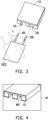
- FIG. 4 is a schematic diagram of image recognition according to an embodiment of the disclosure.
- the processor 21 may control the second handling machine to move to the first position where the first object is located and capture an image 41 through the camera module of the second handling machine.
- the image 41 exhibits at least a part of the first object (i.e., the object 13).
- the processor 21 can perform image recognition on the image 41 to detect a specific region 401 in the image 41.
- the processor 21 can adjust the angle between the extension arm of the second handling machine and the first object according to the pixel distribution of the image in the specific region 401, so that the extension arm of the second handling machine is in a position suitable for lifting up the first object. Then, the processor 21 can control the extension arm of the second handling machine to extend forward and lift up the first object.
- the image recognition can be performed by trained deep learning models, neural network models or similar artificial intelligence models.
- the handling information of multiple objects to be handled can be stored in the storage circuit 22 of the control host 11 in a centralized manner.
- the control host 11 can control the specific handling machine to handle the specific object according to the handling information corresponding to the specific object in the storage circuit 22.
- the handling information of multiple objects to be handled can also be shared between multiple handling machines (for example, handling machines 12(1) to 12(n) in FIG. 1 ) through a distributed network architecture.
- FIG. 5 is a flowchart of a handling machine control method according to an embodiment of the disclosure. Please refer to FIG. 5 , in step S501, a handling instruction is detected, which is used to instruct the handling of the first object. In step S502, the handling information of the first object is read according to the handling instruction. In step S503, it is determined whether the handling information of the first object is read.
- step S504 the first handling machine is controlled, according to the handling information of the first object, to move to the first position and perform the first operation to lift up the first object at the first position.
- step S505 the first handling machine is controlled to move to the second position and perform the second operation to put down the first object at the second position.
- step S506 in response to the first object being put down at the second position, the handling information of the first object is updated.
- step S507 the second handling machine is controlled, according to the handling information of the first object, to move to the first position and perform an image recognition to detect the first object at the first position through the second handling machine, and the second handling machine has a camera module.
- step S508 the second handling machine is controlled to perform the first operation to lift up the first object according to the recognition result of the image recognition.
- step S509 the second handling machine is controlled to move to the second position and perform the second operation to put down the first object at the second position.
- step S506 in response to the first object being put down at the second position, the handling information of the first object is updated.
- each step in FIG. 5 has been described in detail as above, and will not be repeated here. It should be noted that each step in FIG. 5 can be implemented as multiple program codes (such as a software module) or a circuit (such as a circuit module), and this disclosure provides no limitation thereto. In addition, the method of FIG. 5 can be used in conjunction with the above exemplary embodiments, or can be used alone, and this disclosure provides no limitation thereto.
- the handling machine control method, the handling machine control system, and the control host provided in this disclosure can record the handling information (such as position information and posture information) when the handling machine handles the first object and store this information for handling the first object next time.
- the handling information such as position information and posture information
- the entire handling system can achieve almost fully automated operation, thereby effectively improving the efficiency of automated handling of goods.
Landscapes
- Engineering & Computer Science (AREA)
- Physics & Mathematics (AREA)
- General Physics & Mathematics (AREA)
- Business, Economics & Management (AREA)
- Automation & Control Theory (AREA)
- Remote Sensing (AREA)
- Radar, Positioning & Navigation (AREA)
- Aviation & Aerospace Engineering (AREA)
- Economics (AREA)
- Transportation (AREA)
- Structural Engineering (AREA)
- Quality & Reliability (AREA)
- Theoretical Computer Science (AREA)
- Human Resources & Organizations (AREA)
- Marketing (AREA)
- Operations Research (AREA)
- Entrepreneurship & Innovation (AREA)
- Strategic Management (AREA)
- Tourism & Hospitality (AREA)
- Development Economics (AREA)
- General Business, Economics & Management (AREA)
- Mechanical Engineering (AREA)
- Geology (AREA)
- Life Sciences & Earth Sciences (AREA)
- Civil Engineering (AREA)
- Electromagnetism (AREA)
- Chemical & Material Sciences (AREA)
- Combustion & Propulsion (AREA)
- Computer Vision & Pattern Recognition (AREA)
- Multimedia (AREA)
- Manipulator (AREA)
- Forklifts And Lifting Vehicles (AREA)
- Warehouses Or Storage Devices (AREA)
Abstract
Description
- This disclosure relates to a handling machine control method, a handling machine control system and a control host.
- As people's transaction patterns change and the demand for automated logistics management such as smart warehousing is growing, it is desirable for an increasing number of logistics companies to use automated handling devices to automatically complete the handling of goods and the loading and unloading of goods. However, the cargo to be transported and/or the pallets carrying the cargo are often arranged irregularly in the physical space. Therefore, it is not easy to complete the automated handling of goods through simple coordinate setting.
- In view of this, the disclosure provides a handling machine control method, a handling machine control system and a control host, which can improve the efficiency of automated cargo handling.
- An embodiment of the disclosure provides a handling machine control method, which is adaptable for a handling machine control system. The handling machine control method includes: detecting a handling instruction which instructs a handling of a first object; reading handling information of the first object according to the handling instruction; if the handling information of the first object is read, controlling, according to the handling information of the first object, a first handling machine to move to a first position and perform a first operation to lift up the first object at the first position; after the first object is lifted up, controlling the first handling machine to move to a second position and perform a second operation to put down the first object at the second position; and in response to that the first object is put down at the second position, updating the handling information of the first object.
- An embodiment of the disclosure further provides a handling machine control system, which includes a control host and a first handling machine. The first handling machine is coupled to the control host. The control host is configured to: detect a handling instruction which instructs a handling of a first object; read handling information of the first object according to the handling instruction; if the handling information of the first object is read, control, according to the handling information of the first object, the first handling machine to move to a first position and perform a first operation to lift up the first object at the first position; after the first object is lifted up, control the first handling machine to move to a second position and perform a second operation to put down the first object at the second position; and in response to that the first object is put down at the second position, update the handling information of the first object.
- An embodiment of the disclosure further provides a control host, which is adapted to control at least one handling machine. The control host includes a storage circuit and a processor. The storage circuit is configured for storing the handling information of the first object. The processor is coupled to the storage circuit. The processor is configured to: detect a handling instruction which instructs a handling of a first object; read handling information of the first object according to the handling instruction; if the handling information of the first object is read, control, according to the handling information of the first object, a first handling machine among the at least one handling machine to move to a first position and perform a first operation to lift up the first object at the first position; after the first object is lifted up, control the first handling machine to move to a second position and perform a second operation to put down the first object at the second position; and in response to that the first object is put down at the second position, update the handling information of the first object.
- Based on the above, after detecting the handling instruction, the system can try to read the handling information of the first object. According to the handling information of the first object, the system can control the first handling machine to move to the first position and perform the first operation to lift up the first object at the first position. After the first object is lifted up, the system can control the first handling machine to move to the second position and perform the second operation to put down the first object at the second position. In addition, in response to the first object being put down at the second position, the handling information of the first object can be updated. In this way, the efficiency of automated cargo handling can be effectively improved.
-
-
FIG. 1 is a schematic diagram of a handling machine control system according to an embodiment of the disclosure. -
FIG. 2 is a functional block diagram of a control host according to an embodiment of the disclosure. -
FIG. 3 is a schematic diagram of adjusting the posture of the first handling machine according to an embodiment of the disclosure. -
FIG. 4 is a schematic diagram of image recognition according to an embodiment of the disclosure. -
FIG. 5 is a flowchart of a handling machine control method according to an embodiment of the disclosure. -
FIG. 1 is a schematic diagram of a handling machine control system according to an embodiment of the disclosure. Please refer toFIG. 1 , the system (also referred to as the handling machine control system) 10 includes acontrol host 11 and handling machines 12(1) to 12(n). Thecontrol host 11 can be configured to manage and control the handling machines 12(1) to 12(n). For example, thecontrol host 11 can monitor the position, movement trajectory and posture of the handling machines 12(1) to 12(n) and control the handling machines 12(1) to 12(n) to move and/or handle specific objects. The total number ofcontrol host 11 and the total number of handling machines 12(1) to 12(n) can be adjusted according to practical requirements, and this disclosure is not limited thereto. - In an embodiment, the
control host 11 is independently arranged outside the handling machines 12(1) to 12(n) and can communicate with the handling machines 12(1) to 12(n) wirelessly. For example, thecontrol host 11 may include a desktop computer, a notebook computer, a smart phone, a tablet computer, an industrial computer, a server, or other types of computer devices with data transmission and processing functions. Alternatively, in an embodiment, thecontrol host 11 can also be distributed in the handling machines 12(1) to 12(n) to form a distributed control network, and the handling machines 12(1) to 12(n) can perform wireless communication with each other. - The handling machines 12(1) to 12(n) can be used to move, lift up or put down specific objects. Taking the handling machine 12(1) as an example, the handling machine 12(1) may have a moving and rotating mechanism to perform actions such as going forward, going backward, and/or turning on the ground. In addition, the handling machine 12(1) may have one or more extension arms. For example, the handling machine 12(1) can control its extension arm to move vertically or horizontally. In this way, the handling machine 12(1) can use an extension arm to handle specific objects. For example, the handling machine 12(1) can be an object handling device such as a stacker, a pallet truck, or a forklift. The extension arm of the handling machine 12(1) can be implemented as a mechanical component such as a clamp, a tray, or a mechanical arm that can be used to handle specific objects. Moreover, the handling machine 12(1) can be configured to handle the object to be handled itself, or a conveyer such as a pallet, a tray, or a carrier used to carry the object to be handled.
-
FIG. 2 is a functional block diagram of the control host according to an embodiment of the disclosure. Please refer toFIG. 2 , thecontrol host 11 includes aprocessor 21, astorage circuit 22 and an input/output (I/O)interface 23. Theprocessor 21 can be configured to control the whole or part of the operation of thecontrol host 11. For example, theprocessor 21 may include a central processing unit (CPU), or other programmable general-purpose or special-purpose microprocessors, digital signal processors (DSP), programmable controller, application specific integrated circuits (ASIC), programmable logic device (PLD) or other similar devices or a combination of these devices. It should be noted that in the following embodiments, the description of theprocessor 21 is equivalent to the description of thecontrol host 11. - The
storage circuit 22 is coupled to theprocessor 21 and configured to store data. For example, thestorage circuit 22 may include a volatile storage circuit and a non-volatile storage circuit. The volatile storage circuit is configured to volatilely store data. For example, the volatile storage circuit may include a random access memory (RAM) or similar volatile storage media. The non-volatile storage circuit is configured for non-volatilely storing data. For example, the non-volatile storage circuit may include a read only memory (ROM), a solid state disk (SSD), a conventional hard disk drive (HDD) or similar non-volatile storage media. - The input/
output interface 23 is coupled to theprocessor 21 and configured to transmit signals. For example, theprocessor 21 can receive input signals or transmit output signals through the input/output interface 23. For example, the input/output interface 23 may include various input/output devices such as a wireless communication interface (such as a wireless network card), a mouse, a keyboard, a monitor, a touch panel, and/or a speaker. - In an embodiment, the
processor 21 can detect a handling instruction. This handling instruction can be used to instruct handling of a specific object (also referred to as the first object). For example, theprocessor 21 may receive a handling instruction input by an administrator through the input/output interface 23. Alternatively, theprocessor 21 may automatically generate and detect the handling instruction according to a system schedule. In an embodiment, theprocessor 21 can determine the object to be handled (i.e., the first object) according to the handling instruction and try to read thehandling information 201 of the first object from thestorage circuit 22. - In an embodiment, if the handling
information 201 can be read (for example, the handlinginformation 201 is currently stored in thestorage circuit 22 and can be read normally), theprocessor 21 can control, according to the handlinginformation 201, a certain handling machine (also referred to as the first handling machine) to move to a specific position (also referred to as the first position) and perform a specific operation (also referred to as a first operation) to lift up (including clamping or forklifting) the first object at the first position. - In an embodiment, the first operation includes adjusting the posture of the first handling machine so that the first handling machine lifts up the first object based on a specific posture (also referred to as the first posture). For example, the step of adjusting the posture of the first handling machine includes adjusting the angle between the extension arm of the first handling machine and the first object, so that the extension arm of the first handling machine is at a position suitable for lifting up the first object. In this manner, with the first posture, the first handling machine can use the extension arm to lift up the first object smoothly. From another perspective, the first posture can reflect the posture of the first handling machine when lifting up the first object at the first position. For example, the first posture may reflect that the first handling machine lifts up the first object in a specific angle state (also referred to as the first angle state).
-
FIG. 3 is a schematic diagram of adjusting the posture of the first handling machine according to an embodiment of the disclosure. Please refer toFIG. 1 to FIG. 3 , assuming that the first handling machine is the handling machine 12(1) and the first object is anobject 13. For example, theobject 13 may be a pallet. After controlling the handling machine 12(1) to move to the vicinity (i.e., the first position) of the position of theobject 13, theprocessor 21 can adjust the posture of the handling machine 12(1) according to the handlinginformation 201. For example, theprocessor 21 can control the handling machine 12(1) to rotate a specific angle θ at the first position according to the handlinginformation 201, so that theextension arms grooves object 13, respectively. After the handling machine 12(1) is controlled to rotate by the angle θ at the first position, it can be regarded that the handling machine 12(1) is in the first posture. Under the circumstances, theprocessor 21 can control the handling machine 12(1) to lift up the first object based on the first posture. For example, theprocessor 21 can control the handling machine 12(1) to extend theextension arms grooves extension arms grooves processor 21 can control the handling machine 12(1) to lift up theobject 13. - In an embodiment, after the first object is lifted up, the
processor 21 may continue to control the first handling machine to move to another position (also referred to as the second position) and perform another operation (also referred to as second operation) to put down the first object at the second position. The second position is different from the first position. - In an embodiment, the second operation includes adjusting the posture of the first handling machine so that the first handling machine puts down the first object based on another posture (also referred to as the second posture). For example, at the second position, the
processor 21 may control the first handling machine to rotate another specific angle. Then, theprocessor 21 can control the first handling machine to put down the first object in a specific angle state (also referred to as a second angle state). In other words, the second posture can reflect the posture of the first handling machine when putting down the first object at the second position. For example, the second posture may reflect that the first handling machine puts down the first object in a specific angle state (i.e., the second angle state). - In an embodiment, the
processor 21 may detect the first posture and the second posture through a sensor arranged inside the first handling machine. For example, the sensor may include a sensor that senses the current posture (such as the angle state) of the handling machine such as a global positioning system (GPS) sensor, a G-sensor, an accelerometer and/or a gyroscope, etc. - In an embodiment, in response to the first object being placed at the second position, the
processor 21 may update the handlinginformation 201. For example, theprocessor 21 may update the handlinginformation 201 from the current handling information (also referred to as the first handling information) to the new handling information (also referred to as the second handling information). The first handling information carries information related to the first posture. For example, the first handling information may carry the information of the first angle state (for example, the angle value of the first handling machine in the first posture). The second handling information carries information related to the second posture. For example, the second handling information can carry the information of the second angle state (for example, the angle value of the first handling machine in the second posture). In an embodiment, the first handling information further carries information related to the first position. For example, the first handling information may carry the information of the first position (for example, the coordinates of the first position). In an embodiment, the second handling information further carries information related to the second position. For example, the second handling information may carry the information of the second position (for example, the coordinates of the second position). - In an embodiment, after determining the object to be handled (i.e., the first object), the
processor 21 can obtain the position of the first object (i.e., the first position) and the posture (that is, the first posture) to be used to lift up the first object according to the handlinginformation 201. In this way, theprocessor 21 can control, according to the handlinginformation 201, the first handling machine to move to the first position and lift up the first object based on the first posture. In addition, after the first object is put down at the second position, theprocessor 21 can update the information of the second position and the second posture to the handlinginformation 201. Thereafter, when the first object needs to be handled again, theprocessor 21 may control, according to the updatedhandling information 201, another handling machine to move to the second position and lift up the first object again based on the second posture. - In an embodiment, the first handling machine may have a camera module. For example, the camera module may include a two-dimensional (2D) camera and/or a three-dimensional (3D) camera. A two-dimensional camera can be used to capture two-dimensional images. A 3D camera can be used to capture 3D images. Compared with a two-dimensional image, a three-dimensional image can further carry depth information of the object (such as the first object) in the image. The depth information can be used to reflect the distance between the object and the camera module (or the first handling machine). In an embodiment, the camera module may also include various optical sensors and/or depth sensors such as lidar, and the disclosure provides no limitation to the type of the camera modules.
- In an embodiment, the first handling machine may not have a camera module. In an embodiment, regardless of whether the first handling machine has a camera module or not, according to the handling
information 201, theprocessor 21 can control the first handling machine according to the handlinginformation 201 to move to the first position and perform the first operation to lift up the first object at the first position without performing image recognition on the first object by the first handling machine. - In an embodiment, after detecting the handling instruction, if the handling information (for example, handling information 201) of the first object cannot be read, the
processor 21 may control another handling machine (also referred to as the second handling machine) to move to the first position and perform image recognition through the second handling machine to detect the first object at the first position. In particular, the second handling machine has a camera module. Theprocessor 21 can control the second handling machine to perform the first operation to lift up the first obj ect according to the recognition result of the image recognition. After the first object is lifted up, theprocessor 21 can control the second handling machine to move to the second position and perform the second operation to put down the first object at the second position. In response to the first object being put down at the second position, theprocessor 21 may further update the handling information of the first object. For example, theprocessor 21 can update the information of the second position and the second posture to the handlinginformation 201 and store the handlinginformation 201 in thestorage circuit 22. Thereafter, theprocessor 21 may query the handlinginformation 201 to automatically handle the first object. -
FIG. 4 is a schematic diagram of image recognition according to an embodiment of the disclosure. Referring toFIG. 4 , in an embodiment, if the handling information (for example, handling information 201) of the first object cannot be read, theprocessor 21 may control the second handling machine to move to the first position where the first object is located and capture animage 41 through the camera module of the second handling machine. Theimage 41 exhibits at least a part of the first object (i.e., the object 13). Theprocessor 21 can perform image recognition on theimage 41 to detect aspecific region 401 in theimage 41. Theprocessor 21 can adjust the angle between the extension arm of the second handling machine and the first object according to the pixel distribution of the image in thespecific region 401, so that the extension arm of the second handling machine is in a position suitable for lifting up the first object. Then, theprocessor 21 can control the extension arm of the second handling machine to extend forward and lift up the first object. For details of related operations, refer to the embodiment inFIG. 3 , and no repetition is incorporated herein. In addition, the image recognition can be performed by trained deep learning models, neural network models or similar artificial intelligence models. - In an embodiment, the handling information of multiple objects to be handled can be stored in the
storage circuit 22 of thecontrol host 11 in a centralized manner. When it is necessary to query the handling information of a specific object, thecontrol host 11 can control the specific handling machine to handle the specific object according to the handling information corresponding to the specific object in thestorage circuit 22. Or, in an embodiment, the handling information of multiple objects to be handled can also be shared between multiple handling machines (for example, handling machines 12(1) to 12(n) inFIG. 1 ) through a distributed network architecture. -
FIG. 5 is a flowchart of a handling machine control method according to an embodiment of the disclosure. Please refer toFIG. 5 , in step S501, a handling instruction is detected, which is used to instruct the handling of the first object. In step S502, the handling information of the first object is read according to the handling instruction. In step S503, it is determined whether the handling information of the first object is read. - If the handling information of the first object is read, in step S504, the first handling machine is controlled, according to the handling information of the first object, to move to the first position and perform the first operation to lift up the first object at the first position. After the first object is lifted up, in step S505, the first handling machine is controlled to move to the second position and perform the second operation to put down the first object at the second position. In step S506, in response to the first object being put down at the second position, the handling information of the first object is updated.
- On the other hand, if the handling information of the first object cannot be read, in step S507, the second handling machine is controlled, according to the handling information of the first object, to move to the first position and perform an image recognition to detect the first object at the first position through the second handling machine, and the second handling machine has a camera module. In step S508, the second handling machine is controlled to perform the first operation to lift up the first object according to the recognition result of the image recognition. After the first object is lifted up, in step S509, the second handling machine is controlled to move to the second position and perform the second operation to put down the first object at the second position. Thereafter, in step S506, in response to the first object being put down at the second position, the handling information of the first object is updated.
- However, each step in
FIG. 5 has been described in detail as above, and will not be repeated here. It should be noted that each step inFIG. 5 can be implemented as multiple program codes (such as a software module) or a circuit (such as a circuit module), and this disclosure provides no limitation thereto. In addition, the method ofFIG. 5 can be used in conjunction with the above exemplary embodiments, or can be used alone, and this disclosure provides no limitation thereto. - In summary, the handling machine control method, the handling machine control system, and the control host provided in this disclosure can record the handling information (such as position information and posture information) when the handling machine handles the first object and store this information for handling the first object next time. By automatically handling objects based on the handling information of the objects and continuously updating the handling information of the objects, the entire handling system can achieve almost fully automated operation, thereby effectively improving the efficiency of automated handling of goods.
Claims (19)
- A handling machine control method, adaptable for a handling machine control system (10), wherein the handling machine (12(1) to 12(n)) control method comprises:detecting a handling instruction which instructs a handling of a first object;reading handling information (201) of the first object according to the handling instruction;if the handling information (201) of the first object is read, controlling, according to the handling information (201) of the first object, a first handling machine (12(1) to 12(n)) to move to a first position and perform a first operation to lift up the first object at the first position;after the first object is lifted up, controlling the first handling machine (12(1) to 12(n)) to move to a second position and perform a second operation to put down the first object at the second position; andin response to that the first object is put down at the second position, updating the handling information (201) of the first object.
- The handling machine control method according to claim 1, wherein the first operation comprises adjusting a posture of the first handling machine (12(1) to 12(n)) so that the first handling machine (12(1) to 12(n)) lifts up the first object based on a first posture, and
the second operation comprises adjusting the posture of the first handling machine (12(1) to 12(n)) so that the first handling machine (12(1) to 12(n)) puts down the first object based on a second posture. - The handling machine control method according to claim 2, wherein the step of updating the handling information (201) of the first object comprises:
updating the handling information (201) of the first object from first handling information (201) to second handling information (201), wherein the first handling information (201) carries information related to the first posture, and the second handling information (201) carries information related to the second posture. - The handling machine control method according to claim 1, wherein the step of controlling, according to the handling information (201) of the first object, the first handling machine (12(1) to 12(n)) to move to the first position and perform the first operation to lift up the first object at the first position comprises:
controlling the first handling machine (12(1) to 12(n)) according to the handling information (201) of the first object to move to the first position and perform the first operation to lift up the first object at the first position without performing an image recognition on the first object by the first handling machine (12(1) to 12(n)). - The handling machine control method according to claim 4, wherein the first handling machine (12(1) to 12(n)) does not have a camera module.
- The handling machine control method according to claim 4, wherein the first handling machine (12(1) to 12(n)) has a camera module.
- The handling machine control method according to claim 1, further comprising:if the handling information (201) of the first object cannot be read, controlling a second handling machine (12(1) to 12(n)) to move to the first position and perform an image recognition to detect the first object at the first position through the second handling machine (12(1) to 12(n)), wherein the second handling machine (12(1) to 12(n)) has a camera module;controlling the second handling machine (12(1) to 12(n)) to perform the first operation to lift up the first object according to a recognition result of the image recognition;after lifting up the first object, controlling the second handling machine (12(1) to 12(n)) to move to the second position and perform a second operation to put down the first object at the second position; andin response to the first object being put down at the second position, updating the handling information (201) of the first object.
- A handling machine control system (10), comprising:a control host (11); anda first handling machine (12(1) to 12(n)), coupled to the control host (11),wherein the control host (11) is configured to:detect a handling instruction which instructs a handling of a first object;read handling information (201) of the first object according to the handling instruction;if handling information (201) of the first object is read, control, according to the handling information (201) of the first object, the first handling machine (12(1) to 12(n)) to move to a first position and perform a first operation to lift up the first object at the first position;after the first object is lifted up, control the first handling machine (12(1) to 12(n)) to move to a second position and perform a second operation to put down the first object at the second position; andin response to that the first object is put down at the second position, update the handling information (201) of the first object.
- The handling machine control system (10) according to claim 8, wherein the first operation comprises adjusting a posture of the first handling machine (12(1) to 12(n)) so that the first handling machine (12(1) to 12(n)) lifts up the first object based on a first posture, and
the second operation comprises adjusting the posture of the first handling machine (12(1) to 12(n)) so that the first handling machine (12(1) to 12(n)) puts down the first object based on a second posture. - The handling machine control system (10) according to claim 9, wherein the operation of updating the handling information (201) of the first object comprises:
updating the handling information (201) of the first object from first handling information (201) to second handling information (201), wherein the first handling information (201) carries information related to the first posture, and the second handling information (201) carries information related to the second posture. - The handling machine control system (10) according to claim 8, wherein the operation of controlling, according to the handling information (201) of the first object, the first handling machine (12(1) to 12(n)) to move to the first position and perform the first operation to lift up the first object at the first position comprises:
controlling the first handling machine (12(1) to 12(n)) according to the handling information (201) of the first object to move to the first position and perform the first operation to lift up the first object at the first position without performing an image recognition on the first object by the first handling machine (12(1) to 12(n)). - The handling machine control system (10) according to claim 11, wherein the first handling machine (12(1) to 12(n)) does not have a camera module.
- The handling machine control system (10) according to claim 11, wherein the first handling machine (12(1) to 12(n)) has a camera module.
- The handling machine control system (10) according to claim 8, further comprising:a second handling machine (12(1) to 12(n)), which has a camera module, andthe control host (11) is further configured to:if the handling information (201) of the first object cannot be read, control a second handling machine (12(1) to 12(n)) to move to the first position and perform an image recognition to detect the first object at the first position through the second handling machine (12(1) to 12(n));control the second handling machine (12(1) to 12(n)) to perform the first operation to lift up the first object according to a recognition result of the image recognition;after lifting up the first object, control the second handling machine (12(1) to 12(n)) to move to the second position and perform a second operation to put down the first object at the second position; andin response to the first object being put down at the second position, update the handling information (201) of the first object.
- A control host (11) for controlling at least one handling machine (12(1) to 12(n)), and the control host (11) comprising:a storage circuit (22), configured for storing handling information (201) of a first object; anda processor (21), coupled to the storage circuit (22),wherein the processor (21) is configured to:detect a handling instruction which instructs a handling of the first object;read the handling information (201) of the first object according to the handling instruction;if the handling information (201) of the first object is read, control, according to the handling information (201) of the first object, a first handling machine (12(1) to 12(n)) among the at least one handling machine (12(1) to 12(n)) to move to a first position and perform a first operation to lift up the first object at the first position;after the first object is lifted up, control the first handling machine (12(1) to 12(n)) to move to a second position and perform a second operation to put down the first object at the second position; andin response to that the first object is put down at the second position, update the handling information (201) of the first object.
- The control host (11) according to claim 15, wherein the first operation comprises adjusting a posture of the first handling machine (12(1) to 12(n)) so that the first handling machine (12(1) to 12(n)) lifts up the first object based on a first posture, and
the second operation comprises adjusting the posture of the first handling machine (12(1) to 12(n)) so that the first handling machine (12(1) to 12(n)) puts down the first object based on a second posture. - The control host (11) according to claim 16, wherein the operation of updating the handling information (201) of the first object comprises:
updating the handling information (201) of the first object from first handling information (201) to second handling information (201), wherein the first handling information (201) carries information related to the first posture, and the second handling information (201) carries information related to the second posture. - The control host (11) according to claim 15, wherein the operation of controlling, according to the handling information (201) of the first object, the first handling machine (12(1) to 12(n)) to move to the first position and perform the first operation to lift up the first object at the first position comprises:
controlling the first handling machine (12(1) to 12(n)) according to the handling information (201) of the first object to move to the first position and perform the first operation to lift up the first object at the first position without performing an image recognition on the first object by the first handling machine (12(1) to 12(n)). - The control host (11) according to claim 15, wherein the processor (21) is further configured to:if the handling information (201) of the first object cannot be read, control a second handling machine (12(1) to 12(n)) among the at least one handling machine (12(1) to 12(n)) to move to the first position and perform an image recognition to detect the first object at the first position through the second handling machine (12(1) to 12(n)), wherein the second handling machine (12(1) to 12(n)) has a camera module;control the second handling machine (12(1) to 12(n)) to perform the first operation to lift up the first object according to a recognition result of the image recognition;after lifting up the first object, control the second handling machine (12(1) to 12(n)) to move to the second position and perform a second operation to put down the first object at the second position; andin response to the first object being put down at the second position, update the handling information (201) of the first object.
Applications Claiming Priority (1)
| Application Number | Priority Date | Filing Date | Title |
|---|---|---|---|
| TW110143515A TWI791332B (en) | 2021-11-23 | 2021-11-23 | Handling machine control method, handling machine control system and control host |
Publications (1)
| Publication Number | Publication Date |
|---|---|
| EP4184275A1 true EP4184275A1 (en) | 2023-05-24 |
Family
ID=79730103
Family Applications (1)
| Application Number | Title | Priority Date | Filing Date |
|---|---|---|---|
| EP22151921.8A Pending EP4184275A1 (en) | 2021-11-23 | 2022-01-18 | Handling machine control method, handling machine control system and control host |
Country Status (4)
| Country | Link |
|---|---|
| US (1) | US12386350B2 (en) |
| EP (1) | EP4184275A1 (en) |
| CN (1) | CN116142722A (en) |
| TW (1) | TWI791332B (en) |
Citations (2)
| Publication number | Priority date | Publication date | Assignee | Title |
|---|---|---|---|---|
| US20110010023A1 (en) * | 2005-12-03 | 2011-01-13 | Kunzig Robert S | Method and apparatus for managing and controlling manned and automated utility vehicles |
| US20210333791A1 (en) * | 2020-04-28 | 2021-10-28 | Mitsubishi Heavy Industries, Ltd. | Terminal, control system, control method, and program |
Family Cites Families (20)
| Publication number | Priority date | Publication date | Assignee | Title |
|---|---|---|---|---|
| US20120123614A1 (en) * | 2010-11-17 | 2012-05-17 | INRO Technologies Limited | Method and apparatus for virtualizing industrial vehicles to automate task execution in a physical environment |
| US9008884B2 (en) | 2010-12-15 | 2015-04-14 | Symbotic Llc | Bot position sensing |
| US20120191272A1 (en) * | 2011-01-24 | 2012-07-26 | Sky-Trax, Inc. | Inferential load tracking |
| CN102502141A (en) * | 2011-10-21 | 2012-06-20 | 友达光电股份有限公司 | A multi-carrier mixing conveying device in a clean room storage system |
| TWI642028B (en) | 2013-03-15 | 2018-11-21 | 辛波提克有限責任公司 | Transportation system and automated storage and retrieval system with integral secured personnel access zones and remote rover shutdown |
| JP2015225450A (en) | 2014-05-27 | 2015-12-14 | 村田機械株式会社 | Autonomous traveling vehicle, and object recognition method in autonomous traveling vehicle |
| EP3000772B1 (en) * | 2014-09-25 | 2017-04-12 | Toyota Material Handling Manufacturing Sweden AB | Fork-lift truck and method for operating a fork-lift truck |
| JP6747511B2 (en) * | 2016-10-07 | 2020-08-26 | 村田機械株式会社 | Conveying device and conveying method |
| US10328578B2 (en) | 2017-04-21 | 2019-06-25 | X Development Llc | Methods and systems for detecting, recognizing, and localizing pallets |
| US10640347B2 (en) | 2017-12-22 | 2020-05-05 | X Development Llc | Pallet tracking during engagement and disengagement |
| JP6897865B2 (en) * | 2018-03-27 | 2021-07-07 | 村田機械株式会社 | Control method for transport system, transport controller, and transport vehicle |
| CN208292047U (en) | 2018-05-25 | 2018-12-28 | 王中生 | DS-PPS pallet-type intensively stores goods to people's system |
| WO2019231745A1 (en) * | 2018-05-29 | 2019-12-05 | Walmart Apollo, Llc | Unmanned retail delivery vehicle protection systems and methods of protection |
| CN110054121B (en) * | 2019-04-25 | 2021-04-20 | 北京极智嘉科技有限公司 | Intelligent forklift and container pose deviation detection method |
| CN110182718A (en) * | 2019-04-25 | 2019-08-30 | 上海快仓智能科技有限公司 | The control method and cargo movement system of transfer robot |
| CN110697306B (en) * | 2019-11-11 | 2024-07-26 | 深圳市鲸仓科技有限公司 | Conveyor, warehouse-in and warehouse-out system and warehouse-in and warehouse-out method |
| JP7085576B2 (en) * | 2020-02-27 | 2022-06-16 | 三菱ロジスネクスト株式会社 | Mobile control systems, mobiles, control methods and programs |
| CN113534766A (en) * | 2020-04-15 | 2021-10-22 | 北京旷视机器人技术有限公司 | Exception handling method and device, electronic equipment and readable storage medium |
| CN112707340B (en) * | 2020-12-10 | 2022-07-19 | 安徽有光图像科技有限公司 | Equipment control signal generation method and device based on visual identification and forklift |
| WO2022230172A1 (en) * | 2021-04-30 | 2022-11-03 | 日本電気株式会社 | Vehicle control device, control method, and non-transitory computer-readable medium |
-
2021
- 2021-11-23 TW TW110143515A patent/TWI791332B/en active
- 2021-12-28 US US17/563,054 patent/US12386350B2/en active Active
-
2022
- 2022-01-18 EP EP22151921.8A patent/EP4184275A1/en active Pending
- 2022-02-17 CN CN202210145860.9A patent/CN116142722A/en active Pending
Patent Citations (2)
| Publication number | Priority date | Publication date | Assignee | Title |
|---|---|---|---|---|
| US20110010023A1 (en) * | 2005-12-03 | 2011-01-13 | Kunzig Robert S | Method and apparatus for managing and controlling manned and automated utility vehicles |
| US20210333791A1 (en) * | 2020-04-28 | 2021-10-28 | Mitsubishi Heavy Industries, Ltd. | Terminal, control system, control method, and program |
Also Published As
| Publication number | Publication date |
|---|---|
| US20230161348A1 (en) | 2023-05-25 |
| US12386350B2 (en) | 2025-08-12 |
| TW202321137A (en) | 2023-06-01 |
| CN116142722A (en) | 2023-05-23 |
| TWI791332B (en) | 2023-02-01 |
Similar Documents
| Publication | Publication Date | Title |
|---|---|---|
| US12194638B2 (en) | Robotic system control method and controller | |
| US12233548B2 (en) | Robotic system with enhanced scanning mechanism | |
| JP7578727B2 (en) | Warehouse robot control method, device, robot, and warehouse system | |
| WO2022105695A1 (en) | Goods pick-and-place method and apparatus, and warehousing robot and warehousing system | |
| JP2021535053A (en) | Cargo transport system and method | |
| US20200270069A1 (en) | Flexible automated sorting and transport arrangement (fast) robotic arm | |
| CN118871953A (en) | System and method for locating objects with unknown attributes for robotic manipulation | |
| US12386350B2 (en) | Handling machine control method, handling machine control system and control host | |
| CN114689242B (en) | A method, device and electronic equipment for detecting uneven loading of a shelf | |
| US20230381822A1 (en) | Information processing device, information processing method, computer-readable storage medium, and system | |
| CN118350747A (en) | Tally method, device, equipment and readable storage medium | |
| US20230020576A1 (en) | Methods and apparatuses for automatically palletizing and depallitizing items | |
| CN117934807A (en) | Image tilt correction method, apparatus, electronic device, and readable medium | |
| WO2023188001A1 (en) | Robot system, processing method, and recording medium | |
| CN115489911B (en) | Automatic warehousing system, warehousing method, electronic equipment and storage medium | |
| US12077419B2 (en) | Method and system for controlling a handling machine and non-volatile computer readable recording medium | |
| WO2024053150A1 (en) | Picking system | |
| TW202226137A (en) | Method and system for controlling a handling machine and non-volatile computer readable recording medium | |
| TWI917700B (en) | A device for generating learning data and a method for generating learning data, and a machine learning device and a machine learning method for using learning data. | |
| WO2023234298A1 (en) | Information processing device, information processing method, program, system, and computer-readable storage medium | |
| TWI615696B (en) | Auto guided vehicle system and operating method thereof | |
| WO2025141765A1 (en) | Information processing device, information processing method, recording medium, and article management system | |
| TW202327977A (en) | Automatic guided vehicle and method for forking pallet |
Legal Events
| Date | Code | Title | Description |
|---|---|---|---|
| PUAI | Public reference made under article 153(3) epc to a published international application that has entered the european phase |
Free format text: ORIGINAL CODE: 0009012 |
|
| STAA | Information on the status of an ep patent application or granted ep patent |
Free format text: STATUS: REQUEST FOR EXAMINATION WAS MADE |
|
| 17P | Request for examination filed |
Effective date: 20220118 |
|
| AK | Designated contracting states |
Kind code of ref document: A1 Designated state(s): AL AT BE BG CH CY CZ DE DK EE ES FI FR GB GR HR HU IE IS IT LI LT LU LV MC MK MT NL NO PL PT RO RS SE SI SK SM TR |
|
| STAA | Information on the status of an ep patent application or granted ep patent |
Free format text: STATUS: EXAMINATION IS IN PROGRESS |
|
| 17Q | First examination report despatched |
Effective date: 20240930 |
|
| REG | Reference to a national code |
Ref country code: DE Ref legal event code: R079 Free format text: PREVIOUS MAIN CLASS: G05D0001020000 Ipc: G05D0001000000 |
|
| GRAP | Despatch of communication of intention to grant a patent |
Free format text: ORIGINAL CODE: EPIDOSNIGR1 |
|
| STAA | Information on the status of an ep patent application or granted ep patent |
Free format text: STATUS: GRANT OF PATENT IS INTENDED |