EP4183788A1 - Crystal of pyrimidine compound - Google Patents
Crystal of pyrimidine compound Download PDFInfo
- Publication number
- EP4183788A1 EP4183788A1 EP21842747.4A EP21842747A EP4183788A1 EP 4183788 A1 EP4183788 A1 EP 4183788A1 EP 21842747 A EP21842747 A EP 21842747A EP 4183788 A1 EP4183788 A1 EP 4183788A1
- Authority
- EP
- European Patent Office
- Prior art keywords
- crystal
- compound
- type
- fumaric acid
- powder
- Prior art date
- Legal status (The legal status is an assumption and is not a legal conclusion. Google has not performed a legal analysis and makes no representation as to the accuracy of the status listed.)
- Withdrawn
Links
Images










Classifications
-
- A—HUMAN NECESSITIES
- A61—MEDICAL OR VETERINARY SCIENCE; HYGIENE
- A61P—SPECIFIC THERAPEUTIC ACTIVITY OF CHEMICAL COMPOUNDS OR MEDICINAL PREPARATIONS
- A61P35/00—Antineoplastic agents
-
- A—HUMAN NECESSITIES
- A61—MEDICAL OR VETERINARY SCIENCE; HYGIENE
- A61K—PREPARATIONS FOR MEDICAL, DENTAL OR TOILETRY PURPOSES
- A61K31/00—Medicinal preparations containing organic active ingredients
- A61K31/33—Heterocyclic compounds
- A61K31/395—Heterocyclic compounds having nitrogen as a ring hetero atom, e.g. guanethidine or rifamycins
- A61K31/495—Heterocyclic compounds having nitrogen as a ring hetero atom, e.g. guanethidine or rifamycins having six-membered rings with two or more nitrogen atoms as the only ring heteroatoms, e.g. piperazine or tetrazines
- A61K31/505—Pyrimidines; Hydrogenated pyrimidines, e.g. trimethoprim
- A61K31/519—Pyrimidines; Hydrogenated pyrimidines, e.g. trimethoprim ortho- or peri-condensed with heterocyclic rings
-
- A—HUMAN NECESSITIES
- A61—MEDICAL OR VETERINARY SCIENCE; HYGIENE
- A61K—PREPARATIONS FOR MEDICAL, DENTAL OR TOILETRY PURPOSES
- A61K9/00—Medicinal preparations characterised by special physical form
- A61K9/0012—Galenical forms characterised by the site of application
- A61K9/0053—Mouth and digestive tract, i.e. intraoral and peroral administration
-
- C—CHEMISTRY; METALLURGY
- C07—ORGANIC CHEMISTRY
- C07C—ACYCLIC OR CARBOCYCLIC COMPOUNDS
- C07C57/00—Unsaturated compounds having carboxyl groups bound to acyclic carbon atoms
- C07C57/02—Unsaturated compounds having carboxyl groups bound to acyclic carbon atoms with only carbon-to-carbon double bonds as unsaturation
- C07C57/13—Dicarboxylic acids
- C07C57/15—Fumaric acid
-
- C—CHEMISTRY; METALLURGY
- C07—ORGANIC CHEMISTRY
- C07D—HETEROCYCLIC COMPOUNDS
- C07D487/00—Heterocyclic compounds containing nitrogen atoms as the only ring hetero atoms in the condensed system, not provided for by groups C07D451/00 - C07D477/00
- C07D487/02—Heterocyclic compounds containing nitrogen atoms as the only ring hetero atoms in the condensed system, not provided for by groups C07D451/00 - C07D477/00 in which the condensed system contains two hetero rings
- C07D487/04—Ortho-condensed systems
-
- C—CHEMISTRY; METALLURGY
- C07—ORGANIC CHEMISTRY
- C07K—PEPTIDES
- C07K14/00—Peptides having more than 20 amino acids; Gastrins; Somatostatins; Melanotropins; Derivatives thereof
- C07K14/435—Peptides having more than 20 amino acids; Gastrins; Somatostatins; Melanotropins; Derivatives thereof from animals; from humans
- C07K14/705—Receptors; Cell surface antigens; Cell surface determinants
- C07K14/70596—Molecules with a "CD"-designation not provided for elsewhere
-
- C—CHEMISTRY; METALLURGY
- C07—ORGANIC CHEMISTRY
- C07K—PEPTIDES
- C07K14/00—Peptides having more than 20 amino acids; Gastrins; Somatostatins; Melanotropins; Derivatives thereof
- C07K14/435—Peptides having more than 20 amino acids; Gastrins; Somatostatins; Melanotropins; Derivatives thereof from animals; from humans
- C07K14/705—Receptors; Cell surface antigens; Cell surface determinants
- C07K14/71—Receptors; Cell surface antigens; Cell surface determinants for growth factors; for growth regulators
-
- C—CHEMISTRY; METALLURGY
- C07—ORGANIC CHEMISTRY
- C07K—PEPTIDES
- C07K14/00—Peptides having more than 20 amino acids; Gastrins; Somatostatins; Melanotropins; Derivatives thereof
- C07K14/82—Translation products from oncogenes
-
- C—CHEMISTRY; METALLURGY
- C12—BIOCHEMISTRY; BEER; SPIRITS; WINE; VINEGAR; MICROBIOLOGY; ENZYMOLOGY; MUTATION OR GENETIC ENGINEERING
- C12N—MICROORGANISMS OR ENZYMES; COMPOSITIONS THEREOF; PROPAGATING, PRESERVING, OR MAINTAINING MICROORGANISMS; MUTATION OR GENETIC ENGINEERING; CULTURE MEDIA
- C12N9/00—Enzymes; Proenzymes; Compositions thereof; Processes for preparing, activating, inhibiting, separating or purifying enzymes
- C12N9/10—Transferases (2.)
- C12N9/12—Transferases (2.) transferring phosphorus containing groups, e.g. kinases (2.7)
-
- C—CHEMISTRY; METALLURGY
- C12—BIOCHEMISTRY; BEER; SPIRITS; WINE; VINEGAR; MICROBIOLOGY; ENZYMOLOGY; MUTATION OR GENETIC ENGINEERING
- C12Y—ENZYMES
- C12Y207/00—Transferases transferring phosphorus-containing groups (2.7)
- C12Y207/10—Protein-tyrosine kinases (2.7.10)
- C12Y207/10001—Receptor protein-tyrosine kinase (2.7.10.1)
-
- C—CHEMISTRY; METALLURGY
- C07—ORGANIC CHEMISTRY
- C07B—GENERAL METHODS OF ORGANIC CHEMISTRY; APPARATUS THEREFOR
- C07B2200/00—Indexing scheme relating to specific properties of organic compounds
- C07B2200/13—Crystalline forms, e.g. polymorphs
Definitions
- the present invention relates to a crystal of pyrimidine compound useful as an antitumor agent, and a pharmaceutical composition comprising the crystal.
- HER2 (which is also referred to as "ErbB2") is receptor tyrosine kinase belonging to the ErbB family.
- HER2 is considered to be a proto-oncogene. It has been reported that HER2 gene amplification, overexpression, mutation and the like occur in various types of cancers. From non-clinical and clinical research data, it is considered that activation of HER2 and downstream signals plays an important role in the survival and/or proliferation, etc. of cancer cells associated with the genetic abnormality, overexpression and the like of HER2 (Non Patent Literature 1).
- an inhibitor capable of regulating the kinase activity of HER2 is assumed to inhibit HER2 and downstream signals in cancer cells having HER2 gene amplification, overexpression or mutation, so as to exhibit antitumor effects on the cancer cells. Therefore, such an inhibitor is considered to be useful for the treatment, lifeprolonging, or QOL improvement of cancer patients.
- Non Patent Literature 4 It has been reported that brain metastasis occurs in approximately 25% to 40% of lung cancer cases, in approximately 15% to 30% of breast cancer cases, and in certain percentages of other multiple cancer cases. As a matter of fact, it has been reported that brain metastasis occurs in approximately 20% to 30% of HER2-positive breast cancer cases (Non Patent Literature 4).
- Non Patent Literature 5 In fact, in clinical tests using Lapatinib or Neratinib, sufficient effects of these agents could not be obtained against brain metastatic cancer (Non Patent Literatures 6, 7, 8, and 9).
- HER2 inhibitor having inhibitory activity against HER2 and also having brain penetration properties.
- HER2 inhibitor having chemical and physical stability and inhibitory activity against HER2 and also having brain penetration properties.
- crystals with hydrochloric acid type I crystal with hydrochloric acid, type II crystal with hydrochloric acid, type III crystal with hydrochloric acid
- crystals with hydrobromic acid crystals with 1 equivalent of tartaric acid
- crystals with fumaric acid type I crystal with 0.5 equivalents of fumaric acid, type II crystal with 0.5 equivalents of fumaric acid, type I crystal with 1 equivalent of fumaric acid, type II crystal with 1 equivalent of fumaric acid, type III crystal with 1 equivalent of fumaric acid, type IV crystal with 1 equivalent of fumaric acid, type V crystal with 1 equivalent of fumaric acid
- crystals with succinic acid crystals with succinic acid.
- a free-form type I crystal a free-form type II crystal
- a type II crystal with 1 equivalent of fumaric acid a type V crystal with 1 equivalent of fumaric acid have advantageous properties in pharmaceutical manufacturing such as a non-hygroscopic property and excellent solid stability, and also have excellent oral absorbability. This has led to the completion of the present invention.
- the present invention includes the following embodiments.
- a free-form type I crystal, a free-form type II crystal, a type II crystal with 1 equivalent of fumaric acid, a type V crystal with 1 equivalent of fumaric acid of the compound (I) (7-((3R,5S)-1-acryloyl-5-methylpyrrolidin-3-yl)-4-amino-6-(cyclopropylethynyl)-N-((R)-1-phenylethyl)-7H-pyrrolo[2,3-d]pyrimidine-5-carboxamide) of the present invention are superior to other crystal forms in terms of high stability, handleability (lower hygroscopicity), quality controllability, and the like.
- the free-form type II crystal and the type II crystal with 1 equivalent of fumaric acid have excellent oral absorbability, and thus they are useful forms when using the compound as an active pharmaceutical ingredient.
- the type I crystal with 1 equivalent of fumaric acid is in a form that can be isolated as a solid from acetone (solvent) (after isolation, it is dried to form a type V crystal), it is also useful as an intermediate for the production of a type V crystal.
- a novel crystal of compound (I) or a novel crystal of compound (I) with an acid and a pharmaceutical composition, an antitumor agent, or an antitumor agent for oral administration comprising the novel crystal are provided.
- a type II crystal with 1 equivalent of fumaric acid, a free-form type II crystal, a free-form type I crystal, a type V crystal with 1 equivalent of fumaric acid, a type I crystal with 0.5 equivalents of fumaric acid, and a type II crystal with 0.5 equivalents of fumaric acid of the compound (I) have at least one of advantageous properties in pharmaceutical manufacturing such as a non-hygroscopic property, ability to be obtained with reproducibility, solid stability, and oral absorbability.
- the present invention relates to a crystal of 7-((3R,5S)-1-acryloyl-5-methylpyrrolidin-3-yl)-4-amino-6-(cyclopropylethynyl)-N-((R)-1-phenylethyl)-7H-pyrrolo[2,3-d]pyrimidine-5-carboxamide, and a crystal thereof with an acid (crystal of a salt thereof or co-crystal).
- the present invention relates to a type II crystal with 1 equivalent of fumaric acid, a free-form type II crystal, a free-form type I crystal, a type V crystal with 1 equivalent of fumaric acid, a type I crystal with 1 equivalent of fumaric acid, a type I crystal with 0.5 equivalents of fumaric acid, a type II crystal with 0.5 equivalents of fumaric acid of the compound (I).
- type I, type II, type III, type IV, and type V are convenient names for distinguishing the crystal forms, and the crystals according to the present invention are not limited by these names.
- a crystal of 7-((3R,5 S)-1-acryloyl-5-methylpyrrolidin-3-yl)-4-amino-6-(cyclopropylethynyl)-N-((R)-1-phenylethyl)-7H-pyrrolo[2,3-d]pyrimidine-5-carboxamide (compound (I)) with an acid means a salt crystal or a co-crystal with an acid.
- a salt crystal is a crystal in which a compound (I) and an acid molecule are bonded by an ionic bond
- a co-crystal is a crystal in which a compound (I) and an acid molecule are bonded by a nonionic interaction.
- a crystal of a compound (I) with an acid may be a salt crystal or a co-crystal, and includes the meanings of both.
- a type II crystal of 7-((3R,5S)-1-acryloyl-5-methylpyrrolidin-3-yl)-4-amino-6-(cyclopropylethynyl)-N-((R)-1-phenylethyl)-7H-pyrrolo[2,3-d]pyrimidine-5-carboxamide with fumaric acid means a crystal of fumarate of 7-((3R,5S)-1-acryloyl-5-methylpyrrolidin-3-yl)-4-amino-6-(cyclopropylethynyl)-N-((R)-1-phenylethyl)-7H-pyrrolo[2,3-d]pyrimidine-5-carboxamide or a co-crystal of 7-((3R,5S)-1-acryloyl
- a crystal represents a solid in which atoms and molecules have regular repeating structures, and is different from an amorphous solid having no repeating structures.
- Crystalline or amorphous solids can be examined by methods such as powder X-ray diffraction analysis (XRD analysis), differential scanning calorimetry (DSC analysis), simultaneous thermogravimetry-differential thermal analysis (TG-DTA analysis), and single crystal analysis. It is known that a crystal polymorph indicates that molecules are the same but the arrangement of atoms and molecules is different in a crystal, and the peaks obtained by XRD analysis are different among crystal polymorphs. It is also known that each polymorph has different solubility, oral absorbability, stability, and the like.
- compound (I) simply means 7-((3R,5S)-1-acryloyl-5-methylpyrrolidin-3-yl)-4-amino-6-(cyclopropylethynyl)-N-((R)-1-phenylethyl)-7H-pyrrolo[2,3-d]pyrimidine-5-carboxamide, which is used in the meaning including both “amorphous " and "crystal.”
- crystal of compound (I) is used in the meaning including any of free-form crystals of compound (I) and crystals of compound (I) with an acid (salt crystal of compound (I) and co-crystal of compound (I)).
- a crystal for which molecules other than the compound (I) constituting the crystal (other molecules constituting a salt or co-crystal) have not been specified means a free-form crystal of 7-((3R,SS)-1-acryloyl-5-methylpyrrolidin-3-yl)-4-amino-6-(cyclopropylethynyl)-N-((R)-1-phenylethyl)-7H-pyrrolo[2,3-d]pyrimidine-5-carboxamide (compound (I)).
- crystals In a crystal of compound (I) with an acid (a salt-form crystal or co-crystal), the equivalent of the acid to the compound (I) can be analyzed, for example, by NMR or ion chromatography.
- crystals may be hydrates.
- the present invention also encompasses a labeled compound (I) or salt thereof, i.e., a compound obtained by substituting one or more atoms of a compound (I) or a salt thereof with radioactive or non-radioactive isotopes.
- the crystal contains a crystal of compound (I), it may be solely one type of crystal of compound (I) or may be a polymorphic mixture containing another type of crystal of compound (I) in addition to one type of crystal of compound (I).
- the purity of the crystal is 50% by weight or more, that is to say, 50% by weight or more is a single crystal. It is more preferable that the purity of the crystal is 75% by weight or more, that is to say, 75% by weight or more is a single crystal. It is still more preferable that the purity of the crystal is 90% by weight or more, that is to say, 90% by weight or more is a single crystal.
- the purity of the crystal is 95% by weight or more, that is to say, 95% by weight or more is a single crystal. It is particularly preferable that the purity of the crystal is 99% by weight or more, that is to say, 99% by weight or more is a single crystal.
- the chemical purity is the purity measured by high performance liquid chromatography (HPLC), and when it is described as the chemical purity of the compound (I), it means the purity when the compound (I) is measured by high performance liquid chromatography.
- the wavelength of the detector used for the purity measurement can be appropriately set.
- the chemical purity of compound (I) is preferably 95% or more, more preferably 98% or more, and particularly preferably 99% or more.
- the diffraction angle and the overall pattern are important when recognizing the crystal identity due to the nature of data.
- the relative intensity of a powder X-ray diffraction pattern may vary slightly depending on the direction of crystal growth, particle size, and measurement conditions, and thus should not be strictly understood.
- Numerical values obtained from various patterns may have some errors depending on the direction of crystal growth, particle size, measurement conditions, and the like. Therefore, in the present description, the numerical value of a diffraction angle (2 ⁇ ) in a powder X-ray diffraction pattern may have a measurement error in a range of approximately ⁇ 0.2°.
- room temperature generally means from approximately 10°C to approximately 35°C.
- the endothermic peak in a simultaneous thermogravimetry-differential thermal analysis (TG-DTA) curve generally means a value with a measurement error in a range of approximately ⁇ 5.0 ° C because the measurement temperature may vary depending on the range of temperature increase per minute, the chemical purity of a sample, and the like. Therefore, when the crystal according to the present invention is measured (TG-DTA), an error of the peak (peak top value) of ⁇ 5.0°C is taken into consideration.
- the term "around" used in such case means ⁇ 5.0°C.
- One embodiment of the present invention relates to a free-form crystal (type I crystal or type II crystal) of the compound (I), a crystal (type I crystal, type II crystal, type III crystal, type IV crystal, or type V crystal) of the compound (I) with 1 equivalent of fumaric acid, and a crystal (type I crystal or type II crystal ) of the compound (I) with 0.5 equivalents of fumaric acid.
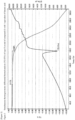
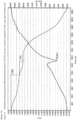
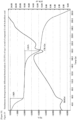
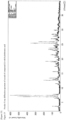
- a type II crystal of compound (I) with 1 equivalent of fumaric acid has the powder X-ray diffraction spectrum shown in Figure 1 , and also have the simultaneous thermogravimetry-differential thermal analysis (TG-DTA) curve shown in Figure 2 .
- TG-DTA simultaneous thermogravimetry-differential thermal analysis
- the type II crystal of compound (I) with 1 equivalent of fumaric acid has the diffraction angle (2 ⁇ ) and intensity (cts) shown in Table 2 in powder X-ray diffraction.
- characteristic peaks in the powder X-ray diffraction spectrum of the type II crystal of compound (I) with 1 equivalent of fumaric acid may have diffraction angles (2 ⁇ ⁇ 0.2°) of 5.5°, 6.8°, 9.3°, 13.4°, 15.3°, 16.3°, 18.5°, 19.8°, 22.0°, and 24.5°.
- the type II crystal of compound (I) with 1 equivalent of fumaric acid according to the present invention is a crystal having three or more peaks selected from the above characteristic peaks. It is preferably a crystal having four or more peaks selected from the characteristic peaks, more preferably a crystal having five or more peaks selected from the characteristic peaks, still more preferably a crystal having six or more peaks selected from the characteristic peaks, still more preferably a crystal having seven or more peaks selected from the characteristic peaks, even more preferably a crystal having eight or more peaks selected from the characteristic peaks, still even more preferably a crystal having nine or more peaks selected from the characteristic peaks, and particularly preferably a crystal having all of the peaks.
- the endothermic peak (peak top value) of the type II crystal of compound (I) with 1 equivalent of fumaric acid determined by simultaneous thermogravimetry-differential thermal analysis may be 173°C to 183°C, in other words, around 178°C.
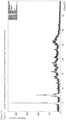
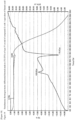
- a type II crystal of compound (I) has the powder X-ray diffraction spectrum shown in Figure 3 , and also have the simultaneous thermogravimetry-differential thermal analysis (TG-DTA) curve shown in Figure 4 .
- TG-DTA simultaneous thermogravimetry-differential thermal analysis
- the free-form type II crystal of compound (I) has the diffraction angle (2 ⁇ ) and intensity (cts) shown in Table 3 in powder X-ray diffraction.
- characteristic peaks in the powder X-ray diffraction spectrum of the type II crystal of compound (I) may have diffraction angles (2 ⁇ ⁇ 0.2°) of 8.3°, 14.8°, 17.3°, 18.0°, 19.1°, 20.3°, 21.0°, 22.5°, 23.0°, and 26.2°.
- the type II crystal of compound (I) according to the present invention is a crystal having three or more peaks selected from the above characteristic peaks. It is preferably a crystal having four or more peaks selected from the characteristic peaks, more preferably a crystal having five or more peaks selected from the characteristic peaks, still more preferably a crystal having six or more peaks selected from the characteristic peaks, still more preferably a crystal having seven or more peaks selected from the characteristic peaks, even more preferably a crystal having eight or more peaks selected from the characteristic peaks, still even more preferably a crystal having nine or more peaks selected from the characteristic peaks, and particularly preferably a crystal having all of the characteristic peaks.
- the endothermic peak (peak top value) of the type II crystal of compound (I) determined by simultaneous thermogravimetry-differential thermal analysis may be 177°C to 187°C, in other words, around 182°C.
- a type I crystal of compound (I) has the powder X-ray diffraction spectrum shown in Figure 5 , and also have the simultaneous thermogravimetry-differential thermal analysis (TG-DTA) curve shown in Figure 6 .
- TG-DTA simultaneous thermogravimetry-differential thermal analysis
- the free-form type I crystal of compound (I) has the diffraction angle (2 ⁇ ) and intensity (cts) shown in Table 4 in powder X-ray diffraction.
- characteristic peaks in the powder X-ray diffraction spectrum of the type I crystal of compound (I) may have diffraction angles (2 ⁇ ⁇ 0.2°) of 9.9°, 11.7°, 13.2°, 17.7°, 18.1°, 18.8°, and 20.8°.
- the type I crystal of compound (I) according to the present invention is a crystal having three or more peaks selected from the above characteristic peaks. It is preferably a crystal having four or more peaks selected from the characteristic peaks, more preferably a crystal having five or more peaks selected from the characteristic peaks, still more preferably a crystal having six or more peaks selected from the characteristic peaks, and particularly preferably a crystal having all of the characteristic peaks.
- characteristic peaks in the powder X-ray diffraction spectrum of the type I crystal of compound (I) may have diffraction angles (2 ⁇ ⁇ 0.2°) of 9.9°, 11.7°, 13.2°, 18.8°, and 20.8°.
- the type I crystal of compound (I) according to the present invention is a crystal having three or more peaks selected from the above characteristic peaks. It is preferably a crystal having four or more peaks selected from the characteristic peaks, and particularly preferably a crystal having all of the characteristic peaks.
- the endothermic peak (peak top value) of the type I crystal of compound (I) determined by simultaneous thermogravimetry-differential thermal analysis may be 178°C to 188°C, in other words, around 183°C.
- a type V crystal of compound (I) with 1 equivalent of fumaric acid has the powder X-ray diffraction spectrum shown in Figure 7 , and also have the simultaneous thermogravimetry-differential thermal analysis (TG-DTA) curve shown in Figure 8 .
- TG-DTA simultaneous thermogravimetry-differential thermal analysis
- the type V crystal of compound (I) with 1 equivalent of fumaric acid has the diffraction angle (2 ⁇ ) and intensity (cts) shown in Table 5 in powder X-ray diffraction.
- characteristic peaks in the powder X-ray diffraction spectrum of the type V crystal of compound (I) with 1 equivalent of fumaric acid may have diffraction angles (2 ⁇ ⁇ 0.2°) of 6.9°, 9.4°, 10.2°, 13.7°, 21.1°, 23.6°, and 26.5°.
- the type V crystal of compound (I) with 1 equivalent of fumaric acid according to the present invention is a crystal having three or more peaks selected from the above characteristic peaks. It is preferably a crystal having four or more peaks selected from the characteristic peaks, more preferably a crystal having five or more peaks selected from the characteristic peaks, still more preferably a crystal having six or more peaks selected from the characteristic peaks, and particularly preferably a crystal having all of the characteristic peaks.
- characteristic peaks in the powder X-ray diffraction spectrum of the type V crystal of compound (I) with 1 equivalent of fumaric acid may have diffraction angles (2 ⁇ ⁇ 0.2°) of 6.9°, 13.7°, 21.1°, 23.6°, and 26.5°.
- the type V crystal of compound (I) with 1 equivalent of fumaric acid according to the present invention is a crystal having three or more peaks selected from the above characteristic peaks. It is preferably a crystal having four or more peaks selected from the characteristic peaks, and particularly preferably a crystal having all of the characteristic peaks.
- the endothermic peak (peak top value) of the type V crystal of compound (I) with 1 equivalent of fumaric acid determined by simultaneous thermogravimetry-differential thermal analysis may be 146°C to 156°C, in other words, around 151°C.
- a type I crystal of compound (I) with 1 equivalent of fumaric acid has the powder X-ray diffraction spectrum shown in Figure 9 , and also have the simultaneous thermogravimetry-differential thermal analysis (TG-DTA) curve shown in Figure 10 .
- TG-DTA simultaneous thermogravimetry-differential thermal analysis
- the type I crystal of compound (I) with 1 equivalent of fumaric acid has the diffraction angle (2 ⁇ ) and intensity (cts) shown in Table 6 in powder X-ray diffraction.
- characteristic peaks in the powder X-ray diffraction spectrum of the type V crystal of compound (I) with 1 equivalent of fumaric acid may have diffraction angles (2 ⁇ ⁇ 0.2°) of 6.4°, 10.3°, 12.8°, 15.0°, 20.7°, 23.4°, and 26.6°.
- the type I crystal of compound (I) with 1 equivalent of fumaric acid according to the present invention is a crystal having three or more peaks selected from the above characteristic peaks. It is preferably a crystal having four or more peaks selected from the characteristic peaks, more preferably a crystal having five or more peaks selected from the characteristic peaks, still more preferably a crystal having five or more peaks selected from the characteristic peaks, and particularly preferably a crystal having all of the characteristic peaks.
- the endothermic peak (peak top value) of the type I crystal of compound (I) with 1 equivalent of fumaric acid determined by simultaneous thermogravimetry-differential thermal analysis may be 148°C to 158°C, in other words, around 153°C.
- characteristic peaks in the powder X-ray diffraction spectrum of the type V crystal of compound (I) with 1 equivalent of fumaric acid may have diffraction angles (2 ⁇ ⁇ 0.2°) of 6.4°, 10.3°, 12.8°, 20.7°, 23.4°, and 26.6°.
- the type I crystal of compound (I) with 1 equivalent of fumaric acid according to the present invention is a crystal having three or more peaks selected from the above characteristic peaks. It is preferably a crystal having four or more peaks selected from the characteristic peaks, more preferably a crystal having five or more peaks selected from the characteristic peaks, and particularly preferably a crystal having all of the characteristic peaks.
- the endothermic peak (peak top value) of the type I crystal of compound (I) with 1 equivalent of fumaric acid determined by simultaneous thermogravimetry-differential thermal analysis may be 148°C to 158°C, in other words, around 153°C.
- a type I crystal of compound (I) with 0.5 equivalents of fumaric acid has the powder X-ray diffraction spectrum shown in Figure 11 , and also have the simultaneous thermogravimetry-differential thermal analysis (TG-DTA) curve shown in Figure 12 .
- TG-DTA simultaneous thermogravimetry-differential thermal analysis
- characteristic peaks in the powder X-ray diffraction spectrum of the type I crystal of compound (I) with 0.5 equivalents of fumaric acid may have diffraction angles (2 ⁇ ⁇ 0.2°) of 6.4°, 7.5°, 9.7°, 11.7°, 15.1°, 19.6°, and 23.9°.
- the type I crystal of compound (I) with 0.5 equivalents of fumaric acid according to the present invention is a crystal having four or more peaks selected from the above characteristic peaks. It is preferably a crystal having five or more peaks selected from the characteristic peaks, more preferably a crystal having six or more peaks selected from the characteristic peaks, and particularly preferably a crystal having all of the characteristic peaks.
- the endothermic peak (peak top value) of the type I crystal of compound (I) with 0.5 equivalents of fumaric acid determined by simultaneous thermogravimetry-differential thermal analysis may be 156°C to 166°C, in other words, around 161°C.
- a type II crystal of compound (I) with 0.5 equivalents of fumaric acid has the powder X-ray diffraction spectrum shown in Figure 13 , and also have the simultaneous thermogravimetry-differential thermal analysis (TG-DTA) curve shown in Figure 14 .
- TG-DTA simultaneous thermogravimetry-differential thermal analysis
- characteristic peaks in the powder X-ray diffraction spectrum of the type II crystal of compound (I) with 0.5 equivalents of fumaric acid may have diffraction angles (2 ⁇ ⁇ 0.2°) of 5.4°, 6.4°, 7.3°, 12.8°, 13.4°, 14.7°, and 15.4°.
- the type II crystal of compound (I) with 0.5 equivalents of fumaric acid according to the present invention is a crystal having four or more peaks selected from the above characteristic peaks. It is preferably a crystal having five or more peaks selected from the characteristic peaks, more preferably a crystal having six or more peaks selected from the characteristic peaks, and particularly preferably a crystal having all of the characteristic peaks.
- the endothermic peak (peak top value) of the type II crystal of compound (I) with 0.5 equivalent of fumaric acid determined by simultaneous thermogravimetry-differential thermal analysis may be 157°C to 167°C, in other words, around 162°C.
- a type III crystal of compound (I) with 1 equivalents of fumaric acid has the powder X-ray diffraction spectrum shown in Figure 15 , and also have the simultaneous thermogravimetry-differential thermal analysis (TG-DTA) curve shown in Figure 16 .
- TG-DTA simultaneous thermogravimetry-differential thermal analysis
- characteristic peaks in the powder X-ray diffraction spectrum of the type III crystal of compound (I) with 1 equivalent of fumaric acid may have diffraction angles (2 ⁇ ⁇ 0.2°) of 8.1°, 13.2°, 20.4°, 23.1°, 24.7°, and 26.1°.
- the type III crystal of compound (I) with 1 equivalent of fumaric acid according to the present invention is a crystal having three or more peaks selected from the above characteristic peaks. It is preferably a crystal having four or more peaks selected from the characteristic peaks, more preferably a crystal having five or more peaks selected from the characteristic peaks, and particularly preferably a crystal having all of the characteristic peaks.
- the exothermic peak (peak top value) of the type III crystal of compound (I) with 1 equivalent of fumaric acid determined by simultaneous thermogravimetry-differential thermal analysis may be 148°C to 158°C, in other words, around 153°C.
- a type IV crystal of compound (I) with 1 equivalent of fumaric acid has the powder X-ray diffraction spectrum shown in Figure 17 , and also have the simultaneous thermogravimetry-differential thermal analysis (TG-DTA) curve shown in Figure 18 .
- TG-DTA simultaneous thermogravimetry-differential thermal analysis
- characteristic peaks in the powder X-ray diffraction spectrum of the type IV crystal of compound (I) with 1 equivalent of fumaric acid may have diffraction angles (2 ⁇ ⁇ 0.2°) of 6.0°, 15.7°, and 18.8°.
- the type IV crystal of compound (I) with 1 equivalent of fumaric acid according to the present invention is a crystal having all of the above characteristic peaks.
- the exothermic peak (peak top value) of the type IV crystal of compound (I) with 1 equivalent of fumaric acid determined by simultaneous thermogravimetry-differential thermal analysis may be 125°C to 135°C, in other words, around 130°C.
- a type II crystal of compound (I) with 1 equivalent of fumaric acid can be obtained by a method comprising, for example, the following two steps.
- the resulting solid was recovered by filtration. It is preferable that the recovered solid is washed with water and dried.
- step 1 preferably 1.5 to 10 equivalents (more preferably 2 to 5 equivalents and most preferably 3 equivalents) of fumaric acid is added with respect to 1 equivalent of a free-form compound (I).
- the solvent in step 1 is added in an amount of preferably 5 to 35 times (v/w) (more preferably 5 to 30 times (v/w) and most preferably 10 times (v/w)).
- Examples of the solvent used in step 1 may include single solvents or mixed solvents of alcohols such as methanol, ethanol, isopropanol, and tert-butanol, ethers such as 1,4-dioxane and tetrahydrofuran, ketones such as acetone and methyl ethyl ketone, and aprotic polar solvents such as acetonitrile.
- alcohols such as methanol, ethanol, isopropanol, and tert-butanol
- ethers such as 1,4-dioxane and tetrahydrofuran
- ketones such as acetone and methyl ethyl ketone
- aprotic polar solvents such as acetonitrile.
- a type I crystal of compound (I) can be obtained in the section of " (Method for producing free-form type I crystal)" or the method described later in Example 3.
- the temperature during the reaction in step 2 is preferably room temperature or higher and lower than the boiling point of each solvent as described above, but is not particularly limited and can be appropriately set to preferably 25°C to 70°C (more preferably 40°C to 60 ° C and most preferably 50°C).
- the stirring time during the reaction in step 2 is preferably 24 to 124 hours (more preferably 48 to 72 hours and most preferably 60 to 65 hours) for stirring the suspension.
- a free-form type II crystal of compound (I) can be obtained by a method comprising, for example, the following two steps (Method A-1).
- an additional solvent for example, 1-propanol as a good solvent
- 1-propanol as a good solvent
- Preferably 0.5 to 2 equivalents (more preferably 0.75 to 1.5 equivalents and particularly preferably 1 equivalent) of the acid in step 1 is added with respect to 1 equivalent of the compound (I).
- the mixed solvent of good solvent/poor solvent in step 1 (e.g., 1-propanol/water) is added in an amount of preferably 5 to 50 times (v/w) (more preferably 10 to 30 times (v/w) and particularly preferably 20 times (v/w)) the amount of the free-form compound (I).
- the temperature during the reaction in step 2 is preferably 25°C to 70°C (more preferably 40°C to 60°C and particularly preferably 50°C).
- the stirring time during the reaction in step 2 is preferably 2 to 7 days (more preferably 3 to 5 days and particularly preferably 4 days) for stirring the suspension.
- a free-form type II crystal of compound (I) can be obtained by a method comprising, for example, the following two steps (Method A-2).
- an additional solvent for example, 1-propanol as a good solvent
- 1-propanol as a good solvent
- step 1 Preferably 0.5 to 2 equivalents (more preferably 0.75 to 1.5 equivalents and particularly preferably 1 equivalent) of succinic acid in step 1 is added with respect to 1 equivalent of the compound (I).
- the mixed solvent of good solvent/poor solvent in step 1 e.g., a mixed solvent of 1-propanol/water
- a mixed solvent of 1-propanol/water is added in an amount of preferably 1 to 10 times (v/w) (more preferably 2 to 5 times (v/w) and particularly preferably 3 times (v/w)) the amount of the free-form compound (I), and a seed crystal (e.g., a seed crystal obtained in either (i) or (ii)) is added thereto.
- the reaction temperature in step 2 is preferably 25°C to 70°C (more preferably 40°C to 60°C and particularly preferably 50°C).
- the reaction time in step 2 is preferably 6 to 48 hours (more preferably 12 to 24 hours and most preferably 17.5 to 24 hours).
- a free-form type II crystal of compound (I) can be obtained by a method comprising, for example, the following two steps (Method B).
- the poor solvent (e.g., diisopropyl ether) in step 1 is added in an amount of preferably 2 to 10 times (v/w) (more preferably 3 to 7 times (v/w) and particularly preferably 5 times (v/w)) the amount of the free-form compound (I).
- the reaction time in step 1 is preferably 24 to 96 hours (more preferably 36 to 72 hours and particularly preferably 44.5 hours) for suspension and stirring.
- the reaction temperature in step 2 is preferably 25°C to 70°C (more preferably 40°C to 60°C and particularly preferably 50°C).
- the good solvent in step 2 (e.g., ethanol) is added in an amount of preferably 0.5 to 3 times (v/w) (more preferably 0.8 to 2 times (v/w) and particularly preferably 1 time (v/w)) the amount of the free-form compound (I).
- the stirring time in step 2 is preferably 6 to 72 hours (more preferably 12 to 48 hours and particularly preferably 21 hours), following which the solid is recovered by filtration and dried.
- an additional solvent e.g., diisopropyl ether as a poor solvent and/or ethanol as a good solvent
- an additional solvent e.g., diisopropyl ether as a poor solvent and/or ethanol as a good solvent
- Examples of a combination of a good solvent and a poor solvent used in the production of a free form II crystal of compound (I) include methanol (good solvent) and water (poor solvent), methanol (good solvent) and diisopropyl ether (IPE) (poor solvent), methanol (good solvent) and heptane (poor solvent), ethanol (good solvent) and IPE (poor solvent), ethanol (good solvent) and heptane (poor solvent), 1-propanol (good solvent) and water (poor solvent), 1-propanol (good solvent) and IPE (poor solvent), 1-propanol (good solvent) and heptane (poor solvent), 2-propanol (good solvent) and heptane (poor solvent), acetone (good solvent) and IPE (poor solvent), acetone (good solvent) and heptane (poor solvent), dimethyl sulfoxide (DMSO) (good solvent) and water (poor solvent), dimethylacetamide (
- a preferred combination of a good solvent and a poor solvent is ethyl acetate (good solvent) and n-heptane (poor solvent), ethanol (good solvent) and water (poor solvent), 1-propanol (good solvent) and water (poor solvent), or ethanol (good solvent) and diisopropyl ether (poor solvent).
- the amount of the poor solvent is preferably 1 to 20 times (v/v) and more preferably 1 to 10 times (v/v) of the good solvent.
- the amount of the seed crystal added can be preferably 0.5% to 30% (w/w), more preferably 1% to 5% (w/w) of the amount of the introduced compound (I).
- a free-form type I crystal of compound (I) can be obtained by a method comprising, for example, a step of suspending a crude product of the compound (I) in a solvent and optionally adding a seed crystal to obtain a crystal of compound (I) in a solid form.
- the seed crystal is optionally added in order to promote the crystallization of the free-form type I crystal, and as the seed crystal, an appropriate amount of a type I crystal of compound (I) or a mixed crystal containing the type I crystal may be added.
- a type I crystal of compound (I) can be obtained by the above method without adding a seed crystal. However, by adding a seed crystal, the time for obtaining the compound can be shortened. Further, crystallization may be carried out with stirring in order to shorten the crystallization time and control the particle size.
- the seed crystal to be added is 0.5% to 30% (w / w) and preferably 1% to 10% (w / w) of the amount of the introduced compound (I).
- the temperature can be appropriately set, but is preferably 50°C to 65°C.
- the compound (I) can be precipitated at the above dissolution temperature. However, if it is not precipitated at the dissolution temperature, a free-form type I crystal can be obtained by cooling to 25°C.
- solvent ethyl acetate, ethanol, acetonitrile, acetone, tert-butyl methyl ether, or the like can be used.
- a type V crystal of compound (I) with 1 equivalent of fumaric acid can be obtained by a method comprising, for example, the following two steps.
- Fumaric acid in step 1 is more preferably added in an amount of 2 equivalents to 1 equivalent of the free-form compound (I).
- Acetone in step 1 is preferably added in an amount 40 to 60 times (v/w) (more preferably 50 times (v/w)) with respect to the free-form compound (I).
- the reaction temperature in step 2 is preferably 10°C to 30°C (preferably 25°C).
- the reaction time in step 2 is preferably 12 to 96 hours (more preferably 71 hours).
- the reaction temperature of step 3 is 20°C to 60°C (e.g., room temperature) for the obtained solid.
- the reduced pressure time in step 3 (e.g., a pressure of 2 kPa or less) include drying for preferably 6 to 24 hours (more preferably 7.5 hours).
- a type V crystal of compound (I) with 1 equivalent of fumaric acid can be obtained by a method comprising, for example, the following step.
- a type I crystal of compound (I) with 1 equivalent of fumaric acid can be obtained by a method comprising, for example, the following two steps.
- Fumaric acid in step 1 is more preferably added in an amount of 2 equivalents to 1 equivalent of the free-form compound (I).
- Acetone in step 1 is preferably added in an amount 40 to 60 times (more preferably 50 times) with respect to the free-form compound (I).
- the reaction temperature in step 2 is preferably 10°C to 30°C (preferably 25°C).
- the reaction time in step 2 is preferably 12 to 24 hours (more preferably 19.5 hours).
- a type III crystal of compound (I) with 1 equivalent of fumaric acid can be obtained by a method comprising, for example, the following two steps.
- step 1 To 1 equivalent of the free-form compound (I) in step 1, preferably 1 to 5 equivalents (more preferably 3 equivalents) of fumaric acid is added.
- the solvent (e.g., acetonitrile) in step 1 is preferably added in an amount 25 to 35 times (v/w) (more preferably 30 times (v/w)) with respect to the free-form compound (I).
- the reaction temperature in step 2 is preferably 45°C to 55°C (particularly preferably 50°C).
- the reaction time in step 2 is preferably 0.5 to 1.5 hours (more preferably 1 hour).
- a type IV crystal of compound (I) with 1 equivalent of fumaric acid can be obtained by a method comprising, for example, the following two steps.
- step 1 To 1 equivalent of the free-form compound (I), preferably 1 to 5 equivalents (more preferably 3 equivalents) of fumaric acid is added in step 1.
- a type I crystal of compound (I) with 0.5 equivalents of fumaric acid can be obtained by a method comprising, for example, the following two steps.
- step 1 preferably 0.5 to 1 equivalent (more preferably 0.5 to 0.75 equivalents and most preferably 0.5 equivalents) of fumaric acid is added with respect to 1 equivalent of the free-form compound (I).
- Water as the solvent in step 1 is added in an amount of preferably 10 to 40 times (v/w) (more preferably 15 to 25 times (v/w) and most preferably 20 times (v/w)) with respect to the free-form compound (I).
- the reaction temperature in step 2 is preferably 40°C to 60°C (more preferably 45°C to 55°C and particularly preferably 50°C).
- the reaction time in step 2 is preferably 48 to 120 hours (more preferably 72 to 96 hours and most preferably 93.5 hours).
- a type II crystal of compound (I) with 0.5 equivalents of fumaric acid can be obtained by a method comprising, for example, the following two steps.
- step 1 To 1 equivalent of the free-form compound (I), preferably 0.5 to 1 equivalent (more preferably 1 equivalent) of fumaric acid is added in step 1.
- Ethanol as the solvent in step 1 is added in an amount of preferably 10 to 40 times (v/w) (more preferably 15 to 25 times (v/w) and most preferably 20 times (v/w)) with respect to the free-form compound (I).
- the reaction temperature in step 2 is preferably 40°C to 60°C (more preferably 45°C to 55°C and particularly preferably 50°C).
- the reaction time in step 2 is preferably 6 to 48 hours (more preferably 12 to 24 hours and most preferably 19.5 hours).
- a type II crystal with 1 equivalent of fumaric acid, a free-form type II crystal, a free-form type I crystal, a type V crystal with 1 equivalent of fumaric acid, a type I crystal with 0.5 equivalents of fumaric acid, and a type II crystal with 0.5 equivalents of fumaric acid of the compound (I) have at least one of advantageous properties in pharmaceutical manufacturing such as a non-hygroscopic property, ability to be obtained with reproducibility, solid stability, and oral absorbability.
- a type II crystal with 1 equivalent of fumaric acid a free-form type II crystal, a free-form type I crystal, and a type V crystal with 1 equivalent of fumaric acid of the compound (I) have advantageous properties in pharmaceutical manufacturing such as a non-hygroscopic property, ability to be obtained with reproducibility, solid stability, and oral absorbability, as compared with other crystal forms of the compound (I).
- the type II crystal of compound (I) with 1 equivalent of fumaric acid is less hygroscopic and has ability to be obtained with stability. It is important for the industrial manufacturing of pharmaceutical products that drug development candidate compounds are less hygroscopic can be stably obtained. In addition, it has properties that are easy to handle as pharmaceutical products, such as solid stability and solubility, and excellent oral absorbability Therefore, the type II crystal of compound (I) with 1 equivalent of fumaric acid has excellent properties required as a pharmaceutical product or active pharmaceutical ingredient.
- the free-form type II crystal of compound (I) is less hygroscopic. It is important for the industrial manufacturing of pharmaceutical products having stable quality with drug development candidate compounds. In addition, it has properties that are easy to handle as pharmaceutical products, such as solid stability and solubility, and excellent oral absorbability Therefore, the free-form crystal of compound (I) has excellent properties required as a pharmaceutical product or active pharmaceutical ingredient.
- the free-form type I crystal of compound (I) is less hygroscopic and has excellent ability to be obtained with stability. It is also important for the industrial manufacturing of pharmaceutical products with stable quality that drug development candidate compounds are less hygroscopic and have ability to be stably obtained. Therefore, the type I crystal of compound (I) has excellent properties required as a pharmaceutical product or active pharmaceutical ingredient.
- the type V crystal of compound (I) with 1 equivalent of fumaric acid is less hygroscopic and has ability to be obtained with stability. It is also important for the industrial manufacturing of pharmaceutical products with stable quality that drug development candidate compounds are less hygroscopic and have ability to be stably obtained. Therefore, the type V crystal of compound (I) with 1 equivalent of fumaric acid according to the present invention have excellent properties required as a pharmaceutical product or active pharmaceutical ingredient.
- the type I crystal of compound (I) with 1 equivalent of fumaric acid has excellent ability to be stablly obtained. It is also important for the industrial manufacturing of pharmaceutical products with stable quality that drug development candidate compounds have ability to be stably obtained. Therefore, the type I crystal of compound (I) with 1 equivalent of fumaric acid has excellent properties required as a pharmaceutical product or active pharmaceutical ingredient.
- type I crystal of compound (I) with 1 equivalent of fumaric acid can be recovered as a solid from, it is also useful as an intermediate for the production of a type V crystal with 1 equivalent of fumaric acid.
- the type III crystal of compound (I) with 1 equivalent of fumaric acid has excellent ability to be stably obtained. It is also important for the industrial manufacturing of pharmaceutical products with stable quality that drug development candidate compounds have ability to be stably obtained. Therefore, the type III crystal of compound (I) with 1 equivalent of fumaric acid has excellent properties required as a pharmaceutical product or active pharmaceutical ingredient.
- the type IV crystal of compound (I) with 1 equivalent of fumaric acid has excellent ability to be stably obtained. It is also important for the industrial manufacturing of pharmaceutical products with stable quality that drug development candidate compounds have ability to be stably obtained. Therefore, the type IV crystal of compound (I) with 1 equivalent of fumaric acid has excellent properties required as a pharmaceutical product or active pharmaceutical ingredient.
- the type I crystal of compound (I) with 0.5 equivalents of fumaric acid has excellent ability to be stablly obtained. It is also important for the industrial manufacturing of pharmaceutical products with stable quality that drug development candidate compounds have ability to be stably obtained. Therefore, the type I crystal of compound (I) with 0.5 equivalents of fumaric acid has excellent properties required as a pharmaceutical product or active pharmaceutical ingredient.
- the type II crystal of compound (I) with 0.5 equivalents of fumaric acid has excellent ability to be stably obtained. It is also important for the industrial manufacturing of pharmaceutical products with stable quality that drug development candidate compounds have ability to be stably obtained. Therefore, the type II crystal of compound (I) with 0.5 equivalents of fumaric acid according to the present invention have excellent properties required as a pharmaceutical product or active pharmaceutical ingredient.
- Another embodiment of the present invention relates to a crystal of compound (I) with hydrochloric acid (type I crystal, type II crystal, or type III crystal ), a crystal of compound (I) with hydrobromic acid, a crystal of compound (I) with 1 equivalent of L-tartaric acid, or a crystal of compound (I) with succinic acid.
- a precipitated crystal can be isolated and purified from a solution in which the crystal is dissolved, mixed, or the like by a known separation and purification means such as filtration, washing with water, and drying under reduced pressure.
- the free-form crystals or crystals with acids (salt crystals or co-crystals) of the compound (I) of the present invention has excellent HER2 inhibitory activity. Moreover, the free-form crystals or crystals with acids (salt crystals or co-crystals) of the compound (I) of the present invention has excellent selectivity to HER2. Accordingly, the free-form crystals or crystals with acids (salt crystals or co-crystals) of the compound (I) of the present invention is useful as an antitumor agent against diseases or malignant tumor having HER2 overexpression, HER2 gene amplification, HER2 mutation, etc. In addition, the free-form crystals or crystals with acids (salt crystals or co-crystals) of the compound (I) of the present invention is advantageous in that it has a few side effects.
- HER2 includes the HER2 of a human or a non-human mammal, and it is preferably human HER2. Furthermore, the term “HER2” includes isoforms.
- the free-form crystals or crystals with acids (salt crystals or co-crystals) of the compound (I) of the present invention has excellent HER2 inhibitory activity, it is useful as a medicament for treating disease associated with HER2.
- the "disease associated with HER2" means disease, in which a reduction in the incidence, or the remission, alleviation and/or complete recovery of the symptoms thereof is achieved by deleting, suppressing and/or inhibiting the function of HER2.
- diseases may include malignant tumors, but are not limited thereto.
- Preferred examples of the disease may include malignant tumors having HER2 overexpression, HER2 gene amplification, or HER2 mutation.
- the free-form crystals or crystals with acids (salt crystals or co-crystals) of the compound (I) of the present invention selectively inhibits wild-type HER2, and mutant HER2 having one or more insertion mutations, point mutations, deletion mutations, etc. in the HER2 domain thereof, such as exon 20 insertion mutation.
- One embodiment of the present invention provides: the free-form crystals or crystals with acids (salt crystals or co-crystals) of the compound (I) having inhibitory activity against wild-type HER2, and mutant HER2 including HER2 having YVMA insertion mutation that is one of exon 20 insertion mutations, or a salt thereof; or a medicament or a pharmaceutical composition each comprising the same.
- One embodiment of the present invention provides an inhibitor against wild-type HER2, and mutant HER2 including HER2 having YVMA insertion mutation, etc., wherein the inhibitor comprises the free-form crystals or crystals with acids (salt crystals or co-crystals) of the compound (I) of the present invention.
- the human HER2 gene is shown in, for example, SEQ ID NO: 1, SEQ ID NO: 3, or SEQ ID NO: 5.
- the wild-type HER2 protein consists of the amino acid sequence set forth in, for example, SEQ ID NO: 2, SEQ ID NO: 4, or SEQ ID NO: 6.
- the nucleotide sequence information of the human HER2 gene and the amino acid sequence information of the wild-type HER2 protein can be obtained from, for example, Accession No. NM_004448, NM_001289936, NM_001005862, or the like.
- the free-form crystals or crystals with acids (salt crystals or co-crystals) of the compound (I) of the present invention exhibits inhibitory activity against mutant HER2 comprising one or more mutations from G309A, S310F, R678Q, L755S, L755_T759del, D769H, A775_G776insYVMA, V777L, V842I and R896C, using the amino acid sequence set forth in SEQ ID NO: 2 as a reference.
- the free-form crystals or crystals with acids (salt crystals or co-crystals) of the compound (I) of the present invention exhibits inhibitory activity against mutant HER2 comprising A775_G776insYVMA, using the amino acid sequence set forth in SEQ ID NO: 2 as a reference.
- the free-form crystals or crystals with acids (salt crystals or co-crystals) of the compound (I) of the present invention exhibits inhibitory activity against mutant HER2 comprising one or more mutations from G294A, S295F, R663Q, L740S, L740_T744del, D754H, A760_G761insYVMA, V762L, V827I and R881C, using the amino acid sequence set forth in SEQ ID NO: 4 as a reference.
- the free-form crystals or crystals with acids (salt crystals or co-crystals) of the compound (I) of the present invention exhibits inhibitory activity against mutant HER2 comprising A760_G761insYVMA, using the amino acid sequence set forth in SEQ ID NO: 4 as a reference.
- the free-form crystals or crystals with acids (salt crystals or co-crystals) of the compound (I) of the present invention exhibits inhibitory activity against mutant HER2 comprising one or more mutations from G279A, S280F, R648Q, L725S, L725_T729del, D739H, A745_G746insYVMA, V747L, V812I and R866C, using the amino acid sequence set forth in SEQ ID NO: 6 as a reference.
- the free-form crystals or crystals with acids (salt crystals or co-crystals) of the compound (I) of the present invention exhibits inhibitory activity against mutant HER2 comprising A745_G746insYVMA, using the amino acid sequence set forth in SEQ ID NO: 6 as a reference.
- the mutation in a certain HER2 isoform even when the position of the mutation is different from the position of an amino acid shown in SEQ ID NO: 2 due to deletion or insertion of an amino acid(s), it is understood that the mutation is the same as the mutation at a position corresponding to the position of the amino acid shown in SEQ ID NO: 2.
- the glycine at position 309 in the HER2 shown in SEQ ID NO: 2 corresponds to glycine at position 294 in HER2 consisting of the amino acid sequence set forth in SEQ ID NO: 4.
- G309A means that the glycine at position 309 in the HER2 shown in SEQ ID NO: 2 is mutated to alanine. Since such "G309” is at a position corresponding to the amino acid at position 294 in HER2 consisting of the amino acid sequence set forth in SEQ ID NO: 4, "G294A” in the HER2 consisting of the amino acid sequence set forth in SEQ ID NO: 4 corresponds to "G309A" in the HER2 shown in SEQ ID NO: 2. Besides, the position of an amino acid in SEQ ID NO: 2 that corresponds to a certain amino acid in a certain HER2 isoform can be confirmed by Multiple Alignment of BLAST.
- One embodiment of the present invention provides an antitumor agent, comprising the above-described crystal of compound (I) (i.e., a free-form crystal of compound (I) or a crystal of compound (I) with an acid (salt crystal or co-crystal)).
- an antitumor agent comprising the above-described crystal of compound (I) (i.e., a free-form crystal of compound (I) or a crystal of compound (I) with an acid (salt crystal or co-crystal)).
- a method for treating tumor comprising administering an effective amount of the above-described crystal of compound (I) (i.e., a free-form crystal of compound (I) or a crystal of compound (I) with an acid (salt crystal or co-crystal)) to a subject in need thereof.
- one embodiment of the present invention provides use of the above-described crystal of compound (I) (i.e., a free-form crystal of compound (I) or a crystal of compound (I) with an acid (salt crystal or co-crystal)) for the production of an antitumor agent. Furthermore, one embodiment of the present invention provides the above-described crystal of compound (I) (i.e., a free-form crystal of compound (I) or a crystal of compound (I) with an acid (salt crystal or co-crystal)) for use in the treatment of tumor.
- the crystals of the present invention may be used in postoperative adjuvant chemotherapy performed to prevent recurrence after surgical removal of a tumor, or may be used in neoadjuvant chemotherapy performed in advance before surgical removal of a tumor.
- the tumor that is the target of the present invention is not particularly limited.
- the tumor may include brain tumor, head and neck cancer, digestive cancer (esophageal cancer, stomach cancer, duodenal cancer, liver cancer, biliary tract cancer (gallbladder and/or bile duct cancer, etc.), pancreatic cancer, colorectal cancer (colon cancer, rectal cancer, etc.), etc.), lung cancer (non-small cell lung cancer, small cell lung cancer, mesothelioma, etc.), breast cancer, genital cancer (ovarian cancer, uterine cancer (cervical cancer, endometrial cancer, etc.), etc.), urinary organ cancer (kidney cancer, bladder cancer, prostate cancer, testicular tumor, etc.), hematopoietic tumor (leukemia, malignant lymphoma, multiple myeloma, etc.), bone and/or soft tissue tumor, and skin cancer.
- lung cancer breast cancer, stomach cancer, colorectal cancer, bladder cancer,
- the tumor is a brain tumor.
- the compound of the present invention may be useful for the treatment of the symptoms of brain that is required to pass through the blood-brain barrier.
- the compound of one embodiment has favorable permeability through the blood-brain barrier for the delivery thereof into the brain, namely, excellent brain penetration properties.
- the concentration of the compound in the brain or a Kp value is applied as an indicator of the penetration properties of the compound into the brain.
- the brain tumor treated with the compound of the present invention includes metastatic brain tumor and primary brain tumor.
- the brain tumor may include, but are not particularly limited to, metastatic brain tumor (e.g., brain metastasis of lung cancer, breast cancer, stomach cancer, colorectal cancer, bladder cancer, biliary tract cancer, uterine cancer, etc. (preferably, lung cancer, breast cancer, or stomach cancer)), piliocytic astrocytoma, diffuse astrocytoma, oligodendroma and/or oligodendroastrocytoma, anaplastic astrocytoma and/or anaplastic oligodendroglioma, anaplastic oligodendroastrocytoma, glioblastoma, ependymoma, anaplastic ependymoma, ganglioglioma, central neurocytoma, medulloblastoma, germinoma, central nervous system malignant lymphoma, meningioma, neurilemmoma, GH secreting pituitary a
- the term "effective amount" of the compound means the amount of the compound of the present invention that induces the biological or medical response of a subject, such as, for example, reduction or inhibition of enzyme or protein activity; or ameliorates symptoms, alleviates conditions, and retards or delays the progression of disease; and the like (therapeutically effective amount).
- the term "subject" includes mammals and nonmammals.
- the mammal may include, but are not limited to, a human, a chimpanzee, an ape, a monkey, a bovine, a horse, sheep, a goat, a swine, a rabbit, a dog, a cat, a rat, a mouse, a guinea pig, a hedgehog, a kangaroo, a mole, a wild pig, a bear, a tiger, and a lion.
- the non-mammal may include, but are not limited to, birds, fish, and reptiles.
- the subject is a human, and may be a human who has been diagnosed to need the treatment for the symptoms, conditions or disease disclosed in the present description.
- various types of dosage forms can be adopted depending on the therapeutic purpose with or without crushing the crystal.
- the dosage form may include all of oral agents such as tablets, capsules, granules, fine granules, powders, and dry syrups, suppositories, inhalants, nasal drops, ointments, patches, and injections.
- Pharmaceutical compositions suitable for these dosage forms can be prepared by commonly used production methods that are known to skilled persons using pharmaceutically acceptable carriers.
- One embodiment of the present invention provides an antitumor agent comprising the above-described crystal of compound (I) (i.e., a free-form crystal of compound (I) or a crystal of compound (I) with an acid (salt crystal or co-crystal)).
- One embodiment of the present invention also provides a method for treating tumor, comprising administering an effective amount of the crystal of compound (I) (i.e., a free-form crystal of compound (I) or a crystal of compound (I) with an acid (salt crystal or co-crystal)) to a subject in need thereof.
- One embodiment of the present invention also provides the use of the crystal of compound (I) (i.e., a free-form crystal of compound (I) or a crystal of compound (I) with an acid (salt crystal or co-crystal)) for the production of an antitumor agent.
- One embodiment of the present invention also provides the crystal of compound (I) (i.e., a free-form crystal of compound (I) or a crystal of compound (I) with an acid (salt crystal or co-crystal)) for use in the treatment of tumor by administration thereof.
- One embodiment of the present invention provides an antitumor agent for oral administration comprising the above-described crystal of compound (I) (i.e., a free-form crystal of compound (I) or a crystal of compound (I) with an acid (salt crystal or co-crystal)).
- One embodiment of the present invention also provides a method for treating tumor, comprising orally administering an effective amount of the crystal of compound (I) (i.e., a free-form crystal of compound (I) or a crystal of compound (I) with an acid (salt crystal or co-crystal)) to a subject in need thereof.
- One embodiment of the present invention also provides the use of the crystal of compound (I) (i.e., a free-form crystal of compound (I) or a crystal of compound (I) with an acid (salt crystal or co-crystal)) for the production of an antitumor agent for oral administration.
- One embodiment of the present invention also provides the crystal of compound (I) (i.e., a free-form crystal of compound (I) or a crystal of compound (I) with an acid (salt crystal or co-crystal)) for use in the treatment of tumor by oral administration thereof.
- One embodiment of the present invention provides a pharmaceutical composition
- a pharmaceutical composition comprising the crystal of compound (I) (i.e., a free-form crystal of compound (I) or a crystal of compound (I) with an acid (salt crystal or co-crystal)).
- the pharmaceutical composition in one embodiment of the present invention comprises the crystal of compound (I) (i.e., a free-form crystal of compound (I) or a crystal of compound (I) with an acid (salt crystal or co-crystal)) and a pharmaceutically acceptable carrier.
- One embodiment of the present invention also provides the use of the crystal of compound (I) (i.e., a free-form crystal of compound (I) or a crystal of compound (I) with an acid (salt crystal or co-crystal)) for the production of a pharmaceutical composition.
- One embodiment of the present invention provides the crystal of compound (I) (i.e., a free-form crystal of compound (I) or a crystal of compound (I) with an acid (salt crystal or co-crystal)) for use as a medicament.
- kits comprising (i) a pharmaceutical composition comprising the crystal of compound (I) (i.e., a free-form crystal of compound (I) or a crystal of compound (I) with an acid (salt crystal or co-crystal)) and (ii) an instruction for use of the pramaceutical composition.
- a pharmaceutical composition comprising the crystal of compound (I) (i.e., a free-form crystal of compound (I) or a crystal of compound (I) with an acid (salt crystal or co-crystal)) and (ii) an instruction for use of the pramaceutical composition.
- examples of the pharmaceutically acceptable carrier mixed into the compound of the present invention may include an excipient, a binder, a disintegrator, a lubricant, and a coating agent.
- examples of the pharmaceutically acceptable carrier mixed into the compound of the present invention may include a solvent, a solubilizer, a suspending agent, a tonicity agent, a buffer, and a soothing agent.
- preparation additives such as an antiseptic, an antioxidant, a coloring agent, a sweetener, and a stabilizer can also be used, as necessary.
- excipient examples include lactose, sucrose, D-mannitol, starch, crystalline cellulose, and calcium silicate.
- binder examples include hydroxypropyl cellulose, methyl cellulose, polyvinylpyrrolidone, candy powder, and hypromellose.
- disintegrator may include sodium starch glycolate, carmellose calcium, croscarmellose sodium, crospovidone, low-substituted hydroxypropyl cellulose, and partially pregelatinized starch.
- Examples of the lubricant may include talc, magnesium stearate, sucrose fatty acid ester, stearic acid, and sodium stearyl fumarate.
- Examples of the coating agent may include ethyl cellulose, aminoalkyl methacrylate copolymer RS, hypromellose, and sucrose.
- Examples of the solvent may include water, propylene glycol, and physiological saline.
- solubilizer may include polyethylene glycol, ethanol, ⁇ -cyclodextrin, macrogol 400, and polysorbate 80.
- suspending agent examples include carrageenan, crystalline cellulose/carmellose sodium, and polyoxyethylene hydrogenated castor oil.
- Examples of the tonicity agent may include sodium chloride, glycerin, and potassium chloride.
- pH adjuster/buffer may include sodium citrate, hydrochloric acid, lactic acid, phosphoric acid, and sodium dihydrogen phosphate.
- Examples of the soothing agent may include procaine hydrochloride and lidocaine.
- antiseptic examples include ethyl paraoxybenzoate, cresol, and benzalkonium chloride.
- antioxidant examples include sodium sulfite, ascorbic acid, and natural vitamin E.
- coloring agent examples include titanium oxide, iron sesquioxide, edible blue No. 1, and copper chlorophyll.
- Examples of the corrigent may include aspartame, saccharin, sucralose, l-menthol, and mint flavor.
- Examples of the stabilizer may include sodium pyrosulfite, sodium edetate, erythorbic acid, magnesium oxide, and dibutylhydroxytoluene.
- an excipient and as necessary, a binder, a disintegrator, a lubricant, a coloring agent, a corrigent, and the like are added to a crystal of compound (I) (i.e., a free-form crystal of compound (I) or a crystal of compound (I) with an acid (salt crystal or co-crystal)), and thereafter, a tablet, a coated tablet, a granule, a powder agent, a capsule, and the like can be produced according to ordinary methods.
- a crystal of compound (I) i.e., a free-form crystal of compound (I) or a crystal of compound (I) with an acid (salt crystal or co-crystal
- a pH adjuster, a buffer, a stabilizer, a tonicity agent, a local anesthetic, and the like are added to a crystal of compound (I) (i.e., a free-form crystal of compound (I) or a crystal of compound (I) with an acid (salt crystal or co-crystal)), and thereafter, subcutaneous, intramuscular, and intravenous injections can be produced according to ordinary methods.
- the amount of a crystal of compound (I) i.e., a free-form crystal of compound (I) or a crystal of compound (I) with an acid (salt crystal or co-crystal)
- a crystal of compound (I) i.e., a free-form crystal of compound (I) or a crystal of compound (I) with an acid (salt crystal or co-crystal)
- each dosage unit form depends on the symptoms of a patient to whom the crystal should be applied, the dosage form, or the like, and thus, the amount of the compound of the present invention is not constant.
- the applied dose is set to beapproximately 0.05 to 1000 mg per dosage unit form in the case of an oral agent, it is set to be approximately 0.1 to 500 mg per dosage unit form in the case of an injection, and it is set to be approximately 1 to 1000 mg per dosage unit form in the case of a suppository or a topical agent in terms of the free-form compound (I).
- the daily dose of a crystal of compound (I) i.e., a free-form crystal of compound (I) or a crystal of compound (I) with an acid (salt crystal or co-crystal) in a drug having the above-described dosage form is different depending on the symptoms, body weight, age, sex and the like of a patient, and thus, it cannot be generally determined.
- the crystal may be administered to an adult (body weight: 50 kg) at a daily dose of generally approximately 0.05 to 5000 mg, and preferably 0.1 to 1000 mg in terms of the free-form compound (I), and it is preferably administered once a day or in 2 to 3 divided doses.
- Silica gel chromatography was carried out using Purif-Pack (registered trademark) SI manufactured by MORITEX Corporation, KP-Sil (registered trademark) Silica Prepacked Column manufactured by Biotage Japan Ltd., or HP-Sil (registered trademark) Silica Prepacked Column manufactured by Biotage Japan Ltd.
- Basic silica gel column chromatography was carried out using Purif-Pack (registered trademark) NH manufactured by MORITEX Corporation or KP-NH (registered trademark) Prepacked Column manufactured by Biotage Japan Ltd.
- Preparative thin-layer chromatography was carried out using Kieselgel TM60F254, Art.
- LCMS spectral measurement was carried out using ACQUITY SQD (quadrupole type) manufactured by Waters under the following conditions.
- Reverse phase preparative HPLC purification was carried out under the following conditions using a preparative system manufactured by WATERS.
- Powder X-ray diffraction analysis was carried out according to any of the following test conditions after lightly pulverizing an appropriate amount of a test substance in an agate mortar as needed.
- thermogravimetry-differential thermal analysis analysis was carried out using 2 to 3 mg of a test substance according to the following test conditions.
- reaction mixture was concentrated under reduced pressure, and the obtained residue was then purified by silica gel chromatography (hexane : ethyl acetate) to obtain the corresponding coupling body.
- the obtained compound was used in the subsequent reaction without being further purified.
- the obtained coupling body, THF (114 mL) and ammonia water (114 mL) were added into a pressure resistant tube, and the obtained mixture was then stirred at 100°C for 14 hours. Thereafter, the reaction mixture was cooled to room temperature, and was then poured into water (285 mL). The thus obtained mixture was stirred at room temperature for 5 hours. Thereafter, the precipitated solid was collected by filtration, was then washed with water, and was then dried to obtain a product of interest (34.5 g).
- the compound of Synthesis Example 1(1) (28.0 g), 10% palladium carbon catalyst (720 mg), NMP (84 mL), methanol (26 mL), and triethylamine (17.6 mL) were added into a pressure resistant tube, followed by carbon monoxide substitution, and the obtained mixture was stirred at 100°C for 2 hours. Thereafter, the reaction mixture was cooled to room temperature, a 2 M sodium hydroxide aqueous solution (79 mL) was then added thereto, and the obtained mixture was then stirred at 80°C for 2 hours. Thereafter, the reaction mixture was cooled to room temperature, was then filtrated through Celite, and was then washed with methanol. Subsequently, methanol in the filtrate was concentrated under reduced pressure.
- Type II crystals of the compound (I) with fumaric acid were produced by the two methods described below in Production Method 1 and Production Method 2.
- a free-form type I crystal of compound (I) was synthesized by the same method as in Example 3 described later.
- Fumaric acid (3 equivalents) was added to 30 mg of a free-form type I crystal of compound (I), 0.3 mL of tert-butanol was added, the suspension was stirred at 25°C for approximately 124 hours, and then the solid was collected by filtration, recovered, and dried to obtain a crystal of interest.
- Powder X-ray diffraction spectrum See Figure 1 .
- the powder X-ray diffraction spectral data are shown in Table 2.
- Table 2 Powder X-ray diffraction spectral data of type II crystal of compound (I) with 1 equivalent of fumaric acid Peak position [° 2 ⁇ ] Net intensity [cts] 5.5 1065 6.8 489 8.1 187 9.3 370 10.8 54 12.1 107 13.4 56.4 140 319 14.6 171 15.3 771 16.3 602 17.1 101 18.5 1106 19.8 516 20.5 236 22.0 1123 22.6 101 23.3 129 23.8 151 24.5 929 25.1 676 25.5 774 26.2 432 27.2 455 27.3 358 27.9 144 28.1 137 29.0 154 29.9 183 30.9 106 32.0 73 32.9 104 34.3 174 35.1 125 38.2 105 39.1 114
- Free-form type II crystals were produced by the four methods described below in Production Methods 1 to 4.
- Diisopropyl ether (5 mL) was added to 1000 mg of the compound (I) obtained according to the method in Synthesis Example 1, a small amount of the crystals obtained in (iii) was added as a seed crystal, and the mixture was suspended and stirred at 50°C. After 42.5 hours, as the solvent had evaporated, 5 mL of diisopropyl ether was added. The mixture was suspended and stirred at 50°C for 2 hours, and then 0.5 mL of ethanol was added. The mixture was further suspended and stirred at 50°C for 2 hours, and then 0.5 mL of ethanol was added. The mixture was further suspended and stirred at 50°C for 19 hours, and naturally cooled for 30 minutes, and then the solid was collected by filtration, recovered, and dried to obtain 798.8 mg of a crystal of interest.
- Powder X-ray diffraction spectrum See Figure 3 .
- the powder X-ray diffraction spectral data are shown in Table 3.
- Table 3 Powder X-ray diffraction spectral data of free-form type II crystal of compound (I) Peak position [° 2 ⁇ ] Net intensity [cts] 8.3 1844 9.7 179 10.2 531 11.5 248 12.5 660 13.6 440 14.8 2512 15.8 530 16.0 105 16.5 641 16.9 117 17.3 2130 18.0 945 18.3 269 19.1 844 19.4 154 20.3 952 21.0 963 21.6 271 21.9 520 22.5 957 23.0 1442 23.6 559 23.9 980 24.7 418 25.0 367 25.5 208 26.2 1551 26.8 323 27.2 771 27.6 218 28.3 100 28.6 101 29.7 374 30.9 113 31.7 261 32.3 148 34.0 229 34.6 159 35.3 67 36.4 59 37.0 123 37.7 60 38.6 53 39.0 55
- Powder X-ray diffraction spectrum See Figure 5 .
- the powder X-ray diffraction spectral data are shown in Table 4.
- Fumaric acid (481 mg) and 50 mL of acetone were added to 1000 mg of the compound (I) obtained according to the method in Synthesis Example 1, the mixture was suspended and stirred at 25°C for 71 hours, and then the solid was collected by filtration and recovered. This was dried under room temperature and reduced pressure conditions for 7.5 hours to obtain695.0 mg of a crystal of interest.
- Powder X-ray diffraction spectrum See Figure 7 .
- the powder X-ray diffraction spectral data are shown in Table 5.
- Table 5 Powder X-ray diffraction spectral data of type V crystal of compound (I) with 1 equivalent of fumaric acid Peak position [° 2 ⁇ ] Net intensity [cts] 6.9 180 8.1 184 9.4 470 10.2 450 11.9 197 13.7 219 14.5 199 15.9 350 17.5 356 18.1 201 18.7 278 20.1 319 21.1 481 21.7 215 23.1 343 23.6 573 24.6 206 26.5 519 27.5 235 28.2 140 29.0 103 31.0 92 32.4 65 33.0 54 34.4 74
- Fumaric acid (481 mg) and 50 mL of acetone were added to 1000 mg of the compound (I) obtained according to the method in Synthesis Example 1, the mixture was suspended and stirred at 25°C for 19.5 hours, and then the solid was collected by filtration and recovered to obtain 868.8 mg of a crystal of interest.
- Powder X-ray diffraction spectrum See Figure 9 .
- the powder X-ray diffraction spectral data are shown in Table 6.
- thermogravimetry-differential thermal analysis curve See Figure 14 . Endothermic peak (peak top value) in the simultaneous thermogravimetry-differential thermal analysis curve: Around 162°C
- the molar ratio of compound (I) and fumaric acid and the molar ratio ofof compound (I) and L-tartaric acid were confirmed by 1H-NMR.
- the measurement results of the NMR spectrum of the type I crystal of compound (I) with 1 equivalent of fumaric acid, the type II crystal of compound (I) with 1 equivalent of fumaric acid, and the type V crystal of compound (I) with 1 equivalent of fumaric acid are shown below.
- the measurement results of the NMR spectra of the free form I crystal of compound (I) and the free form II crystal of compound (I) are also shown below.
- thermogravimetry-differential thermal analysis curve See Figure 16 .
- Powder X-ray diffraction spectrum See Figure 21.
- thermogravimetry-differential thermal analysis curve See Figure 22 . Endothermic peak (peak top value) in the simultaneous thermogravimetry-differential thermal analysis curve: Around 147°C
- Powder X-ray diffraction spectrum (Method B): See Figure 23.
- thermogravimetry-differential thermal analysis curve See Figure 24 . Endothermic peak (peak top value) in the simultaneous thermogravimetry-differential thermal analysis curve: Around 156°C
- Powder X-ray diffraction spectrum See Figure 25.
- thermogravimetry-differential thermal analysis curve See Figure 26 . Endothermic peak (peak top value) in the simultaneous thermogravimetry-differential thermal analysis curve: Around 204°C
- Powder X-ray diffraction spectrum See Figure 27.
- Powder X-ray diffraction spectrum See Figure 29.
- thermogravimetry-differential thermal analysis curve See Figure 30 . Endothermic peak (peak top value) in the simultaneous thermogravimetry-differential thermal analysis curve: Around 148°C and 159°C
- the compound (I) obtained according to the method in Synthesis Example 1 was diluted stepwise with dimethyl sulfoxide (DMSO). Subsequently, the HER2 protein, the substrate peptide (final concentration: 1 ⁇ M), manganese chloride (final concentration: 10 mM), ATP (final concentration: 5 ⁇ M), and the compound (I) in DMSO solution (final concentration of DMSO: 5%) were added to a buffer for the kinase reaction (13.5 mM Tris (pH 7.5), 2 mM dithiothreitol, and 0.009% Tween 20), and the obtained mixture was then incubated at 25°C for 30 minutes, so that the kinase reaction was carried out.
- DMSO dimethyl sulfoxide
- Test Example 2 Measurement of inhibitory action (in vitro) against HER2 exon 20 insertion mutant (HER2ex20insYVMA) phosphorylation activity
- the HER2 exon 20 insertion mutant protein and the compound (I) in DMSO solution were added into a buffer for the kinase reaction (13.5 mM Tris (pH 7.5), 2 mM dithiothreitol, and 0.009% Tween 20), and the obtained mixture was then pre-incubated at 25°C for 30 minutes.
- the substrate peptide (final concentration: 1 ⁇ M), manganese chloride (final concentration: 25 mM), magnesium chloride (final concentration: 20 mM), and ATP (final concentration: 200 ⁇ M) were added into the reaction mixture, and the thus obtained mixture was then incubated at 25°C for 220 minutes, so that the kinase reaction was carried out.
- EDTA was added to a final concentration of 30 mM, so as to terminate the reaction.
- LabChip (registered trademark) EZ Reader II PerkinElmer
- an unphosphorylated substrate peptide (S) and a phosphorylated peptide (P) were separated and detected according to microchannel capillary electrophoresis.
- the compound (I) has excellent inhibitory activity against phosphorylation of HER2 and against phosphorylation of HER2 exon 20 insertion mutant.
- Test Example 3 Measurement of growth inhibitory activity against HER2 expressing cell line
- SK-BR-3 cells as a HER2 overexpressing human breast cancer cell line were suspended in a McCoy's 5a medium (manufactured by Life Technologies) supplemented with 10% fetal bovine serum.
- the cell suspension was seeded in each well of a 384-well flat-bottom microplate, and was then cultured in a 5% carbon dioxide gas-containing culture vessel at 37°C for 1 day. Thereafter, the compound (I) obtained according to the method in Synthesis Example 1 was dissolved in DMSO, and the compound was diluted to 500 times the final concentration in DMSO.
- the compound in the DMSO solution was diluted with DMSO solution or the medium used in the suspension of the cells, and the obtained solution was then added to each well of the culture plate so that the final concentration of DMSO was 0.2%.
- the obtained mixture was further cultured in the 5% carbon dioxide gas-containing culture vessel at 37°C for 3 days. After completion of the culture for 3 days in the presence of the compound, the cells were counted using CellTiter-Glo 2.0 (manufactured by Promega), and the growth inhibition percentage was then calculated according to the following equation.
- Test Example 4 Measurement of growth inhibitory activity against HER2 exon 20 insertion mutant expressing cell line
- Ba/F3 cells were a mouse B lymphocyte precursor cell line, into which a human HER2 exon 20 insertion mutant gene had been introduced.
- the Ba/F3 cells were maintained in an RPMI-1640 medium (Thermo Fisher Scientific) supplemented with 10% fetal bovine serum (FBS), 100 U/mL penicillin, 100 ⁇ g/mL streptomycin (Thermo Fisher Scientific) and 1 ng/mL mouse interleukin-3 (mIL-3) (CST).
- a pCDNA3.1-hyg(+) vector into which a human HER2 exon 20 insertion mutant gene (A775_G776insYVMA (HER2ex20insYVMA)), Internal Ribosome Binding Sequence (IRES), and a Kusabira orange gene had been incorporated, was introduced into the Ba/F3 cells according to an electroporation method using Amaxa (registered trademark) Cell Line Nucleofector (registered trademark) Kit V.
- the Ba/F3 cells expressing the HER2 exon 20 insertion mutant (Ba/F3-HER2insYVMA), which were selected with hygromycin B (Nacalai Tesque), exhibited mIL-3-independent growth.
- the Ba/F3-HER2insYVMA cells were suspended in an RPMI-1640 medium supplemented with 10% FBS, 100 U/mL penicillin, and 100 ⁇ g/mL streptomycin.
- the cell suspension was seeded in each well of a 96-well flat-bottom microplate, and was then cultured in a 5% carbon dioxide gas-containing culture vessel at 37°C for 1 day.
- the compound (I) obtained according to the method in Synthesis Example 1 was dissolved in DMSO, and was then diluted with DMSO or the medium used in the suspension of the cells. The obtained solution was then added to each well of the culture plate, so that the final concentration of DMSO became 0.2%.
- the obtained mixture was further cultured in the 5% carbon dioxide gas-containing culture vessel at 37°C for 3 days. After completion of the culture for 3 days in the presence of the compound, the cells were counted using CellTiter-Glo 2.0 (manufactured by Promega), and the growth inhibition percentage was then calculated according to the following equation.
- Growth inhibitory percentage % C ⁇ T / C ⁇ 100
- the compound (I) has excellent cell growth inhibitory activity even against the HER2 expressing cell line (SK-BR-3) and also, against the HER2 exon 20 insertion mutant expressing cell line (Ba/F3-HER2insYVMA).
- Test Example 5 Measurement of growth inhibitory activity against HER2 expressing cell line (NCI-N87)
- NCI-N87 cells as a HER2 overexpressing human stomach cancer cell line (American Type Culture Collection, Cat No. ATCC (registered trademark) CRL-5822) were suspended in an RPMI1640 medium (Wako Pure Chemical Industries, Ltd.) supplemented with 10% fetal bovine serum. Subsequently, the cell suspension was seeded in each well of a 96-well flat-bottom microplate, and was then cultured in a 5% carbon dioxide gas-containing culture vessel at 37°C for 1 day. Thereafter, the compound (I) obtained according to the method in Synthesis Example 1 was dissolved in DMSO, and the compound was diluted to 1000 times the final concentration in DMSO.
- the compound (I) in the DMSO solution was diluted with the medium used in the suspension of the cells, and the obtained solution was then added to each well of the culture plate, so that the final concentration of DMSO became 0.1%.
- DMSO was diluted with the medium used in the suspension of the cells, and the obtained solution was then added to each well of the culture plate, so that the final concentration of DMSO became 0.1%.
- the obtained mixture was further cultured in the 5% carbon dioxide gas-containing culture vessel at 37°C for 3 days.
- the compound (I) has excellent cell growth inhibitory activity even against the HER2 overexpressing cell line (NCI-N87).
- the compound (I) obtained according to the method in Synthesis Example 1 was suspended or dissolved in 0.5% HPMC aqueous solution and 0.1 N hydrochloric acid, and the obtained suspension or solution was orally administered to BALB/cA mice (CLEA Japan, Inc.) at a dose of 50 mg/kg/day.
- BALB/cA mice CLEA Japan, Inc.
- blood was collected from the facial vein over time, so as to obtain plasma.
- the concentration of the compound in the obtained plasma was measured by LC-MS/MS, and the oral absorbability of the present compound was evaluated.
- the compound (I) obtained according to the method in Synthesis Example 1 was suspended or dissolved in 0.5% HPMC aqueous solution and 0.1 N hydrochloric acid, and the obtained suspension or solution was orally administered to BALB/cA mice (CLEA Japan, Inc.) at a dose of 50 mg/kg/day.
- BALB/cA mice CLEA Japan, Inc.
- Blood was collected from the facial vein, and whole brain was then excised, so as to obtain plasma and brain samples.
- the concentration of the compound in the obtained plasma and brain homogenate was measured by LC-MS/MS, and the brain penetration properties of the present compound were evaluated from the brain/plasma concentration of the compound.
- NCI-N87-Luc which was obtained by introducing a luciferase gene into NCI-N87 that was a human stomach cancer tumor cell line purchased from American Type Culture Collection, was used.
- the NCI-N87-Luc was added into a 10% fetal bovine serum (FBS)-containing RPMI-1640 medium (supplemented with 4.5 g/L glucose, 10 mM HEPES, and 1 mM sodium pyruvate) (Wako Pure Chemical Industries, Ltd.), and this cell line was then cultured in a 5% CO2 incubator at 37°C.
- FBS fetal bovine serum
- RPMI-1640 medium supplied with 4.5 g/L glucose, 10 mM HEPES, and 1 mM sodium pyruvate
- the NCI-N87-Luc cells were re-suspended in PBS in a concentration of 6.25 ⁇ 10 7 cells/mL.
- a nude mouse with 6 to 7 weeks old (BALB/cAJcl-nu/nu, CLEA Japan, Inc.) was fixed in a brain stereotaxic apparatus, and the skin on the upper brain portion was disinfected with alcohol cotton and was then excised with a surgical knife.
- a microdrill was used to drill a hole in the skull, and then, using a needle, a manipulator, and a syringe pump, 4 ⁇ L of the cell suspension was transplanted into the brain at a rate of 0.8 ⁇ L/min.
- test compound was orally administered to the mice once a day, every day, for 21 days from the following day of the grouping (Days 1 - 21).
- a graph was prepared with the value obtained by logarithmic transformation (Log10) of the average total flux as a vertical axis, and with the number of days (Day) after the transplantation as a horizontal axis. The transition of the total flux over time in the drug administration period was observed.
- the amount of related substances in the sample solution was measured by HPLC analysis. Handling of the apparatuses, including data processing, was in accordance with the methods and procedures instructed for each apparatus.
- the dynamic vapor sorption test was conducted for measurement according to the following conditions.
- Table 14 Results of dynamic vapor sorption test of type II crystal of compound (I) with 1 equivalent of fumaric acid Weight change rate (%) Relative humidity (%) Adsorption Desorption 5 0.01 0.04 20 0.11 0.13 40 0.18 0.20 60 0.27 0.30 80 0.34 0.34 95 0.38 0.38
- Table 15 Results of dynamic vapor sorption test of free-form type II crystal of compound (I) Weight change rate (%) Relative humidity (%) Adsorption Desorption 5 0.01 0.01 20 0.02 0.03 40 0.05 0.06 60 0.08 0.08 80 0.10 0.11 95 0.12 0.12
- Table 16 Results of dynamic vapor sorption test of free-form type I crystal of compound (I) Weight change rate (%) Relative humidity (%) Adsorption Desorption 5 0.01 0.01 20 0.04 0.04 40 0.10 0.13 60 0.26 0.60 80 0.50 0.69 95 0.72 0.72
- Table 17 Results of dynamic vapor sorption test of type V crystal of compound (I) with 1 equivalent of fumaric acid Weight change rate (%) Relative humidity (%) Adsorption Desorption 5 0.01 0.06 20 0.11 0.16 40 0.21 0.27 60 0.33 0.39 80 0.47 0.51 95 0.59 0.59
- Table 18 Results of dynamic vapor sorption test of crystal of compound (I) with 1 equivalent of L-tartaric acid Weight change rate (%) Relative humidity (%) Adsorption Desorption 5 0.50 0.54 20 1.05 1.16 40 1.60 1.67 60 2.16 2.38 80 3.26 3.64 95 6.41 6.41
- the type II crystal of compound (I) with 1 equivalent of fumaric acid had a weight increase of 0.38% in a dynamic vapor sorption test under 95% relative humidity, which was less than 1%. The crystal was determined to be almost non-hygroscopic.
- the free-form type II crystal of compound (I), the free-form type I crystal of the same, and the type V crystal of the same with 1 equivalent of fumaric acid also had a mass increase of less than 1% in a dynamic vapor sorption test under 95% relative humidity, which was less than 1%.
- the crystals were determined to be almost non-hygroscopic (Tables 15 to 17).
- the crystal of compound (I) with 1 equivalent of L-tartaric acid had a mass increase of as high as 6.41% in a dynamic vapor sorption test under 95% relative humidity, which was less than 1%.
- the crystal was determined to be highly hygroscopic.
- the type II crystal of compound (I) with 1 equivalent of fumaric acid, the free-form type II crystal of the same, the free-form type I crystal of the same, and the type V crystal with 1 equivalent of fumaric acid are less hygroscopic than the crystal of compound (I) with 1 equivalent of L-tartaric acid, they are considered to be excellent candidate compounds for drug development in terms of industrial manufacturing of pharmaceutical products with stable quality.
- the type II crystal of compound (I) with 1 equivalent of fumaric acid, the free-form type II crystal of the same, the free-form type I crystal of the same, and the type V crystal of the same with 1 equivalent of fumaric acid were confirmed to have excellent properties as pharmaceutial products or active pharmaceutical ingredients.
- the collected blood was ice-cooled and plasma was separated by centrifugation. After the blood collection was completed, the rats were returned to the rat cage and the state after awakening of anesthesia was checked. After the final blood collection, the depth of isoflurane anesthesia was checked. Then, the limbs were fixed in a supine position with a small animal experiment holding apparatus, and the abdomen was opened such that each rat was euthanized by exsanguination through an incision in the abdominal aorta and vena cava.
- AUC0-6hr (Area under the blood concentration-time curve for 0 to 6 hours after administration calculated by the trapezoidal method), Cmax (maximum blood concentration), and Tmax (time to reach maximum blood concentration) were calculated from the concentration of the compound (I) in each plasma measured by the MRM method using LC/MS/MS and quantified from the calibration curve using Phoenix WinNonlin (v6.4.0,Certara USA,Inc.).
- C max of the type II crystal of compound (I) with 1 equivalent of fumaric acid was 1.7 times the value of the type I crystal of compound (I) with the acid and 1.4 times the value of the type II crystal of compound (I)
- AUC 0-6hr of the type II crystal of compound (I) with 1 equivalent of fumaric acid was 2.4 times the values of the type I crystal of compound (I) with the acid and the type II crystal of compound (I). Therefore, the type II crystal of compound (I) with 1 equivalent of fumaric acid according to the present invention was confirmed to show more favorable oral absorbability.
- Type II crystal of compound (I) Type II crystal of compound (I) with 1 equivalent of fumaric acid 100 mg/kg AUC 0-6hr ( ⁇ M ⁇ hr) 7.42 5.79 6.14 C max ( ⁇ M) 2.67 1.88 2.74 T max (hr) 0.75 1.50 1.25 300 mg/kg AUC 0-6hr ( ⁇ M ⁇ hr) 7.11 8.53 11.9 C max ( ⁇ M) 2.25 2.25 5.34 T max (hr) 3.25 3.33 0.5
Landscapes
- Chemical & Material Sciences (AREA)
- Health & Medical Sciences (AREA)
- Organic Chemistry (AREA)
- Life Sciences & Earth Sciences (AREA)
- General Health & Medical Sciences (AREA)
- Medicinal Chemistry (AREA)
- Genetics & Genomics (AREA)
- Animal Behavior & Ethology (AREA)
- Pharmacology & Pharmacy (AREA)
- Public Health (AREA)
- Veterinary Medicine (AREA)
- Biochemistry (AREA)
- Zoology (AREA)
- Molecular Biology (AREA)
- Chemical Kinetics & Catalysis (AREA)
- General Chemical & Material Sciences (AREA)
- Nuclear Medicine, Radiotherapy & Molecular Imaging (AREA)
- Bioinformatics & Cheminformatics (AREA)
- Wood Science & Technology (AREA)
- Engineering & Computer Science (AREA)
- Proteomics, Peptides & Aminoacids (AREA)
- Biophysics (AREA)
- Gastroenterology & Hepatology (AREA)
- Epidemiology (AREA)
- Immunology (AREA)
- General Engineering & Computer Science (AREA)
- Toxicology (AREA)
- Cell Biology (AREA)
- Physiology (AREA)
- Nutrition Science (AREA)
- Microbiology (AREA)
- Biotechnology (AREA)
- Biomedical Technology (AREA)
- Oncology (AREA)
- Pharmaceuticals Containing Other Organic And Inorganic Compounds (AREA)
- Nitrogen Condensed Heterocyclic Rings (AREA)
- Liquid Crystal Substances (AREA)
Abstract
Description
- The present invention relates to a crystal of pyrimidine compound useful as an antitumor agent, and a pharmaceutical composition comprising the crystal.
- HER2 (which is also referred to as "ErbB2") is receptor tyrosine kinase belonging to the ErbB family.
- HER2 is considered to be a proto-oncogene. It has been reported that HER2 gene amplification, overexpression, mutation and the like occur in various types of cancers. From non-clinical and clinical research data, it is considered that activation of HER2 and downstream signals plays an important role in the survival and/or proliferation, etc. of cancer cells associated with the genetic abnormality, overexpression and the like of HER2 (Non Patent Literature 1).
- Accordingly, an inhibitor capable of regulating the kinase activity of HER2 is assumed to inhibit HER2 and downstream signals in cancer cells having HER2 gene amplification, overexpression or mutation, so as to exhibit antitumor effects on the cancer cells. Therefore, such an inhibitor is considered to be useful for the treatment, lifeprolonging, or QOL improvement of cancer patients.
- It has been reported that brain metastasis occurs in approximately 25% to 40% of lung cancer cases, in approximately 15% to 30% of breast cancer cases, and in certain percentages of other multiple cancer cases (Non Patent Literatures 2 and 3). As a matter of fact, it has been reported that brain metastasis occurs in approximately 20% to 30% of HER2-positive breast cancer cases (Non Patent Literature 4).
- Compounds having HER2 inhibitory activity, such as Lapatinib and Neratinib, have been approved as therapeutic agents against HER2-positive breast cancer. However, it has been reported that since all of these therapeutic agents are substrates of p-gp or Bcrp, the brain penetration properties of these agents are limited in non-clinical tests (Non Patent Literature 5). In fact, in clinical tests using Lapatinib or Neratinib, sufficient effects of these agents could not be obtained against brain metastatic cancer (
Non Patent Literatures - From the viewpoint of the control of pathological conditions including brain metastasis nidus, it has been desired to develop a HER2 inhibitor having inhibitory activity against HER2 and also having brain penetration properties.
- Generally, when a compound is used as an active ingredient in a pharmaceutical product, the chemical and physical stability of the compound is required to maintain stable quality and/or to facilitate storage control. It has been desired to develop a HER2 inhibitor having chemical and physical stability and inhibitory activity against HER2 and also having brain penetration properties.
-
- Non Patent Literature 1: Cancer Treatment Reviews, 40, pp. 770-780 (2014)
- Non Patent Literature 2: Current Oncology, 25, pp. S103-S114 (2018)
- Non Patent Literature 3: Breast Cancer Research, 18(1), 8, pp. 1-9 (2016)
- Non Patent Literature 4: Journal of Clinical Oncology, 28, pp. 3271-3277 (2010)
- Non Patent Literature 5: Journal of Medicinal Chemistry, 59, pp. 10030-10066 (2016)
- Non Patent Literature 6: Journal of Medicinal Chemistry, 26, pp. 2999-3005 (2008)
- Non Patent Literature 7: Journal of Clinical Oncology, 26, pp. 1993-1999 (2008)
- Non Patent Literature 8: Journal of Clinical Oncology, 28, pp. 1301-1307 (2010)
- Non Patent Literature 9: Journal of Clinical Oncology, 34, pp. 945-952 (2016)
- It is an object of the present invention to provide a HER2 inhibitor having chemical and physical stability and inhibitory activity against HER2 and also having brain penetration properties. In particular, it is an object of the present invention to provide a crystal of a HER2 inhibitor that are excellent in stability, have good oral absorbability, and can be obtained with good reproducibility.
- As a result of intensive studies in order to achieve the above objects, the present inventors have found that 7-((3R,5S)-1-acryloyl-5-methylpyrrolidin-3-yl)-4-amino-6-(cyclopropylethynyl)-N-((R)-1-phenylethyl)-7H-pyrrolo[2,3-d]pyrimidine-5-carboxamide represented by the following formula (I) (hereinafter also referred to as "compound (I)") has HER2 inhibitory activity and brain penetration properties, and is useful as a therapeutic agent for diseases involving HER2 (particularly malignant tumor) by inhibiting HER2.

- In addition, the present inventors have found that there are two free-form crystals (type I crystal and type II crystal) and crystals with acids (salt crystals or co-crystals) of the compound (I), including crystals with hydrochloric acid (type I crystal with hydrochloric acid, type II crystal with hydrochloric acid, type III crystal with hydrochloric acid), crystals with hydrobromic acid, crystals with 1 equivalent of tartaric acid, crystals with fumaric acid (type I crystal with 0.5 equivalents of fumaric acid, type II crystal with 0.5 equivalents of fumaric acid, type I crystal with 1 equivalent of fumaric acid, type II crystal with 1 equivalent of fumaric acid, type III crystal with 1 equivalent of fumaric acid, type IV crystal with 1 equivalent of fumaric acid, type V crystal with 1 equivalent of fumaric acid), and crystals with succinic acid.
- The present inventors have found that among these crystals, a free-form type I crystal, a free-form type II crystal, a type II crystal with 1 equivalent of fumaric acid, a type V crystal with 1 equivalent of fumaric acid have advantageous properties in pharmaceutical manufacturing such as a non-hygroscopic property and excellent solid stability, and also have excellent oral absorbability. This has led to the completion of the present invention.
- Specifically, the present invention includes the following embodiments.
- [1] A crystal having peaks at three or more diffraction angles (2θ ± 0.2 °) selected from 5.5°, 6.8°, 9.3°, 13.4°, 15.3°, 16.3°, 18.5°, 19.8°, 22.0°, and 24.5° in a powder X-ray diffraction spectrum, which is a type II crystal of 7-((3R,5S)-1-acryloyl-5-methylpyrrolidin-3-yl)-4-amino-6-(cyclopropylethynyl)-N-((R)-1-phenylethyl)-7H-pyrrolo[2,3-d]pyrimidine-5-carboxamide with fumaric acid, wherein a molar ratio of 7-((3R,5S)-1-acryloyl-5-methylpyrrolidin-3-yl)-4-amino-6-(cyclopropylethynyl)-N-((R)-1-phenylethyl)-7H-pyrrolo2,3-d] pyrimidine-5-carboxamide to fumaric acid is 1:1.
- [2] The crystal according to [1], which has peaks at diffraction angles (2θ±0.2°) of 5.5°, 6.8°, 9.3°, 13.4°, 15.3°, 16.3°, 18.5°, 19.8°, 22.0°, and 24.5° in a powder X-ray diffraction spectrum.
- [3] The crystal according to [1] or [2], which is a crystal having a powder X-ray diffraction spectrum shown in
Figure 1 . - [4] The crystal according to any one of [1] to [3], which has an endothermic peak determined by simultaneous thermogravimetry-differential thermal analysis at around 178°C.
- [5] The crystal according to any one of [1] to [4], wherein the purity of the crystal is 90% by mass or more.
- [6] A crystal having peaks at three or more diffraction angles (2θ ± 0.2 °) selected from 8.3°, 14.8°, 17.3°, 18.0°, 19.1°, 20.3°, 21.0°, 22.5°, 23.0°, and 26.2° in a powder X-ray diffraction spectrum, which is a type II crystal of 7-((3R,5S)-1-acryloyl-5-methylpyrrolidin-3-yl)-4-amino-6-(cyclopropylethynyl)-N-((R)-1-phenylethyl)-7H-pyrrolo[2,3-d]pyrimidine-5-carboxamide.
- [7] The crystal according to [6], which has peaks at diffraction angles (2θ ± 0.2°) of 8.3°, 14.8°, 17.3°, 18.0°, 19.1°, 20.3°, 21.0°, 22.5°, 23.0°, and 26.2° in a powder X-ray diffraction spectrum.
- [8] The crystal according to [6] or [7], which is a crystal having a powder X-ray diffraction spectrum shown in
Figure 3 . - [9] The crystal according to any one of [6] to [8], which has an endothermic peak determined by simultaneous thermogravimetry-differential thermal analysis at around 182°C.
- [10] The crystal according to any one of [6] to [9], wherein the purity of the crystal is 90% by mass or more.
- [11] A crystal having peaks at four or more diffraction angles (2θ ± 0.2 °) selected from 9.9°, 11.7°, 13.2°, 17.7°, 18.1°, 18.8°, and 20.8° in a powder X-ray diffraction spectrum, which is a type I crystal of 7-((3R,5S)-1-acryloyl-5-methylpyrrolidin-3-yl)-4-amino-6-(cyclopropylethynyl)-N-((R)-1-phenylethyl)-7H-pyrrolo[2,3-d]pyrimidine-5-carboxamide.
- [12] The crystal according to [11], which has peaks at diffraction angles (2θ ± 0.2°) of9.9°, 11.7°, 13.2°, 17.7°, 18.1°, 18.8°, and 20.8° in a powder X-ray diffraction spectrum.
- [13] The crystal according to [11] or [12], which is a crystal having a powder X-ray diffraction spectrum shown in
Figure 5 . - [14] The crystal according to any one of [11] to [13], which has an endothermic peak determined by simultaneous thermogravimetry-differential thermal analysis at around 182°C.
- [15] The crystal according to any one of [11] to [14] wherein the purity of the crystal is 90% by mass or more.
- [16] A crystal having peaks at four or more diffraction angles (2θ ± 0.2 °) selected from 6.9°, 9.4°, 10.2°, 13.7°, 21.1°, 23.6°, and 26.5° in a powder X-ray diffraction spectrum, which is a type V crystal of 7-((3R,SS)-1-acryloyl-5-methylpyrrolidin-3-yl)-4-amino-6-(cyclopropylethynyl)-N-((R)-1-phenylethyl)-7H-pyrrolo[2,3-d]pyrimidine-5-carboxamide with fumaric acid, wherein a molar ratio of 7-((3R,5S)-1-acryloyl-5-methylpyrrolidin-3-yl)-4-amino-6-(cyclopropylethynyl)-N-((R)-1-phenylethyl)-7H-pyrrolo2,3-d] pyrimidine-5-carboxamide to fumaric acid is 1:1.
- [17] The crystal according to [16], which has peaks at diffraction angles (2θ ± 0.2°) of 6.9°, 9.4°, 10.2°, 13.7°, 21.1°, 23.6°, and 26.5° in a powder X-ray diffraction spectrum.
- [18] The crystal according to [16] or [17], which is a crystal having a powder X-ray diffraction spectrum shown in
Figure 7 . - [19] The crystal according to any one of [16] to [18], which has an endothermic peak determined by simultaneous thermogravimetry-differential thermal analysis at around 151°C.
- [20] The crystal according to any one of [16] to [19], wherein the purity of the crystal is 90% by mass or more.
- [21] A crystal having peaks at fouror more diffraction angles (2θ ± 0.2 °) selected from 6.4°, 10.3°, 12.8°, 15.0°, 20.7°, 23.4°, and 26.6° in a powder X-ray diffraction spectrum, which is a type I crystal of 7-((3R,5S)-1-acryloyl-5-methylpyrrolidin-3-yl)-4-amino-6-(cyclopropylethynyl)-N-((R)-1-phenylethyl)-7H-pyrrolo[2,3-d]pyrimidine-5-carboxamide with fumaric acid, wherein a molar ratio of 7-((3R,5S)-1-acryloyl-5-methylpyrrolidin-3-yl)-4-amino-6-(cyclopropylethynyl)-N-((R)-1-phenylethyl)-7H-pyrrolo2,3-d] pyrimidine-5-carboxamide to fumaric acid is 1:1.
- [22] The crystal according to [21], which has peaks at diffraction angles (2θ ± 0.2°) of6.4°, 10.3°, 12.8°, 15.0°, 20.7°, 23.4°, and 26.6° in a powder X-ray diffraction spectrum.
- [23] The crystal according to [21] or [22], which is a crystal having a powder X-ray diffraction spectrum shown in
Figure 9 . - [24] The crystal according to any one of [21] to [23], which has an endothermic peak determined by simultaneous thermogravimetry-differential thermal analysis at around 153°C.
- [25] The crystal according to any one of [21] to [24], wherein the purity of the crystal is 90% by mass or more.
- [26] A crystal having peaks at four or more diffraction angles (2θ ± 0.2 °) selected from 6.4°, 7.5°, 9.7°, 11.7°, 15.1°, 19.6°, and 23.9° in a powder X-ray diffraction spectrum, which is a type I crystal of 7-((3R,5S)-1-acryloyl-5-methylpyrrolidin-3-yl)-4-amino-6-(cyclopropylethynyl)-N-((R)-1-phenylethyl)-7H-pyrrolo[2,3-d]pyrimidine-5-carboxamide with fumaric acid, wherein a molar ratio of 7-((3R,5S)-1-acryloyl-5-methylpyrrolidin-3-yl)-4-amino-6-(cyclopropylethynyl)-N-((R)-1-phenylethyl)-7H-pyrrolo2,3-d] pyrimidine-5-carboxamide to fumaric acid is 1:0.5.
- [27] The crystal according to [26], which has peaks at diffraction angles (2θ ± 0.2°) of 6.4°, 7.5°, 9.7°, 11.7°, 15.1°, 19.6°, and 23.9° in a powder X-ray diffraction spectrum.
- [28] The crystal according to [26] or [27], which is a crystal having a powder X-ray diffraction spectrum shown in
Figure 11 . - [29] The crystal according to any one of [26] to [28], which has an endothermic peak determined by simultaneous thermogravimetry-differential thermal analysis at around 161°C.
- [30] The crystal according to any one of [26] to [29], wherein the purity of the crystal is 90% by mass or more.
- [31] A crystal having peaks at four or more diffraction angles (2θ ± 0.2 °) selected from 5.4°, 6.4°, 7.3°, 12.8°, 13.4°, 14.7°, and 15.4° in a powder X-ray diffraction spectrum, which is a type I crystal of 7-((3R,5S)-1-acryloyl-5-methylpyrrolidin-3-yl)-4-amino-6-(cyclopropylethynyl)-N-((R)-1-phenylethyl)-7H-pyrrolo[2,3-d]pyrimidine-5-carboxamide with fumaric acid, wherein a molar ratio of 7-((3R,5S)-1-acryloyl-5-methylpyrrolidin-3-yl)-4-amino-6-(cyclopropylethynyl)-N-((R)-1-phenylethyl)-7H-pyrrolo2,3-d] pyrimidine-5-carboxamide to fumaric acid is 1:0.5.
- [32] The crystal according to [31], which has peaks at diffraction angles (2θ ± 0.2°) of 5.4°, 6.4°, 7.3°, 12.8°, 13.4°, 14.7°, and 15.4° in a powder X-ray diffraction spectrum.
- [33] The crystal according to [31] or [32], which is a crystal having a powder X-ray diffraction spectrum shown in
Figure 13 . - [34] The crystal according to any one of [31] to [33], which has an endothermic peak determined by simultaneous thermogravimetry-differential thermal analysis at around 162°C.
- [35] The crystal according to any one of [31] to [34], wherein the purity of the crystal is 90% by mass or more.
- [36] A pharmaceutical composition comprising the crystal according to any one of [1] to [35].
- [37] A pharmaceutical composition for oral administration comprising the crystal according to any one of [1] to [35].
- [38] An antitumor agent comprising the crystal according to any one of [1] to [35].
- [39] The crystal according to any one of [1] to [35] for use as a medicament.
- [40] Use of the crystal according to any one of [1] to [35] for the production of an antitumor agent for oral administration.
- [41] The crystal according to any one of [1] to [35] for use in the treatment of tumor.
- [42] The crystal according to any one of [1] to [35] for use in the treatment of tumor by oral administration thereof.
- [43] A method for treating tumor, comprising administering an effective amount of the crystal according to any one of [1] to [12] to a subject in need thereof.
- [44] Use of the crystal according to any one of [1] to [35] for the production of a pharmaceutical composition.
- [45] Use of the crystal according to any one of [1] to [35] for the production of an antitumor agent.
- A free-form type I crystal, a free-form type II crystal, a type II crystal with 1 equivalent of fumaric acid, a type V crystal with 1 equivalent of fumaric acid of the compound (I) (7-((3R,5S)-1-acryloyl-5-methylpyrrolidin-3-yl)-4-amino-6-(cyclopropylethynyl)-N-((R)-1-phenylethyl)-7H-pyrrolo[2,3-d]pyrimidine-5-carboxamide) of the present invention are superior to other crystal forms in terms of high stability, handleability (lower hygroscopicity), quality controllability, and the like. In addition, the free-form type II crystal and the type II crystal with 1 equivalent of fumaric acid have excellent oral absorbability, and thus they are useful forms when using the compound as an active pharmaceutical ingredient. The type I crystal with 1 equivalent of fumaric acid is in a form that can be isolated as a solid from acetone (solvent) (after isolation, it is dried to form a type V crystal), it is also useful as an intermediate for the production of a type V crystal.
- According to the present invention, a novel crystal of compound (I) or a novel crystal of compound (I) with an acid, and a pharmaceutical composition, an antitumor agent, or an antitumor agent for oral administration comprising the novel crystal are provided.
- In preferred aspects, a type II crystal with 1 equivalent of fumaric acid, a free-form type II crystal, a free-form type I crystal, a type V crystal with 1 equivalent of fumaric acid, a type I crystal with 0.5 equivalents of fumaric acid, and a type II crystal with 0.5 equivalents of fumaric acid of the compound (I) have at least one of advantageous properties in pharmaceutical manufacturing such as a non-hygroscopic property, ability to be obtained with reproducibility, solid stability, and oral absorbability.
-
- [
Figure 1] Figure 1 shows the powder X-ray diffraction spectrum of the type II crystal of compound (I) with 1 equivalent of fumaric acid obtained in Example 1 (the vertical axis represents the intensity (counts), and the horizontal axis represents the diffraction angle (2θ). - [
Figure 2] Figure 2 shows the results of simultaneous thermogravimetry-differential thermal analysis (TG-DTA) for the type II crystal of compound (I) with 1 equivalent of fumaric acid obtained in Example 1 (the left vertical axis represents the weight (mg) on the TG curve, the right vertical axis represents the heat flux (µV) on the DTA curve, and the horizontal axis represents the temperature (°C)). - [
Figure 3] Figure 3 shows the powder X-ray diffraction spectrum of the type II crystal of compound (I) obtained in Example 2 (the vertical axis represents the intensity (counts), and the horizontal axis represents the diffraction angle (2θ)). - [
Figure 4] Figure 4 shows shows the results of simultaneous thermogravimetry-differential thermal analysis (TG-DTA) for the type II crystal of compound (I) obtained in Example 2 (the left vertical axis represents the weight (mg) on the TG curve, the right vertical axis represents the heat flux (µV) on the DTA curve, and the horizontal axis represents the temperature (°C)). - [
Figure 5] Figure 5 shows the powder X-ray diffraction spectrum of the type I crystal of compound (I) obtained in Example 3 (the vertical axis represents the intensity (counts), and the horizontal axis represents the diffraction angle (2θ)). - [
Figure 6] Figure 6 shows shows the results of simultaneous thermogravimetry-differential thermal analysis (TG-DTA) for the type I crystal of compound (I) obtained in Example 3 (the left vertical axis represents the weight (mg) on the TG curve, the right vertical axis represents the heat flux (µV) on the DTA curve, and the horizontal axis represents the temperature (°C)). - [
Figure 7] Figure 7 shows the powder X-ray diffraction spectrum of the type V crystal of compound (I) with 1 equivalent of fumaric acid obtained in Example 4 (the vertical axis represents the intensity (counts), and the horizontal axis represents the diffraction angle (2θ)). - [
Figure 8] Figure 8 shows the results of simultaneous thermogravimetry-differential thermal analysis (TG-DTA) for the type V crystal of compound (I) with 1 equivalent of fumaric acid obtained in Example 4 (the left vertical axis represents the weight (mg) on the TG curve, the right vertical axis represents the heat flux (µV) on the DTA curve, and the horizontal axis represents the temperature (°C)). - [
Figure 9] Figure 9 shows the powder X-ray diffraction spectrum of the type I crystal of compound (I) with 1 equivalent of fumaric acid obtained in Example 5 (the vertical axis represents the intensity (counts), and the horizontal axis represents the diffraction angle (2θ)). - [
Figure 10] Figure 10 shows the results of simultaneous thermogravimetry-differential thermal analysis (TG-DTA) for the type I crystal of compound (I) with 1 equivalent of fumaric acid obtained in Example 5 (the left vertical axis represents the weight (mg) on the TG curve, the right vertical axis represents the heat flux (µV) on the DTA curve, and the horizontal axis represents the temperature (°C)). - [
Figure 11] Figure 11 shows the powder X-ray diffraction spectrum of the type I crystal of compound (I) with 0.5 equivalents of fumaric acid obtained in Example 6 (the vertical axis represents the intensity (counts), and the horizontal axis represents the diffraction angle (2θ)). - [
Figure 12] Figure 12 shows the results of simultaneous thermogravimetry-differential thermal analysis (TG-DTA) for the type I crystal of compound (I) with 0.5 equivalents of fumaric acid obtained in Example 6 (the left vertical axis represents the weight (mg) on the TG curve, the right vertical axis represents the heat flux (µV) on the DTA curve, and the horizontal axis represents the temperature (°C)). - [
Figure 13] Figure 13 shows the powder X-ray diffraction spectrum of the type II crystal of compound (I) with 0.5 equivalents of fumaric acid obtained in Example 7 (the vertical axis represents the intensity (counts), and the horizontal axis represents the diffraction angle (2θ)). - [
Figure 14] Figure 14 shows the results of simultaneous thermogravimetry-differential thermal analysis (TG-DTA) for the type II crystal of compound (I) with 0.5 equivalents of fumaric acid obtained in Example 7 (the left vertical axis represents the weight (mg) on the TG curve, the right vertical axis represents the heat flux (µV) on the DTA curve, and the horizontal axis represents the temperature (°C)). - [
Figure 15] Figure 15 shows the powder X-ray diffraction spectrum of the type III crystal of compound (I) with 1 equivalent of fumaric acid obtained in Reference Example 1 (the vertical axis represents the intensity (counts), and the horizontal axis represents the diffraction angle (2θ)). - [
Figure 16] Figure 16 shows the results of simultaneous thermogravimetry-differential thermal analysis (TG-DTA) for the type III crystal of compound (I) with 1 equivalent of fumaric acid obtained in Reference Example 1 (the left vertical axis represents the weight (mg) on the TG curve, the right vertical axis represents the heat flux (µV) on the DTA curve, and the horizontal axis represents the temperature (°C)). - [
Figure 17] Figure 17 shows the powder X-ray diffraction spectrum of the type IV crystal of compound (I) with 1 equivalent of fumaric acid obtained in Reference Example 2 (the vertical axis represents the intensity (counts), and the horizontal axis represents the diffraction angle (2θ)). - [
Figure 18] Figure 18 shows the results of simultaneous thermogravimetry-differential thermal analysis (TG-DTA) for the type IV crystal of compound (I) with 1 equivalent of fumaric acid obtained in Reference Example 2 (the left vertical axis represents the weight (mg) on the TG curve, the right vertical axis represents the heat flux (µV) on the DTA curve, and the horizontal axis represents the temperature (°C)). - [
Figure 19] Figure 19 shows the powder X-ray diffraction spectrum of the type I crystal of compound (I) with hydrochloric acid obtained in Reference Example 3 (the vertical axis represents the intensity (counts), and the horizontal axis represents the diffraction angle (2θ)). - [
Figure 20] Figure 20 shows the results of simultaneous thermogravimetry-differential thermal analysis (TG-DTA) for the type I crystal of compound (I) with hydrochloric acid obtained in Reference Example 3 (the left vertical axis represents the weight (mg) on the TG curve, the right vertical axis represents the heat flux (µV) on the DTA curve, and the horizontal axis represents the temperature (°C)). - [
Figure 21] Figure 21 shows the powder X-ray diffraction spectrum of the type II crystal of compound (I) with hydrochloric acid obtained in Reference Example 4 (the vertical axis represents the intensity (counts), and the horizontal axis represents the diffraction angle (2θ)). - [
Figure 22] Figure 22 shows the results of simultaneous thermogravimetry-differential thermal analysis (TG-DTA) for the type II crystal of compound (I) with hydrochloric acid obtained in Reference Example 4 (the left vertical axis represents the weight (mg) on the TG curve, the right vertical axis represents the heat flux (µV) on the DTA curve, and the horizontal axis represents the temperature (°C)). - [
Figure 23] Figure 23 shows the powder X-ray diffraction spectrum of the type III crystal of compound (I) with hydrochloric acid obtained in Reference Example 5 (the vertical axis represents the intensity (counts), and the horizontal axis represents the diffraction angle (2θ)). - [
Figure 24] Figure 24 shows the results of simultaneous thermogravimetry-differential thermal analysis (TG-DTA) for the type III crystal of compound (I) with hydrochloric acid obtained in Reference Example 5 (the left vertical axis represents the weight (mg) on the TG curve, the right vertical axis represents the heat flux (µV) on the DTA curve, and the horizontal axis represents the temperature (°C)). - [
Figure 25] Figure 25 shows the powder X-ray diffraction spectrum of the crystal of compound (I) with hydrobromic acid obtained in Reference Example 6 (the vertical axis represents the intensity (counts), and the horizontal axis represents the diffraction angle (2θ)). - [
Figure 26] Figure 26 shows the results of simultaneous thermogravimetry-differential thermal analysis (TG-DTA) for the crystal of compound (I) with hydrobromic acid obtained in Reference Example 6 (the left vertical axis represents the weight (mg) on the TG curve, the right vertical axis represents the heat flux (µV) on the DTA curve, and the horizontal axis represents the temperature (°C)). - [
Figure 27] Figure 27 shows the powder X-ray diffraction spectrum of the crystal of compound (I) with L-tartaric acid obtained in Reference Example 7 (the vertical axis represents the intensity (counts), and the horizontal axis represents the diffraction angle (2θ)). - [
Figure 28] Figure 28 shows the results of simultaneous thermogravimetry-differential thermal analysis (TG-DTA) for the crystal of compound (I) with L-tartaric acid obtained in Reference Example 7 (the left vertical axis represents the weight (mg) on the TG curve, the right vertical axis represents the heat flux (µV) on the DTA curve, and the horizontal axis represents the temperature (°C)). - [
Figure 29] Figure 29 shows the powder X-ray diffraction spectrum of the crystal of compound (I) with succinic acid obtained in Reference Example 8 (the vertical axis represents the intensity (counts), and the horizontal axis represents the diffraction angle (2θ)). - [
Figure 30] Figure 30 shows the results of simultaneous thermogravimetry-differential thermal analysis (TG-DTA) for the crystal of compound (I) with succinic acid obtained in Reference Example 8 (the left vertical axis represents the weight (mg) on the TG curve, the right vertical axis represents the heat flux (µV) on the DTA curve, and the horizontal axis represents the temperature (°C)). - [
Figure 31] Figure 31 shows the antitumor effects of the compound (I) against models involving direct brain transplantation of the Luciferase gene-introduced HER2 expressing cell line (NCI-N87-luc). - [
Figure 32] Figure 32 shows the body weight reduction percentage of models involving direct brain transplantation of the Luciferase gene-introduced HER2 expressing cell line (NCI-N87-luc) caused by the compound (I). - The present invention relates to a crystal of 7-((3R,5S)-1-acryloyl-5-methylpyrrolidin-3-yl)-4-amino-6-(cyclopropylethynyl)-N-((R)-1-phenylethyl)-7H-pyrrolo[2,3-d]pyrimidine-5-carboxamide, and a crystal thereof with an acid (crystal of a salt thereof or co-crystal).

- Specifically, the present invention relates to a type II crystal with 1 equivalent of fumaric acid, a free-form type II crystal, a free-form type I crystal, a type V crystal with 1 equivalent of fumaric acid, a type I crystal with 1 equivalent of fumaric acid, a type I crystal with 0.5 equivalents of fumaric acid, a type II crystal with 0.5 equivalents of fumaric acid of the compound (I).
- In the present description, type I, type II, type III, type IV, and type V are convenient names for distinguishing the crystal forms, and the crystals according to the present invention are not limited by these names.
- In the present description, a crystal of 7-((3R,5 S)-1-acryloyl-5-methylpyrrolidin-3-yl)-4-amino-6-(cyclopropylethynyl)-N-((R)-1-phenylethyl)-7H-pyrrolo[2,3-d]pyrimidine-5-carboxamide (compound (I)) with an acid means a salt crystal or a co-crystal with an acid. A salt crystal is a crystal in which a compound (I) and an acid molecule are bonded by an ionic bond, and a co-crystal is a crystal in which a compound (I) and an acid molecule are bonded by a nonionic interaction. In the present invention, a crystal of a compound (I) with an acid may be a salt crystal or a co-crystal, and includes the meanings of both. For example, a type II crystal of 7-((3R,5S)-1-acryloyl-5-methylpyrrolidin-3-yl)-4-amino-6-(cyclopropylethynyl)-N-((R)-1-phenylethyl)-7H-pyrrolo[2,3-d]pyrimidine-5-carboxamide with fumaric acid means a crystal of fumarate of 7-((3R,5S)-1-acryloyl-5-methylpyrrolidin-3-yl)-4-amino-6-(cyclopropylethynyl)-N-((R)-1-phenylethyl)-7H-pyrrolo[2,3-d]pyrimidine-5-carboxamide or a co-crystal of 7-((3R,5S)-1-acryloyl-5-methylpyrrolidin-3-yl)-4-amino-6-(cyclopropylethynyl)-N-((R)-1-phenylethyl)-7H-pyrrolo[2,3-d]pyrimidine-5-carboxamide with fumaric acid.
- A crystal represents a solid in which atoms and molecules have regular repeating structures, and is different from an amorphous solid having no repeating structures. Crystalline or amorphous solids can be examined by methods such as powder X-ray diffraction analysis (XRD analysis), differential scanning calorimetry (DSC analysis), simultaneous thermogravimetry-differential thermal analysis (TG-DTA analysis), and single crystal analysis. It is known that a crystal polymorph indicates that molecules are the same but the arrangement of atoms and molecules is different in a crystal, and the peaks obtained by XRD analysis are different among crystal polymorphs. It is also known that each polymorph has different solubility, oral absorbability, stability, and the like.
- In the present description, the terms "crystal" and "amorphous" are used in the usual meaning.
- In the present description, the description "compound (I)" simply means 7-((3R,5S)-1-acryloyl-5-methylpyrrolidin-3-yl)-4-amino-6-(cyclopropylethynyl)-N-((R)-1-phenylethyl)-7H-pyrrolo[2,3-d]pyrimidine-5-carboxamide, which is used in the meaning including both "amorphous " and "crystal."
- In the present description, the description "crystal of compound (I)" is used in the meaning including any of free-form crystals of compound (I) and crystals of compound (I) with an acid (salt crystal of compound (I) and co-crystal of compound (I)).
- In the present description, a crystal for which molecules other than the compound (I) constituting the crystal (other molecules constituting a salt or co-crystal) have not been specified means a free-form crystal of 7-((3R,SS)-1-acryloyl-5-methylpyrrolidin-3-yl)-4-amino-6-(cyclopropylethynyl)-N-((R)-1-phenylethyl)-7H-pyrrolo[2,3-d]pyrimidine-5-carboxamide (compound (I)).
- In the present description, the term "equivalent" means "molar equivalent."
- In a crystal of compound (I) with an acid (a salt-form crystal or co-crystal), the equivalent of the acid to the compound (I) can be analyzed, for example, by NMR or ion chromatography.
In the present description, crystals may be hydrates. - In addition, the present invention also encompasses a labeled compound (I) or salt thereof, i.e., a compound obtained by substituting one or more atoms of a compound (I) or a salt thereof with radioactive or non-radioactive isotopes.
- As long as the crystal contains a crystal of compound (I), it may be solely one type of crystal of compound (I) or may be a polymorphic mixture containing another type of crystal of compound (I) in addition to one type of crystal of compound (I). Specifically, it is preferable that the purity of the crystal is 50% by weight or more, that is to say, 50% by weight or more is a single crystal. It is more preferable that the purity of the crystal is 75% by weight or more, that is to say, 75% by weight or more is a single crystal. It is still more preferable that the purity of the crystal is 90% by weight or more, that is to say, 90% by weight or more is a single crystal. It is even more preferable that the purity of the crystal is 95% by weight or more, that is to say, 95% by weight or more is a single crystal. It is particularly preferable that the purity of the crystal is 99% by weight or more, that is to say, 99% by weight or more is a single crystal.
- In the present description, the chemical purity is the purity measured by high performance liquid chromatography (HPLC), and when it is described as the chemical purity of the compound (I), it means the purity when the compound (I) is measured by high performance liquid chromatography. At that time, the wavelength of the detector used for the purity measurement can be appropriately set. Specifically, the chemical purity of compound (I) is preferably 95% or more, more preferably 98% or more, and particularly preferably 99% or more.
- For powder X-ray diffraction patterns, the diffraction angle and the overall pattern are important when recognizing the crystal identity due to the nature of data. The relative intensity of a powder X-ray diffraction pattern may vary slightly depending on the direction of crystal growth, particle size, and measurement conditions, and thus should not be strictly understood.
- Numerical values obtained from various patterns may have some errors depending on the direction of crystal growth, particle size, measurement conditions, and the like. Therefore, in the present description, the numerical value of a diffraction angle (2θ) in a powder X-ray diffraction pattern may have a measurement error in a range of approximately ±0.2°.
- In the present description, "room temperature" generally means from approximately 10°C to approximately 35°C.
- In addition, the endothermic peak in a simultaneous thermogravimetry-differential thermal analysis (TG-DTA) curve generally means a value with a measurement error in a range of approximately ±5.0 ° C because the measurement temperature may vary depending on the range of temperature increase per minute, the chemical purity of a sample, and the like. Therefore, when the crystal according to the present invention is measured (TG-DTA), an error of the peak (peak top value) of ±5.0°C is taken into consideration. The term "around" used in such case means ±5.0°C.
- One embodiment of the present invention relates to a free-form crystal (type I crystal or type II crystal) of the compound (I), a crystal (type I crystal, type II crystal, type III crystal, type IV crystal, or type V crystal) of the compound (I) with 1 equivalent of fumaric acid, and a crystal (type I crystal or type II crystal ) of the compound (I) with 0.5 equivalents of fumaric acid.
- A type II crystal of compound (I) with 1 equivalent of fumaric acid has the powder X-ray diffraction spectrum shown in
Figure 1 , and also have the simultaneous thermogravimetry-differential thermal analysis (TG-DTA) curve shown inFigure 2 . - In addition, in one embodiment of the present invention, the type II crystal of compound (I) with 1 equivalent of fumaric acid has the diffraction angle (2θ) and intensity (cts) shown in Table 2 in powder X-ray diffraction.
- Here, characteristic peaks in the powder X-ray diffraction spectrum of the type II crystal of compound (I) with 1 equivalent of fumaric acid may have diffraction angles (2θ ± 0.2°) of 5.5°, 6.8°, 9.3°, 13.4°, 15.3°, 16.3°, 18.5°, 19.8°, 22.0°, and 24.5°.
- The type II crystal of compound (I) with 1 equivalent of fumaric acid according to the present invention is a crystal having three or more peaks selected from the above characteristic peaks. It is preferably a crystal having four or more peaks selected from the characteristic peaks, more preferably a crystal having five or more peaks selected from the characteristic peaks, still more preferably a crystal having six or more peaks selected from the characteristic peaks, still more preferably a crystal having seven or more peaks selected from the characteristic peaks, even more preferably a crystal having eight or more peaks selected from the characteristic peaks, still even more preferably a crystal having nine or more peaks selected from the characteristic peaks, and particularly preferably a crystal having all of the peaks.
- The endothermic peak (peak top value) of the type II crystal of compound (I) with 1 equivalent of fumaric acid determined by simultaneous thermogravimetry-differential thermal analysis may be 173°C to 183°C, in other words, around 178°C.
- A type II crystal of compound (I) has the powder X-ray diffraction spectrum shown in
Figure 3 , and also have the simultaneous thermogravimetry-differential thermal analysis (TG-DTA) curve shown inFigure 4 . - In addition, in one embodiment of the present invention, the free-form type II crystal of compound (I) has the diffraction angle (2θ) and intensity (cts) shown in Table 3 in powder X-ray diffraction.
- Here, characteristic peaks in the powder X-ray diffraction spectrum of the type II crystal of compound (I) may have diffraction angles (2θ ± 0.2°) of 8.3°, 14.8°, 17.3°, 18.0°, 19.1°, 20.3°, 21.0°, 22.5°, 23.0°, and 26.2°.
- The type II crystal of compound (I) according to the present invention is a crystal having three or more peaks selected from the above characteristic peaks. It is preferably a crystal having four or more peaks selected from the characteristic peaks, more preferably a crystal having five or more peaks selected from the characteristic peaks, still more preferably a crystal having six or more peaks selected from the characteristic peaks, still more preferably a crystal having seven or more peaks selected from the characteristic peaks, even more preferably a crystal having eight or more peaks selected from the characteristic peaks, still even more preferably a crystal having nine or more peaks selected from the characteristic peaks, and particularly preferably a crystal having all of the characteristic peaks.
- The endothermic peak (peak top value) of the type II crystal of compound (I) determined by simultaneous thermogravimetry-differential thermal analysis may be 177°C to 187°C, in other words, around 182°C.
- A type I crystal of compound (I) has the powder X-ray diffraction spectrum shown in
Figure 5 , and also have the simultaneous thermogravimetry-differential thermal analysis (TG-DTA) curve shown inFigure 6 . - In addition, in one embodiment of the present invention, the free-form type I crystal of compound (I) has the diffraction angle (2θ) and intensity (cts) shown in Table 4 in powder X-ray diffraction.
- Here, characteristic peaks in the powder X-ray diffraction spectrum of the type I crystal of compound (I) may have diffraction angles (2θ ± 0.2°) of 9.9°, 11.7°, 13.2°, 17.7°, 18.1°, 18.8°, and 20.8°.
- The type I crystal of compound (I) according to the present invention is a crystal having three or more peaks selected from the above characteristic peaks. It is preferably a crystal having four or more peaks selected from the characteristic peaks, more preferably a crystal having five or more peaks selected from the characteristic peaks, still more preferably a crystal having six or more peaks selected from the characteristic peaks, and particularly preferably a crystal having all of the characteristic peaks.
- Here, characteristic peaks in the powder X-ray diffraction spectrum of the type I crystal of compound (I) may have diffraction angles (2θ ± 0.2°) of 9.9°, 11.7°, 13.2°, 18.8°, and 20.8°.
- The type I crystal of compound (I) according to the present invention is a crystal having three or more peaks selected from the above characteristic peaks. It is preferably a crystal having four or more peaks selected from the characteristic peaks, and particularly preferably a crystal having all of the characteristic peaks.
- The endothermic peak (peak top value) of the type I crystal of compound (I) determined by simultaneous thermogravimetry-differential thermal analysis may be 178°C to 188°C, in other words, around 183°C.
- A type V crystal of compound (I) with 1 equivalent of fumaric acid has the powder X-ray diffraction spectrum shown in
Figure 7 , and also have the simultaneous thermogravimetry-differential thermal analysis (TG-DTA) curve shown inFigure 8 . - In addition, in one embodiment of the present invention, the type V crystal of compound (I) with 1 equivalent of fumaric acid has the diffraction angle (2θ) and intensity (cts) shown in Table 5 in powder X-ray diffraction.
- Here, characteristic peaks in the powder X-ray diffraction spectrum of the type V crystal of compound (I) with 1 equivalent of fumaric acid may have diffraction angles (2θ ± 0.2°) of 6.9°, 9.4°, 10.2°, 13.7°, 21.1°, 23.6°, and 26.5°.
- The type V crystal of compound (I) with 1 equivalent of fumaric acid according to the present invention is a crystal having three or more peaks selected from the above characteristic peaks. It is preferably a crystal having four or more peaks selected from the characteristic peaks, more preferably a crystal having five or more peaks selected from the characteristic peaks, still more preferably a crystal having six or more peaks selected from the characteristic peaks, and particularly preferably a crystal having all of the characteristic peaks.
- Here, characteristic peaks in the powder X-ray diffraction spectrum of the type V crystal of compound (I) with 1 equivalent of fumaric acid may have diffraction angles (2θ ± 0.2°) of 6.9°, 13.7°, 21.1°, 23.6°, and 26.5°.
- The type V crystal of compound (I) with 1 equivalent of fumaric acid according to the present invention is a crystal having three or more peaks selected from the above characteristic peaks. It is preferably a crystal having four or more peaks selected from the characteristic peaks, and particularly preferably a crystal having all of the characteristic peaks.
- The endothermic peak (peak top value) of the type V crystal of compound (I) with 1 equivalent of fumaric acid determined by simultaneous thermogravimetry-differential thermal analysis may be 146°C to 156°C, in other words, around 151°C.
- A type I crystal of compound (I) with 1 equivalent of fumaric acid has the powder X-ray diffraction spectrum shown in
Figure 9 , and also have the simultaneous thermogravimetry-differential thermal analysis (TG-DTA) curve shown inFigure 10 . - In addition, in one embodiment of the present invention, the type I crystal of compound (I) with 1 equivalent of fumaric acid has the diffraction angle (2θ) and intensity (cts) shown in Table 6 in powder X-ray diffraction.
- Here, characteristic peaks in the powder X-ray diffraction spectrum of the type V crystal of compound (I) with 1 equivalent of fumaric acid may have diffraction angles (2θ ± 0.2°) of 6.4°, 10.3°, 12.8°, 15.0°, 20.7°, 23.4°, and 26.6°.
- The type I crystal of compound (I) with 1 equivalent of fumaric acid according to the present invention is a crystal having three or more peaks selected from the above characteristic peaks. It is preferably a crystal having four or more peaks selected from the characteristic peaks, more preferably a crystal having five or more peaks selected from the characteristic peaks, still more preferably a crystal having five or more peaks selected from the characteristic peaks, and particularly preferably a crystal having all of the characteristic peaks.
- The endothermic peak (peak top value) of the type I crystal of compound (I) with 1 equivalent of fumaric acid determined by simultaneous thermogravimetry-differential thermal analysis may be 148°C to 158°C, in other words, around 153°C.
- Here, characteristic peaks in the powder X-ray diffraction spectrum of the type V crystal of compound (I) with 1 equivalent of fumaric acid may have diffraction angles (2θ ± 0.2°) of 6.4°, 10.3°, 12.8°, 20.7°, 23.4°, and 26.6°.
- The type I crystal of compound (I) with 1 equivalent of fumaric acid according to the present invention is a crystal having three or more peaks selected from the above characteristic peaks. It is preferably a crystal having four or more peaks selected from the characteristic peaks, more preferably a crystal having five or more peaks selected from the characteristic peaks, and particularly preferably a crystal having all of the characteristic peaks.
- The endothermic peak (peak top value) of the type I crystal of compound (I) with 1 equivalent of fumaric acid determined by simultaneous thermogravimetry-differential thermal analysis may be 148°C to 158°C, in other words, around 153°C.
- A type I crystal of compound (I) with 0.5 equivalents of fumaric acid has the powder X-ray diffraction spectrum shown in
Figure 11 , and also have the simultaneous thermogravimetry-differential thermal analysis (TG-DTA) curve shown inFigure 12 . - Here, characteristic peaks in the powder X-ray diffraction spectrum of the type I crystal of compound (I) with 0.5 equivalents of fumaric acid may have diffraction angles (2θ ± 0.2°) of 6.4°, 7.5°, 9.7°, 11.7°, 15.1°, 19.6°, and 23.9°.
- The type I crystal of compound (I) with 0.5 equivalents of fumaric acid according to the present invention is a crystal having four or more peaks selected from the above characteristic peaks. It is preferably a crystal having five or more peaks selected from the characteristic peaks, more preferably a crystal having six or more peaks selected from the characteristic peaks, and particularly preferably a crystal having all of the characteristic peaks.
- The endothermic peak (peak top value) of the type I crystal of compound (I) with 0.5 equivalents of fumaric acid determined by simultaneous thermogravimetry-differential thermal analysis may be 156°C to 166°C, in other words, around 161°C.
- A type II crystal of compound (I) with 0.5 equivalents of fumaric acid has the powder X-ray diffraction spectrum shown in
Figure 13 , and also have the simultaneous thermogravimetry-differential thermal analysis (TG-DTA) curve shown inFigure 14 . - Here, characteristic peaks in the powder X-ray diffraction spectrum of the type II crystal of compound (I) with 0.5 equivalents of fumaric acid may have diffraction angles (2θ ± 0.2°) of 5.4°, 6.4°, 7.3°, 12.8°, 13.4°, 14.7°, and 15.4°.
- The type II crystal of compound (I) with 0.5 equivalents of fumaric acid according to the present invention is a crystal having four or more peaks selected from the above characteristic peaks. It is preferably a crystal having five or more peaks selected from the characteristic peaks, more preferably a crystal having six or more peaks selected from the characteristic peaks, and particularly preferably a crystal having all of the characteristic peaks.
- The endothermic peak (peak top value) of the type II crystal of compound (I) with 0.5 equivalent of fumaric acid determined by simultaneous thermogravimetry-differential thermal analysis may be 157°C to 167°C, in other words, around 162°C.
- A type III crystal of compound (I) with 1 equivalents of fumaric acid has the powder X-ray diffraction spectrum shown in
Figure 15 , and also have the simultaneous thermogravimetry-differential thermal analysis (TG-DTA) curve shown inFigure 16 . - Here, characteristic peaks in the powder X-ray diffraction spectrum of the type III crystal of compound (I) with 1 equivalent of fumaric acid may have diffraction angles (2θ ± 0.2°) of 8.1°, 13.2°, 20.4°, 23.1°, 24.7°, and 26.1°.
- The type III crystal of compound (I) with 1 equivalent of fumaric acid according to the present invention is a crystal having three or more peaks selected from the above characteristic peaks. It is preferably a crystal having four or more peaks selected from the characteristic peaks, more preferably a crystal having five or more peaks selected from the characteristic peaks, and particularly preferably a crystal having all of the characteristic peaks.
- The exothermic peak (peak top value) of the type III crystal of compound (I) with 1 equivalent of fumaric acid determined by simultaneous thermogravimetry-differential thermal analysis may be 148°C to 158°C, in other words, around 153°C.
- A type IV crystal of compound (I) with 1 equivalent of fumaric acid has the powder X-ray diffraction spectrum shown in
Figure 17 , and also have the simultaneous thermogravimetry-differential thermal analysis (TG-DTA) curve shown inFigure 18 . - Here, characteristic peaks in the powder X-ray diffraction spectrum of the type IV crystal of compound (I) with 1 equivalent of fumaric acid may have diffraction angles (2θ ± 0.2°) of 6.0°, 15.7°, and 18.8°.
- The type IV crystal of compound (I) with 1 equivalent of fumaric acid according to the present invention is a crystal having all of the above characteristic peaks.
- The exothermic peak (peak top value) of the type IV crystal of compound (I) with 1 equivalent of fumaric acid determined by simultaneous thermogravimetry-differential thermal analysis may be 125°C to 135°C, in other words, around 130°C.
- In one embodiment of the present description, a type II crystal of compound (I) with 1 equivalent of fumaric acid can be obtained by a method comprising, for example, the following two steps.
- Step 1: Step of adding fumaric acid and the following solvent to a type I crystal of compound (I) and optionally adding a seed crystal.
- Step 2: Step of stirring the suspension obtained in the above step to obtain a crystal of compound (I) with 1 equivalent of fumaric acid.
- Thereafter, the resulting solid was recovered by filtration. It is preferable that the recovered solid is washed with water and dried.
- In
step 1, preferably 1.5 to 10 equivalents (more preferably 2 to 5 equivalents and most preferably 3 equivalents) of fumaric acid is added with respect to 1 equivalent of a free-form compound (I). - The solvent in
step 1 is added in an amount of preferably 5 to 35 times (v/w) (more preferably 5 to 30 times (v/w) and most preferably 10 times (v/w)). - Examples of the solvent used in
step 1 may include single solvents or mixed solvents of alcohols such as methanol, ethanol, isopropanol, and tert-butanol, ethers such as 1,4-dioxane and tetrahydrofuran, ketones such as acetone and methyl ethyl ketone, and aprotic polar solvents such as acetonitrile. - A type I crystal of compound (I) can be obtained in the section of " (Method for producing free-form type I crystal)" or the method described later in Example 3.
- The temperature during the reaction in step 2 is preferably room temperature or higher and lower than the boiling point of each solvent as described above, but is not particularly limited and can be appropriately set to preferably 25°C to 70°C (more preferably 40°C to 60 ° C and most preferably 50°C).
- The stirring time during the reaction in step 2 is preferably 24 to 124 hours (more preferably 48 to 72 hours and most preferably 60 to 65 hours) for stirring the suspension.
- In one embodiment of the present description, a free-form type II crystal of compound (I) can be obtained by a method comprising, for example, the following two steps (Method A-1).
- Step 1: Step of adding any one of succinic acid, phosphoric acid, and adipic acid and a mixed solvent of good solvent/poor solvent to the compound (I), and optionally adding a seed crystal.
- Step 2: Step of stirring the suspension obtained in the above step to obtain a crystal of compound (I) in a solid form.
- During suspension and stirring described above, an additional solvent (for example, 1-propanol as a good solvent) may be added in a plurality of times as necessary, depending on the amount of evaporation of the solvent.
- Thereafter, the resulting solid was recovered by filtration and dried.
- Preferably 0.5 to 2 equivalents (more preferably 0.75 to 1.5 equivalents and particularly preferably 1 equivalent) of the acid in
step 1 is added with respect to 1 equivalent of the compound (I). - The mixed solvent of good solvent/poor solvent in step 1 (e.g., 1-propanol/water) is added in an amount of preferably 5 to 50 times (v/w) (more preferably 10 to 30 times (v/w) and particularly preferably 20 times (v/w)) the amount of the free-form compound (I).
- The temperature during the reaction in step 2 is preferably 25°C to 70°C (more preferably 40°C to 60°C and particularly preferably 50°C).
- The stirring time during the reaction in step 2 is preferably 2 to 7 days (more preferably 3 to 5 days and particularly preferably 4 days) for stirring the suspension.
- In another embodiment of the present description, a free-form type II crystal of compound (I) can be obtained by a method comprising, for example, the following two steps (Method A-2).
- Step 1: Step of adding a mixed solvent of good solvent/poor solvent and a seed crystal to the compound (I), and optionally adding any one of succinic acid, phosphoric acid, and adipic acid.
- Step 2: Step of stirring the suspension obtained in the above step to obtain a crystal of compound (I) in a solid form.
- During suspension and stirring described above, an additional solvent (for example, 1-propanol as a good solvent) may be added in a plurality of times as necessary, depending on the amount of evaporation of the solvent.
- Thereafter, the resulting solid was recovered by filtration and dried.
- Preferably 0.5 to 2 equivalents (more preferably 0.75 to 1.5 equivalents and particularly preferably 1 equivalent) of succinic acid in
step 1 is added with respect to 1 equivalent of the compound (I). - The mixed solvent of good solvent/poor solvent in step 1 (e.g., a mixed solvent of 1-propanol/water) is added in an amount of preferably 1 to 10 times (v/w) (more preferably 2 to 5 times (v/w) and particularly preferably 3 times (v/w)) the amount of the free-form compound (I), and a seed crystal (e.g., a seed crystal obtained in either (i) or (ii)) is added thereto.
- The reaction temperature in step 2 is preferably 25°C to 70°C (more preferably 40°C to 60°C and particularly preferably 50°C).
- The reaction time in step 2 is preferably 6 to 48 hours (more preferably 12 to 24 hours and most preferably 17.5 to 24 hours).
- In another embodiment of the present description, a free-form type II crystal of compound (I) can be obtained by a method comprising, for example, the following two steps (Method B).
- Step 1: Step of adding a poor solvent to the compound (I) and optionally adding a seed crystal.
- Step 2: Step of adding a good solvent to the solution obtained in the above step and stirring the resulting suspension to obtain a crystal of compound (I) in a solid form.
- The poor solvent (e.g., diisopropyl ether) in
step 1 is added in an amount of preferably 2 to 10 times (v/w) (more preferably 3 to 7 times (v/w) and particularly preferably 5 times (v/w)) the amount of the free-form compound (I). - The reaction time in
step 1 is preferably 24 to 96 hours (more preferably 36 to 72 hours and particularly preferably 44.5 hours) for suspension and stirring. - The reaction temperature in step 2 is preferably 25°C to 70°C (more preferably 40°C to 60°C and particularly preferably 50°C).
- The good solvent in step 2 (e.g., ethanol) is added in an amount of preferably 0.5 to 3 times (v/w) (more preferably 0.8 to 2 times (v/w) and particularly preferably 1 time (v/w)) the amount of the free-form compound (I).
- The stirring time in step 2 is preferably 6 to 72 hours (more preferably 12 to 48 hours and particularly preferably 21 hours), following which the solid is recovered by filtration and dried.
- During suspension and stirring described above, an additional solvent (e.g., diisopropyl ether as a poor solvent and/or ethanol as a good solvent) may be added in a plurality of times as necessary according to the amount of evaporation of the solvent.
- Examples of a combination of a good solvent and a poor solvent used in the production of a free form II crystal of compound (I) include methanol (good solvent) and water (poor solvent), methanol (good solvent) and diisopropyl ether (IPE) (poor solvent), methanol (good solvent) and heptane (poor solvent), ethanol (good solvent) and IPE (poor solvent), ethanol (good solvent) and heptane (poor solvent), 1-propanol (good solvent) and water (poor solvent), 1-propanol (good solvent) and IPE (poor solvent), 1-propanol (good solvent) and heptane (poor solvent), 2-propanol (good solvent) and heptane (poor solvent), acetone (good solvent) and IPE (poor solvent), acetone (good solvent) and heptane (poor solvent), dimethyl sulfoxide (DMSO) (good solvent) and water (poor solvent), dimethylacetamide (DMA) (good solvent) and water (poor solvent), tetrahydrofuran (THF) (good solvent) and IPE (poor solvent), and THF (good solvent) and heptane (poor solvent).
- Of these, a preferred combination of a good solvent and a poor solvent is ethyl acetate (good solvent) and n-heptane (poor solvent), ethanol (good solvent) and water (poor solvent), 1-propanol (good solvent) and water (poor solvent), or ethanol (good solvent) and diisopropyl ether (poor solvent). The amount of the poor solvent is preferably 1 to 20 times (v/v) and more preferably 1 to 10 times (v/v) of the good solvent.
- In the above method, the amount of the seed crystal added can be preferably 0.5% to 30% (w/w), more preferably 1% to 5% (w/w) of the amount of the introduced compound (I).
- In one embodiment of the present description, a free-form type I crystal of compound (I) can be obtained by a method comprising, for example, a step of suspending a crude product of the compound (I) in a solvent and optionally adding a seed crystal to obtain a crystal of compound (I) in a solid form.
- The seed crystal is optionally added in order to promote the crystallization of the free-form type I crystal, and as the seed crystal, an appropriate amount of a type I crystal of compound (I) or a mixed crystal containing the type I crystal may be added. A type I crystal of compound (I) can be obtained by the above method without adding a seed crystal. However, by adding a seed crystal, the time for obtaining the compound can be shortened. Further, crystallization may be carried out with stirring in order to shorten the crystallization time and control the particle size.
- The seed crystal to be added is 0.5% to 30% (w / w) and preferably 1% to 10% (w / w) of the amount of the introduced compound (I).
- The temperature can be appropriately set, but is preferably 50°C to 65°C.
- The compound (I) can be precipitated at the above dissolution temperature. However, if it is not precipitated at the dissolution temperature, a free-form type I crystal can be obtained by cooling to 25°C.
- As the solvent, ethyl acetate, ethanol, acetonitrile, acetone, tert-butyl methyl ether, or the like can be used.
- In one embodiment of the present description, a type V crystal of compound (I) with 1 equivalent of fumaric acid can be obtained by a method comprising, for example, the following two steps.
- Step 1: Step of to the compound (I), adding 1 to 2 equivalents of fumaric acid and acetone as a solvent in an amount 40 to 60 times (v/w) with respect to 1 equivalent of the free-form compound (I) and optionally adding a seed crystal.
- Step 2: Step of stirring the suspension obtained in the above step, filtrating the suspension, and recovering the solid.
- Step 3: Step of drying the solid obtained in the above step under reduced pressure conditions (preferably a pressure of 2 kPa or less) at preferably 20°C to 60°C to obtain a crystal of compound (I) with 1 equivalent of fumaric acid.
- Fumaric acid in
step 1 is more preferably added in an amount of 2 equivalents to 1 equivalent of the free-form compound (I). - Acetone in
step 1 is preferably added in an amount 40 to 60 times (v/w) (more preferably 50 times (v/w)) with respect to the free-form compound (I). - The reaction temperature in step 2 is preferably 10°C to 30°C (preferably 25°C).
- The reaction time in step 2 is preferably 12 to 96 hours (more preferably 71 hours).
- The reaction temperature of
step 3 is 20°C to 60°C (e.g., room temperature) for the obtained solid. - The reduced pressure time in step 3 (e.g., a pressure of 2 kPa or less) include drying for preferably 6 to 24 hours (more preferably 7.5 hours).
- In one embodiment of the present description, a type V crystal of compound (I) with 1 equivalent of fumaric acid can be obtained by a method comprising, for example, the following step.
- Step 1: Step of drying a type I crystal with 1 equivalent of fumaric acid under reduced pressure conditions (preferably at a pressure of 2 kPa or less).
- The reaction temperature in
step 1 is 20°C to 60°C. - In one embodiment of the present description, a type I crystal of compound (I) with 1 equivalent of fumaric acid can be obtained by a method comprising, for example, the following two steps.
- Step 1: Step of to the compound (I), adding 1 to 2 equivalents of fumaric acid and acetone as a solvent in an amount 40 to 60 times (v/w) with respect to 1 equivalent of the free form compound (I) and optionally adding a seed crystal.
- Step 2: Step of stirring the suspension obtained in the above step at 30°C or less to obtain a crystal of compound (I) with fumaric acid.
- Thereafter, the resulting solid was recovered by filtration.
- Fumaric acid in
step 1 is more preferably added in an amount of 2 equivalents to 1 equivalent of the free-form compound (I). - Acetone in
step 1 is preferably added in an amount 40 to 60 times (more preferably 50 times) with respect to the free-form compound (I). - The reaction temperature in step 2 is preferably 10°C to 30°C (preferably 25°C).
- The reaction time in step 2 is preferably 12 to 24 hours (more preferably 19.5 hours).
- In one embodiment of the present description, a type III crystal of compound (I) with 1 equivalent of fumaric acid can be obtained by a method comprising, for example, the following two steps.
- Step 1: Step of adding fumaric acid and acetonitrile as a solvent to the compound (I) and optionally adding a seed crystal.
- Step 2: Step of stirring the suspension obtained in the above step in a short time of 1.5 hours or less to obtain a crystal of compound (I) with 1 equivalent of fumaric acid.
- Thereafter, the resulting solid was recovered by filtration.
- To 1 equivalent of the free-form compound (I) in
step 1, preferably 1 to 5 equivalents (more preferably 3 equivalents) of fumaric acid is added. - The solvent (e.g., acetonitrile) in
step 1 is preferably added in anamount 25 to 35 times (v/w) (more preferably 30 times (v/w)) with respect to the free-form compound (I). - The reaction temperature in step 2 is preferably 45°C to 55°C (particularly preferably 50°C).
- The reaction time in step 2 is preferably 0.5 to 1.5 hours (more preferably 1 hour).
- In one embodiment of the present description, a type IV crystal of compound (I) with 1 equivalent of fumaric acid can be obtained by a method comprising, for example, the following two steps.
- Step 1: Step of adding fumaric acid and water as a solvent to the compound (I) and optionally adding a seed crystal.
- Step 2: Step of stirring the suspension obtained in the above step in a short time of 2 hours or less to obtain a crystal of compound (I) with 1 equivalent of fumaric acid.
- Thereafter, the resulting solid was recovered by filtration.
- To 1 equivalent of the free-form compound (I), preferably 1 to 5 equivalents (more preferably 3 equivalents) of fumaric acid is added in
step 1. - Water as the solvent in
step 1 is added in an amount preferably 15 to 25 times (more preferably 20 times) with respect to the free-form compound (I). - The reaction temperature in step 2 is preferably 45°C to 55°C (particularly preferably 50°C).
- The reaction time in step 2 is preferably 1 to 2 hours (more preferably 1.5 hour).
- In one embodiment of the present description, a type I crystal of compound (I) with 0.5 equivalents of fumaric acid can be obtained by a method comprising, for example, the following two steps.
- Step 1: Step of adding fumaric acid and water as a solvent to the compound (I) and optionally adding a seed crystal.
- Step 2: Step of stirring the suspension obtained in the above step at a temperature of preferably room temperature or higher and lower than the boiling point of the solvent to obtain a crystal.
- Thereafter, the resulting solid was recovered by filtration and dried.
- In
step 1, preferably 0.5 to 1 equivalent (more preferably 0.5 to 0.75 equivalents and most preferably 0.5 equivalents) of fumaric acid is added with respect to 1 equivalent of the free-form compound (I). - Water as the solvent in
step 1 is added in an amount of preferably 10 to 40 times (v/w) (more preferably 15 to 25 times (v/w) and most preferably 20 times (v/w)) with respect to the free-form compound (I). - The reaction temperature in step 2 is preferably 40°C to 60°C (more preferably 45°C to 55°C and particularly preferably 50°C).
The reaction time in step 2 is preferably 48 to 120 hours (more preferably 72 to 96 hours and most preferably 93.5 hours). - In one embodiment of the present description, a type II crystal of compound (I) with 0.5 equivalents of fumaric acid can be obtained by a method comprising, for example, the following two steps.
- Step 1: Step of adding fumaric acid and ethanol to the compound (I) and optionally adding a seed crystal.
- Step 2: Step of stirring the suspension obtained in the above step at a temperature of preferably room temperature or higher and lower than the boiling point of the solvent to obtain a crystal.
- Thereafter, the resulting solid was recovered by filtration and dried.
To 1 equivalent of the free-form compound (I), preferably 0.5 to 1 equivalent (more preferably 1 equivalent) of fumaric acid is added instep 1. - Ethanol as the solvent in
step 1 is added in an amount of preferably 10 to 40 times (v/w) (more preferably 15 to 25 times (v/w) and most preferably 20 times (v/w)) with respect to the free-form compound (I). - The reaction temperature in step 2 is preferably 40°C to 60°C (more preferably 45°C to 55°C and particularly preferably 50°C).
- The reaction time in step 2 is preferably 6 to 48 hours (more preferably 12 to 24 hours and most preferably 19.5 hours).
- A type II crystal with 1 equivalent of fumaric acid, a free-form type II crystal, a free-form type I crystal, a type V crystal with 1 equivalent of fumaric acid, a type I crystal with 0.5 equivalents of fumaric acid, and a type II crystal with 0.5 equivalents of fumaric acid of the compound (I) have at least one of advantageous properties in pharmaceutical manufacturing such as a non-hygroscopic property, ability to be obtained with reproducibility, solid stability, and oral absorbability.
- Of these, a type II crystal with 1 equivalent of fumaric acid, a free-form type II crystal, a free-form type I crystal, and a type V crystal with 1 equivalent of fumaric acid of the compound (I) have advantageous properties in pharmaceutical manufacturing such as a non-hygroscopic property, ability to be obtained with reproducibility, solid stability, and oral absorbability, as compared with other crystal forms of the compound (I).
- The type II crystal of compound (I) with 1 equivalent of fumaric acid is less hygroscopic and has ability to be obtained with stability. It is important for the industrial manufacturing of pharmaceutical products that drug development candidate compounds are less hygroscopic can be stably obtained. In addition, it has properties that are easy to handle as pharmaceutical products, such as solid stability and solubility, and excellent oral absorbability Therefore, the type II crystal of compound (I) with 1 equivalent of fumaric acid has excellent properties required as a pharmaceutical product or active pharmaceutical ingredient.
- The free-form type II crystal of compound (I) is less hygroscopic. It is important for the industrial manufacturing of pharmaceutical products having stable quality with drug development candidate compounds. In addition, it has properties that are easy to handle as pharmaceutical products, such as solid stability and solubility, and excellent oral absorbability Therefore, the free-form crystal of compound (I) has excellent properties required as a pharmaceutical product or active pharmaceutical ingredient.
- The free-form type I crystal of compound (I) is less hygroscopic and has excellent ability to be obtained with stability. It is also important for the industrial manufacturing of pharmaceutical products with stable quality that drug development candidate compounds are less hygroscopic and have ability to be stably obtained. Therefore, the type I crystal of compound (I) has excellent properties required as a pharmaceutical product or active pharmaceutical ingredient.
- The type V crystal of compound (I) with 1 equivalent of fumaric acid is less hygroscopic and has ability to be obtained with stability. It is also important for the industrial manufacturing of pharmaceutical products with stable quality that drug development candidate compounds are less hygroscopic and have ability to be stably obtained. Therefore, the type V crystal of compound (I) with 1 equivalent of fumaric acid according to the present invention have excellent properties required as a pharmaceutical product or active pharmaceutical ingredient.
- The type I crystal of compound (I) with 1 equivalent of fumaric acid has excellent ability to be stablly obtained. It is also important for the industrial manufacturing of pharmaceutical products with stable quality that drug development candidate compounds have ability to be stably obtained. Therefore, the type I crystal of compound (I) with 1 equivalent of fumaric acid has excellent properties required as a pharmaceutical product or active pharmaceutical ingredient.
- Since the type I crystal of compound (I) with 1 equivalent of fumaric acid can be recovered as a solid from, it is also useful as an intermediate for the production of a type V crystal with 1 equivalent of fumaric acid.
- The type III crystal of compound (I) with 1 equivalent of fumaric acid has excellent ability to be stably obtained. It is also important for the industrial manufacturing of pharmaceutical products with stable quality that drug development candidate compounds have ability to be stably obtained. Therefore, the type III crystal of compound (I) with 1 equivalent of fumaric acid has excellent properties required as a pharmaceutical product or active pharmaceutical ingredient.
- The type IV crystal of compound (I) with 1 equivalent of fumaric acid has excellent ability to be stably obtained. It is also important for the industrial manufacturing of pharmaceutical products with stable quality that drug development candidate compounds have ability to be stably obtained. Therefore, the type IV crystal of compound (I) with 1 equivalent of fumaric acid has excellent properties required as a pharmaceutical product or active pharmaceutical ingredient.
- The type I crystal of compound (I) with 0.5 equivalents of fumaric acid has excellent ability to be stablly obtained. It is also important for the industrial manufacturing of pharmaceutical products with stable quality that drug development candidate compounds have ability to be stably obtained. Therefore, the type I crystal of compound (I) with 0.5 equivalents of fumaric acid has excellent properties required as a pharmaceutical product or active pharmaceutical ingredient.
- The type II crystal of compound (I) with 0.5 equivalents of fumaric acid has excellent ability to be stably obtained. It is also important for the industrial manufacturing of pharmaceutical products with stable quality that drug development candidate compounds have ability to be stably obtained. Therefore, the type II crystal of compound (I) with 0.5 equivalents of fumaric acid according to the present invention have excellent properties required as a pharmaceutical product or active pharmaceutical ingredient.
- Another embodiment of the present invention relates to a crystal of compound (I) with hydrochloric acid (type I crystal, type II crystal, or type III crystal ), a crystal of compound (I) with hydrobromic acid, a crystal of compound (I) with 1 equivalent of L-tartaric acid, or a crystal of compound (I) with succinic acid.
- The powder X-ray diffraction spectra and simultaneous thermogravimetry-differential thermal analysis (TG-DTA) curves for these crystals are shown in
Figures 19 to 30 . - Characteristic peaks in the powder X-ray diffraction spectra of these crystals are described in Reference Examples 3 to 7. These crystals are crystals having three or more (preferably four or more, and if present, more preferably 5 or more) peaks selected from characteristic peaks described in the Reference Examples, and in particular, they are crystals having all of the characteristic peaks.
- In addition, endothermic peak temperatures determined by simultaneous thermogravimetry-differential thermal analysis for these crystals are also described in the Reference Examples.
- Regarding free-form crystals of the compound (I) and crystals of the compound (I) with an acid (salt crystal or co-crystal) as described above, a precipitated crystal can be isolated and purified from a solution in which the crystal is dissolved, mixed, or the like by a known separation and purification means such as filtration, washing with water, and drying under reduced pressure.
- The free-form crystals or crystals with acids (salt crystals or co-crystals) of the compound (I) of the present invention has excellent HER2 inhibitory activity. Moreover, the free-form crystals or crystals with acids (salt crystals or co-crystals) of the compound (I) of the present invention has excellent selectivity to HER2. Accordingly, the free-form crystals or crystals with acids (salt crystals or co-crystals) of the compound (I) of the present invention is useful as an antitumor agent against diseases or malignant tumor having HER2 overexpression, HER2 gene amplification, HER2 mutation, etc. In addition, the free-form crystals or crystals with acids (salt crystals or co-crystals) of the compound (I) of the present invention is advantageous in that it has a few side effects.
- In the present description, the term "HER2" includes the HER2 of a human or a non-human mammal, and it is preferably human HER2. Furthermore, the term "HER2" includes isoforms.
- Since the free-form crystals or crystals with acids (salt crystals or co-crystals) of the compound (I) of the present invention has excellent HER2 inhibitory activity, it is useful as a medicament for treating disease associated with HER2.
- The "disease associated with HER2" means disease, in which a reduction in the incidence, or the remission, alleviation and/or complete recovery of the symptoms thereof is achieved by deleting, suppressing and/or inhibiting the function of HER2. Examples of such disease may include malignant tumors, but are not limited thereto. Preferred examples of the disease may include malignant tumors having HER2 overexpression, HER2 gene amplification, or HER2 mutation.
- The free-form crystals or crystals with acids (salt crystals or co-crystals) of the compound (I) of the present invention selectively inhibits wild-type HER2, and mutant HER2 having one or more insertion mutations, point mutations, deletion mutations, etc. in the HER2 domain thereof, such as
exon 20 insertion mutation. - One embodiment of the present invention provides: the free-form crystals or crystals with acids (salt crystals or co-crystals) of the compound (I) having inhibitory activity against wild-type HER2, and mutant HER2 including HER2 having YVMA insertion mutation that is one of
exon 20 insertion mutations, or a salt thereof; or a medicament or a pharmaceutical composition each comprising the same. - One embodiment of the present invention provides an inhibitor against wild-type HER2, and mutant HER2 including HER2 having YVMA insertion mutation, etc., wherein the inhibitor comprises the free-form crystals or crystals with acids (salt crystals or co-crystals) of the compound (I) of the present invention.
- The human HER2 gene is shown in, for example, SEQ ID NO: 1, SEQ ID NO: 3, or SEQ ID NO: 5. The wild-type HER2 protein consists of the amino acid sequence set forth in, for example, SEQ ID NO: 2, SEQ ID NO: 4, or SEQ ID NO: 6. The nucleotide sequence information of the human HER2 gene and the amino acid sequence information of the wild-type HER2 protein can be obtained from, for example, Accession No. NM_004448, NM_001289936, NM_001005862, or the like.
- In several embodiments, the free-form crystals or crystals with acids (salt crystals or co-crystals) of the compound (I) of the present invention exhibits inhibitory activity against mutant HER2 comprising one or more mutations from G309A, S310F, R678Q, L755S, L755_T759del, D769H, A775_G776insYVMA, V777L, V842I and R896C, using the amino acid sequence set forth in SEQ ID NO: 2 as a reference. In another embodiment, the free-form crystals or crystals with acids (salt crystals or co-crystals) of the compound (I) of the present invention exhibits inhibitory activity against mutant HER2 comprising A775_G776insYVMA, using the amino acid sequence set forth in SEQ ID NO: 2 as a reference.
- In several embodiments, the free-form crystals or crystals with acids (salt crystals or co-crystals) of the compound (I) of the present invention exhibits inhibitory activity against mutant HER2 comprising one or more mutations from G294A, S295F, R663Q, L740S, L740_T744del, D754H, A760_G761insYVMA, V762L, V827I and R881C, using the amino acid sequence set forth in SEQ ID NO: 4 as a reference. In another embodiment, the free-form crystals or crystals with acids (salt crystals or co-crystals) of the compound (I) of the present invention exhibits inhibitory activity against mutant HER2 comprising A760_G761insYVMA, using the amino acid sequence set forth in SEQ ID NO: 4 as a reference.
- In several embodiments, the free-form crystals or crystals with acids (salt crystals or co-crystals) of the compound (I) of the present invention exhibits inhibitory activity against mutant HER2 comprising one or more mutations from G279A, S280F, R648Q, L725S, L725_T729del, D739H, A745_G746insYVMA, V747L, V812I and R866C, using the amino acid sequence set forth in SEQ ID NO: 6 as a reference. In another embodiment, the free-form crystals or crystals with acids (salt crystals or co-crystals) of the compound (I) of the present invention exhibits inhibitory activity against mutant HER2 comprising A745_G746insYVMA, using the amino acid sequence set forth in SEQ ID NO: 6 as a reference.
- Further, in several embodiments, with regard to a mutation in a certain HER2 isoform, even when the position of the mutation is different from the position of an amino acid shown in SEQ ID NO: 2 due to deletion or insertion of an amino acid(s), it is understood that the mutation is the same as the mutation at a position corresponding to the position of the amino acid shown in SEQ ID NO: 2. Hence, for example, the glycine at position 309 in the HER2 shown in SEQ ID NO: 2 corresponds to glycine at position 294 in HER2 consisting of the amino acid sequence set forth in SEQ ID NO: 4. For example, the term "G309A" means that the glycine at position 309 in the HER2 shown in SEQ ID NO: 2 is mutated to alanine. Since such "G309" is at a position corresponding to the amino acid at position 294 in HER2 consisting of the amino acid sequence set forth in SEQ ID NO: 4, "G294A" in the HER2 consisting of the amino acid sequence set forth in SEQ ID NO: 4 corresponds to "G309A" in the HER2 shown in SEQ ID NO: 2. Besides, the position of an amino acid in SEQ ID NO: 2 that corresponds to a certain amino acid in a certain HER2 isoform can be confirmed by Multiple Alignment of BLAST.
-
SEQ ID NO: 1 Accession No.: NM_004448 CDS: 262..4029 
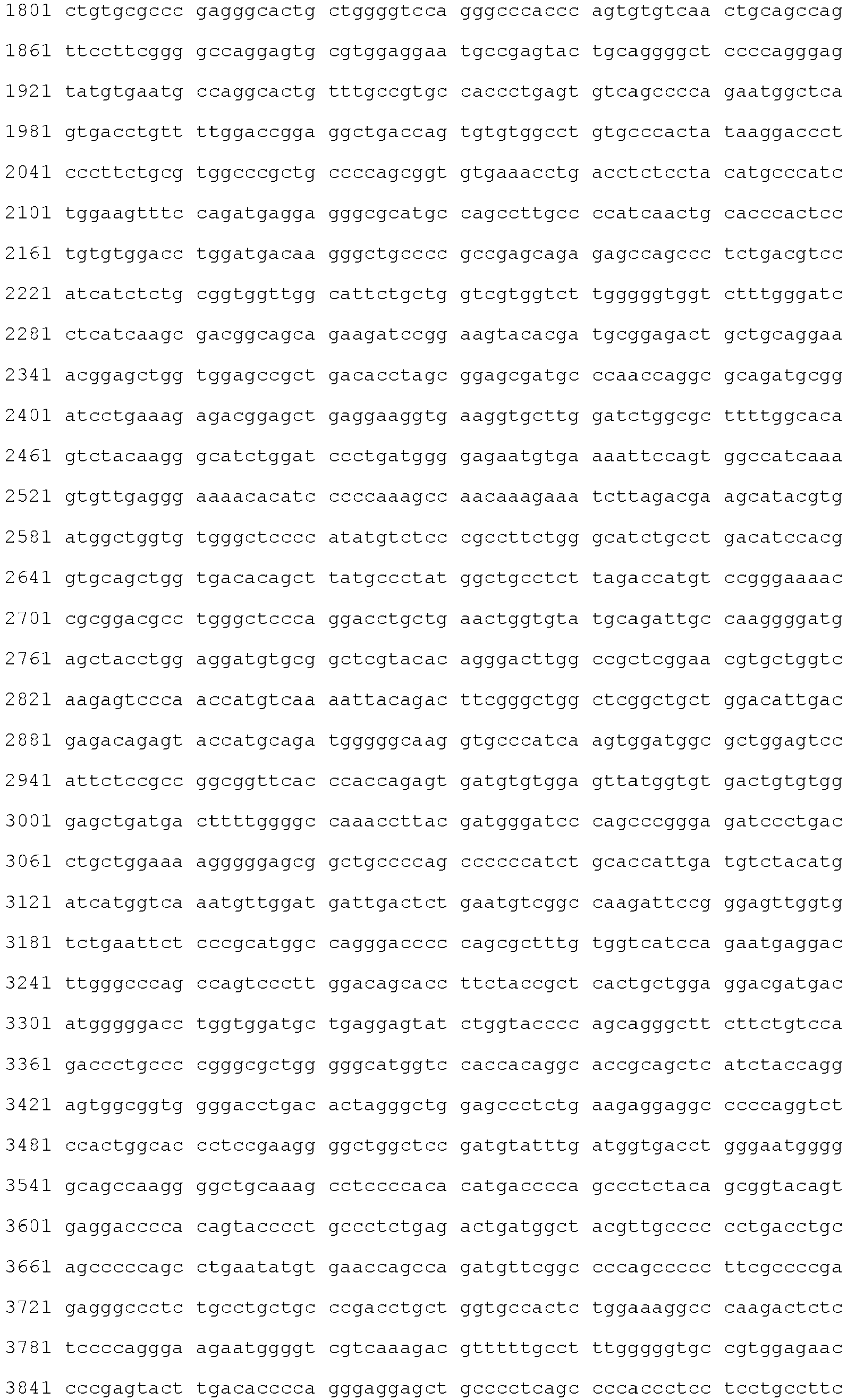

SEQ ID NO: 2 Accession No.: NM_004448 

SEQ ID NO: 3 Accession No.: NM_001289936 CDS: 583..4305 


SEQ ID NO: 4 Accession No.: NM _ 001289936 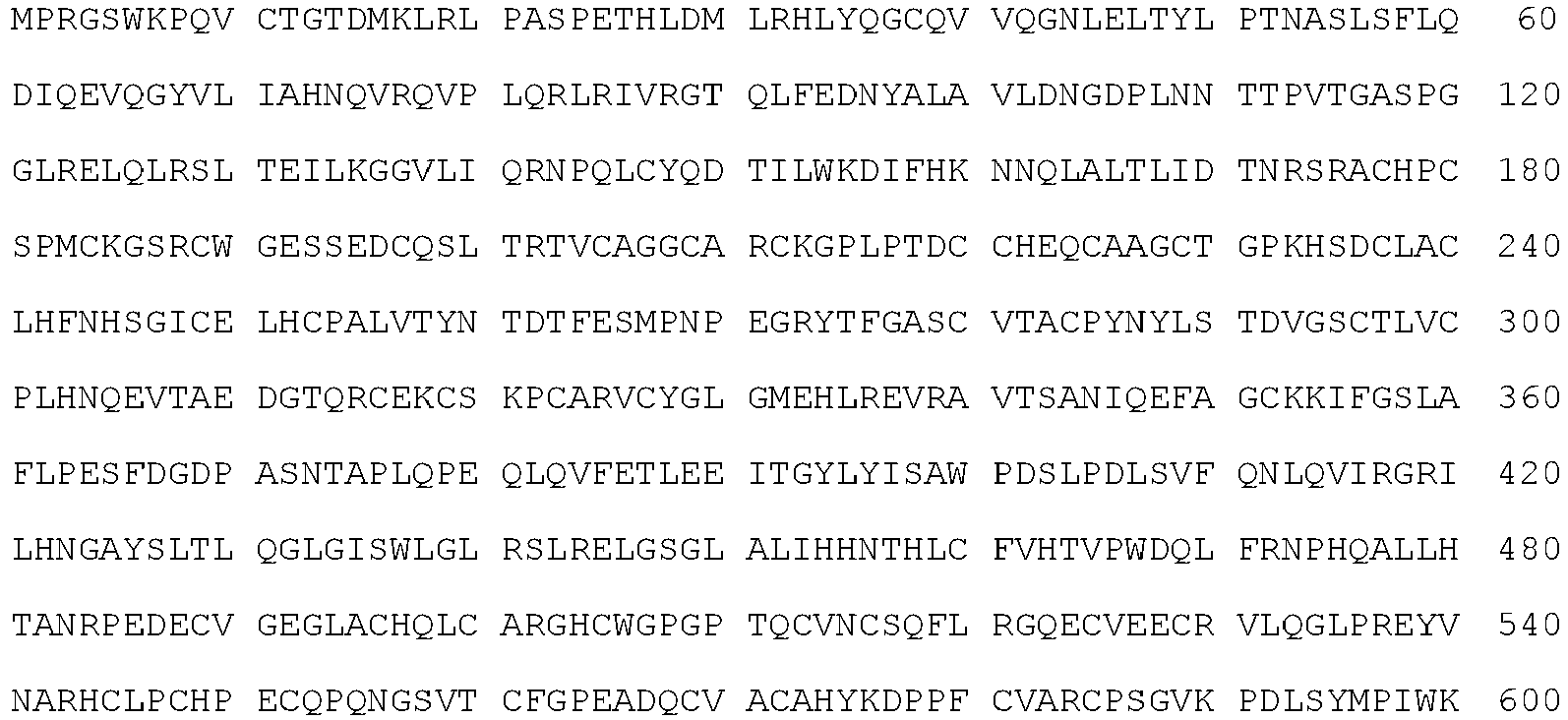

SEQ ID NO: 5 Accession No.: NM _ 001005862 CDS: 577..4254 


SEQ ID NO: 6 Accession No.: NM _ 001005862 

- One embodiment of the present invention provides an antitumor agent, comprising the above-described crystal of compound (I) (i.e., a free-form crystal of compound (I) or a crystal of compound (I) with an acid (salt crystal or co-crystal)). In addition, one embodiment of the present invention provides a method for treating tumor, comprising administering an effective amount of the above-described crystal of compound (I) (i.e., a free-form crystal of compound (I) or a crystal of compound (I) with an acid (salt crystal or co-crystal)) to a subject in need thereof. Moreover, one embodiment of the present invention provides use of the above-described crystal of compound (I) (i.e., a free-form crystal of compound (I) or a crystal of compound (I) with an acid (salt crystal or co-crystal)) for the production of an antitumor agent. Furthermore, one embodiment of the present invention provides the above-described crystal of compound (I) (i.e., a free-form crystal of compound (I) or a crystal of compound (I) with an acid (salt crystal or co-crystal)) for use in the treatment of tumor.
- The crystals of the present invention may be used in postoperative adjuvant chemotherapy performed to prevent recurrence after surgical removal of a tumor, or may be used in neoadjuvant chemotherapy performed in advance before surgical removal of a tumor.
- The tumor that is the target of the present invention is not particularly limited. Examples of the tumor may include brain tumor, head and neck cancer, digestive cancer (esophageal cancer, stomach cancer, duodenal cancer, liver cancer, biliary tract cancer (gallbladder and/or bile duct cancer, etc.), pancreatic cancer, colorectal cancer (colon cancer, rectal cancer, etc.), etc.), lung cancer (non-small cell lung cancer, small cell lung cancer, mesothelioma, etc.), breast cancer, genital cancer (ovarian cancer, uterine cancer (cervical cancer, endometrial cancer, etc.), etc.), urinary organ cancer (kidney cancer, bladder cancer, prostate cancer, testicular tumor, etc.), hematopoietic tumor (leukemia, malignant lymphoma, multiple myeloma, etc.), bone and/or soft tissue tumor, and skin cancer. Among these, preferable is lung cancer, breast cancer, stomach cancer, colorectal cancer, bladder cancer, biliary tract cancer or uterine cancer, and more preferable is lung cancer, breast cancer, stomach cancer, bladder cancer, or biliary tract cancer.
- In one embodiment, the tumor is a brain tumor. The compound of the present invention may be useful for the treatment of the symptoms of brain that is required to pass through the blood-brain barrier. The compound of one embodiment has favorable permeability through the blood-brain barrier for the delivery thereof into the brain, namely, excellent brain penetration properties. As an indicator of the penetration properties of the compound into the brain, the concentration of the compound in the brain or a Kp value (brain-to-plasma drug concentration ratio) is applied.
- The brain tumor treated with the compound of the present invention includes metastatic brain tumor and primary brain tumor.
- Examples of the brain tumor may include, but are not particularly limited to, metastatic brain tumor (e.g., brain metastasis of lung cancer, breast cancer, stomach cancer, colorectal cancer, bladder cancer, biliary tract cancer, uterine cancer, etc. (preferably, lung cancer, breast cancer, or stomach cancer)), piliocytic astrocytoma, diffuse astrocytoma, oligodendroma and/or oligodendroastrocytoma, anaplastic astrocytoma and/or anaplastic oligodendroglioma, anaplastic oligodendroastrocytoma, glioblastoma, ependymoma, anaplastic ependymoma, ganglioglioma, central neurocytoma, medulloblastoma, germinoma, central nervous system malignant lymphoma, meningioma, neurilemmoma, GH secreting pituitary adenoma, PRLsecreting pituitary adenoma, ACTH-secreting pituitary adenoma, nonfunctional pituitary adenoma, craniopharyngioma, chordoma, hemangioblastoma, and epidermoid tumor.
- In the present description, the term "effective amount" of the compound means the amount of the compound of the present invention that induces the biological or medical response of a subject, such as, for example, reduction or inhibition of enzyme or protein activity; or ameliorates symptoms, alleviates conditions, and retards or delays the progression of disease; and the like (therapeutically effective amount).
- In the present description, the term "subject" includes mammals and nonmammals. Examples of the mammal may include, but are not limited to, a human, a chimpanzee, an ape, a monkey, a bovine, a horse, sheep, a goat, a swine, a rabbit, a dog, a cat, a rat, a mouse, a guinea pig, a hedgehog, a kangaroo, a mole, a wild pig, a bear, a tiger, and a lion. Examples of the non-mammal may include, but are not limited to, birds, fish, and reptiles. In one embodiment, the subject is a human, and may be a human who has been diagnosed to need the treatment for the symptoms, conditions or disease disclosed in the present description.
- Upon the use of the compound (I) or a salt crystal or co-crystal thereof as a medicament, various types of dosage forms can be adopted depending on the therapeutic purpose with or without crushing the crystal. Examples of the dosage form may include all of oral agents such as tablets, capsules, granules, fine granules, powders, and dry syrups, suppositories, inhalants, nasal drops, ointments, patches, and injections. Pharmaceutical compositions suitable for these dosage forms can be prepared by commonly used production methods that are known to skilled persons using pharmaceutically acceptable carriers.
- One embodiment of the present invention provides an antitumor agent comprising the above-described crystal of compound (I) (i.e., a free-form crystal of compound (I) or a crystal of compound (I) with an acid (salt crystal or co-crystal)). One embodiment of the present invention also provides a method for treating tumor, comprising administering an effective amount of the crystal of compound (I) (i.e., a free-form crystal of compound (I) or a crystal of compound (I) with an acid (salt crystal or co-crystal)) to a subject in need thereof. One embodiment of the present invention also provides the use of the crystal of compound (I) (i.e., a free-form crystal of compound (I) or a crystal of compound (I) with an acid (salt crystal or co-crystal)) for the production of an antitumor agent. One embodiment of the present invention also provides the crystal of compound (I) (i.e., a free-form crystal of compound (I) or a crystal of compound (I) with an acid (salt crystal or co-crystal)) for use in the treatment of tumor by administration thereof.
- One embodiment of the present invention provides an antitumor agent for oral administration comprising the above-described crystal of compound (I) (i.e., a free-form crystal of compound (I) or a crystal of compound (I) with an acid (salt crystal or co-crystal)). One embodiment of the present invention also provides a method for treating tumor, comprising orally administering an effective amount of the crystal of compound (I) (i.e., a free-form crystal of compound (I) or a crystal of compound (I) with an acid (salt crystal or co-crystal)) to a subject in need thereof. One embodiment of the present invention also provides the use of the crystal of compound (I) (i.e., a free-form crystal of compound (I) or a crystal of compound (I) with an acid (salt crystal or co-crystal)) for the production of an antitumor agent for oral administration. One embodiment of the present invention also provides the crystal of compound (I) (i.e., a free-form crystal of compound (I) or a crystal of compound (I) with an acid (salt crystal or co-crystal)) for use in the treatment of tumor by oral administration thereof.
- One embodiment of the present invention provides a pharmaceutical composition comprising the crystal of compound (I) (i.e., a free-form crystal of compound (I) or a crystal of compound (I) with an acid (salt crystal or co-crystal)). The pharmaceutical composition in one embodiment of the present invention comprises the crystal of compound (I) (i.e., a free-form crystal of compound (I) or a crystal of compound (I) with an acid (salt crystal or co-crystal)) and a pharmaceutically acceptable carrier. One embodiment of the present invention also provides the use of the crystal of compound (I) (i.e., a free-form crystal of compound (I) or a crystal of compound (I) with an acid (salt crystal or co-crystal)) for the production of a pharmaceutical composition. One embodiment of the present invention provides the crystal of compound (I) (i.e., a free-form crystal of compound (I) or a crystal of compound (I) with an acid (salt crystal or co-crystal)) for use as a medicament. One embodiment of the present invention provides a kit comprising (i) a pharmaceutical composition comprising the crystal of compound (I) (i.e., a free-form crystal of compound (I) or a crystal of compound (I) with an acid (salt crystal or co-crystal)) and (ii) an instruction for use of the pramaceutical composition.
- As pharmaceutically acceptable carriers, various types of organic or inorganic carrier substances, which are commonly used as preparation materials, are used. When the compound of the present invention is processed into a solid preparation, examples of the pharmaceutically acceptable carrier mixed into the compound of the present invention may include an excipient, a binder, a disintegrator, a lubricant, and a coating agent. When the compound of the present invention is processed into a liquid preparation, examples of the pharmaceutically acceptable carrier mixed into the compound of the present invention may include a solvent, a solubilizer, a suspending agent, a tonicity agent, a buffer, and a soothing agent. In addition, preparation additives such as an antiseptic, an antioxidant, a coloring agent, a sweetener, and a stabilizer can also be used, as necessary.
- Examples of the excipient may include lactose, sucrose, D-mannitol, starch, crystalline cellulose, and calcium silicate.
- Examples of the binder may include hydroxypropyl cellulose, methyl cellulose, polyvinylpyrrolidone, candy powder, and hypromellose.
- Examples of the disintegrator may include sodium starch glycolate, carmellose calcium, croscarmellose sodium, crospovidone, low-substituted hydroxypropyl cellulose, and partially pregelatinized starch.
- Examples of the lubricant may include talc, magnesium stearate, sucrose fatty acid ester, stearic acid, and sodium stearyl fumarate.
- Examples of the coating agent may include ethyl cellulose, aminoalkyl methacrylate copolymer RS, hypromellose, and sucrose.
- Examples of the solvent may include water, propylene glycol, and physiological saline.
- Examples of the solubilizer may include polyethylene glycol, ethanol, α-cyclodextrin,
macrogol 400, andpolysorbate 80. - Examples of the suspending agent may include carrageenan, crystalline cellulose/carmellose sodium, and polyoxyethylene hydrogenated castor oil.
- Examples of the tonicity agent may include sodium chloride, glycerin, and potassium chloride.
- Examples of the pH adjuster/buffer may include sodium citrate, hydrochloric acid, lactic acid, phosphoric acid, and sodium dihydrogen phosphate.
- Examples of the soothing agent may include procaine hydrochloride and lidocaine.
- Examples of the antiseptic may include ethyl paraoxybenzoate, cresol, and benzalkonium chloride.
- Examples of the antioxidant may include sodium sulfite, ascorbic acid, and natural vitamin E.
- Examples of the coloring agent may include titanium oxide, iron sesquioxide, edible blue No. 1, and copper chlorophyll.
- Examples of the corrigent may include aspartame, saccharin, sucralose, l-menthol, and mint flavor.
- Examples of the stabilizer may include sodium pyrosulfite, sodium edetate, erythorbic acid, magnesium oxide, and dibutylhydroxytoluene.
- In the case of preparing a solid preparation for oral administration, an excipient, and as necessary, a binder, a disintegrator, a lubricant, a coloring agent, a corrigent, and the like are added to a crystal of compound (I) (i.e., a free-form crystal of compound (I) or a crystal of compound (I) with an acid (salt crystal or co-crystal)), and thereafter, a tablet, a coated tablet, a granule, a powder agent, a capsule, and the like can be produced according to ordinary methods.
- In the case of preparing an injection, a pH adjuster, a buffer, a stabilizer, a tonicity agent, a local anesthetic, and the like are added to a crystal of compound (I) (i.e., a free-form crystal of compound (I) or a crystal of compound (I) with an acid (salt crystal or co-crystal)), and thereafter, subcutaneous, intramuscular, and intravenous injections can be produced according to ordinary methods.
- The amount of a crystal of compound (I) (i.e., a free-form crystal of compound (I) or a crystal of compound (I) with an acid (salt crystal or co-crystal)) to be mixed into the above-described each dosage unit form depends on the symptoms of a patient to whom the crystal should be applied, the dosage form, or the like, and thus, the amount of the compound of the present invention is not constant. In general, it is preferable that the applied dose is set to beapproximately 0.05 to 1000 mg per dosage unit form in the case of an oral agent, it is set to be approximately 0.1 to 500 mg per dosage unit form in the case of an injection, and it is set to be approximately 1 to 1000 mg per dosage unit form in the case of a suppository or a topical agent in terms of the free-form compound (I).
- The daily dose of a crystal of compound (I) (i.e., a free-form crystal of compound (I) or a crystal of compound (I) with an acid (salt crystal or co-crystal)) in a drug having the above-described dosage form is different depending on the symptoms, body weight, age, sex and the like of a patient, and thus, it cannot be generally determined. However, the crystal may be administered to an adult (body weight: 50 kg) at a daily dose of generally approximately 0.05 to 5000 mg, and preferably 0.1 to 1000 mg in terms of the free-form compound (I), and it is preferably administered once a day or in 2 to 3 divided doses.
- Hereinafter, the present invention will be further described specifically with reference to the Examples below. However, these Examples are not intended to limit the scope of the present invention. Although the present invention has been fully described by way of the Examples, it will be appreciated that various changes and/or modifications may be made by skilled persons. Therefore, such changes and/or modifications are included in the invention unless they are outside the scope of the present invention.
- In the following Examples regarding compounds, "%" indicates weight percent, unless otherwise specified.
- Various types of reagents used in the Examples were commercially available products, unless otherwise specified. Silica gel chromatography was carried out using Purif-Pack (registered trademark) SI manufactured by MORITEX Corporation, KP-Sil (registered trademark) Silica Prepacked Column manufactured by Biotage Japan Ltd., or HP-Sil (registered trademark) Silica Prepacked Column manufactured by Biotage Japan Ltd. Basic silica gel column chromatography was carried out using Purif-Pack (registered trademark) NH manufactured by MORITEX Corporation or KP-NH (registered trademark) Prepacked Column manufactured by Biotage Japan Ltd. Preparative thin-layer chromatography was carried out using Kieselgel TM60F254, Art. 5744, manufactured by Merck, or NH2 Silica Gel 60F254 Plate, manufactured by Wako Pure Chemical Industries, Ltd. For NMR spectral measurement, AL400 (400 MHz; JEOL Ltd. (JEOL)), a Mercury400 (400 MHz; Agilent Technologies) type spectrometer or an Inova400 (400 MHz; Agilent Technologies) type spectrometer equipped with a 400 MNMR probe (Protasis) was used. When tetramethylsilane was contained in a heavy solvent, tetramethylsilane was used as an internal reference, and in other cases, an NMR solvent was used as an internal reference for measurement, and the total δ value was shown in ppm.
- In addition, LCMS spectral measurement was carried out using ACQUITY SQD (quadrupole type) manufactured by Waters under the following conditions.
- Column: XSelect CSH C18 (4.6 × 150 mm,3.5 µm) manufactured by Waters
- MS detection: ESI positive
- UV detection: 246nm
- Column temperature: 40°C
- Column flow rate: 1.0 mL/min
- Mobile phase: water/acetonitrile (0.1% formic acid)
- Injection amount: 5 µL
- Sample cooler: 5°C
- Sample concentration: 1 mg/mL
- Gradient (Table 1)
- Reverse phase preparative HPLC purification was carried out under the following conditions using a preparative system manufactured by WATERS.
- Column: A column prepared by connecting YMC-Actus Triart C18 (20 × 50 mm, 5 µm) manufactured by YMC and YMC-Actus Triart C18 (20 × 10 mm, 5 µm) manufactured by YMC was used.
- UV detection: 254 nm
- MS detection: ESI positive
- Column flow rate: 25 mL/min
- Mobile phase: water/acetonitrile (0.1% formic acid)
- Injection amount: 0.1-0.5 mL
- Abbreviations have the following meanings.
- s: Singlet
- d: Doublet
- t: Triplet
- dt: Double triplet
- m: Multiplet
- DMSO-d6: Deuterated dimethyl sulfoxide
- CDCl3: Deuterated chloroform
- THF: Tetrahydrofuran
- DMA: N,N-dimethylacetamide
- NMP: 1-Methyl-2-pyrrolidinone
- DMSO: Dimethyl sulfoxide
- Powder X-ray diffraction analysis was carried out according to any of the following test conditions after lightly pulverizing an appropriate amount of a test substance in an agate mortar as needed.
-
- Apparatus: EMPYREAN (Method A) manufactured by PANalytical
- Reflection method (concentration method)
- Target: Cu
- X-ray tube current: 40 mA
- X-ray tube voltage: 45 kV
- Scanning range: 2θ = 5.0° to 40.0°
- Step: 2θ = 0.0131°
- Average time/step 8.670 s
- Scan speed: 0.0015 °/s
- Divergence slit: 1°
- Scattering slit: 2.0 mm
- Light receiving slit: 8.0 mm
- Apparatus: EMPYREAN (Method B) manufactured by PANalytical Permeation method
- Target: Cu
- X-ray tube current: 40 mA
- X-ray tube voltage: 45 kV
- Scanning range: 2θ = 2.0° to 40.0°
- Step: 2θ = 0.0066°
- Average time/step 8.670 s
- Scan speed: 0.0008°/s
- Divergence slit: 1/2°
- Scattering slit: 2.0 mm
- Light receiving slit: None
- Handling of the apparatuses, including data processing, was in accordance with the methods and procedures instructed for each apparatus. Numerical values obtained from various spectra may vary slightly depending on the direction of crystal growth, particle size, analysis conditions, and the like. Therefore, those numerical values should not be understood exactly as they are.
- For simultaneous thermogravimetry-differential thermal analysis (TG-DTA), analysis was carried out using 2 to 3 mg of a test substance according to the following test conditions.
- Apparatus: TG/DTA7200
- Manuractured by Hitachi High-Tech Science Corporation
- Sample container: Made of aluminum
- Temperature increase rate: Temperature was increased from 25°C to 290°C at 10°C/min.
- Atmospheric gas: Air (200 mL/min)
- Control substance: Empty container
- Handling of the apparatuses, including data processing, was in accordance with the methods and procedures instructed for each apparatus.
- tert-Butyl (2S,4S)-4-hydroxy-2-methylpyrrolidine-1-carboxylate (19.0 g) and 4-chloro-5-iodo-7H-pyrrolo[2,3-d]pyrimidine (13.1 g) were dissolved in THF (190 mL), and the obtained solution was then cooled to 0°C. Thereafter, triphenylphosphine (37.2 g) and diisopropyl azodicarboxylate (28.1 mL) were added to the reaction solution, and the temperature of the mixture was then increased to room temperature, followed by stirring for 1 hour. Thereafter, the reaction mixture was concentrated under reduced pressure, and the obtained residue was then purified by silica gel chromatography (hexane : ethyl acetate) to obtain the corresponding coupling body. The obtained compound was used in the subsequent reaction without being further purified.
- The obtained coupling body, THF (114 mL) and ammonia water (114 mL) were added into a pressure resistant tube, and the obtained mixture was then stirred at 100°C for 14 hours. Thereafter, the reaction mixture was cooled to room temperature, and was then poured into water (285 mL). The thus obtained mixture was stirred at room temperature for 5 hours. Thereafter, the precipitated solid was collected by filtration, was then washed with water, and was then dried to obtain a product of interest (34.5 g). 1HNMR (CDCl3)δ: 8.27(s,1H) 7.15(s,1H) 5.55-5.73(m,2H) 5.12-5.25(m,1H) 3.86-4.18(m,2H) 3.43-3.57(m,1H) 2.59-2.69(m,1H) 1.92-2.03(m,1H) 1.48(s,9H) 1.30-1.40(m,3H)
ESI-MS m/z 444 (MH+) - The compound of Synthesis Example 1(1) (28.0 g), 10% palladium carbon catalyst (720 mg), NMP (84 mL), methanol (26 mL), and triethylamine (17.6 mL) were added into a pressure resistant tube, followed by carbon monoxide substitution, and the obtained mixture was stirred at 100°C for 2 hours. Thereafter, the reaction mixture was cooled to room temperature, a 2 M sodium hydroxide aqueous solution (79 mL) was then added thereto, and the obtained mixture was then stirred at 80°C for 2 hours. Thereafter, the reaction mixture was cooled to room temperature, was then filtrated through Celite, and was then washed with methanol. Subsequently, methanol in the filtrate was concentrated under reduced pressure. Water was further added, and the water layer was then washed with tert-butyl methyl ether. A 1 M potassium hydrogen sulfate aqueous solution was added to the water layer to adjust the pH to approximately 3. The precipitated solid was collected by filtration, was then washed with water, and was then dried to obtain a product of interest (23.4 g).
1HNMR (400MHz, DMSO-d6)6: 8.14 (s, 1H) 8.08 (s, 1H) 5.16-4.93(m,1H) 4.07-3.79(m,2H) 3.61-3.45(m,1H) 2.53(m,1H) 2.33-2.02(m,1H) 1.42(s,9H) 1.29(d,J = 6.1Hz,3H) ESI-MS m/z 362 (MH+) - The compound of Synthesis Example 1(2) (1.00 g), (R)-(+)-1-phenylethylamine (0.503 g), diisopropylethylamine (1.79 g), and N,N-dimethylformamide (10 mL) were added, and subsequently, HATU (1.58 g) was added. The obtained mixture was stirred at room temperature overnight. Thereafter, to the reaction mixture, ethyl acetate and a saturated sodium hydrogen carbonate aqueous solution were added, and the obtained mixture was then extracted with ethyl acetate. The gathered organic layer was washed with water, and then with saturated saline. The resultant was dried over anhydrous sodium sulfate, and was then concentrated under reduced pressure. The obtained residue was purified by silica gel chromatography (hexane : acetone) to obtain an amide form (1.53 g). The obtained compound was used in the subsequent reaction without being further purified.
- To the amide form (1.53 g), chloroform (15 mL) was added, and the obtained mixture was then cooled to 0°C. Thereafter, N-bromosuccinimide (0.88 g) was added to the reaction mixture, and the obtained mixture was then stirred at 0°C for 1 hour. Thereafter, the reaction mixture was concentrated under reduced pressure, and the obtained residue was purified by silica gel chromatography (hexane : ethyl acetate) to obtain a product of interest (1.39 g).
1HNMR (CDCl3)δ: 8.21 (s, 1H) 7.42-7.28(m,5H) 6.97(d,J = 7.3Hz,1H) 5.36-5.29(m,1H) 5.20-5.07(m,1H) 4.30(t,J = 10.3Hz,1H) 4.04-3.72(m,2H) 3.00-2.86(m,1H) 2.38(dt,J = 14.3,6.0Hz,1H) 1.63(d,J = 7.0Hz,3H) 1.53-1.43(m,12H)
ESI-MS m/z 543,545 (MH+) - To the compound of Synthesis Example 1(3) (600 mg), chloroform(3 mL) was added, and the obtained mixture was then cooled to 0°C. Thereafter, trifluoroacetic acid (4.44 g) was added to the reaction mixture, and the thus obtained mixture was then stirred at room temperature for 1 hour. Thereafter, the reaction mixture was concentrated under reduced pressure, and acetonitrile (5 mL) was then added to the residue. The obtained mixture was concentrated under reduced pressure again to obtain an amine form. The obtained compound was used in the subsequent reaction without being further purified.
- To the obtained amine form, acetonitrile (3 mL) was added, and the obtained mixture was then cooled to 0°C. Thereafter, acryloyl chloride (99.9 mg) and diisopropylethylamine (713 mg) were added, and the obtained mixture was then stirred at 0°C for 1 hour. Thereafter, the reaction mixture was concentrated under reduced pressure, and the obtained residue was purified by silica gel chromatography (ethyl acetate : methanol) to obtain a product of interest (281 mg).
1HNMR (CDCl3)δ: 8.20(d,J = 7.3Hz,1H) 7.42-7.36(m,4H) 7.32-7.28(m,1H) 7.00-6.94(m,1H) 6.57-6.33(m,2H) 5.76-5.66(m,1H) 5.36-5.29(m, 1H) 5.14-5.08(m,1H) 4,71(t,J = 9.9Hz,0.7H) 4.42-4.23(m,1.6H) 3.83(t,J = 8.6Hz,0.7H) 3.03-2.92(m,1H) 2.60-2.57(m,0.3H) 2.44-2.40(m, 0.7H) 1.64(d,J = 6.6Hz,3H) 1.56(dd,J = 11.7,6.2Hz,3H) ESI-MS m/z 497,499 (MH+) - The compound of Synthesis Example 1(4) (65 mg), dichlorobis(triphenylphosphine)dipalladium (9.2 mg), copper(I) iodide (5.0 mg), cyclopropylacetylene (13.0 mg), triethylamine (39.7 mg), and N,N-dimethylformamide (1.3 mL) were added, and the inside of the reaction system was then substituted with nitrogen. After that, the mixture was stirred at 70°C for 2.5 hours. Thereafter, to the reaction mixture, ethyl acetate and a saturated ammonium chloride aqueous solution were added, and the obtained mixture was then extracted with ethyl acetate. The gathered organic layer was washed with water, and then with saturated saline. The resultant was dried over anhydrous sodium sulfate, and was then concentrated under reduced pressure. The obtained residue was purified by silica gel chromatography (chloroform : methanol) to obtain a product of interest (50 mg).
1HNMR (CDCl3)6: 8.22(d,J = 5.1Hz,1H) 7.82(d,J = 7.3Hz,1H) 7.43-7.35(m,4H) 7.30(t,J = 6.8Hz,1H) 6.58-6.34(m,2H) 5.77-5.66(m,1H) 5.35-5.20(m,2H) 4.54(t,J = 10.1Hz,0.7H) 4.35-4.25(m,1.6H) 3.88(t,J = 8.8Hz,0.7H) 2.90-2.78(m,1H) 2.65-2.56(m,0.3H) 2.49-2.40(m,0.7H) 1.63(d,J = 7.0Hz,3H) 1.56-1.45(m,4H) 1.03-0.91(m,2H) 0.84-0.69(m,2H)
ESI-MS m/z 483 (MH+) - Type II crystals of the compound (I) with fumaric acid were produced by the two methods described below in
Production Method 1 and Production Method 2. A free-form type I crystal of compound (I) was synthesized by the same method as in Example 3 described later. - Fumaric acid (3 equivalents) was added to 30 mg of a free-form type I crystal of compound (I), 0.3 mL of tert-butanol was added, the suspension was stirred at 25°C for approximately 124 hours, and then the solid was collected by filtration, recovered, and dried to obtain a crystal of interest.
- Fumaric acid (1.06 g) and 22 mL of acetone were added to 2.20 g of a free-form type I crystal of compound (I), the suspension was stirred at 50°C for approximately 62 hours, naturally cooled for 30 minutes, and then the solid was collected by filtration and recovered. This was washed with 2-propanol, and then the solid was collected by filtration, recovered, and dried to obtain 2.27 g of a crystal of interest.
- Powder X-ray diffraction spectrum (Method A): See
Figure 1 . The powder X-ray diffraction spectral data are shown in Table 2. -
Table 2: Powder X-ray diffraction spectral data of type II crystal of compound (I) with 1 equivalent of fumaric acid Peak position [° 2θ] Net intensity [cts] 5.5 1065 6.8 489 8.1 187 9.3 370 10.8 54 12.1 107 13.4 56.4 140 319 14.6 171 15.3 771 16.3 602 17.1 101 18.5 1106 19.8 516 20.5 236 22.0 1123 22.6 101 23.3 129 23.8 151 24.5 929 25.1 676 25.5 774 26.2 432 27.2 455 27.3 358 27.9 144 28.1 137 29.0 154 29.9 183 30.9 106 32.0 73 32.9 104 34.3 174 35.1 125 38.2 105 39.1 114 - In addition, the characteristic diffraction angles are as follows. Characteristic diffraction angle (2θ±0.2°):
- 5.5°, 6.8°, 9.3°, 13.4°, 15.3°, 16.3°, 18.5°, 19.8°, 22.0°, and 24.5°
- Simultaneous thermogravimetry-differential thermal analysis curve: See
Figure 2 . - Endothermic peak (peak top value) in the simultaneous thermogravimetry-differential thermal analysis curve: Around 182°C
- Free-form type II crystals were produced by the four methods described below in
Production Methods 1 to 4. - Succinic acid (1 equivalent) and 0.3 mL of 1-propanol/water (1:3 v/v) were added to 15 mg of the compound (I) obtained according to the method in Synthesis Example 1, the mixture was suspended and stirred at 50°C for 4 days, and then the solid was collected by filtration, recovered, and dried to obtain a crystal of interest.
- Succinic acid (1 equivalent) and 1.5 mL of 1-propanol/water (1:3 v/v) were added to 300 mg of the compound (I) obtained according to the method in Synthesis Example 1, a small amount of the crystals obtained in (i) was added as a seed crystal, the mixture was suspended and stirred at 50°C for 5 hours, and then 0.3 mL of 1-propanol was added, the mixture was further suspended and stirred at 50°C for 2 hours, and then 0.3 mL of 1-propanol was added, the mixture was suspended and stirred at 50°C for 17 hours, and then the solid was collected by filtration, recovered, and dried to obtain 84.5 mg of a crystal of interest.
- Succinic acid (1 equivalent) and 3 mL of 1-propanol/water (1:1 v/v) were added to 1000 mg of the compound (I) obtained according to the method in Synthesis Example 1, a small amount of the crystals obtained in (ii) was added as a seed crystal, the mixture was suspended and stirred at 50°C for 17.5 hours, and then the solid was collected by filtration (washing with water during filtration), recovered, and dried to obtain 487.6 mg of a crystal of interest.
- Diisopropyl ether (5 mL) was added to 1000 mg of the compound (I) obtained according to the method in Synthesis Example 1, a small amount of the crystals obtained in (iii) was added as a seed crystal, and the mixture was suspended and stirred at 50°C. After 42.5 hours, as the solvent had evaporated, 5 mL of diisopropyl ether was added. The mixture was suspended and stirred at 50°C for 2 hours, and then 0.5 mL of ethanol was added. The mixture was further suspended and stirred at 50°C for 2 hours, and then 0.5 mL of ethanol was added. The mixture was further suspended and stirred at 50°C for 19 hours, and naturally cooled for 30 minutes, and then the solid was collected by filtration, recovered, and dried to obtain 798.8 mg of a crystal of interest.
- Powder X-ray diffraction spectrum (Method A): See
Figure 3 . The powder X-ray diffraction spectral data are shown in Table 3. -
Table 3: Powder X-ray diffraction spectral data of free-form type II crystal of compound (I) Peak position [° 2θ] Net intensity [cts] 8.3 1844 9.7 179 10.2 531 11.5 248 12.5 660 13.6 440 14.8 2512 15.8 530 16.0 105 16.5 641 16.9 117 17.3 2130 18.0 945 18.3 269 19.1 844 19.4 154 20.3 952 21.0 963 21.6 271 21.9 520 22.5 957 23.0 1442 23.6 559 23.9 980 24.7 418 25.0 367 25.5 208 26.2 1551 26.8 323 27.2 771 27.6 218 28.3 100 28.6 101 29.7 374 30.9 113 31.7 261 32.3 148 34.0 229 34.6 159 35.3 67 36.4 59 37.0 123 37.7 60 38.6 53 39.0 55 - In addition, the characteristic diffraction angles are as follows.
- Characteristic diffraction angle (2θ±0.2°):
- 8.3°, 14.8°, 17.3°, 18.0°, 19.1°, 20.3°, 21.0°, 22.5°, 23.0°, and 26.2°
- Simultaneous thermogravimetry-differential thermal analysis curve: See
Figure 4 . - Endothermic peak (peak top value) in the simultaneous thermogravimetry-differential thermal analysis curve: Around 182°C
- A crude product (100 mg) of the compound (I) was suspended in ethanol (500 µL) and stirred at 50°C overnight. The solution was cooled to 25°C and the obtained suspension was filtrated to obtain a free-form type I crystal of compound (I) (31 mg).
- Powder X-ray diffraction spectrum (Method A): See
Figure 5 . The powder X-ray diffraction spectral data are shown in Table 4. -
Table 4: Powder X-ray diffraction spectral data of free-form type I crystal of compound (I) Peak position [° 2θ] Net intensity [cts] 9.9 623 10.4 278 11.7 1459 12.0 457 13.2 618 14.6 74 15.7 588 16.0 555 17.7 730 18.1 1070 18.8 1539 19.7 120 20.1 382 20.8 2893 21.5 481 22.4 437 23.3 198 23.9 297 24.3 230 24.9 293 25.5 319 26.1 321 27.1 99 28.0 183 28.3 545 28.9 391 29.5 168 29.8 105 30.3 208 31.0 72 31.8 113 32.2 114 32.5 108 33.0 126 33.6 171 34.7 68 35.5 82 36.9 80 37.2 55 38.0 50 - In addition, the characteristic diffraction angles are as follows.
- Characteristic diffraction angle (2θ±0.2°): 9.9°, 11.7°, 13.2°, 17.7°, 18.1°, 18.8°, and 20.8°
- Simultaneous thermogravimetry-differential thermal analysis curve: See
Figure 6 . - Endothermic peak (peak top value) in the simultaneous thermogravimetry-differential thermal analysis curve: Around 183°C
- Fumaric acid (481 mg) and 50 mL of acetone were added to 1000 mg of the compound (I) obtained according to the method in Synthesis Example 1, the mixture was suspended and stirred at 25°C for 71 hours, and then the solid was collected by filtration and recovered. This was dried under room temperature and reduced pressure conditions for 7.5 hours to obtain695.0 mg of a crystal of interest.
- Powder X-ray diffraction spectrum (Method A): See
Figure 7 . The powder X-ray diffraction spectral data are shown in Table 5. -
Table 5: Powder X-ray diffraction spectral data of type V crystal of compound (I) with 1 equivalent of fumaric acid Peak position [° 2θ] Net intensity [cts] 6.9 180 8.1 184 9.4 470 10.2 450 11.9 197 13.7 219 14.5 199 15.9 350 17.5 356 18.1 201 18.7 278 20.1 319 21.1 481 21.7 215 23.1 343 23.6 573 24.6 206 26.5 519 27.5 235 28.2 140 29.0 103 31.0 92 32.4 65 33.0 54 34.4 74 - In addition, the characteristic diffraction angles are as follows.
- Characteristic diffraction angle (2θ±0.2°): 6.9°, 9.4°, 10.2°, 13.7°, 21.1°, 23.6°, and 26.5°
- Simultaneous thermogravimetry-differential thermal analysis curve: See
Figure 8 . - Endothermic peak (peak top value) in the simultaneous thermogravimetry-differential thermal analysis curve: Around 151°C
- Fumaric acid (481 mg) and 50 mL of acetone were added to 1000 mg of the compound (I) obtained according to the method in Synthesis Example 1, the mixture was suspended and stirred at 25°C for 19.5 hours, and then the solid was collected by filtration and recovered to obtain 868.8 mg of a crystal of interest.
- Powder X-ray diffraction spectrum (Method A): See
Figure 9 . The powder X-ray diffraction spectral data are shown in Table 6. -
Table 6: Powder X-ray diffraction spectral data of type I crystal of compound (I) with 1 equivalent of fumaric acid Peak position [° 2θ] Net intensity [cts] 6.4 637 8.5 145 8.9 115 10.3 461 11.4 321 12.8 279 14.4 172 15.0 393 15.7 326 16.0 422 16.9 206 17.8 129 18.4 290 19.2 145 19.4 151 20.7 938 21.4 195 22.1 146 22.9 451 23.4 690 24.2 157 24.8 146 26.6 931 28.1 112 28.9 164 30.3 70 30.8 75 31.6 77 32.9 138 33.4 61 34.6 57 - In addition, the characteristic diffraction angles are as follows.
- Characteristic diffraction angle (2θ±0.2°): 6.4°, 10.3°, 12.8°, 15.0°, 20.7°, 23.4°, and 26.6°
- Simultaneous thermogravimetry-differential thermal analysis curve: See
Figure 10 . - Endothermic peak (peak top value) in the simultaneous thermogravimetry-differential thermal analysis curve: Around 153°C
- Fumaric acid (0.5 equivalents) and 0.3 mL of water were added to 15 mg of the compound (I) obtained according to the method in Synthesis Example 1, the mixture was suspended and stirred at 50°C for 93.5 hours, and then the solid was collected by filtration, recovered, and dried to obtain a crystal of interest.
-
- Characteristic diffraction angle (2θ ± 0.2°): 6.4°, 7.5°, 9.7°, 11.7°, 15.1°, 19.6°, and 23.9°
- Simultaneous thermogravimetry-differential thermal analysis curve: See
Figure 12 . - Endothermic peak (peak top value) in the simultaneous thermogravimetry-differential thermal analysis curve: Around 161°C
- Fumaric acid (1 equivalent) and 6 mL of ethanol were added to 300 mg of the compound (I) obtained according to the method in Synthesis Example 1, the mixture was suspended and stirred at 50°C for 19.5 hours and naturally cooled for 3 hours, and then the solid was collected by filtration and recovered. This was washed with water, and then the solid was collected by filtration, recovered, and dried to obtain 224.6 mg of a crystal of interest.
- Characteristic diffraction angle (2θ ± 0.2°): 5.4°, 6.4°, 7.3°, 12.8°, 13.4°, 14.7°, and 15.4° Simultaneous thermogravimetry-differential thermal analysis curve: See
Figure 14 . Endothermic peak (peak top value) in the simultaneous thermogravimetry-differential thermal analysis curve: Around 162°C - The molar ratio of compound (I) and fumaric acid and the molar ratio ofof compound (I) and L-tartaric acid were confirmed by 1H-NMR. The measurement results of the NMR spectrum of the type I crystal of compound (I) with 1 equivalent of fumaric acid, the type II crystal of compound (I) with 1 equivalent of fumaric acid, and the type V crystal of compound (I) with 1 equivalent of fumaric acid are shown below. The measurement results of the NMR spectra of the free form I crystal of compound (I) and the free form II crystal of compound (I) are also shown below.
- 1HNMR(400MHz,DMSO-d6)δ: 8.32(brd,J=7.38Hz,1H) 8.14(s,1H) 7.25-7.50(m,5H) 6.54-6.72(m,1H) 6.13-6.23(m,1H) 5.65-5.76(m,1H) 5.12-5.39(m,2H) 4.33-4.40(m,1H) 4.00-4.22(m,2H) 2.44-2.70(m,2H) 1.73 (tt,J=4.99, 8.27Hz, 1H) 1.51(d,J=6.88Hz,3H) 1.36-1.43(m,3H) 0.78-1.03(m,4H)
- 1HNMR(400MHz,DMSO-d6)δ: 8.32(brd,J=7.38Hz,1H) 8.14(s,1H) 7.27-7.46(m,5H) 6.54-6.72(m,1H) 6.13-6.23(m,1H) 5.65-5.76(m,1H) 5.12-5.39(m,2H) 4.32-4.40(m,1H) 4.00-4.22(m,2H) 2.44-2.69(m,2H) 1.73(tt,J=4.99,8.27Hz,1H) 1.51(d,J=6.88Hz,3H) 1.40-1.43(m,3H) 0.78-1.03(m,4H)
- 1HNMR(400MHz,DMSO-d6)δ: 13.13(brs,2H) 8.32(brd,J=7.38Hz,1H) 8.14(s,1H) 7.24-7.48(m,5H) 6.46-6.78(m,3H) 6.06-6.30(m,1H) 5.63-5.77(m,1H) 5.11-5.38(m,2H) 4.27-4.44(m,1H) 3.98-4.23(m,2H) 2.42-2.73(m,2H) 1.73(tt,J=5.02,8.30Hz,1H) 1.51(d,J=6.88Hz,3H) 1.32-1.45(m,3H) 0.77-1.02(m,4H)
- 1HNMR(400MHz,DMSO-d6)δ: 13.14(brs,2H) 8.32(brd,J=7.38Hz,1H) 8.14(s,1H) 7.25-7.49(m,5H) 6.39-6.89(m,3H) 6.07-6.28(m,1H) 5.62-5.77(m,1H) 5.12-5.39(m,2H) 4.27-4.45(m,1H) 3.99-4.24(m,2H) 2.42-2.75(m,2H) 1.74(tt,J=5.02,8.30Hz,1H) 1.51(d,J=6.88Hz,3H) 1.37-1.46(m,3H) 0.78-1.03(m,4H)
- 1HNMR(400MHz,DMSO-d6)δ: 13.13(brs,2H) 8.32(brd,J=7.38Hz,1H) 8.14(s,1H) 7.21-7.49(m,5H) 6.47-6.80(m,3H) 6.09-6.26(m,1H) 5.63-5.77(m,1H) 5.11-5.38(m,2H) 4.27-4.44(m,1H) 3.98-4.23(m,2H) 2.42-2.72(m,2H) 1.73 (tt,J=4.99, 8.27Hz, 1H) 1.51(d,J=6.88Hz,3H) 1.34-1.46(m,3H) 0.77-1.02(m,4H)
- Fumaric acid (3 equivalents) and 9 mL of acetonitrile were added to 300 mg of the compound (I) obtained according to the method in Synthesis Example 1, the mixture was suspended and stirred at 50°C for 1 hour and naturally cooled, and then the solid was collected by filtration and recovered. This was dried to obtain 303.7 mg of a crystal of interest.
- Characteristic diffraction angle (2θ ± 0.2°):8.1°, 13.2°, 20.4°, 23.1°, 24.7°, and 26.1° Simultaneous thermogravimetry-differential thermal analysis curve: See
Figure 16 . Exothermic peak (peak top value) in the simultaneous thermogravimetry-differential thermal analysis curve: Around 153°C - Fumaric acid (3 equivalents) and 6 mL of water were added to 300 mg of the compound (I) obtained according to the method in Synthesis Example 1, the mixture was suspended and stirred at 50°C for 1.5 hours and naturally cooled for 3 hours, and then the solid was collected by filtration and recovered. This was washed with water, and then the solid was collected by filtration, recovered, and dried to obtain 311.2 mg of a crystal of interest.
-
- Characteristic diffraction angle (2θ ± 0.2°): 6.0°, 15.7°, and 18.8°
- Simultaneous thermogravimetry-differential thermal analysis curve: See
Figure 18 . - Exothermic peak (peak top value) in the simultaneous thermogravimetry-differential thermal analysis curve: Around 130°C
- A 2M hydrochloric acid/ethanol solution (15 µL) and 0.3 mL of a liquid mixture of 2-propanol/heptane (1:3 v/v) were added to 15 mg of the compound (I) obtained according to the method in Synthesis Example 1, the mixture was suspended and stirred for 4 days and naturally cooled, and then the solid was collected by filtration and recovered. This was dried to obtain a crystal of interest.
-
- Characteristic diffraction angle (2θ ± 0.2°): 7.0°, 7.4°, 12.6°, 19.0°, and 25.4°
- Simultaneous thermogravimetry-differential thermal analysis curve: See
Figure 20 . - Endothermic peak (peak top value) in the simultaneous thermogravimetry-differential thermal analysis curve: Around 51°C and 179°C
- A 2M hydrochloric acid/ethanol solution (15 µL) and 0.3 mL of a liquid mixture of acetone/heptane (1:3 v/v) were added to 15 mg of the compound (I) obtained according to the method in Synthesis Example 1, the mixture was suspended and stirred for 4 days and naturally cooled, and then the solid was collected by filtration and recovered. This was dried to obtain a crystal of interest.
- Characteristic diffraction angle (2θ ± 0.2°): 6.3°, 7.4°, 8.0°, 17.6°, 22.0°, and 23.6° Simultaneous thermogravimetry-differential thermal analysis curve: See
Figure 22 . Endothermic peak (peak top value) in the simultaneous thermogravimetry-differential thermal analysis curve: Around 147°C - A 2M hydrochloric acid/ethanol solution (15 µL) and 0.3 mL of ethyl acetate were added to 15 mg of the compound (I) obtained according to the method in Synthesis Example 1, the mixture was suspended and stirred for 4 days and naturally cooled, and then the solid was collected by filtration and recovered. This was dried to obtain a crystal of interest.
- Characteristic diffraction angle (2θ ± 0.2°): 5.3°, 6.5°, 8.1°, 15.3°, and 24.2° Simultaneous thermogravimetry-differential thermal analysis curve: See
Figure 24 . Endothermic peak (peak top value) in the simultaneous thermogravimetry-differential thermal analysis curve: Around 156°C - Hydrobromic acid (1 equivalent) and 0.3 mL of a liquid mixture of 2-propanol/heptane (1:3 v/v) were added to 15 mg of the compound (I) obtained according to the method in Synthesis Example 1, the mixture was suspended and stirred for 5 days and naturally cooled, and then the solid was collected by filtration and recovered. This was dried to obtain a crystal of interest.
- Characteristic diffraction angle (2θ ± 0.2°): 7.0°, 7.4°, 13.4°, 15.6°, 19.2°, and 25.6° Simultaneous thermogravimetry-differential thermal analysis curve: See
Figure 26 . Endothermic peak (peak top value) in the simultaneous thermogravimetry-differential thermal analysis curve: Around 204°C - L-tartaric acid (466 mg) and 10 mL of acetone were added to 500 mg of the compound (I) obtained according to the method in Synthesis Example 1, the mixture was stirred at 50°C for 40 minutes for dissolution. Thereafter, the dissolved mixture was stirred at room temperature for 17 hours, the suspension was filtrated, and the resulting solid was recovered. This was dried to obtain 506.3 mg of a crystal of interest.
-
- Characteristic diffraction angle (2θ ± 0.2°): 7.2°, 12.6°, 17.3°, and 23.4°
- Simultaneous thermogravimetry-differential thermal analysis curve: See
Figure 28 . - Endothermic peak (peak top value) in the simultaneous thermogravimetry-differential thermal analysis curve: Around 121°C
- Succinic acid (3 equivalents) and 0.3 mL of acetonitrile were added to 15 mg of the compound (I) obtained according to the method in Synthesis Example 1, the mixture was suspended and stirred at 50°C for 3 days and naturally cooled, and then the solid was collected by filtration and recovered. This was dried to obtain a crystal of interest.
- Characteristic diffraction angle (2θ ± 0.2°): 6.5°, 10.7°, 13.2°, 14.6°, 18.7°, and 23.9° Simultaneous thermogravimetry-differential thermal analysis curve: See
Figure 30 . Endothermic peak (peak top value) in the simultaneous thermogravimetry-differential thermal analysis curve: Around 148°C and 159°C - In order to determine conditions for a method of measuring the in vitro inhibitory activity of a compound against HER2 phosphorylation activity, based on the report regarding a HER2 kinase reaction using, as a substrate, a peptide having the same sequence (5-FAM-EEPLYWSFPAKKK-CONH2) as that of ProfilerPro Peptide 22 of PerkinElmer (Xie H et al., PLoS One.2011; 6(7): e21487), ProfilerPro Peptide 22 was used as a substrate. A purified recombinant human HER2 protein used in the present test was purchased from Carna Biosciences, Inc. Upon the measurement of the inhibitory activity of the compound, first, the compound (I) obtained according to the method in Synthesis Example 1 was diluted stepwise with dimethyl sulfoxide (DMSO). Subsequently, the HER2 protein, the substrate peptide (final concentration: 1 µM), manganese chloride (final concentration: 10 mM), ATP (final concentration: 5 µM), and the compound (I) in DMSO solution (final concentration of DMSO: 5%) were added to a buffer for the kinase reaction (13.5 mM Tris (pH 7.5), 2 mM dithiothreitol, and 0.009% Tween 20), and the obtained mixture was then incubated at 25°C for 30 minutes, so that the kinase reaction was carried out. To the reaction solution, EDTA was added to a final concentration of 30 mM, so as to terminate the reaction. Finally, using LabChip (registered trademark) EZ Reader II (PerkinElmer), an unphosphorylated substrate peptide (S) and a phosphorylated peptide (P) were separated and detected according to microchannel capillary electrophoresis. From the peak heights of S and P, the amount of the phosphorylation reaction was obtained, and the concentration of the compound capable of inhibiting the phosphorylation reaction by 50% was defined as an IC50 value (nM). The results are shown in Table 1.
- In order to determine conditions for a method of measuring the in vitro inhibitory activity of a compound against
HER2 exon 20 insertion mutant phosphorylation activity, as in the case of HER2, ProfilerPro Peptide 22 was used as a substrate. A purified recombinanthuman HER2 exon 20 insertion mutant (A775_G776insYVMA) protein was purchased from SignalChem. Upon the measurement of the inhibitory activity of the compound, first, the compound (I) obtained according to the method in Synthesis Example 1 was diluted stepwise with dimethyl sulfoxide (DMSO). Subsequently, theHER2 exon 20 insertion mutant protein and the compound (I) in DMSO solution (final concentration of DMSO: 5%) were added into a buffer for the kinase reaction (13.5 mM Tris (pH 7.5), 2 mM dithiothreitol, and 0.009% Tween 20), and the obtained mixture was then pre-incubated at 25°C for 30 minutes. Thereafter, the substrate peptide (final concentration: 1 µM), manganese chloride (final concentration: 25 mM), magnesium chloride (final concentration: 20 mM), and ATP (final concentration: 200 µM) were added into the reaction mixture, and the thus obtained mixture was then incubated at 25°C for 220 minutes, so that the kinase reaction was carried out. To the reaction solution, EDTA was added to a final concentration of 30 mM, so as to terminate the reaction. Finally, using LabChip (registered trademark) EZ Reader II (PerkinElmer), an unphosphorylated substrate peptide (S) and a phosphorylated peptide (P) were separated and detected according to microchannel capillary electrophoresis. From the peak heights of S and P, the amount of the phosphorylation reaction was obtained, and the concentration of the compound capable of inhibiting the phosphorylation reaction by 50% was defined as an IC50 value (nM). The results are shown in Table 7.[Table 7] HER2 inhibitory activity HER2ex20insYVMA inhibitory activity IC50 value (nM) IC50 value (nM) 3.2 < 0.30 - From the above results, it was found that the compound (I) has excellent inhibitory activity against phosphorylation of HER2 and against phosphorylation of
HER2 exon 20 insertion mutant. - SK-BR-3 cells as a HER2 overexpressing human breast cancer cell line were suspended in a McCoy's 5a medium (manufactured by Life Technologies) supplemented with 10% fetal bovine serum. The cell suspension was seeded in each well of a 384-well flat-bottom microplate, and was then cultured in a 5% carbon dioxide gas-containing culture vessel at 37°C for 1 day. Thereafter, the compound (I) obtained according to the method in Synthesis Example 1 was dissolved in DMSO, and the compound was diluted to 500 times the final concentration in DMSO. The compound in the DMSO solution was diluted with DMSO solution or the medium used in the suspension of the cells, and the obtained solution was then added to each well of the culture plate so that the final concentration of DMSO was 0.2%. The obtained mixture was further cultured in the 5% carbon dioxide gas-containing culture vessel at 37°C for 3 days. After completion of the culture for 3 days in the presence of the compound, the cells were counted using CellTiter-Glo 2.0 (manufactured by Promega), and the growth inhibition percentage was then calculated according to the following equation. The concentration of the compound, in which the growth of the cells can be inhibited by 50%, was defined as IC50 (nM).

- T: Emission intensity from the well to which the test compound was added
- C: Emission intensity from the well to which the test compound was not added
- The results are shown in the following Table 8.
- Growth inhibitory activity against the
HER2 exon 20 insertion mutant was measured using Ba/F3 cells that were a mouse B lymphocyte precursor cell line, into which ahuman HER2 exon 20 insertion mutant gene had been introduced. The Ba/F3 cells were maintained in an RPMI-1640 medium (Thermo Fisher Scientific) supplemented with 10% fetal bovine serum (FBS), 100 U/mL penicillin, 100 µg/mL streptomycin (Thermo Fisher Scientific) and 1 ng/mL mouse interleukin-3 (mIL-3) (CST). Thereafter, a pCDNA3.1-hyg(+) vector, into which ahuman HER2 exon 20 insertion mutant gene (A775_G776insYVMA (HER2ex20insYVMA)), Internal Ribosome Binding Sequence (IRES), and a Kusabira orange gene had been incorporated, was introduced into the Ba/F3 cells according to an electroporation method using Amaxa (registered trademark) Cell Line Nucleofector (registered trademark) Kit V. The Ba/F3 cells expressing theHER2 exon 20 insertion mutant (Ba/F3-HER2insYVMA), which were selected with hygromycin B (Nacalai Tesque), exhibited mIL-3-independent growth. - Upon evaluation of cell growth inhibitory activity, the Ba/F3-HER2insYVMA cells were suspended in an RPMI-1640 medium supplemented with 10% FBS, 100 U/mL penicillin, and 100 µg/mL streptomycin. The cell suspension was seeded in each well of a 96-well flat-bottom microplate, and was then cultured in a 5% carbon dioxide gas-containing culture vessel at 37°C for 1 day. The compound (I) obtained according to the method in Synthesis Example 1 was dissolved in DMSO, and was then diluted with DMSO or the medium used in the suspension of the cells. The obtained solution was then added to each well of the culture plate, so that the final concentration of DMSO became 0.2%. The obtained mixture was further cultured in the 5% carbon dioxide gas-containing culture vessel at 37°C for 3 days. After completion of the culture for 3 days in the presence of the compound, the cells were counted using CellTiter-Glo 2.0 (manufactured by Promega), and the growth inhibition percentage was then calculated according to the following equation. The concentration of the compound, in which the growth of the cells can be inhibited by 50%, was defined as IC50 (nM).

- T: Emission intensity from the well to which the test compound was added
- C: Emission intensity from the well to which the test compound was not added
- The results are shown in the following Table 8.
[Table 8] SK-BR-3 cell growth inhibitory activity HER2ex20insYVMA cell growth inhibitory activity IC50 value (nM) IC50 value (nM) 6.6 29 - From the above results, it was found that the compound (I) has excellent cell growth inhibitory activity even against the HER2 expressing cell line (SK-BR-3) and also, against the
HER2 exon 20 insertion mutant expressing cell line (Ba/F3-HER2insYVMA). - NCI-N87 cells as a HER2 overexpressing human stomach cancer cell line (American Type Culture Collection, Cat No. ATCC (registered trademark) CRL-5822) were suspended in an RPMI1640 medium (Wako Pure Chemical Industries, Ltd.) supplemented with 10% fetal bovine serum. Subsequently, the cell suspension was seeded in each well of a 96-well flat-bottom microplate, and was then cultured in a 5% carbon dioxide gas-containing culture vessel at 37°C for 1 day. Thereafter, the compound (I) obtained according to the method in Synthesis Example 1 was dissolved in DMSO, and the compound was diluted to 1000 times the final concentration in DMSO. The compound (I) in the DMSO solution was diluted with the medium used in the suspension of the cells, and the obtained solution was then added to each well of the culture plate, so that the final concentration of DMSO became 0.1%. Regarding a control well, DMSO was diluted with the medium used in the suspension of the cells, and the obtained solution was then added to each well of the culture plate, so that the final concentration of DMSO became 0.1%. After addition of a drug solution, the obtained mixture was further cultured in the 5% carbon dioxide gas-containing culture vessel at 37°C for 3 days. After completion of the culture for 3 days in the presence of the compound, the cells were counted using CellTiter-Glo 2.0 (manufactured by Promega) in accordance with the protocols recommended by Promega. The growth inhibition percentage was calculated according to the following equation. The concentration of the compound, in which the growth of the cells can be inhibited by 50%, was defined as IC50 (nM).

- T: Emission intensity from the well to which the test compound was added
- C: Emission intensity from the well to which the test compound was not added
- The results are shown in the following Table 9.
[Table 9] NCI-N87 cell growth inhibitory activity IC50 value (nM) 9.9 - From the above results, it was found that the compound (I) has excellent cell growth inhibitory activity even against the HER2 overexpressing cell line (NCI-N87).
- The compound (I) obtained according to the method in Synthesis Example 1 was suspended or dissolved in 0.5% HPMC aqueous solution and 0.1 N hydrochloric acid, and the obtained suspension or solution was orally administered to BALB/cA mice (CLEA Japan, Inc.) at a dose of 50 mg/kg/day. At 0.5, 1, 2, 4 and 6 hours after completion of the oral administration, blood was collected from the facial vein over time, so as to obtain plasma. The concentration of the compound in the obtained plasma was measured by LC-MS/MS, and the oral absorbability of the present compound was evaluated.
- The results are shown in the following Table 10.
[Table 10] AUC 0 - 6 hr (µM·hr) 31 - From the above results, it was found that the compound of the present invention was contained in a sufficient concentration in the plasma, so that the compound (I) exhibited favorable oral absorbability.
- The compound (I) obtained according to the method in Synthesis Example 1 was suspended or dissolved in 0.5% HPMC aqueous solution and 0.1 N hydrochloric acid, and the obtained suspension or solution was orally administered to BALB/cA mice (CLEA Japan, Inc.) at a dose of 50 mg/kg/day. At 0.5 hours after completion of the oral administration, blood was collected from the facial vein, and whole brain was then excised, so as to obtain plasma and brain samples. Water was added to the obtained brain sample in 3 times the volume of the brain sample, and the resultant was then homogenized using an ultrasonic homogenizer, so as to obtain a brain homogenate. The concentration of the compound in the obtained plasma and brain homogenate was measured by LC-MS/MS, and the brain penetration properties of the present compound were evaluated from the brain/plasma concentration of the compound.
- The results are shown in the following Table 11.
[Table 11] Compound concentration in plasma (µM) Compound concentration in brain (µM) Kp value (Compound concentration in brain/plasma) 12 2.7 0.23 - From the above results, it was found that the compound (I) exhibited favorable brain penetration properties.
- In order to confirm the antitumor effects of a test compound on direct brain transplantation models, NCI-N87-Luc, which was obtained by introducing a luciferase gene into NCI-N87 that was a human stomach cancer tumor cell line purchased from American Type Culture Collection, was used. The NCI-N87-Luc was added into a 10% fetal bovine serum (FBS)-containing RPMI-1640 medium (supplemented with 4.5 g/L glucose, 10 mM HEPES, and 1 mM sodium pyruvate) (Wako Pure Chemical Industries, Ltd.), and this cell line was then cultured in a 5% CO2 incubator at 37°C.
- The NCI-N87-Luc cells were re-suspended in PBS in a concentration of 6.25 × 10⁷ cells/mL.
- Using a mouse ear bar, a nude mouse with 6 to 7 weeks old (BALB/cAJcl-nu/nu, CLEA Japan, Inc.) was fixed in a brain stereotaxic apparatus, and the skin on the upper brain portion was disinfected with alcohol cotton and was then excised with a surgical knife.
- A microdrill was used to drill a hole in the skull, and then, using a needle, a manipulator, and a syringe pump, 4 µL of the cell suspension was transplanted into the brain at a rate of 0.8 µL/min.
- As a reference of the amount of brain tumor, approximately 3 weeks after the transplantation, Total Flux (Photon/sec) was measured in all of the survival cases, using IVIS (PerkinElmer, Inc., model: Lumina II). Based on the obtained results, 6 animals were assigned to each group, using the grouping program of MiSTAT (Ver. 2.00).
- The test compound was orally administered to the mice once a day, every day, for 21 days from the following day of the grouping (Days 1 - 21).
- For judgment of the presence or absence of effects, the value (Log10) obtained by logarithmic transformation of the total flux on the judgment date was used. The compound (I) obtained according to the method in Synthesis Example 1 as a test compound was administered to the mice at a dose of 25 mg/kg/day.
- A graph was prepared with the value obtained by logarithmic transformation (Log10) of the average total flux as a vertical axis, and with the number of days (Day) after the transplantation as a horizontal axis. The transition of the total flux over time in the drug administration period was observed.
- As a control, 0.1 N HCl and 0.5% HPMC aqueous solution were used.
- The results are shown in the following
Figure 31 and Figure 32 . The value obtained by logarithmic transformation (Log10) of the total flux on Day 22 in each group was analyzed by a significance test. As a result, it was demonstrated that the aforementioned value of the compound was statistically significantly lower than the value of the control group (significance level (both sides): 5%). For the measurement of the body weight, an animal electronic balance was used. A body weight change percentage (Body weight change; BWCn) from the body weight on the nth day (BWn) was calculated according to the following equation:
- From the results of this test, it was found that the compound (I) has excellent antitumor effects against the HER2 overexpressing cell line (NCI-N87-luc) transplanted into the nude mice. Moreover, a body weight reduction of -20% or more was not observed in all of the mice had been administered. Accordingly, it was found that there were no serious side effects.
- The free-form type II crystals of the compound (I) and type II crystals thereof with 1 equivalent of fumaric acid obtained in the Examples and Comparative Examples were evaluated for solid stability after storage for 4 weeks.
- Storage condition: 60°C (closed system)
- Storage period: 4 weeks
- Stored amount: Approximately 30 mg
- Storage container: Glass bottle
- The results are shown in the following Table 12.
[Table 12] Free-form type II crystal Type II crystal with 1 equivalent of fumaric acid Chemical purity before storage (%) 99.87 99.85 Chemical purity after storage (%) 99.88 99.85 Amount of related substances before storage (%) 0.13 0.15 Amount of related substances after storage (%) 0.12 0.15 - Approximately 1 mg of a sample was weighed, dissolved in approximately 1 mL of a liquid mixture of water/acetonitrile (1: 1), and 5 µL of this solution was accurately measured. Changes in the amount of related substances (the amount of substances detected other compound (I)) were analyzed by HPLC by the following method.
- The amount of related substances in the sample solution was measured by HPLC analysis. Handling of the apparatuses, including data processing, was in accordance with the methods and procedures instructed for each apparatus.
- Column: XSelect CSH C18 (4.6 × 150 mm,3.5 µm) manufactured by Waters
- UV detection: 246nm
- Column temperature: 40°C
- Flow rate: 1.0 mL / min
- Sample cooler: 5°C
- Sample concentration: 1 mg/mL
- Mobile phase A: Liquid mixture of 5 mmol/L ammonium formate buffer (pH 6.5)/acetonitrile (9:1)
- Mobile phase B: Acetonitrile
- As a result, no change in the powder X-ray diffraction pattern was observed in either the free-form type II crystal of compound (I) or the type II crystal of the same with 1 equivalent of fumaric acid, and almost no increase in related substances was observed. They were found to be extremely stable crystals.
- Dynamic vapor sorption tests were conducted using a type II crystal of compound (I) with1 equivalent of fumaric acid, a free-form type II crystal of the same, a free-form type I crystal of the same, a type V crystal of the same with 1 equivalent of fumaric acid, and a crystal of the same with 1 equivalent of L-tartaric acid obtained in the Examples and Reference Examples.
- The dynamic vapor sorption test was conducted for measurement according to the following conditions.
- Approximately 10 mg of each sample was packed in a dedicated quartz holder, and the weight of the sample at each humidity was continuously measured and recorded under the following conditions. Handling of the apparatuses, including data processing, was in accordance with the methods and procedures instructed for each apparatus.
- Apparatus: VTI SA+ (manufactured by TA Instruments)
- Drying temperature: 60°C
- Temperature increase rate: 1°C/min
- Equilibrium of drying: It was confirmed that a decrease by 0.01 wt% in 5 minutes did not occur within the range not exceeding 300 minutes.
- Measurement temperature: 25 °C
- Equilibrium of humidification : It was confirmed that an increase by 0.01 wt% in 5 minutes did not occur within the range not exceeding 120 minutes.
- Relative humidity program: Increase by 5% RH from 5% RH to 95% RH and decrease by 5% RH from 95% RH to 5% RH
- The weight changes in the range of measurement conditions obtained in these tests are shown in Tables 14 to 18.
-
Table 14: Results of dynamic vapor sorption test of type II crystal of compound (I) with 1 equivalent of fumaric acid Weight change rate (%) Relative humidity (%) Adsorption Desorption 5 0.01 0.04 20 0.11 0.13 40 0.18 0.20 60 0.27 0.30 80 0.34 0.34 95 0.38 0.38 -
Table 15: Results of dynamic vapor sorption test of free-form type II crystal of compound (I) Weight change rate (%) Relative humidity (%) Adsorption Desorption 5 0.01 0.01 20 0.02 0.03 40 0.05 0.06 60 0.08 0.08 80 0.10 0.11 95 0.12 0.12 -
Table 16: Results of dynamic vapor sorption test of free-form type I crystal of compound (I) Weight change rate (%) Relative humidity (%) Adsorption Desorption 5 0.01 0.01 20 0.04 0.04 40 0.10 0.13 60 0.26 0.60 80 0.50 0.69 95 0.72 0.72 -
Table 17: Results of dynamic vapor sorption test of type V crystal of compound (I) with 1 equivalent of fumaric acid Weight change rate (%) Relative humidity (%) Adsorption Desorption 5 0.01 0.06 20 0.11 0.16 40 0.21 0.27 60 0.33 0.39 80 0.47 0.51 95 0.59 0.59 -
Table 18: Results of dynamic vapor sorption test of crystal of compound (I) with 1 equivalent of L-tartaric acid Weight change rate (%) Relative humidity (%) Adsorption Desorption 5 0.50 0.54 20 1.05 1.16 40 1.60 1.67 60 2.16 2.38 80 3.26 3.64 95 6.41 6.41 - As shown in Table 14, the type II crystal of compound (I) with 1 equivalent of fumaric acid had a weight increase of 0.38% in a dynamic vapor sorption test under 95% relative humidity, which was less than 1%. The crystal was determined to be almost non-hygroscopic. Similarly, the free-form type II crystal of compound (I), the free-form type I crystal of the same, and the type V crystal of the same with 1 equivalent of fumaric acid also had a mass increase of less than 1% in a dynamic vapor sorption test under 95% relative humidity, which was less than 1%. The crystals were determined to be almost non-hygroscopic (Tables 15 to 17). Meanwhile, as shown in Table 18, the crystal of compound (I) with 1 equivalent of L-tartaric acid had a mass increase of as high as 6.41% in a dynamic vapor sorption test under 95% relative humidity, which was less than 1%. The crystal was determined to be highly hygroscopic.
- Therefore, since the type II crystal of compound (I) with 1 equivalent of fumaric acid, the free-form type II crystal of the same, the free-form type I crystal of the same, and the type V crystal with 1 equivalent of fumaric acid are less hygroscopic than the crystal of compound (I) with 1 equivalent of L-tartaric acid, they are considered to be excellent candidate compounds for drug development in terms of industrial manufacturing of pharmaceutical products with stable quality. The type II crystal of compound (I) with 1 equivalent of fumaric acid, the free-form type II crystal of the same, the free-form type I crystal of the same, and the type V crystal of the same with 1 equivalent of fumaric acid were confirmed to have excellent properties as pharmaceutial products or active pharmaceutical ingredients.
- Blood concentration measurement tests were conducted for the type I crystal of compound (I), the type II crystal of compound (I), and the type II crystal of compound (I) with 1 equivalent of fumarate obtained in the Examples. Specifically, 0.5% HPMC containing 0.1N hydrochloric acid was used for the type I crystal of compound (I) and 0.5% HPMC was used for the type II crystal of compound (I) and the type II crystal of compound (I) with 1 equivalent of fumaric acid to convert each crystal into the compound (I) (free-form) in terms of molecular weight so as to prepare suspensions of 100 mg/10 mL and 300 mg/10 mL. These administration solutions were orally administered to female rats (Crl:CD(SD), Charles River Laboratories Japan, Inc.) kept under feeding conditions at a volume of 10 mL/kg body weight using an oral administration sonde. After administration, the rats were returned to the rat cage and their conditions were checked. Water and feeding were freely available in the cage. At 0.5, 1, 2, 4, and 6 hours after administration, the rats were anesthetized with isoflurane, and approximately 80 µL of blood was collected from the jugular vein using a heparin-coated syringe and an injection needle (25 G).
- The collected blood was ice-cooled and plasma was separated by centrifugation. After the blood collection was completed, the rats were returned to the rat cage and the state after awakening of anesthesia was checked. After the final blood collection, the depth of isoflurane anesthesia was checked. Then, the limbs were fixed in a supine position with a small animal experiment holding apparatus, and the abdomen was opened such that each rat was euthanized by exsanguination through an incision in the abdominal aorta and vena cava.
- AUC0-6hr (Area under the blood concentration-time curve for 0 to 6 hours after administration calculated by the trapezoidal method), Cmax (maximum blood concentration), and Tmax (time to reach maximum blood concentration) were calculated from the concentration of the compound (I) in each plasma measured by the MRM method using LC/MS/MS and quantified from the calibration curve using Phoenix WinNonlin (v6.4.0,Certara USA,Inc.).
- The results are shown in Table 19. When the dose was increased from 100 mg/kg to 300 mg/kg, for the type I crystal of compound (I) with hydrochloric acid and the type II crystal of compound (I), Cmax increased 0.8 times and 1.2 times, respectively, and AUC 0-6hr increased 1.0 times and 1.5 times, respectively. Meanwhile, for the type II crystal of compound (I) with 1 equivalent of fumaric acid, each of Cmax and AUC0-6hr increased 1.9 times. In addition, at a dose of 300 mg/kg, Cmax of the type II crystal of compound (I) with 1 equivalent of fumaric acid was 1.7 times the value of the type I crystal of compound (I) with the acid and 1.4 times the value of the type II crystal of compound (I), and AUC0-6hr of the type II crystal of compound (I) with 1 equivalent of fumaric acid was 2.4 times the values of the type I crystal of compound (I) with the acid and the type II crystal of compound (I). Therefore, the type II crystal of compound (I) with 1 equivalent of fumaric acid according to the present invention was confirmed to show more favorable oral absorbability.
[Table 19] Dose Parameter Oral administration Type I crystal of compound (I) (with hydrochloric acid) Type II crystal of compound (I) Type II crystal of compound (I) with 1 equivalent of fumaric acid 100 mg/kg AUC0-6hr (µM·hr) 7.42 5.79 6.14 Cmax (µM) 2.67 1.88 2.74 Tmax (hr) 0.75 1.50 1.25 300 mg/kg AUC0-6hr (µM·hr) 7.11 8.53 11.9 Cmax (µM) 2.25 2.25 5.34 Tmax (hr) 3.25 3.33 0.5 - It is to be noted that all documents and publications cited in the present description are incorporated herein by reference in their entirety, regardless of the purpose thereof. Moreover, the present description includes the contents disclosed in the claims, specification and drawings of
Japanese Patent Application No. 2020-121520 (filed on July 15, 2020 - Several embodiments of the present invention are described above. However, these embodiments are provided for illustrative purpose only, and thus, are not intended to limit the scope of the present invention. These novel embodiments can be carried out in various other forms, and various abbreviations, substitutions and alternations can be carried out, unless they are deviated from the spirit of the invention. These embodiments and the modifications thereof are included in the scope or spirit of the invention, and are also included in the invention according to the claims and the scope equivalent thereto.
| Time (min) | Water | Acetonitrile |
| 0-0.1 | 95% | 5% |
| 0.1-2.1 | 95%→5% | 5%→95% |
| 2.1-3.1 | 5% | 95% |
| Time (min) | Mobile phase A (vol%) | Mobile phase B (vol%) |
| 0-31 | 90→30 | 10→70 |
| 31-36 | 30 | 70 |
| 36-37 | 30→90 | 70→10 |
Claims (23)
- A crystal having peaks at three or more diffraction angles (2θ ± 0.2 °) selected from 5.5°, 6.8°, 9.3°, 13.4°, 15.3°, 16.3°, 18.5°, 19.8°, 22.0°, and 24.5° in a powder X-ray diffraction spectrum, which is a type II crystal of 7-((3R,5S)-1-acryloyl-5-methylpyrrolidin-3-yl)-4-amino-6-(cyclopropylethynyl)-N-((R)-1-phenylethyl)-7H-pyrrolo[2,3-d]pyrimidine-5-carboxamide with fumaric acid, wherein a molar ratio of 7-((3R,5S)-1-acryloyl-5-methylpyrrolidin-3-yl)-4-amino-6-(cyclopropylethynyl)-N-((R)-1-phenylethyl)-7H-pyrrolo2,3-d] pyrimidine-5-carboxamide to fumaric acid is 1:1.
- The crystal according to claim 1, which has peaks at diffraction angles (2θ ± 0.2°) of 5.5°, 6.8°, 9.3°, 13.4°, 15.3°, 16.3°, 18.5°, 19.8°, 22.0°, and 24.5° in a powder X-ray diffraction spectrum.
- The crystal according to claim 1 or 2, which is a crystal having a powder X-ray diffraction spectrum shown in Figure 1.
- The crystal according to any one of claims 1 to 3, which has an endothermic peak determined by simultaneous thermogravimetry-differential thermal analysis at around 178°C.
- A crystal having peaks at three or more diffraction angles (2θ ± 0.2 °) selected from 8.3°, 14.8°, 17.3°, 18.0°, 19.1°, 20.3°, 21.0°, 22.5°, 23.0°, and 26.2° in a powder X-ray diffraction spectrum, which is a type II crystal of 7-((3R,5S)-1-acryloyl-5-methylpyrrolidin-3-yl)-4-amino-6-(cyclopropylethynyl)-N-((R)-1-phenylethyl)-7H-pyrrolo[2,3-d]pyrimidine-5-carboxamide.
- The crystal according to claim 5, which has peaks at diffraction angles (2θ ± 0.2°) of 8.3°, 14.8°, 17.3°, 18.0°, 19.1°, 20.3°, 21.0°, 22.5°, 23.0°, and 26.2° in a powder X-ray diffraction spectrum.
- The crystal according to claim 5 or 6, which is a crystal having a powder X-ray diffraction spectrum shown in Figure 3.
- The crystal according to any one of claims 5 to 7, which has an endothermic peak determined by simultaneous thermogravimetry-differential thermal analysis at around 182°C.
- A crystal having peaks at three or more diffraction angles (2θ ± 0.2 °) selected from 9.9°, 11.7°, 13.2°, 17.7°, 18.1°, 18.8°, and 20.8° in a powder X-ray diffraction spectrum, which is a type I crystal of 7-((3R,5S)-1-acryloyl-5-methylpyrrolidin-3-yl)-4-amino-6-(cyclopropylethynyl)-N-((R)-1-phenylethyl)-7H-pyrrolo[2,3-d]pyrimidine-5-carboxamide.
- The crystal according to claim 9, which has peaks at diffraction angles (2θ ± 0.2°) of 9.9°, 11.7°, 13.2°, 17.7°, 18.1°, 18.8°, and 20.8° in a powder X-ray diffraction spectrum.
- The crystal according to claim 9 or 10, which is a crystal having a powder X-ray diffraction spectrum shown in Figure 5.
- The crystal according to any one of claims 9 to 11, which has an endothermic peak determined by simultaneous thermogravimetry-differential thermal analysis at around 183°C.
- A crystal having peaks at four or more diffraction angles (2θ ± 0.2 °) selected from 6.9°, 9.4°, 10.2°, 13.7°, 21.1°, 23.6°, and 26.5° in a powder X-ray diffraction spectrum, which is a type V crystal of 7-((3R,5S)-1-acryloyl-5-methylpyrrolidin-3-yl)-4-amino-6-(cyclopropylethynyl)-N-((R)-1-phenylethyl)-7H-pyrrolo[2,3-d]pyrimidine-5-carboxamide with fumaric acid, wherein a molar ratio of 7-((3R,SS)-1-acryloyl-5-methylpyrrolidin-3-yl)-4-amino-6-(cyclopropylethynyl)-N-((R)-1-phenylethyl)-7H-pyrrolo2,3-d] pyrimidine-5-carboxamide to fumaric acid is 1:1.
- The crystal according to claim 13, which has peaks at diffraction angles (2θ ± 0.2°) of 6.9°, 9.4°, 10.2°, 13.7°, 21.1°, 23.6°, and 26.5° in a powder X-ray diffraction spectrum.
- The crystal according to claim 13 or 14, which is a crystal having a powder X-ray diffraction spectrum shown in Figure 7.
- The crystal according to any one of claims 13 to 15, which has an endothermic peak determined by simultaneous thermogravimetry-differential thermal analysis at around 151°C.
- A crystal having peaks at four or more diffraction angles (2θ ± 0.2 °) selected from 6.4°, 10.3°, 12.8°, 15.0°, 20.7°, 23.4°, and 26.6° in a powder X-ray diffraction spectrum, which is a type I crystal of 7-((3R,5S)-1-acryloyl-5-methylpyrrolidin-3-yl)-4-amino-6-(cyclopropylethynyl)-N-((R)-1-phenylethyl)-7H-pyrrolo[2,3-d]pyrimidine-5-carboxamide with fumaric acid, wherein a molar ratio of 7-((3R,SS)-1-acryloyl-5-methylpyrrolidin-3-yl)-4-amino-6-(cyclopropylethynyl)-N-((R)-1-phenylethyl)-7H-pyrrolo2,3-d] pyrimidine-5-carboxamide to fumaric acid is 1:1.
- The crystal according to claim 17, which has peaks at diffraction angles (2θ ± 0.2°) of 6.4°, 10.3°, 12.8°, 15.0°, 20.7°, 23.4°, and 26.6° in a powder X-ray diffraction spectrum.
- The crystal according to claim 17 or 18, which is a crystal having a powder X-ray diffraction spectrum shown in Figure 9.
- The crystal according to any one of claims 17 to 19, which has an endothermic peak determined by simultaneous thermogravimetry-differential thermal analysis at around 153°C.
- A pharmaceutical composition, comprising the crystal according to any one of claims 1 to 20.
- A pharmaceutical composition for oral administration, comprising the crystal according to any one of claims 1 to 20
- An antitumor agent, comprising the crystal according to any one of claims 1 to 20.
Applications Claiming Priority (2)
| Application Number | Priority Date | Filing Date | Title |
|---|---|---|---|
| JP2020121520 | 2020-07-15 | ||
| PCT/JP2021/026460 WO2022014638A1 (en) | 2020-07-15 | 2021-07-14 | Crystal of pyrimidine compound |
Publications (2)
| Publication Number | Publication Date |
|---|---|
| EP4183788A1 true EP4183788A1 (en) | 2023-05-24 |
| EP4183788A4 EP4183788A4 (en) | 2024-07-17 |
Family
ID=79554693
Family Applications (1)
| Application Number | Title | Priority Date | Filing Date |
|---|---|---|---|
| EP21842747.4A Withdrawn EP4183788A4 (en) | 2020-07-15 | 2021-07-14 | CRYSTAL OF A PYRIMIDINE COMPOUND |
Country Status (12)
| Country | Link |
|---|---|
| US (1) | US12492208B2 (en) |
| EP (1) | EP4183788A4 (en) |
| JP (1) | JP7391226B2 (en) |
| KR (1) | KR102914926B1 (en) |
| CN (1) | CN116249534B (en) |
| AU (1) | AU2021307245B2 (en) |
| BR (1) | BR112023000765A2 (en) |
| MX (1) | MX2023000692A (en) |
| MY (1) | MY207540A (en) |
| PH (1) | PH12023550116A1 (en) |
| TW (1) | TWI905228B (en) |
| WO (1) | WO2022014638A1 (en) |
Cited By (1)
| Publication number | Priority date | Publication date | Assignee | Title |
|---|---|---|---|---|
| EP4351737A4 (en) * | 2021-05-24 | 2025-05-14 | Taiho Pharmaceutical Co., Ltd. | METHODS OF TREATING SUBJECTS WITH CANCER HAVING AN ABERRATION IN EGFR AND/OR HER2 |
Family Cites Families (12)
| Publication number | Priority date | Publication date | Assignee | Title |
|---|---|---|---|---|
| US8426428B2 (en) | 2008-12-05 | 2013-04-23 | Principia Biopharma, Inc. | EGFR kinase knockdown via electrophilically enhanced inhibitors |
| TW201336847A (en) * | 2012-02-07 | 2013-09-16 | Taiho Pharmaceutical Co Ltd | Quinolyl pyrrolopyrimidine compound or salt thereof |
| CN107207517B (en) * | 2015-01-30 | 2019-06-07 | 大鹏药品工业株式会社 | The salt of condensed pyramidine compounds and its crystallization |
| JP6537601B2 (en) * | 2015-05-12 | 2019-07-03 | 大鵬薬品工業株式会社 | Crystal of azabicyclic compound |
| JP6141568B1 (en) | 2015-09-01 | 2017-06-07 | 大鵬薬品工業株式会社 | Novel pyrazolo [3,4-d] pyrimidine compound or salt thereof |
| WO2018159613A1 (en) | 2017-02-28 | 2018-09-07 | 大鵬薬品工業株式会社 | Antitumor-effect enhancer using pyrazolo[3,4-d]pyrimidine compound |
| US11856345B2 (en) | 2018-06-28 | 2023-12-26 | Nec Corporation | Remote control apparatus, remote control method, and program |
| WO2020045461A1 (en) * | 2018-08-29 | 2020-03-05 | 大鵬薬品工業株式会社 | THERAPEUTIC AGENT CONTAINING PYRAZOLO[3,4-d]PYRIMIDINE COMPOUND AS ACTIVE INGREDIENT |
| CA3121722C (en) | 2019-01-11 | 2024-01-16 | Taiho Pharmaceutical Co., Ltd. | Pyrimidine compound or salt thereof |
| JP7164455B2 (en) | 2019-01-31 | 2022-11-01 | 理想科学工業株式会社 | container |
| US20230285397A1 (en) * | 2020-07-15 | 2023-09-14 | Taiho Pharmaceutical Co., Ltd. | Egfr inhibitor |
| EP4183395A4 (en) * | 2020-07-15 | 2024-07-24 | Taiho Pharmaceutical Co., Ltd. | Pyrimidine compound-containing combination to be used in tumor treatment |
-
2021
- 2021-07-14 US US18/015,997 patent/US12492208B2/en active Active
- 2021-07-14 KR KR1020237003585A patent/KR102914926B1/en active Active
- 2021-07-14 MX MX2023000692A patent/MX2023000692A/en unknown
- 2021-07-14 TW TW110125852A patent/TWI905228B/en active
- 2021-07-14 MY MYPI2023000055A patent/MY207540A/en unknown
- 2021-07-14 AU AU2021307245A patent/AU2021307245B2/en active Active
- 2021-07-14 CN CN202180061122.XA patent/CN116249534B/en active Active
- 2021-07-14 WO PCT/JP2021/026460 patent/WO2022014638A1/en not_active Ceased
- 2021-07-14 BR BR112023000765A patent/BR112023000765A2/en unknown
- 2021-07-14 PH PH1/2023/550116A patent/PH12023550116A1/en unknown
- 2021-07-14 EP EP21842747.4A patent/EP4183788A4/en not_active Withdrawn
- 2021-07-14 JP JP2022536418A patent/JP7391226B2/en active Active
Cited By (1)
| Publication number | Priority date | Publication date | Assignee | Title |
|---|---|---|---|---|
| EP4351737A4 (en) * | 2021-05-24 | 2025-05-14 | Taiho Pharmaceutical Co., Ltd. | METHODS OF TREATING SUBJECTS WITH CANCER HAVING AN ABERRATION IN EGFR AND/OR HER2 |
Also Published As
| Publication number | Publication date |
|---|---|
| PH12023550116A1 (en) | 2024-06-24 |
| CA3189457A1 (en) | 2022-01-20 |
| MY207540A (en) | 2025-03-04 |
| AU2021307245B2 (en) | 2024-02-29 |
| KR20230034341A (en) | 2023-03-09 |
| CN116249534B (en) | 2025-03-25 |
| TWI905228B (en) | 2025-11-21 |
| TW202216717A (en) | 2022-05-01 |
| CN116249534A (en) | 2023-06-09 |
| US12492208B2 (en) | 2025-12-09 |
| KR102914926B1 (en) | 2026-01-19 |
| EP4183788A4 (en) | 2024-07-17 |
| BR112023000765A2 (en) | 2023-02-07 |
| JPWO2022014638A1 (en) | 2022-01-20 |
| AU2021307245A1 (en) | 2023-03-02 |
| US20230331730A1 (en) | 2023-10-19 |
| WO2022014638A1 (en) | 2022-01-20 |
| JP7391226B2 (en) | 2023-12-04 |
| MX2023000692A (en) | 2023-02-13 |
Similar Documents
| Publication | Publication Date | Title |
|---|---|---|
| JP7710223B2 (en) | Substituted pyrrolotriazine compounds and pharmaceutical compositions thereof and their uses | |
| BR112018004175B1 (en) | PYRAZOLO[3,4-D]PYRIMIDINE COMPOUND, PHARMACEUTICAL COMPOSITION, HER2 INHIBITOR AND ANTITUMOR AGENT CONTAINING SAID COMPOUND AND THERAPEUTIC USES OF SAID COMPOUND | |
| KR20200096261A (en) | Sulfonamide compounds and uses thereof | |
| US10323044B2 (en) | Crystal of imidazo-oxazine, pharmaceutical composition containing said crystal, and method for producing said crystal | |
| EP4722218A1 (en) | Crystal of quinoline-substituted compound | |
| US10280174B2 (en) | Salt of fused pyrimidine compound and crystal thereof | |
| US10899744B2 (en) | Crystalline form of compound suppressing protein kinase activity, and application thereof | |
| EP4183788A1 (en) | Crystal of pyrimidine compound | |
| EP4512808A1 (en) | Crystal of 7h-pyrrolo[2,3-d]pyrimidine-4-amine derivative | |
| CA3189457C (en) | Crystal of pyrimidine compound | |
| RU2828232C1 (en) | Pyrimidine compound crystal | |
| HK40087564B (en) | Crystal of pyrimidine compound | |
| HK40087564A (en) | Crystal of pyrimidine compound | |
| US12215109B2 (en) | Crystal of pyrazolo[3,4-d]pyrimidine | |
| HK40120602A (en) | Crystal of 7h-pyrrolo[2,3-d]pyrimidine-4-amine derivative | |
| HK40041642A (en) | Crystal of pyrazolo[3,4-d]pyrimidine |
Legal Events
| Date | Code | Title | Description |
|---|---|---|---|
| STAA | Information on the status of an ep patent application or granted ep patent |
Free format text: STATUS: THE INTERNATIONAL PUBLICATION HAS BEEN MADE |
|
| PUAI | Public reference made under article 153(3) epc to a published international application that has entered the european phase |
Free format text: ORIGINAL CODE: 0009012 |
|
| STAA | Information on the status of an ep patent application or granted ep patent |
Free format text: STATUS: REQUEST FOR EXAMINATION WAS MADE |
|
| 17P | Request for examination filed |
Effective date: 20230210 |
|
| AK | Designated contracting states |
Kind code of ref document: A1 Designated state(s): AL AT BE BG CH CY CZ DE DK EE ES FI FR GB GR HR HU IE IS IT LI LT LU LV MC MK MT NL NO PL PT RO RS SE SI SK SM TR |
|
| P01 | Opt-out of the competence of the unified patent court (upc) registered |
Effective date: 20230530 |
|
| A4 | Supplementary search report drawn up and despatched |
Effective date: 20240618 |
|
| RIC1 | Information provided on ipc code assigned before grant |
Ipc: C12N 9/12 20060101ALI20240612BHEP Ipc: C07K 14/82 20060101ALI20240612BHEP Ipc: C07K 14/71 20060101ALI20240612BHEP Ipc: C07K 14/705 20060101ALI20240612BHEP Ipc: C07C 57/15 20060101ALI20240612BHEP Ipc: C12N 15/12 20060101ALI20240612BHEP Ipc: C12N 5/09 20100101ALI20240612BHEP Ipc: A61P 35/00 20060101ALI20240612BHEP Ipc: A61K 31/519 20060101ALI20240612BHEP Ipc: C07D 487/04 20060101AFI20240612BHEP |
|
| STAA | Information on the status of an ep patent application or granted ep patent |
Free format text: STATUS: THE APPLICATION HAS BEEN WITHDRAWN |
|
| 18W | Application withdrawn |
Effective date: 20260311 |