EP4183676A1 - Marine propulsion systems - Google Patents
Marine propulsion systems Download PDFInfo
- Publication number
- EP4183676A1 EP4183676A1 EP22212595.7A EP22212595A EP4183676A1 EP 4183676 A1 EP4183676 A1 EP 4183676A1 EP 22212595 A EP22212595 A EP 22212595A EP 4183676 A1 EP4183676 A1 EP 4183676A1
- Authority
- EP
- European Patent Office
- Prior art keywords
- terminals
- inverter
- active rectifier
- busbar
- power
- Prior art date
- Legal status (The legal status is an assumption and is not a legal conclusion. Google has not performed a legal analysis and makes no representation as to the accuracy of the status listed.)
- Withdrawn
Links
Images

Classifications
-
- H—ELECTRICITY
- H02—GENERATION; CONVERSION OR DISTRIBUTION OF ELECTRIC POWER
- H02J—ELECTRIC POWER NETWORKS; CIRCUIT ARRANGEMENTS OR SYSTEMS FOR SUPPLYING OR DISTRIBUTING ELECTRIC POWER; SYSTEMS FOR STORING ELECTRIC ENERGY
- H02J3/00—Circuit arrangements for AC mains or AC distribution networks
- H02J3/007—Arrangements for selectively connecting one or more loads to one or more power sources or power lines
-
- B—PERFORMING OPERATIONS; TRANSPORTING
- B63—SHIPS OR OTHER WATERBORNE VESSELS; RELATED EQUIPMENT
- B63H—MARINE PROPULSION OR STEERING
- B63H21/00—Use of propulsion power plant or units on vessels
- B63H21/12—Use of propulsion power plant or units on vessels the vessels being motor-driven
- B63H21/17—Use of propulsion power plant or units on vessels the vessels being motor-driven by electric motor
-
- B—PERFORMING OPERATIONS; TRANSPORTING
- B63—SHIPS OR OTHER WATERBORNE VESSELS; RELATED EQUIPMENT
- B63H—MARINE PROPULSION OR STEERING
- B63H23/00—Transmitting power from propulsion power plant to propulsive elements
- B63H23/22—Transmitting power from propulsion power plant to propulsive elements with non-mechanical gearing
- B63H23/24—Transmitting power from propulsion power plant to propulsive elements with non-mechanical gearing electric
-
- H—ELECTRICITY
- H02—GENERATION; CONVERSION OR DISTRIBUTION OF ELECTRIC POWER
- H02J—ELECTRIC POWER NETWORKS; CIRCUIT ARRANGEMENTS OR SYSTEMS FOR SUPPLYING OR DISTRIBUTING ELECTRIC POWER; SYSTEMS FOR STORING ELECTRIC ENERGY
- H02J3/00—Circuit arrangements for AC mains or AC distribution networks
- H02J3/34—Arrangements for transfer of electric power between networks of substantially different frequency
-
- H—ELECTRICITY
- H02—GENERATION; CONVERSION OR DISTRIBUTION OF ELECTRIC POWER
- H02K—DYNAMO-ELECTRIC MACHINES
- H02K7/00—Arrangements for handling mechanical energy structurally associated with dynamo-electric machines, e.g. structural association with mechanical driving motors or auxiliary dynamo-electric machines
- H02K7/08—Structural association with bearings
- H02K7/083—Structural association with bearings radially supporting the rotary shaft at both ends of the rotor
-
- H—ELECTRICITY
- H02—GENERATION; CONVERSION OR DISTRIBUTION OF ELECTRIC POWER
- H02K—DYNAMO-ELECTRIC MACHINES
- H02K7/00—Arrangements for handling mechanical energy structurally associated with dynamo-electric machines, e.g. structural association with mechanical driving motors or auxiliary dynamo-electric machines
- H02K7/18—Structural association of electric generators with mechanical driving motors, e.g. with turbines
- H02K7/1807—Rotary generators
- H02K7/1823—Rotary generators structurally associated with turbines or similar engines
- H02K7/183—Rotary generators structurally associated with turbines or similar engines wherein the turbine is a wind turbine
-
- B—PERFORMING OPERATIONS; TRANSPORTING
- B63—SHIPS OR OTHER WATERBORNE VESSELS; RELATED EQUIPMENT
- B63B—SHIPS OR OTHER WATERBORNE VESSELS; EQUIPMENT FOR SHIPPING
- B63B2241/00—Design characteristics
- B63B2241/20—Designs or arrangements for particular purposes not otherwise provided for in this class
- B63B2241/22—Designs or arrangements for particular purposes not otherwise provided for in this class for providing redundancy to equipment or functionality of a vessel, e.g. for steering
-
- H—ELECTRICITY
- H02—GENERATION; CONVERSION OR DISTRIBUTION OF ELECTRIC POWER
- H02J—ELECTRIC POWER NETWORKS; CIRCUIT ARRANGEMENTS OR SYSTEMS FOR SUPPLYING OR DISTRIBUTING ELECTRIC POWER; SYSTEMS FOR STORING ELECTRIC ENERGY
- H02J2105/00—Networks for supplying or distributing electric power characterised by their spatial reach or by the load
- H02J2105/30—Networks for supplying or distributing electric power characterised by their spatial reach or by the load the load networks being external to vehicles, i.e. exchanging power with vehicles
- H02J2105/31—Networks for supplying or distributing electric power characterised by their spatial reach or by the load the load networks being external to vehicles, i.e. exchanging power with vehicles for ships or vessels
Definitions
- the present invention relates to marine propulsion systems, and in particular to marine propulsion systems that employ active front end (AFE) power converters and which can be installed in any suitable marine vessel, either civilian or military.
- AFE active front end
- AFE active front end
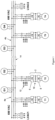
- a series of AFE power converters 2 are used to interface ac busbars 4a, 4b to electric propulsion motors T1-T4.
- Each AFE power converter 2 includes a first active rectifier/inverter 6 (or 'front end' bridge) having ac terminals connected to the ac busbar and a second active rectifier/inverter 8 having ac terminals connected to the propulsion motor.
- the dc terminals of the first and second active rectifier/inverters 6, 8 are connected together by a dc link 10.
- Harmonic filters 12 may be connected to the ac terminals of the first active rectifier/inverter 6.
- the first active rectifier/inverter 6 will operate as an active rectifier to supply power to the dc link 10 and the second active rectifier/inverter 8 will operate as an inverter, but reverse operation may be possible in certain circumstances such as regenerative braking.
- Each active rectifier/inverter 6, 8 will typically have a conventional three-phase two-level topology with a series of semiconductor power switching devices (e.g. IGBTs) fully controlled and regulated using a pulse width modulation strategy.
- the active rectifier/inverters can have any suitable topology such as a three-level neutral point clamped topology or a multi-level topology, for example.
- a series of prime movers are connected to individual generators G1-G4 which supply ac power to the marine propulsion system through the ac busbars 4a, 4b.
- the ac busbars 4a, 4b may be equipped with protective switchgear with circuit breakers and associated controls.
- the marine propulsion system will typically include a first (or port) ac busbar 4a and a second (or starboard) ac busbar 4b.
- the busbars may be interconnected by a tie 14.
- the ac busbars 4a, 4b may carry a low voltage (LV) supply voltage such as 690 V.
- LV low voltage
- the marine propulsion system uses an LV supply voltage, and the fact that AFE power converters produce minimal harmonics, there is no need for converter transformers that are commonly found in other systems. This reduces the physical size and weight of the marine propulsion system.
- the use of an LV supply voltage produces high fault currents which must be accounted for in the rating of the protective switchgear. Certain operational restrictions may need to be imposed, for example the number of generators may need to be constrained to limit the maximum fault current.
- the marine propulsion system shown in Figure 1 has advantages in terms of its physical size and weight, it also lacks some operational flexibility.
- An alternative arrangement may provide additional operational flexibility and provides a marine propulsion system comprising: a first ac busbar; a second ac busbar; a first power converter including: a first active rectifier/inverter having ac terminals connected to the first ac busbar and dc terminals, and a second active rectifier/inverter having dc terminals connected to the dc terminals of the first active rectifier/inverter by a dc link and ac terminals; a second power converter including: a third active rectifier/inverter having ac terminals connected to the second ac busbar and dc terminals, and a fourth active rectifier/inverter having dc terminals connected to the dc terminals of the third active rectifier/inverter by a dc link and ac terminals; and a first propulsion motor having ac terminals connected in parallel to the ac terminals of the second active rectifier/inverter and the fourth active rectifier/in
- Such a marine propulsion system may be conveniently referred to as a dual fed ⁇ active front end' (AFE) arrangement where the first and second power converters are AFE power converters of the type generally described with reference to Figure 1 and each propulsion motor has the capability to receive power from both the first and second busbars.
- the propulsion motor and its associated AFE power converters may be conveniently referred to as a propulsion drive system.
- the marine propulsion system may have any convenient number of ac busbars and is not limited to a dual fed arrangement. Each propulsion motor will typically be connected to each ac busbar by an AFE power converter but if there are three or more busbars then it will be readily appreciated that a number of different propulsion drive arrangements are possible.
- the first and second ac busbars may have any suitable number of phases but three would be typical.
- each AFE power converter may have any suitable topology such as a two- or three-level neutral point clamped topology or a multi-level topology with a series of semiconductor power switching devices such as IGBTs, IGCTs and IEGTs fully controlled and regulated using a pulse width modulation strategy, for example.
- suitable topology such as a two- or three-level neutral point clamped topology or a multi-level topology with a series of semiconductor power switching devices such as IGBTs, IGCTs and IEGTs fully controlled and regulated using a pulse width modulation strategy, for example.
- a first filter system may be connected to the ac terminals of the first active rectifier/inverter and a second filter system may be connected to the ac terminals of the third active rectifier/inverter.
- a filter system may be associated with each AFE power converter.
- the filter systems are designed to filter the harmonics generated by the normal operation of the first and third active rectifier/inverters (i.e. the 'front end' bridges) and keep total harmonic distortion (THD) within the first and second ac busbars to within desired limits. Converter transformers are not required.
- a connection may be provided between the first and second ac busbars.
- the connection will be open but can be closed provided that both the resulting fault level of the combined first and second ac busbars is within the rating of the protective switchgear or other protective circuits and the change in the operating modes are acceptable for the operating conditions of the marine vessel.
- the first and second ac busbars may be divided into individual sections. All connections to the ac busbars and between the individual busbar sections may include protective switchgear or other protective circuits for isolation purposes.
- At least one ac generator will normally be connected to each of the first and second ac busbars.
- the ac generators provide ac power to the ac busbars and have associated prime movers (e.g. turbines or diesel engines). Any suitable number of ac generators can be provided.
- Each ac generator may have an associated voltage controller or regulator such as an Automatic Voltage Regulator (AVR).
- AVR Automatic Voltage Regulator
- Generators and propulsion drive systems can be connected to individual busbar sections to maximise the availability of propulsion power during fault conditions.
- the propulsion motor may be of any suitable type (induction, synchronous etc.) and have any suitable phase (three-phase etc).
- the propulsion motor may be configured with its rotor coaxially inside or outside its stator and may employ any suitable field means (permanent magnet, conventional or superconducting windings etc).
- a pair of propulsion motors may form part of a dual motor drive using two separate motors that are adapted to drive a common shaft such as propeller shaft.
- a pair of propulsion motors may also form part of a dual motor drive with the two motors physically built or located in a common housing (e.g. a tandem motor) and adapted to drive a common shaft. It will be readily appreciated that an individual marine vessel may use any particular number and configuration of propulsion motors (and associated AFE power converters) depending on its propulsion requirements.
- the propulsion motor may be used to drive a propeller.
- the propeller may be of any convenient type such as conventional multi-bladed screws or ducted pump jets, for example.
- the propulsion motor may be located within the hull of a marine vessel (i.e. an in-board propulsion motor driving a propeller via a shaft line with a stern gland), in a pod that is suspended below the hull of the marine vessel to provide both propulsion and steering, or coaxially outside the hull of a submarine, for example.
- the propulsion motor may be a thruster that can be turned to apply thrust in any given direction.
- the marine propulsion system may have any suitable number of propulsion motors, each being connected to the first and second ac busbars by associated AFE power converters. Put another way the marine propulsion system may have any suitable number of propulsion drive systems.
- the marine propulsion system may further comprise a second propulsion drive system or more specifically: a third power converter including: a fifth active rectifier/inverter having ac terminals connected to the first ac busbar and dc terminals, and a sixth active rectifier/inverter having dc terminals connected to the dc terminals of the fifth active rectifier/inverter by a dc link and ac terminals; a fourth power converter including: a seventh active rectifier/inverter having ac terminals connected to the second ac busbar and dc terminals, and an eighth active rectifier/inverter having dc terminals connected to the dc terminals of the seventh active rectifier/inverter by a dc link and ac terminals; and
- the dual fed AFE arrangement allows each propulsion motor to receive power from both the first and second ac busbars during normal operating conditions.
- Power can be supplied in a selected ratio from the first and second ac busbars.
- the AFE power converters can be rated to each supply 50% of the power to the propulsion motor or in any chosen ratio up to each AFE power converter supplying 100% of the power.
- the ratio may be selected based on the required power during fault conditions and can be altered in "real-time" in accordance with the marine vessel operation. Similar ratios and AFE power converter ratings may be selected if the marine propulsion system has three or more busbars.
- the rectifier/inverters (or bridges) used in the AFE power converters are preferably designed such that they are not damaged by a short circuit at the ac output terminals that are connected to the propulsion motor, i.e. they have short circuit proofing.
- Similar short circuit proofing may be provided at the ac input terminals that are connected to the associated ac busbar.
- Such a rectifier/inverter will shutdown safely in the event of a short circuit fault and will not be damaged. This is achieved by having very fast-acting overcurrent detecting sensors fitted near the ac output terminals that are connected to the propulsion motor (or the ac input terminals) and which act to stop the operation of the switching devices of the AFE power converter in a very short time, 10 ⁇ s being typical. This protects the switching devices and prevents them from being damaged.
- any other propulsion drive systems may therefore continue to operate normally and receive power from both ac busbars.
- protective switchgear or protective circuits e.g. in the form of fast-acting isolation contactors, may be provided at the ac output terminals of each AFE power converter to isolate the AFE power converters from the propulsion motor.
- protective switchgear or protective circuits e.g. in the form of fast-acting isolation contactors
- any other propulsion drive systems may therefore continue to operate normally and receive power from both ac busbars.
- the other AFE power converter is now isolated from the faulty AFE power converter by the protective switchgear or protective circuits and the propulsion motor can continue to receive power from the other ac busbar.
- the protective switchgear or protective circuits can be operated so that all the propulsion motors can continue to receive power from the other ac busbar.
- the dual fed AFE arrangement provides several technical advantages over the arrangement shown in Figure 1 .
- Each propulsion motor can operate at a predetermined power level when no power is received from one of the ac busbars. Also, the power for any given propulsion motor can be taken from the ac busbars in the ratio that makes best use of the available power. Since the worst case failure has less effect on the capability of the marine vessel then there is potential to reduce installed thrust or installed power generation requirements with no loss of operational performance.
- a particular AFE power converter develops a fault then it can be isolated to allow the propulsion motor to continue to operate with power from the other ac busbar. This can reduce fuel consumption for many operating conditions with no loss of operational performance. For example, if a marine propulsion system has four identically rated propulsion drive systems each operating at 50% thrust then due to the characteristics of propellers where propeller thrust varies as propeller speed squared and propeller power varies as propeller speed cubed:
- propulsion motors can have the same or different power rating. When the power ratings are different then the available power can be calculated in the same way as shown above but will be based on the specific installed power ratings.
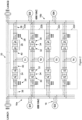
- a dual fed a marine propulsion system includes a first ac busbar 16a and a second ac busbar 16b.
- the first and second ac busbars 16a, 16b may carry a low voltage (LV) supply voltage (e.g. 690 V) and may optionally be divided into separate individual sections.
- LV low voltage
- a pair of ac generators G1, G2 are connected to associated prime movers (not shown) and supply ac power to the first ac busbar 16a.
- a pair of ac generators G3, G4 are also connected to associated prime movers (not shown) and supply ac power to the second ac busbar 16b.
- the generators G1-G4 are connected to the respective ac busbar by protective switchgear 18 with circuit breakers and associated controls or other switching means. It will be readily appreciated that the marine propulsion system may have any suitable number of ac generators and any suitable busbar configuration depending on the power generation and distribution requirements.
- the ac busbars 16a, 16b may be interconnected by a tie 20.
- the marine propulsion system includes a series of four parallel propulsion drive systems 22a-22d.
- Each propulsion drive system includes an electric propulsion motor (or thruster) T1-T4 connected in parallel to the first and second ac busbars 16a, 16b by 'active front end' (AFE) power converters 24, 26 and associated harmonic filter systems 28. More particularly, a first AFE power converter 24 is connected between each propulsion motor and the first ac busbar 16a and a second AFE power converter 26 is connected between each propulsion motor and the second ac busbar 16b as shown in Figure 2 .
- AFE active front end'
- Each AFE power converter includes a first active rectifier/inverter 30 (or 'front end' bridge) having ac input terminals connected to the respective ac busbar 16a, 16b and a second active rectifier/inverter 32 having ac output terminals connected to the propulsion motor.
- the propulsion motor is therefore connected to the ac output terminals of the second active rectifier/inverter 32 of each associated AFE power converter 24, 26 in parallel.
- the dc terminals of the first and second active rectifier/inverters 30, 32 for the first AFE power converter 24 are connected together by a dc link 34 and the dc terminals of the first and second active rectifier/inverters 30, 32 for the second AFE power converter 26 are connected together by a different dc link 34.
- each first active rectifier/inverter 30 is connected to the associated ac busbar 16a, 16b by protective switchgear 38.
- each second active rectifier/inverter 32 is connected to the associated propulsion motor T1-T4 by fast-acting isolation contactors 40 that are an optional feature.
- the first and second AFE power converters 24, 26 are also short circuit proof with the ability to shutdown safely and automatically in the event of a short circuit at their ac terminals.
- the first active rectifier/inverter 30 will operate as an active rectifier to supply power to the dc link 34 and the second active rectifier/inverter 32 will operate as an inverter to supply power to the propulsion motor, but reverse operation may be possible in certain circumstances such as regenerative braking where power is supplied from the propulsion motor (operating as a generator) back to the ac busbars 16a, 16b.
- Each active rectifier/inverter 30, 32 may typically have a conventional three-phase two-level topology with a series of semiconductor power switching devices (e.g. IGBTs) fully controlled and regulated using a pulse width modulation strategy.
- the active rectifier/inverters can have any suitable topology such as a three-level neutral point clamped topology or a multi-level topology, for example.
- Additional ac busbars may be connected to ac busbars 16a, 16b by transformers so that the distribution voltages carried by the additional ac busbars are conveniently derived by transformer action.
- the additional ac busbars may be used to provide power to other electrical loads.
- the propulsion motors T1-T4 may be of any suitable type and construction and are configured to drive a propeller shaft (not shown). It will be readily appreciated that in the dual fed AFE arrangement shown in Figure 2 each propulsion motor T1-T4 can be supplied with power from both ac busbars 16a, 16b by means of the associated AFE power converters 24, 26. This provides increased flexibility and redundancy. For example, if a fault develops in the first AFE power converter 24 then this can affect the first ac busbar 16a but not the second ac busbar 16b.
- the first AFE power converter 24 for propulsion motor T1 can be isolated from both the first ac busbar 16a and the propulsion motor T1 by means of the protective switchgear 38, short circuit proofing shutdown capabilities and fast-acting isolation contactors 40. With the complete protective system described above, power can therefore continue to be supplied to the propulsion motor T1 from the second ac busbar 16b by means of the second AFE power converter 26. In other words, the effected propulsion motor T1 can continue to operate, but at a reduced thrust. If a fault occurs in propulsion motor T1 or the cabling that connects the propulsion motor to the associated AFE power converters 24, 26 then the relevant AFE power converters can be isolated from the ac busbars 16a, 16b.
- the remaining propulsion motors T2-T4 can continue to operate at a normal power level. For a fault in one of the ac busbars 16a, 16b then all four propulsion motors T1-T4 can continue to operate at a certain power level if the associated AFE power converters are isolated from the faulty ac busbar by the protective switchgear 38.
- the AFE power converters 24, 26 can supply the power to the associated propulsion motor in any given ratio.
- a propulsion motor may receive between 0 to 50% of its power from the first ac busbar 16a by means of the first AFE power converter 24 and between 50% to 100% of its power from the second ac busbar 16b by means of the second AFE power converter 26 or vice versa.
- the ratio may alter during normal operation of the marine propulsion system or during fault conditions, for example, to utilise the power that is available from the ac busbars 16a, 16b.
- a power greater than 50% can be delivered when operating from only of the first and second AFE power converters.
- FIG 3 shows an alternative marine propulsion system that could be used for dynamic positioning (DP) of a marine vessel.
- the basic overall arrangement is similar to the marine propulsion system of Figure 2 and like parts have been given the same reference numerals.
- the marine propulsion system includes two large propulsion motors (or main thrusters) T1, T3 typically rated at 3.5 MW each and two smaller propulsion motors (or manoeuvring thrusters) T2, T4 for DP which are typically rated at 1.2 MW each.
- Each propulsion motor T1-T4 is connected to first and second busbars 16a, 16b by AFE power converters as described above.
- each of the main thrusters receives power from four AFE power converters, two being connected to the first ac busbar 16a and two being connected to the second ac busbar 16b.
- the main thrusters T1, T3 will not require full power and can therefore receive power from any two of the four associated AFE power converters.
- the first main thruster T1 can receive power from the first and second AFE power converters 24a, 26a leaving the third and fourth AFE power converters 24b, 26b to supply power to the first manoeuvring thruster T3 or vice versa.
- the propulsion motors T1-T4 are connected to the associated AFE power converters by suitable switching means 36 that can select whether power from the second active rectifier/inverter 32 of each AFE power converter 24, 26 is connected to the main thruster or the manoeuvring thruster of each propulsion drive system.
- the marine propulsion system of Figure 3 significantly reduces the cost of power electronics and reduces switchboard size, weight and cost Single point failure conditions are much reduced compared to conventional arrangements with increased fault tolerance since a fault in any of the AFE power converters will not affect both of the ac busbars 16a, 16b.
- the arrangement makes best use of installed power electronics and is particularly suitable for marine vessels where size and weight are important design considerations.
Landscapes
- Engineering & Computer Science (AREA)
- Power Engineering (AREA)
- Chemical & Material Sciences (AREA)
- Combustion & Propulsion (AREA)
- Mechanical Engineering (AREA)
- Ocean & Marine Engineering (AREA)
- Life Sciences & Earth Sciences (AREA)
- Sustainable Development (AREA)
- Sustainable Energy (AREA)
- Control Of Multiple Motors (AREA)
- Inverter Devices (AREA)
Abstract
Description
- The present invention relates to marine propulsion systems, and in particular to marine propulsion systems that employ active front end (AFE) power converters and which can be installed in any suitable marine vessel, either civilian or military.
- Marine propulsion systems that employ active front end (AFE) power converters and dual ac busbars are well known. With reference to
Figure 1 , in a typical arrangement a series ofAFE power converters 2 are used to interface acbusbars power converter 2 includes a first active rectifier/inverter 6 (or 'front end' bridge) having ac terminals connected to the ac busbar and a second active rectifier/inverter 8 having ac terminals connected to the propulsion motor. The dc terminals of the first and second active rectifier/inverters dc link 10.Harmonic filters 12 may be connected to the ac terminals of the first active rectifier/inverter 6. In normal operation, the first active rectifier/inverter 6 will operate as an active rectifier to supply power to thedc link 10 and the second active rectifier/inverter 8 will operate as an inverter, but reverse operation may be possible in certain circumstances such as regenerative braking. - Each active rectifier/
inverter - A series of prime movers (e.g. diesel engines) are connected to individual generators G1-G4 which supply ac power to the marine propulsion system through the
ac busbars ac busbars busbar 4a and a second (or starboard) acbusbar 4b. The busbars may be interconnected by atie 14. - The
ac busbars - Because the marine propulsion system uses an LV supply voltage, and the fact that AFE power converters produce minimal harmonics, there is no need for converter transformers that are commonly found in other systems. This reduces the physical size and weight of the marine propulsion system. However, the use of an LV supply voltage produces high fault currents which must be accounted for in the rating of the protective switchgear. Certain operational restrictions may need to be imposed, for example the number of generators may need to be constrained to limit the maximum fault current. Although the marine propulsion system shown in
Figure 1 has advantages in terms of its physical size and weight, it also lacks some operational flexibility. - An alternative arrangement may provide additional operational flexibility and provides a marine propulsion system comprising: a first ac busbar; a second ac busbar; a first power converter including: a first active rectifier/inverter having ac terminals connected to the first ac busbar and dc terminals, and a second active rectifier/inverter having dc terminals connected to the dc terminals of the first active rectifier/inverter by a dc link and ac terminals; a second power converter including: a third active rectifier/inverter having ac terminals connected to the second ac busbar and dc terminals, and a fourth active rectifier/inverter having dc terminals connected to the dc terminals of the third active rectifier/inverter by a dc link and ac terminals; and a first propulsion motor having ac terminals connected in parallel to the ac terminals of the second active rectifier/inverter and the fourth active rectifier/inverter.
- Such a marine propulsion system may be conveniently referred to as a dual fed `active front end' (AFE) arrangement where the first and second power converters are AFE power converters of the type generally described with reference to
Figure 1 and each propulsion motor has the capability to receive power from both the first and second busbars. The propulsion motor and its associated AFE power converters may be conveniently referred to as a propulsion drive system. The marine propulsion system may have any convenient number of ac busbars and is not limited to a dual fed arrangement. Each propulsion motor will typically be connected to each ac busbar by an AFE power converter but if there are three or more busbars then it will be readily appreciated that a number of different propulsion drive arrangements are possible. - The first and second ac busbars may have any suitable number of phases but three would be typical.
- The active rectifier/inverters that form part of each AFE power converter may have any suitable topology such as a two- or three-level neutral point clamped topology or a multi-level topology with a series of semiconductor power switching devices such as IGBTs, IGCTs and IEGTs fully controlled and regulated using a pulse width modulation strategy, for example.
- A first filter system may be connected to the ac terminals of the first active rectifier/inverter and a second filter system may be connected to the ac terminals of the third active rectifier/inverter. In general terms a filter system may be associated with each AFE power converter. The filter systems are designed to filter the harmonics generated by the normal operation of the first and third active rectifier/inverters (i.e. the 'front end' bridges) and keep total harmonic distortion (THD) within the first and second ac busbars to within desired limits. Converter transformers are not required.
- A connection (busbar tie) may be provided between the first and second ac busbars. During normal operation the connection will be open but can be closed provided that both the resulting fault level of the combined first and second ac busbars is within the rating of the protective switchgear or other protective circuits and the change in the operating modes are acceptable for the operating conditions of the marine vessel.
- The first and second ac busbars may be divided into individual sections. All connections to the ac busbars and between the individual busbar sections may include protective switchgear or other protective circuits for isolation purposes.
- At least one ac generator will normally be connected to each of the first and second ac busbars. The ac generators provide ac power to the ac busbars and have associated prime movers (e.g. turbines or diesel engines). Any suitable number of ac generators can be provided. Each ac generator may have an associated voltage controller or regulator such as an Automatic Voltage Regulator (AVR). Generators and propulsion drive systems can be connected to individual busbar sections to maximise the availability of propulsion power during fault conditions.
- The propulsion motor may be of any suitable type (induction, synchronous etc.) and have any suitable phase (three-phase etc). The propulsion motor may be configured with its rotor coaxially inside or outside its stator and may employ any suitable field means (permanent magnet, conventional or superconducting windings etc).
- A pair of propulsion motors may form part of a dual motor drive using two separate motors that are adapted to drive a common shaft such as propeller shaft. A pair of propulsion motors may also form part of a dual motor drive with the two motors physically built or located in a common housing (e.g. a tandem motor) and adapted to drive a common shaft. It will be readily appreciated that an individual marine vessel may use any particular number and configuration of propulsion motors (and associated AFE power converters) depending on its propulsion requirements.
- The propulsion motor may be used to drive a propeller. The propeller may be of any convenient type such as conventional multi-bladed screws or ducted pump jets, for example. The propulsion motor may be located within the hull of a marine vessel (i.e. an in-board propulsion motor driving a propeller via a shaft line with a stern gland), in a pod that is suspended below the hull of the marine vessel to provide both propulsion and steering, or coaxially outside the hull of a submarine, for example. The propulsion motor may be a thruster that can be turned to apply thrust in any given direction.
- The marine propulsion system may have any suitable number of propulsion motors, each being connected to the first and second ac busbars by associated AFE power converters. Put another way the marine propulsion system may have any suitable number of propulsion drive systems. For example, the marine propulsion system may further comprise a second propulsion drive system or more specifically: a third power converter including: a fifth active rectifier/inverter having ac terminals connected to the first ac busbar and dc terminals, and a sixth active rectifier/inverter having dc terminals connected to the dc terminals of the fifth active rectifier/inverter by a dc link and ac terminals; a fourth power converter including: a seventh active rectifier/inverter having ac terminals connected to the second ac busbar and dc terminals, and an eighth active rectifier/inverter having dc terminals connected to the dc terminals of the seventh active rectifier/inverter by a dc link and ac terminals; and a second propulsion motor having ac terminals connected in parallel to the ac terminals of the sixth active rectifier/inverter and the eighth active rectifier/inverter.
- The dual fed AFE arrangement allows each propulsion motor to receive power from both the first and second ac busbars during normal operating conditions. Power can be supplied in a selected ratio from the first and second ac busbars. In other words the AFE power converters can be rated to each supply 50% of the power to the propulsion motor or in any chosen ratio up to each AFE power converter supplying 100% of the power. The ratio may be selected based on the required power during fault conditions and can be altered in "real-time" in accordance with the marine vessel operation. Similar ratios and AFE power converter ratings may be selected if the marine propulsion system has three or more busbars.
- If there is a fault in one of the AFE power converters then the effects of the fault must be limited to the ac busbar to which the AFE power converter is connected. The other ac busbar is then not affected. This is an important feature of the marine propulsion system so that any fault in one of the AFE power converters will not produce a fault on both of the first and second ac busbars. This means that the propulsion motor can continue to operate during fault conditions as described in more detail below. The rectifier/inverters (or bridges) used in the AFE power converters are preferably designed such that they are not damaged by a short circuit at the ac output terminals that are connected to the propulsion motor, i.e. they have short circuit proofing. Similar short circuit proofing may be provided at the ac input terminals that are connected to the associated ac busbar. Such a rectifier/inverter will shutdown safely in the event of a short circuit fault and will not be damaged. This is achieved by having very fast-acting overcurrent detecting sensors fitted near the ac output terminals that are connected to the propulsion motor (or the ac input terminals) and which act to stop the operation of the switching devices of the AFE power converter in a very short time, 10 µs being typical. This protects the switching devices and prevents them from being damaged.
- If a fault occurs in one of the AFE power converters of a particular propulsion drive system then the associated protective switchgear or protective circuits will operate to isolate it from the ac busbar to which its ac input terminals are connected. If the AFE power converter is still applying a short circuit at its ac output terminals then the other AFE power converter will not be damaged because its short circuit proofing will cause it to automatically shutdown safely. This ensures that the other AFE power converter does not apply a fault to the other ac busbar to which its ac input terminals are connected. Any other propulsion drive systems may therefore continue to operate normally and receive power from both ac busbars.
- As an additional safety feature then protective switchgear or protective circuits, e.g. in the form of fast-acting isolation contactors, may be provided at the ac output terminals of each AFE power converter to isolate the AFE power converters from the propulsion motor. In such an arrangement then if a fault occurs in one of the AFE power converters of a particular propulsion drive system its protective switchgear or protective circuits can be operated to fully isolate it. Any other propulsion drive systems may therefore continue to operate normally and receive power from both ac busbars. Moreover, the other AFE power converter is now isolated from the faulty AFE power converter by the protective switchgear or protective circuits and the propulsion motor can continue to receive power from the other ac busbar.
- If a fault occurs in one of the ac busbars then the protective switchgear or protective circuits can be operated so that all the propulsion motors can continue to receive power from the other ac busbar.
- The dual fed AFE arrangement provides several technical advantages over the arrangement shown in
Figure 1 . - Each propulsion motor can operate at a predetermined power level when no power is received from one of the ac busbars. Also, the power for any given propulsion motor can be taken from the ac busbars in the ratio that makes best use of the available power. Since the worst case failure has less effect on the capability of the marine vessel then there is potential to reduce installed thrust or installed power generation requirements with no loss of operational performance.
- If a particular AFE power converter develops a fault then it can be isolated to allow the propulsion motor to continue to operate with power from the other ac busbar. This can reduce fuel consumption for many operating conditions with no loss of operational performance. For example, if a marine propulsion system has four identically rated propulsion drive systems each operating at 50% thrust then due to the characteristics of propellers where propeller thrust varies as propeller speed squared and propeller power varies as propeller speed cubed:
- Total thrust = 200%
- Each propulsion motor is at 50% of rated thrust
- Each propulsion motor is at 70.7% of rated speed
- Each propulsion motor is at 35.4% of rated power
- Total power = 141.6%
- In a conventional marine propulsion system like that shown in
Figure 1 where each propulsion drive system is connected to just a single ac busbar then a fault in one of the ac busbars would mean that only two propulsion drive systems would be operational. To provide the same total thrust (=200%) then since only two propulsion motors are operational: - Each propulsion motor is at 100% of rated thrust
- Each propulsion motor is at 100% of rated speed
- Each propulsion motor is at 100% of rated power
- Total power = 200%
- The most severe fault condition is a short circuit within one of the ac busbars. If one of the ac busbars develops a fault then the protective switchgear or protective circuits associated with the relevant AFE power converters will operate to automatically isolate them from the faulty ac busbar so that all four propulsion motors can continue to operate at a reduced power level. To provide the same total thrust (=200%) then since all four propulsion motors are operational:
- Each propulsion motor is at 50% of rated thrust
- Each propulsion motor is at 70.7% of rated speed
- Each propulsion motor is at 35.4% of rated power
- Total power = 141.6%
- This is a significant saving of power compared to the conventional system where a total power of 200% is required to achieve the same total thrust.
- If there is a fault within one of the AFE power converters then the protective switchgear or protective circuits associated with the faulty AFE power converter will operate and as a minimum three propulsion motors will be operational once the faulty AFE power converter has been automatically isolated from both the ac busbar and the propulsion motor. To provide the same total thrust (=200%) then since only three propulsion motors are operational:
- Each propulsion motor is at 66.7% of rated thrust
- Each propulsion motor is at 81.7% of rated speed
- Each propulsion motor is at 54.5% of rated power
- Total power = 163.4%
- This is still a significant power saving.
- It will be readily appreciated that these are simply examples and that in any given marine propulsion system greater or fewer than four propulsion motors might be included. The propulsion motors can have the same or different power rating. When the power ratings are different then the available power can be calculated in the same way as shown above but will be based on the specific installed power ratings.
-
-
Figure 1 is a schematic drawing showing a conventional marine propulsion system with active front end (AFE) power converters; -
Figure 2 is a schematic drawing showing a dual fed marine propulsion system according to a first embodiment of the present invention; and -
Figure 3 is a schematic drawing showing a dual fed marine propulsion system according to a second embodiment of the present invention. - With reference to
Figure 2 a dual fed a marine propulsion system according to the present invention includes afirst ac busbar 16a and asecond ac busbar 16b. The first andsecond ac busbars - A pair of ac generators G1, G2 are connected to associated prime movers (not shown) and supply ac power to the
first ac busbar 16a. A pair of ac generators G3, G4 are also connected to associated prime movers (not shown) and supply ac power to thesecond ac busbar 16b. The generators G1-G4 are connected to the respective ac busbar byprotective switchgear 18 with circuit breakers and associated controls or other switching means. It will be readily appreciated that the marine propulsion system may have any suitable number of ac generators and any suitable busbar configuration depending on the power generation and distribution requirements. - The
ac busbars tie 20. - The marine propulsion system includes a series of four parallel propulsion drive systems 22a-22d. Each propulsion drive system includes an electric propulsion motor (or thruster) T1-T4 connected in parallel to the first and
second ac busbars power converters harmonic filter systems 28. More particularly, a firstAFE power converter 24 is connected between each propulsion motor and thefirst ac busbar 16a and a secondAFE power converter 26 is connected between each propulsion motor and thesecond ac busbar 16b as shown inFigure 2 . Each AFE power converter includes a first active rectifier/inverter 30 (or 'front end' bridge) having ac input terminals connected to therespective ac busbar inverter 32 having ac output terminals connected to the propulsion motor. The propulsion motor is therefore connected to the ac output terminals of the second active rectifier/inverter 32 of each associatedAFE power converter inverters AFE power converter 24 are connected together by adc link 34 and the dc terminals of the first and second active rectifier/inverters AFE power converter 26 are connected together by adifferent dc link 34. - The ac input terminals of each first active rectifier/
inverter 30 are connected to the associatedac busbar protective switchgear 38. - Although only shown for the first propulsion drive system 22a, the ac output terminals of each second active rectifier/
inverter 32 are connected to the associated propulsion motor T1-T4 by fast-actingisolation contactors 40 that are an optional feature. The first and secondAFE power converters - In normal operation, the first active rectifier/
inverter 30 will operate as an active rectifier to supply power to thedc link 34 and the second active rectifier/inverter 32 will operate as an inverter to supply power to the propulsion motor, but reverse operation may be possible in certain circumstances such as regenerative braking where power is supplied from the propulsion motor (operating as a generator) back to theac busbars - Each active rectifier/
inverter - Additional ac busbars may be connected to
ac busbars - The propulsion motors T1-T4 may be of any suitable type and construction and are configured to drive a propeller shaft (not shown). It will be readily appreciated that in the dual fed AFE arrangement shown in
Figure 2 each propulsion motor T1-T4 can be supplied with power from bothac busbars AFE power converters AFE power converter 24 then this can affect thefirst ac busbar 16a but not thesecond ac busbar 16b. The firstAFE power converter 24 for propulsion motor T1 can be isolated from both thefirst ac busbar 16a and the propulsion motor T1 by means of theprotective switchgear 38, short circuit proofing shutdown capabilities and fast-actingisolation contactors 40. With the complete protective system described above, power can therefore continue to be supplied to the propulsion motor T1 from thesecond ac busbar 16b by means of the secondAFE power converter 26. In other words, the effected propulsion motor T1 can continue to operate, but at a reduced thrust. If a fault occurs in propulsion motor T1 or the cabling that connects the propulsion motor to the associatedAFE power converters ac busbars ac busbars protective switchgear 38. - The
AFE power converters first ac busbar 16a by means of the firstAFE power converter 24 and between 50% to 100% of its power from thesecond ac busbar 16b by means of the secondAFE power converter 26 or vice versa. The ratio may alter during normal operation of the marine propulsion system or during fault conditions, for example, to utilise the power that is available from theac busbars -
Figure 3 shows an alternative marine propulsion system that could be used for dynamic positioning (DP) of a marine vessel. The basic overall arrangement is similar to the marine propulsion system ofFigure 2 and like parts have been given the same reference numerals. The marine propulsion system includes two large propulsion motors (or main thrusters) T1, T3 typically rated at 3.5 MW each and two smaller propulsion motors (or manoeuvring thrusters) T2, T4 for DP which are typically rated at 1.2 MW each. Each propulsion motor T1-T4 is connected to first andsecond busbars first ac busbar 16a by means of theAFE power converters second ac busbar 16b by means of theAFE power converters first ac busbar 16a and two being connected to thesecond ac busbar 16b. For DP operation the main thrusters T1, T3 will not require full power and can therefore receive power from any two of the four associated AFE power converters. For example, the first main thruster T1 can receive power from the first and secondAFE power converters AFE power converters inverter 32 of eachAFE power converter - The marine propulsion system of
Figure 3 significantly reduces the cost of power electronics and reduces switchboard size, weight and cost Single point failure conditions are much reduced compared to conventional arrangements with increased fault tolerance since a fault in any of the AFE power converters will not affect both of theac busbars
Claims (12)
- A method of operating a marine propulsion system for a marine vessel, the marine propulsion system comprising:a first ac busbar (16a);a second ac busbar (16b);at least one ac generator (G1, G2) connected to the first ac busbar (16a);at least one ac generator (G3, G4) connected to the second ac busbar (16b);a connection (20) between the first and second busbars (16a, 16b);a first power converter (24) including:a first active rectifier/inverter (30) having ac terminals connected to the first ac busbar (16a) and dc terminals, anda second active rectifier/inverter (32) having dc terminals connected to the dc terminals of the first active rectifier/inverter (30) by a dc link (34) and ac terminals;a second power converter (26) including:a third active rectifier/inverter (30) having ac terminals connected to the second ac busbar (16b) and dc terminals, anda fourth active rectifier/inverter (32) having dc terminals connected to the dc terminals of the third active rectifier/inverter (30) by a dc link (34) and ac terminals; anda first propulsion motor (T1) having ac terminals connected in parallel to the ac terminals of the second active rectifier/inverter (32) and ac terminals of the fourth active rectifier/inverter (32);wherein during normal operating conditions of the marine propulsion system the method comprises:opening the connection (20) to disconnect the first and second ac busbars (16a, 16b); andsupplying power to the first propulsion motor (T1) from both the first and second ac busbars (16a, 16b) through the first and second power converters (24, 26) at the same time.
- A method according to claim 1, wherein the first active rectifier/inverter (30) includes first protective switchgear or protective circuits (38) for isolation purposes, and the method further comprises isolating the first power converter (24) from the first ac busbar (16a) by means of the first protective switchgear or protective circuits (38) in the event of a fault in the first power converter (24) or the first ac busbar (16a), while continuing to supply power to the first propulsion motor (T1) from the second ac busbar (16b) through the second power converter (26).
- A method according to claim 1 or claim 2, wherein the second active rectifier/inverter (32) includes second protective switchgear or protective circuits (40) for isolation purposes, and the method further comprises isolating the first power converter (24) from the first propulsion motor (T1) by means of the second protective switchgear or protective circuits (40) in the event of a fault in the first power converter (24), while continuing to supply power to the first propulsion motor (T1) from the second ac busbar (16b) through the second power converter (26).
- A method according to any preceding claim, further comprising safely shutting down any of the first, second, third and fourth active rectifier/inverters (30, 32) in the event of a short circuit at their ac terminals.
- A method according to any preceding claim, wherein during normal operating conditions of the marine propulsion system, power is supplied to the first propulsion motor (T1) from both the first and second ac busbars (16a, 16b) through the first and second power converters (24, 26) at the same time at a ratio that is altered in "real-time" in accordance with the marine vessel operation.
- A marine propulsion system for a marine vessel, the marine propulsion system comprising:a first ac busbar (16a);a second ac busbar (16b);at least one ac generator (G1, G2) connected to the first ac busbar (16a);at least one ac generator (G3, G4) connected to the second ac busbar (16b);a connection (20) between the first and second busbars (16a, 16b);a first power converter (24) including:a first active rectifier/inverter (30) having ac terminals connected to the first ac busbar (16a) and dc terminals, anda second active rectifier/inverter (32) having dc terminals connected to the dc terminals of the first active rectifier/inverter (30) by a dc link (34) and ac terminals;a second power converter (26) including:a third active rectifier/inverter (30) having ac terminals connected to the second ac busbar (16b) and dc terminals, anda fourth active rectifier/inverter (32) having dc terminals connected to the dc terminals of the third active rectifier/inverter (30) by a dc link (34) and ac terminals; anda first propulsion motor (T1) having ac terminals connected in parallel to the ac terminals of the second active rectifier/inverter (32) and the fourth active rectifier/inverter (32);wherein during normal operating conditions of the marine propulsion system:the connector (20) between the first and second ac busbars (16a, 16b) is open so that the first and second ac busbars (16a, 16b) are disconnected; andthe marine propulsion system is adapted to supply power to the first propulsion motor (T1) from both the first and second ac busbars (16a, 16b) through the first and second power converters (24, 26) at the same time.
- A marine propulsion system according to claim 6, further comprising a first filter system (28) connected to the ac terminals of the first active rectifier/inverter (30) and a second filter system (28) connected to the ac terminals of the third active rectifier/inverter (30).
- A marine propulsion system according to claim 6 or claim 7, wherein the first active rectifier/inverter (30) includes protective switchgear or protective circuits (38) adapted to isolate the first power converter (24) from the first ac busbar (16a) and the third active rectifier/inverter (30) includes protective switchgear or protective circuits (38) adapted to isolate the second power converter (26) from the second ac busbar (16b).
- A marine propulsion system according to any of claims 6 to 8, wherein the second active rectifier/inverter (32) includes protective switchgear or protective circuits (40) adapted to isolate the first power converter (24) from the first propulsion motor (T1) and the fourth active rectifier/inverter (32) includes protective switchgear or protective circuits (40) adapted to isolate the second power converter (26) from the first propulsion motor (T1).
- A marine propulsion system according to any of claims 6 to 9, wherein the first, second, third and fourth active rectifier/inverters (30, 32) are adapted to shutdown safely in the event of a short circuit at their ac terminals.
- A marine propulsion system according to any of claims 6 to 10, further comprising:a third power converter (24) including:a fifth active rectifier/inverter (30) having ac terminals connected to the first ac busbar (16a) and dc terminals, anda sixth active rectifier/inverter (32) having dc terminals connected to the dc terminals of the fifth active rectifier/inverter (30) by a dc link (34) and ac terminals;a fourth power converter (26) including:a seventh active rectifier/inverter (30) having ac terminals connected to the second ac busbar (16b) and dc terminals, andan eighth active rectifier/inverter (32) having dc terminals connected to the dc terminals of the seventh active rectifier/inverter (30) by a dc link (34) and ac terminals; anda second propulsion motor (T2) having ac terminals connected in parallel to the ac terminals of the sixth active rectifier/inverter (32) and the eighth active rectifier/inverter (32);wherein during normal operating conditions of the marine propulsion system:
the marine propulsion system is adapted to supply power to the second propulsion motor (T2) from both the first and second ac busbars (16a, 16b) through the first and second power converters (24, 26) at the same time. - A marine propulsion system according to claim 11, further comprising a third filter system (28) connected to the ac terminals of the fifth active rectifier/inverter (30) and a fourth filter system (28) connected to the ac terminals of the seventh active rectifier/inverter (30).
Priority Applications (1)
| Application Number | Priority Date | Filing Date | Title |
|---|---|---|---|
| EP22212595.7A EP4183676A1 (en) | 2010-10-14 | 2010-10-14 | Marine propulsion systems |
Applications Claiming Priority (3)
| Application Number | Priority Date | Filing Date | Title |
|---|---|---|---|
| EP22212595.7A EP4183676A1 (en) | 2010-10-14 | 2010-10-14 | Marine propulsion systems |
| PCT/GB2010/001910 WO2012049441A1 (en) | 2010-10-14 | 2010-10-14 | Marine propulsion systems |
| EP10773372.7A EP2627557B1 (en) | 2010-10-14 | 2010-10-14 | Marine propulsion systems |
Related Parent Applications (2)
| Application Number | Title | Priority Date | Filing Date |
|---|---|---|---|
| EP10773372.7A Division-Into EP2627557B1 (en) | 2010-10-14 | 2010-10-14 | Marine propulsion systems |
| EP10773372.7A Division EP2627557B1 (en) | 2010-10-14 | 2010-10-14 | Marine propulsion systems |
Publications (1)
| Publication Number | Publication Date |
|---|---|
| EP4183676A1 true EP4183676A1 (en) | 2023-05-24 |
Family
ID=44140691
Family Applications (2)
| Application Number | Title | Priority Date | Filing Date |
|---|---|---|---|
| EP10773372.7A Active EP2627557B1 (en) | 2010-10-14 | 2010-10-14 | Marine propulsion systems |
| EP22212595.7A Withdrawn EP4183676A1 (en) | 2010-10-14 | 2010-10-14 | Marine propulsion systems |
Family Applications Before (1)
| Application Number | Title | Priority Date | Filing Date |
|---|---|---|---|
| EP10773372.7A Active EP2627557B1 (en) | 2010-10-14 | 2010-10-14 | Marine propulsion systems |
Country Status (6)
| Country | Link |
|---|---|
| US (1) | US9941772B2 (en) |
| EP (2) | EP2627557B1 (en) |
| CN (1) | CN103298692A (en) |
| BR (1) | BR112013009168A2 (en) |
| CA (1) | CA2814124A1 (en) |
| WO (1) | WO2012049441A1 (en) |
Families Citing this family (17)
| Publication number | Priority date | Publication date | Assignee | Title |
|---|---|---|---|---|
| EP2709229B1 (en) * | 2012-09-17 | 2015-03-25 | GE Energy Power Conversion Technology Ltd | Power distribution systems |
| EP2930815B1 (en) | 2014-04-10 | 2018-11-14 | GE Energy Power Conversion Technology Ltd | Power distribution systems |
| EP2949571A1 (en) * | 2014-05-30 | 2015-12-02 | Siemens Aktiengesellschaft | Drive system for a ship and operation of the same |
| CN104477361A (en) * | 2014-12-10 | 2015-04-01 | 重庆长航东风船舶工业公司 | Boat pushing system, power consumption system and control method |
| EP3086432B1 (en) * | 2015-04-23 | 2018-07-18 | GE Energy Power Conversion Technology Ltd | Power distribution systems |
| EP3118982B1 (en) | 2015-07-16 | 2020-09-02 | GE Energy Power Conversion Technology Ltd | Fault ride through in a marine power distribution system |
| CN106240781B (en) * | 2016-08-05 | 2017-12-15 | 上海斯达瑞船舶海洋工程服务有限公司 | A kind of ship power distribution system of two-shipper cabin three-level dynamic positioning |
| CN106230108A (en) * | 2016-08-18 | 2016-12-14 | 湖南大学 | The inverter of virtual Diesel Engine Control and the seamless handover method of diesel engine unit |
| US10654578B2 (en) | 2016-11-02 | 2020-05-19 | Rolls-Royce North American Technologies, Inc. | Combined AC and DC turboelectric distributed propulsion system |
| CN106684909A (en) * | 2016-12-06 | 2017-05-17 | 山西汾西重工有限责任公司 | Overland joint debugging system for ship direct current networking electric propulsion system |
| US10640225B2 (en) * | 2017-07-10 | 2020-05-05 | Rolls-Royce North American Technologies, Inc. | Selectively regulating current in distributed propulsion systems |
| CN107444601B (en) * | 2017-08-15 | 2020-03-10 | 上海船舶研究设计院(中国船舶工业集团公司第六0四研究院) | Diesel-electric hybrid propulsion system and static PTI (packet transport interface) entering method |
| US11894756B2 (en) | 2021-01-25 | 2024-02-06 | Honeywell International Inc. | Systems and methods for electric propulsion systems for electric engines |
| US12100961B2 (en) | 2021-04-15 | 2024-09-24 | Spoc Automation Inc. | Naturally load balanced redundant power conversion system |
| US11670942B2 (en) * | 2021-09-23 | 2023-06-06 | General Electric Company | Electrically driven distributed propulsion system |
| US11840148B2 (en) * | 2022-02-15 | 2023-12-12 | Rolls-Royce Corporation/Rolls-Royce Singapore Pte. Ltd. | Hybrid aircraft having rectifier with integrated protection |
| US12095405B2 (en) | 2022-02-15 | 2024-09-17 | Rolls-Royce Corporation | Fault tolerant turbo-generator system |
Citations (4)
| Publication number | Priority date | Publication date | Assignee | Title |
|---|---|---|---|---|
| GB2445382A (en) * | 2007-01-06 | 2008-07-09 | Converteam Ltd | Marine vessel power system |
| US20080315583A1 (en) * | 2005-12-14 | 2008-12-25 | Oliver Beck | Hybrid Propulsion System For a Watercraft |
| US20090215328A1 (en) * | 2006-10-13 | 2009-08-27 | Rolls-Royce Plc | Mixed propulsion system |
| DE102008022077A1 (en) * | 2008-05-05 | 2009-11-12 | Siemens Aktiengesellschaft | Circuit for feeding a drive machine with several winding systems |
Family Cites Families (7)
| Publication number | Priority date | Publication date | Assignee | Title |
|---|---|---|---|---|
| GB191515008A (en) | 1915-10-23 | 1916-10-23 | British Thomson Houston Co Ltd | Improvements in and relating to Systems of Electric Ship Propulsion. |
| DE3043692C2 (en) | 1980-11-19 | 1985-07-11 | Ingenieurkontor Luebeck Prof. Gabler Nachf. Gmbh, 2400 Luebeck | DC electrical power source |
| DE10147472A1 (en) * | 2001-09-26 | 2003-04-24 | Siemens Ag | Power converter |
| JP4440879B2 (en) | 2003-06-26 | 2010-03-24 | 東芝三菱電機産業システム株式会社 | Electric motor drive system |
| NO20033876A (en) | 2003-09-02 | 2005-02-21 | Norpropeller As | Drive system for ships |
| US7633770B2 (en) * | 2006-12-08 | 2009-12-15 | General Electric Company | Collection and transmission system |
| EP2225118B1 (en) * | 2007-12-12 | 2016-06-22 | Foss Maritime Company | Hybrid propulsion systems |
-
2010
- 2010-10-14 EP EP10773372.7A patent/EP2627557B1/en active Active
- 2010-10-14 CN CN201080069622XA patent/CN103298692A/en active Pending
- 2010-10-14 CA CA2814124A patent/CA2814124A1/en not_active Abandoned
- 2010-10-14 EP EP22212595.7A patent/EP4183676A1/en not_active Withdrawn
- 2010-10-14 BR BR112013009168A patent/BR112013009168A2/en not_active IP Right Cessation
- 2010-10-14 US US13/878,865 patent/US9941772B2/en active Active
- 2010-10-14 WO PCT/GB2010/001910 patent/WO2012049441A1/en not_active Ceased
Patent Citations (4)
| Publication number | Priority date | Publication date | Assignee | Title |
|---|---|---|---|---|
| US20080315583A1 (en) * | 2005-12-14 | 2008-12-25 | Oliver Beck | Hybrid Propulsion System For a Watercraft |
| US20090215328A1 (en) * | 2006-10-13 | 2009-08-27 | Rolls-Royce Plc | Mixed propulsion system |
| GB2445382A (en) * | 2007-01-06 | 2008-07-09 | Converteam Ltd | Marine vessel power system |
| DE102008022077A1 (en) * | 2008-05-05 | 2009-11-12 | Siemens Aktiengesellschaft | Circuit for feeding a drive machine with several winding systems |
Non-Patent Citations (1)
| Title |
|---|
| "THE DIESEL-ELECTRIC POWER/PROPULSION SYSTEM OF THE USCG ICEBREAKER 'HEALY'", MARINE ENGINEERS REVIEW, INSTITUTE OF MARINE ENGINEERS. LONDON, GB, 1 April 1995 (1995-04-01) - 1 April 1995 (1995-04-01), pages 42/43, XP000502166, ISSN: 0047-5955 * |
Also Published As
| Publication number | Publication date |
|---|---|
| WO2012049441A1 (en) | 2012-04-19 |
| US20140145448A1 (en) | 2014-05-29 |
| EP2627557A1 (en) | 2013-08-21 |
| US9941772B2 (en) | 2018-04-10 |
| EP2627557B1 (en) | 2023-01-25 |
| CN103298692A (en) | 2013-09-11 |
| BR112013009168A2 (en) | 2016-07-26 |
| CA2814124A1 (en) | 2012-04-19 |
Similar Documents
| Publication | Publication Date | Title |
|---|---|---|
| EP2627557B1 (en) | Marine propulsion systems | |
| US10020652B2 (en) | Power distribution systems | |
| RU2551411C2 (en) | Power distribution system | |
| GB2445382A (en) | Marine vessel power system | |
| US7544108B2 (en) | Power generation, distribution, and on-board power supply system for low-emissive surface marine (navy) ships of different classes and sizes | |
| US11787522B2 (en) | Power supply system for a water-bound device | |
| EP3209556B1 (en) | Power system of a floating vessel | |
| US20110185206A1 (en) | Multiple voltage generator and voltage regulation methodology for power dense integrated power systems | |
| CN113169550B (en) | Energy supply system for wading devices with different connection areas | |
| CN113169551B (en) | Energy supply system for water ford installations with first and second winding systems of a generator system for feeding different DC voltage busbars | |
| RU197447U1 (en) | SHIP'S ELECTRIC POWER SYSTEM | |
| CN113196607B (en) | Energy supply system for wading facilities with multiple zones | |
| KR101103859B1 (en) | Distribution system for Bow thruster single generator of large container ship | |
| US12509204B2 (en) | Power system for electrical power generation and distribution | |
| RU197961U1 (en) | UNIFIED ELECTRIC POWER SYSTEM SHIP | |
| Qi et al. | Configuration Generation and Analysis of AC and DC Conceptual Designs of Shipboard Power Systems | |
| Zhou et al. | Dual voltage DC generator for compact light-weight ship electrical systems | |
| RIPA | Marine electrical systems: towards a DC distribution |
Legal Events
| Date | Code | Title | Description |
|---|---|---|---|
| PUAI | Public reference made under article 153(3) epc to a published international application that has entered the european phase |
Free format text: ORIGINAL CODE: 0009012 |
|
| STAA | Information on the status of an ep patent application or granted ep patent |
Free format text: STATUS: THE APPLICATION HAS BEEN PUBLISHED |
|
| AC | Divisional application: reference to earlier application |
Ref document number: 2627557 Country of ref document: EP Kind code of ref document: P |
|
| AK | Designated contracting states |
Kind code of ref document: A1 Designated state(s): AL AT BE BG CH CY CZ DE DK EE ES FI FR GB GR HR HU IE IS IT LI LT LU LV MC MK MT NL NO PL PT RO RS SE SI SK SM TR |
|
| STAA | Information on the status of an ep patent application or granted ep patent |
Free format text: STATUS: REQUEST FOR EXAMINATION WAS MADE |
|
| 17P | Request for examination filed |
Effective date: 20231120 |
|
| RBV | Designated contracting states (corrected) |
Designated state(s): AL AT BE BG CH CY CZ DE DK EE ES FI FR GB GR HR HU IE IS IT LI LT LU LV MC MK MT NL NO PL PT RO RS SE SI SK SM TR |
|
| STAA | Information on the status of an ep patent application or granted ep patent |
Free format text: STATUS: EXAMINATION IS IN PROGRESS |
|
| 17Q | First examination report despatched |
Effective date: 20250331 |
|
| STAA | Information on the status of an ep patent application or granted ep patent |
Free format text: STATUS: THE APPLICATION IS DEEMED TO BE WITHDRAWN |
|
| 18D | Application deemed to be withdrawn |
Effective date: 20250801 |