EP4181508A1 - Selective video analytics based on capture location of video - Google Patents
Selective video analytics based on capture location of video Download PDFInfo
- Publication number
- EP4181508A1 EP4181508A1 EP22205514.7A EP22205514A EP4181508A1 EP 4181508 A1 EP4181508 A1 EP 4181508A1 EP 22205514 A EP22205514 A EP 22205514A EP 4181508 A1 EP4181508 A1 EP 4181508A1
- Authority
- EP
- European Patent Office
- Prior art keywords
- video
- video analytics
- algorithms
- drone
- analytics algorithms
- Prior art date
- Legal status (The legal status is an assumption and is not a legal conclusion. Google has not performed a legal analysis and makes no representation as to the accuracy of the status listed.)
- Granted
Links
Images


Classifications
-
- H—ELECTRICITY
- H04—ELECTRIC COMMUNICATION TECHNIQUE
- H04N—PICTORIAL COMMUNICATION, e.g. TELEVISION
- H04N21/00—Selective content distribution, e.g. interactive television or video on demand [VOD]
- H04N21/40—Client devices specifically adapted for the reception of or interaction with content, e.g. set-top-box [STB]; Operations thereof
- H04N21/43—Processing of content or additional data, e.g. demultiplexing additional data from a digital video stream; Elementary client operations, e.g. monitoring of home network or synchronising decoder's clock; Client middleware
- H04N21/44—Processing of video elementary streams, e.g. splicing a video clip retrieved from local storage with an incoming video stream or rendering scenes according to encoded video stream scene graphs
- H04N21/44008—Processing of video elementary streams, e.g. splicing a video clip retrieved from local storage with an incoming video stream or rendering scenes according to encoded video stream scene graphs involving operations for analysing video streams, e.g. detecting features or characteristics in the video stream
-
- H—ELECTRICITY
- H04—ELECTRIC COMMUNICATION TECHNIQUE
- H04N—PICTORIAL COMMUNICATION, e.g. TELEVISION
- H04N7/00—Television systems
- H04N7/18—Closed-circuit television [CCTV] systems, i.e. systems in which the video signal is not broadcast
- H04N7/183—Closed-circuit television [CCTV] systems, i.e. systems in which the video signal is not broadcast for receiving images from a single remote source
- H04N7/185—Closed-circuit television [CCTV] systems, i.e. systems in which the video signal is not broadcast for receiving images from a single remote source from a mobile camera, e.g. for remote control
-
- G—PHYSICS
- G06—COMPUTING OR CALCULATING; COUNTING
- G06V—IMAGE OR VIDEO RECOGNITION OR UNDERSTANDING
- G06V20/00—Scenes; Scene-specific elements
- G06V20/50—Context or environment of the image
- G06V20/52—Surveillance or monitoring of activities, e.g. for recognising suspicious objects
- G06V20/53—Recognition of crowd images, e.g. recognition of crowd congestion
-
- H—ELECTRICITY
- H04—ELECTRIC COMMUNICATION TECHNIQUE
- H04N—PICTORIAL COMMUNICATION, e.g. TELEVISION
- H04N21/00—Selective content distribution, e.g. interactive television or video on demand [VOD]
- H04N21/40—Client devices specifically adapted for the reception of or interaction with content, e.g. set-top-box [STB]; Operations thereof
- H04N21/41—Structure of client; Structure of client peripherals
- H04N21/414—Specialised client platforms, e.g. receiver in car or embedded in a mobile appliance
- H04N21/41422—Specialised client platforms, e.g. receiver in car or embedded in a mobile appliance located in transportation means, e.g. personal vehicle
-
- B—PERFORMING OPERATIONS; TRANSPORTING
- B64—AIRCRAFT; AVIATION; COSMONAUTICS
- B64U—UNMANNED AERIAL VEHICLES [UAV]; EQUIPMENT THEREFOR
- B64U2101/00—UAVs specially adapted for particular uses or applications
- B64U2101/30—UAVs specially adapted for particular uses or applications for imaging, photography or videography
- B64U2101/31—UAVs specially adapted for particular uses or applications for imaging, photography or videography for surveillance
-
- G—PHYSICS
- G01—MEASURING; TESTING
- G01S—RADIO DIRECTION-FINDING; RADIO NAVIGATION; DETERMINING DISTANCE OR VELOCITY BY USE OF RADIO WAVES; LOCATING OR PRESENCE-DETECTING BY USE OF THE REFLECTION OR RERADIATION OF RADIO WAVES; ANALOGOUS ARRANGEMENTS USING OTHER WAVES
- G01S19/00—Satellite radio beacon positioning systems; Determining position, velocity or attitude using signals transmitted by such systems
- G01S19/38—Determining a navigation solution using signals transmitted by a satellite radio beacon positioning system
- G01S19/39—Determining a navigation solution using signals transmitted by a satellite radio beacon positioning system the satellite radio beacon positioning system transmitting time-stamped messages, e.g. GPS [Global Positioning System], GLONASS [Global Orbiting Navigation Satellite System] or GALILEO
- G01S19/42—Determining position
-
- G—PHYSICS
- G01—MEASURING; TESTING
- G01S—RADIO DIRECTION-FINDING; RADIO NAVIGATION; DETERMINING DISTANCE OR VELOCITY BY USE OF RADIO WAVES; LOCATING OR PRESENCE-DETECTING BY USE OF THE REFLECTION OR RERADIATION OF RADIO WAVES; ANALOGOUS ARRANGEMENTS USING OTHER WAVES
- G01S5/00—Position-fixing by co-ordinating two or more direction or position line determinations; Position-fixing by co-ordinating two or more distance determinations
- G01S5/02—Position-fixing by co-ordinating two or more direction or position line determinations; Position-fixing by co-ordinating two or more distance determinations using radio waves
- G01S5/08—Position of single direction-finder fixed by determining direction of a plurality of spaced sources of known location
-
- G—PHYSICS
- G06—COMPUTING OR CALCULATING; COUNTING
- G06V—IMAGE OR VIDEO RECOGNITION OR UNDERSTANDING
- G06V20/00—Scenes; Scene-specific elements
- G06V20/60—Type of objects
- G06V20/62—Text, e.g. of license plates, overlay texts or captions on TV images
- G06V20/625—License plates
-
- G—PHYSICS
- G06—COMPUTING OR CALCULATING; COUNTING
- G06V—IMAGE OR VIDEO RECOGNITION OR UNDERSTANDING
- G06V2201/00—Indexing scheme relating to image or video recognition or understanding
- G06V2201/08—Detecting or categorising vehicles
-
- G—PHYSICS
- G06—COMPUTING OR CALCULATING; COUNTING
- G06V—IMAGE OR VIDEO RECOGNITION OR UNDERSTANDING
- G06V40/00—Recognition of biometric, human-related or animal-related patterns in image or video data
- G06V40/10—Human or animal bodies, e.g. vehicle occupants or pedestrians; Body parts, e.g. hands
- G06V40/16—Human faces, e.g. facial parts, sketches or expressions
Definitions
- the present disclosure pertains generally to mobile security devices that carry video cameras and more particularly to methods and systems for performing video analytics on video captured by such mobile security devices.
- Mobile devices such as but not limited to drones, smart phones, tablets, and other mobile devices, often carry video cameras that can capture video of a scene.
- Some mobile devices include a controller that can perform some level of video analytics on the captured video.
- Mobile devices can often travel in a variety of different environments. For example, a drone can fly in both indoor and outdoor environments, and depending on the current task assigned to the drone, the drone may be looking for different types of security incidences.
- a need remains for improved methods and systems for performing suitable video analytics on video captured by mobile security devices.
- This disclosure generally to mobile security devices that carry video cameras and more particularly to mobile security devices that carry video cameras and perform video analytics, where the video analytics that are performed are based at least in part on a location of the mobile security device when the video was captured.
- An example is found in a drone.
- An illustrative drone includes a video camera that is carried by the drone, a memory that is configured to store a plurality of video analytics algorithms, a position sensor, a transceiver and a controller that is operably coupled to the video camera, the memory, the position sensor and the transceiver.
- the controller is configured to determine a position of the drone based on information provided by the position sensor and to select one or more video analytics algorithms of the plurality of video analytics algorithms based at least in part upon the determined position of the drone.
- the controller is configured to instruct the video camera to capture video and to perform the selected one or more video analytics algorithms on the captured video, resulting in one or more video analytics results. In some cases, the controller is configured to transmit one or more of the video analytics results to a remote device via the transceiver.
- the mobile security device includes a video camera that is carried by the mobile security device, a memory that is configured to store a plurality of video analytics algorithms, a position sensor, a transceiver and a controller that is operably coupled to the video camera, the memory, the position sensor and the transceiver.
- the controller is configured to instruct the video camera to capture video and save the captured video to the memory.
- the controller is configured to determine a position of the mobile security device, based on information provided by the position sensor, at a time that is representative of when the video camera captured the video, and to transmit at least part of the captured video saved in the memory along with the corresponding position.
- the surveillance system also includes a remote device.
- the remote device includes a memory that is configured to store a plurality of video analytics algorithms, a transceiver, and a controller that is operably coupled to the memory and the transceiver of the remote device.
- the controller of the remote device is configured to receive the at least part of the captured video and the corresponding position transmitted by the mobile security device and to select one or more video analytics algorithms of the plurality of video analytics algorithms based at least in part upon the received position of the mobile security device.
- the controller of the remote device is configured to perform the selected one or more video analytics algorithms on the received captured video, resulting in one or more video analytics results, and to store the one or more video analytics results.
- a video is captured from a location, and a location indicator representative of the location is stored.
- One or more video analytics algorithms of a plurality of video analytics algorithms are selected based at least in part on the location indicator.
- the selected one or more video analytics algorithms are performed on the captured video, resulting in one or more results. At least some of the one or more results are displayed on a display.
- references in the specification to "an embodiment”, “some embodiments”, “other embodiments”, etc., indicate that the embodiment described may include a particular feature, structure, or characteristic, but every embodiment may not necessarily include the particular feature, structure, or characteristic. Moreover, such phrases are not necessarily referring to the same embodiment. Further, when a particular feature, structure, or characteristic is described in connection with an embodiment, it is contemplated that the feature, structure, or characteristic may be applied to other embodiments whether or not explicitly described unless clearly stated to the contrary.
- Mobile security devices can be used for surveillance in a variety of different circumstances, both indoors and outdoors. While drones are used as a primary example, the present disclosure is applicable to other forms of mobile security devices including smart phones, tablets and/or any other suitable mobile device with a video camera. For indoors use, drones can be used in any large facility to provide a video camera anywhere that a video camera is desired. Drones can have standard patrol patterns, for example, although if there is an incident or suspected incident within a particular location that does not have fixed video cameras, or has limited video camera coverage, additional drones can be instructed to proceed to the particular location in order to provide additional video coverage of the incident. The drones may be instructed to proceed to the particular location by a centralized security system controller, for example, or the drones may communicate with each other and may independently decide where they should fly.
- a centralized security system controller for example, or the drones may communicate with each other and may independently decide where they should fly.
- drones include but are not limited to large facilities such as airport terminals, airplane hangers, manufacturing facilities, parking garages, shopping malls, sporting facilities and the like.
- drones can be used to patrol or provide additional video capability to parking lots and traffic surveillance for roadways, amusement parks, and the like.
- Drones can also be used outdoors in a temporary fashion, to provide video surveillance capability for temporary events such as parades, demonstrations and protests, for example.
- FIG. 1 is a schematic block diagram of a mobile security device 10 that may be considered as being configured for either indoor use or outdoor use.
- the mobile security device 10 may be a drone.
- the illustrative mobile security device 10 includes a video camera 12 that is carried by the mobile security device 10.
- a memory 14 is configured to store a plurality of video analytics algorithms 16. As will be discussed, one or more video analytics algorithms 16 may be selected for execution, depending on where the mobile security device 10 is at a particular time.
- the video analytics algorithms 16 include two or more different video analytics algorithms.
- Example video analytics algorithms can include, but are not limited to, a people count video analytics algorithm, a crowd detection video analytics algorithm, a loitering detection video analytics algorithm, an intrusion detection video analytics algorithm, a queue length video analytics algorithm, an unidentified object detection video analytics algorithm, an occupancy detection video analytics algorithm, a vehicle detection video analytics algorithm, a vehicle count video analytics algorithm and a license plate detection video analytics algorithm. These are just examples.
- the illustrative mobile security device 10 includes a position sensor 18, a transceiver 20 and a controller 22 that is operably coupled to the video camera 12, the memory 14, the position sensor 18 and the transceiver 20.
- the controller 22 is configured to determine a position of the mobile security device 10 based on information provided by the position sensor 18 and to select one or more video analytics algorithms of the plurality of video analytics algorithms 16 based at least in part upon the determined position of the mobile security device 10.
- Table 1 provide an example correlation between a position or region in a monitored area and a corresponding video analytics algorithm.
- each position 1, 2, 3, 4, and 5 corresponds to predefined set of coordinates ((x, y, z), (x+ ⁇ x, y + ⁇ y, z+ ⁇ z)) in the monitored area.
- the corresponding video analytics algorithm is selected and applied to the captured video.
- a people count video analytics algorithm is selected.
- a loitering detection video analytics algorithm is selected.
- an intrusion detection video analytics algorithm is selected.
- an occupancy detection video analytics algorithm is selected.
- vehicle count video analytics algorithm is selected.
- selecting one or more video analytics algorithms may include selecting a single video analytics algorithm out of the plurality of video analytics algorithms 16. In some instances, selecting one or more video analytics algorithms may include selecting two or more different video analytics algorithms out of the plurality of video analytics algorithms 16.
- the controller 22 is configured to instruct the video camera 12 to capture video. In some cases, the controller 22 is also configured to perform the selected one or more video analytics algorithms on the captured video depending on the current position of the mobile security device 10, resulting in one or more video analytics results. This may include performing one video analytics algorithm, if only one video analytics algorithm was selected. This may include performing two or more video analytics algorithms, either sequentially or simultaneously, if two or more different video analytics algorithms were selected.
- the controller 22 may simply record the location of the mobile security device 10 when the video was captures, and then send the video and the recorded location to a remote device 24, and the remote device 24 selects and performs the video analytics algorithm that correspond to the recorded location.
- the controller 22 may perform one or more video analytics algorithms (e.g. less computationally intensive video analytics algorithms) that correspond to the recorded location, and the remote device may perform additional video analytics algorithms (e.g. more computationally intensive video analytics algorithms) that correspond to the recorded location.
- some video analytics algorithms may be performed on the edge, such as by the controller 22 of the mobile security device 10, and some video analytics algorithms may be performed on the cloud, such as by the remote device 24. These are just examples.
- the controller 22 When the controller 22 performs some video analytics algorithms, the controller 22 is configured to transmit one or more of the video analytics results to remote device 24 via the transceiver 20.
- the remote device 24 may be a desktop computer or a cloud-based server.
- the remote device 24 may be part of a surveillance system control device, for example.
- the position sensor 18 may be configured to enable the controller 22 to ascertain an indoor position via triangulation.
- the position sensor 18 may be configured to be able to triangulate between multiple beacons that are disposed within an indoors facility.
- the position sensor 18 may be configured to use a 5G cellular network to ascertain its position (either indoors or outdoors).
- the position sensor 18 may be configured to triangulate its position using a magnetometer, ultrawide band (UWB) or even BLE (Bluetooth low energy).
- UWB ultrawide band
- BLE Bluetooth low energy
- the position sensor 18 may have access to a floorplan of a facility by communicating with a BIM (building information model) or even a BMS (building management system). For outdoor locations, GPS (global positioning system), triangularization and/or other suitable technique may be used to ascertain position.
- position may refer strictly to the physical location of the mobile security device 10.
- the position of the mobile security device 10 is 5 meters due south of door #14 within the facility.
- position may also take into account the field of view of the video camera 12 of the mobile security device 10. While the mobile security device 10 may currently be 5 meters due south of door #14 within the facility, the video camera 12 may have a field of view that extends westward down hallway #4.
- position can be a combination of physical location and field of view.
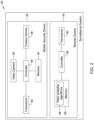
- FIG. 2 is a schematic block diagram of an illustrative surveillance system 30.
- the illustrative surveillance system 30 includes a mobile security device 32.
- the surveillance system 30 also includes a remote device 34.
- the remote device 34 may be a desktop computer or a cloud-based server.
- the mobile security device 32 which may be configured to fly, includes a video camera 36, a position sensor 38, a memory 40, a transceiver 42 and a controller 44 that is operably coupled to the video camera 36, the position sensor 38, the memory 40 and the transceiver 42.
- the controller 44 is configured to instruct the video camera 36 to capture video and save the captured video to the memory 40.
- the controller 44 is configured to determine a position of the mobile security device 32, based on information provided by the position sensor 38, at a time that is representative of when the video camera 36 captured the video.
- the controller 44 is configured to transmit at least part of the captured video saved in the memory 40 along with the corresponding position.
- the mobile security device 32 is configured to be carried or even fly indoors, and the position sensor 38 is configured to enable the controller 44 to ascertain its indoors position via triangulation.
- the position sensor 38 may be configured to be able to triangulate between multiple beacons that are disposed within an indoors facility.
- the position sensor 38 may be configured to use a 5G cellular network to ascertain its position.
- the position sensor 18 may be configured to triangulate its position using a magnetometer, ultrawide band (UWB) or even BLE (Bluetooth low energy).
- UWB ultrawide band
- BLE Bluetooth low energy
- the position sensor 38 may have access to a floorplan of the facility by communicating with a BIM (building information model) or even a BMS (building management system).
- GPS global positioning system
- GPS global positioning system
- position may refer strictly to the physical location of the mobile security device 32.
- the position of the mobile security device 32 is 14 meters due north of door #6 within the facility.
- position may also take into account the field of view of the video camera 36. While the mobile security device 32 may currently be 14 meters due north of door #6 within the facility, the video camera 36 may have a field of view that extends into the lobby. In some cases, position can be a combination of physical location and field of view.
- the remote device 34 includes a memory 46 that is configured to store a plurality of video analytics algorithms 48.
- the illustrative remote device 34 includes a transceiver 50 and a controller 52 that is operably coupled with the memory 46 and the transceiver 50.
- the video analytics algorithms 48 include a number of different video analytics algorithms.
- the video analytics algorithms may including but are not limited to a people count video analytics algorithm, a crowd detection video analytics algorithm, a loitering detection video analytics algorithm, an intrusion detection video analytics algorithm, a queue length video analytics algorithm, an unidentified object detection video analytics algorithm, an occupancy detection video analytics algorithm, a vehicle detection video analytics algorithm, a vehicle count video analytics algorithm and a license plate detection video analytics algorithm. These are just examples.
- the controller 52 of the remote device 34 is configured to receive the at least part of the captured video and the corresponding position transmitted by the mobile security device 32.
- the controller 52 of the remote device 34 is configured to select one or more video analytics algorithms of the plurality of video analytics algorithms 48 based at least in part upon the received position of the mobile security device 32 and to perform the selected one or more video analytics algorithms on the received captured video, resulting in one or more video analytics results.
- the controller 52 of the remote device 34 is configured to store the one or more video analytics results.
- selecting one or more video analytics algorithms includes selecting a single video analytics algorithm out of the plurality of video analytics algorithms 48.
- the remote device 34 is a remote server, and the plurality of video analytics algorithms 48 include one or more of a face detection video analytics algorithm, a facial recognition video analytics algorithm, a mask detection video analytics algorithm, and a walking gate video analytics algorithm.
- the controller 44 of the mobile security device 32 is configured to select one or more mobile security device video analytics algorithms of a plurality of mobile security device video analytics algorithms based at least in part upon the position of the mobile security device 32.
- the controller 44 of the remote device 34 may be configured to perform the selected one or more mobile security device video analytics algorithms on the captured video, resulting in one or more video analytics results, and to transmit one or more of the video analytics results to the remote device 34.
- Figure 3 is a flow diagram showing an illustrative method 60 of performing video surveillance.
- a video is captured from a location, as indicated at block 62.
- a location indicator representative of the location is stored, as indicated at block 64.
- One or more video analytics algorithms of a plurality of video analytics algorithms are selected based at least in part on the location indicator, as indicated at block 66.
- the selected one or more video analytics algorithms are performed on the captured video, resulting in one or more results, as indicated at block 68. At least some of the one or more results are saved and/or displayed on a display, as indicated at block 70.
- the video is captured by a mobile security device, and at least some of the selected one or more video analytics algorithms are performed by the mobile security device.
- the video is captured by a mobile security device, and the mobile security device is configured to transmit at least part of the captured video and the location indicator to a remote device, and at least some of the selected one or more video analytics algorithms are performed by the remote device.
Landscapes
- Engineering & Computer Science (AREA)
- Multimedia (AREA)
- Signal Processing (AREA)
- Physics & Mathematics (AREA)
- General Physics & Mathematics (AREA)
- Theoretical Computer Science (AREA)
- Alarm Systems (AREA)
- Closed-Circuit Television Systems (AREA)
Abstract
Description
- The present disclosure pertains generally to mobile security devices that carry video cameras and more particularly to methods and systems for performing video analytics on video captured by such mobile security devices.
- Mobile devices such as but not limited to drones, smart phones, tablets, and other mobile devices, often carry video cameras that can capture video of a scene. Some mobile devices include a controller that can perform some level of video analytics on the captured video. Mobile devices can often travel in a variety of different environments. For example, a drone can fly in both indoor and outdoor environments, and depending on the current task assigned to the drone, the drone may be looking for different types of security incidences. A need remains for improved methods and systems for performing suitable video analytics on video captured by mobile security devices.
- This disclosure generally to mobile security devices that carry video cameras and more particularly to mobile security devices that carry video cameras and perform video analytics, where the video analytics that are performed are based at least in part on a location of the mobile security device when the video was captured. An example is found in a drone. An illustrative drone includes a video camera that is carried by the drone, a memory that is configured to store a plurality of video analytics algorithms, a position sensor, a transceiver and a controller that is operably coupled to the video camera, the memory, the position sensor and the transceiver. The controller is configured to determine a position of the drone based on information provided by the position sensor and to select one or more video analytics algorithms of the plurality of video analytics algorithms based at least in part upon the determined position of the drone. The controller is configured to instruct the video camera to capture video and to perform the selected one or more video analytics algorithms on the captured video, resulting in one or more video analytics results. In some cases, the controller is configured to transmit one or more of the video analytics results to a remote device via the transceiver.
- Another example is found in a surveillance system that includes a mobile security device. The mobile security device includes a video camera that is carried by the mobile security device, a memory that is configured to store a plurality of video analytics algorithms, a position sensor, a transceiver and a controller that is operably coupled to the video camera, the memory, the position sensor and the transceiver. The controller is configured to instruct the video camera to capture video and save the captured video to the memory. The controller is configured to determine a position of the mobile security device, based on information provided by the position sensor, at a time that is representative of when the video camera captured the video, and to transmit at least part of the captured video saved in the memory along with the corresponding position.
- In some instances, the surveillance system also includes a remote device. The remote device includes a memory that is configured to store a plurality of video analytics algorithms, a transceiver, and a controller that is operably coupled to the memory and the transceiver of the remote device. In some cases, the controller of the remote device is configured to receive the at least part of the captured video and the corresponding position transmitted by the mobile security device and to select one or more video analytics algorithms of the plurality of video analytics algorithms based at least in part upon the received position of the mobile security device. In some cases, the controller of the remote device is configured to perform the selected one or more video analytics algorithms on the received captured video, resulting in one or more video analytics results, and to store the one or more video analytics results.
- Another example is found in a method of performing video surveillance. A video is captured from a location, and a location indicator representative of the location is stored. One or more video analytics algorithms of a plurality of video analytics algorithms are selected based at least in part on the location indicator. The selected one or more video analytics algorithms are performed on the captured video, resulting in one or more results. At least some of the one or more results are displayed on a display.
- The preceding summary is provided to facilitate an understanding of some of the features of the present disclosure and is not intended to be a full description. A full appreciation of the disclosure can be gained by taking the entire specification, claims, drawings, and abstract as a whole.
- The disclosure may be more completely understood in consideration of the following description of various illustrative embodiments of the disclosure in connection with the accompanying drawings, in which:
-
Figure 1 is a schematic block diagram of an illustrative mobile device; -
Figure 2 is a schematic block diagram of an illustrative surveillance system; and -
Figure 3 is a flow diagram showing an illustrative method. - While the disclosure is amenable to various modifications and alternative forms, specifics thereof have been shown by way of example in the drawings and will be described in detail. It should be understood, however, that the intention is not to limit aspects of the disclosure to the particular illustrative embodiments described. On the contrary, the intention is to cover all modifications, equivalents, and alternatives falling within the spirit and scope of the disclosure.
- The following description should be read with reference to the drawings wherein like reference numerals indicate like elements. The drawings, which are not necessarily to scale, are not intended to limit the scope of the disclosure. In some of the figures, elements not believed necessary to an understanding of relationships among illustrated components may have been omitted for clarity.
- All numbers are herein assumed to be modified by the term "about", unless the content clearly dictates otherwise. The recitation of numerical ranges by endpoints includes all numbers subsumed within that range (e.g., 1 to 5 includes 1, 1.5, 2, 2.75, 3, 3.80, 4, and 5).
- As used in this specification and the appended claims, the singular forms "a", "an", and "the" include the plural referents unless the content clearly dictates otherwise. As used in this specification and the appended claims, the term "or" is generally employed in its sense including "and/or" unless the content clearly dictates otherwise.
- It is noted that references in the specification to "an embodiment", "some embodiments", "other embodiments", etc., indicate that the embodiment described may include a particular feature, structure, or characteristic, but every embodiment may not necessarily include the particular feature, structure, or characteristic. Moreover, such phrases are not necessarily referring to the same embodiment. Further, when a particular feature, structure, or characteristic is described in connection with an embodiment, it is contemplated that the feature, structure, or characteristic may be applied to other embodiments whether or not explicitly described unless clearly stated to the contrary.
- Mobile security devices can be used for surveillance in a variety of different circumstances, both indoors and outdoors. While drones are used as a primary example, the present disclosure is applicable to other forms of mobile security devices including smart phones, tablets and/or any other suitable mobile device with a video camera. For indoors use, drones can be used in any large facility to provide a video camera anywhere that a video camera is desired. Drones can have standard patrol patterns, for example, although if there is an incident or suspected incident within a particular location that does not have fixed video cameras, or has limited video camera coverage, additional drones can be instructed to proceed to the particular location in order to provide additional video coverage of the incident. The drones may be instructed to proceed to the particular location by a centralized security system controller, for example, or the drones may communicate with each other and may independently decide where they should fly.
- Indoor facilities that can accommodate drones include but are not limited to large facilities such as airport terminals, airplane hangers, manufacturing facilities, parking garages, shopping malls, sporting facilities and the like. For outdoor use, drones can be used to patrol or provide additional video capability to parking lots and traffic surveillance for roadways, amusement parks, and the like. Drones can also be used outdoors in a temporary fashion, to provide video surveillance capability for temporary events such as parades, demonstrations and protests, for example.
-
Figure 1 is a schematic block diagram of amobile security device 10 that may be considered as being configured for either indoor use or outdoor use. In some cases, themobile security device 10 may be a drone. The illustrativemobile security device 10 includes avideo camera 12 that is carried by themobile security device 10. Amemory 14 is configured to store a plurality ofvideo analytics algorithms 16. As will be discussed, one or morevideo analytics algorithms 16 may be selected for execution, depending on where themobile security device 10 is at a particular time. Thevideo analytics algorithms 16 include two or more different video analytics algorithms. Example video analytics algorithms can include, but are not limited to, a people count video analytics algorithm, a crowd detection video analytics algorithm, a loitering detection video analytics algorithm, an intrusion detection video analytics algorithm, a queue length video analytics algorithm, an unidentified object detection video analytics algorithm, an occupancy detection video analytics algorithm, a vehicle detection video analytics algorithm, a vehicle count video analytics algorithm and a license plate detection video analytics algorithm. These are just examples. - The illustrative
mobile security device 10 includes aposition sensor 18, atransceiver 20 and acontroller 22 that is operably coupled to thevideo camera 12, thememory 14, theposition sensor 18 and thetransceiver 20. Thecontroller 22 is configured to determine a position of themobile security device 10 based on information provided by theposition sensor 18 and to select one or more video analytics algorithms of the plurality ofvideo analytics algorithms 16 based at least in part upon the determined position of themobile security device 10. - In some cases, when a single video analytics algorithm is selected based on the position of the
mobile security device 10, Table 1 below provide an example correlation between a position or region in a monitored area and a corresponding video analytics algorithm. In Table 1, each position 1, 2, 3, 4, and 5 corresponds to predefined set of coordinates ((x, y, z), (x+ δx, y +δy, z+δz)) in the monitored area. When a video is captured by themobile security device 10 when the position of themobile security device 10 falls within one of these sets of coordinates, the corresponding video analytics algorithm is selected and applied to the captured video.TABLE 1 Position Video Analytics Algorithm Desired 1 People count algorithm 2 Loitering detection algorithm 3 Intrusion detection algorithm 4 Occupancy detection algorithm 5 Vehicle count algorithm - In Table 1, when the
mobile security device 10 falls within the predefined set of coordinates that correspond to position 1, a people count video analytics algorithm is selected. When themobile security device 10 falls within the predefined set of coordinates that correspond to position 2, a loitering detection video analytics algorithm is selected. When themobile security device 10 falls within the predefined set of coordinates that correspond to position 3, an intrusion detection video analytics algorithm is selected. When themobile security device 10 falls within the predefined set of coordinates that correspond to position 4, an occupancy detection video analytics algorithm is selected. When themobile security device 10 falls within the predefined set of coordinates that correspond to position 5, vehicle count video analytics algorithm is selected. - In some cases, there may be a desire to perform two or more different video analytics algorithms, depending on the position of the
mobile security device 10. Table 2 below provides an example of various positions for which performing two or more different video analytics algorithms is desired.TABLE 2 Position People count Loitering Detection Intrusion detection Occupancy Detection Vehicle count 1 Yes Yes No Yes No 2 No Yes No No No 3 Yes No Yes No No 4 No Yes No No No 5 Yes No No Yes Yes - In some cases, selecting one or more video analytics algorithms may include selecting a single video analytics algorithm out of the plurality of
video analytics algorithms 16. In some instances, selecting one or more video analytics algorithms may include selecting two or more different video analytics algorithms out of the plurality ofvideo analytics algorithms 16. In the example shown inFigure 1 , thecontroller 22 is configured to instruct thevideo camera 12 to capture video. In some cases, thecontroller 22 is also configured to perform the selected one or more video analytics algorithms on the captured video depending on the current position of themobile security device 10, resulting in one or more video analytics results. This may include performing one video analytics algorithm, if only one video analytics algorithm was selected. This may include performing two or more video analytics algorithms, either sequentially or simultaneously, if two or more different video analytics algorithms were selected. In some instances, thecontroller 22 may simply record the location of themobile security device 10 when the video was captures, and then send the video and the recorded location to aremote device 24, and theremote device 24 selects and performs the video analytics algorithm that correspond to the recorded location. In some cases, thecontroller 22 may perform one or more video analytics algorithms (e.g. less computationally intensive video analytics algorithms) that correspond to the recorded location, and the remote device may perform additional video analytics algorithms (e.g. more computationally intensive video analytics algorithms) that correspond to the recorded location. In some cases, some video analytics algorithms may be performed on the edge, such as by thecontroller 22 of themobile security device 10, and some video analytics algorithms may be performed on the cloud, such as by theremote device 24. These are just examples. - When the
controller 22 performs some video analytics algorithms, thecontroller 22 is configured to transmit one or more of the video analytics results toremote device 24 via thetransceiver 20. In some cases, theremote device 24 may be a desktop computer or a cloud-based server. Theremote device 24 may be part of a surveillance system control device, for example. - In some cases, the
position sensor 18 may be configured to enable thecontroller 22 to ascertain an indoor position via triangulation. For example, theposition sensor 18 may be configured to be able to triangulate between multiple beacons that are disposed within an indoors facility. Theposition sensor 18 may be configured to use a 5G cellular network to ascertain its position (either indoors or outdoors). In some cases, theposition sensor 18 may be configured to triangulate its position using a magnetometer, ultrawide band (UWB) or even BLE (Bluetooth low energy). Theposition sensor 18 may have access to a floorplan of a facility by communicating with a BIM (building information model) or even a BMS (building management system). For outdoor locations, GPS (global positioning system), triangularization and/or other suitable technique may be used to ascertain position. - In this, position may refer strictly to the physical location of the
mobile security device 10. For example, the position of themobile security device 10 is 5 meters due south ofdoor # 14 within the facility. In some cases, position may also take into account the field of view of thevideo camera 12 of themobile security device 10. While themobile security device 10 may currently be 5 meters due south ofdoor # 14 within the facility, thevideo camera 12 may have a field of view that extends westward down hallway #4. In some cases, position can be a combination of physical location and field of view. -
Figure 2 is a schematic block diagram of anillustrative surveillance system 30. Theillustrative surveillance system 30 includes amobile security device 32. In some cases, thesurveillance system 30 also includes aremote device 34. In some cases, theremote device 34 may be a desktop computer or a cloud-based server. - The
mobile security device 32, which may be configured to fly, includes avideo camera 36, aposition sensor 38, amemory 40, atransceiver 42 and acontroller 44 that is operably coupled to thevideo camera 36, theposition sensor 38, thememory 40 and thetransceiver 42. Thecontroller 44 is configured to instruct thevideo camera 36 to capture video and save the captured video to thememory 40. Thecontroller 44 is configured to determine a position of themobile security device 32, based on information provided by theposition sensor 38, at a time that is representative of when thevideo camera 36 captured the video. Thecontroller 44 is configured to transmit at least part of the captured video saved in thememory 40 along with the corresponding position. - In some cases, the
mobile security device 32 is configured to be carried or even fly indoors, and theposition sensor 38 is configured to enable thecontroller 44 to ascertain its indoors position via triangulation. For example, theposition sensor 38 may be configured to be able to triangulate between multiple beacons that are disposed within an indoors facility. Theposition sensor 38 may be configured to use a 5G cellular network to ascertain its position. In some cases, theposition sensor 18 may be configured to triangulate its position using a magnetometer, ultrawide band (UWB) or even BLE (Bluetooth low energy). Theposition sensor 38 may have access to a floorplan of the facility by communicating with a BIM (building information model) or even a BMS (building management system). For amobile security device 32 that is configured to fly outdoors, GPS (global positioning system) may be used to ascertain position. - In this, position may refer strictly to the physical location of the
mobile security device 32. For example, the position of themobile security device 32 is 14 meters due north of door #6 within the facility. In some cases, position may also take into account the field of view of thevideo camera 36. While themobile security device 32 may currently be 14 meters due north of door #6 within the facility, thevideo camera 36 may have a field of view that extends into the lobby. In some cases, position can be a combination of physical location and field of view. - In the example shown, the
remote device 34 includes amemory 46 that is configured to store a plurality ofvideo analytics algorithms 48. The illustrativeremote device 34 includes atransceiver 50 and acontroller 52 that is operably coupled with thememory 46 and thetransceiver 50. Thevideo analytics algorithms 48 include a number of different video analytics algorithms. The video analytics algorithms may including but are not limited to a people count video analytics algorithm, a crowd detection video analytics algorithm, a loitering detection video analytics algorithm, an intrusion detection video analytics algorithm, a queue length video analytics algorithm, an unidentified object detection video analytics algorithm, an occupancy detection video analytics algorithm, a vehicle detection video analytics algorithm, a vehicle count video analytics algorithm and a license plate detection video analytics algorithm. These are just examples. - The
controller 52 of theremote device 34 is configured to receive the at least part of the captured video and the corresponding position transmitted by themobile security device 32. Thecontroller 52 of theremote device 34 is configured to select one or more video analytics algorithms of the plurality ofvideo analytics algorithms 48 based at least in part upon the received position of themobile security device 32 and to perform the selected one or more video analytics algorithms on the received captured video, resulting in one or more video analytics results. Thecontroller 52 of theremote device 34 is configured to store the one or more video analytics results. - In some cases, selecting one or more video analytics algorithms includes selecting a single video analytics algorithm out of the plurality of
video analytics algorithms 48. In some cases, theremote device 34 is a remote server, and the plurality ofvideo analytics algorithms 48 include one or more of a face detection video analytics algorithm, a facial recognition video analytics algorithm, a mask detection video analytics algorithm, and a walking gate video analytics algorithm. - In some instances, the
controller 44 of themobile security device 32 is configured to select one or more mobile security device video analytics algorithms of a plurality of mobile security device video analytics algorithms based at least in part upon the position of themobile security device 32. Thecontroller 44 of theremote device 34 may be configured to perform the selected one or more mobile security device video analytics algorithms on the captured video, resulting in one or more video analytics results, and to transmit one or more of the video analytics results to theremote device 34. -
Figure 3 is a flow diagram showing anillustrative method 60 of performing video surveillance. A video is captured from a location, as indicated atblock 62. A location indicator representative of the location is stored, as indicated atblock 64. One or more video analytics algorithms of a plurality of video analytics algorithms are selected based at least in part on the location indicator, as indicated atblock 66. The selected one or more video analytics algorithms are performed on the captured video, resulting in one or more results, as indicated atblock 68. At least some of the one or more results are saved and/or displayed on a display, as indicated atblock 70. - In some cases, the video is captured by a mobile security device, and at least some of the selected one or more video analytics algorithms are performed by the mobile security device. In some instances, the video is captured by a mobile security device, and the mobile security device is configured to transmit at least part of the captured video and the location indicator to a remote device, and at least some of the selected one or more video analytics algorithms are performed by the remote device.
- Those skilled in the art will recognize that the present disclosure may be manifested in a variety of forms other than the specific embodiments described and contemplated herein. Accordingly, departure in form and detail may be made without departing from the scope and spirit of the present disclosure as described in the appended claims.
Claims (15)
- A drone, comprising:a video camera carried by the drone;a memory configured to store a plurality of video analytics algorithms;a position sensor;a transceiver;a controller operably coupled to the video camera, the memory, the position sensor and the transceiver, the controller configured to:determine a position of the drone based on information provided by the position sensor;select one or more video analytics algorithms of the plurality of video analytics algorithms based at least in part upon the determined position of the drone;instruct the video camera to capture video;perform the selected one or more video analytics algorithms on the captured video, resulting in one or more video analytics results; andtransmit one or more of the video analytics results to a remote device via the transceiver.
- The drone of claim 1, wherein selecting one or more video analytics algorithms comprises selecting a single video analytics algorithm out of the plurality of video analytics algorithms.
- The drone of claim 1, wherein:selecting one or more video analytics algorithms comprises selecting two or more different video analytics algorithms out of the plurality of video analytics algorithms; andperforming the selected two or more video analytics algorithms on the captured video.
- The drone of claim 1, wherein the plurality of video analytics algorithms comprise two or more of:a people count video analytics algorithm;a crowd detection video analytics algorithm;a loitering detection video analytics algorithm;an intrusion detection video analytics algorithm;a queue length video analytics algorithm;an unidentified object detection video analytics algorithm;an occupancy detection video analytics algorithm;a vehicle detection video analytics algorithm;a vehicle count video analytics algorithm; anda license plate detection video analytics algorithm.
- The drone of claim 1, wherein the drone is configured to fly indoors, and the position sensor is configured to enable the controller to ascertain its indoors position via triangulation.
- The drone of claim 1, wherein the drone is configured to fly outdoors, and the position sensor is configured to enable the controller to ascertain its outdoors position via GPS.
- The drone of claim 1, wherein the position of the drone at least partially defines a physical location of the drone.
- The drone of claim 1, wherein the position of the drone at least partially defines a field of view of the video camera carried by the drone.
- A method of performing video surveillance, the method comprising:capturing a video from a location;storing a location indicator representative of the location;selecting one or more video analytics algorithms of a plurality of video analytics algorithms based at least in part on the location indicator;performing the selected one or more video analytics algorithms on the captured video, resulting in one or more results; anddisplaying at least some of the one or more results on a display.
- The method of claim 9, wherein the video is captured by a mobile security device, and at least some of the selected one or more video analytics algorithms are performed by the mobile security device.
- The method of claim 9, wherein the video is captured by a mobile security device, and the mobile security device is configured to transmit at least part of the captured video and the location indicator to a remote device, and at least some of the selected one or more video analytics algorithms are performed by the remote device.
- The method of claim 9, wherein selecting one or more video analytics algorithms comprises selecting a single video analytics algorithm out of the plurality of video analytics algorithms.
- The method of claim 9, wherein:selecting one or more video analytics algorithms comprises selecting two or more different video analytics algorithms out of the plurality of video analytics algorithms; andperforming the selected two or more video analytics algorithms on the captured video.
- A surveillance system comprising: a mobile security device comprising:a video camera carried by the mobile security device;a memory;a position sensor;a transceiver;a controller operably coupled to the video camera, the memory, the position sensor and the transceiver, the controller configured to:instruct the video camera to capture video and save the captured video to the memory;determine a position of the mobile security device, based on information provided by the position sensor, at a time that is representative of when the video camera captured the video; andtransmit at least part of the captured video saved in the memory along with the corresponding position.
- The surveillance system of claim 14 further comprising: a remote device comprising:a memory configured to store a plurality of video analytics algorithms;a transceiver;a controller operably coupled to the memory and the transceiver of the remote device, the controller of the remote device is configured to:receive the at least part of the captured video and the corresponding position transmitted by the mobile security device;select one or more video analytics algorithms of the plurality of video analytics algorithms based at least in part upon the received position of the mobile security device;perform the selected one or more video analytics algorithms on the received captured video, resulting in one or more video analytics results; andstore the one or more video analytics results.
Applications Claiming Priority (1)
| Application Number | Priority Date | Filing Date | Title |
|---|---|---|---|
| US17/523,497 US20230143934A1 (en) | 2021-11-10 | 2021-11-10 | Selective video analytics based on capture location of video |
Publications (2)
| Publication Number | Publication Date |
|---|---|
| EP4181508A1 true EP4181508A1 (en) | 2023-05-17 |
| EP4181508B1 EP4181508B1 (en) | 2025-12-31 |
Family
ID=84245983
Family Applications (1)
| Application Number | Title | Priority Date | Filing Date |
|---|---|---|---|
| EP22205514.7A Active EP4181508B1 (en) | 2021-11-10 | 2022-11-04 | Selective video analysis based on the location of video recording |
Country Status (3)
| Country | Link |
|---|---|
| US (1) | US20230143934A1 (en) |
| EP (1) | EP4181508B1 (en) |
| CN (1) | CN116112738A (en) |
Cited By (1)
| Publication number | Priority date | Publication date | Assignee | Title |
|---|---|---|---|---|
| EP4614962A1 (en) * | 2024-03-06 | 2025-09-10 | amnimo Inc. | Image processing device, image processing method, and non-transitory computer readable storage medium |
Families Citing this family (1)
| Publication number | Priority date | Publication date | Assignee | Title |
|---|---|---|---|---|
| US12694681B2 (en) * | 2024-12-17 | 2026-07-28 | Honeywell International Inc. | Systems and methods for performing video confirmation of sensor-generated alarms |
Citations (3)
| Publication number | Priority date | Publication date | Assignee | Title |
|---|---|---|---|---|
| US20140140575A1 (en) * | 2012-11-19 | 2014-05-22 | Mace Wolf | Image capture with privacy protection |
| WO2017139282A1 (en) * | 2016-02-08 | 2017-08-17 | Unmanned Innovation Inc. | Unmanned aerial vehicle privacy controls |
| US20180155057A1 (en) * | 2016-12-02 | 2018-06-07 | Adesa, Inc. | Method and apparatus using a drone to input vehicle data |
Family Cites Families (15)
| Publication number | Priority date | Publication date | Assignee | Title |
|---|---|---|---|---|
| WO1998019450A2 (en) * | 1996-10-31 | 1998-05-07 | Sensormatic Electronics Corporation | Intelligent video information management system |
| CN104766481A (en) * | 2015-04-29 | 2015-07-08 | 深圳市保千里电子有限公司 | Method and system for unmanned plane to conduct vehicle tracking |
| US20170160751A1 (en) * | 2015-12-04 | 2017-06-08 | Pilot Ai Labs, Inc. | System and method for controlling drone movement for object tracking using estimated relative distances and drone sensor inputs |
| WO2017115448A1 (en) * | 2015-12-29 | 2017-07-06 | 楽天株式会社 | Unmanned aircraft avoidance system, unmanned aircraft avoidance method, and program |
| US10788836B2 (en) * | 2016-02-29 | 2020-09-29 | AI Incorporated | Obstacle recognition method for autonomous robots |
| US9902355B2 (en) * | 2016-05-27 | 2018-02-27 | GM Global Technology Operations LLC | Camera activation response to vehicle safety event |
| US10095231B2 (en) * | 2016-09-14 | 2018-10-09 | International Business Machines Corporation | Drone and drone-based system for collecting and managing waste for improved sanitation |
| JP6278087B1 (en) * | 2016-10-04 | 2018-02-14 | Jfeスチール株式会社 | Method and apparatus for optimization analysis of joint positions of vehicle bodies |
| JP2019109783A (en) * | 2017-12-19 | 2019-07-04 | トヨタ自動車株式会社 | Parking agency service management device and control method thereof |
| CN109684383A (en) * | 2018-12-25 | 2019-04-26 | 广州天鹏计算机科技有限公司 | Acquisition methods, device, computer equipment and the storage medium of data analysis result |
| US20200385116A1 (en) * | 2019-06-06 | 2020-12-10 | Motorola Solutions, Inc. | System and Method of Operating a Vehicular Computing Device to Selectively Deploy a Tethered Vehicular Drone for Capturing Video |
| US11755984B2 (en) * | 2019-08-01 | 2023-09-12 | Anyvision Interactive Technologies Ltd. | Adaptive positioning of drones for enhanced face recognition |
| US12461522B2 (en) * | 2020-10-08 | 2025-11-04 | Xtend Reality Expansion Ltd. | System and method to facilitate remote and accurate maneuvering of unmanned aerial vehicle under communication latency |
| CN112672064B (en) * | 2021-03-18 | 2021-07-20 | 视云融聚(广州)科技有限公司 | Algorithm scheduling method, system and equipment based on video region label |
| CN113568432B (en) * | 2021-08-12 | 2024-04-12 | 广东新创华科环保股份有限公司 | UAV precise landing method and system based on cloud computing and image recognition detection |
-
2021
- 2021-11-10 US US17/523,497 patent/US20230143934A1/en not_active Abandoned
-
2022
- 2022-10-28 CN CN202211338004.1A patent/CN116112738A/en active Pending
- 2022-11-04 EP EP22205514.7A patent/EP4181508B1/en active Active
Patent Citations (3)
| Publication number | Priority date | Publication date | Assignee | Title |
|---|---|---|---|---|
| US20140140575A1 (en) * | 2012-11-19 | 2014-05-22 | Mace Wolf | Image capture with privacy protection |
| WO2017139282A1 (en) * | 2016-02-08 | 2017-08-17 | Unmanned Innovation Inc. | Unmanned aerial vehicle privacy controls |
| US20180155057A1 (en) * | 2016-12-02 | 2018-06-07 | Adesa, Inc. | Method and apparatus using a drone to input vehicle data |
Cited By (1)
| Publication number | Priority date | Publication date | Assignee | Title |
|---|---|---|---|---|
| EP4614962A1 (en) * | 2024-03-06 | 2025-09-10 | amnimo Inc. | Image processing device, image processing method, and non-transitory computer readable storage medium |
Also Published As
| Publication number | Publication date |
|---|---|
| CN116112738A (en) | 2023-05-12 |
| US20230143934A1 (en) | 2023-05-11 |
| EP4181508B1 (en) | 2025-12-31 |
Similar Documents
| Publication | Publication Date | Title |
|---|---|---|
| US11615620B2 (en) | Systems and methods of enforcing distancing rules | |
| US11443555B2 (en) | Scenario recreation through object detection and 3D visualization in a multi-sensor environment | |
| US12317156B2 (en) | System and method for tracking locations of students within school buildings | |
| WO2021202380A1 (en) | Integrated camera and ultra- wideband location devices and related systems | |
| CN107959875B (en) | Image providing apparatus and method | |
| CN106931945B (en) | Robot navigation method and system | |
| US20250356659A1 (en) | Systems and methods of identifying persons-of-interest | |
| US20110001828A1 (en) | Method for controlling an alaram management system | |
| US20180047274A1 (en) | Digital future now security system, method, and program | |
| US11210529B2 (en) | Automated surveillance system and method therefor | |
| US20220139199A1 (en) | Accurate digital security system, method, and program | |
| EP4181508B1 (en) | Selective video analysis based on the location of video recording | |
| US12348908B2 (en) | Enhanced video system | |
| CN112269199A (en) | An integrated platform for the safety positioning of people, vehicles and objects in the park | |
| US10176379B1 (en) | Integrating computer vision and wireless data to provide identification | |
| CN111147811B (en) | A three-dimensional imaging system, imaging method and imaging device for automatic face tracking | |
| US20050237390A1 (en) | Multiple camera system for obtaining high resolution images of objects | |
| KR20160082915A (en) | Method and apparatus of classifying media data | |
| Brandle et al. | Track-based finding of stopping pedestrians-a practical approach for analyzing a public infrastructure | |
| CN213457386U (en) | An integrated platform for the safety positioning of people, vehicles and objects in the park | |
| CN120640401B (en) | A collaborative positioning method and device | |
| KR102560847B1 (en) | Image-based face recognition, health check and position tracking system | |
| US20240119146A1 (en) | Sensor fusion in security systems | |
| CN110705333A (en) | Identity determination method and device, and positioning system | |
| WO2024081702A1 (en) | Sensor fusion in security systems |
Legal Events
| Date | Code | Title | Description |
|---|---|---|---|
| PUAI | Public reference made under article 153(3) epc to a published international application that has entered the european phase |
Free format text: ORIGINAL CODE: 0009012 |
|
| STAA | Information on the status of an ep patent application or granted ep patent |
Free format text: STATUS: REQUEST FOR EXAMINATION WAS MADE |
|
| 17P | Request for examination filed |
Effective date: 20221104 |
|
| AK | Designated contracting states |
Kind code of ref document: A1 Designated state(s): AL AT BE BG CH CY CZ DE DK EE ES FI FR GB GR HR HU IE IS IT LI LT LU LV MC ME MK MT NL NO PL PT RO RS SE SI SK SM TR |
|
| STAA | Information on the status of an ep patent application or granted ep patent |
Free format text: STATUS: EXAMINATION IS IN PROGRESS |
|
| 17Q | First examination report despatched |
Effective date: 20240710 |
|
| GRAP | Despatch of communication of intention to grant a patent |
Free format text: ORIGINAL CODE: EPIDOSNIGR1 |
|
| STAA | Information on the status of an ep patent application or granted ep patent |
Free format text: STATUS: GRANT OF PATENT IS INTENDED |
|
| INTG | Intention to grant announced |
Effective date: 20250617 |
|
| GRAS | Grant fee paid |
Free format text: ORIGINAL CODE: EPIDOSNIGR3 |
|
| GRAA | (expected) grant |
Free format text: ORIGINAL CODE: 0009210 |
|
| STAA | Information on the status of an ep patent application or granted ep patent |
Free format text: STATUS: THE PATENT HAS BEEN GRANTED |
|
| AK | Designated contracting states |
Kind code of ref document: B1 Designated state(s): AL AT BE BG CH CY CZ DE DK EE ES FI FR GB GR HR HU IE IS IT LI LT LU LV MC ME MK MT NL NO PL PT RO RS SE SI SK SM TR |
|
| REG | Reference to a national code |
Ref country code: CH Ref legal event code: F10 Free format text: ST27 STATUS EVENT CODE: U-0-0-F10-F00 (AS PROVIDED BY THE NATIONAL OFFICE) Effective date: 20251231 Ref country code: GB Ref legal event code: FG4D |
|
| REG | Reference to a national code |
Ref country code: DE Ref legal event code: R096 Ref document number: 602022027794 Country of ref document: DE |
|
| REG | Reference to a national code |
Ref country code: IE Ref legal event code: FG4D |
|
| REG | Reference to a national code |
Ref country code: LT Ref legal event code: MG9D |
|
| PG25 | Lapsed in a contracting state [announced via postgrant information from national office to epo] |
Ref country code: NO Free format text: LAPSE BECAUSE OF FAILURE TO SUBMIT A TRANSLATION OF THE DESCRIPTION OR TO PAY THE FEE WITHIN THE PRESCRIBED TIME-LIMIT Effective date: 20260331 |
|
| PG25 | Lapsed in a contracting state [announced via postgrant information from national office to epo] |
Ref country code: FI Free format text: LAPSE BECAUSE OF FAILURE TO SUBMIT A TRANSLATION OF THE DESCRIPTION OR TO PAY THE FEE WITHIN THE PRESCRIBED TIME-LIMIT Effective date: 20251231 Ref country code: HR Free format text: LAPSE BECAUSE OF FAILURE TO SUBMIT A TRANSLATION OF THE DESCRIPTION OR TO PAY THE FEE WITHIN THE PRESCRIBED TIME-LIMIT Effective date: 20251231 |
|
| PG25 | Lapsed in a contracting state [announced via postgrant information from national office to epo] |
Ref country code: RS Free format text: LAPSE BECAUSE OF FAILURE TO SUBMIT A TRANSLATION OF THE DESCRIPTION OR TO PAY THE FEE WITHIN THE PRESCRIBED TIME-LIMIT Effective date: 20260331 |
|
| PG25 | Lapsed in a contracting state [announced via postgrant information from national office to epo] |
Ref country code: LV Free format text: LAPSE BECAUSE OF FAILURE TO SUBMIT A TRANSLATION OF THE DESCRIPTION OR TO PAY THE FEE WITHIN THE PRESCRIBED TIME-LIMIT Effective date: 20251231 |
|
| PG25 | Lapsed in a contracting state [announced via postgrant information from national office to epo] |
Ref country code: BG Free format text: LAPSE BECAUSE OF FAILURE TO SUBMIT A TRANSLATION OF THE DESCRIPTION OR TO PAY THE FEE WITHIN THE PRESCRIBED TIME-LIMIT Effective date: 20251231 |
|
| REG | Reference to a national code |
Ref country code: NL Ref legal event code: MP Effective date: 20251231 |
|
| REG | Reference to a national code |
Ref country code: AT Ref legal event code: MK05 Ref document number: 1874788 Country of ref document: AT Kind code of ref document: T Effective date: 20251231 |
|
| PG25 | Lapsed in a contracting state [announced via postgrant information from national office to epo] |
Ref country code: NL Free format text: LAPSE BECAUSE OF FAILURE TO SUBMIT A TRANSLATION OF THE DESCRIPTION OR TO PAY THE FEE WITHIN THE PRESCRIBED TIME-LIMIT Effective date: 20251231 |
|
| PG25 | Lapsed in a contracting state [announced via postgrant information from national office to epo] |
Ref country code: LT Free format text: LAPSE BECAUSE OF FAILURE TO SUBMIT A TRANSLATION OF THE DESCRIPTION OR TO PAY THE FEE WITHIN THE PRESCRIBED TIME-LIMIT Effective date: 20251231 |
|
| PG25 | Lapsed in a contracting state [announced via postgrant information from national office to epo] |
Ref country code: SM Free format text: LAPSE BECAUSE OF FAILURE TO SUBMIT A TRANSLATION OF THE DESCRIPTION OR TO PAY THE FEE WITHIN THE PRESCRIBED TIME-LIMIT Effective date: 20251231 |
|
| PG25 | Lapsed in a contracting state [announced via postgrant information from national office to epo] |
Ref country code: ES Free format text: LAPSE BECAUSE OF FAILURE TO SUBMIT A TRANSLATION OF THE DESCRIPTION OR TO PAY THE FEE WITHIN THE PRESCRIBED TIME-LIMIT Effective date: 20251231 |
|
| PG25 | Lapsed in a contracting state [announced via postgrant information from national office to epo] |
Ref country code: PL Free format text: LAPSE BECAUSE OF FAILURE TO SUBMIT A TRANSLATION OF THE DESCRIPTION OR TO PAY THE FEE WITHIN THE PRESCRIBED TIME-LIMIT Effective date: 20251231 |
|
| PG25 | Lapsed in a contracting state [announced via postgrant information from national office to epo] |
Ref country code: IT Free format text: LAPSE BECAUSE OF FAILURE TO SUBMIT A TRANSLATION OF THE DESCRIPTION OR TO PAY THE FEE WITHIN THE PRESCRIBED TIME-LIMIT Effective date: 20251231 |
|
| PG25 | Lapsed in a contracting state [announced via postgrant information from national office to epo] |
Ref country code: AT Free format text: LAPSE BECAUSE OF FAILURE TO SUBMIT A TRANSLATION OF THE DESCRIPTION OR TO PAY THE FEE WITHIN THE PRESCRIBED TIME-LIMIT Effective date: 20251231 |
|
| PG25 | Lapsed in a contracting state [announced via postgrant information from national office to epo] |
Ref country code: EE Free format text: LAPSE BECAUSE OF FAILURE TO SUBMIT A TRANSLATION OF THE DESCRIPTION OR TO PAY THE FEE WITHIN THE PRESCRIBED TIME-LIMIT Effective date: 20251231 |
|
| PG25 | Lapsed in a contracting state [announced via postgrant information from national office to epo] |
Ref country code: PT Free format text: LAPSE BECAUSE OF FAILURE TO SUBMIT A TRANSLATION OF THE DESCRIPTION OR TO PAY THE FEE WITHIN THE PRESCRIBED TIME-LIMIT Effective date: 20260430 Ref country code: IS Free format text: LAPSE BECAUSE OF FAILURE TO SUBMIT A TRANSLATION OF THE DESCRIPTION OR TO PAY THE FEE WITHIN THE PRESCRIBED TIME-LIMIT Effective date: 20260430 |
|
| PG25 | Lapsed in a contracting state [announced via postgrant information from national office to epo] |
Ref country code: CZ Free format text: LAPSE BECAUSE OF FAILURE TO SUBMIT A TRANSLATION OF THE DESCRIPTION OR TO PAY THE FEE WITHIN THE PRESCRIBED TIME-LIMIT Effective date: 20251231 |
|
| PG25 | Lapsed in a contracting state [announced via postgrant information from national office to epo] |
Ref country code: SK Free format text: LAPSE BECAUSE OF FAILURE TO SUBMIT A TRANSLATION OF THE DESCRIPTION OR TO PAY THE FEE WITHIN THE PRESCRIBED TIME-LIMIT Effective date: 20251231 |
|
| PG25 | Lapsed in a contracting state [announced via postgrant information from national office to epo] |
Ref country code: SE Free format text: LAPSE BECAUSE OF FAILURE TO SUBMIT A TRANSLATION OF THE DESCRIPTION OR TO PAY THE FEE WITHIN THE PRESCRIBED TIME-LIMIT Effective date: 20251231 |