EP4181043A1 - Scheduled conference recording - Google Patents
Scheduled conference recording Download PDFInfo
- Publication number
- EP4181043A1 EP4181043A1 EP22207630.9A EP22207630A EP4181043A1 EP 4181043 A1 EP4181043 A1 EP 4181043A1 EP 22207630 A EP22207630 A EP 22207630A EP 4181043 A1 EP4181043 A1 EP 4181043A1
- Authority
- EP
- European Patent Office
- Prior art keywords
- meeting
- recording
- recipient
- electronic communication
- topics
- Prior art date
- Legal status (The legal status is an assumption and is not a legal conclusion. Google has not performed a legal analysis and makes no representation as to the accuracy of the status listed.)
- Granted
Links
Images






Classifications
-
- H—ELECTRICITY
- H04—ELECTRIC COMMUNICATION TECHNIQUE
- H04M—TELEPHONIC COMMUNICATION
- H04M3/00—Automatic or semi-automatic exchanges
- H04M3/42—Systems providing special services or facilities to subscribers
- H04M3/42221—Conversation recording systems
-
- H—ELECTRICITY
- H04—ELECTRIC COMMUNICATION TECHNIQUE
- H04L—TRANSMISSION OF DIGITAL INFORMATION, e.g. TELEGRAPHIC COMMUNICATION
- H04L12/00—Data switching networks
- H04L12/02—Details
- H04L12/16—Arrangements for providing special services to substations
- H04L12/18—Arrangements for providing special services to substations for broadcast or conference, e.g. multicast
- H04L12/1813—Arrangements for providing special services to substations for broadcast or conference, e.g. multicast for computer conferences, e.g. chat rooms
- H04L12/1818—Conference organisation arrangements, e.g. handling schedules, setting up parameters needed by nodes to attend a conference, booking network resources, notifying involved parties
-
- H—ELECTRICITY
- H04—ELECTRIC COMMUNICATION TECHNIQUE
- H04L—TRANSMISSION OF DIGITAL INFORMATION, e.g. TELEGRAPHIC COMMUNICATION
- H04L12/00—Data switching networks
- H04L12/02—Details
- H04L12/16—Arrangements for providing special services to substations
- H04L12/18—Arrangements for providing special services to substations for broadcast or conference, e.g. multicast
- H04L12/1813—Arrangements for providing special services to substations for broadcast or conference, e.g. multicast for computer conferences, e.g. chat rooms
- H04L12/1822—Conducting the conference, e.g. admission, detection, selection or grouping of participants, correlating users to one or more conference sessions, prioritising transmission
-
- H—ELECTRICITY
- H04—ELECTRIC COMMUNICATION TECHNIQUE
- H04L—TRANSMISSION OF DIGITAL INFORMATION, e.g. TELEGRAPHIC COMMUNICATION
- H04L12/00—Data switching networks
- H04L12/02—Details
- H04L12/16—Arrangements for providing special services to substations
- H04L12/18—Arrangements for providing special services to substations for broadcast or conference, e.g. multicast
- H04L12/1813—Arrangements for providing special services to substations for broadcast or conference, e.g. multicast for computer conferences, e.g. chat rooms
- H04L12/1831—Tracking arrangements for later retrieval, e.g. recording contents, participants activities or behavior, network status
-
- H—ELECTRICITY
- H04—ELECTRIC COMMUNICATION TECHNIQUE
- H04L—TRANSMISSION OF DIGITAL INFORMATION, e.g. TELEGRAPHIC COMMUNICATION
- H04L65/00—Network arrangements, protocols or services for supporting real-time applications in data packet communication
- H04L65/1066—Session management
- H04L65/1083—In-session procedures
-
- H—ELECTRICITY
- H04—ELECTRIC COMMUNICATION TECHNIQUE
- H04L—TRANSMISSION OF DIGITAL INFORMATION, e.g. TELEGRAPHIC COMMUNICATION
- H04L65/00—Network arrangements, protocols or services for supporting real-time applications in data packet communication
- H04L65/1066—Session management
- H04L65/1083—In-session procedures
- H04L65/1089—In-session procedures by adding media; by removing media
-
- H—ELECTRICITY
- H04—ELECTRIC COMMUNICATION TECHNIQUE
- H04L—TRANSMISSION OF DIGITAL INFORMATION, e.g. TELEGRAPHIC COMMUNICATION
- H04L65/00—Network arrangements, protocols or services for supporting real-time applications in data packet communication
- H04L65/40—Support for services or applications
- H04L65/403—Arrangements for multi-party communication, e.g. for conferences
-
- H—ELECTRICITY
- H04—ELECTRIC COMMUNICATION TECHNIQUE
- H04M—TELEPHONIC COMMUNICATION
- H04M3/00—Automatic or semi-automatic exchanges
- H04M3/42—Systems providing special services or facilities to subscribers
- H04M3/56—Arrangements for connecting several subscribers to a common circuit, i.e. affording conference facilities
- H04M3/563—User guidance or feature selection
- H04M3/565—User guidance or feature selection relating to time schedule aspects
Definitions
- the present disclosure generally relates to methods and systems for scheduling meetings that permit recipients of meeting requests the option of recording all or part of a meeting.
- Electronic communications such as audio and video conferences (also called “meetings") can be used to allow persons to virtually participate in a meeting.
- Such communications allow persons to participate in a meeting without having to travel to a common location. Persons can also participate in meetings in person and others could potentially participate in the same meeting via electronic communications.
- the recipient may respond in several ways, such as "Accept,” “Tentative,” “Decline,” or “Propose New Time.”
- the meeting may be declined if the person is unable to attend due to a conflict.
- the recipient may instead select the "Tentative” option if the meeting is important but overlaps with another important event, because the recipient may be able to attend part of the meeting, or the other important event might be cancelled, completed, or rescheduled.
- another option the recipient has is to propose a new meeting time to the host.
- an electronic communication system comprising: a conferencing system comprising a conferencing server; and a participant device coupled to the conferencing system via a network; wherein the conferencing system is configured to receive meeting information and forward the meeting information to the participant device, and the participant device is configured to provide a recipient a smart request that includes an option of recording at least part of a meeting.
- the meeting information may include metadata that is readable by the participant device and that includes one or more topics of the meeting, and the participant device may be configured to schedule the recording of any of the one or more topics of the meeting.
- the electronic communication system may be configured to begin a recording of the meeting when one of the one or more topics of the meeting begins and may be configured to stop recording when one or more of the topics of the meeting ends.
- the meeting information may include an agenda that includes one or more topics.
- the agenda may include time periods associated with at least one of the one or more topics.
- the electronic communication system may further includes a Natural Language Processing (NLP) engine that determines the recording time based on which of the one or more topics is being discussed at the meeting.
- NLP Natural Language Processing
- the conferencing system may determine when at least one of the one or more topics begins and ends based on one or more of: (a) the language used by meeting participants, (b) the presenter's voice, (c) the presenter's name, and (d) the presentation content.
- the meeting host may receive a notification that the recipient is recording all or part of the meeting.
- the meeting information may comprise one or more of special recipient permissions, participants, meeting start time and date, meeting stop time and date, meeting parameters, meeting passwords, participant specific passwords, meeting title, and recurrence.
- an electronic communication system comprising: a conferencing system comprising a conference server; and a participant device in communication with the conferencing system; wherein the conferencing system receives meeting information and transmits the meeting information to the participant device and includes an option for the recipient to schedule the meeting or schedule only a video recording of all or part of the meeting.
- the participant device may provide a recipient a smart request that comprises the following functions: accepting the meeting and scheduling a recording of the meeting; tentatively accepting the meeting and scheduling a recording of the meeting; recording the meeting while attending the meeting; and declining the meeting and scheduling a recording of the meeting.
- the electronic communication system of the second aspect may transmit any recording to the recipient's computer.
- the electronic communication system of the second aspect may generate a link accessible to the recipient, wherein the recording is accessible by the link.
- the meeting information may include one or more topics of the meeting, and the participant device is configured to schedule the recording of any of the one or more topics of the meeting.
- an electronic communication method comprising the steps of: using a conference server, sending meeting information to a participant device that is in communication with the conference server by a network; and using the participant device, transmitting a response to the meeting information to the conference server, wherein the response incudes one or more of accepting a meeting request and scheduling to video record all or part of the meeting.
- the method may further include the step of beginning a recording when one of one or more topics of the meeting begins and ending the recording when the one of the one or more topics of the meeting ends.
- Beginning the recording may be based upon one or more of the following: (a) the language used by one or more meeting participants, (b) the presenter's voice, (c) the presenter's name, (d) the presentation content, and (e) a visual aide.
- the electronic communication method of the third aspect may further include the step of sending the meeting host a notification that a recipient is recording all or part of the meeting.
- the electronic communication method of the third aspect may further include the step of transmitting any recording to a recipient who scheduled to record all or part of the meeting.
- a plurality of the one or more topics of the meeting may be recorded.
- exemplary embodiments of the disclosure provide systems and methods to provide one or more options to a recipient of a meeting (such as a video and/or audio meeting and/or in-person meeting) request to record all or a part of the meeting.
- "part" of a meeting means one or more parts of the meeting.
- the recording options available to the recipient include (a) Accept (and schedule a recording of all or part of the meeting), (b) Tentative (and schedule a recording of all or part of the meeting), (c) Decline (and schedule a recording of all or part of the meeting), (d) Propose New Time (and schedule a recording of all or part of the meeting), or (e) Record all or part of the meeting.
- These options may be in addition to standard Accept, Tentative, Decline, and Propose New Time options.
- the recording of the meeting or part thereof could be an audio recording, audio/video recording, or simply a video recording (especially if the important material for the meeting or part thereof that is to be recorded is a visual aide, such as drawings, slides, or video).
- a system according to this disclosure may include a microphone in communication with, for example, conference server (126) or recording server (134).
- a PVR Personal Video Recorder
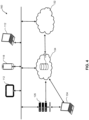
- FIG. 1 illustrates an electronic communication system (100) in accordance with various embodiments of this disclosure.
- Communication system (100) includes a conferencing system (108) having a conferencing server (or server) (126).
- Conferencing system (108) can part of or connected to, for example, an internet protocol (IP) network, such as a local area network, a wide-area network, a metropolitan area network, and wireless networks.
- IP internet protocol
- Various participant devices (described further, below) of system (100) can be coupled to one or more other components of system (100) using an Ethernet connection, other wired connections, and/or wireless interfaces.
- conferencing system (108) can be coupled to other networks and/or to other devices typically coupled to networks.
- Conferencing system (108) can be coupled to the Internet (124) via a web portal and/or PSTN (116) via the gateway/SBC.
- Conferencing system (108) includes a conference server (126).
- Conference server (126) can include or be any suitable system/server that provides a connection between one or more participant devices (102, 104 110, 112, 118, and/or 120).
- the conference server (126) can include suitable conferencing tools and modules and connect/bridge various participant devices to a meeting, perform mixing of the media, and send media to active and virtual participants of a meeting.
- server (126) is a conference server configured to perform various functions, described in more detail below.
- participant devices In communication with conferencing system (108) and conferencing server (126) are one or more participant devices (102, 104, 110, 112, 118, and/or 120).
- the one or more participant devices are also coupled to a public switched telephone network (PSTN) 116 and to the Internet (124).
- PSTN public switched telephone network
- the one or more participant devices can include any suitable device with wired or wireless communication (e.g., audio and/or video) features.
- any of the one or more participant devices can be a wearable device, a tablet computer, a mobile phone, a personal (e.g., laptop or desktop) computer, a streaming device, such as a game console or other media streaming device, or the like.
- the one or more participant devices can include an application and be configured to perform various functions as set forth herein.
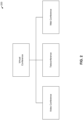
- FIG. 2 illustrates exemplary forms of virtual conferencing (or meeting), including video conferencing, telephone conferencing, and web conferencing.
- Methods and systems of this disclosure may be used with one or more forms of virtual meetings and/or with in-person meetings, or meetings that are attended by some persons in person and attended by others via electronic communications.
- FIG. 3 illustrates an alternate electronic communication system (150) in accordance with various embodiments of this disclosure.
- System (150) can be the same or similar to system 100 with alternative configurations.
- System (150) includes network (108) with conference server (126).
- network (108) is configured to communicate with participant device (104) (of meeting host 1), participant device (110) of recipient 2, and participant device (120) of a meeting participant.
- Network (108) also communicates with recording server (134) and an analysis engine (130).
- Recording server 134 can be or include any suitable server. In some cases, and as illustrated in FIG. 3 , recording server 134 can be separate from conference server 126.
- Analysis engine (130) receives input from recording server (134) and/or network (108) to create analysis results (132), which could be based on one or more of key word(s), name(s), and/or topic(s) of the meeting.
- the analysis results (132) are communicated (133) to the recording server (134), which determines what part of a meeting to record and how to record it (e.g., audio, visual, or audio/visual).
- the recorded part of the meeting can then be stored in recording database (136).
- Recording database 136 can include any suitable database.
- Recording database 136, recording server 134, and analysis engine 130 can be part or all of a conferencing system, such as conferencing system 108.
- engine can refer to computer program instructions, encoded on computer storage medium for execution by, or to control the operation of, data processing apparatus.
- the program instructions can be encoded on an artificially-generated propagated signal, e.g., a machine-generated electrical, optical, or electromagnetic signal, which is generated to encode information for transmission to suitable receiver apparatus for execution by a data processing apparatus.
- a computer storage medium can be, or be included in, a computer-readable storage device, a computer-readable storage substrate, a random or serial access memory array or device, or a combination of one or more of the substrates and devices.
- a computer storage medium is not a propagated signal
- a computer storage medium can be a source or destination of computer program instructions encoded in an artificially-generated propagated signal.
- the computer storage medium can also be, or be included in, one or more separate physical components or media (e.g., solid-state memory that forms part of a device, disks, or other storage devices).
- a non-transient computer readable medium containing program can perform functions of one or more methods, modules, engines and/or other system components as described herein.
- FIG. 4 illustrates an alternate electronic communication system (160) in accordance with various embodiments of this disclosure.
- System (160) can be the same or similar to system 100 or system 150 with alternative configurations.
- System (160) includes recording server (134) in communication with conference server (126), recording database (136), participant device (104) of conference host 1, analysis server (132), a meeting participant's participant device (118), and participant devices (112) of recipients 2.
- recording server (134) can be separate from conference server (126).
- Recording database (136) can include any suitable database.
- Recording server (134) can be or include any suitable server.
- Recording database (136), recording server (134), and analysis engine (130) can form all or part of a conferencing system, such as conferencing system 108.
- Method (300) includes a meeting request (302) that is sent by a meeting host (1).
- Request (302) includes one or more of the meeting : title, date and start time, location (if relevant, such as for an in-person meeting, or meeting that can be attended in person or via electronic communications), call-in number, link to attend by video, and a list of invitees, topic(s), agenda, a time period for each agenda item or topic, special invitee permissions, meeting passwords, password(s) specific to a recipient, recurrence, and a stop time.
- the meeting request (302) or server (126, 134, or other) may include metadata indicative or any or all information in the meeting request.
- the meeting request (302) (also called an "invitation” or “meeting calendar reminder"), may include metadata regarding the meeting topic(s), and the system (100, 150, or 160) can select one or more recording periods based on the metadata to help ensure the relevant topics(s) are recorded.
- Natural Language Processing can be used to determine the topic being discussed and whether to record it based on the topic the recipient requested.
- a typical Stanford NLP parser can be used to identify verbs and roots and thus keywords.
- An exemplary reference can be found at: https://stackoverflow.com/questions/42539073/nlp-extract-the-action-verb-noun-from-a-list-of-instructions.
- Count Vectors/Feature Hashing/Tf-idf can be used to identify context within recorded information.
- Image recognition software coupled to a camera and in communication with server (126, 134 or other) could also or instead be used to identify visual aides used in the meeting to commence and/or stop recording. Systems and methods disclosed herein can thus optionally determine and adjust recording periods by comparing the metadata to the meeting discussion and/or visual aides.
- the meeting request (302) is received (304) by a recipient (2).
- the recipient (2) can then compare the meeting time to his/her calendar or schedule to determine if there are conflicting events that take priority over the proposed meeting in meeting request (302).
- the recipient (2) after receiving (304) a meeting request (302), may respond (306) with Accept, Decline, Tentative, or Propose New Time, in each case without requesting to record all or part of the meeting.
- Recipient (2) may instead, after receiving (304) a meeting request (302), respond (308) and elect to record all or part of the meeting be selecting (a) Accept (and schedule a recording of all or part of the meeting), (b) Tentative (and schedule a recording of all or part of the meeting), (c) Decline (and schedule a recording of all or part of the meeting), (d) Propose New Time (and schedule a recording of all or part of the meeting), or (e) Record all or part of the meeting.
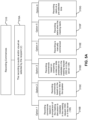
- the recipient (2) may have the option of selecting either an audio recording, a video recording, or an audio/video recording (316A), as shown in FIG. 5A .
- response (306, 308) recipient (2) sends to the meeting request (302)
- the response is logged (310) by the scheduling agent of the conference server (126).
- the meeting host (1) may be notified that the recipient (2) has elected to record all or part of the meeting.
- recording may commence based on a comparison (316B) of the meeting discussion to metadata in the meeting request (302) or in the server (126).
- NLP Natural Language Processing
- NLP can be used to determine the topic being discussed and whether to record it based on the topic the recipient (2) scheduled to be recorded (308).
- recording may commence based on the name or title of the speaker (316C) or based on comparing (316D) a video or slide presented during the meeting to metadata in the meeting request (302) or server (126). Further, the recording may be commenced by (a) a manual command (316E) by anyone, (b) when the meeting starts (316F), or (c) based on a recording start time (316G).
- the recording can stop (318, shown in FIG. 5 and FIG. 5B ) based on a comparison of the meeting discussion to metadata in the meeting request (302) or in the server (126).
- NLP Natural Language Processing
- NLP can be used to determine the topic being discussed and whether to record it based on the topic the recipient (2) scheduled to be recorded (step 318B).
- the recording may stop based on (a) the name or title of the speaker (318C), or (b) comparing (318D) a video or slide shown during the meeting to metadata in the meeting request (302) or server (126).
- the recording may stop by (c) a manual command (318E) by anyone when the meeting stops (318F) or based on a recording stop time (316G).
- the system (108) may commence recording (316) and stop recording (318) using the same technique for commencing and stopping or using one technique for commencing and a different technique for stopping.
- recording may commence and stop more than once so the stored recording would include more than one part of the meeting.
- the recording is stored (322) and made available to the recipient (2) either when the recording is complete (path A in FIG. 5 ) or when the meeting ends.
- the stored recording (3) is made electronically accessible to one or more participant devices 102, 104, 110, 112, 118, and 120 of the recipient (2).
- the stored recording (3) may be (a) directly sent to the recipient's (2) participant device (322A), (b) uploaded to a cloud server or dedicated server, and then be sent to the recipient's (2) participant device as a link or file (322B), (c) accessible as a link or file on the original meeting invitation (302) sent to the recipient (2) (322C), or (d) accessible to the recipient's (2) participant device as a link or file on a server or portal (322D).
- the recipient (2) then has the option to download the recorded file (3) to his/her participant device, to another device, or to access it on a server or portal.
- FIG. 6 shows another exemplary method (500) according to this disclosure.
- a new meeting invitation (502) is initiated by a host.
- the invitation 502 is sent to a recipient 2 and there are two alternate branches X and Y of responses and events that may follow.
- the recipient 2 accepts (504) the meeting invitation (502) and the acceptance (504) is transmitted to a scheduling agent (506), which may be conference server (126), recording server (134), or another device of system 100, 150, or 160, with the information that recipient 2 will attend and record the meeting (508).
- a scheduling agent 506
- the host 1 is notified (512) of the recording and the meeting or part thereof is recorded (514).
- Recipient 2 may receive a notification that the recording is saved, and can be sent (520) a download link to his/her participant device to access the recording.
- An example communication with a link to download a recorded meeting file is shown in FIG. 7 .
- the recipient 2 tentatively accepts (522) the meeting invitation (502) and the acceptance (522) is transmitted to a scheduling agent (506), which may be conference server (126), recording server (134), or another device of system 100, 150, or 160, with information that recipient 2 will record the meeting only (524).
- a scheduling agent may be conference server (126), recording server (134), or another device of system 100, 150, or 160, with information that recipient 2 will record the meeting only (524).
- the host is notified (526) that the meeting or part thereof will be recorded and of the recipient's virtual attendance.
- the recording and virtual attendance commence (528).
- Recipient 2 may receive a notification that the recording is saved, and can be sent (520) a download link to his/her participant device to access the recording.
- An example communication with a link to download a recorded meeting file is shown in FIG. 7 .
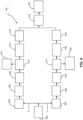
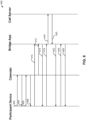
- FIG. 8 shows a search and recording service call flow relating to an exemplary method of this disclosure.
- a recipient 2 opens a meeting list on a participant device, such as one previously described.
- the meeting list is visible to the recipient 2 and recipient 2 can open (step 406) an example meeting and review (step 408) the meeting details.
- the recipient 2 can click on the meeting URL and open (step 412) the meeting application.
- Recipient 2 may now select (such as by clicking on an icon) to record (416) all or part of the meeting. All or part of the meeting is then recorded (418) and sent (420) to be saved (422). Recipient 2 can then open the stored, recorded meeting (424), and download (426) the saved recording.
- Systems and methods according to this disclosure effectively create a new function for collaboration platforms.
- a recipient can attend a meeting or part of a meeting regardless of whether the recipient attends, and to make a stored recording accessible to a participant device of the recipient. This recording option can be used in essentially all meeting applications.
Landscapes
- Engineering & Computer Science (AREA)
- Signal Processing (AREA)
- Multimedia (AREA)
- Computer Networks & Wireless Communication (AREA)
- General Engineering & Computer Science (AREA)
- Business, Economics & Management (AREA)
- General Business, Economics & Management (AREA)
- Computer Vision & Pattern Recognition (AREA)
- Telephonic Communication Services (AREA)
Abstract
Description
- The present disclosure generally relates to methods and systems for scheduling meetings that permit recipients of meeting requests the option of recording all or part of a meeting.
- The contents of
U.S. Patent Application No. 15/832,236, entitled "Method and System for Participating in an Electronic Communication Using Virtual Presence," which was filed on December 5, 2017 - Electronic communications, such as audio and video conferences (also called "meetings") can be used to allow persons to virtually participate in a meeting. Such communications allow persons to participate in a meeting without having to travel to a common location. Persons can also participate in meetings in person and others could potentially participate in the same meeting via electronic communications.
- Persons often are invited to several meetings, and some meetings result in conflicts due to overlaps with other meetings, tasks, or events (collectively, "event" or "events"). When a person cannot attend a meeting or part of a meeting, one or more important agenda items of the meeting could be missed.
- Presently, when a meeting request is received, the recipient may respond in several ways, such as "Accept," "Tentative," "Decline," or "Propose New Time." The meeting may be declined if the person is unable to attend due to a conflict. The recipient may instead select the "Tentative" option if the meeting is important but overlaps with another important event, because the recipient may be able to attend part of the meeting, or the other important event might be cancelled, completed, or rescheduled. In case of a conflict, another option the recipient has is to propose a new meeting time to the host.
Any discussion of problems provided in this section has been included in this disclosure solely for the purposes of providing a context for the present invention, and should not be taken as an admission that any or all of the discussion was known at the time the invention was made. - According to a first aspect of this specification, there is described an electronic communication system comprising: a conferencing system comprising a conferencing server; and a participant device coupled to the conferencing system via a network; wherein the conferencing system is configured to receive meeting information and forward the meeting information to the participant device, and the participant device is configured to provide a recipient a smart request that includes an option of recording at least part of a meeting.
- The meeting information may include metadata that is readable by the participant device and that includes one or more topics of the meeting, and the participant device may be configured to schedule the recording of any of the one or more topics of the meeting.
- The electronic communication system may be configured to begin a recording of the meeting when one of the one or more topics of the meeting begins and may be configured to stop recording when one or more of the topics of the meeting ends.
- The meeting information may include an agenda that includes one or more topics. The agenda may include time periods associated with at least one of the one or more topics.
- The electronic communication system may further includes a Natural Language Processing (NLP) engine that determines the recording time based on which of the one or more topics is being discussed at the meeting.
- The conferencing system may determine when at least one of the one or more topics begins and ends based on one or more of: (a) the language used by meeting participants, (b) the presenter's voice, (c) the presenter's name, and (d) the presentation content.
- The meeting host may receive a notification that the recipient is recording all or part of the meeting.
- The meeting information may comprise one or more of special recipient permissions, participants, meeting start time and date, meeting stop time and date, meeting parameters, meeting passwords, participant specific passwords, meeting title, and recurrence.
- According to a second aspect of this specification, there is described an electronic communication system comprising: a conferencing system comprising a conference server; and a participant device in communication with the conferencing system; wherein the conferencing system receives meeting information and transmits the meeting information to the participant device and includes an option for the recipient to schedule the meeting or schedule only a video recording of all or part of the meeting.
- The participant device may provide a recipient a smart request that comprises the following functions: accepting the meeting and scheduling a recording of the meeting; tentatively accepting the meeting and scheduling a recording of the meeting; recording the meeting while attending the meeting; and declining the meeting and scheduling a recording of the meeting.
- The electronic communication system of the second aspect may transmit any recording to the recipient's computer.
- The electronic communication system of the second aspect may generate a link accessible to the recipient, wherein the recording is accessible by the link.
- The meeting information may include one or more topics of the meeting, and the participant device is configured to schedule the recording of any of the one or more topics of the meeting.
- According to a third aspect of this specification, there is described an electronic communication method comprising the steps of: using a conference server, sending meeting information to a participant device that is in communication with the conference server by a network; and using the participant device, transmitting a response to the meeting information to the conference server, wherein the response incudes one or more of accepting a meeting request and scheduling to video record all or part of the meeting.
- If the response includes scheduling to record all or part of the meeting, the method may further include the step of beginning a recording when one of one or more topics of the meeting begins and ending the recording when the one of the one or more topics of the meeting ends.
- Beginning the recording may be based upon one or more of the following: (a) the language used by one or more meeting participants, (b) the presenter's voice, (c) the presenter's name, (d) the presentation content, and (e) a visual aide.
- The electronic communication method of the third aspect may further include the step of sending the meeting host a notification that a recipient is recording all or part of the meeting.
- The electronic communication method of the third aspect may further include the step of transmitting any recording to a recipient who scheduled to record all or part of the meeting.
- A plurality of the one or more topics of the meeting may be recorded.
- The subject matter of the present disclosure is particularly pointed out and distinctly claimed in the concluding portion of the specification. A more complete understanding of the present disclosure, however, may best be obtained by referring to the detailed description and claims when considered in connection with the drawing figures, wherein like numerals denote like elements and wherein:
-
FIG. 1 illustrates a communication system in accordance with exemplary embodiments of this disclosure. -
FIG. 2 illustrates virtual meeting options. -
FIG. 3 illustrates a communication system in accordance with exemplary embodiments of the disclosure. -
FIG. 4 illustrates a communication system in accordance with exemplary embodiments of the disclosure. -
FIG. 5 illustrates a method according to in accordance with exemplary embodiments of this disclosure. -
FIG. 5A illustrates recording options in accordance with exemplary embodiments of this disclosure. -
FIG. 5B illustrates manners in which a recording stops in accordance with exemplary embodiments of this disclosure. -
FIG. 5C illustrates manners in which a stored recording is made accessible to a recipient in accordance with exemplary embodiments of this disclosure. -
FIG. 6 illustrates an exemplary method in accordance with exemplary embodiments of this disclosure. -
FIG. 7 illustrates an exemplary message sent to a recipient with a link to download a recording of all or part of a meeting. -
FIG. 8 illustrates a search and recording service call flow in accordance with exemplary embodiments of this disclosure. - It will be appreciated that elements in the figures are illustrated for simplicity and clarity and have not necessarily been drawn to scale. For example, the dimensions of some of the elements in the figures may be exaggerated relative to other elements to help to improve understanding of illustrated embodiments of the present invention.
- The description of exemplary embodiments of the present invention provided below is merely exemplary and is intended for purposes of illustration only; the following description is not intended to limit the scope of the invention disclosed herein. Moreover, recitation of multiple embodiments having stated features is not intended to exclude other embodiments having additional features or other embodiments incorporating different combinations of the stated features.
- As set forth herein, exemplary embodiments of the disclosure provide systems and methods to provide one or more options to a recipient of a meeting (such as a video and/or audio meeting and/or in-person meeting) request to record all or a part of the meeting. As used herein, "part" of a meeting means one or more parts of the meeting. The recording options available to the recipient include (a) Accept (and schedule a recording of all or part of the meeting), (b) Tentative (and schedule a recording of all or part of the meeting), (c) Decline (and schedule a recording of all or part of the meeting), (d) Propose New Time (and schedule a recording of all or part of the meeting), or (e) Record all or part of the meeting. These options may be in addition to standard Accept, Tentative, Decline, and Propose New Time options.
- The recording of the meeting or part thereof could be an audio recording, audio/video recording, or simply a video recording (especially if the important material for the meeting or part thereof that is to be recorded is a visual aide, such as drawings, slides, or video). To make an audio recording a system according to this disclosure may include a microphone in communication with, for example, conference server (126) or recording server (134). To make a video recording a system according to this disclosure may include a PVR (Personal Video Recorder) in communication with, for example, conference server (126) or recording server (134).
-
FIG. 1 illustrates an electronic communication system (100) in accordance with various embodiments of this disclosure. Communication system (100) includes a conferencing system (108) having a conferencing server (or server) (126). - Conferencing system (108) can part of or connected to, for example, an internet protocol (IP) network, such as a local area network, a wide-area network, a metropolitan area network, and wireless networks. Various participant devices (described further, below) of system (100) can be coupled to one or more other components of system (100) using an Ethernet connection, other wired connections, and/or wireless interfaces. As illustrated, conferencing system (108) can be coupled to other networks and/or to other devices typically coupled to networks. Conferencing system (108) can be coupled to the Internet (124) via a web portal and/or PSTN (116) via the gateway/SBC.
- Conferencing system (108) includes a conference server (126). Conference server (126) can include or be any suitable system/server that provides a connection between one or more participant devices (102, 104 110, 112, 118, and/or 120). The conference server (126) can include suitable conferencing tools and modules and connect/bridge various participant devices to a meeting, perform mixing of the media, and send media to active and virtual participants of a meeting. In accordance with exemplary embodiments of the disclosure, server (126) is a conference server configured to perform various functions, described in more detail below.
- In communication with conferencing system (108) and conferencing server (126) are one or more participant devices (102, 104, 110, 112, 118, and/or 120). In the illustrated example, the one or more participant devices (102, 104, 110, 112, 118, and/or 120) are also coupled to a public switched telephone network (PSTN) 116 and to the Internet (124).
- The one or more participant devices (102, 104, 110, 112, 118, and/or 120) can include any suitable device with wired or wireless communication (e.g., audio and/or video) features. For example, any of the one or more participant devices (102, 104, 110, 112, 118, and/or 120) can be a wearable device, a tablet computer, a mobile phone, a personal (e.g., laptop or desktop) computer, a streaming device, such as a game console or other media streaming device, or the like. The one or more participant devices can include an application and be configured to perform various functions as set forth herein.
-
FIG. 2 illustrates exemplary forms of virtual conferencing (or meeting), including video conferencing, telephone conferencing, and web conferencing. Methods and systems of this disclosure may be used with one or more forms of virtual meetings and/or with in-person meetings, or meetings that are attended by some persons in person and attended by others via electronic communications. -
FIG. 3 illustrates an alternate electronic communication system (150) in accordance with various embodiments of this disclosure. System (150) can be the same or similar tosystem 100 with alternative configurations. System (150) includes network (108) with conference server (126). As shown, network (108) is configured to communicate with participant device (104) (of meeting host 1), participant device (110) ofrecipient 2, and participant device (120) of a meeting participant. Network (108) also communicates with recording server (134) and an analysis engine (130).Recording server 134 can be or include any suitable server. In some cases, and as illustrated inFIG. 3 ,recording server 134 can be separate fromconference server 126. - Analysis engine (130) receives input from recording server (134) and/or network (108) to create analysis results (132), which could be based on one or more of key word(s), name(s), and/or topic(s) of the meeting. The analysis results (132) are communicated (133) to the recording server (134), which determines what part of a meeting to record and how to record it (e.g., audio, visual, or audio/visual). The recorded part of the meeting can then be stored in recording database (136).
Recording database 136 can include any suitable database.Recording database 136,recording server 134, andanalysis engine 130 can be part or all of a conferencing system, such asconferencing system 108. - As used herein, "engine" can refer to computer program instructions, encoded on computer storage medium for execution by, or to control the operation of, data processing apparatus. Alternatively or additionally, the program instructions can be encoded on an artificially-generated propagated signal, e.g., a machine-generated electrical, optical, or electromagnetic signal, which is generated to encode information for transmission to suitable receiver apparatus for execution by a data processing apparatus. A computer storage medium can be, or be included in, a computer-readable storage device, a computer-readable storage substrate, a random or serial access memory array or device, or a combination of one or more of the substrates and devices. Moreover, while a computer storage medium is not a propagated signal, a computer storage medium can be a source or destination of computer program instructions encoded in an artificially-generated propagated signal. The computer storage medium can also be, or be included in, one or more separate physical components or media (e.g., solid-state memory that forms part of a device, disks, or other storage devices). In accordance with examples of the disclosure, a non-transient computer readable medium containing program can perform functions of one or more methods, modules, engines and/or other system components as described herein.
-
FIG. 4 illustrates an alternate electronic communication system (160) in accordance with various embodiments of this disclosure. System (160) can be the same or similar tosystem 100 orsystem 150 with alternative configurations. System (160) includes recording server (134) in communication with conference server (126), recording database (136), participant device (104) ofconference host 1, analysis server (132), a meeting participant's participant device (118), and participant devices (112) ofrecipients 2. In some cases, and as illustrated inFIG. 4 , recording server (134) can be separate from conference server (126). - Recording database (136) can include any suitable database. Recording server (134) can be or include any suitable server. Recording database (136), recording server (134), and analysis engine (130) can form all or part of a conferencing system, such as
conferencing system 108. - Turning to
FIG. 5 , an exemplary method (300) that may be performed by one or more systems (100, 150, 160) according to this disclosure is shown. Method (300) includes a meeting request (302) that is sent by a meeting host (1). Request (302) includes one or more of the meeting : title, date and start time, location (if relevant, such as for an in-person meeting, or meeting that can be attended in person or via electronic communications), call-in number, link to attend by video, and a list of invitees, topic(s), agenda, a time period for each agenda item or topic, special invitee permissions, meeting passwords, password(s) specific to a recipient, recurrence, and a stop time. The meeting request (302) or server (126, 134, or other) may include metadata indicative or any or all information in the meeting request. - The meeting request (302) (also called an "invitation" or "meeting calendar reminder"), may include metadata regarding the meeting topic(s), and the system (100, 150, or 160) can select one or more recording periods based on the metadata to help ensure the relevant topics(s) are recorded. Natural Language Processing (NLP) can be used to determine the topic being discussed and whether to record it based on the topic the recipient requested.
- A typical Stanford NLP parser can be used to identify verbs and roots and thus keywords. An exemplary reference can be found at: https://stackoverflow.com/questions/42539073/nlp-extract-the-action-verb-noun-from-a-list-of-instructions. Additionally or alternatively, Count Vectors/Feature Hashing/Tf-idf (see, https://towardsdatascience.com/an-overview-for-text-representations-in-nlp-311253730afl) and/or word embeddings/training embeddings/contextualized embeddings (see, https://towardsdatascience.com/an-overview-for-text-representations-in-nlp-311253730af1) can be used to identify context within recorded information. Image recognition software coupled to a camera and in communication with server (126, 134 or other) could also or instead be used to identify visual aides used in the meeting to commence and/or stop recording. Systems and methods disclosed herein can thus optionally determine and adjust recording periods by comparing the metadata to the meeting discussion and/or visual aides.
- The meeting request (302) is received (304) by a recipient (2). The recipient (2) can then compare the meeting time to his/her calendar or schedule to determine if there are conflicting events that take priority over the proposed meeting in meeting request (302).
- The recipient (2), after receiving (304) a meeting request (302), may respond (306) with Accept, Decline, Tentative, or Propose New Time, in each case without requesting to record all or part of the meeting.
- Recipient (2) may instead, after receiving (304) a meeting request (302), respond (308) and elect to record all or part of the meeting be selecting (a) Accept (and schedule a recording of all or part of the meeting), (b) Tentative (and schedule a recording of all or part of the meeting), (c) Decline (and schedule a recording of all or part of the meeting), (d) Propose New Time (and schedule a recording of all or part of the meeting), or (e) Record all or part of the meeting. When responding (308) to schedule a recording, the recipient (2) may have the option of selecting either an audio recording, a video recording, or an audio/video recording (316A), as shown in
FIG. 5A . - Regardless of which response (306, 308) recipient (2) sends to the meeting request (302), the response is logged (310) by the scheduling agent of the conference server (126).
- Turning again to
FIG. 5 , prior to (312) or once the meeting is started (314), the meeting host (1) may be notified that the recipient (2) has elected to record all or part of the meeting. - Turning to
FIG. 5A , during the meeting, recording may commence based on a comparison (316B) of the meeting discussion to metadata in the meeting request (302) or in the server (126). In this regard, Natural Language Processing (NLP) can be used to determine the topic being discussed and whether to record it based on the topic the recipient (2) scheduled to be recorded (308). - Alternatively, recording may commence based on the name or title of the speaker (316C) or based on comparing (316D) a video or slide presented during the meeting to metadata in the meeting request (302) or server (126). Further, the recording may be commenced by (a) a manual command (316E) by anyone, (b) when the meeting starts (316F), or (c) based on a recording start time (316G).
- The recording can stop (318, shown in
FIG. 5 andFIG. 5B ) based on a comparison of the meeting discussion to metadata in the meeting request (302) or in the server (126). In this regard, Natural Language Processing (NLP) can be used to determine the topic being discussed and whether to record it based on the topic the recipient (2) scheduled to be recorded (step 318B). - Alternatively, as shown in
FIG. 5B , the recording may stop based on (a) the name or title of the speaker (318C), or (b) comparing (318D) a video or slide shown during the meeting to metadata in the meeting request (302) or server (126). Alternatively, the recording may stop by (c) a manual command (318E) by anyone when the meeting stops (318F) or based on a recording stop time (316G). - The system (108) may commence recording (316) and stop recording (318) using the same technique for commencing and stopping or using one technique for commencing and a different technique for stopping.
- Although not illustrated here, recording may commence and stop more than once so the stored recording would include more than one part of the meeting.
- Turning to
FIG. 5C , the recording is stored (322) and made available to the recipient (2) either when the recording is complete (path A inFIG. 5 ) or when the meeting ends. The stored recording (3) is made electronically accessible to one ormore participant devices -
FIG. 6 shows another exemplary method (500) according to this disclosure. A new meeting invitation (502) is initiated by a host. In this method theinvitation 502 is sent to arecipient 2 and there are two alternate branches X and Y of responses and events that may follow. - In branch X the
recipient 2 accepts (504) the meeting invitation (502) and the acceptance (504) is transmitted to a scheduling agent (506), which may be conference server (126), recording server (134), or another device ofsystem recipient 2 will attend and record the meeting (508). When the meeting starts (510) thehost 1 is notified (512) of the recording and the meeting or part thereof is recorded (514). The meeting ends (516) and the recording is saved (518), such as by recordingdatabase 136.Recipient 2 may receive a notification that the recording is saved, and can be sent (520) a download link to his/her participant device to access the recording. An example communication with a link to download a recorded meeting file is shown inFIG. 7 . - In alternate branch Y, the
recipient 2 tentatively accepts (522) the meeting invitation (502) and the acceptance (522) is transmitted to a scheduling agent (506), which may be conference server (126), recording server (134), or another device ofsystem recipient 2 will record the meeting only (524). When the meeting starts (510) the host is notified (526) that the meeting or part thereof will be recorded and of the recipient's virtual attendance. The recording and virtual attendance commence (528). The meeting ends (516) and the recording is saved (518), such as by recordingdatabase 136.Recipient 2 may receive a notification that the recording is saved, and can be sent (520) a download link to his/her participant device to access the recording. An example communication with a link to download a recorded meeting file is shown inFIG. 7 . -
FIG. 8 shows a search and recording service call flow relating to an exemplary method of this disclosure. In step (402), arecipient 2 opens a meeting list on a participant device, such as one previously described. In step (404), the meeting list is visible to therecipient 2 andrecipient 2 can open (step 406) an example meeting and review (step 408) the meeting details. In step (410), therecipient 2 can click on the meeting URL and open (step 412) the meeting application. -
Recipient 2 may now select (such as by clicking on an icon) to record (416) all or part of the meeting. All or part of the meeting is then recorded (418) and sent (420) to be saved (422).Recipient 2 can then open the stored, recorded meeting (424), and download (426) the saved recording. - Systems and methods according to this disclosure effectively create a new function for collaboration platforms. Traditionally, a recipient can attend a meeting or part of a meeting regardless of whether the recipient attends, and to make a stored recording accessible to a participant device of the recipient. This recording option can be used in essentially all meeting applications.
- The present invention has been described above with reference to a number of exemplary embodiments and examples. It should be appreciated that the particular embodiments shown and described herein are illustrative of the invention and its best mode and are not intended to limit in any way the scope of the invention as set forth in the claims. The features of the various embodiments may be stand alone or combined in any combination. Further, unless otherwise noted, various illustrated steps of a method can be performed sequentially or at the same time, and not necessarily be performed in the order illustrated. It will be recognized that changes and modifications may be made to the exemplary embodiments without departing from the scope of the present invention. These and other changes or modifications are intended to be included within the scope of the present invention, as expressed in the following claims.
Claims (15)
- An electronic communication system comprising:a conferencing system comprising a conferencing server; anda participant device coupled to the conferencing system via a network;wherein the conferencing system is configured to receive meeting information and forward the meeting information to the participant device, andthe participant device is configured to provide a recipient a smart request that includes an option of recording at least part of a meeting.
- The electronic communication system of claim 1, wherein the meeting information includes metadata that is readable by the participant device and includes one or more topics of the meeting, wherein the participant device is configured to schedule the recording of any of the one or more topics of the meeting.
- The electronic communication system of claim 1 or claim 2, wherein the system is configured to begin a recording of the meeting when one of the one or more topics of the meeting begins and is configured to stop recording when one or more of the topics of the meeting ends.
- The electronic communication system of claim 2 or claim 3, wherein the conferencing system is configured to determine when at least one of the one or more topics begins and ends based on one or more of: (a) the language used by meeting participants, (b) the presenter's voice, (c) the presenter's name, and (d) the presentation content.
- The electronic communication system of any preceding claim, wherein the meeting information includes an agenda that includes one or more topics and optionally wherein the agenda includes time periods associated with at least one of the one or more topics.
- The electronic communication system of any preceding claim, wherein the system further comprises a Natural Language Processing engine configured to determine the recording time based on which of the one or more topics is being discussed at the meeting.
- The electronic communication system of any preceding claim, wherein the system is configured to send a notification to a meeting host that the recipient is recording all or part of the meeting.
- The electronic communication system of any preceding claim, wherein the meeting information comprises one or more of special recipient permissions, participants, meeting start time and date, meeting stop time and date, meeting parameters, meeting passwords, participant specific passwords, meeting title, and recurrence.
- An electronic communication system comprising:a conferencing system comprising a conference server; anda participant device in communication with the conferencing system; wherein the conferencing system receives meeting information and transmits the meeting information to the participant device and includes an option for the recipient to schedule the meeting or schedule only a video recording of all or part of the meeting.
- The electronic communication system of claim 9, wherein the participant device is configured to provide a recipient a smart request that comprises the following functions: accepting the meeting and scheduling a recording of the meeting; tentatively accepting the meeting and scheduling a recording of the meeting; recording the meeting while attending the meeting; and declining the meeting and scheduling a recording of the meeting.
- The electronic communication system of claim 9 or claim 10, wherein the system is configured to transmit any recording to the recipient's computer and/or to generate a link accessible to the recipient, wherein the recording is accessible by the link.
- An electronic communication method comprising the steps of:using a conference server, sending meeting information to a participant device that is in communication with the conference server by a network; andusing the participant device, transmitting a response to the meeting information to the conference server, wherein the response incudes one or more of accepting a meeting request and scheduling to video record all or part of the meeting.
- The electronic communication method of claim 12, wherein if the response includes scheduling to record all or part of the meeting, further includes the step of beginning a recording when one of one or more topics of the meeting begins and ending the recording when the one of the one or more topics of the meeting ends and optionally wherein beginning the recording is based upon one or more of the following: (a) the language used by one or more meeting participants, (b) the presenter's voice, (c) the presenter's name, (d) the presentation content, and (e) a visual aide.
- The electronic communication method of claim 12 or claim 13 that further includes the step of sending the meeting host a notification that a recipient is recording all or part of the meeting and/or that further includes the step of transmitting any recording to a recipient who scheduled to record all or part of the meeting.
- The electronic communication method of any of claims 12 to 14, wherein a plurality of the one or more topics of the meeting are recorded.
Applications Claiming Priority (1)
| Application Number | Priority Date | Filing Date | Title |
|---|---|---|---|
| US17/527,795 US12418431B2 (en) | 2021-11-16 | 2021-11-16 | Scheduled conference recording |
Publications (2)
| Publication Number | Publication Date |
|---|---|
| EP4181043A1 true EP4181043A1 (en) | 2023-05-17 |
| EP4181043B1 EP4181043B1 (en) | 2026-04-01 |
Family
ID=84358090
Family Applications (1)
| Application Number | Title | Priority Date | Filing Date |
|---|---|---|---|
| EP22207630.9A Active EP4181043B1 (en) | 2021-11-16 | 2022-11-15 | Scheduled conference recording |
Country Status (3)
| Country | Link |
|---|---|
| US (1) | US12418431B2 (en) |
| EP (1) | EP4181043B1 (en) |
| CA (1) | CA3181936A1 (en) |
Families Citing this family (2)
| Publication number | Priority date | Publication date | Assignee | Title |
|---|---|---|---|---|
| CN116980469A (en) * | 2022-04-24 | 2023-10-31 | 北京字跳网络技术有限公司 | Multimedia sharing method, device, equipment and medium |
| US12164678B2 (en) * | 2022-04-29 | 2024-12-10 | Zoom Video Communications, Inc. | Enforcing consent requirements for sharing virtual meeting recordings |
Citations (3)
| Publication number | Priority date | Publication date | Assignee | Title |
|---|---|---|---|---|
| CN106506603A (en) * | 2016-10-13 | 2017-03-15 | 深圳市天英联合教育股份有限公司 | Subject content method for recording and system |
| US10785450B1 (en) * | 2019-12-26 | 2020-09-22 | Ringcentral, Inc. | System and method for intelligent conference session recording |
| US20220318761A1 (en) * | 2021-04-01 | 2022-10-06 | Avaya Management L.P. | Systems and methods for providing electronic event information |
Family Cites Families (14)
| Publication number | Priority date | Publication date | Assignee | Title |
|---|---|---|---|---|
| US7689898B2 (en) * | 1998-05-07 | 2010-03-30 | Astute Technology, Llc | Enhanced capture, management and distribution of live presentations |
| US8868650B1 (en) * | 2010-07-12 | 2014-10-21 | Sprint Communications Company L.P. | Consolidating multi-party communications |
| US20120166242A1 (en) * | 2010-12-27 | 2012-06-28 | Avaya Inc. | System and method for scheduling an e-conference for participants with partial availability |
| US9704139B2 (en) * | 2013-09-17 | 2017-07-11 | Cisco Technology, Inc. | Techniques for requesting web conference recordings automatically via a conference invitation response |
| US9253330B2 (en) * | 2014-02-28 | 2016-02-02 | International Business Machines Corporation | Automatically record and reschedule conference calls for playback based upon calendar invitations and presence monitoring |
| US10334110B2 (en) * | 2017-01-05 | 2019-06-25 | International Business Machines Corporation | Managing, monitoring and transcribing concurrent meetings and/or conference calls |
| US20180232705A1 (en) * | 2017-02-15 | 2018-08-16 | Microsoft Technology Licensing, Llc | Meeting timeline management tool |
| US11030585B2 (en) * | 2017-10-09 | 2021-06-08 | Ricoh Company, Ltd. | Person detection, person identification and meeting start for interactive whiteboard appliances |
| US11271978B2 (en) * | 2019-09-23 | 2022-03-08 | International Business Machines Corporation | Personalized meeting summaries |
| US11983674B2 (en) * | 2019-10-01 | 2024-05-14 | Microsoft Technology Licensing, Llc | Automatically determining and presenting personalized action items from an event |
| EP3893176A1 (en) * | 2020-04-09 | 2021-10-13 | Nokia Technologies Oy | Virtual meeting |
| US20210365896A1 (en) * | 2020-05-21 | 2021-11-25 | HUDDL Inc. | Machine learning (ml) model for participants |
| US11606220B2 (en) * | 2020-06-20 | 2023-03-14 | Science House LLC | Systems, methods, and apparatus for meeting management |
| US11593767B2 (en) * | 2021-04-01 | 2023-02-28 | Avaya Management L.P. | Systems and methods for providing electronic event attendance mode recommendations |
-
2021
- 2021-11-16 US US17/527,795 patent/US12418431B2/en active Active
-
2022
- 2022-11-11 CA CA3181936A patent/CA3181936A1/en active Pending
- 2022-11-15 EP EP22207630.9A patent/EP4181043B1/en active Active
Patent Citations (3)
| Publication number | Priority date | Publication date | Assignee | Title |
|---|---|---|---|---|
| CN106506603A (en) * | 2016-10-13 | 2017-03-15 | 深圳市天英联合教育股份有限公司 | Subject content method for recording and system |
| US10785450B1 (en) * | 2019-12-26 | 2020-09-22 | Ringcentral, Inc. | System and method for intelligent conference session recording |
| US20220318761A1 (en) * | 2021-04-01 | 2022-10-06 | Avaya Management L.P. | Systems and methods for providing electronic event information |
Also Published As
| Publication number | Publication date |
|---|---|
| CA3181936A1 (en) | 2023-05-16 |
| US12418431B2 (en) | 2025-09-16 |
| US20230155850A1 (en) | 2023-05-18 |
| EP4181043B1 (en) | 2026-04-01 |
Similar Documents
| Publication | Publication Date | Title |
|---|---|---|
| US11777755B2 (en) | Electronic communication methods and systems for collaborating and communicating in meeting environments | |
| US11128484B2 (en) | Advising meeting participants of their contributions based on a graphical representation | |
| US10819855B2 (en) | Managing, monitoring and transcribing concurrent meetings and/or conference calls | |
| US9253330B2 (en) | Automatically record and reschedule conference calls for playback based upon calendar invitations and presence monitoring | |
| US7765257B2 (en) | Methods and apparatuses for selectively providing privacy through a dynamic social network system | |
| CN118922847A (en) | Communication platform interactive transcription | |
| US20070005698A1 (en) | Method and apparatuses for locating an expert during a collaboration session | |
| US8745135B2 (en) | System and method for attribute detection in user profile creation and update | |
| US8990314B2 (en) | System and method for utilizing instant messaging to schedule conference calls | |
| US10785450B1 (en) | System and method for intelligent conference session recording | |
| US20140019536A1 (en) | Realtime collaboration system to evaluate join conditions of potential participants | |
| US8224896B2 (en) | Methods and apparatuses for locating and contacting an invited participant of a meeting | |
| US20090157414A1 (en) | Method for calendar driven decisions in web conferences | |
| WO2008046063A2 (en) | Methods and apparatuses for searching and categorizing messages within a network system | |
| EP4181043B1 (en) | Scheduled conference recording | |
| US12361502B2 (en) | Shared video presentation with configurable independent communication channels and data | |
| US8559609B2 (en) | Teleconferencing system for allowing one touch queuing by callers in a facilitator led discussion | |
| US20250119508A1 (en) | Methods and systems for pre-recorded participation in a conference | |
| US8539027B1 (en) | System and method for suggesting additional participants for a collaboration session | |
| US12074924B2 (en) | Determining alternate meeting participants based on purpose and role detection | |
| EP4513833A1 (en) | Generative ai platform integration with video conferencing | |
| TW201837744A (en) | Schedule setting method for digital communication system capable of automatically providing users with non-scheduled time periods for selection | |
| JP2003298750A (en) | Asynchronous conference system, asynchronous conference method, and computer program |
Legal Events
| Date | Code | Title | Description |
|---|---|---|---|
| PUAI | Public reference made under article 153(3) epc to a published international application that has entered the european phase |
Free format text: ORIGINAL CODE: 0009012 |
|
| STAA | Information on the status of an ep patent application or granted ep patent |
Free format text: STATUS: THE APPLICATION HAS BEEN PUBLISHED |
|
| AK | Designated contracting states |
Kind code of ref document: A1 Designated state(s): AL AT BE BG CH CY CZ DE DK EE ES FI FR GB GR HR HU IE IS IT LI LT LU LV MC ME MK MT NL NO PL PT RO RS SE SI SK SM TR |
|
| STAA | Information on the status of an ep patent application or granted ep patent |
Free format text: STATUS: REQUEST FOR EXAMINATION WAS MADE |
|
| 17P | Request for examination filed |
Effective date: 20231116 |
|
| RBV | Designated contracting states (corrected) |
Designated state(s): AL AT BE BG CH CY CZ DE DK EE ES FI FR GB GR HR HU IE IS IT LI LT LU LV MC ME MK MT NL NO PL PT RO RS SE SI SK SM TR |
|
| STAA | Information on the status of an ep patent application or granted ep patent |
Free format text: STATUS: EXAMINATION IS IN PROGRESS |
|
| 17Q | First examination report despatched |
Effective date: 20250220 |
|
| GRAP | Despatch of communication of intention to grant a patent |
Free format text: ORIGINAL CODE: EPIDOSNIGR1 |
|
| STAA | Information on the status of an ep patent application or granted ep patent |
Free format text: STATUS: GRANT OF PATENT IS INTENDED |
|
| INTG | Intention to grant announced |
Effective date: 20260113 |
|
| GRAS | Grant fee paid |
Free format text: ORIGINAL CODE: EPIDOSNIGR3 |
|
| GRAA | (expected) grant |
Free format text: ORIGINAL CODE: 0009210 |
|
| STAA | Information on the status of an ep patent application or granted ep patent |
Free format text: STATUS: THE PATENT HAS BEEN GRANTED |
|
| AK | Designated contracting states |
Kind code of ref document: B1 Designated state(s): AL AT BE BG CH CY CZ DE DK EE ES FI FR GB GR HR HU IE IS IT LI LT LU LV MC ME MK MT NL NO PL PT RO RS SE SI SK SM TR |
|
| REG | Reference to a national code |
Ref country code: CH Ref legal event code: F10 Free format text: ST27 STATUS EVENT CODE: U-0-0-F10-F00 (AS PROVIDED BY THE NATIONAL OFFICE) Effective date: 20260401 Ref country code: GB Ref legal event code: FG4D |
|
| REG | Reference to a national code |
Ref country code: IE Ref legal event code: FG4D |
|
| REG | Reference to a national code |
Ref country code: DE Ref legal event code: R096 Ref document number: 602022033384 Country of ref document: DE |