EP4180812A1 - Method for monitoring the response to neoadjuvant therapy for breast cancer - Google Patents
Method for monitoring the response to neoadjuvant therapy for breast cancer Download PDFInfo
- Publication number
- EP4180812A1 EP4180812A1 EP21207832.3A EP21207832A EP4180812A1 EP 4180812 A1 EP4180812 A1 EP 4180812A1 EP 21207832 A EP21207832 A EP 21207832A EP 4180812 A1 EP4180812 A1 EP 4180812A1
- Authority
- EP
- European Patent Office
- Prior art keywords
- dose
- breast cancer
- administration
- immunoglobulin
- subject
- Prior art date
- Legal status (The legal status is an assumption and is not a legal conclusion. Google has not performed a legal analysis and makes no representation as to the accuracy of the status listed.)
- Granted
Links
Images





Classifications
-
- G—PHYSICS
- G01—MEASURING; TESTING
- G01N—INVESTIGATING OR ANALYSING MATERIALS BY DETERMINING THEIR CHEMICAL OR PHYSICAL PROPERTIES
- G01N33/00—Investigating or analysing materials by specific methods not covered by groups G01N1/00 - G01N31/00
- G01N33/48—Biological material, e.g. blood, urine; Haemocytometers
- G01N33/50—Chemical analysis of biological material, e.g. blood, urine; Testing involving biospecific ligand binding methods; Immunological testing
- G01N33/53—Immunoassay; Biospecific binding assay; Materials therefor
- G01N33/575—Immunoassay; Biospecific binding assay; Materials therefor for cancer
- G01N33/57515—Immunoassay; Biospecific binding assay; Materials therefor for cancer of the breast
-
- G—PHYSICS
- G01—MEASURING; TESTING
- G01N—INVESTIGATING OR ANALYSING MATERIALS BY DETERMINING THEIR CHEMICAL OR PHYSICAL PROPERTIES
- G01N33/00—Investigating or analysing materials by specific methods not covered by groups G01N1/00 - G01N31/00
- G01N33/48—Biological material, e.g. blood, urine; Haemocytometers
- G01N33/50—Chemical analysis of biological material, e.g. blood, urine; Testing involving biospecific ligand binding methods; Immunological testing
- G01N33/53—Immunoassay; Biospecific binding assay; Materials therefor
- G01N33/575—Immunoassay; Biospecific binding assay; Materials therefor for cancer
- G01N33/5758—Immunoassay; Biospecific binding assay; Materials therefor for cancer involving compounds serving as markers for tumours, cancers or neoplasias, e.g. cellular determinants, receptors, heat shock/stress proteins, A-protein, oligosaccharides or metabolites
- G01N33/57585—Immunoassay; Biospecific binding assay; Materials therefor for cancer involving compounds serving as markers for tumours, cancers or neoplasias, e.g. cellular determinants, receptors, heat shock/stress proteins, A-protein, oligosaccharides or metabolites involving compounds identifiable in body fluids
-
- G—PHYSICS
- G01—MEASURING; TESTING
- G01N—INVESTIGATING OR ANALYSING MATERIALS BY DETERMINING THEIR CHEMICAL OR PHYSICAL PROPERTIES
- G01N2333/00—Assays involving biological materials from specific organisms or of a specific nature
- G01N2333/90—Enzymes; Proenzymes
- G01N2333/91—Transferases (2.)
- G01N2333/912—Transferases (2.) transferring phosphorus containing groups, e.g. kinases (2.7)
-
- G—PHYSICS
- G01—MEASURING; TESTING
- G01N—INVESTIGATING OR ANALYSING MATERIALS BY DETERMINING THEIR CHEMICAL OR PHYSICAL PROPERTIES
- G01N2333/00—Assays involving biological materials from specific organisms or of a specific nature
- G01N2333/90—Enzymes; Proenzymes
- G01N2333/914—Hydrolases (3)
- G01N2333/916—Hydrolases (3) acting on ester bonds (3.1), e.g. phosphatases (3.1.3), phospholipases C or phospholipases D (3.1.4)
- G01N2333/918—Carboxylic ester hydrolases (3.1.1)
-
- G—PHYSICS
- G01—MEASURING; TESTING
- G01N—INVESTIGATING OR ANALYSING MATERIALS BY DETERMINING THEIR CHEMICAL OR PHYSICAL PROPERTIES
- G01N2800/00—Detection or diagnosis of diseases
- G01N2800/52—Predicting or monitoring the response to treatment, e.g. for selection of therapy based on assay results in personalised medicine; Prognosis
Definitions
- breast cancer represents the most common cancer type among women in Germany and worldwide. Every eighth woman in Germany gets the diagnosis of breast cancer in her lifetime (incidence of 165 women per 100 000). Even if the mortality rate has decreased over the last years, there is still a standardized death rate of 22,8, so that breast cancer is the fifth common cause of death in Germany. Moreover, between the age of 25 and 49 it is even the most common cause of death for women (5).
- a curative therapy of breast cancer includes the removal of the cancer (R0 resection), the administration of cytostatic and if necessary, endocrine, and targeted antibody therapy. Moreover, a postoperative, local radiotherapy after breast-conserving surgery (BCS) is recommended (8).
- NACT neoadjuvant chemotherapy
- TNBC triple-negative breast cancer
- pCR pathological complete remission
- cytotoxic therapy Preoperative the effect of the cytotoxic therapy on the carcinoma is documented with the help of clinical examination and imaging such as sonography, MRI, PET-CT.
- An early response (a reduction in tumour size) to chemotherapy has proven to be a favourable marker for achieving a pCR (3).
- NACT offers the possibility to monitor response to possibly adjust the therapy regimen. Early discrimination between patients who respond to the therapy (responders) and those who do not respond (non-responders) is therefore essential for being able to adapt therapy individually (4).
- NACT neoadjuvant breast cancer therapy
- the present inventors investigated serum samples of breast cancer patients and found that the proteins N-cadherin, hepatocyte growth factor receptor (HGFR), centrosomal protein of 192 kDa (Cep192), contactin-1, and cholinesterase displayed changes in serum protein level in breast cancer patients undergoing neoadjuvant breast cancer therapy, relative to the level in a comparative sample. Surprisingly, these changes were indicative of a subject being a responder or a non-responder to neoadjuvant breast cancer therapy.
- HGFR hepatocyte growth factor receptor
- Cep192 centrosomal protein of 192 kDa
- contactin-1 contactin-1
- the present inventors found that serum protein levels of certain immunoglobulin-components changed in serum from patients undergoing neoadjuvant breast cancer therapy, relative to a comparative sample, which changes surprisingly were also indicative of the subject being a responder or a non-responder to neoadjuvant breast cancer therapy.
- determination of the level of the five marker proteins N-cadherin, HGFR, Cep192, contactin-1, and cholinesterase, as well as the immunoglobulin-components, in the serum samples has the advantage of allowing for a specific discrimination between responders and non-responders to neoadjuvant breast cancer therapy, early in the course of the neoadjuvant treatment regimen and with good consistency.
- the present inventors surprisingly found that the finding of a subject being a responder using one or more of the above-mentioned marker proteins was predictive of the subject, after completion of neoadjuvant breast cancer therapy, preferably NACT, achieving a pathological complete remission (pCR).
- NACT neoadjuvant breast cancer therapy
- the present invention therefore relates to the following embodiments.
- the present invention relates to methods for determining whether a subject is a responder or a non-responder to breast cancer therapy, in particular to neoadjuvant breast cancer therapy; and for predicting a favorable outcome of a cancer therapy, in particular neoadjuvant breast cancer therapy, especially for predicting whether or not a subject, after completion of neoadjuvant breast cancer therapy, is likely to achieve a pathological complete remission (pCR).
- pCR pathological complete remission
- the present invention relates to a method for determining whether a subject is a responder or a non-responder to neoadjuvant breast cancer therapy comprising determining the level of one or more marker proteins selected from the group consisting of N-cadherin; hepatocyte growth factor receptor (HGFR); centrosomal protein of 192 kDa (Cep192); contactin-1; cholinesterase; one or more immunoglobulin-components, preferably selected from the group consisting of Immunoglobulin kappa constant, Immunoglobulin kappa variable 2-30, Immunoglobulin lambda-like polypeptide 5, Ig-like domain-containing protein, Immunoglobulin heavy constant mu, Immunoglobulin kappa variable 2-40, Immunoglobulin lambda variable 7-46, and Immunoglobulin lambda variable 8-61; and combinations thereof,
- the certainty of the subject indeed being responsive or not responsive i.e. of "of the subject being a responder or a non-responder" to the neoadjuvant breast cancer therapy, preferably the NACT, may increase.
- the term "indicative” means that there is an at least 75 %, preferably at least 80 %, more preferably at least 85 %, even more preferably at least 90 %, even more preferably at least 95 %, or 96 %, or 97%, or 98%, or 99 %, or 99.5 %, or 99.9 %, or 99.99 %, or 99.999 % certainty (likelihood) of the subject being responsive to the neoadjuvant breast cancer therapy, preferably the NACT.
- in vitro has its usual meaning in the art, preferably referring to methods that are carried out on serum samples outside the body of the subject from whom the serum samples were obtained.
- a "subject” or “patient” is preferably a human subject or patient, more preferably a female human subject or patient.
- the subject is a "cancer patient,” i.e. one who is suffering from one or more symptoms of breast cancer.
- the subject is human, preferably a female human.
- cancer and “cancerous” are known in the art and typically refer to or describe the physiological condition in mammals in which a population of cells are characterized by unregulated cell growth.
- An “advanced” cancer is one which has spread outside the site or organ of origin, either by local invasion or metastasis. Accordingly, the term “advanced” cancer includes both locally advanced and metastatic disease.
- invasive cancer refers to cancer that has spread beyond the primary tumour in which it developed, and is growing in surrounding, healthy tissues. Invasive cancer is sometimes referred to as infiltrating cancer.
- a "locally recurrent" cancer is cancer that returns after treatment in the same place as a previously treated cancer.
- Early-stage breast cancer as used herein preferably refers to breast cancer that has not spread beyond the breast or the axillary lymph nodes. Such cancer is generally treated with neoadjuvant or adjuvant therapy.
- Metalstatic cancer refers to cancer which has spread from one part of the body (e.g. the breast) to another part of the body.
- the subject suffers from locally advanced breast cancer (LABC).
- “Locally advanced breast cancer/carcinoma” or “LABC” which preferably in the absence of distant metastasis, comprises tumours more than 5 cm in size with regional lymphadenopathy (N1-3), and/or tumours of any size with direct extension to the chest wall or skin, or both, regardless of regional lymphadenopathy; and/or is characterized by the presence of regional lymphadenopathy (clinically fixed or matted axillary lymph nodes, or any of infraclavicular, supraclavicular, or internal mammary lymphadenopathy) regardless of tumour stage.
- breast cancer is known in the art and preferably refers to a cancer that starts in the breast, usually in the inner lining of the milk ducts or lobules.
- the classification of breast cancer includes a pathological assessment of the size, infiltration into the surrounding tissue (lymphatic system, vessels, perineural sheaths) and distant metastasis.
- the histological degree of differentiation and the proliferation fraction are important factors in assessing the prognosis and the response to systemic therapy.
- breast cancer can be divided into hormone receptor negative and positive subtypes; this can be used to adapt the therapy.
- the Her2 status even enables targeted antibody therapy in the case of Her2 positivity.
- UCC Union International Cancer Control
- AJCC American Joint Committee on Cancer
- Histological grading involves classification into three grades (Grades I, II, and III), wherein the tumour cells for Grade I (GI) are well differentiated; Grade II (GII) are moderately differentiated; Grade III (GIII) are poorly differentiated (8).
- Classification of breast cancer into molecular subtypes using biomarkers is known in the art, and includes for example determination whether the breast cancer is progesterone receptor positive (PR+), or progesterone receptor negative (PR-), e.g. as detected by immunohistochemistry or ligand binding assays; whether the breast cancer is estrogen receptor positive (ER+), or estrogen receptor negative (ER-), e.g. as detected by immunohistochemistry or ligand binding assays; whether the breast cancer is Human epidermal growth factor receptor 2 (HER2) positive (HER2+), or HER2 negative (HER2-), e.g.
- PR+ progesterone receptor positive
- PR- progesterone receptor negative
- ER+ estrogen receptor positive
- ER- estrogen receptor negative
- HER2 Human epidermal growth factor receptor 2
- HER2 negative HER2 negative
- Ki-67high protein Ki-67high
- the term "negative as used above, may refer to the absence or a reduction of the respective biomarker abundance/expression, as e.g. compared to healthy tissue.
- a classification standard has been published for example in Goldhirsch et al, Annals of Oncology 24: 2206-2223, 2013 (see also (8)).
- Luminal A breast cancer e.g., ER+ and/or PR+, HER2-, Ki-67low, optionally GI
- Luminal B [HER2 positive] breast cancer (e.g., ER+, and/or PR+, HER2+, Ki67high or Ki67low, optionally GII)
- Luminal B [HER2 negative] breast cancer e.g., ER+ and/or PR+, HER2-, and and Ki67high, optionally GII
- triple negative (basal-like) breast cancer e.g., ER-, PR-, HER-; optionally GIII
- HER2 positive (non-luminal) breast cancer HER2-enriched breast cancer
- normal-like breast cancer e.g., ER+ and / or PR+, HER2-, Ki-67low,
- Breast cancer subtypes may be categorized on an immunohistochemical basis.
- the breast cancer may be invasive ductal carcinoma, ductal carcinoma in situ, or invasive lobular carcinoma.
- Histological subtypes of breast cancer include, but are not limited to, invasive ductal carcinoma (IDC) "not otherwise specified” and IDC subtypes (e.g. mixed, pleomorphic, osteoclast types); invasive lobular carcinoma (ILC); Paget's disease of the nipple; inflammatory breast cancer; phyllodes tumours of the breast; tubular carcinoma; medullary carcinoma; alveolar carcinoma; solid variant carcinoma; signet ring cell carcinoma; metaplastic carcinoma; mucinous carcinoma; neuroendocrine tumours; oncocytic subtypes; invasive papillary carcinoma; cribriform carcinoma; or invasive apocrine carcinoma, locally advanced breast cancer; or metastatic breast cancer.
- IDC invasive ductal carcinoma
- IDC subtypes e.g. mixed, pleomorphic, osteoclast types
- IDC invasive lobular carcinoma
- Paget's disease of the nipple inflammatory breast cancer; phyllodes tumours of the breast
- the subject suffers from breast cancer selected from the group consisting of lymphangiosis carcinomatosa, locally advanced carcinoma/cancer (LABC), and inoperable breast cancer.
- breast cancer selected from the group consisting of lymphangiosis carcinomatosa, locally advanced carcinoma/cancer (LABC), and inoperable breast cancer.
- the subject suffers from Luminal A breast cancer; Luminal B [human epidermal growth factor receptor 2-positive] (LumB[HER2+]) breast cancer; Luminal B [human epidermal growth factor receptor 2-negative] (LumB[HER2-]) breast cancer; triple negative breast cancer (TNBC); human epidermal growth factor receptor 2 (HER2) positive (non-luminal) breast cancer; or normal-like breast cancer.
- the subject suffers from triple negative breast cancer (TNBC); Luminal B [human epidermal growth factor receptor 2-negative] (LumB[HER2-]) breast cancer; or human epidermal growth factor receptor 2 (HER2) positive (non-luminal) breast cancer; preferably TNBC or LumB[HER2-] breast cancer.
- the subject suffers from invasive ductal carcinoma (IDC) "not otherwise specified” and IDC subtypes (e.g. mixed, pleomorphic, osteoclast types); invasive lobular carcinoma (ILC); Paget's disease of the nipple; inflammatory breast cancer; phyllodes tumours of the breast; tubular carcinoma; medullary carcinoma; alveolar carcinoma; solid variant carcinoma; signet ring cell carcinoma; metaplastic carcinoma; mucinous carcinoma; neuroendocrine tumours; oncocytic subtypes; invasive papillary carcinoma; cribriform carcinoma; or invasive apocrine carcinoma; locally advanced breast cancer; or metastatic breast cancer; or combinations thereof.
- IDC invasive ductal carcinoma
- IDC subtypes e.g. mixed, pleomorphic, osteoclast types
- IDC invasive lobular carcinoma
- Paget's disease of the nipple inflammatory breast cancer; phyllodes tumours of the breast; tubular carcinoma; medull
- responder and non-responder as used herein in the context of cancer therapy, particularly breast cancer therapy, more particularly neoadjuvant breast cancer therapy, signify that the subject is responsive or not responsive, respectively, to the cancer therapy, particularly the breast cancer therapy, more particularly the neoadjuvant breast cancer therapy.
- Responsiveness of a "responder" to (neoadjuvant) breast cancer therapy in terms of an observable decrease in the size of one or more tumours and/or lesions, and/or in the extent of the cancer in the breast, and/or a decrease in the cancer stage, may be apparent already at the time of sample collection of one or more of the one or more serum samples, or may only become apparent by (certain) other examination methods at a later time point during the course of treatment.
- Responsiveness to therapy may be documented during neoadjuvant breast cancer therapy, preferably NACT, for example using breast ultrasound. In rarer cases a responsiveness may be documented by means of computed tomography (CT), magnetic resonance imaging (MRI), or mammography. After completion of (neoadjuvant) breast cancer therapy, preferably NACT, responsiveness to therapy may be documented for example by the assessment of the resected material as carried out by a pathologist.
- CT computed tomography
- MRI magnetic resonance imaging
- a "responder" to (neoadjuvant) breast cancer therapy is characterized by a decrease in the size of one or more tumours or lesions (e.g. a greater than 30 % reduction in the (preferably) greatest tumour diameter), or in the extent of the cancer in the breast (e.g. based on extent of spread and cancer staging, based on location/spread in the breast and lymph nodes or based on histological grading or histologically classification; for example using one or more parameter of the UICC/AJCC TNM staging system), or a decrease in the cancer stage (e.g. as determined by the UICC/AJCC TNM staging system), in response to treatment.
- a "responder” is characterized by a decrease in tumour size or cancer stage.
- a "responder” is characterized by a greater than 30 % reduction in (preferably) the greatest tumour diameter.
- a responder is either a "complete responder” or a "partial responder”.
- complete responder refers to a subject showing a complete response to the breast cancer therapy, particularly the neoadjuvant breast cancer therapy, i.e. preferably referring to an absence of invasive and in situ residuals in breast and regional lymph nodes (e.g. no clinical evidence of tumour in the breast and regional lymph nodes, and/or ypTO (and preferably also ypNO) in the UICC (or AJCC) TNM staging system).
- a complete responder refers to a subject having achieved "pathologic complete remission (pCR)" as further specified below, for example, as assessed on resected material (preferably resected after completion of (neoadjuvant) breast cancer therapy, preferably neoadjuvant chemotherapy (NACT)).
- pCR pathologic complete remission
- partial responder refers to a subject showing a partial response to the breast cancer therapy, particularly the neoadjuvant breast cancer therapy, i.e. preferably referring to a decrease in the size of one or more tumours or lesions (e.g. a greater than 30 % reduction in the (preferably) greatest tumour diameter), or in the extent of the cancer in the breast (e.g. based on extent of spread and cancer staging, based on location/spread in the breast and lymph nodes or based on histological grading or histologically classification; for example using one or more parameter of the UICC/AJCC TNM staging system), or a decrease in the cancer stage (e.g.
- a partial responder is characterized by a greater than 30 % reduction in the (preferably) greatest tumour diameter, but no complete response as defined above.
- pCR pathologic complete remission
- pathologic complete response is not particularly limited.
- the term “pCR” in breast cancer may, for example, be defined as the absence of invasive and in situ residuals in breast and regional lymph nodes (or "absence of residual invasive and in situ breast cancer"), i.e., the complete eradication of all invasive and noninvasive cancer, for example, as assessed on resected material (preferably resected after completion of (neoadjuvant) breast cancer therapy, preferably neoadjuvant chemotherapy (NACT)).
- the term "pCR” in the context of the present invention is defined as the absence of residual invasive and in situ breast cancer, preferably on hematoxylin and eosin evaluation of a complete resected breast specimen and all sampled regional lymph nodes, preferably following completion of neoadjuvant breast cancer therapy (i.e., ypTO ypNO in the UICC (or AJCC) TNM staging system).
- pCR in the context of the present invention is defined as the absence of residual invasive and in situ breast cancer, preferably on hematoxylin and eosin evaluation of a complete resected breast specimen and all sampled regional lymph nodes, preferably following completion of neoadjuvant breast cancer therapy (i.e., ypTO ypNO in the UICC (or AJCC) TNM staging system).
- pCR in breast cancer, in the context of the present invention, may thus preferably be understood as referring to a lack of all signs of cancer in tissue samples removed during surgery or biopsy (no tumor/ malignant cells can be detected in the resected material), as a consequence of the neoadjuvant breast cancer therapy.
- the finding of the subject being a responder using the method of the present invention is predictive of the subject, after completion of neoadjuvant breast cancer therapy, achieving a pathological complete remission (pCR).
- pCR pathological complete remission
- the predictive value (or the likelihood) that a responder will achieve a pCR after completion of neoadjuvant breast cancer therapy may increase.
- the term "predictive" means that if the subject is found to be a responder, there is an at least 70 %, preferably at least 75 %, more preferably at least 80 %, even more preferably at least 85 %, even more preferably at least 90 %, even more preferably at least 95 %, or 96 %, or 97%, or 98%, or 99 % likelihood of the subject, after completion of neoadjuvant breast cancer therapy, achieving a pathological complete remission (pCR).
- pCR pathological complete remission
- a "non-responder" to (neoadjuvant) breast cancer therapy is characterized by absence of a decrease in the size (e.g. a less than 30 % reduction) of any of the tumours or lesions, or of the greatest tumour and/or lesion (e.g. a less than 30 % reduction); in the extent of the cancer in the breast e.g. based on extent of spread and cancer staging, based on location/spread in the breast and lymph nodes or based on histological grading or histologically classification; for example using one or more parameter of the UICC/AJCC TNM staging system); and in the cancer stage (e.g. as determined by the UICC/AJCC TNM staging system).
- a “non-responder” is characterized by absence of a decrease in tumour size and stage.
- a “non-responder” is characterized by a stable disease (i.e. preferably a reduction of less than 30 % or an increase of up to 20 % in the (preferably) greatest tumour diameter) or by a progressive disease (i.e. preferably an increase of more than 20 % in the (preferably) greatest tumour diameter or the appearance of new disease).
- breast cancer therapy is not particularly limited and may for example refer to administration of an anti-tumour agent and/or radiation therapy.
- an "anti-tumour agent” refers to an active ingredient or drug used to treat cancer.
- Non-limiting examples of anti-tumour agents herein include chemotherapy agents, HER dimerization inhibitors, HER antibodies, antibodies directed against tumour associated antigens, anti-hormonal compounds, cytokines, EGFR- targeted drugs, anti-angiogenic agents, tyrosine kinase inhibitors, growth inhibitory agents and antibodies, cytotoxic agents, antibodies that induce apoptosis, COX inhibitors, farnesyl transferase inhibitors, antibodies that binds oncofetal protein CA 125, HER2 vaccines, Raf or ras inhibitors, liposomal doxorubicin, topotecan, taxane, dual tyrosine kinase inhibitors, TLK286, EMD-7200, pertuzumab,
- a “chemotherapy” preferably refers to the use of a chemical compound useful in the treatment of cancer.
- chemotherapeutic agents used in chemotherapy, include alkylating agents such as thiotepa and CYTOXAN ® cyclosphosphamide; alkyl sulfonates such as busulfan, improsulfan and piposulfan; aziridines such as benzodopa, carboquone, meturedopa, and uredopa; ethylenimines and methylamelamines including altretamine, triethylenemelamine, trietylenephosphoramide, triethiylenethiophosphoramide and trimethylolomelamine; TLK 286 (TELCYTA TM ); acetogenins (especially bullatacin and bullatacinone); delta-9-tetrahydrocannabinol (dronabinol, MAPJNOL ® ); beta-lapachone; lapachol; colchicine
- calicheamicin especially calicheamicin gamma II and calicheamicin omegall (see, e.g., Agnew, Chem Intl. Ed. Engl., 33: 183-186 (1994 )) and anthracyclines such as annamycin, AD 32, alcarubicin, daunorubicin, doxorubicin, dexrazoxane, DX-52-1, epirubicin, GPX-100, idarubicin, valrubicin, KRN5500, menogaril, dynemicin, including dynemicin A, an esperamicin, neocarzinostatin chromophore and related chromoprotein enediyne antiobiotic chromophores, aclacinomysins, actinomycin, authramycin, azaserine, bleomycins, cactinomycin, carabicin, carmin
- An anti-hormonal agent preferably refers to an active ingredient or drug that acts to regulate or inhibit hormone action on tumours such as anti-estrogens and selective estrogen receptor modulators (SERMs), including, for example, tamoxifen (including NOLVADEX ® tamoxifen), raloxifene, droloxifene, 4- hydroxytamoxifen, trioxifene, keoxifene, LY1 17018, onapristone, and FARESTON ® toremifene; aromatase inhibitors; and anti-androgens such as flutamide, nilutamide, bicalutamide, leuprolide, and goserelin; as well as troxacitabine (a 1,3-dioxolane nucleoside cytosine analog); antisense oligonucleotides, particularly those that inhibit expression of genes in signaling pathways implicated in abherant cell proliferation, such as, for example, PKC -alpha
- cytotoxic agent as used herein preferably refers to a substance that inhibits or prevents the function of cells and/or causes destruction of cells.
- the term is intended to include radioactive isotopes (e.g. At 211 , I 131 , I 125 , Y 90 , Re 186 , Re 188 , Sm 153 , Bi 212 , P 32 and radioactive isotopes of Lu), chemotherapeutic agents, and toxins such as small molecule toxins or enzymatically active toxins of bacterial, fungal, plant or animal origin, including fragments and/or variants thereof.
- radioactive isotopes e.g. At 211 , I 131 , I 125 , Y 90 , Re 186 , Re 188 , Sm 153 , Bi 212 , P 32 and radioactive isotopes of Lu
- chemotherapeutic agents e.g. At 211 , I 131 , I 125 , Y 90
- nuclear breast cancer therapy is not particularly limited and refers to a treatment, preferably the administration of a therapeutic agent (i.e. an anti-tumour agent), before/prior to the primary treatment for the disease (preferably surgery), in order to enhance the outcome of primary treatment and to reduce the risk of breast cancer recurrence.
- a therapeutic agent i.e. an anti-tumour agent
- primary treatment refers to a treatment, which is aimed at completely removing the cancer from the body or kill all the cancer cells.
- the primary treatment in the context of the present invention is preferably breast surgery, e.g. lumpectomy or mastectomy.
- the neoadjuvant breast cancer therapy is not particularly limited and may for example comprises, or consists of, neoadjuvant chemotherapy (NACT); neoadjuvant endocrine therapy; neoadjuvant immunotherapy; and/or neoadjuvant radiotherapy.
- NACT neoadjuvant chemotherapy
- neoadjuvant endocrine therapy neoadjuvant immunotherapy
- neoadjuvant radiotherapy neoadjuvant radiotherapy.
- the neoadjuvant breast cancer therapy may comprises, or consists of, administration of anthracyclines such as doxorubicin (adriamycin), epirubicin, daunorubicin, valrubicin, idarubicin, mitoxantrone, daunorubicin and dexrazoxan; taxanes such as paclitaxel, docetaxel, nab paclitaxel, and cabazitaxel; cyclophosphamid; fluoropyrimidines, such as 5-fluorouracil and 5-deoxyfluorouridine; methotrexate; Lapatinib; Trastuzumab; Bevacizumab; Pertuzumab; ixabepilone; eribulin; platinum analog or platinum-based analog such as carboplatin; radiotherapy; and endocrine therapy, such as tamoxifen, goserelin acetate, aromatase inhibitor
- the "neoadjuvant breast cancer therapy” comprises, or consists of, neoadjuvant chemotherapy (NACT), which is optionally followed by surgery of the tumour.
- NACT neoadjuvant chemotherapy
- the duration of the NACT is not particularly limited and depends in particular on the choice of therapeutic(s), and in particular the choice of the chemotherapeutic or combination of chemotherapeutics.
- the NACT may last for e.g. 16 to 28 weeks, preferably 18 to 24, more preferably for about 20 to 24 weeks.
- the term “about” as used herein means that the specified numerical value or range also includes an increase or decrease of 1 from the stated numerical value or range, or alternative an increase or decrease of 10 % from the stated numerical value or range.
- NACT is, in particular, indicated, if the subject suffers from breast cancer selected from the group consisting of lymphangiosis carcinomatosa, locally advanced carcinoma/cancer (LABC), and inoperable breast cancer.
- the neoadjuvant chemotherapy is not particularly limited and may comprises, or consists of, administration of an anthracycline, such as doxorubicin (adriamycin), epirubicin, daunorubicin, valrubicin, idarubicin, mitoxantrone, daunorubicin and dexrazoxan preferably epirubicin, optionally together with cyclophosphamide and/or a fluoropyrimidine, in combination or sequentially administered with a taxane, such as paclitaxel, docetaxel, nab paclitaxel, and cabazitaxel, preferably paclitaxel (or, instead of a taxane alone, a combination of a taxane, like paclitaxel, with a platinum analog or platinum-based analog such as cisplatin, oxaliplatin and carboplatin, preferably carboplatin, for example in case of TNBC).
- This NACT may be combined with an immunotherapeutic, such as Trastuzumab, or Pertuzumab, or a combination of Trastuzumab and Pertuzumab (e.g., for Her2+ tumors), administered concomitantly for part of the duration of the NACT.
- an immunotherapeutic such as Trastuzumab, or Pertuzumab
- a combination of Trastuzumab and Pertuzumab e.g., for Her2+ tumors
- the anthracycline(s), optionally together with cyclophosphamide and/or a fluoropyrimidine, may be administered at the start of the NACT, for example one dose every 1, 2, 3, 5, 6, 7, or 8,... weeks, preferably either every 2 or every 3 weeks, preferably for 2 to 8 doses, more preferably for 3 to 6 doses, even more preferably for 4 doses.
- a taxane (or as specified above, instead of a taxane alone, a combination of taxane, like paclitaxel, with a platinum analog/platinum-based analog such as carboplatin, for example in case of TNBC), such as paclitaxel, preferably one dose per week, for preferably 5 to 20, more preferably 10 to 15, even more preferably 11, 12, or 13, even more preferably for 12, doses; or alternatively one dose every 2, 3, 4, 5, or 6 weeks, preferably every 2, 3, or 4 weeks, for preferably 2 to 10, more preferably 3 to 6, even more preferably for 3, 4, or 5 doses.
- a taxane or as specified above, instead of a taxane alone, a combination of taxane, like paclitaxel, with a platinum analog/platinum-based analog such as carboplatin, for example in case of TNBC
- paclitaxel preferably one dose per week, for preferably 5 to 20, more preferably 10 to 15, even more preferably 11, 12, or 13, even more preferably for
- one dose every (or per) 1/2/3/4/etc. weeks means that a dose comprising one or more than one drugs (active ingredients) is administered every 1/2/3/4/etc. weeks.
- the complete dose is administered at the start of the 1/2/3/4/etc. weeks, followed by no administration/treatment for the rest of the 1/2/3/4/etc. weeks. This is preferably repeated on a regular schedule.
- the terms “after a (first/second/third/etc.) dose” and “after administration of a (first/second/third/etc.) dose” are used interchangeably and preferably refer to a timepoint after said (first/second/third/etc.) dose has been completely administered to a subject. After completion of administration of said first/second/third/etc.
- a period of no treatment/administration i.e. a period of rest
- a period of no treatment/administration i.e. a period of rest
- the terms "before a (first/second/third/etc.) dose” and “before administration of a (first/second/third/etc.) dose” are used interchangeably and preferably refer to a timepoint prior to administration of said (first/second/third/etc.) dose to a subject.
- cycle or “treatment cycle” is known to those skilled in the art and as used herein in the context of cancer treatment or therapy preferably refers to a period of time of specific duration, usually comprising or consisting of a period of treatment (that might for example last from a few hours to a few days) followed by a period of rest (no treatment).
- One cycle might have a duration of e.g. 1 to 6 weeks, preferably about 1, 2, 3 or 4 weeks, depending on the drug(s) and the specific treatment plan.
- Such a cycle is repeated on a regular schedule. Repeating the cycle multiple times on a regular schedule, makes up a course of treatment (also called "cycle of treatment").
- the neoadjuvant breast cancer therapy may comprise, or consists of, administration of a first drug (active ingredient) or set of drugs, for example for 2 to 10, preferably 2 to 8, more preferably for 3 to 6, e.g. for 3, or for 4, doses (the duration between administration of one dose and the next dose being for example 1, 2, 3 or 4 weeks, preferably 2 or 3 weeks, i.e. one dose every 1, 2, 3 or 4 weeks, preferably every 2 or 3 weeks); followed by administration of a second drug or set of drugs, for example for 2 to 16, preferably for 4 to 15, more preferably for 8 to 15, even more preferably for 10 to 15, e.g. for 12 doses (the duration between administration of one dose and the next dose being for example 1, 2, 3 or 4 weeks, preferably 1 or 2 weeks, i.e one dose every 1, 2, 3 or 4 weeks, preferably every 1 or 2 weeks).
- a first drug active ingredient
- drugs for example for 2 to 10, preferably 2 to 8, more preferably for 3 to 6, e.g. for 3, or
- the neoadjuvant breast cancer therapy comprises, or consists of, administration of epirubicin (preferably 90 mg/m 2 ) and/or cyclophosphamide (preferably 600 mg/m 2 ), and paclitaxel (preferably 80 mg/m 2 ), administered in combination or sequentially; preferably involving administration of epirubicin and/or cyclophosphamid one dose either every two or every three weeks, preferably for 3 to 6, more preferably for 4, doses, followed by administration of paclitaxel preferably one dose per week, preferably for 10 to 15, more preferably for 12, doses.
- epirubicin preferably 90 mg/m 2
- cyclophosphamide preferably 600 mg/m 2
- paclitaxel preferably 80 mg/m 2
- the NACT comprises, or consists of, administration of epirubicin (preferably 90 mg/m 2 ) and cyclophosphamid (preferably 600 mg/m 2 ) one dose either every two or every three weeks for 4 doses, followed by administration of paclitaxel (preferably 80 mg/m 2 ) one dose per week for 12 doses.
- epirubicin preferably 90 mg/m 2
- cyclophosphamid preferably 600 mg/m 2
- paclitaxel preferably 80 mg/m 2
- serum sample refers to a sample which comprises or consists of serum.
- serum sample is typically processed by procedures known in the art.
- the method for determining the level of one or more marker proteins in the serum samples is not particularly limited, and may for example include liquid chromatography-tandem mass spectrometry (LC-MS/MS), e.g. high pH reversed-phase high performance liquid chromatography (RP-HPLC) followed by tandem mass spectrometry; and/or an immunoassay such as enzyme-linked immunosorbent assay (ELISA); and/or western blot; and/or targeted quantitative proteomics.
- LC-MS/MS liquid chromatography-tandem mass spectrometry
- RP-HPLC high pH reversed-phase high performance liquid chromatography
- ELISA enzyme-linked immunosorbent assay
- western blot and/or targeted quantitative proteomics.
- the serum samples are depleted of one or more, preferably at least five, more preferabl at least seven, even more preferably 10 to 60, e.g. 14, high-abundance serum proteins.
- a commercially available immunoaffinity kit can be used.
- liquid chromatography-tandem mass spectrometry preferably high pH reversed-phase liquid chromatography followed by tandem mass spectrometry for detection
- LC-MS/MS liquid chromatography-tandem mass spectrometry
- the proteins in the serum may be digested by one or more proteases, e.g. Lys-C and/or Trypsin, and desalted. This may be followed by isobaric labelling.
- the one or more marker proteins is selected from the group consisting of N-cadherin; hepatocyte growth factor receptor (HGFR); centrosomal protein of 192 kDa (Cep192); contactin-1; cholinesterase; one or more immunoglobulin-components, preferably selected from the group consisting of Immunoglobulin kappa constant, Immunoglobulin kappa variable 2-30, Immunoglobulin lambda-like polypeptide 5, Ig-like domain-containing protein, Immunoglobulin heavy constant mu, Immunoglobulin kappa variable 2-40, Immunoglobulin lambda variable 7-46, and Immunoglobulin lambda variable 8-61; and combinations thereof.
- N-cadherin refers to a protein also known as cadherin-2 (CDH2), neural cadherin (NCAD), CD325, or CDw325, which in human is encoded by the gene CDH2, and may be further identified by the UniProt-ID P19022.
- CDH2 cadherin-2
- NCAD neural cadherin
- CD325, or CDw325 which in human is encoded by the gene CDH2, and may be further identified by the UniProt-ID P19022.
- HGFR Hepatocyte growth factor receptor
- HGFR refers to a protein also known as c-Met, tyrosine-protein kinase Met, or proto-oncogene c-Met, which in humans is encoded by the MET gene, and may be further identified by the UniProt-ID P08581.
- centrosomal protein of 192 kDa refers to a protein, which in humans is encoded by the CEP192 gene, and may be further identified by the UniProt-ID Q8TEP8.
- Contactin-1 also known as CNTN1
- CNTN1 is a protein which in humans is encoded by the CNTN1 gene, and may be further identified by the UniProt-ID Q12860.
- cholinesterase refers to a protein also known as acylcholine acylhydrolas, butyrylcholine esterase, choline esterase II, or pseudocholinesterase, which in humans is encoded by the BCHE gene, and may be further identified by the UniProt-ID P06276.
- immunoglobulin-component as used herein preferably refers to a protein, which is a component of an immunoglobulin, such as IgG, IgM, IgA and IgE.
- immunoglobulin kappa constant refers to a protein, which in human is encoded by the gene IGKC, and may be further identified by the UniProt-ID P01834.
- immunoglobulin kappa variable 2-30 refers to a protein, which in human is encoded by the gene IGKV2-30, and may be further identified by the UniProt-ID P06310.
- Immunoglobulin lambda-like polypeptide 5" refers to a protein, which in human is encoded by the gene IGLL5, and may be further identified by the UniProt-ID B9A064.
- the term "Ig-like domain-containing protein” refers to protein, which may be further identified by the UniProt-ID A0A0J9YY99.
- the term "Immunoglobulin heavy constant mu” refers to a protein, which in human is encoded by the gene IGHM, and may be further identified by the UniProt-ID P01871.
- Immunoglobulin kappa variable 2-40 refers to a protein, which in human is encoded by the gene IGKV2-40, and may be further identified by the UniProt-ID A0A087WW87.
- the term “Immunoglobulin lambda variable 7-46” refers to a protein, which in human is encoded by the gene IGLV7-46, and may be further identified by the UniProt-ID A0A075B6I9.
- Immunoglobulin lambda variable 8-61 refers to a protein, which in human is encoded by the gene IGLV8-61, and may be further identified by the UniProt-ID A0A075B6I0.
- the one or more marker proteins comprises N-Cadherin; and optionally HGFR, Cep192, contactin-1, and/or cholinesterase; and/or one or more immunoglobulin-components, preferably selected from the group consisting of Immunoglobulin kappa constant, Immunoglobulin kappa variable 2-30, Immunoglobulin lambda-like polypeptide 5, Ig-like domain-containing protein, Immunoglobulin heavy constant mu, Immunoglobulin kappa variable 2-40, Immunoglobulin lambda variable 7-46, and Immunoglobulin lambda variable 8-61.
- the one or more marker proteins comprises N-Cadherin; and optionally HGFR, Cep192, contactin-1 and/or cholinesterase.
- the one or more marker proteins comprises HGFR; and optionally N-Cadherin, Cep192, contactin-1, and/or cholinesterase; and/or one or more immunoglobulin-components, preferably selected from the group consisting of Immunoglobulin kappa constant, Immunoglobulin kappa variable 2-30, Immunoglobulin lambda-like polypeptide 5, Ig-like domain-containing protein, Immunoglobulin heavy constant mu, Immunoglobulin kappa variable 2-40, Immunoglobulin lambda variable 7-46, and Immunoglobulin lambda variable 8-61.
- the one or more marker proteins comprises HGFR; and optionally N-Cadherin, Cep192, contactin-1 and/or cholinesterase.
- the one or more marker proteins comprises N-cadherin and HGFR; and optionally Cep192, contactin-1, and/or cholinesterase; and/or one or more immunoglobulin-components, preferably selected from the group consisting of Immunoglobulin kappa constant, Immunoglobulin kappa variable 2-30, Immunoglobulin lambda-like polypeptide 5, Ig-like domain-containing protein, Immunoglobulin heavy constant mu, Immunoglobulin kappa variable 2-40, Immunoglobulin lambda variable 7-46, and Immunoglobulin lambda variable 8-61.
- the one or more marker proteins comprises N-cadherin and HGFR; and optionally Cep192, contactin-1 and/or cholinesterase.
- the one or more marker proteins comprises one or more immunoglobulin-components, preferably selected from the group consisting of Immunoglobulin kappa constant, Immunoglobulin kappa variable 2-30, Immunoglobulin lambda-like polypeptide 5, Ig-like domain-containing protein, Immunoglobulin heavy constant mu, Immunoglobulin kappa variable 2-40, Immunoglobulin lambda variable 7-46, and Immunoglobulin lambda variable 8-61; and optionally N-Cadherin; and/or optionally HGFR, and/or optionally Cep192, contactin-1 and/or cholinesterase.
- immunoglobulin-components preferably selected from the group consisting of Immunoglobulin kappa constant, Immunoglobulin kappa variable 2-30, Immunoglobulin lambda-like polypeptide 5, Ig-like domain-containing protein, Immunoglobulin heavy constant mu, Immunoglobulin kappa variable 2-40, Immun
- the one or more marker proteins comprises, or consists of, one or more immunoglobulin-components selected from the group consisting of Immunoglobulin kappa constant, Immunoglobulin kappa variable 2-30, Immunoglobulin lambda-like polypeptide 5, Ig-like domain-containing protein, Immunoglobulin heavy constant mu, Immunoglobulin kappa variable 2-40, Immunoglobulin lambda variable 7-46, and andlmmunoglobulin lambda variable 8-61.
- the one or more marker proteins comprises, or consists of, Cep192, contactin-1 and/or cholinesterase, for example Cep192 and contactin-1; or contactin-1 and cholinesterase; or Cep192 and cholinesterase; or Cep192, contactin-1 and cholinesterase, and optionally N-cadherin and/or HGFR.
- the one or more marker proteins consists of N-cadherin; or of HGFR; or of Cep192; or of contactin-1; or of cholinesterase; or of one or more immunoglobulin-components, preferably selected from the group consisting of Immunoglobulin kappa constant, Immunoglobulin kappa variable 2-30, Immunoglobulin lambda-like polypeptide 5, Ig-like domain-containing protein, Immunoglobulin heavy constant mu, Immunoglobulin kappa variable 2-40, Immunoglobulin lambda variable 7-46, and Immunoglobulin lambda variable 8-61.
- the one or more marker proteins consists of N-cadherin; or of HGFR; or of Cep192; or of contactin-1; or of cholinesterase.
- the one or more marker proteins consists of N-cadherin and HGFR; or of N-cadherin and Cep192; or of N-cadherin and contactin-1; or of N-cadherin and cholinesterase; or of HGFR and Cep192; or of HGFR and contactin-1; or of HGFR and cholinesterase; or of Cep192 and contactin-1; or of Cep192 and cholinesterase; or of contactin-1 and cholinesterase; or of Cep192, contactin-1 and cholinesterase; or of N-cadherin, HGFR and Cep192; or of N-cadherin, HGFR and contactin-1; or of N-cadherin, HGFR and cholinesterase; or of N-cadherin, Cep192 and contactin-1; or of N-cadherin, Cep192 and cholinesterase; or of N-cadherin, contactin-1 and
- the level of one or more marker proteins is determined a) in one or more serum samples of a subject undergoing neoadjuvant breast cancer therapy; and b) in a comparative serum sample of that subject, or in a comparative pooled serum sample from healthy subjects, or in a comparative pooled serum sample from subjects suffering from breast cancer.
- the serum samples of a) and b), before their use in the methods of the present invention, may for example be sampled and stored in a manner which ensures/maximizes the stability of the serum proteins comprised in the serum samples.
- the one or more serum sample of a) may comprise one, or two, or three, or four, or even more serum samples.
- the marker protein comprises at least one of N-cadherin, HGFR, Immunoglobulin kappa constant and Immunoglobulin lambda-like polypeptide 5, and at least one of Cep192, contactin-1, cholinesterase, Ig-like domain-containing protein, Immunoglobulin heavy constant mu, Immunoglobulin kappa variable 2-40, Immunoglobulin lambda variable 7-46 and Immunoglobulin lambda variable 8-61, the one or more serum samples of a) preferably comprises at least two serum samples (e.g.
- a serum sample of a) is a sample taken about 2 to 12 weeks, preferably about 2 to 10 weeks, more preferably about 2 to 8 weeks, even more preferably about 2 to 7 weeks, even more preferably about 2 to 6 weeks, even more preferably about 4 to 6 weeks, after start of the neoadjuvant breast cancer therapy.
- the serum samples of a) is a sample taken about 6 to 22 weeks (or preferably about 6 to 20 weeks, or preferably about 6 to 18 weeks), preferably about 8 to 22 weeks, more preferably about 8 to 20 weeks, more preferably about 8 to 18 weeks, even more preferably about 9 to 18 weeks, even more preferably 10 to 18 weeks, even more preferably 11 to 18 weeks, even more preferably 12 to 18 weeks, even more preferably 13 to 18 weeks, even more preferably about 14 to 18 weeks, after start of the neoadjuvant breast cancer therapy.
- the marker protein is Immunoglobulin kappa constant or Immunoglobulin lambda-like polypeptide 5
- a serum sample of a is a sample taken about 2 to 12 weeks, preferably about 2 to 10 weeks, more preferably about 2 to 8 weeks, even more preferably about 2 to 7 weeks, even more preferably about 2 to 6 weeks, even more preferably about 4 to 6 weeks, after start of the neoadjuvant breast cancer therapy.
- a sample may be preferably used which was taken as early as e.g. 2 to 6 week after start of the neoadjuvant breast cancer therapy.
- the serum samples of a) is a sample taken about 6 to 22 weeks (or preferably about 6 to 20 weeks, or preferably about 6 to 18 weeks), preferably about 8 to 22 weeks, more preferably about 8 to 20 weeks, even more preferably about 8 to 18 weeks, even more preferably about 9 to 18 weeks, even more preferably 10 to 18 weeks, even more preferably 11 to 18 weeks, even more preferably about 12 to 18 weeks, even more preferably about 13 to 18 weeks, even more preferably about 14 to 18 weeks, after start of the neoadjuvant breast cancer therapy.
- a sample may be preferably used which was taken later, e.g. 12 to 18 week after start of the neoadjuvant breast cancer therapy.
- the marker protein is Immunoglobulin kappa variable 2-30
- the serum samples of a is a sample taken about 2 to 22 weeks, preferably about 2 to 20 weeks, more preferably about 2 to 18 weeks, more preferably about 2 to 16 weeks, even more preferably about 2 to 18 weeks, for example about 2 to 6 weeks or about 4 to 6 weeks, or about 12 to 18 weeks or about 14 to 18 weeks, after start of the neoadjuvant breast cancer therapy.
- a sample may be preferably used which was taken as early as e.g. 4 to 6 week after start of the neoadjuvant breast cancer therapy, or which was taken later for example about 12 to 18 weeks after start of the neoadjuvant breast cancer therapy.
- a serum sample of a) is a serum sample taken after start (i.e. after administration of a first dose) of neoadjuvant breast cancer therapy, preferably NACT.
- a serum sample of a) is a sample taken after a first dose (i.e. after administration of a first dose of the neoadjuvant breast cancer therapy) but before a fifth dose (i.e. before administration of a fifth dose); preferably after a second dose (i.e.
- neoadjuvant breast cancer therapy preferably NACT.
- a serum sample of a) is a sample taken after a fourth dose (i.e. after administration of the fourth dose) but before the twentieth dose (i.e. before administration of the twentieth dose); or after a fourth dose (i.e. after administration of the fourth dose) but before the eighteenth dose (i.e.
- a serum sample of a) is a sample taken after the first dose (i.e. after administration of the first dose) but before the twentieth dose (i.e.
- the neoadjuvant breast cancer therapy comprises or consists of NACT, for example, of an anthracycline (e.g. administered every two or three weeks), preferably epirubicin, optionally in combination with cyclophosphamide and/or a fluoropyrimidine, in combination or preferably sequentially administered with a taxane (e.g. administered weekly), preferably paclitaxel, and if the marker protein is N-Cadherin or HGFR, preferably a serum sample of a) is a sample taken taken just before administration of a third dose of NACT.
- NACT for example, of an anthracycline (e.g. administered every two or three weeks), preferably epirubicin, optionally in combination with cyclophosphamide and/or a fluoropyrimidine, in combination or preferably sequentially administered with a taxane (e.g. administered weekly), preferably paclitaxel, and if the marker protein is N-Cadher
- the neoadjuvant breast cancer therapy comprises or consists of NACT, for example, of an anthracycline (e.g. administered every two or three weeks), preferably epirubicin, optionally in combination with cyclophosphamide and/or a fluoropyrimidine, in combination or preferably sequentially administered with a taxane (e.g. administered weekly), preferably paclitaxel, and if the marker protein is Cep192, contactin-1, or cholinesterase, preferably a serum sample of a) is a sample taken taken just before administration of a seventh dose of NACT.
- NACT for example, of an anthracycline (e.g. administered every two or three weeks), preferably epirubicin, optionally in combination with cyclophosphamide and/or a fluoropyrimidine, in combination or preferably sequentially administered with a taxane (e.g. administered weekly), preferably paclitaxel, and if the marker protein is Cep192
- the neoadjuvant breast cancer therapy comprises or consists of NACT, for example, of an anthracycline (e.g. administered every two or three weeks), preferably epirubicin, optionally in combination with cyclophosphamide and/or a fluoropyrimidine, in combination or preferably sequentially administered with a taxane (e.g. administered weekly), preferably paclitaxel, and if the marker protein is Immunoglobulin kappa constant or Immunoglobulin lambda-like polypeptide 5, preferably a serum sample of a) is a sample taken taken just before administration of a third dose of NACT.
- NACT for example, of an anthracycline (e.g. administered every two or three weeks), preferably epirubicin, optionally in combination with cyclophosphamide and/or a fluoropyrimidine, in combination or preferably sequentially administered with a taxane (e.g. administered weekly), preferably paclitaxel,
- the neoadjuvant breast cancer therapy comprises or consists of NACT, for example, of an anthracycline (e.g. administered every two or three weeks), preferably epirubicin, optionally in combination with cyclophosphamide and/or a fluoropyrimidine, in combination or preferably sequentially administered with a taxane (e.g.
- paclitaxel administered weekly
- the marker protein is Ig-like domain-containing protein, Immunoglobulin heavy constant mu, Immunoglobulin kappa variable 2-40, Immunoglobulin lambda variable 7-46, or Immunoglobulin lambda variable 8-61, preferably a serum sample of a) is a sample taken taken just before administration of an eleventh dose of NACT.
- the neoadjuvant breast cancer therapy comprises or consists of NACT, for example, of an anthracycline (e.g. administered every two or three weeks), preferably epirubicin, optionally in combination with cyclophosphamide and/or a fluoropyrimidine, in combination or preferably sequentially administered with a taxane (e.g. administered weekly), preferably paclitaxel, and if the marker protein is Immunoglobulin kappa variable 2-30, preferably a serum sample of a) is a sample taken at a timepoint between just before administration of a third to just before administration of an eleventh dose of NACT, e.g. just before administration of a third dose of NACT or just before administration of an eleventh dose of NACT.
- NACT for example, of an anthracycline (e.g. administered every two or three weeks), preferably epirubicin, optionally in combination with cyclophosphamide and/or a fluoropyrimidine,
- a serum samples of a) refers to a serum sample of the "one or more serum samples of a subject undergoing neoadjuvant breast cancer therapy" under point a) of the methods of the present invention.
- the comparative serum sample of b) is preferably a comparative serum sample of that subject, or a comparative pooled serum sample from healthy subjects.
- the term "of that subjects” as used in this context refers to the subject tested with the inventive method for determining whether a subject is a responder or a non-responder to neoadjuvant breast cancer therapy.
- the term “pooled sample” refers to a sample, which is obtain by mixing at least two samples, e.g. from different subjects, together.
- the term “pooled serum sample” preferably refers to a serum sample, which is obtain by mixing together serum samples from at least two subjects, preferably at least five subjects, more preferably at least ten subjects, e.g. about 20 to 30 subjects.
- the term "healthy subjects” as used in the present context is known by the skilled person, and preferably refers to subjects not suffering from breast cancer.
- the comparative serum sample of b) is a comparative pooled sample from healthy subjects.
- the comparative serum sample of b) is a comparative serum sample of that subject. If the comparative serum sample of b) is a comparative serum sample of that subject, the comparative serum sample of b) is preferably a sample taken before or at the start of the neoadjuvant breast cancer therapy. This means that the sample may have been taken, for example, some days prior (e.g., 1-10, or 1-7, or 1-5, or 1-3 days prior), or just prior to, or just after the start, of the neoadjuvant breast cancer therapy, i.e. for example 1-7 days prior, or on the same day when the neoadjuvant breast cancer therapy is started, just before or just after the first therapeutic dose is administered.
- some days prior e.g., 1-10, or 1-7, or 1-5, or 1-3 days prior
- the sample may have been taken, for example, some days prior (e.g., 1-10, or 1-7, or 1-5, or 1-3 days prior), or just prior to
- the comparative serum sample of b) is a sample taken before, preferably just prior to, e.g. on the same day as, the start of the neoadjuvant breast cancer therapy (i.e. just before administration of the first dose of neoadjuvant breast cancer therapy, preferably NACT).
- the comparative serum sample of b) is a comparative pooled serum sample from healthy subjects.
- the comparative serum sample of b) is a comparative pooled serum sample from subjects suffering from breast cancer.
- the term "subjects suffering from breast cancer" in this context refers to subjects suffering from a similar, more preferably the same, type of breast cancer as the subject tested with the inventive method for determining whether a subject is a responder or a non-responder to neoadjuvant breast cancer therapy.
- a change in the level of the one or more marker proteins in one or more serum samples of a), relative to the level of the respective one or more marker proteins in the comparative serum sample of b), is indicative of the subject being a responder or a non-responder to neoadjuvant breast cancer therapy.
- a change preferably means an increase or a decrease in the level of the one or marker proteins of a sample of a) relative to the comparative sample of b).
- an increase may mean for example that the level of the one or more marker protein in the serum sample(s) of a) is decreased by at least 25 %, or by at least 30 %, or by at least 35 %, or by at least 40 %, or by at least 50 %, or by at least 60 %, or by at least 75 %, or by at least 85 %, relative to the control level, i.e. the level of the respective marker proteins in the comparative sample.
- a decrease may mean for example that the level of the one or more marker protein in the serum sample(s) of a) is increased by at least 25 %, or by at least 30 %, or by at least 35 %, or by at least 50 %, or by at least 75 %, or by at least 100 %, or by at least 150 %, or by at least 200 %, relative to the control level, i.e. the level of the respective marker proteins in the comparative sample.
- the level of the one or more marker protein in the serum sample(s) of a) may be constant, i.e., preferably changing (increase or decrease) by less than 50 %, or by less than 35 %, or by less than 30 %, or by less than 25 %, or by less than 20 %, relative to the control level, i.e. the level of the respective marker proteins in the comparative sample.
- an increase in the protein level of N-cadherin in a serum samples of a) is indicative of the subject being a responder, and a decrease or a constant protein level is indicative of the subject being a non-responder.
- a decrease in the protein level of HGFR in a serum samples of a) is indicative of the subject being a responder; and a constant protein level or an increase is indicative of the subject being a non-responder;
- a decrease in the protein level of Cep192 in a serum samples of a) is indicative of the subject being a responder, and a constant protein level or an increase is indicative of the subject being a non-responder.
- a constant protein level of contactin-1 in a serum samples of a) or an increase is indicative of the subject being a responder, and a decrease is indicative of the subject being a non-responder.
- a constant protein level of cholinesterase in a serum samples of a) or a decrease is indicative of the subject being a responder, and an increase is indicative of the subject being a non-responder.
- a decrease in the protein level of one or more immunoglobulin components preferably selected from the group consisting of Immunoglobulin kappa constant, Immunoglobulin kappa variable 2-30, Immunoglobulin lambda-like polypeptide 5, Ig-like domain-containing protein, Immunoglobulin heavy constant mu, Immunoglobulin kappa variable 2-40, Immunoglobulin lambda variable 7-46, Immunoglobulin lambda variable 8-61, and combinations thereof, in one or more serum samples of a) is indicative of the subject being a responder, and a constant protein level or an increase is indicative of the subject being a non-responder.
- immunoglobulin components preferably selected from the group consisting of Immunoglobulin kappa constant, Immunoglobulin kappa variable 2-30, Immunoglobulin lambda-like polypeptide 5, Ig-like domain-containing protein, Immunoglobulin heavy constant mu, Immunoglobulin kappa variable 2-40, Immuno
- the subject is
- the subject is
- the subject is
- the subject is
- the subject is
- the present invention is directed to a method for determining whether a subject is a responder or a non-responder to neoadjuvant breast cancer therapy, comprising determining the protein level of one or more immunoglobulin-components, preferably selected from the group consisting of Immunoglobulin kappa constant, Immunoglobulin kappa variable 2-30, Immunoglobulin lambda-like polypeptide 5, Ig-like domain-containing protein, Immunoglobulin heavy constant mu, Immunoglobulin kappa variable 2-40, Immunoglobulin lambda variable 7-46, Immunoglobulin lambda variable 8-61, and combinations thereof,
- the present invention is directed to a method for predicting whether or not a subject, after neoadjuvant breast cancer therapy, achieves a pathological complete remission (pCR), comprising determining the level of one or more marker proteins selected from the group consisting of N-cadherin; hepatocyte growth factor receptor (HGFR); centrosomal protein of 192 kDa (Cep192); contactin-1; cholinesterase; one or more immunoglobulin-components, preferably selected from the group consisting of Immunoglobulin kappa constant, Immunoglobulin kappa variable 2-30, Immunoglobulin lambda-like polypeptide 5, Ig-like domain-containing protein, Immunoglobulin heavy constant mu, Immunoglobulin kappa variable 2-40, Immunoglobulin lambda variable 7-46, and Immunoglobulin lambda variable 8-61; and combinations thereof,
- Liquid biopsies are a very promising diagnostic method because of their low clinical expenditure of timepoint and their low invasiveness.
- a marker is sought as an indicator of therapy response.
- Luminal B Her2neu / -
- TNBC subtype Luminal B
- 4x epirubicin 90 mg / m2
- cyclophosphamide 600 mg / m2
- 12x paclitaxel 80 mg / m2
- NACT neoadjuvant chemotherapy
- the carcinomas were excised and examined histopathological so that the sera obtained were classified into complete responders (CR) and non-responders post-op (NR).
- Table 1 Patients of group CR Complete responders (CR) Sample Cancer subtype CTx-scheme ypT ypN G age L1_t1 LumB[HER2-] 4x EC/ 12x P ypTO ypNO (0/10) G3 40 L3_t1 LumB[HER2-] EC dense ypTO ypNO (0/2) G3 63 L5_t1 LumB[HER2-] EC dense ypTO ypNO G3 65 L7_t1 LumB[HER2-] 4x EC/ 12x P ypTO ypNO (0/1) G2 54 L9_t1 LumB[HER2-] EC dense ypTO ypNO G2 66 L11_t1 LumB[HER2-] 4x EC/ 12x P ypTO ypNO (0/1) G3 61 L13_t1 LumB[HER2-] 4x EC/ 12x P ypTO ypNOsn (0/1) G3 36 L15_t1 LumB
- Table 2 Patients of group NR Non responder (NR) Sample Cancer Subtype CTx-scheme ypT ypN G age L2_t1 LumB[HER2-] 4x EC/ 12x P ypT1c ypNO (0/4) G2 33 L4_t1 LumB[HER2-] EC dense ypT1c ypN1a(sn) (2/2) G2 45 L6_t1 LumB[HER2-] EC dense ypT2 ypN3a(16/17) G2 30 L8_t1 LumB[HER2-] 4x EC/ 12x P ypT1b ypN1a(sn) (2/2) G3 49 L10_t1 LumB[HER2-] EC dense ypT3 ypN2 G2 46 L12_t1 LumB[HER2-] 4x EC/ 12x P ypT4b ypN1a (2/24) G2 43 L14_t1 LumB[HER2-] 4x
- NR or non-responder post-op (post-operation)
- NACT all patients in this class were > ypTO
- Control cohort age BL-10 83 BL-16 59 BL-15 65 BL-31 46 BL-14 79 BL-20 65 BL-38 53 BL-33 35 BL-09 69 BL-26 63 BL-40 38 BL-04 24 BL-36 32 BL-12 46 BL-18 62 BL-22 73 BL-27 50 BL-05 41 BL-13 52 BL-34 76 BL-11 54
- Table 4 timepoints examined in the study Timepoints Therapy cycle T0 before start of the first cycle T1 Just before start of the third cycle (i.e. after 2x E+C and just before the 3 rd dose) T3 Just before start of the seventh cycle (i.e. after 4x EC + 6x paclitaxel (3x once weekly doses per cycle of paclitaxel) and just before the 7 th dose of paclitaxel
- the aim of the study was to detect a proteomic profile or individual proteins as markers for a therapy response.
- the difficulty of proteome analysis from the medium "serum” is that approx. 22 proteins cover 99 % of the protein mass in the serum (6,7). Contrary to this are the more than 10,000 proteins that have been identified in serum so far.
- the probability of detection by mass spectrometry depends directly on the frequency of the peptide in the sample. Therefore, the insight into the diversity of the serum proteome is masked due to the highly abundant proteins and their peptides.
- 14 high-abundant proteins were depleted within this study using an immunoaffinity kit. The proteins were then digested by the proteases Lys-C and trypsin and desalted on PreOmics columns.
- the measured spectra were analysed with the MaxQuant program and assigned to the respective sample by identifying the label. Further biostatistical evaluation was carried out with the programming language R.
- the present inventors were able to demonstrate a significant reaction to the NACT in the proteomic profile at timepoint T1 and T3 compared to timepoint T0.
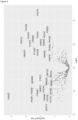
- Figure 2 shows a comparison of T1 to T0 in complete responder (CR).
- the proteins show significant changes in their relative intensity (red dots). Proteins showing a significant downregulation in T1 compared to T0 are listed in Table 4 below. Proteins showing a significant upregulation in T1 compared to T0 are listed in Table 5 below.
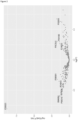
- Figure 3 shows a comparison of T1 to T0 in non-responder post-op (NR).
- the proteins show significant changes in their relative intensity (red dots). Proteins showing a significant downregulation in T1 compared to T0 are listed in Table 6 below. Proteins showing a significant upregulation in T1 compared to T0 are listed in Table 7 below.
- Figure 4 shows a comparison of T3 to T0 in complete responder (CR).
- the proteins show significant changes in their relative intensity (red dots). Proteins showing a significant downregulation in T3 compared to T0 are listed in Table 8 below. Proteins showing a significant upregulation in T3 compared to T0 are listed in Table 9 below.
- Figure 5 shows a comparison of T3 to T0 in non-responder post-op (NR).
- the proteins show significant changes in their relative intensity (red dots). Proteins showing a significant downregulation in T1 compared to T0 are listed in Table 10 below. Proteins showing a significant upregulation in T1 compared to T0 are listed in Table 11 below.
- Figure 6 shows the relative Intensity of the HGF receptor over time, in comparison to the control (Ctrl) cohort. Over time, there is a significant decrease in the relative intensity of the HGF receptor at timepoint T1 in the CR group compared to stable behaviour in the NR group.
- Figure 7 shows the relative Intensity of N-cadherin over time, in comparison to the control (Ctrl) cohort.
- An inverse behaviour between the groups CR and NR over time can be seen.
- the relative intensity at timepoint t1 decreased in the NR group.
- Figure 8 shows a comparison of NR at T1 vs CR at T1; with the significant change in relative intensity shown as red dot (see also Table 12 below).
- Figure 9 shows the relative intensity of centrosomal protein 192 kDa over time, in comparison to the control (Ctrl) group. There is a decrease in the relative intensity at timepoint T3 in the CR group. The level of the relative intensity is constant over timepoint in the group of NR.
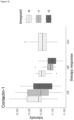
- Figure 10 shows the relative intensity of contactin-1 over time, in comparison to the control (Ctrl) group. There is a decrease at timepoint T3 in the group of NR. The level of the relative intensity is constant over time in the CR group.
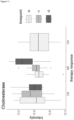
- Figure 11 shows the relative intensity of cholinesterase over time, in comparison to to the control group. Over time there is an upregulation of the relative intensity at timepoint T3 in the group of NR. In the CR group, the relative intensity remains constant.
- the present inventors were also able to determine a tendency towards inverse regulation between the groups CR and NR.
- the listed candidates can provide information about the pCR prognosis and thus lead to an individual therapy adjustment.
Landscapes
- Health & Medical Sciences (AREA)
- Life Sciences & Earth Sciences (AREA)
- Immunology (AREA)
- Engineering & Computer Science (AREA)
- Molecular Biology (AREA)
- Biomedical Technology (AREA)
- Chemical & Material Sciences (AREA)
- Hematology (AREA)
- Urology & Nephrology (AREA)
- Biotechnology (AREA)
- Microbiology (AREA)
- Cell Biology (AREA)
- Food Science & Technology (AREA)
- Medicinal Chemistry (AREA)
- Physics & Mathematics (AREA)
- Analytical Chemistry (AREA)
- Biochemistry (AREA)
- General Health & Medical Sciences (AREA)
- General Physics & Mathematics (AREA)
- Pathology (AREA)
- Investigating Or Analysing Biological Materials (AREA)
- Medicines That Contain Protein Lipid Enzymes And Other Medicines (AREA)
Abstract
Description
- Still, breast cancer represents the most common cancer type among women in Germany and worldwide. Every eighth woman in Germany gets the diagnosis of breast cancer in her lifetime (incidence of 165 women per 100 000). Even if the mortality rate has decreased over the last years, there is still a standardized death rate of 22,8, so that breast cancer is the fifth common cause of death in Germany. Moreover, between the age of 25 and 49 it is even the most common cause of death for women (5).
- A curative therapy of breast cancer includes the removal of the cancer (R0 resection), the administration of cytostatic and if necessary, endocrine, and targeted antibody therapy. Moreover, a postoperative, local radiotherapy after breast-conserving surgery (BCS) is recommended (8).
- Regarding overall survival neoadjuvant chemotherapy (NACT) is equivalent to adjuvant chemotherapy. Therapy-decision depends on subtype, grading, progress, and age of the patient. Indications for a NACT are lymphangiosis carcinomatosa, locally advanced carcinoma, inoperability. If the same chemotherapy regimen is recommended for adjuvant as neoadjuvant therapy, NACT should be given preference (8). However, NACT can lead to an improvement of operability, an increased rate of BCS, and in patients with triple-negative breast cancer (TNBC) and pathological complete remission (pCR), to an improvement of long-term clinical prognosis. To achieve pathological complete remission, response to NACT is essential (1).
- Preoperative the effect of the cytotoxic therapy on the carcinoma is documented with the help of clinical examination and imaging such as sonography, MRI, PET-CT. An early response (a reduction in tumour size) to chemotherapy has proven to be a favourable marker for achieving a pCR (3). NACT offers the possibility to monitor response to possibly adjust the therapy regimen. Early discrimination between patients who respond to the therapy (responders) and those who do not respond (non-responders) is therefore essential for being able to adapt therapy individually (4).
- Since the clinical methods to monitor response to neoadjuvant breast cancer therapy, preferably NACT, described are either dependent on the examiner and based on a tumour size reduction, which sometimes occurs with some delay, or not able to reliably distinguish responders from non-respondents with a sufficient degree of certainty and/or at an early stage in the NACT, there is a need for a further method which can help to distinguish responders from non-respondents at an early stage.
- The present inventors investigated serum samples of breast cancer patients and found that the proteins N-cadherin, hepatocyte growth factor receptor (HGFR), centrosomal protein of 192 kDa (Cep192), contactin-1, and cholinesterase displayed changes in serum protein level in breast cancer patients undergoing neoadjuvant breast cancer therapy, relative to the level in a comparative sample. Surprisingly, these changes were indicative of a subject being a responder or a non-responder to neoadjuvant breast cancer therapy. Remarkably, such changes in serum protein level for some marker proteins could be observed as early as 4 to 6 weeks after start of the neoadjuvant breast cancer therapy, thus allowing for discrimination between responders and non-responders to neoadjuvant breast cancer therapy.
- Similarly, the present inventors found that serum protein levels of certain immunoglobulin-components changed in serum from patients undergoing neoadjuvant breast cancer therapy, relative to a comparative sample, which changes surprisingly were also indicative of the subject being a responder or a non-responder to neoadjuvant breast cancer therapy.
- Thus, determination of the level of the five marker proteins N-cadherin, HGFR, Cep192, contactin-1, and cholinesterase, as well as the immunoglobulin-components, in the serum samples has the advantage of allowing for a specific discrimination between responders and non-responders to neoadjuvant breast cancer therapy, early in the course of the neoadjuvant treatment regimen and with good consistency.
- Furthermore, the present inventors surprisingly found that the finding of a subject being a responder using one or more of the above-mentioned marker proteins was predictive of the subject, after completion of neoadjuvant breast cancer therapy, preferably NACT, achieving a pathological complete remission (pCR).
- The present invention therefore relates to the following embodiments.
- [1] A method for determining whether a subject is a responder or a non-responder to breast cancer therapy, preferably neoadjuvant breast cancer therapy, comprising determining the level of one or more marker proteins selected from the group consisting of N-cadherin; hepatocyte growth factor receptor (HGFR); centrosomal protein of 192 kDa (Cep192); contactin-1; cholinesterase; one or more immunoglobulin-components, preferably selected from the group consisting of Immunoglobulin kappa constant, Immunoglobulin kappa variable 2-30, Immunoglobulin lambda-
like polypeptide 5, Ig-like domain-containing protein, Immunoglobulin heavy constant mu, Immunoglobulin kappa variable 2-40, Immunoglobulin lambda variable 7-46, Immunoglobulin lambda variable 8-61, and combinations thereof; and combinations thereof,- a) in one or more serum samples of a subject undergoing neoadjuvant breast cancer therapy; and
- b) in a comparative serum sample of that subject, or a comparative pooled serum sample from healthy subjects, or a comparative pooled serum sample from subjects suffering from breast cancer;
- [2] The method of item [1], wherein the one or more marker proteins comprises N-cadherin, preferably N-cadherin and HGFR.
- [3] The method of item [1] or [2], wherein the one or more marker proteins comprises Cep192, contactin-1 and/or cholinesterase.
- [4] The method of any of the preceding items, wherein the one or more marker proteins comprises one or more immunoglobulin-components, selected from the group consisting of Immunoglobulin kappa constant, Immunoglobulin kappa variable 2-30, Immunoglobulin lambda-
like polypeptide 5, Ig-like domain-containing protein, Immunoglobulin heavy constant mu, Immunoglobulin kappa variable 2-40, Immunoglobulin lambda variable 7-46, Immunoglobulin lambda variable 8-61, and combinations thereof. - [5] The method of any of the preceding items, wherein the comparative serum sample of b) is a comparative serum sample of that subject, or a comparative pooled serum sample from healthy subjects.
- [6] The method of any of items [1] to [5], wherein the comparative serum sample of b) is a comparative serum sample of that subject, which preferably is taken before or at the start of the neoadjuvant breast cancer therapy, preferably neoadjuvant chemotherapy (NACT).
- [7] The method of any of items [1] to [5], wherein the comparative serum sample of b) is a comparative pooled serum sample from healthy subjects; and wherein optionally the one or more marker proteins comprises, or consists of, N-cadherin.
- [8] A method for determining whether a subject is a responder or a non-responder to breast cancer therapy, preferably neoadjuvant breast cancer therapy, comprising determining the level of one or more marker proteins selected from the group consisting of N-cadherin, hepatocyte growth factor receptor (HGFR), centrosomal protein of 192 kDa (Cep192), contactin-1, cholinesterase, and combinations thereof,
- a) in one or more serum samples of a subject undergoing neoadjuvant breast cancer therapy; and
- b) in a comparative serum sample of that subject, or a comparative pooled serum sample from healthy subjects, or a comparative pooled serum sample from subjects suffering from breast cancer, preferably in a comparative serum sample of that subject;
- [9] A method for determining whether a subject is a responder or a non-responder to breast cancer therapy, preferably neoadjuvant breast cancer therapy, comprising determining the protein level of one or more immunoglobulin-components, preferably selected from the group consisting of Immunoglobulin kappa constant, Immunoglobulin kappa variable 2-30, Immunoglobulin lambda-
like polypeptide 5, Ig-like domain-containing protein, Immunoglobulin heavy constant mu, Immunoglobulin kappa variable 2-40, Immunoglobulin lambda variable 7-46, Immunoglobulin lambda variable 8-61, and combinations thereof,- a) in one or more serum samples of a subject undergoing neoadjuvant breast cancer therapy; and
- b) in a comparative serum sample of that subject, or a comparative pooled serum sample from healthy subjects, or a comparative pooled serum sample from subjects suffering from breast cancer, preferably in a comparative serum sample of that subject;
- [10] The method according to any of the preceding items, wherein the neoadjuvant breast cancer therapy comprises, or consists of, administration of neoadjuvant chemotherapy (NACT); administration of neoadjuvant endocrine therapy; administration of neoadjuvant immunotherapy: and/or neoadjuvant radiotherapy.
- [11] The method according to any of the preceding items, wherein neoadjuvant breast cancer therapy comprises, or consists of, administration of anthracyclines such as doxorubicin (adriamycin), epirubicin, daunorubicin, valrubicin, idarubicin, mitoxantrone, daunorubicin and dexrazoxan; taxanes such as paclitaxel, docetaxel, nab paclitaxel, and cabazitaxel; cyclophosphamid; fluoropyrimidines, such as 5-fluorouracil and 5-deoxyfluorouridine; methotrexate; Lapatinib; Trastuzumab; Bevacizumab; Pertuzumab; ixabepilone; eribulin; platinum such as carboplatin; radiotherapy; and endocrine therapy, such as tamoxifen, goserelin acetate, aromatase inhibitors such as anastrozole, exemestane and letrozole, fulvestrant; and combinations thereof; which is optionally followed by surgery of the tumour.
- [12] The method according to any of the preceding items, wherein neoadjuvant breast cancer therapy comprises, or consists of, administration of neoadjuvant chemotherapy (NACT), which is optionally followed by surgery (resection).
- [13] The method according to item [12], wherein the neoadjuvant breast cancer therapy comprises, or consists of a NACT lasting for 18 to 24, preferably 20 to 24 weeks.
- [14] The method according to item [12] or [13], wherein the neoadjuvant chemotherapy (NACT) comprises, or consists of, administration of an anthracycline, such as doxorubicin (adriamycin), epirubicin, daunorubicin, valrubicin, idarubicin, mitoxantrone, daunorubicin and dexrazoxane, preferably epirubicin, optionally in combination with cyclophosphamide and/or a fluoropyrimidine, in combination or sequentially administered with a taxane, such as paclitaxel, nab paclitaxel, docetaxel, and cabazitaxel, preferably paclitaxel (or, instead of a taxane alone, a combination of a taxane, like paclitaxel, with a platinum analog or platinum-based analog such as cisplatin, oxaliplatin and carboplatin, preferably carboplatin, for example in case of TNBC); wherein the NACT is optionally combined with Trastuzumab and/or Pertuzumab.
- [15] The method according to any of items [12] to [14], wherein the NACT comprises, or consists of, administration of epirubicin and/or cyclophosphamide, and paclitaxel, administered in combination or sequentially with paclitaxel; preferably involving administration of epirubicin and/or cyclophosphamid one dose either every two or every three weeks (i.e. administration of a dose of epirubicin and/or cyclophosphamid followed by no administration/treatment for two weeks or three weeks), preferably for 3 to 6, more preferably for 4, doses, followed by administration of paclitaxel preferably one dose per week (i.e. administration of a dose of paclitaxel followed by no administration/treatment for one week), preferably for 10 to 15, more preferably for 12, doses.
- [16] The method according to any of items [12] to [15], wherein the NACT comprises or consists of administration of epirubicin (preferably 90 mg/m2) and cyclophosphamid (preferably 600 mg/m2) one dose either every two or every three weeks for 4 doses, followed by one dose per week of paclitaxel (preferably 80 mg/m2) for 12 doses.
- [17] The method according to any of the preceding items,
- wherein the comparative serum sample of b) is a comparative serum sample of that subject taken before or at the start of the neoadjuvant breast cancer therapy; and/or
- wherein, if the marker protein is N-Cadherin or HGFR, a serum sample of a) is a sample taken about 2 to 12 weeks, preferably about 2 to 8 weeks, more preferably about 2 to 6 weeks, even more preferably about 4 to 6 weeks, after start of the neoadjuvant breast cancer therapy, preferably after administration of a second dose but before administration of a third dose of NACT, more preferably just before administration of a third dose of NACT; and/or
- wherein, if the marker protein is Cep192, contactin-1, or cholinesterase, the serum samples of a) is a sample taken about 6 to 22 weeks, preferably about 8 to 22 weeks, more preferably about 8 to 20 weeks, even more preferably about 9 to 18 weeks, even more preferably about 10 to 18 weeks, even more preferably about 11 to 18 weeks, even more preferably about 12 to 18 weeks, even more preferably about 13 to 18 weeks, even more preferably about 14 to 18 weeks, after start of the neoadjuvant breast cancer therapy, preferably after administration of a sixth dose but before administration of an eleventh dose of NACT, more preferably just before administration of a eleventh dose of NACT.
- [18] The method according to any of the preceding items, wherein, if the marker protein is N-Cadherin, HGFR, Immunoglobulin kappa constant, or Immunoglobulin lambda-
like polypeptide 5, a serum sample of a) is a sample taken after start of the the neoadjuvant breast cancer therapy (i.e. after administration of a first dose of the neoadjuvant breast cancer therapy) but before the sixth dose (i.e. before administration of the sixth dose); preferably after the first dose but before the fifth dose; more preferably after the first dose but before the fourth dose, or after the first dose but before the third dose; even more preferably after the second dose but before the fourth dose; even more preferably after the second dose but before the third dose (i.e. before administration of the third dose), e.g. just prior to administration of the third dose, of neoadjuvant breast cancer therapy, preferably NACT. - [19] The method according to any of the preceding items, wherein, if the marker protein is Cep192, contactin-1, cholinesterase, Ig-like domain-containing protein, Immunoglobulin heavy constant mu, Immunoglobulin kappa variable 2-40, Immunoglobulin lambda variable 7-46, or Immunoglobulin lambda variable 8-61, a serum sample of a) is a sample taken after the third dose (i.e. after administration of the third dose) but before the twentieth dose (i.e. before administration of the twentieth dose); or after the fourth dose (i.e. after administration of the fourth dose) but before the twentieth dose (i.e. before administration of the twentieth dose); or after administration of the fourth dose but before administration of the eighteenth dose; preferably after administration of the fifth dose but before administration of the eighteenth dose; more preferably after administration of the fifth dose but before administration of the seventeenth dose, or after administration of the fifth dose but before administration of the sixteenth dose; even more preferably after administration of the fifth dose but before administration of the fifteenth dose, or after administration of the sixth dose but before administration of the fifteenth dose; even more preferably after the fifth dose (i.e. administration of the fifth dose) but before the fourteenth dose, or after administration of the sixth dose but before the administration of the fourteenth dose; even more preferably after the sixth dose but before the thirteenth dose; even more preferably after administration of the seventh dose but before the administration of the thirteenth dose, or after administration of a eighth dose but before administration of a thirteenth dose; even more preferably after administration of the seventh dose but before administration of the twelfth dose, or after administration of the seventh dose but before administration of the eleventh dose; even more preferably after administration of the eighth dose but before administration of the twelfth dose; even more preferably after administration of the eighth dose but before administration of the eleventh dose; even more preferably after administration of the nineth dose but before administration of the eleventh dose; even more preferably after the tenth dose (i.e. after administration of the tenth dose), but before the eleventh dose (i.e. before administration of the eleventh dose), e.g. just prior to administration of the eleventh dose, of neoadjuvant breast cancer therapy, preferably NACT.
- [20] The method according to any of the preceding items, wherein, if the marker protein is Immunoglobulin kappa variable 2-30, a serum sample of a) is a sample taken after the first dose (i.e. after administration of the first dose) but before the twentieth dose (i.e. before administration of the twentieth dose); preferably after administration of the first dose but before administration of the eighteenth dose; more preferably after administration of the second dose but before administration of the seventeenth dose, or after administration of the second dose but before the sixteenth dose; more preferably after administration of the second dose but before administration of the fifteenth dose; even more preferably after administration of the second dose but before administration of the fourteenth dose; even more preferably after administration of the second dose but before administration of the thirteenth dose; even more preferably after administration of the second dose but before administration of the twelfth dose; even more preferably after administration of the second dose but before administration of the eleventh cycle, e.g. just prior to administration of the third dose or just prior to administration of the eleventh dose, of neoadjuvant breast cancer therapy, preferably NACT.
- [21] The method according to any of the preceding claims,
- wherein if the marker protein is N-Cadherin, HGFR, Immunoglobulin kappa constant, or Immunoglobulin lambda-
like polypeptide 5, a serum sample of a) is a sample taken after the second dose (i.e. after administration of the second dose) but before the fifth dose (i.e. before administration of the fifth dose), preferably after administration of the second dose but before the third dose (i.e. before administration of the third dose), more preferably just prior to administration of the third dose, of neoadjuvant breast cancer therapy preferably NACT; and/or - wherein if the marker protein is Cep192, contactin-1, cholinesterase, Ig-like domain-containing protein, Immunoglobulin heavy constant mu, Immunoglobulin kappa variable 2-40, Immunoglobulin lambda variable 7-46, or Immunoglobulin lambda variable 8-61, the serum samples of a) is a sample taken after the fifth dose (i.e. after administration of the fifth dose) but before the fourteenth dose (i.e. before administration of the fourteenth dose), or a sample taken after administration of a sixth dose but before administration of a fourteenth dose, preferably after administration of an eighth dose but before administration of a thirteenth dose, more preferably after administration of the eighth dose but before the eleventh dose (i.e. before administration of the eleventh dose), even more preferably a sample taken after administration of a tenth dose but before administration of a eleventh dose, even more preferably just prior to administration of the eleventh dose, of neoadjuvant breast cancer therapy, preferably NACT; and/or
- wherein if the marker protein is Immunoglobulin kappa variable 2-30, the serum samples of a) is a sample taken after the first dose (i.e. after administration of the first dose) but before the fourteenth dose (i.e. before administration of the thirteenth dose), or a sample taken after administration of a first dose but before administration of administration of a thirteenth dose, preferably after administration of the second dose but before the twelfth dose, more preferably after administration of the second dose but before the eleventh dose, for example just prior to administration of the third dose, or just prior to administration of the eleventh dose of neoadjuvant breast cancer therapy, preferably NACT.
- wherein if the marker protein is N-Cadherin, HGFR, Immunoglobulin kappa constant, or Immunoglobulin lambda-
- [22] The method according to any of the preceding items, wherein, relative to the level of the respective protein marker in the comparative serum sample of b),
- i. an increase in the protein level of N-cadherin in a serum samples of a) is indicative of the subject being a responder, and a decrease or a constant protein level of N-cadherin is indicative of the subject being a non-responder; and/or
- ii. a decrease in the protein level of HGFR in a serum samples of a) is indicative of the subject being a responder; and a constant protein level or an increase is indicative of the subject being a non-responder; and/or
- iii. a decrease in the protein level of Cep192 in a serum samples of a) is indicative of the subject being a responder, and a constant protein level or an increase is indicative of the subject being a non-responder; and/or
- iv. a constant protein level of contactin-1 in a serum samples of a) or an increase is indicative of the subject being a responder, and a decrease is indicative of the subject being a non-responder; and/or
- v. a constant protein level of cholinesterase in a serum samples of a) or a decrease is indicative of the subject being a responder, and an increase is indicative of the subject being a non-responder.
- [23] The method according to any of the preceding items, wherein relative to the level of the respective protein marker in the comparative serum sample of b), a decrease in the protein level of one or more immunoglobulin-components in one or more serum samples of a) is indicative of the subject being a responder, and a constant protein level or an increase is indicative of the subject being a non-responder.
- [24] The method according to any of the preceding items, wherein if the marker protein is Immunoglobulin kappa constant or Immunoglobulin lambda-
like polypeptide 5, a serum sample of a) is a sample taken about 2 to 12 weeks, preferably about 2 to 8 weeks, more preferably about 2 to 6 weeks, even more preferably about 4 to 6 weeks, after start of the neoadjuvant breast cancer therapy, preferably just before administration of a third dose of NACT. - [25] The method according to any of the preceding items, wherein if the marker protein is Ig-like domain-containing protein, Immunoglobulin heavy constant mu, Immunoglobulin kappa variable 2-40, Immunoglobulin lambda variable 7-46, or Immunoglobulin lambda variable 8-61, the serum samples of a) is a sample taken about 6 to 22 weeks, preferably about 8 to 22 weeks, more preferably about 8 to 20 weeks, even more preferably about 9 to 18 weeks, even more preferably about 10 to 18 weeks, even more preferably about 11 to 18 weeks, even more preferably about 12 to 18 weeks, even more preferably about 13 to 18 weeks, even more preferably about 14 to 18 weeks, after start of the neoadjuvant breast cancer therapy, preferably just before administration of an eleventh dose of NACT.
- [26] The method according to any of the preceding items, wherein if the marker protein is Immunoglobulin kappa variable 2-30, the serum samples of a) is a sample taken about 2 to 22 weeks, preferably about 2 to 20 weeks, more preferably about 2 to 18 weeks, even more preferably about 4 to 18 weeks, for example about 2 to 6 weeks or about 4 to 6 weeks, or about 12 to 18 weeks or about 14 to 18 weeks, after start of the neoadjuvant breast cancer therapy.
- [27] A method for determining whether a subject is a responder or a non-responder to neoadjuvant breast cancer therapy, comprising determining the level of one or more marker proteins in serum samples from the subject, wherein the change in level of one or more marker proteins in one or more serum samples over the course of neoadjuvant breast cancer therapy, relative to the level of the one or more marker proteins in a comparative serum sample, is indicative of the subject being a responder or a non-responder to neoadjuvant breast cancer therapy, wherein the one or more marker proteins are selected from the group consisting of N-cadherin, HGFR, Cep192, contactin-1, cholinesterase and one or more immunoglobulin-components, preferably selected from the group consisting of Immunoglobulin kappa constant, Immunoglobulin kappa variable 2-30, Immunoglobulin lambda-
like polypeptide 5, Ig-like domain-containing protein, Immunoglobulin heavy constant mu, Immunoglobulin kappa variable 2-40, Immunoglobulin lambda variable 7-46, Immunoglobulin lambda variable 8-61. - [28] The method of any of the preceding items, wherein the protein level is determined by liquid chromatography-tandem mass spectrometry (LC-MS/MS), e.g. high pH reversed-phase high performance liquid chromatography (RP-HPLC) followed by tandem mass spectrometry; and/or enzyme-linked immunosorbent assay (ELISA); and/or western blot; and/or targeted quantitative proteomics.
- [29] The method of any of the preceding items, wherein the protein level is determined by liquid chromatography-tandem mass spectrometry (LC-MS/MS); and wherein optionally, before determining the protein level by LC-MS/MS, the serum samples are depleted of one or more, preferably at least five, more preferably at least seven, even more preferably 10 to 22, e.g. 60, high-abundance serum proteins.
- [30] The method of any one of the preceding items, wherein the subject is a female human.
- [31] Method according to any of the preceding items, wherein the subject suffers from breast cancer selected from the group consisting of lymphangiosis carcinomatosa, locally advanced breast carcinoma/cancer (LABC), and inoperable breast cancer.
- [32] Method according to any of the preceding items, wherein the subject suffers from Luminal A breast cancer; Luminal B [human epidermal growth factor receptor 2-negative] (LumB[HER2-]) breast cancer; Luminal B [HER2+] breast cancer; triple negative breast cancer (TNBC); or human epidermal growth factor receptor 2 (HER2) positive (non-luminal) breast cancer.
- [33] Method according to any of the preceding items, wherein the subject suffers from triple negative breast cancer (TNBC); Luminal B [human epidermal growth factor receptor 2-negative] (LumB[HER2-]) breast cancer; or human epidermal growth factor receptor 2 (HER2) positive (non-luminal) breast cancer; preferably TNBC or LumB[HER2-] breast cancer.
- [34] Method according to any of the preceding items, wherein the subject suffers from invasive ductal carcinoma "not otherwise specified" and ICD subtypes (e.g. mixed, pleomorphic, osteoclast types); invasive lobular carcinoma (ILC); Paget's disease of the nipple; inflammatory breast cancer; phyllodes tumours of the breast; tubular carcinoma; medullary carcinoma; alveolar carcinoma; solid variant carcinoma; signet ring cell carcinoma; metaplastic carcinoma; mucinous carcinoma; neuroendocrine tumours; oncocytic subtypes; invasive papillary carcinoma; cribriform carcinoma; or invasive apocrine carcinoma; locally advanced breast cancer; or metastatic breast cancer; or combinations thereof.
- [35] The method according to any of the preceding claims, wherein a responder is a subject, who is responsive to the cancer therapy, particularly the breast cancer therapy, more particularly the neoadjuvant breast cancer therapy; and a non-responder is a subject, who is not responsive to the cancer therapy, particularly the breast cancer therapy, more particularly the neoadjuvant breast cancer therapy.
- [36] The method according to any of the preceding items, wherein a responder to neoadjuvant breast cancer therapy is characterized by a decrease in the size of one or more tumours and/or lesions, and/or in the extent of the cancer in the breast, and/or a decrease in the cancer stage; and a non-responder to neoadjuvant breast cancer therapy is characterized by absence of a decrease in the size of any of the tumours or lesions, in the extent of the cancer in the breast, and in the cancer stage, e.g. at the time when the serum sample of a) was taken.
- [37] The method according to any of the preceding items, wherein a responder to neoadjuvant breast cancer therapy is characterized by a decreased tumour size and/or stage, e.g. at the time when the serum sample of a) was taken; and a non-responder to neoadjuvant breast cancer therapy is characterized by absence of a decrease in tumour size or stage, e.g. at the time when the serum sample of a) was taken.
- [38] The method according to any of the preceding items, wherein the term "indicative" means that there is an at least 75 %, preferably at least 80 %, more preferably at least 85 %, even more preferably at least 90 %, even more preferably at least 95 %, or 96 %, or 97%, or 98%, or 99 %, or 99.5 %, or 99.9 %, or 99.99 %, or 99.999 % certainty of the subject being responsive to the neoadjuvant breast cancer therapy, preferably the NACT.
- [39] The method of any one of the preceding items, wherein the finding of the subject being a responder is predictive of the subject, after completion of neoadjuvant breast cancer therapy, preferably NACT, achieving a pathological complete remission (pCR).
- [40] The method of item [39], wherein whether a patient has achieved a pathological complete remission (i.e., whether the patient is a complete responder) is assessed, upon completion of the neoadjuvant breast cancer therapy, preferably the NACT, post-operatively on the resected material.
- [41] The method according to any of the preceding items, wherein a responder to neoadjuvant breast cancer therapy is characterized by a decrease in the size of one or more tumours and/or lesions, and/or in the extent of the cancer in the breast, and/or a decrease in the cancer stage, after completion of neoadjuvant breast cancer therapy; and a non-responder to neoadjuvant breast cancer therapy is characterized by absence of a decrease in the size of any of the tumours or lesions, in the extent of the cancer in the breast, and in the cancer stage, after completion of neoadjuvant breast cancer therapy.
- [42] A method for predicting whether or not a subject, after completion of neoadjuvant breast cancer therapy, achieves a pathological complete remission (pCR), comprising determining the level of one or more marker proteins selected from the group consisting of N-cadherin; hepatocyte growth factor receptor (HGFR); centrosomal protein of 192 kDa (Cep192); contactin-1; cholinesterase; one or more immunoglobulin-components, preferably selected from the group consisting of Immunoglobulin kappa constant, Immunoglobulin kappa variable 2-30, Immunoglobulin lambda-
like polypeptide 5, Ig-like domain-containing protein, Immunoglobulin heavy constant mu, Immunoglobulin kappa variable 2-40, Immunoglobulin lambda variable 7-46, Immunoglobulin lambda variable 8-61, and combinations thereof; and combinations thereof,- a) in one or more serum samples of a subject undergoing neoadjuvant breast cancer therapy; and
- b) in a comparative serum sample of that subject;
- [43] The method of any of items [39] to [42], wherein the term "predictive" means that there is an at least 65 %, preferably at least 70 %, more preferably at least 75 %, even more preferably at least 80 %, even more preferably at least 85 %, even more preferably at least 90 %, even more preferably at least 95 %, or 96 %, or 97%, or 98%, or 99 %, or 99.5 % likelihood of the subject, after completion of neoadjuvant breast cancer therapy, preferably NACT, achieving a pathological complete remission (pCR).
-
-
Figure 1 : Methodology applied for serum proteome analysis. -
Figure 2 : Comparison of T1 to T0 in complete responders (CR). The proteins show significant changes in their relative intensity (red dots). -
Figure 3 : Comparison of T1 to T0 in Non-Responders (NR). The proteins show significant changes in their relative intensity (red dots). -
Figure 4 : Comparison of T3 and T0 in CR. The proteins show significant changes in their relative intensity (red dots). -
Figure 5 : Comparison of T3 to T0 in NR. The proteins show significant changes in their relative intensity (red dots). -
Figure 6 : Relative intensity (arbitrary units) of the HGF receptor (HGFR) over at time in comparison to the control group. -
Figure 7 : Relative Intensity (arbitrary units) of N-cadherin overtime compared to the control group. -
Figure 8 : Comparison NR at T1 vs CR at T1 (arbitrary units); significant change (log(FC)=log fold change) in relative intensity (red dot) -
Figure 9 : Relative Intensity (arbitrary units) ofcentrosomal protein 192 kDa (Cep192) over time in comparison to the control group. -
Figure 10 : Relative Intensity (arbitrary units) of contactin-1 over time compared to the control group. -
Figure 11 : Relative Intensity (arbitrary units) of cholinesterase over time compared to the control group. - The present invention relates to methods for determining whether a subject is a responder or a non-responder to breast cancer therapy, in particular to neoadjuvant breast cancer therapy; and for predicting a favorable outcome of a cancer therapy, in particular neoadjuvant breast cancer therapy, especially for predicting whether or not a subject, after completion of neoadjuvant breast cancer therapy, is likely to achieve a pathological complete remission (pCR).
- In a first aspect, the present invention relates to a method for determining whether a subject is a responder or a non-responder to neoadjuvant breast cancer therapy comprising determining the level of one or more marker proteins selected from the group consisting of N-cadherin; hepatocyte growth factor receptor (HGFR); centrosomal protein of 192 kDa (Cep192); contactin-1; cholinesterase; one or more immunoglobulin-components, preferably selected from the group consisting of Immunoglobulin kappa constant, Immunoglobulin kappa variable 2-30, Immunoglobulin lambda-
like polypeptide 5, Ig-like domain-containing protein, Immunoglobulin heavy constant mu, Immunoglobulin kappa variable 2-40, Immunoglobulin lambda variable 7-46, and Immunoglobulin lambda variable 8-61; and combinations thereof, - a) in one or more serum samples of a subject undergoing neoadjuvant breast cancer therapy; and
- b) in a comparative serum sample of that subject, or a comparative pooled serum sample from healthy subjects, or a comparative pooled serum sample from subjects suffering from breast cancer;
- As understood by those skilled in the art, by increasing the number of the above marker proteins, for which the level in the serum samples of a) and b) is to be determined using the methods of the invention, the certainty of the subject indeed being responsive or not responsive (i.e. of "of the subject being a responder or a non-responder") to the neoadjuvant breast cancer therapy, preferably the NACT, may increase. According to a particular embodiment, the term "indicative" means that there is an at least 75 %, preferably at least 80 %, more preferably at least 85 %, even more preferably at least 90 %, even more preferably at least 95 %, or 96 %, or 97%, or 98%, or 99 %, or 99.5 %, or 99.9 %, or 99.99 %, or 99.999 % certainty (likelihood) of the subject being responsive to the neoadjuvant breast cancer therapy, preferably the NACT.
- The methods of the invention described herein are carried out in vitro. The term "in vitro" has its usual meaning in the art, preferably referring to methods that are carried out on serum samples outside the body of the subject from whom the serum samples were obtained.
- Herein, a "subject" or "patient" is preferably a human subject or patient, more preferably a female human subject or patient. The subject is a "cancer patient," i.e. one who is suffering from one or more symptoms of breast cancer. According to a preferred embodiment the subject is human, preferably a female human.
- The terms "cancer" and "cancerous" are known in the art and typically refer to or describe the physiological condition in mammals in which a population of cells are characterized by unregulated cell growth. An "advanced" cancer is one which has spread outside the site or organ of origin, either by local invasion or metastasis. Accordingly, the term "advanced" cancer includes both locally advanced and metastatic disease. The term "invasive" cancer refers to cancer that has spread beyond the primary tumour in which it developed, and is growing in surrounding, healthy tissues. Invasive cancer is sometimes referred to as infiltrating cancer. A "locally recurrent" cancer is cancer that returns after treatment in the same place as a previously treated cancer. "Early-stage breast cancer" as used herein preferably refers to breast cancer that has not spread beyond the breast or the axillary lymph nodes. Such cancer is generally treated with neoadjuvant or adjuvant therapy. "Metastatic" cancer refers to cancer which has spread from one part of the body (e.g. the breast) to another part of the body.
- According to one embodiment, the subject suffers from locally advanced breast cancer (LABC). "Locally advanced breast cancer/carcinoma" or "LABC", which preferably in the absence of distant metastasis, comprises tumours more than 5 cm in size with regional lymphadenopathy (N1-3), and/or tumours of any size with direct extension to the chest wall or skin, or both, regardless of regional lymphadenopathy; and/or is characterized by the presence of regional lymphadenopathy (clinically fixed or matted axillary lymph nodes, or any of infraclavicular, supraclavicular, or internal mammary lymphadenopathy) regardless of tumour stage.
- The term "breast cancer" is known in the art and preferably refers to a cancer that starts in the breast, usually in the inner lining of the milk ducts or lobules. There are different types of breast cancer, with different stages (spread), aggressiveness, and genetic makeup. The classification of breast cancer (see e.g. (8)) includes a pathological assessment of the size, infiltration into the surrounding tissue (lymphatic system, vessels, perineural sheaths) and distant metastasis. Furthermore, the histological degree of differentiation and the proliferation fraction (Ki67 expression) are important factors in assessing the prognosis and the response to systemic therapy. Using immunohistochemical staining (estrogen, progesterone, androgen receptor positivity), breast cancer can be divided into hormone receptor negative and positive subtypes; this can be used to adapt the therapy. The Her2 status even enables targeted antibody therapy in the case of Her2 positivity.
- For example, Union International Cancer Control (UICC) TNM Classification of Malignant Tumours, 8th Edition, December 2016, Wiley (ISBN: 978-1-119-26357-9), or the same from the American Joint Committee on Cancer (AJCC), is suitable as a standard for classifying the extent of spread of breast cancer in a subject and for determining the breast cancer stage (cancer staging).
- Histological grading involves classification into three grades (Grades I, II, and III), wherein the tumour cells for Grade I (GI) are well differentiated; Grade II (GII) are moderately differentiated; Grade III (GIII) are poorly differentiated (8).
- Classification of breast cancer into molecular subtypes using biomarkers is known in the art, and includes for example determination whether the breast cancer is progesterone receptor positive (PR+), or progesterone receptor negative (PR-), e.g. as detected by immunohistochemistry or ligand binding assays; whether the breast cancer is estrogen receptor positive (ER+), or estrogen receptor negative (ER-), e.g. as detected by immunohistochemistry or ligand binding assays; whether the breast cancer is Human epidermal growth factor receptor 2 (HER2) positive (HER2+), or HER2 negative (HER2-), e.g. as detected by observable HER2 gene amplification after in situ hybridization; and whether the protein Ki-67 is expressed at high levels (Ki-67high), or at low levels. The term "negative as used above, may refer to the absence or a reduction of the respective biomarker abundance/expression, as e.g. compared to healthy tissue. A classification standard has been published for example in Goldhirsch et al, Annals of Oncology 24: 2206-2223, 2013 (see also (8)).
- Molecular subtypes of breast cancer are known in the art and include for example Luminal A breast cancer (e.g., ER+ and/or PR+, HER2-, Ki-67low, optionally GI) breast cancer; Luminal B, [HER2 positive] breast cancer (e.g., ER+, and/or PR+, HER2+, Ki67high or Ki67low, optionally GII); Luminal B [HER2 negative] breast cancer (e.g., ER+ and/or PR+, HER2-, and and Ki67high, optionally GII) breast cancer; triple negative (basal-like) breast cancer (e.g., ER-, PR-, HER-; optionally GIII); or HER2 positive (non-luminal) breast cancer (HER2-enriched breast cancer) (e.g., ER-, PR-, HER+, optionally GIII). Additionally, normal-like breast cancer (e.g., ER+ and/or PR+, HER2-, Ki-67low, GI-III) may be a further subtype.
- Breast cancer subtypes may be categorized on an immunohistochemical basis. The breast cancer may be invasive ductal carcinoma, ductal carcinoma in situ, or invasive lobular carcinoma. Preferably for histological classification the 2019 WHO Classification of Tumours of the Breast is used.
- Histological subtypes of breast cancer include, but are not limited to, invasive ductal carcinoma (IDC) "not otherwise specified" and IDC subtypes (e.g. mixed, pleomorphic, osteoclast types); invasive lobular carcinoma (ILC); Paget's disease of the nipple; inflammatory breast cancer; phyllodes tumours of the breast; tubular carcinoma; medullary carcinoma; alveolar carcinoma; solid variant carcinoma; signet ring cell carcinoma; metaplastic carcinoma; mucinous carcinoma; neuroendocrine tumours; oncocytic subtypes; invasive papillary carcinoma; cribriform carcinoma; or invasive apocrine carcinoma, locally advanced breast cancer; or metastatic breast cancer.
- In one embodiment, the subject suffers from breast cancer selected from the group consisting of lymphangiosis carcinomatosa, locally advanced carcinoma/cancer (LABC), and inoperable breast cancer.
- In another embodiment, the subject suffers from Luminal A breast cancer; Luminal B [human epidermal growth factor receptor 2-positive] (LumB[HER2+]) breast cancer; Luminal B [human epidermal growth factor receptor 2-negative] (LumB[HER2-]) breast cancer; triple negative breast cancer (TNBC); human epidermal growth factor receptor 2 (HER2) positive (non-luminal) breast cancer; or normal-like breast cancer. In another embodiment, the subject suffers from triple negative breast cancer (TNBC); Luminal B [human epidermal growth factor receptor 2-negative] (LumB[HER2-]) breast cancer; or human epidermal growth factor receptor 2 (HER2) positive (non-luminal) breast cancer; preferably TNBC or LumB[HER2-] breast cancer.
- In yet another embodiment, the subject suffers from invasive ductal carcinoma (IDC) "not otherwise specified" and IDC subtypes (e.g. mixed, pleomorphic, osteoclast types); invasive lobular carcinoma (ILC); Paget's disease of the nipple; inflammatory breast cancer; phyllodes tumours of the breast; tubular carcinoma; medullary carcinoma; alveolar carcinoma; solid variant carcinoma; signet ring cell carcinoma; metaplastic carcinoma; mucinous carcinoma; neuroendocrine tumours; oncocytic subtypes; invasive papillary carcinoma; cribriform carcinoma; or invasive apocrine carcinoma; locally advanced breast cancer; or metastatic breast cancer; or combinations thereof.
- The terms "responder" and non-responder" as used herein in the context of cancer therapy, particularly breast cancer therapy, more particularly neoadjuvant breast cancer therapy, signify that the subject is responsive or not responsive, respectively, to the cancer therapy, particularly the breast cancer therapy, more particularly the neoadjuvant breast cancer therapy.
- Responsiveness of a "responder" to (neoadjuvant) breast cancer therapy, in terms of an observable decrease in the size of one or more tumours and/or lesions, and/or in the extent of the cancer in the breast, and/or a decrease in the cancer stage, may be apparent already at the time of sample collection of one or more of the one or more serum samples, or may only become apparent by (certain) other examination methods at a later time point during the course of treatment. Responsiveness to therapy may be documented during neoadjuvant breast cancer therapy, preferably NACT, for example using breast ultrasound. In rarer cases a responsiveness may be documented by means of computed tomography (CT), magnetic resonance imaging (MRI), or mammography. After completion of (neoadjuvant) breast cancer therapy, preferably NACT, responsiveness to therapy may be documented for example by the assessment of the resected material as carried out by a pathologist.
- According to one embodiment, a "responder" to (neoadjuvant) breast cancer therapy is characterized by a decrease in the size of one or more tumours or lesions (e.g. a greater than 30 % reduction in the (preferably) greatest tumour diameter), or in the extent of the cancer in the breast (e.g. based on extent of spread and cancer staging, based on location/spread in the breast and lymph nodes or based on histological grading or histologically classification; for example using one or more parameter of the UICC/AJCC TNM staging system), or a decrease in the cancer stage (e.g. as determined by the UICC/AJCC TNM staging system), in response to treatment. In another embodiment, a "responder" is characterized by a decrease in tumour size or cancer stage. In yet another embodiment, a "responder" is characterized by a greater than 30 % reduction in (preferably) the greatest tumour diameter.
- According to one embodiment, a responder is either a "complete responder" or a "partial responder". The term "complete responder" refers to a subject showing a complete response to the breast cancer therapy, particularly the neoadjuvant breast cancer therapy, i.e. preferably referring to an absence of invasive and in situ residuals in breast and regional lymph nodes (e.g. no clinical evidence of tumour in the breast and regional lymph nodes, and/or ypTO (and preferably also ypNO) in the UICC (or AJCC) TNM staging system). More preferably a complete responder refers to a subject having achieved "pathologic complete remission (pCR)" as further specified below, for example, as assessed on resected material (preferably resected after completion of (neoadjuvant) breast cancer therapy, preferably neoadjuvant chemotherapy (NACT)).
- The term "partial responder" refers to a subject showing a partial response to the breast cancer therapy, particularly the neoadjuvant breast cancer therapy, i.e. preferably referring to a decrease in the size of one or more tumours or lesions (e.g. a greater than 30 % reduction in the (preferably) greatest tumour diameter), or in the extent of the cancer in the breast (e.g. based on extent of spread and cancer staging, based on location/spread in the breast and lymph nodes or based on histological grading or histologically classification; for example using one or more parameter of the UICC/AJCC TNM staging system), or a decrease in the cancer stage (e.g. as determined by the UICC/AJCC TNM staging system), in response to treatment, but no complete response as defined above. Alternatively, a partial responder is characterized by a greater than 30 % reduction in the (preferably) greatest tumour diameter, but no complete response as defined above.
- The term "pathologic complete remission", abbreviated as "pCR", and also referred to as "pathologic complete response" as used in the context of the present invention is not particularly limited. In the context of the present invention, the term "pCR" in breast cancer may, for example, be defined as the absence of invasive and in situ residuals in breast and regional lymph nodes (or "absence of residual invasive and in situ breast cancer"), i.e., the complete eradication of all invasive and noninvasive cancer, for example, as assessed on resected material (preferably resected after completion of (neoadjuvant) breast cancer therapy, preferably neoadjuvant chemotherapy (NACT)).
- According to a preferred definition, the term "pCR" in the context of the present invention is defined as the absence of residual invasive and in situ breast cancer, preferably on hematoxylin and eosin evaluation of a complete resected breast specimen and all sampled regional lymph nodes, preferably following completion of neoadjuvant breast cancer therapy (i.e., ypTO ypNO in the UICC (or AJCC) TNM staging system). The term "pCR" in breast cancer, in the context of the present invention, may thus preferably be understood as referring to a lack of all signs of cancer in tissue samples removed during surgery or biopsy (no tumor/ malignant cells can be detected in the resected material), as a consequence of the neoadjuvant breast cancer therapy.
- According to a specific embodiment of the present invention, the finding of the subject being a responder using the method of the present invention is predictive of the subject, after completion of neoadjuvant breast cancer therapy, achieving a pathological complete remission (pCR). As understood by those skilled in the art, by increasing the number of the above marker proteins, for which the level in the serum samples of a) and b) is to be determined using the methods of the present invention, the predictive value (or the likelihood) that a responder will achieve a pCR after completion of neoadjuvant breast cancer therapy (preferably NACT), may increase. According to specific embodiment, the term "predictive" means that if the subject is found to be a responder, there is an at least 70 %, preferably at least 75 %, more preferably at least 80 %, even more preferably at least 85 %, even more preferably at least 90 %, even more preferably at least 95 %, or 96 %, or 97%, or 98%, or 99 % likelihood of the subject, after completion of neoadjuvant breast cancer therapy, achieving a pathological complete remission (pCR).
- According to a particular embodiment, a "non-responder" to (neoadjuvant) breast cancer therapy is characterized by absence of a decrease in the size (e.g. a less than 30 % reduction) of any of the tumours or lesions, or of the greatest tumour and/or lesion (e.g. a less than 30 % reduction); in the extent of the cancer in the breast e.g. based on extent of spread and cancer staging, based on location/spread in the breast and lymph nodes or based on histological grading or histologically classification; for example using one or more parameter of the UICC/AJCC TNM staging system); and in the cancer stage (e.g. as determined by the UICC/AJCC TNM staging system). In another embodiment, a "non-responder" is characterized by absence of a decrease in tumour size and stage. In yet another embodiment, a "non-responder" is characterized by a stable disease (i.e. preferably a reduction of less than 30 % or an increase of up to 20 % in the (preferably) greatest tumour diameter) or by a progressive disease (i.e. preferably an increase of more than 20 % in the (preferably) greatest tumour diameter or the appearance of new disease).
- The term "breast cancer therapy" is not particularly limited and may for example refer to administration of an anti-tumour agent and/or radiation therapy. As used herein an "anti-tumour agent" refers to an active ingredient or drug used to treat cancer. Non-limiting examples of anti-tumour agents herein include chemotherapy agents, HER dimerization inhibitors, HER antibodies, antibodies directed against tumour associated antigens, anti-hormonal compounds, cytokines, EGFR- targeted drugs, anti-angiogenic agents, tyrosine kinase inhibitors, growth inhibitory agents and antibodies, cytotoxic agents, antibodies that induce apoptosis, COX inhibitors, farnesyl transferase inhibitors, antibodies that binds oncofetal protein CA 125, HER2 vaccines, Raf or ras inhibitors, liposomal doxorubicin, topotecan, taxane, dual tyrosine kinase inhibitors, TLK286, EMD-7200, pertuzumab, trastuzumab, erlotinib, and bevacizumab.
- A "chemotherapy" preferably refers to the use of a chemical compound useful in the treatment of cancer. Examples of chemotherapeutic agents, used in chemotherapy, include alkylating agents such as thiotepa and CYTOXAN® cyclosphosphamide; alkyl sulfonates such as busulfan, improsulfan and piposulfan; aziridines such as benzodopa, carboquone, meturedopa, and uredopa; ethylenimines and methylamelamines including altretamine, triethylenemelamine, trietylenephosphoramide, triethiylenethiophosphoramide and trimethylolomelamine; TLK 286 (TELCYTA™); acetogenins (especially bullatacin and bullatacinone); delta-9-tetrahydrocannabinol (dronabinol, MAPJNOL®); beta-lapachone; lapachol; colchicines; betulinic acid; a camptothecin (including the synthetic analogue topotecan (HYCAMTIN®), CPT-11 (irinotecan, CAMPTOSAR®), acetylcamptothecin, scopolectin, and 9-aminocamptothecin); bryostatin; callystatin; CC-1065 (including its adozelesin, carzelesin and bizelesin synthetic analogues); podophyllotoxin; podophyllinic acid; teniposide; cryptophycins (particularly cryptophycin 1 and cryptophycin 8); dolastatin; duocarmycin (including the synthetic analogues, KW-2189 and CB1-TM1); eleutherobin; pancratistatin; a sarcodictyin; spongistatin; nitrogen mustards such as chlorambucil, chlornaphazine, cholophosphamide, estramustine, ifosfamide, mechlorethamine, mechlorethamine oxide hydrochloride, melphalan, novembichin, phenesterine, prednimustine, trofosfamide, uracil mustard; nitrosureas such as carmustine, chlorozotocin, fotemustine, lomustine, nimustine, and ranimnustine; bisphosphonates, such as clodronate; antibiotics such as the enediyne antibiotics (e. g. , calicheamicin, especially calicheamicin gamma II and calicheamicin omegall (see, e.g., Agnew, Chem Intl. Ed. Engl., 33: 183-186 (1994)) and anthracyclines such as annamycin, AD 32, alcarubicin, daunorubicin, doxorubicin, dexrazoxane, DX-52-1, epirubicin, GPX-100, idarubicin, valrubicin, KRN5500, menogaril, dynemicin, including dynemicin A, an esperamicin, neocarzinostatin chromophore and related chromoprotein enediyne antiobiotic chromophores, aclacinomysins, actinomycin, authramycin, azaserine, bleomycins, cactinomycin, carabicin, carminomycin, carzinophilin, chromomycinis, dactinomycin, detorubicin, 6-diazo-5-oxo-L-norleucine, ADRlAMYClN® doxorubicin (including morpholino-doxorubicin, cyanomorpholino-doxorubicin, 2-pyrrolino-doxorubicin, liposomal doxorubicin, and deoxydoxorubicin), esorubicin, marcellomycin, mitomycins such as mitomycin C, mycophenolic acid, nogalamycin, olivomycins, peplomycin, potfiromycin, puromycin, quelamycin, rodorubicin, streptonigrin, streptozocin, tubercidin, ubenimex, zinostatin, and zorubicin; folic acid analogues such as denopterin, pteropterin, and trimetrexate; purine analogs such as fludarabine, 6- mercaptopurine, thiamiprine, and thioguanine; pyrimidine analogs such as ancitabine, azacitidine, 6- azauridine, carmofur, cytarabine, dideoxyuridine, doxifluridine, enocitabine, and floxuridine; androgens such as calusterone, dromostanolone propionate, epitiostanol, mepitiostane, and testolactone; anti- adrenals such as aminoglutethimide, mitotane, and trilostane; folic acid replenisher such as folinic acid (leucovorin); aceglatone; anti-folate anti-neoplastic agents such as ALIMTA®, LY231514 pemetrexed, dihydrofolate reductase inhibitors such as methotrexate, anti-metabolites such as 5-fluorouracil (5-FU) and its prodrugs such as UFT, S-1 and capecitabine, and thymidylate synthase inhibitors and glycinamide ribonucleotide formyltransferase inhibitors such as raltitrexed (TOMUDEX , TDX); inhibitors of dihydropyrimidine dehydrogenase such as eniluracil; aldophosphamide glycoside; aminolevulinic acid; amsacrine; bestrabucil; bisantrene; edatraxate; defofamine; demecolcine; diaziquone; elfornithine; elliptinium acetate; an epothilone; etoglucid; gallium nitrate; hydroxyurea; lentinan; lonidainine; maytansinoids such as maytansine and ansamitocins; mitoguazone; mitoxantrone; mopidanmol; nitraerine; pentostatin; phenamet; pirarubicin; losoxantrone; 2-ethylhydrazide; procarbazine; PSK7 polysaccharide complex (JHS Natural Products, Eugene, OR); razoxane; rhizoxin; sizofiran; spirogermanium; tenuazonic acid; triaziquone; 2,2',2"-trichlorotriethylamine; trichothecenes (especially T-2 toxin, verracurin A, roridin A and anguidine); urethan; vindesine (ELDISINE®, FILDESIN®); dacarbazine; mannomustine; mitobronitol; mitolactol; pipobroman; gacytosine; arabinoside ("Ara-C"); cyclophosphamide; thiotepa; taxanes; chloranbucil; gemcitabine (GEMZAR®); 6-thioguanine; mercaptopurine; platinum; platinum analogs or platinum-based analogs such as cisplatin, oxaliplatin and carboplatin; vinblastine (VELBAN®); etoposide (VP- 16); ifosfamide; mitoxantrone; vincristine (ONCOVIN®); vinca alkaloid; vinorelbine (NAVELBINE®); novantrone; edatrexate; daunomycin; aminopterin; xeloda; ibandronate; topoisomerase inhibitor RFS 2000; difluorometlhylomithine (DMFO); retinoids such as retinoic acid; pharmaceutically acceptable salts, acids or derivatives of any of the above; as well as combinations of two or more of the above such as CHOP, an abbreviation for a combined therapy of cyclophosphamide, doxorubicin, vincristine, and prednisolone, and FOLFOX, an abbreviation for a treatment regimen with oxaliplatin (ELOXATlN™) combined with 5-FU and leucovorin.
- An anti-hormonal agent preferably refers to an active ingredient or drug that acts to regulate or inhibit hormone action on tumours such as anti-estrogens and selective estrogen receptor modulators (SERMs), including, for example, tamoxifen (including NOLVADEX® tamoxifen), raloxifene, droloxifene, 4- hydroxytamoxifen, trioxifene, keoxifene, LY1 17018, onapristone, and FARESTON® toremifene; aromatase inhibitors; and anti-androgens such as flutamide, nilutamide, bicalutamide, leuprolide, and goserelin; as well as troxacitabine (a 1,3-dioxolane nucleoside cytosine analog); antisense oligonucleotides, particularly those that inhibit expression of genes in signaling pathways implicated in abherant cell proliferation, such as, for example, PKC -alpha, Raf, H-Ras, and epidermal growth factor receptor (EGF-R); vaccines such as gene therapy vaccines, for example, ALLOVECTIN® vaccine, LEUVECTIN® vaccine, and VAXID® vaccine; PROLEUKIN® rIL-2; LURTOTECAN® topoisomerase 1 inhibitor; ABARELlX® rmRH; and pharmaceutically acceptable salts, acids or derivatives of any of the above.
- The term "cytotoxic agent" as used herein preferably refers to a substance that inhibits or prevents the function of cells and/or causes destruction of cells. The term is intended to include radioactive isotopes (e.g. At211, I131, I125, Y90, Re186, Re188, Sm153, Bi212, P32 and radioactive isotopes of Lu), chemotherapeutic agents, and toxins such as small molecule toxins or enzymatically active toxins of bacterial, fungal, plant or animal origin, including fragments and/or variants thereof.
- The term "neoadjuvant breast cancer therapy" (or "neoadjuvant breast cancer treatment") is not particularly limited and refers to a treatment, preferably the administration of a therapeutic agent (i.e. an anti-tumour agent), before/prior to the primary treatment for the disease (preferably surgery), in order to enhance the outcome of primary treatment and to reduce the risk of breast cancer recurrence. In the context of the present invention, the term "primary treatment" refers to a treatment, which is aimed at completely removing the cancer from the body or kill all the cancer cells. The primary treatment in the context of the present invention is preferably breast surgery, e.g. lumpectomy or mastectomy.
- The neoadjuvant breast cancer therapy is not particularly limited and may for example comprises, or consists of, neoadjuvant chemotherapy (NACT); neoadjuvant endocrine therapy; neoadjuvant immunotherapy; and/or neoadjuvant radiotherapy. The neoadjuvant breast cancer therapy may comprises, or consists of, administration of anthracyclines such as doxorubicin (adriamycin), epirubicin, daunorubicin, valrubicin, idarubicin, mitoxantrone, daunorubicin and dexrazoxan; taxanes such as paclitaxel, docetaxel, nab paclitaxel, and cabazitaxel; cyclophosphamid; fluoropyrimidines, such as 5-fluorouracil and 5-deoxyfluorouridine; methotrexate; Lapatinib; Trastuzumab; Bevacizumab; Pertuzumab; ixabepilone; eribulin; platinum analog or platinum-based analog such as carboplatin; radiotherapy; and endocrine therapy, such as tamoxifen, goserelin acetate, aromatase inhibitors such as anastrozole, exemestane and letrozole, fulvestrant; and combinations thereof; which is optionally followed by surgery.
- According to a preferred embodiment the "neoadjuvant breast cancer therapy" comprises, or consists of, neoadjuvant chemotherapy (NACT), which is optionally followed by surgery of the tumour. The duration of the NACT is not particularly limited and depends in particular on the choice of therapeutic(s), and in particular the choice of the chemotherapeutic or combination of chemotherapeutics. The NACT may last for e.g. 16 to 28 weeks, preferably 18 to 24, more preferably for about 20 to 24 weeks. The term "about" as used herein means that the specified numerical value or range also includes an increase or decrease of 1 from the stated numerical value or range, or alternative an increase or decrease of 10 % from the stated numerical value or range. NACT is, in particular, indicated, if the subject suffers from breast cancer selected from the group consisting of lymphangiosis carcinomatosa, locally advanced carcinoma/cancer (LABC), and inoperable breast cancer.
- The neoadjuvant chemotherapy (NACT) is not particularly limited and may comprises, or consists of, administration of an anthracycline, such as doxorubicin (adriamycin), epirubicin, daunorubicin, valrubicin, idarubicin, mitoxantrone, daunorubicin and dexrazoxan preferably epirubicin, optionally together with cyclophosphamide and/or a fluoropyrimidine, in combination or sequentially administered with a taxane, such as paclitaxel, docetaxel, nab paclitaxel, and cabazitaxel, preferably paclitaxel (or, instead of a taxane alone, a combination of a taxane, like paclitaxel, with a platinum analog or platinum-based analog such as cisplatin, oxaliplatin and carboplatin, preferably carboplatin, for example in case of TNBC). This NACT may be combined with an immunotherapeutic, such as Trastuzumab, or Pertuzumab, or a combination of Trastuzumab and Pertuzumab (e.g., for Her2+ tumors), administered concomitantly for part of the duration of the NACT.
- The anthracycline(s), optionally together with cyclophosphamide and/or a fluoropyrimidine, may be administered at the start of the NACT, for example one dose every 1, 2, 3, 5, 6, 7, or 8,... weeks, preferably either every 2 or every 3 weeks, preferably for 2 to 8 doses, more preferably for 3 to 6 doses, even more preferably for 4 doses. This is preferably followed by the administration of a taxane (or as specified above, instead of a taxane alone, a combination of taxane, like paclitaxel, with a platinum analog/platinum-based analog such as carboplatin, for example in case of TNBC), such as paclitaxel, preferably one dose per week, for preferably 5 to 20, more preferably 10 to 15, even more preferably 11, 12, or 13, even more preferably for 12, doses; or alternatively one dose every 2, 3, 4, 5, or 6 weeks, preferably every 2, 3, or 4 weeks, for preferably 2 to 10, more preferably 3 to 6, even more preferably for 3, 4, or 5 doses.
- The term "one dose every (or per) 1/2/3/4/etc. weeks" means that a dose comprising one or more than one drugs (active ingredients) is administered every 1/2/3/4/etc. weeks. Preferably, the complete dose is administered at the start of the 1/2/3/4/etc. weeks, followed by no administration/treatment for the rest of the 1/2/3/4/etc. weeks. This is preferably repeated on a regular schedule. Herein, the terms "after a (first/second/third/etc.) dose" and "after administration of a (first/second/third/etc.) dose" are used interchangeably and preferably refer to a timepoint after said (first/second/third/etc.) dose has been completely administered to a subject. After completion of administration of said first/second/third/etc. dose and before administration of the subsequent dose, there preferably is a period of no treatment/administration (i.e. a period of rest) of e.g. 1/2/3/4/etc. weeks. Herein, the terms "before a (first/second/third/etc.) dose" and "before administration of a (first/second/third/etc.) dose" are used interchangeably and preferably refer to a timepoint prior to administration of said (first/second/third/etc.) dose to a subject.
- The term "cycle" or "treatment cycle" is known to those skilled in the art and as used herein in the context of cancer treatment or therapy preferably refers to a period of time of specific duration, usually comprising or consisting of a period of treatment (that might for example last from a few hours to a few days) followed by a period of rest (no treatment). One cycle might have a duration of e.g. 1 to 6 weeks, preferably about 1, 2, 3 or 4 weeks, depending on the drug(s) and the specific treatment plan. Such a cycle is repeated on a regular schedule. Repeating the cycle multiple times on a regular schedule, makes up a course of treatment (also called "cycle of treatment").
- The neoadjuvant breast cancer therapy, preferably the NACT, may comprise, or consists of, administration of a first drug (active ingredient) or set of drugs, for example for 2 to 10, preferably 2 to 8, more preferably for 3 to 6, e.g. for 3, or for 4, doses (the duration between administration of one dose and the next dose being for example 1, 2, 3 or 4 weeks, preferably 2 or 3 weeks, i.e. one dose every 1, 2, 3 or 4 weeks, preferably every 2 or 3 weeks); followed by administration of a second drug or set of drugs, for example for 2 to 16, preferably for 4 to 15, more preferably for 8 to 15, even more preferably for 10 to 15, e.g. for 12 doses (the duration between administration of one dose and the next dose being for example 1, 2, 3 or 4 weeks, preferably 1 or 2 weeks, i.e one dose every 1, 2, 3 or 4 weeks, preferably every 1 or 2 weeks).
- According to a specific embodiment of the present invention, the neoadjuvant breast cancer therapy, preferably the NACT, comprises, or consists of, administration of epirubicin (preferably 90 mg/m2) and/or cyclophosphamide (preferably 600 mg/m2), and paclitaxel (preferably 80 mg/m2), administered in combination or sequentially; preferably involving administration of epirubicin and/or cyclophosphamid one dose either every two or every three weeks, preferably for 3 to 6, more preferably for 4, doses, followed by administration of paclitaxel preferably one dose per week, preferably for 10 to 15, more preferably for 12, doses.
- According to a further specific embodiment the NACT comprises, or consists of, administration of epirubicin (preferably 90 mg/m2) and cyclophosphamid (preferably 600 mg/m2) one dose either every two or every three weeks for 4 doses, followed by administration of paclitaxel (preferably 80 mg/m2) one dose per week for 12 doses.
- The term "serum sample" refers to a sample which comprises or consists of serum. For determining the level of one or more marker proteins in a serum sample, the serum sample is typically processed by procedures known in the art.
- The method for determining the level of one or more marker proteins in the serum samples is not particularly limited, and may for example include liquid chromatography-tandem mass spectrometry (LC-MS/MS), e.g. high pH reversed-phase high performance liquid chromatography (RP-HPLC) followed by tandem mass spectrometry; and/or an immunoassay such as enzyme-linked immunosorbent assay (ELISA); and/or western blot; and/or targeted quantitative proteomics.
- Optionally, before determining the protein level, for example by LC-MS/MS, the serum samples are depleted of one or more, preferably at least five, more preferabl at least seven, even more preferably 10 to 60, e.g. 14, high-abundance serum proteins. For this, for example a commercially available immunoaffinity kit can be used.
- According to a preferred embodiment of the present invention liquid chromatography-tandem mass spectrometry (LC-MS/MS), preferably high pH reversed-phase liquid chromatography followed by tandem mass spectrometry for detection, is used for determining the level of the one or more marker proteins. Before liquid chromatography-tandem mass spectrometry (LC-MS/MS), but after the optional depletion of high-abundance serum proteins, the proteins in the serum may be digested by one or more proteases, e.g. Lys-C and/or Trypsin, and desalted. This may be followed by isobaric labelling.
- According to the first aspect of the present invention, the one or more marker proteins is selected from the group consisting of N-cadherin; hepatocyte growth factor receptor (HGFR); centrosomal protein of 192 kDa (Cep192); contactin-1; cholinesterase; one or more immunoglobulin-components, preferably selected from the group consisting of Immunoglobulin kappa constant, Immunoglobulin kappa variable 2-30, Immunoglobulin lambda-
like polypeptide 5, Ig-like domain-containing protein, Immunoglobulin heavy constant mu, Immunoglobulin kappa variable 2-40, Immunoglobulin lambda variable 7-46, and Immunoglobulin lambda variable 8-61; and combinations thereof. - The term "N-cadherin" refers to a protein also known as cadherin-2 (CDH2), neural cadherin (NCAD), CD325, or CDw325, which in human is encoded by the gene CDH2, and may be further identified by the UniProt-ID P19022. The term "Hepatocyte growth factor receptor (HGFR)" refers to a protein also known as c-Met, tyrosine-protein kinase Met, or proto-oncogene c-Met, which in humans is encoded by the MET gene, and may be further identified by the UniProt-ID P08581. The term "centrosomal protein of 192 kDa (Cep192)" refers to a protein, which in humans is encoded by the CEP192 gene, and may be further identified by the UniProt-ID Q8TEP8. Contactin-1, also known as CNTN1, is a protein which in humans is encoded by the CNTN1 gene, and may be further identified by the UniProt-ID Q12860. The term "cholinesterase" refers to a protein also known as acylcholine acylhydrolas, butyrylcholine esterase, choline esterase II, or pseudocholinesterase, which in humans is encoded by the BCHE gene, and may be further identified by the UniProt-ID P06276.
- The term immunoglobulin-component as used herein preferably refers to a protein, which is a component of an immunoglobulin, such as IgG, IgM, IgA and IgE. The term "Immunoglobulin kappa constant" refers to a protein, which in human is encoded by the gene IGKC, and may be further identified by the UniProt-ID P01834. The term "Immunoglobulin kappa variable 2-30" refers to a protein, which in human is encoded by the gene IGKV2-30, and may be further identified by the UniProt-ID P06310. The term "Immunoglobulin lambda-
like polypeptide 5" refers to a protein, which in human is encoded by the gene IGLL5, and may be further identified by the UniProt-ID B9A064. The term "Ig-like domain-containing protein" refers to protein, which may be further identified by the UniProt-ID A0A0J9YY99. The term "Immunoglobulin heavy constant mu" refers to a protein, which in human is encoded by the gene IGHM, and may be further identified by the UniProt-ID P01871. The term "Immunoglobulin kappa variable 2-40" refers to a protein, which in human is encoded by the gene IGKV2-40, and may be further identified by the UniProt-ID A0A087WW87. The term "Immunoglobulin lambda variable 7-46" refers to a protein, which in human is encoded by the gene IGLV7-46, and may be further identified by the UniProt-ID A0A075B6I9. The term "Immunoglobulin lambda variable 8-61" refers to a protein, which in human is encoded by the gene IGLV8-61, and may be further identified by the UniProt-ID A0A075B6I0. - According to a preferred embodiment of the present invention, the one or more marker proteins comprises N-Cadherin; and optionally HGFR, Cep192, contactin-1, and/or cholinesterase; and/or one or more immunoglobulin-components, preferably selected from the group consisting of Immunoglobulin kappa constant, Immunoglobulin kappa variable 2-30, Immunoglobulin lambda-
like polypeptide 5, Ig-like domain-containing protein, Immunoglobulin heavy constant mu, Immunoglobulin kappa variable 2-40, Immunoglobulin lambda variable 7-46, and Immunoglobulin lambda variable 8-61. According to another preferred embodiment of the present invention, the one or more marker proteins comprises N-Cadherin; and optionally HGFR, Cep192, contactin-1 and/or cholinesterase. - According to yet another embodiment of the present invention, the one or more marker proteins comprises HGFR; and optionally N-Cadherin, Cep192, contactin-1, and/or cholinesterase; and/or one or more immunoglobulin-components, preferably selected from the group consisting of Immunoglobulin kappa constant, Immunoglobulin kappa variable 2-30, Immunoglobulin lambda-
like polypeptide 5, Ig-like domain-containing protein, Immunoglobulin heavy constant mu, Immunoglobulin kappa variable 2-40, Immunoglobulin lambda variable 7-46, and Immunoglobulin lambda variable 8-61. According to yet another embodiment of the present invention, the one or more marker proteins comprises HGFR; and optionally N-Cadherin, Cep192, contactin-1 and/or cholinesterase. - According to yet another embodiment of the present invention, the one or more marker proteins comprises N-cadherin and HGFR; and optionally Cep192, contactin-1, and/or cholinesterase; and/or one or more immunoglobulin-components, preferably selected from the group consisting of Immunoglobulin kappa constant, Immunoglobulin kappa variable 2-30, Immunoglobulin lambda-
like polypeptide 5, Ig-like domain-containing protein, Immunoglobulin heavy constant mu, Immunoglobulin kappa variable 2-40, Immunoglobulin lambda variable 7-46, and Immunoglobulin lambda variable 8-61. According to yet another embodiment of the present invention, the one or more marker proteins comprises N-cadherin and HGFR; and optionally Cep192, contactin-1 and/or cholinesterase. - According to yet another embodiment of the present invention, the one or more marker proteins comprises one or more immunoglobulin-components, preferably selected from the group consisting of Immunoglobulin kappa constant, Immunoglobulin kappa variable 2-30, Immunoglobulin lambda-
like polypeptide 5, Ig-like domain-containing protein, Immunoglobulin heavy constant mu, Immunoglobulin kappa variable 2-40, Immunoglobulin lambda variable 7-46, and Immunoglobulin lambda variable 8-61; and optionally N-Cadherin; and/or optionally HGFR, and/or optionally Cep192, contactin-1 and/or cholinesterase. According to yet another embodiment of the present invention, the one or more marker proteins comprises, or consists of, one or more immunoglobulin-components selected from the group consisting of Immunoglobulin kappa constant, Immunoglobulin kappa variable 2-30, Immunoglobulin lambda-like polypeptide 5, Ig-like domain-containing protein, Immunoglobulin heavy constant mu, Immunoglobulin kappa variable 2-40, Immunoglobulin lambda variable 7-46, and andlmmunoglobulin lambda variable 8-61. - According to yet another embodiment of the present invention, the one or more marker proteins comprises, or consists of, Cep192, contactin-1 and/or cholinesterase, for example Cep192 and contactin-1; or contactin-1 and cholinesterase; or Cep192 and cholinesterase; or Cep192, contactin-1 and cholinesterase, and optionally N-cadherin and/or HGFR.
- According to further specific embodiments of the present invention the one or more marker proteins consists of N-cadherin; or of HGFR; or of Cep192; or of contactin-1; or of cholinesterase; or of one or more immunoglobulin-components, preferably selected from the group consisting of Immunoglobulin kappa constant, Immunoglobulin kappa variable 2-30, Immunoglobulin lambda-
like polypeptide 5, Ig-like domain-containing protein, Immunoglobulin heavy constant mu, Immunoglobulin kappa variable 2-40, Immunoglobulin lambda variable 7-46, and Immunoglobulin lambda variable 8-61. According to further specific embodiments of the present invention the one or more marker proteins consists of N-cadherin; or of HGFR; or of Cep192; or of contactin-1; or of cholinesterase. - According to further specific embodiment of the present invention the one or more marker proteins consists of N-cadherin and HGFR; or of N-cadherin and Cep192; or of N-cadherin and contactin-1; or of N-cadherin and cholinesterase; or of HGFR and Cep192; or of HGFR and contactin-1; or of HGFR and cholinesterase; or of Cep192 and contactin-1; or of Cep192 and cholinesterase; or of contactin-1 and cholinesterase; or of Cep192, contactin-1 and cholinesterase; or of N-cadherin, HGFR and Cep192; or of N-cadherin, HGFR and contactin-1; or of N-cadherin, HGFR and cholinesterase; or of N-cadherin, Cep192 and contactin-1; or of N-cadherin, Cep192 and cholinesterase; or of N-cadherin, contactin-1 and cholinesterase; or of HGFR, Cep192 and contactin-1; or of HGFR, Cep192 and cholinesterase; or of HGFR, contactin-1 and cholinesterase; or of N-cadherin, HGFR, Cep192 and contactin-1; or of N-cadherin, HGFR, Cep192 and cholinesterase; or of N-cadherin, HGFR, contactin-1 and cholinesterase; or of N-cadherin, Cep192, contactin-1 and cholinesterase; or of HGFR, Cep192, contactin-1 and cholinesterase; or of one or more immunoglobulin-components, preferably selected from the group consisting of Immunoglobulin kappa constant, Immunoglobulin kappa variable 2-30, Immunoglobulin lambda-like polypeptide 5, Ig-like domain-containing protein, Immunoglobulin heavy constant mu, Immunoglobulin kappa variable 2-40, Immunoglobulin lambda variable 7-46, and Immunoglobulin lambda variable 8-61 in addition to the above marker proteins in the above combinations or instead of one or more of the marker proteins in the above combinations.
- The above-mentioned embodiments with specific combinations of the different marker proteins are examples of combinations of these marker proteins exemplified for illustrative purposes and should not be construed as limiting the possible combinations of the above-mentioned marker proteins which are in accordance with the present invention. The present invention of course also covers embodiments with combinations of these marker proteins not exemplified above.
- The level of one or more marker proteins is determined a) in one or more serum samples of a subject undergoing neoadjuvant breast cancer therapy; and b) in a comparative serum sample of that subject, or in a comparative pooled serum sample from healthy subjects, or in a comparative pooled serum sample from subjects suffering from breast cancer. The serum samples of a) and b), before their use in the methods of the present invention, may for example be sampled and stored in a manner which ensures/maximizes the stability of the serum proteins comprised in the serum samples.
- The one or more serum sample of a) (i.e. the one or more serum samples of a subject undergoing neoadjuvant breast cancer therapy), may comprise one, or two, or three, or four, or even more serum samples.
- If the marker protein comprises at least one of N-cadherin, HGFR, Immunoglobulin kappa constant and Immunoglobulin lambda-like polypeptide 5, and at least one of Cep192, contactin-1, cholinesterase, Ig-like domain-containing protein, Immunoglobulin heavy constant mu, Immunoglobulin kappa variable 2-40, Immunoglobulin lambda variable 7-46 and Immunoglobulin lambda variable 8-61, the one or more serum samples of a) preferably comprises at least two serum samples (e.g. exactly two): at least one for determining the level of N-cadherin, HGFR, Immunoglobulin kappa constant and/or Immunoglobulin lambda-like polypeptide 5 preferably taken at an earlier timepoint relative to the start of the neoadjuvant breast cancer therapy (as early as e.g. about 2 to 6 week after, or about 4 to 6 weeks after, start of the neoadjuvant breast cancer therapy); and at least one for determining the level of Cep192, contactin-1, cholinesterase, Ig-like domain-containing protein, Immunoglobulin heavy constant mu, Immunoglobulin kappa variable 2-40, Immunoglobulin lambda variable 7-46 and/or Immunoglobulin lambda variable 8-61, taken at a later timepoint relative to the start of the neoadjuvant breast cancer therapy (e.g. about 12 to 18 weeks after start of the neoadjuvant breast cancer therapy).
- Thus, according to a preferred embodiment of the first aspect of the method of the present invention, if the marker protein is N-Cadherin or HGFR, a serum sample of a) is a sample taken about 2 to 12 weeks, preferably about 2 to 10 weeks, more preferably about 2 to 8 weeks, even more preferably about 2 to 7 weeks, even more preferably about 2 to 6 weeks, even more preferably about 4 to 6 weeks, after start of the neoadjuvant breast cancer therapy. According to another preferred embodiment of the first aspect of the method of the present invention, if the marker protein is Cep192, contactin-1, or cholinesterase, the serum samples of a) is a sample taken about 6 to 22 weeks (or preferably about 6 to 20 weeks, or preferably about 6 to 18 weeks), preferably about 8 to 22 weeks, more preferably about 8 to 20 weeks, more preferably about 8 to 18 weeks, even more preferably about 9 to 18 weeks, even more preferably 10 to 18 weeks, even more preferably 11 to 18 weeks, even more preferably 12 to 18 weeks, even more preferably 13 to 18 weeks, even more preferably about 14 to 18 weeks, after start of the neoadjuvant breast cancer therapy.
- Furthermore, if the marker protein is Immunoglobulin kappa constant or Immunoglobulin lambda-
like polypeptide 5, preferably a serum sample of a) is a sample taken about 2 to 12 weeks, preferably about 2 to 10 weeks, more preferably about 2 to 8 weeks, even more preferably about 2 to 7 weeks, even more preferably about 2 to 6 weeks, even more preferably about 4 to 6 weeks, after start of the neoadjuvant breast cancer therapy. That is, for Immunoglobulin kappa constant or Immunoglobulin lambda-like polypeptide 5 as a marker protein a sample may be preferably used which was taken as early as e.g. 2 to 6 week after start of the neoadjuvant breast cancer therapy. - If the marker protein is Ig-like domain-containing protein, Immunoglobulin heavy constant mu, Immunoglobulin kappa variable 2-40, Immunoglobulin lambda variable 7-46, or Immunoglobulin lambda variable 8-61, preferably the serum samples of a) is a sample taken about 6 to 22 weeks (or preferably about 6 to 20 weeks, or preferably about 6 to 18 weeks), preferably about 8 to 22 weeks, more preferably about 8 to 20 weeks, even more preferably about 8 to 18 weeks, even more preferably about 9 to 18 weeks, even more preferably 10 to 18 weeks, even more preferably 11 to 18 weeks, even more preferably about 12 to 18 weeks, even more preferably about 13 to 18 weeks, even more preferably about 14 to 18 weeks, after start of the neoadjuvant breast cancer therapy. That is, for Ig-like domain-containing protein, Immunoglobulin heavy constant mu, Immunoglobulin kappa variable 2-40, Immunoglobulin lambda variable 7-46, or Immunoglobulin lambda variable 8-61 as a marker protein, a sample may be preferably used which was taken later, e.g. 12 to 18 week after start of the neoadjuvant breast cancer therapy.
- If the marker protein is Immunoglobulin kappa variable 2-30, preferably the serum samples of a) is a sample taken about 2 to 22 weeks, preferably about 2 to 20 weeks, more preferably about 2 to 18 weeks, more preferably about 2 to 16 weeks, even more preferably about 2 to 18 weeks, for example about 2 to 6 weeks or about 4 to 6 weeks, or about 12 to 18 weeks or about 14 to 18 weeks, after start of the neoadjuvant breast cancer therapy. That is, for Immunoglobulin kappa variable 2-30 as a marker protein a sample may be preferably used which was taken as early as e.g. 4 to 6 week after start of the neoadjuvant breast cancer therapy, or which was taken later for example about 12 to 18 weeks after start of the neoadjuvant breast cancer therapy.
- A serum sample of a) is a serum sample taken after start (i.e. after administration of a first dose) of neoadjuvant breast cancer therapy, preferably NACT. According to a preferred embodiment of the method of first aspect of the present invention, if the marker protein is N-Cadherin, HGFR, Immunoglobulin kappa constant, or Immunoglobulin lambda-
like polypeptide 5, a serum sample of a) is a sample taken after a first dose (i.e. after administration of a first dose of the neoadjuvant breast cancer therapy) but before a fifth dose (i.e. before administration of a fifth dose); preferably after a second dose (i.e. after administration of a second dose) but before a fifth dose; more preferably after administration of a second dose but before administration of a fourth dose, or after administration of a first dose but before administration of a third dose; more preferably after administration of a second dose but before administration of a fourth dose; even more preferably after administration of a second dose but before administration of a third dose, e.g. just prior to administration of a the third dose, of neoadjuvant breast cancer therapy, preferably NACT. - According to another preferred embodiment of the first aspect of the method of the present invention, if the marker protein is Cep192, contactin-1, cholinesterase, Ig-like domain-containing protein, Immunoglobulin heavy constant mu, Immunoglobulin kappa variable 2-40, Immunoglobulin lambda variable 7-46, or Immunoglobulin lambda variable 8-61, a serum sample of a) is a sample taken after a fourth dose (i.e. after administration of the fourth dose) but before the twentieth dose (i.e. before administration of the twentieth dose); or after a fourth dose (i.e. after administration of the fourth dose) but before the eighteenth dose (i.e. before administration of the eighteenth dose); preferably after administration of the fifth dose but before administration of the eighteenth dose; more preferably after administration of the fifth dose but before administration of the seventeenth dose, or after administration of the fifth dose but before administration of the sixteenth dose; even more preferably after administration of the fifth dose but before administration of the fifteenth dose, or after administration of the sixth dose but before administration of the fifteenth dose; even more preferably after administration of the fifth dose but before the administration of the fourteenth dose, or after administration of the sixth dose but before the administration of the fourteenth dose; even more preferably after administration of the sixth dose but before the administration of the thirteenth dose; even more preferably after administration of the seventh dose but before the administration of the thirteenth dose; even more preferably after administration of the seventh dose but before administration of the twelfth dose; even more preferably after administration of the seventh dose but before administration of the eleventh dose; even more preferably after administration of the eighth dose but before administration of the twelfth dose; even more preferably after administration of the eighth dose but before administration of the eleventh dose; even more preferably after administration of the nineth dose but before administration of the eleventh dose; even more preferably after administration of the tenth dose but before the eleventh dose (i.e. before administration of the eleventh dose), e.g. just prior administration of the eleventh dose, of neoadjuvant breast cancer therapy, preferably NACT.
- According to another preferred embodiment of the first aspect of the method of the present invention, if the marker protein is Immunoglobulin kappa variable 2-30, a serum sample of a) is a sample taken after the first dose (i.e. after administration of the first dose) but before the twentieth dose (i.e. before administration of the twentieth dose); preferably after administration of the first dose but before administration of the eighteenth dose; more preferably after administration of the second dose but before administration of the seventeenth dose, or after administration of the second dose but before the sixteenth dose; more preferably after administration of the second dose but before administration of the fifteenth dose; even more preferably after administration of the second dose but before administration of the fourteenth dose; even more preferably after administration of the second dose but before administration of the thirteenth dose; even more preferably after administration of the second dose but before administration of the twelfth dose; even more preferably after administration of the second dose but before administration of the eleventh dose, e.g. just prior to administration of the third dose or just prior to administration of the eleventh dose, of neoadjuvant breast cancer therapy, preferably NACT.
- Additionally, if the neoadjuvant breast cancer therapy comprises or consists of NACT, for example, of an anthracycline (e.g. administered every two or three weeks), preferably epirubicin, optionally in combination with cyclophosphamide and/or a fluoropyrimidine, in combination or preferably sequentially administered with a taxane (e.g. administered weekly), preferably paclitaxel, and if the marker protein is N-Cadherin or HGFR, preferably a serum sample of a) is a sample taken taken just before administration of a third dose of NACT. Moreover, if the neoadjuvant breast cancer therapy comprises or consists of NACT, for example, of an anthracycline (e.g. administered every two or three weeks), preferably epirubicin, optionally in combination with cyclophosphamide and/or a fluoropyrimidine, in combination or preferably sequentially administered with a taxane (e.g. administered weekly), preferably paclitaxel, and if the marker protein is Cep192, contactin-1, or cholinesterase, preferably a serum sample of a) is a sample taken taken just before administration of a seventh dose of NACT.
- Additionally, if the neoadjuvant breast cancer therapy comprises or consists of NACT, for example, of an anthracycline (e.g. administered every two or three weeks), preferably epirubicin, optionally in combination with cyclophosphamide and/or a fluoropyrimidine, in combination or preferably sequentially administered with a taxane (e.g. administered weekly), preferably paclitaxel, and if the marker protein is Immunoglobulin kappa constant or Immunoglobulin lambda-
like polypeptide 5, preferably a serum sample of a) is a sample taken taken just before administration of a third dose of NACT. - Additionally, if the neoadjuvant breast cancer therapy comprises or consists of NACT, for example, of an anthracycline (e.g. administered every two or three weeks), preferably epirubicin, optionally in combination with cyclophosphamide and/or a fluoropyrimidine, in combination or preferably sequentially administered with a taxane (e.g. administered weekly), preferably paclitaxel, and if the marker protein is Ig-like domain-containing protein, Immunoglobulin heavy constant mu, Immunoglobulin kappa variable 2-40, Immunoglobulin lambda variable 7-46, or Immunoglobulin lambda variable 8-61, preferably a serum sample of a) is a sample taken taken just before administration of an eleventh dose of NACT.
- Additionally, if the neoadjuvant breast cancer therapy comprises or consists of NACT, for example, of an anthracycline (e.g. administered every two or three weeks), preferably epirubicin, optionally in combination with cyclophosphamide and/or a fluoropyrimidine, in combination or preferably sequentially administered with a taxane (e.g. administered weekly), preferably paclitaxel, and if the marker protein is Immunoglobulin kappa variable 2-30, preferably a serum sample of a) is a sample taken at a timepoint between just before administration of a third to just before administration of an eleventh dose of NACT, e.g. just before administration of a third dose of NACT or just before administration of an eleventh dose of NACT.
- The term "a serum samples of a)" as used herein refers to a serum sample of the "one or more serum samples of a subject undergoing neoadjuvant breast cancer therapy" under point a) of the methods of the present invention.
- The comparative serum sample of b) is preferably a comparative serum sample of that subject, or a comparative pooled serum sample from healthy subjects, The term "of that subjects" as used in this context refers to the subject tested with the inventive method for determining whether a subject is a responder or a non-responder to neoadjuvant breast cancer therapy. The term "pooled sample" refers to a sample, which is obtain by mixing at least two samples, e.g. from different subjects, together. In the context of the present invention, the term "pooled serum sample" preferably refers to a serum sample, which is obtain by mixing together serum samples from at least two subjects, preferably at least five subjects, more preferably at least ten subjects, e.g. about 20 to 30 subjects. The term "healthy subjects" as used in the present context is known by the skilled person, and preferably refers to subjects not suffering from breast cancer. In one embodiment, the comparative serum sample of b) is a comparative pooled sample from healthy subjects.
- In a preferred embodiment, the comparative serum sample of b) is a comparative serum sample of that subject. If the comparative serum sample of b) is a comparative serum sample of that subject, the comparative serum sample of b) is preferably a sample taken before or at the start of the neoadjuvant breast cancer therapy. This means that the sample may have been taken, for example, some days prior (e.g., 1-10, or 1-7, or 1-5, or 1-3 days prior), or just prior to, or just after the start, of the neoadjuvant breast cancer therapy, i.e. for example 1-7 days prior, or on the same day when the neoadjuvant breast cancer therapy is started, just before or just after the first therapeutic dose is administered. According to a preferred embodiment, the comparative serum sample of b) is a sample taken before, preferably just prior to, e.g. on the same day as, the start of the neoadjuvant breast cancer therapy (i.e. just before administration of the first dose of neoadjuvant breast cancer therapy, preferably NACT).
- According to a particular embodiment wherein the one or more marker proteins comprises (or consists of) N-cadherin, the comparative serum sample of b) is a comparative pooled serum sample from healthy subjects. According to an alternative embodiment the comparative serum sample of b) is a comparative pooled serum sample from subjects suffering from breast cancer. Preferably the term "subjects suffering from breast cancer" in this context refers to subjects suffering from a similar, more preferably the same, type of breast cancer as the subject tested with the inventive method for determining whether a subject is a responder or a non-responder to neoadjuvant breast cancer therapy.
- According to the method of the first aspect of the present invention, a change in the level of the one or more marker proteins in one or more serum samples of a), relative to the level of the respective one or more marker proteins in the comparative serum sample of b), is indicative of the subject being a responder or a non-responder to neoadjuvant breast cancer therapy. A change preferably means an increase or a decrease in the level of the one or marker proteins of a sample of a) relative to the comparative sample of b).
- In the methods of the present invention, an increase may mean for example that the level of the one or more marker protein in the serum sample(s) of a) is decreased by at least 25 %, or by at least 30 %, or by at least 35 %, or by at least 40 %, or by at least 50 %, or by at least 60 %, or by at least 75 %, or by at least 85 %, relative to the control level, i.e. the level of the respective marker proteins in the comparative sample. A decrease may mean for example that the level of the one or more marker protein in the serum sample(s) of a) is increased by at least 25 %, or by at least 30 %, or by at least 35 %, or by at least 50 %, or by at least 75 %, or by at least 100 %, or by at least 150 %, or by at least 200 %, relative to the control level, i.e. the level of the respective marker proteins in the comparative sample. In the methods of the present invention, the level of the one or more marker protein in the serum sample(s) of a) may be constant, i.e., preferably changing (increase or decrease) by less than 50 %, or by less than 35 %, or by less than 30 %, or by less than 25 %, or by less than 20 %, relative to the control level, i.e. the level of the respective marker proteins in the comparative sample.
- According to a preferred embodiment of the present invention, relative to the level of the respective protein marker in the comparative serum sample of b), an increase in the protein level of N-cadherin in a serum samples of a) is indicative of the subject being a responder, and a decrease or a constant protein level is indicative of the subject being a non-responder. According to a further preferred embodiment, relative to the level of the respective protein marker in the comparative serum sample of b), a decrease in the protein level of HGFR in a serum samples of a) is indicative of the subject being a responder; and a constant protein level or an increase is indicative of the subject being a non-responder;
- According to a further preferred embodiment of the present invention, a decrease in the protein level of Cep192 in a serum samples of a) is indicative of the subject being a responder, and a constant protein level or an increase is indicative of the subject being a non-responder. According to a further preferred embodiment, a constant protein level of contactin-1 in a serum samples of a) or an increase is indicative of the subject being a responder, and a decrease is indicative of the subject being a non-responder. According to yet another preferred embodiment a constant protein level of cholinesterase in a serum samples of a) or a decrease is indicative of the subject being a responder, and an increase is indicative of the subject being a non-responder.
- According to a further preferred embodiment of the invention, relative to the level of the respective protein marker in the comparative serum sample of b), a decrease in the protein level of one or more immunoglobulin components, preferably selected from the group consisting of Immunoglobulin kappa constant, Immunoglobulin kappa variable 2-30, Immunoglobulin lambda-
like polypeptide 5, Ig-like domain-containing protein, Immunoglobulin heavy constant mu, Immunoglobulin kappa variable 2-40, Immunoglobulin lambda variable 7-46, Immunoglobulin lambda variable 8-61, and combinations thereof, in one or more serum samples of a) is indicative of the subject being a responder, and a constant protein level or an increase is indicative of the subject being a non-responder. - According to a further preferred embodiment, the subject is
- a "responder" if relative to the level of the respective protein marker in the comparative serum sample of b), the protein level of N-cadherin in a serum sample of a) is increased by at least 25 %, preferably by at least 30 %, more preferably by at least 35 %, or by at least 40 %, or by at least 45 %, or by at least 50 %, or by at least 60 % or by at least 75 %, or by at least 100 %, or by at least 150 %, or by at least 200 %; and/or
- is a non-responder if relative to the level of the respective protein marker in the comparative serum sample of b), the protein level of N-cadherin in a serum sample of a) is decreased by at least 25 % (preferably by at least 30 %, more preferably by at least 35 %, or by at least 40 %, or by at least 45 %, or by at least 50 %, or by at least 60 % or by at least 70 %, or by at least 80 %, or by at least 90 %), or is constant (which preferably means a change (increase or decrease) of less than 50 %, more preferably of less than 40 %, even more preferably of less than 35 %, or of less than 30 %, or of less than 25 %, or of less than 20 %), relative to the level of the respective protein marker in the comparative serum sample of b).
- According to a further preferred embodiment, the subject is
- a "responder", if relative to the level of the respective protein marker in the comparative serum sample of b), the protein level of HGFR and/or Cep192 in a serum sample of a) is decreased by at least 25 %, preferably by at least 30 %, more preferably by at least 35 %, or by at least 40 %, or by at least 45 %, or by at least 50 %, or by at least 60 % or by at least 70 %, or by at least 80 %, or by at least 90 %; and/or
- a "non-responder", if relative to the level of the respective protein marker in the comparative serum sample of b), the protein level of HGFR and/or Cep192 in a serum sample of a) is constant, which preferably means a change (increase or decrease) of less than 50 %, more preferably of less than 40 %, even more preferably of less than 35 %, or of less than 30 %, or of less than 25 %, or of less than 20, relative to the level of the respective protein marker in the comparative serum sample of b), or is increased (e.g. by at least 25 %, or by at least 30 %, or by at least 35 %, or by at least 40 %, or by at least 45 %, or by at least 50 %, or by at least 60 % or by at least 75 %, or by at least 100 %, or by at least 150 %, or by at least 200 %).
- According to a further preferred embodiment, the subject is
- a "responder", if relative to the level of the respective protein marker in the comparative serum sample of b), the protein level of cholinesterase in a serum sample of a) is constant, which preferably means a change (increase or decrease) of less than 50 %, more preferably of less than 40 %, even more preferably of less than 35 %, or of less than 30 %, or of less than 25 %, or of less than 20, relative to the level of the respective protein marker in the comparative serum sample of b), or is decreased (e.g. by at least 25 %, or by at least 30 %, more or by at least 35 %, or by at least 40 %, or by at least 45 %, or by at least 50 %, or by at least 60 % or by at least 70 %, or by at least 80 %, or by at least 90 %); and/or
- a "non-responder", if relative to the level of the respective protein marker in the comparative serum sample of b), the protein level of cholinesterase in a serum sample of a) is increased by at least 25 %, preferably by at least 30 %, more preferably by at least 35 %, or by at least 40 %, or by at least 45 %, or by at least 50 %, or by at least 60 % or by at least 75 %, or by at least 100 %, or by at least 150 %, or by at least 200 %.
- According to a further preferred embodiment, the subject is
- a "responder", if relative to the level of the respective protein marker in the comparative serum sample of b), the protein level of contactin-1 in a serum sample of a) is constant, which preferably means a change (increase or decrease) of less than 50 %, more preferably of less than 40 %, even more preferably of less than 35 %, or of less than 30 %, or of less than 25 %, or of less than 20 %, relative to the level of the respective protein marker in the comparative serum sample of b), or is increased (e.g. by at least 25 %, or by at least 30 %, or by at least 35 %, or by at least 40 %, or by at least 45 %, or by at least 50 %, or by at least 60 % or by at least 75 %, or by at least 100 %, or by at least 150 %, or by at least 200 %); and/or
- a "non-responder", if relative to the level of the respective protein marker in the comparative serum sample of b), the protein level of contactin-1 in a serum sample of a) is decreased by at least 25 %, preferably by at least 30 %, more preferably by at least 35 %, or by at least 40 %, or by at least 45 %, or by at least 50 %, or by at least 60 % or by at least 70 %, or by at least 80 %, or by at least 90 %.
- According to a yet a further preferred specific embodiment, the subject is
- a "responder", if relative to the level of the respective protein marker in the comparative serum sample of b), the protein level of the one or more immunoglobulin components in one or more serum samples of a) decreases by at least 25 %, preferably by at least 30 %, more preferably by at least 35 %, or by at least 40 %, or by at least 45 %, or by at least 50 %, or by at least 60 % or by at least 70 %, or by at least 80 %, or by at least 90 %; and/or
- a "non-responder", if relative to the level of the respective protein marker in the comparative serum sample of b), the protein level of the one or more immunoglobulin components in the one or more serum samples of a) is constant, which preferably means a change (increase or decrease) of less than 50 %, more preferably of less than 40 %, even more preferably of less than 35 %, or of less than 30 %, or of less than 25 %, or of less than 20, relative to the level of the respective protein marker in the comparative serum sample of b), or is increased (e.g. by at least 25 %, or by at least 30 %, or by at least 35 %, or by at least 40 %, or by at least 45 %, or by at least 50 %, or by at least 60 % or by at least 75 %, or by at least 100 %, or by at least 150 %, or by at least 200 %).
- According to a second aspect, the present invention is directed to a method for determining whether a subject is a responder or a non-responder to neoadjuvant breast cancer therapy, comprising determining the protein level of one or more immunoglobulin-components, preferably selected from the group consisting of Immunoglobulin kappa constant, Immunoglobulin kappa variable 2-30, Immunoglobulin lambda-
like polypeptide 5, Ig-like domain-containing protein, Immunoglobulin heavy constant mu, Immunoglobulin kappa variable 2-40, Immunoglobulin lambda variable 7-46, Immunoglobulin lambda variable 8-61, and combinations thereof, - a) in one or more serum samples of a subject undergoing neoadjuvant breast cancer therapy; and
- b) in a comparative serum sample of that subject;
- According to a third aspect, the present invention is directed to a method for predicting whether or not a subject, after neoadjuvant breast cancer therapy, achieves a pathological complete remission (pCR), comprising determining the level of one or more marker proteins selected from the group consisting of N-cadherin; hepatocyte growth factor receptor (HGFR); centrosomal protein of 192 kDa (Cep192); contactin-1; cholinesterase; one or more immunoglobulin-components, preferably selected from the group consisting of Immunoglobulin kappa constant, Immunoglobulin kappa variable 2-30, Immunoglobulin lambda-
like polypeptide 5, Ig-like domain-containing protein, Immunoglobulin heavy constant mu, Immunoglobulin kappa variable 2-40, Immunoglobulin lambda variable 7-46, and Immunoglobulin lambda variable 8-61; and combinations thereof, - a) in one or more serum samples of a subject undergoing neoadjuvant breast cancer therapy; and
- b) in a comparative serum sample of that subject;
- Liquid biopsies are a very promising diagnostic method because of their low clinical expenditure of timepoint and their low invasiveness. Here on the molecular pathological level a marker is sought as an indicator of therapy response.
- In the following study, serum was preserved as a liquid biopsy and proteins were examined for potential markers.
- In a retrospective longitudinal cohort study, serum samples from patients suffering from breast cancer of the subtype Luminal B (Her2neu / -) and TNBC were examined. The 22 patients received 4x epirubicin (90 mg / m2) / cyclophosphamide (600 mg / m2) every three or two weeks, followed by 12x paclitaxel (80 mg / m2) in weekly intervals (see Tables 1 and 2). Following neoadjuvant chemotherapy (NACT), the carcinomas were excised and examined histopathological so that the sera obtained were classified into complete responders (CR) and non-responders post-op (NR).
Table 1: Patients of group CR Complete responders (CR) Sample Cancer subtype CTx-scheme ypT ypN G age L1_t1 LumB[HER2-] 4x EC/ 12x P ypTO ypNO (0/10) G3 40 L3_t1 LumB[HER2-] EC dense ypTO ypNO (0/2) G3 63 L5_t1 LumB[HER2-] EC dense ypTO ypNO G3 65 L7_t1 LumB[HER2-] 4x EC/ 12x P ypTO ypNO (0/1) G2 54 L9_t1 LumB[HER2-] EC dense ypTO ypNO G2 66 L11_t1 LumB[HER2-] 4x EC/ 12x P ypTO ypNO (0/1) G3 61 L13_t1 LumB[HER2-] 4x EC/ 12x P ypTO ypNOsn (0/1) G3 36 L15_t1 LumB[HER2-] 4x EC/ 12x P ypTO ypNO (0/2) G3 49 T1_t1 TNBC EC dense ypTO ypNO G3 40 T3_t1 TNBC EC dense ypTO ypNO G3 66 T5_t1 TNBC 4x EC/ 12x P ypTO ypNO(sn) (0/2) G3 48 - That is, in the context of this study a subject/patient was classified as a CR (or complete responder) in case of achieving pathological complete remission (i.e. = [ypTO and ypN0]) upon completion of the neoadjuvant breast cancer therapy, in particular NACT, as assessed post-operatively after completion of therapy.
Table 2: Patients of group NR Non responder (NR) Sample Cancer Subtype CTx-scheme ypT ypN G age L2_t1 LumB[HER2-] 4x EC/ 12x P ypT1c ypNO (0/4) G2 33 L4_t1 LumB[HER2-] EC dense ypT1c ypN1a(sn) (2/2) G2 45 L6_t1 LumB[HER2-] EC dense ypT2 ypN3a(16/17) G2 30 L8_t1 LumB[HER2-] 4x EC/ 12x P ypT1b ypN1a(sn) (2/2) G3 49 L10_t1 LumB[HER2-] EC dense ypT3 ypN2 G2 46 L12_t1 LumB[HER2-] 4x EC/ 12x P ypT4b ypN1a (2/24) G2 43 L14_t1 LumB[HER2-] 4x EC/ 12x P ypT2a ypNO (0/3) G3 66 L16_t1 LumB[HER2-] 4x EC/ 12x P ypT1c ypN2a (5/12) G3 51 T2_t1 TNBC EC dense ypT2 ypN1a G3 64 T4_t1 TNBC Epi mono ypT1b ypNO (0/8) G3 55 T6_t1 TNBC 4x EC/ 12x P ypT1b ypNO (0/1) G2 36 - That is, in the context of this study a subject/patient was classified as a NR (or non-responder post-op (post-operation)), if the subject/patient had not responded or only partially responded to the neoadjuvant breast cancer therapy in particular NACT (all patients in this class were > ypTO), as assessed post-operatively, after completion of therapy.
- In addition, as a comparative cohort, we analysed serum samples from 21 healthy female volunteers.
Table 3: Control cohort Control cohort age BL-10 83 BL-16 59 BL-15 65 BL-31 46 BL-14 79 BL-20 65 BL-38 53 BL-33 35 BL-09 69 BL-26 63 BL-40 38 BL-04 24 BL-36 32 BL-12 46 BL-18 62 BL-22 73 BL-27 50 BL-05 41 BL-13 52 BL-34 76 BL-11 54 - The following timepoints were examined:
Table 4: timepoints examined in the study Timepoints Therapy cycle T0 before start of the first cycle T1 Just before start of the third cycle (i.e. after 2x E+C and just before the 3rd dose) T3 Just before start of the seventh cycle (i.e. after 4x EC + 6x paclitaxel (3x once weekly doses per cycle of paclitaxel) and just before the 7th dose of paclitaxel - The aim of the study was to detect a proteomic profile or individual proteins as markers for a therapy response.
- The difficulty of proteome analysis from the medium "serum" is that approx. 22 proteins cover 99 % of the protein mass in the serum (6,7). Contrary to this are the more than 10,000 proteins that have been identified in serum so far. The probability of detection by mass spectrometry depends directly on the frequency of the peptide in the sample. Therefore, the insight into the diversity of the serum proteome is masked due to the highly abundant proteins and their peptides. To increase the probability of identifying low-abundant peptides, 14 high-abundant proteins were depleted within this study using an immunoaffinity kit. The proteins were then digested by the proteases Lys-C and trypsin and desalted on PreOmics columns.
- This was followed by isobaric labelling and fractionation via high pH reversed phase liquid chromatography HPLC. The resulting 36 fractions per run were combined into 10 fractions and then measured with liquid chromatography - tandem mass spectrometry LC-MS / MS (
Figure 1 ). - The measured spectra were analysed with the MaxQuant program and assigned to the respective sample by identifying the label. Further biostatistical evaluation was carried out with the programming language R.
- Within the present study, the present inventors were able to demonstrate a significant reaction to the NACT in the proteomic profile at timepoint T1 and T3 compared to timepoint T0.
-
Figure 2 shows a comparison of T1 to T0 in complete responder (CR). The proteins show significant changes in their relative intensity (red dots). Proteins showing a significant downregulation in T1 compared to T0 are listed in Table 4 below. Proteins showing a significant upregulation in T1 compared to T0 are listed in Table 5 below.

-
Figure 3 shows a comparison of T1 to T0 in non-responder post-op (NR). The proteins show significant changes in their relative intensity (red dots). Proteins showing a significant downregulation in T1 compared to T0 are listed in Table 6 below. Proteins showing a significant upregulation in T1 compared to T0 are listed in Table 7 below.

-
Figure 4 shows a comparison of T3 to T0 in complete responder (CR). The proteins show significant changes in their relative intensity (red dots). Proteins showing a significant downregulation in T3 compared to T0 are listed in Table 8 below. Proteins showing a significant upregulation in T3 compared to T0 are listed in Table 9 below.


-
Figure 5 shows a comparison of T3 to T0 in non-responder post-op (NR). The proteins show significant changes in their relative intensity (red dots). Proteins showing a significant downregulation in T1 compared to T0 are listed in Table 10 below. Proteins showing a significant upregulation in T1 compared to T0 are listed in Table 11 below.


-
Figure 6 shows the relative Intensity of the HGF receptor over time, in comparison to the control (Ctrl) cohort. Over time, there is a significant decrease in the relative intensity of the HGF receptor at timepoint T1 in the CR group compared to stable behaviour in the NR group. -
Figure 7 shows the relative Intensity of N-cadherin over time, in comparison to the control (Ctrl) cohort. An inverse behaviour between the groups CR and NR over time can be seen. In the CR group, there was a significant increase in the relative intensity of N-cadherin at timepoint t1, whereas the relative intensity at timepoint t1 decreased in the NR group. This is further shown inFigure 8 , which shows a comparison of NR at T1 vs CR at T1; with the significant change in relative intensity shown as red dot (see also Table 12 below).
-
Centrosomal protein 192 kDa -
Figure 9 shows the relative intensity ofcentrosomal protein 192 kDa over time, in comparison to the control (Ctrl) group. There is a decrease in the relative intensity at timepoint T3 in the CR group. The level of the relative intensity is constant over timepoint in the group of NR. -
Figure 10 shows the relative intensity of contactin-1 over time, in comparison to the control (Ctrl) group. There is a decrease at timepoint T3 in the group of NR. The level of the relative intensity is constant over time in the CR group. -
Figure 11 shows the relative intensity of cholinesterase over time, in comparison to to the control group. Over time there is an upregulation of the relative intensity at timepoint T3 in the group of NR. In the CR group, the relative intensity remains constant. - A range of proteins, and in particular several immunoglobulin-components, showed significant changes in their relative intensity. In addition, over time the present inventors were also able to determine a tendency towards inverse regulation between the groups CR and NR.
- In this serum proteome study, it was possible to show an effect of neoadjuvant chemotherapy for breast cancer on various proteins. In addition, five potential marker candidates were identified, which show a different intensity behavior between the groups NR and CR. In this context, N-cadherin is emphasized, due to an inverse behavior comparing T0 to T1 and a significant difference in intensity between the two groups (NR and CR) at T1.
- As possible markers for an (early) therapy response, the listed candidates can provide information about the pCR prognosis and thus lead to an individual therapy adjustment.
-
- adj.P.Val = adjusted P value
- BC = breast cancer
- BSC = breast-conserving surgery
- Cep192 = Centrosomal protein of 192 kDa
- Ctrl = Control, in the present invention preferably from healthy subjects
- ER = estrogen receptor
- HGFR = hepatocyte growth factor receptor
- HER2 = human epidermal
growth factor receptor 2 - Liquid chromatography-tandem mass spectrometry (LC-MS/MS)
- LumB[HER2-] = Luminal B [human epidermal growth factor receptor 2-negative] breast cancer
- Log2(Tx/Ty) = log2 of fold change in intensity (arb. unit) at timepoint x relative to timepoint y
- log(FC) = Log Fold Change
- NACT = neoadjuvant chemotherapy
- non-responder = subject/patient not responding to the neoadjuvant breast cancer therapy, in particular NACT
- PR = progesterone receptor
- pCR = pathological complete remission
- 1 cycle of epirubicin + cyclophosphamide (E+C) = 2-3 weeks long, consisting of 1 dose of E+C followed by 2 or 3 weeks without treatment
- 1 cycle of paclitaxel = 3 weeks long consisting of 3 doses of paclitaxel once weekly (i.e. on
days - T0 or t0 = timepoint just before start of the first cycle of neoadjuvant breast cancer therapy
- T1 or t1 = timepoint just before start of the third cycle of E+C
- T3 or t3 = timepoint just before start of the seventh cycle of the NACT of the study (i.e. after four cycles of E+C plus two cycles of paclitaxel)
- responder = subject/patient responding to the neoadjuvant breast cancer therapy, in particular NACT
- R0 resection = removal of cancer
- TNBC = triple-negative breast cancer (TNBC)
-
- 1. von Minckwitz, G., et al., Impact of treatment characteristics on response of different breast cancer phenotypes: pooled analysis of the German neo-adjuvant chemotherapy trials.Breast Cancer Res Treat, 2011. 125(1): p. 145-56.
- 2. Cortazar, P., et al., Pathological complete response and long-term clinical benefit in breast cancer: the CTNeoBC pooled analysis.Lancet, 2014. 384(9938): p. 164-72
- 3. von Minckwitz G, Blohmer JU, Costa SD, Denkert C, Eidtmann H, Eiermann W, Gerber B, Hanusch C, Hilfrich J, Huober J, et al. Response-guided neoadjuvant chemotherapy for breast cancer. J Clin Oncol. 2013;31:3623-3630. doi: 10.1200/JCO.2012.45.0940.
- 4. von Minckwitz, G., et al., In vivo chemosensitivity-adapted preoperative chemotherapy in patients with early-stage breast cancer: the GEPARTRIO pilot study.Ann Oncol, 2005. 16(1): p. 56-63
- 5. Statistisches Bundesamt (2013) Todesursachenstatistik, Fortschreibung des Bevölkerungsstandes: Sterbefälle, Sterbeziffern (je 100.000 Einwohner, altersstandardisiert) (ab 1998)
- 6. Wrotnowski, C., The future of plasma proteins. Gen Eng News, (1998) 18:14
- 7. Anderson NL, Anderson NG. The human plasma proteome: history, character, and diagnostic prospects. Mol Cell Proteomics. 2002 Nov;1(11):845-67. doi: 10.1074/mcp.r200007-mcp200. Erratum in: Mol Cell Proteomics. 2003 Jan;2(1):50. PMID: 12488461.
- 8. Leitlinienprogramm Onkologie (Deutsche Krebsgesellschaft, Deutsche Krebshilfe, AWMF): S3-Leitlinie Früherkennung, Diagnose, Therapie und Nachsorge des Mammakarzinoms, Version 4.4, 2021,AWMFRegisternummer:032-0450L,http://www.leitlinienprogrammonkologie.de/leitlinien/mammakarzinom/(abgerufen am: 16.07.2021)
Claims (15)
- A method for determining whether a subject is a responder or a non-responder to neoadjuvant breast cancer therapy, comprising determining the level of one or more marker proteins selected from the group consisting of N-cadherin; hepatocyte growth factor receptor (HGFR); centrosomal protein of 192 kDa (Cep192); contactin-1; cholinesterase; one or more immunoglobulin-components, preferably selected from the group consisting of Immunoglobulin kappa constant, Immunoglobulin kappa variable 2-30, Immunoglobulin lambda-like polypeptide 5, Ig-like domain-containing protein, Immunoglobulin heavy constant mu, Immunoglobulin kappa variable 2-40, Immunoglobulin lambda variable 7-46, and Immunoglobulin lambda variable 8-61; and combinations thereof,a) in one or more serum samples of a subject undergoing neoadjuvant breast cancer therapy; andb) in a comparative serum sample of that subject, or a comparative pooled serum sample from healthy subjects, or a comparative pooled serum sample from subjects suffering from breast cancer;wherein a change in the level of the one or more marker proteins in one or more serum samples of a), relative to the level of the respective one or more marker proteins in the comparative serum sample of b), is indicative of the subject being a responder or a non-responder to neoadjuvant breast cancer therapy.
- The method of claim 1, wherein the one or more marker proteins comprises N-cadherin and/or HGFR.
- The method of claim 1 or 2, wherein the one or more marker proteins comprises Cep192, contactin-1 and/or cholinesterase.
- The method of any of claims 1 to 3, wherein the one or more marker proteins comprises one or more immunoglobulin-components selected from the group consisting of Immunoglobulin kappa constant, Immunoglobulin kappa variable 2-30, Immunoglobulin lambda-like polypeptide 5, Ig-like domain-containing protein, Immunoglobulin heavy constant mu, Immunoglobulin kappa variable 2-40, Immunoglobulin lambda variable 7-46, and Immunoglobulin lambda variable 8-61.
- The method according to any of the preceding claims, wherein the comparative serum sample of b) is a comparative serum sample of that subject, preferably taken before or at the start of the neoadjuvant breast cancer therapy
- The method according to any of the preceding claims, wherein neoadjuvant breast cancer therapy comprises, or consists of, neoadjuvant chemotherapy (NACT), which is optionally followed by surgery of the tumour.
- The method according to claim 6, wherein the neoadjuvant chemotherapy (NACT) comprises, or consists of, administration of an anthracycline, preferably epirubicin, optionally in combination with cyclophosphamide and/or a fluoropyrimidine, in combination or sequentially administered with a taxane, preferably paclitaxel.
- The method according to claim 6 or 7, wherein the NACT comprises, or consists of, administration of epirubicin (preferably 90 mg/m2) and/or cyclophosphamide (preferably 600 mg/m2), and paclitaxel (preferably 80 mg/m2), administered in combination or sequentially; preferably involving administration of epirubicin and/or cyclophosphamid one dose either every two or every three weeks, preferably for 3 to 6, more preferably for 4, doses, followed by administration of paclitaxel preferably one dose per week, preferably for 10 to 15, more preferably for 12, doses.
- The method according to any of the preceding claims,- wherein the comparative serum sample of b) is a comparative serum sample of that subject taken before or at the start of the neoadjuvant breast cancer therapy; and/or- wherein if the marker protein is N-Cadherin, HGFR, Immunoglobulin kappa constant, or Immunoglobulin lambda-like polypeptide 5, a serum sample of a) is a sample taken about 2 to 12 weeks, preferably about 2 to 6 weeks, more preferably about 4 to 6 weeks, after start of the neoadjuvant breast cancer therapy; and/or- wherein if the marker protein is Cep192, contactin-1, cholinesterase, Ig-like domain-containing protein, Immunoglobulin heavy constant mu, Immunoglobulin kappa variable 2-40, Immunoglobulin lambda variable 7-46, or Immunoglobulin lambda variable 8-61, the serum samples of a) is a sample taken about 8 to 20 weeks, preferably about 11 to 18 weeks, more preferably about 13 to 18 weeks, even more preferably about 14 to 18 weeks, after start of the neoadjuvant breast cancer therapy; and/or- wherein if the marker protein is Immunoglobulin kappa variable 2-30, the serum samples of a) is a sample taken about 2 to 20 weeks, preferably about 4 to 18 weeks, for example about 4 to 6 weeks or about 14 to 18 weeks, after start of the neoadjuvant breast cancer therapy.
- The method according to any of the preceding claims,- wherein if the marker protein is N-Cadherin, HGFR, Immunoglobulin kappa constant, or Immunoglobulin lambda-like polypeptide 5, a serum sample of a) is a sample taken after administration of a first dose but before administration of a fifth dose, preferably after administration of a second dose but before administration of a third dose, more preferably just prior to administration of a third dose, of neoadjuvant breast cancer therapy, preferably NACT; and/or- wherein if the marker protein is Cep192, contactin-1, cholinesterase, Ig-like domain-containing protein, Immunoglobulin heavy constant mu, Immunoglobulin kappa variable 2-40, Immunoglobulin lambda variable 7-46, or Immunoglobulin lambda variable 8-61, the serum samples of a) is a sample taken after administration of a sixth dose but before administration of a fourteenth dose, preferably after administration of a eighth dose but before administration of a thirteenth dose, more preferably after administration of a tenth dose but before administration of an eleventh dose, more preferably just prior to administration of an eleventh dose, of neoadjuvant breast cancer therapy, preferably NACT; and/or- wherein if the marker protein is Immunoglobulin kappa variable 2-30, the serum samples of a) is a sample taken after administration of a first dose but before administration of administration of a thirteenth dose, preferably after administration of a second dose but before administration of an eleventh dose, for example just prior to administration of a third dose, or just prior to administration of an eleventh dose of neoadjuvant breast cancer therapy, preferably NACT.
- The method according to any of the preceding claims, wherein, relative to the level of the respective protein marker in the comparative serum sample of b),i. an increase in the protein level of N-cadherin in a serum samples of a) is indicative of the subject being a responder, and a decrease or a constant protein level of N-cadherin is indicative of the subject being a non-responder; and/orii. a decrease in the protein level of HGFR in a serum samples of a) is indicative of the subject being a responder; and a constant protein level or an increase is indicative of the subject being a non-responder; and/oriii. a decrease in the protein level of Cep192 in a serum samples of a) is indicative of the subject being a responder, and a constant protein level or an increase is indicative of the subject being a non-responder; and/oriv. a constant protein level of contactin-1 in a serum samples of a) or an increase is indicative of the subject being a responder, and a decrease is indicative of the subject being a non-responder; and/orv. a constant protein level of cholinesterase in a serum samples of a) or a decrease is indicative of the subject being a responder, and an increase is indicative of the subject being a non-responder; and/orvi. a decrease in the protein level of one or more immunoglobulin-components in one or more serum samples of a) is indicative of the subject being a responder, and a constant protein level or an increase is indicative of the subject being a non-responder.
- The method of any of the preceding claims, wherein the protein level is determined by liquid chromatography-tandem mass spectrometry (LC-MS/MS); and wherein optionally, before determining the protein level by LC-MS/MS, the serum samples are depleted of one or more, preferably at least five, more preferably at least seven, high-abundance serum proteins.
- The method of any one of the preceding claims, wherein the subject is a female human.
- Method according to any of the preceding claims, wherein the subject suffers from triple negative breast cancer (TNBC) or Luminal B [human epidermal growth factor receptor 2-negative] (LumB[HER2-]) breast cancer.
- The method of any one of the preceding claims, wherein the finding of the subject being a responder is predictive of the subject, after completion of neoadjuvant breast cancer therapy, achieving a pathological complete remission (pCR).
Priority Applications (3)
| Application Number | Priority Date | Filing Date | Title |
|---|---|---|---|
| EP21207832.3A EP4180812B1 (en) | 2021-11-11 | 2021-11-11 | Method for monitoring the response to neoadjuvant therapy for breast cancer |
| EP22814378.0A EP4430400A1 (en) | 2021-11-11 | 2022-11-09 | Method for monitoring the response to neoadjuvant therapy for breast cancer |
| PCT/EP2022/081262 WO2023083863A1 (en) | 2021-11-11 | 2022-11-09 | Method for monitoring the response to neoadjuvant therapy for breast cancer |
Applications Claiming Priority (1)
| Application Number | Priority Date | Filing Date | Title |
|---|---|---|---|
| EP21207832.3A EP4180812B1 (en) | 2021-11-11 | 2021-11-11 | Method for monitoring the response to neoadjuvant therapy for breast cancer |
Publications (3)
| Publication Number | Publication Date |
|---|---|
| EP4180812A1 true EP4180812A1 (en) | 2023-05-17 |
| EP4180812B1 EP4180812B1 (en) | 2026-02-25 |
| EP4180812C0 EP4180812C0 (en) | 2026-02-25 |
Family
ID=78617210
Family Applications (2)
| Application Number | Title | Priority Date | Filing Date |
|---|---|---|---|
| EP21207832.3A Active EP4180812B1 (en) | 2021-11-11 | 2021-11-11 | Method for monitoring the response to neoadjuvant therapy for breast cancer |
| EP22814378.0A Pending EP4430400A1 (en) | 2021-11-11 | 2022-11-09 | Method for monitoring the response to neoadjuvant therapy for breast cancer |
Family Applications After (1)
| Application Number | Title | Priority Date | Filing Date |
|---|---|---|---|
| EP22814378.0A Pending EP4430400A1 (en) | 2021-11-11 | 2022-11-09 | Method for monitoring the response to neoadjuvant therapy for breast cancer |
Country Status (2)
| Country | Link |
|---|---|
| EP (2) | EP4180812B1 (en) |
| WO (1) | WO2023083863A1 (en) |
Citations (1)
| Publication number | Priority date | Publication date | Assignee | Title |
|---|---|---|---|---|
| WO2018081454A1 (en) * | 2016-10-26 | 2018-05-03 | Duke Universtiy | Biomarkers and treatments for metastatic cancer |
-
2021
- 2021-11-11 EP EP21207832.3A patent/EP4180812B1/en active Active
-
2022
- 2022-11-09 WO PCT/EP2022/081262 patent/WO2023083863A1/en not_active Ceased
- 2022-11-09 EP EP22814378.0A patent/EP4430400A1/en active Pending
Patent Citations (1)
| Publication number | Priority date | Publication date | Assignee | Title |
|---|---|---|---|---|
| WO2018081454A1 (en) * | 2016-10-26 | 2018-05-03 | Duke Universtiy | Biomarkers and treatments for metastatic cancer |
Non-Patent Citations (12)
| Title |
|---|
| "Union International Cancer Control (UICC) TNM Classification of Malignant Tumours", December 2016, WILEY |
| AGNEW, CHEM INTL. ED. ENGL., vol. 33, 1994, pages 183 - 186 |
| ANDERSON NLANDERSON NG: "The human plasma proteome: history, character, and diagnostic prospects", MOL CELL PROTEOMICS, vol. 1, no. 11, November 2002 (2002-11-01), pages 845 - 67, XP002986053, DOI: 10.1074/mcp.R200007-MCP200 |
| CORTAZAR, P. ET AL.: "Pathological complete response and long-term clinical benefit in breast cancer: the CTNeoBC pooled analysis", LANCET, vol. 384, no. 9938, 2014, pages 164 - 72 |
| ERRATUM IN: MOL CELL PROTEOMICS, vol. 2, no. 1, January 2003 (2003-01-01), pages 50 |
| GOLDHIRSCH ET AL., ANNALS OF ONCOLOGY, vol. 24, 2013, pages 2206 - 2223 |
| KIM HYORI ET AL: "Prognostic implication of serum hepatocyte growth factor in stage II/III breast cancer patients who received neoadjuvant chemotherapy", JOURNAL OF CANCER RESEARCH AND CLINICAL ONCOLOGY, SPRINGER INTERNATIONAL, BERLIN, DE, vol. 142, no. 3, 18 November 2015 (2015-11-18), pages 707 - 714, XP035881611, ISSN: 0171-5216, [retrieved on 20151118], DOI: 10.1007/S00432-015-2072-5 * |
| M. SCHMIDT ET AL: "A Comprehensive Analysis of Human Gene Expression Profiles Identifies Stromal Immunoglobulin C as a Compatible Prognostic Marker in Human Solid Tumors", CLINICAL CANCER RESEARCH, vol. 18, no. 9, 20 February 2012 (2012-02-20), pages 2695 - 2703, XP055077875, ISSN: 1078-0432, DOI: 10.1158/1078-0432.CCR-11-2210 * |
| VON MINCKWITZ GBLOHMER JUCOSTA SDDENKERT CEIDTMANN HEIERMANN WGERBER BHANUSCH CHILFRICH JHUOBER J ET AL.: "Response-guided neoadjuvant chemotherapy for breast cancer", J CLIN ONCOL, vol. 31, 2013, pages 3623 - 3630 |
| VON MINCKWITZ, G. ET AL.: "Impact of treatment characteristics on response of different breast cancer phenotypes: pooled analysis of the German neo-adjuvant chemotherapy trials", BREAST CANCER RES TREAT, vol. 125, no. 1, 2011, pages 145 - 56, XP019866862, DOI: 10.1007/s10549-010-1228-x |
| VON MINCKWITZ, G. ET AL.: "In vivo chemosensitivity-adapted preoperative chemotherapy in patients with early-stage breast cancer: the GEPARTRIO pilot study", ANN ONCOL, vol. 16, no. 1, 2005, pages 56 - 63 |
| WROTNOWSKI, C.: "The future of plasma proteins", GEN ENG NEWS, vol. 18, 1998, pages 14 |
Also Published As
| Publication number | Publication date |
|---|---|
| WO2023083863A1 (en) | 2023-05-19 |
| EP4180812B1 (en) | 2026-02-25 |
| EP4180812C0 (en) | 2026-02-25 |
| EP4430400A1 (en) | 2024-09-18 |
Similar Documents
| Publication | Publication Date | Title |
|---|---|---|
| US11672774B2 (en) | Methods of treating squamous cell carcinomas with farnesyltransferase inhibitors | |
| EP2866032A1 (en) | Method to identify a patient with an increased likelihood of responding to an anti-cancer therapy | |
| CN105611940A (en) | Diagnostic methods and compositions for treating glioblastoma | |
| WO2019075032A1 (en) | Combination of a parp inhibitor and a pd-1 axis binding antagonist | |
| KR20130126576A (en) | Method to identify a patient with an increased likelihood of responding to an anti-cancer therapy | |
| CA3117968A1 (en) | Methods of treating cancer with farnesyltransferase inhibitors | |
| US10980793B2 (en) | Methods of treating cancer with farnesyltransferase inhibitors | |
| EP3218401B1 (en) | Predicting response to a vegf antagonist | |
| EP3542800B1 (en) | Methods of treating cancer with farnesyltransferase inhibitors | |
| EP4180812B1 (en) | Method for monitoring the response to neoadjuvant therapy for breast cancer | |
| Cerci et al. | Hypoxia-inducible factor-1α, adrenomedullin and Bcl-2 although expected are not related to increased uptake of fluorine-18-fluorodeoxyglucose in endometrial cancer | |
| Kojima et al. | Cyclin D1 protein overexpression in extramedullary plasmacytoma: a clinicopathologic study of 11 cases | |
| US12560611B2 (en) | Ratio between PLGF and sFLt1 is predictive for neural invasion in patients suffering from pancreatic cancer | |
| Ruiz et al. | 299P MicroRNAs-449 regulate doxorubicin response through ACSL4 modulation in TNBC | |
| AU2021311481A1 (en) | Methods and compositions for treating cancer | |
| HK40006709B (en) | Methods of treating cancer with farnesyltransferase inhibitors | |
| HK1262842B (en) | Methods of treating cancer with farnesyltransferase inhibitors | |
| WO2010015535A1 (en) | Predictive marker for egfr inhibitor treatment |
Legal Events
| Date | Code | Title | Description |
|---|---|---|---|
| PUAI | Public reference made under article 153(3) epc to a published international application that has entered the european phase |
Free format text: ORIGINAL CODE: 0009012 |
|
| STAA | Information on the status of an ep patent application or granted ep patent |
Free format text: STATUS: THE APPLICATION HAS BEEN PUBLISHED |
|
| AK | Designated contracting states |
Kind code of ref document: A1 Designated state(s): AL AT BE BG CH CY CZ DE DK EE ES FI FR GB GR HR HU IE IS IT LI LT LU LV MC MK MT NL NO PL PT RO RS SE SI SK SM TR |
|
| STAA | Information on the status of an ep patent application or granted ep patent |
Free format text: STATUS: REQUEST FOR EXAMINATION WAS MADE |
|
| 17P | Request for examination filed |
Effective date: 20231117 |
|
| RBV | Designated contracting states (corrected) |
Designated state(s): AL AT BE BG CH CY CZ DE DK EE ES FI FR GB GR HR HU IE IS IT LI LT LU LV MC MK MT NL NO PL PT RO RS SE SI SK SM TR |
|
| STAA | Information on the status of an ep patent application or granted ep patent |
Free format text: STATUS: EXAMINATION IS IN PROGRESS |
|
| 17Q | First examination report despatched |
Effective date: 20250219 |
|
| GRAP | Despatch of communication of intention to grant a patent |
Free format text: ORIGINAL CODE: EPIDOSNIGR1 |
|
| STAA | Information on the status of an ep patent application or granted ep patent |
Free format text: STATUS: GRANT OF PATENT IS INTENDED |
|
| INTG | Intention to grant announced |
Effective date: 20250923 |
|
| GRAS | Grant fee paid |
Free format text: ORIGINAL CODE: EPIDOSNIGR3 |
|
| GRAA | (expected) grant |
Free format text: ORIGINAL CODE: 0009210 |
|
| STAA | Information on the status of an ep patent application or granted ep patent |
Free format text: STATUS: THE PATENT HAS BEEN GRANTED |
|
| AK | Designated contracting states |
Kind code of ref document: B1 Designated state(s): AL AT BE BG CH CY CZ DE DK EE ES FI FR GB GR HR HU IE IS IT LI LT LU LV MC MK MT NL NO PL PT RO RS SE SI SK SM TR |
|
| REG | Reference to a national code |
Ref country code: CH Ref legal event code: F10 Free format text: ST27 STATUS EVENT CODE: U-0-0-F10-F00 (AS PROVIDED BY THE NATIONAL OFFICE) Effective date: 20260225 Ref country code: GB Ref legal event code: FG4D |
|
| REG | Reference to a national code |
Ref country code: DE Ref legal event code: R096 Ref document number: 602021048582 Country of ref document: DE |
|
| REG | Reference to a national code |
Ref country code: IE Ref legal event code: FG4D |
|
| U01 | Request for unitary effect filed |
Effective date: 20260324 |
|
| U07 | Unitary effect registered |
Designated state(s): AT BE BG DE DK EE FI FR IT LT LU LV MT NL PT RO SE SI Effective date: 20260330 |
|
| REG | Reference to a national code |
Ref country code: CH Ref legal event code: R17 Free format text: ST27 STATUS EVENT CODE: U-0-0-R10-R17 (AS PROVIDED BY THE NATIONAL OFFICE) Effective date: 20260506 |
|
| PG25 | Lapsed in a contracting state [announced via postgrant information from national office to epo] |
Ref country code: RS Free format text: LAPSE BECAUSE OF FAILURE TO SUBMIT A TRANSLATION OF THE DESCRIPTION OR TO PAY THE FEE WITHIN THE PRESCRIBED TIME-LIMIT Effective date: 20260525 |
|
| PG25 | Lapsed in a contracting state [announced via postgrant information from national office to epo] |
Ref country code: ES Free format text: LAPSE BECAUSE OF FAILURE TO SUBMIT A TRANSLATION OF THE DESCRIPTION OR TO PAY THE FEE WITHIN THE PRESCRIBED TIME-LIMIT Effective date: 20260225 |
|
| PG25 | Lapsed in a contracting state [announced via postgrant information from national office to epo] |
Ref country code: PL Free format text: LAPSE BECAUSE OF FAILURE TO SUBMIT A TRANSLATION OF THE DESCRIPTION OR TO PAY THE FEE WITHIN THE PRESCRIBED TIME-LIMIT Effective date: 20260225 |
|
| PG25 | Lapsed in a contracting state [announced via postgrant information from national office to epo] |
Ref country code: GR Free format text: LAPSE BECAUSE OF FAILURE TO SUBMIT A TRANSLATION OF THE DESCRIPTION OR TO PAY THE FEE WITHIN THE PRESCRIBED TIME-LIMIT Effective date: 20260526 |
|
| PG25 | Lapsed in a contracting state [announced via postgrant information from national office to epo] |
Ref country code: NO Free format text: LAPSE BECAUSE OF FAILURE TO SUBMIT A TRANSLATION OF THE DESCRIPTION OR TO PAY THE FEE WITHIN THE PRESCRIBED TIME-LIMIT Effective date: 20260525 |
|
| PG25 | Lapsed in a contracting state [announced via postgrant information from national office to epo] |
Ref country code: HR Free format text: LAPSE BECAUSE OF FAILURE TO SUBMIT A TRANSLATION OF THE DESCRIPTION OR TO PAY THE FEE WITHIN THE PRESCRIBED TIME-LIMIT Effective date: 20260225 |
|
| PG25 | Lapsed in a contracting state [announced via postgrant information from national office to epo] |
Ref country code: IS Free format text: LAPSE BECAUSE OF FAILURE TO SUBMIT A TRANSLATION OF THE DESCRIPTION OR TO PAY THE FEE WITHIN THE PRESCRIBED TIME-LIMIT Effective date: 20260625 |