EP4180767B1 - Route planning for a ground vehicle through unfamiliar terrain - Google Patents
Route planning for a ground vehicle through unfamiliar terrain Download PDFInfo
- Publication number
- EP4180767B1 EP4180767B1 EP22185518.2A EP22185518A EP4180767B1 EP 4180767 B1 EP4180767 B1 EP 4180767B1 EP 22185518 A EP22185518 A EP 22185518A EP 4180767 B1 EP4180767 B1 EP 4180767B1
- Authority
- EP
- European Patent Office
- Prior art keywords
- terrain
- data
- ground
- mission
- ground region
- Prior art date
- Legal status (The legal status is an assumption and is not a legal conclusion. Google has not performed a legal analysis and makes no representation as to the accuracy of the status listed.)
- Active
Links
Images









Classifications
-
- G—PHYSICS
- G01—MEASURING; TESTING
- G01C—MEASURING DISTANCES, LEVELS OR BEARINGS; SURVEYING; NAVIGATION; GYROSCOPIC INSTRUMENTS; PHOTOGRAMMETRY OR VIDEOGRAMMETRY
- G01C21/00—Navigation; Navigational instruments not provided for in groups G01C1/00 - G01C19/00
- G01C21/20—Instruments for performing navigational calculations
-
- G—PHYSICS
- G01—MEASURING; TESTING
- G01C—MEASURING DISTANCES, LEVELS OR BEARINGS; SURVEYING; NAVIGATION; GYROSCOPIC INSTRUMENTS; PHOTOGRAMMETRY OR VIDEOGRAMMETRY
- G01C21/00—Navigation; Navigational instruments not provided for in groups G01C1/00 - G01C19/00
- G01C21/26—Navigation; Navigational instruments not provided for in groups G01C1/00 - G01C19/00 specially adapted for navigation in a road network
- G01C21/28—Navigation; Navigational instruments not provided for in groups G01C1/00 - G01C19/00 specially adapted for navigation in a road network with correlation of data from several navigational instruments
- G01C21/30—Map- or contour-matching
- G01C21/32—Structuring or formatting of map data
-
- G—PHYSICS
- G01—MEASURING; TESTING
- G01C—MEASURING DISTANCES, LEVELS OR BEARINGS; SURVEYING; NAVIGATION; GYROSCOPIC INSTRUMENTS; PHOTOGRAMMETRY OR VIDEOGRAMMETRY
- G01C21/00—Navigation; Navigational instruments not provided for in groups G01C1/00 - G01C19/00
- G01C21/26—Navigation; Navigational instruments not provided for in groups G01C1/00 - G01C19/00 specially adapted for navigation in a road network
- G01C21/34—Route searching; Route guidance
- G01C21/3453—Special cost functions, i.e. other than distance or default speed limit of road segments
- G01C21/3461—Preferred or disfavoured areas, e.g. dangerous zones, toll or emission zones, intersections, manoeuvre types or segments such as motorways, toll roads or ferries
-
- G—PHYSICS
- G01—MEASURING; TESTING
- G01C—MEASURING DISTANCES, LEVELS OR BEARINGS; SURVEYING; NAVIGATION; GYROSCOPIC INSTRUMENTS; PHOTOGRAMMETRY OR VIDEOGRAMMETRY
- G01C21/00—Navigation; Navigational instruments not provided for in groups G01C1/00 - G01C19/00
- G01C21/26—Navigation; Navigational instruments not provided for in groups G01C1/00 - G01C19/00 specially adapted for navigation in a road network
- G01C21/34—Route searching; Route guidance
- G01C21/3453—Special cost functions, i.e. other than distance or default speed limit of road segments
- G01C21/3492—Special cost functions, i.e. other than distance or default speed limit of road segments employing speed data or traffic data, e.g. real-time or historical
-
- G—PHYSICS
- G01—MEASURING; TESTING
- G01C—MEASURING DISTANCES, LEVELS OR BEARINGS; SURVEYING; NAVIGATION; GYROSCOPIC INSTRUMENTS; PHOTOGRAMMETRY OR VIDEOGRAMMETRY
- G01C21/00—Navigation; Navigational instruments not provided for in groups G01C1/00 - G01C19/00
- G01C21/38—Electronic maps specially adapted for navigation; Updating thereof
- G01C21/3804—Creation or updating of map data
- G01C21/3807—Creation or updating of map data characterised by the type of data
- G01C21/3826—Terrain data
-
- G—PHYSICS
- G01—MEASURING; TESTING
- G01C—MEASURING DISTANCES, LEVELS OR BEARINGS; SURVEYING; NAVIGATION; GYROSCOPIC INSTRUMENTS; PHOTOGRAMMETRY OR VIDEOGRAMMETRY
- G01C21/00—Navigation; Navigational instruments not provided for in groups G01C1/00 - G01C19/00
- G01C21/38—Electronic maps specially adapted for navigation; Updating thereof
- G01C21/3804—Creation or updating of map data
- G01C21/3833—Creation or updating of map data characterised by the source of data
- G01C21/3852—Data derived from aerial or satellite images
-
- G—PHYSICS
- G01—MEASURING; TESTING
- G01C—MEASURING DISTANCES, LEVELS OR BEARINGS; SURVEYING; NAVIGATION; GYROSCOPIC INSTRUMENTS; PHOTOGRAMMETRY OR VIDEOGRAMMETRY
- G01C21/00—Navigation; Navigational instruments not provided for in groups G01C1/00 - G01C19/00
- G01C21/38—Electronic maps specially adapted for navigation; Updating thereof
- G01C21/3863—Structures of map data
- G01C21/387—Organisation of map data, e.g. version management or database structures
-
- G—PHYSICS
- G01—MEASURING; TESTING
- G01S—RADIO DIRECTION-FINDING; RADIO NAVIGATION; DETERMINING DISTANCE OR VELOCITY BY USE OF RADIO WAVES; LOCATING OR PRESENCE-DETECTING BY USE OF THE REFLECTION OR RERADIATION OF RADIO WAVES; ANALOGOUS ARRANGEMENTS USING OTHER WAVES
- G01S17/00—Systems using the reflection or reradiation of electromagnetic waves other than radio waves, e.g. lidar systems
- G01S17/88—Lidar systems specially adapted for specific applications
- G01S17/89—Lidar systems specially adapted for specific applications for mapping or imaging
-
- G—PHYSICS
- G05—CONTROLLING; REGULATING
- G05D—SYSTEMS FOR CONTROLLING OR REGULATING NON-ELECTRIC VARIABLES
- G05D1/00—Control of position, course, altitude or attitude of land, water, air or space vehicles, e.g. using automatic pilots
- G05D1/02—Control of position or course in two dimensions
- G05D1/021—Control of position or course in two dimensions specially adapted to land vehicles
- G05D1/0276—Control of position or course in two dimensions specially adapted to land vehicles using signals provided by a source external to the vehicle
-
- G—PHYSICS
- G05—CONTROLLING; REGULATING
- G05D—SYSTEMS FOR CONTROLLING OR REGULATING NON-ELECTRIC VARIABLES
- G05D1/00—Control of position, course, altitude or attitude of land, water, air or space vehicles, e.g. using automatic pilots
- G05D1/20—Control system inputs
- G05D1/24—Arrangements for determining position or orientation
- G05D1/247—Arrangements for determining position or orientation using signals provided by artificial sources external to the vehicle, e.g. navigation beacons
Definitions
- the present disclosure relates generally to robotics and, in particular, to one or more of the design, construction, operation or use of autonomous robots such as autonomous or semi-autonomous vehicles.
- unmanned vehicles include unmanned ground vehicles (UGVs), unmanned aerial vehicles (UAVs), unmanned surface vehicles (USVs), unmanned underwater vehicles (UUVs), unmanned spacecraft and the like.
- UUVs unmanned ground vehicles
- UAVs unmanned aerial vehicles
- USVs unmanned surface vehicles
- UUVs unmanned underwater vehicles
- Base maps / satellite data normally only consist of one data type (imagery) or are limited by their accuracy and resolution (low-accuracy and large-GSD imagery or terrain meshes). With the inability to rapidly deploy satellites for data collection, any route planning using this type of data is unreliable and ineffective when applied to unfamiliar evolving terrain. Current satellite data solutions tend to produce accuracy levels in the range of 3 to 30 meters. In comparison, data generated from a UAV has accuracy within 5 to 10 centimeters. This allows for more accurate terrain analysis evaluation, subsequently leading to more accurate and reliable route planning.
- a mission planning costing surface is formed from digital terrain elevation data of a given geographical region and is for use in routing covert flight paths.
- a hideability map is generated from the digital terrain elevation data by assigning line of sight area values to points within the digital terrain elevation data.
- the hideability map is indicative of hideable areas within the geographical region.
- the hideability map is then quantized by assigning each of the line of sight area values to one of a set number of quantization levels.
- a flyability map is formed from the digital terrain elevation data by determining slopeness values for points within the digital terrain elevation data.
- the flyability map is indicative of flyable areas of the geographical region.
- the flyability map is quantized by assigning each of the slopeness values to one of the quantization levels.
- the costing surface is formed from a weighted combination of the quantized hideability map and the quantized flyability map.
- references to first, second or the like should not be construed to imply a particular order.
- a feature described as being above another feature may instead be below, and vice versa; and similarly, features described as being to the left of another feature else may instead be to the right, and vice versa.
- reference may be made herein to quantitative measures, values, geometric relationships or the like unless otherwise stated, any one or more if not all of these may be absolute or approximate to account for acceptable variations that may occur, such as those due to engineering tolerances or the like.
- a robot designed and configurable to fly may at times be referred to as an aerial robot.
- a robot designed and configurable to operate with at least some level of autonomy may at times be referred to as an autonomous robot, or an autonomous aerial robot in the case of an autonomous robot that is also designed and configurable to fly.
- suitable robots include aerobots, androids, automatons, autonomous vehicles, explosive ordnance disposal robots, hexapods, industrial robots, insect robots, microbots, nanobots, military robots, mobile robots, rovers, service robots, surgical robots, walking robots and the like.
- unmanned vehicles including unmanned ground vehicles (UGVs), unmanned aerial vehicles (UAVs), unmanned surface vehicles (USVs), unmanned underwater vehicles (UUVs), unmanned spacecraft and the like.
- UUVs unmanned ground vehicles
- UAVs unmanned aerial vehicles
- USVs unmanned surface vehicles
- UUVs unmanned underwater vehicles
- unmanned spacecraft and the like.
- UUVs unmanned ground vehicles
- UAVs unmanned aerial vehicles
- UUVs unmanned surface vehicles
- UUVs unmanned underwater vehicles
- a robot implemented as a vehicle generally includes a basic structure, and a propulsion system coupled to the basic structure.
- the basic structure is the main supporting structure of the vehicle to which other components are attached.
- the basic structure is the load-bearing framework of the vehicle that structurally supports the vehicle in its construction and function.
- the basic structure may be referred to as a chassis, an airframe or the like.
- the propulsion system includes one or more electric motors or engines configured to power one or more propulsors to generate propulsive forces that cause the vehicle to move.
- a propulsor is any of a number of different means of converting power into a propulsive force. Examples of suitable propulsors include rotors, propellers, wheels and the like.
- the propulsion system includes a drivetrain configured to deliver power from the electric motors or engines to the propulsors.
- the electric motors / engines and drivetrain may in some contexts be referred to as the powertrain of the vehicle.
- FIG. 1 illustrates a system 100 according to some example implementations of the present disclosure.
- the system may include any of a number of different subsystems (each an individual system) for performing one or more functions or operations.
- the system includes one or more robots 102 that may be any of a number of different types of robots.
- the one or more robots may include an aerial vehicle 104 such as a UAV, and a ground vehicle 106 such as a UGV.
- the system may additionally or alternatively include a number of other types of robots. These may include other types of robots implemented as vehicles, including those that may be manned or unmanned.
- the system 100 may include a control station 108.
- the control station provides facilities for communication with or control of the one or more robots, such as by wired or wireless data links directly or across one or more networks 110.
- the control station may be a ground station, and not in all cases control the robots.
- the control station may be configured to monitor the robots. The control station may initiate mission, but the control station may not control the robots to maneuver. At times, then, the control station may enable or provide a distributed network/server of software functions.
- FIG. 2 further illustrates high-level systems of a robot 102 that may be implemented as an aerial vehicle 104, ground vehicle 106 or other type of robot, according to some example implementations.
- the robot includes core systems 202, auxiliary systems 204 and payload systems 206.
- the core systems include components that provide core functionality of the robot, such as controlled movement operations.
- the core systems may include autopilot, one or more control servos, and one or more sensors such as avionic sensors in the case of an aerial robot like the aerial vehicle.
- the control servo(s) may include one or more servos for moving control surfaces of the robot.
- the control surfaces may include ailerons, elevators of horizontal stabilizer, rudders, and flaps.
- the avionic sensor(s) may include one or more sensors for determining airspeed, pitch, pitch rate, roll, roll rate, yaw, yaw rate, acceleration, and/or inertial navigation.
- the core systems may include more, fewer, and/or different components.
- the auxiliary systems 204 may include components whose functionality is auxiliary to the core systems 202 and/or provide other functionality than core functionality for the robot 102.
- the auxiliary systems may include sensors, computers and signals used for: fixing aircraft position other than inertial dead reckoning, aircraft navigation and anti-collision lighting systems, aircraft air traffic control (ATC) transponder, one or more command and control (C2) data links, health and status monitoring of aircraft equipment, propulsion systems (assumes control glide landing on battery power), and/or rejection of operator inputs that exceed safe limits.
- ATC aircraft air traffic control
- C2 command and control
- the auxiliary systems 204 may include remote control interface, one or more lighting systems, and one or more transponders.
- Remote control interface may be used transmitting and/or receiving C2 communications, such as C2 messages and/or commands provided by a remote operator of the robot 102.
- C2 messages and/or commands may be acted upon by the robot as control messages for remotely controlling the robot.
- the lighting system(s) may include one or more illumination sources for illuminating or lighting part or all of the robot. In an example where the robot is the aerial vehicle 104, the lighting system(s) may provide illumination for wings and other aspects of the aircraft.
- the transponder(s) may receive radio signals and automatically transmit different radio signals, such as one or more transponders for communicating with air traffic control systems.
- the auxiliary systems may include more, fewer, and/or different components.
- the payload systems 206 collectively may be carried by the robot 102 as a cargo or payload.
- the payload systems may include payload devices, payload sensors, and payload communications.
- the payload devices may include one or more devices carried aboard the robot that are not core systems 202 or auxiliary systems 204.
- the payload sensor(s) may include one or more sensors configured to measure conditions in an environment around the robot and provide data about the measured conditions of the environment.
- the payload communications may include one or more devices used for communicating data and perhaps control messages with the payload systems; e.g., provide uplink and/or downlink data for communicating with the payload systems and perhaps other components of the robot.
- the payload systems may include more, fewer, and/or different components.
- the data provided by payload sensor(s) of the payload systems 206 may include meteorological conditions, including wind speed, wind direction, temperature, humidity, barometric pressure, and/or rainfall; location data including latitude, longitude, and/or altitude data; kinematic information (e.g., location, speed, velocity, acceleration data), one or more vehicles, and/or one or more aircraft, and electromagnetic radiation data (e.g., infra-red, ultraviolet, X-ray data).
- meteorological conditions including wind speed, wind direction, temperature, humidity, barometric pressure, and/or rainfall
- location data including latitude, longitude, and/or altitude data
- kinematic information e.g., location, speed, velocity, acceleration data
- one or more vehicles e.g., a-red, ultraviolet, X-ray data
- electromagnetic radiation data e.g., infra-red, ultraviolet, X-ray data
- the payload sensor(s) may include one or more GPS sensors, location sensors, gyroscopes, accelerometers, magnetometers, video and/or still cameras/imaging systems, light sensors, infrared sensors, ultraviolet sensors, X-ray sensors, meteorological sensors, proximity sensors, vibration and/or motion sensors, heat sensors, thermometers, lasers, wind sensors, barometers, rain gauges, and microphones.
- the payload sensor(s) may be utilized for relative position sensing, where relative position sensing provides information about aircraft velocity relative to a vehicle; e.g., using differential GPS and/or radio-based triangulation methods.
- the payload systems 206 may include equipment, signals and commands used for modular payloads not required for flight, including gimbals for positioning and stabilizing payloads, optical and infrared image capturing equipment, computers for payload stabilization, tracking algorithms and metadata tagging, transceivers for payload data link with systems not on the aircraft, transceivers for ground-to-ground or air-to-ground communications relay, and other data gathering electronic equipment.
- the terrain analysis module 302 is configured to perform an analysis of the geospatial data to produce terrain data that describes the ground region in terms of a plurality of terrain metrics, such as multiple ones of elevation, roughness, slope, vegetation density, or viewshed from a point of interest.
- suitable terrain metrics may include obstacles (artificial or natural), bodies of water, silhouetting, cover and concealment, avenues of approach / escape, distance to a point of interest, key terrain, decisive terrain, vantage points and the like.
- the terrain analysis module is configured to weight the terrain data based on constraints of one or more ground vehicles 106, and an order of priority of criteria of the mission, which may include for the one or more ground vehicles, multiple ones of traversability, speed, fuel efficiency, covertness, or wireless communication range. And the terrain analysis module constructs a map of the ground region in which the ground region is expressed as a geospatially-mapped array of the terrain data as weighted.
- terrain metrics such as slope, obstacles, vegetation density, bodies of water and the like may be weighted based on traversability.
- terrain metrics such as vegetation density, silhouetting, cover and concealment, avenues of approach / escape, distance to a point of interest, key terrain, decisive terrain, vantage points and the like may be weighted based on covertness.
- the terrain data includes terrain datasets for respective ones of the plurality of terrain metrics (e.g., elevation, roughness, slope, vegetation density, viewshed).
- the terrain analysis module 302 is configured to weight the terrain datasets, with different ones of the terrain datasets weighted differently based on the constraints of the one or more ground vehicles 106.
- the terrain analysis module then aggregates the terrain datasets as weighted, and constructing the map from the terrain datasets as aggregated.
- the geospatial data including a raster image having a dot matrix data structure with multiple layers of spatially-coincident matrices of the geospatial data
- the terrain analysis module 302 is configured to perform the analysis on the multiple layers of spatially coincident matrices to produce the terrain data that includes terrain datasets for respective ones of the plurality of terrain metrics.
- the terrain data also has the dot matrix data structure with a second multiple layers of second spatially-coincident matrices of respective ones of the terrain datasets.
- the terrain analysis module then weights the second spatially-coincident matrices and thereby the terrain data.
- the terrain analysis module constructs a raster image of the ground region from the second spatially-coincident matrices as weighted.
- the route planning module 304 may be configured to search the map for a path in a number of different manners.
- the route planning module is configured to use artificial intelligence (AI), machine learning (ML) or other advanced algorithms or techniques to avoid a need for manual waypoint selection and route generation techniques that are currently used for route planning through unfamiliar terrain.
- the route planning module may use trained models and automated data analysis allows for reduced user intervention and seamless rapid route detection.
- the terrain analysis by the terrain analysis module 302 using metrics, vehicle constraints and mission criteria, enables the route planning module to find a path and thereby a route that is both reliable and realistic for the mission.
- the one or more ground vehicles 106 may then be caused to traverse the route as provided by the indication output by the route planning module 304. This may occur in a number of different manners.
- the one or more ground vehicles may receive the indication of the route to traverse.
- the control station 108 may generate commands according to the route, and the ground station may communicate the commands to the one or more ground vehicles to cause the the one or more ground vehicles to traverse the route.
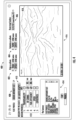
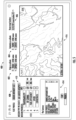
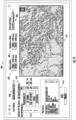
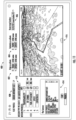
- FIGS. 4-12 illustrate views of a graphical user interface (GUI) 400 that may be produced at the control station 108 to support one or more ground vehicles 106 on a mission that includes traversal of a ground region, according to some example implementations.
- the GUI may be produced by the terrain analysis module 302, the route planning module 304, or another module or software application at the control station.
- the GUI includes a number of graphical control elements to enable a user to interact with either or both of the terrain analysis module or the route planning module.
- the GUI 400 may include graphical control elements from which a mission is specified. These may include first and second graphical control elements 402, 404 from which an origin and destination are specified, and a third graphical control element 406 from which one or more points of interest (targets) may be specified to define perspective of a viewshed.
- the GUI may include a fourth graphcial control element 408 from which a profile (and thereby constraints) of the one or more ground vehicles for the mission, and a fifth graphical control element 410 to enable selection of a type of the mission.
- the GUI may further include sixth graphical control elements 412 from which criteria of the mission may be selected (and possibly limited), and from which the criteria may be arranged in an order of priority.
- the GUI may include a window 414 in which a summary of the mission or plan may be displayed.
- the GUI 400 further includes a window 416 in which one or more of geospatial data, terrain data or the route across the ground region are displayed.
- the window 416 includes a raster image of the ground region, formed from a point cloud of lidar data as described above.
- the raster image is presented in a three-dimensional (3D), map view 418; and in FIG. 5 , the raster image is presented in a two-dimensional (3D), aerial view 518.
- the window 416 includes terraing data that describes the ground region in terms of terrain metrics.
- the terrain data 618 in the window describes the ground region in terms of slope; and in FIG. 7 , the terrain data 718 in the window describes the ground region in terms of viewshed from a point of interest.
- the terrain data 818 describes the ground region in terms of multiple terrain metrics that are aggregated.
- the window 416 includes a map view 918 of a raster image of the ground region, and further includes respective routes 920, 1020 across the ground region for different orders of priority of criteria of the mission.
- the route 920 in FIG. 9 prioritizes traversability over other criteria of the mission (as noted by the sixth graphical control elements 412).
- the route 1020 in FIG. 10 prioritizes speed over other criteria of the mission.
- the window in FIGS. 11 and 12 includes the same respective routes 920, 1020, but with a map view 1118 of the terrain data for multiple terrain metrics.
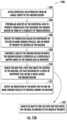
- FIGS. 13A - 13C are flowcharts illustrating various steps in a method 1300 of supporting one or more ground vehicles on a mission that includes traversal of a ground region, according to various example implementations of the present disclosure.
- the method includes accessing geospatial data produced from an aerial survey of the ground region, as shown at block 1302 of FIG. 13A .
- the method includes performing an analysis of the geospatial data to produce terrain data that describes the ground region in terms of a plurality of terrain metrics, as shown at block 1304.
- the method includes weighting the terrain data based on constraints of the one or more ground vehicles, and an order of priority of criteria of the mission, as shown at block 1306.
- the method includes constructing a map of the ground region in which the ground region is expressed as a geospatially-mapped array of the terrain data as weighted, as shown at block 1308.
- the method includes searching the map for a path that best meets the criteria of the mission, the path described by a series of waypoints that define a route across the ground region, as shown at block 1310. And the method includes outputting an indication of the route for the one or more ground vehicles to traverse during the mission, as shown at block 1312.
- the geospatial data is accessed at block 1302 during a campaign in which the mission is planned, and the geospatial data is produced from the aerial survey that is performed contemporaneous with the campaign.
- the geospatial data that is produced from the aerial survey of the ground region includes a point cloud of lidar data georegistered to the ground region and collected during the aerial survey.
- the terrain data includes terrain datasets for respective ones of the plurality of terrain metrics
- weighting the terrain data at block 1306 includes weighting the terrain datasets, different ones of the terrain datasets weighted differently based on the constraints of the one or more ground vehicles, as shown at block 1314 of FIG. 13B .
- Constructing the map at block 1308 includes aggregating the terrain datasets as weighted, and constructing the map from the terrain datasets as aggregated, as shown at block 1316.
- the geospatial data includes a raster image of the ground region, the raster image having a dot matrix data structure with multiple layers of spatially-coincident matrices of the geospatial data.
- the analysis is performed at block 1304 on the multiple layers of spatially coincident matrices to produce the terrain data that includes terrain datasets for respective ones of the plurality of terrain metrics.
- the terrain data is weighted at block 1306 based on the order of priority of criteria of the mission including for the one or more ground vehicles, multiple ones of traversability, speed, fuel efficiency, covertness, or wireless communication range.
- the memory may be referred to as a computer-readable storage medium.
- the computer-readable storage medium is a non-transitory device capable of storing information, and is distinguishable from computer-readable transmission media such as electronic transitory signals capable of carrying information from one location to another.
- Computer-readable medium as described herein may generally refer to a computer-readable storage medium or computer-readable transmission medium.
- the user interfaces may include a display 1410 and/or one or more user input interfaces 1412 (e.g., input/output unit).
- the display may be configured to present or otherwise display information to a user, suitable examples of which include a liquid crystal display (LCD), light-emitting diode display (LED), plasma display panel (PDP) or the like.
- the user input interfaces may be wired or wireless, and may be configured to receive information from a user into the apparatus, such as for processing, storage and/or display. Suitable examples of user input interfaces include a microphone, image or video capture device, keyboard or keypad, joystick, touch-sensitive surface (separate from or integrated into a touchscreen), biometric sensor or the like.
- the user interfaces may further include one or more interfaces for communicating with peripherals such as printers, scanners or the like.
- an apparatus 1400 may include a processing circuitry 1402 and a computer-readable storage medium or memory 1404 coupled to the processing circuitry, where the processing circuitry is configured to execute computer-readable program code 1406 stored in the memory. It will also be understood that one or more functions, and combinations of functions, may be implemented by special purpose hardware-based computer systems and/or processing circuitry which perform the specified functions, or combinations of special purpose hardware and program code instructions.
Landscapes
- Engineering & Computer Science (AREA)
- Remote Sensing (AREA)
- Radar, Positioning & Navigation (AREA)
- Physics & Mathematics (AREA)
- General Physics & Mathematics (AREA)
- Automation & Control Theory (AREA)
- Electromagnetism (AREA)
- Computer Networks & Wireless Communication (AREA)
- Databases & Information Systems (AREA)
- Traffic Control Systems (AREA)
- Navigation (AREA)
- Automatic Cycles, And Cycles In General (AREA)
- Steering Control In Accordance With Driving Conditions (AREA)
Description
- The present disclosure relates generally to robotics and, in particular, to one or more of the design, construction, operation or use of autonomous robots such as autonomous or semi-autonomous vehicles.
- Many modern robots and other machines are designed to operate with increased autonomy and are less reliant on well-trained operators to safely operate. Some of these modern robots are manned while others are unmanned. In particular, a variety of unmanned vehicles include unmanned ground vehicles (UGVs), unmanned aerial vehicles (UAVs), unmanned surface vehicles (USVs), unmanned underwater vehicles (UUVs), unmanned spacecraft and the like. The use of unmanned vehicles has grown in recent years and these unmanned vehicles are employed in a wide variety of applications, including both military and civilian uses.
- One focus in the field of robotics is in the improvement of route planning, and in particular, route planning in unfamiliar terrain. Existing route planning techniques for unfamiliar terrain use manual techniques that either require pre-existing knowledge of the terrain, or the completion of ground reconnaissance. These techniques require manual waypoint selection and route generation which tend to be time-consuming and man-power intensive techniques.
- Existing solutions to route planning may also use pre-existing base maps and satellite data to evaluate a path to traverse through a terrain. Problems arise with this technique for constantly evolving terrains (such as contested terrain, mine sites and construction sites) and where the pre-existing maps may be out of date and/or inaccurate.
- Base maps / satellite data normally only consist of one data type (imagery) or are limited by their accuracy and resolution (low-accuracy and large-GSD imagery or terrain meshes). With the inability to rapidly deploy satellites for data collection, any route planning using this type of data is unreliable and ineffective when applied to unfamiliar evolving terrain. Current satellite data solutions tend to produce accuracy levels in the range of 3 to 30 meters. In comparison, data generated from a UAV has accuracy within 5 to 10 centimeters. This allows for more accurate terrain analysis evaluation, subsequently leading to more accurate and reliable route planning.
- Document
US 2005/195096 A1 , according to its abstract, states that a method for generating a dynamic mobility map includes classifying a plurality of objects represented in a data set comprised of overhead imagery data; and classifying the objects through application of dynamic data pertaining to those objects. The method, in alternative embodiments, may be employed in generating dynamic mobility maps and in association with a ground vehicle to operate the vehicle or simulate the operation of the vehicle. - Document
EP 0 655 699 A1 , according to its abstract, states a mission planning costing surface is formed from digital terrain elevation data of a given geographical region and is for use in routing covert flight paths. To form the costing surface, a hideability map is generated from the digital terrain elevation data by assigning line of sight area values to points within the digital terrain elevation data. The hideability map is indicative of hideable areas within the geographical region. The hideability map is then quantized by assigning each of the line of sight area values to one of a set number of quantization levels. A flyability map is formed from the digital terrain elevation data by determining slopeness values for points within the digital terrain elevation data. The flyability map is indicative of flyable areas of the geographical region. The flyability map is quantized by assigning each of the slopeness values to one of the quantization levels. The costing surface is formed from a weighted combination of the quantized hideability map and the quantized flyability map. - It would therefore be desirable to have a system and method that takes into account at least some of the issues discussed above, as well as other possible issues.
- Example implementations of the present disclosure are directed to route planning for a ground vehicle through unfamiliar terrain. Example implementations allow a user to evaluate a strategic route through unfamiliar terrain, with optimized route planning that can be tailored to fleet specifications and mission priorities. Example implementations may be applied in a number of different use cases including unfamiliar contested terrain, evolving terrain (such as mine sites and construction sites), and the like. Example implementations may be extended to similar scenarios such as flee routes (avoid a specific area or line of sight) and multi-target routes (shortest route to cover a group of targets). Making use of frequent and efficient remote UAV data acquisition, example implementations may provide route planning through an area at a rapid frequency. This allows for rapid, accurate, and reliable information of unfamiliar contested terrain that previously was unable to be obtained without prior air/ground reconnaissance. The presently claimed invention thus includes, the following implementations.
- A method as defined in
claim 1, an apparatus as defined in claim 6, and a computer-readable storage medium as defined in claim 8. - These and other features, aspects, and advantages of the present disclosure will be apparent from a reading of the following detailed description together with the accompanying figures, which are briefly described below.
- It will therefore be appreciated that this Brief Summary is provided merely for purposes of summarizing the presently claimed invention.
- Other example implementations, aspects and advantages will become apparent from the following detailed description taken in conjunction with the accompanying figures which illustrate, by way of example, the principles of some described example implementations.
- Having thus described the presently claimed invention in general terms, reference will now be made to the accompanying figures, which are not necessarily drawn to scale, and wherein:
-
FIG. 1 illustrates a system according to some example implementations; -
FIG. 2 illustrates high-level systems of a robot of the system ofFIG. 1 , according to some example implementations; -
FIG. 3 illustrates high-level systems of a control station of the system ofFIG. 1 , according to some example implementations; -
FIGS. 4 ,5 ,6 ,7 ,8 ,9 ,10 ,11 and12 illustrate views of a graphical user interface (GUI), according to some example implementations; -
FIGS. 13A ,13B and 13C are flowcharts illustrating various steps in a method of supporting one or more ground vehicles on a mission, according to various example implementations; and -
FIG. 14 illustrates an apparatus according to some example implementations. - Some implementations of the present disclosure will now be described more fully hereinafter with reference to the accompanying figures, in which some, but not all implementations of the disclosure are shown. Indeed, various implementations of the disclosure may be embodied in many different forms and should not be construed as limited to the implementations set forth herein; rather, these example implementations are provided so that this disclosure will be thorough and complete, and will fully convey the scope of the disclosure to those skilled in the art. Like reference numerals refer to like elements throughout.
- Unless specified otherwise or clear from context, references to first, second or the like should not be construed to imply a particular order. A feature described as being above another feature (unless specified otherwise or clear from context) may instead be below, and vice versa; and similarly, features described as being to the left of another feature else may instead be to the right, and vice versa. Also, while reference may be made herein to quantitative measures, values, geometric relationships or the like, unless otherwise stated, any one or more if not all of these may be absolute or approximate to account for acceptable variations that may occur, such as those due to engineering tolerances or the like.
- As used herein, unless specified otherwise or clear from context, the "or" of a set of operands is the "inclusive or" and thereby true if and only if one or more of the operands is true, as opposed to the "exclusive or" which is false when all of the operands are true. Thus, for example, "[A] or [B]" is true if [A] is true, or if [B] is true, or if both [A] and [B] are true. Further, the articles "a" and "an" mean "one or more," unless specified otherwise or clear from context to be directed to a singular form. Furthermore, it should be understood that unless otherwise specified, the terms "data," "content," "digital content," "information," and similar terms may be at times used interchangeably.
- Example implementations of the present disclosure relate generally to robotics and, in particular, to one or more of the design, construction, operation or use of robots. As used herein, a robot is a machine designed and configurable to execute maneuvers in its environment. The robot may be manned or unmanned. The robot may be fully human-controlled, or the robot may be semi-autonomous or autonomous in which at least some of the maneuvers are executed independent of or with minimal human intervention. In some examples, the robot is operable in various modes with various amounts of human control.
- A robot designed and configurable to fly may at times be referred to as an aerial robot. A robot designed and configurable to operate with at least some level of autonomy may at times be referred to as an autonomous robot, or an autonomous aerial robot in the case of an autonomous robot that is also designed and configurable to fly. Examples of suitable robots include aerobots, androids, automatons, autonomous vehicles, explosive ordnance disposal robots, hexapods, industrial robots, insect robots, microbots, nanobots, military robots, mobile robots, rovers, service robots, surgical robots, walking robots and the like. Other examples include a variety of unmanned vehicles, including unmanned ground vehicles (UGVs), unmanned aerial vehicles (UAVs), unmanned surface vehicles (USVs), unmanned underwater vehicles (UUVs), unmanned spacecraft and the like. These may include autonomous cars, planes, trains, industrial vehicles, fulfillment center robots, supply-chain robots, robotic vehicles, mine sweepers, and the like.
- A robot implemented as a vehicle generally includes a basic structure, and a propulsion system coupled to the basic structure. The basic structure is the main supporting structure of the vehicle to which other components are attached. The basic structure is the load-bearing framework of the vehicle that structurally supports the vehicle in its construction and function. In various contexts, the basic structure may be referred to as a chassis, an airframe or the like.
- The propulsion system includes one or more electric motors or engines configured to power one or more propulsors to generate propulsive forces that cause the vehicle to move. A propulsor is any of a number of different means of converting power into a propulsive force. Examples of suitable propulsors include rotors, propellers, wheels and the like. In some examples, the propulsion system includes a drivetrain configured to deliver power from the electric motors or engines to the propulsors. The electric motors / engines and drivetrain may in some contexts be referred to as the powertrain of the vehicle.
-
FIG. 1 illustrates asystem 100 according to some example implementations of the present disclosure. The system may include any of a number of different subsystems (each an individual system) for performing one or more functions or operations. As shown, in some examples, the system includes one ormore robots 102 that may be any of a number of different types of robots. In particular, as shown, the one or more robots may include anaerial vehicle 104 such as a UAV, and aground vehicle 106 such as a UGV. It should be understood, however, that the system may additionally or alternatively include a number of other types of robots. These may include other types of robots implemented as vehicles, including those that may be manned or unmanned. - As also shown, the
system 100 may include acontrol station 108. In this regard, the control station provides facilities for communication with or control of the one or more robots, such as by wired or wireless data links directly or across one ormore networks 110. In some examples, the control station may be a ground station, and not in all cases control the robots. In this regard, the control station may be configured to monitor the robots. The control station may initiate mission, but the control station may not control the robots to maneuver. At times, then, the control station may enable or provide a distributed network/server of software functions. -
FIG. 2 further illustrates high-level systems of arobot 102 that may be implemented as anaerial vehicle 104,ground vehicle 106 or other type of robot, according to some example implementations. As shown, the robot includescore systems 202,auxiliary systems 204 andpayload systems 206. The core systems include components that provide core functionality of the robot, such as controlled movement operations. For example, the core systems may include autopilot, one or more control servos, and one or more sensors such as avionic sensors in the case of an aerial robot like the aerial vehicle. The control servo(s) may include one or more servos for moving control surfaces of the robot. In the example where the robot is an aerial vehicle, the control surfaces may include ailerons, elevators of horizontal stabilizer, rudders, and flaps. The avionic sensor(s) may include one or more sensors for determining airspeed, pitch, pitch rate, roll, roll rate, yaw, yaw rate, acceleration, and/or inertial navigation. In other examples, the core systems may include more, fewer, and/or different components. - The
auxiliary systems 204 may include components whose functionality is auxiliary to thecore systems 202 and/or provide other functionality than core functionality for therobot 102. In a particular example of theaerial vehicle 104, the auxiliary systems may include sensors, computers and signals used for: fixing aircraft position other than inertial dead reckoning, aircraft navigation and anti-collision lighting systems, aircraft air traffic control (ATC) transponder, one or more command and control (C2) data links, health and status monitoring of aircraft equipment, propulsion systems (assumes control glide landing on battery power), and/or rejection of operator inputs that exceed safe limits. - The
auxiliary systems 204 may include remote control interface, one or more lighting systems, and one or more transponders. Remote control interface may be used transmitting and/or receiving C2 communications, such as C2 messages and/or commands provided by a remote operator of therobot 102. For example, C2 messages and/or commands may be acted upon by the robot as control messages for remotely controlling the robot. The lighting system(s) may include one or more illumination sources for illuminating or lighting part or all of the robot. In an example where the robot is theaerial vehicle 104, the lighting system(s) may provide illumination for wings and other aspects of the aircraft. The transponder(s) may receive radio signals and automatically transmit different radio signals, such as one or more transponders for communicating with air traffic control systems. In other examples, the auxiliary systems may include more, fewer, and/or different components. - The
payload systems 206 collectively may be carried by therobot 102 as a cargo or payload. For example, the payload systems may include payload devices, payload sensors, and payload communications. The payload devices may include one or more devices carried aboard the robot that are notcore systems 202 orauxiliary systems 204. The payload sensor(s) may include one or more sensors configured to measure conditions in an environment around the robot and provide data about the measured conditions of the environment. The payload communications may include one or more devices used for communicating data and perhaps control messages with the payload systems; e.g., provide uplink and/or downlink data for communicating with the payload systems and perhaps other components of the robot. In other examples, the payload systems may include more, fewer, and/or different components. - The data provided by payload sensor(s) of the
payload systems 206 may include meteorological conditions, including wind speed, wind direction, temperature, humidity, barometric pressure, and/or rainfall; location data including latitude, longitude, and/or altitude data; kinematic information (e.g., location, speed, velocity, acceleration data), one or more vehicles, and/or one or more aircraft, and electromagnetic radiation data (e.g., infra-red, ultraviolet, X-ray data). The payload sensor(s) may include one or more GPS sensors, location sensors, gyroscopes, accelerometers, magnetometers, video and/or still cameras/imaging systems, light sensors, infrared sensors, ultraviolet sensors, X-ray sensors, meteorological sensors, proximity sensors, vibration and/or motion sensors, heat sensors, thermometers, lasers, wind sensors, barometers, rain gauges, and microphones. In some examples, the payload sensor(s) may be utilized for relative position sensing, where relative position sensing provides information about aircraft velocity relative to a vehicle; e.g., using differential GPS and/or radio-based triangulation methods. - In a particular example of the
aerial vehicle 104, thepayload systems 206 may include equipment, signals and commands used for modular payloads not required for flight, including gimbals for positioning and stabilizing payloads, optical and infrared image capturing equipment, computers for payload stabilization, tracking algorithms and metadata tagging, transceivers for payload data link with systems not on the aircraft, transceivers for ground-to-ground or air-to-ground communications relay, and other data gathering electronic equipment. -
FIG. 3 further illustrates high-level systems of thecontrol station 108, according to some example implementations of the present disclosure. As shown, for example, the control station may include aterrain analysis module 302 and aroute planning module 304. Although shown as systems of the control station, it should be understood that either or both of the terrain analysis module or the route planning module may instead be implemented onboard arobot 102, such as theaerial vehicle 104,ground vehicle 106 or other type of robot. - The
terrain analysis module 302 is configured to access geospatial data produced from an aerial survey of the ground region, such as by theaerial vehicle 104. In this regard, the geospatial data may be accessed during a campaign in which the mission is planned, and the geospatial data is produced from the aerial survey that is performed contemporaneous with the campaign. In some examples, the geospatial data includes a point cloud of lidar data georegistered to the ground region and collected during the aerial survey. The geospatial data includes a raster image of the ground region, in which the raster image has a dot matrix data structure with multiple layers of spatially-coincident matrices of the geospatial data. - The
terrain analysis module 302 is configured to perform an analysis of the geospatial data to produce terrain data that describes the ground region in terms of a plurality of terrain metrics, such as multiple ones of elevation, roughness, slope, vegetation density, or viewshed from a point of interest. Other examples of suitable terrain metrics may include obstacles (artificial or natural), bodies of water, silhouetting, cover and concealment, avenues of approach / escape, distance to a point of interest, key terrain, decisive terrain, vantage points and the like. The terrain analysis module is configured to weight the terrain data based on constraints of one ormore ground vehicles 106, and an order of priority of criteria of the mission, which may include for the one or more ground vehicles, multiple ones of traversability, speed, fuel efficiency, covertness, or wireless communication range. And the terrain analysis module constructs a map of the ground region in which the ground region is expressed as a geospatially-mapped array of the terrain data as weighted. - It will be appreciated that one or more of the criteria of the mission impact the weighting of a number of terrain metrics. In this regard, terrain metrics such as slope, obstacles, vegetation density, bodies of water and the like may be weighted based on traversability. Similarly, terrain metrics such as vegetation density, silhouetting, cover and concealment, avenues of approach / escape, distance to a point of interest, key terrain, decisive terrain, vantage points and the like may be weighted based on covertness.
- The terrain data includes terrain datasets for respective ones of the plurality of terrain metrics (e.g., elevation, roughness, slope, vegetation density, viewshed). The
terrain analysis module 302 is configured to weight the terrain datasets, with different ones of the terrain datasets weighted differently based on the constraints of the one ormore ground vehicles 106. The terrain analysis module then aggregates the terrain datasets as weighted, and constructing the map from the terrain datasets as aggregated. - The geospatial data including a raster image having a dot matrix data structure with multiple layers of spatially-coincident matrices of the geospatial data, the
terrain analysis module 302 is configured to perform the analysis on the multiple layers of spatially coincident matrices to produce the terrain data that includes terrain datasets for respective ones of the plurality of terrain metrics. The terrain data also has the dot matrix data structure with a second multiple layers of second spatially-coincident matrices of respective ones of the terrain datasets. The terrain analysis module then weights the second spatially-coincident matrices and thereby the terrain data. And for the map, the terrain analysis module constructs a raster image of the ground region from the second spatially-coincident matrices as weighted. - The
route planning module 304 is configured to search the map for a path that meets the criteria of the mission. This includes the route planning module configured to search the map to find the path that best meets the criteria according to the order of priority (e.g., traversability, speed, fuel efficiency, covertness, wireless communication range). The route planning module is configured to output an indication of the route for the one ormore ground vehicles 106 to traverse during the mission. The path is described by a series of waypoints that define a route across the ground region; and accordingly, the indication of the route includes the series of waypoints that define the route. - The
route planning module 304 may be configured to search the map for a path in a number of different manners. In some examples, the route planning module is configured to use artificial intelligence (AI), machine learning (ML) or other advanced algorithms or techniques to avoid a need for manual waypoint selection and route generation techniques that are currently used for route planning through unfamiliar terrain. The route planning module may use trained models and automated data analysis allows for reduced user intervention and seamless rapid route detection. And the terrain analysis by theterrain analysis module 302, using metrics, vehicle constraints and mission criteria, enables the route planning module to find a path and thereby a route that is both reliable and realistic for the mission. - The one or
more ground vehicles 106 may then be caused to traverse the route as provided by the indication output by theroute planning module 304. This may occur in a number of different manners. In some examples, the one or more ground vehicles may receive the indication of the route to traverse. In other examples, thecontrol station 108 may generate commands according to the route, and the ground station may communicate the commands to the one or more ground vehicles to cause the the one or more ground vehicles to traverse the route. - To further illustrate example implementations of the present disclosure,
FIGS. 4-12 illustrate views of a graphical user interface (GUI) 400 that may be produced at thecontrol station 108 to support one ormore ground vehicles 106 on a mission that includes traversal of a ground region, according to some example implementations. The GUI may be produced by theterrain analysis module 302, theroute planning module 304, or another module or software application at the control station. As shown, the GUI includes a number of graphical control elements to enable a user to interact with either or both of the terrain analysis module or the route planning module. - In particular, for example, the
GUI 400 may include graphical control elements from which a mission is specified. These may include first and secondgraphical control elements graphical control element 406 from which one or more points of interest (targets) may be specified to define perspective of a viewshed. The GUI may include a fourthgraphcial control element 408 from which a profile (and thereby constraints) of the one or more ground vehicles for the mission, and a fifthgraphical control element 410 to enable selection of a type of the mission. The GUI may further include sixthgraphical control elements 412 from which criteria of the mission may be selected (and possibly limited), and from which the criteria may be arranged in an order of priority. And the GUI may include awindow 414 in which a summary of the mission or plan may be displayed. - The
GUI 400 further includes awindow 416 in which one or more of geospatial data, terrain data or the route across the ground region are displayed. InFIGS. 4 and5 , thewindow 416 includes a raster image of the ground region, formed from a point cloud of lidar data as described above. InFIG. 4 , the raster image is presented in a three-dimensional (3D),map view 418; and inFIG. 5 , the raster image is presented in a two-dimensional (3D),aerial view 518. - In
FIGS. 6 ,7 and8 , thewindow 416 includes terraing data that describes the ground region in terms of terrain metrics. In particular, inFIG. 6 , theterrain data 618 in the window describes the ground region in terms of slope; and inFIG. 7 , theterrain data 718 in the window describes the ground region in terms of viewshed from a point of interest. InFIG. 8 , theterrain data 818 describes the ground region in terms of multiple terrain metrics that are aggregated. - In
FIGS. 9 and10 , thewindow 416 includes amap view 918 of a raster image of the ground region, and further includesrespective routes route 920 inFIG. 9 prioritizes traversability over other criteria of the mission (as noted by the sixth graphical control elements 412). Theroute 1020 inFIG. 10 prioritizes speed over other criteria of the mission. The window inFIGS. 11 and12 includes the samerespective routes map view 1118 of the terrain data for multiple terrain metrics. -
FIGS. 13A - 13C are flowcharts illustrating various steps in amethod 1300 of supporting one or more ground vehicles on a mission that includes traversal of a ground region, according to various example implementations of the present disclosure. The method includes accessing geospatial data produced from an aerial survey of the ground region, as shown atblock 1302 ofFIG. 13A . The method includes performing an analysis of the geospatial data to produce terrain data that describes the ground region in terms of a plurality of terrain metrics, as shown atblock 1304. The method includes weighting the terrain data based on constraints of the one or more ground vehicles, and an order of priority of criteria of the mission, as shown atblock 1306. The method includes constructing a map of the ground region in which the ground region is expressed as a geospatially-mapped array of the terrain data as weighted, as shown atblock 1308. The method includes searching the map for a path that best meets the criteria of the mission, the path described by a series of waypoints that define a route across the ground region, as shown atblock 1310. And the method includes outputting an indication of the route for the one or more ground vehicles to traverse during the mission, as shown atblock 1312. - In some examples, the geospatial data is accessed at
block 1302 during a campaign in which the mission is planned, and the geospatial data is produced from the aerial survey that is performed contemporaneous with the campaign. - In some examples, the geospatial data that is produced from the aerial survey of the ground region includes a point cloud of lidar data georegistered to the ground region and collected during the aerial survey.
- In some examples, the analysis is performed at
block 1304 to produce the terrain data that describes the ground region in terms of the plurality of terrain metrics that include multiple ones of elevation, roughness, slope, vegetation density, or viewshed from a point of interest. - The terrain data includes terrain datasets for respective ones of the plurality of terrain metrics, and weighting the terrain data at
block 1306 includes weighting the terrain datasets, different ones of the terrain datasets weighted differently based on the constraints of the one or more ground vehicles, as shown atblock 1314 ofFIG. 13B . Constructing the map atblock 1308 includes aggregating the terrain datasets as weighted, and constructing the map from the terrain datasets as aggregated, as shown atblock 1316. - The geospatial data includes a raster image of the ground region, the raster image having a dot matrix data structure with multiple layers of spatially-coincident matrices of the geospatial data. The analysis is performed at
block 1304 on the multiple layers of spatially coincident matrices to produce the terrain data that includes terrain datasets for respective ones of the plurality of terrain metrics. - The terrain data also has the dot matrix data structure with a second multiple layers of second spatially-coincident matrices of respective ones of the terrain datasets. Weighting the terrain data at
block 1306 includes weighting the second spatially-coincident matrices, as shown atblock 1318 ofFIG. 13C . Constructing the map atblock 1308 includes constructing a raster image of the ground region from the second spatially-coincident matrices as weighted, as shown atblock 1320. - Searching the map at
block 1310 includes searching the map to find the path that best meets the criteria according to the order of priority, as shown atblock 1322 ofFIG. 13A . - In some examples, the terrain data is weighted at
block 1306 based on the order of priority of criteria of the mission including for the one or more ground vehicles, multiple ones of traversability, speed, fuel efficiency, covertness, or wireless communication range. - According to example implementations of the present disclosure, the
system 100 and its subsystems including the one or more robots 102 (aerial vehicle 104, ground vehicle 106) andcontrol station 108 may be implemented by various means. Means for implementing the system and its subsystems may include hardware, alone or under direction of one or more computer programs from a computer-readable storage medium. In some examples, one or more apparatuses may be configured to function as or otherwise implement the system and its subsystems shown and described herein. Some particular examples may include one or more apparatuses configured to function as or otherwise implement the control station and its subsystems including theterrain analysis module 302 androute planning module 304. In examples involving more than one apparatus, the respective apparatuses may be connected to or otherwise in communication with one another in a number of different manners, such as directly or indirectly via a wired or wireless network or the like. -
FIG. 14 illustrates anapparatus 1400 according to some example implementations of the present disclosure. Generally, an apparatus of exemplary implementations of the present disclosure may comprise, include or be embodied in one or more fixed or portable electronic devices. The apparatus may include one or more of each of a number of components such as, for example, processing circuitry 1402 (e.g., processor unit) connected to a memory 1404 (e.g., storage device). - The
processing circuitry 1402 may be composed of one or more processors alone or in combination with one or more memories. The processing circuitry is generally any piece of computer hardware that is capable of processing information such as, for example, data, computer programs and/or other suitable electronic information. The processing circuitry is composed of a collection of electronic circuits some of which may be packaged as an integrated circuit or multiple interconnected integrated circuits (an integrated circuit at times more commonly referred to as a "chip"). The processing circuitry may be configured to execute computer programs, which may be stored onboard the processing circuitry or otherwise stored in the memory 1404 (of the same or another apparatus). - The
processing circuitry 1402 may be a number of processors, a multi-core processor or some other type of processor, depending on the particular implementation. Further, the processing circuitry may be implemented using a number of heterogeneous processor systems in which a main processor is present with one or more secondary processors on a single chip. As another illustrative example, the processing circuitry may be a symmetric multi-processor system containing multiple processors of the same type. In yet another example, the processing circuitry may be embodied as or otherwise include one or more ASICs, FPGAs or the like. Thus, although the processing circuitry may be capable of executing a computer program to perform one or more functions, the processing circuitry of various examples may be capable of performing one or more functions without the aid of a computer program. In either instance, the processing circuitry may be appropriately programmed to perform functions or operations according to example implementations of the present disclosure. - The
memory 1404 is generally any piece of computer hardware that is capable of storing information such as, for example, data, computer programs (e.g., computer-readable program code 1406) and/or other suitable information either on a temporary basis and/or a permanent basis. The memory may include volatile and/or non-volatile memory, and may be fixed or removable. Examples of suitable memory include random access memory (RAM), read-only memory (ROM), a hard drive, a flash memory, a thumb drive, a removable computer diskette, an optical disk, a magnetic tape or some combination of the above. Optical disks may include compact disk - read only memory (CD-ROM), compact disk - read/write (CD-R/W), DVD or the like. In various instances, the memory may be referred to as a computer-readable storage medium. The computer-readable storage medium is a non-transitory device capable of storing information, and is distinguishable from computer-readable transmission media such as electronic transitory signals capable of carrying information from one location to another. Computer-readable medium as described herein may generally refer to a computer-readable storage medium or computer-readable transmission medium. - In addition to the
memory 1404, theprocessing circuitry 1402 may also be connected to one or more interfaces for displaying, transmitting and/or receiving information. The interfaces may include a communications interface 1408 (e.g., communications unit) and/or one or more user interfaces. The communications interface may be configured to transmit and/or receive information, such as to and/or from other apparatus(es), network(s) or the like. The communications interface may be configured to transmit and/or receive information by physical (wired) and/or wireless communications links. Examples of suitable communication interfaces include a network interface controller (NIC), wireless NIC (WNIC) or the like. - The user interfaces may include a
display 1410 and/or one or more user input interfaces 1412 (e.g., input/output unit). The display may be configured to present or otherwise display information to a user, suitable examples of which include a liquid crystal display (LCD), light-emitting diode display (LED), plasma display panel (PDP) or the like. The user input interfaces may be wired or wireless, and may be configured to receive information from a user into the apparatus, such as for processing, storage and/or display. Suitable examples of user input interfaces include a microphone, image or video capture device, keyboard or keypad, joystick, touch-sensitive surface (separate from or integrated into a touchscreen), biometric sensor or the like. The user interfaces may further include one or more interfaces for communicating with peripherals such as printers, scanners or the like. - As indicated above, program code instructions may be stored in memory, and executed by processing circuitry that is thereby programmed, to implement functions of the systems, subsystems, tools and their respective elements described herein. As will be appreciated, any suitable program code instructions may be loaded onto a computer or other programmable apparatus from a computer-readable storage medium to produce a particular machine, such that the particular machine becomes a means for implementing the functions specified herein. These program code instructions may also be stored in a computer-readable storage medium that can direct a computer, a processing circuitry or other programmable apparatus to function in a particular manner to thereby generate a particular machine or particular article of manufacture. The instructions stored in the computer-readable storage medium may produce an article of manufacture, where the article of manufacture becomes a means for implementing functions described herein. The program code instructions may be retrieved from a computer-readable storage medium and loaded into a computer, processing circuitry or other programmable apparatus to configure the computer, processing circuitry or other programmable apparatus to execute operations to be performed on or by the computer, processing circuitry or other programmable apparatus.
- Retrieval, loading and execution of the program code instructions may be performed sequentially such that one instruction is retrieved, loaded and executed at a time. In some example implementations, retrieval, loading and/or execution may be performed in parallel such that multiple instructions are retrieved, loaded, and/or executed together. Execution of the program code instructions may produce a computer-implemented process such that the instructions executed by the computer, processing circuitry or other programmable apparatus provide operations for implementing functions described herein.
- Execution of instructions by a processing circuitry, or storage of instructions in a computer-readable storage medium, supports combinations of operations for performing the specified functions. In this manner, an
apparatus 1400 may include aprocessing circuitry 1402 and a computer-readable storage medium ormemory 1404 coupled to the processing circuitry, where the processing circuitry is configured to execute computer-readable program code 1406 stored in the memory. It will also be understood that one or more functions, and combinations of functions, may be implemented by special purpose hardware-based computer systems and/or processing circuitry which perform the specified functions, or combinations of special purpose hardware and program code instructions.
Claims (8)
- A method (1300) of supporting one or more ground vehicles on a mission that includes traversal of a ground region, the method (1300) comprising:accessing (1302) geospatial data produced from an aerial survey of the ground region,wherein the geospatial data includes a raster image of the ground region, the raster image having a dot matrix data structure with multiple layers of spatially-coincident matrices of the geospatial data;performing (1304) an analysis on the multiple layers of spatially coincident-matrices of the geospatial data to produce terrain data that describes the ground region in terms of a plurality of terrain metrics, wherein the terrain data includes terrain datasets for respective ones of the plurality of terrain metrics, wherein the terrain data also has the dot matrix data structure with a second multiple layers of second spatially-coincident matrices of respective ones of the terrain datasets;weighting (1306) the terrain data by weighting (1318) the second spatially-coincident matrices based on constraints of the one or more ground vehicles, and an order of priority of criteria of the mission, criteria of a mission including at least one of traversability, speed, fuel efficiency, covertness, wireless communication range;constructing (1308) a map of the ground region in which the ground region is expressed as a geospatially-mapped array of the terrain data as weighted, by constructing (1320) a raster image of the ground region from the second spatially-coincident matrices as weighted;searching (1310) the map for a path that best meets the criteria of the mission according to the order of priority, the path described by a series of waypoints that define a route across the ground region; andoutputting (1312) an indication of the route for the one or more ground vehicles to traverse during the mission.
- The method (1300) of claim 1, wherein the geospatial data is accessed (1302) during a campaign in which the mission is planned, and the geospatial data is produced from the aerial survey that is performed contemporaneous with the campaign.
- The method (1300) of claims 1 or 2, wherein the geospatial data that is produced from the aerial survey of the ground region includes a point cloud of lidar data georegistered to the ground region and collected during the aerial survey.
- The method (1300) of any one of claims 1 to 3, wherein the analysis is performed (1304) to produce the terrain data that describes the ground region in terms of the plurality of terrain metrics that include multiple ones of elevation, roughness, slope, vegetation density, or viewshed from a point of interest.
- The method (1300) of any of one of claims 1 to 4, wherein the terrain data is weighted based on the order of priority of criteria of the mission including for the one or more ground vehicles, multiple ones of traversability, speed, fuel efficiency, covertness, or wireless communication range.
- An apparatus (1400) for supporting one or more ground vehicles on a mission that includes traversal of a ground region, the apparatus (1400) comprising:a memory (1404) configured to store computer-readable program code (1406); and aprocessing circuitry (1402) configured to access the memory (1404) and execute the computer-readable program code (1406) to cause the apparatus (1400) to at least perform the method (1300) of claim 1.
- The apparatus (1400) of claim 6, further comprising one or more interfaces for displaying, transmitting and/or receiving information, said interfaces being connected to the processing circuitry (1402) and including a communications interface (1408) and/or one or more user interfaces.
- A computer-readable storage medium for supporting one or more ground vehicles on a mission that includes traversal of a ground region, the computer-readable storage medium being non-transitory and having computer-readable program code stored therein that, in response to execution by processing circuitry, causes an apparatus to at least perform the method (1300) of claim 1.
Applications Claiming Priority (1)
| Application Number | Priority Date | Filing Date | Title |
|---|---|---|---|
| US17/454,632 US12078507B2 (en) | 2021-11-12 | 2021-11-12 | Route planning for a ground vehicle through unfamiliar terrain |
Publications (2)
| Publication Number | Publication Date |
|---|---|
| EP4180767A1 EP4180767A1 (en) | 2023-05-17 |
| EP4180767B1 true EP4180767B1 (en) | 2025-07-09 |
Family
ID=82655306
Family Applications (1)
| Application Number | Title | Priority Date | Filing Date |
|---|---|---|---|
| EP22185518.2A Active EP4180767B1 (en) | 2021-11-12 | 2022-07-18 | Route planning for a ground vehicle through unfamiliar terrain |
Country Status (4)
| Country | Link |
|---|---|
| US (2) | US12078507B2 (en) |
| EP (1) | EP4180767B1 (en) |
| CN (1) | CN116124137B (en) |
| AU (1) | AU2022204748A1 (en) |
Families Citing this family (8)
| Publication number | Priority date | Publication date | Assignee | Title |
|---|---|---|---|---|
| US12078507B2 (en) * | 2021-11-12 | 2024-09-03 | Insitu, Inc. | Route planning for a ground vehicle through unfamiliar terrain |
| CN116911176B (en) * | 2023-07-08 | 2024-04-30 | 哈尔滨理工大学 | Terrain trafficability prediction method based on speed and vibration state of wheeled mobile robot |
| CN117975398B (en) * | 2024-02-01 | 2025-04-08 | 北京理工大学 | Terrain trafficability evaluation method and system for tracked vehicle |
| CN117949001B (en) * | 2024-02-04 | 2024-12-31 | 北京中维数通软件有限公司 | A path planning and point surveying system for engineering drawings |
| CN118310544A (en) * | 2024-03-07 | 2024-07-09 | 中国人民解放军陆军工程大学 | Intelligent path planning method and portable business processing terminal |
| CN118274847B (en) * | 2024-06-04 | 2024-07-30 | 华南农业大学 | A navigation decision-making planning method for agricultural inspection robots based on road roughness |
| CN119148711B (en) * | 2024-09-14 | 2025-10-17 | 中国科学院计算技术研究所 | Mixed terrain track planning system and advancing control system |
| CN119469622B (en) * | 2025-01-13 | 2025-04-01 | 中铁三局集团有限公司 | Unmanned aerial vehicle bridge defect detection method and system based on laser |
Family Cites Families (15)
| Publication number | Priority date | Publication date | Assignee | Title |
|---|---|---|---|---|
| DE69422598T2 (en) | 1993-11-30 | 2000-06-15 | Honeywell, Inc. | Mission planning cost system |
| US5504686A (en) * | 1993-11-30 | 1996-04-02 | Honeywell Inc. | Mission planning costing surface |
| US20050195096A1 (en) | 2004-03-05 | 2005-09-08 | Ward Derek K. | Rapid mobility analysis and vehicular route planning from overhead imagery |
| US7272474B1 (en) * | 2004-03-31 | 2007-09-18 | Carnegie Mellon University | Method and system for estimating navigability of terrain |
| US8005657B2 (en) * | 2008-04-23 | 2011-08-23 | Lockheed Martin Corporation | Survivability mission modeler |
| EP2133662B1 (en) * | 2008-06-09 | 2012-02-01 | Honeywell International Inc. | Methods and system of navigation using terrain features |
| RU2439496C1 (en) * | 2010-07-15 | 2012-01-10 | Федеральное государственное унитарное предприятие "Курский научно-исследовательский институт" Министерства обороны Российской Федерации | Method to plot off-road travelling route |
| EP3268696A4 (en) * | 2015-03-11 | 2018-11-21 | Trailze, Ltd. | Automatically creating a terrain mapping database |
| CN106556843A (en) * | 2015-09-28 | 2017-04-05 | 东莞前沿技术研究院 | Three-dimensional terrain surveying and mapping system and surveying and mapping method |
| IL255050B (en) * | 2017-10-16 | 2022-03-01 | Israel Aerospace Ind Ltd | Control over an autonomic vehicle |
| WO2019089853A1 (en) * | 2017-10-31 | 2019-05-09 | Agjunction Llc | Three-dimensional terrain mapping |
| US10691944B2 (en) * | 2018-05-21 | 2020-06-23 | The Boeing Company | Geo-registering an aerial image by an object detection model using machine learning |
| US20200334996A1 (en) * | 2019-04-18 | 2020-10-22 | The Boeing Company | System and Method for Handling Terrain in Detect and Avoid |
| JP2022038675A (en) * | 2020-08-27 | 2022-03-10 | ソニーグループ株式会社 | Information processor and information processing method, computer program and mobile device |
| US12078507B2 (en) * | 2021-11-12 | 2024-09-03 | Insitu, Inc. | Route planning for a ground vehicle through unfamiliar terrain |
-
2021
- 2021-11-12 US US17/454,632 patent/US12078507B2/en active Active
-
2022
- 2022-07-01 AU AU2022204748A patent/AU2022204748A1/en active Pending
- 2022-07-18 EP EP22185518.2A patent/EP4180767B1/en active Active
- 2022-08-26 CN CN202211030933.6A patent/CN116124137B/en active Active
-
2024
- 2024-08-14 US US18/804,217 patent/US12590816B2/en active Active
Also Published As
| Publication number | Publication date |
|---|---|
| CN116124137B (en) | 2025-12-05 |
| EP4180767A1 (en) | 2023-05-17 |
| US20250383217A1 (en) | 2025-12-18 |
| AU2022204748A1 (en) | 2023-06-01 |
| US12590816B2 (en) | 2026-03-31 |
| US12078507B2 (en) | 2024-09-03 |
| US20230152123A1 (en) | 2023-05-18 |
| CN116124137A (en) | 2023-05-16 |
Similar Documents
| Publication | Publication Date | Title |
|---|---|---|
| EP4180767B1 (en) | Route planning for a ground vehicle through unfamiliar terrain | |
| US12079011B2 (en) | System and method for perceptive navigation of automated vehicles | |
| Kendoul | Survey of advances in guidance, navigation, and control of unmanned rotorcraft systems | |
| CN114675671B (en) | Multi-sensor environment map construction | |
| Li et al. | A novel distributed architecture for UAV indoor navigation | |
| EP3674657A1 (en) | Construction and update of elevation maps | |
| US12482367B2 (en) | Reinforcement learning-based mid-air collision avoidance | |
| Al-Darraji et al. | A technical framework for selection of autonomous uav navigation technologies and sensors | |
| Bueno et al. | Project AURORA: Towards an autonomous robotic airship | |
| Papa | Embedded platforms for UAS landing path and obstacle detection | |
| Bețco et al. | Autonomous navigation for the Martian inspection drone | |
| Talha et al. | Autonomous UAV navigation in wilderness search-and-rescue operations using deep reinforcement learning | |
| Talwandi et al. | An Automatic Navigation System for New Technical Advanced Drones for Different Alpplications | |
| Kim et al. | Development of a vision-based recognition and position measurement system for cooperative missions of multiple heterogeneous unmanned vehicles | |
| Djapic et al. | Autonomous takeoff & landing of small UAS from the USV | |
| Elfes et al. | Modelling, control and perception for an autonomous robotic airship | |
| EP3945285B1 (en) | Evaluation of a ground region for landing a robot | |
| Lin | Moving obstacle avoidance for unmanned aerial vehicles | |
| Luthra | Aerial robot swarms: a review | |
| Bayramov et al. | The robotic control system of UAV based on artificial intelligence technologies | |
| Alqudsi et al. | A Comprehensive Review of Aerial Robots for Search and Rescue Operations | |
| RU2857256C1 (en) | Method for determining reference values of parameters of spatial angular orientation of aircraft during flight tests of flight and navigation equipment in absence of sns signals and system for implementation thereof | |
| Mai | Obstacle Detection and Avoidance Techniques for Unmanned Aerial Vehicles | |
| Klymenko et al. | Development of software tools for testing the autonomous navigation system of UAVs | |
| Vijayaraja et al. | Transformations/Constraints of UAV with Dynamic Modelling |
Legal Events
| Date | Code | Title | Description |
|---|---|---|---|
| PUAI | Public reference made under article 153(3) epc to a published international application that has entered the european phase |
Free format text: ORIGINAL CODE: 0009012 |
|
| STAA | Information on the status of an ep patent application or granted ep patent |
Free format text: STATUS: THE APPLICATION HAS BEEN PUBLISHED |
|
| AK | Designated contracting states |
Kind code of ref document: A1 Designated state(s): AL AT BE BG CH CY CZ DE DK EE ES FI FR GB GR HR HU IE IS IT LI LT LU LV MC MK MT NL NO PL PT RO RS SE SI SK SM TR |
|
| STAA | Information on the status of an ep patent application or granted ep patent |
Free format text: STATUS: REQUEST FOR EXAMINATION WAS MADE |
|
| 17P | Request for examination filed |
Effective date: 20231109 |
|
| RBV | Designated contracting states (corrected) |
Designated state(s): AL AT BE BG CH CY CZ DE DK EE ES FI FR GB GR HR HU IE IS IT LI LT LU LV MC MK MT NL NO PL PT RO RS SE SI SK SM TR |
|
| GRAP | Despatch of communication of intention to grant a patent |
Free format text: ORIGINAL CODE: EPIDOSNIGR1 |
|
| STAA | Information on the status of an ep patent application or granted ep patent |
Free format text: STATUS: GRANT OF PATENT IS INTENDED |
|
| INTG | Intention to grant announced |
Effective date: 20241030 |
|
| RIN1 | Information on inventor provided before grant (corrected) |
Inventor name: LANCASTER, ANDREW P. Inventor name: ARMSTRONG, KALANI A. |
|
| GRAJ | Information related to disapproval of communication of intention to grant by the applicant or resumption of examination proceedings by the epo deleted |
Free format text: ORIGINAL CODE: EPIDOSDIGR1 |
|
| STAA | Information on the status of an ep patent application or granted ep patent |
Free format text: STATUS: REQUEST FOR EXAMINATION WAS MADE |
|
| GRAP | Despatch of communication of intention to grant a patent |
Free format text: ORIGINAL CODE: EPIDOSNIGR1 |
|
| STAA | Information on the status of an ep patent application or granted ep patent |
Free format text: STATUS: GRANT OF PATENT IS INTENDED |
|
| INTC | Intention to grant announced (deleted) | ||
| INTG | Intention to grant announced |
Effective date: 20250212 |
|
| GRAS | Grant fee paid |
Free format text: ORIGINAL CODE: EPIDOSNIGR3 |
|
| GRAA | (expected) grant |
Free format text: ORIGINAL CODE: 0009210 |
|
| STAA | Information on the status of an ep patent application or granted ep patent |
Free format text: STATUS: THE PATENT HAS BEEN GRANTED |
|
| AK | Designated contracting states |
Kind code of ref document: B1 Designated state(s): AL AT BE BG CH CY CZ DE DK EE ES FI FR GB GR HR HU IE IS IT LI LT LU LV MC MK MT NL NO PL PT RO RS SE SI SK SM TR |
|
| REG | Reference to a national code |
Ref country code: GB Ref legal event code: FG4D |
|
| REG | Reference to a national code |
Ref country code: CH Ref legal event code: EP |
|
| P01 | Opt-out of the competence of the unified patent court (upc) registered |
Free format text: CASE NUMBER: APP_29171/2025 Effective date: 20250618 |
|
| REG | Reference to a national code |
Ref country code: IE Ref legal event code: FG4D |
|
| REG | Reference to a national code |
Ref country code: DE Ref legal event code: R096 Ref document number: 602022017209 Country of ref document: DE |
|
| PGFP | Annual fee paid to national office [announced via postgrant information from national office to epo] |
Ref country code: DE Payment date: 20250729 Year of fee payment: 4 |
|
| PGFP | Annual fee paid to national office [announced via postgrant information from national office to epo] |
Ref country code: AT Payment date: 20251020 Year of fee payment: 4 Ref country code: FR Payment date: 20250725 Year of fee payment: 4 |
|
| REG | Reference to a national code |
Ref country code: NL Ref legal event code: MP Effective date: 20250709 |
|
| PG25 | Lapsed in a contracting state [announced via postgrant information from national office to epo] |
Ref country code: PT Free format text: LAPSE BECAUSE OF FAILURE TO SUBMIT A TRANSLATION OF THE DESCRIPTION OR TO PAY THE FEE WITHIN THE PRESCRIBED TIME-LIMIT Effective date: 20251110 |
|
| PG25 | Lapsed in a contracting state [announced via postgrant information from national office to epo] |
Ref country code: NL Free format text: LAPSE BECAUSE OF FAILURE TO SUBMIT A TRANSLATION OF THE DESCRIPTION OR TO PAY THE FEE WITHIN THE PRESCRIBED TIME-LIMIT Effective date: 20250709 |
|
| REG | Reference to a national code |
Ref country code: AT Ref legal event code: MK05 Ref document number: 1812165 Country of ref document: AT Kind code of ref document: T Effective date: 20250709 |
|
| PG25 | Lapsed in a contracting state [announced via postgrant information from national office to epo] |
Ref country code: IS Free format text: LAPSE BECAUSE OF FAILURE TO SUBMIT A TRANSLATION OF THE DESCRIPTION OR TO PAY THE FEE WITHIN THE PRESCRIBED TIME-LIMIT Effective date: 20251109 |
|
| PG25 | Lapsed in a contracting state [announced via postgrant information from national office to epo] |
Ref country code: NO Free format text: LAPSE BECAUSE OF FAILURE TO SUBMIT A TRANSLATION OF THE DESCRIPTION OR TO PAY THE FEE WITHIN THE PRESCRIBED TIME-LIMIT Effective date: 20251009 |
|
| REG | Reference to a national code |
Ref country code: LT Ref legal event code: MG9D |
|
| PG25 | Lapsed in a contracting state [announced via postgrant information from national office to epo] |
Ref country code: AT Free format text: LAPSE BECAUSE OF FAILURE TO SUBMIT A TRANSLATION OF THE DESCRIPTION OR TO PAY THE FEE WITHIN THE PRESCRIBED TIME-LIMIT Effective date: 20250709 |
|
| PG25 | Lapsed in a contracting state [announced via postgrant information from national office to epo] |
Ref country code: FI Free format text: LAPSE BECAUSE OF FAILURE TO SUBMIT A TRANSLATION OF THE DESCRIPTION OR TO PAY THE FEE WITHIN THE PRESCRIBED TIME-LIMIT Effective date: 20250709 |
|
| PG25 | Lapsed in a contracting state [announced via postgrant information from national office to epo] |
Ref country code: HR Free format text: LAPSE BECAUSE OF FAILURE TO SUBMIT A TRANSLATION OF THE DESCRIPTION OR TO PAY THE FEE WITHIN THE PRESCRIBED TIME-LIMIT Effective date: 20250709 |
|
| PG25 | Lapsed in a contracting state [announced via postgrant information from national office to epo] |
Ref country code: GR Free format text: LAPSE BECAUSE OF FAILURE TO SUBMIT A TRANSLATION OF THE DESCRIPTION OR TO PAY THE FEE WITHIN THE PRESCRIBED TIME-LIMIT Effective date: 20251010 |
|
| PG25 | Lapsed in a contracting state [announced via postgrant information from national office to epo] |
Ref country code: SE Free format text: LAPSE BECAUSE OF FAILURE TO SUBMIT A TRANSLATION OF THE DESCRIPTION OR TO PAY THE FEE WITHIN THE PRESCRIBED TIME-LIMIT Effective date: 20250709 |
|
| PG25 | Lapsed in a contracting state [announced via postgrant information from national office to epo] |
Ref country code: LV Free format text: LAPSE BECAUSE OF FAILURE TO SUBMIT A TRANSLATION OF THE DESCRIPTION OR TO PAY THE FEE WITHIN THE PRESCRIBED TIME-LIMIT Effective date: 20250709 |
|
| PG25 | Lapsed in a contracting state [announced via postgrant information from national office to epo] |
Ref country code: PL Free format text: LAPSE BECAUSE OF FAILURE TO SUBMIT A TRANSLATION OF THE DESCRIPTION OR TO PAY THE FEE WITHIN THE PRESCRIBED TIME-LIMIT Effective date: 20250709 Ref country code: BG Free format text: LAPSE BECAUSE OF FAILURE TO SUBMIT A TRANSLATION OF THE DESCRIPTION OR TO PAY THE FEE WITHIN THE PRESCRIBED TIME-LIMIT Effective date: 20250709 |
|
| PG25 | Lapsed in a contracting state [announced via postgrant information from national office to epo] |
Ref country code: RS Free format text: LAPSE BECAUSE OF FAILURE TO SUBMIT A TRANSLATION OF THE DESCRIPTION OR TO PAY THE FEE WITHIN THE PRESCRIBED TIME-LIMIT Effective date: 20251009 |
|
| PG25 | Lapsed in a contracting state [announced via postgrant information from national office to epo] |
Ref country code: ES Free format text: LAPSE BECAUSE OF FAILURE TO SUBMIT A TRANSLATION OF THE DESCRIPTION OR TO PAY THE FEE WITHIN THE PRESCRIBED TIME-LIMIT Effective date: 20250709 |
|
| REG | Reference to a national code |
Ref country code: CH Ref legal event code: H13 Free format text: ST27 STATUS EVENT CODE: U-0-0-H10-H13 (AS PROVIDED BY THE NATIONAL OFFICE) Effective date: 20260224 |
|
| PG25 | Lapsed in a contracting state [announced via postgrant information from national office to epo] |
Ref country code: LU Free format text: LAPSE BECAUSE OF NON-PAYMENT OF DUE FEES Effective date: 20250718 Ref country code: RO Free format text: LAPSE BECAUSE OF FAILURE TO SUBMIT A TRANSLATION OF THE DESCRIPTION OR TO PAY THE FEE WITHIN THE PRESCRIBED TIME-LIMIT Effective date: 20250709 |
|
| REG | Reference to a national code |
Ref country code: BE Ref legal event code: MM Effective date: 20250731 |
|
| PG25 | Lapsed in a contracting state [announced via postgrant information from national office to epo] |
Ref country code: SM Free format text: LAPSE BECAUSE OF FAILURE TO SUBMIT A TRANSLATION OF THE DESCRIPTION OR TO PAY THE FEE WITHIN THE PRESCRIBED TIME-LIMIT Effective date: 20250709 |
|
| PG25 | Lapsed in a contracting state [announced via postgrant information from national office to epo] |
Ref country code: DK Free format text: LAPSE BECAUSE OF FAILURE TO SUBMIT A TRANSLATION OF THE DESCRIPTION OR TO PAY THE FEE WITHIN THE PRESCRIBED TIME-LIMIT Effective date: 20250709 |
|
| PG25 | Lapsed in a contracting state [announced via postgrant information from national office to epo] |
Ref country code: IT Free format text: LAPSE BECAUSE OF FAILURE TO SUBMIT A TRANSLATION OF THE DESCRIPTION OR TO PAY THE FEE WITHIN THE PRESCRIBED TIME-LIMIT Effective date: 20250709 Ref country code: BE Free format text: LAPSE BECAUSE OF NON-PAYMENT OF DUE FEES Effective date: 20250731 |
|
| PG25 | Lapsed in a contracting state [announced via postgrant information from national office to epo] |
Ref country code: CZ Free format text: LAPSE BECAUSE OF FAILURE TO SUBMIT A TRANSLATION OF THE DESCRIPTION OR TO PAY THE FEE WITHIN THE PRESCRIBED TIME-LIMIT Effective date: 20250709 Ref country code: CH Free format text: LAPSE BECAUSE OF NON-PAYMENT OF DUE FEES Effective date: 20250731 |
|
| PG25 | Lapsed in a contracting state [announced via postgrant information from national office to epo] |
Ref country code: EE Free format text: LAPSE BECAUSE OF FAILURE TO SUBMIT A TRANSLATION OF THE DESCRIPTION OR TO PAY THE FEE WITHIN THE PRESCRIBED TIME-LIMIT Effective date: 20250709 Ref country code: SK Free format text: LAPSE BECAUSE OF FAILURE TO SUBMIT A TRANSLATION OF THE DESCRIPTION OR TO PAY THE FEE WITHIN THE PRESCRIBED TIME-LIMIT Effective date: 20250709 |