EP4180139A1 - Systems and methods for high strength titanium rod additive manufacturing - Google Patents
Systems and methods for high strength titanium rod additive manufacturing Download PDFInfo
- Publication number
- EP4180139A1 EP4180139A1 EP22205929.7A EP22205929A EP4180139A1 EP 4180139 A1 EP4180139 A1 EP 4180139A1 EP 22205929 A EP22205929 A EP 22205929A EP 4180139 A1 EP4180139 A1 EP 4180139A1
- Authority
- EP
- European Patent Office
- Prior art keywords
- rod
- feedstock
- rod feedstock
- titanium
- additive manufacturing
- Prior art date
- Legal status (The legal status is an assumption and is not a legal conclusion. Google has not performed a legal analysis and makes no representation as to the accuracy of the status listed.)
- Pending
Links
Images



Classifications
-
- B—PERFORMING OPERATIONS; TRANSPORTING
- B22—CASTING; POWDER METALLURGY
- B22F—WORKING METALLIC POWDER; MANUFACTURE OF ARTICLES FROM METALLIC POWDER; MAKING METALLIC POWDER; APPARATUS OR DEVICES SPECIALLY ADAPTED FOR METALLIC POWDER
- B22F10/00—Additive manufacturing of workpieces or articles from metallic powder
- B22F10/20—Direct sintering or melting
- B22F10/25—Direct deposition of metal particles, e.g. direct metal deposition [DMD] or laser engineered net shaping [LENS]
-
- B—PERFORMING OPERATIONS; TRANSPORTING
- B22—CASTING; POWDER METALLURGY
- B22F—WORKING METALLIC POWDER; MANUFACTURE OF ARTICLES FROM METALLIC POWDER; MAKING METALLIC POWDER; APPARATUS OR DEVICES SPECIALLY ADAPTED FOR METALLIC POWDER
- B22F10/00—Additive manufacturing of workpieces or articles from metallic powder
- B22F10/20—Direct sintering or melting
-
- B—PERFORMING OPERATIONS; TRANSPORTING
- B22—CASTING; POWDER METALLURGY
- B22F—WORKING METALLIC POWDER; MANUFACTURE OF ARTICLES FROM METALLIC POWDER; MAKING METALLIC POWDER; APPARATUS OR DEVICES SPECIALLY ADAPTED FOR METALLIC POWDER
- B22F10/00—Additive manufacturing of workpieces or articles from metallic powder
- B22F10/60—Treatment of workpieces or articles after build-up
- B22F10/64—Treatment of workpieces or articles after build-up by thermal means
-
- B—PERFORMING OPERATIONS; TRANSPORTING
- B22—CASTING; POWDER METALLURGY
- B22F—WORKING METALLIC POWDER; MANUFACTURE OF ARTICLES FROM METALLIC POWDER; MAKING METALLIC POWDER; APPARATUS OR DEVICES SPECIALLY ADAPTED FOR METALLIC POWDER
- B22F3/00—Manufacture of workpieces or articles from metallic powder characterised by the manner of compacting or sintering; Apparatus specially adapted therefor ; Presses and furnaces
- B22F3/02—Compacting only
- B22F3/04—Compacting only by applying fluid pressure, e.g. by cold isostatic pressing [CIP]
-
- B—PERFORMING OPERATIONS; TRANSPORTING
- B22—CASTING; POWDER METALLURGY
- B22F—WORKING METALLIC POWDER; MANUFACTURE OF ARTICLES FROM METALLIC POWDER; MAKING METALLIC POWDER; APPARATUS OR DEVICES SPECIALLY ADAPTED FOR METALLIC POWDER
- B22F3/00—Manufacture of workpieces or articles from metallic powder characterised by the manner of compacting or sintering; Apparatus specially adapted therefor ; Presses and furnaces
- B22F3/12—Both compacting and sintering
- B22F3/14—Both compacting and sintering simultaneously
- B22F3/15—Hot isostatic pressing
-
- B—PERFORMING OPERATIONS; TRANSPORTING
- B22—CASTING; POWDER METALLURGY
- B22F—WORKING METALLIC POWDER; MANUFACTURE OF ARTICLES FROM METALLIC POWDER; MAKING METALLIC POWDER; APPARATUS OR DEVICES SPECIALLY ADAPTED FOR METALLIC POWDER
- B22F5/00—Manufacture of workpieces or articles from metallic powder characterised by the special shape of the product
- B22F5/12—Manufacture of workpieces or articles from metallic powder characterised by the special shape of the product of wires
-
- B—PERFORMING OPERATIONS; TRANSPORTING
- B23—MACHINE TOOLS; METAL-WORKING NOT OTHERWISE PROVIDED FOR
- B23K—SOLDERING OR UNSOLDERING; WELDING; CLADDING OR PLATING BY SOLDERING OR WELDING; CUTTING BY APPLYING HEAT LOCALLY, e.g. FLAME CUTTING; WORKING BY LASER BEAM
- B23K35/00—Rods, electrodes, materials, or media, for use in soldering, welding, or cutting
- B23K35/02—Rods, electrodes, materials, or media, for use in soldering, welding, or cutting characterised by mechanical features, e.g. shape
- B23K35/0255—Rods, electrodes, materials, or media, for use in soldering, welding, or cutting characterised by mechanical features, e.g. shape for use in welding
- B23K35/0261—Rods, electrodes or wires
-
- B—PERFORMING OPERATIONS; TRANSPORTING
- B23—MACHINE TOOLS; METAL-WORKING NOT OTHERWISE PROVIDED FOR
- B23K—SOLDERING OR UNSOLDERING; WELDING; CLADDING OR PLATING BY SOLDERING OR WELDING; CUTTING BY APPLYING HEAT LOCALLY, e.g. FLAME CUTTING; WORKING BY LASER BEAM
- B23K35/00—Rods, electrodes, materials, or media, for use in soldering, welding, or cutting
- B23K35/22—Rods, electrodes, materials, or media, for use in soldering, welding, or cutting characterised by the composition or nature of the material
- B23K35/24—Selection of soldering or welding materials proper
- B23K35/32—Selection of soldering or welding materials proper with the principal constituent melting at more than 1550°C
- B23K35/325—Ti as the principal constituent
-
- B—PERFORMING OPERATIONS; TRANSPORTING
- B23—MACHINE TOOLS; METAL-WORKING NOT OTHERWISE PROVIDED FOR
- B23K—SOLDERING OR UNSOLDERING; WELDING; CLADDING OR PLATING BY SOLDERING OR WELDING; CUTTING BY APPLYING HEAT LOCALLY, e.g. FLAME CUTTING; WORKING BY LASER BEAM
- B23K35/00—Rods, electrodes, materials, or media, for use in soldering, welding, or cutting
- B23K35/40—Making wire or rods for soldering or welding
-
- B—PERFORMING OPERATIONS; TRANSPORTING
- B33—ADDITIVE MANUFACTURING TECHNOLOGY
- B33Y—ADDITIVE MANUFACTURING, i.e. MANUFACTURING OF THREE-DIMENSIONAL [3D] OBJECTS BY ADDITIVE DEPOSITION, ADDITIVE AGGLOMERATION OR ADDITIVE LAYERING, e.g. BY 3D PRINTING, STEREOLITHOGRAPHY OR SELECTIVE LASER SINTERING
- B33Y40/00—Auxiliary operations or equipment, e.g. for material handling
- B33Y40/20—Post-treatment, e.g. curing, coating or polishing
-
- C—CHEMISTRY; METALLURGY
- C22—METALLURGY; FERROUS OR NON-FERROUS ALLOYS; TREATMENT OF ALLOYS OR NON-FERROUS METALS
- C22C—ALLOYS
- C22C1/00—Making non-ferrous alloys
- C22C1/04—Making non-ferrous alloys by powder metallurgy
- C22C1/045—Alloys based on refractory metals
- C22C1/0458—Alloys based on titanium, zirconium or hafnium
-
- C—CHEMISTRY; METALLURGY
- C22—METALLURGY; FERROUS OR NON-FERROUS ALLOYS; TREATMENT OF ALLOYS OR NON-FERROUS METALS
- C22C—ALLOYS
- C22C14/00—Alloys based on titanium
-
- C—CHEMISTRY; METALLURGY
- C22—METALLURGY; FERROUS OR NON-FERROUS ALLOYS; TREATMENT OF ALLOYS OR NON-FERROUS METALS
- C22F—CHANGING THE PHYSICAL STRUCTURE OF NON-FERROUS METALS AND NON-FERROUS ALLOYS
- C22F1/00—Changing the physical structure of non-ferrous metals or alloys by heat treatment or by hot or cold working
- C22F1/16—Changing the physical structure of non-ferrous metals or alloys by heat treatment or by hot or cold working of other metals or alloys based thereon
- C22F1/18—High-melting or refractory metals or alloys based thereon
- C22F1/183—High-melting or refractory metals or alloys based thereon of titanium or alloys based thereon
-
- B—PERFORMING OPERATIONS; TRANSPORTING
- B22—CASTING; POWDER METALLURGY
- B22F—WORKING METALLIC POWDER; MANUFACTURE OF ARTICLES FROM METALLIC POWDER; MAKING METALLIC POWDER; APPARATUS OR DEVICES SPECIALLY ADAPTED FOR METALLIC POWDER
- B22F3/00—Manufacture of workpieces or articles from metallic powder characterised by the manner of compacting or sintering; Apparatus specially adapted therefor ; Presses and furnaces
- B22F3/24—After-treatment of workpieces or articles
- B22F2003/248—Thermal after-treatment
-
- B—PERFORMING OPERATIONS; TRANSPORTING
- B22—CASTING; POWDER METALLURGY
- B22F—WORKING METALLIC POWDER; MANUFACTURE OF ARTICLES FROM METALLIC POWDER; MAKING METALLIC POWDER; APPARATUS OR DEVICES SPECIALLY ADAPTED FOR METALLIC POWDER
- B22F2301/00—Metallic composition of the powder or its coating
- B22F2301/20—Refractory metals
- B22F2301/205—Titanium, zirconium or hafnium
-
- B—PERFORMING OPERATIONS; TRANSPORTING
- B22—CASTING; POWDER METALLURGY
- B22F—WORKING METALLIC POWDER; MANUFACTURE OF ARTICLES FROM METALLIC POWDER; MAKING METALLIC POWDER; APPARATUS OR DEVICES SPECIALLY ADAPTED FOR METALLIC POWDER
- B22F2998/00—Supplementary information concerning processes or compositions relating to powder metallurgy
- B22F2998/10—Processes characterised by the sequence of their steps
-
- B—PERFORMING OPERATIONS; TRANSPORTING
- B23—MACHINE TOOLS; METAL-WORKING NOT OTHERWISE PROVIDED FOR
- B23K—SOLDERING OR UNSOLDERING; WELDING; CLADDING OR PLATING BY SOLDERING OR WELDING; CUTTING BY APPLYING HEAT LOCALLY, e.g. FLAME CUTTING; WORKING BY LASER BEAM
- B23K20/00—Non-electric welding by applying impact or other pressure, with or without the application of heat, e.g. cladding or plating
- B23K20/12—Non-electric welding by applying impact or other pressure, with or without the application of heat, e.g. cladding or plating the heat being generated by friction; Friction welding
- B23K20/122—Non-electric welding by applying impact or other pressure, with or without the application of heat, e.g. cladding or plating the heat being generated by friction; Friction welding using a non-consumable tool, e.g. friction stir welding
-
- B—PERFORMING OPERATIONS; TRANSPORTING
- B33—ADDITIVE MANUFACTURING TECHNOLOGY
- B33Y—ADDITIVE MANUFACTURING, i.e. MANUFACTURING OF THREE-DIMENSIONAL [3D] OBJECTS BY ADDITIVE DEPOSITION, ADDITIVE AGGLOMERATION OR ADDITIVE LAYERING, e.g. BY 3D PRINTING, STEREOLITHOGRAPHY OR SELECTIVE LASER SINTERING
- B33Y10/00—Processes of additive manufacturing
-
- B—PERFORMING OPERATIONS; TRANSPORTING
- B33—ADDITIVE MANUFACTURING TECHNOLOGY
- B33Y—ADDITIVE MANUFACTURING, i.e. MANUFACTURING OF THREE-DIMENSIONAL [3D] OBJECTS BY ADDITIVE DEPOSITION, ADDITIVE AGGLOMERATION OR ADDITIVE LAYERING, e.g. BY 3D PRINTING, STEREOLITHOGRAPHY OR SELECTIVE LASER SINTERING
- B33Y70/00—Materials specially adapted for additive manufacturing
-
- B—PERFORMING OPERATIONS; TRANSPORTING
- B33—ADDITIVE MANUFACTURING TECHNOLOGY
- B33Y—ADDITIVE MANUFACTURING, i.e. MANUFACTURING OF THREE-DIMENSIONAL [3D] OBJECTS BY ADDITIVE DEPOSITION, ADDITIVE AGGLOMERATION OR ADDITIVE LAYERING, e.g. BY 3D PRINTING, STEREOLITHOGRAPHY OR SELECTIVE LASER SINTERING
- B33Y80/00—Products made by additive manufacturing
-
- Y—GENERAL TAGGING OF NEW TECHNOLOGICAL DEVELOPMENTS; GENERAL TAGGING OF CROSS-SECTIONAL TECHNOLOGIES SPANNING OVER SEVERAL SECTIONS OF THE IPC; TECHNICAL SUBJECTS COVERED BY FORMER USPC CROSS-REFERENCE ART COLLECTIONS [XRACs] AND DIGESTS
- Y02—TECHNOLOGIES OR APPLICATIONS FOR MITIGATION OR ADAPTATION AGAINST CLIMATE CHANGE
- Y02P—CLIMATE CHANGE MITIGATION TECHNOLOGIES IN THE PRODUCTION OR PROCESSING OF GOODS
- Y02P10/00—Technologies related to metal processing
- Y02P10/25—Process efficiency
Definitions
- the disclosure generally relates to the manufacture of feedstock for producing aerospace components via additive manufacturing processes and more particularly to methods of manufacture for rod feedstock being produced from titanium and other metallic powders.
- Aircraft landing gear designs incorporate large structural components made from high strength titanium alloys. Powder based additive manufacturing techniques, such as powder bed, for titanium alloy landing gear components are unsuited for producing large parts. Rod deposition additive manufacturing techniques may be used to form large parts. However, existing rod feedstocks for titanium alloys are high cost and tend to have reduced tensile and/or fatigue strength in comparison to wrought processed material.
- a method of titanium rod additive manufacturing comprises: mixing a plurality of powdered metals comprising titanium, iron, vanadium, and aluminum to produce a powder blend; isostatic pressing the powder blend to form a billet having a cross-sectional profile; cutting the billet to form a rod feedstock having the first cross-sectional profile; loading the rod feedstock into an additive manufacturing machine configured to deposit the rod feedstock; and producing a metallic component from the rod feedstock.
- the titanium is a titanium hydride powder.
- the powder blend may comprise between 4% and 6% by weight iron, between 0.5% to 2% by weight aluminum, and between 6% to 9% by weight vanadium.
- the method may further comprise sintering the powder blend after the isostatic pressing, wherein the sintering is performed between 900 °F (482 °C) and 1600 °F (871 °C) and under a vacuum.
- the isostatic pressing may be performed within a temperature range between 1652 °F (900 °C) and 2,282 °F (1,250 °C).
- the additive manufacturing machine may comprise a rotating tool having an aperture disposed therethrough. The rod feedstock may be fed through the aperture of the rotating tool.
- a first density of the rod feedstock may be less than 100% of a second density for a known specification of a wrought metal alloy associated with a material composition of the powder blend.
- the cross-sectional profile of the rod feedstock may be a substantially square shape.
- Each side length of the rod feedstock may be between 0.25 inches (0.635 cm) and 0.5 inches (1.27 cm).
- Loading the rod feedstock may further comprise applying an axial force to the rod feedstock to translate the rod feedstock through an aperture of a rotating tool.
- the rod feedstock comprises a rod feedstock from a sintered billet of powdered metals including a material composition, the rod feedstock comprising a first density less than 100% of a known density for a wrought metal alloy of the material composition, and the powdered metals comprising titanium hydride, iron, vanadium, and aluminum.
- the material composition may comprise between 4% and 6% by weight iron, between 0.5% to 2% by weight aluminum, and between 6% to 9% by weight vanadium.
- the metallic component may comprise between 0.1% and 1.0% by weight oxygen and between 0.001% and 0.015% by weight hydrogen.
- the metallic component may be heat treated by at least one of annealing, solutionizing, or aging.
- the metallic component may undergo at least one of a beta phase transformation, a beta anneal, or an alpha beta anneal during the at least one of annealing, solutionizing, or aging.
- a method of forming a rod feedstock for titanium stir friction welding additive manufacturing comprises: mixing a plurality of powdered metals comprising titanium, iron, vanadium, and aluminum to produce a powder blend; isostatic pressing the powder blend to form a billet having a first cross-sectional profile; and cutting the billet to form a rod feedstock having the first cross-sectional profile to form a worked rod feedstock.
- the titanium is a titanium hydride powder.
- the powder blend may comprise between 4% and 6% by weight iron, between 0.5% to 2% by weight aluminum, and between 6% to 9% by weight vanadium.
- the method may further comprise sintering the powder blend after the isostatic pressing, wherein the sintering is performed between 900 °F and 1600 °F and under a vacuum.
- Titanium alloy Ti-185 has a relatively high tensile strength; however, the high iron percentage of the alloy causes segregation during conventional melting. Powder metallurgy techniques such as, for example, pressing and sintering may overcome the segregation issues induced in conventional melt metallurgy thereby enabling a lower cost part. Alloying powder may be either elemental powders (e.g., Ti, Fe, V, Al), master alloy powders, or a combination thereof. Sintered billets may be drawn or otherwise worked into a rod feedstock for additive manufacturing operations. In this regard, large high strength titanium alloy components such as, for example, pistons, bogie beams, torque links, brake rods, and/or the like may be produced at reduced cost. Additionally, additive manufacturing according to the process described herein may tend to overcome macro segregation issues encountered in conventional melt metallurgy and benefit of enhanced fatigue and ultimate strength.
- Powder metallurgy techniques such as, for example, pressing and sintering may overcome the segregation issues induced in conventional melt metallur
- feedstock for a stir friction weld process may be manufactured in an inexpensive and efficient manner and maintain structural capabilities of the feedstock, in accordance with various embodiments.
- an aircraft 10 in accordance with various embodiments may comprise aircraft systems and components.
- aircraft 10 may comprise one or more landing gear such as landing gear 12, landing gear 14 and landing gear 16.
- Landing gear 12, landing gear 14 and landing gear 16 may generally support aircraft 10 when aircraft 10 is not flying, allowing aircraft 10 to taxi, take off, and land without damage and may comprise wheels and an oleo strut, also referred to as a shock strut, comprising a strut cylinder and a strut piston filled with a hydraulic fluid.
- landing gear 12 may include wheels 18 coupled by an axle 20 and a shock strut 22.
- aircraft landing gear may experience significant forces such as landing loads and aerodynamic loads and may tend to benefit from high performance alloy construction.
- aircraft 10 components such as landing gear 12 and shock strut 22 may comprise complex geometries tending to benefit from additive manufacturing techniques.
- a method for titanium rod additive manufacturing is illustrated according to various embodiments.
- a plurality of powdered metals 202 comprising titanium and iron are added to powder blender 204 and blended to consistency to powder blend 206.
- powder blend 206 may comprise titanium and iron and any of oxygen, aluminum, vanadium, and/or hydrogen.
- Powdered metals 202 may include titanium hydride powder.
- Powder blend 206 may be between 4% and 6% by weight iron, between 0.5% to 2% by weight aluminum, and between 6% to 9% by weight vanadium.
- the input powders may contain oxygen and hydrogen levels between 0.01 and 1.0% by weight.
- powdered metals comprise of Al-V master alloy and Fe elemental powder blended with TiH 2 powder.
- powder metals may consist of Al-V master alloy and Fe elemental powder blended with TiH2 powder.
- the billet elemental weight percent may be adjusted to account for vaporization of elements such as aluminum during the rod-fed additive process, tending thereby to ensure the additive manufactured part is within a desired weight percent limit.
- the billet shape may be a solid round or other shape as appropriate to input stock for rod drawing.
- Powder blend 206 is loaded into a forming mold 308, which is subjected to a near-uniform hydrostatic pressure 310 to compact the powder blend 206 to achieve a uniform, or near uniform, density.
- Near uniform refers to a variation in local density less than 10% of an average density, or less than 5% of an average density.
- powder blend 206 is subjected to a cold isostatic pressing (CIP) process.
- the forming mold 308 may comprise a flexible bag, such as a polymeric bag or the like.
- the forming mold 308 is submerged in a pressure vessel 312 containing a pressurizing fluid, such as a soluble oil or the like.
- the forming mold 308 is fixed in the pressure vessel 312 and loaded with a gas, such as air or the like.
- the pressure vessel 312 may be configured for a wet bag process or a dry bag process.
- temperatures for a CIP process may be between ambient (approximately 70 °F [21 °C]) and 200 °F [93 °C].
- hot isostatic pressing (HIP) of the powder blend 206 may be performed in the pressure vessel 312.
- the pressure vessel 312 may be heated to an elevated temperature (e.g., between 1652 °F [900 °C] and 2,282 °F [1,250 °C]).
- Pressed powder blend 306 is loaded into sintering furnace 208, which applies force 210 to compact the pressed powder blend 306 and heat to sinter the pressed powder blend 306, thereby forming billet 212.
- the pressed powder blend 306 may be loaded into sintering furnace 208 after the CIP process.
- the sintering step may be eliminated.
- the HIP process may be performed after sintering. The present disclosure is not limited in this regard.
- sintering furnace 208 may be a vacuum sintering furnace and pressed powder blend 306 may be compressed and heated under a vacuum or near vacuum.
- the compressed pressed powder blend 306 may be heated to between 900 °F [483 °C] and 1600 °F [871 °C] for the sintering operation.
- the sintered billet may undergo beta phase transformation.
- Sintering the pressed powder blend 306 may include removing gasses evolved from the pressed powder blend 306 during sintering and sintering furnace 208 may include a gas removal system and/or control system.
- oxygen, nitrogen, and/or hydrogen may be removed from the pressed powder blend 306 during sintering.
- billet 212 may undergo an annealing cycle after sintering.
- the annealing cycle temperatures may be between 1200 °F [649 °C] and 1400 °F [760 °C].
- a billet 212 having a cross-sectional profile 214 may be formed.
- the cross-sectional profile 214 may correspond directly to a feedstock cross-sectional profile for an additive manufacturing machine.
- the cross-sectional profile 214 may be substantially square. "Substantially square” as described herein refers to a cross-sectional shape with four right angles plus or minus 5 degrees. Additionally, “substantially square” as referred to herein includes rounded corners, chamfered corners or any other type of corner. Although described herein as having a square cross-sectional shape, the present disclosure is not limited in this regard. For example, circular, rectangular, oval, or any other cross-sectional shape for feedstock is within the scope of this disclosure. In various embodiments, each side of the cross-sectional profile 214 may be between 0.25 inches (0.635 cm) and 0.5 inches (1.27 cm), or approximately 0.375 inches.
- the process described herein may be directly used in an additive manufacturing machine after a worked rod 230 is formed after sintering.
- further conditioning e.g., via a subtractive component 232, such as a die grinder, a mill, a bench grinder, a tool bit, a milling cutter, or the like
- conditioning may be optionally performed to further facilitate a feedstock cross-sectional profile 214 that is substantially complimentary to a feed aperture cross-sectional profile, in accordance with various embodiments.
- Billet 212 may be sintered to any length with the cross-sectional profile 214.
- the length may be a multiple of a uniform length for use as feedstock in a stir friction welding process as described further herein.
- the billet 212 may be cut after being sintered to a length between 3 feet (0.9 m) and 6 feet (1.8 m), or between 4 feet (1.2 m) and 5 feet (1.5 m).
- Billet 212 may be cut into a plurality of feedstock (or a plurality of the worked rod 230) for use with an additive manufacturing machine as described further herein.
- a density of the billet 212 may be less than a density of a known specification for a wrought metal alloy (e.g., Titanium alloy Ti-185 as described previously herein).
- the density of the billet 212 may be between 90% and 100% of the density of the known specification, or between 95% and 100% of the known specification.
- a solid metal billet 212 having a density of less than 100% may exceed a desired strength for an additive manufacturing process as described further herein.
- the plurality of rod feedstock 234 may be fed into an additive manufacturing machine 242.
- the additive manufacturing machine 242 is illustrated in accordance with various embodiments.
- the additive manufacturing machine 242 comprises a rotating tool 322 comprising an aperture 324 disposed therethrough.
- the aperture 324 comprises a cross-sectional profile 325 complimentary to the cross-sectional profile 214 from FIG. 2A .
- the cross-sectional profile 214 from FIG. 2A corresponds to the cross-sectional profile 325 of the rotating tool 322 of the additive manufacturing machine 242 to receive the rod feedstock 234 during a stir friction welding process, in accordance with various embodiments.
- the rod feedstock 234 is fed through the aperture 324 of the additive manufacturing machine to facilitate adding additional material to a respective previously laid layer or the like.
- the process disclosed herein may tend to eliminate utilization of induction coils for hot rolling, drawing, and/or coiling feedstock bar or wire.
- conditioning may also be eliminated as sintering may be performed under a vacuum, preventing mill defects.
- the process described herein may eliminate thermomechanical work of a billet prior to input into an additive manufacturing system.
- Rod feedstock 234 may be loaded in the additive manufacturing machine 242 configured for rod feedstock 234.
- the additive manufacturing machine 242 may comprise hardware and/or software configured to perform additive manuring of an aerospace component.
- additive manufacturing may include friction stir welding additive manufacturing.
- additive manufacturing machine 242 may be configured to deposit the rod feedstock 234 on a substrate (e.g., substrate 330 as shown in FIG. 3 ).
- the additive manufacturing machine 242 may be configured with the rotating tool 322 of FIG. 3 .
- the additive manufacturing machine 242 may incorporate a single or a multiple rod feed system and be capable of delivering the rod feedstock 234 at a rate of 0.5 in/min [1.27 cm/min] to 25 in/min [63.5 cm/min] and may have deposition rates between 1 and 20 lbs/hour [0.45 and 9 kg/hr].
- the additive manufacturing machine 242 may further be configured to supply an axial force to the rod feedstock 234 to cause the rod feedstock 234 to translate through the rotating tool 322.
- Additive manufacturing machine 242 may produce a metallic aerospace component 244 from rod feedstock 234.
- Metallic aerospace component 244 may undergo a component heat treat process 245.
- crack formation and oxide formation for the metallic aerospace component 244 may be reduced.
- Heat treatment operations may include solutionizing heat treatment, aging, and/or annealing.
- heat treatments may include a beta anneal and an alpha beta anneal. For example, annealing between 1550 °F [843 °C] and 1600 °F [871 °C] or annealing between 1200 °F [649 °C] and 1400 °F [760 °C].
- a solutionizing heat treatment may be between 1350 °F [732 °C] and 1450 °F [788 °C].
- an aging heat treatment may be between 800 °F [427 °C] and 1100 °F [593 °C] or may be adjusted to achieve a desired material property for metallic aerospace component manufacture.
- the heat-treated metallic aerospace component may have between 0.001% and 0.015% by weight hydrogen and may have between 0.1% and 1.0% by weight oxygen.
- references to "one embodiment”, “an embodiment”, “an example embodiment”, etc. indicate that the embodiment described may include a particular feature, structure, or characteristic, but every embodiment may not necessarily include the particular feature, structure, or characteristic. Moreover, such phrases are not necessarily referring to the same embodiment. Further, when a particular feature, structure, or characteristic is described in connection with an embodiment, it is submitted that it is within the knowledge of one skilled in the art to affect such feature, structure, or characteristic in connection with other embodiments whether or not explicitly described. After reading the description, it will be apparent to one skilled in the relevant art(s) how to implement the disclosure in an alternative embodiment.
Landscapes
- Engineering & Computer Science (AREA)
- Chemical & Material Sciences (AREA)
- Manufacturing & Machinery (AREA)
- Mechanical Engineering (AREA)
- Materials Engineering (AREA)
- Metallurgy (AREA)
- Organic Chemistry (AREA)
- Physics & Mathematics (AREA)
- Thermal Sciences (AREA)
- Fluid Mechanics (AREA)
- Crystallography & Structural Chemistry (AREA)
- Powder Metallurgy (AREA)
Abstract
Description
- The disclosure generally relates to the manufacture of feedstock for producing aerospace components via additive manufacturing processes and more particularly to methods of manufacture for rod feedstock being produced from titanium and other metallic powders.
- Aircraft landing gear designs incorporate large structural components made from high strength titanium alloys. Powder based additive manufacturing techniques, such as powder bed, for titanium alloy landing gear components are unsuited for producing large parts. Rod deposition additive manufacturing techniques may be used to form large parts. However, existing rod feedstocks for titanium alloys are high cost and tend to have reduced tensile and/or fatigue strength in comparison to wrought processed material.
- A method of titanium rod additive manufacturing is disclosed herein. The method comprises: mixing a plurality of powdered metals comprising titanium, iron, vanadium, and aluminum to produce a powder blend; isostatic pressing the powder blend to form a billet having a cross-sectional profile; cutting the billet to form a rod feedstock having the first cross-sectional profile; loading the rod feedstock into an additive manufacturing machine configured to deposit the rod feedstock; and producing a metallic component from the rod feedstock.
- In various embodiments, the titanium is a titanium hydride powder. The powder blend may comprise between 4% and 6% by weight iron, between 0.5% to 2% by weight aluminum, and between 6% to 9% by weight vanadium. The method may further comprise sintering the powder blend after the isostatic pressing, wherein the sintering is performed between 900 °F (482 °C) and 1600 °F (871 °C) and under a vacuum. The isostatic pressing may be performed within a temperature range between 1652 °F (900 °C) and 2,282 °F (1,250 °C). The additive manufacturing machine may comprise a rotating tool having an aperture disposed therethrough. The rod feedstock may be fed through the aperture of the rotating tool. A first density of the rod feedstock may be less than 100% of a second density for a known specification of a wrought metal alloy associated with a material composition of the powder blend. The cross-sectional profile of the rod feedstock may be a substantially square shape. Each side length of the rod feedstock may be between 0.25 inches (0.635 cm) and 0.5 inches (1.27 cm). Loading the rod feedstock may further comprise applying an axial force to the rod feedstock to translate the rod feedstock through an aperture of a rotating tool.
- An article of manufacture including a metallic component additively manufactured from a rod feedstock by a stir friction welding additive manufacturing machine is disclosed herein. The rod feedstock comprises a rod feedstock from a sintered billet of powdered metals including a material composition, the rod feedstock comprising a first density less than 100% of a known density for a wrought metal alloy of the material composition, and the powdered metals comprising titanium hydride, iron, vanadium, and aluminum.
- In various embodiments, the material composition may comprise between 4% and 6% by weight iron, between 0.5% to 2% by weight aluminum, and between 6% to 9% by weight vanadium. The metallic component may comprise between 0.1% and 1.0% by weight oxygen and between 0.001% and 0.015% by weight hydrogen. The metallic component may be heat treated by at least one of annealing, solutionizing, or aging. The metallic component may undergo at least one of a beta phase transformation, a beta anneal, or an alpha beta anneal during the at least one of annealing, solutionizing, or aging.
- A method of forming a rod feedstock for titanium stir friction welding additive manufacturing is disclosed herein. The method comprises: mixing a plurality of powdered metals comprising titanium, iron, vanadium, and aluminum to produce a powder blend; isostatic pressing the powder blend to form a billet having a first cross-sectional profile; and cutting the billet to form a rod feedstock having the first cross-sectional profile to form a worked rod feedstock.
- In various embodiments, the titanium is a titanium hydride powder. The powder blend may comprise between 4% and 6% by weight iron, between 0.5% to 2% by weight aluminum, and between 6% to 9% by weight vanadium. The method may further comprise sintering the powder blend after the isostatic pressing, wherein the sintering is performed between 900 °F and 1600 °F and under a vacuum.
- The foregoing features and elements may be combined in various combinations without exclusivity, unless expressly indicated herein otherwise. These features and elements as well as the operation of the disclosed embodiments will become more apparent in light of the following description and accompanying drawings.
- The subject matter of the present disclosure is particularly pointed out and distinctly claimed in the concluding portion of the specification. A more complete understanding of the present disclosures, however, may best be obtained by referring to the detailed description and claims when considered in connection with the figures, wherein like numerals denote like elements.
-
FIG. 1 illustrates an exemplary aircraft, in accordance with various embodiments; -
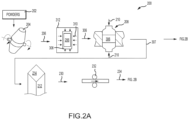
FIG. 2A illustrates a method for titanium rod additive manufacturing, in accordance with various embodiments; and -
FIG. 2B illustrates a continuation of a method fromFIG. 2A for titanium rod additive manufacturing, in accordance with various embodiments. -
FIG. 3 illustrates an additive manufacturing machine for use in the method ofFIGs. 2A and2B . - The detailed description of exemplary embodiments herein makes reference to the accompanying drawings, which show exemplary embodiments by way of illustration and their best mode. While these exemplary embodiments are described in sufficient detail to enable those skilled in the art to practice the disclosures, it should be understood that other embodiments may be realized and that logical, chemical, and mechanical changes may be made without departing from the spirit and scope of the disclosures. Thus, the detailed description herein is presented for purposes of illustration only and not of limitation. For example, the steps recited in any of the method or process descriptions may be executed in any order and are not necessarily limited to the order presented. Furthermore, any reference to singular includes plural embodiments, and any reference to more than one component or step may include a singular embodiment or step. Also, any reference to attached, fixed, connected or the like may include permanent, removable, temporary, partial, full and/or any other possible attachment option. Additionally, any reference to without contact (or similar phrases) may also include reduced contact or minimal contact.
- Titanium alloy Ti-185 has a relatively high tensile strength; however, the high iron percentage of the alloy causes segregation during conventional melting. Powder metallurgy techniques such as, for example, pressing and sintering may overcome the segregation issues induced in conventional melt metallurgy thereby enabling a lower cost part. Alloying powder may be either elemental powders (e.g., Ti, Fe, V, Al), master alloy powders, or a combination thereof. Sintered billets may be drawn or otherwise worked into a rod feedstock for additive manufacturing operations. In this regard, large high strength titanium alloy components such as, for example, pistons, bogie beams, torque links, brake rods, and/or the like may be produced at reduced cost. Additionally, additive manufacturing according to the process described herein may tend to overcome macro segregation issues encountered in conventional melt metallurgy and benefit of enhanced fatigue and ultimate strength.
- In various embodiments, methods and/or processes disclosed herein may tend to eliminate thermomechanical processing prior to a stir friction weld process. In this regard, feedstock for a stir friction weld process may be manufactured in an inexpensive and efficient manner and maintain structural capabilities of the feedstock, in accordance with various embodiments.
- With reference to
FIG. 1 , anaircraft 10 in accordance with various embodiments may comprise aircraft systems and components. For example,aircraft 10 may comprise one or more landing gear such aslanding gear 12,landing gear 14 andlanding gear 16.Landing gear 12,landing gear 14 andlanding gear 16 may generally supportaircraft 10 whenaircraft 10 is not flying, allowingaircraft 10 to taxi, take off, and land without damage and may comprise wheels and an oleo strut, also referred to as a shock strut, comprising a strut cylinder and a strut piston filled with a hydraulic fluid. For example,landing gear 12 may includewheels 18 coupled by anaxle 20 and ashock strut 22. In operation, aircraft landing gear may experience significant forces such as landing loads and aerodynamic loads and may tend to benefit from high performance alloy construction. In various embodiments,aircraft 10 components such aslanding gear 12 andshock strut 22 may comprise complex geometries tending to benefit from additive manufacturing techniques. - With additional reference to
FIG. 2A , a method for titanium rod additive manufacturing is illustrated according to various embodiments. A plurality ofpowdered metals 202 comprising titanium and iron are added topowder blender 204 and blended to consistency topowder blend 206. In various embodiments,powder blend 206 may comprise titanium and iron and any of oxygen, aluminum, vanadium, and/or hydrogen.Powdered metals 202 may include titanium hydride powder.Powder blend 206 may be between 4% and 6% by weight iron, between 0.5% to 2% by weight aluminum, and between 6% to 9% by weight vanadium. The input powders may contain oxygen and hydrogen levels between 0.01 and 1.0% by weight. In various embodiments, powdered metals comprise of Al-V master alloy and Fe elemental powder blended with TiH2 powder. In various embodiments, powder metals may consist of Al-V master alloy and Fe elemental powder blended with TiH2 powder. The billet elemental weight percent may be adjusted to account for vaporization of elements such as aluminum during the rod-fed additive process, tending thereby to ensure the additive manufactured part is within a desired weight percent limit. In various embodiments, the billet shape may be a solid round or other shape as appropriate to input stock for rod drawing. -
Powder blend 206 is loaded into a formingmold 308, which is subjected to a near-uniformhydrostatic pressure 310 to compact thepowder blend 206 to achieve a uniform, or near uniform, density. "Near uniform" as described herein refers to a variation in local density less than 10% of an average density, or less than 5% of an average density. In this regard,powder blend 206 is subjected to a cold isostatic pressing (CIP) process. In various embodiments, the formingmold 308 may comprise a flexible bag, such as a polymeric bag or the like. In various embodiments, the formingmold 308 is submerged in apressure vessel 312 containing a pressurizing fluid, such as a soluble oil or the like. In various embodiments, the formingmold 308 is fixed in thepressure vessel 312 and loaded with a gas, such as air or the like. Thus, thepressure vessel 312 may be configured for a wet bag process or a dry bag process. In various embodiments, temperatures for a CIP process may be between ambient (approximately 70 °F [21 °C]) and 200 °F [93 °C]. - Although described herein with respect to the CIP process, the present disclosure is not limited in this regard. For example, in various embodiments, hot isostatic pressing (HIP) of the
powder blend 206 may be performed in thepressure vessel 312. In this regard, thepressure vessel 312 may be heated to an elevated temperature (e.g., between 1652 °F [900 °C] and 2,282 °F [1,250 °C]). -
Pressed powder blend 306 is loaded intosintering furnace 208, which appliesforce 210 to compact the pressedpowder blend 306 and heat to sinter the pressedpowder blend 306, thereby formingbillet 212. In various embodiments, the pressedpowder blend 306 may be loaded intosintering furnace 208 after the CIP process. In various embodiments, by utilizing a HIP process as described above, the sintering step may be eliminated. In various embodiments, the HIP process may be performed after sintering. The present disclosure is not limited in this regard. - In various embodiments, sintering
furnace 208 may be a vacuum sintering furnace and pressedpowder blend 306 may be compressed and heated under a vacuum or near vacuum. In various embodiments, the compressed pressedpowder blend 306 may be heated to between 900 °F [483 °C] and 1600 °F [871 °C] for the sintering operation. In this regard, the sintered billet may undergo beta phase transformation. Sintering the pressedpowder blend 306 may include removing gasses evolved from the pressedpowder blend 306 during sintering andsintering furnace 208 may include a gas removal system and/or control system. In various embodiments, oxygen, nitrogen, and/or hydrogen may be removed from the pressedpowder blend 306 during sintering. In various embodiments,billet 212 may undergo an annealing cycle after sintering. In various embodiments, the annealing cycle temperatures may be between 1200 °F [649 °C] and 1400 °F [760 °C]. - In various embodiments, in response to sintering the pressed
powder blend 306, abillet 212 having across-sectional profile 214 may be formed. Thecross-sectional profile 214 may correspond directly to a feedstock cross-sectional profile for an additive manufacturing machine. - In various embodiments, the
cross-sectional profile 214 may be substantially square. "Substantially square" as described herein refers to a cross-sectional shape with four right angles plus or minus 5 degrees. Additionally, "substantially square" as referred to herein includes rounded corners, chamfered corners or any other type of corner. Although described herein as having a square cross-sectional shape, the present disclosure is not limited in this regard. For example, circular, rectangular, oval, or any other cross-sectional shape for feedstock is within the scope of this disclosure. In various embodiments, each side of thecross-sectional profile 214 may be between 0.25 inches (0.635 cm) and 0.5 inches (1.27 cm), or approximately 0.375 inches. - The process described herein may be directly used in an additive manufacturing machine after a worked
rod 230 is formed after sintering. In various embodiments, further conditioning (e.g., via asubtractive component 232, such as a die grinder, a mill, a bench grinder, a tool bit, a milling cutter, or the like) of the workedrod 230 may be performed if tight tolerances are desired. In this regard, conditioning may be optionally performed to further facilitate a feedstockcross-sectional profile 214 that is substantially complimentary to a feed aperture cross-sectional profile, in accordance with various embodiments. -
Billet 212 may be sintered to any length with thecross-sectional profile 214. In various embodiments, the length may be a multiple of a uniform length for use as feedstock in a stir friction welding process as described further herein. In this regard, thebillet 212 may be cut after being sintered to a length between 3 feet (0.9 m) and 6 feet (1.8 m), or between 4 feet (1.2 m) and 5 feet (1.5 m).Billet 212 may be cut into a plurality of feedstock (or a plurality of the worked rod 230) for use with an additive manufacturing machine as described further herein. - In various embodiments, a density of the
billet 212 may be less than a density of a known specification for a wrought metal alloy (e.g., Titanium alloy Ti-185 as described previously herein). For example, the density of thebillet 212 may be between 90% and 100% of the density of the known specification, or between 95% and 100% of the known specification. In this regard, due to the strength of Titanium ally Ti-185, asolid metal billet 212 having a density of less than 100% may exceed a desired strength for an additive manufacturing process as described further herein. - In various embodiments, the plurality of
rod feedstock 234 may be fed into anadditive manufacturing machine 242. With brief reference toFIG. 3 , theadditive manufacturing machine 242 is illustrated in accordance with various embodiments. In various embodiments, theadditive manufacturing machine 242 comprises arotating tool 322 comprising anaperture 324 disposed therethrough. Theaperture 324 comprises across-sectional profile 325 complimentary to thecross-sectional profile 214 fromFIG. 2A . In this regard, thecross-sectional profile 214 fromFIG. 2A corresponds to thecross-sectional profile 325 of therotating tool 322 of theadditive manufacturing machine 242 to receive therod feedstock 234 during a stir friction welding process, in accordance with various embodiments. In this regard, therod feedstock 234 is fed through theaperture 324 of the additive manufacturing machine to facilitate adding additional material to a respective previously laid layer or the like. - In various embodiments, the process disclosed herein may tend to eliminate utilization of induction coils for hot rolling, drawing, and/or coiling feedstock bar or wire. In various embodiments, conditioning may also be eliminated as sintering may be performed under a vacuum, preventing mill defects. In various embodiments, the process described herein may eliminate thermomechanical work of a billet prior to input into an additive manufacturing system.
-
Rod feedstock 234 may be loaded in theadditive manufacturing machine 242 configured forrod feedstock 234. Theadditive manufacturing machine 242 may comprise hardware and/or software configured to perform additive manuring of an aerospace component. In various embodiments additive manufacturing may include friction stir welding additive manufacturing. In various embodiments,additive manufacturing machine 242 may be configured to deposit therod feedstock 234 on a substrate (e.g.,substrate 330 as shown inFIG. 3 ). For example, theadditive manufacturing machine 242 may be configured with therotating tool 322 ofFIG. 3 . In various embodiments, theadditive manufacturing machine 242 may incorporate a single or a multiple rod feed system and be capable of delivering therod feedstock 234 at a rate of 0.5 in/min [1.27 cm/min] to 25 in/min [63.5 cm/min] and may have deposition rates between 1 and 20 lbs/hour [0.45 and 9 kg/hr]. Theadditive manufacturing machine 242 may further be configured to supply an axial force to therod feedstock 234 to cause therod feedstock 234 to translate through therotating tool 322. -
Additive manufacturing machine 242 may produce ametallic aerospace component 244 fromrod feedstock 234.Metallic aerospace component 244 may undergo a component heat treat process 245. In this regard, crack formation and oxide formation for themetallic aerospace component 244 may be reduced. Heat treatment operations may include solutionizing heat treatment, aging, and/or annealing. In various embodiments, heat treatments may include a beta anneal and an alpha beta anneal. For example, annealing between 1550 °F [843 °C] and 1600 °F [871 °C] or annealing between 1200 °F [649 °C] and 1400 °F [760 °C]. In various embodiments, a solutionizing heat treatment may be between 1350 °F [732 °C] and 1450 °F [788 °C]. In various embodiments, an aging heat treatment may be between 800 °F [427 °C] and 1100 °F [593 °C] or may be adjusted to achieve a desired material property for metallic aerospace component manufacture. In various embodiments, the heat-treated metallic aerospace component may have between 0.001% and 0.015% by weight hydrogen and may have between 0.1% and 1.0% by weight oxygen. - Benefits, other advantages, and solutions to problems have been described herein with regard to specific embodiments. Furthermore, the connecting lines shown in the various figures contained herein are intended to represent exemplary functional relationships and/or physical couplings between the various elements. It should be noted that many alternative or additional functional relationships or physical connections may be present in a practical system. However, the benefits, advantages, solutions to problems, and any elements that may cause any benefit, advantage, or solution to occur or become more pronounced are not to be construed as critical, required, or essential features or elements of the disclosures.
- The scope of the disclosures is accordingly to be limited by nothing other than the appended claims, in which reference to an element in the singular is not intended to mean "one and only one" unless explicitly so stated, but rather "one or more." Moreover, where a phrase similar to "at least one of A, B, or C" is used in the claims, it is intended that the phrase be interpreted to mean that A alone may be present in an embodiment, B alone may be present in an embodiment, C alone may be present in an embodiment, or that any combination of the elements A, B and C may be present in a single embodiment; for example, A and B, A and C, B and C, or A and B and C. Different cross-hatching is used throughout the figures to denote different parts but not necessarily to denote the same or different materials.
- Systems, methods and apparatus are provided herein. In the detailed description herein, references to "one embodiment", "an embodiment", "an example embodiment", etc., indicate that the embodiment described may include a particular feature, structure, or characteristic, but every embodiment may not necessarily include the particular feature, structure, or characteristic. Moreover, such phrases are not necessarily referring to the same embodiment. Further, when a particular feature, structure, or characteristic is described in connection with an embodiment, it is submitted that it is within the knowledge of one skilled in the art to affect such feature, structure, or characteristic in connection with other embodiments whether or not explicitly described. After reading the description, it will be apparent to one skilled in the relevant art(s) how to implement the disclosure in an alternative embodiment.
- Furthermore, no element, component, or method step in the present disclosure is intended to be dedicated to the public regardless of whether the element, component, or method step is explicitly recited in the claims. No claim element is intended to invoke 35 U.S.C. 112(f) unless the element is expressly recited using the phrase "means for." As used herein, the terms "comprises", "comprising", or any other variation thereof are intended to cover a non-exclusive inclusion, such that a process, method, article, or apparatus that comprises a list of elements does not include only those elements but may include other elements not expressly listed or inherent to such process, method, article, or apparatus.
Claims (15)
- A method of titanium rod additive manufacturing, comprising:mixing a plurality of powdered metals comprising titanium, iron, vanadium, and aluminum to produce a powder blend;isostatic pressing the powder blend to form a billet having a cross-sectional profile;cutting the billet to form a rod feedstock having the first cross-sectional profile;loading the rod feedstock into an additive manufacturing machine configured to deposit the rod feedstock; andproducing a metallic component from the rod feedstock.
- The method of claim 1, wherein the titanium is a titanium hydride powder; and/orwherein the powder blend comprises between 4% and 6% by weight iron, between 0.5% to 2% by weight aluminum, and between 6% to 9% by weight vanadium; and/orwherein the isostatic pressing is performed within a temperature range between 1652 °F (900 °C) and 2,282 °F (1,250 °C).
- The method of claim 1 or 2, further comprising sintering the powder blend after the isostatic pressing, wherein the sintering is performed between 900 °F (482 °C) and 1600 °F (871 °C) and under a vacuum.
- The method of any preceding claim, wherein the additive manufacturing machine comprises a rotating tool having an aperture disposed therethrough.
- The method of claim 4, wherein the rod feedstock is fed through the aperture of the rotating tool.
- The method of any preceding claim, wherein a first density of the rod feedstock is less than 100% of a second density for a known specification of a wrought metal alloy associated with a material composition of the powder blend.
- The method of any preceding claim, wherein the cross-sectional profile of the rod feedstock is a substantially square shape.
- The method of claim 7, wherein each side length of the rod feedstock is between 0.25 inches (0.635 cm) and 0.5 inches (1.27 cm).
- The method of any preceding claim, wherein loading the rod feedstock further comprises applying an axial force to the rod feedstock to translate the rod feedstock through an aperture of a rotating tool.
- An article of manufacture including a metallic component additively manufactured from a rod feedstock by a stir friction welding additive manufacturing machine, wherein:the rod feedstock comprises a rod feedstock from a sintered billet of powdered metals including a material composition, the rod feedstock comprising a first density less than 100% of a known density for a wrought metal alloy of the material composition, andthe powdered metals comprising titanium hydride, iron, vanadium, and aluminum.
- The article of manufacture of claim 10, wherein the material composition comprises between 4% and 6% by weight iron, between 0.5% to 2% by weight aluminum, and between 6% to 9% by weight vanadium; and/or
wherein the metallic component comprises between 0.1% and 1.0% by weight oxygen and between 0.001 % and 0.015% by weight hydrogen. - The article of manufacture of claim 10 or 11, wherein the metallic component is heat treated by at least one of annealing, solutionizing, or aging.
- The article of manufacture of claim 12, wherein the metallic component has undergone at least one of a beta phase transformation, a beta anneal, or an alpha beta anneal during the at least one of annealing, solutionizing, or aging.
- A method of forming a rod feedstock for titanium stir friction welding additive manufacturing, comprising:mixing a plurality of powdered metals comprising titanium, iron, vanadium, and aluminum to produce a powder blend;isostatic pressing the powder blend to form a billet having a first cross-sectional profile; andcutting the billet to form a rod feedstock having the first cross-sectional profile to form a worked rod feedstock.
- The method of claim 14, wherein the titanium is a titanium hydride powder; and/orwherein the powder blend comprises between 4% and 6% by weight iron, between 0.5% to 2% by weight aluminum, and between 6% to 9% by weight vanadium; and/orfurther comprising sintering the powder blend after the isostatic pressing, wherein the sintering is performed between 900 °F and 1600 °F and under a vacuum.
Applications Claiming Priority (1)
| Application Number | Priority Date | Filing Date | Title |
|---|---|---|---|
| US17/525,722 US11786972B2 (en) | 2021-11-12 | 2021-11-12 | Systems and methods for high strength titanium rod additive manufacturing |
Publications (1)
| Publication Number | Publication Date |
|---|---|
| EP4180139A1 true EP4180139A1 (en) | 2023-05-17 |
Family
ID=84330281
Family Applications (1)
| Application Number | Title | Priority Date | Filing Date |
|---|---|---|---|
| EP22205929.7A Pending EP4180139A1 (en) | 2021-11-12 | 2022-11-07 | Systems and methods for high strength titanium rod additive manufacturing |
Country Status (3)
| Country | Link |
|---|---|
| US (2) | US11786972B2 (en) |
| EP (1) | EP4180139A1 (en) |
| CA (1) | CA3178479A1 (en) |
Cited By (1)
| Publication number | Priority date | Publication date | Assignee | Title |
|---|---|---|---|---|
| US20230150052A1 (en) * | 2021-11-17 | 2023-05-18 | Goodrich Corporation | Systems and methods for high strength titanium rod additive manufacturing |
Families Citing this family (3)
| Publication number | Priority date | Publication date | Assignee | Title |
|---|---|---|---|---|
| US11786972B2 (en) | 2021-11-12 | 2023-10-17 | Goodrich Corporation | Systems and methods for high strength titanium rod additive manufacturing |
| US12138708B2 (en) * | 2022-02-23 | 2024-11-12 | Goodrich Corporation | Methods, systems, and apparatus for component manufacturing |
| CN120133698A (en) * | 2025-05-16 | 2025-06-13 | 燕山大学 | A method for preparing high nitrogen stainless steel-carbon steel composite plate |
Citations (4)
| Publication number | Priority date | Publication date | Assignee | Title |
|---|---|---|---|---|
| US20190308283A1 (en) * | 2018-04-04 | 2019-10-10 | The Boeing Company | Welded titanium structure utilizing dissimilar titanium alloy filler metal for enhanced fatigue life |
| EP3610972A1 (en) * | 2018-08-13 | 2020-02-19 | Goodrich Corporation | Systems and methods for high strength titanium wire additive manufacturing |
| CN111203671A (en) * | 2020-02-11 | 2020-05-29 | 重庆理工大学 | A kind of aluminum-based welding wire for aluminum/steel filler wire friction stir welding and preparation method thereof |
| EP3685957A1 (en) * | 2019-01-28 | 2020-07-29 | Goodrich Corporation | Systems and methods for wire deposited additive manufacturing using titanium |
Family Cites Families (16)
| Publication number | Priority date | Publication date | Assignee | Title |
|---|---|---|---|---|
| JPH07258835A (en) | 1994-03-24 | 1995-10-09 | Japan Energy Corp | W-Ti alloy target and manufacturing method thereof |
| US6852273B2 (en) | 2003-01-29 | 2005-02-08 | Adma Products, Inc. | High-strength metal aluminide-containing matrix composites and methods of manufacture the same |
| US20080041921A1 (en) | 2005-09-26 | 2008-02-21 | Kevin Creehan | Friction stir fabrication |
| US7993577B2 (en) | 2007-06-11 | 2011-08-09 | Advance Materials Products, Inc. | Cost-effective titanium alloy powder compositions and method for manufacturing flat or shaped articles from these powders |
| US20160243617A1 (en) | 2007-06-11 | 2016-08-25 | Advanced Material Products, Inc | Manufacture of near-net shape titanium alloy articles from metal powders by sintering with presence of atomic hydrogen |
| US20090041609A1 (en) | 2007-08-07 | 2009-02-12 | Duz Volodymyr A | High-strength discontinuously-reinforced titanium matrix composites and method for manufacturing the same |
| CN103938005B (en) | 2014-05-09 | 2016-02-17 | 湖南大学 | Airflow milling titanium hydride powder prepares the method for superfine crystal particle titanium or titanium alloy |
| CN103966500B (en) | 2014-05-22 | 2017-11-14 | 北京航空航天大学 | A kind of ODS high temperature alloys for adding composite oxides nano particle and preparation method thereof |
| CN104550963A (en) | 2014-12-16 | 2015-04-29 | 中国航空工业集团公司北京航空材料研究院 | Method for realizing forming of titanium alloy powder by utilizing titanium hydride alloy powder |
| US20180245186A1 (en) | 2017-02-24 | 2018-08-30 | Ohio State Innovation Foundation | Titanium alloys for additive manufacturing |
| JP7089034B2 (en) | 2017-10-31 | 2022-06-21 | メルド マニファクチャリング コーポレーション | Solid-state laminated modeling system as well as material composition and structural background |
| CN112135705B (en) | 2018-03-27 | 2022-06-14 | 西门子能源美国公司 | Method and system for additive manufacturing or repair by in situ manufacturing and feeding of a sintering line |
| US20210053283A1 (en) | 2019-08-20 | 2021-02-25 | The Regents Of The University Of Michigan | Solid-State Manufacturing System And Process Suitable For Extrusion, Additive Manufacturing, Coating, Repair, Welding, Forming And Material Fabrication |
| US11904527B2 (en) | 2019-09-23 | 2024-02-20 | Universal Fibers, Inc. | Large diameter feedstock for extrusion-based additive manufacturing |
| US11628499B2 (en) | 2019-11-27 | 2023-04-18 | The Boeing Company | Systems, methods, and products for creating gas atomized metal matrix composite-based feedstock for cold spray |
| US11786972B2 (en) | 2021-11-12 | 2023-10-17 | Goodrich Corporation | Systems and methods for high strength titanium rod additive manufacturing |
-
2021
- 2021-11-12 US US17/525,722 patent/US11786972B2/en active Active
-
2022
- 2022-10-04 CA CA3178479A patent/CA3178479A1/en active Pending
- 2022-11-07 EP EP22205929.7A patent/EP4180139A1/en active Pending
-
2023
- 2023-09-08 US US18/463,786 patent/US12115580B2/en active Active
Patent Citations (4)
| Publication number | Priority date | Publication date | Assignee | Title |
|---|---|---|---|---|
| US20190308283A1 (en) * | 2018-04-04 | 2019-10-10 | The Boeing Company | Welded titanium structure utilizing dissimilar titanium alloy filler metal for enhanced fatigue life |
| EP3610972A1 (en) * | 2018-08-13 | 2020-02-19 | Goodrich Corporation | Systems and methods for high strength titanium wire additive manufacturing |
| EP3685957A1 (en) * | 2019-01-28 | 2020-07-29 | Goodrich Corporation | Systems and methods for wire deposited additive manufacturing using titanium |
| CN111203671A (en) * | 2020-02-11 | 2020-05-29 | 重庆理工大学 | A kind of aluminum-based welding wire for aluminum/steel filler wire friction stir welding and preparation method thereof |
Cited By (2)
| Publication number | Priority date | Publication date | Assignee | Title |
|---|---|---|---|---|
| US20230150052A1 (en) * | 2021-11-17 | 2023-05-18 | Goodrich Corporation | Systems and methods for high strength titanium rod additive manufacturing |
| US12186827B2 (en) * | 2021-11-17 | 2025-01-07 | Goodrich Corporation | Systems and methods for high strength titanium rod additive manufacturing |
Also Published As
| Publication number | Publication date |
|---|---|
| US20240207936A1 (en) | 2024-06-27 |
| US20230150027A1 (en) | 2023-05-18 |
| US11786972B2 (en) | 2023-10-17 |
| CA3178479A1 (en) | 2023-05-12 |
| US12115580B2 (en) | 2024-10-15 |
Similar Documents
| Publication | Publication Date | Title |
|---|---|---|
| US12115580B2 (en) | Systems and methods for high strength titanium rod additive manufacturing | |
| US12186827B2 (en) | Systems and methods for high strength titanium rod additive manufacturing | |
| US20240042558A1 (en) | Systems and methods for wire deposited additive manufacturing using titanium | |
| EP0130034B1 (en) | Process for producing composite material | |
| EP3610972A1 (en) | Systems and methods for high strength titanium wire additive manufacturing | |
| EP4238671A1 (en) | Systems and methods for manufacturing landing gear components using titanium | |
| US4699849A (en) | Metal matrix composites and method of manufacture | |
| US4797155A (en) | Method for making metal matrix composites | |
| JPH0225961B2 (en) | ||
| US4536234A (en) | Method for refining microstructures of blended elemental powder metallurgy titanium articles | |
| EP1779946B1 (en) | Supersolvus hot isostatic pressing and ring rolling of hollow powder forms | |
| EP3790673B1 (en) | Methods for producing metal matrix composite strip product | |
| JP2007131886A (en) | Method for producing fiber reinforced metal with excellent wear resistance | |
| CN116987921A (en) | TiAl-based composite material with full-lamellar network structure and preparation method thereof | |
| US20250162027A1 (en) | Method for near net shape manufacturing high strength titanium components | |
| Hanes | Hot isostatic processing | |
| BR102022022110A2 (en) | ADDITIVE MANUFACTURING METHOD OF TITANIUM RODS, ARTICLE OF MANUFACTURING, AND METHOD FOR FORMING A RAW MATERIAL | |
| BR102022020765A2 (en) | ADDITIVE MANUFACTURING METHODS OF TITANIUM ROD AND FOR FORMING A ROD RAW MATERIAL | |
| JP2009074134A (en) | Manufacturing method of fiber reinforced metal | |
| Kuhn | Powder Hot Pressing and Forging | |
| WO2019217279A1 (en) | Methods for heating strip product | |
| Goldberg et al. | Metalworking |
Legal Events
| Date | Code | Title | Description |
|---|---|---|---|
| PUAI | Public reference made under article 153(3) epc to a published international application that has entered the european phase |
Free format text: ORIGINAL CODE: 0009012 |
|
| STAA | Information on the status of an ep patent application or granted ep patent |
Free format text: STATUS: THE APPLICATION HAS BEEN PUBLISHED |
|
| AK | Designated contracting states |
Kind code of ref document: A1 Designated state(s): AL AT BE BG CH CY CZ DE DK EE ES FI FR GB GR HR HU IE IS IT LI LT LU LV MC ME MK MT NL NO PL PT RO RS SE SI SK SM TR |
|
| P01 | Opt-out of the competence of the unified patent court (upc) registered |
Effective date: 20230922 |
|
| STAA | Information on the status of an ep patent application or granted ep patent |
Free format text: STATUS: REQUEST FOR EXAMINATION WAS MADE |
|
| 17P | Request for examination filed |
Effective date: 20231116 |
|
| RBV | Designated contracting states (corrected) |
Designated state(s): AL AT BE BG CH CY CZ DE DK EE ES FI FR GB GR HR HU IE IS IT LI LT LU LV MC ME MK MT NL NO PL PT RO RS SE SI SK SM TR |
|
| STAA | Information on the status of an ep patent application or granted ep patent |
Free format text: STATUS: EXAMINATION IS IN PROGRESS |
|
| 17Q | First examination report despatched |
Effective date: 20251217 |