EP4180027A1 - Sunscreen composition containing visibly transparent biocompatible ultraviolet blocking polymer nanoparticles - Google Patents
Sunscreen composition containing visibly transparent biocompatible ultraviolet blocking polymer nanoparticles Download PDFInfo
- Publication number
- EP4180027A1 EP4180027A1 EP22184593.6A EP22184593A EP4180027A1 EP 4180027 A1 EP4180027 A1 EP 4180027A1 EP 22184593 A EP22184593 A EP 22184593A EP 4180027 A1 EP4180027 A1 EP 4180027A1
- Authority
- EP
- European Patent Office
- Prior art keywords
- pdms
- nanoparticles
- sunscreen composition
- size
- skin
- Prior art date
- Legal status (The legal status is an assumption and is not a legal conclusion. Google has not performed a legal analysis and makes no representation as to the accuracy of the status listed.)
- Granted
Links
Images



Classifications
-
- A—HUMAN NECESSITIES
- A61—MEDICAL OR VETERINARY SCIENCE; HYGIENE
- A61K—PREPARATIONS FOR MEDICAL, DENTAL OR TOILETRY PURPOSES
- A61K8/00—Cosmetics or similar toiletry preparations
- A61K8/18—Cosmetics or similar toiletry preparations characterised by the composition
- A61K8/72—Cosmetics or similar toiletry preparations characterised by the composition containing organic macromolecular compounds
- A61K8/84—Cosmetics or similar toiletry preparations characterised by the composition containing organic macromolecular compounds obtained by reactions otherwise than those involving only carbon-carbon unsaturated bonds
- A61K8/89—Polysiloxanes
- A61K8/891—Polysiloxanes saturated, e.g. dimethicone, phenyl trimethicone, C24-C28 methicone or stearyl dimethicone
-
- A—HUMAN NECESSITIES
- A61—MEDICAL OR VETERINARY SCIENCE; HYGIENE
- A61K—PREPARATIONS FOR MEDICAL, DENTAL OR TOILETRY PURPOSES
- A61K8/00—Cosmetics or similar toiletry preparations
- A61K8/18—Cosmetics or similar toiletry preparations characterised by the composition
- A61K8/72—Cosmetics or similar toiletry preparations characterised by the composition containing organic macromolecular compounds
- A61K8/84—Cosmetics or similar toiletry preparations characterised by the composition containing organic macromolecular compounds obtained by reactions otherwise than those involving only carbon-carbon unsaturated bonds
- A61K8/89—Polysiloxanes
- A61K8/891—Polysiloxanes saturated, e.g. dimethicone, phenyl trimethicone, C24-C28 methicone or stearyl dimethicone
- A61K8/893—Polysiloxanes saturated, e.g. dimethicone, phenyl trimethicone, C24-C28 methicone or stearyl dimethicone modified by an alkoxy or aryloxy group, e.g. behenoxy dimethicone or stearoxy dimethicone
-
- A—HUMAN NECESSITIES
- A61—MEDICAL OR VETERINARY SCIENCE; HYGIENE
- A61K—PREPARATIONS FOR MEDICAL, DENTAL OR TOILETRY PURPOSES
- A61K8/00—Cosmetics or similar toiletry preparations
- A61K8/02—Cosmetics or similar toiletry preparations characterised by special physical form
- A61K8/0241—Containing particulates characterized by their shape and/or structure
-
- A—HUMAN NECESSITIES
- A61—MEDICAL OR VETERINARY SCIENCE; HYGIENE
- A61K—PREPARATIONS FOR MEDICAL, DENTAL OR TOILETRY PURPOSES
- A61K8/00—Cosmetics or similar toiletry preparations
- A61K8/02—Cosmetics or similar toiletry preparations characterised by special physical form
- A61K8/04—Dispersions; Emulsions
- A61K8/042—Gels
-
- A—HUMAN NECESSITIES
- A61—MEDICAL OR VETERINARY SCIENCE; HYGIENE
- A61K—PREPARATIONS FOR MEDICAL, DENTAL OR TOILETRY PURPOSES
- A61K8/00—Cosmetics or similar toiletry preparations
- A61K8/18—Cosmetics or similar toiletry preparations characterised by the composition
- A61K8/72—Cosmetics or similar toiletry preparations characterised by the composition containing organic macromolecular compounds
- A61K8/84—Cosmetics or similar toiletry preparations characterised by the composition containing organic macromolecular compounds obtained by reactions otherwise than those involving only carbon-carbon unsaturated bonds
- A61K8/89—Polysiloxanes
- A61K8/895—Polysiloxanes containing silicon bound to unsaturated aliphatic groups, e.g. vinyl dimethicone
-
- A—HUMAN NECESSITIES
- A61—MEDICAL OR VETERINARY SCIENCE; HYGIENE
- A61K—PREPARATIONS FOR MEDICAL, DENTAL OR TOILETRY PURPOSES
- A61K9/00—Medicinal preparations characterised by special physical form
- A61K9/48—Preparations in capsules, e.g. of gelatin, of chocolate
- A61K9/50—Microcapsules having a gas, liquid or semi-solid filling; Solid microparticles or pellets surrounded by a distinct coating layer, e.g. coated microspheres, coated drug crystals
- A61K9/51—Nanocapsules; Nanoparticles
-
- A—HUMAN NECESSITIES
- A61—MEDICAL OR VETERINARY SCIENCE; HYGIENE
- A61Q—SPECIFIC USE OF COSMETICS OR SIMILAR TOILETRY PREPARATIONS
- A61Q17/00—Barrier preparations; Preparations brought into direct contact with the skin for affording protection against external influences, e.g. sunlight, X-rays or other harmful rays, corrosive materials, bacteria or insect stings
- A61Q17/04—Topical preparations for affording protection against sunlight or other radiation; Topical sun tanning preparations
-
- A—HUMAN NECESSITIES
- A61—MEDICAL OR VETERINARY SCIENCE; HYGIENE
- A61K—PREPARATIONS FOR MEDICAL, DENTAL OR TOILETRY PURPOSES
- A61K2800/00—Properties of cosmetic compositions or active ingredients thereof or formulation aids used therein and process related aspects
- A61K2800/20—Chemical, physico-chemical or functional or structural properties of the composition as a whole
- A61K2800/26—Optical properties
- A61K2800/262—Transparent; Translucent
-
- A—HUMAN NECESSITIES
- A61—MEDICAL OR VETERINARY SCIENCE; HYGIENE
- A61K—PREPARATIONS FOR MEDICAL, DENTAL OR TOILETRY PURPOSES
- A61K2800/00—Properties of cosmetic compositions or active ingredients thereof or formulation aids used therein and process related aspects
- A61K2800/40—Chemical, physico-chemical or functional or structural properties of particular ingredients
- A61K2800/41—Particular ingredients further characterized by their size
- A61K2800/412—Microsized, i.e. having sizes between 0.1 and 100 microns
Definitions
- the disclosure herein generally relates to the field of cosmetics, and, more particularly, to a sunscreen composition containing visibly transparent biocompatible ultraviolet (UV) blocking polymer nanoparticles.
- UV ultraviolet
- Materials used for making a sunscreen composition are generally classified into physical materials and chemical materials.
- the sunscreen composition made with the physical materials are generally called as physical sunscreens.
- the sunscreen composition made with the chemical materials are generally called as chemical sunscreens.
- the chemical sunscreens available in the market are generally organic compounds that attenuate ultraviolet (UV) radiation purely by absorption at the molecular level. Studies indicate that most of the known chemical sunscreens (compounds) have potentially toxic effects on skin cells.
- the physical sunscreens available in the market are mostly made of mineral nano particles which attenuate UV through their properties of scattering and reflection in addition to absorption.
- the physical sunscreens are preferred over the chemical sunscreens due to adverse effects of the chemical compounds on the skin.
- some of the problems associated with conventional physical sunscreens include patchy appearance on the skin when higher concentrations are used.
- most of the conventional physical sunscreens also have toxic effects on the skin due to release of reactive oxygen species by virtue of their photocatalytic properties.
- Embodiments of the present disclosure present technological improvements as solutions to one or more of the above-mentioned technical problems recognized by the inventors in the conventional sunscreen compositions.
- a sunscreen composition containing visibly transparent biocompatible ultraviolet blocking polymer nanoparticles comprising polydimethylsiloxane (PDMS) nanoparticles, at least one flavoring agent, at least one coloring agent, at least one stabilizer, and at least one preservative, in a defined form, wherein size of the PDMS nanoparticles ranging from 200 to 1200 nm.
- PDMS polydimethylsiloxane
- the size of the PDMS nanoparticles ranging from 200 to 500 nm for air medium and 800 to 1200 nm for water medium.
- the PDMS nanoparticles comprise a PDMS polymer having terminal functional group selected from alkyl, alkoxy, vinyl, hydroxyl, or a combination thereof.
- the PDMS polymer is a cross-linked polymer.
- the PDMS nanoparticles provide attenuation from ultraviolet (UV) radiation in a wavelength range of 290-400 nm.
- the PDMS nanoparticles have an extinction coefficient in the range of 100-200 Lgm -1 cm -1 in air medium under UV radiation in the wavelength range of 290-400 nm.
- the PDMS nanoparticles have an extinction coefficient in the range of 20-50 Lgm -1 cm -1 in water medium under UV radiation in the wavelength range of 290-400 nm.
- the PDMS nanoparticles are UV filters.
- the defined form is selected from a group consisting of a skin cream, a skin lotion, a powder, a gel, and a sprayable liquid.
- UV radiation is a part of the solar spectrum with wavelengths ranging from 100 to 400 nm.
- a large part of the most damaging section of the ultraviolet radiation (UVC: 100-290 nm) is absorbed by the ozone layer in the atmosphere.
- UVB 290-320 nm and UVA: 320-400 nm
- UVB radiation may cause redness of skin, sunburns, and increases the risk of basal cell and squamous cell carcinoma due to damage to the DNA of skin cells.
- UVA radiation may cause sun tanning, photoaging of the skin, and malignant melanomas due to indirect DNA damage by the generation of reactive free radicals.
- improved UV protection can be achieved through the use of UV attenuating materials such as physical and chemical sunscreens.
- Chemical sunscreens are generally organic compounds that attenuate UV purely by absorption at the molecular level.
- physical sunscreens attenuate UV by mechanisms including scattering and reflection as well as absorption.
- chemical sunscreens are usually organic compounds which penetrate into the skin to varying extents. Studies indicate that most of the known chemical sunscreens made of the organic compounds have potentially toxic effects on skin cells.
- Prevalent physical sunscreens afford UV protection by means of a combination of scattering and absorption effects. They are usually metal oxides such as titanium dioxide (TiO 2 ) and zinc oxide (ZnO). Such compounds act as band-gap absorbers, absorbing UV photons due to the gap between the valence and conduction bands similar to semi-conductors.
- Such physical sunscreen materials being naturally opaque, are undesirable as they leave white patches on the skin upon application at significant concentrations.
- a common strategy to overcome this problem is to reduce the size of the physical sunscreen material (particles) to the nano-range.
- the resulting metal oxide nanoparticles may easily penetrate through the skin and have high photocatalytic activity, releasing reactive oxygen species (ROSs) into the skin causing cell damage, accelerating skin aging, and potential carcinogenic effects. Further, the resulted metal oxide nanoparticles may not have natural adherent properties to the skin hence they are liable to be washed off easily and not effective over a long period of time.
- ROSs reactive oxygen species
- PDMS Polydimethylsiloxane nanoparticles have potential to resolve many of the above issues by virtue of their inherent properties.
- PDMS is a non-toxic, biocompatible polymer that has been approved by the United States Food and Drug Administration (FDA) for topical and biomedical applications.
- FDA United States Food and Drug Administration
- PDMS has very strong adherent properties to skin and very similar mechanical and surface properties as skin.
- PDMS is also a visibly transparent and optically clear material which eliminates the possibility of unaesthetic patch formation on the skin.
- the present disclosure herein provides a novel sunscreen composition comprising PDMS nanoparticles which are visibly transparent biocompatible ultraviolet blocking (UV filter) polymer nanoparticles.
- UV filter visibly transparent biocompatible ultraviolet blocking
- the size of the PDMS nanoparticles is tuned for maximum UV attenuation.
- the standardized PDMS nanoparticles exhibit higher sun protection factor (SPF) even as compared to commercially available physical sunscreens.
- the sunscreen composition includes PDMS nanoparticles, at least one flavoring agent, at least one coloring agent, at least one stabilizer, and at least one preservative, in a defined form.
- the size of the PDMS nanoparticles ranging from 200 to 1200 nm.
- the size of the PDMS nanoparticles is tuned from 200 to 500 nm when the sunscreen composition is exposed to air medium, such that to achieve maximum UV attenuation.
- the size of the PDMS nanoparticles is tuned from 800 to 1200 nm when the sunscreen composition is exposed to water medium, such that to achieve maximum UV attenuation.
- the PDMS nanoparticles include a PDMS polymer, wherein the terminal functional group of the PDMS polymer is selected from alkyl, alkoxy, vinyl, hydroxyl, or a combination thereof. Further, the said PDMS polymer is a cross-linked polymer.
- At least one flavoring agent is including in the sunscreen composition to get a flavoring effect.
- at least one flavoring agent is selected from mints such as peppermint and menthol, cirrus flavors such as orange and lemon, vanilla, cinnamon, various other fruit flavors such as apple, mango, pineapple, and so on, both individual and mixed.
- At least one coloring agent is including in the sunscreen composition.
- at least one coloring agent is selected from pigments or dyes, or a combination thereof.
- at least one stabilizer is including in the sunscreen composition.
- at least one stabilizer is selected from surfactants, emulsifiers, dispersants, detergents, or a combination thereof.
- at least one preservative is including in the sunscreen composition.
- at least one preservative is selected from antioxidants, vitamins, their derivatives, or a combination thereof.
- a method of protecting skin from harmful UV radiation with an application of the said sunscreen composition is disclosed.
- the disclosed sunscreen composition may be commercially made in various defined forms for protecting the skin from harmful UV radiation.
- the defined form is selected from a group consisting of a skin cream, a skin lotion, a powder, a gel, a sprayable liquid, and so on.
- At least one flavoring agent, at least one coloring agent, at least one stabilizer, and at least one preservative are thus chosen based on the defined form.
- the PDMS nanoparticles provide attenuation from ultraviolet (UV) radiation in a wavelength range of 290-400 nm.
- UV ultraviolet
- the Mie theory is employed to measure the total attenuation of UV light by the disclosed PDMS nanoparticles.
- N c / ⁇ V
- c the concentration
- ⁇ the density
- V the volume of particles.
- A Q ext lc 1.535 ⁇ d
- Numerical values of the above Mie efficiency parameters may be computed using the subroutine from Matzler's MATLAB functions.
- EE( ⁇ ) ⁇ I( ⁇ ) are constants and obtained from the reported data by Sayre et al.
- n p and n m values are obtained using an online database and as demonstrated by Herzog et al. All the calculations are performed considering incident irradiation at 310 nm wavelength since human skin exhibits maximum erythemal response upon exposure to this wavelength.
- FIG. 1 is a graph showing a relative extinction efficiency Q ext d , a relative scattering efficiency Q sca d , and a relative absorption efficiency Q abs d of the PDMS nanoparticles in air medium, at varying size of the PDMS particles, in accordance with some embodiments of the present disclosure.
- the PDMS nanoparticles having the size range from 300 to 400 nm exhibit higher extinction efficiency Q ext d values in air medium. More particularly from FIG. 1 , the maximum relative extinction efficiency is observed when the size of the disclosed PDMS nanoparticles is 356 nm in the air medium.
- FIG. 2 is a graph showing a relative extinction efficiency Q ext d , a relative scattering efficiency Q sca d , and a relative absorption efficiency Q abs d of the PDMS nanoparticles in water medium, at varying size of the PDMS particles, in accordance with some embodiments of the present disclosure.
- the PDMS nanoparticles having the size range from 950 to 1100 nm exhibit higher extinction efficiency Q ext d values in water medium. More particularly from FIG. 2 , the maximum relative extinction is achieved for the PDMS nanoparticles of 1042 nm diameter.
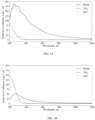
- FIG. 3A is a graph showing a comparison of the extinction coefficients of the PDMS nanoparticles having size of 356 nm, with conventional sunscreen nanoparticles, in air medium, in accordance with some embodiments of the present disclosure.
- FIG. 3B is a graph showing a comparison of the extinction coefficients of the PDMS nanoparticles having size of 1042 nm, with conventional sunscreen nanoparticles, in water medium, in accordance with some embodiments of the present disclosure.
- the conventional sunscreen nanoparticles considered as TiO 2 and ZnO having particle size of 15 nm and 30 nm, respectively. As shown in FIG. 3A and FIG.
- the maximum extinction coefficient is observed in UVA and UVB regions for both sizes (356 nm and 1042 nm) of the PDMS nanoparticles in respective medium.
- higher extinction coefficient values are achieved by the PDMS nanoparticles as compared to the commercial sunscreen nanoparticles TiO 2 and ZnO.
- the PDMS nanoparticles have an extinction co-efficient in the range of 100-200 Lgm -1 cm -1 in air medium under UV radiation in the wavelength range of 290-400 nm.
- the PDMS nanoparticles have an extinction coefficient in the range of 20-50 Lgm -1 cm -1 in water medium under UV radiation in the wavelength range of 290-400 nm.
- the PDMS nanoparticles exhibit low extinction in the visible range as compared to UV range, indicating visible transparency of the nanoparticles desirable for the sunscreen composition applications.
- the extinction coefficient values resulted from FIG. 3A and FIG. 3B are used to measure the total absorbance (scattering plus absorption) of the disclosed PDMS nanoparticles and the conventional sunscreen nanoparticles TiO 2 and ZnO for concentration (c) of 0.005 wt% and path length ( l ) of 1 cm using equation (6).
- FIG. 4A is a graph showing a comparison of a total absorbance of the PDMS nanoparticles having size of 356 nm, with conventional sunscreen nanoparticles, in air medium, in accordance with some embodiments of the present disclosure.
- FIG. 4B is a graph showing a comparison of a total absorbance of the PDMS nanoparticles having size of 1042 nm, with conventional sunscreen nanoparticles, in water medium, in accordance with some embodiments of the present disclosure.
- the total absorbance values of the disclosed PDMS nanoparticles in the UVA and UVB regions are significantly higher as compared to the conventional sunscreen nanoparticles TiO 2 and ZnO in both air medium and water medium, respectively.
- the most traditionally accepted approach for evaluating the efficiency of the sunscreen composition is based on sun protection factor (SPF) measurement.
- SPF value of the sunscreen composition represents a quantitative measure for the amount of protection from harmful UV irradiation. Therefore, the absorbance values obtained from FIG. 4A and FIG. 4B are utilized to compute SPF values of the nanoparticles using equation (7).
- FIG. 5 is a graph showing a comparison of a sun protection factor (SPF) of the PDMS nanoparticles, with conventional sunscreen nanoparticles, in air medium and water medium, respectively, in accordance with some embodiments of the present disclosure.
- the PDMS nanoparticles having size of 356 nm is considered for air medium and the size of 1042 nm is considered for water medium.
- the PDMS nanoparticles exhibit SPF of 38 and 10 in air medium and water medium, respectively, much higher than the corresponding SPF values of the conventional sunscreen nanoparticles such as TiO 2 and ZnO.
- the disclosed PDMS nanoparticles of appropriate size range possess higher UV protection capability than commercial conventional sunscreen nanoparticles.
- the UV extinction properties of the disclosed PDMS nanoparticles in air medium have been consistently higher than the corresponding values in water medium. Therefore, the disclosed PDMS nanoparticles may be more useful for spray-based sunscreen applications than in the form of aqueous dispersion. Thus, based on the results, the disclosed PDMS nanoparticles exhibit excellent UV blocking properties and otherwise called as UV filters.
- the sunscreen composition is made up of polydimethylsiloxane (PDMS) nanoparticles which are transparent, biocompatible, safe, non-toxic and UV blocking polymer nanoparticles.
- PDMS polydimethylsiloxane
- the PDMS is well known to be biocompatible, it may be used in biomedical applications.
- PDMS is also FDA approved for use in cosmetics as well as internal implants in biomedical uses.
- the disclosed sunscreen composition eliminates the problem of patchy appearance on the skin because PDMS is fundamentally visibly clear and transparent.
- the results show that the PDMS nanoparticles used in the disclosed composition have a high extinction coefficient in the UV region and very low extinction in the visible region which implies that they have high degree of UV protection but leave no visible residues when applied on the skin or skin surfaces.
- the disclosed PDMS nanoparticles of appropriate size range possess higher UV protection capability than commercial conventional sunscreen nanoparticles such as TiO 2 and ZnO.
- the PDMS nanoparticles exhibit higher SPF than the corresponding SPF values of the conventional sunscreen nanoparticles such as TiO 2 and ZnO.
- the disclosed sunscreen composition consisting of standalone PDMS nanoparticles, is long lasting and durable on the skin after application because PDMS naturally shows a high degree of adhesion to skin as one of its properties.
Landscapes
- Health & Medical Sciences (AREA)
- Life Sciences & Earth Sciences (AREA)
- Animal Behavior & Ethology (AREA)
- General Health & Medical Sciences (AREA)
- Public Health (AREA)
- Veterinary Medicine (AREA)
- Epidemiology (AREA)
- Birds (AREA)
- Chemical & Material Sciences (AREA)
- Bioinformatics & Cheminformatics (AREA)
- Engineering & Computer Science (AREA)
- Dermatology (AREA)
- Biomedical Technology (AREA)
- Nanotechnology (AREA)
- Optics & Photonics (AREA)
- Medicinal Chemistry (AREA)
- Pharmacology & Pharmacy (AREA)
- Physics & Mathematics (AREA)
- Dispersion Chemistry (AREA)
- Cosmetics (AREA)
Abstract
Description
- The present application claims priority to
Indian application no. 202121048895, filed on October 26, 2021 - The disclosure herein generally relates to the field of cosmetics, and, more particularly, to a sunscreen composition containing visibly transparent biocompatible ultraviolet (UV) blocking polymer nanoparticles.
- Materials used for making a sunscreen composition are generally classified into physical materials and chemical materials. The sunscreen composition made with the physical materials are generally called as physical sunscreens. Similarly, the sunscreen composition made with the chemical materials are generally called as chemical sunscreens. The chemical sunscreens available in the market are generally organic compounds that attenuate ultraviolet (UV) radiation purely by absorption at the molecular level. Studies indicate that most of the known chemical sunscreens (compounds) have potentially toxic effects on skin cells.
- The physical sunscreens available in the market are mostly made of mineral nano particles which attenuate UV through their properties of scattering and reflection in addition to absorption. The physical sunscreens are preferred over the chemical sunscreens due to adverse effects of the chemical compounds on the skin. However, some of the problems associated with conventional physical sunscreens include patchy appearance on the skin when higher concentrations are used. Further, most of the conventional physical sunscreens also have toxic effects on the skin due to release of reactive oxygen species by virtue of their photocatalytic properties.
- Embodiments of the present disclosure present technological improvements as solutions to one or more of the above-mentioned technical problems recognized by the inventors in the conventional sunscreen compositions.
- In an aspect, a sunscreen composition containing visibly transparent biocompatible ultraviolet blocking polymer nanoparticles is provided. The sunscreen composition comprising polydimethylsiloxane (PDMS) nanoparticles, at least one flavoring agent, at least one coloring agent, at least one stabilizer, and at least one preservative, in a defined form, wherein size of the PDMS nanoparticles ranging from 200 to 1200 nm.
- In an embodiment, the size of the PDMS nanoparticles ranging from 200 to 500 nm for air medium and 800 to 1200 nm for water medium.
- In an embodiment, the PDMS nanoparticles comprise a PDMS polymer having terminal functional group selected from alkyl, alkoxy, vinyl, hydroxyl, or a combination thereof.
- In an embodiment, the PDMS polymer is a cross-linked polymer.
- In an embodiment, the PDMS nanoparticles provide attenuation from ultraviolet (UV) radiation in a wavelength range of 290-400 nm.
- In an embodiment, the PDMS nanoparticles have an extinction coefficient in the range of 100-200 Lgm-1cm-1 in air medium under UV radiation in the wavelength range of 290-400 nm.
- In an embodiment, the PDMS nanoparticles have an extinction coefficient in the range of 20-50 Lgm-1cm-1 in water medium under UV radiation in the wavelength range of 290-400 nm.
- In an embodiment, the PDMS nanoparticles are UV filters.
- In an embodiment, the defined form is selected from a group consisting of a skin cream, a skin lotion, a powder, a gel, and a sprayable liquid.
- It is to be understood that both the foregoing general description and the following detailed description are exemplary and explanatory only and are not restrictive of the invention, as claimed.
- The accompanying drawings, which are incorporated in and constitute a part of this disclosure, illustrate exemplary embodiments and, together with the description, serve to explain the disclosed principles:
-
FIG. 1 is a graph showing a relative extinction efficiency


-
FIG. 2 is a graph showing a relative extinction efficiency


-
FIG. 3A is a graph showing a comparison of the extinction coefficients of the PDMS nanoparticles having size of 356 nm, with conventional sunscreen nanoparticles, in air medium, in accordance with some embodiments of the present disclosure. -
FIG. 3B is a graph showing a comparison of the extinction coefficients of the PDMS nanoparticles having size of 1042 nm, with conventional sunscreen nanoparticles, in water medium, in accordance with some embodiments of the present disclosure. -
FIG. 4A is a graph showing a comparison of a total absorbance of the PDMS nanoparticles having size of 356 nm, with conventional sunscreen nanoparticles, in air medium, in accordance with some embodiments of the present disclosure. -
FIG. 4B is a graph showing a comparison of a total absorbance of the PDMS nanoparticles having size of 1042 nm, with conventional sunscreen nanoparticles, in water medium, in accordance with some embodiments of the present disclosure. -
FIG. 5 is a graph showing a comparison of a sun protection factor (SPF) of the PDMS nanoparticles, with conventional sunscreen nanoparticles, in air medium and water medium, respectively, in accordance with some embodiments of the present disclosure. - Exemplary embodiments are described with reference to the accompanying drawings. In the figures, the left-most digit(s) of a reference number identifies the figure in which the reference number first appears. Wherever convenient, the same reference numbers are used throughout the drawings to refer to the same or like parts. While examples and features of disclosed principles are described herein, modifications, adaptations, and other implementations are possible without departing from the scope of the disclosed embodiments.
- Ultraviolet (UV) radiation is a part of the solar spectrum with wavelengths ranging from 100 to 400 nm. A large part of the most damaging section of the ultraviolet radiation (UVC: 100-290 nm) is absorbed by the ozone layer in the atmosphere. However, a fraction of the radiation (UVB: 290-320 nm and UVA: 320-400 nm) penetrates the atmosphere and affects the skin of humans exposed to the sunlight. UVB radiation may cause redness of skin, sunburns, and increases the risk of basal cell and squamous cell carcinoma due to damage to the DNA of skin cells. UVA radiation may cause sun tanning, photoaging of the skin, and malignant melanomas due to indirect DNA damage by the generation of reactive free radicals. To prevent these problems, improved UV protection can be achieved through the use of UV attenuating materials such as physical and chemical sunscreens.
- Chemical sunscreens are generally organic compounds that attenuate UV purely by absorption at the molecular level. On the other hand, physical sunscreens attenuate UV by mechanisms including scattering and reflection as well as absorption.
- Further, chemical sunscreens are usually organic compounds which penetrate into the skin to varying extents. Studies indicate that most of the known chemical sunscreens made of the organic compounds have potentially toxic effects on skin cells. Prevalent physical sunscreens afford UV protection by means of a combination of scattering and absorption effects. They are usually metal oxides such as titanium dioxide (TiO2) and zinc oxide (ZnO). Such compounds act as band-gap absorbers, absorbing UV photons due to the gap between the valence and conduction bands similar to semi-conductors. Such physical sunscreen materials, being naturally opaque, are undesirable as they leave white patches on the skin upon application at significant concentrations. A common strategy to overcome this problem is to reduce the size of the physical sunscreen material (particles) to the nano-range. However, the resulting metal oxide nanoparticles may easily penetrate through the skin and have high photocatalytic activity, releasing reactive oxygen species (ROSs) into the skin causing cell damage, accelerating skin aging, and potential carcinogenic effects. Further, the resulted metal oxide nanoparticles may not have natural adherent properties to the skin hence they are liable to be washed off easily and not effective over a long period of time.
- Polydimethylsiloxane (PDMS) nanoparticles have potential to resolve many of the above issues by virtue of their inherent properties. PDMS is a non-toxic, biocompatible polymer that has been approved by the United States Food and Drug Administration (FDA) for topical and biomedical applications. PDMS has very strong adherent properties to skin and very similar mechanical and surface properties as skin. PDMS is also a visibly transparent and optically clear material which eliminates the possibility of unaesthetic patch formation on the skin.
- Further, owing to the excellent biocompatibility of the PDMS nanoparticles, they have been explored in the past for anticancer drug delivery and developing functional skin tissues. All these properties make PDMS a superior alternative to existing sunscreens. However, they have not been utilized for developing sunscreen compositions before. To solve the above-mentioned problems, the present disclosure herein provides a novel sunscreen composition comprising PDMS nanoparticles which are visibly transparent biocompatible ultraviolet blocking (UV filter) polymer nanoparticles. The size of the PDMS nanoparticles is tuned for maximum UV attenuation. The standardized PDMS nanoparticles exhibit higher sun protection factor (SPF) even as compared to commercially available physical sunscreens.
- In accordance with the embodiments of the present disclosure, the sunscreen composition includes PDMS nanoparticles, at least one flavoring agent, at least one coloring agent, at least one stabilizer, and at least one preservative, in a defined form. The size of the PDMS nanoparticles ranging from 200 to 1200 nm. In an embodiment, the size of the PDMS nanoparticles is tuned from 200 to 500 nm when the sunscreen composition is exposed to air medium, such that to achieve maximum UV attenuation. In another embodiment, the size of the PDMS nanoparticles is tuned from 800 to 1200 nm when the sunscreen composition is exposed to water medium, such that to achieve maximum UV attenuation.
- In accordance with the embodiments of the present disclosure, the PDMS nanoparticles include a PDMS polymer, wherein the terminal functional group of the PDMS polymer is selected from alkyl, alkoxy, vinyl, hydroxyl, or a combination thereof. Further, the said PDMS polymer is a cross-linked polymer.
- In accordance with the embodiments of the present disclosure, at least one flavoring agent is including in the sunscreen composition to get a flavoring effect. In an embodiment, at least one flavoring agent is selected from mints such as peppermint and menthol, cirrus flavors such as orange and lemon, vanilla, cinnamon, various other fruit flavors such as apple, mango, pineapple, and so on, both individual and mixed.
- In accordance with the embodiments of the present disclosure, at least one coloring agent is including in the sunscreen composition. In an embodiment, at least one coloring agent is selected from pigments or dyes, or a combination thereof. In accordance with the embodiments of the present disclosure, at least one stabilizer is including in the sunscreen composition. In an embodiment, at least one stabilizer is selected from surfactants, emulsifiers, dispersants, detergents, or a combination thereof. Further, in accordance with the embodiments of the present disclosure, at least one preservative is including in the sunscreen composition. In an embodiment, at least one preservative is selected from antioxidants, vitamins, their derivatives, or a combination thereof.
- In accordance with the embodiments of the present disclosure, a method of protecting skin from harmful UV radiation with an application of the said sunscreen composition is disclosed. The disclosed sunscreen composition may be commercially made in various defined forms for protecting the skin from harmful UV radiation. The defined form is selected from a group consisting of a skin cream, a skin lotion, a powder, a gel, a sprayable liquid, and so on. At least one flavoring agent, at least one coloring agent, at least one stabilizer, and at least one preservative, are thus chosen based on the defined form.
- In accordance with the embodiments of the present disclosure, the PDMS nanoparticles provide attenuation from ultraviolet (UV) radiation in a wavelength range of 290-400 nm. The Mie theory is employed to measure the total attenuation of UV light by the disclosed PDMS nanoparticles. The total absorbance A
- (due to absorption and scattering) of a solution containing particles of radius r, number density N and path length l can be expressed in terms of extinction efficiency Qext as,

- The number density of particles N can be written as,


- The extinction efficiency Qext can be expressed using the Mie theory as,


- The extinction coefficient (ε) of the nanoparticles can be determined from total absorbance using Beer-Lambert law as,

- Further, the SPF values may be determined from the absorbance values using the following equation, as demonstrated by Gubitosa et al.,

- In order to arrive at a particular size of the disclosed PDMS nanoparticles for maximum UV attenuation, a relative extinction efficiency is measured for varying diameter of the PDMS particles using the equation (4). The np and nm values are obtained using an online database and as demonstrated by Herzog et al. All the calculations are performed considering incident irradiation at 310 nm wavelength since human skin exhibits maximum erythemal response upon exposure to this wavelength.
-
FIG. 1 is a graph showing a relative extinction efficiency


FIG. 1 , the PDMS nanoparticles having the size range from 300 to 400 nm exhibit higher extinction efficiency
FIG. 1 , the maximum relative extinction efficiency is observed when the size of the disclosed PDMS nanoparticles is 356 nm in the air medium. The relative scattering efficiency


- Similar calculations are performed for the disclosed PDMS nanoparticles in water medium.
FIG. 2 is a graph showing a relative extinction efficiency


FIG. 2 , the PDMS nanoparticles having the size range from 950 to 1100 nm exhibit higher extinction efficiency
FIG. 2 , the maximum relative extinction is achieved for the PDMS nanoparticles of 1042 nm diameter. Also, contribution from the relative absorption to overall relative extinction is negligible. Since the PDMS nanoparticles of 356 nm and 1042 nm size exhibit maximum attenuation of UV light (310 nm) in the air medium and the water medium, respectively, these PDMS nanoparticles of the said size are only considered for further studies in respective mediums. -
FIG. 3A is a graph showing a comparison of the extinction coefficients of the PDMS nanoparticles having size of 356 nm, with conventional sunscreen nanoparticles, in air medium, in accordance with some embodiments of the present disclosure.FIG. 3B is a graph showing a comparison of the extinction coefficients of the PDMS nanoparticles having size of 1042 nm, with conventional sunscreen nanoparticles, in water medium, in accordance with some embodiments of the present disclosure. The conventional sunscreen nanoparticles considered as TiO2 and ZnO having particle size of 15 nm and 30 nm, respectively. As shown inFIG. 3A and FIG. 3B , the maximum extinction coefficient is observed in UVA and UVB regions for both sizes (356 nm and 1042 nm) of the PDMS nanoparticles in respective medium. Most importantly, higher extinction coefficient values are achieved by the PDMS nanoparticles as compared to the commercial sunscreen nanoparticles TiO2 and ZnO. - From
FIG. 3A and FIG. 3B , the PDMS nanoparticles have an extinction co-efficient in the range of 100-200 Lgm-1cm-1 in air medium under UV radiation in the wavelength range of 290-400 nm. The PDMS nanoparticles have an extinction coefficient in the range of 20-50 Lgm-1cm-1 in water medium under UV radiation in the wavelength range of 290-400 nm. Moreover, the PDMS nanoparticles exhibit low extinction in the visible range as compared to UV range, indicating visible transparency of the nanoparticles desirable for the sunscreen composition applications. - The extinction coefficient values resulted from
FIG. 3A and FIG. 3B are used to measure the total absorbance (scattering plus absorption) of the disclosed PDMS nanoparticles and the conventional sunscreen nanoparticles TiO2 and ZnO for concentration (c) of 0.005 wt% and path length (l) of 1 cm using equation (6). -
FIG. 4A is a graph showing a comparison of a total absorbance of the PDMS nanoparticles having size of 356 nm, with conventional sunscreen nanoparticles, in air medium, in accordance with some embodiments of the present disclosure.FIG. 4B is a graph showing a comparison of a total absorbance of the PDMS nanoparticles having size of 1042 nm, with conventional sunscreen nanoparticles, in water medium, in accordance with some embodiments of the present disclosure. As shown inFIG. 4A and FIG. 4B , the total absorbance values of the disclosed PDMS nanoparticles in the UVA and UVB regions are significantly higher as compared to the conventional sunscreen nanoparticles TiO2 and ZnO in both air medium and water medium, respectively. - The most traditionally accepted approach for evaluating the efficiency of the sunscreen composition is based on sun protection factor (SPF) measurement. The SPF value of the sunscreen composition represents a quantitative measure for the amount of protection from harmful UV irradiation. Therefore, the absorbance values obtained from
FIG. 4A and FIG. 4B are utilized to compute SPF values of the nanoparticles using equation (7). -
FIG. 5 is a graph showing a comparison of a sun protection factor (SPF) of the PDMS nanoparticles, with conventional sunscreen nanoparticles, in air medium and water medium, respectively, in accordance with some embodiments of the present disclosure. The PDMS nanoparticles having size of 356 nm is considered for air medium and the size of 1042 nm is considered for water medium. As shown inFIG. 5 , the PDMS nanoparticles exhibit SPF of 38 and 10 in air medium and water medium, respectively, much higher than the corresponding SPF values of the conventional sunscreen nanoparticles such as TiO2 and ZnO. Hence, from the study and analysis, the disclosed PDMS nanoparticles of appropriate size range possess higher UV protection capability than commercial conventional sunscreen nanoparticles. - Also, the UV extinction properties of the disclosed PDMS nanoparticles in air medium have been consistently higher than the corresponding values in water medium. Therefore, the disclosed PDMS nanoparticles may be more useful for spray-based sunscreen applications than in the form of aqueous dispersion. Thus, based on the results, the disclosed PDMS nanoparticles exhibit excellent UV blocking properties and otherwise called as UV filters.
- In accordance with the present disclosure, the sunscreen composition is made up of polydimethylsiloxane (PDMS) nanoparticles which are transparent, biocompatible, safe, non-toxic and UV blocking polymer nanoparticles. Since, the PDMS is well known to be biocompatible, it may be used in biomedical applications. PDMS is also FDA approved for use in cosmetics as well as internal implants in biomedical uses.
- Since the polydimethylsiloxane (PDMS) nanoparticles are transparent, the disclosed sunscreen composition eliminates the problem of patchy appearance on the skin because PDMS is fundamentally visibly clear and transparent. The results show that the PDMS nanoparticles used in the disclosed composition have a high extinction coefficient in the UV region and very low extinction in the visible region which implies that they have high degree of UV protection but leave no visible residues when applied on the skin or skin surfaces. Further, the disclosed PDMS nanoparticles of appropriate size range possess higher UV protection capability than commercial conventional sunscreen nanoparticles such as TiO2 and ZnO.
- The PDMS nanoparticles exhibit higher SPF than the corresponding SPF values of the conventional sunscreen nanoparticles such as TiO2 and ZnO. The disclosed sunscreen composition consisting of standalone PDMS nanoparticles, is long lasting and durable on the skin after application because PDMS naturally shows a high degree of adhesion to skin as one of its properties.
- The written description describes the subject matter herein to enable any person skilled in the art to make and use the embodiments. The scope of the subject matter embodiments is defined by the claims and may include other modifications that occur to those skilled in the art. Such other modifications are intended to be within the scope of the claims if they have similar elements that do not differ from the literal language of the claims or if they include equivalent elements with insubstantial differences from the literal language of the claims.
- The illustrated steps are set out to explain the exemplary embodiments shown, and it should be anticipated that ongoing technological development will change the manner in which particular functions are performed. These examples are presented herein for purposes of illustration, and not limitation. Further, the boundaries of the functional building blocks have been arbitrarily defined herein for the convenience of the description. Alternative boundaries can be defined so long as the specified functions and relationships thereof are appropriately performed. Alternatives (including equivalents, extensions, variations, deviations, etc., of those described herein) will be apparent to persons skilled in the relevant art(s) based on the teachings contained herein. Such alternatives fall within the scope of the disclosed embodiments. Also, the words "comprising," "having," "containing," and "including," and other similar forms are intended to be equivalent in meaning and be open ended in that an item or items following any one of these words is not meant to be an exhaustive listing of such item or items, or meant to be limited to only the listed item or items. It must also be noted that as used herein and in the appended claims, the singular forms "a," "an," and "the" include plural references unless the context clearly dictates otherwise.
- It is intended that the disclosure and examples be considered as exemplary only, with a true scope of disclosed embodiments being indicated by the following claims.
Claims (11)
- A sunscreen composition comprising polydimethylsiloxane (PDMS) nanoparticles, at least one flavoring agent, at least one coloring agent, at least one stabilizer, and at least one preservative, wherein the sunscreen composition is present in a defined form and size of the PDMS nanoparticles ranging from 200 to 1200 nm.
- The sunscreen composition of claim 1, wherein the size of the PDMS nanoparticles ranging from 200 to 500 nm for air medium and 800 to 1200 nm for water medium.
- The sunscreen composition of claim 1, wherein the size of the PDMS nanoparticles ranging from 300 to 400 nm for air medium and 950 to 1100 nm for water medium.
- The sunscreen composition of claim 1, wherein the PDMS nanoparticles comprise a PDMS polymer having terminal functional group selected from alkyl, alkoxy, vinyl, hydroxyl, or a combination thereof.
- The sunscreen composition of claim 3, wherein the PDMS polymer is a cross-linked polymer.
- The sunscreen composition of claim 1, wherein the PDMS nanoparticles provide attenuation from ultraviolet (UV) radiation in a wavelength range of 290-400 nm.
- The sunscreen composition of claim 1, wherein the PDMS nanoparticles have an extinction co-efficient in the range of 100-200 Lgm-1cm-1 in air medium under UV radiation in the wavelength range of 290-400 nm.
- The sunscreen composition of claim 1, wherein the PDMS nanoparticles have an extinction co-efficient in the range of 20-50 Lgm-1cm-1 in water medium under UV radiation in the wavelength range of 290-400 nm.
- The sunscreen composition of claim 1, wherein the PDMS nanoparticles are UV filters.
- The sunscreen composition of claim 1, wherein the defined form is selected from a group consisting of a skin cream, a skin lotion, a powder, a gel, and a sprayable liquid.
- A method of protecting skin from harmful UV radiation with an application of a sunscreen composition according to claim 1.
Applications Claiming Priority (1)
| Application Number | Priority Date | Filing Date | Title |
|---|---|---|---|
| IN202121048895 | 2021-10-26 |
Publications (3)
| Publication Number | Publication Date |
|---|---|
| EP4180027A1 true EP4180027A1 (en) | 2023-05-17 |
| EP4180027B1 EP4180027B1 (en) | 2025-09-03 |
| EP4180027C0 EP4180027C0 (en) | 2025-09-03 |
Family
ID=82595148
Family Applications (1)
| Application Number | Title | Priority Date | Filing Date |
|---|---|---|---|
| EP22184593.6A Active EP4180027B1 (en) | 2021-10-26 | 2022-07-13 | Sunscreen composition containing visibly transparent biocompatible ultraviolet blocking polymer nanoparticles |
Country Status (2)
| Country | Link |
|---|---|
| US (1) | US12053543B2 (en) |
| EP (1) | EP4180027B1 (en) |
Citations (5)
| Publication number | Priority date | Publication date | Assignee | Title |
|---|---|---|---|---|
| US20150202145A1 (en) * | 2014-01-21 | 2015-07-23 | Md Solarciences Corp. | Sunscreen composition with improved aesthetic properties |
| CN107746581A (en) * | 2017-10-25 | 2018-03-02 | 武汉纺织大学 | A kind of ultraviolet-resistant type luminescence generated by light PDMS composites and preparation method thereof |
| CN108420745A (en) * | 2018-04-29 | 2018-08-21 | 佛山云裳化妆品有限公司 | A kind of skin care day cream |
| US20190290560A1 (en) * | 2017-12-14 | 2019-09-26 | Amavara, Inc. | High SPF, Photo-protective Zinc Oxide Sunscreen Emulsions |
| CN112822994A (en) * | 2018-06-26 | 2021-05-18 | 尚飞品牌公司 | Ultraviolet indicator, preparation and sunscreen kit containing same |
Family Cites Families (5)
| Publication number | Priority date | Publication date | Assignee | Title |
|---|---|---|---|---|
| CN1781476B (en) | 2004-03-22 | 2013-10-16 | 莱雅公司 | Cosmetic composition containing silicone elastomer bound to polyglycerol |
| ES2380626T3 (en) | 2004-10-22 | 2012-05-16 | L'oreal | Cosmetic compositions containing a polyorganosiloxane polymer |
| TWI468185B (en) | 2007-12-27 | 2015-01-11 | Avon Prod Inc | Gel technology suitable for use in cosmetic compositions |
| JP2014507365A (en) * | 2010-12-29 | 2014-03-27 | ▲海▼洋王照明科技股▲ふん▼有限公司 | Porous graphene material, production method thereof, and application as electrode material |
| US20130230474A1 (en) | 2012-03-01 | 2013-09-05 | The Procter & Gamble Company | Sunscreen Composition Comprising UV Composite |
-
2022
- 2022-07-13 EP EP22184593.6A patent/EP4180027B1/en active Active
- 2022-07-18 US US17/813,237 patent/US12053543B2/en active Active
Patent Citations (5)
| Publication number | Priority date | Publication date | Assignee | Title |
|---|---|---|---|---|
| US20150202145A1 (en) * | 2014-01-21 | 2015-07-23 | Md Solarciences Corp. | Sunscreen composition with improved aesthetic properties |
| CN107746581A (en) * | 2017-10-25 | 2018-03-02 | 武汉纺织大学 | A kind of ultraviolet-resistant type luminescence generated by light PDMS composites and preparation method thereof |
| US20190290560A1 (en) * | 2017-12-14 | 2019-09-26 | Amavara, Inc. | High SPF, Photo-protective Zinc Oxide Sunscreen Emulsions |
| CN108420745A (en) * | 2018-04-29 | 2018-08-21 | 佛山云裳化妆品有限公司 | A kind of skin care day cream |
| CN112822994A (en) * | 2018-06-26 | 2021-05-18 | 尚飞品牌公司 | Ultraviolet indicator, preparation and sunscreen kit containing same |
Non-Patent Citations (1)
| Title |
|---|
| MARINELLI C ET AL: "Desorption of Rb and Cs from PDMS induced by non resonant light scattering", THE EUROPEAN PHYSICAL JOURNAL D, SPRINGER BERLIN HEIDELBERG, BERLIN/HEIDELBERG, vol. 37, no. 3, 22 November 2005 (2005-11-22), pages 319 - 325, XP037827762, ISSN: 1434-6060, [retrieved on 20051122], DOI: 10.1140/EPJD/E2005-00316-1 * |
Also Published As
| Publication number | Publication date |
|---|---|
| EP4180027B1 (en) | 2025-09-03 |
| US20230165783A1 (en) | 2023-06-01 |
| EP4180027C0 (en) | 2025-09-03 |
| US12053543B2 (en) | 2024-08-06 |
Similar Documents
| Publication | Publication Date | Title |
|---|---|---|
| Serpone | Sunscreens and their usefulness: have we made any progress in the last two decades? | |
| CN110339076B (en) | Sun-screening composition with broad-spectrum light protection effect and preparation method and application thereof | |
| KR101359458B1 (en) | Uv-protection composition for scalp | |
| Thy et al. | Review on the application of inorganic UV filters in sunscreens: Mechanisms, evaluation methods, toxicity, and safety enhancements | |
| Babarus et al. | The dynamic duo: titanium dioxide and zinc oxide in uv-protective cosmetic | |
| Herzog | Photoprotection of human skin | |
| EP4180027B1 (en) | Sunscreen composition containing visibly transparent biocompatible ultraviolet blocking polymer nanoparticles | |
| Machado et al. | In vitro photoprotective efficacy and photostability of synthesized star-shaped ZnO nanoaggregates associated with ethylhexyl methoxycinnamate and butyl methoxydibenzoylmethane | |
| Olayemi et al. | Determination of sun protection factor number: An emerging in–vitro tool for predicting UV protection capabilities | |
| Moyal et al. | Formulation of Sunscreens for Optimal Efficacy. | |
| EP4282396A1 (en) | Sunscreen composition containing biodegradable antimicrobial polymer nanoparticles as ultraviolet filter | |
| KR102190530B1 (en) | Cosmetic composition for blocking ultraviolet and infrared ray | |
| US12144881B2 (en) | Cosmetic composition containing α-mangostin, method for preparation, and uses thereof | |
| Cardozo et al. | Selecting zinc oxide nanoparticles for sunscreen lotions | |
| CN115003389A (en) | Metal oxide sunscreen formulations | |
| Chen | Formula preparation of sunscreen (experimental phenomenon and property description) and evaluation of its efficacy | |
| KR100758819B1 (en) | High concentration, high dispersion sunscreen composition | |
| Reddy et al. | Sunscreens: Developments and challenges | |
| JP2700601B2 (en) | Natural UV absorbers and cosmetics containing them | |
| Silva et al. | Evaluating the Influence of Titanium Dioxide Nanoparticle Size on Sunscreen UV Filters | |
| Syalsabilla et al. | The Effect of Compositional Optical Analysis of ZnO/TiO2 Composites in a Sunscreen Product | |
| Sahu et al. | Review literature on sunscreen | |
| Kera et al. | Characteristics and Performance of Inorganic UV Filter-Based Sunscreens | |
| Nipane et al. | ZnO nanoparticle by sol-gel and its UV application in cosmetics formulation | |
| KR20180082853A (en) | Skin whitening and sunscreen composition comprising nano materials and chinese medicine extract |
Legal Events
| Date | Code | Title | Description |
|---|---|---|---|
| PUAI | Public reference made under article 153(3) epc to a published international application that has entered the european phase |
Free format text: ORIGINAL CODE: 0009012 |
|
| STAA | Information on the status of an ep patent application or granted ep patent |
Free format text: STATUS: THE APPLICATION HAS BEEN PUBLISHED |
|
| AK | Designated contracting states |
Kind code of ref document: A1 Designated state(s): AL AT BE BG CH CY CZ DE DK EE ES FI FR GB GR HR HU IE IS IT LI LT LU LV MC MK MT NL NO PL PT RO RS SE SI SK SM TR |
|
| STAA | Information on the status of an ep patent application or granted ep patent |
Free format text: STATUS: REQUEST FOR EXAMINATION WAS MADE |
|
| 17P | Request for examination filed |
Effective date: 20230831 |
|
| RBV | Designated contracting states (corrected) |
Designated state(s): AL AT BE BG CH CY CZ DE DK EE ES FI FR GB GR HR HU IE IS IT LI LT LU LV MC MK MT NL NO PL PT RO RS SE SI SK SM TR |
|
| STAA | Information on the status of an ep patent application or granted ep patent |
Free format text: STATUS: EXAMINATION IS IN PROGRESS |
|
| 17Q | First examination report despatched |
Effective date: 20231031 |
|
| GRAP | Despatch of communication of intention to grant a patent |
Free format text: ORIGINAL CODE: EPIDOSNIGR1 |
|
| STAA | Information on the status of an ep patent application or granted ep patent |
Free format text: STATUS: GRANT OF PATENT IS INTENDED |
|
| INTG | Intention to grant announced |
Effective date: 20250407 |
|
| GRAS | Grant fee paid |
Free format text: ORIGINAL CODE: EPIDOSNIGR3 |
|
| GRAA | (expected) grant |
Free format text: ORIGINAL CODE: 0009210 |
|
| STAA | Information on the status of an ep patent application or granted ep patent |
Free format text: STATUS: THE PATENT HAS BEEN GRANTED |
|
| AK | Designated contracting states |
Kind code of ref document: B1 Designated state(s): AL AT BE BG CH CY CZ DE DK EE ES FI FR GB GR HR HU IE IS IT LI LT LU LV MC MK MT NL NO PL PT RO RS SE SI SK SM TR |
|
| REG | Reference to a national code |
Ref country code: CH Ref legal event code: EP |
|
| REG | Reference to a national code |
Ref country code: DE Ref legal event code: R096 Ref document number: 602022020596 Country of ref document: DE |
|
| REG | Reference to a national code |
Ref country code: IE Ref legal event code: FG4D |
|
| U01 | Request for unitary effect filed |
Effective date: 20250905 |
|
| U07 | Unitary effect registered |
Designated state(s): AT BE BG DE DK EE FI FR IT LT LU LV MT NL PT RO SE SI Effective date: 20250911 |
|
| PG25 | Lapsed in a contracting state [announced via postgrant information from national office to epo] |
Ref country code: NO Free format text: LAPSE BECAUSE OF FAILURE TO SUBMIT A TRANSLATION OF THE DESCRIPTION OR TO PAY THE FEE WITHIN THE PRESCRIBED TIME-LIMIT Effective date: 20251203 |
|
| PG25 | Lapsed in a contracting state [announced via postgrant information from national office to epo] |
Ref country code: HR Free format text: LAPSE BECAUSE OF FAILURE TO SUBMIT A TRANSLATION OF THE DESCRIPTION OR TO PAY THE FEE WITHIN THE PRESCRIBED TIME-LIMIT Effective date: 20250903 |
|
| PG25 | Lapsed in a contracting state [announced via postgrant information from national office to epo] |
Ref country code: GR Free format text: LAPSE BECAUSE OF FAILURE TO SUBMIT A TRANSLATION OF THE DESCRIPTION OR TO PAY THE FEE WITHIN THE PRESCRIBED TIME-LIMIT Effective date: 20251204 |
|
| PG25 | Lapsed in a contracting state [announced via postgrant information from national office to epo] |
Ref country code: PL Free format text: LAPSE BECAUSE OF FAILURE TO SUBMIT A TRANSLATION OF THE DESCRIPTION OR TO PAY THE FEE WITHIN THE PRESCRIBED TIME-LIMIT Effective date: 20250903 |
|
| PG25 | Lapsed in a contracting state [announced via postgrant information from national office to epo] |
Ref country code: RS Free format text: LAPSE BECAUSE OF FAILURE TO SUBMIT A TRANSLATION OF THE DESCRIPTION OR TO PAY THE FEE WITHIN THE PRESCRIBED TIME-LIMIT Effective date: 20251203 |
|
| PG25 | Lapsed in a contracting state [announced via postgrant information from national office to epo] |
Ref country code: ES Free format text: LAPSE BECAUSE OF FAILURE TO SUBMIT A TRANSLATION OF THE DESCRIPTION OR TO PAY THE FEE WITHIN THE PRESCRIBED TIME-LIMIT Effective date: 20250903 |
|
| PG25 | Lapsed in a contracting state [announced via postgrant information from national office to epo] |
Ref country code: SM Free format text: LAPSE BECAUSE OF FAILURE TO SUBMIT A TRANSLATION OF THE DESCRIPTION OR TO PAY THE FEE WITHIN THE PRESCRIBED TIME-LIMIT Effective date: 20250903 |
|
| PG25 | Lapsed in a contracting state [announced via postgrant information from national office to epo] |
Ref country code: IS Free format text: LAPSE BECAUSE OF FAILURE TO SUBMIT A TRANSLATION OF THE DESCRIPTION OR TO PAY THE FEE WITHIN THE PRESCRIBED TIME-LIMIT Effective date: 20260103 |
|
| PG25 | Lapsed in a contracting state [announced via postgrant information from national office to epo] |
Ref country code: CZ Free format text: LAPSE BECAUSE OF FAILURE TO SUBMIT A TRANSLATION OF THE DESCRIPTION OR TO PAY THE FEE WITHIN THE PRESCRIBED TIME-LIMIT Effective date: 20250903 |
|
| PG25 | Lapsed in a contracting state [announced via postgrant information from national office to epo] |
Ref country code: SK Free format text: LAPSE BECAUSE OF FAILURE TO SUBMIT A TRANSLATION OF THE DESCRIPTION OR TO PAY THE FEE WITHIN THE PRESCRIBED TIME-LIMIT Effective date: 20250903 |