EP4177100A2 - Power integration system with motor drive and battery charging and discharging function - Google Patents
Power integration system with motor drive and battery charging and discharging function Download PDFInfo
- Publication number
- EP4177100A2 EP4177100A2 EP22205736.6A EP22205736A EP4177100A2 EP 4177100 A2 EP4177100 A2 EP 4177100A2 EP 22205736 A EP22205736 A EP 22205736A EP 4177100 A2 EP4177100 A2 EP 4177100A2
- Authority
- EP
- European Patent Office
- Prior art keywords
- power
- battery
- switch
- charger
- inductor
- Prior art date
- Legal status (The legal status is an assumption and is not a legal conclusion. Google has not performed a legal analysis and makes no representation as to the accuracy of the status listed.)
- Pending
Links
Images





Classifications
-
- H—ELECTRICITY
- H02—GENERATION; CONVERSION OR DISTRIBUTION OF ELECTRIC POWER
- H02J—ELECTRIC POWER NETWORKS; CIRCUIT ARRANGEMENTS OR SYSTEMS FOR SUPPLYING OR DISTRIBUTING ELECTRIC POWER; SYSTEMS FOR STORING ELECTRIC ENERGY
- H02J1/00—Circuit arrangements for DC mains or DC distribution networks
- H02J1/10—Parallel operation of DC sources
- H02J1/12—Parallel operation of DC sources having power converters with further DC sources without power converters
-
- B—PERFORMING OPERATIONS; TRANSPORTING
- B60—VEHICLES IN GENERAL
- B60L—PROPULSION OF ELECTRICALLY-PROPELLED VEHICLES; SUPPLYING ELECTRIC POWER FOR AUXILIARY EQUIPMENT OF ELECTRICALLY-PROPELLED VEHICLES; ELECTRODYNAMIC BRAKE SYSTEMS FOR VEHICLES IN GENERAL; MAGNETIC SUSPENSION OR LEVITATION FOR VEHICLES; MONITORING OPERATING VARIABLES OF ELECTRICALLY-PROPELLED VEHICLES; ELECTRIC SAFETY DEVICES FOR ELECTRICALLY-PROPELLED VEHICLES
- B60L53/00—Methods of charging batteries, specially adapted for electric vehicles; Charging stations or on-board charging equipment therefor; Exchange of energy storage elements in electric vehicles
- B60L53/20—Methods of charging batteries, specially adapted for electric vehicles; Charging stations or on-board charging equipment therefor; Exchange of energy storage elements in electric vehicles characterised by converters located in the vehicle
- B60L53/22—Constructional details or arrangements of charging converters specially adapted for charging electric vehicles
-
- B—PERFORMING OPERATIONS; TRANSPORTING
- B60—VEHICLES IN GENERAL
- B60L—PROPULSION OF ELECTRICALLY-PROPELLED VEHICLES; SUPPLYING ELECTRIC POWER FOR AUXILIARY EQUIPMENT OF ELECTRICALLY-PROPELLED VEHICLES; ELECTRODYNAMIC BRAKE SYSTEMS FOR VEHICLES IN GENERAL; MAGNETIC SUSPENSION OR LEVITATION FOR VEHICLES; MONITORING OPERATING VARIABLES OF ELECTRICALLY-PROPELLED VEHICLES; ELECTRIC SAFETY DEVICES FOR ELECTRICALLY-PROPELLED VEHICLES
- B60L53/00—Methods of charging batteries, specially adapted for electric vehicles; Charging stations or on-board charging equipment therefor; Exchange of energy storage elements in electric vehicles
- B60L53/10—Methods of charging batteries, specially adapted for electric vehicles; Charging stations or on-board charging equipment therefor; Exchange of energy storage elements in electric vehicles characterised by the energy transfer between the charging station and the vehicle
- B60L53/11—DC charging controlled by the charging station, e.g. mode 4
-
- B—PERFORMING OPERATIONS; TRANSPORTING
- B60—VEHICLES IN GENERAL
- B60L—PROPULSION OF ELECTRICALLY-PROPELLED VEHICLES; SUPPLYING ELECTRIC POWER FOR AUXILIARY EQUIPMENT OF ELECTRICALLY-PROPELLED VEHICLES; ELECTRODYNAMIC BRAKE SYSTEMS FOR VEHICLES IN GENERAL; MAGNETIC SUSPENSION OR LEVITATION FOR VEHICLES; MONITORING OPERATING VARIABLES OF ELECTRICALLY-PROPELLED VEHICLES; ELECTRIC SAFETY DEVICES FOR ELECTRICALLY-PROPELLED VEHICLES
- B60L53/00—Methods of charging batteries, specially adapted for electric vehicles; Charging stations or on-board charging equipment therefor; Exchange of energy storage elements in electric vehicles
- B60L53/20—Methods of charging batteries, specially adapted for electric vehicles; Charging stations or on-board charging equipment therefor; Exchange of energy storage elements in electric vehicles characterised by converters located in the vehicle
- B60L53/24—Using the vehicle's propulsion converter for charging
-
- H—ELECTRICITY
- H02—GENERATION; CONVERSION OR DISTRIBUTION OF ELECTRIC POWER
- H02J—ELECTRIC POWER NETWORKS; CIRCUIT ARRANGEMENTS OR SYSTEMS FOR SUPPLYING OR DISTRIBUTING ELECTRIC POWER; SYSTEMS FOR STORING ELECTRIC ENERGY
- H02J1/00—Circuit arrangements for DC mains or DC distribution networks
- H02J1/08—Three-wire DC power distribution systems; Systems having more than three wires
- H02J1/082—DC supplies with two or more different DC voltage levels
-
- H—ELECTRICITY
- H02—GENERATION; CONVERSION OR DISTRIBUTION OF ELECTRIC POWER
- H02P—CONTROL OR REGULATION OF ELECTRIC MOTORS, ELECTRIC GENERATORS OR DYNAMO-ELECTRIC CONVERTERS; CONTROLLING TRANSFORMERS, REACTORS OR CHOKE COILS
- H02P27/00—Arrangements or methods for the control of AC motors characterised by the kind of supply voltage
- H02P27/04—Arrangements or methods for the control of AC motors characterised by the kind of supply voltage using variable-frequency supply voltage, e.g. inverter or converter supply voltage
- H02P27/06—Arrangements or methods for the control of AC motors characterised by the kind of supply voltage using variable-frequency supply voltage, e.g. inverter or converter supply voltage using DC to AC converters or inverters
-
- B—PERFORMING OPERATIONS; TRANSPORTING
- B60—VEHICLES IN GENERAL
- B60L—PROPULSION OF ELECTRICALLY-PROPELLED VEHICLES; SUPPLYING ELECTRIC POWER FOR AUXILIARY EQUIPMENT OF ELECTRICALLY-PROPELLED VEHICLES; ELECTRODYNAMIC BRAKE SYSTEMS FOR VEHICLES IN GENERAL; MAGNETIC SUSPENSION OR LEVITATION FOR VEHICLES; MONITORING OPERATING VARIABLES OF ELECTRICALLY-PROPELLED VEHICLES; ELECTRIC SAFETY DEVICES FOR ELECTRICALLY-PROPELLED VEHICLES
- B60L2210/00—Converter types
- B60L2210/10—DC to DC converters
- B60L2210/12—Buck converters
-
- H—ELECTRICITY
- H02—GENERATION; CONVERSION OR DISTRIBUTION OF ELECTRIC POWER
- H02J—ELECTRIC POWER NETWORKS; CIRCUIT ARRANGEMENTS OR SYSTEMS FOR SUPPLYING OR DISTRIBUTING ELECTRIC POWER; SYSTEMS FOR STORING ELECTRIC ENERGY
- H02J2105/00—Networks for supplying or distributing electric power characterised by their spatial reach or by the load
- H02J2105/30—Networks for supplying or distributing electric power characterised by their spatial reach or by the load the load networks being external to vehicles, i.e. exchanging power with vehicles
- H02J2105/33—Networks for supplying or distributing electric power characterised by their spatial reach or by the load the load networks being external to vehicles, i.e. exchanging power with vehicles exchanging power with road vehicles
- H02J2105/37—Networks for supplying or distributing electric power characterised by their spatial reach or by the load the load networks being external to vehicles, i.e. exchanging power with vehicles exchanging power with road vehicles exchanging power with electric vehicles [EV] or with hybrid electric vehicles [HEV]
-
- H—ELECTRICITY
- H02—GENERATION; CONVERSION OR DISTRIBUTION OF ELECTRIC POWER
- H02J—ELECTRIC POWER NETWORKS; CIRCUIT ARRANGEMENTS OR SYSTEMS FOR SUPPLYING OR DISTRIBUTING ELECTRIC POWER; SYSTEMS FOR STORING ELECTRIC ENERGY
- H02J2207/00—Details of circuit arrangements for charging or discharging batteries or supplying loads from batteries
- H02J2207/20—Charging or discharging characterised by the power electronics converter
-
- H—ELECTRICITY
- H02—GENERATION; CONVERSION OR DISTRIBUTION OF ELECTRIC POWER
- H02J—ELECTRIC POWER NETWORKS; CIRCUIT ARRANGEMENTS OR SYSTEMS FOR SUPPLYING OR DISTRIBUTING ELECTRIC POWER; SYSTEMS FOR STORING ELECTRIC ENERGY
- H02J7/00—Circuit arrangements for charging or discharging batteries or for supplying loads from batteries
- H02J7/865—Battery or charger load switching, e.g. concurrent charging and load supply
-
- Y—GENERAL TAGGING OF NEW TECHNOLOGICAL DEVELOPMENTS; GENERAL TAGGING OF CROSS-SECTIONAL TECHNOLOGIES SPANNING OVER SEVERAL SECTIONS OF THE IPC; TECHNICAL SUBJECTS COVERED BY FORMER USPC CROSS-REFERENCE ART COLLECTIONS [XRACs] AND DIGESTS
- Y02—TECHNOLOGIES OR APPLICATIONS FOR MITIGATION OR ADAPTATION AGAINST CLIMATE CHANGE
- Y02T—CLIMATE CHANGE MITIGATION TECHNOLOGIES RELATED TO TRANSPORTATION
- Y02T10/00—Road transport of goods or passengers
- Y02T10/60—Other road transportation technologies with climate change mitigation effect
- Y02T10/70—Energy storage systems for electromobility, e.g. batteries
-
- Y—GENERAL TAGGING OF NEW TECHNOLOGICAL DEVELOPMENTS; GENERAL TAGGING OF CROSS-SECTIONAL TECHNOLOGIES SPANNING OVER SEVERAL SECTIONS OF THE IPC; TECHNICAL SUBJECTS COVERED BY FORMER USPC CROSS-REFERENCE ART COLLECTIONS [XRACs] AND DIGESTS
- Y02—TECHNOLOGIES OR APPLICATIONS FOR MITIGATION OR ADAPTATION AGAINST CLIMATE CHANGE
- Y02T—CLIMATE CHANGE MITIGATION TECHNOLOGIES RELATED TO TRANSPORTATION
- Y02T10/00—Road transport of goods or passengers
- Y02T10/60—Other road transportation technologies with climate change mitigation effect
- Y02T10/7072—Electromobility specific charging systems or methods for batteries, ultracapacitors, supercapacitors or double-layer capacitors
-
- Y—GENERAL TAGGING OF NEW TECHNOLOGICAL DEVELOPMENTS; GENERAL TAGGING OF CROSS-SECTIONAL TECHNOLOGIES SPANNING OVER SEVERAL SECTIONS OF THE IPC; TECHNICAL SUBJECTS COVERED BY FORMER USPC CROSS-REFERENCE ART COLLECTIONS [XRACs] AND DIGESTS
- Y02—TECHNOLOGIES OR APPLICATIONS FOR MITIGATION OR ADAPTATION AGAINST CLIMATE CHANGE
- Y02T—CLIMATE CHANGE MITIGATION TECHNOLOGIES RELATED TO TRANSPORTATION
- Y02T90/00—Enabling technologies or technologies with a potential or indirect contribution to GHG emissions mitigation
- Y02T90/10—Technologies relating to charging of electric vehicles
- Y02T90/14—Plug-in electric vehicles
Definitions
- the present disclosure relates to a power integration system, and more particularly to a power integration system with motor drive and battery charging and discharging function.
- the current light electric vehicle system includes a motor driver and a charger, wherein the charger is divided into the on-board charger and the off-board charger. Since the chargers have different battery specifications, various manufacturers will introduce dedicated off-board chargers for users to use, and the disadvantage is that the chargers are not compatible with different vehicles, which makes it inconvenient to carry.
- An objective of the present disclosure is to provide a power integration system with motor drive and battery charging and discharging function to solve the problems of existing technology.
- the power integration system with motor drive and battery charging and discharging function includes a motor, a power integration circuit, and a battery.
- the motor includes multi-phase paths, and each path includes an inductor.
- the power integration circuit includes an inverter and a charger.
- the inverter includes multi-phase bridge arms, each bridge arm includes an upper switch and a lower switch, and each bridge is correspondingly coupled to each inductor of the motor.
- the charger includes a switch, the upper switch and the lower switch of at least one bridge arm of the shared inverter, and the inductor of the shared motor.
- the switch is coupled between any two bridge arms.
- the battery is coupled to the power integration circuit.
- the power integration circuit receives a DC power provided by a DC power apparatus, and the charger converts the DC power to charge the battery, and the battery provides power required to drive the motor through the inverter.
- the power integration system with motor drive and battery charging and discharging function is provided to realize the structure that the power switches of a three-phase motor driver are shared in the charger, which can reduce the number of external components, thereby reducing the size and achieving high efficiency.
- Another objective of the present disclosure is to provide a power integration system with motor drive and battery charging and discharging function to solve the problems of existing technology.
- the power integration system with motor drive and battery charging and discharging includes a motor, a power integration circuit, and a battery.
- the motor includes multi-phase paths, and each path includes an inductor.
- the power integration circuit includes an inverter and a charger.
- the inverter includes multi-phase bridge arms, each bridge arm has an upper switch and a lower switch, and each bridge is correspondingly coupled to each inductor of the motor.
- the charger includes a switch, the upper switch and the lower switch of at least one bridge arm of the shared inverter, and the inductor of the shared motor.
- the battery is coupled to the power integration circuit.
- the power integration circuit receives a DC power provided by a DC power apparatus, and the charger converts the DC power to charge the battery, and the battery provides power required to drive the motor through the inverter.
- the switch is coupled between any one inductor and the DC power apparatus.
- the power integration system with motor drive and battery charging and discharging function is provided to realize the structure that the power switches of a three-phase motor driver are shared in the charger, which can reduce the number of external components, thereby reducing the size and achieving high efficiency.
- Another objective of the present disclosure is to provide a power integration system with motor drive and battery charging and discharging function to solve the problems of existing technology.
- the power integration system with motor drive and battery charging and discharging function includes a motor, a power integration circuit, and a battery.
- the motor includes multi-phase paths, and each path includes an inductor.
- the power integration circuit includes an inverter and a charger.
- the inverter includes multi-phase bridge arms, each bridge arm has an upper switch and a lower switch, and each bridge is correspondingly coupled to each inductor of the motor.
- the charger includes a switch, a sub path, the upper switch and the lower switch of at least one bridge arm of the shared inverter, and the inductor of the shared motor.
- the switch is coupled between any one bridge arm and the corresponding inductor.
- the battery is coupled to the power integration circuit.
- the power integration circuit receives a DC power provided by a DC power apparatus, and the charger converts the DC power to charge the battery, and the battery provides power required to drive the motor through the inverter.
- the power integration system with motor drive and battery charging and discharging function is provided to realize the structure that the power switches of a three-phase motor driver are shared in the charger, which can reduce the number of external components, thereby reducing the size and achieving high efficiency.
- the present disclosure proposes an integrated (shared components) bidirectional charger structure as shown in FIG. 1 , which combines the traditional three-phase motor driver and charger to form an integration system.
- the system can be directly connected to an external USB-PD through a Type-C transmission cable for charging.
- the battery energy can also be provided to external apparatuses (or power-receiving apparatuses) through Type-C transmission cables, such as but not limited to light electric vehicles (such as electric scooters, electric bicycles, electric wheelchairs, electric skateboards, etc.).
- the power integration system with motor drive and battery charging and discharging function is provided to realize the structure that the power switches of a three-phase motor driver are shared in the charger, which can reduce the number of external components, thereby reducing the size and achieving high efficiency.
- FIG. 1 shows a block diagram of the power integration system with motor drive and battery charging and discharging function used with the DC power apparatus according to the present disclosure.
- the power integration system with motor drive and battery charging and discharging function (hereinafter referred to as the power integration system) includes a motor 10, a power integration circuit 20, and a battery 30.
- the power integration circuit 20 includes an inverter 21 and a charger 22.
- the inverter 21 has multi-phase (for example, three-phase) bridge arms, each phase bridge arm includes an upper switch and a lower switch, and each phase bridge arm is correspondingly coupled to each phase winding of the motor. As shown in FIG.
- three-phase paths of the motor 10 are a U-phase path, a V-phase path, and a W-phase path, respectively.
- the U-phase path is coupled to a U-phase inductor L 1 of the motor 10
- the V-phase path is coupled to a V-phase inductor L 2 of the motor 10
- the W-phase path is coupled to a W-phase inductor L 3 of the motor 10.
- the charger 22 includes a switch SW, the upper switch and the lower switch of at least one bridge arm of the shared inverter 21, and the shared phase inductors L 1 , L 2 , L 3 .
- the power integration circuit 20 is a shared-component circuit structure having the inverter 21 and the charger 22.
- the part of the shared component is the switch SW, the upper switch and the lower switch of the at least one bridge arm, and the phase inductors L 1 , L 2 , L 3 .
- the DC power converter of the present invention can be, for example but not limited to, a boost converter, a buck converter, a buck-boost converter, or other types of DC-DC converters, which can be designed according to the requirements of practical applications.
- the battery 30 is coupled to the power integration circuit 20.
- the power integration system shown in FIG. 1 is a bidirectional structure. Therefore, the power integration circuit 20 receives DC power provided by a DC power apparatus 40, and the charger 22 of the power integration circuit 20 converts the DC power to charge the battery 30 so that the DC power can charge the battery 30.
- the DC power apparatus 40 is, for example, but not limited to, USB-PD. Take the light electric vehicle - electric bicycle as an example, the motor 10, the power integration circuit 20, and the battery 30 are installed (disposed) inside the electric bicycle, and the DC power provided by the DC power apparatus 40 is an external USB-PD DC power. Therefore, when the electric bicycle is plugged into the USB-PD DC power for charging, the charger 22 of the power integration circuit 20 converts the USB-PD DC power to charge the battery 30 installed inside the vehicle body of the electric bicycle.
- the battery 30 provides power required by a power-receiving apparatus 50 through the charger 22.
- the power-receiving apparatus 50 is, for example, but not limited to, a portable mobile apparatus (such as a mobile phone, a tablet computer, a notebook computer, etc.).
- a portable mobile apparatus such as a mobile phone, a tablet computer, a notebook computer, etc.
- the battery 30 supplies (provides) the power required by the mobile phone through the charger 22 to charge the mobile phone, the power bank, or the electric bicycle.
- the battery 30 provides power required to drive the motor 10 through the inverter 21.
- the power required to drive the motor 10 is supplied by the battery 30.
- the power-receiving apparatus 50 charges the battery 30 through the charger 22.
- the battery 30 is charged by the power provided from the power-receiving apparatus 50 (i.e., the mobile phone, the power bank, or the electric bicycle).
- the battery 30 can be charged by the power provided from the power-receiving apparatus 50 so that the electric bicycle can be ridden in a short time to the nearest place with the DC power apparatus 40 to be fully charged.
- the power integration system shown in FIG. 1 provides a bidirectional power path, including that the DC power apparatus 40 charges the battery 30 or the power-receiving apparatus 50 charging the battery 30, and the battery 30 supplies power to the power-receiving apparatus 50 or the battery 30 supplies power to the motor.
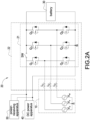
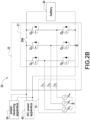
- FIG. 2A and FIG. 2B show block circuit diagrams of a first embodiment and a second embodiment of a charger of a power integration circuit without a front-end DC conversion path according to the present disclosure, respectively.
- the switch SW is coupled between any two bridge arms. Specifically, as shown in FIG. 2A , the switch SW is coupled between a first bridge arm having the upper switch Q 1 and the lower switch Q 2 and a second bridge arm having the upper switch Q 3 and the lower switch Q 4 , and therefore the first bridge arm is the shared bridge arm.
- the DC power provided by the DC power apparatus 40 supplies to the power integration circuit 20 through the first inductor L 1 , and outputs power to the battery 30 to charge the battery 30 through the second inductor L 2 and/or the third inductor L 3 .
- the DC power provided from the DC power apparatus 40 is inputted to the shared first bridge arm (before the shared inductors L 1 ), and is outputted from the shared second bridge arm and third bridge arm, or one of the shared second bridge arm and third bridge arm (after the shared inductors L 2 -L 3 ).
- the battery 30 can provide power from the shared bridge arm(s) (shared inductor(s)), i.e., the second bridge arm and the third bridge arm, or one of the second bridge arm and the third bridge arm to the shared bridge (shared inductor), i.e., the first bridge arm to supply the power-receiving apparatus 50.
- the shared bridge arm(s) shared inductor(s)
- the shared bridge shared inductor
- the battery 30 can provide power from the shared bridge arm(s) (shared inductor(s)), i.e., the second bridge arm and the third bridge arm, or one of the second bridge arm and the third bridge arm to the shared bridge (shared inductor), i.e., the first bridge arm to supply the power-receiving apparatus 50.
- FIG. 2B and FIG. 2A The major difference between FIG. 2B and FIG. 2A is that the switch SW is coupled between the second bridge arm having the upper switch Q 3 and the lower switch Q 4 and a third bridge arm having the upper switch Q 5 and the lower switch Q 6 , and therefore the first bridge arm and the second bridge arm are the shared bridge arms.
- the DC power provided by the DC power apparatus 40 supplies to the power integration circuit 20 through the first inductor L 1 and/or the third inductor L 2 , and outputs power to the battery 30 to charge the battery 30 through the third inductor L 3 .
- FIG. 1 the first inductor L 1 and/or the third inductor L 2
- the DC power provided from the DC power apparatus 40 is inputted to the shared first bridge arm and second bridge arm, or one of the shared first bridge arm and second bridge arm (before the shared inductors L 1 -L 2 ), and is outputted from the shared third bridge arm (after the shared inductors L 3 ).
- the battery 30 can provide power from the shared bridge arm (shared inductor), i.e., the third bridge arm to the shared bridge(s) (shared inductor(s)), i.e., the first bridge arm and the second bridge arm, or one of the first bridge arm and the second bridge arm to supply the power-receiving apparatus 50.
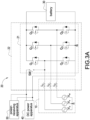
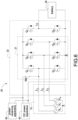
- FIG. 3A and FIG. 3B show block circuit diagrams of a third embodiment and a fourth embodiment of the charger of the power integration circuit without the front-end DC conversion path according to the present disclosure, respectively.
- the switch SW of FIG. 3A is coupled between any one inductor L 1 , L 2 , L 3 and the DC power apparatus 40.
- the switch SW is coupled between the first inductor L 1 and the DC power apparatus 40.
- the switch SW may be coupled between the second inductor L 2 and the DC power apparatus 40.
- FIG. 3A shows block circuit diagrams of a third embodiment and a fourth embodiment of the charger of the power integration circuit without the front-end DC conversion path according to the present disclosure, respectively.
- the switch SW of FIG. 3A is coupled between any one inductor L 1 , L 2 , L 3 and the DC power apparatus 40.
- the switch SW is coupled between the first inductor L 1 and the DC power apparatus 40.
- the switch SW may be coupled between the second inductor L 2 and the DC power apparatus 40.
- the switch SW is coupled between the first inductor L 1 and the DC power apparatus 40, or the switch SW is coupled between the third inductor L 3 and the DC power apparatus 40.
- the DC power provided by the DC power apparatus 40 can charge the battery 30 through the shared second bridge arm and the third bridge arm, or one of the second bridge arm and the third bridge arm.
- the battery 30 can provide power to supply the power-receiving apparatus 50 through the shared second bridge arm and the third bridge arm, or one of the second bridge arm and the third bridge arm.
- the switch SW is coupled between two inductors L 1 , L 2 , L 3 and the DC power apparatus 40. As shown in FIG. 3B , the switch SW is respectively coupled between the first inductor L 1 and the DC power apparatus 40 and between the second inductor L 2 and the DC power apparatus 40. However, in the present disclosure, it is not limited by this, that is, the switch SW may be respectively coupled between the second inductor L 2 and the DC power apparatus 40 and between the third inductor L 3 and the DC power apparatus 40, or the switch SW may be respectively coupled between the first inductor L 1 and the DC power apparatus 40 and between the third inductor L 3 and the DC power apparatus 40.
- the DC power provided by the DC power apparatus 40 supplies to the power integration circuit 20 through the corresponding two inductors L 1 , L 2 , L 3 , and outputs power to the power-receiving apparatus 50 through another inductor L 1 , L 2 , L 3 .
- the DC power provided by the DC power apparatus 40 can charge the battery 30 through the shared third bridge arm.
- the battery 30 can provide power to supply the power-receiving apparatus 50 through the shared third bridge arm.
- FIG. 4A shows a block circuit diagram of a fifth embodiment of the charger of the power integration circuit without the front-end DC conversion path according to the present disclosure.
- the difference between FIG. 2B , FIG. 2A and FIG. 4A , or between FIG. 3B , FIG. 3A and FIG. 4A is that the switch SW is coupled between any one bridge arm and the corresponding inductor L 1 , L 2 , L 3 , and the charger 22 further includes a sub path 221.
- FIG. 4B and FIG. 4C show block circuit diagrams of FIG. 4A according to a first embodiment and a second embodiment of the present disclosure, respectively.
- the sub path 221 includes a third switch Q 9 and a first diode D 1 .
- a common-connected node of the third switch Q 9 and the first diode D 1 is coupled to the switch SW and the corresponding inductor L 1 , L 2 , L 3 .
- the corresponding inductor L 1 , L 2 , L 3 is the first inductor L 1 .
- the common-connected node of the third switch Q 9 and the first diode D 1 is coupled to the switch SW and the second inductor L 2 , or is coupled to the switch SW and the third inductor L 3 .
- the first diode D 1 of the sub path 221 may be replaced by another switch (i.e., a fourth switch), and therefore the common-connected node of the third switch Q 9 and the fourth switch is coupled to the switch SW and the corresponding inductor L 1 , L 2 , L 3 .
- the number of switches SW may be plural, and therefore the plurality of switches SW are correspondingly coupled to the inductors L 1 , L 2 , L 3 .
- the number of switches SW is two, and therefore two sub paths 221 are corresponding to the two switches SW.
- the first sub path 221 is coupled between the DC power apparatus 40 and the first switch SW
- the second sub path 221 is coupled between the DC power apparatus 40 and the second switch SW.
- the first switch SW is coupled between the first bridge arm, which includes the upper switch Q 1 and the lower switch Q 2 , and the first inductor L 1
- the second switch SW is coupled between the second bridge arm, which includes the upper switch Q 3 and the lower switch Q 4 , and the second inductor L 2
- the above-mentioned two sub paths 221 are not limited to be coupled to the first bridge arm and the second bridge arm, that is, the two sub paths 221 may be coupled to any two bridge arms, and the two switches SW are coupled correspondingly between the bridge arms and the inductors L 1 , L 2 , L 3 . Similar operations can be seen in FIG. 4B , and the detail description is omitted here for conciseness.
- FIG. 5 shows a block circuit diagram of a first embodiment of the charger of the power integration circuit with the front-end DC conversion path according to the present disclosure.
- the charger 22 further includes a front-end DC conversion path.
- the front-end DC conversion path is coupled to the shared upper switch Q 5 and lower switch Q 6 .
- the charger 22 shown in FIG. 6 further includes a front-end DC conversion path.
- the front-end DC conversion path is coupled to the shared upper switch Q 5 and lower switch Q 6 .
- the charger 22 shown in FIG. 7A further includes a front-end DC conversion path.
- the front-end DC conversion path is coupled to the shared upper switch Q 5 and lower switch Q 6 .
- the front-end DC conversion path includes an energy-storing inductor L 4 , a first switch Q 7 , and a second switch Q 8 .
- a first end of the energy-storing inductor L 4 is coupled to a common-connected node of the first switch Q 7 and the second switch Q 8 , and a second end of the energy-storing inductor L 4 is coupled to the battery 30.
- the number of switch SW is one, and therefore one sub path 221 is corresponding to the switch SW.
- the sub path 221 is coupled between the DC power apparatus 40 and the switch SW.
- the above-mentioned sub path 221 is not limited to be coupled to the first bridge arm, that is, the sub path 221 may be coupled to any one bridge arm, and the switch SW is coupled correspondingly between the bridge arm and the inductor L 1 , L 2 , L 3 .
- the number of switches SW is two, and therefore two sub paths 221 are corresponding to the two switches SW.
- the first sub path 221 is coupled between the DC power apparatus 40 and the first switch SW
- the second sub path 221 is coupled between the DC power apparatus 40 and the second switch SW.
- the first switch SW is coupled between the first bridge arm, which includes the upper switch Q 1 and the lower switch Q 2 , and the first inductor L 1
- the second switch SW is coupled between the second bridge arm, which includes the upper switch Q 3 and the lower switch Q 4 , and the second inductor L 2 .
- the above-mentioned two sub paths 221 are not limited to be coupled to the first bridge arm and the second bridge arm, that is, the two sub paths 221 may be coupled to any two bridge arms, and the two switches SW are coupled correspondingly between the bridge arms and the inductors L 1 , L 2 , L 3 .
- the charger 22 when a voltage of the battery 30 is greater than a reference voltage value, the charger 22 operates in a boost (step-up) mode to charge the battery 30, and when the voltage of the battery 30 is less than the reference voltage value, the charger 22 operates in a buck (step-down) mode to charge the battery 30.
- the battery 30 provides power required by the power-receiving apparatus 50 through the charger 22, or the power-receiving apparatus 50 charges the battery 30 through the charger 22.
- the charger 22 makes the battery 30 operate in a boost (step-up) mode or a buck (step-down) mode to discharge to the power-receiving apparatus 50.
- the circuits shown in FIG. 3A , FIG. 3B , and FIG. 6 the DC power apparatus 40 or the power-receiving apparatus 50 operate in a boost mode to charge the battery 30, and the charger 22 makes the battery 30 operate in a buck (step-down) mode to discharge to the power-receiving apparatus 50.
- the power integration system with motor drive and battery charging and discharging is provided to realize the structure that the power switches of a three-phase motor driver are shared in the charger, which can reduce the number of external components, thereby reducing the size and achieving high efficiency.
Landscapes
- Engineering & Computer Science (AREA)
- Power Engineering (AREA)
- Transportation (AREA)
- Mechanical Engineering (AREA)
- Charge And Discharge Circuits For Batteries Or The Like (AREA)
- Electric Propulsion And Braking For Vehicles (AREA)
- Inverter Devices (AREA)
Abstract
Description
- The present disclosure relates to a power integration system, and more particularly to a power integration system with motor drive and battery charging and discharging function.
- The statements in this section merely provide background information related to the present disclosure and do not necessarily constitute prior art.
- The current light electric vehicle system includes a motor driver and a charger, wherein the charger is divided into the on-board charger and the off-board charger. Since the chargers have different battery specifications, various manufacturers will introduce dedicated off-board chargers for users to use, and the disadvantage is that the chargers are not compatible with different vehicles, which makes it inconvenient to carry.
- An objective of the present disclosure is to provide a power integration system with motor drive and battery charging and discharging function to solve the problems of existing technology.
- In order to achieve the above-mentioned objective, the power integration system with motor drive and battery charging and discharging function includes a motor, a power integration circuit, and a battery. The motor includes multi-phase paths, and each path includes an inductor. The power integration circuit includes an inverter and a charger. The inverter includes multi-phase bridge arms, each bridge arm includes an upper switch and a lower switch, and each bridge is correspondingly coupled to each inductor of the motor. The charger includes a switch, the upper switch and the lower switch of at least one bridge arm of the shared inverter, and the inductor of the shared motor. The switch is coupled between any two bridge arms. The battery is coupled to the power integration circuit. The power integration circuit receives a DC power provided by a DC power apparatus, and the charger converts the DC power to charge the battery, and the battery provides power required to drive the motor through the inverter.
- Accordingly, the power integration system with motor drive and battery charging and discharging function is provided to realize the structure that the power switches of a three-phase motor driver are shared in the charger, which can reduce the number of external components, thereby reducing the size and achieving high efficiency.
- Another objective of the present disclosure is to provide a power integration system with motor drive and battery charging and discharging function to solve the problems of existing technology.
- In order to achieve the above-mentioned objective, the power integration system with motor drive and battery charging and discharging includes a motor, a power integration circuit, and a battery. The motor includes multi-phase paths, and each path includes an inductor. The power integration circuit includes an inverter and a charger. The inverter includes multi-phase bridge arms, each bridge arm has an upper switch and a lower switch, and each bridge is correspondingly coupled to each inductor of the motor. The charger includes a switch, the upper switch and the lower switch of at least one bridge arm of the shared inverter, and the inductor of the shared motor. The battery is coupled to the power integration circuit. The power integration circuit receives a DC power provided by a DC power apparatus, and the charger converts the DC power to charge the battery, and the battery provides power required to drive the motor through the inverter. The switch is coupled between any one inductor and the DC power apparatus.
- Accordingly, the power integration system with motor drive and battery charging and discharging function is provided to realize the structure that the power switches of a three-phase motor driver are shared in the charger, which can reduce the number of external components, thereby reducing the size and achieving high efficiency.
- Further another objective of the present disclosure is to provide a power integration system with motor drive and battery charging and discharging function to solve the problems of existing technology.
- In order to achieve the above-mentioned objective, the power integration system with motor drive and battery charging and discharging function includes a motor, a power integration circuit, and a battery. The motor includes multi-phase paths, and each path includes an inductor. The power integration circuit includes an inverter and a charger. The inverter includes multi-phase bridge arms, each bridge arm has an upper switch and a lower switch, and each bridge is correspondingly coupled to each inductor of the motor. The charger includes a switch, a sub path, the upper switch and the lower switch of at least one bridge arm of the shared inverter, and the inductor of the shared motor. The switch is coupled between any one bridge arm and the corresponding inductor. The battery is coupled to the power integration circuit. The power integration circuit receives a DC power provided by a DC power apparatus, and the charger converts the DC power to charge the battery, and the battery provides power required to drive the motor through the inverter.
- Accordingly, the power integration system with motor drive and battery charging and discharging function is provided to realize the structure that the power switches of a three-phase motor driver are shared in the charger, which can reduce the number of external components, thereby reducing the size and achieving high efficiency.
- It is to be understood that both the foregoing general description and the following detailed description are exemplary, and are intended to provide further explanation of the present disclosure as claimed. Other advantages and features of the present disclosure will be apparent from the following description, drawings and claims.
- The present disclosure can be more fully understood by reading the following detailed description of the embodiment, with reference made to the accompanying drawing as follows:
-
FIG. 1 is a block diagram of the power integration system with motor drive and battery charging and discharging function used with the DC power apparatus according to the present disclosure. -
FIG. 2A is a block circuit diagram of a first embodiment of a charger of a power integration circuit without a front-end DC conversion path according to the present disclosure. -
FIG. 2B is a block circuit diagram of a second embodiment of the charger of the power integration circuit without the front-end DC conversion path according to the present disclosure. -
FIG. 3A is a block circuit diagram of a third embodiment of the charger of the power integration circuit without the front-end DC conversion path according to the present disclosure. -
FIG. 3B is a block circuit diagram of a fourth embodiment of the charger of the power integration circuit without the front-end DC conversion path according to the present disclosure. -
FIG. 4A is a block circuit diagram of a fifth embodiment of the charger of the power integration circuit without the front-end DC conversion path according to the present disclosure. -
FIG. 4B is a block circuit diagram ofFIG. 4A according to a first embodiment of the present disclosure. -
FIG. 4C is a block circuit diagram ofFIG. 4A according to a second embodiment of the present disclosure. -
FIG. 5 is a block circuit diagram of a first embodiment of the charger of the power integration circuit with the front-end DC conversion path according to the present disclosure. -
FIG. 6 is a block circuit diagram of a second embodiment of the charger of the power integration circuit with the front-end DC conversion path according to the present disclosure. -
FIG. 7A is a block circuit diagram of a third embodiment of the charger of the power integration circuit with the front-end DC conversion path according to the present disclosure. -
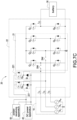
FIG. 7B is a block circuit diagram ofFIG. 7A according to a first embodiment of the present disclosure. -
FIG. 7C is a block circuit diagram ofFIG. 7A according to a second embodiment of the present disclosure. - Reference will now be made to the drawing figures to describe the present disclosure in detail. It will be understood that the drawing figures and exemplified embodiments of present disclosure are not limited to the details thereof.
- Due to the versatility of Type-C transmission cables and the convenience of USB-PD chargers, the present disclosure proposes an integrated (shared components) bidirectional charger structure as shown in
FIG. 1 , which combines the traditional three-phase motor driver and charger to form an integration system. The system can be directly connected to an external USB-PD through a Type-C transmission cable for charging. In addition to the charging function, the battery energy can also be provided to external apparatuses (or power-receiving apparatuses) through Type-C transmission cables, such as but not limited to light electric vehicles (such as electric scooters, electric bicycles, electric wheelchairs, electric skateboards, etc.). Accordingly, the power integration system with motor drive and battery charging and discharging function is provided to realize the structure that the power switches of a three-phase motor driver are shared in the charger, which can reduce the number of external components, thereby reducing the size and achieving high efficiency. - Please refer to
FIG. 1 , which shows a block diagram of the power integration system with motor drive and battery charging and discharging function used with the DC power apparatus according to the present disclosure. The power integration system with motor drive and battery charging and discharging function (hereinafter referred to as the power integration system) includes amotor 10, apower integration circuit 20, and abattery 30. Thepower integration circuit 20 includes aninverter 21 and acharger 22. Theinverter 21 has multi-phase (for example, three-phase) bridge arms, each phase bridge arm includes an upper switch and a lower switch, and each phase bridge arm is correspondingly coupled to each phase winding of the motor. As shown inFIG. 1 , three-phase paths of themotor 10 are a U-phase path, a V-phase path, and a W-phase path, respectively. The U-phase path is coupled to a U-phase inductor L1 of themotor 10, the V-phase path is coupled to a V-phase inductor L2 of themotor 10, and the W-phase path is coupled to a W-phase inductor L3 of themotor 10. Thecharger 22 includes a switch SW, the upper switch and the lower switch of at least one bridge arm of the sharedinverter 21, and the shared phase inductors L1, L2, L3. In other words, thepower integration circuit 20 is a shared-component circuit structure having theinverter 21 and thecharger 22. Specifically, the part of the shared component is the switch SW, the upper switch and the lower switch of the at least one bridge arm, and the phase inductors L1, L2, L3. Incidentally, the DC power converter of the present invention can be, for example but not limited to, a boost converter, a buck converter, a buck-boost converter, or other types of DC-DC converters, which can be designed according to the requirements of practical applications. Thebattery 30 is coupled to thepower integration circuit 20. - The power integration system shown in
FIG. 1 is a bidirectional structure. Therefore, thepower integration circuit 20 receives DC power provided by aDC power apparatus 40, and thecharger 22 of thepower integration circuit 20 converts the DC power to charge thebattery 30 so that the DC power can charge thebattery 30. In one embodiment, theDC power apparatus 40 is, for example, but not limited to, USB-PD. Take the light electric vehicle - electric bicycle as an example, themotor 10, thepower integration circuit 20, and thebattery 30 are installed (disposed) inside the electric bicycle, and the DC power provided by theDC power apparatus 40 is an external USB-PD DC power. Therefore, when the electric bicycle is plugged into the USB-PD DC power for charging, thecharger 22 of thepower integration circuit 20 converts the USB-PD DC power to charge thebattery 30 installed inside the vehicle body of the electric bicycle. - Moreover, the
battery 30 provides power required by a power-receivingapparatus 50 through thecharger 22. As mentioned above, the power-receivingapparatus 50 is, for example, but not limited to, a portable mobile apparatus (such as a mobile phone, a tablet computer, a notebook computer, etc.). When the user is outdoors, the user can plug the mobile phone, a power bank, or an electric bicycle (i.e., the power-receiving apparatus 50) into thecharger 22 of thepower integration circuit 20 installed inside another electric bicycle for charging, thebattery 30 supplies (provides) the power required by the mobile phone through thecharger 22 to charge the mobile phone, the power bank, or the electric bicycle. - Moreover, the
battery 30 provides power required to drive themotor 10 through theinverter 21. When the user rides the electric bicycle outdoors, the power required to drive themotor 10 is supplied by thebattery 30. - Moreover, the power-receiving
apparatus 50 charges thebattery 30 through thecharger 22. When the electric bicycle is not in the riding state and no DC power (the USB-PD DC power) provided by theDC power apparatus 40 charges thebattery 30, thebattery 30 is charged by the power provided from the power-receiving apparatus 50 (i.e., the mobile phone, the power bank, or the electric bicycle). For example, when the user rides the electric bicycle outdoors and thebattery 30 cannot provide the power required by the electric bicycle, thebattery 30 can be charged by the power provided from the power-receivingapparatus 50 so that the electric bicycle can be ridden in a short time to the nearest place with theDC power apparatus 40 to be fully charged. - Therefore, the power integration system shown in
FIG. 1 provides a bidirectional power path, including that theDC power apparatus 40 charges thebattery 30 or the power-receivingapparatus 50 charging thebattery 30, and thebattery 30 supplies power to the power-receivingapparatus 50 or thebattery 30 supplies power to the motor. - Please refer to
FIG. 2A andFIG. 2B , which show block circuit diagrams of a first embodiment and a second embodiment of a charger of a power integration circuit without a front-end DC conversion path according to the present disclosure, respectively. As mentioned above, the switch SW is coupled between any two bridge arms. Specifically, as shown inFIG. 2A , the switch SW is coupled between a first bridge arm having the upper switch Q1 and the lower switch Q2 and a second bridge arm having the upper switch Q3 and the lower switch Q4, and therefore the first bridge arm is the shared bridge arm. By turning on or turning off the switch SW, the DC power provided by theDC power apparatus 40 supplies to thepower integration circuit 20 through the first inductor L1, and outputs power to thebattery 30 to charge thebattery 30 through the second inductor L2 and/or the third inductor L3. In other words, inFIG. 2A , the DC power provided from theDC power apparatus 40 is inputted to the shared first bridge arm (before the shared inductors L1), and is outputted from the shared second bridge arm and third bridge arm, or one of the shared second bridge arm and third bridge arm (after the shared inductors L2-L3). Moreover, thebattery 30 can provide power from the shared bridge arm(s) (shared inductor(s)), i.e., the second bridge arm and the third bridge arm, or one of the second bridge arm and the third bridge arm to the shared bridge (shared inductor), i.e., the first bridge arm to supply the power-receivingapparatus 50. - The major difference between
FIG. 2B andFIG. 2A is that the switch SW is coupled between the second bridge arm having the upper switch Q3 and the lower switch Q4 and a third bridge arm having the upper switch Q5 and the lower switch Q6, and therefore the first bridge arm and the second bridge arm are the shared bridge arms. By turning on or turning off the switch SW, the DC power provided by theDC power apparatus 40 supplies to thepower integration circuit 20 through the first inductor L1 and/or the third inductor L2, and outputs power to thebattery 30 to charge thebattery 30 through the third inductor L3. In other words, inFIG. 2B , the DC power provided from theDC power apparatus 40 is inputted to the shared first bridge arm and second bridge arm, or one of the shared first bridge arm and second bridge arm (before the shared inductors L1-L2), and is outputted from the shared third bridge arm (after the shared inductors L3). Moreover, thebattery 30 can provide power from the shared bridge arm (shared inductor), i.e., the third bridge arm to the shared bridge(s) (shared inductor(s)), i.e., the first bridge arm and the second bridge arm, or one of the first bridge arm and the second bridge arm to supply the power-receivingapparatus 50. - Please refer to
FIG. 3A andFIG. 3B , which show block circuit diagrams of a third embodiment and a fourth embodiment of the charger of the power integration circuit without the front-end DC conversion path according to the present disclosure, respectively. Different fromFIG. 2A andFIG. 2B , the switch SW ofFIG. 3A is coupled between any one inductor L1, L2, L3 and theDC power apparatus 40. As shown inFIG. 3A , the switch SW is coupled between the first inductor L1 and theDC power apparatus 40. However, in the present disclosure, it is not limited by this position, that is, the switch SW may be coupled between the second inductor L2 and theDC power apparatus 40. As shown inFIG. 3A , the switch SW is coupled between the first inductor L1 and theDC power apparatus 40, or the switch SW is coupled between the third inductor L3 and theDC power apparatus 40. For example, the DC power provided by theDC power apparatus 40 can charge thebattery 30 through the shared second bridge arm and the third bridge arm, or one of the second bridge arm and the third bridge arm. Moreover, thebattery 30 can provide power to supply the power-receivingapparatus 50 through the shared second bridge arm and the third bridge arm, or one of the second bridge arm and the third bridge arm. - In another embodiment, the switch SW is coupled between two inductors L1, L2, L3 and the
DC power apparatus 40. As shown inFIG. 3B , the switch SW is respectively coupled between the first inductor L1 and theDC power apparatus 40 and between the second inductor L2 and theDC power apparatus 40. However, in the present disclosure, it is not limited by this, that is, the switch SW may be respectively coupled between the second inductor L2 and theDC power apparatus 40 and between the third inductor L3 and theDC power apparatus 40, or the switch SW may be respectively coupled between the first inductor L1 and theDC power apparatus 40 and between the third inductor L3 and theDC power apparatus 40. Therefore, by turning on or turning off the switch SW, the DC power provided by theDC power apparatus 40 supplies to thepower integration circuit 20 through the corresponding two inductors L1, L2, L3, and outputs power to the power-receivingapparatus 50 through another inductor L1, L2, L3. For example, the DC power provided by theDC power apparatus 40 can charge thebattery 30 through the shared third bridge arm. Moreover, thebattery 30 can provide power to supply the power-receivingapparatus 50 through the shared third bridge arm. - Please refer to
FIG. 4A , which shows a block circuit diagram of a fifth embodiment of the charger of the power integration circuit without the front-end DC conversion path according to the present disclosure. The difference betweenFIG. 2B ,FIG. 2A andFIG. 4A , or betweenFIG. 3B ,FIG. 3A andFIG. 4A is that the switch SW is coupled between any one bridge arm and the corresponding inductor L1, L2, L3, and thecharger 22 further includes asub path 221. Please refer toFIG. 4B andFIG. 4C , which show block circuit diagrams ofFIG. 4A according to a first embodiment and a second embodiment of the present disclosure, respectively. - As shown in
FIG. 4B , thesub path 221 includes a third switch Q9 and a first diode D1. A common-connected node of the third switch Q9 and the first diode D1 is coupled to the switch SW and the corresponding inductor L1, L2, L3. In this embodiment, the corresponding inductor L1, L2, L3 is the first inductor L1. However, in the present disclosure, it is not limited by this position, that is, the common-connected node of the third switch Q9 and the first diode D1 is coupled to the switch SW and the second inductor L2, or is coupled to the switch SW and the third inductor L3. - Moreover, the first diode D1 of the
sub path 221 may be replaced by another switch (i.e., a fourth switch), and therefore the common-connected node of the third switch Q9 and the fourth switch is coupled to the switch SW and the corresponding inductor L1, L2, L3. - As shown in
FIG. 4C , the number of switches SW may be plural, and therefore the plurality of switches SW are correspondingly coupled to the inductors L1, L2, L3. Specifically, in the second embodiment shown inFIG. 4C , the number of switches SW is two, and therefore twosub paths 221 are corresponding to the two switches SW. Thefirst sub path 221 is coupled between theDC power apparatus 40 and the first switch SW, and thesecond sub path 221 is coupled between theDC power apparatus 40 and the second switch SW. The first switch SW is coupled between the first bridge arm, which includes the upper switch Q1 and the lower switch Q2, and the first inductor L1, and the second switch SW is coupled between the second bridge arm, which includes the upper switch Q3 and the lower switch Q4, and the second inductor L2. However, the above-mentioned twosub paths 221 are not limited to be coupled to the first bridge arm and the second bridge arm, that is, the twosub paths 221 may be coupled to any two bridge arms, and the two switches SW are coupled correspondingly between the bridge arms and the inductors L1, L2, L3. Similar operations can be seen inFIG. 4B , and the detail description is omitted here for conciseness. - Please refer to
FIG. 5 , which shows a block circuit diagram of a first embodiment of the charger of the power integration circuit with the front-end DC conversion path according to the present disclosure. In comparison withFIG. 2 , thecharger 22 further includes a front-end DC conversion path. The front-end DC conversion path is coupled to the shared upper switch Q5 and lower switch Q6. - Similarly, in comparison with
FIG. 3 , thecharger 22 shown inFIG. 6 further includes a front-end DC conversion path. The front-end DC conversion path is coupled to the shared upper switch Q5 and lower switch Q6. Similarly, in comparison withFIG. 4A , thecharger 22 shown inFIG. 7A further includes a front-end DC conversion path. The front-end DC conversion path is coupled to the shared upper switch Q5 and lower switch Q6. - As shown in
FIG. 5 ,FIG. 6 , andFIG. 7A toFIG. 7C , the front-end DC conversion path includes an energy-storing inductor L4, a first switch Q7, and a second switch Q8. A first end of the energy-storing inductor L4 is coupled to a common-connected node of the first switch Q7 and the second switch Q8, and a second end of the energy-storing inductor L4 is coupled to thebattery 30. - Specifically, in the first embodiment shown in
FIG. 7B , the number of switch SW is one, and therefore onesub path 221 is corresponding to the switch SW. Thesub path 221 is coupled between theDC power apparatus 40 and the switch SW. However, the above-mentionedsub path 221 is not limited to be coupled to the first bridge arm, that is, thesub path 221 may be coupled to any one bridge arm, and the switch SW is coupled correspondingly between the bridge arm and the inductor L1, L2, L3. - Specifically, in the second embodiment shown in
FIG. 7C , the number of switches SW is two, and therefore twosub paths 221 are corresponding to the two switches SW. Thefirst sub path 221 is coupled between theDC power apparatus 40 and the first switch SW, and thesecond sub path 221 is coupled between theDC power apparatus 40 and the second switch SW. The first switch SW is coupled between the first bridge arm, which includes the upper switch Q1 and the lower switch Q2, and the first inductor L1, and the second switch SW is coupled between the second bridge arm, which includes the upper switch Q3 and the lower switch Q4, and the second inductor L2. However, the above-mentioned twosub paths 221 are not limited to be coupled to the first bridge arm and the second bridge arm, that is, the twosub paths 221 may be coupled to any two bridge arms, and the two switches SW are coupled correspondingly between the bridge arms and the inductors L1, L2, L3. - For the circuits shown in the previous disclosure, when a voltage of the
battery 30 is greater than a reference voltage value, thecharger 22 operates in a boost (step-up) mode to charge thebattery 30, and when the voltage of thebattery 30 is less than the reference voltage value, thecharger 22 operates in a buck (step-down) mode to charge thebattery 30. Moreover, thebattery 30 provides power required by the power-receivingapparatus 50 through thecharger 22, or the power-receivingapparatus 50 charges thebattery 30 through thecharger 22. Moreover, according to the power required by the power-receivingapparatus 50, thecharger 22 makes thebattery 30 operate in a boost (step-up) mode or a buck (step-down) mode to discharge to the power-receivingapparatus 50. However, the circuits shown inFIG. 3A ,FIG. 3B , andFIG. 6 , theDC power apparatus 40 or the power-receivingapparatus 50 operate in a boost mode to charge thebattery 30, and thecharger 22 makes thebattery 30 operate in a buck (step-down) mode to discharge to the power-receivingapparatus 50. - Accordingly, the power integration system with motor drive and battery charging and discharging is provided to realize the structure that the power switches of a three-phase motor driver are shared in the charger, which can reduce the number of external components, thereby reducing the size and achieving high efficiency.
Claims (14)
- A power integration system with motor drive and battery charging and discharging, characterized in that the power integration system comprising:a motor (10), comprising multi-phase paths, each path comprising an inductor (L1, L2, L3),a power integration circuit (20), comprising:an inverter (21), comprising multi-phase bridge arms, each bridge arm comprising an upper switch (Q1, Q3, Q5) and a lower switch (Q2, Q4, Q6), and each bridge correspondingly coupled to each inductor (L1, L2, L3) of the motor (10), anda charger (22), comprising a switch (SW), the upper switch (Q1, Q3, Q5) and the lower switch (Q2, Q4, Q6) of at least one bridge arm of the shared inverter (21), and the inductor (L1, L2, L3) of the shared motor (10), wherein the switch (SW) is coupled between any two bridge arms,a battery (30), coupled to the power integration circuit (20),wherein the power integration circuit (20) receives a DC power provided by a DC power apparatus (40), and the charger (22) converts the DC power to charge the battery (30), and the battery (30) provides power required to drive the motor (10) through the inverter (21).
- The power integration system as claimed in claim 1, wherein the charger (22) further comprises:
a front-end DC conversion path, coupled to the shared upper switch (Q1, Q3, Q5) and lower switch (Q2, Q4, Q6). - The power integration system as claimed in any one of claims 1-2, wherein when a voltage of the battery (30) is greater than a reference voltage value, the charger (22) operates in a boost mode to charge the battery (30), and when the voltage of the battery (30) is less than the reference voltage value, the charger (22) operates in a buck mode to charge the battery (30).
- The power integration system as claimed in any one of claims 1-2, wherein the battery (30) provides power required by a power-receiving apparatus (50) through the charger (22), or the power-receiving apparatus (50) charges the battery (30) through the charger (22); according to the power required by the power-receiving apparatus (50), the charger (22) makes the battery (30) operate in a boost mode or a buck mode to discharge to the power-receiving apparatus (50).
- A power integration system with motor drive and battery charging and discharging, characterized in that the power integration system comprising:a motor (10), comprising multi-phase paths, each path comprising an inductor (L1, L2, L3),a power integration circuit (20), comprising:an inverter (21), comprising multi-phase bridge arms, each bridge arm comprising an upper switch (Q1, Q3, Q5) and a lower switch (Q2, Q4, Q6), and each bridge correspondingly coupled to each inductor (L1, L2, L3) of the motor (10), anda charger (22), comprising a switch (SW), the upper switch (Q1, Q3, Q5) and the lower switch (Q2, Q4, Q6) of at least one bridge arm of the shared inverter (21), and the inductor (L1, L2, L3) of the shared motor (10),a battery (30), coupled to the power integration circuit (20),wherein the power integration circuit (20) receives a DC power provided by a DC power apparatus (40), and the charger (22) converts the DC power to charge the battery (30), and the battery (30) provides power required to drive the motor (10) through the inverter (21),wherein the switch (SW) is coupled between any one inductor (L1, L2, L3) and the DC power apparatus (40).
- The power integration system as claimed in claim 5, wherein the charger (22) further comprises:
a front-end DC conversion path, coupled to the shared upper switch (Q1, Q3, Q5) and lower switch (Q2, Q4, Q6). - The power integration system as claimed in any one of claims 5-6, wherein when a voltage of the battery (30) is greater than a reference voltage value, the charger (22) operates in a boost mode to charge the battery (30), and when the voltage of the battery (30) is less than the reference voltage value, the charger (22) operates in a buck mode to charge the battery (30).
- The power integration system as claimed in any one of claims 5-6, wherein the battery (30) provides power required by a power-receiving apparatus (50) through the charger (22), or the power-receiving apparatus (50) charges the battery (30) through the charger (22); according to the power required by the power-receiving apparatus (50), the charger (22) makes the battery (30) operate in a boost mode or a buck mode to discharge to the power-receiving apparatus (50).
- A power integration system with motor drive and battery charging and discharging, characterized in that the power integration system comprising:a motor (10), comprising multi-phase paths, each path comprising an inductor (L1, L2, L3),a power integration circuit (20), comprising:an inverter (21), comprising multi-phase bridge arms, each bridge arm comprising an upper switch (Q1, Q3, Q5) and a lower switch (Q2, Q4, Q6), and each bridge correspondingly coupled to each inductor (L1, L2, L3) of the motor (10), anda charger (22), comprising a switch (SW), a sub path, the upper switch (Q1, Q3, Q5) and the lower switch (Q2, Q4, Q6) of at least one bridge arm of the shared inverter (21), and the inductor (L1, L2, L3) of the shared motor (10), wherein the switch (SW) is coupled between any one bridge arm and the corresponding inductor (L1, L2, L3),a battery (30), coupled to the power integration circuit (20),wherein the power integration circuit (20) receives a DC power provided by a DC power apparatus (40), and the charger (22) converts the DC power to charge the battery (30), and the battery (30) provides power required to drive the motor (10) through the inverter (21).
- The power integration system as claimed in claim 9, wherein the charger (22) further comprises:
a front-end DC conversion path, coupled to the shared upper switch (Q1, Q3, Q5) and lower switch (Q2, Q4, Q6). - The power integration system as claimed in any one of claims 9-10, wherein when a voltage of the battery (30) is greater than a reference voltage value, the charger (22) operates in a boost mode to charge the battery (30), and when the voltage of the battery (30) is less than the reference voltage value, the charger (22) operates in a buck mode to charge the battery (30).
- The power integration system as claimed in any one of claims 9-10, wherein the battery (30) provides power required by a power-receiving apparatus (50) through the charger (22), or the power-receiving apparatus (50) charges the battery (30) through the charger (22); according to the power required by the power-receiving apparatus (50), the charger (22) makes the battery (30) operate in a boost mode or a buck mode to discharge to the power-receiving apparatus (50).
- The power integration system as claimed in claim 9, wherein the sub path comprises:
a third switch (Q9) and a first diode (D1), a common-connected node of the third switch (Q9) and the first diode (Di) coupled to the switch (SW) and the corresponding inductor (Li, L2, L3). - The power integration system as claimed in claim 9, wherein the sub path comprises:
a third switch (Q9) and a fourth switch, a common-connected node of the third switch (Q9) and the fourth switch coupled to the switch (SW) and the corresponding inductor (L1, L2, L3).
Applications Claiming Priority (2)
| Application Number | Priority Date | Filing Date | Title |
|---|---|---|---|
| US202163276866P | 2021-11-08 | 2021-11-08 | |
| TW111135642A TWI847277B (en) | 2021-11-08 | 2022-09-21 | Power integration system with motor drive and battery charging and discharging |
Publications (2)
| Publication Number | Publication Date |
|---|---|
| EP4177100A2 true EP4177100A2 (en) | 2023-05-10 |
| EP4177100A3 EP4177100A3 (en) | 2023-07-26 |
Family
ID=84329497
Family Applications (1)
| Application Number | Title | Priority Date | Filing Date |
|---|---|---|---|
| EP22205736.6A Pending EP4177100A3 (en) | 2021-11-08 | 2022-11-07 | Power integration system with motor drive and battery charging and discharging function |
Country Status (3)
| Country | Link |
|---|---|
| US (1) | US20230145202A1 (en) |
| EP (1) | EP4177100A3 (en) |
| JP (1) | JP7578663B2 (en) |
Families Citing this family (7)
| Publication number | Priority date | Publication date | Assignee | Title |
|---|---|---|---|---|
| JP7446390B2 (en) * | 2021-11-08 | 2024-03-08 | 台達電子工業股▲ふん▼有限公司 | Integrated power system with motor drive and battery charging/discharging |
| CN119058435B (en) * | 2023-05-31 | 2026-02-10 | 比亚迪股份有限公司 | Energy storage devices, drive motors and new energy vehicles |
| JP2025015336A (en) * | 2023-07-20 | 2025-01-30 | 日立Astemo株式会社 | Charging device and power conversion device |
| TWI882577B (en) * | 2023-12-12 | 2025-05-01 | 亞福儲能股份有限公司 | Power management circuit for electric auxiliary vehicle |
| WO2026000068A1 (en) * | 2024-06-24 | 2026-01-02 | Exro Technologies Inc. | Dynamically reconfigurable multi mode power converter utilizing windings of electric machine |
| US20260042354A1 (en) * | 2024-08-07 | 2026-02-12 | Textron Inc. | Systems and methods for internal discharge of battery systems |
| CN120433392A (en) * | 2025-07-07 | 2025-08-05 | 深蓝汽车科技有限公司 | A charging and discharging circuit, a charging and discharging method, and a vehicle |
Family Cites Families (11)
| Publication number | Priority date | Publication date | Assignee | Title |
|---|---|---|---|---|
| JPH06133564A (en) * | 1992-10-15 | 1994-05-13 | Toshiba F Ee Syst Eng Kk | Battery charger |
| DE102011081725A1 (en) * | 2011-08-29 | 2013-02-28 | Robert Bosch Gmbh | Method and device for charging a battery of an electric drive using components of the electric drive |
| JP2013055838A (en) * | 2011-09-06 | 2013-03-21 | Denso Corp | Electric auxiliary equipment for vehicles |
| US11479139B2 (en) * | 2015-09-11 | 2022-10-25 | Invertedpower Pty Ltd | Methods and systems for an integrated charging system for an electric vehicle |
| US10486537B2 (en) * | 2016-08-29 | 2019-11-26 | Hamilton Sundstrand Corporation | Power generating systems having synchronous generator multiplex windings and multilevel inverters |
| US10500959B2 (en) * | 2017-03-29 | 2019-12-10 | Ford Global Technologies, Llc | Single supply hybrid drive resonant gate driver |
| KR102454222B1 (en) * | 2017-07-21 | 2022-10-17 | 현대자동차주식회사 | Electric vehicle |
| US10369900B1 (en) * | 2018-02-20 | 2019-08-06 | GM Global Technology Operations LLC | Onboard DC charging circuit using traction drive components |
| JP7279329B2 (en) * | 2018-10-03 | 2023-05-23 | 日産自動車株式会社 | Charge control method and charge control device |
| JP7160007B2 (en) * | 2019-09-20 | 2022-10-25 | トヨタ自動車株式会社 | power supply |
| KR20250020712A (en) * | 2020-03-06 | 2025-02-11 | 저장 한밍보 뉴 에너지 컴퍼니., 리미티드. | System and method for charging electric vehicles |
-
2022
- 2022-11-07 JP JP2022178394A patent/JP7578663B2/en active Active
- 2022-11-07 US US17/981,605 patent/US20230145202A1/en active Pending
- 2022-11-07 EP EP22205736.6A patent/EP4177100A3/en active Pending
Also Published As
| Publication number | Publication date |
|---|---|
| US20230145202A1 (en) | 2023-05-11 |
| JP7578663B2 (en) | 2024-11-06 |
| JP2023070188A (en) | 2023-05-18 |
| EP4177100A3 (en) | 2023-07-26 |
Similar Documents
| Publication | Publication Date | Title |
|---|---|---|
| EP4177100A2 (en) | Power integration system with motor drive and battery charging and discharging function | |
| US20230144929A1 (en) | Power integration system with motor drive and battery charging and discharging function | |
| KR101704085B1 (en) | Multi-voltage on-board power supply system for a motor vehicle | |
| JP6201967B2 (en) | Electric car | |
| US9643509B2 (en) | Apparatus and method for providing multi-voltage output of low voltage DC-DC converter of eco-friendly vehicle | |
| US9190908B2 (en) | Protection cover allowing handheld device to reversely discharge | |
| CN115280658A (en) | Bidirectional DC-DC converter | |
| US12485783B2 (en) | Converter and power conversion system for converting power of auxiliary battery using OBC | |
| EP4178072A1 (en) | Power integration system with motor drive and battery charging and discharging function | |
| CN112224057A (en) | A vehicle and its energy conversion device and power system | |
| US12257925B2 (en) | Converter and power conversion system for vehicle auxiliary battery | |
| US20250262944A1 (en) | Vehicle High Voltage Electronics Box | |
| JP2013150524A (en) | Electric vehicle | |
| KR102011378B1 (en) | Converter for vehicle with wireless charging | |
| CN105228852B (en) | High-voltage on-board network structure for vehicles | |
| TWI847277B (en) | Power integration system with motor drive and battery charging and discharging | |
| US11626746B2 (en) | System for a vehicle | |
| CN202150831U (en) | Motor driving control device of electric vehicle | |
| KR20190066486A (en) | Electric power control apparatus for vehicle | |
| KR102202495B1 (en) | Controller for charging battery in vehicle and operating method thereof | |
| CN202679006U (en) | Vehicle power supply system, charging system, system for charging and vehicle | |
| KR20190043352A (en) | Movable power supply system using envergy storage apparatus | |
| KR20200008000A (en) | Electric power control apparatus for vehicle | |
| KR20070113448A (en) | Mobile phone charger for motorcycle |
Legal Events
| Date | Code | Title | Description |
|---|---|---|---|
| PUAI | Public reference made under article 153(3) epc to a published international application that has entered the european phase |
Free format text: ORIGINAL CODE: 0009012 |
|
| STAA | Information on the status of an ep patent application or granted ep patent |
Free format text: STATUS: THE APPLICATION HAS BEEN PUBLISHED |
|
| AK | Designated contracting states |
Kind code of ref document: A2 Designated state(s): AL AT BE BG CH CY CZ DE DK EE ES FI FR GB GR HR HU IE IS IT LI LT LU LV MC ME MK MT NL NO PL PT RO RS SE SI SK SM TR |
|
| REG | Reference to a national code |
Ref country code: DE Ref legal event code: R079 Free format text: PREVIOUS MAIN CLASS: B60L0053200000 Ipc: H02J0001120000 |
|
| PUAL | Search report despatched |
Free format text: ORIGINAL CODE: 0009013 |
|
| AK | Designated contracting states |
Kind code of ref document: A3 Designated state(s): AL AT BE BG CH CY CZ DE DK EE ES FI FR GB GR HR HU IE IS IT LI LT LU LV MC ME MK MT NL NO PL PT RO RS SE SI SK SM TR |
|
| RIC1 | Information provided on ipc code assigned before grant |
Ipc: H02J 1/08 20060101ALI20230616BHEP Ipc: H02J 1/12 20060101AFI20230616BHEP |
|
| STAA | Information on the status of an ep patent application or granted ep patent |
Free format text: STATUS: REQUEST FOR EXAMINATION WAS MADE |
|
| 17P | Request for examination filed |
Effective date: 20231126 |
|
| RBV | Designated contracting states (corrected) |
Designated state(s): AL AT BE BG CH CY CZ DE DK EE ES FI FR GB GR HR HU IE IS IT LI LT LU LV MC ME MK MT NL NO PL PT RO RS SE SI SK SM TR |