EP4175387A1 - Data scheduling method and apparatus, and computer readable storage medium - Google Patents
Data scheduling method and apparatus, and computer readable storage medium Download PDFInfo
- Publication number
- EP4175387A1 EP4175387A1 EP21832239.4A EP21832239A EP4175387A1 EP 4175387 A1 EP4175387 A1 EP 4175387A1 EP 21832239 A EP21832239 A EP 21832239A EP 4175387 A1 EP4175387 A1 EP 4175387A1
- Authority
- EP
- European Patent Office
- Prior art keywords
- channel
- state information
- information reference
- reference signal
- cell
- Prior art date
- Legal status (The legal status is an assumption and is not a legal conclusion. Google has not performed a legal analysis and makes no representation as to the accuracy of the status listed.)
- Granted
Links
Images


Classifications
-
- H—ELECTRICITY
- H04—ELECTRIC COMMUNICATION TECHNIQUE
- H04W—WIRELESS COMMUNICATION NETWORKS
- H04W72/00—Local resource management
- H04W72/12—Wireless traffic scheduling
-
- H—ELECTRICITY
- H04—ELECTRIC COMMUNICATION TECHNIQUE
- H04W—WIRELESS COMMUNICATION NETWORKS
- H04W72/00—Local resource management
- H04W72/20—Control channels or signalling for resource management
- H04W72/23—Control channels or signalling for resource management in the downlink direction of a wireless link, i.e. towards a terminal
-
- H—ELECTRICITY
- H04—ELECTRIC COMMUNICATION TECHNIQUE
- H04L—TRANSMISSION OF DIGITAL INFORMATION, e.g. TELEGRAPHIC COMMUNICATION
- H04L43/00—Arrangements for monitoring or testing data switching networks
- H04L43/06—Generation of reports
- H04L43/065—Generation of reports related to network devices
-
- H—ELECTRICITY
- H04—ELECTRIC COMMUNICATION TECHNIQUE
- H04L—TRANSMISSION OF DIGITAL INFORMATION, e.g. TELEGRAPHIC COMMUNICATION
- H04L5/00—Arrangements affording multiple use of the transmission path
- H04L5/003—Arrangements for allocating sub-channels of the transmission path
- H04L5/0048—Allocation of pilot signals, i.e. of signals known to the receiver
-
- H—ELECTRICITY
- H04—ELECTRIC COMMUNICATION TECHNIQUE
- H04W—WIRELESS COMMUNICATION NETWORKS
- H04W72/00—Local resource management
- H04W72/50—Allocation or scheduling criteria for wireless resources
- H04W72/54—Allocation or scheduling criteria for wireless resources based on quality criteria
-
- H—ELECTRICITY
- H04—ELECTRIC COMMUNICATION TECHNIQUE
- H04L—TRANSMISSION OF DIGITAL INFORMATION, e.g. TELEGRAPHIC COMMUNICATION
- H04L43/00—Arrangements for monitoring or testing data switching networks
- H04L43/08—Monitoring or testing based on specific metrics, e.g. QoS, energy consumption or environmental parameters
- H04L43/0876—Network utilisation, e.g. volume of load or congestion level
- H04L43/0888—Throughput
-
- H—ELECTRICITY
- H04—ELECTRIC COMMUNICATION TECHNIQUE
- H04W—WIRELESS COMMUNICATION NETWORKS
- H04W72/00—Local resource management
- H04W72/20—Control channels or signalling for resource management
- H04W72/21—Control channels or signalling for resource management in the uplink direction of a wireless link, i.e. towards the network
Definitions
- Embodiments of the present application relate to the field of wireless communication, and in particular to a data scheduling method, a data scheduling device and a computer readable storage medium.
- the super-cell consists of multiple cell-portions (conventional cell), and each CP shares resources of the super-cell, including physical-layer cell identities (PCI), time domain resources, frequency domain resources, etc.
- PCI physical-layer cell identities
- the CP in the super-cell often has two antennas and supports different number of transmitting antenna ports, that is, some CPs in the super-cell have M antennas and support downlink transmission of PM ports, some CPs have N antennas and support downlink transmission of PN ports, but such situation cannot be identified by the terminal, then the base station often is only configured with a set of a periodic channel-state information reference signal CSI-RS (CSI-RS) for a measurement feedback of a channel quality indicator(CQI), a precoding matrix indicator (PMI) and a rank indicator (RI) of the user equipment.
- CSI-RS periodic channel-state information reference signal
- Embodiments of the present application aim to provide a data scheduling method, a data scheduling device and a computer readable storage medium that enables accurate scheduling of the base station, to maximize data throughput in the super-cell.
- Embodiments of the present application provide a data scheduling method, including: obtaining a number of first characteristic signal ports and a number of second characteristic signal ports of a super-cell, wherein the number of first characteristic signal ports is a maximum number of configurable ports of a first sub-cell in the super-cell and the number of the second characteristic signal ports is a maximum number of configurable ports of a second sub-cell in the super-cell; configuring a first channel-state information reference signal and a second channel-state information reference signal for a user equipment accessed to the super-cell, wherein the number of ports of the first channel-state information reference signal is equal to the number of the first characteristic signal ports, the number of ports of the second channel-state information reference signal is equal to the number of the second characteristic signal ports; triggering, by the first channel-state information reference signal, the user equipment to report first channel characteristic parameters; determining whether to activate the second channel-state information reference signal according to a maximum number of configurable ports of a sub-cell where the user equipment belongs to; in response to not activ
- Embodiments of the present application further provide a data scheduling device, including: at least one processor; and a memory communicated with the at least one processor; the memory stores instructions executable by the at least one processor, the instructions are executed by the at least one processor to enable the at least one processor to perform the data scheduling method described above.
- Embodiments of the present application further provide a computer-readable storage medium storing a computer-execuable instruction that when executed by a processor causes the processor to perform the data scheduling method described above.
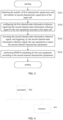
- the first embodiment of the present application relates to a data scheduling method, the flowchart shown in FIG. 1 includes: S101: obtaining the number of first characteristic signal ports and the number of second characteristic signal ports of a super-cell.
- the super-cell is formed by K neighboring conventional cells (K is an integer greater than or equal to 2), and the value of K can be selected according to the hardware capability, computational complexity, etc.
- the conventional cells composing the super-cell have two different numbers of antennas.
- the super-cell is composed of the first sub-cell and the second sub-cell, the number of the first characteristic signal ports is a maximum number of configurable ports of the first sub-cell, and the number of second characteristic signal ports is a maximum number of configurable ports of the second sub-cell.
- the maximum number of configurable ports differs for cells with different number of antennas, and for the same sub-cell, the number of antennas of sub-cell is not necessarily related to the maximum number of configurable ports. In some situations, if the first sub-cell has 4 antennas, the maximum number of configurable ports of the first sub-cell can be 4; if the first sub-cell has 64 antennas, the maximum number of configurable ports of the first sub-cell can be 8.
- S102 configuring a first channel-state information reference signal and a second channel-state information reference signal for the user equipment accessed to the super-cell.
- the number of first characteristic signal ports in the embodiment is greater than the number of second characteristic signal ports, the number of ports of the first channel-state information reference signal is equal to the number of first characteristic signal ports, the first channel-state information reference signal is a periodic feedback signal, and the second channel-state information reference signal is a non-periodic feedback signal.
- the second channel-state information reference signal with a set of ports equal to the number of the second characteristic signal ports can be configured separately, or the first channel-state information reference signal with a set of ports equal to the number of the first characteristic signal ports can be used.
- the first channel-state information reference signal is a periodic feedback signal
- the first channel-state information reference signal can periodically trigger the user equipment to report the first channel characteristic parameters.
- the channel characteristic parameters in the embodiment include one of or any combination of: a channel quality indicator, a precoding matrix indicator, and a rank indicator.
- the user equipment reports all the above three channel characteristic parameters to the base station.
- S104 determining whether to activate the second channel-state information reference signal according to a maximum number of configurable ports of a sub-cell where the user equipment accesses, and performing operation S105 in response to not activing the second channel-state information reference signal; otherwise, performing operation S106.
- S105 performing PDSCH scheduling for the user equipment according to the first channel characteristic parameters.
- the embodiment may determine the sub-cell where the user equipment belongs to according to the following: obtaining signal strength of the user equipment received by the first sub-cell and the second sub-cell, and taking a cell that receives greatest signal strength of the user equipment as the sub-cell where the user equipment belongs to. It is understood that the actual sub-cell in which the user equipment is located may change, so the embodiment will periodically obtain the signal strength of the user equipment received by the first sub-cell and the second sub-cell to avoid determining that the user equipment is still in the previous sub-cell even after the previous sub-cell in which the user equipment is located has changed, to improve the accuracy of the data scheduling method.
- S106 triggering, by the second channel-state information reference signal, the user equipment to report the second channel characteristic parameters.
- the second channel-state information reference signal is a non-periodic feedback signal
- the second channel-state information reference signal will be inactive in advance and will only be active when specific conditions are met.
- the reported channel characteristic parameters are limited by the number of the second characteristic signal ports, and the scheduling loses the layer number of the user equipment; if the number of ports of the configured channel-state information reference signal is equal to the number of the first characteristic signal ports, when the user equipment is in the coverage area of the second sub-cell, the reported channel characteristic parameters may be larger than the number of the second characteristic signal ports, then the reported value obtained by the base station is inaccurate, and at this time the base station cannot accurately schedule according to the reported value by the user equipment, thus the traffic of the user equipment is lost.
- two sets of channel-state information reference signals are configured, when the user equipment is in the coverage area of the first sub-cell, the user equipment is triggered by the first channel-state information reference signal to report the first channel characteristic parameters, and because the number of the ports of the first channel-state information reference signal is equal to the maximum number of configurable ports of the first sub-cell, the scheduling of the base station will not lose the layer number of the user equipment, thus when the user equipment is in the coverage area of the second sub-cell, the user equipment is triggered by the second channel-state information reference signal to report the second channel characteristic parameters, and because the number of ports of the second channel-state information reference signal is equal to the maximum number of configurable ports of the second sub-cell, the channel characteristic parameters reported by the user equipment is not larger than the maximum number of the configurable ports of the second sub-cell.
- the reported value obtained by the base station is accurate, and the base station can then accurately perform scheduling according to the reports of the user equipment.
- the embodiment of the present application pre-configures the first channel-state information reference signal and the second channel-state information reference signal for the user equipment accessed to the super-cell (the super-cell includes the first sub-cell and the second sub-cell), and the number of ports of the first channel-state information reference signal is equal to the maximum number of configurable ports of the first sub-cell, the number of ports of the second channel-state information reference signal is equal to the maximum number of configurable ports of the second sub-cell, so that there are multiple sets of the channel-state information reference signals; whether to activate the second channel-state information reference signal is determined according to the maximum number of configurable ports of the sub-cell where the user equipment belongs to, so that when the user equipment enters different sub-cells, the corresponding channel-state information reference signal triggers the user equipment to report the corresponding channel characteristic parameters, which can enable the base station to obtain reasonable and effective values reported by the user equipment, and the base station can perform accurate scheduling, so that there is no loss in the traffic of the user equipment and the data throughput
- a second embodiment of the present application relates to a data scheduling method, the second embodiment is a further description of the first embodiment.
- FIG. 2 The specific process of the embodiment is shown in FIG. 2 and includes:
- Operations S201 to S203 in the embodiment are similar to operations S101 to S103 in the first embodiment, and will not be repeated here.
- S205 activating the second channel-state information reference signal and triggering, by the second channel-state information reference signal, the user equipment to report the second channel characteristic parameters.
- S207 performing PDSCH scheduling for the user equipment according to the first channel characteristic parameters.
- the following takes 4 first characteristic signal ports, 2 second characteristic signal ports, 4 antennas of the first sub-cell, and 2 antennas of the second sub-cell as an example to illustrate the data scheduling method of the embodiment.
- the data scheduling method in the embodiment is illustrated by specific examples as follows.
- the embodiment of the present application pre-configures the first channel-state information reference signal and the second channel-state information reference signal for the user equipment accessed to the super-cell (the super-cell includes the first sub-cell and the second sub-cell), and the number of ports of the first channel-state information reference signal is equal to the maximum number of configurable ports of the first sub-cell, the number of ports of the second channel-state information reference signal is equal to the maximum number of configurable ports of the second sub-cell, so that there are multiple sets of the channel-state information reference signals; whether to activate the second channel-state information reference signal is determined according to the maximum number of configurable ports of the sub-cell where the user equipment belongs to, so that when the user equipment enters different sub-cells, the corresponding channel-state information reference signal triggers the user equipment to report the corresponding channel characteristic parameters, which can enable the base station to obtain reasonable and effective values reported by the user equipment, and the base station can perform accurate scheduling, so that there is no loss in the traffic of the user equipment and the data throughput of the super-cell is
- a third embodiment of the present application relates to a data scheduling method, and the third embodiment is a further description of the first embodiment, another feasible method for determining whether to activate a second channel-state information reference signal according to the maximum number of configurable ports in the sub-cell accessed by the user equipment when the greatest signal strength of the user equipment is received by the second sub-cell (i.e., the user equipment belongs to the second sub-cell).
- FIG. 3 The specific process of the embodiment is shown in FIG. 3 and includes:
- Operations S301 to S302 in the embodiment are similar to operations S101 to S102 in the first embodiment, and will not be repeated here.
- the second channel-state information reference signal is directly activated and the PDSCH scheduling is performed for the user equipment according to the second channel characteristic parameters, which can improve the efficiency of the data scheduling method of the embodiment and reduce the workload.
- the following takes 4 first characteristic signal ports, 2 second characteristic signal ports, 4 antennas of the first sub-cell, and 2 antennas of the second sub-cell as an example to illustrate the data scheduling method of the embodiment.
- the embodiment of the present application pre-configures the first channel-state information reference signal and the second channel-state information reference signal for the user equipment accessed to the super-cell (the super-cell includes the first sub-cell and the second sub-cell), and the number of ports of the first channel-state information reference signal is equal to the maximum number of configurable ports of the first sub-cell, the number of ports of the second channel-state information reference signal is equal to the maximum number of configurable ports of the second sub-cell, so that there are multiple sets of the channel-state information reference signals; whether to activate the second channel-state information reference signal is determined according to the maximum number of configurable ports of the sub-cell where the user equipment belongs to, so that when the user equipment enters different sub-cells, the corresponding channel-state information reference signal triggers the user equipment to report the corresponding channel characteristic parameters, which can enable the base station to obtain reasonable and effective values reported by the user equipment, and the base station can perform accurate scheduling, so that there is no loss in the traffic of the user equipment and the data throughput
- a fourth embodiment of the present application relates to a data scheduling device, as shown in FIG. 4 , including:
- the memory 402 and the processor 401 are connected by a bus, and the bus may include any number of interconnected buses and bridges, the bus connects one or more processors 401 to various circuits of the memory 402 together.
- the bus may also connect together various other circuits such as peripherals, voltage regulators, and power management circuits, all of which are well known in the art and therefore will not be further described herein.
- the bus interface provides an interface between the bus and the transceiver.
- the transceiver may be a single element or a plurality of elements, such as a plurality of receivers and transmitters, providing units for communicating with various other devices on a transmission medium.
- Data processed by processor 401 is transmitted over the wireless medium via an antenna, and the antenna also receives the data and transmits it to processor 401.
- the processor 401 is responsible for managing the bus and the usual processing, and may also provide various functions including timing, peripheral interfaces, voltage regulation, power management, and other control functions.
- the memory 402 may be used to store data used by processor 401 in performing operations.
- a fifth embodiment of the present application relates to a computer readable storage medium that stores a computer program.
- the computer program implements the method described above when executed by the processor.
- a program stored in a storage medium includes a number of instructions to cause a device (which may be a microcontroller, chip, etc.) or processor (processor) to perform all or some of the operations of the method described in the various embodiments of the present application.
- the aforementioned storage medium include: a USB flash drive, a mobile hard disk, a read-only memory (ROM), a random access memory (RAM), a disk or CD-ROM, and other medium that can store program code.
Landscapes
- Engineering & Computer Science (AREA)
- Signal Processing (AREA)
- Computer Networks & Wireless Communication (AREA)
- Quality & Reliability (AREA)
- Mobile Radio Communication Systems (AREA)
Abstract
Description
- This application claims priority to
Chinese Patent Application No. 202010622572.9, filed on June 30, 2020 - Embodiments of the present application relate to the field of wireless communication, and in particular to a data scheduling method, a data scheduling device and a computer readable storage medium.
- The super-cell consists of multiple cell-portions (conventional cell), and each CP shares resources of the super-cell, including physical-layer cell identities (PCI), time domain resources, frequency domain resources, etc. In the actual network, the CP in the super-cell often has two antennas and supports different number of transmitting antenna ports, that is, some CPs in the super-cell have M antennas and support downlink transmission of PM ports, some CPs have N antennas and support downlink transmission of PN ports, but such situation cannot be identified by the terminal, then the base station often is only configured with a set of a periodic channel-state information reference signal CSI-RS (CSI-RS) for a measurement feedback of a channel quality indicator(CQI), a precoding matrix indicator (PMI) and a rank indicator (RI) of the user equipment.
- Embodiments of the present application aim to provide a data scheduling method, a data scheduling device and a computer readable storage medium that enables accurate scheduling of the base station, to maximize data throughput in the super-cell.
- Embodiments of the present application provide a data scheduling method, including: obtaining a number of first characteristic signal ports and a number of second characteristic signal ports of a super-cell, wherein the number of first characteristic signal ports is a maximum number of configurable ports of a first sub-cell in the super-cell and the number of the second characteristic signal ports is a maximum number of configurable ports of a second sub-cell in the super-cell; configuring a first channel-state information reference signal and a second channel-state information reference signal for a user equipment accessed to the super-cell, wherein the number of ports of the first channel-state information reference signal is equal to the number of the first characteristic signal ports, the number of ports of the second channel-state information reference signal is equal to the number of the second characteristic signal ports; triggering, by the first channel-state information reference signal, the user equipment to report first channel characteristic parameters; determining whether to activate the second channel-state information reference signal according to a maximum number of configurable ports of a sub-cell where the user equipment belongs to; in response to not activating the second channel-state information reference signal, performing physical downlink shared channel (PDSCH) scheduling for the user equipment according to the first channel characteristic parameters; and in response to activating the second channel-state information reference signal, triggering, by the second channel-state information reference signal, the user equipment to report second channel characteristic parameters, and performing the PDSCH scheduling for the user equipment according to the second channel characteristic parameters.
- Embodiments of the present application further provide a data scheduling device, including: at least one processor; and a memory communicated with the at least one processor; the memory stores instructions executable by the at least one processor, the instructions are executed by the at least one processor to enable the at least one processor to perform the data scheduling method described above.
- Embodiments of the present application further provide a computer-readable storage medium storing a computer-execuable instruction that when executed by a processor causes the processor to perform the data scheduling method described above.
- One or more embodiments are illustrated exemplarily by the accompanying drawings; these exemplary illustrations do not constitute a limitation of the embodiments, and elements having the same reference number in the drawings are indicated as similar elements, and the drawings do not constitute a limitation of scale unless specifically stated.
-
FIG. 1 is a flowchart of a data scheduling method according to a first embodiment of the present application. -
FIG. 2 is a flowchart of a data scheduling method according to a second embodiment of the present application. -
FIG. 3 is a flowchart of a data scheduling method according to a third embodiment of the present application. -
FIG. 4 is a schematic structural diagram of the data scheduling device according to a fourth embodiment of the present application. - In order to make the purpose, technical solutions and advantages of the embodiments of the present application clearer, each embodiment of the present application will be described in detail below in conjunction with the accompanying drawings. However, it will be understood by those skilled in the art that in each embodiment of the present application, many technical details are presented to enable the reader to better understand the application. However, even without these technical details and various variations and modifications based on the following embodiments, the technical solutions claimed to be protected by the present application can be achieved.
- The inventors found that: if the configured number of CSI-RS ports is equal to the smaller value of PM and PN, the RI reported by the user equipment is limited by the smaller value of PM and PN, the scheduling may lose the layer number of the user equipment and thus lose the traffic of the user equipment; if the configured number of CSI-RS ports is equal to the larger value of PM and PN, the RI reported by the user equipment may be larger than the smaller value of PM and PN, thus if the user equipment is within the CP coverage of the smaller value of PM and PN, the reported RI may be larger than the smaller value of PM and PN, then the reported value obtained by the base station is inaccurate, then the base station cannot accurately schedule according to the value reported by the user equipment, and thus the traffic of the user equipment is lost.
- In order to solve the above technical problem, the first embodiment of the present application relates to a data scheduling method, the flowchart shown in
FIG. 1 includes:
S101: obtaining the number of first characteristic signal ports and the number of second characteristic signal ports of a super-cell. - In some situations, the super-cell is formed by K neighboring conventional cells (K is an integer greater than or equal to 2), and the value of K can be selected according to the hardware capability, computational complexity, etc. The conventional cells composing the super-cell have two different numbers of antennas. In the embodiment, the super-cell is composed of the first sub-cell and the second sub-cell, the number of the first characteristic signal ports is a maximum number of configurable ports of the first sub-cell, and the number of second characteristic signal ports is a maximum number of configurable ports of the second sub-cell.
- The maximum number of configurable ports differs for cells with different number of antennas, and for the same sub-cell, the number of antennas of sub-cell is not necessarily related to the maximum number of configurable ports. In some situations, if the first sub-cell has 4 antennas, the maximum number of configurable ports of the first sub-cell can be 4; if the first sub-cell has 64 antennas, the maximum number of configurable ports of the first sub-cell can be 8.
- S102: configuring a first channel-state information reference signal and a second channel-state information reference signal for the user equipment accessed to the super-cell.
- In some situations, the number of first characteristic signal ports in the embodiment is greater than the number of second characteristic signal ports, the number of ports of the first channel-state information reference signal is equal to the number of first characteristic signal ports, the first channel-state information reference signal is a periodic feedback signal, and the second channel-state information reference signal is a non-periodic feedback signal.
- As the non-periodic feedback signal, the second channel-state information reference signal with a set of ports equal to the number of the second characteristic signal ports can be configured separately, or the first channel-state information reference signal with a set of ports equal to the number of the first characteristic signal ports can be used.
- S103: triggering, by the first channel-state information reference signal, the user equipment to report first channel characteristic parameters.
- In some situations, since the first channel-state information reference signal is a periodic feedback signal, the first channel-state information reference signal can periodically trigger the user equipment to report the first channel characteristic parameters.
- The channel characteristic parameters in the embodiment include one of or any combination of: a channel quality indicator, a precoding matrix indicator, and a rank indicator. In the embodiment, the user equipment reports all the above three channel characteristic parameters to the base station.
- S104: determining whether to activate the second channel-state information reference signal according to a maximum number of configurable ports of a sub-cell where the user equipment accesses, and performing operation S105 in response to not activing the second channel-state information reference signal; otherwise, performing operation S106.
- S105: performing PDSCH scheduling for the user equipment according to the first channel characteristic parameters.
- Regarding operations S104 to S105, in some situations, the embodiment may determine the sub-cell where the user equipment belongs to according to the following: obtaining signal strength of the user equipment received by the first sub-cell and the second sub-cell, and taking a cell that receives greatest signal strength of the user equipment as the sub-cell where the user equipment belongs to. It is understood that the actual sub-cell in which the user equipment is located may change, so the embodiment will periodically obtain the signal strength of the user equipment received by the first sub-cell and the second sub-cell to avoid determining that the user equipment is still in the previous sub-cell even after the previous sub-cell in which the user equipment is located has changed, to improve the accuracy of the data scheduling method.
- S106: triggering, by the second channel-state information reference signal, the user equipment to report the second channel characteristic parameters.
- S107: performing PDSCH scheduling for the user equipment according to the second channel characteristic parameters.
- Regarding operations S106 to S107, in some situations, since the second channel-state information reference signal is a non-periodic feedback signal, the second channel-state information reference signal will be inactive in advance and will only be active when specific conditions are met.
- In general, when having only one set of channel-state information reference signals, if the number of ports of the configured channel-state information reference signal is equal to the number of the second characteristic signal ports (the number of the first characteristic signal ports is larger than the number of the second characteristic signal ports), when the user equipment is within the coverage area of the first sub-cell, the reported channel characteristic parameters are limited by the number of the second characteristic signal ports, and the scheduling loses the layer number of the user equipment; if the number of ports of the configured channel-state information reference signal is equal to the number of the first characteristic signal ports, when the user equipment is in the coverage area of the second sub-cell, the reported channel characteristic parameters may be larger than the number of the second characteristic signal ports, then the reported value obtained by the base station is inaccurate, and at this time the base station cannot accurately schedule according to the reported value by the user equipment, thus the traffic of the user equipment is lost. In the embodiment, two sets of channel-state information reference signals are configured, when the user equipment is in the coverage area of the first sub-cell, the user equipment is triggered by the first channel-state information reference signal to report the first channel characteristic parameters, and because the number of the ports of the first channel-state information reference signal is equal to the maximum number of configurable ports of the first sub-cell, the scheduling of the base station will not lose the layer number of the user equipment, thus when the user equipment is in the coverage area of the second sub-cell, the user equipment is triggered by the second channel-state information reference signal to report the second channel characteristic parameters, and because the number of ports of the second channel-state information reference signal is equal to the maximum number of configurable ports of the second sub-cell, the channel characteristic parameters reported by the user equipment is not larger than the maximum number of the configurable ports of the second sub-cell. The reported value obtained by the base station is accurate, and the base station can then accurately perform scheduling according to the reports of the user equipment.
- The embodiment of the present application, relative to the related technology, pre-configures the first channel-state information reference signal and the second channel-state information reference signal for the user equipment accessed to the super-cell (the super-cell includes the first sub-cell and the second sub-cell), and the number of ports of the first channel-state information reference signal is equal to the maximum number of configurable ports of the first sub-cell, the number of ports of the second channel-state information reference signal is equal to the maximum number of configurable ports of the second sub-cell, so that there are multiple sets of the channel-state information reference signals; whether to activate the second channel-state information reference signal is determined according to the maximum number of configurable ports of the sub-cell where the user equipment belongs to, so that when the user equipment enters different sub-cells, the corresponding channel-state information reference signal triggers the user equipment to report the corresponding channel characteristic parameters, which can enable the base station to obtain reasonable and effective values reported by the user equipment, and the base station can perform accurate scheduling, so that there is no loss in the traffic of the user equipment and the data throughput of the super-cell is maximized.
- A second embodiment of the present application relates to a data scheduling method, the second embodiment is a further description of the first embodiment. A feasible method for determining whether to activate a second channel-state information reference signal according to the maximum number of configurable ports in the sub-cell accessed by the user equipment when the greatest signal strength of the user equipment is received by the second sub-cell (i.e., the user equipment belongs to the second sub-cell).
- The specific process of the embodiment is shown in
FIG. 2 and includes: - S201: obtaining the number of first characteristic signal ports and the number of second characteristic signal ports of the super-cell.
- S202: configuring a first channel-state information reference signal and a second channel-state information reference signal for the user equipment accessed to the super-cell.
- S203: triggering, by the first channel-state information reference signal, the user equipment to report first channel characteristic parameters.
- Operations S201 to S203 in the embodiment are similar to operations S101 to S103 in the first embodiment, and will not be repeated here.
- S204: determining whether a difference between the first channel characteristic parameters and the number of the second characteristic signal ports is within the preset range, and if within the preset range, performing operation S207; otherwise, performing operation S205.
- In some situations, the first channel characteristic parameters in the embodiment include at least a rank indicator; determining whether the difference between the first channel characteristic parameters and the number of the second characteristic signal ports is within the preset range may be: determining whether the rank indicator is not greater than the number of second characteristic signal ports, not activating the second channel-state information reference signal when the rank indicator is not greater than the number of the second characteristic signal ports; otherwise, activating the second channel-state information reference signal.
- S205: activating the second channel-state information reference signal and triggering, by the second channel-state information reference signal, the user equipment to report the second channel characteristic parameters.
- S206: performing PDSCH scheduling for the user equipment according to the second channel characteristic parameters.
- S207: performing PDSCH scheduling for the user equipment according to the first channel characteristic parameters.
- For easy understanding, the following takes 4 first characteristic signal ports, 2 second characteristic signal ports, 4 antennas of the first sub-cell, and 2 antennas of the second sub-cell as an example to illustrate the data scheduling method of the embodiment.
- 1. After the user equipment is accessed to the sub-cell, the user equipment is configured to feedback a channel-state information reference signal measured by a channel quality indicator, a precoding matrix indicator and a rank indicator. The maximum number of configurable ports of the first channel-state information reference signal in the first sub-cell is 4, and the maximum number of configurable ports of the second channel-state information reference signal in the second sub-cell is 2. The channel-state information reference signal is needed for the user equipment to measure the feedback of the channel quality indicator, the precoding matrix indicator and the rank indicator. The user equipment is configured with a set of the first channel-state information reference signal with 4 ports as the measurement channel-state information reference signal for the periodic feedback of the channel quality indicator, the precoding matrix indicator and the rank indicator, and a set of measurement channel-state information reference signal for the non-periodic feedback of the channel quality indicator, the precoding matrix indicator and the rank indicator. The non-periodic feedback second channel-state information reference signal using the above 4 ports of the first channel-state information reference signal plus the maximum rank indicator equates to 2.
- 2. During the access of the user equipment and the normal service process after access, the activation CP of the user equipment is determined periodically, assuming that the greatest signal strength of the user equipment is received by the second sub-cell, the second sub-cell is where the user equipment belongs to.
- 3. The first channel-state information reference signal of 4 ports triggers the user equipment to report the channel quality indicator, the precoding matrix indicator and the rank indicator.
- 4. If the rank indicator reported by the user equipment is not greater than 2, the base station performs PDSCH scheduling according to the channel quality indicator, precoding matrix indicator and rank indicator reported by the user equipment, and the downlink weights can be the corresponding weights of any two orthogonal ports of the reported 4 ports. If the rank indicator reported by the user equipment is greater than 2, the user equipment is triggered to report non-periodic channel quality indicator, precoding matrix indicator and rank indicator, and the channel-state information reference signal required for non-periodic measurement is the second channel-state information reference signal reported non-periodically. After obtaining the channel quality indicator, precoding matrix indicator and rank indicator reported non-periodically by the user equipment, the base station performs PDSCH scheduling according to the channel quality indicator, the precoding matrix indicator and the rank indicator reported non-periodically.
- Taking 8 first characteristic signal ports, 2 second characteristic signal ports, 64 antennas of the first sub-cell and 2 antennas of the second sub-cell as examples, the data scheduling method in the embodiment is illustrated by specific examples as follows.
- 1. After the user equipment is accessed to the sub-cell, the user equipment is configured to feedback a channel-state information reference signal measured by the channel quality indicator, the precoding matrix indicator and a rank indicator. The maximum number of configurable ports of the first channel-state information reference signal in the first sub-cell is 8, and the maximum number of configurable ports of the second channel-state information reference signal in the second sub-cell is 2. The channel-state information reference signal is needed for the user equipment to measure the feedback of the channel quality indicator, the precoding matrix indicator and the rank indicator. The user equipment is configured with a set of the first channel-state information reference signal with 4 ports as the measurement channel-state information reference signal for the periodic feedback of the channel quality indicator, the precoding matrix indicator and the rank indicator, and a set of measurement channel-state information reference signal for the non-periodic feedback of the channel quality indicator, the precoding matrix indicator and the rank indicator. The non-periodic feedback second channel-state information reference signal using the above 8 ports of the first channel-state information reference signal plus the maximum rank indicator equates to 2.
- 2. During the access of the user equipment and the normal service process after access, the activation CP of the user equipment is determined periodically, assuming that the greatest signal strength of the user equipment is received by the second sub-cell, the second sub-cell is where the user equipment belongs to.
- 3. The first channel-state information reference signal of 8 ports triggers the user equipment to report the channel quality indicator, the precoding matrix indicator and the rank indicator.
- 4. If the rank indicator reported by the user equipment is not greater than 2, the base station performs PDSCH scheduling according to the channel quality indicator, precoding matrix indicator and rank indicator reported by the user equipment, and the downlink weights can be the corresponding weights of any two orthogonal ports of the reported 8 ports. If the rank indicator reported by the user equipment is greater than 2, the user equipment is triggered to report non-periodic channel quality indicator, precoding matrix indicator and rank indicator, and the channel-state information reference signal required for non-periodic measurement is the second channel-state information reference signal reported non-periodically. After obtaining the channel quality indicator, precoding matrix indicator and rank indicator reported non-periodically by the user equipment, the base station performs PDSCH scheduling according to the channel quality indicator, the precoding matrix indicator and the rank indicator reported non-periodically.
- The embodiment of the present application pre-configures the first channel-state information reference signal and the second channel-state information reference signal for the user equipment accessed to the super-cell (the super-cell includes the first sub-cell and the second sub-cell), and the number of ports of the first channel-state information reference signal is equal to the maximum number of configurable ports of the first sub-cell, the number of ports of the second channel-state information reference signal is equal to the maximum number of configurable ports of the second sub-cell, so that there are multiple sets of the channel-state information reference signals; whether to activate the second channel-state information reference signal is determined according to the maximum number of configurable ports of the sub-cell where the user equipment belongs to, so that when the user equipment enters different sub-cells, the corresponding channel-state information reference signal triggers the user equipment to report the corresponding channel characteristic parameters, which can enable the base station to obtain reasonable and effective values reported by the user equipment, and the base station can perform accurate scheduling, so that there is no loss in the traffic of the user equipment and the data throughput of the super-cell is maximized.
- A third embodiment of the present application relates to a data scheduling method, and the third embodiment is a further description of the first embodiment, another feasible method for determining whether to activate a second channel-state information reference signal according to the maximum number of configurable ports in the sub-cell accessed by the user equipment when the greatest signal strength of the user equipment is received by the second sub-cell (i.e., the user equipment belongs to the second sub-cell).
- The specific process of the embodiment is shown in
FIG. 3 and includes: - S301: obtaining the number of first characteristic signal ports and the number of second characteristic signal ports of the super-cell.
- S302: configuring the first channel-state information reference signal and the second channel-state information reference signal for the user equipment accessed to the super-cell.
- Operations S301 to S302 in the embodiment are similar to operations S101 to S102 in the first embodiment, and will not be repeated here.
- S303: activating the second channel-state information reference signal, and triggering, by the second channel-state information reference signal, the user equipment to report the second channel characteristic parameters.
- S304: performing PDSCH scheduling for the user equipment according to the second channel characteristic parameters.
- Regarding operations S303 to S303, in some situations, when the user is in the second sub-cell with a smaller number of ports, the second channel-state information reference signal is directly activated and the PDSCH scheduling is performed for the user equipment according to the second channel characteristic parameters, which can improve the efficiency of the data scheduling method of the embodiment and reduce the workload.
- For easy understanding, the following takes 4 first characteristic signal ports, 2 second characteristic signal ports, 4 antennas of the first sub-cell, and 2 antennas of the second sub-cell as an example to illustrate the data scheduling method of the embodiment.
- 1. After the user equipment is accessed to the sub-cell, the user equipment is configured to feedback a channel-state information reference signal measured by a channel quality indicator, a precoding matrix indicator and a rank indicator. The maximum number of configurable ports of the first channel-state information reference signal in the first sub-cell is 4, and the maximum number of configurable ports of the second channel-state information reference signal in the second sub-cell is 2. The channel-state information reference signal is needed for the user equipment to measure the feedback of the channel quality indicator, the precoding matrix indicator and the rank indicator. The user equipment is configured with a set of the first channel-state information reference signal with 4 ports as the measurement channel-state information reference signal for the periodic feedback of the channel quality indicator, the precoding matrix indicator and the rank indicator, and a set of measurement channel-state information reference signal for the non-periodic feedback of the channel quality indicator, the precoding matrix indicator and the rank indicator. The non-periodic feedback second channel-state information reference signal using the above 4 ports of the first channel-state information reference signal plus the maximum rank indicator equates to 2.
- 2. During the access of the user equipment and the normal service process after access, the activation CP of the user equipment is determined periodically, assuming that the greatest signal strength of the user equipment is received by the second sub-cell, the second sub-cell is where the user equipment belongs to.
- 3. The first channel-state information reference signal of 4 ports triggers the user equipment to report the channel quality indicator, the precoding matrix indicator and the rank indicator.
- 4. If the user equipment is in the second sub-cell, the user equipment is triggered to report non-periodic channel quality indicator, precoding matrix indicator and rank indicator. The channel-state information reference signal required for non-periodic measurement is the second channel-state information reference signal reported non-periodically. After obtaining the channel quality indicator, the precoding matrix indicator and the rank indicator reported non-periodically by the user equipment, the base station performs PDSCH scheduling according to the channel quality indicator, the precoding matrix indicator and the rank indicator reported non-periodically.
- The embodiment of the present application, relative to the related technology, pre-configures the first channel-state information reference signal and the second channel-state information reference signal for the user equipment accessed to the super-cell (the super-cell includes the first sub-cell and the second sub-cell), and the number of ports of the first channel-state information reference signal is equal to the maximum number of configurable ports of the first sub-cell, the number of ports of the second channel-state information reference signal is equal to the maximum number of configurable ports of the second sub-cell, so that there are multiple sets of the channel-state information reference signals; whether to activate the second channel-state information reference signal is determined according to the maximum number of configurable ports of the sub-cell where the user equipment belongs to, so that when the user equipment enters different sub-cells, the corresponding channel-state information reference signal triggers the user equipment to report the corresponding channel characteristic parameters, which can enable the base station to obtain reasonable and effective values reported by the user equipment, and the base station can perform accurate scheduling, so that there is no loss in the traffic of the user equipment and the data throughput of the super-cell is maximized.
- A fourth embodiment of the present application relates to a data scheduling device, as shown in
FIG. 4 , including: - at least one
processor 401; and - a
memory 402 communicated with the at least oneprocessor 401; - the
memory 402 stores instructions executable by the at least oneprocessor 401, the instructions are executed by the at least oneprocessor 401 to enable the at least oneprocessor 401 to perform the data scheduling method described above. - The
memory 402 and theprocessor 401 are connected by a bus, and the bus may include any number of interconnected buses and bridges, the bus connects one ormore processors 401 to various circuits of thememory 402 together. The bus may also connect together various other circuits such as peripherals, voltage regulators, and power management circuits, all of which are well known in the art and therefore will not be further described herein. The bus interface provides an interface between the bus and the transceiver. The transceiver may be a single element or a plurality of elements, such as a plurality of receivers and transmitters, providing units for communicating with various other devices on a transmission medium. Data processed byprocessor 401 is transmitted over the wireless medium via an antenna, and the antenna also receives the data and transmits it toprocessor 401. - The
processor 401 is responsible for managing the bus and the usual processing, and may also provide various functions including timing, peripheral interfaces, voltage regulation, power management, and other control functions. Thememory 402 may be used to store data used byprocessor 401 in performing operations. - A fifth embodiment of the present application relates to a computer readable storage medium that stores a computer program. The computer program implements the method described above when executed by the processor.
- That is, it is understood by those skilled in the art that all or some of the operations in the method of the above embodiments can be accomplished by instructing the relevant hardware by a program stored in a storage medium, the program includes a number of instructions to cause a device (which may be a microcontroller, chip, etc.) or processor (processor) to perform all or some of the operations of the method described in the various embodiments of the present application. The aforementioned storage medium include: a USB flash drive, a mobile hard disk, a read-only memory (ROM), a random access memory (RAM), a disk or CD-ROM, and other medium that can store program code.
- Those skilled in the art can understand that the above embodiments are specific embodiments for realizing the present application, and in practical application, various changes can be made to them in form and details without deviating from scope of the present application.
Claims (10)
- A data scheduling method, characterized by comprising:obtaining a number of first characteristic signal ports and a number of second characteristic signal ports of a super-cell, wherein the number of first characteristic signal ports is a maximum number of configurable ports of a first sub-cell in the super-cell and the number of the second characteristic signal ports is a maximum number of configurable ports of a second sub-cell in the super-cell;configuring a first channel-state information reference signal and a second channel-state information reference signal for a user equipment accessed to the super-cell, wherein the number of ports of the first channel-state information reference signal is equal to the number of the first characteristic signal ports, the number of ports of the second channel-state information reference signal is equal to the number of the second characteristic signal ports;triggering, by the first channel-state information reference signal, the user equipment to report first channel characteristic parameters;determining whether to activate the second channel-state information reference signal according to a maximum number of configurable ports of a sub-cell where the user equipment belongs to;in response to not activating the second channel-state information reference signal, performing physical downlink shared channel (PDSCH) scheduling for the user equipment according to the first channel characteristic parameters; andin response to activating the second channel-state information reference signal, triggering, by the second channel-state information reference signal, the user equipment to report second channel characteristic parameters, and performing the PDSCH scheduling for the user equipment according to the second channel characteristic parameters.
- The data scheduling method according to claim 1, wherein before determining whether to activate the second channel-state information reference signal according to the number of configurable ports of the sub-cell where the user equipment belongs to, the method further comprises:
obtaining signal strength of the user equipment received by the first sub-cell and the second sub-cell, and taking a cell that receives greatest signal strength of the user equipment as the sub-cell where the user equipment belongs to. - The data scheduling method according to claim 2, wherein the greatest signal strength of the user equipment is received by the first sub-cell, the determining whether to activate the second channel-state information reference signal according to the maximum number of configurable ports of the sub-cell where the user equipment belongs to comprises:
not activating the second channel-state information reference signal. - The data scheduling method according to claim 2, wherein the greatest signal strength of the user equipment is received by the second sub-cell, the determining whether to activate the second channel-state information reference signal according to the maximum number of configurable ports of the sub-cell where the user equipment belongs to comprises:determining whether a difference between the first channel characteristic parameters and the number of second characteristic signal ports is within a preset range;not activating the second channel-state information reference signal in response that the difference is within the preset range; andactivating the second channel-state information reference signal in response that the difference is not within the preset range.
- The data scheduling method according to claim 4, wherein the first channel characteristic parameters at least comprise: a rank indicator; the determining whether the difference between the first channel characteristic parameters and the number of second characteristic signal ports is within the preset range comprises:determining whether the rank indicator is not greater than the number of the second characteristic signal ports;not activating the second channel-state information reference signal in response that the rank indicator is not greater than the number of the second characteristic signal ports; andactivating the second channel-state information reference signal in response that the rank indicator is greater than the number of the second characteristic signal ports.
- The data scheduling method according to claim 2, wherein the greatest signal strength of the user equipment is received by the first sub-cell, the determining whether to activate the second channel-state information reference signal according to the number of the first characteristic signal ports comprises:
not activating the second channel-state information reference signal. - The data scheduling method according to claim 2, wherein the greatest signal strength of the user equipment is received by the second sub-cell, the determining whether to activate the second channel-state information reference signal according to the number of the first characteristic signal ports comprises:
activating the second channel-state information reference signal. - The data scheduling method according to any one of claims 1 to 7, wherein the channel characteristic parameters comprise one of or any combination of:
a channel quality indicator, a precoding matrix indicator, and a rank indicator. - A data scheduling device, characterized by comprising:at least one processor; anda memory communicated with the at least one processor;wherein the memory stores instructions executable by the at least one processor, the instructions are executed by the at least one processor to enable the at least one processor to perform the data scheduling method according to any one of claims 1 to 8.
- A computer-readable storage medium, characterized by storing a computer-execuable instruction that when executed by a processor causes the processor to perform the data scheduling method according to any one of claims 1 to 8.
Applications Claiming Priority (2)
| Application Number | Priority Date | Filing Date | Title |
|---|---|---|---|
| CN202010622572.9A CN113873666B (en) | 2020-06-30 | 2020-06-30 | Data scheduling method, device and computer readable storage medium |
| PCT/CN2021/100750 WO2022001687A1 (en) | 2020-06-30 | 2021-06-17 | Data scheduling method and apparatus, and computer readable storage medium |
Publications (3)
| Publication Number | Publication Date |
|---|---|
| EP4175387A1 true EP4175387A1 (en) | 2023-05-03 |
| EP4175387A4 EP4175387A4 (en) | 2023-11-22 |
| EP4175387B1 EP4175387B1 (en) | 2024-10-23 |
Family
ID=78981893
Family Applications (1)
| Application Number | Title | Priority Date | Filing Date |
|---|---|---|---|
| EP21832239.4A Active EP4175387B1 (en) | 2020-06-30 | 2021-06-17 | Data scheduling method and apparatus, and computer readable storage medium |
Country Status (3)
| Country | Link |
|---|---|
| EP (1) | EP4175387B1 (en) |
| CN (1) | CN113873666B (en) |
| WO (1) | WO2022001687A1 (en) |
Families Citing this family (1)
| Publication number | Priority date | Publication date | Assignee | Title |
|---|---|---|---|---|
| CN115551101A (en) * | 2021-06-30 | 2022-12-30 | 中国移动通信集团广东有限公司 | A Super Cell Scheduling Method and Device Under Antenna Mixing |
Family Cites Families (11)
| Publication number | Priority date | Publication date | Assignee | Title |
|---|---|---|---|---|
| CN102595625B (en) * | 2011-01-17 | 2014-12-31 | 中兴通讯股份有限公司 | SDMA method and base station in super-cell |
| EP2611230B1 (en) * | 2011-12-29 | 2019-10-16 | Swisscom AG | Method for deploying a cellular communication network |
| CN102572863B (en) * | 2012-02-03 | 2015-10-21 | 中兴通讯股份有限公司 | The method and system that a kind of radio communication covers |
| US9374757B2 (en) * | 2012-12-27 | 2016-06-21 | Samsung Electronics Co., Ltd. | Method and apparatus for one cell operation with fast small cell switching in wireless communication system |
| KR101706967B1 (en) * | 2013-02-24 | 2017-02-15 | 엘지전자 주식회사 | Method for determining bit length of rank index in wireless communications system and apparatus therefor |
| US10187135B2 (en) * | 2014-11-07 | 2019-01-22 | Electronics And Telecommunications Research Institute | Method and apparatus for generating CSI report |
| WO2016126099A1 (en) * | 2015-02-05 | 2016-08-11 | 엘지전자(주) | Method for csi feedback in wireless communication system, and apparatus therefor |
| KR102823161B1 (en) * | 2017-02-07 | 2025-06-20 | 삼성전자 주식회사 | METHOD AND APPARATUS OF OPERATING PDCP LAYER PROCESSING QoS IN WIRELESS COMMUNICATION |
| CN108631847B (en) * | 2017-03-24 | 2021-06-01 | 华为技术有限公司 | Method, terminal device and network device for transmitting channel state information |
| US10743318B2 (en) * | 2017-09-01 | 2020-08-11 | Telefonaktiebolaget Lm Ericsson (Publ) | Beam management in a cell |
| CN109547278B (en) * | 2017-09-22 | 2023-01-31 | 中兴通讯股份有限公司 | Method and device for improving throughput of super cell network |
-
2020
- 2020-06-30 CN CN202010622572.9A patent/CN113873666B/en active Active
-
2021
- 2021-06-17 WO PCT/CN2021/100750 patent/WO2022001687A1/en not_active Ceased
- 2021-06-17 EP EP21832239.4A patent/EP4175387B1/en active Active
Also Published As
| Publication number | Publication date |
|---|---|
| CN113873666B (en) | 2024-09-27 |
| WO2022001687A1 (en) | 2022-01-06 |
| EP4175387B1 (en) | 2024-10-23 |
| EP4175387A4 (en) | 2023-11-22 |
| CN113873666A (en) | 2021-12-31 |
Similar Documents
| Publication | Publication Date | Title |
|---|---|---|
| US10979170B2 (en) | Configuration resource indication method and apparatus | |
| EP4057559B1 (en) | Method for determining channel information, network device and terminal device | |
| US11729651B2 (en) | Reference signal measurement reporting method, user equipment and network device | |
| US10979193B2 (en) | Signal transmission method, network device, and terminal device | |
| EP3557808A1 (en) | Power control method for uplink measurement reference signal, network device, and terminal device | |
| US12224812B2 (en) | Method for channel and interference measurement and device | |
| US12010655B2 (en) | Channel state information reporting method and device, terminal and network side device | |
| EP4224768A1 (en) | Method and apparatus for determining uplink channel parameters, and method and apparatus for configuring uplink channel parameters | |
| KR20200004338A (en) | Method, terminal and network apparatus for determining transmission parameter of uplink signal | |
| US10355757B2 (en) | Method and apparatus for performing radio-resource-management measurements | |
| CN108365877A (en) | A kind of code book feedback method and device | |
| CN107733473A (en) | A beam management method and related equipment | |
| CN111586741B (en) | Information reporting method and terminal | |
| EP4175387B1 (en) | Data scheduling method and apparatus, and computer readable storage medium | |
| US11128363B2 (en) | Channel quality information reporting method, apparatus, and system | |
| CN111435846B (en) | Channel state information reporting method, terminal and network side equipment | |
| WO2017107067A1 (en) | Reference signal transmission and channel measurement methods, transmission device and terminal device | |
| EP4369770A1 (en) | Data transmission method and device, and storage medium | |
| KR20240070589A (en) | Information reporting methods, devices, devices and storage media | |
| CN114257359A (en) | CSI-RS measuring method and device | |
| HK40072202B (en) | Method for determining channel information, network device and terminal device | |
| HK40072202A (en) | Method for determining channel information, network device and terminal device |
Legal Events
| Date | Code | Title | Description |
|---|---|---|---|
| STAA | Information on the status of an ep patent application or granted ep patent |
Free format text: STATUS: THE INTERNATIONAL PUBLICATION HAS BEEN MADE |
|
| PUAI | Public reference made under article 153(3) epc to a published international application that has entered the european phase |
Free format text: ORIGINAL CODE: 0009012 |
|
| STAA | Information on the status of an ep patent application or granted ep patent |
Free format text: STATUS: REQUEST FOR EXAMINATION WAS MADE |
|
| 17P | Request for examination filed |
Effective date: 20230113 |
|
| AK | Designated contracting states |
Kind code of ref document: A1 Designated state(s): AL AT BE BG CH CY CZ DE DK EE ES FI FR GB GR HR HU IE IS IT LI LT LU LV MC MK MT NL NO PL PT RO RS SE SI SK SM TR |
|
| DAV | Request for validation of the european patent (deleted) | ||
| DAX | Request for extension of the european patent (deleted) | ||
| A4 | Supplementary search report drawn up and despatched |
Effective date: 20231019 |
|
| RIC1 | Information provided on ipc code assigned before grant |
Ipc: H04L 43/0888 20220101ALN20231013BHEP Ipc: H04W 72/21 20230101ALN20231013BHEP Ipc: H04W 72/54 20230101ALI20231013BHEP Ipc: H04W 72/12 20230101AFI20231013BHEP |
|
| GRAP | Despatch of communication of intention to grant a patent |
Free format text: ORIGINAL CODE: EPIDOSNIGR1 |
|
| STAA | Information on the status of an ep patent application or granted ep patent |
Free format text: STATUS: GRANT OF PATENT IS INTENDED |
|
| RIC1 | Information provided on ipc code assigned before grant |
Ipc: H04L 43/0888 20220101ALN20240618BHEP Ipc: H04W 72/21 20230101ALN20240618BHEP Ipc: H04L 43/065 20220101ALI20240618BHEP Ipc: H04W 72/54 20230101ALI20240618BHEP Ipc: H04W 72/12 20230101AFI20240618BHEP |
|
| RIC1 | Information provided on ipc code assigned before grant |
Ipc: H04L 43/0888 20220101ALN20240703BHEP Ipc: H04W 72/21 20230101ALN20240703BHEP Ipc: H04L 43/065 20220101ALI20240703BHEP Ipc: H04W 72/54 20230101ALI20240703BHEP Ipc: H04W 72/12 20230101AFI20240703BHEP |
|
| INTG | Intention to grant announced |
Effective date: 20240715 |
|
| GRAS | Grant fee paid |
Free format text: ORIGINAL CODE: EPIDOSNIGR3 |
|
| GRAA | (expected) grant |
Free format text: ORIGINAL CODE: 0009210 |
|
| STAA | Information on the status of an ep patent application or granted ep patent |
Free format text: STATUS: THE PATENT HAS BEEN GRANTED |
|
| AK | Designated contracting states |
Kind code of ref document: B1 Designated state(s): AL AT BE BG CH CY CZ DE DK EE ES FI FR GB GR HR HU IE IS IT LI LT LU LV MC MK MT NL NO PL PT RO RS SE SI SK SM TR |
|
| REG | Reference to a national code |
Ref country code: GB Ref legal event code: FG4D |
|
| REG | Reference to a national code |
Ref country code: CH Ref legal event code: EP |
|
| REG | Reference to a national code |
Ref country code: DE Ref legal event code: R096 Ref document number: 602021020795 Country of ref document: DE |
|
| REG | Reference to a national code |
Ref country code: IE Ref legal event code: FG4D |
|
| REG | Reference to a national code |
Ref country code: LT Ref legal event code: MG9D |
|
| REG | Reference to a national code |
Ref country code: NL Ref legal event code: MP Effective date: 20241023 |
|
| REG | Reference to a national code |
Ref country code: AT Ref legal event code: MK05 Ref document number: 1735890 Country of ref document: AT Kind code of ref document: T Effective date: 20241023 |
|
| PG25 | Lapsed in a contracting state [announced via postgrant information from national office to epo] |
Ref country code: NL Free format text: LAPSE BECAUSE OF FAILURE TO SUBMIT A TRANSLATION OF THE DESCRIPTION OR TO PAY THE FEE WITHIN THE PRESCRIBED TIME-LIMIT Effective date: 20241023 |
|
| PG25 | Lapsed in a contracting state [announced via postgrant information from national office to epo] |
Ref country code: NL Free format text: LAPSE BECAUSE OF FAILURE TO SUBMIT A TRANSLATION OF THE DESCRIPTION OR TO PAY THE FEE WITHIN THE PRESCRIBED TIME-LIMIT Effective date: 20241023 |
|
| PG25 | Lapsed in a contracting state [announced via postgrant information from national office to epo] |
Ref country code: IS Free format text: LAPSE BECAUSE OF FAILURE TO SUBMIT A TRANSLATION OF THE DESCRIPTION OR TO PAY THE FEE WITHIN THE PRESCRIBED TIME-LIMIT Effective date: 20250223 Ref country code: PT Free format text: LAPSE BECAUSE OF FAILURE TO SUBMIT A TRANSLATION OF THE DESCRIPTION OR TO PAY THE FEE WITHIN THE PRESCRIBED TIME-LIMIT Effective date: 20250224 Ref country code: HR Free format text: LAPSE BECAUSE OF FAILURE TO SUBMIT A TRANSLATION OF THE DESCRIPTION OR TO PAY THE FEE WITHIN THE PRESCRIBED TIME-LIMIT Effective date: 20241023 |
|
| PG25 | Lapsed in a contracting state [announced via postgrant information from national office to epo] |
Ref country code: FI Free format text: LAPSE BECAUSE OF FAILURE TO SUBMIT A TRANSLATION OF THE DESCRIPTION OR TO PAY THE FEE WITHIN THE PRESCRIBED TIME-LIMIT Effective date: 20241023 |
|
| PG25 | Lapsed in a contracting state [announced via postgrant information from national office to epo] |
Ref country code: BG Free format text: LAPSE BECAUSE OF FAILURE TO SUBMIT A TRANSLATION OF THE DESCRIPTION OR TO PAY THE FEE WITHIN THE PRESCRIBED TIME-LIMIT Effective date: 20241023 |
|
| PG25 | Lapsed in a contracting state [announced via postgrant information from national office to epo] |
Ref country code: ES Free format text: LAPSE BECAUSE OF FAILURE TO SUBMIT A TRANSLATION OF THE DESCRIPTION OR TO PAY THE FEE WITHIN THE PRESCRIBED TIME-LIMIT Effective date: 20241023 |
|
| PG25 | Lapsed in a contracting state [announced via postgrant information from national office to epo] |
Ref country code: NO Free format text: LAPSE BECAUSE OF FAILURE TO SUBMIT A TRANSLATION OF THE DESCRIPTION OR TO PAY THE FEE WITHIN THE PRESCRIBED TIME-LIMIT Effective date: 20250123 |
|
| PG25 | Lapsed in a contracting state [announced via postgrant information from national office to epo] |
Ref country code: LV Free format text: LAPSE BECAUSE OF FAILURE TO SUBMIT A TRANSLATION OF THE DESCRIPTION OR TO PAY THE FEE WITHIN THE PRESCRIBED TIME-LIMIT Effective date: 20241023 Ref country code: GR Free format text: LAPSE BECAUSE OF FAILURE TO SUBMIT A TRANSLATION OF THE DESCRIPTION OR TO PAY THE FEE WITHIN THE PRESCRIBED TIME-LIMIT Effective date: 20250124 Ref country code: AT Free format text: LAPSE BECAUSE OF FAILURE TO SUBMIT A TRANSLATION OF THE DESCRIPTION OR TO PAY THE FEE WITHIN THE PRESCRIBED TIME-LIMIT Effective date: 20241023 |
|
| PG25 | Lapsed in a contracting state [announced via postgrant information from national office to epo] |
Ref country code: PL Free format text: LAPSE BECAUSE OF FAILURE TO SUBMIT A TRANSLATION OF THE DESCRIPTION OR TO PAY THE FEE WITHIN THE PRESCRIBED TIME-LIMIT Effective date: 20241023 |
|
| PG25 | Lapsed in a contracting state [announced via postgrant information from national office to epo] |
Ref country code: RS Free format text: LAPSE BECAUSE OF FAILURE TO SUBMIT A TRANSLATION OF THE DESCRIPTION OR TO PAY THE FEE WITHIN THE PRESCRIBED TIME-LIMIT Effective date: 20250123 |
|
| PG25 | Lapsed in a contracting state [announced via postgrant information from national office to epo] |
Ref country code: SM Free format text: LAPSE BECAUSE OF FAILURE TO SUBMIT A TRANSLATION OF THE DESCRIPTION OR TO PAY THE FEE WITHIN THE PRESCRIBED TIME-LIMIT Effective date: 20241023 |
|
| PGFP | Annual fee paid to national office [announced via postgrant information from national office to epo] |
Ref country code: DE Payment date: 20250618 Year of fee payment: 5 |
|
| PG25 | Lapsed in a contracting state [announced via postgrant information from national office to epo] |
Ref country code: DK Free format text: LAPSE BECAUSE OF FAILURE TO SUBMIT A TRANSLATION OF THE DESCRIPTION OR TO PAY THE FEE WITHIN THE PRESCRIBED TIME-LIMIT Effective date: 20241023 |
|
| PGFP | Annual fee paid to national office [announced via postgrant information from national office to epo] |
Ref country code: GB Payment date: 20250618 Year of fee payment: 5 |
|
| PG25 | Lapsed in a contracting state [announced via postgrant information from national office to epo] |
Ref country code: EE Free format text: LAPSE BECAUSE OF FAILURE TO SUBMIT A TRANSLATION OF THE DESCRIPTION OR TO PAY THE FEE WITHIN THE PRESCRIBED TIME-LIMIT Effective date: 20241023 |
|
| PGFP | Annual fee paid to national office [announced via postgrant information from national office to epo] |
Ref country code: FR Payment date: 20250627 Year of fee payment: 5 |
|
| PG25 | Lapsed in a contracting state [announced via postgrant information from national office to epo] |
Ref country code: RO Free format text: LAPSE BECAUSE OF FAILURE TO SUBMIT A TRANSLATION OF THE DESCRIPTION OR TO PAY THE FEE WITHIN THE PRESCRIBED TIME-LIMIT Effective date: 20241023 |
|
| REG | Reference to a national code |
Ref country code: DE Ref legal event code: R097 Ref document number: 602021020795 Country of ref document: DE |
|
| PG25 | Lapsed in a contracting state [announced via postgrant information from national office to epo] |
Ref country code: SK Free format text: LAPSE BECAUSE OF FAILURE TO SUBMIT A TRANSLATION OF THE DESCRIPTION OR TO PAY THE FEE WITHIN THE PRESCRIBED TIME-LIMIT Effective date: 20241023 |
|
| PG25 | Lapsed in a contracting state [announced via postgrant information from national office to epo] |
Ref country code: CZ Free format text: LAPSE BECAUSE OF FAILURE TO SUBMIT A TRANSLATION OF THE DESCRIPTION OR TO PAY THE FEE WITHIN THE PRESCRIBED TIME-LIMIT Effective date: 20241023 |
|
| PG25 | Lapsed in a contracting state [announced via postgrant information from national office to epo] |
Ref country code: IT Free format text: LAPSE BECAUSE OF FAILURE TO SUBMIT A TRANSLATION OF THE DESCRIPTION OR TO PAY THE FEE WITHIN THE PRESCRIBED TIME-LIMIT Effective date: 20241023 |
|
| PLBE | No opposition filed within time limit |
Free format text: ORIGINAL CODE: 0009261 |
|
| STAA | Information on the status of an ep patent application or granted ep patent |
Free format text: STATUS: NO OPPOSITION FILED WITHIN TIME LIMIT |
|
| PG25 | Lapsed in a contracting state [announced via postgrant information from national office to epo] |
Ref country code: SE Free format text: LAPSE BECAUSE OF FAILURE TO SUBMIT A TRANSLATION OF THE DESCRIPTION OR TO PAY THE FEE WITHIN THE PRESCRIBED TIME-LIMIT Effective date: 20241023 |
|
| 26N | No opposition filed |
Effective date: 20250724 |
|
| REG | Reference to a national code |
Ref country code: CH Ref legal event code: H13 Free format text: ST27 STATUS EVENT CODE: U-0-0-H10-H13 (AS PROVIDED BY THE NATIONAL OFFICE) Effective date: 20260127 |
|
| PG25 | Lapsed in a contracting state [announced via postgrant information from national office to epo] |
Ref country code: MC Free format text: LAPSE BECAUSE OF FAILURE TO SUBMIT A TRANSLATION OF THE DESCRIPTION OR TO PAY THE FEE WITHIN THE PRESCRIBED TIME-LIMIT Effective date: 20241023 |
|
| PG25 | Lapsed in a contracting state [announced via postgrant information from national office to epo] |
Ref country code: LU Free format text: LAPSE BECAUSE OF NON-PAYMENT OF DUE FEES Effective date: 20250617 |
|
| REG | Reference to a national code |
Ref country code: BE Ref legal event code: MM Effective date: 20250630 |
|
| PG25 | Lapsed in a contracting state [announced via postgrant information from national office to epo] |
Ref country code: IE Free format text: LAPSE BECAUSE OF NON-PAYMENT OF DUE FEES Effective date: 20250617 |
|
| PG25 | Lapsed in a contracting state [announced via postgrant information from national office to epo] |
Ref country code: BE Free format text: LAPSE BECAUSE OF NON-PAYMENT OF DUE FEES Effective date: 20250630 |
|
| PG25 | Lapsed in a contracting state [announced via postgrant information from national office to epo] |
Ref country code: CH Free format text: LAPSE BECAUSE OF NON-PAYMENT OF DUE FEES Effective date: 20250630 |