EP4174874B1 - Computer-implemented method for optimizing global tritium breeding ratio of a tritium breeding blanket in a fusion reactor - Google Patents
Computer-implemented method for optimizing global tritium breeding ratio of a tritium breeding blanket in a fusion reactor Download PDFInfo
- Publication number
- EP4174874B1 EP4174874B1 EP22173438.7A EP22173438A EP4174874B1 EP 4174874 B1 EP4174874 B1 EP 4174874B1 EP 22173438 A EP22173438 A EP 22173438A EP 4174874 B1 EP4174874 B1 EP 4174874B1
- Authority
- EP
- European Patent Office
- Prior art keywords
- disturbance
- tritium breeding
- global
- tritium
- scheme
- Prior art date
- Legal status (The legal status is an assumption and is not a legal conclusion. Google has not performed a legal analysis and makes no representation as to the accuracy of the status listed.)
- Active
Links
Images



Classifications
-
- G—PHYSICS
- G21—NUCLEAR PHYSICS; NUCLEAR ENGINEERING
- G21B—FUSION REACTORS
- G21B1/00—Thermonuclear fusion reactors
- G21B1/11—Details
- G21B1/13—First wall; Blanket; Divertor
-
- G—PHYSICS
- G21—NUCLEAR PHYSICS; NUCLEAR ENGINEERING
- G21D—NUCLEAR POWER PLANT
- G21D3/00—Control of nuclear power plant
- G21D3/001—Computer implemented control
-
- G—PHYSICS
- G06—COMPUTING OR CALCULATING; COUNTING
- G06F—ELECTRIC DIGITAL DATA PROCESSING
- G06F2111/00—Details relating to CAD techniques
- G06F2111/06—Multi-objective optimisation, e.g. Pareto optimisation using simulated annealing [SA], ant colony algorithms or genetic algorithms [GA]
-
- G—PHYSICS
- G06—COMPUTING OR CALCULATING; COUNTING
- G06F—ELECTRIC DIGITAL DATA PROCESSING
- G06F30/00—Computer-aided design [CAD]
- G06F30/20—Design optimisation, verification or simulation
-
- G—PHYSICS
- G06—COMPUTING OR CALCULATING; COUNTING
- G06N—COMPUTING ARRANGEMENTS BASED ON SPECIFIC COMPUTATIONAL MODELS
- G06N5/00—Computing arrangements using knowledge-based models
- G06N5/01—Dynamic search techniques; Heuristics; Dynamic trees; Branch-and-bound
-
- G—PHYSICS
- G06—COMPUTING OR CALCULATING; COUNTING
- G06N—COMPUTING ARRANGEMENTS BASED ON SPECIFIC COMPUTATIONAL MODELS
- G06N7/00—Computing arrangements based on specific mathematical models
- G06N7/01—Probabilistic graphical models, e.g. probabilistic networks
-
- Y—GENERAL TAGGING OF NEW TECHNOLOGICAL DEVELOPMENTS; GENERAL TAGGING OF CROSS-SECTIONAL TECHNOLOGIES SPANNING OVER SEVERAL SECTIONS OF THE IPC; TECHNICAL SUBJECTS COVERED BY FORMER USPC CROSS-REFERENCE ART COLLECTIONS [XRACs] AND DIGESTS
- Y02—TECHNOLOGIES OR APPLICATIONS FOR MITIGATION OR ADAPTATION AGAINST CLIMATE CHANGE
- Y02E—REDUCTION OF GREENHOUSE GAS [GHG] EMISSIONS, RELATED TO ENERGY GENERATION, TRANSMISSION OR DISTRIBUTION
- Y02E30/00—Energy generation of nuclear origin
- Y02E30/10—Nuclear fusion reactors
Definitions
- the present invention is realized by the following technical solution:
- the present invention provides a computer-implemented method for optimizing the global tritium breeding ratio for a tritium breeding blanket in a fusion reactor as defined in claim 1 attached.
- ⁇ l k is the geometric boundary disturbance of the k th function region
- the present invention provides a method for optimizing the global tritium breeding ratio of fusion reactor blankets. Different from the traditional two-step optimization method of "local to global", the one-step optimization method of the global tritium breeding ratio of a fusion reactor is studied in the present invention.
- the present invention can greatly improve the optimization effect and efficiency of the global tritium breeding ratio, and effectively avoid the problem of strong neutron interference among the blanket modules, making the global tritium breeding ratio optimization possible with high-efficiency, high-fidelity and high-resolution.
- the present invention overcomes the defect that the neutronics optimization of the tritium breeding blanket by transport calculation is overshadowed by the statistical fluctuation of Monto Carlo code, greatly reduces the calculation amount and improves the efficiency.
- the present invention is able to realize the rapid optimization of the global tritium breeding ratio by automatically adjusting the internal geometric parameters, material parameters and configuration of each blanket module. This can also provide reference for the design and optimization of helium-cooled solid tritium blanket of a fusion reactor.
- the present invention can help to quickly find the global optimal blankets scheme of a fusion reactor with the best tritium breeding performance by automatically adjusting the internal layout scheme, material types (including breeding materials and structural materials), material parameters (including density, enrichment and nuclide abundance) and geometric parameters (position and size of function regions) of the tritium breeding blanket, which is of great scientific significance and engineering value.
- the present invention may be embodied in the form of an entirely hardware embodiment, an entirely software embodiment, or an embodiment combining software and hardware.
Landscapes
- Engineering & Computer Science (AREA)
- Physics & Mathematics (AREA)
- General Engineering & Computer Science (AREA)
- Plasma & Fusion (AREA)
- High Energy & Nuclear Physics (AREA)
- Theoretical Computer Science (AREA)
- Computer Hardware Design (AREA)
- Evolutionary Computation (AREA)
- Geometry (AREA)
- General Physics & Mathematics (AREA)
- Physical Or Chemical Processes And Apparatus (AREA)
- Management, Administration, Business Operations System, And Electronic Commerce (AREA)
Description
- The present invention relates to the neutronics field of tritium breeding blankets of fusion reactors, in particular to a computer-implemented method for optimizing global tritium breeding ratio of a tritium breeding blanket in a fusion reactor.
- Fusion energy is a permanent source of energy for mankind in the future. With the advantages of abundant resources, economy, cleanness and compatibility with the environment, nuclear fusion energy is recognized as an ideal substitute for conventional energy sources on a large scale. After more than 60 years of research, the magnetically confined controlled nuclear fusion led by Tokamak has made significant breakthroughs in theoretical and physical tests.
- In a fusion reactor, the tritium breeding blanket, one of the most important components, is key to realize the tritium self-sufficiency and the thermoelectric conversion. The tritium breeding blanket is located between the plasma and the vacuum vessel, directly facing the high-temperature plasma; 80% of the energy from the deuterium-tritium fusion reaction is released in the form of neutron kinetic energy; penetrating through various materials of the blanket (plasma facing components, structural materials, tritium breeder, neutron multiplier, coolant, neutron absorption moderator, or the like), neutrons are scattered and absorbed, and finally the functions of energy deposition and tritium breeding are realized in the blanket. The tritium breeding blanket is mainly used to:
- 1) breed tritium needed for fusion reaction in the blanket through the nuclear reaction between fusion neutrons and tritium breeder;
- 2) deposit the energy entering the blanket by means of fusion neutrons and thermal radiation, and remove the energy by the cooling system and convert to electricity; and
- 3) shield fusion neutrons and gamma rays, and ensure the safety of components outside the blanket such as vacuum vessel, magnet system and other auxiliary systems for heating, diagnosis system and the safety of operators.
- The tritium breeding is the most basic function of a tritium breeding blanket of a fusion reactor, and the tritium breeding ratio is a key parameter to evaluate whether the tritium breeding blanket can produce enough tritium to achieve the tritium self-sufficiency for the fusion reactor, which indicates a ratio of tritium atoms produced in the tritium breeding blanket to tritium atoms consumed by deuterium-tritium reaction.
- The article entitled "Study on Multiphysics Coupling and Automatic Neutronic Optimization for Solid Tritium Breeding Blanket of Fusion Reactor" and published by Qu Shen et al., Energies 14, No. 17 (2021) 5442, pertains to breeding of tritium in a fusion reactor blanket.
- Document
CN 111 950 177 A relates to fusion reactor tritium production blanket neutronics, in particular to a multi-physical field coupling neutronics automatic optimization method of solid tritium production cladding, the method comprising the following steps:step 1, partitioning a solid tritium production cladding; listing a one-dimensional convection boundary heat conduction differential equation containing an internal heat source; solving one-dimensional temperature distribution of each area by adopting a finite difference method;step 2, obtaining homogenization density of each proliferation area according to the thickness of each proliferation area;step 3, screening out the scheme with the maximum TBR under the thermal condition to serve as the initial geometric scheme of the next optimization step; andstep 4, repeating the process of thestep 3 for multiple iterations until convergence, and screening out a TBR maximum scheme meeting the thermal condition, so as to realize neutronics automatic optimization of the fusion reactor solid tritium production blanket under multi-physical coupling. - The article entitled "Exact Perturbation Theory for Fusion Blanket Design" and published by A. Jolodosky et al., Annals of Nuclear Energy 131 (2019) 353, pertains to breeding of tritium in a fusion reactor blanket.
- However, the tritium breeding ratio of the fusion reactor will be impacted by a number of factors, including the geometries (the opening ports to install the corresponding heating and diagnostic equipment, and a heterogeneous model of the blanket), materials (type, density, and enrichment), nuclear libraries (uncertainty) and neutron transport codes(uncertainty). Meanwhile, the tritium losses occur during the fuel cycle because of the tritium decay, leakage, extraction, and retention which is a considerable challenge to the tritium self-sufficiency. Therefore, a higher tritium breeding ratio is needed. Taking the above facts into account, the tritium breeding ratio design goal of a fusion reactor is set as 1.15.
- At present, the tritium breeding ratio is mostly optimized by a two-step method of "local to global", that is, the local tritium breeding ratio of each typical blanket module of the fusion reactor is optimized firstly, and then the optimized typical module is checked in the fusion reactor neutronics model. The existing optimization method of local tritium breeding ratio has following problems:
- 1) Based on an optimization idea of "local to global", current neutronics optimization codes for tritium breeding blankets require loading a 14.1 MeV Gaussian distribution neutron source in front of the first wall of a typical blanket module, with reflection boundaries in the toroidal and poloidal directions. This is quite different from the neutron radiation field of a specific module in the fusion reactor. The calculated neutron flux distribution and power distribution are quite different. Therefore, there is a big error in the analysis and optimization of local modules.
- 2) Strong neutron interference exists between blanket modules in the toroidal and poloidal directions. After an optimized specific blanket module is put into the fusion reactor neutronics model, its local tritium breeding ratio promotion rate will not increase but decrease, and the local tritium breeding ratios of other modules are affected. Therefore, it is not the global optimal blankets scheme by putting each local optimized module into the global neutronics model.
- 3) To reduce the amount of calculation and improve the optimization efficiency, current codes are designed to avoid repeated neutronics transport calculation. Usually, the local tritium breeding ratio of each scheme is obtained by building a tritium breeding ratio library and predicted by numerical methods such as fitting, interpolation, extrapolation or artificial neural networks. This greatly depends on the size and accuracy of the library. The variation of tritium breeding ratio depends on the spatial distribution of neutron flux and energy spectrum, therefore the tritium breeding ratio obtained by numerical method or by prediction has a large deviation (usually 1 %-5%) from the results of three-dimension neutronics transport calculation, which is difficult to meet the requirements of high precision and resolution of tritium breeding ratio calculation results.
- 4) Most of the existing numerical codes are designed based on greedy algorithms. In each step of optimization, only the scheme that is better than the previous step in neutronics performance (with a higher local tritium breeding ratio) is accepted. Therefore, most of the optimization schemes are local optimal solutions, and it is impossible to find the global optimal blankets scheme, indicating that the optimization ability is insufficient. Moreover, the algorithm greatly depends on the selection of the initial scheme, also known as primary scheme, and the optimization step length, easily resulting in the oscillation between two local optimal schemes and the inability to converge in the multi-dimension optimization problem.
- 5) Most of the neutronics transport calculations are based on Monto Carlo codes. In case of small optimization step size, the increase of tritium breeding ratio calculated by two transport calculations is easily influenced by the statistical fluctuation of Monto Carlo codes. To obtain sufficient calculation accuracy, the number of simulated particles is usually increased, which greatly reduces the optimization efficiency.
- The present invention provides a computer-implemented method to improve the efficiency, on the premise of satisfying the engineering feasibility and thermal design limit. Different from the two-step method of "local to global" in the prior art, the one-step optimization method for the global tritium breeding ratio of tritium breeding blanket of the fusion reactor is studied in the present invention by utilizing limited computing resources, which is of great scientific significance and engineering value to find the better global optimization scheme rapidly on the premise of satisfying the thermal design limits and engineering feasibilities.
- The present invention can help to quickly find the global optimal blankets scheme of the fusion reactor with the highest global tritium breeding ratio by automatically adjusting the internal layout scheme, material types (including breeding materials and structural materials), material parameters (including density, enrichment and nuclide abundance) and geometric parameters (position and size of function regions) of each tritium breeding blanket module.
- The present invention is realized by the following technical solution:
The present invention provides a computer-implemented method for optimizing the global tritium breeding ratio for a tritium breeding blanket in a fusion reactor as defined inclaim 1 attached. - Preferred embodiments of the invention are defined in claims dependent upon
claim 1 attached. - Compared with the current methods or codes or devices, the present invention has the following advantages and advantageous effects:
- 1. The present invention can greatly improve the optimization effect and efficiency of the global tritium breeding ratio, and effectively avoid the problem of strong neutron interference among blanket modules in the traditional two-step optimization method of "local to global", making the global tritium breeding ratio optimization possible with high-efficiency, high-fidelity and high-resolution.
- 2. By adopting the neutronics perturbation calculations rather than multiple neutronics transport calculations, the present invention overcomes the defect that the neutronics optimization of the tritium breeding blanket by transport calculation is overshadowed by the statistical fluctuation of Monto Carlo code, greatly reduces the calculation amount and improves the efficiency.
- 3. Aiming at the three-dimension neutronics model on a fusion reactor with helium-cooled solid tritium breeding blankets, the present invention is able to realize the rapid optimization of the global tritium breeding ratio by automatically adjusting the internal geometric parameters, material parameters and configuration of each blanket module. This can also provide reference for the design and optimization of helium-cooled solid tritium blanket of a fusion reactor.
- The drawings illustrated herein are intended to provide a further understanding of embodiments of the present invention, which constitute a part of the present invention but not a limitation to the embodiments of the present invention. In the drawings:
-
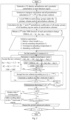
Fig. 1 is a flow chart of the method for optimizing the global tritium breeding ratio of fusion reactor blankets according to the present invention. -
Fig. 2 is a detailed flow chart of the method for optimizing the global tritium breeding ratio of fusion reactor blankets according to an embodiment of the present invention. -
Fig. 3 is a three-dimension CAD model of CFETR typical helium-cooled solid breeder tritium breeding blankets according to the present invention. -
Fig. 4 is a structural diagram of a device for optimizing the global tritium breeding ratio of fusion reactor blankets implementing the present invention. - Reference number and corresponding components:
1. cap; 2. lithium silicate pebble bed; 3. beryllium pebble bed; 4. first wall; 5. manifold; 6. shielding block; 7. splitter plate; 8. cooling plate. - To make the purpose, technical solution and advantages of the present invention more clearly, the present invention will be further described in detail below with reference to embodiments and drawings. The illustrative embodiments of the present invention and their descriptions are only intended to explain the present invention, but not to limit the present invention, which is defined by the claims.
- As shown in
Fig. 1 , the present invention provides a method for optimizing the global tritium breeding ratio of a tritium breeding blanket in a fusion reactor. Based on the current Monte Carlo neutronics transport code, the neutronics perturbation calculation and the simulated annealing algorithm are adopted in the present invention to perform the global tritium breeding ratio optimization of a fusion reactor and to achieve intelligent acceleration of the calculation method. The method for optimizing the global tritium breeding ratio includes the following steps: - S1numbering material variables and geometric variables of all the tritium breeding blankets of the fusion reactor, including density of each function region and each position of geometric boundary; performing three-dimension neutronics transport calculation according to the initial scheme of all tritium breeding blankets of the fusion reactor, and performing the first-order perturbation calculations and the second-order perturbation calculations for each geometric boundary and each density of each function region secondly, so as to obtain local tritium breeding ratios in each energy group of each tritium breeding region in each perturbation state of the initial scheme; and the initial scheme model is shown in
Fig. 3 which is a typical module of CFETR helium-cooled ceramic breeder tritium breeding blankets without optimization;Fig. 3 is the three-dimension CAD model of a typical module of CFETR helium-cooled ceramic breeder tritium breeding blanket, which includes acap 1, a lithium silicatepebble bed 2, a berylliumpebble bed 3, afirst wall 4, amanifold 5, ashielding block 6, asplitter plate 7 and acooling plate 8; the present invention can be used for different solid tritium breeding blanket models, and is not limited to the model shown inFig. 3 ; - S2, Calculating the first-order and the second-order perturbation coefficients in each energy group of each tritium breeding region of each perturbation state based on the local tritium breeding ratios; and constructing a multi-dimensional second-order analytic function based on the first-order perturbation coefficients and the second-order perturbation coefficients, wherein the multi-dimensional second-order analytic function illustrates the relationship of the global tritium breeding ratio and the boundary disturbances and the density disturbances of each function region;
- S3: performing an optimization for the global tritium breeding ratio based on the simulated annealing algorithm within an effective range of the first-order perturbation calculations and the second-order perturbation calculations to find the global optimal blankets scheme according to the multi-dimensional second-order analytic function; the variables in the global optimal blankets scheme include geometric boundary disturbance and each density disturbance of each function region and the global tritium breeding ratio, and
- S4: repeating steps S1to S3, and repeatedly iterating until convergence occurs, so as to rapidly obtain the global optimal blankets scheme with the best tritium breeding performance of tritium breeding blankets of the fusion reactor.
- As shown in
Fig. 2 , the specific implementation step is as follows:
S1: numbering material variables and geometric variables of all the tritium breeding blankets of the fusion reactor, including density of each function region and each position of geometric boundary; performing three-dimension neutronics transport calculation according to the initial scheme of all tritium breeding blankets of the fusion reactor, and performing the first-order and the second-order perturbation calculations under each state of 1% geometric boundary perturbation and 1% density perturbation, so as to obtain the local tritium breeding ratios in each energy group under each perturbation state based on the initial scheme; as shown in Formulas (1) to (5):


- In the present invention, TBR refers to the tritium breeding ratio;
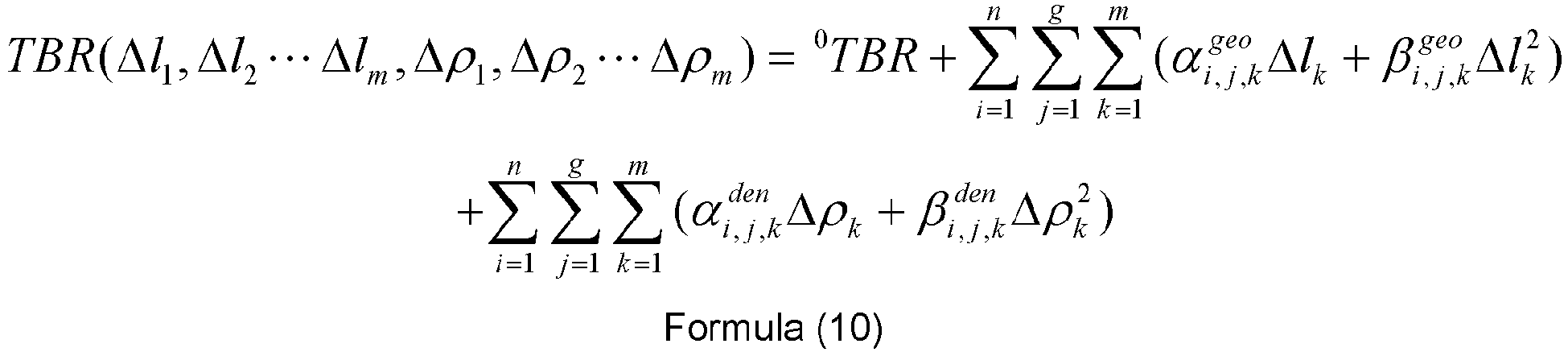
S2: Calculating the first-order and the second-order perturbation coefficients, as shown in Formula (6) - Formula (9), in each energy group of each tritium breeding region of each perturbation state based on the local tritium breeding ratios; and constructing a multi-dimensional second-order analytic function based on the first-order perturbation coefficients and the second-order perturbation coefficients, wherein the multi-dimensional second-order analytic function illustrates the relationship of the global tritium breeding ratio and the boundary disturbances and the density disturbances of each function region;


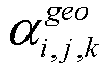


- Based on the first-order and the second-order perturbation coefficients, the multi-dimension second-order analytic function of the global TBR with the boundary disturbance and density disturbance of each function region can be derived as shown in Formula (10):
- S3: finding the global optimal blankets scheme of the fusion reactor with the best tritium breeding performance in an effective range of the perturbation calculations by using the simulated annealing algorithm according to the multi-dimension second-order analytic function; the variables in the global optimal blankets scheme include each geometric boundary disturbance and each density disturbance of each function region and the global tritium breeding ratio, which specifically includes the following sub-steps:
- sub-step A. initializing parameters: the initial annealing temperature T 0 , the final annealing temperature TF, the annealing temperature T = T0, the Markov chain length lMarkov and the annealing coefficient λ ;
- sub-step B: generating random disturbances to the geometric boundary disturbance and the density disturbance of each function region respectively, as shown in Formula (11) and Formula (12):


- where, Δl'k is the geometric boundary disturbance of the kth function region after random disturbance;


- based on Formulas (11) and (12), putting


- where, Δl'k is the geometric boundary disturbance of the kth function region after random disturbance;
- sub-step C: calculating the global tritium breeding ratio increasement ΔTBR of after random disturbance according Formula (13):

- where, ΔTBR is the global tritium breeding ratio increasement, which illustrates the increasement of the global TBR of the fusion reactor after random disturbance in blankets; and
- giving a judgment according to the ΔTBR: if ΔTBR?0, accepting the current disturbance, and setting all the variables (the geometric boundary disturbance, the density disturbance and the global TBR) as the starting point of the next step, sub-step B, of disturbance, as shown in Formula (14) - Formula (16):



- if ΔTBR<0, accepting the current disturbance according to the probability e-ΔTBR/T; otherwise, rejecting the current disturbance and all variables keeping unchanged for the next disturbance step.
- sub-step D. looping sub-steps B and C until the total number of times of rejecting reaches to IMarkov, and then performing cooling operation, as shown in Formula (17):

- sub-step E. looping the sub-step D until T<TF, and then determining the global optimal blankets scheme of the geometric boundary disturbance of each function region within an effective range of the perturbation calculations; wherein the global optimal blankets scheme is determined as follows:
- e1. if there is a function region in the global optimal blankets scheme with a thickness less than or equal to 0, removing the cooling plate adjacent to this function region and returning to the sub-step A;
- e2. if there is a function region in the global optimal blankets scheme with a thickness greater than or equal to the maximum thickness or with a density greater than or equal to the maximum density on the basis of the engineering feasibility, inserting a cooling plate in this function region and returning to the sub-step A; if e1 and e2 are not satisfied, taking the current optimized scheme as the global optimal blankets scheme, and outputting the global optimal blankets scheme.
- S4: repeating the above steps S1-S3, and repeatedly iterating until convergence occurs, so as to rapidly obtain the global optimal blankets scheme with the best tritium breeding performance of tritium breeding blankets of the fusion reactor.
- The present invention provides a method for optimizing the global tritium breeding ratio of fusion reactor blankets. Different from the traditional two-step optimization method of "local to global", the one-step optimization method of the global tritium breeding ratio of a fusion reactor is studied in the present invention. The present invention can greatly improve the optimization effect and efficiency of the global tritium breeding ratio, and effectively avoid the problem of strong neutron interference among the blanket modules, making the global tritium breeding ratio optimization possible with high-efficiency, high-fidelity and high-resolution. By adopting the neutronics perturbation calculations rather than multiple neutronics transport calculations, the present invention overcomes the defect that the neutronics optimization of the tritium breeding blanket by transport calculation is overshadowed by the statistical fluctuation of Monto Carlo code, greatly reduces the calculation amount and improves the efficiency. Aiming at the three-dimension neutronics model on a fusion reactor with helium-cooled solid tritium breeding blankets, the present invention is able to realize the rapid optimization of the global tritium breeding ratio by automatically adjusting the internal geometric parameters, material parameters and configuration of each blanket module. This can also provide reference for the design and optimization of helium-cooled solid tritium blanket of a fusion reactor.
- The present invention can help to quickly find the global optimal blankets scheme of a fusion reactor with the best tritium breeding performance by automatically adjusting the internal layout scheme, material types (including breeding materials and structural materials), material parameters (including density, enrichment and nuclide abundance) and geometric parameters (position and size of function regions) of the tritium breeding blanket, which is of great scientific significance and engineering value.
- As shown in
Fig. 4 , the difference between this embodiment andEmbodiment 1 is that the present invention further provides a device for optimizing the global tritium breeding ratio of a tritium breeding blanket in a fusion reactor. The device allows for the method for optimizing the global tritium breeding ratio of fusion reactor blankets described inEmbodiment 1 and includes: - an multi-group local tritium breeding ratio acquisition unit, which is used for performing the three-dimension neutronics transport calculation based on the initial scheme of tritium breeding blankets of the fusion reactor, and performing the first-order perturbation calculations and the second-order perturbation calculations for each geometric boundary and each density of each function region, so as to obtain the local tritium breeding ratios in each energy group of each tritium breeding region in each perturbation state of the initial scheme; wherein the initial scheme is shown in
Fig. 3 ; - a second-order multi-dimension analytic function unit, which is used for calculating the first-order perturbation coefficients and the second-order perturbation coefficients based on the local tritium breeding ratios in each energy group of each perturbation state; and constructing a multi-dimensional second-order analytic function based on the first-order perturbation coefficient and the second-order perturbation coefficient, wherein the multi-dimensional second-order analytic function illustrates the relationship of the global tritium breeding ratio and the boundary disturbance and the density disturbance of each function region; ;
- a calculation unit for the global optimal blankets scheme of the fusion reactor, which is used for finding the global optimal blankets scheme of the fusion reactor in the effective range of the perturbation calculations by using the simulated annealing algorithm according to the multi-dimensional second-order analytic function of the global tritium breeding ratio;
- an optimization processing unit, which is used for repeating the execution processes of the multi-group local tritium breeding ratio acquisition unit, the second-order multi-dimension analytic function unit and the calculation unit for the global optimal blankets scheme of the fusion reactor, and repeatedly iterating until convergence occurs, so as to obtain the global optimal blankets scheme with the best tritium breeding performance; and
- an output unit, which is used for outputting the global optimal blankets scheme with the best tritium breeding performance.
- In this embodiment, the multi-dimension second-order analytic function constructed by the multi-dimension second-order analytic function unit is as follows:


- In this embodiment, the calculation unit for the global optimal blankets scheme of the fusion reactor includes an initialization subunit, a disturbance generating subunit, a calculation subunit, a first circulation unit and a second circulation unit; wherein
- the initialization subunit is used for initializing parameters: the initial annealing temperature T 0 , the final annealing temperature TF, the annealing temperature T = T0, the Markov chain length lMarkov and the annealing coefficient λ ;
- the disturbance generating subunit is used for generating random disturbances to the geometric boundary disturbance and the density disturbance of each function region respectively;
- the calculation subunit is used for calculating the global TBR increasement ΔTBR of the fusion reactor after random disturbance, and giving a judgment according to the ΔTBR: if ΔTBR≥0, accepting the current disturbance, and setting all the variables as the starting point of the next step of disturbance, wherein the variables includes the geometric boundary disturbance, the density disturbance and the global TBR; if ΔTBR<0, accepting the current disturbance according to the probability e -ΔTBR/T; otherwise, rejecting the current disturbance and all variables keeping unchanged for the next step;
- the first circulation unit is used for looping the processes executed by the disturbance generating subunit and the calculation subunit until the total number of times of the rejecting reaches to IMarkov, and then performing cooling operation;
- the second circulation unit is used for looping the processes executed by the first circulation until T<TF, and then determining the global optimal blankets scheme of the geometric boundary disturbance of each function region within an effective range of the perturbation calculations; wherein the global optimal blankets scheme is determined as follows:
e1. if there is a function region in the global optimal blankets scheme with a thickness less than or equal to 0, removing the cooling plate adjacent to this function region and returning to a process of initializing parameters by the initialization subunit; e2. if there is a function region in the global optimal blankets scheme with a thickness greater than or equal to the maximum thickness or with a density greater than or equal to the maximum density on the basis of the engineering feasibility, inserting a cooling plate in this function region and returning to the process of initializing parameters by the initialization subunit; if e1 and e2 are not satisfied, taking the optimized scheme as the global optimal blankets scheme, and outputting the global optimal blankets scheme. - In this embodiment, the formula used in the calculation subunit to calculate the global tritium breeding ratio increasement ΔTBR after random disturbances is:

- In this embodiment, the variables in the global optimal blankets scheme obtained by the calculation subunit include each geometric boundary disturbance and each density disturbance of each function region and the global tritium breeding ratio.
- In this embodiment, 1% geometric disturbance and 1% density disturbance are considered in the first-order and the second order perturbation calculations by the multi-group local tritium breeding ratio acquisition unit.
- Different from the traditional two-step optimization method of "local to global" in the prior art, the one-step optimization method for the global tritium breeding ratio of tritium breeding blankets of the fusion reactor is studied in the present invention by utilizing limited computing resources, which is of great scientific significance and engineering value to find the better global optimization scheme rapidly on the premise of satisfying the thermal design limits and engineering feasibilities.
- The present invention may be embodied in the form of an entirely hardware embodiment, an entirely software embodiment, or an embodiment combining software and hardware.
- The present invention is described with reference to flowcharts and/or block diagrams of a method, a device (system), and a computer program product according to embodiments or implementations of the present invention. It should be understood that each flow and/or block in a flowchart and/or block diagram, and combinations of flows and/or blocks in the flowchart and/or block diagram may be implemented by computer program instructions. These computer program instructions may be provided to a processor of a general-purpose computer, a special purpose computer, an embedded processor or other programmable data processing devices to produce a machine, so that the instructions executed by the processor of the computer or other programmable data processing devices produce means for implementing the functions specified in one or a plurality of flows in a flowchart and/or one or a plurality of blocks in a block diagram.
- These computer program instructions may also be stored in a computer-readable memory that can direct a computer or other programmable data processing devices to operate in a specific manner, so that the instructions stored in the computer-readable memory can produce an article of manufacture, including instruction means for implementing the functions specified in one or a plurality of flows in a flowchart and/or one or a plurality of blocks in a block diagram.
- These computer program instructions may also be loaded onto a computer or other programmable data processing devices, so that a series of operational steps are executed on the computer or other programmable devices to produce a computer-implemented process; therefore, the instructions executed on the computer or other programmable devices provide steps for implementing the functions specified in one or a plurality of flows in a flowchart and/or one or a plurality of blocks in a block diagram.
Claims (6)
- A computer-implemented method for optimizing global tritium breeding ratio of a tritium breeding blanket in a fusion reactor, comprising following steps:S1. performing three-dimension neutronics transport calculation based on an initial scheme of the tritium breeding blanket of the fusion reactor firstly, and performing first-order perturbation calculations and second-order perturbation calculations for each geometric boundary and each density of each function region secondly, so as to obtain local tritium breeding ratios in each energy group of each tritium breeding region in each perturbation state of the initial scheme;S2. calculating first-order perturbation coefficients and second-order perturbation coefficients in each energy group of each tritium breeding region of each perturbation state based on the local tritium breeding ratios in each energy group of each tritium breeding region in each perturbation state of the initial scheme; and constructing a multi-dimensional second-order analytic function based on the first-order perturbation coefficients and the second-order perturbation coefficients, wherein the multi-dimensional second-order analytic function illustrates the relationship of the global tritium breeding ratio and boundary disturbances and density disturbances of each function region;S3. performing an optimization for the global tritium breeding ratio based on the simulated annealing algorithm within an effective range of the perturbation calculations to find a global optimal blankets scheme according to the multi-dimensional second-order analytic function;S4. repeating steps S1 to S3 until convergence occurs, so as to obtain the global optimal blankets scheme of the tritium breeding blankets of the fusion reactor with the best tritium breeding performance; andimplementing the global optimal blankets scheme in the tritium breeding blankets of the fusion reactor.
- The method of claim 1, wherein the multi-dimensional second-order analytic function of the global tritium breeding ratio is as follows:


- The method of claim 1, step s3 comprises following sub-steps:sub-step A. initializing parameters: an initial annealing temperature T0, an final annealing temperature TF, an annealing temperature T = T0, an Markov chain length lMarkov and an annealing coefficient λ ;sub-step B. generating random disturbances to the geometric boundary disturbance and the density disturbance of each function region respectively;sub-step C. calculating a global tritium breeding ratio increasement ΔTBR of the fusion reactor after random disturbances, and giving a judgment according to the ΔTBR: if ΔTBR≥0, accepting the current disturbance, and setting all variables as the starting point of the next step of disturbance, wherein the variables comprises the geometric boundary disturbance, the density disturbance and the global tritium breeding ratio; if ΔTBR<0, accepting the current disturbance according to the probability e -ΔTBR/T; otherwise, rejecting the current disturbance and all variables keeping unchanged for the next disturbance step;sub-step D. looping sub-steps B and C until the total number of times of rejecting reaches to IMarkov, and then performing cooling operation; andsub-step E. looping the sub-step D until T<TF, and then determining the global optimal blankets scheme of the geometric boundary disturbance of each function region within an effective range of the perturbation calculations; wherein the global optimal blankets scheme is determined as follows:e1. if there is a function region in the global optimal blankets scheme with a thickness less than or equal to 0, removing a cooling plate adjacent to the function region with a thickness less than or equal to 0 and returning to the sub-step A;e2. if there is a function region in the global optimal blankets scheme with a thickness greater than or equal to the maximum thickness or with a density greater than or equal to the maximum density on the basis of the engineering feasibility, inserting a cooling plate in this function region and returning to the sub-step A; if e1 and e2 are not satisfied, taking current optimized scheme as the global optimal blankets scheme, and outputting the global optimal blankets scheme.
- The method of claim 3, wherein the formula for calculating the global tritium breeding ratio increasement ΔTBR in the sub-step C is:


- The method of claim 1, wherein variables in the global optimal blankets scheme comprise each optimal geometric boundary disturbance and each optimal density disturbance of each function region and the global tritium breeding ratio.
- The method of claim 1, wherein 1% geometric disturbance and 1% density disturbance are considered in the first-order perturbation calculation and the second order perturbation calculation.
Applications Claiming Priority (1)
| Application Number | Priority Date | Filing Date | Title |
|---|---|---|---|
| CN202111265136.1A CN113919176B (en) | 2021-10-28 | 2021-10-28 | Method, device, equipment and medium for optimizing fusion reactor cladding full-reactor tritium breeding ratio |
Publications (3)
| Publication Number | Publication Date |
|---|---|
| EP4174874A1 EP4174874A1 (en) | 2023-05-03 |
| EP4174874B1 true EP4174874B1 (en) | 2024-07-10 |
| EP4174874C0 EP4174874C0 (en) | 2024-07-10 |
Family
ID=79243664
Family Applications (1)
| Application Number | Title | Priority Date | Filing Date |
|---|---|---|---|
| EP22173438.7A Active EP4174874B1 (en) | 2021-10-28 | 2022-05-16 | Computer-implemented method for optimizing global tritium breeding ratio of a tritium breeding blanket in a fusion reactor |
Country Status (2)
| Country | Link |
|---|---|
| EP (1) | EP4174874B1 (en) |
| CN (1) | CN113919176B (en) |
Families Citing this family (2)
| Publication number | Priority date | Publication date | Assignee | Title |
|---|---|---|---|---|
| CN118427905B (en) * | 2024-06-26 | 2024-09-27 | 中国科学院合肥物质科学研究院 | A fast calculation method for heat-tritium coupling transport in the first wall of fusion reactor blanket |
| CN119471778B (en) * | 2024-10-23 | 2025-11-04 | 中国船舶集团有限公司第七一九研究所 | A neutron spectrum decomposition method based on perturbation theory |
Family Cites Families (5)
| Publication number | Priority date | Publication date | Assignee | Title |
|---|---|---|---|---|
| JP6704811B2 (en) * | 2016-07-14 | 2020-06-03 | 株式会社東芝 | Fusion reactor blanket subunit, manufacturing method thereof, and fusion reactor blanket |
| CN108875207B (en) * | 2018-06-15 | 2022-11-11 | 岭东核电有限公司 | Nuclear reactor optimization design method and system |
| CN111950177B (en) * | 2020-07-22 | 2024-02-09 | 核工业西南物理研究院 | Multi-physical field coupling neutron automatic optimization method for solid tritium production cladding |
| CN112784399A (en) * | 2020-12-21 | 2021-05-11 | 中国核动力研究设计院 | Method and equipment for solving reactor physical response sensitivity |
| CN113312791B (en) * | 2021-06-17 | 2022-02-22 | 中国核动力研究设计院 | Reactor neutron noise analysis method and system based on SP3 equation |
-
2021
- 2021-10-28 CN CN202111265136.1A patent/CN113919176B/en active Active
-
2022
- 2022-05-16 EP EP22173438.7A patent/EP4174874B1/en active Active
Also Published As
| Publication number | Publication date |
|---|---|
| CN113919176A (en) | 2022-01-11 |
| CN113919176B (en) | 2023-04-11 |
| EP4174874A1 (en) | 2023-05-03 |
| EP4174874C0 (en) | 2024-07-10 |
Similar Documents
| Publication | Publication Date | Title |
|---|---|---|
| EP4174874A1 (en) | Method and device for optimizing global tritium breeding ratio of fusion reactor blankets, computer device, and computer-readable storage medium | |
| Wang et al. | Generation method and verification of pebble type VHTR multigroup cross sections based on OpenMC | |
| Newton et al. | Developments within WIMS10 | |
| Lindley et al. | Developments within the WIMS reactor physics code for whole core calculations | |
| Wu et al. | NECP-panda: A neutronics and thermal-hydraulic analysis code for pebble-bed high temperature gas-cooled reactor | |
| Mabruri et al. | Validation of OpenMC Code for Low-cycle and Low-particle Simulations in the Neutronic Calculation | |
| Vaglio-Gaudard et al. | Analysis of the AMMON experimental program in the EOLE facility supporting the qualification of the JHR neutron and photon tools | |
| Guo et al. | Optimization of physical design for small long life Lead Cooled fast Reactor based on SARAX | |
| DeHart et al. | Preliminary results for the oecd/nea time dependent benchmark using rattlesnake, rattlesnake-iqs and tdkeno | |
| CN113836683B (en) | An Intelligent Acceleration Method for Improving the Breeding Ratio of Tritium-clad Tritium Produced by Fusion Reactor | |
| Zhang et al. | Preliminary Study on Three-Dimensional Characteristics of Modular High Temperature Gas-Cooled Reactor | |
| Wang et al. | Fission yield uncertainty propagation in multi-pass refueling pebble-bed HTGR | |
| Goel et al. | Optimization of Tritium Breeding Ratio in a DT and DD Submersion Tokamak Fusion Reactor | |
| Shi et al. | Neutronics conceptual research on a hybrid blanket of china fusion engineering test reactor | |
| Mazumdar et al. | Krylov based burnup model for studying core characteristics of thermal reactors with burnup | |
| Bonifetto et al. | Advances in the development of the code FRENETIC for the coupled dynamics of lead-cooled reactors | |
| Egorov et al. | RTM-2 software package for life cycle modeling of fast reactors in closed NFC | |
| Shen et al. | Multicell correction method for treatment of heterogeneities in full-core calculation of CANDU-Type reactors | |
| Mager et al. | Preliminary Validation of Intra-pin Reaction Rate Predictions from the Deterministic Transport Codes GeN-Foam and MPACT | |
| Rimpault et al. | The APOLLO3® scientific tool for SFR neutronic characterization: current achievements and perspectives | |
| Li et al. | Development and validation of a pin-by-pin neutronics/thermal-hydraulics transient coupling code for PWRs based on the SP3 method | |
| Qu et al. | MCINO: A multi-physics coupling and intelligent neutronic optimization code for tritium breeding blanket of fusion reactors | |
| Pelloni et al. | Validation of Light Water Reactor Calculation Methods and JEF-1—Based Data Libraries by TRX and BAPL Critical Experiments | |
| Liqin et al. | Development and Applications of Nuclear Design and Safety Assessment Program SuperMC for Fast Reactoron | |
| Li et al. | Application of Combined Fission Matrix to Plate-type Research Reactor |
Legal Events
| Date | Code | Title | Description |
|---|---|---|---|
| PUAI | Public reference made under article 153(3) epc to a published international application that has entered the european phase |
Free format text: ORIGINAL CODE: 0009012 |
|
| STAA | Information on the status of an ep patent application or granted ep patent |
Free format text: STATUS: REQUEST FOR EXAMINATION WAS MADE |
|
| 17P | Request for examination filed |
Effective date: 20230303 |
|
| AK | Designated contracting states |
Kind code of ref document: A1 Designated state(s): AL AT BE BG CH CY CZ DE DK EE ES FI FR GB GR HR HU IE IS IT LI LT LU LV MC MK MT NL NO PL PT RO RS SE SI SK SM TR |
|
| STAA | Information on the status of an ep patent application or granted ep patent |
Free format text: STATUS: EXAMINATION IS IN PROGRESS |
|
| 17Q | First examination report despatched |
Effective date: 20230509 |
|
| GRAP | Despatch of communication of intention to grant a patent |
Free format text: ORIGINAL CODE: EPIDOSNIGR1 |
|
| STAA | Information on the status of an ep patent application or granted ep patent |
Free format text: STATUS: GRANT OF PATENT IS INTENDED |
|
| RIC1 | Information provided on ipc code assigned before grant |
Ipc: G06F 111/06 20200101ALN20240219BHEP Ipc: G06F 30/20 20200101ALI20240219BHEP Ipc: G06F 17/10 20060101ALI20240219BHEP Ipc: G21D 3/00 20060101ALI20240219BHEP Ipc: G21B 1/13 20060101AFI20240219BHEP |
|
| INTG | Intention to grant announced |
Effective date: 20240319 |
|
| GRAS | Grant fee paid |
Free format text: ORIGINAL CODE: EPIDOSNIGR3 |
|
| GRAA | (expected) grant |
Free format text: ORIGINAL CODE: 0009210 |
|
| STAA | Information on the status of an ep patent application or granted ep patent |
Free format text: STATUS: THE PATENT HAS BEEN GRANTED |
|
| AK | Designated contracting states |
Kind code of ref document: B1 Designated state(s): AL AT BE BG CH CY CZ DE DK EE ES FI FR GB GR HR HU IE IS IT LI LT LU LV MC MK MT NL NO PL PT RO RS SE SI SK SM TR |
|
| REG | Reference to a national code |
Ref country code: CH Ref legal event code: EP |
|
| REG | Reference to a national code |
Ref country code: DE Ref legal event code: R096 Ref document number: 602022004418 Country of ref document: DE |
|
| U01 | Request for unitary effect filed |
Effective date: 20240731 |
|
| U07 | Unitary effect registered |
Designated state(s): AT BE BG DE DK EE FI FR IT LT LU LV MT NL PT SE SI Effective date: 20240816 |
|
| PG25 | Lapsed in a contracting state [announced via postgrant information from national office to epo] |
Ref country code: NO Free format text: LAPSE BECAUSE OF FAILURE TO SUBMIT A TRANSLATION OF THE DESCRIPTION OR TO PAY THE FEE WITHIN THE PRESCRIBED TIME-LIMIT Effective date: 20241010 |
|
| PG25 | Lapsed in a contracting state [announced via postgrant information from national office to epo] |
Ref country code: GR Free format text: LAPSE BECAUSE OF FAILURE TO SUBMIT A TRANSLATION OF THE DESCRIPTION OR TO PAY THE FEE WITHIN THE PRESCRIBED TIME-LIMIT Effective date: 20241011 Ref country code: PL Free format text: LAPSE BECAUSE OF FAILURE TO SUBMIT A TRANSLATION OF THE DESCRIPTION OR TO PAY THE FEE WITHIN THE PRESCRIBED TIME-LIMIT Effective date: 20240710 |
|
| PG25 | Lapsed in a contracting state [announced via postgrant information from national office to epo] |
Ref country code: IS Free format text: LAPSE BECAUSE OF FAILURE TO SUBMIT A TRANSLATION OF THE DESCRIPTION OR TO PAY THE FEE WITHIN THE PRESCRIBED TIME-LIMIT Effective date: 20241110 |
|
| PG25 | Lapsed in a contracting state [announced via postgrant information from national office to epo] |
Ref country code: HR Free format text: LAPSE BECAUSE OF FAILURE TO SUBMIT A TRANSLATION OF THE DESCRIPTION OR TO PAY THE FEE WITHIN THE PRESCRIBED TIME-LIMIT Effective date: 20240710 |
|
| PG25 | Lapsed in a contracting state [announced via postgrant information from national office to epo] |
Ref country code: ES Free format text: LAPSE BECAUSE OF FAILURE TO SUBMIT A TRANSLATION OF THE DESCRIPTION OR TO PAY THE FEE WITHIN THE PRESCRIBED TIME-LIMIT Effective date: 20240710 Ref country code: RS Free format text: LAPSE BECAUSE OF FAILURE TO SUBMIT A TRANSLATION OF THE DESCRIPTION OR TO PAY THE FEE WITHIN THE PRESCRIBED TIME-LIMIT Effective date: 20241010 |
|
| PG25 | Lapsed in a contracting state [announced via postgrant information from national office to epo] |
Ref country code: RS Free format text: LAPSE BECAUSE OF FAILURE TO SUBMIT A TRANSLATION OF THE DESCRIPTION OR TO PAY THE FEE WITHIN THE PRESCRIBED TIME-LIMIT Effective date: 20241010 Ref country code: PL Free format text: LAPSE BECAUSE OF FAILURE TO SUBMIT A TRANSLATION OF THE DESCRIPTION OR TO PAY THE FEE WITHIN THE PRESCRIBED TIME-LIMIT Effective date: 20240710 Ref country code: NO Free format text: LAPSE BECAUSE OF FAILURE TO SUBMIT A TRANSLATION OF THE DESCRIPTION OR TO PAY THE FEE WITHIN THE PRESCRIBED TIME-LIMIT Effective date: 20241010 Ref country code: IS Free format text: LAPSE BECAUSE OF FAILURE TO SUBMIT A TRANSLATION OF THE DESCRIPTION OR TO PAY THE FEE WITHIN THE PRESCRIBED TIME-LIMIT Effective date: 20241110 Ref country code: HR Free format text: LAPSE BECAUSE OF FAILURE TO SUBMIT A TRANSLATION OF THE DESCRIPTION OR TO PAY THE FEE WITHIN THE PRESCRIBED TIME-LIMIT Effective date: 20240710 Ref country code: GR Free format text: LAPSE BECAUSE OF FAILURE TO SUBMIT A TRANSLATION OF THE DESCRIPTION OR TO PAY THE FEE WITHIN THE PRESCRIBED TIME-LIMIT Effective date: 20241011 Ref country code: ES Free format text: LAPSE BECAUSE OF FAILURE TO SUBMIT A TRANSLATION OF THE DESCRIPTION OR TO PAY THE FEE WITHIN THE PRESCRIBED TIME-LIMIT Effective date: 20240710 |
|
| PG25 | Lapsed in a contracting state [announced via postgrant information from national office to epo] |
Ref country code: SM Free format text: LAPSE BECAUSE OF FAILURE TO SUBMIT A TRANSLATION OF THE DESCRIPTION OR TO PAY THE FEE WITHIN THE PRESCRIBED TIME-LIMIT Effective date: 20240710 |
|
| PG25 | Lapsed in a contracting state [announced via postgrant information from national office to epo] |
Ref country code: CZ Free format text: LAPSE BECAUSE OF FAILURE TO SUBMIT A TRANSLATION OF THE DESCRIPTION OR TO PAY THE FEE WITHIN THE PRESCRIBED TIME-LIMIT Effective date: 20240710 |
|
| PG25 | Lapsed in a contracting state [announced via postgrant information from national office to epo] |
Ref country code: SK Free format text: LAPSE BECAUSE OF FAILURE TO SUBMIT A TRANSLATION OF THE DESCRIPTION OR TO PAY THE FEE WITHIN THE PRESCRIBED TIME-LIMIT Effective date: 20240710 |
|
| PLBE | No opposition filed within time limit |
Free format text: ORIGINAL CODE: 0009261 |
|
| STAA | Information on the status of an ep patent application or granted ep patent |
Free format text: STATUS: NO OPPOSITION FILED WITHIN TIME LIMIT |
|
| U20 | Renewal fee for the european patent with unitary effect paid |
Year of fee payment: 4 Effective date: 20250430 |
|
| 26N | No opposition filed |
Effective date: 20250411 |
|
| REG | Reference to a national code |
Ref country code: CH Ref legal event code: H13 Free format text: ST27 STATUS EVENT CODE: U-0-0-H10-H13 (AS PROVIDED BY THE NATIONAL OFFICE) Effective date: 20251223 |
|
| PG25 | Lapsed in a contracting state [announced via postgrant information from national office to epo] |
Ref country code: CH Free format text: LAPSE BECAUSE OF NON-PAYMENT OF DUE FEES Effective date: 20250531 |
|
| PG25 | Lapsed in a contracting state [announced via postgrant information from national office to epo] |
Ref country code: MC Free format text: LAPSE BECAUSE OF FAILURE TO SUBMIT A TRANSLATION OF THE DESCRIPTION OR TO PAY THE FEE WITHIN THE PRESCRIBED TIME-LIMIT Effective date: 20240710 |
|
| PG25 | Lapsed in a contracting state [announced via postgrant information from national office to epo] |
Ref country code: IE Free format text: LAPSE BECAUSE OF NON-PAYMENT OF DUE FEES Effective date: 20250516 |
|
| PG25 | Lapsed in a contracting state [announced via postgrant information from national office to epo] |
Ref country code: RO Free format text: LAPSE BECAUSE OF FAILURE TO SUBMIT A TRANSLATION OF THE DESCRIPTION OR TO PAY THE FEE WITHIN THE PRESCRIBED TIME-LIMIT Effective date: 20240710 |
|
| U20 | Renewal fee for the european patent with unitary effect paid |
Year of fee payment: 5 Effective date: 20260313 |