EP4174743A1 - Work assignment status monitoring system, work assignment status monitoring method, and work assignment status monitoring program - Google Patents
Work assignment status monitoring system, work assignment status monitoring method, and work assignment status monitoring program Download PDFInfo
- Publication number
- EP4174743A1 EP4174743A1 EP22203785.5A EP22203785A EP4174743A1 EP 4174743 A1 EP4174743 A1 EP 4174743A1 EP 22203785 A EP22203785 A EP 22203785A EP 4174743 A1 EP4174743 A1 EP 4174743A1
- Authority
- EP
- European Patent Office
- Prior art keywords
- work
- monitoring target
- work assignment
- information
- normal state
- Prior art date
- Legal status (The legal status is an assumption and is not a legal conclusion. Google has not performed a legal analysis and makes no representation as to the accuracy of the status listed.)
- Pending
Links
Images








Classifications
-
- G—PHYSICS
- G05—CONTROLLING; REGULATING
- G05B—CONTROL OR REGULATING SYSTEMS IN GENERAL; FUNCTIONAL ELEMENTS OF SUCH SYSTEMS; MONITORING OR TESTING ARRANGEMENTS FOR SUCH SYSTEMS OR ELEMENTS
- G05B19/00—Program-control systems
- G05B19/02—Program-control systems electric
- G05B19/418—Total factory control, i.e. centrally controlling a plurality of machines, e.g. direct or distributed numerical control [DNC], flexible manufacturing systems [FMS], integrated manufacturing systems [IMS] or computer integrated manufacturing [CIM]
- G05B19/41865—Total factory control, i.e. centrally controlling a plurality of machines, e.g. direct or distributed numerical control [DNC], flexible manufacturing systems [FMS], integrated manufacturing systems [IMS] or computer integrated manufacturing [CIM] characterised by job scheduling, process planning, material flow
-
- G—PHYSICS
- G05—CONTROLLING; REGULATING
- G05B—CONTROL OR REGULATING SYSTEMS IN GENERAL; FUNCTIONAL ELEMENTS OF SUCH SYSTEMS; MONITORING OR TESTING ARRANGEMENTS FOR SUCH SYSTEMS OR ELEMENTS
- G05B19/00—Program-control systems
- G05B19/02—Program-control systems electric
- G05B19/418—Total factory control, i.e. centrally controlling a plurality of machines, e.g. direct or distributed numerical control [DNC], flexible manufacturing systems [FMS], integrated manufacturing systems [IMS] or computer integrated manufacturing [CIM]
- G05B19/4189—Total factory control, i.e. centrally controlling a plurality of machines, e.g. direct or distributed numerical control [DNC], flexible manufacturing systems [FMS], integrated manufacturing systems [IMS] or computer integrated manufacturing [CIM] characterised by the transport system
- G05B19/41895—Total factory control, i.e. centrally controlling a plurality of machines, e.g. direct or distributed numerical control [DNC], flexible manufacturing systems [FMS], integrated manufacturing systems [IMS] or computer integrated manufacturing [CIM] characterised by the transport system using automatic guided vehicles [AGV]
-
- G—PHYSICS
- G06—COMPUTING OR CALCULATING; COUNTING
- G06Q—INFORMATION AND COMMUNICATION TECHNOLOGY [ICT] SPECIALLY ADAPTED FOR ADMINISTRATIVE, COMMERCIAL, FINANCIAL, MANAGERIAL OR SUPERVISORY PURPOSES; SYSTEMS OR METHODS SPECIALLY ADAPTED FOR ADMINISTRATIVE, COMMERCIAL, FINANCIAL, MANAGERIAL OR SUPERVISORY PURPOSES, NOT OTHERWISE PROVIDED FOR
- G06Q10/00—Administration; Management
- G06Q10/06—Resources, workflows, human or project management; Enterprise or organisation planning; Enterprise or organisation modelling
- G06Q10/063—Operations research, analysis or management
- G06Q10/0631—Resource planning, allocation, distributing or scheduling for enterprises or organisations
- G06Q10/06311—Scheduling, planning or task assignment for a person or group
- G06Q10/063114—Status monitoring or status determination for a person or group
-
- G—PHYSICS
- G05—CONTROLLING; REGULATING
- G05B—CONTROL OR REGULATING SYSTEMS IN GENERAL; FUNCTIONAL ELEMENTS OF SUCH SYSTEMS; MONITORING OR TESTING ARRANGEMENTS FOR SUCH SYSTEMS OR ELEMENTS
- G05B19/00—Program-control systems
- G05B19/02—Program-control systems electric
- G05B19/418—Total factory control, i.e. centrally controlling a plurality of machines, e.g. direct or distributed numerical control [DNC], flexible manufacturing systems [FMS], integrated manufacturing systems [IMS] or computer integrated manufacturing [CIM]
- G05B19/4184—Total factory control, i.e. centrally controlling a plurality of machines, e.g. direct or distributed numerical control [DNC], flexible manufacturing systems [FMS], integrated manufacturing systems [IMS] or computer integrated manufacturing [CIM] characterised by fault tolerance, reliability of production system
-
- G—PHYSICS
- G06—COMPUTING OR CALCULATING; COUNTING
- G06Q—INFORMATION AND COMMUNICATION TECHNOLOGY [ICT] SPECIALLY ADAPTED FOR ADMINISTRATIVE, COMMERCIAL, FINANCIAL, MANAGERIAL OR SUPERVISORY PURPOSES; SYSTEMS OR METHODS SPECIALLY ADAPTED FOR ADMINISTRATIVE, COMMERCIAL, FINANCIAL, MANAGERIAL OR SUPERVISORY PURPOSES, NOT OTHERWISE PROVIDED FOR
- G06Q10/00—Administration; Management
- G06Q10/06—Resources, workflows, human or project management; Enterprise or organisation planning; Enterprise or organisation modelling
- G06Q10/063—Operations research, analysis or management
- G06Q10/0631—Resource planning, allocation, distributing or scheduling for enterprises or organisations
- G06Q10/06311—Scheduling, planning or task assignment for a person or group
- G06Q10/063116—Schedule adjustment for a person or group
-
- G—PHYSICS
- G06—COMPUTING OR CALCULATING; COUNTING
- G06Q—INFORMATION AND COMMUNICATION TECHNOLOGY [ICT] SPECIALLY ADAPTED FOR ADMINISTRATIVE, COMMERCIAL, FINANCIAL, MANAGERIAL OR SUPERVISORY PURPOSES; SYSTEMS OR METHODS SPECIALLY ADAPTED FOR ADMINISTRATIVE, COMMERCIAL, FINANCIAL, MANAGERIAL OR SUPERVISORY PURPOSES, NOT OTHERWISE PROVIDED FOR
- G06Q10/00—Administration; Management
- G06Q10/08—Logistics, e.g. warehousing, loading or distribution; Inventory or stock management
-
- G—PHYSICS
- G05—CONTROLLING; REGULATING
- G05B—CONTROL OR REGULATING SYSTEMS IN GENERAL; FUNCTIONAL ELEMENTS OF SUCH SYSTEMS; MONITORING OR TESTING ARRANGEMENTS FOR SUCH SYSTEMS OR ELEMENTS
- G05B2219/00—Program-control systems
- G05B2219/30—Nc systems
- G05B2219/31—From computer integrated manufacturing till monitoring
- G05B2219/31006—Monitoring of vehicle
-
- G—PHYSICS
- G05—CONTROLLING; REGULATING
- G05B—CONTROL OR REGULATING SYSTEMS IN GENERAL; FUNCTIONAL ELEMENTS OF SUCH SYSTEMS; MONITORING OR TESTING ARRANGEMENTS FOR SUCH SYSTEMS OR ELEMENTS
- G05B2219/00—Program-control systems
- G05B2219/30—Nc systems
- G05B2219/33—Director till display
- G05B2219/33103—Object manager handles objects having own procedures, messages oop
Definitions
- the present disclosure relates to a work assignment status monitoring system, a work assignment status monitoring method, and a work assignment status monitoring program.
- a production management apparatus disclosed in Japanese Unexamined Patent Application Publication No. 2007-323199 includes a worker detection apparatus, a worker identification unit, a movement pattern identification unit, and an abnormal movement detection unit.
- the worker identification unit identifies, from detection information received from the worker detection apparatus, a start time for detecting a presence of a worker and an end time thereof in a process which corresponds to the detection information.
- a movement pattern identification unit identifies a stay time indicating a period of time for which the worker has engaged in the process and generates a movement pattern including the period of stayed time.
- the abnormal movement detection unit uses, as one of conditions for determining whether or not an abnormal movement pattern has occurred, a result of a comparison between a period of stayed time included in information about the movement pattern and a period of stayed time included in information about a standard movement pattern.
- the present disclosure is not limited to the method disclosed in Japanese Unexamined Patent Application Publication No. 2007-323199 , and there is a need to continuously and efficiently monitor a work assignment status(es) of one or more designated work assignments performed by a target to be monitored such as a worker or the like.
- the target to be monitored will be hereinafter referred to as a monitoring target.
- An object of the present disclosure is to provide a work assignment status monitoring system, a work assignment status monitoring method, and a work assignment status monitoring program capable of inferring a work assignment status(es) of one or more designated work assignments being performed by a monitoring target such as a worker or the like with a small amount of information and efficiently monitoring the work assignment status.
- a work assignment status monitoring system includes: an acquisition unit configured to acquire information about one or more work areas; a monitoring target detection unit configured to detect either a worker or a predetermined mobile body as a monitoring target and define a first monitoring target area where the monitoring target is positioned; a first determination unit configured to determine whether or not the monitoring target has performed a work in the one or more work areas based on a presence or absence of interference with the one or more work areas by the first monitoring target area; an information generation unit configured to generate information about the work in the one or more work areas performed by the monitoring target based on a result of the determination made by the first determination unit; and an output unit configured to output information about the work assignment performed by the monitoring target generated by the information generation unit.
- This work assignment status monitoring system determines whether the monitoring target has performed the work assignment(s) in one or more work areas based on the presence or absence of interference with the one or more work areas by the first monitoring target area where the monitoring target such as the worker is positioned. It is thus possible to infer and monitor the work assignment status of the monitoring target with a smaller amount of information than that in the case where, for example, the movement of the monitoring target is analyzed in detail. That is, this work assignment status monitoring system can efficiently monitor the work assignment status(es) of one or more designated work assignments performed by the monitoring target such as the worker.
- the first determination unit may be configured to determine that the monitoring target has performed the work in the work area when a period of time of the interference with the work area by the first monitoring target area in each of the work areas is more than or equal to a reference time set in the work area.
- the information about the work assignment performed by the monitoring target in the one or more work areas may include information about a start time, a work time, and an end time of the work assignment performed by the monitoring target in each of the work areas.
- the one or more work areas may include an area where another mobile body other than the predetermined mobile body, which is the monitoring target, is positioned.
- the monitoring target detection unit may be configured to further detect a predetermined part of the monitoring target and define a second monitoring target area where the predetermined part is positioned.
- the monitoring target detection unit may be configured to detect the monitoring target using either a distance measurement sensor or a camera.
- the work assignment status monitoring system may further include: a recording unit configured to record, as a plurality of work assignment histories, a plurality of pieces of information generated by the information generation unit and related to the work assignment performed by the monitoring target; and a normal state decision unit configured to decide a normal state for the work assignment performed by the monitoring target from the plurality of work assignment histories recorded in the recording unit.
- the output unit may be further configured to output new information about the work assignment performed by the monitoring target generated by the information generation unit, together with a result of a comparison between the new information about the work assignment performed by the monitoring target generated by the information generation unit and information about the work assignment in the normal state.
- the work assignment status monitoring system can set the normal state of the work assignment order, the work time, and the like for each of the monitoring targets.
- the normal state for the worker who is the monitoring target is the normal state for the worker who is the monitoring target, for example, even when the work time of a certain work assignment performed by the worker who is the monitoring target is longer than those of other workers due to differences in experience and skill.
- the output unit may be configured to output the new information about the work assignment performed by the monitoring target in a highlighted manner in accordance with a degree of deviation from the information about the work assignment in the normal state.
- the work assignment status monitoring system may further include a second determination unit configured to determine whether or not the new information about the work assignment performed by the monitoring target is included in a range of the normal state based on the degree of deviation of the new information about the work assignment performed by the monitoring target from the information about the work assignment performed in the normal state.
- the output unit may be configured to further output a result of the determination made by the second determination unit.
- the work assignment status monitoring system may further include: a recording unit configured to record, as a plurality of work assignment histories, a plurality of pieces of information generated by the information generation unit and related to the work assignment performed by the monitoring target; a normal state decision unit configured to decide a normal state for the work assignment performed by the monitoring target from the plurality of work assignment histories recorded in the recording unit; and a prediction unit configured to predict information about a work exceeding the range of the normal state among the plurality of pieces of the information about the work assignments performed by the monitoring target generated next by the information generation unit based on the degree of deviation of the plurality of pieces of information about the work assignments performed by the monitoring target recorded as the plurality of work assignment histories in the recording unit from information about the work assignment in the normal state.
- the output unit may be further configured to output a result of the prediction made by the prediction unit. In this manner, since the work assignment status monitoring system can predict the work that may exceed the range of the normal state for each monitoring target, for example, a warning can be given in advance to the worker who is the monitoring target.
- a work assignment status monitoring method includes: an acquisition step of acquiring information about one or more work areas; a monitoring target detection step of detecting either a worker or a predetermined mobile body as a monitoring target and define a first monitoring target area where the monitoring target is positioned; a determination step of determining whether or not the monitoring target has performed a work in the one or more work areas based on a presence or absence of interference with the one or more work areas by the first monitoring target area; an information generation step of generating information about the work in the one or more work areas performed by the monitoring target based on a result of the determination made in the determination step; and a first output step of outputting information about the work assignment performed by the monitoring target generated in the information generation step.
- This work assignment status monitoring system determines whether the monitoring target has performed the work assignment(s) in one or more work areas based on the presence or absence of interference with the one or more work areas by the first monitoring target area where the monitoring target such as the worker is positioned. It is thus possible to infer and monitor the work assignment status of the monitoring target with a smaller amount of information than that in the case where, for example, the movement of the monitoring target is analyzed in detail.
- This work assignment status monitoring method determines whether the monitoring target has performed the work assignment(s) in one or more work areas based on the presence or absence of interference with the one or more work areas by the first monitoring target area where the monitoring target such as the worker is positioned.
- this work assignment status monitoring method can efficiently monitor the work assignment status(es) of one or more designated work assignments performed by the monitoring target such as the worker.
- the work assignment status monitoring method may further include: a recording step of recording, as a plurality of work assignment histories, a plurality of pieces of information generated in the information generation step and related to the work assignment performed by the monitoring target; a normal state decision step of deciding a normal state for the work assignment performed by the monitoring target from the plurality of work assignment histories recorded in the recording step; and a second output step of outputting new information about the work assignment performed by the monitoring target generated in the information generation step, together with a result of a comparison between the new information about the work assignment performed by the monitoring target generated in the information generation step and the information about the work assignment in the normal state.
- the work assignment status monitoring method can set the normal state of the work assignment order, the work time, and the like for each of the monitoring targets.
- the normal state for the worker who is the monitoring target is the normal state for the worker who is the monitoring target, for example, even when the work time of a certain work assignment performed by the worker who is the monitoring target is longer than those of other workers due to differences in experience and skill.
- the work assignment status monitoring method may further include: a recording step of recording, as a plurality of work assignment histories, a plurality of pieces of information generated in the information generation step and related to the work assignment performed by the monitoring target; a normal state decision step of deciding a normal state for the work assignment performed by the monitoring target from the plurality of recorded work assignment histories recorded in the recording step; a prediction step of predicting information about a work exceeding the range of the normal state among the plurality of pieces of the information about the work assignments performed by the monitoring target generated next in the information generation step based on the degree of deviation of the plurality of pieces of information about the work assignments performed by the monitoring target recorded as the plurality of recorded work assignment histories from information about the work assignment in the normal state; and a second output step of outputting a result of the prediction.
- a recording step of recording as a plurality of work assignment histories, a plurality of pieces of information generated in the information generation step and related to the work assignment performed by the monitoring target
- a normal state decision step of deciding a normal state for
- a work assignment status monitoring program includes: acquisition processing of acquiring information about one or more work areas; monitoring target detection processing of detecting either a worker or a predetermined mobile body as a monitoring target and define a first monitoring target area where the monitoring target is positioned; determination processing of determining whether or not the monitoring target has performed a work in the one or more work areas based on a presence or absence of interference with the one or more work areas by the first monitoring target area; information generation processing of generating information about the work in the one or more work areas performed by the monitoring target based on a result of the determination made in the determination processing; and first output processing of outputting information about the work assignment performed by the monitoring target generated in the information generation processing.
- This work assignment status monitoring program determines whether the monitoring target has performed the work assignment(s) in one or more work areas based on the presence or absence of interference with the one or more work areas by the first monitoring target area where the monitoring target such as the worker is positioned. It is thus possible to infer and monitor the work assignment status of the monitoring target with a smaller amount of information than that in the case where, for example, the movement of the monitoring target is analyzed in detail. That is, this work assignment status monitoring program can efficiently monitor the work assignment status(es) of one or more designated work assignments performed by the monitoring target such as the worker.
- the work assignment status monitoring program may further cause a computer to execute: a recording processing of recording, as a plurality of work assignment histories, a plurality of pieces of information generated in the information generation processing and related to the work assignment performed by the monitoring target; normal state decision processing of deciding a normal state for the work assignment performed by the monitoring target from the plurality of work assignment histories recorded in the recording processing; and a second output processing of outputting new information about the work assignment performed by the monitoring target generated in the information generation processing, together with a result of a comparison between the new information about the work assignment performed by the monitoring target generated in the information generation processing and the information about the work assignment in the normal state.
- the work assignment status monitoring program can set the normal state of the work assignment order, the work time, and the like for each of the monitoring targets.
- the normal state for the worker who is the monitoring target is the normal state for the worker who is the monitoring target, for example, even when the work time of a certain work assignment performed by the worker who is the monitoring target is longer than those of other workers due to differences in experience and skill.
- the work assignment status monitoring program may further cause the computer to execute: a recording processing of recording, as a plurality of work assignment histories, a plurality of pieces of information generated in the information generation processing and related to the work assignment performed by the monitoring target; normal state decision processing of deciding a normal state for the work assignment performed by the monitoring target from the plurality of recorded work assignment histories recorded in the recording processing; prediction processing of predicting information about a work exceeding the range of the normal state among the plurality of pieces of the information about the work assignments performed by the monitoring target generated next in the information generation processing based on the degree of deviation of the plurality of pieces of information about the work assignments performed by the monitoring target recorded as the plurality of recorded work assignment histories from information about the work assignment in the normal state; and second output processing of outputting a result of the prediction.
- a recording processing of recording as a plurality of work assignment histories, a plurality of pieces of information generated in the information generation processing and related to the work assignment performed by the monitoring target
- normal state decision processing of deciding a normal state for the work assignment performed
- a work assignment status monitoring system capable of inferring a work assignment status(es) of one or more designated work assignments being performed by a monitoring target such as a worker or the like with a small amount of information and efficiently monitoring the work assignment status.
- Fig. 1 is a block diagram showing a configuration example of a work assignment status monitoring system 1 according to a first embodiment.
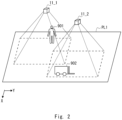
- Figs. 2 and 3 are a schematic perspective view and a schematic plan view, respectively, showing an application example of the work assignment status monitoring system 1 shown in Fig. 1 .
- the work assignment status monitoring system 1 according to this embodiment is applied, for example, to a facility such as a factory having one or more work areas where predetermined work assignments are performed by workers or the like who are monitoring targets, and determines whether each of the monitoring targets has performed the work assignment(s) in one or more work areas based on the presence or absence of interference (contact) with the one or more work areas by an area to be monitored where the monitoring target is positioned.
- the work assignment status monitoring system 1 can infer and monitor the work assignment status of the monitoring target with a smaller amount of information than that in the case where, for example, the movement of the monitoring target is analyzed in detail. That is, the work assignment status monitoring system 1 according to this embodiment can efficiently monitor the work assignment status(es) of one or more designated work assignments performed by a monitoring target such as a worker.
- a monitoring target such as a worker.
- the work assignment status monitoring system 1 is applied to a facility PL1 such as a factory, and includes n (n is an integer of one or more) sensors 11_1 to 11_n and a work assignment status monitoring apparatus 12.
- the work assignment status monitoring system 1 may be a single work assignment status monitoring apparatus 12.
- the sensors 11_1 to 11_n are installed on the ceiling or the like of the facility PL1, and detects a worker 901 and a mobile body 902 in the facility PL1.
- the mobile body 902 is, for example, a vehicle such as a forklift or a movable carriage for transporting a product or its parts, a vehicle such as an AGV (Automatic Guided Vehicle) configured to automatically perform a transportation work, or an autonomously movable work robot configured to automatically perform a predetermined work assignment.
- Some of the sensors 11_1 to 11_n may be attached to any of the mobile bodies 902. Each of the sensors 11_1 to 11_n can simultaneously detect all the workers 901 and the mobile bodies 902 included in a detection range by itself.
- Each of the sensors 11_1 to 11_n is, for example, a camera, and is installed so as to be capable of capturing the entire facility including one or more work areas provided in the facility PL1 and moving routes of the worker 901 and the mobile body 902.
- the work assignment status monitoring apparatus 12 monitors the work assignment status of a monitoring target TG in the facility PL1.
- the monitoring target TG is either the worker 901 or a predetermined mobile body 902a which are the monitoring targets whose operations statuses are to be monitored by the work assignment status monitoring apparatus 12.
- the predetermined mobile body 902a among the mobile bodies 902 detected by the sensors 11_1 and 11_2, is a vehicle, such as an AGV, or a work robot, which is configured to automatically perform a predetermined work assignment.
- the work assignment status monitoring apparatus 12 includes an acquisition unit 121, a monitoring target detection unit 122, a first determination unit 123, a recording unit 124, an information generation unit 125, and an output unit 126.
- the acquisition unit 121 acquires information about one or more work areas in the facility PL1.
- the information about the work area includes at least information of a place (a position) where a designated work assignment is performed.
- the information about the work area may further include a content of the designated work, a minimum time (reference time) required for the designated work, and a maximum work time allowed for the designated work assignment.
- the acquisition unit 121 may, for example, acquire information about the work area input via an operation terminal by an administrator of the facility PL1 or the like, or may acquire the information about the work area from results of the detection by the sensors 11_1 and 11_2.
- the acquisition unit 121 may acquire the information about the work areas based on results of analyzing videos captured by the cameras.
- the acquisition unit 121 acquires information about work areas WA1 to WA4 in which places where work assignments are performed are surrounded by frames.
- the work area WA3 includes work areas WA3a and WA3b.
- the monitoring target detection unit 122 detects either the worker 901 or the predetermined mobile body 902a as the monitoring target TG by using the sensors 11_1 and 11_2, and defines a monitoring target area TA1 where the monitoring target TG is positioned.
- the monitoring target area TA1 is defined by a frame surrounding the monitoring target TG, and moves along with the movement of the monitoring target TG.
- the predetermined mobile body 902a may be detected as the monitoring target TG, or the worker 901 and the predetermined mobile body 902a may be detected as a plurality of the monitoring targets TG.
- the moving body (forklift) 902 other than the monitoring target TG are defined as the work area WA4 where the monitoring target TG performs a work assignment.
- the first determination unit 123 determines whether or not the monitoring target TG has performed the work in the one or more work areas, which are the work areas WA1 to WA4 in the example of Fig. 3 , based on the presence or absence of interference with the one or more work areas by the monitoring target area TA1. For example, when the monitoring target area TA1 interferes with the work area WA1, the first determination unit 123 determines that the monitoring target TG has performed a work in the work area WA1.
- the interference of the monitoring target area TA1 with the work area WA1 is not limited to the case where the monitoring target area TA1 (frame) and the work area WA1 (frame) partially overlap each other, but also includes the case where the monitoring target area TA1 (frame) and the work area WA1 (frame) come to contact with each other.
- the first determination unit 123 may determine that the monitoring target TG has performed a work in the work area WA1 when a period of time in which the monitoring target area TA1 interferes with the work area WA1 is more than or equal to the minimum time (reference time) required for a work in the work area WA1.
- a result of the determination made by the first determination unit 123 is recorded in the recording unit 124.
- the recording unit 124 may be provided inside the work assignment status monitoring apparatus 12 or outside the work assignment status monitoring apparatus 12.
- the information generation unit 125 generates information about the work assignment performed by the monitoring target TG in each work area based on the result of the determination made by the first determination unit 123.
- the information about the work in the work area includes at least information about a start time, a work time, and an end time of the work assignment performed by the monitoring target TG in each work area. It is also possible to identify a work assignment order when the work assignments are performed in a plurality of work areas from the information of the start time, work time, and end time of the work assignments performed by the monitoring target TG in the respective work areas.
- the information generated by the information generation unit 125 about the work assignment performed by the monitoring target TG in each work area is recorded (accumulated) in the recording unit 124. Note that the information about the work assignment performed by the monitoring target TG in each work area may be recorded (accumulated) in the recording unit 124 in a graphed state as described later.
- the output unit 126 outputs the information about the work assignment performed by the monitoring target TG in each work area generated by the information generation unit 125.
- the output unit 126 causes a monitor to display the information (a work assignment pattern) about the work assignment performed by the monitoring target TG in each work area, which is generated by the information generation unit 125, in a desired display format.
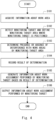
- Fig. 4 is a flowchart showing the operation of the work assignment status monitoring system 1.
- Fig. 5 is a schematic plan view showing in more detail the facility PL1 to which the work assignment status monitoring system 1 is applied.
- the work assignment status monitoring apparatus 12 first acquires the information about one or more work areas in the facility PL1 (Step S101). In the example of Fig. 5 , the work assignment status monitoring apparatus 12 acquires information about work areas WA1 to WA7, which are places where work assignments are performed, surrounded by a frame.
- the work area WA3 includes work areas WA3a and WA3b.
- the work assignment status monitoring apparatus 12 detects the worker 901 as a monitoring target TG by using the sensors 11_1 and 11_2, and defines a monitoring target area TA1 where the monitoring target TG is positioned (Step S102).
- the monitoring target area TA1 is defined by a frame surrounding the monitoring target TG, and moves along with the movement of the monitoring target TG.
- One mobile body (forklift) and two AGVs (first and second AGVs), which are the mobile bodies 902 other than the monitoring target TG detected by the sensors 11_1 and 11_2, are defined as the work areas WA4, WA6, and WA7, respectively, where the monitoring target TG performs works.
- the work assignment status monitoring apparatus 12 determines whether or not the monitoring target TG has performed work assignments in the work areas WA1 to WA7 based on the presence or absence of interference with the work areas WA1 to WA7 by the monitoring target area TA1 (Step S103). The result of determining whether or not the monitoring target TG has performed work assignments in the work assignment areas WA1 to WA7 is recorded in the recording unit 124 (Step S104).
- the work assignment status monitoring apparatus 12 After that, the work assignment status monitoring apparatus 12 generates information (a work assignment pattern) about the work assignment performed by the monitoring target TG in each of the work areas WA1 to WA7 based on the above result of the determination (Step S105), and, for example, displays it on a monitor (Step S106).
- Fig. 6 shows a first example of the information about work assignments performed by the monitoring target TG output from the work assignment status monitoring apparatus 12.
- a work assignment pattern performed by the monitoring target TG is displayed on the monitor in a two-dimensional graph.
- the horizontal axis represents time
- the vertical axis represents the presence or absence of a work assignment performed by the monitoring target TG in each work area.
- the monitoring target TG performs a work in the work area WA2 (time t11 to time t12). After that, the monitoring target TG performs a work in the work area WA3 (time t13 to time t14). More specifically, the monitoring target TG first performs a work in the work area WA3a of the work area WA3 (time t13a to time t13b), and then performs a work in the work area WA3b (time t14a to time t14b). Note that the work assignment status monitoring apparatus 12 can appropriately adjust whether or not the two work assignments in the work areas WA3a and WA3b are displayed separately on the monitor or displayed as one work in the work area WA3.
- the monitoring target TG performs a work in the work area WA7 (time 115 to time t16).
- the work area WA7 is an area where the second AGV is positioned.
- the monitoring target TG may be loading the second AGV or operating the second AGV.
- the monitoring target TG performs a work in the work area WA1 (time t17 to time t18), continues to perform work assignments in the work area WA6 (time t19 to time t20), and continues to perform work assignments in the work area WA4 (time t21 to time t22).
- the work area WA6 is an area where the first AGV is positioned.
- the work area WA4 is an area where a forklift is positioned. Therefore, there is a possibility that the monitoring target TG may be loading the forklift or operating the forklift in the work area WA4.
- the work assignment status monitoring system 1 determines whether or not the monitoring target TG has performed work assignments in one or more work areas based on the presence or absence of interference (contact) with the one or more work areas by the monitoring target area TA1 where the monitoring target TG such as a worker is positioned. By doing so, the work assignment status monitoring system 1 according to this embodiment can infer and monitor the work assignment status of the monitoring target TG with a smaller amount of information than that in the case where, for example, the movement of the monitoring target TG is analyzed in detail. That is, the work assignment status monitoring system 1 according to this embodiment can efficiently monitor the work assignment status(es) of one or more designated work assignments performed by the monitoring target TG such as a worker.
- the work assignment status monitoring apparatus 12 is described with reference to an example in which the monitoring target area TA1 where the monitoring target TG is positioned is defined.
- the work assignment status monitoring apparatus 12 may be configured to further define a second monitoring target area TA2 in which a predetermined part of the monitoring target TG, such as a worker's fingertip who is the monitoring target TG, is positioned.
- the work assignment status monitoring apparatus 12 determines whether or not the worker's fingertip, who is the monitoring target TG, has performed work in one or more work areas based on the presence or absence of interference with one or more work areas by the monitoring target area TA2. In this manner, the work assignment status monitoring system 1 can more accurately infer the work assignment status of the monitoring target TG.
- the work assignment status monitoring apparatus 12 displays the work assignment pattern performed by the monitoring target TG on the monitor in a display format as shown in Fig. 6 , but the present disclosure is not limited to this.
- the work assignment status monitoring apparatus 12 may display the work assignment pattern performed by the monitoring target TG on the monitor in any display format that enables monitoring of the work assignment status of the monitoring target TG.
- Figs. 7 and 8 a brief description will be given with reference to Figs. 7 and 8 .
- Fig. 7 shows a second example of the information about the work assignments performed by the monitoring target TG output from the work assignment status monitoring apparatus 12.
- the work assignment pattern performed by the monitoring target TG is displayed on the monitor in a three-dimensional graph.
- the X-axis and Y-axis represent a position (plane coordinate) of the facility PL1, and the Z-axis represents the time.
- the work assignment status monitoring apparatus 12 may display the work assignment pattern performed by the monitoring target TG on the monitor in a display format as shown in Fig. 7 .
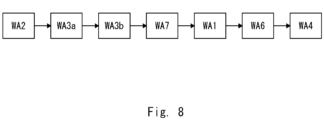
- Fig. 8 shows a third example of the information about the work assignments performed by the monitoring target TG output from the work assignment status monitoring apparatus 12.
- the work assignment pattern performed by the monitoring target TG is displayed on the monitor in a display format of an event network.
- an event work
- an event and a subsequent event are connected to each other by an edge (line segment).
- the work assignment status monitoring apparatus 12 may display the work assignment pattern performed by the monitoring target TG on the monitor in a display format as shown in Fig. 8 .
- a Petri net may be used instead of an event network.
- Fig. 9 is a block diagram showing a configuration example of a work assignment status monitoring system 2 according to a second embodiment.
- the work assignment status monitoring system 2 includes a work assignment status monitoring apparatus 22 in place of the work assignment status monitoring apparatus 12.
- the work assignment status monitoring apparatus 22 further includes a normal state decision unit 227, a second determination unit 228, and a prediction unit 229.
- the other components of the work assignment status monitoring apparatus 22 are the same as those of the work assignment status monitoring apparatus 12, and therefore description thereof will be omitted.
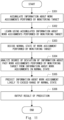
- Fig. 10 is a flowchart showing a determination operation performed by the work assignment status monitoring apparatus 22.
- the information generation unit 125 In the work assignment status monitoring apparatus 22, the information generation unit 125 generates a plurality of pieces of information about the work assignments performed by the monitoring target TG as a result of repeatedly monitoring the work assignment status of the work assignments performed by the monitoring target TG in the facility PL1.
- the plurality of pieces of information about the work assignments performed by the monitoring target TG generated by the information generation unit 125 are recorded (accumulated) in the recording unit 124 as a plurality of work assignment histories (Step S201).
- the normal state decision unit 227 performs learning using the plurality of work assignment histories recorded in the recording unit 124 (Step S202), and decides a normal state of the work assignment performed by the monitoring target TG based on a result of the learning (Step S203). For example, the normal state decision unit 227 decides the normal state as a statistical model using a function shape and a network assignment pattern as a random variable.
- the normal state for the work assignment performed by the monitoring target TG is, for example, a normal (average) work time in each work area and a normal work assignment order performed by the monitoring target TG. Note that the normal state of the work assignment performed by the monitoring target TG is not limited to one type, and may be classified into two or more types.
- the output unit 126 outputs the new information about the work assignment performed by the monitoring target TG (the newly performed work assignment pattern) together with the result of a comparison between the new information about the work assignment performed by the monitoring target TG and the information about the work assignment in the normal state (a work assignment pattern in the normal state) (Step S205).
- output unit 126 may be configured to output the new information about the work assignment performed by the monitoring target TG (the newly performed work assignment pattern) in a highlighted manner in accordance with the degree of deviation from the information about the work assignment in the normal state (the work assignment pattern in the normal state) to output the new information about the work assignment performed by the monitoring target TG. For example, if the work time in the work area WA1 included in the newly performed work assignment pattern is longer than the work time in the work area WA1 included in the work assignment pattern in the normal state, the output unit 126 may cause the corresponding part to flash and be displayed or may cause the corresponding part to be displayed in a color different from colors of the other parts.
- the second determination unit 228 determines whether or not the new information about the work assignment performed by the monitoring target TG (the newly performed work assignment pattern) is included in a range of the normal state based on the degree of deviation of the new information about the work assignment performed by the monitoring target TG from the information about the work assignment performed in the normal state (the work assignment pattern in the normal state). A method such as statistical divergence is used to measure the degree of deviation.
- the output unit 126 may further output a result of the determination made by the second determination unit 228, which is, information as to whether or not the newly performed work assignment pattern is included in the range of the work assignment pattern in the normal state.
- the work assignment status monitoring system 2 can set the normal state of the work assignment order, the work time, and the like for each of the monitoring targets TG. It is thus possible to present whether or not the normal state for the worker who is the monitoring target TG is the normal state for the worker who is the monitoring target TG, for example, even when the work time of a certain work assignment performed by the worker who is the monitoring target TG is longer than those of other workers due to differences in experience and skill.
- Fig. 11 is a flowchart showing a predicted operation performed by the work assignment status monitoring apparatus 22.
- the information generation unit 125 In the work assignment status monitoring apparatus 22, the information generation unit 125 generates a plurality of pieces of information about the work assignments performed by the monitoring target TG as a result of repeatedly monitoring the work assignment status of the work assignments performed by the monitoring target TG in the facility PL1.
- the plurality of pieces of information about the work assignment performed by the monitoring target TG generated by the information generation unit 125 are recorded (accumulated) in the recording unit 124 as a plurality of work assignment histories (Step S301).
- the normal state decision unit 227 performs learning using the plurality of work assignment histories recorded in the recording unit 124 (Step S302), and decides a normal state of the work assignment performed by the monitoring target TG based on a result of the learning (Step S303). For example, the normal state decision unit 227 decides the normal state as a statistical model using a function shape and a network pattern as a random variable.
- the normal state for the work assignment performed by the monitoring target TG is, for example, a normal (average) work time in each work area and a normal work assignment order performed by the monitoring target TG. Note that the normal state of the work assignment performed by the monitoring target TG is not limited to one type, and may be classified into two or more types.
- the prediction unit 229 analyzes the degree of deviation of the plurality of pieces of information about the work assignments performed by the monitoring target TG (a plurality of work assignment patterns performed in the past) recorded as the plurality of work assignment histories in the recording unit 124 from the information (the work assignment patterns in the normal state) about the work assignment in the normal state (Step S304). Next, the prediction unit 229 predicts information (the work time and the work assignment order) about the work assignment likely to exceed the range of the normal state among the work assignment patterns to be performed by the monitoring target TG in the future (Step S305).
- the prediction unit 229 predicts that the work time of the specific work assignment may exceed the range of the normal state among the plurality of work assignments included in the work assignment pattern to be performed by the monitoring target TG in the future.
- the output unit 126 outputs a result of the prediction made by the prediction unit 229 (Step S306). For example, the output unit 126 outputs information indicating that among a plurality of work assignments included in a work assignment pattern to be performed by the monitoring target TG in the future, the work time of a specific work assignment may exceed the range of the normal state. Alternatively, the output unit 126 may output a predicted value of the work assignment pattern to be performed by the monitoring target TG in the future together with a result of the comparison between the predicted value of the work assignment pattern to be performed by the monitoring target TG in the future and the information about the work assignment in the normal state (the work assignment pattern in the normal state).
- the work assignment status monitoring system 2 can predict the work assignment that may exceed the range of the normal state for each monitoring target TG, for example, a warning can be given in advance to the worker who is the monitoring target TG.
- the work assignment status monitoring system 2 can achieve the effect equivalent to that of the work assignment status monitoring system 1. Furthermore, the work assignment status monitoring system 2 according to this embodiment can set a normal state for the work assignment order, the work time, etc., for each monitoring target TG. Therefore, for example, even if the work time of a certain work assignment performed by a worker who is the monitoring target TG is longer than those of other workers due to a difference in experience or skill, it is possible to present whether or not it is a normal state for the worker who is the monitoring target TG. Moreover, since the work assignment status monitoring system 2 according to this embodiment can predict a work assignment that may exceed the range of the normal state for each monitoring target TG, for example, a warning can be given in advance to the worker who is the monitoring target TG.
- work assignment status monitoring apparatus 22 may have only one of the determination function and the prediction function.
- the work assignment status monitoring apparatus 22 may define a predetermined work assignment pattern as a work assignment pattern in an abnormal state. By doing so, when the predetermined work assignment pattern is about to be performed by the monitoring target TG, the work assignment status monitoring apparatus 22 can warn not to perform the predetermined work assignment pattern.
- the work assignment status monitoring apparatus 22 may decide the normal state after creating a DSM (Design Structure Matrix) from work assignment histories recorded in the recording unit 124.
- DSM Design Structure Matrix
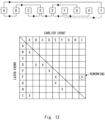
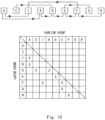
- Figs. 12 to 14 are diagrams in which three event networks classified from a plurality of work assignment histories and work assignment procedures of a plurality of events on the event networks are displayed in a matrix.
- events designated work assignments
- the solid arrows represent procedures of prerequisite work assignments performed by the monitoring target TG
- the dashed arrow represents reworking in a work assignment procedure performed by the monitoring target TG.
- the "X" displayed in the matrix represents procedures corresponding to the arrows of the event networks.
- a probability distribution can be defined on a matrix shown in Fig. 15 , and this probability distribution can be decided as the normal state of the work assignment procedure performed by the monitoring target TG.
- the present disclosure can be implemented by causing a Central Processing Unit (CPU) to execute a computer program in part or in whole of the processing of the work assignment status monitoring apparatuses 12 and 22.
- CPU Central Processing Unit
- the above program includes instructions (or software codes) that, when loaded into a computer, cause the computer to perform one or more of the functions described in the embodiments.
- the program may be stored in a non-transitory computer readable medium or a tangible storage medium.
- non-transitory computer readable media or tangible storage media can include a random-access memory (RAM), a read-only memory (ROM), a flash memory, a solid-state drive (SSD) or other types of memory technologies, a CD-ROM, a digital versatile disc (DVD), a Blu-ray disc or other types of optical disc storage, and magnetic cassettes, magnetic tape, magnetic disk storage or other types of magnetic storage devices.
- the program may be transmitted on a transitory computer readable medium or a communication medium.
- transitory computer readable media or communication media can include electrical, optical, acoustical, or other forms of propagated signals.
Landscapes
- Business, Economics & Management (AREA)
- Human Resources & Organizations (AREA)
- Engineering & Computer Science (AREA)
- Economics (AREA)
- General Physics & Mathematics (AREA)
- Physics & Mathematics (AREA)
- Quality & Reliability (AREA)
- Strategic Management (AREA)
- Entrepreneurship & Innovation (AREA)
- Tourism & Hospitality (AREA)
- Operations Research (AREA)
- Marketing (AREA)
- General Business, Economics & Management (AREA)
- Development Economics (AREA)
- Theoretical Computer Science (AREA)
- General Engineering & Computer Science (AREA)
- Manufacturing & Machinery (AREA)
- Automation & Control Theory (AREA)
- Educational Administration (AREA)
- Game Theory and Decision Science (AREA)
- General Factory Administration (AREA)
- Testing And Monitoring For Control Systems (AREA)
Abstract
A work assignment status monitoring system (1) includes an acquisition unit (121) configured to acquire information about one or more work areas, a monitoring target detection unit (122) configured to detect a monitoring target and define a first monitoring target area where the monitoring target is positioned, a first determination unit (123) configured to determine whether or not the monitoring target has performed a work assignment in the one or more work areas based on a presence or absence of interference with the one or more work areas by the first monitoring target area, an information generation unit (125) configured to generate information about the work assignment in the one or more work areas performed by the monitoring target based on a result of the determination made by the first determination unit (123), and an output unit (126) configured to output information about the work assignment performed by the monitoring target.
Description
- The present disclosure relates to a work assignment status monitoring system, a work assignment status monitoring method, and a work assignment status monitoring program.
- In recent years, it has been required to efficiently monitor a work assignment status(es) of one or more designated work assignments performed by a worker.
- A production management apparatus disclosed in
Japanese Unexamined Patent Application Publication No. 2007-323199 - The present disclosure is not limited to the method disclosed in
Japanese Unexamined Patent Application Publication No. 2007-323199 - An object of the present disclosure is to provide a work assignment status monitoring system, a work assignment status monitoring method, and a work assignment status monitoring program capable of inferring a work assignment status(es) of one or more designated work assignments being performed by a monitoring target such as a worker or the like with a small amount of information and efficiently monitoring the work assignment status.
- In an example aspect of the present disclosure, a work assignment status monitoring system includes: an acquisition unit configured to acquire information about one or more work areas; a monitoring target detection unit configured to detect either a worker or a predetermined mobile body as a monitoring target and define a first monitoring target area where the monitoring target is positioned; a first determination unit configured to determine whether or not the monitoring target has performed a work in the one or more work areas based on a presence or absence of interference with the one or more work areas by the first monitoring target area; an information generation unit configured to generate information about the work in the one or more work areas performed by the monitoring target based on a result of the determination made by the first determination unit; and an output unit configured to output information about the work assignment performed by the monitoring target generated by the information generation unit. This work assignment status monitoring system determines whether the monitoring target has performed the work assignment(s) in one or more work areas based on the presence or absence of interference with the one or more work areas by the first monitoring target area where the monitoring target such as the worker is positioned. It is thus possible to infer and monitor the work assignment status of the monitoring target with a smaller amount of information than that in the case where, for example, the movement of the monitoring target is analyzed in detail. That is, this work assignment status monitoring system can efficiently monitor the work assignment status(es) of one or more designated work assignments performed by the monitoring target such as the worker.
- The first determination unit may be configured to determine that the monitoring target has performed the work in the work area when a period of time of the interference with the work area by the first monitoring target area in each of the work areas is more than or equal to a reference time set in the work area.
- The information about the work assignment performed by the monitoring target in the one or more work areas may include information about a start time, a work time, and an end time of the work assignment performed by the monitoring target in each of the work areas.
- The one or more work areas may include an area where another mobile body other than the predetermined mobile body, which is the monitoring target, is positioned.
- The monitoring target detection unit may be configured to further detect a predetermined part of the monitoring target and define a second monitoring target area where the predetermined part is positioned.
- The monitoring target detection unit may be configured to detect the monitoring target using either a distance measurement sensor or a camera.
- The work assignment status monitoring system may further include: a recording unit configured to record, as a plurality of work assignment histories, a plurality of pieces of information generated by the information generation unit and related to the work assignment performed by the monitoring target; and a normal state decision unit configured to decide a normal state for the work assignment performed by the monitoring target from the plurality of work assignment histories recorded in the recording unit. The output unit may be further configured to output new information about the work assignment performed by the monitoring target generated by the information generation unit, together with a result of a comparison between the new information about the work assignment performed by the monitoring target generated by the information generation unit and information about the work assignment in the normal state. Thus, the work assignment status monitoring system can set the normal state of the work assignment order, the work time, and the like for each of the monitoring targets. It is thus possible to present whether or not the normal state for the worker who is the monitoring target is the normal state for the worker who is the monitoring target, for example, even when the work time of a certain work assignment performed by the worker who is the monitoring target is longer than those of other workers due to differences in experience and skill.
- The output unit may be configured to output the new information about the work assignment performed by the monitoring target in a highlighted manner in accordance with a degree of deviation from the information about the work assignment in the normal state.
- The work assignment status monitoring system may further include a second determination unit configured to determine whether or not the new information about the work assignment performed by the monitoring target is included in a range of the normal state based on the degree of deviation of the new information about the work assignment performed by the monitoring target from the information about the work assignment performed in the normal state. The output unit may be configured to further output a result of the determination made by the second determination unit.
- The work assignment status monitoring system may further include: a recording unit configured to record, as a plurality of work assignment histories, a plurality of pieces of information generated by the information generation unit and related to the work assignment performed by the monitoring target; a normal state decision unit configured to decide a normal state for the work assignment performed by the monitoring target from the plurality of work assignment histories recorded in the recording unit; and a prediction unit configured to predict information about a work exceeding the range of the normal state among the plurality of pieces of the information about the work assignments performed by the monitoring target generated next by the information generation unit based on the degree of deviation of the plurality of pieces of information about the work assignments performed by the monitoring target recorded as the plurality of work assignment histories in the recording unit from information about the work assignment in the normal state. The output unit may be further configured to output a result of the prediction made by the prediction unit. In this manner, since the work assignment status monitoring system can predict the work that may exceed the range of the normal state for each monitoring target, for example, a warning can be given in advance to the worker who is the monitoring target.
- In another example aspect of the present disclosure, a work assignment status monitoring method includes: an acquisition step of acquiring information about one or more work areas; a monitoring target detection step of detecting either a worker or a predetermined mobile body as a monitoring target and define a first monitoring target area where the monitoring target is positioned; a determination step of determining whether or not the monitoring target has performed a work in the one or more work areas based on a presence or absence of interference with the one or more work areas by the first monitoring target area; an information generation step of generating information about the work in the one or more work areas performed by the monitoring target based on a result of the determination made in the determination step; and a first output step of outputting information about the work assignment performed by the monitoring target generated in the information generation step. This work assignment status monitoring system determines whether the monitoring target has performed the work assignment(s) in one or more work areas based on the presence or absence of interference with the one or more work areas by the first monitoring target area where the monitoring target such as the worker is positioned. It is thus possible to infer and monitor the work assignment status of the monitoring target with a smaller amount of information than that in the case where, for example, the movement of the monitoring target is analyzed in detail. This work assignment status monitoring method determines whether the monitoring target has performed the work assignment(s) in one or more work areas based on the presence or absence of interference with the one or more work areas by the first monitoring target area where the monitoring target such as the worker is positioned. It is thus possible to infer and monitor the work assignment status of the monitoring target with a smaller amount of information than that in the case where, for example, the movement of the monitoring target is analyzed in detail. That is, this work assignment status monitoring method can efficiently monitor the work assignment status(es) of one or more designated work assignments performed by the monitoring target such as the worker.
- The work assignment status monitoring method may further include: a recording step of recording, as a plurality of work assignment histories, a plurality of pieces of information generated in the information generation step and related to the work assignment performed by the monitoring target; a normal state decision step of deciding a normal state for the work assignment performed by the monitoring target from the plurality of work assignment histories recorded in the recording step; and a second output step of outputting new information about the work assignment performed by the monitoring target generated in the information generation step, together with a result of a comparison between the new information about the work assignment performed by the monitoring target generated in the information generation step and the information about the work assignment in the normal state. Thus, the work assignment status monitoring method can set the normal state of the work assignment order, the work time, and the like for each of the monitoring targets. It is thus possible to present whether or not the normal state for the worker who is the monitoring target is the normal state for the worker who is the monitoring target, for example, even when the work time of a certain work assignment performed by the worker who is the monitoring target is longer than those of other workers due to differences in experience and skill.
- The work assignment status monitoring method may further include: a recording step of recording, as a plurality of work assignment histories, a plurality of pieces of information generated in the information generation step and related to the work assignment performed by the monitoring target; a normal state decision step of deciding a normal state for the work assignment performed by the monitoring target from the plurality of recorded work assignment histories recorded in the recording step; a prediction step of predicting information about a work exceeding the range of the normal state among the plurality of pieces of the information about the work assignments performed by the monitoring target generated next in the information generation step based on the degree of deviation of the plurality of pieces of information about the work assignments performed by the monitoring target recorded as the plurality of recorded work assignment histories from information about the work assignment in the normal state; and a second output step of outputting a result of the prediction. In this manner, since the work assignment status monitoring method can predict the work that may exceed the range of the normal state for each monitoring target, for example, a warning can be given in advance to the worker who is the monitoring target.
- In another example aspect of the present disclosure, a work assignment status monitoring program includes: acquisition processing of acquiring information about one or more work areas; monitoring target detection processing of detecting either a worker or a predetermined mobile body as a monitoring target and define a first monitoring target area where the monitoring target is positioned; determination processing of determining whether or not the monitoring target has performed a work in the one or more work areas based on a presence or absence of interference with the one or more work areas by the first monitoring target area; information generation processing of generating information about the work in the one or more work areas performed by the monitoring target based on a result of the determination made in the determination processing; and first output processing of outputting information about the work assignment performed by the monitoring target generated in the information generation processing. This work assignment status monitoring program determines whether the monitoring target has performed the work assignment(s) in one or more work areas based on the presence or absence of interference with the one or more work areas by the first monitoring target area where the monitoring target such as the worker is positioned. It is thus possible to infer and monitor the work assignment status of the monitoring target with a smaller amount of information than that in the case where, for example, the movement of the monitoring target is analyzed in detail. That is, this work assignment status monitoring program can efficiently monitor the work assignment status(es) of one or more designated work assignments performed by the monitoring target such as the worker.
- The work assignment status monitoring program may further cause a computer to execute: a recording processing of recording, as a plurality of work assignment histories, a plurality of pieces of information generated in the information generation processing and related to the work assignment performed by the monitoring target; normal state decision processing of deciding a normal state for the work assignment performed by the monitoring target from the plurality of work assignment histories recorded in the recording processing; and a second output processing of outputting new information about the work assignment performed by the monitoring target generated in the information generation processing, together with a result of a comparison between the new information about the work assignment performed by the monitoring target generated in the information generation processing and the information about the work assignment in the normal state. Thus, the work assignment status monitoring program can set the normal state of the work assignment order, the work time, and the like for each of the monitoring targets. It is thus possible to present whether or not the normal state for the worker who is the monitoring target is the normal state for the worker who is the monitoring target, for example, even when the work time of a certain work assignment performed by the worker who is the monitoring target is longer than those of other workers due to differences in experience and skill.
- The work assignment status monitoring program may further cause the computer to execute: a recording processing of recording, as a plurality of work assignment histories, a plurality of pieces of information generated in the information generation processing and related to the work assignment performed by the monitoring target; normal state decision processing of deciding a normal state for the work assignment performed by the monitoring target from the plurality of recorded work assignment histories recorded in the recording processing; prediction processing of predicting information about a work exceeding the range of the normal state among the plurality of pieces of the information about the work assignments performed by the monitoring target generated next in the information generation processing based on the degree of deviation of the plurality of pieces of information about the work assignments performed by the monitoring target recorded as the plurality of recorded work assignment histories from information about the work assignment in the normal state; and second output processing of outputting a result of the prediction. In this manner, since the work assignment status monitoring program can predict the work that may exceed the range of the normal state for each monitoring target, for example, a warning can be given in advance to the worker who is the monitoring target.
- According to the present disclosure, it is possible to provide a work assignment status monitoring system, a work assignment status monitoring method, and a work assignment status monitoring program capable of inferring a work assignment status(es) of one or more designated work assignments being performed by a monitoring target such as a worker or the like with a small amount of information and efficiently monitoring the work assignment status.
- The above and other objects, features and advantages of the present disclosure will become more fully understood from the detailed description given hereinbelow and the accompanying drawings which are given by way of illustration only, and thus are not to be considered as limiting the present disclosure.
-
-
Fig. 1 is a block diagram showing a configuration example of a work assignment status monitoring system according to a first embodiment; -
Fig. 2 is a schematic perspective view showing an application example of the work assignment status monitoring system shown inFig. 1 ; -
Fig. 3 is a schematic plan view showing an application example of the work assignment status monitoring system shown inFig. 1 ; -
Fig. 4 is a flowchart showing an operation of the work assignment status monitoring system shown inFig. 1 ; -
Fig. 5 is a schematic plan view showing in more detail a facility to which the work assignment status monitoring system shown inFig. 1 is applied; -
Fig. 6 shows a first example of information about work assignments performed by a monitoring target output from a work assignment status monitoring apparatus provided in the work assignment status monitoring system shown inFig. 1 ; -
Fig. 7 shows a second example of information about work assignments performed by the monitoring target output from the work assignment status monitoring apparatus provided in the work assignment status monitoring system shown inFig. 1 ; -
Fig. 8 shows a third example of information about work assignments performed by the monitoring target output from the work assignment status monitoring apparatus provided in the work assignment status monitoring system shown inFig. 1 ; -
Fig. 9 is a block diagram showing a configuration example of a work assignment status monitoring system according to a second embodiment; -
Fig. 10 is a flowchart showing a determination operation performed by the work assignment status monitoring apparatus provided in the work assignment status monitoring system shown inFig. 9 ; -
Fig. 11 is a flowchart showing a prediction operation performed by the work assignment status monitoring apparatus provided in the work assignment status monitoring system shown inFig. 9 ; -
Fig. 12 shows an example of an event network classified from a plurality of work assignment histories and a work assignment procedure of a plurality of events on the event network in a matrix; -
Fig. 13 shows an example of an event network classified from a plurality of work assignment histories and a work assignment procedure of a plurality of events on the event network in a matrix; -
Fig. 14 shows an example of an event network classified from a plurality of work assignment histories and a work assignment procedure of a plurality of events on the event network in a matrix; and -
Fig. 15 shows a probability distribution defined on the DSM. - Hereinafter, the present disclosure will be described through embodiments of the disclosure, but the disclosure according to the claims is not limited to the following embodiments. Further, not all of the configurations described in the embodiments are essential as means for solving the problem. For clarity of explanation, the following description and drawings have been omitted and simplified as appropriate. In each of the drawings, the same elements are denoted by the same reference signs, and repeated explanations are omitted if necessary.
-
Fig. 1 is a block diagram showing a configuration example of a work assignmentstatus monitoring system 1 according to a first embodiment.Figs. 2 and3 are a schematic perspective view and a schematic plan view, respectively, showing an application example of the work assignmentstatus monitoring system 1 shown inFig. 1 . The work assignmentstatus monitoring system 1 according to this embodiment is applied, for example, to a facility such as a factory having one or more work areas where predetermined work assignments are performed by workers or the like who are monitoring targets, and determines whether each of the monitoring targets has performed the work assignment(s) in one or more work areas based on the presence or absence of interference (contact) with the one or more work areas by an area to be monitored where the monitoring target is positioned. In this way, the work assignmentstatus monitoring system 1 according to this embodiment can infer and monitor the work assignment status of the monitoring target with a smaller amount of information than that in the case where, for example, the movement of the monitoring target is analyzed in detail. That is, the work assignmentstatus monitoring system 1 according to this embodiment can efficiently monitor the work assignment status(es) of one or more designated work assignments performed by a monitoring target such as a worker. A specific description of the workstatus monitoring system 1 according to this embodiment will be given below. - The work assignment
status monitoring system 1 is applied to a facility PL1 such as a factory, and includes n (n is an integer of one or more) sensors 11_1 to 11_n and a work assignmentstatus monitoring apparatus 12. The work assignmentstatus monitoring system 1 may be a single work assignmentstatus monitoring apparatus 12. - The sensors 11_1 to 11_n are installed on the ceiling or the like of the facility PL1, and detects a
worker 901 and amobile body 902 in the facility PL1. Themobile body 902 is, for example, a vehicle such as a forklift or a movable carriage for transporting a product or its parts, a vehicle such as an AGV (Automatic Guided Vehicle) configured to automatically perform a transportation work, or an autonomously movable work robot configured to automatically perform a predetermined work assignment. Some of the sensors 11_1 to 11_n may be attached to any of themobile bodies 902. Each of the sensors 11_1 to 11_n can simultaneously detect all theworkers 901 and themobile bodies 902 included in a detection range by itself. - Each of the sensors 11_1 to 11_n is, for example, a camera, and is installed so as to be capable of capturing the entire facility including one or more work areas provided in the facility PL1 and moving routes of the
worker 901 and themobile body 902. Each of the sensors 11_1 to 11_n is not limited to a camera, and may instead be any type of sensor such as a distance measuring sensor capable of detecting theworker 901 and themobile body 902. In this embodiment, a case where n = 2, i.e., two sensors 11_1 and 11_2, are provided will be described as an example. - The work assignment
status monitoring apparatus 12 monitors the work assignment status of a monitoring target TG in the facility PL1. Here, the monitoring target TG is either theworker 901 or a predetermined mobile body 902a which are the monitoring targets whose operations statuses are to be monitored by the work assignmentstatus monitoring apparatus 12. The predetermined mobile body 902a, among themobile bodies 902 detected by the sensors 11_1 and 11_2, is a vehicle, such as an AGV, or a work robot, which is configured to automatically perform a predetermined work assignment. - Specifically, the work assignment
status monitoring apparatus 12 includes anacquisition unit 121, a monitoringtarget detection unit 122, afirst determination unit 123, arecording unit 124, aninformation generation unit 125, and anoutput unit 126. - The
acquisition unit 121 acquires information about one or more work areas in the facility PL1. The information about the work area includes at least information of a place (a position) where a designated work assignment is performed. The information about the work area may further include a content of the designated work, a minimum time (reference time) required for the designated work, and a maximum work time allowed for the designated work assignment. Theacquisition unit 121 may, for example, acquire information about the work area input via an operation terminal by an administrator of the facility PL1 or the like, or may acquire the information about the work area from results of the detection by the sensors 11_1 and 11_2. When the sensors 11_1 and 11_2 are cameras, theacquisition unit 121 may acquire the information about the work areas based on results of analyzing videos captured by the cameras. In the example ofFig. 3 , theacquisition unit 121 acquires information about work areas WA1 to WA4 in which places where work assignments are performed are surrounded by frames. The work area WA3 includes work areas WA3a and WA3b. - The monitoring
target detection unit 122 detects either theworker 901 or the predetermined mobile body 902a as the monitoring target TG by using the sensors 11_1 and 11_2, and defines a monitoring target area TA1 where the monitoring target TG is positioned. The monitoring target area TA1 is defined by a frame surrounding the monitoring target TG, and moves along with the movement of the monitoring target TG. In this embodiment, a case where the monitoringtarget detection unit 122 detects acertain worker 901 as the monitoring target TG will be described, but the present disclosure is not limited to this. Alternatively, the predetermined mobile body 902a may be detected as the monitoring target TG, or theworker 901 and the predetermined mobile body 902a may be detected as a plurality of the monitoring targets TG. Note that in this embodiment, among themobile bodies 902 detected by the sensors 11_1 and 11_2, the moving body (forklift) 902 other than the monitoring target TG are defined as the work area WA4 where the monitoring target TG performs a work assignment. - The
first determination unit 123 determines whether or not the monitoring target TG has performed the work in the one or more work areas, which are the work areas WA1 to WA4 in the example ofFig. 3 , based on the presence or absence of interference with the one or more work areas by the monitoring target area TA1. For example, when the monitoring target area TA1 interferes with the work area WA1, thefirst determination unit 123 determines that the monitoring target TG has performed a work in the work area WA1. The interference of the monitoring target area TA1 with the work area WA1 is not limited to the case where the monitoring target area TA1 (frame) and the work area WA1 (frame) partially overlap each other, but also includes the case where the monitoring target area TA1 (frame) and the work area WA1 (frame) come to contact with each other. - Note that the
first determination unit 123 may determine that the monitoring target TG has performed a work in the work area WA1 when a period of time in which the monitoring target area TA1 interferes with the work area WA1 is more than or equal to the minimum time (reference time) required for a work in the work area WA1. - A result of the determination made by the
first determination unit 123 is recorded in therecording unit 124. Therecording unit 124 may be provided inside the work assignmentstatus monitoring apparatus 12 or outside the work assignmentstatus monitoring apparatus 12. - The
information generation unit 125 generates information about the work assignment performed by the monitoring target TG in each work area based on the result of the determination made by thefirst determination unit 123. The information about the work in the work area includes at least information about a start time, a work time, and an end time of the work assignment performed by the monitoring target TG in each work area. It is also possible to identify a work assignment order when the work assignments are performed in a plurality of work areas from the information of the start time, work time, and end time of the work assignments performed by the monitoring target TG in the respective work areas. - The information generated by the
information generation unit 125 about the work assignment performed by the monitoring target TG in each work area is recorded (accumulated) in therecording unit 124. Note that the information about the work assignment performed by the monitoring target TG in each work area may be recorded (accumulated) in therecording unit 124 in a graphed state as described later. - The
output unit 126 outputs the information about the work assignment performed by the monitoring target TG in each work area generated by theinformation generation unit 125. For example, theoutput unit 126 causes a monitor to display the information (a work assignment pattern) about the work assignment performed by the monitoring target TG in each work area, which is generated by theinformation generation unit 125, in a desired display format. - Next, an operation of the work assignment
status monitoring system 1 will be described with reference toFigs. 4 and5 .Fig. 4 is a flowchart showing the operation of the work assignmentstatus monitoring system 1.Fig. 5 is a schematic plan view showing in more detail the facility PL1 to which the work assignmentstatus monitoring system 1 is applied. - In the work assignment
status monitoring system 1, the work assignmentstatus monitoring apparatus 12 first acquires the information about one or more work areas in the facility PL1 (Step S101). In the example ofFig. 5 , the work assignmentstatus monitoring apparatus 12 acquires information about work areas WA1 to WA7, which are places where work assignments are performed, surrounded by a frame. The work area WA3 includes work areas WA3a and WA3b. - The work assignment
status monitoring apparatus 12 detects theworker 901 as a monitoring target TG by using the sensors 11_1 and 11_2, and defines a monitoring target area TA1 where the monitoring target TG is positioned (Step S102). The monitoring target area TA1 is defined by a frame surrounding the monitoring target TG, and moves along with the movement of the monitoring target TG. One mobile body (forklift) and two AGVs (first and second AGVs), which are themobile bodies 902 other than the monitoring target TG detected by the sensors 11_1 and 11_2, are defined as the work areas WA4, WA6, and WA7, respectively, where the monitoring target TG performs works. - After that, the work assignment
status monitoring apparatus 12 determines whether or not the monitoring target TG has performed work assignments in the work areas WA1 to WA7 based on the presence or absence of interference with the work areas WA1 to WA7 by the monitoring target area TA1 (Step S103). The result of determining whether or not the monitoring target TG has performed work assignments in the work assignment areas WA1 to WA7 is recorded in the recording unit 124 (Step S104). - After that, the work assignment
status monitoring apparatus 12 generates information (a work assignment pattern) about the work assignment performed by the monitoring target TG in each of the work areas WA1 to WA7 based on the above result of the determination (Step S105), and, for example, displays it on a monitor (Step S106). -
Fig. 6 shows a first example of the information about work assignments performed by the monitoring target TG output from the work assignmentstatus monitoring apparatus 12. In the example ofFig. 6 , a work assignment pattern performed by the monitoring target TG is displayed on the monitor in a two-dimensional graph. InFig. 6 , the horizontal axis represents time, and the vertical axis represents the presence or absence of a work assignment performed by the monitoring target TG in each work area. - Referring to
Fig. 6 , first, the monitoring target TG performs a work in the work area WA2 (time t11 to time t12). After that, the monitoring target TG performs a work in the work area WA3 (time t13 to time t14). More specifically, the monitoring target TG first performs a work in the work area WA3a of the work area WA3 (time t13a to time t13b), and then performs a work in the work area WA3b (time t14a to time t14b). Note that the work assignmentstatus monitoring apparatus 12 can appropriately adjust whether or not the two work assignments in the work areas WA3a and WA3b are displayed separately on the monitor or displayed as one work in the work area WA3. After that, the monitoring target TG performs a work in the work area WA7 (time 115 to time t16). Here, the work area WA7 is an area where the second AGV is positioned. Thus, there is a possibility that the monitoring target TG may be loading the second AGV or operating the second AGV. After that, the monitoring target TG performs a work in the work area WA1 (time t17 to time t18), continues to perform work assignments in the work area WA6 (time t19 to time t20), and continues to perform work assignments in the work area WA4 (time t21 to time t22). The work area WA6 is an area where the first AGV is positioned. Therefore, there is a possibility that the monitoring target TG may be loading the first AGV or operating the first AGV in the work area WA6. The work area WA4 is an area where a forklift is positioned. Therefore, there is a possibility that the monitoring target TG may be loading the forklift or operating the forklift in the work area WA4. - As described above, the work assignment
status monitoring system 1 according to this embodiment determines whether or not the monitoring target TG has performed work assignments in one or more work areas based on the presence or absence of interference (contact) with the one or more work areas by the monitoring target area TA1 where the monitoring target TG such as a worker is positioned. By doing so, the work assignmentstatus monitoring system 1 according to this embodiment can infer and monitor the work assignment status of the monitoring target TG with a smaller amount of information than that in the case where, for example, the movement of the monitoring target TG is analyzed in detail. That is, the work assignmentstatus monitoring system 1 according to this embodiment can efficiently monitor the work assignment status(es) of one or more designated work assignments performed by the monitoring target TG such as a worker. - Note that in this embodiment, in the work assignment
status monitoring system 1, the work assignmentstatus monitoring apparatus 12 is described with reference to an example in which the monitoring target area TA1 where the monitoring target TG is positioned is defined. However, the present disclosure is not limited to this. That is, the work assignmentstatus monitoring apparatus 12 may be configured to further define a second monitoring target area TA2 in which a predetermined part of the monitoring target TG, such as a worker's fingertip who is the monitoring target TG, is positioned. For example, the work assignmentstatus monitoring apparatus 12 determines whether or not the worker's fingertip, who is the monitoring target TG, has performed work in one or more work areas based on the presence or absence of interference with one or more work areas by the monitoring target area TA2. In this manner, the work assignmentstatus monitoring system 1 can more accurately infer the work assignment status of the monitoring target TG. - In this embodiment, in the work assignment
status monitoring system 1, the work assignmentstatus monitoring apparatus 12 displays the work assignment pattern performed by the monitoring target TG on the monitor in a display format as shown inFig. 6 , but the present disclosure is not limited to this. The work assignmentstatus monitoring apparatus 12 may display the work assignment pattern performed by the monitoring target TG on the monitor in any display format that enables monitoring of the work assignment status of the monitoring target TG. Hereinafter, a brief description will be given with reference toFigs. 7 and8 . -
Fig. 7 shows a second example of the information about the work assignments performed by the monitoring target TG output from the work assignmentstatus monitoring apparatus 12. In the example ofFig. 7 , the work assignment pattern performed by the monitoring target TG is displayed on the monitor in a three-dimensional graph. InFig. 7 , the X-axis and Y-axis represent a position (plane coordinate) of the facility PL1, and the Z-axis represents the time. By making the resolution of the plane coordinates adjustable, for example, it is possible to allow a selection of whether the two work assignments in the work areas WA3a and WA3b are displayed separately or as one work in the work area WA3. As described above, the work assignmentstatus monitoring apparatus 12 may display the work assignment pattern performed by the monitoring target TG on the monitor in a display format as shown inFig. 7 . -
Fig. 8 shows a third example of the information about the work assignments performed by the monitoring target TG output from the work assignmentstatus monitoring apparatus 12. In the example ofFig. 8 , the work assignment pattern performed by the monitoring target TG is displayed on the monitor in a display format of an event network. In an event network, an event (work) is represented as a node (a block provided with a name of a work area where the work is performed), and an event and a subsequent event are connected to each other by an edge (line segment). As described above, the work assignmentstatus monitoring apparatus 12 may display the work assignment pattern performed by the monitoring target TG on the monitor in a display format as shown inFig. 8 . As the display format, a Petri net may be used instead of an event network. -
Fig. 9 is a block diagram showing a configuration example of a work assignmentstatus monitoring system 2 according to a second embodiment. As compared with the work assignmentstatus monitoring system 1, the work assignmentstatus monitoring system 2 includes a work assignmentstatus monitoring apparatus 22 in place of the work assignmentstatus monitoring apparatus 12. As compared with the work assignmentstatus monitoring apparatus 12, the work assignmentstatus monitoring apparatus 22 further includes a normalstate decision unit 227, asecond determination unit 228, and aprediction unit 229. The other components of the work assignmentstatus monitoring apparatus 22 are the same as those of the work assignmentstatus monitoring apparatus 12, and therefore description thereof will be omitted. - First, the determination function of the work assignment
status monitoring apparatus 22 will be described with reference toFigs. 9 and10. Fig. 10 is a flowchart showing a determination operation performed by the work assignmentstatus monitoring apparatus 22. - In the work assignment
status monitoring apparatus 22, theinformation generation unit 125 generates a plurality of pieces of information about the work assignments performed by the monitoring target TG as a result of repeatedly monitoring the work assignment status of the work assignments performed by the monitoring target TG in the facility PL1. The plurality of pieces of information about the work assignments performed by the monitoring target TG generated by theinformation generation unit 125 are recorded (accumulated) in therecording unit 124 as a plurality of work assignment histories (Step S201). - In the work assignment
status monitoring apparatus 22, the normalstate decision unit 227 performs learning using the plurality of work assignment histories recorded in the recording unit 124 (Step S202), and decides a normal state of the work assignment performed by the monitoring target TG based on a result of the learning (Step S203). For example, the normalstate decision unit 227 decides the normal state as a statistical model using a function shape and a network assignment pattern as a random variable. The normal state for the work assignment performed by the monitoring target TG is, for example, a normal (average) work time in each work area and a normal work assignment order performed by the monitoring target TG. Note that the normal state of the work assignment performed by the monitoring target TG is not limited to one type, and may be classified into two or more types. - Here, as a result of monitoring the status of the work assignment newly performed by the monitoring target TG, when new information (a newly performed work assignment pattern) about the work assignment performed by the monitoring target TG is generated by the information generation unit 125 (Step S204), the
output unit 126 outputs the new information about the work assignment performed by the monitoring target TG (the newly performed work assignment pattern) together with the result of a comparison between the new information about the work assignment performed by the monitoring target TG and the information about the work assignment in the normal state (a work assignment pattern in the normal state) (Step S205). - Note that
output unit 126 may be configured to output the new information about the work assignment performed by the monitoring target TG (the newly performed work assignment pattern) in a highlighted manner in accordance with the degree of deviation from the information about the work assignment in the normal state (the work assignment pattern in the normal state) to output the new information about the work assignment performed by the monitoring target TG. For example, if the work time in the work area WA1 included in the newly performed work assignment pattern is longer than the work time in the work area WA1 included in the work assignment pattern in the normal state, theoutput unit 126 may cause the corresponding part to flash and be displayed or may cause the corresponding part to be displayed in a color different from colors of the other parts. - In the work assignment
status monitoring apparatus 22, thesecond determination unit 228 determines whether or not the new information about the work assignment performed by the monitoring target TG (the newly performed work assignment pattern) is included in a range of the normal state based on the degree of deviation of the new information about the work assignment performed by the monitoring target TG from the information about the work assignment performed in the normal state (the work assignment pattern in the normal state). A method such as statistical divergence is used to measure the degree of deviation. Theoutput unit 126 may further output a result of the determination made by thesecond determination unit 228, which is, information as to whether or not the newly performed work assignment pattern is included in the range of the work assignment pattern in the normal state. - As described above, the work assignment
status monitoring system 2 can set the normal state of the work assignment order, the work time, and the like for each of the monitoring targets TG. It is thus possible to present whether or not the normal state for the worker who is the monitoring target TG is the normal state for the worker who is the monitoring target TG, for example, even when the work time of a certain work assignment performed by the worker who is the monitoring target TG is longer than those of other workers due to differences in experience and skill. - Next, a prediction function of the work assignment
status monitoring apparatus 22 will be described with reference toFigs. 9 and11. Fig. 11 is a flowchart showing a predicted operation performed by the work assignmentstatus monitoring apparatus 22. - In the work assignment
status monitoring apparatus 22, theinformation generation unit 125 generates a plurality of pieces of information about the work assignments performed by the monitoring target TG as a result of repeatedly monitoring the work assignment status of the work assignments performed by the monitoring target TG in the facility PL1. The plurality of pieces of information about the work assignment performed by the monitoring target TG generated by theinformation generation unit 125 are recorded (accumulated) in therecording unit 124 as a plurality of work assignment histories (Step S301). - In the work assignment
status monitoring apparatus 22, the normalstate decision unit 227 performs learning using the plurality of work assignment histories recorded in the recording unit 124 (Step S302), and decides a normal state of the work assignment performed by the monitoring target TG based on a result of the learning (Step S303). For example, the normalstate decision unit 227 decides the normal state as a statistical model using a function shape and a network pattern as a random variable. The normal state for the work assignment performed by the monitoring target TG is, for example, a normal (average) work time in each work area and a normal work assignment order performed by the monitoring target TG. Note that the normal state of the work assignment performed by the monitoring target TG is not limited to one type, and may be classified into two or more types. - Here, in the work assignment
status monitoring apparatus 22, theprediction unit 229 analyzes the degree of deviation of the plurality of pieces of information about the work assignments performed by the monitoring target TG (a plurality of work assignment patterns performed in the past) recorded as the plurality of work assignment histories in therecording unit 124 from the information (the work assignment patterns in the normal state) about the work assignment in the normal state (Step S304). Next, theprediction unit 229 predicts information (the work time and the work assignment order) about the work assignment likely to exceed the range of the normal state among the work assignment patterns to be performed by the monitoring target TG in the future (Step S305). - For example, if there are a relatively large number of work assignment patterns including a specific work assignment in which the work time exceeds the range of the normal state among the plurality of work assignment patterns performed in the past, the
prediction unit 229 predicts that the work time of the specific work assignment may exceed the range of the normal state among the plurality of work assignments included in the work assignment pattern to be performed by the monitoring target TG in the future. - The
output unit 126 outputs a result of the prediction made by the prediction unit 229 (Step S306). For example, theoutput unit 126 outputs information indicating that among a plurality of work assignments included in a work assignment pattern to be performed by the monitoring target TG in the future, the work time of a specific work assignment may exceed the range of the normal state. Alternatively, theoutput unit 126 may output a predicted value of the work assignment pattern to be performed by the monitoring target TG in the future together with a result of the comparison between the predicted value of the work assignment pattern to be performed by the monitoring target TG in the future and the information about the work assignment in the normal state (the work assignment pattern in the normal state). - As described above, since the work assignment
status monitoring system 2 can predict the work assignment that may exceed the range of the normal state for each monitoring target TG, for example, a warning can be given in advance to the worker who is the monitoring target TG. - Other components and operations of the work assignment
status monitoring system 2 are the same as those of the work assignmentstatus monitoring system 1, and therefore description thereof will be omitted. - As described above, the work assignment
status monitoring system 2 according to this embodiment can achieve the effect equivalent to that of the work assignmentstatus monitoring system 1. Furthermore, the work assignmentstatus monitoring system 2 according to this embodiment can set a normal state for the work assignment order, the work time, etc., for each monitoring target TG. Therefore, for example, even if the work time of a certain work assignment performed by a worker who is the monitoring target TG is longer than those of other workers due to a difference in experience or skill, it is possible to present whether or not it is a normal state for the worker who is the monitoring target TG. Moreover, since the work assignmentstatus monitoring system 2 according to this embodiment can predict a work assignment that may exceed the range of the normal state for each monitoring target TG, for example, a warning can be given in advance to the worker who is the monitoring target TG. - Note that the work assignment
status monitoring apparatus 22 may have only one of the determination function and the prediction function. - In addition, the work assignment
status monitoring apparatus 22 may define a predetermined work assignment pattern as a work assignment pattern in an abnormal state. By doing so, when the predetermined work assignment pattern is about to be performed by the monitoring target TG, the work assignmentstatus monitoring apparatus 22 can warn not to perform the predetermined work assignment pattern. - Further, the work assignment
status monitoring apparatus 22 may decide the normal state after creating a DSM (Design Structure Matrix) from work assignment histories recorded in therecording unit 124. A brief description will be given below with reference toFigs. 12 to 15 . -
Figs. 12 to 14 are diagrams in which three event networks classified from a plurality of work assignment histories and work assignment procedures of a plurality of events on the event networks are displayed in a matrix. In the examples of the event networks shown inFigs. 12 to 14 , it is assumed that events (designated work assignments) occur in alphabetical order. Further, in the examples of the event networks shown inFigs. 12 to 14 , the solid arrows represent procedures of prerequisite work assignments performed by the monitoring target TG, and the dashed arrow represents reworking in a work assignment procedure performed by the monitoring target TG. The "X" displayed in the matrix represents procedures corresponding to the arrows of the event networks. - When the work assignment
status monitoring apparatus 22 accumulates "X" appearing in each matrix among the matrix components shown inFigs. 12 to 14 , a probability distribution can be defined on a matrix shown inFig. 15 , and this probability distribution can be decided as the normal state of the work assignment procedure performed by the monitoring target TG. - The present disclosure is not limited to the above-described embodiments, and may be suitably modified without departing from the spirit.
- Further, the present disclosure can be implemented by causing a Central Processing Unit (CPU) to execute a computer program in part or in whole of the processing of the work assignment
status monitoring apparatuses - The above program includes instructions (or software codes) that, when loaded into a computer, cause the computer to perform one or more of the functions described in the embodiments. The program may be stored in a non-transitory computer readable medium or a tangible storage medium. By way of example, and not a limitation, non-transitory computer readable media or tangible storage media can include a random-access memory (RAM), a read-only memory (ROM), a flash memory, a solid-state drive (SSD) or other types of memory technologies, a CD-ROM, a digital versatile disc (DVD), a Blu-ray disc or other types of optical disc storage, and magnetic cassettes, magnetic tape, magnetic disk storage or other types of magnetic storage devices. The program may be transmitted on a transitory computer readable medium or a communication medium. By way of example, and not a limitation, transitory computer readable media or communication media can include electrical, optical, acoustical, or other forms of propagated signals.
- From the disclosure thus described, it will be obvious that the embodiments of the disclosure may be varied in many ways. Such variations are not to be regarded as a departure from the spirit and scope of the disclosure, and all such modifications as would be obvious to one skilled in the art are intended for inclusion within the scope of the following claims.
Claims (15)
- A work assignment status monitoring system (1) comprising:an acquisition unit (121) configured to acquire information about one or more work areas;a monitoring target detection unit (122) configured to detect either a worker or a predetermined mobile body as a monitoring target and define a first monitoring target area where the monitoring target is positioned;a first determination unit (123) configured to determine whether or not the monitoring target has performed a work assignment in the one or more work areas based on a presence or absence of interference with the one or more work areas by the first monitoring target area;an information generation unit (125) configured to generate information about the work assignment in the one or more work areas performed by the monitoring target based on a result of the determination made by the first determination unit (123); andan output unit (126) configured to output information about the work assignment performed by the monitoring target generated by the information generation unit (125).
- The work assignment status monitoring system (1) according to Claim 1, wherein
the first determination unit (123) is configured to determine, in each of the work areas, that the monitoring target has performed the work assignment in the work area when a period of time of the interference with the work area by the first monitoring target area is more than or equal to a reference time set in the work area. - The work assignment status monitoring system (1) according to Claim 1 or 2, wherein
the information about the work assignment performed by the monitoring target in the one or more work areas includes information about a start time, a work time, and an end time of the work assignment performed by the monitoring target in each of the work areas. - The work assignment status monitoring system (1) according to any one of Claims 1 to 3, wherein
the one or more work areas include an area where another mobile body other than the predetermined mobile body, which is the monitoring target, is positioned. - The work assignment status monitoring system (1) according to any one of Claims 1 to 4, wherein
the monitoring target detection unit (122) is configured to further detect a predetermined part of the monitoring target and define a second monitoring target area where the predetermined part is positioned. - The work assignment status monitoring system (1) according to any one of Claims 1 to 5, wherein
the monitoring target detection unit (122) is configured to detect the monitoring target using either a distance measurement sensor or a camera. - The work assignment status monitoring system (1) according to any one of Claims 1 to 6, further comprising:a recording unit (124) configured to record, as a plurality of work assignment histories, a plurality of pieces of information generated by the information generation unit (125) and related to the work assignment performed by the monitoring target; anda normal state decision unit (227) configured to decide a normal state for the work assignment performed by the monitoring target from the plurality of work assignment histories recorded in the recording unit (124), whereinthe output unit (126) is further configured to output new information about the work assignment performed by the monitoring target generated by the information generation unit (125), together with a result of a comparison between the new information about the work assignment performed by the monitoring target generated by the information generation unit (125) and information about the work assignment in the normal state.
- The work assignment status monitoring system (1) according to Claim 7, wherein
the output unit (126) is configured to output the new information about the work assignment performed by the monitoring target in a highlighted manner in accordance with a degree of deviation from the information about the work assignment in the normal state. - The work assignment status monitoring system (1) according to Claim 7 or 8, further comprising:a second determination unit (228) configured to determine whether or not the new information about the work assignment performed by the monitoring target is included in a range of the normal state based on the degree of deviation of the new information about the work assignment performed by the monitoring target from the information about the work assignment performed in the normal state, whereinthe output unit (126) is configured to further output a result of the determination made by the second determination unit (228).
- The work assignment status monitoring system (1) according to any one of Claims 1 to 6, further comprising:a recording unit (124) configured to record, as a plurality of work assignment histories, a plurality of pieces of information generated by the information generation unit (125) and related to the work assignment performed by the monitoring target;a normal state decision unit (227) configured to decide a normal state for the work assignment performed by the monitoring target from the plurality of work assignment histories recorded in the recording unit (124); anda prediction unit (229) configured to predict information about a work assignment exceeding the range of the normal state among the plurality of pieces of the information about the work assignments performed by the monitoring target generated next by the information generation unit (125) based on the degree of deviation of the plurality of pieces of information about the work assignments performed by the monitoring target recorded as the plurality of work assignment histories in the recording unit (124) from information about the work assignment in the normal state, whereinthe output unit (126) is further configured to output a result of the prediction made by the prediction unit (229).
- A work assignment status monitoring method comprising:acquiring information about one or more work areas;detecting either a worker or a predetermined mobile body as a monitoring target and define a first monitoring target area where the monitoring target is positioned;determining whether or not the monitoring target has performed a work assignment in the one or more work areas based on a presence or absence of interference with the one or more work areas by the first monitoring target area;generating information about the work assignment in the one or more work areas performed by the monitoring target based on a result of the determination; andoutputting information about the work assignment performed by the monitoring target generated based on the result of the determination.
- The work assignment status monitoring method according to Claim 11, further comprising:recording, as a plurality of work assignment histories, a plurality of pieces of information generated based on the result of the determination and related to the work assignment performed by the monitoring target; anddeciding a normal state for the work assignment performed by the monitoring target from the plurality of recorded work assignment histories, whereinnew information about the work assignment performed by the monitoring target generated based on the result of the determination, together with a result of a comparison between the new information generated based on the result of the determination and information about the work assignment in the normal state.
- The work assignment status monitoring method according to Claim 11, further comprising:recording, as a plurality of work assignment histories, a plurality of pieces of information generated based on the result of the determination and related to the work assignment performed by the monitoring target;deciding a normal state for the work assignment performed by the monitoring target from the plurality of recorded work assignment histories; andpredicting information about a work assignment exceeding the range of the normal state among the plurality of pieces of the information about the work assignments performed by the monitoring target generated next based on the degree of deviation of the plurality of pieces of information about the work assignments performed by the monitoring target recorded as the plurality of recorded work assignment histories from information about the work assignment in the normal state, whereina result of the prediction made is output.
- A work assignment status monitoring program for causing a computer to execute:acquisition processing of acquiring information about one or more work areas;monitoring target detection processing of detecting either a worker or a predetermined mobile body as a monitoring target and define a first monitoring target area where the monitoring target is positioned;determination processing of determining whether or not the monitoring target has performed a work assignment in the one or more work areas based on a presence or absence of interference with the one or more work areas by the first monitoring target area;information generation processing of generating information about the work assignment in the one or more work areas performed by the monitoring target based on a result of the determination made in the determination processing; andfirst output processing of outputting information about the work assignment performed by the monitoring target generated in the information generation processing.
- The work assignment status monitoring program according to Claim 14, further causing a computer to execute:recording processing of recording, as a plurality of work assignment histories, a plurality of pieces of information generated in the information generation processing and related to the work assignment performed by the monitoring target;normal state decision processing of deciding a normal state for the work assignment performed by the monitoring target from the plurality of work assignment histories recorded in the recording processing; andsecond output processing of outputting new information about the work assignment performed by the monitoring target generated in the information generation processing, together with a result of a comparison between the new information about the work assignment performed by the monitoring target generated in the information generation processing and the information about the work assignment in the normal state.
Applications Claiming Priority (1)
| Application Number | Priority Date | Filing Date | Title |
|---|---|---|---|
| JP2021176252A JP7524879B2 (en) | 2021-10-28 | 2021-10-28 | Work status monitoring system, work status monitoring method, and work status monitoring program |
Publications (1)
| Publication Number | Publication Date |
|---|---|
| EP4174743A1 true EP4174743A1 (en) | 2023-05-03 |
Family
ID=84053462
Family Applications (1)
| Application Number | Title | Priority Date | Filing Date |
|---|---|---|---|
| EP22203785.5A Pending EP4174743A1 (en) | 2021-10-28 | 2022-10-26 | Work assignment status monitoring system, work assignment status monitoring method, and work assignment status monitoring program |
Country Status (4)
| Country | Link |
|---|---|
| US (1) | US12505392B2 (en) |
| EP (1) | EP4174743A1 (en) |
| JP (1) | JP7524879B2 (en) |
| CN (1) | CN116048011B (en) |
Families Citing this family (4)
| Publication number | Priority date | Publication date | Assignee | Title |
|---|---|---|---|---|
| JP7789541B2 (en) * | 2021-12-16 | 2025-12-22 | 株式会社日立製作所 | Abnormal condition monitoring system and abnormal condition monitoring method |
| JP7643422B2 (en) * | 2022-09-14 | 2025-03-11 | トヨタ自動車株式会社 | Work status monitoring system, work status monitoring method, and work status monitoring program |
| CN116828326B (en) * | 2023-06-20 | 2024-06-21 | 广东视安通智慧显控股份有限公司 | Distributed indoor matrixing monitoring system |
| US20260111811A1 (en) * | 2024-10-17 | 2026-04-23 | Cisco Technology, Inc. | Workspace and network management based on occupancy detection |
Citations (2)
| Publication number | Priority date | Publication date | Assignee | Title |
|---|---|---|---|---|
| JP2007323199A (en) | 2006-05-30 | 2007-12-13 | Omron Corp | Production management device, production management method, production management program, recording medium recording the same, and production system |
| US9781494B1 (en) * | 2015-12-28 | 2017-10-03 | Wells Fargo Bank, N.A. | Systems and methods for activity monitoring |
Family Cites Families (28)
| Publication number | Priority date | Publication date | Assignee | Title |
|---|---|---|---|---|
| JP3295482B2 (en) * | 1993-04-08 | 2002-06-24 | バブコック日立株式会社 | Moving object detection method and apparatus |
| US20050234592A1 (en) * | 2004-01-15 | 2005-10-20 | Mega Robot, Inc. | System and method for reconfiguring an autonomous robot |
| JP4759988B2 (en) * | 2004-11-17 | 2011-08-31 | 株式会社日立製作所 | Surveillance system using multiple cameras |
| US20090055270A1 (en) * | 2007-08-21 | 2009-02-26 | Malik Magdon-Ismail | Method and System for Delivering Targeted Advertising To Online Users During The Download of Electronic Objects. |
| US20100287011A1 (en) * | 2007-11-13 | 2010-11-11 | Martec Corporation | Method and System of Location-Based Game for Improving Mobile Operator's Profit |
| JP5525202B2 (en) | 2009-07-30 | 2014-06-18 | 株式会社構造計画研究所 | Motion analysis apparatus, motion analysis method, and motion analysis program |
| EP2755096A4 (en) * | 2011-09-05 | 2014-12-31 | Kobayashi Manufacture Co Ltd | Work management system, work management terminal, program and work management method |
| US10229375B2 (en) | 2013-03-12 | 2019-03-12 | United Parcel Service Of America, Inc. | Monitoring recurring activities and locations of workers |
| EA201401064A1 (en) * | 2014-10-28 | 2016-04-29 | Общество с ограниченной ответственностью "Синезис" | METHOD (OPTIONS) SYSTEMATIZATION OF VIDEO DATA PRODUCTION PROCESS AND SYSTEM (OPTIONS) |
| US10255582B2 (en) * | 2016-08-18 | 2019-04-09 | Amazon Technologies, Inc. | AGV traffic management system |
| CN109690479B (en) * | 2016-09-09 | 2020-12-25 | 华为技术有限公司 | Method and device for associating notification message and mobile terminal |
| US10589931B2 (en) * | 2016-09-30 | 2020-03-17 | Staples, Inc. | Hybrid modular storage fetching system |
| WO2018083798A1 (en) * | 2016-11-07 | 2018-05-11 | 株式会社ラムロック | Monitoring system and mobile robot device |
| US20190057340A1 (en) * | 2016-11-11 | 2019-02-21 | Kevin Sunlin Wang | Method and system for automated time management |
| KR102235270B1 (en) * | 2017-01-18 | 2021-04-01 | 엘지전자 주식회사 | Moving Robot and controlling method |
| CN110494900A (en) * | 2017-02-07 | 2019-11-22 | 韦奥机器人股份有限公司 | Workspace security monitoring and equipment control |
| US11740615B2 (en) * | 2017-04-03 | 2023-08-29 | Swisslog Logistics, Inc. | Automated manufacturing facility and methods |
| US11151488B2 (en) * | 2017-07-31 | 2021-10-19 | United Parcel Service Of America, Inc. | Intelligent user interface and application for operations management |
| US20200202471A1 (en) * | 2017-09-25 | 2020-06-25 | New Go - Arc (2015) Ltd. | Personalized display of real-time safety information of an industrial environment |
| JP2019101919A (en) | 2017-12-06 | 2019-06-24 | キヤノン株式会社 | Information processor, information processing method, computer program, and storage medium |
| JP2022501724A (en) * | 2018-09-19 | 2022-01-06 | ブレーン コーポレーションBrain Corporation | Systems and methods for rerouting robots to avoid exclusion zones |
| US11124401B1 (en) * | 2019-03-31 | 2021-09-21 | Staples, Inc. | Automated loading of delivery vehicles |
| US11345030B2 (en) * | 2019-05-28 | 2022-05-31 | Intel Corporation | Methods and apparatus for complex assembly via autonomous robots using reinforcement learning action primitives |
| CN113127851B (en) * | 2020-01-16 | 2024-10-25 | 北京沃东天骏信息技术有限公司 | Data collection method and device |
| US11939162B2 (en) * | 2020-02-10 | 2024-03-26 | Staples, Inc. | System-directed robotic cart picking |
| CN111862508B (en) * | 2020-06-22 | 2022-08-30 | 深圳中兴网信科技有限公司 | Monitoring method, monitoring apparatus, and computer-readable storage medium |
| US12234092B2 (en) * | 2020-07-30 | 2025-02-25 | Staples, Inc. | System-directed single line pick batching |
| US11717963B2 (en) * | 2021-02-18 | 2023-08-08 | Sanctuary Cognitive Systems Corporation | Systems, devices, and methods for grasping by multi-purpose robots |
-
2021
- 2021-10-28 JP JP2021176252A patent/JP7524879B2/en active Active
-
2022
- 2022-10-26 EP EP22203785.5A patent/EP4174743A1/en active Pending
- 2022-10-26 CN CN202211320443.XA patent/CN116048011B/en active Active
- 2022-10-26 US US17/973,704 patent/US12505392B2/en active Active
Patent Citations (2)
| Publication number | Priority date | Publication date | Assignee | Title |
|---|---|---|---|---|
| JP2007323199A (en) | 2006-05-30 | 2007-12-13 | Omron Corp | Production management device, production management method, production management program, recording medium recording the same, and production system |
| US9781494B1 (en) * | 2015-12-28 | 2017-10-03 | Wells Fargo Bank, N.A. | Systems and methods for activity monitoring |
Also Published As
| Publication number | Publication date |
|---|---|
| US12505392B2 (en) | 2025-12-23 |
| JP2023065867A (en) | 2023-05-15 |
| US20230133242A1 (en) | 2023-05-04 |
| JP7524879B2 (en) | 2024-07-30 |
| CN116048011A (en) | 2023-05-02 |
| CN116048011B (en) | 2025-03-25 |
Similar Documents
| Publication | Publication Date | Title |
|---|---|---|
| EP4174743A1 (en) | Work assignment status monitoring system, work assignment status monitoring method, and work assignment status monitoring program | |
| AU2011200089B2 (en) | Integration of manufacturing control functions using a multi-functional vision system | |
| US20160260027A1 (en) | Robot controlling apparatus and robot controlling method | |
| KR20200031251A (en) | Ceiling rail type IoT based surveillance robot device | |
| KR102441522B1 (en) | Factory safety control method and system using autonomous control of factory facilities and work process simulation | |
| CN116071901B (en) | Multi-element monitoring and early warning method, equipment and medium for machine room environment | |
| JP6856168B2 (en) | Abnormal sound detection device and abnormal sound detection method | |
| US20240046443A1 (en) | Analysis apparatus, analysis system, analysis program, and analysis method | |
| US20240142344A1 (en) | Production line analyzer and visualizer for line performance improvement | |
| CN113869116B (en) | Construction machinery early warning method, device and medium for overhead transmission line | |
| KR102191094B1 (en) | Thermal Imaging Equipment based Facility Monitoring Method and System for facilities for Maintenance and Abnormal Situation Detection | |
| JP6856167B2 (en) | Abnormal sound judgment standard creation device and abnormal sound detection device | |
| KR102909061B1 (en) | Ai-based heavy equipment accident prevention alert system | |
| WO2025100034A1 (en) | Foreign matter detection device and foreign matter detection method | |
| US20240085886A1 (en) | Work status monitoring system, work status monitoring method, and work status monitoring program | |
| US20230418270A1 (en) | Area management system, area management method, and storage medium | |
| CN119225247B (en) | Machine room equipment state monitoring method, equipment and medium based on Internet of things | |
| US20230419664A1 (en) | Cause tracking system, cause tracking method, and storage medium | |
| KR102919389B1 (en) | Time-division field activity monitoring system | |
| KR102832820B1 (en) | Safety management method | |
| CN120963724A (en) | Vehicle status processing methods, devices and equipment, and computer program products | |
| KR20140062191A (en) | Wireless image test technology | |
| KR20250019497A (en) | Anomaly detection apparatus using aerial system related current data and anomaly detection mehtod thereof | |
| KR20250176749A (en) | Smart factory-based real-time job instruction delivery and automatic monitoring system for planned and actual performance and defects | |
| KR20240123913A (en) | Apparatus for detecting intrusion by integrating radar sensor and patrol robot and method therefor |
Legal Events
| Date | Code | Title | Description |
|---|---|---|---|
| PUAI | Public reference made under article 153(3) epc to a published international application that has entered the european phase |
Free format text: ORIGINAL CODE: 0009012 |
|
| STAA | Information on the status of an ep patent application or granted ep patent |
Free format text: STATUS: REQUEST FOR EXAMINATION WAS MADE |
|
| 17P | Request for examination filed |
Effective date: 20221110 |
|
| AK | Designated contracting states |
Kind code of ref document: A1 Designated state(s): AL AT BE BG CH CY CZ DE DK EE ES FI FR GB GR HR HU IE IS IT LI LT LU LV MC ME MK MT NL NO PL PT RO RS SE SI SK SM TR |