EP4173906A1 - Tyre models for simulations on wet surfaces - Google Patents
Tyre models for simulations on wet surfaces Download PDFInfo
- Publication number
- EP4173906A1 EP4173906A1 EP21205836.6A EP21205836A EP4173906A1 EP 4173906 A1 EP4173906 A1 EP 4173906A1 EP 21205836 A EP21205836 A EP 21205836A EP 4173906 A1 EP4173906 A1 EP 4173906A1
- Authority
- EP
- European Patent Office
- Prior art keywords
- tyre
- computer
- implemented
- velocity
- load
- Prior art date
- Legal status (The legal status is an assumption and is not a legal conclusion. Google has not performed a legal analysis and makes no representation as to the accuracy of the status listed.)
- Withdrawn
Links
Images






Classifications
-
- B—PERFORMING OPERATIONS; TRANSPORTING
- B60—VEHICLES IN GENERAL
- B60W—CONJOINT CONTROL OF VEHICLE SUB-UNITS OF DIFFERENT TYPE OR DIFFERENT FUNCTION; CONTROL SYSTEMS SPECIALLY ADAPTED FOR HYBRID VEHICLES; ROAD VEHICLE DRIVE CONTROL SYSTEMS FOR PURPOSES NOT RELATED TO THE CONTROL OF A PARTICULAR SUB-UNIT
- B60W40/00—Estimation or calculation of non-directly measurable driving parameters for road vehicle drive control systems not related to the control of a particular sub unit, e.g. by using mathematical models
- B60W40/12—Estimation or calculation of non-directly measurable driving parameters for road vehicle drive control systems not related to the control of a particular sub unit, e.g. by using mathematical models related to parameters of the vehicle itself, e.g. tyre models
-
- B—PERFORMING OPERATIONS; TRANSPORTING
- B60—VEHICLES IN GENERAL
- B60W—CONJOINT CONTROL OF VEHICLE SUB-UNITS OF DIFFERENT TYPE OR DIFFERENT FUNCTION; CONTROL SYSTEMS SPECIALLY ADAPTED FOR HYBRID VEHICLES; ROAD VEHICLE DRIVE CONTROL SYSTEMS FOR PURPOSES NOT RELATED TO THE CONTROL OF A PARTICULAR SUB-UNIT
- B60W40/00—Estimation or calculation of non-directly measurable driving parameters for road vehicle drive control systems not related to the control of a particular sub unit, e.g. by using mathematical models
- B60W40/12—Estimation or calculation of non-directly measurable driving parameters for road vehicle drive control systems not related to the control of a particular sub unit, e.g. by using mathematical models related to parameters of the vehicle itself, e.g. tyre models
- B60W40/13—Load or weight
-
- B—PERFORMING OPERATIONS; TRANSPORTING
- B60—VEHICLES IN GENERAL
- B60T—VEHICLE BRAKE CONTROL SYSTEMS OR PARTS THEREOF; BRAKE CONTROL SYSTEMS OR PARTS THEREOF, IN GENERAL; ARRANGEMENT OF BRAKING ELEMENTS ON VEHICLES IN GENERAL; PORTABLE DEVICES FOR PREVENTING UNWANTED MOVEMENT OF VEHICLES; VEHICLE MODIFICATIONS TO FACILITATE COOLING OF BRAKES
- B60T8/00—Arrangements for adjusting wheel-braking force to meet varying vehicular or ground-surface conditions, e.g. limiting or varying distribution of braking force
- B60T8/17—Using electrical or electronic regulation means to control braking
- B60T8/172—Determining control parameters used in the regulation, e.g. by calculations involving measured or detected parameters
-
- B—PERFORMING OPERATIONS; TRANSPORTING
- B60—VEHICLES IN GENERAL
- B60W—CONJOINT CONTROL OF VEHICLE SUB-UNITS OF DIFFERENT TYPE OR DIFFERENT FUNCTION; CONTROL SYSTEMS SPECIALLY ADAPTED FOR HYBRID VEHICLES; ROAD VEHICLE DRIVE CONTROL SYSTEMS FOR PURPOSES NOT RELATED TO THE CONTROL OF A PARTICULAR SUB-UNIT
- B60W40/00—Estimation or calculation of non-directly measurable driving parameters for road vehicle drive control systems not related to the control of a particular sub unit, e.g. by using mathematical models
- B60W40/02—Estimation or calculation of non-directly measurable driving parameters for road vehicle drive control systems not related to the control of a particular sub unit, e.g. by using mathematical models related to ambient conditions
- B60W40/06—Road conditions
- B60W40/064—Degree of grip
-
- B—PERFORMING OPERATIONS; TRANSPORTING
- B60—VEHICLES IN GENERAL
- B60W—CONJOINT CONTROL OF VEHICLE SUB-UNITS OF DIFFERENT TYPE OR DIFFERENT FUNCTION; CONTROL SYSTEMS SPECIALLY ADAPTED FOR HYBRID VEHICLES; ROAD VEHICLE DRIVE CONTROL SYSTEMS FOR PURPOSES NOT RELATED TO THE CONTROL OF A PARTICULAR SUB-UNIT
- B60W40/00—Estimation or calculation of non-directly measurable driving parameters for road vehicle drive control systems not related to the control of a particular sub unit, e.g. by using mathematical models
- B60W40/02—Estimation or calculation of non-directly measurable driving parameters for road vehicle drive control systems not related to the control of a particular sub unit, e.g. by using mathematical models related to ambient conditions
- B60W40/06—Road conditions
- B60W40/068—Road friction coefficient
-
- B—PERFORMING OPERATIONS; TRANSPORTING
- B60—VEHICLES IN GENERAL
- B60T—VEHICLE BRAKE CONTROL SYSTEMS OR PARTS THEREOF; BRAKE CONTROL SYSTEMS OR PARTS THEREOF, IN GENERAL; ARRANGEMENT OF BRAKING ELEMENTS ON VEHICLES IN GENERAL; PORTABLE DEVICES FOR PREVENTING UNWANTED MOVEMENT OF VEHICLES; VEHICLE MODIFICATIONS TO FACILITATE COOLING OF BRAKES
- B60T2210/00—Detection or estimation of road or environment conditions; Detection or estimation of road shapes
- B60T2210/10—Detection or estimation of road conditions
- B60T2210/12—Friction
-
- B—PERFORMING OPERATIONS; TRANSPORTING
- B60—VEHICLES IN GENERAL
- B60T—VEHICLE BRAKE CONTROL SYSTEMS OR PARTS THEREOF; BRAKE CONTROL SYSTEMS OR PARTS THEREOF, IN GENERAL; ARRANGEMENT OF BRAKING ELEMENTS ON VEHICLES IN GENERAL; PORTABLE DEVICES FOR PREVENTING UNWANTED MOVEMENT OF VEHICLES; VEHICLE MODIFICATIONS TO FACILITATE COOLING OF BRAKES
- B60T2270/00—Further aspects of brake control systems not otherwise provided for
- B60T2270/86—Optimizing braking by using ESP vehicle or tyre model
-
- B—PERFORMING OPERATIONS; TRANSPORTING
- B60—VEHICLES IN GENERAL
- B60W—CONJOINT CONTROL OF VEHICLE SUB-UNITS OF DIFFERENT TYPE OR DIFFERENT FUNCTION; CONTROL SYSTEMS SPECIALLY ADAPTED FOR HYBRID VEHICLES; ROAD VEHICLE DRIVE CONTROL SYSTEMS FOR PURPOSES NOT RELATED TO THE CONTROL OF A PARTICULAR SUB-UNIT
- B60W2530/00—Input parameters relating to vehicle conditions or values, not covered by groups B60W2510/00 or B60W2520/00
- B60W2530/20—Tyre data
Definitions
- the present invention relates to computer-implemented methods of predicting the behaviour of a vehicle tyre on a wet road surface.
- the present invention seeks to provide a model for predicting tyre behaviour on wet surfaces.
- a computer-implemented method of predicting the behaviour of a vehicle tyre on a wet road surface comprising: providing a computer-implemented tyre model; inputting a vertical tyre load (F z ) and a longitudinal tyre velocity (v) to the tyre model; using the computer-implemented tyre model to calculate a predicted tyre grip in terms of the lateral load-dependent friction coefficient ( ⁇ y ) being dependent on the vertical tyre load (F z ) and being dependent on the longitudinal tyre velocity (v); and outputting the predicted tyre grip from the computer-implemented tyre model.
- an improved prediction of tyre grip may be provided by such a computer-implemented tyre model when the lateral load-dependent friction coefficient ( ⁇ y ) is calculated dependent on the longitudinal tyre velocity (v) as well as the vertical tyre load (F z ).
- the longitudinal tyre velocity (v) is taken as a direct input to the tyre model and the tyre grip is modified dependent on the velocity. It has therefore been recognised that the longitudinal tyre velocity (v), which represents the vehicle speed, is directly responsible for changing the lateral force exerted on the tyre at its contact patch with a wet road, and hence tyre grip in wet driving conditions. This is not taken into account in current versions of the Magic Formula approach.
- the predicted tyre grip output from the computer-implemented tyre model may be used in vehicle simulations to predict tyre behaviour on a wet road in a way that has not previously been achieved. This can reduce the amount of physical testing needed on tyres.
- the lateral load-dependent friction coefficient ( ⁇ y ) is calculated based on a first term that has a linear dependence on the vertical tyre load (F z ) and another term being dependent on the longitudinal tyre velocity (v) in a linear and/or non-linear way.
- the other term may be a second term that has a linear dependence on the longitudinal tyre velocity (v).
- the other term may be a third term that has a quadratic dependence on the longitudinal tyre velocity (v).
- the other term may have a higher order (i.e. n>2) non-linear dependence on the longitudinal tyre velocity (v).
- tyre grip on a wet road surface may be modified as a linear and/or non-linear function of the longitudinal tyre velocity.
- the third term is always included in the calculation as a strong quadratic dependence on vehicle speed has been observed for tyre grip on a wet road surface.
- the lateral load-dependent friction coefficient ( ⁇ y ) is calculated based on a mixed term that is dependent on a product of the vertical tyre load (F z ) and the longitudinal tyre velocity (v). It has therefore been recognised that tyre grip on a wet road surface may be modified as a function of this mixed term. This is based on an observation from real data that the tyre grip on a wet road surface can increase or decrease as a function of vertical tyre load depending on the vehicle speed.
- the lateral load-dependent friction coefficient ( ⁇ y ) may be calculated as a sum of one or more of the first, second, third and mixed terms.
- the method further comprises: using the computer-implemented tyre model to calculate a predicted cornering stiffness dependent on the vertical tyre load (F z ) and on the longitudinal tyre velocity (v); and outputting the predicted cornering stiffness from the computer-implemented tyre model.
- v the longitudinal tyre velocity
- the cornering stiffness is calculated based on a primary term that has a linear dependence on the vertical tyre load (F z ) and a secondary term that has a linear dependence on the longitudinal tyre velocity (v), and optionally a tertiary term that has a quadratic dependence on the longitudinal tyre velocity (v). It has therefore been recognised that cornering stiffness on a wet road surface may be modified as a linear and/or non-linear function of the longitudinal tyre velocity.
- the tertiary term is omitted from the calculation as a strong non-linear dependence on vehicle speed has not been observed for cornering stiffness on a wet road surface.
- the cornering stiffness is calculated as a sum of one or more of the primary, secondary and tertiary terms.
- the computer-implemented tyre model is capable of predicting both the lateral load-dependent friction coefficient ( ⁇ y ), that is a synonym of grip, and the cornering stiffness. As a result, such methods are particularly well-suited to predicting the overall cornering force.
- the method comprises: using the computer-implemented tyre model to calculate a predicted tyre cornering force in terms of both the lateral load-dependent friction coefficient ( ⁇ y ) and cornering stiffness (K y ) being dependent on the vertical tyre load (F z ) and being dependent on the longitudinal tyre velocity (v); and outputting the predicted tyre cornering force from the computer-implemented tyre model.
- the method uses the computer-implemented tyre model to calculate a predicted tyre grip (and optionally to calculate a predicted cornering stiffness) without inputting a tyre temperature to the computer-implemented tyre model.
- the method comprises: providing a computer-implemented tyre model that includes one or more dimensionless coefficients that have been pre-calculated based on experimental data collected for a given tyre on a wet road surface. Furthermore, these dimensionless coefficients may have been pre-calculated based on experimental data collected for a given tyre on a wet road surface at multiple different longitudinal tyre velocities.
- the lateral load-dependent friction coefficient ( ⁇ y ) is calculated based on a second term that has a linear dependence on the longitudinal tyre velocity (v) as a product of a first dimensionless coefficient ("1 st grip micro parameter") that has been calculated based on experimental data collected for a tyre on a wet road surface, and a third term that has a quadratic dependence on the longitudinal tyre velocity (v) as a product of a second dimensionless coefficient (“2 nd grip micro parameter”) that has been calculated based on experimental data collected for a tyre on a wet road surface.
- the lateral load-dependent friction coefficient ( ⁇ y ) is calculated based on a mixed term that is dependent on a product of the vertical tyre load (F z ), the longitudinal tyre velocity (v) and a third dimensionless coefficient (“3 rd grip micro parameter") that has been calculated based on experimental data collected for a tyre on a wet road surface.
- the computer-implemented tyre model may include at least three dimensionless coefficients relating to grip that have been calculated based on experimental data collected for a tyre on a wet road surface and are therefore different to any dimensionless coefficients included in existing versions of the Magic Formula.
- the cornering stiffness is calculated based on a secondary term that has a linear dependence on the longitudinal tyre velocity (v) as a product of a first dimensionless coefficient ("1 st stiffness micro parameter”) that has been calculated based on experimental data collected for a tyre on a wet road surface, and a tertiary term that has a quadratic dependence on the longitudinal tyre velocity (v) as a product of a second dimensionless coefficient (“2 nd stiffness micro parameter”) that has been calculated based on experimental data collected for a tyre on a wet road surface.
- a secondary term that has a linear dependence on the longitudinal tyre velocity (v) as a product of a first dimensionless coefficient (“1 st stiffness micro parameter”) that has been calculated based on experimental data collected for a tyre on a wet road surface
- a tertiary term that has a quadratic dependence on the longitudinal tyre velocity (v) as a product of a
- the computer-implemented tyre model may include one or two dimensionless coefficients relating to cornering stiffness that have been calculated based on experimental data collected for a tyre on a wet road surface and are therefore different to any dimensionless coefficients included in existing versions of the Magic Formula.
- one or more dimensionless coefficients may be dependent on a tyre type.
- the tyre type may include at least one of a tyre size, tyre manufacturer, tyre age, tyre tread pattern (and its design), tyre finish, etc.
- the one or more dimensionless coefficients may have been calculated based on experimental data collected for that particular tyre type on a wet road surface.
- Methods as disclosed herein may find use for a variety of purposes, including the running of vehicle simulations, and implementation of driving simulators that allow a human driver to virtually drive a vehicle on a wet road.
- the output(s) provided by the method can adapt in real-time to changes in speed.
- the method comprises: inputting a longitudinal tyre velocity (v) to the tyre model in real time; and outputting the predicted tyre grip from the computer-implemented tyre model in real time.
- the predicted cornering stiffness is also output from the computer-implemented tyre model in real time.
- inputting a longitudinal tyre velocity (v) to the tyre model comprises: selecting a longitudinal tyre velocity (v) in the range of 30-70 kph.
- a wet road surface is a road surface covered by a uniform and constant 2.0 mm layer of water.
- a computer system for predicting the behaviour of a vehicle tyre on a wet road surface, the system implementing a method as disclosed herein.
- the computer system may comprise a processor and a tangible memory storing computer-executable instructions that, when executed by the processor, cause the system to implement any of the methods as disclosed herein.
- a vehicle driving simulator comprising such a computer system.
- the vehicle speed may be input to the tyre model in real time.
- the vehicle driving simulator may comprise a driver interface configured for a human driver to input a vehicle speed to the computer system in real time. This vehicle speed may be taken by the computer system (i.e. a processor thereof) and used to input a longitudinal tyre velocity (v) to the tyre model in real time.
- FIG. 1 It is shown in Figure 1 how a vehicle tyre on a wet road surface is under the influence of a vertical tyre load F z and has a longitudinal tyre velocity v as determined by the vehicle speed.
- the lateral force F y is linked to the vertical tyre load F z through the lateral load-dependent friction coefficient ⁇ y , which acts to dictate the tyre's grip on the road surface.
- the lateral force F y is also known as the cornering force.
- a computer-implemented tyre model is used to calculate a predicted tyre grip in terms of the lateral load-dependent friction coefficient ⁇ y being dependent on the vertical tyre load F z and on the longitudinal tyre velocity v. It can be seen that longitudinal tyre velocity v is distinct from the tyre's angular velocity ⁇ .
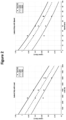
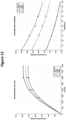
- Figures 2-8 show experimental data collected for a first tyre type (Bridgestone tyre type 1) on a wet road surface and compared with various tyre models.
- This tyre model predicts tyre grip in terms of the lateral load-dependent friction coefficient ( ⁇ y ) being dependent on the vertical tyre load (f z ), and camber angle ( ⁇ ) without any dependence on vehicle speed.
- a scaling factor ⁇ ⁇ y is also present. It can be seen from Figure 2 the tyre model does not provide a good fit with the experimental data collected on a wet road surface.
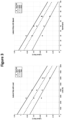
- Figure 3 compares the experimental data with a computer-implemented tyre model according to a first example of the present invention.
- the tyre model predicts tyre grip in terms of the lateral load-dependent friction coefficient ⁇ y being a linear function of the vertical tyre load f z and a linear function of the longitudinal tyre velocity v:
- ⁇ y p Dy 1 + p Dy 2 ⁇ df z 1 ⁇ p Dy 3 ⁇ ⁇ 2 ⁇ ⁇ ⁇ y ⁇ 1 ⁇ p Vdy 1 ⁇ dv
- the tyre model includes a first term that has a linear dependence on the vertical tyre load f z and a second term that has a linear dependence on the longitudinal tyre velocity v.
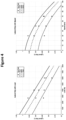
- Figure 4 compares the experimental data with a computer-implemented tyre model according to a second example of the present invention.
- the tyre model includes a first term that has a linear dependence on the vertical tyre load f z , a second term that has a linear dependence on the longitudinal tyre velocity v, and a third term that has a quadratic dependence on the longitudinal tyre velocity v.
- a first term that has a linear dependence on the vertical tyre load f z
- a second term that has a linear dependence on the longitudinal tyre velocity v
- a third term that has a quadratic dependence on the longitudinal tyre velocity v.
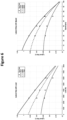
- Figure 5 compares the experimental data with a computer-implemented tyre model according to a third example of the present invention.
- the tyre model includes a first term that has a linear dependence on the vertical tyre load f z , a second term that has a linear dependence on the longitudinal tyre velocity v, and a mixed term that is dependent on a product of the vertical tyre load f z and the longitudinal tyre velocity v.
- Figure 2 there is improvement in how the tyre model fits with the experimental data collected on a wet road surface.
- Figure 6 compares the experimental data with a computer-implemented tyre model according to a fourth example of the present invention.
- the tyre model predicts tyre grip in terms of the lateral load-dependent friction coefficient ⁇ y being a linear function of the vertical tyre load f z , a linear and non-linear function of the longitudinal tyre velocity v, and also including a mixed term that is dependent on a product of the vertical tyre load f z and the longitudinal tyre velocity v:
- ⁇ y p Dy 1 + p Dy 2 ⁇ df z 1 ⁇ p Dy 3 ⁇ ⁇ 2 ⁇ ⁇ ⁇ y ⁇ 1 + p Vdy 1 ⁇ dv + p Vdy 2 ⁇ dv 2 + p Vdy 3 ⁇ dv ⁇ df z
- the tyre model includes the first, second and third terms, as well as the mixed term, described
- the experimental data used to pre-calculate these dimensionless coefficients may relate to a single vehicle speed or multiple vehicle speeds, for example at least three different vehicle speeds.
- Figure 7 compares the experimental data with a computer-implemented tyre model according to another example of the present invention in terms of cornering stiffness K y .
- the cornering stiffness is defined as the slope of the cornering force at the origin.
- the tyre model predicts the cornering stiffness K y based on a primary term that has a linear dependence on the vertical tyre load F z (in the same way as the Magic Formula) and a secondary term that has a linear dependence on the longitudinal tyre velocity v:
- K y p Ky 1 ⁇ F z 0 ⁇ sin 2 arctan F z p Ky 2 ⁇ F z 0 1 ⁇ p Ky 3 ⁇ ⁇ ⁇ ⁇ Ky ⁇ 1 + p Vky 1 ⁇ dv
- Figure 8 compares the experimental data with a computer-implemented tyre model according to yet another example of the present invention in terms of cornering stiffness K y .
- the tyre model predicts the cornering stiffness K y based on a primary term that has a linear dependence on the vertical tyre load F z (in the same way as the Magic Formula), a secondary term that has a linear dependence on the longitudinal tyre velocity v, and a tertiary term that has a quadratic dependence on the longitudinal tyre velocity v:
- K y p Ky 1 ⁇ F z 0 ⁇ sin 2 arctan F z p Ky 2 ⁇ F z 0 1 ⁇ p Ky 3 ⁇ ⁇ ⁇ ⁇ Ky ⁇ 1 + p Vky 1 ⁇ dv + p Vky 2 ⁇ dv 2
- the addition of the secondary term and the tertiary term to the primary term is seen from Figure 8 to provide a good fit to
- equations 6 and 7 above there is included some dimensionless coefficients p K y 1 , p K y 2 , p K y 3 in the first term that depends on vertical tyre load F z . It is already known for tyre models based on the "Magic Formula" to include such dimensionless coefficients, but previously these coefficients were pre-calculated based on experimental data collected on a dry road surface. In the present examples, the dimensionless coefficients p K y 1 , p K y 2 , p K y 3 are pre-calculated based on experimental data collected for a given tyre type on a wet road surface, and thus differ from those already known for tyre models based on the "Magic Formula".
- the experimental data used to pre-calculate these dimensionless coefficients may relate to a single vehicle speed or multiple vehicle speeds, for example at least three different vehicle speeds.
- equation 6 there is included a further dimensionless coefficient p vKdy1 in the secondary (linear) speed-dependent term.
- equation 7 there is included another further dimensionless coefficient p vKdy2 in the tertiary (quadratic) speed-dependent term.
- These further dimensionless coefficients are pre-calculated based on experimental data collected for a given tyre type on a wet road surface. Furthermore, due to the speed-dependence of the secondary and tertiary terms, the experimental data used to pre-calculate these dimensionless coefficients may relate to multiple vehicle speeds, for example at least three different vehicle speeds.
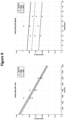
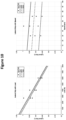
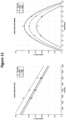
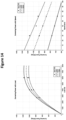
- Figures 9-15 show experimental data collected for a second tyre type with a different pattern design and different size (Bridgestone tyre type 2) on a wet road surface and compared with the same tyre models as described above in relation to Figures 2-8 . It can be seen from these Figures that the tyre models using Equations 2 to 7 again provide a good fit to the experimental data collected on a wet road surface for this different tyre type.
Landscapes
- Engineering & Computer Science (AREA)
- Transportation (AREA)
- Mechanical Engineering (AREA)
- Physics & Mathematics (AREA)
- Automation & Control Theory (AREA)
- Mathematical Physics (AREA)
- Tires In General (AREA)
Abstract
A computer-implemented method of predicting the behaviour of a vehicle tyre on a wet road surface comprises: providing a computer-implemented tyre model; inputting a vertical tyre load (Fz) and a longitudinal tyre velocity (v) to the tyre model; using the computer-implemented tyre model to calculate a predicted tyre cornering force (Fy) in terms of the lateral load-dependent friction coefficient (µy) and/or cornering stiffness (Ky) being dependent on the vertical tyre load (Fz) and being dependent on the longitudinal tyre velocity (v); and outputting the predicted tyre cornering force (Fy) from the computer-implemented tyre model.
Description
- The present invention relates to computer-implemented methods of predicting the behaviour of a vehicle tyre on a wet road surface.
- It is known that in his book Tyre and Vehicle Dynamics published in 1987, Professor H. Pacejka presents the now well-known "Magic Formula" for modelling interaction between a vehicle tyre and the road. This empirical model predicts braking/traction and cornering force dependent on longitudinal and lateral slips, vertical load and camber angle.
- There are various commercial software products available to run vehicle simulations to assess ride and handling performance, which are semi-empirical tire performance models based on the Pacejka Magic Formula. These vehicle simulations are limited to performance on dry road surfaces only. The Magic Formula approach has not been found to give a good correlation with experimental results for a tyre running on a wet surface.
- Some complex models have been proposed in the literature for predicting tyre forces on a low coefficient surface, for example taking into account complex phenomena such as hydrodynamic lubrication. There remains a need for a workable approach to tyre modelling that can reasonably simulate the behaviour of a tyre on a wet surface, and even in real-time.
- The present invention seeks to provide a model for predicting tyre behaviour on wet surfaces.
- According to a first aspect of the present invention there is provided a computer-implemented method of predicting the behaviour of a vehicle tyre on a wet road surface, the method comprising: providing a computer-implemented tyre model; inputting a vertical tyre load (Fz) and a longitudinal tyre velocity (v) to the tyre model; using the computer-implemented tyre model to calculate a predicted tyre grip in terms of the lateral load-dependent friction coefficient (µy) being dependent on the vertical tyre load (Fz) and being dependent on the longitudinal tyre velocity (v); and outputting the predicted tyre grip from the computer-implemented tyre model.
- Thus it has been appreciated that an improved prediction of tyre grip may be provided by such a computer-implemented tyre model when the lateral load-dependent friction coefficient (µy) is calculated dependent on the longitudinal tyre velocity (v) as well as the vertical tyre load (Fz). In this method, the longitudinal tyre velocity (v) is taken as a direct input to the tyre model and the tyre grip is modified dependent on the velocity. It has therefore been recognised that the longitudinal tyre velocity (v), which represents the vehicle speed, is directly responsible for changing the lateral force exerted on the tyre at its contact patch with a wet road, and hence tyre grip in wet driving conditions. This is not taken into account in current versions of the Magic Formula approach.
- The predicted tyre grip output from the computer-implemented tyre model may be used in vehicle simulations to predict tyre behaviour on a wet road in a way that has not previously been achieved. This can reduce the amount of physical testing needed on tyres.
- In at least some embodiments, the lateral load-dependent friction coefficient (µy) is calculated based on a first term that has a linear dependence on the vertical tyre load (Fz) and another term being dependent on the longitudinal tyre velocity (v) in a linear and/or non-linear way. For example, the other term may be a second term that has a linear dependence on the longitudinal tyre velocity (v). For example, in addition or alternatively, the other term may be a third term that has a quadratic dependence on the longitudinal tyre velocity (v). For example, in addition or alternatively, the other term may have a higher order (i.e. n>2) non-linear dependence on the longitudinal tyre velocity (v). It has therefore been recognised that tyre grip on a wet road surface may be modified as a linear and/or non-linear function of the longitudinal tyre velocity. In some preferred embodiments, the third term is always included in the calculation as a strong quadratic dependence on vehicle speed has been observed for tyre grip on a wet road surface.
- In at least some embodiments, in addition or alternatively, the lateral load-dependent friction coefficient (µy) is calculated based on a mixed term that is dependent on a product of the vertical tyre load (Fz) and the longitudinal tyre velocity (v). It has therefore been recognised that tyre grip on a wet road surface may be modified as a function of this mixed term. This is based on an observation from real data that the tyre grip on a wet road surface can increase or decrease as a function of vertical tyre load depending on the vehicle speed.
- In any of the embodiments above, the lateral load-dependent friction coefficient (µy) may be calculated as a sum of one or more of the first, second, third and mixed terms.
- It has also been appreciated that an improved prediction of cornering stiffness may be provided by such a computer-implemented tyre model when the longitudinal tyre velocity (v) is taken into account as an input to the model.
- In at least some embodiments, in addition or alternatively, the method further comprises: using the computer-implemented tyre model to calculate a predicted cornering stiffness dependent on the vertical tyre load (Fz) and on the longitudinal tyre velocity (v); and outputting the predicted cornering stiffness from the computer-implemented tyre model. It has therefore been recognised that the longitudinal tyre velocity (v), which represents the vehicle speed, is directly responsible for changing the cornering stiffness in wet driving conditions. This is another significant deviation from current versions of the Magic Formula approach.
In at least some embodiments, the cornering stiffness is calculated based on a primary term that has a linear dependence on the vertical tyre load (Fz) and a secondary term that has a linear dependence on the longitudinal tyre velocity (v), and optionally a tertiary term that has a quadratic dependence on the longitudinal tyre velocity (v). It has therefore been recognised that cornering stiffness on a wet road surface may be modified as a linear and/or non-linear function of the longitudinal tyre velocity. In some embodiments, the tertiary term is omitted from the calculation as a strong non-linear dependence on vehicle speed has not been observed for cornering stiffness on a wet road surface. - In any of the embodiments above, the cornering stiffness is calculated as a sum of one or more of the primary, secondary and tertiary terms.
- Combining various of the embodiments above, it will be appreciated that the computer-implemented tyre model is capable of predicting both the lateral load-dependent friction coefficient (µy), that is a synonym of grip, and the cornering stiffness. As a result, such methods are particularly well-suited to predicting the overall cornering force. Thus, in some preferred embodiments, the method comprises: using the computer-implemented tyre model to calculate a predicted tyre cornering force in terms of both the lateral load-dependent friction coefficient (µy) and cornering stiffness (Ky) being dependent on the vertical tyre load (Fz) and being dependent on the longitudinal tyre velocity (v); and outputting the predicted tyre cornering force from the computer-implemented tyre model.
- In at least some embodiments, the method uses the computer-implemented tyre model to calculate a predicted tyre grip (and optionally to calculate a predicted cornering stiffness) without inputting a tyre temperature to the computer-implemented tyre model. Thus, it has been recognised that an improved prediction of tyre grip (and optionally cornering stiffness) is based on a direct dependence on vehicle speed without considering tyre temperature, as this has been found not to be predominant on wet surfaces.
- In at least some embodiments, the method comprises: providing a computer-implemented tyre model that includes one or more dimensionless coefficients that have been pre-calculated based on experimental data collected for a given tyre on a wet road surface. Furthermore, these dimensionless coefficients may have been pre-calculated based on experimental data collected for a given tyre on a wet road surface at multiple different longitudinal tyre velocities.
- In some examples, the lateral load-dependent friction coefficient (µy) is calculated based on a second term that has a linear dependence on the longitudinal tyre velocity (v) as a product of a first dimensionless coefficient ("1st grip micro parameter") that has been calculated based on experimental data collected for a tyre on a wet road surface, and a third term that has a quadratic dependence on the longitudinal tyre velocity (v) as a product of a second dimensionless coefficient ("2nd grip micro parameter") that has been calculated based on experimental data collected for a tyre on a wet road surface. For example, the lateral load-dependent friction coefficient (µy) is calculated based on a mixed term that is dependent on a product of the vertical tyre load (Fz), the longitudinal tyre velocity (v) and a third dimensionless coefficient ("3rd grip micro parameter") that has been calculated based on experimental data collected for a tyre on a wet road surface. Thus, in some examples, the computer-implemented tyre model may include at least three dimensionless coefficients relating to grip that have been calculated based on experimental data collected for a tyre on a wet road surface and are therefore different to any dimensionless coefficients included in existing versions of the Magic Formula.
- In some examples, the cornering stiffness is calculated based on a secondary term that has a linear dependence on the longitudinal tyre velocity (v) as a product of a first dimensionless coefficient ("1st stiffness micro parameter") that has been calculated based on experimental data collected for a tyre on a wet road surface, and a tertiary term that has a quadratic dependence on the longitudinal tyre velocity (v) as a product of a second dimensionless coefficient ("2nd stiffness micro parameter") that has been calculated based on experimental data collected for a tyre on a wet road surface. Thus the computer-implemented tyre model may include one or two dimensionless coefficients relating to cornering stiffness that have been calculated based on experimental data collected for a tyre on a wet road surface and are therefore different to any dimensionless coefficients included in existing versions of the Magic Formula.
- In at least some embodiments, one or more dimensionless coefficients may be dependent on a tyre type. The tyre type may include at least one of a tyre size, tyre manufacturer, tyre age, tyre tread pattern (and its design), tyre finish, etc. The one or more dimensionless coefficients may have been calculated based on experimental data collected for that particular tyre type on a wet road surface.
- Methods as disclosed herein may find use for a variety of purposes, including the running of vehicle simulations, and implementation of driving simulators that allow a human driver to virtually drive a vehicle on a wet road. As the method takes the vehicle speed as an input to the tyre model, the output(s) provided by the method can adapt in real-time to changes in speed. Thus, in at least some embodiments, the method comprises: inputting a longitudinal tyre velocity (v) to the tyre model in real time; and outputting the predicted tyre grip from the computer-implemented tyre model in real time. Optionally, the predicted cornering stiffness is also output from the computer-implemented tyre model in real time.
- The computer-implemented tyre models disclosed herein have been found to provide accurate outputs across a range of typical vehicle speeds, when compared to experimental data obtained for tyres on wet roads. In at least some embodiments, inputting a longitudinal tyre velocity (v) to the tyre model comprises: selecting a longitudinal tyre velocity (v) in the range of 30-70 kph.
- According to the present disclosure, what is meant by a wet road surface is a road surface covered by a uniform and constant 2.0 mm layer of water.
- According to a second aspect of the present invention there is provided a computer system for predicting the behaviour of a vehicle tyre on a wet road surface, the system implementing a method as disclosed herein. The computer system may comprise a processor and a tangible memory storing computer-executable instructions that, when executed by the processor, cause the system to implement any of the methods as disclosed herein.
- According to a further aspect of the present invention there is provided a vehicle driving simulator comprising such a computer system. As mentioned above, in at least some embodiments the vehicle speed may be input to the tyre model in real time. In at least some embodiments, the vehicle driving simulator may comprise a driver interface configured for a human driver to input a vehicle speed to the computer system in real time. This vehicle speed may be taken by the computer system (i.e. a processor thereof) and used to input a longitudinal tyre velocity (v) to the tyre model in real time.
- According to a further aspect of the present invention there is provided a computer software product configured to implement any of the methods as disclosed herein.
-
-
Figure 1 shows a vehicle tyre and some of the main parameters involved in a computer-implemented tyre model; -
Figures 2-8 show experimental data collected for a first tyre type on a wet road surface and compared with various tyre models, in which:-
Figure 2 compares the experimental data with the original (1987) Pacejka formulation of a tyre model; -
Figure 3 compares the experimental data with a computer-implemented tyre model according to a first example of the present invention; -
Figure 4 compares the experimental data with a computer-implemented tyre model according to a second example of the present invention; -
Figure 5 compares the experimental data with a computer-implemented tyre model according to a third example of the present invention; -
Figure 6 compares the experimental data with a computer-implemented tyre model according to a fourth example of the present invention; -
Figure 7 compares the experimental data with a computer-implemented tyre model according to another example of the present invention in terms of cornering stiffness; -
Figure 8 compares the experimental data with a computer-implemented tyre model according to yet another example of the present invention in terms of cornering stiffness;
-
-
Figures 9-15 show experimental data collected for a second tyre type on a wet road surface and compared with various tyre models in same way as forFigures 2-8 . - It is shown in
Figure 1 how a vehicle tyre on a wet road surface is under the influence of a vertical tyre load Fz and has a longitudinal tyre velocity v as determined by the vehicle speed. The lateral force Fy is linked to the vertical tyre load Fz through the lateral load-dependent friction coefficient µy, which acts to dictate the tyre's grip on the road surface. The lateral force Fy is also known as the cornering force. According to the methods described herein, a computer-implemented tyre model is used to calculate a predicted tyre grip in terms of the lateral load-dependent friction coefficient µy being dependent on the vertical tyre load Fz and on the longitudinal tyre velocity v. It can be seen that longitudinal tyre velocity v is distinct from the tyre's angular velocity ω. -
Figures 2-8 show experimental data collected for a first tyre type (Bridgestone tyre type 1) on a wet road surface and compared with various tyre models. -
Figure 2 compares the experimental data with the original (1987) Pacejka formulation of a tyre model i.e. the so-called "Magic Formula" in which:
Figure 2 the tyre model does not provide a good fit with the experimental data collected on a wet road surface. -
Figure 3 compares the experimental data with a computer-implemented tyre model according to a first example of the present invention. In this first example, the tyre model predicts tyre grip in terms of the lateral load-dependent friction coefficient µy being a linear function of the vertical tyre load fz and a linear function of the longitudinal tyre velocity v:
Figure 2 , there is some improvement in how the tyre model fits with the experimental data collected on a wet road surface.
Figure 4 compares the experimental data with a computer-implemented tyre model according to a second example of the present invention. In this second example, the tyre model predicts tyre grip in terms of the lateral load-dependent friction coefficient µy being a linear function of the vertical tyre load fz and a function of the longitudinal tyre velocity v including both linear and non-linear components:
- In this second example, the tyre model includes a first term that has a linear dependence on the vertical tyre load fz, a second term that has a linear dependence on the longitudinal tyre velocity v, and a third term that has a quadratic dependence on the longitudinal tyre velocity v. Compared to
Figure 2 , there is improvement in how the tyre model fits with the experimental data collected on a wet road surface. -
Figure 5 compares the experimental data with a computer-implemented tyre model according to a third example of the present invention. In this third example, the tyre model predicts tyre grip in terms of the lateral load-dependent friction coefficient µy being a linear function of the vertical tyre load fz and longitudinal tyre velocity v, and also including a mixed term:
- In this third example, the tyre model includes a first term that has a linear dependence on the vertical tyre load fz, a second term that has a linear dependence on the longitudinal tyre velocity v, and a mixed term that is dependent on a product of the vertical tyre load fz and the longitudinal tyre velocity v. Compared to
Figure 2 , there is improvement in how the tyre model fits with the experimental data collected on a wet road surface. -
Figure 6 compares the experimental data with a computer-implemented tyre model according to a fourth example of the present invention. In this fourth example, the tyre model predicts tyre grip in terms of the lateral load-dependent friction coefficient µy being a linear function of the vertical tyre load fz, a linear and non-linear function of the longitudinal tyre velocity v, and also including a mixed term that is dependent on a product of the vertical tyre load fz and the longitudinal tyre velocity v:
Figure 2 , it can be seen how this tyre model fits very well with the experimental data collected on a wet road surface. - In each of the equations 1-5 above, there is included some dimensionless coefficients p Dy1, p Dy2 , p Dy3 in the first term that depends on vertical tyre load fz. It is already known for tyre models based on the "Magic Formula" to include such dimensionless coefficients, but previously these coefficients were pre-calculated based on experimental data collected on a dry road surface. In the present examples, the dimensionless coefficients p Dy1, p Dy2, p Dy3 are pre-calculated based on experimental data collected for a given tyre type on a wet road surface, and thus differ from those already known for tyre models based on the "Magic Formula". This follows from a recognition that the grip level of a tyre (i.e. the lateral friction coefficient) reaches different values on dry surfaces as compared to wet surfaces, thus the absolute values of these coefficients change if you test a tyre on a surface dry or on a wet surface. The experimental data used to pre-calculate these dimensionless coefficients may relate to a single vehicle speed or multiple vehicle speeds, for example at least three different vehicle speeds.
- In each of the equations 2-5 above, there is included some further dimensionless coefficients pvdy1, pvdy2, pvdy3 in the additional speed-dependent terms, wherein pvdy1 is included in the second (linear) term, pvdy2 is included in the third (non-linear) term, and pvdy3 is included in the mixed term. These further dimensionless coefficients are pre-calculated based on experimental data collected for a given tyre type on a wet road surface. Furthermore, due to the speed-dependence of these additional terms, the experimental data used to pre-calculate these dimensionless coefficients may relate to multiple vehicle speeds, for example at least three different vehicle speeds.
- The way in which such dimensionless coefficients are pre-calculated from experimental data is generally known in the art. For example, a least squares fitting or other iterative fitting technique may be employed.
-
Figure 7 compares the experimental data with a computer-implemented tyre model according to another example of the present invention in terms of cornering stiffness Ky. As is well known in this technical field, the cornering stiffness is defined as the slope of the cornering force at the origin. In this example, the tyre model predicts the cornering stiffness Ky based on a primary term that has a linear dependence on the vertical tyre load Fz (in the same way as the Magic Formula) and a secondary term that has a linear dependence on the longitudinal tyre velocity v:
- The addition of the secondary term to the primary term is seen from
Figure 7 to provide a good fit to the experimental data collected on a wet road surface. -
Figure 8 compares the experimental data with a computer-implemented tyre model according to yet another example of the present invention in terms of cornering stiffness Ky. In this example, the tyre model predicts the cornering stiffness Ky based on a primary term that has a linear dependence on the vertical tyre load Fz (in the same way as the Magic Formula), a secondary term that has a linear dependence on the longitudinal tyre velocity v, and a tertiary term that has a quadratic dependence on the longitudinal tyre velocity v:
Figure 8 to provide a good fit to the experimental data collected on a wet road surface. - In equations 6 and 7 above, there is included some dimensionless coefficients p Ky1, p Ky2, p Ky3 in the first term that depends on vertical tyre load Fz. It is already known for tyre models based on the "Magic Formula" to include such dimensionless coefficients, but previously these coefficients were pre-calculated based on experimental data collected on a dry road surface. In the present examples, the dimensionless coefficients p Ky1, p Ky2, p Ky3 are pre-calculated based on experimental data collected for a given tyre type on a wet road surface, and thus differ from those already known for tyre models based on the "Magic Formula". This follows from a recognition that the grip level of a tyre (i.e. the lateral friction coefficient) reaches different values on dry surfaces as compared to wet surfaces, thus the absolute values of these coefficients change if you test a tyre on a surface dry or on a wet surface. The experimental data used to pre-calculate these dimensionless coefficients may relate to a single vehicle speed or multiple vehicle speeds, for example at least three different vehicle speeds.
- In equation 6, there is included a further dimensionless coefficient pvKdy1 in the secondary (linear) speed-dependent term. In equation 7, there is included another further dimensionless coefficient pvKdy2 in the tertiary (quadratic) speed-dependent term. These further dimensionless coefficients are pre-calculated based on experimental data collected for a given tyre type on a wet road surface. Furthermore, due to the speed-dependence of the secondary and tertiary terms, the experimental data used to pre-calculate these dimensionless coefficients may relate to multiple vehicle speeds, for example at least three different vehicle speeds.
- As mentioned above, the way in which such dimensionless coefficients are pre-calculated from experimental data is generally known in the art. For example, a least squares fitting or other iterative fitting technique may be employed.
-
Figures 9-15 show experimental data collected for a second tyre type with a different pattern design and different size (Bridgestone tyre type 2) on a wet road surface and compared with the same tyre models as described above in relation toFigures 2-8 . It can be seen from these Figures that the tyremodels using Equations 2 to 7 again provide a good fit to the experimental data collected on a wet road surface for this different tyre type.
Claims (15)
- A computer-implemented method of predicting the behaviour of a vehicle tyre on a wet road surface, the method comprising:providing a computer-implemented tyre model;inputting a vertical tyre load (Fz) and a longitudinal tyre velocity (v) to the tyre model;using the computer-implemented tyre model to calculate a predicted tyre grip in terms of the lateral load-dependent friction coefficient (µy) being dependent on the vertical tyre load (Fz) and being dependent on the longitudinal tyre velocity (v); andoutputting the predicted tyre grip from the computer-implemented tyre model.
- The computer-implemented method of claim 1, wherein the lateral load-dependent friction coefficient (µy) is calculated based on a first term that has a linear dependence on the vertical tyre load (Fz) and another term being dependent on the longitudinal tyre velocity (v) in a linear and/or non-linear way.
- The computer-implemented method of claim 1 or 2, wherein the lateral load-dependent friction coefficient (µy) is calculated based on a first term that has a linear dependence on the vertical tyre load (Fz) and another term that has a quadratic dependence on the longitudinal tyre velocity (v).
- The computer-implemented method of any preceding claim, wherein the lateral load-dependent friction coefficient (µy) is calculated based on a mixed term that is dependent on a product of the vertical tyre load (Fz) and the longitudinal tyre velocity (v).
- The computer-implemented method of any preceding claim, further comprising:using the computer-implemented tyre model to calculate a predicted cornering stiffness dependent on the vertical tyre load (Fz) and on the longitudinal tyre velocity (v); andoutputting the predicted cornering stiffness from the computer-implemented tyre model.
- The computer-implemented method of claim 5, wherein the cornering stiffness is calculated based on a primary term that has a linear dependence on the vertical tyre load (Fz) and a secondary term that has a linear dependence on the longitudinal tyre velocity (v).
- The computer-implemented method of claim 5 or 6, wherein the cornering stiffness is calculated based on a primary term that has a linear dependence on the vertical tyre load (Fz) and a tertiary term that has a quadratic dependence on the longitudinal tyre velocity (v).
- The computer-implemented method of any preceding claim, comprising:using the computer-implemented tyre model to calculate a predicted tyre cornering force (Fy) in terms of both the lateral load-dependent friction coefficient (µy) and cornering stiffness (Ky) being dependent on the vertical tyre load (Fz) and being dependent on the longitudinal tyre velocity (v); andoutputting the predicted tyre cornering force (Fy) from the computer-implemented tyre model.
- The computer-implemented method of any preceding claim, comprising:
providing a computer-implemented tyre model that includes one or more dimensionless coefficients that have been pre-calculated based on experimental data collected for a given tyre on a wet road surface. - The computer-implemented method of claim 9, wherein the one or more dimensionless coefficients have been pre-calculated based on experimental data collected for a given tyre on a wet road surface at multiple different longitudinal tyre velocities.
- The computer-implemented method of any preceding claim, comprising:inputting a longitudinal tyre velocity (v) to the tyre model in real time; andoutputting the predicted tyre grip from the computer-implemented tyre model in real time.
- A computer system for predicting the behaviour of a vehicle tyre on a wet road surface, the system implementing a method according to any preceding claim.
- The computer system of claim 12, comprising a processor and a tangible memory storing computer-executable instructions that, when executed by the processor, cause the system to implement a method according to any of claims 1-11.
- A vehicle driving simulator comprising a computer system according to claim 12 or 13.
- A computer software product configured to implement a method according to any of claims 1-11.
Priority Applications (6)
| Application Number | Priority Date | Filing Date | Title |
|---|---|---|---|
| EP21205836.6A EP4173906A1 (en) | 2021-11-01 | 2021-11-01 | Tyre models for simulations on wet surfaces |
| CN202280073064.7A CN118201832A (en) | 2021-11-01 | 2022-10-31 | Tire model for simulation of wet surfaces |
| JP2024525740A JP7746567B2 (en) | 2021-11-01 | 2022-10-31 | Tire model for wet road simulation |
| EP22793441.1A EP4426593B1 (en) | 2021-11-01 | 2022-10-31 | Tyre models for simulations on wet surfaces |
| US18/702,399 US20240409104A1 (en) | 2021-11-01 | 2022-10-31 | Tire models for simulations on wet surfaces |
| PCT/EP2022/080338 WO2023073227A1 (en) | 2021-11-01 | 2022-10-31 | Tyre models for simulations on wet surfaces |
Applications Claiming Priority (1)
| Application Number | Priority Date | Filing Date | Title |
|---|---|---|---|
| EP21205836.6A EP4173906A1 (en) | 2021-11-01 | 2021-11-01 | Tyre models for simulations on wet surfaces |
Publications (1)
| Publication Number | Publication Date |
|---|---|
| EP4173906A1 true EP4173906A1 (en) | 2023-05-03 |
Family
ID=78770335
Family Applications (2)
| Application Number | Title | Priority Date | Filing Date |
|---|---|---|---|
| EP21205836.6A Withdrawn EP4173906A1 (en) | 2021-11-01 | 2021-11-01 | Tyre models for simulations on wet surfaces |
| EP22793441.1A Active EP4426593B1 (en) | 2021-11-01 | 2022-10-31 | Tyre models for simulations on wet surfaces |
Family Applications After (1)
| Application Number | Title | Priority Date | Filing Date |
|---|---|---|---|
| EP22793441.1A Active EP4426593B1 (en) | 2021-11-01 | 2022-10-31 | Tyre models for simulations on wet surfaces |
Country Status (5)
| Country | Link |
|---|---|
| US (1) | US20240409104A1 (en) |
| EP (2) | EP4173906A1 (en) |
| JP (1) | JP7746567B2 (en) |
| CN (1) | CN118201832A (en) |
| WO (1) | WO2023073227A1 (en) |
Cited By (1)
| Publication number | Priority date | Publication date | Assignee | Title |
|---|---|---|---|---|
| EP4588693A1 (en) * | 2024-01-17 | 2025-07-23 | Bridgestone Europe NV/SA | Tyre models for simulations on wet surfaces |
Citations (1)
| Publication number | Priority date | Publication date | Assignee | Title |
|---|---|---|---|---|
| RU2661555C1 (en) * | 2017-08-03 | 2018-07-17 | Федеральное государственное бюджетное образовательное учреждение высшего образования "Восточно-Сибирский государственный университет технологий и управления" | Method for determining the side friction factor of the elastic tire of the car wheel |
Family Cites Families (7)
| Publication number | Priority date | Publication date | Assignee | Title |
|---|---|---|---|---|
| DE102005046612B4 (en) | 2005-09-29 | 2019-05-16 | Zf Friedrichshafen Ag | Method for realizing driving dynamics functions using a real-time tire model |
| JP6089959B2 (en) | 2013-05-20 | 2017-03-08 | トヨタ自動車株式会社 | Tire behavior estimation device |
| JP6363920B2 (en) * | 2014-09-11 | 2018-07-25 | 住友ゴム工業株式会社 | Method for evaluating hydroplaning performance of tires |
| JP6845677B2 (en) | 2016-12-12 | 2021-03-24 | Toyo Tire株式会社 | Front-rear force simulation method, equipment and program |
| JP7315824B2 (en) | 2019-06-11 | 2023-07-27 | 横浜ゴム株式会社 | Tire initial shape design method, tire initial shape design device, and program |
| JP7356958B2 (en) | 2019-09-18 | 2023-10-05 | Toyo Tire株式会社 | Tire physical information estimation system and tire physical information estimation method |
| JP7538083B2 (en) * | 2021-04-15 | 2024-08-21 | トヨタ自動車株式会社 | Steering device and steering method |
-
2021
- 2021-11-01 EP EP21205836.6A patent/EP4173906A1/en not_active Withdrawn
-
2022
- 2022-10-31 US US18/702,399 patent/US20240409104A1/en active Pending
- 2022-10-31 EP EP22793441.1A patent/EP4426593B1/en active Active
- 2022-10-31 WO PCT/EP2022/080338 patent/WO2023073227A1/en not_active Ceased
- 2022-10-31 JP JP2024525740A patent/JP7746567B2/en active Active
- 2022-10-31 CN CN202280073064.7A patent/CN118201832A/en active Pending
Patent Citations (1)
| Publication number | Priority date | Publication date | Assignee | Title |
|---|---|---|---|---|
| RU2661555C1 (en) * | 2017-08-03 | 2018-07-17 | Федеральное государственное бюджетное образовательное учреждение высшего образования "Восточно-Сибирский государственный университет технологий и управления" | Method for determining the side friction factor of the elastic tire of the car wheel |
Non-Patent Citations (5)
| Title |
|---|
| ACOSTA MANUEL ET AL: "Tire lateral force estimation and grip potential identification using Neural Networks, Extended Kalman Filter, and Recursive Least Squares", NEURAL COMPUTING AND APPLICATIONS, SPRINGER LONDON, LONDON, vol. 30, no. 11, 13 March 2017 (2017-03-13), pages 3445 - 3465, XP036641014, ISSN: 0941-0643, [retrieved on 20170313], DOI: 10.1007/S00521-017-2932-9 * |
| KISSAI MOAD ET AL: "A new linear tire model with varying parameters", 2017 2ND IEEE INTERNATIONAL CONFERENCE ON INTELLIGENT TRANSPORTATION ENGINEERING (ICITE), IEEE, 1 September 2017 (2017-09-01), pages 108 - 115, XP033160630, ISBN: 978-1-5090-6272-0, [retrieved on 20171002], DOI: 10.1109/ICITE.2017.8056891 * |
| PORCEL A ET AL: "Tyre model for vehicle simulation: overview and real time solution for critical situations", PROCEEDINGS OF THE 2001 IEEE INTERNATIONAL CONFERENCE ON CONTROL APPLICATIONS. CCA'01. MEXICO CITY, MEXICO, SEPT. 5 - 7, 2001; [IEEE INTERNATIONAL CONFERENCE ON CONTROL APPLICATIONS], NEW YORK, NY : IEEE, US, 5 September 2001 (2001-09-05), pages 817 - 822, XP010571075, ISBN: 978-0-7803-6733-3, DOI: 10.1109/CCA.2001.973970 * |
| RUZINSKAS ANDRIUS ET AL: "Magic Formula Tyre Model Application for a Tyre-Ice Interaction", PROCEDIA ENGINEERING, ELSEVIER BV, NL, vol. 187, 11 May 2017 (2017-05-11), pages 335 - 341, XP085008991, ISSN: 1877-7058, DOI: 10.1016/J.PROENG.2017.04.383 * |
| SALEHI MARZIEH ET AL: "A New Horizon for Evaluating Tire Grip Within a Laboratory Environment", TRIBOLOGY LETTERS, SPRINGER US, NEW YORK, vol. 68, no. 1, 12 February 2020 (2020-02-12), XP037094033, ISSN: 1023-8883, [retrieved on 20200212], DOI: 10.1007/S11249-020-1273-5 * |
Cited By (2)
| Publication number | Priority date | Publication date | Assignee | Title |
|---|---|---|---|---|
| EP4588693A1 (en) * | 2024-01-17 | 2025-07-23 | Bridgestone Europe NV/SA | Tyre models for simulations on wet surfaces |
| WO2025154008A1 (en) * | 2024-01-17 | 2025-07-24 | Bridgestone Europe Nv/Sa | Tyre models for simulations on wet surfaces |
Also Published As
| Publication number | Publication date |
|---|---|
| EP4426593A1 (en) | 2024-09-11 |
| JP2024539354A (en) | 2024-10-28 |
| US20240409104A1 (en) | 2024-12-12 |
| CN118201832A (en) | 2024-06-14 |
| JP7746567B2 (en) | 2025-09-30 |
| EP4426593B1 (en) | 2026-02-18 |
| WO2023073227A1 (en) | 2023-05-04 |
| EP4426593C0 (en) | 2026-02-18 |
Similar Documents
| Publication | Publication Date | Title |
|---|---|---|
| Liu et al. | Modeling and simulation of the car-truck heterogeneous traffic flow based on a nonlinear car-following model | |
| US9499166B2 (en) | Method and system for vehicle ESC system using map data | |
| Li et al. | Geometric design safety estimation based on tire–road side friction | |
| El-Sayegh et al. | Cornering characteristics of a truck tire on wet surface using finite element analysis and smoothed-particle hydrodynamics | |
| Rice | Measuring car-driver interaction with the gg diagram | |
| Dhahir et al. | Reliability-based design of horizontal curves on two-lane rural highways | |
| Alrejjal et al. | Impact of combined alignments and adverse weather conditions on vehicle skidding | |
| EP4426593B1 (en) | Tyre models for simulations on wet surfaces | |
| Pearson et al. | TameTire: Introduction to the model | |
| CN108388730A (en) | The method of vehicle development | |
| US11809788B2 (en) | Method for simulating the physical behavior of a tire and application to real-time simulation | |
| Davari et al. | Extended brush tyre model to study rolling loss in vehicle dynamics simulations | |
| Zheng et al. | Evaluation on braking stability of autonomous vehicles running along curved sections based on asphalt pavement adhesion properties | |
| Vantsevich et al. | Analysis of tire relaxation constants for modeling vehicle traction performance and handling | |
| KR20240117666A (en) | Data-driven based apparatus and method of improving accuracy for vehicle lateral model | |
| Raj et al. | Analysis and modelling of passing sight distance using vehicle dynamic response | |
| Freeman et al. | Run-off-road and recovery–state estimation and vehicle control strategies | |
| Fancher et al. | Representing truck tire characteristics in simulations of braking and braking-in-a-turn maneuvers | |
| CN106651191A (en) | Mountain area highway horizontal curve dangerous section identification method | |
| Khanse et al. | Development of a simulink-carsim interaction package for ABS simulation of discrete tire models | |
| Shin et al. | Reliability-based Design Optimization of highway horizontal curves based on First-order Reliability Method | |
| Orfila et al. | Modeling of dynamic vehicle–road interactions for safety-related road evaluation | |
| JP2017126272A (en) | Tire simulation method | |
| El-Zomor | Real-time estimation of pneumatic tyre hysteresis loss | |
| Du et al. | Kinematics-based parameter-varying observer design for sideslip angle estimation |
Legal Events
| Date | Code | Title | Description |
|---|---|---|---|
| PUAI | Public reference made under article 153(3) epc to a published international application that has entered the european phase |
Free format text: ORIGINAL CODE: 0009012 |
|
| STAA | Information on the status of an ep patent application or granted ep patent |
Free format text: STATUS: THE APPLICATION HAS BEEN PUBLISHED |
|
| AK | Designated contracting states |
Kind code of ref document: A1 Designated state(s): AL AT BE BG CH CY CZ DE DK EE ES FI FR GB GR HR HU IE IS IT LI LT LU LV MC MK MT NL NO PL PT RO RS SE SI SK SM TR |
|
| STAA | Information on the status of an ep patent application or granted ep patent |
Free format text: STATUS: THE APPLICATION IS DEEMED TO BE WITHDRAWN |
|
| 18D | Application deemed to be withdrawn |
Effective date: 20231104 |