EP4172297B1 - Laundry detergent formulation with biodegradable antiredeposition agent - Google Patents
Laundry detergent formulation with biodegradable antiredeposition agent Download PDFInfo
- Publication number
- EP4172297B1 EP4172297B1 EP21740384.9A EP21740384A EP4172297B1 EP 4172297 B1 EP4172297 B1 EP 4172297B1 EP 21740384 A EP21740384 A EP 21740384A EP 4172297 B1 EP4172297 B1 EP 4172297B1
- Authority
- EP
- European Patent Office
- Prior art keywords
- laundry detergent
- detergent formulation
- structural units
- antiredeposition agent
- formula
- Prior art date
- Legal status (The legal status is an assumption and is not a legal conclusion. Google has not performed a legal analysis and makes no representation as to the accuracy of the status listed.)
- Active
Links
Classifications
-
- C—CHEMISTRY; METALLURGY
- C11—ANIMAL OR VEGETABLE OILS, FATS, FATTY SUBSTANCES OR WAXES; FATTY ACIDS THEREFROM; DETERGENTS; CANDLES
- C11D—DETERGENT COMPOSITIONS; USE OF SINGLE SUBSTANCES AS DETERGENTS; SOAP OR SOAP-MAKING; RESIN SOAPS; RECOVERY OF GLYCEROL
- C11D1/00—Detergent compositions based essentially on surface-active compounds; Use of these compounds as a detergent
- C11D1/02—Anionic compounds
- C11D1/12—Sulfonic acids or sulfuric acid esters; Salts thereof
- C11D1/22—Sulfonic acids or sulfuric acid esters; Salts thereof derived from aromatic compounds
-
- C—CHEMISTRY; METALLURGY
- C11—ANIMAL OR VEGETABLE OILS, FATS, FATTY SUBSTANCES OR WAXES; FATTY ACIDS THEREFROM; DETERGENTS; CANDLES
- C11D—DETERGENT COMPOSITIONS; USE OF SINGLE SUBSTANCES AS DETERGENTS; SOAP OR SOAP-MAKING; RESIN SOAPS; RECOVERY OF GLYCEROL
- C11D3/00—Other compounding ingredients of detergent compositions covered in group C11D1/00
- C11D3/0005—Other compounding ingredients characterised by their effect
- C11D3/0036—Soil deposition preventing compositions; Antiredeposition agents
-
- C—CHEMISTRY; METALLURGY
- C11—ANIMAL OR VEGETABLE OILS, FATS, FATTY SUBSTANCES OR WAXES; FATTY ACIDS THEREFROM; DETERGENTS; CANDLES
- C11D—DETERGENT COMPOSITIONS; USE OF SINGLE SUBSTANCES AS DETERGENTS; SOAP OR SOAP-MAKING; RESIN SOAPS; RECOVERY OF GLYCEROL
- C11D3/00—Other compounding ingredients of detergent compositions covered in group C11D1/00
- C11D3/16—Organic compounds
- C11D3/37—Polymers
- C11D3/3746—Macromolecular compounds obtained by reactions only involving carbon-to-carbon unsaturated bonds
- C11D3/3757—(Co)polymerised carboxylic acids, -anhydrides, -esters in solid and liquid compositions
-
- C—CHEMISTRY; METALLURGY
- C11—ANIMAL OR VEGETABLE OILS, FATS, FATTY SUBSTANCES OR WAXES; FATTY ACIDS THEREFROM; DETERGENTS; CANDLES
- C11D—DETERGENT COMPOSITIONS; USE OF SINGLE SUBSTANCES AS DETERGENTS; SOAP OR SOAP-MAKING; RESIN SOAPS; RECOVERY OF GLYCEROL
- C11D2111/00—Cleaning compositions characterised by the objects to be cleaned; Cleaning compositions characterised by non-standard cleaning or washing processes
- C11D2111/10—Objects to be cleaned
- C11D2111/12—Soft surfaces, e.g. textile
Definitions
- the present invention relates to a laundry detergent formulation.
- the present invention relates to a laundry detergent formulation incorporating a detergent surfactant, wherein the laundry detergent formulation contains 8 to 20 wt.% of the surfactant and wherein the detergent surfactant is a linear C 10-20 alkylbenzenesulfonate, a builder, a filler, and an antiredeposition agent, comprising: 10 to 65 wt%, based on dry weight of the antiredeposition agent, of structural units of formula I wherein each R 1 and R 2 is independently selected from a hydrogen and a C 1-3 alkyl group; 10 to 80 wt%, based on dry weight of the antiredeposition agent, of structural units of formula II wherein each R 3 is independently selected from a hydrogen and a -C(O)CH 3 group; and 10 to 65 wt%, based on dry weight of the antiredeposition agent, of structural units of formula III
- Laundry detergents providing excellent overall cleaning are desirable to consumers.
- Such laundry detergents typically include surfactants among other components to deliver the consumer desired cleaning benefits.
- surfactants among other components to deliver the consumer desired cleaning benefits.
- increasing sensitivity for the environment and rising material costs a move to reduce the utilization of surfactants in laundry detergents is growing. Consequently, detergent manufactures are seeking ways to reduce the amount of surfactant per unit dose of the laundry detergent while maintaining overall cleaning performance.
- Rodriques discloses a powder detergent composition comprising at least one surfactant and builder and from 0.1 to about 75 weight percent, based on total weight of the powder detergent composition, of a water-soluble or water-dispersible polymer having pendant acid functionality and a terminal fragment of a chain transfer agent, wherein the polymer is the polymerization product of 60 to 95 weight percent of an ethylenically unsaturated acid monomer and 5 to 40 weight percent of a C 3 to C 24 chain transfer agent, wherein the weight percents are based on the weight of the total monomer and chain transfer agent.
- U.S. Patent No. 5,191,048A relates to biodegradable free-radical addition polymers. Specifically, U.S. Patent No. 5,191,048A is directed to a terpolymer containing as polymerized units at least one first monomer selected from the group of vinyl acetate, vinyl ethers and vinyl carbonates, at least one second monomer of an ethylenically unsaturated monocarboxylic acid, and at least one third monomer of an anhydride of a dicarboxylic acid.
- the present invention provides a laundry detergent formulation, comprising: 8 to 20 wt% of a detergent surfactant wherein the detergent surfactant is a linear C 10 -C 20 alkylbenzenesulfonate; a builder; a filler; and an antiredeposition agent, wherein the antiredeposition agent is a polymer comprising: (a) 10 to 65 wt%, based on dry weight of the antiredeposition agent, of structural units of formula I wherein each R 1 and R 2 is independently selected from a hydrogen and a C 1-3 alkyl group; (b) 10 to 80 wt%, based on dry weight of the antiredeposition agent, of structural units of formula II wherein each R 3 is independently selected from a hydrogen and a -C(O)CH 3 group; and (c) 10 to 65 wt%, based on dry weight of the antiredeposition agent, of structural units of formula III
- the present invention provides a method of washing a soiled fabric article, comprising: providing a soiled fabric article; providing a laundry detergent formulation according to the present invention; providing a wash water; and applying the wash water and the laundry detergent formulation to the soiled fabric article to provide a cleaned fabric article.
- the antiredeposition agent of the present invention exhibits desirable biodegradability properties.
- the antiredeposition agent of the present invention as particularly described herein surprisingly give good primary detergency and antiredepositon performance relative to conventional antiredeposition agents, but while also providing biodegradability that is desired to facilitate formulation of more sustainable laundry detergent formulations.
- the antiredeposition agent of the present invention is also surprisingly hard water tolerant, unlike conventional maleic acid residue containing polymers that are susceptible to complexation with Ca 2+ ions present in hard water, leading to flocculation and precipitation.
- Weight percentages (or wt%) in the composition are percentages of dry weight, i.e., excluding any water that may be present in the composition.
- Percentages of monomer units in the polymer are percentages of solids weight, i.e., excluding any water present in a polymer emulsion.
- weight average molecular weight and “Mw” are used interchangeably to refer to the weight average molecular weight as measured in a conventional manner with gel permeation chromatography (GPC) and conventional standards, such as polystyrene standards.
- GPC techniques are discussed in detail in Modem Size Exclusion Chromatography, W. W. Yau, J. J. Kirkland, D. D. Bly; Wiley-lnterscience, 1979 , and in A Guide to Materials Characterization and Chemical Analysis, J. P. Sibilia; VCH, 1988, p. 81-84 . Weight average molecular weights are reported herein in units of Daltons.
- ethylenically unsaturated as used herein and in the appended claims describes molecules having a carbon-carbon double bond, which renders it polymerizable.
- multi-ethylenically unsaturated as used herein and in the appended claims describes molecules having at least two carbon-carbon double bonds.
- (meth)acrylic refers to either acrylic or methacrylic.
- phosphate-free as used herein and in the appended claims means compositions containing less than 0.1 wt% (more preferably, ⁇ 0.01 wt%; yet still more preferably, ⁇ 0.001 wt%; most preferably, less than the detectable limit) of phosphate (measured as elemental phosphorus).
- structural units refers to the remnant of the indicated monomer; thus a structural unit of (meth)acrylic acid is illustrated: wherein the dotted lines represent the points of attachment to the polymer backbone and where R 4 is a hydrogen for structural units of acrylic acid and a -CH 3 for structural units of methacrylic acid.
- the laundry detergent formulation of the present invention is selected from a liquid laundry detergent formulation, a powder laundry detergent formulation and a laundry bar.
- the laundry detergent formulation of the present invention is selected from at least one of a liquid laundry detergent formation and a powder laundry detergent formulation provided in a monodose format.
- the laundry detergent formulation of the present invention is an anhydrous powder laundry detergent formulation containing ⁇ 1 wt% (preferable, ⁇ 0.1 wt%; more preferably, ⁇ 0.01 wt%; most preferably, ⁇ 0.001 wt%) water.
- the laundry detergent formulation (preferably, powder laundry detergent formulation) of the present invention, comprises: 8 to 20 wt% of a detergent surfactant wherein the detergent surfactant is a linear C 10 - 20 alkylbenzenesulfonate (preferably, 8 to 18 wt%, based on weight of the laundry detergent formulation); a builder (preferably, 20 to 75 wt% (preferably, 20 to 65 wt%; more preferably, 25 to 50 wt%; most preferably, 27 to 35 wt%), based on weight of the laundry detergent formulation, of the builder); a filler (preferably, 0 to 74.09 wt% (preferably, 5 to 70 wt%; more preferably, 28.5 to 65 wt%; most preferably, 53.9 to 62 wt%), based on weight of the laundry detergent formulation, of the filler); and an antiredeposition agent (preferably, 0.01 to 5 wt% (preferably, 0.05 to 2 wt%; more preferably, 0.1 to 1.5
- the laundry detergent formulation of the present invention comprises 8 to 18 wt%, based on weight of the laundry detergent formulation, of a detergent surfactant.
- the detergent surfactant used in the laundry detergent formulation is an anionic surfactant, and the anionic surfactant includes a linear C 10-20 alkylbenzenesulfonate.
- the laundry detergent formulation of the present invention comprises 20 to 75 wt%, based on weight of the laundry detergent formulation, of a builder. More preferably, the laundry detergent formulation of the present invention, comprises 20 to 65 wt%, based on weight of the laundry detergent formulation, of a builder. Still more preferably, the laundry detergent formulation of the present invention comprises 25 to 50 wt%, based on weight of the laundry detergent formulation, of a builder. Most preferably, the laundry detergent formulation of the present invention comprises 27 to 35 wt%, based on weight of the laundry detergent formulation, of a builder.
- the powder laundry detergent formulation of the present invention comprises ⁇ 20 wt% (preferably, ⁇ 25 wt%; more preferably, ⁇ 27 wt%), based on weight of the laundry detergent formulation, of a builder.
- the powder laundry detergent formulation of the present invention comprises ⁇ 75 wt% (preferably, ⁇ 65 wt%; more preferably, ⁇ 50 wt%; most preferably, ⁇ 35 wt%), based on weight of the laundry detergent formulation, of a builder.
- the builder used in the laundry detergent formulation of the present invention is selected from organic and inorganic materials conventionally used as builders in powder laundry detergents.
- the builder used in the laundry detergent formulation of the present invention is selected from the group consisting of hydratable alkali metal phosphates, alkalis (including carbonates and bicarbonates), zeolites, ethylenediaminetetraacetate, nitrilotriacetate and mixtures thereof.
- the builder used in the laundry detergent formulation of the present invention includes at least one of zeolite, sodium triphosphate, sodium tripolyphosphate, sodium citrate, sodium silicate, sodium carbonate, calcium carbonate, sodium bicarbonate and calcium bicarbonate.
- the builder used in the laundry detergent formulation of the present invention includes at least one of zeolite, sodium tripolyphosphate, sodium carbonate and calcium carbonate.
- the laundry detergent formulation of the present invention comprises an antiredeposition agent. More preferably, the laundry detergent formulation of the present invention comprises 0.01 to 5 wt% (preferably, 0.05 to 2 wt%; more preferably, 0.1 to 1.5 wt%; most preferably, 0.4 to 1.1 wt%), based on weight of the laundry detergent formulation, of an antiredeposition agent.
- the laundry detergent formulation of the present invention comprises 0.01 to 5 wt% (preferably, 0.05 to 2 wt%; more preferably, 0.1 to 1.5 wt%; most preferably, 0.4 to 1.1 wt%), based on weight of the laundry detergent formulation, of an antiredeposition agent; wherein the antiredeposition agent is a polymer comprising: (a) 10 to 65 wt%, based on dry weight of the antiredeposition agent, of structural units of formula I, wherein each R 1 and R 2 is independently selected from a hydrogen and a C 1-3 alkyl group; (b) 10 to 80 wt%, based on dry weight of the antiredeposition agent, of structural units of formula II, wherein each R 3 is independently selected from a hydrogen and a -C(O)CH 3 group; and (c) 10 to 65 wt%, based on dry weight of the antiredeposition agent, of structural units of formula III, wherein each R 4 is independently selected from a hydrogen and a
- the antiredeposition agent used in the laundry detergent formulation of the present invention comprises 10 to 65 wt% (preferably, 20 to 60 wt%; more preferably, 20 to 50 wt%; still more preferably, 25 to 40 wt%; most preferably, 25 to 35 wt%)(preferably, ⁇ 20 wt%; more preferably, ⁇ 25 wt%; preferably, ⁇ 60 wt%; more preferably, ⁇ 50 wt%; still more preferably, ⁇ 40 wt%; most preferably, ⁇ 35 wt%), based on dry weight of the antiredeposition agent, of structural units of formula I wherein each R 1 and R 2 is independently selected from a hydrogen and a C 1-3 alkyl group (preferably, a hydrogen and a C 2-3 alkyl group; more preferably, a hydrogen and a C 3 alkyl group).
- the antiredeposition agent used in the laundry detergent formulation of the present invention comprises 10 to 65 wt% (preferably, 20 to 60 wt%; more preferably, 20 to 50 wt%; still more preferably, 25 to 40 wt%; most preferably, 25 to 35 wt%)(preferably, ⁇ 20 wt%; more preferably, ⁇ 25 wt%; preferably, ⁇ 60 wt%; more preferably, ⁇ 50 wt%; still more preferably, ⁇ 40 wt%; most preferably, ⁇ 35 wt%), based on dry weight of the antiredeposition agent, of structural units of formula I; wherein at least one of R 1 and R 2 is a C 1-3 alkyl group (preferably, a C 2-3 alkyl group; more preferably, a C 3 alkyl group) in at least 1 mol% (preferably, 1 to 20 mol%; more preferably, 1 to 15 mol%; still more preferably, 2.5 to 12 mol%; most preferably
- the antiredeposition agent used in the laundry detergent formulation of the present invention comprises 10 to 65 wt% (preferably, 20 to 60 wt%; more preferably, 20 to 50 wt%; still more preferably, 25 to 40 wt%; most preferably, 25 to 35 wt%)(preferably, ⁇ 20 wt%; more preferably, ⁇ 25 wt%; preferably, ⁇ 60 wt%; more preferably, ⁇ 50 wt%; still more preferably, ⁇ 40 wt%; most preferably, ⁇ 35 wt%), based on dry weight of the antiredeposition agent, of structural units of formula I; wherein at least one of R 1 and R 2 is a C 3 alkyl group in at least 1 mol% (preferably, 1 to 20 mol%; more preferably, 1 to 15 mol%; still more preferably, 2.5 to 12 mol%; most preferably, 5 to 10 mol%) of the structural units of formula I in the antiredeposition agent.
- the antiredeposition agent used in the laundry detergent formulation of the present invention comprises 10 to 80 wt% (preferably, 15 to 60 wt%; more preferably, 20 to 55 wt%; most preferably, 30 to 50 wt%)(preferably, ⁇ 20 wt%; more preferably, ⁇ 25 wt%; still more preferably, ⁇ 30 wt%; most preferably, ⁇ 35 wt%; preferably, ⁇ 60 wt%; more preferably, ⁇ 55 wt%; most preferably, ⁇ 50 wt%), based on dry weight of the antiredeposition agent, of structural units of formula II wherein each R 3 is independently selected from a hydrogen and a -C(O)CH 3 group.
- the antiredeposition agent used in the laundry detergent formulation of the present invention comprises 10 to 80 wt% (preferably, 15 to 60 wt%; more preferably, 20 to 55 wt%; most preferably, 30 to 50 wt%)(preferably, ⁇ 20 wt%; more preferably, ⁇ 25 wt%; still more preferably, ⁇ 30 wt%; most preferably, ⁇ 35 wt%; preferably, ⁇ 60 wt%; more preferably, ⁇ 55 wt%; most preferably, ⁇ 50 wt%), based on dry weight of the antiredeposition agent, of structural units of formula II; wherein R 3 is a hydrogen in 0 to 50 mol% of the structural units of formula II in the antiredeposition agent.
- the antiredeposition agent used in the laundry detergent formulation of the present invention comprises 10 to 65 wt% (preferably, 10 to 60 wt%; more preferably, 15 to 50 wt%; still more preferably, 20 to 40 wt%; most preferably, 25 to 35 wt%)(preferably, ⁇ 10 wt%; more preferably, ⁇ 15 wt%; preferably, ⁇ 60 wt%; more preferably, ⁇ 50 wt%; still more preferably, ⁇ 40 wt%; most preferably, ⁇ 35 wt%), based on dry weight of the antiredeposition agent, of structural units of formula III wherein each R 4 is independently selected from a hydrogen and a -CH 3 group.
- the antiredeposition agent used in the laundry detergent formulation of the present invention comprises 10 to 65 wt% (preferably, 10 to 60 wt%; more preferably, 15 to 50 wt%; still more preferably, 20 to 40 wt%; most preferably, 25 to 35 wt%)(preferably, ⁇ 10 wt%; more preferably, ⁇ 15 wt%; preferably, ⁇ 60 wt%; more preferably, ⁇ 50 wt%; still more preferably, ⁇ 40 wt%; most preferably, ⁇ 35 wt%), based on dry weight of the antiredeposition agent, of structural units of formula III; wherein each R 4 is a hydrogen in 75 to 100 mol% (preferably, 85 to 100 mol%; more preferably, 95 to 100 mol%; still more preferably, ⁇ 99 mol%; most preferably, 100 mol%) of the structural units of formula III in the antiredeposition agent.
- the antiredeposition agent used in the laundry detergent formulation of the present invention has a lactone end group, wherein the lactone end group is a ⁇ -lactone.
- the lactone end group is one produced by an internal esterification reaction between a carboxylic acid group on a structural unit of formula III and a terminal hydroxy group derived from a chain transfer agent.
- the antiredeposition agent used in the laundry detergent formulation of the present invention has a formula IV wherein A is a polymer chain comprising the structural units of units of formula I, structural units of formula II and structural units of formula III; wherein R 5 is methyl; and wherein R 6 is methyl.
- the antiredeposition agent used in the laundry detergent formulation of the present invention has a weight average molecular weight of 1,500 to 6,000 Daltons. More preferably, the antiredeposition agent used in the laundry detergent formulation of the present invention has a weight average molecular weight of 1,500 to ⁇ 5,000 Daltons. Still more preferably, the antiredeposition agent used in the laundry detergent formulation of the present invention has a weight average molecular weight of 1,750 to 4,500 Daltons. Most preferably, the antiredeposition agent used in the laundry detergent formulation of the present invention has a weight average molecular weight of 2,250 to 4,250 Daltons.
- the antiredeposition agent used in the laundry detergent formulation of the present invention comprises ⁇ 8 wt% (preferably, ⁇ 5 wt%; more preferably, ⁇ 3 wt%; most preferably, ⁇ 1 wt%), based on dry weight of the antiredeposition agent, of structural units of esters of (meth)acrylic acid.
- the antiredeposition agent used in the laundry detergent formulation of the present invention comprises ⁇ 0.3 wt% (more preferably, ⁇ 0.1 wt%; still more preferably, ⁇ 0.05 wt%; yet still more preferably, ⁇ 0.03 wt%; most preferably, ⁇ 0.01 wt%), based on dry weight of the antiredeposition agent, of structural units of multi-ethylenically unsaturated crosslinking monomer.
- the antiredeposition agent used in the laundry detergent formulation of the present invention comprises ⁇ 1 wt% (preferably, ⁇ 0.5 wt%; more preferably, ⁇ 0.001 wt%; still more preferably, ⁇ 0.0001 wt%; most preferably, ⁇ the detectable limit), based on dry weight of the antiredeposition agent, of structural units of sulfonated monomer.
- the antiredeposition agent used in the laundry detergent formulation of the present invention comprises ⁇ 1 wt% (preferably, ⁇ 0.5 wt%; more preferably, ⁇ 0.001 wt%; still more preferably, ⁇ 0.0001 wt%; most preferably, ⁇ the detectable limit), based on dry weight of the antiredeposition agent, of structural units of sulfonated monomer selected from the group consisting of 2-acrylamido-2-methylpropane sulfonic acid (AMPS), 2-methacrylamido-2-methylpropane sulfonic acid, 4-styrenesulfonic acid, vinylsulfonic acid, 3-allyloxy sulfonic acid, 2-hydroxy-1-propane sulfonic acid (HAPS), 2-sulfoethyl(meth)acrylic acid, 2-sulfopropyl(meth)acrylic acid, 3-sulfopropyl(meth)acrylic acid, 4-sulfobuty
- the antiredeposition agent used in the laundry detergent formulation of the present invention comprises ⁇ 1 wt% (preferably, ⁇ 0.5 wt%; more preferably, ⁇ 0.001 wt%; still more preferably, ⁇ 0.0001 wt%; most preferably, ⁇ the detectable limit), based on dry weight of the antiredeposition agent, of structural units of 2-acrylamido-2-methylpropane sulfonic acid (AMPS) monomer.
- AMPS 2-acrylamido-2-methylpropane sulfonic acid
- the antiredeposition agent used in the laundry detergent formulation of the present invention is produced by solution polymerization.
- the antiredeposition agent is a random copolymer.
- the solvent used in the synthesis of the antiredeposition agent is selected from aqueous 2-propanol, aqueous ethanol, anhydrous 2-propanol, anhydrous ethanol and mixtures thereof.
- the antiredeposition agent used in the laundry detergent formulation of the present invention is provided in the form of a water-soluble solution polymer, a slurry, a dried powder, granules or another solid form.
- the laundry detergent formulation of the present invention further comprises at least one optional ingredient selected from the group consisting of bleaching agents, bleach activators, stabilizers, foam regulators, enzymes, optical brighteners, fillers, processing aids and fragrances.
- the laundry detergent formulation of the present invention further comprises 0 to 10 wt%, based on weight of the laundry detergent formulation, of a bleaching agent.
- bleaching agents include, for example, sodium perborate and sodium percarbonate.
- the laundry detergent formulation of the present invention further comprises 0 to 10 wt%, based on weight of the laundry detergent formulation, of a bleach activator.
- bleach activators include, for example, tetra acetyl ethylene diamine (TAED) and sodium nonanoyloxybenzene sulfonate (NOBS).
- the laundry detergent formulation of the present invention further comprises 0 to 1 wt%, based on weight of the laundry detergent formulation, of a stabilizer.
- Preferred stabilizers include, for example, phosphonates.
- the laundry detergent formulation of the present invention further comprises 0 to 2 wt%, based on weight of the laundry detergent formulation, of an enzyme.
- Preferred enzymes include, for example, protease, cellulase, amylase and lipase.
- the laundry detergent formulation of the present invention further comprises 0 to 0.3 wt%, based on weight of the laundry detergent formulation, of an optical brightener.
- Preferred optical brighteners include, for example, fluorescent whitening agents.
- the laundry detergent formulation of the present invention comprises 0.1 to 74.09 wt% ( more preferably, 5 to 70 wt%; still more preferably, 28.5 to 65 wt%; most preferably, 53.9 to 62 wt%), based on weight of the laundry detergent formulation of a filler. More preferably, the laundry detergent formulation of the present invention, comprises 0.1 to 74.09 wt% ( more preferably, 5 to 70 wt%; still more preferably, 28.5 to 65 wt%; most preferably, 53.9 to 62 wt%), based on weight of the laundry detergent formulation of a filler; wherein the filler includes at least one of sodium sulfate, sodium chloride, calcite and dolomite.
- the laundry detergent formulation of the present invention comprises 0.1 to 74.09 wt% more preferably, 5 to 70 wt%; still more preferably, 28.5 to 65 wt%; most preferably, 53.9 to 62 wt%), based on weight of the laundry detergent formulation of a filler; wherein the filler is selected from the group consisting of sodium sulfate, sodium chloride, calcite, dolomite and mixtures thereof.
- the laundry detergent formulation of the present invention is a powder laundry detergent produced by well known manufacturing methods.
- the laundry detergent formulation of the present invention may be produced using techniques including spray drying and dry mixing of various combinations of the components.
- the method of washing a soiled fabric article of the present invention comprises: providing a soiled fabric article (preferably, wherein the soiled fabric article comprises cotton; more preferably, wherein the soiled fabric article is selected from cotton and a polyester cotton blend); providing a wash water; providing a rinse water; providing a laundry detergent formulation of the present invention; applying the wash water and the laundry detergent formulation to the soiled fabric article to provide a washed fabric article; and then rinsing the washed fabric article with the rinse water.
- the soiled fabric article is treated with the laundry detergent formulation and the wash water using well known techniques.
- the laundry detergent formulation is mixed with the wash water at a weight ratio of laundry detergent formulation to wash water of 1:100 to 1: 1,000.
- the weight average molecular weight, Mw; number average molecular weight, M N ; and polydispersity (PDI) values reported in the Examples were measured by gel permeation chromatography (GPC) on an Agilent 1100 series LC system equipped with an Agilent 1100 series refractive index.
- Samples were dissolved in HPCL grade THF/FA mixture (100:5 volume/volume ratio) at a concentration of approximately 9 mg/mL and filtered through at 0.45 ⁇ m syringe filter before injection through a 4.6 x 10 mm Shodex KF guard column, a 8.0 x 300 mm Shodex KF 803 column, a 8.0 x 300 mm Shodex KF 802 column and a 8.0 x 100 mm Shodex KF-D column. A flow rate of 1 mL/min and temperature of 40 °C were maintained. The columns were calibrated with narrow molecular weight PS standards (EasiCal PS-2, Polymer Laboratories, Inc.).
- a 4-neck, one liter round bottom flask, equipped with overhead stirrer, Claisen head, septa inlet, and thermometer was charged with 225.0 g of methyl ethyl ketone (MEK) and flushed with nitrogen.
- MEK methyl ethyl ketone
- the solution was heated to 80 °C and 0.45 g t-butyl peroxypivalate (75 wt% in mineral spirits) was added.
- a premixed homogenous solution of 73.50 g of vinyl acetate, 82.41 g of maleic anhydride and 30.50 g acrylic acid was added, via a pump, over 2 hours, followed by a 4.5 g wash with MEK.
- the reactor When the temperature of the reactor contents reached 75 °C, the reactor was capped and the pressure controller was set to provide a pressure on the reactor contents of 30 psig. Then the addition to the reactor contents of a catalyst solution of tert-butyl peroxypivilate (444 g) in 2-propanol (1,036 g) was initiated with a flow rate of 6.98 g/min. Then 2 minutes after initiation of the catalyst solution charge, the addition to the reactor contents of a monomers glacial acrylic acid (1,940 g) and vinyl acetate (2,566 g) was initiated with flow rates of 10.78 g/min (over 180 minutes) and 21.38 g/min (over 120 minutes) respectively.
- a catalyst solution of tert-butyl peroxypivilate (444 g) in 2-propanol (1,036 g) was initiated with a flow rate of 6.98 g/min. Then 2 minutes after initiation of the catalyst solution charge, the addition to the reactor contents of a mono
- the transfer lines were rinsed into the reactor contents with 2-propanol (242 g).
- the transfer lines were rinsed into the reactor contents with 2-propanol (242 g).
- the reactor contents were held for 30 minutes, after which the temperature controller was shut down and the reactor contents were allowed to cool.
- the reactor contents dropped to 70 °C, the reactor was depressurized to atmospheric pressure.
- the reactor contents were filtered through a 100 mesh bag. The polymer product obtained was then measured at 48.9 wt% solids. A 1,000 g portion polymer product was then subjected to solvent exchange with water using a Dean Stark trap.
- a stock polymer solution was prepared in Comparative Example CP1 by adding to 99 g of water in a beaker, 1 g of the polymer prepared according to Comparative Example CS1.
- a stock polymer solution was prepared in Comparative Example CP2 by diluting to 1 wt% solids a polyacrylic acid dispersant solution (Acusol TM 445N dispersant solution available from The Dow Chemical Company).
- a stock polymer solution was prepared in Example P1 by adding to 99 g of water in a beaker, 1 g of the polymer prepared according to Example S1.
- the hard water tolerance of the polymers prepared according to Comparative Example CP1, Example P1 and the polyacrylic acid dispersant solution of Comparative Example CP2 were evaluated by adding magnetic stir bars to the beakers containing the stock solutions prepared according to Comparative Examples CP1-CP2 and Example P1 and placing the beakers on a magnetic stir plate.
- the pH of both stock solutions were adjusted to 10 by adding sodium hydroxide as necessary.
- Powder laundry detergent formulations were prepared in each of Comparative Examples C1-C4 and Examples 1-3 having the composition set forth in TABLE 4.
- TABLE 4 (wt%) Ingredient C1 C2 C3 C4 1 2 3 Base Detergent Composition 100 99 99 99 99.5 99.25 99 Poly(acrylic acid) 1 -- 1.0 -- -- -- -- -- -- Poly(acrylic acid co-maleic acid) 2 -- -- 1.0 -- -- -- -- -- Carboxylated polyelectrolyte copolymer 3 -- -- -- -- 1.0 -- -- -- Product Example S1 -- -- -- -- -- 0.5 0.75 1.0 1
- the stained fabrics and soiled ballasts used in the tests were WFK 10 D pigment/sebum on cotton, WFK 20D pigment/sebum on 65 polyester/35 Cotton and garden soil Testfabrics directly into the pot of the Tergotometer.
- the stained swatches were 10 cm x 10 cm.
- the water hardness used for the studies was adjusted to 300 ppm as CaCO 3 (2:1 Ca 2+ :Mg 2+ molar ratio) and checked by EDTA titration to confirm.
- the total surfactant concentration in the wash liquor was 0.5 g/L.
- Powder laundry detergent formulations were prepared in each of Comparative Examples C5-C8 and Examples 4-6 having the composition set forth in TABLE 9.
- TABLE 9 (wt%) Ingredient C5 C6 C7 C8 4 5 6 Base Detergent Composition 100 99 99 99 99.5 99.25 99 Poly(acrylic acid) 1 -- 1.0 -- -- -- -- -- -- Poly(acrylic acid co-maleic acid) 2 -- -- 1.0 -- -- -- -- -- Carboxylated polyelectrolyte copolymer 3 -- -- -- -- 1.0 -- -- -- Product Example S1 -- -- -- -- 0.5 0.75 1.0 1
- the stained fabrics and soiled ballasts used in the tests were WFK 10 D pigment/sebum on cotton, WFK 20D pigment/sebum on 65 polyester/35 Cotton and garden soil Testfabrics directly into the pot of the Tergotometer.
- the stained swatches were 10 cm x 10 cm.
- the water hardness used for the studies was adjusted to 300 ppm as CaCO 3 (2:1 Ca 2+ :Mg 2+ molar ratio) and checked by EDTA titration to confirm.
- the total surfactant concentration in the wash liquor was 0.5 g/L.
Landscapes
- Chemical & Material Sciences (AREA)
- Life Sciences & Earth Sciences (AREA)
- Engineering & Computer Science (AREA)
- Chemical Kinetics & Catalysis (AREA)
- Oil, Petroleum & Natural Gas (AREA)
- Wood Science & Technology (AREA)
- Organic Chemistry (AREA)
- Detergent Compositions (AREA)
- Addition Polymer Or Copolymer, Post-Treatments, Or Chemical Modifications (AREA)
Description
- The present invention relates to a laundry detergent formulation. In particular, the present invention relates to a laundry detergent formulation incorporating a detergent surfactant, wherein the laundry detergent formulation contains 8 to 20 wt.% of the surfactant and wherein the detergent surfactant is a linear C10-20 alkylbenzenesulfonate, a builder, a filler, and an antiredeposition agent, comprising: 10 to 65 wt%, based on dry weight of the antiredeposition agent, of structural units of formula I

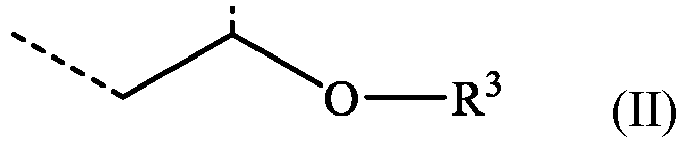

- wherein each R4 is independently selected from a hydrogen and a -CH3 group; and wherein at least one of R1 and R2 is a C1-3 alkyl group in at least 1 mol% of the structural units of formula I in the antiredeposition agent; wherein the antiredeposition agent has a lactone end group; wherein the lactone end group is a γ-lactone and wherein the antiredeposition agent has a weight average molecular weight of 1,500 to 6,000 Daltons;
- wherein the antiredeposition agent is according to formula IV

- wherein A is a polymer chain comprising the structural units of formula I, the structural units of formula II, and the structural units of formula III; wherein R5 is methyl; and wherein R6 is methyl; and wherein the laundry detergent formulation contains less than 0.1 wt%, based on weight of the laundry detergent formulation, of phosphate, measured as elemental phosphorus.
- Laundry detergents providing excellent overall cleaning are desirable to consumers. Such laundry detergents typically include surfactants among other components to deliver the consumer desired cleaning benefits. Nevertheless, increasing sensitivity for the environment and rising material costs, a move to reduce the utilization of surfactants in laundry detergents is growing. Consequently, detergent manufactures are seeking ways to reduce the amount of surfactant per unit dose of the laundry detergent while maintaining overall cleaning performance.
- One powder detergent composition is described by Rodriques in U.S.
U.S. Patent No. 6,458,752 . Rodriques discloses a powder detergent composition comprising at least one surfactant and builder and from 0.1 to about 75 weight percent, based on total weight of the powder detergent composition, of a water-soluble or water-dispersible polymer having pendant acid functionality and a terminal fragment of a chain transfer agent, wherein the polymer is the polymerization product of 60 to 95 weight percent of an ethylenically unsaturated acid monomer and 5 to 40 weight percent of a C3 to C24 chain transfer agent, wherein the weight percents are based on the weight of the total monomer and chain transfer agent.U.S. Patent No. 5,191,048A relates to biodegradable free-radical addition polymers. Specifically,U.S. Patent No. 5,191,048A is directed to a terpolymer containing as polymerized units at least one first monomer selected from the group of vinyl acetate, vinyl ethers and vinyl carbonates, at least one second monomer of an ethylenically unsaturated monocarboxylic acid, and at least one third monomer of an anhydride of a dicarboxylic acid. - Notwithstanding there remains a need for new antiredeposition agents for use in laundry detergent formulations. In particular, there remains a need for new antiredeposition agents for use in laundry detergent formulations, wherein the antiredeposition agents provide suitable primary cleaning and antiredeposition performance in combination with having enhanced biodegradability.
- The present invention provides a laundry detergent formulation, comprising: 8 to 20 wt% of a detergent surfactant wherein the detergent surfactant is a linear C10-C20 alkylbenzenesulfonate; a builder; a filler; and an antiredeposition agent, wherein the antiredeposition agent is a polymer comprising: (a) 10 to 65 wt%, based on dry weight of the antiredeposition agent, of structural units of formula I

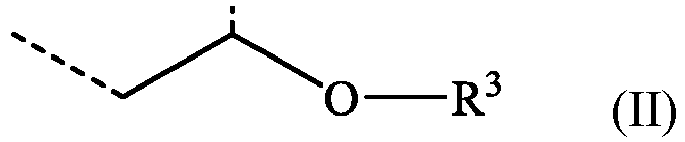

- wherein each R4 is independently selected from a hydrogen and a -CH3 group; and wherein at least one of R1 and R2 is a C1-3 alkyl group in at least 1 mol% of the structural units of formula I in the antiredeposition agent; wherein the antiredeposition agent has a lactone end group; wherein the lactone end group is a γ-lactone and wherein the antiredeposition agent has a weight average molecular weight of 1,500 to 6,000 Daltons;
- wherein the antiredeposition agent is according to formula IV

- wherein A is a polymer chain comprising the structural units of units of formula I, structural units of formula II and structural units of formula III; wherein R5 is methyl; and wherein R6 is methyl; and wherein the laundry detergent formulation contains less than 0.1 wt%, based on weight of the laundry detergent formulation, of phosphate, measured as elemental phosphorus.
- The present invention provides a method of washing a soiled fabric article, comprising: providing a soiled fabric article; providing a laundry detergent formulation according to the present invention; providing a wash water; and applying the wash water and the laundry detergent formulation to the soiled fabric article to provide a cleaned fabric article.
- The antiredeposition agent of the present invention exhibits desirable biodegradability properties. When incorporated in laundry detergent formulations, the antiredeposition agent of the present invention as particularly described herein surprisingly give good primary detergency and antiredepositon performance relative to conventional antiredeposition agents, but while also providing biodegradability that is desired to facilitate formulation of more sustainable laundry detergent formulations. In addition, the antiredeposition agent of the present invention is also surprisingly hard water tolerant, unlike conventional maleic acid residue containing polymers that are susceptible to complexation with Ca2+ ions present in hard water, leading to flocculation and precipitation.
- Unless otherwise indicated, ratios, percentages, parts, and the like are by weight. Weight percentages (or wt%) in the composition are percentages of dry weight, i.e., excluding any water that may be present in the composition. Percentages of monomer units in the polymer are percentages of solids weight, i.e., excluding any water present in a polymer emulsion.
- As used herein, unless otherwise indicated, the terms "weight average molecular weight" and "Mw" are used interchangeably to refer to the weight average molecular weight as measured in a conventional manner with gel permeation chromatography (GPC) and conventional standards, such as polystyrene standards. GPC techniques are discussed in detail in Modem Size Exclusion Chromatography, W. W. Yau, J. J. Kirkland, D. D. Bly; Wiley-lnterscience, 1979, and in A Guide to Materials Characterization and Chemical Analysis, J. P. Sibilia; VCH, 1988, p. 81-84. Weight average molecular weights are reported herein in units of Daltons.
- The term "ethylenically unsaturated" as used herein and in the appended claims describes molecules having a carbon-carbon double bond, which renders it polymerizable. The term "multi-ethylenically unsaturated" as used herein and in the appended claims describes molecules having at least two carbon-carbon double bonds.
- As used herein the term "(meth)acrylic" refers to either acrylic or methacrylic.
- The term "phosphate-free" as used herein and in the appended claims means compositions containing less than 0.1 wt% (more preferably, ≤ 0.01 wt%; yet still more preferably, ≤ 0.001 wt%; most preferably, less than the detectable limit) of phosphate (measured as elemental phosphorus).
- The term "structural units" as used herein and in the appended claims refers to the remnant of the indicated monomer; thus a structural unit of (meth)acrylic acid is illustrated:

- Preferably, the laundry detergent formulation of the present invention is selected from a liquid laundry detergent formulation, a powder laundry detergent formulation and a laundry bar. Preferably, the laundry detergent formulation of the present invention is selected from at least one of a liquid laundry detergent formation and a powder laundry detergent formulation provided in a monodose format. More preferably, the laundry detergent formulation of the present invention is an anhydrous powder laundry detergent formulation containing < 1 wt% (preferable, < 0.1 wt%; more preferably, < 0.01 wt%; most preferably, < 0.001 wt%) water.
- The laundry detergent formulation (preferably, powder laundry detergent formulation) of the present invention, comprises: 8 to 20 wt% of a detergent surfactant wherein the detergent surfactant is a linear C10-20 alkylbenzenesulfonate (preferably, 8 to 18 wt%, based on weight of the laundry detergent formulation); a builder (preferably, 20 to 75 wt% (preferably, 20 to 65 wt%; more preferably, 25 to 50 wt%; most preferably, 27 to 35 wt%), based on weight of the laundry detergent formulation, of the builder); a filler (preferably, 0 to 74.09 wt% (preferably, 5 to 70 wt%; more preferably, 28.5 to 65 wt%; most preferably, 53.9 to 62 wt%), based on weight of the laundry detergent formulation, of the filler); and an antiredeposition agent (preferably, 0.01 to 5 wt% (preferably, 0.05 to 2 wt%; more preferably, 0.1 to 1.5 wt%; most preferably, 0.4 to 1.1 wt%), based on weight of the laundry detergent formulation, of the antiredeposition agent), wherein the antiredeposition agent is a polymer comprising: (a) 10 to 65 wt% (preferably, 20 to 60 wt%; more preferably, 20 to 50 wt%; still more preferably, 25 to 40 wt%; most preferably, 25 to 35 wt%)(preferably, ≥ 20 wt%; more preferably, ≥ 25 wt%; preferably, ≤ 60 wt%; more preferably, ≤ 50 wt%; still more preferably, ≤ 40 wt%; most preferably, ≤ 35 wt%), based on dry weight of the antiredeposition agent, of structural units of formula I;


- wherein each R4 is independently selected from a hydrogen and a -CH3 group; wherein at least one of R1 and R2 is a C1-3 alkyl group in at least 1 mol% of the structural units of formula I in the antiredeposition agent; wherein the antiredeposition agent has a lactone end group; wherein the lactone end group is a γ-lactone and wherein the antiredeposition agent has a weight average molecular weight of 1,500 to 6,000 Daltons (preferably, 1,500 to < 5,000 Daltons; more preferably, 1,750 to 4,500 Daltons; most preferably, 2,250 to 4,250 Daltons);
- wherein the antiredeposition agent is according to formula IV

- wherein A is a polymer chain comprising the structural units of units of formula I, structural units of formula II and structural units of formula III; wherein R5 is methyl; and wherein R6 is methyl; and wherein the laundry detergent formulation contains less than 0.1 wt%, based on weight of the laundry detergent formulation, of phosphate, measured as elemental phosphorus.
- Preferably, the laundry detergent formulation of the present invention comprises 8 to 18 wt%, based on weight of the laundry detergent formulation, of a detergent surfactant.
- In the present invention, the detergent surfactant used in the laundry detergent formulation is an anionic surfactant, and the anionic surfactant includes a linear C10-20 alkylbenzenesulfonate.
- Preferably, the laundry detergent formulation of the present invention comprises 20 to 75 wt%, based on weight of the laundry detergent formulation, of a builder. More preferably, the laundry detergent formulation of the present invention, comprises 20 to 65 wt%, based on weight of the laundry detergent formulation, of a builder. Still more preferably, the laundry detergent formulation of the present invention comprises 25 to 50 wt%, based on weight of the laundry detergent formulation, of a builder. Most preferably, the laundry detergent formulation of the present invention comprises 27 to 35 wt%, based on weight of the laundry detergent formulation, of a builder.
- Preferably, the powder laundry detergent formulation of the present invention comprises ≥ 20 wt% (preferably, ≥ 25 wt%; more preferably, ≥ 27 wt%), based on weight of the laundry detergent formulation, of a builder.
- Preferably, the powder laundry detergent formulation of the present invention comprises ≤ 75 wt% (preferably, ≤ 65 wt%; more preferably, ≤ 50 wt%; most preferably, ≤ 35 wt%), based on weight of the laundry detergent formulation, of a builder.
- Preferably, the builder used in the laundry detergent formulation of the present invention is selected from organic and inorganic materials conventionally used as builders in powder laundry detergents. Preferably, the builder used in the laundry detergent formulation of the present invention is selected from the group consisting of hydratable alkali metal phosphates, alkalis (including carbonates and bicarbonates), zeolites, ethylenediaminetetraacetate, nitrilotriacetate and mixtures thereof. More preferably, the builder used in the laundry detergent formulation of the present invention includes at least one of zeolite, sodium triphosphate, sodium tripolyphosphate, sodium citrate, sodium silicate, sodium carbonate, calcium carbonate, sodium bicarbonate and calcium bicarbonate. Most preferably, the builder used in the laundry detergent formulation of the present invention includes at least one of zeolite, sodium tripolyphosphate, sodium carbonate and calcium carbonate.
- The laundry detergent formulation of the present invention comprises an antiredeposition agent. More preferably, the laundry detergent formulation of the present invention comprises 0.01 to 5 wt% (preferably, 0.05 to 2 wt%; more preferably, 0.1 to 1.5 wt%; most preferably, 0.4 to 1.1 wt%), based on weight of the laundry detergent formulation, of an antiredeposition agent. Most preferably, the laundry detergent formulation of the present invention comprises 0.01 to 5 wt% (preferably, 0.05 to 2 wt%; more preferably, 0.1 to 1.5 wt%; most preferably, 0.4 to 1.1 wt%), based on weight of the laundry detergent formulation, of an antiredeposition agent; wherein the antiredeposition agent is a polymer comprising: (a) 10 to 65 wt%, based on dry weight of the antiredeposition agent, of structural units of formula I, wherein each R1 and R2 is independently selected from a hydrogen and a C1-3 alkyl group; (b) 10 to 80 wt%, based on dry weight of the antiredeposition agent, of structural units of formula II, wherein each R3 is independently selected from a hydrogen and a -C(O)CH3 group; and (c) 10 to 65 wt%, based on dry weight of the antiredeposition agent, of structural units of formula III, wherein each R4 is independently selected from a hydrogen and a -CH3 group; wherein at least one of R1 and R2 is a C1-3 alkyl group in at least 1 mol% of the structural units of formula I in the antiredeposition agent; wherein the antiredeposition agent has a γ-lactone end group and wherein the antiredeposition agent has a weight average molecular weight of 1,500 to 6,000 Daltons.
- The antiredeposition agent used in the laundry detergent formulation of the present invention comprises 10 to 65 wt% (preferably, 20 to 60 wt%; more preferably, 20 to 50 wt%; still more preferably, 25 to 40 wt%; most preferably, 25 to 35 wt%)(preferably, ≥ 20 wt%; more preferably, ≥ 25 wt%; preferably, ≤ 60 wt%; more preferably, ≤ 50 wt%; still more preferably, ≤ 40 wt%; most preferably, ≤ 35 wt%), based on dry weight of the antiredeposition agent, of structural units of formula I

- The antiredeposition agent used in the laundry detergent formulation of the present invention comprises 10 to 80 wt% (preferably, 15 to 60 wt%; more preferably, 20 to 55 wt%; most preferably, 30 to 50 wt%)(preferably, ≥ 20 wt%; more preferably, ≥ 25 wt%; still more preferably, ≥ 30 wt%; most preferably, ≥ 35 wt%; preferably, ≤ 60 wt%; more preferably, ≤ 55 wt%; most preferably, ≤ 50 wt%), based on dry weight of the antiredeposition agent, of structural units of formula II

- The antiredeposition agent used in the laundry detergent formulation of the present invention comprises 10 to 65 wt% (preferably, 10 to 60 wt%; more preferably, 15 to 50 wt%; still more preferably, 20 to 40 wt%; most preferably, 25 to 35 wt%)(preferably, ≥ 10 wt%; more preferably, ≥ 15 wt%; preferably, ≤ 60 wt%; more preferably, ≤ 50 wt%; still more preferably, ≤ 40 wt%; most preferably, ≤ 35 wt%), based on dry weight of the antiredeposition agent, of structural units of formula III

- The antiredeposition agent used in the laundry detergent formulation of the present invention has a lactone end group, wherein the lactone end group is a γ-lactone. Preferably, the lactone end group is one produced by an internal esterification reaction between a carboxylic acid group on a structural unit of formula III and a terminal hydroxy group derived from a chain transfer agent.
- The antiredeposition agent used in the laundry detergent formulation of the present invention has a formula IV

- The antiredeposition agent used in the laundry detergent formulation of the present invention has a weight average molecular weight of 1,500 to 6,000 Daltons. More preferably, the antiredeposition agent used in the laundry detergent formulation of the present invention has a weight average molecular weight of 1,500 to < 5,000 Daltons. Still more preferably, the antiredeposition agent used in the laundry detergent formulation of the present invention has a weight average molecular weight of 1,750 to 4,500 Daltons. Most preferably, the antiredeposition agent used in the laundry detergent formulation of the present invention has a weight average molecular weight of 2,250 to 4,250 Daltons.
- Preferably, the antiredeposition agent used in the laundry detergent formulation of the present invention comprises ≤ 8 wt% (preferably, ≤ 5 wt%; more preferably, ≤ 3 wt%; most preferably, ≤ 1 wt%), based on dry weight of the antiredeposition agent, of structural units of esters of (meth)acrylic acid.
- Preferably, the antiredeposition agent used in the laundry detergent formulation of the present invention comprises ≤ 0.3 wt% (more preferably, ≤ 0.1 wt%; still more preferably, ≤ 0.05 wt%; yet still more preferably, ≤ 0.03 wt%; most preferably, ≤ 0.01 wt%), based on dry weight of the antiredeposition agent, of structural units of multi-ethylenically unsaturated crosslinking monomer.
- Preferably, the antiredeposition agent used in the laundry detergent formulation of the present invention comprises ≤ 1 wt% (preferably, ≤ 0.5 wt%; more preferably, ≤ 0.001 wt%; still more preferably, ≤ 0.0001 wt%; most preferably, < the detectable limit), based on dry weight of the antiredeposition agent, of structural units of sulfonated monomer. More preferably, the antiredeposition agent used in the laundry detergent formulation of the present invention comprises ≤ 1 wt% (preferably, ≤ 0.5 wt%; more preferably, ≤ 0.001 wt%; still more preferably, ≤ 0.0001 wt%; most preferably, < the detectable limit), based on dry weight of the antiredeposition agent, of structural units of sulfonated monomer selected from the group consisting of 2-acrylamido-2-methylpropane sulfonic acid (AMPS), 2-methacrylamido-2-methylpropane sulfonic acid, 4-styrenesulfonic acid, vinylsulfonic acid, 3-allyloxy sulfonic acid, 2-hydroxy-1-propane sulfonic acid (HAPS), 2-sulfoethyl(meth)acrylic acid, 2-sulfopropyl(meth)acrylic acid, 3-sulfopropyl(meth)acrylic acid, 4-sulfobutyl(meth)acrylic acid and salts thereof. Most preferably, the antiredeposition agent used in the laundry detergent formulation of the present invention comprises ≤ 1 wt% (preferably, ≤ 0.5 wt%; more preferably, ≤ 0.001 wt%; still more preferably, ≤ 0.0001 wt%; most preferably, < the detectable limit), based on dry weight of the antiredeposition agent, of structural units of 2-acrylamido-2-methylpropane sulfonic acid (AMPS) monomer.
- Preferably, the antiredeposition agent used in the laundry detergent formulation of the present invention is produced by solution polymerization. Preferably, the antiredeposition agent is a random copolymer. Preferably, the solvent used in the synthesis of the antiredeposition agent is selected from aqueous 2-propanol, aqueous ethanol, anhydrous 2-propanol, anhydrous ethanol and mixtures thereof.
- Preferably, the antiredeposition agent used in the laundry detergent formulation of the present invention is provided in the form of a water-soluble solution polymer, a slurry, a dried powder, granules or another solid form.
- Preferably, the laundry detergent formulation of the present invention, further comprises at least one optional ingredient selected from the group consisting of bleaching agents, bleach activators, stabilizers, foam regulators, enzymes, optical brighteners, fillers, processing aids and fragrances.
- Preferably, the laundry detergent formulation of the present invention, further comprises 0 to 10 wt%, based on weight of the laundry detergent formulation, of a bleaching agent. Preferred bleaching agents include, for example, sodium perborate and sodium percarbonate.
- Preferably, the laundry detergent formulation of the present invention, further comprises 0 to 10 wt%, based on weight of the laundry detergent formulation, of a bleach activator. Preferred bleach activators include, for example, tetra acetyl ethylene diamine (TAED) and sodium nonanoyloxybenzene sulfonate (NOBS).
- Preferably, the laundry detergent formulation of the present invention, further comprises 0 to 1 wt%, based on weight of the laundry detergent formulation, of a stabilizer. Preferred stabilizers include, for example, phosphonates.
- Preferably, the laundry detergent formulation of the present invention, further comprises 0 to 2 wt%, based on weight of the laundry detergent formulation, of an enzyme. Preferred enzymes include, for example, protease, cellulase, amylase and lipase.
- Preferably, the laundry detergent formulation of the present invention, further comprises 0 to 0.3 wt%, based on weight of the laundry detergent formulation, of an optical brightener. Preferred optical brighteners include, for example, fluorescent whitening agents.
- Preferably, the laundry detergent formulation of the present invention, comprises 0.1 to 74.09 wt% ( more preferably, 5 to 70 wt%; still more preferably, 28.5 to 65 wt%; most preferably, 53.9 to 62 wt%), based on weight of the laundry detergent formulation of a filler. More preferably, the laundry detergent formulation of the present invention, comprises 0.1 to 74.09 wt% ( more preferably, 5 to 70 wt%; still more preferably, 28.5 to 65 wt%; most preferably, 53.9 to 62 wt%), based on weight of the laundry detergent formulation of a filler; wherein the filler includes at least one of sodium sulfate, sodium chloride, calcite and dolomite. Most preferably, the laundry detergent formulation of the present invention, comprises 0.1 to 74.09 wt% more preferably, 5 to 70 wt%; still more preferably, 28.5 to 65 wt%; most preferably, 53.9 to 62 wt%), based on weight of the laundry detergent formulation of a filler; wherein the filler is selected from the group consisting of sodium sulfate, sodium chloride, calcite, dolomite and mixtures thereof.
- Preferably, the laundry detergent formulation of the present invention is a powder laundry detergent produced by well known manufacturing methods. For example, the laundry detergent formulation of the present invention may be produced using techniques including spray drying and dry mixing of various combinations of the components.
- Preferably, the method of washing a soiled fabric article of the present invention, comprises: providing a soiled fabric article (preferably, wherein the soiled fabric article comprises cotton; more preferably, wherein the soiled fabric article is selected from cotton and a polyester cotton blend); providing a wash water; providing a rinse water; providing a laundry detergent formulation of the present invention; applying the wash water and the laundry detergent formulation to the soiled fabric article to provide a washed fabric article; and then rinsing the washed fabric article with the rinse water.
- Preferably, in the method of washing a soiled fabric article of the present invention, the soiled fabric article is treated with the laundry detergent formulation and the wash water using well known techniques. Preferably, the laundry detergent formulation is mixed with the wash water at a weight ratio of laundry detergent formulation to wash water of 1:100 to 1: 1,000.
- Some embodiments of the present invention will now be described in detail in the following Examples.
- The weight average molecular weight, Mw; number average molecular weight, MN; and polydispersity (PDI) values reported in the Examples were measured by gel permeation chromatography (GPC) on an Agilent 1100 series LC system equipped with an Agilent 1100 series refractive index. Samples were dissolved in HPCL grade THF/FA mixture (100:5 volume/volume ratio) at a concentration of approximately 9 mg/mL and filtered through at 0.45 µm syringe filter before injection through a 4.6 x 10 mm Shodex KF guard column, a 8.0 x 300 mm Shodex KF 803 column, a 8.0 x 300 mm Shodex KF 802 column and a 8.0 x 100 mm Shodex KF-D column. A flow rate of 1 mL/min and temperature of 40 °C were maintained. The columns were calibrated with narrow molecular weight PS standards (EasiCal PS-2, Polymer Laboratories, Inc.).
- A 4-neck, one liter round bottom flask, equipped with overhead stirrer, Claisen head, septa inlet, and thermometer was charged with 225.0 g of methyl ethyl ketone (MEK) and flushed with nitrogen. The solution was heated to 80 °C and 0.45 g t-butyl peroxypivalate (75 wt% in mineral spirits) was added. A premixed homogenous solution of 73.50 g of vinyl acetate, 82.41 g of maleic anhydride and 30.50 g acrylic acid was added, via a pump, over 2 hours, followed by a 4.5 g wash with MEK. Separately, a solution of 7.0 g t-butyl peroxypivalate (75 wt% in mineral spirits) diluted to 9.0 g with MEK was also added via a syringe pump over 2 hours. A solution of 4.1 g methyl 3-mercaptopropionate diluted to 9 g with MEK was also added via a syringe pump over 2 hours. The polymer produced in this manner was subject to solvent exchange with water using a Dean Stark trap. A portion of 368 g of water was added over one hour, while a total of 281 grams of IPA-water distillate was removed. The weight average molecular weight, Mw, of the polymer product was then measured with the results provided in TABLE 1.
- To a glass reactor contained within a stainless steel jacket equipped with an overhead stirrer, a nitrogen bubbler, a pressure controller, a reflux condenser and a temperature controller was added a mixture of 2-propanol (825 g) and deionized water (275 g). Then maleic anhydride (1,940 g) was added to the reactor. Then a second mixture of 2-propanol (4,561 g) and deionized water (1,518 g) was added to the reactor. The temperature controller set point was set at 70 °C. The overhead stirrer was set at 250 rpm. After the maleic anhydride dissolved, the temperature controller set point was raised to 80 °C. When the temperature of the reactor contents reached 75 °C, the reactor was capped and the pressure controller was set to provide a pressure on the reactor contents of 30 psig. Then the addition to the reactor contents of a catalyst solution of tert-butyl peroxypivilate (444 g) in 2-propanol (1,036 g) was initiated with a flow rate of 6.98 g/min. Then 2 minutes after initiation of the catalyst solution charge, the addition to the reactor contents of a monomers glacial acrylic acid (1,940 g) and vinyl acetate (2,566 g) was initiated with flow rates of 10.78 g/min (over 180 minutes) and 21.38 g/min (over 120 minutes) respectively. Upon completion of the monomer feed, the transfer lines were rinsed into the reactor contents with 2-propanol (242 g). Upon completion of the catalyst feed, the transfer lines were rinsed into the reactor contents with 2-propanol (242 g). After completion of the catalyst solution addition, the reactor contents were held for 30 minutes, after which the temperature controller was shut down and the reactor contents were allowed to cool. When the temperature of the reactor contents dropped to 70 °C, the reactor was depressurized to atmospheric pressure. When the temperature of the reactor contents dropped to 40 °C, the reactor contents were filtered through a 100 mesh bag. The polymer product obtained was then measured at 48.9 wt% solids. A 1,000 g portion polymer product was then subjected to solvent exchange with water using a Dean Stark trap. A portion of 500 g of water was added over one hour, while a total of 709 g of IPA-water distillate was removed. A 50% NaOH solution was added to achieve a final pH of 6.02. The weight average molecular weight, Mw, of the polymer product was then measured with the results provided in TABLE 1.
TABLE 1 Monomer Feed composition (wt%) Weight average molecular weight Example Maleic anhydride Vinyl Acetate Acrylic Acid Comp. CS1 44.2 39.4 16.4 9,123 Daltons S1 30 40 30 3,807 Daltons - A stock polymer solution was prepared in Comparative Example CP1 by adding to 99 g of water in a beaker, 1 g of the polymer prepared according to Comparative Example CS1. A stock polymer solution was prepared in Comparative Example CP2 by diluting to 1 wt% solids a polyacrylic acid dispersant solution (Acusol™ 445N dispersant solution available from The Dow Chemical Company). A stock polymer solution was prepared in Example P1 by adding to 99 g of water in a beaker, 1 g of the polymer prepared according to Example S1.
- The hard water tolerance of the polymers prepared according to Comparative Example CP1, Example P1 and the polyacrylic acid dispersant solution of Comparative Example CP2 were evaluated by adding magnetic stir bars to the beakers containing the stock solutions prepared according to Comparative Examples CP1-CP2 and Example P1 and placing the beakers on a magnetic stir plate. The pH of both stock solutions were adjusted to 10 by adding sodium hydroxide as necessary. Using an immersion colorimeter probe, the initial transmittance of each solution was measured and recorded. At time=0, 100 ppm of a hardness solution (0.1 g of a 2 Ca : 1 Mg) was added to each stock solution. The stock solutions were left to stir for 1 minute. At time = 1 minute, the transmittance of each solution was measured and recorded. Then an additional 100 ppm of hardness solution was added. One minute following the hardness solution addition, the transmittance was measured and recorded. This process was repeated until time = 20 minutes or until the transmittance of a given solution fell below 40 %. The results are provided in TABLE 2.
TABLE 2 Time (min) Added CaCO3 Hardness (ppm mass) % transmittance through polymer solution Comp. Ex. CP1 Comp. Ex. CP2 Ex. P1 0 0 100.0 100.0 100.0 1 100 100.0 100.0 100.0 2 200 100.0 100.0 100.0 3 300 99.9 99.9 100.0 4 400 96.1 99.9 100.0 5 500 74.7 99.9 100.0 6 600 48.9 99.9 100.0 7 700 27.2 99.8 100.0 8 800 -- 99.2 100.0 9 900 -- 93.1 99.9 10 1,000 -- 82.0 99.8 11 1,100 -- 68.2 99.7 12 1,200 -- 55.9 99.6 13 1,300 --- 46.4 99.5 14 1,400 -- 39.6 99.4 15 1,500 -- -- 99.3 16 1,600 -- -- 99.2 17 1,700 -- -- 99.2 18 1,800 -- -- 99.0 19 1,900 -- -- 99.0 20 2,000 -- -- 98.9 TABLE 3: Base Detergent Composition Ingredient (wt%) Linear alkyl benzene sulfonate (90%) 10.00 Soda Ash Light (Soda Carbonate) 30.00 Whitening agent1 0.04 Sodium Sulphate 9.00 Perfume 0.30 Calcite 12.00 Dolomite 14.00 NaCl 24.66 1 Tinopal CBSX fluorescent whitening agent available from BASF - Powder laundry detergent formulations were prepared in each of Comparative Examples C1-C4 and Examples 1-3 having the composition set forth in TABLE 4.
TABLE 4 (wt%) Ingredient C1 C2 C3 C4 1 2 3 Base Detergent Composition 100 99 99 99 99.5 99.25 99 Poly(acrylic acid)1 -- 1.0 -- -- -- -- -- Poly(acrylic acid co-maleic acid)2 -- -- 1.0 -- -- -- -- Carboxylated polyelectrolyte copolymer3 -- -- -- 1.0 -- -- -- Product Example S1 -- -- -- -- 0.5 0.75 1.0 1 Acusol™ 445G poly(acrylic acid) homopolymer having a weight average molecular weight, Mw, of 4,500 Daltons available from The Dow Chemical Company 2 Acusol™ 479A poly(acryic acid co-maleic acid) copolymer having a weight average molecular weight, Mw, of 70,000 Daltons available from The Dow Chemical Company 3 Acusol™ 460N carboxylated polyelectrolyte copolymer having a weight average molecular weight, Mw, of 10,000 Daltons available from The Dow Chemical Company - The primary cleaning performance of the liquid laundry detergent formulations of Comparative Examples C1-C4 and Examples 1-3 were assessed on white cotton fabric in a Tergotometer Model 7243ES at a set test temperature of 28 °C using a 30 minute soak cycle followed by a 15 min wash cycle at 80 rpm having a liquor to cloth ratio of 50. The washed fabrics were rinsed in a Tergotometer at 300 ppm (2/1 Ca2+/Mg2+) hardness adjusted water at ambient temperature for 2 mins, twice at 80 rpm. The stained fabrics and soiled ballasts used in the tests were WFK 10 D pigment/sebum on cotton, WFK 20D pigment/sebum on 65 polyester/35 Cotton and garden soil Testfabrics directly into the pot of the Tergotometer. The stained swatches were 10 cm x 10 cm. The water hardness used for the studies was adjusted to 300 ppm as CaCO3 (2:1 Ca2+:Mg2+ molar ratio) and checked by EDTA titration to confirm. The total surfactant concentration in the wash liquor was 0.5 g/L.
- The fabrics were laundered for 1 cycle and the reflectance value was measured at 460 nm using a Macbeth Color Eye Spectrophotometer to determine the difference in reflectance value before and after wash. The change in reflectance value (delta R460) for each of the powder laundry formulations is provided in TABLE 5.
TABLE 5 Delta in Reflectance value (delta R460) Example WFK 10D WFK 20D Garden Soil Comp. Ex. C1 16.00 18.02 26.93 Comp. Ex. C2 22.24 24.36 30.85 Comp. Ex. C3 20.94 20.85 25.60 Comp. Ex. C4 21.12 27.61 26.67 Example 1 18.84 20.11 27.76 Example 2 21.92 23.86 28.12 Example 3 23.49 25.68 35.05 - The antiredeposition performance of the laundry detergent formulations of Comparative Examples C1-C2 and Example 3 were assessed in a Terg-o-tometer Model 7243ES agitated at 90 cycles per minute with the conditions noted in TABLE 6.
TABLE 6 Parameter Setting Temperature 25 °C Water hardness 300 ppm, Ca2+/Mg2+ = 2/1 Fabric Type Cotton two cloths of each type in each pot Wash time 12 minutes Rinse time 2 minutes, twice Laundry detergent dosage 5 g/L Anti-redeposition soils Iron (III) oxide of particle size less than 10 microns Drying After final rinse, fabrics were dried in a dryer for 45 minutes TABLE 7 Example Ganz Whiteness Index Comparative Example C1 101 Comparative Example C2 114.4 Example 3 115.3 TABLE 8: Base Detergent Composition Ingredient (wt%) Linear alkyl benzene sulfonate (90%) 17.00 Soda Ash Light (Soda Carbonate) 34.00 Whitening agent1 0.05 Sodium Sulphate 9.00 Perfume 0.30 Calcite 8.00 Dolomite 9.00 NaCl 22.65 1 Tinopal CBSX fluorescent whitening agent available from BASF - Powder laundry detergent formulations were prepared in each of Comparative Examples C5-C8 and Examples 4-6 having the composition set forth in TABLE 9.
TABLE 9 (wt%) Ingredient C5 C6 C7 C8 4 5 6 Base Detergent Composition 100 99 99 99 99.5 99.25 99 Poly(acrylic acid)1 -- 1.0 -- -- -- -- -- Poly(acrylic acid co-maleic acid)2 -- -- 1.0 -- -- -- -- Carboxylated polyelectrolyte copolymer3 -- -- -- 1.0 -- -- -- Product Example S1 -- -- -- -- 0.5 0.75 1.0 1 Acusol™ 445G poly(acrylic acid) homopolymer having a weight average molecular weight, Mw, of 4,500 Daltons available from The Dow Chemical Company 2 Acusol™ 479A poly(acryic acid co-maleic acid) copolymer having a weight average molecular weight, Mw, of 70,000 Daltons available from The Dow Chemical Company 3 Acusol™ 460N carboxylated polyelectrolyte copolymer having a weight average molecular weight, Mw, of 10,000 Daltons available from The Dow Chemical Company - The primary cleaning performance of the liquid laundry detergent formulations of Comparative Examples C5-C8 and Examples 4-6 were assessed on white cotton fabric in a Tergotometer Model 7243ES at a set test temperature of 28 °C using a 30 minute soak cycle followed by a 15 min wash cycle at 80 rpm having a liquor to cloth ratio of 50. The washed fabrics were rinsed in a Tergotometer at 300 ppm (2/1 Ca2+/Mg2+) hardness adjusted water at ambient temperature for 2 mins, twice at 80 rpm. The stained fabrics and soiled ballasts used in the tests were WFK 10 D pigment/sebum on cotton, WFK 20D pigment/sebum on 65 polyester/35 Cotton and garden soil Testfabrics directly into the pot of the Tergotometer. The stained swatches were 10 cm x 10 cm. The water hardness used for the studies was adjusted to 300 ppm as CaCO3 (2:1 Ca2+:Mg2+ molar ratio) and checked by EDTA titration to confirm. The total surfactant concentration in the wash liquor was 0.5 g/L.
- The fabrics were laundered for 1 cycle and the reflectance value was measured at 460 nm using a Macbeth Color Eye Spectrophotometer to determine the difference in reflectance value before and after wash. The change in reflectance value (delta R460) for each of the powder laundry formulations is provided in TABLE 10.
TABLE 10 Delta in Reflectance value (delta R460) Example WFK 10D WFK 20D Garden Soil Comp. Ex. C5 17.26 22.65 23.65 Comp. Ex. C6 21.88 31.47 28.69 Comp. Ex. C7 18.44 30.04 24.33 Comp. Ex. C8 22.87 33.31 32.13 Example 4 19.80 27.12 25.22 Example 5 21.03 28.36 25.24 Example 6 21.56 30.45 27.70 - The antiredeposition performance of the laundry detergent formulations of Comparative Examples C5-C6 and Example 6 were assessed in a Terg-o-tometer Model 7243ES agitated at 90 cycles per minute with the conditions noted in TABLE 11.
TABLE 11 Parameter Setting Temperature 25 °C Water hardness 300 ppm, Ca2+/Mg2+ = 2/1 Fabric Type Cotton two cloths of each type in each pot Wash time 12 minutes Rinse time 2 minutes, twice Laundry detergent dosage 5 g/L Anti-redeposition soils Iron (III) oxide of particle size less than 10 microns Drying After final rinse, fabrics were dried in a dryer for 45 minutes TABLE 12 Example Ganz Whiteness Index Comparative Example C5 101 Comparative Example C6 114.4 Example 6 115.3
Claims (5)
- A laundry detergent formulation, comprising:a detergent surfactant, wherein the laundry detergent formulation contains 8 to 20 wt% of the surfactant and wherein the detergent surfactant is a linear C10-20 alkylbenzenesulfonate;a builder;a filler; andan antiredeposition agent, wherein the antiredeposition agent is a polymer comprising:(a) 10 to 65 wt% of structural units of formula I
 (b) 10 to 80 wt% of structural units of formula II
 (c) 10 to 65 wt% of structural units of formula III

- The laundry detergent formulation of claim 1, wherein at least one of R1 and R2 is a -C3 alkyl group in 1 to 20 mol% of the structural units of formula I in the antiredeposition agent.
- The laundry detergent formulation of claim 1, wherein R3 is a hydrogen in 0 to 50 mol% of the structural units of formula II in the antiredeposition agent.
- The laundry detergent formulation of claim 1, further comprising an additive selected from the group consisting of a fragrance, optical brightener, bleaching agent, a bleach activator, an enzyme and mixtures thereof.
- A method of washing a soiled fabric article, comprising: providing a soiled fabric article; providing a laundry detergent formulation according to claim 1; providing a wash water; providing a rinse water; applying the wash water and the laundry detergent formulation to the soiled fabric article to provide a washed fabric article; and rinsing the washed fabric article with the rinse water.
Applications Claiming Priority (2)
| Application Number | Priority Date | Filing Date | Title |
|---|---|---|---|
| IN202041026668 | 2020-06-24 | ||
| PCT/US2021/037972 WO2021262535A1 (en) | 2020-06-24 | 2021-06-18 | Laundry detergent formulation with biodegradable antiredeposition agent |
Publications (2)
| Publication Number | Publication Date |
|---|---|
| EP4172297A1 EP4172297A1 (en) | 2023-05-03 |
| EP4172297B1 true EP4172297B1 (en) | 2024-08-28 |
Family
ID=76859805
Family Applications (1)
| Application Number | Title | Priority Date | Filing Date |
|---|---|---|---|
| EP21740384.9A Active EP4172297B1 (en) | 2020-06-24 | 2021-06-18 | Laundry detergent formulation with biodegradable antiredeposition agent |
Country Status (6)
| Country | Link |
|---|---|
| US (1) | US12351778B2 (en) |
| EP (1) | EP4172297B1 (en) |
| JP (1) | JP2023533444A (en) |
| CN (1) | CN116018395A (en) |
| BR (1) | BR112022026368A2 (en) |
| WO (1) | WO2021262535A1 (en) |
Families Citing this family (1)
| Publication number | Priority date | Publication date | Assignee | Title |
|---|---|---|---|---|
| JP7462032B2 (en) * | 2019-09-25 | 2024-04-04 | ダウ グローバル テクノロジーズ エルエルシー | Fabric Care Compositions |
Citations (4)
| Publication number | Priority date | Publication date | Assignee | Title |
|---|---|---|---|---|
| US5191048A (en) * | 1991-02-01 | 1993-03-02 | Rohm & Haas Company | Biodegradable free-radical addition polymers |
| US6458752B1 (en) * | 1999-03-23 | 2002-10-01 | National Starch And Chemical Investment Holding Corporation | Powder laundry detergent having enhanced soils suspending properties |
| US20090318325A1 (en) * | 2008-06-20 | 2009-12-24 | Neil Joseph Lant | Laundry Composition |
| WO2019217082A1 (en) * | 2018-05-09 | 2019-11-14 | Dow Global Technologies Llc | Automatic dishwashing composition with dispersant polymer |
Family Cites Families (6)
| Publication number | Priority date | Publication date | Assignee | Title |
|---|---|---|---|---|
| US4797223A (en) | 1988-01-11 | 1989-01-10 | Rohm And Haas Company | Water soluble polymers for detergent compositions |
| DE4300772C2 (en) | 1993-01-14 | 1997-03-27 | Stockhausen Chem Fab Gmbh | Water-soluble, biodegradable copolymers based on unsaturated mono- and dicarboxylic acids, process for their preparation and their use |
| DE19516957C2 (en) * | 1995-05-12 | 2000-07-13 | Stockhausen Chem Fab Gmbh | Water-soluble copolymers and process for their preparation and their use |
| EP0985065A4 (en) * | 1997-05-28 | 2001-05-02 | Robert H Black | Methods of cleaning soiled fabrics |
| DE10018192A1 (en) * | 2000-04-12 | 2001-10-25 | Basf Ag | Multifunctional polymers, processes for their production and their use |
| JP5377536B2 (en) * | 2010-03-09 | 2013-12-25 | ローム アンド ハース カンパニー | Scale reducing additives for automatic dishwashing systems |
-
2021
- 2021-06-18 WO PCT/US2021/037972 patent/WO2021262535A1/en not_active Ceased
- 2021-06-18 JP JP2022578884A patent/JP2023533444A/en active Pending
- 2021-06-18 EP EP21740384.9A patent/EP4172297B1/en active Active
- 2021-06-18 CN CN202180044866.0A patent/CN116018395A/en active Pending
- 2021-06-18 US US17/924,044 patent/US12351778B2/en active Active
- 2021-06-18 BR BR112022026368A patent/BR112022026368A2/en unknown
Patent Citations (4)
| Publication number | Priority date | Publication date | Assignee | Title |
|---|---|---|---|---|
| US5191048A (en) * | 1991-02-01 | 1993-03-02 | Rohm & Haas Company | Biodegradable free-radical addition polymers |
| US6458752B1 (en) * | 1999-03-23 | 2002-10-01 | National Starch And Chemical Investment Holding Corporation | Powder laundry detergent having enhanced soils suspending properties |
| US20090318325A1 (en) * | 2008-06-20 | 2009-12-24 | Neil Joseph Lant | Laundry Composition |
| WO2019217082A1 (en) * | 2018-05-09 | 2019-11-14 | Dow Global Technologies Llc | Automatic dishwashing composition with dispersant polymer |
Non-Patent Citations (2)
| Title |
|---|
| J. P. SIBILIA: "A Guide to Materials Characterization and Chemical Analysis", 1988, VCH, pages: 81 - 84 * |
| W. W. YAUJ. J. KIRKLANDD. D. BLY: "Modem Size Exclusion Chromatography", 1979, WILEY-LNTERSCIENCE * |
Also Published As
| Publication number | Publication date |
|---|---|
| WO2021262535A1 (en) | 2021-12-30 |
| EP4172297A1 (en) | 2023-05-03 |
| JP2023533444A (en) | 2023-08-03 |
| US12351778B2 (en) | 2025-07-08 |
| US20230174899A1 (en) | 2023-06-08 |
| BR112022026368A2 (en) | 2023-01-17 |
| CN116018395A (en) | 2023-04-25 |
Similar Documents
| Publication | Publication Date | Title |
|---|---|---|
| JP2675707B2 (en) | Terpolymer | |
| JP3424887B2 (en) | Multifunctional maleate polymer | |
| EP3047003B1 (en) | Use of modified polyaspartic acids in detergents | |
| AU701617B2 (en) | Aqueous process for preparing low molecular weight polymers | |
| EP2024479B2 (en) | Cleaning compositions with amphiphilic graft polymers based on polyalkylene oxides and vinyl esters | |
| DE19516957C2 (en) | Water-soluble copolymers and process for their preparation and their use | |
| JP3884090B2 (en) | Aqueous process for preparing water-soluble polymers of monoethylenically unsaturated dicarboxylic acids | |
| MXPA97008558A (en) | Soluble copolymers in water, a process for your production and your | |
| EP2571971B1 (en) | Cleaning composition with improved stain removal | |
| RU2673812C2 (en) | Method for producing polyaspartic acids | |
| AU721478B2 (en) | Polycarboxylates for automatic dishwashing detergents | |
| EP1572849B1 (en) | Anti-filming materials, compositions and methods | |
| JP7270621B2 (en) | Dispersant polymers for automatic dishwashing formulations | |
| EP2228428A1 (en) | Scale-reducing additive for automatic dishwashing systems | |
| US5496495A (en) | Detergent formulations free of phosphates, zeolites and crystalline layered silicates | |
| US12351778B2 (en) | Laundry detergent formulation with biodegradable antiredeposition agent | |
| JP7224340B2 (en) | Automatic dishwashing composition comprising a dispersant polymer | |
| CA2293056C (en) | Polyether hydroxycarboxylate copolymers | |
| JP2024531187A (en) | Biodegradable Graft Polymers | |
| EP3790951B1 (en) | Automatic dishwashing composition with dispersant polymer | |
| AU2008210808B2 (en) | Detergent composition | |
| WO2024126268A1 (en) | Biodegradable graft polymers for dye transfer inhibition | |
| EP2388308A1 (en) | Cleaning composition with improved stain removal | |
| EP3976748B1 (en) | Dispersant polymer for automatic dishwashing | |
| JP2020502307A (en) | Additives for controlling spot formation in automatic dishwashing systems |
Legal Events
| Date | Code | Title | Description |
|---|---|---|---|
| STAA | Information on the status of an ep patent application or granted ep patent |
Free format text: STATUS: UNKNOWN |
|
| STAA | Information on the status of an ep patent application or granted ep patent |
Free format text: STATUS: THE INTERNATIONAL PUBLICATION HAS BEEN MADE |
|
| PUAI | Public reference made under article 153(3) epc to a published international application that has entered the european phase |
Free format text: ORIGINAL CODE: 0009012 |
|
| STAA | Information on the status of an ep patent application or granted ep patent |
Free format text: STATUS: REQUEST FOR EXAMINATION WAS MADE |
|
| 17P | Request for examination filed |
Effective date: 20230123 |
|
| AK | Designated contracting states |
Kind code of ref document: A1 Designated state(s): AL AT BE BG CH CY CZ DE DK EE ES FI FR GB GR HR HU IE IS IT LI LT LU LV MC MK MT NL NO PL PT RO RS SE SI SK SM TR |
|
| P01 | Opt-out of the competence of the unified patent court (upc) registered |
Effective date: 20230526 |
|
| DAV | Request for validation of the european patent (deleted) | ||
| DAX | Request for extension of the european patent (deleted) | ||
| STAA | Information on the status of an ep patent application or granted ep patent |
Free format text: STATUS: EXAMINATION IS IN PROGRESS |
|
| 17Q | First examination report despatched |
Effective date: 20240122 |
|
| GRAP | Despatch of communication of intention to grant a patent |
Free format text: ORIGINAL CODE: EPIDOSNIGR1 |
|
| STAA | Information on the status of an ep patent application or granted ep patent |
Free format text: STATUS: GRANT OF PATENT IS INTENDED |
|
| INTG | Intention to grant announced |
Effective date: 20240522 |
|
| RAP3 | Party data changed (applicant data changed or rights of an application transferred) |
Owner name: ROHM AND HAAS COMPANY Owner name: DOW SILICONES CORPORATION Owner name: DOW GLOBAL TECHNOLOGIES LLC |
|
| GRAS | Grant fee paid |
Free format text: ORIGINAL CODE: EPIDOSNIGR3 |
|
| GRAA | (expected) grant |
Free format text: ORIGINAL CODE: 0009210 |
|
| STAA | Information on the status of an ep patent application or granted ep patent |
Free format text: STATUS: THE PATENT HAS BEEN GRANTED |
|
| AK | Designated contracting states |
Kind code of ref document: B1 Designated state(s): AL AT BE BG CH CY CZ DE DK EE ES FI FR GB GR HR HU IE IS IT LI LT LU LV MC MK MT NL NO PL PT RO RS SE SI SK SM TR |
|
| REG | Reference to a national code |
Ref country code: CH Ref legal event code: EP |
|
| REG | Reference to a national code |
Ref country code: DE Ref legal event code: R096 Ref document number: 602021017964 Country of ref document: DE |
|
| REG | Reference to a national code |
Ref country code: IE Ref legal event code: FG4D |
|
| REG | Reference to a national code |
Ref country code: LT Ref legal event code: MG9D |
|
| PG25 | Lapsed in a contracting state [announced via postgrant information from national office to epo] |
Ref country code: NO Free format text: LAPSE BECAUSE OF FAILURE TO SUBMIT A TRANSLATION OF THE DESCRIPTION OR TO PAY THE FEE WITHIN THE PRESCRIBED TIME-LIMIT Effective date: 20241128 |
|
| REG | Reference to a national code |
Ref country code: AT Ref legal event code: MK05 Ref document number: 1717977 Country of ref document: AT Kind code of ref document: T Effective date: 20240828 |
|
| PG25 | Lapsed in a contracting state [announced via postgrant information from national office to epo] |
Ref country code: NL Free format text: LAPSE BECAUSE OF FAILURE TO SUBMIT A TRANSLATION OF THE DESCRIPTION OR TO PAY THE FEE WITHIN THE PRESCRIBED TIME-LIMIT Effective date: 20240828 Ref country code: PL Free format text: LAPSE BECAUSE OF FAILURE TO SUBMIT A TRANSLATION OF THE DESCRIPTION OR TO PAY THE FEE WITHIN THE PRESCRIBED TIME-LIMIT Effective date: 20240828 Ref country code: GR Free format text: LAPSE BECAUSE OF FAILURE TO SUBMIT A TRANSLATION OF THE DESCRIPTION OR TO PAY THE FEE WITHIN THE PRESCRIBED TIME-LIMIT Effective date: 20241129 Ref country code: PT Free format text: LAPSE BECAUSE OF FAILURE TO SUBMIT A TRANSLATION OF THE DESCRIPTION OR TO PAY THE FEE WITHIN THE PRESCRIBED TIME-LIMIT Effective date: 20241230 Ref country code: FI Free format text: LAPSE BECAUSE OF FAILURE TO SUBMIT A TRANSLATION OF THE DESCRIPTION OR TO PAY THE FEE WITHIN THE PRESCRIBED TIME-LIMIT Effective date: 20240828 |
|
| PG25 | Lapsed in a contracting state [announced via postgrant information from national office to epo] |
Ref country code: BG Free format text: LAPSE BECAUSE OF FAILURE TO SUBMIT A TRANSLATION OF THE DESCRIPTION OR TO PAY THE FEE WITHIN THE PRESCRIBED TIME-LIMIT Effective date: 20240828 |
|
| PG25 | Lapsed in a contracting state [announced via postgrant information from national office to epo] |
Ref country code: LV Free format text: LAPSE BECAUSE OF FAILURE TO SUBMIT A TRANSLATION OF THE DESCRIPTION OR TO PAY THE FEE WITHIN THE PRESCRIBED TIME-LIMIT Effective date: 20240828 |
|
| REG | Reference to a national code |
Ref country code: NL Ref legal event code: MP Effective date: 20240828 |
|
| PG25 | Lapsed in a contracting state [announced via postgrant information from national office to epo] |
Ref country code: IS Free format text: LAPSE BECAUSE OF FAILURE TO SUBMIT A TRANSLATION OF THE DESCRIPTION OR TO PAY THE FEE WITHIN THE PRESCRIBED TIME-LIMIT Effective date: 20241228 Ref country code: AT Free format text: LAPSE BECAUSE OF FAILURE TO SUBMIT A TRANSLATION OF THE DESCRIPTION OR TO PAY THE FEE WITHIN THE PRESCRIBED TIME-LIMIT Effective date: 20240828 |
|
| PG25 | Lapsed in a contracting state [announced via postgrant information from national office to epo] |
Ref country code: HR Free format text: LAPSE BECAUSE OF FAILURE TO SUBMIT A TRANSLATION OF THE DESCRIPTION OR TO PAY THE FEE WITHIN THE PRESCRIBED TIME-LIMIT Effective date: 20240828 |
|
| PG25 | Lapsed in a contracting state [announced via postgrant information from national office to epo] |
Ref country code: RS Free format text: LAPSE BECAUSE OF FAILURE TO SUBMIT A TRANSLATION OF THE DESCRIPTION OR TO PAY THE FEE WITHIN THE PRESCRIBED TIME-LIMIT Effective date: 20241128 Ref country code: ES Free format text: LAPSE BECAUSE OF FAILURE TO SUBMIT A TRANSLATION OF THE DESCRIPTION OR TO PAY THE FEE WITHIN THE PRESCRIBED TIME-LIMIT Effective date: 20240828 |
|
| PG25 | Lapsed in a contracting state [announced via postgrant information from national office to epo] |
Ref country code: RS Free format text: LAPSE BECAUSE OF FAILURE TO SUBMIT A TRANSLATION OF THE DESCRIPTION OR TO PAY THE FEE WITHIN THE PRESCRIBED TIME-LIMIT Effective date: 20241128 Ref country code: PT Free format text: LAPSE BECAUSE OF FAILURE TO SUBMIT A TRANSLATION OF THE DESCRIPTION OR TO PAY THE FEE WITHIN THE PRESCRIBED TIME-LIMIT Effective date: 20241230 Ref country code: PL Free format text: LAPSE BECAUSE OF FAILURE TO SUBMIT A TRANSLATION OF THE DESCRIPTION OR TO PAY THE FEE WITHIN THE PRESCRIBED TIME-LIMIT Effective date: 20240828 Ref country code: NO Free format text: LAPSE BECAUSE OF FAILURE TO SUBMIT A TRANSLATION OF THE DESCRIPTION OR TO PAY THE FEE WITHIN THE PRESCRIBED TIME-LIMIT Effective date: 20241128 Ref country code: NL Free format text: LAPSE BECAUSE OF FAILURE TO SUBMIT A TRANSLATION OF THE DESCRIPTION OR TO PAY THE FEE WITHIN THE PRESCRIBED TIME-LIMIT Effective date: 20240828 Ref country code: LV Free format text: LAPSE BECAUSE OF FAILURE TO SUBMIT A TRANSLATION OF THE DESCRIPTION OR TO PAY THE FEE WITHIN THE PRESCRIBED TIME-LIMIT Effective date: 20240828 Ref country code: IS Free format text: LAPSE BECAUSE OF FAILURE TO SUBMIT A TRANSLATION OF THE DESCRIPTION OR TO PAY THE FEE WITHIN THE PRESCRIBED TIME-LIMIT Effective date: 20241228 Ref country code: HR Free format text: LAPSE BECAUSE OF FAILURE TO SUBMIT A TRANSLATION OF THE DESCRIPTION OR TO PAY THE FEE WITHIN THE PRESCRIBED TIME-LIMIT Effective date: 20240828 Ref country code: GR Free format text: LAPSE BECAUSE OF FAILURE TO SUBMIT A TRANSLATION OF THE DESCRIPTION OR TO PAY THE FEE WITHIN THE PRESCRIBED TIME-LIMIT Effective date: 20241129 Ref country code: FI Free format text: LAPSE BECAUSE OF FAILURE TO SUBMIT A TRANSLATION OF THE DESCRIPTION OR TO PAY THE FEE WITHIN THE PRESCRIBED TIME-LIMIT Effective date: 20240828 Ref country code: ES Free format text: LAPSE BECAUSE OF FAILURE TO SUBMIT A TRANSLATION OF THE DESCRIPTION OR TO PAY THE FEE WITHIN THE PRESCRIBED TIME-LIMIT Effective date: 20240828 Ref country code: BG Free format text: LAPSE BECAUSE OF FAILURE TO SUBMIT A TRANSLATION OF THE DESCRIPTION OR TO PAY THE FEE WITHIN THE PRESCRIBED TIME-LIMIT Effective date: 20240828 Ref country code: AT Free format text: LAPSE BECAUSE OF FAILURE TO SUBMIT A TRANSLATION OF THE DESCRIPTION OR TO PAY THE FEE WITHIN THE PRESCRIBED TIME-LIMIT Effective date: 20240828 |
|
| PG25 | Lapsed in a contracting state [announced via postgrant information from national office to epo] |
Ref country code: DK Free format text: LAPSE BECAUSE OF FAILURE TO SUBMIT A TRANSLATION OF THE DESCRIPTION OR TO PAY THE FEE WITHIN THE PRESCRIBED TIME-LIMIT Effective date: 20240828 Ref country code: RO Free format text: LAPSE BECAUSE OF FAILURE TO SUBMIT A TRANSLATION OF THE DESCRIPTION OR TO PAY THE FEE WITHIN THE PRESCRIBED TIME-LIMIT Effective date: 20240828 Ref country code: SM Free format text: LAPSE BECAUSE OF FAILURE TO SUBMIT A TRANSLATION OF THE DESCRIPTION OR TO PAY THE FEE WITHIN THE PRESCRIBED TIME-LIMIT Effective date: 20240828 |
|
| PG25 | Lapsed in a contracting state [announced via postgrant information from national office to epo] |
Ref country code: EE Free format text: LAPSE BECAUSE OF FAILURE TO SUBMIT A TRANSLATION OF THE DESCRIPTION OR TO PAY THE FEE WITHIN THE PRESCRIBED TIME-LIMIT Effective date: 20240828 |
|
| PG25 | Lapsed in a contracting state [announced via postgrant information from national office to epo] |
Ref country code: CZ Free format text: LAPSE BECAUSE OF FAILURE TO SUBMIT A TRANSLATION OF THE DESCRIPTION OR TO PAY THE FEE WITHIN THE PRESCRIBED TIME-LIMIT Effective date: 20240828 |
|
| PG25 | Lapsed in a contracting state [announced via postgrant information from national office to epo] |
Ref country code: SK Free format text: LAPSE BECAUSE OF FAILURE TO SUBMIT A TRANSLATION OF THE DESCRIPTION OR TO PAY THE FEE WITHIN THE PRESCRIBED TIME-LIMIT Effective date: 20240828 |
|
| REG | Reference to a national code |
Ref country code: DE Ref legal event code: R097 Ref document number: 602021017964 Country of ref document: DE |
|
| PLBE | No opposition filed within time limit |
Free format text: ORIGINAL CODE: 0009261 |
|
| STAA | Information on the status of an ep patent application or granted ep patent |
Free format text: STATUS: NO OPPOSITION FILED WITHIN TIME LIMIT |
|
| PGFP | Annual fee paid to national office [announced via postgrant information from national office to epo] |
Ref country code: DE Payment date: 20250402 Year of fee payment: 5 |
|
| PGFP | Annual fee paid to national office [announced via postgrant information from national office to epo] |
Ref country code: GB Payment date: 20250401 Year of fee payment: 5 |
|
| PGFP | Annual fee paid to national office [announced via postgrant information from national office to epo] |
Ref country code: IT Payment date: 20250522 Year of fee payment: 5 |
|
| PGFP | Annual fee paid to national office [announced via postgrant information from national office to epo] |
Ref country code: FR Payment date: 20250409 Year of fee payment: 5 |
|
| 26N | No opposition filed |
Effective date: 20250530 |
|
| PG25 | Lapsed in a contracting state [announced via postgrant information from national office to epo] |
Ref country code: SE Free format text: LAPSE BECAUSE OF FAILURE TO SUBMIT A TRANSLATION OF THE DESCRIPTION OR TO PAY THE FEE WITHIN THE PRESCRIBED TIME-LIMIT Effective date: 20240828 |
|
| REG | Reference to a national code |
Ref country code: CH Ref legal event code: H13 Free format text: ST27 STATUS EVENT CODE: U-0-0-H10-H13 (AS PROVIDED BY THE NATIONAL OFFICE) Effective date: 20260127 |
|
| PG25 | Lapsed in a contracting state [announced via postgrant information from national office to epo] |
Ref country code: MC Free format text: LAPSE BECAUSE OF FAILURE TO SUBMIT A TRANSLATION OF THE DESCRIPTION OR TO PAY THE FEE WITHIN THE PRESCRIBED TIME-LIMIT Effective date: 20240828 |
|
| PG25 | Lapsed in a contracting state [announced via postgrant information from national office to epo] |
Ref country code: LU Free format text: LAPSE BECAUSE OF NON-PAYMENT OF DUE FEES Effective date: 20250618 |
|
| REG | Reference to a national code |
Ref country code: BE Ref legal event code: MM Effective date: 20250630 |
|
| PG25 | Lapsed in a contracting state [announced via postgrant information from national office to epo] |
Ref country code: IE Free format text: LAPSE BECAUSE OF NON-PAYMENT OF DUE FEES Effective date: 20250618 |
|
| PG25 | Lapsed in a contracting state [announced via postgrant information from national office to epo] |
Ref country code: BE Free format text: LAPSE BECAUSE OF NON-PAYMENT OF DUE FEES Effective date: 20250630 |
|
| PG25 | Lapsed in a contracting state [announced via postgrant information from national office to epo] |
Ref country code: CH Free format text: LAPSE BECAUSE OF NON-PAYMENT OF DUE FEES Effective date: 20250630 |