EP4172009B1 - Cab provided with a sanitization system - Google Patents
Cab provided with a sanitization system Download PDFInfo
- Publication number
- EP4172009B1 EP4172009B1 EP21748657.0A EP21748657A EP4172009B1 EP 4172009 B1 EP4172009 B1 EP 4172009B1 EP 21748657 A EP21748657 A EP 21748657A EP 4172009 B1 EP4172009 B1 EP 4172009B1
- Authority
- EP
- European Patent Office
- Prior art keywords
- housing
- fluid
- vehicle
- sanitizing
- sanitization
- Prior art date
- Legal status (The legal status is an assumption and is not a legal conclusion. Google has not performed a legal analysis and makes no representation as to the accuracy of the status listed.)
- Active
Links
Images

Classifications
-
- B—PERFORMING OPERATIONS; TRANSPORTING
- B60—VEHICLES IN GENERAL
- B60H—ARRANGEMENTS OF HEATING, COOLING, VENTILATING OR OTHER AIR-TREATING DEVICES SPECIALLY ADAPTED FOR PASSENGER OR GOODS SPACES OF VEHICLES
- B60H3/00—Other air-treating devices
- B60H3/0007—Adding substances other than water to the air, e.g. perfume, oxygen
-
- A—HUMAN NECESSITIES
- A61—MEDICAL OR VETERINARY SCIENCE; HYGIENE
- A61L—METHODS OR APPARATUS FOR STERILISING MATERIALS OR OBJECTS IN GENERAL; DISINFECTION, STERILISATION OR DEODORISATION OF AIR; CHEMICAL ASPECTS OF BANDAGES, DRESSINGS, ABSORBENT PADS OR SURGICAL ARTICLES; MATERIALS FOR BANDAGES, DRESSINGS, ABSORBENT PADS OR SURGICAL ARTICLES
- A61L2/00—Disinfection or sterilisation of materials or objects, in general; Accessories therefor
- A61L2/16—Disinfection or sterilisation of materials or objects, in general; Accessories therefor using chemical substances
- A61L2/22—Phase substances, e.g. smokes or aerosols
-
- A—HUMAN NECESSITIES
- A61—MEDICAL OR VETERINARY SCIENCE; HYGIENE
- A61L—METHODS OR APPARATUS FOR STERILISING MATERIALS OR OBJECTS IN GENERAL; DISINFECTION, STERILISATION OR DEODORISATION OF AIR; CHEMICAL ASPECTS OF BANDAGES, DRESSINGS, ABSORBENT PADS OR SURGICAL ARTICLES; MATERIALS FOR BANDAGES, DRESSINGS, ABSORBENT PADS OR SURGICAL ARTICLES
- A61L2/00—Disinfection or sterilisation of materials or objects, in general; Accessories therefor
- A61L2/24—Apparatus using programmed or automatic operation
-
- B—PERFORMING OPERATIONS; TRANSPORTING
- B60—VEHICLES IN GENERAL
- B60H—ARRANGEMENTS OF HEATING, COOLING, VENTILATING OR OTHER AIR-TREATING DEVICES SPECIALLY ADAPTED FOR PASSENGER OR GOODS SPACES OF VEHICLES
- B60H3/00—Other air-treating devices
- B60H3/0007—Adding substances other than water to the air, e.g. perfume, oxygen
- B60H3/0014—Adding substances other than water to the air, e.g. perfume, oxygen characterised by the location of the substance adding device
-
- B—PERFORMING OPERATIONS; TRANSPORTING
- B60—VEHICLES IN GENERAL
- B60H—ARRANGEMENTS OF HEATING, COOLING, VENTILATING OR OTHER AIR-TREATING DEVICES SPECIALLY ADAPTED FOR PASSENGER OR GOODS SPACES OF VEHICLES
- B60H3/00—Other air-treating devices
- B60H3/0007—Adding substances other than water to the air, e.g. perfume, oxygen
- B60H3/0035—Adding substances other than water to the air, e.g. perfume, oxygen characterised by the control methods for adding the substance
-
- B—PERFORMING OPERATIONS; TRANSPORTING
- B60—VEHICLES IN GENERAL
- B60H—ARRANGEMENTS OF HEATING, COOLING, VENTILATING OR OTHER AIR-TREATING DEVICES SPECIALLY ADAPTED FOR PASSENGER OR GOODS SPACES OF VEHICLES
- B60H3/00—Other air-treating devices
- B60H3/02—Moistening ; Humidity control
- B60H3/022—Moistening ; Humidity control for only humidifying the air
-
- A—HUMAN NECESSITIES
- A61—MEDICAL OR VETERINARY SCIENCE; HYGIENE
- A61L—METHODS OR APPARATUS FOR STERILISING MATERIALS OR OBJECTS IN GENERAL; DISINFECTION, STERILISATION OR DEODORISATION OF AIR; CHEMICAL ASPECTS OF BANDAGES, DRESSINGS, ABSORBENT PADS OR SURGICAL ARTICLES; MATERIALS FOR BANDAGES, DRESSINGS, ABSORBENT PADS OR SURGICAL ARTICLES
- A61L2103/00—Materials or objects being the target of disinfection or sterilisation
- A61L2103/75—Room floors or walls
-
- A—HUMAN NECESSITIES
- A61—MEDICAL OR VETERINARY SCIENCE; HYGIENE
- A61L—METHODS OR APPARATUS FOR STERILISING MATERIALS OR OBJECTS IN GENERAL; DISINFECTION, STERILISATION OR DEODORISATION OF AIR; CHEMICAL ASPECTS OF BANDAGES, DRESSINGS, ABSORBENT PADS OR SURGICAL ARTICLES; MATERIALS FOR BANDAGES, DRESSINGS, ABSORBENT PADS OR SURGICAL ARTICLES
- A61L2202/00—Aspects relating to methods or apparatus for disinfecting or sterilising materials or objects
- A61L2202/10—Apparatus features
- A61L2202/14—Means for controlling sterilisation processes, data processing, presentation and storage means, e.g. sensors, controllers, programs
-
- A—HUMAN NECESSITIES
- A61—MEDICAL OR VETERINARY SCIENCE; HYGIENE
- A61L—METHODS OR APPARATUS FOR STERILISING MATERIALS OR OBJECTS IN GENERAL; DISINFECTION, STERILISATION OR DEODORISATION OF AIR; CHEMICAL ASPECTS OF BANDAGES, DRESSINGS, ABSORBENT PADS OR SURGICAL ARTICLES; MATERIALS FOR BANDAGES, DRESSINGS, ABSORBENT PADS OR SURGICAL ARTICLES
- A61L2202/00—Aspects relating to methods or apparatus for disinfecting or sterilising materials or objects
- A61L2202/10—Apparatus features
- A61L2202/15—Biocide distribution means, e.g. nozzles, pumps, manifolds, fans, baffles, sprayers
-
- B—PERFORMING OPERATIONS; TRANSPORTING
- B60—VEHICLES IN GENERAL
- B60S—SERVICING, CLEANING, REPAIRING, SUPPORTING, LIFTING, OR MANOEUVRING OF VEHICLES, NOT OTHERWISE PROVIDED FOR
- B60S1/00—Cleaning of vehicles
- B60S1/62—Other vehicle fittings for cleaning
- B60S1/64—Other vehicle fittings for cleaning for cleaning vehicle interiors, e.g. built-in vacuum cleaners
Definitions
- This invention relates to a vehicle according to the preamble of claim 1 and to an associated method.
- the current health emergency due to the SARS-COV-2 pandemic, has made the need to sanitize the cabs of heavy vehicles, such as trucks that may be used by different drivers as in the above example, topical.
- the purpose of this invention is to fulfil the above requirements in an optimal and economical manner.
- a heavy-duty vehicle 2 such as a truck comprising a sanitization system 3 according to this invention is identified, as a whole, with the reference number 1.
- the vehicle 2 comprises a number of walls 4 defining a housing portion 5 such as a cabin 1 configured to accommodate one or more passengers and housing, as known, a driver's seat 6 and a dashboard 7 located in front of the driver's seat 6 and defining support for a variety of driving control elements, such as a steering system, buttons, or screens.
- a housing portion 5 such as a cabin 1 configured to accommodate one or more passengers and housing, as known, a driver's seat 6 and a dashboard 7 located in front of the driver's seat 6 and defining support for a variety of driving control elements, such as a steering system, buttons, or screens.
- the cab 1 is carried by a vehicle frame, not illustrated, which is movable across the ground, as known, and therefore not further described for brevity.
- the vehicle 2 comprises a sanitization system 3 configured to sanitize the housing 5 using fluid.
- the sanitization system 3 is integrated within the walls 4 defining the housing 5.
- the sanitization system 3 essentially comprises diffuser means 9 configured to spray a high-pressure sanitizing fluid contained in a sanitizing fluid source 12.
- the diffuser means 9 comprise a number of nebulization points 10 each fluidically connected to the fluid source 12 and, in the described embodiment, fluidically in series with each other.
- this number of nebulization points 10 is carried by an internal wall 4 of the cab 1 in an elevated position so that the fluid that they nebulized can reach the whole housing 5 space.
- each nebulization point 10 is guidable so that the position of the fluid that it nebulizes can vary spatially so as to reach each point of the cab 1.
- each nebulization point 10 comprises a nozzle 11 configured to define a particular sanitizing fluid nebulization pattern.
- Each nozzle 11 can, preferably, be selectively mounted at the respective nebulization point 10.
- nozzles 11 may, preferably, be fixed-jet nozzles and may be replaced with nozzles of a size suitable for the size of the housing 5 or variable-jet nozzles configured to vary their flow rate according to an appropriate control signal.
- the sanitizing fluid source 12 is preferably a tank 13, more preferably integrated within one of the walls 4, and provided with an opening 13a accessible from the outside to allow it to be filled, either directly, as in the illustrated example, or via a special duct, not illustrated.
- the source 12 may advantageously be provided with level sensor means 14 configured to detect the level of sanitizing fluid contained within the tank 13.
- the sanitizing fluid may be of any type suitable for sanitizing the housing 5, i.e. for eliminating pathogens such as viruses, bacteria, fungi and mould, such as, for example, hydrogen peroxide or any other known type of sanitizing fluid.
- the sanitization system 3 further comprises pumping means 15 fluidically interposed between the source 12 and the diffuser means 9 configured to suck the sanitizing fluid from the tank 13 and to send it to the diffuser means 9.
- these pumping means 15 comprise an electric pump, powered at 12 V or 24 V depending on the power supply type of the vehicle 2.
- the pumping means 15 may be provided with a special converter/inverter configured to vary the power supply voltage to the correct voltage for the type of pump installed.
- the pumping means 15 are preferably configured to vary the pressure of the sanitizing fluid relative to the housing pressure within the tank 13.
- the sanitization system 3 may comprise heating means 16 fluidically interposed between the pumping means 15 and the diffuser means 9 to heat the sanitizing fluid to a predetermined temperature, if required by the type of sanitizing fluid.
- these heating means 16 may comprise a heat exchanger, for example an electric one.
- the sanitization system 3 may comprise sensor means 17 configured to detect the presence of people inside the housing 5.
- sensor means 17 can, advantageously, comprise a volumetric sensor or a thermal video camera.
- the sensor means 17 may also be configured to allow the detection of the body temperature of the occupants by managing the tracking and acquisition of the daily data of the fleet manager with respect to risk indicators that may require sanitization at close time intervals.
- the sanitization system 3 also comprises ventilation means 18 configured to selectively enable the fluidic communication of the housing 5 with the external environment.
- these ventilation means 18 comprise forced ventilation means 19 such as an electronically controlled fan, preferably when switched on or off, and when speed is controlled (air flow rate).
- the sanitization system 3 comprises an electronic unit 20 electronically connected to the diffuser means 9, to the sensor means that the sanitization system 3 may be provided with, and to the ventilation means 18 and comprising processing means configured to receive an activation signal for the sanitization system 3 and to control, as a consequence, the operation of the diffuser means 9 and of the ventilation means 18, taking into account, when present, the sensor means described above.
- the electronic unit 20 can be made separately or integrated into the vehicle 2 ECU.
- the processing means are configured to store, or to receive as input, data relating to the size of the housing 5 and of the type of sanitizing fluid in order to calculate the quantity of the latter to be nebulized inside the housing 5.
- the electronic unit 20 comprises telecommunication means configured to enable the remote control of the sanitization system 3, for example using a remote control, for example using vehicle fleet control software or, again, using a software application that can be installed on a smartphone.
- the electronic unit 20 may be electrically connected to a special button or screen function that can be selected by the user and activated once they have left the housing 5, a state that can be detected using the sensor means 17.
- the driver When the driver has finished their route and has exited the passenger compartment, they can activate the sanitization, as described above, using one of the remote/in-cab control systems for the sanitization system 3. This operation can also be carried out by a management plant for the vehicles 1, for example those parked in the fleet carpark.
- the electronic unit 20 activates a verification step to verify the operation of its elements, such as the pumping means 15, the ventilation device 18, or, if present, the heating means 16, or using the level sensor means 14, the verification of the presence of enough sanitizing fluid in the tank 13.
- an anomaly is detected, it is indicated using a light and/or sound indicator in the vehicle 2 and/or a remote management software/app notification.
- the electronic unit 20 having stored data relating to the type of sanitizing fluid and the size of the housing 5, launches a fluid distribution step. This, therefore, controls the pumping means 15 so that they draw a predetermined quantity of sanitizing fluid from the source 12 and send it to the diffuser means 9 for dispersing it in the housing 5 using the nozzles 11.
- the electronic unit 20 can adjust the opening so as to vary the nebulization thereof, according to a precise sanitizing fluid distribution cycle, depending on the size of the housing 5 and on the type of sanitizing fluid.
- the electronic unit 20 controls the heating means 16 so that they bring the sanitizing fluid to a predetermined temperature before nebulizing them using the diffuser means 9.
- the electronic unit 20 checks that a predetermined time for allowing the sanitizing fluid to act has passed and checks the ventilation devices 18 so as to enable the gas residues of the nebulized fluid to escape into the environment and the housing 5 to be aired.
- the electronic unit 20 activates the forced ventilation means 19 so as to force the escape of the gas residues of the sanitizing fluid into the external environment and, thus, to air the housing 5.
- the electronic unit 20 performs a continuous check that no living being enters inside the housing 5 using, for example, the sensor means 17 or by detecting the opening of the cab 1 doors. If this condition occurs, the sanitization is interrupted and the ventilation means 18 are immediately activated.
- the electronic unit 20 can advantageously store the sanitization cycles successfully performed and communicate them to the remote management system by storing the date and time of the sanitization that took place.
- this invention also relates to a method of sanitizing a housing 5 for a vehicle 1 as described above and comprising the steps of:
- the method also comprises an additional step, in parallel to those listed above, of verifying whether there is a living being inside the housing 5, if this is verified the sanitization is stopped and the ventilation means 18 are operated.
- the anomaly check step comprises at least one of the following steps:
- the fluid distribution step has a predetermined duration depending on the type of sanitizing fluid and on the dimensions of the housing 5 according to what is processed by the electronic unit 20.
- the electronic unit 20 can also control the orientation of the nebulization points 10, i.e. the nozzles 11, depending on the size and arrangement of the housing 5.
- the wait before activating the ventilation means 18 has a predetermined duration depending on the type of sanitizing fluid to eliminate the pathogens concerned.
- the method can also comprise the step of storing the date and time of the housing 5 sanitization that has occurred.
- the sanitization system 3 it is possible to automate and reduce the sanitization time of the vehicular housing 5, making it possible to sanitize effectively and safely.
- the automatic system consumes little energy and can be totally controlled remotely, checking the operation thereof and the history of activations.
- the proposed system is independent of the vehicle type and sanitizing liquid, and can be easily applied by varying the supply time for the sanitizing liquid inside the housing.
- a cab 1 is illustrated, it is possible to use the sanitization system 3 in any vehicle housing 5 that can be used by vehicle operators.
- some of the functional elements of the sanitization system 3 may be optional, like the corresponding steps of the corresponding control method.
Landscapes
- Health & Medical Sciences (AREA)
- Mechanical Engineering (AREA)
- Engineering & Computer Science (AREA)
- General Health & Medical Sciences (AREA)
- Veterinary Medicine (AREA)
- Public Health (AREA)
- Epidemiology (AREA)
- Life Sciences & Earth Sciences (AREA)
- Animal Behavior & Ethology (AREA)
- General Chemical & Material Sciences (AREA)
- Chemical Kinetics & Catalysis (AREA)
- Chemical & Material Sciences (AREA)
- Disinfection, Sterilisation Or Deodorisation Of Air (AREA)
- Apparatus For Disinfection Or Sterilisation (AREA)
- Air-Conditioning For Vehicles (AREA)
- Vehicle Waterproofing, Decoration, And Sanitation Devices (AREA)
- Sewage (AREA)
Description
- This invention relates to a vehicle according to the preamble of
claim 1 and to an associated method. - It is usual for companies transporting goods or heavy equipment to have fleets of vehicles that are used interchangeably by different drivers depending on the job assigned to them.
- The current health emergency, due to the SARS-COV-2 pandemic, has made the need to sanitize the cabs of heavy vehicles, such as trucks that may be used by different drivers as in the above example, topical.
- However, current sanitizing methods involve manual sanitizing of the cabs of such vehicles, which wastes time and sanitizing products and consequently adds to costs. In addition, users engaged in this sanitization practice, who are often the same drivers who are required to disinfect the seat at the end of their shift, are exposed to the use of potentially hazardous chemicals.
- Clearly, when the sanitizing operation is currently carried out manually, there is a risk of not performing optimal sanitization due to the intrinsic quality of the sanitization linked to the action of the operator, who may forget to sanitize some parts or sanitize them in a careless fashion, putting the health of the driver, who will be called to take over, at risk.
- Examples of known sanitizing systems in the art are disclosed in publications
EP2353902 A1 ,WO2015177437 A1 ,FR2999482 A1 US2008153408 A1 . - There is a need, therefore, to optimally sanitise the cabs of heavy-duty vehicles without wasting time or increasing costs.
- The purpose of this invention is to fulfil the above requirements in an optimal and economical manner.
- The above-mentioned purpose is achieved with a vehicle comprising a sanitization system and a related method as claimed in the attached independent claims.
- Additional, preferred embodiments of the invention are produced according to the dependent claims or the claims related to the above-mentioned independent claims.
- In order to better understand this invention, a preferred embodiment thereof will now be described by way of non-limiting example and with reference to the accompanying drawings, in which:
-
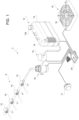
Figure 1 is a schematic perspective view illustrating a sanitization system of a vehicle according to the invention; and -
Figure 2 is a schematic side view in partial cross-section of a portion of a vehicle comprising a sanitization system according to the invention. - In
Figure 2 , the cab of a heavy-duty vehicle 2 such as a truck comprising asanitization system 3 according to this invention is identified, as a whole, with thereference number 1. - As illustrated in
Figure 2 , thevehicle 2 comprises a number ofwalls 4 defining ahousing portion 5 such as acabin 1 configured to accommodate one or more passengers and housing, as known, a driver'sseat 6 and adashboard 7 located in front of the driver'sseat 6 and defining support for a variety of driving control elements, such as a steering system, buttons, or screens. - The
cab 1 is carried by a vehicle frame, not illustrated, which is movable across the ground, as known, and therefore not further described for brevity. - According to the invention, the
vehicle 2 comprises asanitization system 3 configured to sanitize thehousing 5 using fluid. - Advantageously, the
sanitization system 3 is integrated within thewalls 4 defining thehousing 5. - As illustrated in greater detail in
Figure 1 , thesanitization system 3 essentially comprises diffuser means 9 configured to spray a high-pressure sanitizing fluid contained in a sanitizingfluid source 12. - Advantageously, the diffuser means 9 comprise a number of
nebulization points 10 each fluidically connected to thefluid source 12 and, in the described embodiment, fluidically in series with each other. - According to the illustrated embodiment, referring to
Figure 2 , this number ofnebulization points 10 is carried by aninternal wall 4 of thecab 1 in an elevated position so that the fluid that they nebulized can reach thewhole housing 5 space. - Advantageously, each
nebulization point 10 is guidable so that the position of the fluid that it nebulizes can vary spatially so as to reach each point of thecab 1. - Advantageously, each
nebulization point 10 comprises anozzle 11 configured to define a particular sanitizing fluid nebulization pattern. Eachnozzle 11 can, preferably, be selectively mounted at therespective nebulization point 10. - These
nozzles 11 may, preferably, be fixed-jet nozzles and may be replaced with nozzles of a size suitable for the size of thehousing 5 or variable-jet nozzles configured to vary their flow rate according to an appropriate control signal. - The
sanitizing fluid source 12 is preferably atank 13, more preferably integrated within one of thewalls 4, and provided with an opening 13a accessible from the outside to allow it to be filled, either directly, as in the illustrated example, or via a special duct, not illustrated. - The
source 12 may advantageously be provided with level sensor means 14 configured to detect the level of sanitizing fluid contained within thetank 13. - The sanitizing fluid may be of any type suitable for sanitizing the
housing 5, i.e. for eliminating pathogens such as viruses, bacteria, fungi and mould, such as, for example, hydrogen peroxide or any other known type of sanitizing fluid. - The
sanitization system 3 further comprises pumping means 15 fluidically interposed between thesource 12 and the diffuser means 9 configured to suck the sanitizing fluid from thetank 13 and to send it to the diffuser means 9. Advantageously, these pumping means 15 comprise an electric pump, powered at 12 V or 24 V depending on the power supply type of thevehicle 2. Optionally, the pumping means 15 may be provided with a special converter/inverter configured to vary the power supply voltage to the correct voltage for the type of pump installed. - The
pumping means 15 are preferably configured to vary the pressure of the sanitizing fluid relative to the housing pressure within thetank 13. - The
sanitization system 3 may comprise heating means 16 fluidically interposed between thepumping means 15 and the diffuser means 9 to heat the sanitizing fluid to a predetermined temperature, if required by the type of sanitizing fluid. Advantageously, these heating means 16 may comprise a heat exchanger, for example an electric one. - The
sanitization system 3 may comprise sensor means 17 configured to detect the presence of people inside thehousing 5. These sensor means 17 can, advantageously, comprise a volumetric sensor or a thermal video camera. - Optionally, the sensor means 17 may also be configured to allow the detection of the body temperature of the occupants by managing the tracking and acquisition of the daily data of the fleet manager with respect to risk indicators that may require sanitization at close time intervals.
- The
sanitization system 3 also comprises ventilation means 18 configured to selectively enable the fluidic communication of thehousing 5 with the external environment. In the described embodiment, these ventilation means 18 comprise forced ventilation means 19 such as an electronically controlled fan, preferably when switched on or off, and when speed is controlled (air flow rate). - Advantageously, the
sanitization system 3 comprises anelectronic unit 20 electronically connected to the diffuser means 9, to the sensor means that thesanitization system 3 may be provided with, and to the ventilation means 18 and comprising processing means configured to receive an activation signal for thesanitization system 3 and to control, as a consequence, the operation of the diffuser means 9 and of the ventilation means 18, taking into account, when present, the sensor means described above. - In particular, the
electronic unit 20 can be made separately or integrated into thevehicle 2 ECU. - The processing means are configured to store, or to receive as input, data relating to the size of the
housing 5 and of the type of sanitizing fluid in order to calculate the quantity of the latter to be nebulized inside thehousing 5. - Advantageously, the
electronic unit 20 comprises telecommunication means configured to enable the remote control of thesanitization system 3, for example using a remote control, for example using vehicle fleet control software or, again, using a software application that can be installed on a smartphone. - Again, the
electronic unit 20 may be electrically connected to a special button or screen function that can be selected by the user and activated once they have left thehousing 5, a state that can be detected using the sensor means 17. - The operation of the embodiment of the
sanitization system 3 described above is the following. - When the driver has finished their route and has exited the passenger compartment, they can activate the sanitization, as described above, using one of the remote/in-cab control systems for the
sanitization system 3. This operation can also be carried out by a management plant for thevehicles 1, for example those parked in the fleet carpark. - Once the sanitization cycle has been activated, the
electronic unit 20 activates a verification step to verify the operation of its elements, such as the pumping means 15, theventilation device 18, or, if present, the heating means 16, or using the level sensor means 14, the verification of the presence of enough sanitizing fluid in thetank 13. - If an anomaly is detected, it is indicated using a light and/or sound indicator in the
vehicle 2 and/or a remote management software/app notification. - If no anomalies are detected, the
electronic unit 20, having stored data relating to the type of sanitizing fluid and the size of thehousing 5, launches a fluid distribution step. This, therefore, controls the pumping means 15 so that they draw a predetermined quantity of sanitizing fluid from thesource 12 and send it to the diffuser means 9 for dispersing it in thehousing 5 using thenozzles 11. - If the latter are variable jet nozzles, the
electronic unit 20 can adjust the opening so as to vary the nebulization thereof, according to a precise sanitizing fluid distribution cycle, depending on the size of thehousing 5 and on the type of sanitizing fluid. - If it is necessary, based on the type of sanitizing fluid, to raise the temperature thereof before sending it to the diffuser means 9, the
electronic unit 20 controls the heating means 16 so that they bring the sanitizing fluid to a predetermined temperature before nebulizing them using the diffuser means 9. - Once the fluid distribution cycle is complete, the
electronic unit 20 checks that a predetermined time for allowing the sanitizing fluid to act has passed and checks theventilation devices 18 so as to enable the gas residues of the nebulized fluid to escape into the environment and thehousing 5 to be aired. - In the example described, the
electronic unit 20 activates the forced ventilation means 19 so as to force the escape of the gas residues of the sanitizing fluid into the external environment and, thus, to air thehousing 5. - In parallel to what is described above, the
electronic unit 20 performs a continuous check that no living being enters inside thehousing 5 using, for example, the sensor means 17 or by detecting the opening of thecab 1 doors. If this condition occurs, the sanitization is interrupted and the ventilation means 18 are immediately activated. - The
electronic unit 20 can advantageously store the sanitization cycles successfully performed and communicate them to the remote management system by storing the date and time of the sanitization that took place. - In light of the above, it's clear that this invention also relates to a method of sanitizing a
housing 5 for avehicle 1 as described above and comprising the steps of: - receiving a request to sanitize a
vehicle 1housing 5; - activating a verification step for the
sanitization system 3 functions; - if the verification step reveals an anomaly, reporting this anomaly via IT and/or acoustic and/or visual notification;
- if the verification step does not detect any anomalies, proceeding with a step for distributing nebulized sanitizing fluid inside the
housing 5; - at the end of the fluid distribution step, after a predetermined waiting time, activating the ventilation means 18 to allow the
housing 5 to be aired. - The method also comprises an additional step, in parallel to those listed above, of verifying whether there is a living being inside the
housing 5, if this is verified the sanitization is stopped and the ventilation means 18 are operated. - The anomaly check step comprises at least one of the following steps:
- verification of the operation of the pumping means 15 and/or ventilation means 18 and/or heating means 16; and/or
- verification of the fluid level inside the
tank 13. - The fluid distribution step has a predetermined duration depending on the type of sanitizing fluid and on the dimensions of the
housing 5 according to what is processed by theelectronic unit 20. In particular, theelectronic unit 20 can also control the orientation of the nebulization points 10, i.e. thenozzles 11, depending on the size and arrangement of thehousing 5. - Similarly, the wait before activating the ventilation means 18 has a predetermined duration depending on the type of sanitizing fluid to eliminate the pathogens concerned.
- The method can also comprise the step of storing the date and time of the
housing 5 sanitization that has occurred. - The advantages of a
vehicle 2 provided with asanitization system 3 according to this invention are clear from the above. - Thanks to the
sanitization system 3, it is possible to automate and reduce the sanitization time of thevehicular housing 5, making it possible to sanitize effectively and safely. - The automatic system consumes little energy and can be totally controlled remotely, checking the operation thereof and the history of activations.
- In addition, the proposed system is independent of the vehicle type and sanitizing liquid, and can be easily applied by varying the supply time for the sanitizing liquid inside the housing.
- In addition, it is possible to easily integrate the electronic unit with the other control systems for the vehicle or vehicle fleet, by making the latter more versatile.
- Thanks to the use of
nozzles 11 that can be separated, it is possible to easily replace the flow rate of the diffuser means 9 by modifying the capacity of thesanitization system 3 depending on different operational needs. - Finally, it is clear that the
vehicle 2 provided with asanitization system 3 according to this invention can be modified, and variations can be made thereof, without, however, departing from the scope of protection as set forth in the claims. - For example, it is clear that although a
cab 1 is illustrated, it is possible to use thesanitization system 3 in anyvehicle housing 5 that can be used by vehicle operators. - Again, the number of devices, shapes, and arrangements described here may vary as a function of the type of vehicle with which they are associated.
- As disclosed in the description, some of the functional elements of the
sanitization system 3 may be optional, like the corresponding steps of the corresponding control method.
Claims (16)
- Vehicle (1) comprising a plurality of walls (4) defining a housing (5), said vehicle (1) comprising a sanitization system (3) for said housing (5) comprising diffuser means (9), a source (12) of sanitizing fluid, ventilation means (18) and an electronic unit (20), said electronic unit (20) being configured to allow the passage of said sanitizing fluid from said source (12) to said diffuser means (9 ), said diffuser means (9) nebulizing said sanitizing fluid coming from said source (12) inside said housing (5), characterized in that said electronic unit (20) is configured to activate said ventilation means (18) to allow the airing of said housing (5) following the nebulization of said sanitizing fluid inside said housing (5).
- Vehicle according to claim 1, wherein said source (12) comprises a tank (13) provided with fluid sensor means (14) configured to detect a level of sanitizing fluid in said tank (13).
- Vehicle according to one of the preceding claims, comprising pumping means (15) fluidly interposed between said source (12) and said diffuser means (9) and configured to control the passage of said fluid from said source (12) to said diffuser means (9).
- Vehicle according to claim 3, comprising heating means (16) fluidly interposed between said pumping means (15) and said diffuser means (9).
- Vehicle according to one of the preceding claims, wherein said ventilation means (18) comprise forced ventilation means (19).
- Vehicle according to one of the preceding claims, comprising sensor means (17) configured to detect the presence of a living being inside said housing (5), said sensor means (17) being electrically connected to said electronic unit (20) which is configured to prevent the nebulization of said sanitizing fluid and the activation of said ventilation means (18) if a living being is identified inside said housing (5).
- Vehicle according to one of the preceding claims, wherein said diffuser means (9) comprise a plurality of nebulization points (10) each of said nebulization points (10) being fluidly connected to said source (12) of sanitizing fluid.
- Vehicle according to claim 7, wherein said nebulization points (10) each comprise a nozzle (11) that can be selectively mounted in the respective nebulization point (10).
- Vehicle according to claim 7 or 8, wherein each nebulization point (10) can be oriented.
- Vehicle according to one of the preceding claims, wherein said electronic unit (20) comprises processing means configured to calculate the quantity of sanitizing fluid to be sprayed inside said housing 5 according to the type of sanitizing fluid and dimensions of said housing 5, said values being stored or insertable in said electronic unit (20).
- Vehicle according to one of the preceding claims, wherein said electronic unit (20) comprises telecommunication means configured to allow remote control thereof.
- Method of sanitizing a housing (5) of a vehicle (1) according to one of the preceding claims and comprising the steps of:• receive a request to sanitize a vehicle (1) housing (5);• activate a verification step for the functionality of the sanitization system (3);• if the verification step reveals an anomaly, report this anomaly via IT and / or acoustic and / or visual notification;• if the verification step does not detect any anomalies, proceed with a step for distributing nebulized sanitizing fluid inside the housing (5);• at the end of the fluid distribution step, after a predetermined waiting time, activation of the ventilation means (18) to allow the housing (5) to be aired.
- Sanitization method according to claim 12, further comprising a verification step, in parallel with those listed above, said verification step detecting if a living being is inside the housing (5), if this condition is detected said fluid distribution step is interrupted and the ventilation means (18) are simultaneously activated.
- Sanitization method according to claim 12 or 13, wherein the anomaly verification step comprises at least one of the following steps:• • verification of the operation of the pumping means (15) and/or ventilation means (18) and/or heating means (16); and/or• • verification of the fluid level inside the tank (13).
- Sanitization method according to one of claims 12 to 14, in which the fluid distribution step has a predetermined duration according to the type of sanitizing fluid and the size of the housing (5).
- Sanitization method according to one of claims 12 to 15, further comprising a step for storing the date and time of a successful sanitization of the housing (5).
Applications Claiming Priority (2)
| Application Number | Priority Date | Filing Date | Title |
|---|---|---|---|
| IT102020000015769A IT202000015769A1 (en) | 2020-06-30 | 2020-06-30 | CABIN EQUIPPED WITH A SANITATION SYSTEM |
| PCT/IB2021/055875 WO2022003599A1 (en) | 2020-06-30 | 2021-06-30 | Cab provided with a sanitization system |
Publications (3)
| Publication Number | Publication Date |
|---|---|
| EP4172009A1 EP4172009A1 (en) | 2023-05-03 |
| EP4172009C0 EP4172009C0 (en) | 2025-01-01 |
| EP4172009B1 true EP4172009B1 (en) | 2025-01-01 |
Family
ID=72473846
Family Applications (1)
| Application Number | Title | Priority Date | Filing Date |
|---|---|---|---|
| EP21748657.0A Active EP4172009B1 (en) | 2020-06-30 | 2021-06-30 | Cab provided with a sanitization system |
Country Status (7)
| Country | Link |
|---|---|
| US (1) | US20230226886A1 (en) |
| EP (1) | EP4172009B1 (en) |
| JP (1) | JP2023530604A (en) |
| KR (1) | KR20230026330A (en) |
| CN (1) | CN115884798A (en) |
| IT (1) | IT202000015769A1 (en) |
| WO (1) | WO2022003599A1 (en) |
Family Cites Families (15)
| Publication number | Priority date | Publication date | Assignee | Title |
|---|---|---|---|---|
| JP3583395B2 (en) * | 2001-10-05 | 2004-11-04 | 西松建設株式会社 | Air purification equipment for construction machinery |
| US7871016B2 (en) * | 2005-08-26 | 2011-01-18 | Altapure, Llc | Method and apparatus for an improved aerosol generator and associated uses and equipment |
| CN1911451A (en) * | 2006-08-24 | 2007-02-14 | 徐州恒天德尔重工科技有限公司 | Ecology pilothouse |
| US20080153408A1 (en) * | 2006-12-21 | 2008-06-26 | Livernois Vehicle Development, Llc | Air refresh system |
| US8303905B2 (en) * | 2009-05-15 | 2012-11-06 | Rebecca Brents | Germ eliminator system |
| FR2955031B1 (en) * | 2010-01-14 | 2012-04-20 | Clim Assistance | DISINFECTION OR DEODORIZATION SYSTEM AND MOTOR VEHICLE EQUIPPED WITH SUCH A SYSTEM |
| FR2999482B1 (en) * | 2012-12-18 | 2016-08-26 | Peugeot Citroen Automobiles Sa | SYSTEM FOR DEPOLLUATING AN ENCLOSURE, IN PARTICULAR A MOTOR VEHICLE HABITACLE |
| JP5791694B2 (en) * | 2013-12-18 | 2015-10-07 | 株式会社アクト | Vehicle disinfection device |
| US10220108B2 (en) * | 2014-02-28 | 2019-03-05 | Aeroclave, Llc | Decontamination system for on-board a vehicle |
| FR3021395B1 (en) * | 2014-05-23 | 2019-05-24 | Psa Automobiles Sa. | DEVICE FOR THE TREATMENT OF AIR FOR AN ENCLOSURE, WITH MEANS FOR THE TREATMENT OF LIQUID BY MIXING OZONE CONTROL |
| JP2016019698A (en) * | 2014-07-15 | 2016-02-04 | 敏行 篠田 | Ultrasonic spray-type sterilizing and deodorizing device |
| US20190176768A1 (en) * | 2017-12-12 | 2019-06-13 | GM Global Technology Operations LLC | Germ-free ride system for autonomous shared fleets |
| WO2020040990A1 (en) * | 2018-08-21 | 2020-02-27 | Gentex Corporation | Disinfection system |
| CN111298330A (en) * | 2020-02-20 | 2020-06-19 | 国安达股份有限公司 | A disinfection and fire protection integrated system and its application method in the passenger cabin |
| US11318960B1 (en) * | 2020-05-15 | 2022-05-03 | Gm Cruise Holdings Llc | Reducing pathogen transmission in autonomous vehicle fleet |
-
2020
- 2020-06-30 IT IT102020000015769A patent/IT202000015769A1/en unknown
-
2021
- 2021-06-30 EP EP21748657.0A patent/EP4172009B1/en active Active
- 2021-06-30 JP JP2022574772A patent/JP2023530604A/en active Pending
- 2021-06-30 WO PCT/IB2021/055875 patent/WO2022003599A1/en not_active Ceased
- 2021-06-30 US US17/928,718 patent/US20230226886A1/en active Pending
- 2021-06-30 KR KR1020227043781A patent/KR20230026330A/en active Pending
- 2021-06-30 CN CN202180046128.XA patent/CN115884798A/en active Pending
Also Published As
| Publication number | Publication date |
|---|---|
| EP4172009C0 (en) | 2025-01-01 |
| JP2023530604A (en) | 2023-07-19 |
| CN115884798A (en) | 2023-03-31 |
| IT202000015769A1 (en) | 2021-12-30 |
| EP4172009A1 (en) | 2023-05-03 |
| WO2022003599A1 (en) | 2022-01-06 |
| US20230226886A1 (en) | 2023-07-20 |
| KR20230026330A (en) | 2023-02-24 |
Similar Documents
| Publication | Publication Date | Title |
|---|---|---|
| US7671482B2 (en) | Hydrogen powered vehicle refueling strategy | |
| US10220108B2 (en) | Decontamination system for on-board a vehicle | |
| JP5516382B2 (en) | In-vehicle optical sensor cleaning system | |
| US20180134112A1 (en) | Interior Ventilation System for a Motor Vehicle | |
| US20050113996A1 (en) | Ambulance control system and method | |
| KR20180136981A (en) | Devices for cleaning of sensors of optical detection systems for automobiles | |
| WO2015159248A1 (en) | Cabin pressurazation system for agricultural machines, having a filteration system | |
| FR3014571A1 (en) | SENSORY RETURN CONTROL DEVICE | |
| EP4172009B1 (en) | Cab provided with a sanitization system | |
| US11072225B2 (en) | Filter apparatus for a motor vehicle, and method for operating such a filter apparatus | |
| US8652264B2 (en) | Rear washer fluid enable/disable | |
| CN112473055B (en) | Disinfection epidemic prevention system and method for vehicle and unmanned vehicle | |
| US9834177B2 (en) | Method for programming a wiper system for vehicle windscreens and wiper system | |
| US9004992B2 (en) | Apparatus to monitor a parked vehicle at a convenience station | |
| CN117188889B (en) | Automobile door handle system with self-cleaning function and automobile | |
| EP3541670B1 (en) | Landing gear system and method of operating a landing gear system for a vehicle trailer | |
| CN218187380U (en) | Vehicle-mounted disinfection device | |
| CN115006571B (en) | Epidemic prevention system for vehicle, vehicle and method | |
| KR20160006847A (en) | Perfume diffuser for automotive vehicles | |
| JP3611301B2 (en) | Speed sprayer | |
| KR101893668B1 (en) | Automatic cleaner for automobile's air conditioner | |
| CN112622568A (en) | System and method for accelerating discharge of harmful substances in automotive interior | |
| DE102021131329A1 (en) | Motor vehicle, scenting device and cartridge | |
| WO2024084407A1 (en) | Device for sanitizing vehicles | |
| DE102015009258A1 (en) | Heating device for a vehicle and method for heating a vehicle interior |
Legal Events
| Date | Code | Title | Description |
|---|---|---|---|
| STAA | Information on the status of an ep patent application or granted ep patent |
Free format text: STATUS: UNKNOWN |
|
| STAA | Information on the status of an ep patent application or granted ep patent |
Free format text: STATUS: THE INTERNATIONAL PUBLICATION HAS BEEN MADE |
|
| PUAI | Public reference made under article 153(3) epc to a published international application that has entered the european phase |
Free format text: ORIGINAL CODE: 0009012 |
|
| STAA | Information on the status of an ep patent application or granted ep patent |
Free format text: STATUS: REQUEST FOR EXAMINATION WAS MADE |
|
| 17P | Request for examination filed |
Effective date: 20221209 |
|
| AK | Designated contracting states |
Kind code of ref document: A1 Designated state(s): AL AT BE BG CH CY CZ DE DK EE ES FI FR GB GR HR HU IE IS IT LI LT LU LV MC MK MT NL NO PL PT RO RS SE SI SK SM TR |
|
| DAV | Request for validation of the european patent (deleted) | ||
| DAX | Request for extension of the european patent (deleted) | ||
| GRAP | Despatch of communication of intention to grant a patent |
Free format text: ORIGINAL CODE: EPIDOSNIGR1 |
|
| STAA | Information on the status of an ep patent application or granted ep patent |
Free format text: STATUS: GRANT OF PATENT IS INTENDED |
|
| INTG | Intention to grant announced |
Effective date: 20240220 |
|
| GRAJ | Information related to disapproval of communication of intention to grant by the applicant or resumption of examination proceedings by the epo deleted |
Free format text: ORIGINAL CODE: EPIDOSDIGR1 |
|
| STAA | Information on the status of an ep patent application or granted ep patent |
Free format text: STATUS: REQUEST FOR EXAMINATION WAS MADE |
|
| INTC | Intention to grant announced (deleted) | ||
| GRAP | Despatch of communication of intention to grant a patent |
Free format text: ORIGINAL CODE: EPIDOSNIGR1 |
|
| STAA | Information on the status of an ep patent application or granted ep patent |
Free format text: STATUS: GRANT OF PATENT IS INTENDED |
|
| INTG | Intention to grant announced |
Effective date: 20240729 |
|
| GRAS | Grant fee paid |
Free format text: ORIGINAL CODE: EPIDOSNIGR3 |
|
| GRAA | (expected) grant |
Free format text: ORIGINAL CODE: 0009210 |
|
| STAA | Information on the status of an ep patent application or granted ep patent |
Free format text: STATUS: THE PATENT HAS BEEN GRANTED |
|
| AK | Designated contracting states |
Kind code of ref document: B1 Designated state(s): AL AT BE BG CH CY CZ DE DK EE ES FI FR GB GR HR HU IE IS IT LI LT LU LV MC MK MT NL NO PL PT RO RS SE SI SK SM TR |
|
| REG | Reference to a national code |
Ref country code: GB Ref legal event code: FG4D |
|
| REG | Reference to a national code |
Ref country code: DE Ref legal event code: R096 Ref document number: 602021024288 Country of ref document: DE |
|
| REG | Reference to a national code |
Ref country code: CH Ref legal event code: EP |
|
| REG | Reference to a national code |
Ref country code: IE Ref legal event code: FG4D |
|
| U01 | Request for unitary effect filed |
Effective date: 20250113 |
|
| U07 | Unitary effect registered |
Designated state(s): AT BE BG DE DK EE FI FR IT LT LU LV MT NL PT RO SE SI Effective date: 20250120 |
|
| U20 | Renewal fee for the european patent with unitary effect paid |
Year of fee payment: 5 Effective date: 20250527 |
|
| PG25 | Lapsed in a contracting state [announced via postgrant information from national office to epo] |
Ref country code: PL Free format text: LAPSE BECAUSE OF FAILURE TO SUBMIT A TRANSLATION OF THE DESCRIPTION OR TO PAY THE FEE WITHIN THE PRESCRIBED TIME-LIMIT Effective date: 20250101 |
|
| PG25 | Lapsed in a contracting state [announced via postgrant information from national office to epo] |
Ref country code: ES Free format text: LAPSE BECAUSE OF FAILURE TO SUBMIT A TRANSLATION OF THE DESCRIPTION OR TO PAY THE FEE WITHIN THE PRESCRIBED TIME-LIMIT Effective date: 20250101 |
|
| PG25 | Lapsed in a contracting state [announced via postgrant information from national office to epo] |
Ref country code: IS Free format text: LAPSE BECAUSE OF FAILURE TO SUBMIT A TRANSLATION OF THE DESCRIPTION OR TO PAY THE FEE WITHIN THE PRESCRIBED TIME-LIMIT Effective date: 20250501 Ref country code: NO Free format text: LAPSE BECAUSE OF FAILURE TO SUBMIT A TRANSLATION OF THE DESCRIPTION OR TO PAY THE FEE WITHIN THE PRESCRIBED TIME-LIMIT Effective date: 20250401 |
|
| PG25 | Lapsed in a contracting state [announced via postgrant information from national office to epo] |
Ref country code: HR Free format text: LAPSE BECAUSE OF FAILURE TO SUBMIT A TRANSLATION OF THE DESCRIPTION OR TO PAY THE FEE WITHIN THE PRESCRIBED TIME-LIMIT Effective date: 20250101 |
|
| PG25 | Lapsed in a contracting state [announced via postgrant information from national office to epo] |
Ref country code: GR Free format text: LAPSE BECAUSE OF FAILURE TO SUBMIT A TRANSLATION OF THE DESCRIPTION OR TO PAY THE FEE WITHIN THE PRESCRIBED TIME-LIMIT Effective date: 20250402 |
|
| PG25 | Lapsed in a contracting state [announced via postgrant information from national office to epo] |
Ref country code: CZ Free format text: LAPSE BECAUSE OF FAILURE TO SUBMIT A TRANSLATION OF THE DESCRIPTION OR TO PAY THE FEE WITHIN THE PRESCRIBED TIME-LIMIT Effective date: 20250101 |
|
| PG25 | Lapsed in a contracting state [announced via postgrant information from national office to epo] |
Ref country code: SM Free format text: LAPSE BECAUSE OF FAILURE TO SUBMIT A TRANSLATION OF THE DESCRIPTION OR TO PAY THE FEE WITHIN THE PRESCRIBED TIME-LIMIT Effective date: 20250101 |
|
| PG25 | Lapsed in a contracting state [announced via postgrant information from national office to epo] |
Ref country code: SK Free format text: LAPSE BECAUSE OF FAILURE TO SUBMIT A TRANSLATION OF THE DESCRIPTION OR TO PAY THE FEE WITHIN THE PRESCRIBED TIME-LIMIT Effective date: 20250101 |
|
| PLBE | No opposition filed within time limit |
Free format text: ORIGINAL CODE: 0009261 |
|
| STAA | Information on the status of an ep patent application or granted ep patent |
Free format text: STATUS: NO OPPOSITION FILED WITHIN TIME LIMIT |
|
| REG | Reference to a national code |
Ref country code: CH Ref legal event code: L10 Free format text: ST27 STATUS EVENT CODE: U-0-0-L10-L00 (AS PROVIDED BY THE NATIONAL OFFICE) Effective date: 20251112 |
|
| 26N | No opposition filed |
Effective date: 20251002 |
|
| REG | Reference to a national code |
Ref country code: CH Ref legal event code: H13 Free format text: ST27 STATUS EVENT CODE: U-0-0-H10-H13 (AS PROVIDED BY THE NATIONAL OFFICE) Effective date: 20260127 |
|
| PG25 | Lapsed in a contracting state [announced via postgrant information from national office to epo] |
Ref country code: MC Free format text: LAPSE BECAUSE OF FAILURE TO SUBMIT A TRANSLATION OF THE DESCRIPTION OR TO PAY THE FEE WITHIN THE PRESCRIBED TIME-LIMIT Effective date: 20250101 |
|
| GBPC | Gb: european patent ceased through non-payment of renewal fee |
Effective date: 20250630 |
|
| PG25 | Lapsed in a contracting state [announced via postgrant information from national office to epo] |
Ref country code: GB Free format text: LAPSE BECAUSE OF NON-PAYMENT OF DUE FEES Effective date: 20250630 |
|
| PG25 | Lapsed in a contracting state [announced via postgrant information from national office to epo] |
Ref country code: IE Free format text: LAPSE BECAUSE OF NON-PAYMENT OF DUE FEES Effective date: 20250630 |
|
| PG25 | Lapsed in a contracting state [announced via postgrant information from national office to epo] |
Ref country code: CH Free format text: LAPSE BECAUSE OF NON-PAYMENT OF DUE FEES Effective date: 20250630 |