EP4171130A1 - Cell residing processing method, terminal device, and computer readable storage medium - Google Patents
Cell residing processing method, terminal device, and computer readable storage medium Download PDFInfo
- Publication number
- EP4171130A1 EP4171130A1 EP21829828.9A EP21829828A EP4171130A1 EP 4171130 A1 EP4171130 A1 EP 4171130A1 EP 21829828 A EP21829828 A EP 21829828A EP 4171130 A1 EP4171130 A1 EP 4171130A1
- Authority
- EP
- European Patent Office
- Prior art keywords
- cell
- endc
- terminal device
- lte
- cells
- Prior art date
- Legal status (The legal status is an assumption and is not a legal conclusion. Google has not performed a legal analysis and makes no representation as to the accuracy of the status listed.)
- Withdrawn
Links
- 238000003672 processing method Methods 0.000 title claims abstract description 39
- 230000006855 networking Effects 0.000 claims abstract description 8
- 230000004044 response Effects 0.000 claims description 42
- 230000006870 function Effects 0.000 claims description 26
- 238000000034 method Methods 0.000 claims description 25
- 230000003213 activating effect Effects 0.000 claims description 14
- 230000008569 process Effects 0.000 claims description 10
- 238000004590 computer program Methods 0.000 claims description 9
- 230000009977 dual effect Effects 0.000 claims description 8
- 230000007774 longterm Effects 0.000 claims description 8
- 238000004891 communication Methods 0.000 description 7
- CIWBSHSKHKDKBQ-JLAZNSOCSA-N Ascorbic acid Chemical compound OC[C@H](O)[C@H]1OC(=O)C(O)=C1O CIWBSHSKHKDKBQ-JLAZNSOCSA-N 0.000 description 3
- 101150039363 SIB2 gene Proteins 0.000 description 3
- 230000008878 coupling Effects 0.000 description 3
- 238000010168 coupling process Methods 0.000 description 3
- 238000005859 coupling reaction Methods 0.000 description 3
- 238000005516 engineering process Methods 0.000 description 3
- 238000012545 processing Methods 0.000 description 3
- 230000005540 biological transmission Effects 0.000 description 2
- 230000001413 cellular effect Effects 0.000 description 1
- 238000007796 conventional method Methods 0.000 description 1
- 238000013461 design Methods 0.000 description 1
- 238000010586 diagram Methods 0.000 description 1
- 230000000977 initiatory effect Effects 0.000 description 1
- 230000003993 interaction Effects 0.000 description 1
- 238000010295 mobile communication Methods 0.000 description 1
- 238000012544 monitoring process Methods 0.000 description 1
- 230000011664 signaling Effects 0.000 description 1
Images



Classifications
-
- H—ELECTRICITY
- H04—ELECTRIC COMMUNICATION TECHNIQUE
- H04W—WIRELESS COMMUNICATION NETWORKS
- H04W48/00—Access restriction; Network selection; Access point selection
- H04W48/16—Discovering, processing access restriction or access information
-
- H—ELECTRICITY
- H04—ELECTRIC COMMUNICATION TECHNIQUE
- H04W—WIRELESS COMMUNICATION NETWORKS
- H04W36/00—Hand-off or reselection arrangements
- H04W36/0005—Control or signalling for completing the hand-off
- H04W36/0011—Control or signalling for completing the hand-off for data sessions of end-to-end connection
- H04W36/0027—Control or signalling for completing the hand-off for data sessions of end-to-end connection for a plurality of data sessions of end-to-end connections, e.g. multi-call or multi-bearer end-to-end data connections
-
- H—ELECTRICITY
- H04—ELECTRIC COMMUNICATION TECHNIQUE
- H04W—WIRELESS COMMUNICATION NETWORKS
- H04W36/00—Hand-off or reselection arrangements
- H04W36/0005—Control or signalling for completing the hand-off
- H04W36/0055—Transmission or use of information for re-establishing the radio link
- H04W36/0061—Transmission or use of information for re-establishing the radio link of neighbour cell information
-
- H—ELECTRICITY
- H04—ELECTRIC COMMUNICATION TECHNIQUE
- H04W—WIRELESS COMMUNICATION NETWORKS
- H04W48/00—Access restriction; Network selection; Access point selection
- H04W48/20—Selecting an access point
Definitions
- the present disclosure relates to the field of communication technologies, and in particular to a processing method for cell residing, a terminal device, and a computer-readable storage medium.
- E-UTRA NR Dual Connectivity with E-UTRAN connected to EPC (ENDC) mode if user equipment (UE) resides in a long term evolution (LTE) cell that does not support the ENDC combination of LTE and 5G, the UE cannot reside on the 5G network.
- LTE long term evolution
- a conventional method is to reselect to an LTE cell that meets a reselection threshold based on reselection information configured by the network in the system message. If there are multiple LTE cells, the UE cannot be guaranteed to reside on an LTE cell supporting ENDC, resulting in the UE supports ENDC but cannot use 5G. In addition, if there is an LTE cell that supports ENDC, but the LTE cell is not in the neighborhood list of the current resident cell, UE cannot reside on the 5G cell.
- the present disclosure provides a processing method for cell residing, a terminal device, and a computer-readable storage medium.
- a terminal device configured to operate in a non-independent networking mode; wherein the terminal device comprises a processor configured to perform: obtaining a long term evolution (LTE) cell list in response to the terminal device being in a non-roaming state and entering an idle state; selecting a first EUTRA-NR dual connection (ENDC) cell to reside on in response to the first ENDC cell existing in the LTE cell list; and selecting a second ENDC cell to reside on in response to the first ENDC cell not existing in the LTE cell list; wherein the first ENDC cell is an ENDC cell in the LTE cell list, and the first ENDC cell is in a neighbor list of a serving cell where the terminal device is located; the second ENDC cell is an ENDC cell in the LTE cell list, and the second ENDC cell is not in the neighbor list of the serving cell where the terminal device is located.
- LTE long term evolution
- ENDC EUTRA-NR dual connection
- a terminal device comprising an application processor, a memory, and one or more programs; wherein the one or more programs are stored in the memory and configured to be executed by the application processor; the one or more programs comprise instructions for performing the method as above.
- a computer-readable storage medium storing a computer program; wherein the computer program comprises a program instruction, the program instruction when executed by a processor causing the processor to perform the method as above.
- the first ENDC cell when the first ENDC cell exists in the LTE cell list, the first ENDC cell is selected for residency, and when the first ENDC cell does not exist in the LTE cell list, the second ENDC cell is selected for residency, which improves the success rate of registering the NSA-enabled terminal device on the 5G network and enables the terminal device to use the 5G network.
- embodiments of the present disclosure provide a processing method for cell residing.
- the processing method for cell residing is applied to a terminal device 100 in a non-independent networking mode.
- the method includes operations at blocks illustrated herein.
- LTE long term evolution
- embodiments of the present disclosure further provide a terminal device 100.
- the processing method for cell residing in the embodiments of the present disclosure may be implemented by the terminal device 100 herein.
- the terminal device 100 includes a processor 10, and the steps S20, S40 and S60 can be implemented by the processor 10. That is, the processor 10 is configured to obtain a long term evolution (LTE) cell list in response to the terminal device 100 being in a non-roaming state and entering an idle state.
- the processor 10 is configured to select a first EUTRA-NR Dual Connection (ENDC) cell to reside on in response to the first ENDC cell existing in the LTE cell list.
- the processor 10 is configured to select a second ENDC cell to reside on in response to the first ENDC cell not existing in the LTE cell list.
- LTE long term evolution
- ENDC EUTRA-NR Dual Connection
- the first ENDC cell is an ENDC cell in the LTE cell list, and the first ENDC cell is in a neighbor list of a serving cell where the terminal device 100 is located.
- the second ENDC cell is an ENDC cell in the LTE cell list, and the second ENDC cell is not in the neighbor list of the serving cell where the terminal device 100 is located.
- the first ENDC cell when the first ENDC cell exists in the LTE cell list, the first ENDC cell is selected for residing, and when the LTE cell list does not exist in the first ENDC cell, the second ENDC cell is selected for residing, which may improve the success rate of the terminal device 100 supporting NSA to register on the 5G network, such that the terminal device 100 can use the 5G network.
- the terminal device 100 includes but is not limited to user equipment (UE), access terminal, user unit, user station, mobile station, mobile platform, remote station, remote terminal, mobile device, user terminal, terminal, wireless communication device, user agent, or user apparatus, etc.
- UE user equipment
- access terminal user unit
- user station mobile station
- mobile platform mobile platform
- remote station remote terminal
- mobile device user terminal
- terminal wireless communication device
- user agent user agent
- user apparatus wireless communication device
- the terminal may be a station (STAION, ST) in a WLAN, a cellular phone, a cordless phone, a session initiation protocol (SIP) phone, a wireless local loop (WLL) station, a personal digital processor (PDA) device, a handheld device with wireless communication capabilities, a computing device, or other processing devices connected to wireless modems, an in-vehicle device, a wearable device, and next-generation communication systems such as a terminal in NR networks or a terminal in future evolved public land mobile network (PLMN) networks, etc.
- STAION station
- ST station
- WLAN wireless local loop
- PDA personal digital processor
- the non-standalone (NSA) networking method is the 4th generation mobile communication technology (4G) independently deployed control plane (4G carrying control signaling), 5G and 4G jointly deployed user plane (5G and 4G carrying user plane data), or 5G independently deployed user plane (only 5G carrying user plane data).
- 4G 4th generation mobile communication technology
- 4G independently deployed control plane
- 5G independently deployed user plane only 5G carrying user plane data.
- the non-roaming state can be understood that the public land mobile network (PLMN) of the serving cell where the terminal device 100 currently resides on is home public land mobile network (HPLMN) or equivalent home PLMN (EHPLMN).
- PLMN public land mobile network
- HPLMN home public land mobile network
- EHPLMN equivalent home PLMN
- the terminal device 100 has two operating states, namely a connected state and an idle state.
- the connected state can be understood as that the terminal device 100 can perform data services, such as web browsing and other services.
- the idle state can be understood as an Idle state. In the idle state, all data connections of the terminal device 100 are closed at the access layer, that is, the terminal device 100 does not perform services such as data transmission.
- the LTE is a standard of the 4G wireless broadband technology.
- the LTE cell list is obtained. It can be understood that the serving cell that the terminal device 100 currently resides on is HPLMN or EHPLMN, and the terminal device 100 obtains the LTE cell list without data transmission.
- step S20 may includes operations at blocks illustrated herein.
- At block S22 searching for available LTE cells by activating an LTE cell background search network function in response to the terminal device 100 being in the non-roaming state and entering the idle state.
- step S22 and step S24 can be implemented by the processor 10. That is, the processor 10 is configured to search for available LTE cells by activating an LTE cell background search network function in response to the terminal device 100 being in the non-roaming state and entering the idle state; and form the LTE cell list and network information corresponding to the LTE cell list by recording the available LTE cells.
- the network information is configured to determine whether the first ENDC cell or the second ENDC cell exists in the LTE cell list.
- the LTE cell list and the network information corresponding to the LTE cell list may be quickly and accurately obtained.
- the terminal device 100 in the non-roaming state may be understood that the terminal device 100 is in the home cell.
- the available LTE cells may be understood as LTE cells that can be directly searched through the background search network.
- the network information includes but is not limited to the PLMN of the LTE cell, the frequency of the LTE cell, the ID of the LTE cell, and whether an upperLayerIndication-r15 field is included in the SIB2.
- the upperLayerIndication-r15 field is a field extended by the LTE cell in the form of NSA networking, and is configured to indicate whether the cell is an NSA cell supporting 5G.
- the terminal device 100 parses the upperLayerIndication-r15 from SIB2, the LTE cell is an ENDC cell.
- An ENDC cell can be understood as a cell that can access both LTE and 5G at the same time.
- the processor 10 may determine whether the LTE cell is in the neighbor list of the serving cell where the terminal device 100 is located according to the PLMN of the LTE cell, the frequency of the LTE cell, and the ID of the LTE cell, so as to determine whether the first ENDC cell or the second ENDC cell exists in the LTE cell list.
- the first ENDC cell may be understood as a cell capable of accessing LTE and 5G at the same time, and the first ENDC cell is in the neighbor list of the serving cell where the terminal device 100 is located.
- the second ENDC cell may be understood as a cell capable of accessing LTE and 5G at the same time, and the second ENDC cell is not in the neighbor list of the serving cell where the terminal device 100 is located.
- the LTE cell background search function (LTE available cell) is activated to search for available LTE cells near the terminal device 100, and the found LTE cells are recorded to form the LTE cell list.
- the network information corresponding to the LTE cell list includes the PLMN of the LTE cell, the frequency of the LTE cell, the ID of the LTE cell, and whether the SIB2 includes the upperLayerIndication-r15 field.
- the processor 10 determines whether the first ENDC cell or the second ENDC cell exists in the LTE cell list according to the network information.
- the terminal device 100 includes a timing device 20, and the processing method include operations as follows.
- the processing method in the above embodiments may be implemented by the processor 10 herein. That is, the processor 10 is configured to activate the timing device 20 in response to the terminal device 100 being in a roaming state, and whether the terminal device 100 is in the non-roaming state after the timing device 20 exceeds a preset timing period. In this way, the state of the terminal device 100 may be tracked regularly.
- the processing method may include operations as followed.
- the processing method in the above embodiments may be implemented by the processor 10 herein. That is, the processor 10 is configured to activate the timing device 20 after completely executing the LTE cell background network search function, and activate the LTE cell background network search function again after the timing device 20 exceeds the preset timing period. In this way, the terminal device 100 is prepared for activating the LTE cell background network search function when the terminal device 100 enters the idle state again, and the state of the terminal device 100 is tracked regularly.
- the timing device 20 includes but is not limited to a timer.
- the timing device 20 is a timer A of the LTE cell background search function.
- the timer A is activated.
- the preset timing period is t seconds, and after t seconds, it is determined whether the terminal device 100 is still resided on the non-home cell (roaming state).
- the timer A is activated again.
- the LTE cell background network search function When the terminal device 100 has been resided on a non-home cell (non-roaming state), the LTE cell background network search function is activated, and the LTE cells are searched for. After the LTE cell background network search function is executed, the timer A is activated, and after the timer A exceeds the preset time period, the LTE cell background search function is activated again, and the above cycle is repeated.
- the timing device 20 is a timer A of the LTE cell background network search function.
- the timer A is activated.
- the preset timing period is t seconds
- the LTE cell background search function is activated to search for LTE cells to form the LTE cell list.
- the timer A is activated again to prepare for the next start of the LTE cell background search function.
- step S40 may include operations at blocks illustrated herein.
- Step S42 and S44 may be implemented by the processor 10. That is, the processor 10 is configured to, in response to the first ENDC cell that exists in the LTE cell list including a plurality of first ENDC cells, obtain a priority of each of the plurality of first ENDC cells; and reside on a first target cell, where the first target cell is one of the plurality of first ENDC cells with a highest priority among the plurality of first ENDC cells. In this way, the terminal device 100 may quickly reside on the qualified first target cell, such that the terminal device 100 may quickly use the 5G network.
- the processor 10 may determine, according to network information corresponding to each LTE cell in the LTE cell list, whether an ENDC cell exists in the LTE cell list and whether the ENDC cell is in the neighbor list of the serving cell where the terminal device 100 is located.
- an ENDC cell exists in the LTE cell list and the ENDC cell is in the neighbor list of the serving cell where the terminal device 100 is located it may be indicated that the first ENDC cell exists in the LTE cell list.
- the first ENDC cell with the highest priority among the first ENDC cells is selected for residing.
- the priority of the multiple first ENDC cells may be increased synchronously according to a preset rule, such that the terminal device 100 may more easily reside on the first ENDC cell, thereby quickly using the 5G network.
- the preset rule may be: adjusting the first ENDC cell with the highest priority among the first ENDC cells in the neighbor list to the highest, for example, 7; and calculating a priority magnitude value corresponding to the ENDC cell, and adjusting the remaining first ENDC cells in the neighbor cell list according to the priority magnitude value.
- the priority of the current serving cell of the terminal device 100 is 6, assuming that the number of ENDC cells in the neighbor list is 3, which are A, B, and C, respectively, the priority of A is 6, the priority of B is 5, and the priority of C is 4, and the highest priority is 7, then according to the preset rule, the priority of A is adjusted from 6 to 7, the priority of B is adjusted from 5 to 6, and the priority of C is adjusted from 4 to 5.
- the processing method includes operations as follows.
- the first target cell including a plurality of first target cells
- the processing method in the above embodiments may be implemented by the processor 10.
- the processor 10 is configured to, in response to the first target cell including a plurality of first target cells, select one of the plurality of first target cells with a greatest signal strength among the plurality of first target cells for residing. In this way, it may be ensured that the terminal device 100 can quickly select a better first ENDC cell for cell residing.
- one first target cell with the strongest strength among the multiple first target cells may be used for cell residing, which may improve the probability that the terminal device 100 quickly accesses the 5G network.
- the priority of the current serving cell of the terminal device 100 when the priority of the current serving cell of the terminal device 100 is 6, assuming that the number of first ENDC cells in the list of the terminal device 100 is 3, which are A, B, and C, respectively, the priority of A is 6, the priority of B is 6, and the priority of C is 5.
- the terminal device 100 may increase the priority of A and B to 7, and increase the priority of C to 6.
- the priority of cell A and cell B are the same, that is, there are two first target cells.
- the terminal device 100 may further obtain the signal strengths of cell A and cell B respectively, and select a cell with the strongest signal strength among cell A and cell B to reside on. It should be noted that, when the terminal device 100 cannot connect to the cell A and the cell B, the cell C is selected for residing.
- step S60 includes operations at blocks illustrated herein.
- Steps S62 and S64 may be implemented by the processor 10. That is, the processor 10 is configured to obtain a signal strength of each second ENDC cell, and select one of the plurality of second ENDC cells with a greatest signal strength among the plurality of second ENDC cells for residing. In this way, in the presence of the second ENDC cell, although the second ENDC cell is not in the neighbor list of the terminal device 100, the terminal device 100 may still reside on cells with ENDC function, such that the terminal device 100 can reside on 5G network.
- the terminal device 100 activates the LTE cell background search function, and searches for multiple LTE cells.
- the LTE cell list includes cell A, cell B, cell C, cell D, and cell E. Among them, cell A, cell B, and cell C are in the neighbor cell list of the terminal device 100, and cell D and cell E are ENDC cells but not in the neighbor cell list of the terminal device 100.
- the processor 10 may obtain the signal strengths of cell D and cell E respectively, compare the signal strengths of cell D and cell E, and select the cell among the cell D and cell E with the greatest signal strength for cell residing according to the comparison result.
- the processing method includes operations as follows.
- the processing method in the above embodiments may be implemented by the processor 10. That is, the processor 10 is configured to control the terminal device 100 to enter a 3GPP reselection process in response to the first ENDC cell and the second ENDC cell not existing in the LTE cell list. In this way, it may be ensured that the terminal device 100 can normally connect to the network.
- the 3GPP reselection process may be understood as a process of selecting a best cell to provide service signals by monitoring the signal quality of the neighboring cell of the terminal device 100 and the signal quality of the current serving cell, when the terminal device 100 is in the idle state.
- the terminal device 100 is powered on and resides on cell A (cell A may be a 2G, 3G, or 4G cell), and at this time the terminal device 100 is in a RR/RRC connection state and can perform data services, such as browsing web pages.
- cell A may be a 2G, 3G, or 4G cell
- the terminal device 100 is in a RR/RRC connection state and can perform data services, such as browsing web pages.
- the network will release the RRC/RR connection, such that the terminal device 100 enters an idle state.
- the terminal device 100 will judge whether the PLMN of the currently resided cell is HPLMN or EHPLMN.
- the PLMN of the cell currently resided on is not HPLMN or EHPLMN, it means that the cell currently resided on by the terminal device 100 is not a home cell.
- the timer A for LTE cell search is activated, and the terminal device 100 stays in the idle state. After the timer A exceeds the preset timing period, it is re-determined whether the PLMN of the currently resided cell is HPLMN or EHPLMN.
- the PLMN of the cell currently resided on is HPLMN or EHPLMN, it means that the cell currently resided on by the terminal device 100 is the home cell.
- the LTE cell background network search function is activated to perform an LTE cell search. After the network search function is completely executed, the timer A for LTE cell search is activated again.
- the terminal device 100 forms the LTE cell list according to the search result, and the terminal device 100 determines whether there is HPLMN or EHPLMN in the LTE cell list.
- the LTE cell (ENDC cell) indicated by NR When there is an LTE cell (ENDC cell) indicated by NR in the LTE cell list, it is determined whether the LTE cell (ENDC cell) indicated by NR is a neighboring cell of the serving cell where the terminal device 100 is located.
- the LTE cell (ENDC cell) indicated by the NR is a neighboring cell of the serving cell where the terminal device 100 is located, that is, the first ENDC cell exists in the LTE cell list
- the priority of the first ENDC cell is adjusted to the highest (the adjusted priority is higher than the highest priority specified by the communication protocol).
- the LTE cell (ENDC cell) indicated by the NR is not a neighboring cell of the serving cell where the terminal device 100 is located, that is, the first ENDC cell does not exist in the LTE cell list
- the LTE cell (the second ENDC cell) indicated by the NR with signals satisfy a residing condition is selected according to the signal strength.
- LTE cell When there is no LTE cell (ENDC cell) indicated by NR in the LTE cell list, it is determined whether the LTE cell is a neighboring cell of the serving cell where the terminal device 100 is located. When the LTE cell is a neighboring cell of the serving cell where the terminal device 100 is located, the terminal device 100 is controlled to enter the 3GPP reselection process. When the LTE cell is not a neighboring cell of the serving cell where the terminal device 100 is located, after the timer A exceeds the preset timing period, it is continued to determine whether the PLMN of the currently resided cell is HPLMN or EHPLMN.
- EHPLMN LTE cell
- embodiments of the present disclosure further provide a computer-readable storage medium 200.
- the computer-readable storage medium 200 may be connected with the terminal device 100 of the present disclosure.
- the computer-readable storage medium 200 stores a computer program. When the computer program is executed by the processor 10, the processing method of any one of the above-mentioned embodiments is implemented.
- LTE long term evolution
- the first ENDC cell is an ENDC cell in the LTE cell list, and the first ENDC cell is in a neighbor list of a serving cell where the terminal device 100 is located.
- the second ENDC cell is an ENDC cell in the LTE cell list, and the second ENDC cell is not in the neighbor list of the serving cell where the terminal device 100 is located.
- the first ENDC cell when the first ENDC cell exists in the LTE cell list, the first ENDC cell is selected for residing, and when the LTE cell list does not exist in the first ENDC cell, the second ENDC cell is selected for residing, which may improve the success rate of the terminal device 100 supporting NSA to register on the 5G network, such that the terminal device 100 can use the 5G network.
- the processor 10 in the embodiments of the present disclosure may be an integrated circuit chip with processing capabilities for signals.
- the steps of the above method embodiments may be accomplished by integrated logic circuitry in hardware in the processor 10 or by instructions in the form of software.
- the processor 10 above may be a general-purpose processor, a digital signal processor (DSP), an application specific integrated circuit (ASIC), a field programmable gate array (FPGA) or other programmable logic device, discrete gate or transistor logic device, or discrete hardware component.
- DSP digital signal processor
- ASIC application specific integrated circuit
- FPGA field programmable gate array
- the methods, steps, and logical block diagrams in each embodiment of the present disclosure may be implemented or performed.
- the general-purpose processor may be a microprocessor or may be any conventional processor, etc.
- the steps of the method disclosed in conjunction with the embodiments of the present disclosure may be directly embodied as performed by the hardware decoding processor or performed with a combination of hardware and software modules in the decoding processor.
- the software module may be located in random memory, flash memory, read-only memory, programmable read-only memory or electrically rewritable programmable memory, registers, and other storage media well established in the art.
- the storage medium is located in the memory and the processor 10 can read the information in the memory, for completing the steps of the above methods in combination with its hardware.
- the computer program may be applied to the terminal device 100 in the embodiments of the present disclosure, and when the computer program runs on the computer, the computer executes the corresponding processes implemented by the terminal device 100 in each method of the embodiments of the present disclosure. For brevity, details are not repeated herein.
- the disclosed systems, devices and methods may be implemented in other ways.
- the device embodiments described above are merely schematic, e.g., the division of units, which is only a logical functional division, may be divided in another way when actually implemented, e.g., multiple units or components may be combined or be integrated into another system, or some features may be ignored, or not implemented.
- the mutual coupling or direct coupling or communication connections shown or discussed may be indirect coupling or communication connections through some interface, device or unit, which may be electrical, mechanical or other forms.
- the units illustrated as separate components may or may not be physically separated, and the components displayed as units may or may not be physical units, i.e., they may be located in one place, or they may be distributed to multiple network units. Some or all of these units may be selected according to practical needs to achieve the purpose of the solution in the embodiments.
- each functional unit in each embodiment of the present disclosure may be integrated into one processing unit, or each unit may exist physically alone, or two or more units may be integrated into one unit.
- the functionality when implemented in the form of a software functional unit and sold or used as a separate product, may be stored in a computer-readable storage medium. It is understood that the technical solution of the present disclosure, or the part of the technical solution that essentially contributes to the prior art, may be embodied in the form of a software product that is stored in a storage medium and includes a number of instructions to enable a computer device (which may be a personal computer, server, or network device, etc.) to perform all or part of the steps of the method of each embodiment of the present disclosure.
- the storage medium includes: USB flash drive, removable hard disk, read-only memory (ROM), random access memory (RAM), disk or CD-ROM, and other media that can store program code.
Landscapes
- Engineering & Computer Science (AREA)
- Computer Networks & Wireless Communication (AREA)
- Signal Processing (AREA)
- Computer Security & Cryptography (AREA)
- Mobile Radio Communication Systems (AREA)
Abstract
Description
- The present application claims priority of
Chinese Patent Application No. 202010581227.5, filed on June 23, 2020 - The present disclosure relates to the field of communication technologies, and in particular to a processing method for cell residing, a terminal device, and a computer-readable storage medium.
- In the related art, in the E-UTRA NR Dual Connectivity with E-UTRAN connected to EPC (ENDC) mode, if user equipment (UE) resides in a long term evolution (LTE) cell that does not support the ENDC combination of LTE and 5G, the UE cannot reside on the 5G network.
- Currently, after the UE supporting ENDC enters an idle state from a connected state, regardless of 2G, 3G or 4G, a conventional method is to reselect to an LTE cell that meets a reselection threshold based on reselection information configured by the network in the system message. If there are multiple LTE cells, the UE cannot be guaranteed to reside on an LTE cell supporting ENDC, resulting in the UE supports ENDC but cannot use 5G. In addition, if there is an LTE cell that supports ENDC, but the LTE cell is not in the neighborhood list of the current resident cell, UE cannot reside on the 5G cell.
- The present disclosure provides a processing method for cell residing, a terminal device, and a computer-readable storage medium.
- A processing method for cell residing, applied to a terminal device in a non-independent networking mode; wherein the processing method comprises:
- obtaining a long term evolution (LTE) cell list in response to the terminal device being in a non-roaming state and entering an idle state;
- selecting a first EUTRA-NR dual connection (ENDC) cell to reside on in response to the first ENDC cell existing in the LTE cell list; and
- selecting a second ENDC cell to reside on in response to the first ENDC cell not existing in the LTE cell list;
- wherein the first ENDC cell is an ENDC cell in the LTE cell list, and the first ENDC cell is in a neighbor list of a serving cell where the terminal device is located;
- the second ENDC cell is an ENDC cell in the LTE cell list, and the second ENDC cell is not in the neighbor list of the serving cell where the terminal device is located.
- A terminal device, configured to operate in a non-independent networking mode; wherein the terminal device comprises a processor configured to perform: obtaining a long term evolution (LTE) cell list in response to the terminal device being in a non-roaming state and entering an idle state; selecting a first EUTRA-NR dual connection (ENDC) cell to reside on in response to the first ENDC cell existing in the LTE cell list; and selecting a second ENDC cell to reside on in response to the first ENDC cell not existing in the LTE cell list; wherein the first ENDC cell is an ENDC cell in the LTE cell list, and the first ENDC cell is in a neighbor list of a serving cell where the terminal device is located; the second ENDC cell is an ENDC cell in the LTE cell list, and the second ENDC cell is not in the neighbor list of the serving cell where the terminal device is located.
- A terminal device, comprising an application processor, a memory, and one or more programs; wherein the one or more programs are stored in the memory and configured to be executed by the application processor; the one or more programs comprise instructions for performing the method as above.
- A computer-readable storage medium, storing a computer program; wherein the computer program comprises a program instruction, the program instruction when executed by a processor causing the processor to perform the method as above.
- In the processing method for cell residing, terminal device, and computer-readable storage medium proposed by the present disclosure, when the first ENDC cell exists in the LTE cell list, the first ENDC cell is selected for residency, and when the first ENDC cell does not exist in the LTE cell list, the second ENDC cell is selected for residency, which improves the success rate of registering the NSA-enabled terminal device on the 5G network and enables the terminal device to use the 5G network.
- Additional aspects and advantages of the embodiments of the present disclosure will be given in part in the following description, and will become apparent in part from the following description, or through the practice of the present disclosure.
- The above and/or additional aspects and advantages of the present disclosure will become apparent and readily understood from the following description of embodiments in conjunction with the accompanying drawings.
-
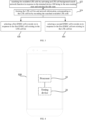
FIG. 1 is a flowchart of a processing method for cell residing according to an embodiment of the present disclosure. -
FIG. 2 is a structural schematic view of a terminal device according to an embodiment of the present disclosure. -
FIG. 3 is a flowchart of a processing method for cell residing according to another embodiment of the present disclosure. -
FIG. 4 is a structural schematic view of a terminal device according to another embodiment of the present disclosure. -
FIG. 5 is a flowchart of a processing method for cell residing according to further another embodiment of the present disclosure. -
FIG. 6 is a flowchart of a processing method for cell residing according to further another embodiment of the present disclosure. -
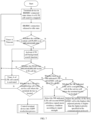
FIG. 7 is a flowchart of a processing method for cell residing according to further another embodiment of the present disclosure. -
FIG. 8 is a schematic view of an interaction between a computer-readable storage medium and a terminal device according to an embodiment of the present disclosure. - The technical solutions in the embodiments of the present disclosure will be described below with reference to the accompanying drawings in the embodiments of the present disclosure. Obviously, the described embodiments are part of the embodiments of the present disclosure, rather than all of the embodiments. With regard to the embodiments in the present disclosure, all other embodiments obtained by those skilled in the art without creative efforts shall fall within the scope of the present disclosure.
- Referring to
FIG. 1 , embodiments of the present disclosure provide a processing method for cell residing. The processing method for cell residing is applied to aterminal device 100 in a non-independent networking mode. The method includes operations at blocks illustrated herein. - At block S20: obtaining a long term evolution (LTE) cell list in response to the
terminal device 100 being in a non-roaming state and entering an idle state. - At block S40: selecting a first EUTRA-NR dual connection (ENDC) cell to reside on in response to the first ENDC cell existing in the LTE cell list.
- At block S60: selecting a second ENDC cell to reside on in response to the first ENDC cell not existing in the LTE cell list.
- Referring to
FIG. 2 , embodiments of the present disclosure further provide aterminal device 100. The processing method for cell residing in the embodiments of the present disclosure may be implemented by theterminal device 100 herein. Theterminal device 100 includes aprocessor 10, and the steps S20, S40 and S60 can be implemented by theprocessor 10. That is, theprocessor 10 is configured to obtain a long term evolution (LTE) cell list in response to theterminal device 100 being in a non-roaming state and entering an idle state. Theprocessor 10 is configured to select a first EUTRA-NR Dual Connection (ENDC) cell to reside on in response to the first ENDC cell existing in the LTE cell list. Theprocessor 10 is configured to select a second ENDC cell to reside on in response to the first ENDC cell not existing in the LTE cell list. - In the embodiments of the present disclosure, the first ENDC cell is an ENDC cell in the LTE cell list, and the first ENDC cell is in a neighbor list of a serving cell where the
terminal device 100 is located. The second ENDC cell is an ENDC cell in the LTE cell list, and the second ENDC cell is not in the neighbor list of the serving cell where theterminal device 100 is located. - In the processing method for cell residing and the
terminal device 100 in the above embodiments, when the first ENDC cell exists in the LTE cell list, the first ENDC cell is selected for residing, and when the LTE cell list does not exist in the first ENDC cell, the second ENDC cell is selected for residing, which may improve the success rate of theterminal device 100 supporting NSA to register on the 5G network, such that theterminal device 100 can use the 5G network. - Specifically, in the embodiments of the present disclosure, the
terminal device 100 includes but is not limited to user equipment (UE), access terminal, user unit, user station, mobile station, mobile platform, remote station, remote terminal, mobile device, user terminal, terminal, wireless communication device, user agent, or user apparatus, etc. The terminal may be a station (STAION, ST) in a WLAN, a cellular phone, a cordless phone, a session initiation protocol (SIP) phone, a wireless local loop (WLL) station, a personal digital processor (PDA) device, a handheld device with wireless communication capabilities, a computing device, or other processing devices connected to wireless modems, an in-vehicle device, a wearable device, and next-generation communication systems such as a terminal in NR networks or a terminal in future evolved public land mobile network (PLMN) networks, etc. - In the embodiments of the present disclosure, the non-standalone (NSA) networking method is the 4th generation mobile communication technology (4G) independently deployed control plane (4G carrying control signaling), 5G and 4G jointly deployed user plane (5G and 4G carrying user plane data), or 5G independently deployed user plane (only 5G carrying user plane data).
- In the embodiments of the present disclosure, the non-roaming state can be understood that the public land mobile network (PLMN) of the serving cell where the
terminal device 100 currently resides on is home public land mobile network (HPLMN) or equivalent home PLMN (EHPLMN). - In the embodiments of the present disclosure, the
terminal device 100 has two operating states, namely a connected state and an idle state. The connected state can be understood as that theterminal device 100 can perform data services, such as web browsing and other services. The idle state can be understood as an Idle state. In the idle state, all data connections of theterminal device 100 are closed at the access layer, that is, theterminal device 100 does not perform services such as data transmission. - In the embodiments of the present disclosure, the LTE is a standard of the 4G wireless broadband technology. In an LTE system, there may be multiple LTE cells in one base station, and each LTE cell has a different cell ID.
- When the
terminal device 100 is in the non-roaming state and enters the idle state, the LTE cell list is obtained. It can be understood that the serving cell that theterminal device 100 currently resides on is HPLMN or EHPLMN, and theterminal device 100 obtains the LTE cell list without data transmission. - Referring to
FIG. 3 , in some embodiments of the present disclosure, step S20 may includes operations at blocks illustrated herein. - At block S22: searching for available LTE cells by activating an LTE cell background search network function in response to the
terminal device 100 being in the non-roaming state and entering the idle state. - At block S24: forming the LTE cell list and network information corresponding to the LTE cell list by recording the searched available LTE cells.
- The processing method in the above embodiments may be implemented by the
terminal device 100 herein. That is, both step S22 and step S24 can be implemented by theprocessor 10. That is, theprocessor 10 is configured to search for available LTE cells by activating an LTE cell background search network function in response to theterminal device 100 being in the non-roaming state and entering the idle state; and form the LTE cell list and network information corresponding to the LTE cell list by recording the available LTE cells. The network information is configured to determine whether the first ENDC cell or the second ENDC cell exists in the LTE cell list. - In this way, the LTE cell list and the network information corresponding to the LTE cell list may be quickly and accurately obtained.
- Specifically, the
terminal device 100 in the non-roaming state may be understood that theterminal device 100 is in the home cell. The available LTE cells may be understood as LTE cells that can be directly searched through the background search network. - The network information includes but is not limited to the PLMN of the LTE cell, the frequency of the LTE cell, the ID of the LTE cell, and whether an upperLayerIndication-r15 field is included in the SIB2.
- The upperLayerIndication-r15 field is a field extended by the LTE cell in the form of NSA networking, and is configured to indicate whether the cell is an NSA cell supporting 5G. When the
terminal device 100 parses the upperLayerIndication-r15 from SIB2, the LTE cell is an ENDC cell. An ENDC cell can be understood as a cell that can access both LTE and 5G at the same time. - In addition, in the present disclosure, the
processor 10 may determine whether the LTE cell is in the neighbor list of the serving cell where theterminal device 100 is located according to the PLMN of the LTE cell, the frequency of the LTE cell, and the ID of the LTE cell, so as to determine whether the first ENDC cell or the second ENDC cell exists in the LTE cell list. - In the embodiments of the present disclosure, the first ENDC cell may be understood as a cell capable of accessing LTE and 5G at the same time, and the first ENDC cell is in the neighbor list of the serving cell where the
terminal device 100 is located. The second ENDC cell may be understood as a cell capable of accessing LTE and 5G at the same time, and the second ENDC cell is not in the neighbor list of the serving cell where theterminal device 100 is located. - In some embodiments, when the
terminal device 100 enters the idle state from the connected state, and the cell where theterminal device 100 currently resides on is the home cell (non-roaming state), the LTE cell background search function (LTE available cell) is activated to search for available LTE cells near theterminal device 100, and the found LTE cells are recorded to form the LTE cell list. The network information corresponding to the LTE cell list includes the PLMN of the LTE cell, the frequency of the LTE cell, the ID of the LTE cell, and whether the SIB2 includes the upperLayerIndication-r15 field. Theprocessor 10 determines whether the first ENDC cell or the second ENDC cell exists in the LTE cell list according to the network information. - Referring to
FIG. 4 , in some embodiments of the present disclosure, theterminal device 100 includes atiming device 20, and the processing method include operations as follows. - Activating the
timing device 20 in response to theterminal device 100 being in a roaming state; and determining whether theterminal device 100 is in the non-roaming state after thetiming device 20 exceeds a preset timing period. - The processing method in the above embodiments may be implemented by the
processor 10 herein. That is, theprocessor 10 is configured to activate thetiming device 20 in response to theterminal device 100 being in a roaming state, and whether theterminal device 100 is in the non-roaming state after thetiming device 20 exceeds a preset timing period. In this way, the state of theterminal device 100 may be tracked regularly. - In some embodiments of the present disclosure, the processing method may include operations as followed.
- Activating the
timing device 20 after completely executing the LTE cell background network search function; and activating the LTE cell background network search function again after thetiming device 20 exceeds the preset timing period. - The processing method in the above embodiments may be implemented by the
processor 10 herein. That is, theprocessor 10 is configured to activate thetiming device 20 after completely executing the LTE cell background network search function, and activate the LTE cell background network search function again after thetiming device 20 exceeds the preset timing period. In this way, theterminal device 100 is prepared for activating the LTE cell background network search function when theterminal device 100 enters the idle state again, and the state of theterminal device 100 is tracked regularly. - Specifically, the
timing device 20 includes but is not limited to a timer. In some embodiments, thetiming device 20 is a timer A of the LTE cell background search function. When theterminal device 100 resides on a non-home cell (roaming state), the timer A is activated. For example, the preset timing period is t seconds, and after t seconds, it is determined whether theterminal device 100 is still resided on the non-home cell (roaming state). When theterminal device 100 is still residing on the non-home cell (roaming state), the timer A is activated again. When theterminal device 100 has been resided on a non-home cell (non-roaming state), the LTE cell background network search function is activated, and the LTE cells are searched for. After the LTE cell background network search function is executed, the timer A is activated, and after the timer A exceeds the preset time period, the LTE cell background search function is activated again, and the above cycle is repeated. - In other embodiments, the
timing device 20 is a timer A of the LTE cell background network search function. When theterminal device 100 resides on the home cell (non-roaming state), the timer A is activated. For example, the preset timing period is t seconds, and after t seconds, the LTE cell background search function is activated to search for LTE cells to form the LTE cell list. After the search is completed, the timer A is activated again to prepare for the next start of the LTE cell background search function. - Referring to
FIG. 5 , in some embodiments of the present disclosure, step S40 may include operations at blocks illustrated herein. - At block S42: in response to the first ENDC cell that exists in the LTE cell list including a plurality of first ENDC cells, obtaining a priority of each of the plurality of first ENDC cells.
- At block S44: residing on a first target cell, where the first target cell is one of the plurality of first ENDC cells with a highest priority among the plurality of first ENDC cells.
- The processing method in the above embodiments may be implemented by the
terminal device 100 herein. Step S42 and S44 may be implemented by theprocessor 10. That is, theprocessor 10 is configured to, in response to the first ENDC cell that exists in the LTE cell list including a plurality of first ENDC cells, obtain a priority of each of the plurality of first ENDC cells; and reside on a first target cell, where the first target cell is one of the plurality of first ENDC cells with a highest priority among the plurality of first ENDC cells. In this way, theterminal device 100 may quickly reside on the qualified first target cell, such that theterminal device 100 may quickly use the 5G network. - Specifically, in the embodiments of the present disclosure, the
processor 10 may determine, according to network information corresponding to each LTE cell in the LTE cell list, whether an ENDC cell exists in the LTE cell list and whether the ENDC cell is in the neighbor list of the serving cell where theterminal device 100 is located. When an ENDC cell exists in the LTE cell list and the ENDC cell is in the neighbor list of the serving cell where theterminal device 100 is located, it may be indicated that the first ENDC cell exists in the LTE cell list. In the embodiments of the present disclosure, when multiple first ENDC cells exist in the LTE cell list, the first ENDC cell with the highest priority among the first ENDC cells is selected for residing. - In other embodiments, when there are multiple first ENDC cells in the LTE cell list, the priority of the multiple first ENDC cells may be increased synchronously according to a preset rule, such that the
terminal device 100 may more easily reside on the first ENDC cell, thereby quickly using the 5G network. - In some embodiments, the preset rule may be: adjusting the first ENDC cell with the highest priority among the first ENDC cells in the neighbor list to the highest, for example, 7; and calculating a priority magnitude value corresponding to the ENDC cell, and adjusting the remaining first ENDC cells in the neighbor cell list according to the priority magnitude value. For example, the priority of the current serving cell of the
terminal device 100 is 6, assuming that the number of ENDC cells in the neighbor list is 3, which are A, B, and C, respectively, the priority of A is 6, the priority of B is 5, and the priority of C is 4, and the highest priority is 7, then according to the preset rule, the priority of A is adjusted from 6 to 7, the priority of B is adjusted from 5 to 6, and the priority of C is adjusted from 4 to 5. - In some embodiment of the present disclosure, the processing method includes operations as follows.
- In response to the first target cell including a plurality of first target cells, selecting one of the plurality of first target cells with a greatest signal strength among the plurality of first target cells for residing.
- The processing method in the above embodiments may be implemented by the
processor 10. Theprocessor 10 is configured to, in response to the first target cell including a plurality of first target cells, select one of the plurality of first target cells with a greatest signal strength among the plurality of first target cells for residing. In this way, it may be ensured that theterminal device 100 can quickly select a better first ENDC cell for cell residing. - Specifically, in the case where there are multiple first target cells, that is, the multiple first target cells are all eligible to access the 5G network, then one first target cell with the strongest strength among the multiple first target cells may be used for cell residing, which may improve the probability that the
terminal device 100 quickly accesses the 5G network. - In some embodiments, when the priority of the current serving cell of the
terminal device 100 is 6, assuming that the number of first ENDC cells in the list of theterminal device 100 is 3, which are A, B, and C, respectively, the priority of A is 6, the priority of B is 6, and the priority of C is 5. Theterminal device 100 may increase the priority of A and B to 7, and increase the priority of C to 6. In this case, the priority of cell A and cell B are the same, that is, there are two first target cells. Theterminal device 100 may further obtain the signal strengths of cell A and cell B respectively, and select a cell with the strongest signal strength among cell A and cell B to reside on. It should be noted that, when theterminal device 100 cannot connect to the cell A and the cell B, the cell C is selected for residing. - Referring to
FIG. 6 , in some embodiments of the present disclosure, step S60 includes operations at blocks illustrated herein. - At block S62: obtaining a signal strength of each second ENDC cell.
- At block S64: selecting one of the plurality of second ENDC cells with a greatest signal strength among the plurality of second ENDC cells for residing.
- The processing method in the above embodiments may be implemented by the
terminal device 100 herein. Steps S62 and S64 may be implemented by theprocessor 10. That is, theprocessor 10 is configured to obtain a signal strength of each second ENDC cell, and select one of the plurality of second ENDC cells with a greatest signal strength among the plurality of second ENDC cells for residing. In this way, in the presence of the second ENDC cell, although the second ENDC cell is not in the neighbor list of theterminal device 100, theterminal device 100 may still reside on cells with ENDC function, such that theterminal device 100 can reside on 5G network. - In some embodiments, the
terminal device 100 activates the LTE cell background search function, and searches for multiple LTE cells. The LTE cell list includes cell A, cell B, cell C, cell D, and cell E. Among them, cell A, cell B, and cell C are in the neighbor cell list of theterminal device 100, and cell D and cell E are ENDC cells but not in the neighbor cell list of theterminal device 100. In a case where theprocessor 10 determines that the cell D and the cell E belong to the ENDC cell and are not in the neighbor list of theterminal device 100, that is, the cell D and the cell E are the second ENDC cells, theprocessor 10 may obtain the signal strengths of cell D and cell E respectively, compare the signal strengths of cell D and cell E, and select the cell among the cell D and cell E with the greatest signal strength for cell residing according to the comparison result. - In some embodiments of the present disclosure, the processing method includes operations as follows.
- Controlling the
terminal device 100 to enter a 3GPP reselection process in response to the first ENDC cell and the second ENDC cell not existing in the LTE cell list. - The processing method in the above embodiments may be implemented by the
processor 10. That is, theprocessor 10 is configured to control theterminal device 100 to enter a 3GPP reselection process in response to the first ENDC cell and the second ENDC cell not existing in the LTE cell list. In this way, it may be ensured that theterminal device 100 can normally connect to the network. - Specifically, the 3GPP reselection process may be understood as a process of selecting a best cell to provide service signals by monitoring the signal quality of the neighboring cell of the
terminal device 100 and the signal quality of the current serving cell, when theterminal device 100 is in the idle state. - In summary, referring to
FIG. 7 , the following expands on a specific embodiment. - The
terminal device 100 is powered on and resides on cell A (cell A may be a 2G, 3G, or 4G cell), and at this time theterminal device 100 is in a RR/RRC connection state and can perform data services, such as browsing web pages. When the user stops using data (or the data switch is turned off), after a preset time period, the network will release the RRC/RR connection, such that theterminal device 100 enters an idle state. At this time, theterminal device 100 will judge whether the PLMN of the currently resided cell is HPLMN or EHPLMN. - When the PLMN of the cell currently resided on is not HPLMN or EHPLMN, it means that the cell currently resided on by the
terminal device 100 is not a home cell. When the cell where theterminal device 100 currently resides on is not the home cell, the timer A for LTE cell search is activated, and theterminal device 100 stays in the idle state. After the timer A exceeds the preset timing period, it is re-determined whether the PLMN of the currently resided cell is HPLMN or EHPLMN. - When the PLMN of the cell currently resided on is HPLMN or EHPLMN, it means that the cell currently resided on by the
terminal device 100 is the home cell. When the cell where theterminal device 100 currently resides on is the home cell, the LTE cell background network search function is activated to perform an LTE cell search. After the network search function is completely executed, the timer A for LTE cell search is activated again. - Then, the
terminal device 100 forms the LTE cell list according to the search result, and theterminal device 100 determines whether there is HPLMN or EHPLMN in the LTE cell list. - When there is no HPLMN cell or EHPLMN cell in the LTE cell list (except the current serving cell of the terminal device 100), after the timer A expires, it is re-determined whether the PLMN of the currently resided cell is HPLMN or EHPLMN.
- When there is HPLMN cell or EHPLMN cell in the LTE cell list, it is determined whether there is an LTE cell (ENDC cell) indicated by NR in the LTE cell list.
- When there is an LTE cell (ENDC cell) indicated by NR in the LTE cell list, it is determined whether the LTE cell (ENDC cell) indicated by NR is a neighboring cell of the serving cell where the
terminal device 100 is located. When the LTE cell (ENDC cell) indicated by the NR is a neighboring cell of the serving cell where theterminal device 100 is located, that is, the first ENDC cell exists in the LTE cell list, the priority of the first ENDC cell is adjusted to the highest (the adjusted priority is higher than the highest priority specified by the communication protocol). When the LTE cell (ENDC cell) indicated by the NR is not a neighboring cell of the serving cell where theterminal device 100 is located, that is, the first ENDC cell does not exist in the LTE cell list, the LTE cell (the second ENDC cell) indicated by the NR with signals satisfy a residing condition is selected according to the signal strength. - When there is no LTE cell (ENDC cell) indicated by NR in the LTE cell list, it is determined whether the LTE cell is a neighboring cell of the serving cell where the
terminal device 100 is located. When the LTE cell is a neighboring cell of the serving cell where theterminal device 100 is located, theterminal device 100 is controlled to enter the 3GPP reselection process. When the LTE cell is not a neighboring cell of the serving cell where theterminal device 100 is located, after the timer A exceeds the preset timing period, it is continued to determine whether the PLMN of the currently resided cell is HPLMN or EHPLMN. - Referring to
FIG. 8 , embodiments of the present disclosure further provide a computer-readable storage medium 200. The computer-readable storage medium 200 may be connected with theterminal device 100 of the present disclosure. The computer-readable storage medium 200 stores a computer program. When the computer program is executed by theprocessor 10, the processing method of any one of the above-mentioned embodiments is implemented. - For example, referring to
FIG. 1 , when the computer program is executed by theprocessor 10, the following steps are implemented. - At block S20: obtaining a long term evolution (LTE) cell list in response to the
terminal device 100 being in a non-roaming state and entering an idle state. - At block S40: selecting a first EUTRA-NR Dual Connection (ENDC) cell to reside on in response to the first ENDC cell existing in the LTE cell list.
- At block S60: selecting a second ENDC cell to reside on in response to the first ENDC cell not existing in the LTE cell list.
- The first ENDC cell is an ENDC cell in the LTE cell list, and the first ENDC cell is in a neighbor list of a serving cell where the
terminal device 100 is located. The second ENDC cell is an ENDC cell in the LTE cell list, and the second ENDC cell is not in the neighbor list of the serving cell where theterminal device 100 is located. - In the computer-
readable storage medium 200 of the above embodiments, when the first ENDC cell exists in the LTE cell list, the first ENDC cell is selected for residing, and when the LTE cell list does not exist in the first ENDC cell, the second ENDC cell is selected for residing, which may improve the success rate of theterminal device 100 supporting NSA to register on the 5G network, such that theterminal device 100 can use the 5G network. - It should be understood that the
processor 10 in the embodiments of the present disclosure may be an integrated circuit chip with processing capabilities for signals. In implementation, the steps of the above method embodiments may be accomplished by integrated logic circuitry in hardware in theprocessor 10 or by instructions in the form of software. Theprocessor 10 above may be a general-purpose processor, a digital signal processor (DSP), an application specific integrated circuit (ASIC), a field programmable gate array (FPGA) or other programmable logic device, discrete gate or transistor logic device, or discrete hardware component. The methods, steps, and logical block diagrams in each embodiment of the present disclosure may be implemented or performed. The general-purpose processor may be a microprocessor or may be any conventional processor, etc. The steps of the method disclosed in conjunction with the embodiments of the present disclosure may be directly embodied as performed by the hardware decoding processor or performed with a combination of hardware and software modules in the decoding processor. The software module may be located in random memory, flash memory, read-only memory, programmable read-only memory or electrically rewritable programmable memory, registers, and other storage media well established in the art. The storage medium is located in the memory and theprocessor 10 can read the information in the memory, for completing the steps of the above methods in combination with its hardware. - The computer program may be applied to the
terminal device 100 in the embodiments of the present disclosure, and when the computer program runs on the computer, the computer executes the corresponding processes implemented by theterminal device 100 in each method of the embodiments of the present disclosure. For brevity, details are not repeated herein. - Those skilled in the art can realize that the units and algorithm steps of each example described in conjunction with the embodiments disclosed herein may be implemented in electronic hardware, or a combination of computer software and electronic hardware. Whether these functions are performed in hardware or software depends on the specific application and design constraints of the technical solution. Those skilled in the art may implement the described functionality using different methods for each particular application, but such implementations should not be considered beyond the scope of the present disclosure.
- Those skilled in the art can clearly understand that, for the convenience and brevity of description, the specific working process of the above-described systems, devices and units may refer to the corresponding processes in the foregoing method embodiments, which will not be repeated here.
- In the several embodiments provided in the present disclosure, it should be understood that the disclosed systems, devices and methods may be implemented in other ways. For example, the device embodiments described above are merely schematic, e.g., the division of units, which is only a logical functional division, may be divided in another way when actually implemented, e.g., multiple units or components may be combined or be integrated into another system, or some features may be ignored, or not implemented. Further, the mutual coupling or direct coupling or communication connections shown or discussed may be indirect coupling or communication connections through some interface, device or unit, which may be electrical, mechanical or other forms.
- The units illustrated as separate components may or may not be physically separated, and the components displayed as units may or may not be physical units, i.e., they may be located in one place, or they may be distributed to multiple network units. Some or all of these units may be selected according to practical needs to achieve the purpose of the solution in the embodiments.
- In addition, each functional unit in each embodiment of the present disclosure may be integrated into one processing unit, or each unit may exist physically alone, or two or more units may be integrated into one unit.
- The functionality, when implemented in the form of a software functional unit and sold or used as a separate product, may be stored in a computer-readable storage medium. It is understood that the technical solution of the present disclosure, or the part of the technical solution that essentially contributes to the prior art, may be embodied in the form of a software product that is stored in a storage medium and includes a number of instructions to enable a computer device (which may be a personal computer, server, or network device, etc.) to perform all or part of the steps of the method of each embodiment of the present disclosure. The storage medium includes: USB flash drive, removable hard disk, read-only memory (ROM), random access memory (RAM), disk or CD-ROM, and other media that can store program code.
- The above are only specific embodiments of the present disclosure, but the scope of the present disclosure is not limited to this. Those skilled in the art can easily think of changes or replacements within the technical scope disclosed in the present disclosure, and should cover within the scope of the present disclosure. Therefore, the scope of the present disclosure shall be subject to the scope of the claims.
Claims (16)
- A processing method for cell residing, applied to a terminal device in a non-independent networking mode; characterized in that the processing method comprises:obtaining a long term evolution, LTE, cell list in response to the terminal device being in a non-roaming state and entering an idle state;selecting a first EUTRA-NR dual connection, ENDC, cell to reside on in response to the first ENDC cell existing in the LTE cell list; andselecting a second ENDC cell to reside on in response to the first ENDC cell not existing in the LTE cell list;wherein the first ENDC cell is an ENDC cell in the LTE cell list, and the first ENDC cell is in a neighbor list of a serving cell where the terminal device is located;the second ENDC cell is an ENDC cell in the LTE cell list, and the second ENDC cell is not in the neighbor list of the serving cell where the terminal device is located.
- The processing method according to claim 1, wherein the obtaining an LTE cell list comprises:searching for available LTE cells by activating an LTE cell background search network function in response to the terminal device being in the non-roaming state and entering the idle state; andforming the LTE cell list and network information corresponding to the LTE cell list by recording the searched available LTE cells.
- The processing method according to claim 2, wherein the terminal device comprises a timing device, and the processing method further comprises:activating the timing device in response to the terminal device being in a roaming state; and determining whether the terminal device is in the non-roaming state after the timing device exceeds a preset timing period; oractivating the timing device after completely executing the LTE cell background network search function; and activating the LTE cell background network search function again after the timing device exceeds the preset timing period.
- The processing method according to claim 1, wherein the selecting a first ENDC cell to reside on in response to the first ENDC cell existing in the LTE cell list comprises:in response to the first ENDC cell that exists in the LTE cell list comprising a plurality of first ENDC cells, obtaining a priority of each of the plurality of first ENDC cells; andresiding on a first target cell, wherein the first target cell is one of the plurality of first ENDC cells with a highest priority among the plurality of first ENDC cells.
- The processing method according to claim 4, further comprising:
in response to the first target cell comprising a plurality of first target cells, selecting one of the plurality of first target cells with a greatest signal strength among the plurality of first target cells for residing. - The processing method according to claim 1, wherein the second ENDC cell comprises a plurality of second ENDC cells;
the selecting a second ENDC cell to reside on in response to the first ENDC cell not existing in the LTE cell list comprises:obtaining a signal strength of each of the plurality of second ENDC cells; andselecting one of the plurality of second ENDC cells with a greatest signal strength among the plurality of second ENDC cells for residing. - The processing method according to claim 1, further comprising:
controlling the terminal device to enter a 3GPP reselection process in response to the first ENDC cell and the second ENDC cell not existing in the LTE cell list. - A terminal device, configured to operate in a non-independent networking mode; wherein the terminal device comprises a processor configured to perform:obtaining a long term evolution (LTE) cell list in response to the terminal device being in a non-roaming state and entering an idle state;selecting a first EUTRA-NR dual connection (ENDC) cell to reside on in response to the first ENDC cell existing in the LTE cell list; andselecting a second ENDC cell to reside on in response to the first ENDC cell not existing in the LTE cell list;wherein the first ENDC cell is an ENDC cell in the LTE cell list, and the first ENDC cell is in a neighbor list of a serving cell where the terminal device is located;the second ENDC cell is an ENDC cell in the LTE cell list, and the second ENDC cell is not in the neighbor list of the serving cell where the terminal device is located.
- The terminal device according to claim 8, wherein the processor is further configured to perform:searching for available LTE cells by activating an LTE cell background search network function; andforming the LTE cell list and network information corresponding to the LTE cell list by recording the searched available LTE cells;wherein the network information is configured to determine whether the first ENDC cell or the second ENDC cell exists in the LTE cell list.
- The terminal device according to claim 8, wherein the processor is further configured to perform:activating the timing device in response to the terminal device being in a roaming state; and determining whether the terminal device is in the non-roaming state after the timing device exceeds a preset timing period; oractivating the timing device after completely executing the LTE cell background network search function; and activating the LTE cell background network search function again after the timing device exceeds the preset timing period.
- The terminal device according to claim 8, wherein the processor is further configured to perform:in response to the first ENDC cell that exists in the LTE cell list comprising a plurality of first ENDC cells, obtaining a priority of each of the plurality of first ENDC cells; andresiding on a first target cell, wherein the first target cell is one of the plurality of first ENDC cells with a highest priority among the plurality of first ENDC cells.
- The terminal device according to claim 11, wherein the processor is further configured to perform:
in response to the first target cell comprising a plurality of first target cells, selecting one of the plurality of first target cells with a greatest signal strength among the plurality of first target cells for residing. - The terminal device according to claim 8, wherein the processor is further configured to perform:obtaining a signal strength of each of a plurality of the second ENDC cells; andselecting one of the plurality of second ENDC cells with a greatest signal strength among the plurality of second ENDC cells for residing.
- The terminal device according to claim 8, wherein the processor is further configured to perform:
controlling the terminal device to enter a 3GPP reselection process in response to the first ENDC cell and the second ENDC cell not existing in the LTE cell list. - A terminal device, comprising an application processor, a memory, and one or more programs; wherein the one or more programs are stored in the memory and configured to be executed by the application processor; the one or more programs comprise instructions for performing the method according to any one of claims 1 to 7.
- A computer-readable storage medium, storing a computer program; wherein the computer program comprises a program instruction, the program instruction when executed by a processor causing the processor to perform the method according to any one of claims 1 to 7.
Applications Claiming Priority (2)
| Application Number | Priority Date | Filing Date | Title |
|---|---|---|---|
| CN202010581227.5A CN111770555B (en) | 2020-06-23 | 2020-06-23 | Cell camping processing method, terminal device and computer-readable storage medium |
| PCT/CN2021/091006 WO2021258852A1 (en) | 2020-06-23 | 2021-04-29 | Cell residing processing method, terminal device, and computer readable storage medium |
Publications (2)
| Publication Number | Publication Date |
|---|---|
| EP4171130A1 true EP4171130A1 (en) | 2023-04-26 |
| EP4171130A4 EP4171130A4 (en) | 2024-01-17 |
Family
ID=72721779
Family Applications (1)
| Application Number | Title | Priority Date | Filing Date |
|---|---|---|---|
| EP21829828.9A Withdrawn EP4171130A4 (en) | 2020-06-23 | 2021-04-29 | METHOD FOR PROCESSING CELL VERSIONS, TERMINAL DEVICE AND COMPUTER READABLE STORAGE MEDIUM |
Country Status (4)
| Country | Link |
|---|---|
| US (1) | US20230132340A1 (en) |
| EP (1) | EP4171130A4 (en) |
| CN (1) | CN111770555B (en) |
| WO (1) | WO2021258852A1 (en) |
Families Citing this family (5)
| Publication number | Priority date | Publication date | Assignee | Title |
|---|---|---|---|---|
| CN111770555B (en) * | 2020-06-23 | 2022-03-18 | Oppo广东移动通信有限公司 | Cell camping processing method, terminal device and computer-readable storage medium |
| CN112272392B (en) * | 2020-10-26 | 2023-09-12 | Oppo广东移动通信有限公司 | A cell resident method, device, terminal equipment and storage medium |
| CN112469109A (en) * | 2020-12-02 | 2021-03-09 | Oppo广东移动通信有限公司 | Method for preferentially selecting ENDC cell, terminal device and storage medium |
| CN113423125B (en) * | 2021-05-28 | 2023-04-07 | 荣耀终端有限公司 | Method and device for cell reselection, handover or background search |
| CN118215096B (en) * | 2024-04-18 | 2025-06-06 | 深圳高新兴瑞联科技有限公司 | A 5G network dynamic configuration method, device and computer-readable storage medium |
Family Cites Families (10)
| Publication number | Priority date | Publication date | Assignee | Title |
|---|---|---|---|---|
| CN108696881B (en) * | 2017-03-16 | 2021-06-29 | 中国移动通信有限公司研究院 | A connection management method, first network device, terminal device and system |
| CN108632923B (en) * | 2017-03-24 | 2021-06-29 | 中国移动通信有限公司研究院 | Idle state interoperability method, device, terminal and network side device |
| US20190223091A1 (en) * | 2018-01-12 | 2019-07-18 | Mediatek Inc. | Enhancement of PLMN Selection in New Radio Networks |
| EP3808117A1 (en) * | 2018-06-27 | 2021-04-21 | Google LLC | Enabling 5g nr non-standalone e-utran dual-connectivity via dual-connectivity roaming |
| CN112335292B (en) * | 2018-08-30 | 2024-07-26 | 三星电子株式会社 | Method and apparatus for handling cell selection and reselection in MR-DC systems |
| US10917931B2 (en) * | 2018-10-31 | 2021-02-09 | Verizon Patent And Licensing Inc. | Cell selection management for end device in femtocell coverage area |
| CN109699059B (en) * | 2019-01-10 | 2021-04-23 | 维沃移动通信有限公司 | Cell reselection method and terminal device |
| CN111031590B (en) * | 2020-01-10 | 2022-07-19 | Oppo广东移动通信有限公司 | Cell search method, terminal, and storage medium |
| CN111246541B (en) * | 2020-01-13 | 2021-11-16 | Oppo广东移动通信有限公司 | Cell residence method, terminal and storage medium |
| CN111770555B (en) * | 2020-06-23 | 2022-03-18 | Oppo广东移动通信有限公司 | Cell camping processing method, terminal device and computer-readable storage medium |
-
2020
- 2020-06-23 CN CN202010581227.5A patent/CN111770555B/en active Active
-
2021
- 2021-04-29 EP EP21829828.9A patent/EP4171130A4/en not_active Withdrawn
- 2021-04-29 WO PCT/CN2021/091006 patent/WO2021258852A1/en not_active Ceased
-
2022
- 2022-12-22 US US18/145,798 patent/US20230132340A1/en not_active Abandoned
Also Published As
| Publication number | Publication date |
|---|---|
| CN111770555A (en) | 2020-10-13 |
| WO2021258852A1 (en) | 2021-12-30 |
| US20230132340A1 (en) | 2023-04-27 |
| CN111770555B (en) | 2022-03-18 |
| EP4171130A4 (en) | 2024-01-17 |
Similar Documents
| Publication | Publication Date | Title |
|---|---|---|
| US20230132340A1 (en) | Cell residing processing method, terminal device, and computer-readable storage medium | |
| US12075291B2 (en) | Method for accessing a service unavailable through a network cell | |
| US11039344B2 (en) | Method for accessing a service unavailable through a network cell | |
| JP6707268B2 (en) | Network search method and terminal device | |
| EP3528543A1 (en) | Cell reselection method and apparatus | |
| CN111866972B (en) | Cell selection method, cell reselection method and chip | |
| CN112272392A (en) | A cell camping method, device, terminal device and storage medium | |
| US20170251406A1 (en) | Method for accessing a service unavailable through a network cell | |
| CN102143555B (en) | Terminal cell search method and relevant equipment and system | |
| HK1246560A1 (en) | Method for accessing a service unavailable thorugh a network cell | |
| EP2635070A1 (en) | Method and Apparatus for Communicating Neighbor Cells | |
| CN106454969B (en) | A method for accelerating the network selection process of multi-mode user terminals | |
| US20180132157A1 (en) | Network access method, ue and computer storage medium | |
| CN103906158A (en) | Method for returning to LTE network from 2G/3G network | |
| CN109429304B (en) | Network connection method, device and user terminal | |
| CN105323812A (en) | Processing method and terminal of call continuity | |
| CN113891371A (en) | Frequency point measurement method and related products | |
| TW202102028A (en) | Frequency band scan in user equipment | |
| CN103906183A (en) | Method for allowing user equipment to stay in LTE network | |
| US20230292232A1 (en) | Method and apparatus for fallback handling | |
| WO2009114988A1 (en) | Method, device and system for notifying heterogeneous system neighbor cell information to user terminal | |
| CN110636578A (en) | A method, device, storage medium and terminal for requesting system messages | |
| CN111769892A (en) | Paging channel monitoring method and device, terminal, chip and storage medium | |
| CN103906150A (en) | Device resident to LTE network and user equipment | |
| HK40068767A (en) | Method for accessing a service unavailable through a network cell |
Legal Events
| Date | Code | Title | Description |
|---|---|---|---|
| STAA | Information on the status of an ep patent application or granted ep patent |
Free format text: STATUS: THE INTERNATIONAL PUBLICATION HAS BEEN MADE |
|
| PUAI | Public reference made under article 153(3) epc to a published international application that has entered the european phase |
Free format text: ORIGINAL CODE: 0009012 |
|
| STAA | Information on the status of an ep patent application or granted ep patent |
Free format text: STATUS: REQUEST FOR EXAMINATION WAS MADE |
|
| 17P | Request for examination filed |
Effective date: 20221229 |
|
| AK | Designated contracting states |
Kind code of ref document: A1 Designated state(s): AL AT BE BG CH CY CZ DE DK EE ES FI FR GB GR HR HU IE IS IT LI LT LU LV MC MK MT NL NO PL PT RO RS SE SI SK SM TR |
|
| DAV | Request for validation of the european patent (deleted) | ||
| DAX | Request for extension of the european patent (deleted) | ||
| A4 | Supplementary search report drawn up and despatched |
Effective date: 20231215 |
|
| RIC1 | Information provided on ipc code assigned before grant |
Ipc: H04W 48/20 20090101ALI20231211BHEP Ipc: H04W 48/16 20090101AFI20231211BHEP |
|
| STAA | Information on the status of an ep patent application or granted ep patent |
Free format text: STATUS: THE APPLICATION IS DEEMED TO BE WITHDRAWN |
|
| 18D | Application deemed to be withdrawn |
Effective date: 20240710 |