EP4170810B1 - Electrical connection means for connecting terminals of battery units in battery pack - Google Patents
Electrical connection means for connecting terminals of battery units in battery pack Download PDFInfo
- Publication number
- EP4170810B1 EP4170810B1 EP22200336.0A EP22200336A EP4170810B1 EP 4170810 B1 EP4170810 B1 EP 4170810B1 EP 22200336 A EP22200336 A EP 22200336A EP 4170810 B1 EP4170810 B1 EP 4170810B1
- Authority
- EP
- European Patent Office
- Prior art keywords
- connection
- connection component
- terminal
- electrical connection
- body part
- Prior art date
- Legal status (The legal status is an assumption and is not a legal conclusion. Google has not performed a legal analysis and makes no representation as to the accuracy of the status listed.)
- Active
Links
Images





Classifications
-
- H—ELECTRICITY
- H01—ELECTRIC ELEMENTS
- H01M—PROCESSES OR MEANS, e.g. BATTERIES, FOR THE DIRECT CONVERSION OF CHEMICAL ENERGY INTO ELECTRICAL ENERGY
- H01M50/00—Constructional details or processes of manufacture of the non-active parts of electrochemical cells other than fuel cells, e.g. hybrid cells
- H01M50/50—Current conducting connections for cells or batteries
- H01M50/502—Interconnectors for connecting terminals of adjacent batteries; Interconnectors for connecting cells outside a battery casing
- H01M50/503—Interconnectors for connecting terminals of adjacent batteries; Interconnectors for connecting cells outside a battery casing characterised by the shape of the interconnectors
-
- H—ELECTRICITY
- H01—ELECTRIC ELEMENTS
- H01M—PROCESSES OR MEANS, e.g. BATTERIES, FOR THE DIRECT CONVERSION OF CHEMICAL ENERGY INTO ELECTRICAL ENERGY
- H01M50/00—Constructional details or processes of manufacture of the non-active parts of electrochemical cells other than fuel cells, e.g. hybrid cells
- H01M50/20—Mountings; Secondary casings or frames; Racks, modules or packs; Suspension devices; Shock absorbers; Transport or carrying devices; Holders
- H01M50/204—Racks, modules or packs for multiple batteries or multiple cells
-
- H—ELECTRICITY
- H01—ELECTRIC ELEMENTS
- H01M—PROCESSES OR MEANS, e.g. BATTERIES, FOR THE DIRECT CONVERSION OF CHEMICAL ENERGY INTO ELECTRICAL ENERGY
- H01M50/00—Constructional details or processes of manufacture of the non-active parts of electrochemical cells other than fuel cells, e.g. hybrid cells
- H01M50/20—Mountings; Secondary casings or frames; Racks, modules or packs; Suspension devices; Shock absorbers; Transport or carrying devices; Holders
- H01M50/204—Racks, modules or packs for multiple batteries or multiple cells
- H01M50/207—Racks, modules or packs for multiple batteries or multiple cells characterised by their shape
- H01M50/213—Racks, modules or packs for multiple batteries or multiple cells characterised by their shape adapted for cells having curved cross-section, e.g. round or elliptic
-
- H—ELECTRICITY
- H01—ELECTRIC ELEMENTS
- H01M—PROCESSES OR MEANS, e.g. BATTERIES, FOR THE DIRECT CONVERSION OF CHEMICAL ENERGY INTO ELECTRICAL ENERGY
- H01M50/00—Constructional details or processes of manufacture of the non-active parts of electrochemical cells other than fuel cells, e.g. hybrid cells
- H01M50/20—Mountings; Secondary casings or frames; Racks, modules or packs; Suspension devices; Shock absorbers; Transport or carrying devices; Holders
- H01M50/262—Mountings; Secondary casings or frames; Racks, modules or packs; Suspension devices; Shock absorbers; Transport or carrying devices; Holders with fastening means, e.g. locks
- H01M50/264—Mountings; Secondary casings or frames; Racks, modules or packs; Suspension devices; Shock absorbers; Transport or carrying devices; Holders with fastening means, e.g. locks for cells or batteries, e.g. straps, tie rods or peripheral frames
-
- H—ELECTRICITY
- H01—ELECTRIC ELEMENTS
- H01M—PROCESSES OR MEANS, e.g. BATTERIES, FOR THE DIRECT CONVERSION OF CHEMICAL ENERGY INTO ELECTRICAL ENERGY
- H01M50/00—Constructional details or processes of manufacture of the non-active parts of electrochemical cells other than fuel cells, e.g. hybrid cells
- H01M50/50—Current conducting connections for cells or batteries
- H01M50/502—Interconnectors for connecting terminals of adjacent batteries; Interconnectors for connecting cells outside a battery casing
- H01M50/505—Interconnectors for connecting terminals of adjacent batteries; Interconnectors for connecting cells outside a battery casing comprising a single busbar
-
- H—ELECTRICITY
- H01—ELECTRIC ELEMENTS
- H01M—PROCESSES OR MEANS, e.g. BATTERIES, FOR THE DIRECT CONVERSION OF CHEMICAL ENERGY INTO ELECTRICAL ENERGY
- H01M50/00—Constructional details or processes of manufacture of the non-active parts of electrochemical cells other than fuel cells, e.g. hybrid cells
- H01M50/50—Current conducting connections for cells or batteries
- H01M50/502—Interconnectors for connecting terminals of adjacent batteries; Interconnectors for connecting cells outside a battery casing
- H01M50/507—Interconnectors for connecting terminals of adjacent batteries; Interconnectors for connecting cells outside a battery casing comprising an arrangement of two or more busbars within a container structure, e.g. busbar modules
-
- H—ELECTRICITY
- H01—ELECTRIC ELEMENTS
- H01M—PROCESSES OR MEANS, e.g. BATTERIES, FOR THE DIRECT CONVERSION OF CHEMICAL ENERGY INTO ELECTRICAL ENERGY
- H01M50/00—Constructional details or processes of manufacture of the non-active parts of electrochemical cells other than fuel cells, e.g. hybrid cells
- H01M50/50—Current conducting connections for cells or batteries
- H01M50/502—Interconnectors for connecting terminals of adjacent batteries; Interconnectors for connecting cells outside a battery casing
- H01M50/514—Methods for interconnecting adjacent batteries or cells
- H01M50/516—Methods for interconnecting adjacent batteries or cells by welding, soldering or brazing
-
- H—ELECTRICITY
- H01—ELECTRIC ELEMENTS
- H01M—PROCESSES OR MEANS, e.g. BATTERIES, FOR THE DIRECT CONVERSION OF CHEMICAL ENERGY INTO ELECTRICAL ENERGY
- H01M50/00—Constructional details or processes of manufacture of the non-active parts of electrochemical cells other than fuel cells, e.g. hybrid cells
- H01M50/50—Current conducting connections for cells or batteries
- H01M50/502—Interconnectors for connecting terminals of adjacent batteries; Interconnectors for connecting cells outside a battery casing
- H01M50/521—Interconnectors for connecting terminals of adjacent batteries; Interconnectors for connecting cells outside a battery casing characterised by the material
- H01M50/522—Inorganic material
-
- H—ELECTRICITY
- H01—ELECTRIC ELEMENTS
- H01M—PROCESSES OR MEANS, e.g. BATTERIES, FOR THE DIRECT CONVERSION OF CHEMICAL ENERGY INTO ELECTRICAL ENERGY
- H01M50/00—Constructional details or processes of manufacture of the non-active parts of electrochemical cells other than fuel cells, e.g. hybrid cells
- H01M50/50—Current conducting connections for cells or batteries
- H01M50/543—Terminals
- H01M50/547—Terminals characterised by the disposition of the terminals on the cells
- H01M50/548—Terminals characterised by the disposition of the terminals on the cells on opposite sides of the cell
-
- H—ELECTRICITY
- H01—ELECTRIC ELEMENTS
- H01M—PROCESSES OR MEANS, e.g. BATTERIES, FOR THE DIRECT CONVERSION OF CHEMICAL ENERGY INTO ELECTRICAL ENERGY
- H01M50/00—Constructional details or processes of manufacture of the non-active parts of electrochemical cells other than fuel cells, e.g. hybrid cells
- H01M50/50—Current conducting connections for cells or batteries
- H01M50/543—Terminals
- H01M50/552—Terminals characterised by their shape
- H01M50/559—Terminals adapted for cells having curved cross-section, e.g. round, elliptic or button cells
-
- H—ELECTRICITY
- H01—ELECTRIC ELEMENTS
- H01M—PROCESSES OR MEANS, e.g. BATTERIES, FOR THE DIRECT CONVERSION OF CHEMICAL ENERGY INTO ELECTRICAL ENERGY
- H01M50/00—Constructional details or processes of manufacture of the non-active parts of electrochemical cells other than fuel cells, e.g. hybrid cells
- H01M50/50—Current conducting connections for cells or batteries
- H01M50/572—Means for preventing undesired use or discharge
- H01M50/574—Devices or arrangements for the interruption of current
- H01M50/583—Devices or arrangements for the interruption of current in response to current, e.g. fuses
-
- H—ELECTRICITY
- H01—ELECTRIC ELEMENTS
- H01M—PROCESSES OR MEANS, e.g. BATTERIES, FOR THE DIRECT CONVERSION OF CHEMICAL ENERGY INTO ELECTRICAL ENERGY
- H01M2200/00—Safety devices for primary or secondary batteries
- H01M2200/10—Temperature sensitive devices
- H01M2200/103—Fuse
-
- Y—GENERAL TAGGING OF NEW TECHNOLOGICAL DEVELOPMENTS; GENERAL TAGGING OF CROSS-SECTIONAL TECHNOLOGIES SPANNING OVER SEVERAL SECTIONS OF THE IPC; TECHNICAL SUBJECTS COVERED BY FORMER USPC CROSS-REFERENCE ART COLLECTIONS [XRACs] AND DIGESTS
- Y02—TECHNOLOGIES OR APPLICATIONS FOR MITIGATION OR ADAPTATION AGAINST CLIMATE CHANGE
- Y02E—REDUCTION OF GREENHOUSE GAS [GHG] EMISSIONS, RELATED TO ENERGY GENERATION, TRANSMISSION OR DISTRIBUTION
- Y02E60/00—Enabling technologies; Technologies with a potential or indirect contribution to GHG emissions mitigation
- Y02E60/10—Energy storage using batteries
Definitions
- the present invention relates to an electrical connection means for connecting terminals of battery units in a battery pack.
- Electrical connection means for connecting terminals of battery units in a battery pack are already known.
- the electrical connection means is generally welded by spot welding to the terminals of the battery units.
- Some electrical connection means are provided with a fuse or fusible part for cutting off excessively high currents. Because the fuse or fusible part has a very small cross section, it is quite common for blackening or even melt-through to occur when the fuse or fusible part is undergoing the spot welding process.
- WO2021071113A1 discloses a battery module comprising a plurality of cylindrical battery cells and a busbar plate.
- the basbar plate comprising a portion that protrudes and extends from an inner edge of a connection opening and makes contact with a cathode terminal or an anode terminal of a battery module and thereby electrical connects the plurality of the cylindrical battery cells.
- Furthrmore, WO2017129146A1 discloses a parallelly connected grid that comprises several battery cell connection pads disposed on the same plane. Several connection pieces are also connected in between the battery connection cells at intervals. Each connection piece is provided with a fuse protection structure that melts under high temperature. This fuse protection features serves as a safety feature.
- the present invention is intended to eliminate or at least reduce local blackening or even melt-through caused by the high temperatures that occur when an electrical connection means is welded.
- the electrical connection means comprises a body made of an electrically conductive material. Each body at least has a first body part and a second body part, and at least one terminal connection part provided by the first body part or the second body part, for connecting to the terminal of the battery unit.
- the terminal connection part comprises at least one connection component, each connection component comprising a contact part for contacting the terminal of the battery unit.
- the terminal connection part further comprises at least one stem connecting the contact part to the first body part or the second body part. Multiple bodies are connected to each other by at least one connection part.
- Each connection part has at least one fusible part, which has a smaller cross section than the stem 8 and is used as a fuse for cutting off an excessively high current.
- the at least one terminal connection part comprises a first connection component and a second connection component which are two in number and spaced apart, and which are respectively connected to the body via respective said stems.
- the at least one connection part is provided with a locally narrow part as the at least one fusible part.
- an opening is provided in the at least one connection part to form the at least one fusible part.
- the opening is a through-hole.
- an electrical connection means for connecting terminals of battery units in a battery pack comprising a body made of an electrically conductive material, the body at least having a first body part and a second body part; and at least one terminal connection part provided by the first body part or the second body part, for connecting to the terminal of the battery unit.
- the at least one terminal connection part comprises a first connection component and a second connection component which are at least two in number and spaced apart; and each of the connection components comprises a contact part for contacting the terminal of the battery unit, and a stem connecting the contact part to the body.
- the stem has a smaller cross section than the contact part, and the stem is used as a fuse for cutting off an excessively high current.
- the contact parts of the first connection component and the second connection component extend in the same direction, or extend in different directions relative to each other.
- the contact part of the first connection component is connected to the body by the stem via a strip.
- the strip has an outwardly projecting first end connected to the body, and the strip has a second end as a far end, which is connected to the stem.
- the strip extends along a partly circular or approximately semicircular path.
- the contact parts of the first connection component and the second connection component are arranged adjacent (close) to each other.
- the contact parts of the first connection component and the second connection component have respective straight edges, which extend together in parallel on two opposite sides of the gap.
- the contact parts of the first connection component and the second connection component have shapes that are substantially mirror images of each other.
- the contact parts of the first connection component and the second connection component are configured to form a substantially circular or disk-like combined shape.
- the angle at which the contact parts of the first connection component and the second connection component extend in different directions relative to each other is 90° - 270°.
- the angle at which the contact parts of the first connection component and the second connection component extend in different directions relative to each other is in the range of 170° - 190°.
- angles at which the contact parts of the first connection component and the second connection component extend in different directions relative to each other differ by approximately 180°.
- the respective positions of the stems of the first connection component and the second connection component are radially opposite each other.
- the electrical connection means further comprises two said terminal connection parts; the terminal connection part is provided by the corresponding first body part or second body part, and used for connecting to a corresponding terminal of a battery unit adjacent to said battery unit.
- the electrical connection means further comprises a circuit connection part provided by the first body part or the second body part, for connecting to an operating circuit of the battery pack.
- Figs. 1 - 11 all show electrical connection means for connecting terminals of battery units in a battery pack, in multiple embodiments according to the present invention.
- An electrical connection means 1 is used to connect multiple battery units in a battery pack, connecting ends of the battery units in series and/or in parallel.
- Figs. 1 - 3 show an electrical connection means 100 according to a first embodiment of the present invention, used to connect terminals 10 of multiple battery units.
- Each electrical connection means 100 can simultaneously connect ten battery units in a specific arrangement.
- the electrical connection means 100 mainly comprises multiple bodies 102; each body 102 can at least be divided into a first body part 102a and a second body part 102b.
- the first body part 102a is substantially flat, and is provided with a circuit connection part 103 for connecting to an operating circuit of the battery pack.
- the circuit connection part 103 may be integrally formed with the first body part 102a of at least one body 102, but may also be connected to the first body part 102a by welding.
- the circuit connection part 103 is electrically connected by welding to a port (not shown) on a circuit board having the operating circuit.
- the other part of the body 102 is the second body part 102b, which is connected to the first body part 102.
- the first body part 102a and second body part 102b are integrally formed.
- the electrical connection means 100 is made of an elastically deformable electrically conductive material. As shown in Fig. 2 , the electrical connection means 100 has five bodies 102 arranged in parallel, each body 2 being connected to terminals 10 of two battery units.
- the second body part 102b has at least one terminal connection part 104 for connecting to a battery unit terminal 10.
- the second body part 102b has two terminal connection parts 104; the terminal connection part 104 is provided by the corresponding second body part 102b, and used for connecting to the corresponding terminal 10 of a battery unit adjacent to said battery unit.
- the shape of the terminal connection part 104 may depend on the shape of the terminal 10 of the battery unit.
- the area of the terminal connection part 104 should be smaller than that of the terminal 10 of the battery unit.
- Each terminal connection part 104 has at least one connection component 105.
- each terminal connection part 4 has two connection components, i.e. a first connection component 105 and a second connection component 106.
- the first connection component 105 and second connection component 106 are arranged individually.
- the second connection component 106 and the first connection component 105 are located in substantially the same plane, and are configured to adjoin a surface of the terminal 10 of the battery unit or to be biased towards the surface of the terminal 10 of the battery unit.
- the first connection component 105 and second connection component 106 may be offset towards the terminal of the battery unit in relation to the second body part 102b, in order to weld the terminal connection part 104 to the terminal of the battery unit.
- the terminal connection part 104 further comprises a stem 108 connecting the contact part 107 to the first body part 102a.
- the first connection component 105 and second connection component 106 are spaced apart by a certain distance and extend in the same direction.
- the first connection component 105 and second connection component 106 are respectively connected to the second body part 102b by their respective stems 108.
- the stem 108 is the only connection path connecting each connection component 105, 106 to the second body part 102b.
- the stem 108 has a smaller cross section than the contact part 107. As shown in Fig. 3 , the stem 108 is narrower than the first and second connection components 105, 106.
- the stems 108 of the first connection component 105 and second connection component 106 are spaced apart by a certain distance and form a gap 109.
- connection part 110 The multiple bodies 102 are connected to each other by at least one connection part 110.
- one body 102 is connected to another body 102 by one connection part 110.
- Fig. 4 shows another embodiment, in which one body 102 and another body 102 may also be connected by two connection parts 110, so that the overall rigidity of the electrical connection means 100 is increased.
- the connection part 110 is connected to the bodies 102 in an integrally formed manner.
- Each connection part 110 may be provided with at least one fusible part 111, the fusible part 111 having a smaller cross section than the stem 108 (this difference is not shown in the figures).
- each of, or one of, the connection parts 110 may also be provided with a locally narrow part (not shown in the figures), this part having a smaller cross section than any part of the body 102, including the stem 108, in order to form a fuse for cutting off an excessively high current.
- at least one locally narrow part may be formed in the connection part 110 by a hole-opening process step, for use as a fuse for cutting off an excessively high current.
- multiple connection parts 110 may extend along substantially Z-shaped paths, and connect multiple bodies 102 in a staggered arrangement, to match the way in which multiple battery units are arranged.
- Figs. 4a - 7 show an electrical connection means 200 in a second embodiment of the present invention.
- the electrical connection means 200 comprises multiple bodies 202; each can at least be divided into a first body part 202a and a second body part 202b.
- the electrical connection means 200 has five bodies 202 arranged in parallel, each body 202 being connected to terminals of two battery units.
- the first body part 202a of each body 202 extends in a plane, and is provided with a circuit connection part 203 for connecting to an operating circuit of the battery pack.
- the circuit connection part 203 may be integrally formed with the first body part 202a, and the circuit connection part 203 may be electrically connected by welding to a port (not shown in the figures) on a circuit board having the operating circuit.
- the other part of the body 202 is the second body part 202b, which is electrically connected to the first body part 202.
- the first body part 202a and second body part 202b are connected in an integrally formed manner.
- the electrical connection means 200 is made of an elastically deformable electrically conductive material.
- the second body part 202b of each body 202 is configured to be electrically connected to an end of a battery unit. As shown in Figs. 4a - 4c , the second body part 202b has at least one terminal connection part 204 for connecting to a battery unit terminal.
- the second body part 202b may have two terminal connection parts 204; the terminal connection part 204 is provided by the corresponding second body part 202b, and used for connecting to the corresponding terminal of a battery unit adjacent to said battery unit.
- the shape of the connection part 204 substantially corresponds to the shape of the terminal of the battery unit, e.g. circular as shown in the figures.
- the area of the terminal connection part 204 should be smaller than that of the terminal of the battery unit.
- Each terminal connection part 204 has a first connection component 205 and a second connection component 206 which are at least two in number.
- the first connection component 205 and second connection component 206 are arranged individually.
- the second connection component 206 is located in substantially the same plane as the first connection component 205.
- the first connection component 205 and second connection component 206 are in the form of semicircles facing each other, and are configured to adjoin a surface of the terminal of the battery unit, or to be biased towards the surface of the terminal 20 of the battery unit.
- the first connection component 205 and second connection component 206 may be offset towards the terminal of the battery unit in relation to the second body part 202b, as shown in Fig. 5 , in order to connect the terminal connection part 204 to the terminal of the battery unit.
- connection component 205, 206 comprises a contact part 207 for contacting the terminal 20 of the battery unit, and a stem 208 connecting the contact part 207 to the remainder of the body 202.
- the stem 208 is the only connection path connecting each connection component 205, 206 to the second body part 202b.
- the stem 208 has a smaller cross section than the contact part 207.
- the stem 208 is narrower than the first and second connection components 205, 206; for example, the stem 208 is only about 1/5 of the width of the connection component.
- the contact parts 207 of the first and second connection components 205, 206 extend in different directions relative to each other, such that the respective stems 208 of the first and second connection components 205, 206 are at positions remote from one another on the terminal connection part 204.
- the angles at which the contact parts 207 of the first connection component 205 and second connection component 206 extend in different directions relative to each other differ by approximately 180°. That is to say, the contact parts 207 of the first connection component 205 and second connection component 206 extend in opposite directions relative to each other. In this way, the stems 208 of the first connection component 205 and second connection component 206 are located at maximally spaced-apart positions.
- the respective contact parts 207 of the first and second connection components 205, 206 are connected by the stems 208 to the remainder of the body 202 via a strip 221.
- the strip 221 has an outwardly projecting first end 221a connected to the remainder of the body 202, and the strip 221 has a second end 221b as a far end, which is connected to the stem 208.
- the contact parts 207 of the first connection component 205 and second connection component 206 may extend in the same or substantially the same direction.
- the respective stems 208 of the first and second connection components 205, 206 are spaced apart by at least a certain distance and form a gap 209.
- surfaces of the respective contact parts 207 of the first and second connection components 205, 206 may be offset by a distance D, about 2 mm - 3 mm, relative to a surface of the remainder of the body 202, such that a surface of the contact part 207 abuts a surface of the terminal of the battery unit, to facilitate welding.
- the strip 221 extends along an approximately circular or approximately semicircular path, and a cross section of the strip 221 is configured to be larger than a cross section of the stem 208.
- the respective contact parts 207 of the first and second connection components 205, 206 are arranged adjacent to each other, and the contact parts 207 of the first connection component 205 and the second connection component 206 are spaced apart by a narrow gap 209, e.g. 2 - 3 mm.
- the contact parts 207 of the first connection component 205 and second connection component 206 are in the form of semicircles facing each other, and have respective straight edges 222; the two straight edges 222 define the abovementioned gap 209, and extend together in parallel on two opposite sides of the gap 209.
- the gap 209 causes the contact part 207 of the first connection component 205 to be substantially independent of the contact part 207 of the second connection component 206, and the contact parts 207 of the first connection component 205 and second connection component 206 have shapes that are substantially mirror images or reversed mirror images of each other.
- the angle at which the contact parts 207 of the first connection component 205 and the second connection component 206 extend in different directions relative to each other may be 90° - 270°, i.e.
- the angle at which the contact parts 207 of the first connection component 205 and the second connection component 206 extend in different directions relative to each other may also be reduced to the range of 170° - 190°.
- the positions of the respective stems 208 of the first connection component 205 and the second connection component 206 are radially opposite each other, as shown in Fig. 6 .
- the contact parts 207 of the first connection component 205 and the second connection component 206 may be configured to have a substantially circular or disk-like combined shape. Essentially, if it is desired to form the abovementioned shape, a process step of forming a through-hole 225 of a specific shape in the second body part 202b will generally be required. Alternatively, the contact parts 207 of the first connection component 205 and the second connection component 206 may be connected to the second body part 202a or remainder via the stems 208 directly, thus avoiding the process step of forming the through-hole 225 and saving the material forming the strip 221.
- connection parts 210 are integrally formed with the bodies 202.
- Each connection part 210 is provided with at least one fusible part 211, the fusible part 211 having a smaller cross section than the stem 208.
- Each of, or one of, the connection parts 210 may be provided with a locally narrow part 212.
- the locally narrow part 212 has a smaller cross section than any part of the body 202, including the stem 208, in order to form a fuse for cutting off an excessively high current.
- a circular through-hole 213 may be provided in the connection part 210 as shown in Fig. 4a , or an elongated through-hole 213 may be provided in the connection part 210 as shown in Fig. 4b , to form at least two locally narrow parts 212, for use as a fuse for cutting off an excessively high current.
- Fig. 4c shows that each connection part 210 may be configured as a single narrow part, which similarly can be used as a fuse for cutting off an excessively high current.
- multiple connection parts 210 may extend along substantially Z-shaped paths, and connect multiple bodies 202 in a staggered arrangement, to match the way in which multiple battery units are arranged.
- Figs. 8 and 9 show an electrical connection means 300 based on a second embodiment.
- each electrical connection means 300 simultaneously connects two battery units in a specific arrangement.
- the electrical connection means 1 has a single body 302.
- the body 302 can at least be divided into a first body part 302a and a second body part 302b.
- the first body part 302a is substantially flat, and the body 302 is provided with a circuit connection part 303 for connecting to an operating circuit of the battery pack.
- the circuit connection part 303 may be integrally formed with the first body part 302a of the body 302, but may also be connected to the first body part 302a by welding.
- the circuit connection part 303 is electrically connected by welding to a port (not shown in the figures) on a circuit board having the operating circuit.
- the other part of the body 302 is the second body part 302b, which is electrically connected to the first body part 302.
- the first body part 302a and second body part 302b are integrally formed.
- the electrical connection means 300 is made of an elastically deformable electrically conductive material.
- the electrical connection means 300 has only one body 302, the body 302 being connected to terminals of two battery units.
- Figs. 10 and 11 show another electrical connection means 400; a body 402 thereof is simultaneously connected to terminals of as many as ten battery units.
- the entire battery pack may have multiple electrical connection means 400, and there may be no connection between one body 402 and another body 402, so there is no connection part.
- the electrical connection means 300, 400 described above each comprise the body 302, 402 made of an electrically conductive material, the body having a first body part 302a, 402a and a second body part 302b, 402b, and the first body part 302a, 402a being provided with a circuit connection part 303, 403 for connecting to the operating circuit of the battery pack.
- the electrical connection means 300, 400 also have at least one terminal connection part 304, 404 provided by the second body part 302b, 402b, for connecting to the terminal of the battery unit.
- the terminal connection part 304, 404 has a first connection component 305, 405 and a second connection component 306, 406 which are spaced apart and at least two in number.
- connection components comprises a contact part 307, 407 for contacting the terminal of the battery unit
- terminal connection part 304, 404 also has a stem 308, 408 connecting the contact part 307, 407 to the first body part 302a, 402a, each stem 308, 408 having a smaller cross section than the contact part 307, 407 thereof or any other part, so that the stem 308, 408 is used as a fuse for cutting off an excessively high current.
- the remaining features of the first connection components 305, 405, the second connection components 306, 406, the contact parts 307, 407 and the stems 308, 408 have already been described in detail in the relevant paragraphs of the second embodiment, so are not described again here.
- spot welding will generally be used to weld the first connection component 305, 405 and the second connection component 306, 406 to an end of the battery unit.
- welding depressions are provided at specific positions on the surfaces of the first connection component 305, 405 and the second connection component 306, 406, e.g. at positions close to the middle, in order to guide a welding tool to the specific positions to perform spot welding.
- the welding current first flows from the welding head through the respective contact parts 307, 407 of the first connection component 305, 405 and second connection component 306, 406, and then flows through the stems 308, 408 towards the second body part 302, 402.
- the stems 308, 408 are the only paths leading to the second body part 302, 402, and the stems 308, 408 have a smaller cross section than the contact parts 307, 407; consequently, when the current passes through the stems 308, 408, a higher temperature will be generated than at other positions.
- Figs. 12a - 12d generally, when an existing electrical connection means is welded by spot welding to a terminal of a battery unit, the high-voltage current generates a high temperature when passing through a position equivalent to a stem, or might cause blackening or even melt-through at the stem or the periphery thereof.
- the positions of the stems 308, 408 are configured to be remote from one another, and the two connection components can effectively disperse current and thermal energy, thus avoiding passage of current through the same position; this can reduce situations in which current flow is overly concentrated at the same position, thereby mitigating the problem of blackening or even melt-through at the stem or the periphery thereof.
- the electrical connection means provided in the present invention for connecting terminals of battery units in a battery pack provides an improvement compared with an existing electrical connection apparatus, reducing the chance that a high temperature will arise when current passes through a particular position, especially a position used as a fuse, during welding, thus effectively reducing blackening or even melt-through at the stem (i.e. the part used as a fuse) or the periphery thereof.
Landscapes
- Chemical & Material Sciences (AREA)
- Chemical Kinetics & Catalysis (AREA)
- Electrochemistry (AREA)
- General Chemical & Material Sciences (AREA)
- Inorganic Chemistry (AREA)
- Connection Of Batteries Or Terminals (AREA)
- Battery Mounting, Suspending (AREA)
Description
- The present invention relates to an electrical connection means for connecting terminals of battery units in a battery pack.
- Electrical connection means for connecting terminals of battery units in a battery pack are already known. The electrical connection means is generally welded by spot welding to the terminals of the battery units. When currents generated in the spot welding process pass through the various parts of the electrical connection means, there might be a chance of blackening or even melt-through at a part or position of the electrical connection means or at the periphery thereof. Some electrical connection means are provided with a fuse or fusible part for cutting off excessively high currents. Because the fuse or fusible part has a very small cross section, it is quite common for blackening or even melt-through to occur when the fuse or fusible part is undergoing the spot welding process.
-
WO2021071113A1 discloses a battery module comprising a plurality of cylindrical battery cells and a busbar plate. The basbar plate comprising a portion that protrudes and extends from an inner edge of a connection opening and makes contact with a cathode terminal or an anode terminal of a battery module and thereby electrical connects the plurality of the cylindrical battery cells. Furthrmore,WO2017129146A1 discloses a parallelly connected grid that comprises several battery cell connection pads disposed on the same plane. Several connection pieces are also connected in between the battery connection cells at intervals. Each connection piece is provided with a fuse protection structure that melts under high temperature. This fuse protection features serves as a safety feature. - The present invention is intended to eliminate or at least reduce local blackening or even melt-through caused by the high temperatures that occur when an electrical connection means is welded. The electrical connection means comprises a body made of an electrically conductive material. Each body at least has a first body part and a second body part, and at least one terminal connection part provided by the first body part or the second body part, for connecting to the terminal of the battery unit. The terminal connection part comprises at least one connection component, each connection component comprising a contact part for contacting the terminal of the battery unit. The terminal connection part further comprises at least one stem connecting the contact part to the first body part or the second body part. Multiple bodies are connected to each other by at least one connection part. Each connection part has at least one fusible part, which has a smaller cross section than the stem 8 and is used as a fuse for cutting off an excessively high current.
- According to one embodiment, the at least one terminal connection part comprises a first connection component and a second connection component which are two in number and spaced apart, and which are respectively connected to the body via respective said stems.
- According to one embodiment, the at least one connection part is provided with a locally narrow part as the at least one fusible part.
- According to one embodiment, an opening is provided in the at least one connection part to form the at least one fusible part.
- According to one embodiment, the opening is a through-hole.
- According to another embodiment of the present invention, an electrical connection means for connecting terminals of battery units in a battery pack is provided, comprising a body made of an electrically conductive material, the body at least having a first body part and a second body part; and at least one terminal connection part provided by the first body part or the second body part, for connecting to the terminal of the battery unit. The at least one terminal connection part comprises a first connection component and a second connection component which are at least two in number and spaced apart; and each of the connection components comprises a contact part for contacting the terminal of the battery unit, and a stem connecting the contact part to the body. The stem has a smaller cross section than the contact part, and the stem is used as a fuse for cutting off an excessively high current.
- According to one embodiment, the contact parts of the first connection component and the second connection component extend in the same direction, or extend in different directions relative to each other.
- According to one embodiment, the contact part of the first connection component is connected to the body by the stem via a strip.
- According to one embodiment, the strip has an outwardly projecting first end connected to the body, and the strip has a second end as a far end, which is connected to the stem.
- According to one embodiment, the strip extends along a partly circular or approximately semicircular path.
- According to one embodiment, the contact parts of the first connection component and the second connection component are arranged adjacent (close) to each other.
- According to one embodiment, the contact parts of the first connection component and the second connection component have respective straight edges, which extend together in parallel on two opposite sides of the gap.
- According to one embodiment, the contact parts of the first connection component and the second connection component have shapes that are substantially mirror images of each other.
- According to one embodiment, the contact parts of the first connection component and the second connection component are configured to form a substantially circular or disk-like combined shape.
- According to one embodiment, the angle at which the contact parts of the first connection component and the second connection component extend in different directions relative to each other is 90° - 270°.
- According to one embodiment, the angle at which the contact parts of the first connection component and the second connection component extend in different directions relative to each other is in the range of 170° - 190°.
- According to one embodiment, the angles at which the contact parts of the first connection component and the second connection component extend in different directions relative to each other differ by approximately 180°.
- According to one embodiment, the respective positions of the stems of the first connection component and the second connection component are radially opposite each other.
- According to one embodiment, the electrical connection means further comprises two said terminal connection parts; the terminal connection part is provided by the corresponding first body part or second body part, and used for connecting to a corresponding terminal of a battery unit adjacent to said battery unit.
- According to one embodiment, the electrical connection means further comprises a circuit connection part provided by the first body part or the second body part, for connecting to an operating circuit of the battery pack.
- The technical solution of the present invention is explained further below based on preferred embodiments, wherein:
-
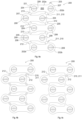
Fig. 1 shows a view in which the electrical connection means according to an embodiment of the present invention is used. -
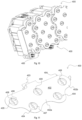
Fig. 2 shows a three-dimensional view based on the electrical connection means inFig. 1 . -
Fig. 3 shows a partial enlarged drawing of the electrical connection means inFig. 2 . -
Figs. 4a - 4c show plans of the electrical connection means according to a second embodiment of the present invention. -
Fig. 5 shows an elevation based on the electrical connection means inFig. 4 . -
Fig. 6 shows a plan based on the terminal connection part of the electrical connection means inFig. 4 . -
Fig. 7 shows a plan of the terminal connection part according to an alternative embodiment. -
Fig. 8 shows a view in which the electrical connection means in a third embodiment of the present invention is used. -
Fig. 9 shows a three-dimensional view based on the electrical connection means inFig. 8 . -
Fig. 10 shows a view in which the electrical connection means in a fourth embodiment of the present invention is used. -
Fig. 11 shows a three-dimensional view based on the electrical connection means inFig. 10 ; and -
Figs. 12a - 12d show possible situations after welding of an ordinary electrical connection means. - Before explaining any embodiment of the present invention in detail, it should be understood that the applications of the present invention are not limited to the structural details and component arrangements expounded in the following description or shown in the drawings. Similarly, it should be understood that the words and terms used herein are intended to describe, and should not be regarded as limiting. General terms, terms relating to extent, such as "substantially" or "about" are to be understood as indicating a suitable range outside a given value, for example a general tolerance associated with the manufacture, assembly and use of the embodiment described. In addition, the use of "comprises", "provided with" or "has" and variants thereof herein is intended to encompass the subsequently listed items.
-
Figs. 1 - 11 all show electrical connection means for connecting terminals of battery units in a battery pack, in multiple embodiments according to the present invention. An electrical connection means 1 is used to connect multiple battery units in a battery pack, connecting ends of the battery units in series and/or in parallel. -
Figs. 1 - 3 show an electrical connection means 100 according to a first embodiment of the present invention, used to connect terminals 10 of multiple battery units. Each electrical connection means 100 can simultaneously connect ten battery units in a specific arrangement. The electrical connection means 100 mainly comprisesmultiple bodies 102; eachbody 102 can at least be divided into afirst body part 102a and asecond body part 102b. Thefirst body part 102a is substantially flat, and is provided with acircuit connection part 103 for connecting to an operating circuit of the battery pack. In general, thecircuit connection part 103 may be integrally formed with thefirst body part 102a of at least onebody 102, but may also be connected to thefirst body part 102a by welding. Thecircuit connection part 103 is electrically connected by welding to a port (not shown) on a circuit board having the operating circuit. The other part of thebody 102 is thesecond body part 102b, which is connected to thefirst body part 102. Thefirst body part 102a andsecond body part 102b are integrally formed. Preferably, the electrical connection means 100 is made of an elastically deformable electrically conductive material. As shown inFig. 2 , the electrical connection means 100 has fivebodies 102 arranged in parallel, each body 2 being connected to terminals 10 of two battery units. - As shown in
Figs. 2 and 3 , thesecond body part 102b has at least oneterminal connection part 104 for connecting to a battery unit terminal 10. Specifically, thesecond body part 102b has twoterminal connection parts 104; theterminal connection part 104 is provided by the correspondingsecond body part 102b, and used for connecting to the corresponding terminal 10 of a battery unit adjacent to said battery unit. The shape of theterminal connection part 104 may depend on the shape of the terminal 10 of the battery unit. The area of theterminal connection part 104 should be smaller than that of the terminal 10 of the battery unit. - Each
terminal connection part 104 has at least oneconnection component 105. According to this embodiment, each terminal connection part 4 has two connection components, i.e. afirst connection component 105 and asecond connection component 106. Thefirst connection component 105 andsecond connection component 106 are arranged individually. Thesecond connection component 106 and thefirst connection component 105 are located in substantially the same plane, and are configured to adjoin a surface of the terminal 10 of the battery unit or to be biased towards the surface of the terminal 10 of the battery unit. Thefirst connection component 105 andsecond connection component 106 may be offset towards the terminal of the battery unit in relation to thesecond body part 102b, in order to weld theterminal connection part 104 to the terminal of the battery unit. Theterminal connection part 104 further comprises astem 108 connecting thecontact part 107 to thefirst body part 102a. Thefirst connection component 105 andsecond connection component 106 are spaced apart by a certain distance and extend in the same direction. Thefirst connection component 105 andsecond connection component 106 are respectively connected to thesecond body part 102b by their respective stems 108. Thestem 108 is the only connection path connecting eachconnection component second body part 102b. Thestem 108 has a smaller cross section than thecontact part 107. As shown inFig. 3 , thestem 108 is narrower than the first andsecond connection components first connection component 105 andsecond connection component 106 are spaced apart by a certain distance and form agap 109. - The
multiple bodies 102 are connected to each other by at least oneconnection part 110. As shown inFig. 2 , onebody 102 is connected to anotherbody 102 by oneconnection part 110.Fig. 4 shows another embodiment, in which onebody 102 and anotherbody 102 may also be connected by twoconnection parts 110, so that the overall rigidity of the electrical connection means 100 is increased. Preferably, theconnection part 110 is connected to thebodies 102 in an integrally formed manner. Eachconnection part 110 may be provided with at least onefusible part 111, thefusible part 111 having a smaller cross section than the stem 108 (this difference is not shown in the figures). Alternatively, each of, or one of, theconnection parts 110 may also be provided with a locally narrow part (not shown in the figures), this part having a smaller cross section than any part of thebody 102, including thestem 108, in order to form a fuse for cutting off an excessively high current. Advantageously, at least one locally narrow part may be formed in theconnection part 110 by a hole-opening process step, for use as a fuse for cutting off an excessively high current. In addition,multiple connection parts 110 may extend along substantially Z-shaped paths, and connectmultiple bodies 102 in a staggered arrangement, to match the way in which multiple battery units are arranged. -
Figs. 4a - 7 show an electrical connection means 200 in a second embodiment of the present invention. Similarly, the electrical connection means 200 comprisesmultiple bodies 202; each can at least be divided into afirst body part 202a and asecond body part 202b. Specifically, the electrical connection means 200 has fivebodies 202 arranged in parallel, eachbody 202 being connected to terminals of two battery units. Thefirst body part 202a of eachbody 202 extends in a plane, and is provided with acircuit connection part 203 for connecting to an operating circuit of the battery pack. Thecircuit connection part 203 may be integrally formed with thefirst body part 202a, and thecircuit connection part 203 may be electrically connected by welding to a port (not shown in the figures) on a circuit board having the operating circuit. The other part of thebody 202 is thesecond body part 202b, which is electrically connected to thefirst body part 202. Thefirst body part 202a andsecond body part 202b are connected in an integrally formed manner. Preferably, the electrical connection means 200 is made of an elastically deformable electrically conductive material. - The
second body part 202b of eachbody 202 is configured to be electrically connected to an end of a battery unit. As shown inFigs. 4a - 4c , thesecond body part 202b has at least oneterminal connection part 204 for connecting to a battery unit terminal. Thesecond body part 202b may have twoterminal connection parts 204; theterminal connection part 204 is provided by the correspondingsecond body part 202b, and used for connecting to the corresponding terminal of a battery unit adjacent to said battery unit. The shape of theconnection part 204 substantially corresponds to the shape of the terminal of the battery unit, e.g. circular as shown in the figures. The area of theterminal connection part 204 should be smaller than that of the terminal of the battery unit. - Each
terminal connection part 204 has afirst connection component 205 and asecond connection component 206 which are at least two in number. Thefirst connection component 205 andsecond connection component 206 are arranged individually. Thesecond connection component 206 is located in substantially the same plane as thefirst connection component 205. Thefirst connection component 205 andsecond connection component 206 are in the form of semicircles facing each other, and are configured to adjoin a surface of the terminal of the battery unit, or to be biased towards the surface of the terminal 20 of the battery unit. Thefirst connection component 205 andsecond connection component 206 may be offset towards the terminal of the battery unit in relation to thesecond body part 202b, as shown inFig. 5 , in order to connect theterminal connection part 204 to the terminal of the battery unit. - Each
connection component contact part 207 for contacting the terminal 20 of the battery unit, and astem 208 connecting thecontact part 207 to the remainder of thebody 202. Thestem 208 is the only connection path connecting eachconnection component second body part 202b. Specifically, thestem 208 has a smaller cross section than thecontact part 207. According toFig. 6 , thestem 208 is narrower than the first andsecond connection components stem 208 is only about 1/5 of the width of the connection component. Thecontact parts 207 of the first andsecond connection components second connection components terminal connection part 204. The angles at which thecontact parts 207 of thefirst connection component 205 andsecond connection component 206 extend in different directions relative to each other differ by approximately 180°. That is to say, thecontact parts 207 of thefirst connection component 205 andsecond connection component 206 extend in opposite directions relative to each other. In this way, the stems 208 of thefirst connection component 205 andsecond connection component 206 are located at maximally spaced-apart positions. Therespective contact parts 207 of the first andsecond connection components stems 208 to the remainder of thebody 202 via astrip 221. Thestrip 221 has an outwardly projectingfirst end 221a connected to the remainder of thebody 202, and thestrip 221 has asecond end 221b as a far end, which is connected to thestem 208. Alternatively, as shown inFig. 7 , thecontact parts 207 of thefirst connection component 205 andsecond connection component 206 may extend in the same or substantially the same direction. However, the respective stems 208 of the first andsecond connection components gap 209. - According to
Fig. 5 , surfaces of therespective contact parts 207 of the first andsecond connection components body 202, such that a surface of thecontact part 207 abuts a surface of the terminal of the battery unit, to facilitate welding. In addition, thestrip 221 extends along an approximately circular or approximately semicircular path, and a cross section of thestrip 221 is configured to be larger than a cross section of thestem 208. Therespective contact parts 207 of the first andsecond connection components contact parts 207 of thefirst connection component 205 and thesecond connection component 206 are spaced apart by anarrow gap 209, e.g. 2 - 3 mm. - The
contact parts 207 of thefirst connection component 205 andsecond connection component 206 are in the form of semicircles facing each other, and have respectivestraight edges 222; the twostraight edges 222 define theabovementioned gap 209, and extend together in parallel on two opposite sides of thegap 209. Thegap 209 causes thecontact part 207 of thefirst connection component 205 to be substantially independent of thecontact part 207 of thesecond connection component 206, and thecontact parts 207 of thefirst connection component 205 andsecond connection component 206 have shapes that are substantially mirror images or reversed mirror images of each other. Alternatively, the angle at which thecontact parts 207 of thefirst connection component 205 and thesecond connection component 206 extend in different directions relative to each other may be 90° - 270°, i.e. at least 90° clockwise or anticlockwise. Alternatively, the angle at which thecontact parts 207 of thefirst connection component 205 and thesecond connection component 206 extend in different directions relative to each other may also be reduced to the range of 170° - 190°. Advantageously, the positions of the respective stems 208 of thefirst connection component 205 and thesecond connection component 206 are radially opposite each other, as shown inFig. 6 . - The
contact parts 207 of thefirst connection component 205 and thesecond connection component 206 may be configured to have a substantially circular or disk-like combined shape. Essentially, if it is desired to form the abovementioned shape, a process step of forming a through-hole 225 of a specific shape in thesecond body part 202b will generally be required. Alternatively, thecontact parts 207 of thefirst connection component 205 and thesecond connection component 206 may be connected to thesecond body part 202a or remainder via the stems 208 directly, thus avoiding the process step of forming the through-hole 225 and saving the material forming thestrip 221. - Similarly to the previous embodiment,
multiple bodies 202 are connected to each other by at least oneconnection part 210. Specifically, as shown inFig. 4 , onebody 202 is connected to anotherbody 202 of the electrical connection means 200 by twoconnection parts 210. Preferably, theconnection parts 210 are integrally formed with thebodies 202. Eachconnection part 210 is provided with at least one fusible part 211, the fusible part 211 having a smaller cross section than thestem 208. Each of, or one of, theconnection parts 210 may be provided with a locallynarrow part 212. Similarly, the locallynarrow part 212 has a smaller cross section than any part of thebody 202, including thestem 208, in order to form a fuse for cutting off an excessively high current. Advantageously, a circular through-hole 213 may be provided in theconnection part 210 as shown inFig. 4a , or an elongated through-hole 213 may be provided in theconnection part 210 as shown inFig. 4b , to form at least two locallynarrow parts 212, for use as a fuse for cutting off an excessively high current.Fig. 4c shows that eachconnection part 210 may be configured as a single narrow part, which similarly can be used as a fuse for cutting off an excessively high current. In addition,multiple connection parts 210 may extend along substantially Z-shaped paths, and connectmultiple bodies 202 in a staggered arrangement, to match the way in which multiple battery units are arranged. -
Figs. 8 and 9 show an electrical connection means 300 based on a second embodiment. Essentially, each electrical connection means 300 simultaneously connects two battery units in a specific arrangement. This embodiment is different in that the electrical connection means 1 has asingle body 302. Similarly, thebody 302 can at least be divided into afirst body part 302a and asecond body part 302b. Thefirst body part 302a is substantially flat, and thebody 302 is provided with acircuit connection part 303 for connecting to an operating circuit of the battery pack. Thecircuit connection part 303 may be integrally formed with thefirst body part 302a of thebody 302, but may also be connected to thefirst body part 302a by welding. Thecircuit connection part 303 is electrically connected by welding to a port (not shown in the figures) on a circuit board having the operating circuit. The other part of thebody 302 is thesecond body part 302b, which is electrically connected to thefirst body part 302. Thefirst body part 302a andsecond body part 302b are integrally formed. The electrical connection means 300 is made of an elastically deformable electrically conductive material. The electrical connection means 300 has only onebody 302, thebody 302 being connected to terminals of two battery units. -
Figs. 10 and 11 show another electrical connection means 400; abody 402 thereof is simultaneously connected to terminals of as many as ten battery units. The entire battery pack may have multiple electrical connection means 400, and there may be no connection between onebody 402 and anotherbody 402, so there is no connection part. - Essentially, the electrical connection means 300, 400 described above each comprise the
body first body part second body part first body part circuit connection part terminal connection part second body part terminal connection part first connection component second connection component - Each of the connection components comprises a
contact part 307, 407 for contacting the terminal of the battery unit, and theterminal connection part stem contact part 307, 407 to thefirst body part stem contact part 307, 407 thereof or any other part, so that thestem first connection components second connection components contact parts 307, 407 and thestems - According to the process step of assembling the battery pack to which the present invention relates, when the electrical connection means is connected to a battery unit, spot welding will generally be used to weld the
first connection component second connection component first connection component second connection component - In the process of spot welding, the welding current first flows from the welding head through the
respective contact parts 307, 407 of thefirst connection component second connection component stems second body part second body part stems contact parts 307, 407; consequently, when the current passes through thestems - As shown in
Figs. 12a - 12d , generally, when an existing electrical connection means is welded by spot welding to a terminal of a battery unit, the high-voltage current generates a high temperature when passing through a position equivalent to a stem, or might cause blackening or even melt-through at the stem or the periphery thereof. In the electrical connection means 300, 400 described above, the positions of the stems 308, 408 are configured to be remote from one another, and the two connection components can effectively disperse current and thermal energy, thus avoiding passage of current through the same position; this can reduce situations in which current flow is overly concentrated at the same position, thereby mitigating the problem of blackening or even melt-through at the stem or the periphery thereof. - As stated above, the electrical connection means provided in the present invention for connecting terminals of battery units in a battery pack provides an improvement compared with an existing electrical connection apparatus, reducing the chance that a high temperature will arise when current passes through a particular position, especially a position used as a fuse, during welding, thus effectively reducing blackening or even melt-through at the stem (i.e. the part used as a fuse) or the periphery thereof.
Claims (15)
- Electrical connection means (100) for connecting terminals of battery units in a battery pack, comprising:multiple bodies (102) made of an electrically conductive material, each of the bodies at least having a first body part (102a) and a second body part (102b);at least one terminal connection part (104) provided by the first body part (102a) or the second body part (102b), for connecting to the terminal of the battery unit;characterized in that the at least one terminal connection part (104) comprises at least one connection component (105, 106),each said connection component (105) comprises a contact part for contacting the terminal of the battery unit, the at least one terminal connection part (104) further comprises at least one stem (108) connecting the contact part to the first body part (102a) or the second body part (102b), wherein the stem (108) has a smaller cross section than the contact part, the multiple bodies (102) are connected to each other by at least one connection part (110), each said connection part (110) has at least one fusible part (211), the at least one fusible part (211) has a smaller cross section than the at least one stem (108), and the at least one fusible part (211) is used as a fuse for cutting off an excessively high current.
- Electrical connection means according to Claim 1, characterized in that the at least one terminal connection part (104) comprises a first connection component (105) and a second connection component (106) which are two in number and spaced apart, and which are respectively connected to the body via respective said stems (108).
- Electrical connection means according to Claim 1, characterized in that the at least one connection part (110) is provided with a locally narrow part as the at least one fusible part (111).
- Electrical connection means according to Claim 1, characterized in that an opening is provided in the at least one connection part (110) to form the at least one fusible part (111), the opening preferably being a through-hole.
- Electrical connection means according to Claim 1, characterized in that the connection part (110) extends along a substantially Z-shaped path, and connects the multiple bodies (102) in a staggered arrangement.
- Electrical connection (100) means for connecting terminals of battery units in a battery pack, comprising:a body made of an electrically conductive material, the body at least having a first body part (102a) and a second body part (102b);at least one terminal connection part (104) provided by the first body part (102a) or the second body part (102b), for connecting to the terminal of the battery unit;characterized in that the at least one terminal connection part (104) comprises a first connection component (105) and a second connection component (106) which are at least two in number and spaced apart; andeach of the connection components comprises a contact part for contacting the terminal of the battery unit, and a stem (108) connecting the contact part to the body, the stem (108) having a smaller cross section than the contact part, and the stem (108) being used as a fuse for cutting off an excessively high current.
- Electrical connection means according to Claim 6, characterized in that the contact parts of the first connection component (105) and the second connection component (106) extend in the same direction, or extend in different directions relative to each other.
- Electrical connection means according to any one of Claims 2 - 6, characterized in that the contact part of the first connection component (105) is connected to the body by the stem (108) via a strip (221);preferably, the strip (221) has an outwardly projecting first end (221a) connected to the body, and the strip (221) has a second end (221b) as a far end, which is connected to the stem (108);more preferably, the strip (221) extends along a substantially circular or approximately semi-circular path.
- Electrical connection means according to any one of Claims 2 - 6, characterized in that the contact parts of the first connection component (105) and the second connection component (106) are arranged adjacent (close) to each other; in particular, the contact parts of the first connection component (105) and the second connection component (106) have respective straight edges, which extend together in parallel on two opposite sides of the gap (109).
- Electrical connection means according to any one of Claims 2 - 6, characterized in that the contact parts of the first connection component (105) and the second connection component (106) have shapes that are substantially mirror images of each other.
- Electrical connection means according to any one of Claims 2 - 6, characterized in that the contact parts of the first connection component (105) and the second connection component (106) are configured to form a substantially circular or disk-like shape.
- Electrical connection means according to any one of Claims 2 - 6, characterized in that the angle at which the contact parts of the first connection component (105) and the second connection component (106) extend in different directions relative to each other is 90° - 270°;preferably, the angle at which the contact parts of the first connection component (105) and the second connection component (106) extend in different directions relative to each other is in the range of 170° - 190°;more preferably, the angles at which the contact parts of the first connection component (105) and the second connection component (106) extend in different directions relative to each other differ by approximately 180°.
- Electrical connection means according to any one of Claims 2 - 6, characterized in that the respective positions of the stems (108) of the first connection component (105) and the second connection component (106) are radially opposite each other.
- Electrical connection means according to any one of Claims 2 - 6, characterized by comprising two said terminal connection parts (104); the terminal connection part (104) is provided by the corresponding first body part (102a) or second body part (102b), and used for connecting to a corresponding terminal of a battery unit adjacent to said battery unit.
- Electrical connection means according to any one of Claims 2 - 6, characterized by comprising a circuit connection part (103) provided by the first body part (102a) or the second body part (102b), for connecting to an operating circuit of the battery pack.
Applications Claiming Priority (1)
| Application Number | Priority Date | Filing Date | Title |
|---|---|---|---|
| CN202111240246.2A CN116031590A (en) | 2021-10-25 | 2021-10-25 | Electrical connecting device for connecting terminals of battery cells in a battery pack |
Publications (3)
| Publication Number | Publication Date |
|---|---|
| EP4170810A1 EP4170810A1 (en) | 2023-04-26 |
| EP4170810C0 EP4170810C0 (en) | 2025-02-12 |
| EP4170810B1 true EP4170810B1 (en) | 2025-02-12 |
Family
ID=83689330
Family Applications (1)
| Application Number | Title | Priority Date | Filing Date |
|---|---|---|---|
| EP22200336.0A Active EP4170810B1 (en) | 2021-10-25 | 2022-10-07 | Electrical connection means for connecting terminals of battery units in battery pack |
Country Status (5)
| Country | Link |
|---|---|
| US (1) | US20230126707A1 (en) |
| EP (1) | EP4170810B1 (en) |
| CN (1) | CN116031590A (en) |
| AU (1) | AU2022241482A1 (en) |
| DE (1) | DE102022128032A1 (en) |
Families Citing this family (7)
| Publication number | Priority date | Publication date | Assignee | Title |
|---|---|---|---|---|
| US20240204267A1 (en) * | 2022-12-14 | 2024-06-20 | Bae Systems Controls Inc. | Impedance balancing and continuity assurance for current limiting element in parallel path for prevention of thermal runaway propagation in battery system, packs and modules |
| US20240222800A1 (en) * | 2022-12-30 | 2024-07-04 | Rivian Ip Holdings, Llc | Current collector assemblies |
| EP4411969A1 (en) * | 2023-02-06 | 2024-08-07 | TVS Motor Company Limited | A power unit |
| DE102023205391A1 (en) | 2023-06-09 | 2024-12-12 | Robert Bosch Gesellschaft mit beschränkter Haftung | battery pack |
| KR20250034757A (en) * | 2023-09-04 | 2025-03-11 | 삼성에스디아이 주식회사 | Rechargeable battery module |
| FR3156597B1 (en) * | 2023-12-06 | 2025-11-28 | Commissariat Energie Atomique | Battery module or battery pack, comprising a matrix of cylindrical format accumulators articulated together by connecting rod(s) with articulation axis(es) formed by the housings of the accumulators and with busbars making electrical connections in certain articulated positions. |
| DE102024113420A1 (en) * | 2024-05-14 | 2025-08-07 | Dr. Ing. H.C. F. Porsche Aktiengesellschaft | Device for a cell connector unit |
Family Cites Families (2)
| Publication number | Priority date | Publication date | Assignee | Title |
|---|---|---|---|---|
| CN105552289A (en) * | 2016-01-29 | 2016-05-04 | 苏州安靠电源有限公司 | Parallel network with safety protection function and large-capacity battery using same |
| CN114128033B (en) * | 2019-10-11 | 2024-06-28 | 株式会社Lg新能源 | Battery module including busbar plate, battery pack including battery module, and electronic device |
-
2021
- 2021-10-25 CN CN202111240246.2A patent/CN116031590A/en active Pending
-
2022
- 2022-09-27 AU AU2022241482A patent/AU2022241482A1/en active Pending
- 2022-10-07 EP EP22200336.0A patent/EP4170810B1/en active Active
- 2022-10-24 DE DE102022128032.2A patent/DE102022128032A1/en active Pending
- 2022-10-24 US US18/049,047 patent/US20230126707A1/en active Pending
Also Published As
| Publication number | Publication date |
|---|---|
| AU2022241482A1 (en) | 2023-05-18 |
| DE102022128032A1 (en) | 2023-04-27 |
| CN116031590A (en) | 2023-04-28 |
| EP4170810A1 (en) | 2023-04-26 |
| EP4170810C0 (en) | 2025-02-12 |
| US20230126707A1 (en) | 2023-04-27 |
Similar Documents
| Publication | Publication Date | Title |
|---|---|---|
| EP4170810B1 (en) | Electrical connection means for connecting terminals of battery units in battery pack | |
| CN110100329B (en) | Bus bar, power storage module, and wiring module | |
| US10347949B2 (en) | Method for maintenance, repair and/or optimization of a battery and battery having a number of individual cells connected to one another electrically | |
| US9768425B2 (en) | Battery module | |
| JP5182896B2 (en) | Molded solar cell module bus bar | |
| US10347895B2 (en) | Conductive member module and battery pack | |
| JP6365437B2 (en) | Wiring module and power storage module | |
| JP4052205B2 (en) | Power converter | |
| US4504816A (en) | Blade fuse and manufacturing method | |
| CN116457990B (en) | Wiring module | |
| US11081764B2 (en) | Battery module | |
| WO2013051012A2 (en) | Bimetallic busbar device for battery cell assemblies | |
| CN108140799B (en) | Storage modules and battery connection modules | |
| CN106067736B (en) | Electric power converter | |
| CN112602163A (en) | Automotive battery conductor plate with fusible link | |
| EP2790249B1 (en) | Battery module | |
| CN109148802B (en) | Bus bar and connection module provided with same | |
| KR20190131246A (en) | Busbar with fuse function and series connection apparatus of battery module using the same | |
| EP4268320B1 (en) | Coupling device for coupling tab electric terminals of battery cells | |
| JP2022173126A (en) | Laminated busbar for energy storage | |
| US10325745B2 (en) | Multiple element fuse | |
| CN117855553A (en) | Battery cell and method of manufacturing the same | |
| CN109792030A (en) | The manufacturing method of secondary cell, the manufacturing method of secondary cell and secondary cell conductive member | |
| CN112602231B (en) | Busbars with integrated stamped fusible connectors | |
| US20230170583A1 (en) | Battery module having a laminated busbar assembly |
Legal Events
| Date | Code | Title | Description |
|---|---|---|---|
| PUAI | Public reference made under article 153(3) epc to a published international application that has entered the european phase |
Free format text: ORIGINAL CODE: 0009012 |
|
| STAA | Information on the status of an ep patent application or granted ep patent |
Free format text: STATUS: THE APPLICATION HAS BEEN PUBLISHED |
|
| AK | Designated contracting states |
Kind code of ref document: A1 Designated state(s): AL AT BE BG CH CY CZ DE DK EE ES FI FR GB GR HR HU IE IS IT LI LT LU LV MC ME MK MT NL NO PL PT RO RS SE SI SK SM TR |
|
| STAA | Information on the status of an ep patent application or granted ep patent |
Free format text: STATUS: REQUEST FOR EXAMINATION WAS MADE |
|
| 17P | Request for examination filed |
Effective date: 20231025 |
|
| RBV | Designated contracting states (corrected) |
Designated state(s): AL AT BE BG CH CY CZ DE DK EE ES FI FR GB GR HR HU IE IS IT LI LT LU LV MC ME MK MT NL NO PL PT RO RS SE SI SK SM TR |
|
| STAA | Information on the status of an ep patent application or granted ep patent |
Free format text: STATUS: EXAMINATION IS IN PROGRESS |
|
| 17Q | First examination report despatched |
Effective date: 20240405 |
|
| GRAP | Despatch of communication of intention to grant a patent |
Free format text: ORIGINAL CODE: EPIDOSNIGR1 |
|
| STAA | Information on the status of an ep patent application or granted ep patent |
Free format text: STATUS: GRANT OF PATENT IS INTENDED |
|
| INTG | Intention to grant announced |
Effective date: 20241121 |
|
| GRAS | Grant fee paid |
Free format text: ORIGINAL CODE: EPIDOSNIGR3 |
|
| GRAA | (expected) grant |
Free format text: ORIGINAL CODE: 0009210 |
|
| STAA | Information on the status of an ep patent application or granted ep patent |
Free format text: STATUS: THE PATENT HAS BEEN GRANTED |
|
| AK | Designated contracting states |
Kind code of ref document: B1 Designated state(s): AL AT BE BG CH CY CZ DE DK EE ES FI FR GB GR HR HU IE IS IT LI LT LU LV MC ME MK MT NL NO PL PT RO RS SE SI SK SM TR |
|
| REG | Reference to a national code |
Ref country code: GB Ref legal event code: FG4D |
|
| REG | Reference to a national code |
Ref country code: CH Ref legal event code: EP |
|
| REG | Reference to a national code |
Ref country code: DE Ref legal event code: R096 Ref document number: 602022010437 Country of ref document: DE |
|
| REG | Reference to a national code |
Ref country code: IE Ref legal event code: FG4D |
|
| U01 | Request for unitary effect filed |
Effective date: 20250228 |
|
| U07 | Unitary effect registered |
Designated state(s): AT BE BG DE DK EE FI FR IT LT LU LV MT NL PT RO SE SI Effective date: 20250310 |
|
| PG25 | Lapsed in a contracting state [announced via postgrant information from national office to epo] |
Ref country code: RS Free format text: LAPSE BECAUSE OF FAILURE TO SUBMIT A TRANSLATION OF THE DESCRIPTION OR TO PAY THE FEE WITHIN THE PRESCRIBED TIME-LIMIT Effective date: 20250512 |
|
| PG25 | Lapsed in a contracting state [announced via postgrant information from national office to epo] |
Ref country code: PL Free format text: LAPSE BECAUSE OF FAILURE TO SUBMIT A TRANSLATION OF THE DESCRIPTION OR TO PAY THE FEE WITHIN THE PRESCRIBED TIME-LIMIT Effective date: 20250212 |
|
| PG25 | Lapsed in a contracting state [announced via postgrant information from national office to epo] |
Ref country code: ES Free format text: LAPSE BECAUSE OF FAILURE TO SUBMIT A TRANSLATION OF THE DESCRIPTION OR TO PAY THE FEE WITHIN THE PRESCRIBED TIME-LIMIT Effective date: 20250212 |
|
| PG25 | Lapsed in a contracting state [announced via postgrant information from national office to epo] |
Ref country code: NO Free format text: LAPSE BECAUSE OF FAILURE TO SUBMIT A TRANSLATION OF THE DESCRIPTION OR TO PAY THE FEE WITHIN THE PRESCRIBED TIME-LIMIT Effective date: 20250512 Ref country code: IS Free format text: LAPSE BECAUSE OF FAILURE TO SUBMIT A TRANSLATION OF THE DESCRIPTION OR TO PAY THE FEE WITHIN THE PRESCRIBED TIME-LIMIT Effective date: 20250612 |
|
| PG25 | Lapsed in a contracting state [announced via postgrant information from national office to epo] |
Ref country code: HR Free format text: LAPSE BECAUSE OF FAILURE TO SUBMIT A TRANSLATION OF THE DESCRIPTION OR TO PAY THE FEE WITHIN THE PRESCRIBED TIME-LIMIT Effective date: 20250212 |
|
| PG25 | Lapsed in a contracting state [announced via postgrant information from national office to epo] |
Ref country code: GR Free format text: LAPSE BECAUSE OF FAILURE TO SUBMIT A TRANSLATION OF THE DESCRIPTION OR TO PAY THE FEE WITHIN THE PRESCRIBED TIME-LIMIT Effective date: 20250513 |
|
| PG25 | Lapsed in a contracting state [announced via postgrant information from national office to epo] |
Ref country code: SM Free format text: LAPSE BECAUSE OF FAILURE TO SUBMIT A TRANSLATION OF THE DESCRIPTION OR TO PAY THE FEE WITHIN THE PRESCRIBED TIME-LIMIT Effective date: 20250212 |
|
| PG25 | Lapsed in a contracting state [announced via postgrant information from national office to epo] |
Ref country code: CZ Free format text: LAPSE BECAUSE OF FAILURE TO SUBMIT A TRANSLATION OF THE DESCRIPTION OR TO PAY THE FEE WITHIN THE PRESCRIBED TIME-LIMIT Effective date: 20250212 |
|
| PG25 | Lapsed in a contracting state [announced via postgrant information from national office to epo] |
Ref country code: SK Free format text: LAPSE BECAUSE OF FAILURE TO SUBMIT A TRANSLATION OF THE DESCRIPTION OR TO PAY THE FEE WITHIN THE PRESCRIBED TIME-LIMIT Effective date: 20250212 |
|
| U20 | Renewal fee for the european patent with unitary effect paid |
Year of fee payment: 4 Effective date: 20251027 |
|
| PLBE | No opposition filed within time limit |
Free format text: ORIGINAL CODE: 0009261 |
|
| STAA | Information on the status of an ep patent application or granted ep patent |
Free format text: STATUS: NO OPPOSITION FILED WITHIN TIME LIMIT |
|
| 26N | No opposition filed |
Effective date: 20251113 |