EP4167751B1 - Process of preparing a fat composition - Google Patents
Process of preparing a fat composition Download PDFInfo
- Publication number
- EP4167751B1 EP4167751B1 EP21732911.9A EP21732911A EP4167751B1 EP 4167751 B1 EP4167751 B1 EP 4167751B1 EP 21732911 A EP21732911 A EP 21732911A EP 4167751 B1 EP4167751 B1 EP 4167751B1
- Authority
- EP
- European Patent Office
- Prior art keywords
- weight
- fat
- fat composition
- acid
- triglycerides
- Prior art date
- Legal status (The legal status is an assumption and is not a legal conclusion. Google has not performed a legal analysis and makes no representation as to the accuracy of the status listed.)
- Active
Links
Images
Classifications
-
- A—HUMAN NECESSITIES
- A23—FOODS OR FOODSTUFFS; TREATMENT THEREOF, NOT COVERED BY OTHER CLASSES
- A23D—EDIBLE OILS OR FATS, e.g. MARGARINES, SHORTENINGS OR COOKING OILS
- A23D9/00—Other edible oils or fats, e.g. shortenings or cooking oils
- A23D9/02—Other edible oils or fats, e.g. shortenings or cooking oils characterised by the production or working-up
- A23D9/04—Working-up
-
- A—HUMAN NECESSITIES
- A23—FOODS OR FOODSTUFFS; TREATMENT THEREOF, NOT COVERED BY OTHER CLASSES
- A23G—COCOA; COCOA PRODUCTS, e.g. CHOCOLATE; SUBSTITUTES FOR COCOA OR COCOA PRODUCTS; CONFECTIONERY; CHEWING GUM; ICE-CREAM; PREPARATION THEREOF
- A23G1/00—Cocoa; Cocoa products, e.g. chocolate; Substitutes therefor
- A23G1/0003—Processes of manufacture not relating to composition or compounding ingredients
-
- A—HUMAN NECESSITIES
- A23—FOODS OR FOODSTUFFS; TREATMENT THEREOF, NOT COVERED BY OTHER CLASSES
- A23G—COCOA; COCOA PRODUCTS, e.g. CHOCOLATE; SUBSTITUTES FOR COCOA OR COCOA PRODUCTS; CONFECTIONERY; CHEWING GUM; ICE-CREAM; PREPARATION THEREOF
- A23G1/00—Cocoa; Cocoa products, e.g. chocolate; Substitutes therefor
- A23G1/30—Cocoa products, e.g. chocolate; Substitutes therefor
- A23G1/32—Cocoa products, e.g. chocolate; Substitutes therefor characterised by the composition containing organic or inorganic compounds
- A23G1/36—Cocoa products, e.g. chocolate; Substitutes therefor characterised by the composition containing organic or inorganic compounds characterised by the fats used
-
- A—HUMAN NECESSITIES
- A23—FOODS OR FOODSTUFFS; TREATMENT THEREOF, NOT COVERED BY OTHER CLASSES
- A23G—COCOA; COCOA PRODUCTS, e.g. CHOCOLATE; SUBSTITUTES FOR COCOA OR COCOA PRODUCTS; CONFECTIONERY; CHEWING GUM; ICE-CREAM; PREPARATION THEREOF
- A23G1/00—Cocoa; Cocoa products, e.g. chocolate; Substitutes therefor
- A23G1/30—Cocoa products, e.g. chocolate; Substitutes therefor
- A23G1/32—Cocoa products, e.g. chocolate; Substitutes therefor characterised by the composition containing organic or inorganic compounds
- A23G1/36—Cocoa products, e.g. chocolate; Substitutes therefor characterised by the composition containing organic or inorganic compounds characterised by the fats used
- A23G1/38—Cocoa butter substitutes
-
- A—HUMAN NECESSITIES
- A23—FOODS OR FOODSTUFFS; TREATMENT THEREOF, NOT COVERED BY OTHER CLASSES
- A23G—COCOA; COCOA PRODUCTS, e.g. CHOCOLATE; SUBSTITUTES FOR COCOA OR COCOA PRODUCTS; CONFECTIONERY; CHEWING GUM; ICE-CREAM; PREPARATION THEREOF
- A23G1/00—Cocoa; Cocoa products, e.g. chocolate; Substitutes therefor
- A23G1/30—Cocoa products, e.g. chocolate; Substitutes therefor
- A23G1/32—Cocoa products, e.g. chocolate; Substitutes therefor characterised by the composition containing organic or inorganic compounds
- A23G1/40—Cocoa products, e.g. chocolate; Substitutes therefor characterised by the composition containing organic or inorganic compounds characterised by the carbohydrates used, e.g. polysaccharides
-
- A—HUMAN NECESSITIES
- A23—FOODS OR FOODSTUFFS; TREATMENT THEREOF, NOT COVERED BY OTHER CLASSES
- A23G—COCOA; COCOA PRODUCTS, e.g. CHOCOLATE; SUBSTITUTES FOR COCOA OR COCOA PRODUCTS; CONFECTIONERY; CHEWING GUM; ICE-CREAM; PREPARATION THEREOF
- A23G3/00—Sweetmeats; Confectionery; Marzipan; Coated or filled products
- A23G3/34—Sweetmeats, confectionery or marzipan; Processes for the preparation thereof
- A23G3/36—Sweetmeats, confectionery or marzipan; Processes for the preparation thereof characterised by the composition containing organic or inorganic compounds
- A23G3/40—Sweetmeats, confectionery or marzipan; Processes for the preparation thereof characterised by the composition containing organic or inorganic compounds characterised by the fats used
-
- C—CHEMISTRY; METALLURGY
- C11—ANIMAL OR VEGETABLE OILS, FATS, FATTY SUBSTANCES OR WAXES; FATTY ACIDS THEREFROM; DETERGENTS; CANDLES
- C11B—PRODUCING, e.g. BY PRESSING RAW MATERIALS OR BY EXTRACTION FROM WASTE MATERIALS, REFINING OR PRESERVING FATS, FATTY SUBSTANCES, e.g. LANOLIN, FATTY OILS OR WAXES; ESSENTIAL OILS; PERFUMES
- C11B7/00—Separation of mixtures of fats or fatty oils into their constituents, e.g. saturated oils from unsaturated oils
- C11B7/0008—Separation of mixtures of fats or fatty oils into their constituents, e.g. saturated oils from unsaturated oils by differences of solubilities, e.g. by extraction, by separation from a solution by means of anti-solvents
-
- C—CHEMISTRY; METALLURGY
- C11—ANIMAL OR VEGETABLE OILS, FATS, FATTY SUBSTANCES OR WAXES; FATTY ACIDS THEREFROM; DETERGENTS; CANDLES
- C11B—PRODUCING, e.g. BY PRESSING RAW MATERIALS OR BY EXTRACTION FROM WASTE MATERIALS, REFINING OR PRESERVING FATS, FATTY SUBSTANCES, e.g. LANOLIN, FATTY OILS OR WAXES; ESSENTIAL OILS; PERFUMES
- C11B7/00—Separation of mixtures of fats or fatty oils into their constituents, e.g. saturated oils from unsaturated oils
- C11B7/0008—Separation of mixtures of fats or fatty oils into their constituents, e.g. saturated oils from unsaturated oils by differences of solubilities, e.g. by extraction, by separation from a solution by means of anti-solvents
- C11B7/0025—Separation of mixtures of fats or fatty oils into their constituents, e.g. saturated oils from unsaturated oils by differences of solubilities, e.g. by extraction, by separation from a solution by means of anti-solvents in solvents containing oxygen in their molecule
-
- C—CHEMISTRY; METALLURGY
- C11—ANIMAL OR VEGETABLE OILS, FATS, FATTY SUBSTANCES OR WAXES; FATTY ACIDS THEREFROM; DETERGENTS; CANDLES
- C11B—PRODUCING, e.g. BY PRESSING RAW MATERIALS OR BY EXTRACTION FROM WASTE MATERIALS, REFINING OR PRESERVING FATS, FATTY SUBSTANCES, e.g. LANOLIN, FATTY OILS OR WAXES; ESSENTIAL OILS; PERFUMES
- C11B7/00—Separation of mixtures of fats or fatty oils into their constituents, e.g. saturated oils from unsaturated oils
- C11B7/0075—Separation of mixtures of fats or fatty oils into their constituents, e.g. saturated oils from unsaturated oils by differences of melting or solidifying points
Definitions
- This invention relates to a process of preparing a fat composition. As not part of the present invention, there are also disclosed below a fat composition produced thereby, uses of the fat composition and a confectionery product comprising the fat composition.
- Fats and oils are important ingredients of food products. Fats and oils are sometimes subjected to an interesterification process which randomly redistributes the fatty acid acyl residues amongst the glyceride molecules. This process can alter the physical properties of the fat or oil, such as its melting point.
- Shea butter is a fat obtained from the nuts of the shea tree (Vitellaria paradoxa ). Shea butter is relatively rich in stearic acid (C18:0) and oleic acid (C18:1). Shea butter is often fractionated to form shea stearin and shea olein. Shea stearin is rich in StOSt (1,3-distearoyl-2-oleoyl glyceride) and is often used as a component together with other fat components in order to produce cocoa butter equivalents. Similar to shea butter, other fats such as sal butter, mango kernel fat or kokum fat are also often fractionated to produce a stearin fraction which can be used as a component to produce a cocoa butter equivalent.
- WO 2019/020714 discloses a non-hydrogenated fat composition
- a non-hydrogenated fat composition comprising greater than 28% by weight stearic acid (C18:0) fatty acid residues; greater than 44% by weight oleic acid (C18:1) fatty acid residues, and less than 10% by weight of palmitic acid (C16) fatty acid residues, based on the total C8-C24 fatty acid residues, and greater than 30% by weight of the combined amounts of StOSt, StStO, StOO and OStO triglycerides based on the total glycerides present in the composition, wherein the weight ratio of (StOSt+StStO)/(StOO + OStO) is from 0.6-1.5.
- EP-A-3 587 543 concerns the problem of providing shea olein which can maintain fluidity in a liquid state for a long time at ambient temperature, and in a preferred embodiment, can maintain fluidity in a liquid state for a long time over a wide temperature range from low temperature to ambient temperature.
- WO 2012/052471 discloses an edible product containing 15-80 wt% of triglycerides, 20-85 wt% of filler, and at most 15 wt% water, wherein the triglycerides contain as acid residues 20-70 wt% of total SAFA, at most 5 wt% of TFA, thereby C8, C10 and C12 in a weight ratio of (C8+C10+C12)/total SAFA of at least 10% and a weight ratio of (C8+C10)/C12 of at least 5%, whereby the weight ratio D/B is at least 1.5 and the weight ratio of B/total SAFA is at most 0.5, in which D represents the sum of the amounts of all MUFA and PUFA, and B represents the sum of the amounts of C14 and C16, and which triglyceride composition has an SFC at 20°C of at least 5 wt%.
- WO 2014/037009 relates to a process for the production of cocoa butter equivalent (CBE).
- WO 2018/138335 discloses a fat composition comprising from 55 to 75 % StOSt; from 10 to 25 % POSt; and less than 10 % POP; said percentages being by weight based on total triglycerides present in the composition, and has the following N-values: N35 of less than 45; and N10 of greater than 80.
- WO 2016/200329 relates to a confectionery product comprising chocolate, wherein the chocolate has a fat phase comprising 60.0 -99.9% by weight of triglycerides, 40.0 -99.0 by weight of triglycerides having C16 -C20 saturated fatty acids in the sn-1 and sn-3 positions of the triglyceride and oleic acid in the sn-2 position of the triglyceride.
- WO 2011/048169 discloses stearin fats, obtainable by dry or solvent fractionation of sunflower high-stearic and high-oleic oils, optionally with seeding with tempered stearin crystals.
- EP-A-3 087 847 provides a method for suppressing an increase in the viscosity of a water-containing heat-resistant chocolate mix.
- EP-A-2 412 245 discloses a method for producing a hard butter composition via ester exchange using a 1,3-specific lipase.
- WO 2014/069218 A1 discloses a heat-resistant chocolate having good mouthfeeling and blooming resistance and a process for producing the same.
- EP 2 030 508 A1 discloses a food product containing, inter alia, between 5 and 90% of a fat phase containing between 0 and 65 wt% of a liquid oil and between 35 and 100 wt% of a hard fat component with a StOSt/POP ratio of at least 2.
- JP 2013 172679 A discloses a chocolate suitable for tempering type chocolate for frozen desserts.
- confectionery fat compositions such as coating fats, in particular cocoa butter equivalents (CBEs)
- CBEs cocoa butter equivalents
- a fat preferably from a single natural source, instead of multiple fats in order to reduce the complexity and the cost of the process and to increase the efficiency of the use of the relevant fat source, such as, in particular, shea butter.
- comparable or even improved quality confectionery products such as chocolates
- fat compositions that can be produced via a simplified and efficient process compared to conventional products.
- a process of preparing a fat composition comprising the steps of: a) providing a fat comprising at least 25% by weight of StOSt triglycerides based on the total glycerides present in the fat, wherein St is stearic acid and O is oleic acid; b) fractionating the fat source obtained in step a) to form a stearin fraction comprising at least 60% by weight of StOSt triglycerides based on the total glycerides present in the fat, wherein St is stearic acid and O is oleic acid; and c) blending a fat which is the same as that provided in step a) and the stearin fraction obtained in step b) in a weight ratio of from 90:10 to 10:90 to form a fat composition.
- the process of the invention has been found to be particularly useful for producing a fat composition suitable for confectionery applications from a single natural fat source without any complex process route involving multiple fat sources or any complex modification steps such as an enzymatic reaction. Accordingly, the process of the invention has been particularly simplified and the efficiency of the process can be significantly improved. Also, the process of the invention is suitable for maintaining the constant and reliable quality of the prepared fat composition with minimized influence of the quality of the raw fat material in comparison to merely using the unmodified natural fat source alone. Furthermore, the process also improves the use of the single natural fat source. In addition, it has been surprisingly found that the fat composition obtained by the improved process according to the invention can still enable producing an acceptable or even improved confectionery product, particularly in terms of texture and organoleptic properties.
- fat refers to glyceride fats and oils containing fatty acid acyl groups and does not imply any particular melting point.
- oil or “butter” is used synonymously with “fat”.
- fatty acid refers to straight chain saturated or unsaturated (including mono- and poly unsaturated) carboxylic acids having from 8 to 24 carbon atoms. A fatty acid having x carbon atoms and y double bonds may be denoted Cx:y. For example, palmitic acid may be denoted C16:0 and oleic acid may be denoted C18:1.
- the fatty acid profile may be determined by fatty acid methyl ester analysis (FAME) using gas chromatography according to ISO 12966-2 and ISO 12966-4.
- percentages of fatty acids in compositions include both acyl groups such as tri-, di- and mono- glycerides and free fatty acids (but exclude any unsaponifiable matter) and are based on the total weight of C8 to C24 fatty acid residues.
- triglyceride refers to glycerides consisting of three fatty acid chains covalently bonded to a glycerol molecule. Amounts of triglycerides specified herein are percentages by weight based on total triglycerides present in the fat composition.
- the notation triglyceride XYZ denotes triglycerides having fatty acid acyl groups X, Y and Z at any of the 1-, 2- and 3-positions of the glyceride.
- the notation A2B includes both AAB and ABA, and AB2 includes both ABB and BAB. Triglyceride content may be determined for example by GC (ISO 23275).
- fractionating refers to a process well known in the art for separating the liquid part (olein fraction) and the solid part (stearin fraction) based on different melting points or hardness.
- Typical fractionation processes include dry fractionation, solvent fractionation (also known as wet fractionation) and detergent fractionation.
- the fat composition prepared according to the process of the invention is a confectionery fat composition, more preferably a coating fat composition and even more preferably a cocoa butter equivalent (CBE) fat composition.
- CBE cocoa butter equivalent
- cocoa butter equivalent refers to the vegetable fats other than cocoa butter that have physical properties and a molecular structure that are virtually identical to those of cocoa butter.
- the invention provides a process for producing a confectionery product, preferably a chocolate product (including chocolate-like products) or a coating, which comprises preparing a fat composition according to the process of the present invention, combining the fat composition with one or more confectionery ingredients, preferably selected from cocoa mass, cocoa butter, milk fat, skimmed milk powder, milk powder, vegetable milk powder, dairy powder, sweetener other than sugar and mixtures thereof, tempering the resulting confectionery composition and molding to form the chocolate product. Tempering may, for example, be carried out by cooling the confectionery composition to 26-28 °C from a higher temperature, and then heating to 31-32 °C. It has surprisingly been found that tempering a confectionery composition comprising a fat composition of the invention can be carried out more easily, with the formation of a greater number of seed crystals.
- the fat which is preferably from a single natural source, preferably comprises from 25% to 70% by weight of StOSt triglycerides based on the total glycerides present in the fat, wherein St is stearic acid and O is oleic acid, more preferably from 30% to 70% by weight, even more preferably from 35% to 65% by weight and most preferably from 37% to 63% by weight.
- the fat is preferably selected from the group consisting of shea butter, sal butter, mango kernel oil, illipe butter, kokum butter and mowrah butter. More preferably, the fat consists of shea butter.
- step b) of the process according to the invention the fractionation is performed preferably by means of dry fractionation, solvent fractionation or detergent fractionation, more preferably by means of dry fractionation or solvent fractionation and even more preferably by means of solvent fractionation.
- step c) of the process according to the invention the fat source is the same as that provided in step a) and the stearin fraction obtained in step b) are blended in a weight ratio of from 90:10 to 10:90 to form a fat composition.
- step c) comprises blending the shea butter and the stearin fraction obtained in step b) in a weight ratio of from 90:10 to 10:90 to form a fat composition.
- the process of preparing a fat composition according to the invention comprises the steps of: a) providing a fat selected from the group consisting of shea butter, sal butter, mango kernel oil, illipe butter, kokum butter and mowrah butter comprising from 30% to 70% by weight of StOSt triglycerides based on the total glycerides present in the fat, wherein St is stearic acid and O is oleic acid; b) fractionating the fat source obtained in step a) to form a stearin fraction comprising from 62% to 90% by weight of StOSt triglycerides based on the total glycerides present in the fat, wherein St is stearic acid and O is oleic acid; and c) blending the fat source which is the same as that provided in step a) and the stearin fraction obtained in step b) in a weight ratio of from 85:15 to 20:80 to form a fat composition.
- a fat selected from the group consisting of
- the process of preparing a fat composition according to the invention comprises the steps of: a) providing fat source which consists of shea butter comprising from 35% to 65% by weight of StOSt triglycerides based on the total glycerides present in the fat, wherein St is stearic acid and O is oleic acid; b) fractionating the fat source obtained in step a) to form a stearin fraction comprising from 65% to 85% by weight of StOSt triglycerides based on the total glycerides present in the fat, wherein St is stearic acid and O is oleic acid; and c) blending the fat source which is the same as that provided in step a) and the stearin fraction obtained in step b) in a weight ratio of from 85:15 to 30:70 to form a fat composition.
- the process of preparing a fat composition comprises the steps of: a) providing fat source which consists of shea butter comprising from 37% to 63% by weight of StOSt triglycerides based on the total glycerides present in the fat, wherein St is stearic acid and O is oleic acid; b) fractionating the fat source obtained in step a) to form a stearin fraction comprising from 68% to 82% by weight of StOSt triglycerides based on the total glycerides present in the fat, wherein St is stearic acid and O is oleic acid; and c) blending the fat source which is the same as that provided in step a) and the stearin fraction obtained in step b) in a weight ratio of from 82:18 to 35:65 to form a fat composition.
- the fat composition obtained in step c) is preferably further refined. More preferably, the fat composition is neutralized, bleached and deodorized. Even more preferably, the fat composition is bleached and deodorized.
- the fat source provided in step a) and/or the stearin fraction obtained in step b) may preferably be refined before the step c), more preferably be neutralized, bleached and deodorized and even more preferably be bleached and deodorized.
- the fat composition obtained in step c) preferably comprises from 35% to 70% by weight of StOSt triglycerides based on the total glycerides present in the fat, wherein St is stearic acid and O is oleic acid, more preferably from 40% to 65% by weight, even more preferably from 42% to 63% by weight and most preferably from 45% to 60% by weight, such as from 45% to 59% by weight, for example from 45% to 58.5% by weight.
- the composition obtained in step c) may comprise from 35% to 59% by weight StOSt triglycerides based on the total glycerides present in the fat, wherein St is stearic acid and O is oleic acid, such as from 40% to 58.5% by weight.
- the fat composition obtained in step c) preferably comprises from 5% to 40% by weight of StOO triglycerides based on the total glycerides present in the fat, wherein St is stearic acid and O is oleic acid, more preferably from 7% to 35% by weight, even more preferably from 9% to 30% by weight and most preferably from 11% to 25% by weight.
- the fat composition obtained in step c) comprises from 35% to 70% by weight of StOSt triglycerides and from 5% to 40% by weight of StOO triglycerides based on the total glycerides present in the fat, wherein St is stearic acid and O is oleic acid.
- the fat composition obtained in step c) comprises from 45% to 60% by weight of StOSt triglycerides and from 11% to 25% by weight of StOO triglycerides based on the total glycerides present in the fat, wherein St is stearic acid and O is oleic acid.
- the fat composition obtained in step c) preferably comprises from 30% to 67% by weight of stearic acid (C18:0), more preferably from 35% to 65% by weight, even more preferably from 40% to 60% by weight and most preferably from 42% to 58% by weight; said percentage of acid referring to acids bound as acyl groups in glycerides in the fat composition and being based on the total weight of C8 to C24 fatty acids.
- the fat composition obtained in step c) preferably comprises from 30% to 60% by weight of oleic acid (C18:1), more preferably from 32% to 55% by weight, even more preferably from 35% to 50% by weight and most preferably from 35% to 45% by weight; said percentage of acid referring to acids bound as acyl groups in glycerides in the fat composition and being based on the total weight of C8 to C24 fatty acids.
- the fat composition obtained in step c) preferably comprises at most 12% by weight of palmitic acid (C16:0), more preferably from 0% to 10% by weight, even more preferably from 0.1% to 8% by weight and most preferably from 0.1% to 7% by weight; said percentage of acid referring to acids bound as acyl groups in glycerides in the fat composition and being based on the total weight of C8 to C24 fatty acids.
- the fat composition obtained in step c) comprises from 35% to 65% by weight of stearic acid (C18:0); from 32% to 55% by weight of oleic acid (C18:1); and from 0% to 10% by weight of palmitic acid (C16:0); said percentage of acid referring to acids bound as acyl groups in glycerides in the fat composition and being based on the total weight of C8 to C24 fatty acids.
- the fat composition obtained in step c) comprises from 40% to 60% by weight of stearic acid (C18:0); from 35% to 50% by weight of oleic acid (C18:1); and from 0.1% to 8% by weight of palmitic acid (C16:0); said percentage of acid referring to acids bound as acyl groups in glycerides in the fat composition and being based on the total weight of C8 to C24 fatty acids.
- the fat composition obtained in step c) preferably comprises at most 2% by weight of lauric acid (C12:0), more preferably from 0% to 1% by weight, even more preferably from 0% to 0.8% by weight and most preferably from 0.1% to 0.5% by weight; said percentage of acid referring to acids bound as acyl groups in glycerides in the fat composition and being based on the total weight of C8 to C24 fatty acids.
- lauric acid C12:0
- the fat composition obtained in step c) preferably has from 25 to 80 solid fat content at 20°C, more preferably from 30 to 70, even more preferably from 35 to 68 and most preferably from 40 to 67; measured on 26°C stabilized fat according to ISO 8292-1 .
- the fat composition obtained in step c) preferably has from 15 to 75 solid fat content at 25°C, more preferably from 25 to 68, even more preferably from 35 to 67 and most preferably from 40 to 65; measured on 26°C stabilized fat according to ISO 8292-1 .
- the fat composition obtained in step c) preferably has from 10 to 68 solid fat content at 30°C, more preferably from 20 to 65, even more preferably from 25 to 63 and most preferably from 30 to 60; measured on 26°C stabilized fat according to ISO 8292-1 .
- the fat composition obtained in step c) preferably has from 5 to 50 solid fat content at 35°C, more preferably from 7 to 45, even more preferably from 9 to 40 and most preferably from 12 to 38; measured on 26°C stabilized fat according to ISO 8292-1.
- the fat composition obtained in step c) preferably has from 0 to 12 solid fat content at 40°C, more preferably from 0 to 10, even more preferably from 1 to 5 and most preferably from 1 to 3; measured on 26°C stabilized fat according to ISO 8292-1.
- the fat composition obtained in step c) has from 25 to 80 solid fat content at 20°C; from 15 to 75 solid fat content at 25°C; from 10 to 68 solid fat content at 30°C; from 5 to 50 solid fat content at 35°C; and from 0 to 12 solid fat content at 40°C; measured on 26°C stabilized fat according to ISO 8292-1.
- the fat composition obtained in step c) has from 30 to 70 solid fat content at 20°C; from 25 to 68 solid fat content at 25°C; from 20 to 65 solid fat content at 30°C; from 7 to 45 solid fat content at 35°C; and from 0 to 10 solid fat content at 40°C; measured on 26°C stabilized fat according to ISO 8292-1.
- the fat composition obtained in step c) preferably comprises from 0% to 2% by weight of trans fatty acids, preferably from 0% to 1.5% by weight of trans fatty acids, more preferably from 0.1% to 1% by weight of trans fatty acid and even more preferably from 0.1% to 0.8% by weight.
- the fat composition obtained in step c) comprises from 40% to 65% by weight of StOSt triglycerides and from 7% to 35% by weight of StOO triglycerides based on the total glycerides present in the fat, wherein St is stearic acid and O is oleic acid; from 35% to 65% by weight of stearic acid (C18:0); from 32% to 55% by weight of oleic acid (C18:1); and from 0% to 10% by weight of palmitic acid (C16:0); said percentage of acid referring to acids bound as acyl groups in glycerides in the fat composition and being based on the total weight of C8 to C24 fatty acids; and has from 30 to 70 solid fat content at 20°C; from 25 to 68 solid fat content at 25°C; from 20 to 65 solid fat content at 30°C; from 7 to 45 solid fat content at 35°C; and from 0 to 10 solid fat content at 40°C; measured on 26°C;
- the fat composition obtained in step c) comprises from 42% to 63% by weight of StOSt triglycerides and from 9% to 30% by weight of StOO triglycerides based on the total glycerides present in the fat, wherein St is stearic acid and O is oleic acid; from 40% to 60% by weight of stearic acid (C18:0); from 35% to 50% by weight of oleic acid (C18:1); and from 0.1% to 8% by weight of palmitic acid (C16:0); said percentage of acid referring to acids bound as acyl groups in glycerides in the fat composition and being based on the total weight of C8 to C24 fatty acids; and has from 35 to 68 solid fat content at 20°C; from 35 to 67 solid fat content at 25°C; from 25 to 63 solid fat content at 30°C; from 9 to 40 solid fat content at 35°C; and from 1 to 5 solid fat content at 40°C; measured on 26°C
- the fat composition obtained in step c) comprises from 45% to 60% by weight of StOSt triglycerides and from 11 % to 25% by weight of StOO triglycerides based on the total glycerides present in the fat, wherein St is stearic acid and O is oleic acid; from 42% to 58% by weight of stearic acid (C18:0); from 35% to 45% by weight of oleic acid (C18:1); and from 0.1% to 7% by weight of palmitic acid (C16:0); said percentage of acid referring to acids bound as acyl groups in glycerides in the fat composition and being based on the total weight of C8 to C24 fatty acids; and has from 40 to 67 solid fat content at 20°C; from 40 to 65 solid fat content at 25°C; from 30 to 60 solid fat content at 30°C; from 12 to 38 solid fat content at 35°C; and from 1 to 3 solid fat content at 40°C; measured on 26°C
- the fat composition obtained in step c) may comprise from 35% to 59% by weight StOSt triglycerides based on the total glycerides present in the fat, wherein St is stearic acid and O is oleic acid, for example from 40% to 58.5% by weight.
- the composition obtained in step c) may comprise from 45% to 59% by weight StOSt triglycerides based on the total glycerides present in the fat, wherein St is stearic acid and O is oleic acid, such as from 45% to 58.5% by weight.
- the fat composition obtained in step c) optionally has a weight ratio of POSt triglycerides to StOSt triglycerides of from 0.04 to 0.16, such as from 0.05 to 0.15, for example from 0.06 to 0.14 or from 0.07 to 0.13, based on the total glycerides present in the fat, wherein St is stearic acid, P is palmitic acid and O is oleic acid.
- the process of preparing a fat composition comprises the steps of: a) providing a fat selected from the group consisting of shea butter, sal butter, mango kernel oil, illipe butter, kokum butter and mowrah butter comprising from 25% to 70% by weight of StOSt triglycerides based on the total glycerides present in the fat, wherein St is stearic acid and O is oleic acid; b) fractionating the fat of in step a) to form a stearin fraction comprising from 60% to 95% by weight of StOSt triglycerides based on the total glycerides present in the fat, wherein St is stearic acid and O is oleic acid; and c) blending the fat of in step a) and the stearin fraction obtained in step b) in a weight ratio of from 90:10 to 15:85 to form a fat composition comprising from 35% to 70% by weight of StOSt
- the process of preparing a fat composition according to the invention comprises the steps of: a) providing a fat selected from the group consisting of shea butter, sal butter, mango kernel oil, illipe butter, kokum butter and mowrah butter comprising from 30% to 70% by weight of StOSt triglycerides based on the total glycerides present in the fat, wherein St is stearic acid and O is oleic acid; b) fractionating the fat obtained in step a) to form a stearin fraction comprising from 62% to 90% by weight of StOSt triglycerides based on the total glycerides present in the fat, wherein St is stearic acid and O is oleic acid; and c) blending the fat of step a) and the stearin fraction obtained in step b) in a weight ratio of from 85:15 to 20:80 to form a fat composition comprising from 40% to 65% by weight of StOSt trig
- the process of preparing a fat composition according to the invention comprises the steps of: a) providing a fat which is shea butter comprising from 35% to 65% by weight of StOSt triglycerides based on the total glycerides present in the fat, wherein St is stearic acid and O is oleic acid; b) fractionating the shea butter to form a stearin fraction comprising from 65% to 85% by weight of StOSt triglycerides based on the total glycerides present in the fat, wherein St is stearic acid and O is oleic acid; and c) blending the shea butter of step a) and the stearin fraction obtained in step b) in a weight ratio of from 85:15 to 30:70 to form a fat composition comprising from 42% to 63% by weight of StOSt triglycerides and from 9% to 30% by weight of StOO triglycerides based on the total glycer
- the fat composition obtained in step c) may comprise from 35% to 59% by weight StOSt triglycerides based on the total glycerides present in the fat, wherein St is stearic acid and O is oleic acid, for example from 40% to 58.5% by weight.
- the composition obtained in step c) may comprise from 45% to 59% by weight StOSt triglycerides based on the total glycerides present in the fat, wherein St is stearic acid and O is oleic acid, such as from 45% to 58.5% by weight.
- the fat composition obtained in step c) optionally has a weight ratio of POSt triglycerides to StOSt triglycerides of from 0.04 to 0.16, such as from 0.05 to 0.15, for example from 0.06 to 0.14 or from 0.07 to 0.13, based on the total glycerides present in the fat, wherein St is stearic acid, P is palmitic acid and O is oleic acid.
- the fat composition obtained in step c) comprises at most 15% by weight of POP triglycerides based on the total glycerides present in the fat, wherein P is palmitic acid and O is oleic acid, more preferably from 0% to 10% by weight, even more preferably from 0.1% to 8% by weight and most preferably from 0.1% to 5% by weight.
- the fat composition obtained in step c) has a weight ratio of StOSt triglycerides to StOO triglycerides from 0.50 to 11.00; based on the total glycerides present in the fat, wherein St is stearic acid and O is oleic acid, more preferably from 0.80 to 9.00, even more preferably from 1.00 to 7.00 and most preferably from 1.50 to 5.00.
- the fat composition obtained in step c) comprises from 0 % to 15% by weight of AOSt triglycerides based on the total glycerides present in the fat, wherein A is arachidic acid, St is stearic acid and O is oleic acid, more preferably from 1% to 10% by weight, even more preferably from 1.0% to 5.0% by weight and most preferably from 1.8% to 4.0% by weight.
- the process of preparing a fat composition comprises the steps of: a) providing a fat selected from the group consisting of shea butter, sal butter, mango kernel oil, illipe butter, kokum butter and mowrah butter comprising from 25% to 70% by weight of StOSt triglycerides based on the total glycerides present in the fat, wherein St is stearic acid and O is oleic acid; b) fractionating the fat of in step a) to form a stearin fraction comprising from 60% to 95% by weight of StOSt triglycerides based on the total glycerides present in the fat, wherein St is stearic acid and O is oleic acid; and c) blending the fat of step a) and the stearin fraction obtained in step b) in a weight ratio of from 90:10 to 15:85 to form a fat composition comprising from 35% to 70% by weight of StOSt
- the process of preparing a fat composition according to the invention comprises the steps of: a) providing a fat which consists of shea butter comprising from 35% to 65% by weight of StOSt triglycerides based on the total glycerides present in the fat, wherein St is stearic acid and O is oleic acid; b) fractionating the shea butter of step a) to form a stearin fraction comprising from 65% to 85% by weight of StOSt triglycerides based on the total glycerides present in the fat, wherein St is stearic acid and O is oleic acid; and c) blending the shea butter of step a) and the stearin fraction obtained in step b) in a weight ratio of from 85:15 to 30:70 to form a fat composition comprising from 42% to 63% by weight of StOSt triglycerides; from 9% to 30% by weight of StOO triglycerides; from
- the process of preparing a fat composition comprises the steps of: a) providing a fat source which consists of shea butter comprising from 37% to 63% by weight of StOSt triglycerides based on the total glycerides present in the fat, wherein St is stearic acid and O is oleic acid; b) fractionating the shea butter of step a) to form a stearin fraction comprising from 68% to 82% by weight of StOSt triglycerides based on the total glycerides present in the fat, wherein St is stearic acid and O is oleic acid; and c) blending the shea butter of step a) and the stearin fraction obtained in step b) in a weight ratio of from 82:18 to 35:65 to form a fat composition comprising from 45% to 60% by weight of StOSt triglycerides; from 11% to 25% by weight of StOO triglycerides;
- the fat composition obtained in step c) may comprise from 35% to 59% by weight StOSt triglycerides based on the total glycerides present in the fat, wherein St is stearic acid and O is oleic acid, for example from 40% to 58.5% by weight.
- the composition obtained in step c) may comprise from 45% to 59% by weight StOSt triglycerides based on the total glycerides present in the fat, wherein St is stearic acid and O is oleic acid, such as from 45% to 58.5% by weight.
- the description also relates as not part of the present invention to the use of a fat composition produced according to the process of the invention in a confectionery application, preferably in confectionery coating applications and more preferably in a chocolate application, such as dark chocolate, milk chocolate, white chocolate or ruby chocolate.
- the description also relates as not part of the present invention to a confectionery product comprising at least 1% by weight of the fat composition produced according to the process of the invention, preferably from 1% to 50% by weight and more preferably from 1% to 30% by weight; and at least 20% by weight of sugar, preferably from 25% to 50% by weight and more preferably from 35% to 50% by weight.
- the confectionery product not according to the invention preferably further comprises at least 5% by weight of one or more of cocoa mass, cocoa butter, milk fat, skimmed milk powder, milk powder, vegetable milk powder, dairy powder, sweetener other than sugar or mixture thereof.
- Shea butter containing 41% by weight of StOSt is one-stage fractionated using acetone to obtain shea stearin fraction (hard fraction) and shea olein fraction (soft fraction).
- the content of StOSt in the shea stearin fraction is concentrated up to 71% by weight of StOSt.
- hard palm mid fraction is obtained from palm oil by multiple-stage wet fractionation using acetone.
- Fat composition A is prepared by blending 80% by weight of shea butter and 20% by weight of shea stearin.
- Fat composition B is prepared by blending 65% by weight of shea butter and 35% by weight of shea stearin.
- Fat composition C is prepared by blending 40% by weight of shea butter and 60% by weight of shea stearin.
- Reference fat composition is prepared by blending 45% shea stearin and 55% hard palm mid fraction. In order to produce Reference fat composition, different fat sources (palm oil and shea butter) are required and multiple-stage complex processes need to be applied.
- Comparative fat composition is prepared by blending 70% shea butter and 30% shea olein.
- the chocolates were produced using the fat compositions prepared above.
- the chocolate recipes used are set out in the following tables: Table 2 and Table 3.
- Table 2 Recipe for dark chocolate Ingredients Weight% Cocoa mass 43.8 Sugar 43.8 Cocoa butter 7.0 Fat composition 5.0 Soy lecithin 0.4
- Table 3 Recipe for milk chocolate Ingredients Weight% Sugar 41.8 Cocoa butter 19.4 Fat composition 5.0 Skimmed milk powder 16.8 Cocoa mass 11.0 Milk fat 5.6 Soy lecithin 0.4
- the chocolates were produced as well known in the art by using a roller refiner and a conche.
- the chocolates were tempered in the Leatherhead tempering kettle and moulded into bars. This means that the chocolates are cooled down until 26-28 °C and then heated until 31-32 °C.
- the temper index was determined with a temper meter.
- the moulds were cooled in a static cooling cabinet with high wind speed. The contraction in the moulds was observed during the cooling cycle.
- the chocolates bars were made and used for different evaluations including hardness, sensory evaluation and storage test. The overview of the chocolate bars in relation to the fat composition used is listed in Table 4.
- the tempering behaviors of Comparative dark chocolate are very similar to those of Reference dark chocolate. Dark chocolate A, Dark chocolate B and Dark chocolate C could be deposited at a higher temperature which indicates that more seeds have been formed during the tempering process. This indicates that the fats produced by the process according to the invention (Fat composition A, Fat composition B and Fat composition C) can be tempered more easily than Reference fat composition and Comparative fat composition.
- Milk chocolate A shows similar tempering behaviors to Reference milk chocolate.
- the depositing temperature was higher than that of Reference milk chocolate. This indicates that Milk chocolate B and Milk Chocolate C are particularly easy to temper.
- Milk chocolate C has a depositing temperature similar to that of Comparative milk chocolate.
- Fat composition B and Fat composition C produced by the process according to the invention are particularly preferred.
- Hardness of the chocolate bars was measured using the Brookfield texture analyzer (needle TA9 and penetration depth of 2 mm at 0.5 mm/sec) after storing the samples at 20°C for 2 days, 1 month and 3 months. Each sample was measured 5 times and the average results are shown in Table 5 and Table 6.
- the chocolates (either dark chocolate or milk chocolate) made from the fat compositions produced by the process according to the invention have the comparable hardness as the reference.
- the desired texture of the chocolates is still surprisingly obtained by using the fat compositions produced by the simplified and efficient process according to the invention.
- the increase of the hardness in the chocolates made from the fat compositions produced by the process according to the invention is relatively limited, which indicates less pronounced post hardening and the desired prolonged shelf life in terms of texture.
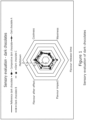
- the chocolate samples were evaluated against the chocolate containing only cocoa butter (which has score of 0 for all attributes) and scored them on the standard attributes in Table 6.
- Table 6 Sensory attributes Sensory attributes Definition Meltdown Total time the sample takes to completely melt in the mouth Coolness The coolness of the melted sample in the mouth Waxiness Residual sample which does not melt whilst melting the sample in the mouth Flavour release time The time it takes before flavour is released in the mouth Flavour impact The impact of the flavour which is released from the sample Flavour after effect The flavour effect after melting in the mouth
Landscapes
- Chemical & Material Sciences (AREA)
- Life Sciences & Earth Sciences (AREA)
- Engineering & Computer Science (AREA)
- Food Science & Technology (AREA)
- Polymers & Plastics (AREA)
- Oil, Petroleum & Natural Gas (AREA)
- Inorganic Chemistry (AREA)
- Organic Chemistry (AREA)
- Wood Science & Technology (AREA)
- Chemical Kinetics & Catalysis (AREA)
- Analytical Chemistry (AREA)
- Health & Medical Sciences (AREA)
- Molecular Biology (AREA)
- Fats And Perfumes (AREA)
- Edible Oils And Fats (AREA)
- Confectionery (AREA)
Description
- This invention relates to a process of preparing a fat composition. As not part of the present invention, there are also disclosed below a fat composition produced thereby, uses of the fat composition and a confectionery product comprising the fat composition.
- Fats and oils are important ingredients of food products. Fats and oils are sometimes subjected to an interesterification process which randomly redistributes the fatty acid acyl residues amongst the glyceride molecules. This process can alter the physical properties of the fat or oil, such as its melting point.
- Shea butter is a fat obtained from the nuts of the shea tree (Vitellaria paradoxa). Shea butter is relatively rich in stearic acid (C18:0) and oleic acid (C18:1). Shea butter is often fractionated to form shea stearin and shea olein. Shea stearin is rich in StOSt (1,3-distearoyl-2-oleoyl glyceride) and is often used as a component together with other fat components in order to produce cocoa butter equivalents. Similar to shea butter, other fats such as sal butter, mango kernel fat or kokum fat are also often fractionated to produce a stearin fraction which can be used as a component to produce a cocoa butter equivalent.
- Cocoa butter equivalents (CBEs) are fat compositions that can be used in combination with cocoa butter in confectionery applications. Suitable fats which can be used to produce CBEs are palm oil, illipe butter, sal butter, shea butter, kokum fat and mango kernel fat. CBEs are in general blends of fractionated forms of these fats that have a triglyceride composition that is closer to that of cocoa butter. Thus, different fat sources are required in order to make a desirable CBE. CBEs could also be produced via enzymatic transesterification or interesterification. However, such processes are particularly complex and inefficient. Also, the products of enzymatic reactions are often not recognized as CBEs by regulatory bodies. Therefore, they are also not in general accepted by consumers.
-
WO 2019/020714 discloses a non-hydrogenated fat composition comprising greater than 28% by weight stearic acid (C18:0) fatty acid residues; greater than 44% by weight oleic acid (C18:1) fatty acid residues, and less than 10% by weight of palmitic acid (C16) fatty acid residues, based on the total C8-C24 fatty acid residues, and greater than 30% by weight of the combined amounts of StOSt, StStO, StOO and OStO triglycerides based on the total glycerides present in the composition, wherein the weight ratio of (StOSt+StStO)/(StOO + OStO) is from 0.6-1.5. -
EP-A-3 587 543 concerns the problem of providing shea olein which can maintain fluidity in a liquid state for a long time at ambient temperature, and in a preferred embodiment, can maintain fluidity in a liquid state for a long time over a wide temperature range from low temperature to ambient temperature. -
WO 2012/052471 discloses an edible product containing 15-80 wt% of triglycerides, 20-85 wt% of filler, and at most 15 wt% water, wherein the triglycerides contain as acid residues 20-70 wt% of total SAFA, at most 5 wt% of TFA, thereby C8, C10 and C12 in a weight ratio of (C8+C10+C12)/total SAFA of at least 10% and a weight ratio of (C8+C10)/C12 of at least 5%, whereby the weight ratio D/B is at least 1.5 and the weight ratio of B/total SAFA is at most 0.5, in which D represents the sum of the amounts of all MUFA and PUFA, and B represents the sum of the amounts of C14 and C16, and which triglyceride composition has an SFC at 20°C of at least 5 wt%. -
WO 2014/037009 relates to a process for the production of cocoa butter equivalent (CBE). -
GB-A-2 028 862 -
EP-A-2 679 099 provides a chocolate or chocolate-like food capable of inhibiting occurrence of low-temperature bloom. -
WO 2015/150405 relates to a fatty acid composition comprising greater than 60% by weight stearic acid; from 3 to 30 % by weight oleic acid; and less than 10% by weight palmitic acid. The composition may be used in the preparation of a triglyceride. -
WO 2018/138335 discloses a fat composition comprising from 55 to 75 % StOSt; from 10 to 25 % POSt; and less than 10 % POP; said percentages being by weight based on total triglycerides present in the composition, and has the following N-values: N35 of less than 45; and N10 of greater than 80. -
WO 2016/200329 relates to a confectionery product comprising chocolate, wherein the chocolate has a fat phase comprising 60.0 -99.9% by weight of triglycerides, 40.0 -99.0 by weight of triglycerides having C16 -C20 saturated fatty acids in the sn-1 and sn-3 positions of the triglyceride and oleic acid in the sn-2 position of the triglyceride. -
WO 2011/048169 discloses stearin fats, obtainable by dry or solvent fractionation of sunflower high-stearic and high-oleic oils, optionally with seeding with tempered stearin crystals. -
US 2008/0089995 andUS 2008/0085358 relate to an oily food material which, when eaten, gives a satisfactory feeling in the mouth and heat resistance. -
EP-A-3 087 847 provides a method for suppressing an increase in the viscosity of a water-containing heat-resistant chocolate mix. -
EP-A-2 868 204 relates to a chocolate with heat-resistance, bloom resistance and melt-in-the-mouth property. -
EP-A-2 412 245 discloses a method for producing a hard butter composition via ester exchange using a 1,3-specific lipase. -
WO 2014/069218 A1 discloses a heat-resistant chocolate having good mouthfeeling and blooming resistance and a process for producing the same. -
EP 2 030 508 A1 discloses a food product containing, inter alia, between 5 and 90% of a fat phase containing between 0 and 65 wt% of a liquid oil and between 35 and 100 wt% of a hard fat component with a StOSt/POP ratio of at least 2. -
JP 2013 172679 A - There remains a need for a simplified process, without any modification by enzymatic reaction, to produce confectionery fat compositions, such as coating fats, in particular cocoa butter equivalents (CBEs), by using a fat preferably from a single natural source, instead of multiple fats in order to reduce the complexity and the cost of the process and to increase the efficiency of the use of the relevant fat source, such as, in particular, shea butter. There is also a need for comparable or even improved quality confectionery products, such as chocolates, using fat compositions that can be produced via a simplified and efficient process compared to conventional products. Meanwhile, there also remains a need to easily control and maintain the quality and the composition of such confectionery fat compositions by avoiding uncontrollable fluctuations in the quality of the raw fat sources.
- According to the present invention, there is provided a process of preparing a fat composition comprising the steps of: a) providing a fat comprising at least 25% by weight of StOSt triglycerides based on the total glycerides present in the fat, wherein St is stearic acid and O is oleic acid; b) fractionating the fat source obtained in step a) to form a stearin fraction comprising at least 60% by weight of StOSt triglycerides based on the total glycerides present in the fat, wherein St is stearic acid and O is oleic acid; and c) blending a fat which is the same as that provided in step a) and the stearin fraction obtained in step b) in a weight ratio of from 90:10 to 10:90 to form a fat composition.
- For instance, the process of the present invention may comprise the steps of a) providing a fat consisting of shea butter, b) fractionating the shea butter to form a stearin fraction comprising at least 60% by weight of StOSt triglycerides based on the total glycerides present in the fat and c) blending the shea butter with the stearin fraction obtained in step b) in a weight ratio of from 90:10 to 10:90 to form a fat composition.
- The process of the invention has been found to be particularly useful for producing a fat composition suitable for confectionery applications from a single natural fat source without any complex process route involving multiple fat sources or any complex modification steps such as an enzymatic reaction. Accordingly, the process of the invention has been particularly simplified and the efficiency of the process can be significantly improved. Also, the process of the invention is suitable for maintaining the constant and reliable quality of the prepared fat composition with minimized influence of the quality of the raw fat material in comparison to merely using the unmodified natural fat source alone. Furthermore, the process also improves the use of the single natural fat source. In addition, it has been surprisingly found that the fat composition obtained by the improved process according to the invention can still enable producing an acceptable or even improved confectionery product, particularly in terms of texture and organoleptic properties.
- The term "fat" refers to glyceride fats and oils containing fatty acid acyl groups and does not imply any particular melting point. The term "oil" or "butter" is used synonymously with "fat". The term "fatty acid" refers to straight chain saturated or unsaturated (including mono- and poly unsaturated) carboxylic acids having from 8 to 24 carbon atoms. A fatty acid having x carbon atoms and y double bonds may be denoted Cx:y. For example, palmitic acid may be denoted C16:0 and oleic acid may be denoted C18:1. The fatty acid profile may be determined by fatty acid methyl ester analysis (FAME) using gas chromatography according to ISO 12966-2 and ISO 12966-4. Thus, percentages of fatty acids in compositions (e.g. palmitic acid (C16:0), stearic acid (C18:0), oleic acid (C18:1) etc.) referred to herein include both acyl groups such as tri-, di- and mono- glycerides and free fatty acids (but exclude any unsaponifiable matter) and are based on the total weight of C8 to C24 fatty acid residues.
- The term "triglyceride" refers to glycerides consisting of three fatty acid chains covalently bonded to a glycerol molecule. Amounts of triglycerides specified herein are percentages by weight based on total triglycerides present in the fat composition. The notation triglyceride XYZ denotes triglycerides having fatty acid acyl groups X, Y and Z at any of the 1-, 2- and 3-positions of the glyceride. The notation A2B includes both AAB and ABA, and AB2 includes both ABB and BAB. Triglyceride content may be determined for example by GC (ISO 23275).
- The fat provided in part a) of the process of the invention is preferably from a natural fat source, more preferably a single natural fat source. The term "natural fat source" refers to a source of fat that is naturally occurring (e.g., from a single vegetable source such as shea) in contrast to synthetic fats. A fat from a natural fat source will not have undergone fractionation or reaction of the fat, such as interesterification, and is not blended with greater than 10 % by weight, of fats from other sources, preferably not blended with any other fats i.e., it preferably consists of the fat from the natural fat source. The fat obtained from a natural fat source may have been subjected to one or more refining steps well-known in the art, such as neutralization, bleaching and deodorization.
- The term "fractionating" or "fractionation" refers to a process well known in the art for separating the liquid part (olein fraction) and the solid part (stearin fraction) based on different melting points or hardness. Typical fractionation processes include dry fractionation, solvent fractionation (also known as wet fractionation) and detergent fractionation.
- In a preferred embodiment, the fat composition prepared according to the process of the invention is a confectionery fat composition, more preferably a coating fat composition and even more preferably a cocoa butter equivalent (CBE) fat composition.
- The term "cocoa butter equivalent" refers to the vegetable fats other than cocoa butter that have physical properties and a molecular structure that are virtually identical to those of cocoa butter.
- Therefore, in a further aspect, the invention provides a process for producing a confectionery product, preferably a chocolate product (including chocolate-like products) or a coating, which comprises preparing a fat composition according to the process of the present invention, combining the fat composition with one or more confectionery ingredients, preferably selected from cocoa mass, cocoa butter, milk fat, skimmed milk powder, milk powder, vegetable milk powder, dairy powder, sweetener other than sugar and mixtures thereof, tempering the resulting confectionery composition and molding to form the chocolate product. Tempering may, for example, be carried out by cooling the confectionery composition to 26-28 °C from a higher temperature, and then heating to 31-32 °C. It has surprisingly been found that tempering a confectionery composition comprising a fat composition of the invention can be carried out more easily, with the formation of a greater number of seed crystals.
- In step a) of the process according to the invention, the fat, which is preferably from a single natural source, preferably comprises from 25% to 70% by weight of StOSt triglycerides based on the total glycerides present in the fat, wherein St is stearic acid and O is oleic acid, more preferably from 30% to 70% by weight, even more preferably from 35% to 65% by weight and most preferably from 37% to 63% by weight.
- In step a) of the process according to the invention, the fat is preferably selected from the group consisting of shea butter, sal butter, mango kernel oil, illipe butter, kokum butter and mowrah butter. More preferably, the fat consists of shea butter.
- In step b) of the process according to the invention, the stearin fraction that is formed preferably comprises from 60% to 95% by weight of StOSt triglycerides based on the total glycerides present in the fat, wherein St is stearic acid and O is oleic acid, more preferably from 62% to 90% by weight, even more preferably from 65% to 85% by weight and most preferably from 68% to 82% by weight.
- In step b) of the process according to the invention, the fractionation is performed preferably by means of dry fractionation, solvent fractionation or detergent fractionation, more preferably by means of dry fractionation or solvent fractionation and even more preferably by means of solvent fractionation.
- In step c) of the process according to the invention, the fat source is the same as that provided in step a) and the stearin fraction obtained in step b) are blended in a weight ratio of from 90:10 to 10:90 to form a fat composition. For example, if a fat consisting of shea butter is provided in step a) of the process of the present invention, step c) comprises blending the shea butter and the stearin fraction obtained in step b) in a weight ratio of from 90:10 to 10:90 to form a fat composition. The weight ratio of the fat source which is the same as that provided in step a) to the stearin fraction obtained in step b) is preferably from 90:10 to 15:85, more preferably from 85:15 to 20:80, even more preferably from 85:15 to 30:70 and most preferably from 82:18 to 35:65.
- In a preferred embodiment, the process of preparing a fat composition according to the invention comprises the steps of: a) providing a fat selected from the group consisting of shea butter, sal butter, mango kernel oil, illipe butter, kokum butter and mowrah butter comprising from 25% to 70% by weight of StOSt triglycerides based on the total glycerides present in the fat, wherein St is stearic acid and O is oleic acid; b) fractionating the fat source obtained in step a) to form a stearin fraction comprising from 60% to 95% by weight of StOSt triglycerides based on the total glycerides present in the fat, wherein St is stearic acid and O is oleic acid; and c) blending the fat source which is the same as that provided in step a) and the stearin fraction obtained in step b) in a weight ratio of from 90:10 to 15:85 to form a fat composition.
- In a more preferred embodiment, the process of preparing a fat composition according to the invention comprises the steps of: a) providing a fat selected from the group consisting of shea butter, sal butter, mango kernel oil, illipe butter, kokum butter and mowrah butter comprising from 30% to 70% by weight of StOSt triglycerides based on the total glycerides present in the fat, wherein St is stearic acid and O is oleic acid; b) fractionating the fat source obtained in step a) to form a stearin fraction comprising from 62% to 90% by weight of StOSt triglycerides based on the total glycerides present in the fat, wherein St is stearic acid and O is oleic acid; and c) blending the fat source which is the same as that provided in step a) and the stearin fraction obtained in step b) in a weight ratio of from 85:15 to 20:80 to form a fat composition.
- In an even more preferred embodiment, the process of preparing a fat composition according to the invention comprises the steps of: a) providing fat source which consists of shea butter comprising from 35% to 65% by weight of StOSt triglycerides based on the total glycerides present in the fat, wherein St is stearic acid and O is oleic acid; b) fractionating the fat source obtained in step a) to form a stearin fraction comprising from 65% to 85% by weight of StOSt triglycerides based on the total glycerides present in the fat, wherein St is stearic acid and O is oleic acid; and c) blending the fat source which is the same as that provided in step a) and the stearin fraction obtained in step b) in a weight ratio of from 85:15 to 30:70 to form a fat composition.
- In a most preferred embodiment, the process of preparing a fat composition according to the invention comprises the steps of: a) providing fat source which consists of shea butter comprising from 37% to 63% by weight of StOSt triglycerides based on the total glycerides present in the fat, wherein St is stearic acid and O is oleic acid; b) fractionating the fat source obtained in step a) to form a stearin fraction comprising from 68% to 82% by weight of StOSt triglycerides based on the total glycerides present in the fat, wherein St is stearic acid and O is oleic acid; and c) blending the fat source which is the same as that provided in step a) and the stearin fraction obtained in step b) in a weight ratio of from 82:18 to 35:65 to form a fat composition.
- The fat composition obtained in step c) is preferably further refined. More preferably, the fat composition is neutralized, bleached and deodorized. Even more preferably, the fat composition is bleached and deodorized.
- Alternatively, the fat source provided in step a) and/or the stearin fraction obtained in step b) may preferably be refined before the step c), more preferably be neutralized, bleached and deodorized and even more preferably be bleached and deodorized.
- The fat composition obtained in step c) preferably comprises from 35% to 70% by weight of StOSt triglycerides based on the total glycerides present in the fat, wherein St is stearic acid and O is oleic acid, more preferably from 40% to 65% by weight, even more preferably from 42% to 63% by weight and most preferably from 45% to 60% by weight, such as from 45% to 59% by weight, for example from 45% to 58.5% by weight. In one embodiment, the composition obtained in step c) may comprise from 35% to 59% by weight StOSt triglycerides based on the total glycerides present in the fat, wherein St is stearic acid and O is oleic acid, such as from 40% to 58.5% by weight.
- The fat composition obtained in step c) preferably comprises from 5% to 40% by weight of StOO triglycerides based on the total glycerides present in the fat, wherein St is stearic acid and O is oleic acid, more preferably from 7% to 35% by weight, even more preferably from 9% to 30% by weight and most preferably from 11% to 25% by weight.
- Accordingly, in a preferred embodiment, the fat composition obtained in step c) comprises from 35% to 70% by weight of StOSt triglycerides and from 5% to 40% by weight of StOO triglycerides based on the total glycerides present in the fat, wherein St is stearic acid and O is oleic acid.
- In a more preferred embodiment, the fat composition obtained in step c) comprises from 40% to 65% by weight of StOSt triglycerides and from 7% to 35% by weight of StOO triglycerides based on the total glycerides present in the fat, wherein St is stearic acid and O is oleic acid. In an even more preferred embodiment, the fat composition obtained in step c) comprises from 42% to 63% by weight of StOSt triglycerides and from 9% to 30% by weight of StOO triglycerides based on the total glycerides present in the fat, wherein St is stearic acid and O is oleic acid.
- In a most preferred embodiment, the fat composition obtained in step c) comprises from 45% to 60% by weight of StOSt triglycerides and from 11% to 25% by weight of StOO triglycerides based on the total glycerides present in the fat, wherein St is stearic acid and O is oleic acid.
- The fat composition obtained in step c) preferably comprises from 30% to 67% by weight of stearic acid (C18:0), more preferably from 35% to 65% by weight, even more preferably from 40% to 60% by weight and most preferably from 42% to 58% by weight; said percentage of acid referring to acids bound as acyl groups in glycerides in the fat composition and being based on the total weight of C8 to C24 fatty acids.
- The fat composition obtained in step c) preferably comprises from 30% to 60% by weight of oleic acid (C18:1), more preferably from 32% to 55% by weight, even more preferably from 35% to 50% by weight and most preferably from 35% to 45% by weight; said percentage of acid referring to acids bound as acyl groups in glycerides in the fat composition and being based on the total weight of C8 to C24 fatty acids.
- The fat composition obtained in step c) preferably comprises at most 12% by weight of palmitic acid (C16:0), more preferably from 0% to 10% by weight, even more preferably from 0.1% to 8% by weight and most preferably from 0.1% to 7% by weight; said percentage of acid referring to acids bound as acyl groups in glycerides in the fat composition and being based on the total weight of C8 to C24 fatty acids.
- Accordingly, in a preferred embodiment, the fat composition obtained in step c) comprises from 30% to 67% by weight of stearic acid (C18:0); from 30% to 60% by weight of oleic acid (C18:1); and at most 12% by weight of palmitic acid (C16:0); said percentage of acid referring to acids bound as acyl groups in glycerides in the fat composition and being based on the total weight of C8 to C24 fatty acids.
- In a more preferred embodiment, the fat composition obtained in step c) comprises from 35% to 65% by weight of stearic acid (C18:0); from 32% to 55% by weight of oleic acid (C18:1); and from 0% to 10% by weight of palmitic acid (C16:0); said percentage of acid referring to acids bound as acyl groups in glycerides in the fat composition and being based on the total weight of C8 to C24 fatty acids.
- In an even more preferred embodiment, the fat composition obtained in step c) comprises from 40% to 60% by weight of stearic acid (C18:0); from 35% to 50% by weight of oleic acid (C18:1); and from 0.1% to 8% by weight of palmitic acid (C16:0); said percentage of acid referring to acids bound as acyl groups in glycerides in the fat composition and being based on the total weight of C8 to C24 fatty acids.
- In a most preferred embodiment, the fat composition obtained in step c) comprises from 42% to 58% by weight of stearic acid (C18:0); from 35% to 45% by weight of oleic acid (C18:1); and from 0.1% to 7% by weight of palmitic acid (C16:0); said percentage of acid referring to acids bound as acyl groups in glycerides in the fat composition and being based on the total weight of C8 to C24 fatty acids.
- The fat composition obtained in step c) preferably comprises at most 2% by weight of lauric acid (C12:0), more preferably from 0% to 1% by weight, even more preferably from 0% to 0.8% by weight and most preferably from 0.1% to 0.5% by weight; said percentage of acid referring to acids bound as acyl groups in glycerides in the fat composition and being based on the total weight of C8 to C24 fatty acids.
- The fat composition obtained in step c) preferably has from 25 to 80 solid fat content at 20°C, more preferably from 30 to 70, even more preferably from 35 to 68 and most preferably from 40 to 67; measured on 26°C stabilized fat according to ISO 8292-1 .
- The fat composition obtained in step c) preferably has from 15 to 75 solid fat content at 25°C, more preferably from 25 to 68, even more preferably from 35 to 67 and most preferably from 40 to 65; measured on 26°C stabilized fat according to ISO 8292-1 .
- The fat composition obtained in step c) preferably has from 10 to 68 solid fat content at 30°C, more preferably from 20 to 65, even more preferably from 25 to 63 and most preferably from 30 to 60; measured on 26°C stabilized fat according to ISO 8292-1 .
- The fat composition obtained in step c) preferably has from 5 to 50 solid fat content at 35°C, more preferably from 7 to 45, even more preferably from 9 to 40 and most preferably from 12 to 38; measured on 26°C stabilized fat according to ISO 8292-1.
- The fat composition obtained in step c) preferably has from 0 to 12 solid fat content at 40°C, more preferably from 0 to 10, even more preferably from 1 to 5 and most preferably from 1 to 3; measured on 26°C stabilized fat according to ISO 8292-1.
- Accordingly, in a preferred embodiment, the fat composition obtained in step c) has from 25 to 80 solid fat content at 20°C; from 15 to 75 solid fat content at 25°C; from 10 to 68 solid fat content at 30°C; from 5 to 50 solid fat content at 35°C; and from 0 to 12 solid fat content at 40°C; measured on 26°C stabilized fat according to ISO 8292-1.
- In a more preferred embodiment, the fat composition obtained in step c) has from 30 to 70 solid fat content at 20°C; from 25 to 68 solid fat content at 25°C; from 20 to 65 solid fat content at 30°C; from 7 to 45 solid fat content at 35°C; and from 0 to 10 solid fat content at 40°C; measured on 26°C stabilized fat according to ISO 8292-1.
- In an even more preferred embodiment, the fat composition obtained in step c) has from 35 to 68 solid fat content at 20°C; from 35 to 67 solid fat content at 25°C; from 25 to 63 solid fat content at 30°C; from 9 to 40 solid fat content at 35°C; and from 1 to 5 solid fat content at 40°C; measured on 26°C stabilized fat according to ISO 8292-1.
- In a most preferred embodiment, the fat composition obtained in step c) has from 40 to 67 solid fat content at 20°C; from 40 to 65 solid fat content at 25°C; from 30 to 60 solid fat content at 30°C; from 12 to 38 solid fat content at 35°C; and from 1 to 3 solid fat content at 40°C; measured on 26°C stabilized fat according to ISO 8292-1.
- The fat composition obtained in step c) preferably comprises from 0% to 2% by weight of trans fatty acids, preferably from 0% to 1.5% by weight of trans fatty acids, more preferably from 0.1% to 1% by weight of trans fatty acid and even more preferably from 0.1% to 0.8% by weight.
- Accordingly, in a preferred embodiment, the fat composition obtained in step c) comprises from 35% to 70% by weight of StOSt triglycerides and from 5% to 40% by weight of StOO triglycerides based on the total glycerides present in the fat, wherein St is stearic acid and O is oleic acid; from 30% to 67% by weight of stearic acid (C18:0); from 30% to 60% by weight of oleic acid (C18:1); and at most 12% by weight of palmitic acid (C16:0); said percentage of acid referring to acids bound as acyl groups in glycerides in the fat composition and being based on the total weight of C8 to C24 fatty acids; and has the fat composition obtained in step c) has from 25 to 80 solid fat content at 20°C; from 15 to 75 solid fat content at 25°C; from 10 to 68 solid fat content at 30°C; from 5 to 50 solid fat content at 35°C; and from 0 to 12 solid fat content at 40°C; measured on 26°C stabilized fat according to ISO 8292-1.
- In a more preferred embodiment, the fat composition obtained in step c) comprises from 40% to 65% by weight of StOSt triglycerides and from 7% to 35% by weight of StOO triglycerides based on the total glycerides present in the fat, wherein St is stearic acid and O is oleic acid; from 35% to 65% by weight of stearic acid (C18:0); from 32% to 55% by weight of oleic acid (C18:1); and from 0% to 10% by weight of palmitic acid (C16:0); said percentage of acid referring to acids bound as acyl groups in glycerides in the fat composition and being based on the total weight of C8 to C24 fatty acids; and has from 30 to 70 solid fat content at 20°C; from 25 to 68 solid fat content at 25°C; from 20 to 65 solid fat content at 30°C; from 7 to 45 solid fat content at 35°C; and from 0 to 10 solid fat content at 40°C; measured on 26°C stabilized fat according to ISO 8292-1.
- In an even more preferred embodiment, the fat composition obtained in step c) comprises from 42% to 63% by weight of StOSt triglycerides and from 9% to 30% by weight of StOO triglycerides based on the total glycerides present in the fat, wherein St is stearic acid and O is oleic acid; from 40% to 60% by weight of stearic acid (C18:0); from 35% to 50% by weight of oleic acid (C18:1); and from 0.1% to 8% by weight of palmitic acid (C16:0); said percentage of acid referring to acids bound as acyl groups in glycerides in the fat composition and being based on the total weight of C8 to C24 fatty acids; and has from 35 to 68 solid fat content at 20°C; from 35 to 67 solid fat content at 25°C; from 25 to 63 solid fat content at 30°C; from 9 to 40 solid fat content at 35°C; and from 1 to 5 solid fat content at 40°C; measured on 26°C stabilized fat according to ISO 8292-1.
- In a most preferred embodiment, the fat composition obtained in step c) comprises from 45% to 60% by weight of StOSt triglycerides and from 11 % to 25% by weight of StOO triglycerides based on the total glycerides present in the fat, wherein St is stearic acid and O is oleic acid; from 42% to 58% by weight of stearic acid (C18:0); from 35% to 45% by weight of oleic acid (C18:1); and from 0.1% to 7% by weight of palmitic acid (C16:0); said percentage of acid referring to acids bound as acyl groups in glycerides in the fat composition and being based on the total weight of C8 to C24 fatty acids; and has from 40 to 67 solid fat content at 20°C; from 40 to 65 solid fat content at 25°C; from 30 to 60 solid fat content at 30°C; from 12 to 38 solid fat content at 35°C; and from 1 to 3 solid fat content at 40°C; measured on 26°C stabilized fat according to ISO 8292-1.
- The fat composition obtained in step c) may comprise from 35% to 59% by weight StOSt triglycerides based on the total glycerides present in the fat, wherein St is stearic acid and O is oleic acid, for example from 40% to 58.5% by weight. In one embodiment, the composition obtained in step c) may comprise from 45% to 59% by weight StOSt triglycerides based on the total glycerides present in the fat, wherein St is stearic acid and O is oleic acid, such as from 45% to 58.5% by weight.
- The fat composition obtained in step c) optionally has a weight ratio of POSt triglycerides to StOSt triglycerides of from 0.04 to 0.16, such as from 0.05 to 0.15, for example from 0.06 to 0.14 or from 0.07 to 0.13, based on the total glycerides present in the fat, wherein St is stearic acid, P is palmitic acid and O is oleic acid.
- Accordingly, in a preferred embodiment, the process of preparing a fat composition according to the invention comprises the steps of: a) providing a fat selected from the group consisting of shea butter, sal butter, mango kernel oil, illipe butter, kokum butter and mowrah butter comprising from 25% to 70% by weight of StOSt triglycerides based on the total glycerides present in the fat, wherein St is stearic acid and O is oleic acid; b) fractionating the fat of in step a) to form a stearin fraction comprising from 60% to 95% by weight of StOSt triglycerides based on the total glycerides present in the fat, wherein St is stearic acid and O is oleic acid; and c) blending the fat of in step a) and the stearin fraction obtained in step b) in a weight ratio of from 90:10 to 15:85 to form a fat composition comprising from 35% to 70% by weight of StOSt triglycerides and from 5% to 40% by weight of StOO triglycerides based on the total glycerides present in the fat, wherein St is stearic acid and O is oleic acid; from 30% to 67% by weight of stearic acid (C18:0); from 30% to 60% by weight of oleic acid (C18:1); and at most 12% by weight of palmitic acid (C16:0); said percentage of acid referring to acids bound as acyl groups in glycerides in the fat composition and being based on the total weight of C8 to C24 fatty acids; and has the fat composition obtained in step c) has from 25 to 80 solid fat content at 20°C; from 15 to 75 solid fat content at 25°C; from 10 to 68 solid fat content at 30°C; from 5 to 50 solid fat content at 35°C; and from 0 to 12 solid fat content at 40°C; measured on 26°C stabilized fat according to ISO 8292-1.
- In a more preferred embodiment, the process of preparing a fat composition according to the invention comprises the steps of: a) providing a fat selected from the group consisting of shea butter, sal butter, mango kernel oil, illipe butter, kokum butter and mowrah butter comprising from 30% to 70% by weight of StOSt triglycerides based on the total glycerides present in the fat, wherein St is stearic acid and O is oleic acid; b) fractionating the fat obtained in step a) to form a stearin fraction comprising from 62% to 90% by weight of StOSt triglycerides based on the total glycerides present in the fat, wherein St is stearic acid and O is oleic acid; and c) blending the fat of step a) and the stearin fraction obtained in step b) in a weight ratio of from 85:15 to 20:80 to form a fat composition comprising from 40% to 65% by weight of StOSt triglycerides and from 7% to 35% by weight of StOO triglycerides based on the total glycerides present in the fat, wherein St is stearic acid and O is oleic acid; from 35% to 65% by weight of stearic acid (C18:0); from 32% to 55% by weight of oleic acid (C18:1); and from 0% to 10% by weight of palmitic acid (C16:0); said percentage of acid referring to acids bound as acyl groups in glycerides in the fat composition and being based on the total weight of C8 to C24 fatty acids; and has from 30 to 70 solid fat content at 20°C; from 25 to 68 solid fat content at 25°C; from 20 to 65 solid fat content at 30°C; from 7 to 45 solid fat content at 35°C; and from 0 to 10 solid fat content at 40°C; measured on 26°C stabilized fat according to ISO 8292-1.
- In an even more preferred embodiment, the process of preparing a fat composition according to the invention comprises the steps of: a) providing a fat which is shea butter comprising from 35% to 65% by weight of StOSt triglycerides based on the total glycerides present in the fat, wherein St is stearic acid and O is oleic acid; b) fractionating the shea butter to form a stearin fraction comprising from 65% to 85% by weight of StOSt triglycerides based on the total glycerides present in the fat, wherein St is stearic acid and O is oleic acid; and c) blending the shea butter of step a) and the stearin fraction obtained in step b) in a weight ratio of from 85:15 to 30:70 to form a fat composition comprising from 42% to 63% by weight of StOSt triglycerides and from 9% to 30% by weight of StOO triglycerides based on the total glycerides present in the fat, wherein St is stearic acid and O is oleic acid; from 40% to 60% by weight of stearic acid (C18:0); from 35% to 50% by weight of oleic acid (C18:1); and from 0.1% to 8% by weight of palmitic acid (C16:0); said percentage of acid referring to acids bound as acyl groups in glycerides in the fat composition and being based on the total weight of C8 to C24 fatty acids; and has from 35 to 68 solid fat content at 20°C; from 35 to 67 solid fat content at 25°C; from 25 to 63 solid fat content at 30°C; from 9 to 40 solid fat content at 35°C; and from 1 to 5 solid fat content at 40°C; measured on 26°C stabilized fat according to ISO 8292-1.
- In a most preferred embodiment, the process of preparing a fat composition according to the invention comprises the steps of: a) providing shea butter comprising from 37% to 63% by weight of StOSt triglycerides based on the total glycerides present in the fat, wherein St is stearic acid and O is oleic acid; b) fractionating the shea butter of step a) to form a stearin fraction comprising from 68% to 82% by weight of StOSt triglycerides based on the total glycerides present in the fat, wherein St is stearic acid and O is oleic acid; and c) blending the shea butter of step a) and the stearin fraction obtained in step b) in a weight ratio of from 82:18 to 35:65 to form a fat composition comprising from 45% to 60% by weight of StOSt triglycerides and from 11% to 25% by weight of StOO triglycerides based on the total glycerides present in the fat, wherein St is stearic acid and O is oleic acid; from 42% to 58% by weight of stearic acid (C18:0); from 35% to 45% by weight of oleic acid (C18:1); and from 0.1% to 7% by weight of palmitic acid (C16:0); said percentage of acid referring to acids bound as acyl groups in glycerides in the fat composition and being based on the total weight of C8 to C24 fatty acids; and has from 40 to 67 solid fat content at 20°C; from 40 to 65 solid fat content at 25°C; from 30 to 60 solid fat content at 30°C; from 12 to 38 solid fat content at 35°C; and from 1 to 3 solid fat content at 40°C; measured on 26°C stabilized fat according to ISO 8292-1.
- The fat composition obtained in step c) may comprise from 35% to 59% by weight StOSt triglycerides based on the total glycerides present in the fat, wherein St is stearic acid and O is oleic acid, for example from 40% to 58.5% by weight. In one embodiment, the composition obtained in step c) may comprise from 45% to 59% by weight StOSt triglycerides based on the total glycerides present in the fat, wherein St is stearic acid and O is oleic acid, such as from 45% to 58.5% by weight.
- The fat composition obtained in step c) optionally has a weight ratio of POSt triglycerides to StOSt triglycerides of from 0.04 to 0.16, such as from 0.05 to 0.15, for example from 0.06 to 0.14 or from 0.07 to 0.13, based on the total glycerides present in the fat, wherein St is stearic acid, P is palmitic acid and O is oleic acid.
- In a further preferred embodiment, the fat composition obtained in step c) comprises at most 15% by weight of POP triglycerides based on the total glycerides present in the fat, wherein P is palmitic acid and O is oleic acid, more preferably from 0% to 10% by weight, even more preferably from 0.1% to 8% by weight and most preferably from 0.1% to 5% by weight.
- In a further preferred embodiment, the fat composition obtained in step c) has a weight ratio of StOSt triglycerides to StOO triglycerides from 0.50 to 11.00; based on the total glycerides present in the fat, wherein St is stearic acid and O is oleic acid, more preferably from 0.80 to 9.00, even more preferably from 1.00 to 7.00 and most preferably from 1.50 to 5.00.
- In a further preferred embodiment in combination with the features disclosed herein, the fat composition obtained in step c) comprises from 0 % to 15% by weight of AOSt triglycerides based on the total glycerides present in the fat, wherein A is arachidic acid, St is stearic acid and O is oleic acid, more preferably from 1% to 10% by weight, even more preferably from 1.0% to 5.0% by weight and most preferably from 1.8% to 4.0% by weight.
- Accordingly, in a preferred embodiment, the process of preparing a fat composition according to the invention comprises the steps of: a) providing a fat selected from the group consisting of shea butter, sal butter, mango kernel oil, illipe butter, kokum butter and mowrah butter comprising from 25% to 70% by weight of StOSt triglycerides based on the total glycerides present in the fat, wherein St is stearic acid and O is oleic acid; b) fractionating the fat of in step a) to form a stearin fraction comprising from 60% to 95% by weight of StOSt triglycerides based on the total glycerides present in the fat, wherein St is stearic acid and O is oleic acid; and c) blending the fat of step a) and the stearin fraction obtained in step b) in a weight ratio of from 90:10 to 15:85 to form a fat composition comprising from 35% to 70% by weight of StOSt triglycerides; from 5% to 40% by weight of StOO triglycerides; at most 15% by weight of POO triglyceride; and having a weight ratio of StOSt to StOO triglycerides from 0.50 to 11.00; based on the total glycerides present in the fat, wherein P is palmitic acid, St is stearic acid and O is oleic acid; from 30% to 67% by weight of stearic acid (C18:0); from 30% to 60% by weight of oleic acid (C18:1); and at most 12% by weight of palmitic acid (C16:0); said percentage of acid referring to acids bound as acyl groups in glycerides in the fat composition and being based on the total weight of C8 to C24 fatty acids; and has the fat composition obtained in step c) has from 25 to 80 solid fat content at 20°C; from 15 to 75 solid fat content at 25°C; from 10 to 68 solid fat content at 30°C; from 5 to 50 solid fat content at 35°C; and from 0 to 12 solid fat content at 40°C; measured on 26°C stabilized fat according to ISO 8292-1.
- In a more preferred embodiment, the process of preparing a fat composition according to the invention comprises the steps of: a) providing a fat selected from the group consisting of shea butter, sal butter, mango kernel oil, illipe butter, kokum butter and mowrah butter comprising from 30% to 70% by weight of StOSt triglycerides based on the total glycerides present in the fat, wherein St is stearic acid and O is oleic acid; b) fractionating the fat of step a) to form a stearin fraction comprising from 62% to 90% by weight of StOSt triglycerides based on the total glycerides present in the fat, wherein St is stearic acid and O is oleic acid; and c) blending the fat of step a) and the stearin fraction obtained in step b) in a weight ratio of from 85:15 to 20:80 to form a fat composition comprising from 40% to 65% by weight of StOSt triglycerides; from 7% to 35% by weight of StOO triglycerides; from 0% to 10% by weight of POP triglycerides; and having a weight ratio of StOSt to StOO triglycerides from 0.80 to 9.00; based on the total glycerides present in the fat, wherein P is palmitic acid, St is stearic acid and O is oleic acid; from 35% to 65% by weight of stearic acid (C18:0); from 32% to 55% by weight of oleic acid (C18:1); and from 0% to 10% by weight of palmitic acid (C16:0); said percentage of acid referring to acids bound as acyl groups in glycerides in the fat composition and being based on the total weight of C8 to C24 fatty acids; and has from 30 to 70 solid fat content at 20°C; from 25 to 68 solid fat content at 25°C; from 20 to 65 solid fat content at 30°C; from 7 to 45 solid fat content at 35°C; and from 0 to 10 solid fat content at 40°C; measured on 26°C stabilized fat according to ISO 8292-1.
- In an even more preferred embodiment, the process of preparing a fat composition according to the invention comprises the steps of: a) providing a fat which consists of shea butter comprising from 35% to 65% by weight of StOSt triglycerides based on the total glycerides present in the fat, wherein St is stearic acid and O is oleic acid; b) fractionating the shea butter of step a) to form a stearin fraction comprising from 65% to 85% by weight of StOSt triglycerides based on the total glycerides present in the fat, wherein St is stearic acid and O is oleic acid; and c) blending the shea butter of step a) and the stearin fraction obtained in step b) in a weight ratio of from 85:15 to 30:70 to form a fat composition comprising from 42% to 63% by weight of StOSt triglycerides; from 9% to 30% by weight of StOO triglycerides; from 0.1% to 8% by weight of POP triglycerides; and having a weight ratio of StOSt to StOO triglycerides from 1.00 to 7.00; based on the total glycerides present in the fat, wherein P is palmitic acid, St is stearic acid and O is oleic acid; from 40% to 60% by weight of stearic acid (C18:0); from 35% to 50% by weight of oleic acid (C18:1); and from 0.1% to 8% by weight of palmitic acid (C16:0); said percentage of acid referring to acids bound as acyl groups in glycerides in the fat composition and being based on the total weight of C8 to C24 fatty acids; and has from 35 to 68 solid fat content at 20°C; from 35 to 67 solid fat content at 25°C; from 25 to 63 solid fat content at 30°C; from 9 to 40 solid fat content at 35°C; and from 1 to 5 solid fat content at 40°C; measured on 26°C stabilized fat according to ISO 8292-1.
- In a most preferred embodiment, the process of preparing a fat composition according to the invention comprises the steps of: a) providing a fat source which consists of shea butter comprising from 37% to 63% by weight of StOSt triglycerides based on the total glycerides present in the fat, wherein St is stearic acid and O is oleic acid; b) fractionating the shea butter of step a) to form a stearin fraction comprising from 68% to 82% by weight of StOSt triglycerides based on the total glycerides present in the fat, wherein St is stearic acid and O is oleic acid; and c) blending the shea butter of step a) and the stearin fraction obtained in step b) in a weight ratio of from 82:18 to 35:65 to form a fat composition comprising from 45% to 60% by weight of StOSt triglycerides; from 11% to 25% by weight of StOO triglycerides; from 0.1% to 5% by weight of POP triglycerides; and having a weight ratio of StOSt to StOO triglycerides from 1.50 to 5.00; based on the total glycerides present in the fat, wherein P is palmitic acid, St is stearic acid and O is oleic acid; from 42% to 58% by weight of stearic acid (C18:0); from 35% to 45% by weight of oleic acid (C18:1); and from 0.1% to 7% by weight of palmitic acid (C16:0); said percentage of acid referring to acids bound as acyl groups in glycerides in the fat composition and being based on the total weight of C8 to C24 fatty acids; and has from 40 to 67 solid fat content at 20°C; from 40 to 65 solid fat content at 25°C; from 30 to 60 solid fat content at 30°C; from 12 to 38 solid fat content at 35°C; and from 1 to 3 solid fat content at 40°C; measured on 26°C stabilized fat according to ISO 8292-1.
- The fat composition obtained in step c) may comprise from 35% to 59% by weight StOSt triglycerides based on the total glycerides present in the fat, wherein St is stearic acid and O is oleic acid, for example from 40% to 58.5% by weight. In one embodiment, the composition obtained in step c) may comprise from 45% to 59% by weight StOSt triglycerides based on the total glycerides present in the fat, wherein St is stearic acid and O is oleic acid, such as from 45% to 58.5% by weight.
- The fat composition obtained in step c) optionally has a weight ratio of POSt triglycerides to StOSt triglycerides of from 0.04 to 0.16, such as from 0.05 to 0.15, for example from 0.06 to 0.14 or from 0.07 to 0.13, based on the total glycerides present in the fat, wherein St is stearic acid, P is palmitic acid and O is oleic acid.
- The description also relates as not part of the present invention to a fat composition produced according to the process of the invention.
- The description also relates as not part of the present invention to the use of a fat composition produced according to the process of the invention in a confectionery application, preferably in confectionery coating applications and more preferably in a chocolate application, such as dark chocolate, milk chocolate, white chocolate or ruby chocolate.
- The description also relates as not part of the present invention to a confectionery product comprising at least 1% by weight of the fat composition produced according to the process of the invention, preferably from 1% to 50% by weight and more preferably from 1% to 30% by weight; and at least 20% by weight of sugar, preferably from 25% to 50% by weight and more preferably from 35% to 50% by weight.
- The confectionery product not according to the invention preferably further comprises at least 5% by weight of one or more of cocoa mass, cocoa butter, milk fat, skimmed milk powder, milk powder, vegetable milk powder, dairy powder, sweetener other than sugar or mixture thereof. The listing or discussion of an apparently prior-published document in this specification should not necessarily be taken as an acknowledgement that the document is part of the state of the art or is common general knowledge.
- The following non-limiting examples illustrate the invention and do not limit its scope in any way. In the examples and throughout this specification, all percentages, parts and ratios are by weight unless indicated otherwise.
- Shea butter containing 41% by weight of StOSt is one-stage fractionated using acetone to obtain shea stearin fraction (hard fraction) and shea olein fraction (soft fraction). The content of StOSt in the shea stearin fraction is concentrated up to 71% by weight of StOSt.
- In addition, hard palm mid fraction is obtained from palm oil by multiple-stage wet fractionation using acetone.
- Fat composition A is prepared by blending 80% by weight of shea butter and 20% by weight of shea stearin. Fat composition B is prepared by blending 65% by weight of shea butter and 35% by weight of shea stearin. Fat composition C is prepared by blending 40% by weight of shea butter and 60% by weight of shea stearin.
- Reference fat composition is prepared by blending 45% shea stearin and 55% hard palm mid fraction. In order to produce Reference fat composition, different fat sources (palm oil and shea butter) are required and multiple-stage complex processes need to be applied.
- Comparative fat composition is prepared by blending 70% shea butter and 30% shea olein.
- All the fat compositions are bleached and deodorized before used in the following applications.
- The analytical results of Fat composition A, Fat composition B, Fat composition C, Reference fat composition and Comparative fat composition are shown in Table 1.
Table 1: Analytical results of Fat composition A, Fat composition B, Fat composition C, Reference fat composition and Comparative fat composition Fat composition A Fat composition B Fat composition C Reference fat composition Comparative fat composition C8:0 0.0 0.0 0.0 0.0 0.0 C10:0 0.0 0.0 0.0 0.0 0.0 C12:0 0.1 0.1 0.3 0.2 0.2 C14:0 0.1 0.0 0.2 0.6 0.1 C16:0 3.4 3.6 4.8 33.2 5.6 C18:0 45.9 48.0 51.3 29.4 37.8 C18:1 42.2 41.2 37.1 31.8 47.3 C18:2 5.6 4.9 4.2 3.2 6.8 C18:3 0.2 0.1 0.1 0.1 0.2 C20:0 1.5 1.6 1.5 1.0 1.3 SAFA 51.6 53.5 58.4 64.7 45.3 MUFA 42.5 41.4 37.2 31.9 47.7 PUFA 5.8 5.0 4.3 3.3 7.0 Trans 0.3 0.1 0.1 0.2 0.4 PPSt 0.0 0.0 0.1 0.3 0.4 POP 0.2 0.5 1.2 36.1 3.7 PLP 0.3 0.2 0.5 3.7 1.1 PStSt 0.3 0.2 0.3 0.2 0.2 POSt 5.5 5.4 6.0 9.8 5.3 POO 2.2 1.9 1.7 1.9 4.2 PLSt 1.3 1.2 0.9 0.9 1.7 PLO 0.7 0.7 0.5 0.4 1.4 PLL 0.2 0.4 0.1 0.0 0.0 StStSt 1.3 1.5 1.4 0.9 0.9 StOSt 47.0 51.1 58.5 33.9 30.2 StOO 22.4 19.8 12.4 2.8 31.1 StLSt 4.6 4.2 5.1 2.5 3.8 OOO 4.0 3.7 2.2 0.4 6.1 StLO 3.9 3.1 2.0 0.4 5.5 OLO 1.0 0.9 0.5 0.0 1.5 StLL 0.7 0.5 0.3 0.0 0.9 AStSt 0.3 0.3 0.2 0.0 0.0 AOSt 2.0 2.4 2.7 1.4 1.2 AOO 1.1 1.0 0.7 0.0 1.1 ALSt 0.2 0.2 0.2 0.0 0.0 StOSt/StOO 2.10 2.58 4.72 12.11 0.97 POSt/StOSt 0.12 0.11 0.10 0.29 0.18 S26N20 45 52 65 68 20 S26N25 43 51 64 63 7 S26N30 37 45 59 51 4 S26N35 14 22 36 8 2 S26N40 2 2 1 0 1 - In the above table:
- Cx:y refers to a fatty acid having x carbon atoms and y double bonds; levels determined by GC-FAME (ISO 12966-2 and ISO 12966-4);
- SAFA refers to saturated fatty acids;
- MUFA refers to monounsaturated fatty acids;
- PUFA refers to polyunsaturated fatty acids;
- Trans refers to trans fatty acids: unsaturated fatty acids having a double bond in a trans arrangement;
- O, P, St, L and A refer to oleic, palmitic, stearic, linoleic and arachidic acids, respectively; Triglyceride compositions: e.g., POSt, and other triglycerides were determined by GC (ISO 23275), wherein each GC peak includes triglycerides having the same fatty acids in different positions e.g., POSt is in the same signal peak as PStO and StOP; and
- S26Nx refers to solid fat content determined by NMR on stabilized fat (stabilized at 26°C for 40 hours) measured at x°C according to ISO 8292-1.
- The chocolates were produced using the fat compositions prepared above. The chocolate recipes used are set out in the following tables: Table 2 and Table 3.
Table 2: Recipe for dark chocolate Ingredients Weight% Cocoa mass 43.8 Sugar 43.8 Cocoa butter 7.0 Fat composition 5.0 Soy lecithin 0.4 Table 3: Recipe for milk chocolate Ingredients Weight% Sugar 41.8 Cocoa butter 19.4 Fat composition 5.0 Skimmed milk powder 16.8 Cocoa mass 11.0 Milk fat 5.6 Soy lecithin 0.4 - The chocolates were produced as well known in the art by using a roller refiner and a conche. The chocolates were tempered in the Leatherhead tempering kettle and moulded into bars. This means that the chocolates are cooled down until 26-28 °C and then heated until 31-32 °C. The temper index was determined with a temper meter. The moulds were cooled in a static cooling cabinet with high wind speed. The contraction in the moulds was observed during the cooling cycle. The chocolates bars were made and used for different evaluations including hardness, sensory evaluation and storage test. The overview of the chocolate bars in relation to the fat composition used is listed in Table 4.
Table 4 - Overview of the chocolate bars Fat compositions used in chocolate bars Fat composition A Fat composition B Fat composition C Reference fat composition Comparative fat composition Dark chocolates Dark chocolate A Dark chocolate B Dark chocolate C Reference dark chocolate Comparative dark chocolate Milk chocolates Milk chocolate A Milk chocolate B Milk chocolate C Reference milk chocolate Comparative milk chocolate - Regarding the dark chocolates, the tempering behaviors of Comparative dark chocolate are very similar to those of Reference dark chocolate. Dark chocolate A, Dark chocolate B and Dark chocolate C could be deposited at a higher temperature which indicates that more seeds have been formed during the tempering process. This indicates that the fats produced by the process according to the invention (Fat composition A, Fat composition B and Fat composition C) can be tempered more easily than Reference fat composition and Comparative fat composition.
- Regarding the milk chocolates, Milk chocolate A shows similar tempering behaviors to Reference milk chocolate. For Milk chocolate B and Milk chocolate C, the depositing temperature was higher than that of Reference milk chocolate. This indicates that Milk chocolate B and Milk Chocolate C are particularly easy to temper. Milk chocolate C has a depositing temperature similar to that of Comparative milk chocolate.
- It can be concluded that Fat composition B and Fat composition C produced by the process according to the invention are particularly preferred.
- Hardness of the chocolate bars was measured using the Brookfield texture analyzer (needle TA9 and penetration depth of 2 mm at 0.5 mm/sec) after storing the samples at 20°C for 2 days, 1 month and 3 months. Each sample was measured 5 times and the average results are shown in Table 5 and Table 6.
Table 5 - Hardness of dark chocolate bars Hardness (g) of dark chocolate bars Dark chocolate A Dark chocolate B Dark chocolate C Reference dark chocolate Comparative dark chocolate After 2 days 547 549 532 576 271 After 1 month 508 522 523 515 290 After 3 months 566 546 558 627 316 Table 5 - Hardness of milk chocolate bars Hardness (g) of dark chocolate bars Milk chocolate A Milk chocolate B Milk chocolate C Reference milk chocolate Comparative milk chocolate After 2 days 305 296 314 377 103 After 1 month 350 281 297 417 122 After 3 months 328 311 331 409 173 - Based on the results, it can be concluded that the chocolates (either dark chocolate or milk chocolate) made from the fat compositions produced by the process according to the invention have the comparable hardness as the reference. This suggests that the desired texture of the chocolates is still surprisingly obtained by using the fat compositions produced by the simplified and efficient process according to the invention. In particular, the increase of the hardness in the chocolates made from the fat compositions produced by the process according to the invention is relatively limited, which indicates less pronounced post hardening and the desired prolonged shelf life in terms of texture.
- An expert sensory panel (n=6) evaluated the chocolate samples after 1 month of storage at 18°C. The chocolate samples were evaluated against the chocolate containing only cocoa butter (which has score of 0 for all attributes) and scored them on the standard attributes in Table 6.
Table 6 - Sensory attributes Sensory attributes Definition Meltdown Total time the sample takes to completely melt in the mouth Coolness The coolness of the melted sample in the mouth Waxiness Residual sample which does not melt whilst melting the sample in the mouth Flavour release time The time it takes before flavour is released in the mouth Flavour impact The impact of the flavour which is released from the sample Flavour after effect The flavour effect after melting in the mouth - It has been observed that for most of the attributes the results are overall comparable. However, Dark chocolate A, Dark chocolate B and Dark chocolate C by using the fat compositions produced by the simplified and efficient process according to the invention surprisingly have a desirable quick meltdown compared to Reference dark chocolate and Comparative dark chocolate (the evaluation results illustrated in a spider plot diagram -
Figure 1 ).
Claims (14)
- Process of preparing a fat composition comprising the steps of:a) providing a fat, preferably from a single natural source, comprising at least 25% by weight of StOSt triglycerides based on the total glycerides present in the fat, wherein St is stearic acid and O is oleic acid;b) fractionating the fat source obtained in step a) to form a stearin fraction comprising at least 60% by weight of StOSt triglycerides based on the total glycerides present in the fat, wherein St is stearic acid and O is oleic acid;c) blending a fat which is the same as that provided in step a) and the stearin fraction obtained in step b) in a weight ratio of from 90:10 to 10:90 to form a fat composition.
- Process according to Claim 1, wherein the prepared fat composition is a confectionery fat composition, preferably a coating fat composition and more preferably a cocoa butter equivalent (CBE) fat composition.
- Process according to Claim 1 or Claim 2, wherein in step a) the fat comprises from 25% to 70% by weight of StOSt triglycerides based on the total glycerides present in the fat, wherein St is stearic acid and O is oleic acid, preferably from 30% to 70% by weight, more preferably from 35% to 65% by weight and even more preferably from 37% to 63% by weight.
- Process according to any one of the preceding claims, wherein in step a) the fat is selected from the group consisting of shea butter, sal butter, mango kernel oil, illipe butter, kokum butter and mowrah butter, preferably the fat consists of shea butter.
- Process according to any one of the preceding claims, wherein in step b) the formed stearin fraction comprises from 60% to 95% by weight of StOSt triglycerides based on the total glycerides present in the fat, wherein St is stearic acid and O is oleic acid, preferably from 62% to 90% by weight, more preferably from 65% to 85% by weight and even more preferably from 68% to 82% by weight.
- Process according to any one of the preceding claims, wherein in step b) the fractionating is performed by means of dry fractionation, solvent fractionation or detergent fractionation, preferably by means of dry fractionation or solvent fractionation and more preferably by means of solvent fractionation.
- Process according to any one of the preceding claims, wherein in step c) the weight ratio of the fat source obtained in step a) to the stearin fraction obtained in step b) is from 90:10 to 15:85, preferably from 85:15 to 20:80, more preferably from 85:15 to 30:70 and even more preferably from 82:18 to 35:65.
- Process according to any one of the preceding claims, wherein the fat composition obtained in step c) comprises:from 35% to 70% by weight of StOSt triglycerides, preferably from 40% to 65% by weight, more preferably from 42% to 63% by weight and even more preferably from 45% to 60% by weight, such as from 45% to 59% by weight, for example from 45% to 58.5% by weight; and/orfrom 5% to 40% by weight of StOO triglycerides, preferably from 7% to 35% by weight, more preferably from 9% to 30% by weight and even more preferably from 11% to 25% by weight;based on the total glycerides present in the fat, wherein St is stearic acid and O is oleic acid.
- Process according to any one of the preceding claims, wherein the fat composition obtained in step c) comprises:from 30% to 67% by weight of stearic acid (C18:0), preferably from 35% to 65% by weight, more preferably from 40% to 60% by weight, even more preferably from 42% to 58% by weight; and/orfrom 30% to 60% by weight of oleic acid (C18:1), preferably from 32% to 55% by weight, more preferably from 35% to 50% by weight and even more preferably from 35% to 45% by weight; and/orat most 12% by weight of palmitic acid (C16:0), preferably from 0% to 10% by weight, more preferably from 0.1% to 8% by weight and even more preferably from 0.1% to 7% by weight;said percentage of acid referring to acids bound as acyl groups in glycerides in the fat composition and being based on the total weight of C8 to C24 fatty acids.
- Process according to any one of the preceding claims, wherein the fat composition obtained in step c) has:from 25 to 80 solid fat content at 20°C, preferably from 30 to 70, more preferably from 35 to 68 and even more preferably from 40 to 67; and/orfrom 15 to 75 solid fat content at 25°C, preferably from 25 to 68, more preferably from 35 to 67 and even more preferably from 40 to 65; and/orfrom 10 to 68 solid fat content at 30°C, preferably from 20 to 65, more preferably from 25 to 63 and even more preferably from 30 to 60; and/orfrom 5 to 50 solid fat content at 35°C, preferably from 7 to 45, more preferably from 9 to 40 and even more preferably from 12 to 38; and/orfrom 0 to 12 solid fat content at 40°C, preferably from 0 to 10, more preferably from 1 to 5 and even more preferably from 1 to 3;measured on 26°C stabilized fat according to ISO 8292-1.
- Process according to any one of the preceding claims, wherein the fat composition obtained in step c) comprises from 0% to 2% by weight of trans fatty acids, preferably from 0% to 1.5% by weight of trans fatty acids, more preferably from 0.1% to 1% by weight of trans fatty acid and even more preferably from 0.1% to 0.8% by weight.
- Process according to any one of the preceding claims, wherein the fat composition obtained in step c) has a weight ratio of StOSt triglycerides to StOO triglycerides from 0.50 to 11.00; based on the total glycerides present in the fat, wherein St is stearic acid and O is oleic acid, preferably from 0.80 to 9.00, more preferably from 1.00 to 7.00 and even more preferably from 1.50 to 5.00; and/or
wherein the fat composition obtained in step c) has a weight ratio of POSt triglycerides to StOSt triglycerides of from 0.04 to 0.16, such as from 0.05 to 0.15, for example from 0.06 to 0.14 or from 0.07 to 0.13, based on the total glycerides present in the fat, wherein St is stearic acid, P is palmitic acid and O is oleic acid. - A process for producing a confectionery product, which comprises preparing a fat composition according to any one of Claims 1 to 12, combining the fat composition with one or more confectionery ingredients, preferably selected from cocoa mass, cocoa butter, milk fat, skimmed milk powder, milk powder, vegetable milk powder, dairy powder, sweetener other than sugar and mixtures thereof, tempering the resulting confectionery composition and molding to form the confectionery product.
- Process as claimed in Claim 13, wherein the confectionery product is a chocolate product or a coating.
Priority Applications (1)
| Application Number | Priority Date | Filing Date | Title |
|---|---|---|---|
| EP24198510.0A EP4445741A3 (en) | 2020-06-19 | 2021-06-17 | Process of preparing a fat composition |
Applications Claiming Priority (2)
| Application Number | Priority Date | Filing Date | Title |
|---|---|---|---|
| EP20181214 | 2020-06-19 | ||
| PCT/EP2021/066486 WO2021255198A1 (en) | 2020-06-19 | 2021-06-17 | Process of preparing a fat composition |
Related Child Applications (2)
| Application Number | Title | Priority Date | Filing Date |
|---|---|---|---|
| EP24198510.0A Division EP4445741A3 (en) | 2020-06-19 | 2021-06-17 | Process of preparing a fat composition |
| EP24198510.0A Division-Into EP4445741A3 (en) | 2020-06-19 | 2021-06-17 | Process of preparing a fat composition |
Publications (2)
| Publication Number | Publication Date |
|---|---|
| EP4167751A1 EP4167751A1 (en) | 2023-04-26 |
| EP4167751B1 true EP4167751B1 (en) | 2024-10-09 |
Family
ID=71119977
Family Applications (2)
| Application Number | Title | Priority Date | Filing Date |
|---|---|---|---|
| EP24198510.0A Pending EP4445741A3 (en) | 2020-06-19 | 2021-06-17 | Process of preparing a fat composition |
| EP21732911.9A Active EP4167751B1 (en) | 2020-06-19 | 2021-06-17 | Process of preparing a fat composition |
Family Applications Before (1)
| Application Number | Title | Priority Date | Filing Date |
|---|---|---|---|
| EP24198510.0A Pending EP4445741A3 (en) | 2020-06-19 | 2021-06-17 | Process of preparing a fat composition |
Country Status (12)
| Country | Link |
|---|---|
| US (1) | US20230284644A1 (en) |
| EP (2) | EP4445741A3 (en) |
| JP (1) | JP7853922B2 (en) |
| KR (1) | KR20230028750A (en) |
| CN (1) | CN115768273A (en) |
| AU (1) | AU2021294261A1 (en) |
| BR (1) | BR112022024385A2 (en) |
| CA (1) | CA3182932A1 (en) |
| DK (1) | DK4167751T3 (en) |
| ES (1) | ES2992400T3 (en) |
| PL (1) | PL4167751T3 (en) |
| WO (1) | WO2021255198A1 (en) |
Families Citing this family (11)
| Publication number | Priority date | Publication date | Assignee | Title |
|---|---|---|---|---|
| EP4480317A4 (en) * | 2022-02-17 | 2026-01-21 | Adeka Corp | Oil or fat composition to intensify flavor |
| US20250204546A1 (en) * | 2022-04-07 | 2025-06-26 | Aak Ab (Publ) | A fat composition comprising a vegetable fat phase which is free from palm oil and/or fractions thereof |
| US20230404101A1 (en) | 2022-06-16 | 2023-12-21 | Savor Foods Limited | Fat formulations |
| US20260215449A1 (en) * | 2023-02-03 | 2026-07-30 | Savor Foods Limited | Milkfat or butterfat formulations |
| AU2024260625A1 (en) * | 2023-04-28 | 2025-10-23 | Aak Ab (Publ) | A fat composition comprising a vegetable fat phase which is free from palm oil and/or fractions thereof and wherein the vegetable fat phase originates from at least two different vegetable fat sources |
| WO2025000172A1 (en) | 2023-06-26 | 2025-01-02 | Bunge Loders Croklaan B.V. | Chocolate or chocolate-like product |
| SE2450490A1 (en) * | 2024-05-08 | 2025-11-09 | Aak Ab Publ | A fat composition comprising a vegetable fat phase |
| WO2025250068A1 (en) * | 2024-05-31 | 2025-12-04 | Aak Ab (Publ) | An edible fat composition |
| WO2026002955A1 (en) | 2024-06-25 | 2026-01-02 | Bunge Loders Croklaan B.V. | Fat fractionation process |
| WO2026002962A1 (en) | 2024-06-25 | 2026-01-02 | Bunge Loders Croklaan B.V. | Fat fractionation process |
| WO2026117168A1 (en) * | 2024-11-28 | 2026-06-04 | Aak Ab (Publ) | A method for preparing a vegetable fat and the use of the vegetable fat |
Citations (3)
| Publication number | Priority date | Publication date | Assignee | Title |
|---|---|---|---|---|
| US5069915A (en) | 1989-10-27 | 1991-12-03 | Van Den Bergh Foods Co., Division Of Conopco, Inc. | Cocoa butter fractions |
| EP2395069B1 (en) | 2009-02-06 | 2018-04-25 | Fuji Oil Holdings Inc. | Dry oil-and-fat separation method |
| WO2018138335A1 (en) | 2017-01-30 | 2018-08-02 | Loders Croklaan B.V. | Fat composition |
Family Cites Families (22)
| Publication number | Priority date | Publication date | Assignee | Title |
|---|---|---|---|---|
| GB2028862B (en) | 1978-08-30 | 1982-10-27 | Asahi Denka Kogyo Kk | Cacao butter substitute |
| JP3502158B2 (en) * | 1994-07-21 | 2004-03-02 | 旭電化工業株式会社 | Method for fractionating cocoa butter and chocolate containing fractionated fat obtained by the method |
| JPWO2006064709A1 (en) | 2004-12-14 | 2008-06-12 | 不二製油株式会社 | Oily food and its manufacturing method |
| JPWO2006080418A1 (en) | 2005-01-27 | 2008-06-19 | 不二製油株式会社 | Oily food material |
| EP2030508A1 (en) * | 2007-08-08 | 2009-03-04 | Fuji Oil Europe | Reduced fat content products, with low saturated and trans unsaturated fat content |
| KR101070791B1 (en) * | 2008-11-07 | 2011-10-07 | 씨제이제일제당 (주) | Cocoa butter equivalents produced by the enzymatic interesterification process and method for preparing the same |
| JPWO2010110260A1 (en) | 2009-03-25 | 2012-09-27 | 不二製油株式会社 | Method for producing hard butter composition |
| EP2319329A1 (en) | 2009-10-22 | 2011-05-11 | Consejo Superior De Investigaciones Científicas (CSIC) | High melting point sunflower fat for confectionary |
| ES2425054T5 (en) | 2010-10-20 | 2017-08-01 | Fuji Oil Europe | Edible product |
| CN103384474A (en) * | 2011-02-22 | 2013-11-06 | 日清奥利友集团株式会社 | Chocolates and method for producing same |
| JP5901345B2 (en) * | 2012-02-27 | 2016-04-06 | 日清オイリオグループ株式会社 | Chocolate for frozen dessert |
| EP2868204B1 (en) | 2012-06-27 | 2019-08-28 | The Nisshin OilliO Group, Ltd. | Method for producing chocolate-covered food product coated by the same, and method for preventing increase in viscosity of chocolate for coating |
| MY169227A (en) * | 2012-09-07 | 2019-03-19 | Aak Ab | Method for processing a vegetable fat composition |
| WO2014037009A1 (en) | 2012-09-07 | 2014-03-13 | Aarhuskarlshamn Ab | Process for production of cocoa butter equivalent |
| JP5756074B2 (en) * | 2012-11-02 | 2015-07-29 | 日清オイリオグループ株式会社 | Heat-resistant chocolate and method for producing heat-resistant chocolate |
| WO2015016044A1 (en) * | 2013-07-29 | 2015-02-05 | 日清オイリオグループ株式会社 | Chocolate and hard butter |
| KR102352611B1 (en) | 2013-12-27 | 2022-01-18 | 닛신 오일리오그룹 가부시키가이샤 | Method for manufacturing water-containing heat-resistant chocolate, water-containing heat-resistant chocolate, method for suppressing increase in viscosity of water-containing chocolate dough, and method for forming saccharide skeleton in water-containing heat-resistant chocolate |
| ES2663516T3 (en) | 2014-04-04 | 2018-04-13 | Loders Croklaan B.V. | Composition of fatty acids, method of production thereof and use thereof |
| RU2017146626A (en) | 2015-06-10 | 2019-07-10 | ААК АБ (публ) | PASTRY |
| JP2017176029A (en) * | 2016-03-30 | 2017-10-05 | 不二製油株式会社 | Oil composition with excellent low temperature bloom resistance |
| WO2018155490A1 (en) | 2017-02-23 | 2018-08-30 | 不二製油グループ本社株式会社 | Shea olein and method for preparing same |
| WO2019020714A1 (en) | 2017-07-26 | 2019-01-31 | Bunge Loders Croklaan B.V. | Non-hydrogenated fat composition, use and process |
-
2021
- 2021-06-17 PL PL21732911.9T patent/PL4167751T3/en unknown
- 2021-06-17 ES ES21732911T patent/ES2992400T3/en active Active
- 2021-06-17 AU AU2021294261A patent/AU2021294261A1/en active Pending
- 2021-06-17 WO PCT/EP2021/066486 patent/WO2021255198A1/en not_active Ceased
- 2021-06-17 EP EP24198510.0A patent/EP4445741A3/en active Pending
- 2021-06-17 JP JP2022574258A patent/JP7853922B2/en active Active
- 2021-06-17 EP EP21732911.9A patent/EP4167751B1/en active Active
- 2021-06-17 US US18/001,657 patent/US20230284644A1/en active Pending
- 2021-06-17 DK DK21732911.9T patent/DK4167751T3/en active
- 2021-06-17 BR BR112022024385A patent/BR112022024385A2/en unknown
- 2021-06-17 KR KR1020237000889A patent/KR20230028750A/en active Pending
- 2021-06-17 CA CA3182932A patent/CA3182932A1/en active Pending
- 2021-06-17 CN CN202180040515.2A patent/CN115768273A/en active Pending
Patent Citations (3)
| Publication number | Priority date | Publication date | Assignee | Title |
|---|---|---|---|---|
| US5069915A (en) | 1989-10-27 | 1991-12-03 | Van Den Bergh Foods Co., Division Of Conopco, Inc. | Cocoa butter fractions |
| EP2395069B1 (en) | 2009-02-06 | 2018-04-25 | Fuji Oil Holdings Inc. | Dry oil-and-fat separation method |
| WO2018138335A1 (en) | 2017-01-30 | 2018-08-02 | Loders Croklaan B.V. | Fat composition |
Non-Patent Citations (16)
| Title |
|---|
| BOCKISCH MICHAEL: "Fats and Oils Handbook (Nahrungsfette Und Öle)", 1 January 1993, URBANA, IL : AOCS PRESS,, US, ISBN: 978-0-9818936-0-0, article ANONYMOUS : "Modification of Fats and Oil ", pages: 505 - 507, XP093298843 |
| D12 - Reworking and comparison with Example 2 of the Patent |
| D15 - Reworking and comparison with Example 3 of the Patent |
| D3 - Experimental results using sal oil |
| DARIA DI VINCENZO: "Regional Variation in Shea Butter Lipid and Triterpene Composition in Four African Countries & dagger", JOURNAL OF AGRICULTURAL AND FOOD CHEMISTRY, vol. 53, no. 19, 1 September 2005 (2005-09-01), US , pages 7473 - 7479, XP055433042, ISSN: 0021-8561, DOI: 10.1021/jf0509759 |
| FRANK D. GUNSTONE JOHN L. HARWOOD ALBERT J. DIJKSTRA: "The Lipid Handbook with CD-ROM 3rd Edition", 1 January 2007, CRC PRESS, ISBN: 978-0-8493-9688-5, article ANONYMOUS : "Modification Processes and Food Uses", pages: 307 - 307, XP093298807 |
| FRANK D. GUNSTONE: "Modifying lipids for use in food ", 1 January 2006, WOODHEAD PUBLISHING LIMITED, ISBN: 978-1-85573-971-0, article GIBON, V, DE SMET TECHNOLOGIES AND SERVICES, BELGIUM: "Fractionation of lipids for use in food", pages: 201 - 233, XP093298840 |
| JIN JUN; MU HONGYAN; WANG YUE; PEMBE WARDA; LIU YIJUN; HUANG JIANHUA; JIN QINGZHE; WANG XINGGUO: "Production of High-Melting Symmetrical Monounsaturated Triacylglycerol-Rich Fats from Mango Kernel Fat by Acetone Fractionation", JOURNAL OF THE AMERICAN OIL CHEMISTS' SOCIETY, vol. 94, no. 2, 18 December 2016 (2016-12-18), US , pages 201 - 213, XP036150793, ISSN: 0003-021X, DOI: 10.1007/s11746-016-2929-z |
| JOYDEEP RAY, KEVIN W. SMITH, KRISHNADATH BHAGGAN, ZOLTAN K. NAGY, ANDREW G. F. STAPLEY: "Characterisation of high 1,3-distearoyl-2-oleoyl-sn-glycerol content stearins produced by acidolysis of high oleic sunflower oil with stearic and palmitic acids : Characterisation of high StOSt hard stearin fractions", EUROPEAN JOURNAL OF LIPID SCIENCE TECHNOLOGY, vol. 116, no. 5, 1 May 2014 (2014-05-01), DE , pages 532 - 547, XP055384051, ISSN: 1438-7697, DOI: 10.1002/ejlt.201300282 |
| MARC KELLENS; VÉRONIQUE GIBON; MARC HENDRIX; WIM DE GREYT: "Palm oil fractionation", EUROPEAN JOURNAL OF LIPID SCIENCE TECHNOLOGY, vol. 109, no. 4, 12 April 2007 (2007-04-12), DE , pages 336 - 349, XP072143713, ISSN: 1438-7697, DOI: 10.1002/ejlt.200600309 |
| NISSIM GARTI , NEIL R. WIDLAK: "Cocoa Butter and Related Compounds", 1 January 2012, AOCS PRESS, ISBN: 978-0-9830791-2-5, article SMITH KEVIN W: "Confectionery Fats", pages: 475 - 495, XP093298834 |
| NORAZLINA M.R.; JAHURUL M.H.A.; HASMADI M.; SHARIFUDIN M.S.; PATRICIA M.; LEE J.S.; AMIR H.M.S.; NOORAKMAR A.W.; RIMAN I.: "Effects of fractionation technique on triacylglycerols, melting and crystallisation and the polymorphic behavior of bambangan kernel fat as cocoa butter improver", LWT- FOOD SCIENCE AND TECHNOLOGY, vol. 129, 8 May 2020 (2020-05-08), United Kingdom , XP086182498, ISSN: 0023-6438, DOI: 10.1016/j.lwt.2020.109558 |
| SABINE DANTHINE, SOPHIE DELATTE, CHRISTOPHE BLECKER, KEVIN W. SMITH, KRISHNADATH BHAGGAN: "Crystallization behaviour of binary fat blends containing shea stearin as hard fat : Crystallization behaviour of shea stearin", EUROPEAN JOURNAL OF LIPID SCIENCE TECHNOLOGY, vol. 117, no. 11, 28 November 2015 (2015-11-28), DE , pages 1687 - 1699, XP055388131, ISSN: 1438-7697, DOI: 10.1002/ejlt.201400565 |
| TALBOT G.: "Specialty Oils and Fats in Food and Nutrition", 1 January 2015, ELSEVIER , ISBN: 978-1-78242-376-8, article TALBOT G.: "Tropical Exotic Oils: Properties and Processing for Use in Food", pages: 87 - 123, XP093298814, DOI: 10.1016/B978-1-78242-376-8.00004-1 |
| TORBICA ALEKSANDRA; JAMBREC DUBRAVKA; TOMIĆ JELENA; PAJIN BILJANA; PETROVIĆ JOVANA; KRAVIĆ SNEŽANA; LONČAREVIĆ IVANA: "Solid Fat Content, Pre-Crystallization Conditions, and Sensory Quality of Chocolate with Addition of Cocoa Butter Analogues", INTERNATIONAL JOURNAL OF FOOD PROPERTIES, vol. 19, no. 5, 3 May 2016 (2016-05-03), US , pages 1029 - 1043, XP055839971, ISSN: 1094-2912, DOI: 10.1080/10942912.2015.1052881 |
| ZENG JUNPENG, SHEN JINRONG, WU YANPING, LIU XIANBIAO, DENG ZE‐YUAN, LI JING: "Effect of adding shea butter stearin and emulsifiers on the physical properties of cocoa butter", JOURNAL OF FOOD SCIENCE, vol. 85, no. 4, 1 April 2020 (2020-04-01), Hoboken, USA, pages 972 - 979, XP093298829, ISSN: 0022-1147, DOI: 10.1111/1750-3841.15076 |
Also Published As
| Publication number | Publication date |
|---|---|
| DK4167751T3 (en) | 2024-11-18 |
| EP4445741A3 (en) | 2025-01-22 |
| CA3182932A1 (en) | 2021-12-23 |
| CN115768273A (en) | 2023-03-07 |
| WO2021255198A1 (en) | 2021-12-23 |
| KR20230028750A (en) | 2023-03-02 |
| JP2023529830A (en) | 2023-07-12 |
| US20230284644A1 (en) | 2023-09-14 |
| PL4167751T3 (en) | 2025-02-17 |
| ES2992400T3 (en) | 2024-12-12 |
| BR112022024385A2 (en) | 2022-12-27 |
| AU2021294261A1 (en) | 2023-02-09 |
| JP7853922B2 (en) | 2026-04-30 |
| EP4445741A2 (en) | 2024-10-16 |
| EP4167751A1 (en) | 2023-04-26 |
Similar Documents
| Publication | Publication Date | Title |
|---|---|---|
| EP4445741A2 (en) | Process of preparing a fat composition | |
| EP3113623B1 (en) | Fat composition and fat blend | |
| CN1838886B (en) | Low-trans fat for confectionary oil composition | |
| EP2848127B1 (en) | Oil and fat composition suitable for non-tempering hard butter | |
| EP2679099B1 (en) | Chocolates and method for producing same | |
| EP2839750B1 (en) | Fat composition | |
| WO2011115063A1 (en) | Fat and oil composition and chocolate products using same | |
| KR101861816B1 (en) | Heat stable chocolate | |
| CN103118544A (en) | Non-lauryl essence, non-trans, non-tempered oil and fat for confectionery and its production method | |
| JP2008228641A (en) | Oil composition for soft chocolate | |
| EP1776870B1 (en) | Confectionery comprising cocoa butter improver | |
| JP7101450B2 (en) | Oil-based composition and oil-based food obtained by using the oil-and-fat composition | |
| KR102608050B1 (en) | fat composition | |
| EP1491097A1 (en) | Low-trans fats for confectionery fat compositions | |
| CN113784623A (en) | Cocoa Butter Tolerant Fat Composition | |
| EP3145317B1 (en) | Fat composition | |
| US20210337821A1 (en) | Laurin-based hard butter composition and chocolate-like food containing the same | |
| WO2025000172A1 (en) | Chocolate or chocolate-like product | |
| JP2024049301A (en) | Oil and fat composition for chocolate and chocolate | |
| JP2020185013A (en) | Oil and fat composition and oil-based foods obtained by using the oil and fat composition |
Legal Events
| Date | Code | Title | Description |
|---|---|---|---|
| STAA | Information on the status of an ep patent application or granted ep patent |
Free format text: STATUS: UNKNOWN |
|
| STAA | Information on the status of an ep patent application or granted ep patent |
Free format text: STATUS: THE INTERNATIONAL PUBLICATION HAS BEEN MADE |
|
| PUAI | Public reference made under article 153(3) epc to a published international application that has entered the european phase |
Free format text: ORIGINAL CODE: 0009012 |
|
| STAA | Information on the status of an ep patent application or granted ep patent |
Free format text: STATUS: REQUEST FOR EXAMINATION WAS MADE |
|
| 17P | Request for examination filed |
Effective date: 20230109 |
|
| AK | Designated contracting states |
Kind code of ref document: A1 Designated state(s): AL AT BE BG CH CY CZ DE DK EE ES FI FR GB GR HR HU IE IS IT LI LT LU LV MC MK MT NL NO PL PT RO RS SE SI SK SM TR |
|
| DAV | Request for validation of the european patent (deleted) | ||
| DAX | Request for extension of the european patent (deleted) | ||
| GRAP | Despatch of communication of intention to grant a patent |
Free format text: ORIGINAL CODE: EPIDOSNIGR1 |
|
| STAA | Information on the status of an ep patent application or granted ep patent |
Free format text: STATUS: GRANT OF PATENT IS INTENDED |
|
| INTG | Intention to grant announced |
Effective date: 20240503 |
|
| P01 | Opt-out of the competence of the unified patent court (upc) registered |
Free format text: CASE NUMBER: APP_40243/2024 Effective date: 20240705 |
|
| GRAS | Grant fee paid |
Free format text: ORIGINAL CODE: EPIDOSNIGR3 |
|
| GRAA | (expected) grant |
Free format text: ORIGINAL CODE: 0009210 |
|
| STAA | Information on the status of an ep patent application or granted ep patent |
Free format text: STATUS: THE PATENT HAS BEEN GRANTED |
|
| AK | Designated contracting states |
Kind code of ref document: B1 Designated state(s): AL AT BE BG CH CY CZ DE DK EE ES FI FR GB GR HR HU IE IS IT LI LT LU LV MC MK MT NL NO PL PT RO RS SE SI SK SM TR |
|
| RIN1 | Information on inventor provided before grant (corrected) |
Inventor name: HILDERING, YVONNE Inventor name: 'T ZAND, IMRO Inventor name: WERLEMAN, JEANINE LUVELLE Inventor name: DEKKER, WILLEM |
|
| REG | Reference to a national code |
Ref country code: CH Ref legal event code: EP |
|
| REG | Reference to a national code |
Ref country code: DE Ref legal event code: R096 Ref document number: 602021019969 Country of ref document: DE |
|
| REG | Reference to a national code |
Ref country code: IE Ref legal event code: FG4D Ref country code: NL Ref legal event code: FP |
|
| REG | Reference to a national code |
Ref country code: DK Ref legal event code: T3 Effective date: 20241111 |
|
| REG | Reference to a national code |
Ref country code: SE Ref legal event code: TRGR |
|
| REG | Reference to a national code |
Ref country code: ES Ref legal event code: FG2A Ref document number: 2992400 Country of ref document: ES Kind code of ref document: T3 Effective date: 20241212 |
|
| REG | Reference to a national code |
Ref country code: LT Ref legal event code: MG9D |
|
| REG | Reference to a national code |
Ref country code: AT Ref legal event code: MK05 Ref document number: 1729519 Country of ref document: AT Kind code of ref document: T Effective date: 20241009 |
|
| PG25 | Lapsed in a contracting state [announced via postgrant information from national office to epo] |
Ref country code: HR Free format text: LAPSE BECAUSE OF FAILURE TO SUBMIT A TRANSLATION OF THE DESCRIPTION OR TO PAY THE FEE WITHIN THE PRESCRIBED TIME-LIMIT Effective date: 20241009 Ref country code: IS Free format text: LAPSE BECAUSE OF FAILURE TO SUBMIT A TRANSLATION OF THE DESCRIPTION OR TO PAY THE FEE WITHIN THE PRESCRIBED TIME-LIMIT Effective date: 20250209 Ref country code: PT Free format text: LAPSE BECAUSE OF FAILURE TO SUBMIT A TRANSLATION OF THE DESCRIPTION OR TO PAY THE FEE WITHIN THE PRESCRIBED TIME-LIMIT Effective date: 20250210 |
|
| PG25 | Lapsed in a contracting state [announced via postgrant information from national office to epo] |
Ref country code: FI Free format text: LAPSE BECAUSE OF FAILURE TO SUBMIT A TRANSLATION OF THE DESCRIPTION OR TO PAY THE FEE WITHIN THE PRESCRIBED TIME-LIMIT Effective date: 20241009 |
|
| PG25 | Lapsed in a contracting state [announced via postgrant information from national office to epo] |
Ref country code: BG Free format text: LAPSE BECAUSE OF FAILURE TO SUBMIT A TRANSLATION OF THE DESCRIPTION OR TO PAY THE FEE WITHIN THE PRESCRIBED TIME-LIMIT Effective date: 20241009 |
|
| PG25 | Lapsed in a contracting state [announced via postgrant information from national office to epo] |
Ref country code: NO Free format text: LAPSE BECAUSE OF FAILURE TO SUBMIT A TRANSLATION OF THE DESCRIPTION OR TO PAY THE FEE WITHIN THE PRESCRIBED TIME-LIMIT Effective date: 20250109 |
|
| PG25 | Lapsed in a contracting state [announced via postgrant information from national office to epo] |
Ref country code: AT Free format text: LAPSE BECAUSE OF FAILURE TO SUBMIT A TRANSLATION OF THE DESCRIPTION OR TO PAY THE FEE WITHIN THE PRESCRIBED TIME-LIMIT Effective date: 20241009 Ref country code: LV Free format text: LAPSE BECAUSE OF FAILURE TO SUBMIT A TRANSLATION OF THE DESCRIPTION OR TO PAY THE FEE WITHIN THE PRESCRIBED TIME-LIMIT Effective date: 20241009 Ref country code: GR Free format text: LAPSE BECAUSE OF FAILURE TO SUBMIT A TRANSLATION OF THE DESCRIPTION OR TO PAY THE FEE WITHIN THE PRESCRIBED TIME-LIMIT Effective date: 20250110 |
|
| PG25 | Lapsed in a contracting state [announced via postgrant information from national office to epo] |
Ref country code: RS Free format text: LAPSE BECAUSE OF FAILURE TO SUBMIT A TRANSLATION OF THE DESCRIPTION OR TO PAY THE FEE WITHIN THE PRESCRIBED TIME-LIMIT Effective date: 20250109 |
|
| PG25 | Lapsed in a contracting state [announced via postgrant information from national office to epo] |
Ref country code: SM Free format text: LAPSE BECAUSE OF FAILURE TO SUBMIT A TRANSLATION OF THE DESCRIPTION OR TO PAY THE FEE WITHIN THE PRESCRIBED TIME-LIMIT Effective date: 20241009 |
|
| REG | Reference to a national code |
Ref country code: DE Ref legal event code: R026 Ref document number: 602021019969 Country of ref document: DE |
|
| PLBI | Opposition filed |
Free format text: ORIGINAL CODE: 0009260 |
|
| PG25 | Lapsed in a contracting state [announced via postgrant information from national office to epo] |
Ref country code: EE Free format text: LAPSE BECAUSE OF FAILURE TO SUBMIT A TRANSLATION OF THE DESCRIPTION OR TO PAY THE FEE WITHIN THE PRESCRIBED TIME-LIMIT Effective date: 20241009 |
|
| PLAB | Opposition data, opponent's data or that of the opponent's representative modified |
Free format text: ORIGINAL CODE: 0009299OPPO |
|
| PLAX | Notice of opposition and request to file observation + time limit sent |
Free format text: ORIGINAL CODE: EPIDOSNOBS2 |
|
| PG25 | Lapsed in a contracting state [announced via postgrant information from national office to epo] |
Ref country code: RO Free format text: LAPSE BECAUSE OF FAILURE TO SUBMIT A TRANSLATION OF THE DESCRIPTION OR TO PAY THE FEE WITHIN THE PRESCRIBED TIME-LIMIT Effective date: 20241009 |
|
| PG25 | Lapsed in a contracting state [announced via postgrant information from national office to epo] |
Ref country code: SK Free format text: LAPSE BECAUSE OF FAILURE TO SUBMIT A TRANSLATION OF THE DESCRIPTION OR TO PAY THE FEE WITHIN THE PRESCRIBED TIME-LIMIT Effective date: 20241009 |
|
| PG25 | Lapsed in a contracting state [announced via postgrant information from national office to epo] |
Ref country code: CZ Free format text: LAPSE BECAUSE OF FAILURE TO SUBMIT A TRANSLATION OF THE DESCRIPTION OR TO PAY THE FEE WITHIN THE PRESCRIBED TIME-LIMIT Effective date: 20241009 |
|
| PG25 | Lapsed in a contracting state [announced via postgrant information from national office to epo] |
Ref country code: IT Free format text: LAPSE BECAUSE OF FAILURE TO SUBMIT A TRANSLATION OF THE DESCRIPTION OR TO PAY THE FEE WITHIN THE PRESCRIBED TIME-LIMIT Effective date: 20241009 |
|
| PGFP | Annual fee paid to national office [announced via postgrant information from national office to epo] |
Ref country code: SE Payment date: 20250627 Year of fee payment: 5 |
|
| 26 | Opposition filed |
Opponent name: AAK AB (PUBL) Effective date: 20250709 |
|
| R26 | Opposition filed (corrected) |
Opponent name: AAK AB (PUBL) Effective date: 20250709 |
|
| PGFP | Annual fee paid to national office [announced via postgrant information from national office to epo] |
Ref country code: ES Payment date: 20250701 Year of fee payment: 5 |
|
| PGFP | Annual fee paid to national office [announced via postgrant information from national office to epo] |
Ref country code: CH Payment date: 20250701 Year of fee payment: 5 |
|
| PLBB | Reply of patent proprietor to notice(s) of opposition received |
Free format text: ORIGINAL CODE: EPIDOSNOBS3 |
|
| PG25 | Lapsed in a contracting state [announced via postgrant information from national office to epo] |
Ref country code: MC Free format text: LAPSE BECAUSE OF FAILURE TO SUBMIT A TRANSLATION OF THE DESCRIPTION OR TO PAY THE FEE WITHIN THE PRESCRIBED TIME-LIMIT Effective date: 20241009 |
|
| PG25 | Lapsed in a contracting state [announced via postgrant information from national office to epo] |
Ref country code: LU Free format text: LAPSE BECAUSE OF NON-PAYMENT OF DUE FEES Effective date: 20250617 |
|
| PG25 | Lapsed in a contracting state [announced via postgrant information from national office to epo] |
Ref country code: IE Free format text: LAPSE BECAUSE OF NON-PAYMENT OF DUE FEES Effective date: 20250617 |
|
| PG25 | Lapsed in a contracting state [announced via postgrant information from national office to epo] |
Ref country code: LT Free format text: LAPSE BECAUSE OF FAILURE TO SUBMIT A TRANSLATION OF THE DESCRIPTION OR TO PAY THE FEE WITHIN THE PRESCRIBED TIME-LIMIT Effective date: 20241009 |
|
| REG | Reference to a national code |
Ref country code: CH Ref legal event code: U11 Free format text: ST27 STATUS EVENT CODE: U-0-0-U10-U11 (AS PROVIDED BY THE NATIONAL OFFICE) Effective date: 20260701 |
|
| PGFP | Annual fee paid to national office [announced via postgrant information from national office to epo] |
Ref country code: GB Payment date: 20260629 Year of fee payment: 6 Ref country code: DK Payment date: 20260625 Year of fee payment: 6 Ref country code: PL Payment date: 20260603 Year of fee payment: 6 |
|
| PGFP | Annual fee paid to national office [announced via postgrant information from national office to epo] |
Ref country code: DE Payment date: 20260629 Year of fee payment: 6 |
|
| PGFP | Annual fee paid to national office [announced via postgrant information from national office to epo] |
Ref country code: BE Payment date: 20260629 Year of fee payment: 6 |
|
| PGFP | Annual fee paid to national office [announced via postgrant information from national office to epo] |
Ref country code: NL Payment date: 20260627 Year of fee payment: 6 |
|
| PGFP | Annual fee paid to national office [announced via postgrant information from national office to epo] |
Ref country code: FR Payment date: 20260625 Year of fee payment: 6 |
|
| PG25 | Lapsed in a contracting state [announced via postgrant information from national office to epo] |
Ref country code: CY Free format text: LAPSE BECAUSE OF FAILURE TO SUBMIT A TRANSLATION OF THE DESCRIPTION OR TO PAY THE FEE WITHIN THE PRESCRIBED TIME-LIMIT Effective date: 20241009 |