EP4167546A1 - A system of aggregating servers - Google Patents
A system of aggregating servers Download PDFInfo
- Publication number
- EP4167546A1 EP4167546A1 EP21208778.7A EP21208778A EP4167546A1 EP 4167546 A1 EP4167546 A1 EP 4167546A1 EP 21208778 A EP21208778 A EP 21208778A EP 4167546 A1 EP4167546 A1 EP 4167546A1
- Authority
- EP
- European Patent Office
- Prior art keywords
- aggregating
- aggregated
- server
- servers
- systems
- Prior art date
- Legal status (The legal status is an assumption and is not a legal conclusion. Google has not performed a legal analysis and makes no representation as to the accuracy of the status listed.)
- Granted
Links
Images



Classifications
-
- H—ELECTRICITY
- H04—ELECTRIC COMMUNICATION TECHNIQUE
- H04L—TRANSMISSION OF DIGITAL INFORMATION, e.g. TELEGRAPHIC COMMUNICATION
- H04L67/00—Network arrangements or protocols for supporting network services or applications
- H04L67/01—Protocols
- H04L67/10—Protocols in which an application is distributed across nodes in the network
- H04L67/1001—Protocols in which an application is distributed across nodes in the network for accessing one among a plurality of replicated servers
- H04L67/1034—Reaction to server failures by a load balancer
-
- H—ELECTRICITY
- H04—ELECTRIC COMMUNICATION TECHNIQUE
- H04L—TRANSMISSION OF DIGITAL INFORMATION, e.g. TELEGRAPHIC COMMUNICATION
- H04L67/00—Network arrangements or protocols for supporting network services or applications
- H04L67/01—Protocols
- H04L67/10—Protocols in which an application is distributed across nodes in the network
- H04L67/1001—Protocols in which an application is distributed across nodes in the network for accessing one among a plurality of replicated servers
- H04L67/1004—Server selection for load balancing
- H04L67/1012—Server selection for load balancing based on compliance of requirements or conditions with available server resources
-
- H—ELECTRICITY
- H04—ELECTRIC COMMUNICATION TECHNIQUE
- H04L—TRANSMISSION OF DIGITAL INFORMATION, e.g. TELEGRAPHIC COMMUNICATION
- H04L67/00—Network arrangements or protocols for supporting network services or applications
- H04L67/2866—Architectures; Arrangements
- H04L67/2895—Intermediate processing functionally located close to the data provider application, e.g. reverse proxies
Definitions
- An aggregating Open Platform Communication Unified Architecture (OPC UA, also standardized as IEC 62541) Server replicates the address space of individual OPC UA Servers providing a consolidated, coherent representation of distributed address spaces on individual OPC UA Servers.
- An aggregating OPC UA Server can be seen as a proxy for remote individual OPC UA Servers.
- the Aggregating OPC UA Server can be considered as a kind of an extension cord, since an Aggregating OPC UA Server can handle more concurrent sessions than a small device server can do.
- embedded OPC UA Servers run a maximum of two concurrent sessions.
- DCS distributed control system
- a single Aggregation OPC UA Server may be a single point of failure causing system-wide impact for e.g. a manufacturing site or other applications.
- the present invention is directed to a system of aggregating servers with subject matter as described in the independent claim.
- Advantageous modifications of the invention are stated in the dependent claims. All combinations of at least two of the features disclosed in the description, the claims, and the figures fall within the scope of the invention. In order to avoid repetition, features disclosed in accordance with the method shall also apply and be claimable in accordance with mentioned systems.
- a system of aggregating servers including a first aggregating server, which is configured to establish a session for communicatively linking with at least one first system to be aggregated and at least a second aggregating server, wherein the second aggregating server is configured to establish a session communicatively linking with at least one second system to be aggregated.
- the first aggregating server and the second aggregating server are configured to: replicate mutually structured data provided by the first system to be aggregated and/or the second system to be aggregated, to provide access to the structured data of the respective systems to be aggregated for the first aggregating server and the second aggregating server.
- first aggregating server and the second aggregating server are configured to coordinate respective sessions of the system of aggregating servers with the at least first system to be aggregated and/or the at least second system to be aggregated, to prevent improper access to the at least first system to be aggregated and/or the at least second system to be aggregated.
- the mutually structured data provided by the first system to be aggregated and/or the second system to be aggregated can also be called “address space” or "information model”.
- a system to be aggregated can, as an example, be an embedded system and/or an embedded server, which can be defined as a computer system, a combination of a computer processor, computer memory, and input/output peripheral devices, that has a dedicated function within a larger mechanical or electronic system.
- Such an embedded server can be embedded as part of a complete device including electrical or electronic hardware and mechanical parts. Because an embedded server typically controls physical operations of the machine that it is embedded within, it can have real-time computing constraints. Embedded servers can control a plurality of devices.
- a system to be aggregated can be an embedded system, particularly an OPC UA server for connection of OPC UA instrument devices.
- An OPC UA Server can be an example of a system to be aggregated and provides access to data and functions from embedded systems and/or embedded instruments and/or from systems or subsystems from a variety of devices.
- a session can be a logic channel between a server, as e.g. a system to be aggregated, and a client, as e.g. an aggregating server, in particular a device client of the aggregating server, wherein structured data, which are communicated within such a session, are communicated in an encrypted form.
- Session related information can include keys used to run the secure channel, as for instance assess rights and/or assess information, as e.g. crypto-keys, and/or an information model about the structured data to be exchanged within the session and/or an address space.
- the mutual replication of structured data between the aggregating servers can also include status data of each system to be aggregated as well as session configuration data, which are shared between the aggregating servers by replication, whereby the respective aggregating servers have access to this structured data and/or the status data by communication access to the respective system to be aggregated, where a session of the related system to be aggregated with the related aggregating server is established.
- each aggregating server is configured to establish a communication link based on a session, which is established between the respective aggregating server and the respective system to be aggregated.
- the aggregating servers are configured to mutual replicate structured data, wherein the structured data are provided by the respective other aggregating server, via a link established between the respective aggregating servers.
- the aggregating servers are configured to coordinate an establishing of respective sessions with the respective systems to be aggregated, by partitioning a plurality of sessions with the systems to be aggregated and the system of aggregating servers, between the respective aggregating servers of the system of aggregating servers, for load balancing of the sessions and/or to prevent improper access to the at least first system to be aggregated and/or the at least second system to be aggregated.
- the aggregating servers are configured to replicate session related data, as for instance a password and/or to replicate session coordination data, which describe, which aggregating server is communicatively linked to a system to be aggregated based on a session; and/or to replicate status data of the system to be aggregated, as for instance a number of open sessions; and/or whether an individual system to be aggregated of a plurality of systems to be aggregated is idle or operating.
- the second aggregating server can be operated as a redundant aggregating server until a failure of the first aggregating server is detected.
- a coupling for communication can enable an information exchange based on signals, which are exchanged by the coupled devices.
- the system of aggregating servers are configured for enablement of lateral communication, particular lateral synchronisation, between the at least two aggregating servers, particularly OPC UA servers, because switching of an operation of aggregating server to the second aggregating server, which is configured to be a redundant aggregating server, particular a redundant aggregating OPC UA Server, needs to be prepared for seamless operation.
- the aggregating servers are communicatively linked to replicate their information for sharing the information between all aggregating servers, particularly if they are configured to be redundant and respectively in standby mode, the aggregating server is needed to be configured to operate such that:
- Such a replication operation can be used to add an additional aggregating server to extend the system of redundant aggregating servers.
- the aggregating server for extending the system of aggregating servers which can be operated in an "off-line"-mode can registers itself at the "active" aggregating server, which in turn can transfer all information for replication, and particularly including an entire aggregated address space, and/or all information about current sessions to the "off-line” aggregating servers and the URLs of those servers to be aggregated the extending aggregating server in "off-line” mode shall become responsible for.
- the first aggregating server is configured to establish respective communication links with a part of a plurality of systems to be aggregated and the at least second aggregating server is configured to establish a communication link with another part of the plurality of systems to be aggregated; and wherein the aggregating servers are configured to coordinate respective sessions for establishing the communication link with the plurality of systems to be aggregated, in such a way, as to prevent improper access to the plurality of systems to be aggregated and/or for load balancing of the sessions.
- the improper access can be caused by exceeding a permitted number of multiple sessions with the systems to be aggregated.
- such an improper access can be an error and/or an overload in respect to a build-up of the respective session.
- each system to be aggregated is configured as a server, particularly for providing structured data.
- each aggregating server is configured to be coupled for communication to a plurality of external client systems.
- external client systems can have a faster access to the structured data of the systems to be aggregated and/or the number of clients, which have access to the structured data of the systems to be aggregated, such that the system of aggregating servers can be scaled to specific needs.
- the respective aggregating server includes an information model server, configured to provide an aggregated information model, which aggregates the information models of each system to be aggregated, which are coupled for communication to the system of aggregating servers.
- the respective aggregating server also includes a database, configured to store the structured data of the systems to be aggregated, according to an aggregated information model, which is related to the respective systems to be aggregated.
- the respective aggregating server also includes a device connection manager, configured for controlling a policy for establishing a session of the related systems to be aggregated with the related aggregating server and a device client, configured to enable and run a session with the systems to be aggregated.
- the device client is coupled to the database via the device connection manager and configured to be coupled to a plurality of systems to be aggregated.
- the device connection manager is coupled for communication with the information model server, which is configured to be coupled for communication with an external client.
- the database of each aggregating server is a distributed database.
- the system of aggregating servers comprise a reverse proxy server, which is coupled for communication with at least the first aggregating server and the at least second aggregating server for load balancing access for communication of a plurality of external client systems with the reverse proxy server.
- a reverse proxy can include a logic, that decides how the load is balanced among the redundant aggregating OPC UA servers.
- Load balancing means that "incoming" external client requests get routed to one of the aggregating servers based on a defined balancing strategy, e.g., round-robin.
- the system of aggregating servers is configured to extend a "simple" fail-over-switching between redundant components including load balancing.
- a load balancing can be a logic that decides how the load is balanced among aggregating servers.
- a design strategy decision for configuration of the system of aggregating servers can consider the constrained number of sessions the systems to be aggregated can handle. To minimize the number of sessions between redundant aggregating servers and the system to be aggregated, as e.g. an instrument with an embedded server, the system to be aggregated can have only one session with a single aggregating server. This means, the applicable granularity to distribute processing burden is bound to a single system to be aggregated.
- the load balancing logic can measure the processing effort an aggregating server spends on a single system to be aggregated in respect to a relative amount of time, i.e. a percentage, an aggregating server spends on a single system to be aggregated.
- the active first aggregating server will handle the complete load of the servers to be aggregated, which are linked to the system of aggregating servers. If the second aggregating server is running, to share the burden to handle the communication with the servers to be aggregated, the servers to be aggregated have to be reassigned in such a way, that each aggregating server, preferable handles the same number of servers to be aggregated to balance the load.
- each of the aggregating servers can normalize the measured load against a common time base, as e.g. a load of 15% in 1s.
- the mutual replication of structured data between, particular redundant, aggregating servers can include to share session status information including load information for comparison of each of the aggregating servers. Since all aggregating servers run the same algorithm to optimize the load distribution, knowing their stand-in priority, each individual aggregating server can take over or release its task or "responsibility" for any system to be aggregated, to aggregate based on the common knowledge about status and load.
- the optimization method can try that various load distribution scenarios, measures the system load balance for all aggregating servers and finally choose a load distribution scenario with the best load balance, which is the minimum difference between the loads the individual aggregating servers have to manage.
- aggregating servers re-balancing calculations can be repeated if one of the aggregating servers fails.
- all aggregating servers can calculate the distribution scenarios, for a scenario, where one or the other aggregating server disappears, beforehand. If a single aggregating server experiences load changes, according to a present threshold, this aggregating server can re-trigger a load optimization cycle, sharing its current load status immediately.
- any additional, particularly redundant, aggregating server can share this initial effort in a "bootstrap" procedure, because the system of aggregated servers are configured to replicate the structured data. That means, the system of aggregated servers can be configured such that each of the additional, particularly redundant, aggregating servers has access to and shares a complete list of systems to be aggregated, e.g. by means of a list of URLs of the systems to be aggregated. According to the stand-in priority of the additional aggregating servers, a first redundant aggregating server, which is designated to become an "active" one, picks one URL from the list of URL addresses of the systems to be aggregated, replacing the entry with an own URL, finally sharing the modified list with the other redundant aggregating servers.
- the other redundant aggregating servers immediately have access to the information, which redundant aggregating server picked a system to be aggregated and according to a stand-in priority of the redundant aggregating servers, the next redundant aggregating server will perform the same procedure steps.
- all systems to be aggregated are identified or "found” and aggregated by one of the additional, particularly redundant, aggregating servers.
- a redundant aggregating server can become "responsible” for a set of systems to be aggregated.
- the replication of the structured data can ensure that all redundant aggregating servers have access to the structured data provided by the systems to be aggregated.
- An "active" redundant aggregating server can go online, and is ready to run information exchange with external client systems.
- the concept described for the "bootstrap" procedure, described above, can also shoot to boost systems responsiveness.
- the replication between the aggregating systems is considered a lot faster than a regular communication of the aggregating systems with the systems to be aggregated.
- the redundant aggregating servers have negotiated a way of how to share the work of initially aggregating the service to be aggregated on remote, a similar list can be taken to share the computational load hat is requested by external clients communicating with the "active" redundant aggregating server only. While the external client seems to communicate with the entire system, the "active" redundant aggregating server immediately talks to the systems to be aggregated it has initially aggregated.
- a service forwarding layer between the redundant aggregating server triggers the "responsible" of the redundant aggregating servers performing the requested service with the initially aggregated systems to be aggregated; synchronizing the result through the service forwarding layer and the replication, which is about maintaining the status update information for all redundant aggregating servers.
- the switching between the two or more redundant aggregating servers whereby it is not relevant whether they are configured to aggregate address spaces of other systems to be aggregated, are configured to be processed by the aggregating servers themselves for Fail-Over-Switching including URL Endpoint-Shading.
- a second element of the technical solution for preparation of a Fail-Over-Switching leverages the way of how the URLs of the systems to be aggregated can be handled during failover.
- Any URL of a system to be aggregated refers to a host-address, a port number and optionally to a sub-structured path.
- the host-address is bound to a host system, particular a computer, where the aggregating server, which may be implemented as a computer program on that host system, resides.
- Any system to be aggregated communicates via a communication path of the host system.
- the host system can be an electronic device or a virtual machine.
- the system of aggregating servers is configured to run at redundant aggregating servers on separate machines to provide hardware redundancy or on a single machine to provide software redundancy there are slightly different concepts to manage the URLs endpoints for redundant aggregating servers.
- an external client communicating to an "active" aggregating server shall not experience any issues. This means the external client can communicate with the same URL of the system of aggregating servers after a switching between the respective aggregating servers took place. A current session shall remain active, which is prepared by the session status that is shared among redundant aggregating servers.
- the failing aggregating server modifies its MAC- and IP Address to "hide away".
- the "stand-by" aggregating servers can be prepared to take over by using the MAC- and IP Address of the former "active" aggregating server using also the shared session status to continue the ongoing session(s).
- the treatment of the URLs used by the redundant aggregating servers leaves the host-address unchanged; only the port or any post-fix in the URL, of the system of aggregating servers, changes. In this scenario there is an Endpoint-URL that refers to the current "active" aggregating server.
- the aggregating server on “stand-by" can always be synchronized about a session status by a replication procedure, as e.g. an aggregating server may run multiple concurrent sessions to multiple external clients, can take over by changing its URL to the URL of the former "active" aggregating server has used.
- the reverse proxy server is configured to provide a dedicated IP address to decouple each external client system from the first aggregating server and the at least second aggregating server.
- the system of aggregating servers comprises OPC UA aggregating servers.
- the external client system is an OPC UA client system and/or the system to be aggregated is an OPC UA system to be aggregated and/or the information model is an OPC UA information model and/or the device client is an OPC UA device client.
- the first aggregating server and the at least second aggregating server are coupled for communication and the aggregating servers are configured to mutually replicate the structured data provided by the first system to be aggregated and/or the at least second system to be aggregated and respective session configuration data of the systems to be aggregated, to provide access of the structured data and the session configuration data of the respective systems to be aggregated for the first aggregating server and the at least second aggregating server.
- the session configuration data can be defined as configuration data of the session and/or policy information of the session.
- the coupling for communication between the first aggregating server and the at least second aggregating server is provided by using encrypted communication.
- the first aggregating server and the at least second aggregating server are coupled for communication to coordinated the mutual distribution of respective distributed sessions to the at least first system to be aggregated and/or the at least second system to be aggregated and/or each aggregating server is configured to respectively store the coordinated mutual distribution of respective distributed sessions with the at least first system to be aggregated and/or the at least second system to be aggregated, to enable the respective aggregating servers to take over at least the sessions of the respective other aggregating server in case of a failure within the system of aggregating servers.
- each of the aggregating servers have access to the system configuration.
- the replication using the coupling link between the first aggregating server and the at least second aggregating server can include a number of active sessions with the systems to be aggregated.
- the first aggregating server and the second aggregating server are installed on different hardware computing systems for providing high availability aggregating servers.
- the at least second aggregating server on a second hardware computing system is running in a standby mode until a failure within the system of aggregating servers is detected.
- the first aggregating server and the second aggregating server on different hardware computing systems can provide redundant aggregating servers for a high availability system, if in case of a failure within one computing system the complete operation of the system of aggregating servers can be provided by a computing system, which was running in a standby mode.
- an address space defines a range of discrete addresses, each of which may correspond to a network host, peripheral device, disk sector, a memory cell or other logical or physical entity.
- Round-robin is one of the algorithms employed by process and network schedulers in computing for load balancing.
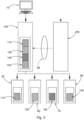
- Figure 1 schematically sketches a system of aggregating servers 100, 200 with shared sessions with the systems to be aggregated 50, 60, 70, 80 in a proper running operation mode of both aggregating servers 100, 200.
- An external client 10 is coupled for communication with the first aggregating server 100 and the second aggregating server 200.
- the coupling for communication with the second aggregating server 200 can be established by providing an address of the second aggregating server 200 to the external client 10 for communicating of the external client 10 with the second aggregating server 200, preferably in case the first aggregating server 100 is not available for communication.
- the first aggregating server 100 is coupled for communication with two systems to be aggregated 50, 60 and the second aggregating server 200 is coupled to another pair of systems to be aggregated 70, 80.
- the systems to be aggregated 50, 60, 70, 80 are configured to provide structured data 110, 120, 130, 140 respectively.
- the first aggregating server 100 and the second aggregating server 200 are coupled via a link 20 and both are configured to replicate structured data provided by the systems to be aggregated 50 and 60 which are coupled to the first aggregating server 100 and/or and the structure data provided by the systems to be aggregated 70 and 80, which are coupled to the second aggregating server 200 respectively, to provide access to the structured data of the respective systems to be aggregated 50, 60, 70, 80 for the first aggregating server and the second aggregating server.
- the load corresponding to the systems to be aggregated 50, 60, 70, 80 is balanced between the two aggregating systems 100, 200.
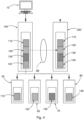
- Figure 2 schematically sketches the system of aggregating servers 100, 200 with systems to be aggregated 50, 60, 70, 80 as described in respect to figure 1 , after a fail over switching is completed.
- the redundant second aggregating server 200 is providing the structured data 110, 120, 130, 140 of the systems to be aggregated 50, 60, 70, 80 to the external client 10, because the structured data 110, 120, 130, 140 were already replicated and the coupling for communication with the systems to be aggregated 50, 60, 70, 80 is provided by the second aggregating server 200 to continue the access to the systems to be aggregated 50, 60, 70, 80.
- figure 2 illustrates a scenario where a former aggregating server on standby 200 becomes the active aggregating server 200. The former aggregating server on standby 200 took over the coupling for communication of the systems to be aggregated 50 and 60.
- Figure 3 schematically sketches a system of aggregating servers 100, 200 with systems to be aggregated 50, 60, 70, 80 coupled for communication to the first aggregating server 100 only.
- An additional, particularly redundant, aggregating server 200 can be linked to the first aggregating server 100 to build a system of aggregating servers 100, 200 by coupling to the first aggregating server 100 via a link 20 and replicating the structured data provided by the first system to be aggregated 100. Accordingly further aggregating servers can be integrated to the system of aggregating servers.
- Figure 4 schematically sketches a system of aggregating servers 100, 200 with systems to be aggregated 50, 60, 70, 80 during replication of the structure data 110, 120, 130, 140 from the first aggregating server 100, which is coupled to the systems to be aggregated 50, 60, 70, 80, to the second aggregating server 200, via the link 20 for communication.
- the second aggregating server 200 is during the replication of the structured data, not coupled to the systems to be aggregated 50, 60, 70, 80, but configured to be coupled to at least a part of the systems to be aggregated 50, 60, 70, 80.
- Figure 5 schematically sketches functional blocks of a system of aggregating servers 100, 200 and systems to be aggregated 50, 60, 70, which are coupled to the system of aggregating servers 100, 200 via a link 560.
- An external client 10 is coupled to the system of aggregating servers 100, 200 via a client link 15.
- the client link 15 couples the external client 10 to a reverse proxy server 510 of the system of aggregating servers 100, 200.
- the reverse proxy server 510 for load balancing is coupled for communication via an input link 511, 512 to information model servers 520a, 520b of the aggregating servers 100, 200 respectively.
- the information model servers 520a, 520b which are configured to provide an aggregated information model, are coupled for communication with databases 530a, 530b of the aggregating servers 100, 200 respectively.
- the databases 530a, 530b of the respective aggregating servers 100, 200 are coupled by a link 24 replication of structured data which are provided by the systems to be aggregated 50, 60, 70.
- the databases 530a, 530b of the respective aggregating servers 100, 200 which are configured to store the structured data, are coupled to device connection managers 540a, 540b of the respective aggregating servers 100, 200, which are configured for controlling a policy for establishing a session of the related systems to be aggregated 50, 60, 70 with the related aggregating server 100, 200.
- the device connection managers 540a, 540b of the respective aggregating servers 100, 200 are coupled for communication to device clients 550a, 550b of the respective aggregating servers 100, 200, which are configured to enable via the link 560 a session and to run a session with the systems to be aggregated 50, 60, 70.
Landscapes
- Engineering & Computer Science (AREA)
- Computer Networks & Wireless Communication (AREA)
- Signal Processing (AREA)
- Hardware Redundancy (AREA)
Abstract
Description
- An aggregating Open Platform Communication Unified Architecture (OPC UA, also standardized as IEC 62541) Server replicates the address space of individual OPC UA Servers providing a consolidated, coherent representation of distributed address spaces on individual OPC UA Servers. An aggregating OPC UA Server can be seen as a proxy for remote individual OPC UA Servers. In the context of integrating small servers, configured for OPC UA connected instrument devices, the Aggregating OPC UA Server can be considered as a kind of an extension cord, since an Aggregating OPC UA Server can handle more concurrent sessions than a small device server can do. Typically, such embedded OPC UA Servers run a maximum of two concurrent sessions. In the context of a distributed control system (DCS) there can be more than two OPC UA Clients to be connected to an instrument device server, wherein the instrument device server can be an individual small embedded OPC UA server.
- A single Aggregation OPC UA Server may be a single point of failure causing system-wide impact for e.g. a manufacturing site or other applications.
- Accordingly, the present invention is directed to a system of aggregating servers with subject matter as described in the independent claim.
Advantageous modifications of the invention are stated in the dependent claims. All combinations of at least two of the features disclosed in the description, the claims, and the figures fall within the scope of the invention. In order to avoid repetition, features disclosed in accordance with the method shall also apply and be claimable in accordance with mentioned systems. - In this entire description of the invention, the sequence of procedural steps is presented in such a way that the process is easily comprehensible. However, the skilled person will recognize that many of the process steps can also be executed in a different order and lead to the same or a corresponding result. In this sense, the sequence of the process steps can be changed accordingly. Some features are provided with counting words to improve readability or to make the assignment more clear, but this does not imply the presence of certain features.
- To achieve these and other advantages and in accordance with the purpose of the invention, as embodied and broadly described herein, there is provided a system of aggregating servers, including a first aggregating server, which is configured to establish a session for communicatively linking with at least one first system to be aggregated and at least a second aggregating server, wherein the second aggregating server is configured to establish a session communicatively linking with at least one second system to be aggregated. Thereby the first aggregating server and the second aggregating server are configured to:
replicate mutually structured data provided by the first system to be aggregated and/or the second system to be aggregated, to provide access to the structured data of the respective systems to be aggregated for the first aggregating server and the second aggregating server. Additionally, the first aggregating server and the second aggregating server are configured to coordinate respective sessions of the system of aggregating servers with the at least first system to be aggregated and/or the at least second system to be aggregated, to prevent improper access to the at least first system to be aggregated and/or the at least second system to be aggregated. - The mutually structured data provided by the first system to be aggregated and/or the second system to be aggregated can also be called "address space" or "information model".
- A system to be aggregated, can, as an example, be an embedded system and/or an embedded server, which can be defined as a computer system, a combination of a computer processor, computer memory, and input/output peripheral devices, that has a dedicated function within a larger mechanical or electronic system. Such an embedded server can be embedded as part of a complete device including electrical or electronic hardware and mechanical parts. Because an embedded server typically controls physical operations of the machine that it is embedded within, it can have real-time computing constraints. Embedded servers can control a plurality of devices. A system to be aggregated can be an embedded system, particularly an OPC UA server for connection of OPC UA instrument devices.
- An OPC UA Server can be an example of a system to be aggregated and provides access to data and functions from embedded systems and/or embedded instruments and/or from systems or subsystems from a variety of devices.
- A session can be a logic channel between a server, as e.g. a system to be aggregated, and a client, as e.g. an aggregating server, in particular a device client of the aggregating server, wherein structured data, which are communicated within such a session, are communicated in an encrypted form. Session related information can include keys used to run the secure channel, as for instance assess rights and/or assess information, as e.g. crypto-keys, and/or an information model about the structured data to be exchanged within the session and/or an address space.
- The mutual replication of structured data between the aggregating servers can also include status data of each system to be aggregated as well as session configuration data, which are shared between the aggregating servers by replication, whereby the respective aggregating servers have access to this structured data and/or the status data by communication access to the respective system to be aggregated, where a session of the related system to be aggregated with the related aggregating server is established.
- According to an aspect, each aggregating server is configured to establish a communication link based on a session, which is established between the respective aggregating server and the respective system to be aggregated.
- According to an aspect, the aggregating servers are configured to mutual replicate structured data, wherein the structured data are provided by the respective other aggregating server, via a link established between the respective aggregating servers.
- According to an aspect, the aggregating servers are configured to coordinate an establishing of respective sessions with the respective systems to be aggregated, by partitioning a plurality of sessions with the systems to be aggregated and the system of aggregating servers, between the respective aggregating servers of the system of aggregating servers, for load balancing of the sessions and/or to prevent improper access to the at least first system to be aggregated and/or the at least second system to be aggregated.
- According to an aspect, the aggregating servers are configured to replicate session related data, as for instance a password and/or to replicate session coordination data, which describe, which aggregating server is communicatively linked to a system to be aggregated based on a session; and/or to replicate status data of the system to be aggregated, as for instance a number of open sessions; and/or whether an individual system to be aggregated of a plurality of systems to be aggregated is idle or operating.
- According to an aspect, the second aggregating server can be operated as a redundant aggregating server until a failure of the first aggregating server is detected.
- According to an aspect, it is proposed to mutually replicate structured data and replicate related session configuration data of the systems to be aggregated.
- A coupling for communication can enable an information exchange based on signals, which are exchanged by the coupled devices.
- Using other words, the system of aggregating servers are configured for enablement of lateral communication, particular lateral synchronisation, between the at least two aggregating servers, particularly OPC UA servers, because switching of an operation of aggregating server to the second aggregating server, which is configured to be a redundant aggregating server, particular a redundant aggregating OPC UA Server, needs to be prepared for seamless operation.
- As a consequence the aggregating servers are communicatively linked to replicate their information for sharing the information between all aggregating servers, particularly if they are configured to be redundant and respectively in standby mode, the aggregating server is needed to be configured to operate such that:
- each of the aggregating servers have access to a complete configuration setup of the system of aggregating servers, particularly that a current active aggregating server reports any deviation, for example, if at least one of the aggregating servers, which is in standby, fails;
- the current active aggregating server can be determined: because the complete information is shared among all redundant aggregating servers, such that it is possible that, if an active aggregating server fails, another aggregating server, which is on a stand-by mode, can, based on its known stand-in-priority among the other aggregating servers on standby, determine the aggregating server that is to take over the operation of the prior aggregating server;
- all information in regard to the current active sessions with systems to be aggregated is shared among all redundant aggregating servers. The redundant aggregating server to take over, will apply the information about current active sessions with systems to be aggregated to manage a bump-free continuation of ongoing sessions. This includes the sessions of the device client of the aggregating server, which is communicating with the systems to be aggregated, as there may be the sessions between the active aggregating server and external clients. Session related information includes the keys used to run a secure channel of communication. Furthermore, a synchronization in terms of active number of sessions is needed to ensure that systems to be aggregated, which are aggregated in the node space of the aggregating server, are not overwhelmed with incoming connection approaches from the aggregating server;
- all status data of the systems to be aggregated are shared among all redundant aggregating servers. The redundant aggregating servers to take over, will feed current active sessions with up-to-date status data from the systems to be aggregated. A database, which particularly may be configured to be redundant, can be used to share status data of the systems to be aggregated.
- Such a replication operation can be used to add an additional aggregating server to extend the system of redundant aggregating servers. The aggregating server for extending the system of aggregating servers, which can be operated in an "off-line"-mode can registers itself at the "active" aggregating server, which in turn can transfer all information for replication, and particularly including an entire aggregated address space, and/or all information about current sessions to the "off-line" aggregating servers and the URLs of those servers to be aggregated the extending aggregating server in "off-line" mode shall become responsible for.
- According to an aspect, the first aggregating server is configured to establish respective communication links with a part of a plurality of systems to be aggregated and the at least second aggregating server is configured to establish a communication link with another part of the plurality of systems to be aggregated; and wherein the aggregating servers are configured to coordinate respective sessions for establishing the communication link with the plurality of systems to be aggregated, in such a way, as to prevent improper access to the plurality of systems to be aggregated and/or for load balancing of the sessions.
- According to an aspect, the improper access can be caused by exceeding a permitted number of multiple sessions with the systems to be aggregated.
For instance, such an improper access can be an error and/or an overload in respect to a build-up of the respective session. - According to an aspect, each system to be aggregated is configured as a server, particularly for providing structured data.
- According to an aspect, each aggregating server is configured to be coupled for communication to a plurality of external client systems.
Based on the system of aggregating servers external client systems can have a faster access to the structured data of the systems to be aggregated and/or the number of clients, which have access to the structured data of the systems to be aggregated, such that the system of aggregating servers can be scaled to specific needs. - According to an aspect, the respective aggregating server includes an information model server, configured to provide an aggregated information model, which aggregates the information models of each system to be aggregated, which are coupled for communication to the system of aggregating servers. The respective aggregating server also includes a database, configured to store the structured data of the systems to be aggregated, according to an aggregated information model, which is related to the respective systems to be aggregated. The respective aggregating server also includes a device connection manager, configured for controlling a policy for establishing a session of the related systems to be aggregated with the related aggregating server and a device client, configured to enable and run a session with the systems to be aggregated.
The device client is coupled to the database via the device connection manager and configured to be coupled to a plurality of systems to be aggregated. The device connection manager is coupled for communication with the information model server, which is configured to be coupled for communication with an external client. - According to an aspect, the database of each aggregating server is a distributed database.
- According to an aspect, the system of aggregating servers comprise a reverse proxy server, which is coupled for communication with at least the first aggregating server and the at least second aggregating server for load balancing access for communication of a plurality of external client systems with the reverse proxy server. Such a reverse proxy can include a logic, that decides how the load is balanced among the redundant aggregating OPC UA servers.
Load balancing means that "incoming" external client requests get routed to one of the aggregating servers based on a defined balancing strategy, e.g., round-robin.
Advantageously the system of aggregating servers is configured to extend a "simple" fail-over-switching between redundant components including load balancing. - A load balancing can be a logic that decides how the load is balanced among aggregating servers. As an example, a design strategy decision for configuration of the system of aggregating servers can consider the constrained number of sessions the systems to be aggregated can handle. To minimize the number of sessions between redundant aggregating servers and the system to be aggregated, as e.g. an instrument with an embedded server, the system to be aggregated can have only one session with a single aggregating server. This means, the applicable granularity to distribute processing burden is bound to a single system to be aggregated.
- Therefore, the load balancing logic can measure the processing effort an aggregating server spends on a single system to be aggregated in respect to a relative amount of time, i.e. a percentage, an aggregating server spends on a single system to be aggregated.
- If the first aggregating server of the system of aggregating servers is active and the second aggregating server is in standby mode for redundancy, the active first aggregating server will handle the complete load of the servers to be aggregated, which are linked to the system of aggregating servers. If the second aggregating server is running, to share the burden to handle the communication with the servers to be aggregated, the servers to be aggregated have to be reassigned in such a way, that each aggregating server, preferable handles the same number of servers to be aggregated to balance the load.
- If the system of aggregating servers are operated together, which may include, beside the first aggregating server, several further aggregating servers, each of the aggregating servers can normalize the measured load against a common time base, as e.g. a load of 15% in 1s.
The mutual replication of structured data between, particular redundant, aggregating servers, can include to share session status information including load information for comparison of each of the aggregating servers. Since all aggregating servers run the same algorithm to optimize the load distribution, knowing their stand-in priority, each individual aggregating server can take over or release its task or "responsibility" for any system to be aggregated, to aggregate based on the common knowledge about status and load. In general the optimization method can try that various load distribution scenarios, measures the system load balance for all aggregating servers and finally choose a load distribution scenario with the best load balance, which is the minimum difference between the loads the individual aggregating servers have to manage. In a system with more than two additional, particularly redundant, aggregating servers re-balancing calculations can be repeated if one of the aggregating servers fails. To reduce the time needed to cope with the malfunction of a single aggregating server, all aggregating servers can calculate the distribution scenarios, for a scenario, where one or the other aggregating server disappears, beforehand. If a single aggregating server experiences load changes, according to a present threshold, this aggregating server can re-trigger a load optimization cycle, sharing its current load status immediately. - While, particularly redundant, aggregating servers have negotiated a way of how to share the load of aggregating the systems to be aggregated, additionally a similar list, how to share the load can be used to share the IO-work that is requested by external client systems communicating to "active" redundant aggregating servers only.
- In larger systems with many, particularly slower, systems to be integrated the initial aggregation of distributed address space can become time consuming if only a single aggregating server is configured to run an initial aggregation cycle from which other redundant aggregating servers are replicated.
- Therefore, any additional, particularly redundant, aggregating server can share this initial effort in a "bootstrap" procedure, because the system of aggregated servers are configured to replicate the structured data. That means, the system of aggregated servers can be configured such that each of the additional, particularly redundant, aggregating servers has access to and shares a complete list of systems to be aggregated, e.g. by means of a list of URLs of the systems to be aggregated. According to the stand-in priority of the additional aggregating servers, a first redundant aggregating server, which is designated to become an "active" one, picks one URL from the list of URL addresses of the systems to be aggregated, replacing the entry with an own URL, finally sharing the modified list with the other redundant aggregating servers. The other redundant aggregating servers immediately have access to the information, which redundant aggregating server picked a system to be aggregated and according to a stand-in priority of the redundant aggregating servers, the next redundant aggregating server will perform the same procedure steps. After a set up time, all systems to be aggregated are identified or "found" and aggregated by one of the additional, particularly redundant, aggregating servers.
By this concept a redundant aggregating server can become "responsible" for a set of systems to be aggregated. At the end of the initial aggregation procedure, the replication of the structured data can ensure that all redundant aggregating servers have access to the structured data provided by the systems to be aggregated. An "active" redundant aggregating server can go online, and is ready to run information exchange with external client systems. - The concept described for the "bootstrap" procedure, described above, can also shoot to boost systems responsiveness. The replication between the aggregating systems is considered a lot faster than a regular communication of the aggregating systems with the systems to be aggregated. While the redundant aggregating servers have negotiated a way of how to share the work of initially aggregating the service to be aggregated on remote, a similar list can be taken to share the computational load hat is requested by external clients communicating with the "active" redundant aggregating server only. While the external client seems to communicate with the entire system, the "active" redundant aggregating server immediately talks to the systems to be aggregated it has initially aggregated. If inbound request refers to data that has been aggregated by an additional, particularly redundant, aggregating server, which can be in a standby mode, a service forwarding layer between the redundant aggregating server triggers the "responsible" of the redundant aggregating servers performing the requested service with the initially aggregated systems to be aggregated; synchronizing the result through the service forwarding layer and the replication, which is about maintaining the status update information for all redundant aggregating servers.
- To avoid a single point of failure the switching between the two or more redundant aggregating servers, whereby it is not relevant whether they are configured to aggregate address spaces of other systems to be aggregated, are configured to be processed by the aggregating servers themselves for Fail-Over-Switching including URL Endpoint-Shading.
Based on the replication procedure as described above, which can be seen as a first element in a solution to prepare a Fail-Over-Switching, a second element of the technical solution for preparation of a Fail-Over-Switching leverages the way of how the URLs of the systems to be aggregated can be handled during failover. - Any URL of a system to be aggregated refers to a host-address, a port number and optionally to a sub-structured path. The host-address is bound to a host system, particular a computer, where the aggregating server, which may be implemented as a computer program on that host system, resides. Any system to be aggregated communicates via a communication path of the host system. Whereby the host system can be an electronic device or a virtual machine. Depending on whether the system of aggregating servers is configured to run at redundant aggregating servers on separate machines to provide hardware redundancy or on a single machine to provide software redundancy there are slightly different concepts to manage the URLs endpoints for redundant aggregating servers.
- The common part for both situations is, an external client communicating to an "active" aggregating server shall not experience any issues. This means the external client can communicate with the same URL of the system of aggregating servers after a switching between the respective aggregating servers took place. A current session shall remain active, which is prepared by the session status that is shared among redundant aggregating servers.
- When running hardware redundancy, the failing aggregating server modifies its MAC- and IP Address to "hide away". In case of a complete hardware breakdown, where no software can be executed, the technical defect "hides" the machine communication-wise.
The "stand-by" aggregating servers can be prepared to take over by using the MAC- and IP Address of the former "active" aggregating server using also the shared session status to continue the ongoing session(s).
In case of software-redundancy the treatment of the URLs used by the redundant aggregating servers leaves the host-address unchanged; only the port or any post-fix in the URL, of the system of aggregating servers, changes. In this scenario there is an Endpoint-URL that refers to the current "active" aggregating server. When the software of this "active" aggregating server fails, its URL will respond no more. The aggregating server on "stand-by", can always be synchronized about a session status by a replication procedure, as e.g. an aggregating server may run multiple concurrent sessions to multiple external clients, can take over by changing its URL to the URL of the former "active" aggregating server has used. - According to an aspect, the reverse proxy server is configured to provide a dedicated IP address to decouple each external client system from the first aggregating server and the at least second aggregating server.
- According to an aspect, the system of aggregating servers comprises OPC UA aggregating servers.
- According to an aspect, the external client system is an OPC UA client system and/or the system to be aggregated is an OPC UA system to be aggregated and/or the information model is an OPC UA information model and/or the device client is an OPC UA device client.
- According to an aspect, the first aggregating server and the at least second aggregating server are coupled for communication and the aggregating servers are configured to mutually replicate the structured data provided by the first system to be aggregated and/or the at least second system to be aggregated and respective session configuration data of the systems to be aggregated, to provide access of the structured data and the session configuration data of the respective systems to be aggregated for the first aggregating server and the at least second aggregating server.
- The session configuration data can be defined as configuration data of the session and/or policy information of the session.
- According to an aspect, the coupling for communication between the first aggregating server and the at least second aggregating server is provided by using encrypted communication.
- According to an aspect, the first aggregating server and the at least second aggregating server are coupled for communication to coordinated the mutual distribution of respective distributed sessions to the at least first system to be aggregated and/or the at least second system to be aggregated and/or each aggregating server is configured to respectively store the coordinated mutual distribution of respective distributed sessions with the at least first system to be aggregated and/or the at least second system to be aggregated, to enable the respective aggregating servers to take over at least the sessions of the respective other aggregating server in case of a failure within the system of aggregating servers. Using other words, each of the aggregating servers have access to the system configuration.
The replication using the coupling link between the first aggregating server and the at least second aggregating server can include a number of active sessions with the systems to be aggregated. - According to an aspect, the first aggregating server and the second aggregating server are installed on different hardware computing systems for providing high availability aggregating servers.
- According to an aspect, the at least second aggregating server on a second hardware computing system is running in a standby mode until a failure within the system of aggregating servers is detected.
Advantageously, by running the first aggregating server and the second aggregating server on different hardware computing systems can provide redundant aggregating servers for a high availability system, if in case of a failure within one computing system the complete operation of the system of aggregating servers can be provided by a computing system, which was running in a standby mode. - In computing, an address space defines a range of discrete addresses, each of which may correspond to a network host, peripheral device, disk sector, a memory cell or other logical or physical entity.
- Round-robin (RR) is one of the algorithms employed by process and network schedulers in computing for load balancing.
- The accompanying drawings, which are included to provide a further understanding of the invention and are incorporated in and constitute a part of this application, illustrate embodiments of the invention and together with the description serve to explain the principle of the invention. The drawings display:
- FIG. 1
- a schematic representation of a system of aggregating servers with shared sessions with the systems to be aggregated in operation mode;
- FIG. 2
- a schematic representation of a system of aggregating servers with systems to be aggregated with fail over switching;
- FIG. 3
- a schematic representation of a system of aggregating servers with systems to be aggregated by the first aggregating server;
- FIG. 4
- a schematic representation of a system of aggregating servers with systems to be aggregated during replication of the structure data; and
- FIG. 5
- a schematic representation of functional blocks of a system of aggregating servers with systems to be aggregated.
-
Figure 1 schematically sketches a system of aggregatingservers servers external client 10 is coupled for communication with the first aggregatingserver 100 and the second aggregatingserver 200.
The coupling for communication with the second aggregatingserver 200 can be established by providing an address of the second aggregatingserver 200 to theexternal client 10 for communicating of theexternal client 10 with the second aggregatingserver 200, preferably in case the first aggregatingserver 100 is not available for communication. - The first aggregating
server 100 is coupled for communication with two systems to be aggregated 50, 60 and the second aggregatingserver 200 is coupled to another pair of systems to be aggregated 70, 80. The systems to be aggregated 50, 60, 70, 80 are configured to providestructured data server 100 and the second aggregatingserver 200 are coupled via alink 20 and both are configured to replicate structured data provided by the systems to be aggregated 50 and 60 which are coupled to the first aggregatingserver 100 and/or and the structure data provided by the systems to be aggregated 70 and 80, which are coupled to the second aggregatingserver 200 respectively, to provide access to the structured data of the respective systems to be aggregated 50, 60, 70, 80 for the first aggregating server and the second aggregating server. In this configuration the load corresponding to the systems to be aggregated 50, 60, 70, 80 is balanced between the two aggregatingsystems -
Figure 2 schematically sketches the system of aggregatingservers figure 1 , after a fail over switching is completed. Starting, for instance, with the configuration of the system of aggregatingservers figure 1 , the redundant second aggregatingserver 200 is providing the structureddata external client 10, because the structureddata server 200 to continue the access to the systems to be aggregated 50, 60, 70, 80. Using other words,figure 2 illustrates a scenario where a former aggregating server onstandby 200 becomes the active aggregatingserver 200. The former aggregating server onstandby 200 took over the coupling for communication of the systems to be aggregated 50 and 60. -
Figure 3 schematically sketches a system of aggregatingservers server 100 only. An additional, particularly redundant, aggregatingserver 200 can be linked to the first aggregatingserver 100 to build a system of aggregatingservers server 100 via alink 20 and replicating the structured data provided by the first system to be aggregated 100. Accordingly further aggregating servers can be integrated to the system of aggregating servers. -
Figure 4 schematically sketches a system of aggregatingservers structure data server 100, which is coupled to the systems to be aggregated 50, 60, 70, 80, to the second aggregatingserver 200, via thelink 20 for communication. The second aggregatingserver 200 is during the replication of the structured data, not coupled to the systems to be aggregated 50, 60, 70, 80, but configured to be coupled to at least a part of the systems to be aggregated 50, 60, 70, 80. -
Figure 5 schematically sketches functional blocks of a system of aggregatingservers servers link 560. Anexternal client 10 is coupled to the system of aggregatingservers client link 15. The client link 15 couples theexternal client 10 to areverse proxy server 510 of the system of aggregatingservers reverse proxy server 510 for load balancing is coupled for communication via aninput link information model servers servers information model servers databases servers databases servers databases servers device connection managers servers server device connection managers servers device clients servers
A cycle time of submitted messages to monitor the availability within a communication link can define the needed time to detect a failure. The system can be configured such that a time, needed for the replication, as described above, is shorter than the time, an external client needs to detect a communication breakdown.
Claims (14)
- A system of aggregating servers (100, 200), comprisinga first aggregating server (100), configured to establish a session for communicatively linking with at least one first system to be aggregated (50, 60, 70, 80);at least a second aggregating server (200), configured to establish a session communicatively linking with at least one second system to be aggregated (50, 60, 70, 80);wherein the first aggregating server (100) and the second aggregating server (200) are configured to:replicate mutually structured data provided by the first system to be aggregated (50, 60, 70, 80) and/or the second system to be aggregated (50, 60, 70, 80), to provide access to the structured data (110, 120. 130, 140) of the respective systems to be aggregated (50, 60, 70, 80) for the first aggregating server (100) and the second aggregating server (200); andcoordinate the respective sessions of the system of aggregating servers with the at least first system to be aggregated (50, 60, 70, 80) and/or the at least second system to be aggregated (50, 60, 70, 80), to prevent improper access to the at least first system to be aggregated (50, 60, 70, 80) and/or the at least second system to be aggregated (50, 60, 70, 80).
- The system of aggregating servers (100, 200) according to claim 1, wherein the first aggregating server (100) is configured to establish respective communication links with a part of a plurality of systems to be aggregated (50, 60, 70, 80); and the at least second aggregating server (200) is configured to establish a communication link with another part of the plurality of systems to be aggregated (50, 60, 70, 80); and wherein the aggregating servers (100, 200) are configured to coordinate respective sessions for establishing the communication link with the plurality of systems to be aggregated (50, 60, 70, 80) in such a way as to prevent improper access to the plurality of systems to be aggregated (50, 60, 70, 80) and/or for load balancing of the sessions.
- The system of aggregating servers (100, 200) according to any of the preceding claims, wherein the improper access is caused by exceeding a permitted number of multiple sessions with the systems to be aggregated (50, 60, 70, 80).
- The system of aggregating servers (100, 200) according to any of the preceding claims, wherein each aggregating server (100, 200) is configured to be coupled for communication to a plurality of external client systems (10).
- The system of aggregating servers (100, 200) according to any of the preceding claims, wherein the respective aggregating server (100, 200) comprises:an information model server (520a, 520b), configured to provide an aggregated information model, which aggregates the information models of each system to be aggregated (50, 60, 70, 80), which are coupled for communication to the system of aggregating servers (50, 60, 70, 80);a database (530a, 530b), configured to store the structured data of the systems to be aggregated according to an aggregated information model, which is related to the respective systems to be aggregated;a device connection manager (540a, 540b), configured for controlling a policy for establishing a session of the related systems to be aggregated (50, 60, 70, 80) with the related aggregating server (100, 200); anda device client (550a, 550b), configured to enable and run a session with the systems to be aggregated (100, 200).
- The system of aggregating servers (100, 200) according claim 4 or 5, wherein the system of aggregating servers (100, 200) comprise a reverse proxy server (510), which is coupled for communication with at least the first aggregating server (100) and the at least second aggregating server (200) for load balancing access for communication of a plurality of external client systems (10) with the reverse proxy server (510).
- The system of aggregating servers (100, 200) according to claim 6, wherein the reverse proxy server (510) is configured to provide a dedicated IP address to decouple each external client system (10) from the first aggregating server (100) and the at least second aggregating server (200).
- The system of aggregating servers (100, 200) according to any of the preceding claims, wherein the system of aggregating servers (100, 200) comprises OPC UA aggregating servers.
- The system of aggregating servers (100, 200) according to claim 8, wherein the external client system (10) is an OPC UA client system and/or the system to be aggregated (50, 60, 70, 80) is an OPC UA system to be aggregated and/or the information model is an OPC UA information model and/or the device client (550a, 550b) is an OPC UA device client.
- The system of aggregating servers (100, 200) according to any of claims 5 to 9, wherein the first aggregating server (100) and the at least second aggregating server (200) are coupled for communication and the aggregating servers (100, 200) are configured to mutually replicate the structured data provided by the first system to be aggregated (100) and/or the at least second system to be aggregated (200) and respective session configuration data of the systems to be aggregated, to provide access of the structured data and the session configuration data of the respective systems to be aggregated (50, 60, 70, 80) for the first aggregating server (100) and the at least second aggregating server (200).
- The system of aggregating servers (100, 200) according to claim 10, wherein the coupling for communication between the first aggregating server (100) and the at least second aggregating server (,200) is provided by using encrypted communication.
- The system of aggregating servers (100, 200) according to claim 10 or 11,wherein the first aggregating server (100) and the at least second aggregating server (200) are coupled for communication to coordinated the mutual distribution of respective distributed sessions to the at least first system to be aggregated (50, 60, 70, 80) and/or the at least second system to be aggregated (50, 60, 70, 80) and/orwherein each aggregating server (100, 200) is configured to respectively store the coordinated mutual distribution of respective distributed sessions with the at least first system to be aggregated (50, 60, 70, 80) and/or the at least second system to be aggregated (50, 60, 70, 80), to enable the respective aggregating servers (100, 200) to take over at least the sessions of the respective other aggregating server (100, 200) in case of a failure within the system of aggregating servers (100, 200).
- The system of aggregating servers (100, 200) according to any of the preceding claims, wherein the first aggregating server (100) and the second aggregating server (200) are installed on different hardware computing systems for providing high availability aggregating servers.
- The system of aggregating servers (100, 200) according to claim 13, wherein the at least second aggregating server (200) on a second hardware computing system is running in a standby mode until a failure within the system of aggregating servers (100, 200) is detected.
Priority Applications (5)
| Application Number | Priority Date | Filing Date | Title |
|---|---|---|---|
| PCT/EP2022/075867 WO2023061699A1 (en) | 2021-10-15 | 2022-09-16 | A system of aggregating servers |
| CN202280069065.4A CN118120211A (en) | 2021-10-15 | 2022-09-16 | Aggregate server system |
| CA3233514A CA3233514A1 (en) | 2021-10-15 | 2022-09-16 | A system of aggregating servers |
| JP2024522527A JP7717976B2 (en) | 2021-10-15 | 2022-09-16 | Aggregation server system |
| US18/632,461 US12619505B2 (en) | 2021-10-15 | 2024-04-11 | System of aggregating servers |
Applications Claiming Priority (1)
| Application Number | Priority Date | Filing Date | Title |
|---|---|---|---|
| EP21202942 | 2021-10-15 |
Publications (2)
| Publication Number | Publication Date |
|---|---|
| EP4167546A1 true EP4167546A1 (en) | 2023-04-19 |
| EP4167546B1 EP4167546B1 (en) | 2025-10-08 |
Family
ID=78516477
Family Applications (1)
| Application Number | Title | Priority Date | Filing Date |
|---|---|---|---|
| EP21208778.7A Active EP4167546B1 (en) | 2021-10-15 | 2021-11-17 | A system of aggregating servers |
Country Status (1)
| Country | Link |
|---|---|
| EP (1) | EP4167546B1 (en) |
Citations (1)
| Publication number | Priority date | Publication date | Assignee | Title |
|---|---|---|---|---|
| US20210133183A1 (en) * | 2019-11-04 | 2021-05-06 | Amazon Technologies, Inc. | Multi-tenant provider network database connection management and governance |
-
2021
- 2021-11-17 EP EP21208778.7A patent/EP4167546B1/en active Active
Patent Citations (1)
| Publication number | Priority date | Publication date | Assignee | Title |
|---|---|---|---|---|
| US20210133183A1 (en) * | 2019-11-04 | 2021-05-06 | Amazon Technologies, Inc. | Multi-tenant provider network database connection management and governance |
Also Published As
| Publication number | Publication date |
|---|---|
| EP4167546B1 (en) | 2025-10-08 |
Similar Documents
| Publication | Publication Date | Title |
|---|---|---|
| CN110224871B (en) | High-availability method and device for Redis cluster | |
| US20200042410A1 (en) | Role designation in a high availability node | |
| CN104811476B (en) | A kind of High Availabitity deployment implementation method of application-oriented service | |
| US9231779B2 (en) | Redundant automation system | |
| CN1614936A (en) | Management system of treating apparatus | |
| US12013769B2 (en) | Hot-standby redundancy control system, method, control apparatus, and computer readable storage medium | |
| EP2866422A1 (en) | Method of operating a server system with high availability | |
| CN110784331A (en) | A consensus process recovery method and related nodes | |
| US12619505B2 (en) | System of aggregating servers | |
| JP2022192057A (en) | Visualization of software defined process control system for industrial process plant | |
| CN117978758A (en) | Adaptation method for data processing unit, computer device and medium | |
| JP2013167922A (en) | Redundant communication system and redundant communication method | |
| EP4167546B1 (en) | A system of aggregating servers | |
| CN115048048A (en) | Data storage system, data storage method, storage medium, and electronic device | |
| CN118473679A (en) | Cloud-protogenesis-based password service high-availability cluster system and implementation method | |
| Pashkov et al. | On high availability distributed control plane for software-defined networks | |
| CN118120211A (en) | Aggregate server system | |
| CN102355370B (en) | Method for Ethernet board-level protection, device and system | |
| CN112100008B (en) | Cross-node multilink redundancy protection method and system | |
| JP7719103B2 (en) | Highly Available Cluster Leader Election in Distributed Routing Systems | |
| EP3719599B1 (en) | Network-distributed process control system and method for managing redundancy thereof | |
| CN111193674B (en) | Scene and service state-based load splitting realization method and system | |
| JP7848914B2 (en) | Distributed Control Node (DCN) Redundancy | |
| CN118158022B (en) | A multi-bus communication method, port machinery edge computing device and related equipment | |
| CN117692113A (en) | Hot standby redundancy method, device and equipment of controller and storage medium |
Legal Events
| Date | Code | Title | Description |
|---|---|---|---|
| PUAI | Public reference made under article 153(3) epc to a published international application that has entered the european phase |
Free format text: ORIGINAL CODE: 0009012 |
|
| STAA | Information on the status of an ep patent application or granted ep patent |
Free format text: STATUS: THE APPLICATION HAS BEEN PUBLISHED |
|
| AK | Designated contracting states |
Kind code of ref document: A1 Designated state(s): AL AT BE BG CH CY CZ DE DK EE ES FI FR GB GR HR HU IE IS IT LI LT LU LV MC MK MT NL NO PL PT RO RS SE SI SK SM TR |
|
| STAA | Information on the status of an ep patent application or granted ep patent |
Free format text: STATUS: REQUEST FOR EXAMINATION WAS MADE |
|
| STAA | Information on the status of an ep patent application or granted ep patent |
Free format text: STATUS: EXAMINATION IS IN PROGRESS |
|
| 17P | Request for examination filed |
Effective date: 20230808 |
|
| RBV | Designated contracting states (corrected) |
Designated state(s): AL AT BE BG CH CY CZ DE DK EE ES FI FR GB GR HR HU IE IS IT LI LT LU LV MC MK MT NL NO PL PT RO RS SE SI SK SM TR |
|
| 17Q | First examination report despatched |
Effective date: 20230828 |
|
| GRAP | Despatch of communication of intention to grant a patent |
Free format text: ORIGINAL CODE: EPIDOSNIGR1 |
|
| STAA | Information on the status of an ep patent application or granted ep patent |
Free format text: STATUS: GRANT OF PATENT IS INTENDED |
|
| INTG | Intention to grant announced |
Effective date: 20250721 |
|
| GRAS | Grant fee paid |
Free format text: ORIGINAL CODE: EPIDOSNIGR3 |
|
| GRAA | (expected) grant |
Free format text: ORIGINAL CODE: 0009210 |
|
| STAA | Information on the status of an ep patent application or granted ep patent |
Free format text: STATUS: THE PATENT HAS BEEN GRANTED |
|
| AK | Designated contracting states |
Kind code of ref document: B1 Designated state(s): AL AT BE BG CH CY CZ DE DK EE ES FI FR GB GR HR HU IE IS IT LI LT LU LV MC MK MT NL NO PL PT RO RS SE SI SK SM TR |
|
| REG | Reference to a national code |
Ref country code: GB Ref legal event code: FG4D Ref country code: CH Ref legal event code: F10 Free format text: ST27 STATUS EVENT CODE: U-0-0-F10-F00 (AS PROVIDED BY THE NATIONAL OFFICE) Effective date: 20251008 |
|
| REG | Reference to a national code |
Ref country code: DE Ref legal event code: R096 Ref document number: 602021039979 Country of ref document: DE |
|
| REG | Reference to a national code |
Ref country code: IE Ref legal event code: FG4D |
|
| PGFP | Annual fee paid to national office [announced via postgrant information from national office to epo] |
Ref country code: DE Payment date: 20251119 Year of fee payment: 5 |
|
| PGFP | Annual fee paid to national office [announced via postgrant information from national office to epo] |
Ref country code: GB Payment date: 20251121 Year of fee payment: 5 |
|
| PGFP | Annual fee paid to national office [announced via postgrant information from national office to epo] |
Ref country code: AT Payment date: 20260113 Year of fee payment: 5 |
|
| REG | Reference to a national code |
Ref country code: NL Ref legal event code: MP Effective date: 20251008 |
|
| REG | Reference to a national code |
Ref country code: AT Ref legal event code: MK05 Ref document number: 1845836 Country of ref document: AT Kind code of ref document: T Effective date: 20251008 |
|
| PG25 | Lapsed in a contracting state [announced via postgrant information from national office to epo] |
Ref country code: NL Free format text: LAPSE BECAUSE OF FAILURE TO SUBMIT A TRANSLATION OF THE DESCRIPTION OR TO PAY THE FEE WITHIN THE PRESCRIBED TIME-LIMIT Effective date: 20251008 |
|
| PG25 | Lapsed in a contracting state [announced via postgrant information from national office to epo] |
Ref country code: ES Free format text: LAPSE BECAUSE OF FAILURE TO SUBMIT A TRANSLATION OF THE DESCRIPTION OR TO PAY THE FEE WITHIN THE PRESCRIBED TIME-LIMIT Effective date: 20251008 |
|
| REG | Reference to a national code |
Ref country code: LT Ref legal event code: MG9D |
|
| PG25 | Lapsed in a contracting state [announced via postgrant information from national office to epo] |
Ref country code: NO Free format text: LAPSE BECAUSE OF FAILURE TO SUBMIT A TRANSLATION OF THE DESCRIPTION OR TO PAY THE FEE WITHIN THE PRESCRIBED TIME-LIMIT Effective date: 20260108 |
|
| PG25 | Lapsed in a contracting state [announced via postgrant information from national office to epo] |
Ref country code: HR Free format text: LAPSE BECAUSE OF FAILURE TO SUBMIT A TRANSLATION OF THE DESCRIPTION OR TO PAY THE FEE WITHIN THE PRESCRIBED TIME-LIMIT Effective date: 20251008 Ref country code: FI Free format text: LAPSE BECAUSE OF FAILURE TO SUBMIT A TRANSLATION OF THE DESCRIPTION OR TO PAY THE FEE WITHIN THE PRESCRIBED TIME-LIMIT Effective date: 20251008 Ref country code: AT Free format text: LAPSE BECAUSE OF FAILURE TO SUBMIT A TRANSLATION OF THE DESCRIPTION OR TO PAY THE FEE WITHIN THE PRESCRIBED TIME-LIMIT Effective date: 20251008 |
|
| PG25 | Lapsed in a contracting state [announced via postgrant information from national office to epo] |
Ref country code: RS Free format text: LAPSE BECAUSE OF FAILURE TO SUBMIT A TRANSLATION OF THE DESCRIPTION OR TO PAY THE FEE WITHIN THE PRESCRIBED TIME-LIMIT Effective date: 20260108 |
|
| PG25 | Lapsed in a contracting state [announced via postgrant information from national office to epo] |
Ref country code: IS Free format text: LAPSE BECAUSE OF FAILURE TO SUBMIT A TRANSLATION OF THE DESCRIPTION OR TO PAY THE FEE WITHIN THE PRESCRIBED TIME-LIMIT Effective date: 20260208 |
|
| PG25 | Lapsed in a contracting state [announced via postgrant information from national office to epo] |
Ref country code: PT Free format text: LAPSE BECAUSE OF FAILURE TO SUBMIT A TRANSLATION OF THE DESCRIPTION OR TO PAY THE FEE WITHIN THE PRESCRIBED TIME-LIMIT Effective date: 20260209 |
|
| PG25 | Lapsed in a contracting state [announced via postgrant information from national office to epo] |
Ref country code: PL Free format text: LAPSE BECAUSE OF FAILURE TO SUBMIT A TRANSLATION OF THE DESCRIPTION OR TO PAY THE FEE WITHIN THE PRESCRIBED TIME-LIMIT Effective date: 20251008 |
|
| PG25 | Lapsed in a contracting state [announced via postgrant information from national office to epo] |
Ref country code: LV Free format text: LAPSE BECAUSE OF FAILURE TO SUBMIT A TRANSLATION OF THE DESCRIPTION OR TO PAY THE FEE WITHIN THE PRESCRIBED TIME-LIMIT Effective date: 20251008 |
|
| PG25 | Lapsed in a contracting state [announced via postgrant information from national office to epo] |
Ref country code: BG Free format text: LAPSE BECAUSE OF FAILURE TO SUBMIT A TRANSLATION OF THE DESCRIPTION OR TO PAY THE FEE WITHIN THE PRESCRIBED TIME-LIMIT Effective date: 20251008 |